EP3941444B1 - Coatings for gastric residence dosage forms - Google Patents
Coatings for gastric residence dosage forms Download PDFInfo
- Publication number
- EP3941444B1 EP3941444B1 EP20773419.5A EP20773419A EP3941444B1 EP 3941444 B1 EP3941444 B1 EP 3941444B1 EP 20773419 A EP20773419 A EP 20773419A EP 3941444 B1 EP3941444 B1 EP 3941444B1
- Authority
- EP
- European Patent Office
- Prior art keywords
- gastric residence
- enrobed
- less
- dosage form
- coating
- Prior art date
- Legal status (The legal status is an assumption and is not a legal conclusion. Google has not performed a legal analysis and makes no representation as to the accuracy of the status listed.)
- Active
Links
Images







Classifications
-
- A—HUMAN NECESSITIES
- A61—MEDICAL OR VETERINARY SCIENCE; HYGIENE
- A61J—CONTAINERS SPECIALLY ADAPTED FOR MEDICAL OR PHARMACEUTICAL PURPOSES; DEVICES OR METHODS SPECIALLY ADAPTED FOR BRINGING PHARMACEUTICAL PRODUCTS INTO PARTICULAR PHYSICAL OR ADMINISTERING FORMS; DEVICES FOR ADMINISTERING FOOD OR MEDICINES ORALLY; BABY COMFORTERS; DEVICES FOR RECEIVING SPITTLE
- A61J3/00—Devices or methods specially adapted for bringing pharmaceutical products into particular physical or administering forms
- A61J3/005—Coating of tablets or the like
-
- A—HUMAN NECESSITIES
- A61—MEDICAL OR VETERINARY SCIENCE; HYGIENE
- A61J—CONTAINERS SPECIALLY ADAPTED FOR MEDICAL OR PHARMACEUTICAL PURPOSES; DEVICES OR METHODS SPECIALLY ADAPTED FOR BRINGING PHARMACEUTICAL PRODUCTS INTO PARTICULAR PHYSICAL OR ADMINISTERING FORMS; DEVICES FOR ADMINISTERING FOOD OR MEDICINES ORALLY; BABY COMFORTERS; DEVICES FOR RECEIVING SPITTLE
- A61J3/00—Devices or methods specially adapted for bringing pharmaceutical products into particular physical or administering forms
- A61J3/07—Devices or methods specially adapted for bringing pharmaceutical products into particular physical or administering forms into the form of capsules or similar small containers for oral use
- A61J3/071—Devices or methods specially adapted for bringing pharmaceutical products into particular physical or administering forms into the form of capsules or similar small containers for oral use into the form of telescopically engaged two-piece capsules
-
- A—HUMAN NECESSITIES
- A61—MEDICAL OR VETERINARY SCIENCE; HYGIENE
- A61K—PREPARATIONS FOR MEDICAL, DENTAL OR TOILETRY PURPOSES
- A61K45/00—Medicinal preparations containing active ingredients not provided for in groups A61K31/00 - A61K41/00
- A61K45/06—Mixtures of active ingredients without chemical characterisation, e.g. antiphlogistics and cardiaca
-
- A—HUMAN NECESSITIES
- A61—MEDICAL OR VETERINARY SCIENCE; HYGIENE
- A61K—PREPARATIONS FOR MEDICAL, DENTAL OR TOILETRY PURPOSES
- A61K9/00—Medicinal preparations characterised by special physical form
- A61K9/0012—Galenical forms characterised by the site of application
- A61K9/0053—Mouth and digestive tract, i.e. intraoral and peroral administration
- A61K9/0065—Forms with gastric retention, e.g. floating on gastric juice, adhering to gastric mucosa, expanding to prevent passage through the pylorus
-
- A—HUMAN NECESSITIES
- A61—MEDICAL OR VETERINARY SCIENCE; HYGIENE
- A61K—PREPARATIONS FOR MEDICAL, DENTAL OR TOILETRY PURPOSES
- A61K9/00—Medicinal preparations characterised by special physical form
- A61K9/48—Preparations in capsules, e.g. of gelatin, of chocolate
- A61K9/4833—Encapsulating processes; Filling of capsules
-
- A—HUMAN NECESSITIES
- A61—MEDICAL OR VETERINARY SCIENCE; HYGIENE
- A61K—PREPARATIONS FOR MEDICAL, DENTAL OR TOILETRY PURPOSES
- A61K9/00—Medicinal preparations characterised by special physical form
- A61K9/48—Preparations in capsules, e.g. of gelatin, of chocolate
- A61K9/4841—Filling excipients; Inactive ingredients
- A61K9/485—Inorganic compounds
-
- A—HUMAN NECESSITIES
- A61—MEDICAL OR VETERINARY SCIENCE; HYGIENE
- A61K—PREPARATIONS FOR MEDICAL, DENTAL OR TOILETRY PURPOSES
- A61K9/00—Medicinal preparations characterised by special physical form
- A61K9/48—Preparations in capsules, e.g. of gelatin, of chocolate
- A61K9/4841—Filling excipients; Inactive ingredients
- A61K9/4858—Organic compounds
-
- A—HUMAN NECESSITIES
- A61—MEDICAL OR VETERINARY SCIENCE; HYGIENE
- A61K—PREPARATIONS FOR MEDICAL, DENTAL OR TOILETRY PURPOSES
- A61K9/00—Medicinal preparations characterised by special physical form
- A61K9/48—Preparations in capsules, e.g. of gelatin, of chocolate
- A61K9/4841—Filling excipients; Inactive ingredients
- A61K9/4866—Organic macromolecular compounds
-
- A—HUMAN NECESSITIES
- A61—MEDICAL OR VETERINARY SCIENCE; HYGIENE
- A61K—PREPARATIONS FOR MEDICAL, DENTAL OR TOILETRY PURPOSES
- A61K9/00—Medicinal preparations characterised by special physical form
- A61K9/48—Preparations in capsules, e.g. of gelatin, of chocolate
- A61K9/4891—Coated capsules; Multilayered drug free capsule shells
Definitions
- This relates to coatings, and more particularly, to coatings for gastric residence systems and gastric residence dosage forms.
- Gastric residence systems are delivery systems for therapeutic agents that can remain in the stomach for days to weeks, or even over longer periods, during which time the therapeutic agent can elute from the gastric residence system for absorption in the gastrointestinal tract.
- Gastric residence systems are typically designed to be administered to the stomach of a patient in a capsule.
- the encapsulated gastric residence system is swallowed or introduced into the stomach by an alternate method of administration (e.g., feeding tube or gastric tube).
- the gastric residence system Upon dissolution of the capsule in the stomach, the gastric residence system expands or unfolds to a size which remains in the stomach and resists passage through the pyloric valve over the desired residence period (such as three days, seven days, two weeks, etc.).
- US 2009/304768 discloses a gastric residence system for releasing biomolecules in the stomach, whereby a folded device is enrobed by a polymeric coating and which can unfold upon contact with gastric juice.
- coatings for gastric residence systems are also provided, but not claimed, are methods of preparing enrobed gastric residence dosage forms using the coatings for gastric residence systems.
- coatings described herein can help ensure that a gastric residence system of an enrobed gastric residence dosage form unfolds at a predetermined time and location within the gastrointestinal tract (i.e., in the stomach).
- coatings provided herein can minimize the risk of the gastric residence system deploying too early (e.g., in the esophagus) and causing an obstruction.
- Coatings described herein may also minimize the possibility of the gastric residence system passing through the stomach and expanding or unfolding later in the gastrointestinal tract (i.e., intestine) and causing an obstruction.
- coatings provided herein minimize the risk of a gastric residence dosage form passing through the gastrointestinal tract without unfolding at all. In each of these possible scenarios, the therapeutic agent is not delivered to the patient as intended.
- gastric residence systems are typically designed to be administered to a patient in a capsule.
- the capsule may be transported to the stomach by swallowing, by feeding tube, by gastric tube, etc.
- coatings, and particularly coatings providing a hermetic seal provide the benefit of being tamper-proof, unlike capsules.
- a gastric residence system enrobed in a coating to form an enrobed gastric residence dosage form can prevent a patient (or another person) from tampering with the gastric residence system.
- Enrobed gastric residence dosage forms may include a sleeve or band to bind the gastric residence system in a collapsed or folded configuration.
- a bound gastric residence system may be enrobed with a coating to form an enrobed gastric residence dosage form.
- methods for preparing an enrobed gastric residence dosage form as provided herein can include binding a folded gastric residence system with a sleeve. In some embodiments, methods can include enrobing the bound gastric residence system with a coating to form an enrobed gastric residence dosage form. In some embodiments, methods for preparing a gastric residence dosage form may also include coating the enrobed gastric residence dosage form with a reverse-enteric coating to encourage dissolution of the enrobed coating and release of the gastric residence system within the stomach of a patient.
- the invention provides an enrobed gastric residence dosage form comprising: a gastric residence system in a folded configuration, wherein the gastric residence system comprises a therapeutic agent; and a coating enrobing the gastric residence system in the folded configuration, and a coating on the coating enrobing the gastric residence system in the folded configuration, wherein the coating on the coating comprises a reverse-enteric polymer;wherein the enrobed gastric residence dosage form is configured to release the gastric residence system in a stomach of a patient, allowing the gastric residence system to assume an open configuration.
- a thickness of the coating enrobing the gastric residence system in the folded configuration is from 50 to 250 microns.
- the coating enrobing the gastric residence system in the folded configuration is applied to the gastric residence system in the folded configuration using a rotary die encapsulation process.
- the coating enrobing the gastric residence system in the folded configuration comprises a softgel type shell material.
- the coating enrobing the gastric residence system in the folded configuration provides a hermetic seal.
- the coating enrobing the gastric residence system in the folded configuration comprises water, a plasticizer, and a gelling agent.
- the coating enrobing the gastric residence system in the folded configuration comprises from 5 to 10 wt. % water.
- the plasticizer comprises one or more of glycerin or sorbitol.
- the coating enrobing the gastric residence system in the folded configuration comprises from 20 to 60 wt. % plasticizer.
- the gelling agent is one or more of gelatin, pullulan, hydroxypropyl methylcellulose, or potato starch.
- the coating enrobing the gastric residence system in the folded configuration comprises from 35 to 75 wt. % gelling agent.
- the coating enrobing the gastric residence system in the folded configuration comprises a polymer.
- the polymer comprises a polymethacrylate-based polymer.
- the coating enrobing the gastric residence system in the folded configuration comprises from 10 to 50 wt. % polymer.
- the enrobed gastric residence dosage from comprises a sleeve, wherein the sleeve surrounds at least a portion of the gastric residence system in the folded configuration.
- the sleeve comprises at least one of gelatin, hydroxypropyl methylcellulose, or pullulan.
- the enrobed gastric residence dosage form comprises a capsule encapsulating the gastric residence system in the folded configuration.
- the capsule comprises at least one of gelatin, hydroxypropyl methylcellulose, or pullulan.
- the enrobed gastric residence dosage form comprises a coating on the coating enrobing the gastric residence system in the folded configuration.
- the coating on the coating enrobing the gastric residence system comprises a reverse-enteric polymer.
- the reverse-enteric polymer comprises a polymethacrylate-based polymer.
- the coating on the coating enrobing the gastric residence system comprises an anti-tacking agent.
- the anti-tacking agent comprises at least one of talc or magnesium stearate.
- the coating on the coating enrobing the gastric residence system comprises a plasticizer.
- the plasticizer comprises at least one of a phthalate, a phosphate, a citrate, a tartrate, an adipate, a sebacate, a sulfonamide, a succinate, a glycolate, a glycerolate, a benzoate, a myristate, a halogenated phenyl, or a poloxamer.
- the plasticizer comprises at least one of triacetin or dibutyl sebacate.
- the coating on the coating enrobing the gastric residence system comprises a hydration aid.
- the hydration aid comprises at least one of a polyvinylpyrrolidone, a vinylpyrrolidone-vinyl acetate copolymer, a polyethylene glycol, mannitol, or hydroxy propyl methylcellulose.
- the enrobed gastric residence dosage form allows the gastric residence system in the folded configuration to assume an open configuration in at least 20 minutes when exposed to an aqueous pH 7.0 environment.
- the enrobed gastric residence dosage form allows the gastric residence system in the folded configuration to assume an open configuration in at least 30 minutes when exposed to an aqueous pH 7.0 environment.
- the enrobed gastric residence dosage form allows the gastric residence system in the folded configuration to assume an open configuration in less than 20 minutes when exposed to an aqueous pH 3.0 environment.
- the enrobed gastric residence dosage form allows the gastric residence system in the folded configuration to assume an open configuration in less than 15 minutes when exposed to an aqueous pH 3.0 environment.
- the enrobed gastric residence dosage form is used to treat a patient.
- the patient is a human.
- a coating for enrobing a gastric residence system comprising: 5-10 wt. % water; 20-60 wt. % plasticizer; and 35-75 wt. % gelling agent.
- the coating is configured to enrobe a gastric residence system in a folded configuration to form an enrobed gastric residence dosage form
- the enrobed gastric residence dosage form is configured to release the gastric residence system in the folded configuration in a stomach of a patient, allowing the gastric residence system in the folded configuration to assume an open configuration
- a thickness of the coating of the enrobed gastric residence dosage form is from 50 to 250 microns.
- the coating of the enrobed gastric residence dosage form is applied to the gastric residence system in the folded configuration using a rotary die encapsulation process.
- the coating of the enrobed gastric residence dosage form comprises a softgel type shell material.
- the coating of the enrobed gastric residence dosage form provides a hermetic seal.
- the enrobed gastric residence dosage form allows the gastric residence system in the folded configuration to assume the open configuration in at least 20 minutes when exposed to an aqueous pH 7.0 environment.
- the enrobed gastric residence dosage form allows the gastric residence system in the folded configuration to assume the open configuration in at least 30 minutes when exposed to an aqueous pH 7.0 environment.
- the enrobed gastric residence dosage form allows the gastric residence system in the folded configuration to assume the open configuration in less than 20 minutes when exposed to an aqueous pH 3.0 environment.
- the enrobed gastric residence dosage form allows the gastric residence system in the folded configuration to assume the open configuration in less than 15 minutes when exposed to an aqueous pH 3.0 environment.
- the plasticizer comprises at least one of glycerin or sorbitol.
- the gelling agent is one or more of gelatin, pullulan, hydroxypropyl methylcellulose, or potato starch.
- the coating comprises a polymer.
- the polymer comprises a polymethacrylate-based polymer.
- the coating comprises from 10 to 50 wt. % polymer.
- an enrobed gastric residence dosage form comprising the coating for enrobing a gastric residence system of any embodiments provided herein is provided, wherein the enrobed gastric residence dosage form is used to treat a patient.
- the patient is a human.
- a method of making an enrobed gastric residence dosage form comprising: enrobing a gastric residence system in a folded configuration with a coating to form an enrobed gastric residence dosage form.
- the enrobed gastric residence dosage form is configured to release the gastric residence system in the folded configuration in a stomach of a patient, allowing the gastric residence system in the folded configuration to assume an open configuration.
- a thickness of the coating on the enrobed gastric residence dosage form is from 50 to 250 microns.
- enrobing a gastric residence system in a folded configuration with a coating to form an enrobed gastric residence dosage form comprises a rotary die encapsulation process.
- the coating comprises a softgel type shell material.
- the coating provides a hermetic seal.
- the method comprises binding the gastric residence system in the folded configuration with a sleeve prior to enrobing.
- the sleeve comprises at least one of gelatin, hydroxypropyl methylcellulose, or pullulan.
- the method comprises encapsulating the gastric residence system in the folded configuration with a capsule prior to enrobing.
- the capsule comprises at least one of gelatin, hydroxypropyl methylcellulose, or pullulan.
- the coating comprises water, a plasticizer, and a gelling agent.
- the coating comprises from 5 to 10 wt. % water.
- the plasticizer comprises one or more of glycerin or sorbitol.
- the coating comprises from 20 to 60 wt. % plasticizer.
- the gelling agent is one or more of gelatin, pullulan, hydroxypropyl methylcellulose, or potato starch.
- the coating comprises from 35 to 75 wt. % gelling agent.
- the coating comprises a polymer.
- the polymer comprises a polymethacrylate-based polymer.
- the coating comprises from 10 to 50 wt. % polymer.
- the method comprises coating the enrobed gastric residence dosage form with a reverse-enteric coating.
- the reverse-enteric coating comprises a reverse-enteric polymer, an anti-tacking agent and a plasticizer.
- the anti-tacking agent comprises at least one of talc or magnesium stearate.
- the plasticizer comprises at least one of a phthalate, a phosphate, a citrate, a tartrate, an adipate, a sebacate, a sulfonamide, a succinate, a glycolate, a glycerolate, a benzoate, a myristate, a halogenated phenyl, or a poloxamer.
- the plasticizer comprises at least one of triacetin or dibutyl sebacate.
- the reverse-enteric coating comprises a hydration aid.
- the hydration aid comprises at least one of a polyvinylpyrrolidone, a vinylpyrrolidone-vinyl acetate copolymer, a polyethylene glycol, mannitol, or hydroxypropyl methylcellulose.
- the enrobed gastric residence dosage form allows the gastric residence system in the folded configuration to assume the open configuration in at least 20 minutes when exposed to an aqueous pH 7.0 environment.
- the enrobed gastric residence dosage form allows the gastric residence system in the folded configuration to assume the open configuration in at least 30 minutes when exposed to an aqueous pH 7.0 environment.
- the enrobed gastric residence dosage form allows the gastric residence system in the folded configuration to assume the open configuration in less than 15 minutes when exposed to an aqueous pH 3.0 environment.
- an enrobed gastric residence dosage form made using the method of any of the embodiments provided herein is provided, wherein the enrobed gastric residence dosage form is used to treat a patient.
- the patient is a human.
- a coated enrobed gastric residence dosage form comprising: an enrobed gastric residence system; and a coating comprising a reverse-enteric polymer coating the enrobed gastric residence system, wherein static coefficient of friction of coated enrobed gastric residence dosage form static coefficient of friction of uncoated enrobed gastric residence dosage form ⁇ 0.8 .
- a static coefficient of friction of the coated enrobed gastric residence dosage form is less than 0.3.
- the static coefficient of friction of the coated enrobed gastric residence dosage form is less than 0.2.
- the static coefficient of friction of the coated enrobed gastric residence dosage form is less than 0.1.
- static coefficient of friction of coated enrobed gastric residence dosage form static coefficient of friction of uncoated enrobed gastric residence dosage form ⁇ 0.5 .
- the static coefficient of friction of the coated enrobed gastric residence dosage form is at least 0.08 less than that of an uncoated enrobed gastric residence dosage form.
- the static coefficient of friction of the coated enrobed gastric residence dosage form is at least 0.15 less than that of an uncoated enrobed gastric residence dosage form.
- the static coefficient of friction of the coated enrobed gastric residence dosage form is at least 0.2 less than that of an uncoated enrobed gastric residence dosage form.
- the reverse-enteric polymer comprises a polymethacrylate.
- the coating comprises 10 to 50 wt. % reverse-enteric polymer.
- the coating comprises an anti-tacking agent.
- the anti-tacking agent comprises at least one of talc or magnesium stearate.
- the coating comprises 5 to 30 wt. % anti-tacking agent.
- gastric residence systems are designed to be swallowed by a patient when the gastric residence system is in a folded or collapsed state (i.e., to enable swallowing and easy passage of the gastric residence system to the patient's stomach).
- the device unfolds (i.e., opens, deploys).
- the physical unfolding of the gastric residence system results in a shaped device that is too large to pass through the patient's pyloric valve (i.e., opening between the stomach and the large intestine).
- the deployed, or expanded, gastric residence system can stay in the patient's stomach for a predetermined period of time (e.g., 24 hours, 48 hours, 7 days, 10 days, etc.).
- a gastric residence system that unfolds too early (e.g., in a patient's esophagus) or too late (e.g., in a patient's intestine) is undesirable.
- a gastric residence system that fails to unfold at all may pass completely through a patient's gastrointestinal tract still in a folded configuration. In each of these hypothetical situations, the gastric residence system fails to properly deliver its therapeutic agent (e.g., active pharmaceutical ingredient) to the patient's stomach.
- gastric residence systems are typically administered to a patient in a capsule, as discussed above.
- the two pieces of a conventional capsule can be easily separated to expose the encapsulated therapeutic agent or, in this case, the gastric residence system with the therapeutic agent.
- capsules permit easy tampering with the gastric residence system.
- coatings for enrobing gastric residence dosage forms are designed to better control the deployment of gastric residence systems such that enrobed gastric residence dosage forms effectively deliver the therapeutic agent to the patient's stomach.
- enrobed gastric residence dosage forms according to embodiments provided herein are more likely to release and allow a gastric residence system to unfold and to assume an open configuration at the desired location and at the desired time within a patient's body.
- the particular coating used to prepare the enrobed gastric residence dosage form can be specially formulated to ensure that the gastric residence system does not deploy too early (e.g., in a patient's esophagus), too late (e.g., in a patient's intestine), or not at all.
- gastric residence system is a device comprising a therapeutic agent and is configured to be delivered to a patient's stomach in a folded/collapsed configuration and unfold or open once it reaches a patient's stomach.
- a “gastric residence dosage form” or “enrobed gastric residence dosage form” comprises a folded gastric residence system and is configured to hold the gastric residence system in a folded configuration until deployment (i.e., in a patient's stomach).
- a gastric residence dosage form or an enrobed gastric residence dosage form may comprise a coating according to embodiments described herein.
- deployment time is defined as the amount of time it takes a gastric residence system to assume an open configuration.
- an enrobed gastric residence dosage form may include a sleeve or band configured to hold the gastric residence system in a folded configuration.
- a gastric residence system folded and retained in a folded configuration with a sleeve or band may be enrobed in coating to form an enrobed gastric residence dosage form.
- gastric residence systems as well as coating compositions that can be used to enrobe folded gastric residence systems to form enrobed gastric residence dosage forms.
- gastric residence systems and how they operate to deliver a therapeutic agent to a patient.
- the discussion includes a general description of how gastric residence systems are designed to deliver a therapeutic agent to a patient over an extended period of time, how gastric residence systems are configured for administration, how gastric residence systems are configured to deploy and deliver a therapeutic agent to the stomach of a patient, how the therapeutic agent of a gastric residence system elutes from the device such that the therapeutic agent is delivered to the patient, how the gastric residence system passes through the stomach, and how gastric residence systems are designed to account for some specific safety measures.
- Gastric residence systems can be designed to be administered to the stomach of a patient by swallowing, by feeding tube, by gastric tube, etc. Once a gastric residence system is in place in the stomach, it can remain in the stomach for a desired residence time (e.g., three days, seven days, two weeks, etc.). A gastric residence system that is properly in place in a stomach will resist passage through the pyloric valve, which separates the stomach from the small intestine. Gastric residence systems can release a therapeutic agent (i.e., API or drug) over the period of residence with minimal burst release. While residing in the stomach, the system may not interfere with the normal passage of food or other gastric contents. Once the desired residence time has expired, the system passes out of the stomach (i.e., through the pyloric valve) and is readily eliminated from the patient.
- a therapeutic agent i.e., API or drug
- the gastric residence system can be folded into a form small enough to be swallowed or otherwise administered.
- the folded gastric residence system is retained in a capsule or other container which can be swallowed by the patient.
- the gastric residence system may be delivered to a patient via gastrostomy tube, feeding tube, gastric tube, or other route of administration to the stomach. Examples of folding and encapsulating the gastric residence system are provided in further detail below.
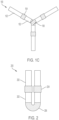
- Figures 1A-1C provide embodiments of foldable or compactable gastric residence systems. Specifically, each foldable or compactable gastric residence system shown in Figures 1A-1C is provided in an unfolded configuration.
- gastric residence system 100 shown in Figure 1A can be twisted into a double helix.
- gastric residence system 100 includes carrier polymer-agent components 102 and couplings 104.
- coupling 104 may comprise coupling polymer.
- gastric residence system 100 can be folded at one or more coupling polymer joints 104, or twisted into a helix for packaging into a capsule in its folded configuration. Once the capsule dissolves in the stomach, gastric residence system 100 unfolds to the circular shape of its open, or unfolded, configuration, preventing passage through the pyloric valve.
- gastric residence system 100 may also be star-shaped (stellate) according to some embodiments.
- a star-shaped gastric residence system 100 is constructed around central elastomer 106.
- Central elastomer 106 may include one or more elongate member 108, or "arms," projecting radially.
- the arms may be formed by carrier polymer-agent components 102 and couplings 104 comprising coupling polymer.
- One or more polymer-agent component 102 and coupling 104 together comprise an "arm" of this "star-shaped" configuration.
- Elastomer 106 enables gastric residence system 100 to be folded for packaging into a capsule.
- Figure 1C shows gastric residence system 100 comprising three "arms” according to some embodiments. This configuration can also include central elastomer 106 from which the three "arms" radially extend. Each of the three arms comprises polymer-agent component 102 and coupling 104 as well.
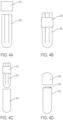
- Figure 2 shows folded gastric residence system 200 according to some embodiments. As shown, the device can fold at central elastomer 206, bringing the ends of each "arm" together. The Figure also shows how the carrier polymer-agent components 102 and couplings 104 of each arm may be oriented in a folded configuration.
- the folded configuration of gastric residence system 100 can be bound (i.e., held in a folded configuration) with a sleeve or band.
- a gastric residence system in a folded configuration may be encapsulated with a capsule to form a gastric residence dosage form.
- the gastric residence dosage form may be coated with a reverse-enteric coating to ensure deployment of the gastric residence system in a patient's stomach.
- any coating and/or capsule of the gastric residence dosage form may dissolve/open and release the folded gastric residence system.
- the gastric residence system Upon release, the gastric residence system unfolds to assume an open configuration, such as a ring shape or a star shape as provided in Figures 1A-1C .
- the dimensions of the open gastric residence system are suitable to prevent passage of the device through the pyloric valve for the period of time during which the device is to reside in the stomach.
- the folded gastric residence system can also be secured by a dissolvable retaining band or sleeve that can prevent premature deployment of the gastric residence system.
- the gastric residence system While in the stomach, the gastric residence system is compatible with digestion and other normal functioning of the stomach or gastrointestinal tract.
- the gastric residence system does not interfere with or impede the passage of chyme (partially digested food) or other gastric contents which exit the stomach through the pyloric valve into the duodenum.
- the gastric residence system comprises a plurality of carrier polymer-agent components.
- the carrier polymer-agent components may comprise a carrier polymer, a dispersant, and a therapeutic agent (or a salt thereof).
- the plurality of carrier polymer-agent components are linked together by one or more coupling polymer components.
- the therapeutic agent may be eluted from the carrier polymer-agent components into the gastric fluid of the patient over the desired residence time of the system. Release of the therapeutic agent is controlled by appropriate formulation of the carrier polymer-agent components.
- coatings can be applied to outer surfaces of the gastric residence system.
- the coatings can include additional therapeutic agents or agents that can affect the release of therapeutic agents or the residence duration of the gastric residence system.
- the gastric residence system passes out of the stomach.
- various components of the gastric residence system are designed to degrade. The specific dimensions of the system are also taken into consideration.
- the gastric residence system In its intact, open configuration, the gastric residence system is designed to resist passage through the pyloric valve.
- coupling polymer components of the gastric residence system are chosen such that they gradually degrade over the specified residence period in the stomach. When the coupling polymer components are sufficiently weakened by degradation, the gastric residence system can break apart into smaller pieces. These smaller pieces are designed to pass through the pyloric valve. The system then passes through the intestines and is eliminated from the patient.
- gastric residence systems may be found in PCT/US2018/051816 , WO 2015/191920 , WO 2017/070612 , WO 2017/100367 , WO 2018/064630 , WO 2017/205844 , WO 2018/227147 .
- coating may refer to "enrobing.”
- Enrobing includes surrounding a folded gastric residence system with a softgel type shell material to form an “enrobed gastric residence system.”
- Coating may also refer to a coating applied to the exterior of an enrobed gastric residence device.
- Coating compositions for enrobing gastric residence systems have been developed according to embodiments provided herein to enhance gastric residence system deployment performance. Specifically, coating compositions for enrobing gastric residence systems have been developed to retain a gastric residence system in a compacted configuration between the time of administration and the time it reaches the stomach. Once the gastric residence dosage form reaches the stomach, the coating is designed to dissolve rapidly. A rapidly-dissolving coating can ensure that the gastric residence system is released within the stomach before passing through the pyloric valve.
- Enrobed gastric residence dosage forms can offer various advantages over gastric residence systems encapsulated in conventional capsules. As mentioned above, a coating for enrobing a folded gastric residence system according to embodiments provided here can protect the therapeutic agent (and in this case, the gastric residence system) from tampering. Additionally, enrobed gastric residence dosage forms can be easier to swallow than gastric residence systems encapsulated only in conventional capsules, which can help reduce the transit time in the esophagus and minimize any chance of the gastric residence system releasing and unfolding in the esophagus.
- enrobing gastric residence systems with a coating composition allows for a slippery, non-adhesive surface for ease of swallowing (to prevent esophageal holdups) and a non-tacky and defect-free processing, storage, and shipment phases.
- the deployment time of an enrobed gastric residence dosage form in an aqueous pH 7.0 environment may be from 15 to 120 minutes, from 20 to 60 minutes, or from 20 to 30 minutes.
- the deployment time of an enrobed gastric residence dosage form in an aqueous pH 7.0 environment may be less than 120 minutes, less than 100 minutes, less than 80 minutes, less than 60 minutes, less than 50 minutes, less than 40 minutes, less than 30 minutes, less than 25 minutes, or less than 20 minutes.
- the deployment time of an enrobed gastric residence dosage form in an aqueous pH 7.0 environment may be more than 15 minutes, more than 20 minutes, more than 25 minutes, more than 30 minutes, more than 40 minutes, more than 50 minutes, more than 60 minutes, more than 80 minutes, or more than 100 minutes.
- Coating compositions according to embodiments provided herein can also be designed to rapidly dissolve in a gastric environment. As described above, once a gastric residence dosage form has reached the stomach, it should dissolve rapidly to allow the gastric residence system to deploy in the stomach. If the coating material fails to dissolve rapidly, then the gastric residence dosage form risks passing through the pyloric valve prior to releasing the gastric residence system. Accordingly, coating compositions according to embodiments provided herein are designed to dissolve rapidly and consistently. In some embodiments, the dissolution of the coating material has little or no reliance on a low pH.
- an enrobed gastric residence dosage form may deploy after residing in an aqueous pH 3.0 environment from 1 to 60 minutes, from 5 to 45 minutes, or from 10 to 30 minutes.
- an enrobed gastric residence dosage form may deploy after residing in an aqueous pH 3.0 environment for more than 1 minutes, more than 2 minutes, more than 3 minutes, more than 4 minutes, more than 5 minutes, more than 10 minutes, more than 15 minutes, more than 20 minutes, more than 25 minutes, more than 30 minutes, more than 35 minutes, more than 40 minutes, more than 45 minutes, more than 50 minutes, or more than 55 minutes.
- an enrobed gastric residence dosage form may deploy in an aqueous pH 3.0 environment for less than 60 minutes, less than 55 minutes, less than 50 minutes, less than 45 minutes, less than 40 minutes, less than 35 minutes, less than 30 minutes, less than 25 minutes, less than 20 minutes, less than 15 minutes, less than 10 minutes, less than 5 minutes, less than 4 minutes, less than 3 minutes, or less than 2 minutes.
- the thickness of the coating for enrobing gastric residence devices in folded configurations may vary depending on desired properties of the enrobed gastric residence dosage form (e.g., deployment time). In some embodiments, the thickness of the coating enrobing the folded gastric residence system may be from 50 to 700 microns or from 150 to 350 microns thick.
- the thickness of the coating enrobing the folded gastric residence system may be more than 50 microns, more than 100 microns, more than 150 microns, more than 200 microns, more than 250 microns, more than 300 microns, more than 350 microns, more than 400 microns, more than 450 microns, more than 500 microns, more than 550 microns, more than 600 microns, or more than 650 microns thick.
- the thickness of the coating enrobing the folded gastric residence system may be less than 700 microns, less than 650 microns, less than 600 microns, less than 550 microns, less than 500 microns, less than 450 microns, less than 400 microns, less than 350 microns, less than 300 microns, less than 250 microns, less than 200 microns, less than 150 microns, or less than 100 microns thick.
- the coating for enrobing folded gastric residence systems may provide a hermetic seal.
- the coating may hermetically seal the folded gastric residence system to form an enrobed gastric residence dosage form.
- the coating for enrobing folded gastric residence systems may comprise softgel type shell material.
- Coating compositions according to embodiments provided herein may include a polymer, a plasticizer, a gelling agent, and/or water.
- the polymer may be pH-responsive polymer such as a water-based polymer dispersion or a reverse-enteric polymer.
- a suitable water-based polymer dispersion includes Kollicoat ® Smartseal.
- a reverse-enteric polymer can encourage dissolution of the coating in the gastric environment and may provide a moisture barrier to the gastric residence system.
- the reverse-enteric polymer may also have desirable physiochemical dissolution properties, good film-forming capacity, and may be suitable for pharmaceutical coating methods (e.g., pan-coating).
- polymethacrylates are suitable reverse-enteric polymers.
- Eudragit ® polymers may be suitable in some embodiments.
- Eudragit ® polymers include a diverse range of polymethacrylate-based copolymers specifically formulated to aid in targeted drug release.
- Eudragit ® E a specific type of poly methacrylate, may be a suitable reverse-enteric polymer.
- Eudragit ® E dissolves in gastric fluid by the salt formation of its tertiary amine group in pH environments below 5.0.
- Eudragit ® E can provide a suitable moisture barrier at neutral pH environments (i.e., in the mouth and esophagus).
- the coating formulation may include small molecule additives with enhanced solubility at reduced pH (e.g., tertiary amine, imidazole-containing chemical entities, etc.).
- the coating composition may include from 10 to 70 wt. %, from 20 to 60 wt. %, or from 30 to 50 wt. % polymer.
- the coating composition may include less than 70 wt. %, less than 65 wt. %, less than 60 wt. %, less than 55 wt. %, less than 50 wt. %, less than 45 wt. %, less than 40 wt. %, less than 35 wt. %, less than 30 wt. %, less than 25 wt. %, less than 20 wt. %, or less than 15 wt. % polymer. In some embodiments, the coating composition may include more than 10 wt. %, more than 15 wt. %, more than 20 wt. %, more than 25 wt. %, more than 30 wt.
- % more than 35 wt. %, more than 40 wt. %, more than 45 wt. %, more than 50 wt. %, more than 55 wt. %, more than 60 wt. %, more than 65 wt. % more than 70 wt. %, more than 75 wt. %, more than 80 wt. %, or more than 85 wt. % polymer.
- Plasticizers in the coating composition may reduce brittleness by enhancing the flexibility and resilience of the enrobed gastric residence dosage form.
- Suitable plasticizers may include phthalates, phosphates, citrates, tartrates, adipates, sebacates, sulfonamides, succinates, glycolates, glycerolates, benzoates, myristates, polyols, halogenated phenyls, and poloxamers.
- Specific compounds that may be used as a plasticizer in the coating formulation may include triacetin, triethyl citrate, polyethylene glycol, and dibutyl sebacate, glycerin, or sorbitol.
- the coating composition may include from 10 to 70 wt. %, from 20 to 60 wt. %, or from 30 to 50 wt. % plasticizer. In some embodiments, the coating composition may include less than 70 wt. %, less than 65 wt. %, less than 60 wt. %, less than 55 wt. %, less than 50 wt. %, less than 45 wt. %, less than 40 wt. %, less than 35 wt. %, less than 30 wt. %, less than 25 wt. %, less than 20 wt. %, or less than 15 wt. % plasticizer.
- the coating composition may include more than 10 wt. %, more than 15 wt. %, more than 20 wt. %, more than 25 wt. %, more than 30 wt. %, more than 35 wt. %, more than 40 wt. %, more than 45 wt. %, more than 50 wt. %, more than 55 wt. %, more than 60 wt. %, more than 65 wt. % more than 70 wt. %, more than 75 wt. %, more than 80 wt. %, or more than 85 wt. % plasticizer.
- Coating compositions according to embodiments provided herein include a gelling agent.
- suitable gelling agents may include gelatin, pullulan, hydroxypropyl methylcellulose, and/or potato starch. If gelatin is used as the gelling agent, the bloom strength of the gelatin may be from 100 to 300 or from 150 to 250. In some embodiments, the bloom strength of the gelatin may be more than 100, more than 150, more than 200, or more than 250. In some embodiments, the bloom strength of the gelatin may be less than 300, less than 250, less than 200, or less than 150.
- the coating composition may include from 30 to 80 wt. %, from 40 to 70 wt. %, or from 50 to 60 wt. % gelling agent. In some embodiments, the coating composition may include less than 80 wt. %, less than 75 wt. %, less than 70 wt. %, less than 65 wt. %, less than 60 wt. %, less than 55 wt. %, less than 50 wt. %, less than 45 wt. %, less than 40 wt. %, or less than 35 wt. % gelling agent. In some embodiments, the coating composition may include more than 30 wt. %, more than 35 wt.
- % more than 40 wt. %, more than 45 wt. %, more than 50 wt. %, more than 55 wt. %, more than 60 wt. %, more than 65 wt. %, more than 70 wt. %, or more than 75 wt. % gelling agent.
- Coating compositions according to embodiments provided herein may additionally include water.
- the coating composition may include from 1 to 30 wt. %, from 5 to 25 wt. %, or from 10 to 20 wt. % water.
- the coating composition may include less than 30 wt. %, less than 25 wt. %, less than 20 wt. %, less than 15 wt. %, less than 10 wt. %, or less than 5 wt. % water.
- the coating composition may include more than 1 wt. %, more than 5 wt. %, more than 10 wt. %, more than 15 wt. %, more than 20 wt. %, or more than 25 wt. % water.
- Coating compositions according to embodiments provided herein may include additional components other than those already described above.
- opacifiers, colorants, flavors, and/or preservatives may also be used in coating compositions described herein.
- a suitable opacifier may include titanium dioxide.
- Suitable colorants may include FDA-approved dyes and lakes.
- Suitable flavors include ethyl vanillin and sucrose.
- Suitable preservatives include parabens, such as methyl paraben or propyl paraben.
- capsules and sleeves for gastric residence systems may be used to hold a gastric residence system in a folded configuration.
- Capsules may be used to encapsulate the gastric residence system (with or without a sleeve) and control when the gastric residence system is released in a patient's stomach.
- the gastric residence system Once encapsulated (with a sleeve and/or band), the gastric residence system may be enrobed with a coating material to form an enrobed gastric residence dosage form.
- a sleeve or band and/or a capsule may also be used to contain the compacted gastric residence system for administration.
- sleeves/bands as described below may be used to hold a gastric residence system in a folded configuration, and a coating may be used to enrobe the gastric residence system (with or without a sleeve).
- gastric residence dosage forms described herein may include a "sleeve" or "band".
- a sleeve or band may bind a gastric residence system into a folded configuration. When used together with a coating as described above, a sleeve may reduce outward pressure on the shell. This can reduce any risk of coating failure and premature deployment of the gastric residence system.
- a sleeve provides a second layer for the gastrointestinal tract to break down (when used together with a coating). Thus, in the event of coating failure, the sleeve provides a second layer of protection against premature deployment of the gastric residence system.
- Figure 3B shows compacted/folded gastric residence system 310 bound by sleeve 312 according to some embodiments.
- gastric residence system 302 in its folded configuration, is capped off at one end by sleeve 312.
- Figure 4B shows a compacted/folded gastric residence system 410 bound by sleeve 412 according to some embodiments. Unlike sleeve 312 of Figure 3B , sleeve 412 of Figure 4B includes two open ends. Thus, compacted/folded gastric residence system 410 passes through sleeve 412 such that gastric residence system 410 is exposed at both open ends of sleeve 412.
- a sleeve may be gelatin-based.
- a sleeve may be hydroxypropyl methylcellulose (HPMC)-based or pullulan-based.
- HPMC hydroxypropyl methylcellulose
- suitable materials e.g., carrageenan, starch, cellulose, etc.
- suitable sleeves can include VCaps ® HPMC, VCaps ® Plus HPMC, Plantcaps ® , or ConiSnap ® .
- the sleeve size and/or thickness may be optimized to control deployment time of a gastric residence system. For example, a sleeve having a thinner shell thickness may be used to release the gastric residence system faster. In some embodiments, a sleeve having a thicker shell thickness may be used to release the gastric residence system slower. In some embodiments, a sleeve having a smaller length and/or width may be used to control the release of a gastric residence system from the gastric residence dosage form. In some embodiments, a sleeve having a larger length and/or width may be used to control the release of a gastric residence system from the gastric residence dosage form.
- a sleeve having a larger length/width may help delay the release of a gastric residence system.
- a sleeve having a shorter length/width may be used to speed the release of a gastric residence system.
- some embodiments may include a wicking material between the sleeve and a folded gastric residence system.
- a wicking material may help a gastric residence system deploy faster.
- the wicking material may comprise a hydrophilic polymer, a hygroscopic polymer, a hygroscopic wetting agent, and/or a humectant.
- Polymeric examples may include polysaccharide-based polymers such as hydroxypropyl methylcellulose, carboxymethylcellulose, starch, pectin, chitosan, alginate, other natural or semi-synthetic polymers like gelatin collagen, silk fibroin, and/or non-cellulosic synthetic polymers like polyethylene glycol, polyethyl glycol-polypropylene glycol di- and tri-block copolymers, polyvinylpyrrolidone, and derivatives thereof.
- polysaccharide-based polymers such as hydroxypropyl methylcellulose, carboxymethylcellulose, starch, pectin, chitosan, alginate, other natural or semi-synthetic polymers like gelatin collagen, silk fibroin, and/or non-cellulosic synthetic polymers like polyethylene glycol, polyethyl glycol-polypropylene glycol di- and tri-block copolymers, polyvinylpyrrolidone, and derivatives thereof
- Non-polymeric wicking materials may include wetting agents and humectants including polysorbates, glycerol, propanediol, sugars such as sucrose, glucose, dextrose, mannitol, maltitol, mannose and various salts.
- wetting agents and humectants including polysorbates, glycerol, propanediol, sugars such as sucrose, glucose, dextrose, mannitol, maltitol, mannose and various salts.
- a capsule may also be used to retain the gastric residence system in a folded configuration until the dosage form reaches the stomach.
- a capsule may be used in addition to, or in lieu of, a sleeve.
- the capsules may be gelatin-based.
- the capsules and/or sleeves may be hydroxypropyl methylcellulose (HPMC)-based or pullulan-based.
- HPMC hydroxypropyl methylcellulose
- suitable materials e.g., carrageenan, starch, cellulose, etc.
- suitable capsules can include VCaps ® HPMC, VCaps ® Plus HPMC, Planicaps ® , or Coni-Snap ® .
- a folded gastric residence system (bound with a sleeve or unbound) may be inserted into a two-piece capsule using any suitable encapsulation technique.
- a gastric residence system may be manually folded and encapsulated.
- the sleeve may be a size 0 or 0EL capsule cap.
- the gastric residence system may be encapsulated with the sleeved end of the gastric residence system in the body of the two-piece capsule.
- a slightly larger capsule e.g., a size 00EL capsule
- a folded gastric residence system may be encapsulated without a sleeve.
- Figures 3A-3D and Figure 4A-4D show the steps of encapsulation according to some embodiments.
- Sleeve 312 of Figures 3A-3D is a full cap that fits on one end of folded gastric residence system 310.
- Sleeve 412 of Figures 4A-4D has a cylindrical shape with an open top and an open bottom.
- Figure 3A shows a folded gastric residence system 310 with sleeve 312.
- Figure 3B shows sleeve 312 binding gastric residence system 310 in a folded configuration.
- Figure 3C shows gastric residence system 310 including sleeve 312 being inserted into body 314 of a two-piece capsule.
- Figure 4A shows a folded gastric residence system 410 with sleeve 412.
- Figure 4B shows sleeve 412 binding gastric residence system 410 in a folded configuration.
- Figure 4C shows gastric residence system 410 including sleeve 412 being inserted into body 414 of a two-piece capsule.
- Figure 4D shows the body 414 including the sleeved gastric residence system 410 being capped off with cap 416 of the two-piece capsule.
- the encapsulated gastric residence system of Figure 4D may then be enrobed with a coating according to embodiments provided herein to form an enrobed gastric residence dosage form.
- Figures 5A-C and Figures 6A-C show examples of enrobed gastric residence dosage forms according to some embodiments.
- Figure 5A-5C show views of an enrobed gastric residence dosage form comprising a sleeve to hold the gastric residence system in a folded configuration. Because the enrobed coating of Figures 5A-5C is translucent, the folded gastric residence system is also shown underneath the coating.
- Figures 6A-6C show views of an enrobed gastric residence dosage form comprising a sleeve and a capsule according to some embodiments.
- the enrobed gastric residence dosage forms of Figures 6A-6C include a sleeve holding the folded gastric residence system in its folded configuration and a capsule encapsulating the folded gastric residence system.
- the thickness of the coating material shown in Figures 6A-6C is more consistent.
- including encapsulating the folded gastric residence system in a capsule prior to enrobing may provide a more consistent coating layer and more predictable deployment behavior (described in the Example below).
- reverse-enteric coatings for enrobed gastric residence dosage forms.
- a reverse-enteric coating is applied to an enrobed gastric residence dosage form to help control deployment of the folded gastric residence system.
- reverse-enteric coatings described below may be used to delay dissolution/opening of the enrobed gastric residence dosage form when the gastric residence dosage form is in the esophagus.
- reverse-enteric coatings described below may speed up opening when the enrobed gastric residence dosage form is in the stomach.
- reverse-enteric coatings may provide a protective moisture barrier, encourage gastric dissolution, encourage passage through the esophagus, and provide a more pleasant administration experience for the patient.
- reverse-enteric coating compositions delay the time at which the enrobed gastric residence dosage form releases a gastric residence system and allows it to assume an open configuration to help prevent premature deployment in a patient's esophagus (i.e., pH 7.0).
- an enrobed gastric residence dosage form comprising a reverse-enteric coating may release a folded gastric residence system and allow it to assume an open configuration after residing in an aqueous pH 7.0 environment from 20 to 120 minutes, from 30 to 90 minutes, or from 40 to 60 minutes.
- an enrobed gastric residence dosage form comprising a reverse-enteric coating may release a folded gastric residence system and allow it to assume an open configuration after residing in an aqueous pH 7.0 environment for less than 120 minutes, less than 100 minutes, less than 80 minutes, less than 60 minutes, less than 50 minutes, less than 40 minutes, or less than 30 minutes.
- an enrobed gastric residence dosage form comprising a reverse-enteric coating may release a gastric residence system and allow it to assume an open configuration after residing in an aqueous pH 7.0 environment for more than 20 minutes, more than 30 minutes, more than 40 minutes, more than 50 minutes, more than 60 minutes, more than 80 minutes, or more than 100 minutes.
- the time at which it takes an enrobed gastric residence dosage form comprising a reverse-enteric coating to open in an esophagus may be longer than the amount of time it takes the enrobed gastric residence dosage form comprising the reverse-enteric coating to pass from a patient's mouth, through the patient's esophagus, and to the patient's stomach.
- Reverse-enteric coatings as provided herein have also been developed to encourage rapid dissolution/opening of the enrobed gastric residence dosage form and thus, release of the folded gastric residence system encapsulated within.
- rapid opening of the enrobed gastric residence dosage form and release of the folded gastric residence system in the stomach e.g., pH 3.0
- the enrobed gastric residence dosage form may take significantly longer to open and release in a patient's stomach.
- an enrobed gastric residence dosage form comprising a reverse-enteric coating may release a folded gastric residence system and allow it to assume an open configuration after residing in an aqueous pH 3.0 environment from 10 seconds to 30 minutes, from 30 seconds to 20 minutes, or from 1 minute to 10 minutes.
- an enrobed gastric residence dosage form comprising a reverse-enteric coating may release a folded gastric residence system and allow it to assume an open configuration after residing in an aqueous pH 3.0 environment for more than 10 seconds, more than 20 seconds, more than 30 seconds, more than 40 seconds, more than 50 seconds, more than 1 minute, more than 2 minutes, more than 3 minutes, more than 4 minutes, more than 5 minutes, more than 10 minutes, more than 15 minutes, more than 20 minutes, or more than 25 minutes.
- an enrobed gastric residence dosage form comprising a reverse-enteric coating may release a folded gastric residence system and allow it to assume an open configuration after residing in an aqueous pH 3.0 environment for less than 30 minutes, less than 25 minutes, less than 20 minutes, less than 15 minutes, less than 10 minutes, less than 5 minutes, less than 4 minutes, less than 3 minutes, less than 2 minutes, less than 1 minute, less than 50 seconds, less than 40 seconds, less than 30 seconds, or less than 20 seconds.
- the thickness of the reverse-enteric coating may vary depending on desired properties of the enrobed gastric residence dosage form (e.g., deployment time). In some embodiments, the thickness of the reverse-enteric coating may be from 5 to 200 microns or from 5 to 100 microns. In some embodiments, the thickness of the reverse-enteric coating may be more than 5 microns, more than 25 microns, more than 50 microns, more than 75 microns, more than 100 microns, more than 125 microns, more than 150 microns, more than 175 microns, more than 200 microns, more than 225 microns, more than 150 microns, or more than 175 microns.
- the thickness of the reverse-enteric coating may be less than 200 microns, less than 175 microns, less than 150 microns, less than 125 microns, less than 100 microns, less than 75 microns, less than 50 microns, or less than 25 microns.
- the static coefficient of friction of an enrobed gastric residence dosage form coated with a reverse-enteric low-friction static coefficient polymer coating may be less than that of an uncoated enrobed gastric residence dosage form.
- the static coefficient of friction of a coated enrobed gastric residence dosage form may be from 0.02 to 0.3 or from 0.05 to 0.2.
- the static coefficient of friction of a coated enrobed gastric residence dosage form may be less than 0.3, less than 0.25, less than 0.2, less than 0.15, less than 0.1, or less than 0.05.
- the static coefficient of friction of a coated enrobed gastric residence dosage form may be more than 0.02, more than 0.05, more than 0.1, more than 0.15, more than 0.2, or more than 0.25.
- static coefficient of friction of coated enrobed gastric residence dosage form static coefficient of friction of uncoated enrobed gastric residence dosage form may be 0.2-0.8. In some embodiments, static coefficient of friction of coated enrobed gastric residence dosage form static coefficient of friction of uncoated enrobed gastric residence dosage form may be less than 0.8, less than 0.7, less than 0.6, less than 0.5, less than 0.4, or less than 0.3. In some embodiments, static coefficient of friction of coated enrobed gastric residence dosage form static coefficient of friction of uncoated enrobed gastric residence dosage form may be more than 0.2, more than 0.3, more than 0.4, more than 0.5, more than 0.6, or more than 0.7.
- the static coefficient of friction of a coated enrobed gastric residence dosage form may be from 5-80%, from 20-80%, or from 50-80% that of an uncoated enrobed gastric residence dosage form. In some embodiments, the static coefficient of friction of a coated enrobed gastric residence dosage form may be less than 80%, less than 70%, less than 60%, less than 50%, less than 40%, less than 30%, less than 20%, or less than 10% that of an uncoated dosage form.
- the static coefficient of friction of a coated enrobed gastric residence dosage form may be more than 5%, more than 10%, more than 20%, more than 30%, more than 40%, more than 50%, more than 60%, or more than 70% that of an uncoated enrobed gastric residence dosage form. In some embodiments, the static coefficient of friction of a coated enrobed gastric residence dosage form may be from 0.05 to 0.35, or from 0.1 to 0.2 less than that of an uncoated enrobed gastric residence dosage form.
- the static coefficient of friction of a coated enrobed gastric residence dosage form may be less than 0.35, less than 0.3, less than 0.25, less than 0.2, less than 0.15, or less than 0.1, or less than 0.08 less than that of an uncoated enrobed gastric residence dosage form. In some embodiments, the static coefficient of friction of a coated enrobed gastric residence dosage form maybe more than 0.05, more than 0.08, more than 0.1, more than 0.15, more than 0.2, more than 0.25, or more than 0.3 less than that of an uncoated enrobed gastric residence dosage form.
- Reverse-enteric coatings may include a polymer, a plasticizer, an anti-tacking agent and/or a hydration aid.
- the polymer is a reverse-enteric polymer.
- a reverse-enteric polymer can encourage dissolution of the enrobed gastric residence dosage form in a gastric environment (e.g., pH 3.0).
- a suitable reverse-enteric polymer may have desirable physiochemical dissolution properties, have good film-forming capacity, and be suitable for pharmaceutical coating methods (e.g., pan-coating).
- poly methacrylates are suitable reverse-enteric polymers.
- Eudragit ® polymers may be suitable in some embodiments. Eudragit ® polymers include a diverse range of polymethacrylate-based copolymers specifically formulated to aid in targeted drug release.
- Eudragit ® E may be a suitable reverse-enteric polymer.
- Eudragit ® E. dissolves in gastric fluid by the salt formation of its tertiary amine group in pH environments below 5.0.
- Eudragit ® E can provide a suitable moisture barrier at neutral pH environments (i.e., in the mouth and esophagus).
- Eudragit ® E PO Another example of a Eudragit ® polymer that may be suitable is Eudragit ® E PO, which is readily soluble in the stomach.
- a reverse-enteric polymer such as those that ionize and/or solubilize in acidic environments to provide an enhanced rate of moisture permeation (i.e., access to the underlying capsule or coating layers).
- pH dependence is not a requirement of the polymer itself, but may be achieved with the addition of other excipients in the coating formulation.
- the coating formulation may include small molecule additives with enhanced solubility at reduced pH (e.g., tertiary amine, imidazole-containing chemical entities, etc.).
- a dry reverse-enteric coating composition on an enrobed gastric residence dosage form may include from 40 to 95 wt. %, from 50 to 80 wt.
- a dry reverse-enteric coating composition on an enrobed gastric residence dosage form may include less than 95 wt. %, less than 90 wt. %, less than 85 wt. %, less than 80 wt. %, less than 75 wt. %, less than 70 wt. %, less than 65 wt. %, less than 60 wt. %, less than 55 wt. %, less than 50 wt. %, or less than 45 wt. % polymer to total solids.
- a dry reverse-enteric coating composition on an enrobed gastric residence dosage form may include more than 40 wt. %, more than 45 wt. %, more than 50 wt. %, more than 55 wt. %, more than 60 wt. %, more than 65 wt. %, more than 70 wt. %, more than 75 wt. % polymer, more than 80 wt. %, more than 85 wt. %, or more than 90 wt. % polymer to total solids.
- a liquid reverse-enteric coating composition (i.e., in solution, prior to drying on the surface of an enrobed gastric residence dosage form) may include from 3 to 30 wt. % polymer, from 5 to 25 wt. % polymer, or from 5 to 20 wt. % polymer. In some embodiments, a liquid reverse-enteric coating composition may include more than 3 wt. %, more than 5 wt. %, more than 8 wt. %, more than 10 wt. %, more than 12 wt. %, more than 15 wt. %, more than 18 wt. %, more than 20 wt. %, or more than 25 wt. % polymer.
- a liquid reverse-enteric coating composition may include less than 30 wt. %, less than 28 wt. %, less than 25 wt. %, less than 23 wt. %, less than 20 wt. %, less than 18 wt. %, less than 15 wt. %, less than 12 wt. %, less than 10 wt. %, less than 8 wt. %, or less than 5 wt. % polymer.
- Plasticizers in the coating formulation may reduce brittleness by enhancing the flexibility, resilience, and adhesion of the coating to the underlying gastric residence dosage form surface.
- Suitable plasticizers may include phthalates, phosphates, citrates, tartrates, adipates, sebacates, sulfonamides, succinates, glycolates, glycerolates, benzoates, myristates, halogenated phenyls, and poloxamers.
- Specific compounds that may be used as a plasticizer in the coating formulation can include triacetin, triethyl citrate, polyethylene glycol, and dibutyl sebacate.
- a dry reverse-enteric coating composition on an enrobed gastric residence dosage form may include from 1 to 30 wt. %, from 1 to 20 wt. %, or from 1 to 10 wt. % plasticizer to total solids. In some embodiments, a dry reverse-enteric coating composition on an enrobed gastric residence dosage form may include less than 30 wt. %, less than 25 wt. %, less than 20 wt. %, less than 15 wt. %, less than 10 wt. %, less than 9 wt. %, less than 8 wt. %, less than 7 wt. %, less than 6 wt. %, less than 5 wt.
- a dry reverse-enteric coating composition on an enrobed gastric residence dosage form may include more than 1 wt. %, more than 2 wt. %, more than 3 wt. %, more than 4 wt. %, more than 5 wt. %, more than 6 wt. %, more than 7 wt. %, more than 8 wt. %, more than 9 wt. %, more than 10 wt. %, more than 15 wt. %, more than 20 wt. %, or more than 25 wt. % plasticizer to total solids.
- a liquid reverse-enteric coating composition (i.e., in solution, prior to drying on the surface of an enrobed gastric residence dosage form) may include from 0.1 to 5.0 wt. %, from 0.2 to 3.0 wt. %, or from 0.3 to 1.0 wt. % plasticizer.
- a liquid reverse-enteric coating composition may include more than 0.1 wt. %, more than 0.2 wt. %, more than 0.3 wt. %, more than 0.4 wt. %, more than 0.5 wt. %, more than 0.6 wt. %, more than 0.7 wt. %, more than 0. 8 wt.
- a liquid reverse-enteric coating composition may include less than 5.0 wt. %, less than 4.0 wt. %, less than 3.5 wt. %, less than 3.0 wt.%, less than 2.5 wt. %, less than 2.0 wt. %, 1.5 wt %, less than 1.0 wt. %, less than 0.9 wt.
- % less than 0.8 wt. %, less than 0.7 wt. %, less than 0.6 wt. %, less than 0.5 wt. %, less than 0.4 wt. %, less than 0.3 wt.%, or less than 0.2 wt. % plasticizer.
- An anti-tacking agent in the reverse-enteric coating formulation may help prevent tackiness during process and storage. Additionally, certain anti-tacking agents may improve the lubricity of the enrobed gastric residence dosage forms and provide a glossy and smooth surface finish. Suitable anti-tacking agents may include bulk-acting agents (e.g., talc) and surface-acting agents (e.g., magnesium stearate). In some embodiments, magnesium stearate in particular may help decrease the static coefficient of friction of a coated encapsulated gastric residence system.
- bulk-acting agents e.g., talc
- surface-acting agents e.g., magnesium stearate
- magnesium stearate in particular may help decrease the static coefficient of friction of a coated encapsulated gastric residence system.
- a coating comprising magnesium stearate may be able to lower the static coefficient of friction to less than 0.1, or such that static coefficient of friction of coated enrobed gastric residence dosage form static coefficient of friction of uncoated enrobed gastric residence dosage form is less than or equal to 0.4.
- a dry reverse-enteric coating composition on an enrobed gastric residence dosage form may include from 1 to 40 wt. %, from 1 to 25 wt. %, or from 1 to 10 wt. % anti-tacking agent to total solids.
- a dry reverse-enteric coating composition on an enrobed gastric residence dosage form may include less than 40 wt. %, less than 35 wt.
- a dry reverse-enteric coating composition on an enrobed gastric residence dosage form may include more than 1 wt. %, more than 2 wt.
- wt. % %, more than 3 wt. %, more than 4 wt. %, more than 5 wt. %, more than 6 wt. %, more than 7 wt. %, more than 8 wt. %, more than 9 wt. %, more than 10 wt. %, more than 15 wt. %, more than 20 wt. %, more than 25 wt. %, more than 30 wt. %, or more than 35 wt. % anti-tacking agent to total solids.
- a liquid reverse-enteric coating composition (i.e., in solution, prior to drying on the surface of an enrobed gastric residence dosage form) may include from 0.1 to 5.0 wt. %, from 0.2 to 3.0 wt. %, or from 0.3 to 1.0 wt. °o anti-tacking agent.
- a liquid reverse-enteric coating composition may include more than 0.1 wt. %, more than 0.2 wt. %, more than 0.3 wt. %, more than 0.4 wt. %, more than 0.5 wt. %, more than 0.6 wt. %, more than 0.7 wt. %, more than 0.8 wt.
- a liquid reverse-enteric coating composition may include less than 5.0 wt. %, less than 4.0 wt. %, less than 3.5 wt. %, less than 3.(') wt.%, less than 2.5 wt. %, less than 2.0 wt. %, 1.5 wt. %, less than 1.0 wt. %, less than 0.9 wt.
- % less than 0.8 wt. %, less than 0.7 wt. %, less than 0.6 wt. %, less than 0.5 wt. %, less than 0.4 wt. %, less than 0.3 wt.%, or less than 0.2 wt. % anti-tacking agent.
- Reverse-enteric coating compositions may include a hydration aid.
- a hydration aid may help achieve faster dissolution of the enrobed gastric residence dosage form in the gastric environment by accelerating hydration.
- Suitable hydration aids may include Kollidon PVP12, Kollidon VA64, PEG 1000, low viscosity hydroxypropyl methylcellulose, and crystalline mannitol.
- a dry reverse-enteric coating composition on an enrobed gastric residence dosage form may include from 2 to 50 wt. %, from 5 to 40 wt. %, or from 10 to 30 wt. % hydration aid to total solids.
- a dry reverse-enteric coating composition on an enrobed gastric residence dosage form may include less than 50 wt. %, less than 45 wt. %, less than 40 wt. %, less than 35 wt. %, less than 30 wt. %, less than 25 wt. %, less than 20 wt. %, less than 15 wt. 20, less than 10 wt. %, or less than 5 wt. % hydration aid to total solids.
- a dry reverse-enteric coating composition on an enrobed gastric residence dosage form may include more than 2 wt. %, more than 5 wt. %, more than 10 wt.
- % more than 15 wt. %, more than 20 wt. %, more than 25 wt. %, more than 30 wt. %, more than 35 wt. %, more than 40 wt. %, or more than 45 wt. % hydration aid to total solids.
- a liquid reverse-enteric coating composition (i.e., in solution, prior to drying on the surface of an enrobed gastric residence dosage form) may include from 0.1 to 5.0 wt. %, from 0.2 to 3.0 wt. %, or from 0.3 to 1.0 wt. % hydration aid.
- a liquid reverse-enteric coating composition may include more than 0.1 wt. %, more than 0.2 wt. %, more than 0.3 wt. %, more than 0.4 wt. %, more than 0.5 wt. %, more than 0.6 wt. %, more than 0.7 wt. %, more than 0.8 wt.
- a liquid reverse-enteric coating composition may include less than 5.0 wt. %, less than 4.0 wt. %, less than 3.5 wt. %, less than 3.(') wt.%, less than 2.5 wt. %, less than 2.0 wt. %, 1.5 wt. %, less than 1.0 wt. %, less than 0.9 wt.
- % less than 0.8 wt. %, less than 0.7 wt %, less than 0.6 wt. %, less than 0.5 wt. %, less than 0.4 wt. %, less than 0.3 wt.%, or less than 0.2 wt. % hydration aid.
- Reverse-enteric coating compositions may be soluble in a variety of solvents.
- reverse-enteric coating compositions may be soluble in aqueous solvents and/or organic solvents.
- suitable solvents include isopropyl alcohol, acetone, and ethyl acetate.
- a liquid reverse-enteric coating composition in solution may include from 55 to 97 wt. % solvent.
- a liquid reverse-enteric coating composition in solution may include more than 55 wt. %, more than 60 wt. %, more than 65 wt. %, more than 70 wt. %, more than 75 wt. %, more than 80 wt.
- a liquid reverse-enteric coating composition in solution may include less than 97 wt. %, less than 95 wt. %, less than 90 wt. %, less than 85 wt. %, less than 80 wt. %, less than 75 wt. %, less than 70 wt. %, less than 65 wt. %, or less than 60 wt. % solvent.
- Reverse-enteric coating compositions may include additional components other than those already described above.
- a pH-modifying buffer may be used to help accelerate dissolution of the reverse-enteric coating in a mild acid (i.e., in a gastric environment).
- Other components that may be included in the reverse-enteric coating composition include, but are not limited to, colorants, flavors, opacifiers, and preservatives.
- Gastric residence systems may be enrobed with a coating composition using any suitable enrobing technique.
- Any suitable enrobing technique Provided below are processes for coating composition preparation and enrobing, according to some embodiments.
- Figure 7 provides a schematic showing a method 700 of preparing an enrobed gastric residence dosage form, according to some embodiments.
- Method 700 may include folding a gastric residence system and inserting the folded gastric residence system into a container. Folding may be performed either manually or mechanically. Folding the gastric residence system may include compacting or compressing the gastric residence system into its folded configuration. Inserting the gastric residence system into a container may include inserting the compacted gastric residence system into a sleeve, a capsule, or another container of appropriate size.
- methods for making an enrobed gastric residence dosage form may include receiving the foldable gastric residence system in an unfolded form.
- the foldable gastric residence system can be received at a vibratory bowl feeder or a pick and place conveyor.
- methods for preparing an enrobed gastric residence dosage form may include orienting the gastric residence system into a folding position. Methods may also include folding the gastric residence system into a folded configuration. Once the gastric residence dosage form is in a folded configuration, the folded gastric residence dosage form may be inserted into an opening of a container. Processes for encapsulating gastric residence systems are provided in further detail in Application PCT/US2018/051816 .
- a gastric residence system may be enrobed with a coating.
- a folded gastric residence system may be enrobed with a coating using a rotary die encapsulation process, such as that discussed below.
- gelatin may be added to water and dissolved to form a gelatin solution.
- a plasticizer may then be added to the gelatin solution.
- small amounts of opacifiers, colorants, flavors, and/or preservatives may also be added.
- Each component of the coating composition may be added in an amount disclosed above.
- the solution can be mixed at a temperature from 60 to 100°C or from 70 to 90°C. In some embodiments, the solution may be mixed at a temperature more than 60°C, more than 65°C, more than 70°C, more than 75°C, more than 80°C, more than 85°C, more than 90°C, or more than 95°C. In some embodiments, the solution may be mixed at a temperature less than 100°C, less than 95°C, less than 90°C, less than 85°C, less than 80°C, less than 75°C, less than 70°C, or less than 65°C.
- the solution may be cooled.
- the solution may be cooled at a temperature from 40 to 70°C or from 50 to 60°C.
- the solution may be cooled at a temperature more than 40°C, more than 45°C, more than 50°C, more than 55°C, more than 60°C, or more than 65°C.
- the solution may be cooled at a temperature less than 70°C, less than 65°C, less than 60°C, less than 55°C, less than 50°C, or less than 45°C.
- the solution may be cast into ribbons.
- the cooled solution may be cast into ribbons by spreading onto rotating drums.
- the ribbons may be passed through rollers (e.g., oiled rollers) and fed into a rotary die enrobing process (described in detail below).
- ribbons of gelatin-based formulation may be fed over counter-rotating dies. Cavities of the counter-rotating dies may represent the shape of the enrobed product.
- Gastric residence systems in their folded configurations (with or without a sleeve and/or capsule), may be fed into the enrobing process from a wedge positioned above the dies. As the folded gastric residence systems are fed into the die cavities, the dies rotate to form a gelatin encasing around the folded gastric residence system.
- the rotating dies may apply pressure and heat to join two gelatin ribbons (i.e., one from each counter-rotating die) to form a hermetic seal around the folded gastric residence system and remove any excess gelatin.
- the enrobed gastric residence systems may then be dropped from the bottom of the dies and fed into a tumble dryer.
- the enrobed gastric residence systems may be in the tumble dryer from a few minutes to several hours.
- the enrobed gastric residence systems may be dried at ambient conditions for a few hours to several days.
- the enrobed gastric residence systems may be dried at ambient conditions until a desired gelatin hardness or equilibrium water content is achieved.
- the gelatin surface may be polished.
- the gelatin surface may be polished with a lubricant (e.g., lecithin).
- Processing conditions include at least ribbon thickness, wedge temperature, spreader box temperature, die pressure, machine speed, time in tumble dryer, dryer temperature, and dryer relative humidity.
- the gelatin ribbons may vary in thickness as needed based on the size of the gastric residence system, the desired thickness of the coating, the size of the die cavities, etc.
- ribbon thickness may be from 0.01 to 0.03 or from 0.015 to 0.025 inches in thickness.
- the ribbons may be more than 0.01 inches, more than 0.0125 inches, more than 0.015 inches, more than 0.0175 inches, more than 0.02 inches, more than 0.0225 inches, more than 0.025 inches, or more than 0.0275 inches in thickness.
- the ribbons may be less than 0.03 inches, less than 0.0275 inches, less than 0.025 inches, less than 0.0225 inches, less than 0.02 inches, less than 0.0175 inches, less than 0.015 inches, or less than 0.125 inches in thickness. 1 inch is equal to 2.54 centimeters.
- the temperature of the wedge may be from 29.4 to 37.8°C (85 to 100°F). In some embodiments, the temperature of the wedge may be more than 29.4 °C (85°F), more than 31.1°C (88°F) more than 32.2°C (90°F), more than 33.9°C (93°F), more than 35°C (95°F), or more than 36.7°C (98°F). In some embodiments, the temperature of the wedge may be less than 37.8°C (100°F), less than 36.7°C 98°F), less than 35°C (95°F), less than 33.9°C (93°F), less than 32.2°C (90°F), or less than 31.1°C (88°F).
- the temperature of the spreader box may be from 48.9 to 65.6°C ( 120 to 150°F). In some embodiments, the temperature of the spreader box may be more than 48.9°C (120°F), more than 51.7°C (125°F), more than 54.4°C (130°F), more than 57.2°C (135°F), more than 60°C (140°F), or more than 62.8°C (145°F). In some embodiments, the temperature of the spreader box may be less than 65.6°C (150°F), less than 62.8°C (145°F), less than 60°C (140°F) less than 57.2 °C (135°F), less than 54.4°C (130°F), or less than 51.7°C (125°F).
- the die pressure of the rotating dies may be from 60 to 100 pounds per square inch (psi). In some embodiments, the die pressure may be more than 60 psi, more than 65 psi, more than 70 psi, more than 75 psi, more than 80 psi, more than 85 psi, more than 90 psi, or more than 95 psi. 1 psi is equal to 6.89476 kPa.
- the speed of the enrobing machine may be optimized.
- the speed may be from 0.5 to 5.0 rpm or from 1.0 to 4.0 rpm.
- the speed may be more than 0.5 rpm, more than 1.0 rpm, more than 1.5 rpm, more than 2.0 rpm, more than 2.5 rpm, more than 3.0 rpm, more than 3.5 rpm, more than 4.0 rpm, or more than 4.5 rpm.
- the speed may be less than 5.0 rpm, less than 4.5 rpm, less than 4.0 rpm, less than 3.5 rpm, less than 3.0 rpm, less than 2.5 rpm, less than 2.0 rpm, less than 1.5 rpm, or less than 1.0 rpm.
- the enrobed gastric residence system may reside in the tumble dryer for an amount of time that may depend upon the coating formulation, the amount of coating material, the size of the enrobed gastric residence dosage form, etc.
- the enrobed gastric residence dosage form may reside in the tumble dryer from 5 to 60 minutes or from 10 to 30 minutes.
- the enrobed gastric residence dosage form may reside in the tumble dryer for more than 5 minutes, more than 10 minutes, more than 15 minutes, more than 20 minutes, more than 25 minutes, more than 30 minutes, more than 40 minutes, or more than 50 minutes.
- the enrobed gastric residence dosage form may reside in the tumble dryer for less than 60 minutes, less than 50 minutes, less than 40 minutes, less than 30 minutes, less than 25 minutes, less than 20 minutes, less than 15 minutes, or less than 10 minutes.
- the dryer temperature may be from 15°C to 50°C. In some embodiments, the dryer temperature may be more than 15°C, more than 20°C, more than 25°C, more than 30°C, more than 35°C, more than 40°C, or more than 45°C. In some embodiments, the dryer temperature may be less than 50°C, less than 45°C, less than 40°C, less than 35°C, less than 30°C, less than 25°C, or less than 20°C.
- the dryer relative humidity may be from 5 to 40% or from 10 to 30%. In some embodiments, the dryer relative humidity may be more than 5%, more than 10%, more than 15%, more than 20%, more than 25%, more than 30%, or more than 35%. In some embodiments, the dryer relative humidity may be less than 40%, less than 35%, less than 30%, less than 25%, less than 20%, less than 15%, or less than 10%.
- an enrobed gastric residence dosage form may be coated with a reverse-enteric coating designed to modify gastric residence system deployment behavior and surface properties of the enrobed gastric residence dosage form.
- a pan-coating process may be used to coat the enrobed gastric residence dosage forms.
- an LDCS 48098/Freund-Vector pan coater may be used with a 1.5L pan size, a SCHLICK ABC LDCS-FP HCC-6869-3 spray gun, and peroxide-cured silicone pump tubing to coat the encapsulated gastric residence systems.
- Processing conditions include at least inlet temperature, exhaust temperature, coater airflow, pan speed, pump speed, atomization pressure, pattern pressure, spray rate, drying pan speed, and drying time in pan.
- the inlet temperature may be from 30 to 70°C, from 35 to 65°C, or from 40 to 60°C.
- the inlet temperature may be less than 70°C, less than 65°C, less than 60°C, less than 55°C, less than 50°C, or less than 45°C.
- the inlet temperature may be more than 30°C, more than 35°C, more than 40°C, more than 45°C, or more than 50°C.
- the exhaust temperature may be from 20°C to 60°C, from 25°C to 50°C, or from 30 to 40°C. In some embodiments, the exhaust temperature may be less than 60°C, less than 50°C, less than 40°C, or less than 30°C. In some embodiments, the exhaust temperature may be more than 20°C, more than 30°C, more than 40°C, or more than 50°C.
- the coater airflow may be from 20 to 80 cubic feet per minute (CFM), from 30 to 70 CFM, or from 40 to 60 CFM. In some embodiments, the coater airflow may be less than 80 CFM, less than 70 CFM, less than 60 CFM, less than 50 CFM, or less than 40 CFM. In some embodiments, the coater airflow may be more than 20 CFM, more than 30 CFM, more than 40 CFM, more than 50 CFM, or more than 60 CFM. 1 CFM is equal to 0.028 m 3 /min.
- the pan speed may be from 10 to 50 rpm, from 15 to 40 rpm, or from 20 to 30 rpm. In some embodiments, the pan speed may be more than 10 rpm, more than 15 rpm, more than 20 rpm, more than 30 rpm, or more than 40 rpm. In some embodiments, the pan speed may be less than 50 rpm, less than 40 rpm, less than 30 rpm, less than 20 rpm, or less than 15 rpm.
- the pump speed may be from 2 to 15 rpm, from 3 to 12 rpm, or from 5 to 10 rpm. In some embodiments, the pump speed may be more than 2 rpm, more than 3 rpm, more than 5 rpm, or more than 10 rpm. In some embodiments, the pump speed may be less than 15 rpm, less than 12 rpm, less than 10 rpm, or less than 5 rpm.
- the atomization pressure may be from 10 to 40 pounds per square inch (psi), from 15 to 35 psi, or from 20 to 30 psi. In some embodiments, the atomization pressure may be more than 10 psi, more than 15 psi, more than 20 psi, or more than 25 psi. In some embodiments, the atomization pressure may be less than 40 psi, less than 35 psi, less than 30 psi, less than 25 psi, or less than 20 psi.
- the pattern pressure may be from 10 to 40 psi, from 15 to 35 psi, or from 20 to 30 psi. In some embodiments, the pattern pressure may be more than 10 psi, more than 15 psi, more than 20 psi, or more than 25 psi. In some embodiments, the pattern pressure may be less than 40 psi, less than 35 psi, less than 30 psi, less than 25 psi, or less than 20 psi.
- the spray rate may be from 1 to 10 grams per minute (g/min) or from 3 to 8 g/min. In some embodiments, the spray rate may be more than 1 g/min, more than 2 g/min, more than 3 g/min, more than 4 g/min, or more than 5 g/min. In some embodiments, the spray rate may be less than 10 g/min, less than 8 g/min, less than 6 g/min, less than 5 g/min, or less than 4 g/min.
- the drying pan speed may be from 1 to 30 rpm, from 3 to 20 rpm, or from 5 to 10 rpm. In some embodiments, the drying pan speed may be more than 1 rpm, more than 2 rpm, more than 3 rpm, more than 4 rpm, more than 5 rpm, more than 8 rpm, more than 10 rpm, or more than 15 rpm. In some embodiments, the drying pan speed may be less than 30 rpm, less than 25 rpm, less than 20 rpm, less than 15 rpm, less than 10 rpm, less than 8 rpm, or less than 5 rpm.
- the total drying time in pan may be from 15 to 120 minutes, from 30 to 100 minutes, or from 45 to 80 minutes. In some embodiments, the total drying time in pan may be more than 15 minutes, more than 30 minutes, more than 45 minutes, more than 60 minutes, or more than 80 minutes. In some embodiments, the total drying time in pan may be less than 120 minutes, less than 100 minutes, less than 80 minutes, less than 60 minutes, or less than 45 minutes. In some embodiments, the drying time may be continuous. In some embodiments, the drying time may be discontinuous.
- Example 1 The deployment time was tested for various types of sleeves and capsules.
- the specific capsules and sleeves are shown in Table 1, below.
- the data is provided in Figure 8 .
- Table 8 As shown in the Table, four different combinations of sleeve and capsule types were tested. As shown, Groups A and C were tested at pH 7, and Groups A, B, C, and D were tested at pH 3. As shown, Groups C and D exhibited less consistent deployment times.
- using a capsule e.g., as in Groups A and B
- the enrobed gastric residence systems from Group B (Vcaps ® Primary sleeve and VCaps ® Primary capsule) were coated with a reverse-enteric coating using a pan coating process.
- the coating formulation comprised the reverse-enteric polymer Eudragit E (90.7 % w/w), dibutyl sebacate (4.65 % w/w) and magnesium stearate (4.65 % w/w). Dibutyl sebacate was added as a plasticizer and magnesium stearate was used as an anti-tacking agent.
- the coat weights ranged from 31.5 to 34.5 mg.
- the schematic in Figure 9 describes the process flow from sleeving, encapsulation, enrobing and coating.
- CoF static coefficient of friction
- Example 2 Two types of gelatin shell formulations were evaluated for enrobing stellates.
- the components of the two formulations are provided in Table 2, below.
- the key difference in the two formulations was their bloom strength and the presence of a low molecular weight (3-6 kD) gelatin hydrolysate.
- the low molecular weight gelatin hydrolysate can allow faster hydration.
- gastric residence systems Prior to enrobing, gastric residence systems were folded/encapsulated in four different capsule and sleeve configurations shown in Table 3, below. Enrobing was performed on each of the folded configurations for both gelatin formulations.
- Table 2 Two gelatin shell formulations used for enrobing gastric residence systems.
- Reagent Formulation 1 (APP073119) Formulation 2 (APP072619) 150 Bloom Lime Bone Gelatin present N/A 115 Bloom Lime Bone Gelatin RXL R ⁇ 2 N/A present Gelatin Hydrolysate present N/A Glycerin, USP present present Purified Water present present present Expected Bloom (g) 150-170 92-138 Table 3: Configurations of folded gastric residence system. Sz 00EL VCaps Plus Capsule, Sz 0 VCaps Plus Sleeve.
- the enrobed gastric residence systems were evaluated for appearance, dimension, and deployment timing at pH 3 (to simulate deployment in weak gastric pH conditions).
- Figure 11 shows the uncoated deployment times for both enrobing formulations. No significant difference was observed between the two formulations in terms of appearance and dimensions. No significant difference in deployment times at pH 3 for Sublots A & B. However, the deployment times at pH 3 for Sublots C & D have higher variability for Formulation 1 with the hydrolysate compared to Formulation 2.
- Sublot C enrobed gastric residence systems exhibit the fastest deployment times for both formulations. All uncoated enrobed stellates deployed in less than 60 mins at pH 3, except one in Formulation 1--Sublot D. Sublot D took 85 mins to deploy at pH 3.
- Sublot C enrobed gastric residence systems was also evaluated at pH 7, which simulates esophageal environment, to assess the pH responsiveness of the enrobing formulations. For both formulations, there was no significant impact of pH on deployment time.
- Gastric residence systems enrobed with both formulations were then coated with an Eudragit E based pH responsive coating.
- the processability, appearance and deployment times of the coated enrobed gastric residence systems were assessed (as shown in Figure 12 & Table 4).
- Gastric residence systems enrobed with the hydrolysate containing formulation 1 showed cracks in the shell after the pan-coating process.
- Formulation 2 enrobed gastric residence systems did not show any cracking and had slightly higher coating weight gain indicating better coating adherence.
- Figure 12 shows the deployment times at both pH 3 & pH 7 for both enrobing formulations.
- Formulation 1 enrobed gastric residence systems don't show pH responsive behavior for Sublots A, B & C post-coating.
- coated enrobed gastric residence systems with Formulation 2 show pH responsive behavior for all Sublots.
- the average deployment time is 36 ⁇ 11 min at pH 3 and 87 ⁇ 12 min at pH 7. This provides a two-fold differential in deployment time at pH 7 compared to pH 3 for this group of gastric residence systems.
- Such a pH responsive behavior of coated enrobed gastric residence systems can provide sufficient delay at esophageal pH while allowing rapid deployment in the gastric environment.
- Table 4 Pan-coating processability observations of enrobed gastric residence systems.
- Enrobing Formulation 1 (APP07319) 2 (APP072619) Sublot A B C D A B C D Coating Weight Gain (mg) 33.5 32.5 26.8 25.3 35.6 36.8 29.3 30 Appearance after coating Good Good cracks in shell cracks in shell Good Good Good Good
- Figures 13A-C show various images of enrobed gastric residence systems from this trial. Specifically, Figure 13A shows a cracked enrobed gastric residence system after coating. Figure 13B shows an enrobed gastric residence system without being encapsulated with a capsule. Figure 13C shows an enrobed gastric residence system that encapsulated with a capsule.
- VCaps Plus HPMC capsule the static coefficient of friction at two minutes for uncoated VCaps Plus HPMC capsule was 0.35 ⁇ 0.04.
- the static coefficient of friction of VCaps ® Plus HPMC capsule coated with a formulation containing Eudragit E, dibutyl sebacate and magnesium stearate was 0.06 ⁇ 0.01. This data indicates that a reverse-enteric coating of Eudragit E in presence of magnesium stearate and dibutyl sebacate is efficient in reducing friction during swallowing of an HPMC capsule.
- both the dosage forms having the talc coating and the dosage forms having the magnesium stearate coating have lower static coefficients of friction than the uncoated dosage form, indicating that both talc and magnesium stearate help make the dosage form easier to swallow.
- Table 5 the results show that both the talc-comprising coating and the magnesium stearate-comprising coating yield acceptable deployment times in both a weakly acidic gastric environment (i.e., 3.0 pH) and an esophageal environment (i.e., pH 7.0).
- Table 5 Deployment time of coated gastric residence dosage forms including either talc or magnesium stearate. Deployment Time (min) pH 3.0 pH 7.0 Talc coating (23 mg) 20.5 ⁇ 2.1 min 75 ⁇ 11 min Mg Stearate coating (13 mg) 16.9 ⁇ 2.6 min 58.7 ⁇ 11.3 min
- Example 4 Uncoated and coated enrobed gastric residence systems were tested for static coefficient of friction. As shown in Figure 15 , the difference between the static coefficient of friction of the coated enrobed gastric residence dosage forms and the static coefficient of friction of the uncoated enrobed gastric residence dosage forms is significant. Both dosage forms include enrobed gastric residence dosage forms according to embodiments described herein. However, the coated enrobed gastric residence dosage forms include a coating layer surrounding the enrobed gastric residence dosage form.
- the coating formulation of the coated enrobed gastric residence dosage forms comprises Eudragit E (90.7 % w/w), dibutyl sebacate (4.65 % w/w) and magnesium stearate (4.65 % w/w).
- this coating can reduce the static coefficient of friction of an enrobed gastric residence dosage form by 85% or more (i.e., static coefficient of friction of coated enrobed gastric residence dosage form static coefficient of friction of uncoated enrobed gastric residence dosage form is less than or equal to 0.15).
- enrobed gastric residence dosage forms can be placed in 35 mL if the specified media on a laboratory rocker. Specifically, a 450 mL jar comprising an 80 mm diameter, a 94 mm height, and a polytetrafluoroethylene-lined lid was used. Once the enrobed gastric residence dosage form was placed into the jar with the 35 mL media, the jar was sealed, inverted, and immediately placed on the laboratory rocker. The laboratory rocker was set at 30 cycles per minute.
- a phosphate buffered saline solution was used at either a pH of 7.0 (to replicate a human esophageal pH condition) or a pH of 3.0 (to replicate a human gastric weak acidic pH condition).
- the 7.0 pH solution was prepared by dissolving 1.36 grams of monobasic potassium phosphate, anhydrous, and 8.41 grams of sodium chloride in water and adjusting to pH 7.0 with sodium hydroxide, then diluting to a final volume of 1.0 liters with water.
- the 3.0 pH solution was prepared by dissolving 1.36 grams of monobasic potassium phosphate, anhydrous, and 8.41 grams of sodium chloride in water and adjusting to pH 3.0 with hydrochloric acid, then diluting to a final volume of 1.0 liters with water.
- Friction Test Squares of approximate three inches by three inches were cut from sausage casing (LEM products Smoked Clear Edible Collagen Casing) and soaked in deionized water for at least 30 minutes. One square was cut for each sample to be tested.
- An Instron tensile testing machine (Model 3342), shown in Figure 16A , was used with the static coefficient of friction fixture (standard add-on) and a 10 N load cell. A custom sled was used to hold two capsules oriented horizontally in direct contact with the casing surface.
- Figures 16B and 16C show the custom sled.
- a hydrated casing square was laid on the testing surface and flattened by wiping with a rubber scraper from the center to each edge to remove any air bubbles and excess liquid located between the casing and the testing surface.
- Two capsule samples were inserted into the slots on the custom machined sled.
- the sled was attached to a nylon cord. The cord was passed through the fixture pulley and up to the hook on the 10 N load cell attached to the Instron crosshead.
- the sled was placed down on the casing, with only the two capsules contacting the casing, in an orientation such that the direction of movement as axial with respect to the capsules.
- the sled was let rest in place for a specified amount of time. Generally, the sled was let to rest in place for times from 2 to 10 minutes, to reflect various swallowing times.
- the crosshead was caused to move upward at a speed of 150 mm/min, pulling the sled forward on the testing surface until a travel distance of 15 mm was reached.
- the peak force which brought the sled in to motion was measured.
- the static coefficient of friction for each pair of capsules was calculated by dividing the peak force by the normal force exerted by gravity on the sled and capsules (the normal force exerted by gravity on the sled and capsules was determined based on sled and capsule weight). The static coefficients of friction for each capsule group were averaged and compared.
- references to "about” a value or parameter herein includes (and describes) variations that are directed to that value or parameter per se. For example, description referring to "about X” includes description of "X”.
Landscapes
- Health & Medical Sciences (AREA)
- Chemical & Material Sciences (AREA)
- Veterinary Medicine (AREA)
- Medicinal Chemistry (AREA)
- Pharmacology & Pharmacy (AREA)
- Life Sciences & Earth Sciences (AREA)
- Animal Behavior & Ethology (AREA)
- General Health & Medical Sciences (AREA)
- Public Health (AREA)
- Epidemiology (AREA)
- Inorganic Chemistry (AREA)
- Engineering & Computer Science (AREA)
- Bioinformatics & Cheminformatics (AREA)
- Nutrition Science (AREA)
- Physiology (AREA)
- Medicinal Preparation (AREA)
Applications Claiming Priority (2)
| Application Number | Priority Date | Filing Date | Title |
|---|---|---|---|
| US201962821361P | 2019-03-20 | 2019-03-20 | |
| PCT/US2020/023710 WO2020191231A1 (en) | 2019-03-20 | 2020-03-19 | Coatings for gastric residence dosage forms |
Publications (3)
| Publication Number | Publication Date |
|---|---|
| EP3941444A1 EP3941444A1 (en) | 2022-01-26 |
| EP3941444A4 EP3941444A4 (en) | 2023-01-11 |
| EP3941444B1 true EP3941444B1 (en) | 2025-03-26 |
Family
ID=72519158
Family Applications (1)
| Application Number | Title | Priority Date | Filing Date |
|---|---|---|---|
| EP20773419.5A Active EP3941444B1 (en) | 2019-03-20 | 2020-03-19 | Coatings for gastric residence dosage forms |
Country Status (10)
| Country | Link |
|---|---|
| US (1) | US12582608B2 (enExample) |
| EP (1) | EP3941444B1 (enExample) |
| JP (2) | JP2022525482A (enExample) |
| CN (1) | CN113840596A (enExample) |
| AU (1) | AU2020242062B2 (enExample) |
| BR (1) | BR112021018424A2 (enExample) |
| CA (1) | CA3134186A1 (enExample) |
| IL (1) | IL286510A (enExample) |
| MX (1) | MX2021011310A (enExample) |
| WO (1) | WO2020191231A1 (enExample) |
Families Citing this family (5)
| Publication number | Priority date | Publication date | Assignee | Title |
|---|---|---|---|---|
| WO2020117855A1 (en) | 2018-12-03 | 2020-06-11 | Lyndra, Inc. | Stomach simulating device |
| BR112021018496A2 (pt) | 2019-03-20 | 2021-11-30 | Lyndra Therapeutics Inc | Cápsulas e revestimento de cápsula para formas de dosagem de residência gástrica |
| AU2020242062B2 (en) | 2019-03-20 | 2025-12-11 | Nortiva Bio, Inc. | Coatings for gastric residence dosage forms |
| JP7847119B2 (ja) | 2020-07-29 | 2026-04-16 | ザ・セカント・グループ・エルエルシー | 架橋ポリ(セバシン酸グリセロール)を含む構造を含む形状誘導型制御放出および保持 |
| WO2024225479A1 (ja) * | 2023-04-28 | 2024-10-31 | クオリカプス株式会社 | バンドシール液、バンドシール、ゼラチン硬質カプセルの封緘方法、及びゼラチン硬質カプセル製品 |
Family Cites Families (47)
| Publication number | Priority date | Publication date | Assignee | Title |
|---|---|---|---|---|
| GB9706149D0 (en) * | 1997-03-25 | 1997-05-14 | Scherer Corp R P | Comestible capsules having flavoured coatings |
| WO2003051304A2 (en) | 2001-12-15 | 2003-06-26 | Spherics, Inc. | Bioadhesive drug delivery system with enhanced gastric retention |
| DK1578350T3 (da) | 2002-03-26 | 2009-08-10 | Euro Celtique Sa | Sammensætninger med gel-coating med depotvirkning |
| IL166183A0 (en) | 2005-01-06 | 2006-01-15 | Yissum Res Dev Co | Novel diagnostic and imaging techniques of the gi tract |
| KR20080005429A (ko) * | 2005-04-19 | 2008-01-11 | 알자 코포레이션 | 트라마돌 및 가바펜틴을 포함하는 물질의 배합물 |
| WO2007002518A1 (en) | 2005-06-23 | 2007-01-04 | Spherics, Inc. | Delayed release or extended-delayed release dosage forms of pramipexole |
| JP4948828B2 (ja) | 2005-11-28 | 2012-06-06 | 森下仁丹株式会社 | 胃内浮遊滞留シームレスカプセルとその製造方法 |
| CA2675230A1 (en) | 2006-01-10 | 2008-07-26 | Pipex, Inc. | Pharmaceutical compositions and methods to achieve and maintain a targeted and stable copper status and prevent and treat copper-related central nervous system diseases |
| EP2997953B1 (en) | 2006-01-18 | 2018-12-26 | Intec Pharma Ltd. | Delivery device for oral intake of an agent |
| WO2007093999A1 (en) * | 2006-02-15 | 2007-08-23 | Intec Pharma Ltd. | A gastro-retentive system for the delivery of macromolecules |
| JP2012500230A (ja) * | 2008-08-18 | 2012-01-05 | 北京天衡▲薬▼物研究院 | 胃内滞留薬物放出システム及びその製造方法と使用 |
| US8006033B2 (en) | 2008-09-09 | 2011-08-23 | Intel Corporation | Systems, methods, and apparatuses for in-band data mask bit transmission |
| CA2745741A1 (en) | 2008-12-04 | 2010-06-10 | Intec Pharma Ltd. | Zaleplon gastroretentive drug delivery system |
| US8414559B2 (en) | 2009-05-07 | 2013-04-09 | Rainbow Medical Ltd. | Gastroretentive duodenal pill |
| EP2490677A2 (en) | 2009-10-19 | 2012-08-29 | Intec Pharma Ltd. | Novel gastroretentive dosage forms of poorly soluble drugs |
| CA2825917C (en) | 2011-02-14 | 2016-08-30 | The Procter & Gamble Company | Filmcoated solid dosage forms comprising honey in the coating |
| WO2014035639A1 (en) | 2012-08-29 | 2014-03-06 | Cardiac Pacemakers, Inc. | Enhanced low friction coating for medical leads and methods of making |
| WO2015187746A1 (en) | 2014-06-02 | 2015-12-10 | Teva Pharmaceutical Industries Ltd. | Expandable gastroretentive dosage form |
| NZ727659A (en) | 2014-06-11 | 2021-12-24 | Massachusetts Inst Technology | Residence structures and related methods |
| US20170266112A1 (en) | 2014-06-11 | 2017-09-21 | Massachusetts Institute Of Technology | Residence structures and related methods |
| WO2015195989A1 (en) * | 2014-06-20 | 2015-12-23 | Banner Life Sciences Llc | Enteric soft capsule compositions |
| EP3288604B1 (en) | 2015-05-01 | 2021-11-17 | Massachusetts Institute of Technology | Triggerable shape memory induction devices |
| MX387092B (es) | 2015-06-17 | 2025-03-19 | Biogen Ma Inc | Particulas de dimetilfumarato y composiciones farmaceuticas de estas. |
| US20190000768A1 (en) | 2015-08-04 | 2019-01-03 | Fuji Capsule Co., Ltd. | Enteric capsule |
| US11576859B2 (en) | 2015-10-23 | 2023-02-14 | Lyndra Therapeutics, Inc. | Gastric residence systems for sustained release of therapeutic agents and methods of use thereof |
| WO2017100367A1 (en) | 2015-12-08 | 2017-06-15 | Lyndra, Inc. | Geometric configurations for gastric residence systems |
| CN109310639A (zh) | 2016-05-27 | 2019-02-05 | 林德拉有限公司 | 用于胃驻留系统的材料结构 |
| JP2019532947A (ja) | 2016-09-30 | 2019-11-14 | リンドラ,インコーポレイティド | アダマンタン系薬物の持続的送達のための胃内滞留システム |
| CN110035718B (zh) * | 2016-12-02 | 2021-04-06 | 克雷西奥生物科技有限公司 | 胃内滞留系统 |
| CA3066658A1 (en) | 2017-06-09 | 2018-12-13 | Lyndra, Inc. | Gastric residence systems with release rate-modulating films |
| US11793751B2 (en) | 2017-09-20 | 2023-10-24 | Lyndra Therapeutics, Inc. | Encapsulation of gastric residence systems |
| JP2021535090A (ja) | 2018-08-15 | 2021-12-16 | リンドラ セラピューティクス, インコーポレイティド | 治療薬物の腸内送達のためのシステム |
| WO2020117855A1 (en) | 2018-12-03 | 2020-06-11 | Lyndra, Inc. | Stomach simulating device |
| AU2020242062B2 (en) | 2019-03-20 | 2025-12-11 | Nortiva Bio, Inc. | Coatings for gastric residence dosage forms |
| BR112021018496A2 (pt) | 2019-03-20 | 2021-11-30 | Lyndra Therapeutics Inc | Cápsulas e revestimento de cápsula para formas de dosagem de residência gástrica |
| WO2021092486A1 (en) | 2019-11-08 | 2021-05-14 | Lyndra, Inc. | Formulations for release-rate modulating films for gastric residence systems |
| IL292848A (en) | 2019-11-08 | 2022-07-01 | Lyndra Therapeutics Inc | Polymeric linkers for a gastric residence system |
| JP2022553867A (ja) | 2019-11-08 | 2022-12-26 | リンドラ セラピューティクス, インコーポレイティド | 胃内滞留を改善するフィラメントを有する胃内滞留システム |
| MX2022005494A (es) | 2019-11-08 | 2022-08-11 | Lyndra Therapeutics Inc | Sistemas de residencia gastrica para la administracion de agentes activos. |
| US20220387312A1 (en) | 2019-11-08 | 2022-12-08 | Lyndra Therapeutics, Inc. | Gastric residence systems having arms with controlled stiffness for improved gastric residence |
| US20240390270A1 (en) | 2021-01-19 | 2024-11-28 | Lyndra Therapeutics, Inc. | Gastric residence systems for administration of risperidone |
| JP2024517829A (ja) | 2021-05-05 | 2024-04-23 | リンドラ セラピューティクス, インコーポレイティド | メタドンを含む胃内滞留システム |
| WO2022236288A1 (en) | 2021-05-05 | 2022-11-10 | Lyndra Therapeutics, Inc. | Gastric residence systems comprising buprenorphine and naloxone |
| AU2023209872A1 (en) | 2022-01-19 | 2024-08-01 | Nortiva Bio, Inc. | Dosage forms for gastric retention |
| CN120091832A (zh) | 2022-08-03 | 2025-06-03 | 林德拉治疗公司 | 用于胃驻留系统的金属芯部 |
| JP2025531626A (ja) | 2022-09-30 | 2025-09-22 | リンドラ セラピューティクス, インコーポレイティド | 胃内滞留システムを用いたリスペリドンの投与レジメン |
| US20240398701A1 (en) | 2023-06-02 | 2024-12-05 | Lyndra Therapeutics, Inc. | Manufacturing methods for gastric residence systems |
-
2020
- 2020-03-19 AU AU2020242062A patent/AU2020242062B2/en active Active
- 2020-03-19 JP JP2021556624A patent/JP2022525482A/ja not_active Withdrawn
- 2020-03-19 CN CN202080034566.XA patent/CN113840596A/zh active Pending
- 2020-03-19 EP EP20773419.5A patent/EP3941444B1/en active Active
- 2020-03-19 WO PCT/US2020/023710 patent/WO2020191231A1/en not_active Ceased
- 2020-03-19 US US17/593,437 patent/US12582608B2/en active Active
- 2020-03-19 CA CA3134186A patent/CA3134186A1/en active Pending
- 2020-03-19 MX MX2021011310A patent/MX2021011310A/es unknown
- 2020-03-19 BR BR112021018424A patent/BR112021018424A2/pt unknown
-
2021
- 2021-09-19 IL IL286510A patent/IL286510A/en unknown
-
2025
- 2025-01-16 JP JP2025006073A patent/JP2025067914A/ja active Pending
Also Published As
| Publication number | Publication date |
|---|---|
| EP3941444A1 (en) | 2022-01-26 |
| CA3134186A1 (en) | 2020-09-24 |
| IL286510A (en) | 2021-10-31 |
| CN113840596A (zh) | 2021-12-24 |
| MX2021011310A (es) | 2021-12-10 |
| AU2020242062B2 (en) | 2025-12-11 |
| US20220192995A1 (en) | 2022-06-23 |
| BR112021018424A2 (pt) | 2021-11-23 |
| JP2025067914A (ja) | 2025-04-24 |
| US12582608B2 (en) | 2026-03-24 |
| WO2020191231A1 (en) | 2020-09-24 |
| JP2022525482A (ja) | 2022-05-16 |
| AU2020242062A1 (en) | 2021-11-11 |
| EP3941444A4 (en) | 2023-01-11 |
Similar Documents
| Publication | Publication Date | Title |
|---|---|---|
| EP3941444B1 (en) | Coatings for gastric residence dosage forms | |
| US20250332111A1 (en) | Capsules and capsule coatings for gastric residence dosage forms | |
| US10898440B2 (en) | Bulk enteric capsule shells | |
| TWI519322B (zh) | 包含弱鹼性藥物及控制釋放劑型之組合物 | |
| ES2369589T3 (es) | Pellas recubiertas. | |
| JP2022525482A5 (enExample) | ||
| ES2633496T3 (es) | Composiciones farmacéuticas que comprenden everolimus | |
| JP2004513913A (ja) | 持続放出性抗高血糖薬マイクロカプセルに基づく薬剤およびその調製方法 | |
| JP2022525926A5 (enExample) | ||
| HK40066247B (en) | Coatings for gastric residence dosage forms | |
| HK40066247A (en) | Coatings for gastric residence dosage forms | |
| Stegemann | Non-Gelatin-Based Capsules | |
| WO2010078878A1 (en) | Duloxetine formulations | |
| WO2010122574A2 (en) | Coated capsule | |
| KR20250164363A (ko) | 부티르산의 장 표적화된 전달을 위한 제형 및 이의 제조 방법 |
Legal Events
| Date | Code | Title | Description |
|---|---|---|---|
| STAA | Information on the status of an ep patent application or granted ep patent |
Free format text: STATUS: THE INTERNATIONAL PUBLICATION HAS BEEN MADE |
|
| PUAI | Public reference made under article 153(3) epc to a published international application that has entered the european phase |
Free format text: ORIGINAL CODE: 0009012 |
|
| STAA | Information on the status of an ep patent application or granted ep patent |
Free format text: STATUS: REQUEST FOR EXAMINATION WAS MADE |
|
| 17P | Request for examination filed |
Effective date: 20211011 |
|
| AK | Designated contracting states |
Kind code of ref document: A1 Designated state(s): AL AT BE BG CH CY CZ DE DK EE ES FI FR GB GR HR HU IE IS IT LI LT LU LV MC MK MT NL NO PL PT RO RS SE SI SK SM TR |
|
| DAV | Request for validation of the european patent (deleted) | ||
| DAX | Request for extension of the european patent (deleted) | ||
| REG | Reference to a national code |
Ref country code: HK Ref legal event code: DE Ref document number: 40066247 Country of ref document: HK |
|
| A4 | Supplementary search report drawn up and despatched |
Effective date: 20221213 |
|
| RIC1 | Information provided on ipc code assigned before grant |
Ipc: A61J 3/00 20060101ALI20221207BHEP Ipc: A61K 47/12 20060101ALI20221207BHEP Ipc: A61J 3/07 20060101ALI20221207BHEP Ipc: A61K 9/00 20060101ALI20221207BHEP Ipc: A61K 9/48 20060101AFI20221207BHEP |
|
| GRAP | Despatch of communication of intention to grant a patent |
Free format text: ORIGINAL CODE: EPIDOSNIGR1 |
|
| STAA | Information on the status of an ep patent application or granted ep patent |
Free format text: STATUS: GRANT OF PATENT IS INTENDED |
|
| INTG | Intention to grant announced |
Effective date: 20241025 |
|
| GRAS | Grant fee paid |
Free format text: ORIGINAL CODE: EPIDOSNIGR3 |
|
| GRAA | (expected) grant |
Free format text: ORIGINAL CODE: 0009210 |
|
| STAA | Information on the status of an ep patent application or granted ep patent |
Free format text: STATUS: THE PATENT HAS BEEN GRANTED |
|
| P01 | Opt-out of the competence of the unified patent court (upc) registered |
Free format text: CASE NUMBER: APP_5402/2025 Effective date: 20250131 |
|
| AK | Designated contracting states |
Kind code of ref document: B1 Designated state(s): AL AT BE BG CH CY CZ DE DK EE ES FI FR GB GR HR HU IE IS IT LI LT LU LV MC MK MT NL NO PL PT RO RS SE SI SK SM TR |
|
| REG | Reference to a national code |
Ref country code: GB Ref legal event code: FG4D |
|
| REG | Reference to a national code |
Ref country code: CH Ref legal event code: EP |
|
| REG | Reference to a national code |
Ref country code: DE Ref legal event code: R096 Ref document number: 602020048358 Country of ref document: DE |
|
| REG | Reference to a national code |
Ref country code: IE Ref legal event code: FG4D |
|
| PG25 | Lapsed in a contracting state [announced via postgrant information from national office to epo] |
Ref country code: RS Free format text: LAPSE BECAUSE OF FAILURE TO SUBMIT A TRANSLATION OF THE DESCRIPTION OR TO PAY THE FEE WITHIN THE PRESCRIBED TIME-LIMIT Effective date: 20250626 |
|
| PG25 | Lapsed in a contracting state [announced via postgrant information from national office to epo] |
Ref country code: FI Free format text: LAPSE BECAUSE OF FAILURE TO SUBMIT A TRANSLATION OF THE DESCRIPTION OR TO PAY THE FEE WITHIN THE PRESCRIBED TIME-LIMIT Effective date: 20250326 |
|
| REG | Reference to a national code |
Ref country code: LT Ref legal event code: MG9D |
|
| PG25 | Lapsed in a contracting state [announced via postgrant information from national office to epo] |
Ref country code: NO Free format text: LAPSE BECAUSE OF FAILURE TO SUBMIT A TRANSLATION OF THE DESCRIPTION OR TO PAY THE FEE WITHIN THE PRESCRIBED TIME-LIMIT Effective date: 20250626 |
|
| PG25 | Lapsed in a contracting state [announced via postgrant information from national office to epo] |
Ref country code: HR Free format text: LAPSE BECAUSE OF FAILURE TO SUBMIT A TRANSLATION OF THE DESCRIPTION OR TO PAY THE FEE WITHIN THE PRESCRIBED TIME-LIMIT Effective date: 20250326 |
|
| PG25 | Lapsed in a contracting state [announced via postgrant information from national office to epo] |
Ref country code: LV Free format text: LAPSE BECAUSE OF FAILURE TO SUBMIT A TRANSLATION OF THE DESCRIPTION OR TO PAY THE FEE WITHIN THE PRESCRIBED TIME-LIMIT Effective date: 20250326 |
|
| PG25 | Lapsed in a contracting state [announced via postgrant information from national office to epo] |
Ref country code: GR Free format text: LAPSE BECAUSE OF FAILURE TO SUBMIT A TRANSLATION OF THE DESCRIPTION OR TO PAY THE FEE WITHIN THE PRESCRIBED TIME-LIMIT Effective date: 20250627 Ref country code: BG Free format text: LAPSE BECAUSE OF FAILURE TO SUBMIT A TRANSLATION OF THE DESCRIPTION OR TO PAY THE FEE WITHIN THE PRESCRIBED TIME-LIMIT Effective date: 20250326 |
|
| REG | Reference to a national code |
Ref country code: NL Ref legal event code: MP Effective date: 20250326 |
|
| PG25 | Lapsed in a contracting state [announced via postgrant information from national office to epo] |
Ref country code: NL Free format text: LAPSE BECAUSE OF FAILURE TO SUBMIT A TRANSLATION OF THE DESCRIPTION OR TO PAY THE FEE WITHIN THE PRESCRIBED TIME-LIMIT Effective date: 20250326 |
|
| PG25 | Lapsed in a contracting state [announced via postgrant information from national office to epo] |
Ref country code: SE Free format text: LAPSE BECAUSE OF FAILURE TO SUBMIT A TRANSLATION OF THE DESCRIPTION OR TO PAY THE FEE WITHIN THE PRESCRIBED TIME-LIMIT Effective date: 20250326 |
|
| REG | Reference to a national code |
Ref country code: AT Ref legal event code: MK05 Ref document number: 1778364 Country of ref document: AT Kind code of ref document: T Effective date: 20250326 |
|
| PG25 | Lapsed in a contracting state [announced via postgrant information from national office to epo] |
Ref country code: SM Free format text: LAPSE BECAUSE OF FAILURE TO SUBMIT A TRANSLATION OF THE DESCRIPTION OR TO PAY THE FEE WITHIN THE PRESCRIBED TIME-LIMIT Effective date: 20250326 |
|
| PG25 | Lapsed in a contracting state [announced via postgrant information from national office to epo] |
Ref country code: ES Free format text: LAPSE BECAUSE OF FAILURE TO SUBMIT A TRANSLATION OF THE DESCRIPTION OR TO PAY THE FEE WITHIN THE PRESCRIBED TIME-LIMIT Effective date: 20250326 Ref country code: PT Free format text: LAPSE BECAUSE OF FAILURE TO SUBMIT A TRANSLATION OF THE DESCRIPTION OR TO PAY THE FEE WITHIN THE PRESCRIBED TIME-LIMIT Effective date: 20250728 |
|
| PG25 | Lapsed in a contracting state [announced via postgrant information from national office to epo] |
Ref country code: IT Free format text: LAPSE BECAUSE OF FAILURE TO SUBMIT A TRANSLATION OF THE DESCRIPTION OR TO PAY THE FEE WITHIN THE PRESCRIBED TIME-LIMIT Effective date: 20250326 Ref country code: PL Free format text: LAPSE BECAUSE OF FAILURE TO SUBMIT A TRANSLATION OF THE DESCRIPTION OR TO PAY THE FEE WITHIN THE PRESCRIBED TIME-LIMIT Effective date: 20250326 |
|
| PG25 | Lapsed in a contracting state [announced via postgrant information from national office to epo] |
Ref country code: AT Free format text: LAPSE BECAUSE OF FAILURE TO SUBMIT A TRANSLATION OF THE DESCRIPTION OR TO PAY THE FEE WITHIN THE PRESCRIBED TIME-LIMIT Effective date: 20250326 |
|
| PG25 | Lapsed in a contracting state [announced via postgrant information from national office to epo] |
Ref country code: EE Free format text: LAPSE BECAUSE OF FAILURE TO SUBMIT A TRANSLATION OF THE DESCRIPTION OR TO PAY THE FEE WITHIN THE PRESCRIBED TIME-LIMIT Effective date: 20250326 |
|
| PG25 | Lapsed in a contracting state [announced via postgrant information from national office to epo] |
Ref country code: RO Free format text: LAPSE BECAUSE OF FAILURE TO SUBMIT A TRANSLATION OF THE DESCRIPTION OR TO PAY THE FEE WITHIN THE PRESCRIBED TIME-LIMIT Effective date: 20250326 |
|
| PG25 | Lapsed in a contracting state [announced via postgrant information from national office to epo] |
Ref country code: SK Free format text: LAPSE BECAUSE OF FAILURE TO SUBMIT A TRANSLATION OF THE DESCRIPTION OR TO PAY THE FEE WITHIN THE PRESCRIBED TIME-LIMIT Effective date: 20250326 |
|
| PG25 | Lapsed in a contracting state [announced via postgrant information from national office to epo] |
Ref country code: IS Free format text: LAPSE BECAUSE OF FAILURE TO SUBMIT A TRANSLATION OF THE DESCRIPTION OR TO PAY THE FEE WITHIN THE PRESCRIBED TIME-LIMIT Effective date: 20250726 |
|
| REG | Reference to a national code |
Ref country code: DE Ref legal event code: R097 Ref document number: 602020048358 Country of ref document: DE |
|
| PG25 | Lapsed in a contracting state [announced via postgrant information from national office to epo] |
Ref country code: DK Free format text: LAPSE BECAUSE OF FAILURE TO SUBMIT A TRANSLATION OF THE DESCRIPTION OR TO PAY THE FEE WITHIN THE PRESCRIBED TIME-LIMIT Effective date: 20250326 |
|
| PGFP | Annual fee paid to national office [announced via postgrant information from national office to epo] |
Ref country code: FR Payment date: 20251231 Year of fee payment: 7 |
|
| PG25 | Lapsed in a contracting state [announced via postgrant information from national office to epo] |
Ref country code: CZ Free format text: LAPSE BECAUSE OF FAILURE TO SUBMIT A TRANSLATION OF THE DESCRIPTION OR TO PAY THE FEE WITHIN THE PRESCRIBED TIME-LIMIT Effective date: 20250326 |
|
| PLBE | No opposition filed within time limit |
Free format text: ORIGINAL CODE: 0009261 |
|
| STAA | Information on the status of an ep patent application or granted ep patent |
Free format text: STATUS: NO OPPOSITION FILED WITHIN TIME LIMIT |
|
| REG | Reference to a national code |
Ref country code: CH Ref legal event code: L10 Free format text: ST27 STATUS EVENT CODE: U-0-0-L10-L00 (AS PROVIDED BY THE NATIONAL OFFICE) Effective date: 20260211 |
|
| REG | Reference to a national code |
Ref country code: DE Ref legal event code: R081 Ref document number: 602020048358 Country of ref document: DE Owner name: NORTIVA BIO, INC. (N.D.GES.D. STAATES DELAWARE, US Free format text: FORMER OWNER: LYNDRA THERAPEUTICS, INC., WATERTOWN, MA, US |
|
| 26N | No opposition filed |
Effective date: 20260105 |
|
| REG | Reference to a national code |
Ref country code: CH Ref legal event code: U11 Free format text: ST27 STATUS EVENT CODE: U-0-0-U10-U11 (AS PROVIDED BY THE NATIONAL OFFICE) Effective date: 20260401 |
|
| PGFP | Annual fee paid to national office [announced via postgrant information from national office to epo] |
Ref country code: GB Payment date: 20260106 Year of fee payment: 7 |
|
| PGFP | Annual fee paid to national office [announced via postgrant information from national office to epo] |
Ref country code: DE Payment date: 20260102 Year of fee payment: 7 |