EP3933991B1 - Verfahren zum aufheizen eines brennstoffzellensystems und brennstoffzellensystem - Google Patents
Verfahren zum aufheizen eines brennstoffzellensystems und brennstoffzellensystem Download PDFInfo
- Publication number
- EP3933991B1 EP3933991B1 EP21180236.8A EP21180236A EP3933991B1 EP 3933991 B1 EP3933991 B1 EP 3933991B1 EP 21180236 A EP21180236 A EP 21180236A EP 3933991 B1 EP3933991 B1 EP 3933991B1
- Authority
- EP
- European Patent Office
- Prior art keywords
- fuel cell
- cell system
- heating element
- component
- rotating field
- Prior art date
- Legal status (The legal status is an assumption and is not a legal conclusion. Google has not performed a legal analysis and makes no representation as to the accuracy of the status listed.)
- Active
Links
Images
Classifications
-
- H—ELECTRICITY
- H01—ELECTRIC ELEMENTS
- H01M—PROCESSES OR MEANS, e.g. BATTERIES, FOR THE DIRECT CONVERSION OF CHEMICAL ENERGY INTO ELECTRICAL ENERGY
- H01M8/00—Fuel cells; Manufacture thereof
- H01M8/04—Auxiliary arrangements, e.g. for control of pressure or for circulation of fluids
- H01M8/04007—Auxiliary arrangements, e.g. for control of pressure or for circulation of fluids related to heat exchange
- H01M8/04037—Electrical heating
-
- H—ELECTRICITY
- H01—ELECTRIC ELEMENTS
- H01M—PROCESSES OR MEANS, e.g. BATTERIES, FOR THE DIRECT CONVERSION OF CHEMICAL ENERGY INTO ELECTRICAL ENERGY
- H01M8/00—Fuel cells; Manufacture thereof
- H01M8/04—Auxiliary arrangements, e.g. for control of pressure or for circulation of fluids
- H01M8/04223—Auxiliary arrangements, e.g. for control of pressure or for circulation of fluids during start-up or shut-down; Depolarisation or activation, e.g. purging; Means for short-circuiting defective fuel cells
- H01M8/04225—Auxiliary arrangements, e.g. for control of pressure or for circulation of fluids during start-up or shut-down; Depolarisation or activation, e.g. purging; Means for short-circuiting defective fuel cells during start-up
-
- H—ELECTRICITY
- H01—ELECTRIC ELEMENTS
- H01M—PROCESSES OR MEANS, e.g. BATTERIES, FOR THE DIRECT CONVERSION OF CHEMICAL ENERGY INTO ELECTRICAL ENERGY
- H01M8/00—Fuel cells; Manufacture thereof
- H01M8/04—Auxiliary arrangements, e.g. for control of pressure or for circulation of fluids
- H01M8/04223—Auxiliary arrangements, e.g. for control of pressure or for circulation of fluids during start-up or shut-down; Depolarisation or activation, e.g. purging; Means for short-circuiting defective fuel cells
- H01M8/04268—Heating of fuel cells during the start-up of the fuel cells
-
- H—ELECTRICITY
- H05—ELECTRIC TECHNIQUES NOT OTHERWISE PROVIDED FOR
- H05B—ELECTRIC HEATING; ELECTRIC LIGHT SOURCES NOT OTHERWISE PROVIDED FOR; CIRCUIT ARRANGEMENTS FOR ELECTRIC LIGHT SOURCES, IN GENERAL
- H05B6/00—Heating by electric, magnetic or electromagnetic fields
- H05B6/02—Induction heating
- H05B6/10—Induction heating apparatus, other than furnaces, for specific applications
- H05B6/105—Induction heating apparatus, other than furnaces, for specific applications using a susceptor
-
- H—ELECTRICITY
- H05—ELECTRIC TECHNIQUES NOT OTHERWISE PROVIDED FOR
- H05B—ELECTRIC HEATING; ELECTRIC LIGHT SOURCES NOT OTHERWISE PROVIDED FOR; CIRCUIT ARRANGEMENTS FOR ELECTRIC LIGHT SOURCES, IN GENERAL
- H05B2206/00—Aspects relating to heating by electric, magnetic, or electromagnetic fields covered by group H05B6/00
- H05B2206/02—Induction heating
- H05B2206/023—Induction heating using the curie point of the material in which heating current is being generated to control the heating temperature
-
- Y—GENERAL TAGGING OF NEW TECHNOLOGICAL DEVELOPMENTS; GENERAL TAGGING OF CROSS-SECTIONAL TECHNOLOGIES SPANNING OVER SEVERAL SECTIONS OF THE IPC; TECHNICAL SUBJECTS COVERED BY FORMER USPC CROSS-REFERENCE ART COLLECTIONS [XRACs] AND DIGESTS
- Y02—TECHNOLOGIES OR APPLICATIONS FOR MITIGATION OR ADAPTATION AGAINST CLIMATE CHANGE
- Y02E—REDUCTION OF GREENHOUSE GAS [GHG] EMISSIONS, RELATED TO ENERGY GENERATION, TRANSMISSION OR DISTRIBUTION
- Y02E60/00—Enabling technologies; Technologies with a potential or indirect contribution to GHG emissions mitigation
- Y02E60/30—Hydrogen technology
- Y02E60/50—Fuel cells
Definitions
- the invention relates to a method for heating a fuel cell system according to the preamble of claim 1. Furthermore, the invention relates to a fuel cell system that can be heated using the method according to the invention.
- a fuel cell converts hydrogen into electrical energy with the help of oxygen, generating waste heat and water.
- the fuel cell has a membrane electrode assembly (MEA) that is supplied with hydrogen via an anode path and oxygen via a cathode path. While the hydrogen is usually stored in a tank, the oxygen can be taken from the ambient air.
- MEA membrane electrode assembly
- fuel cell stack In practical applications, several such fuel cells are arranged to form a fuel cell stack or "stack" in order to increase the electrical voltage generated.
- the fuel cell stack To supply each individual fuel cell with hydrogen and air, the fuel cell stack is criss-crossed by supply channels. Additional channels running through the fuel cell stack are used to transport away the depleted anode exhaust gas escaping from the fuel cells as well as the depleted moist air.
- a systematic approach has been established to supply the fuel cell with hydrogen, whereby the anode exhaust gas, which still contains hydrogen, is fed back into the fuel cell or recirculated using a gas feed system.
- any water contained in the anode exhaust gas which for example has diffused from the cathode side to the anode side.
- a water separator is arranged in the anode path, the task of which is usually not only to separate liquid water, but also to collect water. If the water separator is full, a drain valve can be opened and water can be drained from the water separator.
- EN 10 2011 002729 A1 discloses a method for heating a fuel cell system using at least one electrical heating element, wherein a heating element made of a ferrite material or a ferrite mixture is used and an upper temperature limit is set via the Curie temperature of the ferrite material.
- the heating element comprises two induction heating coils.
- the present invention is therefore concerned with the task of optimizing the heating of a fuel cell system before a restart.
- the heating should be achieved with maximum heat output.
- compliance with a maximum permissible temperature should be ensured.
- a method is proposed for heating a fuel cell system, in particular a component and/or a region of the fuel cell system, using at least one electrical heating element.
- a heating element made of a ferrite material or a ferrite mixture is used and an upper temperature limit is set via the Curie temperature of the ferrite material or the ferrite mixture.
- the heating element In the event of a fault, for example if the electrical heating element is not controlled correctly, the heating element cannot become hotter than the Curie temperature of the ferrite material or the ferrite mixture. This ensures that the maximum permissible temperature is not exceeded in the event of a fault, so that temperature-sensitive components of the fuel cell system, such as seals, are not damaged.
- the electric heating element made of ferrite material or a ferrite mixture can provide a high heating output, which enables the fuel cell system to heat up quickly when it is started. If individual water-carrying components and/or areas are frozen, they can be thawed quickly.
- An upper temperature limit of a maximum of 90°C, preferably a maximum of 80°C, and more preferably a maximum of 70°C is set via the Curie temperature of the ferrite material or ferrite mixture.
- the maximum values mentioned above each limit a temperature range that is assumed to be safe.
- the upper temperature limit is preferably set depending on the temperature sensitivity of the installed components, in particular the installed seals. In this way, leaks can be avoided.
- eddy currents are inductively coupled into the heating element using a magnetic coil arranged on the heating element. Once the Curie temperature of the heating element material is reached, the eddy currents can no longer heat the ferrite material or ferrite mixture. Up to this point, the maximum power of the heating element is available.
- the magnetic coil is connected to a rotating field-operated component of the fuel cell system.
- the magnetic coil can be supplied with the required electrical energy. Since the rotating field-operated component is still out of operation while the fuel cell system is heating up, the electrical energy available to it can be passed on to the magnetic coil.
- the rotating field is diverted from the component to the magnetic coil via control electronics of the rotating field-operated component.
- a heating program can be implemented in the control electronics that controls the diversion of the rotating field from the rotating field-operated component to the magnetic coil.
- the rotating field can be directed from the magnetic coil back to the component with the help of the control electronics.
- the rotating field-operated component can now be put into operation.
- an anode gas recirculation blower is used as a rotating field-operated component.
- This is a relatively fast rotating component or machine. Since fast rotating machines usually have a fast rotating field available, this can cause the heating element and thus the fuel cell system to heat up even faster.
- the fuel cell system further proposed comprises at least one electrical heating element for heating the fuel cell system, in particular a component and/or an area of the fuel cell system, when starting.
- the heating element consists at least partially of a ferrite material or a ferrite mixture.
- the heating element can, for example, comprise a ferrite core.
- the proposed fuel cell system thus has an electrical heating element that enables the fuel cell system to be heated according to the inventive method described above.
- the same advantages can thus be achieved with the help of the fuel cell system.
- the fuel cell system can be heated up quickly while maintaining a maximum permissible temperature.
- the heating element is surrounded at least in sections by a magnetic coil. Eddy currents can be inductively coupled into the heating element using the magnetic coil.
- the magnetic coil is preferably connected to a rotating field-operated component of the fuel cell system, and further preferably to control electronics of the rotating field-operated component.
- the rotating field can be redirected from the component to the magnetic coil via the control electronics of the rotating field-operated component in order to heat up the fuel cell system.
- the heating phase can be completed and the rotating field can be directed back to the rotating field-operated component.
- the rotating field-operated component is an anode gas recirculation blower. This is generally provided with a fast rotating field so that the heating power of the heating element is further increased.
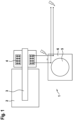
- an electric heating element 3 made of a ferrite material or a ferrite mixture for heating a component 2 of a fuel cell system 1 is shown as an example.
- the heating element 3 is accommodated in sections in the component 2, preferably in a housing of the component 2.
- the protruding free end of the heating element 3 is surrounded by a magnetic coil 4.
- the magnetic coil 4 is connected in this case to the control electronics 6 of another component 5 of the fuel cell system 1.
- the rotating field available to component 5 is diverted to the magnetic coil 4 via the control electronics 6. Eddy currents generated via the magnetic coil 4 are inductively coupled into the heating element 3 and the heating element 3 heats up. If the Curie temperature of the ferrite material or the ferrite mixture of the heating element 3 is reached, the heating element 3 cannot heat up any further. As a result, the temperature in the fuel cell system 1 cannot rise any further. A reliable temperature limitation is thus achieved via the Curie temperature of the ferrite material or the ferrite mixture of the heating device 3.
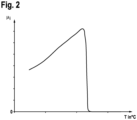
- ⁇ i of a ferrite material is shown as an example over the temperature T in °C.
- the diagram clearly shows that the permeability first increases and then abruptly drops. The drop is due to the fact that the ferrite material has reached its Curie temperature. With When the Curie temperature is reached, the ferrite material loses its magnetic properties and can no longer heat up.
Landscapes
- Life Sciences & Earth Sciences (AREA)
- Engineering & Computer Science (AREA)
- Manufacturing & Machinery (AREA)
- Sustainable Development (AREA)
- Sustainable Energy (AREA)
- Chemical & Material Sciences (AREA)
- Chemical Kinetics & Catalysis (AREA)
- Electrochemistry (AREA)
- General Chemical & Material Sciences (AREA)
- Physics & Mathematics (AREA)
- Electromagnetism (AREA)
- Fuel Cell (AREA)
Description
- Die Erfindung betrifft ein Verfahren zum Aufheizen eines Brennstoffzellensystems gemäß dem Oberbegriff des Anspruchs 1. Darüber hinaus betrifft die Erfindung ein Brennstoffzellensystem, das mit Hilfe des erfindungsgemäßen Verfahrens aufheizbar ist.
- Eine Brennstoffzelle wandelt Wasserstoff mit Hilfe von Sauerstoff zu elektrischer Energie, wobei Abwärme und Wasser erzeugt werden. Die Brennstoffzelle weist hierzu eine Membran-Elektroden-Anordnung (MEA) auf, die über einen Anodenpfad mit Wasserstoff und einen Kathodenpfad mit Sauerstoff versorgt wird. Während der Wasserstoff üblicherweise in einem Tank bevorratet wird, kann der Sauerstoff der Umgebungsluft entnommen werden.
- In der praktischen Anwendung werden mehrere solcher Brennstoffzellen zu einem Brennstoffzellenstapel oder "Stack" angeordnet, um die erzeugte elektrische Spannung zu erhöhen. Zur Versorgung jeder einzelnen Brennstoffzelle mit Wasserstoff und Luft, ist der Brennstoffzellenstapel von Versorgungskanälen durchzogen. Weitere den Brennstoffzellenstapel durchsetzende Kanäle dienen dem Abtransport des aus den Brennstoffzellen austretenden abgereicherten Anodenabgases sowie der abgereicherten feuchten Luft.
- Systematisch hat sich zur Versorgung der Brennstoffzelle mit Wasserstoff ein Ansatz etabliert, bei dem das noch wasserstoffhaltige Anodenabgas mittels einer Gasfördereinrichtung den Brennstoffzellen wieder zugeführt bzw. rezirkuliert wird. Zuvor muss jedoch im Anodenabgas enthaltenes Wasser, das beispielsweise durch Diffusion von der Kathodenseite auf die Anodenseite gelangt ist, separiert werden. Hierzu ist im Anodenpfad ein Wasserabscheider angeordnet, dessen Aufgabe in der Regel nicht nur das Separieren von flüssigem Wasser, sondern ferner das Sammeln von Wasser ist. Ist der Wasserabscheider voll, kann ein Drain-Ventil geöffnet und Wasser aus dem Wasserabscheider ausgeleitet werden.
- Im Abstellfall kann das im Betrieb des Brennstoffzellensystems anfallende Wasser nicht immer vollständig entfernt werden. Bei tiefen Außentemperaturen besteht somit die Gefahr, dass dieses Wasser gefriert. Um das Brennstoffzellensystem in diesem Zustand zu starten, wird das System soweit vorgeheizt, dass alle Temperaturen im System oberhalb des Gefrierpunkts liegen. Zum Vorheizen werden in der Regel passive Widerstandsheizer verwendet, welche die notwendige Leistungsdichte bereitstellen können. Sie weisen jedoch den Nachteil auf, dass sie im Fehlerfall das System über den für Dichtungen kritischen Temperaturbereich aufheizen können und es so zu einem undichten Wasserstoffkreis kommen kann. Sich selbst abregelnde PTC-Elemente können zwar durch ihre eigensichere Temperaturbegrenzung ein Überhitzen verhindern, ihre Heizleistung ist jedoch deutlich geringer. Es müssen somit eine Vielzahl von PTC-Elementen vorgesehen werden, wodurch sich der Bauraumbedarf um das 3- bis 4-fache erhöht.
-
DE 10 2011 002729 A1 offenbart ein Verfahren zum Aufheizen eines Brennstoffzellensystems unter Verwendung mindestens eines elektrischen Heizelements, wobei ein Heizelement aus einem Ferritmaterial oder eine Ferritmischung verwendet wird und über die Curie-Temperatur des Ferritmaterials eine Temperaturobergrenze eingestellt wird. Das Heizelement umfasst zwei Induktionsheizspulen. - Die vorliegende Erfindung ist daher mit der Aufgabe befasst, das Aufheizen eines Brennstoffzellensystems vor einem Neustart zu optimieren. Insbesondere soll das Aufheizen mit maximaler Heizleistung bewirkt werden. Zugleich soll die Einhaltung einer maximal zulässigen Temperatur gewährleistet werden.
- Zur Lösung der Aufgabe werden das Verfahren mit den Merkmalen des Anspruchs 1 sowie das Brennstoffzellensystem mit den Merkmalen des Anspruchs 5 vorgeschlagen. Vorteilhafte Weiterbildungen der Erfindung sind den jeweiligen Unteransprüchen zu entnehmen. Darüber hinaus wird eine Verwendung eines elektrischen Heizelements angegeben.
- Vorgeschlagen wird ein Verfahren zum Aufheizen eines Brennstoffzellensystems, insbesondere einer Komponente und/oder eines Bereichs des Brennstoffzellensystems, unter Verwendung mindestens eines elektrischen Heizelements. Es wird ein Heizelement aus einem Ferritmaterial oder einer Ferritmischung verwendet und über die Curie-Temperatur des Ferritmaterials oder der Ferritmischung wird eine Temperaturobergrenze eingestellt.
- In einem Fehlerfall, beispielsweise bei einer fehlerhaften Ansteuerung des elektrischen Heizelements, kann das Heizelement nicht heißer werden als die Curie-Temperatur des Ferritmaterials bzw. der Ferritmischung. Dadurch ist sichergestellt, dass in einem Fehlerfall die maximal zulässige Temperatur nicht überschritten wird, so dass temperaturempfindliche Komponenten des Brennstoffzellensystems, wie beispielsweise Dichtungen, keine Schaden nehmen.
- Zugleich kann mit Hilfe des elektrischen Heizelements aus Ferritmaterial bzw. aus einer Ferritmischung eine hohe Heizleistung bereitgestellt werden, die ein schnelles Aufheizen des Brennstoffzellensystems im Startfall ermöglicht. Sofern einzelne wasserführende Komponenten und/oder Bereiche gefroren sind, können diese schnell aufgetaut werden.
- Über die Curie-Temperatur des Ferritmaterial bzw. der Ferritmischung wird eine Temperaturobergrenze von maximal 90°C, vorzugsweise von maximal 80°C, weiterhin vorzugsweise von maximal 70°C eingestellt. Die vorstehend genannten Maximalwerte begrenzen jeweils einen als sicher angenommenen Temperaturbereich. Bevorzugt wird die Temperaturobergrenze in Abhängigkeit von der Temperaturempfindlichkeit der verbauten Komponenten, insbesondere der verbauten Dichtungen, festgelegt. Auf diese Weise können Undichtigkeiten vermieden werden.
- Zur Aktivierung des elektrischen Heizelements werden mit Hilfe einer am Heizelement angeordneten Magnetspule Wirbelströme in das Heizelement induktiv eingekoppelt. Ist die Curie-Temperatur des Materials des Heizelements erreicht, können die Wirbelströme das Ferritmaterial bzw. die Ferritmischung nicht weiter erhitzen. Bis zu diesem Punkt steht die maximale Leistung des Heizelements zur Verfügung.
- Erfindungsgemäß wird die Magnetspule mit einer Drehfeld-betriebenen Komponente des Brennstoffzellensystems verschaltet. Auf diese Weise kann die Magnetspule mit der benötigten elektrischen Energie versorgt werden. Da während des Aufheizens des Brennstoffzellensystems die Drehfeld-betriebene Komponente noch außer Betrieb ist, kann die ihr zur Verfügung stehende elektrische Energie an die Magnetspule weitergeleitet werden.
- Vorteilhafterweise wird über eine Ansteuerelektronik der Drehfeld-betriebenen Komponente das Drehfeld von der Komponente auf die Magnetspule umgeleitet. Beispielsweise kann in die Ansteuerelektronik ein Aufheizprogramm implementiert werden, das die Umleitung des Drehfelds von der Drehfeld-betriebenen Komponente auf die Magnetspule steuert.
- Mit Erreichen einer vorab definierten Solltemperatur kann dann mit Hilfe der Ansteuerelektronik das Drehfeld von der Magnetspule zurück auf die Komponente geleitet werden. Somit kann nun die Drehfeld-betriebene Komponente in Betrieb genommen werden.
- Als Drehfeld-betriebene Komponente wird gemäß des Hauptanspruchs 5 ein Anodengas-Rezirkulationsgebläse verwendet. Hierbei handelt es sich um eine vergleichsweise schnell drehende Komponente bzw. Maschine. Da schnell drehenden Maschinen in der Regel ein schnelles Drehfeld zur Verfügung steht, kann hierüber ein noch schnelleres Aufheizen des Heizelements und damit des Brennstoffzellensystems bewirkt werden.
- Das darüber hinaus vorgeschlagene Brennstoffzellensystem umfasst mindestens ein elektrisches Heizelement zum Aufheizen des Brennstoffzellensystems, insbesondere einer Komponente und/oder eines Bereichs des Brennstoffzellensystems, im Startfall. Das Heizelement besteht zumindest teilweise aus einem Ferritmaterial oder einer Ferritmischung. Das Heizelement kann beispielsweise einen Ferritkern umfassen.
- Das vorgeschlagene Brennstoffzellensystem weist somit ein elektrisches Heizelement auf, das ein Aufheizen des Brennstoffzellensystems nach dem zuvor beschriebenen erfindungsgemäßen Verfahren ermöglicht. Somit können mit Hilfe des Brennstoffzellensystems die gleichen Vorteile erreicht werden. Insbesondere kann ein schnelles Aufheizen des Brennstoffzellensystems unter Einhaltung einer maximal zulässigen Temperatur bewirkt werden.
- Das Heizelement ist zumindest abschnittsweise von einer Magnetspule umgeben. Mit Hilfe der Magnetspule können Wirbelströme in das Heizelement induktiv eingekoppelt werden. Die Magnetspule ist vorzugsweise mit einer Drehfeld-betriebenen Komponente des Brennstoffzellensystems, weiterhin vorzugsweise mit einer Ansteuerelektronik der Drehfeld-betriebenen Komponente, verschaltet. Über die Ansteuerelektronik der Drehfeld-betriebenen Komponente kann das Drehfeld von der Komponente auf die Magnetspule umgeleitet werden, um das Brennstoffzellensystem aufzuheizen. Ist eine vorab definierte Solltemperatur erreicht, kann die Aufheizphase abgeschlossen und das Drehfeld zurück auf die Drehfeld-betriebene Komponente geleitet werden.
- Die Drehfeld-betriebene Komponente ist erfindungsgemäß ein Anodengas-Rezirkulationsgebläse. Diesem steht in der Regel ein schnelles Drehfeld zur Verfügung, so dass die Heizleistung des Heizelements weiter gesteigert wird.
- Die Erfindung wird nachfolgend anhand der beigefügten Zeichnungen näher erläutert. Diese zeigen:
-
Fig. 1 eine schematische Darstellung eines Heizelements und einer elektrischen Maschine zur Energieversorgung des Heizelements und -
Fig. 2 ein Diagramm zur Darstellung der Permeabilität eines Ferritmaterials über die Temperatur in °C. - In der
Fig. 1 ist beispielhaft ein elektrisches Heizelement 3 aus einem Ferritmaterial bzw. einer Ferritmischung zum Aufheizen einer Komponente 2 eines Brennstoffzellensystems 1 dargestellt. Das Heizelement 3 ist abschnittsweise in der Komponente 2, vorzugsweise in einem Gehäuse der Komponente 2, aufgenommen. Das überstehende freie Ende des Heizelements 3 ist von einer Magnetspule 4 umgeben. Die Magnetspule 4 ist vorliegend mit der Ansteuerelektronik 6 einer weiteren Komponente 5 des Brennstoffzellensystems 1 verbunden. Hierbei handelt es sich um eine Drehfeld-betriebene Komponente 5, beispielsweise um ein Anodengas-Rezirkulationsgebläse des Brennstoffzellensystems 1. - Zum Aufheizen des Brennstoffzellensystems im Startfall wird das der Komponente 5 zur Verfügung stehende Drehfeld über die Ansteuerelektronik 6 an die Magnetspule 4 umgeleitet. Über die Magnetspule 4 erzeugte Wirbelströme werden induktiv in das Heizelement 3 eingekoppelt und das Heizelement 3 heizt sich auf. Ist die Curie-Temperatur des Ferritmaterials bzw. der Ferritmischung des Heizelements 3 erreicht, kann sich das Heizelement 3 nicht weiter aufheizen. In der Folge kann auch die Temperatur im Brennstoffzellensystem 1 nicht weiter ansteigen. Über die Curie-Temperatur des Ferritmaterials bzw. der Ferritmischung der Heizeinrichtung 3 wird somit eine zuverlässige Temperaturbegrenzung erreicht.
- In der
Fig. 2 ist beispielhaft die Permeabilität µi eines Ferritmaterials über der Temperatur T in °C dargestellt. Das Diagramm zeigt deutlich, dass die Permeabilität erst ansteigt und dann abrupt abfällt. Der Abfall liegt darin begründet, dass das Ferritmaterial seine Curie-Temperatur erreicht hat. Mit Erreichen der Curie-Temperatur verliert das Ferritmaterial seine magnetischen Eigenschaften und kann sich nicht weiter aufheizen.
Claims (5)
- Verfahren zum Aufheizen eines Brennstoffzellensystems (1), insbesondere einer Komponente (2) und/oder eines Bereichs des Brennstoffzellensystems (1), unter Verwendung mindestens eines elektrischen Heizelements (3), wobei ein Heizelement (3) aus einem Ferritmaterial oder einer Ferritmischung verwendet wird und über die Curie-Temperatur des Ferritmaterials oder der Ferritmischung Temperaturobergrenze von maximal 90°C, vorzugsweise von maximal 80°C, weiterhin vorzugsweise von maximal 70°C eingestellt wird, wobei mit Hilfe einer am Heizelement (3) angeordneten Magnetspule (4) Wirbelströme in das Heizelement (3) induktiv eingekoppelt werden,
dadurch gekennzeichnet, dass die Magnetspule (4) mit einer Drehfeld-betriebenen Komponente (5) des Brennstoffzellensystems (1) verschaltet wird. - Verfahren nach Anspruch 1,
dadurch gekennzeichnet, dass über eine Ansteuerelektronik (6) der Drehfeld-betriebenen Komponente (5) das Drehfeld von der Komponente (5) auf die Magnetspule (4) umgeleitet wird. - Verfahren nach Anspruch 5 2,
dadurch gekennzeichnet, dass mit Erreichen einer vorab definierten Solltemperatur mit Hilfe der Ansteuerelektronik (6) das Drehfeld von der Magnetspule (4) zurück auf die Komponente (5) geleitet wird. - Verfahren nach einem der vorhergehenden Ansprüche
dadurch gekennzeichnet, dass ein Anodengas-Rezirkulationsgebläse als Drehfeld-betriebene Komponente (5) verwendet wird. - Brennstoffzellensystem (1), umfassend mindestens ein elektrisches Heizelement (3) zum Aufheizen des Brennstoffzellensystems (1), insbesondere einer Komponente (2) und/oder eines Bereichs des Brennstoffzellensystems (1), im Startfall, wobei
das Heizelement (3) zumindest teilweise aus einem Ferritmaterial oder einer Ferritmischung besteht, beispielsweise einen Ferritkern umfasst, wobei die Curie-Temperatur des Ferritmaterials oder der Ferritmischung eine Temperaturobergrenze von maximal 90°C, vorzugsweise von maximal 80°C, weiterhin vorzugsweise von maximal 70°C aufweist, wobei das Heizelement (3) zumindest abschnittsweise von einer Magnetspule (4) umgeben ist, die mit einer Drehfeld-betriebenen Komponente (5) des Brennstoffzellensystems (1), weiterhin vorzugsweise mit einer Ansteuerelektronik (6) der Komponente (5), verschaltet ist, dadurch gekennzeichnet, dass die Drehfeld-betriebene Komponente (5) ein Anodengas-Rezirkulationsgebläse ist.
Applications Claiming Priority (1)
| Application Number | Priority Date | Filing Date | Title |
|---|---|---|---|
| DE102020208178.6A DE102020208178A1 (de) | 2020-06-30 | 2020-06-30 | Verfahren zum Aufheizen eines Brennstoffzellensystems, Brennstoffzellensystem, Verwendung eines elektrischen Heizelements |
Publications (2)
| Publication Number | Publication Date |
|---|---|
| EP3933991A1 EP3933991A1 (de) | 2022-01-05 |
| EP3933991B1 true EP3933991B1 (de) | 2024-08-07 |
Family
ID=76522877
Family Applications (1)
| Application Number | Title | Priority Date | Filing Date |
|---|---|---|---|
| EP21180236.8A Active EP3933991B1 (de) | 2020-06-30 | 2021-06-18 | Verfahren zum aufheizen eines brennstoffzellensystems und brennstoffzellensystem |
Country Status (2)
| Country | Link |
|---|---|
| EP (1) | EP3933991B1 (de) |
| DE (1) | DE102020208178A1 (de) |
Families Citing this family (4)
| Publication number | Priority date | Publication date | Assignee | Title |
|---|---|---|---|---|
| CN116314923B (zh) * | 2023-03-29 | 2026-04-07 | 北京亿华通科技股份有限公司 | 燃料电池电堆的加热方法及装置 |
| EP4632852A1 (de) * | 2024-04-12 | 2025-10-15 | Robert Bosch GmbH | Behälter zur aufnahme eines gefrierfähigen mediums, wasserabscheider mit behälter sowie anodensystem mit wasserabscheider |
| DE102024130888A1 (de) | 2024-10-23 | 2026-04-23 | Zf Cv Systems Global Gmbh | Rotor für ein Gebläse für eine Brennstoffzellenanordnung für ein Fahrzeug, insbesondere Nutzfahrzeug, Gebläse, Brennstoffzellenanordnung, Fahrzeug |
| CN119508062B (zh) * | 2024-11-07 | 2025-09-16 | 北京腾达绿氢能科技有限公司 | 一种利用可再生能源高效耦合的燃气发电系统及发电方法 |
Family Cites Families (5)
| Publication number | Priority date | Publication date | Assignee | Title |
|---|---|---|---|---|
| DE3731762A1 (de) * | 1987-09-22 | 1989-03-30 | Licentia Gmbh | Verfahren zur temperaturregelung bzw. begrenzung an induktionsheizspulen, insbesondere fuer haushalt-induktionskochgeraete sowie eine vorrichtung zur durchfuehrung des verfahrens |
| EA014258B1 (ru) * | 2005-04-22 | 2010-10-29 | Шелл Интернэшнл Рисерч Маатсхаппий Б.В. | Нагреватель с ограничением температуры, содержащий неферромагнитный проводник |
| JP2007227209A (ja) * | 2006-02-24 | 2007-09-06 | Equos Research Co Ltd | 燃料電池システム |
| DE102011002729A1 (de) * | 2011-01-14 | 2012-07-19 | Siemens Aktiengesellschaft | Energiespeicheranordnung |
| DE102019218838A1 (de) * | 2019-12-04 | 2021-06-10 | Robert Bosch Gmbh | Stromsammleranordnung |
-
2020
- 2020-06-30 DE DE102020208178.6A patent/DE102020208178A1/de active Pending
-
2021
- 2021-06-18 EP EP21180236.8A patent/EP3933991B1/de active Active
Also Published As
| Publication number | Publication date |
|---|---|
| DE102020208178A1 (de) | 2021-12-30 |
| EP3933991A1 (de) | 2022-01-05 |
Similar Documents
| Publication | Publication Date | Title |
|---|---|---|
| EP3933991B1 (de) | Verfahren zum aufheizen eines brennstoffzellensystems und brennstoffzellensystem | |
| DE102007046057B4 (de) | Verfahren zum Starten eines Brennstoffzellensystems für ein Fahrzeug | |
| DE102007051811B4 (de) | Durch ein geteiltes Solenoid beheiztes Ventil | |
| DE102007048869B4 (de) | Brennstoffzelle mit einem PTC-Element als selbstregulierender Startwiderstand sowie Brennstoffzellenstapel | |
| DE102015215790A1 (de) | Brennstoffzellen-Kühlmittelkreislauf-Entlüftungsventil, Brennstoffzellen-Kühlmittelkreislauf sowie Verfahren zum Filtern eines Kühlmittels in einer Brennstoffzellen-Kühleinrichtung | |
| DE102016110451A1 (de) | Verfahren zum Starten eines Brennstoffzellensystems und Brennstoffzellensystem | |
| WO2012095331A1 (de) | Energiespeicheranordnung | |
| WO2014056817A1 (de) | Kaltstartprozedur für einen brennstoffzellenstack | |
| DE102015220759A1 (de) | Wärmeübertrager, insbesondere thermoelektrische Wärmepumpe, zum Temperieren einer Batterie | |
| WO2013045043A1 (de) | Vorrichtung zur speicherung eines gasförmigen brennstoffs | |
| WO2000059058A1 (de) | Brennstoffzellenbatterie mit heizelement und verbesserter kaltstartperformance und verfahren zum kaltstarten einer brennstoffzellenbatterie | |
| WO2016037763A1 (de) | Temperiereinrichtung zur temperierung einer elektrischen energieversorgungseinheit | |
| DE102020208845A1 (de) | Verfahren zum Betreiben eines Kühlsystems, Steuereinheit | |
| DE102021202986A1 (de) | Verfahren zum Betreiben eines Brennstoffzellensystems, Brennstoffzellensystem | |
| DE102022111447A1 (de) | Pulswechselrichter sowie Antriebsstrang und Verfahren zur Erwärmung eines Kühlmittels | |
| EP3652800B1 (de) | Brennstoffzellenvorrichtung und verfahren zum betreiben einer brennstoffzellenvorrichtung | |
| DE102015004675A1 (de) | Verfahren zur Erhöhung des elektrischen Isolationswiderstands | |
| DE102015205508A1 (de) | Verfahren zum Starten eines Brennstoffzellensystems | |
| AT523316B1 (de) | Brennstoffzellensystem und Verfahren zum Betreiben eines Brennstoffzellensystems | |
| DE102018010056A1 (de) | Brennstoffzellenstapel aus elner Vielzahl von Einzelzellen | |
| DE102022209872A1 (de) | Verfahren zum Betrieb eines Bordnetzes, Bordnetz und elektrisch angetriebenes Kraftfahrzeug mit einem Solchen | |
| WO2023138886A2 (de) | Brennstoffzellensystem, verfahren zum betreiben eines brennstoffzellensystems, computerprogrammprodukt und speichermittel | |
| EP1865272B1 (de) | Wassererhitzer | |
| WO2021228526A1 (de) | Zellenstapel mit beheizbarer endplatte | |
| DE102012211430A1 (de) | Eis brechendes Anodenventil |
Legal Events
| Date | Code | Title | Description |
|---|---|---|---|
| PUAI | Public reference made under article 153(3) epc to a published international application that has entered the european phase |
Free format text: ORIGINAL CODE: 0009012 |
|
| STAA | Information on the status of an ep patent application or granted ep patent |
Free format text: STATUS: THE APPLICATION HAS BEEN PUBLISHED |
|
| AK | Designated contracting states |
Kind code of ref document: A1 Designated state(s): AL AT BE BG CH CY CZ DE DK EE ES FI FR GB GR HR HU IE IS IT LI LT LU LV MC MK MT NL NO PL PT RO RS SE SI SK SM TR |
|
| B565 | Issuance of search results under rule 164(2) epc |
Effective date: 20211126 |
|
| STAA | Information on the status of an ep patent application or granted ep patent |
Free format text: STATUS: REQUEST FOR EXAMINATION WAS MADE |
|
| 17P | Request for examination filed |
Effective date: 20220705 |
|
| RBV | Designated contracting states (corrected) |
Designated state(s): AL AT BE BG CH CY CZ DE DK EE ES FI FR GB GR HR HU IE IS IT LI LT LU LV MC MK MT NL NO PL PT RO RS SE SI SK SM TR |
|
| GRAP | Despatch of communication of intention to grant a patent |
Free format text: ORIGINAL CODE: EPIDOSNIGR1 |
|
| STAA | Information on the status of an ep patent application or granted ep patent |
Free format text: STATUS: GRANT OF PATENT IS INTENDED |
|
| RIC1 | Information provided on ipc code assigned before grant |
Ipc: H05B 6/10 20060101ALI20231229BHEP Ipc: H01M 8/04223 20160101ALI20231229BHEP Ipc: H01M 8/04225 20160101ALI20231229BHEP Ipc: H01M 8/04007 20160101AFI20231229BHEP |
|
| INTG | Intention to grant announced |
Effective date: 20240125 |
|
| GRAS | Grant fee paid |
Free format text: ORIGINAL CODE: EPIDOSNIGR3 |
|
| GRAA | (expected) grant |
Free format text: ORIGINAL CODE: 0009210 |
|
| STAA | Information on the status of an ep patent application or granted ep patent |
Free format text: STATUS: THE PATENT HAS BEEN GRANTED |
|
| AK | Designated contracting states |
Kind code of ref document: B1 Designated state(s): AL AT BE BG CH CY CZ DE DK EE ES FI FR GB GR HR HU IE IS IT LI LT LU LV MC MK MT NL NO PL PT RO RS SE SI SK SM TR |
|
| REG | Reference to a national code |
Ref country code: GB Ref legal event code: FG4D Free format text: NOT ENGLISH |
|
| REG | Reference to a national code |
Ref country code: CH Ref legal event code: EP |
|
| REG | Reference to a national code |
Ref country code: DE Ref legal event code: R096 Ref document number: 502021004652 Country of ref document: DE |
|
| REG | Reference to a national code |
Ref country code: IE Ref legal event code: FG4D Free format text: LANGUAGE OF EP DOCUMENT: GERMAN |
|
| REG | Reference to a national code |
Ref country code: LT Ref legal event code: MG9D |
|
| REG | Reference to a national code |
Ref country code: NL Ref legal event code: MP Effective date: 20240807 |
|
| PG25 | Lapsed in a contracting state [announced via postgrant information from national office to epo] |
Ref country code: NO Free format text: LAPSE BECAUSE OF FAILURE TO SUBMIT A TRANSLATION OF THE DESCRIPTION OR TO PAY THE FEE WITHIN THE PRESCRIBED TIME-LIMIT Effective date: 20241107 |
|
| PG25 | Lapsed in a contracting state [announced via postgrant information from national office to epo] |
Ref country code: NL Free format text: LAPSE BECAUSE OF FAILURE TO SUBMIT A TRANSLATION OF THE DESCRIPTION OR TO PAY THE FEE WITHIN THE PRESCRIBED TIME-LIMIT Effective date: 20240807 Ref country code: PT Free format text: LAPSE BECAUSE OF FAILURE TO SUBMIT A TRANSLATION OF THE DESCRIPTION OR TO PAY THE FEE WITHIN THE PRESCRIBED TIME-LIMIT Effective date: 20241209 Ref country code: PL Free format text: LAPSE BECAUSE OF FAILURE TO SUBMIT A TRANSLATION OF THE DESCRIPTION OR TO PAY THE FEE WITHIN THE PRESCRIBED TIME-LIMIT Effective date: 20240807 Ref country code: GR Free format text: LAPSE BECAUSE OF FAILURE TO SUBMIT A TRANSLATION OF THE DESCRIPTION OR TO PAY THE FEE WITHIN THE PRESCRIBED TIME-LIMIT Effective date: 20241108 Ref country code: FI Free format text: LAPSE BECAUSE OF FAILURE TO SUBMIT A TRANSLATION OF THE DESCRIPTION OR TO PAY THE FEE WITHIN THE PRESCRIBED TIME-LIMIT Effective date: 20240807 |
|
| PG25 | Lapsed in a contracting state [announced via postgrant information from national office to epo] |
Ref country code: BG Free format text: LAPSE BECAUSE OF FAILURE TO SUBMIT A TRANSLATION OF THE DESCRIPTION OR TO PAY THE FEE WITHIN THE PRESCRIBED TIME-LIMIT Effective date: 20240807 |
|
| PG25 | Lapsed in a contracting state [announced via postgrant information from national office to epo] |
Ref country code: LV Free format text: LAPSE BECAUSE OF FAILURE TO SUBMIT A TRANSLATION OF THE DESCRIPTION OR TO PAY THE FEE WITHIN THE PRESCRIBED TIME-LIMIT Effective date: 20240807 |
|
| PG25 | Lapsed in a contracting state [announced via postgrant information from national office to epo] |
Ref country code: IS Free format text: LAPSE BECAUSE OF FAILURE TO SUBMIT A TRANSLATION OF THE DESCRIPTION OR TO PAY THE FEE WITHIN THE PRESCRIBED TIME-LIMIT Effective date: 20241207 |
|
| PG25 | Lapsed in a contracting state [announced via postgrant information from national office to epo] |
Ref country code: HR Free format text: LAPSE BECAUSE OF FAILURE TO SUBMIT A TRANSLATION OF THE DESCRIPTION OR TO PAY THE FEE WITHIN THE PRESCRIBED TIME-LIMIT Effective date: 20240807 |
|
| PG25 | Lapsed in a contracting state [announced via postgrant information from national office to epo] |
Ref country code: RS Free format text: LAPSE BECAUSE OF FAILURE TO SUBMIT A TRANSLATION OF THE DESCRIPTION OR TO PAY THE FEE WITHIN THE PRESCRIBED TIME-LIMIT Effective date: 20241107 Ref country code: ES Free format text: LAPSE BECAUSE OF FAILURE TO SUBMIT A TRANSLATION OF THE DESCRIPTION OR TO PAY THE FEE WITHIN THE PRESCRIBED TIME-LIMIT Effective date: 20240807 |
|
| PG25 | Lapsed in a contracting state [announced via postgrant information from national office to epo] |
Ref country code: RS Free format text: LAPSE BECAUSE OF FAILURE TO SUBMIT A TRANSLATION OF THE DESCRIPTION OR TO PAY THE FEE WITHIN THE PRESCRIBED TIME-LIMIT Effective date: 20241107 Ref country code: PT Free format text: LAPSE BECAUSE OF FAILURE TO SUBMIT A TRANSLATION OF THE DESCRIPTION OR TO PAY THE FEE WITHIN THE PRESCRIBED TIME-LIMIT Effective date: 20241209 Ref country code: PL Free format text: LAPSE BECAUSE OF FAILURE TO SUBMIT A TRANSLATION OF THE DESCRIPTION OR TO PAY THE FEE WITHIN THE PRESCRIBED TIME-LIMIT Effective date: 20240807 Ref country code: NO Free format text: LAPSE BECAUSE OF FAILURE TO SUBMIT A TRANSLATION OF THE DESCRIPTION OR TO PAY THE FEE WITHIN THE PRESCRIBED TIME-LIMIT Effective date: 20241107 Ref country code: NL Free format text: LAPSE BECAUSE OF FAILURE TO SUBMIT A TRANSLATION OF THE DESCRIPTION OR TO PAY THE FEE WITHIN THE PRESCRIBED TIME-LIMIT Effective date: 20240807 Ref country code: LV Free format text: LAPSE BECAUSE OF FAILURE TO SUBMIT A TRANSLATION OF THE DESCRIPTION OR TO PAY THE FEE WITHIN THE PRESCRIBED TIME-LIMIT Effective date: 20240807 Ref country code: IS Free format text: LAPSE BECAUSE OF FAILURE TO SUBMIT A TRANSLATION OF THE DESCRIPTION OR TO PAY THE FEE WITHIN THE PRESCRIBED TIME-LIMIT Effective date: 20241207 Ref country code: HR Free format text: LAPSE BECAUSE OF FAILURE TO SUBMIT A TRANSLATION OF THE DESCRIPTION OR TO PAY THE FEE WITHIN THE PRESCRIBED TIME-LIMIT Effective date: 20240807 Ref country code: GR Free format text: LAPSE BECAUSE OF FAILURE TO SUBMIT A TRANSLATION OF THE DESCRIPTION OR TO PAY THE FEE WITHIN THE PRESCRIBED TIME-LIMIT Effective date: 20241108 Ref country code: FI Free format text: LAPSE BECAUSE OF FAILURE TO SUBMIT A TRANSLATION OF THE DESCRIPTION OR TO PAY THE FEE WITHIN THE PRESCRIBED TIME-LIMIT Effective date: 20240807 Ref country code: ES Free format text: LAPSE BECAUSE OF FAILURE TO SUBMIT A TRANSLATION OF THE DESCRIPTION OR TO PAY THE FEE WITHIN THE PRESCRIBED TIME-LIMIT Effective date: 20240807 Ref country code: BG Free format text: LAPSE BECAUSE OF FAILURE TO SUBMIT A TRANSLATION OF THE DESCRIPTION OR TO PAY THE FEE WITHIN THE PRESCRIBED TIME-LIMIT Effective date: 20240807 |
|
| PG25 | Lapsed in a contracting state [announced via postgrant information from national office to epo] |
Ref country code: DK Free format text: LAPSE BECAUSE OF FAILURE TO SUBMIT A TRANSLATION OF THE DESCRIPTION OR TO PAY THE FEE WITHIN THE PRESCRIBED TIME-LIMIT Effective date: 20240807 Ref country code: SM Free format text: LAPSE BECAUSE OF FAILURE TO SUBMIT A TRANSLATION OF THE DESCRIPTION OR TO PAY THE FEE WITHIN THE PRESCRIBED TIME-LIMIT Effective date: 20240807 |
|
| PG25 | Lapsed in a contracting state [announced via postgrant information from national office to epo] |
Ref country code: EE Free format text: LAPSE BECAUSE OF FAILURE TO SUBMIT A TRANSLATION OF THE DESCRIPTION OR TO PAY THE FEE WITHIN THE PRESCRIBED TIME-LIMIT Effective date: 20240807 |
|
| PG25 | Lapsed in a contracting state [announced via postgrant information from national office to epo] |
Ref country code: CZ Free format text: LAPSE BECAUSE OF FAILURE TO SUBMIT A TRANSLATION OF THE DESCRIPTION OR TO PAY THE FEE WITHIN THE PRESCRIBED TIME-LIMIT Effective date: 20240807 |
|
| PG25 | Lapsed in a contracting state [announced via postgrant information from national office to epo] |
Ref country code: SK Free format text: LAPSE BECAUSE OF FAILURE TO SUBMIT A TRANSLATION OF THE DESCRIPTION OR TO PAY THE FEE WITHIN THE PRESCRIBED TIME-LIMIT Effective date: 20240807 |
|
| REG | Reference to a national code |
Ref country code: DE Ref legal event code: R097 Ref document number: 502021004652 Country of ref document: DE |
|
| PLBE | No opposition filed within time limit |
Free format text: ORIGINAL CODE: 0009261 |
|
| STAA | Information on the status of an ep patent application or granted ep patent |
Free format text: STATUS: NO OPPOSITION FILED WITHIN TIME LIMIT |
|
| 26N | No opposition filed |
Effective date: 20250508 |
|
| PGFP | Annual fee paid to national office [announced via postgrant information from national office to epo] |
Ref country code: AT Payment date: 20250721 Year of fee payment: 5 |
|
| PG25 | Lapsed in a contracting state [announced via postgrant information from national office to epo] |
Ref country code: SE Free format text: LAPSE BECAUSE OF FAILURE TO SUBMIT A TRANSLATION OF THE DESCRIPTION OR TO PAY THE FEE WITHIN THE PRESCRIBED TIME-LIMIT Effective date: 20240807 |
|
| PGFP | Annual fee paid to national office [announced via postgrant information from national office to epo] |
Ref country code: DE Payment date: 20250814 Year of fee payment: 5 |
|
| REG | Reference to a national code |
Ref country code: CH Ref legal event code: H13 Free format text: ST27 STATUS EVENT CODE: U-0-0-H10-H13 (AS PROVIDED BY THE NATIONAL OFFICE) Effective date: 20260127 |
|
| PG25 | Lapsed in a contracting state [announced via postgrant information from national office to epo] |
Ref country code: IT Free format text: LAPSE BECAUSE OF FAILURE TO SUBMIT A TRANSLATION OF THE DESCRIPTION OR TO PAY THE FEE WITHIN THE PRESCRIBED TIME-LIMIT Effective date: 20240807 |
|
| PG25 | Lapsed in a contracting state [announced via postgrant information from national office to epo] |
Ref country code: MC Free format text: LAPSE BECAUSE OF FAILURE TO SUBMIT A TRANSLATION OF THE DESCRIPTION OR TO PAY THE FEE WITHIN THE PRESCRIBED TIME-LIMIT Effective date: 20240807 |
|
| PG25 | Lapsed in a contracting state [announced via postgrant information from national office to epo] |
Ref country code: LU Free format text: LAPSE BECAUSE OF NON-PAYMENT OF DUE FEES Effective date: 20250618 |
|
| GBPC | Gb: european patent ceased through non-payment of renewal fee |
Effective date: 20250618 |
|
| REG | Reference to a national code |
Ref country code: BE Ref legal event code: MM Effective date: 20250630 |
|
| PG25 | Lapsed in a contracting state [announced via postgrant information from national office to epo] |
Ref country code: GB Free format text: LAPSE BECAUSE OF NON-PAYMENT OF DUE FEES Effective date: 20250618 |
|
| PG25 | Lapsed in a contracting state [announced via postgrant information from national office to epo] |
Ref country code: IE Free format text: LAPSE BECAUSE OF NON-PAYMENT OF DUE FEES Effective date: 20250618 |
|
| PG25 | Lapsed in a contracting state [announced via postgrant information from national office to epo] |
Ref country code: RO Free format text: LAPSE BECAUSE OF FAILURE TO SUBMIT A TRANSLATION OF THE DESCRIPTION OR TO PAY THE FEE WITHIN THE PRESCRIBED TIME-LIMIT Effective date: 20240807 Ref country code: BE Free format text: LAPSE BECAUSE OF NON-PAYMENT OF DUE FEES Effective date: 20250630 |
|
| PG25 | Lapsed in a contracting state [announced via postgrant information from national office to epo] |
Ref country code: FR Free format text: LAPSE BECAUSE OF NON-PAYMENT OF DUE FEES Effective date: 20250630 |
|
| PG25 | Lapsed in a contracting state [announced via postgrant information from national office to epo] |
Ref country code: CH Free format text: LAPSE BECAUSE OF NON-PAYMENT OF DUE FEES Effective date: 20250630 |