EP3930686B1 - Novel iron compositions and methods of making and using the same - Google Patents
Novel iron compositions and methods of making and using the same Download PDFInfo
- Publication number
- EP3930686B1 EP3930686B1 EP20717359.2A EP20717359A EP3930686B1 EP 3930686 B1 EP3930686 B1 EP 3930686B1 EP 20717359 A EP20717359 A EP 20717359A EP 3930686 B1 EP3930686 B1 EP 3930686B1
- Authority
- EP
- European Patent Office
- Prior art keywords
- iron
- composition
- sucrose
- peak
- sample
- Prior art date
- Legal status (The legal status is an assumption and is not a legal conclusion. Google has not performed a legal analysis and makes no representation as to the accuracy of the status listed.)
- Active
Links
Images







Classifications
-
- C—CHEMISTRY; METALLURGY
- C07—ORGANIC CHEMISTRY
- C07H—SUGARS; DERIVATIVES THEREOF; NUCLEOSIDES; NUCLEOTIDES; NUCLEIC ACIDS
- C07H23/00—Compounds containing boron, silicon or a metal, e.g. chelates or vitamin B12
-
- A—HUMAN NECESSITIES
- A61—MEDICAL OR VETERINARY SCIENCE; HYGIENE
- A61K—PREPARATIONS FOR MEDICAL, DENTAL OR TOILETRY PURPOSES
- A61K9/00—Medicinal preparations characterised by special physical form
- A61K9/0012—Galenical forms characterised by the site of application
- A61K9/0019—Injectable compositions; Intramuscular, intravenous, arterial, subcutaneous administration; Compositions to be administered through the skin in an invasive manner
-
- A—HUMAN NECESSITIES
- A61—MEDICAL OR VETERINARY SCIENCE; HYGIENE
- A61K—PREPARATIONS FOR MEDICAL, DENTAL OR TOILETRY PURPOSES
- A61K9/00—Medicinal preparations characterised by special physical form
- A61K9/08—Solutions
-
- A—HUMAN NECESSITIES
- A61—MEDICAL OR VETERINARY SCIENCE; HYGIENE
- A61K—PREPARATIONS FOR MEDICAL, DENTAL OR TOILETRY PURPOSES
- A61K31/00—Medicinal preparations containing organic active ingredients
- A61K31/33—Heterocyclic compounds
- A61K31/395—Heterocyclic compounds having nitrogen as a ring hetero atom, e.g. guanethidine or rifamycins
- A61K31/40—Heterocyclic compounds having nitrogen as a ring hetero atom, e.g. guanethidine or rifamycins having five-membered rings with one nitrogen as the only ring hetero atom, e.g. sulpiride, succinimide, tolmetin, buflomedil
- A61K31/409—Heterocyclic compounds having nitrogen as a ring hetero atom, e.g. guanethidine or rifamycins having five-membered rings with one nitrogen as the only ring hetero atom, e.g. sulpiride, succinimide, tolmetin, buflomedil having four such rings, e.g. porphine derivatives, bilirubin, biliverdine
-
- A—HUMAN NECESSITIES
- A61—MEDICAL OR VETERINARY SCIENCE; HYGIENE
- A61K—PREPARATIONS FOR MEDICAL, DENTAL OR TOILETRY PURPOSES
- A61K33/00—Medicinal preparations containing inorganic active ingredients
- A61K33/24—Heavy metals; Compounds thereof
- A61K33/26—Iron; Compounds thereof
-
- A—HUMAN NECESSITIES
- A61—MEDICAL OR VETERINARY SCIENCE; HYGIENE
- A61K—PREPARATIONS FOR MEDICAL, DENTAL OR TOILETRY PURPOSES
- A61K47/00—Medicinal preparations characterised by the non-active ingredients used, e.g. carriers or inert additives; Targeting or modifying agents chemically bound to the active ingredient
- A61K47/02—Inorganic compounds
-
- A—HUMAN NECESSITIES
- A61—MEDICAL OR VETERINARY SCIENCE; HYGIENE
- A61K—PREPARATIONS FOR MEDICAL, DENTAL OR TOILETRY PURPOSES
- A61K9/00—Medicinal preparations characterised by special physical form
- A61K9/06—Ointments; Bases therefor; Other semi-solid forms, e.g. creams, sticks, gels
-
- A—HUMAN NECESSITIES
- A61—MEDICAL OR VETERINARY SCIENCE; HYGIENE
- A61P—SPECIFIC THERAPEUTIC ACTIVITY OF CHEMICAL COMPOUNDS OR MEDICINAL PREPARATIONS
- A61P13/00—Drugs for disorders of the urinary system
- A61P13/12—Drugs for disorders of the urinary system of the kidneys
-
- A—HUMAN NECESSITIES
- A61—MEDICAL OR VETERINARY SCIENCE; HYGIENE
- A61P—SPECIFIC THERAPEUTIC ACTIVITY OF CHEMICAL COMPOUNDS OR MEDICINAL PREPARATIONS
- A61P7/00—Drugs for disorders of the blood or the extracellular fluid
- A61P7/08—Plasma substitutes; Perfusion solutions; Dialytics or haemodialytics; Drugs for electrolytic or acid-base disorders, e.g. hypovolemic shock
Definitions
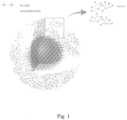
- the intravenous (IV) iron agents are colloids that consist of spheroidal iron-carbohydrate nanoparticles as shown in Fig. 1 .
- At the core of each particle is an iron-oxyhydroxide gel and the core is surrounded by a shell of carbohydrate that stabilizes the iron-oxyhydroxide (the main function of the ligand is to stabilize the complex and to protect it against further polynuclearization).
- Iron carbohydrate complexes behave as prodrugs, since the iron has to be released from the iron(III)-hydroxide core.
- the stable (Type 1) complexes such as ferric carboxymaltose and iron dextran are taken up by endocytosis by macrophages of the reticuloendothelial system (RES). See Danielson, J. Structure, chemistry, and pharmacokinetics of intravenous iron agents. Am. Soc. Nephrol. 2004, 15, S93-S98 .
- INFeD ® / Dexferrum ® Iron dextran
- Ferahem ® Ferumoxytol
- Injectafer ® Ferric carboxymaltose
- Venofer ® Iron sucrose
- Ferrlecit ® Sodium ferric gluconate complex
- Iron sucrose sold under the name Venofer ® , is formulated as a colloidal suspension having a molecular weight (M w ) of about 34,000-60,000 Daltons and a molecular formula as follows: [Na 2 Fe 5 O 8 (OH)•3(H2O)] n m (C 12 H 22 O 11 ) where n is the degree of iron polymerization and m is the number of sucrose molecules (C.sub.12 H.sub.22 O.sub.11) in complex with the poly-nuclear polymerized iron core: [Na 2 Fe 5 O 8 (OH)•3(H2O)] n
- Each mL contains 20 mg elemental iron as iron sucrose in water for injection.
- Venofer ® is available in 5mL single dose vials (100 mg elemental iron per 5 mL) and 10 mL single dose vials (200 mg elemental iron per 10 mL).
- the drug product contains approximately 30% sucrose w/v (300 mg/mL) and has a pH of 10.5-11.1.
- the product contains no preservatives.
- the osmolarity of the injection is 1,250 mOsmol/L.
- iron sucrose has been used in combination with tin protoporphyrin (SnPP) to induce acquired cytoresistance without causing injury to the organ.
- SnPP tin protoporphyrin
- the present inventors have found a need for an iron sucrose formulation that can be easily combined with tin protoporphyrin (SnPP), that is stable, and can be injected into a patient to treat iron deficiency or for its renal protective effects either alone or in combination with another agent such as SnPP.
- German patent number DE862482 discloses a process to prepare stable injectable solutions of salt of trivalent iron.
- US patent application publication no. US 2005/309187 discloses a process for preparing an iron sucrose complex, substantially free of excipients, for providing an iron sucrose complex co-precipitated with sucrose, and for providing iron sucrose complexes in aqueous solution.
- German patent number DE19547356 discloses an adsorbent for phosphate from an aqueous medium, in particular for inorganic or nutrient-bound phosphate from body fluids or nutrients.
- the adsorbent contains polynuclear beta-iron hydroxide stabilised by carbohydrates and/or humic acid.
- compositions, kits, and methods to protect organs by inducing acquired cytoresistance without causing injury to the organ utilize Me-porphryin complexs, heme proteins, iron containing molecules, and/or vitamin B12 and, optionally, agents that impact heme protein metabolism.
- the disclosure relates to aqueous iron sucrose compositions having desirable properties.
- the aqueous irons sucrose composition comprises iron sucrose and bicarbonate.
- the invention relates to an aqueous iron pharmaceutical composition comprising: iron sucrose; bicarbonate; and a pharmaceutically acceptable aqueous carrier.
- the invention relates to an aqueous iron composition comprises iron sucrose and bicarbonate for use in a method for prevention or treatment of a kidney disease or disorder comprising intravenously administering an aqueous iron composition in a therapeutically effective amount, wherein the aqueous iron composition comprises iron sucrose and bicarbonate.
- the present disclosure involves an aqueous iron sucrose (FeS) and bicarbonate (FeS-bicarb) composition.
- FeS-bicarb aqueous iron sucrose
- FeS-bicarb composition can be utilized as a renal protective agent.
- the inventors have discovered that the FeS-bicarb composition according to aspects of the disclosure is preferentially absorbed in the kidney compared to commercially available forms of FeS. Further, the inventors have found that FeS-bicarb results in preferential upregulation of kidney protective molecule(s) relative to FeS alone.
- the FeS-bicarb composition of the present disclosure may be advantageously combined with other renal protective agents such as tin protoporphyrin (SnPP) to readily form injectable renal protective agents.
- SnPP tin protoporphyrin
- FeS-bicarb preferentially upregulated kidney protective molecules relative to FeS alone. While not wishing to be bound by theory, the present inventors have proposed that the bicarb in addition to FeS may alter the relative levels of Fe(lll) and Fe(ll) present. Because of the observed redness in the FeS-bicarb product, the inventors have proposed that the compositions of the disclosure may include elevated levels of Fe(II). This could explain the elevated renal protective effects, given the higher reactivity of Fe(ll) relative to Fe(III).
- the bicarb has a buffering effect.
- a tin protoporphyrin composition this can be advantageous since SnPP is best stored at low pH to prevent unwanted dimerization during storage.
- the SnPP composition may be combined with the FeS-bicarb composition in a ratio of less than or equal to about 1:1 SnPP:FeS, such as about 1:2, about 1:4, about 1:8, about 1:10, about 1:20, about 1:50, about 1:100, about 1:1000, about 1:10,000, about 1:100,000, about 1:1,000,000.
- the composition has a molecular weight measured using GPC as described in Example 1.
- the Mp is preferably within the range of between 25,000 and 35,000 Daltons, more preferably between 28,000 and 32,000 Daltons, and most preferably about 29,000 Daltons.
- the Mw is preferably within the range of between 25,000 and 45,000 Daltons, more preferably between 30,000 and 40,000 Daltons, even more preferably between 33,000 and 38,000 Daltons, and most preferably about 34,000 Daltons.
- the Mn is preferably within the range of between 15,000 and 30,000 Daltons, more preferably between 20,000 and 25,000 Daltons, and most preferably about 24,000 Daltons.
- the polydispersity (PDI) is preferably within the range of 1.35 to 1.60, more preferably within the range of 1.38 and 1.5, even more preferably within the range 1.40 and 1.48, and most preferably about 1.4.
- the composition has a stable zeta potential of -3.0 mV or less, more preferably -7.0 mV or less, and most preferably around -10mV.
- the composition has a total organic carbon of less than 8.5%, preferably less than 8.0%, and most preferably about 7.7%.
- the osmolality as measured in accordance with Example 1 is within the range of 550 and 1600 mOsm/kg, preferably within the range of 1500 and 1580 mOsm/kg, and most preferably about 1540 mOsm/kg.
- the present disclosure involves a composition that is prepared by dissolving enough iron sucrose complex in water (ca 3.5L) to give a 12 mg/mL (expressed as iron) solution when diluted to 6.0 L.
- the amount of iron sucrose needed was calculated for the final volume of liquid, 6100 mL (6.1L) so that the final c.Concentration is 12 mg/mL. This requires 73.2 g of iron.
- the use potency of iron sucrose is 0.0550. Thus, 73.2 g / 0.0550 or 1331 g ⁇ 1 g of iron sucrose is needed.
- Iron sucrose, 1331 g ⁇ 1 g was weighed directly into a 6.0 L Erlenmeyer flask. Approximately 3-3.5 L of water is added to the Erlenmeyer flask, and the contents of the flask are stirred.
- Sodium bicarbonate is added in an amount such that the final sodium bicarbonate concentration is 10mg/mL when diluted to 6.0L.
- Sodium bicarbonate, 109.8 ⁇ 0.1g, is weighed and added to the 6.0 L flask.
- Sodium chloride is added in an amount such that the final sodium chloride concentration is 9.0 mg/mL upon dilution.
- Sodium chloride, 54.9 ⁇ 0.1, is weighed and added to the 6.0 L flask. The suspension is stirred for 30-120 minutes to give a black opaque solution.
- the pH of the solution is monitored with a pH meter while 1M sodium hydroxide is added in small portions until pH 10.30 is reached and remains stable.
- Sodium hydroxide 40.0 ⁇ 0.1 g, was added to a 1.0 L Erlenmeyer flask.
- 1.0 ⁇ 0.1 L of water is added to the 1.0 L Erlenmeyer flask and stirred until all of the sodium hydroxide dissolved.
- the solution is then stirred for 10 minutes.
- the solution is then transferred to a volumetrically accurate flask and diluted to 6.1L with water.
- a 2 L volumetric flask is used twice to transfer exactly 4L of the 10.3 pH solution to a 6L Erlenmeyer flask.
- the remaining 10.3 pH solution is diluted to 2 L in a volumetric flask and added to the 6L Erlenmeyer flask.
- the 100 mL graduated cylinder is used to add 100 ⁇ 0.1 mL to the 6.0 L Erlenmeyer, and the resulting solution is stirred for 10 minutes.
- the resulting product solution appears dark red to brown.
- Two isotopes of iron are present in the sample preparation in a ratio consistent with that of the standard preparation.
- the resulting material had a pH of 10.3, which is within the preferred limits of 10.1-10.4.
- the resultant material had 11.5 / 11.6 parts per thousand (mg/mL) iron according to SOP 174472, which determines iron through inductively coupled plasma-mass spectroscopy.
- Table 1 Properties of the Composition of Example 1 Test Observation / Results Specification Reference to Test Method Description Brown to dark brown powder Brown to dark brown powder In house Solubility Freely soluble in water. Practically insoluble in methanol Freely soluble in water. Practically insoluble in methanol Identification Iron Red color discharge Red color should discharge USP38 Monographs of Iron sucrose Injection Sucrose Complies The retention time of major peak in chromatogram of Assay Preparation corresponds to that in chromatogram of Standard Preparation, as obtained in the assay for sucrose. USP38 Monographs of Iron sucrose injection.
- USP 38 Monographs of Iron sucrose Injection Loss on Drying 1.24% w/w Not More Than 5.00% w/w USP38 Heavy Metals Arsenic Less than 2.0 ppm Not more than 2.0 ppm In House Copper Less than 20 ppm Not more than 20 ppm In House Lead Less than 20 ppm Not more than 20 ppm In House Residual Solvents Methanol: 2624.41 ppm Methanol: NMT 3000 ppm USP 38 ⁇ 467> Acetone: 366 ppm Acetone: NMT 5000 ppm USP 38 ⁇ 467> Osmolarity 1220 mOsmol/Lit Between 1150 and USP38 ⁇ 785> Monographs 1350 mOsmol/Lit.
- the resulting FeS-bicarb composition has the following stoichiometry and physical constants are shown in Table 2 below: Table 2: Stoichiometry and Physical Constants Reagent MW Percentage Active Nominal Amount Iron Sucrose 736 5.5 1331 g Sodium Bicarbonate 84 100 110 g Sodium Chloride 58 100 55 g Sodium Hydroxide 40 100 39 g Water 46.07 1000 6.1 L
- BUN and Creatinine were similar for both FeS, Venofer ® and FeS-bicarb as shown in Tables 5 and 6 below.
- Table 5 BUN - Plasma Run # Control 4hr IV FeS, Venofer ® 4hr IV FeS-bicarb 1 28 20 23 2 22 18 23 3 23 22 22 4 35 25 24 5 25 28 Average 27 22 24
- Table 6 Creatinine - Plasma Run # Control 4hr IV FeS, Venofer ® 4hr IV FeS-bicarb 1 0.32 0.27 0.34 2 0.31 0.29 0.31 3 0.31 0.28 0.31 4 0.31 0.25 0.32 5 0.32 0.30 Average 0.31 0.28 0.32
- FeS-bicarb composition of Example 1 was filtered and placed in a vial and had a FeS concentration of 12 mg/mL (CoreRx Lot #111002-18011).
- the osmolarity of this 12 mg/mL solution was 831 mOsm.
- Kidney Normal Venofer RBT3 HO-1 mRNA 0.1 ⁇ 0.04 1.59 ⁇ 0.21 2.34 ⁇ 0.23 ⁇ 0.001 ⁇ 0.001 ( ⁇ 0.05)
- a patient suffering from chronic kidney disease is treated by intravenous injection using the aqueous iron composition of iron sucrose and bicarbonate of Example 1.
- a patient undergoing organ transplantation is treated by intravenous injection using the aqueous iron composition of iron sucrose and bicarbonate of Example 1.
- a patient undergoing organ transplantation is treated by intravenous injection using the aqueous iron composition of iron sucrose and bicarbonate of Example 1, in combination with tin protoporphyrin.
- S1 was prepared in accordance with Example 1 above.
- S2 is the commercially available product, Venofer ® (iron sucrose injection).
- S3 is the commercially available product INFeD ® (iron dextran injection). The results are summarized in Table 8 below.
- Sample preparation The samples were lyophilized to a dried residue prior to analysis unless otherwise stated.
- GPC Gel Permeation Chromatography
- a distribution of molecular weights rather than a unique molecular weight is characteristic of all types of synthetic polymers. To characterize this distribution, statistical averages are used. The most common of these averages are the “number average molecular weight” (Mn) and the “weight average molecular weight” (Mw).
- the weight average molecular weight is another statistical descriptor of the molecular weight distribution that provides more for significance of larger molecules than the smaller molecules in the distribution.
- the formula below shows the statistical calculation of the weight average molecular weight.
- the weight average molecular weight is also a number that is directly correlated to the molecular weight determination of polymers by light scattering, small angle neutron scattering (SANS), and sedimentation velocity.
- the weight average molecular weight provides insight to the shape of a molecular weight distribution.
- This value in connection with the number average molecular weight, provides a ratio determination of the broadness of the molecular weight distribution referred to as the polydispersity index or PI.
- the PI is defined as the ratio of Mw/Mn. The larger the PI, the more disperse the distribution is. The lowest value that a PI can be is 1. This represents a monodispersed sample - a polymer with all of the molecules in the distribution being the same molecular weight.
- Mz z-average molecular weight
- the peak molecular weight value is defined as the mode of the molecular weight distribution. It signifies the molecular weight that is most abundant in the distribution. This value also gives insight to the molecular weight distribution.
- GPC results are made relative to a different polymer standard (usually polystyrene).
- the accuracy of the results depends on how closely the characteristics of the polymer being analyzed match those of the standard used.
- the expected error in reproducibility between different series of determinations, calibrated separately, is ca. 5-10% and is characteristic to the limited precision of GPC determinations. Therefore, GPC results are most useful when a comparison between the molecular weight distribution of different samples is made during the same series of determinations.
- GPC Precisions and bias are based on statistical data such as an average of measurements, standard deviation, relative percent difference, and/or percent relative standard deviation.
- the amounts listed in the tables above were referenced to a known amount of standard and are quantitative. Calibration curves were prepared, and relative standard deviation and relative percent difference information are referenced in the report above.
- For semi-quantitative typical reproducibility as determined by statistical process control of the measurement system is estimated at about 10% (at 95% confidence level, k ⁇ 2). This reproducibility is an estimate of the uncertainty of a single standard measurement over time, and the uncertainty in a specific measurement must be determined on a case by case basis.
- analytical reference standards were not analyzed to confirm the presence of the individual components. In such cases it is not possible to assign a numerical value to the "uncertainty" of the matches provided.
- samples S1 and S2 contained two peaks with unique molecular weight distributions while sample S3 contained three peaks. Also note that a Mp could not be calculated for "Peak 2" (small molecule peak, likely sucrose) because the peak saturated the detector; samples were analyzed at a concentration which was appropriate for characterization of the higher molecular weight species, with the expense of saturating the detector with the lower molecular weight species of lesser interest.
- PSD analysis was conducted with a laser diffractor. The measurement calculates a volume distribution from the laser diffraction pattern of a cloud of particles. This raw scatter data is then processed with an algorithm and presented on the basis of equivalent spherical diameter. The results have been summarized on a volume (mass) basis in a histogram giving the differential volume percent less and greater than the indicated size.
- DLS Zetasizer Nano ZS dynamic light scattering
- CONDUCTIVITY (mS/cm) CONDUCTIVITY TEMP (°C) V1KCJ405 S1 1 1 -8.77 -10.42 25 10.7 25 10.0 11.2 25 2 -8.87 11.1 3 -12.2 11.6 4 -9.08 11.7 5 -13.2 11.8 2 1 -10.1 -9.90 25 10.6 25 10.1 11.4 25 2 -8.86 11.4 3 -8.25 11.7 4 -11.4 11.8 5 -10.9 9 11.9 TABLE 16: Zeta potential data for sample S2 (stable reading could not be reached) SAMPLE ID ALIQUOT REP. ZETA POTENTIAL (mV) AVG.
- ZETA POTENTIAL (mV) ZETA POTENTIAL TEMP (°C) PH PH TEMP (°C) CONDUCTIVI TY (mS/cm) AVG.
- CONDUCTIVITY (mS/cm) CONDUCTIVITY TEMP (°C) V1KCJ405 S2 1 1 N/A N/A N/A N/A N/A N/A N/A N/A N/A N/A 2 N/A N/A 3 N/A N/A 4 N/A N/A 5 N/A TABLE 17: Zeta potential data for sample S3 SAMPLE ID ALIQUOT REP.
- ZETA POTENTIAL (mV) ZETA POTENTIAL TEMP (°C) PH PH TEMP (°C) CONDUCTIVI TY (mS/cm) AVG.
- CONDUCTIVITY (mS/cm) CONDUCTIVITY TEMP (°C) V1KCJ405 S3 1 1 -3.35 -2.972 25 10.2 5 22.0 7.15 7.828 25 2 -2.23 7.80 3 -2.13 8.00 4 -3.41 8.08 5 -3.74 8.11 2 1 -1.78 -2.254 25 10.2 22.4 7.32 8.012 25 2 -3.07 7.99 3 -0.37 8.19 4 -2.53 8.27 5 -3.52 8.29
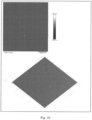
- the as received samples were diluted 50x using MilliQ filtered water (18.2 M ⁇ /cm, 4ppb TOC). About 10 ⁇ L of these diluted solutions were deposited onto freshly cleaved pieces of mica and allowed to incubate for about a minute. The samples were then rinsed 5x with MilliQ water and dried with nitrogen. Two 1 ⁇ m x 1 ⁇ m areas were imaged on each sample. The topography differences of these images are presented in colors where the brown is low and the white is high. The z ranges are noted on the vertical scale bar on the right side of the images. Perspective (3-D) views of these surfaces are also included with vertical exaggerations noted in the captions.
- Section analyses were performed to manually measure the heights of representative particles.
- the Sectional analysis for S1 at location 1 is shown in Figs. 10 , 11 , and 12 .
- the results are summarized in Table 19 for each of S1, S2, an S3.
- TABLE 19: Particle Size Analysis Results SAMPLE ID LOCATION PARTICLE 1 HEIGHT (nm) PARTICLE 2 HEIGHT (nm) PARTICLE 3 HEIGHT (nm) S1 1 3.50 3.35 2.63 2 3.67 2.67 2.44 S2 1 4.96 2.68 4.77 2 3.51 3.95 6.48 S3 1 3.75 6.81 3.89 2 4.37 4.27 3.81
- ICP/OES is a spectroscopic technique used to identify and quantify components by element.
- inductive coupling transfers high-frequency energy to a flow of inert gas, which contains the sample as an aerosol.
- the energy causes the aerosol to vaporize, while exciting the resulting free atoms so that they emit light.
- the intensity of this light is then related to the concentration of the emitting atoms.
- This technique requires calibration of the instrument and a second-source calibration verification before, during, and after completion of the analytical run sequence. In addition, instrument blanks follow each check verification standard. This ensures no carry over during the analytical sequence. Concentration measurements of major elements done by ICP have an uncertainty typically in the range from 3 to 5% (at the 95% confidence level). The uncertainty in the concentrations of trace elements might be significantly higher.
- Samples S1 through S3 were analyzed by ICP-MS for metals and /or other elements. The samples were also analyzed by ICP-OES to determine total iron and sodium content. Samples were analyzed as received in triplicate. The results are summarized in Table 23-25.
- FT-IR Fourier Transform Infrared Spectroscopy
- FT-IR Fourier Transform Infrared Spectroscopy
- the infrared absorption bands are assigned to characteristic functional groups. Based on the presence of a number of such bands, a material under consideration can be identified. Availability of spectra of known compounds increases the probability of making a positive identification.
- the lyophilized samples were analyzed by Horizontal Attenuated Total Reflectance (HATR), based on the internal reflection of infrared radiation (IR).
- HTR Horizontal Attenuated Total Reflectance
- IR infrared radiation
- the FT-IR spectrum of S1 with a spectral library match is presented in Fig. 13 below. The data suggests the material is consistent with sucrose.
- the FT-IR spectra of S2 and S3 are presented in Fig. 14 and Fig.
- NMR Spectroscopy is an extremely useful method for material characterization.
- NMR is a physical phenomenon based upon the magnetic property of an atom's nucleus. NMR studies a magnetic nucleus (most commonly that of a hydrogen atom), by aligning it with a very powerful external magnetic field and perturbing this alignment using an electromagnetic pulse. The response to the perturbation is recorded, with each individual nucleus giving a response specific to its chemical, electronic, and spatial environment.
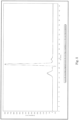
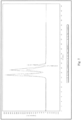
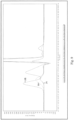
- the lyophilized samples were reconstituted in deuterium oxide (D2O) and analyzed by 1H NMR spectroscopy.
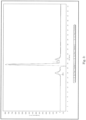
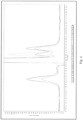
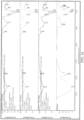
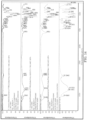
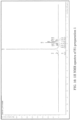
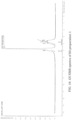
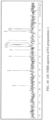
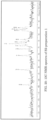
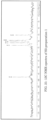
- NMR spectra of the prepared samples are presented in Figs. 16-18 . Where possible, tentative assignments for the major chemical shifts observed in the NMR spectra were based on reference spectra of related compounds available in literature.
- sucrose is present in sample S1
- chemical shifts match well with those reported in the literature.
- no peak splitting patterns were observed, which could be due to multiple reasons such as the presence nanoparticulates or the paramagnetic iron itself.
- the lyophilized samples were reconstituted in deuterium oxide (D2O) and analyzed by 13C NMR spectroscopy.
- sample S1 and S2 The data indicates that sucrose is present in sample S1 and S2, and the chemical shifts match well with those reported in the literature. Note that like the proton spectra, sample S2 seemed to have broadening to a greater extent than sample S1. Finally, the peaks observed in sample S3 match well with literature values for dextran, indicating that is it present in the sample.
- sucrose The structure of sucrose is shown above with carbon annotation.
- the results of 13C NMR are shown in Tables 31 below: Table 31: 13 C NMR assignments of sucrose and S1 in D 2 O ASSIGNMENT S CHEMICAL SHIFT (6 ppm) SUCROSE S1P1 S1P2 S3P3 1 104.71 102.23 102.24 103.58 2 93.20 90.73 90.73 92.07 3 82.42 79.90 79.90 81.25 4 77.51 74.98 74.98 76.33 5 75.09 72.55 72.55 73.89 6 73.68 71.10 71.10 72.45 7 73.44 70.95 70.95 72.30 8 72.14 69.61 69.61 70.97 9 70.31 67.76 67.76 69.11 10 63.44 60.94 60.94 62.29 11 62.46 59.89 59.89 61
- dextran is shown above with carbon annotations of formula (III).
- Table 33 shows 13C NMR for dextran of S3 in D2O: Table 33. 13 C NMR assignments of dextran and S3 in D 2 O ASSIGNMENT S CHEMICAL SHIFT ( ⁇ ppm) DEXTRAN S3P1 S3P2 S3P3 1 98.76 97.65 97.64 97.65 2 74.52 73.34 73.33 73.32 3 72.51 71.35 71.33 71.33 4 71.21 70.13 70.11 70.10 5 70.75 69.49 69.46 69.47 6 66.69 65.50 65.48 65.49
- XRD Analysis is a method by which a crystalline inorganic sample is irradiated with monoenergetic x-rays. The interaction of the lattice structure of the sample with these x-rays is recorded and provides information about the crystalline structure being irradiated. The resulting characteristic "fingerprint" allows for the identification of the crystalline compounds present in the sample. Using a whole-pattern fitting analysis (the Rietveld Refinement), it is possible to perform quantitative analyses on samples containing more than one crystalline compound.
- Table 34 XRD phase identification and quantitative analysis for lyophilized samples SAMPLE ID PHASES IDENTIFIED CONCENTRATION wt% 1 S1 Na 4 Fe 2 O 5 -Sodium Iron Oxide 5.2 Monoclinic, SG: P21/n (14) PDF# 04-013-8809 Amorphous materials 94.8 S2 C 12 H 22 O 11 - Sucrose 42.9 Monoclinic, S.G.: P21 (4) PDF# 02-063-8998 Amorphous materials 57.1 S3 Na 4 Fe 2 O 5 -Sodium Iron Oxide 18.8 Monoclinic, SG: P21/n (14) PDF# 04-013-8809 Amorphous materials 81.2
- Fig. 22 overlays the XRD raw data from the three samples with small offsets for clarity.
- Sample S2 is different from the other two samples in terms of overall intensities, peak positions as well as peak shape.
- the broad peak shapes in samples S1 and S3 indicates that these samples consist of a mixture of nano-crystalline and amorphous materials.
- Sample S1 and S3 were determined to contain a mixture of amorphous and nano-crystalline materials.
- the sodium iron oxide reference pattern was superimposed on these experimental data.
- the markers indicate the location of expected diffraction peaks for each phase and the marker heights indicate the relative peak intensities for a fine-grained, randomly oriented material.
- sample S3 is primarily composed of sucrose and amorphous materials.
- WPF whole pattern fitting
- This technique requires that either the structure factors and atomic locations or the reference intensity ratio (a way of comparing the diffracting power of different phases) are known for all phases identified.
- structure factor which relates to concentration
- lattice parameters which relate to peak position
- peak width and peak shape are refined for each phase to minimize the R value - an estimate of the agreement between the model and the experimental data over the entire pattern.
- the density of the amorphous has to be assigned in order to determine how much amorphous material is present.
- concentration of amorphous material is uncertain.
- the locations of the amorphous peaks in these samples are assumed to be from the amorphous sucrose which has a density of approximately 1.59 g/cm3. Since WPF attempts to account for everything in the sample, any error in the amorphous concentration will result in errors in the crystalline phases as well. This means that the relative concentrations of the crystalline phases are correct, but the absolute values will be in error by amounts proportional to the error in amorphous concentration.
- sample S3 contained two distinct layers following centrifugation, a thick viscous layer and a thinner top layer. These layers were separated and lyophilized separately and analyzed as two samples. The results were averaged to afford the values seen in Table 35, but individual replicates of each layer are presented in the below figures.
- Table 35 The results from the analysis are presented in Table 35.
- Table 35 XRD phase identification and quantitative analysis for samples purified using MWCO filters, then lyophilized SAMPLE ID PHASES IDENTIFIED CONCENTRATION wt% 1 S1 (S1 ⁇ S22) Fe 2.67 O 4 - Maghemite 81.0 Cubic, SG: P4332 (212) PDF# [04-021-3968] FeOOH - Iron Oxide Hydroxide 19.0 Orthorhombic PDF# [04-003-2900] S2 (S2 ⁇ S23) Fe 2.67 O 4 - Maghemite 89.9 Cubic, SG: P4332 (212) PDF# [04-021-3968] FeOOH - Iron Oxide Hydroxide 10.1 Orthorhombic PDF# [04-003-2900] S3 2 (S3 ⁇ S24 and S25) Fe 2.67 O 4 - Maghemite 74.0 Cubic, SG: P4332 (212) PDF# [04-021-3968
- Fig. 23 An overlay of the XRD patterns from all four samples (two replicates for S3) is shown in Fig. 23 .
- the patterns are offset for clarity.
- the phase identification was performed by comparing the best matches between the background-modelled experimental XRD data to the ICDD/ICSD diffraction database for the sample.
- the reference markers for the phase show where in two-theta the expected experimental peaks should be located and the height of the markers indicates the expected intensity of the experimental peaks, if the sample is fine-grained and randomly oriented. Note that XRD is sensitive to crystal structure but relatively insensitive to elemental or chemical state composition. The phase identification for these samples was difficult due the nanocrystalline nature of the samples which significantly broadens peak in the XRD patterns.
- the best matches to the peaks present in all four samples are an iron oxide phase known as maghemite and an iron oxide hydroxide phase.
- the iron oxide hydroxide phase is atypical as it is formed from the heating of beta phase iron oxide hydroxide to about 300°C.
- this reference card does not have the reference intensity ratio (RIR) included which is needed for semi-quantitative analysis.
- RIR reference intensity ratio
- WPF whole pattern fitting
- This technique requires that either the structure factors and atomic locations or the reference intensity ratio (a way of comparing the diffracting power of different phases) are known for all phases identified.
- structure factor which relates to concentration
- lattice parameters which relate to peak position
- peak width and peak shape are refined for each phase to minimize the R value - an estimate of the agreement between the model and the experimental data over the entire pattern.
- UV/Vis Spectroscopy is used to determine analyte concentration either at one time or often over a desired time period.
- the technique measures the absorption of light across the ultraviolet and visible light wavelengths through a liquid sample. Samples are dispensed into a small vial and placed between the path of a UV/Vis light and a detector. According to Beer-Lambert's law, with a constant light path length and known absorption coefficient dependent upon wavelength, concentration of a compound in question can be determined from the light absorbed by the sample at that wavelength.
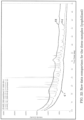
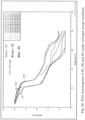
- TGA consists of measuring the weight change of a material as a function of temperature in a controlled atmosphere. The technique requires precise measurements of weight, temperature, and temperature change. The resulting thermogram generated from the analysis can determine the content of ingredient classes (e.g., solvents, polymers, inorganic fillers, etc.) and thermal stability of polymers. Precision and bias typical of TGA measurements are discussed under ASTM E2040.
- ingredient classes e.g., solvents, polymers, inorganic fillers, etc.
- DSC DIFFERENTIAL SCANNING CALORIMETRY
- DTA DIFFERENTIAL THERMAL ANALYSIS
- DSC Differential Scanning Calorimetry
- the as-received sample S1 was titrated in triplicate with 0.00998N HCl to determine the hydroxide value in iron-sucrose injectable solution.
- Table 39 summarizes the results of this titration in S1.
Landscapes
- Health & Medical Sciences (AREA)
- Chemical & Material Sciences (AREA)
- General Health & Medical Sciences (AREA)
- Life Sciences & Earth Sciences (AREA)
- Public Health (AREA)
- Veterinary Medicine (AREA)
- Animal Behavior & Ethology (AREA)
- Medicinal Chemistry (AREA)
- Pharmacology & Pharmacy (AREA)
- Epidemiology (AREA)
- Organic Chemistry (AREA)
- Engineering & Computer Science (AREA)
- Inorganic Chemistry (AREA)
- Bioinformatics & Cheminformatics (AREA)
- General Chemical & Material Sciences (AREA)
- Chemical Kinetics & Catalysis (AREA)
- Nuclear Medicine, Radiotherapy & Molecular Imaging (AREA)
- Dermatology (AREA)
- Urology & Nephrology (AREA)
- Biotechnology (AREA)
- Biochemistry (AREA)
- Genetics & Genomics (AREA)
- Molecular Biology (AREA)
- Diabetes (AREA)
- Hematology (AREA)
- Gastroenterology & Hepatology (AREA)
- Pharmaceuticals Containing Other Organic And Inorganic Compounds (AREA)
- Medicinal Preparation (AREA)
Priority Applications (5)
| Application Number | Priority Date | Filing Date | Title |
|---|---|---|---|
| EP23176202.2A EP4234020A3 (en) | 2019-02-28 | 2020-02-28 | Novel iron compositions and methods of making and using the same |
| SI202030257T SI3930686T1 (sl) | 2019-02-28 | 2020-02-28 | Novi železovi sestavki ter metode njihove izdelave in uporabe |
| HRP20230989TT HRP20230989T1 (hr) | 2019-02-28 | 2020-02-28 | Novi sastavi željeza i metode njihove izrade i upotrebe |
| SM20230276T SMT202300276T1 (it) | 2019-02-28 | 2020-02-28 | Nuove composizioni a base di ferro e metodi di realizzazione e uso delle stesse |
| RS20230725A RS64652B1 (sr) | 2019-02-28 | 2020-02-28 | Novi sastavi gvožđa i metode pravljenja i upotrebe istih |
Applications Claiming Priority (2)
| Application Number | Priority Date | Filing Date | Title |
|---|---|---|---|
| US201962812028P | 2019-02-28 | 2019-02-28 | |
| PCT/US2020/020517 WO2020176894A1 (en) | 2019-02-28 | 2020-02-28 | Novel iron compositions and methods of making and using the same |
Related Child Applications (1)
| Application Number | Title | Priority Date | Filing Date |
|---|---|---|---|
| EP23176202.2A Division EP4234020A3 (en) | 2019-02-28 | 2020-02-28 | Novel iron compositions and methods of making and using the same |
Publications (2)
| Publication Number | Publication Date |
|---|---|
| EP3930686A1 EP3930686A1 (en) | 2022-01-05 |
| EP3930686B1 true EP3930686B1 (en) | 2023-05-31 |
Family
ID=70190086
Family Applications (2)
| Application Number | Title | Priority Date | Filing Date |
|---|---|---|---|
| EP20717359.2A Active EP3930686B1 (en) | 2019-02-28 | 2020-02-28 | Novel iron compositions and methods of making and using the same |
| EP23176202.2A Pending EP4234020A3 (en) | 2019-02-28 | 2020-02-28 | Novel iron compositions and methods of making and using the same |
Family Applications After (1)
| Application Number | Title | Priority Date | Filing Date |
|---|---|---|---|
| EP23176202.2A Pending EP4234020A3 (en) | 2019-02-28 | 2020-02-28 | Novel iron compositions and methods of making and using the same |
Country Status (20)
| Country | Link |
|---|---|
| US (4) | US11292813B2 (enExample) |
| EP (2) | EP3930686B1 (enExample) |
| JP (3) | JP7320611B2 (enExample) |
| KR (1) | KR102997223B1 (enExample) |
| CN (2) | CN113825496B (enExample) |
| AU (2) | AU2020229381A1 (enExample) |
| CA (1) | CA3131596A1 (enExample) |
| DK (1) | DK3930686T3 (enExample) |
| ES (1) | ES2955019T3 (enExample) |
| FI (1) | FI3930686T3 (enExample) |
| HR (1) | HRP20230989T1 (enExample) |
| HU (1) | HUE063182T2 (enExample) |
| LT (1) | LT3930686T (enExample) |
| PL (1) | PL3930686T3 (enExample) |
| PT (1) | PT3930686T (enExample) |
| RS (1) | RS64652B1 (enExample) |
| SG (1) | SG11202109323UA (enExample) |
| SI (1) | SI3930686T1 (enExample) |
| SM (1) | SMT202300276T1 (enExample) |
| WO (1) | WO2020176894A1 (enExample) |
Families Citing this family (5)
| Publication number | Priority date | Publication date | Assignee | Title |
|---|---|---|---|---|
| WO2022056378A1 (en) * | 2020-09-11 | 2022-03-17 | Renibus Therapeutics, Inc. | Method for treating cancer with kidney protection |
| JP2024534172A (ja) * | 2021-08-27 | 2024-09-18 | ヴァイフォー(インターナショナル)アーゲー | 鉄組成物並びにそれらを作製及び使用する方法 |
| WO2024069644A1 (en) * | 2022-09-30 | 2024-04-04 | West Bengal Chemical Industries Limited | A pharmaceutically acceptable ferric carboxymaltose and preparation thereof |
| CN115969714B (zh) * | 2022-11-03 | 2025-03-11 | 华熙生物科技股份有限公司 | 具有光谱选择性的防晒组合物及其应用 |
| EP4772557A1 (en) | 2023-08-29 | 2026-07-08 | Daicel Corporation | Curable epoxy composition |
Family Cites Families (35)
| Publication number | Priority date | Publication date | Assignee | Title |
|---|---|---|---|---|
| DE862482C (de) * | 1950-05-14 | 1953-01-12 | Merck Chem Fab E | Verfahren zur Darstellung haltbarer, injizierbarer Loesungen von Salzen des dreiwertigen Eisens |
| US5624668A (en) | 1995-09-29 | 1997-04-29 | Luitpold Pharmaceuticals, Inc. | Iron dextran formulations |
| DE19547356A1 (de) | 1995-12-19 | 1997-06-26 | Vifor Int Ag | Adsorbens für Phosphat aus wäßrigem Medium, dessen Herstellung und Verwendung |
| US20030232738A1 (en) * | 1998-04-20 | 2003-12-18 | National Jewish Medical And Research Center | Method and composition for increasing CD4+ T lymphocyte immune responsiveness |
| CA2365787C (en) * | 2000-12-20 | 2006-02-14 | Dialysis Solutions Inc. | Sterile low bicarbonate dialysis concentrate solutions |
| DE60229303D1 (de) * | 2002-08-26 | 2008-11-20 | Vifor Int Ag | Bioäquivalenztest für eisenhaltige formulierungen |
| WO2005094202A2 (en) * | 2004-03-16 | 2005-10-13 | Navinta, Llc | Iron sucrose complexes and method of manufacture thereof |
| WO2006061685A1 (en) | 2004-12-06 | 2006-06-15 | Emcure Pharmaceuticals Limited | A cost-effective process for preparation of manufacture of iron sucrose |
| ITMO20050056A1 (it) | 2005-03-15 | 2006-09-16 | Biofer Spa | Processo per la preparazione di complessi del ferro trivalente con zuccheri mono-, di- e polisaccaridi. |
| CN100528237C (zh) | 2005-04-26 | 2009-08-19 | 重庆医药工业研究院有限责任公司 | 多核的氢氧化铁-糖复合物的制备方法 |
| EP1757299A1 (de) * | 2005-08-25 | 2007-02-28 | Vifor (International) Ag | Eisen(III)-Komplexverbindungen zur Behandlung von Eisenmangel-Zuständen bei Patienten mit chronisch-entzündlicher Darmerkrankung |
| EP2992886A1 (en) | 2006-10-04 | 2016-03-09 | InfaCare Pharmaceutical Corporation | High-purity large-scale preparation of stannsoporfin |
| EP1947120A1 (de) | 2007-01-19 | 2008-07-23 | Vifor (International) Ag | Eisen-Kohlenhydrat-Komplex-Verbindungen |
| IN269965B (enExample) | 2007-06-25 | 2015-11-27 | Claris Lifescienses Ltd | |
| TWI592159B (zh) | 2007-11-16 | 2017-07-21 | 威佛(國際)股份有限公司 | 藥學組成物 |
| CN102341111A (zh) | 2009-03-02 | 2012-02-01 | 维福(国际)股份公司 | 磷酸盐吸附剂 |
| CN106176808A (zh) * | 2010-10-19 | 2016-12-07 | 长春纳米生技公司 | 金属离子纳米簇组合物 |
| EP2548562A1 (de) | 2011-07-18 | 2013-01-23 | SeBo GmbH | Kombinationstherapie mit Eisen-basierenden Phosphatadsorbern |
| EP2647389A1 (en) * | 2012-04-04 | 2013-10-09 | Charité - Universitätsmedizin Berlin | Magnetic nanoparticle dispersion, its preparation and diagnostic and therapeutic use |
| CN103340827B (zh) * | 2013-07-16 | 2014-12-10 | 成都天台山制药有限公司 | 蔗糖铁注射液及其制法 |
| CN104558064A (zh) * | 2013-10-29 | 2015-04-29 | 北京京卫信康医药科技发展有限公司 | 蔗糖铁的制备方法 |
| IN2013CH05383A (enExample) | 2013-11-21 | 2015-08-28 | Reddy’S Lab Ltd Dr | |
| CN104098616B (zh) | 2014-05-27 | 2016-04-20 | 广西壮族自治区化工研究院 | 一种蔗糖铁的制备方法 |
| AU2015324103C1 (en) * | 2014-09-29 | 2020-08-20 | Fred Hutchinson Cancer Center | Compositions, kits, and methods to induce acquired cytoresistance using stress protein inducers |
| US20190106454A1 (en) * | 2016-03-23 | 2019-04-11 | Fred Hutchinson Cancer Research Center | Compounds linked with a saccharide metal complex and uses thereof |
| WO2018148217A1 (en) * | 2017-02-08 | 2018-08-16 | Fred Hutchinson Cancer Research Center | Compositions, kits, and methods to induce acquired cytoresistance using stress protein inducers |
| SG11202001594TA (en) | 2017-09-11 | 2020-03-30 | Pharmacosmos Holding As | Iron complex compounds for therapeutic use |
| CN109912675B (zh) | 2017-12-13 | 2020-09-15 | 北京市林业果树科学研究院 | 一种蔗糖亚铁及其制备方法 |
| CN110063965A (zh) | 2019-06-04 | 2019-07-30 | 吉林省富生医疗器械有限公司 | 一种血液透析浓缩物 |
| CN112315902B (zh) | 2019-08-05 | 2022-05-13 | 南京恒生制药有限公司 | 一种低易变铁含量蔗糖铁注射液制备方法 |
| WO2022072439A1 (en) | 2020-09-29 | 2022-04-07 | Lg Bionano Co. Ltd | Methods of preparing iron complexes |
| CN112168844A (zh) | 2020-09-29 | 2021-01-05 | 神奈纳米医药技术(珠海)有限公司 | 一种氢氧化铁碳水化合物复合物的制备方法 |
| CN112156109A (zh) | 2020-09-29 | 2021-01-01 | 神奈纳米医药技术(珠海)有限公司 | 氢氧化铁-糖络合物的制备方法及其应用 |
| CN115531414A (zh) | 2021-06-30 | 2022-12-30 | 南京恒生制药有限公司 | 一种新型蔗糖铁复合物及其制备方法 |
| JP2024534172A (ja) | 2021-08-27 | 2024-09-18 | ヴァイフォー(インターナショナル)アーゲー | 鉄組成物並びにそれらを作製及び使用する方法 |
-
2020
- 2020-02-28 RS RS20230725A patent/RS64652B1/sr unknown
- 2020-02-28 US US16/805,223 patent/US11292813B2/en active Active
- 2020-02-28 JP JP2021550178A patent/JP7320611B2/ja active Active
- 2020-02-28 EP EP20717359.2A patent/EP3930686B1/en active Active
- 2020-02-28 PL PL20717359.2T patent/PL3930686T3/pl unknown
- 2020-02-28 SG SG11202109323UA patent/SG11202109323UA/en unknown
- 2020-02-28 HU HUE20717359A patent/HUE063182T2/hu unknown
- 2020-02-28 CN CN202080031484.XA patent/CN113825496B/zh active Active
- 2020-02-28 ES ES20717359T patent/ES2955019T3/es active Active
- 2020-02-28 WO PCT/US2020/020517 patent/WO2020176894A1/en not_active Ceased
- 2020-02-28 CA CA3131596A patent/CA3131596A1/en active Pending
- 2020-02-28 LT LTEPPCT/US2020/020517T patent/LT3930686T/lt unknown
- 2020-02-28 SM SM20230276T patent/SMT202300276T1/it unknown
- 2020-02-28 FI FIEP20717359.2T patent/FI3930686T3/fi active
- 2020-02-28 SI SI202030257T patent/SI3930686T1/sl unknown
- 2020-02-28 HR HRP20230989TT patent/HRP20230989T1/hr unknown
- 2020-02-28 KR KR1020217030370A patent/KR102997223B1/ko active Active
- 2020-02-28 CN CN202411305791.9A patent/CN119488480A/zh active Pending
- 2020-02-28 DK DK20717359.2T patent/DK3930686T3/da active
- 2020-02-28 EP EP23176202.2A patent/EP4234020A3/en active Pending
- 2020-02-28 AU AU2020229381A patent/AU2020229381A1/en not_active Abandoned
- 2020-02-28 PT PT207173592T patent/PT3930686T/pt unknown
-
2022
- 2022-02-15 US US17/672,072 patent/US11840552B2/en active Active
- 2022-11-02 US US17/979,490 patent/US11834471B2/en active Active
-
2023
- 2023-07-21 JP JP2023118851A patent/JP7646750B2/ja active Active
- 2023-09-07 US US18/243,584 patent/US20240002427A1/en active Pending
-
2025
- 2025-03-04 JP JP2025033475A patent/JP2025084949A/ja active Pending
- 2025-09-10 AU AU2025230678A patent/AU2025230678A1/en active Pending
Also Published As
Similar Documents
| Publication | Publication Date | Title |
|---|---|---|
| US11840552B2 (en) | Iron compositions and methods of making and using the same | |
| Himmelstoß et al. | Long‐term colloidal and chemical stability in aqueous media of NaYF4‐type upconversion nanoparticles modified by ligand‐exchange | |
| Jahn et al. | A comparative study of the physicochemical properties of iron isomaltoside 1000 (Monofer®), a new intravenous iron preparation and its clinical implications | |
| Alanazi et al. | Selective and reliable fluorometric quantitation of anti-cancer drug in real plasma samples using nitrogen-doped carbon dots after MMIPs solid phase microextraction: Monitoring methotrexate plasma level | |
| US20030153086A1 (en) | Method for producing purified hematinic iron-saccharidic complex and product produced | |
| Tarres et al. | Aqueous self‐assembly and cation selectivity of cobaltabisdicarbollide dianionic dumbbells | |
| Marguerit et al. | Taxanes hybrid nanovectors: from design to physico‐chemical evaluation of docetaxel and paclitaxel gold (III)‐PEGylated complex nanocarriers | |
| Subedi et al. | Highly efficient fluorescent probes from chitosan-based amino-functional carbon dots for the selective detection of Cu2+ traces | |
| Lin et al. | Herbal medicine‐derived natural product self‐assembled nanoparticles: orchestrating chemo‐chemodynamic‐immunotherapy for tumor combination therapy | |
| Minzanova et al. | Synthesis and physicochemical properties of antianemic iron and calcium complexes with sodium polygalacturonate | |
| HK40066891B (en) | Novel iron compositions and methods of making and using the same | |
| HK40066891A (en) | Novel iron compositions and methods of making and using the same | |
| HK40098133A (en) | Novel iron compositions and methods of making and using the same | |
| HK40066204A (en) | Novel iron compositions and methods of making and using the same | |
| HK40066204B (en) | Novel iron compositions and methods of making and using the same | |
| Barui et al. | Dual drug loaded nanotheranostic platforms as a novel synergistic approach to improve pancreatic cancer treatment | |
| Yang et al. | Analysis on the interaction of coumarin isomers with human serum albumin in the presence of cisplatin | |
| Jena et al. | Hydrotropic technique assisted UV-spectrophotometric method development and validation for linagliptin in bulk and pharmaceutical dosage form | |
| Ahirwar et al. | UV Spectrophotometric Method Development and Validation of Butorphanol Tartrate in Bulk Drug and Pharmaceutical Formulation. | |
| Aktar et al. | A study of in-vitro interaction of Ketotifen Fumarate with Domperidone at different gastric and intestinal pH | |
| Marcinkowska et al. | Cisplatin Derivatives and Their Complexes with PAMAM Dendrimers—A Way to Improve the Efficacy of Anticancer Drugs | |
| Bhai | Development and validation of analytical methods for estimation of citicoline in bulk and pharmaceutical formulations | |
| Mejias | Characterization of titanium (IV)-transferrin binding interactions |
Legal Events
| Date | Code | Title | Description |
|---|---|---|---|
| REG | Reference to a national code |
Ref country code: HR Ref legal event code: TUEP Ref document number: P20230989T Country of ref document: HR |
|
| STAA | Information on the status of an ep patent application or granted ep patent |
Free format text: STATUS: UNKNOWN |
|
| STAA | Information on the status of an ep patent application or granted ep patent |
Free format text: STATUS: THE INTERNATIONAL PUBLICATION HAS BEEN MADE |
|
| PUAI | Public reference made under article 153(3) epc to a published international application that has entered the european phase |
Free format text: ORIGINAL CODE: 0009012 |
|
| STAA | Information on the status of an ep patent application or granted ep patent |
Free format text: STATUS: REQUEST FOR EXAMINATION WAS MADE |
|
| 17P | Request for examination filed |
Effective date: 20210921 |
|
| AK | Designated contracting states |
Kind code of ref document: A1 Designated state(s): AL AT BE BG CH CY CZ DE DK EE ES FI FR GB GR HR HU IE IS IT LI LT LU LV MC MK MT NL NO PL PT RO RS SE SI SK SM TR |
|
| DAV | Request for validation of the european patent (deleted) | ||
| DAX | Request for extension of the european patent (deleted) | ||
| REG | Reference to a national code |
Ref country code: HK Ref legal event code: DE Ref document number: 40066891 Country of ref document: HK |
|
| GRAP | Despatch of communication of intention to grant a patent |
Free format text: ORIGINAL CODE: EPIDOSNIGR1 |
|
| STAA | Information on the status of an ep patent application or granted ep patent |
Free format text: STATUS: GRANT OF PATENT IS INTENDED |
|
| INTG | Intention to grant announced |
Effective date: 20221212 |
|
| GRAS | Grant fee paid |
Free format text: ORIGINAL CODE: EPIDOSNIGR3 |
|
| GRAA | (expected) grant |
Free format text: ORIGINAL CODE: 0009210 |
|
| STAA | Information on the status of an ep patent application or granted ep patent |
Free format text: STATUS: THE PATENT HAS BEEN GRANTED |
|
| AK | Designated contracting states |
Kind code of ref document: B1 Designated state(s): AL AT BE BG CH CY CZ DE DK EE ES FI FR GB GR HR HU IE IS IT LI LT LU LV MC MK MT NL NO PL PT RO RS SE SI SK SM TR |
|
| REG | Reference to a national code |
Ref country code: GB Ref legal event code: FG4D Ref country code: CH Ref legal event code: EP |
|
| REG | Reference to a national code |
Ref country code: DE Ref legal event code: R096 Ref document number: 602020011323 Country of ref document: DE |
|
| REG | Reference to a national code |
Ref country code: AT Ref legal event code: REF Ref document number: 1570545 Country of ref document: AT Kind code of ref document: T Effective date: 20230615 |
|
| REG | Reference to a national code |
Ref country code: IE Ref legal event code: FG4D |
|
| P01 | Opt-out of the competence of the unified patent court (upc) registered |
Effective date: 20230609 |
|
| P02 | Opt-out of the competence of the unified patent court (upc) changed |
Effective date: 20230621 |
|
| REG | Reference to a national code |
Ref country code: RO Ref legal event code: EPE |
|
| REG | Reference to a national code |
Ref country code: FI Ref legal event code: FGE |
|
| REG | Reference to a national code |
Ref country code: PT Ref legal event code: SC4A Ref document number: 3930686 Country of ref document: PT Date of ref document: 20230904 Kind code of ref document: T Free format text: AVAILABILITY OF NATIONAL TRANSLATION Effective date: 20230830 |
|
| REG | Reference to a national code |
Ref country code: DK Ref legal event code: T3 Effective date: 20230908 |
|
| REG | Reference to a national code |
Ref country code: NL Ref legal event code: FP |
|
| REG | Reference to a national code |
Ref country code: SE Ref legal event code: TRGR |
|
| REG | Reference to a national code |
Ref country code: NO Ref legal event code: T2 Effective date: 20230531 |
|
| REG | Reference to a national code |
Ref country code: SK Ref legal event code: T3 Ref document number: E 42200 Country of ref document: SK |
|
| REG | Reference to a national code |
Ref country code: GR Ref legal event code: EP Ref document number: 20230401404 Country of ref document: GR Effective date: 20231010 |
|
| REG | Reference to a national code |
Ref country code: EE Ref legal event code: FG4A Ref document number: E023523 Country of ref document: EE Effective date: 20230831 |
|
| REG | Reference to a national code |
Ref country code: ES Ref legal event code: FG2A Ref document number: 2955019 Country of ref document: ES Kind code of ref document: T3 Effective date: 20231128 |
|
| REG | Reference to a national code |
Ref country code: HR Ref legal event code: T1PR Ref document number: P20230989 Country of ref document: HR |
|
| REG | Reference to a national code |
Ref country code: AT Ref legal event code: UEP Ref document number: 1570545 Country of ref document: AT Kind code of ref document: T Effective date: 20230531 |
|
| REG | Reference to a national code |
Ref country code: HU Ref legal event code: AG4A Ref document number: E063182 Country of ref document: HU |
|
| REG | Reference to a national code |
Ref country code: DE Ref legal event code: R097 Ref document number: 602020011323 Country of ref document: DE Ref country code: HR Ref legal event code: ODRP Ref document number: P20230989 Country of ref document: HR Payment date: 20240215 Year of fee payment: 5 |
|
| PLBE | No opposition filed within time limit |
Free format text: ORIGINAL CODE: 0009261 |
|
| STAA | Information on the status of an ep patent application or granted ep patent |
Free format text: STATUS: NO OPPOSITION FILED WITHIN TIME LIMIT |
|
| 26N | No opposition filed |
Effective date: 20240301 |
|
| REG | Reference to a national code |
Ref country code: HR Ref legal event code: ODRP Ref document number: P20230989 Country of ref document: HR Payment date: 20250218 Year of fee payment: 6 |
|
| PGFP | Annual fee paid to national office [announced via postgrant information from national office to epo] |
Ref country code: NL Payment date: 20250227 Year of fee payment: 6 Ref country code: LU Payment date: 20250227 Year of fee payment: 6 |
|
| PGFP | Annual fee paid to national office [announced via postgrant information from national office to epo] |
Ref country code: HU Payment date: 20250220 Year of fee payment: 6 |
|
| PGFP | Annual fee paid to national office [announced via postgrant information from national office to epo] |
Ref country code: MC Payment date: 20250227 Year of fee payment: 6 |
|
| PGFP | Annual fee paid to national office [announced via postgrant information from national office to epo] |
Ref country code: PT Payment date: 20250218 Year of fee payment: 6 Ref country code: HR Payment date: 20250218 Year of fee payment: 6 Ref country code: IS Payment date: 20250211 Year of fee payment: 6 |
|
| PGFP | Annual fee paid to national office [announced via postgrant information from national office to epo] |
Ref country code: DK Payment date: 20250225 Year of fee payment: 6 Ref country code: FI Payment date: 20250225 Year of fee payment: 6 Ref country code: RO Payment date: 20250221 Year of fee payment: 6 Ref country code: SM Payment date: 20250221 Year of fee payment: 6 Ref country code: LT Payment date: 20250218 Year of fee payment: 6 |
|
| PGFP | Annual fee paid to national office [announced via postgrant information from national office to epo] |
Ref country code: BG Payment date: 20250221 Year of fee payment: 6 |
|
| PGFP | Annual fee paid to national office [announced via postgrant information from national office to epo] |
Ref country code: IE Payment date: 20250227 Year of fee payment: 6 Ref country code: SE Payment date: 20250227 Year of fee payment: 6 |
|
| PGFP | Annual fee paid to national office [announced via postgrant information from national office to epo] |
Ref country code: NO Payment date: 20250227 Year of fee payment: 6 |
|
| PGFP | Annual fee paid to national office [announced via postgrant information from national office to epo] |
Ref country code: LV Payment date: 20250218 Year of fee payment: 6 Ref country code: BE Payment date: 20250227 Year of fee payment: 6 Ref country code: GR Payment date: 20250226 Year of fee payment: 6 Ref country code: EE Payment date: 20250218 Year of fee payment: 6 Ref country code: AT Payment date: 20250219 Year of fee payment: 6 Ref country code: SI Payment date: 20250217 Year of fee payment: 6 |
|
| PGFP | Annual fee paid to national office [announced via postgrant information from national office to epo] |
Ref country code: PL Payment date: 20250218 Year of fee payment: 6 Ref country code: CZ Payment date: 20250221 Year of fee payment: 6 |
|
| PGFP | Annual fee paid to national office [announced via postgrant information from national office to epo] |
Ref country code: SK Payment date: 20250218 Year of fee payment: 6 |
|
| PGFP | Annual fee paid to national office [announced via postgrant information from national office to epo] |
Ref country code: RS Payment date: 20250219 Year of fee payment: 6 |
|
| PGFP | Annual fee paid to national office [announced via postgrant information from national office to epo] |
Ref country code: MT Payment date: 20250219 Year of fee payment: 6 Ref country code: TR Payment date: 20250224 Year of fee payment: 6 |
|
| PGFP | Annual fee paid to national office [announced via postgrant information from national office to epo] |
Ref country code: AL Payment date: 20250220 Year of fee payment: 6 |
|
| PGFP | Annual fee paid to national office [announced via postgrant information from national office to epo] |
Ref country code: MK Payment date: 20250219 Year of fee payment: 6 |
|
| PGFP | Annual fee paid to national office [announced via postgrant information from national office to epo] |
Ref country code: CY Payment date: 20250224 Year of fee payment: 6 |
|
| REG | Reference to a national code |
Ref country code: CH Ref legal event code: U11 Free format text: ST27 STATUS EVENT CODE: U-0-0-U10-U11 (AS PROVIDED BY THE NATIONAL OFFICE) Effective date: 20260301 |
|
| PGFP | Annual fee paid to national office [announced via postgrant information from national office to epo] |
Ref country code: GB Payment date: 20260227 Year of fee payment: 7 |
|
| PGFP | Annual fee paid to national office [announced via postgrant information from national office to epo] |
Ref country code: ES Payment date: 20260302 Year of fee payment: 7 |
|
| PGFP | Annual fee paid to national office [announced via postgrant information from national office to epo] |
Ref country code: DE Payment date: 20260227 Year of fee payment: 7 |
|
| PGFP | Annual fee paid to national office [announced via postgrant information from national office to epo] |
Ref country code: IT Payment date: 20260219 Year of fee payment: 7 |
|
| PGFP | Annual fee paid to national office [announced via postgrant information from national office to epo] |
Ref country code: FR Payment date: 20260225 Year of fee payment: 7 |
|
| PGFP | Annual fee paid to national office [announced via postgrant information from national office to epo] |
Ref country code: CH Payment date: 20260301 Year of fee payment: 7 |