EP3924311B1 - Autoverglasung mit hoher optischer qualität - Google Patents
Autoverglasung mit hoher optischer qualität Download PDFInfo
- Publication number
- EP3924311B1 EP3924311B1 EP20703480.2A EP20703480A EP3924311B1 EP 3924311 B1 EP3924311 B1 EP 3924311B1 EP 20703480 A EP20703480 A EP 20703480A EP 3924311 B1 EP3924311 B1 EP 3924311B1
- Authority
- EP
- European Patent Office
- Prior art keywords
- enamel
- glass sheet
- opening
- mask
- glazing
- Prior art date
- Legal status (The legal status is an assumption and is not a legal conclusion. Google has not performed a legal analysis and makes no representation as to the accuracy of the status listed.)
- Active
Links
Images


Classifications
-
- C—CHEMISTRY; METALLURGY
- C03—GLASS; MINERAL OR SLAG WOOL
- C03C—CHEMICAL COMPOSITION OF GLASSES, GLAZES OR VITREOUS ENAMELS; SURFACE TREATMENT OF GLASS; SURFACE TREATMENT OF FIBRES OR FILAMENTS MADE FROM GLASS, MINERALS OR SLAGS; JOINING GLASS TO GLASS OR OTHER MATERIALS
- C03C17/00—Surface treatment of glass, not in the form of fibres or filaments, by coating
- C03C17/02—Surface treatment of glass, not in the form of fibres or filaments, by coating with glass
- C03C17/04—Surface treatment of glass, not in the form of fibres or filaments, by coating with glass by fritting glass powder
-
- C—CHEMISTRY; METALLURGY
- C03—GLASS; MINERAL OR SLAG WOOL
- C03C—CHEMICAL COMPOSITION OF GLASSES, GLAZES OR VITREOUS ENAMELS; SURFACE TREATMENT OF GLASS; SURFACE TREATMENT OF FIBRES OR FILAMENTS MADE FROM GLASS, MINERALS OR SLAGS; JOINING GLASS TO GLASS OR OTHER MATERIALS
- C03C17/00—Surface treatment of glass, not in the form of fibres or filaments, by coating
- C03C17/34—Surface treatment of glass, not in the form of fibres or filaments, by coating with at least two coatings having different compositions
-
- B—PERFORMING OPERATIONS; TRANSPORTING
- B32—LAYERED PRODUCTS
- B32B—LAYERED PRODUCTS, i.e. PRODUCTS BUILT-UP OF STRATA OF FLAT OR NON-FLAT, e.g. CELLULAR OR HONEYCOMB, FORM
- B32B17/00—Layered products essentially comprising sheet glass, or glass, slag, or like fibres
- B32B17/06—Layered products essentially comprising sheet glass, or glass, slag, or like fibres comprising glass as the main or only constituent of a layer, next to another layer of a specific material
- B32B17/10—Layered products essentially comprising sheet glass, or glass, slag, or like fibres comprising glass as the main or only constituent of a layer, next to another layer of a specific material of synthetic resin
- B32B17/10005—Layered products essentially comprising sheet glass, or glass, slag, or like fibres comprising glass as the main or only constituent of a layer, next to another layer of a specific material of synthetic resin laminated safety glass or glazing
- B32B17/10009—Layered products essentially comprising sheet glass, or glass, slag, or like fibres comprising glass as the main or only constituent of a layer, next to another layer of a specific material of synthetic resin laminated safety glass or glazing characterized by the number, the constitution or treatment of glass sheets
- B32B17/10036—Layered products essentially comprising sheet glass, or glass, slag, or like fibres comprising glass as the main or only constituent of a layer, next to another layer of a specific material of synthetic resin laminated safety glass or glazing characterized by the number, the constitution or treatment of glass sheets comprising two outer glass sheets
-
- B—PERFORMING OPERATIONS; TRANSPORTING
- B32—LAYERED PRODUCTS
- B32B—LAYERED PRODUCTS, i.e. PRODUCTS BUILT-UP OF STRATA OF FLAT OR NON-FLAT, e.g. CELLULAR OR HONEYCOMB, FORM
- B32B17/00—Layered products essentially comprising sheet glass, or glass, slag, or like fibres
- B32B17/06—Layered products essentially comprising sheet glass, or glass, slag, or like fibres comprising glass as the main or only constituent of a layer, next to another layer of a specific material
- B32B17/10—Layered products essentially comprising sheet glass, or glass, slag, or like fibres comprising glass as the main or only constituent of a layer, next to another layer of a specific material of synthetic resin
- B32B17/10005—Layered products essentially comprising sheet glass, or glass, slag, or like fibres comprising glass as the main or only constituent of a layer, next to another layer of a specific material of synthetic resin laminated safety glass or glazing
- B32B17/10165—Functional features of the laminated safety glass or glazing
- B32B17/1033—Laminated safety glass or glazing containing temporary protective coatings or layers
-
- B—PERFORMING OPERATIONS; TRANSPORTING
- B32—LAYERED PRODUCTS
- B32B—LAYERED PRODUCTS, i.e. PRODUCTS BUILT-UP OF STRATA OF FLAT OR NON-FLAT, e.g. CELLULAR OR HONEYCOMB, FORM
- B32B17/00—Layered products essentially comprising sheet glass, or glass, slag, or like fibres
- B32B17/06—Layered products essentially comprising sheet glass, or glass, slag, or like fibres comprising glass as the main or only constituent of a layer, next to another layer of a specific material
- B32B17/10—Layered products essentially comprising sheet glass, or glass, slag, or like fibres comprising glass as the main or only constituent of a layer, next to another layer of a specific material of synthetic resin
- B32B17/10005—Layered products essentially comprising sheet glass, or glass, slag, or like fibres comprising glass as the main or only constituent of a layer, next to another layer of a specific material of synthetic resin laminated safety glass or glazing
- B32B17/10165—Functional features of the laminated safety glass or glazing
- B32B17/10339—Specific parts of the laminated safety glass or glazing being colored or tinted
- B32B17/10348—Specific parts of the laminated safety glass or glazing being colored or tinted comprising an obscuration band
-
- B—PERFORMING OPERATIONS; TRANSPORTING
- B32—LAYERED PRODUCTS
- B32B—LAYERED PRODUCTS, i.e. PRODUCTS BUILT-UP OF STRATA OF FLAT OR NON-FLAT, e.g. CELLULAR OR HONEYCOMB, FORM
- B32B17/00—Layered products essentially comprising sheet glass, or glass, slag, or like fibres
- B32B17/06—Layered products essentially comprising sheet glass, or glass, slag, or like fibres comprising glass as the main or only constituent of a layer, next to another layer of a specific material
- B32B17/10—Layered products essentially comprising sheet glass, or glass, slag, or like fibres comprising glass as the main or only constituent of a layer, next to another layer of a specific material of synthetic resin
- B32B17/10005—Layered products essentially comprising sheet glass, or glass, slag, or like fibres comprising glass as the main or only constituent of a layer, next to another layer of a specific material of synthetic resin laminated safety glass or glazing
- B32B17/10807—Making laminated safety glass or glazing; Apparatus therefor
- B32B17/10981—Pre-treatment of the layers
-
- C—CHEMISTRY; METALLURGY
- C03—GLASS; MINERAL OR SLAG WOOL
- C03B—MANUFACTURE, SHAPING, OR SUPPLEMENTARY PROCESSES
- C03B29/00—Reheating glass products for softening or fusing their surfaces; Fire-polishing; Fusing of margins
- C03B29/04—Reheating glass products for softening or fusing their surfaces; Fire-polishing; Fusing of margins in a continuous way
- C03B29/06—Reheating glass products for softening or fusing their surfaces; Fire-polishing; Fusing of margins in a continuous way with horizontal displacement of the products
- C03B29/08—Glass sheets
-
- C—CHEMISTRY; METALLURGY
- C03—GLASS; MINERAL OR SLAG WOOL
- C03C—CHEMICAL COMPOSITION OF GLASSES, GLAZES OR VITREOUS ENAMELS; SURFACE TREATMENT OF GLASS; SURFACE TREATMENT OF FIBRES OR FILAMENTS MADE FROM GLASS, MINERALS OR SLAGS; JOINING GLASS TO GLASS OR OTHER MATERIALS
- C03C23/00—Other surface treatment of glass not in the form of fibres or filaments
- C03C23/007—Other surface treatment of glass not in the form of fibres or filaments by thermal treatment
-
- B—PERFORMING OPERATIONS; TRANSPORTING
- B32—LAYERED PRODUCTS
- B32B—LAYERED PRODUCTS, i.e. PRODUCTS BUILT-UP OF STRATA OF FLAT OR NON-FLAT, e.g. CELLULAR OR HONEYCOMB, FORM
- B32B2305/00—Condition, form or state of the layers or laminate
- B32B2305/34—Inserts
-
- C—CHEMISTRY; METALLURGY
- C03—GLASS; MINERAL OR SLAG WOOL
- C03B—MANUFACTURE, SHAPING, OR SUPPLEMENTARY PROCESSES
- C03B23/00—Re-forming shaped glass
- C03B23/02—Re-forming glass sheets
- C03B23/023—Re-forming glass sheets by bending
-
- C—CHEMISTRY; METALLURGY
- C03—GLASS; MINERAL OR SLAG WOOL
- C03B—MANUFACTURE, SHAPING, OR SUPPLEMENTARY PROCESSES
- C03B27/00—Tempering or quenching glass products
- C03B27/04—Tempering or quenching glass products using gas
-
- C—CHEMISTRY; METALLURGY
- C03—GLASS; MINERAL OR SLAG WOOL
- C03C—CHEMICAL COMPOSITION OF GLASSES, GLAZES OR VITREOUS ENAMELS; SURFACE TREATMENT OF GLASS; SURFACE TREATMENT OF FIBRES OR FILAMENTS MADE FROM GLASS, MINERALS OR SLAGS; JOINING GLASS TO GLASS OR OTHER MATERIALS
- C03C2218/00—Methods for coating glass
- C03C2218/10—Deposition methods
- C03C2218/11—Deposition methods from solutions or suspensions
- C03C2218/112—Deposition methods from solutions or suspensions by spraying
-
- C—CHEMISTRY; METALLURGY
- C03—GLASS; MINERAL OR SLAG WOOL
- C03C—CHEMICAL COMPOSITION OF GLASSES, GLAZES OR VITREOUS ENAMELS; SURFACE TREATMENT OF GLASS; SURFACE TREATMENT OF FIBRES OR FILAMENTS MADE FROM GLASS, MINERALS OR SLAGS; JOINING GLASS TO GLASS OR OTHER MATERIALS
- C03C2218/00—Methods for coating glass
- C03C2218/10—Deposition methods
- C03C2218/11—Deposition methods from solutions or suspensions
- C03C2218/119—Deposition methods from solutions or suspensions by printing
-
- C—CHEMISTRY; METALLURGY
- C03—GLASS; MINERAL OR SLAG WOOL
- C03C—CHEMICAL COMPOSITION OF GLASSES, GLAZES OR VITREOUS ENAMELS; SURFACE TREATMENT OF GLASS; SURFACE TREATMENT OF FIBRES OR FILAMENTS MADE FROM GLASS, MINERALS OR SLAGS; JOINING GLASS TO GLASS OR OTHER MATERIALS
- C03C2218/00—Methods for coating glass
- C03C2218/30—Aspects of methods for coating glass not covered above
- C03C2218/32—After-treatment
- C03C2218/328—Partly or completely removing a coating
-
- C—CHEMISTRY; METALLURGY
- C03—GLASS; MINERAL OR SLAG WOOL
- C03C—CHEMICAL COMPOSITION OF GLASSES, GLAZES OR VITREOUS ENAMELS; SURFACE TREATMENT OF GLASS; SURFACE TREATMENT OF FIBRES OR FILAMENTS MADE FROM GLASS, MINERALS OR SLAGS; JOINING GLASS TO GLASS OR OTHER MATERIALS
- C03C2218/00—Methods for coating glass
- C03C2218/30—Aspects of methods for coating glass not covered above
- C03C2218/34—Masking
-
- C—CHEMISTRY; METALLURGY
- C03—GLASS; MINERAL OR SLAG WOOL
- C03C—CHEMICAL COMPOSITION OF GLASSES, GLAZES OR VITREOUS ENAMELS; SURFACE TREATMENT OF GLASS; SURFACE TREATMENT OF FIBRES OR FILAMENTS MADE FROM GLASS, MINERALS OR SLAGS; JOINING GLASS TO GLASS OR OTHER MATERIALS
- C03C2218/00—Methods for coating glass
- C03C2218/30—Aspects of methods for coating glass not covered above
- C03C2218/355—Temporary coating
-
- Y—GENERAL TAGGING OF NEW TECHNOLOGICAL DEVELOPMENTS; GENERAL TAGGING OF CROSS-SECTIONAL TECHNOLOGIES SPANNING OVER SEVERAL SECTIONS OF THE IPC; TECHNICAL SUBJECTS COVERED BY FORMER USPC CROSS-REFERENCE ART COLLECTIONS [XRACs] AND DIGESTS
- Y02—TECHNOLOGIES OR APPLICATIONS FOR MITIGATION OR ADAPTATION AGAINST CLIMATE CHANGE
- Y02P—CLIMATE CHANGE MITIGATION TECHNOLOGIES IN THE PRODUCTION OR PROCESSING OF GOODS
- Y02P40/00—Technologies relating to the processing of minerals
- Y02P40/50—Glass production, e.g. reusing waste heat during processing or shaping
- Y02P40/57—Improving the yield, e-g- reduction of reject rates
Definitions
- the invention relates to glazing comprising patterns limiting the light transmission. More particularly, the invention relates to glazing comprising patterns limiting the light transmission and an optical sensor such as, for example, a camera, an infrared camera, a Lidar, a laser pointer etc.
- An optical sensor such as, for example, a camera, an infrared camera, a Lidar, a laser pointer etc.
- a wide part of automotive glazings comprises enameled patterns intended to mask unsightly elements, in particular glue joints, electrical connections and in particular those linked to a camera arranged on the glazing, etc. These patterns are for example obtained by applying a composition comprising a glass frit, pigments and a carrier in which the frit and the pigments are suspended. The application of these enamel compositions is followed by a high-temperature curing which melts the frit and fixes the enamel to the support.
- the invention is first intended for application to motor vehicle glazing units, it also relates to the other types of glazing and generally all the applications of patterns on glass sheets.
- the glazings have in their constitution or in their implementation, constraints, in particular in terms of thermal processing or image capture.
- the application of the enamel patterns to the glass is carried out by screen printing technique.
- the applied composition is dried to remove the majority of the carrier, and, is subjected to curing for fixing the components to the glass sheet.
- the curing of the enamel composition can be carried out during a sheet-forming/ bending treatment.
- the temperature conditions in which the forming takes place, whether it is tempering or bending, are such that the melting temperature of the frit is largely exceeded.
- the presence of the enamel composition on a glass sheet leads to various difficulties in implementing these bending/tempering operations, by locally modifying the thermal behavior of the sheet.
- the presence of the enamel results in a substantial difference in absorption of the thermal radiation, causing, locally, differences in the forming/bending kinetics. These differences, if not taken into account in the processing conditions, result in irregularities in the forming.
- the black frit absorbs more radiant heat than the clear glass. Radiant heat is the predominant heat source used for glass bending. The black frit areas of the glass run hotter than the adjacent clear areas. With glass being a poor conductor of heat, gradients in the tens of degrees centigrade can arise over a short distance. These high abrupt thermal gradient on the surface result in optical distortion and high residual along the inner edge of the black band. This is known as the "burn" line in the industry. This can often be seen along the edges of the black obscuration mask (also the "black band” or "obscuration band”) found along the edges of most windshields.
- laminated glazing for a motor vehicle are printed with an over the entire periphery of the edges of the glazing and glazing in the integration zone of the face 2 and/or face 4 sensors, to form a masking strip, in order, on the one hand, to protect the bonding system from UV radiation, elements added to glazing such as connectors, heating networks, brackets, etc.. And on the other hand to mask these elements as well as to mask the cameras, the other optical detectors such as rain sensors etc.
- the purpose of the band is double, on the one hand, the aesthetic, because of the outside, all these elements are not visible, on the other hand, to prevent damage to the glue induced by exposure to solar radiation.
- the printing used is screen printing of enamel.
- the enamel makes it possible to provide the required optical qualities and a sufficient masking of elements such as those mentioned above.
- the enamel is screen-printed on the inside of the glass sheet intended for the external position, ie in contact with the atmosphere, referred to as the side 2, and/or on the outside of the glass sheet for the inner position, referred to as the face 4, which is in contact with the internal atmosphere, in particular of the passenger compartment of a vehicle.
- an optical sensor such as for example a camera, an infrared camera, a Lidar, or a laser pointer is placed.
- an optical sensor such as for example a camera, an infrared camera, a Lidar, or a laser pointer, is disposed in the vicinity of the interior rearview mirror within a zone free of black band (the camera zone). This obscuration band of black enamel frit that encircles the day light opening is commonly called the "black band”.
- optical sensor can be arranged in another area than in the vicinity of the rear-view mirror.
- the optical sensor device may be arranged, for example, in an area in the periphery of the glazing or in any other zone capable of receiving such a sensor, in a place outside the field of view of the driver or the passenger.
- the laminate comprises at least two glass sheets.
- the frit is typically applied to one or two of the glass sheets. This can result is a slight difference in the shape of the surfaces.
- the mismatch results in residual stress in the laminate and optical distortion.
- Standard practice has been to extend the black enamel frit band to create an obscuration on a surface with openings in the obscuration to provide for the required field of view for the optical sensor device.
- the invention proposes to provide a laminated glazing having superior optical quality.
- Another object of the present invention is to provide a method for reducing the optical distortion in a glazing comprising an obscuration mask of black enamel frit that encircles at least a day light opening for an optical sensor device.
- the optical results to a more uniform heat distribution across the part during the bending which reduces even eliminates the optical distortion caused by the thermal gradients.
- the optical sensor device intended to be fixed within the opening will work more efficiently without being impacted by the optical distortion in the called "camera zone".
- the washable cover layer resists at a temperature of at least 620°C measured on the surface of the glass sheet by well-known technologies.
- the glass sheet provided with an enamel obscuration mask on at least one face of the at least one glass sheet and the washable cover layer according to the present invention is submitted to a heat treatment at a temperature above 450°C, preferably above 650°C, preferably during a bending or a tempering process.
- the said temperature corresponds to the temperature measured in the furnace wherein the glass sheet is submitted to this kind of high temperature.
- the automotive glazing is a laminated glazing.
- the laminated glazing is preferably formed by at least one outer glass sheet and one inner glass sheet laminated with a thermoplastic interlayer.
- the enamel obscuration frit mask is preferably provided on the inner face (P4) of the inner glass sheet.
- the washable cover layer covering the at least one opening provided within the enamel obscuration mask may extends partially from the peripheral edge of the opening toward the obscuration mask around the opening.
- the washable cover layer covering the at least one opening provided within the enamel obscuration mask may extends partially from the peripheral edge of the opening toward the obscuration mask around the opening in a region corresponding to a range of 5 to 50mm from the peripheral edge of the opening toward the obscuration mask layer around the opening.
- the washable cover layer is a washable enamel free of frit or an ink or a suspension of mineral particles, resisting at a temperature of at least 620°C.
- washable means that the cover layer is made in a material that can be removed after a treatment of washing with water.
- the washable enamel resisting to a temperature of at least 620°C may be an enamel free of frit (mixture of silica and fluxes which is fused at high temperature to make glass), like commercial product as "Contrast Coating ® " or "Kontrast Print ® ".
- Frit mixture of silica and fluxes which is fused at high temperature to make glass
- These kind of enamel may be used in combination with conventional glass enamels. The specificity of these kind of enamel is that they do not fuse to the glass surface during firing, but only to surface already covered by conventional enamel with frit.
- the washable enamel is a white enamel free of frit.
- a known commercial white enamel is provided by the company Johnson Matthey under the reference PG000-654-63.
- the washable enamel covers preferably the at least one opening and extends partially from the peripheral edge of the opening toward the obscuration mask around the opening in a region corresponding to a range of 5 to 50 mm from the peripheral edge of the opening toward the obscuration mask layer around the opening.
- the inventors have surprisingly shown that the optical distortion in the area wherein the optical sensor device will be fixed and more generally in the area surrounding the at least one opening is reduced significantly. It has been shown that the optical distortion in "the camera zone” may be reduced up to 50% even more in comparison with a glazing with the openings in the "camera zone” not covered by the washable enamel free of frit cover layer before the bending of the glazing.
- washable enamel may contain other pigments than white pigment.
- the washable enamel cover layer may contain black pigment.
- the washable enamel cover layer may be in the form of liquid or paste and may be applied by screen-printing or by spraying or by any suitable technology.
- the washable cover layer resisting at a temperature of at least 620°C may be an ink.
- the washable cover layer resisting at a temperature of at least 620°C may be a suspension of mineral particles.
- the suspension of mineral particles may be a graphite-based solution (carbon powder).
- the graphite solution may be preferably sprayed only on the surface of the at least opening within the enamel obscuration mask without extending partially over the enamel obscuration mask.
- the cover layer may be screen printed, or sprayed.
- the washable cover layer may be applied only in the zone delimited by the at least one opening provided in the obscuration mask and intended to receive the optical sensor device or may extends partially over the enamel obscuration mask.
- the washable mask layer is applied after at least a step of drying of the enamel obscuration mask at a temperature between 90°C and 150°C.
- the washable mask layer is applied after a step of curing/firing of the enamel obscuration mask at a temperature above 550°C during more than 10 seconds.
- This embodiment is particularly interesting when the glazing should be stored before bending.
- the glazing provided with the enamel obscuration mask (with at least one opening for the optical sensor device) may be stored and when the glazing is intended to be bent then the washable cover layer is applied avoiding a damage of the enamel obscuration mask.
- the enamel obscuration mask may be applied on face 2 or face 3 or face 4 or face 2 and face 4.
- the position of the obscuration mask will depend on final aesthetics aspect required by the customer, or specific inserts or busbars or elements on glass to be hidden by blackband.
- the enamel obscuration mask is a black enamel frit comprising pigments, a carrier, binders and finely ground glass. Other materials are also sometimes added to enhance certain properties: the firing temperature, anti-stick, chemical resistance, etc.
- the black frit is applied to the glass using a silk screen or ink jet printing process prior to heating and bending. During the bending process, the finely ground glass in the frit soften and fuses with the glass surface. The frit is said to be "fired" when this takes place.
- the glazing produced by the method is an automotive windshield.
- the method according to the present invention may be applied for any laminated glazing on which an enamel obscuration mask is applied and comprising at least one opening on which an optical sensor device is intended to be fixed on.
- the invention concerns a laminated glazing and particularly a windshield wherein the optical distortion is reduced even eliminated in the area wherein an optical sensor and particularly a camera is placed in at least one opening in the obscuration band and more particularly in the black ceramic band.
- the invention concerns a laminated glazing and particularly a windshield wherein an optical sensor device is arranged on a surface of the glass sheet on the at least one opening on a vehicle interior side so as to be capable of acquiring the information through the opening.
- more than one opening may be provided within the enamel obscuration mask to receive more than one optical sensor device.
- the number of openings may depend on the number of optical sensor devices intended to be fixed on the glazing.
- the at least one optical sensor device is chosen amongst a camera, an Infrared camera, a Lidar and a laser pointer.
- the optical sensor device is a camera.
- the numbering of the glass sheets in the description refers to the numbering nomenclature conventionally used for glazing.
- face 1 the face of the laminate which is in contact with the outside environment of the vehicle
- face 4 the surface in contact with the internal side i.e the passenger compartment of the vehicle
- the present invention concerns laminated glazing as well as tempered glazing even if the below description is more directed to a laminated glazing.
- the present invention eliminates the drawbacks associated with the black frit obscurations of the prior art by masking the openings in the black frit obscuration with a washable enamel before the forming/bending step or tempering step. This allows for a more uniform heat distribution across the part during bending which reduces residual stresses and optical distortion caused by the thermal gradients.
- the inventors have surprisingly shown that the optical distortion in the area wherein an optical sensor device will be fixed and more generally in the area surrounding the at least one opening is reduced significantly also known as the "camera zone". It has been shown that the optical distortion in "the camera zone” may be reduced up to 50% even more in comparison with a glazing with the openings in the "camera zone” not covered by the washable enamel free of frit cover layer before the bending of the glazing.
- Another benefit of the process is the ability to fine tune the optical properties of the laminate.
- Optical power is the change in the angular deviation along over distance. At a high enough level, it can result in noticeable optical distortion.
- the optical power is expressed in diopters or specifically in millidiopters in Automotive glazing domain.
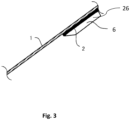
- a windshield 1 to which a camera 6 or more generally speaking an optical sensor device 6 is attached (as shown in FIG.3 ), will be described with reference to the drawings.
- the windshield 1 according to this embodiment and shown in FIG.1 is laminated glazing in the form of a windshield 1 for a motor vehicle.
- the windshield comprises an outer glass sheet 3 having an outer face P1 and an inner face P2, an inner glass sheet 4 having an inner face P3 and an outer face P2, laminated together with a thermoplastic interlayer.
- a black enamel frit mask (band) 2 around the periphery of the windshield 1, called here after the "black band" is provided on the inner face P4 of the laminated glazing.
- the black band is an enamel frit mask as classically used in automotive field to mask unaesthetic part or to protect glue from U.V. it is understood that the enamel frit mask may have another masking color than black as for example a grey color or another suitable color to fulfill the requirement of the enamel obscuration frit mask.
- Known glass sheets can be used as the outer glass sheet 3 and the inner glass sheet 4, and these glass sheets can also be made of IR absorbing glass, regular clear glass or green glass, or UV green glass.
- the glass sheets 3 and 4 are required to attain a visible light transmittance that conforms to the safety standards.
- the total thickness of the outer glass sheet 3 and the inner glass sheet 4 is preferably set to 2.4 to 4.2 mm, more preferably 2.6 to 3.4 mm, and particularly preferably 2.7 to 3.2 mm, from the viewpoint of weight reduction.
- the thickness of the inner glass sheet 4 can be made to be equal to that of the outer glass sheet 3
- the thickness of the inner glass sheet 4 can be made to be smaller than that of the outer glass sheet 3 in order for example to reduce the weight of the laminated glass.
- the interlayer 5 is a thermoplastic interlayer to laminate together the outer 3 and the inner 4 sheets.
- the interlayer 5 may be a well-known acoustic interlayer.
- the thermoplastic interlayer may be a single or multiple thermoplastic interlayers.
- the interlayer layers 131 can be made of a polyvinyl butyral resin (PVB), for example.
- PVB polyvinyl butyral resin
- a polyvinyl butyral resin has excellent adhesiveness to the glass sheets and penetration resistance and is thus preferable.
- the laminated glass according to this embodiment is used in a windshield of an automobile using an optical sensor device or more particularly a camera.
- the camera receives visible light or infrared rays from a preceding vehicle to take images, and measures the speed of a preceding automobile and the distance to the preceding automobile. Therefore, the laminated glass is required to achieve transmittance with respect to light having a wavelength in a predetermined range.
- the camera may be an infrared camera to measure the speed of a preceding vehicle and the distance to the preceding vehicle, for example.
- a useful transmittance with respect to light (infrared rays) having a wavelength of 700 to 800 nm is 30% or more and 80% or less, and preferably 40% or more and 60% or less.
- the method according to the present invention may be summarized as in FIG.4 .
- the method according to the present invention comprises the following steps:
- the automotive glazing is a laminated windshield 1 provided with enamel obscuration band 2 on the outer face of the inner face ie face 4 of the glazing (P4 of the FIG.1 ).
- a mask layer 2 is formed on the edge of the glass sheet keeping an opening 7 in the place wherein the "camera bracket" wherein the camera will be attached.
- the glass sheet having a flat shape on which a mask layer has been formed is expected to be heated bent at the form requested by the car maker, according to known technologies. Glass sheets 3, 4 are molded into a curved shape using a mold.
- the mold used to bend the glass sheet is arranged on a conveyance base which passes through the inside of the heating furnace at a temperature comprised between 200°C and 750°C to cure the mask layer and to bend the glass sheet.
- the outer and the inner glass sheets may be bent separately (sheet-by-sheet process) or together (full press process) by superposing the two glass sheets.
- the curved shape may have a curvature only in a single direction or curvatures in a plurality of directions. Then, a windshield is obtained by performing annealing outside the heating furnace.
- the first mask layer 2 as shown in FIG. 2 is formed adjacent to the glass sheet 1.
- the mask layer 2 serves as a region for concealing, from the outside, an adhesive that is applied to attach the glass sheet 1 to a vehicle body, and the like, and includes a peripheral edge mask layer 21 that is formed at the outer peripheral edge of the glass sheet 1 and a center mask layer 22 that extends downward from the peripheral edge mask layer 21 at the center of the upper edge of the glass sheet 1 also classically called the camera zone.
- the above-described measurement unit 6 is attached to the center mask layer 22. It is sufficient if the measurement unit 6 is arranged such that light emitted by a sensor 5 passes through the center of an opening and light reflected by a preceding vehicle and an obstacle can be received.
- the mask layer 2 can be made of various materials, there is no limitation on the materials as long as the mask layer 2 can block a visual field from the outside of the vehicle, and the mask layer 2 can be formed by applying ceramic of a dark color such as black to the glass sheet 1, for example.
- the center mask layer 22 is formed in a "rectangular-like" shape that extends vertically, and an opening 7 is formed in a trapezoidal shape to form a field of view for the optical sensor and more particularly for the camera 6.
- the center mask layer 22 may be formed in any suitable form that extends vertically, and where more than one opening (7, 7', 7") are formed according to number of cameras to be attached to the glazing.
- the opening may be lined up in the vertical direction, namely an upper opening and a lower opening or in the horizontal direction as shown in FIG.5 and FIG.6 , in the center mask layer 22.
- the openings may have a trapezoidal shape or any suitable form adapted for the field of view of the camera.
- the openings may have an "open form” as a "inverse V-like” shape or a trapezoidal form(closed form). If more than one opening 7 are provided in the center mask layer 22, then the openings may have the same or different forms.(closed form).
- the upper opening 231 can be formed so as to have a longitudinal length of about 58 mm and a lateral length of about 58 mm, and the lower opening can be formed so as to have a longitudinal length of about 52 mm and a lateral length of about 27 mm.
- the glass sheet is submitted to a heat treatment to cured or dried the enamel.
- the enamel mask 2 should be dried or cured. Indeed, for some washable cover layer 25 it is better to apply them after the enamel obscuration mask 2 is cured. However, some washable cover layer 25 may be applied quickly after the enamel obscuration mask 2 is dried allowing a gain of time. This depends on the composition of the washable cover layer 25 and more particularly if it contents some components that interact with the enamel mask 2 not cured.
- the washable cover layer 25 may be applied to cover only the at least one opening as shown in FIG.6a .
- the washable cover layer 25 may be applied to cover the at least one opening and to extend partially from the peripheral edge of the opening toward the obscuration mask 2 around the opening 7, 7', 7" in for example a region corresponding to a range of 5 to 50 mm from the peripheral edge of the opening toward the obscuration mask layer 2 around the opening.
- the cover layer 25 may be applied by any suitable and known method as by spraying, screen printing.
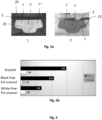
- FIG.5a-1 shows an embodiment according to which the camera zone 26 in the centre obscuration mask 22 is covered by an enamel free of frit 2 containing white pigments.
- the washable cover layer 25 has been sprayed to cover the opening 7, 7', 7", the washable cover layer 25 extending and partially from the peripheral edge of the opening toward the obscuration mask 2 around the opening 7, 7', 7".
- the washable cover layer 25 has been applied on the centre obscuration mask 22 after the centre obscuration mask 22 has been applied and dried at a minimum temperature 90°C on the inner face P4 of the inner glass sheet 4.
- the glass sheet has been submitted to a bending process, the temperature of the glass sheet reaching a temperature of at 620°C during minimum 40 seconds to give the final shape of the glass sheet.
- the washable cover layer 25 has been removed by washing/brushing.
- the outer 3 and the inner 4 glass sheet are bent together (full press) or separately (sheet-by-sheet), the two glass sheets 3, 4 are laminated together with a thermoplastic interlayer such as PVB.
- the lamination is performed according to well-known technologies.
- the laminated glass according to this embodiment is manufactured.
- FIG.5a-2 shows another embodiment of the present invention wherein an enamel without frit washable cover layer 25 comprising black pigments has been sprayed as for FIG.5a-1 and submitted as for FIG.5a-1 to a heat treatment during the bending process.
- the optical distortion has been also measured in the camera zone and compared to a glass sheet provided with a black enamel obscuration band 2 having openings 7, 7', 7".
- FIG.5b shows the results of optical distortion measured from a glass provided with a black enamel obscuration band 2 having openings 7, 7', 7" not covered by the washable cover layer 25, glass provided with a black enamel obscuration band 2 having openings 7, 7', 7" covered by an washable cover layer 25 comprising white and black pigments.
- the values indicated in FIG.5b are expressed in mdpt.
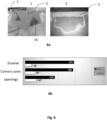
- a solution comprising carbon powder ie washable cover layer 25, has been sprayed only on the surface of the openings 7, 7', 7" after the obscuration mask 2 has been screen printed and dried as for examples described above ie on P4 of the glass sheet.
- a solution comprising carbon powder has been sprayed only on the surface of the openings 7, 7', 7", the washable cover layer 25 extending and partially from the peripheral edge of the opening toward the obscuration mask 2 around the opening 7, 7', 7".
- FIG. 6b shows the results of optical distortion measured from a glass provided with a black enamel obscuration band 2 having openings 7, 7', 7" not covered by the washable cover layer 25, glass provided with a black enamel obscuration band 2 having openings 7, 7', 7" covered by a suspension of carbon powder dissolved and with a glass with openings and partially black enamel obscuration band 2 are covered
- the values indicated in FIG.5b are expressed in mdpt
- the present invention concerns also a glazing obtained by a method according to the present invention.
Landscapes
- Chemical & Material Sciences (AREA)
- Organic Chemistry (AREA)
- Engineering & Computer Science (AREA)
- Materials Engineering (AREA)
- Life Sciences & Earth Sciences (AREA)
- Chemical Kinetics & Catalysis (AREA)
- General Chemical & Material Sciences (AREA)
- Geochemistry & Mineralogy (AREA)
- Thermal Sciences (AREA)
- Physics & Mathematics (AREA)
- Joining Of Glass To Other Materials (AREA)
- Laminated Bodies (AREA)
- Laser Beam Processing (AREA)
Claims (13)
- Verfahren zur Produktion einer Autoverglasung (1), umfassend eine optische Sensorvorrichtung (6), dadurch gekennzeichnet, dass das Verfahren die folgenden Schritte umfasst:- Bereitstellen von mindestens einer Glasscheibe (3, 4) ;- Aufbringen einer Emailleverdunkelungsmaske (2) auf mindestens eine Seite der mindestens einen Glasscheibe (3, 4), um ein Sichtfeld von der Außenseite des Autos zu blockieren, wobei die Verdunkelungsmaske (2) sich auf einen Bereich erstreckt, auf dem die mindestens eine optische Sensorvorrichtung (6) fixiert werden wird, wobei die Verdunkelungsmaske mindestens eine Öffnung (7, 7', 7") auf der Autoinnenseite umfasst, um so in der Lage zu sein, die Informationen von der optischen Sensorvorrichtung (6), die auf der mindestens einen Öffnung (7, 7', 7") fixiert werden soll, durch die Öffnung (7, 7', 7") hindurch zu erlangen,- Trocknen oder Brennen der Emailleverdunkelungsmaske (2),- Aufbringen einer abwaschbaren Abdeckschicht (25), die ein abwaschbares frittenfreies Emaille oder eine Tinte oder eine Suspension von Mineralpartikeln ist und einer Temperatur von mindestens 620 °C widersteht, auf die Oberfläche der mindestens einen Öffnung (7, 7', 7"), wobei die abwaschbare Abdeckschicht (25) nach einer Behandlung des Abwaschens mit Wasser entfernt werden kann,- Unterziehen der Glasscheibe einer Wärmebehandlung bei einer Temperatur über 450 °C, vorzugsweise über 650 °C, vorzugsweise während eines Biegeprozesses oder eines Temperprozesses,- Entfernen der Abdeckschicht (25) durch Abwaschen.
- Verfahren nach Anspruch 1, dadurch gekennzeichnet, dass die Autoverglasung (1) eine laminierte Verglasung ist, die durch mindestens eine äußere Glasscheibe (3) und eine innere Glasscheibe (4) gebildet wird, die mit einer thermoplastischen Zwischenschicht (5) laminiert sind.
- Verfahren nach Anspruch 1 oder 2, dadurch gekennzeichnet, dass die abwaschbare Abdeckschicht (25) die mindestens eine Öffnung (7, 7', 7") abdeckt und sich teilweise von dem peripheren Rand (21) der Öffnung (7, 7', 7") in Richtung der Verdunkelungsmaske (2) um die Öffnung (7, 7', 7") herum erstreckt.
- Verfahren nach einem der vorhergehenden Ansprüche, dadurch gekennzeichnet, dass die abwaschbare Abdeckschicht (25) durch Siebdruck oder Sprühen aufgebracht wird.
- Verfahren nach einem der vorhergehenden Ansprüche, dadurch gekennzeichnet, dass die abwaschbare Abdeckschicht (25) nach einem Schritt des Trocknens der Emailleverdunkelungsmaske bei einer Temperatur zwischen 90 °C und 150 °C aufgebracht wird.
- Verfahren nach einem der Ansprüche 1 bis 4, dadurch gekennzeichnet, dass die abwaschbare Abdeckschicht (25) nach einem Schritt des Brennens der Emailleverdunkelungsmaske (2) bei einer Temperatur über 550 °C für mehr als 10 Sekunden aufgebracht wird.
- Verfahren nach einem der vorhergehenden Ansprüche, dadurch gekennzeichnet, dass die Emailleverdunkelungsmaske (2) auf eine innere Seite (P2) der äußeren Glasscheibe (3) oder auf die innere (P3) oder äußere Seite (P4) der inneren Glasscheibe (3) oder beide aufgebracht werden kann.
- Verfahren nach einem der vorhergehenden Ansprüche, dadurch gekennzeichnet, dass die Emailleverdunkelungsmaske (2) eine schwarze Emaille ist.
- Verfahren nach einem der vorhergehenden Ansprüche, dadurch gekennzeichnet, dass die Verglasung (1) eine Windschutzscheibe ist.
- Laminierte Verglasung (1), die nach einem Verfahren gemäß einem der Ansprüche 1 bis 9 erhältlich ist.
- Laminierte Verglasung nach Anspruch 10, dadurch gekennzeichnet, dass eine optische Sensorvorrichtung (6) auf einer Oberfläche der Glasscheibe (3, 4) auf der mindestens einen Öffnung (7, 7', 7") auf einer Fahrzeuginnenseite angeordnet ist, um so in der Lage zu sein, die Informationen durch die Öffnung (7, 7', 7") hindurch zu erlangen.
- Laminierte Verglasung (1) nach den Ansprüchen 10 und 11, dadurch gekennzeichnet, dass die optische Sensorvorrichtung (6) ausgewählt ist aus einer Kamera, einer Infrarotkamera, einem Lidar und einem Laserpointer.
- Laminierte Verglasung (1) nach einem der vorhergehenden Ansprüche, wobei die Verglasung (1) eine äußere Glasscheibe (3), eine innere Glasscheibe (4), die gegenüber der äußeren Glasscheibe angeordnet ist, und eine Zwischenschicht (5) einschließt, die zwischen der äußeren Glasscheibe (3) und der inneren Glasscheibe (4) angeordnet ist.
Applications Claiming Priority (2)
| Application Number | Priority Date | Filing Date | Title |
|---|---|---|---|
| EP19156943 | 2019-02-13 | ||
| PCT/EP2020/053568 WO2020165232A1 (en) | 2019-02-13 | 2020-02-12 | Automotive glazing having superior optical quality |
Publications (2)
| Publication Number | Publication Date |
|---|---|
| EP3924311A1 EP3924311A1 (de) | 2021-12-22 |
| EP3924311B1 true EP3924311B1 (de) | 2024-04-10 |
Family
ID=65433596
Family Applications (1)
| Application Number | Title | Priority Date | Filing Date |
|---|---|---|---|
| EP20703480.2A Active EP3924311B1 (de) | 2019-02-13 | 2020-02-12 | Autoverglasung mit hoher optischer qualität |
Country Status (6)
| Country | Link |
|---|---|
| US (1) | US12091356B2 (de) |
| EP (1) | EP3924311B1 (de) |
| JP (1) | JP7486504B2 (de) |
| CN (1) | CN113454036A (de) |
| EA (1) | EA202192190A1 (de) |
| WO (1) | WO2020165232A1 (de) |
Families Citing this family (9)
| Publication number | Priority date | Publication date | Assignee | Title |
|---|---|---|---|---|
| GB201904203D0 (en) | 2019-03-26 | 2019-05-08 | Pikington Group Ltd | Laminated glazing and process |
| JP7726870B2 (ja) * | 2019-09-13 | 2025-08-20 | セントラル硝子株式会社 | 車両用グレージングの光学歪み情報を提供する方法およびシステム |
| CN113905996A (zh) | 2020-05-05 | 2022-01-07 | 法国圣戈班玻璃厂 | 用于使具有遮蔽区域和透视区域的玻璃质玻璃板弯曲的方法 |
| FR3110908B1 (fr) * | 2020-05-28 | 2022-05-27 | Saint Gobain | Element vitre, dispositif avec element vitre et camera thermique associee |
| FR3118769A1 (fr) * | 2021-01-14 | 2022-07-15 | Saint-Gobain Glass France | Procédé d’obtention d’un vitrage bombé feuilleté |
| DE102021202298B3 (de) | 2021-03-10 | 2022-03-10 | Volkswagen Aktiengesellschaft | Verfahren zur Herstellung einer Verbundglasscheibe für Fahrzeuge |
| DE102021202407A1 (de) * | 2021-03-12 | 2022-09-15 | Volkswagen Aktiengesellschaft | Verfahren zur Herstellung einer Glasscheibe |
| FR3124782B1 (fr) * | 2021-06-30 | 2023-12-08 | Saint Gobain | Méthode d’analyse de la qualité optique d’un vitrage, méthode de calibration d’une caméra, vitrage analysé |
| CN122095269A (zh) * | 2023-10-16 | 2026-05-26 | 旭硝子欧洲玻璃公司 | 用于激光雷达的加热式罩盖 |
Family Cites Families (14)
| Publication number | Priority date | Publication date | Assignee | Title |
|---|---|---|---|---|
| JPS6018612B2 (ja) * | 1977-08-23 | 1985-05-11 | 旭硝子株式会社 | 導電線条付きガラス板の屈曲方法 |
| JPS5462214A (en) * | 1977-10-28 | 1979-05-19 | Asahi Glass Co Ltd | Method of making current heating antifogging glass having sharp bending portion |
| US5414240A (en) * | 1988-12-27 | 1995-05-09 | Ppg Industries, Inc. | Electrically heatable transparency |
| US7323088B2 (en) * | 1998-11-06 | 2008-01-29 | Glaverbel | Glazing panels |
| US6849328B1 (en) * | 1999-07-02 | 2005-02-01 | Ppg Industries Ohio, Inc. | Light-transmitting and/or coated article with removable protective coating and methods of making the same |
| BE1015822A3 (fr) * | 2003-12-17 | 2005-09-06 | Glaverbel | Procede de bombage de feuilles de verre. |
| TW201500188A (zh) | 2013-04-18 | 2015-01-01 | Agc Glass Europe | 玻璃片之搪瓷方法 |
| JP6480249B2 (ja) * | 2014-11-04 | 2019-03-06 | 日本板硝子株式会社 | ウインドシールド |
| US9623634B2 (en) * | 2015-02-19 | 2017-04-18 | Agp America S.A. | Obscuration having superior strength and optical quality for a laminated automotive windshield |
| US10780674B2 (en) * | 2015-02-19 | 2020-09-22 | Agp America S.A. | Obscuration having superior strength and optical quality for an automotive laminate |
| FR3046377B1 (fr) * | 2015-12-31 | 2021-09-03 | Saint Gobain | Vitrage feuillete de vehicule avec ecran amoled |
| CO2017008445A1 (es) | 2016-12-29 | 2018-01-31 | Agp America Sa | Oscurecimiento con resistencia y calidad óptica superiores para un laminado para automotores |
| FR3063676B1 (fr) * | 2017-03-10 | 2021-05-14 | Peugeot Citroen Automobiles Sa | Vitrage pour vehicule comprenant une zone de masquage hybride |
| CN110869228B (zh) | 2017-07-13 | 2023-05-23 | Agc株式会社 | 汽车用窗玻璃 |
-
2020
- 2020-02-12 EP EP20703480.2A patent/EP3924311B1/de active Active
- 2020-02-12 US US17/429,755 patent/US12091356B2/en active Active
- 2020-02-12 JP JP2021546391A patent/JP7486504B2/ja active Active
- 2020-02-12 WO PCT/EP2020/053568 patent/WO2020165232A1/en not_active Ceased
- 2020-02-12 CN CN202080013881.4A patent/CN113454036A/zh active Pending
- 2020-02-12 EA EA202192190A patent/EA202192190A1/ru unknown
Also Published As
| Publication number | Publication date |
|---|---|
| EA202192190A1 (ru) | 2021-12-31 |
| JP2022521053A (ja) | 2022-04-05 |
| JP7486504B2 (ja) | 2024-05-17 |
| WO2020165232A1 (en) | 2020-08-20 |
| US20220127187A1 (en) | 2022-04-28 |
| US12091356B2 (en) | 2024-09-17 |
| CN113454036A (zh) | 2021-09-28 |
| EP3924311A1 (de) | 2021-12-22 |
Similar Documents
| Publication | Publication Date | Title |
|---|---|---|
| US12091356B2 (en) | Automotive glazing having superior optical quality | |
| US12589576B2 (en) | Laminated glazing and process | |
| US12172410B2 (en) | Glass laminate with thin insert obscuration having superior strength and optical quality | |
| JP7372148B2 (ja) | 積層板ガラス | |
| US10780674B2 (en) | Obscuration having superior strength and optical quality for an automotive laminate | |
| US20200290318A1 (en) | Glass laminate with printed obscuration having superior strength and optical quality | |
| US11618236B2 (en) | Glass laminate with inlay obscuration having superior strength and optical quality | |
| JP6893471B2 (ja) | 積層ガラス | |
| US6598426B2 (en) | Method of making a vehicle window with opaque layer | |
| US20160243796A1 (en) | Obscuration having superior strength and optical quality for a laminated automotive windshield | |
| US10710340B2 (en) | Obscuration having superior strength and optical quality for an automotive laminate | |
| KR102701326B1 (ko) | 유리 시트를 포함하는 재료를 얻기 위한 방법 | |
| JP2008546582A (ja) | 窓ガラス | |
| WO2018122770A1 (en) | Obscuration having superior strength and optical quality for an automotive laminate | |
| EA045100B1 (ru) | Автомобильное остекление, имеющее высшее оптическое качество |
Legal Events
| Date | Code | Title | Description |
|---|---|---|---|
| STAA | Information on the status of an ep patent application or granted ep patent |
Free format text: STATUS: UNKNOWN |
|
| STAA | Information on the status of an ep patent application or granted ep patent |
Free format text: STATUS: THE INTERNATIONAL PUBLICATION HAS BEEN MADE |
|
| PUAI | Public reference made under article 153(3) epc to a published international application that has entered the european phase |
Free format text: ORIGINAL CODE: 0009012 |
|
| STAA | Information on the status of an ep patent application or granted ep patent |
Free format text: STATUS: REQUEST FOR EXAMINATION WAS MADE |
|
| 17P | Request for examination filed |
Effective date: 20210913 |
|
| AK | Designated contracting states |
Kind code of ref document: A1 Designated state(s): AL AT BE BG CH CY CZ DE DK EE ES FI FR GB GR HR HU IE IS IT LI LT LU LV MC MK MT NL NO PL PT RO RS SE SI SK SM TR |
|
| DAV | Request for validation of the european patent (deleted) | ||
| DAX | Request for extension of the european patent (deleted) | ||
| STAA | Information on the status of an ep patent application or granted ep patent |
Free format text: STATUS: EXAMINATION IS IN PROGRESS |
|
| 17Q | First examination report despatched |
Effective date: 20230714 |
|
| GRAP | Despatch of communication of intention to grant a patent |
Free format text: ORIGINAL CODE: EPIDOSNIGR1 |
|
| STAA | Information on the status of an ep patent application or granted ep patent |
Free format text: STATUS: GRANT OF PATENT IS INTENDED |
|
| INTG | Intention to grant announced |
Effective date: 20231106 |
|
| GRAS | Grant fee paid |
Free format text: ORIGINAL CODE: EPIDOSNIGR3 |
|
| GRAA | (expected) grant |
Free format text: ORIGINAL CODE: 0009210 |
|
| STAA | Information on the status of an ep patent application or granted ep patent |
Free format text: STATUS: THE PATENT HAS BEEN GRANTED |
|
| AK | Designated contracting states |
Kind code of ref document: B1 Designated state(s): AL AT BE BG CH CY CZ DE DK EE ES FI FR GB GR HR HU IE IS IT LI LT LU LV MC MK MT NL NO PL PT RO RS SE SI SK SM TR |
|
| REG | Reference to a national code |
Ref country code: GB Ref legal event code: FG4D |
|
| REG | Reference to a national code |
Ref country code: CH Ref legal event code: EP |
|
| REG | Reference to a national code |
Ref country code: DE Ref legal event code: R096 Ref document number: 602020028709 Country of ref document: DE |
|
| REG | Reference to a national code |
Ref country code: IE Ref legal event code: FG4D |
|
| P01 | Opt-out of the competence of the unified patent court (upc) registered |
Free format text: CASE NUMBER: APP_37482/2024 Effective date: 20240622 |
|
| REG | Reference to a national code |
Ref country code: LT Ref legal event code: MG9D |
|
| REG | Reference to a national code |
Ref country code: NL Ref legal event code: MP Effective date: 20240410 |
|
| REG | Reference to a national code |
Ref country code: AT Ref legal event code: MK05 Ref document number: 1674777 Country of ref document: AT Kind code of ref document: T Effective date: 20240410 |
|
| PG25 | Lapsed in a contracting state [announced via postgrant information from national office to epo] |
Ref country code: NL Free format text: LAPSE BECAUSE OF FAILURE TO SUBMIT A TRANSLATION OF THE DESCRIPTION OR TO PAY THE FEE WITHIN THE PRESCRIBED TIME-LIMIT Effective date: 20240410 |
|
| PG25 | Lapsed in a contracting state [announced via postgrant information from national office to epo] |
Ref country code: NL Free format text: LAPSE BECAUSE OF FAILURE TO SUBMIT A TRANSLATION OF THE DESCRIPTION OR TO PAY THE FEE WITHIN THE PRESCRIBED TIME-LIMIT Effective date: 20240410 |
|
| PG25 | Lapsed in a contracting state [announced via postgrant information from national office to epo] |
Ref country code: IS Free format text: LAPSE BECAUSE OF FAILURE TO SUBMIT A TRANSLATION OF THE DESCRIPTION OR TO PAY THE FEE WITHIN THE PRESCRIBED TIME-LIMIT Effective date: 20240810 |
|
| PG25 | Lapsed in a contracting state [announced via postgrant information from national office to epo] |
Ref country code: BG Free format text: LAPSE BECAUSE OF FAILURE TO SUBMIT A TRANSLATION OF THE DESCRIPTION OR TO PAY THE FEE WITHIN THE PRESCRIBED TIME-LIMIT Effective date: 20240410 |
|
| PG25 | Lapsed in a contracting state [announced via postgrant information from national office to epo] |
Ref country code: FI Free format text: LAPSE BECAUSE OF FAILURE TO SUBMIT A TRANSLATION OF THE DESCRIPTION OR TO PAY THE FEE WITHIN THE PRESCRIBED TIME-LIMIT Effective date: 20240410 Ref country code: HR Free format text: LAPSE BECAUSE OF FAILURE TO SUBMIT A TRANSLATION OF THE DESCRIPTION OR TO PAY THE FEE WITHIN THE PRESCRIBED TIME-LIMIT Effective date: 20240410 |
|
| PG25 | Lapsed in a contracting state [announced via postgrant information from national office to epo] |
Ref country code: GR Free format text: LAPSE BECAUSE OF FAILURE TO SUBMIT A TRANSLATION OF THE DESCRIPTION OR TO PAY THE FEE WITHIN THE PRESCRIBED TIME-LIMIT Effective date: 20240711 |
|
| PG25 | Lapsed in a contracting state [announced via postgrant information from national office to epo] |
Ref country code: PT Free format text: LAPSE BECAUSE OF FAILURE TO SUBMIT A TRANSLATION OF THE DESCRIPTION OR TO PAY THE FEE WITHIN THE PRESCRIBED TIME-LIMIT Effective date: 20240812 |
|
| PG25 | Lapsed in a contracting state [announced via postgrant information from national office to epo] |
Ref country code: ES Free format text: LAPSE BECAUSE OF FAILURE TO SUBMIT A TRANSLATION OF THE DESCRIPTION OR TO PAY THE FEE WITHIN THE PRESCRIBED TIME-LIMIT Effective date: 20240410 |
|
| PG25 | Lapsed in a contracting state [announced via postgrant information from national office to epo] |
Ref country code: AT Free format text: LAPSE BECAUSE OF FAILURE TO SUBMIT A TRANSLATION OF THE DESCRIPTION OR TO PAY THE FEE WITHIN THE PRESCRIBED TIME-LIMIT Effective date: 20240410 |
|
| PG25 | Lapsed in a contracting state [announced via postgrant information from national office to epo] |
Ref country code: PL Free format text: LAPSE BECAUSE OF FAILURE TO SUBMIT A TRANSLATION OF THE DESCRIPTION OR TO PAY THE FEE WITHIN THE PRESCRIBED TIME-LIMIT Effective date: 20240410 |
|
| PG25 | Lapsed in a contracting state [announced via postgrant information from national office to epo] |
Ref country code: LV Free format text: LAPSE BECAUSE OF FAILURE TO SUBMIT A TRANSLATION OF THE DESCRIPTION OR TO PAY THE FEE WITHIN THE PRESCRIBED TIME-LIMIT Effective date: 20240410 |
|
| PG25 | Lapsed in a contracting state [announced via postgrant information from national office to epo] |
Ref country code: PT Free format text: LAPSE BECAUSE OF FAILURE TO SUBMIT A TRANSLATION OF THE DESCRIPTION OR TO PAY THE FEE WITHIN THE PRESCRIBED TIME-LIMIT Effective date: 20240812 Ref country code: PL Free format text: LAPSE BECAUSE OF FAILURE TO SUBMIT A TRANSLATION OF THE DESCRIPTION OR TO PAY THE FEE WITHIN THE PRESCRIBED TIME-LIMIT Effective date: 20240410 Ref country code: NO Free format text: LAPSE BECAUSE OF FAILURE TO SUBMIT A TRANSLATION OF THE DESCRIPTION OR TO PAY THE FEE WITHIN THE PRESCRIBED TIME-LIMIT Effective date: 20240710 Ref country code: LV Free format text: LAPSE BECAUSE OF FAILURE TO SUBMIT A TRANSLATION OF THE DESCRIPTION OR TO PAY THE FEE WITHIN THE PRESCRIBED TIME-LIMIT Effective date: 20240410 Ref country code: IS Free format text: LAPSE BECAUSE OF FAILURE TO SUBMIT A TRANSLATION OF THE DESCRIPTION OR TO PAY THE FEE WITHIN THE PRESCRIBED TIME-LIMIT Effective date: 20240810 Ref country code: HR Free format text: LAPSE BECAUSE OF FAILURE TO SUBMIT A TRANSLATION OF THE DESCRIPTION OR TO PAY THE FEE WITHIN THE PRESCRIBED TIME-LIMIT Effective date: 20240410 Ref country code: GR Free format text: LAPSE BECAUSE OF FAILURE TO SUBMIT A TRANSLATION OF THE DESCRIPTION OR TO PAY THE FEE WITHIN THE PRESCRIBED TIME-LIMIT Effective date: 20240711 Ref country code: FI Free format text: LAPSE BECAUSE OF FAILURE TO SUBMIT A TRANSLATION OF THE DESCRIPTION OR TO PAY THE FEE WITHIN THE PRESCRIBED TIME-LIMIT Effective date: 20240410 Ref country code: ES Free format text: LAPSE BECAUSE OF FAILURE TO SUBMIT A TRANSLATION OF THE DESCRIPTION OR TO PAY THE FEE WITHIN THE PRESCRIBED TIME-LIMIT Effective date: 20240410 Ref country code: BG Free format text: LAPSE BECAUSE OF FAILURE TO SUBMIT A TRANSLATION OF THE DESCRIPTION OR TO PAY THE FEE WITHIN THE PRESCRIBED TIME-LIMIT Effective date: 20240410 Ref country code: AT Free format text: LAPSE BECAUSE OF FAILURE TO SUBMIT A TRANSLATION OF THE DESCRIPTION OR TO PAY THE FEE WITHIN THE PRESCRIBED TIME-LIMIT Effective date: 20240410 Ref country code: RS Free format text: LAPSE BECAUSE OF FAILURE TO SUBMIT A TRANSLATION OF THE DESCRIPTION OR TO PAY THE FEE WITHIN THE PRESCRIBED TIME-LIMIT Effective date: 20240710 |
|
| REG | Reference to a national code |
Ref country code: DE Ref legal event code: R097 Ref document number: 602020028709 Country of ref document: DE |
|
| PG25 | Lapsed in a contracting state [announced via postgrant information from national office to epo] |
Ref country code: DK Free format text: LAPSE BECAUSE OF FAILURE TO SUBMIT A TRANSLATION OF THE DESCRIPTION OR TO PAY THE FEE WITHIN THE PRESCRIBED TIME-LIMIT Effective date: 20240410 |
|
| PG25 | Lapsed in a contracting state [announced via postgrant information from national office to epo] |
Ref country code: EE Free format text: LAPSE BECAUSE OF FAILURE TO SUBMIT A TRANSLATION OF THE DESCRIPTION OR TO PAY THE FEE WITHIN THE PRESCRIBED TIME-LIMIT Effective date: 20240410 |
|
| PG25 | Lapsed in a contracting state [announced via postgrant information from national office to epo] |
Ref country code: CZ Free format text: LAPSE BECAUSE OF FAILURE TO SUBMIT A TRANSLATION OF THE DESCRIPTION OR TO PAY THE FEE WITHIN THE PRESCRIBED TIME-LIMIT Effective date: 20240410 |
|
| PG25 | Lapsed in a contracting state [announced via postgrant information from national office to epo] |
Ref country code: SK Free format text: LAPSE BECAUSE OF FAILURE TO SUBMIT A TRANSLATION OF THE DESCRIPTION OR TO PAY THE FEE WITHIN THE PRESCRIBED TIME-LIMIT Effective date: 20240410 Ref country code: RO Free format text: LAPSE BECAUSE OF FAILURE TO SUBMIT A TRANSLATION OF THE DESCRIPTION OR TO PAY THE FEE WITHIN THE PRESCRIBED TIME-LIMIT Effective date: 20240410 |
|
| PG25 | Lapsed in a contracting state [announced via postgrant information from national office to epo] |
Ref country code: SM Free format text: LAPSE BECAUSE OF FAILURE TO SUBMIT A TRANSLATION OF THE DESCRIPTION OR TO PAY THE FEE WITHIN THE PRESCRIBED TIME-LIMIT Effective date: 20240410 |
|
| PG25 | Lapsed in a contracting state [announced via postgrant information from national office to epo] |
Ref country code: SM Free format text: LAPSE BECAUSE OF FAILURE TO SUBMIT A TRANSLATION OF THE DESCRIPTION OR TO PAY THE FEE WITHIN THE PRESCRIBED TIME-LIMIT Effective date: 20240410 Ref country code: SK Free format text: LAPSE BECAUSE OF FAILURE TO SUBMIT A TRANSLATION OF THE DESCRIPTION OR TO PAY THE FEE WITHIN THE PRESCRIBED TIME-LIMIT Effective date: 20240410 Ref country code: RO Free format text: LAPSE BECAUSE OF FAILURE TO SUBMIT A TRANSLATION OF THE DESCRIPTION OR TO PAY THE FEE WITHIN THE PRESCRIBED TIME-LIMIT Effective date: 20240410 Ref country code: EE Free format text: LAPSE BECAUSE OF FAILURE TO SUBMIT A TRANSLATION OF THE DESCRIPTION OR TO PAY THE FEE WITHIN THE PRESCRIBED TIME-LIMIT Effective date: 20240410 Ref country code: DK Free format text: LAPSE BECAUSE OF FAILURE TO SUBMIT A TRANSLATION OF THE DESCRIPTION OR TO PAY THE FEE WITHIN THE PRESCRIBED TIME-LIMIT Effective date: 20240410 Ref country code: CZ Free format text: LAPSE BECAUSE OF FAILURE TO SUBMIT A TRANSLATION OF THE DESCRIPTION OR TO PAY THE FEE WITHIN THE PRESCRIBED TIME-LIMIT Effective date: 20240410 |
|
| PG25 | Lapsed in a contracting state [announced via postgrant information from national office to epo] |
Ref country code: IT Free format text: LAPSE BECAUSE OF FAILURE TO SUBMIT A TRANSLATION OF THE DESCRIPTION OR TO PAY THE FEE WITHIN THE PRESCRIBED TIME-LIMIT Effective date: 20240410 |
|
| PLBE | No opposition filed within time limit |
Free format text: ORIGINAL CODE: 0009261 |
|
| STAA | Information on the status of an ep patent application or granted ep patent |
Free format text: STATUS: NO OPPOSITION FILED WITHIN TIME LIMIT |
|
| 26N | No opposition filed |
Effective date: 20250113 |
|
| PG25 | Lapsed in a contracting state [announced via postgrant information from national office to epo] |
Ref country code: SI Free format text: LAPSE BECAUSE OF FAILURE TO SUBMIT A TRANSLATION OF THE DESCRIPTION OR TO PAY THE FEE WITHIN THE PRESCRIBED TIME-LIMIT Effective date: 20240410 |
|
| PGFP | Annual fee paid to national office [announced via postgrant information from national office to epo] |
Ref country code: GB Payment date: 20250102 Year of fee payment: 6 |
|
| PG25 | Lapsed in a contracting state [announced via postgrant information from national office to epo] |
Ref country code: SE Free format text: LAPSE BECAUSE OF FAILURE TO SUBMIT A TRANSLATION OF THE DESCRIPTION OR TO PAY THE FEE WITHIN THE PRESCRIBED TIME-LIMIT Effective date: 20240410 |
|
| PG25 | Lapsed in a contracting state [announced via postgrant information from national office to epo] |
Ref country code: MC Free format text: LAPSE BECAUSE OF FAILURE TO SUBMIT A TRANSLATION OF THE DESCRIPTION OR TO PAY THE FEE WITHIN THE PRESCRIBED TIME-LIMIT Effective date: 20240410 |
|
| REG | Reference to a national code |
Ref country code: CH Ref legal event code: PL |
|
| PG25 | Lapsed in a contracting state [announced via postgrant information from national office to epo] |
Ref country code: LU Free format text: LAPSE BECAUSE OF NON-PAYMENT OF DUE FEES Effective date: 20250212 |
|
| PG25 | Lapsed in a contracting state [announced via postgrant information from national office to epo] |
Ref country code: CH Free format text: LAPSE BECAUSE OF NON-PAYMENT OF DUE FEES Effective date: 20250228 |
|
| REG | Reference to a national code |
Ref country code: BE Ref legal event code: MM Effective date: 20250228 |
|
| PGFP | Annual fee paid to national office [announced via postgrant information from national office to epo] |
Ref country code: FR Payment date: 20251231 Year of fee payment: 7 |
|
| PG25 | Lapsed in a contracting state [announced via postgrant information from national office to epo] |
Ref country code: BE Free format text: LAPSE BECAUSE OF NON-PAYMENT OF DUE FEES Effective date: 20250228 |
|
| PG25 | Lapsed in a contracting state [announced via postgrant information from national office to epo] |
Ref country code: IE Free format text: LAPSE BECAUSE OF NON-PAYMENT OF DUE FEES Effective date: 20250212 |
|
| PGFP | Annual fee paid to national office [announced via postgrant information from national office to epo] |
Ref country code: DE Payment date: 20251230 Year of fee payment: 7 |
|
| PG25 | Lapsed in a contracting state [announced via postgrant information from national office to epo] |
Ref country code: CY Free format text: LAPSE BECAUSE OF FAILURE TO SUBMIT A TRANSLATION OF THE DESCRIPTION OR TO PAY THE FEE WITHIN THE PRESCRIBED TIME-LIMIT Effective date: 20240410 |
|
| PG25 | Lapsed in a contracting state [announced via postgrant information from national office to epo] |
Ref country code: LT Free format text: LAPSE BECAUSE OF FAILURE TO SUBMIT A TRANSLATION OF THE DESCRIPTION OR TO PAY THE FEE WITHIN THE PRESCRIBED TIME-LIMIT Effective date: 20240410 |
|
| PG25 | Lapsed in a contracting state [announced via postgrant information from national office to epo] |
Ref country code: TR Free format text: LAPSE BECAUSE OF FAILURE TO SUBMIT A TRANSLATION OF THE DESCRIPTION OR TO PAY THE FEE WITHIN THE PRESCRIBED TIME-LIMIT Effective date: 20240410 |