EP3917930B1 - Inhibitors of human immunodeficiency virus replication - Google Patents
Inhibitors of human immunodeficiency virus replication Download PDFInfo
- Publication number
- EP3917930B1 EP3917930B1 EP20704596.4A EP20704596A EP3917930B1 EP 3917930 B1 EP3917930 B1 EP 3917930B1 EP 20704596 A EP20704596 A EP 20704596A EP 3917930 B1 EP3917930 B1 EP 3917930B1
- Authority
- EP
- European Patent Office
- Prior art keywords
- mmol
- stirred
- compound
- mixture
- added
- Prior art date
- Legal status (The legal status is an assumption and is not a legal conclusion. Google has not performed a legal analysis and makes no representation as to the accuracy of the status listed.)
- Active
Links
Images
Classifications
-
- A—HUMAN NECESSITIES
- A61—MEDICAL OR VETERINARY SCIENCE; HYGIENE
- A61K—PREPARATIONS FOR MEDICAL, DENTAL OR TOILETRY PURPOSES
- A61K31/00—Medicinal preparations containing organic active ingredients
- A61K31/33—Heterocyclic compounds
- A61K31/395—Heterocyclic compounds having nitrogen as a ring hetero atom, e.g. guanethidine or rifamycins
- A61K31/495—Heterocyclic compounds having nitrogen as a ring hetero atom, e.g. guanethidine or rifamycins having six-membered rings with two or more nitrogen atoms as the only ring heteroatoms, e.g. piperazine or tetrazines
- A61K31/505—Pyrimidines; Hydrogenated pyrimidines, e.g. trimethoprim
- A61K31/519—Pyrimidines; Hydrogenated pyrimidines, e.g. trimethoprim ortho- or peri-condensed with heterocyclic rings
-
- C—CHEMISTRY; METALLURGY
- C07—ORGANIC CHEMISTRY
- C07D—HETEROCYCLIC COMPOUNDS
- C07D487/00—Heterocyclic compounds containing nitrogen atoms as the only ring hetero atoms in the condensed system, not provided for by groups C07D451/00 - C07D477/00
- C07D487/02—Heterocyclic compounds containing nitrogen atoms as the only ring hetero atoms in the condensed system, not provided for by groups C07D451/00 - C07D477/00 in which the condensed system contains two hetero rings
- C07D487/04—Ortho-condensed systems
-
- A—HUMAN NECESSITIES
- A61—MEDICAL OR VETERINARY SCIENCE; HYGIENE
- A61K—PREPARATIONS FOR MEDICAL, DENTAL OR TOILETRY PURPOSES
- A61K31/00—Medicinal preparations containing organic active ingredients
- A61K31/33—Heterocyclic compounds
- A61K31/395—Heterocyclic compounds having nitrogen as a ring hetero atom, e.g. guanethidine or rifamycins
- A61K31/495—Heterocyclic compounds having nitrogen as a ring hetero atom, e.g. guanethidine or rifamycins having six-membered rings with two or more nitrogen atoms as the only ring heteroatoms, e.g. piperazine or tetrazines
- A61K31/496—Non-condensed piperazines containing further heterocyclic rings, e.g. rifampin, thiothixene or sparfloxacin
-
- A—HUMAN NECESSITIES
- A61—MEDICAL OR VETERINARY SCIENCE; HYGIENE
- A61K—PREPARATIONS FOR MEDICAL, DENTAL OR TOILETRY PURPOSES
- A61K31/00—Medicinal preparations containing organic active ingredients
- A61K31/33—Heterocyclic compounds
- A61K31/395—Heterocyclic compounds having nitrogen as a ring hetero atom, e.g. guanethidine or rifamycins
- A61K31/495—Heterocyclic compounds having nitrogen as a ring hetero atom, e.g. guanethidine or rifamycins having six-membered rings with two or more nitrogen atoms as the only ring heteroatoms, e.g. piperazine or tetrazines
- A61K31/4985—Pyrazines or piperazines ortho- or peri-condensed with heterocyclic ring systems
-
- A—HUMAN NECESSITIES
- A61—MEDICAL OR VETERINARY SCIENCE; HYGIENE
- A61K—PREPARATIONS FOR MEDICAL, DENTAL OR TOILETRY PURPOSES
- A61K31/00—Medicinal preparations containing organic active ingredients
- A61K31/33—Heterocyclic compounds
- A61K31/395—Heterocyclic compounds having nitrogen as a ring hetero atom, e.g. guanethidine or rifamycins
- A61K31/495—Heterocyclic compounds having nitrogen as a ring hetero atom, e.g. guanethidine or rifamycins having six-membered rings with two or more nitrogen atoms as the only ring heteroatoms, e.g. piperazine or tetrazines
- A61K31/505—Pyrimidines; Hydrogenated pyrimidines, e.g. trimethoprim
- A61K31/506—Pyrimidines; Hydrogenated pyrimidines, e.g. trimethoprim not condensed and containing further heterocyclic rings
-
- A—HUMAN NECESSITIES
- A61—MEDICAL OR VETERINARY SCIENCE; HYGIENE
- A61K—PREPARATIONS FOR MEDICAL, DENTAL OR TOILETRY PURPOSES
- A61K31/00—Medicinal preparations containing organic active ingredients
- A61K31/33—Heterocyclic compounds
- A61K31/395—Heterocyclic compounds having nitrogen as a ring hetero atom, e.g. guanethidine or rifamycins
- A61K31/535—Heterocyclic compounds having nitrogen as a ring hetero atom, e.g. guanethidine or rifamycins having six-membered rings with at least one nitrogen and one oxygen as the ring hetero atoms, e.g. 1,2-oxazines
- A61K31/5365—Heterocyclic compounds having nitrogen as a ring hetero atom, e.g. guanethidine or rifamycins having six-membered rings with at least one nitrogen and one oxygen as the ring hetero atoms, e.g. 1,2-oxazines ortho- or peri-condensed with heterocyclic ring systems
-
- A—HUMAN NECESSITIES
- A61—MEDICAL OR VETERINARY SCIENCE; HYGIENE
- A61K—PREPARATIONS FOR MEDICAL, DENTAL OR TOILETRY PURPOSES
- A61K31/00—Medicinal preparations containing organic active ingredients
- A61K31/33—Heterocyclic compounds
- A61K31/395—Heterocyclic compounds having nitrogen as a ring hetero atom, e.g. guanethidine or rifamycins
- A61K31/55—Heterocyclic compounds having nitrogen as a ring hetero atom, e.g. guanethidine or rifamycins having seven-membered rings, e.g. azelastine, pentylenetetrazole
- A61K31/553—Heterocyclic compounds having nitrogen as a ring hetero atom, e.g. guanethidine or rifamycins having seven-membered rings, e.g. azelastine, pentylenetetrazole having at least one nitrogen and one oxygen as ring hetero atoms, e.g. loxapine, staurosporine
-
- A—HUMAN NECESSITIES
- A61—MEDICAL OR VETERINARY SCIENCE; HYGIENE
- A61K—PREPARATIONS FOR MEDICAL, DENTAL OR TOILETRY PURPOSES
- A61K31/00—Medicinal preparations containing organic active ingredients
- A61K31/70—Carbohydrates; Sugars; Derivatives thereof
- A61K31/7042—Compounds having saccharide radicals and heterocyclic rings
- A61K31/7052—Compounds having saccharide radicals and heterocyclic rings having nitrogen as a ring hetero atom, e.g. nucleosides, nucleotides
- A61K31/706—Compounds having saccharide radicals and heterocyclic rings having nitrogen as a ring hetero atom, e.g. nucleosides, nucleotides containing six-membered rings with nitrogen as a ring hetero atom
- A61K31/7064—Compounds having saccharide radicals and heterocyclic rings having nitrogen as a ring hetero atom, e.g. nucleosides, nucleotides containing six-membered rings with nitrogen as a ring hetero atom containing condensed or non-condensed pyrimidines
- A61K31/7076—Compounds having saccharide radicals and heterocyclic rings having nitrogen as a ring hetero atom, e.g. nucleosides, nucleotides containing six-membered rings with nitrogen as a ring hetero atom containing condensed or non-condensed pyrimidines containing purines, e.g. adenosine, adenylic acid
-
- A—HUMAN NECESSITIES
- A61—MEDICAL OR VETERINARY SCIENCE; HYGIENE
- A61P—SPECIFIC THERAPEUTIC ACTIVITY OF CHEMICAL COMPOUNDS OR MEDICINAL PREPARATIONS
- A61P31/00—Antiinfectives, i.e. antibiotics, antiseptics, chemotherapeutics
- A61P31/12—Antivirals
- A61P31/14—Antivirals for RNA viruses
- A61P31/18—Antivirals for RNA viruses for HIV
-
- C—CHEMISTRY; METALLURGY
- C07—ORGANIC CHEMISTRY
- C07D—HETEROCYCLIC COMPOUNDS
- C07D471/00—Heterocyclic compounds containing nitrogen atoms as the only ring hetero atoms in the condensed system, at least one ring being a six-membered ring with one nitrogen atom, not provided for by groups C07D451/00 - C07D463/00
- C07D471/02—Heterocyclic compounds containing nitrogen atoms as the only ring hetero atoms in the condensed system, at least one ring being a six-membered ring with one nitrogen atom, not provided for by groups C07D451/00 - C07D463/00 in which the condensed system contains two hetero rings
- C07D471/04—Ortho-condensed systems
Definitions
- the invention relates to compounds, compositions, and a compound for use in methods for the treatment of human immunodeficiency virus (HIV) infection. More particularly, the invention provides novel inhibitors of HIV, pharmaceutical compositions containing such compounds, and methods for using these compounds in the treatment of HIV infection. The invention also relates to methods for making the compounds hereinafter described.
- HIV human immunodeficiency virus
- AIDS Acquired immunodeficiency syndrome
- HIV-infected individuals consists of a combination of approved anti-retroviral agents. Close to four dozen drugs are currently approved for HIV infection, either as single agents, fixed dose combinations or single tablet regimens; the latter two containing 2-4 approved agents. These agents belong to a number of different classes, targeting either a viral enzyme or the function of a viral protein during the virus replication cycle.
- agents are classified as either nucleotide reverse transcriptase inhibitors (NRTIs), non-nucleotide reverse transcriptase inhibitors (NNRTIs), protease inhibitors (PIs), integrase strand transfer inhibitors (INSTIs), or entry inhibitors (one, maraviroc, targets the host CCR5 protein, while the other, enfuvirtide, is a peptide that targets the gp41 region of the viral gp160 protein).
- a pharmacokinetic enhancer cobicistat or ritonavir
- ARVs antiretroviral agents
- novel mechanisms of action that can be used as part of the preferred antiretroviral therapy (ART) can still have a major role to play since they should be effective against viruses resistant to current agents.
- the improvements that would make drugs easier to take for long periods of time or even for a lifetime could include all or some of the following: reduced side effects, reduced drug-drug interactions, increased duration between dosing, or alternate routes of administration which match to individual patient preferences.
- the goals of improved safety would definitely include high therapeutic indices towards any toxicities that would cause discontinuation of dosing, and could also include reduced side-effects or reduced drug-drug interactions.
- the potential to use fewer overall drugs in a combination regimen would also likely lead to improved compliance and safety.
- the present invention discloses the compound and pharmaceutically acceptable salts thereof.
- the present invention discloses a composition comprising a compound or salt of the invention.
- the present invention discloses a compound for use in a method of treating HIV infection in a human, comprising administering a compound or salt of the invention.
- the present invention discloses a compound or salt of the invention for use in therapy.
- the present invention discloses a compound or salt of the invention for use in treating HIV infection in a human.
- the present invention discloses the use of a compound or salt of the invention in the manufacture of a medicament for the treatment of HIV infection in a human.
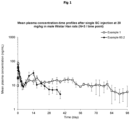
- Figure 1 is a graph summarizing the rat SC PK experiment described below.
- stereochemistry of the compound and salts of this invention is as depicted below
- the salts of the invention are pharmaceutically acceptable. Such salts may be acid addition salts or base addition salts.
- suitable pharmaceutically acceptable salts see, for example, Berge et al, J. Pharm, Sci., 66, 1-19, 1977 .
- Representative pharmaceutically acceptable acid addition salts include, but are not limited to, 4-acetamidobenzoate, acetate, adipate, alginate, ascorbate, aspartate, benzenesulfonate (besylate), benzoate, bisulfate, bitartrate, butyrate, calcium edetate, camphorate, camphorsulfonate (camsylate), caprate (decanoate), caproate (hexanoate), caprylate (octanoate), cinnamate, citrate, cyclamate, digluconate, 2,5-dihydroxybenzoate, disuccinate, dodecylsulfate (estolate), edetate (ethylenediaminetetraacetate), estolate (lauryl sulfate), ethane-1,2-disulfonate (edisylate), ethanesulfonate (esylate), formate, fumarate, galactarate (
- Representative pharmaceutically acceptable base addition salts include, but are not limited to, aluminum, 2-amino-2-(hydroxymethyl)-1,3-propanediol (TRIS, tromethamine), arginine, benethamine ( N -benzylphenethylamine), benzathine ( N,N'- dibenzylethylenediamine), bis -(2-hydroxyethyl)amine, bismuth, calcium, chloroprocaine, choline, clemizole (1- p chlorobenzyl-2-pyrrolildine-1'-ylmethylbenzimidazole), cyclohexylamine, dibenzylethylenediamine, diethylamine, diethyltriamine, dimethylamine, dimethylethanolamine, dopamine, ethanolamine, ethylenediamine, L-histidine, iron, isoquinoline, lepidine, lithium, lysine, magnesium, meglumine ( N -methylglucamine), piperazine, piperidine,
- compositions of this invention further comprise a pharmaceutically acceptable excipient.
- preferred routes of administration are oral and by injection to deliver subcutaneously or intramuscularly. Therefore, preferred pharmaceutical compositions include compositions suitable for oral administration (for example tablets) and compositions suitable for injection.
- the present invention discloses a compound for use in methods of preventing HIV infection in a human or reducing the risk of infection, comprising administering a compound or salt of this invention.
- Pre-exposure prophylaxis or PrEP is when people at risk for HIV infection take daily medicine to lower their chances of getting HIV infection. PrEP has been shown to be effective in reducing the risk of infection.
- the compound and salts of this invention are believed to have as their biological target the HIV capsid and thus their mechanism of action is to modify in one or more ways the function of the HIV capsid.
- Combination therapies according to the present invention thus comprise the administration of at least one compound or salt of the invention, and the administration of at least one other agent used in the treatment of HIV infection.
- a compound or salt of the present invention, and the other agent may be formulated and administered together in a single pharmaceutical composition or may be formulated and administered separately. When formulated and administered separately, administration may occur simultaneously or sequentially in any order.
- Suitable other agents include, for example, dolutegravir, bictegravir, lamivudine, fostemsavir, cabotegravir, maraviroc, rilpiverine, atazanavir, tenofovir alafenamide, islatravir, doravirine, and darunavir.
- Preferred agents include, for example, dolutegravir, bictegravir, islatravir, lamivudine, fostemsavir, and cabotegravir.
- Particularly preferred agents include, for example, dolutegravir, bictegravir, Ilamivudine, fostemsavir, and cabotegravir.
- the reaction mixture was filtered and the filter cake was extracted with EtOAc (1000 mL). The filtrate was washed with saturated aq. Na 2 S 2 O 3 (2 ⁇ 500 mL); saturated aq. FeSO 4 (300 mL); and then brine (500 mL).
- the organic layer was dried over anhydrous Na 2 SO 4 ; filtered and concentrated under reduced pressure to obtain the crude title compound (150 g).
- the resulting solution was concentrated under reduced pressure and the resulting solids were dissolved in EtOAc, then twice washed with aq. citric acid (1M) followed by water followed by brine. The organic solution was dried over Na 2 SO 4 ; filtered; then concentrated in vacuo to afford the separated enantiomer in 80-90% recovery.
- the solids were isolated via filtration and were washed with water. The wet solid was dried under vacuum at 50 °C for 12-15 hours. The crude solid was purified by column chromatography (10% EA/hexanes to 40% EA/Hexanes) to afford the product as a pale yellow solid. Yield: 185.0 g (46.0 %).
- the second (major) eluting peak was collected and the aqueous was concentrated to remove acetonitrile.
- the resultant white suspension was neutralized with 1 N NaOH and the mixture was extracted with ethyl acetate.
- the combined organics were dried over Na 2 SO 4 ; filtered; and then concentrated in vacuo to provide 1.25 g of the major atropisomer.
- This material was further purified by SFC chromatography using a Chiralpak IC column eluted with 0.1% isopropylamine in EtOH:Heptane (40:60) to provide the chirally pure product (0.96 g, 41%).
- Example 1 N-((S)-1-((3P)-3-(4-chloro-1-methyl-3-(methylsulfonamido)-1H-indazol-7-yl)-7-(3,3-difluorobutoxy)-4-oxo-3,4-dihydropyrido[2,3-d]pyrimidin-2-yl)-2-(3,5-difluorophenyl)ethyl)-2-((3bS,4aR)-3-(difluoromethyl)-5,5-difluoro-3b,4,4a,5-tetrahydro-1H-cyclopropa[3,4]cyclopenta[1,2-c]pyrazol-1-y / )acetamide
- Step-2a To a solution of DMSO (5.9 L, 5.0 V)) in a round-bottom flask was added 2,6-dichloro-3-nitrobenzaldehyde (1.17 kg, 5.31 mol, 1.0 equiv.) at room temperature. After being stirred for 30 min at room temperature, hydroxylamine hydrochloride (0.63 kg, 9.04 mol, 1.70 equiv.) was added and the reaction mass was stirred at room temperature for 3 h. After completion of the reaction (monitored by TLC), the reaction mass was quenched by the addition of ice-cold water (18.0 L, 15.0 V) added at a rate sufficient to maintain the temperature below 30 °C (Observation: Solids formed upon water addition).
- the reaction mass was stirred at room temperature for 60-90 min.
- the solids were isolated by filtration; washed with water (2.5 L, 2.0 V); followed by washing with a mixture of acetone and hexanes (6.0 L, 1:1 ratio). Bulk residual water was removed from the solids by maintaining vacuum filtration for 60-90 min.
- the wet solid was initially air dried and then finally dried in a hot air oven at 50-55 °C for 10-12 h (until moisture content was not more than 1.0 %) to get the dried target product, 2,6-dichloro-3-nitrobenzaldehyde oxime (1.22 kg, 92% yield) as an off-white solid.
- the crude product (which contains 10-20% of 2,6-dichloro-3-nitrobenzonitrile) was used directly in the next step without further purification.
- Step-2b To a stirred solution of the crude oxime (preparation described above, 1.13 kg, 4.80 mol, 1.0 equiv.) in DCM (9.04 L, 8.0 V) at 0-5 °C was added triethylamine ("TEA", 1.02 kg, 10.09 mol, 2.1 equiv.). After being stirred for 5 min, methanesulfonyl chloride (0.60 kg, 5.29 mol, 1.1 equiv.) was added (Observation: An exotherm is noted during the addition) slowly at 15 °C. Then the reaction mass was stirred at room temperature for 30-45 min.
- TOA triethylamine
- reaction mass was diluted with water (6.78 L, 6.0 V); the organic layer was separated; and the aqueous layer was extracted with DCM (3.4 L, 3.0 V). The combined organic layers were washed with brine (5.65 L, 5.0 V); dried over Na 2 SO 4 ; and concentrated under vacuum. The resulting crude solids were triturated with hexanes (4.50 L, 4.0 V) at room temperature.
- the solids were isolated via filtration and then were washed with water (2.25 L, 3.0 V).
- the wet solid was washed with a 1:1 ratio mixture of acetone (1.875 L, 2.5 V) and hexanes (1.875 L, 2.5 V). Bulk residual water was removed from the solids by maintaining vacuum filtration for 60-90 min.
- the wet solid was finally dried in a hot air oven for 7-8 h at 50 °C (until moisture content reaches below 1.5%) to get the dried product, 4-chloro-7-nitro-1 H -indazol-3-amine (549.0 g, 75% yield) as a brick red-colored solid.
- reaction temperature was slowly raised to room temperature and stirring was continued an additional 2 h at the same temperature.
- reaction mass was quenched by the addition of ice-cold water (15.0 L, 30.0 V) and the resulting mixture was then stirred for 6-8 h at room temperature.
- the solids were isolated via filtration and were then washed with water (1.5 L, 3.0 V).
- the wet solid was washed with IPA (1.5 L, 3.0 V) followed by hexanes (1.0 L, 2.0 V). Bulk residual water was removed from the solids by maintaining vacuum filtration for 60-90 min.
- Step 5 Preparation of N -(4-chloro-1-methyl-7-nitro-1 H -indazol-3-yl)methanesulfonamide
- Step 5a To a solution of 4-chloro-1-methyl-7-nitro-1 H -indazol-3-amine(625.0 g, 2.76 mol, 1.0 equiv.) in DCM (6.25 L, 10.0 V) at 0-5 °C. was added triethylamine (TEA) (837.0 g, 8.27 mol, 3.0 equiv.); followed by the addition of 4-dimethylaminopyridine (DMAP) (20.60 g, 0.165 mol, 0.06 equiv.).
- TEA triethylamine
- DMAP 4-dimethylaminopyridine
- reaction mass was stirred for 5-10 min., then methanesulfonyl chloride (MsCl) (790.0 g, 6.89 mol, 2.5 equiv.) added slowly while maintaining the reaction mass below 10 °C.
- MsCl methanesulfonyl chloride
- the reaction mixture was allowed to warm to room temperature and was then stirred for 1.5-2.0 h.
- the mixture was diluted with water (6.25 L, 10.0 V) and then stirred at room temperature for 15 min.
- the organic layer was separated, and the aqueous layer was extracted with DCM (6.25 L, 10.0 V).
- the combined organic layers were washed with brine (1.25 L, 2.0 V), dried over Na 2 SO 4 and concentrated to get the crude solids.
- reaction mass was stirred at the same temperature for 3 h.
- sample preparation for TLC analysis ⁇ 1.0 ml of sample acidified with aq. 2.0 N HCl to reach the pH: 2-3, extract it with ethyl acetate and analyze the organic layer by TLC
- the reaction mass was cooled to 0-5 °C and the pH was adjusted to 2-3 by the addition of aq. 2.0 N HCl (3.13 L, 5.0 V) while maintain the reaction temperature below 10 °C [Note: Precipitation occurred upon addition of HCl and increased with stirring].
- Step 6 Preparation of N -(4-chloro-1-methyl-7-nitro-1 H -indazol-3-yl)- N -(4-methoxybenzyl)methanesulfonamide
- the mixture was poured into ice cold water (19.05 L, 30.0 V) [Note: Slow quenching with vigorous stirring is preferred to avoid clumping as the product precipitates].
- the resulting solids were isolated via filtration and washed with water (1.90 L, 3.0 V); then the solids were washed with hexanes (1.27 L, 2.0 V). Bulk residual water was removed from the solids by maintaining vacuum filtration for 60-90 min.
- the isolated solid was dissolved in Ethyl acetate (12.7 L, 20.0 V) and charcoal was added (63.5 g). The mixture was heated to 60-70 °C and then stirred for 30-45 min. at that temperature.
- Step 7 Preparation of N -(7-Amino-4-chloro-1-methyl-1H-indazol-3-yl)- N -(4-methoxybenzyl)methanesulfonamide
- Step 4 Preparation of methyl 2-amino-6-(3,3-difluorobutoxy)nicotinate
- Example 1 N-((S)-1-((3P)-3-(4-chloro-1-methyl 3-(methylsulfonamido)-1H-indazol-7-yl)-7-(3,3-difluorobutoxy)-4-oxo-3,4-dihydropyrido[2,3-d]pyrimidin-2-yl)-2-(3,5-difluorophenyl)ethyl)-2-((3bS,4aR)-3-(difluoromethyl)-5,5-difluoro-3b,4,4a,5-tetrahydro-1H-cyclopropa[3,4]cyclopenta[t,2-c]pyrazol-1-yl)acetamide
- Step 1 Preparation of tert -Butyl (S)-(1-(3-(4-chloro-3-(N-(4-methoxybenzyl)methylsulfonamido)-1-methyl-1H-indazol-7-yl)-7-(3,3-difluorobutoxy)-4-oxo-3,4-dihydropyrido[2,3-d]pyrimidin-2-yl)-2-(3,5-difluorophenyl)ethyl)carbamate
- T3P 2,4,6-tripropyl-1,3,5,2,4,6-trioxatriphosphinane 2,4,6-trioxide
- T3P 50% wt in EtOAc, 494 mL, 830 mmol
- the solution was allowed to warm to 13 °C and was then stirred for 5 hrs.
- N-(7-amino-4-chloro-1-methyl-1H-indazol-3-yl)-N-(4-methoxybenzyl)methanesulfonamide (62.3 g, 158 mmol).
- the reaction mass was then allowed to slowly warm to 27 °C and then was stirred at that temperature for 48 hrs.
- Step 2 Preparation of (S)-N-((6P)-7-(2-(1-amino-2-(3,5-difluorophenyl)ethyl)-7-(3,3-difluorobutoxy)-4-oxopyrido[2,3-d] pyrimidin-3(4H)-yl)-4-chloro-1-methyl-1H-indazol-03-yl)methanesulfonamide
- Step 3 Preparation of N-((S)-1-((3P)-3-(4-chloro-1-methyl-3-(methylsulfonamido)-1H-indazol-7-yl)-7-(3,3-difluorobutoxy)-4-oxo-3,4-dihydropyrido[2,3-d]pyrimidin-2-yl)-2-(3,5-difluorophenyl)ethyl)-2-((3bS,4aR)-3-(difluoromethyl)-5,5-difluoro-3b,4,4a,5-tetrahydro-1H-cyclopropa[3,4]cyclopenta[1,2-c]pyrazol-1-yl)acetamide
- This purified product was blended with an additional batch of product (25 g) prepared similarly.
- the fractions containing the pure product were pooled and concentrated under reduced pressure to remove the acetonitrile component.
- the aqueous solution was made basic by the addition of saturated NaHCO 3 , then was extracted with EtOAc (3 ⁇ 500 mL). The combined organics were dried over anhydrous Na 2 SO 4 and then filtered. The filtrate was concentrated under reduced pressure to obtain the desired product (102 g) as an off-white solid.
- This material was dissolved in EtOAc (200 mL) and the solution was then diluted with n-hexane (1 L). The resulting precipitate was stirred for 2 h at 27 °C and then was collected via filtration. The solid was dried under vacuum.
- Example 1 is a homochiral material that contains axial chirality.
- Axial chirality can be described using P/M nomenclature as detailed in the IUPAC Gold Book (doi:10.1351/goldbook.A00547).
- P/M nomenclature as detailed in the IUPAC Gold Book (doi:10.1351/goldbook.A00547).
- software tools are available which are capable of generating chemical names containing P/M nomenclature, and even fewer options are available to convert chemicals names using this nomenclature to structural representations of the molecules.
- Example 1 The name of Example 1 as generated by ChemDraw Ultra 12 (absent P/M nomenclature) is: N-((S)-1-(3-(4-chloro-1-methyl-3-(methylsulfonamido)-1H-indazol-7-yl)-7-(3,3-difluorobutoxy)-4-oxo-3,4-dihydropyrido[2,3-d]pyrimidin-2-yl)-2-(3,5-difluorophenyl)ethyl)-2-((3bS,4aR)-3-(difluoromethyl)-5,5-difluoro-3b,4,4a,5-tetrahydro-1H-cyclopropa[3,4]cyclopenta[1,2-c]pyrazol-1-yl)acetamide
- Example 1 is: N-[(1S)-1-[(3P)-3-(4-chloro-3-methanesulfonamido-1-methyl-1H-indazol-7-yl)-7-(3,3-difluorobutoxy)-4-oxo-3H,4H-pyrido[2,3-d]pyrimidin-2-yl]-2-(3,5-difluorophenyl)ethyl]-2-[(2S,4R)-9-(difluoromethyl)-5,5-difluoro-7,8-diazatricyclo[4.3.0.0 2 , 4 ]nona-1(6),8-dien-7-yl]acetamide
- Example 1 was compared to the compound of Example 60.2 described in WO2018203235 (Scheme 1) in a number of tests.
- Scheme 2 restricted rotation about the indicated C-N bond of the indazole gives rise to atropisomers (diastereomers) in both Example 1 and Example 60.2 which can be separated by chromatography and are non-interconverting at room temperature.
- atropisomers diastereomers
- MT-2 cells were propagated in RPMI 1640 media supplemented with 10% heat inactivated fetal bovine serum (FBS), 100 mg/ml penicillin G and up to 100 units/mL streptomycin.
- FBS heat inactivated fetal bovine serum
- the 293T cells were propagated in DMEM media supplemented with 10% heat inactivated FBS, 100 mg/mL penicillin G and 100 mg/mL streptomycin.
- the recombinant virus was prepared through transfection of the recombinant NL 4-3 proviral clone into 293T cells using Transit-293 Transfection Reagent from Mirus Bio LLC (Madison, WI). Supernatant was harvested after 2-3 days and the amount of virus present was titered in MT-2 cells using luciferase enzyme activity as a marker by measuring luciferase enzyme activity.
- Luciferase was quantitated using the EnduRen Live Cell Substrate from Promega (Madison, WI). Antiviral activities of compounds toward the recombinant virus were quantified by measuring luciferase activity in MT-2 cells infected for 4-5 days with the recombinant virus in the presence of serial dilutions of the compound.
- cytotoxicity and the corresponding CC 50 values were determined using the same protocol as described in the antiviral assay except that uninfected cells were used. Cytotoxicity was assessed on day 4 in uninfected MT2 cells by using an XTT (2,3-bis[2-Methoxy-4-nitro-5-sulfophenyl]-2H-tetrazolium-5-carboxyanilide inner salt)-based colorimetric assay (Sigma-Aldrich, St Louis, Mo).
- the cytotoxicy CC 50 measured for both Example 1 and Example 60.2 is >10 ⁇ M.
- Liver microsomes from human, rat dog and monkey were thawed and diluted to a final concentration of 1 mg/mL in 100 mM potassium phosphate buffer (pH 7.4).
- Test compounds and controls were prepared at 100x final concentration of 1 ⁇ M in 1:1 acetonitrile:water (v/v) and aliquoted into microsomal mixture. The mixture was preincubated at 37°C in a shaking water bath for 10 minutes. The incubations were performed in duplicate. Three controls were included in the incubations; warfarin, phenacetin, and verapamil. After the preincubation, the reaction was initiated with NADPH at a final concentration of 1 mM.
- Example 1 is at least seven times more stable in dog liver microsomes than Example 60.2, and Example 1 is at least two times more stable in monkey liver microsomes than Example 60.2. This data suggest that Example 1 should be significantly more stable than Example 60.2 to metabolism in vivo in dog and monkey. Table 1. Liver microsome stability Example 1 Example 60.2 Human liver microsome T 1/2 > 120 min. > 120 min. Rat liver microsome T 1/2 > 120 min. > 120 min. Dog liver microsome T 1/2 > 120 min. 17 min. Monkey liver microsome T 1/2 > 120 min. 55 min.
- Cryopreserved hepatocytes in suspension from human, monkey, dog, rat and mouse were thawed and diluted in pre-warmed William's Medium E (pH 7.4). Aliquots of the hepatocyte suspension were added to test compound working solutions prepared in pre-warmed William's Medium E (pH 7.4) to achieve final concentrations of 0.5 ⁇ M in 0.5 ⁇ 10 6 cells per milliliter and ⁇ 0.25% DMSO. These samples were incubated at 37°C with 5% carbon dioxide and shaking. The incubations were performed in singlet.
- Example 1 in human hepatocytes could not be measured because no metabolism was measurable after a 240 minute incubation. In contrast, after incubating Example 60.2 in human hepatocytes for 240 minutes only 60% of Example 60.2 remained. Therefore, the half-life of Example 60.2 in human hepatocytes was calculated to be 350 minutes.
- the intrinsic clearance of Example 60.2 in human hepatocytes is 0.465 mL/min/g liver which is at least twice as rapid a clearance of drug as Example 1 (intrinsic clearance less than 0.2 mL/min/g liver).
- Plasma samples were collected into K 3 EDTA tubes and centrifuged at 1500 to 2000 ⁇ g to obtain plasma. Plasma samples were stored at -20°C until analysis by LC-MS/MS. All in vitro samples were injected on an Exion LC 4500 Triple Quad TM LC-MS/MS system.
- the analytical column used was a Phenomenex C18 (C18, 4.6 mm ⁇ 50 mm, 5 ⁇ m) maintained at room temperature.
- Mobile Phase A consisted of 0.1% (v/v) formic acid in MilliQ water.
- Mobile Phase B consisted of 100% methanol. The flow rate was 1 mL/min. The gradient was as follows: Mobile B was linearly increased from 5% to 90% over 0.7 min, maintained at 90% for 1.4 min, and maintained at 5% for 0.7 min. All LC-MS/MS analysis parameters are captured electronically in the raw data files.
- the PK parameters were obtained by non-compartmental analysis of plasma concentration vs time data (Phoenix WinNonlin v8).
- the peak concentration (C max ) and time for C max (T max ) were recorded directly from experimental observations.
- the area under the curve from time zero to the last sampling time [AUC 0-T ] and the area under the curve from time zero to infinity [AUC INF ] were calculated using a combination of linear and log trapezoidal summations.
- the total plasma clearance (CL Tp ), steady-state volume of distribution (V ss ), apparent elimination half-life (T-HALF), and mean residence time (MRT) were estimated after IV administration. Estimations of AUC and T-HALF were made using a minimum of three timepoints with quantifiable concentrations.
- the absolute oral bioavailability (F) was estimated as the ratio of dose-normalized AUC values following oral and IV doses.
- Example 1 The IV pharmacokinetic (PK) parameters of Example 1 and Example 60.2 were measured in four pre-clinical species: mouse, rat, dog and monkey.
- Example 1 exhibited improved clearance in all four species relative to Example 60.2. Consistent with the results of liver microsome assay mentioned above, the differences in clearance was most significant for dog and monkey where clearance was improved seven-fold and 2.5-fold, respectively. Likewise, the half-life of Example 1 in circulation in dog and monkey was five-fold and threefold higher than Example 60.2, respectively. Oral bioavailability from solution dosing in rat, dog and monkey was approximately the same for both Example 1 and Example 60.2. Table 2.
- Example 1 PK Parameters Unit Mouse Rat Monkey Dog CL mL/min/kg 1.77 3.60 8.80 1.16 Vss L/kg 1.14 1.76 1.73 0.88 T 1/2 h 7.8 10.2 4.2 12.4 Bioavailability % 76.7 57.5 7.92 34.6 Table 3.
- Example 60.2 PK Parameters Unit Mouse Rat Monkey Dog CL mL/min/kg 5.20 5.89 22.2 8.21 Vss L/kg 2.14 2.86 1.34 0.96 T 1/2 h 5.2 11.0 1.4 2.5 Bioavailability % 80.1 45.3 5.48 33.4
- the safety of the compound typically should be assessed in two pre-clinical species: one rodent and one non-rodent. These species are commonly rat, and either dog or monkey.
- One objective of an in vivo safety study is to achieve concentrations of drug in circulation that are many times higher than what would be expected if a human were given an efficacious dose of the drug.
- the fold-difference between the drug concentrations achieved in the safety study versus the drug concentrations that would be expected in a person taking an efficacious dose of the drug is termed the "margin". Achieving high margins in a safety study is important because as margins increase so does the confidence that if a drug-related adverse event were possible it would be observed during the pre-clinical safety assessment.
- PK parameters in rat, dog or monkey mean that a lower dose of compound would be required to achieve a high concentration of drug in circulation for these pre-clinical species. Therefore, a monkey or dog given a dose of Example 1 would achieve higher margins than if given the same size dose of Example 60.2. Due to practical limitations of dose size, the margin (and therefore the confidence) that could be achieved with Example 1 in a non-rodent safety assessment study is higher than the margin that could be achieved with Example 60.2.
- Human dose predictions were performed using Phoenix WinNonlin (v 8.0) software and Microsoft Excel using the ModelRisk add-in for population modeling.
- Human IV parameters Vc, Ka, K12, K21, Kel
- MRT Mean Residence Time
- each animal of the relevant PK studies was modeled independently.
- the predicted human dose for PO and SC is calculated with consideration of human variability and is calculated to cover 95% of the human population.
- PK parameters are commonly used to predict human PK parameters prior to human-clinical trials.
- the methods used for this predication are called "allometric scaling" and are generally discussed and practiced in the literature.
- allometric scaling the predicted once-daily oral dose required to maintain an efficacious plasma concentration of drug in human is 15-fold lower for Example 1 than for Example 60.2.
- the predicted human QD PO dose of Example 1 is less than 5 mg while the predicted human QD PO dose of Example 60.2 is greater than 30 mg.
- idiosyncratic drug reactions i.e., hypersensitivity reactions
- drugs given at a daily dose of 10 mg or less are rarely if ever associated with a high incidence of idiosyncratic drug reactions ( Uetrecht, J. P. New Concepts in Immunology Relevant to Idiosyncratic Drug Reactions: The "Danger Hypothesis” and Innate Immune System. Chem. Res. Toxicol. 1999, 12(5), 387-395, DOI:10.1021/tx980249i ).
- Drug was formulated in 1% Kolliphor P188/1% PEG3350/3.5% Mannitol/94.5% Water and then administered to Wistar Han Rats as a subcutaneous injection at a dose of 20 mg/kg. Blood samples were collected at 0.167, 0.25, 0.5, 0.75, 1, 2, 3, 5, 7, 24, 48, 72, 96 h, and then every 3 days for up to 122 days. Blood samples were collected into K 3 EDTA tubes and centrifuged at 1500 to 2000 ⁇ g to obtain plasma. Plasma samples were stored at -20°C until analysis by LC-MS/MS.
- Example 1 and Example 60.2 were tested using hepatocytes from the same three individual donors (rather than pooled donors), and changes in enzyme mRNA levels were evaluated using the "fold-change method". In this test a fold-change in mRNA levels less than 2-fold is considered a negative finding, while a change ⁇ 2-fold is considered a positive finding.
- Test compounds (0.12 to 30 ⁇ M final concentration) were incubated for 48 hours with primary human hepatocytes naturally expressing all nuclear receptors involved in regulation of expression levels of various CYP enzymes. Fresh solutions of test compounds and controls were diluted in assay media and added every 24 hours for two consecutive days, with a final DMSO concentration of 0.1%. At the end of the incubation, the integrity of cell monolayers, cell density and viability were evaluated to assess cytotoxicity effects.
- RT-PCR reverse transcription polymerase chain reactions
- the induction potential of test compounds and controls was compared to known CYP2B6 inducer Phenobarbital (1000 ⁇ M). The results of this assay are expressed as fold induction. Fold induction was calculated as a ratio of mRNA level in cells treated with test compound over that in cells treated with DMSO (solvent control) alone, the basal mRNA level, and thus represents the induction potential of the test compound. Fold induction values were used to calculate percent of control activity values, which were then fitted to a 4-parameter logistic regression model to determine the EC 50 and E max values (if there is induction observed). The cytotoxicity was also assessed in parallel to avoid false positive CYP induction results due to cytotoxicity. Assessment and interpretation of CYP induction potential at cytotoxic concentrations should be avoided.
- Example 1 No cytotoxicity was observed with either compound at any of the concentrations tested (up to 30 ⁇ M).
- a negative finding no induction
- Example 60.2 a positive finding (induction) was found with 2 of 3 donors (EC 50 values of 1.5 ⁇ M and 1.8 ⁇ M).
- CYP2B6 Induction of CYP enzyme expression is recognized as a root cause of drug-drug interactions, leading to increased clearance of the victim drug whose metabolism is governed by the induced CYP isoform.
- CYP2B6 is of particular importance in the context of HIV treatment because efavirenz (EFV), a medicine widely used to treat HIV (included on the 2019 World Health Organization list of essential medicines), is primarily metabolized by CYP2B6 ( Ward, B. A., Gorski, J. C., Jones, D. R., Hall, S. D., Flockhard, D. A., Desta, Z.
- Cytochrome P450 2B6 Is the Main Catalyst of Efavirenz Primary and Secondary Metabolism: Implication for HIV/AIDS Therapy and Utility of Efavirenz as a Substrate Marker of CYP2B6 Catalytic Activity, J. Pharmacol. Exp. Ther., 2003, 306, 287-300, DOI: 10.1124/jpet.103.049601
Landscapes
- Health & Medical Sciences (AREA)
- Chemical & Material Sciences (AREA)
- Life Sciences & Earth Sciences (AREA)
- Public Health (AREA)
- Medicinal Chemistry (AREA)
- Pharmacology & Pharmacy (AREA)
- Animal Behavior & Ethology (AREA)
- General Health & Medical Sciences (AREA)
- Veterinary Medicine (AREA)
- Epidemiology (AREA)
- Organic Chemistry (AREA)
- Molecular Biology (AREA)
- Virology (AREA)
- AIDS & HIV (AREA)
- Tropical Medicine & Parasitology (AREA)
- Communicable Diseases (AREA)
- Oncology (AREA)
- Chemical Kinetics & Catalysis (AREA)
- General Chemical & Material Sciences (AREA)
- Nuclear Medicine, Radiotherapy & Molecular Imaging (AREA)
- Pharmaceuticals Containing Other Organic And Inorganic Compounds (AREA)
- Nitrogen Condensed Heterocyclic Rings (AREA)
- Medicines That Contain Protein Lipid Enzymes And Other Medicines (AREA)
Applications Claiming Priority (2)
| Application Number | Priority Date | Filing Date | Title |
|---|---|---|---|
| US201962799800P | 2019-02-01 | 2019-02-01 | |
| PCT/IB2020/050743 WO2020157692A1 (en) | 2019-02-01 | 2020-01-30 | Inhibitors of human immunodeficiency virus replication |
Publications (2)
| Publication Number | Publication Date |
|---|---|
| EP3917930A1 EP3917930A1 (en) | 2021-12-08 |
| EP3917930B1 true EP3917930B1 (en) | 2023-03-01 |
Family
ID=69528890
Family Applications (1)
| Application Number | Title | Priority Date | Filing Date |
|---|---|---|---|
| EP20704596.4A Active EP3917930B1 (en) | 2019-02-01 | 2020-01-30 | Inhibitors of human immunodeficiency virus replication |
Country Status (9)
| Country | Link |
|---|---|
| US (1) | US20220105096A1 (https=) |
| EP (1) | EP3917930B1 (https=) |
| JP (1) | JP2022523726A (https=) |
| AR (1) | AR117920A1 (https=) |
| ES (1) | ES2941240T3 (https=) |
| PT (1) | PT3917930T (https=) |
| TW (1) | TW202045502A (https=) |
| UY (1) | UY38559A (https=) |
| WO (1) | WO2020157692A1 (https=) |
Families Citing this family (10)
| Publication number | Priority date | Publication date | Assignee | Title |
|---|---|---|---|---|
| US11541055B2 (en) | 2018-10-24 | 2023-01-03 | VIIV Healthcare UK (No.5) Limited | Inhibitors of human immunodeficiency virus replication |
| BR112021025655A2 (pt) * | 2019-06-19 | 2022-02-01 | Viiv Healthcare Uk No 5 Ltd | Inibidores da replicação do vírus da imunodeficiência humana |
| TW202128648A (zh) * | 2019-10-04 | 2021-08-01 | 英商Viiv醫療保健英國(No 5)有限公司 | 人類免疫不全病毒複製之抑制劑 |
| EP4066839A4 (en) | 2019-11-28 | 2023-12-27 | Shionogi & Co., Ltd | PROPHYLACTIC AND THERAPEUTIC MEDICINAL PRODUCT FOR HIV INFECTIOUS DISEASES, CHARACTERIZED BY CONTAINING THE COMBINATION OF INTEGRAS INHIBITORS AND ANTI-HIV AGENTS |
| JP7703538B2 (ja) * | 2019-12-09 | 2025-07-07 | ヴィーブ、ヘルスケア、カンパニー | カボテグラビルを含んでなる医薬組成物 |
| KR20220151655A (ko) * | 2020-03-06 | 2022-11-15 | 비브 헬스케어 유케이 (넘버5) 리미티드 | 인간 면역결핍 바이러스 복제의 억제제 |
| BR112022020933A2 (pt) * | 2020-04-15 | 2022-12-06 | Viiv Healthcare Uk No 5 Ltd | Inibidores de replicação do vírus da imunodeficiência humana |
| US20250042926A1 (en) | 2023-05-31 | 2025-02-06 | Gilead Sciences, Inc. | Therapeutic compounds for hiv |
| CN121335877A (zh) | 2023-06-15 | 2026-01-13 | Viiv保健英国第五有限公司 | 用于制备化合物的方法和中间体 |
| TW202547514A (zh) | 2024-02-05 | 2025-12-16 | 英商Viiv醫療保健英國(No 5)有限公司 | 人類免疫不全病毒複製之抑制劑 |
Family Cites Families (21)
| Publication number | Priority date | Publication date | Assignee | Title |
|---|---|---|---|---|
| CN102464654B (zh) | 2010-11-12 | 2016-01-13 | 上海泓博智源医药技术有限公司 | 抗病毒化合物 |
| AU2012278976B2 (en) | 2011-07-06 | 2017-05-11 | Gilead Sciences, Inc. | Compounds for the treatment of HIV |
| CN102863512B (zh) | 2011-07-07 | 2016-04-20 | 上海泓博智源医药技术有限公司 | 抗病毒化合物 |
| TW201443037A (zh) | 2013-01-09 | 2014-11-16 | Gilead Sciences Inc | 治療用化合物 |
| US9220710B2 (en) | 2013-01-09 | 2015-12-29 | Gilead Sciences, Inc. | Therapeutic compounds |
| ES2642265T3 (es) | 2013-01-09 | 2017-11-16 | Gilead Sciences, Inc. | Compuestos terapéuticos para el tratamiento de infecciones virales |
| TWI694071B (zh) | 2013-03-01 | 2020-05-21 | 美商基利科學股份有限公司 | 治療反轉錄病毒科(Retroviridae)病毒感染之治療性化合物 |
| AU2014340110B2 (en) | 2013-10-24 | 2018-07-12 | VIIV Healthcare UK (No.5) Limited | Inhibitors of human immunodeficiency virus replication |
| US10202353B2 (en) | 2014-02-28 | 2019-02-12 | Gilead Sciences, Inc. | Therapeutic compounds |
| WO2015130966A1 (en) | 2014-02-28 | 2015-09-03 | Gilead Sciences, Inc. | Antiviral agents |
| EP3186239B1 (en) | 2014-08-29 | 2018-10-10 | Gilead Sciences, Inc. | Antiretroviral agents |
| US9855230B2 (en) | 2014-09-09 | 2018-01-02 | VIIV Healthcare UK (No.5) Limited | Inhibitors of human immunodeficiency virus replication |
| WO2016172425A1 (en) | 2015-04-23 | 2016-10-27 | Viiv Healthcare (No.5) Limited | Inhibitors of human immunodeficiency virus replication |
| US10221129B2 (en) | 2015-04-23 | 2019-03-05 | VIIV Healthcare UK (No.5) Limited | Inhibitors of human immunodeficiency virus replication |
| CN119462611A (zh) | 2016-08-19 | 2025-02-18 | 吉利德科学公司 | 用于预防性或治疗性治疗hiv病毒感染的治疗性化合物 |
| TW201906834A (zh) * | 2017-05-02 | 2019-02-16 | 英商Viiv醫療保健英國(No.5)有限公司 | 人類免疫不全病毒複製之抑制劑 |
| AR112412A1 (es) | 2017-08-17 | 2019-10-23 | Gilead Sciences Inc | Formas de sal de colina de un inhibidor de la cápside del vih |
| TWI687415B (zh) | 2017-08-17 | 2020-03-11 | 美商基利科學股份有限公司 | Hiv蛋白質膜抑制劑之固體形式 |
| JP7083398B2 (ja) | 2018-02-15 | 2022-06-10 | ギリアード サイエンシーズ, インコーポレイテッド | ピリジン誘導体およびhiv感染を処置するためのその使用 |
| EP3752496B1 (en) | 2018-02-16 | 2023-07-05 | Gilead Sciences, Inc. | Methods and intermediates for preparing a therapeutic compound useful in the treatment of retroviridae viral infection |
| EP3774775B8 (en) * | 2018-04-11 | 2023-11-15 | VIIV Healthcare UK (No.5) Limited | 4-oxo-3,4-dihydroquinazoline compounds as inhibitors of human immunodeficiency virus replication |
-
2020
- 2020-01-29 UY UY0001038559A patent/UY38559A/es not_active Application Discontinuation
- 2020-01-30 TW TW109102689A patent/TW202045502A/zh unknown
- 2020-01-30 AR ARP200100242A patent/AR117920A1/es not_active Application Discontinuation
- 2020-01-30 JP JP2021544518A patent/JP2022523726A/ja not_active Ceased
- 2020-01-30 WO PCT/IB2020/050743 patent/WO2020157692A1/en not_active Ceased
- 2020-01-30 EP EP20704596.4A patent/EP3917930B1/en active Active
- 2020-01-30 PT PT207045964T patent/PT3917930T/pt unknown
- 2020-01-30 ES ES20704596T patent/ES2941240T3/es active Active
- 2020-01-30 US US17/425,796 patent/US20220105096A1/en not_active Abandoned
Also Published As
| Publication number | Publication date |
|---|---|
| PT3917930T (pt) | 2023-03-30 |
| JP2022523726A (ja) | 2022-04-26 |
| AR117920A1 (es) | 2021-09-01 |
| WO2020157692A1 (en) | 2020-08-06 |
| US20220105096A1 (en) | 2022-04-07 |
| EP3917930A1 (en) | 2021-12-08 |
| ES2941240T3 (es) | 2023-05-19 |
| TW202045502A (zh) | 2020-12-16 |
| UY38559A (es) | 2020-07-31 |
Similar Documents
| Publication | Publication Date | Title |
|---|---|---|
| EP3917930B1 (en) | Inhibitors of human immunodeficiency virus replication | |
| EP3986561B1 (en) | Pyrido[2,3-d]pyrimidine derivatives as inhibitors of human immunodeficiency virus replication | |
| JP7545414B2 (ja) | ヒト免疫不全ウイルス複製阻害剤 | |
| JP7799620B2 (ja) | ヒト免疫不全ウイルス複製の阻害剤 | |
| WO2021176367A1 (en) | Inhibitors of human immunodeficiency virus replication | |
| JP2023517043A (ja) | ヒト免疫不全ウイルスの複製阻害剤 | |
| RU2804033C2 (ru) | Ингибиторы репликации вируса иммунодефицита человека | |
| HK40066649A (en) | Pyrido[2,3-d]pyrimidine derivatives as inhibitors of human immunodeficiency virus replication | |
| HK40066649B (en) | Pyrido[2,3-d]pyrimidine derivatives as inhibitors of human immunodeficiency virus replication | |
| CA3143136C (en) | Pyrido[2,3-d]pyrimidine derivatives as capsid inhibitors for treating human immunodeficiency virus | |
| EA044806B1 (ru) | Ингибиторы репликации вируса иммунодефицита человека | |
| BR122024007306A2 (pt) | Composição farmacêutica que compreende o composto da fórmula ia, fórmula ib, fórmula ic ou fórmula id e uso da mesma para tratamento de infecção por hiv |
Legal Events
| Date | Code | Title | Description |
|---|---|---|---|
| STAA | Information on the status of an ep patent application or granted ep patent |
Free format text: STATUS: UNKNOWN |
|
| STAA | Information on the status of an ep patent application or granted ep patent |
Free format text: STATUS: THE INTERNATIONAL PUBLICATION HAS BEEN MADE |
|
| TPAC | Observations filed by third parties |
Free format text: ORIGINAL CODE: EPIDOSNTIPA |
|
| PUAI | Public reference made under article 153(3) epc to a published international application that has entered the european phase |
Free format text: ORIGINAL CODE: 0009012 |
|
| STAA | Information on the status of an ep patent application or granted ep patent |
Free format text: STATUS: REQUEST FOR EXAMINATION WAS MADE |
|
| 17P | Request for examination filed |
Effective date: 20210812 |
|
| AK | Designated contracting states |
Kind code of ref document: A1 Designated state(s): AL AT BE BG CH CY CZ DE DK EE ES FI FR GB GR HR HU IE IS IT LI LT LU LV MC MK MT NL NO PL PT RO RS SE SI SK SM TR |
|
| DAV | Request for validation of the european patent (deleted) | ||
| DAX | Request for extension of the european patent (deleted) | ||
| GRAP | Despatch of communication of intention to grant a patent |
Free format text: ORIGINAL CODE: EPIDOSNIGR1 |
|
| STAA | Information on the status of an ep patent application or granted ep patent |
Free format text: STATUS: GRANT OF PATENT IS INTENDED |
|
| INTG | Intention to grant announced |
Effective date: 20220907 |
|
| GRAS | Grant fee paid |
Free format text: ORIGINAL CODE: EPIDOSNIGR3 |
|
| GRAA | (expected) grant |
Free format text: ORIGINAL CODE: 0009210 |
|
| STAA | Information on the status of an ep patent application or granted ep patent |
Free format text: STATUS: THE PATENT HAS BEEN GRANTED |
|
| AK | Designated contracting states |
Kind code of ref document: B1 Designated state(s): AL AT BE BG CH CY CZ DE DK EE ES FI FR GB GR HR HU IE IS IT LI LT LU LV MC MK MT NL NO PL PT RO RS SE SI SK SM TR |
|
| REG | Reference to a national code |
Ref country code: GB Ref legal event code: FG4D |
|
| REG | Reference to a national code |
Ref country code: CH Ref legal event code: EP Ref country code: AT Ref legal event code: REF Ref document number: 1550914 Country of ref document: AT Kind code of ref document: T Effective date: 20230315 |
|
| REG | Reference to a national code |
Ref country code: DE Ref legal event code: R096 Ref document number: 602020008478 Country of ref document: DE |
|
| REG | Reference to a national code |
Ref country code: IE Ref legal event code: FG4D |
|
| REG | Reference to a national code |
Ref country code: PT Ref legal event code: SC4A Ref document number: 3917930 Country of ref document: PT Date of ref document: 20230330 Kind code of ref document: T Free format text: AVAILABILITY OF NATIONAL TRANSLATION Effective date: 20230324 |
|
| REG | Reference to a national code |
Ref country code: NL Ref legal event code: FP |
|
| REG | Reference to a national code |
Ref country code: ES Ref legal event code: FG2A Ref document number: 2941240 Country of ref document: ES Kind code of ref document: T3 Effective date: 20230519 |
|
| REG | Reference to a national code |
Ref country code: LT Ref legal event code: MG9D |
|
| PG25 | Lapsed in a contracting state [announced via postgrant information from national office to epo] |
Ref country code: RS Free format text: LAPSE BECAUSE OF FAILURE TO SUBMIT A TRANSLATION OF THE DESCRIPTION OR TO PAY THE FEE WITHIN THE PRESCRIBED TIME-LIMIT Effective date: 20230301 Ref country code: NO Free format text: LAPSE BECAUSE OF FAILURE TO SUBMIT A TRANSLATION OF THE DESCRIPTION OR TO PAY THE FEE WITHIN THE PRESCRIBED TIME-LIMIT Effective date: 20230601 Ref country code: LV Free format text: LAPSE BECAUSE OF FAILURE TO SUBMIT A TRANSLATION OF THE DESCRIPTION OR TO PAY THE FEE WITHIN THE PRESCRIBED TIME-LIMIT Effective date: 20230301 Ref country code: LT Free format text: LAPSE BECAUSE OF FAILURE TO SUBMIT A TRANSLATION OF THE DESCRIPTION OR TO PAY THE FEE WITHIN THE PRESCRIBED TIME-LIMIT Effective date: 20230301 Ref country code: HR Free format text: LAPSE BECAUSE OF FAILURE TO SUBMIT A TRANSLATION OF THE DESCRIPTION OR TO PAY THE FEE WITHIN THE PRESCRIBED TIME-LIMIT Effective date: 20230301 |
|
| REG | Reference to a national code |
Ref country code: AT Ref legal event code: MK05 Ref document number: 1550914 Country of ref document: AT Kind code of ref document: T Effective date: 20230301 |
|
| PG25 | Lapsed in a contracting state [announced via postgrant information from national office to epo] |
Ref country code: SE Free format text: LAPSE BECAUSE OF FAILURE TO SUBMIT A TRANSLATION OF THE DESCRIPTION OR TO PAY THE FEE WITHIN THE PRESCRIBED TIME-LIMIT Effective date: 20230301 Ref country code: PL Free format text: LAPSE BECAUSE OF FAILURE TO SUBMIT A TRANSLATION OF THE DESCRIPTION OR TO PAY THE FEE WITHIN THE PRESCRIBED TIME-LIMIT Effective date: 20230301 Ref country code: GR Free format text: LAPSE BECAUSE OF FAILURE TO SUBMIT A TRANSLATION OF THE DESCRIPTION OR TO PAY THE FEE WITHIN THE PRESCRIBED TIME-LIMIT Effective date: 20230602 Ref country code: FI Free format text: LAPSE BECAUSE OF FAILURE TO SUBMIT A TRANSLATION OF THE DESCRIPTION OR TO PAY THE FEE WITHIN THE PRESCRIBED TIME-LIMIT Effective date: 20230301 |
|
| PG25 | Lapsed in a contracting state [announced via postgrant information from national office to epo] |
Ref country code: SM Free format text: LAPSE BECAUSE OF FAILURE TO SUBMIT A TRANSLATION OF THE DESCRIPTION OR TO PAY THE FEE WITHIN THE PRESCRIBED TIME-LIMIT Effective date: 20230301 Ref country code: RO Free format text: LAPSE BECAUSE OF FAILURE TO SUBMIT A TRANSLATION OF THE DESCRIPTION OR TO PAY THE FEE WITHIN THE PRESCRIBED TIME-LIMIT Effective date: 20230301 Ref country code: EE Free format text: LAPSE BECAUSE OF FAILURE TO SUBMIT A TRANSLATION OF THE DESCRIPTION OR TO PAY THE FEE WITHIN THE PRESCRIBED TIME-LIMIT Effective date: 20230301 Ref country code: CZ Free format text: LAPSE BECAUSE OF FAILURE TO SUBMIT A TRANSLATION OF THE DESCRIPTION OR TO PAY THE FEE WITHIN THE PRESCRIBED TIME-LIMIT Effective date: 20230301 Ref country code: AT Free format text: LAPSE BECAUSE OF FAILURE TO SUBMIT A TRANSLATION OF THE DESCRIPTION OR TO PAY THE FEE WITHIN THE PRESCRIBED TIME-LIMIT Effective date: 20230301 |
|
| PG25 | Lapsed in a contracting state [announced via postgrant information from national office to epo] |
Ref country code: SK Free format text: LAPSE BECAUSE OF FAILURE TO SUBMIT A TRANSLATION OF THE DESCRIPTION OR TO PAY THE FEE WITHIN THE PRESCRIBED TIME-LIMIT Effective date: 20230301 Ref country code: IS Free format text: LAPSE BECAUSE OF FAILURE TO SUBMIT A TRANSLATION OF THE DESCRIPTION OR TO PAY THE FEE WITHIN THE PRESCRIBED TIME-LIMIT Effective date: 20230701 |
|
| REG | Reference to a national code |
Ref country code: DE Ref legal event code: R097 Ref document number: 602020008478 Country of ref document: DE |
|
| PLBE | No opposition filed within time limit |
Free format text: ORIGINAL CODE: 0009261 |
|
| STAA | Information on the status of an ep patent application or granted ep patent |
Free format text: STATUS: NO OPPOSITION FILED WITHIN TIME LIMIT |
|
| PG25 | Lapsed in a contracting state [announced via postgrant information from national office to epo] |
Ref country code: SI Free format text: LAPSE BECAUSE OF FAILURE TO SUBMIT A TRANSLATION OF THE DESCRIPTION OR TO PAY THE FEE WITHIN THE PRESCRIBED TIME-LIMIT Effective date: 20230301 Ref country code: DK Free format text: LAPSE BECAUSE OF FAILURE TO SUBMIT A TRANSLATION OF THE DESCRIPTION OR TO PAY THE FEE WITHIN THE PRESCRIBED TIME-LIMIT Effective date: 20230301 |
|
| 26N | No opposition filed |
Effective date: 20231204 |
|
| PG25 | Lapsed in a contracting state [announced via postgrant information from national office to epo] |
Ref country code: MC Free format text: LAPSE BECAUSE OF FAILURE TO SUBMIT A TRANSLATION OF THE DESCRIPTION OR TO PAY THE FEE WITHIN THE PRESCRIBED TIME-LIMIT Effective date: 20230301 |
|
| PG25 | Lapsed in a contracting state [announced via postgrant information from national office to epo] |
Ref country code: MC Free format text: LAPSE BECAUSE OF FAILURE TO SUBMIT A TRANSLATION OF THE DESCRIPTION OR TO PAY THE FEE WITHIN THE PRESCRIBED TIME-LIMIT Effective date: 20230301 |
|
| PG25 | Lapsed in a contracting state [announced via postgrant information from national office to epo] |
Ref country code: LU Free format text: LAPSE BECAUSE OF NON-PAYMENT OF DUE FEES Effective date: 20240130 |
|
| PG25 | Lapsed in a contracting state [announced via postgrant information from national office to epo] |
Ref country code: LU Free format text: LAPSE BECAUSE OF NON-PAYMENT OF DUE FEES Effective date: 20240130 |
|
| PG25 | Lapsed in a contracting state [announced via postgrant information from national office to epo] |
Ref country code: BG Free format text: LAPSE BECAUSE OF FAILURE TO SUBMIT A TRANSLATION OF THE DESCRIPTION OR TO PAY THE FEE WITHIN THE PRESCRIBED TIME-LIMIT Effective date: 20230301 |
|
| PG25 | Lapsed in a contracting state [announced via postgrant information from national office to epo] |
Ref country code: BG Free format text: LAPSE BECAUSE OF FAILURE TO SUBMIT A TRANSLATION OF THE DESCRIPTION OR TO PAY THE FEE WITHIN THE PRESCRIBED TIME-LIMIT Effective date: 20230301 |
|
| PGFP | Annual fee paid to national office [announced via postgrant information from national office to epo] |
Ref country code: BE Payment date: 20241218 Year of fee payment: 6 Ref country code: NL Payment date: 20241219 Year of fee payment: 6 Ref country code: PT Payment date: 20241220 Year of fee payment: 6 |
|
| PGFP | Annual fee paid to national office [announced via postgrant information from national office to epo] |
Ref country code: GB Payment date: 20241219 Year of fee payment: 6 |
|
| PGFP | Annual fee paid to national office [announced via postgrant information from national office to epo] |
Ref country code: FR Payment date: 20241220 Year of fee payment: 6 |
|
| PG25 | Lapsed in a contracting state [announced via postgrant information from national office to epo] |
Ref country code: IE Free format text: LAPSE BECAUSE OF NON-PAYMENT OF DUE FEES Effective date: 20240130 |
|
| PG25 | Lapsed in a contracting state [announced via postgrant information from national office to epo] |
Ref country code: IE Free format text: LAPSE BECAUSE OF NON-PAYMENT OF DUE FEES Effective date: 20240130 |
|
| PGFP | Annual fee paid to national office [announced via postgrant information from national office to epo] |
Ref country code: DE Payment date: 20241218 Year of fee payment: 6 |
|
| PGFP | Annual fee paid to national office [announced via postgrant information from national office to epo] |
Ref country code: ES Payment date: 20250203 Year of fee payment: 6 |
|
| PGFP | Annual fee paid to national office [announced via postgrant information from national office to epo] |
Ref country code: CH Payment date: 20250201 Year of fee payment: 6 |
|
| PGFP | Annual fee paid to national office [announced via postgrant information from national office to epo] |
Ref country code: IT Payment date: 20250107 Year of fee payment: 6 |
|
| PG25 | Lapsed in a contracting state [announced via postgrant information from national office to epo] |
Ref country code: CY Free format text: LAPSE BECAUSE OF FAILURE TO SUBMIT A TRANSLATION OF THE DESCRIPTION OR TO PAY THE FEE WITHIN THE PRESCRIBED TIME-LIMIT; INVALID AB INITIO Effective date: 20200130 |
|
| PG25 | Lapsed in a contracting state [announced via postgrant information from national office to epo] |
Ref country code: HU Free format text: LAPSE BECAUSE OF FAILURE TO SUBMIT A TRANSLATION OF THE DESCRIPTION OR TO PAY THE FEE WITHIN THE PRESCRIBED TIME-LIMIT; INVALID AB INITIO Effective date: 20200130 |
|
| PG25 | Lapsed in a contracting state [announced via postgrant information from national office to epo] |
Ref country code: TR Free format text: LAPSE BECAUSE OF FAILURE TO SUBMIT A TRANSLATION OF THE DESCRIPTION OR TO PAY THE FEE WITHIN THE PRESCRIBED TIME-LIMIT Effective date: 20230301 |