EP3905752B1 - Verfahren und vorrichtung zur meldung von statistischen direktzugriffsinformationen - Google Patents
Verfahren und vorrichtung zur meldung von statistischen direktzugriffsinformationen Download PDFInfo
- Publication number
- EP3905752B1 EP3905752B1 EP19905577.3A EP19905577A EP3905752B1 EP 3905752 B1 EP3905752 B1 EP 3905752B1 EP 19905577 A EP19905577 A EP 19905577A EP 3905752 B1 EP3905752 B1 EP 3905752B1
- Authority
- EP
- European Patent Office
- Prior art keywords
- random access
- information
- statistical information
- statistical
- uplink
- Prior art date
- Legal status (The legal status is an assumption and is not a legal conclusion. Google has not performed a legal analysis and makes no representation as to the accuracy of the status listed.)
- Active
Links
Images
Classifications
-
- H—ELECTRICITY
- H04—ELECTRIC COMMUNICATION TECHNIQUE
- H04W—WIRELESS COMMUNICATION NETWORKS
- H04W74/00—Wireless channel access
- H04W74/08—Non-scheduled access, e.g. ALOHA
- H04W74/0833—Random access procedures, e.g. with 4-step access
-
- H—ELECTRICITY
- H04—ELECTRIC COMMUNICATION TECHNIQUE
- H04W—WIRELESS COMMUNICATION NETWORKS
- H04W24/00—Supervisory, monitoring or testing arrangements
- H04W24/02—Arrangements for optimising operational condition
-
- H—ELECTRICITY
- H04—ELECTRIC COMMUNICATION TECHNIQUE
- H04W—WIRELESS COMMUNICATION NETWORKS
- H04W24/00—Supervisory, monitoring or testing arrangements
- H04W24/10—Scheduling measurement reports ; Arrangements for measurement reports
-
- H—ELECTRICITY
- H04—ELECTRIC COMMUNICATION TECHNIQUE
- H04W—WIRELESS COMMUNICATION NETWORKS
- H04W74/00—Wireless channel access
- H04W74/002—Transmission of channel access control information
-
- H—ELECTRICITY
- H04—ELECTRIC COMMUNICATION TECHNIQUE
- H04W—WIRELESS COMMUNICATION NETWORKS
- H04W74/00—Wireless channel access
- H04W74/002—Transmission of channel access control information
- H04W74/004—Transmission of channel access control information in the uplink, i.e. towards network
-
- H—ELECTRICITY
- H04—ELECTRIC COMMUNICATION TECHNIQUE
- H04W—WIRELESS COMMUNICATION NETWORKS
- H04W48/00—Access restriction; Network selection; Access point selection
- H04W48/08—Access restriction or access information delivery, e.g. discovery data delivery
- H04W48/12—Access restriction or access information delivery, e.g. discovery data delivery using downlink control channel
-
- H—ELECTRICITY
- H04—ELECTRIC COMMUNICATION TECHNIQUE
- H04W—WIRELESS COMMUNICATION NETWORKS
- H04W74/00—Wireless channel access
- H04W74/08—Non-scheduled access, e.g. ALOHA
- H04W74/0833—Random access procedures, e.g. with 4-step access
- H04W74/0836—Random access procedures, e.g. with 4-step access with 2-step access
-
- H—ELECTRICITY
- H04—ELECTRIC COMMUNICATION TECHNIQUE
- H04W—WIRELESS COMMUNICATION NETWORKS
- H04W74/00—Wireless channel access
- H04W74/08—Non-scheduled access, e.g. ALOHA
- H04W74/0833—Random access procedures, e.g. with 4-step access
- H04W74/0838—Random access procedures, e.g. with 4-step access using contention-free random access [CFRA]
Definitions
- the present disclosure generally relates to mobile communication field, and more particularly, to a method and device for reporting random access statistical information.
- Random access has been widely applied in the mobile communication field. For example, it can be applied to uplink synchronization between terminals and base stations, and Cell Radio Network Temporary Identifier (C-RNTI) and beam recovery. Radio Resource Control (RRC) link establishment, RRC link re-establishment, handover, uplink and downlink data arrival, RRC suspension, beam failure recovery, request for system information and other events will trigger a random access procedure.
- RRC Radio Resource Control
- contention-based random access In existing techniques, there are two random access procedures: contention-based random access and non-contention-based random access.
- contention-based random access a terminal sends a message (msg) 1 to a base station, the base station sends msg2 to the terminal, the terminal sends msg3 to the base station, and the base station sends msg4 to the terminal. If the terminal recognizes in msg4 that it is a message sent to itself, it is considered that the random access is successful.
- Another contention-based random access method is a two-step method, that is, the terminal sends msg A to the base station, and the base station sends msg B to the terminal, where a conflict is resolved through the two steps.
- the base station allocates dedicated random access resources to the terminal.
- the terminal sends msg1 (including a dedicated preamble sequence) to the base station, the base station sends msg2 to the terminal, and the terminal receives msg2 and can identify that msg2 is sent to itself, then it is considered that the random access is successful.
- US 2014/0241285 A1 discloses a method and a device for processing a random access parameter, so as to properly adjust the random access parameter and improve a success rate of random access includes receiving a random access report of a first cell reported by one or more user terminals, where a random access detection item recorded in the random access report includes: at least one of number of times of preamble cycles in each random access, a reason for preamble transmission failure within each preamble cycle period and a random access delay; performing random access detection item statistics according to the random access report and obtaining a statistical value, if the statistical value reaches a preset threshold, adjusting the random access parameter of the first cell; and issuing the adjusted random access parameter to a user terminal belonging to the first cell.
- US 2018/0317264 A1 discloses a communication method and system for converging a fifth generation (5G) communication system for supporting higher data rates beyond a fourth generation (4G) system with a technology for internet of things (IoT) are provided.
- the communication method and system may be applied to intelligent services based on the 5G communication technology and the IoT-related technology, such as smart home, smart building, smart city, smart car, connected car, health care, digital education, smart retail, security and safety services.
- a method of a terminal for performing a random access procedure is provided.
- the method includes transmitting a random access preamble associated with a random access procedure to a base station, receiving a random access response including information on a backoff parameter value from the base station, identifying a scaling factor for backoff based on a priority of the random access procedure or an event which triggers the random access procedure, determining a random backoff time based on the scaling factor and the backoff parameter value, and transmitting a subsequent random access preamble after the random backoff time to the base station.
- EP 3 379 886 A1 discloses methods and apparatuses for random access procedures for a system information request in a wireless communication system are disclosed herein.
- a user equipment UE initiates a random access procedure to request a system information.
- the UE transmits a random access preamble during the random access procedure.
- the UE monitors a control channel for a random access response immediately after transmitting the random access preamble for a request of the system information.
- Embodiments of the present disclosure may optimize parameters in a random access procedure.
- a method for reporting random access statistical information including: acquiring statistical information of a random access procedure; and reporting the statistical information and type information to a base station, wherein the type information is used to indicate a random access type corresponding to the statistical information.
- acquiring the statistical information of the random access procedure includes: receiving configuration information from the base station, wherein the configuration information includes the random access type corresponding to the statistical information; and acquiring the statistical information of the random access procedure based on the configuration information.
- the method before reporting the statistical information and the type information to the base station, the method further includes: sending first indication information to the base station, wherein the first indication information is used to indicate that a terminal has statistical information to be reported; and receiving first acknowledgement information from the base station, and determining whether to report the statistical information based on the first acknowledgement information.
- reporting the statistical information and the type information to the base station includes: sending second indication information to the base station, wherein the second indication information is used to indicate random access types of statistical information that can be reported by the terminal; receiving second acknowledgement information from the base station, wherein the second acknowledgement information is used to indicate the random access type corresponding to the statistical information that the terminal needs to report; and reporting the statistical information and the type information to the base station based on the second acknowledgement information.
- the random access type includes ordinary random access, system information request random access and beam failure recovery random access.
- Statistical information of the ordinary random access includes one or more of the following: a cell identity; the number of preambles sent during a successful random access procedure; whether a conflict resolution failure has occurred during a successful random access procedure; high-priority random access parameter information; beam information; bandwidth part information; or reason information about a random access failure.
- the high-priority random access parameter information includes at least one of the following: indication information for use; or a high-priority random access parameter.
- the bandwidth part information includes an uplink bandwidth part ID and a downlink bandwidth part ID.
- the reason information about the random access failure includes: the random access failure being caused by continuous LBT failures.
- the statistical information of the system information request random access includes one or more of the following: statistical information of random access of system information request through msg1; statistical information of random access of system information request through msg3; a time interval from sending a preamble for requesting system information to receiving corresponding system information; or statistical information of the ordinary random access.
- indication message information is used to indicate whether the statistical information of random access of system information request through msg1 or msg3 is reported.
- statistical information of random access of system information request through msg1 includes one or more of the following: the number of random access failures or a failure ratio of random access; a type of system information requested; or preamble information.
- statistical information of random access of system information request through msg3 includes one or more of the following: the number of random access failures or a failure ratio of random access; or a type of system information requested.
- the statistical information of the beam failure recovery random access includes one or more of the following: beam failure information; random access resource type information; or statistical information of the ordinary random access.
- the beam failure information includes one or more of the following: signal quality of a failed beam; signal quality of a beam based on which the random access is initiated; or signal quality of beams in a candidate beam reference signal list.
- the random access resource type information includes one or more of the following: a resource type used for random access; or timeout information of a beam failure recovery timer.
- the random access type further includes uplink random access and supplementary uplink random access.
- uplink indication information is used to indicate whether the reported statistical information is statistical information of the uplink random access or statistical information of the supplementary uplink random access.
- the statistical information of the uplink random access is reported on an uplink of a cell; or the statistical information of the supplementary uplink random access is reported on a supplementary uplink of the cell.
- the random access type further includes four-step random access and two-step random access.
- step indication information is used to indicate whether the statistical information is statistical information of the two-step random access or statistical information of the four-step random access.
- the statistical information of the four-step random access includes backoff information for backoff from the two-step random access to the four-step random access, and the backoff information includes a number and/or a ratio of back off times within a certain time period.
- the statistical information of the two-step random access and the four-step random access includes condition information for selecting the two-step random access, and the condition information includes corresponding state information when a terminal satisfies the selection of the two-step random access.
- reporting the statistical information to the base station includes: determining a signaling radio bearer used for reporting the statistical information of the random access procedure based on the random access type.
- the method before reporting the statistical information of the random access procedure to the base station, the method further includes: reporting public land mobile network information corresponding to the statistical information of the random access procedure.
- a device for reporting random access statistical information including a memory and a processor, wherein the memory has a computer program stored therein, and when the processor executes the computer program, the above method is performed.
- Embodiments of the present disclosure may provide following advantages.
- the configuration information for random access statistics is received from the base station, wherein the configuration information includes the random access type and the corresponding statistical information of the random access procedure that needs to be reported, the random access procedure is performed, statistic is made on the random access procedure based on the configuration information to acquire the statistical information of the random access procedure, and the statistical information is reported to a base station.
- the configuration information includes the random access type and the corresponding statistical information of the random access procedure that needs to be reported
- the random access procedure is performed
- statistic is made on the random access procedure based on the configuration information to acquire the statistical information of the random access procedure
- the statistical information is reported to a base station.
- a Base Station (BS) in embodiments of the present disclosure may also be referred to as a base station equipment, and is a device deployed in a wireless access network to provide wireless communication functions.
- an equipment that provides a base station function in a 2G network includes a Base Transceiver Station (BTS) and a Base Station Controller (BSC).
- An equipment that provides the base station function in a 3G network includes a Node B and a Radio Network Controller (RNC).
- An equipment that provides the base station function in a 4G network includes an evolved node B (eNB).
- eNB evolved node B
- AP Access Point
- An equipment that provides the base station function in a 5G New Radio (NR) includes a continuously evolved Node B (gNB).
- gNB continuously evolved Node B
- the base station also refers to an equipment that provides the base station function in a new communication system in the future.
- a terminal in the embodiments of the present disclosure may refer to various forms of User Equipment (UE), access terminal, user unit, user station, Mobile Station (MS), remote station, remote terminal, mobile equipment, user terminal, terminal equipment, wireless communication equipment, user agent or user device.
- the terminal equipment may further be a cellular phone, a cordless phone, a Session Initiation Protocol (SIP) phone, a Wireless Local Loop (WLL) station, a Personal Digital Assistant (PDA), a handheld device with a wireless communication function, a computing device or other processing devices connected to a wireless modems, an in-vehicle device, a wearable device, a terminal equipment in the future 5G network, or a terminal equipment in a future evolved Public Land Mobile Network (PLMN), which is not limited in the embodiments of the present disclosure.
- PLMN Public Land Mobile Network
- a unidirectional communication link from an access network to a terminal is defined as a downlink, data transmitted on the downlink is downlink data, and a transmission direction of the downlink data is referred to as a downlink direction.
- a unidirectional communication link from the terminal to the access network is an uplink, data transmitted on the uplink is uplink data, and a transmission direction of the uplink data is referred to as an uplink direction.
- the “plurality” in the embodiments of the present disclosure refers to two or more.
- connection in the embodiments of the present disclosure refers to various connection ways such as direct connection or indirect connection to realize communication between devices, which is not limited in the embodiments of the present disclosure.
- the "Network” and “system” in the embodiments of the present disclosure represent a same concept, and a communication system is a communication network.
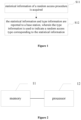
- Figure 1 is a flow chart of a method for reporting random access statistical information according to an embodiment.
- the statistical information and type information are reported to a base station, wherein the type information is used to indicate a random access type corresponding to the statistical information.
- the terminal counts all types of random access procedures to acquire statistical information of the random access procedures, and reports the statistical information of the random access procedures to the base station, wherein the reported information of the terminal further includes type information which is used to indicate the random access type corresponding to the statistical information of the random access procedure.
- acquiring the statistical information of the random access procedure includes: receiving configuration information from the base station, wherein the configuration information includes the random access type corresponding to the statistical information; and acquiring the statistical information of the random access procedure based on the configuration information. That is, the terminal does not need to count all random procedure types, but merely needs to count some random procedure types based on the configuration information to acquire corresponding statistical information.
- the method before reporting the statistical information and the type information to the base station, the method further includes: sending first indication information to the base station, wherein the first indication information is used to indicate that the terminal has statistical information to be reported; and receiving first acknowledgement information from the base station, and determining whether to report the statistical information based on the first acknowledgement information.
- reporting the statistical information and the type information to the base station includes: sending second indication information to the base station, wherein the second indication information is used to indicate random access types of statistical information that can be reported by the terminal; receiving second acknowledgement information from the base station, wherein the second acknowledgement information is used to indicate the random access type corresponding to the statistical information that the terminal needs to report; and reporting the statistical information and the type information to the base station based on the second acknowledgement information. corresponding to the statistical information that the terminal needs to report; and reporting the statistical information and the type information to the base station based on the second acknowledgement information.
- the terminal does not always need to report all the statistical information. Regardless of whether the terminal receives the configuration information from the base station, before reporting the statistical information and the type information, the terminal may receive indication information from the base station, and report part or all of the statistical information or not report all the information based on the indication information. Therefore, the terminal may count and report random access statistical information according to requirements of the base station, which reduces resource overhead for reporting random access statistical information.
- the random access type includes ordinary random access, system information request random access and beam failure recovery random access.
- the configuration information may include one or more of these random access types.
- the ordinary random access refers to a random access procedure initiated for uplink synchronization or acquisition of C-RNTI, including random access triggered by an RRC protocol layer and a Medium Access Control (MAC) protocol layer.
- the purpose of the system information request random access is to acquire system information.
- the purpose of the beam failure recovery random access is to perform beam failure recovery.
- Statistical information of the ordinary random access includes one or more of the following: a cell identity; the number of preambles sent during a successful random access procedure; whether a conflict resolution failure has occurred during a successful random access procedure; high-priority random access parameter information; beam information; bandwidth part information; or reason information about a random access failure.
- the base station may optimize ordinary random access parameters based on the received statistical information of ordinary random access, for example, optimize parameters such as the maximum number of preamble transmission times (preamble TransMax) and power ramping step.
- the base station may further optimize random access parameter configuration of specific cells, different beams and different BWPs.
- the cell identity may be an identity of a cell where the terminal performs random access.
- the high-priority random access parameter information includes at least one of the following: indication information for use; or a high-priority random access parameter.
- the indication information for use is used to indicate whether a high-priority parameter is used in the random access procedure.
- the high-priority random access parameter that needs to be reported is the high-priority parameter used in the random access procedure, and includes at least one of power ramping step high priority and a scaling factor BI of time backoff.
- the base station may optimize parameters of ordinary random access or high-priority random access. For example, the power ramping step high priority and/or the scaling factor of time backoff may be optimized for high-priority random access.
- the Bandwidth Part (BWP) information refers to a bandwidth part where the random access is initiated, and may be indicated by a BWP number (ID). If bandwidth part IDs of an uplink message and a downlink message sent in the random access procedure are different, the bandwidth part information includes an uplink bandwidth part ID and a downlink bandwidth part ID.
- the reason information about the random access failure includes: the random access failure being caused by continuous LBT failures.
- the continuous LBT failure refers to an event in which the number of continuous LBT failures reaches a certain threshold, or an event in which all LBT fails within a certain time period.
- the certain threshold and the certain time period may be configured by the base station side or pre-configured or stipulated by an agreement, which is not limited in the present disclosure.
- the base station may determine whether to optimize the random access parameters based on the reason for the random access failure. For example, if the random access failure is caused by the LBT failure, the base station may consider not optimizing the random access parameters, as it is the continuous LBT failures caused by channel congestion.
- the terminal counting a system information request random access procedure includes counting procedure information of success and/or failure of the random access to acquire the statistical information of the system information request random access.
- the statistical information of the system information request random access includes one or more of the following: statistical information of random access of system information request through msg1; statistical information of random access of system information request through msg3; a time interval from sending a preamble for requesting system information to receiving corresponding system information; or statistical information of the ordinary random access.
- system information request through msg1 refers to request the system information using msg1 in the random access procedure
- system information request through msg3 refers to request the system information using msg3 in the random access procedure.
- indication message information is used by the terminal to indicate whether the statistical information of random access of system information request through msg1 or msg3 is reported.
- Statistical information for the random access of system information request through msg1 includes one or more of the following: the number of random access failures or a failure ratio of random access; a type of system information requested (SI1, SI2, SI3 or SI4); or preamble information.
- the preamble information includes a preamble sent in a random access procedure and a Physical Random Access Channel (PRACH) occasion used for sending the preamble.
- PRACH Physical Random Access Channel
- Statistical information for the random access of system information request through msg3 includes one or more of the following: the number of random access failures or a failure ratio of random access; or a type of system information requested.
- the statistical information of the system information request random access includes one or more items in the statistical information of the ordinary random access.
- the network side can optimize the parameters of the system information request random access procedure based on the received statistical information, and can also optimize relevant parameters of msg1 and msg3.
- the terminal counting a beam failure recovery random access procedure includes counting procedure information of success and/or failure of the random access to acquire the statistical information of the beam failure recovery random access and the statistical information of the ordinary random access.
- the statistical information of the beam failure recovery random access includes one or more of the following: beam failure information; random access resource type information; or statistical information of the ordinary random access.
- the beam failure information includes one or more of the following: signal quality of a failed beam; signal quality of a beam based on which the random access is initiated; or signal quality of beams in a candidate beam reference signal list.
- the signal quality may be represented by Reference Signal Receiving Power (RSRP) or Reference Signal Receiving Quality (RSRQ).
- RSRP Reference Signal Receiving Power
- RSRQ Reference Signal Receiving Quality
- the base station may optimize some parameters in a beam failure recovery mechanism based on beam failure information, such as a signal quality threshold for judging the beam failure, and a signal quality threshold of selecting a new beam.
- the random access resource type information includes one or more of the following: a resource type used for random access; or timeout information of a beam failure recovery timer used to indicate whether the beam failure recovery timer expires when the resource type is selected for random access.
- the random access resource type includes contention-based random access resource and non-contention-based random access resource.
- the base station may use the resource type information of random access to optimize parameters, for example, optimize a length of the beam failure recovery timer or resource configuration of non-contention-based random access for beam failure recovery.
- the statistical information of beam failure recovery random access may further include the statistical information of ordinary random access described above, which is not described in detail here.
- the network side may optimize the parameters of the beam failure recovery random access procedure based on the received statistical information.
- the random access type further includes uplink random access and supplementary uplink random access.
- the terminal may select whether to initiate random access on the uplink or the supplementary uplink based on a cell signal instruction obtained by measurement. If the terminal initiates random access on the uplink, it is counted as the statistical information for the uplink random access; or if the terminal initiates random access on the supplementary uplink, it is counted as the statistical information for the supplementary uplink random access.
- the terminal reports random access statistical information to the base station, and indicates whether the random access statistical information is counted on the supplementary uplink or on the uplink.
- uplink indication information is used by the terminal to indicate whether the reported statistical information is statistical information of the uplink random access or statistical information of the supplementary uplink random access.
- the terminal may send the uplink indication information via RRC signaling.
- the terminal may implicitly indicate whether the statistical information is counted on the supplementary uplink or on the uplink. If the terminal reports the statistical information of the uplink random access on the uplink of the cell, it may implicitly indicate that the statistical information of random access is for the uplink. If the terminal reports the statistical information of the supplementary uplink random access on the supplementary uplink of the cell, it may implicitly indicate the statistical information of random access is for the supplementary uplink. The network side may determine whether the statistical information is for the supplementary uplink or the uplink based on the statistical information of random access received from the supplementary uplink or the uplink.
- the statistical information may be statistical information corresponding to the ordinary random access, the system information request random access and the beam failure recovery random access.
- the terminal reports the statistical information of random access according to the supplementary uplink and uplink respectively, so that the network side may optimize random access parameters for different uplinks based on the reported statistical information of the supplementary uplink or uplink random access.
- the contention-based random access initiated by the terminal may include four-step random access and two-step random access.
- the terminal separately counts four-step random access and two-step random access to acquire statistical information of four-step random access and statistical information of two-step random access.
- the terminal may determine whether to initiate two-step random access or four-step random access based on indication of the base station, or based on a condition configured by the network. For example, the base station may configure a threshold for the terminal, and the terminal may initiate a two-step random access when signal quality of a detected cell exceeds the threshold, otherwise, it will initiate a four-step random access.
- the base station may determine whether to back off to the four-step random access. For example, when the base station has merely successfully received a preamble part in msg A, the base station sends msg2 to the terminal, and the terminal considers that it backs off to the four-step random access.
- the terminal reports the statistical information to the base station, and indicates whether the statistical information is the statistical information of the two-step random access or the four-step random access via step indication information.
- the statistical information of the two-step random access or the four-step random access may include statistical information corresponding to the ordinary random access, the system information request random access and the beam failure recovery random access.
- the statistical information of the four-step random access further includes backoff information for backoff from the two-step random access to the four-step random access, and the backoff information includes a number and/or a ratio of backoff times within a certain time period.
- the certain time period may refer to a time when the terminal receives measurement configuration to a time when the backoff information is reported.
- the statistical information of the two-step random access and the four-step random access includes condition information for selecting the two-step random access, and the condition information includes corresponding state information when a terminal satisfies the selection of the two-step random access.
- the condition is a threshold, and the terminal initiates two-step random access when the signal quality of the detected cell exceeds the threshold, where the state information refers to the signal quality of the cell detected by the terminal.
- the terminal reports the statistical information of the two-step random access and the four-step random access respectively, so that the network side can optimize random access parameters for the two-step or four-step random access, and further optimize the condition for triggering the two-step random access, such as optimizing the threshold for triggering the two-step random access.
- the terminal may report the statistical information of random access to the base station via RRC signaling.
- the statistical information may be reported via at least one of Signaling Radio Bearer (SRB) 1, SRB2, and SRB3.
- SRB Signaling Radio Bearer
- the terminal may determine the SRB used for reporting the statistical information based on the random access type. For example, the statistical information of the ordinary random access may be reported via SRB1, and the statistical information of the system information request random access may be reported via SRB2.
- the method before reporting the statistical information of the random access procedure to the base station, the method further includes: reporting public land mobile network information corresponding to the statistical information of the random access procedure.
- the base station may determine whether to instruct the terminal to report the random access statistical information of the public land mobile network based on the public land mobile network information in request information reported by the terminal.
- FIG. 2 is a structural diagram of a device for reporting random access statistical information according to an embodiment.
- the device is applied in a terminal side.
- the device includes a memory 11 and a processor 12, where the memory 11 has a computer program stored therein which is used to implement steps of the above method. When the computer program is executed by the processor 12, the above method is performed.
- the memory 11 may include a Read Only Memory (ROM), a Random Access Memory (RAM), a magnetic disk or an optical disk.
- ROM Read Only Memory
- RAM Random Access Memory
- the processor may be a Central Processing Unit (CPU), or other general processors, Digital Signal Processors (DSPs), Application Specific Integrated Circuits (ASICs), Field Programmable Gate Arrays (FPGAs) or other Programmable logic devices, discrete gates or transistor logic devices, discrete hardware components, and the like.
- a general processor may be a microprocessor or the processor may be any conventional processor or the like.
- the memory in the embodiments of the present disclosure may be either volatile memory or nonvolatile memory, or may include both volatile and nonvolatile memories.
- the non-volatile memory may be a ROM, a Programmable ROM (PROM), an Erasable PROM (EPROM), an electrically Erasable EPROM (EEPROM), or a flash memory.
- the volatile memory may be a RAM which functions as an external cache.
- RAM Direct Rambus RAM
- SRAM Static Random Access Memory
- DRAM Dynamic Random Access Memory
- SDRAM Synchronous Dynamic Random Access Memory
- DDR SDRAM Double Data Rate Synchronous Dynamic Random Access Memory
- ESDRAM Enhanced SDRAM
- SLDRAM Synchlink DRAM
- DR RAM Direct Rambus RAM
- the above embodiments may be implemented in whole or in part by software, hardware, firmware or any combination thereof.
- the above embodiments may be implemented in whole or in part in the form of a computer program product.
- the computer program product includes one or more computer instructions or computer programs.
- the procedures or functions according to the embodiments of the present disclosure are wholly or partially generated when the computer instructions or the computer programs are loaded or executed on a computer.
- the computer may be a general purpose computer, a special purpose computer, a computer network, or other programmable device.
- the computer instructions may be stored in a computer readable storage medium or transmitted from one computer readable storage medium to another computer readable storage medium, for example, the computer instructions may be transmitted from one website, computer, server or data center to another website, computer, server or data center by wire (e.g., infrared, wireless, microwave and etc.).
- the computer readable storage medium may be any available medium that can be accessed by a computer or a data storage device such as a server or a data center that contains one or more sets of available media.
- the available medium may be a magnetic medium (e.g., floppy disk, hard disk or magnetic tape), an optical medium (e.g., DVD), or a semiconductor medium.
- the semiconductor medium may be a solid disk.
- sequence numbers of the above-mentioned processes do not represent an execution sequence, and the execution sequence of each process should be determined by its function and inherent logic, which does not limit an implementation process of the embodiments of the present disclosure.
- the disclosed method, device and system may be implemented in other ways.
- the above device embodiments are merely illustrative, and for example, division of units is merely one logical division, and other divisions may be realized in practice, for example, a plurality of units or components may be combined or integrated into another system, or some features may be omitted, or not executed.
- the shown or discussed mutual coupling or direct coupling or communication connection may be an indirect coupling or communication connection via some interfaces, devices or units, and may be in an electrical, mechanical or other form.
- the units described as separate parts may or may not be physically separate, and parts shown as units may or may not be physical units, that is, may be disposed in one place, or may be distributed on a plurality of network units. Some or all of the units can be selected according to practical requirements to achieve the purpose of the solutions of the embodiments.
- functional units in the embodiments of the present disclosure may be integrated in one processing unit, or each unit may be physically separate, or two or more units may be integrated in one unit.
- the integrated units can be realized in a form of hardware, or in a form of hardware plus a software functional unit.
- the integrated units implemented in the form of the software functional unit may be stored in a computer readable storage medium.
- the software functional unit is stored in a storage medium and includes several instructions for causing a computer device (a personal computer, a server or a network device) to execute some steps of the methods in the embodiments of the present disclosure.
- the storage medium may be a medium for storing program codes, such as a U disk, a removable hard disk, a ROM, a RAM, a magnetic disk or an optical disk.
Landscapes
- Engineering & Computer Science (AREA)
- Computer Networks & Wireless Communication (AREA)
- Signal Processing (AREA)
- Computer Security & Cryptography (AREA)
- Mobile Radio Communication Systems (AREA)
Claims (19)
- Verfahren zum Melden statistischer Direktzugriffsinformationen, das auf ein Endgerät angewendet wird und umfasst:Erfassen (S11) statistischer Informationen über eine Direktzugriffsprozedur; undMelden (S12) der statistischen Informationen und Typinformationen an eine Basisstation, wobei die Typinformationen verwendet werden, um einen Direktzugriffstyp anzugeben, der den statistischen Informationen entspricht,wobei der Direktzugriffstyp einen gewöhnlichen Direktzugriff, einen Direktzugriff zur Systeminformationsanforderung und einen Direktzugriff zur Wiederherstellung eines Strahlausfalls umfasst, dadurch gekennzeichnet, dass statistische Informationen über den gewöhnlichen Direktzugriff, statistische Informationen über den Direktzugriff zur Systeminformationsanforderung und statistische Informationen über den Direktzugriff zur Wiederherstellung eines Strahlausfalls Strahlinformationen umfassen.
- Verfahren nach Anspruch 1, wobei das Erfassen der statistischen Informationen (S11) über die Direktzugriffsprozedur umfasst:Empfangen von Konfigurationsinformationen von der Basisstation, wobei die Konfigurationsinformationen den Direktzugriffstyp umfassen, der den statistischen Informationen entspricht; undErfassen der statistischen Informationen (S11) über die Direktzugriffsprozedur basierend auf den Konfigurationsinformationen.
- Verfahren nach Anspruch 1 oder 2, wobei das Melden der statistischen Informationen und der Typinformationen (S12) an die Basisstation umfasst:Senden zweiter Angabeinformationen an die Basisstation, wobei die zweiten Angabeinformationen verwendet werden, um Direktzugriffstypen statistischer Informationen anzugeben, die vom Endgerät gemeldet werden können;Empfangen zweiter Bestätigungsinformationen von der Basisstation, wobei die zweiten Bestätigungsinformationen verwendet werden, um den Direktzugriffstyp anzugeben, der den statistischen Informationen entspricht, die das Endgerät melden muss; undMelden der statistischen Informationen und der Typinformationen (S12) an die Basisstation basierend auf den zweiten Bestätigungsinformationen.
- Verfahren nach Anspruch 1, wobei statistische Informationen über den gewöhnlichen Direktzugriff weiter eines oder mehrere der Folgenden umfassen:eine Zellidentität;die Anzahl von während einer erfolgreichen Direktzugriffsprozedur gesendeten Präambeln;ob während einer erfolgreichen Direktzugriffsprozedur ein Konfliktlösungsfehler aufgetreten ist;Informationen über einen Direktzugriffsparameter mit hoher Priorität;Bandbreitenteilinformationen; oderUrsacheninformationen über einen Direktzugriffsfehler.
- Verfahren nach Anspruch 4, wobei die Informationen über einen Direktzugriffsparameter mit hoher Priorität mindestens eines der Folgenden umfassen:Angabeinformationen zur Verwendung; odereinen Direktzugriffsparameter mit hoher Priorität.
- Verfahren nach Anspruch 4, wobei, wenn Bandbreitenteil-IDs einer Uplink-Nachricht und einer Downlink-Nachricht, die in der Direktzugriffsprozedur gesendet werden, unterschiedlich sind, die Bandbreitenteilinformationen umfassen:
eine Uplink-Bandbreitenteil-ID und eine Downlink-Bandbreitenteil-ID. - Verfahren nach Anspruch 4, wobei die Ursacheninformationen über den Direktzugriffsfehler umfassen: den Direktzugriffsfehler, der durch kontinuierliche LBT-Fehler verursacht wird.
- Verfahren nach Anspruch 1, wobei die statistischen Informationen über den Direktzugriff zur Systeminformationsanforderung weiter eines oder mehrere der Folgenden umfassen:statistische Informationen über Direktzugriff zur Systeminformationsanforderung über msg1;statistische Informationen über Direktzugriff zur Systeminformationsanforderung über msg3;ein Zeitintervall vom Senden einer Präambel zum Anfordern von Systeminformationen bis zum Empfangen korrespondierender Systeminformationen; oderstatistische Informationen über den gewöhnlichen Direktzugriff mit Ausnahme der Strahlinformationen.
- Verfahren nach Anspruch 8, wobei Angabenachrichteninformationen verwendet werden, um anzugeben, ob die statistischen Informationen über Direktzugriff zur Systeminformationsanforderung über msg1 oder msg3 gemeldet werden.
- Verfahren nach Anspruch 8, wobei statistische Informationen über Direktzugriff zur Systeminformationsanforderung über msg1 eines oder mehrere der Folgenden umfassen:die Anzahl von Direktzugriffsfehlern oder eine Fehlerquote beim Direktzugriff;einen Typ von angeforderten Systeminformationen; oderPräambelinformationen.
- Verfahren nach Anspruch 8, wobei statistische Informationen über Direktzugriff zur Systeminformationsanforderung über msg3 eines oder mehrere der Folgenden umfassen:die Anzahl von Direktzugriffsfehlern oder eine Fehlerquote beim Direktzugriff; odereinen Typ von angeforderten Systeminformationen.
- Verfahren nach Anspruch 1, wobei der Direktzugriffstyp weiter einen Uplink-Direktzugriff und einen zusätzlichen Uplink-Direktzugriff umfasst.
- Verfahren nach Anspruch 12, wobei Uplink-Angabeinformationen verwendet werden, um anzugeben, ob die gemeldeten statistischen Informationen statistische Informationen über den Uplink-Direktzugriff oder statistische Informationen über den zusätzlichen Uplink-Direktzugriff sind.
- Verfahren nach Anspruch 12, wobei die statistischen Informationen über den Uplink-Direktzugriff über einen Uplink einer Zelle gemeldet werden; oder die statistischen Informationen über den zusätzlichen Uplink-Direktzugriff über einen zusätzlichen Uplink der Zelle gemeldet werden.
- Verfahren nach Anspruch 1, wobei der Direktzugriffstyp weiter einen vierstufigen Direktzugriff und einen zweistufigen Direktzugriff umfasst.
- Verfahren nach Anspruch 15, wobei Schrittangabeinformationen verwendet werden, um anzugeben, ob die statistischen Informationen statistische Informationen über den zweistufigen Direktzugriff oder statistische Informationen über den vierstufigen Direktzugriff sind.
- Verfahren nach Anspruch 15, wobei die statistischen Informationen über den vierstufigen Direktzugriff Backoff-Informationen zum Backoff vom zweistufigen Direktzugriff auf den vierstufigen Direktzugriff umfassen, und die Backoff-Informationen eine Anzahl und/oder ein Verhältnis von Backoff-Malen innerhalb eines bestimmten Zeitraums umfassen.
- Verfahren nach Anspruch 15, wobei die statistischen Informationen über den zweistufigen Direktzugriff und den vierstufigen Direktzugriff Bedingungsinformationen zum Auswählen des zweistufigen Direktzugriffs umfassen, und die Bedingungsinformationen korrespondierende Zustandsinformationen umfassen, wenn ein Endgerät die Auswahl des zweistufigen Direktzugriffs erfüllt.
- Vorrichtung zum Melden statistischer Direktzugriffsinformationen, umfassend einen Speicher (11) und einen Prozessor (12), wobei der Speicher (11) ein darin gespeichertes Computerprogramm aufweist, und wenn der Prozessor (12) das Computerprogramm ausführt, das Verfahren nach einem der Ansprüche 1 bis 18 ausgeführt wird.
Applications Claiming Priority (2)
| Application Number | Priority Date | Filing Date | Title |
|---|---|---|---|
| CN201811620322.0A CN111385816B (zh) | 2018-12-27 | 2018-12-27 | 随机接入统计信息的上报方法及装置 |
| PCT/CN2019/119627 WO2020134726A1 (zh) | 2018-12-27 | 2019-11-20 | 随机接入统计信息的上报方法及装置 |
Publications (3)
| Publication Number | Publication Date |
|---|---|
| EP3905752A1 EP3905752A1 (de) | 2021-11-03 |
| EP3905752A4 EP3905752A4 (de) | 2022-03-02 |
| EP3905752B1 true EP3905752B1 (de) | 2024-07-17 |
Family
ID=71126467
Family Applications (1)
| Application Number | Title | Priority Date | Filing Date |
|---|---|---|---|
| EP19905577.3A Active EP3905752B1 (de) | 2018-12-27 | 2019-11-20 | Verfahren und vorrichtung zur meldung von statistischen direktzugriffsinformationen |
Country Status (7)
| Country | Link |
|---|---|
| US (1) | US20220078849A1 (de) |
| EP (1) | EP3905752B1 (de) |
| JP (2) | JP7253623B2 (de) |
| KR (1) | KR102612554B1 (de) |
| CN (1) | CN111385816B (de) |
| AU (1) | AU2019413741B2 (de) |
| WO (1) | WO2020134726A1 (de) |
Families Citing this family (10)
| Publication number | Priority date | Publication date | Assignee | Title |
|---|---|---|---|---|
| CN111385816B (zh) * | 2018-12-27 | 2022-07-15 | 展讯通信(上海)有限公司 | 随机接入统计信息的上报方法及装置 |
| WO2020249548A1 (en) * | 2019-06-10 | 2020-12-17 | Telefonaktiebolaget Lm Ericsson (Publ) | Recovery/fallback after unsuccessful 2-step random access attempt |
| CN113271625A (zh) | 2020-02-15 | 2021-08-17 | 华为技术有限公司 | 通信方法及通信装置 |
| CN113365364A (zh) * | 2020-03-06 | 2021-09-07 | 华为技术有限公司 | 一种通信方法及装置 |
| CN115918229A (zh) * | 2020-09-01 | 2023-04-04 | Oppo广东移动通信有限公司 | 报告随机接入情况的方法、终端设备和网络设备 |
| WO2022164376A1 (en) * | 2021-01-29 | 2022-08-04 | Telefonaktiebolaget Lm Ericsson (Publ) | Logging system information request procedure related information and measurements |
| EP4183166A4 (de) * | 2021-03-30 | 2024-01-10 | Samsung Electronics Co., Ltd. | Verfahren und vorrichtung zur meldung von informationen im zusammenhang mit systeminformationsanfragen in einem mobilkommunikationssystem der nächsten generation |
| CN116017534B (zh) * | 2021-10-22 | 2025-10-21 | 南宁富联富桂精密工业有限公司 | 波束故障检测方法、系统及电子设备 |
| WO2023090855A1 (en) * | 2021-11-16 | 2023-05-25 | Samsung Electronics Co., Ltd. | Method and system for self optimization of random access channel in wireless communication system |
| CN116939854A (zh) * | 2022-04-07 | 2023-10-24 | 华为技术有限公司 | 通信方法及装置、存储介质 |
Family Cites Families (44)
| Publication number | Priority date | Publication date | Assignee | Title |
|---|---|---|---|---|
| DE69842034D1 (de) * | 1998-10-05 | 2011-01-20 | Sony Deutschland Gmbh | Prioritätsschema für einen Zufallszugriffskanal |
| CN100461956C (zh) * | 2006-01-12 | 2009-02-11 | 华为技术有限公司 | 采用不同随机接入试探数据包接入无线通信系统的方法及装置 |
| CN101132223B (zh) * | 2006-08-23 | 2011-11-16 | 北京信威通信技术股份有限公司 | 调整tdd无线通信系统中上行随机接入时隙的方法 |
| CN101132643B (zh) * | 2007-09-28 | 2012-02-29 | 中兴通讯股份有限公司 | 一种无线接入参数自动优化的方法 |
| CN101217814B (zh) * | 2008-01-11 | 2011-03-23 | 展讯通信(上海)有限公司 | 一种改善移动终端发起呼叫成功率的方法 |
| CN101841889B (zh) * | 2009-03-19 | 2014-11-05 | 中兴通讯股份有限公司 | 随机接入信息的获取方法及用户设备 |
| KR101485807B1 (ko) * | 2009-04-01 | 2015-01-28 | 삼성전자주식회사 | 무선 통신 시스템의 랜덤 액세스 방법 및 장치 |
| CN102077676B (zh) * | 2009-04-28 | 2013-10-02 | 华为技术有限公司 | 优化终端随机接入的方法及装置 |
| CN101931991B (zh) * | 2009-06-18 | 2013-08-07 | 华为技术有限公司 | 用户设备上报测量报告的方法、装置和系统 |
| US8452297B2 (en) * | 2009-06-29 | 2013-05-28 | Htc Corporation | Method of random access channel optimization and related communication device |
| JP4960475B2 (ja) * | 2010-04-30 | 2012-06-27 | 株式会社エヌ・ティ・ティ・ドコモ | 移動通信方法、移動局及び無線基地局 |
| US20120033613A1 (en) * | 2010-08-04 | 2012-02-09 | National Taiwan University | Enhanced rach design for machine-type communications |
| CN102378380B (zh) * | 2010-08-20 | 2014-11-05 | 中兴通讯股份有限公司 | 小区随机接入参数优化的方法及系统 |
| KR20120092044A (ko) * | 2011-02-09 | 2012-08-20 | 한국전자통신연구원 | 이동통신 시스템에서 임의 접속 제어 방법, 이를 지원하는 기지국과 단말 |
| WO2012141483A2 (ko) * | 2011-04-11 | 2012-10-18 | 삼성전자 주식회사 | 단말 획득 정보를 효율적으로 기지국에 전달하는 방법 및 장치 |
| WO2012150883A1 (en) * | 2011-05-05 | 2012-11-08 | Telefonaktiebolaget L M Ericsson (Publ) | Methods and arrangements for adapting random access allocation of resources to user equipments |
| KR101565718B1 (ko) * | 2011-08-12 | 2015-11-03 | 엘지전자 주식회사 | 무선 통신 시스템에서 랜덤 엑세스에 관련된 통계 정보를 보고하는 방법 및 장치 |
| KR101574445B1 (ko) * | 2011-08-12 | 2015-12-03 | 엘지전자 주식회사 | 무선 통신 시스템에서 랜덤 엑세스에 관련된 시간 정보를 보고하는 방법 및 장치 |
| CN103096355B (zh) * | 2011-11-02 | 2015-11-25 | 华为技术有限公司 | 一种处理随机接入参数的方法及设备 |
| US8989042B2 (en) * | 2012-02-03 | 2015-03-24 | Mediatek Inc. | Method and apparatus for triggering and reporting diverse traffic information in cellular networks |
| WO2014042468A2 (ko) * | 2012-09-13 | 2014-03-20 | 엘지전자 주식회사 | 무선 통신 시스템에서 시스템 정보의 획득을 위한 운영 방법 및 이를 지원하는 장치 |
| CN110380980A (zh) * | 2013-02-22 | 2019-10-25 | 英特尔Ip公司 | 用于接入网络选择和流量路由的系统和方法 |
| US9345047B2 (en) * | 2013-10-04 | 2016-05-17 | Qualcomm Incorporated | Techniques for assessing clear channel in an unlicensed radio frequency spectrum band |
| US11770855B2 (en) * | 2016-10-19 | 2023-09-26 | Qualcomm Incorporated | Random access channel (RACH) procedure design |
| US10681738B2 (en) | 2016-12-16 | 2020-06-09 | Ofinno, Llc | Random access in a wireless device and wireless network |
| CN108271275B (zh) * | 2017-01-04 | 2021-02-05 | 电信科学技术研究院 | 一种竞争随机接入的方法和装置 |
| US20190357071A1 (en) * | 2017-02-02 | 2019-11-21 | Ntt Docomo, Inc. | User device and radio communication method |
| EP3379886A1 (de) * | 2017-03-20 | 2018-09-26 | ASUSTek Computer Inc. | Verfahren und vorrichtung für ein wahlfreies zugriffsverfahren zur anforderung von systeminformationen in einem drahtloskommunikationssystem |
| PL3614599T3 (pl) | 2017-04-17 | 2023-08-14 | Beijing Xiaomi Mobile Software Co., Ltd. | Sposób wykorzystywany do żądania informacji systemowych, urządzenie, urządzenie użytkownika i stacja bazowa |
| US20180317264A1 (en) * | 2017-04-26 | 2018-11-01 | Samsung Electronics Co., Ltd. | Method and apparatus for performing random access procedure |
| JP6956935B2 (ja) * | 2017-04-28 | 2021-11-02 | 富士通株式会社 | 無線端末、無線基地局、無線通信システム、無線通信方法 |
| JP6973502B2 (ja) | 2017-04-28 | 2021-12-01 | 日本電気株式会社 | ランダムアクセスプロセスの方法、端末デバイス、ネットワーク要素、および装置 |
| CN117279107A (zh) * | 2017-05-05 | 2023-12-22 | 中兴通讯股份有限公司 | 信息的上报、接收方法、装置及计算机可读存储介质 |
| KR102362403B1 (ko) * | 2017-06-05 | 2022-02-14 | 삼성전자 주식회사 | 차세대 이동통신 시스템에서 프리엠블을 이용하여 시스템 정보를 요청하는 방법 및 장치 |
| US10813097B2 (en) * | 2017-06-14 | 2020-10-20 | Qualcomm Incorporated | System and method for transmitting beam failure recovery request |
| CN107371126B (zh) * | 2017-08-21 | 2019-07-30 | 西安电子科技大学 | 基于fdd-lte网络的随机接入方法 |
| WO2019157706A1 (en) * | 2018-02-14 | 2019-08-22 | Nokia Shanghai Bell Co., Ltd. | Methods and apparatuses for prioritized random access during handover |
| KR102597037B1 (ko) * | 2018-03-28 | 2023-11-01 | 삼성전자주식회사 | 무선통신시스템에서 랜덤엑세스를 수행하는 방법 및 장치 |
| BR112020019582A2 (pt) | 2018-03-29 | 2021-01-05 | Beijing Xiaomi Mobile Software Co., Ltd. | Método e dispositivo de reportar informação, e método e dispositivo de operação baseados em parte da largura de banda, equipamento de usuário e de base, e meio de armazenamento |
| CN110557763B (zh) * | 2018-05-31 | 2021-01-08 | 维沃移动通信有限公司 | 一种数据传输方法、参数优化方法、装置及设备 |
| US11490415B2 (en) * | 2018-07-20 | 2022-11-01 | Huawei Technologies Co., Ltd. | Random access method and apparatus |
| CN113873675B (zh) * | 2018-08-07 | 2024-12-06 | 北京小米移动软件有限公司 | 信息上报方法、装置、终端及存储介质 |
| CN113303018A (zh) * | 2018-10-30 | 2021-08-24 | 瑞典爱立信有限公司 | 用于无需许可信道上的随机接入的技术 |
| CN111385816B (zh) | 2018-12-27 | 2022-07-15 | 展讯通信(上海)有限公司 | 随机接入统计信息的上报方法及装置 |
-
2018
- 2018-12-27 CN CN201811620322.0A patent/CN111385816B/zh active Active
-
2019
- 2019-11-20 EP EP19905577.3A patent/EP3905752B1/de active Active
- 2019-11-20 JP JP2021536760A patent/JP7253623B2/ja active Active
- 2019-11-20 US US17/417,474 patent/US20220078849A1/en not_active Abandoned
- 2019-11-20 WO PCT/CN2019/119627 patent/WO2020134726A1/zh not_active Ceased
- 2019-11-20 KR KR1020217022456A patent/KR102612554B1/ko active Active
- 2019-11-20 AU AU2019413741A patent/AU2019413741B2/en active Active
-
2023
- 2023-03-27 JP JP2023049549A patent/JP7689151B2/ja active Active
Also Published As
| Publication number | Publication date |
|---|---|
| JP2023078419A (ja) | 2023-06-06 |
| EP3905752A4 (de) | 2022-03-02 |
| EP3905752A1 (de) | 2021-11-03 |
| JP2022516253A (ja) | 2022-02-25 |
| US20220078849A1 (en) | 2022-03-10 |
| AU2019413741A1 (en) | 2021-06-24 |
| JP7689151B2 (ja) | 2025-06-05 |
| JP7253623B2 (ja) | 2023-04-06 |
| KR20210095950A (ko) | 2021-08-03 |
| CN111385816A (zh) | 2020-07-07 |
| CN111385816B (zh) | 2022-07-15 |
| KR102612554B1 (ko) | 2023-12-08 |
| WO2020134726A1 (zh) | 2020-07-02 |
| AU2019413741B2 (en) | 2022-11-17 |
Similar Documents
| Publication | Publication Date | Title |
|---|---|---|
| EP3905752B1 (de) | Verfahren und vorrichtung zur meldung von statistischen direktzugriffsinformationen | |
| CN110945957B (zh) | 执行随机接入过程的方法和装置 | |
| CN111869306B (zh) | 随机接入的方法、终端设备和网络设备 | |
| US12452914B2 (en) | Random access method and apparatus | |
| CN112655270A (zh) | Lbt监测失败的处理方法、装置和系统 | |
| WO2019154272A1 (zh) | 波束失败恢复方法及用户终端 | |
| WO2020220323A1 (zh) | 随机接入的方法、装置和通信系统 | |
| CN113574958A (zh) | 随机接入响应的接收方法、装置和通信系统 | |
| US12356468B2 (en) | Wireless communication method, terminal device, and network device | |
| WO2021077343A1 (zh) | 无线通信方法和终端设备 | |
| WO2020107429A1 (zh) | 随机接入的方法和设备 | |
| US20230129426A1 (en) | Wireless communication method and terminal device | |
| WO2022067614A1 (zh) | 无线通信方法、终端设备和网络设备 | |
| WO2020164074A1 (en) | Msg3 transmission in unlicensed band | |
| CN111294975A (zh) | 随机接入方法及装置、存储介质、终端、基站 | |
| US20210204327A1 (en) | Method for controlling power ramp counter, and terminal device |
Legal Events
| Date | Code | Title | Description |
|---|---|---|---|
| STAA | Information on the status of an ep patent application or granted ep patent |
Free format text: STATUS: THE INTERNATIONAL PUBLICATION HAS BEEN MADE |
|
| PUAI | Public reference made under article 153(3) epc to a published international application that has entered the european phase |
Free format text: ORIGINAL CODE: 0009012 |
|
| STAA | Information on the status of an ep patent application or granted ep patent |
Free format text: STATUS: REQUEST FOR EXAMINATION WAS MADE |
|
| 17P | Request for examination filed |
Effective date: 20210629 |
|
| AK | Designated contracting states |
Kind code of ref document: A1 Designated state(s): AL AT BE BG CH CY CZ DE DK EE ES FI FR GB GR HR HU IE IS IT LI LT LU LV MC MK MT NL NO PL PT RO RS SE SI SK SM TR |
|
| A4 | Supplementary search report drawn up and despatched |
Effective date: 20220131 |
|
| RIC1 | Information provided on ipc code assigned before grant |
Ipc: H04W 74/08 20090101ALN20220125BHEP Ipc: H04W 74/00 20090101AFI20220125BHEP |
|
| DAV | Request for validation of the european patent (deleted) | ||
| DAX | Request for extension of the european patent (deleted) | ||
| REG | Reference to a national code |
Ref country code: DE Ref legal event code: R079 Free format text: PREVIOUS MAIN CLASS: H04W0024020000 Ipc: H04W0074000000 Ref document number: 602019055543 Country of ref document: DE |
|
| GRAP | Despatch of communication of intention to grant a patent |
Free format text: ORIGINAL CODE: EPIDOSNIGR1 |
|
| STAA | Information on the status of an ep patent application or granted ep patent |
Free format text: STATUS: GRANT OF PATENT IS INTENDED |
|
| RIC1 | Information provided on ipc code assigned before grant |
Ipc: H04W 48/12 20090101ALN20240305BHEP Ipc: H04W 74/0833 20240101ALN20240305BHEP Ipc: H04W 74/00 20090101AFI20240305BHEP |
|
| INTG | Intention to grant announced |
Effective date: 20240325 |
|
| GRAS | Grant fee paid |
Free format text: ORIGINAL CODE: EPIDOSNIGR3 |
|
| GRAA | (expected) grant |
Free format text: ORIGINAL CODE: 0009210 |
|
| STAA | Information on the status of an ep patent application or granted ep patent |
Free format text: STATUS: THE PATENT HAS BEEN GRANTED |
|
| AK | Designated contracting states |
Kind code of ref document: B1 Designated state(s): AL AT BE BG CH CY CZ DE DK EE ES FI FR GB GR HR HU IE IS IT LI LT LU LV MC MK MT NL NO PL PT RO RS SE SI SK SM TR |
|
| REG | Reference to a national code |
Ref country code: CH Ref legal event code: EP |
|
| REG | Reference to a national code |
Ref country code: DE Ref legal event code: R096 Ref document number: 602019055543 Country of ref document: DE |
|
| REG | Reference to a national code |
Ref country code: IE Ref legal event code: FG4D |
|
| REG | Reference to a national code |
Ref country code: LT Ref legal event code: MG9D |
|
| PG25 | Lapsed in a contracting state [announced via postgrant information from national office to epo] |
Ref country code: PT Free format text: LAPSE BECAUSE OF FAILURE TO SUBMIT A TRANSLATION OF THE DESCRIPTION OR TO PAY THE FEE WITHIN THE PRESCRIBED TIME-LIMIT Effective date: 20241118 |
|
| REG | Reference to a national code |
Ref country code: AT Ref legal event code: MK05 Ref document number: 1705302 Country of ref document: AT Kind code of ref document: T Effective date: 20240717 |
|
| PG25 | Lapsed in a contracting state [announced via postgrant information from national office to epo] |
Ref country code: NL Free format text: LAPSE BECAUSE OF FAILURE TO SUBMIT A TRANSLATION OF THE DESCRIPTION OR TO PAY THE FEE WITHIN THE PRESCRIBED TIME-LIMIT Effective date: 20240717 |
|
| PG25 | Lapsed in a contracting state [announced via postgrant information from national office to epo] |
Ref country code: PT Free format text: LAPSE BECAUSE OF FAILURE TO SUBMIT A TRANSLATION OF THE DESCRIPTION OR TO PAY THE FEE WITHIN THE PRESCRIBED TIME-LIMIT Effective date: 20241118 Ref country code: NL Free format text: LAPSE BECAUSE OF FAILURE TO SUBMIT A TRANSLATION OF THE DESCRIPTION OR TO PAY THE FEE WITHIN THE PRESCRIBED TIME-LIMIT Effective date: 20240717 |
|
| PG25 | Lapsed in a contracting state [announced via postgrant information from national office to epo] |
Ref country code: NO Free format text: LAPSE BECAUSE OF FAILURE TO SUBMIT A TRANSLATION OF THE DESCRIPTION OR TO PAY THE FEE WITHIN THE PRESCRIBED TIME-LIMIT Effective date: 20241017 |
|
| PG25 | Lapsed in a contracting state [announced via postgrant information from national office to epo] |
Ref country code: GR Free format text: LAPSE BECAUSE OF FAILURE TO SUBMIT A TRANSLATION OF THE DESCRIPTION OR TO PAY THE FEE WITHIN THE PRESCRIBED TIME-LIMIT Effective date: 20241018 Ref country code: FI Free format text: LAPSE BECAUSE OF FAILURE TO SUBMIT A TRANSLATION OF THE DESCRIPTION OR TO PAY THE FEE WITHIN THE PRESCRIBED TIME-LIMIT Effective date: 20240717 Ref country code: PL Free format text: LAPSE BECAUSE OF FAILURE TO SUBMIT A TRANSLATION OF THE DESCRIPTION OR TO PAY THE FEE WITHIN THE PRESCRIBED TIME-LIMIT Effective date: 20240717 |
|
| PG25 | Lapsed in a contracting state [announced via postgrant information from national office to epo] |
Ref country code: BG Free format text: LAPSE BECAUSE OF FAILURE TO SUBMIT A TRANSLATION OF THE DESCRIPTION OR TO PAY THE FEE WITHIN THE PRESCRIBED TIME-LIMIT Effective date: 20240717 |
|
| PG25 | Lapsed in a contracting state [announced via postgrant information from national office to epo] |
Ref country code: LV Free format text: LAPSE BECAUSE OF FAILURE TO SUBMIT A TRANSLATION OF THE DESCRIPTION OR TO PAY THE FEE WITHIN THE PRESCRIBED TIME-LIMIT Effective date: 20240717 |
|
| PG25 | Lapsed in a contracting state [announced via postgrant information from national office to epo] |
Ref country code: IS Free format text: LAPSE BECAUSE OF FAILURE TO SUBMIT A TRANSLATION OF THE DESCRIPTION OR TO PAY THE FEE WITHIN THE PRESCRIBED TIME-LIMIT Effective date: 20241117 Ref country code: AT Free format text: LAPSE BECAUSE OF FAILURE TO SUBMIT A TRANSLATION OF THE DESCRIPTION OR TO PAY THE FEE WITHIN THE PRESCRIBED TIME-LIMIT Effective date: 20240717 |
|
| PG25 | Lapsed in a contracting state [announced via postgrant information from national office to epo] |
Ref country code: HR Free format text: LAPSE BECAUSE OF FAILURE TO SUBMIT A TRANSLATION OF THE DESCRIPTION OR TO PAY THE FEE WITHIN THE PRESCRIBED TIME-LIMIT Effective date: 20240717 |
|
| PG25 | Lapsed in a contracting state [announced via postgrant information from national office to epo] |
Ref country code: RS Free format text: LAPSE BECAUSE OF FAILURE TO SUBMIT A TRANSLATION OF THE DESCRIPTION OR TO PAY THE FEE WITHIN THE PRESCRIBED TIME-LIMIT Effective date: 20241017 Ref country code: ES Free format text: LAPSE BECAUSE OF FAILURE TO SUBMIT A TRANSLATION OF THE DESCRIPTION OR TO PAY THE FEE WITHIN THE PRESCRIBED TIME-LIMIT Effective date: 20240717 |
|
| PG25 | Lapsed in a contracting state [announced via postgrant information from national office to epo] |
Ref country code: RS Free format text: LAPSE BECAUSE OF FAILURE TO SUBMIT A TRANSLATION OF THE DESCRIPTION OR TO PAY THE FEE WITHIN THE PRESCRIBED TIME-LIMIT Effective date: 20241017 Ref country code: PL Free format text: LAPSE BECAUSE OF FAILURE TO SUBMIT A TRANSLATION OF THE DESCRIPTION OR TO PAY THE FEE WITHIN THE PRESCRIBED TIME-LIMIT Effective date: 20240717 Ref country code: NO Free format text: LAPSE BECAUSE OF FAILURE TO SUBMIT A TRANSLATION OF THE DESCRIPTION OR TO PAY THE FEE WITHIN THE PRESCRIBED TIME-LIMIT Effective date: 20241017 Ref country code: LV Free format text: LAPSE BECAUSE OF FAILURE TO SUBMIT A TRANSLATION OF THE DESCRIPTION OR TO PAY THE FEE WITHIN THE PRESCRIBED TIME-LIMIT Effective date: 20240717 Ref country code: IS Free format text: LAPSE BECAUSE OF FAILURE TO SUBMIT A TRANSLATION OF THE DESCRIPTION OR TO PAY THE FEE WITHIN THE PRESCRIBED TIME-LIMIT Effective date: 20241117 Ref country code: HR Free format text: LAPSE BECAUSE OF FAILURE TO SUBMIT A TRANSLATION OF THE DESCRIPTION OR TO PAY THE FEE WITHIN THE PRESCRIBED TIME-LIMIT Effective date: 20240717 Ref country code: GR Free format text: LAPSE BECAUSE OF FAILURE TO SUBMIT A TRANSLATION OF THE DESCRIPTION OR TO PAY THE FEE WITHIN THE PRESCRIBED TIME-LIMIT Effective date: 20241018 Ref country code: FI Free format text: LAPSE BECAUSE OF FAILURE TO SUBMIT A TRANSLATION OF THE DESCRIPTION OR TO PAY THE FEE WITHIN THE PRESCRIBED TIME-LIMIT Effective date: 20240717 Ref country code: ES Free format text: LAPSE BECAUSE OF FAILURE TO SUBMIT A TRANSLATION OF THE DESCRIPTION OR TO PAY THE FEE WITHIN THE PRESCRIBED TIME-LIMIT Effective date: 20240717 Ref country code: BG Free format text: LAPSE BECAUSE OF FAILURE TO SUBMIT A TRANSLATION OF THE DESCRIPTION OR TO PAY THE FEE WITHIN THE PRESCRIBED TIME-LIMIT Effective date: 20240717 Ref country code: AT Free format text: LAPSE BECAUSE OF FAILURE TO SUBMIT A TRANSLATION OF THE DESCRIPTION OR TO PAY THE FEE WITHIN THE PRESCRIBED TIME-LIMIT Effective date: 20240717 |
|
| REG | Reference to a national code |
Ref country code: DE Ref legal event code: R082 Ref document number: 602019055543 Country of ref document: DE Representative=s name: MAUCHER JENKINS PATENTANWAELTE & RECHTSANWAELT, DE |
|
| PG25 | Lapsed in a contracting state [announced via postgrant information from national office to epo] |
Ref country code: RO Free format text: LAPSE BECAUSE OF FAILURE TO SUBMIT A TRANSLATION OF THE DESCRIPTION OR TO PAY THE FEE WITHIN THE PRESCRIBED TIME-LIMIT Effective date: 20240717 Ref country code: DK Free format text: LAPSE BECAUSE OF FAILURE TO SUBMIT A TRANSLATION OF THE DESCRIPTION OR TO PAY THE FEE WITHIN THE PRESCRIBED TIME-LIMIT Effective date: 20240717 Ref country code: SM Free format text: LAPSE BECAUSE OF FAILURE TO SUBMIT A TRANSLATION OF THE DESCRIPTION OR TO PAY THE FEE WITHIN THE PRESCRIBED TIME-LIMIT Effective date: 20240717 |
|
| REG | Reference to a national code |
Ref country code: DE Ref legal event code: R097 Ref document number: 602019055543 Country of ref document: DE |
|
| PG25 | Lapsed in a contracting state [announced via postgrant information from national office to epo] |
Ref country code: EE Free format text: LAPSE BECAUSE OF FAILURE TO SUBMIT A TRANSLATION OF THE DESCRIPTION OR TO PAY THE FEE WITHIN THE PRESCRIBED TIME-LIMIT Effective date: 20240717 |
|
| PG25 | Lapsed in a contracting state [announced via postgrant information from national office to epo] |
Ref country code: CZ Free format text: LAPSE BECAUSE OF FAILURE TO SUBMIT A TRANSLATION OF THE DESCRIPTION OR TO PAY THE FEE WITHIN THE PRESCRIBED TIME-LIMIT Effective date: 20240717 |
|
| PG25 | Lapsed in a contracting state [announced via postgrant information from national office to epo] |
Ref country code: SK Free format text: LAPSE BECAUSE OF FAILURE TO SUBMIT A TRANSLATION OF THE DESCRIPTION OR TO PAY THE FEE WITHIN THE PRESCRIBED TIME-LIMIT Effective date: 20240717 |
|
| PLBE | No opposition filed within time limit |
Free format text: ORIGINAL CODE: 0009261 |
|
| STAA | Information on the status of an ep patent application or granted ep patent |
Free format text: STATUS: NO OPPOSITION FILED WITHIN TIME LIMIT |
|
| 26N | No opposition filed |
Effective date: 20250422 |
|
| REG | Reference to a national code |
Ref country code: CH Ref legal event code: PL |
|
| PG25 | Lapsed in a contracting state [announced via postgrant information from national office to epo] |
Ref country code: MC Free format text: LAPSE BECAUSE OF FAILURE TO SUBMIT A TRANSLATION OF THE DESCRIPTION OR TO PAY THE FEE WITHIN THE PRESCRIBED TIME-LIMIT Effective date: 20240717 |
|
| PG25 | Lapsed in a contracting state [announced via postgrant information from national office to epo] |
Ref country code: LU Free format text: LAPSE BECAUSE OF NON-PAYMENT OF DUE FEES Effective date: 20241120 |
|
| REG | Reference to a national code |
Ref country code: CH Ref legal event code: PL |
|
| PG25 | Lapsed in a contracting state [announced via postgrant information from national office to epo] |
Ref country code: CH Free format text: LAPSE BECAUSE OF NON-PAYMENT OF DUE FEES Effective date: 20241130 |
|
| REG | Reference to a national code |
Ref country code: BE Ref legal event code: MM Effective date: 20241130 |
|
| PG25 | Lapsed in a contracting state [announced via postgrant information from national office to epo] |
Ref country code: SE Free format text: LAPSE BECAUSE OF FAILURE TO SUBMIT A TRANSLATION OF THE DESCRIPTION OR TO PAY THE FEE WITHIN THE PRESCRIBED TIME-LIMIT Effective date: 20240717 |
|
| PG25 | Lapsed in a contracting state [announced via postgrant information from national office to epo] |
Ref country code: BE Free format text: LAPSE BECAUSE OF NON-PAYMENT OF DUE FEES Effective date: 20241130 |
|
| PG25 | Lapsed in a contracting state [announced via postgrant information from national office to epo] |
Ref country code: FR Free format text: LAPSE BECAUSE OF NON-PAYMENT OF DUE FEES Effective date: 20241130 |
|
| PG25 | Lapsed in a contracting state [announced via postgrant information from national office to epo] |
Ref country code: IE Free format text: LAPSE BECAUSE OF NON-PAYMENT OF DUE FEES Effective date: 20241120 |
|
| PGFP | Annual fee paid to national office [announced via postgrant information from national office to epo] |
Ref country code: DE Payment date: 20251118 Year of fee payment: 7 |
|
| PGFP | Annual fee paid to national office [announced via postgrant information from national office to epo] |
Ref country code: GB Payment date: 20251020 Year of fee payment: 7 |
|
| PG25 | Lapsed in a contracting state [announced via postgrant information from national office to epo] |
Ref country code: IT Free format text: LAPSE BECAUSE OF FAILURE TO SUBMIT A TRANSLATION OF THE DESCRIPTION OR TO PAY THE FEE WITHIN THE PRESCRIBED TIME-LIMIT Effective date: 20240717 |
|
| PG25 | Lapsed in a contracting state [announced via postgrant information from national office to epo] |
Ref country code: HU Free format text: LAPSE BECAUSE OF FAILURE TO SUBMIT A TRANSLATION OF THE DESCRIPTION OR TO PAY THE FEE WITHIN THE PRESCRIBED TIME-LIMIT; INVALID AB INITIO Effective date: 20191120 |
|
| PG25 | Lapsed in a contracting state [announced via postgrant information from national office to epo] |
Ref country code: CY Free format text: LAPSE BECAUSE OF FAILURE TO SUBMIT A TRANSLATION OF THE DESCRIPTION OR TO PAY THE FEE WITHIN THE PRESCRIBED TIME-LIMIT; INVALID AB INITIO Effective date: 20191120 |