EP3898367B1 - Verfahren und vorrichtung zum ermitteln eines dynamischen reifenumfangs eines fortbewegungsmittels - Google Patents
Verfahren und vorrichtung zum ermitteln eines dynamischen reifenumfangs eines fortbewegungsmittels Download PDFInfo
- Publication number
- EP3898367B1 EP3898367B1 EP19813271.4A EP19813271A EP3898367B1 EP 3898367 B1 EP3898367 B1 EP 3898367B1 EP 19813271 A EP19813271 A EP 19813271A EP 3898367 B1 EP3898367 B1 EP 3898367B1
- Authority
- EP
- European Patent Office
- Prior art keywords
- transport
- signal
- kalman filter
- dynamic
- representing
- Prior art date
- Legal status (The legal status is an assumption and is not a legal conclusion. Google has not performed a legal analysis and makes no representation as to the accuracy of the status listed.)
- Active
Links
Images

Classifications
-
- B—PERFORMING OPERATIONS; TRANSPORTING
- B62—LAND VEHICLES FOR TRAVELLING OTHERWISE THAN ON RAILS
- B62D—MOTOR VEHICLES; TRAILERS
- B62D15/00—Steering not otherwise provided for
- B62D15/02—Steering position indicators ; Steering position determination; Steering aids
- B62D15/027—Parking aids, e.g. instruction means
- B62D15/0285—Parking performed automatically
-
- B—PERFORMING OPERATIONS; TRANSPORTING
- B60—VEHICLES IN GENERAL
- B60W—CONJOINT CONTROL OF VEHICLE SUB-UNITS OF DIFFERENT TYPE OR DIFFERENT FUNCTION; CONTROL SYSTEMS SPECIALLY ADAPTED FOR HYBRID VEHICLES; ROAD VEHICLE DRIVE CONTROL SYSTEMS FOR PURPOSES NOT RELATED TO THE CONTROL OF A PARTICULAR SUB-UNIT
- B60W40/00—Estimation or calculation of non-directly measurable driving parameters for road vehicle drive control systems not related to the control of a particular sub unit, e.g. by using mathematical models
- B60W40/12—Estimation or calculation of non-directly measurable driving parameters for road vehicle drive control systems not related to the control of a particular sub unit, e.g. by using mathematical models related to parameters of the vehicle itself, e.g. tyre models
-
- B—PERFORMING OPERATIONS; TRANSPORTING
- B62—LAND VEHICLES FOR TRAVELLING OTHERWISE THAN ON RAILS
- B62D—MOTOR VEHICLES; TRAILERS
- B62D15/00—Steering not otherwise provided for
- B62D15/02—Steering position indicators ; Steering position determination; Steering aids
- B62D15/027—Parking aids, e.g. instruction means
-
- G—PHYSICS
- G06—COMPUTING OR CALCULATING; COUNTING
- G06F—ELECTRIC DIGITAL DATA PROCESSING
- G06F17/00—Digital computing or data processing equipment or methods, specially adapted for specific functions
- G06F17/10—Complex mathematical operations
- G06F17/18—Complex mathematical operations for evaluating statistical data, e.g. average values, frequency distributions, probability functions, regression analysis
-
- B—PERFORMING OPERATIONS; TRANSPORTING
- B60—VEHICLES IN GENERAL
- B60T—VEHICLE BRAKE CONTROL SYSTEMS OR PARTS THEREOF; BRAKE CONTROL SYSTEMS OR PARTS THEREOF, IN GENERAL; ARRANGEMENT OF BRAKING ELEMENTS ON VEHICLES IN GENERAL; PORTABLE DEVICES FOR PREVENTING UNWANTED MOVEMENT OF VEHICLES; VEHICLE MODIFICATIONS TO FACILITATE COOLING OF BRAKES
- B60T2240/00—Monitoring, detecting wheel/tyre behaviour; counteracting thereof
- B60T2240/07—Tyre tolerance compensation
Definitions
- the present invention relates to a method and a device for determining a dynamic tire circumference of a means of transport and in particular to determining the dynamic tire circumference based on a Kalman filter.
- Means of transport are known from the prior art that have assistance systems for automatically and/or semi-automatically carrying out driving maneuvers.
- assistance systems can be, for example, parking assistance systems that are set up on the basis of environmental sensors and suitable environmental recognition algorithms to maneuver a means of transport automatically and/or semi-automatically into a parking space.
- parking assistance systems that are set up on the basis of environmental sensors and suitable environmental recognition algorithms to maneuver a means of transport automatically and/or semi-automatically into a parking space.
- information about the tire circumference of the respective wheels of the means of transport and the track width of the means of transport is required.
- Kalman filters are known from the state of the art, which are able to estimate the state of a system on the basis of measured variables and in particular on the basis of noisy measured variables.
- EN 10 2016 103 637 A1 describes a parking aid that takes into account a changing tire radius and a track width.
- a tire radius estimate is made using a number of parameters such as a wheel speed, a GPS speed, a steering angle and a yaw rate of a vehicle.
- EN 10 2013 021 826 A1 discloses a method for determining a steering angle of a motor vehicle by means of a driver assistance device, wherein in addition to a wheel circumference, a track width is also taken into account.
- EN 10 2012 208 298 A1 describes a method for determining a tire circumference in connection with the use of a yaw angle and derives therefrom a method for controlling a parking process.
- DE 10 2010 000 867 A1 relates to a method for determining an updated wheel circumference, whereby an initially assumed wheel circumference is retroactively corrected using measured acceleration data.
- EN 10 2012 000 213 A1 discloses a method for determining a current wheel circumference of at least one wheel of a motor vehicle based on two vehicle positions determined by satellite navigation.
- EN 10 2006 058 567 A1 describes a method for determining an updated wheel circumference using various data sources, including GPS data.
- EN 10 2010 007 650 A1 discloses a method for determining a current wheel circumference, using distance values from a distance measurement using distance sensors and a wheel pulse number.
- EN 10 2012 216215 A1 and WO 03/022651 A1 disclose sensor systems or methods for determining a size of a wheel of a motor vehicle.
- the means of transport can be, for example, a road vehicle (e.g. motorcycle, car, van, truck, shuttle bus) or a rail vehicle or an aircraft/plane or a watercraft.
- a road vehicle e.g. motorcycle, car, van, truck, shuttle bus
- a rail vehicle e.g. motorcycle, car, van, truck, shuttle bus
- a first signal representing a yaw rate of the means of transport, a second signal representing a wheel speed of a wheel of the means of transport, a third signal representing a steering angle of the means of transport and a fourth signal representing a dynamic track width of the means of transport are received by a device according to the invention in the means of transport.
- the dynamic tire circumference and the dynamic track width are advantageously usable quantities compared to a technical tire circumference and a technical track width, since they represent the actual values for the tire circumference and the track width when the means of transport is in operation.
- the technical tire circumference and the technical track width are to be understood here as predefined values which can be measured, for example, when the means of transport is at a standstill and/or taken from a technical specification of the means of transport and/or tires currently in use.
- the dynamic tire circumference and the dynamic track width are to be understood as those values which are present when the means of transport is actually in operation. These can deviate from the predefined technical values due to, for example, tire slippage, temperature-related and/or load-related pressure fluctuations in the wheel or pressure loss in the wheel or other influencing factors.
- the device according to the invention can preferably comprise an evaluation unit with a data input and a data output.
- the evaluation unit can be connected in terms of information technology, for example via an on-board network of the means of transport, to a plurality of sensors and/or control units of the means of transport, which can detect and/or provide the above-mentioned signals.
- the evaluation unit can be connected in terms of information technology to an internal and/or be connected to an external storage unit in which data received and/or calculated by the evaluation unit can be stored.
- the yaw rate represents the rotational speed of the means of transport about its vertical axis (z-axis) and can be detected, for example, by means of a rotation rate sensor of the means of transport.
- the wheel speed of the wheel of the means of transport can be detected by means of a wheel speed sensor, whereby preferably each of the wheels of the means of transport can have such a wheel speed sensor so that the respective wheel speeds of all wheels of the means of transport can be detected and taken into account.
- the steering angle of the means of transport can be detected, for example, on the basis of a steering angle sensor, which is preferably arranged in or on a steering column of the means of transport and is set up to detect a respective turning angle of the steering wheel.
- the variables mentioned here which are transmitted to the evaluation unit by means of the first signal, the second signal and the third signal, can be received directly from the respective sensors for detecting these variables and/or via control units of the means of transport, which are connected to the respective sensors by means of information technology.
- the dynamic track width can be a predefined value or a calculated value.
- this predefined value can preferably be stored in the memory unit connected to the evaluation unit and can be read out by the evaluation unit when required.
- the memory unit can comprise a persistent memory, the content of which is retained even after an interruption of the power supply to the memory unit.
- the memory unit can have a volatile memory, which can preferably be used to store data received and calculated by the evaluation unit.
- the predefined value representing the dynamic track width of the means of transport can be determined, for example, on the basis of a measurement of the track width of the means of transport and stored in the memory unit.
- the dynamic track width is used in the form of a calculated value
- the method according to the invention described below for calculating a respective current value for the dynamic track width of the means of transport in particular a combination of using a predefined value for the dynamic track width and using a calculated value for the dynamic track width can be provided.
- the dynamic tire circumference can initially be calculated using a predefined value for the dynamic track width.
- the dynamic track width can also be calculated accordingly, which from this point on can be used as an alternative to the predefined value for the dynamic track width.
- a first output signal of a first Kalman filter representing the dynamic tire circumference of the wheel is determined using the first signal, the second signal, the third signal and the fourth signal as input signals for the first Kalman filter.
- the first Kalman filter can advantageously be a filter with a state space model for calculating the dynamic tire circumference, which is implemented, for example, in the form of a computer program executed by the evaluation unit.
- the first Kalman filter can in particular be an extended Kalman filter, hereinafter referred to as EKF filter, and preferably an unscented Kalman filter, hereinafter referred to as UKF filter.
- the latter are particularly suitable for mapping non-linearities in the state space model to be mapped by the Kalman filter, which is particularly important in connection with the calculation of the dynamic tire circumference and the dynamic track width.
- ⁇ z denotes the yaw rate of the means of transport
- ⁇ i denotes the wheel speeds of the respective wheels of the means of transport (where the index i stands for RR: rear right, RL: rear left, FR: front right and FL: front left)
- ⁇ j denotes the steering angle of the means of transport (where the index j stands for R: rear and F: front)
- C denotes the dynamic tire circumference
- T denotes the dynamic track width.
- the method according to the invention can also be carried out on the basis of a single wheel speed information of a single wheel of the means of transport (for example the front left wheel) and that a plurality of wheel speeds of a plurality of wheels of the means of transport do not necessarily have to be included in the calculation. If a plurality of wheel speeds are fed into the first Kalman filter, for example the wheel speed of one wheel of the means of transport can be set as a reference value, while the other wheel speeds are included in the first Kalman filter as virtual values, which can each be related to the reference value.
- the first output signal which represents the dynamic tire circumference of the means of transport
- a control unit of the means of transport For this purpose, the value of the dynamic tire circumference calculated by the evaluation unit according to the invention can be output to the on-board network of the means of transport via the data output of the evaluation unit.
- the on-board network or a sub-on-board network of the means of transport used for this purpose can be implemented, for example, in the form of a CAN, MOST, FlexRay, LIN bus or in the form of an Ethernet connection.
- the control unit can also be connected in terms of information technology to the on-board network or the sub-on-board network used of the means of transport and can thus receive signals sent by the evaluation unit representing the dynamic tire circumference.
- the control unit can, for example, be a driver assistance system such as a parking assistance system, which can be set up to carry out desired parking maneuvers with a correspondingly high level of accuracy on the basis of currently calculated values for the dynamic tire circumference.
- driver assistance systems and/or maneuvering systems of the means of transport can be the recipients of currently calculated values for the dynamic tire circumference.
- respective values for the dynamic tire circumference can also be received by a system for fully automatic vehicle control of the means of transport and used in this system for vehicle control.
- the dynamic track width can be used on the basis of a predefined estimated value or on the basis of a calculated value.
- the dynamic track width can preferably be calculated using a second Kalman filter, the input signals of which include the first signal, the second signal, the third signal and the first output signal of the first Kalman filter.
- the second Kalman filter can be a filter with a state space model for calculating the dynamic track width, in particular a UKF filter and preferably an EKF filter.
- a predefined estimated value for the dynamic tire circumference can be fed into the second Kalman filter instead of the first output signal.
- the predefined estimated value for the dynamic tire circumference can also be stored in the storage unit connected to the evaluation unit. As soon as the dynamic tire circumference is available as a calculated value in the form of the first output signal of the first Kalman filter, this calculated value can be used as an input signal for the second Kalman filter in response. In the event that initially neither a calculated value for the dynamic tire circumference nor a calculated value for the dynamic track width is available in the system, the respective predefined estimated values can initially be used for both values.
- a subsequent calculation of the dynamic track width and the dynamic tire circumference based on current output signals of the other Kalman filter can thus lead to a successive approximation of the respective values to the actual available values for a current dynamic track width and a current dynamic tire circumference of the means of transport.
- a fifth signal representing position information from a satellite-based positioning system of the means of transport is additionally fed into the first Kalman filter as an input signal and used to determine the dynamic tire circumference.
- the satellite-based positioning system can be, for example, a GPS, a Galileo or another positioning system known from the prior art.
- a corresponding receiving unit for the satellite-based positioning system can be arranged, for example, in a navigation unit of an on-board computer of the means of transport. Alternatively or additionally, such a receiving unit can also be provided in a different control unit of the means of transport.
- the control unit which includes the receiving unit for the satellite-based organization system
- the current position information of the means of transport received in the means of transport can be transmitted via the on-board network to the evaluation unit according to the invention.
- the evaluation unit can, for example, initially store the received data in a volatile memory of the storage unit and then feed it into the first Kalman filter in the form of the fifth signal.
- the accuracy of the calculation of the dynamic tire circumference and thus also the dynamic track width can be increased.
- the use of the position information can be used to shorten the time for approximating the calculated values for the dynamic tire circumference and the dynamic track width to the actual values.
- the first output signal of the first Kalman filter is dependent on predefined Criteria updated or not updated. This can be particularly advantageous if the quality of the currently available input signals for the first Kalman filter is below a predefined threshold and/or one or more of the input signals are not currently available due to the situation and/or due to a technical defect.
- the computer program executed by the evaluation unit can output a last calculated, valid value for the dynamic tire circumference unchanged at the output of the first Kalman filter (i.e. regardless of the currently present input signals at the first Kalman filter) until corresponding predefined criteria for calculating the dynamic track width are met again.
- a current direction of travel and/or speed of the vehicle an activation state of other functions or control devices in the vehicle (for example, active driving dynamics control, etc.), a category of a route currently being traveled (for example, an off-road trip), etc. can also lead to the last calculated, valid value being maintained at the output of the first Kalman filter.
- a predefined minimum training period for the first Kalman filter that has not yet expired can also represent such a predefined criterion.
- a second output signal representing a quality of the first output signal of the first Kalman filter is output by the first Kalman filter.
- This signal can generally be used to evaluate a current value for the dynamic tire circumference and/or in the form of a predefined criterion for updating or not updating the first output signal as described above.
- the second output signal can also be used, for example in the case of insufficient quality of the first output signal, to output the predefined estimated value for the dynamic tire circumference at the output of the first Kalman filter instead of the calculated value for the dynamic tire circumference.
- the The measures described for the first Kalman filter can be applied analogously to the second Kalman filter.
- the determination of the dynamic tire circumference and/or the dynamic track width is carried out at a longitudinal speed of the means of transport of 1 km/h to 200 km/h, in particular of 3 km/h to 150 km/h and preferably of 5 km/h to 130 km/h.
- a device for determining a dynamic tire circumference of a means of transport comprises an evaluation unit with a data input and a data output and can be part of an existing control unit or an independent control unit of the means of transport.
- the evaluation unit can be designed, for example, as an ASIC, FPGA, processor, digital signal processor, microcontroller, or similar, and can be connected in terms of information technology to an internal and/or external storage unit in which the Data received and/or calculated by the evaluation unit can be stored for subsequent processing.
- the evaluation unit can be set up to carry out the method steps according to the invention described above on the basis of a computer program implementing the method steps.
- the evaluation unit is further set up to receive, in connection with the data input, a first signal representing a yaw rate of the means of transport, a second signal representing a wheel speed of a wheel of the means of transport, a third signal representing a steering angle of the means of transport and a fourth signal representing a dynamic track width of the means of transport.
- a first signal representing a yaw rate of the means of transport
- a second signal representing a wheel speed of a wheel of the means of transport
- a third signal representing a steering angle of the means of transport
- a fourth signal representing a dynamic track width of the means of transport.
- the evaluation unit is also set up to determine a first output signal of a first Kalman filter representing the dynamic tire circumference of the wheel using the first signal, the second signal, the third signal and the fourth signal as input signals for the first Kalman filter.
- the evaluation unit is additionally set up to use the first output signal in a control unit of the means of transport.
- the data output of the evaluation unit can also be connected in terms of information technology to the on-board network of the means of transport, so that the evaluation unit is enabled to transmit first output signals calculated by means of the first Kalman filter via the on-board network to one or more suitable receivers of the first output signal in the means of transport.
- Figure 1 shows a flow chart illustrating steps of an embodiment of a method according to the invention for determining a dynamic tire circumference of a means of transport, which in this case is a passenger car.
- an evaluation unit according to the invention which is information-technically coupled to an on-board network of the means of transport, receives a first signal representing a yaw rate of the means of transport, a second signal representing a wheel speed of a wheel of the means of transport, a third signal representing a steering angle of the means of transport and a fourth signal representing a dynamic track width of the means of transport and stores data represented by the signals in a storage unit that is information-technically linked to the evaluation unit.
- the evaluation unit determines a first output signal of a first Kalman filter representing the dynamic tire circumference of the wheel using the first signal, the second signal, the third signal and the fourth signal as input signals for the first Kalman filter.
- the first Kalman filter here is a UKF filter.
- the first output signal is determined on the basis of a computer program which is executed by the evaluation unit and which maps a state space model for calculating the dynamic tire circumference.
- the first output signal of the UKF filter is transmitted via the vehicle's on-board network to a parking assistance system of the vehicle, which carries out a fully automatic parking maneuver on the basis of the first output signal.
- Figure 2 shows a block diagram of a first Kalman filter K1 according to the invention for calculating a dynamic tire circumference of a means of transport.
- a first signal S1 representing a yaw rate of the means of transport
- a second signal S2 representing a wheel speed of a wheel of the means of transport
- a third signal S3 representing a steering angle of the means of transport
- a fourth signal S4 representing a dynamic track width of the means of transport are fed into the input of the first Kalman filter K1.
- the fourth signal S4 representing the dynamic track width of the means of transport corresponds here to an actually calculated and not an estimated value for the dynamic track width.
- the first Kalman filter K1 On the basis of the input signals S1, S2, S3, S4 and on the basis of a suitable state space model, the first Kalman filter K1 is set up to calculate a first output signal A1 which represents the dynamic tire circumference of the means of transport. In addition, the first Kalman filter K1 generates a second output signal A2, which represents a measure of the quality of the first output signal A1.
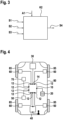
- FIG. 3 shows a block diagram of a second Kalman filter K2 according to the invention for calculating a dynamic track width of a means of transport.
- a first signal S1 representing a yaw rate of the means of transport
- a second signal S2 representing a wheel speed of a wheel of the means of transport
- a third signal S3 representing a steering angle of the means of transport
- a first output signal A1 of the first Kalman filter K1 representing a dynamic tire circumference of the means of transport are fed into the input of the second Kalman filter K2.
- the first output signal A1 representing the dynamic tire circumference of the means of transport corresponds here to an actually calculated and not an estimated value for the dynamic tire circumference.
- the second Kalman filter K2 is set up to calculate a fourth signal S4 which represents the dynamic track width of the means of transport.
- FIG. 4 shows a schematic overview of components of a device according to the invention in connection with a means of transport 80.
- the device according to the invention comprises an evaluation unit 10, which here is a microcontroller and which has a data input 12 and a data output 14. Furthermore, an external storage unit 20 is connected to the evaluation unit 10 in terms of information technology, in which the evaluation unit 10 can store received and/or calculated data.
- the evaluation unit 10 is set up to carry out the method steps according to the invention described above on the basis of a computer program.
- a rotation rate sensor 50 of the means of transport 80 is connected in terms of information technology to the data input 12 of the evaluation unit 10 via a CAN bus of an on-board network of the means of transport 80.
- a plurality of wheel speed sensors 60 of respective wheels 85 of the means of transport 80 are also connected to the data input 12 of the evaluation unit 10 via the CAN bus.
- a steering angle sensor 70 and a GPS receiver 40 of the means of transport 80 are also connected to the data input 12 of the evaluation unit 10 via the CAN bus.
- the evaluation unit 10 is set up to receive a first signal representing a yaw rate from the rotation rate sensor 50, second signals representing wheel speeds from a plurality of wheel speed sensors 60, a third signal representing a steering angle from the steering angle sensor 70 and a fifth signal representing position information from the GPS receiver 40 of the means of transport 80.
- the evaluation unit 10 receives a predefined estimated value for a dynamic track width of the means of transport 80 from the storage unit 20. All of the received signals described above and the predefined estimated value for the dynamic track width of the means of transport 80 are fed to a first Kalman filter as input signals in the evaluation unit 10 in order to calculate a dynamic tire circumference of the means of transport 80 on the basis of these input signals.
- the first Kalman filter is implemented by means of the computer program executed by the evaluation unit 10.
- a result of the calculation of the dynamic tire circumference is transmitted via the CAN bus to a parking assistance system 30 of the vehicle 80 by means of the data output 14 of the evaluation unit 10.
- the parking assistance system 30 uses the information about the dynamic tire circumference when carrying out a fully automatic parking process of the vehicle 80.
Landscapes
- Engineering & Computer Science (AREA)
- Physics & Mathematics (AREA)
- Mechanical Engineering (AREA)
- Transportation (AREA)
- Mathematical Physics (AREA)
- Data Mining & Analysis (AREA)
- General Physics & Mathematics (AREA)
- Combustion & Propulsion (AREA)
- Chemical & Material Sciences (AREA)
- Computational Mathematics (AREA)
- Mathematical Analysis (AREA)
- Mathematical Optimization (AREA)
- Pure & Applied Mathematics (AREA)
- Theoretical Computer Science (AREA)
- Automation & Control Theory (AREA)
- Evolutionary Biology (AREA)
- Bioinformatics & Computational Biology (AREA)
- Software Systems (AREA)
- General Engineering & Computer Science (AREA)
- Algebra (AREA)
- Probability & Statistics with Applications (AREA)
- Operations Research (AREA)
- Databases & Information Systems (AREA)
- Bioinformatics & Cheminformatics (AREA)
- Life Sciences & Earth Sciences (AREA)
- Control Of Driving Devices And Active Controlling Of Vehicle (AREA)
- Steering Control In Accordance With Driving Conditions (AREA)
- Navigation (AREA)
- Traffic Control Systems (AREA)
Description
- Die vorliegende Erfindung betrifft ein Verfahren und eine Vorrichtung zum Ermitteln eines dynamischen Reifenumfangs eines Fortbewegungsmittels und insbesondere ein Ermitteln des dynamischen Reifenumfangs auf Basis eines Kalman-Filters.
- Aus dem Stand der Technik sind Fortbewegungsmittel bekannt, die über Assistenzsysteme zur automatischen und/oder halbautomatischen Durchführung von Fahrmanövern verfügen. Solche Assistenzsysteme können beispielsweise Parkassistenzsysteme sein, die auf Basis von Umfeldsensoren und geeigneter Umfelderkennungsalgorithmen eingerichtet sind, ein Fortbewegungsmittel automatisch und/oder halbautomatisch in eine Parklücke zu manövrieren. Zur Berechnung einer geeigneten Einparktrajektorie für das Fortbewegungsmittel werden neben Informationen über eine Fahrzeuggeometrie u.a. Informationen über einen Reifenumfang jeweiliger Räder des Fortbewegungsmittels und eine Spurweite des Fortbewegungsmittels benötigt. Eine Verwendung vordefinierter Werte für einen jeweiligen Reifenumfang und eine jeweilige Spurweite eines Fortbewegungsmittels kann aufgrund dynamischer Einflüsse auf diese beiden Größen ggf. zu ungenau sein, um auf deren Basis Einparkvorgänge oder davon abweichende Manövriervorgänge mit einer gewünschten und/oder erforderlichen vordefinierten Genauigkeit durchführen zu können. Aus diesem Grund sind aus dem Stand der Technik Verfahren und Vorrichtungen bekannt, die einen jeweils aktuellen, dynamischen Reifenumfang ermitteln, auf dessen Basis nachfolgende Fahrmanöver mit entsprechend höherer Genauigkeit durchgeführt werden können.
- Des Weiteren sind aus dem Stand der Technik sogenannte Kalman-Filter bekannt, die in der Lage sind, den Zustand eines Systems auf Basis von Messgrößen und insbesondere auf Basis verrauschter Messgrößen zu schätzen.
-
DE 10 2016 103 637 A1 beschreibt eine Einparkhilfe unter Berücksichtigung eines sich ändernden Reifenradius' und einer Spurweite. Dabei erfolgt eine Reifenradiusabschätzung unter Verwendung einer Mehrzahl von Parametern wie einer Radgeschwindigkeit, einer GPS-Geschwindigkeit, einem Lenkwinkel und einer Gierrate eines Fortbewegungsmittels. -
DE 10 2013 021 826 A1 offenbart ein Verfahren zum Bestimmen eines Lenkwinkels eines Kraftfahrzeugs mittels einer Fahrassistenzeinrichtung, wobei neben einem Radumfang auch eine Spurweite Berücksichtigung findet. -
DE 10 2012 208 298 A1 beschreibt ein Verfahren zum Ermitteln eines Reifenumfangs im Zusammenhang mit der Verwendung eines Gierwinkels und leitet daraus ein Verfahren zum Steuern eines Einparkvorgangs ab. -
DE 10 2010 000 867 A1 betrifft ein Verfahren zur Ermittlung eines aktualisierten Radumfangs, wobei ein zunächst angenommener Radumfang mittels gemessener Beschleunigungsdaten rückwirkend korrigiert wird. -
DE 10 2012 000 213 A1 offenbart ein Verfahren zur Ermittlung eines aktuellen Radumfangs von zumindest einem Rad eines Kraftfahrzeugs auf Basis zweier durch Satellitennavigation bestimmter Fahrzeugpositionen. -
DE 10 2006 058 567 A1 beschreibt ein Verfahren zur Ermittlung eines aktualisierten Radumfangs, bei welchem verschiedene Datenquellen, darunter auch GPS-Daten eingesetzt werden. -
DE 10 2010 007 650 A1 offenbart ein Verfahren zur Ermittlung eines aktuellen Radumfangs, wobei Entfernungswerte aus einer Abstandsmessung unter Verwendung von Abstandssensoren und eine Radimpulszahl zu Grunde gelegt werden. -
DE 10 2012 216215 A1 undWO 03/022651 A1 - Gemäß einem ersten Aspekt der vorliegenden Erfindung wird ein Verfahren zum Ermitteln eines dynamischen Reifenumfangs eines Fortbewegungsmittels vorgeschlagen. Das Fortbewegungsmittel kann beispielsweise ein Straßenfahrzeug (z.B. Motorrad, PKW, Transporter, LKW, Shuttle-Bus) oder ein Schienenfahrzeug oder ein Luftfahrzeug/Flugzeug oder ein Wasserfahrzeug sein.
- In einem ersten Schritt des erfindungsgemäßen Verfahrens wird ein erstes Signal repräsentierend eine Gierrate des Fortbewegungsmittels, ein zweites Signal repräsentierend eine Raddrehzahl eines Rades des Fortbewegungsmittels, ein drittes Signal repräsentierend einen Lenkwinkel des Fortbewegungsmittels und ein viertes Signal repräsentierend eine dynamische Spurweite des Fortbewegungsmittels von einer erfindungsgemäßen Vorrichtung im Fortbewegungsmittel empfangen. Der dynamische Reifenumfang und die dynamische Spurweite sind im Vergleich zu einem technischen Reifenumfang und zu einer technischen Spurweite vorteilhaft verwendbare Größen, da diese die tatsächlich vorliegenden Werte für den Reifenumfang und die Spurweite in einem Fahrbetrieb des Fortbewegungsmittels repräsentieren. Unter dem technischen Reifenumfang und unter der technischen Spurweite sollen hier vordefinierte Werte verstanden werden, welche beispielsweise im Stillstand des Fortbewegungsmittels gemessen und/oder aus einer technischen Spezifikation des Fortbewegungsmittels und/oder aktuell verwendeter Reifen entnommen werden können. Unter dem dynamischen Reifenumfang und der dynamischen Spurweite sollen hingegen jene Werte verstanden werden, die in einem realen Fahrbetrieb des Fortbewegungsmittels vorliegen. Diese können beispielsweise durch Reifenschlupf, temperaturbedingte und/oder belastungsbedingte Druckschwankungen im Rad oder Druckverlust im Rad oder auch andere Einflussfaktoren von den vordefinierten, technischen Werten abweichen.
- Die erfindungsgemäße Vorrichtung kann bevorzugt eine Auswerteeinheit mit einem Dateneingang und einem Datenausgang umfassen. Mittels des Dateneingangs kann die Auswerteeinheit beispielsweise über ein Bordnetz des Fortbewegungsmittels informationstechnisch mit einer Mehrzahl von Sensoren und/oder Steuergeräten des Fortbewegungsmittels verbunden sein, welche die oben genannten Signale erfassen und/oder bereitstellen können. Des Weiteren kann die Auswerteeinheit informationstechnisch mit einer internen und/oder externen Speichereinheit verbunden sein, in welcher durch die Auswerteeinheit empfangene und/oder berechnete Daten abgelegt werden können.
- Die Gierrate (oder auch Gierwinkelgeschwindigkeit) stellt die Drehgeschwindigkeit des Fortbewegungsmittels um dessen Hochachse (z-Achse) dar und kann beispielsweise mittels eines Drehratensensors des Fortbewegungsmittels erfasst werden. Die Raddrehzahl des Rades des Fortbewegungsmittels kann mittels eines Raddrehzahlsensors erfasst werden, wobei bevorzugt jedes der Räder des Fortbewegungsmittels über einen solchen Raddrehzahlsensor verfügen kann, so dass jeweilige Raddrehzahlen sämtlicher Räder des Fortbewegungsmittels erfasst und berücksichtigt werden können. Der Lenkwinkel des Fortbewegungsmittels kann zum Beispiel auf Basis eines Lenkwinkelsensors erfasst werden, der bevorzugt in bzw. an einer Lenksäule des Fortbewegungsmittels angeordnet und eingerichtet ist, einen jeweiligen Einschlagwinkel des Lenkrads zu erfassen. Die hier genannten Größen, welche mittels des ersten Signals, des zweiten Signals und des dritten Signals an die Auswerteeinheit übertragen werden, können direkt von den jeweiligen Sensoren zur Erfassung dieser Größen und/oder über Steuergeräte des Fortbewegungsmittels empfangen werden, die mit den jeweiligen Sensoren informationstechnisch verbunden sind.
- Die dynamische Spurweite kann in diesem Zusammenhang ein vordefinierter Wert oder ein berechneter Wert sein. Für den Fall, dass sie in Form eines vordefinierten Wertes zur Anwendung kommt, kann dieser vordefinierte Wert bevorzugt in der an die Auswerteeinheit angebunden Speichereinheit abgelegt sein und durch die Auswerteeinheit bei Bedarf ausgelesen werden. Die Speichereinheit kann zu diesem Zweck einen persistenten Speicher umfassen, dessen Inhalt auch nach einer Unterbrechung einer Spanungsversorgung der Speichereinheit erhalten bleibt. Alternativ oder zusätzlich kann die Speichereinheit über einen flüchtigen Speicher verfügen, welcher bevorzugt zur Ablage empfangener und durch die Auswerteeinheit berechneter Daten genutzt werden kann. Der vordefinierte Wert repräsentierend die dynamische Spurweite des Fortbewegungsmittels kann zum Beispiel auf Basis einer Vermessung der Spurweite des Fortbewegungsmittels bestimmt und in der Speichereinheit abgelegt werden. Für den Fall, dass die dynamische Spurweite in Form eines berechneten Wertes zur Anwendung kommt, kann das weiter unten beschriebene, erfindungsgemäße Verfahren zur Berechnung eines jeweiligen aktuellen Wertes für die dynamische Spurweite des Fortbewegungsmittels angewendet werden. Es sei darauf hingewiesen, dass gemäß dem erfindungsgemäßen Verfahren insbesondere eine Kombination aus einer Verwendung eines vordefinierten Wertes für die dynamische Spurweite und einer Verwendung eines berechneten Wertes für die dynamische Spurweite vorgesehen sein kann. Mit anderen Worten kann die Berechnung des dynamischen Reifenumfangs zunächst initial mit einem vordefinierten Wert für die dynamische Spurweite erfolgen. Auf Basis eines nachfolgend berechneten Wertes für den dynamischen Reifenumfang kann entsprechend auch eine Berechnung der dynamischen Spurweite erfolgen, welche ab diesem Zeitpunkt alternativ zum vordefinierten Wert für die dynamische Spurweite verwendet werden kann.
- In einem zweiten Schritt des erfindungsgemäßen Verfahrens wird ein erstes Ausgangssignal eines ersten Kalman-Filters repräsentierend den dynamischen Reifenumfang des Rades unter Verwendung des ersten Signals, des zweiten Signals, des dritten Signals und des vierten Signals als Eingangssignale für das erste Kalman-Filter ermittelt. Hierfür kann das erste Kalman-Filter vorteilhaft ein Filter mit einem Zustandsraummodell zur Berechnung des dynamischen Reifenumfangs sein, welches zum Beispiel in Form eines durch die Auswerteeinheit ausgeführten Computerprogramms realisiert wird. Das erste Kalman-Filter kann insbesondere ein Extended-Kalman-Filter, nachfolgend EKF-Filter genannt und bevorzugt ein Unscented-Kalman-Filter, nachfolgend UKF-Filter genannt, sein. Letztere sind insbesondere zur Abbildung von Nichtlinearitäten im jeweils durch das Kalman-Filter abzubildenden Zustandsraummodells geeignet, was insbesondere im Zusammenhang mit der Berechnung des dynamischen Reifenumfangs und der dynamischen Spurweite von Bedeutung ist. Die Berechnung des dynamischen Reifenumfangs bzw. die Berechnung der dynamischen Spurweite erfolgt bevorzugt auf Basis folgender Gleichungen:


- ψ̇z bezeichnet die Gierrate des Fortbewegungsmittels, ωi bezeichnet die Raddrehzahlen der jeweiligen Räder des Fortbewegungsmittels (wobei der Index i für RR: hinten rechts, RL: hinten links, FR: vorne rechts und FL: vorne links steht), δ j bezeichnet den Lenkwinkel des Fortbewegungsmittels (wobei der Index j für R: hinten und F: vorne steht), C bezeichnet den dynamischen Reifenumfang und T bezeichnet die dynamische Spurweite. An dieser Stelle sei darauf hingewiesen, dass das erfindungsgemäße Verfahren auch auf Basis einer einzelnen Raddrehzahlinformation eines einzelnen Rades des Fortbewegungsmittels durchgeführt werden kann (zum Beispiel das Rad vorne links) und dass nicht zwangsläufig eine Mehrzahl von Raddrehzahlen einer Mehrzahl von Rädern des Fortbewegungsmittels in die Berechnung einfließen muss. Sofern eine Mehrzahl von Raddrehzahlen in das erste Kalman-Filter eingespeist wird, kann beispielsweise die Raddrehzahl eines Rades des Fortbewegungsmittels als Bezugsgröße festgelegt werden, während die jeweils anderen Raddrehzahlen als virtuelle Größen in das erste Kalman-Filter einfließen, die jeweils auf die Bezugsgröße bezogen sein können.
- In einem dritten Schritt des erfindungsgemäßen Verfahrens wird das erste Ausgangsignal, welches den dynamischen Reifenumfang des Fortbewegungsmittels repräsentiert, in einem Steuergerät des Fortbewegungsmittels verwendet. Zu diesem Zweck kann der durch die erfindungsgemäße Auswerteeinheit berechnete Wert des dynamischen Reifenumfangs über den Datenausgang der Auswerteeinheit an das Bordnetz des Fortbewegungsmittels ausgegeben werden. Das Bordnetz bzw. ein hierfür genutztes Teilbordnetz des Fortbewegungsmittels kann beispielsweise in Form eines CAN-, MOST-, FlexRay-, LIN-Busses oder in Form einer Ethernet-Verbindung realisiert werden. Das Steuergerät kann, wie die Auswerteeinheit selbst, ebenfalls informationstechnisch an das Bordnetz bzw. das genutzte Teilbordnetz des Fortbewegungsmittels angebunden sein und somit durch die Auswerteeinheit gesendete Signale repräsentierend den dynamischen Reifenumfang empfangen. Das Steuergerät kann zum Beispiel ein Fahrerassistenzsystem wie ein Parkassistenzsystem sein, welches auf Basis jeweils aktuell berechneter Werte für den dynamischen Reifenumfang eingerichtet sein kann, gewünschte Einparkmanöver mit einer entsprechend hohen Genauigkeit durchzuführen. Darüber hinaus können auch weitere Fahrerassistenzsysteme und/oder Manövriersysteme des Fortbewegungsmittels Empfänger jeweils aktuell berechneter Werte für den dynamischen Reifenumfang sein. Alternativ oder zusätzlich können jeweilige Werte für den dynamischen Reifenumfang auch durch ein System zur vollautomatischen Fahrzeugsteuerung des Fortbewegungsmittels empfangen und in diesem zur Fahrzeugsteuerung angewendet werden.
- Die Unteransprüche zeigen bevorzugte Weiterbildungen der Erfindung.
- Wie oben bereits beschrieben, kann die dynamische Spurweite auf Basis eines vordefinierten Schätzwertes oder auf Basis eines berechneten Wertes eingesetzt werden. Für den Fall, dass ein berechneter Wert zu Anwendung kommt, kann die dynamische Spurweite bevorzugt mittels eines zweiten Kalman-Filters berechnet werden, dessen Eingangssignale das erste Signal, das zweite Signal, das dritte Signal und das erste Ausgangssignal des ersten Kalman-Filters umfassen. Das zweite Kalman-Filter kann ein Filter mit einem Zustandsraummodell zur Berechnung der dynamischen Spurweite, insbesondere ein UKF-Filter und bevorzugt ein EKF-Filter sein. Sofern das erste Ausgangssignal des ersten Kalman-Filters zu einem Berechnungszeitpunkt der dynamischen Spurweite noch nicht zur Verfügung steht (da dieses ggf. selbst noch nicht berechnet wurde), kann ein vordefinierter Schätzwert für den dynamischen Reifenumfang in das zweite Kalman-Filter anstelle des ersten Ausgangssignals eingespeist werden. Der vordefinierte Schätzwert für den dynamischen Reifenumfang kann ebenfalls in der an die Auswerteeinheit angebundenen Speichereinheit abgelegt sein. Sobald der dynamische Reifenumfang als berechneter Wert in Form des ersten Ausgangssignals des ersten Kalman-Filters vorliegt, kann im Ansprechen darauf dieser berechnete Wert als Eingangssignal für das zweite Kalman-Filter verwendet werden. Für den Fall, dass initial weder ein berechneter Wert für den dynamischen Reifenumfang, noch ein berechneter Wert für die dynamische Spurweite im System vorliegen sollte, können für beide Werte zunächst die jeweiligen vordefinierten Schätzwerte verwendet werden. Eine nachfolgende Berechnung der dynamischen Spurweite und des dynamischen Reifenumfangs auf Basis aktueller Ausgangssignale des jeweils anderen Kalman-Filters kann somit zu einer sukzessiven Annäherung der jeweiligen Werte an die tatsächlichen vorliegenden Werte für eine aktuelle dynamische Spurweite und einen aktuellen dynamischen Reifenumfang des Fortbewegungsmittels führen.
- In einer weiteren vorteilhaften Ausgestaltung der vorliegenden Erfindung wird zusätzlich ein fünftes Signal repräsentierend eine Positionsinformation eines satellitenbasierten Ortungssystems des Fortbewegungsmittels als Eingangssignal in das erste Kalman-Filter eingespeist und beim Ermitteln des dynamischen Reifenumfangs verwendet. Das satellitenbasierte Ortungssystem kann beispielsweise ein GPS-, ein Galileo- oder ein weiteres aus dem Stand der Technik bekanntes Ortungssystem sein. Eine entsprechende Empfangseinheit für das satellitenbasierte Ortungssystem kann beispielsweise in einer Navigationseinheit eines Bordcomputers des Fortbewegungsmittels angeordnet sein. Alternativ oder zusätzlich kann eine solche Empfangseinheit auch in einem davon abweichenden Steuergerät des Fortbewegungsmittels vorgesehen sein. Mittels einer informationstechnischen Anbindung des Steuergerätes, welches die Empfangseinheit für das satellitenbasierte Ordnungssystem umfasst, an das Bordnetz des Fortbewegungsmittels, können die im Fortbewegungsmittel empfangenen, aktuellen Positionsinformationen des Fortbewegungsmittels über das Bordnetz an die erfindungsgemäße Auswerteeinheit übertragen werden. Die Auswerteeinheit kann die empfangenen Daten zum Beispiel zunächst in einem flüchtigen Speicher der Speichereinheit ablegen und diese anschließend in Form des fünften Signals in das erste Kalman Filter einspeisen. Durch die zusätzliche Nutzung der jeweils aktuellen Positionsinformationen des Fortbewegungsmittels kann eine Genauigkeit bei der Berechnung des dynamischen Reifenumfangs und somit auch der dynamischen Spurweite erhöht werden. Alternativ oder zusätzlich kann durch die Nutzung der Positionsinformationen eine Dauer für eine Annäherung der jeweils berechneten Werte für den dynamischen Reifenumfang und die dynamische Spurweite an die tatsächlichen Werte ggf. verkürzt werden. Eine Berücksichtigung der Positionsinformation kann bevorzugt auf folgender Gleichung erfolgen:

- In einer weiteren vorteilhaften Ausgestaltung der vorliegenden Erfindung wird das erste Ausgangssignal des ersten Kalman Filters in Abhängigkeit vordefinierter Kriterien aktualisiert oder nicht aktualisiert. Dies kann insbesondere dann von Vorteil sein, wenn eine Qualität aktuell vorliegender Eingangssignale für das erste Kalman-Filter unterhalb einer vordefinierten Schwelle liegt und/oder eines oder mehrere der Eingangssignale situationsbedingt und/oder aufgrund eines technischen Defektes aktuell nicht vorliegen. In einem solchen Fall kann das durch die Auswerteeinheit ausgeführte Computerprogramm einen zuletzt berechneten, gültigen Wert für den dynamischen Reifenumfang unverändert am Ausgang des ersten Kalman-Filters ausgeben (also unabhängig von aktuell anliegenden Eingangssignalen am ersten Kalman-Filter), bis entsprechende vordefinierte Kriterien für die Berechnung der dynamischen Spurweite wieder erfüllt werden. Neben den oben genannten vordefinierten Kriterien kann beispielsweise auch eine aktuelle Fahrtrichtung und/oder eine Geschwindigkeit des Fortbewegungsmittels, ein Aktivierungszustand weiterer Funktionen bzw. Steuergeräte im Fortbewegungsmittel (zum Beispiel eine aktive Fahrdynamikregelung usw.), eine Kategorie einer aktuell befahrenen Strecke (zum Beispiel eine Offroad-Fahrt) usw. zu einem Halten des zuletzt berechneten, gültigen Wertes am Ausgang des ersten Kalman-Filters führen. Darüber hinaus kann auch eine noch nicht abgelaufene, vordefinierte Mindestanlerndauer für das erste Kalman-Filter ein solches vordefiniertes Kriterium darstellen. Die oben genannten Punkte können auf ähnliche Weise auch auf das zweite Kalman-Filter und dessen Eingangsgrößen zutreffen und in diesem in analoger Weise wie im ersten Kalman-Filter zur Anwendung kommen.
- In einer weiteren vorteilhaften Ausgestaltung der vorliegenden Erfindung wird ein zweites Ausgangssignal repräsentierend eine Qualität des ersten Ausgangssignals des ersten Kalman-Filters durch das erste Kalman-Filter ausgegeben. Dieses Signal kann allgemein für eine Bewertung eines aktuellen Wertes für den dynamischen Reifenumfang verwendet werden und/oder in Form eines vordefinierten Kriteriums für das oben beschriebene Aktualisieren oder nicht Aktualisieren des ersten Ausgangssignals verwendet werden. Alternativ kann das zweite Ausgangssignal beispielsweise im Falle einer nicht ausreichenden Qualität des ersten Ausgangssignals auch dazu verwendet werden, um anstelle des berechneten Wertes für den dynamischen Reifenumfang den vordefinierten Schätzwert für den dynamischen Reifenumfang am Ausgang des ersten Kalman-Filters auszugeben. Auch hier gilt, dass die für das erste Kalman-Filter beschriebenen Maßnahmen in analoger Weise für das zweite Kalman-Filter angewendet werden können.
- In einer weiteren vorteilhaften Ausgestaltung der vorliegenden Erfindung wird das Ermitteln des dynamischen Reifenumfangs und/oder der dynamischen Spurweite bei einer Längsgeschwindigkeit des Fortbewegungsmittels von 1 km/h bis 200 km/h, insbesondere von 3 km/h bis 150 km/h und bevorzugt von 5 km/h bis 130 km/h durchgeführt. Durch Einhaltung eines oder mehrerer der vorgeschlagenen Wertebereiche für die Längsgeschwindigkeit des Fortbewegungsmittels kann sichergestellt werden, dass eine Qualität bzw. Zuverlässigkeit der ermittelten Werte für den dynamischen Reifenumfang und die dynamische Spurweite für eine nachgelagerte Verarbeitung der jeweiligen Werte ausreichend ist.
- Es sei darauf hingewiesen, dass oben genannte Verfahrensschritte und deren vorteilhafte Ausgestaltungen innerhalb des Schutzumfangs der Erfindung auf unterschiedliche Weise kombiniert, modifiziert und ausgelassen werden können. In einer konkreten Implementierung des erfindungsgemäßen Verfahrens können mittels des erfindungsgemäßen Computerprogramms beispielsweise unterschiedliche Modi zur Berechnung des dynamischen Reifenumfangs und/oder der dynamischen Spurweite vorgesehen werden, welche in Abhängigkeit der vordefinierten Kriterien und/oder einer Qualität der Ausgangssignale des ersten und/oder zweiten Kalman-Filters und/oder in einem jeweiligen Fortbewegungsmittel verfügbarer Signale in geeigneter Weise ausgewählt werden können.
- Gemäß einem zweiten Aspekt der vorliegenden Erfindung wird eine Vorrichtung zum Ermitteln eines dynamischen Reifenumfangs eines Fortbewegungsmittels vorgeschlagen. Die Vorrichtung umfasst eine Auswerteeinheit mit einem Dateneingang und einem Datenausgang und kann Bestandteil eines bestehenden Steuergerätes oder ein eigenständiges Steuergerät des Fortbewegungsmittels sein. Des Weiteren kann die Auswerteeinheit beispielsweise als ASIC, FPGA, Prozessor, digitaler Signalprozessor, Mikrocontroller, o.ä., ausgestaltet und informationstechnisch an eine interne und/oder externe Speichereinheit angebunden sein, in welcher durch die Auswerteeinheit empfangene und/oder berechnete Daten für eine nachfolgende Verarbeitung abgelegt werden können. Ferner kann die Auswerteeinheit eingerichtet sein, oben beschriebene erfindungsgemäße Verfahrensschritte auf Basis eines die Verfahrensschritte implementierenden Computerprogramms auszuführen. Die Auswerteeinheit ist weiter eingerichtet, in Verbindung mit dem Dateneingang ein erstes Signal repräsentierend eine Gierrate des Fortbewegungsmittels, ein zweites Signal repräsentierend eine Raddrehzahl eines Rades des Fortbewegungsmittels, ein drittes Signal repräsentierend einen Lenkwinkel des Fortbewegungsmittels und ein viertes Signal repräsentierend eine dynamische Spurweite des Fortbewegungsmittels zu empfangen. Dies kann bevorzugt durch eine informationstechnische Anbindung des Dateneingangs der Auswerteeinheit an ein Bordnetz des Fortbewegungsmittels erfolgen, über welches die Auswerteeinheit oben genannte Signale von weiteren Steuergeräten des Fortbewegungsmittels empfangen kann. Die Auswerteeinheit ist darüber hinaus eingerichtet, ein erstes Ausgangssignal eines ersten Kalman-Filters repräsentierend den dynamischen Reifenumfang des Rades unter Verwendung des ersten Signals, des zweiten Signals, des dritten Signals und des vierten Signals als Eingangssignale für das erste Kalman-Filter zu ermitteln. In Verbindung mit dem Datenausgang ist die Auswerteeinheit zusätzlich eingerichtet, das erste Ausgangssignal in einem Steuergerät des Fortbewegungsmittels zu verwenden. Zu diesem Zweck kann der Datenausgang der Auswerteeinheit ebenfalls informationstechnisch mit dem Bordnetz des Fortbewegungsmittels verbunden sein, so dass die Auswerteeinheit in die Lage versetzt wird, mittels des ersten Kalman-Filters berechnete erste Ausgangssignale über das Bordnetz an ein oder mehrere geeignete Empfänger des ersten Ausgangssignals im Fortbewegungsmittel zu übertragen.
- Nachfolgend werden Ausführungsbeispiele der Erfindung unter Bezugnahme auf die begleitende Zeichnung im Detail beschrieben. Dabei zeigen:
- Figur 1
- ein Flussdiagramm veranschaulichend Schritte eines Ausführungsbeispiels eines erfindungsgemäßen Verfahrens;
- Figur 2
- ein Blockschaltbild eines ersten erfindungsgemäßen Kalman-Filters zur Berechnung eines dynamischen Reifenumfangs eines Fortbewegungsmittels;
- Figur 3
- ein Blockschaltbild eines zweiten erfindungsgemäßen Kalman-Filters zur Berechnung einer dynamischen Spurweite eines Fortbewegungsmittels; und
- Figur 4
- eine schematische Übersicht über Komponenten einer erfindungsgemäßen Vorrichtung in Verbindung mit einem Fortbewegungsmittel.
-
Figur 1 zeigt ein Flussdiagramm veranschaulichend Schritte eines Ausführungsbeispiels eines erfindungsgemäßen Verfahrens zum Ermitteln eines dynamischen Reifenumfangs eines Fortbewegungsmittels, welches hier ein PKW ist. Im ersten Schritt 100 empfängt eine erfindungsgemäße Auswerteeinheit, welche mit einem Bordnetz des Fortbewegungsmittels informationstechnisch gekoppelt ist, ein erstes Signal repräsentierend eine Gierrate des Fortbewegungsmittels, ein zweites Signal repräsentierend eine Raddrehzahl eines Rades des Fortbewegungsmittels, ein drittes Signal repräsentierend einen Lenkwinkel des Fortbewegungsmittels und ein viertes Signal repräsentierend eine dynamische Spurweite des Fortbewegungsmittels und speichert durch die Signale repräsentierte Daten in einer an die Auswerteinheit informationstechnisch angebundenen Speichereinheit ab. Im Schritt 200 wird durch die Auswerteeinheit ein erstes Ausgangssignal eines ersten Kalman-Filters repräsentierend den dynamischen Reifenumfang des Rades unter Verwendung des ersten Signals, des zweiten Signals, des dritten Signals und des vierten Signals als Eingangssignale für das erste Kalman-Filter ermittelt. Das erste Kalman-Filter ist hier ein UKF-Filter. Das Ermitteln des ersten Ausgangssignals erfolgt auf Basis eines Computerprogramms, welches durch die Auswerteeinheit ausgeführt wird und welches ein Zustandsraummodell zur Berechnung des dynamischen Reifenumfangs abbildet. Im dritten Schritt 300 wird das erste Ausgangssignal des UKF-Filters über das Bordnetz des Fortbewegungsmittels an ein Parkassistenzsystem des Fortbewegungsmittels übertragen, welches auf Basis des ersten Ausgangssignals ein vollautomatisches Einparkmanöver durchführt. -
Figur 2 zeigt ein Blockschaltbild eines ersten erfindungsgemäßen Kalman-Filters K1 zur Berechnung eines dynamischen Reifenumfangs eines Fortbewegungsmittels. Zu diesem Zweck werden in den Eingang des ersten Kalman-Filters K1 ein erstes Signal S1 repräsentierend eine Gierrate des Fortbewegungsmittels, ein zweites Signal S2 repräsentierend eine Raddrehzahl eines Rades des Fortbewegungsmittels, ein drittes Signal S3 repräsentierend einen Lenkwinkel des Fortbewegungsmittels und ein viertes Signal S4 repräsentierend eine dynamische Spurweite des Fortbewegungsmittels eingespeist. Das vierte Signal S4 repräsentierend die dynamische Spurweite des Fortbewegungsmittels entspricht hier einem tatsächlich berechneten und keinem geschätzten Wert für die dynamische Spurweite. Auf Basis der Eingangssignale S1, S2, S3, S4 und auf Basis eines geeigneten Zustandsraummodells ist das erste Kalman-Filter K1 eingerichtet, ein erstes Ausgangssignal A1 zu berechnen, welches den dynamischen Reifenumfang des Fortbewegungsmittels repräsentiert. Darüber hinaus wird durch das erste Kalman-Filter K1 ein zweites Ausgangssignal A2 erzeugt, welches ein Maß für eine Qualität des ersten Ausgangssignals A1 darstellt. -
Figur 3 zeigt ein Blockschaltbild eines zweiten erfindungsgemäßen Kalman-Filters K2 zur Berechnung einer dynamischen Spurweite eines Fortbewegungsmittels. Zu diesem Zweck werden in den Eingang des zweiten Kalman-Filters K2 ein erstes Signal S1 repräsentierend eine Gierrate des Fortbewegungsmittels, ein zweites Signal S2 repräsentierend eine Raddrehzahl eines Rades des Fortbewegungsmittels, ein drittes Signal S3 repräsentierend einen Lenkwinkel des Fortbewegungsmittels und ein erstes Ausgangssignal A1 des ersten Kalman-Filters K1 repräsentierend einen dynamischen Reifenumfang des Fortbewegungsmittels eingespeist. Das erste Ausgangssignal A1 repräsentierend den dynamischen Reifenumfang des Fortbewegungsmittels entspricht hier einem tatsächlich berechneten und keinem geschätzten Wert für den dynamischen Reifenumfang. Auf Basis der Eingangssignale S1, S2, S3, A1 und auf Basis eines geeigneten Zustandsraummodells ist das zweite Kalman-Filter K2 eingerichtet, ein viertes Signal S4 zu berechnen, welches die dynamische Spurweite des Fortbewegungsmittels repräsentiert. -
Figur 4 zeigt eine schematische Übersicht über Komponenten einer erfindungsgemäßen Vorrichtung in Verbindung mit einem Fortbewegungsmittel 80. Die erfindungsgemäße Vorrichtung umfasst eine Auswerteeinheit 10, welche hier ein Mikrocontroller ist und welche über einen Dateneingang 12 und einen Datenausgang 14 verfügt. Des Weiteren ist eine externe Speichereinheit 20 informationstechnisch an die Auswerteeinheit 10 angebunden, in welcher die Auswerteeinheit 10 empfangene und/oder berechnete Daten ablegen kann. Die Auswerteeinheit 10 ist eingerichtet, oben beschriebene, erfindungsgemäße Verfahrensschritte auf Basis eines Computerprogramms auszuführen. Über einen CAN-Bus eines Bordnetzes des Fortbewegungsmittels 80 ist ein Drehratensensor 50 des Fortbewegungsmittels 80 informationstechnisch mit dem Dateneingang 12 der Auswerteeinheit 10 verbunden. Ferner ist eine Mehrzahl von Raddrehzahlsensoren 60 jeweiliger Räder 85 des Fortbewegungsmittels 80 ebenfalls über den CAN-Bus mit dem Dateneingang 12 der Auswerteeinheit 10 verbunden. Darüber hinaus sind ein Lenkwinkelsensor 70 und ein GPS-Empfänger 40 des Fortbewegungsmittels 80 ebenfalls über den CAN-Bus mit dem Dateneingang 12 der Auswerteeinheit 10 verbunden. Auf diese Weise ist die Auswerteeinheit 10 eingerichtet, ein erstes Signal repräsentierend eine Gierrate vom Drehratensensor 50, zweite Signale repräsentierend Raddrehzahlen von einer Mehrzahl von Raddrehzahlsensoren 60, ein drittes Signal repräsentierend einen Lenkwinkel vom Lenkwinkelsensor 70 und ein fünftes Signal repräsentierend eine Positionsinformation vom GPS-Empfänger 40 des Fortbewegungsmittels 80 zu empfangen. Zusätzlich empfängt die Auswerteeinheit 10 von der Speichereinheit 20 einen vordefinierten Schätzwert für eine dynamische Spurweite des Fortbewegungsmittels 80. Sämtliche oben beschriebenen Empfangssignale und der vordefinierte Schätzwert für die dynamische Spurweite des Fortbewegungsmittels 80 werden in der Auswerteeinheit 10 einem ersten Kalman-Filter als Eingangssignale zugeführt, um auf Basis dieser Eingangssignale einen dynamischen Reifenumfang des Fortbewegungsmittels 80 zu berechnen. Das erste Kalman-Filter ist mittels des durch die Auswerteeinheit 10 ausgeführten Computerprogramms realisiert. Ein Ergebnis der Berechnung des dynamischen Reifenumfangs wird mittels des Datenausgangs 14 der Auswerteeinheit 10 über den CAN-Bus an ein Parkassistenzsystem 30 des Fortbewegungsmittels 80 übertragen. Das Parkassistenzsystem 30 verwendet die Information über den dynamischen Reifenumfang anschließend bei der Durchführung eines vollautomatischen Einparkvorgangs des Fortbewegungsmittels 80.
Claims (11)
- Verfahren zum Ermitteln eines dynamischen Reifenumfangs eines Fortbewegungsmittels (80) umfassend die Schritte:• Empfangen (100) eines ersten Signals (S1) repräsentierend eine Gierrate des Fortbewegungsmittels (80), eines zweiten Signals (S2) repräsentierend eine Raddrehzahl eines Rades (85) des Fortbewegungsmittels (80), eines dritten Signals (S3) repräsentierend einen Lenkwinkel des Fortbewegungsmittels (80) und eines vierten Signals (S4) repräsentierend eine dynamische Spurweite des Fortbewegungsmittels (80),• Ermitteln (200) eines ersten Ausgangssignals (A1) eines ersten Kalman-Filters (K1) repräsentierend den dynamischen Reifenumfang des Rades (85) unter Verwendung des ersten Signals (S1), des zweiten Signals (S2), des dritten Signals (S3) und des vierten Signals (S4) als Eingangssignale für das erste Kalman-Filter (K1), und• Verwenden (300) des ersten Ausgangssignals (A1) in einem Steuergerät (30) des Fortbewegungsmittels (80).
- Verfahren nach Anspruch 1, wobei das erste Kalman-Filter (K1) ein Filter mit einem Zustandsraummodell zur Berechnung des dynamischen Reifenumfangs, insbesondere ein Extended-Kalman-Filter, nachfolgend EKF-Filter genannt und bevorzugt ein Unscented-Kalman-Filter, nachfolgend UKF-Filter genannt, ist.
- Verfahren nach einem der vorstehenden Ansprüche, wobei die dynamische Spurweite ein vordefinierter Schätzwert für die dynamische Spurweite ist, oder mittels eines zweiten Kalman-Filters (K2) berechnet wird, dessen Eingangssignale das erste Signal (S1), das zweite Signal (S2), das dritte Signal (S3) und das erste Ausgangssignal (A1) des ersten Kalman-Filters (K1) umfassen.
- Verfahren nach Anspruch 3, wobei das zweite Kalman-Filter (K2) ein Filter mit einem Zustandsraummodell zur Berechnung der dynamischen Spurweite, insbesondere ein UKF-Filter und bevorzugt ein EKF-Filter ist.
- Verfahren nach einem der vorstehenden Ansprüche, wobei zusätzlich ein fünftes Signal (S5) repräsentierend eine Positionsinformation eines satellitenbasierten Ortungssystems (40) des Fortbewegungsmittels (80) als Eingangssignal in das erste Kalman-Filter (K1) eingespeist und beim Ermitteln des dynamischen Reifenumfangs verwendet wird.
- Verfahren nach einem der vorstehenden Ansprüche, wobei das erste Ausgangssignal (A1) des ersten Kalman-Filters (K1) in Abhängigkeit vordefinierter Kriterien aktualisiert oder nicht aktualisiert wird.
- Verfahren nach einem der vorstehenden Ansprüche, wobei ein zweites Ausgangssignal (A2) repräsentierend eine Qualität des ersten Ausgangssignals (A1) des ersten Kalman-Filters (K1) durch das erste Kalman-Filter (K1) ausgeben wird.
- Verfahren nach einem der vorstehenden Ansprüche, wobei das Ermitteln (200) des dynamischen Reifenumfangs und/oder der dynamischen Spurweite bei einer Längsgeschwindigkeit des Fortbewegungsmittels (80) von 1 km/h bis 200 km/h, insbesondere von 3 km/h bis 150 km/h und bevorzugt von 5 km/h bis 130 km/h durchgeführt wird.
- Verfahren nach einem der vorstehenden Ansprüche, wobei das erste Ausgangssignal (A1) des ersten Kalman-Filters (K1) in einem Fahrerassistenzsystem (30) des Fortbewegungsmittels (80), insbesondere in einem Manövriersystem und bevorzugt in einem Parkassistenzsystem des Fortbewegungsmittels (80) verwendet wird.
- Verfahren nach einem der vorstehenden Ansprüche, wobei in das erste Kalman-Filter (K1) eine Mehrzahl zweiter Signale (S2) repräsentierend eine Mehrzahl von Raddrehzahlen einer Mehrzahl von Rädern (85) des Fortbewegungsmittels (80) einfließt.
- Vorrichtung zum Ermitteln eines dynamischen Reifenumfangs eines Fortbewegungsmittels (80) umfassend:• eine Auswerteeinheit (10),• einen Dateneingang (12), und• einen Datenausgang (14),wobei die Auswerteeinheit (10) eingerichtet ist,• in Verbindung mit dem Dateneingang (12) ein erstes Signal (S1) repräsentierend eine Gierrate des Fortbewegungsmittels (80), ein zweites Signal (S2) repräsentierend eine Raddrehzahl eines Rades (85) des Fortbewegungsmittels (80), ein drittes Signal (S3) repräsentierend einen Lenkwinkel des Fortbewegungsmittels (80) und ein viertes Signal (S4) repräsentierend eine dynamische Spurweite des Fortbewegungsmittels (80) zu empfangen,• ein erstes Ausgangssignal (A1) eines ersten Kalman-Filters (K1) repräsentierend den dynamischen Reifenumfang des Rades (85) unter Verwendung des ersten Signals (S1), des zweiten Signals (S2), des dritten Signals (S3) und des vierten Signals (S4) als Eingangssignale für das erste Kalman-Filter (K1) zu ermitteln, und• in Verbindung mit dem Datenausgang (14) das erste Ausgangssignal (A1) in einem Steuergerät (30) des Fortbewegungsmittels (80) zu verwenden.
Applications Claiming Priority (2)
| Application Number | Priority Date | Filing Date | Title |
|---|---|---|---|
| DE102018222152.9A DE102018222152A1 (de) | 2018-12-18 | 2018-12-18 | Verfahren und Vorrichtung zum Ermitteln eines dynamischen Reifenumfangs eines Fortbewegungsmittels |
| PCT/EP2019/082692 WO2020126362A1 (de) | 2018-12-18 | 2019-11-27 | Verfahren und vorrichtung zum ermitteln eines dynamischen reifenumfangs eines fortbewegungsmittels |
Publications (2)
| Publication Number | Publication Date |
|---|---|
| EP3898367A1 EP3898367A1 (de) | 2021-10-27 |
| EP3898367B1 true EP3898367B1 (de) | 2024-06-19 |
Family
ID=68762713
Family Applications (1)
| Application Number | Title | Priority Date | Filing Date |
|---|---|---|---|
| EP19813271.4A Active EP3898367B1 (de) | 2018-12-18 | 2019-11-27 | Verfahren und vorrichtung zum ermitteln eines dynamischen reifenumfangs eines fortbewegungsmittels |
Country Status (5)
| Country | Link |
|---|---|
| US (1) | US11840242B2 (de) |
| EP (1) | EP3898367B1 (de) |
| CN (1) | CN113195328B (de) |
| DE (1) | DE102018222152A1 (de) |
| WO (1) | WO2020126362A1 (de) |
Families Citing this family (6)
| Publication number | Priority date | Publication date | Assignee | Title |
|---|---|---|---|---|
| DE102020216465A1 (de) * | 2020-12-22 | 2022-06-23 | Continental Teves Ag & Co. Ohg | Verfahren und elektronisches Kontrollsystem zum Ermitteln einer gefahrenen Wegstrecke eines Fahrzeugs |
| DE102021211202A1 (de) | 2021-10-05 | 2023-04-06 | Continental Automotive Technologies GmbH | Reifenumfangsbestimmung mit Kalmanfilter |
| DE102022207045B3 (de) | 2022-07-11 | 2023-11-16 | Continental Automotive Technologies GmbH | Spurweitenbestimmung mit Kalmanfilter |
| CN117284029B (zh) | 2023-11-20 | 2024-10-29 | 偌轮汽车科技(武汉)有限公司 | 一种适用于复杂驾驶工况的间接式胎压监测方法及系统 |
| EP4571254A1 (de) * | 2023-12-14 | 2025-06-18 | Valeo Comfort and Driving Assistance | Verfahren zur lokalisierung eines sich bewegenden fahrzeugs |
| CN120735783B (zh) * | 2025-09-08 | 2025-11-14 | 吉林大学 | 基于智能轮胎的质心侧偏角估计方法及相关设备 |
Family Cites Families (35)
| Publication number | Priority date | Publication date | Assignee | Title |
|---|---|---|---|---|
| SE0002213D0 (sv) * | 2000-04-12 | 2000-06-13 | Nira Automotive Ab | Tire pressure computation system |
| WO2003022651A1 (en) | 2001-09-07 | 2003-03-20 | Kelsey-Hayes Company | Advanced wheel slip detection using suspension system information |
| DE60307431T2 (de) * | 2003-05-09 | 2006-11-30 | Harman Becker Automotive Systems Gmbh | GPS (global positioning system) basierendes Verfahren und System zur Erkennung von Reifendruckänderungen |
| US8180525B2 (en) * | 2005-12-23 | 2012-05-15 | Continental Teves Ag & Co. Ohg | Method and system for assisting a driver when parking or maneuvering a motor vehicle |
| DE102006020490A1 (de) * | 2006-02-24 | 2007-08-30 | Volkswagen Ag | Verfahren und Vorrichtung zur Umfangsermittlung von Fahrzeugrädern |
| DE102006058567A1 (de) * | 2006-12-12 | 2008-06-26 | Siemens Ag | Verfahren und Anordnung zur Ermittlung eines aktualisierten Radumfanges zumindest eines an einem Fahrzeug angeordneten Rades |
| DE102007021918A1 (de) * | 2007-05-10 | 2008-11-20 | Robert Bosch Gmbh | Verfahren zur Überwachung des Reifenzustands in Fahrzeugen |
| US8630767B2 (en) * | 2007-12-03 | 2014-01-14 | Nira Dynamics Ab | Estimation of the load of a vehicle |
| DE102008043260A1 (de) * | 2008-10-29 | 2010-05-06 | Robert Bosch Gmbh | Verfahren zum fahrsituationsabhängigen Kontrollieren des Luftdrucks in Reifen und Vorrichtung |
| US20100114354A1 (en) * | 2008-11-06 | 2010-05-06 | The Regents Of The University Of Michigan | Method for estimating immeasurable process variables during a series of discrete process cycles |
| DE102010000867A1 (de) | 2010-01-13 | 2011-07-14 | Robert Bosch GmbH, 70469 | Verfahren zur Ermittlung eines aktualisierten Radumfangs |
| DE102010007650A1 (de) | 2010-02-11 | 2011-08-11 | Valeo Schalter und Sensoren GmbH, 74321 | Verfahren, Auswerte- und Steuereinheit und Schaltungsanordnung zur Ermittlung eines aktuellen Radumfangs |
| US20110257882A1 (en) * | 2010-04-15 | 2011-10-20 | Mcburney Paul W | Road map feedback server for tightly coupled gps and dead reckoning vehicle navigation |
| WO2013037850A1 (de) * | 2011-09-12 | 2013-03-21 | Continental Teves Ag & Co. Ohg | Zeitkorrigiertes sensorsystem |
| US9121747B2 (en) * | 2011-09-19 | 2015-09-01 | International Electronic Machines Corp. | Object evaluation accounting for motion-related dynamic forces |
| DE102011086490A1 (de) * | 2011-11-16 | 2013-05-16 | Robert Bosch Gmbh | Verfahren zur Bestimmung des dynamischen Abrollradius' von Reifen |
| DE102012000213B4 (de) | 2012-01-07 | 2021-09-23 | Volkswagen Aktiengesellschaft | Verfahren und Vorrichtung zur Bestimmung des Umfangs eines Kraftfahrzeugrades |
| DE102012208298A1 (de) | 2012-05-16 | 2013-11-21 | Robert Bosch Gmbh | Verfahren und Vorrichtung zum Ermitteln des Umfanges eines an einem Fahrzeug verbauten Reifens |
| DE102012018012A1 (de) * | 2012-09-12 | 2014-05-15 | Lucas Automotive Gmbh | Verfahren zum Betreiben eines Umfeldbeobachtungssystems für ein Kraftfahrzeug |
| DE102013004900A1 (de) * | 2013-03-21 | 2014-09-25 | Valeo Schalter Und Sensoren Gmbh | Verfahren zum Bestimmen eines aktuellen Umfangs eines Rades eines Kraftfahrzeugs, Fahrerassistenzeinrichtung und Kraftfahrzeug |
| DE102013021826A1 (de) | 2013-12-21 | 2015-06-25 | Valeo Schalter Und Sensoren Gmbh | Verfahren zum Bestimmen eines aktuellen Lenkwinkels eines Kraftfahrzeugs, Fahrerassistenzeinrichtung und Kraftfahrzeug |
| US9714031B2 (en) * | 2015-03-04 | 2017-07-25 | Ford Global Technologies, Llc | Park assist with tire radius consideration |
| DE102016103632A1 (de) | 2016-03-01 | 2017-09-07 | Osram Opto Semiconductors Gmbh | Bildpunkteeinheit und Videoanzeigeeinrichtung |
| JP6729077B2 (ja) * | 2016-06-30 | 2020-07-22 | アイシン精機株式会社 | 車両周辺監視装置 |
| DE102016010750B4 (de) * | 2016-09-06 | 2018-07-12 | Nira Dynamics Ab | Schätzung absoluter Radrollradien und Schätzung eines vertikalen Kompressionswerts |
| DE102016015810A1 (de) * | 2016-09-06 | 2018-04-26 | Nira Dynamics Ab | Schätzung absoluter Radrollradien und Schätzung eines vertikalen Kompressionswerts |
| DE102016223902B4 (de) * | 2016-12-01 | 2019-12-19 | Audi Ag | Verfahren und System zur Bestimmung von Radumfängen und Spurweiten eines Fahrzeugs |
| DE102017207620B4 (de) * | 2017-05-05 | 2019-05-29 | Continental Automotive Gmbh | Verfahren und Vorrichtung zur Bestimmung von Radlasten an Rädern eines Fahrzeuges |
| US10603962B2 (en) * | 2017-06-29 | 2020-03-31 | The Goodyear Tire & Rubber Company | Tire wear state estimation system and method |
| DE102017219918B4 (de) * | 2017-11-09 | 2019-12-19 | Audi Ag | Verfahren zum Berechnen eines Reifenumfangs eines bereiften Rads eines Kraftfahrzeugs sowie Einrichtung zur Berechnung des Reifenumfangs |
| DE102017010763A1 (de) * | 2017-11-21 | 2018-07-12 | Daimler Ag | Verfahren zur sequenziellen Schätzung von Parametern der Fahrzeugdynamik |
| DE102018115043A1 (de) * | 2018-06-22 | 2019-12-24 | Thyssenkrupp Ag | Verfahren zur Ermittlung eines Radumfanges anhand der gemessenen Gierrate |
| DE102018211804A1 (de) * | 2018-07-16 | 2020-01-16 | Volkswagen Aktiengesellschaft | Verfahren und Vorrichtung zum Schätzen eines aktuellen Radumfanges mindestens eines an einem Fahrzeug angeordneten Rades |
| WO2020154428A1 (en) * | 2019-01-22 | 2020-07-30 | American Tire Distributors, Inc. | Tire health monitoring systems and methods thereto |
| DE102019125655A1 (de) * | 2019-09-24 | 2021-03-25 | Audi Ag | Verfahren zum Ermitteln eines Umfangs eines Fahrzeugrads sowie Kraftfahrzeug |
-
2018
- 2018-12-18 DE DE102018222152.9A patent/DE102018222152A1/de not_active Withdrawn
-
2019
- 2019-11-27 EP EP19813271.4A patent/EP3898367B1/de active Active
- 2019-11-27 CN CN201980084239.2A patent/CN113195328B/zh active Active
- 2019-11-27 US US17/277,655 patent/US11840242B2/en active Active
- 2019-11-27 WO PCT/EP2019/082692 patent/WO2020126362A1/de not_active Ceased
Also Published As
| Publication number | Publication date |
|---|---|
| CN113195328B (zh) | 2025-03-11 |
| EP3898367A1 (de) | 2021-10-27 |
| WO2020126362A1 (de) | 2020-06-25 |
| US20220024463A1 (en) | 2022-01-27 |
| US11840242B2 (en) | 2023-12-12 |
| DE102018222152A1 (de) | 2020-06-18 |
| CN113195328A (zh) | 2021-07-30 |
Similar Documents
| Publication | Publication Date | Title |
|---|---|---|
| EP3898367A1 (de) | Verfahren und vorrichtung zum ermitteln eines dynamischen reifenumfangs eines fortbewegungsmittels | |
| EP2010419B1 (de) | Verfahren zur kalibrierung einer gierratenmessung | |
| DE102012217901B3 (de) | Verfahren, Steuergerät und System zum Ermitteln einer Profiltiefe eines Profils eines Reifens | |
| EP2755868B1 (de) | Ausrichtungsmodell für ein sensorsystem | |
| EP1885586B1 (de) | Bestimmung des aktuellen gierwinkels und des aktuellen schwimmwinkels eines landfahrzeugs | |
| DE102016225140B3 (de) | Verfahren zum Bestimmen einer relativen Position eines Kraftfahrzeugs, Positionsbestimmungssystem für ein Kraftfahrzeug und Kraftfahrzeug | |
| EP1965993A1 (de) | Verfahren und system zur unterstützung eines fahrers beim einparken oder rangieren eines kraftfahrzeugs | |
| DE102013219662B3 (de) | Verfahren, Steuergerät und System zum Ermitteln einer Profiltiefe eines Profils zumindest eines Reifens | |
| DE102014118414A1 (de) | Geschwindigkeitsbegrenzungsschwelleerfassungsvorrichtung und Navigationsdatenaktualisierungsvorrichtung und Verfahren, welches diese verwendet | |
| EP2780208B1 (de) | Verfahren zur bestimmung des dynamischen abrollradius von reifen | |
| WO2010034580A1 (de) | Verfahren und vorrichtung zum ermitteln eines schwerpunktes eines kraftfahrzeugs | |
| DE102016102004A1 (de) | Drehmomentsteuerung für Fahrzeuge mit unabhängigen Front- und Heckantriebssystemen | |
| DE102006020490A1 (de) | Verfahren und Vorrichtung zur Umfangsermittlung von Fahrzeugrädern | |
| DE102013018967A1 (de) | Verfahren zur Prognose des Fahrweges eines Kraftfahrzeuges und Prognoseeinrichtung | |
| DE102019206738A1 (de) | Verfahren, Steuergerät und System zum Stabilisieren eines Fahrzeugs | |
| DE102006018978A1 (de) | Verfahren zur Bestimmung des Wankwinkels | |
| DE102018108111A1 (de) | Verfahren und systeme zur querkraftregelung von fahrzeugen | |
| DE102019219263A1 (de) | Verfahren und System zur Verbesserung der Fahrstabilität | |
| DE102006060456B4 (de) | Verfahren und System zum Lenken eines Fahrzeugs in eine Parklücke | |
| DE102009011984B4 (de) | Verfahren zum Bestimmen eines Deichselwinkels | |
| DE102015009284A1 (de) | Verfahren zum Betrieb eines Fahrzeugs | |
| DE102006060457A1 (de) | Verfahren und System zur Unterstützung eines Fahrers beim Einparken oder Rangieren eines Kraftfahrzeugs | |
| DE102007019697A1 (de) | Verfahren und Vorrichtung zum elektrisch gesteuerten Unterstützen einer Fahrbewegung eines Fahrzeugs sowie Fahrzeug | |
| DE10340053A1 (de) | Bestimmung der Geschwindigkeit über Grund bei fahrdynamischen Anwendungen im Kraftfahrzeug | |
| EP4414184B1 (de) | Verfahren zur verbesserten abschätzung der profiltiefe von fahrzeugreifen |
Legal Events
| Date | Code | Title | Description |
|---|---|---|---|
| STAA | Information on the status of an ep patent application or granted ep patent |
Free format text: STATUS: UNKNOWN |
|
| STAA | Information on the status of an ep patent application or granted ep patent |
Free format text: STATUS: THE INTERNATIONAL PUBLICATION HAS BEEN MADE |
|
| PUAI | Public reference made under article 153(3) epc to a published international application that has entered the european phase |
Free format text: ORIGINAL CODE: 0009012 |
|
| STAA | Information on the status of an ep patent application or granted ep patent |
Free format text: STATUS: REQUEST FOR EXAMINATION WAS MADE |
|
| 17P | Request for examination filed |
Effective date: 20210719 |
|
| AK | Designated contracting states |
Kind code of ref document: A1 Designated state(s): AL AT BE BG CH CY CZ DE DK EE ES FI FR GB GR HR HU IE IS IT LI LT LU LV MC MK MT NL NO PL PT RO RS SE SI SK SM TR |
|
| DAV | Request for validation of the european patent (deleted) | ||
| DAX | Request for extension of the european patent (deleted) | ||
| GRAP | Despatch of communication of intention to grant a patent |
Free format text: ORIGINAL CODE: EPIDOSNIGR1 |
|
| STAA | Information on the status of an ep patent application or granted ep patent |
Free format text: STATUS: GRANT OF PATENT IS INTENDED |
|
| INTG | Intention to grant announced |
Effective date: 20240115 |
|
| GRAS | Grant fee paid |
Free format text: ORIGINAL CODE: EPIDOSNIGR3 |
|
| GRAA | (expected) grant |
Free format text: ORIGINAL CODE: 0009210 |
|
| STAA | Information on the status of an ep patent application or granted ep patent |
Free format text: STATUS: THE PATENT HAS BEEN GRANTED |
|
| AK | Designated contracting states |
Kind code of ref document: B1 Designated state(s): AL AT BE BG CH CY CZ DE DK EE ES FI FR GB GR HR HU IE IS IT LI LT LU LV MC MK MT NL NO PL PT RO RS SE SI SK SM TR |
|
| REG | Reference to a national code |
Ref country code: GB Ref legal event code: FG4D Free format text: NOT ENGLISH |
|
| REG | Reference to a national code |
Ref country code: CH Ref legal event code: EP |
|
| REG | Reference to a national code |
Ref country code: DE Ref legal event code: R096 Ref document number: 502019011494 Country of ref document: DE |
|
| PG25 | Lapsed in a contracting state [announced via postgrant information from national office to epo] |
Ref country code: BG Free format text: LAPSE BECAUSE OF FAILURE TO SUBMIT A TRANSLATION OF THE DESCRIPTION OR TO PAY THE FEE WITHIN THE PRESCRIBED TIME-LIMIT Effective date: 20240619 |
|
| PG25 | Lapsed in a contracting state [announced via postgrant information from national office to epo] |
Ref country code: HR Free format text: LAPSE BECAUSE OF FAILURE TO SUBMIT A TRANSLATION OF THE DESCRIPTION OR TO PAY THE FEE WITHIN THE PRESCRIBED TIME-LIMIT Effective date: 20240619 Ref country code: FI Free format text: LAPSE BECAUSE OF FAILURE TO SUBMIT A TRANSLATION OF THE DESCRIPTION OR TO PAY THE FEE WITHIN THE PRESCRIBED TIME-LIMIT Effective date: 20240619 |
|
| REG | Reference to a national code |
Ref country code: LT Ref legal event code: MG9D |
|
| PG25 | Lapsed in a contracting state [announced via postgrant information from national office to epo] |
Ref country code: GR Free format text: LAPSE BECAUSE OF FAILURE TO SUBMIT A TRANSLATION OF THE DESCRIPTION OR TO PAY THE FEE WITHIN THE PRESCRIBED TIME-LIMIT Effective date: 20240920 |
|
| REG | Reference to a national code |
Ref country code: NL Ref legal event code: MP Effective date: 20240619 |
|
| PG25 | Lapsed in a contracting state [announced via postgrant information from national office to epo] |
Ref country code: LV Free format text: LAPSE BECAUSE OF FAILURE TO SUBMIT A TRANSLATION OF THE DESCRIPTION OR TO PAY THE FEE WITHIN THE PRESCRIBED TIME-LIMIT Effective date: 20240619 |
|
| PG25 | Lapsed in a contracting state [announced via postgrant information from national office to epo] |
Ref country code: NO Free format text: LAPSE BECAUSE OF FAILURE TO SUBMIT A TRANSLATION OF THE DESCRIPTION OR TO PAY THE FEE WITHIN THE PRESCRIBED TIME-LIMIT Effective date: 20240919 Ref country code: LV Free format text: LAPSE BECAUSE OF FAILURE TO SUBMIT A TRANSLATION OF THE DESCRIPTION OR TO PAY THE FEE WITHIN THE PRESCRIBED TIME-LIMIT Effective date: 20240619 Ref country code: HR Free format text: LAPSE BECAUSE OF FAILURE TO SUBMIT A TRANSLATION OF THE DESCRIPTION OR TO PAY THE FEE WITHIN THE PRESCRIBED TIME-LIMIT Effective date: 20240619 Ref country code: GR Free format text: LAPSE BECAUSE OF FAILURE TO SUBMIT A TRANSLATION OF THE DESCRIPTION OR TO PAY THE FEE WITHIN THE PRESCRIBED TIME-LIMIT Effective date: 20240920 Ref country code: FI Free format text: LAPSE BECAUSE OF FAILURE TO SUBMIT A TRANSLATION OF THE DESCRIPTION OR TO PAY THE FEE WITHIN THE PRESCRIBED TIME-LIMIT Effective date: 20240619 Ref country code: BG Free format text: LAPSE BECAUSE OF FAILURE TO SUBMIT A TRANSLATION OF THE DESCRIPTION OR TO PAY THE FEE WITHIN THE PRESCRIBED TIME-LIMIT Effective date: 20240619 Ref country code: RS Free format text: LAPSE BECAUSE OF FAILURE TO SUBMIT A TRANSLATION OF THE DESCRIPTION OR TO PAY THE FEE WITHIN THE PRESCRIBED TIME-LIMIT Effective date: 20240919 |
|
| PG25 | Lapsed in a contracting state [announced via postgrant information from national office to epo] |
Ref country code: NL Free format text: LAPSE BECAUSE OF FAILURE TO SUBMIT A TRANSLATION OF THE DESCRIPTION OR TO PAY THE FEE WITHIN THE PRESCRIBED TIME-LIMIT Effective date: 20240619 |
|
| PG25 | Lapsed in a contracting state [announced via postgrant information from national office to epo] |
Ref country code: NL Free format text: LAPSE BECAUSE OF FAILURE TO SUBMIT A TRANSLATION OF THE DESCRIPTION OR TO PAY THE FEE WITHIN THE PRESCRIBED TIME-LIMIT Effective date: 20240619 |
|
| PG25 | Lapsed in a contracting state [announced via postgrant information from national office to epo] |
Ref country code: PT Free format text: LAPSE BECAUSE OF FAILURE TO SUBMIT A TRANSLATION OF THE DESCRIPTION OR TO PAY THE FEE WITHIN THE PRESCRIBED TIME-LIMIT Effective date: 20241021 |
|
| PG25 | Lapsed in a contracting state [announced via postgrant information from national office to epo] |
Ref country code: PT Free format text: LAPSE BECAUSE OF FAILURE TO SUBMIT A TRANSLATION OF THE DESCRIPTION OR TO PAY THE FEE WITHIN THE PRESCRIBED TIME-LIMIT Effective date: 20241021 |
|
| PG25 | Lapsed in a contracting state [announced via postgrant information from national office to epo] |
Ref country code: PL Free format text: LAPSE BECAUSE OF FAILURE TO SUBMIT A TRANSLATION OF THE DESCRIPTION OR TO PAY THE FEE WITHIN THE PRESCRIBED TIME-LIMIT Effective date: 20240619 |
|
| PG25 | Lapsed in a contracting state [announced via postgrant information from national office to epo] |
Ref country code: EE Free format text: LAPSE BECAUSE OF FAILURE TO SUBMIT A TRANSLATION OF THE DESCRIPTION OR TO PAY THE FEE WITHIN THE PRESCRIBED TIME-LIMIT Effective date: 20240619 |
|
| PG25 | Lapsed in a contracting state [announced via postgrant information from national office to epo] |
Ref country code: IS Free format text: LAPSE BECAUSE OF FAILURE TO SUBMIT A TRANSLATION OF THE DESCRIPTION OR TO PAY THE FEE WITHIN THE PRESCRIBED TIME-LIMIT Effective date: 20241019 |
|
| PG25 | Lapsed in a contracting state [announced via postgrant information from national office to epo] |
Ref country code: CZ Free format text: LAPSE BECAUSE OF FAILURE TO SUBMIT A TRANSLATION OF THE DESCRIPTION OR TO PAY THE FEE WITHIN THE PRESCRIBED TIME-LIMIT Effective date: 20240619 |
|
| PG25 | Lapsed in a contracting state [announced via postgrant information from national office to epo] |
Ref country code: RO Free format text: LAPSE BECAUSE OF FAILURE TO SUBMIT A TRANSLATION OF THE DESCRIPTION OR TO PAY THE FEE WITHIN THE PRESCRIBED TIME-LIMIT Effective date: 20240619 Ref country code: SK Free format text: LAPSE BECAUSE OF FAILURE TO SUBMIT A TRANSLATION OF THE DESCRIPTION OR TO PAY THE FEE WITHIN THE PRESCRIBED TIME-LIMIT Effective date: 20240619 |
|
| PG25 | Lapsed in a contracting state [announced via postgrant information from national office to epo] |
Ref country code: ES Free format text: LAPSE BECAUSE OF FAILURE TO SUBMIT A TRANSLATION OF THE DESCRIPTION OR TO PAY THE FEE WITHIN THE PRESCRIBED TIME-LIMIT Effective date: 20240619 Ref country code: SM Free format text: LAPSE BECAUSE OF FAILURE TO SUBMIT A TRANSLATION OF THE DESCRIPTION OR TO PAY THE FEE WITHIN THE PRESCRIBED TIME-LIMIT Effective date: 20240619 |
|
| PG25 | Lapsed in a contracting state [announced via postgrant information from national office to epo] |
Ref country code: SM Free format text: LAPSE BECAUSE OF FAILURE TO SUBMIT A TRANSLATION OF THE DESCRIPTION OR TO PAY THE FEE WITHIN THE PRESCRIBED TIME-LIMIT Effective date: 20240619 Ref country code: SK Free format text: LAPSE BECAUSE OF FAILURE TO SUBMIT A TRANSLATION OF THE DESCRIPTION OR TO PAY THE FEE WITHIN THE PRESCRIBED TIME-LIMIT Effective date: 20240619 Ref country code: RO Free format text: LAPSE BECAUSE OF FAILURE TO SUBMIT A TRANSLATION OF THE DESCRIPTION OR TO PAY THE FEE WITHIN THE PRESCRIBED TIME-LIMIT Effective date: 20240619 Ref country code: PL Free format text: LAPSE BECAUSE OF FAILURE TO SUBMIT A TRANSLATION OF THE DESCRIPTION OR TO PAY THE FEE WITHIN THE PRESCRIBED TIME-LIMIT Effective date: 20240619 Ref country code: IS Free format text: LAPSE BECAUSE OF FAILURE TO SUBMIT A TRANSLATION OF THE DESCRIPTION OR TO PAY THE FEE WITHIN THE PRESCRIBED TIME-LIMIT Effective date: 20241019 Ref country code: ES Free format text: LAPSE BECAUSE OF FAILURE TO SUBMIT A TRANSLATION OF THE DESCRIPTION OR TO PAY THE FEE WITHIN THE PRESCRIBED TIME-LIMIT Effective date: 20240619 Ref country code: EE Free format text: LAPSE BECAUSE OF FAILURE TO SUBMIT A TRANSLATION OF THE DESCRIPTION OR TO PAY THE FEE WITHIN THE PRESCRIBED TIME-LIMIT Effective date: 20240619 Ref country code: CZ Free format text: LAPSE BECAUSE OF FAILURE TO SUBMIT A TRANSLATION OF THE DESCRIPTION OR TO PAY THE FEE WITHIN THE PRESCRIBED TIME-LIMIT Effective date: 20240619 |
|
| PG25 | Lapsed in a contracting state [announced via postgrant information from national office to epo] |
Ref country code: IT Free format text: LAPSE BECAUSE OF FAILURE TO SUBMIT A TRANSLATION OF THE DESCRIPTION OR TO PAY THE FEE WITHIN THE PRESCRIBED TIME-LIMIT Effective date: 20240619 |
|
| REG | Reference to a national code |
Ref country code: DE Ref legal event code: R097 Ref document number: 502019011494 Country of ref document: DE |
|
| PG25 | Lapsed in a contracting state [announced via postgrant information from national office to epo] |
Ref country code: DK Free format text: LAPSE BECAUSE OF FAILURE TO SUBMIT A TRANSLATION OF THE DESCRIPTION OR TO PAY THE FEE WITHIN THE PRESCRIBED TIME-LIMIT Effective date: 20240619 |
|
| PLBE | No opposition filed within time limit |
Free format text: ORIGINAL CODE: 0009261 |
|
| STAA | Information on the status of an ep patent application or granted ep patent |
Free format text: STATUS: NO OPPOSITION FILED WITHIN TIME LIMIT |
|
| 26N | No opposition filed |
Effective date: 20250320 |
|
| REG | Reference to a national code |
Ref country code: CH Ref legal event code: PL |
|
| PG25 | Lapsed in a contracting state [announced via postgrant information from national office to epo] |
Ref country code: MC Free format text: LAPSE BECAUSE OF FAILURE TO SUBMIT A TRANSLATION OF THE DESCRIPTION OR TO PAY THE FEE WITHIN THE PRESCRIBED TIME-LIMIT Effective date: 20240619 |
|
| PG25 | Lapsed in a contracting state [announced via postgrant information from national office to epo] |
Ref country code: LU Free format text: LAPSE BECAUSE OF NON-PAYMENT OF DUE FEES Effective date: 20241127 |
|
| REG | Reference to a national code |
Ref country code: CH Ref legal event code: PL |
|
| GBPC | Gb: european patent ceased through non-payment of renewal fee |
Effective date: 20241127 |
|
| PG25 | Lapsed in a contracting state [announced via postgrant information from national office to epo] |
Ref country code: CH Free format text: LAPSE BECAUSE OF NON-PAYMENT OF DUE FEES Effective date: 20241130 |
|
| REG | Reference to a national code |
Ref country code: BE Ref legal event code: MM Effective date: 20241130 |
|
| PG25 | Lapsed in a contracting state [announced via postgrant information from national office to epo] |
Ref country code: SE Free format text: LAPSE BECAUSE OF FAILURE TO SUBMIT A TRANSLATION OF THE DESCRIPTION OR TO PAY THE FEE WITHIN THE PRESCRIBED TIME-LIMIT Effective date: 20240619 |
|
| PG25 | Lapsed in a contracting state [announced via postgrant information from national office to epo] |
Ref country code: BE Free format text: LAPSE BECAUSE OF NON-PAYMENT OF DUE FEES Effective date: 20241130 Ref country code: GB Free format text: LAPSE BECAUSE OF NON-PAYMENT OF DUE FEES Effective date: 20241127 |
|
| PG25 | Lapsed in a contracting state [announced via postgrant information from national office to epo] |
Ref country code: FR Free format text: LAPSE BECAUSE OF NON-PAYMENT OF DUE FEES Effective date: 20241130 |
|
| PG25 | Lapsed in a contracting state [announced via postgrant information from national office to epo] |
Ref country code: IE Free format text: LAPSE BECAUSE OF NON-PAYMENT OF DUE FEES Effective date: 20241127 |
|
| PG25 | Lapsed in a contracting state [announced via postgrant information from national office to epo] |
Ref country code: AT Free format text: LAPSE BECAUSE OF NON-PAYMENT OF DUE FEES Effective date: 20241127 |
|
| REG | Reference to a national code |
Ref country code: AT Ref legal event code: MM01 Ref document number: 1695747 Country of ref document: AT Kind code of ref document: T Effective date: 20241127 |
|
| PG25 | Lapsed in a contracting state [announced via postgrant information from national office to epo] |
Ref country code: HU Free format text: LAPSE BECAUSE OF FAILURE TO SUBMIT A TRANSLATION OF THE DESCRIPTION OR TO PAY THE FEE WITHIN THE PRESCRIBED TIME-LIMIT; INVALID AB INITIO Effective date: 20191127 |
|
| PG25 | Lapsed in a contracting state [announced via postgrant information from national office to epo] |
Ref country code: CY Free format text: LAPSE BECAUSE OF FAILURE TO SUBMIT A TRANSLATION OF THE DESCRIPTION OR TO PAY THE FEE WITHIN THE PRESCRIBED TIME-LIMIT; INVALID AB INITIO Effective date: 20191127 |
|
| PGFP | Annual fee paid to national office [announced via postgrant information from national office to epo] |
Ref country code: DE Payment date: 20260126 Year of fee payment: 7 |