EP3889305A1 - High-strength steel plate having excellent low-temperature fracture toughness and elongation ratio, and manufacturing method therefor - Google Patents
High-strength steel plate having excellent low-temperature fracture toughness and elongation ratio, and manufacturing method therefor Download PDFInfo
- Publication number
- EP3889305A1 EP3889305A1 EP19889727.4A EP19889727A EP3889305A1 EP 3889305 A1 EP3889305 A1 EP 3889305A1 EP 19889727 A EP19889727 A EP 19889727A EP 3889305 A1 EP3889305 A1 EP 3889305A1
- Authority
- EP
- European Patent Office
- Prior art keywords
- steel plate
- strength steel
- less
- recrystallized
- region
- Prior art date
- Legal status (The legal status is an assumption and is not a legal conclusion. Google has not performed a legal analysis and makes no representation as to the accuracy of the status listed.)
- Granted
Links
Images
Classifications
-
- C—CHEMISTRY; METALLURGY
- C21—METALLURGY OF IRON
- C21D—MODIFYING THE PHYSICAL STRUCTURE OF FERROUS METALS; GENERAL DEVICES FOR HEAT TREATMENT OF FERROUS OR NON-FERROUS METALS OR ALLOYS; MAKING METAL MALLEABLE, e.g. BY DECARBURISATION OR TEMPERING
- C21D8/00—Modifying the physical properties of ferrous metals or ferrous alloys by deformation combined with, or followed by, heat treatment
- C21D8/02—Modifying the physical properties of ferrous metals or ferrous alloys by deformation combined with, or followed by, heat treatment during manufacturing of plates or strips
- C21D8/0221—Modifying the physical properties of ferrous metals or ferrous alloys by deformation combined with, or followed by, heat treatment during manufacturing of plates or strips characterised by the working steps
- C21D8/0226—Hot rolling
-
- C—CHEMISTRY; METALLURGY
- C21—METALLURGY OF IRON
- C21D—MODIFYING THE PHYSICAL STRUCTURE OF FERROUS METALS; GENERAL DEVICES FOR HEAT TREATMENT OF FERROUS OR NON-FERROUS METALS OR ALLOYS; MAKING METAL MALLEABLE, e.g. BY DECARBURISATION OR TEMPERING
- C21D8/00—Modifying the physical properties of ferrous metals or ferrous alloys by deformation combined with, or followed by, heat treatment
- C21D8/02—Modifying the physical properties of ferrous metals or ferrous alloys by deformation combined with, or followed by, heat treatment during manufacturing of plates or strips
- C21D8/0247—Modifying the physical properties of ferrous metals or ferrous alloys by deformation combined with, or followed by, heat treatment during manufacturing of plates or strips characterised by the heat treatment
- C21D8/0263—Modifying the physical properties of ferrous metals or ferrous alloys by deformation combined with, or followed by, heat treatment during manufacturing of plates or strips characterised by the heat treatment following hot rolling
-
- C—CHEMISTRY; METALLURGY
- C22—METALLURGY; FERROUS OR NON-FERROUS ALLOYS; TREATMENT OF ALLOYS OR NON-FERROUS METALS
- C22C—ALLOYS
- C22C38/00—Ferrous alloys, e.g. steel alloys
- C22C38/001—Ferrous alloys, e.g. steel alloys containing N
-
- C—CHEMISTRY; METALLURGY
- C22—METALLURGY; FERROUS OR NON-FERROUS ALLOYS; TREATMENT OF ALLOYS OR NON-FERROUS METALS
- C22C—ALLOYS
- C22C38/00—Ferrous alloys, e.g. steel alloys
- C22C38/02—Ferrous alloys, e.g. steel alloys containing silicon
-
- C—CHEMISTRY; METALLURGY
- C22—METALLURGY; FERROUS OR NON-FERROUS ALLOYS; TREATMENT OF ALLOYS OR NON-FERROUS METALS
- C22C—ALLOYS
- C22C38/00—Ferrous alloys, e.g. steel alloys
- C22C38/04—Ferrous alloys, e.g. steel alloys containing manganese
-
- C—CHEMISTRY; METALLURGY
- C22—METALLURGY; FERROUS OR NON-FERROUS ALLOYS; TREATMENT OF ALLOYS OR NON-FERROUS METALS
- C22C—ALLOYS
- C22C38/00—Ferrous alloys, e.g. steel alloys
- C22C38/06—Ferrous alloys, e.g. steel alloys containing aluminium
-
- C—CHEMISTRY; METALLURGY
- C22—METALLURGY; FERROUS OR NON-FERROUS ALLOYS; TREATMENT OF ALLOYS OR NON-FERROUS METALS
- C22C—ALLOYS
- C22C38/00—Ferrous alloys, e.g. steel alloys
- C22C38/18—Ferrous alloys, e.g. steel alloys containing chromium
- C22C38/40—Ferrous alloys, e.g. steel alloys containing chromium with nickel
- C22C38/44—Ferrous alloys, e.g. steel alloys containing chromium with nickel with molybdenum or tungsten
-
- C—CHEMISTRY; METALLURGY
- C22—METALLURGY; FERROUS OR NON-FERROUS ALLOYS; TREATMENT OF ALLOYS OR NON-FERROUS METALS
- C22C—ALLOYS
- C22C38/00—Ferrous alloys, e.g. steel alloys
- C22C38/18—Ferrous alloys, e.g. steel alloys containing chromium
- C22C38/40—Ferrous alloys, e.g. steel alloys containing chromium with nickel
- C22C38/48—Ferrous alloys, e.g. steel alloys containing chromium with nickel with niobium or tantalum
-
- C—CHEMISTRY; METALLURGY
- C22—METALLURGY; FERROUS OR NON-FERROUS ALLOYS; TREATMENT OF ALLOYS OR NON-FERROUS METALS
- C22C—ALLOYS
- C22C38/00—Ferrous alloys, e.g. steel alloys
- C22C38/18—Ferrous alloys, e.g. steel alloys containing chromium
- C22C38/40—Ferrous alloys, e.g. steel alloys containing chromium with nickel
- C22C38/50—Ferrous alloys, e.g. steel alloys containing chromium with nickel with titanium or zirconium
-
- C—CHEMISTRY; METALLURGY
- C22—METALLURGY; FERROUS OR NON-FERROUS ALLOYS; TREATMENT OF ALLOYS OR NON-FERROUS METALS
- C22C—ALLOYS
- C22C38/00—Ferrous alloys, e.g. steel alloys
- C22C38/18—Ferrous alloys, e.g. steel alloys containing chromium
- C22C38/40—Ferrous alloys, e.g. steel alloys containing chromium with nickel
- C22C38/58—Ferrous alloys, e.g. steel alloys containing chromium with nickel with more than 1.5% by weight of manganese
-
- C—CHEMISTRY; METALLURGY
- C21—METALLURGY OF IRON
- C21D—MODIFYING THE PHYSICAL STRUCTURE OF FERROUS METALS; GENERAL DEVICES FOR HEAT TREATMENT OF FERROUS OR NON-FERROUS METALS OR ALLOYS; MAKING METAL MALLEABLE, e.g. BY DECARBURISATION OR TEMPERING
- C21D2211/00—Microstructure comprising significant phases
- C21D2211/002—Bainite
-
- C—CHEMISTRY; METALLURGY
- C21—METALLURGY OF IRON
- C21D—MODIFYING THE PHYSICAL STRUCTURE OF FERROUS METALS; GENERAL DEVICES FOR HEAT TREATMENT OF FERROUS OR NON-FERROUS METALS OR ALLOYS; MAKING METAL MALLEABLE, e.g. BY DECARBURISATION OR TEMPERING
- C21D2211/00—Microstructure comprising significant phases
- C21D2211/005—Ferrite
-
- C—CHEMISTRY; METALLURGY
- C21—METALLURGY OF IRON
- C21D—MODIFYING THE PHYSICAL STRUCTURE OF FERROUS METALS; GENERAL DEVICES FOR HEAT TREATMENT OF FERROUS OR NON-FERROUS METALS OR ALLOYS; MAKING METAL MALLEABLE, e.g. BY DECARBURISATION OR TEMPERING
- C21D2211/00—Microstructure comprising significant phases
- C21D2211/008—Martensite
Definitions
- the present disclosure relates to a high-strength steel plate and a manufacturing method therefor, and more particularly, to a high-strength steel plate for a pipeline capable of being stably used even in a harsh environment by having high strength characteristics through optimization of a steel composition, a microstructure, and a manufacturing process and having excellent low-temperature fracture toughness and elongation ratio, and a manufacturing method therefor.
- a steel used in such a pipeline project should necessarily have durability against deformation of the pipeline due to a cryogenic temperature and frost heave (a phenomenon of pushing up the surface of Earth when the ground freezes at the change of seasons) as well as a pressure of a transport gas, and is thus required to have high strength characteristics and excellent drop weight tearing test (DWTT) fracture toughness, and high elongation ratio characteristics.
- DWTT drop weight tearing test
- a DWTT percent ductile fracture is a kind of index for determining whether or not a steel for a pipeline has brittle fracture arrestability for being safely used at a low temperature.
- the pipelines provided in the cold regions are required to have a DWTT percent shear of 85% or more at -20°C in a pipe state.
- a DWTT percent shear of a steel plate provided for manufacturing a pipe should satisfy 85% or more at -30°C.
- DWTT property has a deep association with an effective grain size of the steel plate.
- the effective grain size is defined as a size of grains having a high angle grain boundary, and as the effective grain size is refined, crack arrestability increases. The reason therefor that a propagation path of a crack changes at an effective grain boundary when the crack is initiated and propagated.
- a method of performing accelerated cooling immediately after rolling is widely used.
- a mixed structure of acicular ferrite and bainite may be implemented by accelerated cooling immediately after rolling.
- a microstructure formed through usual accelerated cooling has high hardness because carbon (C) is supersaturated in grains, and accordingly, exhibits inferior ductility such as a uniform elongation ratio less than 9% and a total elongation ratio less than 20%.
- C carbon
- a microstructure formed through usual accelerated cooling has high hardness because carbon (C) is supersaturated in grains, and accordingly, exhibits inferior ductility such as a uniform elongation ratio less than 9% and a total elongation ratio less than 20%.
- a manufacturing method for a steel plate for a pipeline having excellent low-temperature fracture toughness and having excellent ductility by having a uniform elongation ratio of 9% or more and a total elongation ratio of 28% or more by suppressing deterioration of an elongation ratio of the steel plate manufactured by accelerated cooling has been demanded.
- Patent Literature 1 proposes a method of manufacturing a steel containing a mixed structure of 30 of 60% of equiaxed ferrite and 40 to 70% of bainite in terms of area fraction as a microstructure by non-recrystallized-region-rolling a steel containing nickel (Ni), niobium (Nb), and molybdenum (Mo) at a rolling reduction of 65% or more, primarily cooling the steel to a Bs temperature at a cooling rate of 15 to 30°C/s, and secondarily cooling the steel to a temperature range of 350 to 500°C at a cooling rate of 30 to 60°C/s.
- Ni nickel
- Nb niobium
- Mo molybdenum
- Patent Document 1 in which low-temperature rolling is performed on a steel plate having a thickness of 20 mm or more, there is a technical difficulty in applying the corresponding process condition to a steel plate having a thickness less than 20 mm.
- the reason is that the steel plate having the thickness less than 20 mm is subjected to low-temperature rolling and then cooled rapidly, and it is thus difficult to secure desired low-temperature fracture toughness, strength, and elongation ratio in an entire length direction of the steel plate, particularly, at a rear end portion of the steel plate.
- Patent Document 1 Korean Patent Laid-Open Publication No. 10-2013-0073472 (published on 3 July, 2013 )
- An aspect of the present disclosure is to provide a high-strength steel plate having excellent low-temperature toughness, and a manufacturing method therefor.
- a high-strength steel plate having excellent low-temperature fracture toughness and elongation ratio contains: by wt%, 0.05 to 0.1% of carbon (C), 0.05 to 0.5% of silicon (Si), 1.4 to 2.0% of manganese (Mn), 0.01 to 0.05% of aluminum (Al), 0.005 to 0.02% of titanium (Ti), 0.002 to 0.01% of nitrogen (N), 0.04 to 0.07% of niobium (Nb), 0.05 to 0.3% of chromium (Cr), 0.05 to 0.4% of nickel (Ni), 0.02% or less of phosphorus (P), 0.005% or less of sulfur (S), 0.0005 to 0.004% of calcium (Ca), remaining iron (Fe), and inevitable impurities; and 20 to 60 area% of ferrite and bainite as a microstructure, wherein a grain size of upper 80% of high angle grain sizes based on 15° in a central portion of the high-strength steel
- the high-strength steel plate may further contain 0.3 wt% or less of molybdenum (Mo).
- a fraction of the bainite may be 35 to 75 area%.
- the microstructure of the high-strength steel plate may further contain 5 area% or less of martensite-austenite constituent.
- a yield strength of the high-strength steel plate may be 485 MPa or more.
- a total elongation ratio of the high-strength steel plate may be 28% or more, and a uniform elongation ratio of the high-strength steel plate with respect to a rolling orthogonal direction may be 9% or more.
- a drop weight tearing test (DWTT) percent shear of the high-strength steel plate at -30°C with respect to a rolling orthogonal direction of the steel plate may be 85% or more.
- a thickness of the high-strength steel plate may be less than 20 mm.
- a manufacturing method for a high-strength steel plate having excellent low-temperature fracture toughness and elongation ratio includes: reheating a slab containing, by wt%, 0.05 to 0.1% of carbon (C), 0.05 to 0.5% of silicon (Si), 1.4 to 2.0% of manganese (Mn), 0.01 to 0.05% of aluminum (Al), 0.005 to 0.02% of titanium (Ti), 0.002 to 0.01% of nitrogen (N), 0.04 to 0.07% of niobium (Nb), 0.05 to 0.3% of chromium (Cr), 0.05 to 0.4% of nickel (Ni), 0.02% or less of phosphorus (P), 0.005% or less of sulfur (S), 0.0005 to 0.004% of calcium (Ca), remaining iron (Fe), and inevitable impurities; maintaining and extracting the slab; recrystallized-region-rolling the maintained and extracted slab in a temperature range of Tnr or higher; non-recrystallized
- the slab may further contain 0.3 wt% or less of molybdenum (Mo).
- a reheating temperature range of the slab may be 1140 to 1200°C.
- a maintaining and extracting temperature range of the slab may be 1140 to 1200°C.
- the recrystallized-region-rolling may be performed in an accumulation of passes, and an average reduction ratio of each of the passes may be 10% or more.
- the recrystallized-region-rolled material may be cooled to a temperature range of Tnr or lower by air cooling.
- the non-recrystallized-region-rolled steel plate may be cooled at a cooling rate of 10 to 50°C/s.
- the cooling of the non-recrystallized-region-rolled steel plate may start in the temperature range of (Ar3 + 30°C) or higher.
- a thickness of the high-strength steel plate may be less than 20 mm.
- a steel plate particularly suitable as a material for a pipeline by having high strength characteristics and having excellent low-temperature fracture toughness and elongation ratio, and a manufacturing method therefor may be provided.
- the present disclosure relates to a high-strength steel plate having excellent low-temperature fracture toughness and elongation ratio, and a manufacturing method therefor, and exemplary embodiments in the present disclosure will hereinafter be described. Exemplary embodiments in the present disclosure may be modified to have several forms, and it is not to be interpreted that the scope of the present disclosure is limited to exemplary embodiments described below. The present exemplary embodiments are provided in order to further describe the present disclosure in detail to those skilled in the art to which the present disclosure pertains.
- compositions of a steel according to the present disclosure will be described in more detail.
- % indicating a content of each element is based on weight.
- a high-strength steel plate having excellent low-temperature fracture toughness and elongation ratio contains: by wt%, 0.05 to 0.1% of carbon (C), 0.05 to 0.5% of silicon (Si), 1.4 to 2.0% of manganese (Mn), 0.01 to 0.05% of aluminum (Al), 0.005 to 0.02% of titanium (Ti), 0.002 to 0.01% of nitrogen (N), 0.04 to 0.07% of niobium (Nb), 0.05 to 0.3% of chromium (Cr), 0.05 to 0.4% of nickel (Ni), 0.02% or less of phosphorus (P), 0.005% or less of sulfur (S), 0.0005 to 0.004% of calcium (Ca), remaining iron (Fe), and inevitable impurities.
- the high-strength steel plate having excellent low-temperature fracture toughness and elongation ratio according to an exemplary embodiment in the present disclosure may further contain, by wt%, 0.3% or less of molybdenum (Mo).
- Carbon (C) is an element that is the most effective in improving strength of a steel.
- expensive alloying elements such as molybdenum (Mo) and nickel (Ni) need to be added in a large amount in order to secure the strength of the steel, which is not preferable in terms of economy.
- a lower limit of a content of carbon (C) may be limited to 0.05% in order to achieve such an effect.
- an upper limit of the content of carbon (C) may be limited to 0.1%. Therefore, the content of carbon (C) of the present disclosure may be in the range of 0.05 to 0.1%, and may be more preferably in the range of 0.05 to 0.095%.
- Silicon (Si) is an element useful for deoxidation of a molten steel, and is also an element that contributes to improving strength of the steel by solid solution strengthening.
- a lower limit of a content of silicon (Si) may be limited to 0.05% in order to achieve such an effect.
- a more preferable lower limit of the content of silicon (Si) may be 0.1%.
- silicon (Si) is an element having strong oxidation properties, it is preferable to limit an upper limit of the content of silicon (Si) to a predetermined range. That is, when silicon (Si) is added in an excessive amount, it causes red scale formation at the time of hot rolling, which is not preferable in terms of surface quality, and has an undesirable influence on toughness of a weld zone.
- the upper limit of the content of silicon (Si) may be limited to 0.5%.
- a more preferable upper limit of the content of silicon (Si) may be 0.4%.
- Manganese (Mn) is an element that is effective in solid solution strengthening of the steel.
- a lower limit of a content of manganese (Mn) may be limited to 1.4% in order to secure high strength properties of the steel.
- a segregation portion may be formed over a wide range in a central portion of a thickness at the time of casting a slab in a steelmaking process, which is not preferable in terms of weldability of a final product.
- an upper limit of the content of manganese (Mn) may be limited to 2.0%.
- a more preferable upper limit of the content of manganese (Mn) may be 1.8%.
- Aluminum (Al) is a representative element that is added as a deoxidizing agent along with silicon (Si).
- aluminum (Al) is an element that contributes to improving strength of the steel by solid solution strengthening.
- a lower limit of a content of aluminum (Al) may be limited to 0.01% in order to achieve such an effect.
- a more preferable lower limit of the content of aluminum (Al) may be 0.015%.
- an upper limit of the content of aluminum (Al) may be limited to 0.05%.
- a more preferable upper limit of the content of aluminum (Al) may be 0.04%.
- Titanium (Ti) is an element that forms TiN precipitates in a solidification process of the steel to suppress growth of austenite grains in a slab heating and hot rolling process, and thus refines a grain size of a final structure.
- a lower limit of the content of titanium (Ti) may be limited to 0.005% in order to achieve a toughness improvement effect of the steel according to the refinement of the final structure.
- a more preferable content of titanium (Ti) may be 0.008%.
- an upper limit of the content of titanium (Ti) may be limited to 0.02%.
- a more preferable upper limit of the content of titanium (Ti) may be 0.018%.
- Nitrogen (N) is solid-dissolved in the steel and then precipitated to serve to increase strength of the steel, and it is known that such a strength improvement effect is much greater than that of carbon (C).
- TiN is formed through a reaction between titanium (Ti) and nitrogen (N) and it is intended to suppress growth of grains in a reheating process.
- a lower limit of a content of nitrogen (N) may be limited to 0.002%.
- nitrogen (N) exists in a form of solid solution nitrogen (N) rather than a form of TiN precipitates, so that toughness of the steel may be significantly reduced.
- an upper limit of the content of nitrogen (N) may be limited to 0.01%.
- a preferable upper limit of the content of nitrogen (N) may be 0.006 %, and a more preferable upper limit of the content of nitrogen (N) may be 0.005%.
- Niobium (Nb) is an element that is very useful for refining grains, and is an element that significantly contributes to improving strength of the steel by promoting formation of acicular ferrite or bainite, which is a high-strength structure.
- niobium (Nb) that has the greatest effect on an increase in a non-recrystallization temperature needs to be added in a predetermined amount or more.
- a lower limit of a content of niobium (Nb) may be limited to 0.04%.
- an upper limit of the content of niobium (Nb) may be limited to 0.07%.
- a preferable upper limit of the content of niobium (Nb) may be 0.06%.
- Chromium (Cr) is an element that improves hardenability and is an element that is effective in increasing strength of the steel.
- chromium (Cr) is an element that contributes to improving a uniform elongation ratio by promoting formation of martensite-austenite constituent (MA) at the time of accelerated cooling.
- a lower limit of a content of chromium (Cr) may be limited to 0.05% in order to achieve such an effect.
- a more preferable lower limit of the content of chromium (Cr) may be 0.08%.
- chromium (Cr) is excessively added, deterioration of weldability of the steel may be caused.
- an upper limit of the content of chromium (Cr) may be limited to 0.3%.
- a preferable upper limit of the content of chromium (Cr) may be 0.25%, and a more preferable upper limit of the content of chromium (Cr) may be 0.2%.
- Nickel (Ni) is an element that effectively contributes to improving toughness and strength of the steel.
- a lower limit of a content of nickel (Ni) may be limited to 0.05% in order to achieve such an effect.
- nickel (Ni) is an expensive element, and excessive addition of nickel (Ni) is not preferable in terms of economy
- an upper limit of a content of nickel (Ni) may be limited to 0.4%.
- a preferable upper limit of the content of nickel (Ni) may be 0.3%, and a more preferable upper limit of the content of nickel (Ni) may be 0.25%.
- Phosphorus (P) 0.02% or less
- Phosphorus (P) is a representative impurity element that exists in the steel, and is mainly segregated in a central portion of the steel plate to cause a decrease in toughness of the steel, and it is thus preferable to manage phosphorus (P) at a level as low as possible.
- a content of phosphorus (P) may be limited to 0.02% or less.
- a more preferable content of phosphorus (P) may be 0.015% or less.
- Sulfur (S) is also a representative impurity element that exists in the steel, and is an element that combines with manganese (Mn) or the like in the steel to form nonmetallic inclusions such as MnS, and accordingly, significantly impairs toughness and strength of the steel.
- Mn manganese
- S sulfur
- a content of sulfur (S) may be limited to 0.005% or less.
- a more preferable content of sulfur (S) may be 0.003% or less.
- Calcium (Ca) is an element that is effective in suppressing crack formation around nonmetallic inclusions by spheroidizing nonmetallic inclusions such as MnS.
- a lower limit of a content of calcium (Ca) may be limited to 0.0005% in order to achieve such an effect.
- an upper limit of a content of calcium (Ca) may be limited to 0.004%.
- a preferable upper limit of the content of calcium (Ca) may be 0.002%.
- Molybdenum (Mo) is an element that is effective in securing both of high strength and high toughness by promoting formation of bainite, which is a low-temperature transformation structure. Therefore, in the present disclosure, molybdenum (Mo) may be selectively added in order to achieve such an effect.
- molybdenum (Mo) is an expensive element and it is not preferable in terms of economy to add molybdenum (Mo) in an excessive amount.
- an upper limit of a content of molybdenum (Mo) may be limited to 0.3%.
- the remainder may contain Fe and inevitable impurities.
- the inevitable impurities may be unintentionally mixed in a general steelmaking process and may not be completely excluded, and those skilled in a general steelmaking field may easily understand the meaning of the inevitable impurities.
- the present disclosure does not entirely exclude addition of a composition other than the steel compositions described above.
- a microstructure according to the present disclosure will hereinafter be described in more detail.
- the steel plate according to an exemplary embodiment in the present disclosure may contain ferrite and bainite as a microstructure, and may further contain martensite-austenite constituent. Fractions of the ferrite and the bainite may be 20 to 60 area% and 35 to 75 area%, respectively, and a fraction of the martensite-austenite constituent may be 5 area% or less.
- the steel plate according to the present disclosure contains ferrite having a fine high angle grain boundary in an area of 20% or more, and may thus effectively secure low-temperature drop weight tearing test (DWTT) characteristics.
- the steel plate according to the present disclosure contains the ferrite in an area of 60% or less and contains the bainite in an area of 35% or more, and may thus secure a yield strength of 485 MPa or more.
- a fraction of the bainite may be limited to 75 area% or less in order to prevent the high angle grain boundary from becoming excessively coarse, and accordingly, low-temperature DWTT characteristics may be effectively secured.
- the martensite-austenite constituent has an undesirable influence on the low-temperature DWTT characteristics, and it is thus preferable to suppress a fraction of the martensite-austenite constituent as much as possible. Therefore, in the present disclosure, the fraction of the martensite-austenite constituent may be limited to 5 area% or less.
- the steel plate according to an exemplary embodiment in the present disclosure may have a grain size of 70 ⁇ m or less in upper 80% of high angle grain sizes based on 15° in a central portion of the steel plate. That is, in the present disclosure, effective grain sizes may be refined by refining the high angle grain sizes, and accordingly, low-temperature DWTT characteristics may be effectively secured.
- the central portion of the steel plate may be interpreted as an area including a point of t/2, and may also be interpreted as an area of a point of t/4 to 3*t/4 (t: thickness (mm) of steel plate).
- the steel plate according to an exemplary embodiment in the present disclosure may have a thickness less than 20 mm, and a more preferable thickness of the steel plate may be 16 mm or less.
- the steel plate according to an exemplary embodiment in the present disclosure may have a yield strength of 485 MPa or more, a total elongation ratio of 28% or more, and a uniform elongation ratio of 9% or more with respect to a rolling orthogonal direction, and may have a DWTT percent ductile fracture of 85% or more at -30°C with respect to the rolling orthogonal direction of the steel plate. Therefore, in the present disclosure, a steel plate particularly suitable as a material for a pipeline by effectively securing strength, low-temperature fracture toughness, and an elongation ratio in spite of having the thickness less than 20 mm may be provided.
- the high-strength steel plate having excellent low-temperature fracture toughness and elongation ratio may be manufactured by reheating a slab containing, by wt%, 0.05 to 0.1% of carbon (C), 0.05 to 0.5% of silicon (Si), 1.4 to 2.0% of manganese (Mn), 0.01 to 0.05% of aluminum (Al), 0.005 to 0.02% of titanium (Ti), 0.002 to 0.01% of nitrogen (N), 0.04 to 0.07% of niobium (Nb), 0.05 to 0.3% of chromium (Cr), 0.05 to 0.4% of nickel (Ni), 0.02% or less of phosphorus (P), 0.005% or less of sulfur (S), 0.0005 to 0.004% of calcium (Ca), remaining iron (Fe), and inevitable impurities, maintaining and extracting the slab, recrystallized-region-rolling the maintained and extracted slab in a temperature range of Tnr or higher, non-recrystallized-region-
- the slab according to the present disclosure has the same alloy composition as the alloy composition of the steel plate described above, and a description of the alloy composition of the slab according to the present disclosure is thus replaced by the description of the alloy composition of the steel plate described above.
- the slab reheating is a process of heating a steel in order to smoothly perform the subsequent rolling processes and secure desired physical properties of the steel plate, a heating process needs to be performed within an appropriate temperature range according to a purpose.
- a lower limit of a slab reheating temperature needs to be determined in consideration of whether or not it is a temperature at which precipitated elements may be sufficiently dissolved in the steel.
- the slab according to the present disclosure essentially contains niobium (Nb) in order to secure high strength properties
- the lower limit of the slab reheating temperature may be limited to 1140°C in consideration of a resoluble temperature of niobium (Nb).
- an upper limit of the slab reheating temperature may be limited to 1200°C.
- the reheated slab may be subjected to a maintaining and extracting process, if necessary, and a maintaining and extracting temperature of the slab may be limited to a temperature range of 1140 to 1200°C for reasons similar to those of the slab reheating temperature.
- the recrystallized-region-rolling may be performed in a temperature range of Tnr or more.
- Tnr refers to a lower limit of a temperature range at which recrystallization of austenite occurs. That is, the recrystallized-region-rolling may be performed in a temperature range of an austenite recrystallized region.
- the recrystallized-region-rolling may be performed in multiple passes, and rolling may be performed at an average reduction ratio of 10% or more per pass. The reason is that when the average reduction ratio per pass is less than 10%, a grain size of recrystallized austenite becomes coarse, which may cause a decrease in toughness of the final steel plate.
- the recrystallized-region-rolled material may be cooled to a temperature range of Tnr or lower under a cooling condition of air cooling. That is, the recrystallized-region-rolled material is not immediately subjected to non-recrystallized-region-rolling, and may wait for a predetermined time to be cooled to a temperature range of a non-recrystallized region by air cooling. The reason is that when a rolling force is applied in the corresponding section, partial recrystallization may occur, such that a brittle fracture due to a coarse austenite grain size may occur.
- the non-recrystallized-region-rolling is performed on the recrystallized-region-rolled material.
- a start temperature of the non-recrystallized-region-rolling may be Tnr or lower, and an end temperature of the non-recrystallized-region-rolling may be (Ar3+100°C).
- the non-recrystallized-region-rolling is a process for elongating austenite produced by recrystallized-region-rolling to be elongate and forming a deformed structure in a grain to obtain fine ferrite and bainite, and strength, an elongation ratio and brittle fracture arrestability of the steel plate may be effectively improved by the non-recrystallized-region-rolling.
- the end temperature of the non-recrystallized-zone-rolling may be limited to (Ar3 + 50°C) or higher.
- a rolling reduction of the non-recrystallized-region-rolling is an important factor in securing low-temperature toughness of the steel.
- the rolling reduction of the non-recrystallized-region-rolling may be limited to 30% or more in order to secure low-temperature DWTT percent ductile fracture characteristics according to refinement of grain sizes of a final steel. Since it is effective in improving low-temperature toughness that the rolling reduction of the non-recrystallized-region-rolling becomes larger, an upper limit of the rolling reduction of the non-recrystallized-region-rolling may not be limited.
- the rolling reduction in the non-recrystallized-region-rolling may be limited to 90% or less.
- the non-recrystallized-region-rolled steel plate may be cooled from a cooling start temperature of (Ar3 + 30°C) or higher to a cooling stop temperature of (Bs - 80°C) to Bs.
- a cooling start temperature of (Ar3 + 30°C) or higher to a cooling stop temperature of (Bs - 80°C) to Bs.
- the cooling start temperature is excessively low, a large amount of ferrite having low strength is produced, and accordingly, strength of the steel plate may be significantly decreased.
- the cooling may start in a temperature range of (Ar3 + 30°C) or higher.
- the steel plate according to the present disclosure has a final thickness less than 20 mm, it is most preferable in terms of strength and an elongation ratio to stop cooling in a temperature range of (Bs - 80°C) to Bs.
- the reason is that when the cooling stop temperature is lower than (Bs - 80°C), acicular ferrite and bainite having a high angle grain boundary formed to be coarse and a low angle grain boundary are formed in a large amount, such that an elongation ratio may be decreased, and when the cooling stop temperature exceeds Bs, an amount of bainite produced is small, such that strength of the steel plate may not be secured.
- the steel plate may be quenched to the cooling stop temperature of (Bs - 80°C) to Bs, then cooled to room temperature by air cooling or radiation cooling.
- the cooling of the present disclosure may be performed at a cooling rate of 10 to 100°C/s.
- the reason is that when the cooling rate is less than 10°C/s, a fraction of equiaxed ferrite is significantly increased, such that high strength characteristics of the steel plate may not be effectively secured.
- an upper limit of the cooling rate may be limited to 100°C/s, and a more preferable upper limit of the cooling rate may be 50°C/s.
- the steel plate manufactured by the manufacturing method described above may contain ferrite and bainite as a microstructure, and may further contain martensite-austenite constituent. Fractions of the ferrite and the bainite may be 20 to 60 area% and 35 to 75 area%, respectively, and a fraction of the martensite-austenite constituent may be 5 area% or less.
- the steel plate manufactured by the manufacturing method described above may have a grain size of 70 ⁇ m or less in upper 80% of high angle grain sizes based on 15° in a central portion of the steel plate.
- the steel plate manufactured by the manufacturing method described above may have a thickness less than 20 mm, and may have a yield strength of 485 MPa or more, a total elongation ratio of 28% or more, and a uniform elongation ratio of 9% or more with respect to a rolling orthogonal direction, and may have a DWTT percent ductile fracture of 85% or more at -30°C with respect to the rolling orthogonal direction of the steel plate. Therefore, according to the manufacturing method according to an exemplary embodiment in the present disclosure, a steel plate particularly suitable as a material for a pipeline by effectively securing strength, low-temperature fracture toughness, and an elongation ratio in spite of having the thickness less than 20 mm may be provided.
- Slabs having alloy compositions of Table 1 and having a thickness of 250 mm were manufactured, and steel plate specimens having thicknesses of 11 mm, 11.5 mm, and 22 mm, respectively, were manufactured by applying process conditions of Table 3.
- the slabs were manufactured by applying process conditions used for manufacturing a general slab, and recrystallized-region-rolling was performed by applying a condition of an average rolling reduction per pass of 10% or more in a temperature range of Tnr or higher for all specimens.
- air cooling to a non-recrystallized region temperature range after the recrystallized-region-rolling was applied to all specimens.
- Tnr temperature, an Ar3 temperature, and a Bs temperature were calculated on the basis of each alloy composition in Table 1 and shown in Table 2, and Equations used for calculating the Tnr temperature, the Ar3 temperature, and the Bs temperature of Table 2 were separately described below Table 2.
- a microstructure, a yield strength and a tensile strength, an elongation ratio, and a DWTT percent shear at -30°C were measured and shown in Table 4.
- the microstructure of each specimen was evaluated using an optical microscope structure photograph and an electron backscatter diffraction (EBSD) grain size distribution chart.
- the yield strength, the tensile strength, and the elongation ratio were evaluated by performing a room temperature tensile test on each specimen.
- a yield strength and a tensile strength shown in Table 4 refer to measured values with respect to a rolling orthogonal direction, respectively.
- tensile properties and a percent ductile fracture were evaluated by performing a DWTT test at -30°C on each specimen.
- Specimens 1 to 12 satisfying the alloy composition and process conditions of the present disclosure contain 20 to 60 area% of ferrite and 35 to 75 area% of bainite as a microstructure, contain 5 area% or less of island martensite, and have a grain size of 70 ⁇ m or less in upper 80% of high angle grain sizes based on 15° in a central portion of a steel plate, a yield strength of 485MPa or more, a total elongation ratio of 28% or more, a uniform elongation ratio of 9% or more with respect to a rolling orthogonal direction, and a DWTT percent shear of 85% or more at -30°C with respect to the rolling orthogonal direction, and thus, has physical properties particularly suitable as a material for a pipeline provided in a cryogenic environment.
- Specimens 13 to 15 and 17 are specimens in a case where the alloy composition of the present disclosure is satisfied, but cooling is performed in a temperature range lower than the cooling start temperature or the cooling end temperature of the present disclosure. It may be confirmed that in a case of Specimens 13 to 15 and 17, ferrite less than 20 area% and bainite more than 75 area% were formed, a grain size of upper 80% of high angle grain sizes based on 15° in a central portion of a steel plate exceeded 70 ⁇ m, and a uniform elongation ratio was thus less than 9%.
- Specimen 16 is a specimen in a case where the alloy composition of the present disclosure is satisfied, but non-recrystallized-region-rolling was performed in a temperature range lower than the end temperature of the non-recrystallized-region-rolling of the present disclosure, and cooling started in a temperature range lower than the cooling start temperature of the present disclosure, such that cooling ended in a temperature range higher than the cooling stop temperature of the present disclosure. It may be confirmed that in a case of Specimen 16, ferrite more than 60 area% was formed, such that a yield strength was less than 485 MPa.
- Specimens 18 to 21 which are specimens that do not satisfy the alloy composition and the process condition of the present disclosure, do not secure a microstructure and physical properties desired by the present disclosure.
- Specimens 22 and 23 satisfy the alloy composition of the present disclosure, but have a thickness of a steel plate exceeding 20 mm, such that ferrite is excessively formed.
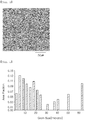
- FIG. 1 is a photograph of Specimen 2 observed with an optical microscope
- FIG. 2 is graphs illustrating results obtained by measuring high angle grain boundary grain sizes based on 15° of Specimen 2 using an EBSD. As illustrated in the graphs of FIG. 2 , it may be confirmed that an average grain size of high angle grain boundaries of Specimen 2 is 22.3 ⁇ m and a grain size of upper 80% of the high angle grain boundaries is 40.5 ⁇ m.
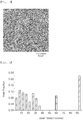
- FIG. 3 is a photograph of Specimen 18 observed with an optical microscope
- FIG. 4 is graphs illustrating results obtained by measuring high angle grain boundary grain sizes based on 15° of Specimen 18 using an EBSD. As illustrated in the graphs of FIG. 4 , it may be confirmed that an average grain size of high angle grain boundaries of Specimen 18 is 38 ⁇ m and a grain size of upper 80% of the high angle grain boundaries is 93 ⁇ m.
- the steel plate particularly suitable as the material for a pipeline by having the yield strength of 485MPa or more, the total elongation ratio of 28% or more, the uniform elongation ratio of 9% or more with respect to the rolling orthogonal direction, and the DWTT percent ductile fracture of 85% or more at -30°C with respect to the rolling orthogonal direction of the steel plate in spite of having a thickness less than 20 mm, and the manufacturing method therefor may be provided.
Landscapes
- Chemical & Material Sciences (AREA)
- Engineering & Computer Science (AREA)
- Materials Engineering (AREA)
- Mechanical Engineering (AREA)
- Metallurgy (AREA)
- Organic Chemistry (AREA)
- Physics & Mathematics (AREA)
- Thermal Sciences (AREA)
- Crystallography & Structural Chemistry (AREA)
- Heat Treatment Of Steel (AREA)
Abstract
Description
- The present disclosure relates to a high-strength steel plate and a manufacturing method therefor, and more particularly, to a high-strength steel plate for a pipeline capable of being stably used even in a harsh environment by having high strength characteristics through optimization of a steel composition, a microstructure, and a manufacturing process and having excellent low-temperature fracture toughness and elongation ratio, and a manufacturing method therefor.
- Recently, as oilfield development has been carried out in cold regions such as Siberia and Alaska where climatic conditions are poor, projects to transport abundant gas resources from oil-rich regions to consumption regions through pipelines have been actively conducted. A steel used in such a pipeline project should necessarily have durability against deformation of the pipeline due to a cryogenic temperature and frost heave (a phenomenon of pushing up the surface of Earth when the ground freezes at the change of seasons) as well as a pressure of a transport gas, and is thus required to have high strength characteristics and excellent drop weight tearing test (DWTT) fracture toughness, and high elongation ratio characteristics.
- A DWTT percent ductile fracture is a kind of index for determining whether or not a steel for a pipeline has brittle fracture arrestability for being safely used at a low temperature. In general, the pipelines provided in the cold regions are required to have a DWTT percent shear of 85% or more at -20°C in a pipe state. In order to secure the DWTT percent shear of 85% or more at -20°C in a pipe state, a DWTT percent shear of a steel plate provided for manufacturing a pipe should satisfy 85% or more at -30°C.
- In general, it has been known that DWTT property has a deep association with an effective grain size of the steel plate. The effective grain size is defined as a size of grains having a high angle grain boundary, and as the effective grain size is refined, crack arrestability increases. The reason therefor that a propagation path of a crack changes at an effective grain boundary when the crack is initiated and propagated.
- In order to refine the effective grain size, a method of performing accelerated cooling immediately after rolling is widely used. A mixed structure of acicular ferrite and bainite may be implemented by accelerated cooling immediately after rolling. However, a microstructure formed through usual accelerated cooling has high hardness because carbon (C) is supersaturated in grains, and accordingly, exhibits inferior ductility such as a uniform elongation ratio less than 9% and a total elongation ratio less than 20%. As a result, formability at the time of forming a pipe is lowered, and local stress concentration is easily generated at the time of applying external deformation, and thus, stability of the pipe is significantly reduced.
- Therefore, in the manufacture of a steel plate for a pipeline, a manufacturing method for a steel plate for a pipeline having excellent low-temperature fracture toughness and having excellent ductility by having a uniform elongation ratio of 9% or more and a total elongation ratio of 28% or more by suppressing deterioration of an elongation ratio of the steel plate manufactured by accelerated cooling has been demanded.
- In the related art, there were studies on a steel plate having an excellent elongation ratio and low-temperature fracture toughness. In this regard, Patent Literature 1 proposes a method of manufacturing a steel containing a mixed structure of 30 of 60% of equiaxed ferrite and 40 to 70% of bainite in terms of area fraction as a microstructure by non-recrystallized-region-rolling a steel containing nickel (Ni), niobium (Nb), and molybdenum (Mo) at a rolling reduction of 65% or more, primarily cooling the steel to a Bs temperature at a cooling rate of 15 to 30°C/s, and secondarily cooling the steel to a temperature range of 350 to 500°C at a cooling rate of 30 to 60°C/s.
- However, in Patent Document 1 in which low-temperature rolling is performed on a steel plate having a thickness of 20 mm or more, there is a technical difficulty in applying the corresponding process condition to a steel plate having a thickness less than 20 mm. The reason is that the steel plate having the thickness less than 20 mm is subjected to low-temperature rolling and then cooled rapidly, and it is thus difficult to secure desired low-temperature fracture toughness, strength, and elongation ratio in an entire length direction of the steel plate, particularly, at a rear end portion of the steel plate.
- (Patent Document 1)
Korean Patent Laid-Open Publication No. 10-2013-0073472 (published on 3 July, 2013 - An aspect of the present disclosure is to provide a high-strength steel plate having excellent low-temperature toughness, and a manufacturing method therefor.
- An aspect of the present disclosure is not limited to the abovementioned contents. Those skilled in the art will have no difficulty in understanding an additional aspect of the present disclosure from the general contents of the present specification.
- According to an aspect of the present disclosure, a high-strength steel plate having excellent low-temperature fracture toughness and elongation ratio contains: by wt%, 0.05 to 0.1% of carbon (C), 0.05 to 0.5% of silicon (Si), 1.4 to 2.0% of manganese (Mn), 0.01 to 0.05% of aluminum (Al), 0.005 to 0.02% of titanium (Ti), 0.002 to 0.01% of nitrogen (N), 0.04 to 0.07% of niobium (Nb), 0.05 to 0.3% of chromium (Cr), 0.05 to 0.4% of nickel (Ni), 0.02% or less of phosphorus (P), 0.005% or less of sulfur (S), 0.0005 to 0.004% of calcium (Ca), remaining iron (Fe), and inevitable impurities; and 20 to 60 area% of ferrite and bainite as a microstructure, wherein a grain size of upper 80% of high angle grain sizes based on 15° in a central portion of the high-strength steel plate is 70 µm or less.
- The high-strength steel plate may further contain 0.3 wt% or less of molybdenum (Mo).
- A fraction of the bainite may be 35 to 75 area%.
- The microstructure of the high-strength steel plate may further contain 5 area% or less of martensite-austenite constituent.
- A yield strength of the high-strength steel plate may be 485 MPa or more.
- A total elongation ratio of the high-strength steel plate may be 28% or more, and a uniform elongation ratio of the high-strength steel plate with respect to a rolling orthogonal direction may be 9% or more.
- A drop weight tearing test (DWTT) percent shear of the high-strength steel plate at -30°C with respect to a rolling orthogonal direction of the steel plate may be 85% or more.
- A thickness of the high-strength steel plate may be less than 20 mm.
- According to another aspect of the present disclosure, a manufacturing method for a high-strength steel plate having excellent low-temperature fracture toughness and elongation ratio includes: reheating a slab containing, by wt%, 0.05 to 0.1% of carbon (C), 0.05 to 0.5% of silicon (Si), 1.4 to 2.0% of manganese (Mn), 0.01 to 0.05% of aluminum (Al), 0.005 to 0.02% of titanium (Ti), 0.002 to 0.01% of nitrogen (N), 0.04 to 0.07% of niobium (Nb), 0.05 to 0.3% of chromium (Cr), 0.05 to 0.4% of nickel (Ni), 0.02% or less of phosphorus (P), 0.005% or less of sulfur (S), 0.0005 to 0.004% of calcium (Ca), remaining iron (Fe), and inevitable impurities; maintaining and extracting the slab; recrystallized-region-rolling the maintained and extracted slab in a temperature range of Tnr or higher; non-recrystallized-region-rolling the recrystallized-region-rolled material at a total reduction ratio of 30% or more; and cooling the non-recrystallized-region-rolled steel plate to a temperature range of (Bs - 80°C) to Bs, wherein the non-recrystallized-region-roll starts in a temperature range of Tnr or lower and ends in a temperature range of (Ar3 + 100°C) or higher.
- The slab may further contain 0.3 wt% or less of molybdenum (Mo).
- A reheating temperature range of the slab may be 1140 to 1200°C.
- A maintaining and extracting temperature range of the slab may be 1140 to 1200°C.
- The recrystallized-region-rolling may be performed in an accumulation of passes, and an average reduction ratio of each of the passes may be 10% or more.
- The recrystallized-region-rolled material may be cooled to a temperature range of Tnr or lower by air cooling.
- The non-recrystallized-region-rolled steel plate may be cooled at a cooling rate of 10 to 50°C/s.
- The cooling of the non-recrystallized-region-rolled steel plate may start in the temperature range of (Ar3 + 30°C) or higher.
- A thickness of the high-strength steel plate may be less than 20 mm.
- The technical solution does not enumerate all of the features of the present disclosure, and various features of the present disclosure and advantages and effects according to the various features will be understood in more detail with reference to the following specific exemplary embodiments.
- As set forth above, according to an exemplary embodiment in the present disclosure, a steel plate particularly suitable as a material for a pipeline by having high strength characteristics and having excellent low-temperature fracture toughness and elongation ratio, and a manufacturing method therefor may be provided.
-
-
FIG. 1 is a photograph of Specimen 2 of Inventive Example observed with an optical microscope. -
FIG. 2 is graphs illustrating results obtained by measuring high angle grain boundary grain sizes based on 15° of Specimen 2 using electron backscatter diffraction (EBSD). -
FIG. 3 is a photograph of Specimen 18 of Inventive Example observed with an optical microscope. -
FIG. 4 is graphs illustrating results obtained by measuring high angle grain boundary grain sizes based 15° of Specimen 18 using an EBSD. - The present disclosure relates to a high-strength steel plate having excellent low-temperature fracture toughness and elongation ratio, and a manufacturing method therefor, and exemplary embodiments in the present disclosure will hereinafter be described. Exemplary embodiments in the present disclosure may be modified to have several forms, and it is not to be interpreted that the scope of the present disclosure is limited to exemplary embodiments described below. The present exemplary embodiments are provided in order to further describe the present disclosure in detail to those skilled in the art to which the present disclosure pertains.
- Hereinafter, compositions of a steel according to the present disclosure will be described in more detail. Hereinafter, unless otherwise indicated, % indicating a content of each element is based on weight.
- A high-strength steel plate having excellent low-temperature fracture toughness and elongation ratio according to an exemplary embodiment in the present disclosure contains: by wt%, 0.05 to 0.1% of carbon (C), 0.05 to 0.5% of silicon (Si), 1.4 to 2.0% of manganese (Mn), 0.01 to 0.05% of aluminum (Al), 0.005 to 0.02% of titanium (Ti), 0.002 to 0.01% of nitrogen (N), 0.04 to 0.07% of niobium (Nb), 0.05 to 0.3% of chromium (Cr), 0.05 to 0.4% of nickel (Ni), 0.02% or less of phosphorus (P), 0.005% or less of sulfur (S), 0.0005 to 0.004% of calcium (Ca), remaining iron (Fe), and inevitable impurities.
- In addition, the high-strength steel plate having excellent low-temperature fracture toughness and elongation ratio according to an exemplary embodiment in the present disclosure may further contain, by wt%, 0.3% or less of molybdenum (Mo).
- Carbon (C) is an element that is the most effective in improving strength of a steel. In addition, when an amount of added carbon (C) is less than a predetermined level, expensive alloying elements such as molybdenum (Mo) and nickel (Ni) need to be added in a large amount in order to secure the strength of the steel, which is not preferable in terms of economy. In the present disclosure, a lower limit of a content of carbon (C) may be limited to 0.05% in order to achieve such an effect. However, when carbon (C) is added in an excessive amount, it is not preferable in terms of weldability, formability, toughness, and the like of the steel. Thus, in the present disclosure, an upper limit of the content of carbon (C) may be limited to 0.1%. Therefore, the content of carbon (C) of the present disclosure may be in the range of 0.05 to 0.1%, and may be more preferably in the range of 0.05 to 0.095%.
- Silicon (Si) is an element useful for deoxidation of a molten steel, and is also an element that contributes to improving strength of the steel by solid solution strengthening. In the present disclosure, a lower limit of a content of silicon (Si) may be limited to 0.05% in order to achieve such an effect. A more preferable lower limit of the content of silicon (Si) may be 0.1%. However, since silicon (Si) is an element having strong oxidation properties, it is preferable to limit an upper limit of the content of silicon (Si) to a predetermined range. That is, when silicon (Si) is added in an excessive amount, it causes red scale formation at the time of hot rolling, which is not preferable in terms of surface quality, and has an undesirable influence on toughness of a weld zone. Thus, in the present disclosure, the upper limit of the content of silicon (Si) may be limited to 0.5%. A more preferable upper limit of the content of silicon (Si) may be 0.4%.
- Manganese (Mn) is an element that is effective in solid solution strengthening of the steel. In the present disclosure, a lower limit of a content of manganese (Mn) may be limited to 1.4% in order to secure high strength properties of the steel. However, when manganese (Mn) is added in an excessive amount, a segregation portion may be formed over a wide range in a central portion of a thickness at the time of casting a slab in a steelmaking process, which is not preferable in terms of weldability of a final product. Thus, in the present disclosure, an upper limit of the content of manganese (Mn) may be limited to 2.0%. A more preferable upper limit of the content of manganese (Mn) may be 1.8%.
- Aluminum (Al) is a representative element that is added as a deoxidizing agent along with silicon (Si). In addition, aluminum (Al) is an element that contributes to improving strength of the steel by solid solution strengthening. In the present disclosure, a lower limit of a content of aluminum (Al) may be limited to 0.01% in order to achieve such an effect. A more preferable lower limit of the content of aluminum (Al) may be 0.015%. However, when aluminum (Al) is excessively added, it is not preferable in terms of impact toughness. Thus, in the present disclosure, an upper limit of the content of aluminum (Al) may be limited to 0.05%. A more preferable upper limit of the content of aluminum (Al) may be 0.04%.
- Titanium (Ti) is an element that forms TiN precipitates in a solidification process of the steel to suppress growth of austenite grains in a slab heating and hot rolling process, and thus refines a grain size of a final structure. In the present disclosure, a lower limit of the content of titanium (Ti) may be limited to 0.005% in order to achieve a toughness improvement effect of the steel according to the refinement of the final structure. A more preferable content of titanium (Ti) may be 0.008%. However, when titanium (Ti) is excessively added, TiN is coarsely precipitated at the time of heating the slab, which is not suitable for the refinement of the final structure. Thus, in the present disclosure, an upper limit of the content of titanium (Ti) may be limited to 0.02%. A more preferable upper limit of the content of titanium (Ti) may be 0.018%.
- Nitrogen (N) is solid-dissolved in the steel and then precipitated to serve to increase strength of the steel, and it is known that such a strength improvement effect is much greater than that of carbon (C). In addition, in the present disclosure, TiN is formed through a reaction between titanium (Ti) and nitrogen (N) and it is intended to suppress growth of grains in a reheating process. Thus, a lower limit of a content of nitrogen (N) may be limited to 0.002%. However, when nitrogen (N) is excessively added, nitrogen (N) exists in a form of solid solution nitrogen (N) rather than a form of TiN precipitates, so that toughness of the steel may be significantly reduced. Thus, in the present disclosure, an upper limit of the content of nitrogen (N) may be limited to 0.01%. A preferable upper limit of the content of nitrogen (N) may be 0.006 %, and a more preferable upper limit of the content of nitrogen (N) may be 0.005%.
- Niobium (Nb) is an element that is very useful for refining grains, and is an element that significantly contributes to improving strength of the steel by promoting formation of acicular ferrite or bainite, which is a high-strength structure. In addition, since high-temperature rolling is inevitable for a steel plate having a thickness less than 20 mm, which is a target thickness in the present disclosure, niobium (Nb) that has the greatest effect on an increase in a non-recrystallization temperature needs to be added in a predetermined amount or more. Thus, in the present disclosure, a lower limit of a content of niobium (Nb) may be limited to 0.04%. However, when niobium (Nb) is excessively added, weldability of the steel may be deteriorated. Thus, in the present disclosure, an upper limit of the content of niobium (Nb) may be limited to 0.07%. A preferable upper limit of the content of niobium (Nb) may be 0.06%.
- Chromium (Cr) is an element that improves hardenability and is an element that is effective in increasing strength of the steel. In addition, chromium (Cr) is an element that contributes to improving a uniform elongation ratio by promoting formation of martensite-austenite constituent (MA) at the time of accelerated cooling. In the present disclosure, a lower limit of a content of chromium (Cr) may be limited to 0.05% in order to achieve such an effect. A more preferable lower limit of the content of chromium (Cr) may be 0.08%. However, when chromium (Cr) is excessively added, deterioration of weldability of the steel may be caused. Thus, in the present disclosure, an upper limit of the content of chromium (Cr) may be limited to 0.3%. A preferable upper limit of the content of chromium (Cr) may be 0.25%, and a more preferable upper limit of the content of chromium (Cr) may be 0.2%.
- Nickel (Ni) is an element that effectively contributes to improving toughness and strength of the steel. In the present disclosure, a lower limit of a content of nickel (Ni) may be limited to 0.05% in order to achieve such an effect. However, nickel (Ni) is an expensive element, and excessive addition of nickel (Ni) is not preferable in terms of economy Thus, in the present disclosure, an upper limit of a content of nickel (Ni) may be limited to 0.4%. A preferable upper limit of the content of nickel (Ni) may be 0.3%, and a more preferable upper limit of the content of nickel (Ni) may be 0.25%.
- Phosphorus (P) is a representative impurity element that exists in the steel, and is mainly segregated in a central portion of the steel plate to cause a decrease in toughness of the steel, and it is thus preferable to manage phosphorus (P) at a level as low as possible. However, in order to completely remove phosphorus (P) in the steel, an excessive cost and time are required in the steelmaking process, which is not preferable in terms of economy. Thus, in the present disclosure, a content of phosphorus (P) may be limited to 0.02% or less. A more preferable content of phosphorus (P) may be 0.015% or less.
- Sulfur (S) is also a representative impurity element that exists in the steel, and is an element that combines with manganese (Mn) or the like in the steel to form nonmetallic inclusions such as MnS, and accordingly, significantly impairs toughness and strength of the steel. Thus, it is preferable to manage sulfur (S) at a level as low as possible. However, in order to completely remove sulfur (S) in the steel, an excessive cost and time are required in the steelmaking process, which is not preferable in terms of economy. Thus, in the present disclosure, a content of sulfur (S) may be limited to 0.005% or less. A more preferable content of sulfur (S) may be 0.003% or less.
- Calcium (Ca) is an element that is effective in suppressing crack formation around nonmetallic inclusions by spheroidizing nonmetallic inclusions such as MnS. In the present disclosure, a lower limit of a content of calcium (Ca) may be limited to 0.0005% in order to achieve such an effect. However, when calcium (Ca) is excessively added, a large amount of CaO-based inclusions is formed to cause a decrease in impact toughness. Thus, in the present disclosure, an upper limit of a content of calcium (Ca) may be limited to 0.004%. A preferable upper limit of the content of calcium (Ca) may be 0.002%.
- Molybdenum (Mo) is an element that is effective in securing both of high strength and high toughness by promoting formation of bainite, which is a low-temperature transformation structure. Therefore, in the present disclosure, molybdenum (Mo) may be selectively added in order to achieve such an effect. However, molybdenum (Mo) is an expensive element and it is not preferable in terms of economy to add molybdenum (Mo) in an excessive amount. Thus, in the present disclosure, an upper limit of a content of molybdenum (Mo) may be limited to 0.3%.
- In the present disclosure, in addition to the steel compositions described above, the remainder may contain Fe and inevitable impurities. The inevitable impurities may be unintentionally mixed in a general steelmaking process and may not be completely excluded, and those skilled in a general steelmaking field may easily understand the meaning of the inevitable impurities. In addition, the present disclosure does not entirely exclude addition of a composition other than the steel compositions described above.
- A microstructure according to the present disclosure will hereinafter be described in more detail.
- The steel plate according to an exemplary embodiment in the present disclosure may contain ferrite and bainite as a microstructure, and may further contain martensite-austenite constituent. Fractions of the ferrite and the bainite may be 20 to 60 area% and 35 to 75 area%, respectively, and a fraction of the martensite-austenite constituent may be 5 area% or less.
- The steel plate according to the present disclosure contains ferrite having a fine high angle grain boundary in an area of 20% or more, and may thus effectively secure low-temperature drop weight tearing test (DWTT) characteristics. In addition, the steel plate according to the present disclosure contains the ferrite in an area of 60% or less and contains the bainite in an area of 35% or more, and may thus secure a yield strength of 485 MPa or more. However, in the present disclosure, a fraction of the bainite may be limited to 75 area% or less in order to prevent the high angle grain boundary from becoming excessively coarse, and accordingly, low-temperature DWTT characteristics may be effectively secured. In addition, the martensite-austenite constituent has an undesirable influence on the low-temperature DWTT characteristics, and it is thus preferable to suppress a fraction of the martensite-austenite constituent as much as possible. Therefore, in the present disclosure, the fraction of the martensite-austenite constituent may be limited to 5 area% or less.
- In addition, the steel plate according to an exemplary embodiment in the present disclosure may have a grain size of 70 µm or less in upper 80% of high angle grain sizes based on 15° in a central portion of the steel plate. That is, in the present disclosure, effective grain sizes may be refined by refining the high angle grain sizes, and accordingly, low-temperature DWTT characteristics may be effectively secured. Here, the central portion of the steel plate may be interpreted as an area including a point of t/2, and may also be interpreted as an area of a point of t/4 to 3*t/4 (t: thickness (mm) of steel plate).
- The steel plate according to an exemplary embodiment in the present disclosure may have a thickness less than 20 mm, and a more preferable thickness of the steel plate may be 16 mm or less. In addition, the steel plate according to an exemplary embodiment in the present disclosure may have a yield strength of 485 MPa or more, a total elongation ratio of 28% or more, and a uniform elongation ratio of 9% or more with respect to a rolling orthogonal direction, and may have a DWTT percent ductile fracture of 85% or more at -30°C with respect to the rolling orthogonal direction of the steel plate. Therefore, in the present disclosure, a steel plate particularly suitable as a material for a pipeline by effectively securing strength, low-temperature fracture toughness, and an elongation ratio in spite of having the thickness less than 20 mm may be provided.
- A manufacturing method according to the present disclosure will hereinafter be described in more detail.
- The high-strength steel plate having excellent low-temperature fracture toughness and elongation ratio according to an exemplary embodiment in the present disclosure may be manufactured by reheating a slab containing, by wt%, 0.05 to 0.1% of carbon (C), 0.05 to 0.5% of silicon (Si), 1.4 to 2.0% of manganese (Mn), 0.01 to 0.05% of aluminum (Al), 0.005 to 0.02% of titanium (Ti), 0.002 to 0.01% of nitrogen (N), 0.04 to 0.07% of niobium (Nb), 0.05 to 0.3% of chromium (Cr), 0.05 to 0.4% of nickel (Ni), 0.02% or less of phosphorus (P), 0.005% or less of sulfur (S), 0.0005 to 0.004% of calcium (Ca), remaining iron (Fe), and inevitable impurities, maintaining and extracting the slab, recrystallized-region-rolling the maintained and extracted slab in a temperature range of Tnr or higher, non-recrystallized-region-rolling the recrystallized-region-rolled material at a total reduction ratio of 30% or more, and cooling the non-recrystallized-region-rolled steel plate to a temperature range of (Bs - 80°C) to Bs.
- The slab according to the present disclosure has the same alloy composition as the alloy composition of the steel plate described above, and a description of the alloy composition of the slab according to the present disclosure is thus replaced by the description of the alloy composition of the steel plate described above.
- Since the slab reheating is a process of heating a steel in order to smoothly perform the subsequent rolling processes and secure desired physical properties of the steel plate, a heating process needs to be performed within an appropriate temperature range according to a purpose. A lower limit of a slab reheating temperature needs to be determined in consideration of whether or not it is a temperature at which precipitated elements may be sufficiently dissolved in the steel. In particular, since the slab according to the present disclosure essentially contains niobium (Nb) in order to secure high strength properties, the lower limit of the slab reheating temperature may be limited to 1140°C in consideration of a resoluble temperature of niobium (Nb). On the other hand, when the slab reheating temperature is excessively high, the austenite grains become excessively coarse, which may cause a problem that grains of a final steel plate are excessively increased. Thus, in the present disclosure, an upper limit of the slab reheating temperature may be limited to 1200°C.
- The reheated slab may be subjected to a maintaining and extracting process, if necessary, and a maintaining and extracting temperature of the slab may be limited to a temperature range of 1140 to 1200°C for reasons similar to those of the slab reheating temperature.
- The recrystallized-region-rolling may be performed in a temperature range of Tnr or more. In the present disclosure, Tnr refers to a lower limit of a temperature range at which recrystallization of austenite occurs. That is, the recrystallized-region-rolling may be performed in a temperature range of an austenite recrystallized region. The recrystallized-region-rolling may be performed in multiple passes, and rolling may be performed at an average reduction ratio of 10% or more per pass. The reason is that when the average reduction ratio per pass is less than 10%, a grain size of recrystallized austenite becomes coarse, which may cause a decrease in toughness of the final steel plate.
- The recrystallized-region-rolled material may be cooled to a temperature range of Tnr or lower under a cooling condition of air cooling. That is, the recrystallized-region-rolled material is not immediately subjected to non-recrystallized-region-rolling, and may wait for a predetermined time to be cooled to a temperature range of a non-recrystallized region by air cooling. The reason is that when a rolling force is applied in the corresponding section, partial recrystallization may occur, such that a brittle fracture due to a coarse austenite grain size may occur.
- The non-recrystallized-region-rolling is performed on the recrystallized-region-rolled material. A start temperature of the non-recrystallized-region-rolling may be Tnr or lower, and an end temperature of the non-recrystallized-region-rolling may be (Ar3+100°C). The non-recrystallized-region-rolling is a process for elongating austenite produced by recrystallized-region-rolling to be elongate and forming a deformed structure in a grain to obtain fine ferrite and bainite, and strength, an elongation ratio and brittle fracture arrestability of the steel plate may be effectively improved by the non-recrystallized-region-rolling.
- The lower the end temperature of the non-recrystallized-zone-rolling, the higher the degree of deformation of the austenite, which is effective in improving low-temperature fracture toughness, but when the end temperature of the non-recrystallized-zone-rolling is excessively low, low-strength ferrite is produced, which is disadvantageous in securing strength. Thus, in the present disclosure, the end temperature of the non-recrystallized-zone-rolling may be limited to (Ar3 + 50°C) or higher.
- In addition, a rolling reduction of the non-recrystallized-region-rolling is an important factor in securing low-temperature toughness of the steel. In the present disclosure, the rolling reduction of the non-recrystallized-region-rolling may be limited to 30% or more in order to secure low-temperature DWTT percent ductile fracture characteristics according to refinement of grain sizes of a final steel. Since it is effective in improving low-temperature toughness that the rolling reduction of the non-recrystallized-region-rolling becomes larger, an upper limit of the rolling reduction of the non-recrystallized-region-rolling may not be limited. However, when the rolling reduction of the non-recrystallized-region-rolling exceeds a predetermined level, an effect of the refinement of the grain size is saturated, but a rolling reduction of the recrystallized-region-rolling is relatively decreased. Thus, in the present disclosure, the rolling reduction in the non-recrystallized-region-rolling may be limited to 90% or less.
- The non-recrystallized-region-rolled steel plate may be cooled from a cooling start temperature of (Ar3 + 30°C) or higher to a cooling stop temperature of (Bs - 80°C) to Bs. When the cooling start temperature is excessively low, a large amount of ferrite having low strength is produced, and accordingly, strength of the steel plate may be significantly decreased. Thus, in the present disclosure, the cooling may start in a temperature range of (Ar3 + 30°C) or higher.
- In addition, since the steel plate according to the present disclosure has a final thickness less than 20 mm, it is most preferable in terms of strength and an elongation ratio to stop cooling in a temperature range of (Bs - 80°C) to Bs. The reason is that when the cooling stop temperature is lower than (Bs - 80°C), acicular ferrite and bainite having a high angle grain boundary formed to be coarse and a low angle grain boundary are formed in a large amount, such that an elongation ratio may be decreased, and when the cooling stop temperature exceeds Bs, an amount of bainite produced is small, such that strength of the steel plate may not be secured. The steel plate may be quenched to the cooling stop temperature of (Bs - 80°C) to Bs, then cooled to room temperature by air cooling or radiation cooling.
- In addition, the cooling of the present disclosure may be performed at a cooling rate of 10 to 100°C/s. The reason is that when the cooling rate is less than 10°C/s, a fraction of equiaxed ferrite is significantly increased, such that high strength characteristics of the steel plate may not be effectively secured. In terms of a facility condition and economy, an upper limit of the cooling rate may be limited to 100°C/s, and a more preferable upper limit of the cooling rate may be 50°C/s.
- The steel plate manufactured by the manufacturing method described above may contain ferrite and bainite as a microstructure, and may further contain martensite-austenite constituent. Fractions of the ferrite and the bainite may be 20 to 60 area% and 35 to 75 area%, respectively, and a fraction of the martensite-austenite constituent may be 5 area% or less. In addition, the steel plate manufactured by the manufacturing method described above may have a grain size of 70 µm or less in upper 80% of high angle grain sizes based on 15° in a central portion of the steel plate.
- Therefore, the steel plate manufactured by the manufacturing method described above may have a thickness less than 20 mm, and may have a yield strength of 485 MPa or more, a total elongation ratio of 28% or more, and a uniform elongation ratio of 9% or more with respect to a rolling orthogonal direction, and may have a DWTT percent ductile fracture of 85% or more at -30°C with respect to the rolling orthogonal direction of the steel plate. Therefore, according to the manufacturing method according to an exemplary embodiment in the present disclosure, a steel plate particularly suitable as a material for a pipeline by effectively securing strength, low-temperature fracture toughness, and an elongation ratio in spite of having the thickness less than 20 mm may be provided.
- Hereinafter, the present disclosure will be described in more detail through Inventive Example. However, it is to be noted that Inventive Example to be described later is for illustrating and embodying the present disclosure and is not intended to limit the scope of the present disclosure.
- Slabs having alloy compositions of Table 1 and having a thickness of 250 mm were manufactured, and steel plate specimens having thicknesses of 11 mm, 11.5 mm, and 22 mm, respectively, were manufactured by applying process conditions of Table 3. In this case, the slabs were manufactured by applying process conditions used for manufacturing a general slab, and recrystallized-region-rolling was performed by applying a condition of an average rolling reduction per pass of 10% or more in a temperature range of Tnr or higher for all specimens. In addition, air cooling to a non-recrystallized region temperature range after the recrystallized-region-rolling was applied to all specimens. An Tnr temperature, an Ar3 temperature, and a Bs temperature were calculated on the basis of each alloy composition in Table 1 and shown in Table 2, and Equations used for calculating the Tnr temperature, the Ar3 temperature, and the Bs temperature of Table 2 were separately described below Table 2.
[Table 1] Steel Type Alloy Composition (wt%) Division C Si Mn P S Ni Cr Mo Nb Al Ca Ti N A 0.070 0.27 1.57 0.01 0.0020 0.10 0.10 - 0.049 0.023 0.0010 0.011 0.0032 Inventive Steel B 0.074 0.25 1.66 0.013 0.0020 0.10 0.10 - 0.055 0.034 0.0011 0.014 0.0044 C 0.050 0.25 1.58 0.012 0.0019 0.10 0.11 0.08 0.048 0.023 0.0010 0.013 0.0043 D 0.060 0.24 1.55 0.011 0.0019 0.10 0.10 0.08 0.041 0.026 0.0013 0.014 0.0041 E 0.050 0.25 1.52 0.012 0.0018 0.10 0.10 0.08 0.041 0.024 0.0010 0.014 0.0044 F 0.09 0.34 1.45 0.010 0.0011 0.17 0.1 - 0.045 0.027 0.0010 0.016 0.0041 G 0.050 0.26 1.57 0.010 0.0020 0.10 0.11 0.08 0.028 0.028 0.0010 0.012 0.0046 Comparative Steel H 0.040 0.26 1.24 0.008 0.0010 0.14 0.2 0.07 0.04 0.030 0.0007 0.012 0.0046 I 0.060 0.25 2.10 0.0075 0.0015 0.3 0.15 0.10 0.050 0.030 0.0016 0.015 0.0050 [Table 2] Steel Type Tnr (°C) Ar3 (°C) Ar3 + 30 (°C) Ar3 + 100 (°C) Bs (°C) Bs - 80 (°C) A 1014 767 797 867 659 579 B 1060 760 790 860 650 570 C 1009 771 801 871 656 576 D 985 771 801 871 657 577 E 976 776 806 876 662 582 F 985 767 797 867 662 582 G 911 772 802 872 657 577 H 963 796 826 896 683 603 I 1028 718 748 818 595 515 


- (In Equations 1 to 3, [C], [Si], [Mn], [Al], [Ti], [Nb], [V], [Cr], [Mo], and [Cu] refer to wt% of respective alloy compositions, and when a corresponding alloy composition is not contained, calculation is performed by replacing a value of the corresponding alloy composition with 0.)
[Table 3] Specimen Steel Type Thickness (mm) of Steel Plate Slab Heating Temperature (°C) Start Temperature (°C) of Non-recrystallized-Region-Rolling Cumulative Rolling Reduction (%) of Non-recrystallized-Region-Rolling End Temperature (°C) of Non-recrystallized-Region-Rolling Cooling Start Temperature (°C) Cooling Stop Temperature (°C) Cooling Rate (°C/s) Remark 1 A 11.5 1150 1000 42.5 915 810 590 36 Inventive Example 2 A 11.5 1170 1000 42.5 915 820 640 36 3 A 11.5 1160 1000 50 875 800 580 43 4 B 11.5 1160 1035 56 915 805 615 32 5 B 11.5 1165 1035 56 915 820 610 35 6 B 11.5 1150 1025 56 875 800 625 35 7 C 11 1160 990 39 925 830 580 30 8 C 11 1150 995 39 920 825 635 30 9 D 11 1160 985 31 920 830 620 30 10 E 11 1150 975 31 920 825 590 30 11 E 11 1160 975 31 920 830 620 30 12 F 11 1150 981 39 875 805 620 35 13 C 11 1160 1000 50 875 795 460 42 Comparative Example 14 D 11 1150 975 31 920 825 550 30 15 D 11 1150 970 31 920 825 510 30 16 D 11 1160 983 50 863 771 685 30 17 E 11 1150 975 31 920 820 530 30 18 G 11 1170 910 12 910 830 470 30 19 G 11 1150 910 12 910 830 580 30 20 H 11 1159 954 0 954 819 491 47 21 I 11 1160 1020 45 920 830 570 30 22 A 22 1150 945 98 835 775 610 23 23 D 22 1144 935 78 827 767 617 21 - For each specimen of Table 3, a microstructure, a yield strength and a tensile strength, an elongation ratio, and a DWTT percent shear at -30°C were measured and shown in Table 4. The microstructure of each specimen was evaluated using an optical microscope structure photograph and an electron backscatter diffraction (EBSD) grain size distribution chart. The yield strength, the tensile strength, and the elongation ratio were evaluated by performing a room temperature tensile test on each specimen. A yield strength and a tensile strength shown in Table 4 refer to measured values with respect to a rolling orthogonal direction, respectively. In addition, tensile properties and a percent ductile fracture were evaluated by performing a DWTT test at -30°C on each specimen.
[Table 4] Specimen Steel Type Ferrite (area%) Bainite (area%) M/A (area%) Grain Size (µm) of Upper 80% of High Angle Grains Yield Strengt (MPa) Tensile Strength (MPa) Yield Ratio (%) Elongation Ratio (%) Unifor m Elongation Ratio (%) DWTT (%) at -30°C Remark 1 A 25 71.0 4.0 52.0 524 667 79 33 9.0 100 Inventive Example 2 A 42 54.5 3.5 40.5 508 635 80 36 10.5 100 3 A 28 67.5 4.5 46.5 541 671 81 35 9.6 100 4 B 32 63.6 4.4 62.1 525 671 78 33 9.0 100 5 B 43 52.8 4.2 57.9 529 667 79 34 9.5 100 6 B 52 43.5 4.5 56.6 528 653 81 36 9.9 99 7 C 23 72.8 4.2 67.1 487 643 76 33 9.2 98 8 C 30 65.7 4.3 48.5 489 620 79 34 9.7 99 9 D 23 72.7 4.3 60.1 505 638 79 33 9.1 100 10 E 24 71.5 4.5 48.5 485 614 79 31 9.7 100 11 E 28 67.7 4.3 42.0 495 613 81 36 10.9 100 12 F 31 64.8 4.2 45.1 536 625 86 36 10.5 95 13 C 17 78.3 4.7 86.1 620 730 85 28 7.7 100 Comparativee Example 14 D 15 80.5 4.5 89.5 501 651 77 28 7.6 100 15 D 18 77.7 4.3 75.2 500 628 80 32 8.3 100 16 D 75 22.9 2.1 90.5 455 570 80 42 13.0 92 17 E 22 74.0 4.0 76.5 492 632 78 28 8.2 100 18 G 24 72 4.0 93 524 656 80 28 6.3 75 19 G 26 69.8 4.2 82.5 502 620 81 32 7.9 80 20 H 28 67.9 4.1 78.0 528 606 87 30 8.0 50 21 I 12 81.8 6.2 89.1 624 796 78 28 6.8 91 22 A 65 31.2 3.8 58.6 475 568 84 47 13.0 100 23 D 66 30.5 3.5 65.1 470 565 83 48 13.5 100 - It may be confirmed that Specimens 1 to 12 satisfying the alloy composition and process conditions of the present disclosure contain 20 to 60 area% of ferrite and 35 to 75 area% of bainite as a microstructure, contain 5 area% or less of island martensite, and have a grain size of 70 µm or less in upper 80% of high angle grain sizes based on 15° in a central portion of a steel plate, a yield strength of 485MPa or more, a total elongation ratio of 28% or more, a uniform elongation ratio of 9% or more with respect to a rolling orthogonal direction, and a DWTT percent shear of 85% or more at -30°C with respect to the rolling orthogonal direction, and thus, has physical properties particularly suitable as a material for a pipeline provided in a cryogenic environment.
- Specimens 13 to 15 and 17 are specimens in a case where the alloy composition of the present disclosure is satisfied, but cooling is performed in a temperature range lower than the cooling start temperature or the cooling end temperature of the present disclosure. It may be confirmed that in a case of Specimens 13 to 15 and 17, ferrite less than 20 area% and bainite more than 75 area% were formed, a grain size of upper 80% of high angle grain sizes based on 15° in a central portion of a steel plate exceeded 70 µm, and a uniform elongation ratio was thus less than 9%.
- Specimen 16 is a specimen in a case where the alloy composition of the present disclosure is satisfied, but non-recrystallized-region-rolling was performed in a temperature range lower than the end temperature of the non-recrystallized-region-rolling of the present disclosure, and cooling started in a temperature range lower than the cooling start temperature of the present disclosure, such that cooling ended in a temperature range higher than the cooling stop temperature of the present disclosure. It may be confirmed that in a case of Specimen 16, ferrite more than 60 area% was formed, such that a yield strength was less than 485 MPa.
- It may be confirmed that Specimens 18 to 21, which are specimens that do not satisfy the alloy composition and the process condition of the present disclosure, do not secure a microstructure and physical properties desired by the present disclosure.
- It may be confirmed that Specimens 22 and 23 satisfy the alloy composition of the present disclosure, but have a thickness of a steel plate exceeding 20 mm, such that ferrite is excessively formed.
-
FIG. 1 is a photograph of Specimen 2 observed with an optical microscope, whileFIG. 2 is graphs illustrating results obtained by measuring high angle grain boundary grain sizes based on 15° of Specimen 2 using an EBSD. As illustrated in the graphs ofFIG. 2 , it may be confirmed that an average grain size of high angle grain boundaries of Specimen 2 is 22.3 µm and a grain size of upper 80% of the high angle grain boundaries is 40.5 µm. -
FIG. 3 is a photograph of Specimen 18 observed with an optical microscope, andFIG. 4 is graphs illustrating results obtained by measuring high angle grain boundary grain sizes based on 15° of Specimen 18 using an EBSD. As illustrated in the graphs ofFIG. 4 , it may be confirmed that an average grain size of high angle grain boundaries of Specimen 18 is 38 µm and a grain size of upper 80% of the high angle grain boundaries is 93 µm. - Therefore, according to an exemplary embodiment in the present disclosure, the steel plate particularly suitable as the material for a pipeline by having the yield strength of 485MPa or more, the total elongation ratio of 28% or more, the uniform elongation ratio of 9% or more with respect to the rolling orthogonal direction, and the DWTT percent ductile fracture of 85% or more at -30°C with respect to the rolling orthogonal direction of the steel plate in spite of having a thickness less than 20 mm, and the manufacturing method therefor may be provided.
- While the present disclosure has been described in detail through exemplary embodiment, other types of exemplary embodiments are also possible. Therefore, the technical spirit and scope of the claims set forth below are not limited to exemplary embodiments.
Claims (17)
- A high-strength steel plate having excellent low-temperature fracture toughness and elongation ratio, comprising:by wt%, 0.05 to 0.1% of carbon (C), 0.05 to 0.5% of silicon (Si), 1.4 to 2.0% of manganese (Mn), 0.01 to 0.05% of aluminum (Al), 0.005 to 0.02% of titanium (Ti), 0.002 to 0.01% of nitrogen (N), 0.04 to 0.07% of niobium (Nb), 0.05 to 0.3% of chromium (Cr), 0.05 to 0.4% of nickel (Ni), 0.02% or less of phosphorus (P), 0.005% or less of sulfur (S), 0.0005 to 0.004% of calcium (Ca), remaining iron (Fe), and inevitable impurities; and20 to 60 area% of ferrite and bainite as a microstructure,wherein a grain size of upper 80% of high angle grain sizes based on 15° in a central portion of the high-strength steel plate is 70 µm or less.
- The high-strength steel plate of claim 1, further comprising 0.3 wt% or less of molybdenum (Mo).
- The high-strength steel plate of claim 1, wherein a fraction of the bainite is 35 to 75 area%.
- The high-strength steel plate of claim 1, wherein the microstructure of the high-strength steel plate further comprises 5 area% or less of martensite-austenite constituent.
- The high-strength steel plate of claim 1, wherein a yield strength of the high-strength steel plate is 485 MPa or more.
- The high-strength steel plate of claim 1, wherein a total elongation ratio of the high-strength steel plate is 28% or more, and
a uniform elongation ratio of the high-strength steel plate with respect to a rolling orthogonal direction is 9% or more. - The high-strength steel plate of claim 1, wherein a drop weight tearing test (DWTT) percent ductile shear of the high-strength steel plate at -30°C with respect to a rolling orthogonal direction of the steel plate is 85% or more.
- The high-strength steel plate of claim 1, wherein a thickness of the high-strength steel plate is less than 20 mm.
- A manufacturing method for a high-strength steel plate having excellent low-temperature fracture toughness and elongation ratio, comprising:reheating a slab comprising, by wt%, 0.05 to 0.1% of carbon (C), 0.05 to 0.5% of silicon (Si), 1.4 to 2.0% of manganese (Mn), 0.01 to 0.05% of aluminum (Al), 0.005 to 0.02% of titanium (Ti), 0.002 to 0.01% of nitrogen (N), 0.04 to 0.07% of niobium (Nb), 0.05 to 0.3% of chromium (Cr), 0.05 to 0.4% of nickel (Ni), 0.02% or less of phosphorus (P), 0.005% or less of sulfur (S), 0.0005 to 0.004% of calcium (Ca), remaining iron (Fe), and inevitable impurities;maintaining and extracting the slab;recrystallized-region-rolling the maintained and extracted slab in a temperature range of Tnr or higher;non-recrystallized-region-rolling the recrystallized-region-rolled material at a total reduction ratio of 30% or more; andcooling the non-recrystallized-region-rolled steel plate to a temperature range of (Bs - 80°C) to Bs,wherein the non-recrystallized-region-roll starts in a temperature range of Tnr or lower and ends in a temperature range of (Ar3 + 100°C) or higher.
- The manufacturing method of claim 9, wherein the slab further comprises, 0.3 wt% or less of molybdenum (Mo).
- The manufacturing method of claim 9, wherein a reheating temperature range of the slab is 1140 to 1200°C.
- The manufacturing method of claim 9, wherein a maintaining and extracting temperature range of the slab is 1140 to 1200°C.
- The manufacturing method of claim 9, wherein the recrystallized-region-rolling is performed in a accumulation of passes, and an average reduction ratio of each of the passes is 10% or more.
- The manufacturing method of claim 9, wherein the recrystallized-region-rolled material is cooled to a temperature range of Tnr or lower by air cooling.
- The manufacturing method of claim 9, wherein the non-recrystallized-region-rolled steel plate is cooled at a cooling rate of 10 to 50°C/s.
- The manufacturing method of claim 9, wherein the cooling of the non-recrystallized-region-rolled steel plate starts in the temperature range of (Ar3 + 30°C) or higher.
- The manufacturing method of claim 9, wherein a thickness of the high-strength steel plate is less than 20 mm.
Applications Claiming Priority (2)
| Application Number | Priority Date | Filing Date | Title |
|---|---|---|---|
| KR1020180151565A KR102164107B1 (en) | 2018-11-30 | 2018-11-30 | High strength steel plate having superior elongation percentage and excellent low-temperature toughness, and manufacturing method for the same |
| PCT/KR2019/016785 WO2020111891A1 (en) | 2018-11-30 | 2019-11-29 | High-strength steel plate having excellent low-temperature fracture toughness and elongation ratio, and manufacturing method therefor |
Publications (4)
| Publication Number | Publication Date |
|---|---|
| EP3889305A4 EP3889305A4 (en) | 2021-10-06 |
| EP3889305A1 true EP3889305A1 (en) | 2021-10-06 |
| EP3889305C0 EP3889305C0 (en) | 2024-04-10 |
| EP3889305B1 EP3889305B1 (en) | 2024-04-10 |
Family
ID=70854099
Family Applications (1)
| Application Number | Title | Priority Date | Filing Date |
|---|---|---|---|
| EP19889727.4A Active EP3889305B1 (en) | 2018-11-30 | 2019-11-29 | High-strength steel plate having excellent low-temperature fracture toughness and elongation ratio, and manufacturing method therefor |
Country Status (7)
| Country | Link |
|---|---|
| EP (1) | EP3889305B1 (en) |
| JP (1) | JP7372325B2 (en) |
| KR (1) | KR102164107B1 (en) |
| CN (1) | CN113166904B (en) |
| CA (1) | CA3120271C (en) |
| RU (1) | RU2771151C1 (en) |
| WO (1) | WO2020111891A1 (en) |
Families Citing this family (5)
| Publication number | Priority date | Publication date | Assignee | Title |
|---|---|---|---|---|
| KR102409896B1 (en) * | 2020-10-23 | 2022-06-20 | 주식회사 포스코 | High strength steel plate having excellent workability and method for manufacturing the same |
| CN112611656B (en) * | 2020-12-14 | 2024-03-08 | 中南大学 | Accurate measurement method for low-temperature elongation of aluminum alloy for aerospace |
| KR102498134B1 (en) * | 2020-12-15 | 2023-02-08 | 주식회사 포스코 | Ultra-thick steel plate having excellent low-temperature impact toughness and method for manufacturing thereof |
| KR102393906B1 (en) * | 2020-12-18 | 2022-05-03 | 주식회사 포스코 | Method of predicting to dwtt transition temperature |
| CN114918262A (en) * | 2022-04-22 | 2022-08-19 | 首钢集团有限公司 | High-toughness medium plate and plate type control method and control device thereof |
Family Cites Families (14)
| Publication number | Priority date | Publication date | Assignee | Title |
|---|---|---|---|---|
| BR9811051A (en) * | 1997-07-28 | 2000-08-15 | Exxonmobil Upstream Res Co | Steel plate, and, process to prepare it |
| JP3968011B2 (en) * | 2002-05-27 | 2007-08-29 | 新日本製鐵株式会社 | High strength steel excellent in low temperature toughness and weld heat affected zone toughness, method for producing the same and method for producing high strength steel pipe |
| JP4823841B2 (en) | 2006-10-12 | 2011-11-24 | 新日本製鐵株式会社 | High tensile strength steel sheet for super high heat input welding with low acoustic anisotropy and excellent weldability and tensile strength of 570 MPa class or more and method for producing the same |
| KR100951296B1 (en) * | 2007-12-04 | 2010-04-02 | 주식회사 포스코 | High-strength line pipe with excellent low temperature toughness and manufacturing method |
| WO2009072753A1 (en) * | 2007-12-04 | 2009-06-11 | Posco | High-strength steel sheet with excellent low temperature toughness and manufacturing method thereof |
| CN102959114B (en) * | 2010-06-30 | 2016-05-25 | 新日铁住金株式会社 | Hot rolled steel plate and manufacture method thereof |
| KR101253958B1 (en) * | 2010-12-27 | 2013-04-16 | 주식회사 포스코 | Steel plate for pipeline with excellent fracture arrestability and low yield ratio, and manufacturing method of the same |
| KR101360467B1 (en) | 2011-12-23 | 2014-02-10 | 주식회사 포스코 | Linepipe steel plate with excellent low temperature fracture toughness and high uniform elongation method for producing same |
| KR101439685B1 (en) * | 2012-12-26 | 2014-09-12 | 주식회사 포스코 | Steel plate for line pipe having superior uniform elongation ratio and low-temperature toughness |
| WO2015030210A1 (en) | 2013-08-30 | 2015-03-05 | 新日鐵住金株式会社 | Steel sheet for thick-walled high-strength line pipe having exceptional souring resistance, crush resistance properties, and low-temperature ductility, and line pipe |
| JP6354271B2 (en) * | 2014-04-08 | 2018-07-11 | 新日鐵住金株式会社 | High-strength hot-rolled steel sheet having a tensile strength of 780 MPa or more and excellent in low-temperature toughness, uniform elongation and hole expansibility, and a method for producing the same |
| CN104789863B (en) | 2015-03-20 | 2017-01-18 | 宝山钢铁股份有限公司 | X80 pipeline steel with good anti-strain aging property, pipeline pipe and manufacturing method of pipeline pipe |
| KR101889182B1 (en) | 2016-12-20 | 2018-08-16 | 주식회사 포스코 | Steel plate for welded steel pipe having excellent elogation of the longitudinal direction and toughness at low-temperature, method for manufacturing thereof and welded steel pipe using same |
| CN108467993B (en) | 2018-06-11 | 2020-02-18 | 鞍钢股份有限公司 | Ultra-wide and high-toughness hot-rolled thick plate for low-temperature pipeline and production method thereof |
-
2018
- 2018-11-30 KR KR1020180151565A patent/KR102164107B1/en active Active
-
2019
- 2019-11-29 EP EP19889727.4A patent/EP3889305B1/en active Active
- 2019-11-29 RU RU2021118464A patent/RU2771151C1/en active
- 2019-11-29 JP JP2021530865A patent/JP7372325B2/en active Active
- 2019-11-29 CN CN201980078794.4A patent/CN113166904B/en active Active
- 2019-11-29 CA CA3120271A patent/CA3120271C/en active Active
- 2019-11-29 WO PCT/KR2019/016785 patent/WO2020111891A1/en not_active Ceased
Also Published As
| Publication number | Publication date |
|---|---|
| JP7372325B2 (en) | 2023-10-31 |
| CN113166904B (en) | 2023-10-27 |
| EP3889305A4 (en) | 2021-10-06 |
| CN113166904A (en) | 2021-07-23 |
| EP3889305C0 (en) | 2024-04-10 |
| KR20200066394A (en) | 2020-06-10 |
| KR102164107B1 (en) | 2020-10-13 |
| RU2771151C1 (en) | 2022-04-27 |
| CA3120271C (en) | 2023-09-12 |
| EP3889305B1 (en) | 2024-04-10 |
| WO2020111891A1 (en) | 2020-06-04 |
| JP2022510935A (en) | 2022-01-28 |
| CA3120271A1 (en) | 2020-06-04 |
Similar Documents
| Publication | Publication Date | Title |
|---|---|---|
| EP3889305B1 (en) | High-strength steel plate having excellent low-temperature fracture toughness and elongation ratio, and manufacturing method therefor | |
| EP3556889B1 (en) | High strength multi-phase steel having excellent burring properties at low temperature, and method for producing same | |
| EP2309014A1 (en) | Thick, high tensile-strength hot-rolled steel sheets with excellent low temperature toughness and manufacturing method therefor | |
| CN108368594B (en) | High-strength steel material having excellent low-temperature strain aging impact characteristics and weld heat-affected zone impact characteristics, and method for producing same | |
| CN110088346B (en) | Steel material for welded steel pipe having excellent longitudinal uniform elongation, method for producing same, and steel pipe using same | |
| KR101585724B1 (en) | A thick plate of pipeline with excellent DWTT at low temperature and YR ratio characteristics, and method of the same | |
| KR101439685B1 (en) | Steel plate for line pipe having superior uniform elongation ratio and low-temperature toughness | |
| EP3561129A1 (en) | Sour-resistant heavy-walled steel plate having excellent low-temperature toughness and post-heat treatment characteristics and method for manufacturing same | |
| EP3730659A1 (en) | High-strength steel material for polar region environment having excellent anti-fracture characteristics at low temperatures and method for manufacturing same | |
| RU2768842C1 (en) | High-strength thick steel sheet for pipeline, having excellent low-temperature impact strength and ductility, as well as low ratio of yield strength to ultimate strength, and method of its production | |
| CN108368593B (en) | High-strength steel material having excellent low-temperature strain aging impact characteristics and method for producing same | |
| RU2749855C1 (en) | Steel material for high-strength steel pipe with low ratio of yield to strength, having excellent low temperature impact viscosity, and method for its production | |
| EP3964600A1 (en) | Ultra-high strength steel sheet having excellent shear workability and method for manufacturing same | |
| KR101253958B1 (en) | Steel plate for pipeline with excellent fracture arrestability and low yield ratio, and manufacturing method of the same | |
| EP3872215A1 (en) | High manganese austenitic steel having high yield strength and manufacturing method for same | |
| EP3730642A1 (en) | Structural steel having excellent brittle crack propagation resistance, and manufacturing method therefor | |
| KR101758481B1 (en) | Steel sheet for pipe having excellent corrosion resistance and low-temperature toughness, and method for manufacturing the same | |
| CN101586219A (en) | Copper-containing composite bainite steel and manufacturing method thereof | |
| KR20150075292A (en) | High strength thick steel plate for linepipe having excellent fracture propagation arrestability characteristics in center thereof and method for manufacturing the same | |
| EP3561115A1 (en) | Thick steel plate having excellent low-temperature impact toughness and ctod characteristic and manufacturing method therefor | |
| KR101289192B1 (en) | Steel plate for pipeline with excellent fracture arrestability and inhibitory activity of dwtt inverse fracture and manufacturing metod of the same | |
| EP4079906A1 (en) | Structural steel material and method for manufacturing same | |
| US20250320590A1 (en) | High-yield ratio high-strength steel plate having excellent impact resistance after cold forming and manufacturing method thereof | |
| KR101069995B1 (en) | High Strength Steel Sheet for Line-pipe and Manufacturing Method Thereof | |
| KR101507943B1 (en) | Line-pipe steel sheet and method for manufacturing the same |
Legal Events
| Date | Code | Title | Description |
|---|---|---|---|
| STAA | Information on the status of an ep patent application or granted ep patent |
Free format text: STATUS: THE INTERNATIONAL PUBLICATION HAS BEEN MADE |
|
| PUAI | Public reference made under article 153(3) epc to a published international application that has entered the european phase |
Free format text: ORIGINAL CODE: 0009012 |
|
| STAA | Information on the status of an ep patent application or granted ep patent |
Free format text: STATUS: REQUEST FOR EXAMINATION WAS MADE |
|
| 17P | Request for examination filed |
Effective date: 20210610 |
|
| A4 | Supplementary search report drawn up and despatched |
Effective date: 20210903 |
|
| AK | Designated contracting states |
Kind code of ref document: A1 Designated state(s): AL AT BE BG CH CY CZ DE DK EE ES FI FR GB GR HR HU IE IS IT LI LT LU LV MC MK MT NL NO PL PT RO RS SE SI SK SM TR |
|
| DAV | Request for validation of the european patent (deleted) | ||
| DAX | Request for extension of the european patent (deleted) | ||
| RAP3 | Party data changed (applicant data changed or rights of an application transferred) |
Owner name: POSCO HOLDINGS INC. |
|
| RAP1 | Party data changed (applicant data changed or rights of an application transferred) |
Owner name: POSCO CO., LTD |
|
| STAA | Information on the status of an ep patent application or granted ep patent |
Free format text: STATUS: EXAMINATION IS IN PROGRESS |
|
| 17Q | First examination report despatched |
Effective date: 20230404 |
|
| GRAP | Despatch of communication of intention to grant a patent |
Free format text: ORIGINAL CODE: EPIDOSNIGR1 |
|
| STAA | Information on the status of an ep patent application or granted ep patent |
Free format text: STATUS: GRANT OF PATENT IS INTENDED |
|
| INTG | Intention to grant announced |
Effective date: 20231113 |
|
| GRAS | Grant fee paid |
Free format text: ORIGINAL CODE: EPIDOSNIGR3 |
|
| GRAA | (expected) grant |
Free format text: ORIGINAL CODE: 0009210 |
|
| STAA | Information on the status of an ep patent application or granted ep patent |
Free format text: STATUS: THE PATENT HAS BEEN GRANTED |
|
| AK | Designated contracting states |
Kind code of ref document: B1 Designated state(s): AL AT BE BG CH CY CZ DE DK EE ES FI FR GB GR HR HU IE IS IT LI LT LU LV MC MK MT NL NO PL PT RO RS SE SI SK SM TR |
|
| REG | Reference to a national code |
Ref country code: GB Ref legal event code: FG4D |
|
| REG | Reference to a national code |
Ref country code: CH Ref legal event code: EP |
|
| REG | Reference to a national code |
Ref country code: DE Ref legal event code: R096 Ref document number: 602019050241 Country of ref document: DE |
|
| REG | Reference to a national code |
Ref country code: IE Ref legal event code: FG4D |
|
| U01 | Request for unitary effect filed |
Effective date: 20240411 |
|
| U07 | Unitary effect registered |
Designated state(s): AT BE BG DE DK EE FI FR IT LT LU LV MT NL PT SE SI Effective date: 20240419 |
|
| PG25 | Lapsed in a contracting state [announced via postgrant information from national office to epo] |
Ref country code: IS Free format text: LAPSE BECAUSE OF FAILURE TO SUBMIT A TRANSLATION OF THE DESCRIPTION OR TO PAY THE FEE WITHIN THE PRESCRIBED TIME-LIMIT Effective date: 20240810 |
|
| PG25 | Lapsed in a contracting state [announced via postgrant information from national office to epo] |
Ref country code: HR Free format text: LAPSE BECAUSE OF FAILURE TO SUBMIT A TRANSLATION OF THE DESCRIPTION OR TO PAY THE FEE WITHIN THE PRESCRIBED TIME-LIMIT Effective date: 20240410 |
|
| PG25 | Lapsed in a contracting state [announced via postgrant information from national office to epo] |
Ref country code: GR Free format text: LAPSE BECAUSE OF FAILURE TO SUBMIT A TRANSLATION OF THE DESCRIPTION OR TO PAY THE FEE WITHIN THE PRESCRIBED TIME-LIMIT Effective date: 20240711 |
|
| PG25 | Lapsed in a contracting state [announced via postgrant information from national office to epo] |
Ref country code: ES Free format text: LAPSE BECAUSE OF FAILURE TO SUBMIT A TRANSLATION OF THE DESCRIPTION OR TO PAY THE FEE WITHIN THE PRESCRIBED TIME-LIMIT Effective date: 20240410 |
|
| PG25 | Lapsed in a contracting state [announced via postgrant information from national office to epo] |
Ref country code: PL Free format text: LAPSE BECAUSE OF FAILURE TO SUBMIT A TRANSLATION OF THE DESCRIPTION OR TO PAY THE FEE WITHIN THE PRESCRIBED TIME-LIMIT Effective date: 20240410 |
|
| PG25 | Lapsed in a contracting state [announced via postgrant information from national office to epo] |
Ref country code: PL Free format text: LAPSE BECAUSE OF FAILURE TO SUBMIT A TRANSLATION OF THE DESCRIPTION OR TO PAY THE FEE WITHIN THE PRESCRIBED TIME-LIMIT Effective date: 20240410 Ref country code: NO Free format text: LAPSE BECAUSE OF FAILURE TO SUBMIT A TRANSLATION OF THE DESCRIPTION OR TO PAY THE FEE WITHIN THE PRESCRIBED TIME-LIMIT Effective date: 20240710 Ref country code: IS Free format text: LAPSE BECAUSE OF FAILURE TO SUBMIT A TRANSLATION OF THE DESCRIPTION OR TO PAY THE FEE WITHIN THE PRESCRIBED TIME-LIMIT Effective date: 20240810 Ref country code: HR Free format text: LAPSE BECAUSE OF FAILURE TO SUBMIT A TRANSLATION OF THE DESCRIPTION OR TO PAY THE FEE WITHIN THE PRESCRIBED TIME-LIMIT Effective date: 20240410 Ref country code: GR Free format text: LAPSE BECAUSE OF FAILURE TO SUBMIT A TRANSLATION OF THE DESCRIPTION OR TO PAY THE FEE WITHIN THE PRESCRIBED TIME-LIMIT Effective date: 20240711 Ref country code: ES Free format text: LAPSE BECAUSE OF FAILURE TO SUBMIT A TRANSLATION OF THE DESCRIPTION OR TO PAY THE FEE WITHIN THE PRESCRIBED TIME-LIMIT Effective date: 20240410 Ref country code: RS Free format text: LAPSE BECAUSE OF FAILURE TO SUBMIT A TRANSLATION OF THE DESCRIPTION OR TO PAY THE FEE WITHIN THE PRESCRIBED TIME-LIMIT Effective date: 20240710 |
|
| U20 | Renewal fee for the european patent with unitary effect paid |
Year of fee payment: 6 Effective date: 20241202 |
|
| REG | Reference to a national code |
Ref country code: DE Ref legal event code: R097 Ref document number: 602019050241 Country of ref document: DE |
|
| PG25 | Lapsed in a contracting state [announced via postgrant information from national office to epo] |
Ref country code: CZ Free format text: LAPSE BECAUSE OF FAILURE TO SUBMIT A TRANSLATION OF THE DESCRIPTION OR TO PAY THE FEE WITHIN THE PRESCRIBED TIME-LIMIT Effective date: 20240410 |
|
| PG25 | Lapsed in a contracting state [announced via postgrant information from national office to epo] |
Ref country code: RO Free format text: LAPSE BECAUSE OF FAILURE TO SUBMIT A TRANSLATION OF THE DESCRIPTION OR TO PAY THE FEE WITHIN THE PRESCRIBED TIME-LIMIT Effective date: 20240410 Ref country code: SK Free format text: LAPSE BECAUSE OF FAILURE TO SUBMIT A TRANSLATION OF THE DESCRIPTION OR TO PAY THE FEE WITHIN THE PRESCRIBED TIME-LIMIT Effective date: 20240410 |
|
| PG25 | Lapsed in a contracting state [announced via postgrant information from national office to epo] |
Ref country code: SM Free format text: LAPSE BECAUSE OF FAILURE TO SUBMIT A TRANSLATION OF THE DESCRIPTION OR TO PAY THE FEE WITHIN THE PRESCRIBED TIME-LIMIT Effective date: 20240410 |
|
| PG25 | Lapsed in a contracting state [announced via postgrant information from national office to epo] |
Ref country code: SM Free format text: LAPSE BECAUSE OF FAILURE TO SUBMIT A TRANSLATION OF THE DESCRIPTION OR TO PAY THE FEE WITHIN THE PRESCRIBED TIME-LIMIT Effective date: 20240410 Ref country code: SK Free format text: LAPSE BECAUSE OF FAILURE TO SUBMIT A TRANSLATION OF THE DESCRIPTION OR TO PAY THE FEE WITHIN THE PRESCRIBED TIME-LIMIT Effective date: 20240410 Ref country code: RO Free format text: LAPSE BECAUSE OF FAILURE TO SUBMIT A TRANSLATION OF THE DESCRIPTION OR TO PAY THE FEE WITHIN THE PRESCRIBED TIME-LIMIT Effective date: 20240410 Ref country code: CZ Free format text: LAPSE BECAUSE OF FAILURE TO SUBMIT A TRANSLATION OF THE DESCRIPTION OR TO PAY THE FEE WITHIN THE PRESCRIBED TIME-LIMIT Effective date: 20240410 |
|
| PLBE | No opposition filed within time limit |
Free format text: ORIGINAL CODE: 0009261 |
|
| STAA | Information on the status of an ep patent application or granted ep patent |
Free format text: STATUS: NO OPPOSITION FILED WITHIN TIME LIMIT |
|
| 26N | No opposition filed |
Effective date: 20250113 |
|
| REG | Reference to a national code |
Ref country code: CH Ref legal event code: PL |
|
| PG25 | Lapsed in a contracting state [announced via postgrant information from national office to epo] |
Ref country code: MC Free format text: LAPSE BECAUSE OF FAILURE TO SUBMIT A TRANSLATION OF THE DESCRIPTION OR TO PAY THE FEE WITHIN THE PRESCRIBED TIME-LIMIT Effective date: 20240410 |
|
| REG | Reference to a national code |
Ref country code: CH Ref legal event code: PL |
|
| GBPC | Gb: european patent ceased through non-payment of renewal fee |
Effective date: 20241129 |
|
| PG25 | Lapsed in a contracting state [announced via postgrant information from national office to epo] |
Ref country code: CH Free format text: LAPSE BECAUSE OF NON-PAYMENT OF DUE FEES Effective date: 20241130 |
|
| PG25 | Lapsed in a contracting state [announced via postgrant information from national office to epo] |
Ref country code: GB Free format text: LAPSE BECAUSE OF NON-PAYMENT OF DUE FEES Effective date: 20241129 |
|
| PG25 | Lapsed in a contracting state [announced via postgrant information from national office to epo] |
Ref country code: IE Free format text: LAPSE BECAUSE OF NON-PAYMENT OF DUE FEES Effective date: 20241129 |
|
| U20 | Renewal fee for the european patent with unitary effect paid |
Year of fee payment: 7 Effective date: 20251124 |
|
| PG25 | Lapsed in a contracting state [announced via postgrant information from national office to epo] |
Ref country code: HU Free format text: LAPSE BECAUSE OF FAILURE TO SUBMIT A TRANSLATION OF THE DESCRIPTION OR TO PAY THE FEE WITHIN THE PRESCRIBED TIME-LIMIT; INVALID AB INITIO Effective date: 20191129 |
|
| PG25 | Lapsed in a contracting state [announced via postgrant information from national office to epo] |
Ref country code: CY Free format text: LAPSE BECAUSE OF FAILURE TO SUBMIT A TRANSLATION OF THE DESCRIPTION OR TO PAY THE FEE WITHIN THE PRESCRIBED TIME-LIMIT; INVALID AB INITIO Effective date: 20191129 |