EP3875151B1 - Alpha-methyl-substituierte diazabicyclo[4.3.1]decan-derivate zur behandlung von psychiatrischen erkrankungen - Google Patents
Alpha-methyl-substituierte diazabicyclo[4.3.1]decan-derivate zur behandlung von psychiatrischen erkrankungen Download PDFInfo
- Publication number
- EP3875151B1 EP3875151B1 EP20160434.5A EP20160434A EP3875151B1 EP 3875151 B1 EP3875151 B1 EP 3875151B1 EP 20160434 A EP20160434 A EP 20160434A EP 3875151 B1 EP3875151 B1 EP 3875151B1
- Authority
- EP
- European Patent Office
- Prior art keywords
- cyclo
- och
- nhc
- nhch
- con
- Prior art date
- Legal status (The legal status is an assumption and is not a legal conclusion. Google has not performed a legal analysis and makes no representation as to the accuracy of the status listed.)
- Active
Links
Images


Classifications
-
- C—CHEMISTRY; METALLURGY
- C07—ORGANIC CHEMISTRY
- C07D—HETEROCYCLIC COMPOUNDS
- C07D471/00—Heterocyclic compounds containing nitrogen atoms as the only ring hetero atoms in the condensed system, at least one ring being a six-membered ring with one nitrogen atom, not provided for by groups C07D451/00 - C07D463/00
- C07D471/02—Heterocyclic compounds containing nitrogen atoms as the only ring hetero atoms in the condensed system, at least one ring being a six-membered ring with one nitrogen atom, not provided for by groups C07D451/00 - C07D463/00 in which the condensed system contains two hetero rings
- C07D471/08—Bridged systems
-
- A—HUMAN NECESSITIES
- A61—MEDICAL OR VETERINARY SCIENCE; HYGIENE
- A61P—SPECIFIC THERAPEUTIC ACTIVITY OF CHEMICAL COMPOUNDS OR MEDICINAL PREPARATIONS
- A61P25/00—Drugs for disorders of the nervous system
-
- A—HUMAN NECESSITIES
- A61—MEDICAL OR VETERINARY SCIENCE; HYGIENE
- A61P—SPECIFIC THERAPEUTIC ACTIVITY OF CHEMICAL COMPOUNDS OR MEDICINAL PREPARATIONS
- A61P27/00—Drugs for disorders of the senses
-
- A—HUMAN NECESSITIES
- A61—MEDICAL OR VETERINARY SCIENCE; HYGIENE
- A61P—SPECIFIC THERAPEUTIC ACTIVITY OF CHEMICAL COMPOUNDS OR MEDICINAL PREPARATIONS
- A61P3/00—Drugs for disorders of the metabolism
-
- A—HUMAN NECESSITIES
- A61—MEDICAL OR VETERINARY SCIENCE; HYGIENE
- A61P—SPECIFIC THERAPEUTIC ACTIVITY OF CHEMICAL COMPOUNDS OR MEDICINAL PREPARATIONS
- A61P35/00—Antineoplastic agents
Definitions
- the present invention relates to alpha-methyl substituted diazabicyclo-[4.3.1]-decane derivatives and stereo-isomeric forms, solvates, hydrates and/or pharmaceutically acceptable salts of these compounds as well as pharmaceutical compositions containing at least one of these alpha-methyl substituted bicyclic aza-amides derivatives together with pharmaceutically acceptable carrier, excipient and/or diluents.
- Said alpha-methyl substituted diazabicyclo-[4.3.1]-decane derivatives have been identified as especially potent inhibitors of the FK506 binding proteins (FKBPs), especially FKBP12, FKBP12.6, FKBP51 and FKBP52 or bacterial homologs like LpMIP, CpMIP or CtMIP, and are useful for the psychiatric, metabolic, infective, neurological and hematologial disorders as well as pain diseases and cancers.
- FKBPs FK506 binding proteins
- the FK506-binding protein (FKBP) family of immunophilins consists of proteins with a variety of protein-protein interaction domains and versatile cellular functions.
- the bacterial homologs are also called Macrophage Infectivity potentiators (MIP).
- MIP Macrophage Infectivity potentiators
- This highly conserved protein family binds with immunosuppressive drugs, such as FK506 and rapamycin.
- This protein family displays peptidyl propyl isomerase (PPlase) activity as seen with cyclophilins and parvulins.
- FKBP12 a 12 kD protein is the most widely studied member of this family.
- the immunosuppressant drugs FK506, rapamycin, and cyclosporin are well known as potent T-cell specific immunosuppressants, and are effective against autoimmunity, transplant or graft rejection, inflammation, allergic responses, other autoimmune or immune-mediated diseases.
- FK506 and rapamycin apart from binding to FKBP12 also interact and inhibit calcineurin (CaN) and mTOR, respectively, thereby mediating their immunosuppressive action.
- CaN calcineurin
- FKBP12 and FKBP12.6 are regulators of ryanodine receptors and of receptors from the TGF/ALK family, and are involved for example in hematologoical and neurological disorder.
- the high molecular weight multidomain homologs of FKBP51 and FKBP 52 act as cochaperones for the heat shock protein 90 (Hsp90) and modulate the signal transduction of the glucocorticoid receptor by participating in the Heat shock protein 90 (Hsp90) - steroid receptor complex.
- FKBP51 and FKBP52 modulate the binding competence and signalling of steroid hormone receptors and thereby regulate the cellular responsiveness to circulating hormone levels.
- This is supported by a natural animal model (squirrel monkey) and by knockout mice, where the crucial role of FKPB51 and FKBP52 on the Glucocorticoid Receptor (GR) Progesterone Receptor (PR) or Androgen Receptor (AR) activity have been clearly demonstrated.
- GR Glucocorticoid Receptor
- PR Progesterone Receptor
- AR Androgen Receptor
- polymorphisms in the FKBP51-encoding gene of psychiatric patients have been associated with numerous stress-related psychiatric disorders, with diabetes and obesity, and with chronic pain states.
- Bacterial FKBPs also called MIP, are involved in various steps of the infectivity process or the replication of the bacterial pathogens.
- the immunosuppressive compounds disclosed in the prior art suppress the immune system, by definition, and also exhibit other toxic side effects. Accordingly, there is a need for non-immunosuppressant, small molecule compounds, and compositions and methods for use of such compounds, that are useful in treating psychiatric disorders and neurodegenerative diseases, disorders and conditions.
- WO 2015/110271 A1 describes diazabicyclo[4.3.1 ]decane derivatives (I), pharmaceutically acceptable salts of these compounds and pharmaceutical compositions containing at least one of these compounds together with pharmaceutically acceptable carrier, excipient and/or diluents.
- Said diazabicyclo[4.3.1]decane derivatives are specific inhibitors of the FK506 binding proteins (FKBP's) and can be used for prophylaxis and/or treatment of psychiatric disorders and neurodegenerative diseases, disorders and conditions.
- EP 2 899 192 A1 describes also diazabicyclo[4.3.1]decane derivatives of formula (I), pharmaceutically acceptable salts of these compounds and pharmaceutical compositions containing at least one of these compounds together with pharmaceutically acceptable carrier, excipient and/or diluents.
- EP 2 690 102 A1 describes also bicyclic aza-amides derivatives and stereoisomeric forms, solvates, hydrates and/or pharmaceutically acceptable salts of these compounds as well as pharmaceutical compositions containing at least one of these bicyclic aza-amides derivatives together with pharmaceutically acceptable carrier, excipient and/or diluents.
- Another aspect of the invention is to provide compounds and/or pharmaceutically acceptable salts thereof which can be used as pharmaceutically active agents, especially for the use in the treatment of psychiatric, metabolic, infective, neurological and hematologial disorders as well as pain diseases and cancers, as well as compositions comprising at least one of those compounds and/or pharmaceutically acceptable salts thereof as pharmaceutically active ingredients.
- the present invention relates to alpha-methyl substituted diazabicyclo-[4.3.1]-decane derivatives and stereoisomeric forms, solvates, hydrates and/or pharmaceutically acceptable salts of these compounds as well as pharmaceutical compositions containing at least one of these bicyclic aza-amides derivatives together with pharmaceutically acceptable carrier, excipient and/or diluents.
- a methyl group in the 1 position relative to the anchor point in the R A position of the diazabicyclo-[4.3.1]-decalin derivatives leads to at least 2.5-fold, in some embodiments 5-fold, in other embodiments 10-fold, and up to 20-fold increase in the binding affinity for all FKBPs tested to date. This was demonstrated by FP-assays with an excellent accordance of the different data sets.
- a methyl group with an R-configuration worsened the affinity (about 10-fold diminished as compared to the non-methyl derivatives and up to 100-fold diminished as compared to the (S)-configuration).
- a hydrogen bond acceptor in the 3 position relative to the anchor point in the R A position of the diazabicyclo-[4.3.1]-decalin is also essential for the increase in affinity, while the increase in affinity is independent of the residues R B and R C .
- the molecular structure of the inventive molecule can be generally depicted as follows:
- Said alpha-methyl substituted-diazabicyclo-[4.3.1]-decane derivatives have been identified as specific and potent inhibitors of the FK506 binding proteins (FKBP's), especially to FKBP12, FKBP12.6, FKBP51 and FKBP52 as well as bacterial MIP such LpMIP, CtMIP, CpMI, BpMIP, TCMIP, and are useful for the treatment of psychiatric disorders (such as depression or post-traumatic stress disorder), metabolic disorders (such as obesity or diabetes), infective disorders (such as Legionnaire's disease or Chagas diseases), neurological disorders (such as Alzheimer's diseases or Parkinson's diseases) and haematological disorders (such as hereditary haemorrhagic telangiectasia or pulmonary arterial hypertension) as well as pain diseases (such as chronic neuropathic pain or fibromyalgia) and cancers (such as prostate cancer, malignant melanoma or glioblastoma).
- prodrug is defined as a pharmacological substance, a drug, which is administered in an inactive or significantly less active form. Once administered, the prodrug is metabolized in the body in vivo into the active compound.
- tautomer is defined as an organic compound that is interconvertible by a chemical reaction called tautomerization. Tautomerization can be catalyzed preferably by bases or acids or other suitable compounds.
- diazabicyclic compounds as FKBP12, FKBP12.6, FKBP51, FKBP52, or MIP ligands which have (S)-alpha-methyl-substituted 3,10-diazabicyclo-[4.3.1]-decan-2- as back bone structure
- the compounds of the present invention are characterized by better affinity as compared to the non-methylated analog.
- These alpha-methyl group is useful for fixing the conformation of FKBP12, FKBP12.6, FKBP51, FKBP52 and MIP ligands, specifically the positioning and orientation of the hydrogen bond acceptor in the 3-position.
- these alpha-methylated bicyclic compounds have usually better affinity to FKBP12, FKBP12.6, FKBP51, FKBP52 and MIP proteins than the corresponding compounds lacking the alpha-methyl group.
- FKBP inhibitors or FKBP ligands as used herein are defined as compounds that
- the molecules of the present invention may be represented as:
- tautomer is defined as an organic compound that is interconvertible by a chemical reaction called tautomerization. Tautomerization can be catalyzed preferably by bases or acids or other suitable compounds.
- the compound according to the general formula (I) is selected from the group comprising or consisting of:
- R 1 - R 36 , R N have the meanings as defined in the general formula (I) and R' and R" represent independently of each other -H, -CH 3 , -C 2 H 5 , -CH(CH 3 ) 2 , -CF 3 , -COCH 3 .
- R A is selected from the following group:
- R B Preferred substituents for R B are: wherein R 6 - R 10 , R 13 and Q have the meanings as defined in the general formula (I);
- R 6 - R 10 , R 13 and Q represent:
- substituents for R 1 - R 10 are: -H, -OH, -OCH 3 , -OC 2 H 5 , -OC 3 H 7 , -OCH(CH 3 ) 2 , -OCPh 3 , -CH 2 -OCH 3 , -CH 2 -OH, -OC 3 H 7 , -OC(CH 3 ) 3 , -OCH 2 -COOH, - CO 2 Me, -CO 2 Et, -CONH 2 , -NHCOCH 3 , -NHSO 2 CH 3 , -CH 3 , -CH 2 -OH, -C 2 H 5 , -C 3 H 7 , - CH(CH 3 ) 2 , -CN, -F, -Cl, -Br, -I,
- the compounds of the formula (I) are having one of the following substituents R C : -CH 2 -OH, -CHO, -CH 2 CHO, -CH 2 CH 2 CHO, -C 2 H 4 -OH, -C 3 H 6 -OH, -OH, -O-CH 3 , -O-C 2 H 5 , -O-CH 2 -OH, -O-CH(CH 3 ) 2 , -O-CH 2 -O-CH 3 , -O-C 2 H 4 -O-CH 3 , -CH 2 -O-CH 3 , -CH 2 -O-CH 2 -OH, -CH 2 O-C 2 H 5 , -CH 2 -O-CH(CH 3 ) 2 , -CH 2 -O-C 3 H 7 , -CO-CH 3 , -CH 2 -CO-CH 3 , -CO-CH 2 -OH, -CH(OH)-CH
- R C represents: -OH, -CH 2 -OH, -C 2 H 4 -OH, -C 3 H 6 -OH, -CHO, -CH 2 CHO, -CH 2 CH 2 CHO, -O-CH 3 , -O-C 2 H 5 , -O-C 3 H 7 , -O-CH(CH 3 ) 2 , -CONH 2 , -CONHCH 3 , -CONHC 2 H 5 , -CONHC 3 H 7 , -CO-CH 3 , -CO-C 2 H 5 , -CO-C 3 H 7 , -CO-CH(CH 3 ) 2 , -CO 2 H, -CH 2 -CO 2 H, -C 2 H 4 -CO 2 H, -O-CH 2 -OH, -O-CH 2 -O-CH 3 , -O-C 2 H 4 -O-CH 3 , -CH 2 -O-CH 3 , -CH
- R C represents: -OH, -NH 2 , -CH 2 F, -CHF 2 , -CH 2 CH 3 , -CH 2 OH, -CHO, -CO 2 H, -CONH 2 , -COCH 3 , -OCH 3 , -OCH 2 CH 3 , -OCH(CH 3 ) 2 , -OCH 2 OCH 3 , -OC 2 H 4 OCH 3 , -CH 2 OCH 3 , -CH 2 OCH 2 CH 3 , -CH 2 CH 2 OH, -CH 2 CHO, -CH 2 CH 2 CHO, -CH 2 NH 2 , -CH 2 NHCH 3 , -CH 2 N(CH 3 ) 2 , -CH(OH)CH 3 , -C(OH)(CH 3 ) 2 , -CH 2 CH(OH)CH 3 or -CH(OH)CH 2 OH.
- R C residues comprise a hydroxyl group or an alkoxy group such as -CH 2 OH, -CH 2 CH 2 OH, -CH(OH)CH 3 , -C(OH)(CH 3 ) 2 , -CH 2 CH(OH)CH 3 , -CH(OH)CH 2 OH and -CH 2 OCH 3 .
- R 1 - R 8 , R 15 - R 16 , R 31 , R 34 - R 36 and R N have the meanings as defined in the general formula (I) and R' and R" represent independently of each other -H, -CH 3 , -C 2 H 5 , -CH(CH 3 ) 2 , -CF 3 , -COCH 3 .
- the compounds of the formula (I) are having one of the following substituents R A :
- the compounds of the formula (I) are having one of the following substituents R A :
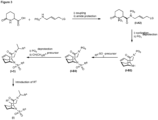
- intermediate compound (I-A1) can be prepared by providing 6-carboxy-2-piperidone and a precursor molecule for the moiety R A which has a suitable leaving group (LG) such as trimethylsilyl (TMS) and a carbon-carbon double bond in allyl position to the R A -CH(CH3) amino group. Said R A -CH(CH3) amino group is reacted with the carboxy moiety of 6-carboxy-2-piperidone. Subsequently, this compound undergoes a cyclization reaction upon which the leaving group LG is detached from the starting molecule.
- LG suitable leaving group
- TMS trimethylsilyl
- intermediate compound (I-A2) can be prepared by providing 6-carboxy-2-piperidone and a butenyl amine protected with a protecting group PG6 which has a suitable leaving group (LG) such as trimethylsilyl (TMS) and a carbon-carbon double bond in allyl position to the amino group. Said protected amino group is reacted with the carboxy moiety of 6-carboxy-2-piperidone. Subsequently, this compound undergoes a cyclization reaction upon which the leaving group LG is detached from the starting molecule. After deprotecting PG1 from amide, 5-vinyl-3,10-diazabicyclo[4.3.1]decane-2-one derivative (I-B2) is formed.
- LG suitable leaving group
- TMS trimethylsilyl
- a sulphonamide intermediate (I-B3) can be obtained by subsequently reacting (I-B2) with a suitable precursor for the moiety -SO2-R B .
- a sulphonamide compound (I-C) can be produced.
- suitable transformation reactions of vinyl group at C-5 position of the resulting sulphonamide compound (I-C) the compound of the general formula (I) can be obtained.
- the vinyl group could be transformed by oxidation reaction with oxygen gas or ozone, epoxidation reaction or dihydroxylation catalyzed by osmium (VIII) oxide.
- the present invention also comprises pharmaceutically acceptable salts of the compounds according to the general formula (I), all stereoisomeric forms of the compounds according to the general formula (I) as well as solvates, especially hydrates thereof.
- the inventive compounds bear basic and/or acidic substituents, they may form salts with organic or inorganic acids or bases.
- suitable acids for such acid addition salt formation are hydrochloric acid, hydrobromic acid, sulfuric acid, phosphoric acid, acetic acid, citric acid, oxalic acid, malonic acid, salicylic acid, p-aminosalicylic acid, malic acid, fumaric acid, succinic acid, ascorbic acid, maleic acid, sulfonic acid, phosphonic acid, perchloric acid, nitric acid, formic acid, propionic acid, gluconic acid, lactic acid, tartaric acid, hydroxymaleic acid, pyruvic acid, phenylacetic acid, benzoic acid, p-aminobenzoic acid, p-hydroxybenzoic acid, methanesulfonic acid, ethanesulfonic acid, nitrous acid, hydroxyethanesulfonic acid, ethylenesulfonic acid
- Suitable inorganic or organic bases are, for example, NaOH, KOH, NH4OH, tetraalkyl-ammonium hydroxide, lysine or arginine and the like.
- Salts may be prepared in a conventional manner using methods well known in the art, for example by treatment of a solution of the compound of the general formula (I) with a solution of an acid, selected out of the group mentioned above.
- Some of the compounds of the present invention may be crystallised or re-crystallised from solvents such as aqueous and organic solvents. In such cases solvates may be formed.
- This invention includes within its scope stoichiometric solvates including hydrates as well as compounds containing variable amounts of water that may be produced by processes such as ly-ophilisation.
- Certain compounds of the general formula (I) may exist in the form of optical isomers if substituents with at least one asymmetric center are present, e.g. diastereoisomers and mixtures of isomers in all ratios, e.g. racemic mixtures.
- the invention includes all such forms, in particular the pure isomeric forms.
- the different isomeric forms may be separated or resolved one from the other by conventional methods, or any given isomer may be obtained by conventional synthetic methods or by stereospecific or asymmetric syntheses.
- a compound according to the general formula (I) contains an alkene moiety, the alkene can be presented as a cis- or transisomer or a mixture thereof.
- an isomeric form of a compound of the invention When an isomeric form of a compound of the invention is provided substantially free of other isomers, it will preferably contain less than 5% w/w, more preferably less than 2% w/w and especially less than 1% w/w of the other isomers.
- one aspect of the present invention is that the compounds according to the general formula (I) are suitable for use as inhibitor of FK506-binding proteins (FKBP).
- FKBP FK506-binding proteins
- these compounds are very potent binders to FK506-binding protein 12 (FKBP12) and FK506-binding protein 12.6 (FKBP12.6) with no immunosuppressive side effects and are therefore a valuable agents for blocking the function of FKBP12 and FKBP12.6.
- FKBP12 and FKBP12.6 have been implicated in cardiac diseases due to their role as regulators of ryanodine receptors and in haematological diseases due to their role as regulators of receptors of the TGR ⁇ /ALK family. Consequently, FKBP12 and FKBP12.6 inhibitors are useful for the treatment of diseases characterized by an aberrant activity of these receptors.
- Another aspect of the present invention relates to the inventive FKBP51/52 ligand derivatives for use as drugs, i.e. as pharmaceutically active agents applicable in medicine.
- said compound is suitable for use as inhibitor of the FK506-binding protein 51 (FKBP51) and/or the FK506-binding protein 52 (FKBP52).
- FKBP51 has been implicated in numerous in human diseases. Consequently, FKBP51 is a target which is addressed in order to prevent and/or treat the diseases disclosed in the afore-mentioned literature.
- FKBP51 and/or FKBP 52 ligand compounds of the present invention can be for use as pharmaceutically active agent in medicine.
- the FKBP51/52 ligand compounds of the present invention can be for use in the treatment, or for the preparation of a pharmaceutical formulation for prophylaxis and/or treatment of these FKBP51/52-associated diseases such as depression, obesity or chronic pain.
- said compound is suitable for use as inhibitor of bacterial MIP proteins such as LpMIP, TcMIP, BpMIP, CtMIP or CpMIP.
- MIPs have been implicated in the infectivity or intracellular replication of the bacterial pathogens. Consequently, MIP inhibitors are useful antiinfective agents, e.g. for the treatment of Legionnaire's disease, Chagas' disease or infections by Chlamydiae or Bukholderiae species.
- inventive compound of any one of formula (I) and subformulae (II)-(XIII) is used in the manufacture of a medicament or of a pharmaceutical composition for the treatment and/or prevention of FKBP- or MIP-associated diseases.
- Another aspect of the present invention relates to the inventive compounds for use in treating FKBP- or MIP-associated diseases comprising administration a therapeutically effective amount of at least one inventive compound or a pharmaceutical composition comprising at least one inventive compound.
- FKBP- or MIP-associated diseases include psychiatric and neurodegenerative diseases, disorders and conditions, for metabolic diseases such as localized adiposity or obesity, for sleep disorders, neuroprotection or neuroregeneration, for the treatment of neurological disorders, for the treatment of diseases relating to neurodegeneration, for the treatment of cancers such as malignant melanoma or acute lymphoblastic leukemia and especially steroid-hormone dependent cancers such as prostate cancer, for the treatment of glucocorticoid hyposensitivity syndromes and for peripheral glucocorticoid resistance, for asthma, especially steroid-resistant asthma, and for the treatment of infectious diseases, for stimulating neurite growth or neuroregeneration, for neuroprotection, for the use as wound healing agents for treating wounds resulting from injury or surgery; for the use in limiting or preventing hemorrhage or neovascularization for treating macular degeneration, and psychiatric disorders (such as depression or post-traumatic stress disorder), metabolic disorders (such as obesity or diabetes), infective
- the FKBP51 and/or FKBP52 ligand compounds of the present invention are preferably suitable for use in the treatment, or for the preparation of a pharmaceutical formulation for use in prophylaxis and treatment of psychiatric diseases. It is especially preferred if these psychiatric diseases are an affective disorder (ICD-10 classification: F30-F39) or an anxiety disorder.
- Affective disorder is a mental disorder characterized by dramatic changes or extremes of mood.
- the affective disorder according to the invention is selected from the group comprising or consisting of depression, bipolar disorder, mania, substance induced mood disorder and seasonal affective disorder (SAD).
- SAD seasonal affective disorder
- the most preferred is depression, the most commonly diagnosed psychiatric disorder.
- the anxiety disorder according to the invention is selected from the group comprising or consisting of generalized anxiety disorder, panic disorder, panic disorder with agoraphobia, phobias, obsessive-compulsive disorder, post-traumatic stress disorder, separation anxiety and childhood anxiety disorders.
- Alzheimer's Disease Parkinson's Disease
- amyotrophic lateral sclerosis the attention has been given only to a handful, including Alzheimer's Disease, Parkinson's Disease, and amyotrophic lateral sclerosis.
- glucocorticoid hyposensitivity syndromes the attention has been given to the group of related diseases enclosing resistant asthma, eosinophilic esophagitis, AIDS, rheumatoid arthritis, hypertension and diabetes, metabolic syndrome or obesity.
- malignant melanoma acute lymphoblastic leukemia, gliomas, idiopathic myelofibrosis, pancreatic and breast cancers, steroid-hormone dependent cancers or prostate cancer.
- compositions comprising at least one compound of the present invention as active ingredient, together with at least one pharmaceutically acceptable carrier, excipient and/or diluents.
- the pharmaceutical compositions of the present invention can be prepared in a conventional solid or liquid carrier or diluent and a conventional pharmaceutically-made adjuvant at suitable dosage level in a known way.
- the preferred preparations are adapted for oral application.
- These administration forms include, for example, pills, tablets, film tablets, coated tablets, capsules, powders and deposits.
- the present invention also includes pharmaceutical preparations for parenteral application, including dermal, intradermal, intragastral, intracutan, intravasal, intravenous, intramuscular, intraperitoneal, intranasal, intravaginal, intrabuccal, percutan, rectal, subcutaneous, sublingual, topical, or transdermal application, which preparations in addition to typical vehicles and/or diluents contain at least one compound according to the present invention and/or a pharmaceutical acceptable salt thereof as active ingredient.
- compositions according to the present invention containing at least one compound according to the present invention, and/or a pharmaceutical acceptable salt thereof as active ingredient will typically be administered together with suitable carrier materials selected with respect to the intended form of administration, i.e. for oral administration in the form of tablets, capsules (either solid filled, semi-solid filled or liquid filled), powders for constitution, extrudates, deposits, gels, elixirs, dispersable granules, syrups, suspensions, and the like, and consistent with conventional pharmaceutical practices.
- suitable carrier materials selected with respect to the intended form of administration, i.e. for oral administration in the form of tablets, capsules (either solid filled, semi-solid filled or liquid filled), powders for constitution, extrudates, deposits, gels, elixirs, dispersable granules, syrups, suspensions, and the like, and consistent with conventional pharmaceutical practices.
- the active drug component may be combined with any oral nontoxic pharmaceutically acceptable carrier, preferably with an inert carrier like lactose, starch, sucrose, cellulose, magnesium stearate, dicalcium phosphate, calcium sulfate, talc, mannitol, ethyl alcohol (liquid filled capsules) and the like.
- suitable binders, lubricants, disintegrating agents and colouring agents may also be incorporated into the tablet or capsule.
- Powders and tablets may contain about 5 to about 95 weight-% of the benzothiophene-1,1-dioxide derived compound and/or the respective pharmaceutically active salt as active ingredient.
- Suitable binders include starch, gelatine, natural sugars, corn sweeteners, natural and synthetic gums such as acacia, sodium alginate, carboxymethylcellulose, polyethylene glycol and waxes.
- suitable lubricants there may be mentioned boric acid, sodium benzoate, sodium acetate, sodium chloride, and the like.
- Suitable disintegrants include starch, methylcellulose, guar gum, and the like. Sweetening and flavoring agents as well as preservatives may also be included, where appropriate. The disintegrants, diluents, lubricants, binders etc. are discussed in more detail below.
- compositions of the present invention may comprise an additional pharmaceutically active compound or drug.
- the pharmaceutically active compound or drug may belong to the group of glucocorticoids.
- an embodiment of the current invention comprises the administration of a compound of the current invention in addition to a co-administration of glucocorticoids.
- compositions of the present invention may be formulated in sustained release form to provide the rate controlled release of any one or more of the components or active ingredients to optimise the therapeutic effect(s), e.g. antihistaminic activity and the like.
- Suitable dosage forms for sustained release include tablets having layers of varying disintegration rates or controlled release polymeric matrices impregnated with the active components and shaped in tablet form or capsules containing such impregnated or encapsulated porous polymeric matrices.
- Liquid form preparations include solutions, suspensions, and emulsions. As an example, there may be mentioned water or water/propylene glycol solutions for parenteral injections or addition of sweeteners and opacifiers for oral solutions, suspensions, and emulsions. Liquid form preparations may also include solutions for intranasal administration. Aerosol preparations suitable for inhalation may include solutions and solids in powder form, which may be present in combination with a pharmaceutically acceptable carrier such as an inert, compressed gas, e.g. nitrogen.
- a pharmaceutically acceptable carrier such as an inert, compressed gas, e.g. nitrogen.
- a low melting fat or wax such as a mixture of fatty acid glycerides like cocoa butter is melted first, and the active ingredient is then dispersed homogeneously therein e.g. by stirring. The molten, homogeneous mixture is then poured into conveniently sized moulds, allowed to cool, and thereby solidified.
- solid form preparations which are intended to be converted, shortly before use, to liquid form preparations for either oral or parenteral administration.
- liquid forms include solutions, suspensions, and emulsions.
- the compounds according to the present invention may also be delivered transdermally.
- the transdermal compositions may have the form of a cream, a lotion, an aerosol and/or an emulsion and may be included in a transdermal patch of the matrix or reservoir type as is known in the art for this purpose.
- capsule refers to a specific container or enclosure made e.g. of methyl cellulose, polyvinyl alcohols, or denatured gelatines or starch for holding or containing compositions comprising the active ingredient(s).
- Capsules with hard shells are typically made of blended of relatively high gel strength gelatines from bones or pork skin.
- the capsule itself may contain small amounts of dyes, opaquing agents, plasticisers and/or preservatives.
- Under tablet a compressed or moulded solid dosage form is understood which comprises the active ingredients with suitable diluents.
- the tablet may be prepared by compression of mixtures or granulations obtained by wet granulation, dry granulation, or by compaction well known to a person of ordinary skill in the art.
- Oral gels refer to the active ingredients dispersed or solubilised in a hydrophilic semi-solid matrix.
- Powders for constitution refers to powder blends containing the active ingredients and suitable diluents which can be suspended e.g. in water or in juice.
- Suitable diluents are substances that usually make up the major portion of the composition or dosage form. Suitable diluents include sugars such as lactose, sucrose, mannitol, and sorbitol, starches derived from wheat, corn rice, and potato, and celluloses such as microcrystalline cellulose.
- the amount of diluent in the composition can range from about 5 to about 95 % by weight of the total composition, preferably from about 25 to about 75 weight %, and more preferably from about 30 to about 60 weight %.
- disintegrants refers to materials added to the composition to support break apart (disintegrate) and release the pharmaceutically active ingredients of a medicament.
- Suitable disintegrants include starches, "cold water soluble" modified starches such as sodium carboxymethyl starch, natural and synthetic gums such as locust bean, karaya, guar, tragacanth and agar, cellulose derivatives such as methylcellulose and sodium carboxymethylcellulose, microcrystalline celluloses, and cross-linked microcrystalline celluloses such as sodium croscaramellose, alginates such as alginic acid and sodium alginate, clays such as bentonites, and effervescent mixtures.
- the amount of disintegrant in the composition may range from about 2 to about 20 weight-% of the composition, more preferably from about 5 to about 10 weight %.
- Binders are substances, which bind or "glue” together powder particles and make them cohesive by forming granules, thus serving as the "adhesive" in the formulation. Binders add cohesive strength already available in the diluent or bulking agent. Suitable binders include sugars such as sucrose, starches derived from wheat corn rice and potato, natural gums such as acacia, gelatine and tragacanth, derivatives of seaweed such as alginic acid, sodium alginate and ammonium calcium alginate, cellulose materials such as methylcellulose, sodium carboxymethylcellulose and hydroxypropylmethylcellulose, polyvinylpyrrolidone, and inorganic compounds such as magnesium aluminum silicate. The amount of binder in the composition may range from about 2 to about 20 weight-% of the composition, preferably from about 3 to about 10 weight %, and more preferably from about 3 to about 6 weight %.
- Lubricants refer to a class of substances, which are added to the dosage form to enable the tablet granules etc. after being compressed to release from the mould or die by reducing friction or wear.
- Suitable lubricants include metallic stearates such as magnesium stearate, calcium stearate, or potassium stearate, stearic acid, high melting point waxes, and other water soluble lubricants such as sodium chloride, sodium benzoate, sodium acetate, sodium oleate, polyethylene glycols and D,L-leucine. Lubricants are usually added at the very last step before compression, since they must be present at the surface of the granules.
- the amount of lubricant in the composition may range from about 0.2 to about 5 weight-% of the composition, preferably from about 0.5 to about 2 weight %, and more preferably from about 0.3 to about 1.5 weight-% of the composition.
- Glidents are materials that prevent caking of the components of the pharmaceutical composition and improve the flow characteristics of granulate so that flow is smooth and uniform.
- Suitable glidents include silicon dioxide and talc.
- the amount of glident in the composition may range from about 0.1 to about 5 weight-% of the final composition, preferably from about 0.5 to about 2 weight %.
- Colouring agents are excipients that provide coloration to the composition or the dosage form. Such excipients can include food grade dyes adsorbed onto a suitable adsorbent such as clay or aluminum oxide.
- the amount of the colouring agent may vary from about 0.1 to about 5 weight-% of the composition, preferably from about 0.1 to about 1 weight %.
- Said pharmaceutical compositions may further comprise at least one FKBP ligand of the general formula (I).
- compositions may further comprise at least one further active agent. It is preferred if this active agent is selected from the group consisting of anti-depressant and other psychotropic drugs. It is further preferred if the anti-depressant is selected from amitriptyline, amioxide clomipramine, doxepine, duloxetine, imipramine trimipramine, mirtazapine, reboxetine, citaloprame, fluoxetine, moclobemide and sertraline.
- this active agent is selected from the group consisting of anti-depressant and other psychotropic drugs. It is further preferred if the anti-depressant is selected from amitriptyline, amioxide clomipramine, doxepine, duloxetine, imipramine trimipramine, mirtazapine, reboxetine, citaloprame, fluoxetine, moclobemide and sertraline.
- a Reagent and conditions (a) Hydrazine, MeOH, 70 °C, 24 h; (b) 3a: Pyridine-2-carbaldehyde, NaBH 4 , EtOH, rt, 4 h, 76%, 3b: 3-(Trimethylsilyl)-2-propynal, NaBH 4 , EtOH, rt, 4 h, 41%, 3c: benzyloxyacetaldehyde, NaBH 4 , EtOH, rt, 4 h, 72%, 3d/3e: 1-(pyridin-2-yl)ethan-1-one, TTIP, NaBH 4 , EtOH, rt, 4 h, 62%, 3f/3g: 4-(trimethylsilyl)-3-butyn-2-one, TTIP, NaBH 4 , EtOH, rt, 4 h, 64% (all yields over 2 steps); (c) (S)-6-Oxopiperidine-2-carboxylic acid, HA
- the two bicyclic intermediates 14a and 14b were synthesized via a different route, depicted in Scheme 4.
- the synthesis commenced with commercially available (S)- or (R)-2-amino-1-propanol, which was first benzyl-protected and afterwards nosyl-protected. Allylation with allyl bromide followed by metathesis with Grubbs 1 st generation catalyst gave 11a and 11b, which were nosyl-deprotected to give the secondary amines 12a and 12b.
- a Reagent and conditions (a) NaH, Bn-CI, THF, reflux, 3 h; (b) Ns-Cl, DIPEA, DCM, 1 h, 9a: 66%, 9b: 62% (over 2 steps); (c) allyl bromide, K 2 CO 3 , DMF, 2 h, 10a: 73%, 10b: 84%; (d) allyltrimethylsilane, Grubbs II, p-benzoquinone, DCM, reflux, 6h, 11a: 44%, 11b: 63%; (e) thiophenol, K 2 CO 3 , DMF, rt, 16h, 12a: 84%, 12b: 90%; (f) (S)-6-Oxopiperidine-2-carboxylic acid, HATU, rt, DMF, 2 h; (g) Boc 2 O, DIPEA, DMAP, DCM, 48 h, 13a: 57%, 13b: 68% (over 2 steps); (h
- R 1 -residues Functionalization of R 1 -residues, specificallly the TMS-protected alkyne and the benzyl-protected alcohol, are depicted in Scheme 5.
- TMS was removed with potassium carbonate and the free alkyne was subjected to copper(I)-catalyzed alkyne-azide cycloaddition yielding the triazole series 19a-c.
- Removal of the benzyl-protective group with boron trichloride gave alcohols 20a-c, which were either oxidized with Jones-reagent to carboxylic acid derivatives 21a-c or methylated with methyl iodide to give compounds 22a-c.
- a Reagent and conditions (a) OsO 4 , NaIO 4 , 2,6-lutidine, dioxane/H 2 O, rt, 20 h; (b) NaBH 4 , EtOH, 1 h, rt, 23a: 47%, 23b: 58%, 25a: 27%, 25b: 70% (all yields over 2 steps); (c) Mel, DMF, 1h, 24a: 91%, 24b: 82%; (d) H 2 , Pd/C, 1 h, 26a: quant., 26b: quant.
Landscapes
- Chemical & Material Sciences (AREA)
- Organic Chemistry (AREA)
- Health & Medical Sciences (AREA)
- General Chemical & Material Sciences (AREA)
- Veterinary Medicine (AREA)
- Public Health (AREA)
- Chemical Kinetics & Catalysis (AREA)
- General Health & Medical Sciences (AREA)
- Medicinal Chemistry (AREA)
- Nuclear Medicine, Radiotherapy & Molecular Imaging (AREA)
- Pharmacology & Pharmacy (AREA)
- Life Sciences & Earth Sciences (AREA)
- Animal Behavior & Ethology (AREA)
- Bioinformatics & Cheminformatics (AREA)
- Engineering & Computer Science (AREA)
- Hematology (AREA)
- Obesity (AREA)
- Diabetes (AREA)
- Biomedical Technology (AREA)
- Neurology (AREA)
- Neurosurgery (AREA)
- Pharmaceuticals Containing Other Organic And Inorganic Compounds (AREA)
- Transition And Organic Metals Composition Catalysts For Addition Polymerization (AREA)
- Plural Heterocyclic Compounds (AREA)
Claims (10)
- Verbindung der allgemeinen Formel (I):
 wobei die Methylgruppe in der Position 1 relativ zum Ankerpunkt in der RA-Position in S-Konfiguration vorliegt;wobei RA darstellt:
 wobei X, Y unabhängig voneinander O, N, S darstellen;oder wobei RA darstellt: -CH2OR16, -CH2NR38R39,





 wobei Q =O, =S oder =N-R12 darstellt;RN -H, -CH2-OCH3, -C2H4-OCH3, -C3H6-OCH3, -CH2-OC2H5, -C2H4-OC2H5, -C3H6-OC2H5, -CH2-OC3H7, -C2H4-OC3H7, -C3H6-OC3H7, -CH2-O-cyclo-C3H5, -C2H4-O-cyclo-C3H5, -C3H6-O-cyclo-C3H5, -CH2-OCH(CH3)2, -C2H4-OCH(CH3)2, -C3H6-OCH(CH3)2, -CH2-OC(CH3)3, -C2H4-OC(CH3)3, -C3H6-OC(CH3)3, -CH2-OC4H9, -C2H4-OC4H9, -C3H6-OC4H9, -CH2-OPh, -C2H4-OPh, -C3H6-OPh, -CH2-OCH2-Ph, -C2H4-OCH2-Ph, -C3H6-OCH2-Ph, -CHO, -COCH3, -COC2H5, -COC3H7, -CO-cyclo-C3H5, -COCH(CH3)2, -COC(CH3)3, -COPh, -COCN, -COOCH3, -COOC2H5, -COOC3H7, -COO-cyclo-C3H5, -COOCH(CH3)2, -COOC(CH3)3, -COCH2Ph, -CONH2, -CONHCH3, -CONHC2H5, -CONHC3H7, -CONH-cyclo-C3H5, -CONH[CH(CH3)2], -CONH[C(CH3)3], -CON(CH3)2, -CON(C2H5)2, -CON(C3H7)2, -CON(cyclo-C3H5)2, -CON[CH(CH3)2]2, -CON[C(CH3)3]2, -SO2CH3, -SO2C2H5, -SO2CH2Ph, -SO2C3H7, -SO2-cyclo-C3H5, -SO2CH(CH3)2, -SO2C(CH3)3, -SO2Ph, -CH2-OCF3, -C2H4-OCF3, -C3H6-OCF3, -OC2F5, -CH2-OC2F5, -C2H4-OC2F5, -C3H6-OC2F5, -CH2F, -CHF2, -CF3, -CH2Cl, -CH2Br, -CH2I, -CH2-CH2F, -CH2-CHF2, -CH2-CF3, -CH2-CH2Cl, -CH2-CH2Br, -CH2-CH2I, -cyclo-C8H15, -Ph, -CH2-Ph, -CH2-CH2-Ph, -CH=CH-Ph, -CPh3, -CH3, -C2H5, -C3H7, -CH(CH3)2, -C4H9, -CH2-CH(CH3)2, -CH(CH3)-C2H5, -C(CH3)3, -C5H11, -CH(CH3)-C3H7, -CH2-CH(CH3)-C2H5, -CH(CH3)-CH(CH3)2, -C(CH3)2-C2H5, -CH2-C(CH3)3, -CH(C2H5)2, -C2H4-CH(CH3)2, -C6H13, -C7H15, -C8H17, -C3H6-CH(CH3)2, -C2H4-CH(CH3)-C2H5, -CH(CH3)-C4H9, -CH2-CH(CH3)-C3H7, -CH(CH3)-CH2-CH(CH3)2, -CH(CH3)-CH(CH3)-C2H5, -CH2-CH(CH3)-CH(CH3)2, -CH2-C(CH3)2-C2H5, -C(CH3)2-C3H7, -C(CH3)2-CH(CH3)2, -C2H4-C(CH3)3, -CH(CH3)-C(CH3)3, -CH=CH2, -CH2-CH=CH2, -C(CH3)=CH2, -CH=CH-CH3, -C2H4-CH=CH2, -CH2-CH=CH-CH3, -CH=CH-C2H5, -CH2-C(CH3)=CH2, -CH(CH3)-CH=CH, -CH=C(CH3)2, -C(CH3)=CH-CH3, -CH=CH-CH=CH2, -C3H6-CH=CH2, -C2H4-CH=CH-CH3, -CH2-CH=CH-C2H5, -CH=CH-C3H7, -CH2-CH=CH-CH=CH2, -CH=CH-CH=CH-CH3, -CH=CH-CH2-CH=CH2, -C(CH3)=CH-CH=CH2, -CH=C(CH3)-CH=CH2, -CH=CH-C(CH3)=CH2, -C2H4-C(CH3)=CH2, -CH2-CH(CH3)-CH=CH2, -CH(CH3)-CH2-CH=CH2, -CH2-CH=C(CH3)2, -CH2-C(CH3)=CH-CH3, -CH(CH3)-CH=CH-CH3, -CH=CH-CH(CH3)2, -CH=C(CH3)-C2H5, -C(CH3)=CH-C2H5, -C(CH3)=C(CH3)2, -C(CH3)2-CH=CH2, -CH(CH3)-C(CH3)=CH2, -C(CH3)=CH-CH=CH2, -CH=C(CH3)-CH=CH2, -CH=CH-C(CH3)=CH2, -C4H8-CH=CH2, -C3H6-CH=CH-CH3, -C2H4-CH=CH-C2H5, -CH2-CH=CH-C3H7, -CH=CH-C4H9, -C3H6-C(CH3)=CH2, -C2H4-CH(CH3)-CH=CH2, -CH2-CH(CH3)-CH2-CH=CH2, -C2H4-CH=C(CH3)2, -CH(CH3)-C2H4-CH=CH2, -C2H4-C(CH3)=CH-CH3, -CH2-CH(CH3)-CH=CH-CH3, -CH(CH3)-CH2-CH=CH-CH3, -CH2-CH=CH-CH(CH3)2, -CH2-CH=C(CH3)-C2H5, -CH2-C(CH3)=CH-C2H5, -CH(CH3)-CH=CH-C2H5, -CH=CH-CH2-CH(CH3)2, -CH=CH-CH(CH3)-C2H5, -CH=C(CH3)-C3H7, -C(CH3)=CH-C3H7, -CH2-CH(CH3)-C(CH3)=CH2, -C[C(CH3)3]=CH2, -CH(CH3)-CH2-C(CH3)=CH2, -CH(CH3)-CH(CH3)-CH=CH2, -CH=CH-C2H4-CH=CH2, -CH2-C(CH3)2-CH=CH2, -C(CH3)2-CH2-CH=CH2, -CH2-C(CH3)=C(CH3)2, -CH(CH3)-CH=C(CH3)2, -C(CH3)2-CH=CH-CH3, -CH=CH-CH2-CH=CH-CH3, -CH(CH3)-C(CH3)=CH-CH3, -CH=C(CH3)-CH(CH3)2, -C(CH3)=CH-CH(CH3)2, -C(CH3)=C(CH3)-C2H5, -CH=CH-C(CH3)3, -C(CH3)2-C(CH3)=CH2, -CH(C2H5)-C(CH3)=CH2, -C(CH3)(C2H5)-CH=CH2, -CH(CH3)-C(C2H5)=CH2, -CH2-C(C3H7)=CH2, -CH2-C(C2H5)=CH-CH3, -CH(C2H5)-CH=CH-CH3, -C(C4H9)=CH2, -C(C3H7)=CH-CH3, -C(C2H5)=CH-C2H5, -C(C2H5)=C(CH3)2, -C[CH(CH3)(C2H5)]=CH2, -C[CH2-CH(CH3)2]=CH2, -C2H4-CH=CH-CH=CH2, -CH2-CH=CH-CH2-CH=CH2, -C3H6-C≡C-CH3, -CH2-CH=CH-CH=CH-CH3, -CH=CH-CH=CH-C2H5, -CH2-CH=CH-C(CH3)=CH2, -CH2-CH=C(CH3)-CH=CH2, -CH2-C(CH3)=CH-CH=CH2, -CH(CH3)-CH2-C≡CH, -CH(CH3)-CH=CH-CH=CH2, -CH=CH-CH2-C(CH3)=CH2, -CH(CH3)-C=C≡CH3, -CH=CH-CH(CH3)-CH=CH2, -CH=C(CH3)-CH2-CH=CH2, -C2H4-CH(CH3)-C≡CH, -C(CH3)=CH-CH2-CH=CH2, -CH2-C≡C-C2H5, -CH=CH-CH=C(CH3)2, -CH2-CH(CH3)-CH2-C≡CH, -C2H4-C≡C-CH3, -CH=CH-C(CH3)=CH-CH3, -CH=C(CH3)-CH=CH-CH3, -CH2-CH(CH3)-C≡CH, -C(CH3)=CH-CH=CH-CH3, -CH=C(CH3)-C(CH3)=CH2, -C(CH3)=CH-C(CH3)=CH2, -C(CH3)=C(CH3)-CH=CH2, -CH=CH-CH=CH-CH=CH2, -C≡CH, -C≡C-CH3, -CH2-C≡CH, -C2H4-C≡CH, -CH2-C≡C-CH3, -C≡C-C2H5, -C3H6-C≡CH, -C≡C-C3H7, -CH(CH3)-C≡CH, -C4H8-C≡CH, -C2H4-C≡C-C2H5, -CH2-C≡C-C3H7, -C≡C-C4H9, -C≡C-C(CH3)3, -CH(CH3)-C2H4-C≡CH, -CH2-CH(CH3)-C≡C-CH3, -CH(CH3)-CH2-C≡C-CH3, -CH(CH3)-C≡C-C2H5, -CH2-C≡C-CH(CH3)2, -C≡C-CH(CH3)-C2H5, -C≡C-CH2-CH(CH3)2, -CH(C2H5)-C≡C-CH3, -C(CH3)2-C≡C-CH3, -CH(C2H5)-CH2-C≡CH, -CH2-CH(C2H5)-C≡CH, -C(CH3)2-CH2-C≡CH, -CH2-C(CH3)2-C≡CH, -CH(CH3)-CH(CH3)-C≡CH, -CH(C3H7)-C≡CH, -C(CH3)(C2H5)-C≡CH, -CH2-CH(C≡CH)2, -C≡C-C≡CH, -CH2-C≡C-C≡CH, -C≡C-C≡C-CH3, -CH(C≡CH)2, -C2H4-C≡C-C≡CH, -CH2-C≡C-CH2-C≡CH, -C≡C-C2H4-C≡CH, -CH2-C≡C-C≡C-CH3, -C≡C-CH2-C≡C-CH3, -C≡C-C≡C-C2H5, -C(C≡CH)2-CH3, -C≡C-CH(CH3)-C≡CH, -CH(CH3)-C≡C-C≡CH, -CH(C≡CH)-CH2-C≡CH, -CH(C≡CH)-C≡C-CH3 darstellt;RB


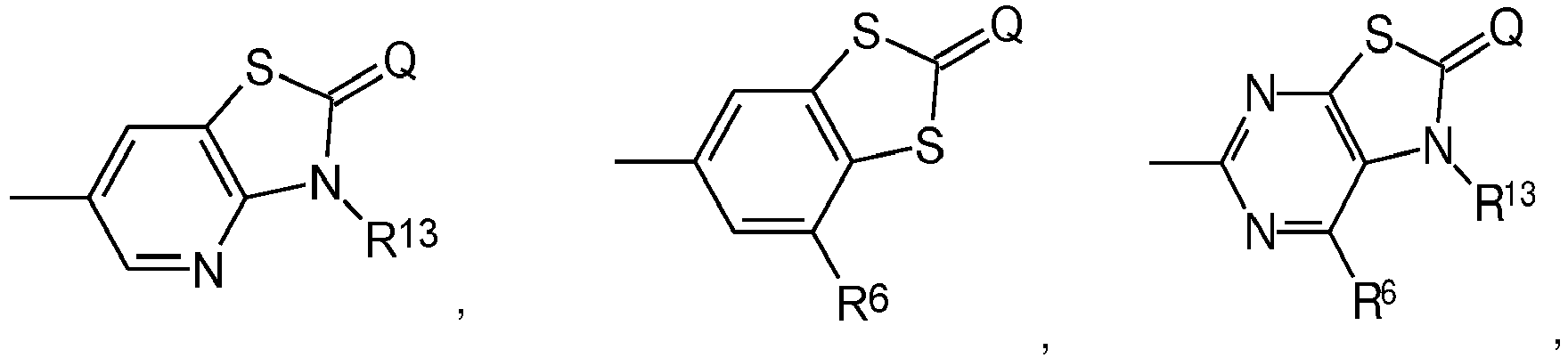

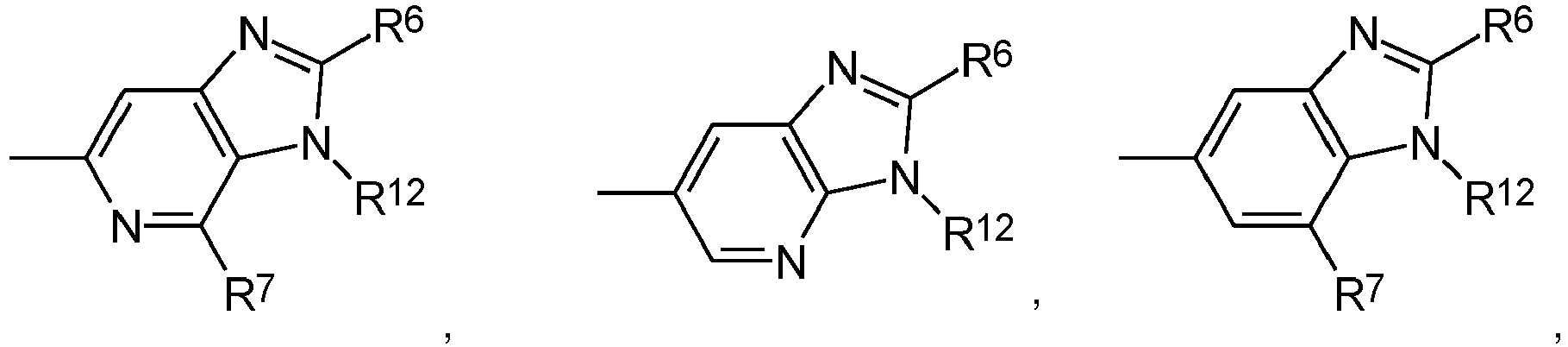


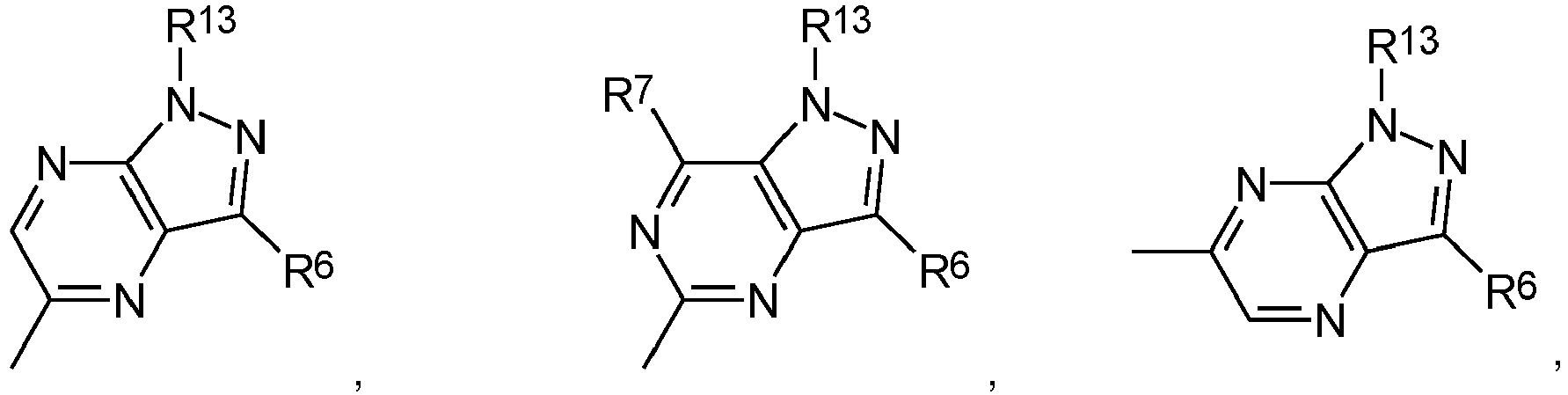

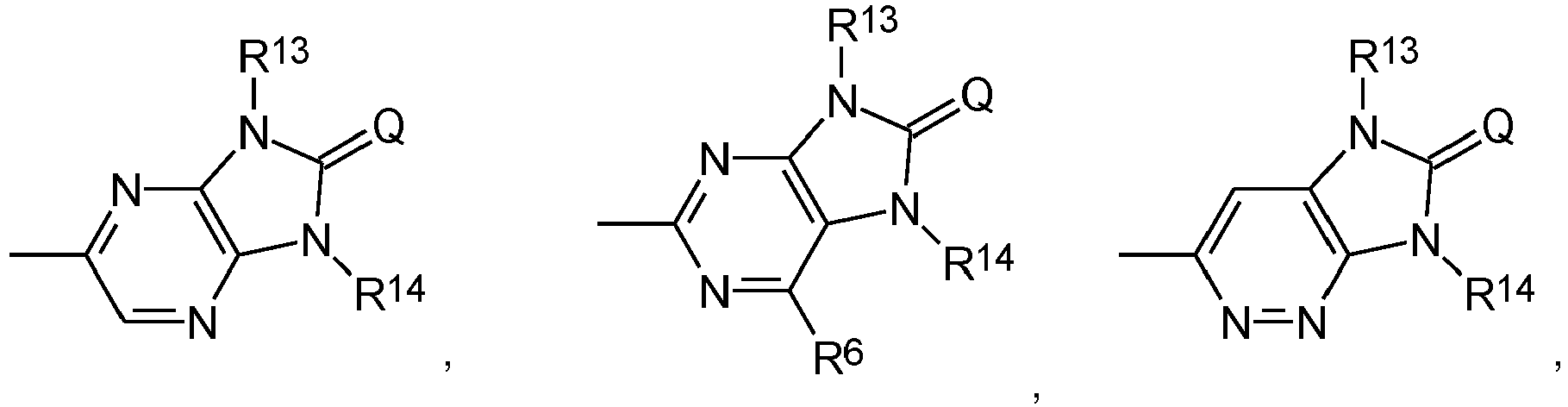


 darstellt; wobei Q =O, =S oder =N-R12 darstellt;RC -H,, -OH, -CH2-OH, -CHO, -CH2CHO, -CH2CH2CHO, -C2H4-OH, -C3H6-OH, -O-CH3, -O-C2H5, -O-CH2-OH, -O-CH(CH3)2, -O-CH2-O-CH3, -O-C2H4-O-CH3, -CH2-O-CH3, -CH2-O-CH2-OH, -CH2O-C2H5, -CH2-O-CH(CH3)2, -CH2-O-C3H7, -CO-CH3, -CH2-CO-CH3, -CO-CH2-OH, -CH(OH)-CH3, -C(OH)(CH3)2, -CH(CH3)CH2OH, -CH(OH)-CH2-OH, -CH2-CH(OH)-CH3, -CH2-CH(OH)-CH2-OH, -CH(OCH3)-CH2OH, -CH(OC2H5)-CH2OH, -CH(OCH3)-CH2OCH3, -CH(OC2H5)-CH2OCH3, -CH(OC2H5)-CH2OC2H5, -CH(OAC)-CH2OH, -CH(OAc)-CH2OAc, -CH(OH)-CH2OAc, -CH(OH)-CH2-NH2, -CH2-CH(OH)-CH2-NH2, -CH(OCH3)-CH2-NH2, -CH(OC2H5)-CH2-NH2, -CH2-CH(OCH3)-CH2-NH2, -CH2-CH(OC2H5)-CH2-NH2, -CH(OH)-CH2-NHCH3, -CH(OH)-CH2-NHC2H5, -CH2-CH(OH)-CH2-NHCH3, -CO-C3H7, -CH2-CH(OH)-CH2-NHC2H5, -CH(OCH3)-CH2NHCH3, -CO-C2H5, -CO-CH(CH3)2, -CH(OC2H5)-CH2NHCH3, -CH2-CH(OCH3)-CH2-NHCH3, -O-C3H7, -CH2-CH(OC2H5)-CH2-NHCH3, -CH(OCH3)-CH2NHC2H5, -CH(OC2H5)-CH2NHC2H5, -CH(OCH3)-CH2N(CH3)2, -CH(OC2H5)-CH2N(CH3)2, -NH2, -NHCH3, -N(CH3)2, -CH2-NH2, -CH2-NHCH3, -CH2-N(CH3)2, -C2H4-NH2, -C2H4-NHCH3, -C2H4-N(CH3)2, -CH(NHCH3)CH3, -CH(NHC2H5)CH3, -CH(N(CH3)2)CH3, -CH(N(C2H5)2)CH3, -CH(NH2)CH2OH, -CH(NHCH3)CH2OH, -CH(NHC2H5)CH2OH, -CH(N(CH3)2)CH2OH, -CH(N(C2H5)2)CH2OH, -CH(NH2)CH2OCH3, -CH(NHCH3)CH2OCH3, -CH(NHC2H5)CH2OCH3, -CH(N(CH3)2)CH2OCH3, -CH(N(C2H5)2)CH2OCH3, -CH(NH2)CH2OC2H5, -CH(NHCH3)CH2OC2H5, -CH(NHC2H5)CH2OC2H5, -CH(N(CH3)2)CH2OC2H5, -CH(N(C2H5)2)CH2OC2H5, -CH(NH2)CH2OAc, -CH(NHCH3)CH2OAc, -CH(NHC2H5)CH2OAc, -CH(N(CH3)2)CH2OAc, -CH(N(C2H5)2)CH2OAc, -CH2-CH(NHAc)CH2OH, -CH2-CH(NHAc)CH2OCH3, -CH2-CH(NHAc)CH2OC2H5, -CH2-CH(NHCH3)CH3, -CH2-CH(NHC2H5)CH3, -CH2-CH(N(CH3)2)CH3, -CH2-CH(N(C2H5)2)CH3, -CH2-CH(NH2)CH2OH, -CH2-CH(NHCH3)CH2OH, -CH2-CH(NHC2H5)CH2OH, -CH2-CH(N(CH3)2)CH2OH, -CH2-CH(N(C2H5)2)CH2OH, -CH2-CH(NH2)CH2OCH3, -CH2-CH(NHCH3)CH2OCH3, -CH2-CH(NHC2H5)CH2OCH3, -CH2-CH(N(CH3)2)CH2OCH3, -CH2-CH(N(C2H5)2)CH2OCH3, -CH2-CH(NH2)CH2OC2H5, -CH2-CH(NHCH3)CH2OC2H5, -CH2-CH(NHC2H5)CH2OC2H5, -CH2-CH(N(CH3)2)CH2OC2H5, -CH2-CH(N(C2H5)2)CH2OC2H5, -CH2-CH(NH2)CH2OAc, -CH2-CH(NHCH3)CH2OAc, -CH2-CH(NHC2H5)CH2OAc, -CH2-CH(N(CH3)2)CH2OAc, -CH2-CH(N(C2H5)2)CH2OAc, -CH2-CH(NHAc)CH2OH, -CH2-CH(NHAc)CH2OCH3, -CH2-CH(NHAc)CH2OC2H5, -NHCOCH3, -CH2-NHCOCH3, -C2H4-NHCOCH3, -NHCHO, -CH2-NHCHO, -C2H4-NHCHO, -NHSO2CH3, -NHSO2CF3, -NHSO2CH2CF3, -CH2-NHSO2CH3, -CH2-NHSO2CF3, -CH2-NHSO2CH2CF3, -C2H4-NHSO2CH3, -C2H4-NHSO2CF3, -C2H4-NHSO2CH2CF3, -CONH2, -CONHCH3, -CONHC2H5, -CONHC3H7, -NH(C2H5), -N(C2H5)2, -CH2-NH(C2H5), -CH2-N(C2H5)2, -C2H4-NH(C2H5), -C2H4-N(C2H5)2, -NO2, -CH2-NO2, -C2H4-NO2, -CH(OH)-NO2, -CH(NO2)-OH, -CO2H, -CH2-CO2H, -C2H4-CO2H, -CH=CH-CO2H, -CO2CH3, -CO2C2H5, -CO2CH(CH3)2, -CH2-CO2CH3, -CH2-CO2C2H5, -CH2-CO2CH(CH3)2, -C2H4-CO2CH3, -C2H4-CO2C2H5, -C2H4-CO2CH(CH3)2, -CO2NH2, -CO2NHCH3, -CO2N(CH3)2, -CH2-CO2NH2, -CH2-CO2NHCH3, -CH2-CO2N(CH3)2, -C2H4-CO2NH2, -C2H4-CO2NHCH3, -C2H4-CO2N(CH3)2, -O-Si(CH3)3, -O-Si(C2H5)3, -CO-CHO, -CO-CO-CH3, -C(OH)-CO-CH3, -CO-C(OH)-CH3, -CO-CH2-CO-CH3, -C(OH)-CH2-CO-CH3, -CO-CH2-C(OH)-CH3, -C(OH)-CH2-C(OH)-CH3, -F, -Cl, -Br, -CH2-F, -CHF2, -CF3, -C2H4-F, -CH2-CF3, -CF2-CF3, -O-CHF2, -O-CF3, -O-CH2-CF3, -O-C2F5, -CH3, -CH2CH3, -C3CH7, -CH(CH3)2, -CH=CH2, -C≡CH, -CH2-CH=CH2 oder -CH2-C≡CH darstellt;R1-R10 unabhängig voneinander -H, -OH, -OCH3, -OC2H5, -OC3H7, -O-cyclo-C3H5, -OCH(CH3)2, -OC(CH3)3, -OC4H9, -OCH2-COOH, -OPh, -OCH2-Ph, -OCPh3, -CH2-OCH3, -CH2-OH, -C2H4-OCH3, -C3H6-OCH3, -CH2-OC2H5, -C2H4-OC2H5, -C3H6-OC2H5, -CH2-OC3H7, -C2H4-OC3H7, -C3H6-OC3H7, -CH2-O-cyclo-C3H5, -C2H4-O-cyclo-C3H5, -C3H6-O-cyclo-C3H5, -CH2-OCH(CH3)2, -C2H4-OCH(CH3)2, -C3H6-OCH(CH3)2, -CH2-OC(CH3)3, -C2H4-OC(CH3)3, -C3H6-OC(CH3)3, -CH2-OC4H9, -C2H4-OC4H9, -C3H6-OC4H9, -CH2-OPh, -C2H4-OPh, -C3H6-OPh, -CH2-OCH2-Ph, -C2H4-OCH2-Ph, -C3H6-OCH2-Ph, -SH, -SCH3, -SC2H5, -SC3H7, -S-cyclo-C3H5, -SCH(CH3)2, -SC(CH3)3, -NO2, -F, -Cl, -Br, -I, -P(O)(OH)2, -P(O)(OCH3)2, -P(O)(OC2H5)2, -P(O)(OCH(CH3)2)2, -C(OH)[P(O)(OH)2]2, -Si(CH3)2(C(CH3)3), -Si(C2H5)3, -Si(CH3)3, -N3, -CN, -OCN, -NCO, -SCN, -NCS, -CHO, -COCH3, -COC2H5, -COC3H7, -CO-cyclo-C3H5, -COCH(CH3)2, -COC(CH3)3, -COOH, -COCN, -COOCH3, -COOC2H5, -COOC3H7, -COO-cyclo-C3H5, -COOCH(CH3)2, -COOC(CH3)3, -OOC-CH3, -OOC-C2H5, -OOC-C3H7, -OOC-cyclo-C3H5, -OOC-CH(CH3)2, -OOC-C(CH3)3, -CONH2, -CONHCH3, -CONHC2H5, -CONHC3H7, -CONH-cyclo-C3H5, -CONH[CH(CH3)2], -CONH[C(CH3)3], -CON(CH3)2, -CON(C2H5)2, -CON(C3H7)2, -CON(cyclo-C3H5)2, -CON[CH(CH3)2]2, -CON[C(CH3)3]2, -NHCOCH3, -NHCOC2H5, -NHCOC3H7, -NHCO-cyclo-C3H5, -NHCO-CH(CH3)2, -NHCO-C(CH3)3, -NHCO-OCH3, -NHCO-OC2H5, -NHCO-OC3H7, -NHCO-O-cyclo-C3H5, -NHCO-OCH(CH3)2, -NHCO-OC(CH3)3, -NH2, -NHCH3, -NHC2H5, -NHC3H7, -NH-cyclo-C3H5, -NHCH(CH3)2, -NHC(CH3)3, -N(CH3)2, -N(C2H5)2, -N(C3H7)2, -N(cyclo-C3H5)2, -N[CH(CH3)2]2, -N[C(CH3)3]2, -SOCH3, -SOC2H5, -SOC3H7, -SO-cyclo-C3H5, -SOCH(CH3)2, -SOC(CH3)3, -SO2CH3, -SO2C2H5, -SO2C3H7, -SO2-cyclo-C3H5, -SO2CH(CH3)2, -SO2C(CH3)3, -SO3H, -SO3CH3, -SO3C2H5, -SO3C3H7, -SO3-cyclo-C3H5, -SO3CH(CH3)2, -SO3C(CH3)3, -SO2NH2, -SO2NHCH3, -SO2NHC2H5, -SO2NHC3H7, -SO2NH-cyclo-C3H5, -SO2NHCH(CH3)2, -SO2NHC(CH3)3, -SO2N(CH3)2, -SO2N(C2H5)2, -SO2N(C3H7)2, -SO2N(cyclo-C3H5)2, -SO2N[CH(CH3)2]2, -SO2N[C(CH3)3]2, -O-S(=O)CH3, -O-S(=O)C2H5, -O-S(=O)C3H7, -O-S(=O)-cyclo-C3H5, -O-S(=O)CH(CH3)2, -O-S(=O)C(CH3)3, -S(=O)(=NH)CH3, -S(=O)(=NH)C2H5, -S(=O)(=NH)C3H7, -S(=O)(=NH)-cyclo-C3H5, -S(=O)(=NH)CH(CH3)2, -S(=O)(=NH)C(CH3)3, -NH-SO2-CH3, -NH-SO2-C2H5, -NH-SO2-C3H7, -NH-SO2-cyclo-C3H5, -NH-SO2-CH(CH3)2, -NH-SO2-C(CH3)3, -O-SO2-CH3, -O-SO2-C2H5, -O-SO2-C3H7, -O-SO2-cyclo-C3H5, -O-SO2-CH(CH3)2, -O-SO2-C(CH3)3, -OCF3, -CH2-OCF3, -C2H4-OCF3, -C3H6-OCF3, -OC2F5, -CH2-OC2F5, -C2H4-OC2F5, -C3H6-OC2F5, -O-COOCH3, -O-COOC2H5, -O-COOC3H7, -O-COO-cyclo-C3H5, -O-COOCH(CH3)2, -O-COOC(CH3)3, -NH-CO-NH2, -NH-CO-NHCH3, -NH-CO-NHC2H5, -NH-CS-N(C3H7)2, -NH-CO-NHC3H7, -NH-CO-N(C3H7)2, -NH-CO-NH[CH(CH3)2], -NH-CO-NH[C(CH3)3], -NH-CO-N(CH3)2, -NH-CO-N(C2H5)2, -NH-CO-NH-cyclo-C3H5, -NH-CO-N(cyclo-C3H5)2, -NH-CO-N[CH(CH3)2]2, -NH-CS-N(C2H5)2, -NH-CO-N[C(CH3)3]2, -NH-CS-NH2, -NH-CS-NHCH3, -NH-CS-N(CH3)2, -NH-CS-NHC2H5, -NH-CS-NHC3H7, -NH-CS-NH-cyclo-C3H5, -NH-CS-NH[CH(CH3)2], -NH-CS-NH[C(CH3)3], -NH-CS-N(cyclo-C3H5)2, -NH-CS-N[CH(CH3)2]2, -NH-CS-N[C(CH3)3]2, -NH-C(=NH)-NH2, -NH-C(=NH)-NHCH3, -NH-C(=NH)-NHC2H5, -NH-C(=NH)-NHC3H7, -O-CO-NH-cyclo-C3H5, -NH-C(=NH)-NH-cyclo-C3H5, -NH-C(=NH)-NH[CH(CH3)2], -O-CO-NH[CH(CH3)2], -NH-C(=NH)-NH[C(CH3)3], -NH-C(=NH)-N(CH3)2, -NH-C(=NH)-N(C2H5)2, -NH-C(=NH)-N(C3H7)2, -NH-C(=NH)-N(cyclo-C3H5)2, -O-CO-NHC3H7, -NH-C(=NH)-N[CH(CH3)2]2, -NH-C(=NH)-N[C(CH3)3]2, -O-CO-NH2, -O-CO-NHCH3, -O-CO-NHC2H5, -O-CO-NH[C(CH3)3], -O-CO-N(CH3)2, -O-CO-N(C2H5)2, -O-CO-N(C3H7)2, -O-CO-N(cyclo-C3H5)2, -O-CO-N[CH(CH3)2]2, -O-CO-N[C(CH3)3]2, -O-CO-OCH3, -O-CO-OC2H5, -O-CO-OC3H7, -O-CO-O-cyclo-C3H5, -O-CO-OCH(CH3)2, -O-CO-OC(CH3)3, -CH2F, -CHF2, -CF3, -CH2Cl, -CH2Br, -CH2I, -CH2-CH2F, -CH2-CHF2, -CH2-CF3, -CH2-CH2Cl, -CH2-CH2Br, -CH2-CH2I, -cyclo-C3H5, -cyclo-C4H7, -cyclo-C5H9, -cyclo-C6H11, -cyclo-C7H13, -cyclo-C8H15, -Ph, -CH2-Ph, -CH2-CH2-Ph, -CH=CH-Ph, -CPh3, -CH3, -C2H5, -C3H7, -CH(CH3)2, -C4H9, -CH2-CH(CH3)2, -CH(CH3)-C2H5, -C(CH3)3, -C5H11, -CH(CH3)-C3H7, -CH2-CH(CH3)-C2H5, -CH(CH3)-CH(CH3)2, -C(CH3)2-C2H5, -CH2-C(CH3)3, -CH(C2H5)2, -C2H4-CH(CH3)2, -C6H13, -C7H15, -C8H17, -C3H6-CH(CH3)2, -C2H4-CH(CH3)-C2H5, -CH(CH3)-C4H9, -CH2-CH(CH3)-C3H7, -CH(CH3)-CH2-CH(CH3)2, -CH(CH3)-CH(CH3)-C2H5, -CH2-CH(CH3)-CH(CH3)2, -CH2-C(CH3)2-C2H5, -C(CH3)2-C3H7, -C(CH3)2-CH(CH3)2, -C2H4-C(CH3)3, -CH(CH3)-C(CH3)3, -CH=CH2, -CH2-CH=CH2, -C(CH3)=CH2, -CH=CH-CH3, -C2H4-CH=CH2, -CH2-CH=CH-CH3, -CH=CH-C2H5, -CH2-C(CH3)=CH2, -CH(CH3)-CH=CH, -CH=C(CH3)2, -C(CH3)=CH-CH3, -CH=CH-CH=CH2, -C3H6-CH=CH2, -C2H4-CH=CH-CH3, -CH2-CH=CH-C2H5, -CH=CH-C3H7, -CH2-CH=CH-CH=CH2, -CH=CH-CH=CH-CH3, -CH=CH-CH2-CH=CH2, -C(CH3)=CH-CH=CH2, -CH=C(CH3)-CH=CH2, -CH=CH-C(CH3)=CH2, -C2H4-C(CH3)=CH2, -CH2-CH(CH3)-CH=CH2, -CH(CH3)-CH2-CH=CH2, -CH2-CH=C(CH3)2, -CH2-C(CH3)=CH-CH3, -CH(CH3)-CH=CH-CH3, -CH=CH-CH(CH3)2, -CH=C(CH3)-C2H5, -C(CH3)=CH-C2H5, -C(CH3)=C(CH3)2, -C(CH3)2-CH=CH2, -CH(CH3)-C(CH3)=CH2, -C(CH3)=CH-CH=CH2, -CH=C(CH3)-CH=CH2, -CH=CH-C(CH3)=CH2, -C4H8-CH=CH2, -C3H6-CH=CH-CH3, -C2H4-CH=CH-C2H5, -CH2-CH=CH-C3H7, -CH=CH-C4H9, -C3H6-C(CH3)=CH2, -C2H4-CH(CH3)-CH=CH2, -CH2-CH(CH3)-CH2-CH=CH2, -C2H4-CH=C(CH3)2, -CH(CH3)-C2H4-CH=CH2, -C2H4-C(CH3)=CH-CH3, -CH2-CH(CH3)-CH=CH-CH3, -CH(CH3)-CH2-CH=CH-CH3, -CH2-CH=CH-CH(CH3)2, -CH2-CH=C(CH3)-C2H5, -CH2-C(CH3)=CH-C2H5, -CH(CH3)-CH=CH-C2H5, -CH=CH-CH2-CH(CH3)2, -CH=CH-CH(CH3)-C2H5, -CH=C(CH3)-C3H7, -C(CH3)=CH-C3H7, -CH2-CH(CH3)-C(CH3)=CH2, -C[C(CH3)3]=CH2, -CH(CH3)-CH2-C(CH3)=CH2, -CH(CH3)-CH(CH3)-CH=CH2, -CH2-C(CH3)2-CH=CH2, -C(CH3)2-CH2-CH=CH2, -CH2-C(CH3)=C(CH3)2, -CH(CH3)-CH=C(CH3)2, -C(CH3)2-CH=CH-CH3, -CH(CH3)-C(CH3)=CH-CH3, -CH=C(CH3)-CH(CH3)2, -C(CH3)=CH-CH(CH3)2, -C(CH3)=C(CH3)-C2H5, -CH=CH-C(CH3)3, -C(CH3)2-C(CH3)=CH2, -CH(C2H5)-C(CH3)=CH2, -C(CH3)(C2H5)-CH=CH2, -CH(CH3)-C(C2H5)=CH2, -CH2-C(C3H7)=CH2, -CH2-C(C2H5)=CH-CH3, -CH(C2H5)-CH=CH-CH3, -C(C4H9)=CH2, -C(C3H7)=CH-CH3, -C(C2H5)=CH-C2H5, -C(C2H5)=C(CH3)2, -C[CH(CH3)(C2H5)]=CH2, -C[CH2-CH(CH3)2]=CH2, -C3H6-C≡C-CH3, -CH(CH3)-CH2-C≡CH, -CH(CH3)-C≡C-CH3, -C2H4-CH(CH3)-C≡CH, -CH2-CH(CH3)-CH2-C≡CH, -CH2-CH(CH3)-C≡CH, -C≡CH, -C≡C-CH3, -CH2-C≡CH, -C2H4-C≡CH, -CH2-C≡C-CH3, -C≡C-C2H5, -C3H6-C≡CH, -C2H4-C≡C-CH3, -CH2-C≡C-C2H5, -C≡C-C3H7, -CH(CH3)-C≡CH, -C4H8-C≡CH, -C2H4-C≡C-C2H5, -CH2-C≡CC3H7, -C≡C-C4H9, -C≡C-C(CH3)3, -CH(CH3)-C2H4-C≡CH, -CH2-CH(CH3)-C≡C-CH3, -CH(CH3)-CH2-C≡C-CH3, -CH(CH3)-C≡C-C2H5, -CH2-C≡C-CH(CH3)2, -C≡C-CH(CH3)-C2H5, -C≡C-CH2-CH(CH3)2, -CH(C2H5)-C≡C-CH3, -C(CH3)2-C≡C-CH3, -CH(C2H5)-CH2-C≡CH, -CH2-CH(C2H5)-C≡CH, -C(CH3)2-CH2-C≡CH, -CH2-C(CH3)2-C≡CH, -CH(CH3)-CH(CH3)-C≡CH, -CH(C3H7)-C≡CH, -C(CH3)(C2H5)-C≡CH, -CH2-CH(C≡CH)2,
 darstellen; R15 -R20 , -CN, -CH2-CN, -CH2-OR17, -CH2-CH2-OR17, -CH2-NR17R18, -CH2-NR17COR19, -CH2-CH2-NR17R18, -CH2-CH2-NR17COR19, -CO2R17, -CO-NR17R18, -CH2-CO2R17 oder -CH2-CO-NR17R18 darstellt;R16, R38, R39 unabhängig voneinander -R21 , -H, -CH3, -C2H5, -C3H7, -CH(CH3)2, -C4H9, -CH2-CH(CH3)2, -CH(CH3)-C2H5, -C(CH3)3, -C5H11, -CH(CH3)-C3H7, -CH2-CH(CH3)-C2H5, -CH(CH3)-CH(CH3)2, -C(CH3)2-C2H5, -CH2-C(CH3)3, -CH(C2H5)2, -C2H4-CH(CH3)2, -C6H13, -C7H15, -C8H17, -C3H6-CH(CH3)2, -C2H4-CH(CH3)-C2H5, -CH(CH3)-C4H9, -CH2-CH(CH3)-C3H7, -CH(CH3)-CH2-CH(CH3)2, -CH(CH3)-CH(CH3)-C2H5, -CH2-CH(CH3)-CH(CH3)2, -CH2-C(CH3)2-C2H5, -C(CH3)2-C3H7, -C(CH3)2-CH(CH3)2, -C2H4-C(CH3)3, -CH(CH3)-C(CH3)3, -CH2OH, -CH2-SH, -CH(OH)CH3, -C2H4OH, -C3H6OH, -C4H8OH, -CH(CH3)-C2H4OH, -C5H10OH, -CH2-S-CH3, -CH2-CH2-S-CH3, -C3H6-S-CH3, -CH2OCH3, -C2H4OCH3, -C3H6OCH3, -C4H8OCH3, -CH(CH3)-C2H4OCH3, -C5H10OCH3, -CH2NH2, -C2H4NH2, -C3H6NH2, -C4H8NH2, -CH(CH3)-C2H4NH2, -C5H10NH2, -CH2-CH2-CH2-NH-C(NH)NH2, -CH2-CO2H, -CH2-CONH2, -CH2-CH2-CO2H, -CH2-CH2-CONH2, -CH2-CO2CH3, -CH2-CONHCH3, -CH2-CON(CH3)2, -CH2-CH2-CO2CH3, -CH2-CH2-CONHCH3, -CH2-CH2-CONH(CH3)2, -CH=CH-CO2H, -CH=CH-CO2CH3, -CH=CH-CONHCH3, -CH=CH-CONHC2H5, -CH=CH-CON(CH3)2, -CH=CH-CON(C2H5)2, -CH2-CH=CH-CO2H, -CH2-CH=CH-CO2CH3, -CH2-CH=CH-CONHCH3, -CH2-CH=CH-CON(CH3)2, -CH2-CH=CH-CONHC2H5, -CH2-CH=CH-CON(C2H5)2, -CH=CH2, -CH2-CH=CH2, -C(CH3)=CH2, -CH=CH-CH3, -C2H4-CH=CH2, -CH2-CH=CH-CH3, -CH=CH-C2H5, -CH2-C(CH3)=CH2, -CH(CH3)-CH=CH, -CH=C(CH3)2, -C(CH3)=CH-CH3, -CH=CH-CH=CH2, -C3H6-CH=CH2, -C2H4-CH=CH-CH3, -CH2-CH=CH-C2H5, -CH=CH-C3H7, -CH2-CH=CH-CH=CH2, -CH=CH-CH=CH-CH3, -CH=CH-CH2-CH=CH2, -C(CH3)=CH-CH=CH2, -CH=C(CH3)-CH=CH2, -CH=CH-C(CH3)=CH2, -C2H4-C(CH3)=CH2, -CH2-CH(CH3)-CH=CH2, -CH(CH3)-CH2-CH=CH2, -CH2-CH=C(CH3)2, -CH2-C(CH3)=CH-CH3, -CH(CH3)-CH=CH-CH3, -CH=CH-CH(CH3)2, -CH=C(CH3)-C2H5, -C(CH3)=CH-C2H5, -C(CH3)=C(CH3)2, -C(CH3)2-CH=CH2, -CH(CH3)-C(CH3)=CH2, -C(CH3)=CH-CH=CH2, -CH=C(CH3)-CH=CH2, -CH=CH-C(CH3)=CH2, -C4H8-CH=CH2, -C3H6-CH=CH-CH3, -C2H4-CH=CH-C2H5, -CH2-CH=CH-C3H7, -CH=CH-C4H9, -C3H6-C(CH3)=CH2, -C2H4-CH(CH3)-CH=CH2, -CH2-CH(CH3)-CH2-CH=CH2, -C2H4-CH=C(CH3)2, -CH(CH3)-C2H4-CH=CH2, -C2H4-C(CH3)=CH-CH3, -CH2-CH(CH3)-CH=CH-CH3, -CH(CH3)-CH2-CH=CH-CH3, -CH2-CH=CH-CH(CH3)2, -CH2-CH=C(CH3)-C2H5, -CH2-C(CH3)=CH-C2H5, -CH(CH3)-CH=CH-C2H5, -CH=CH-CH2-CH(CH3)2, -CH=CH-CH(CH3)-C2H5, -CH=C(CH3)-C3H7, -C(CH3)=CH-C3H7, -CH2-CH(CH3)-C(CH3)=CH2, -C[C(CH3)3]=CH2, -CH(CH3)-CH2-C(CH3)=CH2, -CH(CH3)-CH(CH3)-CH=CH2, -CH=CH-C2H4-CH=CH2, -CH2-C(CH3)2-CH=CH2, -C(CH3)2-CH2-CH=CH2, -CH2-C(CH3)=C(CH3)2, -CH(CH3)-CH=C(CH3)2, -C(CH3)2-CH=CH-CH3, -CH=CH-CH2-CH=CH-CH3, -CH(CH3)-C(CH3)=CH-CH3, -CH=C(CH3)-CH(CH3)2, -C(CH3)=CH-CH(CH3)2, -C(CH3)=C(CH3)-C2H5, -CH=CH-C(CH3)3, -C(CH3)2-C(CH3)=CH2, -CH(C2H5)-C(CH3)=CH2, -C(CH3)(C2H5)-CH=CH2, -CH(CH3)-C(C2H5)=CH2, -CH2-C(C3H7)=CH2, -CH2-C(C2H5)=CH-CH3, -CH(C2H5)-CH=CH-CH3, -C(C4H9)=CH2, -C(C3H7)=CH-CH3, -C(C2H5)=CH-C2H5, -C(C2H5)=C(CH3)2, -C[CH(CH3)(C2H5)]=CH2, -C[CH2-CH(CH3)2]=CH2, -C2H4-CH=CH-CH=CH2, -CH2-CH=CH-CH2-CH=CH2, -C3H6-C≡C-CH3, -CH2-CH=CH-CH=CH-CH3, -CH=CH-CH=CH-C2H5, -CH2-CH=CH-C(CH3)=CH2, -CH2-CH=C(CH3)-CH=CH2, -CH2-C(CH3)=CH-CH=CH2, -CH(CH3)-CH2-C≡CH, -CH(CH3)-CH=CH-CH=CH2, -CH=CH-CH2-C(CH3)=CH2, -CH(CH3)-C≡C-CH3, -CH=CH-CH(CH3)-CH=CH2, -CH=C(CH3)-CH2-CH=CH2, -C2H4-CH(CH3)-C≡CH, -C(CH3)=CH-CH2-CH=CH2, -CH=CH-CH=C(CH3)2, -CH2-CH(CH3)-CH2-C≡CH, -CH=CH-C(CH3)=CH-CH3, -CH=C(CH3)-CH=CH-CH3, -CH2-CH(CH3)-C≡CH, -C(CH3)=CH-CH=CH-CH3, -CH=C(CH3)-C(CH3)=CH2, -C(CH3)=CH-C(CH3)=CH2, -C(CH3)=C(CH3)-CH=CH2, -CH=CH-CH=CH-CH=CH2, -C≡CH, -C≡C-CH3, -CH2-C≡CH, -C2H4-C≡CH, -CH2-C≡C-CH3, -C≡C-C2H5, -C3H6-C≡CH, -C2H4-C≡C-CH3, -CH2-C≡C-C2H5, -C≡C-C3H7, -CH(CH3)-C≡CH, -C4H8-C≡CH, -C2H4-C≡C-C2H5, -CH2-C≡CC3H7, -C≡C-C4H9, -C≡C-C(CH3)3, -CH(CH3)-C2H4-C≡CH, -CH2-CH(CH3)-C≡C-CH3, -CH(CH3)-CH2-C≡C-CH3, -CH(CH3)-C≡C-C2H5, -CH2-C≡C-CH(CH3)2, -C≡C-CH(CH3)-C2H5, -C≡C-CH2-CH(CH3)2, -CH(C2H5)-C≡C-CH3, -C(CH3)2-C≡C-CH3, -CH(C2H5)-CH2-C≡CH, -CH2-CH(C2H5)-C≡CH, -C(CH3)2-CH2-C≡CH, -CH2-C(CH3)2-C≡CH, -CH(CH3)-CH(CH3)-C≡CH, -CH(C3H7)-C≡CH, -C(CH3)(C2H5)-C≡CH, -CH2-Ph,


 darstellen; wobei W O, N-R12, S darstellt;R11 - R14 und R17 - R21 unabhängig voneinander -H, -CH2F, -CHF2, -CH2-OCH3, -CH2-OH, -C2H4-OCH3, -C3H6-OCH3, -CH2-OC2H5, -C2H4-OC2H5, -C3H6-OC2H5, -CH2-OC3H7, -C2H4-OC3H7, -C3H6-OC3H7, -CH2-O-cyclo-C3H5, -C2H4-O-cyclo-C3H5, -C3H6-O-cyclo-C3H5, -CH2-OCH(CH3)2, -C2H4-OCH(CH3)2, -C3H6-OCH(CH3)2, -CH2-OC(CH3)3, -C2H4-OC(CH3)3, -C3H6-OC(CH3)3, -CH2-OC4H9, -C2H4-OC4H9, -C3H6-OC4H9, -CH2-OPh, -C2H4-OPh, -C3H6-OPh, -CH2-OCH2-Ph, -C2H4-OCH2-Ph, -C3H6-OCH2-Ph, -CF3, -CH2Cl, -CH2Br, -CH2I, -CH2-CH2F, -CH2-CHF2, -CH2-CF3, -CH2-CH2Cl, -CH2-CH2Br, -CH2-CH2I, -cyclo-C3H5, -cyclo-C4H7, -cyclo-C5H9, -cyclo-C6H11, -cyclo-C7H13, -cyclo-C8H15, -Ph, -CH2-Ph, -CH2-CH2-Ph, -CH=CH-Ph, -CPh3, -CH3, -C2H5, -C3H7, -CH(CH3)2, -C4H9, -CH2-CH(CH3)2, -CH(CH3)-C2H5, -C(CH3)3, -C5H11, -CH(CH3)-C3H7, -CH2-CH(CH3)-C2H5, -CH(CH3)-CH(CH3)2, -C(CH3)2-C2H5, -CH2-C(CH3)3, -CH(C2H5)2, -C2H4-CH(CH3)2, -C6H13, -C7H15, -C8H17, -C3H6-CH(CH3)2, -C2H4-CH(CH3)-C2H5, -CH(CH3)-C4H9, -CH2-CH(CH3)-C3H7, -CH(CH3)-CH2-CH(CH3)2, -CH(CH3)-CH(CH3)-C2H5, -CH2-CH(CH3)-CH(CH3)2, -CH2-C(CH3)2-C2H5, -C(CH3)2-C3H7, -C(CH3)2-CH(CH3)2, -C2H4-C(CH3)3, -CH(CH3)-C(CH3)3, -CH=CH2, -CH2-CH=CH2, -C(CH3)=CH2, -CH=CH-CH3, -C2H4-CH=CH2, -CH2-CH=CH-CH3, -CH=CH-C2H5, -CH2-C(CH3)=CH2, -CH(CH3)-CH=CH, -CH=C(CH3)2, -C(CH3)=CH-CH3, -CH=CH-CH=CH2, -C3H6-CH=CH2, -C2H4-CH=CH-CH3, -CH2-CH=CH-C2H5, -CH=CH-C3H7, -CH2-CH=CH-CH=CH2, -CH=CH-CH=CH-CH3, -CH=CH-CH2-CH=CH2, -C(CH3)=CH-CH=CH2, -CH=C(CH3)-CH=CH2, -CH=CH-C(CH3)=CH2, -C2H4-C(CH3)=CH2, -CH2-CH(CH3)-CH=CH2, -CH(CH3)-CH2-CH=CH2, -CH2-CH=C(CH3)2, -CH2-C(CH3)=CH-CH3, -CH(CH3)-CH=CH-CH3, -CH=CH-CH(CH3)2, -CH=C(CH3)-C2H5, -C(CH3)=CH-C2H5, -C(CH3)=C(CH3)2, -C(CH3)2-CH=CH2, -CH(CH3)-C(CH3)=CH2, -C(CH3)=CH-CH=CH2, -CH=C(CH3)-CH=CH2, -CH=CH-C(CH3)=CH2, -C4H8-CH=CH2, -C3H6-CH=CH-CH3, -C2H4-CH=CH-C2H5, -CH2-CH=CH-C3H7, -CH=CH-C4H9, -C3H6-C(CH3)=CH2, -C2H4-CH(CH3)-CH=CH2, -CH2-CH(CH3)-CH2-CH=CH2, -C2H4-CH=C(CH3)2, -CH(CH3)-C2H4-CH=CH2, -C2H4-C(CH3)=CH-CH3, -CH2-CH(CH3)-CH=CH-CH3, -CH(CH3)-CH2-CH=CH-CH3, -CH2-CH=CH-CH(CH3)2, -CH2-CH=C(CH3)-C2H5, -CH2-C(CH3)=CH-C2H5, -CH(CH3)-CH=CH-C2H5, -CH=CH-CH2-CH(CH3)2, -CH=CH-CH(CH3)-C2H5, -CH=C(CH3)-C3H7, -C(CH3)=CH-C3H7, -CH2-CH(CH3)-C(CH3)=CH2, -C[C(CH3)3]=CH2, -CH(CH3)-CH2-C(CH3)=CH2, -CH(CH3)-CH(CH3)-CH=CH2, -CH2-C(CH3)2-CH=CH2, -C(CH3)2-CH2-CH=CH2, -CH2-C(CH3)=C(CH3)2, -CH(CH3)-CH=C(CH3)2, -C(CH3)2-CH=CH-CH3, -CH(CH3)-C(CH3)=CH-CH3, -CH=C(CH3)-CH(CH3)2, -C(CH3)=CH-CH(CH3)2, -C(CH3)=C(CH3)-C2H5, -CH=CH-C(CH3)3, -C(CH3)2-C(CH3)=CH2, -CH(C2H5)-C(CH3)=CH2, -C(CH3)(C2H5)-CH=CH2, -CH(CH3)-C(C2H5)=CH2, -CH2-C(C3H7)=CH2, -CH2-C(C2H5)=CH-CH3, -CH(C2H5)-CH=CH-CH3, -C(C4H9)=CH2, -C(C3H7)=CH-CH3, -C(C2H5)=CH-C2H5, -C(C2H5)=C(CH3)2, -C[CH(CH3)(C2H5)]=CH2, -C[CH2-CH(CH3)2]=CH2, -C3H6-C≡C-CH3, -CH(CH3)-CH2-C≡CH, -CH(CH3)-C≡C-CH3, -C2H4-CH(CH3)-C≡CH, -CH2-CH(CH3)-CH2-C≡CH, -CH2-CH(CH3)-C≡CH, -C≡CH, -C≡C-CH3, -CH2-C≡CH, -C2H4-C≡CH, -CH2-C≡C-CH3, -C≡C-C2H5, -C3H6-C≡CH, -C2H4-C≡C-CH3, -CH2-C≡C-C2H5, -C≡C-C3H7, -CH(CH3)-C≡CH, -C4H8-C≡CH, -C2H4-C≡C-C2H5, -CH2-C≡CC3H7, -C≡C-C4H9, -C≡C-C(CH3)3, -CH(CH3)-C2H4-C≡CH, -CH2-CH(CH3)-C≡C-CH3, -CH(CH3)-CH2-C≡C-CH3, -CH(CH3)-C≡C-C2H5, -CH2-C≡C-CH(CH3)2, -C≡C-CH(CH3)-C2H5, -C≡C-CH2-CH(CH3)2, -CH(C2H5)-C≡C-CH3, -C(CH3)2-C≡C-CH3, -CH(C2H5)-CH2-C≡CH, -CH2-CH(C2H5)-C≡CH, -C(CH3)2-CH2-C≡CH, -CH2-C(CH3)2-C≡CH, -CH(CH3)-CH(CH3)-C≡CH, -CH(C3H7)-C≡CH, -C(CH3)(C2H5)-C≡CH oder -CH2-CH(C≡CH)2darstellen;R22- R37 unabhängig voneinander -H, -OH, -OCH3, -OC2H5, -OC3H7, -O-cyclo-C3H5, -OCH(CH3)2, -OC(CH3)3, -OC4H9, -OCH2-COOH, -OPh, -OCH2-Ph, -OCPh3, -CH2-OH, -C2H4-OH, -C3H6-OH, -CH(OH)-CH2-OH, -CH2-OCH3, -C2H4-OCH3, -C3H6-OCH3, -CH2-OC2H5, -C2H4-OC2H5, -C3H6-OC2H5, -CH2-OC3H7, -C2H4-OC3H7, -C3H6-OC3H7, -CH2-O-cyclo-C3H5, -C2H4-O-cyclo-C3H5, -C3H6-O-cyclo-C3H5, -CH2-OCH(CH3)2, -C2H4-OCH(CH3)2, -C3H6-OCH(CH3)2, -CH2-OC(CH3)3, -C2H4-OC(CH3)3, -C3H6-OC(CH3)3, -CH2-OC4H9, -C2H4-OC4H9, -C3H6-OC4H9, -CH2-OPh, -C2H4-OPh, -C3H6-OPh, -CH2-OCH2-Ph, -C2H4-OCH2-Ph, -C3H6-OCH2-Ph, -SH, -SCH3, -SC2H5, -SC3H7, -S-cyclo-C3H5, -SCH(CH3)2, -SC(CH3)3, -NO2, -F, -Cl, -Br, -I, -P(O)(OH)2, -P(O)(OCH3)2, -P(O)(OC2H5)2, -P(O)(OCH(CH3)2)2, -C(OH)[P(O)(OH)2]2, -Si(CH3)2(C(CH3)3), -Si(C2H5)3, -Si(CH3)3, -N3, -CN, -OCN, -NCO, -SCN, -NCS, -CHO, -COCH3, -COC2H5, -COC3H7, -CO-cyclo-C3H5, -COCH(CH3)2, -COC(CH3)3, -COOH, -COCN, -COOCH3, -COOC2H5, -COOC3H7, -COO-cyclo-C3H5, -COOCH(CH3)2, -COOC(CH3)3, -OOC-CH3, -OOC-C2H5, -OOC-C3H7, -OOC-cyclo-C3H5, -OOC-CH(CH3)2, -OOC-C(CH3)3, -CONH2, -CH2-CONH2, -CONHCH3, -CONHC2H5, -CONHC3H7, -CONH-cyclo-C3H5, -CONH[CH(CH3)2], -CONH[C(CH3)3], -CON(CH3)2, -CON(C2H5)2, -CON(C3H7)2, -CON(cyclo-C3H5)2, -CON[CH(CH3)2]2, -CON[C(CH3)3]2, -NHCOCH3, -NHCOC2H5, -NHCOC3H7, -NHCO-cyclo-C3H5, -NHCO-CH(CH3)2, -NHCO-C(CH3)3, -NHCO-OCH3, -NHCO-OC2H5, -NHCO-OC3H7, -NHCO-O-cyclo-C3H5, -NHCO-OCH(CH3)2, -NHCO-OC(CH3)3, -NH2, -NHCH3, -NHC2H5, -NHC3H7, -NH-cyclo-C3H5, -NHCH(CH3)2, -NHC(CH3)3, -N(CH3)2, -N(C2H5)2, -N(C3H7)2, -N(cyclo-C3H5)2, -N[CH(CH3)2]2, -N[C(CH3)3]2, -SOCH3, -SOC2H5, -SOC3H7, -SO-cyclo-C3H5, -SOCH(CH3)2, -SOC(CH3)3, -SO2CH3, -SO2C2H5, -SO2C3H7, -S02-cyclo-C3H5, -SO2CH(CH3)2, -SO2C(CH3)3, -SO3H, -SO3CH3, -SO3C2H5, -SO3C3H7, -SO3-cyclo-C3H5, -SO3CH(CH3)2, -SO3C(CH3)3, -SO2NH2, -SO2NHCH3, -SO2NHC2H5, -SO2NHC3H7, -SO2NH-cyclo-C3H5, -SO2NHCH(CH3)2, -SO2NHC(CH3)3, -SO2N(CH3)2, -SO2N(C2H5)2, -SO2N(C3H7)2, -SO2N(cyclo-C3H5)2, -SO2N[CH(CH3)2]2, -SO2N[C(CH3)3]2, -O-S(=O)CH3, -O-S(=O)C2H5, -O-S(=O)C3H7, -O-S(=O)-cyclo-C3H5, -O-S(=O)CH(CH3)2, -O-S(=O)C(CH3)3, -S(=O)(=NH)CH3, -S(=O)(=NH)C2H5, -S(=O)(=NH)C3H7, -S(=O)(=NH)-cyclo-C3H5, -S(=O)(=NH)CH(CH3)2, -S(=O)(=NH)C(CH3)3, -NH-SO2-CH3, -NH-SO2-C2H5, -NH-SO2-C3H7, -NH-SO2-cyclo-C3H5, -NH-SO2-CH(CH3)2, -NH-SO2-C(CH3)3, -O-SO2-CH3, -O-SO2-C2H5, -O-SO2-C3H7, -O-SO2-cyclo-C3H5, -O-SO2-CH(CH3)2, -O-SO2-C(CH3)3, -OCF3, -CH2-OCF3, -C2H4-OCF3, -C3H6-OCF3, -OC2F5, -CH2-OC2F5, -C2H4-OC2F5, -C3H6-OC2F5, -O-COOCH3, -O-COOC2H5, -O-COOC3H7, -O-COO-cyclo-C3H5, -O-COOCH(CH3)2, -O-COOC(CH3)3, -NH-CO-NH2, -NH-CO-NHCH3, -NH-CO-NHC2H5, -NH-CS-N(C3H7)2, -NH-CO-NHC3H7, -NH-CO-N(C3H7)2, -NH-CO-NH[CH(CH3)2], -NH-CO-NH[C(CH3)3], -NH-CO-N(CH3)2, -NH-CO-N(C2H5)2, -NH-CO-NH-cyclo-C3H5, -NH-CO-N(cyclo-C3H5)2, -NH-CO-N[CH(CH3)2]2, -NH-CS-N(C2H5)2, -NH-CO-N[C(CH3)3]2, -NH-CS-NH2, -NH-CS-NHCH3, -NH-CS-N(CH3)2, -NH-CS-NHC2H5, -NH-CS-NHC3H7, -NH-CS-NH-cyclo-C3H5, -NH-CS-NH[CH(CH3)2], -NH-CS-NH[C(CH3)3], -NH-CS-N(cyclo-C3H5)2, -NH-CS-N[CH(CH3)2]2, -NH-CS-N[C(CH3)3]2, -NH-C(=NH)-NH2, -NH-C(=NH)-NHCH3, -NH-C(=NH)-NHC2H5, -NH-C(=NH)-NHC3H7, -O-CO-NH-cyclo-C3H5, -NH-C(=NH)-NH-cyclo-C3H5, -NH-C(=NH)-NH[CH(CH3)2] -O-CO-NH[CH(CH3)2], -NH-C(=NH)-NH[C(CH3)3], -NH-C(=NH)-N(CH3)2, -NH-C(=NH)-N(C2H5)2, -NH-C(=NH)-N(C3H7)2, -NH-C(=NH)-N(cyclo-C3H5)2, -O-CO-NHC3H7, -NH-C(=NH)-N[CH(CH3)2]2, -NH-C(=NH)-N[C(CH3)3]2, -O-CO-NH2, -O-CO-NHCH3, -O-CO-NHC2H5, -O-CO-NH[C(CH3)3], -O-CO-N(CH3)2, -O-CO-N(C2H5)2, -O-CO-N(C3H7)2, -O-CO-N(cyclo-C3H5)2, -O-CO-N[CH(CH3)2]2, -O-CO-N[C(CH3)3]2, -O-CO-OCH3, -O-CO-OC2H5, -O-CO-OC3H7, -O-CO-O-cyclo-C3H5, -O-CO-OCH(CH3)2, -O-CO-OC(CH3)3, -CH2F, -CHF2, -CF3, -CH2Cl, -CH2Br, -CH2I, -CH2-CH2F, -CH2-CHF2, -CH2-CF3, -CH2-CH2Cl, -CH2-CH2Br, -CH2-CH2I, -cyclo-C5H9, -cyclo-C6H11, -CH2-cyclo-C6H11, -CH2-CH2-cyclo-C6H11, -cyclo-C7H13, -cyclo-C8H15, -Ph, -CH2-Ph, -CH2-CH2-Ph, -CH=CH-Ph, -CPh3, -CH3, -C2H5, -C3H7, -CH(CH3)2, -C4H9, -CH2-CH(CH3)2, -CH(CH3)-C2H5, -C(CH3)3, -C5H11, -CH(CH3)-C3H7, -CH2-CH(CH3)-C2H5, -CH(CH3)-CH(CH3)2, -C(CH3)2-C2H5, -CH2-C(CH3)3, -CH(C2H5)2, -C2H4-CH(CH3)2, -C6H13, -C7H15, -C8H17, -C3H6-CH(CH3)2, -C2H4-CH(CH3)-C2H5, -CH(CH3)-C4H9, -CH2-CH(CH3)-C3H7, -CH(CH3)-CH2-CH(CH3)2, -CH(CH3)-CH(CH3)-C2H5, -CH2-CH(CH3)-CH(CH3)2, -CH2-C(CH3)2-C2H5, -C(CH3)2-C3H7, -C(CH3)2-CH(CH3)2, -C2H4-C(CH3)3, -CH(CH3)-C(CH3)3, -CH=CH2, -CH2-CH=CH2, -C(CH3)=CH2, -CH=CH-CH3, -C2H4-CH=CH2, -CH2-CH=CH-CH3, -CH=CH-C2H5, -CH2-C(CH3)=CH2, -CH(CH3)-CH=CH, -CH=C(CH3)2, -C(CH3)=CH-CH3, -CH=CH-CH=CH2, -C3H6-CH=CH2, -C2H4-CH=CH-CH3, -CH2-CH=CH-C2H5, -CH=CH-C3H7, -CH2-CH=CH-CH=CH2, -CH=CH-CH=CH-CH3, -CH=CH-CH2-CH=CH2, -C(CH3)=CH-CH=CH2, -CH=C(CH3)-CH=CH2, -CH=CH-C(CH3)=CH2, -C2H4-C(CH3)=CH2, -CH2-CH(CH3)-CH=CH2, -CH(CH3)-CH2-CH=CH2, -CH2-CH=C(CH3)2, -CH2-C(CH3)=CH-CH3, -CH(CH3)-CH=CH-CH3, -CH=CH-CH(CH3)2, -CH=C(CH3)-C2H5, -C(CH3)=CH-C2H5, -C(CH3)=C(CH3)2, -C(CH3)2-CH=CH2, -CH(CH3)-C(CH3)=CH2, -C(CH3)=CH-CH=CH2, -CH=C(CH3)-CH=CH2, -CH=CH-C(CH3)=CH2, -C4H8-CH=CH2, -C3H6-CH=CH-CH3, -C2H4-CH=CH-C2H5, -CH2-CH=CH-C3H7, -CH=CH-C4H9, -C3H6-C(CH3)=CH2, -C2H4-CH(CH3)-CH=CH2, -CH2-CH(CH3)-CH2-CH=CH2, -C2H4-CH=C(CH3)2, -CH(CH3)-C2H4-CH=CH2, -C2H4-C(CH3)=CH-CH3, -CH2-CH(CH3)-CH=CH-CH3, -CH(CH3)-CH2-CH=CH-CH3, -CH2-CH=CH-CH(CH3)2, -CH2-CH=C(CH3)-C2H5, -CH2-C(CH3)=CH-C2H5, -CH(CH3)-CH=CH-C2H5, -CH=CH-CH2-CH(CH3)2, -CH=CH-CH(CH3)-C2H5, -CH=C(CH3)-C3H7, -C(CH3)=CH-C3H7, -CH2-CH(CH3)-C(CH3)=CH2, -C[C(CH3)3]=CH2, -CH(CH3)-CH2-C(CH3)=CH2, -CH(CH3)-CH(CH3)-CH=CH2, -CH=CH-C2H4-CH=CH2, -CH2-C(CH3)2-CH=CH2, -C(CH3)2-CH2-CH=CH2, -CH2-C(CH3)=C(CH3)2, -CH(CH3)-CH=C(CH3)2, -C(CH3)2-CH=CH-CH3, -CH=CH-CH2-CH=CH-CH3, -CH(CH3)-C(CH3)=CH-CH3, -CH=C(CH3)-CH(CH3)2, -C(CH3)=CH-CH(CH3)2, -C(CH3)=C(CH3)-C2H5, -CH=CH-C(CH3)3, -C(CH3)2-C(CH3)=CH2, -CH(C2H5)-C(CH3)=CH2, -C(CH3)(C2H5)-CH=CH2, -CH(CH3)-C(C2H5)=CH2, -CH2-C(C3H7)=CH2, -CH2-C(C2H5)=CH-CH3, -CH(C2H5)-CH=CH-CH3, -C(C4H9)=CH2, -C(C3H7)=CH-CH3, -C(C2H5)=CH-C2H5, -C(C2H5)=C(CH3)2, -C[CH(CH3)(C2H5)]=CH2, -C[CH2-CH(CH3)2]=CH2, -C2H4-CH=CH-CH=CH2, -CH2-CH=CH-CH2-CH=CH2, -C3H6-C≡C-CH3, -CH2-CH=CH-CH=CH-CH3, -CH=CH-CH=CH-C2H5, -CH2-CH=CH-C(CH3)=CH2, -CH2-CH=C(CH3)-CH=CH2, -CH2-C(CH3)=CH-CH=CH2, -CH(CH3)-CH2-C≡CH, -CH(CH3)-CH=CH-CH=CH2, -CH=CH-CH2-C(CH3)=CH2, -CH(CH3)-C≡C-CH3, -CH=CH-CH(CH3)-CH=CH2, -CH=C(CH3)-CH2-CH=CH2, -C2H4-CH(CH3)-C≡CH, -C(CH3)=CH-CH2-CH=CH2, -CH=CH-CH=C(CH3)2, -CH2-CH(CH3)-CH2-C≡CH, -CH=CH-C(CH3)=CH-CH3, -CH=C(CH3)-CH=CH-CH3, -CH2-CH(CH3)-C≡CH, -C(CH3)=CH-CH=CH-CH3, -CH=C(CH3)-C(CH3)=CH2, -C(CH3)=CH-C(CH3)=CH2, -C(CH3)=C(CH3)-CH=CH2, -CH=CH-CH=CH-CH=CH2, -C≡CH, -C≡C-CH3, -CH2-C≡CH, -C2H4-C≡CH, -CH2-C≡C-CH3, -C≡C-C2H5, -C3H6-C≡CH, -C2H4-C≡C-CH3, -CH2-C≡C-C2H5, -C≡C-C3H7, -CH(CH3)-C≡CH, -C4H8-C≡CH, -C2H4-C≡C-C2H5, -CH2-C≡C-C3H7, -C≡C-C4H9, -C≡C-C(CH3)3, -CH(CH3)-C2H4-C≡CH, -CH2-CH(CH3)-C≡C-CH3, -CH(CH3)-CH2-C≡C-CH3, -CH(CH3)-C≡C-C2H5, -CH2-C≡C-CH(CH3)2, -C≡C-CH(CH3)-C2H5, -C≡C-CH2-CH(CH3)2, -CH(C2H5)-C≡C-CH3, -C(CH3)2-C≡C-CH3, -CH(C2H5)-CH2-C≡CH, -CH2-CH(C2H5)-C≡CH, -C(CH3)2-CH2-C≡CH, -CH2-C(CH3)2-C≡CH, -CH(CH3)-CH(CH3)-C≡CH, -CH(C3H7)-C≡CH, -C(CH3)(C2H5)-C≡CH, -CH2-CH(C≡CH)2, -C≡C-C≡CH, -CH2-C≡C-C≡CH, -C≡C-C≡C-CH3, -CH(C≡CH)2, -C2H4-C≡C-C≡CH, -CH2-C≡C-CH2-C≡CH, -C≡C-C2H4-C≡CH, -CH2-C≡C-C≡C-CH3, -C≡C-CH2-C≡C-CH3, -C≡C-C≡C-C2H5, -C(C≡CH)2-CH3, -C≡C-CH(CH3)-C≡CH, -CH(CH3)-C≡C-C≡CH, -CH(C≡CH)-CH2-C≡CH, -CH(C≡CH)-C≡C-CH3,
 und Anomere, Deoxy-Formen, Tautomere, Hydrate und Solvate von den vorstehend erwähnten Verbindungen und pharmazeutisch verträgliche Salze.
 - Verbindung gemäß Anspruch 1, wobei die Verbindung durch die folgende Formel (V) dargestellt wird:
 und wobei die Substituenten RA, RB, RC und R7 - R9 die Bedeutungen wie für Formel (I) hier definiert haben;oder wobei die Verbindung durch die folgenden Formeln (VI) oder (VIa) dargestellt wird:
 und wobei die Substituenten RB, RC und R7 - R9 die Bedeutungen wie für Formel (I) hier definiert haben;oder wobei die Verbindung durch die folgenden Formeln (VII) oder (VIIa) dargestellt wird:
 und wobei die Substituenten RB, RC, RN und R7 - R9 die Bedeutungen wie für Formel (I) hier definiert haben;oder wobei die Verbindung durch die folgende Formel (VIII) oder (VIIIa) dargestellt wird:
 und wobei die Substituenten RB, RC, RN, R' und R7 - R9 die Bedeutungen wie für Formel (I) hier definiert haben;oder wobei die Verbindung durch die folgende Formel (IX) oder (X) dargestellt wird:
 und wobei die Substituenten RA , RB und R7 - R9 die Bedeutungen wie für Formel (I) hier definiert haben;RC' und RC" unabhängig voneinander -H, -CH3, -C2H5, -CH2-OH darstellen;Z -OH, -OCH3, -OC2H5, -OCH(CH3)2, -NH2, -NH(CH3), -NH(C2H5), -NHCH(CH3)2, -N(CH3)2 oder -N(C2H5)2 darstellt; und q 0 oder 1 ist;und Anomere, Deoxy-Formen, Tautomere, Hydrate und Solvate von den vorstehend erwähnten Verbindungen und pharmazeutisch verträgliche Salze.
 - Verbindung gemäß einem der vorhergehenden Ansprüche, wobei die Verbindung durch die folgende Formel (V) dargestellt wird:
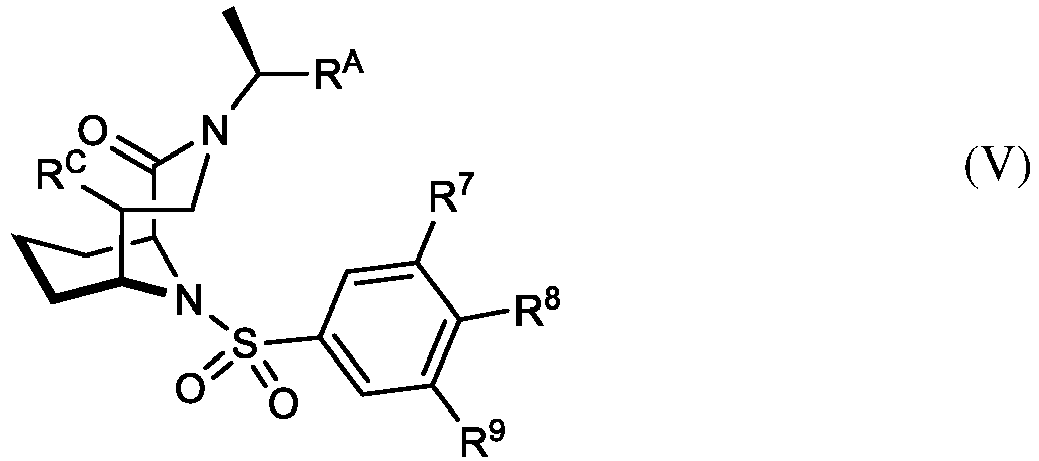 wobei RA ausgewählt ist aus:

 RC die Bedeutung wie für Formel (I) hier definiert hat;R7 - R9 unabhängig voneinander ausgewählt sind aus: -H, -F, -Cl, -Br, -I, -OH, -OCH3, -OC2H5, -OC3H7, -CN, -CONH2, -NHCOCH3, -NHCOC2H5, -NHCOC3H7, -COOH, -COOCH3, -COOC2H5, -COOC3H7, -Ph,
 und Anomere, Deoxy-Formen, Tautomere, Hydrate und Solvate von den vorstehend erwähnten Verbindungen und pharmazeutisch verträgliche Salze.
 - Verwendung der Verbindung gemäß einem der vorhergehenden Ansprüche als Inhibitor von FK506-bindenden Proteinen, wobei die Inhibierung außerhalb des menschlichen oder tierischen Körpers stattfindet.
- Verwendung der Verbindung gemäß den Ansprüchen 1-3 als Inhibitor von FKBP12, FKBP12.6, FKBP51, FKBP52, LpMIP, CpMIP, CtMIP BpMIP und TcMIP, wobei die Inhibierung außerhalb des menschlichen oder tierischen Körpers stattfindet.
- Verbindung gemäß den Ansprüchen 1-3 zur Verwendung als pharmazeutischer Wirkstoff in Medizin.
- Verbindung gemäß den Ansprüchen 1-3 zur Verwendung in der Behandlung oder Prophylaxe von psychiatrischen Störungen, neurologischen Störungen, metabolischen Erkrankungen, Krebs, Glucocorticoid-Hyposensibilitätssyndromen, peripherer Glucocorticoid-Resistenz, infektiösen Erkrankungen, Alopezie, anomal erhöhtem intraokulärem Druck, Makuladegeneration, oxidativem Schaden von Augengeweben, Sehstörung, Schlafstörungen, Asthma, Diabetes, traumatischer Hirnverletzung, Nervenverletzung, Alzheimer-Krankheit, Morbus Huntington, Parkinson-Krankheit, Ischämie, Gedächtnisbeeinträchtigung und für Neuroprotektion, Neuroregeneration, Fördern von Haarwachstum, Stimulieren von Neuritwachstum, Wundheilung, Antiglaukom-Medikationen, Verbessern von Sehen, Steigern von Gedächtnisleistung, zur Verwendung in der Behandlung oder Vorbeugung von Mehrfachresistenz gegen Arzneimittel, zur Verwendung bei Schwangerschaftsabbruch und der Inhibierung von Embryoneneinnistung, zur Verwendung beim Einschränken oder Vorbeugen von Blutung oder Neovaskularisation und zur Verwendung in der Behandlung von mit Neurodegeneration in Zusammenhang stehenden Erkrankungen.
- Verbindung zur Verwendung gemäß Anspruch 7, wobei die psychiatrischen Erkrankungen eine affektive Störung oder eine Angststörung ist, und/oder die metabolischen Erkrankungen lokalisierte Adipositas, metabolisches Syndrom oder Fettleibigkeit ist, und/oder der Krebs Prostatakrebs, akute lymphoblastische Leukämie oder Melanom ist, und/oder wobei die affektive Störung aus der Gruppe ausgewählt ist, welche besteht aus: Depression, bipolarer Störung, Manie, substanzinduzierter Gemütsstörung und jahreszeitlich-bedingter affektiver Störung (SAD), und/oder wobei die Depression aus schwerer Depression oder schwerer depressiver Störung ausgewählt ist, und/oder wobei die Angststörung aus der Gruppe ausgewählt ist, welche umfasst oder besteht aus generalisierter Angststörung, Panikstörung, Panikstörung mit Agoraphobie, Phobien, zwanghafter Verhaltensstörung, posttraumatischer Belastungsstörung, Trennungsangst und Angststörungen der Kindheit, und/oder wobei die infektiöse Erkrankung aus der Gruppe ausgewählt ist, welche aus Chagas-Krankheit, Chlamydien-Infektionen, Burkholderia-Infektionen, Legionärskrankheit, Fettleibigkeit, Diabetes, chronischem Schmerz, neuropathischem Schmerz, Fibromyalgie, hereditärer hämorrhagischer Teleangiektasie, pulmonal-arterieller Hypertonie, Prostatakrebs, Melanom oder Glioblastom besteht.
- Pharmazeutische Zusammensetzung umfassend mindestens eine Verbindung gemäß den Ansprüchen 1-3 zusammen mit mindestens einem pharmazeutisch verträglichen Träger, Lösungsmittel oder Exzipienten oder zusammen mit mindestens einem pharmazeutisch verträglichen Träger, Lösungsmittel oder Exzipienten und mindestens einem Wirkstoff ausgewählt aus der Gruppe bestehend aus einem Antidepressivum und anderen psychotropen Arzneistoffen, sowie Diabetes-Arzneistoffen, Schmerz-Arzneistoffen und/oder Antibiotika.
- Pharmazeutische Zusammensetzung gemäß Anspruch 9, wobei das Antidepressivum aus Amitriptylin, Amioxid Clomipramin, Doxepin, Duloxetin, Imipramin Trimipramin, Mirtazapin, Reboxetin, Citalopram, Fluoxetin, Moclobemid und Sertralin ausgewählt ist.
Priority Applications (3)
| Application Number | Priority Date | Filing Date | Title |
|---|---|---|---|
| EP20160434.5A EP3875151B1 (de) | 2020-03-02 | 2020-03-02 | Alpha-methyl-substituierte diazabicyclo[4.3.1]decan-derivate zur behandlung von psychiatrischen erkrankungen |
| US17/907,893 US20230126391A1 (en) | 2020-03-02 | 2021-03-02 | Alpha-methyl-substituted diazabicyclo[4.3.1] decane derivatives for treatment of psychiatric disorders |
| PCT/EP2021/055176 WO2021175848A1 (en) | 2020-03-02 | 2021-03-02 | Alpha-methyl-substituted diazabicyclo[4.3.1] decane derivates for treatment of psychiatric disorders |
Applications Claiming Priority (1)
| Application Number | Priority Date | Filing Date | Title |
|---|---|---|---|
| EP20160434.5A EP3875151B1 (de) | 2020-03-02 | 2020-03-02 | Alpha-methyl-substituierte diazabicyclo[4.3.1]decan-derivate zur behandlung von psychiatrischen erkrankungen |
Publications (2)
| Publication Number | Publication Date |
|---|---|
| EP3875151A1 EP3875151A1 (de) | 2021-09-08 |
| EP3875151B1 true EP3875151B1 (de) | 2023-09-20 |
Family
ID=69743157
Family Applications (1)
| Application Number | Title | Priority Date | Filing Date |
|---|---|---|---|
| EP20160434.5A Active EP3875151B1 (de) | 2020-03-02 | 2020-03-02 | Alpha-methyl-substituierte diazabicyclo[4.3.1]decan-derivate zur behandlung von psychiatrischen erkrankungen |
Country Status (3)
| Country | Link |
|---|---|
| US (1) | US20230126391A1 (de) |
| EP (1) | EP3875151B1 (de) |
| WO (1) | WO2021175848A1 (de) |
Families Citing this family (3)
| Publication number | Priority date | Publication date | Assignee | Title |
|---|---|---|---|---|
| CN120530094A (zh) | 2023-01-12 | 2025-08-22 | 田边三菱制药株式会社 | Cereblon E3连接酶结合化合物、包含其的药物组合物及其制造方法 |
| TW202542165A (zh) | 2023-12-19 | 2025-11-01 | 瑞士商愛杜西亞製藥有限公司 | 大環食慾素激動劑 |
| EP4631946A1 (de) * | 2024-04-08 | 2025-10-15 | Technische Universität Darmstadt | Substituierte tricyclische liganden für fk506-bindende proteine zur behandlung von krankheiten |
Family Cites Families (3)
| Publication number | Priority date | Publication date | Assignee | Title |
|---|---|---|---|---|
| EP2690102A1 (de) * | 2012-07-24 | 2014-01-29 | Max-Planck-Gesellschaft zur Förderung der Wissenschaften e.V. | Bizyklische Aza-Amide zur Behandlung psychischer Erkrankungen |
| EP2899192A1 (de) * | 2014-01-24 | 2015-07-29 | Max-Planck-Gesellschaft zur Förderung der Wissenschaften e.V. | Diazabicyclo[4.3.1]decane Derivate zur Behandlung von Psychiatrischen Störungen |
| EP3097103B1 (de) * | 2014-01-24 | 2017-11-15 | Max-Planck-Gesellschaft zur Förderung der Wissenschaften | Diazabicyclo[4.3.1]decane derivate zur behandlung von psychiatrischen störungen |
-
2020
- 2020-03-02 EP EP20160434.5A patent/EP3875151B1/de active Active
-
2021
- 2021-03-02 WO PCT/EP2021/055176 patent/WO2021175848A1/en not_active Ceased
- 2021-03-02 US US17/907,893 patent/US20230126391A1/en active Pending
Also Published As
| Publication number | Publication date |
|---|---|
| EP3875151A1 (de) | 2021-09-08 |
| WO2021175848A1 (en) | 2021-09-10 |
| US20230126391A1 (en) | 2023-04-27 |
Similar Documents
| Publication | Publication Date | Title |
|---|---|---|
| RU2326120C9 (ru) | Производные пирролидина и пиперидина | |
| JP4445504B2 (ja) | Dpp−iv阻害剤としてのヘキサヒドロピリドイソキノリン | |
| US7098234B2 (en) | Indole derivatives, process for preparation of the same and use thereof | |
| JP4729259B2 (ja) | カリウムチャンネル機能のヘテロ環インヒビター | |
| JP4854970B2 (ja) | 療法において有用なトロパン誘導体 | |
| JP2018188466A (ja) | 置換ベンズアミド及びその使用方法 | |
| EP3875151B1 (de) | Alpha-methyl-substituierte diazabicyclo[4.3.1]decan-derivate zur behandlung von psychiatrischen erkrankungen | |
| RU2408591C9 (ru) | Производные пиперидина, фармацевтическая композиция на их основе и их применение | |
| WO2008059854A1 (en) | Piperidine derivatives or salts thereof | |
| NZ728122A (en) | 6,7-dihydropyrazolo[1,5-a]pyrazin-4(5h)-one compounds and their use as negative allosteric modulators of mglur2 receptors | |
| EP3544972A1 (de) | Heteroarylphenoxy-benzamid-kappa-opioid-liganden | |
| JPWO2006137350A1 (ja) | 新規なフロピリジン誘導体、それを含有する医薬組成物およびそれらの用途 | |
| TW201028428A (en) | Process for producing diamine derivatives | |
| US20040266815A1 (en) | Pyrazolo[3,4-b]pyridin-6-ones as GSK-3 inhibitors | |
| JP2022036285A (ja) | ピペリジニルノシセプチン受容体化合物 | |
| KR20180095594A (ko) | 인단 유도체 및 가용성 구아닐레이트 시클라제 활성화제로서의 그의 용도 | |
| EP2610245A1 (de) | Pipecolat-Sulfonamide zur Behandlung psychischer Erkrankungen | |
| TW202543604A (zh) | pan-RAS抑制劑化合物 | |
| TW200951129A (en) | Amide derivative and pharmaceutical composition comprising the same | |
| JP2006508113A (ja) | キノリン誘導体 | |
| JP6423877B2 (ja) | プロキネチシン受容体調節薬としてのピペラジン誘導体及びアゼピン誘導体 | |
| EP4631946A1 (de) | Substituierte tricyclische liganden für fk506-bindende proteine zur behandlung von krankheiten | |
| EP3875456A1 (de) | Auf chimären abzielende heterobifunktionelle proteolyse (protacs) für den selektiven abbau von fk506-bindenden proteinen (fkbps) | |
| EP1638560A1 (de) | 3-aminopiperidine und 3-aminochinuclidine als hemmer der monoamin-aufname | |
| KR20240144234A (ko) | 혈장 칼리크레인 억제제 |
Legal Events
| Date | Code | Title | Description |
|---|---|---|---|
| PUAI | Public reference made under article 153(3) epc to a published international application that has entered the european phase |
Free format text: ORIGINAL CODE: 0009012 |
|
| STAA | Information on the status of an ep patent application or granted ep patent |
Free format text: STATUS: THE APPLICATION HAS BEEN PUBLISHED |
|
| AK | Designated contracting states |
Kind code of ref document: A1 Designated state(s): AL AT BE BG CH CY CZ DE DK EE ES FI FR GB GR HR HU IE IS IT LI LT LU LV MC MK MT NL NO PL PT RO RS SE SI SK SM TR |
|
| RIN1 | Information on inventor provided before grant (corrected) |
Inventor name: POMPLUN, SEBASTIAN Inventor name: KOLOS, JUERGEN Inventor name: HAUSCH, FELIX |
|
| STAA | Information on the status of an ep patent application or granted ep patent |
Free format text: STATUS: REQUEST FOR EXAMINATION WAS MADE |
|
| RAP1 | Party data changed (applicant data changed or rights of an application transferred) |
Owner name: MAX-PLANCK-GESELLSCHAFT ZUR FOERDERUNG DER WISSENSCHAFTEN E.V. Owner name: TECHNISCHE UNIVERSITAET DARMSTADT |
|
| 17P | Request for examination filed |
Effective date: 20220209 |
|
| RBV | Designated contracting states (corrected) |
Designated state(s): AL AT BE BG CH CY CZ DE DK EE ES FI FR GB GR HR HU IE IS IT LI LT LU LV MC MK MT NL NO PL PT RO RS SE SI SK SM TR |
|
| STAA | Information on the status of an ep patent application or granted ep patent |
Free format text: STATUS: EXAMINATION IS IN PROGRESS |
|
| 17Q | First examination report despatched |
Effective date: 20220531 |
|
| GRAP | Despatch of communication of intention to grant a patent |
Free format text: ORIGINAL CODE: EPIDOSNIGR1 |
|
| STAA | Information on the status of an ep patent application or granted ep patent |
Free format text: STATUS: GRANT OF PATENT IS INTENDED |
|
| INTG | Intention to grant announced |
Effective date: 20230403 |
|
| GRAS | Grant fee paid |
Free format text: ORIGINAL CODE: EPIDOSNIGR3 |
|
| GRAA | (expected) grant |
Free format text: ORIGINAL CODE: 0009210 |
|
| STAA | Information on the status of an ep patent application or granted ep patent |
Free format text: STATUS: THE PATENT HAS BEEN GRANTED |
|
| AK | Designated contracting states |
Kind code of ref document: B1 Designated state(s): AL AT BE BG CH CY CZ DE DK EE ES FI FR GB GR HR HU IE IS IT LI LT LU LV MC MK MT NL NO PL PT RO RS SE SI SK SM TR |
|
| REG | Reference to a national code |
Ref country code: GB Ref legal event code: FG4D |
|
| REG | Reference to a national code |
Ref country code: CH Ref legal event code: EP |
|
| REG | Reference to a national code |
Ref country code: IE Ref legal event code: FG4D |
|
| REG | Reference to a national code |
Ref country code: DE Ref legal event code: R096 Ref document number: 602020017828 Country of ref document: DE |
|
| REG | Reference to a national code |
Ref country code: DE Ref legal event code: R081 Ref document number: 602020017828 Country of ref document: DE Owner name: TECHNISCHE UNIVERSITAET DARMSTADT, KOERPERSCHA, DE Free format text: FORMER OWNER: ANMELDERANGABEN UNKLAR / UNVOLLSTAENDIG, 80297 MUENCHEN, DE Ref country code: DE Ref legal event code: R081 Ref document number: 602020017828 Country of ref document: DE Owner name: MAX-PLANCK-GESELLSCHAFT ZUR FOERDERUNG DER WIS, DE Free format text: FORMER OWNER: ANMELDERANGABEN UNKLAR / UNVOLLSTAENDIG, 80297 MUENCHEN, DE |
|
| REG | Reference to a national code |
Ref country code: DE Ref legal event code: R081 Ref document number: 602020017828 Country of ref document: DE Owner name: TECHNISCHE UNIVERSITAET DARMSTADT, KOERPERSCHA, DE Free format text: FORMER OWNERS: MAX-PLANCK-GESELLSCHAFT ZUR FOERDERUNG DER WISSENSCHAFTEN E.V., 80539 MUENCHEN, DE; TECHNISCHE UNIVERSITAET DARMSTADT, KOERPERSCHAFT DES OEFFENTLICHEN RECHTS, 64289 DARMSTADT, DE Ref country code: DE Ref legal event code: R081 Ref document number: 602020017828 Country of ref document: DE Owner name: MAX-PLANCK-GESELLSCHAFT ZUR FOERDERUNG DER WIS, DE Free format text: FORMER OWNERS: MAX-PLANCK-GESELLSCHAFT ZUR FOERDERUNG DER WISSENSCHAFTEN E.V., 80539 MUENCHEN, DE; TECHNISCHE UNIVERSITAET DARMSTADT, KOERPERSCHAFT DES OEFFENTLICHEN RECHTS, 64289 DARMSTADT, DE |
|
| REG | Reference to a national code |
Ref country code: LT Ref legal event code: MG9D |
|
| PG25 | Lapsed in a contracting state [announced via postgrant information from national office to epo] |
Ref country code: GR Free format text: LAPSE BECAUSE OF FAILURE TO SUBMIT A TRANSLATION OF THE DESCRIPTION OR TO PAY THE FEE WITHIN THE PRESCRIBED TIME-LIMIT Effective date: 20231221 |
|
| REG | Reference to a national code |
Ref country code: NL Ref legal event code: MP Effective date: 20230920 |
|
| PG25 | Lapsed in a contracting state [announced via postgrant information from national office to epo] |
Ref country code: SE Free format text: LAPSE BECAUSE OF FAILURE TO SUBMIT A TRANSLATION OF THE DESCRIPTION OR TO PAY THE FEE WITHIN THE PRESCRIBED TIME-LIMIT Effective date: 20230920 Ref country code: RS Free format text: LAPSE BECAUSE OF FAILURE TO SUBMIT A TRANSLATION OF THE DESCRIPTION OR TO PAY THE FEE WITHIN THE PRESCRIBED TIME-LIMIT Effective date: 20230920 Ref country code: NO Free format text: LAPSE BECAUSE OF FAILURE TO SUBMIT A TRANSLATION OF THE DESCRIPTION OR TO PAY THE FEE WITHIN THE PRESCRIBED TIME-LIMIT Effective date: 20231220 Ref country code: LV Free format text: LAPSE BECAUSE OF FAILURE TO SUBMIT A TRANSLATION OF THE DESCRIPTION OR TO PAY THE FEE WITHIN THE PRESCRIBED TIME-LIMIT Effective date: 20230920 Ref country code: LT Free format text: LAPSE BECAUSE OF FAILURE TO SUBMIT A TRANSLATION OF THE DESCRIPTION OR TO PAY THE FEE WITHIN THE PRESCRIBED TIME-LIMIT Effective date: 20230920 Ref country code: HR Free format text: LAPSE BECAUSE OF FAILURE TO SUBMIT A TRANSLATION OF THE DESCRIPTION OR TO PAY THE FEE WITHIN THE PRESCRIBED TIME-LIMIT Effective date: 20230920 Ref country code: GR Free format text: LAPSE BECAUSE OF FAILURE TO SUBMIT A TRANSLATION OF THE DESCRIPTION OR TO PAY THE FEE WITHIN THE PRESCRIBED TIME-LIMIT Effective date: 20231221 Ref country code: FI Free format text: LAPSE BECAUSE OF FAILURE TO SUBMIT A TRANSLATION OF THE DESCRIPTION OR TO PAY THE FEE WITHIN THE PRESCRIBED TIME-LIMIT Effective date: 20230920 |
|
| REG | Reference to a national code |
Ref country code: AT Ref legal event code: MK05 Ref document number: 1612952 Country of ref document: AT Kind code of ref document: T Effective date: 20230920 |
|
| PG25 | Lapsed in a contracting state [announced via postgrant information from national office to epo] |
Ref country code: NL Free format text: LAPSE BECAUSE OF FAILURE TO SUBMIT A TRANSLATION OF THE DESCRIPTION OR TO PAY THE FEE WITHIN THE PRESCRIBED TIME-LIMIT Effective date: 20230920 |
|
| PG25 | Lapsed in a contracting state [announced via postgrant information from national office to epo] |
Ref country code: IS Free format text: LAPSE BECAUSE OF FAILURE TO SUBMIT A TRANSLATION OF THE DESCRIPTION OR TO PAY THE FEE WITHIN THE PRESCRIBED TIME-LIMIT Effective date: 20240120 |
|
| PG25 | Lapsed in a contracting state [announced via postgrant information from national office to epo] |
Ref country code: AT Free format text: LAPSE BECAUSE OF FAILURE TO SUBMIT A TRANSLATION OF THE DESCRIPTION OR TO PAY THE FEE WITHIN THE PRESCRIBED TIME-LIMIT Effective date: 20230920 |
|
| PG25 | Lapsed in a contracting state [announced via postgrant information from national office to epo] |
Ref country code: ES Free format text: LAPSE BECAUSE OF FAILURE TO SUBMIT A TRANSLATION OF THE DESCRIPTION OR TO PAY THE FEE WITHIN THE PRESCRIBED TIME-LIMIT Effective date: 20230920 |
|
| PG25 | Lapsed in a contracting state [announced via postgrant information from national office to epo] |
Ref country code: SM Free format text: LAPSE BECAUSE OF FAILURE TO SUBMIT A TRANSLATION OF THE DESCRIPTION OR TO PAY THE FEE WITHIN THE PRESCRIBED TIME-LIMIT Effective date: 20230920 Ref country code: RO Free format text: LAPSE BECAUSE OF FAILURE TO SUBMIT A TRANSLATION OF THE DESCRIPTION OR TO PAY THE FEE WITHIN THE PRESCRIBED TIME-LIMIT Effective date: 20230920 Ref country code: IS Free format text: LAPSE BECAUSE OF FAILURE TO SUBMIT A TRANSLATION OF THE DESCRIPTION OR TO PAY THE FEE WITHIN THE PRESCRIBED TIME-LIMIT Effective date: 20240120 Ref country code: ES Free format text: LAPSE BECAUSE OF FAILURE TO SUBMIT A TRANSLATION OF THE DESCRIPTION OR TO PAY THE FEE WITHIN THE PRESCRIBED TIME-LIMIT Effective date: 20230920 Ref country code: EE Free format text: LAPSE BECAUSE OF FAILURE TO SUBMIT A TRANSLATION OF THE DESCRIPTION OR TO PAY THE FEE WITHIN THE PRESCRIBED TIME-LIMIT Effective date: 20230920 Ref country code: CZ Free format text: LAPSE BECAUSE OF FAILURE TO SUBMIT A TRANSLATION OF THE DESCRIPTION OR TO PAY THE FEE WITHIN THE PRESCRIBED TIME-LIMIT Effective date: 20230920 Ref country code: AT Free format text: LAPSE BECAUSE OF FAILURE TO SUBMIT A TRANSLATION OF THE DESCRIPTION OR TO PAY THE FEE WITHIN THE PRESCRIBED TIME-LIMIT Effective date: 20230920 Ref country code: PT Free format text: LAPSE BECAUSE OF FAILURE TO SUBMIT A TRANSLATION OF THE DESCRIPTION OR TO PAY THE FEE WITHIN THE PRESCRIBED TIME-LIMIT Effective date: 20240122 Ref country code: SK Free format text: LAPSE BECAUSE OF FAILURE TO SUBMIT A TRANSLATION OF THE DESCRIPTION OR TO PAY THE FEE WITHIN THE PRESCRIBED TIME-LIMIT Effective date: 20230920 |
|
| PG25 | Lapsed in a contracting state [announced via postgrant information from national office to epo] |
Ref country code: PL Free format text: LAPSE BECAUSE OF FAILURE TO SUBMIT A TRANSLATION OF THE DESCRIPTION OR TO PAY THE FEE WITHIN THE PRESCRIBED TIME-LIMIT Effective date: 20230920 Ref country code: IT Free format text: LAPSE BECAUSE OF FAILURE TO SUBMIT A TRANSLATION OF THE DESCRIPTION OR TO PAY THE FEE WITHIN THE PRESCRIBED TIME-LIMIT Effective date: 20230920 |
|
| REG | Reference to a national code |
Ref country code: DE Ref legal event code: R097 Ref document number: 602020017828 Country of ref document: DE |
|
| PG25 | Lapsed in a contracting state [announced via postgrant information from national office to epo] |
Ref country code: DK Free format text: LAPSE BECAUSE OF FAILURE TO SUBMIT A TRANSLATION OF THE DESCRIPTION OR TO PAY THE FEE WITHIN THE PRESCRIBED TIME-LIMIT Effective date: 20230920 |
|
| PLBE | No opposition filed within time limit |
Free format text: ORIGINAL CODE: 0009261 |
|
| STAA | Information on the status of an ep patent application or granted ep patent |
Free format text: STATUS: NO OPPOSITION FILED WITHIN TIME LIMIT |
|
| PG25 | Lapsed in a contracting state [announced via postgrant information from national office to epo] |
Ref country code: DK Free format text: LAPSE BECAUSE OF FAILURE TO SUBMIT A TRANSLATION OF THE DESCRIPTION OR TO PAY THE FEE WITHIN THE PRESCRIBED TIME-LIMIT Effective date: 20230920 |
|
| 26N | No opposition filed |
Effective date: 20240621 |
|
| PG25 | Lapsed in a contracting state [announced via postgrant information from national office to epo] |
Ref country code: SI Free format text: LAPSE BECAUSE OF FAILURE TO SUBMIT A TRANSLATION OF THE DESCRIPTION OR TO PAY THE FEE WITHIN THE PRESCRIBED TIME-LIMIT Effective date: 20230920 |
|
| PG25 | Lapsed in a contracting state [announced via postgrant information from national office to epo] |
Ref country code: SI Free format text: LAPSE BECAUSE OF FAILURE TO SUBMIT A TRANSLATION OF THE DESCRIPTION OR TO PAY THE FEE WITHIN THE PRESCRIBED TIME-LIMIT Effective date: 20230920 |
|
| PG25 | Lapsed in a contracting state [announced via postgrant information from national office to epo] |
Ref country code: BG Free format text: LAPSE BECAUSE OF FAILURE TO SUBMIT A TRANSLATION OF THE DESCRIPTION OR TO PAY THE FEE WITHIN THE PRESCRIBED TIME-LIMIT Effective date: 20230920 |
|
| PG25 | Lapsed in a contracting state [announced via postgrant information from national office to epo] |
Ref country code: LU Free format text: LAPSE BECAUSE OF NON-PAYMENT OF DUE FEES Effective date: 20240302 |
|
| PG25 | Lapsed in a contracting state [announced via postgrant information from national office to epo] |
Ref country code: MC Free format text: LAPSE BECAUSE OF FAILURE TO SUBMIT A TRANSLATION OF THE DESCRIPTION OR TO PAY THE FEE WITHIN THE PRESCRIBED TIME-LIMIT Effective date: 20230920 |
|
| PG25 | Lapsed in a contracting state [announced via postgrant information from national office to epo] |
Ref country code: MC Free format text: LAPSE BECAUSE OF FAILURE TO SUBMIT A TRANSLATION OF THE DESCRIPTION OR TO PAY THE FEE WITHIN THE PRESCRIBED TIME-LIMIT Effective date: 20230920 Ref country code: LU Free format text: LAPSE BECAUSE OF NON-PAYMENT OF DUE FEES Effective date: 20240302 Ref country code: BG Free format text: LAPSE BECAUSE OF FAILURE TO SUBMIT A TRANSLATION OF THE DESCRIPTION OR TO PAY THE FEE WITHIN THE PRESCRIBED TIME-LIMIT Effective date: 20230920 |
|
| REG | Reference to a national code |
Ref country code: BE Ref legal event code: MM Effective date: 20240331 |
|
| PG25 | Lapsed in a contracting state [announced via postgrant information from national office to epo] |
Ref country code: BE Free format text: LAPSE BECAUSE OF NON-PAYMENT OF DUE FEES Effective date: 20240331 |
|
| PG25 | Lapsed in a contracting state [announced via postgrant information from national office to epo] |
Ref country code: IE Free format text: LAPSE BECAUSE OF NON-PAYMENT OF DUE FEES Effective date: 20240302 |
|
| PG25 | Lapsed in a contracting state [announced via postgrant information from national office to epo] |
Ref country code: IE Free format text: LAPSE BECAUSE OF NON-PAYMENT OF DUE FEES Effective date: 20240302 Ref country code: BE Free format text: LAPSE BECAUSE OF NON-PAYMENT OF DUE FEES Effective date: 20240331 |
|
| PGFP | Annual fee paid to national office [announced via postgrant information from national office to epo] |
Ref country code: CH Payment date: 20250423 Year of fee payment: 6 |
|
| PG25 | Lapsed in a contracting state [announced via postgrant information from national office to epo] |
Ref country code: CY Free format text: LAPSE BECAUSE OF FAILURE TO SUBMIT A TRANSLATION OF THE DESCRIPTION OR TO PAY THE FEE WITHIN THE PRESCRIBED TIME-LIMIT; INVALID AB INITIO Effective date: 20200302 |
|
| PG25 | Lapsed in a contracting state [announced via postgrant information from national office to epo] |
Ref country code: HU Free format text: LAPSE BECAUSE OF FAILURE TO SUBMIT A TRANSLATION OF THE DESCRIPTION OR TO PAY THE FEE WITHIN THE PRESCRIBED TIME-LIMIT; INVALID AB INITIO Effective date: 20200302 |
|
| PG25 | Lapsed in a contracting state [announced via postgrant information from national office to epo] |
Ref country code: TR Free format text: LAPSE BECAUSE OF FAILURE TO SUBMIT A TRANSLATION OF THE DESCRIPTION OR TO PAY THE FEE WITHIN THE PRESCRIBED TIME-LIMIT Effective date: 20230920 |
|
| REG | Reference to a national code |
Ref country code: CH Ref legal event code: U11 Free format text: ST27 STATUS EVENT CODE: U-0-0-U10-U11 (AS PROVIDED BY THE NATIONAL OFFICE) Effective date: 20260401 |
|
| PGFP | Annual fee paid to national office [announced via postgrant information from national office to epo] |
Ref country code: GB Payment date: 20260324 Year of fee payment: 7 |
|
| PGFP | Annual fee paid to national office [announced via postgrant information from national office to epo] |
Ref country code: DE Payment date: 20260320 Year of fee payment: 7 |
|
| PGFP | Annual fee paid to national office [announced via postgrant information from national office to epo] |
Ref country code: FR Payment date: 20260324 Year of fee payment: 7 |