EP3856900B1 - Bedruckbare magnetische pulver und 3d-bedruckte objekte für die immobilisierung von bionanokatalysatoren - Google Patents
Bedruckbare magnetische pulver und 3d-bedruckte objekte für die immobilisierung von bionanokatalysatoren Download PDFInfo
- Publication number
- EP3856900B1 EP3856900B1 EP19867569.6A EP19867569A EP3856900B1 EP 3856900 B1 EP3856900 B1 EP 3856900B1 EP 19867569 A EP19867569 A EP 19867569A EP 3856900 B1 EP3856900 B1 EP 3856900B1
- Authority
- EP
- European Patent Office
- Prior art keywords
- enzyme
- magnetic
- optionally
- enzymes
- activity
- Prior art date
- Legal status (The legal status is an assumption and is not a legal conclusion. Google has not performed a legal analysis and makes no representation as to the accuracy of the status listed.)
- Active
Links
Images




Classifications
-
- C—CHEMISTRY; METALLURGY
- C12—BIOCHEMISTRY; BEER; SPIRITS; WINE; VINEGAR; MICROBIOLOGY; ENZYMOLOGY; MUTATION OR GENETIC ENGINEERING
- C12N—MICROORGANISMS OR ENZYMES; COMPOSITIONS THEREOF; PROPAGATING, PRESERVING, OR MAINTAINING MICROORGANISMS; MUTATION OR GENETIC ENGINEERING; CULTURE MEDIA
- C12N11/00—Carrier-bound or immobilised enzymes; Carrier-bound or immobilised microbial cells; Preparation thereof
- C12N11/02—Enzymes or microbial cells immobilised on or in an organic carrier
- C12N11/08—Enzymes or microbial cells immobilised on or in an organic carrier the carrier being a synthetic polymer
- C12N11/098—Enzymes or microbial cells immobilised on or in an organic carrier the carrier being a synthetic polymer formed in the presence of the enzymes or microbial cells
-
- B—PERFORMING OPERATIONS; TRANSPORTING
- B33—ADDITIVE MANUFACTURING TECHNOLOGY
- B33Y—ADDITIVE MANUFACTURING, i.e. MANUFACTURING OF THREE-DIMENSIONAL [3-D] OBJECTS BY ADDITIVE DEPOSITION, ADDITIVE AGGLOMERATION OR ADDITIVE LAYERING, e.g. BY 3-D PRINTING, STEREOLITHOGRAPHY OR SELECTIVE LASER SINTERING
- B33Y70/00—Materials specially adapted for additive manufacturing
- B33Y70/10—Composites of different types of material, e.g. mixtures of ceramics and polymers or mixtures of metals and biomaterials
-
- B—PERFORMING OPERATIONS; TRANSPORTING
- B33—ADDITIVE MANUFACTURING TECHNOLOGY
- B33Y—ADDITIVE MANUFACTURING, i.e. MANUFACTURING OF THREE-DIMENSIONAL [3-D] OBJECTS BY ADDITIVE DEPOSITION, ADDITIVE AGGLOMERATION OR ADDITIVE LAYERING, e.g. BY 3-D PRINTING, STEREOLITHOGRAPHY OR SELECTIVE LASER SINTERING
- B33Y80/00—Products made by additive manufacturing
-
- C—CHEMISTRY; METALLURGY
- C12—BIOCHEMISTRY; BEER; SPIRITS; WINE; VINEGAR; MICROBIOLOGY; ENZYMOLOGY; MUTATION OR GENETIC ENGINEERING
- C12N—MICROORGANISMS OR ENZYMES; COMPOSITIONS THEREOF; PROPAGATING, PRESERVING, OR MAINTAINING MICROORGANISMS; MUTATION OR GENETIC ENGINEERING; CULTURE MEDIA
- C12N11/00—Carrier-bound or immobilised enzymes; Carrier-bound or immobilised microbial cells; Preparation thereof
- C12N11/02—Enzymes or microbial cells immobilised on or in an organic carrier
- C12N11/08—Enzymes or microbial cells immobilised on or in an organic carrier the carrier being a synthetic polymer
-
- C—CHEMISTRY; METALLURGY
- C12—BIOCHEMISTRY; BEER; SPIRITS; WINE; VINEGAR; MICROBIOLOGY; ENZYMOLOGY; MUTATION OR GENETIC ENGINEERING
- C12N—MICROORGANISMS OR ENZYMES; COMPOSITIONS THEREOF; PROPAGATING, PRESERVING, OR MAINTAINING MICROORGANISMS; MUTATION OR GENETIC ENGINEERING; CULTURE MEDIA
- C12N11/00—Carrier-bound or immobilised enzymes; Carrier-bound or immobilised microbial cells; Preparation thereof
- C12N11/02—Enzymes or microbial cells immobilised on or in an organic carrier
- C12N11/08—Enzymes or microbial cells immobilised on or in an organic carrier the carrier being a synthetic polymer
- C12N11/082—Enzymes or microbial cells immobilised on or in an organic carrier the carrier being a synthetic polymer obtained by reactions only involving carbon-to-carbon unsaturated bonds
-
- C—CHEMISTRY; METALLURGY
- C12—BIOCHEMISTRY; BEER; SPIRITS; WINE; VINEGAR; MICROBIOLOGY; ENZYMOLOGY; MUTATION OR GENETIC ENGINEERING
- C12N—MICROORGANISMS OR ENZYMES; COMPOSITIONS THEREOF; PROPAGATING, PRESERVING, OR MAINTAINING MICROORGANISMS; MUTATION OR GENETIC ENGINEERING; CULTURE MEDIA
- C12N11/00—Carrier-bound or immobilised enzymes; Carrier-bound or immobilised microbial cells; Preparation thereof
- C12N11/02—Enzymes or microbial cells immobilised on or in an organic carrier
- C12N11/08—Enzymes or microbial cells immobilised on or in an organic carrier the carrier being a synthetic polymer
- C12N11/089—Enzymes or microbial cells immobilised on or in an organic carrier the carrier being a synthetic polymer obtained otherwise than by reactions only involving carbon-to-carbon unsaturated bonds
- C12N11/096—Polyesters; Polyamides
-
- C—CHEMISTRY; METALLURGY
- C12—BIOCHEMISTRY; BEER; SPIRITS; WINE; VINEGAR; MICROBIOLOGY; ENZYMOLOGY; MUTATION OR GENETIC ENGINEERING
- C12N—MICROORGANISMS OR ENZYMES; COMPOSITIONS THEREOF; PROPAGATING, PRESERVING, OR MAINTAINING MICROORGANISMS; MUTATION OR GENETIC ENGINEERING; CULTURE MEDIA
- C12N11/00—Carrier-bound or immobilised enzymes; Carrier-bound or immobilised microbial cells; Preparation thereof
- C12N11/14—Enzymes or microbial cells immobilised on or in an inorganic carrier
-
- C—CHEMISTRY; METALLURGY
- C12—BIOCHEMISTRY; BEER; SPIRITS; WINE; VINEGAR; MICROBIOLOGY; ENZYMOLOGY; MUTATION OR GENETIC ENGINEERING
- C12N—MICROORGANISMS OR ENZYMES; COMPOSITIONS THEREOF; PROPAGATING, PRESERVING, OR MAINTAINING MICROORGANISMS; MUTATION OR GENETIC ENGINEERING; CULTURE MEDIA
- C12N9/00—Enzymes; Proenzymes; Compositions thereof; Processes for preparing, activating, inhibiting, separating or purifying enzymes
- C12N9/0004—Oxidoreductases (1.)
- C12N9/0012—Oxidoreductases (1.) acting on nitrogen containing compounds as donors (1.4, 1.5, 1.6, 1.7)
- C12N9/0036—Oxidoreductases (1.) acting on nitrogen containing compounds as donors (1.4, 1.5, 1.6, 1.7) acting on NADH or NADPH (1.6)
- C12N9/0038—Oxidoreductases (1.) acting on nitrogen containing compounds as donors (1.4, 1.5, 1.6, 1.7) acting on NADH or NADPH (1.6) with a heme protein as acceptor (1.6.2)
- C12N9/0042—NADPH-cytochrome P450 reductase (1.6.2.4)
-
- C—CHEMISTRY; METALLURGY
- C12—BIOCHEMISTRY; BEER; SPIRITS; WINE; VINEGAR; MICROBIOLOGY; ENZYMOLOGY; MUTATION OR GENETIC ENGINEERING
- C12N—MICROORGANISMS OR ENZYMES; COMPOSITIONS THEREOF; PROPAGATING, PRESERVING, OR MAINTAINING MICROORGANISMS; MUTATION OR GENETIC ENGINEERING; CULTURE MEDIA
- C12N9/00—Enzymes; Proenzymes; Compositions thereof; Processes for preparing, activating, inhibiting, separating or purifying enzymes
- C12N9/0004—Oxidoreductases (1.)
- C12N9/0065—Oxidoreductases (1.) acting on hydrogen peroxide as acceptor (1.11)
-
- C—CHEMISTRY; METALLURGY
- C12—BIOCHEMISTRY; BEER; SPIRITS; WINE; VINEGAR; MICROBIOLOGY; ENZYMOLOGY; MUTATION OR GENETIC ENGINEERING
- C12N—MICROORGANISMS OR ENZYMES; COMPOSITIONS THEREOF; PROPAGATING, PRESERVING, OR MAINTAINING MICROORGANISMS; MUTATION OR GENETIC ENGINEERING; CULTURE MEDIA
- C12N9/00—Enzymes; Proenzymes; Compositions thereof; Processes for preparing, activating, inhibiting, separating or purifying enzymes
- C12N9/0004—Oxidoreductases (1.)
- C12N9/0071—Oxidoreductases (1.) acting on paired donors with incorporation of molecular oxygen (1.14)
-
- C—CHEMISTRY; METALLURGY
- C12—BIOCHEMISTRY; BEER; SPIRITS; WINE; VINEGAR; MICROBIOLOGY; ENZYMOLOGY; MUTATION OR GENETIC ENGINEERING
- C12N—MICROORGANISMS OR ENZYMES; COMPOSITIONS THEREOF; PROPAGATING, PRESERVING, OR MAINTAINING MICROORGANISMS; MUTATION OR GENETIC ENGINEERING; CULTURE MEDIA
- C12N9/00—Enzymes; Proenzymes; Compositions thereof; Processes for preparing, activating, inhibiting, separating or purifying enzymes
- C12N9/14—Hydrolases (3)
- C12N9/16—Hydrolases (3) acting on ester bonds (3.1)
- C12N9/18—Carboxylic ester hydrolases (3.1.1)
- C12N9/20—Triglyceride splitting, e.g. by means of lipase
-
- C—CHEMISTRY; METALLURGY
- C12—BIOCHEMISTRY; BEER; SPIRITS; WINE; VINEGAR; MICROBIOLOGY; ENZYMOLOGY; MUTATION OR GENETIC ENGINEERING
- C12N—MICROORGANISMS OR ENZYMES; COMPOSITIONS THEREOF; PROPAGATING, PRESERVING, OR MAINTAINING MICROORGANISMS; MUTATION OR GENETIC ENGINEERING; CULTURE MEDIA
- C12N9/00—Enzymes; Proenzymes; Compositions thereof; Processes for preparing, activating, inhibiting, separating or purifying enzymes
- C12N9/14—Hydrolases (3)
- C12N9/24—Hydrolases (3) acting on glycosyl compounds (3.2)
- C12N9/2402—Hydrolases (3) acting on glycosyl compounds (3.2) hydrolysing O- and S- glycosyl compounds (3.2.1)
- C12N9/2405—Glucanases
- C12N9/2408—Glucanases acting on alpha -1,4-glucosidic bonds
- C12N9/2431—Beta-fructofuranosidase (3.2.1.26), i.e. invertase
-
- C—CHEMISTRY; METALLURGY
- C12—BIOCHEMISTRY; BEER; SPIRITS; WINE; VINEGAR; MICROBIOLOGY; ENZYMOLOGY; MUTATION OR GENETIC ENGINEERING
- C12N—MICROORGANISMS OR ENZYMES; COMPOSITIONS THEREOF; PROPAGATING, PRESERVING, OR MAINTAINING MICROORGANISMS; MUTATION OR GENETIC ENGINEERING; CULTURE MEDIA
- C12N9/00—Enzymes; Proenzymes; Compositions thereof; Processes for preparing, activating, inhibiting, separating or purifying enzymes
- C12N9/90—Isomerases (5.)
-
- C—CHEMISTRY; METALLURGY
- C12—BIOCHEMISTRY; BEER; SPIRITS; WINE; VINEGAR; MICROBIOLOGY; ENZYMOLOGY; MUTATION OR GENETIC ENGINEERING
- C12Y—ENZYMES
- C12Y106/00—Oxidoreductases acting on NADH or NADPH (1.6)
- C12Y106/02—Oxidoreductases acting on NADH or NADPH (1.6) with a heme protein as acceptor (1.6.2)
- C12Y106/02004—NADPH-hemoprotein reductase (1.6.2.4), i.e. NADP-cytochrome P450-reductase
-
- C—CHEMISTRY; METALLURGY
- C12—BIOCHEMISTRY; BEER; SPIRITS; WINE; VINEGAR; MICROBIOLOGY; ENZYMOLOGY; MUTATION OR GENETIC ENGINEERING
- C12Y—ENZYMES
- C12Y111/00—Oxidoreductases acting on a peroxide as acceptor (1.11)
- C12Y111/01—Peroxidases (1.11.1)
- C12Y111/01007—Peroxidase (1.11.1.7), i.e. horseradish-peroxidase
-
- C—CHEMISTRY; METALLURGY
- C12—BIOCHEMISTRY; BEER; SPIRITS; WINE; VINEGAR; MICROBIOLOGY; ENZYMOLOGY; MUTATION OR GENETIC ENGINEERING
- C12Y—ENZYMES
- C12Y301/00—Hydrolases acting on ester bonds (3.1)
- C12Y301/01—Carboxylic ester hydrolases (3.1.1)
- C12Y301/01003—Triacylglycerol lipase (3.1.1.3)
-
- C—CHEMISTRY; METALLURGY
- C12—BIOCHEMISTRY; BEER; SPIRITS; WINE; VINEGAR; MICROBIOLOGY; ENZYMOLOGY; MUTATION OR GENETIC ENGINEERING
- C12Y—ENZYMES
- C12Y302/00—Hydrolases acting on glycosyl compounds, i.e. glycosylases (3.2)
- C12Y302/01—Glycosidases, i.e. enzymes hydrolysing O- and S-glycosyl compounds (3.2.1)
- C12Y302/01026—Beta-fructofuranosidase (3.2.1.26), i.e. invertase
-
- H—ELECTRICITY
- H01—ELECTRIC ELEMENTS
- H01F—MAGNETS; INDUCTANCES; TRANSFORMERS; SELECTION OF MATERIALS FOR THEIR MAGNETIC PROPERTIES
- H01F1/00—Magnets or magnetic bodies characterised by the magnetic materials therefor; Selection of materials for their magnetic properties
- H01F1/0036—Magnets or magnetic bodies characterised by the magnetic materials therefor; Selection of materials for their magnetic properties showing low dimensional magnetism, i.e. spin rearrangements due to a restriction of dimensions, e.g. showing giant magnetoresistivity
- H01F1/0045—Zero dimensional, e.g. nanoparticles, soft nanoparticles for medical/biological use
- H01F1/0063—Zero dimensional, e.g. nanoparticles, soft nanoparticles for medical/biological use in a non-magnetic matrix, e.g. granular solids
-
- B—PERFORMING OPERATIONS; TRANSPORTING
- B22—CASTING; POWDER METALLURGY
- B22F—WORKING METALLIC POWDER; MANUFACTURE OF ARTICLES FROM METALLIC POWDER; MAKING METALLIC POWDER; APPARATUS OR DEVICES SPECIALLY ADAPTED FOR METALLIC POWDER
- B22F10/00—Additive manufacturing of workpieces or articles from metallic powder
- B22F10/10—Formation of a green body
- B22F10/18—Formation of a green body by mixing binder with metal in filament form, e.g. fused filament fabrication [FFF]
-
- B—PERFORMING OPERATIONS; TRANSPORTING
- B22—CASTING; POWDER METALLURGY
- B22F—WORKING METALLIC POWDER; MANUFACTURE OF ARTICLES FROM METALLIC POWDER; MAKING METALLIC POWDER; APPARATUS OR DEVICES SPECIALLY ADAPTED FOR METALLIC POWDER
- B22F10/00—Additive manufacturing of workpieces or articles from metallic powder
- B22F10/20—Direct sintering or melting
- B22F10/28—Powder bed fusion, e.g. selective laser melting [SLM] or electron beam melting [EBM]
-
- B—PERFORMING OPERATIONS; TRANSPORTING
- B22—CASTING; POWDER METALLURGY
- B22F—WORKING METALLIC POWDER; MANUFACTURE OF ARTICLES FROM METALLIC POWDER; MAKING METALLIC POWDER; APPARATUS OR DEVICES SPECIALLY ADAPTED FOR METALLIC POWDER
- B22F10/00—Additive manufacturing of workpieces or articles from metallic powder
- B22F10/30—Process control
- B22F10/34—Process control of powder characteristics, e.g. density, oxidation or flowability
-
- B—PERFORMING OPERATIONS; TRANSPORTING
- B33—ADDITIVE MANUFACTURING TECHNOLOGY
- B33Y—ADDITIVE MANUFACTURING, i.e. MANUFACTURING OF THREE-DIMENSIONAL [3-D] OBJECTS BY ADDITIVE DEPOSITION, ADDITIVE AGGLOMERATION OR ADDITIVE LAYERING, e.g. BY 3-D PRINTING, STEREOLITHOGRAPHY OR SELECTIVE LASER SINTERING
- B33Y10/00—Processes of additive manufacturing
Definitions
- the invention provides materials, and in particular, magnetic materials, for the universal immobilization of enzymes and enzyme systems. Described herein are high magnetism and high porosity composite blends of thermoplastics with magnetic particles to form powders, single-layered, or multiple-layered materials that are used as scaffolds for magnetically immobilized enzymes known as bionanocatalysts (BNCs). Designed objects are produced using 3D printing by sintering composite magnetic powders. In some embodiments, Selective Laser Sintering (SLS) is used.
- SLS Selective Laser Sintering
- the invention provides the use of the composition materials for 3D printing of enzyme supports and flow cells allowing continuous production of small molecules.
- Biocatalysis as a green technology, has become increasingly popular in chemical manufacturing over traditional expensive and inefficient processes. Its applications include the production of food ingredients, flavors, fragrances, commodity and fine chemicals, and active pharmaceuticals. When producing chemicals at industrial scale, however, enzymes can suffer drastic losses in activity and loading causing a significant drop in performance.
- Magnetic enzyme immobilization involves the entrapment of enzymes in mesoporous magnetic clusters that self-assemble around the enzymes (level 1).
- the immobilization efficiency depends on a number of factors that include the initial concentrations of enzymes and nanoparticles, the nature of the enzyme surface, the electrostatic potential of the enzyme, the nature of the nanoparticle surface, and the time of contact.
- Enzymes used for industrial purposes in biocatalytic processes should be highly efficient, stable before and during the process, reusable over several biocatalytic cycles, and economical.
- Mesoporous aggregates of magnetic nanoparticles may be incorporated into continuous or particulate macroporous scaffolds (level 2).
- the scaffolds may or may not be magnetic.
- Such scaffolds are discussed in WO2014/055853 , WO2017/180383 , and Corgie et al., Chem. Today 34(5):15-20 (2016 ).
- Highly magnetic scaffolds are designed to immobilize, stabilize, and optimize any enzyme. This includes full enzyme systems, at high loading and full activity, and for the production of, e.g., small molecules.
- EP 3159141 describes a magnetic microporous powder for 3D printing, comprising thermoplastic polymer and magnetic microparticles.
- Selective laser sintering is an additive manufacturing (AM) technique that uses a laser as the power source to sinter powdered materials such as nylon or polyamide.
- a laser automatically aimed at points in space, defined by a 3D model, binds the material together to create a solid structure. It is similar to direct metal laser sintering (DMLS) but differs in technical details. DMI,S uses a comparable concept, but in DMLS the material is fully melted rather than sintered. This allows one to manufacture materials with different properties (e.g. crystal structure and porosity).
- SLS is a relatively new technology that may be expanded into commercial-scale manufacturing processes.
- SLS is an additive manufacturing layer technology. It involves high-powered lasers (e.g. a carbon dioxide laser) to fuse small particles of plastic, metal, ceramic, or glass powders into a mass that has a desired three-dimensional shape.
- the laser selectively fuses powdered material by scanning cross-sections generated from a 3-D digital description of the part (for example from a CAD file or scan data) on the surface of a powder bed. After each cross-section is scanned, the powder bed is lowered by a one-layer thickness, a new layer of material is applied on top, and the process is repeated until the part is completed.
- 3D printing involves processes in which material is joined or solidified under computer control to create three-dimensional objects. Material is added together (e.g. liquid molecules or powder grains) that is fused together. 3D printing is used in both rapid prototyping and additive manufacturing. Objects can be of almost any shape or geometry and typically are produced using digital model data from a 3D model or another electronic data source such as an Additive Manufacturing File (AMF). Typically, materials are added in sequential layers. There are many different technologies, like stereolithography (SLA) or fused deposit modeling (FDM).
- SLA stereolithography
- FDM fused deposit modeling
- a shaped magnetic macroporous scaffold formed into said shape by three-dimensional (3D) printing; wherein said shaped magnetic macroporous scaffold comprises:
- the invention employs a magnetic macroporous powder, comprising a thermoplastic polymer and magnetic microparticles, wherein the powder is operative for immobilizing self-assembled mesoporous aggregates of magnetic nanoparticles.
- the magnetic particles have a size of between about 50-100 ⁇ m, 10-50 ⁇ m, 5-10 ⁇ m, 10 ⁇ m, or 5 ⁇ m. In other embodiments, the magnetic particles have a size of less than 5 ⁇ m, greater than 100 ⁇ m or have an average size of about 150 ⁇ m, about 75 ⁇ m, or about 15 ⁇ m.
- the magnetic particles have a concentration of between 0 and 10% by weight. In other embodiments, the magnetic particles have a concentration of 10 to 50% or 50 to 90% by weight.
- the thermoplastic polymer comprises a polymer selected from the group consisting of Polyvinyl alcohol (PVA), Acrylic (PMMA), Acrylonitrile butadiene styrene (ABS), Polyamide including Nylon 6, Nylon 11 and Nylon 12, Polylactic acid (PLA), Polybenzimidazole (PBI), Polycarbonate (PC), Polyether sulfone (PES), Polyoxymethylene (POM), Polyetherether ketone (PEEK), Polyetherimide (PEI), Polyethylene (PE), Polyphenylene oxide (PEO), Polyphenylene sulfide (PPS), Polypropylene (PP), Polystyrene (PS), Polyvinyl chloride (PVC), polytetrafluoroethylene (PTFE), co-polyesters, and chemically functionalized derivatives thereof.
- PVA Polyvinyl alcohol
- PMMA Acrylic
- ABS Acrylonitrile butadiene styrene
- Polyamide including Nylon 6, Nylon 11 and Nylon 12
- the magnetic microparticles comprise a magnetic material selected from the group consisting of magnetite (Fe 3 O 4 ), hematite ( ⁇ -Fe 2 O 3 ), maghemite ( ⁇ -Fe 2 O 3 ), a spinel ferrite, lodestone, cobalt, nickel, rare earth, and magnetic composites.
- the rare earth is neodymium, gadolinium, sysprosium, samarium-cobalt, or neodymium-iron-boron.
- the magnetic composite comprises a ceramic, ferrite, or alnico magnet.
- thermoplastic polymer and the magnetic microparticles are chemically, thermally, or physically blended.
- the macropores have a size of between 0.5-200 ⁇ m.
- the macroporous powders of the invention further comprise cellulose fibers, cellulose nanofibers, glass fibers, or carbon fibers or other reinforcement macrostructures.
- Some embodiments of the magnetic macroporous powder of the invention further comprise self-assembled mesoporous aggregates of magnetic nanoparticles and an enzyme magnetically immobilized within the mesopores or on their surface.
- the invention provides shaped magnetic macroporous scaffolds, comprising the magnetic macroporous powders disclosed herein, wherein a powder has been formed into the shape by three-dimensional (3D) printing.
- the shape is a cylinder, an orb, a bead, a strip, a capsule, a cube, a squared rod, a pyramid, a diamond, a lattice, or an irregular shape.
- the shaped magnetic macroporous scaffolds described herein further comprise self-assembled mesoporous aggregates of magnetic nanoparticles.
- the self-assembled mesoporous aggregates of magnetic nanoparticles further comprise one or more enzymes magnetically immobilized within said mesopores or on the surface of said magnetic nanoparticles.
- the enzyme is selected from the group consisting of hydrolases, hydroxylases, hydrogen peroxide producing enzymes (HPP), nitralases, hydratases, dehydrogenases, transaminases, ketoreductases (KREDS) ene reductases (EREDS), imine reductases (IREDS), catalases, dismutases, oxidases, dioxygenases, lipoxidases, oxidoreductases, peroxidases, laccases, synthetases, transferases, oxynitrilases, isomerases, gludosidases, kinases, lyases, sucrases, invertases, epimerases, and lipases. In some embodiments of the invention, two or more enzymes are combined.
- the self-assembled mesoporous aggregates of magnetic nanoparticles comprise microsomes, wherein a first enzyme requiring a diffusible cofactor having a first enzymatic activity is contained within the microsomes, wherein a second enzyme comprising a cofactor regeneration activity is magnetically-entrapped within the mesopores, wherein the cofactor is utilized in the first enzymatic activity; wherein the first and second enzymes function by converting a diffusible substrate into a diffusible product; and wherein the magnetic nanoparticles are magnetically associated with the magnetic macroporous scaffold.
- the self-assembled mesoporous aggregates of magnetic nanoparticles comprises a first enzyme requiring a diffusible cofactor having a first enzymatic activity; a second enzyme comprising a cofactor regeneration activity; wherein the cofactor is utilized in the first enzymatic activity; wherein the first and second enzymes are magnetically-entrapped within the mesopores formed by the aggregates of magnetic nanoparticles and the first and second enzymes function by converting a diffusible substrate into a diffusible product.
- the first enzyme is an oxidative enzyme.
- the oxidative enzyme is a Flavin-containing oxygenase and further comprising a third enzyme having a co-factor reductase activity that is co-located with the first enzyme.
- the oxidative enzyme is a P450 monooxygenase and the composition further comprises a third enzyme having a co-factor reductase activity that is co-located with the first enzyme.
- the P450 monooxygenase and the third enzyme are comprised within a single protein.
- the single protein comprises a bifunctional cytochrome P450/NADPH--P450 reductase.
- the single protein has BM3 activity and has at least a 90% sequence identity to SEQ ID NO: 1.
- the macroporous scaffolds disclosed herein are formed in a shape suited for a particular biocatalytic process.
- the invention provides a method of making a shaped magnetic macroporous scaffold comprising the magnetic macroporous powders disclosed herein, comprising additively manufacturing (AM) the shaped magnetic macroporous scaffold using a three-dimensional (3D) printer, wherein the shape is taken from a 3D model.
- the 3D model is an electronic file.
- the electronic file is a computer-aided design (CAD) or a stereolithography (STL) file.
- the AM is Fused Filament Fabrication (FFF) or Selective Laser Sintering (SLS).
- FFF Fused Filament Fabrication
- SLS Selective Laser Sintering
- the macropores are formed using a soluble agent selected from the group consisting of a salt, a sugar, or a small soluble polymer.
- the soluble agent is removed with a solvent.
- the invention provides a method of making a device for catalyzing an enzymatic reaction, comprising combining a shaped magnetic macroporous scaffold with self-assembled mesoporous aggregates of magnetic nanoparticles and an enzyme, wherein the enzyme is magnetically immobilized within the mesopores.
- the invention provides a method of catalyzing a reaction between a plurality of substrates, comprising exposing the magnetic macroporous powders disclosed herein comprising an enzyme to the substrates under conditions in which the enzyme catalyzes the reaction between the substrates.
- the invention provides a method of catalyzing a reaction between a plurality of substrates, comprising exposing the shaped magnetic macroporous scaffold disclosed herein comprising an enzyme to the substrates under conditions in which the enzyme catalyzes the reaction between the substrates.
- the reaction is used in the manufacture of a pharmaceutical product, a medicament, a food product, a flavor, a fragrance, a sweetener, an agrochemical, an antimicrobial agent, a toxin, a detergent, a fuel product, a biochemical product, a paper product, or a plastic product.
- the reaction is used in a process for removing a contaminant from a solution.
- the solution is an aqueous solution, a solvent, or an oil.
- the methods of manufacturing disclosed herein further comprise the step of removing the mesoporous aggregates and replacing them with a fresh preparation of mesoporous aggregates.
- the method is carried out using flow cell and continuous manufacturing.
- the present invention provides a macroporous scaffold and methods for supporting and enhancing the effectiveness of BNC's. This is accomplished, for the first time, using powders, single-layered, and multi-layered forms that are highly magnetic, highly-porous thermoplastic blends. They may be formed using 3D printing that involves sintering composite magnetic powders.
- the invention has many benefits over the prior art. It enables the universal immobilization of enzymes for small molecule syntheses.
- the materials may contain large macropores or a high magnetic surface area for BNC immobilization.
- Flexible compositions for sintered magnetic scaffolds can be made with any meltable thermoplastics and magnetic material composition. The materials can be made resistant to solvents.
- the process is flexible and tunable to manufacture objects using 3D designs that magnetically capture the BNCs. It is scalable from micro-structures to flow cells for biocatalytic reactors. A large surface area may result from the sintering process itself. Materials can also be recycled by removing the BNCs and then re-functionalized them for repeated use.
- thermoplastics such as polypropylene, polyethylene, nylon, and polylactic acid (PLA) are blended with magnetic materials (e.g. magnetite MMP) via melting/extrusion or via coating of the magnetic material by dissolving the plastic in a solvent.
- magnetic materials e.g. magnetite MMP
- the powders are sintered by a laser using SLS. Porosity may be formed during SLS.
- an extruded composite material is size reduced via cryomilling or another form of milling.
- composite powders are sieved to an ideal particle size.
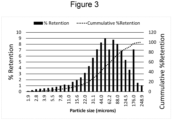
- the particle sizes are 60 +/- 20 ⁇ m.
- Powders or 3D printed objects can be functionalized with BNCs containing one or more enzymes or enzyme systems.
- BNCs are magnetically trapped at the surface of the powders or 3D printed objects.
- Composite powders may also be optimized for flowability.
- 3D objects can be printed to optimize flow within to be used in flow reactors.
- 3D objects and composite powders can be washed from the BNCs by an acid wash, rinsed with water, and then re-functionalized with fresh BNCs.
- Highly magnetic scaffolds are designed to immobilize, stabilize and optimize any BNCs containing enzymes. This includes full enzyme systems at high loading and full activity for the production of small molecules. By combining natural or engineered enzymes with cofactor recycling systems, the scaffolds allow one to scale up biocatalysis to innovations to manufacturing scale and production.
- MMP made of thermoplastic and magnetic materials can take the form of magnetic powders that are suitable for use in sequential batch reactions.
- these powders can be 3D printed by SLS as structures, as functional objects, or as flow cells or plate reactors. High surface areas allow one to maximize the enzyme loading and flow can be engineered within the materials to enable biocatalysis at maximal productivity.
- SLS can be used to process nearly any kind of material from metals, ceramics, plastics, and combinations thereof, for tailor-made composite materials. It is critical, however, that the material is available in fine powder form and that the powder particles are operative to fuse when exposing them to heat ( Kruth et al., Assembly Automation 23(4):357-371 (2003 )).
- the addition of a sacrificial binder can make this process still feasible for that material.
- polymers are used as sacrificial binders in order to expand the range of materials suitable for this technology. After sintering, the sacrificial binder can be either removed by thermal decomposition or kept as part of the composition.
- This concept applies to magnetite that loses its permanent magnetic properties above 585°C. This is significantly lower than its melting temperature (1538°C).
- Another advantage of using a polymeric matrix to incorporate magnetite particles is that the former can act as a protective barrier to prevent oxidation and corrosion as well as aiding to disperse the magnetite particles. Also, magnetite can mechanically reinforce the polymer. ( Shishkovsky et al., Microelectronic Engineering 146:85-91 (2015 )).
- Laser sintering of plastic parts is one of two additive manufacturing processes used for Rapid Manufacturing ( Wegner, Physics Procedia 83:1003-1012 (2016 )).
- Polymer properties that determine its capability to be sintered and produce good quality 3D objects. These include structural properties such crystalline structure ( i.e. thermal properties such as Tm, Tg, and Tc), mechanical properties (Young's modulus and elongation at break, etc.), density, particle size, and shape.
- the temperature-processing window is determined from the difference between the melting and crystallization temperatures of the polymer.
- nylon 12 PA 12
- PA 12 nylon 12
- Shishkovsky et al., Microelectronic Engineering 146:85-91 (2015 ) there are many more parameters that can still make this process difficult for any specific polymer.
- a low polymer crystallization rate is desired together with a melt index that provides a suitable rheology and surface tension.
- the bulk density, particle shape, and size distribution of the powder are key factors ( Wegner, Physics Procedia 83:1003-1012 (2016 )). It has been determined that the optimal particle size range is about 40 to about 90 microns. Smaller particles prevent flowability and their rapid vaporization is detrimental to the optical sensors of the sintering device. This can fog the device and lead to inaccurately sintered parts ( Goodridge et al. Materials Science 57:229-267 (2012 )).
- the powders should have good flowing properties and preferably an approximately round particle shape. This allows good powder spreading during the process. High heat conductivity of the material is desired at the CO 2 laser beam wavelength (10.6 microns). This is not the case for most polymers.
- additives such as high-energy absorption materials, e.g. carbon black, to improve heat absorption, and fume silica nanoparticles (talc) to aid the particle flowability with irregularly-shaped particles.
- high-energy absorption materials e.g. carbon black
- talc fume silica nanoparticles
- additive manufacturing also referred to as 3D printing
- additive manufacturing involves manufacturing a part by depositing material layer-by-layer. This differs from conventional processes such as subtractive processes (i.e., milling or drilling), formative processes (i.e., casting or forging), and joining processes (i.e., welding or fastening).
- subtractive processes i.e., milling or drilling
- formative processes i.e., casting or forging
- joining processes i.e., welding or fastening
- 3D printing a valuable tool for both prototyping and industrial manufacturing.
- the three most common types of 3D printers are fused filament fabrication, stereolithography, and selective laser sintering.
- FFF Fused filament fabrication
- PLA polylactic acid
- ABS acrylonitrile butadiene styrene
- Stereolithography uses a laser to polymerize photosensitive resins. Uncured liquid resin is placed in a vat where a laser is used to cure resin into solid plastic and build the object layer by layer. SLA printers have a much higher resolution than FFF printers due to the fine spot size of the laser and thus can print intricate features and complex shapes. The resins, however, are more expensive than filaments and completed prints currently require post processing with solvents to optimize the surface finish and material characteristics.
- SLS Selective laser sintering
- CAD computer-aided design
- STL stereolithography
- SLS provides advantages for printing objects with magnetic properties that can be used for immobilizing BNCs. This is because the printing process creates porosity and a high surface area.
- the surrounding, unsintered powder acts as a natural support that eliminates the need for dedicated support structures.
- the lack of support structures allows for complex geometries that would otherwise be impossible to manufacture using alternative 3D printing methods.
- the nature of sintering itself creates macro and microporous volumes.
- the laser flashes thermoplastic crystalline thermoplastic powders (e.g. Polypropylene, polystyrene) between their glass transition temperature and melting temperature to generate stiff parts.
- powders are sintered in place to form small bonds amongst themselves.
- the low-density powders trap air in their structures resulting in remarkable porosity and surface area in three dimensions. These pores increase the surface area for enzyme immobilization.
- Biocatalytic flow cells are scaffolds containing immobilized enzymes for use in reactors such as continuous stirred tank reactors (CSTRs) and packed bed reactors (PBRs). Both types of reactors are known in the art but are primarily chosen based on the type of immobilization used.
- CSTRs continuous stirred tank reactors
- PBRs packed bed reactors
- immobilized enzymes are used in a diverse range of large-scale processes including high fructose corn syrup production (10 7 tons/year), transesterification of food oils (10 5 tons/year), biodiesel synthesis (10 4 tons/year), and chiral resolution of alcohols and amines (10 3 tons/year) ( DiCosimo et al., Chem. Soc. Rev. (42):6437-6474 (2013 )).
- These systems allow for improved downstream process management for enzymatic systems compared to batch reactors in terms of in-line control, enzyme reuse, and production scalability.
- the inventions described herein provide biocatalytic systems for small-to-large scale manufacturing using BNCs in scaffolds that are shaped by 3D printing.
- the biocatalytic systems are continuous flow.
- the novel scaffolds disclosed herein may comprise cross-linked water-insoluble polymers and an approximately uniform distribution of embedded magnetic microparticles (MMP).
- the cross-linked polymer comprises polyvinyl alcohol (PVA) and optionally additional polymeric materials.
- PVA polyvinyl alcohol
- the scaffolds may take any shape by using 3D printing.
- the magnetic powders are suitable for use in sequential batch reactions. For flow chemistry applications, these powders can be 3D printed as structures in a functional object or as flow cells or plate reactors. High surface areas allow one to maximize the enzyme loadings and flow can be engineered within the materials to enable biocatalysis at maximal productivity.
- the materials functionalized with enzymes, or enzyme systems have applications for the production of pharmaceutical actives, agricultural actives, flavors and fragrances, fine and commodity chemicals, and food ingredients.
- Level 1 is the self-assembly of enzymes with magnetic nanoparticles (MNP) for the synthesis of magnetic mesoporous nanoclusters. This level uses a mechanism of molecular self-entrapment to immobilize and stabilize enzymes.
- Level 2 is the stabilization of the MNPs into other matrices.
- Level 3 is product conditioning and packaging for Level 1+2 delivery.
- BNC bionanocatalyst
- MNPs allow for a broader range of operating conditions such as temperature, ionic strength and pH.
- the size and magnetization of the MNPs affect the formation and structure of the NPs, all of which have a significant impact on the activity of the entrapped enzymes.
- MNPs can be used as improved enzymatic or catalytic agents where other such agents are currently used. Furthermore, they can be used in other applications where enzymes have not yet been considered or found applicable.
- the BNC contains mesopores that are interstitial spaces between the magnetic nanoparticles.
- the enzymes are preferably embedded or immobilized within at least a portion of mesopores of the BNC.
- magnetic encompasses all types of useful magnetic characteristics, including permanent magnetic, superparamagnetic, paramagnetic, ferromagnetic, and ferrimagnetic behaviors.
- the magnetic nanoparticle or BNC has a size in the nanoscale, i.e., generally no more than 500 nm.
- size can refer to a diameter of the magnetic nanoparticle when the magnetic nanoparticle is approximately or substantially spherical. In a case where the magnetic nanoparticle is not approximately or substantially spherical (e.g., substantially ovoid or irregular), the term “size” can refer to either the longest the dimension or an average of the three dimensions of the magnetic nanoparticle. The term “size” may also refer to an average of sizes over a population of magnetic nanoparticles (i.e., "average size").
- the magnetic nanoparticle has a size of precisely, about, up to, or less than, for example, 500 nm, 400 nm, 300 nm, 200 nm, 100 nm, 50 nm, 40 nm, 30 nm, 25 nm, 20 nm, 15 nm, 10 nm, 5 nm, 4 nm, 3 nm, 2 nm, or 1 nm, or a size within a range bounded by any two of the foregoing exemplary sizes.
- the individual magnetic nanoparticles can be considered to be primary nanoparticles (i.e., primary crystallites) having any of the sizes provided above.
- the aggregates of nanoparticles in a BNC are larger in size than the nanoparticles and generally have a size (i.e., secondary size) of at least about 5 nm.
- the aggregates have a size of precisely, about, at least, above, up to, or less than, for example, 5 nm, 8 nm, 10 nm, 12 nm, 15 nm, 20 nm, 25 nm, 30 nm, 35 nm, 40 nm, 45 nm, 50 nm, 60 nm, 70 nm, 80 nm, 90 nm, 100 nm, 150 nm, 200 nm, 300 nm, 400 nm, 500 nm, 600 nm, 700 nm, or 800 nm, or a size within a range bounded by any two of the foregoing exemplary sizes.
- the primary and/or aggregated magnetic nanoparticles or BNCs thereof have a distribution of sizes, i.e., they are generally dispersed in size, either narrowly or broadly dispersed. In different embodiments, any range of primary or aggregate sizes can constitute a major or minor proportion of the total range of primary or aggregate sizes.
- a particular range of primary particle sizes (for example, at least about 1, 2, 3, 5, or 10 nm and up to about 15, 20, 25, 30, 35, 40, 45, or 50 nm) or a particular range of aggregate particle sizes (for example, at least about 5, 10, 15, or 20 nm and up to about 50, 100, 150, 200, 250, or 300 nm) constitutes at least or above about 50%, 60%, 70%, 80%, 90%, 95%, 98%, 99%, or 100% of the total range of primary particle sizes.
- a particular range of primary particle sizes (for example, less than about 1, 2, 3, 5, or 10 nm, or above about 15, 20, 25, 30, 35, 40, 45, or 50 nm) or a particular range of aggregate particle sizes (for example, less than about 20, 10, or 5 nm, or above about 25, 50, 100, 150, 200, 250, or 300 nm) constitutes no more than or less than about 50%, 40%, 30%, 20%, 10%, 5%, 2%, 1%, 0.5%, or 0.1% of the total range of primary particle sizes.
- the aggregates of magnetic nanoparticles i.e., "aggregates" or BNCs thereof can have any degree of porosity, including a substantial lack of porosity depending upon the quantity of individual primary crystallites they are made of.
- the aggregates are mesoporous by containing interstitial mesopores (i.e., mesopores located between primary magnetic nanoparticles, formed by packing arrangements).
- the mesopores are generally at least 2 nm and up to 50 nm in size.
- the mesopores can have a pore size of precisely or about, for example, 2, 3, 4, 5, 10, 12, 15, 20, 25, 30, 35, 40, 45, or 50 nm, or a pore size within a range bounded by any two of the foregoing exemplary pore sizes. Similar to the case of particle sizes, the mesopores typically have a distribution of sizes, i.e., they are generally dispersed in size, either narrowly or broadly dispersed. In different embodiments, any range of mesopore sizes can constitute a major or minor proportion of the total range of mesopore sizes or of the total pore volume.
- a particular range of mesopore sizes (for example, at least about 2, 3, or 5, and up to 8, 10, 15, 20, 25, or 30 nm) constitutes at least or above about 50%, 60%, 70%, 80%, 90%, 95%, 98%, 99%, or 100% of the total range of mesopore sizes or of the total pore volume.
- a particular range of mesopore sizes (for example, less than about 2, 3, 4, or 5 nm, or above about 10, 15, 20, 25, 30, 35, 40, 45, or 50 nm) constitutes no more than or less than about 50%, 40%, 30%, 20%, 10%, 5%, 2%, 1%, 0.5%, or 0.1% of the total range of mesopore sizes or of the total pore volume.
- the magnetic nanoparticles can have any of the compositions known in the art.
- the magnetic nanoparticles are or include a zerovalent metallic portion that is magnetic.
- Some examples of such zerovalent metals include cobalt, nickel, and iron, and their mixtures and alloys.
- the magnetic nanoparticles are or include an oxide of a magnetic metal, such as an oxide of cobalt, nickel, or iron, or a mixture thereof.
- the magnetic nanoparticles possess distinct core and surface portions.
- the magnetic nanoparticles may have a core portion composed of elemental iron, cobalt, or nickel and a surface portion composed of a passivating layer, such as a metal oxide or a noble metal coating, such as a layer of gold, platinum, palladium, or silver.
- a passivating layer such as a metal oxide or a noble metal coating, such as a layer of gold, platinum, palladium, or silver.
- metal oxide magnetic nanoparticles or aggregates thereof are coated with a layer of a noble metal coating.
- the noble metal coating may, for example, reduce the number of charges on the magnetic nanoparticle surface, which may beneficially increase dispersibility in solution and better control the size of the BNCs.
- the noble metal coating protects the magnetic nanoparticles against oxidation, solubilization by leaching or by chelation when chelating organic acids, such as citrate, malonate, or tartrate are used in the biochemical reactions or processes.
- the passivating layer can have any suitable thickness, and particularly, at least, up to, or less than, about for example, 0.1 nm, 0.2 nm, 0.3 nm, 0.4 nm, 0.5 nm, 0.6 nm, 0.7 nm, 0.8 nm, 0.9 nm, 1 nm, 2 nm, 3 nm, 4 nm, 5 nm, 6 nm, 7 nm, 8 nm, 9 nm, or 10 nm, or a thickness in a range bounded by any two of these values.
- Non-limiting examples comprise ferromagnetic and ferromagnetic materials including ores such as iron ore (magnetite or lodestone), cobalt, and nickel.
- rare earth magnets are used.
- Non-limiting examples include neodymium, gadolinium, sysprosium, samarium-cobalt, neodymium-iron-boron, and the like.
- the magnets comprise composite materials.
- Non-limiting examples include ceramic, ferrite, and alnico magnets.
- the magnetic nanoparticles have an iron oxide composition.
- the iron oxide composition can be any of the magnetic or superparamagnetic iron oxide compositions known in the art, e.g., magnetite (Fe 3 O 4 ), hematite ( ⁇ -Fe 2 O 3 ), maghemite ( ⁇ -Fe 2 O 3 ), or a spinel ferrite according to the formula AB 2 O 4 , wherein A is a divalent metal (e.g., Xn 2 +, Ni 2 +, Mn 2+ , Co 2+ , Ba 2+ , Sr 2+ , or combination thereof) and B is a trivalent metal (e.g., Fe 3+ , Cr 3+ , or combination thereof).
- A is a divalent metal (e.g., Xn 2 +, Ni 2 +, Mn 2+ , Co 2+ , Ba 2+ , Sr 2+ , or combination thereof)
- B is a trivalent metal (e.g., Fe 3+ , Cr 3+ , or combination thereof).
- the individual magnetic nanoparticles or aggregates thereof or BNCs thereof possess any suitable degree of magnetism.
- Ms saturated magnetization
- the magnetic nanoparticles, BNCs, or BNC-scaffold assemblies preferably possess a permanent magnetization (Mr) of no more than (i.e., up to) or less than 5 emu/g, and more preferably, up to or less than 4 emu/g, 3 emu/g, 2 emu/g, 1 emu/g, 0.5 emu/g, or 0.1 emu/g.
- Mr permanent magnetization
- the magnetic nanoparticles or aggregates thereof can be made to adsorb a suitable amount of enzyme, up to or below a saturation level, depending on the application, to produce the resulting BNC.
- the magnetic nanoparticles or aggregates thereof may adsorb about, at least, up to, or less than, for example, 1, 5, 10, 15, 20, 25, or 30 pmol/m 2 of enzyme.
- the magnetic nanoparticles or aggregates thereof may adsorb an amount of enzyme that is about, at least, up to, or less than, for example, about 10%, 20%, 30%, 40%, 50%, 60%, 70%, 80%, 90%, or 100% of a saturation level.
- the magnetic nanoparticles or aggregates thereof or BNCs thereof possess any suitable pore volume.
- the magnetic nanoparticles or aggregates thereof can possess a pore volume of about, at least, up to, or less than, for example, about 0.01, 0.05, 0.1, 0.15, 0. 2, 0.25, 0.3, 0.35, 0.4, 0.45, 0.5, 0.55, 0.6, 0.65, 0.7, 0.75, 0.8, 0.85, 0.9, 0.95, or 1 cm 3 /g, or a pore volume within a range bounded by any two of the foregoing values.
- MNPs their structures, organizations, suitable enzymes, and uses are described in WO2012122437 and WO2014055853 .
- Some embodiments of the invention comprise hydrolases.
- Hydrolases catalyze the hydrolysis of many types of chemical bonds by using water as a substrate.
- the substrates typically have hydrogen and hydroxyl groups at the site of the broken bonds.
- Hydrolases are classified as EC 3 in the EC number classification of enzymes. Hydrolases can be further classified into several subclasses, based upon the bonds they act upon.
- Exemplary hydrolases and the bonds they hydrolyze include EC 3.1: ester bonds (esterases: nucleases, phosphodiesterases, lipase, phosphatase), EC 3.2: sugars (DNA glycosylases, glycoside hydrolase), EC 3.3: ether bonds, EC 3.4: peptide bonds (Proteases/peptidases), EC 3.5: carbon-nitrogen bonds, other than peptide bonds, EC 3.6 acid anhydrides (acid anhydride hydrolases, including helicases and GTPase), EC 3.7 carbon-carbon bonds, EC 3.8 halide bonds, EC 3.9: phosphorus-nitrogen bonds, EC 3.10: sulphur-nitrogen bonds, EC 3.11: carbon-phosphorus bonds, EC 3.12: sulfur-sulfur bonds, and EC 3.13: carbon-sulfur bonds.
- ester bonds esterases: nucleases, phosphodiesterases, lipase, phosphat
- the hydrolase is a glycoside hydrolase.
- These enzymes have a variety of uses including degradation of plant materials (e.g. cellulases for degrading cellulose to glucose that are used for ethanol production), food manufacturing (e.g . sugar inversion, maltodextrin production), and paper production (removing hemicelluloses from paper pulp).
- the hydrolase is lipolase 100L (EC 3.1.1.3). It is used to synthesize pregabalin (marketed as by Pfizer as Lyrica ® ), an anticonvulsant drug used for neuropathic pain, anxiety disorders, and epilepsy. These conditions affect about 1% of the world's population. Lipolase 100L was found to reduce the required starting material by 39% and cut the waste per unit by 80%.
- the hydrolase is a gamma-lactamase (e.g. EC 3.1.5.49). It is used to make Vince lactam, an intermediate for abacavir production (an antiretroviral drug for treating HIV/AIDS). It was found that changing from a stoichiometric process to a catalytic flow process reduced the number of unit operations from 17 to 12 and reduced the waste by 35%. Additionally, the use of the toxic substance cyanogen chloride is minimized.
- the hydrolase is a Lactase (e.g. EC 3.2.1.108). These enzymes break apart lactose in milk into simple sugars to produce lactose-free milk. This important product serves approximately 15% of the world population that is lactose intolerant.
- the hydrolase is a penicillin amidase (e.g. EC 3.5.1.11). These enzymes split penicillin into a carboxylate and 6-aminopenicillanate (6-APA). 6-APA is the core structure in natural and synthetic penicillin derivatives. These enzymes are used to produce semisynthetic penicillins tailored to fight specific infections.
- the hydrolase is a nitralase (e.g. EC 3.5.5.1). These enzymes split nitriles into carboxyl groups.
- a nitralase is used to manufacture atorvastatin (marketed by Pfizer as Lipitor ® ). It catalyzes the reaction of meso-3-hydroxyglutaronitrile to ethyl (R)-4-cyano-3-hydroxybutyrate, the latter of which form the core of atorvastatin.
- Hydrolases are discussed in the following references: Anastas, P.T. Handbook of Green Chemistry. Wiley-VCH-Verlag, 2009 ; Dunn, Peter J., Andrew Wells, and Michael T. Williams, eds. Green chemistry in the pharmaceutical industry. John Wiley & Sons, 2010 .; Martinez et al., Curr. Topics Med. Chem. 13(12):1470-90 (2010 ); Wells et al., Organic Process Res. Dev. 16(12):1986-1993 (2012 ).
- the invention provides hydrogen peroxide producing (HPP) enzymes.
- the HPP enzymes are oxidases that may be of the EX 1.1.3 subgenus.
- the oxidase may be EC 1.1.3.3 (malate oxidase), EC 1.1.3.4 (glucose oxidase), EC 1.1.3.5 (hexose oxidase), EC 1.1.3.6 (cholesterol oxidase), EC 1.1.3.7 (aryl-alcohol oxidase), EC 1.1.3.8 (L-gulonolactone oxidase), EC 1.1.3.9 (galactose oxidase), EC 1.1.3.10 (pyranose oxidase), EC 1.1.3.11 (L-sorbose oxidase), EC 1.1.3.12 (pyridoxine 4-oxidase), EC 1.1.3.13 (alcohol oxidase), EC 1.
- Some embodiments of the invention may comprise hydroxylases.
- Hydroxylation is a chemical process that introduces a hydroxyl group (-OH) into an organic compound. Hydroxylation is the first step in the oxidative degradation of organic compounds in air. Hydroxylation plays a role in detoxification by converting lipophilic compounds into hydrophilic products that are more readily excreted.
- Some drugs e.g. steroids
- Hydroxylases are well-known in the art. Exemplary hydroxylases include proline hydroxylases, lysine hydroxylases, and tyrosine hydroxylases.
- Nitrilases are hydrolyzing enzymes (EC 3.5.5.1) that catalyze the hydrolysis of nitriles into chiral carboxylic acids with high enantiopurity and ammonia. NIT activity may be measured by monitoring the conversion of mandelonitirile into a (R)-mandelic acid. This results in a pH drop that may be monitored spectrophotometrically.
- Nitrilases are used to produce nicotinic acid, also known as vitamin B3 or niacin, from 3-cyanopyridine. Nicotinic acid is a nutritional supplement in foods and a pharmaceutical intermediate. Exemplary industrial uses are discussed in Gong et al., Microbial Cell Factories, 11(1), 142(2012 )).
- Some embodiments of the invention comprise hydratases. They are enzymes that catalyze the addition or removal of the elements of water. Hydratases, also known as hydrolases or hydrases, may catalyze the hydration or dehydration of C-O linkages.
- Some embodiments of the invention comprise oxidoreductases. These enzymes catalyze the transfer of electrons from one molecule to another. This involves the transfer of H and O atoms or electrons from one substance to another. They typically utilize NADP or NAD+ as cofactors.
- Oxidoreductases are used for the decomposition of pollutants such as polychlorinated biphenyls and phenolic compounds, the degradation of coal, and the enhancement of the fermentation of wood hydrolysates.
- pollutants such as polychlorinated biphenyls and phenolic compounds
- the invention further includes their use in biosensors and disease diagnosis.
- the oxidoreductase is a dehydrogenase (DHO).
- DHO dehydrogenase
- This group of oxidoreductases oxidizes a substrate by a reduction reaction that transfers one or more hydrides (H-) to an electron acceptor, usually NAD+/NADP+ or a flavin coenzyme such as FAD or FMN.
- dehydrogenases include aldehyde dehydrogenase, acetaldehyde dehydrogenase, alcohol dehydrogenase, glutamate dehydrogenase, lactate dehydrogenase, pyruvate dehydrogenase, glucose-6-phosphate dehydrogenase, glyceraldehyde-3-phosphate dehydrogenase, sorbitol dehydrogenase, isocitrate dehydrogenase, alpha-ketoglutarate dehydrogenase, succinate dehydrogenase, and malate dehydrogenase.
- the oxidoreductase is a ketoreductase (EC 1.1.1.184), an oxidoreductase used to make atorvastatin (marketed by Pfizer as Lipitor ® ).
- This biocatalytic process is commercially important because it substantially reduces starting materials, limits the use of organic solvents, and increases the biodegradability of the waste streams.
- the oxidoreductase is a glucose dehydrogenase (e.g. EC 1.1.99.10). They are used by pharmaceutical companies to recycle cofactors used in drug production. They catalyze the transformation of glucose into gluconate. NADP+ is reduced to NADPH. This is used in Avastan production.
- glucose dehydrogenase e.g. EC 1.1.99.10
- Cytochrome P450 (referred to as P450 or CYP) are of the E.C. 1.14 class of enzymes. ( Br. J. Pharmacol. 158(Suppl 1): S215-S217 (2009 )). They constitute a family of monooxygenases involved in the biotransformation of drugs, xenobiotics, alkanes, terpenes, and aromatic compounds. They also participate in the metabolism of chemical carcinogens and the biosynthesis of physiologically relevant compounds such as steroids, fatty acids, eicosanoids, fat-soluble vitamins, and bile acids. Furthermore, they are also involved in the degradation of xenobiotics in the environment such pesticides and other industrial organic contaminants.
- the oxidoreductase is P450 (EC 1.14.14.1). It is used in the pharmaceutical industry for difficult oxidations. P450 reduces the cost, inconsistency, and inefficiency associated with natural cofactors (e.g., NADPH/NADP+).
- natural cofactors e.g., NADPH/NADP+.
- drug metabolites As active ingredients because they can show superior properties compared to the original drugs. This includes improved pharmacodynamics, improved pharmacokinetics, lower probability of drug-drug interactions, less variable pharmacokinetics and/or pharmacodynamics, improved overall safety profile and improved physicochemical properties.
- the P450 monooxygenase comprises a P450 sequence that is mammalian. In other embodiments, the P450 monooxygenase comprises a P450 sequence that is human. In other embodiments, the P450 monooxygenase comprises CYP1A1, CYP1A2, CYP1B1, CYP2A6, CYP2A7, CYP2A13, CYP2B6, CYP2C8, CYP2C9, CYP2C18, CYP2C19, CYP2D6, CYP2E1, CYP2F1, CYP2J2, CYP2R1, CYP2S1, CYP2U1, CYP2W1,CYP3A4, CYP3A5, CYP3A7, CYP3A43,CYP4A11, CYP4A22, CYP4B1, CYP4F2, CYP4F3, CYP4F8, CYP4F11,
- the P450 monooxygenase comprises a P450 sequence that is of an origin selected from the group consisting of primate, mouse, rat, dog, cat, horse, cow, sheep, and goat. In other embodiments, the P450 monooxygenase comprises a P450 sequence that is of an origin selected from the group consisting of insect, fish, fungus, yeast, protozoan, and plant.
- the P450 is in a soluble form such as the BM3 P450 from Bacillus megaterium. See, e.g., SEQ ID NO:1.
- the BM3 P450 has one or more variant amino acids from the wild-type.
- the P450 has at least a 90% sequence identity to SEQ ID NO:1.
- the cofactor is nicotinamide adenine dinucleotide + hydrogen (NADH), nicotinamide adenine dinucleotide phosphate + hydrogen (NADPH), Flavin adenine dinucleotide + hydrogen (FADH), or glutathione.
- NADH nicotinamide adenine dinucleotide + hydrogen
- NADPH nicotinamide adenine dinucleotide phosphate + hydrogen
- FADH Flavin adenine dinucleotide + hydrogen
- the oxidoreductase is a catalase such as EC 1.11.1.6. It is used in the food industry for removing hydrogen peroxide from milk prior to cheese production and for producing acidity regulators such as gluconic acid. Catalase is also used in the textile industry for removing hydrogen peroxide from fabrics.
- the oxidoreductase is a glucose oxidase (e.g. Notatin, EC 1.1.3.4). It catalyzes the oxidation of glucose to hydrogen peroxide and D-glucono- ⁇ -lactone. It is used, for example, to generate hydrogen peroxide as an oxidizing agent for hydrogen peroxide consuming enzymes such as peroxidase.
- glucose oxidase e.g. Notatin, EC 1.1.3.4
- It catalyzes the oxidation of glucose to hydrogen peroxide and D-glucono- ⁇ -lactone. It is used, for example, to generate hydrogen peroxide as an oxidizing agent for hydrogen peroxide consuming enzymes such as peroxidase.
- the invention encompasses Free Radical Producing (FRP) enzymes.
- FRP Free Radical Producing
- the FRP is a peroxidase.
- Peroxidases are widely found in biological systems and form a subset of oxidoreductases that reduce hydrogen peroxide (H 2 O 2 ) to water in order to oxidize a large variety of aromatic compounds ranging from phenol to aromatic amines. Peroxidases are very potent enzymes yet notoriously difficult to deploy in industrial settings due to strong inhibition in presence of excess peroxide. The invention provides increased reaction turnover and reduced inhibition. Thus, enzymes such as Horseradish Peroxidase (HRP) may be used at industrial scales.
- HRP Horseradish Peroxidase
- Peroxidases belong to the sub-genus EC 1.11.1.
- the EC 1.11.1 enzyme is The EC 1.11.1 enzyme can be more specifically, for example, EC 1.11.1.1 (NADH peroxidase), EC 1.11.1.2 (NADPH peroxidase), EC 1.11.1.3 (fatty acid peroxidase), EC 1.11.1.4, EC 1.11.1.5 (cytochrome-c peroxidase), EC 1.11.1.6 (catalase), EC 1.11.1.7 (peroxidase), EC 1.11.1.8 (iodide peroxidase), EC 1.11.1.9 (glutathione peroxidase), EC 1.11.1.10 (chloride peroxidase), EC 1.11.1.11 (L-ascorbate peroxidase), EC 1.11.1.12 (phospholipid-hydroperoxide glutathione peroxidase), EC 1.11.1.13 (manganese peroxidase), EC 1.11.1.14
- Horseradish peroxidase (EC 1.11.1.7) is a heme-containing oxidoreductase enzyme found in the roots of the horseradish plant A. rusticana. It is commonly used as a biochemical signal amplifier and tracer, as it usually acts on a chromogenic substrate together with hydrogen peroxide to produce a brightly colored product complex. It improves spectrophotometric detectability of target molecules.
- This characteristic of horseradish peroxidase (HRP) has been applied to permeability studies of rodent nervous system capillaries.
- HRP is used as part of a possible remediation strategy of phenolic wastewaters due to its ability to degrade various aromatic compounds. See Duan et al., ChemPhysChem, 15(5), 974-980 (2014 ).
- the peroxidase may also be further specified by function, e.g., a lignin peroxidase, manganese peroxidase, or versatile peroxidase.
- the peroxidase may also be specified as a fungal, microbial, animal, or plant peroxidase.
- the peroxidase may also be specified as a class I, class II, or class III peroxidase.
- the peroxidase may also be specified as a myeloperoxidase (MPO), eosinophil peroxidase (EPO), lactoperoxidase (LP), thyroid peroxidase (TPO), prostaglandin H synthase (PGHS), glutathione peroxidase, haloperoxidase, catalase, cytochrome c peroxidase, horseradish peroxidase, peanut peroxidase, soybean peroxidase, turnip peroxidase, tobacco peroxidase, tomato peroxidase, barley peroxidase, or peroxidasin.
- the peroxidase is horseradish peroxidase.
- lactoperoxidase/glucose oxidase (LP/GOX) antimicrobial system occurs naturally in bodily fluids such as milk, saliva, tears, and mucous ( Bosch et al., J.Applied Microbiol., 89(2), 215-24 (2000 )).
- This system utilizes thiocyanate (SCN-) and iodide (I-), two naturally occurring compounds that are harmless to mammals and higher organisms ( Welk et al. Archives of Oral Biology, 2587 (2011 )).
- LP catalyzes the oxidation of thiocyanate and iodide ions into hypothiocyanite (OSCN-) and hypoiodite (OI-), respectively, in the presence of hydrogen peroxide (H 2 O 2 ).
- the H 2 O 2 in this system is provided by the activity of GOX on ⁇ -D-glucose in the presence of oxygen.
- Transferases refers to a class of enzymes that transfer specific functional groups from one molecule to another. Examples of groups transferred include methyl groups and glycosyl groups. Transferases are used for treating substances such as chemical carcinogens and environmental pollutants. Additionally, they are used to fight or neutralize toxic chemicals and metabolites found in the human body.
- the transferase is a transaminase.
- a transaminase or an aminotransferase catalyzes a reaction between an amino acid and an ⁇ -keto acid. They are important in the synthesis of amino acids.
- the transaminase is ⁇ -transaminases (EC 2.6.1.18). It is used, among other things, to synthesize sitagliptin (marketed by Merck and Co. as Januvia ® , an antidiabetic drug). Engineered ⁇ -transaminases were found to improve biocatalytic activity by, for example, 25,000 fold, resulting in a 13% overall increase in sitagliptin yield and 19% reduction in overall process waste.
- ⁇ -transaminases Due to their high stereoselectivity for substrates and stereospecificity for products, ⁇ -transaminases can be utilized to make unnatural amino acids and optically pure chiral amines or keto acids ( Mathew & Yun, ACS Catalysis 2(6), 993-1001 (2012 )). ⁇ -Transaminases also have applications in biocatalytic chiral resolution of active pharmaceutical intermediates, simplifying the process over conventional chemical methods. ( Schharmle et al., Anal. Chem. 81(19):8244-48 (2009 ).)
- the transferase is a thymidylate synthetase (e.g. EC 2.1.1.45).
- thymidylate synthetase e.g. EC 2.1.1.45
- These enzymes are used for manufacturing sugar nucleotides and oligosaccharides. They catalyze, for example, the following reaction: 5,10-methylenetetrahydrofolate + dUMP dihydrofolate + dTMP.
- the transferase is a glutathione S-transferase (e.g. EC 2.5.1.18). These enzymes catalyze glutathione into other tripeptides. They are used in the food industry as oxidizing agents as well as in the pharmaceutical industry to make anti-aging drugs and skin formulations.
- the transferase is a glucokinase (e.g. EC 2.7.1.2). These enzymes facilitate the phosphorylation of glucose to glucose-6-phosphate. They are used in the food industry to reduce the glucose concentration in their production streams and as in the pharmaceutical industry to make diabetes drugs.
- the transferase is a riboflavin kinase (e.g. EC 2.7.1.26).
- a riboflavin kinase is used to produce flavin mononucleotide (FMN) in the food industry.
- FMN is an orange-red food color additive and an agent that breaks down excess riboflavin (vitamin B 2 ).
- Riboflavin kinase catalyzes, for example, the following reaction: ATP + riboflavin ADP + Flavin mononucleotide (FMN).
- Some embodiments of the invention comprise ene reductases (EREDS). These enzymes catalyze alkene reduction in an NAD(P)H-dependent manner.
- ene reductases include The FMN-containing Old Yellow Enzyme (OYE) family of oxidoreductases (EC 1.6.99), clostridial enoate reductases (EnoRs, C 1.3.1.31), flavin-independent medium chain dehydrogenase/reductases (MDR; EC 1.3.1), short chain dehydrogenase/reductases (SDR; EC 1.1.1.207-8), leukotriene B4 dehydrogenase (LTD), quinone (QOR), progesterone 5b-reductase, rat pulegone reductase (PGR), tobacco double bond reductase (NtDBR), Cyanobacterial OYEs, LacER from Lactobacillus casei, Achr-OYE4 from Ach
- IRED imine reductases
- IRED imine reductases
- IREDS imine reductases
- IRED catalyze the synthesis of optically pure secondary cyclic amines. They may convert a ketone or aldehyde substrate and a primary or secondary amine substrate to form a secondary or tertiary amine product compound.
- Exemplary IREDs are those from Paenibacillus elgii B69, Streptomyces ipomoeae 91-03, Pseudomonas putida KT2440, and Acetobacterium woodii. IREDs are discussed in detail in Int'l Pub. No. WO2013170050 .
- the enzymes are lyases. They catalyze elimination reactions in which a group of atoms is removed from a substrate by a process other than hydrolysis or oxidation. A new double bond or ring structure often results. Seven subclasses of lyases exist.
- pectin lyase is used to degrade highly esterified pectins (e.g. in fruits) into small molecules.
- Other preferred embodiments of the invention comprise oxynitrilases (also referred to as mandelonitrile lyase or aliphatic (R)-hydroxynitrile lyase). They cleave mandelonitrile into hydrogen cyanide + benzaldehyde.
- the lyase is a hydroxynitrile lyase (e.g. EC 4.1.2, a mutation of a Prunus amygdalus lyase).
- Hydroxynitrile lyases catalyze the formation of cyanohydrins which can serve as versatile building blocks for a broad range of chemical and enzymatic reactions. They are used to improve enzyme throughput and stability at a lower pH and is used for producing clopidogrel (Plavix ® ). The reaction process is described in Glieder et al., Chem. Int. Ed. 42:4815 (2003 ).
- the lyase is 2-deoxy-D-ribose phosphate aldolase (DERA, EC 4.1.2.4). It is used for forming statin side chains, e.g. in Lipitor production.
- DEA 2-deoxy-D-ribose phosphate aldolase
- the lyase is (R)-mandelonitrile lyase (HNL, EC 4.1.2.10). It is used to synthesize Threo -3-Aryl-2,3-dihydroxypropanoic acid, a precursor cyanohydrin used to produce Diltiazem.
- Diltiazem is a cardiac drug that treats high blood pressure and chest pain (angina). Lowering blood pressure reduces the risk of strokes and heart attacks. It is a calcium channel blocker. Ditiazem and its production are described in Dadashipour and Asano, ACS Catal. 1:1121-49 (2011 ) and Aehle W. 2008. Enzymes in Industry, Weiley-VCH Verlag, GmbH Weinheim .
- the lyase is nitrile hydratase (EC 4.2.1). It is used commercially to convert 3-cyanopyridine to nicotinamide (vitamin B3, niacinamide). It is also used in the preparation of levetiracetam, the active pharmaceutical ingredient in Keppra ® .
- the lyase is a Phenyl Phosphate Carboxylase. They are used, e.g., for phosphorylating phenol at room temperature and under sub-atmospheric CO 2 pressure. These enzymes catalyze the synthesis of 4-OH benzoic acid from phenol and CO 2 with 100% selectivity. 4-OH benzoic acid is used in the preparation of its esters. In more preferred embodiments, the enzymes are used for producing parabens that are used as preservatives in cosmetics and opthalmic solutions.
- the enzyme is a carbonic anhydrase (e.g. EC 4.2.1.1).
- Carbonic anhydrases are ubiquitous metalloenzymes present in every organism. They are among the most efficient enzymes known and serve multiple physiological roles including CO 2 exchange, pH regulation, and HCO 3 - secretion. Carbonic anhydrase also has potential industrial applications in CO 2 sequestration and calcite production. See Lindskog & Silverman, (2000), The catalytic mechanism of mammalian carbonic anhydrases EXS 90:175-195 (W. R. Chegwidden et al. eds. 2000 ); In The Carbonic Anhydrases: New Horizons 7th Edition pp. 175-95 (W.
- the enzyme is an isomerase.
- Isomerases catalyze molecular isomerizations, i.e. reactions that convert one isomer to another. They can facilitate intramolecular rearrangements in which bonds are broken and formed or they can catalyze conformational changes. Isomerases are well known in the art.
- isomerases are used in sugar manufacturing.
- the isomerase is Glucose isomerase, EC 5.3.1.18.
- the glucose isomerase is produced by Actinoplanes missouriensis, Bacillus coagulans or a Streptomyces species. Glucose isomerase converts D-xylose and D-glucose to D-xylulose and D-fructose, important reactions in the production of high-fructose corn syrup and in the biofuels sector.
- the isomerase is Maleate cis-trans isomerase (EC 5.2.1.1). It catalyzes the conversion of maleic acid into fumaric acid. Fumaric acid is important for the biocatalytic production of L-aspartic acid, L-malic acid, polyester resins, food and beverage additives, and mordant for dyes.
- the isomerase is linoleate cis-trans isomerase (EC 5.2.1.5). It catalyzes the isomerization of conjugated linoleic acid (CLA). CLA has been reported to have numerous potential health benefits for treating obesity, diabetes, cancer, inflammation, and artherogenesis. Different isomers of CLA may exert differential physiological effects. Thus, the enzyme is used to prepare single isomers.
- the isomerase is triosephosphate isomerase (EC 5.3.1.1). It catalyzes the interconversion of D-glyceraldehyde 3-phosphate and dihydroxyacetone phosphate.
- triosephosphate isomerase is used in the stereoselective multienzyme synthesis of various sugars or sugar analogs.
- a preferred embodiment is the one-pot enzymatic preparation of D-xylulose 5-phosphate. This synthesis starts with the retro-aldol cleavage of fructose 1,6-biphosphate by D-fructose 1,6-biphosphate aldolase (EC 4.1.2.13).
- the following racemization triosephosphate isomerase facilitates the generation of two equivalents of D-glyceraldehyde 3-phosphate that is converted into xylulose 5-phosphate by transketolase (EC 2.2.1.1)
- the enzyme is a Ligase. These enzymes catalyze the formation of covalent bonds joining two molecules together, coupled with the hydrolysis of a nucleoside-triphosphate. Ligases are well-known in the art and are commonly used for recombinant nucleic acid applications. In a preferred embodiment, the DNA ligase is EC 6.5.1.1.
- the ligase is Acetyl-CoA Carboxylase (EC 6.4.1.2, ACC).
- ACC has a role at the junction of the lipid synthesis and oxidation pathways. It is used with the inventions disclosed herein for clinical purposes such as the production of antibiotics, diabetes therapies, obesity, and other manifestations of metabolic syndrome.
- the ligase is Propionyl-CoA Carboxylase (PCC, EC 6.4.1.3). It catalyzes the biotin-dependent carboxylation of propionyl-CoA to produce D-methylmalonyl-CoA in the mitochondrial matrix. Methylmalyl-CoA is an important intermediate in the biosynthesis of many organic compounds as well as the process of carbon assimilation.
- the methods described herein use recombinant cells that express the enzymes used in the invention.
- Recombinant DNA technology is known in the art.
- cells are transformed with expression vectors such as plasmids that express the enzymes.
- the vectors have one or more genetic signals, e.g., for transcriptional initiation, transcriptional termination, translational initiation and translational termination.
- nucleic acids encoding the enzymes may be cloned in a vector so that they are expressed when properly transformed into a suitable host organism.
- Suitable host cells may be derived from bacteria, fungi, plants, or animals as is well-known in the art.
- BNCs provide the bulk of enzyme immobilization capability, they are sometimes too small to be easily captured by standard-strength magnets.
- sub-micrometric magnetic materials (Level 2) are used to provide bulk magnetization and added stability to Level 1.
- Commercially available free magnetite powder with particle sizes ranging from 50-500 nm, is highly hydrophilic and tends to stick to plastic and metallic surfaces, which, over time, reduces the effective amount of enzyme in a given reactor system.
- powdered magnetite is extremely dense, thus driving up shipping costs. It is also rather expensive - especially at particle sizes finer than 100 nm.
- low-density hybrid materials consisting of magnetite, non-water-soluble cross-linked polymers such as poly(vinylalcohol) (PVA) and carboxymethylcellulose (CMC), have been developed. These materials are formed by freeze-casting and freeze-drying water-soluble polymers followed by cross-linking. These materials have reduced adhesion to external surfaces, require less magnetite, and achieve Level 1 capture that is at least comparable to that of pure magnetite powder.
- PVA poly(vinylalcohol)
- CMC carboxymethylcellulose
- the continuous macroporous scaffold has a cross-linked polymeric composition.
- the polymeric composition can be any of the solid organic, inorganic, or hybrid organic-inorganic polymer compositions known in the art, and may be synthetic or a biopolymer that acts as a binder.
- the polymeric macroporous scaffold does not dissolve or degrade in water or other medium in which the hierarchical catalyst is intended to be used.
- synthetic organic polymers include the vinyl addition polymers (e.g., polyethylene, polypropylene, polystyrene, polyacrylic acid or polyacrylate salt, polymethacrylic acid or polymethacrylate salt, poly(methylmethacrylate), polyvinyl acetate, polyvinyl alcohol, and the like), fluoropolymers (e.g., polyvinylfluoride, polyvinylidenefluoride, polytetrafluoroethylene, and the like), the epoxides (e.g., phenolic resins, resorcinol - formaldehyde resins), the polyamides, the polyurethanes, the polyesters, the polyimides, the polybenzimidazoles, and copolymers thereof.
- vinyl addition polymers e.g., polyethylene, polypropylene, polystyrene, polyacrylic acid or polyacrylate salt, polymethacrylic acid or polymethacrylate salt, poly(methylmethacrylate),
- biopolymers include the polysaccharides (e.g., cellulose, hemicellulose, xylan, chitosan, inulin, dextran, agarose, and alginic acid), polylactic acid, and polyglycolic acid.
- the cellulose may be microbial- or algae-derived cellulose.
- inorganic or hybrid organic-inorganic polymers include the polysiloxanes (e.g., as prepared by sol gel synthesis, such as polydimethylsiloxane) and polyphosphazenes. In some embodiments, any one or more classes or specific types of polymer compositions provided above are excluded as macroporous scaffolds.
- Example 1 Thermoplastics and Magnetite Blends for 3D Printing by Melting and Extrusion
- Polyamide 12 Nylon 12, Cat No. AdSint PA12
- polystyrene Cat. No. Coathylene PS Sint
- Polypropylene Cat. No. Polyaxis PD 2000 sample was obtained from A. Schulman (Fairlawn, Ohio).
- Iron oxide Cat. No. QM-D50/4 Magnetite
- Iron oxide with a particle size smaller than 10 ⁇ m was obtained from Reade Advanced Materials (East Buffalo, RI) and iron (II, III) oxide particle size smaller than 5 ⁇ m from Sigma Aldrich (Cat. No. 310069-500G, St Louis, MO).
- the blowing agents used were sodium bicarbonate (Sigma Aldrich, Cat. No.
- thermoplastics and magnetite Different proportions of polymers, magnetite, and blowing agent powders were placed in a glass vessel and mixed in a rotary tumbler (Lortone, Inc. Model 3A) for several minutes. The powder mixtures were fed into a single screw Filabot extruder (Cat. No. EX00334) and further blended this way at different ranges of temperature and speeds depending upon the polymer matrix composition and blowing agent combination. The size of the composite magnetic materials obtained from the extrusion process was reduced in a stainless-steel blender (Waring Commercial Cat. No. CB15T) to a size of 2.82 mm and smaller by grinding them at high speed at -78.5°C for several minutes various times.
- a stainless-steel blender Waring Commercial Cat. No. CB15T
- the material particle size was further reduced to 60 microns and smaller by cooling it at -184.44°C and feeding the particles to an impact mill (Vortec Model M-1) operating at 20,000 RPM, this process was repeated as many times as required to obtain that particle size.
- Extruded composite example 1 A blend of 100 g of polypropylene (46% w/w), magnetite (46% w/w), and sodium bicarbonate (8% w/w) powders were mixed in a glass cylinder for 15 minutes in the rotary tumbler. The solid blended powders were fed to the extruder and mixed at 175°C and 21 RPM.
- Extruded composite example 2 Another blend was made using 100 g of a powder mixture of polystyrene (48% w/w), magnetite ( ⁇ 10 um, 48% w/w) and sodium bicarbonate (4% w/w). The powders were pre-mixed in the rotary tumbler for 15 min. The mixture was further blended in the extruder at the temperature range of 170° to 175°C and a speed of 12 RPM.
- Thermoplastics and magnetite blends for 3D printing by dissolution coating powders of nylon 12 and magnetite ( ⁇ 5 ⁇ m) 50/50 % w/w were added into a glass vessel containing DMSO in a ratio of 90% v/v of solvent to 10% v/v of powder materials. The mixture was homogeneously stirred at 500 RPM and the temperature was gradually raised to 140°C to allow nylon 12 to dissolve. The material was kept in solution for 15 min. After that time, the mixture of dissolved nylon 12 and dispersed magnetite was allowed to slowly cool down while stirring at 500 RPM. In this fashion, magnetite particles were incorporated into the nylon 12 particles that started to precipitate out of DMSO solution during the cooling down process.
- the magnetite nylon 12 composite particles were purified using a neodymium magnet to remove as much of the DMSO as possible. Then the composite powder was rinsed with cold water several times, after that the material was dried in a vacuum oven at 100°C for 24 hours to remove the remaining absorbed DMSO. Finally, the material was sieved using a 100 ⁇ m opening mesh.
- microstructural features of the developed composite materials before and after sintering were observed under a field emission scanning electron microscope (FESEM, Tescan Mira3) after being sputter coated (7 nm in thickness) with a gold-palladium target.
- FESEM field emission scanning electron microscope
- the morphology of the extruded polypropylene magnetite composite after cryogenic grinding, sintering, and enzyme immobilization was evaluated by SEM are shown in Figures 1A-1C , respectively.
- the shape of the cryogenically grinded composite particles is not perfectly round but is rather regular.
- the particle size distribution of the polypropylene magnetite composite after cryogenic grinding is the range of 1.945 to 248.9 microns ( Figure 3 ). Particles smaller than 37 microns were below 35% of the total and 60% were below 62.23 microns.
- the polypropylene magnetite composite powder was screened with a 100 micron opening mesh. This is consistent with the particles observed in the SEM image ( Figure 1B ).
- Figure 1B displays a successful sintering process of the polypropylene magnetite extruded composite powders that holds the characteristic solidification, coarsening, and porosity features of this process due to the fusing of the powders. Furthermore, it is possible to see residual sodium bicarbonate particles with a needle like shape (approximately 0.5 microns in diameter and 8 microns in length). The sodium bicarbonate residual material was easily removed with a water rinse before enzyme immobilization, also shown by SEM.
- Figure 1C shows the attachment of faceted magnetite nanoparticles (MNP) in a clusters form (level 1) onto the surface of the sintered polypropylene magnetite composite (level 2) after invertase immobilization. This was not previously observed on the sintered material. The density of the MNP is high on the surface of the sintered material. This correlates with the enzymatic immobilization and activity yield results.
- MNP faceted magnetite nanoparticles
- Figures 2A and 2B show the morphology of the nylon 12 magnetite composite produced from the dissolution coating process.
- the backscatter SEM image of the material ( Figure 2A ) with a 50 micron scale bar shows the magnetite particles with a lighter color. This is due to the higher atomic number of magnetite densely embedded on the surface of nylon 12 powder (dark color particles).
- the size of the magnetite coated nylon 12 powders was approximately 20 to 25 microns in size when measuring 150 particles from SEM images.
- the assembly of the composite is further shown in Figure 2B (5 microns scale bar) as blossom-like or dendritic high surface area nylon 12 particles highly coated with faceted magnetite particles.
- thermoplastic-magnetite composite was conducted with a Sintratec ⁇ Kit (https://sintratec.com/, Switzerland). Objects were computer modeled with Autodesk Inventor (https://www.autodesk.com/).
- Polyamide 12 Nylon 12, AdSint PA12
- Polypropylene Polyaxis, Fairlawn, Ohio, Cat. No. PD 2000
- Iron oxide Cat. No. QM-D50/4 Magnetite
- Iron oxide with a particle size smaller than 10 ⁇ m was obtained from Reade Advanced Materials and iron (II, III) oxide particle size smaller than 5 ⁇ m from Sigma Aldrich (Cat. No.310069-500G).
- the blowing agent used was sodium bicarbonate (EMD Millipore, Cat. NO. SX0320-1).
- EMD Millipore Cat. NO. SX0320-1
- Two types of low-density fumed silica were obtained from Cabot (CAB-O-SIL TS-530, CAB-O-SIL TS-610).
- An additional type of silica was obtained from Evonik (AEROSIL R 812).
- a number of properties were optimized, particularly high young's moduli, resolution, void fraction, yield strength, and magnetic moment with low elastic ranges and hydrophobicity.
- Printing parameters (powder flowability, chamber temperature, print bed temperature and laser speed) were investigated and ensure maximum surface area while maintaining object strength.
- Powder Flowability - Flowability testing was conducted using a plate with etched rectangular channels and a flat leveler. Powder was poured onto the plate and the leveler was scraped across the surface of the channel. If the powder was unable to spread evenly, low density fumed silica was incorporated to the composition to improve flowability. Extruded composite blends of polypropylene (46% w/w), magnetite ( ⁇ 10 ⁇ m 46% w/w), and sodium bicarbonate (8% w/w) did not require silica for printing but after adding silica (R 812 0.25% w/w) the sample became noticeably more fluid.
- Chamber Temperature refers to the ambient temperature in the printer interior. Before printing, the chamber is heated until the air, powder, and structural components are at a uniform temperature to minimize the effects of heat transfer during printing. Heat transfer between sintered layers and fresh powder can cause the sintered piece to cause print failure. In general, the best chamber temperatures were found within 10°C of the glass transition temperature. For nylon 12-magnetite composites, the optimal print chamber temperature was 140°C. The chamber temperature for polypropylene-magnetite composites was iterated from 110-130°C with the optimal chamber temperature being 120°C.
- the fabrication surface temperature is the temperature of the surface of the print bed.
- the surface temperature is controlled by an infrared temperature sensor and an array of three heat lamps. This parameter is responsible for bringing the surface temperature right below the glass transition temperature.
- optimal surface temperatures were found within 5°C of the glass transition temperature.
- optimal print surface temperatures were between 160° and 170°C depending on the composition.
- Blends of nylon 12 (49.875% w/w), 49.875% [BC 2% w/w, magnetite ⁇ 10 ⁇ m 98% w/w], and silica (TS-610 0.25% w/w) were found to sinter best with a surface temperature of 164°C while 79.75% [46% nylon 12, 46% ⁇ 10 ⁇ m magnetite, 8% sodium bicarbonate] (w/w), nylon 12 (20% w/w), and silica (TS-610 0.25% w/w) were best sintered with a surface temperature of 170°C.
- the surface temperature for polypropylene-magnetite composites was iterated from 110-155°C, with the optimal surface temperature of 130°C.
- Laser Scan Speed This is the speed of laser travel during sintering. This parameter modifies adhesion between layers, pore sizes, material strength, and sintering ability.
- the laser scan speed is modified to ensure that powders bond together on each layer due to the varying levels to which the powders will absorb the energy from the laser.
- Laser speed also affects sintering of different samples due to their material composition and packing structure. In some cases, the thermoplastic is not as readily able to interface with itself ( i.e., different coatings or concentrations). Thus, it needs a longer exposure time to allow some powder to reach melting temperature and become amorphized to reach sintered counterparts. For this same reason, scan speed affects the pore sizes.
- the laser speed was varied from 100 to 950 mm/s. Depending on the compositions, laser speeds were adjusted to flash the powders just above the glass transition temperature. For polypropylene and nylon samples, the optimal laser speed was found to be 650 mm/s.
- the prints vary in microscopic porosity due to not only these print conditions but their material properties.
- the optimization of print parameters aimed at maximizing functionalization with BNCs and enzymatic reactions.
- the prints varied in microscopic porosity due to not only sintering conditions but also material properties such as powder size.
- the optimization of print parameters aimed at maximizing functionalization with BNCs and enzymatic reactions.
- Powders of an extruded composite blend of magnetite ( ⁇ 10 ⁇ m 46% w/w), polypropylene (46% w/w), and sodium bicarbonate (8% w/w) were prepared as previously described.
- the powders were placed in the print and reservoir beds of the Sintratec Kit and preheated at 115°C for one hour. strips, beads, crosses, and mixing elements were sintered at a 115°C chamber temperature, 125°C surface temperature, 650 mm/s laser scan speed, and 100 ⁇ m layer height. Once sintering was complete, the printed parts were left in the chamber to slowly cool for one hour.
- the length was 30 mm, the width was 3 mm, the thickness was 0.1 mm, and the mass was 0.026 g, the theoretical surface area was 262 mm 2 .
- the diameter was 3 mm, the mass was 0.01 g, the volume was 0.014 cm 2 , the theoretical surface area was 0.283 cm 2 .
- the length was 8mm, the width was 2 mm, the thickness was 5 mm, the mass was 0.11 g, the volume was 0.147 cm 3 , density of 0.75 grams per cm 3 , the theoretical surface area was 2.16 cm 2 .
- Figures 4A-4D show 3D models and Figures 4E-4H show high-resolution images of the 3D object samples after printing.
- mc is the composite mass
- vc the composite volume
- m P is the mass reinforcing particles
- m M the mass of the polymer matrix
- v P the volume of reinforcing particles
- v M the polymer matrix volume
- the sintered material density was determined as 0.75 g/cm 3 by dividing the mass of the sintered object by the actual solid volume of the design (calculated by the CAD software). Hence the theoretical porosity of the sintered materials was 52%. This way, the volume occupied by the actual composite particles was estimated by multiplying the solid fraction (0.48) by the volume of the sintered material. Then, assuming a spherical shape of PP-Mag particles and an average diameter of 34 microns, calculate the particle size and its respective percentage in the utilized size range. The amount of particles used to create that volume was calculated by dividing the solid volume of the sintered object by the volume of a single particle.
- the obtained particles were reduced to two thirds of the total, assuming one third of them lost their shape by solidification during the sintering process.
- the average specific surface area was calculated as 762 cm 2 per gram of sintered material.
- the printed geometries were designed for different applications. Strips were designed and engineered for quick optimization of the immobilization of enzymes. Beads were designed and engineered for the immobilization of BNCs and to fit comfortably in 96-well microplates for the screening of enzyme activities. Their shape allows for easy removal from the wells with external magnets. Crosses were designed and engineered for the immobilization of BNCs in small and medium batch reactors. Crosses can also be used as stir elements when combined with stir plates.
- Static mixers were designed and engineered for immobilization of BNCs in continuous flow systems. Static mixers consist of individual mixing elements placed in series. Adjacent elements are rotated 90° with respect to each other. Pipe housing encloses the static mixer and provides connections within continuous flow systems.
- Invertase Immobilization on Sintered Materials Invertase from baker's yeast was purchased from Sigma Aldrich (St. Louis, MO, USA, Cat. No. I4504). All water was obtained from a BamStead Nanopure water purifier (Thermo Scientific, 18.2 MOhm-cm). Iron oxide nanoparticles (NPs) were prepared as previously described ( U.S. Patent No. 9,597,672 ; Int'l Pub. No. WO2018102319 ) and stored under a N 2 sparged atmosphere at pH 11 at 4°C.
- Nanoparticles were ultrasonicated (Fisher Scientific) on the day of immobilization for 1 minute at 40% amplitude.
- NP solutions 1000 ⁇ g/mL were prepared from a 24 mg/mL stock solution with pH 3 water. Cold NP solution was added rapidly to cold enzyme solution containing: 200 ⁇ g/mL of invertase in pH 7 water. The NP-enzyme mix was then added to a centrifuge tube (Eppendorf) and incubated for 1 hour at 25°C. The immobilization yield was quantified by the Bradford method (Bradford reagent: Quick Start TM Bradford 1x Dye Reagent #5000205 from BioRad) by comparing against invertase enzyme standards.
- a reducing sugar substrate assay was developed to assess the activity of free and immobilized invertase.
- the assay measured the hydrolysis of raffinose into fructose and melibiose using 4-hydroxybenzhydrazide (PAHBAH) purchased from Sigma Aldrich (cat. H9882).
- PAHBAH 4-hydroxybenzhydrazide
- D-(+)-Raffinose pentahydrate (Cat No. R0250) was purchased from Fisher Scientific (Hampton, NH, USA, Cat. No. AAA1831309) and D-(+)-glucose was purchased from EMD Millipore (Cat. No.DX0145-3).
- 10X PBS buffer was purchased from Thermo Scientific (Waltham, MA, USA, Cat. SH30258.02).
- reaction mix was prepared with 1 mM raffinose in 1X PBS buffer (pH 7.4) and pH 7 water. Reaction mix was added to the immobilized and free enzyme systems, then incubated for 5 minutes at 25°C. The resulting supernatant was collected and added to a 5 mg/mL solution of PAHBAH in 0.5 M NaOH (cat. 7708-10) purchased from Cell Fine Chemicals (Center Valley, PA, USA). The supematant-PAHBAH mix was then boiled for 5 minutes and quantified via absorbance at 410 nm and compared to a standard curve of glucose.
- the immobilization yields of invertase on the 3D printed cross and bead were 75% and 25%, respectively ( Figure 5A ).
- the relative activities of immobilized invertase for the hydrolysis of raffinose by the cross and bead were 146% and 50%, respectively, when normalized by the immobilization yield ( Figure 5B ).
- invertase immobilized on the 3D printed cross had comparable activity to free invertase.
- the invertase immobilized on the cross demonstrated a 1.5-fold increase in activity for the hydrolysis of raffinose compared to free invertase.
- NPs Iron oxide nanoparticles
- Nanoparticles were ultrasonicated (Fisher Scientific) on the day of immobilization for 1 min at 40% amplitude.
- NP solutions 500 ⁇ g/mL were prepared from a 24 mg/mL stock solution with pH 3 water. Cold NP solution was added rapidly to cold enzyme solution containing: 200 ⁇ g/mL of CALB in pH 7 water. The NP-enzyme mix was then added to a centrifuge tube (Eppendorf) and incubated for 2 hours at 25°C. The immobilization yield was quantified by the Bradford method (Bradford reagent: Quick Start TM Bradford 1x Dye Reagent #5000205 from BioRad) by comparing against CALB enzyme standards.
- a colorimetric assay of glycerol ester hydrolysis was developed.
- the assay measured the hydrolysis of para-nitrophenyl laurate (p-NPL) into para-nitrophenol (p-NP) and lauric acid.
- the p-NPL was purchased from Fisher Scientific (cat. 50-014-39022) and p-NP was purchased from Sigma Aldrich (cat. 48549).
- a reaction mixture was prepared with 100 ⁇ M p-NPL in 50 mM Tris (pH 7.5) (cat. RGF-3350) purchased from KD Medical (Columbia, MD, USA). The reaction mixture was added to the immobilized and free enzyme systems, then incubated for 4 minutes at 25°C. The supernatant was collected, then p-NP was quantified by measuring absorbance at 400 nm and compared to a standard of p-NP.
- the immobilization yields of CALB on the 3D printed cross and bead (in triplicate) were 99% ⁇ 2% and 100%, respectively ( Figure 6A ).
- the relative activities of immobilized CALB for the hydrolysis of p-NPL by the cross and bead were 186% ⁇ 16% and 18% ⁇ 1%, respectively, when normalized by the immobilization yield. ( Figure 6B ).
- CALB immobilized on the 3D printed cross had comparable activity to free CALB.
- the CALB immobilized on the cross demonstrated a 1.8-fold increase in activity for the hydrolysis of p-NPL compared to free CALB.
- p-NP 50-014-39022
- p-NP was purchased from Sigma Aldrich (cat. 48549).
- a reaction mix was prepared with 100 ⁇ M p-NPL in 50 mM Tris (pH 7.5) (cat. RGF-3350) purchased from KD Medical (Columbia, MD, USA). The reaction mix was added to the immobilized and free enzyme systems then incubated for 4 minutes at 25°C. The supernatant was collected then p-NP was quantified by measuring absorbance at 400 nm and compared to a standard of p-NP.
- NPs Iron oxide nanoparticles
- Nanoparticles were ultrasonicated (Fisher Scientific) on the day of immobilization for 1 minute at 40% amplitude.
- NP solutions 500 ⁇ g/mL were prepared from a 24 mg/mL stock solution with pH 3 water. Cold NP solution was added rapidly to cold enzyme solution containing: 200 ⁇ g/mL of CALB in pH 7 water. The NP-enzyme mix was then added to a centrifuge tube (Eppendorf) and incubated for 2 hours at 25°C. The immobilization yield was quantified by the Bradford method (Bradford reagent: Quick Start TM Bradford 1x Dye Reagent #5000205 from BioRad) by comparing against CALB enzyme standards.
- a colorimetric assay of glycerol ester hydrolysis was developed.
- the assay measured the hydrolysis of para-nitrophenyl laurate (p-NPL) into para-nitrophenol (p-NP) and lauric acid.
- the p-NPL was purchased from Fisher Scientific (cat. 50-014-39022) and p-NP was purchased from Sigma Aldrich (cat. 48549).
- a reaction mix was prepared with 100 ⁇ M p-NPL in 50 mM Tris (pH 7.5) (cat. RGF-3350) purchased from KD Medical (Columbia, MD, USA). The reaction mix was added to the immobilized and free enzyme systems, then incubated for 4 minutes at 25 °C. The supernatant was collected, then p-NP was quantified by measuring absorbance at 400 nm and compared to a standard of p-NP.
- the relative activity of CALB on the 3D printed cross and bead after washing (in triplicate) were 0% ⁇ 3% and 0% ⁇ 2%, respectively ( Figure 7A ).
- the immobilization yields of re-immobilized CALB on the cross and bead were 98% ⁇ 4% and 100%, respectively ( Figure 7B ).
- the activity of the fresh immobilized CALB was about 2-fold higher than the free enzyme ( Figure 7C ).
- the results of the activity assay on the washed crosses and beads indicate that 3D printed scaffolds can be cleared of previously immobilized enzymes and NPs. Furthermore, the scaffolds can be re-functionalized with fresh enzymes with minimal losses to the immobilization yields.
- Recombinant BM3 Cytochrome p450 recombinant glucose dehydrogenase (GDH), Bovine serum albumin (BSA), Bovine liver catalase (CAT), Bovine erythrocyte cytosolic superoxide dismutase (SOD) expressed in E. coli, glucose (beta-d-glucose), p-nitrophenyl laurate (p-NPL), p-nitrophenol (p-NP), nicotinamide adenine dinucleotide phosphate (reduced) tetrasodium salt (NADPH), are immobilized on the 3D printed scaffolds.
- GDH glucose dehydrogenase
- BSA Bovine serum albumin
- CAT Bovine liver catalase
- SOD Bovine erythrocyte cytosolic superoxide dismutase expressed in E. coli
- glucose (beta-d-glucose) p-nitrophenyl laurate
- aqueous stocks are prepared with ultrapure (MQ) water. Lyophilized BM3-P450, GDH, and NADPH are dissolved in ice-cold oxygen free 2 mM PBS, pH 7.4 and prepared fresh daily. BM3-P450 and GDH are centrifuged at 4°C at 12000g for 10 min to pellet cell debris. Their supernatants are collected, and protein content is quantified using the Bradford assay (Bradford reagent: Quick Start TM Bradford 1x Dye Reagent #5000205 from BioRad) with BSA standards. p-NPL and p-NP stock solutions are prepared in pure DMSO to 100 mM and stored at 4°C.
- BM3-P450 immobilizations are optimized using the method described U.S. Patent No. 9,597,672 and Int'l Pub. No. WO2018102319 .
- the non-BM3-P450 biological and chemical component to the immobilization are referred to as the P450 Support System (SS): GDH for cofactor regeneration, CAT/SOD for reactive oxygen species (ROS) control, and NADPH for stability during immobilization.
- SS P450 Support System
- GDH for cofactor regeneration
- CAT/SOD reactive oxygen species
- NADPH reactive oxygen species
- a 2500 ⁇ g/ml NP stock is sonicated at the 40% amplitude for 1 min, equilibrated to room temperature using a water bath, and its pH is adjusted to 3.
- Free BM3-P450 +SS is dispensed into a microcentrifuge tube to which an equal volume of sonicated NPs is added, then pipette mixed 10 times.
- the BM3-P450 +SS system is immobilized by adding BM3-P450 +SS to 3D printed scaffolds (crosses and beads) and incubated for 1 hour before it is pelleted magnetically. The immobilization yield is quantified by the Bradford and compared against corresponding enzyme standards.
- BM3-P450 activity determination methods are based on BM3-P450 -catalyzed oxidation of p-NPL to form p-NP and ⁇ -1 hydroxylauric acid. Enzyme activity is measured by the increase in absorbance at 410 nm due to the formation of p-NP.
- BM3-P450 reactions are run at 2°C for 18 hours in microcentrifuge tubes containing 100 mM pH 8.2 phosphate buffered saline (PBS), 0.25 mM p-NPL (0.25% DMSO), 0.15 mM NADPH, 1 mM magnesium chloride, 1 mM glucose, and 3.6 ⁇ g/mL CYP ( ⁇ 60 nM).
- Free enzyme controls also contain 60 nM GDH. The supernatant is collected, then p-NP is quantified by measuring absorbance at 400 nm and compared to a standard of p-NP.
- One unit (U) of CYP-394 activity is defined as 1 ⁇ mol p-NP generated per minute at 21°C in 100 mM PBS (pH 8.2).
- the BM3-P450 +SS system is fully immobilized onto 3D printed scaffolds (crosses and beads).
- the activity is compared to the free enzyme system to show that the 3D printed scaffolds are efficacious in immobilizing and retaining enzymatic activity with multienzyme systems and systems requiring cofactor recycling.
- 3D printed scaffolds designed for flow cells immobilize invertase All water is obtained from a BamStead Nanopure water purifier (Thermo Scientific, 18.2 MOhm-cm). Iron oxide nanoparticles (NPs) are prepared as previously described ( U.S. Patent No. 9,597,672 ; Int'l Pub. No. WO2018102319 ) and stored under a N 2 sparged atmosphere at pH 11 at 4°C.
- Nanoparticles are ultrasonicated (Fisher Scientific) on the day of immobilization for 1 min at 40% amplitude.
- NP solutions 500 ⁇ g/mL are prepared from a 24 mg/mL stock solution with pH 3 water.
- 52 mL of cold NP solution is added rapidly to 52 mL of a cold enzyme solution containing 200 ⁇ g/mL of invertase in pH 7 water.
- the NP-enzyme mix is then added to the 3D printed flow cell and incubated for 2 hours at 25°C.
- the immobilization yield is quantified by the Bradford method by comparing it to invertase enzyme standards.
- the activity of the flow cell is determined by the previously described method of sucrose (So) hydrolysis.
- the flow rate (F) of reaction mix containing 1 M sucrose in 1X PBS buffer (pH 7.5) is 0.088 mL/min.
- the conversion (X) of sucrose to glucose and fructose is 99.99%.
- the residence time is based on the volume in the flow cell, so for a 100 mL reaction mix in a 10 mL flow cell, the residence time is 114 minutes.
- HRP immobilized on sintered materials retains its activity.
- Horseradish peroxidase (HRP) (cat. 77332) was purchased from Sigma Aldrich (St. Louis, MO, USA). All water was obtained from a BamStead Nanopure water purifier (Thermo Scientific, 18.2 MOhm-cm).
- Iron oxide nanoparticles (NPs) were prepared as previously described ( Corgie SC, Brooks RT, Chairil R, Chun MS, Xie B, Giannelis EP. Universal enzyme immobilisation within hierarchically-assembled magnetic scaffolds. Catalysis & Biocatalysis 2016;34 ) and stored under a N2 sparged atmosphere at pH 11 at 4 °C.
- Nanoparticles were ultrasonicated (Fisher Scientific) on the day of immobilization for 1 min at 40% amplitude. Nanoparticle solutions of 5000 ⁇ g/mL were prepared from a 24 mg/mL stock solution with pH 9 water. Cold NP solution was added rapidly to a cold enzyme solution containing: 1000 ⁇ g/mL of HRP in pH 7 water. The NP-enzyme mix was then added to a centrifuge tube (Eppendorf) along with a 3D-printed strip and incubated for 2 hrs at 25 °C. The immobilization yield was quantified by the Bradford method (Bradford reagent: Quick Start TM Bradford 1x Dye Reagent #5000205 from BioRad) by comparing against HRP enzyme standards.
- a colorimetric assay of hydrogen peroxide was developed.
- the assay measured the co-oxidation of 4-aminoantipyrine (4-AAP) and phenol by hydrogen peroxide.
- the phenol catalog. W322318
- 4-AAP catalog. A4382
- a reaction mix was prepared with 1 mM hydrogen peroxide, 0.5 mM 4-AAP, and 0.5 mM phenol in 500 mM PBS (pH 7.4) (cat. SH30258.02) was purchased from Thermo Scientific (Waltham, MA, USA).
- reaction mix was added to the immobilized and free enzyme systems, then incubated for 3 minutes at 25 °C.
- the supernatant was collected, then the product (pink coloured quinoneimine dye) was quantified by measuring the absorbance at 500 nm.
- the immobilization yields of HRP on the 3D printed strip (in triplicate) were 95% ⁇ 1%.
- the relative activity of immobilized HRP to free enzyme for the co-oxidation of 4-AAP and phenol was 193% ⁇ 3%, when normalized by the immobilization yield. ( Figure 9 ).
- HRP horseradish peroxidase
- HRP horseradish peroxidase
- Sigma Aldrich Sigma Aldrich (St. Louis, MO, USA). All water was obtained from a BamStead Nanopure water purifier (Thermo Scientific, 18.2 MOhm-cm).
- Iron oxide nanoparticles (NPs) were prepared as previously described ( Corgie SC, Brooks RT, Chairil R, Chun MS, Xie B, Giannelis EP. Universal enzyme immobilisation within hierarchically-assembled magnetic scaffolds. Catalysis & Biocatalysis 2016;34 ) and stored under a N2 sparged atmosphere at pH 11 at 4 °C.
- Nanoparticles were ultrasonicated (Fisher Scientific) on the day of immobilization for 1 min at 40% amplitude. Nanoparticle solutions of 5000 ⁇ g/mL were prepared from a 24 mg/mL stock solution with pH 9 water. Cold NP solution was added rapidly to a cold enzyme solution containing: 1000 ⁇ g/mL of HRP in pH 7 water. The NP-enzyme mix was then added to a centrifuge tube (Eppendorf) along with a 3D-printed strip and incubated for 2 hrs at 25 °C. The immobilization yield was quantified by the Bradford method (Bradford reagent: Quick Start TM Bradford 1x Dye Reagent #5000205 from BioRad) by comparing against HRP enzyme standards.
- a reaction mix was prepared with 1 mM hydrogen peroxide, 0.5 mM 4-AAP, and 0.5 mM phenol in 500 mM PBS (pH 7.4) (cat. SH30258.02) was purchased from Thermo Scientific (Waltham, MA, USA).
- the reaction mix was added to the immobilized and free enzyme systems, then incubated for 3 minutes at 25 °C. The supernatant was collected, then the product (pink colored quinoneimine dye) was quantified by measuring the absorbance at 500 nm.
- NPs Iron oxide nanoparticles
- Nanoparticles were ultrasonicated (Fisher Scientific) on the day of immobilization for 1 min at 40% amplitude.
- NP solutions of 8.8 mg/mL were prepared from an 8.9 mg/mL stock solution with pH 3 water.
- 26.2 mL of cold NP solution was added rapidly to 26.2 mL of a cold enzyme solution containing: 3.5 mg/mL of epimerase in pH 8 water with 4 mM Tris (pH 7.5) (cat. RGF-3350) purchased from KD Medical (Columbia, MD, USA).
- the NP-enzyme mix was then circulated through a 6 mL 3D printed flow cell at 5 mL/min and incubated for 2 hr at 25 °C.
- the immobilization yield was quantified by the Bradford method (Bradford reagent: Quick Start TM Bradford 1x Dye Reagent #5000205 from BioRad) by comparing it against epimerase enzyme standards. The Bradford analysis showed that 87% ⁇ 1% of the epimerase was immobilized onto the flow cell.
Landscapes
- Chemical & Material Sciences (AREA)
- Health & Medical Sciences (AREA)
- Life Sciences & Earth Sciences (AREA)
- Engineering & Computer Science (AREA)
- Organic Chemistry (AREA)
- Wood Science & Technology (AREA)
- Bioinformatics & Cheminformatics (AREA)
- Zoology (AREA)
- Genetics & Genomics (AREA)
- General Health & Medical Sciences (AREA)
- General Engineering & Computer Science (AREA)
- Biochemistry (AREA)
- Biomedical Technology (AREA)
- Biotechnology (AREA)
- Microbiology (AREA)
- Molecular Biology (AREA)
- Medicinal Chemistry (AREA)
- Manufacturing & Machinery (AREA)
- Materials Engineering (AREA)
- Ceramic Engineering (AREA)
- Inorganic Chemistry (AREA)
- Civil Engineering (AREA)
- Composite Materials (AREA)
- Structural Engineering (AREA)
- Nanotechnology (AREA)
- Power Engineering (AREA)
- Immobilizing And Processing Of Enzymes And Microorganisms (AREA)
- Enzymes And Modification Thereof (AREA)
- Apparatus Associated With Microorganisms And Enzymes (AREA)
Claims (14)
- Geformtes magnetisches makroporöses Gerüst, das durch dreidimensionalen (3D)-Druck zu der Form gebildet worden ist; wobei das geformte magnetische makroporöse Gerüst umfasst:a. ein magnetisches makroporöses Pulver, umfassend ein thermoplastisches Polymer und magnetische Mikropartikel;b. selbstassemblierte mesoporöse Aggregate aus magnetischen Nanopartikeln; undi. wobei gegebenenfalls die selbstassemblierten mesoporösen Aggregate der magnetischen Nanopartikel des Weiteren ein oder mehrere Enzyme umfassen, die magnetisch in den Mesoporen oder auf der Oberfläche der magnetischen Nanopartikel immobilisiert sind;ii. wobei gegebenenfalls die magnetischen Partikel eine Größe zwischen etwa 50 und 100 pm, zwischen etwa 10 und 50 pm, zwischen etwa 5 und 10 pm, etwa 10 pm, etwa 5 pm, weniger als etwa 5 µm oder größer als etwa 100 µm haben;iii. wobei gegebenenfalls das magnetische makroporöse Pulver eine durchschnittliche Größe von etwa 150 pm, 75 µm oder 15 µm hat; oderiv. wobei gegebenenfalls die magnetischen Partikel eine Konzentration zwischen 0 und 10 Gew.%, von 10 bis 50 Gew.% oder 50 bis 90 Gew.% haben.
- Geformtes magnetisches makroporöses Gerüst nach Anspruch 1, wobei das thermoplastische Polymer ein Polymer ausgewählt aus der Gruppe bestehend aus Polyvinylalkohol (PVA), Acrylverbindung (PMMA), Acrylnitril-Butadien-Styrol (ABS), Polyamid einschließlich Nylon 6 und Nylon 12, Polymilchsäure (PLA), Polybenzimidazol (PBI), Polycarbonat (PC), Polyethersulfon (PES), Polyoxymethylen (POM), Polyetheretherketon (PEEK), Polyetherimid (PEI), Polyethylen (PE), Polyphenylenoxid (PEO), Polyphenylensulfid (PPS), Polypropylen (PP), Polystyrol (PS), Polyvinylchlorid (PVC), Polytetrafluorethylen (PTFE), Copolyestern und chemisch funktionalisierten Derivaten davon umfasst.
- Geformtes magnetisches makroporöses Gerüst nach Anspruch 1, wobei die magnetischen Mikropartikel ein magnetisches Material ausgewählt aus der Gruppe bestehend aus Magnetit (Fe3O4), Hämatit (α-Fe2O3), Maghemit (γ-Fe2O3), einem Spinellferrit, Magnetstein, Kobalt, Nickel, Seltenerde und magnetischen Verbundmaterialien umfasst;a. wobei die Seltenerde gegebenenfalls Neodym, Gadolinium, Dysprosium, Samarium-Kobalt oder Neodym-Eisen-Bor ist; oderb. wobei der magnetische Verbundstoff gegebenenfalls eine Keramik, Ferrit oder AlNiCo-Magnete umfasst.
- Geformtes magnetisches makroporöses Gerüst nach einem der Ansprüche 1-3, wobei das thermoplastische Polymer und die magnetischen Mikropartikel chemisch, thermisch oder physikalisch vermischt sind;a. wobei gegebenenfalls das magnetische makroporöse Pulver Makroporen mit einer Größe zwischen 0,5 und 200 µm umfasst; oderb. wobei gegebenenfalls das magnetische makroporöse Pulver des Weiteren Cellulosefasern, Cellulosenanofasern, Glasfasern oder Kohlefasern umfasst.
- Geformtes magnetisches makroporöses Gerüst nach einem der Ansprüche 1-4, wobei die Form ein Zylinder, eine Kugel, eine Perle, ein Streifen, eine Kapsel, ein Kubus, ein Quadratstab, eine Pyramide, eine Raute, ein Gitter oder eine unregelmäßige Form ist.
- Geformtes magnetisches makroporöses Gerüst nach einem der Ansprüche 1-5, des Weiteren umfassend ein Enzym, das magnetisch in den Mesoporen oder auf deren Oberfläche immobilisiert ist.
- Geformtes magnetisches makroporöses Gerüst nach einem von Anspruch 6, wobei das eine oder die mehreren Enzyme ausgewählt ist/sind aus der Gruppe bestehend aus Hydrolasen, Hydroxylasen, Wasserstoffperoxid produzierenden Enzymen (HPP), Nitralasen, Hydratasen, Dehydrogenasen, Transaminasen, Ketoreduktasen (KREDS), En-Reduktasen (EREDS), Imin-Reduktasen (IREDS), Katalasen, Dismutasen, Oxidasen, Dioxygenasen, Lipoxidasen, Oxidoreduktasen, Peroxidasen, Laccasen, Synthetasen, Transferasen, Oxynitrilasen, Isomerasen, Gludosidasen, Kinasen, Lyasen, Sucrasen, Invertasen, Epimerases und Lipasen.
- Geformtes magnetisches makroporöses Gerüst nach Anspruch 1, wobei die selbstassemblierten mesoporösen Aggregate von magnetischen Nanopartikeln Mikrosomen umfassen, wobei ein erstes Enzym, das einen diffusionsfähigen Cofaktor erfordert, mit einer ersten enzymatischen Aktivität in den Mikrosomen enthalten ist, wobei ein zweites Enzym, das eine Cofaktorregenerierungsaktivität umfasst, magnetisch in den Mesoporen eingeschlossen ist, wobei der Cofaktor in der ersten enzymatischen Aktivität genutzt wird; wobei das erste und das zweite Enzym funktionieren, indem ein diffusionsfähiges Substrat in ein diffusionsfähiges Produkt umgewandelt wird; und wobei die magnetischen Nanopartikel magnetisch mit dem magnetischen makroporösen Gerüst assoziiert sind.
- Geformtes magnetisches makroporöses Gerüst nach Anspruch 1, wobei die selbstassemblierten mesoporösen Aggregate von magnetischen Nanopartikeln umfassen: ein erstes Enzym, das einen diffusionsfähigen Cofaktor erfordert, mit einer ersten enzymatischen Aktivität; ein zweites Enzym, umfassend eine Cofaktorregenerierungsaktivität; wobei der Cofaktor in der ersten enzymatischen Aktivität genutzt wird; wobei das erste und das zweite Enzym magnetisch in den Mesoporen eingeschlossen sind, die durch die Aggregate der Nanopartikel gebildet sind, und das erste und das zweite Enzym funktionieren, indem ein diffusionsfähiges Substrat in ein diffusionsfähiges Produkt umgewandelt wird;a. wobei gegebenenfalls das erste Enzym ein oxidierendes Enzym ist;b. wobei das oxidierende Enzym gegebenenfalls eine Flavin-haltige Oxygenase ist; wobei die Zusammensetzung des Weiteren ein drittes Enzym mit einer Cofaktorreduktaseaktivität umfasst, das gemeinsam mit dem ersten Enzym verortet ist;c. wobei das oxidierende Enzym gegebenenfalls eine P450-Monooxygenase ist; wobei die Zusammensetzung des Weiteren ein drittes Enzym mit einer Cofaktorreduktaseaktivität umfasst, das gemeinsam mit dem ersten Enzym verortet ist;d. wobei die P450-Monooxygenase und das dritte Enzym gegebenenfalls in einem einzigen Protein enthalten sind;e. wobei das einzige Protein gegebenenfalls eine bifunktionale Cytochrom P450/NADPH--P450 -Reduktase umfasst;f. wobei das einzige Protein gegebenenfalls BM3-Aktivität hat und mindestens 90 % Sequenzidentität mit SEQ ID NO:1 hat; oderg. wobei das Gerüst gegebenenfalls zu einer Form gebildet ist, die für einen speziellen biokatalytischen Prozess geeignet ist.
- Verfahren zur Herstellung des geformten magnetischen makroporösen Gerüsts nach einem der Ansprüche 1-4, umfassend additive Fertigung (AM) des geformten magnetischen makroporösen Gerüsts unter Verwendung eines dreidimensionalen (3D) Druckers, wobei die Form aus einem 3D-Modell genommen wird;a. wobei das 3D-Modell gegebenenfalls eine elektronische Datei ist;b. wobei die elektronische Datei gegebenenfalls eine computergestütztes Design- (CAD) oder eine Stereolithographie- (STL)-Datei ist;c. wobei gegebenenfalls die AM Fused Filament Fabrication (FFF) oder selektives Lasersintern (SLS) ist; oderd. wobei die Makroporen gegebenenfalls unter Verwendung eines löslichen Mittels ausgewählt aus der Gruppe bestehend aus einem Salz, einem Zucker oder einem kleinen löslichen Polymer und Entfernen des löslichen Mittels mit einem Lösungsmittel gebildet sind.
- Verfahren zur Herstellung einer Vorrichtung zum Katalysieren einer enzymatischen Reaktion, umfassend Kombinieren des geformten magnetischen makroskopischen Gerüsts von Anspruch 1 mit einem Enzym, wobei das Enzym in den Mesoporen magnetisch immobilisiert ist.
- Verfahren zum Katalysieren einer Reaktion zwischen einer Vielzahl von Substraten, umfassend Aussetzen des geformten magnetischen makroporösen Gerüsts nach Anspruch 11 den Substraten unter Bedingungen, unter denen das Enzym die Reaktion zwischen den Substraten katalysiert.
- Verfahren nach Anspruch 12, wobei die Reaktion zur Fertigung eines pharmazeutischen Produkts, eines Medikaments, eines Nahrungsmittelprodukts, eines Aromas, eines Duftstoffs, eines Süßungsmittels, einer Agrochemikalie, eines antimikrobiellen Mittels, eines Toxins, eines Detergens, eines Brennstoffprodukts, eines biochemischen Produkts, eines Papierprodukts oder eines Kunststoffprodukts verwendet wird.
- Verfahren nach Anspruch 12, wobei die Reaktion in einem Prozess zum Entfernen einer Verunreinigung aus einer Lösung verwendet wird;a. wobei die Lösung gegebenenfalls eine wässrige Lösung, ein Lösungsmittel oder ein Öl ist;b. des Weiteren gegebenenfalls umfassend den Schritt des Entfernens der mesoporösen Aggregate und des Ersetzens derselben durch eine frische Zubereitung von mesoporösen Aggregaten; oderc. wobei das Verfahren gegebenenfalls unter Verwendung von Durchflusszelle und kontinuierlicher Fertigung durchgeführt wird.
Applications Claiming Priority (2)
| Application Number | Priority Date | Filing Date | Title |
|---|---|---|---|
| US201862737910P | 2018-09-27 | 2018-09-27 | |
| PCT/US2019/053307 WO2020069227A1 (en) | 2018-09-27 | 2019-09-26 | Printable magnetic powders and 3d printed objects for bionanocatalyst immobilization |
Publications (4)
| Publication Number | Publication Date |
|---|---|
| EP3856900A1 EP3856900A1 (de) | 2021-08-04 |
| EP3856900A4 EP3856900A4 (de) | 2022-06-29 |
| EP3856900C0 EP3856900C0 (de) | 2024-09-25 |
| EP3856900B1 true EP3856900B1 (de) | 2024-09-25 |
Family
ID=69949999
Family Applications (1)
| Application Number | Title | Priority Date | Filing Date |
|---|---|---|---|
| EP19867569.6A Active EP3856900B1 (de) | 2018-09-27 | 2019-09-26 | Bedruckbare magnetische pulver und 3d-bedruckte objekte für die immobilisierung von bionanokatalysatoren |
Country Status (6)
| Country | Link |
|---|---|
| US (1) | US20210189374A1 (de) |
| EP (1) | EP3856900B1 (de) |
| JP (1) | JP2022500067A (de) |
| CN (1) | CN113166749A (de) |
| CA (1) | CA3114353A1 (de) |
| WO (1) | WO2020069227A1 (de) |
Families Citing this family (15)
| Publication number | Priority date | Publication date | Assignee | Title |
|---|---|---|---|---|
| EP3297442A4 (de) | 2015-05-18 | 2018-11-07 | Zymtronix, LLC | Magnetisch immobilisierte mikrobiozide enzyme |
| US10792649B2 (en) | 2015-07-15 | 2020-10-06 | Zymtronix, Llc | Automated bionanocatalyst production |
| CN109788762B (zh) | 2016-08-13 | 2023-07-11 | 齐姆特罗尼克斯催化系统股份有限公司 | 磁性固定化的杀生物酶和杀生物化学品 |
| CN112852790B (zh) * | 2018-07-12 | 2022-04-29 | 浙江工业大学 | 一种植物腈水解酶嵌合酶突变体、编码基因及其应用 |
| US20210050149A1 (en) * | 2019-08-12 | 2021-02-18 | Eos Of North America, Inc. | Method of manufacturing a permanent magnet |
| DE102020112372A1 (de) | 2020-05-07 | 2021-11-11 | Clariant International Ltd | Verfahren zur herstellung von katalysatoren mit 3d-drucktechnik |
| EP4164618A4 (de) * | 2020-06-10 | 2024-06-19 | Board of Regents, The University of Texas System | 3d-lasersinterverfahren für verbesserte wirkstofffreisetzung |
| JP2023549027A (ja) * | 2020-11-12 | 2023-11-22 | モット・コーポレーション | 静的ミキサーアセンブリ、並びに関連する製造及び使用方法 |
| CN116802285A (zh) * | 2020-12-02 | 2023-09-22 | 齐姆特罗尼克斯催化系统股份有限公司 | 利用固定化的生物纳米催化剂进行模块化聚糖生产 |
| CN113249286B (zh) * | 2021-05-25 | 2023-12-08 | 洛阳华荣生物技术有限公司 | 一种构建l-肌氨酸生产菌的方法 |
| FR3124112A1 (fr) * | 2021-06-17 | 2022-12-23 | Fabulous | Procédé de fabrication additive, composition de poudre polymere comportant un additif de détéction, et objet obtenu par ledit procédé |
| CN116673017B (zh) * | 2023-04-25 | 2024-02-13 | 中南大学 | 一种分级多孔压电陶瓷催化剂及其制备方法和应用 |
| CN117865649A (zh) * | 2023-12-21 | 2024-04-12 | 上海莘临科技发展有限公司 | 生物陶瓷产品及其无模具制造方法 |
| CN119177259B (zh) * | 2024-11-26 | 2025-03-14 | 南京工业大学 | 一种在微流场中利用多酶催化合成光学活性(r)-2-羟基-4-苯丁酸的方法 |
| CN119972099B (zh) * | 2025-04-14 | 2025-06-13 | 浙江省中医院、浙江中医药大学附属第一医院(浙江省东方医院) | 一种用于血清肌酐检测的Fe3O4-V2O5超微复合泡沫纳米酶及其制备方法与应用 |
Family Cites Families (12)
| Publication number | Priority date | Publication date | Assignee | Title |
|---|---|---|---|---|
| US4343901A (en) * | 1980-10-22 | 1982-08-10 | Uop Inc. | Magnetic support matrix for enzyme immobilization |
| EP1812481B1 (de) * | 2004-11-18 | 2012-01-11 | Mayo Foundation for Medical Education and Research | Blockcopolymere aus polycaprolacton und poly (propylenfumarat) |
| US7333869B2 (en) * | 2005-07-20 | 2008-02-19 | Chrysler Llc | Designing vehicle manufacturing workstations using ergonomic design rules |
| US8077142B2 (en) * | 2006-09-27 | 2011-12-13 | Tred Displays Corporation | Reflective, bi-stable magneto optical display architectures |
| EP2459308A1 (de) * | 2009-07-28 | 2012-06-06 | instrAction GmbH | Spezifisches sorptionsmittel zum binden von proteinen und peptiden sowie trennungsverfahren damit |
| EP2903734B1 (de) | 2012-10-05 | 2023-12-20 | Cornell University | Enzyme zur bildung von in makroporöse gerüste eingebetteten mesoporösen anordnungen |
| WO2015194678A1 (ja) * | 2014-06-20 | 2015-12-23 | 株式会社フジミインコーポレーテッド | 粉末積層造形に用いる粉末材料およびそれを用いた粉末積層造形法 |
| US10792649B2 (en) * | 2015-07-15 | 2020-10-06 | Zymtronix, Llc | Automated bionanocatalyst production |
| US11345879B2 (en) * | 2015-11-17 | 2022-05-31 | Lawrence Livermore National Security, Llc | Emulsion stereolithography and 3D printing of multimaterials and nanoscale material gradients |
| JP7082108B2 (ja) * | 2016-04-16 | 2022-06-07 | ザイムトロニクス キャタリティック システムズ インコーポレイテッド | 生体ナノ触媒固定化用磁性マクロポーラスポリマーハイブリッド足場 |
| US10135306B2 (en) * | 2016-07-14 | 2018-11-20 | National Cheng Kung University | Reluctance motor and flux barrier structure thereof |
| WO2018102319A1 (en) * | 2016-12-03 | 2018-06-07 | Zymtronix Catalytic Systems, Inc. | Magnetically immobilized metabolic enzymes and cofactor systems |
-
2019
- 2019-09-26 WO PCT/US2019/053307 patent/WO2020069227A1/en not_active Ceased
- 2019-09-26 US US17/274,164 patent/US20210189374A1/en not_active Abandoned
- 2019-09-26 EP EP19867569.6A patent/EP3856900B1/de active Active
- 2019-09-26 CA CA3114353A patent/CA3114353A1/en active Pending
- 2019-09-26 JP JP2021517462A patent/JP2022500067A/ja active Pending
- 2019-09-26 CN CN201980063035.0A patent/CN113166749A/zh active Pending
Also Published As
| Publication number | Publication date |
|---|---|
| EP3856900A1 (de) | 2021-08-04 |
| CN113166749A (zh) | 2021-07-23 |
| JP2022500067A (ja) | 2022-01-04 |
| US20210189374A1 (en) | 2021-06-24 |
| CA3114353A1 (en) | 2020-04-02 |
| EP3856900C0 (de) | 2024-09-25 |
| WO2020069227A1 (en) | 2020-04-02 |
| EP3856900A4 (de) | 2022-06-29 |
Similar Documents
| Publication | Publication Date | Title |
|---|---|---|
| EP3856900B1 (de) | Bedruckbare magnetische pulver und 3d-bedruckte objekte für die immobilisierung von bionanokatalysatoren | |
| US20250196115A1 (en) | Magnetic macroporous polymeric hybrid scaffolds for immobilizing bionanocatalysts | |
| CN108140848B (zh) | 自动化生物纳米催化剂生产 | |
| JP6410721B2 (ja) | マクロポーラススカフォールドに埋め込まれたメソポーラス・アセンブリを形成する酵素 | |
| US20200061597A1 (en) | Magnetically immobilized metabolic enzymes and cofactor systems | |
| de Jesús Rostro-Alanis et al. | Nanobiocatalysis: Nanostructured materials–a minireview | |
| EP3846938B1 (de) | Immobilisierte enzyme und mikrosomen auf magnetischen gerüsten | |
| Costa et al. | Nanobiocatalytic systems based on lipase-Fe3O4 and conventional systems for isoniazid synthesis: A comparative study | |
| Leitgeb et al. | Micro-and nanocarriers for immobilization of enzymes | |
| Wang et al. | Enabling multienzyme bioactive systems using a multiscale approach | |
| Sillu et al. | Advances in industrial biocatalysis through immobilized extremozymes | |
| Dwevedi et al. | Modulation of polymer-based immobilized enzymes for industrial scale applications | |
| Miletic | Improved biocatalysts based on Candida antarctica lipase B immobilization | |
| Bassut et al. | Immobilization of alginate microbeads with whole-cells expressing nitrilase for continuous nicotinic acid production in chip millireactor |
Legal Events
| Date | Code | Title | Description |
|---|---|---|---|
| STAA | Information on the status of an ep patent application or granted ep patent |
Free format text: STATUS: THE INTERNATIONAL PUBLICATION HAS BEEN MADE |
|
| PUAI | Public reference made under article 153(3) epc to a published international application that has entered the european phase |
Free format text: ORIGINAL CODE: 0009012 |
|
| STAA | Information on the status of an ep patent application or granted ep patent |
Free format text: STATUS: REQUEST FOR EXAMINATION WAS MADE |
|
| 17P | Request for examination filed |
Effective date: 20210421 |
|
| AK | Designated contracting states |
Kind code of ref document: A1 Designated state(s): AL AT BE BG CH CY CZ DE DK EE ES FI FR GB GR HR HU IE IS IT LI LT LU LV MC MK MT NL NO PL PT RO RS SE SI SK SM TR |
|
| DAV | Request for validation of the european patent (deleted) | ||
| DAX | Request for extension of the european patent (deleted) | ||
| A4 | Supplementary search report drawn up and despatched |
Effective date: 20220527 |
|
| RIC1 | Information provided on ipc code assigned before grant |
Ipc: C22C 1/04 20060101ALI20220520BHEP Ipc: C12N 11/098 20200101ALI20220520BHEP Ipc: C12N 11/082 20200101ALI20220520BHEP Ipc: C12N 9/90 20060101ALI20220520BHEP Ipc: C12N 9/26 20060101ALI20220520BHEP Ipc: C12N 9/20 20060101ALI20220520BHEP Ipc: C12N 9/08 20060101ALI20220520BHEP Ipc: C12N 9/02 20060101ALI20220520BHEP Ipc: B33Y 10/00 20150101ALI20220520BHEP Ipc: B33Y 80/00 20150101ALI20220520BHEP Ipc: B33Y 70/10 20200101ALI20220520BHEP Ipc: B22F 10/20 20210101ALI20220520BHEP Ipc: H01F 1/00 20060101ALI20220520BHEP Ipc: B01J 35/10 20060101ALI20220520BHEP Ipc: C12N 11/14 20060101ALI20220520BHEP Ipc: C12N 11/08 20200101ALI20220520BHEP Ipc: C12N 11/02 20060101ALI20220520BHEP Ipc: C12N 11/00 20060101AFI20220520BHEP |
|
| GRAP | Despatch of communication of intention to grant a patent |
Free format text: ORIGINAL CODE: EPIDOSNIGR1 |
|
| STAA | Information on the status of an ep patent application or granted ep patent |
Free format text: STATUS: GRANT OF PATENT IS INTENDED |
|
| INTG | Intention to grant announced |
Effective date: 20231016 |
|
| GRAJ | Information related to disapproval of communication of intention to grant by the applicant or resumption of examination proceedings by the epo deleted |
Free format text: ORIGINAL CODE: EPIDOSDIGR1 |
|
| STAA | Information on the status of an ep patent application or granted ep patent |
Free format text: STATUS: REQUEST FOR EXAMINATION WAS MADE |
|
| INTC | Intention to grant announced (deleted) | ||
| RIC1 | Information provided on ipc code assigned before grant |
Ipc: C22C 1/04 20060101ALI20240227BHEP Ipc: C12N 11/098 20200101ALI20240227BHEP Ipc: C12N 11/082 20200101ALI20240227BHEP Ipc: C12N 9/90 20060101ALI20240227BHEP Ipc: C12N 9/26 20060101ALI20240227BHEP Ipc: C12N 9/20 20060101ALI20240227BHEP Ipc: C12N 9/08 20060101ALI20240227BHEP Ipc: C12N 9/02 20060101ALI20240227BHEP Ipc: B33Y 10/00 20150101ALI20240227BHEP Ipc: B33Y 80/00 20150101ALI20240227BHEP Ipc: B33Y 70/10 20200101ALI20240227BHEP Ipc: B22F 10/20 20210101ALI20240227BHEP Ipc: H01F 1/00 20060101ALI20240227BHEP Ipc: C12N 11/14 20060101ALI20240227BHEP Ipc: C12N 11/08 20200101ALI20240227BHEP Ipc: C12N 11/02 20060101ALI20240227BHEP Ipc: C12N 11/00 20060101AFI20240227BHEP |
|
| GRAP | Despatch of communication of intention to grant a patent |
Free format text: ORIGINAL CODE: EPIDOSNIGR1 |
|
| STAA | Information on the status of an ep patent application or granted ep patent |
Free format text: STATUS: GRANT OF PATENT IS INTENDED |
|
| INTG | Intention to grant announced |
Effective date: 20240418 |
|
| GRAS | Grant fee paid |
Free format text: ORIGINAL CODE: EPIDOSNIGR3 |
|
| GRAA | (expected) grant |
Free format text: ORIGINAL CODE: 0009210 |
|
| STAA | Information on the status of an ep patent application or granted ep patent |
Free format text: STATUS: THE PATENT HAS BEEN GRANTED |
|
| AK | Designated contracting states |
Kind code of ref document: B1 Designated state(s): AL AT BE BG CH CY CZ DE DK EE ES FI FR GB GR HR HU IE IS IT LI LT LU LV MC MK MT NL NO PL PT RO RS SE SI SK SM TR |
|
| REG | Reference to a national code |
Ref country code: GB Ref legal event code: FG4D |
|
| REG | Reference to a national code |
Ref country code: CH Ref legal event code: EP |
|
| REG | Reference to a national code |
Ref country code: DE Ref legal event code: R096 Ref document number: 602019059554 Country of ref document: DE |
|
| REG | Reference to a national code |
Ref country code: IE Ref legal event code: FG4D |
|
| U01 | Request for unitary effect filed |
Effective date: 20241024 |
|
| U07 | Unitary effect registered |
Designated state(s): AT BE BG DE DK EE FI FR IT LT LU LV MT NL PT RO SE SI Effective date: 20241105 |
|
| U20 | Renewal fee for the european patent with unitary effect paid |
Year of fee payment: 6 Effective date: 20241107 |
|
| PG25 | Lapsed in a contracting state [announced via postgrant information from national office to epo] |
Ref country code: NO Free format text: LAPSE BECAUSE OF FAILURE TO SUBMIT A TRANSLATION OF THE DESCRIPTION OR TO PAY THE FEE WITHIN THE PRESCRIBED TIME-LIMIT Effective date: 20241225 |
|
| PG25 | Lapsed in a contracting state [announced via postgrant information from national office to epo] |
Ref country code: GR Free format text: LAPSE BECAUSE OF FAILURE TO SUBMIT A TRANSLATION OF THE DESCRIPTION OR TO PAY THE FEE WITHIN THE PRESCRIBED TIME-LIMIT Effective date: 20241226 |
|
| PG25 | Lapsed in a contracting state [announced via postgrant information from national office to epo] |
Ref country code: RS Free format text: LAPSE BECAUSE OF FAILURE TO SUBMIT A TRANSLATION OF THE DESCRIPTION OR TO PAY THE FEE WITHIN THE PRESCRIBED TIME-LIMIT Effective date: 20241225 |
|
| PG25 | Lapsed in a contracting state [announced via postgrant information from national office to epo] |
Ref country code: RS Free format text: LAPSE BECAUSE OF FAILURE TO SUBMIT A TRANSLATION OF THE DESCRIPTION OR TO PAY THE FEE WITHIN THE PRESCRIBED TIME-LIMIT Effective date: 20241225 Ref country code: NO Free format text: LAPSE BECAUSE OF FAILURE TO SUBMIT A TRANSLATION OF THE DESCRIPTION OR TO PAY THE FEE WITHIN THE PRESCRIBED TIME-LIMIT Effective date: 20241225 Ref country code: GR Free format text: LAPSE BECAUSE OF FAILURE TO SUBMIT A TRANSLATION OF THE DESCRIPTION OR TO PAY THE FEE WITHIN THE PRESCRIBED TIME-LIMIT Effective date: 20241226 |
|
| PGFP | Annual fee paid to national office [announced via postgrant information from national office to epo] |
Ref country code: CH Payment date: 20241120 Year of fee payment: 6 |
|
| PG25 | Lapsed in a contracting state [announced via postgrant information from national office to epo] |
Ref country code: IS Free format text: LAPSE BECAUSE OF FAILURE TO SUBMIT A TRANSLATION OF THE DESCRIPTION OR TO PAY THE FEE WITHIN THE PRESCRIBED TIME-LIMIT Effective date: 20250125 |
|
| PG25 | Lapsed in a contracting state [announced via postgrant information from national office to epo] |
Ref country code: SM Free format text: LAPSE BECAUSE OF FAILURE TO SUBMIT A TRANSLATION OF THE DESCRIPTION OR TO PAY THE FEE WITHIN THE PRESCRIBED TIME-LIMIT Effective date: 20240925 |
|
| PG25 | Lapsed in a contracting state [announced via postgrant information from national office to epo] |
Ref country code: ES Free format text: LAPSE BECAUSE OF FAILURE TO SUBMIT A TRANSLATION OF THE DESCRIPTION OR TO PAY THE FEE WITHIN THE PRESCRIBED TIME-LIMIT Effective date: 20240925 |
|
| PG25 | Lapsed in a contracting state [announced via postgrant information from national office to epo] |
Ref country code: CZ Free format text: LAPSE BECAUSE OF FAILURE TO SUBMIT A TRANSLATION OF THE DESCRIPTION OR TO PAY THE FEE WITHIN THE PRESCRIBED TIME-LIMIT Effective date: 20240925 Ref country code: PL Free format text: LAPSE BECAUSE OF FAILURE TO SUBMIT A TRANSLATION OF THE DESCRIPTION OR TO PAY THE FEE WITHIN THE PRESCRIBED TIME-LIMIT Effective date: 20240925 |
|
| PG25 | Lapsed in a contracting state [announced via postgrant information from national office to epo] |
Ref country code: SK Free format text: LAPSE BECAUSE OF FAILURE TO SUBMIT A TRANSLATION OF THE DESCRIPTION OR TO PAY THE FEE WITHIN THE PRESCRIBED TIME-LIMIT Effective date: 20240925 |
|
| PG25 | Lapsed in a contracting state [announced via postgrant information from national office to epo] |
Ref country code: MC Free format text: LAPSE BECAUSE OF FAILURE TO SUBMIT A TRANSLATION OF THE DESCRIPTION OR TO PAY THE FEE WITHIN THE PRESCRIBED TIME-LIMIT Effective date: 20240925 |
|
| PLBE | No opposition filed within time limit |
Free format text: ORIGINAL CODE: 0009261 |
|
| STAA | Information on the status of an ep patent application or granted ep patent |
Free format text: STATUS: NO OPPOSITION FILED WITHIN TIME LIMIT |
|
| 26N | No opposition filed |
Effective date: 20250626 |
|
| U20 | Renewal fee for the european patent with unitary effect paid |
Year of fee payment: 7 Effective date: 20250807 |
|
| PGFP | Annual fee paid to national office [announced via postgrant information from national office to epo] |
Ref country code: GB Payment date: 20250703 Year of fee payment: 7 |
|
| PGFP | Annual fee paid to national office [announced via postgrant information from national office to epo] |
Ref country code: IE Payment date: 20250702 Year of fee payment: 7 |