EP3843089B1 - Elektronisches musikinstrument, leistungssteuerungsvorrichtung für elektronisches musikinstrument, leistungssteuerungsverfahren und programm - Google Patents
Elektronisches musikinstrument, leistungssteuerungsvorrichtung für elektronisches musikinstrument, leistungssteuerungsverfahren und programm Download PDFInfo
- Publication number
- EP3843089B1 EP3843089B1 EP20214900.1A EP20214900A EP3843089B1 EP 3843089 B1 EP3843089 B1 EP 3843089B1 EP 20214900 A EP20214900 A EP 20214900A EP 3843089 B1 EP3843089 B1 EP 3843089B1
- Authority
- EP
- European Patent Office
- Prior art keywords
- power
- power supply
- musical tone
- jack
- processing circuit
- Prior art date
- Legal status (The legal status is an assumption and is not a legal conclusion. Google has not performed a legal analysis and makes no representation as to the accuracy of the status listed.)
- Active
Links
Images




Classifications
-
- G—PHYSICS
- G10—MUSICAL INSTRUMENTS; ACOUSTICS
- G10H—ELECTROPHONIC MUSICAL INSTRUMENTS; INSTRUMENTS IN WHICH THE TONES ARE GENERATED BY ELECTROMECHANICAL MEANS OR ELECTRONIC GENERATORS, OR IN WHICH THE TONES ARE SYNTHESISED FROM A DATA STORE
- G10H3/00—Instruments in which the tones are generated by electromechanical means
- G10H3/12—Instruments in which the tones are generated by electromechanical means using mechanical resonant generators, e.g. strings or percussive instruments, the tones of which are picked up by electromechanical transducers, the electrical signals being further manipulated or amplified and subsequently converted to sound by a loudspeaker or equivalent instrument
- G10H3/14—Instruments in which the tones are generated by electromechanical means using mechanical resonant generators, e.g. strings or percussive instruments, the tones of which are picked up by electromechanical transducers, the electrical signals being further manipulated or amplified and subsequently converted to sound by a loudspeaker or equivalent instrument using mechanically actuated vibrators with pick-up means
- G10H3/18—Instruments in which the tones are generated by electromechanical means using mechanical resonant generators, e.g. strings or percussive instruments, the tones of which are picked up by electromechanical transducers, the electrical signals being further manipulated or amplified and subsequently converted to sound by a loudspeaker or equivalent instrument using mechanically actuated vibrators with pick-up means using a string, e.g. electric guitar
- G10H3/186—Means for processing the signal picked up from the strings
-
- H—ELECTRICITY
- H02—GENERATION; CONVERSION OR DISTRIBUTION OF ELECTRIC POWER
- H02J—ELECTRIC POWER NETWORKS; CIRCUIT ARRANGEMENTS OR SYSTEMS FOR SUPPLYING OR DISTRIBUTING ELECTRIC POWER; SYSTEMS FOR STORING ELECTRIC ENERGY
- H02J1/00—Circuit arrangements for DC mains or DC distribution networks
- H02J1/08—Three-wire DC power distribution systems; Systems having more than three wires
- H02J1/084—Three-wire DC power distribution systems; Systems having more than three wires for selectively connecting the load or loads to one or several among a plurality of power lines or power sources
-
- G—PHYSICS
- G06—COMPUTING OR CALCULATING; COUNTING
- G06F—ELECTRIC DIGITAL DATA PROCESSING
- G06F1/00—Details not covered by groups G06F3/00 - G06F13/00 and G06F21/00
- G06F1/26—Power supply means, e.g. regulation thereof
- G06F1/263—Arrangements for using multiple switchable power supplies, e.g. battery and AC
-
- G—PHYSICS
- G10—MUSICAL INSTRUMENTS; ACOUSTICS
- G10H—ELECTROPHONIC MUSICAL INSTRUMENTS; INSTRUMENTS IN WHICH THE TONES ARE GENERATED BY ELECTROMECHANICAL MEANS OR ELECTRONIC GENERATORS, OR IN WHICH THE TONES ARE SYNTHESISED FROM A DATA STORE
- G10H1/00—Details of electrophonic musical instruments
-
- G—PHYSICS
- G10—MUSICAL INSTRUMENTS; ACOUSTICS
- G10H—ELECTROPHONIC MUSICAL INSTRUMENTS; INSTRUMENTS IN WHICH THE TONES ARE GENERATED BY ELECTROMECHANICAL MEANS OR ELECTRONIC GENERATORS, OR IN WHICH THE TONES ARE SYNTHESISED FROM A DATA STORE
- G10H1/00—Details of electrophonic musical instruments
- G10H1/0008—Associated control or indicating means
-
- G—PHYSICS
- G10—MUSICAL INSTRUMENTS; ACOUSTICS
- G10H—ELECTROPHONIC MUSICAL INSTRUMENTS; INSTRUMENTS IN WHICH THE TONES ARE GENERATED BY ELECTROMECHANICAL MEANS OR ELECTRONIC GENERATORS, OR IN WHICH THE TONES ARE SYNTHESISED FROM A DATA STORE
- G10H1/00—Details of electrophonic musical instruments
- G10H1/18—Selecting circuits
-
- G—PHYSICS
- G10—MUSICAL INSTRUMENTS; ACOUSTICS
- G10H—ELECTROPHONIC MUSICAL INSTRUMENTS; INSTRUMENTS IN WHICH THE TONES ARE GENERATED BY ELECTROMECHANICAL MEANS OR ELECTRONIC GENERATORS, OR IN WHICH THE TONES ARE SYNTHESISED FROM A DATA STORE
- G10H1/00—Details of electrophonic musical instruments
- G10H1/32—Constructional details
-
- H—ELECTRICITY
- H02—GENERATION; CONVERSION OR DISTRIBUTION OF ELECTRIC POWER
- H02J—ELECTRIC POWER NETWORKS; CIRCUIT ARRANGEMENTS OR SYSTEMS FOR SUPPLYING OR DISTRIBUTING ELECTRIC POWER; SYSTEMS FOR STORING ELECTRIC ENERGY
- H02J1/00—Circuit arrangements for DC mains or DC distribution networks
- H02J1/10—Parallel operation of DC sources
- H02J1/109—Scheduling or re-scheduling the operation of the DC sources in a particular order, e.g. connecting or disconnecting the sources in sequential, alternating or in subsets, to meet a given demand
-
- G—PHYSICS
- G10—MUSICAL INSTRUMENTS; ACOUSTICS
- G10H—ELECTROPHONIC MUSICAL INSTRUMENTS; INSTRUMENTS IN WHICH THE TONES ARE GENERATED BY ELECTROMECHANICAL MEANS OR ELECTRONIC GENERATORS, OR IN WHICH THE TONES ARE SYNTHESISED FROM A DATA STORE
- G10H2220/00—Input/output interfacing specifically adapted for electrophonic musical tools or instruments
- G10H2220/155—User input interfaces for electrophonic musical instruments
- G10H2220/165—User input interfaces for electrophonic musical instruments for string input, i.e. special characteristics in string composition or use for sensing purposes, e.g. causing the string to become its own sensor
-
- G—PHYSICS
- G10—MUSICAL INSTRUMENTS; ACOUSTICS
- G10H—ELECTROPHONIC MUSICAL INSTRUMENTS; INSTRUMENTS IN WHICH THE TONES ARE GENERATED BY ELECTROMECHANICAL MEANS OR ELECTRONIC GENERATORS, OR IN WHICH THE TONES ARE SYNTHESISED FROM A DATA STORE
- G10H2230/00—General physical, ergonomic or hardware implementation of electrophonic musical tools or instruments, e.g. shape or architecture
- G10H2230/025—Computing or signal processing architecture features
- G10H2230/035—Power management, i.e. specific power supply solutions for electrophonic musical instruments, e.g. auto power shut-off, energy saving designs, power conditioning, connector design, avoiding inconvenient wiring
-
- G—PHYSICS
- G10—MUSICAL INSTRUMENTS; ACOUSTICS
- G10H—ELECTROPHONIC MUSICAL INSTRUMENTS; INSTRUMENTS IN WHICH THE TONES ARE GENERATED BY ELECTROMECHANICAL MEANS OR ELECTRONIC GENERATORS, OR IN WHICH THE TONES ARE SYNTHESISED FROM A DATA STORE
- G10H2240/00—Data organisation or data communication aspects, specifically adapted for electrophonic musical tools or instruments
- G10H2240/171—Transmission of musical instrument data, control or status information; Transmission, remote access or control of music data for electrophonic musical instruments
- G10H2240/281—Protocol or standard connector for transmission of analog or digital data to or from an electrophonic musical instrument
- G10H2240/285—USB, i.e. either using a USB plug as power supply or using the USB protocol to exchange data
-
- H—ELECTRICITY
- H02—GENERATION; CONVERSION OR DISTRIBUTION OF ELECTRIC POWER
- H02J—ELECTRIC POWER NETWORKS; CIRCUIT ARRANGEMENTS OR SYSTEMS FOR SUPPLYING OR DISTRIBUTING ELECTRIC POWER; SYSTEMS FOR STORING ELECTRIC ENERGY
- H02J7/00—Circuit arrangements for charging or discharging batteries or for supplying loads from batteries
- H02J7/80—Circuit arrangements for charging or discharging batteries or for supplying loads from batteries including monitoring or indicating arrangements
-
- H—ELECTRICITY
- H02—GENERATION; CONVERSION OR DISTRIBUTION OF ELECTRIC POWER
- H02M—APPARATUS FOR CONVERSION BETWEEN AC AND AC, BETWEEN AC AND DC, OR BETWEEN DC AND DC, AND FOR USE WITH MAINS OR SIMILAR POWER SUPPLY SYSTEMS; CONVERSION OF DC OR AC INPUT POWER INTO SURGE OUTPUT POWER; CONTROL OR REGULATION THEREOF
- H02M1/00—Details of apparatus for conversion
- H02M1/10—Arrangements incorporating converting means for enabling loads to be operated at will from different kinds of power supplies, e.g. from AC or DC
Definitions
- the disclosure relates to an electronic musical instrument and a power control device for an electronic musical instrument.
- Patent Document 1 there is a tuning device that turns on power by connecting a plug of a cable connected to a guitar.
- Patent Document 1 Japanese Patent Laid-Open No. 2003-316352
- CN106340948B provides a power supply routine enabling automatic switching between three types of power sources: battery, USB port and AC power supply. It is aimed at power supplies for SoC (system on a chip). The routine provides detecting whether power for each source is provided and selecting the power source in order of priority.
- One example of the disclosure is an electronic musical instrument including: a performance operant; a musical tone processing circuit that processes a musical tone signal according to an operation of the performance operant; an output jack that is used to connect the musical tone signal to an amplifier; a phone jack that is used to connect the musical tone signal to a phone; a USB jack to which a USB cable is connected; a switch for turning power supply of the electronic musical instrument ON or OFF; and a control circuit configured to determine whether power supply is necessary and select power used for supply from among first, second and third power based on: information indicating each power receiving state of the first power supplied via an AC adapter, the second power supplied via the USB cable, and the third power supplied from a battery, information indicating whether an output plug is inserted into the output jack, a phone plug is inserted into the phone jack, the USB cable is connected to the USB jack, and an ON or OFF operation of the switch is performed, and information indicating a power supply ON or OFF state of the electronic musical instrument.
- the control circuit is configured to supply any of the first, second and third power to the musical tone processing circuit in order of priority.
- control circuit is configured to select power supplied to the musical tone processing circuit in order of the first power, the second power, and the third power.
- the control circuit is configured to stop power supply to the musical tone processing circuit when an OFF operation of the switch is detected or removal of the output plug from the output jack and removal of a phone plug from the phone jack are detected.
- control circuit in a configuration of the electronic musical instrument, in a state in which the second and third power is able to be supplied to the musical tone processing circuit, the control circuit is configured to stop power supply to the musical tone processing circuit, when an OFF operation of the switch is detected.
- control circuit in a configuration of the electronic musical instrument, in a state in which the second power is able to be supplied to the musical tone processing circuit, the control circuit is configured to stop power supply to the musical tone processing circuit, when an OFF operation of the switch is detected or disconnection of the USB cable from the USB jack is detected.
- the electronic musical instrument includes: a musical tone processing circuit that processes a musical tone signal according to an operation of a performance operant, an output jack used to connect the musical tone signal to an amplifier, a phone jack used to connect the musical tone signal to a phone, a USB jack to which a USB cable is connected, and a switch for turning power supply of the electronic musical instrument ON or OFF.
- the power control device includes a control circuit, configured to determine whether power supply is necessary and select power used for supply from among first, second and third power based on: information indicating each power receiving state of the first power supplied via an AC adapter, the second power supplied via a USB cable, and the third power supplied from a battery, information indicating whether an output plug is inserted into the output jack, a phone plug is inserted into the phone jack, the USB cable is connected to the USB jack, and an ON or OFF operation of the switch is performed, and information indicating a power supply ON or OFF state of the electronic musical instrument.
- the electronic musical instrument includes: a musical tone processing circuit that processes a musical tone signal according to an operation of a performance operant, an output jack used to connect the musical tone signal to an amplifier, a phone jack used to connect the musical tone signal to a phone, a USB jack to which a USB cable is connected, and a switch for turning power supply of the electronic musical instrument ON or OFF.
- the power control method allows a power control device for the electronic musical instrument to determine whether power supply is necessary and select power used for supply from among first, second and third power based on: information indicating each power receiving state of the first power supplied via an AC adapter, the second power supplied via a USB cable, and the third power supplied from a battery, information indicating whether an output plug is inserted into the output jack, a phone plug is inserted into the phone jack, the USB cable is connected to the USB jack, and an ON or OFF operation of the switch is performed, and information indicating a power supply ON or OFF state of the electronic musical instrument.
- the electronic musical instrument includes: a musical tone processing circuit that processes a musical tone signal according to an operation of a performance operant, an output jack used to connect the musical tone signal to an amplifier, a phone jack used to connect the musical tone signal to a phone, a USB jack to which a USB cable is connected, and a switch for turning power supply of the electronic musical instrument ON or OFF.
- the program executes determination of whether power supply is necessary and selects power used for supply from among first, second and third power based on: information indicating each power receiving state of the first power supplied via an AC adapter, the second power supplied via a USB cable, and the third power supplied from a battery, information indicating whether an output plug is inserted into the output jack, a phone plug is inserted into the phone jack, the USB cable is connected to the USB jack, and an ON or OFF operation of the switch is performed, and information indicating a power supply ON or OFF state of the electronic musical instrument.
- the disclosure provides an electronic musical instrument that can suitably use a plurality of power supplies, and a power control device for the electronic musical instrument is provided.
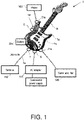
- FIG. 1 shows an electronic guitar according to an embodiment.
- An electronic guitar 1 is an example of an electronic musical instrument, and the electronic musical instrument may be an electronic musical instrument other than the electronic guitar.
- the electronic guitar 1 includes a main body 1a, a neck 1b connected to the main body 1a, and strings (performance operants) 1c stretched from the main body 1a to the neck 1b.
- the electronic guitar 1 has a built-in circuit that processes a musical tone signal corresponding to vibration of the strings 1c according to a performance operation.
- the electronic guitar 1 has an output jack 21a, and can be connected to a guitar amplifier 100.
- a musical tone signal is transmitted from the electronic guitar 1 to the guitar amplifier 100 and amplified by the guitar amplifier 100, and a musical tone based on the musical tone signal is emitted.
- the electronic guitar 1 has a phone jack 21b, and headphones or earphones can be connected to the phone jack 21b.
- the electronic guitar 1 has a plurality of power supply paths through which operating power is supplied to the circuit. That is, the electronic guitar 1 has a connector 6 that connects an AC adapter 101 connected to a commercial power supply (AC power supply) and receives power (first power) from the commercial power supply.
- the electronic guitar 1 has a USB connector (USB jack) 7 to which a USB cable 7a is connected, and the USB connector 7 is connected to a terminal 102 via the USB cable 7a, and can communicate (transmit and receive data, etc.) with the terminal 102.
- the terminal 102 is a smartphone, a tablet terminal, a personal computer, or the like.
- the electronic guitar 1 can receive power (second power) via the USB cable 7a.
- the electronic guitar 1 can have a built-in battery 22c and can receive power (third power) from the battery 22c.
- the electronic guitar 1 has a switch 5 that turns power supply of the electronic guitar 1 ON or OFF.
- a state in which the switch 5 protrudes from the side surface of the electronic guitar 1 is shown in FIG. 1 , but the switch 5 barely protrudes from a recess 1d on the side surface (the side facing upward during performance) of the electronic guitar 1 or is in a slightly dented state. Therefore, it is possible to prevent the switch 5 from being accidentally pressed.
- FIG. 2 is a diagram showing a circuit configuration example of the electronic guitar 1.
- the electronic guitar 1 has a central processing unit (CPU) 11 that controls overall operations.
- the CPU 11 is connected as a control circuit to a read only memory (ROM) 12, a random access memory (RAM) 13, an operant 14, a digital signal processor (DSP) 15, a connecting terminal 21, and a power supply terminal 22 via a bus 2.
- ROM read only memory
- RAM random access memory
- DSP digital signal processor
- the ROM 12 is used as a storage area for programs and data executed by the CPU 11.
- the RAM 13 is used as a work area for the CPU 11 and a storage area for programs and data.
- the RAM 13 and the ROM 12 are examples of a storage device (storage medium).
- the operant 14 is a knob, a key, button, a switch or the like for setting the electronic guitar 1, and the above switch 5 for power supply ON or OFF is also included in the operant 14.
- the connecting terminal 21 includes the output jack 21a, the phone jack 21b, and the like described above.
- the power supply terminal 22 includes the connector 6 for the above AC adapter 101, a USB jack (USB connector) 7, a connecting terminal for the battery 22c, and the like.
- the strings 1c are performance operants, and vibration of the strings 1c is converted into an electrical signal by a vibration sensor (pickup device) 16, and is converted into a digital signal by an A/D converter 17, and input to the DSP 15.
- the DSP 15 processes the digital signal (musical tone signal) according to the setting by the CPU 11 and outputs the processed signal.
- the output signal is output from a D/A converter 18 as a guitar musical tone signal.
- the guitar musical tone signal is connected to the guitar amplifier 100 and amplified, and a musical tone based on the guitar musical tone signal is then emitted from a speaker of the guitar amplifier 100.
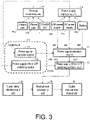
- FIG. 3 is a diagram explaining power supply control of the electronic guitar 1.
- the CPU 11 executes a program, it operates as a terminal monitoring unit 111, a power supply monitoring unit 112, and a control unit 113.
- the terminal monitoring unit 111 monitors insertion and removal of an output plug into and from the output jack 21a (whether the guitar amplifier 100 is connected), insertion and removal of a phone plug into and from the phone jack 21b (whether a headphone or the like is connected), and ON or OFF of the switch 5 for power supply, and the like.
- the power supply monitoring unit 112 monitors whether there is DC power supply 22b from the AC adapter 101, USB power supply 22a from the USB cable 7a, and power supply from the battery 22c.
- the monitoring can be performed, for example, by measuring a potential of a predetermined part of the connector 6 and the USB connector 7, or measuring a potential of a connecting terminal for the battery 22c.
- the control unit 113 performs a power supply selection control 114 according to a state of power supply from the power supply monitoring unit 112 and a power supply ON or OFF switching control 115 according to results obtained by monitoring of the terminal monitoring unit 111.
- the electronic guitar 1 includes a power supply selection circuit 30, and a signal IN1 indicating whether there is DC power supply, a signal IN2 indicating whether there is USB power supply 22a, and a signal IN3 indicating whether there is the battery 22c are input to the power supply selection circuit 30.
- the power supply selection control 114 supplies control signals (PRI and CP2) indicating the type of power supply to be selected to the power supply selection circuit 30 according to the results obtained by monitoring of the power supply monitoring unit 112.
- the power supply selection circuit 30 receives power and outputs a signal OUT indicating the type of power supply that matches the control signal.
- the signal OUT is input to a power supply ON or OFF switching circuit 40 of the electronic guitar 1.
- a control signal indicating turning power supply of the electronic guitar 1 ON or OFF is input to the power supply ON or OFF switching circuit 40.
- the power supply ON or OFF switching circuit 40 turns power supply of the electronic guitar 1 ON or OFF according to the signal OUT and the control signal.
- the power supply of the electronic guitar 1 is turned ON, power is consumed by the operation of a musical tone processing unit 52.
- a guitar string vibration input unit 51 is the strings 1c, the vibration sensor 16, and the A/D converter 17 shown in FIG. 2 .
- the musical tone processing unit 52 is the DSP 15 shown in FIG. 2 , and the DSP 15 is an example of the musical tone processing circuit.
- a guitar musical tone output unit 53 includes the above D/A converter 18 and output jack 21a.
- FIG. 4 shows a processing example of a main routine.
- the CPU 11 confirms the state of the power supply.
- the CPU 11 selects a power supply.
- the CPU 11 confirms the state of the terminal.
- the power supply is switched ON or OFF.
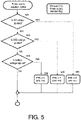
- FIG. 5 is a flowchart showing an example of power supply selection control.
- Step S01 it is determined whether a DC voltage is applied, that is, whether power is supplied from the DC power supply 22b.
- Step S04 the process proceeds to Step S02.
- Step S02 it is determined whether a USB voltage is applied, that is, whether power is supplied from the USB power supply 22a.
- a USB voltage is applied, the process proceeds to Step S05, and otherwise, the process proceeds to Step S03.
- Step S03 it is determined whether a battery voltage is applied, that is, whether power is supplied from the battery 22c.
- the process proceeds to Step S06, and otherwise, the process ends.
- Step S04 the CPU 11 sets the value of the flag "PRI” to “0,” sets the value of the flag “CP2” to “1,” and ends the process.
- Step S05 the CPU 11 sets the value of the flag "PRI” to “1,” sets the value of the flag “CP2” to “0,” and ends the process.
- Step S06 the CPU 11 sets the value of the flag "PRI” to “0,” sets the value of the flag "CP2” to “0,” and ends the process.
- the values of the flags PRI and CP2 are supplied to the power supply selection circuit 30 and are used for power supply selection.
- FIG. 6 is a table showing specifications of a power supply selection circuit, and shows the relationship between values of the flags PRI and CP2 and the signal OUT output from the output terminal of the power supply selection circuit 30.
- the values of the flags PRI and CP2 are "0" and "1," IN1 indicating power supply from the DC power supply 22b is input to the power supply selection circuit 30.
- the output OUT of the power supply selection circuit 30 is IN1
- DC power supply (the AC adapter 101) is selected as a power supply source, and connecting the DC power supply to the musical tone processing unit 52 is selected.
- IN2 indicating power supply from the USB power supply 22a is input to the power supply selection circuit 30.
- the output OUT of the power supply selection circuit 30 is IN2
- the USB power supply 22a is selected as a power supply source, and connecting to the musical tone processing unit 52 is selected.
- FIG. 7 is a flowchart showing an example of a power supply ON or OFF switching control.
- the CPU 11 determines whether a plug of a cable connection to the guitar amplifier 100 is inserted into the output jack 21a. When it is determined that a plug is inserted, the process proceeds to Step S15, and otherwise, the process proceeds to Step S12.
- Step S12 the CPU 11 determines whether a plug such as a headphone is inserted into the phone jack 21b. When it is determined that a plug is inserted, the process proceeds to Step S15, and otherwise, the process proceeds to Step S13.
- Step S13 the CPU 11 determines whether a male connector for the USB cable 7a is inserted into the USB connector 7. When it is determined that a connector is inserted, the process proceeds to Step S15, and otherwise, the process proceeds to Step S14.
- Step S14 the CPU 11 sets the value of the power supply ON or OFF flag "PON” to "0.”
- Step S15 the CPU 11 sets the value of the power supply ON or OFF flag "PON” to "1.”
- Step S16 it is determined whether the switch 5 for power supply (POWER SW) is held down. When it is determined whether the switch 5 for power supply is held down, the process proceeds to Step S17, and otherwise, the process ends.
- Step S17 the CPU 11 sets the value of PON to "0" when the value of PON is “1” and sets the value of PON to "1" when the value of PON is “0.”
- PON "1” indicates turning power supply on
- PON "0” indicates turning power supply OFF.
- Step S17 shows that, if the switch 5 for power supply is held down when power supply is turned OFF, the power supply of the electronic guitar 1 is turned ON, and if the switch 5 for power supply is held down when power supply is turned ON, the power supply of the electronic guitar 1 is turned OFF. When the power supply switch is held down, accidentally turning power supply ON or OFF is prevented.
- the power supply ON or OFF switching circuit 40 connects a power supply designated by the value of OUT to the musical tone processing unit 52 when the value of PON is "1" and turns the power supply of the electronic guitar 1 OFF when the value of PON is "0,” and stops power supply to the musical tone processing unit 52.
- the terminal monitoring unit 111 may be realized by a logic circuit or a switching mechanism that outputs a voltage value corresponding to each state or may be realized by the same CPU as the CPU 11 that connects each state to a general purpose port and performs the power supply selection control 114.
- the power supply monitoring unit 112 transmits information according to a voltage state of each power supply to the power supply ON or OFF switching control 115.
- the power supply monitoring unit 112 may be realized by a logic circuit that outputs a voltage corresponding to each state or may be realized by the same CPU as the CPU that connects each state to a general purpose port and performs power supply ON or OFF switching control.
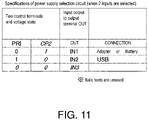
- FIG. 8 to FIG. 11 show a second example different from the example (first example) shown in FIG. 3 to FIG. 7 .
- the second example differs from the first example ( FIG. 3 ) in the following points.
- the USB power supply is not incorporated under the control of the power supply ON or OFF switching circuit 40. Therefore, when a power supply other than the USB power supply is not used, if the USB cable 7a is connected to the USB connector 7, this may be treated as turning the power supply on in the power supply selection circuit 30 without determination of the power supply ON or OFF switching control 115. In the power supply selection circuit 30, USB power supply is selected. Therefore, a user can turn the power supply of the electronic guitar 1 on by simply connecting the USB cable 7a to the electronic guitar 1, and the electronic guitar can be used immediately.
- FIG. 9 is a flowchart showing an example of power supply selection control in the second example.
- the processes of Steps S01, S02 and S03 in FIG. 9 are the same as those in the first example. However, in Steps S24, S25 and S26 corresponding to Steps S04, S05 and S06, the following processes are performed.
- Step S24 the value of the power supply selection flag PRI is set to 0.
- Step S25 the value of the power supply selection flag PRI is set to 1.
- the value of the power supply selection flag PRI is set to 0.
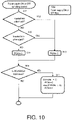
- FIG. 10 is a flowchart showing an example of power supply ON or OFF switching control in the second example.
- the second example is the same as the first example except that the process of Step S13 is removed from the processes of Steps S11 to S17.
- a PON setting process determination of whether connection is necessary depending on whether insertion into the USB connector is performed is not performed.
- FIG. 11 is a table showing specifications of the power supply selection circuit 30 in the second example, and when PRI "0" is output as a result of the power supply selection control 114, IN1 indicating the DC power supply 22b or the battery 22c as a power supply is input from the power supply ON or OFF switching circuit 40 to the power supply selection circuit 30, and IN1 is output as the output OUT. Therefore, the DC power supply 22b or the battery 22c is connected to the musical tone processing unit 52.
- IN2 indicating the USB power supply 22a is input to the power supply selection circuit 30 and IN2 is output as the output OUT. Therefore, the USB power supply 22a is connected to the musical tone processing unit 52.
- the order of priority in selecting power supply is the same as that of the first example (DC>USB>battery).
- the electronic guitar 1 includes a DSP (the musical tone processing unit 52: musical tone processing circuit) that processes a musical tone signal according to an operation of the strings 1c (performance operant), the output jack 21a used to connect the musical tone signal to the guitar amplifier 100, the phone jack 21b used to connect the musical tone signal to a phone 103, the USB connector 7 to which the USB cable 7a is connected, and the switch 5 for turning power supply of the electronic guitar 1 ON or OFF.
- a DSP the musical tone processing unit 52: musical tone processing circuit
- the electronic guitar 1 it is possible to switch power supply sources according to the situation such as home practice, recording, and live performance.
- a plurality of power supply operation methods can be selected, and the power supply of the electronic guitar 1 can be turned ON by connecting to an output jack, connecting to a headphone jack, connecting to a USB jack, or turning the power supply switch on.
- Power supply can be turned OFF using the switch 5 for power supply installed on the side surface of the electronic guitar 1 without disconnecting various cables.
Landscapes
- Engineering & Computer Science (AREA)
- Physics & Mathematics (AREA)
- Acoustics & Sound (AREA)
- Multimedia (AREA)
- Power Engineering (AREA)
- Signal Processing (AREA)
- Theoretical Computer Science (AREA)
- General Engineering & Computer Science (AREA)
- General Physics & Mathematics (AREA)
- Electrophonic Musical Instruments (AREA)
Claims (15)
- Steuervorrichtung für ein elektronisches Musikinstrument (1), wobei das elektronische Musikinstrument (1) umfasst:einen Spieloperator (1c);eine Musiktonverarbeitungsschaltung (15), die zum Verarbeiten eines Musiktonsignals gemäß eines Betätigung des Spieloperators (1c) konfiguriert ist;eine Ausgangsbuchse (21a), die so konfiguriert ist, um das Musiktonsignal mit einem Verstärker (100) zu verbinden;eine Klinkenbuchse (21b), die so konfiguriert ist, um das Musiktonsignal mit einem Kopfhörer (103) zu verbinden;eine USB-Buchse (7), die konfiguriert ist, um an ein USB-Kabel (7a) verbunden zu werden; undeinen Schalter (5), der zum AN- oder AUS-Schalten einer Stromversorgung des elektronischen Musikinstruments konfiguriert ist; wobei die Steuervorrichtung dadurch gekennzeichnet ist, dass sie umfasst:
eine Steuerschaltung (11), die so konfiguriert ist, dass sie bestimmt, ob eine Stromversorgung erforderlich ist, und die den dem elektronischen Musikinstrument zugeführten Strom aus einer ersten, zweiten und dritten Strom auswählt, auf der Grundlage von:Informationen, die jeden Stromempfangszustand des ersten Stroms, der über einen Wechselstrom-Adapter (101) zugeführt wird, des zweiten Stroms, der über das USB-Kabel (7a) zugeführt wird, und des dritten Stroms, der von einer Batterie (23c) zugeführt wird, anzeigen,Informationen, die anzeigen, ob ein Ausgangsstecker in die Ausgangsbuchse (21a) eingesteckt ist, ein Klinkenstecker in die Klinkenbuchse (21b) eingesteckt ist, das USB-Kabel (7a) mit der USB-Buchse (7) verbunden ist und eine AN- oder AUS-Betätigung des Schalters (5) durchgeführt wird, undInformationen, die den AN- oder AUS-Zustand der Stromversorgung des elektronischen Musikinstruments (1) anzeigen. - Steuervorrichtung gemäß Anspruch 1, wobeiin einem Zustand, in dem die Stromversorgung des elektronischen Musikinstruments (1) AUS-geschaltet ist,wenn irgendeines von Einstecken eines Ausgangssteckers in die Ausgangsbuchse (21a), Einstecken eines Klinkensteckers in die Klinkenbuchse (21b), Verbinden des USB-Kabels (7a) mit der USB-Buchse (7) und einer AN-Betätigung des Schalters (5) erfasst wird, die Steuerschaltung (11) so konfiguriert ist, dass sie der Musiktonverarbeitungsschaltung (15) in der Reihenfolge der Priorität einen des ersten, zweiten und dritten Stroms zuführt.
- Steuervorrichtung gemäß Anspruch 1 oder Anspruch 2, wobei
die Steuerschaltung (11) so konfiguriert ist, dass sie den der Musiktonverarbeitungsschaltung (15) zugeführten Strom in der Reihenfolge des ersten Stroms, des zweiten Stroms und des dritten Stroms auswählt. - Steuervorrichtung gemäß irgendeinem der Ansprüche 1 bis 3, wobeiin jedem von einem Zustand, in dem der erste, zweite und dritte Strom der Musiktonverarbeitungsschaltung (15) zugeführt werden kann, einem Zustand, in dem der erste und dritte Strom der Musiktonverarbeitungsschaltung (15) zugeführt werden kann, einem Zustand, in dem der erste und zweite Strom der Musiktonverarbeitungsschaltung (15) zugeführt werden kann, einem Zustand, in dem der dritte Strom der Musiktonverarbeitungsschaltung (15) zugeführt werden kann, und einem Zustand, in dem der erste Strom der Musiktonverarbeitungsschaltung (15) zugeführt werden kann,die Steuerschaltung (11) so konfiguriert ist, dass sie die Stromzufuhr zu der Musiktonverarbeitungsschaltung (15) unterbricht, wenn eine AUS-Betätigung des Schalters (5) erfasst wird oder das Entfernen des Ausgangssteckers aus der Ausgangsbuchse (21a) und das Entfernen eines Klinkensteckers aus der Klinkenbuchse (21b) erfasst werden.
- Steuervorrichtung gemäß irgendeinem der Ansprüche 1 bis 4, wobeiin einem Zustand, in dem der zweite und dritte Strom an die Musiktonverarbeitungsschaltung (15) zugeführt werden können,die Steuerschaltung (11) so konfiguriert ist, dass sie die Stromzufuhr zu der Musiktonverarbeitungsschaltung (15) unterbricht, wenn eine AUS-Betätigung des Schalters (5) erfasst wird.
- Steuervorrichtung gemäß irgendeinem der Ansprüche 1 bis 5, wobeiin einem Zustand, in dem der zweite Strom an die Musiktonverarbeitungsschaltung (15) zugeführt werden kann,die Steuerschaltung (11) so konfiguriert ist, dass sie die Stromzufuhr zu der Musiktonverarbeitungsschaltung (15) unterbricht, wenn ein eine AUS-Betätigung des Schalters (5) oder ein Ausstecken des USB-Kabels (7a) aus der USB-Buchse (7) erfasst wird.
- Musikinstrument (1) umfassend einen Spieloperator (1c);eine Musiktonverarbeitungsschaltung (15), die zum Verarbeiten eines Musiktonsignals gemäß einer Betätigung des Spieloperators (1c) konfiguriert ist; eine Ausgangsbuchse (21a), die konfiguriert ist, um das Musiktonsignal mit einem Verstärker (100) zu verbinden; eine Klinkenbuchse (21b), die konfiguriert ist, um das Musiktonsignal mit einem Kopfhörer (103) zu verbinden; eine USB-Buchse (7), die konfiguriert ist, um mit einem USB-Kabel (7a) verbunden zu werden; einem Schalter (5), der konfiguriert ist, um die Stromversorgung des elektronischen Musikinstruments AN- oder AUS-zuschalten; und
eine Steuervorrichtung gemäß Anspruch 1. - Musikinstrument (1) gemäß Anspruch 7, wobeiin einem Zustand, in dem die Stromversorgung des elektronischen Musikinstruments (1) AUS-geschaltet ist,wenn irgendeines von Einstecken eines Ausgangssteckers in die Ausgangsbuchse (21a), Einstecken eines Klinkensteckers in die Klinkenbuchse (21b), Verbinden des USB-Kabels (7a) mit der USB-Buchse (7) und einer AN-Betätigung des Schalters (5) erfasst wird, die Steuerschaltung (11) so konfiguriert ist, dass sie der Musiktonverarbeitungsschaltung (15) in der Reihenfolge der Priorität einen des ersten, zweiten und dritten Stroms zuführt.
- Musikinstrument (1) gemäß Anspruch 7 oder Anspruch 8, wobei
die Steuerschaltung (11) so konfiguriert ist, dass sie den der Musiktonverarbeitungsschaltung (15) zugeführten Strom in der Reihenfolge des ersten Stroms, des zweiten Stroms und des dritten Stroms auswählt. - Musikinstrument (1) gemäß irgendeinem der Ansprüche 7 bis 9, wobeiin jedem von einem Zustand, in dem der erste, zweite und dritte Strom der Musiktonverarbeitungsschaltung (15) zugeführt werden kann, einem Zustand, in dem der erste und dritte Strom der Musiktonverarbeitungsschaltung (15) zugeführt werden kann, einem Zustand, in dem der erste und zweite Strom der Musiktonverarbeitungsschaltung (15) zugeführt werden kann, einem Zustand, in dem der dritte Strom der Musiktonverarbeitungsschaltung (15) zugeführt werden kann, und einem Zustand, in dem der erste Strom der Musiktonverarbeitungsschaltung (15) zugeführt werden kann,die Steuerschaltung (11) so konfiguriert ist, dass sie die Stromzufuhr zu der Musiktonverarbeitungsschaltung (15) unterbricht, wenn eine AUS-Betätigung des Schalters (5) erfasst wird oder das Entfernen des Ausgangssteckers aus der Ausgangsbuchse (21a) und das Entfernen eines Klinkensteckers aus der Klinkenbuchse (21b) erfasst werden.
- Musikinstrument (1) gemäß irgendeinem der Ansprüche 7 bis 10, wobeiin einem Zustand, in dem der zweite und dritte Strom an die Musiktonverarbeitungsschaltung (15) zugeführt werden können,die Steuerschaltung (11) so konfiguriert ist, dass sie die Stromzufuhr zu der Musiktonverarbeitungsschaltung (15) unterbricht, wenn eine AUS-Betätigung des Schalters (5) erfasst wird.
- Musikinstrument (1) gemäß irgendeinem der Ansprüche 7 bis 11, wobeiin einem Zustand, in dem der zweite Strom an die Musiktonverarbeitungsschaltung (15) zugeführt werden kann,die Steuerschaltung (11) so konfiguriert ist, dass sie die Stromzufuhr zu der Musiktonverarbeitungsschaltung (15) unterbricht, wenn ein eine AUS-Betätigung des Schalters (5) oder ein Ausstecken des USB-Kabels (7a) aus der USB-Buchse (7) erfasst wird.
- Verfahren zur Stromsteuerung für ein elektronisches Musikinstrument, dadurch gekennzeichnet, dass es umfasst:
Ermöglichen, dass die Strom-Steuerungsvorrichtung gemäß Anspruch 1 bestimmt, ob eine Stromversorgung erforderlich ist, und den dem elektronischen Musikinstrument zugeführte Strom aus dem ersten, zweiten und dritten Strom auswählt, auf der Grundlage von:Informationen, die jeden Stromempfangszustand des ersten Stroms, der über einen Wechselstrom-Adapter (101) zugeführt wird, des zweiten Stroms, der über das USB-Kabel (7a) zugeführt wird, und des dritten Stroms, der von einer Batterie (23c) zugeführt wird, anzeigen,Informationen, die anzeigen, ob ein Ausgangsstecker in die Ausgangsbuchse (21a) eingesteckt ist, ein Klinkenstecker in die Klinkenbuchse (21b) eingesteckt ist, das USB-Kabel (7a) mit der USB-Buchse (7) verbunden ist und eine AN- oder AUS-Betätigung des Schalters (5) durchgeführt wird, und
Informationen, die den AN- oder AUS-Zustand der Stromversorgung des elektronischen Musikinstruments (1) anzeigen. - Stromversorgungssteuerungsverfahren für ein elektronisches Musikinstrument gemäß Anspruch 13, wobeiin einem Zustand, in dem die Stromversorgung des elektronischen Musikinstruments (1) AUS-geschaltet ist,wenn irgendeines von Einstecken eines Ausgangssteckers in die Ausgangsbuchse (21a), Einstecken eines Klinkensteckers in die Klinkenbuchse (21b), Verbinden des USB-Kabels (7a) mit der USB-Buchse (7) und einer AN-Betätigung des Schalters (5) erfasst wird, die Steuerschaltung (11) so konfiguriert ist, dass sie der Musiktonverarbeitungsschaltung (15) in der Reihenfolge der Priorität einen des ersten, zweiten und dritten Stroms zuführt.
- Programm, das von einem Computer ausgeführt wird, um den Computer zu veranlassen als die Steuervorrichtung gemäß Anspruch 1 zu arbeiten, dadurch gekennzeichnet, dass es umfasst:
Ausführen der Bestimmung, ob eine Stromversorgung erforderlich ist, und Auswählen des dem elektronischen Musikinstrument zugeführten Stroms aus dem ersten, zweiten und dritten Strom auf der Grundlage von:Informationen, die jeden Stromempfangszustand des ersten Stroms, der über einen Wechselstrom-Adapter (101) zugeführt wird, des zweiten Stroms, der über das USB-Kabel (7a) zugeführt wird, und des dritten Stroms, der von einer Batterie (23c) zugeführt wird, anzeigen,Informationen, die anzeigen, ob ein Ausgangsstecker in die Ausgangsbuchse (21a) eingesteckt ist, ein Klinkenstecker in die Klinkenbuchse (21b) eingesteckt ist, das USB-Kabel (7a) mit der USB-Buchse (7) verbunden ist und eine AN- oder AUS-Betätigung des Schalters (5) durchgeführt wird, und
Informationen, die den AN- oder AUS-Zustand der Stromversorgung des elektronischen Musikinstruments (1) anzeigen.
Applications Claiming Priority (1)
| Application Number | Priority Date | Filing Date | Title |
|---|---|---|---|
| JP2019239953A JP2021107903A (ja) | 2019-12-27 | 2019-12-27 | 電子楽器、及び電子楽器の電源制御装置 |
Publications (2)
| Publication Number | Publication Date |
|---|---|
| EP3843089A1 EP3843089A1 (de) | 2021-06-30 |
| EP3843089B1 true EP3843089B1 (de) | 2022-04-27 |
Family
ID=73855269
Family Applications (1)
| Application Number | Title | Priority Date | Filing Date |
|---|---|---|---|
| EP20214900.1A Active EP3843089B1 (de) | 2019-12-27 | 2020-12-17 | Elektronisches musikinstrument, leistungssteuerungsvorrichtung für elektronisches musikinstrument, leistungssteuerungsverfahren und programm |
Country Status (4)
| Country | Link |
|---|---|
| US (1) | US11810541B2 (de) |
| EP (1) | EP3843089B1 (de) |
| JP (1) | JP2021107903A (de) |
| CN (1) | CN113054643B (de) |
Families Citing this family (3)
| Publication number | Priority date | Publication date | Assignee | Title |
|---|---|---|---|---|
| JP2021107903A (ja) * | 2019-12-27 | 2021-07-29 | ローランド株式会社 | 電子楽器、及び電子楽器の電源制御装置 |
| US20210319776A1 (en) * | 2020-03-21 | 2021-10-14 | Robert John Williams | Device, system, and methods for batteries replacement in electrical instruments |
| CN113922353B (zh) * | 2021-12-07 | 2022-02-25 | 长芯盛(武汉)科技有限公司 | 一种用于控制供电输出的装置、Type-C转接头和Type-C线缆 |
Family Cites Families (19)
| Publication number | Priority date | Publication date | Assignee | Title |
|---|---|---|---|---|
| JP2847996B2 (ja) * | 1991-03-01 | 1999-01-20 | ヤマハ株式会社 | 電子楽器における電源供給装置 |
| JPH09305170A (ja) * | 1996-05-15 | 1997-11-28 | Kawai Musical Instr Mfg Co Ltd | 電子楽器の電源装置 |
| JP2003316352A (ja) | 2002-04-26 | 2003-11-07 | Seiko Instruments Inc | 調律器及び調律器のon/off方法 |
| US7355110B2 (en) * | 2004-02-25 | 2008-04-08 | Michael Tepoe Nash | Stringed musical instrument having a built in hand-held type computer |
| CA2561810C (en) * | 2004-04-01 | 2012-11-27 | Simona Ioffe | Apparatus for powering an electronic musical instrument |
| JP2006091306A (ja) * | 2004-09-22 | 2006-04-06 | Yamaha Corp | 電子楽器 |
| KR20150110202A (ko) * | 2014-03-24 | 2015-10-02 | 삼성전자주식회사 | 오디오 장치에 전원을 공급하기 위한 전자 장치, 오디오 장치, 및 방법 |
| JP2016066419A (ja) * | 2014-09-22 | 2016-04-28 | 東芝ライテック株式会社 | 電源判別装置及び電源システム |
| HK1210911A2 (zh) * | 2015-03-12 | 2016-05-06 | 卫保数码有限公司 | 插头 |
| JP2017032640A (ja) * | 2015-07-29 | 2017-02-09 | ローランド株式会社 | 電子楽器の電源制御装置 |
| CN106340948B (zh) * | 2015-12-01 | 2018-11-20 | 深圳开阳电子股份有限公司 | 一种三电源自动切换电路 |
| JP2017129690A (ja) * | 2016-01-20 | 2017-07-27 | ヤマハ株式会社 | 回路および楽器 |
| JP6891444B2 (ja) * | 2016-10-19 | 2021-06-18 | ヤマハ株式会社 | 回路および楽器 |
| JPWO2018116649A1 (ja) * | 2016-12-19 | 2019-10-24 | 富士フイルム株式会社 | 電力供給システム、電子機器、及び電力供給方法 |
| CN109286239A (zh) * | 2018-11-07 | 2019-01-29 | 苏州佳世达光电有限公司 | 一种电源自动切换系统及电子设备 |
| CN209401300U (zh) * | 2018-12-24 | 2019-09-17 | 华示(深圳)技术有限公司 | 一种基于蓝牙传输的midi信号转换装置 |
| JP2021107903A (ja) * | 2019-12-27 | 2021-07-29 | ローランド株式会社 | 電子楽器、及び電子楽器の電源制御装置 |
| US11061457B1 (en) * | 2020-01-08 | 2021-07-13 | Cypress Semiconductor Corporation | Dynamic sharing of power among USB type-c power delivery (USB-C/PD) ports |
| US11416059B2 (en) * | 2020-01-24 | 2022-08-16 | Dell Products, L.P. | Multimode USB-C power transmission and conversion supporting improved battery utilization |
-
2019
- 2019-12-27 JP JP2019239953A patent/JP2021107903A/ja not_active Withdrawn
-
2020
- 2020-12-17 EP EP20214900.1A patent/EP3843089B1/de active Active
- 2020-12-22 CN CN202011533075.8A patent/CN113054643B/zh active Active
- 2020-12-24 US US17/133,681 patent/US11810541B2/en active Active
Also Published As
| Publication number | Publication date |
|---|---|
| CN113054643A (zh) | 2021-06-29 |
| US20210201878A1 (en) | 2021-07-01 |
| US11810541B2 (en) | 2023-11-07 |
| JP2021107903A (ja) | 2021-07-29 |
| CN113054643B (zh) | 2025-11-11 |
| EP3843089A1 (de) | 2021-06-30 |
Similar Documents
| Publication | Publication Date | Title |
|---|---|---|
| EP3843089B1 (de) | Elektronisches musikinstrument, leistungssteuerungsvorrichtung für elektronisches musikinstrument, leistungssteuerungsverfahren und programm | |
| KR100947697B1 (ko) | 전기 장치, 전기 장치의 주변 커넥터에 연결된 주변 장치를식별하기 위한 방법, 주변 버스를 통해 전기 장치에연결된 전원으로부터 전력 가용성을 결정하기 위한 방법 및버스 커넥터를 갖는 전기 장치에 의한 전력 이용을관리하기 위한 방법 | |
| KR100907451B1 (ko) | 비디오/오디오 플러그를 통하여 전자 장치에 연결된 주변장치의 감지, 식별 및 동작 | |
| CN101583935B (zh) | 经由串行接口的增强通信的方法和装置 | |
| EP3189671B1 (de) | In längsrichtung angeordnete, drahtlose ohrstöpsel und aufladung davon | |
| US10531214B2 (en) | Device and method for controlling microphone according to connection of external accessory | |
| KR20110040359A (ko) | 휴대용 단말기에서 이어폰 인식 회로 장치 | |
| JP6311924B2 (ja) | ペリフェラルデバイス、ホストデバイス、及び、処理方法 | |
| JP2008097298A (ja) | 電子機器、電子機器の接続機器識別方法および制御システム | |
| US7603567B2 (en) | Information processing system and information processing method | |
| US10033209B2 (en) | Portable electronic equipment | |
| US10515025B2 (en) | Communication protocol adapter | |
| WO2021071168A1 (en) | Method for controlling charging of battery of electronic device and electronic device thereof | |
| CN110475175B (zh) | 一种为无线耳机充电的方法及装置 | |
| EP1700463B1 (de) | Hilfseinrichtungs-funktionen | |
| WO2020111685A1 (ko) | 고속 충전 및 오디오 신호 송수신 기능을 지원하는 전자 장치 | |
| CN105573946A (zh) | 通用串行总线接口复用的方法及装置 | |
| US20200068306A1 (en) | Audio playing apparatus and audio transmission circuit | |
| JP2016208095A (ja) | 電子機器、電子機器における出力制御方法及びプログラム | |
| CN121908206A (zh) | 耳机检测系统、耳机检测方法和电子设备 | |
| CN108810751B (zh) | 一种用于识别电子配件的电路及电子设备 | |
| EP3253067A1 (de) | Endgerätevorrichtung sowie signalübertragungsverfahren und -vorrichtung | |
| KR20070087538A (ko) | 다기능 컴퓨터 키보드 | |
| TW202103500A (zh) | 可拆分的揚聲器裝置及其操作方法 |
Legal Events
| Date | Code | Title | Description |
|---|---|---|---|
| PUAI | Public reference made under article 153(3) epc to a published international application that has entered the european phase |
Free format text: ORIGINAL CODE: 0009012 |
|
| STAA | Information on the status of an ep patent application or granted ep patent |
Free format text: STATUS: THE APPLICATION HAS BEEN PUBLISHED |
|
| AK | Designated contracting states |
Kind code of ref document: A1 Designated state(s): AL AT BE BG CH CY CZ DE DK EE ES FI FR GB GR HR HU IE IS IT LI LT LU LV MC MK MT NL NO PL PT RO RS SE SI SK SM TR |
|
| STAA | Information on the status of an ep patent application or granted ep patent |
Free format text: STATUS: REQUEST FOR EXAMINATION WAS MADE |
|
| 17P | Request for examination filed |
Effective date: 20211125 |
|
| RBV | Designated contracting states (corrected) |
Designated state(s): AL AT BE BG CH CY CZ DE DK EE ES FI FR GB GR HR HU IE IS IT LI LT LU LV MC MK MT NL NO PL PT RO RS SE SI SK SM TR |
|
| GRAP | Despatch of communication of intention to grant a patent |
Free format text: ORIGINAL CODE: EPIDOSNIGR1 |
|
| STAA | Information on the status of an ep patent application or granted ep patent |
Free format text: STATUS: GRANT OF PATENT IS INTENDED |
|
| INTG | Intention to grant announced |
Effective date: 20220126 |
|
| GRAS | Grant fee paid |
Free format text: ORIGINAL CODE: EPIDOSNIGR3 |
|
| GRAA | (expected) grant |
Free format text: ORIGINAL CODE: 0009210 |
|
| STAA | Information on the status of an ep patent application or granted ep patent |
Free format text: STATUS: THE PATENT HAS BEEN GRANTED |
|
| AK | Designated contracting states |
Kind code of ref document: B1 Designated state(s): AL AT BE BG CH CY CZ DE DK EE ES FI FR GB GR HR HU IE IS IT LI LT LU LV MC MK MT NL NO PL PT RO RS SE SI SK SM TR |
|
| REG | Reference to a national code |
Ref country code: GB Ref legal event code: FG4D |
|
| REG | Reference to a national code |
Ref country code: CH Ref legal event code: EP |
|
| REG | Reference to a national code |
Ref country code: AT Ref legal event code: REF Ref document number: 1487561 Country of ref document: AT Kind code of ref document: T Effective date: 20220515 |
|
| REG | Reference to a national code |
Ref country code: DE Ref legal event code: R096 Ref document number: 602020002861 Country of ref document: DE |
|
| REG | Reference to a national code |
Ref country code: IE Ref legal event code: FG4D |
|
| REG | Reference to a national code |
Ref country code: LT Ref legal event code: MG9D |
|
| REG | Reference to a national code |
Ref country code: NL Ref legal event code: MP Effective date: 20220427 |
|
| REG | Reference to a national code |
Ref country code: AT Ref legal event code: MK05 Ref document number: 1487561 Country of ref document: AT Kind code of ref document: T Effective date: 20220427 |
|
| PG25 | Lapsed in a contracting state [announced via postgrant information from national office to epo] |
Ref country code: NL Free format text: LAPSE BECAUSE OF FAILURE TO SUBMIT A TRANSLATION OF THE DESCRIPTION OR TO PAY THE FEE WITHIN THE PRESCRIBED TIME-LIMIT Effective date: 20220427 |
|
| PG25 | Lapsed in a contracting state [announced via postgrant information from national office to epo] |
Ref country code: SE Free format text: LAPSE BECAUSE OF FAILURE TO SUBMIT A TRANSLATION OF THE DESCRIPTION OR TO PAY THE FEE WITHIN THE PRESCRIBED TIME-LIMIT Effective date: 20220427 Ref country code: PT Free format text: LAPSE BECAUSE OF FAILURE TO SUBMIT A TRANSLATION OF THE DESCRIPTION OR TO PAY THE FEE WITHIN THE PRESCRIBED TIME-LIMIT Effective date: 20220829 Ref country code: NO Free format text: LAPSE BECAUSE OF FAILURE TO SUBMIT A TRANSLATION OF THE DESCRIPTION OR TO PAY THE FEE WITHIN THE PRESCRIBED TIME-LIMIT Effective date: 20220727 Ref country code: LT Free format text: LAPSE BECAUSE OF FAILURE TO SUBMIT A TRANSLATION OF THE DESCRIPTION OR TO PAY THE FEE WITHIN THE PRESCRIBED TIME-LIMIT Effective date: 20220427 Ref country code: HR Free format text: LAPSE BECAUSE OF FAILURE TO SUBMIT A TRANSLATION OF THE DESCRIPTION OR TO PAY THE FEE WITHIN THE PRESCRIBED TIME-LIMIT Effective date: 20220427 Ref country code: GR Free format text: LAPSE BECAUSE OF FAILURE TO SUBMIT A TRANSLATION OF THE DESCRIPTION OR TO PAY THE FEE WITHIN THE PRESCRIBED TIME-LIMIT Effective date: 20220728 Ref country code: FI Free format text: LAPSE BECAUSE OF FAILURE TO SUBMIT A TRANSLATION OF THE DESCRIPTION OR TO PAY THE FEE WITHIN THE PRESCRIBED TIME-LIMIT Effective date: 20220427 Ref country code: BG Free format text: LAPSE BECAUSE OF FAILURE TO SUBMIT A TRANSLATION OF THE DESCRIPTION OR TO PAY THE FEE WITHIN THE PRESCRIBED TIME-LIMIT Effective date: 20220727 Ref country code: AT Free format text: LAPSE BECAUSE OF FAILURE TO SUBMIT A TRANSLATION OF THE DESCRIPTION OR TO PAY THE FEE WITHIN THE PRESCRIBED TIME-LIMIT Effective date: 20220427 |
|
| PG25 | Lapsed in a contracting state [announced via postgrant information from national office to epo] |
Ref country code: RS Free format text: LAPSE BECAUSE OF FAILURE TO SUBMIT A TRANSLATION OF THE DESCRIPTION OR TO PAY THE FEE WITHIN THE PRESCRIBED TIME-LIMIT Effective date: 20220427 Ref country code: PL Free format text: LAPSE BECAUSE OF FAILURE TO SUBMIT A TRANSLATION OF THE DESCRIPTION OR TO PAY THE FEE WITHIN THE PRESCRIBED TIME-LIMIT Effective date: 20220427 Ref country code: LV Free format text: LAPSE BECAUSE OF FAILURE TO SUBMIT A TRANSLATION OF THE DESCRIPTION OR TO PAY THE FEE WITHIN THE PRESCRIBED TIME-LIMIT Effective date: 20220427 Ref country code: IS Free format text: LAPSE BECAUSE OF FAILURE TO SUBMIT A TRANSLATION OF THE DESCRIPTION OR TO PAY THE FEE WITHIN THE PRESCRIBED TIME-LIMIT Effective date: 20220827 |
|
| REG | Reference to a national code |
Ref country code: DE Ref legal event code: R097 Ref document number: 602020002861 Country of ref document: DE |
|
| PG25 | Lapsed in a contracting state [announced via postgrant information from national office to epo] |
Ref country code: SM Free format text: LAPSE BECAUSE OF FAILURE TO SUBMIT A TRANSLATION OF THE DESCRIPTION OR TO PAY THE FEE WITHIN THE PRESCRIBED TIME-LIMIT Effective date: 20220427 Ref country code: SK Free format text: LAPSE BECAUSE OF FAILURE TO SUBMIT A TRANSLATION OF THE DESCRIPTION OR TO PAY THE FEE WITHIN THE PRESCRIBED TIME-LIMIT Effective date: 20220427 Ref country code: RO Free format text: LAPSE BECAUSE OF FAILURE TO SUBMIT A TRANSLATION OF THE DESCRIPTION OR TO PAY THE FEE WITHIN THE PRESCRIBED TIME-LIMIT Effective date: 20220427 Ref country code: ES Free format text: LAPSE BECAUSE OF FAILURE TO SUBMIT A TRANSLATION OF THE DESCRIPTION OR TO PAY THE FEE WITHIN THE PRESCRIBED TIME-LIMIT Effective date: 20220427 Ref country code: EE Free format text: LAPSE BECAUSE OF FAILURE TO SUBMIT A TRANSLATION OF THE DESCRIPTION OR TO PAY THE FEE WITHIN THE PRESCRIBED TIME-LIMIT Effective date: 20220427 Ref country code: DK Free format text: LAPSE BECAUSE OF FAILURE TO SUBMIT A TRANSLATION OF THE DESCRIPTION OR TO PAY THE FEE WITHIN THE PRESCRIBED TIME-LIMIT Effective date: 20220427 Ref country code: CZ Free format text: LAPSE BECAUSE OF FAILURE TO SUBMIT A TRANSLATION OF THE DESCRIPTION OR TO PAY THE FEE WITHIN THE PRESCRIBED TIME-LIMIT Effective date: 20220427 |
|
| PLBE | No opposition filed within time limit |
Free format text: ORIGINAL CODE: 0009261 |
|
| STAA | Information on the status of an ep patent application or granted ep patent |
Free format text: STATUS: NO OPPOSITION FILED WITHIN TIME LIMIT |
|
| PG25 | Lapsed in a contracting state [announced via postgrant information from national office to epo] |
Ref country code: AL Free format text: LAPSE BECAUSE OF FAILURE TO SUBMIT A TRANSLATION OF THE DESCRIPTION OR TO PAY THE FEE WITHIN THE PRESCRIBED TIME-LIMIT Effective date: 20220427 |
|
| 26N | No opposition filed |
Effective date: 20230130 |
|
| PG25 | Lapsed in a contracting state [announced via postgrant information from national office to epo] |
Ref country code: SI Free format text: LAPSE BECAUSE OF FAILURE TO SUBMIT A TRANSLATION OF THE DESCRIPTION OR TO PAY THE FEE WITHIN THE PRESCRIBED TIME-LIMIT Effective date: 20220427 |
|
| P01 | Opt-out of the competence of the unified patent court (upc) registered |
Effective date: 20230509 |
|
| REG | Reference to a national code |
Ref country code: BE Ref legal event code: MM Effective date: 20221231 |
|
| PG25 | Lapsed in a contracting state [announced via postgrant information from national office to epo] |
Ref country code: LU Free format text: LAPSE BECAUSE OF NON-PAYMENT OF DUE FEES Effective date: 20221217 |
|
| PG25 | Lapsed in a contracting state [announced via postgrant information from national office to epo] |
Ref country code: IE Free format text: LAPSE BECAUSE OF NON-PAYMENT OF DUE FEES Effective date: 20221217 |
|
| PG25 | Lapsed in a contracting state [announced via postgrant information from national office to epo] |
Ref country code: BE Free format text: LAPSE BECAUSE OF NON-PAYMENT OF DUE FEES Effective date: 20221231 |
|
| PG25 | Lapsed in a contracting state [announced via postgrant information from national office to epo] |
Ref country code: IT Free format text: LAPSE BECAUSE OF FAILURE TO SUBMIT A TRANSLATION OF THE DESCRIPTION OR TO PAY THE FEE WITHIN THE PRESCRIBED TIME-LIMIT Effective date: 20220427 |
|
| PG25 | Lapsed in a contracting state [announced via postgrant information from national office to epo] |
Ref country code: CY Free format text: LAPSE BECAUSE OF FAILURE TO SUBMIT A TRANSLATION OF THE DESCRIPTION OR TO PAY THE FEE WITHIN THE PRESCRIBED TIME-LIMIT Effective date: 20220427 |
|
| PG25 | Lapsed in a contracting state [announced via postgrant information from national office to epo] |
Ref country code: MK Free format text: LAPSE BECAUSE OF FAILURE TO SUBMIT A TRANSLATION OF THE DESCRIPTION OR TO PAY THE FEE WITHIN THE PRESCRIBED TIME-LIMIT Effective date: 20220427 |
|
| PG25 | Lapsed in a contracting state [announced via postgrant information from national office to epo] |
Ref country code: MC Free format text: LAPSE BECAUSE OF FAILURE TO SUBMIT A TRANSLATION OF THE DESCRIPTION OR TO PAY THE FEE WITHIN THE PRESCRIBED TIME-LIMIT Effective date: 20220427 |
|
| PG25 | Lapsed in a contracting state [announced via postgrant information from national office to epo] |
Ref country code: MC Free format text: LAPSE BECAUSE OF FAILURE TO SUBMIT A TRANSLATION OF THE DESCRIPTION OR TO PAY THE FEE WITHIN THE PRESCRIBED TIME-LIMIT Effective date: 20220427 |
|
| REG | Reference to a national code |
Ref country code: CH Ref legal event code: PL |
|
| PG25 | Lapsed in a contracting state [announced via postgrant information from national office to epo] |
Ref country code: MT Free format text: LAPSE BECAUSE OF FAILURE TO SUBMIT A TRANSLATION OF THE DESCRIPTION OR TO PAY THE FEE WITHIN THE PRESCRIBED TIME-LIMIT Effective date: 20220427 |
|
| PG25 | Lapsed in a contracting state [announced via postgrant information from national office to epo] |
Ref country code: CH Free format text: LAPSE BECAUSE OF NON-PAYMENT OF DUE FEES Effective date: 20231231 |
|
| PG25 | Lapsed in a contracting state [announced via postgrant information from national office to epo] |
Ref country code: CH Free format text: LAPSE BECAUSE OF NON-PAYMENT OF DUE FEES Effective date: 20231231 |
|
| PG25 | Lapsed in a contracting state [announced via postgrant information from national office to epo] |
Ref country code: BG Free format text: LAPSE BECAUSE OF FAILURE TO SUBMIT A TRANSLATION OF THE DESCRIPTION OR TO PAY THE FEE WITHIN THE PRESCRIBED TIME-LIMIT Effective date: 20220427 |
|
| PG25 | Lapsed in a contracting state [announced via postgrant information from national office to epo] |
Ref country code: BG Free format text: LAPSE BECAUSE OF FAILURE TO SUBMIT A TRANSLATION OF THE DESCRIPTION OR TO PAY THE FEE WITHIN THE PRESCRIBED TIME-LIMIT Effective date: 20220427 |
|
| PG25 | Lapsed in a contracting state [announced via postgrant information from national office to epo] |
Ref country code: HU Free format text: LAPSE BECAUSE OF FAILURE TO SUBMIT A TRANSLATION OF THE DESCRIPTION OR TO PAY THE FEE WITHIN THE PRESCRIBED TIME-LIMIT; INVALID AB INITIO Effective date: 20201217 |
|
| PG25 | Lapsed in a contracting state [announced via postgrant information from national office to epo] |
Ref country code: TR Free format text: LAPSE BECAUSE OF FAILURE TO SUBMIT A TRANSLATION OF THE DESCRIPTION OR TO PAY THE FEE WITHIN THE PRESCRIBED TIME-LIMIT Effective date: 20220427 |
|
| PGFP | Annual fee paid to national office [announced via postgrant information from national office to epo] |
Ref country code: DE Payment date: 20251028 Year of fee payment: 6 |
|
| PGFP | Annual fee paid to national office [announced via postgrant information from national office to epo] |
Ref country code: GB Payment date: 20251030 Year of fee payment: 6 |
|
| PGFP | Annual fee paid to national office [announced via postgrant information from national office to epo] |
Ref country code: FR Payment date: 20251110 Year of fee payment: 6 |