EP3841869A1 - Light source for plant cultivation - Google Patents
Light source for plant cultivation Download PDFInfo
- Publication number
- EP3841869A1 EP3841869A1 EP19851004.2A EP19851004A EP3841869A1 EP 3841869 A1 EP3841869 A1 EP 3841869A1 EP 19851004 A EP19851004 A EP 19851004A EP 3841869 A1 EP3841869 A1 EP 3841869A1
- Authority
- EP
- European Patent Office
- Prior art keywords
- light
- period
- plant
- light source
- plant cultivation
- Prior art date
- Legal status (The legal status is an assumption and is not a legal conclusion. Google has not performed a legal analysis and makes no representation as to the accuracy of the status listed.)
- Pending
Links
Images






Classifications
-
- H—ELECTRICITY
- H05—ELECTRIC TECHNIQUES NOT OTHERWISE PROVIDED FOR
- H05B—ELECTRIC HEATING; ELECTRIC LIGHT SOURCES NOT OTHERWISE PROVIDED FOR; CIRCUIT ARRANGEMENTS FOR ELECTRIC LIGHT SOURCES, IN GENERAL
- H05B47/00—Circuit arrangements for operating light sources in general, i.e. where the type of light source is not relevant
- H05B47/10—Controlling the light source
- H05B47/16—Controlling the light source by timing means
-
- A—HUMAN NECESSITIES
- A01—AGRICULTURE; FORESTRY; ANIMAL HUSBANDRY; HUNTING; TRAPPING; FISHING
- A01G—HORTICULTURE; CULTIVATION OF VEGETABLES, FLOWERS, RICE, FRUIT, VINES, HOPS OR SEAWEED; FORESTRY; WATERING
- A01G7/00—Botany in general
- A01G7/04—Electric or magnetic or acoustic treatment of plants for promoting growth
- A01G7/045—Electric or magnetic or acoustic treatment of plants for promoting growth with electric lighting
-
- A—HUMAN NECESSITIES
- A01—AGRICULTURE; FORESTRY; ANIMAL HUSBANDRY; HUNTING; TRAPPING; FISHING
- A01G—HORTICULTURE; CULTIVATION OF VEGETABLES, FLOWERS, RICE, FRUIT, VINES, HOPS OR SEAWEED; FORESTRY; WATERING
- A01G22/00—Cultivation of specific crops or plants not otherwise provided for
-
- A—HUMAN NECESSITIES
- A01—AGRICULTURE; FORESTRY; ANIMAL HUSBANDRY; HUNTING; TRAPPING; FISHING
- A01G—HORTICULTURE; CULTIVATION OF VEGETABLES, FLOWERS, RICE, FRUIT, VINES, HOPS OR SEAWEED; FORESTRY; WATERING
- A01G9/00—Cultivation in receptacles, forcing-frames or greenhouses; Edging for beds, lawn or the like
- A01G9/20—Forcing-frames; Lights, i.e. glass panels covering the forcing-frames
-
- A—HUMAN NECESSITIES
- A01—AGRICULTURE; FORESTRY; ANIMAL HUSBANDRY; HUNTING; TRAPPING; FISHING
- A01G—HORTICULTURE; CULTIVATION OF VEGETABLES, FLOWERS, RICE, FRUIT, VINES, HOPS OR SEAWEED; FORESTRY; WATERING
- A01G9/00—Cultivation in receptacles, forcing-frames or greenhouses; Edging for beds, lawn or the like
- A01G9/24—Devices or systems for heating, ventilating, regulating temperature, illuminating, or watering, in greenhouses, forcing-frames, or the like
- A01G9/249—Lighting means
-
- F—MECHANICAL ENGINEERING; LIGHTING; HEATING; WEAPONS; BLASTING
- F21—LIGHTING
- F21V—FUNCTIONAL FEATURES OR DETAILS OF LIGHTING DEVICES OR SYSTEMS THEREOF; STRUCTURAL COMBINATIONS OF LIGHTING DEVICES WITH OTHER ARTICLES, NOT OTHERWISE PROVIDED FOR
- F21V23/00—Arrangement of electric circuit elements in or on lighting devices
- F21V23/003—Arrangement of electric circuit elements in or on lighting devices the elements being electronics drivers or controllers for operating the light source, e.g. for a LED array
-
- H—ELECTRICITY
- H05—ELECTRIC TECHNIQUES NOT OTHERWISE PROVIDED FOR
- H05B—ELECTRIC HEATING; ELECTRIC LIGHT SOURCES NOT OTHERWISE PROVIDED FOR; CIRCUIT ARRANGEMENTS FOR ELECTRIC LIGHT SOURCES, IN GENERAL
- H05B45/00—Circuit arrangements for operating light-emitting diodes [LED]
- H05B45/20—Controlling the colour of the light
-
- H—ELECTRICITY
- H10—SEMICONDUCTOR DEVICES; ELECTRIC SOLID-STATE DEVICES NOT OTHERWISE PROVIDED FOR
- H10H—INORGANIC LIGHT-EMITTING SEMICONDUCTOR DEVICES HAVING POTENTIAL BARRIERS
- H10H20/00—Individual inorganic light-emitting semiconductor devices having potential barriers, e.g. light-emitting diodes [LED]
- H10H20/80—Constructional details
- H10H20/81—Bodies
- H10H20/822—Materials of the light-emitting regions
- H10H20/824—Materials of the light-emitting regions comprising only Group III-V materials, e.g. GaP
- H10H20/825—Materials of the light-emitting regions comprising only Group III-V materials, e.g. GaP containing nitrogen, e.g. GaN
-
- F—MECHANICAL ENGINEERING; LIGHTING; HEATING; WEAPONS; BLASTING
- F21—LIGHTING
- F21W—INDEXING SCHEME ASSOCIATED WITH SUBCLASSES F21K, F21L, F21S and F21V, RELATING TO USES OR APPLICATIONS OF LIGHTING DEVICES OR SYSTEMS
- F21W2131/00—Use or application of lighting devices or systems not provided for in codes F21W2102/00-F21W2121/00
- F21W2131/10—Outdoor lighting
- F21W2131/109—Outdoor lighting of gardens
-
- F—MECHANICAL ENGINEERING; LIGHTING; HEATING; WEAPONS; BLASTING
- F21—LIGHTING
- F21Y—INDEXING SCHEME ASSOCIATED WITH SUBCLASSES F21K, F21L, F21S and F21V, RELATING TO THE FORM OR THE KIND OF THE LIGHT SOURCES OR OF THE COLOUR OF THE LIGHT EMITTED
- F21Y2113/00—Combination of light sources
- F21Y2113/10—Combination of light sources of different colours
- F21Y2113/13—Combination of light sources of different colours comprising an assembly of point-like light sources
-
- F—MECHANICAL ENGINEERING; LIGHTING; HEATING; WEAPONS; BLASTING
- F21—LIGHTING
- F21Y—INDEXING SCHEME ASSOCIATED WITH SUBCLASSES F21K, F21L, F21S and F21V, RELATING TO THE FORM OR THE KIND OF THE LIGHT SOURCES OR OF THE COLOUR OF THE LIGHT EMITTED
- F21Y2113/00—Combination of light sources
- F21Y2113/30—Combination of light sources of visible and non-visible spectrum
-
- F—MECHANICAL ENGINEERING; LIGHTING; HEATING; WEAPONS; BLASTING
- F21—LIGHTING
- F21Y—INDEXING SCHEME ASSOCIATED WITH SUBCLASSES F21K, F21L, F21S and F21V, RELATING TO THE FORM OR THE KIND OF THE LIGHT SOURCES OR OF THE COLOUR OF THE LIGHT EMITTED
- F21Y2115/00—Light-generating elements of semiconductor light sources
- F21Y2115/10—Light-emitting diodes [LED]
-
- H—ELECTRICITY
- H10—SEMICONDUCTOR DEVICES; ELECTRIC SOLID-STATE DEVICES NOT OTHERWISE PROVIDED FOR
- H10H—INORGANIC LIGHT-EMITTING SEMICONDUCTOR DEVICES HAVING POTENTIAL BARRIERS
- H10H20/00—Individual inorganic light-emitting semiconductor devices having potential barriers, e.g. light-emitting diodes [LED]
- H10H20/80—Constructional details
- H10H20/81—Bodies
- H10H20/822—Materials of the light-emitting regions
- H10H20/823—Materials of the light-emitting regions comprising only Group II-VI materials, e.g. ZnO
-
- H—ELECTRICITY
- H10—SEMICONDUCTOR DEVICES; ELECTRIC SOLID-STATE DEVICES NOT OTHERWISE PROVIDED FOR
- H10H—INORGANIC LIGHT-EMITTING SEMICONDUCTOR DEVICES HAVING POTENTIAL BARRIERS
- H10H20/00—Individual inorganic light-emitting semiconductor devices having potential barriers, e.g. light-emitting diodes [LED]
- H10H20/80—Constructional details
- H10H20/81—Bodies
- H10H20/822—Materials of the light-emitting regions
- H10H20/824—Materials of the light-emitting regions comprising only Group III-V materials, e.g. GaP
-
- Y—GENERAL TAGGING OF NEW TECHNOLOGICAL DEVELOPMENTS; GENERAL TAGGING OF CROSS-SECTIONAL TECHNOLOGIES SPANNING OVER SEVERAL SECTIONS OF THE IPC; TECHNICAL SUBJECTS COVERED BY FORMER USPC CROSS-REFERENCE ART COLLECTIONS [XRACs] AND DIGESTS
- Y02—TECHNOLOGIES OR APPLICATIONS FOR MITIGATION OR ADAPTATION AGAINST CLIMATE CHANGE
- Y02B—CLIMATE CHANGE MITIGATION TECHNOLOGIES RELATED TO BUILDINGS, e.g. HOUSING, HOUSE APPLIANCES OR RELATED END-USER APPLICATIONS
- Y02B20/00—Energy efficient lighting technologies, e.g. halogen lamps or gas discharge lamps
- Y02B20/40—Control techniques providing energy savings, e.g. smart controller or presence detection
-
- Y—GENERAL TAGGING OF NEW TECHNOLOGICAL DEVELOPMENTS; GENERAL TAGGING OF CROSS-SECTIONAL TECHNOLOGIES SPANNING OVER SEVERAL SECTIONS OF THE IPC; TECHNICAL SUBJECTS COVERED BY FORMER USPC CROSS-REFERENCE ART COLLECTIONS [XRACs] AND DIGESTS
- Y02—TECHNOLOGIES OR APPLICATIONS FOR MITIGATION OR ADAPTATION AGAINST CLIMATE CHANGE
- Y02P—CLIMATE CHANGE MITIGATION TECHNOLOGIES IN THE PRODUCTION OR PROCESSING OF GOODS
- Y02P60/00—Technologies relating to agriculture, livestock or agroalimentary industries
- Y02P60/14—Measures for saving energy, e.g. in green houses
Definitions
- the present disclosure relates to a light source for plant cultivation. More particularly, the present disclosure relates to a light source that emits a light increasing a content of active ingredient in Asteraceae family plants.
- Plants synthesize substances useful to humans while resisting a variety of stress factors, and to this end, a light source and a cultivation device are required to cultivate plants that contain a large amount of substances useful to humans.
- the present disclosure provides a light source for emitting a light that increases a content of an active ingredient while retaining an inherent color of Asteraceae family plants.
- Embodiments of the inventive concept provide a plant cultivation light source being turned on or turned off depending on a light period and a dark period of a plant.
- the plant cultivation light source includes a first semiconductor layer, a second semiconductor layer, and an active layer, and the active layer is disposed on the first semiconductor layer to emit a light having a specific wavelength due to a band gap difference in an energy band depending on a material used to form the active layer.
- a portion of the light period is referred to as a first period and the other portion of the light period is referred to as a second period
- the first period and the second period are alternately provided with each other, and lights having different wavelengths from each other are provided to the plant in the first and second periods, thereby increasing a content of an active ingredient in the plant.
- the cultivation light source includes a first light source emitting a first light and a second light source emitting a second light, and one of the first and second light sources is turned on in at least one period of the first and second periods.
- the second light is provided to the plant in an on and off manner.
- the first light is a light of a visible light wavelength band
- the second light is a light of an ultraviolet light wavelength band
- the first light is provided to the plant in the first period
- the second light is provided to the plant in the second period.
- the second light is an ultraviolet B wavelength band.
- the second light has a wavelength band from about 280 nm to about 315 nm.
- a total cumulative energy amount of the second light irradiated to the plant is equal to or smaller than about 2.304kJ/m 2 .
- the first period and the second period are alternately repeated in the light period, and the first period and the second period, which are adjacent to each other, form one repetition period.
- a light provided in the second period of the repetition period is not provided in the first period.
- the second period is provided in the light period from a predetermined number of days prior to harvest until the harvest.
- the active ingredient includes at least one of chlorophylls, flavonoids, anthocyanins, chlorogenic acids, sesquiterpene lactones, and phenolic compounds.
- Embodiments of the inventive concept provide a plant cultivation device employing the plant cultivation light source.
- the plant cultivation device includes a main body in which a plant is provided, a light source provided in the main body to irradiate a light to the plant, and a controller controlling the light source.
- the light source is turned on or turned off depending on a light period and a dark period of the plant.
- a portion of the light period is referred to as a first period and the other portion of the light period is referred to as a second period
- the first period and the second period are alternately provided with each other, and lights having different wavelengths from each other are provided to the plant in the first and second periods, thereby increasing a content of an active ingredient in the plant.
- the light source for emitting the light that increases the content of the active ingredient while retaining the inherent color of the plant of Asteraceae family plant may be provided.
- the present disclosure relates to a light source used to cultivate plants and a cultivation device including the light source.
- the photosynthesis of the plants does not occur to the same extent in all wavelength bands.
- the light in a specific wavelength band that the plants use for photosynthesis in sunlight is called Photosynthetic Active Radiation (PAR), occupies a portion of solar spectrum, and corresponds to a band from about 400 nanometers to about 700 nanometers.
- the light source for plant cultivation according to an exemplary embodiment of the present disclosure includes the light in the PAR wavelength band to provide an appropriate light for plant photosynthesis and provides a light in a wavelength band to increase the content of ingredients (hereinafter, referred to as "active ingredients") that positively affect the health of humans or the plants upon ingestion.
- the active ingredients are substances known to be necessary for humans, such as chlorophylls, flavonols, anthocyanins, sesquiterpene lactones, and phenolic compounds.
- the types of plants to which the light source according to an exemplary embodiment of the present disclosure is applied may vary. However, there may be differences in the photosynthetic efficiency of the light emitted from the light source or the degree of increase in the content of the active ingredients depending on the types of plants.
- the light source according to an exemplary embodiment of the present disclosure may be applied to Asteraceae family plants.
- the light source according to an exemplary embodiment of the present disclosure may be applied to a Cichorioideae subfamily plant, which belongs to the Asteraceae family plants.
- the types of plants according to an exemplary embodiment of the present disclosure should not be limited thereto or thereby, and the light source may be applied to other types of plants.
- the plants to which the light source is applied include edible Asteraceae family plants, and in particular, the Cichorioideae subfamily plant.
- the Cichorioideae subfamily plant may be at least one of a red leaf lettuce (Jeokchima), a red leaf lettuce (Jeokchukmyeon), a green leaf lettuce (Cheongchima), a red lollo rosso red leaf lettuce, a butterhead lettuce, a romaine lettuce, a chicory, a dandelion chicory, and a red chicory.
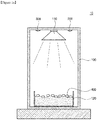
- Figure 1a is a cross-sectional view showing a plant cultivation device according to an exemplary embodiment of the present disclosure.
- the plant cultivation device 10 includes a main body 100 and a light source.
- the light source includes a first light source 200 and a second light source 300.
- the main body 100 may include an empty space in which seeds 400 of the Cichorioideae subfamily are provided and may be provided in a box shape that is capable of blocking an external light.
- the seeds of the Cichorioideae subfamily may mean seeds at least one of a red leaf lettuce (Jeokchima), a red leaf lettuce (Jeokchukmyeon), a green leaf lettuce (Cheongchima), a red lollo rosso red leaf lettuce, a butterhead lettuce, a romaine lettuce, a chicory, a dandelion chicory, and a red chicory.
- the main body 100 provides an environment in which the seeds 400 provided therein may be grown.
- the main body 100 may have a size such that a plurality of seeds 400 may be provided and grown.
- the size of the main body 100 may be altered depending on the use of the plant cultivation device 10. For example, in a case where the plant cultivation device 10 is used for a small-scale plant cultivation at home, the size of the main body 100 may be relatively small. In a case where the plant cultivation device 10 is used for commercial plant cultivation, the size of the main body 100 may be relatively large.
- the main body 100 may block the external light such that the external light is not incident into the main body 100. Accordingly, a dark room environment, which is isolated from the outside, may be provided inside the main body 100. Therefore, the external light may be prevented from being unnecessarily irradiated to the seeds 400 provided inside the main body 100. In particular, the main body 100 may prevent an external visible light from being irradiated to the seeds 400. However, the main body 100 may be designed to be partially opened to receive the external light depending on circumstances.
- a photocatalyst may be coated on an inner surface of the main body 100.
- the photocatalyst receives the light provided from the first light source 200 and activates a photocatalytic reaction. Accordingly, although the inside of the main body 100 is maintained in the dark room environment with a lot of moisture, it is possible to prevent bacteria or fungi from growing inside the main body 100.
- a photocatalytic material for performing this function may be at least one selected from titanium dioxide (TiO2), zirconia (ZrO2), tungsten oxide (WO3), zinc oxide (ZnO), and tin oxide (SnO2).
- the main body 100 may include a culture platform 120 in which the Cichorioideae subfamily plant is cultivated.
- the seeds 400 of the Cichorioideae subfamily are provided on the culture platform 120.
- the culture platform 120 may support the seeds 400, and substantially simultaneously, may provide nutrients to grow the seeds 400.
- the culture platform 120 may include a culture medium required to grow the seeds 400, and the culture medium may include a soil containing inorganic substances, such as potassium (K), calcium (Ca), magnesium (Mg), sodium (Na), and iron (Fe).
- the culture platform 120 may be provided in a form including the culture medium and a container accommodating the culture medium.
- the container may have a box shape in which at least one surface, e.g., an upper surface, is removed.
- the culture medium and the seeds 400 may be provided inside the container having the box shape.
- the seeds 400 may be provided while being imbedded in the culture medium or placed on a surface of the culture medium depending on its type.
- the culture platform 120 may have a size and a shape, which are altered depending on the shape of the main body 100 and the providing manner of the first light source 200 and the second light source 300.
- the size and the shape of the culture platform 120 may be configured to allow the seeds 400 provided on the culture platform 120 to be placed within an irradiation range of the light irradiated from the first light source 200 and the second light source 300.
- a water supply unit 110 is provided in the main body 100 to supply water to the seeds.
- the water supply unit 110 may be configured to be disposed at an upper end of the main body 110 and to spray water onto the culture platform 120 disposed at a lower end of the main body 110.
- the configuration of the water supply unit 110 should not be limited thereto or thereby, and various types of water supply units 110 may be provided depending on the shape of the main body 100 and the arrangement of the culture platform 120.
- the water supply unit 110 may be provided in a singular or plural number.
- the number of the water supply units 110 may be altered depending on the size of the main body 110. For instance, in the case of the relatively small-sized plant cultivation device 10 for the home usage, one water supply unit 110 may be used since the size of the main body 100 is small. In the case of the relatively large-sized commercial plant cultivation device 10, the plural water supply units 110 may be used since the size of the main body 100 is large. However, the number of the water supply units should not be limited thereto or thereby, and the water supply unit may be provided in a variety of positions in various numbers.
- the water supply unit 110 may be connected to a water tank provided in the main body 100 or a faucet outside the main body 100.
- the water supply unit 110 may further include a filtration unit such that contaminants floating in the water are not provided to the seeds 400.
- the filtration unit may include a filter, such as an activated carbon filter or a non-woven fabric filter, and thus the water passing through the filtration unit may be purified.
- the filtration unit may further include a light irradiation filter.
- the light irradiation filter may remove germs, bacteria, fungal spores, and the like, which are present in water, by irradiating an ultraviolet light or the like to the water.
- the water supply unit 110 includes the above-mentioned filtration unit, there is no possibility that the inside of the main body 100 and the seeds 400 are contaminated even when the water is recycled or rainwater or the like is directly used for the cultivation.
- the water provided from the water supply unit 110 may be provided as plain water itself (for example, purified water) without additional nutrients, however, it should not be limited thereto or thereby.
- the water provided from the water supply unit 110 may contain nutrients necessary for the growth of the plants of the Cichorioideae subfamily.
- the water may contain a material, such as potassium (K), calcium (Ca), magnesium (Mg), sodium (N), and iron (Fe), and a material, such as nitrate, phosphate, sulfate, and chloride (CI).
- K potassium
- Ca calcium
- Mg magnesium
- Na sodium
- Fe iron
- CI nitrate, phosphate, sulfate, and chloride
- Sachs's solution, Knop's solution, Hoagland's solution, or Hewitt's solution may be supplied from the water supply unit 110.
- the first light source 200 irradiates the light in a first wavelength band to the seeds 400.
- the seeds 400 may grow by being irradiated with the light in the first wavelength band.
- the first wavelength band emitted from the first light source 200 may be a visible light wavelength band. Therefore, the seeds 400 may receive the light in the first wavelength band, which is emitted from the first light source 200, and may perform photosynthesis. The plants may grow from the seeds 400 by the photosynthesis.
- the first light source 200 may include one or more light emitting diodes to emit the light in the visible light wavelength band.
- the above-mentioned at least one light emitting diode may be a light emitting diode that emits a white light or may be a light emitting diode that emits a color light in various visible lights.
- the first light source 200 includes plural light emitting diodes, the light emitting diodes may emit lights having different wavelength bands, respectively.
- the first light source 200 may emit a light in an infrared or near-infrared wavelength band according to circumstances.
- the light emitting diodes may include, for example, a light emitting diode that emits a red light, a light emitting diode that emits a blue light, and a light emitting diode that emits a green light, and thus a white light may be implemented.
- the first light source 200 may include the light emitting diode that emits the red light and the light emitting diode that emits the blue light without including the light emitting diode that emits the green light.
- the plants of the Cichorioideae subfamily may receive the red light and the blue light emitted from the above-mentioned light emitting diodes and may actively perform photosynthesis.
- the red light may promote the photosynthesis of the plants to accelerate the growth of the plants from the seeds 400
- the blue light may contribute to formation of plant leaf from the seeds 400 and may induce flowering of the plants.
- the first light source 200 may include the light emitting diode that emits the green light. The light emitting diode emitting the green light may increase a photosynthetic efficiency of the plants.
- a composition ratio of the light emitting diodes may differ depending on the wavelength.
- the light emitting diodes that emit the red light and the blue light may be provided less than the light emitting diode that emits the green light.
- a ratio between the light emitting diodes that emit the red light, the blue light, and the green light may be determined according to the type of the seeds 400.
- the composition ratio may be altered depending on a ratio of cryptochrome that is a blue light receptor to phytochrome that is a red light receptor.
- the light emitting diodes emitting the lights of respective wavelength bands may be provided in the same numbers, and in this case, the light emitting diodes may be driven at different ratios depending on the type of plant.
- the light emitting diodes of the first light source 200 may include the red light emitting diode, a white light emitting diode, and the blue light emitting diode.
- the first light source 200 may include the red light emitting diode, the white light emitting diode, and the blue light emitting diode in a ratio of 12:10:32.
- the first light source 200 is disposed at a position where the first light source 200 may provide the light to the seeds 400.
- the first light source 200 may be provided on an inner wall of an upper portion or a sidewall portion inside the main body 100.
- the first light source 200 disposed on the upper portion of the main body 100 is shown, and the first light source 200 irradiates the light to the seeds 400 provided on a lower portion of the main body 100.
- the position of the first light source 200 may be determined by taking into account an irradiation angle of the light from the first light source 200 and a position of the culture platform 120 in which the seeds 400 are provided.
- the first light source 200 may have a waterproof structure. Accordingly, even though the water splashes on the first light source 200, there is no possibility that the first light source 200 is malfunctioning.
- the second light source 300 emits the light in a second wavelength band to the seeds 400.
- the second wavelength band is different from the first wavelength band and is the ultraviolet wavelength band in a range from about 250nm to about 380nm.
- the second wavelength band may correspond to at least one wavelength band among lights having wavelength bands of a UV-A, a UV-B, and a UV-C.
- the second light source 300 may emit a light having a wavelength band from about 280nm to about 315nm.
- the second light source 300 may emit a light having a wavelength band of about 285nm.
- the second light source 300 may include at least one light emitting diode that emits the light having the above-mentioned wavelength band.
- Each of the second light source 300 or the light emitting diode included in the second light source 300 may be provided in a plural number.
- the light emitting diodes may emit lights having different wavelengths from each other.
- the second light source 300 may be configured to allow a portion of the second light sources 300 or the light emitting diodes to emit the light having the wavelength of about 285nm and the other portion of the second light sources 300 or the light emitting diodes to emit the light having the wavelength of about 295nm.
- the second light source 300 is to alter a content of active ingredients of the seeds 400 and the plants grown from the seeds 400 by irradiating the light in the ultraviolet wavelength band to the plants of the Cichorioideae subfamily.
- the content of active ingredients in the seeds 400 and the plants of the Cichorioideae subfamily may be altered by irradiating the light emitted from the second light source 300 to the plants of the Cichorioideae subfamily for a predetermined time at a predetermined intensity without affecting the growth of the seeds 400.
- the second light source 300 may have a waterproof structure. Accordingly, even though the water splashes on the second light source 300, there is no possibility that the second light source 300 is malfunctioning.
- a controller (not shown) for controlling whether to operate or not the first light source 200 and the second light source 300 may be connected to the first light source 200 and/or the second light source 300 by wire or wirelessly.
- the controller may substantially simultaneously or individually control ON/OFF of the first light source 200 and/or the second light source 300 such that the first light source 200 and/or the second light source 300 emit the lights for a predetermine period at a predetermined intensity.
- the controller may control whether to operate or not the first light source 200 and the second light source 300 according to a preset process or according to a user's input. For example, the controller may not operate the first and second light sources 200 and 300 for a first time, may operate the first light source 200 for a second time, and may operate the second light source 300 for a third time in sequence. As another way, the user may manually input a length of the first time, the second time, and the third time and an intensity of the light of the first light source 200 and/or the second light source 300.
- the controller may be connected to the water supply unit in addition to the first light source 200 and/or the second light source 300.
- the controller may control an amount of water supplied through the water supply unit and a time during which the water is supplied.
- the water supply unit 110 may supply the water to the seeds 400 at predetermined time intervals without a user's operation.
- the intervals at which the water is supplied to the seeds 400 may be altered depending on the type of the seeds 400. In the case of the plants of the Cichorioideae subfamily that require a lot of water for growth, the water may be supplied at relatively short intervals, and in the case of the plants of the Cichorioideae subfamily that require less water for growth, the water may be supplied at relatively long intervals.
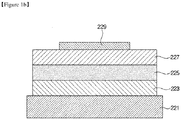
- Figure 1b is a view schematically showing the light emitting diode used in the first and second light sources.
- the light emitting diode may include a light emitting structure including a first semiconductor layer 223, an active layer 225, and a second semiconductor layer 227, a first electrode 221 connected to the light emitting structure, and a second electrode 229 connected to the light emitting structure.
- the first semiconductor layer 223 is a semiconductor layer doped with a first conductive type dopant.
- the first conductive type dopant may be a p-type dopant.
- the first conductive type dopant may be Mg, Zn, Ca, Sr, or Ba.
- the first semiconductor layer 223 may include a nitride-based semiconductor material.
- the material for the first semiconductor layer 223 may be GaN, A1N, AlGaN, InGaN, InN, InAlGaN, or AlInN.
- the active layer 225 is disposed on the first semiconductor layer 223 and corresponds to a light emitting layer.
- the active layer 225 is a layer in which electrons (or holes) injected through the first semiconductor layer 223 and holes (or electrons) injected through the second semiconductor layer 227 meet each other and emit a light due to a band gap difference of an energy band according to a material for forming the active layer 225.
- the active layer 225 may be implemented with a compound semiconductor.
- the active layer 225 may be implemented with, for example, at least one of compound semiconductors of Groups III-V or II-VI.
- the second semiconductor layer 227 is disposed on the active layer 225.
- the second semiconductor layer 227 is a semiconductor layer doped with a second conductive type dopant having a polarity opposite to that of the first conductive type dopant.
- the second conductive type dopant may be an n-type dopant, and the second conductive type dopant may be, for example, Si, Ge, Se, Te, O, or C.
- the second semiconductor layer 227 may include a nitride-based semiconductor material.
- the material for the second semiconductor layer 227 may be GaN, A1N, AlGaN, InGaN, InN, InAlGaN, or AlInN.
- the first electrode 221 and the second electrode 229 may be provided in various forms to be respectively connected to the first semiconductor layer 223 and the second semiconductor layer 227.
- the first electrode 221 is disposed under the first semiconductor layer 223, and the second electrode 229 is disposed on the second semiconductor layer 227, however, they should not be limited thereto or thereby.
- the first electrode 221 and the second electrode 229 may include various metals, such as Al, Ti, Cr, Ni, Au, Ag, Sn, W, Cu, or alloys thereof.
- Each of the first electrode 221 and the second electrode 229 may have a single-layer or multi-layer structure.
- the light emitting diode is described as a vertical type light emitting diode, however, the light emitting diode does not necessarily need to be the vertical type and may be provided in other types as long as it corresponds to the concept of the present disclosure.
- the following effects may be obtained by using the light emitting diode instead of a conventional lamp as a light source for applying the light to a sample.
- a light having a specific wavelength may be provided to the plants when compared with a light emitted from the conventional lamp (e.g., a conventional UV lamp).
- the light emitted from the conventional lamp has a broad spectrum in a wide area compared with the light emitted from the light emitting diode. Accordingly, in the case of the conventional UV lamp, it is not easy to separate only the light of some bands from the wavelength band of the emitted light.
- the light emitted from the light emitting diode has a sharp peak at a specific wavelength and provides a light of a specific wavelength having a very narrow full-width-half-maximum in comparison with the light from the conventional lamp. Therefore, it is easy to select the light of the specific wavelength, and only the light of the selected specific wavelength may be provided to the sample.
- the conventional lamp it is difficult to precisely limit an amount of the light while providing the light to the sample, but in the case of the light emitting diode, it is possible to clearly limit the amount of the light while providing the light. Further, in the case of the conventional lamp, it is difficult to precisely limit the amount of the light, and thus, an irradiation time may be set in a wide range. However, in the case of the light emitting diode, the light required for the sample may be provided for a definite time within a relatively short time.
- a clear light dose may be provided due to the relatively narrow range of wavelength, the narrow range of light amount, and the narrow range of irradiation time.
- the irradiation time of the light may be accurately controlled when the plants are irradiated with a light of a specific wavelength.
- the content of the active ingredients may be altered by irradiating the light to the Asteraceae family plants, for example, the Cichorioideae subfamily plant, by using the first and second light sources under a specific condition.
- the active ingredients whose content is altered in the plants by the light from the first and second light sources there may be chlorophylls, flavonols, anthocyanins, sesquiterpene lactones, and phenolic compounds.
- Chlorophylls are known as a photosynthetic pigment of green vegetables and help to prevent bad breath and constipation. Flavonols are antioxidants and include quercetin, kaempferol, and myricetin as its representative substances. Quercetin is an antioxidant with high antioxidant capacity, Kaempferol is known to prevent cancer cell proliferation by enhancing immunity, and Myricetin is known to inhibit the accumulation of fat to prevent cardiovascular disease. Anthocyanins are one of the representative antioxidants and have the effect of preventing aging by removing reactive oxygen species in human body. Anthocyanins also help re-synthesis of a pigment called rhodopsin in the eye's retina to prevent eye strain, decreased visual acuity, cataract, etc.
- Sesquiterpene-based compounds are a subgroup of terpene-based compounds (terpenoids), and among them, the sesquiterpene lactones having a lactone structure are known to have functions, such as antitumor activity, cytotoxicity alleviation, and antibacterial action.
- lactucin which belongs to the group of sesquiterpene lactones contained in lettuce, has an effect in improving insomnia.
- the sesquiterpene lactones have relatively good medicinal value in terms of resistance to microbial pathogens, treatment of schistosome infection, and improvement of antiallergic activity.
- the sesquiterpene lactones may increase or decrease.
- the sesquiterpene lactones increase in the plants, it may help to improve insomnia.
- the sesquiterpene lactones decrease in the plants, the sleep-inducing phenomenon may be prevented even when the plants of the Cichorioideae subfamily are ingested.
- the sesquiterpene lactones may be a substance represented by the following chemical formula 1, and each of R1 and R2 may independently be various functional groups. Each of R1 and R2 may independently be, for example, substituted or unsubstituted alkyl, alkoxy, allyl, or aryl with from 1 to 18 carbon atoms.
- the sesquiterpene lactones may be at least one of lactucin, lactucopicrin, 8-deoxylactucin, picriside A, crepidiaside A, lactucin-15-oxalate, lactucopicrin-15-oxalate, 8-deoxylactucin-15-oxalate, 15-deoxylactucin-8-sulfate, 15-deoxylactucin, 8-deoxylactucin-15-sulfate, and 15-(4-hydroxyphenylacetyl)-lactucin-8-sulfate.
- sesquiterpene lactones according to the exemplary embodiment of the present disclosure may have the following formulas 2-1 to 2-7.
- the light irradiated from the second light source 300 increases the phenolic compound in the plants grown from the seeds 400.
- the light irradiated from the second light source 300 and having the second wavelength band activates secondary metabolism of the plants, and thus the content of the phenolic compounds, which are secondary metabolites, may increase.
- the light in the second wavelength band is irradiated to the plants, the light having the above-described wavelength causes a DNA-damaging effect on cells of the plants, and as a result, the generation of phenolic compounds, which are capable of absorbing the light having the above-mentioned wavelength, may be promoted.
- the phenolic compounds correspond to antioxidants included in the plants grown from the seeds 400.
- the phenolic compounds may include substances represented by the following chemical formulas 3-1 to 3-3.
- the substances represented by the following formulas 3-1 to 3-3 correspond respectively to luteolin, chlorogenic acid, and chicoric acid.
- chlorogenic acid is a natural compound composed of an ester of caffeic acid and quinic acid and is a biological antioxidant.
- the chlorogenic acid is known to neutralize damaging effects of peroxides.
- the content of the active ingredients may increase, and also, the effect of having and retaining the inherent color of each Cichorioideae subfamily plant may be obtained.
- the light source for plant cultivation when used, it is possible to independently provide a growing environment suitable for the types of plants even under conditions in which the sunlight is insufficient or the sunlight is not provided.
- the marketability of the plants may increase by providing the growth environment that may retain the inherent color of the plants.
- the plants grown in the plant factory have no anthocyanin or very small amounts of anthocyanins, and as a result, the plants have a problem in that they do not have the inherent color of the plants.
- the Chicoriaceae subfamily plant such as the red leaf lettuce (Jeokchima) usually appear reddish, but appear very pale reddish or have no red color when they are grown in the plant factory without sunlight.
- a consumer may determine that the plant is defective, resulting in poor marketability.
- the content of anthocyanin among the active ingredients of the plant significantly increases by appropriately applying the first light and the second light to the plant, particularly, by applying the second light to the plant for a predetermined time duration before harvesting, and as a result, the plant has a color close to its inherent color. This leads to an improvement in the marketability.
- the light provided to the Asteraceae family plants may be provided during different periods.
- the term "period” means a temporal period.
- first light the light emitted from the first light source
- second light the light emitted from the second light source
- the light corresponding to the first light may be provided during a portion of the period, and both the first light and the second light may be provided during the other portion of the period except for the portion of the period.
- first period the period in which the first light is provided
- second period the period in which the first light and the second light are provided
- the first period or the second period is a period in which the light having the visible light wavelength band is provided and corresponds to a predetermined period in the light condition.
- the second period is shorter than the first period.
- the first period and the second period may be arranged in various ways depending on the growth stage and the harvest time of the plants.
- the first period may be arranged before the harvesting of the plants after the plants are transplanted.
- the second period may be arranged adjacent to the first period and may be arranged right before the harvesting time within an overall schedule.
- the first period may be continued after the transplanting of the plants, and the second period may be arranged at a time other than the first period right before harvesting. Then, the plants are harvested.
- the second period may be provided between the first periods over 10 days or less before harvesting.
- the second period may be provided between the first periods over several days.
- a cumulative applied amount of the provided second light may be, for example, about 4.032 kJ/m 2 , about 2.880 kJ/m 2 , or about 2.304 kJ/m 2 .
- the plants may be cultivated under the light period and the dark period, which are alternated for about 20 days after the transplanting of the plants. That is, the first period and the second period are sequentially repeated in the light period, and the first period and the second period, which are adjacent to each other, form one repetition period. In the repetition period, the light provided in the second period is not provided in the first period.
- the light period may include only the first period for about 14 days (e.g., from tenth day to twenty-third day after sowing). Then, the light period may include the first period and the second period, which are alternately arranged with each other, for about 7 days from fifteenth day to twentieth day after being transplanted (e.g., from twenty-fourth day to thirtieth day after sowing). That is, the first period and the second period are sequentially repeated in the light period. In other words, the irradiation of light is repeated with a cycle of about 10 minutes, and the second light is irradiated for about 1 minute and then has a rest period of about 9 minutes. This cycle is continuously repeated during the light period.
- a cumulative energy amount per a day of the second light irradiated to the plant during the second period may be about 0.58 kJ/m 2
- a total cumulative energy amount from the sowing to the harvest may be about 4.03 kJ/m 2 .
- Figure 2 is a cross-sectional view showing the Cichorioideae subfamily plant cultivation device according to an exemplary embodiment of the present disclosure.
- the plant cultivation device 10 may be operated in the form of a large factory for obtaining a large amount of plants of the Cichorioideae subfamily, i.e., a plant production facility, as well as a culturing device for home use or personal use to cultivate a relatively small amount of plants of the Cichorioideae subfamily. Therefore, the plant cultivation device 10 may include a plurality of culture platforms 120, first light sources 200, second light sources 300, and water supply units (not shown).
- the culture platforms 120, the first light sources 200, and the second light sources 300 may define several compartments. Therefore, a main body 100 may be provided in a structure that includes the several compartments.
- the several compartments included in the main body 100 may be operated independently of each other.
- the first light source 200 provided in some compartments may emit more blue light than red light
- the first light source 200 provided in other compartments may emit more red light than blue light.
- each compartment of the main body 100 may be operated differently in terms of time.
- the first light source 200 may emit the light in a first wavelength band in some compartments to grow plants 401
- the second light source 200 may emit the light in a second wavelength band in other compartments to increase or decrease the active ingredient content in the plants 401.
- Each compartment included in the main body 100 may be configured to form a closed dark room to be independently operated as described above. Therefore, the light(s) emitted from the first light source 200 and/or the second light source 300 and provided to an arbitrary compartment may not exert an influence on other compartments.
- the culture platform 120 provided in the main body 100 may include different culture media from each other depending on the type of the plants 401. Thus, it is possible to provide the growth environment customized to the type of the plants 401.
- the culture platform 120 may be separated from the main body 100. Accordingly, when the plants 401 growing on some culture platforms 120 reach a harvesting stage, the user may separate only the culture platform 120 on which the plants 401 completely grown are provided from the main body 100 without affecting the plant cultivation device 10.
- the main body 100 may further include a water supply unit, and the water supply unit is provided on a surface at which the main body 100 and the culture platform 120 make contact with each other to directly supply water to the culture medium included in the culture platform 120. Therefore, different from a spray-type water supply unit, the water may be supplied without affecting other culture platforms 120 even when the culture platforms 120 are stacked.
- the first light source 200 may be provided in a plural number depending on shape of the culture platform 120.
- the first light source 200 may include a plurality of light emitting diodes that emits lights having different wavelengths, and the light emitting diodes may be provided in the same ratio or different ratios in the first light source 200.
- the first wavelength band may be controlled by a controller to correspond to the type of the plants 401. Therefore, the growth environment suitable for the type of the plants 401 may be provided.
- the second light source 300 may be provided in a plural number.
- the second light sources 300 may be provided in different compartments from each other in the main body 100 and may be independently operated. Accordingly, the light in the second wavelength band may be irradiated to only the completely grown plants 401 in a phase where the active ingredient content is to be increased or decreased.
- various sensors e.g., a temperature sensor, a humidity sensor, and a light intensity sensor
- the controller may receive data from the sensors and may control the first and second light sources and the water supply unit as a whole or individually.
- the culturing device equipped with the plant cultivation system may transmit and receive data either directly or from a remote location by wired, wireless, or internet connection and may display data from the various sensors, the first and second light sources, and the water supply unit through a separate display. The user may instruct the controller 40 to implement optimal conditions after reviewing such data.
- the plants of the Cichorioideae subfamily with the altered active ingredient content may be easily cultivated in large quantities by using the plant cultivation device 10 according to the exemplary embodiment of the present disclosure.
- the active ingredients obtained in large quantity may be processed in the form of medicines, health supplements, and various ingredients through a separate processing process.
- the plants of the Cichorioideae subfamily with a high active ingredient content may be lyophilized immediately after harvest to allow the highest active ingredient content right after harvest to be maintained in the final product.
- the lyophilized plants of the Cichorioideae subfamily may be processed into various forms. For example, they may be processed in powder form or may be processed to extract only the active ingredients through a separate process. Thus, the user may consume the plants of the Cichorioideae subfamily having the high active ingredient content either in the form of plants or in the form of processed products through separate processing processes.
- the plural plants 401 may be substantially simultaneously cultivated using the plant cultivation device according to the exemplary embodiment of the present disclosure, and the growth environment suitable for the type of the plants 401 may be independently provided. Accordingly, the plants 401 whose types are different from each other may be substantially simultaneously cultivated by using the plant cultivation device 10.
- the light source for plant cultivation when used, it is possible to independently provide a growing environment suitable for the types of plants even under conditions in which the sunlight is insufficient or the sunlight is not provided.
- the plant that has the inherent color thereof and having the high active ingredient content may be easily cultivated.
- the Cichorioideae subfamily plant was harvested on the 31st day (grown for 31 days).
- the Cichorioideae subfamily plant was cultivated under conditions of a temperature of about 22 ⁇ 1 °C and a relative humidity of about 70 ⁇ 10% during the growth period.
- the first and second lights were provided by the light emitting diode during the growth period.
- the Cichorioideae subfamily plant was germinated in the dark period for about 2 days after the sowing. In other words, seeds of the Cichorioideae subfamily plant were first sowed into a cultivation sponge and germinated in the dark period for about 2 days to grow the Cichorioideae subfamily plant.
- the Cichorioideae subfamily plant was grown in the light period and the dark period from day 3 to day 9 after sowing, and this corresponds to an irradiation period before transplanting.
- the light was irradiated to the Cichorioideae subfamily plant in the light period at a light intensity of about 60 ⁇ mol/m2/s PPFD (Photosynthetic Photon Flux Density). Only the purified water was provided to the plants after sowing and before transplanting.
- the grown sprouts were transplanted in a deep-flow technique (DFT) hydroponic culture system on the 10th day.
- the transplanted Cichorioideae subfamily plant was grown in nutrient solution under the light and dark periods.
- nutrient solution Hoagland stock solution was used, and the pH of the nutrient solution was maintained at about 5.5 to about 6.5.
- the light period and the dark period were provided on the 24-hour basis for about 20 days.
- the light period was maintained for about 16 hours, and the dark period was maintained for about 8 hours.
- the first light was provided in the light period for about 20 days, and the second light was not provided. That is, in the case of comparative example, the irradiation period after the transplanting may include only the first period in the light period.
- the first light was irradiated in the light period at a light intensity of about 150 ⁇ mol/m2/s PPFD (Photosynthetic Photon Flux Density).
- the light period and the dark period were provided on the 24-hour basis for about 20 days.
- the light period was maintained for about 16 hours, and the dark period was maintained for about 8 hours.
- the first light was provided in the light period for about 20 days, and the second light was provided for about 6 hours at the start of the light period on 20th day after the transplanting.
- the irradiation period after the transplanting may include only the first period in the light period for about 19 days and may include the second period and the first period in the light period on 20th day.
- the first light was continuously irradiated during the light period on 20th day (on 30th day after sowing) after transplanting, and the second light was continuously irradiated for about 6 hours in some periods.
- the first light was irradiated in the light period at a light intensity of about 150 ⁇ mol/m2/s PPFD (Photosynthetic Photon Flux Density), and a total cumulative energy amount of the second light provided in the second period was about 2.16kJ/m 2 .
- the light period and the dark period were provided on the 24-hour basis for about 20 days. On the 24-hour basis, the light period was maintained for about 16 hours, and the dark period was maintained for about 8 hours.
- the second light was irradiated to the plants in an on and off manner in the light period. That is, the irradiation of the second light was repeated with a 10-minutes cycle in which a 1-minute irradiation of the second light is followed by a 9-minute non-irradiation in the light period.
- an amount of UV irradiation energy processed per a day was about 0.576 kJ/m 2 .
- the UV was irradiated after sowing, and a total amount of UV irradiation energy was about 4.032 kJ/m 2 .
- the first light was a light having the visible light wavelength band
- the second light was a light having a UVB wavelength band, for example, a wavelength of about 285 nm.
- the green leaf lettuce (Cheongchima) was cultivated as the comparative example and experimental examples 1 and 2 under the conditions shown in Figures 3a and 3b , and was examined for damage to its appearance after harvesting.
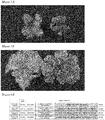
- Figure 4a is a photograph showing the appearance of the green leaf lettuce (Cheongchima) according to the comparative example and experimental example 1.
- Figure 4b is a photograph showing the appearance of the green leaf lettuce (Cheongchima) according to the comparative example and experimental example 2.
- the left green leaf lettuce (Cheongchima) corresponds to the comparative example
- the right green leaf lettuce (Cheongchima) corresponds to experimental example 1.
- the left green leaf lettuce (Cheongchima) corresponds to the comparative example
- the right green leaf lettuce (Cheongchima) corresponds to experimental example 2.
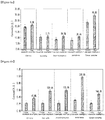
- Figures 5a to 5d are graphs showing the content of the active ingredients contained in the green leaf lettuce (Cheongchima) after harvest in the comparative example and experimental example 2.
- the active ingredients in Figures 5a to 5d sequentially correspond to chlorogenic acids, chlorophylls, flavonoids, and anthocyanins.
- the plants were harvested on the 31st day after sowing, and contents of chlorogenic acids, chlorophylls, flavonols, and anthocyanins were measured by providing a light to the leaf using an optical sensor called Dualex, that is a non-destructive analyzer.
- Figures 6a to 6c are graphs showing the content of the active ingredients contained in other Cichorioideae subfamily plants after harvest in the comparative example and experimental example 2.
- Each active ingredient was measured with respect to chlorophylls, flavonols, and anthocyanins, and the graphs of Figures 6a, 6b , and 6c sequentially correspond to chlorophylls, flavonols, and anthocyanins.
- Figures 7a to 7f are photographs showing the exterior colors of the Cichorioideae subfamily plants after harvest in the comparative example and experimental example 2.
- Figures 7a to 7f are photographs of chicory, red lollo rosso red leaf lettuce, red leaf lettuce (Jeokchukmyeon), red leaf lettuce (Jeokchima), romaine lettuce, and green leaf lettuce (Cheongchima) among the Cichorioideae subfamily plants in sequence.
- the left plant corresponds to the result in the comparative example of each Cichorioideae subfamily plant
- the right plant corresponds to the result in experimental example 2 of each Cichorioideae subfamily plant.
- experiments were carried out on the red leaf lettuce (Jeokchima) among the Cichorioideae subfamily plants, which belong to the Asteraceae family plants, as a representative example.
- the Cichorioideae subfamily plant was cultivated under conditions of a temperature of about 22 ⁇ 1 °C and a relative humidity of about 70 ⁇ 10% during the growth period.
- the first and second lights were provided using light emitting diodes during the growth period.
- the red leaf lettuce (Jeokchima) was harvested on the 31st day (grown for 31 days).
- the growth conditions of the red leaf lettuce (Jeokchima) according to the comparative example and experimental examples are shown in Figures 8a and 8b .
- a period during which the first light is irradiated is shown as the first period
- a period during which the first and second lights are irradiated is shown as the second period.
- red leaf lettuce (Jeokchima) was germinated in the dark period for about 2 days after sowing.
- red leaf lettuce (Jeokchima) seeds were first sowed into a cultivation sponge and germinated in the dark period for about 2 days to grow the red leaf lettuce (Jeokchima).
- the red leaf lettuce (Jeokchima) was grown in the light period and the dark period from day 3 to day 9 after sowing, and this corresponds to an irradiation period before transplanting.
- the first light was irradiated to the red leaf lettuce (Jeokchima) in the light period at a light intensity of about 60 ⁇ mol/m2/s PPFD. Only the purified water was provided to the plants after sowing and before transplanting.
- the grown sprouts were transplanted in a deep-flow technique (DFT) hydroponic culture system on the 10th day.
- the transplanted red leaf lettuce (Jeokchima) was grown with nutrient solution under the light and dark periods.
- nutrient solution Hoagland stock solution was used, and the pH of the nutrient solution was maintained at about 5.5 to about 6.5.
- the light period and the dark period were provided on the 24-hour basis for about 20 days.
- the light period was maintained for about 16 hours, and the dark period was maintained for about 8 hours.
- the first light was provided in the light period for about 20 days, and the second light was not provided. That is, in the case of the comparative example, the irradiation period after the transplanting may include only the first period in the light period. In this case, the first light was irradiated in the light period at a light intensity of about 150 ⁇ mol/m2/s PPFD.
- experimental examples 1 to 3 after the transplanting, the light period and the dark period were provided on the 24-hour basis for about 20 days. On the 24-hour basis, the light period was maintained for about 16 hours, and the dark period was maintained for about 8 hours.
- the second light was irradiated to the plants in the on and off manner in the light period. That is, in experimental examples 1 to 3, the second light was irradiated in an on and off manner with a repeated cycle of about several minutes in which a light irradiation of several minutes is followed by a rest period of a predetermined time.
- an amount of UV irradiation energy processed per a day was about 0.576 kJ/m 2
- the method of irradiation was the same with each other, and only the date from which the treatment started and the total amount of irradiation energy were different in each experimental examples.
- the UV was irradiated after sowing, and a total amount of UV irradiation energy was about 2.304 kJ/m 2 .
- the UV was irradiated after sowing, and a total amount of UV irradiation energy was about 2.880 kJ/m 2 .
- the UV was irradiated after sowing, and a total amount of UV irradiation energy was about 4.302 kJ/m 2 .
- Figures 9a to 9d are graphs showing the content of the active ingredients contained in the red leaf lettuce (Jeokchima) after harvest in the comparative example and experimental examples 1 to 3.
- Figures 9a to 9d show the content of the active ingredients, and the active ingredients in Figures 9a to 9c sequentially correspond to chlorophylls, flavonoids, and anthocyanins.
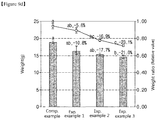
- Figure 9d shows a bio weight at harvest and a dry weight of the red leaf lettuce (Jeokchima).
- the plants were harvested on the 31st day after sowing, and contents of chlorophylls, flavonols, and anthocyanins were measured by providing a light to the leaf using an optical sensor called Dualex, that is a non-destructive analyzer.
- Figure 9a is a graph of the chlorophyll content, and all experimental examples 1, 2, and 3 showed higher values than the comparative example. Experimental examples 1 and 3 showed similar values, experimental example 2 was higher than the comparative example and lower than experimental example 3, but there was no significant difference from experimental example 1. The chlorophyll content in experimental examples 1, 2 and 3 was increased by about 28.1%, about 18.4%, and about 38.6%, respectively, compared to the comparative examples.
- Figure 9b is a graph of the flavonol content, and all experimental examples 1, 2, and 3 showed higher values than the comparative example. There was no substantial difference between experimental examples 1 to 3.
- the flavonol content in experimental examples 1, 2 and 3 increased by about 203.7%, about 188.9%, and about 213.8%, respectively, compared to the comparative examples.
- Figure 9c is a graph of the anthocyanin content, and all experimental examples 1, 2, and 3 showed higher values than the comparative example. There was no substantial difference between experimental examples 1 to 3.
- the anthocyanin content in experimental examples 1, 2 and 3 increased by about 66.9%, about 71.2%, and about 74.5%, respectively, compared to the comparative examples.
- Figure 9d is a graph of the bio weight and the dry weight, and there was no substantial difference in the bio weight and the dry weight between the comparative example and experimental example 1. There was no difference in the bio weight between the comparative example and experimental example 2, however, the dry weight was reduced by about 16.9%. Experimental example 3 showed lower bio weight and dry weight than the comparative example, the bio weight was reduced by about 21.0%, and dry weight was reduced by about 23.1%.
- the total cumulative energy amount should not exceed about 2.304 kJ/m 2 , as in experimental example 1, to meet the conditions under which functional materials may increase without affecting the bio weight and the dry weight.
Landscapes
- Life Sciences & Earth Sciences (AREA)
- Environmental Sciences (AREA)
- Botany (AREA)
- Biodiversity & Conservation Biology (AREA)
- Ecology (AREA)
- Forests & Forestry (AREA)
- Engineering & Computer Science (AREA)
- Microelectronics & Electronic Packaging (AREA)
- General Engineering & Computer Science (AREA)
- Cultivation Of Plants (AREA)
Abstract
Description
- The present disclosure relates to a light source for plant cultivation. More particularly, the present disclosure relates to a light source that emits a light increasing a content of active ingredient in Asteraceae family plants.
- Various light sources replacing sunlight are being developed and being used as lightings for plant cultivation. Conventionally, incandescent lamps and fluorescent lamps are mainly used as the lightings for plant cultivation. However, the conventional lightings for plant cultivation provide light having a specific wavelength to plants for only the purpose of plant photosynthesis, and most of them do not have any additional functions.
- Plants synthesize substances useful to humans while resisting a variety of stress factors, and to this end, a light source and a cultivation device are required to cultivate plants that contain a large amount of substances useful to humans.
- The present disclosure provides a light source for emitting a light that increases a content of an active ingredient while retaining an inherent color of Asteraceae family plants.
- Embodiments of the inventive concept provide a plant cultivation light source being turned on or turned off depending on a light period and a dark period of a plant. The plant cultivation light source includes a first semiconductor layer, a second semiconductor layer, and an active layer, and the active layer is disposed on the first semiconductor layer to emit a light having a specific wavelength due to a band gap difference in an energy band depending on a material used to form the active layer. When a portion of the light period is referred to as a first period and the other portion of the light period is referred to as a second period, the first period and the second period are alternately provided with each other, and lights having different wavelengths from each other are provided to the plant in the first and second periods, thereby increasing a content of an active ingredient in the plant.
- The cultivation light source includes a first light source emitting a first light and a second light source emitting a second light, and one of the first and second light sources is turned on in at least one period of the first and second periods.
- The second light is provided to the plant in an on and off manner.
- The first light is a light of a visible light wavelength band, the second light is a light of an ultraviolet light wavelength band, the first light is provided to the plant in the first period, and the second light is provided to the plant in the second period.
- The second light is an ultraviolet B wavelength band. The second light has a wavelength band from about 280 nm to about 315 nm.
- A total cumulative energy amount of the second light irradiated to the plant is equal to or smaller than about 2.304kJ/m2.
- The first period and the second period are alternately repeated in the light period, and the first period and the second period, which are adjacent to each other, form one repetition period. A light provided in the second period of the repetition period is not provided in the first period. The second period is provided in the light period from a predetermined number of days prior to harvest until the harvest.
- The active ingredient includes at least one of chlorophylls, flavonoids, anthocyanins, chlorogenic acids, sesquiterpene lactones, and phenolic compounds.
- Embodiments of the inventive concept provide a plant cultivation device employing the plant cultivation light source. The plant cultivation device includes a main body in which a plant is provided, a light source provided in the main body to irradiate a light to the plant, and a controller controlling the light source. The light source is turned on or turned off depending on a light period and a dark period of the plant. When a portion of the light period is referred to as a first period and the other portion of the light period is referred to as a second period, the first period and the second period are alternately provided with each other, and lights having different wavelengths from each other are provided to the plant in the first and second periods, thereby increasing a content of an active ingredient in the plant.
- According to the above, the light source for emitting the light that increases the content of the active ingredient while retaining the inherent color of the plant of Asteraceae family plant may be provided.
-
-
Figure 1a is a cross-sectional view showing a Cichorioideae subfamily plant cultivation device according to an exemplary embodiment of the present disclosure. -
Figure 1b is a view schematically showing a light emitting diode used in first and second light sources. -
Figure 2 is a cross-sectional view showing a Cichorioideae subfamily plant cultivation device according to an exemplary embodiment of the present disclosure. -
Figures 3a and3b are views showing growth conditions of the Cichorioideae subfamily plants according to a comparative example and experimental examples. -
Figure 4a is a photograph showing an appearance of a green leaf lettuce (Cheongchima) according to a comparative example and an experimental example 1, andFigure 4b is a photograph showing an appearance of a green leaf lettuce (Cheongchima) according to a comparative example and an experimental example 2. -
Figures 5a to 5d are graphs showing a content of an active ingredient contained in the green leaf lettuce (Cheongchima) after harvest in the comparative example and experimental example 2. -
Figures 6a to 6c are graphs showing a content of an active ingredient contained in other Cichorioideae subfamily plants after harvest in the comparative example and experimental example 2. -
Figures 7a to 7f are photographs showing an exterior color of the Cichorioideae subfamily plants after harvest in the comparative example and experimental example 2. -
Figures 8a and8b are views showing growth conditions of a red leaf lettuce (Jeokchima). -
Figures 9a to 9d are graphs showing a content of an active ingredient and a weight of the red leaf lettuce (Jeokchima) product after harvest in the comparative example and experimental examples 1 to 3. - The present disclosure may be variously modified and realized in many different forms, and thus specific embodiments will be exemplified in the drawings and described in detail hereinbelow. However, the present disclosure should not be limited to the specific disclosed forms, and be construed to include all modifications, equivalents, or replacements included in the spirit and scope of the present disclosure.
- Like numerals refer to like elements throughout. In the drawings, the thickness, ratio, and dimension of components are exaggerated for effective description of the technical content. It will be understood that, although the terms first, second, etc. may be used herein to describe various elements, components, regions, layers and/or sections, these elements, components, regions, layers and/or sections should not be limited by these terms. These terms are only used to distinguish one element, component, region, layer or section from another region, layer or section. Thus, a first element, component, region, layer or section discussed below could be termed a second element, component, region, layer or section without departing from the teachings of the present disclosure. As used herein, the singular forms, "a", "an" and "the" are intended to include the plural forms as well, unless the context clearly indicates otherwise.
- It will be further understood that the terms "comprises" and/or "comprising", or "includes" and/or "including", when used in this specification, specify the presence of stated features, integers, steps, operations, elements, and/or components, but do not preclude the presence or addition of one or more other features, integers, steps, operations, elements, components, and/or groups thereof.
- The present disclosure relates to a light source used to cultivate plants and a cultivation device including the light source.
- The plants photosynthesize using a light in a visible light wavelength band and gain energy through photosynthesis. The photosynthesis of the plants does not occur to the same extent in all wavelength bands. The light in a specific wavelength band that the plants use for photosynthesis in sunlight is called Photosynthetic Active Radiation (PAR), occupies a portion of solar spectrum, and corresponds to a band from about 400 nanometers to about 700 nanometers. The light source for plant cultivation according to an exemplary embodiment of the present disclosure includes the light in the PAR wavelength band to provide an appropriate light for plant photosynthesis and provides a light in a wavelength band to increase the content of ingredients (hereinafter, referred to as "active ingredients") that positively affect the health of humans or the plants upon ingestion. In this case, the active ingredients are substances known to be necessary for humans, such as chlorophylls, flavonols, anthocyanins, sesquiterpene lactones, and phenolic compounds.
- The types of plants to which the light source according to an exemplary embodiment of the present disclosure is applied may vary. However, there may be differences in the photosynthetic efficiency of the light emitted from the light source or the degree of increase in the content of the active ingredients depending on the types of plants. The light source according to an exemplary embodiment of the present disclosure may be applied to Asteraceae family plants. In addition, the light source according to an exemplary embodiment of the present disclosure may be applied to a Cichorioideae subfamily plant, which belongs to the Asteraceae family plants. The types of plants according to an exemplary embodiment of the present disclosure should not be limited thereto or thereby, and the light source may be applied to other types of plants. In the exemplary embodiment of the present disclosure, the plants to which the light source is applied include edible Asteraceae family plants, and in particular, the Cichorioideae subfamily plant. The Cichorioideae subfamily plant may be at least one of a red leaf lettuce (Jeokchima), a red leaf lettuce (Jeokchukmyeon), a green leaf lettuce (Cheongchima), a red lollo rosso red leaf lettuce, a butterhead lettuce, a romaine lettuce, a chicory, a dandelion chicory, and a red chicory.
- Hereinafter, for the convenience of explanation, the light source applied to the Cichorioideae subfamily plant will be described as a representative example.
-
Figure 1a is a cross-sectional view showing a plant cultivation device according to an exemplary embodiment of the present disclosure. - Referring to
Figure 1a , theplant cultivation device 10 according to the present disclosure includes amain body 100 and a light source. The light source includes a firstlight source 200 and a secondlight source 300. - The
main body 100 may include an empty space in whichseeds 400 of the Cichorioideae subfamily are provided and may be provided in a box shape that is capable of blocking an external light. In the exemplary embodiment of the present disclosure, the seeds of the Cichorioideae subfamily may mean seeds at least one of a red leaf lettuce (Jeokchima), a red leaf lettuce (Jeokchukmyeon), a green leaf lettuce (Cheongchima), a red lollo rosso red leaf lettuce, a butterhead lettuce, a romaine lettuce, a chicory, a dandelion chicory, and a red chicory. - The
main body 100 provides an environment in which theseeds 400 provided therein may be grown. Themain body 100 may have a size such that a plurality ofseeds 400 may be provided and grown. In addition, the size of themain body 100 may be altered depending on the use of theplant cultivation device 10. For example, in a case where theplant cultivation device 10 is used for a small-scale plant cultivation at home, the size of themain body 100 may be relatively small. In a case where theplant cultivation device 10 is used for commercial plant cultivation, the size of themain body 100 may be relatively large. - In the exemplary embodiment of the present disclosure, the
main body 100 may block the external light such that the external light is not incident into themain body 100. Accordingly, a dark room environment, which is isolated from the outside, may be provided inside themain body 100. Therefore, the external light may be prevented from being unnecessarily irradiated to theseeds 400 provided inside themain body 100. In particular, themain body 100 may prevent an external visible light from being irradiated to theseeds 400. However, themain body 100 may be designed to be partially opened to receive the external light depending on circumstances. - In the exemplary embodiment of the present disclosure, a photocatalyst may be coated on an inner surface of the
main body 100. The photocatalyst receives the light provided from the firstlight source 200 and activates a photocatalytic reaction. Accordingly, although the inside of themain body 100 is maintained in the dark room environment with a lot of moisture, it is possible to prevent bacteria or fungi from growing inside themain body 100. A photocatalytic material for performing this function may be at least one selected from titanium dioxide (TiO2), zirconia (ZrO2), tungsten oxide (WO3), zinc oxide (ZnO), and tin oxide (SnO2). - The
main body 100 may include aculture platform 120 in which the Cichorioideae subfamily plant is cultivated. - The
seeds 400 of the Cichorioideae subfamily are provided on theculture platform 120. Theculture platform 120 may support theseeds 400, and substantially simultaneously, may provide nutrients to grow theseeds 400. Thus, theculture platform 120 may include a culture medium required to grow theseeds 400, and the culture medium may include a soil containing inorganic substances, such as potassium (K), calcium (Ca), magnesium (Mg), sodium (Na), and iron (Fe). - The
culture platform 120 may be provided in a form including the culture medium and a container accommodating the culture medium. The container may have a box shape in which at least one surface, e.g., an upper surface, is removed. The culture medium and theseeds 400 may be provided inside the container having the box shape. Theseeds 400 may be provided while being imbedded in the culture medium or placed on a surface of the culture medium depending on its type. - The
culture platform 120 may have a size and a shape, which are altered depending on the shape of themain body 100 and the providing manner of the firstlight source 200 and the secondlight source 300. The size and the shape of theculture platform 120 may be configured to allow theseeds 400 provided on theculture platform 120 to be placed within an irradiation range of the light irradiated from the firstlight source 200 and the secondlight source 300. - A
water supply unit 110 is provided in themain body 100 to supply water to the seeds. Thewater supply unit 110 may be configured to be disposed at an upper end of themain body 110 and to spray water onto theculture platform 120 disposed at a lower end of themain body 110. However, the configuration of thewater supply unit 110 should not be limited thereto or thereby, and various types ofwater supply units 110 may be provided depending on the shape of themain body 100 and the arrangement of theculture platform 120. - The
water supply unit 110 may be provided in a singular or plural number. The number of thewater supply units 110 may be altered depending on the size of themain body 110. For instance, in the case of the relatively small-sizedplant cultivation device 10 for the home usage, onewater supply unit 110 may be used since the size of themain body 100 is small. In the case of the relatively large-sized commercialplant cultivation device 10, the pluralwater supply units 110 may be used since the size of themain body 100 is large. However, the number of the water supply units should not be limited thereto or thereby, and the water supply unit may be provided in a variety of positions in various numbers. - The
water supply unit 110 may be connected to a water tank provided in themain body 100 or a faucet outside themain body 100. In addition, thewater supply unit 110 may further include a filtration unit such that contaminants floating in the water are not provided to theseeds 400. The filtration unit may include a filter, such as an activated carbon filter or a non-woven fabric filter, and thus the water passing through the filtration unit may be purified. The filtration unit may further include a light irradiation filter. The light irradiation filter may remove germs, bacteria, fungal spores, and the like, which are present in water, by irradiating an ultraviolet light or the like to the water. As thewater supply unit 110 includes the above-mentioned filtration unit, there is no possibility that the inside of themain body 100 and theseeds 400 are contaminated even when the water is recycled or rainwater or the like is directly used for the cultivation. - The water provided from the
water supply unit 110 may be provided as plain water itself (for example, purified water) without additional nutrients, however, it should not be limited thereto or thereby. The water provided from thewater supply unit 110 may contain nutrients necessary for the growth of the plants of the Cichorioideae subfamily. For example, the water may contain a material, such as potassium (K), calcium (Ca), magnesium (Mg), sodium (N), and iron (Fe), and a material, such as nitrate, phosphate, sulfate, and chloride (CI). For instance, Sachs's solution, Knop's solution, Hoagland's solution, or Hewitt's solution may be supplied from thewater supply unit 110. - The first
light source 200 irradiates the light in a first wavelength band to theseeds 400. Theseeds 400 may grow by being irradiated with the light in the first wavelength band. - The first wavelength band emitted from the first
light source 200 may be a visible light wavelength band. Therefore, theseeds 400 may receive the light in the first wavelength band, which is emitted from the firstlight source 200, and may perform photosynthesis. The plants may grow from theseeds 400 by the photosynthesis. - As described above, the first
light source 200 may include one or more light emitting diodes to emit the light in the visible light wavelength band. - The above-mentioned at least one light emitting diode may be a light emitting diode that emits a white light or may be a light emitting diode that emits a color light in various visible lights. For example, when the first
light source 200 includes plural light emitting diodes, the light emitting diodes may emit lights having different wavelength bands, respectively. In the exemplary embodiment of the present disclosure, the firstlight source 200 may emit a light in an infrared or near-infrared wavelength band according to circumstances. - In the exemplary embodiment of the present disclosure, when the first
light source 200 includes the plural light emitting diodes, the light emitting diodes may include, for example, a light emitting diode that emits a red light, a light emitting diode that emits a blue light, and a light emitting diode that emits a green light, and thus a white light may be implemented. As another way, the firstlight source 200 may include the light emitting diode that emits the red light and the light emitting diode that emits the blue light without including the light emitting diode that emits the green light. - In the exemplary embodiment of the present disclosure, the plants of the Cichorioideae subfamily may receive the red light and the blue light emitted from the above-mentioned light emitting diodes and may actively perform photosynthesis. In this case, the red light may promote the photosynthesis of the plants to accelerate the growth of the plants from the
seeds 400, and the blue light may contribute to formation of plant leaf from theseeds 400 and may induce flowering of the plants. The firstlight source 200 may include the light emitting diode that emits the green light. The light emitting diode emitting the green light may increase a photosynthetic efficiency of the plants. - In the exemplary embodiment of the present disclosure, when the first
light source 200 includes the light emitting diodes that emit the lights having different wavelengths as described above, a composition ratio of the light emitting diodes may differ depending on the wavelength. For example, the light emitting diodes that emit the red light and the blue light may be provided less than the light emitting diode that emits the green light. A ratio between the light emitting diodes that emit the red light, the blue light, and the green light may be determined according to the type of theseeds 400. For instance, the composition ratio may be altered depending on a ratio of cryptochrome that is a blue light receptor to phytochrome that is a red light receptor. As another way, the light emitting diodes emitting the lights of respective wavelength bands may be provided in the same numbers, and in this case, the light emitting diodes may be driven at different ratios depending on the type of plant. - Since the light emitting diodes provided in the first
light source 200 have a waveform having a high peak at a specific wavelength, it is possible to irradiate the lights customized to the type of theseeds 400. Therefore, the plants may grow faster and bigger with less power. In an exemplary embodiment of the present disclosure, the light emitting diodes of the firstlight source 200 may include the red light emitting diode, a white light emitting diode, and the blue light emitting diode. For example, the firstlight source 200 may include the red light emitting diode, the white light emitting diode, and the blue light emitting diode in a ratio of 12:10:32. - The first
light source 200 is disposed at a position where the firstlight source 200 may provide the light to theseeds 400. For example, the firstlight source 200 may be provided on an inner wall of an upper portion or a sidewall portion inside themain body 100. In figures, the firstlight source 200 disposed on the upper portion of themain body 100 is shown, and the firstlight source 200 irradiates the light to theseeds 400 provided on a lower portion of themain body 100. The position of the firstlight source 200 may be determined by taking into account an irradiation angle of the light from the firstlight source 200 and a position of theculture platform 120 in which theseeds 400 are provided. - In the exemplary embodiment of the present disclosure, the first
light source 200 may have a waterproof structure. Accordingly, even though the water splashes on the firstlight source 200, there is no possibility that the firstlight source 200 is malfunctioning. - The second
light source 300 emits the light in a second wavelength band to theseeds 400. - The second wavelength band is different from the first wavelength band and is the ultraviolet wavelength band in a range from about 250nm to about 380nm. In the exemplary embodiment of the present disclosure, the second wavelength band may correspond to at least one wavelength band among lights having wavelength bands of a UV-A, a UV-B, and a UV-C. In the exemplary embodiment of the present disclosure, the second
light source 300 may emit a light having a wavelength band from about 280nm to about 315nm. As another way, the secondlight source 300 may emit a light having a wavelength band of about 285nm. To this end, the secondlight source 300 may include at least one light emitting diode that emits the light having the above-mentioned wavelength band. Each of the secondlight source 300 or the light emitting diode included in the secondlight source 300 may be provided in a plural number. In this case, the light emitting diodes may emit lights having different wavelengths from each other. For example, the secondlight source 300 may be configured to allow a portion of the secondlight sources 300 or the light emitting diodes to emit the light having the wavelength of about 285nm and the other portion of the secondlight sources 300 or the light emitting diodes to emit the light having the wavelength of about 295nm. - The second
light source 300 is to alter a content of active ingredients of theseeds 400 and the plants grown from theseeds 400 by irradiating the light in the ultraviolet wavelength band to the plants of the Cichorioideae subfamily. The content of active ingredients in theseeds 400 and the plants of the Cichorioideae subfamily may be altered by irradiating the light emitted from the secondlight source 300 to the plants of the Cichorioideae subfamily for a predetermined time at a predetermined intensity without affecting the growth of theseeds 400. - The second
light source 300 may have a waterproof structure. Accordingly, even though the water splashes on the secondlight source 300, there is no possibility that the secondlight source 300 is malfunctioning. - In the exemplary embodiment of the present disclosure, a controller (not shown) for controlling whether to operate or not the first
light source 200 and the secondlight source 300 may be connected to the firstlight source 200 and/or the secondlight source 300 by wire or wirelessly. - The controller may substantially simultaneously or individually control ON/OFF of the first
light source 200 and/or the secondlight source 300 such that the firstlight source 200 and/or the secondlight source 300 emit the lights for a predetermine period at a predetermined intensity. - In the exemplary embodiment of the present disclosure, the controller may control whether to operate or not the first
light source 200 and the secondlight source 300 according to a preset process or according to a user's input. For example, the controller may not operate the first and secondlight sources light source 200 for a second time, and may operate the secondlight source 300 for a third time in sequence. As another way, the user may manually input a length of the first time, the second time, and the third time and an intensity of the light of the firstlight source 200 and/or the secondlight source 300. - According to the exemplary embodiment of the present disclosure, the controller may be connected to the water supply unit in addition to the first
light source 200 and/or the secondlight source 300. The controller may control an amount of water supplied through the water supply unit and a time during which the water is supplied. - For example, the
water supply unit 110 may supply the water to theseeds 400 at predetermined time intervals without a user's operation. The intervals at which the water is supplied to theseeds 400 may be altered depending on the type of theseeds 400. In the case of the plants of the Cichorioideae subfamily that require a lot of water for growth, the water may be supplied at relatively short intervals, and in the case of the plants of the Cichorioideae subfamily that require less water for growth, the water may be supplied at relatively long intervals. -
Figure 1b is a view schematically showing the light emitting diode used in the first and second light sources. - Referring to
Figure 1b , the light emitting diode may include a light emitting structure including afirst semiconductor layer 223, anactive layer 225, and asecond semiconductor layer 227, afirst electrode 221 connected to the light emitting structure, and asecond electrode 229 connected to the light emitting structure. - The
first semiconductor layer 223 is a semiconductor layer doped with a first conductive type dopant. The first conductive type dopant may be a p-type dopant. The first conductive type dopant may be Mg, Zn, Ca, Sr, or Ba. In the present exemplary embodiment, thefirst semiconductor layer 223 may include a nitride-based semiconductor material. In the present exemplary embodiment of the present disclosure, the material for thefirst semiconductor layer 223 may be GaN, A1N, AlGaN, InGaN, InN, InAlGaN, or AlInN. - The
active layer 225 is disposed on thefirst semiconductor layer 223 and corresponds to a light emitting layer. Theactive layer 225 is a layer in which electrons (or holes) injected through thefirst semiconductor layer 223 and holes (or electrons) injected through thesecond semiconductor layer 227 meet each other and emit a light due to a band gap difference of an energy band according to a material for forming theactive layer 225. - The
active layer 225 may be implemented with a compound semiconductor. Theactive layer 225 may be implemented with, for example, at least one of compound semiconductors of Groups III-V or II-VI. - The
second semiconductor layer 227 is disposed on theactive layer 225. Thesecond semiconductor layer 227 is a semiconductor layer doped with a second conductive type dopant having a polarity opposite to that of the first conductive type dopant. The second conductive type dopant may be an n-type dopant, and the second conductive type dopant may be, for example, Si, Ge, Se, Te, O, or C. - In the exemplary embodiment of the present disclosure, the
second semiconductor layer 227 may include a nitride-based semiconductor material. The material for thesecond semiconductor layer 227 may be GaN, A1N, AlGaN, InGaN, InN, InAlGaN, or AlInN. - The
first electrode 221 and thesecond electrode 229 may be provided in various forms to be respectively connected to thefirst semiconductor layer 223 and thesecond semiconductor layer 227. In the present exemplary embodiment, thefirst electrode 221 is disposed under thefirst semiconductor layer 223, and thesecond electrode 229 is disposed on thesecond semiconductor layer 227, however, they should not be limited thereto or thereby. In the exemplary embodiment of the present disclosure, thefirst electrode 221 and thesecond electrode 229 may include various metals, such as Al, Ti, Cr, Ni, Au, Ag, Sn, W, Cu, or alloys thereof. Each of thefirst electrode 221 and thesecond electrode 229 may have a single-layer or multi-layer structure. - In the exemplary embodiment of the present disclosure, the light emitting diode is described as a vertical type light emitting diode, however, the light emitting diode does not necessarily need to be the vertical type and may be provided in other types as long as it corresponds to the concept of the present disclosure.
- According to the exemplary embodiment of the present disclosure, the following effects may be obtained by using the light emitting diode instead of a conventional lamp as a light source for applying the light to a sample.
- When the light emitting diode according to the exemplary embodiment of the present disclosure is used as the light source, a light having a specific wavelength may be provided to the plants when compared with a light emitted from the conventional lamp (e.g., a conventional UV lamp). The light emitted from the conventional lamp has a broad spectrum in a wide area compared with the light emitted from the light emitting diode. Accordingly, in the case of the conventional UV lamp, it is not easy to separate only the light of some bands from the wavelength band of the emitted light. In contrast, the light emitted from the light emitting diode has a sharp peak at a specific wavelength and provides a light of a specific wavelength having a very narrow full-width-half-maximum in comparison with the light from the conventional lamp. Therefore, it is easy to select the light of the specific wavelength, and only the light of the selected specific wavelength may be provided to the sample.
- In addition, in the case of the conventional lamp, it is difficult to precisely limit an amount of the light while providing the light to the sample, but in the case of the light emitting diode, it is possible to clearly limit the amount of the light while providing the light. Further, in the case of the conventional lamp, it is difficult to precisely limit the amount of the light, and thus, an irradiation time may be set in a wide range. However, in the case of the light emitting diode, the light required for the sample may be provided for a definite time within a relatively short time.
- As described above, in the case of the conventional lamp, it is difficult to clearly determine the amount of the light due to the relatively wide wavelength, the wide range of light amount, and the wide range of irradiation time. In contrast, in the case of the light emitting diode, a clear light dose may be provided due to the relatively narrow range of wavelength, the narrow range of light amount, and the narrow range of irradiation time.
- In addition, in the case of the conventional lamp, it takes a long time to reach a maximum amount of light after turning on the power. In contrast, when using the light emitting diode, it reaches the maximum amount of light with substantially no warm-up time after turning on the power. Thus, in the case of the light emitting diode light source, the irradiation time of the light may be accurately controlled when the plants are irradiated with a light of a specific wavelength.
- In the exemplary embodiment of the present disclosure, the content of the active ingredients may be altered by irradiating the light to the Asteraceae family plants, for example, the Cichorioideae subfamily plant, by using the first and second light sources under a specific condition.
- As the active ingredients whose content is altered in the plants by the light from the first and second light sources, there may be chlorophylls, flavonols, anthocyanins, sesquiterpene lactones, and phenolic compounds.
- Chlorophylls are known as a photosynthetic pigment of green vegetables and help to prevent bad breath and constipation. Flavonols are antioxidants and include quercetin, kaempferol, and myricetin as its representative substances. Quercetin is an antioxidant with high antioxidant capacity, Kaempferol is known to prevent cancer cell proliferation by enhancing immunity, and Myricetin is known to inhibit the accumulation of fat to prevent cardiovascular disease. Anthocyanins are one of the representative antioxidants and have the effect of preventing aging by removing reactive oxygen species in human body. Anthocyanins also help re-synthesis of a pigment called rhodopsin in the eye's retina to prevent eye strain, decreased visual acuity, cataract, etc.
- Sesquiterpene-based compounds (sesquiterpenoids) are a subgroup of terpene-based compounds (terpenoids), and among them, the sesquiterpene lactones having a lactone structure are known to have functions, such as antitumor activity, cytotoxicity alleviation, and antibacterial action. In particular, lactucin, which belongs to the group of sesquiterpene lactones contained in lettuce, has an effect in improving insomnia. In addition, it is known that the sesquiterpene lactones have relatively good medicinal value in terms of resistance to microbial pathogens, treatment of schistosome infection, and improvement of antiallergic activity.
- According to the exemplary embodiment, in a case where an ultraviolet light is applied in a predetermined condition during the cultivation of the seeds of the Cichorioideae subfamily, the sesquiterpene lactones may increase or decrease. When the sesquiterpene lactones increase in the plants, it may help to improve insomnia. When the sesquiterpene lactones decrease in the plants, the sleep-inducing phenomenon may be prevented even when the plants of the Cichorioideae subfamily are ingested.
- The sesquiterpene lactones may be a substance represented by the following
chemical formula 1, and each of R1 and R2 may independently be various functional groups. Each of R1 and R2 may independently be, for example, substituted or unsubstituted alkyl, alkoxy, allyl, or aryl with from 1 to 18 carbon atoms.
- In the exemplary embodiment of the present disclosure, the sesquiterpene lactones may be at least one of lactucin, lactucopicrin, 8-deoxylactucin, picriside A, crepidiaside A, lactucin-15-oxalate, lactucopicrin-15-oxalate, 8-deoxylactucin-15-oxalate, 15-deoxylactucin-8-sulfate, 15-deoxylactucin, 8-deoxylactucin-15-sulfate, and 15-(4-hydroxyphenylacetyl)-lactucin-8-sulfate.
- As another example, the sesquiterpene lactones according to the exemplary embodiment of the present disclosure may have the following formulas 2-1 to 2-7.


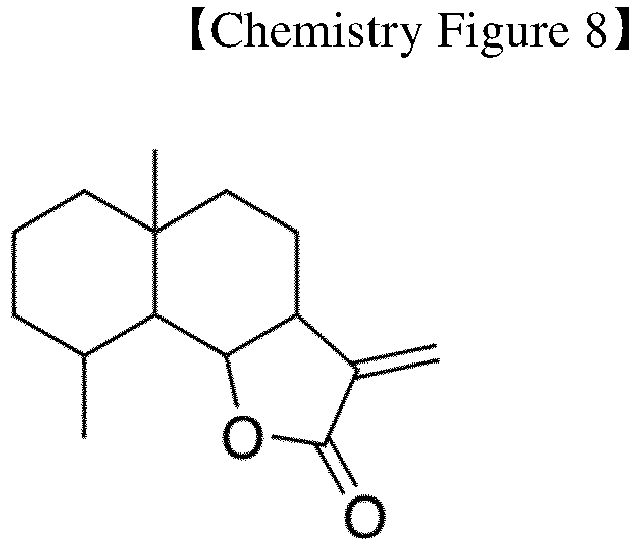
- In the exemplary embodiment of the present disclosure, the light irradiated from the second
light source 300 increases the phenolic compound in the plants grown from theseeds 400. In detail, the light irradiated from the secondlight source 300 and having the second wavelength band activates secondary metabolism of the plants, and thus the content of the phenolic compounds, which are secondary metabolites, may increase. When the light in the second wavelength band is irradiated to the plants, the light having the above-described wavelength causes a DNA-damaging effect on cells of the plants, and as a result, the generation of phenolic compounds, which are capable of absorbing the light having the above-mentioned wavelength, may be promoted. The phenolic compounds correspond to antioxidants included in the plants grown from theseeds 400. - In the exemplary embodiment of the present disclosure, the phenolic compounds may include substances represented by the following chemical formulas 3-1 to 3-3. The substances represented by the following formulas 3-1 to 3-3 correspond respectively to luteolin, chlorogenic acid, and chicoric acid. In this case, chlorogenic acid is a natural compound composed of an ester of caffeic acid and quinic acid and is a biological antioxidant. The chlorogenic acid is known to neutralize damaging effects of peroxides.


- According to the exemplary embodiment of the present disclosure, when the light is irradiated to the Asteraceae family plant, for example, the Cichorioideae subfamily plant, by using the first and second light sources under a specific condition, the content of the active ingredients may increase, and also, the effect of having and retaining the inherent color of each Cichorioideae subfamily plant may be obtained.
- According to an exemplary embodiment of the present disclosure, when the light source for plant cultivation is used, it is possible to independently provide a growing environment suitable for the types of plants even under conditions in which the sunlight is insufficient or the sunlight is not provided. Particularly, the marketability of the plants may increase by providing the growth environment that may retain the inherent color of the plants. In the case of a conventional plant factory that grows plants without sunlight, the plants grown in the plant factory have no anthocyanin or very small amounts of anthocyanins, and as a result, the plants have a problem in that they do not have the inherent color of the plants. For example, the Chicoriaceae subfamily plant such as the red leaf lettuce (Jeokchima) usually appear reddish, but appear very pale reddish or have no red color when they are grown in the plant factory without sunlight. In a case where the plant does not have the inherent color it should have, a consumer may determine that the plant is defective, resulting in poor marketability. However, according to the exemplary embodiment of the present disclosure, the content of anthocyanin among the active ingredients of the plant significantly increases by appropriately applying the first light and the second light to the plant, particularly, by applying the second light to the plant for a predetermined time duration before harvesting, and as a result, the plant has a color close to its inherent color. This leads to an improvement in the marketability. In the exemplary embodiment of the present disclosure, the light provided to the Asteraceae family plants, for example, the Cichorioideae subfamily plant may be provided during different periods. Here, the term "period" means a temporal period. For example, when the light emitted from the first light source is referred to as a "first light" and the light emitted from the second light source is referred to as a "second light", the light corresponding to the first light may be provided during a portion of the period, and both the first light and the second light may be provided during the other portion of the period except for the portion of the period. Hereinafter, for the convenience of explanation, the period in which the first light is provided will be referred to as a "first period", and the period in which the first light and the second light are provided will be referred to as a "second period". In other words, only the above-described first light source may be turned on in the first period, and both the first light source and the second light source may be turned on in the second period.
- In the present exemplary embodiment of the present disclosure, the first period or the second period is a period in which the light having the visible light wavelength band is provided and corresponds to a predetermined period in the light condition. In the present exemplary embodiment of the present disclosure, the second period is shorter than the first period.
- In the present exemplary embodiment of the present disclosure, the first period and the second period may be arranged in various ways depending on the growth stage and the harvest time of the plants. For example, the first period may be arranged before the harvesting of the plants after the plants are transplanted. The second period may be arranged adjacent to the first period and may be arranged right before the harvesting time within an overall schedule. In other words, the first period may be continued after the transplanting of the plants, and the second period may be arranged at a time other than the first period right before harvesting. Then, the plants are harvested. In the exemplary embodiment of the present disclosure, the second period may be provided between the first periods over 10 days or less before harvesting. In an embodiment, the second period may be provided between the first periods over several days. In this case, a cumulative applied amount of the provided second light may be, for example, about 4.032 kJ/m2, about 2.880 kJ/m2, or about 2.304 kJ/m2.
- In the present exemplary embodiment of the present disclosure, the plants may be cultivated under the light period and the dark period, which are alternated for about 20 days after the transplanting of the plants. That is, the first period and the second period are sequentially repeated in the light period, and the first period and the second period, which are adjacent to each other, form one repetition period. In the repetition period, the light provided in the second period is not provided in the first period.
- After being transplanted, the light period may include only the first period for about 14 days (e.g., from tenth day to twenty-third day after sowing). Then, the light period may include the first period and the second period, which are alternately arranged with each other, for about 7 days from fifteenth day to twentieth day after being transplanted (e.g., from twenty-fourth day to thirtieth day after sowing). That is, the first period and the second period are sequentially repeated in the light period. In other words, the irradiation of light is repeated with a cycle of about 10 minutes, and the second light is irradiated for about 1 minute and then has a rest period of about 9 minutes. This cycle is continuously repeated during the light period.
- In the present exemplary embodiment of the present disclosure, a cumulative energy amount per a day of the second light irradiated to the plant during the second period may be about 0.58 kJ/m2, and a total cumulative energy amount from the sowing to the harvest may be about 4.03 kJ/m2. In the above descriptions, the simple Cichorioideae subfamily plant cultivation device in a simple form according to the exemplary embodiment of the present disclosure has been described. However, since the Cichorioideae subfamily plant cultivation device according to the exemplary embodiment of the present disclosure may be used for commercial plant production, other forms of the Cichorioideae subfamily plant cultivation device for use in commercial plant production will be described in detail.
-
Figure 2 is a cross-sectional view showing the Cichorioideae subfamily plant cultivation device according to an exemplary embodiment of the present disclosure. - The
plant cultivation device 10 according to an exemplary embodiment of the present disclosure may be operated in the form of a large factory for obtaining a large amount of plants of the Cichorioideae subfamily, i.e., a plant production facility, as well as a culturing device for home use or personal use to cultivate a relatively small amount of plants of the Cichorioideae subfamily. Therefore, theplant cultivation device 10 may include a plurality ofculture platforms 120,first light sources 200, secondlight sources 300, and water supply units (not shown). - As shown in figures, the
culture platforms 120, thefirst light sources 200, and the secondlight sources 300 may define several compartments. Therefore, amain body 100 may be provided in a structure that includes the several compartments. - The several compartments included in the
main body 100 may be operated independently of each other. For example, the firstlight source 200 provided in some compartments may emit more blue light than red light, and the firstlight source 200 provided in other compartments may emit more red light than blue light. In addition, each compartment of themain body 100 may be operated differently in terms of time. For example, the firstlight source 200 may emit the light in a first wavelength band in some compartments to growplants 401, and the secondlight source 200 may emit the light in a second wavelength band in other compartments to increase or decrease the active ingredient content in theplants 401. - Each compartment included in the
main body 100 may be configured to form a closed dark room to be independently operated as described above. Therefore, the light(s) emitted from the firstlight source 200 and/or the secondlight source 300 and provided to an arbitrary compartment may not exert an influence on other compartments. - The
culture platform 120 provided in themain body 100 may include different culture media from each other depending on the type of theplants 401. Thus, it is possible to provide the growth environment customized to the type of theplants 401. In addition, theculture platform 120 may be separated from themain body 100. Accordingly, when theplants 401 growing on someculture platforms 120 reach a harvesting stage, the user may separate only theculture platform 120 on which theplants 401 completely grown are provided from themain body 100 without affecting theplant cultivation device 10. - The
main body 100 may further include a water supply unit, and the water supply unit is provided on a surface at which themain body 100 and theculture platform 120 make contact with each other to directly supply water to the culture medium included in theculture platform 120. Therefore, different from a spray-type water supply unit, the water may be supplied without affectingother culture platforms 120 even when theculture platforms 120 are stacked. - The first
light source 200 may be provided in a plural number depending on shape of theculture platform 120. As described above, the firstlight source 200 may include a plurality of light emitting diodes that emits lights having different wavelengths, and the light emitting diodes may be provided in the same ratio or different ratios in the firstlight source 200. When the light emitting diodes that emit the lights having the different wavelengths are provided in the same ratio in the firstlight source 200, the first wavelength band may be controlled by a controller to correspond to the type of theplants 401. Therefore, the growth environment suitable for the type of theplants 401 may be provided. - The second
light source 300 may be provided in a plural number. The secondlight sources 300 may be provided in different compartments from each other in themain body 100 and may be independently operated. Accordingly, the light in the second wavelength band may be irradiated to only the completely grownplants 401 in a phase where the active ingredient content is to be increased or decreased. - In the exemplary embodiment of the present disclosure, various sensors, e.g., a temperature sensor, a humidity sensor, and a light intensity sensor, may be additionally disposed in the controller of the plant cultivation device operated in the plant production facility, and the controller may receive data from the sensors and may control the first and second light sources and the water supply unit as a whole or individually. The culturing device equipped with the plant cultivation system may transmit and receive data either directly or from a remote location by wired, wireless, or internet connection and may display data from the various sensors, the first and second light sources, and the water supply unit through a separate display. The user may instruct the controller 40 to implement optimal conditions after reviewing such data.
- As described above, the plants of the Cichorioideae subfamily with the altered active ingredient content may be easily cultivated in large quantities by using the
plant cultivation device 10 according to the exemplary embodiment of the present disclosure. Through the culturing method as the exemplary embodiment of the present disclosure, it is possible to obtain a large amount of non-synthetic active ingredients in a natural state. The active ingredients obtained in large quantity may be processed in the form of medicines, health supplements, and various ingredients through a separate processing process. For example, the plants of the Cichorioideae subfamily with a high active ingredient content may be lyophilized immediately after harvest to allow the highest active ingredient content right after harvest to be maintained in the final product. The lyophilized plants of the Cichorioideae subfamily may be processed into various forms. For example, they may be processed in powder form or may be processed to extract only the active ingredients through a separate process. Thus, the user may consume the plants of the Cichorioideae subfamily having the high active ingredient content either in the form of plants or in the form of processed products through separate processing processes. Further, theplural plants 401 may be substantially simultaneously cultivated using the plant cultivation device according to the exemplary embodiment of the present disclosure, and the growth environment suitable for the type of theplants 401 may be independently provided. Accordingly, theplants 401 whose types are different from each other may be substantially simultaneously cultivated by using theplant cultivation device 10. - According to the exemplary embodiment of the present disclosure, when the light source for plant cultivation is used, it is possible to independently provide a growing environment suitable for the types of plants even under conditions in which the sunlight is insufficient or the sunlight is not provided. In addition, the plant that has the inherent color thereof and having the high active ingredient content may be easily cultivated.
- In the following embodiment examples, experiments were carried out on the Cichorioideae subfamily plant, which belongs to the Asteraceae family plants, as a representative example. The Cichorioideae subfamily plant was harvested on the 31st day (grown for 31 days). The Cichorioideae subfamily plant was cultivated under conditions of a temperature of about 22±1 °C and a relative humidity of about 70±10% during the growth period. The first and second lights were provided by the light emitting diode during the growth period.
- The growth conditions of a comparative example and experimental examples were shown in
Figures 3a and3b . Hereinafter, for the convenience of explanation, the period in which the first light is provided is represented as the first period, and the period in which the first and second lights are provided is represented as the second period. - Referring to
Figures 3a and3b , the Cichorioideae subfamily plant was germinated in the dark period for about 2 days after the sowing. In other words, seeds of the Cichorioideae subfamily plant were first sowed into a cultivation sponge and germinated in the dark period for about 2 days to grow the Cichorioideae subfamily plant. - The Cichorioideae subfamily plant was grown in the light period and the dark period from
day 3 to day 9 after sowing, and this corresponds to an irradiation period before transplanting. The light was irradiated to the Cichorioideae subfamily plant in the light period at a light intensity of about 60 µmol/m2/s PPFD (Photosynthetic Photon Flux Density). Only the purified water was provided to the plants after sowing and before transplanting. - The grown sprouts were transplanted in a deep-flow technique (DFT) hydroponic culture system on the 10th day. The transplanted Cichorioideae subfamily plant was grown in nutrient solution under the light and dark periods. As the nutrient solution, Hoagland stock solution was used, and the pH of the nutrient solution was maintained at about 5.5 to about 6.5.
- In the comparative example, after the transplanting, the light period and the dark period were provided on the 24-hour basis for about 20 days. On the 24-hour basis, the light period was maintained for about 16 hours, and the dark period was maintained for about 8 hours. After the transplanting, the first light was provided in the light period for about 20 days, and the second light was not provided. That is, in the case of comparative example, the irradiation period after the transplanting may include only the first period in the light period. In this case, the first light was irradiated in the light period at a light intensity of about 150 µmol/m2/s PPFD (Photosynthetic Photon Flux Density).
- In experimental example 1, after the transplanting, the light period and the dark period were provided on the 24-hour basis for about 20 days. On the 24-hour basis, the light period was maintained for about 16 hours, and the dark period was maintained for about 8 hours. After the transplanting, the first light was provided in the light period for about 20 days, and the second light was provided for about 6 hours at the start of the light period on 20th day after the transplanting. Accordingly, in experimental example 1, the irradiation period after the transplanting may include only the first period in the light period for about 19 days and may include the second period and the first period in the light period on 20th day. In detail, in experimental example 1, the first light was continuously irradiated during the light period on 20th day (on 30th day after sowing) after transplanting, and the second light was continuously irradiated for about 6 hours in some periods. Here, the first light was irradiated in the light period at a light intensity of about 150 µmol/m2/s PPFD (Photosynthetic Photon Flux Density), and a total cumulative energy amount of the second light provided in the second period was about 2.16kJ/m2.
- In experimental example 2, after the transplanting, the light period and the dark period were provided on the 24-hour basis for about 20 days. On the 24-hour basis, the light period was maintained for about 16 hours, and the dark period was maintained for about 8 hours. In experimental example 2, the second light was irradiated to the plants in an on and off manner in the light period. That is, the irradiation of the second light was repeated with a 10-minutes cycle in which a 1-minute irradiation of the second light is followed by a 9-minute non-irradiation in the light period. In experimental example 2, an amount of UV irradiation energy processed per a day was about 0.576 kJ/m2. In experimental example 2, the UV was irradiated after sowing, and a total amount of UV irradiation energy was about 4.032 kJ/m2.
- In the comparative Example, experimental example 1, and experimental example 2, only the irradiation of the second light, the irradiation time of the second light, and the irradiation energy of the second light were different, and all other conditions were kept the same. In this case, the first light was a light having the visible light wavelength band, and the second light was a light having a UVB wavelength band, for example, a wavelength of about 285 nm.
- Then, the Cichorioideae subfamily plant was harvested on thirty-first day.
- In this experiment, the green leaf lettuce (Cheongchima) was cultivated as the comparative example and experimental examples 1 and 2 under the conditions shown in
Figures 3a and3b , and was examined for damage to its appearance after harvesting. -
Figure 4a is a photograph showing the appearance of the green leaf lettuce (Cheongchima) according to the comparative example and experimental example 1.Figure 4b is a photograph showing the appearance of the green leaf lettuce (Cheongchima) according to the comparative example and experimental example 2. InFigure 4a , the left green leaf lettuce (Cheongchima) corresponds to the comparative example, and the right green leaf lettuce (Cheongchima) corresponds to experimental example 1. InFigure 4b , the left green leaf lettuce (Cheongchima) corresponds to the comparative example, and the right green leaf lettuce (Cheongchima) corresponds to experimental example 2. - Referring to
Figures 4a and 4b , there was no damage to appearance in the comparative example. However, a leaf curling phenomenon in which leaves are dried and curled at the tip was observed and leaves turned brown in experimental example 1. On the other hand, in experimental example 2, no difference was found from the comparative example, and there was no damage to the overall appearance. - As described above, in experimental example 1, although the cumulative energy amount of the second light was about 2.16kJ/m2, which is much smaller than the cumulative energy amount the second light of about 4.03kJ/m2 in experimental example 2, it was found that the damage of the appearance was very large. It is determined that the damage of appearance was due to the continuous irradiation of the second light. Accordingly, it was found that the damage of appearance was minimized in the case of light irradiation in an on and off manner even though the amount of energy was large.
-
Figures 5a to 5d are graphs showing the content of the active ingredients contained in the green leaf lettuce (Cheongchima) after harvest in the comparative example and experimental example 2. The active ingredients inFigures 5a to 5d sequentially correspond to chlorogenic acids, chlorophylls, flavonoids, and anthocyanins. - To obtain results according to the comparative example and experimental example 2, the plants were harvested on the 31st day after sowing, and contents of chlorogenic acids, chlorophylls, flavonols, and anthocyanins were measured by providing a light to the leaf using an optical sensor called Dualex, that is a non-destructive analyzer. 18 green leaf lettuce (Cheongchima)s were measured (n=18).
- Referring to
Figures 5a to 5d , in experimental example 2, a significant increase in the content of active ingredients was observed in comparison with the comparative example. That is, when the second light is applied to the plants, the active ingredients corresponding to chlorogenic acids, chlorophylls, flavonols, and/or anthocyanins were significantly increased. -
Figures 6a to 6c are graphs showing the content of the active ingredients contained in other Cichorioideae subfamily plants after harvest in the comparative example and experimental example 2. - In
Figures 6a and 6b , chicory, red lollo rosso red leaf lettuce, red leaf lettuce (Jeokchukmyeon), red leaf lettuce (Jeokchima), and green romaine were experimented as the Cichorioideae subfamily plant, and inFigure 6c , chicory, red lollo rosso red leaf lettuce, red leaf lettuce (Jeokchukmyeon), and green romaine were experimented as the Cichorioideae subfamily plant. Each active ingredient was measured with respect to chlorophylls, flavonols, and anthocyanins, and the graphs ofFigures 6a, 6b , and6c sequentially correspond to chlorophylls, flavonols, and anthocyanins. - To obtain results according to the comparative example and experimental example 2, each of the plants were harvested on the 31st day after sowing, contents of chlorophylls, flavonols, and anthocyanins were measured by providing a light to the leaf using an optical sensor called Dualex, that is a non-destructive analyzer. 18 plants were measured (n=18).
- Referring to
Figures 6a to 6c , it was found that the active ingredients in chicory, red lollo rosso red leaf lettuce, red leaf lettuce (Jeokchukmyeon), red leaf lettuce (Jeokchima), and green romaine corresponding to the Cichorioideae subfamily plant were significantly increased in experimental example 2 compared with the comparative example. -
Figures 7a to 7f are photographs showing the exterior colors of the Cichorioideae subfamily plants after harvest in the comparative example and experimental example 2. -
Figures 7a to 7f are photographs of chicory, red lollo rosso red leaf lettuce, red leaf lettuce (Jeokchukmyeon), red leaf lettuce (Jeokchima), romaine lettuce, and green leaf lettuce (Cheongchima) among the Cichorioideae subfamily plants in sequence. InFigures 7a to 7f , the left plant corresponds to the result in the comparative example of each Cichorioideae subfamily plant, and the right plant corresponds to the result in experimental example 2 of each Cichorioideae subfamily plant. - Referring to
Figures 7a to 7f , no damage to appearance was observed in all the comparative example and experimental example 2. However, the comparative examples were all green. On the other hand, in experimental example 2, in the case of the plant in which the inherent color is partially red, for example, red llolo lettuce, red leaf lettuce (Jeokchukmyeon), and red leaf lettuce (Jeokchima), it is clear that the results according to experimental example 2 were significantly red compared with the result according to the comparative examples. The red color of the plants is due to anthocyanins, and thus it may be concluded from the above experimental result that the content of anthocyanins was increased by applying the second light to the plants, thereby affecting the color of the plants. - In the following embodiment examples, experiments were carried out on the red leaf lettuce (Jeokchima) among the Cichorioideae subfamily plants, which belong to the Asteraceae family plants, as a representative example. The Cichorioideae subfamily plant was cultivated under conditions of a temperature of about 22±1 °C and a relative humidity of about 70±10% during the growth period. The first and second lights were provided using light emitting diodes during the growth period.
- The red leaf lettuce (Jeokchima) was harvested on the 31st day (grown for 31 days). The growth conditions of the red leaf lettuce (Jeokchima) according to the comparative example and experimental examples are shown in
Figures 8a and8b . Hereinafter, in drawings, for the convenience of explanation, a period during which the first light is irradiated is shown as the first period, and a period during which the first and second lights are irradiated is shown as the second period. - Referring to
Figures 8a and8b , the red leaf lettuce (Jeokchima) was germinated in the dark period for about 2 days after sowing. In other words, red leaf lettuce (Jeokchima) seeds were first sowed into a cultivation sponge and germinated in the dark period for about 2 days to grow the red leaf lettuce (Jeokchima). - The red leaf lettuce (Jeokchima) was grown in the light period and the dark period from
day 3 to day 9 after sowing, and this corresponds to an irradiation period before transplanting. The first light was irradiated to the red leaf lettuce (Jeokchima) in the light period at a light intensity of about 60 µmol/m2/s PPFD. Only the purified water was provided to the plants after sowing and before transplanting. - The grown sprouts were transplanted in a deep-flow technique (DFT) hydroponic culture system on the 10th day. The transplanted red leaf lettuce (Jeokchima) was grown with nutrient solution under the light and dark periods. As the nutrient solution, Hoagland stock solution was used, and the pH of the nutrient solution was maintained at about 5.5 to about 6.5.
- In the comparative example, after the transplanting, the light period and the dark period were provided on the 24-hour basis for about 20 days. On the 24-hour basis, the light period was maintained for about 16 hours, and the dark period was maintained for about 8 hours. After the transplanting, the first light was provided in the light period for about 20 days, and the second light was not provided. That is, in the case of the comparative example, the irradiation period after the transplanting may include only the first period in the light period. In this case, the first light was irradiated in the light period at a light intensity of about 150 µmol/m2/s PPFD.
- In experimental examples 1 to 3, after the transplanting, the light period and the dark period were provided on the 24-hour basis for about 20 days. On the 24-hour basis, the light period was maintained for about 16 hours, and the dark period was maintained for about 8 hours. In experimental examples 1 to 3, the second light was irradiated to the plants in the on and off manner in the light period. That is, in experimental examples 1 to 3, the second light was irradiated in an on and off manner with a repeated cycle of about several minutes in which a light irradiation of several minutes is followed by a rest period of a predetermined time. In experimental examples 1 to 3, an amount of UV irradiation energy processed per a day was about 0.576 kJ/m2, the method of irradiation was the same with each other, and only the date from which the treatment started and the total amount of irradiation energy were different in each experimental examples.
- In experimental example 1, the UV was irradiated after sowing, and a total amount of UV irradiation energy was about 2.304 kJ/m2. In experimental example 2, the UV was irradiated after sowing, and a total amount of UV irradiation energy was about 2.880 kJ/m2. In experimental example 3, the UV was irradiated after sowing, and a total amount of UV irradiation energy was about 4.302 kJ/m2.
-
Figures 9a to 9d are graphs showing the content of the active ingredients contained in the red leaf lettuce (Jeokchima) after harvest in the comparative example and experimental examples 1 to 3.Figures 9a to 9d show the content of the active ingredients, and the active ingredients inFigures 9a to 9c sequentially correspond to chlorophylls, flavonoids, and anthocyanins.Figure 9d shows a bio weight at harvest and a dry weight of the red leaf lettuce (Jeokchima). - To obtain results according to the comparative example and experimental examples 1 to 3, the plants were harvested on the 31st day after sowing, and contents of chlorophylls, flavonols, and anthocyanins were measured by providing a light to the leaf using an optical sensor called Dualex, that is a non-destructive analyzer. 18 red leaf lettuce (Jeokchima)s were measured (n=18). Then, nine plants were harvested to measure the bio weight (n = 9), and five plants among the nine plants were lyophilized for about 3 days after suspension of bioactivity with liquid nitrogen to measure the dry weight (n = 5).
-
Figure 9a is a graph of the chlorophyll content, and all experimental examples 1, 2, and 3 showed higher values than the comparative example. Experimental examples 1 and 3 showed similar values, experimental example 2 was higher than the comparative example and lower than experimental example 3, but there was no significant difference from experimental example 1. The chlorophyll content in experimental examples 1, 2 and 3 was increased by about 28.1%, about 18.4%, and about 38.6%, respectively, compared to the comparative examples. -
Figure 9b is a graph of the flavonol content, and all experimental examples 1, 2, and 3 showed higher values than the comparative example. There was no substantial difference between experimental examples 1 to 3. The flavonol content in experimental examples 1, 2 and 3 increased by about 203.7%, about 188.9%, and about 213.8%, respectively, compared to the comparative examples. -
Figure 9c is a graph of the anthocyanin content, and all experimental examples 1, 2, and 3 showed higher values than the comparative example. There was no substantial difference between experimental examples 1 to 3. The anthocyanin content in experimental examples 1, 2 and 3 increased by about 66.9%, about 71.2%, and about 74.5%, respectively, compared to the comparative examples. -
Figure 9d is a graph of the bio weight and the dry weight, and there was no substantial difference in the bio weight and the dry weight between the comparative example and experimental example 1. There was no difference in the bio weight between the comparative example and experimental example 2, however, the dry weight was reduced by about 16.9%. Experimental example 3 showed lower bio weight and dry weight than the comparative example, the bio weight was reduced by about 21.0%, and dry weight was reduced by about 23.1%. - Consequently, it was found that the total cumulative energy amount should not exceed about 2.304 kJ/m2, as in experimental example 1, to meet the conditions under which functional materials may increase without affecting the bio weight and the dry weight.
- Although the exemplary embodiments of the present disclosure have been described, it is understood that the present disclosure should not be limited to these exemplary embodiments but various changes and modifications can be made by one ordinary skilled in the art within the spirit and scope of the present disclosure as hereinafter claimed.
- Therefore, the disclosed subject matter should not be limited to any single embodiment described herein, and the scope of the present inventive concept shall be determined according to the attached claims.
Claims (20)
- A plant cultivation light source being turned on or turned off depending on a light period and a dark period of a plant, the plant cultivation light source comprising a first semiconductor layer, a second semiconductor layer, and an active layer, the active layer being disposed on the first semiconductor layer to emit a light having a specific wavelength due to a band gap difference in an energy band depending on a material used to form the active layer, wherein, when a portion of the light period is referred to as a first period and the other portion of the light period is referred to as a second period, the first period and the second period are alternately provided with each other, and lights having different wavelengths from each other are provided to the plant in the first and second periods, thereby increasing a content of an active ingredient in the plant.
- The plant cultivation light source of claim 1, wherein the cultivation light source comprises:a first light source emitting a first light; anda second light source emitting a second light, and one of the first and second light sources is turned on in at least one period of the first and second periods.
- The plant cultivation light source of claim 2, wherein the second light is provided to the plant in an on and off manner.
- The plant cultivation light source of claim 2, wherein the first light is a light of a visible light wavelength band, the second light is a light of an ultraviolet light wavelength band, the first light is provided to the plant in the first period, and the second light is provided to the plant in the second period.
- The plant cultivation light source of claim 4, wherein the second light is an ultraviolet B wavelength band.
- The plant cultivation light source of claim 5, wherein a total cumulative energy amount of the second light irradiated to the plant is equal to or smaller than about 2.304kJ/m2.
- The plant cultivation light source of claim 5, wherein the second light has a wavelength band from about 280 nm to about 315 nm.
- The plant cultivation light source of claim 1, wherein the first period and the second period are alternately repeated in the light period, and the first period and the second period, which are adjacent to each other, form one repetition period.
- The plant cultivation light source of claim 8, wherein a light provided in the second period of the repetition period is not provided in the first period.
- The plant cultivation light source of claim 1, wherein the second period is provided in the light period from a predetermined number of days prior to harvest until the harvest.
- The plant cultivation light source of claim 1, wherein the active ingredient comprises at least one of chlorophylls, flavonoids, anthocyanins, chlorogenic acids, sesquiterpene lactones, and phenolic compounds.
- A plant cultivation device comprising:a main body in which a plant is provided;a light source provided in the main body to irradiate a light to the plant; anda controller controlling the light source, the light source being turned on or turned off depending on a light period and a dark period of the plant, wherein, when a portion of the light period is referred to as a first period and the other portion of the light period is referred to as a second period, the first period and the second period are alternately provided with each other, and lights having different wavelengths from each other are provided to the plant in the first and second periods, thereby increasing a content of an active ingredient in the plant.
- The plant cultivation device of claim 12, wherein the light source comprises:a first light source emitting a first light; anda second light source emitting a second light, and the controller turns on one of the first and second light sources in at least one period of the first and second periods.
- The plant cultivation device of claim 13, wherein the second light is provided to the plant in an on and off manner.
- The plant cultivation device of claim 14, wherein the first light is a light of a visible light wavelength band, the second light is a light of an ultraviolet light wavelength band, the first light is provided to the plant in the first period, and the second light is provided to the plant in the second period.
- The plant cultivation device of claim 15, wherein the second light is an ultraviolet B wavelength band.
- The plant cultivation device of claim 16, wherein a total cumulative energy amount of the second light irradiated to the plant is equal to or smaller than about 2.304kJ/m2.
- The plant cultivation device of claim 15, wherein the second light has a wavelength band from about 280 nm to about 315 nm.
- The plant cultivation device of claim 12, wherein the first period and the second period are alternately repeated in the light period, and the first period and the second period, which are adjacent to each other, form one repetition period.
- The plant cultivation device of claim 19, wherein a light provided in the second period of the repetition period is not provided in the first period.
Applications Claiming Priority (3)
| Application Number | Priority Date | Filing Date | Title |
|---|---|---|---|
| US201862722405P | 2018-08-24 | 2018-08-24 | |
| US16/548,350 US11291164B2 (en) | 2018-08-24 | 2019-08-22 | Light source for plant cultivation |
| PCT/KR2019/010772 WO2020040598A1 (en) | 2018-08-24 | 2019-08-23 | Light source for plant cultivation |
Publications (2)
| Publication Number | Publication Date |
|---|---|
| EP3841869A1 true EP3841869A1 (en) | 2021-06-30 |
| EP3841869A4 EP3841869A4 (en) | 2022-03-02 |
Family
ID=69583188
Family Applications (1)
| Application Number | Title | Priority Date | Filing Date |
|---|---|---|---|
| EP19851004.2A Pending EP3841869A4 (en) | 2018-08-24 | 2019-08-23 | LIGHT SOURCE FOR GROWING PLANTS |
Country Status (6)
| Country | Link |
|---|---|
| US (7) | US11291164B2 (en) |
| EP (1) | EP3841869A4 (en) |
| JP (2) | JP7423605B2 (en) |
| KR (1) | KR102875059B1 (en) |
| CN (1) | CN111182786A (en) |
| WO (1) | WO2020040598A1 (en) |
Families Citing this family (13)
| Publication number | Priority date | Publication date | Assignee | Title |
|---|---|---|---|---|
| WO2020013011A1 (en) * | 2018-07-13 | 2020-01-16 | 三菱ケミカルアグリドリーム株式会社 | Cultivation device and cultivation method for solanaceous seedlings |
| US11125405B2 (en) | 2018-08-10 | 2021-09-21 | Seoul Viosys Co., Ltd. | Light source for plant cultivation and plant cultivation device |
| US10820532B2 (en) | 2018-08-24 | 2020-11-03 | Seoul Viosys Co., Ltd. | Light source for plant cultivation |
| US11291164B2 (en) | 2018-08-24 | 2022-04-05 | Seoul Viosys Co., Ltd. | Light source for plant cultivation |
| JP7462139B2 (en) * | 2019-07-10 | 2024-04-05 | 日亜化学工業株式会社 | Plant Treatment Equipment |
| US10881052B1 (en) * | 2019-12-18 | 2021-01-05 | Artled Technology Corp. | Illuminating device for plant cultivation |
| EP4218400A4 (en) * | 2020-09-23 | 2024-10-09 | Industry-University Cooperation Foundation of Chungbuk National University | LIGHT SOURCE MODULE FOR PLANT CULTIVATION AND LIGHT SOURCE DEVICE COMPRISING SAME FOR PLANT CULTIVATION |
| US11737396B2 (en) * | 2020-12-28 | 2023-08-29 | Seoul Viosys Co., Ltd. | Light module for plant cultivation and plant cultivation apparatus including the same |
| US20220330489A1 (en) * | 2021-03-03 | 2022-10-20 | Seoul Viosys Co., Ltd. | Light source module and plants cultivation device including the same |
| WO2022187599A2 (en) * | 2021-03-05 | 2022-09-09 | Hankla Matthew Ryan | Methods, systems, and apparatuses for producing, generating and utilizing power and energy |
| US11723316B2 (en) * | 2021-07-12 | 2023-08-15 | IntraLight, LLC | Pest control with ultraviolet light |
| KR102736587B1 (en) * | 2021-10-21 | 2024-12-03 | 서울대학교산학협력단 | Method and system for seeting artificial lighting in plaint factory |
| CN115777375B (en) * | 2022-12-21 | 2023-10-24 | 广东省农业科学院环境园艺研究所 | UV-A radiation method for improving active substance content of dendrobium nobile |
Family Cites Families (63)
| Publication number | Priority date | Publication date | Assignee | Title |
|---|---|---|---|---|
| JP2003339236A (en) | 2002-05-29 | 2003-12-02 | Matsushita Electric Works Ltd | Lighting device and apparatus for plant growth, and method for plant growth |
| JP4488684B2 (en) | 2002-08-09 | 2010-06-23 | イビデン株式会社 | Multilayer printed wiring board |
| US7220018B2 (en) | 2003-12-15 | 2007-05-22 | Orbital Technologies, Inc. | Marine LED lighting system and method |
| US20070058368A1 (en) | 2005-09-09 | 2007-03-15 | Partee Adam M | Efficient high brightness led system that generates radiometric light energy capable of controlling growth of plants from seed to full maturity |
| JP2007075073A (en) | 2005-09-16 | 2007-03-29 | Masanobu Kojima | Method for cultivating sprouts |
| GB0601602D0 (en) * | 2006-01-26 | 2006-03-08 | Scott Lionel | Plant treatment method and means therefor |
| US7905052B2 (en) | 2006-11-20 | 2011-03-15 | Hurst William E | System of photomorphogenically enhancing plants |
| GB2444082B (en) * | 2006-11-27 | 2008-11-19 | Fotofresh Ltd | Treatment apparatus for plant matter |
| JP4811872B2 (en) * | 2007-01-12 | 2011-11-09 | 日軽パネルシステム株式会社 | Nursery equipment |
| US20080302004A1 (en) | 2007-06-07 | 2008-12-11 | Lin Yu-Ho | Multifunction plant cultivation led able to control the growing speed of plants |
| EP2025220A1 (en) * | 2007-08-15 | 2009-02-18 | Lemnis Lighting Patent Holding B.V. | LED lighting device for growing plants |
| JP5106228B2 (en) * | 2008-04-24 | 2012-12-26 | パナソニック株式会社 | Lighting device for plant disease control |
| US20090303706A1 (en) * | 2008-06-09 | 2009-12-10 | Lucia Atehortua | Wave length light optimizer for human driven biological processes |
| US8297782B2 (en) | 2008-07-24 | 2012-10-30 | Bafetti Vincent H | Lighting system for growing plants |
| JP5047117B2 (en) | 2008-10-20 | 2012-10-10 | パナソニック株式会社 | Lighting system for plant disease control |
| KR101422364B1 (en) * | 2009-08-07 | 2014-07-22 | 쇼와 덴코 가부시키가이샤 | Multicolour light emitting diode lamp for use in plant cultivation, lighting device and plant cultivation method |
| US8643308B2 (en) | 2009-08-14 | 2014-02-04 | Once Innovations, Inc. | Spectral shift control for dimmable AC LED lighting |
| US8596804B2 (en) | 2010-03-17 | 2013-12-03 | Once Innovations, Inc. | Light sources adapted to spectral sensitivity of diurnal avians and humans |
| US8373363B2 (en) | 2009-08-14 | 2013-02-12 | Once Innovations, Inc. | Reduction of harmonic distortion for LED loads |
| WO2011053708A1 (en) | 2009-10-28 | 2011-05-05 | Once Innovations, Inc. | Architecture for high power factor and low harmonic distortion led lighting |
| DE202010018238U1 (en) | 2009-10-29 | 2014-11-18 | Once Innovations Inc. | LED lighting for livestock farming |
| US20110179708A1 (en) | 2010-01-22 | 2011-07-28 | Stewart Donald J | Multiple Self-Watering Container System |
| US8302346B2 (en) | 2010-01-26 | 2012-11-06 | University Of Georgia Research Foundation, Inc. | Biological optimization systems for enhancing photosynthetic efficiency and methods of use |
| JP5854617B2 (en) | 2010-03-16 | 2016-02-09 | 韓國電子通信研究院Electronics and Telecommunications Research Institute | Woven type electronic element package, method for manufacturing the same, and method for mounting textile type electronic element package |
| WO2011123724A1 (en) | 2010-03-31 | 2011-10-06 | Once Innovations, Inc. | Integral conduit modular lighting |
| JP5498904B2 (en) | 2010-09-27 | 2014-05-21 | パナソニック株式会社 | Crop cultivation system |
| TW201221183A (en) | 2010-11-23 | 2012-06-01 | Sing Pong Internat Co Ltd | Method for manufacturing ancillary device for exercise |
| JP5971623B2 (en) | 2011-03-29 | 2016-08-17 | シャープ株式会社 | Light irradiation apparatus, strawberry cultivation system and strawberry cultivation method |
| US9696011B2 (en) | 2011-04-22 | 2017-07-04 | Once Innovations, Inc. | Extended persistence and reduced flicker light sources |
| WO2013021676A1 (en) | 2011-08-05 | 2013-02-14 | 昭和電工株式会社 | Plant cultivation method and plant cultivation equipment |
| JP2013123417A (en) | 2011-12-15 | 2013-06-24 | Panasonic Corp | Illuminating device for plant growth disease control |
| JP2013236562A (en) | 2012-05-11 | 2013-11-28 | Panasonic Corp | Insect pest disinfestation lighting device |
| CN104427882A (en) | 2012-06-04 | 2015-03-18 | 首尔伟傲世有限公司 | Hormetic effect induction device for fruits and vegetables |
| US10028448B2 (en) | 2012-07-10 | 2018-07-24 | Once Innovations, Inc. | Light sources adapted to spectral sensitivity of plants |
| US20150273235A1 (en) | 2014-03-28 | 2015-10-01 | Once Innovations, Inc. | Devices and method of causing chemical reaction to supplement vitamin d production |
| JP2015530073A (en) | 2012-07-10 | 2015-10-15 | ワンス イノヴェイションズ, インコーポレイテッドOnce Innovations, Inc. | Light sources adapted to the spectral sensitivity of plants |
| RU2632961C2 (en) | 2012-07-11 | 2017-10-11 | Филипс Лайтинг Холдинг Б.В., Nl | Lighting device, capable support of garden lighting, and method of lighting in gardening |
| EP2892319A1 (en) * | 2012-09-04 | 2015-07-15 | Koninklijke Philips N.V. | Method for enhancing the nutritional value in an edible plant part by light, and lighting device therefore |
| US20140069007A1 (en) | 2012-09-13 | 2014-03-13 | Cashido Corporation | Plant growth facilitating apparatus plant growth facilitating apparatus |
| US9282698B2 (en) | 2012-11-27 | 2016-03-15 | James H. Beyer | Light emitting diode grow light for plant growing applications |
| MX369489B (en) | 2013-03-05 | 2019-11-11 | Xiant Technologies Inc | Photon modulation management system. |
| JP2014233247A (en) * | 2013-06-03 | 2014-12-15 | タカラバイオ株式会社 | Cultivation method for umbelliferae plants |
| JP2016524470A (en) | 2013-06-06 | 2016-08-18 | フロラ フォトニカ エルティーディーFlora Fotonica Ltd | Plant lighting system and method |
| JP6268516B2 (en) | 2013-11-13 | 2018-01-31 | パナソニックIpマネジメント株式会社 | Crop cultivation system |
| TWI486451B (en) | 2013-12-11 | 2015-06-01 | Ind Tech Res Inst | Isolated human liver cancer cell line and compound screening method |
| JP6444611B2 (en) * | 2014-04-22 | 2018-12-26 | 岩谷産業株式会社 | Plant cultivation method |
| CN105265290A (en) * | 2014-07-04 | 2016-01-27 | 北京中环易达设施园艺科技有限公司 | Method for cultivating mesembryanthemum crystallinum L. using LED light source |
| US10244595B2 (en) | 2014-07-21 | 2019-03-26 | Once Innovations, Inc. | Photonic engine system for actuating the photosynthetic electron transport chain |
| CN107072149B (en) | 2014-07-21 | 2019-12-31 | 万斯创新公司 | Photon engine system for initiating photosynthetic electron transport chain |
| US11457568B2 (en) * | 2014-12-15 | 2022-10-04 | Symbiotic Systems, Inc. | Multiple colors, and color palettes, of narrowband photosynthetically active radiation (PAR) time-staged over hours, days, and growing seasons yields superior plant growth |
| CN107614973A (en) * | 2015-03-25 | 2018-01-19 | 维塔比姆有限公司 | The method and apparatus that plant growth and development are stimulated near infrared light and visible ray |
| KR20170084936A (en) * | 2016-01-13 | 2017-07-21 | 경상남도 | Low cost LED plant factory establish and manage method for small pot flower |
| WO2017168719A1 (en) | 2016-03-31 | 2017-10-05 | 本田技研工業株式会社 | Electric vehicle drive device |
| CN109068595B (en) | 2016-04-28 | 2021-02-26 | 首尔伟傲世有限公司 | Growth and Physiologically Active Substances Promotion Method of Sophora serrata |
| US20170311553A1 (en) * | 2016-05-02 | 2017-11-02 | Sensor Electronic Technology, Inc. | Ultraviolet Plant Illumination System |
| US10624978B2 (en) | 2016-07-26 | 2020-04-21 | Sensor Electronic Technology, Inc. | Ultraviolet-based mildew control |
| US10433493B2 (en) * | 2016-09-30 | 2019-10-08 | Sensor Electronic Technology, Inc. | Controlling ultraviolet intensity over a surface of a light sensitive object |
| JP2020525002A (en) | 2017-06-29 | 2020-08-27 | バイオルミック リミテッド | Methods for improving crop yield and/or quality |
| CN108093934B (en) * | 2018-03-01 | 2024-03-26 | 广东绿爱生物科技股份有限公司 | Plant illumination cultivation method and device and artificial cultivation device |
| US11125405B2 (en) | 2018-08-10 | 2021-09-21 | Seoul Viosys Co., Ltd. | Light source for plant cultivation and plant cultivation device |
| US11291164B2 (en) | 2018-08-24 | 2022-04-05 | Seoul Viosys Co., Ltd. | Light source for plant cultivation |
| US10820532B2 (en) | 2018-08-24 | 2020-11-03 | Seoul Viosys Co., Ltd. | Light source for plant cultivation |
| US11304376B2 (en) * | 2019-05-20 | 2022-04-19 | Seoul Semiconductor Co., Ltd. | Light source for plant cultivation |
-
2019
- 2019-08-22 US US16/548,350 patent/US11291164B2/en active Active
- 2019-08-23 WO PCT/KR2019/010772 patent/WO2020040598A1/en not_active Ceased
- 2019-08-23 CN CN201980003221.5A patent/CN111182786A/en active Pending
- 2019-08-23 JP JP2021510160A patent/JP7423605B2/en active Active
- 2019-08-23 KR KR1020217005308A patent/KR102875059B1/en active Active
- 2019-08-23 EP EP19851004.2A patent/EP3841869A4/en active Pending
-
2022
- 2022-03-14 US US17/694,046 patent/US11778953B2/en active Active
-
2023
- 2023-10-06 US US18/482,459 patent/US11968937B2/en active Active
-
2024
- 2024-01-17 JP JP2024004974A patent/JP2024038403A/en active Pending
- 2024-03-25 US US18/615,653 patent/US12364208B2/en active Active
- 2024-04-29 US US18/649,405 patent/US12382879B2/en active Active
-
2025
- 2025-07-03 US US19/259,438 patent/US20250331471A1/en active Pending
- 2025-07-31 US US19/287,312 patent/US20250359516A1/en active Pending
Also Published As
| Publication number | Publication date |
|---|---|
| KR20210037687A (en) | 2021-04-06 |
| CN111182786A (en) | 2020-05-19 |
| EP3841869A4 (en) | 2022-03-02 |
| JP2021534768A (en) | 2021-12-16 |
| US20240224882A1 (en) | 2024-07-11 |
| US20200060099A1 (en) | 2020-02-27 |
| US11291164B2 (en) | 2022-04-05 |
| US11968937B2 (en) | 2024-04-30 |
| US12364208B2 (en) | 2025-07-22 |
| JP7423605B2 (en) | 2024-01-29 |
| US11778953B2 (en) | 2023-10-10 |
| US20240292791A1 (en) | 2024-09-05 |
| US20240049649A1 (en) | 2024-02-15 |
| US12382879B2 (en) | 2025-08-12 |
| US20250359516A1 (en) | 2025-11-27 |
| US20220192103A1 (en) | 2022-06-23 |
| US20250331471A1 (en) | 2025-10-30 |
| WO2020040598A1 (en) | 2020-02-27 |
| KR102875059B1 (en) | 2025-10-22 |
| JP2024038403A (en) | 2024-03-19 |
Similar Documents
| Publication | Publication Date | Title |
|---|---|---|
| US12364208B2 (en) | Light source for plant cultivation | |
| KR102891594B1 (en) | Plant cultivation device and plant cultivation method | |
| KR101135588B1 (en) | Culture method of sprout vegetable using sterilization water and Light Emitting Diode irradiation | |
| JP7443336B2 (en) | Plant cultivation light source, plant cultivation device, and plant cultivation method | |
| CN112273171B (en) | Growth and bioactive substance promoting system for Ixeris denticulata | |
| JP7538110B2 (en) | Plant cultivation device and cultivation method using the same | |
| CN113766829A (en) | Light source for plant cultivation and plant cultivation method using the same | |
| US11910762B2 (en) | Light source module for plant cultivation | |
| WO2025011962A1 (en) | Controlled light crop farming |
Legal Events
| Date | Code | Title | Description |
|---|---|---|---|
| STAA | Information on the status of an ep patent application or granted ep patent |
Free format text: STATUS: THE INTERNATIONAL PUBLICATION HAS BEEN MADE |
|
| PUAI | Public reference made under article 153(3) epc to a published international application that has entered the european phase |
Free format text: ORIGINAL CODE: 0009012 |
|
| STAA | Information on the status of an ep patent application or granted ep patent |
Free format text: STATUS: REQUEST FOR EXAMINATION WAS MADE |
|
| 17P | Request for examination filed |
Effective date: 20210324 |
|
| AK | Designated contracting states |
Kind code of ref document: A1 Designated state(s): AL AT BE BG CH CY CZ DE DK EE ES FI FR GB GR HR HU IE IS IT LI LT LU LV MC MK MT NL NO PL PT RO RS SE SI SK SM TR |
|
| DAV | Request for validation of the european patent (deleted) | ||
| DAX | Request for extension of the european patent (deleted) | ||
| REG | Reference to a national code |
Ref country code: DE Ref legal event code: R079 Free format text: PREVIOUS MAIN CLASS: A01G0007040000 Ipc: H05B0047160000 |
|
| A4 | Supplementary search report drawn up and despatched |
Effective date: 20220202 |
|
| RIC1 | Information provided on ipc code assigned before grant |
Ipc: H01L 33/30 20100101ALN20220127BHEP Ipc: H01L 33/28 20100101ALN20220127BHEP Ipc: H01L 33/32 20100101ALI20220127BHEP Ipc: A01G 9/24 20060101ALI20220127BHEP Ipc: A01G 7/04 20060101ALI20220127BHEP Ipc: H05B 45/20 20200101ALI20220127BHEP Ipc: H05B 47/16 20200101AFI20220127BHEP |
|
| STAA | Information on the status of an ep patent application or granted ep patent |
Free format text: STATUS: EXAMINATION IS IN PROGRESS |
|
| 17Q | First examination report despatched |
Effective date: 20231214 |