EP3836484A2 - Procédé de transmission de message en direct, appareil, dispositif électronique, support et produit programme informatique - Google Patents
Procédé de transmission de message en direct, appareil, dispositif électronique, support et produit programme informatique Download PDFInfo
- Publication number
- EP3836484A2 EP3836484A2 EP21164728.4A EP21164728A EP3836484A2 EP 3836484 A2 EP3836484 A2 EP 3836484A2 EP 21164728 A EP21164728 A EP 21164728A EP 3836484 A2 EP3836484 A2 EP 3836484A2
- Authority
- EP
- European Patent Office
- Prior art keywords
- type message
- persistent connection
- service end
- client end
- message
- Prior art date
- Legal status (The legal status is an assumption and is not a legal conclusion. Google has not performed a legal analysis and makes no representation as to the accuracy of the status listed.)
- Granted
Links
Images




Classifications
-
- H—ELECTRICITY
- H04—ELECTRIC COMMUNICATION TECHNIQUE
- H04L—TRANSMISSION OF DIGITAL INFORMATION, e.g. TELEGRAPHIC COMMUNICATION
- H04L51/00—User-to-user messaging in packet-switching networks, transmitted according to store-and-forward or real-time protocols, e.g. e-mail
- H04L51/04—Real-time or near real-time messaging, e.g. instant messaging [IM]
-
- H—ELECTRICITY
- H04—ELECTRIC COMMUNICATION TECHNIQUE
- H04L—TRANSMISSION OF DIGITAL INFORMATION, e.g. TELEGRAPHIC COMMUNICATION
- H04L67/00—Network arrangements or protocols for supporting network services or applications
- H04L67/14—Session management
- H04L67/141—Setup of application sessions
-
- H—ELECTRICITY
- H04—ELECTRIC COMMUNICATION TECHNIQUE
- H04N—PICTORIAL COMMUNICATION, e.g. TELEVISION
- H04N21/00—Selective content distribution, e.g. interactive television or video on demand [VOD]
- H04N21/40—Client devices specifically adapted for the reception of or interaction with content, e.g. set-top-box [STB]; Operations thereof
- H04N21/47—End-user applications
- H04N21/488—Data services, e.g. news ticker
- H04N21/4882—Data services, e.g. news ticker for displaying messages, e.g. warnings, reminders
-
- H—ELECTRICITY
- H04—ELECTRIC COMMUNICATION TECHNIQUE
- H04L—TRANSMISSION OF DIGITAL INFORMATION, e.g. TELEGRAPHIC COMMUNICATION
- H04L12/00—Data switching networks
- H04L12/02—Details
- H04L12/16—Arrangements for providing special services to substations
- H04L12/18—Arrangements for providing special services to substations for broadcast or conference, e.g. multicast
- H04L12/1863—Arrangements for providing special services to substations for broadcast or conference, e.g. multicast comprising mechanisms for improved reliability, e.g. status reports
-
- H—ELECTRICITY
- H04—ELECTRIC COMMUNICATION TECHNIQUE
- H04L—TRANSMISSION OF DIGITAL INFORMATION, e.g. TELEGRAPHIC COMMUNICATION
- H04L43/00—Arrangements for monitoring or testing data switching networks
- H04L43/08—Monitoring or testing based on specific metrics, e.g. QoS, energy consumption or environmental parameters
- H04L43/0805—Monitoring or testing based on specific metrics, e.g. QoS, energy consumption or environmental parameters by checking availability
- H04L43/0811—Monitoring or testing based on specific metrics, e.g. QoS, energy consumption or environmental parameters by checking availability by checking connectivity
-
- H—ELECTRICITY
- H04—ELECTRIC COMMUNICATION TECHNIQUE
- H04L—TRANSMISSION OF DIGITAL INFORMATION, e.g. TELEGRAPHIC COMMUNICATION
- H04L43/00—Arrangements for monitoring or testing data switching networks
- H04L43/10—Active monitoring, e.g. heartbeat, ping or trace-route
-
- H—ELECTRICITY
- H04—ELECTRIC COMMUNICATION TECHNIQUE
- H04L—TRANSMISSION OF DIGITAL INFORMATION, e.g. TELEGRAPHIC COMMUNICATION
- H04L51/00—User-to-user messaging in packet-switching networks, transmitted according to store-and-forward or real-time protocols, e.g. e-mail
- H04L51/21—Monitoring or handling of messages
- H04L51/23—Reliability checks, e.g. acknowledgments or fault reporting
-
- H—ELECTRICITY
- H04—ELECTRIC COMMUNICATION TECHNIQUE
- H04L—TRANSMISSION OF DIGITAL INFORMATION, e.g. TELEGRAPHIC COMMUNICATION
- H04L65/00—Network arrangements, protocols or services for supporting real-time applications in data packet communication
- H04L65/40—Support for services or applications
- H04L65/402—Support for services or applications wherein the services involve a main real-time session and one or more additional parallel non-real time sessions, e.g. downloading a file in a parallel FTP session, initiating an email or combinational services
- H04L65/4025—Support for services or applications wherein the services involve a main real-time session and one or more additional parallel non-real time sessions, e.g. downloading a file in a parallel FTP session, initiating an email or combinational services where none of the additional parallel sessions is real time or time sensitive, e.g. downloading a file in a parallel FTP session, initiating an email or combinational services
-
- H—ELECTRICITY
- H04—ELECTRIC COMMUNICATION TECHNIQUE
- H04L—TRANSMISSION OF DIGITAL INFORMATION, e.g. TELEGRAPHIC COMMUNICATION
- H04L65/00—Network arrangements, protocols or services for supporting real-time applications in data packet communication
- H04L65/60—Network streaming of media packets
- H04L65/61—Network streaming of media packets for supporting one-way streaming services, e.g. Internet radio
- H04L65/611—Network streaming of media packets for supporting one-way streaming services, e.g. Internet radio for multicast or broadcast
-
- H—ELECTRICITY
- H04—ELECTRIC COMMUNICATION TECHNIQUE
- H04L—TRANSMISSION OF DIGITAL INFORMATION, e.g. TELEGRAPHIC COMMUNICATION
- H04L67/00—Network arrangements or protocols for supporting network services or applications
- H04L67/14—Session management
- H04L67/143—Termination or inactivation of sessions, e.g. event-controlled end of session
- H04L67/145—Termination or inactivation of sessions, e.g. event-controlled end of session avoiding end of session, e.g. keep-alive, heartbeats, resumption message or wake-up for inactive or interrupted session
-
- H—ELECTRICITY
- H04—ELECTRIC COMMUNICATION TECHNIQUE
- H04L—TRANSMISSION OF DIGITAL INFORMATION, e.g. TELEGRAPHIC COMMUNICATION
- H04L67/00—Network arrangements or protocols for supporting network services or applications
- H04L67/50—Network services
- H04L67/55—Push-based network services
-
- H—ELECTRICITY
- H04—ELECTRIC COMMUNICATION TECHNIQUE
- H04N—PICTORIAL COMMUNICATION, e.g. TELEVISION
- H04N21/00—Selective content distribution, e.g. interactive television or video on demand [VOD]
- H04N21/20—Servers specifically adapted for the distribution of content, e.g. VOD servers; Operations thereof
- H04N21/23—Processing of content or additional data; Elementary server operations; Server middleware
- H04N21/24—Monitoring of processes or resources, e.g. monitoring of server load, available bandwidth, upstream requests
- H04N21/2402—Monitoring of the downstream path of the transmission network, e.g. bandwidth available
-
- H—ELECTRICITY
- H04—ELECTRIC COMMUNICATION TECHNIQUE
- H04N—PICTORIAL COMMUNICATION, e.g. TELEVISION
- H04N21/00—Selective content distribution, e.g. interactive television or video on demand [VOD]
- H04N21/40—Client devices specifically adapted for the reception of or interaction with content, e.g. set-top-box [STB]; Operations thereof
- H04N21/43—Processing of content or additional data, e.g. demultiplexing additional data from a digital video stream; Elementary client operations, e.g. monitoring of home network or synchronising decoder's clock; Client middleware
- H04N21/442—Monitoring of processes or resources, e.g. detecting the failure of a recording device, monitoring the downstream bandwidth, the number of times a movie has been viewed, the storage space available from the internal hard disk
- H04N21/44209—Monitoring of downstream path of the transmission network originating from a server, e.g. bandwidth variations of a wireless network
-
- H—ELECTRICITY
- H04—ELECTRIC COMMUNICATION TECHNIQUE
- H04L—TRANSMISSION OF DIGITAL INFORMATION, e.g. TELEGRAPHIC COMMUNICATION
- H04L12/00—Data switching networks
- H04L12/02—Details
- H04L12/16—Arrangements for providing special services to substations
- H04L12/18—Arrangements for providing special services to substations for broadcast or conference, e.g. multicast
- H04L12/1813—Arrangements for providing special services to substations for broadcast or conference, e.g. multicast for computer conferences, e.g. chat rooms
- H04L12/1827—Network arrangements for conference optimisation or adaptation
-
- H—ELECTRICITY
- H04—ELECTRIC COMMUNICATION TECHNIQUE
- H04L—TRANSMISSION OF DIGITAL INFORMATION, e.g. TELEGRAPHIC COMMUNICATION
- H04L51/00—User-to-user messaging in packet-switching networks, transmitted according to store-and-forward or real-time protocols, e.g. e-mail
- H04L51/21—Monitoring or handling of messages
- H04L51/224—Monitoring or handling of messages providing notification on incoming messages, e.g. pushed notifications of received messages
-
- H—ELECTRICITY
- H04—ELECTRIC COMMUNICATION TECHNIQUE
- H04N—PICTORIAL COMMUNICATION, e.g. TELEVISION
- H04N21/00—Selective content distribution, e.g. interactive television or video on demand [VOD]
- H04N21/20—Servers specifically adapted for the distribution of content, e.g. VOD servers; Operations thereof
- H04N21/21—Server components or server architectures
- H04N21/218—Source of audio or video content, e.g. local disk arrays
- H04N21/2187—Live feed
-
- Y—GENERAL TAGGING OF NEW TECHNOLOGICAL DEVELOPMENTS; GENERAL TAGGING OF CROSS-SECTIONAL TECHNOLOGIES SPANNING OVER SEVERAL SECTIONS OF THE IPC; TECHNICAL SUBJECTS COVERED BY FORMER USPC CROSS-REFERENCE ART COLLECTIONS [XRACs] AND DIGESTS
- Y02—TECHNOLOGIES OR APPLICATIONS FOR MITIGATION OR ADAPTATION AGAINST CLIMATE CHANGE
- Y02D—CLIMATE CHANGE MITIGATION TECHNOLOGIES IN INFORMATION AND COMMUNICATION TECHNOLOGIES [ICT], I.E. INFORMATION AND COMMUNICATION TECHNOLOGIES AIMING AT THE REDUCTION OF THEIR OWN ENERGY USE
- Y02D30/00—Reducing energy consumption in communication networks
- Y02D30/70—Reducing energy consumption in communication networks in wireless communication networks
Definitions
- the present disclosure relate to the field of Internet technology, and particularly to message transmission technology, more particularly to a method for transmitting a live message, an apparatus, an electronic device, a medium, and a computer program product.
- Live stream is an information network releasing method having a two-way communication process that simultaneously produces and releases information synchronously along with the occurrence and development of an event on the spot.
- the forms of live stream may be classified into live broadcast, studio interview-style live stream, text and picture live stream, video and audio live stream, or live stream with information source provided by Television (third-party).
- live stream has mass storage and convenient query features.
- the message includes: messages such as an update of the number of people online in the live stream room, a common live commenting message, a gift to host, or a gift money, and control commands such as a topic delivery in Q&A live stream, closing a live stream room, global muting, and live streaming switching. If messages in a live stream room cannot reach the client end, or messages reaching the client end are inaccurate, it may seriously affect user experience of a live stream product.
- Embodiments of the present disclosure provide a method for transmitting a live message, an apparatus, an electronic device, a medium, and a computer program product.
- some embodiments of the present disclosure provide method for transmitting a live message, executed by a client end, and a persistent connection being established between the client end and a service end, the method includes: detecting periodically a status of the persistent connection with the service end; and in response to detecting that the persistent connection is in a disconnected status, re-establishing the persistent connection with the service end, and pulling a first-type message issued during disconnection of the persistent connection from the service end.
- some embodiments of the present disclosure provide a method for transmitting a live message, executed by a service end, and a persistent connection being established between the service end and a client end, the method includes: in response to a request for establishing a persistent connection of the client end, re-establishing the persistent connection with the client end, wherein the request for establishing the persistent connection is generated when the client end detects that the persistent connection with the service end is in a disconnected status; and sending a first-type message issued during disconnection of the persistent connection to the client end.
- some embodiments of the present disclosure provide an apparatus for transmitting a live message, configured in an electronic device comprising a client end, and a persistent connection being established between the client end and a service end, the apparatus includes: a detection module, configured to detect periodically a status of the persistent connection with the service end; and a persistent connection establishing module, configured to re-establish the persistent connection with the service end in response to detecting that the persistent connection is in a disconnected status, and pull a first-type message issued during disconnection of the persistent connection from the service end.
- some embodiments of the present disclosure provide an electronic device for transmitting a live message.
- the electronic device includes: at least one processor; and a memory, communicatively connected to the at least one processor; where the memory, storing instructions executable by the at least one processor, the instructions, when executed by the at least one processor, cause the at least one processor to perform the method executed by a client end according to any one of embodiments of the first aspect, or cause the at least one processor to perform the method executed by a the service end according to any one of embodiments of the second aspect.
- some embodiments of the present disclosure provide a non-transitory computer readable storage medium, storing computer instructions, the computer instructions, when executed by a processor, cause the processor to perform the method executed by a client end according to any one of embodiments of the first aspect, or the method executed by a service end according to any one of embodiments of the second aspect.
- some embodiments of the present disclosure provide a computer program product comprising a computer program, the computer program, when executed by a processor, causes the processor to implement the method executed by a client end according to any one of embodiments of the first aspect, or the method executed by a service end according to any one of embodiments of the second aspect.
- the client end detects periodically the status of the persistent connection with the service end, re-establishes the persistent connection with the service end if it is detected that the persistent connection is in the disconnected status, and pulls the first-type message issued during the disconnection of the persistent connection from the service end.
- the solution avoids the problem that messages cannot be transmitted regularly during the disconnection of the persistent connection during live stream, resulting in missing messages or inaccurate message transmission, so that the client can accurately acquire messages during live stream.
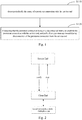
- Fig. 1 is a flowchart of a method for transmitting a live message executed by a client end according to an embodiment of the present disclosure.
- the present embodiment is applicable to transmitting a message during live stream.
- the present embodiment may be applied to the case where the client end periodically detects the status of a persistent connection during live stream, and when detects that the persistent connection is disconnected, pulls a message from a service end in time.
- a persistent connection is established between the client end and the service end, and the method may include: S I 10, detecting periodically the status of a persistent connection with the service end.
- the persistent connection refers to a communication connection in which a plurality of data packets may be transmitted continuously on one connection, and both parties need to send link test packets if no data packet is transmitted during a period during which the connection is maintained.
- a persistent connection channel is typically established by the client end with the service end through TCP (Transmission Control Protocol) or UDP (User Datagram Protocol).
- the service end uses a push mode to push a message to the client end.
- the persistent connection communication mode has simple service access, extensible messages, and may support scenarios of high concurrency of messages in a live stream room, so the connection may be applied to a live stream scenario.
- the client end may periodically detect the status of the persistent connection with the service end, to learn in time when the persistent connection disconnects, in order to avoid long-term disconnection of the persistent connection affecting a live stream effect.
- the service end since the client end periodically detects the status of the persistent connection, the service end does not need to periodically detect the status of the persistent connection, so that the pressure on the service end may be effectively reduced and the live stream effect may be improved.
- the first-type message may be a must-reach message in the live stream room, such as a gift, a gift money, a topic issued in Q&A live stream, closing of the live stream room, switching between live streams. If the must-reach message cannot be delivered accurately, it may affect key data such as a payment result, a settlement result, an answering contest result, or the status of the live room.
- the above must-reach message is used as the first-type message.
- other message in the live stream room except the must-reach message is referred to as common message, such as live stream live commenting, arrival news, or an update of the number of people in the live stream room, which has little impact on a live stream process and event results.
- the above common message is used as a second-type message.
- the client end in order to avoid that long-term disconnection of the persistent connection causing messages during live stream cannot be transmitted to the client end in time and accurately, when the client end detects that the persistent connection disconnects, the client end re-establishes the persistent connection with the service end to ensure that the messages are timely and accurately delivered during the live stream.
- the live stream room may still have messages issued through the service end. Therefore, in order to avoid missing messages, the first-type message issued during the disconnection of the persistent connection needs to be pulled from the service end.
- the client end may also pull the second-type message issued during the disconnection of the persistent connection from the service end, to maintain the integrity of the messages.
- the client end may pull the first-type message and/or the second-type message through the persistent connection channel, or may also pull the first-type message and/or the second-type message through a short connection channel, which is not limited herein.
- the method further includes: receiving a first-type message prompt instruction sent by the service end through the persistent connection; and in response to the first-type message prompt instruction, pulling the first-type message from the service end.
- the first-type message prompt instruction is generated in response to a fixed event in a live stream room, and the fixed event includes at least one of: a voting, a gift money, or a gift.
- the service end when a fixed event such as voting, gift money delivery or gift giving is initiated in a live stream room, the service end generates a first-type message prompt instruction in response to the fixed event, to promptly remind the client end that there is a first-type message.
- the service end may send the first-type message issued in the live stream room to the client end, so that the client end may receive and display the first-type message, or the service end may send the first-type message prompt instruction to the client end instead of directly sending the first-type message to the client end, so that the client end may pull the first-type message from the service end in response to the first-type message prompt instruction.
- the service end sending the first-type message prompt instruction to the client end can effectively reduce the amount of data pushed by the service end to the client end, and thus reduce pressure on the service end.
- the client end can quickly receive the first-type message prompt instruction, which shortens the time for the message to reach the client end.
- the method may further include: screening and/or sorting the pulled first-type message based on a first-type message identifier displayed locally, and displaying the pulled first-type message based on a processing result.
- the client end there may be some first-type messages that have been displayed locally on the client end.
- deduplication is performed, and to make the first-type message displayed in order.
- the pulled first-type message may be screened and/or sorted based on the first-type message identifier displayed locally, and the first-type message in subsequent display may be determined based on the processing result.
- the first-type message identifier is made monotonously and incrementally increasing, and the displayed first-type message identifiers are 1, 2, 3, 4.
- a first-type message with the first-type message identifier 3 pulled by the client end from the service end will not be displayed, and a first-type message with the first-type message identifier 5 pulled by the client from the service end will be displayed.
- the client end persistently stores the first-type message that has been displayed locally, and count the number of the first-type message displayed locally. For example, if the number of the first-type message that has been displayed is 20, and the first-type message identifier pulled by the client end from the service end is 19, this first-type message will not displayed, and if the first-type message identifier pulled by the client end from the service end is 21, this first-type message will be displayed.
- missing of the first-type message can be avoided, and repeated display of the first-type message can also be avoided, affecting the live stream effect and event processing results. It may also be that the first-type message identifier of the first-type message pulled by the client end from the service end is sorted, so as to display the first-type message in order.
- the client end detects periodically the status of the persistent connection with the service end, re-establishes the persistent connection with the service end, and pulls the first-type message issued during the disconnection of the persistent connection from the service end if it is detected that the persistent connection is in the disconnected status.
- the solution avoids the problem that messages cannot be transmitted regularly during the disconnection of the persistent connection during live stream, resulting in missing messages or inaccurate message transmission, so that the client end can accurately acquire messages during live stream.
- Fig. 3 is a flowchart of a method for transmitting a live message executed by a client end according to another embodiment of the present disclosure. For details not described in detail in the present embodiment, reference may be made to the above embodiments.
- another method for transmitting a live message executed by a client provided by the present embodiment may include: S210, detecting periodically whether a heartbeat detection request is received, where the heartbeat detection request includes a second-type message sent by the service end through the persistent connection, if not, performing S220-S230; if yes, performing S240.
- the second-type message is shown in the above embodiments.
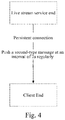
- the service end In order to detect the status of a persistent connection during live stream, the general solution is that the service end periodically detects the status of the persistent connection, and the solution may increase the service end's pressure, which may cause the service end to be unable to process other tasks properly during live stream, affecting the live process. Therefore, in an embodiment of the present disclosure, as shown in Fig. 4 , the second-type message delivered periodically to the client end by the service end is used as a downlink heartbeat detection request, and the period may be set as 2s, which is not limited.
- the service end only needs to regularly deliver the second-type message issued by the live stream room, and does not need to periodically send additional detection requests to detect the status of the persistent connection, thereby effectively reducing the pressure on the service end, ensuring normal processing of events during live stream by the service end, and maintaining a proper live stream process.
- the above solution can save resources of the service end. For example, for supporting 5 million people to view live stream online simultaneously, it requires about 62 servers by adopting the above solution, while adopting other live communication solutions it requires about 250 servers.
- the service end may also divide messages delivered by the live stream room into the first-type message and the second-type message.
- the client end receives messages sent by the service end through the persistent connection. If the first-type message sent through the persistent connection by the service end is received, the client end performs processing operations on the first-type message, such as pulling the first-type message from the service end, screening and/or sorting, and displaying the pulled first-type message based on a processing result. If the heartbeat detection request including the second-type message sent by the service end through the persistent connection is received, then S240 is performed; and if the heartbeat detection request including the second-type message sent by the service end through the persistent connection is not received, then S220-S230 are performed.
- the client end may send a status detection request to the service end to detect whether the persistent connection disconnects. For example, after sending the status detection request to the service end, if the client end receives a response message returned by the service end, it may indicate that the persistent connection is connected; and after sending the status detection request to the service end, if the client end does not receive a response message returned by the service end, it may indicate that the persistent connection disconnects.
- the client end detects whether the persistent connection is in the disconnected status, so that the client end may learn in time when the persistent connection disconnects, to re-establish the persistent connection in time if it is determined that the persistent connection disconnects, ensuring the proper proceeding of the live stream.
- the client end receives the heartbeat detection request including the second-type message sent by the service end through the persistent connection, the persistent connection is in the connected status, and the transmission of message can be realized.
- the client end displays the received second-type message locally to realize normal displaying of the second-type message.
- a timer is reset to continue receiving the second-type message periodically sent by the service end. If the timer is timeout, and the second-type message sent by the service end is not received, it is possible that the second-type message is not successfully transmitted to the client end due to disconnection of the persistent connection. Therefore, S220 is performed again to detect whether the persistent connection is in the disconnected status using the status detection request.
- the above technical solution of this embodiment of the present disclosure detects periodically whether the heartbeat detection request including the second-type message sent by the service end through the persistent connection is received, detects whether the persistent connection is in the disconnected status using the status detection request, if the client end fails to receive the request, so that the client end learns in time when the persistent connection disconnects, and to re-establish the persistent connection in time if it is determined that the persistent connection disconnects, ensuring the proper proceeding of the live stream.
- the service end only needs to regularly deliver the second-type message issued by the live stream room, and does not need to periodically send additional detection requests to detect the status of the persistent connection, thereby effectively reducing the pressure on the service end, ensuring normal processing of events during live stream by the service end, and maintaining a proper live stream process.
- Fig. 6 is a flowchart of a method for transmitting a live message executed by a client end according to an embodiment of the present disclosure. For details not described in detail in the present embodiment, reference may be made to the above embodiments. Referring to Fig. 6 , another method for transmitting a live message executed by a client end provided by the present embodiment may include:
- the first-type message identifier is monotonous and increases incrementally.
- the first-type message identifier of a first piece of first-type message may be 1
- the first-type message identifier of a second piece of first-type message may be 2, and so on.
- the specific form of the first-type message identifier is not limited, which may also be 01, 02, 03.... Since the first-type message that has been displayed locally on the client end does not need to be displayed again, in order to avoid repeated display of the first-type message, the client end may acquires the first-type message identifier that has been displayed locally, to no longer pull the displayed first-type message from the service end.
- the client end may generate the request for pulling the first-type message based on all of the first-type message identifiers displayed locally, and send the request for pulling the first-type message to the service end.
- the service end may compare the first-type message identifier issued by the live stream room with all of the first-type message identifiers that have been already displayed locally, and a first-type message corresponding to an inconsistent first-type message identifier which is obtained from the comparison is a first-type message that has not been displayed by the client end, and the service end returns this first-type message to the client end.
- all of the first-type message identifiers has been displayed locally on the client end are 1, 2, 3, and 4, and the first-type message identifiers issued by the live stream room in the service end are 1, 2, 3, 4, and 5.
- the first-type message identifier 5 is inconsistent with all of the first-type message identifiers that have been displayed locally on the client end, and the service end returns the first-type message corresponding to the first-type message identifier 5 to the client end.
- the client end may also be that the client end generates the request for pulling a first-type message based on the largest first-type message identifier in the first-type message identifiers which have been displayed locally, and sends the request to the service end. If a first-type message identifier issued by the live stream room in the service end is greater than the largest first-type message identifier, the first-type message corresponding to this first-type message identifier is determined as the first-type message that has not been displayed by the client end, and the service end returns this first-type message to the client end.
- all of the first-type message identifiers that have displayed locally on the client end are 1, 2, 3, and 4, in which the largest first-type message identifier is 4, and the first-type message identifiers issued by the live stream room in the service end are 1, 2, 3, 4 and 5.
- the first-type message identifier 5 is greater than the largest first-type message identifier 4, and the service end returns a first-type message corresponding to the first-type message identifier 5 to the client end.
- the client end counts the number of the first-type message that has been displayed locally based on the first-type message identifier that has been displayed locally, generates the request for pulling a first-type message based on the counted number of first-type message that has been displayed and sends the request to the service end.
- the service end compares a first-type message identifier issued by the live stream room with the number of the first-type message that has been displayed.
- the first-type message corresponding to the first-type message identifier is determined as a first-type message that has not displayed by the client, and the service end returns this first-type message to the client end.
- all of the first-type message identifiers displayed locally on the client end are 1, 2, 3, and 4, therefore, it can be seen that the number of all of first-type messages that have been displayed locally on the client end is 4.
- the first-type message identifiers issued by the live stream room in the service end are 1, 2, 3, 4 and 5.
- the number of first-type message 5 corresponding to the first-type message identifier 5 of the service end is greater than the number of all of the first-type message 4 that have been displayed locally on the client end, then the service end returns a first-type message corresponding to the first-type message identifier 5 to the client end.
- the first-type message that needs to be pulled from the service end may also be determined based on time of a timer.
- the client end may request the service end to return the first-type message issued by the live stream room within a timing period of the timer, or the client end may request the service end to return the first-type message issued by the live stream room during the time period from the time the timer is reset to the current time.
- the method may further include: screening and/or sorting the pulled first-type message based on a first-type message identifier displayed locally, and displaying the pulled first-type message based on a processing result. Therefore, the first-type message is displayed after deduplication, avoiding repeated display of the same first-type message and affecting user experience. By sorting, the first-type message may be played in order to improve user experience.
- the above technical solution of the embodiment of the present disclosure sends the request for pulling a first-type message to the service end, so that the service end returns the first-type message issued during the disconnection of the persistent connection, thereby accurately acquiring the first-type message issued by the live stream room during the persistent connection disconnection, and avoiding missing of the first-type message.
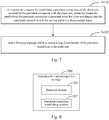
- Fig. 7 is a flowchart of a method for transmitting a live message executed by a service end according to an embodiment of the present disclosure.
- the present embodiment is applicable to transmitting a message during live stream.
- the present embodiment may be applied to the case where a client end periodically detects the status of a persistent connection during live stream, and pulls a message from a service end in time when a persistent connection is detected to be disconnected.
- a client end periodically detects the status of a persistent connection during live stream, and pulls a message from a service end in time when a persistent connection is detected to be disconnected.
- a persistent connection is established between the client end and the service end, and the method may include: S410, in response to a request for establishing a persistent connection of the client end, re-establishing the persistent connection with the client end, wherein the request for establishing the persistent connection is generated when the client end detects that the persistent connection with the service end is in a disconnected status.
- the persistent connection refers to a communication connection in which a plurality of data packets may be transmitted continuously on one connection, and both parties need to send link test packets if no data packet is transmitted during a period during which the connection is maintained.
- a persistent connection channel is typically established by the client end with the service end through TCP (Transmission Control Protocol) or UDP (User Datagram Protocol).
- TCP Transmission Control Protocol
- UDP User Datagram Protocol
- the service end uses a push mode to push a message to the client end.
- the persistent connection communication has simple service access, extensible messages, and may support scenarios of high concurrency of messages in a live stream room, so the connection may be applied to a live stream scenario.
- the client end may periodically detect the status of the persistent connection with the service end, to learn in time when the persistent connection disconnects, in order to avoid long-term disconnection of the persistent connection affecting a live stream effect.
- the service end since the client end periodically detects the status of the persistent connection, the service end does not need to periodically detect the status of the persistent connection, so that the pressure on the service end may be effectively reduced and the live stream effect may be improved.
- the client re-establishes the persistent connection with the service end when the client end detects that the persistent connection disconnects, to ensure that the messages are timely and accurately delivered during the live stream.
- the service end re-establishes the persistent connection with the client end in response to a request for establishing the persistent connection of the client end.
- the first-type message may be a must-reach message in the live stream room, such as a gift, a gift money, a topic issued in Q&A live stream, closing of the live stream room, switching between live streams. If the must-reach message cannot be delivered accurately, it may affect key data such as a payment result, a settlement result, an answering contest result, or the stats of the live stream room.
- the above must-reach message is used as the first-type message.
- common message in the live stream room such as live stream live commenting, arrival news, or an update of the number of people in the live stream room, has little impact on a live stream process and event results.
- the above common message is used as a second-type message.
- the live stream room may still have messages issued through the service end. Therefore, in order to avoid messages missing, the service end sends the first-type message issued during the disconnection of the persistent connection to the client end.
- the second-type message may also be sent to the client end to maintain the integrity of the messages.
- the sending a first-type message issued during disconnection of the persistent connection to the client end includes: in response to a request for pulling the first-type message generated by the client end based on a displayed first-type message identifier, sending the first-type message issued during the disconnection of the persistent connection to the client end.
- the first-type message identifier is monotonous and increases incrementally.
- the client end when the client end detects that the persistent connection is in the disconnected status, the client end acquires a first-type message identifier that has been displayed locally, generates a request for puling a first-type message based on the first-type message identifier that has been displayed locally, and sends the request for pulling a first-type message to the service end, so that the service end returns a first-type message in response to the request for pulling a first-type message sent by the client end.
- S330-S350 in the above embodiment.
- the method further includes: sending a heartbeat detection request including a second-type message to the client end periodically through the persistent connection, so that the client end detects whether the persistent connection is in the disconnected status using a status detection request when the heartbeat detection request is not received.
- the second-type message is shown in the above embodiments.
- the general solution is that the service end periodically detects the status of the persistent connection, and the solution may increase the service end's pressure, which may cause the service end to be unable to process other tasks properly during live stream, affecting the live process. Therefore, in an embodiment of the present disclosure, the second-type message delivered periodically to the client end by the service end is used as a downlink heartbeat detection request.
- the client end receives the message sent by the service end through the persistent connection, and if the heartbeat detection request including the second-type message sent by the service end through the persistent connection is received, it is determined that the persistent connection is in the connected status, and the received second-type message will be displayed; and if the heartbeat detection request including the second-type message sent by the service end through the persistent connection is not received, the client end detects whether the persistent connection is in the disconnected status using the status detection request.
- the service end By using the second-type message periodically delivered by the service end as the downlink heartbeat detection request, the service end only needs to regularly send the second-type message issued by the live stream room, and does not need to periodically send additional detection requests to detect the status of the persistent connection, thereby effectively reducing the pressure on the service end, ensuring normal processing of events during live stream by the service end, and maintaining a proper live stream process.
- the service end may also classify messages issued by the live stream room into the first-type message and the second-type message.
- the client end receives messages sent by the service end through the persistent connection. If the first-type message sent through the persistent connection by the service end is received, the client end performs processing operations on the first-type message, such as pulling the first-type message from the service end, screening and/or sorting, and displaying the pulled first-type message based on a processing result.
- the client detects whether the persistent connection is in the disconnected status using a status detection request.
- the method further includes: sending a first-type message prompt instruction to the client end through the persistent connection, so that the client end pulls the first-type message from the service end in response to the first-type message prompt instruction.
- the first-type message prompt instruction is generated in response to a fixed event in a live stream room, and the fixed event includes at least one of: a voting, a gift money, or a gift.
- the service end When a fixed event such as voting, gift money delivery or gift giving is initiated in a live stream room, the service end generates a first-type message prompt instruction to promptly remind the client end that there is a first-type message.
- the service end may send the first-type message issued in the live stream room to the client end, so that the client end may receive and display the first-type message, or the service end may send the first-type message prompt instruction to the client end instead of directly sending the first-type message to the client end, so that the client end may pull the first-type message from the service end in response to the first-type message prompt instruction.
- the service end sending the first-type message prompt instruction to the client end can effectively reduce the amount of data pushed by the service end to the client end, and thus reduce pressure on the service end.
- the client end can quickly receive the first-type message prompt instruction, which shortens the time for the message to reach the client end.
- the above technical solution of the embodiment of the present disclosure by re-establishing the persistent connection with the client end in response to a request for establishing a persistent connection from the client end, and sending the first-type message issued during the disconnection of the persistent connection to the client end, avoids the problem that messages cannot be transmitted regularly during the disconnection of the persistent connection during live stream, resulting in messages missing or inaccurate message transmission, so that the client end can accurately acquire messages during live stream.
- Fig. 8 is a schematic structural diagram of an apparatus for transmitting a live message configured in an electronic device of a client end according to an embodiment of the present disclosure.
- a persistent connection is established between the client end and a service end, and the apparatus includes: a detection module 501 and a persistent connection establishing module 502.
- the detection module 501 is configured to detect periodically a status of the persistent connection with the service end.
- the persistent connection establishing module 502 is configured to re-establish the persistent connection with the service end in response to detecting that the persistent connection is in a disconnected status, and pull a first-type message issued during disconnection of the persistent connection from the service end.
- the persistent connection establishing module 502 includes:
- the first-type message identifier is monotonous and increases incrementally.
- the detection module 501 includes:
- the apparatus further includes: a message displaying module, configured to, after detect periodically whether a heartbeat detection request including a second-type message sent by the service end through the persistent connection is received, if the heartbeat detection request is received, determine that the persistent connection is in a connected status, and display the received second-type message.
- a message displaying module configured to, after detect periodically whether a heartbeat detection request including a second-type message sent by the service end through the persistent connection is received, if the heartbeat detection request is received, determine that the persistent connection is in a connected status, and display the received second-type message.
- the apparatus further includes:
- the apparatus further includes: a processing module, configured to screen and/or sort the pulled first-type message based on a first-type message identifier displayed locally, and display the pulled first-type message based on a processing result.
- a processing module configured to screen and/or sort the pulled first-type message based on a first-type message identifier displayed locally, and display the pulled first-type message based on a processing result.
- the first-type message prompt instruction is generated in response to a fixed event in a live stream room, and the fixed event includes at least one of: a voting, a gift money, or a gift.
- the apparatus for transmitting a live message configured in an electronic device of a client end according to an embodiment of the present disclosure may perform the method for transmitting a live message executed by a client end provided in any embodiment of the present disclosure, and has corresponding functional modules and beneficial effects for performing the method.
- Fig. 9 is a schematic structural diagram of an apparatus for transmitting a live message configured in an electronic device of a service end according to an embodiment of the present disclosure.
- a persistent connection is established between the service end and a client end, and the apparatus includes: a request responding module 601 and a message sending module 602.
- the request responding module 601 is configured to, in response to a request for establishing a persistent connection of the client end, re-establish the persistent connection with the client end, where the request for establishing the persistent connection is generated when the client end detects that the persistent connection with the service end is in a disconnected status.
- the message sending module 602 is configured to send a first-type message issued during disconnection of the persistent connection to the client end.
- the message sending module 602 is configured to: in response to a request for pulling the first-type message generated by the client end based on a displayed first-type message identifier, send the first-type message issued during the disconnection of the persistent connection to the client end.
- the first-type message identifier is monotonous and increases incrementally.
- the apparatus further includes: a heartbeat detection request sending module, configured to send a heartbeat detection request including a second-type message to the client end periodically through the persistent connection, so that the client end detects whether the persistent connection is in the disconnected status using a status detection request when the heartbeat detection request is not received.
- a heartbeat detection request sending module configured to send a heartbeat detection request including a second-type message to the client end periodically through the persistent connection, so that the client end detects whether the persistent connection is in the disconnected status using a status detection request when the heartbeat detection request is not received.
- the apparatus further includes: a prompt instruction sending module, configured to send a first-type message prompt instruction to the client end through the persistent connection, so that in response to the first-type message prompt instruction, the client end pulls the first-type message from the service end.
- a prompt instruction sending module configured to send a first-type message prompt instruction to the client end through the persistent connection, so that in response to the first-type message prompt instruction, the client end pulls the first-type message from the service end.
- the first-type message prompt instruction is generated in response to a fixed event in a live stream room, and the fixed event includes at least one of: a voting, a gift money, or a gift.
- the apparatus for transmitting a live message configured in an electronic device of a service end according to an embodiment of the present disclosure may perform the method for transmitting a live message executed by a service end provided in any embodiment of the present disclosure, and has corresponding functional modules and beneficial effects for performing the method.
- an electronic device and a readable storage medium are provided.
- FIG. 10 is a block diagram of an electronic device of the method for transmitting a live message according to an embodiment of the present disclosure.
- the electronic device may be a terminal device, such as a mobile phone, a tablet computer, or a wearable device.
- the electronic device may be a service end or the like.
- the electronic device is intended to represent various forms of digital computers, such as laptop computers, desktop computers, workbenches, personal digital assistants, service ends, blade service ends, mainframe computers, and other suitable computers.
- the electronic device may also represent various forms of mobile apparatuses, such as personal digital processors, cellular phones, smart phones, wearable devices, and other similar computing apparatuses.
- mobile apparatuses such as personal digital processors, cellular phones, smart phones, wearable devices, and other similar computing apparatuses.
- the components shown herein, their connections and relationships, and their functions are merely examples, and are not intended to limit the implementation of the present disclosure described and/or claimed herein.
- the electronic device includes: one or more processors 701, a memory 702, and interfaces for connecting various components, including high-speed interfaces and low-speed interfaces.
- the various components are connected to each other using different buses, and may be installed on a common motherboard or in other methods as needed.
- the processor may process instructions executed within the electronic device, including instructions stored in or on the memory to display graphic information of GUI on an external input/output apparatus (such as a display device coupled to the interface).
- a plurality of processors and/or a plurality of buses may be used together with a plurality of memories and a plurality of memories if desired.
- a plurality of electronic devices may be connected, and the devices provide some necessary operations, for example, as a service end array, a set of blade service ends, or a multi-processor system.
- one processor 701 is used as an example.
- the memory 702 is a non-transitory computer readable storage medium provided by the present disclosure.
- the memory stores instructions executable by at least one processor, so that the at least one processor performs the method for transmitting a live message executed by a client end provided by an embodiment of the present disclosure, or the method for transmitting a live message executed by a service end provided by an embodiment of the present disclosure.
- the non-transitory computer readable storage medium of the present disclosure stores computer instructions for causing a computer to perform the method for transmitting a live message executed by a client end provided by an embodiment of the present disclosure, or the method for transmitting a live message executed by a service end provided by an embodiment of the present disclosure.
- the memory 702 may be used to store non-transitory software programs, non-transitory computer executable programs and modules, such as program instructions/modules corresponding to the method for transmitting a live message in embodiments of the present disclosure (for example, the detection module 501 and the persistent connection establishing module 502 as shown in Fig. 8 , or the request responding module 601 and the message sending module 602 as shown in Fig. 9 ).
- the processor 701 executes the non-transitory software programs, instructions, and modules stored in the memory 702 to execute various functional applications and data processing of the service end, that is, to implement the method for transmitting a live message executed by a client, or the method for transmitting a live message executed by a service end in the foregoing method embodiments.
- the memory 702 may include a storage program area and a storage data area, where the storage program area may store an operating system and at least one function required application program; and the storage data area may store data created by the use of the electronic device according to the method for processing parking, etc.
- the memory 702 may include a high-speed random access memory, and may also include a non-transitory memory, such as at least one magnetic disk storage device, a flash memory device, or other non-transitory solid-state storage devices.
- the memory 702 may optionally include memories remotely provided with respect to the processor 701, and these remote memories may be connected to the electronic device of the method for processing parking through a network. Examples of the above network include but are not limited to the Internet, intranet, local area network, mobile communication network, and combinations thereof.
- the electronic device of the method for transmitting a live message may further include: an input apparatus 703 and an output apparatus 704.
- the processor 701, the memory 702, the input apparatus 703, and the output apparatus 704 may be connected through a bus or in other methods. In Fig. 10 , connection through a bus is used as an example.
- the input apparatus 703 may receive input digital or character information, and generate key signal inputs related to user settings and function control of the electronic device of the method for processing parking, such as touch screen, keypad, mouse, trackpad, touchpad, pointing stick, one or more mouse buttons, trackball, joystick and other input apparatuses.
- the output apparatus 604 may include a display device, an auxiliary lighting apparatus (for example, LED), a tactile feedback apparatus (for example, a vibration motor), and the like.
- the display device may include, but is not limited to, a liquid crystal display (LCD), a light emitting diode (LED) display, and a plasma display. In some embodiments, the display device may be a touch screen.
- Various embodiments of the systems and technologies described herein may be implemented in digital electronic circuit systems, integrated circuit systems, dedicated ASICs (application specific integrated circuits), computer hardware, firmware, software, and/or combinations thereof. These various embodiments may include: being implemented in one or more computer programs that can be executed and/or interpreted on a programmable system that includes at least one programmable processor.
- the programmable processor may be a dedicated or general-purpose programmable processor, and may receive data and instructions from a storage system, at least one input apparatus, and at least one output apparatus, and transmit the data and instructions to the storage system, the at least one input apparatus, and the at least one output apparatus.
- These computing programs include machine instructions of the programmable processor and may use high-level processes and/or object-oriented programming languages, and/or assembly/machine languages to implement these computing programs.
- machine readable medium and “computer readable medium” refer to any computer program product, device, and/or apparatus (for example, magnetic disk, optical disk, memory, programmable logic apparatus (PLD)) used to provide machine instructions and/or data to the programmable processor, including machine readable medium that receives machine instructions as machine readable signals.
- machine readable signal refers to any signal used to provide machine instructions and/or data to the programmable processor.
- the systems and technologies described herein may be implemented on a computer, the computer has: a display apparatus for displaying information to the user (for example, CRT (cathode ray tube) or LCD (liquid crystal display) monitor); and a keyboard and a pointing apparatus (for example, mouse or trackball), and the user may use the keyboard and the pointing apparatus to provide input to the computer.
- a display apparatus for displaying information to the user
- LCD liquid crystal display
- keyboard and a pointing apparatus for example, mouse or trackball
- Other types of apparatuses may also be used to provide interaction with the user; for example, feedback provided to the user may be any form of sensory feedback (for example, visual feedback, auditory feedback, or tactile feedback); and any form (including acoustic input, voice input, or tactile input) may be used to receive input from the user.
- the systems and technologies described herein may be implemented in a computing system that includes backend components (e.g., as a data server), or a computing system that includes middleware components (e.g., application server), or a computing system that includes frontend components (for example, a user computer having a graphical user interface or a web browser, through which the user may interact with the implementations of the systems and the technologies described herein), or a computing system that includes any combination of such backend components, middleware components, or frontend components.
- the components of the system may be interconnected by any form or medium of digital data communication (e.g., communication network). Examples of the communication network include: local area networks (LAN), wide area networks (WAN), and the Internet.
- the computer system may include a client end and a service end.
- the client end and the service end are generally far from each other and usually interact through the communication network.
- the relationship between the client end and the service end is generated by computer programs that run on the corresponding computer and have a client end-service end relationship with each other.
Landscapes
- Engineering & Computer Science (AREA)
- Signal Processing (AREA)
- Computer Networks & Wireless Communication (AREA)
- Multimedia (AREA)
- Health & Medical Sciences (AREA)
- Cardiology (AREA)
- General Health & Medical Sciences (AREA)
- Databases & Information Systems (AREA)
- Environmental & Geological Engineering (AREA)
- Information Transfer Between Computers (AREA)
- Debugging And Monitoring (AREA)
- Computer And Data Communications (AREA)
- Information Retrieval, Db Structures And Fs Structures Therefor (AREA)
- Two-Way Televisions, Distribution Of Moving Picture Or The Like (AREA)
- Communication Control (AREA)
- Mobile Radio Communication Systems (AREA)
Applications Claiming Priority (1)
| Application Number | Priority Date | Filing Date | Title |
|---|---|---|---|
| CN202010463453.3A CN111669438B (zh) | 2020-05-27 | 2020-05-27 | 直播消息传输方法、装置、电子设备及介质 |
Publications (3)
| Publication Number | Publication Date |
|---|---|
| EP3836484A2 true EP3836484A2 (fr) | 2021-06-16 |
| EP3836484A3 EP3836484A3 (fr) | 2021-09-08 |
| EP3836484B1 EP3836484B1 (fr) | 2023-02-15 |
Family
ID=72384954
Family Applications (1)
| Application Number | Title | Priority Date | Filing Date |
|---|---|---|---|
| EP21164728.4A Active EP3836484B1 (fr) | 2020-05-27 | 2021-03-24 | Procédé de transmission de message en direct, appareil, dispositif électronique, support et produit programme informatique |
Country Status (5)
| Country | Link |
|---|---|
| US (1) | US11750541B2 (fr) |
| EP (1) | EP3836484B1 (fr) |
| JP (1) | JP7228616B2 (fr) |
| KR (1) | KR102611151B1 (fr) |
| CN (1) | CN111669438B (fr) |
Families Citing this family (6)
| Publication number | Priority date | Publication date | Assignee | Title |
|---|---|---|---|---|
| CN111309279B (zh) * | 2020-05-06 | 2020-11-24 | 上海幻电信息科技有限公司 | 多屏互动显示方法及装置 |
| CN112689202B (zh) * | 2021-03-22 | 2021-06-15 | 北京达佳互联信息技术有限公司 | 直播间消息处理方法、装置、服务器及存储介质 |
| CN113055499B (zh) * | 2021-05-31 | 2021-08-31 | 云和恩墨(北京)信息技术有限公司 | 数据的传输方法及系统 |
| CN113973215A (zh) * | 2021-10-25 | 2022-01-25 | 北京字节跳动网络技术有限公司 | 数据去重方法、装置及存储介质 |
| CN114553936B (zh) * | 2022-02-18 | 2024-01-30 | 北京达佳互联信息技术有限公司 | 连接方法、装置、电子设备和计算机可读存储介质 |
| CN115103005B (zh) * | 2022-06-14 | 2024-08-16 | 北京京东乾石科技有限公司 | 请求响应方法、装置、电子设备及存储介质 |
Family Cites Families (33)
| Publication number | Priority date | Publication date | Assignee | Title |
|---|---|---|---|---|
| US6571274B1 (en) * | 1998-11-05 | 2003-05-27 | Beas Systems, Inc. | Clustered enterprise Java™ in a secure distributed processing system |
| KR101259118B1 (ko) * | 2007-02-23 | 2013-04-26 | 엘지전자 주식회사 | 방송 신호 송신 장치 및 방법 |
| US20090046707A1 (en) * | 2007-06-15 | 2009-02-19 | Smires Daniel T | Apparatus for enhanced information display in end user devices of a packet-based communication network |
| WO2009057074A2 (fr) * | 2007-10-30 | 2009-05-07 | Nokia Corporation | Fourniture d'une détection d'erreur de connexion améliorée |
| US9438448B2 (en) * | 2009-08-18 | 2016-09-06 | Microsoft Technology Licensing, Llc | Maintaining communication connections during temporary network disruptions |
| US8516063B2 (en) * | 2010-02-12 | 2013-08-20 | Mary Anne Fletcher | Mobile device streaming media application |
| EP2597869A4 (fr) * | 2010-07-20 | 2013-12-18 | Sharp Kk | Dispositif de distribution de contenus, dispositif de lecture de contenus, système de distribution de contenus, procédé pour commander un dispositif de distribution de contenus, programme de commande et support d'enregistrement |
| US8712391B2 (en) * | 2010-12-08 | 2014-04-29 | Qualcomm Incorporated | Client-managed group communication sessions within a wireless communications system |
| US8732810B2 (en) * | 2011-10-27 | 2014-05-20 | Cellco Partnership | IP push platform and connection protocol in a push notification framework |
| US9300492B2 (en) * | 2013-01-14 | 2016-03-29 | Dropbox, Inc. | Notification feed across multiple client devices |
| CN103338118B (zh) * | 2013-06-04 | 2016-09-14 | 北京搜狐新媒体信息技术有限公司 | 一种通信网络连接方法及装置 |
| CN104349288B (zh) * | 2013-07-25 | 2020-04-07 | 腾讯科技(深圳)有限公司 | 一种消息传输方法及装置 |
| JP6122123B2 (ja) * | 2013-08-05 | 2017-04-26 | 株式会社野村総合研究所 | 画面表示プログラム |
| US20150142982A1 (en) * | 2013-11-15 | 2015-05-21 | Microsoft Corporation | Preservation of connection session |
| JP2015231116A (ja) * | 2014-06-04 | 2015-12-21 | 富士通株式会社 | データ配信システム及びデータ配信方法 |
| EP3198468A4 (fr) * | 2014-09-24 | 2018-04-25 | V5 Systems, Inc. | Gestion de données dynamique |
| US9954906B2 (en) * | 2015-03-27 | 2018-04-24 | At&T Intellectual Property I, L.P. | Method and system for providing media services in a communication system |
| CN106161128A (zh) * | 2015-04-09 | 2016-11-23 | 中兴通讯股份有限公司 | 一种组播数据流监测方法、装置及组播转发设备 |
| CN106303702A (zh) * | 2015-06-11 | 2017-01-04 | 阿里巴巴集团控股有限公司 | 连接状态检测方法、装置和智能电视系统 |
| US9554091B1 (en) * | 2015-12-15 | 2017-01-24 | Cisco Technology, Inc. | Identifying conference participants and active talkers at a video conference endpoint using user devices |
| CN107645529B (zh) * | 2016-07-21 | 2020-06-30 | 腾讯科技(深圳)有限公司 | 心跳包发送方法及装置 |
| JP6740055B2 (ja) * | 2016-08-12 | 2020-08-12 | 矢崎エナジーシステム株式会社 | 無線通信システム |
| JP6634995B2 (ja) * | 2016-09-30 | 2020-01-22 | 富士通クライアントコンピューティング株式会社 | 監視装置、再接続方法および再接続プログラム |
| CN106686393A (zh) * | 2016-12-19 | 2017-05-17 | 广州华多网络科技有限公司 | 一种虚拟礼物的赠送方法及装置 |
| CN107547947B (zh) * | 2017-08-24 | 2020-06-02 | 北京小米移动软件有限公司 | 直播间中虚拟礼物的赠送方法及装置 |
| CN109660584A (zh) * | 2017-10-12 | 2019-04-19 | 阿里巴巴集团控股有限公司 | 一种客户端与服务器建立长连接的方法及通信方法与通信系统 |
| US20190238536A1 (en) * | 2018-01-26 | 2019-08-01 | Qualcomm Incorporated | Techniques for resuming a secure communication session |
| WO2019174025A1 (fr) * | 2018-03-16 | 2019-09-19 | 华为技术有限公司 | Procédé de gestion d'activation, procédé de gestion de temporisateur et dispositif terminal |
| US11057476B2 (en) * | 2018-03-28 | 2021-07-06 | Genesys Telecommunications Laboratories, Inc. | System and method for managing communication system |
| JP7066509B2 (ja) * | 2018-05-07 | 2022-05-13 | 株式会社ドワンゴ | サーバおよびプログラム |
| CN109067910A (zh) * | 2018-09-13 | 2018-12-21 | 乐蜜有限公司 | 一种消息拉取的方法及装置 |
| CN110278278A (zh) * | 2019-06-26 | 2019-09-24 | 深圳市迅雷网络技术有限公司 | 一种数据传输方法、系统、装置及计算机介质 |
| CN111193769A (zh) * | 2019-11-25 | 2020-05-22 | 泰康保险集团股份有限公司 | 恢复长连接的方法、系统、装置、电子设备及存储介质 |
-
2020
- 2020-05-27 CN CN202010463453.3A patent/CN111669438B/zh active Active
-
2021
- 2021-03-24 EP EP21164728.4A patent/EP3836484B1/fr active Active
- 2021-03-26 JP JP2021054122A patent/JP7228616B2/ja active Active
- 2021-03-29 US US17/215,590 patent/US11750541B2/en active Active
- 2021-03-30 KR KR1020210041351A patent/KR102611151B1/ko active Active
Also Published As
| Publication number | Publication date |
|---|---|
| US20210218693A1 (en) | 2021-07-15 |
| EP3836484A3 (fr) | 2021-09-08 |
| EP3836484B1 (fr) | 2023-02-15 |
| KR102611151B1 (ko) | 2023-12-07 |
| CN111669438B (zh) | 2022-10-04 |
| JP7228616B2 (ja) | 2023-02-24 |
| KR20210042281A (ko) | 2021-04-19 |
| CN111669438A (zh) | 2020-09-15 |
| US11750541B2 (en) | 2023-09-05 |
| JP2022003510A (ja) | 2022-01-11 |
Similar Documents
| Publication | Publication Date | Title |
|---|---|---|
| US11750541B2 (en) | Method for transmitting live message, apparatus, electronic device and medium | |
| US10516633B2 (en) | Method, system, and storage medium for message processing | |
| US20210210091A1 (en) | Method, device, and storage medium for waking up via speech | |
| CN110489076B (zh) | 环境声音监控方法、装置以及电子设备 | |
| CN112260853B (zh) | 容灾切换方法、装置、存储介质及电子设备 | |
| CN110659184B (zh) | 健康状态检查方法、装置及系统 | |
| CN111914149B (zh) | 一种请求处理方法、装置、存储介质及电子设备 | |
| CN110413384A (zh) | 延时任务处理方法及装置、存储介质、电子设备 | |
| CN111913884A (zh) | 分布式测试方法、装置、设备、系统和可读存储介质 | |
| WO2020135776A1 (fr) | Procédé, dispositif, terminal et serveur de transmission de données d'interaction | |
| CN113162848B (zh) | 一种区块链网关的实现方法、装置、网关和介质 | |
| US20220417154A1 (en) | Data transmission method and apparatus, device, storage medium, and computer program product | |
| CN110727736A (zh) | 一种数据同步方法、装置、电子设备和存储介质 | |
| CN113825170A (zh) | 用于确定网络通道的方法和装置 | |
| CN112491858B (zh) | 检测异常信息的方法、装置、设备以及存储介质 | |
| US11831735B2 (en) | Method and device for processing mini program data | |
| CN111818046B (zh) | 用于交互信息的方法、装置、设备以及存储介质 | |
| CN114217996A (zh) | 混音方法和装置 | |
| CN110445667A (zh) | 一种链路延迟检测方法、装置、存储介质以及终端 | |
| CN114928482B (zh) | 软件的网络通信功能的测试方法、装置、电子设备及存储介质 | |
| CN113346973B (zh) | 事件提示方法及装置、电子设备、计算机可读存储介质 | |
| CN112770415B (zh) | 关于无线热点的信息处理方法和装置 | |
| US20210193008A1 (en) | Screen projecting method, apparatus, device and storage medium | |
| US10419306B2 (en) | Determining the causation of events across multiple nodes using message properties | |
| CN113312193A (zh) | 用于传输信息的方法和装置 |
Legal Events
| Date | Code | Title | Description |
|---|---|---|---|
| PUAI | Public reference made under article 153(3) epc to a published international application that has entered the european phase |
Free format text: ORIGINAL CODE: 0009012 |
|
| STAA | Information on the status of an ep patent application or granted ep patent |
Free format text: STATUS: REQUEST FOR EXAMINATION WAS MADE |
|
| 17P | Request for examination filed |
Effective date: 20210324 |
|
| AK | Designated contracting states |
Kind code of ref document: A2 Designated state(s): AL AT BE BG CH CY CZ DE DK EE ES FI FR GB GR HR HU IE IS IT LI LT LU LV MC MK MT NL NO PL PT RO RS SE SI SK SM TR |
|
| PUAL | Search report despatched |
Free format text: ORIGINAL CODE: 0009013 |
|
| AK | Designated contracting states |
Kind code of ref document: A3 Designated state(s): AL AT BE BG CH CY CZ DE DK EE ES FI FR GB GR HR HU IE IS IT LI LT LU LV MC MK MT NL NO PL PT RO RS SE SI SK SM TR |
|
| RIC1 | Information provided on ipc code assigned before grant |
Ipc: H04L 12/58 20060101ALI20210804BHEP Ipc: H04L 12/18 20060101AFI20210804BHEP |
|
| STAA | Information on the status of an ep patent application or granted ep patent |
Free format text: STATUS: EXAMINATION IS IN PROGRESS |
|
| 17Q | First examination report despatched |
Effective date: 20220502 |
|
| REG | Reference to a national code |
Ref country code: DE Ref legal event code: R079 Ref document number: 602021001384 Country of ref document: DE Free format text: PREVIOUS MAIN CLASS: H04L0012180000 Ipc: H04L0051040000 |
|
| GRAP | Despatch of communication of intention to grant a patent |
Free format text: ORIGINAL CODE: EPIDOSNIGR1 |
|
| STAA | Information on the status of an ep patent application or granted ep patent |
Free format text: STATUS: GRANT OF PATENT IS INTENDED |
|
| RIC1 | Information provided on ipc code assigned before grant |
Ipc: H04L 51/04 20220101AFI20221108BHEP |
|
| INTG | Intention to grant announced |
Effective date: 20221124 |
|
| RAP3 | Party data changed (applicant data changed or rights of an application transferred) |
Owner name: BEIJING BAIDU NETCOM SCIENCE AND TECHNOLOGY CO., LTD. |
|
| GRAS | Grant fee paid |
Free format text: ORIGINAL CODE: EPIDOSNIGR3 |
|
| GRAA | (expected) grant |
Free format text: ORIGINAL CODE: 0009210 |
|
| STAA | Information on the status of an ep patent application or granted ep patent |
Free format text: STATUS: THE PATENT HAS BEEN GRANTED |
|
| AK | Designated contracting states |
Kind code of ref document: B1 Designated state(s): AL AT BE BG CH CY CZ DE DK EE ES FI FR GB GR HR HU IE IS IT LI LT LU LV MC MK MT NL NO PL PT RO RS SE SI SK SM TR |
|
| REG | Reference to a national code |
Ref country code: CH Ref legal event code: EP Ref country code: GB Ref legal event code: FG4D |
|
| REG | Reference to a national code |
Ref country code: DE Ref legal event code: R096 Ref document number: 602021001384 Country of ref document: DE |
|
| REG | Reference to a national code |
Ref country code: AT Ref legal event code: REF Ref document number: 1548842 Country of ref document: AT Kind code of ref document: T Effective date: 20230315 Ref country code: IE Ref legal event code: FG4D |
|
| REG | Reference to a national code |
Ref country code: LT Ref legal event code: MG9D |
|
| REG | Reference to a national code |
Ref country code: NL Ref legal event code: MP Effective date: 20230215 |
|
| P01 | Opt-out of the competence of the unified patent court (upc) registered |
Effective date: 20230526 |
|
| REG | Reference to a national code |
Ref country code: AT Ref legal event code: MK05 Ref document number: 1548842 Country of ref document: AT Kind code of ref document: T Effective date: 20230215 |
|
| PG25 | Lapsed in a contracting state [announced via postgrant information from national office to epo] |
Ref country code: RS Free format text: LAPSE BECAUSE OF FAILURE TO SUBMIT A TRANSLATION OF THE DESCRIPTION OR TO PAY THE FEE WITHIN THE PRESCRIBED TIME-LIMIT Effective date: 20230215 Ref country code: PT Free format text: LAPSE BECAUSE OF FAILURE TO SUBMIT A TRANSLATION OF THE DESCRIPTION OR TO PAY THE FEE WITHIN THE PRESCRIBED TIME-LIMIT Effective date: 20230615 Ref country code: NO Free format text: LAPSE BECAUSE OF FAILURE TO SUBMIT A TRANSLATION OF THE DESCRIPTION OR TO PAY THE FEE WITHIN THE PRESCRIBED TIME-LIMIT Effective date: 20230515 Ref country code: NL Free format text: LAPSE BECAUSE OF FAILURE TO SUBMIT A TRANSLATION OF THE DESCRIPTION OR TO PAY THE FEE WITHIN THE PRESCRIBED TIME-LIMIT Effective date: 20230215 Ref country code: LV Free format text: LAPSE BECAUSE OF FAILURE TO SUBMIT A TRANSLATION OF THE DESCRIPTION OR TO PAY THE FEE WITHIN THE PRESCRIBED TIME-LIMIT Effective date: 20230215 Ref country code: LT Free format text: LAPSE BECAUSE OF FAILURE TO SUBMIT A TRANSLATION OF THE DESCRIPTION OR TO PAY THE FEE WITHIN THE PRESCRIBED TIME-LIMIT Effective date: 20230215 Ref country code: HR Free format text: LAPSE BECAUSE OF FAILURE TO SUBMIT A TRANSLATION OF THE DESCRIPTION OR TO PAY THE FEE WITHIN THE PRESCRIBED TIME-LIMIT Effective date: 20230215 Ref country code: ES Free format text: LAPSE BECAUSE OF FAILURE TO SUBMIT A TRANSLATION OF THE DESCRIPTION OR TO PAY THE FEE WITHIN THE PRESCRIBED TIME-LIMIT Effective date: 20230215 Ref country code: AT Free format text: LAPSE BECAUSE OF FAILURE TO SUBMIT A TRANSLATION OF THE DESCRIPTION OR TO PAY THE FEE WITHIN THE PRESCRIBED TIME-LIMIT Effective date: 20230215 |
|
| PG25 | Lapsed in a contracting state [announced via postgrant information from national office to epo] |
Ref country code: SE Free format text: LAPSE BECAUSE OF FAILURE TO SUBMIT A TRANSLATION OF THE DESCRIPTION OR TO PAY THE FEE WITHIN THE PRESCRIBED TIME-LIMIT Effective date: 20230215 Ref country code: PL Free format text: LAPSE BECAUSE OF FAILURE TO SUBMIT A TRANSLATION OF THE DESCRIPTION OR TO PAY THE FEE WITHIN THE PRESCRIBED TIME-LIMIT Effective date: 20230215 Ref country code: IS Free format text: LAPSE BECAUSE OF FAILURE TO SUBMIT A TRANSLATION OF THE DESCRIPTION OR TO PAY THE FEE WITHIN THE PRESCRIBED TIME-LIMIT Effective date: 20230615 Ref country code: GR Free format text: LAPSE BECAUSE OF FAILURE TO SUBMIT A TRANSLATION OF THE DESCRIPTION OR TO PAY THE FEE WITHIN THE PRESCRIBED TIME-LIMIT Effective date: 20230516 Ref country code: FI Free format text: LAPSE BECAUSE OF FAILURE TO SUBMIT A TRANSLATION OF THE DESCRIPTION OR TO PAY THE FEE WITHIN THE PRESCRIBED TIME-LIMIT Effective date: 20230215 |
|
| PG25 | Lapsed in a contracting state [announced via postgrant information from national office to epo] |
Ref country code: SM Free format text: LAPSE BECAUSE OF FAILURE TO SUBMIT A TRANSLATION OF THE DESCRIPTION OR TO PAY THE FEE WITHIN THE PRESCRIBED TIME-LIMIT Effective date: 20230215 Ref country code: RO Free format text: LAPSE BECAUSE OF FAILURE TO SUBMIT A TRANSLATION OF THE DESCRIPTION OR TO PAY THE FEE WITHIN THE PRESCRIBED TIME-LIMIT Effective date: 20230215 Ref country code: EE Free format text: LAPSE BECAUSE OF FAILURE TO SUBMIT A TRANSLATION OF THE DESCRIPTION OR TO PAY THE FEE WITHIN THE PRESCRIBED TIME-LIMIT Effective date: 20230215 Ref country code: DK Free format text: LAPSE BECAUSE OF FAILURE TO SUBMIT A TRANSLATION OF THE DESCRIPTION OR TO PAY THE FEE WITHIN THE PRESCRIBED TIME-LIMIT Effective date: 20230215 Ref country code: CZ Free format text: LAPSE BECAUSE OF FAILURE TO SUBMIT A TRANSLATION OF THE DESCRIPTION OR TO PAY THE FEE WITHIN THE PRESCRIBED TIME-LIMIT Effective date: 20230215 |
|
| REG | Reference to a national code |
Ref country code: DE Ref legal event code: R097 Ref document number: 602021001384 Country of ref document: DE |
|
| PG25 | Lapsed in a contracting state [announced via postgrant information from national office to epo] |
Ref country code: SK Free format text: LAPSE BECAUSE OF FAILURE TO SUBMIT A TRANSLATION OF THE DESCRIPTION OR TO PAY THE FEE WITHIN THE PRESCRIBED TIME-LIMIT Effective date: 20230215 |
|
| REG | Reference to a national code |
Ref country code: BE Ref legal event code: MM Effective date: 20230331 |
|
| PLBE | No opposition filed within time limit |
Free format text: ORIGINAL CODE: 0009261 |
|
| STAA | Information on the status of an ep patent application or granted ep patent |
Free format text: STATUS: NO OPPOSITION FILED WITHIN TIME LIMIT |
|
| PG25 | Lapsed in a contracting state [announced via postgrant information from national office to epo] |
Ref country code: LU Free format text: LAPSE BECAUSE OF NON-PAYMENT OF DUE FEES Effective date: 20230324 |
|
| PG25 | Lapsed in a contracting state [announced via postgrant information from national office to epo] |
Ref country code: MC Free format text: LAPSE BECAUSE OF FAILURE TO SUBMIT A TRANSLATION OF THE DESCRIPTION OR TO PAY THE FEE WITHIN THE PRESCRIBED TIME-LIMIT Effective date: 20230215 |
|
| REG | Reference to a national code |
Ref country code: IE Ref legal event code: MM4A |
|
| 26N | No opposition filed |
Effective date: 20231116 |
|
| PG25 | Lapsed in a contracting state [announced via postgrant information from national office to epo] |
Ref country code: SI Free format text: LAPSE BECAUSE OF FAILURE TO SUBMIT A TRANSLATION OF THE DESCRIPTION OR TO PAY THE FEE WITHIN THE PRESCRIBED TIME-LIMIT Effective date: 20230215 Ref country code: MC Free format text: LAPSE BECAUSE OF FAILURE TO SUBMIT A TRANSLATION OF THE DESCRIPTION OR TO PAY THE FEE WITHIN THE PRESCRIBED TIME-LIMIT Effective date: 20230215 Ref country code: IE Free format text: LAPSE BECAUSE OF NON-PAYMENT OF DUE FEES Effective date: 20230324 Ref country code: FR Free format text: LAPSE BECAUSE OF NON-PAYMENT OF DUE FEES Effective date: 20230415 |
|
| PG25 | Lapsed in a contracting state [announced via postgrant information from national office to epo] |
Ref country code: BE Free format text: LAPSE BECAUSE OF NON-PAYMENT OF DUE FEES Effective date: 20230331 |
|
| PG25 | Lapsed in a contracting state [announced via postgrant information from national office to epo] |
Ref country code: IT Free format text: LAPSE BECAUSE OF FAILURE TO SUBMIT A TRANSLATION OF THE DESCRIPTION OR TO PAY THE FEE WITHIN THE PRESCRIBED TIME-LIMIT Effective date: 20230215 |
|
| REG | Reference to a national code |
Ref country code: CH Ref legal event code: PL |
|
| PG25 | Lapsed in a contracting state [announced via postgrant information from national office to epo] |
Ref country code: BG Free format text: LAPSE BECAUSE OF FAILURE TO SUBMIT A TRANSLATION OF THE DESCRIPTION OR TO PAY THE FEE WITHIN THE PRESCRIBED TIME-LIMIT Effective date: 20230215 |
|
| PG25 | Lapsed in a contracting state [announced via postgrant information from national office to epo] |
Ref country code: BG Free format text: LAPSE BECAUSE OF FAILURE TO SUBMIT A TRANSLATION OF THE DESCRIPTION OR TO PAY THE FEE WITHIN THE PRESCRIBED TIME-LIMIT Effective date: 20230215 |
|
| PG25 | Lapsed in a contracting state [announced via postgrant information from national office to epo] |
Ref country code: CH Free format text: LAPSE BECAUSE OF NON-PAYMENT OF DUE FEES Effective date: 20240331 |
|
| PG25 | Lapsed in a contracting state [announced via postgrant information from national office to epo] |
Ref country code: CY Free format text: LAPSE BECAUSE OF FAILURE TO SUBMIT A TRANSLATION OF THE DESCRIPTION OR TO PAY THE FEE WITHIN THE PRESCRIBED TIME-LIMIT; INVALID AB INITIO Effective date: 20210324 |
|
| PG25 | Lapsed in a contracting state [announced via postgrant information from national office to epo] |
Ref country code: HU Free format text: LAPSE BECAUSE OF FAILURE TO SUBMIT A TRANSLATION OF THE DESCRIPTION OR TO PAY THE FEE WITHIN THE PRESCRIBED TIME-LIMIT; INVALID AB INITIO Effective date: 20210324 |
|
| PG25 | Lapsed in a contracting state [announced via postgrant information from national office to epo] |
Ref country code: TR Free format text: LAPSE BECAUSE OF FAILURE TO SUBMIT A TRANSLATION OF THE DESCRIPTION OR TO PAY THE FEE WITHIN THE PRESCRIBED TIME-LIMIT Effective date: 20230215 |
|
| PGFP | Annual fee paid to national office [announced via postgrant information from national office to epo] |
Ref country code: GB Payment date: 20260203 Year of fee payment: 6 |
|
| PGFP | Annual fee paid to national office [announced via postgrant information from national office to epo] |
Ref country code: DE Payment date: 20260320 Year of fee payment: 6 |