EP3835112B1 - Fahrzeugkarosserieteil mit lade- und entladefunktion - Google Patents
Fahrzeugkarosserieteil mit lade- und entladefunktion Download PDFInfo
- Publication number
- EP3835112B1 EP3835112B1 EP20191467.8A EP20191467A EP3835112B1 EP 3835112 B1 EP3835112 B1 EP 3835112B1 EP 20191467 A EP20191467 A EP 20191467A EP 3835112 B1 EP3835112 B1 EP 3835112B1
- Authority
- EP
- European Patent Office
- Prior art keywords
- vehicle body
- positive pole
- negative pole
- body member
- pole portion
- Prior art date
- Legal status (The legal status is an assumption and is not a legal conclusion. Google has not performed a legal analysis and makes no representation as to the accuracy of the status listed.)
- Active
Links
Images



Classifications
-
- B—PERFORMING OPERATIONS; TRANSPORTING
- B62—LAND VEHICLES FOR TRAVELLING OTHERWISE THAN ON RAILS
- B62D—MOTOR VEHICLES; TRAILERS
- B62D29/00—Superstructures, understructures, or sub-units thereof, characterised by the material thereof
- B62D29/04—Superstructures, understructures, or sub-units thereof, characterised by the material thereof predominantly of synthetic material
- B62D29/043—Superstructures
-
- H—ELECTRICITY
- H01—ELECTRIC ELEMENTS
- H01M—PROCESSES OR MEANS, e.g. BATTERIES, FOR THE DIRECT CONVERSION OF CHEMICAL ENERGY INTO ELECTRICAL ENERGY
- H01M10/00—Secondary cells; Manufacture thereof
- H01M10/05—Accumulators with non-aqueous electrolyte
- H01M10/058—Construction or manufacture
-
- H—ELECTRICITY
- H01—ELECTRIC ELEMENTS
- H01M—PROCESSES OR MEANS, e.g. BATTERIES, FOR THE DIRECT CONVERSION OF CHEMICAL ENERGY INTO ELECTRICAL ENERGY
- H01M4/00—Electrodes
- H01M4/02—Electrodes composed of, or comprising, active material
- H01M4/13—Electrodes for accumulators with non-aqueous electrolyte, e.g. for lithium-accumulators; Processes of manufacture thereof
- H01M4/131—Electrodes based on mixed oxides or hydroxides, or on mixtures of oxides or hydroxides, e.g. LiCoOx
-
- B—PERFORMING OPERATIONS; TRANSPORTING
- B62—LAND VEHICLES FOR TRAVELLING OTHERWISE THAN ON RAILS
- B62D—MOTOR VEHICLES; TRAILERS
- B62D25/00—Superstructure or monocoque structure sub-units; Parts or details thereof not otherwise provided for
- B62D25/06—Fixed roofs
-
- B—PERFORMING OPERATIONS; TRANSPORTING
- B60—VEHICLES IN GENERAL
- B60L—PROPULSION OF ELECTRICALLY-PROPELLED VEHICLES; SUPPLYING ELECTRIC POWER FOR AUXILIARY EQUIPMENT OF ELECTRICALLY-PROPELLED VEHICLES; ELECTRODYNAMIC BRAKE SYSTEMS FOR VEHICLES IN GENERAL; MAGNETIC SUSPENSION OR LEVITATION FOR VEHICLES; MONITORING OPERATING VARIABLES OF ELECTRICALLY-PROPELLED VEHICLES; ELECTRIC SAFETY DEVICES FOR ELECTRICALLY-PROPELLED VEHICLES
- B60L50/00—Electric propulsion with power supplied within the vehicle
- B60L50/50—Electric propulsion with power supplied within the vehicle using propulsion power supplied by batteries or fuel cells
- B60L50/60—Electric propulsion with power supplied within the vehicle using propulsion power supplied by batteries or fuel cells using power supplied by batteries
- B60L50/64—Constructional details of batteries specially adapted for electric vehicles
-
- B—PERFORMING OPERATIONS; TRANSPORTING
- B60—VEHICLES IN GENERAL
- B60L—PROPULSION OF ELECTRICALLY-PROPELLED VEHICLES; SUPPLYING ELECTRIC POWER FOR AUXILIARY EQUIPMENT OF ELECTRICALLY-PROPELLED VEHICLES; ELECTRODYNAMIC BRAKE SYSTEMS FOR VEHICLES IN GENERAL; MAGNETIC SUSPENSION OR LEVITATION FOR VEHICLES; MONITORING OPERATING VARIABLES OF ELECTRICALLY-PROPELLED VEHICLES; ELECTRIC SAFETY DEVICES FOR ELECTRICALLY-PROPELLED VEHICLES
- B60L50/00—Electric propulsion with power supplied within the vehicle
- B60L50/50—Electric propulsion with power supplied within the vehicle using propulsion power supplied by batteries or fuel cells
- B60L50/60—Electric propulsion with power supplied within the vehicle using propulsion power supplied by batteries or fuel cells using power supplied by batteries
- B60L50/66—Arrangements of batteries
-
- B—PERFORMING OPERATIONS; TRANSPORTING
- B60—VEHICLES IN GENERAL
- B60R—VEHICLES, VEHICLE FITTINGS, OR VEHICLE PARTS, NOT OTHERWISE PROVIDED FOR
- B60R13/00—Elements for body-finishing, identifying, or decorating; Arrangements or adaptations for advertising purposes
- B60R13/02—Internal Trim mouldings ; Internal Ledges; Wall liners for passenger compartments; Roof liners
- B60R13/0212—Roof or head liners
-
- B—PERFORMING OPERATIONS; TRANSPORTING
- B60—VEHICLES IN GENERAL
- B60R—VEHICLES, VEHICLE FITTINGS, OR VEHICLE PARTS, NOT OTHERWISE PROVIDED FOR
- B60R16/00—Electric or fluid circuits specially adapted for vehicles and not otherwise provided for; Arrangement of elements of electric or fluid circuits specially adapted for vehicles and not otherwise provided for
- B60R16/02—Electric or fluid circuits specially adapted for vehicles and not otherwise provided for; Arrangement of elements of electric or fluid circuits specially adapted for vehicles and not otherwise provided for electric constitutive elements
- B60R16/03—Electric or fluid circuits specially adapted for vehicles and not otherwise provided for; Arrangement of elements of electric or fluid circuits specially adapted for vehicles and not otherwise provided for electric constitutive elements for supply of electrical power to vehicle subsystems or for
- B60R16/0307—Electric or fluid circuits specially adapted for vehicles and not otherwise provided for; Arrangement of elements of electric or fluid circuits specially adapted for vehicles and not otherwise provided for electric constitutive elements for supply of electrical power to vehicle subsystems or for using generators driven by a machine different from the vehicle motor
-
- B—PERFORMING OPERATIONS; TRANSPORTING
- B60—VEHICLES IN GENERAL
- B60R—VEHICLES, VEHICLE FITTINGS, OR VEHICLE PARTS, NOT OTHERWISE PROVIDED FOR
- B60R16/00—Electric or fluid circuits specially adapted for vehicles and not otherwise provided for; Arrangement of elements of electric or fluid circuits specially adapted for vehicles and not otherwise provided for
- B60R16/02—Electric or fluid circuits specially adapted for vehicles and not otherwise provided for; Arrangement of elements of electric or fluid circuits specially adapted for vehicles and not otherwise provided for electric constitutive elements
- B60R16/03—Electric or fluid circuits specially adapted for vehicles and not otherwise provided for; Arrangement of elements of electric or fluid circuits specially adapted for vehicles and not otherwise provided for electric constitutive elements for supply of electrical power to vehicle subsystems or for
- B60R16/033—Electric or fluid circuits specially adapted for vehicles and not otherwise provided for; Arrangement of elements of electric or fluid circuits specially adapted for vehicles and not otherwise provided for electric constitutive elements for supply of electrical power to vehicle subsystems or for characterised by the use of electrical cells or batteries
-
- H—ELECTRICITY
- H01—ELECTRIC ELEMENTS
- H01M—PROCESSES OR MEANS, e.g. BATTERIES, FOR THE DIRECT CONVERSION OF CHEMICAL ENERGY INTO ELECTRICAL ENERGY
- H01M10/00—Secondary cells; Manufacture thereof
- H01M10/05—Accumulators with non-aqueous electrolyte
- H01M10/052—Li-accumulators
-
- H—ELECTRICITY
- H01—ELECTRIC ELEMENTS
- H01M—PROCESSES OR MEANS, e.g. BATTERIES, FOR THE DIRECT CONVERSION OF CHEMICAL ENERGY INTO ELECTRICAL ENERGY
- H01M10/00—Secondary cells; Manufacture thereof
- H01M10/05—Accumulators with non-aqueous electrolyte
- H01M10/052—Li-accumulators
- H01M10/0525—Rocking-chair batteries, i.e. batteries with lithium insertion or intercalation in both electrodes; Lithium-ion batteries
-
- H—ELECTRICITY
- H01—ELECTRIC ELEMENTS
- H01M—PROCESSES OR MEANS, e.g. BATTERIES, FOR THE DIRECT CONVERSION OF CHEMICAL ENERGY INTO ELECTRICAL ENERGY
- H01M10/00—Secondary cells; Manufacture thereof
- H01M10/05—Accumulators with non-aqueous electrolyte
- H01M10/056—Accumulators with non-aqueous electrolyte characterised by the materials used as electrolytes, e.g. mixed inorganic/organic electrolytes
-
- H—ELECTRICITY
- H01—ELECTRIC ELEMENTS
- H01M—PROCESSES OR MEANS, e.g. BATTERIES, FOR THE DIRECT CONVERSION OF CHEMICAL ENERGY INTO ELECTRICAL ENERGY
- H01M10/00—Secondary cells; Manufacture thereof
- H01M10/05—Accumulators with non-aqueous electrolyte
- H01M10/056—Accumulators with non-aqueous electrolyte characterised by the materials used as electrolytes, e.g. mixed inorganic/organic electrolytes
- H01M10/0561—Accumulators with non-aqueous electrolyte characterised by the materials used as electrolytes, e.g. mixed inorganic/organic electrolytes the electrolyte being constituted of inorganic materials only
- H01M10/0562—Solid materials
-
- H—ELECTRICITY
- H01—ELECTRIC ELEMENTS
- H01M—PROCESSES OR MEANS, e.g. BATTERIES, FOR THE DIRECT CONVERSION OF CHEMICAL ENERGY INTO ELECTRICAL ENERGY
- H01M10/00—Secondary cells; Manufacture thereof
- H01M10/05—Accumulators with non-aqueous electrolyte
- H01M10/056—Accumulators with non-aqueous electrolyte characterised by the materials used as electrolytes, e.g. mixed inorganic/organic electrolytes
- H01M10/0564—Accumulators with non-aqueous electrolyte characterised by the materials used as electrolytes, e.g. mixed inorganic/organic electrolytes the electrolyte being constituted of organic materials only
- H01M10/0565—Polymeric materials, e.g. gel-type or solid-type
-
- H—ELECTRICITY
- H01—ELECTRIC ELEMENTS
- H01M—PROCESSES OR MEANS, e.g. BATTERIES, FOR THE DIRECT CONVERSION OF CHEMICAL ENERGY INTO ELECTRICAL ENERGY
- H01M10/00—Secondary cells; Manufacture thereof
- H01M10/05—Accumulators with non-aqueous electrolyte
- H01M10/058—Construction or manufacture
- H01M10/0585—Construction or manufacture of accumulators having only flat construction elements, i.e. flat positive electrodes, flat negative electrodes and flat separators
-
- H—ELECTRICITY
- H01—ELECTRIC ELEMENTS
- H01M—PROCESSES OR MEANS, e.g. BATTERIES, FOR THE DIRECT CONVERSION OF CHEMICAL ENERGY INTO ELECTRICAL ENERGY
- H01M10/00—Secondary cells; Manufacture thereof
- H01M10/42—Methods or arrangements for servicing or maintenance of secondary cells or secondary half-cells
- H01M10/46—Accumulators structurally combined with charging apparatus
-
- H—ELECTRICITY
- H01—ELECTRIC ELEMENTS
- H01M—PROCESSES OR MEANS, e.g. BATTERIES, FOR THE DIRECT CONVERSION OF CHEMICAL ENERGY INTO ELECTRICAL ENERGY
- H01M4/00—Electrodes
- H01M4/02—Electrodes composed of, or comprising, active material
- H01M4/13—Electrodes for accumulators with non-aqueous electrolyte, e.g. for lithium-accumulators; Processes of manufacture thereof
- H01M4/133—Electrodes based on carbonaceous material, e.g. graphite-intercalation compounds or CFx
-
- H—ELECTRICITY
- H01—ELECTRIC ELEMENTS
- H01M—PROCESSES OR MEANS, e.g. BATTERIES, FOR THE DIRECT CONVERSION OF CHEMICAL ENERGY INTO ELECTRICAL ENERGY
- H01M4/00—Electrodes
- H01M4/02—Electrodes composed of, or comprising, active material
- H01M4/36—Selection of substances as active materials, active masses, active liquids
- H01M4/48—Selection of substances as active materials, active masses, active liquids of inorganic oxides or hydroxides
-
- H—ELECTRICITY
- H01—ELECTRIC ELEMENTS
- H01M—PROCESSES OR MEANS, e.g. BATTERIES, FOR THE DIRECT CONVERSION OF CHEMICAL ENERGY INTO ELECTRICAL ENERGY
- H01M4/00—Electrodes
- H01M4/02—Electrodes composed of, or comprising, active material
- H01M4/36—Selection of substances as active materials, active masses, active liquids
- H01M4/58—Selection of substances as active materials, active masses, active liquids of inorganic compounds other than oxides or hydroxides, e.g. sulfides, selenides, tellurides, halogenides or LiCoFy; of polyanionic structures, e.g. phosphates, silicates or borates
- H01M4/583—Carbonaceous material, e.g. graphite-intercalation compounds or CFx
-
- H—ELECTRICITY
- H01—ELECTRIC ELEMENTS
- H01M—PROCESSES OR MEANS, e.g. BATTERIES, FOR THE DIRECT CONVERSION OF CHEMICAL ENERGY INTO ELECTRICAL ENERGY
- H01M4/00—Electrodes
- H01M4/02—Electrodes composed of, or comprising, active material
- H01M4/62—Selection of inactive substances as ingredients for active masses, e.g. binders, fillers
-
- H—ELECTRICITY
- H01—ELECTRIC ELEMENTS
- H01M—PROCESSES OR MEANS, e.g. BATTERIES, FOR THE DIRECT CONVERSION OF CHEMICAL ENERGY INTO ELECTRICAL ENERGY
- H01M4/00—Electrodes
- H01M4/02—Electrodes composed of, or comprising, active material
- H01M4/64—Carriers or collectors
- H01M4/66—Selection of materials
- H01M4/663—Selection of materials containing carbon or carbonaceous materials as conductive part, e.g. graphite, carbon fibres
-
- H—ELECTRICITY
- H01—ELECTRIC ELEMENTS
- H01M—PROCESSES OR MEANS, e.g. BATTERIES, FOR THE DIRECT CONVERSION OF CHEMICAL ENERGY INTO ELECTRICAL ENERGY
- H01M4/00—Electrodes
- H01M4/02—Electrodes composed of, or comprising, active material
- H01M4/64—Carriers or collectors
- H01M4/70—Carriers or collectors characterised by shape or form
- H01M4/72—Grids
-
- H—ELECTRICITY
- H01—ELECTRIC ELEMENTS
- H01M—PROCESSES OR MEANS, e.g. BATTERIES, FOR THE DIRECT CONVERSION OF CHEMICAL ENERGY INTO ELECTRICAL ENERGY
- H01M50/00—Constructional details or processes of manufacture of the non-active parts of electrochemical cells other than fuel cells, e.g. hybrid cells
- H01M50/20—Mountings; Secondary casings or frames; Racks, modules or packs; Suspension devices; Shock absorbers; Transport or carrying devices; Holders
- H01M50/204—Racks, modules or packs for multiple batteries or multiple cells
- H01M50/207—Racks, modules or packs for multiple batteries or multiple cells characterised by their shape
-
- H—ELECTRICITY
- H01—ELECTRIC ELEMENTS
- H01M—PROCESSES OR MEANS, e.g. BATTERIES, FOR THE DIRECT CONVERSION OF CHEMICAL ENERGY INTO ELECTRICAL ENERGY
- H01M50/00—Constructional details or processes of manufacture of the non-active parts of electrochemical cells other than fuel cells, e.g. hybrid cells
- H01M50/20—Mountings; Secondary casings or frames; Racks, modules or packs; Suspension devices; Shock absorbers; Transport or carrying devices; Holders
- H01M50/249—Mountings; Secondary casings or frames; Racks, modules or packs; Suspension devices; Shock absorbers; Transport or carrying devices; Holders specially adapted for aircraft or vehicles, e.g. cars or trains
-
- H—ELECTRICITY
- H01—ELECTRIC ELEMENTS
- H01M—PROCESSES OR MEANS, e.g. BATTERIES, FOR THE DIRECT CONVERSION OF CHEMICAL ENERGY INTO ELECTRICAL ENERGY
- H01M50/00—Constructional details or processes of manufacture of the non-active parts of electrochemical cells other than fuel cells, e.g. hybrid cells
- H01M50/20—Mountings; Secondary casings or frames; Racks, modules or packs; Suspension devices; Shock absorbers; Transport or carrying devices; Holders
- H01M50/253—Mountings; Secondary casings or frames; Racks, modules or packs; Suspension devices; Shock absorbers; Transport or carrying devices; Holders adapted for specific cells, e.g. electrochemical cells operating at high temperature
-
- H—ELECTRICITY
- H01—ELECTRIC ELEMENTS
- H01M—PROCESSES OR MEANS, e.g. BATTERIES, FOR THE DIRECT CONVERSION OF CHEMICAL ENERGY INTO ELECTRICAL ENERGY
- H01M50/00—Constructional details or processes of manufacture of the non-active parts of electrochemical cells other than fuel cells, e.g. hybrid cells
- H01M50/20—Mountings; Secondary casings or frames; Racks, modules or packs; Suspension devices; Shock absorbers; Transport or carrying devices; Holders
- H01M50/262—Mountings; Secondary casings or frames; Racks, modules or packs; Suspension devices; Shock absorbers; Transport or carrying devices; Holders with fastening means, e.g. locks
- H01M50/264—Mountings; Secondary casings or frames; Racks, modules or packs; Suspension devices; Shock absorbers; Transport or carrying devices; Holders with fastening means, e.g. locks for cells or batteries, e.g. straps, tie rods or peripheral frames
-
- H—ELECTRICITY
- H01—ELECTRIC ELEMENTS
- H01M—PROCESSES OR MEANS, e.g. BATTERIES, FOR THE DIRECT CONVERSION OF CHEMICAL ENERGY INTO ELECTRICAL ENERGY
- H01M50/00—Constructional details or processes of manufacture of the non-active parts of electrochemical cells other than fuel cells, e.g. hybrid cells
- H01M50/40—Separators; Membranes; Diaphragms; Spacing elements inside cells
- H01M50/409—Separators, membranes or diaphragms characterised by the material
- H01M50/449—Separators, membranes or diaphragms characterised by the material having a layered structure
-
- H—ELECTRICITY
- H01—ELECTRIC ELEMENTS
- H01M—PROCESSES OR MEANS, e.g. BATTERIES, FOR THE DIRECT CONVERSION OF CHEMICAL ENERGY INTO ELECTRICAL ENERGY
- H01M50/00—Constructional details or processes of manufacture of the non-active parts of electrochemical cells other than fuel cells, e.g. hybrid cells
- H01M50/40—Separators; Membranes; Diaphragms; Spacing elements inside cells
- H01M50/409—Separators, membranes or diaphragms characterised by the material
- H01M50/449—Separators, membranes or diaphragms characterised by the material having a layered structure
- H01M50/457—Separators, membranes or diaphragms characterised by the material having a layered structure comprising three or more layers
-
- H—ELECTRICITY
- H01—ELECTRIC ELEMENTS
- H01M—PROCESSES OR MEANS, e.g. BATTERIES, FOR THE DIRECT CONVERSION OF CHEMICAL ENERGY INTO ELECTRICAL ENERGY
- H01M50/00—Constructional details or processes of manufacture of the non-active parts of electrochemical cells other than fuel cells, e.g. hybrid cells
- H01M50/40—Separators; Membranes; Diaphragms; Spacing elements inside cells
- H01M50/46—Separators, membranes or diaphragms characterised by their combination with electrodes
-
- H—ELECTRICITY
- H01—ELECTRIC ELEMENTS
- H01M—PROCESSES OR MEANS, e.g. BATTERIES, FOR THE DIRECT CONVERSION OF CHEMICAL ENERGY INTO ELECTRICAL ENERGY
- H01M50/00—Constructional details or processes of manufacture of the non-active parts of electrochemical cells other than fuel cells, e.g. hybrid cells
- H01M50/50—Current conducting connections for cells or batteries
- H01M50/502—Interconnectors for connecting terminals of adjacent batteries; Interconnectors for connecting cells outside a battery casing
-
- H—ELECTRICITY
- H01—ELECTRIC ELEMENTS
- H01M—PROCESSES OR MEANS, e.g. BATTERIES, FOR THE DIRECT CONVERSION OF CHEMICAL ENERGY INTO ELECTRICAL ENERGY
- H01M50/00—Constructional details or processes of manufacture of the non-active parts of electrochemical cells other than fuel cells, e.g. hybrid cells
- H01M50/50—Current conducting connections for cells or batteries
- H01M50/502—Interconnectors for connecting terminals of adjacent batteries; Interconnectors for connecting cells outside a battery casing
- H01M50/509—Interconnectors for connecting terminals of adjacent batteries; Interconnectors for connecting cells outside a battery casing characterised by the type of connection, e.g. mixed connections
- H01M50/51—Connection only in series
-
- H—ELECTRICITY
- H01—ELECTRIC ELEMENTS
- H01M—PROCESSES OR MEANS, e.g. BATTERIES, FOR THE DIRECT CONVERSION OF CHEMICAL ENERGY INTO ELECTRICAL ENERGY
- H01M50/00—Constructional details or processes of manufacture of the non-active parts of electrochemical cells other than fuel cells, e.g. hybrid cells
- H01M50/50—Current conducting connections for cells or batteries
- H01M50/531—Electrode connections inside a battery casing
-
- H—ELECTRICITY
- H02—GENERATION; CONVERSION OR DISTRIBUTION OF ELECTRIC POWER
- H02J—ELECTRIC POWER NETWORKS; CIRCUIT ARRANGEMENTS OR SYSTEMS FOR SUPPLYING OR DISTRIBUTING ELECTRIC POWER; SYSTEMS FOR STORING ELECTRIC ENERGY
- H02J7/00—Circuit arrangements for charging or discharging batteries or for supplying loads from batteries
- H02J7/14—Circuit arrangements for charging or discharging batteries or for supplying loads from batteries for charging batteries from dynamo-electric generators driven at varying speed, e.g. on vehicle
-
- H—ELECTRICITY
- H02—GENERATION; CONVERSION OR DISTRIBUTION OF ELECTRIC POWER
- H02J—ELECTRIC POWER NETWORKS; CIRCUIT ARRANGEMENTS OR SYSTEMS FOR SUPPLYING OR DISTRIBUTING ELECTRIC POWER; SYSTEMS FOR STORING ELECTRIC ENERGY
- H02J7/00—Circuit arrangements for charging or discharging batteries or for supplying loads from batteries
- H02J7/865—Battery or charger load switching, e.g. concurrent charging and load supply
-
- H—ELECTRICITY
- H01—ELECTRIC ELEMENTS
- H01M—PROCESSES OR MEANS, e.g. BATTERIES, FOR THE DIRECT CONVERSION OF CHEMICAL ENERGY INTO ELECTRICAL ENERGY
- H01M4/00—Electrodes
- H01M4/02—Electrodes composed of, or comprising, active material
- H01M2004/026—Electrodes composed of, or comprising, active material characterised by the polarity
- H01M2004/027—Negative electrodes
-
- H—ELECTRICITY
- H01—ELECTRIC ELEMENTS
- H01M—PROCESSES OR MEANS, e.g. BATTERIES, FOR THE DIRECT CONVERSION OF CHEMICAL ENERGY INTO ELECTRICAL ENERGY
- H01M4/00—Electrodes
- H01M4/02—Electrodes composed of, or comprising, active material
- H01M2004/026—Electrodes composed of, or comprising, active material characterised by the polarity
- H01M2004/028—Positive electrodes
-
- H—ELECTRICITY
- H01—ELECTRIC ELEMENTS
- H01M—PROCESSES OR MEANS, e.g. BATTERIES, FOR THE DIRECT CONVERSION OF CHEMICAL ENERGY INTO ELECTRICAL ENERGY
- H01M2220/00—Batteries for particular applications
- H01M2220/20—Batteries in motive systems, e.g. vehicle, ship, plane
-
- H—ELECTRICITY
- H01—ELECTRIC ELEMENTS
- H01M—PROCESSES OR MEANS, e.g. BATTERIES, FOR THE DIRECT CONVERSION OF CHEMICAL ENERGY INTO ELECTRICAL ENERGY
- H01M2300/00—Electrolytes
- H01M2300/0017—Non-aqueous electrolytes
- H01M2300/0065—Solid electrolytes
-
- H—ELECTRICITY
- H01—ELECTRIC ELEMENTS
- H01M—PROCESSES OR MEANS, e.g. BATTERIES, FOR THE DIRECT CONVERSION OF CHEMICAL ENERGY INTO ELECTRICAL ENERGY
- H01M50/00—Constructional details or processes of manufacture of the non-active parts of electrochemical cells other than fuel cells, e.g. hybrid cells
- H01M50/20—Mountings; Secondary casings or frames; Racks, modules or packs; Suspension devices; Shock absorbers; Transport or carrying devices; Holders
- H01M50/289—Mountings; Secondary casings or frames; Racks, modules or packs; Suspension devices; Shock absorbers; Transport or carrying devices; Holders characterised by spacing elements or positioning means within frames, racks or packs
-
- Y—GENERAL TAGGING OF NEW TECHNOLOGICAL DEVELOPMENTS; GENERAL TAGGING OF CROSS-SECTIONAL TECHNOLOGIES SPANNING OVER SEVERAL SECTIONS OF THE IPC; TECHNICAL SUBJECTS COVERED BY FORMER USPC CROSS-REFERENCE ART COLLECTIONS [XRACs] AND DIGESTS
- Y02—TECHNOLOGIES OR APPLICATIONS FOR MITIGATION OR ADAPTATION AGAINST CLIMATE CHANGE
- Y02E—REDUCTION OF GREENHOUSE GAS [GHG] EMISSIONS, RELATED TO ENERGY GENERATION, TRANSMISSION OR DISTRIBUTION
- Y02E60/00—Enabling technologies; Technologies with a potential or indirect contribution to GHG emissions mitigation
- Y02E60/10—Energy storage using batteries
-
- Y—GENERAL TAGGING OF NEW TECHNOLOGICAL DEVELOPMENTS; GENERAL TAGGING OF CROSS-SECTIONAL TECHNOLOGIES SPANNING OVER SEVERAL SECTIONS OF THE IPC; TECHNICAL SUBJECTS COVERED BY FORMER USPC CROSS-REFERENCE ART COLLECTIONS [XRACs] AND DIGESTS
- Y02—TECHNOLOGIES OR APPLICATIONS FOR MITIGATION OR ADAPTATION AGAINST CLIMATE CHANGE
- Y02P—CLIMATE CHANGE MITIGATION TECHNOLOGIES IN THE PRODUCTION OR PROCESSING OF GOODS
- Y02P70/00—Climate change mitigation technologies in the production process for final industrial or consumer products
- Y02P70/50—Manufacturing or production processes characterised by the final manufactured product
-
- Y—GENERAL TAGGING OF NEW TECHNOLOGICAL DEVELOPMENTS; GENERAL TAGGING OF CROSS-SECTIONAL TECHNOLOGIES SPANNING OVER SEVERAL SECTIONS OF THE IPC; TECHNICAL SUBJECTS COVERED BY FORMER USPC CROSS-REFERENCE ART COLLECTIONS [XRACs] AND DIGESTS
- Y02—TECHNOLOGIES OR APPLICATIONS FOR MITIGATION OR ADAPTATION AGAINST CLIMATE CHANGE
- Y02T—CLIMATE CHANGE MITIGATION TECHNOLOGIES RELATED TO TRANSPORTATION
- Y02T10/00—Road transport of goods or passengers
- Y02T10/60—Other road transportation technologies with climate change mitigation effect
- Y02T10/70—Energy storage systems for electromobility, e.g. batteries
Definitions
- the present invention relates generally to a vehicle body member having a charging and discharging function.
- a fiber reinforced resin composite has a basic structure comprised of a reinforcing material handling or supporting a load applied to the composite and a base material serving to transfer the load applied to the composite to the reinforcing material while being combined with the reinforcing material to define an overall shape of the composite.
- the reinforcing material is generally a fibrous reinforcing material, such as carbon fiber, glass fiber, or aramid fiber
- the base material is generally a resin-type base material, such as a thermosetting resin or a thermoplastic resin.
- the thermosetting resin may be a phenol resin, an epoxy resin, or the like.
- the thermoplastic resin may be polyvinyl chloride (PVC), polyethylene (PE), polypropylene (PP), or the like.
- Embodiments of the present invention have been made considering that carbon fiber used as a reinforcing material of a fiber reinforced resin composite can be used as a negative pole of a secondary cell. Accordingly, embodiments of the present invention propose a vehicle body member able to realize a charging and discharging function using a reinforcing material used to reduce the weight of a vehicle and to increase the strength of the vehicle. From US 2019/305292 A1 a vehicle body is known having a charging/discharging function and comprising a first negative electrode layer, a positive electrode layer and a second negative electrode layer, wherein the negative electrode layers are separated by the positive electrode layer by two separator layers, and wherein the negative electrode layers comprise carbon-fiber reinforced anodes.
- the present invention relates generally to a vehicle body member having a charging and discharging function, and the objective of the present invention is to provide a vehicle body member able to realize a charging and discharging function using carbon fiber that has been used for weight reduction and reinforcement.
- a further objective of the present invention is to provide a vehicle body member having a charging and discharging function, in which carbon fiber that has been used as a reinforcing member in each of a roof panel and roof rails of a vehicle roof is used as a negative pole.
- a vehicle body member having a charging and discharging function.
- the vehicle body member includes a first cell portion including a first negative pole portion made of carbon fiber and a first positive pole portion disposed to be in contact with one surface of the first negative pole portion, the first positive pole portion including a cathode active material and a solid electrolyte, a second cell portion including a second negative pole portion made of carbon fiber and a second positive pole portion disposed to be in contact with the other surface of the second negative pole portion, the second positive pole portion including a cathode active material and a solid electrolyte, an insulating layer disposed between one surface of the first cell portion and the other surface of the second cell portion to insulate the first cell portion and the second cell portion, a series connector connecting the first negative pole portion of the first cell portion and the second positive pole portion of the second cell portion in series, a positive pole current collector connected to
- Each of the first negative pole portion and the second negative pole portion may be a stack of a plurality of reinforced fiber sheets, with carbon fibers thereof being arranged in different directions.
- the first positive pole portion may include a first positive pole layer disposed opposite to one surface of the first negative pole portion, with the cathode active material being distributed in the first positive pole layer, and first solid electrolyte layers disposed between the first negative pole portion and the first positive pole layer to be in contact with the first negative pole portion and the first positive pole layer, respectively.
- the second positive pole portion may include a second positive pole layer disposed opposite to one surface of the second negative pole portion, with the cathode active material being distributed in the second positive pole layer, and second solid electrolyte layers disposed between the second negative pole portion and the second positive pole layer to be in contact with the first negative pole portion and the second positive pole layer, respectively.
- the first positive pole layer and the second positive pole layer may be insulated from each other by the insulating layer.
- the second positive pole layer and the first negative pole portion may be connected in series via the series connector.
- the vehicle body member may be a plurality of vehicle body members.
- the positive pole current collectors respectively connected to a corresponding one of first positive pole layers of the vehicle body members may be connected in series to the negative pole current collectors respectively connected to a corresponding one of the second negative pole portions of the other vehicle body member, such that the positive pole current collectors are connected to each other in series.
- the positive pole current collector of a vehicle body member, disposed on one end of the vehicle body members connected in series, and the negative pole current collector of a vehicle body member, disposed on the other end of the vehicle body members connected in series, may be selectively connected to an alternator or an electromagnetic device of a vehicle via a switch.
- a charging operation may be performed via the vehicle body members while the positive pole current collectors and the negative pole current collectors are electrically connected to the alternator of the vehicle.
- Power generated by a discharging operation performed via the vehicle body members may be connected to the electromagnetic device of the vehicle while the positive pole current collectors and the negative pole current collectors are electrically connected to the electromagnetic device of the vehicle.
- At least one vehicle body member of the plurality of vehicle body members may provide a roof panel of the vehicle, and the remaining vehicle body members may provide roof rails of the vehicle.
- the vehicle body member providing the roof panel and the vehicle body members providing the roof rails may be insulated by an insulating member.
- the first cell portion, the second cell portion, the insulating layer, and the series connector may be molded from a resin.
- the first negative pole portion of the first cell portion may include one or more coupling bolts, the first positive pole portion of the first cell portion, the second negative pole portion and the second positive pole portion of the second cell portion, the insulating layer, and the series connector have one or more through-holes, through which the coupling bolts extend, and coupling nuts may be fastened to end portions of the coupling bolts fitted into the through-holes.
- carbon fiber that has been used as a reinforcing member in each of a roof panel and roof rails of a vehicle roof may be used as a negative pole of a secondary cell, and a means serving as a solid electrolyte and a positive pole may be disposed inside of the roof panel and the roof rails.
- the vehicle roof may advantageously serve as a secondary cell having a charging and discharging function.
- each of the roof panel and the roof rails may be fabricated as a secondary cell having a charging and discharging function.
- the roof panel and the roof rails may be connected in series to increase the output of the secondary cell.
- FIG. 1 is a perspective view illustrating a vehicle in which vehicle body members having a charging and discharging function according to one embodiment of the present invention are used
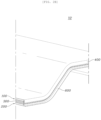
- FIGS. 2A and 2B are enlarged views illustrating key portions of FIG. 1
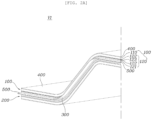
- FIG. 3 is a cross-sectional view illustrating a vehicle body member having a charging and discharging function according to one embodiment of the present invention
- FIG. 4 is a circuit diagram illustrating the vehicle body member having a charging and discharging function according to one embodiment of the present invention
- FIG. 5 illustrates a vehicle body member having a charging and discharging function according to another embodiment of the invention.
- FIG. 2A is the enlargement of portion V1 in FIG. 1
- FIG. 2B is the enlargement of portion V2 in FIG. 1
- FIG. 3 is the cross-sectional view taken along line A-A in FIG. 1 .
- the vehicle body member having a charging and discharging function may be applied to a variety of components of which a vehicle body is composed.
- roof members of a vehicle body i.e. a roof panel and a roof rail, will be described as examples of the vehicle body member.
- a plurality of vehicle body members having a charging and discharging function is provided, such that at least one vehicle body member constitutes a roof panel 20 of a vehicle body 10, and the other vehicle body members constitute roof rails 30.
- each of the vehicle body members constituting the roof panel 20 and the roof rails 30 serves as a secondary cell having a charging and discharging function.
- each of the vehicle body members 20 and 30 includes a first cell portion 100, a second cell portion 200, an insulating layer 300, a series connector 400, a positive pole current collector 500, and a negative pole current collector 600.
- the first cell portion 100 includes a first negative pole portion 110 made of carbon fiber and a first positive pole portion 120 disposed to be in contact with one surface, e.g., the bottom surface, of the first negative pole portion 110.
- the composition of the first positive pole portion 120 includes a cathode active material and a solid electrolyte.
- the second cell portion 200 includes a second negative pole portion 210 made of carbon fiber and a second positive pole portion 220 disposed to be in contact with one surface, e.g., the top surface, of the second negative pole portion 210.
- the composition of the second positive pole portion 220 includes a cathode active material and a solid electrolyte.
- the insulating layer 300 is disposed between the first cell portion 100 and the second cell portion 200 to insulate the first cell portion 100 and the second cell portion 200.
- the series connector 400 connects the first negative pole portion 110 of the first cell portion 100 and the second positive pole portion 220 of the second cell portion 200 in series.
- the positive pole current collector 500 is connected to the first positive pole portion 120 of the first cell portion 100.
- the negative pole current collector 600 is connected to the second negative pole portion 210 of the second cell portion 200. Accordingly, the first cell portion 100 and the second cell portion 200 are electrically connected to each other in series to increase charge and discharge outputs.
- the first cell portion 100 is a means for constituting a single unit cell, and is comprised of the first negative pole portion 110 and the first positive pole portion 120.
- the first negative pole portion 110 is a strengthening means for reinforcing the strengths of the roof panel 20 and the roof rails 30 while realizing the shapes of the roof panel 20 and the roof rails 30. According to the present embodiment, the first negative pole portion 110 also serves as a negative pole to perform a charging and discharging function. In this regard, the first negative pole portion 110 is made of carbon-based fiber to facilitate the oxidation and reduction of lithium ions.
- the first cell portion 100 may be provided by stacking a plurality of reinforced fiber sheets (including carbon fibers) arranged in different directions in order to enable strength reinforcement.
- the first positive pole portion 120 may be a means for serving as a solid state separator as well as a positive pole for performing a charging and discharging function.
- the first positive pole portion 120 may be implemented by including a cathode active material used as a positive pole in a typical secondary cell.
- the first positive pole portion 120 may include a lithium (Li) oxide.
- the first positive pole portion 120 may be implemented using a material used as a solid-phase electrolyte, i.e. a solid electrolyte, in a typical secondary cell.
- the first positive pole portion 120 may include a first positive pole layer 121 disposed opposite to one surface of the first negative pole portion 110, with the cathode active material being distributed in the first positive pole layer 121, and first solid electrolyte layers 122 disposed between the first negative pole portion 110 and the first positive pole layer 121 to be in contact with the first negative pole portion 110 and the first positive pole layer 121, respectively.
- Each of the first solid electrolyte layers 122 may be made of a solid electrolyte.
- a first separator 123 separating the first negative pole portion 110 and the first positive pole layer 121 may further be disposed within the first solid electrolyte layers 122.
- the second cell portion 200 is a means for constituting a single unit cell, and is comprised of the second negative pole portion 210 and the second positive pole portion 220.
- the second negative pole portion 210 is a reinforcing means for reinforcing the strengths of the roof panel 20 and the roof rails 30, and also serves as a negative pole for performing a charging and discharging function according to the present embodiment.
- the second negative pole portion 210 is made of carbon-based fiber to facilitate the oxidation and reduction of lithium ions.
- the second cell portion 200 may also be provided by stacking a plurality of reinforced fiber sheets (including carbon fibers) arranged in different directions in order to enable strength reinforcement.
- the second positive pole portion 220 may be a means for serving as a solid state separator as well as a positive pole for performing a charging and discharging function.
- the second positive pole portion 220 may be implemented by including a cathode active material used as a positive pole in a typical secondary cell.
- the second positive pole portion 220 may include a lithium (Li) oxide.
- the second positive pole portion 220 may be implemented using a material used as a solid-phase electrolyte, i.e. a solid electrolyte, in a typical secondary cell.
- the second positive pole portion 220 may include a second positive pole layer 221 disposed opposite to one surface of the second negative pole portion 210, with the cathode active material being distributed in the second positive pole layer 221, and second solid electrolyte layers 222 disposed between the second negative pole portion 210 and the second positive pole layer 221 to be in contact with the first negative pole portion 110 and the second positive pole layer 221, respectively.
- Each of the second solid electrolyte layers 222 may be made of a solid electrolyte.
- a second separator 223 separating the second negative pole portion 210 and the second positive pole layer 221 may further be disposed within the second solid electrolyte layers 222.
- first positive pole layer 121 and the second positive pole layer 221 are insulated from each other by an insulating layer. Accordingly, the first cell portion 100 and the second cell portion 200 are disposed on both sides of the insulating layer, respectively, such that an arrangement symmetrical with respect to the insulating layer is provided.
- the first cell portion 100 and the second cell portion 200 are electrically connected in series to increase a charging and discharging output.
- the series connector 400 serves to connect the first negative pole portion 110 of the first cell portion 100 and the second positive pole portion 220 of the second cell portion 200 in series. More specifically, the series connector 400 connects the second positive pole layer 221 of the second cell portion 200 and the first negative pole portion 110 of the first cell portion 100 in series.
- the series connector 400 is made of a conductive material. One end of the series connector 400 is sandwiched between the insulating layer 300 and the second positive pole layer 221 of the second cell portion 200 as illustrated in FIGS. 2B and 3 , and the series connector 400 extends to surround, while being spaced apart from, the outer surface of the first cell portion 100, such that the other end of the series connector 400 is connected to the first negative pole portion 110 of the first cell portion 100.
- the positive pole current collector 500 is connected to the first positive pole layer 121 of which the first positive pole portion 120 of the first cell portion 100 is constituted, and the negative pole current collector 600 is connected to the second negative pole portion 210 of the second cell portion 200.
- first cell portion 100, the second cell portion 200, the insulating layer 300, and the series connector 400 may be molded from a resin (not shown) having an insulating property to be insulated externally while defining the shapes of the vehicle body members 20 and 30.
- the vehicle body members 20 and 30 of which the vehicle body 10 is constituted may typically include a single roof panel 20 and a plurality of roof rails 30.
- the positive pole current collector 500 connected to the first positive pole layer 121 of each of the roof rails 30 are connected in series to the negative pole current collector 600 connected to the second negative pole portion 210 of the other vehicle body member 30, thereby connecting the roof rails 30 in series.
- the positive pole current collector 500 of the roof rail 30, disposed on one end of the roof rails 30 connected in series, and the negative pole current collector 600 of the roof rail 30, disposed on the other end of the roof rails 30 connected in series, are selectively connected to the alternator 1 or the electromagnetic device 2 of the vehicle via the switch 3.
- the positive pole current collector 500 connected to the first positive pole layer 121 of the roof panel 20 may be connected in parallel to the positive pole current collector 500 of the roof rail 30, disposed on one end of the roof rails 30 connected in series, while the negative pole current collector 600 connected to the first negative pole portion 110 of the roof panel 20 may be connected in parallel to the negative pole current collector 600 of the roof rail 30, disposed on the other end of the roof rails 30 connected in series.
- the plurality of roof rails 30 connected in series and the roof panel 20 may be electrically connected in parallel, the plurality of roof rails 30 and the roof panel 20 may be electrically connected in series to further increase the output of charging and discharging.
- the electromagnetic means 2 is a component provided in the vehicle to be operable in response to the supply of power.
- the electromagnetic means 2 may correspond to a variety of indoor lamps, such as a room lamp.
- the plurality of roof rails 30 are spaced apart from each other at equal distances and the roof panel 20 is disposed on top of the plurality of roof rails 30, in consideration of the structure of the vehicle body 10.
- an insulating member 301 may be disposed between the plurality of roof rails 30 and the roof panel 20 to provide mutual insulation.
- Each of the vehicle body members 20 and 30 according to the present embodiment has a structure in which the first negative pole portion 110, the first positive pole portion 120, the insulating layer 300, the second positive pole portion 220, and the second negative pole portion 210 are sequentially stacked. Since the layers are made of different materials, the strengths and bonding forces of the layers are different from each other. Accordingly, the layers may be structurally bonded in order to increase the strengths of the vehicle body members 20 and 30 by increasing the bonding force between the layers.
- FIG. 5 illustrates a vehicle body member having a charging and discharging function according to another embodiment of the invention.
- the first negative pole portion 110 of the first cell portion 100 includes one or more coupling bolts 111.
- the coupling bolts 111 may be provided integrally with the first negative pole portion 110 by performing overmolding when fabricating the first negative pole portion 110 or may be fitted to the first negative pole portion 110 after having been fabricated as separate pieces by injection molding.
- FIG. 5 illustrates the coupling bolts 111 provided integrally with the first negative pole portion no by performing overmolding during the fabrication of the first negative pole portion 110.
- one or more through-holes are provided in the first positive pole portion 120 of the first cell portion 100, i.e. the remaining component except for the first negative pole portion 110, the second negative pole portion 210 and the second positive pole portion 220 of the second cell portion 200, the insulating layer 300, and the series connector 400.
- the coupling bolts 111 provided in the first negative pole portion 110 may extend through the remaining components before being fastened with separate coupling nuts 211, thereby increasing the interlayer bonding force between the first cell portion 100 and the second cell portion 200.
Landscapes
- Chemical & Material Sciences (AREA)
- Engineering & Computer Science (AREA)
- General Chemical & Material Sciences (AREA)
- Chemical Kinetics & Catalysis (AREA)
- Electrochemistry (AREA)
- Manufacturing & Machinery (AREA)
- Mechanical Engineering (AREA)
- Transportation (AREA)
- Inorganic Chemistry (AREA)
- Power Engineering (AREA)
- Materials Engineering (AREA)
- Combustion & Propulsion (AREA)
- Life Sciences & Earth Sciences (AREA)
- Sustainable Development (AREA)
- Sustainable Energy (AREA)
- Structural Engineering (AREA)
- Architecture (AREA)
- Aviation & Aerospace Engineering (AREA)
- Physics & Mathematics (AREA)
- Condensed Matter Physics & Semiconductors (AREA)
- General Physics & Mathematics (AREA)
- Dispersion Chemistry (AREA)
- Electric Propulsion And Braking For Vehicles (AREA)
- Secondary Cells (AREA)
- Battery Electrode And Active Subsutance (AREA)
- Body Structure For Vehicles (AREA)
- Battery Mounting, Suspending (AREA)
- Connection Of Batteries Or Terminals (AREA)
- Cell Separators (AREA)
Claims (10)
- Fahrzeugkarosserieelement (20, 30) mit einer Lade- und Entladefunktion, wobei das Fahrzeugkarosserieelement (20, 30) aufweist:einen ersten Zellenabschnitt (100), der aufweist einen ersten negativen Polabschnitt (110) hergestellt aus Kohlenstofffaser und einen ersten positiven Polabschnitt (120), der angeordnet ist, um mit einer Fläche des ersten negativen Polabschnitts (110) in Kontakt zu sein, wobei der erste positive Polabschnitt (120) aufweist ein erstes aktives Kathodenmaterial und einen ersten Festelektrolyten,einen zweiten Zellenabschnitt (200), der aufweist einen zweiten negativen Polabschnitt (210) hergestellt aus Kohlenstofffaser und einen zweiten positiven Polabschnitt (220), der angeordnet ist, um mit einer Fläche des zweiten negativen Polabschnitts (210) in Kontakt zu sein, wobei der zweite positive Polabschnitt (220) aufweist ein zweites aktives Kathodenmaterial und einen zweiten Festelektrolyten,eine Isolierschicht (300), die zwischen einer Fläche des ersten Zellenabschnitts (100) und einer Fläche des zweiten Zellenabschnitts (200) angeordnet ist und die gestaltet ist, um den ersten Zellenabschnitt (100) und den zweiten Zellenabschnitt (200) zu isolieren,einen Reihenverbinder (400), der den ersten negativen Polabschnitt (110) des ersten Zellenabschnitts (100) und den zweiten positiven Polabschnitt (220) des zweiten Zellenabschnitts (200) in Reihe verbindet,einen Pluspol-Stromsammler (500), der mit dem ersten positiven Polabschnitt (120) des ersten Zellenabschnitts (100) verbunden ist, undeinen Minuspol-Stromsammler (600), der mit dem zweiten negativen Polabschnitt (210) des zweiten Zellenabschnitts (200) verbunden ist.
- Fahrzeugkarosserieelement (20, 30) nach Anspruch 1, wobei jeder von dem ersten negativen Polabschnitt (110) und dem zweiten negativen Polabschnitt (210) aufweist einen Stapel aus einer Mehrzahl von verstärkten Faserplatten, die in verschiedene Richtungen angeordnete Kohlenstofffasern aufweisen.
- Fahrzeugkarosserieelement (20, 30) nach Anspruch 1 oder 2, wobei:der erste positive Polabschnitt (120) aufweist eine erste positive Polschicht (121), wobei das erste aktive Kathodenmaterial in der ersten positiven Polschicht (121) verteilt ist, und erste Festelektrolytschichten (122), die zwischen dem ersten negativen Polabschnitt (110) und der ersten positiven Polschicht (121) angeordnet sind, wobei eine der ersten Festelektrolytschichten (122) in Kontakt mit dem ersten negativen Polabschnitt (110) ist und eine andere der ersten Festelektrolytschichten (122) in Kontakt mit der ersten positiven Polschicht (121) ist,der zweite positive Polabschnitt (220) aufweist eine zweite positive Polschicht (221), wobei das zweite aktive Kathodenmaterial in der zweiten positiven Polschicht (221) verteilt ist, und zweite Festelektrolytschichten (222), die zwischen dem zweiten negativen Polabschnitt (210) und der zweiten positiven Polschicht (221) angeordnet sind, wobei eine der zweiten Festelektrolytschichten (222) in Kontakt mit dem zweiten negativen Polabschnitt (210) ist und eine andere der zweiten Festelektrolytschichten (222) in Kontakt mit der zweiten positiven Polschicht (221) ist,die erste positive Polschicht (121) und die zweite positive Polschicht (221) durch die Isolierschicht (300) voneinander isoliert sind, unddie zweite positive Polschicht (221) und der erste negative Polabschnitt (110) über den Reihenverbinder (400) in Reihe verbunden sind.
- Fahrzeugkarosserieelement (20, 30) nach Anspruch 3, ferner aufweisend:einen ersten Separator (123), der zwischen zwei der ersten Festelektrolytschichten (122) angeordnet ist, undeinen zweiten Separator (223), der zwischen zwei der zweiten Festelektrolytschichten angeordnet ist (222).
- Fahrzeugkarosserieelement (20, 30) nach irgendeinem der Ansprüche 1 bis 4, wobei das Fahrzeugkarosserieelement (20, 30) eine Mehrzahl von Fahrzeugkarosserieelementen (20, 30) aufweist, und wobei:die Pluspol-Stromsammler (500), die jeweils zugeordnet mit einer korrespondierenden der ersten positiven Polschichten (121) der Fahrzeugkarosserieelemente (20, 30) verbunden sind, in Reihe mit den Minuspol-Stromsammlern (600) verbunden sind, die jeweils zugeordnet mit einem korrespondierenden der zweiten negativen Polabschnitte (210) eines benachbarten Fahrzeugkarosserieelements (20, 30) verbunden sind, so dass die Pluspol-Stromsammler (500) miteinander in Reihe verbunden sind, undder Pluspol-Stromsammler (500) eines Fahrzeugkarosserieelements (20, 30), das an einem ersten Ende der in Reihe verbundenen Fahrzeugkarosserieelemente (20, 30) angeordnet ist, und der Minuspol-Stromsammler (600) eines Fahrzeugkarosserieelements (20, 30), das an einem zweiten Ende der in Reihe verbundenen Fahrzeugkarosserieelemente (20, 30) angeordnet ist, über einen Schalter (3) selektiv mit einer Lichtmaschine (1) oder einer elektromagnetischen Vorrichtung (2) eines Fahrzeugs (10) verbunden sind.
- Fahrzeugkarosserieelement (20, 30) nach Anspruch 5, wobei der Schalter (3) konfiguriert ist, um selektiv mit der Lichtmaschine (1) oder der elektromagnetischen Vorrichtung (2) verbunden zu sein, um auszuführen eines von:einem Ladevorgang, der über die Fahrzeugkarosserieelemente (20, 30) durchgeführt wird, während die Pluspol-Stromsammler (500) und die Minuspol-Stromsammler (600) elektrisch mit der Lichtmaschine (1) des Fahrzeugs (10) verbunden sind, undeinem Entladevorgang, der zum Erzeugen von Energie über die Fahrzeugkarosserieelemente (20, 30) durchgeführt wird, die mit der elektromagnetischen Vorrichtung (2) des Fahrzeugs verbunden sind, während die Pluspol-Stromsammler (500) und die Minuspol-Stromsammler (500) elektrisch mit der elektromagnetischen Vorrichtung (2) des Fahrzeugs (10) verbunden sind.
- Fahrzeugkarosserieelement (20, 30) nach Anspruch 5 oder 6, wobei mindestens ein Fahrzeugkarosserieelement (20, 30) der Vielzahl von Fahrzeugkarosserieelementen (20, 30) ein Dachpaneel (20) des Fahrzeugs (10) bereitstellt, und andere Fahrzeugkarosserieelemente (20, 30) der mehreren Fahrzeugkarosserieelemente (20, 30) Dachrelings (30) des Fahrzeugs (10) bereitstellen.
- Fahrzeugkarosserieelement (20, 30) nach Anspruch 7, wobei das Fahrzeugkarosserieelement (20, 30), das das Dachpaneel (20) bereitstellt, und die Fahrzeugkarosserieelemente (20, 30), die die Dachrelings (30) bereitstellen, durch ein Isolierelement (301) isoliert sind.
- Fahrzeugkarosserieelement (20, 30) nach irgendeinem der Ansprüche 1 bis 8, wobei der erste Zellenabschnitt (100), der zweite Zellenabschnitt (200), die Isolierschicht (300) und der Reihenverbinder (400) ein Harz mit einer isolierenden Eigenschaft aufweisen.
- Fahrzeugkarosserieelement (20, 30) nach irgendeinem der Ansprüche 1 bis 9, wobei:der erste negative Polabschnitt (110) des ersten Zellenabschnitts (100) einen oder mehrere Kupplungsbolzen (111) aufweist,der erste positive Polabschnitt (120) des ersten Zellenabschnitts (100), der zweite negative Polabschnitt (210) und der zweite positive Polabschnitt (220) des zweiten Zellenabschnitts (200), die Isolierschicht (300) und der Reihenverbinder (400) ein oder mehrere Durchgangslöcher aufweisen, durch die sich die Verbindungsbolzen (111) erstrecken, undKupplungsmuttern (211) an Endabschnitten der Kupplungsbolzen (11), die in die Durchgangslöcher eingesetzt sind, befestigt sind.
Applications Claiming Priority (1)
| Application Number | Priority Date | Filing Date | Title |
|---|---|---|---|
| KR1020190167253A KR102916838B1 (ko) | 2019-12-13 | 2019-12-13 | 충방전 기능을 갖는 차체 부재 |
Publications (2)
| Publication Number | Publication Date |
|---|---|
| EP3835112A1 EP3835112A1 (de) | 2021-06-16 |
| EP3835112B1 true EP3835112B1 (de) | 2023-09-20 |
Family
ID=72145258
Family Applications (1)
| Application Number | Title | Priority Date | Filing Date |
|---|---|---|---|
| EP20191467.8A Active EP3835112B1 (de) | 2019-12-13 | 2020-08-18 | Fahrzeugkarosserieteil mit lade- und entladefunktion |
Country Status (5)
| Country | Link |
|---|---|
| US (1) | US12145656B2 (de) |
| EP (1) | EP3835112B1 (de) |
| JP (1) | JP7525333B2 (de) |
| KR (1) | KR102916838B1 (de) |
| CN (1) | CN113060214B (de) |
Families Citing this family (2)
| Publication number | Priority date | Publication date | Assignee | Title |
|---|---|---|---|---|
| KR102916834B1 (ko) * | 2019-12-13 | 2026-01-22 | 현대자동차주식회사 | 충방전 기능을 갖는 차체 부재 |
| US20230066278A1 (en) * | 2021-08-31 | 2023-03-02 | Mint Controls Inc. | Structured batteries and usage thereof |
Family Cites Families (39)
| Publication number | Priority date | Publication date | Assignee | Title |
|---|---|---|---|---|
| US4999263A (en) | 1987-04-15 | 1991-03-12 | Ricoh Company, Ltd. | Sheet-shaped electrode, method or producing the same, and secondary battery |
| JPH0729598A (ja) * | 1993-05-13 | 1995-01-31 | Toray Ind Inc | 二次電池 |
| JPH0765861A (ja) * | 1993-08-24 | 1995-03-10 | Toshiba Battery Co Ltd | 非水溶媒二次電池 |
| DE60138577D1 (de) | 2000-03-14 | 2009-06-10 | Sanyo Electric Co | Geschweißte Stromsammlerplatten in Sekundärzellen mit nichtwässrigem Elektrolyten |
| JP4623812B2 (ja) | 2000-10-06 | 2011-02-02 | Necエナジーデバイス株式会社 | LiMn二次電池、電池製造方法、電動移動車両 |
| JP2002216846A (ja) | 2001-01-18 | 2002-08-02 | Nissan Motor Co Ltd | シート状電池 |
| JP4238645B2 (ja) | 2003-06-12 | 2009-03-18 | 日産自動車株式会社 | バイポーラ電池 |
| JP4929587B2 (ja) * | 2004-11-26 | 2012-05-09 | 日産自動車株式会社 | バイポーラ電池およびその製造方法、組電池 |
| KR101154881B1 (ko) | 2007-05-11 | 2012-06-18 | 주식회사 엘지화학 | 바이폴라 셀을 포함하는 이차전지 |
| JP4946621B2 (ja) | 2007-05-16 | 2012-06-06 | トヨタ自動車株式会社 | 電池ユニットの車両搭載構造 |
| JP2009035082A (ja) | 2007-07-31 | 2009-02-19 | Toyota Motor Corp | 車両ボディおよび筒型電池 |
| JP4301340B2 (ja) | 2007-08-15 | 2009-07-22 | 日産自動車株式会社 | 組電池 |
| US10263277B2 (en) | 2008-02-25 | 2019-04-16 | Alliance For Sustainable Energy, Llc | Flexible thin film solid state lithium ion batteries |
| WO2011033702A1 (ja) | 2009-09-17 | 2011-03-24 | 株式会社村田製作所 | 電池間分離構造体とそれを備えた積層型固体二次電池 |
| KR101125362B1 (ko) | 2009-11-13 | 2012-03-27 | 현대자동차주식회사 | 차량의 루프 및 그 제조 방법 |
| KR101106429B1 (ko) * | 2009-12-01 | 2012-01-18 | 삼성에스디아이 주식회사 | 이차 전지 |
| JP5632193B2 (ja) * | 2010-05-11 | 2014-11-26 | 矢崎総業株式会社 | 電池接続部材及び電池接続体 |
| US8470467B2 (en) * | 2010-05-27 | 2013-06-25 | GM Global Technology Operations LLC | Battery connection topology |
| DE102012214964A1 (de) * | 2012-08-23 | 2014-03-20 | Robert Bosch Gmbh | Batteriezelle, Batterie und Kraftfahrzeug |
| CN104521026B (zh) * | 2012-09-19 | 2017-07-07 | 日产自动车株式会社 | 电池组 |
| KR101764841B1 (ko) | 2013-02-13 | 2017-08-04 | 주식회사 엘지화학 | 경사 구조의 전극조립체 및 이를 포함하는 전지셀 |
| KR101686600B1 (ko) * | 2014-07-04 | 2016-12-14 | 주식회사 엘지화학 | 전해액 함침용 홀을 포함하고 있는 전지셀 |
| WO2016079705A1 (en) | 2014-11-19 | 2016-05-26 | Iveco S.P.A. | Charging system of a pair of batteries mutually connected in series of a heavy vehicle and heavy vehicle implementing the system |
| KR101836581B1 (ko) | 2015-12-10 | 2018-03-08 | 현대자동차주식회사 | 전고체 전지 및 이의 제조방법 |
| CN107305960B (zh) | 2016-04-25 | 2022-03-29 | 松下知识产权经营株式会社 | 电池、电池制造方法和电池制造装置 |
| JP2018011458A (ja) * | 2016-07-14 | 2018-01-18 | カルソニックカンセイ株式会社 | 電力供給装置 |
| DE102016213081B4 (de) * | 2016-07-18 | 2020-01-23 | Volkswagen Aktiengesellschaft | Batteriemodul |
| US20180026302A1 (en) | 2016-07-20 | 2018-01-25 | University Of Dayton | High-performance ceramic-polymer separators for lithium batteries |
| CN107732048A (zh) | 2016-08-10 | 2018-02-23 | 深圳市沃特玛电池有限公司 | 一种电动汽车底盘结构 |
| CN107719139A (zh) | 2016-08-10 | 2018-02-23 | 深圳市沃特玛电池有限公司 | 电动汽车底盘装置 |
| KR102085344B1 (ko) | 2016-10-24 | 2020-04-23 | 주식회사 엘지화학 | 차량용 배터리 팩 및 이를 포함하는 자동차 |
| JP6595521B2 (ja) | 2017-02-08 | 2019-10-23 | トヨタ自動車株式会社 | 車体上部構造 |
| JP6645999B2 (ja) | 2017-03-21 | 2020-02-14 | 株式会社東芝 | 二次電池、電池パック、及び車両 |
| CN107707039A (zh) | 2017-11-06 | 2018-02-16 | 浙江工业大学 | 用于激光远距离无线充电的光伏群控阵列接收器 |
| JP7067985B2 (ja) | 2018-03-22 | 2022-05-16 | 株式会社東芝 | 二次電池、電池パック、車両、及び定置用電源 |
| US10991935B2 (en) * | 2018-03-27 | 2021-04-27 | The Mitre Corporation | Structural lithium-ion batteries with carbon fiber electrodes |
| US11201376B2 (en) * | 2018-09-10 | 2021-12-14 | Volkswagen Ag | Multilayer ceramic solid electrolyte separator with plastic reinforcement for increasing the fracture stability and reducing short circuits in electric batteries |
| CN209374517U (zh) | 2019-01-11 | 2019-09-10 | 孚能科技(赣州)股份有限公司 | 电池系统和具有该电池系统的电动车辆 |
| US20230066278A1 (en) * | 2021-08-31 | 2023-03-02 | Mint Controls Inc. | Structured batteries and usage thereof |
-
2019
- 2019-12-13 KR KR1020190167253A patent/KR102916838B1/ko active Active
-
2020
- 2020-08-18 EP EP20191467.8A patent/EP3835112B1/de active Active
- 2020-08-20 JP JP2020139178A patent/JP7525333B2/ja active Active
- 2020-08-25 US US17/002,264 patent/US12145656B2/en active Active
- 2020-09-09 CN CN202010940907.1A patent/CN113060214B/zh active Active
Also Published As
| Publication number | Publication date |
|---|---|
| JP2021097032A (ja) | 2021-06-24 |
| EP3835112A1 (de) | 2021-06-16 |
| KR20210075774A (ko) | 2021-06-23 |
| JP7525333B2 (ja) | 2024-07-30 |
| CN113060214A (zh) | 2021-07-02 |
| KR102916838B1 (ko) | 2026-01-22 |
| US12145656B2 (en) | 2024-11-19 |
| CN113060214B (zh) | 2024-09-24 |
| US20210184246A1 (en) | 2021-06-17 |
Similar Documents
| Publication | Publication Date | Title |
|---|---|---|
| JP7532155B2 (ja) | 充放電機能を有する車体部材 | |
| EP3835112B1 (de) | Fahrzeugkarosserieteil mit lade- und entladefunktion | |
| EP3835111B1 (de) | Fahrzeugkarosserieteil mit lade- und entladefunktion | |
| KR102017781B1 (ko) | 셀 리드의 고정구조가 개선된 배터리 팩 | |
| EP3836256B1 (de) | Fahrzeugkarosserieteil mit lade- und entladefunktion | |
| US20240106055A1 (en) | Structural Battery for Electric Vehicle | |
| KR20240075016A (ko) | 자동차용 구조전지 | |
| US20260124934A1 (en) | Structural battery for vehicle | |
| US20260103092A1 (en) | Structural battery for vehicle | |
| US20240100969A1 (en) | Structural Battery for Vehicle | |
| KR20260055546A (ko) | 자동차용 구조전지 | |
| CN122000483A (zh) | 车辆用结构电池 |
Legal Events
| Date | Code | Title | Description |
|---|---|---|---|
| PUAI | Public reference made under article 153(3) epc to a published international application that has entered the european phase |
Free format text: ORIGINAL CODE: 0009012 |
|
| STAA | Information on the status of an ep patent application or granted ep patent |
Free format text: STATUS: THE APPLICATION HAS BEEN PUBLISHED |
|
| AK | Designated contracting states |
Kind code of ref document: A1 Designated state(s): AL AT BE BG CH CY CZ DE DK EE ES FI FR GB GR HR HU IE IS IT LI LT LU LV MC MK MT NL NO PL PT RO RS SE SI SK SM TR |
|
| RAP3 | Party data changed (applicant data changed or rights of an application transferred) |
Owner name: KIA CORPORATION Owner name: HYUNDAI MOTOR COMPANY |
|
| STAA | Information on the status of an ep patent application or granted ep patent |
Free format text: STATUS: REQUEST FOR EXAMINATION WAS MADE |
|
| 17P | Request for examination filed |
Effective date: 20211207 |
|
| RBV | Designated contracting states (corrected) |
Designated state(s): AL AT BE BG CH CY CZ DE DK EE ES FI FR GB GR HR HU IE IS IT LI LT LU LV MC MK MT NL NO PL PT RO RS SE SI SK SM TR |
|
| RIC1 | Information provided on ipc code assigned before grant |
Ipc: H01M 4/02 20060101ALN20230215BHEP Ipc: H01M 10/46 20060101ALI20230215BHEP Ipc: H01M 10/0585 20100101ALI20230215BHEP Ipc: H01M 10/056 20100101ALI20230215BHEP Ipc: H01M 10/052 20100101ALI20230215BHEP Ipc: H01M 50/264 20210101ALI20230215BHEP Ipc: H01M 50/253 20210101ALI20230215BHEP Ipc: H01M 50/249 20210101ALI20230215BHEP Ipc: H01M 50/207 20210101ALI20230215BHEP Ipc: H01M 50/51 20210101ALI20230215BHEP Ipc: H01M 50/46 20210101ALI20230215BHEP Ipc: H01M 50/457 20210101ALI20230215BHEP Ipc: H01M 50/449 20210101ALI20230215BHEP Ipc: H01M 4/583 20100101ALI20230215BHEP Ipc: H01M 4/48 20060101ALI20230215BHEP Ipc: H01M 4/133 20100101ALI20230215BHEP Ipc: H01M 4/131 20100101ALI20230215BHEP Ipc: H02J 7/00 20060101ALI20230215BHEP Ipc: B60L 50/50 20190101AFI20230215BHEP |
|
| GRAP | Despatch of communication of intention to grant a patent |
Free format text: ORIGINAL CODE: EPIDOSNIGR1 |
|
| STAA | Information on the status of an ep patent application or granted ep patent |
Free format text: STATUS: GRANT OF PATENT IS INTENDED |
|
| RIC1 | Information provided on ipc code assigned before grant |
Ipc: H01M 4/02 20060101ALN20230315BHEP Ipc: H01M 10/46 20060101ALI20230315BHEP Ipc: H01M 10/0585 20100101ALI20230315BHEP Ipc: H01M 10/056 20100101ALI20230315BHEP Ipc: H01M 10/052 20100101ALI20230315BHEP Ipc: H01M 50/264 20210101ALI20230315BHEP Ipc: H01M 50/253 20210101ALI20230315BHEP Ipc: H01M 50/249 20210101ALI20230315BHEP Ipc: H01M 50/207 20210101ALI20230315BHEP Ipc: H01M 50/51 20210101ALI20230315BHEP Ipc: H01M 50/46 20210101ALI20230315BHEP Ipc: H01M 50/457 20210101ALI20230315BHEP Ipc: H01M 50/449 20210101ALI20230315BHEP Ipc: H01M 4/583 20100101ALI20230315BHEP Ipc: H01M 4/48 20100101ALI20230315BHEP Ipc: H01M 4/133 20100101ALI20230315BHEP Ipc: H01M 4/131 20100101ALI20230315BHEP Ipc: H02J 7/00 20060101ALI20230315BHEP Ipc: B60L 50/50 20190101AFI20230315BHEP |
|
| INTG | Intention to grant announced |
Effective date: 20230414 |
|
| P01 | Opt-out of the competence of the unified patent court (upc) registered |
Effective date: 20230505 |
|
| GRAS | Grant fee paid |
Free format text: ORIGINAL CODE: EPIDOSNIGR3 |
|
| GRAA | (expected) grant |
Free format text: ORIGINAL CODE: 0009210 |
|
| STAA | Information on the status of an ep patent application or granted ep patent |
Free format text: STATUS: THE PATENT HAS BEEN GRANTED |
|
| AK | Designated contracting states |
Kind code of ref document: B1 Designated state(s): AL AT BE BG CH CY CZ DE DK EE ES FI FR GB GR HR HU IE IS IT LI LT LU LV MC MK MT NL NO PL PT RO RS SE SI SK SM TR |
|
| REG | Reference to a national code |
Ref country code: GB Ref legal event code: FG4D |
|
| REG | Reference to a national code |
Ref country code: CH Ref legal event code: EP |
|
| REG | Reference to a national code |
Ref country code: IE Ref legal event code: FG4D |
|
| REG | Reference to a national code |
Ref country code: DE Ref legal event code: R096 Ref document number: 602020017881 Country of ref document: DE |
|
| REG | Reference to a national code |
Ref country code: LT Ref legal event code: MG9D |
|
| PG25 | Lapsed in a contracting state [announced via postgrant information from national office to epo] |
Ref country code: GR Free format text: LAPSE BECAUSE OF FAILURE TO SUBMIT A TRANSLATION OF THE DESCRIPTION OR TO PAY THE FEE WITHIN THE PRESCRIBED TIME-LIMIT Effective date: 20231221 |
|
| REG | Reference to a national code |
Ref country code: NL Ref legal event code: MP Effective date: 20230920 |
|
| PG25 | Lapsed in a contracting state [announced via postgrant information from national office to epo] |
Ref country code: SE Free format text: LAPSE BECAUSE OF FAILURE TO SUBMIT A TRANSLATION OF THE DESCRIPTION OR TO PAY THE FEE WITHIN THE PRESCRIBED TIME-LIMIT Effective date: 20230920 Ref country code: RS Free format text: LAPSE BECAUSE OF FAILURE TO SUBMIT A TRANSLATION OF THE DESCRIPTION OR TO PAY THE FEE WITHIN THE PRESCRIBED TIME-LIMIT Effective date: 20230920 Ref country code: NO Free format text: LAPSE BECAUSE OF FAILURE TO SUBMIT A TRANSLATION OF THE DESCRIPTION OR TO PAY THE FEE WITHIN THE PRESCRIBED TIME-LIMIT Effective date: 20231220 Ref country code: LV Free format text: LAPSE BECAUSE OF FAILURE TO SUBMIT A TRANSLATION OF THE DESCRIPTION OR TO PAY THE FEE WITHIN THE PRESCRIBED TIME-LIMIT Effective date: 20230920 Ref country code: LT Free format text: LAPSE BECAUSE OF FAILURE TO SUBMIT A TRANSLATION OF THE DESCRIPTION OR TO PAY THE FEE WITHIN THE PRESCRIBED TIME-LIMIT Effective date: 20230920 Ref country code: HR Free format text: LAPSE BECAUSE OF FAILURE TO SUBMIT A TRANSLATION OF THE DESCRIPTION OR TO PAY THE FEE WITHIN THE PRESCRIBED TIME-LIMIT Effective date: 20230920 Ref country code: GR Free format text: LAPSE BECAUSE OF FAILURE TO SUBMIT A TRANSLATION OF THE DESCRIPTION OR TO PAY THE FEE WITHIN THE PRESCRIBED TIME-LIMIT Effective date: 20231221 Ref country code: FI Free format text: LAPSE BECAUSE OF FAILURE TO SUBMIT A TRANSLATION OF THE DESCRIPTION OR TO PAY THE FEE WITHIN THE PRESCRIBED TIME-LIMIT Effective date: 20230920 |
|
| REG | Reference to a national code |
Ref country code: AT Ref legal event code: MK05 Ref document number: 1613192 Country of ref document: AT Kind code of ref document: T Effective date: 20230920 |
|
| PG25 | Lapsed in a contracting state [announced via postgrant information from national office to epo] |
Ref country code: NL Free format text: LAPSE BECAUSE OF FAILURE TO SUBMIT A TRANSLATION OF THE DESCRIPTION OR TO PAY THE FEE WITHIN THE PRESCRIBED TIME-LIMIT Effective date: 20230920 |
|
| PG25 | Lapsed in a contracting state [announced via postgrant information from national office to epo] |
Ref country code: IS Free format text: LAPSE BECAUSE OF FAILURE TO SUBMIT A TRANSLATION OF THE DESCRIPTION OR TO PAY THE FEE WITHIN THE PRESCRIBED TIME-LIMIT Effective date: 20240120 |
|
| PG25 | Lapsed in a contracting state [announced via postgrant information from national office to epo] |
Ref country code: AT Free format text: LAPSE BECAUSE OF FAILURE TO SUBMIT A TRANSLATION OF THE DESCRIPTION OR TO PAY THE FEE WITHIN THE PRESCRIBED TIME-LIMIT Effective date: 20230920 |
|
| PG25 | Lapsed in a contracting state [announced via postgrant information from national office to epo] |
Ref country code: ES Free format text: LAPSE BECAUSE OF FAILURE TO SUBMIT A TRANSLATION OF THE DESCRIPTION OR TO PAY THE FEE WITHIN THE PRESCRIBED TIME-LIMIT Effective date: 20230920 |
|
| PG25 | Lapsed in a contracting state [announced via postgrant information from national office to epo] |
Ref country code: SM Free format text: LAPSE BECAUSE OF FAILURE TO SUBMIT A TRANSLATION OF THE DESCRIPTION OR TO PAY THE FEE WITHIN THE PRESCRIBED TIME-LIMIT Effective date: 20230920 Ref country code: RO Free format text: LAPSE BECAUSE OF FAILURE TO SUBMIT A TRANSLATION OF THE DESCRIPTION OR TO PAY THE FEE WITHIN THE PRESCRIBED TIME-LIMIT Effective date: 20230920 Ref country code: IS Free format text: LAPSE BECAUSE OF FAILURE TO SUBMIT A TRANSLATION OF THE DESCRIPTION OR TO PAY THE FEE WITHIN THE PRESCRIBED TIME-LIMIT Effective date: 20240120 Ref country code: ES Free format text: LAPSE BECAUSE OF FAILURE TO SUBMIT A TRANSLATION OF THE DESCRIPTION OR TO PAY THE FEE WITHIN THE PRESCRIBED TIME-LIMIT Effective date: 20230920 Ref country code: EE Free format text: LAPSE BECAUSE OF FAILURE TO SUBMIT A TRANSLATION OF THE DESCRIPTION OR TO PAY THE FEE WITHIN THE PRESCRIBED TIME-LIMIT Effective date: 20230920 Ref country code: CZ Free format text: LAPSE BECAUSE OF FAILURE TO SUBMIT A TRANSLATION OF THE DESCRIPTION OR TO PAY THE FEE WITHIN THE PRESCRIBED TIME-LIMIT Effective date: 20230920 Ref country code: AT Free format text: LAPSE BECAUSE OF FAILURE TO SUBMIT A TRANSLATION OF THE DESCRIPTION OR TO PAY THE FEE WITHIN THE PRESCRIBED TIME-LIMIT Effective date: 20230920 Ref country code: PT Free format text: LAPSE BECAUSE OF FAILURE TO SUBMIT A TRANSLATION OF THE DESCRIPTION OR TO PAY THE FEE WITHIN THE PRESCRIBED TIME-LIMIT Effective date: 20240122 Ref country code: SK Free format text: LAPSE BECAUSE OF FAILURE TO SUBMIT A TRANSLATION OF THE DESCRIPTION OR TO PAY THE FEE WITHIN THE PRESCRIBED TIME-LIMIT Effective date: 20230920 |
|
| PG25 | Lapsed in a contracting state [announced via postgrant information from national office to epo] |
Ref country code: PL Free format text: LAPSE BECAUSE OF FAILURE TO SUBMIT A TRANSLATION OF THE DESCRIPTION OR TO PAY THE FEE WITHIN THE PRESCRIBED TIME-LIMIT Effective date: 20230920 Ref country code: IT Free format text: LAPSE BECAUSE OF FAILURE TO SUBMIT A TRANSLATION OF THE DESCRIPTION OR TO PAY THE FEE WITHIN THE PRESCRIBED TIME-LIMIT Effective date: 20230920 |
|
| REG | Reference to a national code |
Ref country code: DE Ref legal event code: R097 Ref document number: 602020017881 Country of ref document: DE |
|
| PG25 | Lapsed in a contracting state [announced via postgrant information from national office to epo] |
Ref country code: DK Free format text: LAPSE BECAUSE OF FAILURE TO SUBMIT A TRANSLATION OF THE DESCRIPTION OR TO PAY THE FEE WITHIN THE PRESCRIBED TIME-LIMIT Effective date: 20230920 |
|
| PLBE | No opposition filed within time limit |
Free format text: ORIGINAL CODE: 0009261 |
|
| STAA | Information on the status of an ep patent application or granted ep patent |
Free format text: STATUS: NO OPPOSITION FILED WITHIN TIME LIMIT |
|
| PG25 | Lapsed in a contracting state [announced via postgrant information from national office to epo] |
Ref country code: DK Free format text: LAPSE BECAUSE OF FAILURE TO SUBMIT A TRANSLATION OF THE DESCRIPTION OR TO PAY THE FEE WITHIN THE PRESCRIBED TIME-LIMIT Effective date: 20230920 |
|
| 26N | No opposition filed |
Effective date: 20240621 |
|
| PG25 | Lapsed in a contracting state [announced via postgrant information from national office to epo] |
Ref country code: SI Free format text: LAPSE BECAUSE OF FAILURE TO SUBMIT A TRANSLATION OF THE DESCRIPTION OR TO PAY THE FEE WITHIN THE PRESCRIBED TIME-LIMIT Effective date: 20230920 |
|
| PG25 | Lapsed in a contracting state [announced via postgrant information from national office to epo] |
Ref country code: SI Free format text: LAPSE BECAUSE OF FAILURE TO SUBMIT A TRANSLATION OF THE DESCRIPTION OR TO PAY THE FEE WITHIN THE PRESCRIBED TIME-LIMIT Effective date: 20230920 |
|
| PG25 | Lapsed in a contracting state [announced via postgrant information from national office to epo] |
Ref country code: BG Free format text: LAPSE BECAUSE OF FAILURE TO SUBMIT A TRANSLATION OF THE DESCRIPTION OR TO PAY THE FEE WITHIN THE PRESCRIBED TIME-LIMIT Effective date: 20230920 |
|
| PG25 | Lapsed in a contracting state [announced via postgrant information from national office to epo] |
Ref country code: BG Free format text: LAPSE BECAUSE OF FAILURE TO SUBMIT A TRANSLATION OF THE DESCRIPTION OR TO PAY THE FEE WITHIN THE PRESCRIBED TIME-LIMIT Effective date: 20230920 |
|
| REG | Reference to a national code |
Ref country code: CH Ref legal event code: PL |
|
| PG25 | Lapsed in a contracting state [announced via postgrant information from national office to epo] |
Ref country code: LU Free format text: LAPSE BECAUSE OF NON-PAYMENT OF DUE FEES Effective date: 20240818 |
|
| PG25 | Lapsed in a contracting state [announced via postgrant information from national office to epo] |
Ref country code: CH Free format text: LAPSE BECAUSE OF NON-PAYMENT OF DUE FEES Effective date: 20240831 Ref country code: MC Free format text: LAPSE BECAUSE OF FAILURE TO SUBMIT A TRANSLATION OF THE DESCRIPTION OR TO PAY THE FEE WITHIN THE PRESCRIBED TIME-LIMIT Effective date: 20230920 |
|
| REG | Reference to a national code |
Ref country code: BE Ref legal event code: MM Effective date: 20240831 |
|
| PG25 | Lapsed in a contracting state [announced via postgrant information from national office to epo] |
Ref country code: BE Free format text: LAPSE BECAUSE OF NON-PAYMENT OF DUE FEES Effective date: 20240831 |
|
| PG25 | Lapsed in a contracting state [announced via postgrant information from national office to epo] |
Ref country code: IE Free format text: LAPSE BECAUSE OF NON-PAYMENT OF DUE FEES Effective date: 20240818 |
|
| PGFP | Annual fee paid to national office [announced via postgrant information from national office to epo] |
Ref country code: DE Payment date: 20250721 Year of fee payment: 6 |
|
| PGFP | Annual fee paid to national office [announced via postgrant information from national office to epo] |
Ref country code: GB Payment date: 20250722 Year of fee payment: 6 |
|
| PGFP | Annual fee paid to national office [announced via postgrant information from national office to epo] |
Ref country code: FR Payment date: 20250725 Year of fee payment: 6 |
|
| PG25 | Lapsed in a contracting state [announced via postgrant information from national office to epo] |
Ref country code: CY Free format text: LAPSE BECAUSE OF FAILURE TO SUBMIT A TRANSLATION OF THE DESCRIPTION OR TO PAY THE FEE WITHIN THE PRESCRIBED TIME-LIMIT; INVALID AB INITIO Effective date: 20200818 |
|
| PG25 | Lapsed in a contracting state [announced via postgrant information from national office to epo] |
Ref country code: HU Free format text: LAPSE BECAUSE OF FAILURE TO SUBMIT A TRANSLATION OF THE DESCRIPTION OR TO PAY THE FEE WITHIN THE PRESCRIBED TIME-LIMIT; INVALID AB INITIO Effective date: 20200818 |