EP3826518B1 - Antihaftbeschichtung und verfahren zu deren herstellung - Google Patents
Antihaftbeschichtung und verfahren zu deren herstellung Download PDFInfo
- Publication number
- EP3826518B1 EP3826518B1 EP19737116.4A EP19737116A EP3826518B1 EP 3826518 B1 EP3826518 B1 EP 3826518B1 EP 19737116 A EP19737116 A EP 19737116A EP 3826518 B1 EP3826518 B1 EP 3826518B1
- Authority
- EP
- European Patent Office
- Prior art keywords
- ptfe
- layer
- aqueous dispersion
- adhesion
- molecular weight
- Prior art date
- Legal status (The legal status is an assumption and is not a legal conclusion. Google has not performed a legal analysis and makes no representation as to the accuracy of the status listed.)
- Active
Links
Images
Classifications
-
- C—CHEMISTRY; METALLURGY
- C09—DYES; PAINTS; POLISHES; NATURAL RESINS; ADHESIVES; COMPOSITIONS NOT OTHERWISE PROVIDED FOR; APPLICATIONS OF MATERIALS NOT OTHERWISE PROVIDED FOR
- C09D—COATING COMPOSITIONS, e.g. PAINTS, VARNISHES OR LACQUERS; FILLING PASTES; CHEMICAL PAINT OR INK REMOVERS; INKS; CORRECTING FLUIDS; WOODSTAINS; PASTES OR SOLIDS FOR COLOURING OR PRINTING; USE OF MATERIALS THEREFOR
- C09D127/00—Coating compositions based on homopolymers or copolymers of compounds having one or more unsaturated aliphatic radicals, each having only one carbon-to-carbon double bond, and at least one being terminated by a halogen; Coating compositions based on derivatives of such polymers
- C09D127/02—Coating compositions based on homopolymers or copolymers of compounds having one or more unsaturated aliphatic radicals, each having only one carbon-to-carbon double bond, and at least one being terminated by a halogen; Coating compositions based on derivatives of such polymers not modified by chemical after-treatment
- C09D127/12—Coating compositions based on homopolymers or copolymers of compounds having one or more unsaturated aliphatic radicals, each having only one carbon-to-carbon double bond, and at least one being terminated by a halogen; Coating compositions based on derivatives of such polymers not modified by chemical after-treatment containing fluorine atoms
- C09D127/18—Homopolymers or copolymers of tetrafluoroethene
-
- C—CHEMISTRY; METALLURGY
- C08—ORGANIC MACROMOLECULAR COMPOUNDS; THEIR PREPARATION OR CHEMICAL WORKING-UP; COMPOSITIONS BASED THEREON
- C08G—MACROMOLECULAR COMPOUNDS OBTAINED OTHERWISE THAN BY REACTIONS ONLY INVOLVING UNSATURATED CARBON-TO-CARBON BONDS
- C08G73/00—Macromolecular compounds obtained by reactions forming a linkage containing nitrogen with or without oxygen or carbon in the main chain of the macromolecule, not provided for in groups C08G12/00 - C08G71/00
- C08G73/06—Polycondensates having nitrogen-containing heterocyclic rings in the main chain of the macromolecule
- C08G73/10—Polyimides; Polyester-imides; Polyamide-imides; Polyamide acids or similar polyimide precursors
- C08G73/14—Polyamide-imides
-
- C—CHEMISTRY; METALLURGY
- C09—DYES; PAINTS; POLISHES; NATURAL RESINS; ADHESIVES; COMPOSITIONS NOT OTHERWISE PROVIDED FOR; APPLICATIONS OF MATERIALS NOT OTHERWISE PROVIDED FOR
- C09D—COATING COMPOSITIONS, e.g. PAINTS, VARNISHES OR LACQUERS; FILLING PASTES; CHEMICAL PAINT OR INK REMOVERS; INKS; CORRECTING FLUIDS; WOODSTAINS; PASTES OR SOLIDS FOR COLOURING OR PRINTING; USE OF MATERIALS THEREFOR
- C09D179/00—Coating compositions based on macromolecular compounds obtained by reactions forming in the main chain of the macromolecule a linkage containing nitrogen, with or without oxygen, or carbon only, not provided for in groups C09D161/00 - C09D177/00
- C09D179/04—Polycondensates having nitrogen-containing heterocyclic rings in the main chain; Polyhydrazides; Polyamide acids or similar polyimide precursors
- C09D179/08—Polyimides; Polyester-imides; Polyamide-imides; Polyamide acids or similar polyimide precursors
-
- C—CHEMISTRY; METALLURGY
- C08—ORGANIC MACROMOLECULAR COMPOUNDS; THEIR PREPARATION OR CHEMICAL WORKING-UP; COMPOSITIONS BASED THEREON
- C08L—COMPOSITIONS OF MACROMOLECULAR COMPOUNDS
- C08L2205/00—Polymer mixtures characterised by other features
- C08L2205/02—Polymer mixtures characterised by other features containing two or more polymers of the same C08L -group
- C08L2205/025—Polymer mixtures characterised by other features containing two or more polymers of the same C08L -group containing two or more polymers of the same hierarchy C08L, and differing only in parameters such as density, comonomer content, molecular weight, structure
Definitions
- the present invention relates to a PTFE non-stick coating with improved non-stick properties after intensive abrasion, an article with such a non-stick coating, a process for its production and its use in the manufacture of cooking, frying and kitchen utensils or other applications in which a non-stick effect and high abrasion resistance are required.
- Organic fluoropolymer coatings have very good non-stick properties due to their low surface energy and high temperature resistance due to the high C-F bond energies. Such coatings are widely used, particularly as non-stick coatings for kitchen appliances.
- Multilayer fluoropolymer coatings generally include an adhesion promoter layer and a top coat, and optionally one or more middle layers.
- the middle layer mainly contains fluoropolymers, small amounts of effect pigments, pigments, fillers and film-forming aids
- the top layer consists almost exclusively of fluoropolymers, in particular of high molecular weight PTFE, which was obtained by emulsion polymerization of TFE from aqueous dispersion, alone or of high molecular weight PTFE, which was obtained by emulsion polymerization of TFE from aqueous dispersion, with small amounts of melt-processable fluoropolymer, in order to ensure the best possible non-stick properties of the top layer.
- hard inorganic fillers are usually used.
- US$5,250,356 a multi-layer system comprising an adhesion promoter layer consisting of PTFE, PFA and PAI reinforced with fine-particle aluminum oxide, an intermediate layer consisting of PTFE, PFA and fine-particle aluminum oxide and a cover layer made of pure PTFE.
- EP1016466 describes a multi-layer ceramic-reinforced non-stick coating in which the base layer contains ceramic particles which are so large that they protrude from the top layer and thus keep the abrasive load away from the top layer.
- US$6,761,964 describes a multi-layer non-stick coating comprising a base layer of fluoropolymers, adhesion promoter polymers and large inorganic hard material particles which are anchored in the base layer and protrude into the subsequent intermediate layer which consists of fluoropolymers and smaller ceramic filler particles, and a top layer which consists exclusively of fluoropolymers.
- EP2001949 describes a three-layer non-stick coating in which the base layer and the top layer are free of ceramic particles >10 ⁇ m and the middle layer contains at least 3 wt% ceramic particles >10 ⁇ m and fluoropolymers.
- EP2342279 and WO 2010/063911 describe a fluoropolymer coating composition with improved abrasion resistance which is applied to an alumina reinforced primer layer or at least a middle layer.
- the described unfilled top layer consists of acrylates (film forming aids), cerium ethylhexanoate (catalyst for the combustion of the film forming aid) and a fluoropolymer composition.
- the disclosed high molecular weight PTFE and the mentioned low molecular weight PTFE are obtained by emulsion polymerization of TFE.
- the improved abrasion values of this coating are attributed to the presence of low molecular weight PTFE and melt-processable fluoropolymer (e.g. PFA).
- Layer thicknesses of around 8 ⁇ m were revealed for the base layer and around 25 ⁇ m for the top layer.
- WO 2012/092414 describes aqueous dispersions of non-melt-processable fluoropolymers and coatings made from these dispersions.
- the coatings made from the described PTFE dispersions show an increased critical layer thickness before cracks form in the layer (CCT; critical cracking thickness) due to the increased content of non-ionic wetting agent and 1-10% by weight of water-soluble alkaline earth metals or 0.1-1% colloidal silica.
- Multi-layer non-stick coatings usually have a total dry film thickness of a maximum of 45 ⁇ m (adhesion layer: 14-18 ⁇ m, middle layer 12-14 ⁇ m, top layer 10-13 ⁇ m).
- Unfilled aqueous PTFE coating compositions (of the top layer) usually show critical dry film thicknesses of approx. 12-14 ⁇ m before cracks form.
- Improved abrasion resistance can be achieved by increasing the dry film thickness of the middle layer and the top layer, among other things. However, without the addition of fillers, cracks will form at high layer thicknesses after the coating has been baked.
- film-forming agents such as acrylates can also increase the critical dry film thickness somewhat, but the added acrylates burn during the coating baking process and catalysts must be added to achieve the most complete combustion of the acrylates possible. Unburned acrylate residues also have a negative effect on the non-stick properties.
- An object of the invention is therefore to provide an improved method for applying a non-stick coating. This object is achieved by the method defined in claim 1.
- a non-stick coating that can be produced according to the invention comprises at least one adhesion promoter layer applied to a surface of the article and a cover layer arranged over the adhesion promoter layer, the adhesion promoter layer having a dry film thickness of 5 to 25 ⁇ m and the cover layer having a dry film thickness of 10 to 65 ⁇ m.
- the cover layer contains 95 to 100 wt. % PTFE and optionally up to 5 wt. % pigments based on the total solids content of the cover layer and is free of melt-processable fluoropolymers, the PTFE contained between 1 and 100 wt. % of a high molecular weight modified PTFE, which contains ⁇ 1 wt.
- PPVE perfluoropropyl vinyl ether
- modified PTFE by means of suspension polymerization is generally known and is used in particular to form granular PTFE with a particularly high molecular weight.
- a non-stick coating produced using this method is described in the subsequently published EP3357581 described.
- aqueous dispersions of modified high molecular weight PTFE by means of emulsion polymerization is also known and yields very finely divided aqueous dispersions which, in contrast to modified PTFE powders obtained by suspension polymerization, can be more easily incorporated into an aqueous coating composition and show virtually no settling behavior.
- the non-stick coating according to the invention is characterized by a good non-stick effect in combination with good abrasion resistance.
- the adhesion promoter layer to be formed is applied in liquid form as a first aqueous dispersion to the surface of the object and then dried for 5 to 15 minutes at 60 to 110°C.
- the cover layer is then applied in the form of a second aqueous dispersion to the pre-dried adhesion promoter layer, and the layers are then bonded to one another and to the surface of the object by drying and sintering or melting at 410 to 430°C.
- the second aqueous dispersion contains a disperse of 95 to 100% by weight PTFE and optionally up to 5% by weight pigments based on the total disperse and is free of melt-processable fluoropolymers, the PTFE contained containing between 1 and 100% by weight of a high molecular weight modified PTFE which contains ⁇ 1% by weight perfluoropropyl vinyl ether (PPVE) as a modifying co-monomer. and was obtained by emulsion polymerization. The remaining portion of up to 99% by weight consists essentially of unmodified high molecular weight PTFE.
- the second aqueous dispersion is free of melt-processable fluoropolymers and free of low molecular weight PTFE.
- the non-stick coating produced according to the invention can advantageously be used for surface applications where high abrasion resistance and good non-stick properties are required.
- the non-stick coating produced according to the invention therefore has a layer sequence "object-adhesion promoter layer-cover layer".
- an intermediate layer can be applied between the adhesion promoter layer and the cover layer.
- the cover layer has a dry film thickness of 30 to 42 ⁇ m, in particular 35 to 40 ⁇ m.
- the content of PTFE in the cover layer is 99 to 99.5% by weight.
- the content of pigments is accordingly 1 to 0.5% by weight and is composed, for example, of approximately 2 parts of effect pigments (mica) and approximately 1 part of carbon black pigment.
- the proportion of high molecular weight modified PTFE in the cover layer is up to 99 wt.%, in particular up to 95 wt.%, in particular up to 75% by weight.
- the high molecular weight modified PTFE has an average particle size of 150 to 250 nm (according to DIN ISO 13321), in particular of approximately 200 nm.
- the top layer is free of acrylates. Unburned acrylate residues have a negative effect on the non-stick properties and are therefore undesirable.
- adhesion promoter layer consists essentially of high-temperature-resistant binding resins, fluoropolymers, pigments and fillers.
- the binding resins can be selected from a whole range of known substances such as in particular PES (polyether sulfones), PAI (polyamide imides), PEK (polyether ketone), PEEK (polyether ether ketone), PPS (polyphenylene sulfides), PI (polyimides), LCP (liquid crystal polymers) and silicone resins or mixtures thereof.
- PES polyether sulfones
- PAI polyamide imides
- PEK polyether ketone
- PEEK polyether ether ketone
- PPS polyphenylene sulfides
- PI polyimides
- LCP liquid crystal polymers
- the adhesion promoter layer has a dry film thickness of 10 to 18 ⁇ m.
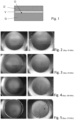
- the non-stick coating shown for an article G which is, for example, a piece of cookware, in particular a frying pan, has an adhesion promoter layer V applied to a surface O of the article and a cover layer D arranged over the adhesion promoter layer.
- a non-stick coating was tested consisting of a top layer with a dry film thickness of 35 to 40 ⁇ m and a base layer with a dry film thickness of approx. 15 ⁇ m.
- the top layer contains approx. 99.3% by weight PTFE based on the total solids content of the top layer, of which approx. 5.5% by weight is high molecular weight modified PTFE, which contains ⁇ 1% by weight perfluoropropyl vinyl ether (PPVE) as a modifying comonomer and was obtained by emulsion polymerization and has an average particle size of approx. 200 nm.
- PPVE perfluoropropyl vinyl ether
- approx. 0.4% by weight of effect pigments (mica) and approx. 0.2% by weight of carbon black pigment based on the total solids content of the top layer are included.
- the adhesion promoter layer consists of approximately 32.5% by weight of aluminum oxide, 18.4% by weight of polyamide imide, 13.7% by weight of silicon carbide, 27.1% by weight of PTFE, 5.5% by weight of PFA, 1.9% by weight of colloidal silicon dioxide and 0.9% by weight of carbon black pigment based on the total solids content of the adhesion promoter layer.
- the adhesion promoter layer is applied from an aqueous dispersion to a sandblasted substrate (e.g. a frying pan) and then pre-dried for 5 minutes at 100 °C. The top layer of an aqueous dispersion is then applied to the pre-dried adhesion promoter layer and baked for 10 minutes at 420 °C.
- the baked top layer according to the invention was examined for cracks using a stereo microscope at 40x magnification. It was verified that the top layer was free of cracks.
- the abrasion resistance of the coated object was tested as follows: The coated pan is filled with a mixture consisting of stainless steel balls ⁇ 4 mm, corundum (ALODUR EK- P20) and water and attached to a KS 501 digital orbital shaker (shaking stroke: 30 mm) and shaken for a certain time at 300 revolutions/minute.
- the amounts of stainless steel balls, corundum and water used are calculated as follows: The inside diameter of the pan base is measured and the determined value in cm is multiplied by the factor 0.394. The result is the inside diameter of the pan base in inches.
- e Pan bottom diameter inside Customs 2 / 10
- the pan is visually assessed to see whether the aluminum substrate is visible.
- the rubbed pan is then heated to 200 ⁇ 5 °C and a pancake consisting of 400 g milk (3.0% - 4.0% fat), 200 g wheat flour, 150 g eggs, 4 g salt is baked and assessed to see how easily the baked pancake can be removed from the pan.
- Table 1 shows the results of the pancake test of the inventive article after abrasion and the comparative example after abrasion.
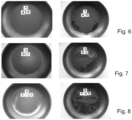
- the comparison example is a three-layer non-stick coating in which the adhesion promoter layer has a dry film thickness of approx. 18 ⁇ m, the intermediate layer has a dry film thickness of approx. 15 ⁇ m and the top layer has a layer thickness of approx. 12 ⁇ m.
- the adhesion promoter layer of the comparative example consists of approximately 29.9%wt aluminum oxide, 24.5%wt polyamideimide, 12.7%wt silicon carbide, 25.2%wt PTFE, 5.1%wt PFA, 1.8%wt colloidal silicon dioxide and 0.8%wt carbon black pigment based on the total solids content of the adhesion promoter layer.
- the top layer of the comparative example consists of approximately 3.9%wt acrylate, 0.1%wt cerium ethylhexanoate, 2.2%wt aluminum oxide, 91.4%wt PTFE, 2.2%wt effect pigment (mica) and 0.2%wt carbon black pigment based on the total solids content of the top layer.
- FIGS. 6 to 8 show the test results of the comparison example. ⁇ b>Table 1: ⁇ /b> Results of the pancake test of the inventive example and the comparative example, each after abrasion.
- Abrasion time Example according to the invention Comparison example 45 minutes Pancake falls out after turning the pan over Pancake falls out after turning the pan over 90 minutes Pancake falls out after turning the pan over Pancake falls out after turning the pan over and knocking out 135 minutes Pancake falls out after turning the pan over Pancake falls out after turning the pan over and tapping 180 minutes Pancake falls out after turning the pan over not carried out 270 minutes Pancake falls out after turning the pan over not carried out
Landscapes
- Chemical & Material Sciences (AREA)
- Organic Chemistry (AREA)
- Engineering & Computer Science (AREA)
- Life Sciences & Earth Sciences (AREA)
- Materials Engineering (AREA)
- Wood Science & Technology (AREA)
- Chemical Kinetics & Catalysis (AREA)
- Health & Medical Sciences (AREA)
- Medicinal Chemistry (AREA)
- Polymers & Plastics (AREA)
- Paints Or Removers (AREA)
- Application Of Or Painting With Fluid Materials (AREA)
- Laminated Bodies (AREA)
Description
- Die vorliegende Erfindung betrifft eine PTFE-Antihaftbeschichtung mit verbesserten Antihaft-Eigenschaften nach intensivem Abrieb, einen Gegenstand mit einer derartigen Antihaft-Beschichtung , ein Verfahren zu deren Herstellung sowie deren Verwendung bei der Herstellung von Koch-, Brat- und Küchengeräten oder anderen Anwendungen, bei denen ein Antihaft-Effekt und hohe Abriebbeständigkeit gefordert sind.
- Organische Fluorpolymerbeschichtungen zeigen aufgrund ihrer geringen Oberflächenenergie sehr gute Antihaft-Eigenschaften und aufgrund der hohen C-F Bindungsenergien hohe Temperaturbeständigkeiten. Insbesondere als Antihaft-Beschichtungen für Küchengeräte finden solche Beschichtungen breite Anwendung.
- Antihaft-Beschichtungen aus Fluorpolymeren werden meist in mehreren Schichten auf das Substrat aufgetragen. Mehrschichtige Fluorpolymerbeschichtungen umfassen generell eine Haftvermittler-Schicht und eine Deckschicht, und optional eine oder mehrere Mittelschichten.
- Mehrlagige Antihaft-Beschichtungen aus Fluorpolymeren sind seit vielen Jahren bekannt. Die Haftvermittler-Schicht solcher Systeme besteht typischerweise aus einem oder mehreren hitzebeständigen organischen Bindeharzen und einem oder mehreren Fluorpolymeren zusammen mit verschiedenen Pigmenten und Füllstoffen. Die Mittelschicht beinhaltet hauptsächlich Fluorpolymere, geringe Anteile an Effektpigmenten, Pigmenten, Füllstoffen und Filmbildehilfsmitteln, wohingegen die Deckschicht fast ausschliesslich aus Fluorpolymeren, insbesondere aus hochmolekularem PTFE, welches durch Emulsionspolymerisation von TFE aus wässriger Dispersion gewonnen wurde, alleine oder aus hochmolekularem PTFE , welches durch Emulsionspolymerisation von TFE aus wässriger Dispersion gewonnen wurde, mit geringen Anteilen an schmelzverarbeitbarem Fluorpolymer, besteht, um möglichst gute Antihaft-Eigenschaften der Deckschicht zu gewährleisten.
- Zur Verbesserung der Abriebfestigkeit mehrschichtiger PTFE-Antihaftbeschichtungen werden meist harte anorganische Füllstoffe verwendet.
- So beschreibt z.B.
US 5,250,356 ein mehrschichtiges System, umfassend eine durch feinteiliges Aluminiumoxid verstärkte Haftvermittler-Schicht bestehend aus PTFE, PFA und PAI, einer Zwischenschicht bestehend aus PTFE, PFA und feinteiligem Aluminiumoxid sowie einer Deckschicht aus reinem PTFE. -
EP 1016466 beschreibt eine mehrschichtige keramisch verstärkte Antihaftbeschichtung, bei der die Basisschicht keramische Partikel enthält, die aber so gross sind, dass sie aus der Deckschicht herausragen und dadurch die abrasive Belastung von der Deckschicht fernhalten. -
US 6,761,964 beschreibt eine mehrschichtige Antihaftbeschichtung umfassend eine Basisschicht aus Fluorpolymeren, Haftvermittler-Polymeren und grossen anorganischen Hartstoffpartikeln, die in der Basisschicht verankert sind und in die darauf folgende Zwischenschicht hineinragen, welche aus Fluorpolymeren und kleineren keramischen Füllstoffpartikeln besteht, und einer Deckschicht, die ausschliesslich aus Fluorpolymeren besteht. -
EP 2001949 beschreibt eine dreischichtige Antihaftbeschichtung in der die Basisschicht und die Deckschicht frei von keramischen Partikeln >10 µm sind und die Mittelschicht mindestens 3Gew% keramische Partikel >10 µm und Fluorpolymere enthält. - Werden solche Systeme abgerieben, so zeigen diese Systeme auf den abgeriebenen Oberflächen meist schlechte Antihaft-Eigenschaften, da die Füllstofffreien Deckschichten aufgrund der niedrigen Deckschicht-Trockenfilmschichtdicken schnell abgerieben werden und somit die mit Füllstoffen versetzten Mittelschichten freigelegt werden, die schlechtere Antihaft-Eigenschaften zeigen, als die meist ausschliesslich aus Fluorpolymeren bestehenden Deckschichten.
-
EP 2342279 undWO 2010/063911 beschreiben eine Fluorpolymer-Beschichtungszusammensetzung mit verbesserter Abriebbeständigkeit, die auf eine mit Aluminiumoxid verstärkten Haftvermittler-Schicht oder zumindest eine Mittelschicht aufgebracht wird. Die beschriebene ungefüllte Deckschicht besteht aus Acrylaten (Filmbildehilfsmitteln), Cer-Ethylhexanoat (Katalysator für die Verbrennung des Filmbildehilfsmittels) und einer Fluorpolymer-Zusammmensetzung. - Die Fluorpolymerzusammensetzung besteht hierbei aus 30-96%Gew hochmolekularem PTFE (bezogen auf den gesamten festen Gehalt an Fluorpolymeren der Beschichtung) in Form einer wässrigen Dispersion mit einem zahlengemittelten Molekulargewicht (Mn) von mindestens 500'000, wobei das hochmolekulare PTFE ein modifizierendes Co-Monomer in einem Gehalt von weniger als 1% beinhaltet und die Fluorpolymerzusammensetzung ferner niedermolekulares PTFE in Form einer wässrigen Dispersion in einem Gehalt von 4-70%Gew (bezogen auf den gesamten festen Gehalt an Fluorpolymeren der Beschichtung) mit einem ersten Schmelzpunkt von 335 °C oder weniger und ein schmelzverarbeitbares Fluorpolymer in Form wässriger Dispersion enthält. Ein solches modifiziertes PTFE ist in folgendem Dokument beschrieben:
Daikin Industries: "POLYFLON PTFE D-310", Technical information (2015-10-27), Gefunden im Internet unter URL: - https://www.daikinchem.de/downloads/Polyflon_PTFE_Dispersions/Technical_Data_Sheet_POLYFLON_PTFE_D-310_(2015).pdf
- [gefunden am 2018-09-13].
- Das offenbarte hochmolekulare PTFE und das erwähnte niedermolekulare PTFE werden hierbei durch Emulsionspolymerisation von TFE erhalten.
- Die verbesserten Abriebwerte dieser Beschichtung werden auf das Vorhandensein von niedermolekularem PTFE und schmelzverarbeitbarem Fluorpolymer (z.B. PFA) zurückgeführt.
- Für die Basisschicht wurden Schichtstärken um 8 µm und für die Deckschicht wurden Schichtstärken um 25 µm offenbart.
-
WO 2012/092414 beschreibt wässrige Dispersionen von nicht-schmelzverarbeitbaren Fluorpolymeren und Beschichtungen aus diesen Dispersionen. Die aus den beschriebenen PTFE-Dispersionen hergestellten Beschichtungen zeigen durch erhöhten Gehalt an nichtionischem Netzmittel und 1-10%Gew wasserlösliche Erdalkalimetallen oder 0.1-1% kolloidales Silica eine erhöhte kritische Schichtdicke bevor es zur Bildung von Rissen in der Schicht kommt (CCT; critical cracking thickness). - Mehrschichtige Antihaftbeschichtungen besitzen meist Gesamt-Trockenfilmschichtstärken von maximal 45 µm (Haftvermittlerschicht: 14-18 µm, Mittelschicht 12-14 µm, Deckschicht 10-13 µm). Ungefüllte wässrige PTFE-Beschichtungszusammensetzungen (der Deckschicht) zeigen meist kritische Trockenfilm-Schichtdicken von ca. 12-14 µm bevor sich Risse bilden.
- Eine verbesserte Abriebbeständigkeit kann u.a. dadurch erreicht werden, dass die Trockenfilmschichtdicke der Mittelschicht und der Deckschicht erhöht wird. Ohne Zusatz von Füllstoffen bilden sich jedoch bei hohen Schichtstärken Risse nach dem Einbrennen der Beschichtung.
- Die Bildung von Rissen bei hohen Mittel- und Deckschicht-Trockenfilmschichtdicken lassen sich durch den Zusatz von Füllstoffen minimieren bzw. es können höhere kritische Trockenfilm-Schichtdicken erzielt werden. Die zugesetzten Füllstoffe zeigen jedoch einen negativen Einfluss auf die Antihaft-Eigenschaften der abgeriebenen Beschichtung.
- Der Zusatz von Filmbildehilfsmitteln wie Acrylaten kann die kritische Trockenfilmschichtstärke ebenfalls etwas erhöhen, jedoch verbrennen die zugesetzten Acrylate beim Einbrennvorgang der Beschichtung und es müssen Katalysatoren zugesetzt werden um eine möglichst vollständige Verbrennung der Acrylate zu erreichen. Unverbrannte Acrylatrückstände beeinflussen die Antihaft-Eigenschaften ebenfalls negativ.
- Eine Aufgabe der Erfindung ist es demnach, ein verbessertes Verfahren zum Aufbringen einer Antihaftbeschichtung bereitzustellen. Gelöst wird diese Aufgabe durch das im Anspruch 1 definierte Verfahren.
- Eine erfindungsgemäss herstellbare Antihaftbeschichtung umfasst zumindest eine auf eine Oberfläche des Artikels angebrachte Haftvermittlerschicht und eine über der Haftvermittlerschicht angeordnete Deckschicht, wobei die Haftvermittlerschicht eine Trockenfilmschichtdicke von 5 bis 25 µm aufweist und wobei die Deckschicht eine Trockenfilmschichtdicke von 10 bis 65 µm aufweist. Die Deckschicht enthält 95 bis 100 Gew.-% PTFE und gegebenenfalls bis zu 5 Gew.-% Pigmente bezogen auf den gesamten Feststoffgehalt der Deckschicht und ist frei von schmelzverarbeitbaren Fluorpolymeren wobei das enthaltene PTFE zwischen 1 und 100 Gew.-% eines hochmolekularen modifizierten PTFE, welches < 1 Gew.-% Perfluorpropylvinylether (PPVE) als modifizierendes Co-Monomer enthält und durch Emulsionspolymerisation gewonnen wurde, enthält. Der etwaige Restanteil von bis zu 99 Gew.-% besteht im Wesentlichen aus unmodifiziertem hochmolekularem PTFE.
- Die Herstellung von modifiziertem PTFE mittels Suspensionspolymerisation ist grundsätzlich bekannt und wird insbesondere zur Bildung von körnigem PTFE mit besonders hohem Molekulargewicht eingesetzt. Eine damit hergestellte Antihaftbeschichtung ist in der nachveröffentlichten
EP 3357581 beschrieben. - Die Herstellung von wässrigen Dispersionen von modifiziertem hochmolekularem PTFE mittels Emulsionspolymerisation ist ebenfalls bekannt und liefert sehr feinteilige wässrige Dispersionen, die im Gegensatz zu modifizierten PTFE Pulvern, die mittels Suspensionspolymerisation gewonnen wurden, leichter in eine wässrige Beschichtungszusammensetzung eingearbeitet werden können und praktisch kein Absetzverhalten zeigen.
- Durch die hohen rissfreien Deckschicht-Trockenfilmschichtstärken lassen sich gegenüber dem Stand der Technik deutlich bessere Abriebfestigkeiten erzielen und die Antihaft-Eigenschaften der abgeriebenen Schicht sind deutlich langlebiger, da in der Deckschicht neben PTFE keine Füllstoffe enthalten sind, die nach dem Abrieb der Deckschicht freigelegt werden können und somit die Antihafteigenschaften verschlechtern würden. Dementsprechend zeichnet sich die erfindungsgemässe Antihaftbeschichtung durch einen guten Antihaft-Effekt in Kombination mit einer guten Abriebbeständigkeit aus.
- Beim erfindungsgemässen Verfahren wird die zu bildende Haftvermittlerschicht in flüssiger Form als erste wässrige Dispersion auf die Oberfläche des Gegenstandes aufgebracht und anschliessend für 5 bis 15 Minuten bei 60 bis 110°C getrocknet. Danach wird die Deckschicht in Form einer zweiten wässrigen Dispersion auf die vorgetrocknete Haftvermittlerschicht aufgebracht, und anschliessend werden die Schichten durch Trocknung und Versinterung bzw. Aufschmelzen bei 410 bis 430°C miteinander und mit der Oberfläche des Gegenstandes verbunden. Die zweite wässrige Dispersion enthält ein Dispergat aus 95 bis 100 Gew.-% PTFE und gegebenenfalls bis zu 5 Gew.-% Pigmente bezogen auf das gesamte Dispergat und ist frei von schmelzverarbeitbaren Fluorpolymeren, wobei das enthaltene PTFE zwischen 1 und 100 Gew.-% eines hochmolekularen modifizierten PTFE, welches < 1 Gew.-% Perfluorpropylvinylether (PPVE) als modifizierendes Co-Monomer enthält und durch Emulsionspolymerisation gewonnen wurde, enthält. Der etwaige Restanteil von bis zu 99 Gew.-% besteht im Wesentlichen aus unmodifiziertem hochmolekularem PTFE. Die zweite wässrige Dispersion ist frei von schmelzverarbeitbaren Fluorpolymeren und frei von niedermolekularem PTFE.
- Überraschenderweise hat sich gezeigt, dass sich mit dem erfindungsgemässen Verfahren selbst hohe Deckschicht-Trockenfilmschichtstärken von bis zu 65 µm rissfrei in einem einzigen Beschichtungsvorgang erhalten lassen.
- Die erfindungsgemäss hergestellte Antihaftbeschichtung ist vorteilhafterweise für Oberflächenanwendungen verwendbar, bei denen hohe Abriebfestigkeiten und gute Antihafteigenschaften gefordert werden.
- Es ist vorgesehen, einen Artikel, insbesondere ein Kochgeschirr oder anderer Haushalts- und Gebrauchsgegenstand, mit einer Oberfläche auszustatten, die mit einer erfindungsgemäss hergestellten Antihaftbeschichtung versehen ist.
- Die erfindungsgemäss hergestellte Antihaftbeschichtung weist demnach eine Schichtenfolge "Gegenstand-Haftvermittlerschicht-Deckschicht" auf. Optional kann zwischen der Haftvermittlerschicht und der Deckschicht eine Zwischenschicht aufgetragen werden.
- Vorteilhafte Ausgestaltungen der Erfindung sind nachfolgend beschrieben und in den abhängigen Ansprüchen definiert.
- Gemäss einer bevorzugten Ausgestaltung (Anspruch 3) weist die Deckschicht eine Trockenfilmschichtdicke von 30 bis 42 µm, insbesondere von 35 bis 40 µm auf.
- Gemäss einer weiteren vorteilhaften Ausgestaltung (Anspruch 4) beträgt der Gehalt von PTFE in der Deckschicht 99 bis 99.5 Gew.-%. Der Gehalt an Pigmenten beträgt dementsprechend 1 bis 0.5 Gew.-% und setzt sich beispielsweise aus ungefähr 2 Teilen Effektpigmenten (Glimmer) und und ungefähr 1 Teil Russpigment zusammen.
- In gewissen Ausführungsformen macht der Anteil des hochmolekularen modifizierten PTFE in der Deckschicht bis zu 99 Gew.-%, insbesondere bis zu 95 Gew.-%, insbesondere bis zu 75 Gew.-% aus. Insbesondere ist es vorteilhaft (Anspruch 5), wenn der Anteil des hochmolekularen modifizierten PTFE in der Deckschicht 2 bis 50 Gew.-%, vorzugsweise 4 bis 6 Gew.-%, insbesondere ungefähr 5.5 Gew.-% des gesamten PTFE in der Deckschicht ausmacht.
- Vorteilhaft ist es überdies (Anspruch 6), dass das hochmolekulare modifizierte PTFE eine mittlere Teilchengrösse von 150 bis 250 nm (nach DIN ISO 13321), insbesondere von ungefähr 200 nm besitzt.
- Gemäss einer vorteilhaften Ausgestaltung (Anspruch 2) ist die Deckschicht frei von Acrylaten. Unverbrannte Acrylatrückstände beeinflussen die Antihaft-Eigenschaften negativ und sind demnach unerwünscht.
- Die Beschaffenheit geeigneter Haftvermittlerschichten ist an sich bekannt. Im vorliegenden Zusammenhang hat es sich als vorteilhaft erwiesen (Anspruch 7), dass die Haftvermittlerschicht im Wesentlichen aus hochtemperaturbeständigen Bindeharzen, Fluorpolymeren, Pigmenten und Füllstoffen besteht.
- Grundsätzlich können die Bindeharze aus einer ganzen Reihe von bekannten Substanzen wie insbesondere PES (Polyethersulfone), PAI (Polyamidimide), PEK (Polyetherketon), PEEK (Polyetheretherketon), PPS (Polyphenylensulfide), PI (Polyimide), LCP (liquid crystal polymers) und Silikonharze oder Mischungen davon ausgewählt werden. Gemäss einer vorteilhaften Ausgestaltung (Anspruch 8) sind die Bindeharze aus der aus PES und PAI bestehenden Gruppe ausgewählt.
- Bevorzugt ist es überdies (Anspruch 9), dass die Haftvermittlerschicht eine Trockenfilmschichtdicke von 10 bis 18 µm aufweist.
- Ausführungsbeispiele der Erfindung werden nachfolgend anhand der Zeichnungen näher beschrieben, dabei zeigen:
- Fig. 1
- einen Schichtaufbau einer erfindungsgemäss hergestellten Antihaftbeschichtung, als schematische Schnittdarstellung;
- Fig. 2 - 5
- ein Ausführungsbeispiel, jeweils nach einer bestimmten Abriebzeit (links) sowie nach zusätzlichem Milchtest und anschliessender Reinigung (rechts), nämlich: Abriebzeit 45 min (
Fig. 2 ), 90 min (Fig. 3 ), 180 min (Fig. 4 ) und 270 min (Fig. 5 ); - Fig. 6 - 8
- ein Vergleichsbeispiel, jeweils nach einer bestimmten Abriebzeit (links) sowie nach zusätzlichem Milchtest und anschliessender Reinigung (rechts), nämlich: Abriebzeit 45 min (
Fig. 6 ), 90 min (Fig. 7 ) und 135 min (Fig. 8 ). - Die in der
Figur 1 dargestellte Antihaftbeschichtung für einen Artikel G, bei dem es sich beispielsweise um ein Kochgeschirr, insbesondere um eine Bratpfanne handelt, weist eine auf einer Oberfläche O des Artikels angebrachte Haftvermittlerschicht V sowie eine über der Haftvermittlerschicht angeordnete Deckschicht D auf. - Geprüft wurde eine Antihaftbeschichtung bestehend aus einer Deckschicht mit einer Trockenfilmschichtstärke von 35 bis 40 µm und einer Basisschicht mit einer Trockenfilmschichtstärke von ca.15 µm. Die Deckschicht enthält in diesem Ausführungsbeispiel ca. 99.3%Gew PTFE bezogen auf den gesamten Feststoffgehalt der Deckschicht, davon sind ca. 5.5%Gew hochmolekulares modifiziertes PTFE, welches < 1 Gew.-% Perfluorpropylvinylether (PPVE) als modifizierendes Co-Monomer enthält und durch Emulsionspolymerisation gewonnen wurde und eine mittlere Teilchengrösse von ca. 200 nm hat. Zusätzlich sind ca. 0.4%Gew Effektpigmente (Glimmer) und ca. 0.2%Gew Russpigment bezogen auf den gesamten Feststoffgehalt der Deckschicht enthalten.
- Die Haftvermittlerschicht besteht im Ausführungsbeispiel aus ca. 32.5%Gew Aluminiumoxid, 18.4%Gew Polyamidimid, 13.7%Gew Siliciumcarbid, 27.1%Gew PTFE, 5.5%Gew PFA, 1.9%Gew kolloidalem Siliciumdioxid und 0.9%Gew Russpigment bezogen auf den gesamten Feststoffgehalt der Haftvermittlerschicht. Die Haftvermittlerschicht wird aus wässriger Dispersion auf ein sandgestrahltes Substrat (z.B. eine Bratpfanne) aufgebracht und anschliessend während 5 Min bei 100 °C vorgetrocknet. Danach wird die Deckschicht aus wässriger Dispersion auf die vorgetrocknete Haftvermittlerschicht aufgebracht und während 10 min bei 420 °C eingebrannt.
- Die eingebrannte erfindungsgemässe Deckschicht wurde mit 40-facher Vergrösserung mit einem Stereomikroskop auf Risse hin untersucht. Dabei konnte verifiziert werden, dass die Deckschicht rissfrei war.
- Die Abriebbeständigkeit des beschichteten Gegenstandes wurde wie folgt geprüft:
Die beschichtete Pfanne wird mit einer Mischung bestehend aus Edelstahlkugeln ø 4 mm, Korund (ALODUR EK- P20) und Wasser befüllt und auf einem Kreisschüttler KS 501 digital (Schüttelhub: 30 mm) befestigt und eine bestimmte Zeit bei 300 Umdrehungen/Minute geschüttelt. Die verwendeten Mengen an Edelstahlkugeln, Korund und Wasser berechnen sich wie folgt:
Der Durchmesser des Pfannenbodens innen wird ausgemessen und der ermittelte Wert in cm mit dem Faktor 0.394 multipliziert. Als Ergebnis erhält man den Pfannenbodendurchmesser innen in Zoll.
- Mit Hilfe des Faktors f wird eine entsprechende Menge an Edelstahlkugeln, Korund und Wasser berechnet:
Edelstahlkugeln ø 4 mm 175 Gramm ▪ f ALODUR EK- P20 18 Gramm ▪ f Wasser 20 Gramm ▪ f - Nach einer bestimmten Schüttelzeit wird die Pfanne optisch dahingehend beurteilt, ob das Aluminiumsubstrat zu sehen ist. Anschliessend die abgeriebene Pfanne auf 200 ± 5 °C erhitzt und ein Pfannkuchen bestehend aus 400 g Milch (3.0% - 4.0% Fett), 200 g Weizenmehl, 150 g Eier, 4 g Salz gebacken und beurteilt, wie sich der gebackene Pfannkuchen aus der Pfanne entfernen lässt.
- Um die Antihaft-Eigenschaften weiter zu überprüfen wurde anschliessend Milch eingebrannt, bis diese eine braunschwarze Farbe zeigt und zu rauchen beginnt. Die eingebrannte Milch wurde dann mit Hilfe eines Wasserstrahls aus der Pfanne entfernt und beurteilt, ob Rückstände der eingebrannten Milch in der Pfanne verbleiben. Die Ergebnisse wurden für verschiedene Abriebzeiten fotografisch festgehalten.
- Die
Figuren 2 bis 5 zeigen die erhaltenen Ergebnisse des mit der erfindungsgemässen Antihaftbeschichtung versehenen Gegenstandes. - Tabelle 1 zeigt die Ergebnisse des Pfannkuchentests des erfindungsgemässen Gegenstandes nach Abrieb und des Vergleichsbeispiels nach Abrieb.
- Das Vergleichsbeispiel ist eine dreischichtige Antihaftbeschichtung, bei der die Haftvermittlerschicht eine Trockenfilmschichtstärke von ca. 18 µm aufweist, die Zwischenschicht eine Trockenfilmschichtstärke von ca. 15 µm aufweist und die Deckschicht eine Schichtstärke von ca. 12 µm aufweist.
- Die Haftvermittlerschicht des Vergleichsbeispiels besteht aus ca. 29.9%Gew Aluminiumoxid, 24.5%Gew Polyamidimid, 12.7%Gew Siliciumcarbid, 25.2%Gew PTFE, 5.1%Gew PFA, 1.8%Gew kolloidalem Siliciumdioxid und 0.8%Gew Russpigment bezogen auf den gesamten Feststoffgehalt der Haftvermittlerschicht.
- Die Zwischenschicht des Vergleichsbeispiels besteht aus ca. 5.2%Gew Acrylat, 0.1%Gew Cer-Ethylhexanoat, 2.0%Gew Aluminiumoxid, 12.3%Gew Siliciumcarbid, 76.7%Gew PTFE, 1.4%Gew PFA, 1.9%Gew Effektpigment (Glimmer) und 0.4%Gew Russpigment bezogen auf den gesamten Feststoffgehalt der Zwischenschicht.
- Die Deckschicht des Vergleichsbeispiels besteht aus ca. 3.9%Gew Acrylat, 0.1%Gew Cer-Ethylhexanoat, 2.2%Gew Aluminiumoxid, 91.4%Gew PTFE, 2.2%Gew Effektpigment (Glimmer) und 0.2%Gew Russpigment bezogen auf den gesamten Feststoffgehalt der Deckschicht.
- Die
Figuren 6 bis 8 zeigen die Prüfungsergebnisse des Vergleichsbeispiels.Tabelle 1: Ergebnisse des Pfannkuchentests des erfindungsgemässen Beispiels und des Vergleichsbeispiels, jeweils nach Abrieb. Abriebzeit Erfindungsgemässes Beispiel Vergleichsbeispiel 45 Minuten Pfannkuchen fällt nach Umdrehen der Pfanne heraus Pfannkuchen fällt nach Umdrehen der Pfanne heraus 90 Minuten Pfannkuchen fällt nach Umdrehen der Pfanne heraus Pfannkuchen fällt nach Umdrehen der Pfanne und klopfen heraus 135 Minuten Pfannkuchen fällt nach Umdrehen der Pfanne heraus Pfannkuchen fällt nach Umdrehen der Pfanne und Klopfen heraus 180 Minuten Pfannkuchen fällt nach Umdrehen der Pfanne heraus nicht durchgeführt 270 Minuten Pfannkuchen fällt nach Umdrehen der Pfanne heraus nicht durchgeführt
Claims (9)
- Verfahren zum Aufbringen einer Antihaftbeschichtungauf einen Artikel,wobei die Antihaftbeschichtung zumindest eine auf eine Oberfläche des Artikels angebrachte Haftvermittlerschicht (V) und eine über der Haftvermittlerschicht angeordnete Deckschicht (D) aufweist, wobei die Haftvermittlerschicht eine Trockenfilmschichtdicke von 5 bis 25 µm aufweist, und wobei die Deckschicht eine Trockenfilmschichtdicke von 10 bis 65 µm aufweist, wobei die Deckschicht 95 bis 100 Gew.-% PTFE und gegebenenfalls bis zu 5 Gew.-% Pigmente bezogen auf den gesamten Feststoffgehalt der Deckschicht enthält und frei von schmelzverarbeitbaren Fluorpolymeren ist, und das enthaltene PTFE zwischen 1 und 100 Gew.-% eines hochmolekularen modifizierten PTFE, welches < 1 Gew.-% Perfluorpropylvinylether (PPVE) als modifizierendes Co-Monomer enthält und durch Emulsionspolymerisation gewonnen wurde, enthält,wobei die zu bildende Haftvermittlerschicht in flüssiger Form als erste wässrige Dispersion auf die Oberfläche des Gegenstandes aufgebracht und anschliessend für 5 bis 15 Minuten bei 60 bis 110°C getrocknet wird, und wobei anschliessend die Deckschicht in Form einer zweiten wässrigen Dispersion auf die vorgetrocknete Haftvermittlerschicht aufgebracht wird und die Schichten durch anschliessende Trocknung und Versinterung bzw. Aufschmelzen bei 410 bis 430°C miteinander und mit der Oberfläche des Gegenstandes verbunden werden, dadurch gekennzeichnet, dass die zweite wässrige Dispersion frei von schmelzverarbeitbaren Fluorpolymeren und frei von niedermolekularem PTFE ist.
- Verfahren nach Anspruch 1, wobei die zweite wässrige Dispersion frei von Acrylaten ist.
- Verfahren nach Anspruch 1 oder 2, wobei die Deckschicht bis zu einer Trockenfilmschichtdicke von 30 bis 42 µm aufgebracht wird.
- Verfahren nach einem der Ansprüche 1 bis 3, wobei der Gehalt von PTFE in der Deckschicht 99 bis 99.5 Gew.-% beträgt.
- Verfahren nach einem der Ansprüche 1 bis 4, wobei der Anteil des hochmolekularen modifizierten PTFE in der zweiten wässrigen Dispersion 2 bis 50 Gew.-%, vorzugsweise 4 bis 6 Gew.-%, insbesondere ungefähr 5.5 Gew.-% des gesamten PTFE in der zweiten wässrigen Dispersion ausmacht.
- Verfahren nach einem der Ansprüche 1 bis 5, wobei das hochmolekulare modifizierte PTFE in der zweiten wässrigen Dispersion eine mittlere Teilchengrösse nach DIN ISO 13321 vor 150 bis 250 nm, insbesondere von ungefähr 200 nm, besitzt.
- Verfahren nach einem der Ansprüche 1 bis 6, dadurch gekennzeichnet, dass die Haftvermittlerschicht im Wesentlichen aus hochtemperaturbeständigen Bindeharzen, Fluorpolymeren, Pigmenten und Füllstoffen besteht.
- Verfahren nach Anspruch 7, dadurch gekennzeichnet, dass die Bindeharze aus der aus PES (Polyethersulfonen) und PAI (Polyamidimiden) bestehenden Gruppe ausgewählt sind.
- Verfahren nach einem der Ansprüche 1 bis 8, wobei die Haftvermittlerschicht bis zu einer Trockenfilmschichtdicke von 10 bis 18 µm aufgebracht wird.
Applications Claiming Priority (2)
| Application Number | Priority Date | Filing Date | Title |
|---|---|---|---|
| EP18182807.0A EP3593680A1 (de) | 2018-07-10 | 2018-07-10 | Antihaftbeschichtung |
| PCT/EP2019/068631 WO2020011897A1 (de) | 2018-07-10 | 2019-07-10 | Antihaftbeschichtung und verfahren zu deren herstellung |
Publications (2)
| Publication Number | Publication Date |
|---|---|
| EP3826518A1 EP3826518A1 (de) | 2021-06-02 |
| EP3826518B1 true EP3826518B1 (de) | 2024-08-14 |
Family
ID=63047101
Family Applications (2)
| Application Number | Title | Priority Date | Filing Date |
|---|---|---|---|
| EP18182807.0A Withdrawn EP3593680A1 (de) | 2018-07-10 | 2018-07-10 | Antihaftbeschichtung |
| EP19737116.4A Active EP3826518B1 (de) | 2018-07-10 | 2019-07-10 | Antihaftbeschichtung und verfahren zu deren herstellung |
Family Applications Before (1)
| Application Number | Title | Priority Date | Filing Date |
|---|---|---|---|
| EP18182807.0A Withdrawn EP3593680A1 (de) | 2018-07-10 | 2018-07-10 | Antihaftbeschichtung |
Country Status (3)
| Country | Link |
|---|---|
| EP (2) | EP3593680A1 (de) |
| CN (1) | CN112399812B (de) |
| WO (1) | WO2020011897A1 (de) |
Families Citing this family (2)
| Publication number | Priority date | Publication date | Assignee | Title |
|---|---|---|---|---|
| CN115093788B (zh) * | 2022-07-13 | 2023-09-08 | 佛山市顺德区安木森新材料有限公司 | 一种用于辊涂的水性单层不粘涂料 |
| CN115873432B (zh) * | 2022-12-20 | 2023-12-15 | 武汉苏泊尔炊具有限公司 | 防异味涂料、防异味涂层、防异味器皿及其制造方法 |
Family Cites Families (10)
| Publication number | Priority date | Publication date | Assignee | Title |
|---|---|---|---|---|
| US5250356A (en) | 1992-08-28 | 1993-10-05 | E. I. Du Pont De Nemours And Company | Cookware coating system |
| US6291054B1 (en) | 1999-02-19 | 2001-09-18 | E. I. Du Pont De Nemours And Company | Abrasion resistant coatings |
| US6761964B2 (en) | 2001-04-02 | 2004-07-13 | E. I. Du Pont De Nemours And Company | Fluoropolymer non-stick coatings |
| SI1539379T1 (sl) * | 2002-09-13 | 2010-11-30 | Whitford B V | Večplastni nelepljivi premaz |
| CA2643161A1 (en) | 2006-04-04 | 2007-10-11 | E.I. Du Pont De Nemours And Company | Non-stick finish |
| TWI472584B (zh) * | 2006-04-04 | 2015-02-11 | Du Pont | 非黏性表面塗層 |
| US8158251B2 (en) * | 2008-02-07 | 2012-04-17 | E. I. Du Pont De Nemours And Company | Article with non-stick finish and improved scratch resistance |
| TW201016800A (en) * | 2008-09-26 | 2010-05-01 | Whitford Corp | Blended fluoropolymer coatings for rigid substrates |
| CN102558721B (zh) | 2010-12-31 | 2014-08-20 | 杜邦公司 | 聚四氟乙烯水分散体 |
| EP3357587B1 (de) * | 2017-02-07 | 2019-09-11 | Industrielack AG | Antihaftbeschichtung |
-
2018
- 2018-07-10 EP EP18182807.0A patent/EP3593680A1/de not_active Withdrawn
-
2019
- 2019-07-10 WO PCT/EP2019/068631 patent/WO2020011897A1/de not_active Ceased
- 2019-07-10 EP EP19737116.4A patent/EP3826518B1/de active Active
- 2019-07-10 CN CN201980046380.3A patent/CN112399812B/zh active Active
Also Published As
| Publication number | Publication date |
|---|---|
| CN112399812B (zh) | 2026-04-21 |
| EP3593680A1 (de) | 2020-01-15 |
| CN112399812A (zh) | 2021-02-23 |
| WO2020011897A1 (de) | 2020-01-16 |
| EP3826518A1 (de) | 2021-06-02 |
Similar Documents
| Publication | Publication Date | Title |
|---|---|---|
| DE2954060C2 (de) | ||
| DE69322278T2 (de) | Beschichtungssysteme für kochgeschirr | |
| DE69902832T2 (de) | Vergussmischungen, die Fluoropolymere als Granulat oder in Dispersion enthalten | |
| DE4113211C2 (de) | ||
| DE60007855T2 (de) | Antihaftbeschichtung mit verbesserter kratzfestigkeit | |
| DE69929595T2 (de) | Wässrige grundierungszusammensetzung für fluorharzüberzug | |
| EP2595933B1 (de) | Silikonbeschichtung als versiegelungsschicht für eine dekorbeschichtung | |
| EP0894541B1 (de) | Gegenstand mit einer Antihaftbeschichtung | |
| DE69709178T2 (de) | Gefüllte fluorpolymerzusammensetzung für korrosionsbeständigkeit | |
| DE2633940A1 (de) | Ueberzugsmittel | |
| DE1769812A1 (de) | Fluorkohlenstoffharz-Organosole | |
| EP2319631A1 (de) | Beschichtung für ein Substrat | |
| DE69103726T2 (de) | Fluorharzüberzugszusammensetzung. | |
| EP3357587B1 (de) | Antihaftbeschichtung | |
| EP0974404B1 (de) | Gegenstand mit einer Pigment, Fluorpolymer und Bindeharz enthaltenden Beschichtung, Verfahren zu dessen Herstellung und dessen Verwendung | |
| DE102005004829B4 (de) | Artikel mit Antihaftbeschichtung, Verfahren zu dessen Herstellung und dessen Verwendung | |
| WO2020011897A1 (de) | Antihaftbeschichtung und verfahren zu deren herstellung | |
| DE2152770A1 (de) | Haftgrundlage auf der Basis von Fluorkohlenwasserstoffharzen und deren Verwendung | |
| DE4037875C2 (de) | Mit Fluorharz überzogenes Material mit darauf angebrachten Markierungen | |
| EP1484372B1 (de) | Beschichtete Aluminiumfolie und Verfahren zu deren Herstellung | |
| DE102013101096A1 (de) | Sol-Gel-Fluorpolymer-Beschichtung | |
| DE102005013827B4 (de) | Elektrisch leitende Paste und Verfahren zur Erzeugung eines gestapelten piezoelektrischen Elements | |
| DE19902078B4 (de) | Gegenstand mit einer Fluorpolymer und Bindeharz enthaltenden Beschichtung, Verfahren zu dessen Herstellung und dessen Verwendung | |
| EP2492022B1 (de) | Antihaftbeschichtung | |
| DE102012002608B4 (de) | Pfanne oder Kochtopf |
Legal Events
| Date | Code | Title | Description |
|---|---|---|---|
| STAA | Information on the status of an ep patent application or granted ep patent |
Free format text: STATUS: UNKNOWN |
|
| STAA | Information on the status of an ep patent application or granted ep patent |
Free format text: STATUS: THE INTERNATIONAL PUBLICATION HAS BEEN MADE |
|
| PUAI | Public reference made under article 153(3) epc to a published international application that has entered the european phase |
Free format text: ORIGINAL CODE: 0009012 |
|
| STAA | Information on the status of an ep patent application or granted ep patent |
Free format text: STATUS: REQUEST FOR EXAMINATION WAS MADE |
|
| 17P | Request for examination filed |
Effective date: 20210310 |
|
| AK | Designated contracting states |
Kind code of ref document: A1 Designated state(s): AL AT BE BG CH CY CZ DE DK EE ES FI FR GB GR HR HU IE IS IT LI LT LU LV MC MK MT NL NO PL PT RO RS SE SI SK SM TR |
|
| STAA | Information on the status of an ep patent application or granted ep patent |
Free format text: STATUS: THE APPLICATION IS DEEMED TO BE WITHDRAWN |
|
| STAA | Information on the status of an ep patent application or granted ep patent |
Free format text: STATUS: REQUEST FOR EXAMINATION WAS MADE |
|
| 18D | Application deemed to be withdrawn |
Effective date: 20210211 |
|
| D18D | Application deemed to be withdrawn (deleted) | ||
| DAV | Request for validation of the european patent (deleted) | ||
| DAX | Request for extension of the european patent (deleted) | ||
| GRAP | Despatch of communication of intention to grant a patent |
Free format text: ORIGINAL CODE: EPIDOSNIGR1 |
|
| STAA | Information on the status of an ep patent application or granted ep patent |
Free format text: STATUS: GRANT OF PATENT IS INTENDED |
|
| INTG | Intention to grant announced |
Effective date: 20231218 |
|
| GRAS | Grant fee paid |
Free format text: ORIGINAL CODE: EPIDOSNIGR3 |
|
| GRAA | (expected) grant |
Free format text: ORIGINAL CODE: 0009210 |
|
| STAA | Information on the status of an ep patent application or granted ep patent |
Free format text: STATUS: THE PATENT HAS BEEN GRANTED |
|
| AK | Designated contracting states |
Kind code of ref document: B1 Designated state(s): AL AT BE BG CH CY CZ DE DK EE ES FI FR GB GR HR HU IE IS IT LI LT LU LV MC MK MT NL NO PL PT RO RS SE SI SK SM TR |
|
| REG | Reference to a national code |
Ref country code: CH Ref legal event code: EP |
|
| REG | Reference to a national code |
Ref country code: DE Ref legal event code: R096 Ref document number: 502019011899 Country of ref document: DE |
|
| REG | Reference to a national code |
Ref country code: IE Ref legal event code: FG4D Free format text: LANGUAGE OF EP DOCUMENT: GERMAN |
|
| REG | Reference to a national code |
Ref country code: LT Ref legal event code: MG9D |
|
| REG | Reference to a national code |
Ref country code: NL Ref legal event code: MP Effective date: 20240814 |
|
| PG25 | Lapsed in a contracting state [announced via postgrant information from national office to epo] |
Ref country code: NO Free format text: LAPSE BECAUSE OF FAILURE TO SUBMIT A TRANSLATION OF THE DESCRIPTION OR TO PAY THE FEE WITHIN THE PRESCRIBED TIME-LIMIT Effective date: 20241114 |
|
| PG25 | Lapsed in a contracting state [announced via postgrant information from national office to epo] |
Ref country code: NL Free format text: LAPSE BECAUSE OF FAILURE TO SUBMIT A TRANSLATION OF THE DESCRIPTION OR TO PAY THE FEE WITHIN THE PRESCRIBED TIME-LIMIT Effective date: 20240814 Ref country code: FI Free format text: LAPSE BECAUSE OF FAILURE TO SUBMIT A TRANSLATION OF THE DESCRIPTION OR TO PAY THE FEE WITHIN THE PRESCRIBED TIME-LIMIT Effective date: 20240814 Ref country code: GR Free format text: LAPSE BECAUSE OF FAILURE TO SUBMIT A TRANSLATION OF THE DESCRIPTION OR TO PAY THE FEE WITHIN THE PRESCRIBED TIME-LIMIT Effective date: 20241115 Ref country code: PL Free format text: LAPSE BECAUSE OF FAILURE TO SUBMIT A TRANSLATION OF THE DESCRIPTION OR TO PAY THE FEE WITHIN THE PRESCRIBED TIME-LIMIT Effective date: 20240814 Ref country code: PT Free format text: LAPSE BECAUSE OF FAILURE TO SUBMIT A TRANSLATION OF THE DESCRIPTION OR TO PAY THE FEE WITHIN THE PRESCRIBED TIME-LIMIT Effective date: 20241216 |
|
| PG25 | Lapsed in a contracting state [announced via postgrant information from national office to epo] |
Ref country code: BG Free format text: LAPSE BECAUSE OF FAILURE TO SUBMIT A TRANSLATION OF THE DESCRIPTION OR TO PAY THE FEE WITHIN THE PRESCRIBED TIME-LIMIT Effective date: 20240814 |
|
| PG25 | Lapsed in a contracting state [announced via postgrant information from national office to epo] |
Ref country code: LV Free format text: LAPSE BECAUSE OF FAILURE TO SUBMIT A TRANSLATION OF THE DESCRIPTION OR TO PAY THE FEE WITHIN THE PRESCRIBED TIME-LIMIT Effective date: 20240814 |
|
| PG25 | Lapsed in a contracting state [announced via postgrant information from national office to epo] |
Ref country code: IS Free format text: LAPSE BECAUSE OF FAILURE TO SUBMIT A TRANSLATION OF THE DESCRIPTION OR TO PAY THE FEE WITHIN THE PRESCRIBED TIME-LIMIT Effective date: 20241214 |
|
| PG25 | Lapsed in a contracting state [announced via postgrant information from national office to epo] |
Ref country code: HR Free format text: LAPSE BECAUSE OF FAILURE TO SUBMIT A TRANSLATION OF THE DESCRIPTION OR TO PAY THE FEE WITHIN THE PRESCRIBED TIME-LIMIT Effective date: 20240814 |
|
| PG25 | Lapsed in a contracting state [announced via postgrant information from national office to epo] |
Ref country code: ES Free format text: LAPSE BECAUSE OF FAILURE TO SUBMIT A TRANSLATION OF THE DESCRIPTION OR TO PAY THE FEE WITHIN THE PRESCRIBED TIME-LIMIT Effective date: 20240814 Ref country code: RS Free format text: LAPSE BECAUSE OF FAILURE TO SUBMIT A TRANSLATION OF THE DESCRIPTION OR TO PAY THE FEE WITHIN THE PRESCRIBED TIME-LIMIT Effective date: 20241114 |
|
| PG25 | Lapsed in a contracting state [announced via postgrant information from national office to epo] |
Ref country code: RS Free format text: LAPSE BECAUSE OF FAILURE TO SUBMIT A TRANSLATION OF THE DESCRIPTION OR TO PAY THE FEE WITHIN THE PRESCRIBED TIME-LIMIT Effective date: 20241114 Ref country code: PT Free format text: LAPSE BECAUSE OF FAILURE TO SUBMIT A TRANSLATION OF THE DESCRIPTION OR TO PAY THE FEE WITHIN THE PRESCRIBED TIME-LIMIT Effective date: 20241216 Ref country code: PL Free format text: LAPSE BECAUSE OF FAILURE TO SUBMIT A TRANSLATION OF THE DESCRIPTION OR TO PAY THE FEE WITHIN THE PRESCRIBED TIME-LIMIT Effective date: 20240814 Ref country code: NO Free format text: LAPSE BECAUSE OF FAILURE TO SUBMIT A TRANSLATION OF THE DESCRIPTION OR TO PAY THE FEE WITHIN THE PRESCRIBED TIME-LIMIT Effective date: 20241114 Ref country code: NL Free format text: LAPSE BECAUSE OF FAILURE TO SUBMIT A TRANSLATION OF THE DESCRIPTION OR TO PAY THE FEE WITHIN THE PRESCRIBED TIME-LIMIT Effective date: 20240814 Ref country code: LV Free format text: LAPSE BECAUSE OF FAILURE TO SUBMIT A TRANSLATION OF THE DESCRIPTION OR TO PAY THE FEE WITHIN THE PRESCRIBED TIME-LIMIT Effective date: 20240814 Ref country code: IS Free format text: LAPSE BECAUSE OF FAILURE TO SUBMIT A TRANSLATION OF THE DESCRIPTION OR TO PAY THE FEE WITHIN THE PRESCRIBED TIME-LIMIT Effective date: 20241214 Ref country code: HR Free format text: LAPSE BECAUSE OF FAILURE TO SUBMIT A TRANSLATION OF THE DESCRIPTION OR TO PAY THE FEE WITHIN THE PRESCRIBED TIME-LIMIT Effective date: 20240814 Ref country code: GR Free format text: LAPSE BECAUSE OF FAILURE TO SUBMIT A TRANSLATION OF THE DESCRIPTION OR TO PAY THE FEE WITHIN THE PRESCRIBED TIME-LIMIT Effective date: 20241115 Ref country code: FI Free format text: LAPSE BECAUSE OF FAILURE TO SUBMIT A TRANSLATION OF THE DESCRIPTION OR TO PAY THE FEE WITHIN THE PRESCRIBED TIME-LIMIT Effective date: 20240814 Ref country code: ES Free format text: LAPSE BECAUSE OF FAILURE TO SUBMIT A TRANSLATION OF THE DESCRIPTION OR TO PAY THE FEE WITHIN THE PRESCRIBED TIME-LIMIT Effective date: 20240814 Ref country code: BG Free format text: LAPSE BECAUSE OF FAILURE TO SUBMIT A TRANSLATION OF THE DESCRIPTION OR TO PAY THE FEE WITHIN THE PRESCRIBED TIME-LIMIT Effective date: 20240814 |
|
| PG25 | Lapsed in a contracting state [announced via postgrant information from national office to epo] |
Ref country code: SM Free format text: LAPSE BECAUSE OF FAILURE TO SUBMIT A TRANSLATION OF THE DESCRIPTION OR TO PAY THE FEE WITHIN THE PRESCRIBED TIME-LIMIT Effective date: 20240814 Ref country code: DK Free format text: LAPSE BECAUSE OF FAILURE TO SUBMIT A TRANSLATION OF THE DESCRIPTION OR TO PAY THE FEE WITHIN THE PRESCRIBED TIME-LIMIT Effective date: 20240814 Ref country code: RO Free format text: LAPSE BECAUSE OF FAILURE TO SUBMIT A TRANSLATION OF THE DESCRIPTION OR TO PAY THE FEE WITHIN THE PRESCRIBED TIME-LIMIT Effective date: 20240814 |
|
| PG25 | Lapsed in a contracting state [announced via postgrant information from national office to epo] |
Ref country code: EE Free format text: LAPSE BECAUSE OF FAILURE TO SUBMIT A TRANSLATION OF THE DESCRIPTION OR TO PAY THE FEE WITHIN THE PRESCRIBED TIME-LIMIT Effective date: 20240814 |
|
| PG25 | Lapsed in a contracting state [announced via postgrant information from national office to epo] |
Ref country code: CZ Free format text: LAPSE BECAUSE OF FAILURE TO SUBMIT A TRANSLATION OF THE DESCRIPTION OR TO PAY THE FEE WITHIN THE PRESCRIBED TIME-LIMIT Effective date: 20240814 |
|
| PG25 | Lapsed in a contracting state [announced via postgrant information from national office to epo] |
Ref country code: SK Free format text: LAPSE BECAUSE OF FAILURE TO SUBMIT A TRANSLATION OF THE DESCRIPTION OR TO PAY THE FEE WITHIN THE PRESCRIBED TIME-LIMIT Effective date: 20240814 |
|
| REG | Reference to a national code |
Ref country code: DE Ref legal event code: R097 Ref document number: 502019011899 Country of ref document: DE |
|
| PLBE | No opposition filed within time limit |
Free format text: ORIGINAL CODE: 0009261 |
|
| STAA | Information on the status of an ep patent application or granted ep patent |
Free format text: STATUS: NO OPPOSITION FILED WITHIN TIME LIMIT |
|
| 26N | No opposition filed |
Effective date: 20250515 |
|
| PG25 | Lapsed in a contracting state [announced via postgrant information from national office to epo] |
Ref country code: SE Free format text: LAPSE BECAUSE OF FAILURE TO SUBMIT A TRANSLATION OF THE DESCRIPTION OR TO PAY THE FEE WITHIN THE PRESCRIBED TIME-LIMIT Effective date: 20240814 |
|
| PGFP | Annual fee paid to national office [announced via postgrant information from national office to epo] |
Ref country code: DE Payment date: 20250722 Year of fee payment: 7 |
|
| PGFP | Annual fee paid to national office [announced via postgrant information from national office to epo] |
Ref country code: TR Payment date: 20250701 Year of fee payment: 7 Ref country code: IT Payment date: 20250724 Year of fee payment: 7 |
|
| PGFP | Annual fee paid to national office [announced via postgrant information from national office to epo] |
Ref country code: FR Payment date: 20250725 Year of fee payment: 7 |
|
| REG | Reference to a national code |
Ref country code: CH Ref legal event code: H13 Free format text: ST27 STATUS EVENT CODE: U-0-0-H10-H13 (AS PROVIDED BY THE NATIONAL OFFICE) Effective date: 20260224 |
|
| PG25 | Lapsed in a contracting state [announced via postgrant information from national office to epo] |
Ref country code: LU Free format text: LAPSE BECAUSE OF NON-PAYMENT OF DUE FEES Effective date: 20250710 |
|
| REG | Reference to a national code |
Ref country code: BE Ref legal event code: MM Effective date: 20250731 |
|
| PG25 | Lapsed in a contracting state [announced via postgrant information from national office to epo] |
Ref country code: BE Free format text: LAPSE BECAUSE OF NON-PAYMENT OF DUE FEES Effective date: 20250731 |
|
| PG25 | Lapsed in a contracting state [announced via postgrant information from national office to epo] |
Ref country code: CH Free format text: LAPSE BECAUSE OF NON-PAYMENT OF DUE FEES Effective date: 20250731 |