EP3823992B1 - Anti-lypd3 car t-cell therapy for the treatment of cancer - Google Patents
Anti-lypd3 car t-cell therapy for the treatment of cancer Download PDFInfo
- Publication number
- EP3823992B1 EP3823992B1 EP19838801.9A EP19838801A EP3823992B1 EP 3823992 B1 EP3823992 B1 EP 3823992B1 EP 19838801 A EP19838801 A EP 19838801A EP 3823992 B1 EP3823992 B1 EP 3823992B1
- Authority
- EP
- European Patent Office
- Prior art keywords
- car
- amino acid
- acid sequence
- cells
- cancer
- Prior art date
- Legal status (The legal status is an assumption and is not a legal conclusion. Google has not performed a legal analysis and makes no representation as to the accuracy of the status listed.)
- Revoked
Links
Images



Classifications
-
- C—CHEMISTRY; METALLURGY
- C07—ORGANIC CHEMISTRY
- C07K—PEPTIDES
- C07K14/00—Peptides having more than 20 amino acids; Gastrins; Somatostatins; Melanotropins; Derivatives thereof
- C07K14/435—Peptides having more than 20 amino acids; Gastrins; Somatostatins; Melanotropins; Derivatives thereof from animals; from humans
- C07K14/705—Receptors; Cell surface antigens; Cell surface determinants
- C07K14/70503—Immunoglobulin superfamily
- C07K14/7051—T-cell receptor (TcR)-CD3 complex
-
- A—HUMAN NECESSITIES
- A61—MEDICAL OR VETERINARY SCIENCE; HYGIENE
- A61P—SPECIFIC THERAPEUTIC ACTIVITY OF CHEMICAL COMPOUNDS OR MEDICINAL PREPARATIONS
- A61P35/00—Antineoplastic agents
-
- C—CHEMISTRY; METALLURGY
- C07—ORGANIC CHEMISTRY
- C07K—PEPTIDES
- C07K16/00—Immunoglobulins [IG], e.g. monoclonal or polyclonal antibodies
- C07K16/18—Immunoglobulins [IG], e.g. monoclonal or polyclonal antibodies against material from animals or humans
- C07K16/28—Immunoglobulins [IG], e.g. monoclonal or polyclonal antibodies against material from animals or humans against receptors, cell surface antigens or cell surface determinants
- C07K16/2896—Immunoglobulins [IG], e.g. monoclonal or polyclonal antibodies against material from animals or humans against receptors, cell surface antigens or cell surface determinants against molecules with a "CD"-designation, not provided for elsewhere
-
- A—HUMAN NECESSITIES
- A61—MEDICAL OR VETERINARY SCIENCE; HYGIENE
- A61K—PREPARATIONS FOR MEDICAL, DENTAL OR TOILETRY PURPOSES
- A61K35/00—Medicinal preparations containing materials or reaction products thereof with undetermined constitution
- A61K35/12—Materials from mammals; Compositions comprising non-specified tissues or cells; Compositions comprising non-embryonic stem cells; Genetically modified cells
- A61K35/14—Blood; Artificial blood
- A61K35/17—Lymphocytes; B-cells; T-cells; Natural killer cells; Interferon-activated or cytokine-activated lymphocytes
-
- A—HUMAN NECESSITIES
- A61—MEDICAL OR VETERINARY SCIENCE; HYGIENE
- A61K—PREPARATIONS FOR MEDICAL, DENTAL OR TOILETRY PURPOSES
- A61K38/00—Medicinal preparations containing peptides
-
- A—HUMAN NECESSITIES
- A61—MEDICAL OR VETERINARY SCIENCE; HYGIENE
- A61K—PREPARATIONS FOR MEDICAL, DENTAL OR TOILETRY PURPOSES
- A61K40/00—Cellular immunotherapy
- A61K40/10—Cellular immunotherapy characterised by the cell type used
- A61K40/11—T-cells, e.g. tumour infiltrating lymphocytes [TIL] or regulatory T [Treg] cells; Lymphokine-activated killer [LAK] cells
-
- A—HUMAN NECESSITIES
- A61—MEDICAL OR VETERINARY SCIENCE; HYGIENE
- A61K—PREPARATIONS FOR MEDICAL, DENTAL OR TOILETRY PURPOSES
- A61K40/00—Cellular immunotherapy
- A61K40/30—Cellular immunotherapy characterised by the recombinant expression of specific molecules in the cells of the immune system
- A61K40/31—Chimeric antigen receptors [CAR]
-
- A—HUMAN NECESSITIES
- A61—MEDICAL OR VETERINARY SCIENCE; HYGIENE
- A61K—PREPARATIONS FOR MEDICAL, DENTAL OR TOILETRY PURPOSES
- A61K40/00—Cellular immunotherapy
- A61K40/40—Cellular immunotherapy characterised by antigens that are targeted or presented by cells of the immune system
- A61K40/41—Vertebrate antigens
- A61K40/42—Cancer antigens
- A61K40/4202—Receptors, cell surface antigens or cell surface determinants
-
- A—HUMAN NECESSITIES
- A61—MEDICAL OR VETERINARY SCIENCE; HYGIENE
- A61K—PREPARATIONS FOR MEDICAL, DENTAL OR TOILETRY PURPOSES
- A61K45/00—Medicinal preparations containing active ingredients not provided for in groups A61K31/00 - A61K41/00
- A61K45/06—Mixtures of active ingredients without chemical characterisation, e.g. antiphlogistics and cardiaca
-
- C—CHEMISTRY; METALLURGY
- C07—ORGANIC CHEMISTRY
- C07K—PEPTIDES
- C07K14/00—Peptides having more than 20 amino acids; Gastrins; Somatostatins; Melanotropins; Derivatives thereof
- C07K14/435—Peptides having more than 20 amino acids; Gastrins; Somatostatins; Melanotropins; Derivatives thereof from animals; from humans
- C07K14/705—Receptors; Cell surface antigens; Cell surface determinants
-
- C—CHEMISTRY; METALLURGY
- C07—ORGANIC CHEMISTRY
- C07K—PEPTIDES
- C07K14/00—Peptides having more than 20 amino acids; Gastrins; Somatostatins; Melanotropins; Derivatives thereof
- C07K14/435—Peptides having more than 20 amino acids; Gastrins; Somatostatins; Melanotropins; Derivatives thereof from animals; from humans
- C07K14/705—Receptors; Cell surface antigens; Cell surface determinants
- C07K14/70503—Immunoglobulin superfamily
- C07K14/70517—CD8
-
- C—CHEMISTRY; METALLURGY
- C07—ORGANIC CHEMISTRY
- C07K—PEPTIDES
- C07K14/00—Peptides having more than 20 amino acids; Gastrins; Somatostatins; Melanotropins; Derivatives thereof
- C07K14/435—Peptides having more than 20 amino acids; Gastrins; Somatostatins; Melanotropins; Derivatives thereof from animals; from humans
- C07K14/705—Receptors; Cell surface antigens; Cell surface determinants
- C07K14/70503—Immunoglobulin superfamily
- C07K14/70521—CD28, CD152
-
- C—CHEMISTRY; METALLURGY
- C07—ORGANIC CHEMISTRY
- C07K—PEPTIDES
- C07K14/00—Peptides having more than 20 amino acids; Gastrins; Somatostatins; Melanotropins; Derivatives thereof
- C07K14/435—Peptides having more than 20 amino acids; Gastrins; Somatostatins; Melanotropins; Derivatives thereof from animals; from humans
- C07K14/705—Receptors; Cell surface antigens; Cell surface determinants
- C07K14/70578—NGF-receptor/TNF-receptor superfamily, e.g. CD27, CD30, CD40, CD95
-
- C—CHEMISTRY; METALLURGY
- C07—ORGANIC CHEMISTRY
- C07K—PEPTIDES
- C07K16/00—Immunoglobulins [IG], e.g. monoclonal or polyclonal antibodies
- C07K16/18—Immunoglobulins [IG], e.g. monoclonal or polyclonal antibodies against material from animals or humans
- C07K16/28—Immunoglobulins [IG], e.g. monoclonal or polyclonal antibodies against material from animals or humans against receptors, cell surface antigens or cell surface determinants
-
- C—CHEMISTRY; METALLURGY
- C07—ORGANIC CHEMISTRY
- C07K—PEPTIDES
- C07K16/00—Immunoglobulins [IG], e.g. monoclonal or polyclonal antibodies
- C07K16/18—Immunoglobulins [IG], e.g. monoclonal or polyclonal antibodies against material from animals or humans
- C07K16/28—Immunoglobulins [IG], e.g. monoclonal or polyclonal antibodies against material from animals or humans against receptors, cell surface antigens or cell surface determinants
- C07K16/30—Immunoglobulins [IG], e.g. monoclonal or polyclonal antibodies against material from animals or humans against receptors, cell surface antigens or cell surface determinants from tumour cells
-
- C—CHEMISTRY; METALLURGY
- C12—BIOCHEMISTRY; BEER; SPIRITS; WINE; VINEGAR; MICROBIOLOGY; ENZYMOLOGY; MUTATION OR GENETIC ENGINEERING
- C12N—MICROORGANISMS OR ENZYMES; COMPOSITIONS THEREOF; PROPAGATING, PRESERVING, OR MAINTAINING MICROORGANISMS; MUTATION OR GENETIC ENGINEERING; CULTURE MEDIA
- C12N5/00—Undifferentiated human, animal or plant cells, e.g. cell lines; Tissues; Cultivation or maintenance thereof; Culture media therefor
- C12N5/06—Animal cells or tissues; Human cells or tissues
- C12N5/0602—Vertebrate cells
- C12N5/0634—Cells from the blood or the immune system
- C12N5/0636—T lymphocytes
-
- A—HUMAN NECESSITIES
- A61—MEDICAL OR VETERINARY SCIENCE; HYGIENE
- A61K—PREPARATIONS FOR MEDICAL, DENTAL OR TOILETRY PURPOSES
- A61K2239/00—Indexing codes associated with cellular immunotherapy of group A61K40/00
- A61K2239/31—Indexing codes associated with cellular immunotherapy of group A61K40/00 characterized by the route of administration
-
- A—HUMAN NECESSITIES
- A61—MEDICAL OR VETERINARY SCIENCE; HYGIENE
- A61K—PREPARATIONS FOR MEDICAL, DENTAL OR TOILETRY PURPOSES
- A61K2239/00—Indexing codes associated with cellular immunotherapy of group A61K40/00
- A61K2239/38—Indexing codes associated with cellular immunotherapy of group A61K40/00 characterised by the dose, timing or administration schedule
-
- A—HUMAN NECESSITIES
- A61—MEDICAL OR VETERINARY SCIENCE; HYGIENE
- A61K—PREPARATIONS FOR MEDICAL, DENTAL OR TOILETRY PURPOSES
- A61K2239/00—Indexing codes associated with cellular immunotherapy of group A61K40/00
- A61K2239/46—Indexing codes associated with cellular immunotherapy of group A61K40/00 characterised by the cancer treated
- A61K2239/49—Breast
-
- A—HUMAN NECESSITIES
- A61—MEDICAL OR VETERINARY SCIENCE; HYGIENE
- A61K—PREPARATIONS FOR MEDICAL, DENTAL OR TOILETRY PURPOSES
- A61K2239/00—Indexing codes associated with cellular immunotherapy of group A61K40/00
- A61K2239/46—Indexing codes associated with cellular immunotherapy of group A61K40/00 characterised by the cancer treated
- A61K2239/55—Lung
-
- C—CHEMISTRY; METALLURGY
- C07—ORGANIC CHEMISTRY
- C07K—PEPTIDES
- C07K2317/00—Immunoglobulins specific features
- C07K2317/60—Immunoglobulins specific features characterized by non-natural combinations of immunoglobulin fragments
- C07K2317/62—Immunoglobulins specific features characterized by non-natural combinations of immunoglobulin fragments comprising only variable region components
- C07K2317/622—Single chain antibody (scFv)
-
- C—CHEMISTRY; METALLURGY
- C07—ORGANIC CHEMISTRY
- C07K—PEPTIDES
- C07K2319/00—Fusion polypeptide
- C07K2319/01—Fusion polypeptide containing a localisation/targetting motif
- C07K2319/02—Fusion polypeptide containing a localisation/targetting motif containing a signal sequence
-
- C—CHEMISTRY; METALLURGY
- C07—ORGANIC CHEMISTRY
- C07K—PEPTIDES
- C07K2319/00—Fusion polypeptide
- C07K2319/01—Fusion polypeptide containing a localisation/targetting motif
- C07K2319/03—Fusion polypeptide containing a localisation/targetting motif containing a transmembrane segment
-
- C—CHEMISTRY; METALLURGY
- C07—ORGANIC CHEMISTRY
- C07K—PEPTIDES
- C07K2319/00—Fusion polypeptide
- C07K2319/33—Fusion polypeptide fusions for targeting to specific cell types, e.g. tissue specific targeting, targeting of a bacterial subspecies
-
- C—CHEMISTRY; METALLURGY
- C12—BIOCHEMISTRY; BEER; SPIRITS; WINE; VINEGAR; MICROBIOLOGY; ENZYMOLOGY; MUTATION OR GENETIC ENGINEERING
- C12N—MICROORGANISMS OR ENZYMES; COMPOSITIONS THEREOF; PROPAGATING, PRESERVING, OR MAINTAINING MICROORGANISMS; MUTATION OR GENETIC ENGINEERING; CULTURE MEDIA
- C12N2510/00—Genetically modified cells
Definitions
- the present disclosure relates to the treatment of cancer. More particularly, the present disclosure provides e.g. compositions comprising a chimeric antigen receptor (CAR) targeting LYPD3 and compositions comprising T-cells comprising a CAR specific for LYPD3 and methods of making the same.
- CAR chimeric antigen receptor
- CAR T-cell therapy has emerged as a successful treatment for various cancers of the blood.
- This therapeutic strategy involves the ex vivo engineering of T-cells to selectively recognize antigenic molecules expressed on the surface of tumor cells, resulting in immune system activation, tumor cell clearance, and improved patient outcomes.
- CAR T-cell efficacy has remained limited for the treatment of solid tumors.
- One solid tumor type, squamous cell carcinoma includes cancers originating in the head and neck, esophagus, lung, bladder, and cervix, most of which currently lack effective treatments.
- Ly6/PLAUR domain-containing protein 3 (LYPD3) was identified as a potential CAR T-cell target and is expressed in multiple squamous cell carcinoma subtypes.
- LYPD3 is a cell surface protein of largely unknown function, although previous studies have implicated it in cell-matrix interactions and tumor progression. Importantly, LYPD3 expression is polarized such that it is overexpressed at the invasive front of squamous cell carcinomas, thus targeted elimination of LYPD3 might have robust anti-tumor properties with limited toxicity against normal cells.
- CAR T-cell therapy is a type of treatment in which a patient's T-cells are isolated and are modified in the laboratory so the modified T-cells will attack cancer cells.
- Isolated T-cells are modified to express a chimeric antigen receptor (CAR) that binds to a certain protein (i.e., LYPD3) on the patient's cancer cells.
- CAR T-cell therapy is also referred to as chimeric antigen receptor T-cell therapy.
- this provides a chimeric antigen receptor (CAR), wherein the CAR comprises: (1) an extracellular binding domain that specifically binds to LYPD3; (2) a transmembrane domain; and (3) at least one cytoplasmic signaling domain.
- CAR chimeric antigen receptor
- the extracellular binding domain comprises a single chain variable fragment (scFv) that specifically binds to LYPD3.
- scFv single chain variable fragment
- the scFv comprises an amino acid sequence sharing at least 95% sequence identity to the amino acid sequence of SEQ ID NO: 10.
- the transmembrane domain comprises an amino acid sequence derived from a molecule that is the alpha chain of the T-cell receptor, the beta chain of the T-cell receptor, the zeta chain of the T-cell receptor, CD3-epsilon, CD3-zeta, CD4, CD5, CD8, CD9, CD16, CD22, CD28, CD33, CD37, CD45, CD64, CD80, CD86, CD134, CD137, or CD154.
- the transmembrane domain comprises an amino acid sequence derived from CD8.
- the transmembrane domain comprises an amino acid sequence sharing at least 95% sequence identity to the amino acid sequence of SEQ ID NO: 11.
- the transmembrane domain comprises the amino acid sequence of SEQ ID NO: 11.
- the at least one cytoplasmic signaling domain comprises at least one amino acid sequence derived from a molecule that is CD2, CD3-zeta, CD3-gamma, CD3-delta, CD3-epsilon, CD5, CD7, CD22, CD27, CD28, CD30, CD40, CD66d, CD79a, CD79b, 4-1BB (CD137), OX40, PD-1, ICOS, lymphocyte function-associated antigen-1 (LFA-1), LIGHT, NKG2C, B7-H3, FcR-gamma, FcR-beta, or TCR-zeta.
- the at least one cytoplasmic signaling domain comprises an amino acid sequence derived from CD3-zeta. In an embodiment, the at least one cytoplasmic signaling domain comprises an amino acid sequence sharing at least 95% sequence identity to the amino acid sequence of SEQ ID NO:14. In yet another embodiment, the at least one cytoplasmic signaling domain comprises the amino acid sequence of SEQ ID NO:14. In certain embodiments, the at least one cytoplasmic signaling domain comprises an amino acid sequence derived from CD28. In an embodiment, the at least one cytoplasmic signaling domain comprises an amino acid sequence sharing at least 95% sequence identity to the amino acid sequence of SEQ ID NO:12.
- the at least one cytoplasmic signaling domain comprises to the amino acid sequence of SEQ ID NO:12. In certain embodiments, the at least one cytoplasmic signaling domain comprises an amino acid sequence derived from 4-1BB. In an embodiment, the at least one cytoplasmic signaling domain comprises an amino acid sequence sharing at least 95% sequence identity to the amino acid sequence of SEQ ID NO: 13. In yet another embodiment, the at least one cytoplasmic signaling domain comprises the amino acid sequence of SEQ ID NO: 13.
- the CAR comprises three cytoplasmic signaling domains, wherein the first cytoplasmic signaling domain is derived from CD28, wherein the second cytoplasmic signaling domain is derived from CD3, and wherein the third cytoplasmic signaling domain is derived from 4-1BB.
- the first cytoplasmic signaling comprises an amino acid sequence sharing at least 95% sequence identity to the amino acid sequence of SEQ ID NO:14
- the second cytoplasmic signaling domain comprises an amino acid sequence sharing at least 95% sequence identity to the amino acid sequence of SEQ ID NO:12
- the third cytoplasmic signaling domain comprises an amino acid sequence sharing at least 95% sequence identity to the amino acid sequence of SEQ ID NO: 13.
- the first cytoplasmic signaling comprises the amino acid sequence of SEQ ID NO:14
- the second cytoplasmic signaling domain comprises the amino acid sequence of SEQ ID NO: 12
- the third cytoplasmic signaling domain comprises the amino acid sequence of SEQ ID NO: 13.
- the present invention provides a population of activated T-cells comprising the chimeric antigen receptor (CAR) as detailed above.
- the population of activated T-cells is present in a therapeutically effective amount for treatment of a cancer expressing LYPD3.
- this disclosure provides a pharmaceutical composition
- a pharmaceutical composition comprising a population of activated T-cells expressing the CAR as detailed above, and a pharmaceutically acceptable carrier.
- the pharmaceutically acceptable carrier supports maintenance of the population of activated T-cells.
- the composition further comprising at least one therapeutic agent.
- this disclosure provides an isolated nucleic acid comprising a nucleotide sequence encoding the CAR as detailed above.
- the present invention provides a population of activated T-cells, or a pharmaceutical composition comprising the same, for use in a method of inducing a T-cell response in a subject suffering from a cancer expressing LYPD3, wherein the population of activated T-cells comprises the CAR as detailed above.
- the cancer is selected from the group consisting of lung cancer, head and neck cancer, cervical cancer, urothelial cancer, melanoma, breast cancer, prostate cancer, colon cancer, renal cell carcinoma, ovarian cancer, neuroblastoma, rhabdomyosarcoma, leukemia, and lymphoma.
- this disclosure provides a method of preparing a population of activated T-cells expressing the chimeric antigen receptor (CAR) as detailed above, wherein the method comprises: (1) transfecting or transducing isolated T-cells with a nucleic acid encoding said CAR; and (2) expanding the CAR-expressing T-cells following transfection or transduction, wherein the T-cells are expanded by culturing in the presence of IL-2, and/or CD3 and CD28 antibodies.
- the isolated T-cells have been isolated from a mammal.
- the mammal is a human.
- the human is a subject suffering from a cancer expressing LYPD3.
- the isolated T-cells are autologous to the subject suffering from a cancer expressing LYPD3.
- Articles "a” and “an” are used herein to refer to one or to more than one (i.e. at least one) of the grammatical object of the article.
- an element means at least one element and can include more than one element.
- treatment refers to the clinical intervention made in response to a disease, disorder or physiological condition manifested by a patient or to which a patient may be susceptible.
- the aim of treatment includes the alleviation or prevention of symptoms, slowing or stopping the progression or worsening of a disease, disorder, or condition and/or the remission of the disease, disorder or condition.
- an “effective amount” or “therapeutically effective amount” refer to an amount sufficient to effect beneficial or desirable biological and/or clinical results.
- An “effective amount” or “therapeutically effective amount” can be determined by a skilled team of health professionals, and can include use of imaging tests, biomarker tests, or additional tests.
- administration of a therapeutically effective amount prevents metastasis of the cancer, result in a decrease in the size or mass of a solid tumor, or result in necrosis of a tumor.
- disease includes, but is not limited to, any abnormal condition and/or disorder of a structure or a function that affects a part of an organism. It may be caused by an external factor, such as an infectious disease, or by internal dysfunctions, such as cancer, cancer metastasis, and the like.
- compositions of the present invention can be used to treat any cancer, and any metastases thereof, that expresses LYPD3.
- Examples include, but are not limited to, lung cancer, head and neck cancer, cervical cancer, urothelial cancer, melanoma, breast cancer, prostate cancer, colon cancer, renal cell carcinoma, ovarian cancer, neuroblastoma, rhabdomyosarcoma, leukemia, lymphoma, squamous cell cancer, small-cell lung cancer, non-small cell lung cancer, gastrointestinal cancer, pancreatic cancer, glioblastoma, liver cancer, bladder cancer, hepatoma, colorectal cancer, uterine cervical cancer, endometrial carcinoma, salivary gland carcinoma, mesothelioma, kidney cancer, vulval cancer, pancreatic cancer, thyroid cancer, hepatic carcinoma, skin cancer, melanoma, brain cancer, neuroblastoma, myeloma, various types
- the terms “subject” and “patient” are used interchangeably herein and refer to both human and nonhuman animals.
- the term “nonhuman animals” of the disclosure includes all vertebrates, e.g., mammals and non-mammals, such as nonhuman primates, sheep, dog, cat, horse, cow, chickens, amphibians, reptiles, and the like.
- the subject is a human patient that is suspected of having cancer, has cancer, or suffers from cancer.
- the human is a subject suspected of having a cancer expressing LYPD3.
- the human is a subject having a cancer expressing LYD3.
- the human is a subject suffering from a cancer expressing LYPD3 .
- chimeric antigen receptor as used herein is defined as a cell-surface receptor comprising an extracellular binding domain, a transmembrane domain and at least one cytoplasmic signaling domain in a combination that is not naturally found together on a single protein. This particularly includes receptors wherein the extracellular domain and the cytoplasmic domain are not naturally found together on a single receptor protein. Further, the chimeric antigen receptor is different from a T-cell receptor (TCR) expressed in the native T-cell lymphocyte.
- TCR T-cell receptor
- CAR T-cells refer to a T-cell or population thereof, which has been modified through molecular biological methods to express a chimeric antigen receptor (CAR) on the surface of the T-cell or population of T-cells.
- the CAR is an engineered polypeptide having an extracellular binding domain with a pre-defined binding specificity to a desired target expressed operably connected to (e.g., as a fusion, separate chains linked by one or more disulfide bonds, etc .) an intracellular part of a T-cell activation domain.
- CAR engineered T-cells of both CD8+ and CD4+ subsets can be recruited for redirected target cell recognition.
- CARs are fusions of immunoglobulin binding functionality (e.g., as a single-chain variable fragment (scFv) derived from a monoclonal antibody) to CD3-zeta (CD3 ⁇ ) transmembrane and cytoplasmic domain (endodomain).
- immunoglobulin binding functionality e.g., as a single-chain variable fragment (scFv) derived from a monoclonal antibody
- CD3-zeta CD3-zeta
- endodomain endodomain
- an antigen recognition domain from native T-cell receptor (TCR) alpha and beta single chains may be used as the binding functionality.
- receptor ectodomains e.g. CD4 ectodomain
- cytokines which leads to recognition of cells bearing the cognate cytokine receptor
- the CAR comprises: (1) an extracellular binding domain that specifically binds to LYPD3, (2) a transmembrane domain, and (3) at least one cytoplasmic signaling domain.
- the extracellular binding domain can also be referred to as an antigen binding domain and can include any domain that will bind to the antigen of interest (i.e., LYPD3).
- the binding domain contains antibody sequences, variants, or fragments thereof.
- the antibody sequences include, but are not limited to, CH1, CH2, or CH3 domains, heavy chains, light chains, single-chain variable fragment (scFvs), domain antibodies, a bispecific antibody, CDRs, Fab regions, Fv, Fc regions, or fragments thereof.
- the binding domain may be a receptor or ligand sequence or a fragment thereof.
- the extracellular binding domain that specifically binds LYPD3 is a scFv that specifically binds to LYPD3 comprising an amino acid sequence sharing at least 95% sequence identity to the amino acid sequence of SEQ ID NO:10.
- the extracellular binding domain comprises the amino acid sequence of SEQ ID NO:10.
- the extracellular binding domain consists of the amino acid sequence of SEQ ID NO:10.
- the CAR also comprises a transmembrane domain.
- the transmembrane domain can be any transmembrane domain derived or obtained from any molecule known in the art. In certain embodiments, the transmembrane domain is fused to the extracellular binding domain of the CAR.
- the transmembrane domain may be derived from either a natural or synthetic source. In certain embodiments, the transmembrane domain can be derived from any membrane-bound or transmembrane protein.
- the transmembrane is selected from a group including, but not limited to, the alpha, beta, or zeta chain of the T-cell receptor, CD3-epsilon, CD3-zeta, CD4, CD5, CD8, CD9, CD16, CD22, CD28, CD33, CD37, CD45, CD64, CD80, CD86, CD134, CD137, or CD154.
- the transmembrane domain is derived from CD8.
- the transmembrane domain comprises an amino acid sequence sharing at least 95% sequence identity to the amino acid sequence of SEQ ID NO:11.
- the transmembrane domain comprises the amino acid sequence of SEQ ID NO:11.
- the transmembrane domain consists of the amino acid sequence of SEQ ID NO:11.
- the CAR also comprises at least one cytoplasmic signaling domain, which can also be referred to as the intracellular signaling domain and/or the cytoplasmic co-stimulatory signaling domain of the CAR.
- the cytoplasmic signaling domain is responsible for activation of at least one of the normal effector functions of the T-cell, and is required for an efficient response of lymphocytes to an antigen.
- effector function refers to a specialized function of a cell. Effector function of a T-cell, for example, may be cytolytic activity or helper activity including the secretion of cytokines.
- cytoplasmic costimulatory signaling domain refers to the portion of a protein which transduces the effector function signal and directs the cell to perform a specialized function. While the entire intracellular signaling domain can be employed, in many cases it is not necessary to use the entire chain (i.e., the signaling domain can be derived from the entire protein). To the extent that a truncated portion of the intracellular signaling domain is used, such truncated portion may be used in place of the intact chain as long as it transduces the effector function signal.
- intracellular signaling domain can be derived from and include any truncated portion of the intracellular signaling domain sufficient to transduce the effector function signal.
- the intracellular signaling domain is selected from the cytoplasmic sequences of the T-cell receptor (TCR) and co-receptors that initiate signal transduction following antigen receptor engagement.
- the intracellular signaling domain is selected from a group including, but not limited to, CD2, CD3-zeta, CD3-gamma, CD3-delta, CD3-epsilon, CD5, CD7, CD22, CD27, CD28, CD30, CD40, CD66d, CD79a, CD79b, 4-1BB (CD137), OX40, PD-1, ICOS, lymphocyte function-associated antigen-1 (LFA-1), LIGHT, NKG2C, B7-H3, FcR-gamma, FcR-beta, and TCR-zeta.
- the intracellular signaling domain is derived from CD3-zeta, CD28, and/or 4-1BB.
- the at least one cytoplasmic signaling domain comprises an amino acid sequence derived from CD3-zeta.
- the at least one cytoplasmic signaling domain comprises an amino acid sequence sharing at least 95% sequence identity to the amino acid sequence of SEQ ID NO: 14.
- the at least one cytoplasmic signaling domain comprises the amino acid sequence of SEQ ID NO: 14.
- the at least one cytoplasmic signaling domain consists of the amino acid sequence of SEQ ID NO: 14.
- the at least one cytoplasmic signaling domain comprises an amino acid sequence derived from CD28.
- the at least one cytoplasmic signaling domain comprises an amino acid sequence sharing at least 95% sequence identity to the amino acid sequence of SEQ ID NO: 12. In certain embodiments, the at least one cytoplasmic signaling domain comprises the amino acid sequence of SEQ ID NO: 12. In certain embodiments, the at least one cytoplasmic signaling domain consists of the amino acid sequence of SEQ ID NO: 12. In certain embodiments, at least one cytoplasmic signaling domain comprises an amino acid sequence derived from 4-1BB. In certain embodiments, the at least one cytoplasmic signaling domain comprises an amino acid sequence sharing at least 95% sequence identity to the amino acid sequence of SEQ ID NO: 13.
- the at least one cytoplasmic signaling domain comprises the amino acid sequence of SEQ ID NO: 13. In certain embodiments, the at least one cytoplasmic signaling domain consists of the amino acid sequence of SEQ ID NO: 13. In certain embodiments, the CAR comprises three cytoplasmic signaling domains, and the cytoplasmic signaling domains are derived from CD28, CD3, and 4-1BB. In an embodiment, the first cytoplasmic signaling domain is derived from CD28, the second cytoplasmic signaling domain is derived from CD3, and the third cytoplasmic signaling domain is derived from 4-1BB.
- the first cytoplasmic signaling comprises an amino acid sequence sharing at least 95% sequence identity to the amino acid sequence of SEQ ID NO: 14, the second cytoplasmic signaling domain comprises an amino acid sequence sharing at least 95% sequence identity to the amino acid sequence of SEQ ID NO: 12, and the third cytoplasmic signaling domain comprises an amino acid sequence sharing at least 95% sequence identity to the amino acid sequence of SEQ ID NO: 13.
- the first cytoplasmic signaling comprises the amino acid sequence of SEQ ID NO:14
- the second cytoplasmic signaling domain comprises the amino acid sequence of SEQ ID NO:12
- the third cytoplasmic signaling domain comprises the amino acid sequence of SEQ ID NO: 13.
- the first cytoplasmic signaling consists of the amino acid sequence of SEQ ID NO:14
- the second cytoplasmic signaling domain consists of the amino acid sequence of SEQ ID NO:12
- the third cytoplasmic signaling domain consists of the amino acid sequence of SEQ ID NO: 13.
- the terms “specifically binds” or “selectively binds”, when referring to an antibody/antigen, ligand/receptor, nucleic acid/complementary nucleic acid, or other binding pair indicate a binding reaction which is determinative of the presence of the protein in a heterogeneous population of proteins and other biologics.
- a specified antibody or binding domain thereof binds to a particular antigen and does not bind in a significant amount to other proteins present in the sample.
- Specific binding can also mean, e.g., that the binding compound, nucleic acid ligand, antibody, or binding composition derived from the antigen-binding site of an antibody, of the contemplated method binds to its target with an affinity that is often at least 25% greater, more often at least 50% greater, most often at least 100% (2-fold) greater, normally at least ten times greater, more normally at least 20-times greater, and most normally at least 100-times greater than the affinity with any other binding compound.
- administration refers without limitation to contact of an exogenous ligand, reagent, placebo, small molecule, pharmaceutical agent, therapeutic agent, diagnostic agent, or composition to the subject, cell, tissue, organ, or biological fluid, and the like.
- administering can also refer to, for example, therapeutic, pharmacokinetic, diagnostic, research, placebo, and experimental methods. Treatment of a cell encompasses contact of a reagent to the cell, as well as contact of a reagent to a fluid, where the fluid is in contact with the cell.
- administering can also encompass in vitro and ex vivo treatments, e.g., of a cell, by a reagent, diagnostic, binding composition, or by another cell.
- Routes of administration can include, but are not limited to, intravenous administration or infusion techniques.
- Infusion techniques can involve the administration of the population of activated T-cells through a needle or catheter.
- infusion means that the population of activated T-cells is administered intravenously or subcutaneously.
- the population of activated T-cells is administered systemically.
- the population of activated T-cells is administered intravenously ( i.e., by intravenous (IV) injection).
- Preferred routes of administration are intraperitoneally or intravenously. Note though that methods of treatment are not as such according to the present invention.
- the terms "attenuation” and “attenuated” encompass a bacterium, virus, parasite, infectious organism, prion, cell, gene in the infectious organism, and the like, that is modified to reduce toxicity to a host.
- the host can be a human or animal host, or an organ, tissue, or cell.
- the virus to give a non-limiting example, can be attenuated to reduce binding to a host cell, to reduce spread from one host cell to another host cell. Attenuation can be assessed by measuring, e.g., an indicum or indicia of toxicity, the LD 50 , the rate of clearance from an organ, or the competitive index (see, e.g., Auerbuch, et al. (2001) Infect.
- an attenuation results in an increase in the LD 50 and/or an increase in the rate of clearance by at least 25%; more generally by at least 50%; most generally by at least 100% (2-fold); normally by at least 5-fold; more normally by at least 10-fold; most normally by at least 50-fold; often by at least 100-fold; more often by at least 500-fold; and most often by at least 1,000-fold; usually by at least 5,000-fold; more usually by at least 10,000-fold; and most usually by at least 50,000-fold; and most often by at least 100,000-fold.
- the present invention also provides a population of activated T-cells and a method of preparing the same, as set out in the appended claims.
- T-cells express a chimeric antigen receptor (CAR), the CAR comprising an extracellular domain which specifically binds LYPD3.
- CAR chimeric antigen receptor
- LYPD3 LY6/PLAUR Domain Containing 3
- C4.4A GPI-anchored metastasis-associated protein C4.4A homolog
- GPI-anchored metastasis-associated protein homolog GPI-anchored metastasis-associated protein homolog
- MIG-C4 matrigel-induced gene C4 protein.
- T-cells to be used in the methods disclosed herein can be isolated by methods known in the art, including commercially available isolation methods (see, for example, Cartellieri et al., A Novel Ex Vivo Isolation and Expansion Procedure for Chimeric Antigen Receptor Engrafted Human T Cells, 2014 ; and Ghassemi et al., Reducing Ex Vivo Culture Improves the Antileukemic Activity of Chimeric Antigen Receptor (CAR) T Cells, 2018 ).
- Sources for the T-cells include, but are not limited to, peripheral blood, umbilical cord blood, bone marrow, or other sources of hematopoietic cells. Various techniques can be employed to separate the cells to isolate or enrich for desired T-cells.
- T-cells are well known in the art (see, for example see, for example, Cartellieri et al., A Novel Ex Vivo Isolation and Expansion Procedure for Chimeric Antigen Receptor Engrafted Human T Cells, 2014 ; and Ghassemi et al., Reducing Ex Vivo Culture Improves the Antileukemic Activity of Chimeric Antigen Receptor (CAR) T Cells, 2018 ).
- Methods for isolating and expanding regulatory T-cells are also commercially available (see, for example, BD Biosciences, San Jose, Calif.; STEMCELL Technologies Inc., Vancouver, Canada; eBioscience, San Diego, Calif.; Invitrogen, Carlsbad, Calif.).
- the T-cells can be expanded by culturing in the presence of IL-2. In certain embodiments, the T-cells can be expanded by culturing in the presence of anti-CD3 antibodies and anti-CD28 antibodies. In some embodiments, the T-cells can be expanded by culturing in the presence of IL-2, and by culturing in the presence of anti-CD3 antibodies and anti-CD28 antibodies.
- Procedures for separation of cells include, but are not limited to, density gradient centrifugation, coupling to particles that modify cell density, magnetic separation with antibody-coated magnetic beads, affinity chromatography; cytotoxic agents joined to or used in conjunction with a monoclonal antibody (mAb), including, but not limited to, complement and cytotoxins, and panning with an antibody attached to a solid matrix, for example, a plate or chip, elutriation, flow cytometry, or any other convenient techniques.
- mAb monoclonal antibody
- the isolated T-cells can be autologous or non-autologous to the subject to which they are intended to be administered.
- Autologous cells can be isolated from the subject to which the population of activated T-cells comprising the CAR are to be administered.
- autologous cells have been isolated from the subject to which the isolated and expanded cells recombinantly expressing a CAR are to be administered.
- the cells have been be obtained by leukapheresis, where leukocytes are selectively removed from withdrawn blood, made recombinant, and then re-transfused into the donor subject.
- allogeneic cells from a non-autologous donor that is not the subject can be used.
- the cells are typed and matched for human leukocyte antigen (HLA) to determine an appropriate level of compatibility, as is well known in the art.
- HLA human leukocyte antigen
- the cells can optionally be cryopreserved until ready to be used for genetic manipulation and/or administration to a subject using methods well known in the art.
- the activated T-cells produce one or more cytokines, such as one or more cytokines selected from the group consisting of IL-1 ⁇ , IL-2, TNF- ⁇ , and IFN- ⁇ .
- cytokines such as one or more cytokines selected from the group consisting of IL-1 ⁇ , IL-2, TNF- ⁇ , and IFN- ⁇ .
- at least a portion of the population of activated T-cells preferably express one or more surface markers selected from the group consisting of CD2, CD28, CTLA4, CD40 ligand (gp39), CD18, CD25, CD69, CD16/CD56, MHC Class I, MHC Class II, CD8, CD4, CD3/TcR, CD54, LFA-1 and VLA-4.
- the cell compositions described herein can be administered to a subject, either alone or in combination with a pharmaceutically acceptable carrier, in an amount sufficient to induce an appropriate anti-tumor response.
- the response can comprise, without limitation, specific immune response, non-specific immune response, both specific and non-specific response, innate response, primary immune response, adaptive immunity, secondary immune response, memory immune response, immune cell activation, immune cell proliferation, immune cell differentiation, and cytokine expression.
- An "effective amount” as used herein means an amount which provides a therapeutic or prophylactic benefit. Effective amounts of CAR T-cells can be determined by a physician with consideration of individual differences in age, weight, tumor size, extent of infection or metastasis, and condition of the patient (subject).
- a pharmaceutical composition comprising the population of activated T-cells expressing the CAR as described herein may be administered at a dosage of 10 4 to 10 11 cells/kg body weight, preferably 10 7 to 10 10 cells/kg body weight, including all integer values within those ranges. T-cell compositions may also be administered multiple times at these dosages.
- the cells can be administered by using infusion techniques that are commonly known in immunotherapy (see, e.g., Rosenberg et al, New Eng. J. of Med. 319: 1676, 1988 ).
- the optimal dosage and treatment regime for a particular patient can readily be determined by one skilled in the art of medicine by monitoring the patient for signs of disease and adjusting the treatment accordingly.
- an effective amount of the cell compositions comprising a population of activated T-cells expressing the chimeric antigen receptor as described herein may be given in one administration of a dose of the population of activated T-cells, but is not restricted to one dose.
- the administration can be two, three, four, five, six, seven, eight, nine, ten, eleven, twelve, thirteen, fourteen, fifteen, sixteen, seventeen, eighteen, nineteen, twenty, or more, doses of the population of activated T-cells expressing the chimeric antigen receptor.
- the administration of the doses can be spaced by time intervals of one minute, two minutes, three, four, five, six, seven, eight, nine, ten, or more minutes, by intervals of about one hour, two hours, three, four, five, six, seven, eight, nine, ten, 11, 12, 13, 14, 15, 16, 17, 18, 19, 20, 21, 22, 23, 24 hours, and so on.
- the term "about” means plus or minus any time interval within 30 minutes.
- the administration of the doses can also be spaced by time intervals of one day, two days, three days, four days, five days, six days, seven days, eight days, nine days, ten days, 11 days, 12 days, 13 days, 14 days, 15 days, 16 days, 17 days, 18 days, 19 days, 20 days, 21 days, or more, and any combination thereof.
- the disclosure is not limited to dosing intervals that are spaced equally in time, but also can encompass doses at non-equal intervals, such as a priming schedule consisting of administration at, for example, 1 day, 4 days, 7 days, and 25 days.
- the terms "pharmaceutically acceptable carrier” or “pharmaceutically acceptable excipient” refer to any material which, when combined with the population of activated T-cells, allow the population of T-cells to retain biological activity. Examples include, but are not limited to, any of the standard pharmaceutical carriers such as a phosphate buffered saline solution, water, emulsions such as oil/water emulsion, amino acid-based buffers, or bicarbonate buffered solutions, and various types of wetting agents.
- the carrier does not produce adverse, allergic, or other untoward reactions when administered to a subject.
- the pharmaceutical composition comprising the carrier is free of pyrogens, as well as other impurities that could be harmful to the subject.
- Pharmaceutically acceptable carriers can include any and all solvents, dispersion media, coatings, antibacterial and antifungal agents, isotonic and absorption delaying agents and the like; the use of which are well known in the art.
- Acceptable carriers, excipients or stabilizers are nontoxic to recipients and are preferably inert at the dosages and concentrations employed, and include buffers such as phosphate, citrate, or other organic acids; antioxidants such as ascorbic acid; low molecular weight polypeptides; proteins, such as serum albumin, gelatin, or immunoglobulins; hydrophilic polymers such as polyvinylpyrrolidone; amino acids such as glycine, glutamine, asparagine, arginine or lysine; monosaccharides, disaccharides, and other carbohydrates including glucose, mannose, or dextrins; chelating agents such as EDTA; sugar alcohols such as mannitol or sorbitol; salt-forming counterions such as sodium; and/or non
- compositions comprising such carriers are formulated by well-known conventional methods (see, for example, Remington's Pharmaceutical Sciences, 18th edition, A. Gennaro, ed., Mack Publishing Co., Easton, Pa., 1990 ; and Remington, The Science and Practice of Pharmacy 21st Ed. Mack Publishing, 2005 ).
- the carrier selected and the amount of carrier used can depend upon the mode of administration.
- an "effective amount" for a particular subject/patient can vary depending on factors such as the condition or cancer being treated, the overall health of the patient, the route and dose of administration and the severity of side effects.
- Guidance for methods of treatment and diagnosis is available (see, e.g., Maynard, et al. (1996) A Handbook of SOPs for Good Clinical Practice, Interpharm Press, Boca Raton, F la.; Dent (2001) Good Laboratory and Good Clinical Practice, Urch Publ., London, UK ). Determination of the number of cells to be administered will be made by one of skill in the art, and will in part be dependent on the extent and severity of cancer, and whether the transfected cells are being administered for treatment of existing cancer or prevention of cancer.
- the preparation of the pharmaceutical composition containing the activated T-cells will be known to those of skill in the art in light of the present disclosure.
- the population of activated T-cells expressing a chimeric antigen receptor of the present disclosure can be administered in a dose, or dosages, where each dose comprises at least 100 cells/kg body weight; at least 1,000 cells/kg body weight; at least 10,000 cells/kg body weight; at least 100,000 cells/kg body weight; at least 1,000,000 cells/kg body weight; at least 10,000,000 cells/kg body weight; at least 100,000,000 cells/kg body weight; at least 1 ⁇ 10 9 cells/kg body weight; at least 10 ⁇ 10 9 cells/kg body weight; at least 100 ⁇ 10 9 cells/kg body weight; or at least 1 ⁇ 10 12 cells/kg body weight.
- a dosing schedule of, for example, once/week, twice/week, three times/week, four times/week, five times/week, six times/week, seven times/week, once every two weeks, once every three weeks, once every four weeks, once every five weeks, and the like, can be used.
- the dosing schedules encompass dosing for a total period of time of, for example, one week, two weeks, three weeks, four weeks, five weeks, six weeks, two months, three months, four months, five months, six months, seven months, eight months, nine months, ten months, eleven months, and up to twelve months or more.
- the cycle can be repeated about, e.g., every seven days; every 14 days; every 21 days; every 28 days; every 35 days; 42 days; every 49 days; every 56 days; every 63 days; every 70 days; and the like.
- An interval of non-dosing can occur between a cycle, where the interval can be about, e.g., seven days; 14 days; 21 days; 28 days; 35 days; 42 days; 49 days; 56 days; 63 days; 70 days; and the like.
- the term "about” means plus or minus one day, plus or minus two days, plus or minus three days, plus or minus four days, plus or minus five days, plus or minus six days, or plus or minus seven days.
- the CAR T-cells according to the present disclosure may also be administered with one or more additional therapeutic agents.
- Methods for co-administration with an additional therapeutic agent are well known in the art (for example, Hardman, et al. (eds.) (2001) Goodman and Gilman's The Pharmacological Basis of Therapeutics, 10th ed., McGraw-Hill, New York, N.Y .; Poole and Peterson (eds.) (2001) Pharmacotherapeutics for Advanced Practice:A Practical Approach, Lippincott, Williams & Wilkins, Phila., Pa .; Chabner and Longo (eds.) (2001) Cancer Chemotherapy and Biotherapy, Lippincott, Williams & Wilkins, Phila., Pa .).
- agents/therapeutic regimens include, but are not limited to, drugs that block CTLA-4, PD-1, and/or PD-L1, CSF-1R inhibitors, TLR agonists, nivolumab, pembrolizumab, ipilimumab, atezolizumab, alemtuzumab, avelumab, ofatumumab, nivolumab, pembrolizumab, rituximab, durvalumab, cytokine therapy, interferons, interferon-.alpha., interleukins, interleukin-2, dendritic cell therapy (e.g.
- compositions of the disclosure may be administered before the additional therapeutic agent(s), concurrently with the additional therapeutic agent(s), or after the additional therapeutic agent(s).
- Co-administration need not refer to administration at the same time in an individual, but rather may include administrations that are spaced by hours or even days, weeks, or longer, as long as the administration of multiple therapeutic agents is the result of a single treatment plan.
- the co-administration may comprise administering the CAR T effector cells of the present disclosure before, after, or at the same time as the alternative CAR T-cells.
- the CAR T effector cells of the present disclosure may be given as an initial dose in a multi-day protocol, with alternative CAR T-cells given on later administration days; or the alternative CAR T-cells given as an initial dose in a multi-day protocol, with the CAR T effector cells of the present disclosure given on later administration days.
- alternative CAR T-cells and the CAR T effector cells of the present disclosure may be administered on alternate days in a multi-day protocol. This is not meant to be a limiting list of possible administration protocols.
- An effective amount of a therapeutic agent is one that will decrease or ameliorate the symptoms of the cancer normally by at least 10%, more normally by at least 20%, most normally by at least 30%, typically by at least 40%, more typically by at least 50%, most typically by at least 60%, often by at least 70%, more often by at least 80%, and most often by at least 90%, conventionally by at least 95%, more conventionally by at least 99%, and most conventionally by at least 99.9%.
- administration of the population of activated CAR T-cells as disclosed herein reduces tumor growth by about 1%, about 5%, about 10%, about 20%, about 30%, about 40%, about 50%, about 60%, about 70%, about 80%, about 90%, or about 100% for about 1, about 2 days, about 3 days, about 4 days, about 5 days, about 6 days, about 1 week, about 2 weeks, about 3 weeks, about 4 weeks, about 1 month, about 2 months, about 3 months, about 4 months, about 5 months, about 6 months, about 1 year, about 2 years, about 5 years, or about 10 years or more compared with controls or patients treated with other cancer treatments, or the same patient before treatment
- Formulations of therapeutic agents may be prepared for storage by mixing with physiologically acceptable carriers, excipients, or stabilizers in the form of, e.g., lyophilized powders, slurries, aqueous solutions or suspensions (see, e.g., Hardman, et al. (2001) Goodman and Gilman's The Pharmacological Basis of Therapeutics, McGraw-Hill, New York, N.Y .; Gennaro (2000) Remington: The Science and Practice of Pharmacy, Lippincott, Williams, and Wilkins, New York, N.Y .; Avis, et al.
- the present disclosure provides a method preparing a population of activated T-cells expressing the chimeric antigen receptor (CAR) as disclosed herien, wherein the method comprises: (1) transfecting or transducing isolated T-cells with a nucleic acid encoding the CAR as disclosed herein; and (2) expanding the CAR-expressing T-cells following transfection or transduction, wherein the T-cells are expanded by culturing in the presence of IL-2 and/or CD3 and CD28 antibodies.
- the T-cells are expanded by culturing in the presence of IL-2.
- the T-cells are expanded by culturing in the presence of anti-CD3 and in the presence of anti-CD28.
- the T-cells are expanded by culturing in the presence of IL-2, anti-CD3 antibodies, and anti-CD28 antibodies.
- the isolated T-cells have been isolated from a mammal.
- the mammal is a human.
- the human is a subject suffering from a cancer expressing LYPD3.
- the isolated T-cells are autologous to the subject suffering from a cancer expressing LYPD3.
- MP71 retroviral constructs expressing LYPD3-CAR were generated using standard molecular biology techniques.
- HEK-293T, Jurkat, LLC, and MCF7 cells were purchased from the ATCC.
- PBMCs Peripheral blood mononuclear cells
- Cells were cultured in DMEM + 10% FBS, RPMI + 10% FBS, or X-Vivo + 5% human serum A/B.
- Retroviral vector production Retroviral vectors were prepared by transient transfection of HEK-293T cells using a standard calcium phosphate precipitation protocol. Viral supernatants were harvested at 48h and used to transduce T-cells.
- T-cell transduction and expansion PBMCs were activated for 2 days by culturing with T-cell activator beads and human IL-2.
- T-cell activator beads and human IL-2 were activated for 2 days by culturing with T-cell activator beads and human IL-2.
- freshly harvested retroviral supernatant was spin-loaded onto non-tissue culture-treated 24-well plates coated with 15 mg RetroNectin per/well (Clontech Laboratories) by centrifuging 2 hours at 2,000g at 32°C.
- Activated PBMCs were loaded onto the plates and spun at 600g at 32°C for 30 minutes.
- T-cells were incubated at 37°C and 5% CO 2 . Culture medium was replenished every 2 days.
- mouse T-cell transduction mouse lymphocytes were isolated from lymph nodes and activated by plate-coating anti-CD3/CD28 antibodies (4 mg/ml) and 50 IU/ml human IL-2 for 2 days before spin infection.
- CAR staining All antibodies were purchased from Biolegend. Expression of the recombinant CAR was detected 4 days after transduction by Fab staining followed by flow cytometry.
- CD69 staining All antibodies were purchased from Biolegend. LYPD3 CAR transduced or control untransduced T-cells were co-cultured overnight with target cells (LLC in Figure 2 , MCF7 in Figure 6 ). Then T-cells were collected and stained with CD3 and CD69 antibodies prior to analysis by flow cytometry.
- LYPD3 CAR transduced or control untransduced T cells were co-cultured overnight with MCF7 target cells at 1:2 effector-to-target ratios.
- T-cells were treated with brefeldin A and monensin for 4 hours, after which T-cells were collected and intracellular IFN ⁇ expression was measured using flow cytometry.
- Viable CD4+ and CD8+ lymphocyte gating strategies were used.
- T-cell killing assay Lewis lung carcinoma (LLC) tumor cells overexpressing mouse LYPD3 were labeled with CellTrace CFSE and co-cultured overnight with untransduced or LYPD3-CAR-T cells at various ratios. Live LLC cells were analyzed by flow cytometry, and T-cell killing efficacy was calculated based on numbers of live LLC cells.
- LLC Lewis lung carcinoma
- Example 1 LYPD3 CAR-T cell killing of squamous cancer cells expressing LYPD3.
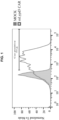
- Figure 1 shows LYPD3 CAR expression in transduced mouse lymphocytes. Mouse lymphocytes were approximately 77.6% LYPD3 CAR-positive as determined by Fab staining.
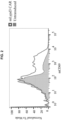
- FIG. 2 details LYPD3 CAR T-cell activation by LYPD3-positive Lewis lung cancer (LLC) cells as measured by CD69 activation.
- LLC Lewis lung cancer
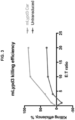
- Figure 3 shows LYPD3 CAR T-cell killing efficacy against LYPD3-positive tumor cells. Killing efficacies were calculated based on numbers of live LLC cells present after overnight coculture with untransduced or LYPD3 CAR-T cells incubated at the indicated ratios. Together, these three figures demonstrate that murine LYPD3 CAR-T cells are capable of specifically recognizing and killing tumor cells harboring the LYPD3 antigen.
- Example 2 Preclinical antitumor efficacy of LYPD3 CAR-T cells without overt toxicity.
- the preceding example illustrates the in vitro stimulation and cytotoxic activity of mouse LYPD3 CAR-T cells against LYPD3-positive tumor cells.
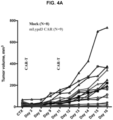
- C57BL/6 mice were subcutaneously implanted with 1e6 LLC cells engineered to express LYPD3.
- cyclophosphamide 300mg/kg was intraperitoneally injected for preconditioning.
- 10e6 untransduced or LYPD3 CAR-T cells were injected into through the tail vein.
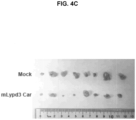
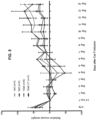
- LYPD3 CAR-T cells are capable of selectively killing mouse tumor cells harboring the LYPD3 antigen.
- human PBMCs were engineered to express a human LYPD3 CAR.
- human MCF7 breast cancer cells endogenously expressing LYPD3 were utilized as target cells.
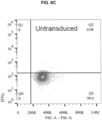
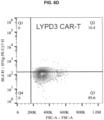
- Figure 6 contains FACS data showing human LYPD3 CAR T-cells are reactive against human cancer cells.
- Figure 6A demonstrates robust LYPD3 CAR expression in human PBMCs, as quantified by human Fab staining, whereas Figure 6B details LYPD3 CAR-T cell stimulation by human cancer cells expressing endogenous LYPD3.
- CAR-T cells were collected and stained with CD3 and CD69 antibodies prior to quantification by flow cytometry.
Landscapes
- Health & Medical Sciences (AREA)
- Life Sciences & Earth Sciences (AREA)
- Chemical & Material Sciences (AREA)
- Immunology (AREA)
- Organic Chemistry (AREA)
- General Health & Medical Sciences (AREA)
- Medicinal Chemistry (AREA)
- Genetics & Genomics (AREA)
- Biochemistry (AREA)
- Cell Biology (AREA)
- Proteomics, Peptides & Aminoacids (AREA)
- Zoology (AREA)
- Biophysics (AREA)
- Molecular Biology (AREA)
- Animal Behavior & Ethology (AREA)
- Public Health (AREA)
- Veterinary Medicine (AREA)
- Engineering & Computer Science (AREA)
- Epidemiology (AREA)
- Biomedical Technology (AREA)
- Gastroenterology & Hepatology (AREA)
- Toxicology (AREA)
- Pharmacology & Pharmacy (AREA)
- Biotechnology (AREA)
- Bioinformatics & Cheminformatics (AREA)
- Wood Science & Technology (AREA)
- Hematology (AREA)
- Chemical Kinetics & Catalysis (AREA)
- Nuclear Medicine, Radiotherapy & Molecular Imaging (AREA)
- General Chemical & Material Sciences (AREA)
- General Engineering & Computer Science (AREA)
- Microbiology (AREA)
- Virology (AREA)
- Developmental Biology & Embryology (AREA)
- Medicines Containing Material From Animals Or Micro-Organisms (AREA)
- Micro-Organisms Or Cultivation Processes Thereof (AREA)
- Medicines That Contain Protein Lipid Enzymes And Other Medicines (AREA)
- Peptides Or Proteins (AREA)
Applications Claiming Priority (2)
| Application Number | Priority Date | Filing Date | Title |
|---|---|---|---|
| US201862700942P | 2018-07-20 | 2018-07-20 | |
| PCT/US2019/042707 WO2020018973A1 (en) | 2018-07-20 | 2019-07-19 | Anti-lypd3 car t-cell therapy for the treatment of cancer |
Publications (3)
| Publication Number | Publication Date |
|---|---|
| EP3823992A1 EP3823992A1 (en) | 2021-05-26 |
| EP3823992A4 EP3823992A4 (en) | 2022-05-11 |
| EP3823992B1 true EP3823992B1 (en) | 2023-12-13 |
Family
ID=69164634
Family Applications (1)
| Application Number | Title | Priority Date | Filing Date |
|---|---|---|---|
| EP19838801.9A Revoked EP3823992B1 (en) | 2018-07-20 | 2019-07-19 | Anti-lypd3 car t-cell therapy for the treatment of cancer |
Country Status (9)
| Country | Link |
|---|---|
| US (1) | US20210309711A1 (https=) |
| EP (1) | EP3823992B1 (https=) |
| JP (1) | JP2021530238A (https=) |
| KR (1) | KR20210063319A (https=) |
| CN (1) | CN112955466A (https=) |
| AU (1) | AU2019305223A1 (https=) |
| CA (1) | CA3106967A1 (https=) |
| SG (1) | SG11202100571TA (https=) |
| WO (1) | WO2020018973A1 (https=) |
Families Citing this family (1)
| Publication number | Priority date | Publication date | Assignee | Title |
|---|---|---|---|---|
| CA3258344A1 (en) | 2022-06-07 | 2023-12-14 | Actinium Pharmaceuticals, Inc. | CHELETARIANS AND BIFUNCTIONAL CONJUGATES |
Family Cites Families (11)
| Publication number | Priority date | Publication date | Assignee | Title |
|---|---|---|---|---|
| US7332580B2 (en) * | 2002-04-05 | 2008-02-19 | The Regents Of The University Of California | Bispecific single chain Fv antibody molecules and methods of use thereof |
| US20130266551A1 (en) * | 2003-11-05 | 2013-10-10 | St. Jude Children's Research Hospital, Inc. | Chimeric receptors with 4-1bb stimulatory signaling domain |
| AU2010329904B2 (en) * | 2009-12-09 | 2015-07-09 | Bayer Pharma Aktiengesellschaft | Anti-C4.4a antibodies and uses thereof |
| US9790282B2 (en) * | 2013-03-25 | 2017-10-17 | The United States Of America, As Represented By The Secretary, Department Of Health And Human Services | Anti-CD276 polypeptides, proteins, and chimeric antigen receptors |
| CA3289997A1 (en) * | 2015-09-20 | 2026-03-02 | The United States Of America, As Represented By The Secretary, Department Of Health And Human Services | Monoclonal Antibodies Specific for Fibroblast Growth Factor Receptor 4 (FGFR4) and Methods of Their Use |
| CN105132575B (zh) * | 2015-09-28 | 2020-03-27 | 固安博健生物技术有限公司 | 骨质疏松症的分子标志物及其应用 |
| GB201518136D0 (en) * | 2015-10-14 | 2015-11-25 | Glaxosmithkline Ip Dev Ltd | Novel chimeric antigen receptors |
| US11299708B2 (en) * | 2016-05-12 | 2022-04-12 | Adicet Bio, Inc. | Methods for selective expansion of γδ T-cell populations and compositions thereof |
| BR112018074453A2 (pt) * | 2016-05-27 | 2019-03-19 | Abbvie Biotherapeutics Inc. | proteínas de ligação biespecíficas ligando uma protéina imunomoduladora e um antígeno tumoral |
| CN106119405B (zh) * | 2016-08-31 | 2019-11-12 | 广州万德基因医学科技有限公司 | 一种肺癌的预后标记物、使用该标记预测肺癌预后的方法及应用 |
| US20190269728A1 (en) * | 2018-03-02 | 2019-09-05 | Sixfold Bioscience Ltd. | Compositions for delivery of cargo to cells |
-
2019
- 2019-07-19 WO PCT/US2019/042707 patent/WO2020018973A1/en not_active Ceased
- 2019-07-19 JP JP2021503023A patent/JP2021530238A/ja active Pending
- 2019-07-19 EP EP19838801.9A patent/EP3823992B1/en not_active Revoked
- 2019-07-19 US US17/261,488 patent/US20210309711A1/en not_active Abandoned
- 2019-07-19 SG SG11202100571TA patent/SG11202100571TA/en unknown
- 2019-07-19 AU AU2019305223A patent/AU2019305223A1/en not_active Abandoned
- 2019-07-19 KR KR1020217004654A patent/KR20210063319A/ko not_active Ceased
- 2019-07-19 CA CA3106967A patent/CA3106967A1/en active Pending
- 2019-07-19 CN CN201980061125.6A patent/CN112955466A/zh active Pending
Also Published As
| Publication number | Publication date |
|---|---|
| KR20210063319A (ko) | 2021-06-01 |
| SG11202100571TA (en) | 2021-02-25 |
| CN112955466A (zh) | 2021-06-11 |
| JP2021530238A (ja) | 2021-11-11 |
| WO2020018973A1 (en) | 2020-01-23 |
| EP3823992A4 (en) | 2022-05-11 |
| US20210309711A1 (en) | 2021-10-07 |
| CA3106967A1 (en) | 2020-01-23 |
| EP3823992A1 (en) | 2021-05-26 |
| AU2019305223A1 (en) | 2021-02-18 |
Similar Documents
| Publication | Publication Date | Title |
|---|---|---|
| KR102618231B1 (ko) | 변형된 만능성 줄기 세포, 및 제조 및 사용 방법 | |
| JP7062720B2 (ja) | 細胞免疫療法のための方法および組成物 | |
| TWI787599B (zh) | 嵌合抗原和t細胞受體及使用方法 | |
| CN105980402B (zh) | 带标签的嵌合效应分子及其受体 | |
| TW202018083A (zh) | 用於細胞療法之多樣化抗原結合域、新穎平台及其他增強子 | |
| US11458168B2 (en) | NKT-cell subset for in vivo persistence and therapeutic activity and propagation of same | |
| EP4537839A2 (en) | Method and compositions for cellular immunotherapy | |
| KR20180082493A (ko) | Traf-유도 도메인을 함유하는 키메라 수용체 및 관련 조성물 및 방법 | |
| KR20190101979A (ko) | 합성 면역 수용체 및 이의 사용 방법 | |
| TW201930342A (zh) | 包含nkg2d結構域的多特異性嵌合受體及其使用方法 | |
| US20210379149A1 (en) | Increasing or Maintaining T-Cell Subpopulations in Adoptive T-Cell Therapy | |
| KR20230088333A (ko) | 입양 세포 요법을 위한 표적화된 공동자극을 제공하는 수용체 | |
| TW202039540A (zh) | 一種治療ebv相關性癌症之抗lmp2 tcr-t細胞療法 | |
| KR20230155521A (ko) | 면역 세포 기능의 향상 | |
| EP3823992B1 (en) | Anti-lypd3 car t-cell therapy for the treatment of cancer | |
| HK40044926A (en) | Anti-lypd3 car t-cell therapy for the treatment of cancer | |
| US20240335472A1 (en) | Anti-her2 car nk cells, methods of their production and uses thereof | |
| WO2026003364A1 (en) | Chimeric coreceptors |
Legal Events
| Date | Code | Title | Description |
|---|---|---|---|
| STAA | Information on the status of an ep patent application or granted ep patent |
Free format text: STATUS: THE INTERNATIONAL PUBLICATION HAS BEEN MADE |
|
| PUAI | Public reference made under article 153(3) epc to a published international application that has entered the european phase |
Free format text: ORIGINAL CODE: 0009012 |
|
| STAA | Information on the status of an ep patent application or granted ep patent |
Free format text: STATUS: REQUEST FOR EXAMINATION WAS MADE |
|
| 17P | Request for examination filed |
Effective date: 20210121 |
|
| AK | Designated contracting states |
Kind code of ref document: A1 Designated state(s): AL AT BE BG CH CY CZ DE DK EE ES FI FR GB GR HR HU IE IS IT LI LT LU LV MC MK MT NL NO PL PT RO RS SE SI SK SM TR |
|
| DAV | Request for validation of the european patent (deleted) | ||
| DAX | Request for extension of the european patent (deleted) | ||
| A4 | Supplementary search report drawn up and despatched |
Effective date: 20220408 |
|
| RIC1 | Information provided on ipc code assigned before grant |
Ipc: C07K 14/705 20060101ALI20220404BHEP Ipc: A61K 39/00 20060101ALI20220404BHEP Ipc: C07K 14/725 20060101ALI20220404BHEP Ipc: A61P 35/00 20060101ALI20220404BHEP Ipc: A61K 39/395 20060101ALI20220404BHEP Ipc: C07K 16/30 20060101ALI20220404BHEP Ipc: C07K 16/28 20060101AFI20220404BHEP |
|
| REG | Reference to a national code |
Ref country code: DE Ref legal event code: R079 Free format text: PREVIOUS MAIN CLASS: C07K0016280000 Ipc: A61K0039000000 Ref country code: DE Ref legal event code: R079 Ref document number: 602019043344 Country of ref document: DE Free format text: PREVIOUS MAIN CLASS: C07K0016280000 Ipc: A61K0039000000 |
|
| GRAP | Despatch of communication of intention to grant a patent |
Free format text: ORIGINAL CODE: EPIDOSNIGR1 |
|
| STAA | Information on the status of an ep patent application or granted ep patent |
Free format text: STATUS: GRANT OF PATENT IS INTENDED |
|
| RIC1 | Information provided on ipc code assigned before grant |
Ipc: C07K 16/30 20060101ALI20230615BHEP Ipc: C07K 16/28 20060101ALI20230615BHEP Ipc: C07K 14/705 20060101ALI20230615BHEP Ipc: A61P 35/00 20060101ALI20230615BHEP Ipc: C07K 14/725 20060101ALI20230615BHEP Ipc: A61K 39/00 20060101AFI20230615BHEP |
|
| INTG | Intention to grant announced |
Effective date: 20230713 |
|
| GRAJ | Information related to disapproval of communication of intention to grant by the applicant or resumption of examination proceedings by the epo deleted |
Free format text: ORIGINAL CODE: EPIDOSDIGR1 |
|
| STAA | Information on the status of an ep patent application or granted ep patent |
Free format text: STATUS: REQUEST FOR EXAMINATION WAS MADE |
|
| GRAS | Grant fee paid |
Free format text: ORIGINAL CODE: EPIDOSNIGR3 |
|
| STAA | Information on the status of an ep patent application or granted ep patent |
Free format text: STATUS: GRANT OF PATENT IS INTENDED |
|
| GRAP | Despatch of communication of intention to grant a patent |
Free format text: ORIGINAL CODE: EPIDOSNIGR1 |
|
| GRAA | (expected) grant |
Free format text: ORIGINAL CODE: 0009210 |
|
| STAA | Information on the status of an ep patent application or granted ep patent |
Free format text: STATUS: THE PATENT HAS BEEN GRANTED |
|
| INTC | Intention to grant announced (deleted) | ||
| RAP3 | Party data changed (applicant data changed or rights of an application transferred) |
Owner name: DUKE UNIVERSITY |
|
| INTG | Intention to grant announced |
Effective date: 20231107 |
|
| AK | Designated contracting states |
Kind code of ref document: B1 Designated state(s): AL AT BE BG CH CY CZ DE DK EE ES FI FR GB GR HR HU IE IS IT LI LT LU LV MC MK MT NL NO PL PT RO RS SE SI SK SM TR |
|
| REG | Reference to a national code |
Ref country code: GB Ref legal event code: FG4D |
|
| REG | Reference to a national code |
Ref country code: CH Ref legal event code: EP |
|
| REG | Reference to a national code |
Ref country code: DE Ref legal event code: R096 Ref document number: 602019043344 Country of ref document: DE |
|
| P01 | Opt-out of the competence of the unified patent court (upc) registered |
Effective date: 20231117 |
|
| REG | Reference to a national code |
Ref country code: IE Ref legal event code: FG4D |
|
| PG25 | Lapsed in a contracting state [announced via postgrant information from national office to epo] |
Ref country code: GR Free format text: LAPSE BECAUSE OF FAILURE TO SUBMIT A TRANSLATION OF THE DESCRIPTION OR TO PAY THE FEE WITHIN THE PRESCRIBED TIME-LIMIT Effective date: 20240314 |
|
| REG | Reference to a national code |
Ref country code: LT Ref legal event code: MG9D |
|
| PG25 | Lapsed in a contracting state [announced via postgrant information from national office to epo] |
Ref country code: LT Free format text: LAPSE BECAUSE OF FAILURE TO SUBMIT A TRANSLATION OF THE DESCRIPTION OR TO PAY THE FEE WITHIN THE PRESCRIBED TIME-LIMIT Effective date: 20231213 |
|
| REG | Reference to a national code |
Ref country code: NL Ref legal event code: MP Effective date: 20231213 |
|
| PG25 | Lapsed in a contracting state [announced via postgrant information from national office to epo] |
Ref country code: ES Free format text: LAPSE BECAUSE OF FAILURE TO SUBMIT A TRANSLATION OF THE DESCRIPTION OR TO PAY THE FEE WITHIN THE PRESCRIBED TIME-LIMIT Effective date: 20231213 |
|
| PG25 | Lapsed in a contracting state [announced via postgrant information from national office to epo] |
Ref country code: LT Free format text: LAPSE BECAUSE OF FAILURE TO SUBMIT A TRANSLATION OF THE DESCRIPTION OR TO PAY THE FEE WITHIN THE PRESCRIBED TIME-LIMIT Effective date: 20231213 Ref country code: GR Free format text: LAPSE BECAUSE OF FAILURE TO SUBMIT A TRANSLATION OF THE DESCRIPTION OR TO PAY THE FEE WITHIN THE PRESCRIBED TIME-LIMIT Effective date: 20240314 Ref country code: ES Free format text: LAPSE BECAUSE OF FAILURE TO SUBMIT A TRANSLATION OF THE DESCRIPTION OR TO PAY THE FEE WITHIN THE PRESCRIBED TIME-LIMIT Effective date: 20231213 Ref country code: BG Free format text: LAPSE BECAUSE OF FAILURE TO SUBMIT A TRANSLATION OF THE DESCRIPTION OR TO PAY THE FEE WITHIN THE PRESCRIBED TIME-LIMIT Effective date: 20240313 |
|
| REG | Reference to a national code |
Ref country code: AT Ref legal event code: MK05 Ref document number: 1639922 Country of ref document: AT Kind code of ref document: T Effective date: 20231213 |
|
| PG25 | Lapsed in a contracting state [announced via postgrant information from national office to epo] |
Ref country code: NL Free format text: LAPSE BECAUSE OF FAILURE TO SUBMIT A TRANSLATION OF THE DESCRIPTION OR TO PAY THE FEE WITHIN THE PRESCRIBED TIME-LIMIT Effective date: 20231213 |
|
| PG25 | Lapsed in a contracting state [announced via postgrant information from national office to epo] |
Ref country code: SE Free format text: LAPSE BECAUSE OF FAILURE TO SUBMIT A TRANSLATION OF THE DESCRIPTION OR TO PAY THE FEE WITHIN THE PRESCRIBED TIME-LIMIT Effective date: 20231213 Ref country code: RS Free format text: LAPSE BECAUSE OF FAILURE TO SUBMIT A TRANSLATION OF THE DESCRIPTION OR TO PAY THE FEE WITHIN THE PRESCRIBED TIME-LIMIT Effective date: 20231213 Ref country code: NO Free format text: LAPSE BECAUSE OF FAILURE TO SUBMIT A TRANSLATION OF THE DESCRIPTION OR TO PAY THE FEE WITHIN THE PRESCRIBED TIME-LIMIT Effective date: 20240313 Ref country code: NL Free format text: LAPSE BECAUSE OF FAILURE TO SUBMIT A TRANSLATION OF THE DESCRIPTION OR TO PAY THE FEE WITHIN THE PRESCRIBED TIME-LIMIT Effective date: 20231213 Ref country code: LV Free format text: LAPSE BECAUSE OF FAILURE TO SUBMIT A TRANSLATION OF THE DESCRIPTION OR TO PAY THE FEE WITHIN THE PRESCRIBED TIME-LIMIT Effective date: 20231213 Ref country code: HR Free format text: LAPSE BECAUSE OF FAILURE TO SUBMIT A TRANSLATION OF THE DESCRIPTION OR TO PAY THE FEE WITHIN THE PRESCRIBED TIME-LIMIT Effective date: 20231213 |
|
| PG25 | Lapsed in a contracting state [announced via postgrant information from national office to epo] |
Ref country code: IS Free format text: LAPSE BECAUSE OF FAILURE TO SUBMIT A TRANSLATION OF THE DESCRIPTION OR TO PAY THE FEE WITHIN THE PRESCRIBED TIME-LIMIT Effective date: 20240413 |
|
| PG25 | Lapsed in a contracting state [announced via postgrant information from national office to epo] |
Ref country code: AT Free format text: LAPSE BECAUSE OF FAILURE TO SUBMIT A TRANSLATION OF THE DESCRIPTION OR TO PAY THE FEE WITHIN THE PRESCRIBED TIME-LIMIT Effective date: 20231213 Ref country code: CZ Free format text: LAPSE BECAUSE OF FAILURE TO SUBMIT A TRANSLATION OF THE DESCRIPTION OR TO PAY THE FEE WITHIN THE PRESCRIBED TIME-LIMIT Effective date: 20231213 |
|
| PG25 | Lapsed in a contracting state [announced via postgrant information from national office to epo] |
Ref country code: SK Free format text: LAPSE BECAUSE OF FAILURE TO SUBMIT A TRANSLATION OF THE DESCRIPTION OR TO PAY THE FEE WITHIN THE PRESCRIBED TIME-LIMIT Effective date: 20231213 |
|
| PG25 | Lapsed in a contracting state [announced via postgrant information from national office to epo] |
Ref country code: SM Free format text: LAPSE BECAUSE OF FAILURE TO SUBMIT A TRANSLATION OF THE DESCRIPTION OR TO PAY THE FEE WITHIN THE PRESCRIBED TIME-LIMIT Effective date: 20231213 Ref country code: SK Free format text: LAPSE BECAUSE OF FAILURE TO SUBMIT A TRANSLATION OF THE DESCRIPTION OR TO PAY THE FEE WITHIN THE PRESCRIBED TIME-LIMIT Effective date: 20231213 Ref country code: RO Free format text: LAPSE BECAUSE OF FAILURE TO SUBMIT A TRANSLATION OF THE DESCRIPTION OR TO PAY THE FEE WITHIN THE PRESCRIBED TIME-LIMIT Effective date: 20231213 Ref country code: IT Free format text: LAPSE BECAUSE OF FAILURE TO SUBMIT A TRANSLATION OF THE DESCRIPTION OR TO PAY THE FEE WITHIN THE PRESCRIBED TIME-LIMIT Effective date: 20231213 Ref country code: IS Free format text: LAPSE BECAUSE OF FAILURE TO SUBMIT A TRANSLATION OF THE DESCRIPTION OR TO PAY THE FEE WITHIN THE PRESCRIBED TIME-LIMIT Effective date: 20240413 Ref country code: EE Free format text: LAPSE BECAUSE OF FAILURE TO SUBMIT A TRANSLATION OF THE DESCRIPTION OR TO PAY THE FEE WITHIN THE PRESCRIBED TIME-LIMIT Effective date: 20231213 Ref country code: CZ Free format text: LAPSE BECAUSE OF FAILURE TO SUBMIT A TRANSLATION OF THE DESCRIPTION OR TO PAY THE FEE WITHIN THE PRESCRIBED TIME-LIMIT Effective date: 20231213 Ref country code: AT Free format text: LAPSE BECAUSE OF FAILURE TO SUBMIT A TRANSLATION OF THE DESCRIPTION OR TO PAY THE FEE WITHIN THE PRESCRIBED TIME-LIMIT Effective date: 20231213 |
|
| PG25 | Lapsed in a contracting state [announced via postgrant information from national office to epo] |
Ref country code: PT Free format text: LAPSE BECAUSE OF FAILURE TO SUBMIT A TRANSLATION OF THE DESCRIPTION OR TO PAY THE FEE WITHIN THE PRESCRIBED TIME-LIMIT Effective date: 20240415 Ref country code: PL Free format text: LAPSE BECAUSE OF FAILURE TO SUBMIT A TRANSLATION OF THE DESCRIPTION OR TO PAY THE FEE WITHIN THE PRESCRIBED TIME-LIMIT Effective date: 20231213 |
|
| PG25 | Lapsed in a contracting state [announced via postgrant information from national office to epo] |
Ref country code: PT Free format text: LAPSE BECAUSE OF FAILURE TO SUBMIT A TRANSLATION OF THE DESCRIPTION OR TO PAY THE FEE WITHIN THE PRESCRIBED TIME-LIMIT Effective date: 20240415 Ref country code: PL Free format text: LAPSE BECAUSE OF FAILURE TO SUBMIT A TRANSLATION OF THE DESCRIPTION OR TO PAY THE FEE WITHIN THE PRESCRIBED TIME-LIMIT Effective date: 20231213 |
|
| REG | Reference to a national code |
Ref country code: DE Ref legal event code: R026 Ref document number: 602019043344 Country of ref document: DE |
|
| PLBI | Opposition filed |
Free format text: ORIGINAL CODE: 0009260 |
|
| PLAB | Opposition data, opponent's data or that of the opponent's representative modified |
Free format text: ORIGINAL CODE: 0009299OPPO |
|
| PLAX | Notice of opposition and request to file observation + time limit sent |
Free format text: ORIGINAL CODE: EPIDOSNOBS2 |
|
| PGFP | Annual fee paid to national office [announced via postgrant information from national office to epo] |
Ref country code: DE Payment date: 20240729 Year of fee payment: 6 |
|
| PG25 | Lapsed in a contracting state [announced via postgrant information from national office to epo] |
Ref country code: DK Free format text: LAPSE BECAUSE OF FAILURE TO SUBMIT A TRANSLATION OF THE DESCRIPTION OR TO PAY THE FEE WITHIN THE PRESCRIBED TIME-LIMIT Effective date: 20231213 |
|
| PGFP | Annual fee paid to national office [announced via postgrant information from national office to epo] |
Ref country code: GB Payment date: 20240729 Year of fee payment: 6 |
|
| 26 | Opposition filed |
Opponent name: HEMSATH, LARS Effective date: 20240912 |
|
| PGFP | Annual fee paid to national office [announced via postgrant information from national office to epo] |
Ref country code: FR Payment date: 20240725 Year of fee payment: 6 |
|
| R26 | Opposition filed (corrected) |
Opponent name: HEMSATH, LARS Effective date: 20240912 |
|
| PG25 | Lapsed in a contracting state [announced via postgrant information from national office to epo] |
Ref country code: SI Free format text: LAPSE BECAUSE OF FAILURE TO SUBMIT A TRANSLATION OF THE DESCRIPTION OR TO PAY THE FEE WITHIN THE PRESCRIBED TIME-LIMIT Effective date: 20231213 |
|
| PG25 | Lapsed in a contracting state [announced via postgrant information from national office to epo] |
Ref country code: SI Free format text: LAPSE BECAUSE OF FAILURE TO SUBMIT A TRANSLATION OF THE DESCRIPTION OR TO PAY THE FEE WITHIN THE PRESCRIBED TIME-LIMIT Effective date: 20231213 Ref country code: DK Free format text: LAPSE BECAUSE OF FAILURE TO SUBMIT A TRANSLATION OF THE DESCRIPTION OR TO PAY THE FEE WITHIN THE PRESCRIBED TIME-LIMIT Effective date: 20231213 |
|
| PG25 | Lapsed in a contracting state [announced via postgrant information from national office to epo] |
Ref country code: MC Free format text: LAPSE BECAUSE OF FAILURE TO SUBMIT A TRANSLATION OF THE DESCRIPTION OR TO PAY THE FEE WITHIN THE PRESCRIBED TIME-LIMIT Effective date: 20231213 |
|
| REG | Reference to a national code |
Ref country code: CH Ref legal event code: PL |
|
| RDAF | Communication despatched that patent is revoked |
Free format text: ORIGINAL CODE: EPIDOSNREV1 |
|
| REG | Reference to a national code |
Ref country code: DE Ref legal event code: R103 Ref document number: 602019043344 Country of ref document: DE Ref country code: DE Ref legal event code: R064 Ref document number: 602019043344 Country of ref document: DE |
|
| PG25 | Lapsed in a contracting state [announced via postgrant information from national office to epo] |
Ref country code: LU Free format text: LAPSE BECAUSE OF NON-PAYMENT OF DUE FEES Effective date: 20240719 |
|
| PG25 | Lapsed in a contracting state [announced via postgrant information from national office to epo] |
Ref country code: LU Free format text: LAPSE BECAUSE OF NON-PAYMENT OF DUE FEES Effective date: 20240719 |
|
| PG25 | Lapsed in a contracting state [announced via postgrant information from national office to epo] |
Ref country code: CH Free format text: LAPSE BECAUSE OF NON-PAYMENT OF DUE FEES Effective date: 20240731 Ref country code: BE Free format text: LAPSE BECAUSE OF NON-PAYMENT OF DUE FEES Effective date: 20240731 |
|
| REG | Reference to a national code |
Ref country code: BE Ref legal event code: MM Effective date: 20240731 |
|
| RDAG | Patent revoked |
Free format text: ORIGINAL CODE: 0009271 |
|
| STAA | Information on the status of an ep patent application or granted ep patent |
Free format text: STATUS: PATENT REVOKED |
|
| REG | Reference to a national code |
Ref country code: CH Ref legal event code: PL |
|
| REG | Reference to a national code |
Ref country code: CH Ref legal event code: PL |
|
| 27W | Patent revoked |
Effective date: 20250311 |
|
| GBPR | Gb: patent revoked under art. 102 of the ep convention designating the uk as contracting state |
Effective date: 20250311 |
|
| PG25 | Lapsed in a contracting state [announced via postgrant information from national office to epo] |
Ref country code: IE Free format text: LAPSE BECAUSE OF NON-PAYMENT OF DUE FEES Effective date: 20240719 |
|
| PG25 | Lapsed in a contracting state [announced via postgrant information from national office to epo] |
Ref country code: FI Free format text: LAPSE BECAUSE OF FAILURE TO SUBMIT A TRANSLATION OF THE DESCRIPTION OR TO PAY THE FEE WITHIN THE PRESCRIBED TIME-LIMIT Effective date: 20231213 |
|
| PG25 | Lapsed in a contracting state [announced via postgrant information from national office to epo] |
Ref country code: CY Free format text: LAPSE BECAUSE OF FAILURE TO SUBMIT A TRANSLATION OF THE DESCRIPTION OR TO PAY THE FEE WITHIN THE PRESCRIBED TIME-LIMIT; INVALID AB INITIO Effective date: 20190719 |