EP3823281A1 - Video encoding method for encoding division block, video decoding method for decoding division block, and recording medium for implementing the same - Google Patents
Video encoding method for encoding division block, video decoding method for decoding division block, and recording medium for implementing the same Download PDFInfo
- Publication number
- EP3823281A1 EP3823281A1 EP20212253.7A EP20212253A EP3823281A1 EP 3823281 A1 EP3823281 A1 EP 3823281A1 EP 20212253 A EP20212253 A EP 20212253A EP 3823281 A1 EP3823281 A1 EP 3823281A1
- Authority
- EP
- European Patent Office
- Prior art keywords
- block
- sub
- blocks
- encoding
- decoding
- Prior art date
- Legal status (The legal status is an assumption and is not a legal conclusion. Google has not performed a legal analysis and makes no representation as to the accuracy of the status listed.)
- Pending
Links
Images



Classifications
-
- H—ELECTRICITY
- H04—ELECTRIC COMMUNICATION TECHNIQUE
- H04N—PICTORIAL COMMUNICATION, e.g. TELEVISION
- H04N19/00—Methods or arrangements for coding, decoding, compressing or decompressing digital video signals
- H04N19/85—Methods or arrangements for coding, decoding, compressing or decompressing digital video signals using pre-processing or post-processing specially adapted for video compression
- H04N19/86—Methods or arrangements for coding, decoding, compressing or decompressing digital video signals using pre-processing or post-processing specially adapted for video compression involving reduction of coding artifacts, e.g. of blockiness
-
- H—ELECTRICITY
- H04—ELECTRIC COMMUNICATION TECHNIQUE
- H04N—PICTORIAL COMMUNICATION, e.g. TELEVISION
- H04N19/00—Methods or arrangements for coding, decoding, compressing or decompressing digital video signals
- H04N19/10—Methods or arrangements for coding, decoding, compressing or decompressing digital video signals using adaptive coding
- H04N19/169—Methods or arrangements for coding, decoding, compressing or decompressing digital video signals using adaptive coding characterised by the coding unit, i.e. the structural portion or semantic portion of the video signal being the object or the subject of the adaptive coding
- H04N19/17—Methods or arrangements for coding, decoding, compressing or decompressing digital video signals using adaptive coding characterised by the coding unit, i.e. the structural portion or semantic portion of the video signal being the object or the subject of the adaptive coding the unit being an image region, e.g. an object
- H04N19/176—Methods or arrangements for coding, decoding, compressing or decompressing digital video signals using adaptive coding characterised by the coding unit, i.e. the structural portion or semantic portion of the video signal being the object or the subject of the adaptive coding the unit being an image region, e.g. an object the region being a block, e.g. a macroblock
-
- H—ELECTRICITY
- H04—ELECTRIC COMMUNICATION TECHNIQUE
- H04N—PICTORIAL COMMUNICATION, e.g. TELEVISION
- H04N19/00—Methods or arrangements for coding, decoding, compressing or decompressing digital video signals
- H04N19/10—Methods or arrangements for coding, decoding, compressing or decompressing digital video signals using adaptive coding
- H04N19/102—Methods or arrangements for coding, decoding, compressing or decompressing digital video signals using adaptive coding characterised by the element, parameter or selection affected or controlled by the adaptive coding
- H04N19/103—Selection of coding mode or of prediction mode
-
- H—ELECTRICITY
- H04—ELECTRIC COMMUNICATION TECHNIQUE
- H04N—PICTORIAL COMMUNICATION, e.g. TELEVISION
- H04N19/00—Methods or arrangements for coding, decoding, compressing or decompressing digital video signals
- H04N19/10—Methods or arrangements for coding, decoding, compressing or decompressing digital video signals using adaptive coding
- H04N19/102—Methods or arrangements for coding, decoding, compressing or decompressing digital video signals using adaptive coding characterised by the element, parameter or selection affected or controlled by the adaptive coding
- H04N19/12—Selection from among a plurality of transforms or standards, e.g. selection between discrete cosine transform [DCT] and sub-band transform or selection between H.263 and H.264
- H04N19/122—Selection of transform size, e.g. 8x8 or 2x4x8 DCT; Selection of sub-band transforms of varying structure or type
-
- H—ELECTRICITY
- H04—ELECTRIC COMMUNICATION TECHNIQUE
- H04N—PICTORIAL COMMUNICATION, e.g. TELEVISION
- H04N19/00—Methods or arrangements for coding, decoding, compressing or decompressing digital video signals
- H04N19/10—Methods or arrangements for coding, decoding, compressing or decompressing digital video signals using adaptive coding
- H04N19/102—Methods or arrangements for coding, decoding, compressing or decompressing digital video signals using adaptive coding characterised by the element, parameter or selection affected or controlled by the adaptive coding
- H04N19/124—Quantisation
-
- H—ELECTRICITY
- H04—ELECTRIC COMMUNICATION TECHNIQUE
- H04N—PICTORIAL COMMUNICATION, e.g. TELEVISION
- H04N19/00—Methods or arrangements for coding, decoding, compressing or decompressing digital video signals
- H04N19/10—Methods or arrangements for coding, decoding, compressing or decompressing digital video signals using adaptive coding
- H04N19/102—Methods or arrangements for coding, decoding, compressing or decompressing digital video signals using adaptive coding characterised by the element, parameter or selection affected or controlled by the adaptive coding
- H04N19/13—Adaptive entropy coding, e.g. adaptive variable length coding [AVLC] or context adaptive binary arithmetic coding [CABAC]
-
- H—ELECTRICITY
- H04—ELECTRIC COMMUNICATION TECHNIQUE
- H04N—PICTORIAL COMMUNICATION, e.g. TELEVISION
- H04N19/00—Methods or arrangements for coding, decoding, compressing or decompressing digital video signals
- H04N19/10—Methods or arrangements for coding, decoding, compressing or decompressing digital video signals using adaptive coding
- H04N19/134—Methods or arrangements for coding, decoding, compressing or decompressing digital video signals using adaptive coding characterised by the element, parameter or criterion affecting or controlling the adaptive coding
- H04N19/136—Incoming video signal characteristics or properties
- H04N19/14—Coding unit complexity, e.g. amount of activity or edge presence estimation
-
- H—ELECTRICITY
- H04—ELECTRIC COMMUNICATION TECHNIQUE
- H04N—PICTORIAL COMMUNICATION, e.g. TELEVISION
- H04N19/00—Methods or arrangements for coding, decoding, compressing or decompressing digital video signals
- H04N19/10—Methods or arrangements for coding, decoding, compressing or decompressing digital video signals using adaptive coding
- H04N19/134—Methods or arrangements for coding, decoding, compressing or decompressing digital video signals using adaptive coding characterised by the element, parameter or criterion affecting or controlling the adaptive coding
- H04N19/157—Assigned coding mode, i.e. the coding mode being predefined or preselected to be further used for selection of another element or parameter
- H04N19/159—Prediction type, e.g. intra-frame, inter-frame or bidirectional frame prediction
-
- H—ELECTRICITY
- H04—ELECTRIC COMMUNICATION TECHNIQUE
- H04N—PICTORIAL COMMUNICATION, e.g. TELEVISION
- H04N19/00—Methods or arrangements for coding, decoding, compressing or decompressing digital video signals
- H04N19/60—Methods or arrangements for coding, decoding, compressing or decompressing digital video signals using transform coding
- H04N19/61—Methods or arrangements for coding, decoding, compressing or decompressing digital video signals using transform coding in combination with predictive coding
-
- H—ELECTRICITY
- H04—ELECTRIC COMMUNICATION TECHNIQUE
- H04N—PICTORIAL COMMUNICATION, e.g. TELEVISION
- H04N19/00—Methods or arrangements for coding, decoding, compressing or decompressing digital video signals
- H04N19/80—Details of filtering operations specially adapted for video compression, e.g. for pixel interpolation
-
- H—ELECTRICITY
- H04—ELECTRIC COMMUNICATION TECHNIQUE
- H04N—PICTORIAL COMMUNICATION, e.g. TELEVISION
- H04N19/00—Methods or arrangements for coding, decoding, compressing or decompressing digital video signals
- H04N19/10—Methods or arrangements for coding, decoding, compressing or decompressing digital video signals using adaptive coding
- H04N19/102—Methods or arrangements for coding, decoding, compressing or decompressing digital video signals using adaptive coding characterised by the element, parameter or selection affected or controlled by the adaptive coding
- H04N19/117—Filters, e.g. for pre-processing or post-processing
-
- H—ELECTRICITY
- H04—ELECTRIC COMMUNICATION TECHNIQUE
- H04N—PICTORIAL COMMUNICATION, e.g. TELEVISION
- H04N19/00—Methods or arrangements for coding, decoding, compressing or decompressing digital video signals
- H04N19/10—Methods or arrangements for coding, decoding, compressing or decompressing digital video signals using adaptive coding
- H04N19/169—Methods or arrangements for coding, decoding, compressing or decompressing digital video signals using adaptive coding characterised by the coding unit, i.e. the structural portion or semantic portion of the video signal being the object or the subject of the adaptive coding
- H04N19/17—Methods or arrangements for coding, decoding, compressing or decompressing digital video signals using adaptive coding characterised by the coding unit, i.e. the structural portion or semantic portion of the video signal being the object or the subject of the adaptive coding the unit being an image region, e.g. an object
- H04N19/172—Methods or arrangements for coding, decoding, compressing or decompressing digital video signals using adaptive coding characterised by the coding unit, i.e. the structural portion or semantic portion of the video signal being the object or the subject of the adaptive coding the unit being an image region, e.g. an object the region being a picture, frame or field
-
- H—ELECTRICITY
- H04—ELECTRIC COMMUNICATION TECHNIQUE
- H04N—PICTORIAL COMMUNICATION, e.g. TELEVISION
- H04N19/00—Methods or arrangements for coding, decoding, compressing or decompressing digital video signals
- H04N19/10—Methods or arrangements for coding, decoding, compressing or decompressing digital video signals using adaptive coding
- H04N19/169—Methods or arrangements for coding, decoding, compressing or decompressing digital video signals using adaptive coding characterised by the coding unit, i.e. the structural portion or semantic portion of the video signal being the object or the subject of the adaptive coding
- H04N19/17—Methods or arrangements for coding, decoding, compressing or decompressing digital video signals using adaptive coding characterised by the coding unit, i.e. the structural portion or semantic portion of the video signal being the object or the subject of the adaptive coding the unit being an image region, e.g. an object
- H04N19/174—Methods or arrangements for coding, decoding, compressing or decompressing digital video signals using adaptive coding characterised by the coding unit, i.e. the structural portion or semantic portion of the video signal being the object or the subject of the adaptive coding the unit being an image region, e.g. an object the region being a slice, e.g. a line of blocks or a group of blocks
-
- H—ELECTRICITY
- H04—ELECTRIC COMMUNICATION TECHNIQUE
- H04N—PICTORIAL COMMUNICATION, e.g. TELEVISION
- H04N19/00—Methods or arrangements for coding, decoding, compressing or decompressing digital video signals
- H04N19/10—Methods or arrangements for coding, decoding, compressing or decompressing digital video signals using adaptive coding
- H04N19/169—Methods or arrangements for coding, decoding, compressing or decompressing digital video signals using adaptive coding characterised by the coding unit, i.e. the structural portion or semantic portion of the video signal being the object or the subject of the adaptive coding
- H04N19/182—Methods or arrangements for coding, decoding, compressing or decompressing digital video signals using adaptive coding characterised by the coding unit, i.e. the structural portion or semantic portion of the video signal being the object or the subject of the adaptive coding the unit being a pixel
Definitions
- the present invention relates to video encoding and decoding methods capable of dividing an input picture into coding block units and encoding and decoding partitioned coding unit blocks by using intra and inter prediction encoding, and more particularly to video encoding and decoding methods of encoding and decoding partitioned coding unit blocks through inter and intra predictions in video encoding that can improve encoding efficiency and further improve encoding efficiency by encoding a block video signal by use of square transforms or non-square transforms according to the sizes of the partitioned coding unit block.
- ISO/IEC International Organization for Standardization/International Electrotechnical Commission
- ISO/IEC 14496-10 (Moving Picture Experts Group (MPEG)-4 Part 10 Advanced Video Coding) or H.264, which is video compression/encoding technology jointly standardized in ISO/IEC and International Telecommunication Union-Telecommunication Standardization (ITU-T), an ISO/IEC 14496-10 Amendment 3 (MPEG-4 Scalable Video Coding) standard, a video codec-1 (VC-1), which is an Society of Motion Picture and Television Engineers (SMPTE) standard, an audio video coding standard (AVS), and the like have achieved significant advance in terms of video data compression efficiency.
- ISO/IEC International Organization for Standardization/International Electrotechnical Commission
- MPEG-4 Part 10 Advanced Video Coding or H.264
- MPEG-4 Scalable Video Coding MPEG-4 Scalable Video Coding
- VC-1 video codec-1
- SMPTE Society of Motion Picture and Television Engineers
- AVS audio video coding standard
- Fig. 1 is a diagram showing seven types of motion prediction block partitions used in H.264 as partitioned block types of 16 ⁇ 16 macroblock unit blocks to be encoded in an H.264/advanced video coding (AVC) encoder of the related art.
- AVC advanced video coding
- an encoding process is generally performed by dividing an input video into macroblock units having a size of 16 ⁇ 16.
- prediction encoding is performed by dividing a macroblock into seven types of sub-blocks as shown in Fig. 1 and finally selecting a block for minimizing the rate-distortion cost.
- the macroblock When intra encoding of sub-blocks into which a 16 ⁇ 16 macroblock to be encoded is divided is performed, the macroblock is subjected to intra prediction encoding in a size of one 16 ⁇ 16 pixel unit. Alternatively, after the macroblock is divided into sub-blocks, intra prediction encoding of four 8 ⁇ 8 blocks or sixteen 4 ⁇ 4 blocks is performed.
- the above-described intra prediction encoding technique is efficient in terms of the reduction in the number of various block modes in low definition video encoding, but has a problem in high definition (HD) or ultra high definition (UHD) video encoding. That is, in the case of a super-macroblock having a size of 32 ⁇ 32 or larger to which a 16 ⁇ 16 macroblock as an encoding unit block is extended, encoding efficiency is degraded if all partitioned block modes within the super-macroblock are applied to the same intra prediction based on a 16 ⁇ 16, 8 ⁇ 8, or 4 ⁇ 4 block as in the existing method.
- HD high definition
- UHD ultra high definition
- all partitioned blocks are encoded by only intra or inter prediction encoding in a prediction encoding method based on partitioned blocks in the related art. That is, only one of the intra prediction encoding and the inter prediction encoding is selected and applied to a partitioned block without applying both the intra prediction encoding and the inter prediction encoding to the partitioned block.
- the present invention has been made to solve the above-described problem, and an objective of the invention is to provide a more effective prediction encoding method that performs an encoding process by extending a method of selecting intra or inter prediction encoding for partitioned coding blocks of each coding unit block during video encoding so that both intra and inter prediction encoding modes can be selected and selectively applying square or non-square transform kernels to a residual signal according to a block size after motion compensation of the divided block.
- Another objective of the present invention is to provide a computer-readable recording medium for implementing the method.
- a video encoding method including: dividing each input picture into coding unit (CU) blocks; dividing each CU block into sub-coding unit (sub-CU) blocks or sub-blocks; and encoding each CU block or its sub-CU blocks by selectively using at least one of intra prediction encoding and inter prediction encoding within the CU block.
- CU coding unit
- sub-CU sub-coding unit
- the video encoding method may further include: transforming residual signals through the encoding unit blocks and the sub-CU blocks by selectively applying variable block-size transform kernels according to a block size; quantizing the transformed residual signals; and entropy-encoding results of quantization.
- the residual signal in each of the sub-blocks may be encoded by selectively applying one or more de-blocking filters according to the block size and an encoding type.
- a size of the encoding unit block may be a square having an N ⁇ N size, and the encoding unit block may be divided into one or more square or non-square sub-blocks having any size.
- the sub-blocks in each CU block may be encoded by selecting one of intra prediction encoding methods.
- the entropy encoding may be performed by scanning the quantized transform coefficients of the transform blocks of each of its sub-blocks selected according to the transform block sizes.
- the square sub-blocks in each CU block may be transformed by applying square transform kernels.
- a square transform kernel is applied for each of the square blocks where the size of the square transform kernel is smaller than or equal to the smaller one of the number of horizontal pixels and the number of vertical pixels of each of the square sub-block.
- the non-square sub-blocks in each CU block may be transformed by applying non-square transform kernels.
- a non-square transform is performed for each of the non-square sub-blocks by applying one non-square transform kernel of the size smaller than or equal to the smaller one of the number of horizontal pixels and the number of vertical pixels of each of the non-square block
- a method of encoding a division block in video encoding including: (a) inputting a picture to be encoded; (b) dividing the input picture into CU blocks; (c) dividing each input CU block into sub-CU blocks; (d) performing intra prediction encoding and inter prediction encoding of the CU block or its sub-CU blocks and selecting one block type for the encoding CU block or its sub-CU blocks; and (e) performing intra prediction encoding and/or inter prediction encoding of the encoding CU block and its sub-CU blocks by use of the prediction results of the block types.
- a method of encoding a division block in video encoding including: (a') inputting a picture to be encoded; (b') dividing the input picture into encoding CU blocks; (c') determining whether to perform inter prediction encoding of a current CU block; (d') initializing an index of a sub-CU block of an encoding CU block to be encoded in the input picture if the current input picture corresponds to inter prediction; (e') selecting a block mode of the encoding CU block to be encoded; (f) determining whether to perform both intra and inter prediction encoding for the selected block mode; (g') performing the intra and inter prediction encoding of the selected block mode if it is determined to perform both the intra and inter prediction encoding for the selected block mode; (h') storing a prediction encoding result and a rate-distortion cost value of step (g'); (i') if the selected block mode is
- the method may further include: after step (c'), performing the intra prediction encoding if the current input picture does not correspond to the inter prediction.
- the method may further include: after step (f), performing the inter prediction encoding of the selected block mode if it is not determined to perform both the intra and inter prediction encoding of the selected block mode.
- the method may further include: after step (g'), obtaining a residual signal through motion prediction and compensation if the inter prediction encoding of the selected block mode is performed; transforming the selected blocks by use of the residual signal; quantizing the transformed blocks; and entropy-encoding the results of quantization.
- the method may further include: after step (g'), obtaining a residual signal through the intra prediction encoding if the intra prediction encoding of the selected block mode is performed; transforming the selected blocks by use of the residual signal; quantizing the transformed blocks; and entropy-encoding the results of quantization.
- the method may further include: performing a transform by selectively applying transform kernels according to the size of the selected sub-block when the selected sub-block is transformed using the residual signal.
- a method of decoding a division block in video decoding comprising: (A) inputting a bitstream to be decoded; (B) determining whether the input bitstream corresponds to inter prediction; (C) performing intra prediction encoding if the input bitstream is subjected to intra prediction encoding; (D) parsing a slice if the input bitstream corresponds to the inter prediction; (E) parsing a unit encoding block within the slice; (F) decoding an encoding mode of a unit encoding sub-division block; (G) parsing whether a sub-division encoding block is an inter prediction encoding block; (H) performing inter prediction decoding if the sub-division encoding block corresponds to the inter prediction; (I) performing intra prediction decoding if the sub-division encoding block corresponds to intra prediction; (J) configuring unit decoding block pixels from sub-division decoding results; (K)
- Step (C) may further include: if the CU block is a super-macroblock having the same or greater size than a 16 ⁇ 16 macroblock, performing intra prediction decoding by decoding the CU block's or its sub-CU blocks' encoding modes corresponding to the sizes of the CU block.
- Step (C) may further include: performing intra prediction decoding by applying a de-blocking filter corresponding to a size of the CU block or to sizes of its sub-CU blocks.
- Step (C) may further include the step of: performing intra prediction decoding by applying a de-blocking filter according to a size of the CU block or to sizes of its sub-CU block.
- Step (F) may further include: if the CU block is a super-macroblock having the same or greater size than a 16 ⁇ 16 macroblock, decoding the CU block or its sub-CU block encoding modes corresponding to the size of the CU block or to sizes of its sub-CU blocks.
- Step (H) may further include: performing intra prediction decoding by applying an inverse quantization method according to a size of the CU block or to sizes of its sub-CU blocks and decoding modes of the neighboring decoding block and decoding an encoded quantized transform coefficient.
- Step (H) may further include: performing inter prediction decoding by applying a de-blocking filter corresponding to a size of the CU block or to sizes of its sub-CU blocks.
- a computer-readable recording medium storing a program for causing a computer to execute the above-described method.
- the CU blocks or their partitioned CU blocks can be encoded either in an intra prediction encoding mode or in inter prediction encoding mode by applying at least one of intra prediction encoding and inter prediction encoding to the CU blocks or their sub-CU blocks, and prediction encoding is performed using both intra and inter predictions for each encoding CU block or its sub-CU blocks, so that the flexibility of encoding mode selection can be increased and the efficiency of encoding can be increased.
- each CU or sub-CU block is encoded by selectively applying sizes of variable block-size transform kernels according to the size of the CU block or the sub-CU block so that both the intra and inter predictions can be applied to sub-CU blocks within each CU block. Therefore, it is possible to significantly improve encoding efficiency.
- Fig. 1 is a diagram showing division block types of 16x16 macroblock unit blocks to be encoded in an H.264/advanced video coding (AVC) encoder of the related art.
- Fig. 2 is a diagram showing super-macroblock unit blocks and division block types for intra or inter prediction encoding in an encoder according to an example embodiment of the present invention.
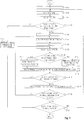
- Fig. 3 is a flowchart illustrating a method of encoding a division block in video encoding according to an example embodiment of the present invention.
- Fig. 4 is a flowchart illustrating a method of decoding a bitstream encoded in a video division block mode according to an example embodiment of the present invention.
- Fig. 2 is a diagram showing super-macroblock unit blocks and division block types for intra or inter prediction encoding in an encoder according to an example embodiment of the present invention.
- Fig. 2 is a diagram showing an example of super-macroblocks, which have larger sizes than a macroblock of a 16x16 pixel unit, and block division types applied to an example embodiment of the present invention.
- a process of dividing a super-macroblock into sub-blocks and intra or inter prediction encoding the division blocks is performed, and the super-macroblock is encoded so that both intra and inter prediction encoding modes can be used as a final encoding mode. Therefore, it is possible to very effectively increase video encoding efficiency.
- QP , ⁇ MODE SSD s , r , MODE
- JMODE denotes a rate-distortion function for a block encoding mode
- s denotes an original block pixel input to be encoded
- r denotes a reference video pixel input
- QP denotes a quantization parameter
- MODE denotes a division block mode type.
- transform encoding is applied to a residual signal of a super-macroblock with size larger than 16 ⁇ 16 , it is possible to increase encoding efficiency by selectively applying square transform kernels having 16 ⁇ 16 or larger size, which are greater than the existing sizes of 4 ⁇ 4 and 8 ⁇ 8 for square transforms according to the sizes of its division blocks, or by selectively applying non-square transform kernels having a size of 16 ⁇ 8, 8 ⁇ 16, or larger sizes more for non-square transforms according to a size of a division block.
- Equation 2 AX
- X denotes an N ⁇ N video signal matrix of a transform block in a division block
- A denotes an N ⁇ N square transform kernel
- Y denotes a transform coefficient matrix
- an input video signal X is an M ⁇ (M/2) matrix of a transform block in a division block
- A1 denotes an M ⁇ M square transform kernel
- A2 denotes an (M/2) ⁇ (M/2) square transform kernel
- Y denotes a transform coefficient matrix
- Fig. 3 is a flowchart illustrating a method for encoding a division block in video encoding according to an example embodiment of the present invention.
- the picture i is input in sequence for encoding (S102).
- the input picture i is divided into encoding unit blocks (S103).
- the encoding unit block may be a macroblock or super-macroblock.
- the unit block j to be encoded is divided into sub-blocks (S107).
- One of sub-block modes k is selected (S109).
- sub-block mode k is a final block node (S114). If the sub-block mode k is not the final block mode, steps S109 to S113 are iterated for the next block mode. On the other hand, if the sub-block mode k is the final block mode, an optimum division block is determined and corresponding encoding results are finally selected (S115).
- step S116 If it is determined in step S116 that the current encoding unit block j is the final block in the current picture i, it is checked whether the current picture i is a final picture (S117). If the current picture i is the final picture, the algorithm ends. Otherwise, the algorithm returns to step S102, the next picture is input, and steps S102 to S116 are iterated.
- Fig. 4 is a flowchart illustrating a method of decoding a bitstream encoded in a video division block mode according to an example embodiment of the present invention.
- An encoded picture bitstream i is input in sequence for decoding (S202).
- slice information regarding the input picture bitstream is analyzed (S205).
- the decoding unit block may be a macroblock or a super-macroblock.
- pixel values of the sub-division block are recovered using sub-block encoding results (S214). After it is checked whether a current sub-division block m is the final block (S215), pixel values of a unit decoding block are configured if the current sub-division block m is the final block (S216). Otherwise, the algorithm returns to step S210 for decoding the next division sub-block, and steps S210 to S214 are performed.
- a current unit encoding block k is a final unit encoding block (S217)
- slice pixels are configured if the current unit encoding block k is the final unit encoding block (S218). Otherwise, the algorithm returns to step S208, and steps S208 to S216 are performed.
- a current slice j is a final slice (S219)
- picture pixels are configured if the current slice j is the final slice (S220). Otherwise, steps S205 to S218 are performed.
- it is determined whether a current picture i is a final picture (S221)
- the algorithm ends if the current picture i is the final picture. Otherwise, the algorithm returns to step S202, the next bitstream is input, and steps S202 to S220 are performed.
- an input video is divided into encoding unit blocks. After the encoding unit block is sub-divided into sub-blocks, each sub-division block is encoded by selectively using at least one of intra prediction and inter prediction.
- encoding can be performed using both inter and intra prediction sub-block modes in an encoding mode of an encoding unit block and simultaneously variable block-size transform kernels are selectively applied, so that encoding efficiency can be improved.
- the above-described method of encoding a division block in video encoding can be implemented as computer-readable codes on a computer-readable recording medium.
- the computer-readable recording medium includes all types of recording devices storing data readable by a computer system.
- Examples of the computer-readable recording medium include a read only memory (ROM), a random access memory (RAM), a compact disk-read only memory (CD-ROM), a magnetic tape, a hard disk, a floppy disk, a mobile storage, a flash memory, an optical data storage, etc.
- the computer-readable recording medium may be implemented in the form of carrier waves (e.g., transmission over the Internet).
- the computer-readable recording medium is distributed to computer systems connected to each other through a computer communication network, so that the computer-readable codes can be stored in a distribution manner and executed thereby.
Landscapes
- Engineering & Computer Science (AREA)
- Multimedia (AREA)
- Signal Processing (AREA)
- Physics & Mathematics (AREA)
- Discrete Mathematics (AREA)
- General Physics & Mathematics (AREA)
- Compression Or Coding Systems Of Tv Signals (AREA)
Abstract
Description
- The present invention relates to video encoding and decoding methods capable of dividing an input picture into coding block units and encoding and decoding partitioned coding unit blocks by using intra and inter prediction encoding, and more particularly to video encoding and decoding methods of encoding and decoding partitioned coding unit blocks through inter and intra predictions in video encoding that can improve encoding efficiency and further improve encoding efficiency by encoding a block video signal by use of square transforms or non-square transforms according to the sizes of the partitioned coding unit block.
- International Organization for Standardization/International Electrotechnical Commission (ISO/IEC) 14496-10 (Moving Picture Experts Group (MPEG)-4 Part 10 Advanced Video Coding) or H.264, which is video compression/encoding technology jointly standardized in ISO/IEC and International Telecommunication Union-Telecommunication Standardization (ITU-T), an ISO/IEC 14496-10 Amendment 3 (MPEG-4 Scalable Video Coding) standard, a video codec-1 (VC-1), which is an Society of Motion Picture and Television Engineers (SMPTE) standard, an audio video coding standard (AVS), and the like have achieved significant advance in terms of video data compression efficiency.
- There are various ways of improving video compression efficiency. In particular, a process of subdividing a macroblock in units of 16×16, 16×8, 8×16, 8×8, 8×4, 4×8, and 4×4, prediction-encoding sub-blocks, and encoding a block for minimizing cost in an optimum block mode in terms of rate-distortion cost is performed, unlike existing video encoding standards (MPEG-1 Video, MPEG-2 Video, MPEG-4
Part 2 Visual, H.261, H.263, and the like) in which prediction encoding is performed after the size of each input picture to be encoded is divided in units of macroblocks (each of which has 16×16 pixels). Thereby, a small motion or a motion of a complex video may be more effectively predicted, and compression efficiency may be significantly improved by significantly reducing a generated residual signal. -
Fig. 1 is a diagram showing seven types of motion prediction block partitions used in H.264 as partitioned block types of 16×16 macroblock unit blocks to be encoded in an H.264/advanced video coding (AVC) encoder of the related art. - In a block-based prediction encoding method as shown in
Fig. 1 , an encoding process is generally performed by dividing an input video into macroblock units having a size of 16×16. In particular, in the ISO/IEC 14496-10 (MPEG-4 Advanced Video Coding) or H.264/AVC standard, prediction encoding is performed by dividing a macroblock into seven types of sub-blocks as shown inFig. 1 and finally selecting a block for minimizing the rate-distortion cost. - When intra encoding of sub-blocks into which a 16×16 macroblock to be encoded is divided is performed, the macroblock is subjected to intra prediction encoding in a size of one 16×16 pixel unit. Alternatively, after the macroblock is divided into sub-blocks, intra prediction encoding of four 8×8 blocks or sixteen 4×4 blocks is performed.
- In general, the above-described intra prediction encoding technique is efficient in terms of the reduction in the number of various block modes in low definition video encoding, but has a problem in high definition (HD) or ultra high definition (UHD) video encoding. That is, in the case of a super-macroblock having a size of 32×32 or larger to which a 16×16 macroblock as an encoding unit block is extended, encoding efficiency is degraded if all partitioned block modes within the super-macroblock are applied to the same intra prediction based on a 16×16, 8×8, or 4×4 block as in the existing method.
- In other words, it should be noted that all partitioned blocks are encoded by only intra or inter prediction encoding in a prediction encoding method based on partitioned blocks in the related art. That is, only one of the intra prediction encoding and the inter prediction encoding is selected and applied to a partitioned block without applying both the intra prediction encoding and the inter prediction encoding to the partitioned block. This may result in a gain of encoding efficiency in image or video compression at an HD rate or less due to simplicity of a syntax expressing a block encoding mode obtained by applying only one of the intra encoding and the inter encoding, but may become a factor that degrades the coding efficiency when a unit of encoding is a super-macroblock that has the same or greater size than the macroblock.
- The present invention has been made to solve the above-described problem, and an objective of the invention is to provide a more effective prediction encoding method that performs an encoding process by extending a method of selecting intra or inter prediction encoding for partitioned coding blocks of each coding unit block during video encoding so that both intra and inter prediction encoding modes can be selected and selectively applying square or non-square transform kernels to a residual signal according to a block size after motion compensation of the divided block.
- Another objective of the present invention is to provide a computer-readable recording medium for implementing the method.
- According to an example embodiment of the present invention for achieving the above-described objective, a video encoding method is provided, including: dividing each input picture into coding unit (CU) blocks; dividing each CU block into sub-coding unit (sub-CU) blocks or sub-blocks; and encoding each CU block or its sub-CU blocks by selectively using at least one of intra prediction encoding and inter prediction encoding within the CU block.
- The video encoding method may further include: transforming residual signals through the encoding unit blocks and the sub-CU blocks by selectively applying variable block-size transform kernels according to a block size; quantizing the transformed residual signals; and entropy-encoding results of quantization.
- The residual signal in each of the sub-blocks may be encoded by selectively applying one or more de-blocking filters according to the block size and an encoding type.
- A size of the encoding unit block may be a square having an N×N size, and the encoding unit block may be divided into one or more square or non-square sub-blocks having any size.
- When the square or non-square sub-blocks in each CU block are encoded using the inter prediction encoding, the sub-blocks may be encoded by selecting one of intra prediction encoding methods.
- When the intra prediction encoding or inter prediction encoding of the square or non-square sub-blocks in each CU block is performed, the entropy encoding may be performed by scanning the quantized transform coefficients of the transform blocks of each of its sub-blocks selected according to the transform block sizes.
- The square sub-blocks in each CU block may be transformed by applying square transform kernels.
- When the square sub-blocks in each CU block are transformed by applying the square transform kernels, a square transform kernel is applied for each of the square blocks where the size of the square transform kernel is smaller than or equal to the smaller one of the number of horizontal pixels and the number of vertical pixels of each of the square sub-block.
- The non-square sub-blocks in each CU block may be transformed by applying non-square transform kernels.
- When the non-square sub-blocks in each CU block are transformed by applying the non-square transform kernels, a non-square transform is performed for each of the non-square sub-blocks by applying one non-square transform kernel of the size smaller than or equal to the smaller one of the number of horizontal pixels and the number of vertical pixels of each of the non-square block
- According to another example embodiment of the present invention, there is provided a method of encoding a division block in video encoding, including: (a) inputting a picture to be encoded; (b) dividing the input picture into CU blocks; (c) dividing each input CU block into sub-CU blocks; (d) performing intra prediction encoding and inter prediction encoding of the CU block or its sub-CU blocks and selecting one block type for the encoding CU block or its sub-CU blocks; and (e) performing intra prediction encoding and/or inter prediction encoding of the encoding CU block and its sub-CU blocks by use of the prediction results of the block types.
- According to still another example embodiment of the present invention, there is provided a method of encoding a division block in video encoding, including: (a') inputting a picture to be encoded; (b') dividing the input picture into encoding CU blocks; (c') determining whether to perform inter prediction encoding of a current CU block; (d') initializing an index of a sub-CU block of an encoding CU block to be encoded in the input picture if the current input picture corresponds to inter prediction; (e') selecting a block mode of the encoding CU block to be encoded; (f) determining whether to perform both intra and inter prediction encoding for the selected block mode; (g') performing the intra and inter prediction encoding of the selected block mode if it is determined to perform both the intra and inter prediction encoding for the selected block mode; (h') storing a prediction encoding result and a rate-distortion cost value of step (g'); (i') if the selected block mode is a final mode, determining encoding by comparing rate-distortion costs for respective block modes and selecting a final block mode for the encoding unit block; (j') determining whether a current encoding unit block is a final block in the current input picture; and (k') determining whether the current input picture is a final picture if the current encoding unit block is the final block in the current input picture, and iterating steps (a') to (j') until the current input picture becomes the final picture.
- The method may further include: after step (c'), performing the intra prediction encoding if the current input picture does not correspond to the inter prediction.
- The method may further include: after step (f), performing the inter prediction encoding of the selected block mode if it is not determined to perform both the intra and inter prediction encoding of the selected block mode.
- The method may further include: after step (g'), obtaining a residual signal through motion prediction and compensation if the inter prediction encoding of the selected block mode is performed; transforming the selected blocks by use of the residual signal; quantizing the transformed blocks; and entropy-encoding the results of quantization.
- The method may further include: after step (g'), obtaining a residual signal through the intra prediction encoding if the intra prediction encoding of the selected block mode is performed; transforming the selected blocks by use of the residual signal; quantizing the transformed blocks; and entropy-encoding the results of quantization.
- The method may further include: performing a transform by selectively applying transform kernels according to the size of the selected sub-block when the selected sub-block is transformed using the residual signal.
- According to still another example embodiment of the present invention, there is provided a method of decoding a division block in video decoding, comprising: (A) inputting a bitstream to be decoded; (B) determining whether the input bitstream corresponds to inter prediction; (C) performing intra prediction encoding if the input bitstream is subjected to intra prediction encoding; (D) parsing a slice if the input bitstream corresponds to the inter prediction; (E) parsing a unit encoding block within the slice; (F) decoding an encoding mode of a unit encoding sub-division block; (G) parsing whether a sub-division encoding block is an inter prediction encoding block; (H) performing inter prediction decoding if the sub-division encoding block corresponds to the inter prediction; (I) performing intra prediction decoding if the sub-division encoding block corresponds to intra prediction; (J) configuring unit decoding block pixels from sub-division decoding results; (K) configuring slice pixels from decoding unit block results; and (K) configuring a picture from slice pixel configuration results. Accordingly, it is possible to perform intra and/or inter prediction decoding.
- Step (C) may further include: if the CU block is a super-macroblock having the same or greater size than a 16×16 macroblock, performing intra prediction decoding by decoding the CU block's or its sub-CU blocks' encoding modes corresponding to the sizes of the CU block.
- Step (C) may further include: performing intra prediction decoding by applying a de-blocking filter corresponding to a size of the CU block or to sizes of its sub-CU blocks.
- Step (C) may further include the step of: performing intra prediction decoding by applying a de-blocking filter according to a size of the CU block or to sizes of its sub-CU block.
- Step (F) may further include: if the CU block is a super-macroblock having the same or greater size than a 16×16 macroblock, decoding the CU block or its sub-CU block encoding modes corresponding to the size of the CU block or to sizes of its sub-CU blocks.
- Step (H) may further include: performing intra prediction decoding by applying square or non-square transform kernels corresponding to a size of the CU block or to sizes of its sub-CU blocks and decoding encoded quantized transform coefficients.
- Step (H) may further include: performing intra prediction decoding by applying an inverse quantization method according to a size of the CU block or to sizes of its sub-CU blocks and decoding modes of the neighboring decoding block and decoding an encoded quantized transform coefficient.
- Step (H) may further include: performing inter prediction decoding by applying a de-blocking filter corresponding to a size of the CU block or to sizes of its sub-CU blocks.
- According to yet another example embodiment of the present invention, there is provided a computer-readable recording medium storing a program for causing a computer to execute the above-described method.
- When pixel values of encoding CU blocks are encoded in video encoding according to the present invention, the CU blocks or their partitioned CU blocks (or sub-CU blocks) can be encoded either in an intra prediction encoding mode or in inter prediction encoding mode by applying at least one of intra prediction encoding and inter prediction encoding to the CU blocks or their sub-CU blocks, and prediction encoding is performed using both intra and inter predictions for each encoding CU block or its sub-CU blocks, so that the flexibility of encoding mode selection can be increased and the efficiency of encoding can be increased.
- In prediction encoding based on division blocks according to the present invention, each CU or sub-CU block is encoded by selectively applying sizes of variable block-size transform kernels according to the size of the CU block or the sub-CU block so that both the intra and inter predictions can be applied to sub-CU blocks within each CU block. Therefore, it is possible to significantly improve encoding efficiency.
- Further advantages, features and potential applications of the present invention may be gathered from the description which follows, in conjunction with the embodiments illustrated in the drawings.
- Throughout the description, the claims and the drawings, those terms and associated reference signs will be used as are notable from the enclosed list of reference signs. In the drawings
Fig. 1 is a diagram showing division block types of 16x16 macroblock unit blocks to be encoded in an H.264/advanced video coding (AVC) encoder of the related art.Fig. 2 is a diagram showing super-macroblock unit blocks and division block types for intra or inter prediction encoding in an encoder according to an example embodiment of the present invention.Fig. 3 is a flowchart illustrating a method of encoding a division block in video encoding according to an example embodiment of the present invention.Fig. 4 is a flowchart illustrating a method of decoding a bitstream encoded in a video division block mode according to an example embodiment of the present invention. - Hereinafter, example embodiments of the present invention will be described in detail with reference to the accompanying drawings. The same elements are denoted by the same reference numerals throughout the drawings. Detailed description related to well-known functions or configurations will be omitted if they make the subject matter of the present invention unclear.
-
Fig. 2 is a diagram showing super-macroblock unit blocks and division block types for intra or inter prediction encoding in an encoder according to an example embodiment of the present invention.Fig. 2 is a diagram showing an example of super-macroblocks, which have larger sizes than a macroblock of a 16x16 pixel unit, and block division types applied to an example embodiment of the present invention. - As shown in
Fig. 2 , a process of dividing a super-macroblock into sub-blocks and intra or inter prediction encoding the division blocks is performed, and the super-macroblock is encoded so that both intra and inter prediction encoding modes can be used as a final encoding mode. Therefore, it is possible to very effectively increase video encoding efficiency. In practice, it is possible to perform encoding by selecting a block mode capable of minimizing rate-distortion cost as shown in Equation 1.
- Here, JMODE denotes a rate-distortion function for a block encoding mode, s denotes an original block pixel input to be encoded, r denotes a reference video pixel input, QP denotes a quantization parameter, denotes a Lagrange multiplier dependent on a mode, and MODE denotes a division block mode type.
- Also, if transform encoding is applied to a residual signal of a super-macroblock with size larger than 16 × 16 , it is possible to increase encoding efficiency by selectively applying square transform kernels having 16×16 or larger size, which are greater than the existing sizes of 4×4 and 8×8 for square transforms according to the sizes of its division blocks, or by selectively applying non-square transform kernels having a size of 16×8, 8×16, or larger sizes more for non-square transforms according to a size of a division block.
- If the square transform kernels having the sizes of 16×16 or larger are applied to the super-macroblock, it is possible to carry out a calculation as shown in
Equation 2.
- Here, X denotes an N×N video signal matrix of a transform block in a division block, A denotes an N×N square transform kernel, and Y denotes a transform coefficient matrix. If a transform block in a division block is a non-square block, a transform is performed as shown in Equation 3.

- Here, when an input video signal X is an M×(M/2) matrix of a transform block in a division block, A1 denotes an M×M square transform kernel, A2 denotes an (M/2)×(M/2) square transform kernel, and Y denotes a transform coefficient matrix.
- When square or non-square kernel transforms in a division block are applied according to an example embodiment of the present invention, it is preferable to perform transform encoding by applying a square or non-square transform kernel for the transform blocks in the division block where the size of the square or non-square transform kernel is smaller than or equal to the smaller one of the number of vertical pixels and the number of horizontal pixels of the division block.
-
Fig. 3 is a flowchart illustrating a method for encoding a division block in video encoding according to an example embodiment of the present invention. - Referring to
Fig. 3 , first, an index of a picture i to be encoded is initialized (i=0) (S101). The picture i is input in sequence for encoding (S102). - Next, the input picture i is divided into encoding unit blocks (S103). In an example embodiment of the present invention, the encoding unit block may be a macroblock or super-macroblock.
- Next, it is checked whether to perform inter prediction encoding of a current picture i (S104). If the current picture i does not correspond to inter prediction, intra prediction encoding is performed (S105). Otherwise, if the current picture i corresponds to inter prediction, an index of an encoding unit block j to be encoded within the one picture i is initialized (j=0) (S106).
- Thereafter, the unit block j to be encoded is divided into sub-blocks (S107). An index of a sub-block mode k is initialized (k=0) (S108). One of sub-block modes k is selected (S109).
- It is checked whether or not to perform intra and inter predictions for the sub-block mode to be encoded in the encoding unit block (S110). If it is checked to perform the intra and inter predictions, intra and inter encoding are performed (S111). Otherwise, only inter prediction encoding is performed (S112). A prediction encoding result and a rate-distortion cost value are stored as encoding results (S113).
- It is checked whether the sub-block mode k is a final block node (S114). If the sub-block mode k is not the final block mode, steps S109 to S113 are iterated for the next block mode. On the other hand, if the sub-block mode k is the final block mode, an optimum division block is determined and corresponding encoding results are finally selected (S115).
- It is determined whether a current encoding unit block j is a final block in the current picture i (S116). If the current encoding unit block j is not the final block, steps S107 to S115 are iterated by inputting the next encoding unit block.
- If it is determined in step S116 that the current encoding unit block j is the final block in the current picture i, it is checked whether the current picture i is a final picture (S117). If the current picture i is the final picture, the algorithm ends. Otherwise, the algorithm returns to step S102, the next picture is input, and steps S102 to S116 are iterated.
-
Fig. 4 is a flowchart illustrating a method of decoding a bitstream encoded in a video division block mode according to an example embodiment of the present invention. - Referring to
Fig. 4 , first, an index of a picture i to be decoded is initialized (i=0) (S201). An encoded picture bitstream i is input in sequence for decoding (S202). - Next, it is checked whether an input picture bitstream i corresponds to inter prediction encoding (S203). If a current picture bitstream i does not correspond to the inter prediction encoding, intra prediction decoding is performed (S207). Otherwise, if the input picture bitstream i corresponds to the inter prediction encoding, an index of a slice j to be decoded within one picture i is initialized (j=0) (S204).
- Next, slice information regarding the input picture bitstream is analyzed (S205). An index of a unit decoding block j to be decoded within each slice within one picture k is initialized (k=0) (S206). In an example embodiment of the present invention, the decoding unit block may be a macroblock or a super-macroblock.
- Next, after information regarding each unit encoding block is analyzed (S208), an index of a division sub-block within the unit encoding block is initialized (m=0) (S209), Thereafter, an encoding mode of a division sub-block within the unit encoding block is decoded (S210). After it is checked whether the division sub-block is an inter prediction encoding block (S211), inter prediction decoding is performed if the sub-block is the inter prediction encoding block (S213), and intra prediction encoding is performed if the sub-block is an intra prediction encoding block or mode (S212).
- Thereafter, pixel values of the sub-division block are recovered using sub-block encoding results (S214). After it is checked whether a current sub-division block m is the final block (S215), pixel values of a unit decoding block are configured if the current sub-division block m is the final block (S216). Otherwise, the algorithm returns to step S210 for decoding the next division sub-block, and steps S210 to S214 are performed.
- After it is checked whether a current unit encoding block k is a final unit encoding block (S217), slice pixels are configured if the current unit encoding block k is the final unit encoding block (S218). Otherwise, the algorithm returns to step S208, and steps S208 to S216 are performed. After it is checked whether a current slice j is a final slice (S219), picture pixels are configured if the current slice j is the final slice (S220). Otherwise, steps S205 to S218 are performed. After it is determined whether a current picture i is a final picture (S221), the algorithm ends if the current picture i is the final picture. Otherwise, the algorithm returns to step S202, the next bitstream is input, and steps S202 to S220 are performed.
- In video encoding according to an embodiment of the present invention, an input video is divided into encoding unit blocks. After the encoding unit block is sub-divided into sub-blocks, each sub-division block is encoded by selectively using at least one of intra prediction and inter prediction.
- Thereby, encoding can be performed using both inter and intra prediction sub-block modes in an encoding mode of an encoding unit block and simultaneously variable block-size transform kernels are selectively applied, so that encoding efficiency can be improved.
- In video decoding according to an example embodiment of the present invention, it is possible to decode a compressed bitstream with improved encoding efficiency by performing the reverse process of encoding.
- As another example embodiment of the present invention, the above-described method of encoding a division block in video encoding can be implemented as computer-readable codes on a computer-readable recording medium. The computer-readable recording medium includes all types of recording devices storing data readable by a computer system.
- Examples of the computer-readable recording medium include a read only memory (ROM), a random access memory (RAM), a compact disk-read only memory (CD-ROM), a magnetic tape, a hard disk, a floppy disk, a mobile storage, a flash memory, an optical data storage, etc. Furthermore, the computer-readable recording medium may be implemented in the form of carrier waves (e.g., transmission over the Internet).
- Further, the computer-readable recording medium is distributed to computer systems connected to each other through a computer communication network, so that the computer-readable codes can be stored in a distribution manner and executed thereby.
- Although preferred embodiments of an inter prediction encoding method and/or an inter prediction encoding method in video encoding and decoding methods, which are reverse processes thereof, have been described, the example embodiments are illustrative and the present invention is not limited thereto. Those skilled in the art will understand that various modifications and changes may be made therein without departing from the spirit and scope of the invention as defined by the appended claims. Encoding, decoding, inter prediction, intra prediction, transform kernel, square transform kernel, non-square transform kernel, quantization, MPEG, rate-distortion cost, H.264/MPEG-4 Part 10 Advanced Video Coding.
- The items listed in the following numbers refer to preferred embodiments.
- 1. A method of encoding a division block in video encoding, comprising:
- dividing an input picture into encoding unit blocks;
- dividing the encoding unit blocks into sub-blocks; and
- encoding the sub-blocks by selectively using at least one of intra prediction encoding and inter prediction encoding.
- 2. The method of item 1, further comprising:
- transforming residual signals through the encoding unit blocks and the sub-blocks by selectively applying a variable block-size transform kernel according to a block size;
- quantizing the transformed residual signals; and
- entropy-encoding results of quantization.
- 3. The method of
item 2, wherein the residual signals through the sub-blocks are encoded by selectively applying one or more de-blocking filters according to the block size. - 4. The method of item 1, wherein a size of the encoding unit block is a square having an N*N size, and
the encoding unit block is divided into one or more square or non-square sub-blocks having any size. - 5. The method of
item 4, wherein, when the square or non-square sub-blocks are encoded using the inter prediction encoding, the sub-blocks are encoded by selecting one of intra prediction encoding methods. - 6. The method of
item 4, wherein, when the intra prediction encoding or inter prediction encoding of the square or non-square sub-blocks is performed, entropy encoding is performed by selectively applying one or more scan methods to a quantized transform coefficient according to a block size. - 7. The method of
item 4, wherein the square sub-blocks are transformed by applying a square transform kernel. - 8. The method of item 7, wherein, when the square sub-blocks are transformed by applying the square transform kernel, a square transform kernel having a size of the smaller or same number of pixels is applied by comparing the number of horizontal pixels of the square sub-block with the number of vertical pixels.
- 9. The method of
item 4, wherein the non-square sub-blocks are transformed by applying a non-square transform kernel. - 10. The method of item 9, wherein, when the non-square sub-blocks are transformed by applying the non-square transform kernel, a non-square transform is performed by comparing the number of horizontal pixels of the non-square sub-block with the number of vertical pixels and sequentially applying a square kernel corresponding to a size of the larger number of pixels and a square kernel corresponding to a size of the smaller number of pixels to an input signal.
- 11. A method of encoding a division block in video encoding, comprising:
- (a) inputting a picture to be encoded;
- (b) dividing the input picture into encoding unit blocks;
- (c) dividing each input encoding unit block into sub-blocks;
- (d) performing intra prediction encoding and inter prediction encoding of the encoding unit block and the sub-blocks and selecting one block type among the encoding unit block and the sub-blocks; and
- (e) performing intra prediction encoding and/or inter prediction encoding of the encoding unit block and the sub-blocks by use of a prediction result of the block type.
- 12. A method of encoding a division block in video encoding, comprising:
- (a') inputting a picture to be encoded;
- (b') dividing the input picture into encoding unit blocks;
- (c') determining whether to perform inter prediction encoding of a current input picture;
- (d') initializing an index of a sub-block of an encoding unit block to be encoded in the input picture if the current input picture corresponds to inter prediction;
- (e') selecting a block mode of the encoding unit block to be encoded;
- (f) determining whether to perform both intra and inter prediction encoding of the selected block mode;
- (g') performing the intra and inter prediction encoding of the selected block mode if it is determined to perform both the intra and inter prediction encoding of the selected block mode;
- (h') storing a prediction encoding result and a rate-distortion cost value of step (g');
- (i') if the selected block mode is a final mode, determining encoding by comparing rate-distortion costs for respective block modes and selecting a final block mode for the encoding unit block;
- (j') determining whether a current encoding unit block is a final block in the current input picture; and
- (k') determining whether the current input picture is a final picture if the current encoding unit block is the final block in the current input picture, and iterating steps (a') to (j') until the current input picture becomes the final picture.
- 13. The method of item 12, further comprising:
after step (c'), performing the intra prediction encoding if the current input picture does not correspond to the inter prediction. - 14. The method of item 12, further comprising:
after step (f'), performing the inter prediction encoding of the selected block mode if it is not determined to perform both the intra and inter prediction encoding of the selected block mode. - 15. The method of item 12, further comprising:
- after step (g'), obtaining a residual signal through motion prediction and compensation if the inter prediction encoding of the selected block mode is performed;
- transforming the selected block by use of the residual signal;
- quantizing the transformed selected block; and
- entropy-encoding a result of quantization.
- 16. The method of item 12, further comprising:
- after step (g'), obtaining a residual signal through the intra prediction encoding if the intra prediction encoding of the selected block mode is performed;
- transforming the selected block by use of the residual signal;
- quantizing the transformed selected block; and
- entropy-encoding a result of quantization.
- 17. The method of item 15 or 16,further comprising:
performing a transform by selectively applying a transform kernel according to a block size when the selected block is transformed using the residual signal. - 18. A computer-readable recording medium storing a program for causing a computer to execute the method of any one of items 1 to 17.
- 19. A method of decoding the coding unit (CU) blocks in video decoding, comprising:
decoding an input video bitstream encoded in the CU blocks of which they or their sub-CU blocks are encoded by selectively using at least one of intra prediction encoding and inter prediction encoding. - 20. A method of decoding the CU blocks in video decoding, comprising
- (a) inputting a picture bitstream to be decoded;
- (b) parsing the input picture bitstream in units of slices;
- (c) parsing the slices in decoding the CU blocks;
- (d) decoding the encoding modes of the CU blocks and their sub-CU block; and
- (e) performing intra prediction decoding and/or inter prediction decoding of the CU block and their sub-CU blocks by use of a result of encoding modes.
- 21. A method of decoding the CU blocks in video decoding, comprising:
- (a') inputting a picture bitstream to be decoded;
- (b') determining whether a current input picture bitstream is subjected to inter prediction encoding;
- (c') performing intra prediction decoding if the current input picture bitstream is subjected to intra prediction encoding;
- (d') initializing a decoding slice to be decoded in the input picture bitstream if the current input picture bitstream is subjected to the inter prediction encoding;
- (e') parsing the CU blocks within the slice;
- (f) initializing the CU blocks and their sub-CU blocks for decoding;
- (g') decoding the CU blocks and their sub-CU blocks using their encoding modes within the respective CU blocks;
- (h') checking whether a current CU or a sub-CU in the current CU block is an inter prediction encoding block;
- (i') performing inter prediction decoding if the current CU block or the sub-CU block corresponds to inter prediction;
- (j') performing intra prediction decoding if the current CU block or the sub-CU block corresponds to intra prediction;
- (k') recovering pixel values of the current CU block or the sub-CU block by use of the intra or inter prediction decoding results;
- (l') checking whether the sub-CU block is a final sub-CU block;
- (m') checking if the CU block is a final CU block if the sub-CU block is the final sub-CU block;
- (n') checking whether the slice is a final slice if the CU block is the final CU block; and
- (o') checking whether the picture bitstream is a final picture bitstream if the slice is the final slice, and iterating steps (a') to (n') until the picture bitstream becomes the final picture bitstream.
- 22. The method of item 21, wherein, in step (i'), an encoded inter prediction quantization transform coefficient is decoded by sequentially applying one or more square inverse transform kernels according to the size of the current CU block or the sub-CU block and performing a non-square inverse transform when the current CU block or the sub-CU block corresponds to the inter prediction.
- 23. The method of item 21, wherein, in step (j'), an encoded intra quantization transform coefficient is decoded by applying a square inverse transform kernel according to a size of the current CU block or the sub-CU blocks when the current CU block or the sub-CU block corresponds to the intra prediction.
- 24. The method of item 21, wherein, in step (j'), an encoded intra prediction quantization transform coefficient is decoded by applying a square inverse transform kernel according to the size of the current CU block or the division sub-block when the current CU block or the sub-CU corresponds to the intra prediction.
- 25. The method of item 21, wherein, in step (c'), the bitstream is decoded by applying a de-blocking filter according to a size of the CU block or the sub-CU block and/or a type of peripheral encoding block when the current input picture bitstream is subjected to the intra prediction encoding.
- 26. The method of item 21, wherein, in step (i'), the current CU block or the sub-CU block is decoded by applying a de-blocking filter according to the size of the current CU block or the sub-CU block and/or a type of peripheral encoding block when the current CU block or the sub-CU block corresponds to the inter prediction.
- 27. The method of item 21, wherein, in step (j'), the sub-block is decoded by applying a de-blocking filter according to the size of the current CU block or the sub-CU block and/or types of neighboring coded blocks when the current CU block or the sub-CU block corresponds to the intra prediction.
- 28. A computer-readable recording medium storing a program for causing a computer to execute the method of any one of items 19 to 27.
Claims (3)
- A method for video decoding, the method comprising:receiving (S202) a video data sequence of encoded video data,wherein the video data sequence includes a slice and the slice includes coding unit, CU, blocks (S204, S206),wherein the CU blocks are divided into first sub-coding unit, sub-CU, blocks,wherein at least one of the first sub-CU blocks is divided into second sub-CU blocks, andwherein respective sub-CU blocks including the first sub-CU blocks and the second sub-CU blocks comprise square blocks;decoding (S210) an encoding mode corresponding to a sub-CU block among the respective sub-CU block;performing (S212, S213) either an intra prediction or an inter prediction on the corresponding sub-CU block based on the decoded encoding mode; andtransforming (S216) residual signals of the corresponding sub-CU block,wherein variable sizes of transform kernels are selectively applied to the corresponding sub-CU block,wherein the variable sizes of transform kernels are selected according to a size of the corresponding sub-CU block, andwherein the selected variable sizes of transform kernels are smaller than the size of the corresponding sub-CU block.
- The method of claim 1, wherein the second sub-CU blocks are recursively divided into further sub-CU blocks until the further-divided sub-CU blocks correspond to final CU blocks.
- The method of claim 1 or 2, wherein the first sub-CU blocks have both at least one of the second sub-CU blocks performed by the intra prediction and at least one of the second sub-coding CU blocks performed by the inter prediction.
Applications Claiming Priority (4)
| Application Number | Priority Date | Filing Date | Title |
|---|---|---|---|
| KR20090015013 | 2009-02-23 | ||
| KR1020090076753A KR20100095992A (en) | 2009-02-23 | 2009-08-19 | Method for encoding partitioned block in video encoding, method for decoding partitioned block in video decoding and recording medium implementing the same |
| PCT/KR2010/001125 WO2010095915A2 (en) | 2009-02-23 | 2010-02-23 | Video encoding method for encoding division block, video decoding method for decoding division block, and recording medium for implementing the same |
| EP10743990.3A EP2400763A4 (en) | 2009-02-23 | 2010-02-23 | VIDEO ENCODING METHOD FOR DIVISION BLOCK ENCODING, VIDEO DECODING METHOD FOR DECODING DIVISION BLOCK, AND RECORDING MEDIUM FOR APPLICATION OF SAID METHODS |
Related Parent Applications (1)
| Application Number | Title | Priority Date | Filing Date |
|---|---|---|---|
| EP10743990.3A Division EP2400763A4 (en) | 2009-02-23 | 2010-02-23 | VIDEO ENCODING METHOD FOR DIVISION BLOCK ENCODING, VIDEO DECODING METHOD FOR DECODING DIVISION BLOCK, AND RECORDING MEDIUM FOR APPLICATION OF SAID METHODS |
Publications (1)
| Publication Number | Publication Date |
|---|---|
| EP3823281A1 true EP3823281A1 (en) | 2021-05-19 |
Family
ID=43003799
Family Applications (2)
| Application Number | Title | Priority Date | Filing Date |
|---|---|---|---|
| EP20212253.7A Pending EP3823281A1 (en) | 2009-02-23 | 2010-02-23 | Video encoding method for encoding division block, video decoding method for decoding division block, and recording medium for implementing the same |
| EP10743990.3A Ceased EP2400763A4 (en) | 2009-02-23 | 2010-02-23 | VIDEO ENCODING METHOD FOR DIVISION BLOCK ENCODING, VIDEO DECODING METHOD FOR DECODING DIVISION BLOCK, AND RECORDING MEDIUM FOR APPLICATION OF SAID METHODS |
Family Applications After (1)
| Application Number | Title | Priority Date | Filing Date |
|---|---|---|---|
| EP10743990.3A Ceased EP2400763A4 (en) | 2009-02-23 | 2010-02-23 | VIDEO ENCODING METHOD FOR DIVISION BLOCK ENCODING, VIDEO DECODING METHOD FOR DECODING DIVISION BLOCK, AND RECORDING MEDIUM FOR APPLICATION OF SAID METHODS |
Country Status (6)
| Country | Link |
|---|---|
| US (11) | US9485512B2 (en) |
| EP (2) | EP3823281A1 (en) |
| JP (11) | JP6164600B2 (en) |
| KR (1) | KR20100095992A (en) |
| CN (6) | CN105959691B (en) |
| WO (1) | WO2010095915A2 (en) |
Families Citing this family (64)
| Publication number | Priority date | Publication date | Assignee | Title |
|---|---|---|---|---|
| KR20100095992A (en) * | 2009-02-23 | 2010-09-01 | 한국과학기술원 | Method for encoding partitioned block in video encoding, method for decoding partitioned block in video decoding and recording medium implementing the same |
| US9635368B2 (en) * | 2009-06-07 | 2017-04-25 | Lg Electronics Inc. | Method and apparatus for decoding a video signal |
| MY198978A (en) | 2010-04-13 | 2023-10-05 | Samsung Electronics Co Ltd | Video encoding method and video encoding apparatus and video decoding method and video decoding apparatus, which perform deblocking filtering based on tree-structure encoding units |
| KR20110123651A (en) | 2010-05-07 | 2011-11-15 | 한국전자통신연구원 | Image coding and decoding apparatus using skip coding and method thereof |
| US8625888B2 (en) * | 2010-07-21 | 2014-01-07 | Microsoft Corporation | Variable kernel size image matting |
| PT3849194T (en) | 2010-09-27 | 2022-09-13 | Lg Electronics Inc | METHOD FOR PARTITIONING BLOCK AND DECODING DEVICE |
| WO2012042720A1 (en) | 2010-09-30 | 2012-04-05 | 三菱電機株式会社 | Motion-video encoding apparatus, motion-video decoding apparatus, motion-video encoding method, and motion-video decoding method |
| CN102857762B (en) * | 2011-07-01 | 2016-03-30 | 华为技术有限公司 | The acquisition methods of block index information and device in a kind of decode procedure |
| US9769472B2 (en) * | 2011-08-17 | 2017-09-19 | Mediatek Singapore Pte. Ltd. | Method and apparatus for Intra prediction using non-square blocks |
| RU2585976C2 (en) | 2011-11-08 | 2016-06-10 | Кт Корпорейшен | Method and apparatus for coefficient scan based on partition mode of prediction unit |
| WO2013077713A1 (en) * | 2011-11-27 | 2013-05-30 | 엘지전자 주식회사 | Method for realigning transform coefficient and device using same |
| WO2013082291A2 (en) * | 2011-11-29 | 2013-06-06 | Huawei Technologies Co., Ltd. | Unified partitioning structures and signaling methods for high efficiency video coding |
| CN107707912B (en) * | 2011-12-28 | 2020-05-22 | Jvc 建伍株式会社 | Moving picture encoding device and moving picture encoding method |
| US9491477B2 (en) * | 2012-03-30 | 2016-11-08 | Hitachi, Ltd. | Image decoding method and image decoding apparatus |
| US9344723B2 (en) * | 2012-04-13 | 2016-05-17 | Qualcomm Incorporated | Beta offset control for deblocking filters in video coding |
| WO2013172074A1 (en) * | 2012-05-15 | 2013-11-21 | ソニー株式会社 | Image processing device and image processing method |
| CN110996100B (en) | 2012-10-01 | 2022-11-25 | Ge视频压缩有限责任公司 | Decoder, decoding method, encoder, and encoding method |
| RU2619199C1 (en) * | 2012-11-08 | 2017-05-12 | Кт Корпорейшен | Video decoding method |
| RU2623905C1 (en) * | 2012-11-08 | 2017-06-29 | Кт Корпорейшен | Video decoding method |
| KR20150056811A (en) | 2012-11-13 | 2015-05-27 | 인텔 코포레이션 | Content adaptive transform coding for next generation video |
| EP2952002A4 (en) | 2013-01-30 | 2016-09-21 | Intel Corp | Content adaptive entropy coding for next generation video |
| CN103596003B (en) * | 2013-11-11 | 2015-05-06 | 中国科学技术大学 | Interframe predication quick mode selecting method for high-performance video coding |
| TWI536811B (en) | 2013-12-27 | 2016-06-01 | 財團法人工業技術研究院 | Method and system for image processing, decoding method, encoder and decoder |
| US9715559B2 (en) * | 2014-03-17 | 2017-07-25 | Qualcomm Incorporated | Hash-based encoder search for intra block copy |
| WO2015142070A1 (en) | 2014-03-19 | 2015-09-24 | 삼성전자 주식회사 | Video encoding and decoding method and apparatus involving boundary filtering |
| WO2016090568A1 (en) | 2014-12-10 | 2016-06-16 | Mediatek Singapore Pte. Ltd. | Binary tree block partitioning structure |
| US10382795B2 (en) | 2014-12-10 | 2019-08-13 | Mediatek Singapore Pte. Ltd. | Method of video coding using binary tree block partitioning |
| US10136132B2 (en) * | 2015-07-21 | 2018-11-20 | Microsoft Technology Licensing, Llc | Adaptive skip or zero block detection combined with transform size decision |
| US10491906B2 (en) * | 2015-11-05 | 2019-11-26 | Mediatek Inc. | Method and apparatus for block prediction using variable block-size in image compression |
| US10390026B2 (en) | 2016-03-25 | 2019-08-20 | Google Llc | Smart reordering in recursive block partitioning for advanced intra prediction in video coding |
| US10404989B2 (en) * | 2016-04-26 | 2019-09-03 | Google Llc | Hybrid prediction modes for video coding |
| CN109314790A (en) * | 2016-05-23 | 2019-02-05 | 佳稳电子有限公司 | Image processing method, image decoding and encoding method using the same |
| WO2018012660A1 (en) * | 2016-07-15 | 2018-01-18 | 엘지전자(주) | Method and apparatus for encoding and decoding video signal using transform domain prediction for prediction unit partition |
| CN116962726A (en) | 2016-09-20 | 2023-10-27 | 株式会社Kt | Method for decoding and encoding video and method for transmitting video data |
| EP3306927A1 (en) * | 2016-10-05 | 2018-04-11 | Thomson Licensing | Encoding and decoding methods and corresponding devices |
| EP3306922A1 (en) * | 2016-10-05 | 2018-04-11 | Thomson Licensing | Method and apparatus for encoding a picture using rate-distortion based block splitting |
| CN109479144A (en) * | 2016-10-13 | 2019-03-15 | 富士通株式会社 | Image encoding/decoding method, apparatus, and image processing device |
| CN109983771A (en) | 2016-11-21 | 2019-07-05 | 松下电器(美国)知识产权公司 | Code device, decoding apparatus, coding method and coding/decoding method |
| CN116347077B (en) | 2016-11-21 | 2025-10-28 | 松下电器(美国)知识产权公司 | Bitstream transmitter |
| JP6565885B2 (en) * | 2016-12-06 | 2019-08-28 | 株式会社Jvcケンウッド | Image encoding device, image encoding method, image encoding program, image decoding device, image decoding method, and image decoding program |
| EP3383045A1 (en) * | 2017-03-27 | 2018-10-03 | Thomson Licensing | Multiple splits prioritizing for fast encoding |
| CN108668136A (en) * | 2017-03-28 | 2018-10-16 | 华为技术有限公司 | Image encoding/decoding method, video coder/decoder and video coding and decoding system |
| TWI820019B (en) * | 2017-03-31 | 2023-11-01 | 美商松下電器(美國)知識產權公司 | Image decoding device and decoding method |
| WO2019009584A1 (en) | 2017-07-04 | 2019-01-10 | 삼성전자 주식회사 | Video decoding method and apparatus using multi-core transform, and video encoding method and apparatus using multi-core transform |
| KR20230065366A (en) | 2017-07-17 | 2023-05-11 | 한양대학교 산학협력단 | Method and apparatus for encoding/decoding image |
| WO2019212816A1 (en) * | 2018-05-02 | 2019-11-07 | Interdigital Vc Holdings, Inc. | Encoding and decoding a video |
| CN112823524B (en) * | 2018-08-08 | 2023-09-01 | Lg电子株式会社 | Image encoding/decoding method and device for image encoding/decoding method |
| CN115379220B (en) * | 2018-08-22 | 2025-05-09 | 寰发股份有限公司 | Method and device for encoding or decoding conversion coefficients |
| CN109688414B (en) * | 2018-12-19 | 2022-11-11 | 同济大学 | A method for reducing candidate prediction modes of VVC intra-coding unit and early termination of block division |
| CN111355951B (en) * | 2018-12-24 | 2023-11-10 | 华为技术有限公司 | Video decoding method, device and decoding equipment |
| WO2020156454A1 (en) | 2019-01-31 | 2020-08-06 | Mediatek Inc. | Method and apparatus of transform type assignment for intra sub-partition in video coding |
| WO2020156464A1 (en) * | 2019-01-31 | 2020-08-06 | Mediatek Inc. | Method and apparatus of combined inter and intraprediction for video coding |
| WO2020162737A1 (en) * | 2019-02-08 | 2020-08-13 | 주식회사 윌러스표준기술연구소 | Video signal processing method and device using secondary transform |
| KR20210122797A (en) | 2019-02-28 | 2021-10-12 | 주식회사 윌러스표준기술연구소 | Intra prediction-based video signal processing method and apparatus |
| CN110392256B (en) * | 2019-03-09 | 2020-12-11 | 杭州海康威视数字技术股份有限公司 | Method, encoding end, decoding end and system for encoding and decoding |
| CN111669579B (en) * | 2019-03-09 | 2022-09-16 | 杭州海康威视数字技术股份有限公司 | Method, encoding end, decoding end and system for encoding and decoding |
| WO2020182052A1 (en) * | 2019-03-11 | 2020-09-17 | Huawei Technologies Co., Ltd. | An encoder, a decoder and corresponding methods restricting size of sub-partitions from intra sub-partition coding mode tool |
| CN110087087B (en) * | 2019-04-09 | 2023-05-12 | 同济大学 | VVC inter-frame coding unit prediction mode early decision and block division early termination method |
| CN111988618B (en) * | 2019-05-22 | 2022-05-20 | 杭州海康威视数字技术股份有限公司 | Decoding and encoding method, decoding end and encoding end |
| CN116405697B (en) * | 2019-07-23 | 2024-10-29 | 杭州海康威视数字技术股份有限公司 | A coding and decoding method, device and equipment thereof |
| HRP20240943T1 (en) | 2019-09-21 | 2024-11-22 | Lg Electronics Inc. | IMAGE CODING BASED ON TRANSFORMATION |
| US12225207B2 (en) * | 2022-07-07 | 2025-02-11 | Tencent America LLC | Subblock intra and inter coding |
| CN116320444B (en) * | 2023-03-17 | 2025-10-17 | 上海哔哩哔哩科技有限公司 | Video encoding method and device |
| CN117036832B (en) * | 2023-10-09 | 2024-01-05 | 之江实验室 | An image classification method, device and medium based on random multi-scale blocking |
Citations (1)
| Publication number | Priority date | Publication date | Assignee | Title |
|---|---|---|---|---|
| CA2659351A1 (en) * | 2006-07-28 | 2008-01-31 | Kabushiki Kaisha Toshiba | Method and apparatus for encoding and decoding image |
Family Cites Families (111)
| Publication number | Priority date | Publication date | Assignee | Title |
|---|---|---|---|---|
| JPH0322887A (en) | 1989-06-20 | 1991-01-31 | Toshiba Corp | Operation of ac motor |
| US5241395A (en) * | 1989-08-07 | 1993-08-31 | Bell Communications Research, Inc. | Adaptive transform coding using variable block size |
| JPH03220887A (en) | 1990-01-25 | 1991-09-30 | Fujitsu Ltd | Frame selection prediction coder for moving picture |
| JP3220887B2 (en) | 1993-08-19 | 2001-10-22 | 株式会社日立製作所 | Paper handling equipment |
| US6571016B1 (en) * | 1997-05-05 | 2003-05-27 | Microsoft Corporation | Intra compression of pixel blocks using predicted mean |
| JP2001016595A (en) * | 1999-04-30 | 2001-01-19 | Fujitsu Ltd | Video encoding device and decoding device |
| JP3840020B2 (en) * | 1999-12-14 | 2006-11-01 | 株式会社東芝 | Video encoding device |
| KR100377190B1 (en) * | 1999-12-24 | 2003-03-26 | 한국전자통신연구원 | Method for video encoding including intra update based on the estimated error probabilities using the size of bitstream for each block |
| US6404814B1 (en) | 2000-04-28 | 2002-06-11 | Hewlett-Packard Company | Transcoding method and transcoder for transcoding a predictively-coded object-based picture signal to a predictively-coded block-based picture signal |
| DE10022331A1 (en) * | 2000-05-10 | 2001-11-15 | Bosch Gmbh Robert | Method for transformation coding of moving image sequences e.g. for audio-visual objects, involves block-wise assessing movement vectors between reference- and actual- image signals of image sequence |
| US7088780B2 (en) * | 2001-05-11 | 2006-08-08 | Mitsubishi Electric Research Labs, Inc. | Video transcoder with drift compensation |
| US6907071B2 (en) * | 2001-05-24 | 2005-06-14 | Telefonaktiebolaget Lm Ericsson (Publ) | Selective prediction for intra-coding video data block |
| US20020191695A1 (en) | 2001-06-07 | 2002-12-19 | Irvine Ann Chris | Interframe encoding method and apparatus |
| EP1429564A4 (en) * | 2001-08-28 | 2012-07-25 | Ntt Docomo Inc | MOVING IMAGE TRANSMISSION / CODING SYSTEM AND METHOD, ENCODING APPARATUS AND DECODING APPARATUS, DECODING AND ENCODING METHODS, AND PROGRAM USE THEREOF |
| KR100642043B1 (en) | 2001-09-14 | 2006-11-03 | 가부시키가이샤 엔티티 도코모 | Coding method, decoding method, coding device, decoding device, image processing system, and storage medium |
| CN101409838B (en) * | 2001-09-14 | 2011-01-12 | 株式会社Ntt都科摩 | Encoding method, decoding method, encoding device, decoding device, image processing system |
| CN101448162B (en) * | 2001-12-17 | 2013-01-02 | 微软公司 | Method for processing video image |
| JP4580902B2 (en) | 2002-07-11 | 2010-11-17 | パナソニック株式会社 | Filtering strength determination method, video encoding method, and video decoding method |
| US6975773B1 (en) | 2002-07-30 | 2005-12-13 | Qualcomm, Incorporated | Parameter selection in data compression and decompression |
| WO2004030369A1 (en) | 2002-09-27 | 2004-04-08 | Videosoft, Inc. | Real-time video coding/decoding |
| KR100992044B1 (en) | 2003-01-07 | 2010-11-05 | 톰슨 라이센싱 | Mixed Inter / Intra Video Coding Method of Macroblock Partitions |
| RU2005126424A (en) | 2003-01-20 | 2006-01-10 | Конинклейке Филипс Электроникс Н.В. (Nl) | VIDEO ENCODING |
| KR100828353B1 (en) | 2003-02-05 | 2008-05-08 | 삼성전자주식회사 | Image block dividing method and apparatus |
| US7657111B2 (en) * | 2003-02-14 | 2010-02-02 | Fujifilm Corporation | Apparatus and program for image processing for obtaining processed compressed moving image data |
| HUP0301368A3 (en) * | 2003-05-20 | 2005-09-28 | Amt Advanced Multimedia Techno | Method and equipment for compressing motion picture data |
| US8107535B2 (en) * | 2003-06-10 | 2012-01-31 | Rensselaer Polytechnic Institute (Rpi) | Method and apparatus for scalable motion vector coding |
| MXPA06002212A (en) * | 2003-08-26 | 2006-05-19 | Thomson Licensing | Method and apparatus for encoding hybrid intra-inter coded blocks. |
| US7724827B2 (en) * | 2003-09-07 | 2010-05-25 | Microsoft Corporation | Multi-layer run level encoding and decoding |
| US8085844B2 (en) * | 2003-09-07 | 2011-12-27 | Microsoft Corporation | Signaling reference frame distances |
| JP2005123732A (en) * | 2003-10-14 | 2005-05-12 | Matsushita Electric Ind Co Ltd | Deblock filter processing apparatus and deblock filter processing method |
| CN2659351Y (en) * | 2003-11-16 | 2004-12-01 | 崔呢喃 | Improved cervical forceps |
| US7362809B2 (en) * | 2003-12-10 | 2008-04-22 | Lsi Logic Corporation | Computational reduction in motion estimation based on lower bound of cost function |
| US7889792B2 (en) * | 2003-12-24 | 2011-02-15 | Apple Inc. | Method and system for video encoding using a variable number of B frames |
| US7894530B2 (en) * | 2004-05-07 | 2011-02-22 | Broadcom Corporation | Method and system for dynamic selection of transform size in a video decoder based on signal content |
| US8116374B2 (en) * | 2004-05-07 | 2012-02-14 | Broadcom Corporation | Method and system for generating a transform size syntax element for video decoding |
| JP4594688B2 (en) * | 2004-06-29 | 2010-12-08 | オリンパス株式会社 | Image encoding processing method, image decoding processing method, moving image compression processing method, moving image expansion processing method, image encoding processing program, image encoding device, image decoding device, image encoding / decoding system, extended image compression / decompression Processing system |
| KR100631714B1 (en) | 2004-06-30 | 2006-10-09 | 엘지전자 주식회사 | Apparatus and method for improved video signal rate control of a mobile terminal |
| JP2006020095A (en) * | 2004-07-01 | 2006-01-19 | Sharp Corp | Motion vector detection circuit, image encoding circuit, motion vector detection method, and image encoding method |
| US8085846B2 (en) * | 2004-08-24 | 2011-12-27 | Thomson Licensing | Method and apparatus for decoding hybrid intra-inter coded blocks |
| CN100568974C (en) * | 2004-09-08 | 2009-12-09 | 松下电器产业株式会社 | Dynamic image coding method and dynamic image decoding method |
| JP4877449B2 (en) * | 2004-11-04 | 2012-02-15 | カシオ計算機株式会社 | Moving picture coding apparatus and moving picture coding processing program |
| KR100679031B1 (en) * | 2004-12-03 | 2007-02-05 | 삼성전자주식회사 | Multi-layer based video encoding method, decoding method and apparatus using the method |
| KR100679035B1 (en) | 2005-01-04 | 2007-02-06 | 삼성전자주식회사 | Deblock filtering method considering intra bit mode, and multi-layer video encoder / decoder using the method |
| FR2881898A1 (en) | 2005-02-10 | 2006-08-11 | Thomson Licensing Sa | METHOD AND DEVICE FOR CODING A VIDEO IMAGE IN INTER OR INTRA MODE |
| US20080137744A1 (en) * | 2005-07-22 | 2008-06-12 | Mitsubishi Electric Corporation | Image encoder and image decoder, image encoding method and image decoding method, image encoding program and image decoding program, and computer readable recording medium recorded with image encoding program and computer readable recording medium recorded with image decoding program |
| US20090123066A1 (en) * | 2005-07-22 | 2009-05-14 | Mitsubishi Electric Corporation | Image encoding device, image decoding device, image encoding method, image decoding method, image encoding program, image decoding program, computer readable recording medium having image encoding program recorded therein, |
| US7617436B2 (en) * | 2005-08-02 | 2009-11-10 | Nokia Corporation | Method, device, and system for forward channel error recovery in video sequence transmission over packet-based network |
| KR100727969B1 (en) | 2005-08-27 | 2007-06-14 | 삼성전자주식회사 | A recording medium on which an image encoding and decoding apparatus, a method thereof, and a program for performing the same are recorded. |
| US7916961B2 (en) * | 2005-09-06 | 2011-03-29 | Megachips Corporation | Compression encoder, compression encoding method and program |
| KR101386274B1 (en) * | 2005-09-26 | 2014-04-25 | 미쓰비시덴키 가부시키가이샤 | Dynamic image decoding device and dynamic image decoding method |
| US8681867B2 (en) * | 2005-10-18 | 2014-03-25 | Qualcomm Incorporated | Selective deblock filtering techniques for video coding based on motion compensation resulting in a coded block pattern value |
| JP5044415B2 (en) * | 2005-11-30 | 2012-10-10 | 株式会社東芝 | Image encoding / decoding method and image encoding / decoding device |
| KR100772870B1 (en) * | 2005-12-12 | 2007-11-02 | 삼성전자주식회사 | Method and apparatus for encoding and decoding video signal using coefficient's property which composes FGS layer's block |
| US7843995B2 (en) * | 2005-12-19 | 2010-11-30 | Seiko Epson Corporation | Temporal and spatial analysis of a video macroblock |
| JP2009060153A (en) * | 2005-12-21 | 2009-03-19 | Panasonic Corp | In-plane prediction mode determination method, apparatus and program |
| US8451899B2 (en) * | 2006-01-09 | 2013-05-28 | Lg Electronics Inc. | Inter-layer prediction method for video signal |
| JP2007201558A (en) * | 2006-01-23 | 2007-08-09 | Matsushita Electric Ind Co Ltd | Moving picture coding apparatus and moving picture coding method |
| US7804900B2 (en) * | 2006-02-23 | 2010-09-28 | Industrial Technology Research Institute | Method for fast SATD estimation |
| US8000390B2 (en) * | 2006-04-28 | 2011-08-16 | Sharp Laboratories Of America, Inc. | Methods and systems for efficient prediction-mode selection |
| JP2008005197A (en) * | 2006-06-22 | 2008-01-10 | Toshiba Corp | Decoding device and decoding method |
| KR100809298B1 (en) * | 2006-06-22 | 2008-03-04 | 삼성전자주식회사 | Flag encoding method, flag decoding method, and apparatus thereof |
| US8126046B2 (en) * | 2006-06-30 | 2012-02-28 | Intel Corporation | Flexible macroblock ordering and arbitrary slice ordering apparatus, system, and method |
| JP4724061B2 (en) | 2006-07-06 | 2011-07-13 | 株式会社東芝 | Video encoding device |
| JP4747975B2 (en) * | 2006-07-14 | 2011-08-17 | ソニー株式会社 | Image processing apparatus and method, program, and recording medium |
| EP2052359A4 (en) | 2006-08-14 | 2012-09-05 | Apple Inc | Creation of a virtual community |
| EP2055108B1 (en) | 2006-08-25 | 2011-04-20 | Thomson Licensing | Methods and apparatus for reduced resolution partitioning |
| WO2008027249A2 (en) * | 2006-08-28 | 2008-03-06 | Thomson Licensing | Method and apparatus for determining expected distortion in decoded video blocks |
| JP2010505343A (en) * | 2006-09-29 | 2010-02-18 | トムソン ライセンシング | Geometric intra prediction |
| US20080084932A1 (en) * | 2006-10-06 | 2008-04-10 | Microsoft Corporation | Controlling loop filtering for interlaced video frames |
| US7991236B2 (en) * | 2006-10-16 | 2011-08-02 | Nokia Corporation | Discardable lower layer adaptations in scalable video coding |
| US20080126278A1 (en) * | 2006-11-29 | 2008-05-29 | Alexander Bronstein | Parallel processing motion estimation for H.264 video codec |
| MX2009006404A (en) * | 2006-12-18 | 2009-06-23 | Koninkl Philips Electronics Nv | Image compression and decompression. |
| US8102913B2 (en) * | 2006-12-22 | 2012-01-24 | Sony Corporation | DCT/Q/IQ/IDCT bypass algorithm in MPEG to AVC/H.264 transcoding |
| US8331448B2 (en) * | 2006-12-22 | 2012-12-11 | Qualcomm Incorporated | Systems and methods for efficient spatial intra predictabilty determination (or assessment) |
| JP5026092B2 (en) * | 2007-01-12 | 2012-09-12 | 三菱電機株式会社 | Moving picture decoding apparatus and moving picture decoding method |
| KR101365570B1 (en) | 2007-01-18 | 2014-02-21 | 삼성전자주식회사 | Method and apparatus for encoding and decoding based on intra prediction |
| JP4901772B2 (en) * | 2007-02-09 | 2012-03-21 | パナソニック株式会社 | Moving picture coding method and moving picture coding apparatus |
| WO2008126135A1 (en) * | 2007-03-20 | 2008-10-23 | Fujitsu Limited | Time-varying image encoding method and device, and time-varying image decoding device |
| US8498335B2 (en) * | 2007-03-26 | 2013-07-30 | Microsoft Corporation | Adaptive deadzone size adjustment in quantization |
| CN101543079B (en) * | 2007-03-28 | 2012-07-25 | 松下电器产业株式会社 | Decoding circuit, decoding method, encoding circuit, and encoding method |
| US8442337B2 (en) * | 2007-04-18 | 2013-05-14 | Microsoft Corporation | Encoding adjustments for animation content |
| WO2008152573A2 (en) * | 2007-06-12 | 2008-12-18 | Nokia Corporation | Joint coding of multiple transform blocks with reduced number of coefficients |
| US8331444B2 (en) * | 2007-06-26 | 2012-12-11 | Qualcomm Incorporated | Sub-band scanning techniques for entropy coding of sub-bands |
| US20090026881A1 (en) | 2007-07-26 | 2009-01-29 | Hakan Erturk | Piezoelectric fan, method of cooling a microelectronic device using same, and system containing same |
| US8437564B2 (en) * | 2007-08-07 | 2013-05-07 | Ntt Docomo, Inc. | Image and video compression using sparse orthonormal transforms |
| EP2215588B1 (en) * | 2007-11-28 | 2012-04-04 | Honda Research Institute Europe GmbH | Artificial cognitive system with amari-type dynamics of a neural field |
| KR100951301B1 (en) | 2007-12-17 | 2010-04-02 | 한국과학기술원 | Inter-screen / Intra-prediction Coding Method in Video Coding |
| KR100952340B1 (en) * | 2008-01-24 | 2010-04-09 | 에스케이 텔레콤주식회사 | Method and apparatus for determining coding mode using spatiotemporal complexity |
| US8798137B2 (en) * | 2008-02-29 | 2014-08-05 | City University Of Hong Kong | Bit rate estimation in data or video compression |
| US8208532B2 (en) * | 2008-03-31 | 2012-06-26 | Oracle America, Inc. | Method and apparatus for data compression and decompression |
| KR101517768B1 (en) * | 2008-07-02 | 2015-05-06 | 삼성전자주식회사 | Method and apparatus for encoding video and method and apparatus for decoding video |
| JP4937224B2 (en) * | 2008-09-30 | 2012-05-23 | 株式会社東芝 | Image encoding device |
| US8787447B2 (en) * | 2008-10-30 | 2014-07-22 | Vixs Systems, Inc | Video transcoding system with drastic scene change detection and method for use therewith |
| US8311112B2 (en) * | 2008-12-31 | 2012-11-13 | Entropic Communications, Inc. | System and method for video compression using predictive coding |
| WO2010091504A1 (en) * | 2009-02-13 | 2010-08-19 | Research In Motion Limited | In-loop deblocking for intra-coded images or frames |
| US8934543B2 (en) * | 2009-02-13 | 2015-01-13 | Blackberry Limited | Adaptive quantization with balanced pixel-domain distortion distribution in image processing |
| CA2751803A1 (en) * | 2009-02-13 | 2010-08-19 | Research In Motion Limited | Modified entropy encoding for images and videos |
| KR20100095992A (en) * | 2009-02-23 | 2010-09-01 | 한국과학기술원 | Method for encoding partitioned block in video encoding, method for decoding partitioned block in video decoding and recording medium implementing the same |
| US9560350B2 (en) | 2009-03-31 | 2017-01-31 | Texas Instruments Incorporated | Intra/inter mode decision for predictive frame encoding |
| KR101487686B1 (en) | 2009-08-14 | 2015-01-30 | 삼성전자주식회사 | Video encoding method and apparatus, video decoding method and apparatus |
| KR101302660B1 (en) * | 2009-09-14 | 2013-09-03 | 에스케이텔레콤 주식회사 | High Definition Video Encoding/Decoding Method and Apparatus |
| US9549190B2 (en) * | 2009-10-01 | 2017-01-17 | Sk Telecom Co., Ltd. | Method and apparatus for encoding/decoding image using variable-size macroblocks |
| CN104954799B (en) * | 2009-10-21 | 2018-04-03 | Sk电信有限公司 | Method for video coding |
| US20110116545A1 (en) * | 2009-11-17 | 2011-05-19 | Jinwen Zan | Methods and devices for in-loop video deblocking |
| KR101379188B1 (en) * | 2010-05-17 | 2014-04-18 | 에스케이 텔레콤주식회사 | Video Coding and Decoding Method and Apparatus for Macroblock Including Intra and Inter Blocks |
| US9609354B2 (en) * | 2010-12-14 | 2017-03-28 | M&K Holdings Inc. | Apparatus for decoding a moving picture |
| US8929455B2 (en) | 2011-07-01 | 2015-01-06 | Mitsubishi Electric Research Laboratories, Inc. | Method for selecting transform types from mapping table for prediction modes |
| US10171819B2 (en) * | 2015-08-03 | 2019-01-01 | Arris Enterprises Llc | Intra prediction mode selection in video coding |
| JP2017113145A (en) * | 2015-12-22 | 2017-06-29 | オリンパス株式会社 | Ultrasonic observation device, operation method of ultrasonic observation device, and operation program of ultrasonic observation device |
| JP2017113142A (en) * | 2015-12-22 | 2017-06-29 | 修二 土佐 | Nasal hemorrhage hemostatic instrument |
| JP2021183506A (en) | 2020-05-22 | 2021-12-02 | 日本ストロー株式会社 | Food and drink storage container lid and food and drink storage container |
-
2009
- 2009-08-19 KR KR1020090076753A patent/KR20100095992A/en not_active Ceased
-
2010
- 2010-02-23 CN CN201610346399.8A patent/CN105959691B/en active Active
- 2010-02-23 EP EP20212253.7A patent/EP3823281A1/en active Pending
- 2010-02-23 US US13/202,906 patent/US9485512B2/en active Active
- 2010-02-23 CN CN201610346101.3A patent/CN105959690B/en active Active
- 2010-02-23 CN CN201610346470.2A patent/CN105959692B/en active Active
- 2010-02-23 CN CN201080014719.0A patent/CN102369733B/en active Active
- 2010-02-23 JP JP2011551018A patent/JP6164600B2/en active Active
- 2010-02-23 EP EP10743990.3A patent/EP2400763A4/en not_active Ceased
- 2010-02-23 WO PCT/KR2010/001125 patent/WO2010095915A2/en not_active Ceased
- 2010-02-23 CN CN201610345110.0A patent/CN106101705B/en active Active
- 2010-02-23 CN CN201610345153.9A patent/CN105959689B/en active Active
-
2015
- 2015-03-02 JP JP2015040751A patent/JP6164660B2/en active Active
-
2016
- 2016-09-07 US US15/258,518 patent/US9838720B2/en active Active
- 2016-09-07 US US15/258,460 patent/US9838719B2/en active Active
- 2016-09-07 US US15/258,593 patent/US9838721B2/en active Active
- 2016-09-07 US US15/258,627 patent/US9838722B2/en active Active
- 2016-09-07 US US15/258,655 patent/US9888259B2/en active Active
-
2017
- 2017-06-08 JP JP2017113145A patent/JP6846988B2/en active Active
- 2017-06-08 JP JP2017113142A patent/JP6851263B2/en active Active
- 2017-06-08 JP JP2017113144A patent/JP6851265B2/en active Active
- 2017-06-08 JP JP2017113143A patent/JP6851264B2/en active Active
- 2017-12-27 US US15/855,019 patent/US10462494B2/en active Active
-
2019
- 2019-09-17 US US16/572,704 patent/US11076175B2/en active Active
-
2020
- 2020-04-22 JP JP2020076069A patent/JP7171646B2/en active Active
-
2021
- 2021-06-29 US US17/361,528 patent/US11659210B2/en active Active
- 2021-11-10 JP JP2021183505A patent/JP2022033107A/en active Pending
- 2021-11-10 JP JP2021183506A patent/JP2022033108A/en active Pending
-
2023
- 2023-04-11 US US18/298,711 patent/US12096043B2/en active Active
-
2024
- 2024-02-19 JP JP2024022837A patent/JP7599044B2/en active Active
- 2024-06-27 US US18/757,240 patent/US12581133B2/en active Active
- 2024-11-29 JP JP2024208649A patent/JP2025019340A/en active Pending
Patent Citations (1)
| Publication number | Priority date | Publication date | Assignee | Title |
|---|---|---|---|---|
| CA2659351A1 (en) * | 2006-07-28 | 2008-01-31 | Kabushiki Kaisha Toshiba | Method and apparatus for encoding and decoding image |
Non-Patent Citations (3)
| Title |
|---|
| HEIKO SCHWARZ AND THOMAS WIEGAND: "Tree-structured macroblock partition", 15. VCEG MEETING; 58. MPEG MEETING; 04-12-2001 - 06-12-2001; PATTAYA,TH; (VIDEO CODING EXPERTS GROUP OF ITU-T SG.16),, no. VCEG-O17, 29 November 2001 (2001-11-29), XP030003350, ISSN: 0000-0459 * |
| JVT: "Output document new draft of JVT Codec (JVT-C167)", 16. VCEG MEETING; 60. MPEG MEETING; 6-5-2002 - 10-5-2002; FAIRFAX, VIRGINIA, US; (VIDEO CODING EXPERTS GROUP OF ITU-T SG.16), no. VCEG-P07, 23 May 2002 (2002-05-23), XP030003397 * |
| MA S ET AL: "High-definition video coding with super-macroblocks (Invited Paper)", VISUAL COMMUNICATIONS AND IMAGE PROCESSING; 30-1-2007 - 1-2-2007; SAN JOSE,, 30 January 2007 (2007-01-30), XP030081117 * |
Also Published As
Similar Documents
| Publication | Publication Date | Title |
|---|---|---|
| US12096043B2 (en) | Video encoding method for encoding division block, video decoding method for decoding division block, and recording medium for implementing the same | |
| EP2456205A1 (en) | Image processing apparatus and method | |
| KR102693637B1 (en) | Method for decoding a video partitioned block | |
| KR101250608B1 (en) | Method for encoding partitioned block in video encoding | |
| KR20110126567A (en) | Split block coding method in video encoding, split block decoding method in video decoding and recording medium implementing the same | |
| KR102062894B1 (en) | Method for decoding partitioned block in video decoding and recording medium implementing the same | |
| KR20150021980A (en) | Method for decoding partitioned block in video decoding and recording medium implementing the same | |
| KR102258057B1 (en) | Method for decoding partitioned block in video decoding and recording medium implementing the same | |
| KR20170051388A (en) | Method for decoding partitioned block in video decoding and recording medium implementing the same |
Legal Events
| Date | Code | Title | Description |
|---|---|---|---|
| PUAI | Public reference made under article 153(3) epc to a published international application that has entered the european phase |
Free format text: ORIGINAL CODE: 0009012 |
|
| STAA | Information on the status of an ep patent application or granted ep patent |
Free format text: STATUS: THE APPLICATION HAS BEEN PUBLISHED |
|
| AC | Divisional application: reference to earlier application |
Ref document number: 2400763 Country of ref document: EP Kind code of ref document: P |
|
| AK | Designated contracting states |
Kind code of ref document: A1 Designated state(s): AT BE BG CH CY CZ DE DK EE ES FI FR GB GR HR HU IE IS IT LI LT LU LV MC MK MT NL NO PL PT RO SE SI SK SM TR |
|
| STAA | Information on the status of an ep patent application or granted ep patent |
Free format text: STATUS: REQUEST FOR EXAMINATION WAS MADE |
|
| 17P | Request for examination filed |
Effective date: 20211119 |
|
| RBV | Designated contracting states (corrected) |
Designated state(s): AT BE BG CH CY CZ DE DK EE ES FI FR GB GR HR HU IE IS IT LI LT LU LV MC MK MT NL NO PL PT RO SE SI SK SM TR |
|
| STAA | Information on the status of an ep patent application or granted ep patent |
Free format text: STATUS: EXAMINATION IS IN PROGRESS |
|
| 17Q | First examination report despatched |
Effective date: 20250127 |