EP3820568B1 - Elektrochemisch aktivierte salzlösung zur verwendung bei der behandlung von infektionen - Google Patents
Elektrochemisch aktivierte salzlösung zur verwendung bei der behandlung von infektionen Download PDFInfo
- Publication number
- EP3820568B1 EP3820568B1 EP19740518.6A EP19740518A EP3820568B1 EP 3820568 B1 EP3820568 B1 EP 3820568B1 EP 19740518 A EP19740518 A EP 19740518A EP 3820568 B1 EP3820568 B1 EP 3820568B1
- Authority
- EP
- European Patent Office
- Prior art keywords
- ecas
- salt solution
- electrochemically activated
- infection
- ecas2
- Prior art date
- Legal status (The legal status is an assumption and is not a legal conclusion. Google has not performed a legal analysis and makes no representation as to the accuracy of the status listed.)
- Active
Links
Images

Classifications
-
- A—HUMAN NECESSITIES
- A61—MEDICAL OR VETERINARY SCIENCE; HYGIENE
- A61K—PREPARATIONS FOR MEDICAL, DENTAL OR TOILETRY PURPOSES
- A61K33/00—Medicinal preparations containing inorganic active ingredients
- A61K33/20—Elemental chlorine; Inorganic compounds releasing chlorine
-
- A—HUMAN NECESSITIES
- A61—MEDICAL OR VETERINARY SCIENCE; HYGIENE
- A61K—PREPARATIONS FOR MEDICAL, DENTAL OR TOILETRY PURPOSES
- A61K33/00—Medicinal preparations containing inorganic active ingredients
- A61K33/22—Boron compounds
-
- A—HUMAN NECESSITIES
- A61—MEDICAL OR VETERINARY SCIENCE; HYGIENE
- A61K—PREPARATIONS FOR MEDICAL, DENTAL OR TOILETRY PURPOSES
- A61K33/00—Medicinal preparations containing inorganic active ingredients
- A61K33/42—Phosphorus; Compounds thereof
-
- A—HUMAN NECESSITIES
- A61—MEDICAL OR VETERINARY SCIENCE; HYGIENE
- A61K—PREPARATIONS FOR MEDICAL, DENTAL OR TOILETRY PURPOSES
- A61K9/00—Medicinal preparations characterised by special physical form
- A61K9/0012—Galenical forms characterised by the site of application
- A61K9/0048—Eye, e.g. artificial tears
-
- A—HUMAN NECESSITIES
- A61—MEDICAL OR VETERINARY SCIENCE; HYGIENE
- A61K—PREPARATIONS FOR MEDICAL, DENTAL OR TOILETRY PURPOSES
- A61K9/00—Medicinal preparations characterised by special physical form
- A61K9/08—Solutions
-
- A—HUMAN NECESSITIES
- A61—MEDICAL OR VETERINARY SCIENCE; HYGIENE
- A61P—SPECIFIC THERAPEUTIC ACTIVITY OF CHEMICAL COMPOUNDS OR MEDICINAL PREPARATIONS
- A61P27/00—Drugs for disorders of the senses
- A61P27/02—Ophthalmic agents
-
- A—HUMAN NECESSITIES
- A61—MEDICAL OR VETERINARY SCIENCE; HYGIENE
- A61P—SPECIFIC THERAPEUTIC ACTIVITY OF CHEMICAL COMPOUNDS OR MEDICINAL PREPARATIONS
- A61P31/00—Antiinfectives, i.e. antibiotics, antiseptics, chemotherapeutics
- A61P31/04—Antibacterial agents
-
- A—HUMAN NECESSITIES
- A61—MEDICAL OR VETERINARY SCIENCE; HYGIENE
- A61P—SPECIFIC THERAPEUTIC ACTIVITY OF CHEMICAL COMPOUNDS OR MEDICINAL PREPARATIONS
- A61P31/00—Antiinfectives, i.e. antibiotics, antiseptics, chemotherapeutics
- A61P31/10—Antimycotics
-
- A—HUMAN NECESSITIES
- A61—MEDICAL OR VETERINARY SCIENCE; HYGIENE
- A61P—SPECIFIC THERAPEUTIC ACTIVITY OF CHEMICAL COMPOUNDS OR MEDICINAL PREPARATIONS
- A61P31/00—Antiinfectives, i.e. antibiotics, antiseptics, chemotherapeutics
- A61P31/12—Antivirals
-
- A—HUMAN NECESSITIES
- A61—MEDICAL OR VETERINARY SCIENCE; HYGIENE
- A61P—SPECIFIC THERAPEUTIC ACTIVITY OF CHEMICAL COMPOUNDS OR MEDICINAL PREPARATIONS
- A61P31/00—Antiinfectives, i.e. antibiotics, antiseptics, chemotherapeutics
- A61P31/12—Antivirals
- A61P31/20—Antivirals for DNA viruses
- A61P31/22—Antivirals for DNA viruses for herpes viruses
-
- C—CHEMISTRY; METALLURGY
- C25—ELECTROLYTIC OR ELECTROPHORETIC PROCESSES; APPARATUS THEREFOR
- C25B—ELECTROLYTIC OR ELECTROPHORETIC PROCESSES FOR THE PRODUCTION OF COMPOUNDS OR NON-METALS; APPARATUS THEREFOR
- C25B1/00—Electrolytic production of inorganic compounds or non-metals
- C25B1/01—Products
- C25B1/24—Halogens or compounds thereof
- C25B1/26—Chlorine; Compounds thereof
-
- C—CHEMISTRY; METALLURGY
- C25—ELECTROLYTIC OR ELECTROPHORETIC PROCESSES; APPARATUS THEREFOR
- C25B—ELECTROLYTIC OR ELECTROPHORETIC PROCESSES FOR THE PRODUCTION OF COMPOUNDS OR NON-METALS; APPARATUS THEREFOR
- C25B11/00—Electrodes; Manufacture thereof not otherwise provided for
- C25B11/02—Electrodes; Manufacture thereof not otherwise provided for characterised by shape or form
-
- Y—GENERAL TAGGING OF NEW TECHNOLOGICAL DEVELOPMENTS; GENERAL TAGGING OF CROSS-SECTIONAL TECHNOLOGIES SPANNING OVER SEVERAL SECTIONS OF THE IPC; TECHNICAL SUBJECTS COVERED BY FORMER USPC CROSS-REFERENCE ART COLLECTIONS [XRACs] AND DIGESTS
- Y02—TECHNOLOGIES OR APPLICATIONS FOR MITIGATION OR ADAPTATION AGAINST CLIMATE CHANGE
- Y02A—TECHNOLOGIES FOR ADAPTATION TO CLIMATE CHANGE
- Y02A50/00—TECHNOLOGIES FOR ADAPTATION TO CLIMATE CHANGE in human health protection, e.g. against extreme weather
- Y02A50/30—Against vector-borne diseases, e.g. mosquito-borne, fly-borne, tick-borne or waterborne diseases whose impact is exacerbated by climate change
Definitions
- Electrochemically activated salt solutions are usually obtained by electrolysis of sodium chloride solutions. Electrochemically activated salt solutions are known as cleaning or disinfection agents e.g. in agriculture, dentistry, medicine and food industry. It can be used in applications like surface disinfection, e.g. of working plates, tables, floors, etc., for cold sterilizing procedures in agriculture, for the elimination of microbial organisms, for wash and laundry application, in swimming pools and even as prophylaxis against athletes food. The broad-spectrum antimicrobial properties of ECAS have been reviewed by Thorn et al. 2011.
- WO 2008/089268 A2 discloses treatment of infections or inflammation by administering hypohalous acid to affected areas.
- JP 1997/0040444 discloses an acidic ECAS having a pH from 2.0 to 6.0 for use as an ophthalmic preparation.
- US 2010/0330204 discloses an acidic ECAS having a pH from 1.0 to 4.0 for the treatment of an outer eye disorder selected from cataract, ocular keratitis, corneal neovascularization, epithelium deficiency, and chronic opacity.
- EP 2 431 056 discloses a pharmaceutical composition with an active ingredient in one phase and a carrier substance comprising an ECAS in a separate phase.
- the object of the present invention is the provision of an effective medicament which is stable over a prolonged period of time and improves the patients' compliance by minimizing any harmful side effects, when applying the same.
- the redox potential can be determined via established methods known to the skilled person.
- the ECAS according to the present invention may contain hypochlorite ions and/or hypochlorous acid, particularly in a total concentration of 1 to 10000 mg/l, more preferably in a total concentration of 10 to 1000 mg/l.
- the total content of heavy metals and heavy metal ions in the ECAS according to the invention is preferably below toxic levels, e.g. less than 10 ⁇ g/g, preferably less than 6 ⁇ g/g, more preferably between 0.001 and 6 ⁇ g/g, and the content of each individual heavy metal and heavy metal ion is preferably less than 0.5 ⁇ g/g.
- Heavy metals and heavy metal ions may be or derive from silver, arsenic, gold, iridium, palladium, platinum, rhodium, thallium, cadmium, cobalt, mercury, lead, ruthenium, chromium, molybdenum, antimony, tin, copper, nickel, osmium, or vanadium.
- the heavy metal (ion) may be detected by ICP-MS analysis according to ISO 17025.
- the ECAS of the invention preferably does not contain, i.e. is free of, an additional preservative, such as BAK, sodium perborate, oxychloro complex, zinc borate complex, etc. It has surprisingly been found that the ECAS of the invention has sufficient disinfecting power per se to prevent microbial growth.
- the present invention relates to a process for producing an electrochemically activated salt solution (ECAS) as described above comprising the steps of
- the aqueous chloride solution used in step (i) preferably has a concentration of up to 10 g/l, preferably 2-9 g/l, in water for injection (sterile water).
- Viral infections might be caused by viruses selected from the group consisting of adenoviruses, such as human adenovirus B and human adenovirus C, enteroviruses, such as enterovirus 70 or coxsackie viruses, and herpesviruses, such as Herpes simplex virus 1 and Herpes simplex virus 2.
- adenoviruses such as human adenovirus B and human adenovirus C
- enteroviruses such as enterovirus 70 or coxsackie viruses
- herpesviruses such as Herpes simplex virus 1 and Herpes simplex virus 2.
- the electrochemically activated salt solution (ECAS) of the invention can be used for treating keratitis, e.g. bacterial keratitis.
- the electrochemically activated salt solution (ECAS) of the invention may be administered topically onto the eye, the lacrimal sac and/or the lid.
- the ECAS of the invention may be administered onto the eye directly after infection.
- ECAS electrolysis reactors
- Saturated sodium chloride solution stored in a tank was applied through a valve at a predetermined ratio to a flow of pure water for injection e.g. with a flow rate of 2.83 I/min and then pumped through the reactors.
- the two activated solutions generated by the anode and the cathode were collected and mixed at a predetermined ratio to give pure ECAS.
- borate and/or phosphate salts were added to the pure ECAS before dilution with water for injection.
- ECAS Composition of ECAS ECAS 0 ECAS 1 (including boric acid) ECAS 2 (including phosphates) ECAS obtained from step (i) [wt.-%] 50 49.83 48.58 Boric acid (H 3 BO 3 ) [wt.-%] 0.15 NaH 2 PO 4 [wt.-%] 0.27 Na 2 HPO 4 [wt.-%] 1.15 water for injection [wt.-%] 50 49.83 50.00 NaOH (1 M ) [wt.-%] 0.19 pH 7.5 7.3 7.4 redox potential (mV ) 907 871 856 total chlorine (ppm ) 313 290 302 osmolarity (mOsm/kg) 305 326 315
- ECAS electrochemically activated salt solutions
- Table 1 The stability of electrochemically activated salt solutions was evaluated by storing the obtained ECAS (see Table 1) in a closed, high-density polyethylene (HDPE) container at 20 °C.
- Table 2b Antibacterial activity (Time Kill Anti-bacterial test) of ECAS 0 over storage ECAS SAMPLE STORAGE TIME BACTERIA Conc. CFU/ml EXPOSURE TIME BACTERIA SURVIVED CFU/ml PERCENT REDUCTION ECAS 0 0 1 min ⁇ 10 99.9999 % Staphylococc.
- the in vitro antimicrobial activity of the ECAS 2 against bacteria, yeast and spores was tested. The tests were conducted in triplicate of each, a negative control (buffered sodium chloride-peptone solution), ECAS 2 and a reference product (Floxal ® , eyedrops, 0.3% ofloxacin, benzalkoniumchloride, water for injection), against 10 reference strains and 39 clinical isolates.
- Candida albicans and Aspergillus brasiliensis remained viable (inhibition of less than 50%) during up to 30 min of incubation.
- the 39 clinical isolates involved in the study were selected based on the incidence of the strains as collected from conjunctivitis in the medical microbiology laboratory within a one-month period. The most of them (34) were Staphylococcus aureus and MRSA, the rest, with lower incidence were E.coli (2), Pseudomonas aeruginosa (1), Acinetobacter pitii (1), and Serratia marcescenc (1).
- the reference product showed high activity (inhibition of more than 50 %) at time 0 against 14/34 tested S . aureus / MRSA isolates. An inhibition of more than 90% was determined for 1/34 isolates.
- the ECAS 2 showed high activity (inhibition of more than 50 %) at time 0 against 2/2 of the tested E. coli isolates. An inhibition of more than 90% was determined for 2/2 isolates.
- the ECAS 2 showed activity (inhibition of more than 99 %) against 2/2 tested E . coli strains at 15 minutes.
- the reference product showed activity (inhibition of more than 90 %) against 1/1 tested isolates of Pseudomonas aeruginosa at 15 minutes.
- the cells were infected with the HSV-1 strains Kupka and ANGpath at a multiplicity of infection (MOI) of 0.01.
- the cells were collected 24 hours post infection (hpi) and the virus titer was determined by plaque assay. Briefly, the samples were serially diluted and plated onto one-day Vero cell-monolayers in 24- or 6-well tissue plates in duplicates. Afterwards, the cells were overlaid with 1% methylcellulose in normal growth media. 5 days post infection, the cells were fixed and stained with 2% crystal violet in 20% ethanol, and the individual plaques were counted to determine the virus titer in each sample. Samples without treatment (Mock, negative control) and samples treated with ACV (Acyclovir, 100 ⁇ mol/l, reference control) were handled in the same manner. The test was performed in two independent experiments, where each of the samples was tested in parallel wells.
- MOI multiplicity of infection
- HSV-1 strains Kupka and ANGpath were incubated at a MOI of 0.01 with dilutions of the ECAS 2 either Dil.1:1 or Dil.1:2, in a final volume of 100 ⁇ l for either:
- the ECAS 2 diluted 1:2 did not inhibit virus replication to the extent observed at a dilution of 1:1. Nevertheless, when the cells were treated at 6 hpi, a reduction in titer by 2.24 log10 PFU/ml (p ⁇ 0.01) compared to mock-treated infected cells was detected.
- the ECAS 2 according to the invention has the potential to reduce the viral titer, when cells are treated during the infection or at early times post infection.
- the ECAS 2 has basically the same antiviral effect as ACV, because the ECAS 2 can inhibit the virus replication, expressed as a reduction of viral titer, when cells are treated with the ECAS 2 during the infection or at early times post HSV-1 infection, and inhibit the virus replication, expressed as a reduction of viral titer, when virus is treated with the ECAS 2 for 2 hours and more before HSV-1 infection.
- Example 5 In vivo antimicrobial activity of electrochemically activated salt solutions
- ECAS 2 The antimicrobial effect of ECAS 2 in vivo was examined in eye balls of young New Zealand albino female rabbits.
- the conjunctiva of the rabbit right eye was injured under the condition of Isoflurane anesthesia.
- Staphylococcus aureus DOC 845/1 for inoculation was prepared from an overnight suspension after centrifugation, washing in saline and appropriate dilution to a suspension of 10 6 CFU and was instilled (injection in a volume of 50 ⁇ l) to mimic a branch injury.
- S. aureus was allowed to incubate for 48 hours.
- Ophthalmological examinations were performed daily just before the first treatment, except for the fourth day of treatment.
- the main parameter - conjunctival hyperaemia- was graded 1, 2, 3 or 4 for each quadrant according to Draize eye test (Table 9) ( J. Draize et al., 1944 ). The scoring was performed by two persons; the left eye was used as a control.
- Table 9 Scale of weighted scores for grading the severity of conjunctiva lesions Lesion Score A.
- Redness refers to palpebral conjunctiva only
- Vessels definitely injected above normal 1 More diffuse, deeper crimson red, individual vessels not easily discernible
- Obvious swelling with partial eversion of the lids 2 Swelling with lids about half closed 3
- Discharge Any amount different from normal (does not include small amount observed in inner canthus of normal rabbits) Discharge with moistening of the lids and hairs just adjacent to the lids 2 Discharge with moistening of the lids and considerable area around the eye 3
- the focus lies on analyzing the activity of the ECAS 2 in comparison with that of Floxal ® by using rabbits with Staphylococcus aureus induced conjunctivitis.
- the efficacy study was done in the right eye balls of young New Zealand albino female rabbits infected with log phase culture of the clinical isolate S . aureus DOC 845/1.
- the anti-conjunctivitis efficacy was evaluated by monitoring the symptoms and scoring of each group. At days 1, 2, 3, 4, 6 and 7 ophthalmological evaluations were done, and the swabs tests for mean bacterial counts were taken every 2 nd day.
- Pseudomonas aeruginosa is one of the most commonly isolated pathogens from contact lens-associated ulcerative incidents. Patients infected with P. aeruginosa develop severe ulcers and often require more extensive treatments than patients with infections caused by other pathogens. Corneal destruction during P. aeruginosa infection is rapid, and perforation and/or loss of vision is possible within 24 h.
- the treatment of Pseudomonas -infected corneas started 6 hours after infection based on clinical signs. Treatment products were administered every 60 min with 19 doses in total. The same treatment schedule was applied in group IV for evaluation of non-infected rabbits with the ECAS treatment.
- Group III infected with treatment - III: animals received treatments with Floxal ® in a volume of 40 ⁇ l sterilely instilled into the right conjunctival sac with a micropipette according to the schedule. The eye lids were gently closed for 10 - 15 seconds. The left eye served as the control.
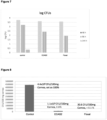
- Samples from each dilution were plated in triplicate by pipetting 100 ⁇ L on Tryptone Soy agar (TSA) and Cetrimid agar and spreading, and incubated at 37 °C for 48 h. The viable CFUs were counted. The number of viable Pseudomonas aeruginosa was expressed per 100 mg of cornea (Table 14 and Figure 8 ).
- the treatment of rabbit eyes infected with Pseudomonas aeruginosa from 6 to 19 h post infection with the ECAS 2 reduced the number of Pseudomonas aeruginosa organisms by approximately 1.6 log CFU/100 mg cornea compared to that of the untreated control group (from 4.4x10 6 to 1.1x10 6 CFU/100 mg cornea) ( Fig. 8 ).
- the % residual number of bacteria after treatment with ECAS2 was 2.6% of the control group.
Landscapes
- Health & Medical Sciences (AREA)
- Life Sciences & Earth Sciences (AREA)
- Chemical & Material Sciences (AREA)
- Veterinary Medicine (AREA)
- Public Health (AREA)
- General Health & Medical Sciences (AREA)
- Animal Behavior & Ethology (AREA)
- Medicinal Chemistry (AREA)
- Pharmacology & Pharmacy (AREA)
- Chemical Kinetics & Catalysis (AREA)
- Organic Chemistry (AREA)
- Nuclear Medicine, Radiotherapy & Molecular Imaging (AREA)
- General Chemical & Material Sciences (AREA)
- Epidemiology (AREA)
- Communicable Diseases (AREA)
- Oncology (AREA)
- Inorganic Chemistry (AREA)
- Virology (AREA)
- Engineering & Computer Science (AREA)
- Ophthalmology & Optometry (AREA)
- Electrochemistry (AREA)
- Materials Engineering (AREA)
- Metallurgy (AREA)
- Bioinformatics & Cheminformatics (AREA)
- Biotechnology (AREA)
- Molecular Biology (AREA)
- Pharmaceuticals Containing Other Organic And Inorganic Compounds (AREA)
- Medicinal Preparation (AREA)
Claims (15)
- Elektrochemisch aktivierte Salzlösung (ECAS) umfassendeinen Gesamtchlorgehalt von zwischen 1 und 500 mg/l, bevorzugt 100-450 mg/l, einen Chloridgehalt von zwischen 2 und 8 g/l, bevorzugt 3-7 g/l,ein Redoxpotenzial von +150 bis +1350 mV, bevorzugt +600 bis +1100 mV, stärker bevorzugt +700 bis +1050 mV, stärker bevorzugt +700 bis +1000 mV,eine Osmolalität von 20-800 mOsm/kg, bevorzugt 200-400 mOsm/kg, stärker bevorzugt 250-350 mOsm/kg,einen pH-Wert von 6,0 bis 7,8, bevorzugt 7,1 bis 7,4, undmindestens eine/ein (Salz von) Borsäure und/oder mindestens eine/ein (Salz von) Phosphorsäure.
- Elektrochemisch aktivierte Salzlösung (ECAS) nach Anspruch 1, umfassend mindestens eine/ein (Salz von) Phosphorsäure, bevorzugt in einer Menge von 0,01-1000 g/l.
- Elektrochemisch aktivierte Salzlösung (ECAS) nach einem der vorhergehenden Ansprüche, umfassend mindestens eine/ein (Salz von) Borsäure, bevorzugt in einer Menge von 0,01 bis 1000 g/l.
- Elektrochemisch aktivierte Salzlösung (ECAS) nach einem der vorhergehenden Ansprüche, welche Hypochloritionen und/oder hypochlorige Säure enthält, insbesondere in einer Gesamtkonzentration von 1 bis 10000 mg/l.
- Elektrochemisch aktivierte Salzlösung (ECAS) nach einem der vorhergehenden Ansprüche, ferner umfassend mindestens ein viskositätserhöhendes Mittel, wie ein Polymer, entweder organisch oder anorganisch.
- Elektrochemisch aktivierte Salzlösung (ECAS) nach einem der vorhergehenden Ansprüche, welche kein zusätzliches therapeutisch aktives Mittel, wie ein Medikament, enthält.
- Elektrochemisch aktivierte Salzlösung (ECAS) nach einem der vorhergehenden Ansprüche, welche kein zusätzliches Konservierungsmittel enthält.
- Pharmazeutische Zubereitung umfassend eine elektrochemisch aktivierte Salzlösung (ECAS) nach einem der Ansprüche 1-7, vorzugsweise ferner umfassend mindestens einen pharmazeutisch annehmbaren Hilfsstoff.
- Elektrochemisch aktivierte Salzlösung (ECAS) nach einem der Ansprüche 1-7 zur Verwendung bei der Behandlung von Infektionen, vorzugsweise Augeninfektionen.
- Elektrochemisch aktivierte Salzlösung (ECAS) zur Verwendung nach Anspruch 9, wobei die Infektion durch Bakterien und/oder Pilze verursacht wird, die ausgewählt sind aus der Gruppe bestehend aus Staphylococcus aureus, Methicillin-resistentem Staphylococcus aureus, Escherichia coli, Staphylococcus epidermidis, Pseudomonas aeruginosa, Acinetobacter calcoaceticus, Enterobacter aerogenes, Streptococcus anginosus, Streptococcus pyogenes, Candida albicans, Aspergillus brasiliensis, Serratia marcescens und Acinetobacter pitii.
- Elektrochemisch aktivierte Salzlösung (ECAS) zur Verwendung nach Anspruch 9, wobei die Infektion durch Viren verursacht wird, die ausgewählt sind aus der Gruppe bestehend aus Adenoviren, Enteroviren und Herpesviren, wie Herpes-simplex-Virus 1 und 2.
- Elektrochemisch aktivierte Salzlösung (ECAS) zur Verwendung nach einem der Ansprüche 9-11 zur Behandlung von Konjunktivitis, Keratitis, Blepharitis und/oder Endophthalmitis.
- Elektrochemisch aktivierte Salzlösung (ECAS) zur Verwendung nach einem der Ansprüche 9-12, welche auf das Auge verabreicht wird.
- Verfahren zum Erzeugen einer elektrochemisch aktivierten Salzlösung (ECAS) nach einem der Ansprüche 1-7, umfassend die Schritte:(i) Elektrolysieren einer wässrigen Chloridlösung in einem Elektrolysereaktor,(ii) Zugeben von mindestens einer/einem (Salz von) Borsäure und/oder mindestens einer/einem (Salz von) Phosphorsäure, und(iii) gegebenenfalls Verdünnen der ECAS durch Zugeben von Wasser zur Injektion.
- Verfahren nach Anspruch 14, wobei die Elektrolyse bei einem Strom von 10,0-30,0 A durchgeführt wird.
Applications Claiming Priority (2)
| Application Number | Priority Date | Filing Date | Title |
|---|---|---|---|
| EP18183127.2A EP3593862A1 (de) | 2018-07-12 | 2018-07-12 | Elektrochemisch aktivierte salzlösung |
| PCT/EP2019/068574 WO2020011870A1 (en) | 2018-07-12 | 2019-07-10 | Electrochemically activated salt solution |
Publications (3)
| Publication Number | Publication Date |
|---|---|
| EP3820568A1 EP3820568A1 (de) | 2021-05-19 |
| EP3820568B1 true EP3820568B1 (de) | 2025-04-16 |
| EP3820568C0 EP3820568C0 (de) | 2025-04-16 |
Family
ID=62948000
Family Applications (2)
| Application Number | Title | Priority Date | Filing Date |
|---|---|---|---|
| EP18183127.2A Withdrawn EP3593862A1 (de) | 2018-07-12 | 2018-07-12 | Elektrochemisch aktivierte salzlösung |
| EP19740518.6A Active EP3820568B1 (de) | 2018-07-12 | 2019-07-10 | Elektrochemisch aktivierte salzlösung zur verwendung bei der behandlung von infektionen |
Family Applications Before (1)
| Application Number | Title | Priority Date | Filing Date |
|---|---|---|---|
| EP18183127.2A Withdrawn EP3593862A1 (de) | 2018-07-12 | 2018-07-12 | Elektrochemisch aktivierte salzlösung |
Country Status (9)
| Country | Link |
|---|---|
| US (1) | US20210275579A1 (de) |
| EP (2) | EP3593862A1 (de) |
| JP (1) | JP2021531341A (de) |
| KR (1) | KR20210031689A (de) |
| CN (1) | CN112805064A (de) |
| AU (1) | AU2019302997B2 (de) |
| CA (1) | CA3104618A1 (de) |
| ES (1) | ES3026220T3 (de) |
| WO (1) | WO2020011870A1 (de) |
Families Citing this family (1)
| Publication number | Priority date | Publication date | Assignee | Title |
|---|---|---|---|---|
| CN111904977A (zh) * | 2020-08-18 | 2020-11-10 | 珠海市索利达医疗器械有限公司 | 一种用于皮肤及软组织抗感染治疗的组合物及其应用 |
Family Cites Families (11)
| Publication number | Priority date | Publication date | Assignee | Title |
|---|---|---|---|---|
| US7393522B2 (en) * | 2000-01-12 | 2008-07-01 | Novabay Pharmaceuticals, Inc. | Physiologically balanced, ionized, acidic solution and methodology for use in wound healing |
| US20030185704A1 (en) * | 2000-01-12 | 2003-10-02 | Suzanne Bernard | Physiologically balanced, ionized, acidic solution and methodology for use in wound healing |
| AU2002351430A1 (en) * | 2001-12-10 | 2003-06-23 | Radical Waters (Ip) (Pty) Limited | Electrochemically activated water for the treatment of cystitis |
| GB2393737B (en) | 2002-10-03 | 2005-08-17 | Sterilox Tech Int Ltd | Electronic treatment of an aqueous salt solution |
| WO2005065388A2 (en) | 2003-12-31 | 2005-07-21 | Yodlee, Inc. | Method and apparatus for configurating and establishing a secure credential-based network link between a client and a service over a data-packet-network |
| CN101163491B (zh) * | 2005-03-23 | 2017-04-19 | 奥古露丝创新科学公司 | 利用氧化还原电位水溶液治疗皮肤溃疡的方法 |
| WO2008089268A2 (en) * | 2007-01-16 | 2008-07-24 | Puricore, Inc. | Methods and compositions for treating conditions associated with infection and/or inflammation |
| WO2009013019A2 (en) | 2007-07-26 | 2009-01-29 | Azad Pharma Ag | Pharmaceutical preparations comprising electrochemically activated hypochlorite solutions |
| EP2954901A1 (de) | 2009-06-17 | 2015-12-16 | APR Nanotechnologies S.A. | Verfahren zur behandlung von erkrankungen des äusseren augenbereichs mit saurem wasser mit hohem oxidationsreduktionspotenzial und zusammensetzungen daraus |
| EP2431056A1 (de) * | 2010-09-16 | 2012-03-21 | Caliopa AG | Pharmazeutische Zusammensetzung, enthaltend elektrochemisch aktivierte Salzlösung |
| CN103796515B (zh) * | 2011-03-18 | 2017-05-03 | 瑞尔姆治疗股份有限公司 | 稳定的次卤酸溶液 |
-
2018
- 2018-07-12 EP EP18183127.2A patent/EP3593862A1/de not_active Withdrawn
-
2019
- 2019-07-10 KR KR1020217000792A patent/KR20210031689A/ko not_active Withdrawn
- 2019-07-10 CA CA3104618A patent/CA3104618A1/en active Pending
- 2019-07-10 US US17/259,458 patent/US20210275579A1/en active Pending
- 2019-07-10 EP EP19740518.6A patent/EP3820568B1/de active Active
- 2019-07-10 AU AU2019302997A patent/AU2019302997B2/en active Active
- 2019-07-10 ES ES19740518T patent/ES3026220T3/es active Active
- 2019-07-10 CN CN201980046368.2A patent/CN112805064A/zh active Pending
- 2019-07-10 JP JP2021524110A patent/JP2021531341A/ja active Pending
- 2019-07-10 WO PCT/EP2019/068574 patent/WO2020011870A1/en not_active Ceased
Non-Patent Citations (1)
| Title |
|---|
| GARETH ROBINSON ET AL: "The Effect of Long-Term Storage on the Physiochemical and Bactericidal Properties of Electrochemically Activated Solutions", INTERNATIONAL JOURNAL OF MOLECULAR SCIENCES, vol. 14, no. 1, 24 December 2012 (2012-12-24), pages 457 - 469, XP055194201, DOI: 10.3390/ijms14010457 * |
Also Published As
| Publication number | Publication date |
|---|---|
| JP2021531341A (ja) | 2021-11-18 |
| CN112805064A (zh) | 2021-05-14 |
| ES3026220T3 (en) | 2025-06-10 |
| KR20210031689A (ko) | 2021-03-22 |
| WO2020011870A1 (en) | 2020-01-16 |
| AU2019302997A1 (en) | 2021-02-18 |
| AU2019302997B2 (en) | 2024-08-01 |
| EP3820568A1 (de) | 2021-05-19 |
| CA3104618A1 (en) | 2020-01-16 |
| EP3820568C0 (de) | 2025-04-16 |
| US20210275579A1 (en) | 2021-09-09 |
| EP3593862A1 (de) | 2020-01-15 |
Similar Documents
| Publication | Publication Date | Title |
|---|---|---|
| US10668099B2 (en) | Methods and compositions for treating conditions associated with infection and/or inflammation | |
| US10632147B2 (en) | Methods and compositions for treating inflammatory disorders | |
| KR102224121B1 (ko) | 포비돈-요오드를 포함하는 안과용 조성물 | |
| US10617715B2 (en) | Methods of treating or preventing biofilm associated infections with free available chlorine free available chlorine water | |
| US20130259955A1 (en) | Medical Uses of Nanoclustered Water | |
| CN101678140A (zh) | 用于隐形眼镜护理和防腐的药用组合物的磷脂组合物 | |
| AU2023219973B2 (en) | Antimicrobial compositions containing polyquaternium | |
| EP3157507B1 (de) | Pharmazeutische zusammensetzungen zur behandlung von augeninfektionen | |
| JP2022536927A (ja) | 微生物増殖を防止するための組成物、キット、方法、および使用 | |
| AU2019302997B2 (en) | Electrochemically activated salt solution | |
| KR20110104367A (ko) | 무보존제 안과용 조성물 | |
| US20100204181A1 (en) | N-halogenated amino acid formulations comprising phosphine or amine oxides | |
| WO2021202332A1 (en) | Aqueous formulations containing povidone iodine for effective treatment and prevention of virus infections | |
| EP2139520B1 (de) | Aliphatische säurehaltige n-halogenierte aminosäurenformulierungen | |
| US20230233600A1 (en) | Improved virucidal formulations | |
| AU2021105927A4 (en) | Virucidal formulations containing povidone-iodine | |
| US20260124235A1 (en) | Ophthalmic solution containing quaternary chitosan derivatives for treating ocular diseases | |
| JPH04352728A (ja) | 眼科用製剤 | |
| HK1043739A1 (en) | Use of a pharmaceutical composition in the manufacture of a medicament for the treatment of pathological conditions of the eye caused by bacteria, viruses, fungi, yeasts and protozoa | |
| Ali | EVALUATION OF ANTIMICROBIAL PRESERVATIVE EFFICACY OF SODIUM PERBORATE IN SODIUM CHLORIDE NASAL DROPS IN COMPARISON WITH BENZALKONIUM CHLORIDE | |
| HK40001739A (en) | Antimicrobial compositions containing polyquaternium | |
| HK40001739B (en) | Antimicrobial compositions containing polyquaternium |
Legal Events
| Date | Code | Title | Description |
|---|---|---|---|
| STAA | Information on the status of an ep patent application or granted ep patent |
Free format text: STATUS: UNKNOWN |
|
| STAA | Information on the status of an ep patent application or granted ep patent |
Free format text: STATUS: THE INTERNATIONAL PUBLICATION HAS BEEN MADE |
|
| PUAI | Public reference made under article 153(3) epc to a published international application that has entered the european phase |
Free format text: ORIGINAL CODE: 0009012 |
|
| STAA | Information on the status of an ep patent application or granted ep patent |
Free format text: STATUS: REQUEST FOR EXAMINATION WAS MADE |
|
| 17P | Request for examination filed |
Effective date: 20210203 |
|
| AK | Designated contracting states |
Kind code of ref document: A1 Designated state(s): AL AT BE BG CH CY CZ DE DK EE ES FI FR GB GR HR HU IE IS IT LI LT LU LV MC MK MT NL NO PL PT RO RS SE SI SK SM TR |
|
| DAV | Request for validation of the european patent (deleted) | ||
| DAX | Request for extension of the european patent (deleted) | ||
| STAA | Information on the status of an ep patent application or granted ep patent |
Free format text: STATUS: EXAMINATION IS IN PROGRESS |
|
| 17Q | First examination report despatched |
Effective date: 20240610 |
|
| REG | Reference to a national code |
Ref country code: DE Free format text: PREVIOUS MAIN CLASS: A61P0031040000 Ref country code: DE Ref legal event code: R079 Ref document number: 602019068698 Country of ref document: DE Free format text: PREVIOUS MAIN CLASS: A61P0031040000 Ipc: A61K0033200000 |
|
| GRAP | Despatch of communication of intention to grant a patent |
Free format text: ORIGINAL CODE: EPIDOSNIGR1 |
|
| STAA | Information on the status of an ep patent application or granted ep patent |
Free format text: STATUS: GRANT OF PATENT IS INTENDED |
|
| RIC1 | Information provided on ipc code assigned before grant |
Ipc: A61P 31/12 20060101ALI20241025BHEP Ipc: A61P 31/10 20060101ALI20241025BHEP Ipc: A61P 31/04 20060101ALI20241025BHEP Ipc: A61P 31/22 20060101ALI20241025BHEP Ipc: A61K 33/20 20060101AFI20241025BHEP |
|
| INTG | Intention to grant announced |
Effective date: 20241107 |
|
| GRAS | Grant fee paid |
Free format text: ORIGINAL CODE: EPIDOSNIGR3 |
|
| GRAA | (expected) grant |
Free format text: ORIGINAL CODE: 0009210 |
|
| STAA | Information on the status of an ep patent application or granted ep patent |
Free format text: STATUS: THE PATENT HAS BEEN GRANTED |
|
| AK | Designated contracting states |
Kind code of ref document: B1 Designated state(s): AL AT BE BG CH CY CZ DE DK EE ES FI FR GB GR HR HU IE IS IT LI LT LU LV MC MK MT NL NO PL PT RO RS SE SI SK SM TR |
|
| REG | Reference to a national code |
Ref country code: GB Ref legal event code: FG4D |
|
| REG | Reference to a national code |
Ref country code: CH Ref legal event code: EP Ref country code: DE Ref legal event code: R096 Ref document number: 602019068698 Country of ref document: DE |
|
| REG | Reference to a national code |
Ref country code: IE Ref legal event code: FG4D |
|
| REG | Reference to a national code |
Ref country code: ES Ref legal event code: FG2A Ref document number: 3026220 Country of ref document: ES Kind code of ref document: T3 Effective date: 20250610 |
|
| U01 | Request for unitary effect filed |
Effective date: 20250505 |
|
| U07 | Unitary effect registered |
Designated state(s): AT BE BG DE DK EE FI FR IT LT LU LV MT NL PT RO SE SI Effective date: 20250509 |
|
| U20 | Renewal fee for the european patent with unitary effect paid |
Year of fee payment: 7 Effective date: 20250626 |
|
| PGFP | Annual fee paid to national office [announced via postgrant information from national office to epo] |
Ref country code: ES Payment date: 20250827 Year of fee payment: 7 |
|
| PG25 | Lapsed in a contracting state [announced via postgrant information from national office to epo] |
Ref country code: GR Free format text: LAPSE BECAUSE OF FAILURE TO SUBMIT A TRANSLATION OF THE DESCRIPTION OR TO PAY THE FEE WITHIN THE PRESCRIBED TIME-LIMIT Effective date: 20250717 Ref country code: NO Free format text: LAPSE BECAUSE OF FAILURE TO SUBMIT A TRANSLATION OF THE DESCRIPTION OR TO PAY THE FEE WITHIN THE PRESCRIBED TIME-LIMIT Effective date: 20250716 |
|
| PG25 | Lapsed in a contracting state [announced via postgrant information from national office to epo] |
Ref country code: PL Free format text: LAPSE BECAUSE OF FAILURE TO SUBMIT A TRANSLATION OF THE DESCRIPTION OR TO PAY THE FEE WITHIN THE PRESCRIBED TIME-LIMIT Effective date: 20250416 |
|
| PGFP | Annual fee paid to national office [announced via postgrant information from national office to epo] |
Ref country code: GB Payment date: 20250722 Year of fee payment: 7 |
|
| PG25 | Lapsed in a contracting state [announced via postgrant information from national office to epo] |
Ref country code: HR Free format text: LAPSE BECAUSE OF FAILURE TO SUBMIT A TRANSLATION OF THE DESCRIPTION OR TO PAY THE FEE WITHIN THE PRESCRIBED TIME-LIMIT Effective date: 20250416 |
|
| PGFP | Annual fee paid to national office [announced via postgrant information from national office to epo] |
Ref country code: CH Payment date: 20250801 Year of fee payment: 7 |
|
| PG25 | Lapsed in a contracting state [announced via postgrant information from national office to epo] |
Ref country code: RS Free format text: LAPSE BECAUSE OF FAILURE TO SUBMIT A TRANSLATION OF THE DESCRIPTION OR TO PAY THE FEE WITHIN THE PRESCRIBED TIME-LIMIT Effective date: 20250716 |
|
| PG25 | Lapsed in a contracting state [announced via postgrant information from national office to epo] |
Ref country code: IS Free format text: LAPSE BECAUSE OF FAILURE TO SUBMIT A TRANSLATION OF THE DESCRIPTION OR TO PAY THE FEE WITHIN THE PRESCRIBED TIME-LIMIT Effective date: 20250816 |
|
| PG25 | Lapsed in a contracting state [announced via postgrant information from national office to epo] |
Ref country code: SM Free format text: LAPSE BECAUSE OF FAILURE TO SUBMIT A TRANSLATION OF THE DESCRIPTION OR TO PAY THE FEE WITHIN THE PRESCRIBED TIME-LIMIT Effective date: 20250416 |
|
| PG25 | Lapsed in a contracting state [announced via postgrant information from national office to epo] |
Ref country code: CZ Free format text: LAPSE BECAUSE OF FAILURE TO SUBMIT A TRANSLATION OF THE DESCRIPTION OR TO PAY THE FEE WITHIN THE PRESCRIBED TIME-LIMIT Effective date: 20250416 |
|
| PG25 | Lapsed in a contracting state [announced via postgrant information from national office to epo] |
Ref country code: SK Free format text: LAPSE BECAUSE OF FAILURE TO SUBMIT A TRANSLATION OF THE DESCRIPTION OR TO PAY THE FEE WITHIN THE PRESCRIBED TIME-LIMIT Effective date: 20250416 |
|
| PLBE | No opposition filed within time limit |
Free format text: ORIGINAL CODE: 0009261 |
|
| STAA | Information on the status of an ep patent application or granted ep patent |
Free format text: STATUS: NO OPPOSITION FILED WITHIN TIME LIMIT |
|
| REG | Reference to a national code |
Ref country code: CH Ref legal event code: L10 Free format text: ST27 STATUS EVENT CODE: U-0-0-L10-L00 (AS PROVIDED BY THE NATIONAL OFFICE) Effective date: 20260225 |
|
| 26N | No opposition filed |
Effective date: 20260119 |