EP3812217B1 - Dachmodul - Google Patents
Dachmodul Download PDFInfo
- Publication number
- EP3812217B1 EP3812217B1 EP19204590.4A EP19204590A EP3812217B1 EP 3812217 B1 EP3812217 B1 EP 3812217B1 EP 19204590 A EP19204590 A EP 19204590A EP 3812217 B1 EP3812217 B1 EP 3812217B1
- Authority
- EP
- European Patent Office
- Prior art keywords
- roof
- lining
- side part
- profile
- vehicle interior
- Prior art date
- Legal status (The legal status is an assumption and is not a legal conclusion. Google has not performed a legal analysis and makes no representation as to the accuracy of the status listed.)
- Active
Links
Images
Classifications
-
- B—PERFORMING OPERATIONS; TRANSPORTING
- B60—VEHICLES IN GENERAL
- B60R—VEHICLES, VEHICLE FITTINGS, OR VEHICLE PARTS, NOT OTHERWISE PROVIDED FOR
- B60R13/00—Elements for body-finishing, identifying, or decorating; Arrangements or adaptations for advertising purposes
- B60R13/02—Internal Trim mouldings ; Internal Ledges; Wall liners for passenger compartments; Roof liners
- B60R13/0212—Roof or head liners
- B60R13/0225—Roof or head liners self supporting head liners
-
- B—PERFORMING OPERATIONS; TRANSPORTING
- B60—VEHICLES IN GENERAL
- B60H—ARRANGEMENTS OF HEATING, COOLING, VENTILATING OR OTHER AIR-TREATING DEVICES SPECIALLY ADAPTED FOR PASSENGER OR GOODS SPACES OF VEHICLES
- B60H1/00—Heating, cooling or ventilating devices
- B60H1/00507—Details, e.g. mounting arrangements, desaeration devices
- B60H1/00557—Details of ducts or cables
- B60H1/00564—Details of ducts or cables of air ducts
-
- B—PERFORMING OPERATIONS; TRANSPORTING
- B60—VEHICLES IN GENERAL
- B60H—ARRANGEMENTS OF HEATING, COOLING, VENTILATING OR OTHER AIR-TREATING DEVICES SPECIALLY ADAPTED FOR PASSENGER OR GOODS SPACES OF VEHICLES
- B60H1/00—Heating, cooling or ventilating devices
- B60H1/24—Ventilating devices where the heating or cooling is irrelevant
- B60H1/241—Ventilating devices where the heating or cooling is irrelevant characterised by the location of ventilation devices in the vehicle
- B60H1/245—Ventilating devices where the heating or cooling is irrelevant characterised by the location of ventilation devices in the vehicle located in the roof
-
- B—PERFORMING OPERATIONS; TRANSPORTING
- B60—VEHICLES IN GENERAL
- B60Q—ARRANGEMENT OF SIGNALLING OR LIGHTING DEVICES, THE MOUNTING OR SUPPORTING THEREOF OR CIRCUITS THEREFOR, FOR VEHICLES IN GENERAL
- B60Q3/00—Arrangement of lighting devices for vehicle interiors; Lighting devices specially adapted for vehicle interiors
- B60Q3/20—Arrangement of lighting devices for vehicle interiors; Lighting devices specially adapted for vehicle interiors for lighting specific fittings of passenger or driving compartments; mounted on specific fittings of passenger or driving compartments
- B60Q3/208—Sun roofs; Windows
-
- B—PERFORMING OPERATIONS; TRANSPORTING
- B60—VEHICLES IN GENERAL
- B60Q—ARRANGEMENT OF SIGNALLING OR LIGHTING DEVICES, THE MOUNTING OR SUPPORTING THEREOF OR CIRCUITS THEREFOR, FOR VEHICLES IN GENERAL
- B60Q3/00—Arrangement of lighting devices for vehicle interiors; Lighting devices specially adapted for vehicle interiors
- B60Q3/70—Arrangement of lighting devices for vehicle interiors; Lighting devices specially adapted for vehicle interiors characterised by the purpose
- B60Q3/74—Arrangement of lighting devices for vehicle interiors; Lighting devices specially adapted for vehicle interiors characterised by the purpose for overall compartment lighting; for overall compartment lighting in combination with specific lighting, e.g. room lamps with reading lamps
-
- B—PERFORMING OPERATIONS; TRANSPORTING
- B60—VEHICLES IN GENERAL
- B60R—VEHICLES, VEHICLE FITTINGS, OR VEHICLE PARTS, NOT OTHERWISE PROVIDED FOR
- B60R13/00—Elements for body-finishing, identifying, or decorating; Arrangements or adaptations for advertising purposes
- B60R13/02—Internal Trim mouldings ; Internal Ledges; Wall liners for passenger compartments; Roof liners
- B60R2013/0287—Internal Trim mouldings ; Internal Ledges; Wall liners for passenger compartments; Roof liners integrating other functions or accessories
Definitions
- the present invention relates to a roof module for a motor vehicle and a motor vehicle with such a roof module.
- roofs for motor vehicles can include a headliner that faces an interior of the motor vehicle, ie can be formed on the inside of a roof.
- headliners can be designed as thermoformed plastic components. Headliners can form a roof module together with other roof parts, with fastening parts and/or with functional parts, such as ventilation ducts or lighting elements.
- a ventilation device in a vehicle interior of a vehicle in particular a commercial vehicle, according to the preamble of claim 1, with a roof liner arranged in the vehicle interior, which is formed at least in regions by a hollow body, the latter enclosing a hollow body cavity and one facing a vehicle roof upper plate and a lower plate facing the vehicle interior, at least one spacer element being arranged between the upper plate and the lower plate in the hollow body cavity, the at least one spacer element being arranged and designed in the hollow body cavity in such a way that it has at least one air duct in the hollow body cavity forms with the air flow flowing into the hollow body through the hollow body can be directed into the vehicle interior in a targeted manner, the hollow body is or can be directly or indirectly flow-coupled to at least one ventilation source, preferably a blower, and at least one actuating device is or can be arranged between the hollow body and the ventilation source, by means of which a single and/or several and/or all air ducts
- the EP 1 302 369 A2 discloses a ceiling paneling and air duct system for large-capacity vehicles with support profiles which extend in the longitudinal direction of the vehicle in the transition area from the vehicle ceiling to the vehicle side walls, can be fastened to the vehicle body and can be arranged on the cover profiles, with two cover profiles being provided in each transition area and arranged on the support profiles in such a way that the longitudinal edge regions of the cladding profiles overlap to form a first gap opening, with the upper cladding profile being spaced with its upper edge from the vehicle roof or a roof cladding arranged underneath it in the installed position in order to form a second gap opening, and with an air duct being formed in each case between the vehicle body and the cladding profiles .
- the roof module comprises a roof liner, the roof liner being a thermoformed plastic component, a roof liner side part arranged outside the roof liner when viewed from a vehicle interior, the roof liner side part being a thermoformed plastic component, a contact line running between the roof liner and the roof liner side part, the Contact line is formed by a connecting component, in particular a sealing component, and/or wherein the contact line is formed by direct contact between the roof liner and the roof liner side part, with a gap open towards the vehicle interior running between the roof liner and the roof liner side part in the installed position on the vehicle edge side of the contact line, so that between Roof liner and roof liner side part vehicle edge side of the contact line, a channel is formed, which is open to the vehicle interior in the installed position.
- a roof module is made up of two layers, namely a roof liner on the inside - i.e. closer to the vehicle interior - and one, or preferably two, roof liner side parts on the outside - ie further away from the vehicle interior, with a roof liner side part preferably only covering a section of the roof liner from the outside .
- the roof liner side part or parts preferably extend in the installed position in the longitudinal direction of the vehicle along one or both sides of a vehicle, that is to say essentially above the side walls and side windows of a vehicle.
- the roof liner and roof liner side part are connected via a contact line connecting the roof liner to the roof liner side part, in particular a sealing strip, connected to one another, which is preferably arranged at least in sections in the longitudinal direction of the side part and particularly preferably also in the longitudinal direction of the vehicle.
- the line of contact at least does not run completely in the transverse direction of the side part and the vehicle.
- the contact line thus separates a part of the roof module on the vehicle edge, which is closer to the left or right outside of the motor vehicle, from a part of the roof module which is closer to the longitudinal center axis of the motor vehicle.
- the part of the roof module on the vehicle edge in relation to the contact line i.e. the part further away from the vehicle longitudinal central axis, forms a channel which is fluidly connected to the vehicle interior via a gap preferably extending in the vehicle longitudinal direction.
- a channel is therefore formed in a roof module through the use of two simple thermoformed plastic components, sections of which are connected directly or indirectly to one another, which channel is connected to the vehicle interior via a gap, so that via the gap between the roof lining and the roof lining side part, and efficiently, for example, air or light can be fed into the interior of the motor vehicle.
- the roof lining side part forms a reflection surface in sections on its side facing the roof lining, which is adjacent to the gap and which forms an angle of less than 90 degrees with the gap.
- the reflection surface can therefore be used to deflect light or air from the channel into the gap, for example.
- the direction of the incoming medium, in particular light or air, is preferably deflected by approximately 90 degrees by the reflection surface.
- the roof module comprises a light strip, the light strip being arranged in such a way that the light from the light strip is guided through the gap via the reflection surface.
- the roof module comprises at least one connecting profile, the connecting profile forming a connection between the roof liner and the roof liner side part, the connecting profile preferably forming the contact line between the roof liner and the roof liner side part at least in sections, and thus representing a connecting component between the roof liner and the roof liner side part.
- a light namely a light strip, is attached to the connecting profile.
- the connecting profile is a U-profile.
- the light strip is fastened to the bottom of the U-profile.
- the gap between the roof liner and the roof liner side part preferably runs in a longitudinal direction of the roof liner side part. In the installed position, the gap particularly preferably runs in a longitudinal direction of the motor vehicle.
- the contact line preferably also runs at least in sections in the longitudinal direction of the roof lining side part.
- the headliner is preferably clipped to the side part of the headliner by means of a plurality of clips.
- the roof liner is only clipped to the roof liner side part and not glued.
- An optically reflecting element or an optically reflecting coating is preferably arranged on the reflection surface.
- the roof module preferably comprises at least one holder, with the holder preferably being a thermoformed plastic component, with the holder forming a strip running in the longitudinal direction of the roof lining side part, with the roof lining being fastened to the holder on the side of the holder that faces the vehicle interior in the installed position and on the in Installation position facing away from the vehicle interior side of the holder of the headliner side part is attached to the holder.
- the headliner is preferably attached to the holder in a materially bonded manner, and the side part of the headliner is preferably clipped to the holder using a plurality of clips.
- the headliner is preferably attached to the U-profile on a leg of the U-profile facing the vehicle interior in the installed position and the headliner side part is attached to the U-profile on a leg of the U-profile facing away from the vehicle interior in the installed position.
- the headliner is preferably attached to the U-profile in a materially bonded manner and the side part of the headliner is preferably clipped to the U-profile via at least one clip.
- the leg of the U-profile facing the vehicle interior in the installed position is preferably arranged in the vicinity of the gap between the roof lining and the roof lining side part, with the open side of the U-shape of the U-profile being on that side of the roof lining which faces the gap.
- connection profile or the U-profile does not have to be a continuous component that has the same length as a light strip attached to it, for example LED strips, but it can be several separate components, to which a light strip extending in the length is attached .
- the roof module preferably comprises an air hose, the air hose being fluidically connected to an opening in the roof lining side part, so that air can be supplied to the duct via the air hose.
- the air supplied via the air hose can then reach the interior of the vehicle via the duct, particularly in the area of the side windows of the motor vehicle.
- No air outlet nozzles and no ventilation slot covers are preferably used for the air supply. Rather, the air is supplied simply through the gap between the roof liner and the roof liner side panel.
- the roof liner and the roof liner side part together form the air supply duct into the vehicle interior.
- a motor vehicle can comprise a roof module as described above.
- the roof liner faces the vehicle interior, thus forming an inner layer of the roof.
- the side part of the headliner faces away from the vehicle interior, so it forms an outer layer of the roof.
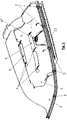
- a roof module which comprises a roof liner 2, shown here only in part, which covers an interior of a motor vehicle and which is a thermoformed plastic component.
- the roof module also includes a roof liner side part 1 that is arranged in the installed position outside of the roof liner 2 as seen from the vehicle interior, ie forming an outer layer, the roof liner side part 1 also being a thermoformed plastic component.
- a contact line 12 runs between the headliner 2 and the headliner side part 1, namely a seal which is 1 is shown only in sections and is tightly connected to both the roof lining 2 and the roof lining side part 1 .
- a channel 16 is thus formed by the contact line 12 or by the seal between the roof lining 2 and the roof lining side part 1, which channel is open towards the vehicle interior via the gap 15 in the installed position.
- thermoformed components 1, 2 which form a channel 16, in particular an air channel.
- the channel 16 in particular the air channel, is formed between the components. As shown, this channel 16 can only be formed in the outlet area, but it can also be used across the course of the two thermoformed parts 1, 2.
- the channel 16 can have the same cross-sectional area with changed lengths/widths over the course of the component 1, 2. Furthermore, both cross-section-enlarging (diffuser) and cross-section-reducing (nozzle) versions or areas of the channel 16 are possible. Thus, in the outlet area, ie at the gap 15, an air outlet that is optimized in terms of flow can be formed.
- the angle of the inclined surface of the roof lining side part 1 in the outlet area, ie the reflection surface 13, indicates the direction of flow, for example for outflowing air. This allows the flow of air and thus the flow towards the side window to be optimised.
- the air can be supplied, for example, through standard air hoses 11 available on the market or specially optimized air hoses.
- a connection piece for an air hose 11 provided can also be implemented on the air hose opening 17 of the roof module.
- a number of advantages can be achieved by supplying air via a roof module according to the invention.
- a passenger is not blown directly by the conditioned air.
- the air flow can perform a defrost/demist function for the windows all around.
- the width of the area to which the air flows can be specified in a simple manner via the length of the air outlet.
- the components of the roof module can be made from the following materials or by the following methods:
- the headliner side part 1 as a plastic part, preferably vacuum-formed plastic component, in particular a thermoformed part, as can the headliner 2, the holder 3 at the top and the holder 4 at the bottom of the roof module.
- the connecting profiles 5, namely U-profiles, can be extruded aluminum profiles or milled cuts, for example made of plastic, the clips 7 can be realized by fir tree clips.
- the contact line 12 can be realized, for example, by a liquid sealant or a sealing foam tape.
- the contact line 12, and in particular a sealing contact line 12 can also already be formed by the roof lining side part 1 and/or by the roof lining 2 itself, so that no additional sealing component is required.
- the connections of the components of the roof module can be made in the following way:
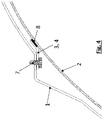
- the holder 3 (above) can be pre-assembled on the roof liner 2, in particular glued using adhesive 8 (see 4 ) or ultrasonically welded.
- the holder 3 (above) can be fastened to a roof lining side part 1 by clips 7 , in particular by two clips 7 .
- the holder 4 - below in 1 - Is also pre-assembled on the headliner 2, in particular glued, or ultrasonically welded, and fastened, for example, by three clips 7 on the headliner side part 1.
- the holder designed as a connecting profile 5, namely as a U-profile, is also pre-assembled on the headliner 2, in particular glued by means of adhesive 8 (see 3 ).
- a connecting profile 5 can be fastened to the side part 1 of the headliner by a respective clip 7 .
- at least four clips 7 can be provided on a roof lining side part 1 .
- An air hose 11 can be attached in such a way that a connecting piece with an attached air hose 11 is screwed to a side part 1 of the headliner and is sealed by an inserted air hose seal 18 .
- the sealing at the contact line 12 between roof liner 2 and roof liner side panel 1 is provided by a pre-assembled seal.
- a roof module according to the invention fulfills a lighting function, in particular for ambient lighting of the interior of a motor vehicle.
- the holders which represent connection profiles 5, can simultaneously form receptacles for light strips 9, in particular LED strips.
- the light strips 9 can include, for example: an aluminum heat sink, an LED strip, optionally a diffuser.
- the U-profiles 5 with the light strips 9 can in turn be pre-assembled, in particular glued, to the headliner 2.
- the gap 15 between the roof lining 2 and the roof lining side part 1 results in an all-round uniform light gap for the ambient light.
- the gap 15 is set and defined by the holder or holders with a U-profile 5 .
- the sloping surface on the headliner side part 1 opposite the light strip 9 serves as an optical reflection surface 13 for the even representation of the ambient lighting.
- the distance and angle between the LED strips 9 and the reflection surface 13 are preferably the same all around in order to obtain a uniform light result.
- the optional lens on the light strips 9 helps to avoid unwanted hotspots.
Landscapes
- Engineering & Computer Science (AREA)
- Mechanical Engineering (AREA)
- Physics & Mathematics (AREA)
- Thermal Sciences (AREA)
- Vehicle Interior And Exterior Ornaments, Soundproofing, And Insulation (AREA)
Description
- Die vorliegende Erfindung betrifft ein Dachmodul für ein Kraftfahrzeug und ein Kraftfahrzeug mit einem solchen Dachmodul.
- Es ist bekannt, dass Dächer für Kraftfahrzeuge einen Dachhimmel umfassen können, der einem Innenraum des Kraftfahrzeugs zugewandt, also an der Innenseite eines Daches ausgebildet sein kann. Derartige Dachhimmel können als thermogeformte Kunststoffbauteile ausgeführt sein. Dachhimmel können mit weiteren Dachteilen, mit Befestigungsteilen und/oder mit Funktionsteilen, wie zum Beispiel Belüftungskanälen oder Beleuchtungselementen, zusammen ein Dachmodul bilden.
- Aus der
DE 103 62 300 B4 ist eine Belüftungseinrichtung in einem Fahrzeuginnenraum eines Fahrzeuges, insbesondere eines Nutzfahrzeuges, nach dem Oberbegriff von Anspruch 1 bekannt, mit einem im Fahrzeuginnenraum angeordneten Dachhimmel, der wenigstens bereichsweise durch einen Hohlkörper gebildet ist, wobei letzterer einen Hohlkörper-Hohlraum einschließt und der eine einem Fahrzeugdach zugewandte Oberplatte und eine dem Fahrzeuginnenraum zugewandte Unterplatte umfasst, wobei zwischen der Oberplatte und der Unterplatte im Hohlkörper-Hohlraum wenigstens ein Abstandselement angeordnet ist, wobei das wenigstens eine Abstandselement im Hohlkörper-Hohlraum so angeordnet und ausgebildet ist, dass dieses im Hohlkörper-Hohlraum wenigstens einen Luftleitkanal ausbildet mit dem ein in den Hohlkörper einströmender Luftstrom durch den Hohlkörper hindurch gezielt in den Fahrzeuginnenraum hinein leitbar ist, der Hohlkörper mit wenigstens einer Belüftungsquelle, vorzugsweise einem Gebläse, unmittelbar oder mittelbar strömungsmäßig gekoppelt oder koppelbar ist und zwischen dem Hohlkörper und der Belüftungsquelle wenigstens eine Stelleinrichtung angeordnet oder anordenbar ist, mittels der ein einzelner und/oder mehrere und/oder alle Luftleitkanäle mit Luft versorgbar sind. - Die
EP 1 302 369 A2 offenbart ein Deckenverkleidungs- und Luftleitsystem für Großraumfahrzeuge mit sich in Fahrzeuglängsrichtung jeweils im Übergangsbereich von der Fahrzeugdecke zu den Fahrzeugseitenwänden erstreckenden, am Fahrzeugaufbau befestigbaren Trägerprofilen und jeweils daran anordbaren Verkleidungsprofilen, wobei in jedem Übergangsbereich jeweils zwei Verkleidungsprofile vorgesehen und derart an den Trägerprofilen angeordnet sind, dass sich die Längskantenbereiche der Verkleidungsprofile unter Bildung einer ersten Spaltöffnung überlappen, wobei das in der Einbaulage obere Verkleidungsprofil mit seiner oberen Randkante vom Fahrzeugdach oder einer darunter angeordneten Dachverkleidung zwecks Bildung einer zweiten Spaltöffnung beabstandet ist und wobei zwischen dem Fahrzeugaufbau und den Verkleidungsprofilen jeweils ein Luftkanal ausgebildet ist. - Es ist eine Aufgabe der Erfindung, ein Dachmodul für ein Kraftfahrzeug anzugeben, das die Verwirklichung von Zusatzfunktionen wie Belüftung oder Beleuchtung unterstützt und dabei einfach und kostengünstig hergestellt werden kann. Eine Aufgabe der Erfindung ist es auch ein Kraftfahrzeug mit einem solchen Dachmodul anzugeben, dass für derartige Zusatzfunktionen vorbereitet oder ausgebildet ist.
- Die Lösung der Aufgabe erfolgt durch ein Dachmodul für ein Kraftfahrzeug mit den Merkmalen gemäß Anspruch 1.
- Das Dachmodul umfasst erfindungsgemäß einen Dachhimmel, wobei der Dachhimmel ein thermogeformtes Kunststoffbauteil ist, einen in Einbaulage von einem Fahrzeuginnenraum aus gesehen außerhalb des Dachhimmels angeordneten Dachhimmelseitenteil, wobei der Dachhimmelseitenteil ein thermogeformtes Kunststoffbauteil ist, wobei zwischen dem Dachhimmel und dem Dachhimmelseitenteil eine Kontaktlinie verläuft, wobei die Kontaktlinie durch ein Verbindungsbauteil, insbesondere ein Dichtungsbauteil, ausgebildet ist und/oder wobei die Kontaktlinie durch direkten Kontakt zwischen dem Dachhimmel und dem Dachhimmelseitenteil ausgebildet ist, wobei in Einbaulage fahrzeugrandseitig der Kontaktlinie ein zum Fahrzeuginnenraum hin offener Spalt zwischen Dachhimmel und Dachhimmelseitenteil verläuft, so dass zwischen Dachhimmel und Dachhimmelseitenteil fahrzeugrandseitig der Kontaktlinie ein Kanal gebildet ist, der in Einbaulage zum Fahrzeuginnenraum hin offen ist.
- Erfindungsgemäß ist ein Dachmodul aus zwei Lagen aufgebaut, nämlich einem innen - also näher am Fahrzeuginnenraum - liegenden Dachhimmel und einem, oder bevorzugt zwei, außen - also weiter entfernt vom Fahrzeuginnenraum - liegenden Dachhimmelseitenteilen, wobei ein Dachhimmelseitenteil bevorzugt nur einen Abschnitt des Dachhimmels von außen überdeckt. Der oder die Dachhimmelseitenteile erstrecken sich bevorzugt in Einbaulage in Fahrzeuglängsrichtung entlang einer oder beider Seiten eines Fahrzeuges, also im Wesentlichen oberhalb der Seitenwände und Seitenfenster eines Fahrzeuges.
- Dachhimmel und Dachhimmelseitenteil sind über eine den Dachhimmel mit dem Dachhimmelseitenteil verbindende Kontaktlinie, insbesondere eine Dichtungsleiste, miteinander verbunden, die bevorzugt zumindest abschnittsweise in Längsrichtung des Seitenteils und besonders bevorzugt auch in Längsrichtung des Fahrzeugs angeordnet ist. Die Kontaktlinie verläuft zumindest nicht vollständig in Querrichtung des Seitenteils und des Fahrzeugs. Die Kontaktlinie trennt damit einen fahrzeugrandseitigen Teil des Dachmoduls, der näher der linken oder rechten Außenseite des Kraftfahrzeuges liegt, von einem Teil des Dachmoduls der näher zur Längsmittelachse des Kraftfahrzeugs liegt. Der in Relation zur Kontaktline fahrzeugrandseitige Teil des Dachmoduls, also der von der Fahrzeuglängsmittelachse entferntere Teil, bildet einen Kanal aus, der über einen sich vorzugsweise in Fahrzeuglängsrichtung erstreckenden Spalt mit dem Fahrzeuginnenraum fluidverbunden ist.
- Erfindungsgemäß wird daher durch die Verwendung zweier einfacher thermogeformter Kunststoffbauteile, die abschnittsweise miteinander unmittelbar oder mittelbar verbunden sind, in einem Dachmodul ein Kanal ausgebildet, der über einen Spalt mit dem Fahrzeug-Innenraum verbunden ist, so dass über den Spalt zwischen Dachhimmel und Dachhimmelseitenteil auf einfache und effiziente Weise beispielsweise Luft oder Licht in den Innenraum des Kraftfahrzeugs zuführbar ist.
- Erfindungsgemäß bildet der Dachhimmelseitenteil auf seiner dem Dachhimmel zugewandten Seite abschnittsweise eine Reflexionsfläche aus, die dem Spalt benachbart ist und die mit dem Spalt einen Winkel kleiner 90 Grad bildet. Die Reflexionsfläche kann also genutzt werden um beispielsweise Licht oder Luft aus dem Kanal in den Spalt umzulenken. Bevorzugt wird die Richtung des eintreffenden Mediums, insbesondere Licht oder Luft, von der Reflexionsfläche um ca. 90 Grad umgelenkt.
- Das Dachmodul umfasst erfindungsgemäß einen Leuchtstreifen, wobei der Leuchtstreifen so angeordnet ist, dass das Licht des Leuchtstreifens über die Reflexionsfläche durch den Spalt geleitet wird.
- Erfindungsgemäß umfasst das Dachmodul zumindest ein Verbindungsprofil, wobei das Verbindungsprofil eine Verbindung zwischen dem Dachhimmel und dem Dachhimmelseitenteil bildet, wobei bevorzugt das Verbindungsprofil zumindest abschnittsweise die Kontaktlinie zwischen dem Dachhimmel und dem Dachhimmelseitenteil bildet und somit ein Verbindungsbauteil zwischen Dachhimmel und Dachhimmelseitenteil darstellt.
- Auf dem Verbindungsprofil ist erfindungsgemäß eine Leuchte, nämlich ein Leuchtstreifen, befestigt.
- Das Verbindungsprofil ist erfindungsgemäß ein U-Profil.
- Auf dem Boden des U-Profils ist erfindungsgemäß der Leuchtstreifen befestigt.
- Vorzugsweise verläuft der Spalt zwischen Dachhimmel und Dachhimmelseitenteil in einer Längsrichtung des Dachhimmelseitenteils. Besonders bevorzugt verläuft der Spalt in Einbaulage in einer Längsrichtung des Kraftfahrzeuges. Bevorzugt verläuft auch die Kontaktlinie zumindest abschnittsweise in der Längsrichtung des Dachhimmelseitenteils.
- Vorzugsweise ist der Dachhimmel über mehrere Clips mit dem Dachhimmelseitenteil verclipst. Bevorzugt ist der Dachhimmel mit dem Dachhimmelseitenteil ausschließlich verclipst und nicht verklebt.
- An der Reflexionsfläche ist bevorzugt ein optisch reflektierendes Element oder eine optisch reflektierende Beschichtung angeordnet.
- Bevorzugt umfasst das Dachmodul zumindest einen Halter, wobei der Halter vorzugsweise ein thermogeformtes Kunststoffbauteil ist, wobei der Halter eine in Längsrichtung des Dachhimmelseitenteils verlaufende Leiste bildet, wobei an der in Einbaulage dem Fahrzeuginnenraum zugewandten Seite des Halters der Dachhimmel am Halter befestigt ist und an der in Einbaulage vom Fahrzeuginnenraum abgewandten Seite des Halters der Dachhimmelseitenteil am Halter befestigt ist.
- Der Dachhimmel ist bevorzugt stoffschlüssig am Halter befestigt und der Dachhimmelseitenteil ist bevorzugt über mehrere Clips mit dem Halter verclipst.
- An einem in Einbaulage dem Fahrzeuginnenraum zugewandten Schenkel des U-Profils ist vorzugsweise der Dachhimmel am U-Profil befestigt und an einem in Einbaulage vom Fahrzeuginnenraum abgewandten Schenkel des U-Profils der Dachhimmelseitenteil am U-Profil befestigt.
- Bevorzugt ist der Dachhimmel stoffschlüssig am U-Profil befestigt und der Dachhimmelseitenteil ist bevorzugt über zumindest einen Clip mit dem U-Profil verclipst.
- Der in Einbaulage dem Fahrzeuginnenraum zugewandte Schenkel des U-Profils ist bevorzugt in der Nähe des Spalts zwischen Dachhimmel und Dachhimmelseitenteil angeordnet, wobei die offene Seite der U-Form des U-Profils auf derjenigen Seite des Dachhimmels liegt, die dem Spalt zugewandt ist.
- Das Verbindungsprofil bzw. das U-Profil muss kein durchgängiges Bauteil sein, dass gleich lang ausgestaltet ist wie ein daran befestigter Leuchtstreifen, beispielsweise LED-Streifen, sondern es können mehrere separate Bauteile sein, an denen ein sich in der Länge erstreckender Leuchtstreifen jeweils befestigt ist.
- Bevorzugt umfasst das Dachmodul einen Luftschlauch, wobei der Luftschlauch mit einer Öffnung des Dachhimmelseitenteils fluidverbunden ist, so dass über den Luftschlauch dem Kanal Luft zugeführt werden kann. Die über den Luftschlauch zugeführte Luft, kann dann über den Kanal in den Fahrzeuginnenraum gelangen, insbesondere im Bereich von Seitenfenstern des Kraftfahrzeuges. Für die Luftzuführung werden bevorzugt keine Luftauslassdüsen und keine Lüftungsschlitzabdeckungen verwendet. Vielmehr erfolgt die Luftzuführung einfach durch den Spalt zwischen Dachhimmel und Dachhimmelseitenteil. Dachhimmel und Dachhimmelseitenteil bilden somit zusammen den Luftzuführungskanal in den Fahrzeuginnenraum aus.
- Ein Kraftfahrzeug kann erfindungsgemäß ein Dachmodul wie oben beschrieben umfassen. Dabei ist der Dachhimmel dem Fahrzeuginnenraum zugewandt, bildet also eine innere Schicht des Daches. Der Dachhimmelseitenteil ist vom Fahrzeuginnenraum abgewandt, bildet also eine äußere Schicht des Daches. Fahrzeugrandseitig der Kontaktlinie, also jeweils von der Fahrzeuglängsmittelachse aus gesehen außen, verläuft ein Spalt zwischen Dachhimmel und Dachhimmelseitenteil in der Längsrichtung des Dachhimmelseitenteils, so dass zwischen Dachhimmel und Dachhimmelseitenteil ein Kanal gebildet ist, der in der Längsrichtung des Dachhimmelseitenteils verläuft und der zum Fahrzeuginnenraum hin offen ist.
- Die Erfindung wird im Folgenden beispielhaft unter Bezugnahme auf die Zeichnungen beschrieben.
- Fig. 1
- ist eine dreidimensionale Teildarstellung eines erfindungsgemäßen Dachmoduls im Bereich eines Dachhimmelseitenteils.
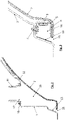
- Fig. 2
- ist eine Schnittansicht des Dachmoduls gemäß
Fig. 1 im Bereich der Luftschlauchöffnung mit angeschlossenem Luftschlauch. - Fig. 3
- ist eine Schnittansicht des Dachmoduls gemäß
Fig. 1 im Bereich eines U-Profils. - Fig. 4
- ist eine Schnittansicht des Dachmoduls gemäß
Fig. 1 im Bereich des oberen oder unteren Halters. - In
Fig. 1 ist ein erfindungsgemäßes Dachmodul dargestellt, welches einen, hier nur ausschnittsweise dargestellten, Dachhimmel 2 umfasst, der einen Innenraum eines Kraftfahrzeuges überdeckt und der ein thermogeformtes Kunststoffbauteil ist. Das Dachmodul umfasst ferner einen in Einbaulage vom Fahrzeuginnenraum aus gesehen außerhalb des Dachhimmels 2 angeordneten, also eine äußere Schicht bildenden Dachhimmelseitenteil 1, wobei der Dachhimmelseitenteil 1 ebenfalls ein thermogeformtes Kunststoffbauteil ist. Zwischen dem Dachhimmel 2 und dem Dachhimmelseitenteil 1 verläuft eine Kontaktlinie 12, nämlich eine Dichtung, die inFig. 1 nur abschnittsweise dargestellt ist und die sowohl mit dem Dachhimmel 2 als auch mit dem Dachhimmelseitenteil 1 dicht verbunden ist. Fahrzeugrandseitig der Kontaktlinie 12, also in Richtung des äußeren Randes des Dachhimmels 2, verläuft ein zum Fahrzeuginnenraum hin offener Spalt 15 zwischen Dachhimmel 2 und Dachhimmelseitenteil 1, der in denFig. 2 und Fig. 3 zu sehen ist. Es wird somit durch die Kontaktlinie 12 bzw. durch die Dichtung zwischen Dachhimmel 2 und Dachhimmelseitenteil 1 ein Kanal 16 gebildet, der in Einbaulage zum Fahrzeuginnenraum hin über den Spalt 15 offen ist. - Erfindungsgemäß kann daher eine Luftführung zwischen zwei thermogeformten Bauteilen 1, 2 erfolgen, die einen Kanal 16, insbesondere einen Luftkanal bilden.
- Durch das Verclipsen des Dachhimmels 2 mit dem Dachhimmelseitenteil 1 und dem damit verbundenen Verpressen der Dichtung an der Kontaktlinie 12 entsteht zwischen den Bauteilen der Kanal 16, insbesondere Luftkanal. Dieser Kanal 16 kann, wie dargestellt, nur im Auslassbereich ausgebildet sein, aber auch quer über den Verlauf der beiden thermogeformten Teile 1, 2 genutzt werden.
- Der Kanal 16 kann eine gleiche Querschnittsfläche bei veränderten Längen/Breiten über den Bauteilverlauf 1, 2 aufweisen. Ferner sind sowohl querschnitterweiternde- (Diffusor) als auch querschnittsveringernde (Düse) Ausführungen oder Bereiche des Kanals 16 möglich. Somit kann im Auslassbereich, also am Spalt 15, ein strömungstechnisch optimierter Luftauslass ausgebildet werden.
- Der Winkel der angestellten Fläche des Dachhimmelseitenteils 1 im Auslassbereich, also der Reflexionsfläche 13, gibt die Strömungsrichtung beispielsweise für ausströmende Luft, vor. Damit kann der Luftverlauf und somit die Strömung Richtung Seitenscheibe optimiert werden.
- Die Luftzufuhr kann beispielsweise durch am Markt erhältliche Standard-Luftschläuche 11 oder speziell optimierte Luftschläuche erfolgen. An der Luftschlauchöffnung 17 des Dachmoduls kann auch ein Anschlussstück für einen vorgesehenen Luftschlauch 11 ausgeführt sein.
- Durch eine Luftzufuhr über ein erfindungsgemäßes Dachmodul können mehre Vorteile erreicht werden. Ein Passagier wird nicht direkt von der konditionierten Luft angeblasen. Der Luftstrom kann eine Defrost/Demist-Funktion für die Scheiben rundum erfüllen. Über die Länge des Luftauslasses kann die Breite des anzuströmenden Bereiches auf einfache Weise vorgegeben werden.
- Die Bauteile des Dachmoduls können aus folgenden Materialien bzw. durch folgende Verfahren hergestellt sein: Das Dachhimmelseitenteil 1 als Kunststoffteil, vorzugsweise vakuumtiefgezogenes Kunststoffbauteil insbesondere Thermoformteil, ebenso der Dachhimmel 2, der Halter 3 oben und der Halter 4 unten am Dachmodul.
- Die Verbindungsprofile 5, nämlich U-Profile, können Aluminium Strangpressprofile oder Fräsbeschnitte sein, beispielsweise aus Kunststoff, die Clips 7 können durch Tannenbaumclips realisiert sein. Die Kontaktlinie 12 kann beispielsweise durch ein flüssiges Dichtmittel oder ein Dichtschaumband realisiert sein. Die Kontaktlinie 12, und insbesondere eine dichtende Kontaktlinie 12, kann auch bereits durch das Dachhimmelseitenteil 1 und/oder durch den Dachhimmel 2 selbst ausgebildet sein, sodass kein zusätzliches Dichtungsbauteil erforderlich ist.
- Die Verbindungen der Bauteile des Dachmoduls können auf folgende Weise hergestellt sein: Der Halter 3 (oben) kann auf dem Dachhimmel 2 vormontiert sein, insbesondere geklebt mittels Klebstoff 8 (siehe
Fig. 4 ) oder Ultraschall-geschweißt. Durch Clips 7, insbesondere durch zwei Clips 7, kann der Halter 3 (oben) an einem Dachhimmelseitenteil 1 befestigt sein. - Der Halter 4 - unten in
Fig. 1 - ist ebenfalls auf dem Dachhimmel 2 vormontiert, insbesondere geklebt, oder Ultraschall-geschweißt, und beispielsweise durch drei Clips 7 am Dachhimmelseitenteil 1 befestigt. Der als Verbindungsprofil 5, nämlich als U-Profil ausgeführte Halter ist ebenso am Dachhimmel 2 vormontiert, insbesondere mittels Klebstoff 8 geklebt (sieheFig. 3 ). Ein Verbindungsprofil 5 kann durch jeweils einen Clip 7 am Dachhimmelseitenteil 1 befestigt sein. Es können beispielsweise mindestens vier Clips 7 an einem Dachhimmelseitenteil 1 vorgesehen sein. - Die Befestigung eines Luftschlauches 11 kann so erfolgen, dass ein Anschlussstück mit aufgestecktem Luftschlauch 11 mit einem Dachhimmelseitenteil 1 verschraubt wird und durch eine eingelegte Luftschlauchdichtung 18 gedichtet wird.
- Die Abdichtung an der Kontaktlinie 12 zwischen Dachhimmel 2 und Dachhimmelseitenteil 1 erfolgt durch eine vormontierte Dichtung.
- Zusätzlich oder alternativ zu einer Belüftungsfunktion erfüllt ein erfindungsgemäßes Dachmodul eine Beleuchtungsfunktion, insbesondere für eine Ambiente-Beleuchtung des Innenraums eines Kraftfahrzeuges.
- Die Halter, die Verbindungsprofile 5 darstellen, können gleichzeitig Aufnahmen für Leuchtstreifen 9, insbesondere LED-Streifen, bilden. Die Leuchtstreifen 9 können beispielsweise umfassen: einen Aluminium-Kühlkörper, einen LED-Streifen, optional eine Streuscheibe. Die U-Profile 5 mit den Leuchtstreifen 9 können wiederum vormontiert, insbesondere geklebt, sein auf dem Dachhimmel 2.
- Der Spalt 15 zwischen Dachhimmel 2 und Dachhimmelseitenteil 1 ergibt eine rundum gleichmäßige Lichtfuge für das Ambiente Licht. Der Spalt 15 wird über den bzw. die Halter mit U-Profil 5 eingestellt und definiert. Die schräge Fläche am Dachhimmelseitenteil 1 gegenüber dem Leuchtstreifen 9 dient als optische Reflexionsfläche 13 zur gleichmäßigen Darstellung der Ambiente Beleuchtung. Der Abstand und Winkel zwischen LED-Streifen 9 und Reflexionsfläche 13 sind vorzugsweise rundum gleich ausgeführt, um ein gleichmäßiges Lichtergebnis zu erhalten. Die optionale Streuscheibe am Leuchtstreifen 9 unterstützt die Vermeidung von unerwünschten Hotspots.
-
- 1
- Dachhimmelseitenteil
- 2
- Dachhimmel
- 3
- (oberer) Halter
- 4
- (unterer) Halter
- 5
- Verbindungsprofil
- 7
- Clips
- 8
- Klebstoff
- 9
- Leuchtstreifen
- 11
- Luftschlauch
- 12
- Kontaktlinie
- 13
- Reflexionsfläche
- 15
- Spalt
- 16
- Kanal
- 17
- Luftschlauchöffnung
- 18
- Luftschlauchdichtung
Claims (11)
- Dachmodul für ein Kraftfahrzeug, umfassend einen Dachhimmel (2), wobei der Dachhimmel (2) ein thermogeformtes Kunststoffbauteil ist, einen in Einbaulage von einem Fahrzeuginnenraum aus gesehen außerhalb des Dachhimmels (2) angeordneten Dachhimmelseitenteil (1), wobei der Dachhimmelseitenteil (1) ein thermogeformtes Kunststoffbauteil ist, wobei zwischen dem Dachhimmel (2) und dem Dachhimmelseitenteil (1) eine Kontaktlinie (12) verläuft, wobei die Kontaktlinie (12) durch ein Verbindungsbauteil, insbesondere ein Dichtungsbauteil, ausgebildet ist und/oder wobei die Kontaktlinie (12) durch direkten Kontakt zwischen dem Dachhimmel (2) und dem Dachhimmelseitenteil (1) ausgebildet ist, wobei in Einbaulage fahrzeugrandseitig der Kontaktlinie (12) ein zum Fahrzeuginnenraum hin offener Spalt (15) zwischen Dachhimmel (2) und Dachhimmelseitenteil (1) verläuft, so dass zwischen Dachhimmel (2) und Dachhimmelseitenteil (1) fahrzeugrandseitig der Kontaktlinie (12) ein Kanal (16) gebildet ist, der in Einbaulage zum Fahrzeuginnenraum hin offen ist, wobei der Dachhimmelseitenteil (1) auf seiner dem Dachhimmel (2) zugewandten Seite abschnittsweise eine Reflexionsfläche (13) ausbildet, die dem Spalt (15) benachbart ist und die mit dem Spalt (15) einen Winkel kleiner 90 Grad bildet, dadurch gekennzeichnet dass das Dachmodul einen Leuchtstreifen (9) umfasst, wobei der Leuchtstreifen (9) so angeordnet ist, dass das Licht des Leuchtstreifens (9) über die Reflexionsfläche (13) durch den Spalt (15) geleitet wird, wobei das Dachmodul zumindest ein Verbindungsprofil (5) umfasst, wobei das Verbindungsprofil (5) eine Verbindung zwischen dem Dachhimmel (2) und dem Dachhimmelseitenteil (1) bildet, wobei bevorzugt das Verbindungsprofil (5) zumindest abschnittsweise die Kontaktlinie (12) zwischen dem Dachhimmel (2) und dem Dachhimmelseitenteil (1) bildet, wobei das Verbindungsprofil (5) durch ein U-Profil gebildet wird, wobei auf dem Boden des U-Profils der Leuchtstreifen (9) befestigt ist.
- Dachmodul nach Anspruch 1,
dadurch gekennzeichnet, dass der Spalt (15) zwischen Dachhimmel (2) und Dachhimmelseitenteil (1) in einer Längsrichtung des Dachhimmelseitenteils (1) und/oder in Einbaulage in einer Längsrichtung des Kraftfahrzeuges verläuft. - Dachmodul nach zumindest einem der vorhergehenden Ansprüche, dadurch gekennzeichnet, dass der Dachhimmel (2) über mehrere Clips (7) mit dem Dachhimmelseitenteil (1) verclipst ist.
- Dachmodul nach zumindest einem der vorhergehenden Ansprüche, dadurch gekennzeichnet, dass an der Reflexionsfläche (13) ein optisch reflektierendes Element oder eine optisch reflektierende Beschichtung angeordnet ist.
- Dachmodul nach zumindest einem der vorhergehenden Ansprüche, dadurch gekennzeichnet, dass das Dachmodul zumindest einen Halter (3, 4) umfasst, wobei der Halter (3, 4) eine in Längsrichtung des Dachhimmelseitenteils (1) verlaufende Leiste bildet, wobei an der in Einbaulage dem Fahrzeuginnenraum zugewandten Seite des Halters (3, 4) der Dachhimmel (2) am Halter (3, 4) befestigt ist und an der in Einbaulage vom Fahrzeuginnenraum abgewandten Seite des Halters (3, 4) der Dachhimmelseitenteil (1) am Halter (3, 4) befestigt ist, wobei der Halter (3, 4) vorzugsweise ein thermogeformtes Kunststoffbauteil ist.
- Dachmodul nach Anspruch 5,
dadurch gekennzeichnet, dass der Dachhimmel (2) stoffschlüssig am Halter (3, 4) befestigt ist und der Dachhimmelseitenteil (1) über mehrere Clips (7) mit dem Halter (3, 4) verclipst ist. - Dachmodul nach zumindest einem der vorhergehenden Ansprüche, dadurch gekennzeichnet, dass an einem in Einbaulage dem Fahrzeuginnenraum zugewandten Schenkel des U-Profils der Dachhimmel (2) am U-Profil befestigt ist und an einem in Einbaulage vom Fahrzeuginnenraum abgewandten Schenkel des U-Profils der Dachhimmelseitenteil (1) am U-Profil befestigt ist.
- Dachmodul nach zumindest einem der vorhergehenden Ansprüche, dadurch gekennzeichnet, dass der Dachhimmel (2) stoffschlüssig am U-Profil befestigt ist und der Dachhimmelseitenteil (1) über zumindest einen Clip (7) mit dem U-Profil verclipst ist.
- Dachmodul nach Anspruch 7 oder 8,
dadurch gekennzeichnet, dass der in Einbaulage dem Fahrzeuginnenraum zugewandte Schenkel des U-Profils in der Nähe des Spalts (15) zwischen Dachhimmel (2) und Dachhimmelseitenteil (1) angeordnet ist, wobei die offene Seite der U-Form des U-Profils auf derjenigen Seite des Dachhimmels (2) liegt, die dem Spalt (15) zugewandt ist. - Dachmodul nach zumindest einem der vorhergehenden Ansprüche, dadurch gekennzeichnet, dass das Dachmodul einen Luftschlauch (11) umfasst, wobei der Luftschlauch (11) mit einer Luftschlauchöffnung (17) des Dachhimmelseitenteils (1) fluidverbunden ist, so dass über den Luftschlauch (11) dem Kanal (16) Luft zugeführt werden kann.
- Kraftfahrzeug umfassend ein Dachmodul nach zumindest einem der vorhergehenden Ansprüche,
dadurch gekennzeichnet, dass der Dachhimmel (2) dem Fahrzeuginnenraum zugewandt ist, dass der Dachhimmelseitenteil (1) vom Fahrzeuginnenraum abgewandt ist, wobei fahrzeugrandseitig der Kontaktlinie(12) ein Spalt (15) zwischen Dachhimmel (2) und Dachhimmelseitenteil (1) in der Längsrichtung des Dachhimmelseitenteils (1) verläuft, so dass zwischen Dachhimmel (2) und Dachhimmelseitenteil (1) ein Kanal (16) gebildet ist, der in der Längsrichtung des Dachhimmelseitenteils (1) verläuft und der zum Fahrzeuginnenraum hin offen ist.
Priority Applications (1)
| Application Number | Priority Date | Filing Date | Title |
|---|---|---|---|
| EP19204590.4A EP3812217B1 (de) | 2019-10-22 | 2019-10-22 | Dachmodul |
Applications Claiming Priority (1)
| Application Number | Priority Date | Filing Date | Title |
|---|---|---|---|
| EP19204590.4A EP3812217B1 (de) | 2019-10-22 | 2019-10-22 | Dachmodul |
Publications (2)
| Publication Number | Publication Date |
|---|---|
| EP3812217A1 EP3812217A1 (de) | 2021-04-28 |
| EP3812217B1 true EP3812217B1 (de) | 2022-12-28 |
Family
ID=68342495
Family Applications (1)
| Application Number | Title | Priority Date | Filing Date |
|---|---|---|---|
| EP19204590.4A Active EP3812217B1 (de) | 2019-10-22 | 2019-10-22 | Dachmodul |
Country Status (1)
| Country | Link |
|---|---|
| EP (1) | EP3812217B1 (de) |
Family Cites Families (6)
| Publication number | Priority date | Publication date | Assignee | Title |
|---|---|---|---|---|
| US6062635A (en) * | 1998-03-20 | 2000-05-16 | Lear Automotive Dearborn, Inc, | Plastic air duct integrated to headliner |
| DE10101450A1 (de) * | 2001-01-15 | 2002-07-25 | Arvinmeritor Gmbh | Fahrzeugdach, insbesondere Kraftfahrzeugdach |
| DE10152659A1 (de) * | 2001-10-16 | 2003-04-17 | Happich Fahrzeug & Ind Teile | Deckenverkleidungs- und Luftleitsystem |
| US6749255B2 (en) * | 2002-06-21 | 2004-06-15 | Lear Corporation | Blow molded multiple function assemblies for vehicle headliners |
| DE10362300B4 (de) * | 2003-11-18 | 2013-06-20 | Volkswagen Ag | Belüftungseinrichtung für einen Fahrzeuginnenraum eines Fahrzeuges, insbesondere eines Nutzfahrzeuges |
| DE102012003497A1 (de) * | 2012-02-22 | 2013-08-22 | Volkswagen Aktiengesellschaft | Dachinnenverkleidung eines Kraftfahrzeugs |
-
2019
- 2019-10-22 EP EP19204590.4A patent/EP3812217B1/de active Active
Also Published As
| Publication number | Publication date |
|---|---|
| EP3812217A1 (de) | 2021-04-28 |
Similar Documents
| Publication | Publication Date | Title |
|---|---|---|
| EP0151756B1 (de) | Belüftungsdüse | |
| DE3730346A1 (de) | Glasscheibe fuer ein kraftfahrzeug | |
| DE102005031875B4 (de) | Dachmodul mit Belüftungskanal | |
| EP0832022A1 (de) | Personenbeförderungsfahrzeug | |
| EP0596234B1 (de) | Autohimmel für die Dachinnenverkleidung eines Personenkraftwagens oder Kleinbusses | |
| DE102011014991A1 (de) | Kamera | |
| WO2005018989A1 (de) | Leuchtvorrichtung für fahrzeuge | |
| EP3812217B1 (de) | Dachmodul | |
| DE4326869A1 (de) | Profilleiste aus Gummi oder gummiähnlichen Kunststoffen | |
| AT393817B (de) | Motorhaube, insbesondere fuer ein nutzfahrzeug | |
| DE102007006290A1 (de) | Dachmodul für Fahrzeuge, vorzugsweise für Kraftfahrzeuge | |
| EP1522437B1 (de) | Luftversorgungseinrichtung zur Klimatisierung eines Fahrzeuginnenraums eines Fahrzeugs, insbesondere eines Nutzfahrzeuges | |
| EP0786363B1 (de) | Luftkanalanordnung zur Fondbelüftung und/oder -Heizung eines Kraftfahrzeuges | |
| WO2022084396A1 (de) | Fahrzeugdach mit dachhautanordnung und umfeldsensor | |
| DE10313904B4 (de) | Armaturenbrett für ein Fahrzeug | |
| DE202013000888U1 (de) | Vorrichtung zur Abdeckung eines in Längsrichtung eines Kraftfahrzeuges verlaufenden Dachkanals | |
| EP0879735A2 (de) | Leuchte, insbesondere Heckleuchte, für Fahrzeuge, vorzugsweise Kraftfahrzeuge | |
| EP0523373B1 (de) | Fahrgastraumheizung für ein Kraftfahrzeug, insbesondere für einen Omnibus | |
| DE102012009747A1 (de) | Stoßfänger für einen Kraftwagen | |
| EP1747922B1 (de) | Schiebefensterbaugruppe für ein Kraftfahrzeug | |
| DE19534290C2 (de) | Verbindung zwischen einem Strangpreßprofil und einem daran angeschlossenen flächigen Bauteil an einer Fahrzeugkarosserie | |
| DE102009006052A1 (de) | Fahrerhaus für einen Lastkraftwagen, insbesondere für einen Fernverkehr-Lastkraftwagen und Verfahren zur Herstellung eines Fahrerhauses | |
| DE10241821B4 (de) | Fahrzeugdach mit einer Lüftungseinrichtung | |
| EP4321361B1 (de) | Dachbereich eines kraftfahrzeugs | |
| DE102016215461A1 (de) | Glasdeckeleinheit für ein Dachsystem eines Kraftfahrzeugs |
Legal Events
| Date | Code | Title | Description |
|---|---|---|---|
| PUAI | Public reference made under article 153(3) epc to a published international application that has entered the european phase |
Free format text: ORIGINAL CODE: 0009012 |
|
| STAA | Information on the status of an ep patent application or granted ep patent |
Free format text: STATUS: REQUEST FOR EXAMINATION WAS MADE |
|
| 17P | Request for examination filed |
Effective date: 20201216 |
|
| AK | Designated contracting states |
Kind code of ref document: A1 Designated state(s): AL AT BE BG CH CY CZ DE DK EE ES FI FR GB GR HR HU IE IS IT LI LT LU LV MC MK MT NL NO PL PT RO RS SE SI SK SM TR |
|
| AX | Request for extension of the european patent |
Extension state: BA ME |
|
| STAA | Information on the status of an ep patent application or granted ep patent |
Free format text: STATUS: EXAMINATION IS IN PROGRESS |
|
| 17Q | First examination report despatched |
Effective date: 20210916 |
|
| GRAP | Despatch of communication of intention to grant a patent |
Free format text: ORIGINAL CODE: EPIDOSNIGR1 |
|
| STAA | Information on the status of an ep patent application or granted ep patent |
Free format text: STATUS: GRANT OF PATENT IS INTENDED |
|
| INTG | Intention to grant announced |
Effective date: 20220826 |
|
| GRAS | Grant fee paid |
Free format text: ORIGINAL CODE: EPIDOSNIGR3 |
|
| RAP3 | Party data changed (applicant data changed or rights of an application transferred) |
Owner name: MAGNA STEYR FAHRZEUGTECHNIK GMBH & CO KG |
|
| GRAA | (expected) grant |
Free format text: ORIGINAL CODE: 0009210 |
|
| STAA | Information on the status of an ep patent application or granted ep patent |
Free format text: STATUS: THE PATENT HAS BEEN GRANTED |
|
| AK | Designated contracting states |
Kind code of ref document: B1 Designated state(s): AL AT BE BG CH CY CZ DE DK EE ES FI FR GB GR HR HU IE IS IT LI LT LU LV MC MK MT NL NO PL PT RO RS SE SI SK SM TR |
|
| REG | Reference to a national code |
Ref country code: GB Ref legal event code: FG4D Free format text: NOT ENGLISH |
|
| REG | Reference to a national code |
Ref country code: CH Ref legal event code: EP |
|
| REG | Reference to a national code |
Ref country code: DE Ref legal event code: R096 Ref document number: 502019006623 Country of ref document: DE |
|
| REG | Reference to a national code |
Ref country code: AT Ref legal event code: REF Ref document number: 1540282 Country of ref document: AT Kind code of ref document: T Effective date: 20230115 |
|
| REG | Reference to a national code |
Ref country code: IE Ref legal event code: FG4D Free format text: LANGUAGE OF EP DOCUMENT: GERMAN |
|
| REG | Reference to a national code |
Ref country code: LT Ref legal event code: MG9D |
|
| PG25 | Lapsed in a contracting state [announced via postgrant information from national office to epo] |
Ref country code: SE Free format text: LAPSE BECAUSE OF FAILURE TO SUBMIT A TRANSLATION OF THE DESCRIPTION OR TO PAY THE FEE WITHIN THE PRESCRIBED TIME-LIMIT Effective date: 20221228 Ref country code: NO Free format text: LAPSE BECAUSE OF FAILURE TO SUBMIT A TRANSLATION OF THE DESCRIPTION OR TO PAY THE FEE WITHIN THE PRESCRIBED TIME-LIMIT Effective date: 20230328 Ref country code: LT Free format text: LAPSE BECAUSE OF FAILURE TO SUBMIT A TRANSLATION OF THE DESCRIPTION OR TO PAY THE FEE WITHIN THE PRESCRIBED TIME-LIMIT Effective date: 20221228 Ref country code: FI Free format text: LAPSE BECAUSE OF FAILURE TO SUBMIT A TRANSLATION OF THE DESCRIPTION OR TO PAY THE FEE WITHIN THE PRESCRIBED TIME-LIMIT Effective date: 20221228 |
|
| REG | Reference to a national code |
Ref country code: NL Ref legal event code: MP Effective date: 20221228 |
|
| PG25 | Lapsed in a contracting state [announced via postgrant information from national office to epo] |
Ref country code: RS Free format text: LAPSE BECAUSE OF FAILURE TO SUBMIT A TRANSLATION OF THE DESCRIPTION OR TO PAY THE FEE WITHIN THE PRESCRIBED TIME-LIMIT Effective date: 20221228 Ref country code: LV Free format text: LAPSE BECAUSE OF FAILURE TO SUBMIT A TRANSLATION OF THE DESCRIPTION OR TO PAY THE FEE WITHIN THE PRESCRIBED TIME-LIMIT Effective date: 20221228 Ref country code: HR Free format text: LAPSE BECAUSE OF FAILURE TO SUBMIT A TRANSLATION OF THE DESCRIPTION OR TO PAY THE FEE WITHIN THE PRESCRIBED TIME-LIMIT Effective date: 20221228 Ref country code: GR Free format text: LAPSE BECAUSE OF FAILURE TO SUBMIT A TRANSLATION OF THE DESCRIPTION OR TO PAY THE FEE WITHIN THE PRESCRIBED TIME-LIMIT Effective date: 20230329 |
|
| PG25 | Lapsed in a contracting state [announced via postgrant information from national office to epo] |
Ref country code: NL Free format text: LAPSE BECAUSE OF FAILURE TO SUBMIT A TRANSLATION OF THE DESCRIPTION OR TO PAY THE FEE WITHIN THE PRESCRIBED TIME-LIMIT Effective date: 20221228 |
|
| PG25 | Lapsed in a contracting state [announced via postgrant information from national office to epo] |
Ref country code: SM Free format text: LAPSE BECAUSE OF FAILURE TO SUBMIT A TRANSLATION OF THE DESCRIPTION OR TO PAY THE FEE WITHIN THE PRESCRIBED TIME-LIMIT Effective date: 20221228 Ref country code: RO Free format text: LAPSE BECAUSE OF FAILURE TO SUBMIT A TRANSLATION OF THE DESCRIPTION OR TO PAY THE FEE WITHIN THE PRESCRIBED TIME-LIMIT Effective date: 20221228 Ref country code: PT Free format text: LAPSE BECAUSE OF FAILURE TO SUBMIT A TRANSLATION OF THE DESCRIPTION OR TO PAY THE FEE WITHIN THE PRESCRIBED TIME-LIMIT Effective date: 20230428 Ref country code: ES Free format text: LAPSE BECAUSE OF FAILURE TO SUBMIT A TRANSLATION OF THE DESCRIPTION OR TO PAY THE FEE WITHIN THE PRESCRIBED TIME-LIMIT Effective date: 20221228 Ref country code: EE Free format text: LAPSE BECAUSE OF FAILURE TO SUBMIT A TRANSLATION OF THE DESCRIPTION OR TO PAY THE FEE WITHIN THE PRESCRIBED TIME-LIMIT Effective date: 20221228 Ref country code: CZ Free format text: LAPSE BECAUSE OF FAILURE TO SUBMIT A TRANSLATION OF THE DESCRIPTION OR TO PAY THE FEE WITHIN THE PRESCRIBED TIME-LIMIT Effective date: 20221228 |
|
| PG25 | Lapsed in a contracting state [announced via postgrant information from national office to epo] |
Ref country code: SK Free format text: LAPSE BECAUSE OF FAILURE TO SUBMIT A TRANSLATION OF THE DESCRIPTION OR TO PAY THE FEE WITHIN THE PRESCRIBED TIME-LIMIT Effective date: 20221228 Ref country code: PL Free format text: LAPSE BECAUSE OF FAILURE TO SUBMIT A TRANSLATION OF THE DESCRIPTION OR TO PAY THE FEE WITHIN THE PRESCRIBED TIME-LIMIT Effective date: 20221228 Ref country code: IS Free format text: LAPSE BECAUSE OF FAILURE TO SUBMIT A TRANSLATION OF THE DESCRIPTION OR TO PAY THE FEE WITHIN THE PRESCRIBED TIME-LIMIT Effective date: 20230428 Ref country code: AL Free format text: LAPSE BECAUSE OF FAILURE TO SUBMIT A TRANSLATION OF THE DESCRIPTION OR TO PAY THE FEE WITHIN THE PRESCRIBED TIME-LIMIT Effective date: 20221228 |
|
| REG | Reference to a national code |
Ref country code: DE Ref legal event code: R097 Ref document number: 502019006623 Country of ref document: DE |
|
| PG25 | Lapsed in a contracting state [announced via postgrant information from national office to epo] |
Ref country code: DK Free format text: LAPSE BECAUSE OF FAILURE TO SUBMIT A TRANSLATION OF THE DESCRIPTION OR TO PAY THE FEE WITHIN THE PRESCRIBED TIME-LIMIT Effective date: 20221228 |
|
| PLBE | No opposition filed within time limit |
Free format text: ORIGINAL CODE: 0009261 |
|
| STAA | Information on the status of an ep patent application or granted ep patent |
Free format text: STATUS: NO OPPOSITION FILED WITHIN TIME LIMIT |
|
| 26N | No opposition filed |
Effective date: 20230929 |
|
| PG25 | Lapsed in a contracting state [announced via postgrant information from national office to epo] |
Ref country code: SI Free format text: LAPSE BECAUSE OF FAILURE TO SUBMIT A TRANSLATION OF THE DESCRIPTION OR TO PAY THE FEE WITHIN THE PRESCRIBED TIME-LIMIT Effective date: 20221228 |
|
| PG25 | Lapsed in a contracting state [announced via postgrant information from national office to epo] |
Ref country code: IT Free format text: LAPSE BECAUSE OF FAILURE TO SUBMIT A TRANSLATION OF THE DESCRIPTION OR TO PAY THE FEE WITHIN THE PRESCRIBED TIME-LIMIT Effective date: 20221228 Ref country code: MC Free format text: LAPSE BECAUSE OF FAILURE TO SUBMIT A TRANSLATION OF THE DESCRIPTION OR TO PAY THE FEE WITHIN THE PRESCRIBED TIME-LIMIT Effective date: 20221228 |
|
| REG | Reference to a national code |
Ref country code: CH Ref legal event code: PL |
|
| REG | Reference to a national code |
Ref country code: BE Ref legal event code: MM Effective date: 20231031 |
|
| PG25 | Lapsed in a contracting state [announced via postgrant information from national office to epo] |
Ref country code: LU Free format text: LAPSE BECAUSE OF NON-PAYMENT OF DUE FEES Effective date: 20231022 |
|
| GBPC | Gb: european patent ceased through non-payment of renewal fee |
Effective date: 20231022 |
|
| PG25 | Lapsed in a contracting state [announced via postgrant information from national office to epo] |
Ref country code: LU Free format text: LAPSE BECAUSE OF NON-PAYMENT OF DUE FEES Effective date: 20231022 |
|
| PG25 | Lapsed in a contracting state [announced via postgrant information from national office to epo] |
Ref country code: GB Free format text: LAPSE BECAUSE OF NON-PAYMENT OF DUE FEES Effective date: 20231022 |
|
| PG25 | Lapsed in a contracting state [announced via postgrant information from national office to epo] |
Ref country code: CH Free format text: LAPSE BECAUSE OF NON-PAYMENT OF DUE FEES Effective date: 20231031 |
|
| PG25 | Lapsed in a contracting state [announced via postgrant information from national office to epo] |
Ref country code: GB Free format text: LAPSE BECAUSE OF NON-PAYMENT OF DUE FEES Effective date: 20231022 Ref country code: FR Free format text: LAPSE BECAUSE OF NON-PAYMENT OF DUE FEES Effective date: 20231031 Ref country code: CH Free format text: LAPSE BECAUSE OF NON-PAYMENT OF DUE FEES Effective date: 20231031 |
|
| PG25 | Lapsed in a contracting state [announced via postgrant information from national office to epo] |
Ref country code: BE Free format text: LAPSE BECAUSE OF NON-PAYMENT OF DUE FEES Effective date: 20231031 |
|
| PG25 | Lapsed in a contracting state [announced via postgrant information from national office to epo] |
Ref country code: IE Free format text: LAPSE BECAUSE OF NON-PAYMENT OF DUE FEES Effective date: 20231022 |
|
| PG25 | Lapsed in a contracting state [announced via postgrant information from national office to epo] |
Ref country code: IE Free format text: LAPSE BECAUSE OF NON-PAYMENT OF DUE FEES Effective date: 20231022 |
|
| PG25 | Lapsed in a contracting state [announced via postgrant information from national office to epo] |
Ref country code: BG Free format text: LAPSE BECAUSE OF FAILURE TO SUBMIT A TRANSLATION OF THE DESCRIPTION OR TO PAY THE FEE WITHIN THE PRESCRIBED TIME-LIMIT Effective date: 20221228 |
|
| PG25 | Lapsed in a contracting state [announced via postgrant information from national office to epo] |
Ref country code: BG Free format text: LAPSE BECAUSE OF FAILURE TO SUBMIT A TRANSLATION OF THE DESCRIPTION OR TO PAY THE FEE WITHIN THE PRESCRIBED TIME-LIMIT Effective date: 20221228 |
|
| REG | Reference to a national code |
Ref country code: DE Ref legal event code: R082 Ref document number: 502019006623 Country of ref document: DE Representative=s name: EULER, MATTHIAS, DR., DE |
|
| PG25 | Lapsed in a contracting state [announced via postgrant information from national office to epo] |
Ref country code: CY Free format text: LAPSE BECAUSE OF FAILURE TO SUBMIT A TRANSLATION OF THE DESCRIPTION OR TO PAY THE FEE WITHIN THE PRESCRIBED TIME-LIMIT; INVALID AB INITIO Effective date: 20191022 |
|
| PG25 | Lapsed in a contracting state [announced via postgrant information from national office to epo] |
Ref country code: HU Free format text: LAPSE BECAUSE OF FAILURE TO SUBMIT A TRANSLATION OF THE DESCRIPTION OR TO PAY THE FEE WITHIN THE PRESCRIBED TIME-LIMIT; INVALID AB INITIO Effective date: 20191022 |
|
| PG25 | Lapsed in a contracting state [announced via postgrant information from national office to epo] |
Ref country code: TR Free format text: LAPSE BECAUSE OF FAILURE TO SUBMIT A TRANSLATION OF THE DESCRIPTION OR TO PAY THE FEE WITHIN THE PRESCRIBED TIME-LIMIT Effective date: 20221228 |
|
| REG | Reference to a national code |
Ref country code: AT Ref legal event code: MM01 Ref document number: 1540282 Country of ref document: AT Kind code of ref document: T Effective date: 20241022 |
|
| PGFP | Annual fee paid to national office [announced via postgrant information from national office to epo] |
Ref country code: DE Payment date: 20251021 Year of fee payment: 7 |
|
| PG25 | Lapsed in a contracting state [announced via postgrant information from national office to epo] |
Ref country code: AT Free format text: LAPSE BECAUSE OF NON-PAYMENT OF DUE FEES Effective date: 20241022 |
|
| PGFP | Annual fee paid to national office [announced via postgrant information from national office to epo] |
Ref country code: AT Payment date: 20260410 Year of fee payment: 5 |