EP3787774B1 - Permanent storage of carbon dioxide - Google Patents
Permanent storage of carbon dioxide Download PDFInfo
- Publication number
- EP3787774B1 EP3787774B1 EP19725034.3A EP19725034A EP3787774B1 EP 3787774 B1 EP3787774 B1 EP 3787774B1 EP 19725034 A EP19725034 A EP 19725034A EP 3787774 B1 EP3787774 B1 EP 3787774B1
- Authority
- EP
- European Patent Office
- Prior art keywords
- ikaite
- solution
- alkaline aqueous
- aqueous solution
- carbonate
- Prior art date
- Legal status (The legal status is an assumption and is not a legal conclusion. Google has not performed a legal analysis and makes no representation as to the accuracy of the status listed.)
- Active
Links
Images


Classifications
-
- C—CHEMISTRY; METALLURGY
- C01—INORGANIC CHEMISTRY
- C01F—COMPOUNDS OF THE METALS BERYLLIUM, MAGNESIUM, ALUMINIUM, CALCIUM, STRONTIUM, BARIUM, RADIUM, THORIUM, OR OF THE RARE-EARTH METALS
- C01F11/00—Compounds of calcium, strontium, or barium
- C01F11/18—Carbonates
- C01F11/181—Preparation of calcium carbonate by carbonation of aqueous solutions and characterised by control of the carbonation conditions
-
- B—PERFORMING OPERATIONS; TRANSPORTING
- B01—PHYSICAL OR CHEMICAL PROCESSES OR APPARATUS IN GENERAL
- B01D—SEPARATION
- B01D53/00—Separation of gases or vapours; Recovering vapours of volatile solvents from gases; Chemical or biological purification of waste gases, e.g. engine exhaust gases, smoke, fumes, flue gases, aerosols
- B01D53/34—Chemical or biological purification of waste gases
- B01D53/46—Removing components of defined structure
- B01D53/62—Carbon oxides
-
- B—PERFORMING OPERATIONS; TRANSPORTING
- B01—PHYSICAL OR CHEMICAL PROCESSES OR APPARATUS IN GENERAL
- B01D—SEPARATION
- B01D53/00—Separation of gases or vapours; Recovering vapours of volatile solvents from gases; Chemical or biological purification of waste gases, e.g. engine exhaust gases, smoke, fumes, flue gases, aerosols
- B01D53/34—Chemical or biological purification of waste gases
- B01D53/74—General processes for purification of waste gases; Apparatus or devices specially adapted therefor
- B01D53/77—Liquid phase processes
- B01D53/78—Liquid phase processes with gas-liquid contact
-
- B—PERFORMING OPERATIONS; TRANSPORTING
- B01—PHYSICAL OR CHEMICAL PROCESSES OR APPARATUS IN GENERAL
- B01D—SEPARATION
- B01D9/00—Crystallisation
- B01D9/0036—Crystallisation on to a bed of product crystals; Seeding
-
- B—PERFORMING OPERATIONS; TRANSPORTING
- B01—PHYSICAL OR CHEMICAL PROCESSES OR APPARATUS IN GENERAL
- B01D—SEPARATION
- B01D9/00—Crystallisation
- B01D9/005—Selection of auxiliary, e.g. for control of crystallisation nuclei, of crystal growth, of adherence to walls; Arrangements for introduction thereof
-
- B—PERFORMING OPERATIONS; TRANSPORTING
- B01—PHYSICAL OR CHEMICAL PROCESSES OR APPARATUS IN GENERAL
- B01D—SEPARATION
- B01D9/00—Crystallisation
- B01D9/0063—Control or regulation
-
- C—CHEMISTRY; METALLURGY
- C01—INORGANIC CHEMISTRY
- C01F—COMPOUNDS OF THE METALS BERYLLIUM, MAGNESIUM, ALUMINIUM, CALCIUM, STRONTIUM, BARIUM, RADIUM, THORIUM, OR OF THE RARE-EARTH METALS
- C01F7/00—Compounds of aluminium
- C01F7/02—Aluminium oxide; Aluminium hydroxide; Aluminates
- C01F7/04—Preparation of alkali metal aluminates; Aluminium oxide or hydroxide therefrom
- C01F7/10—Preparation of alkali metal aluminates; Aluminium oxide or hydroxide therefrom by treating aluminous minerals with alkali sulfates and reducing agents
-
- B—PERFORMING OPERATIONS; TRANSPORTING
- B01—PHYSICAL OR CHEMICAL PROCESSES OR APPARATUS IN GENERAL
- B01D—SEPARATION
- B01D2251/00—Reactants
- B01D2251/30—Alkali metal compounds
- B01D2251/304—Alkali metal compounds of sodium
-
- B—PERFORMING OPERATIONS; TRANSPORTING
- B01—PHYSICAL OR CHEMICAL PROCESSES OR APPARATUS IN GENERAL
- B01D—SEPARATION
- B01D2251/00—Reactants
- B01D2251/30—Alkali metal compounds
- B01D2251/306—Alkali metal compounds of potassium
-
- B—PERFORMING OPERATIONS; TRANSPORTING
- B01—PHYSICAL OR CHEMICAL PROCESSES OR APPARATUS IN GENERAL
- B01D—SEPARATION
- B01D2251/00—Reactants
- B01D2251/40—Alkaline earth metal or magnesium compounds
- B01D2251/404—Alkaline earth metal or magnesium compounds of calcium
-
- B—PERFORMING OPERATIONS; TRANSPORTING
- B01—PHYSICAL OR CHEMICAL PROCESSES OR APPARATUS IN GENERAL
- B01D—SEPARATION
- B01D2251/00—Reactants
- B01D2251/60—Inorganic bases or salts
- B01D2251/606—Carbonates
-
- B—PERFORMING OPERATIONS; TRANSPORTING
- B01—PHYSICAL OR CHEMICAL PROCESSES OR APPARATUS IN GENERAL
- B01D—SEPARATION
- B01D2252/00—Absorbents, i.e. solvents and liquid materials for gas absorption
- B01D2252/10—Inorganic absorbents
- B01D2252/103—Water
- B01D2252/1035—Sea water
-
- B—PERFORMING OPERATIONS; TRANSPORTING
- B01—PHYSICAL OR CHEMICAL PROCESSES OR APPARATUS IN GENERAL
- B01D—SEPARATION
- B01D2257/00—Components to be removed
- B01D2257/50—Carbon oxides
- B01D2257/504—Carbon dioxide
-
- B—PERFORMING OPERATIONS; TRANSPORTING
- B01—PHYSICAL OR CHEMICAL PROCESSES OR APPARATUS IN GENERAL
- B01D—SEPARATION
- B01D2258/00—Sources of waste gases
- B01D2258/02—Other waste gases
- B01D2258/0283—Flue gases
-
- B—PERFORMING OPERATIONS; TRANSPORTING
- B01—PHYSICAL OR CHEMICAL PROCESSES OR APPARATUS IN GENERAL
- B01D—SEPARATION
- B01D2258/00—Sources of waste gases
- B01D2258/06—Polluted air
-
- Y—GENERAL TAGGING OF NEW TECHNOLOGICAL DEVELOPMENTS; GENERAL TAGGING OF CROSS-SECTIONAL TECHNOLOGIES SPANNING OVER SEVERAL SECTIONS OF THE IPC; TECHNICAL SUBJECTS COVERED BY FORMER USPC CROSS-REFERENCE ART COLLECTIONS [XRACs] AND DIGESTS
- Y02—TECHNOLOGIES OR APPLICATIONS FOR MITIGATION OR ADAPTATION AGAINST CLIMATE CHANGE
- Y02C—CAPTURE, STORAGE, SEQUESTRATION OR DISPOSAL OF GREENHOUSE GASES [GHG]
- Y02C20/00—Capture or disposal of greenhouse gases
- Y02C20/40—Capture or disposal of greenhouse gases of CO2
-
- Y—GENERAL TAGGING OF NEW TECHNOLOGICAL DEVELOPMENTS; GENERAL TAGGING OF CROSS-SECTIONAL TECHNOLOGIES SPANNING OVER SEVERAL SECTIONS OF THE IPC; TECHNICAL SUBJECTS COVERED BY FORMER USPC CROSS-REFERENCE ART COLLECTIONS [XRACs] AND DIGESTS
- Y02—TECHNOLOGIES OR APPLICATIONS FOR MITIGATION OR ADAPTATION AGAINST CLIMATE CHANGE
- Y02P—CLIMATE CHANGE MITIGATION TECHNOLOGIES IN THE PRODUCTION OR PROCESSING OF GOODS
- Y02P20/00—Technologies relating to chemical industry
- Y02P20/151—Reduction of greenhouse gas [GHG] emissions, e.g. CO2
Definitions
- the present invention relates to the field of clean tech.
- the present invention relates to the field of environmental CO 2 reduction, CO 2 capture, and storage of CO 2 in a stable solid product.
- Carbon dioxide (CO 2 ) is a greenhouse gas, absorbing heat from solar radiation in the atmosphere.
- Increasing levels of CO 2 and other greenhouse gasses are being released into the atmosphere and leads to increasing global temperatures as well as acidification of the oceans.
- CO 2 is primarily being released through human activities such as burning of fossil fuels, industry activities and deforestation, as well as by means of natural contributions as e.g. by volcanic eruptions and biological respiration.
- the ongoing increase in atmospheric CO 2 levels has led to global climate change, inducing warmer global temperatures.
- global weather patterns are changing, resulting in increasingly severe storms in the tropics, draughts, massive rainfall, and melting of the icecaps, yielding rising sea levels just to mention some of the consequences.
- Ikaite (CaCO 3 ⁇ 6H 2 O), a hydrated form of calcite, is a mineral that exist in unique tufa columns in Ikka Fjord in South Western Greenland. Synthesis of ikaite has previously been realized in laboratory scale, however only in small quantities, over long periods of time, and only yielding very small crystals, in the size order of 20-100 ⁇ m. Synthesis has mainly been performed to investigate the properties of natural systems where ikaite occurs, and has been performed in various ways, by rapidly mixing of solutions, either directly or by dripping into a continuously stirred solution.
- US 2016/0121298 discloses a method for producing a CO 2 sequestering carbonate material where a divalent cation source (such as a Ca 2+ containing liquid) is introduced into a flowing aqueous bicarbonate or carbonate containing liquid.
- a divalent cation source such as a Ca 2+ containing liquid
- US 2016/0121298 does not mention any specific method steps or parameters for preparation of ikaite as opposed to other carbonate species.
- the present invention relates to use of ikaite as a means of storage/reduction of carbon dioxide. For this purpose the present invention provides a number of practical solutions to fast and reliable methods for ikaite production.
- the present invention stands out from other ways of synthesizing ikaite, as the method developed to produce ikaite detailed below is taking a different approach than what has previously been done, and further by the goal of storing CO 2 in the end product being either ikaite, calcite or other morphs of CaCO 3 for permanent carbon capture and CO 2 removal.
- the advantage of storing CO 2 with ikaite being an intermediate form is the low energy required for the ikaite crystallization to occur as well as for the following transformation to calcite, and thereby being a very economical way to achieve permanent CO 2 storage.
- the invention relies on the creation of a chemical gradient between two layers, one layer being the solutions e.g. as provided in formulae 1-5 in the examples, and the other being of ASW (Artificial Sea Water) or a similar water solution.
- ASW Artificial Sea Water
- the present invention aims at creating a constant microenvironment where bicarbonate/carbonate solutions mix with the ASW, yielding crystals considerably larger than in any earlier experiments where synthetic ikaite crystals have been in the range of 20-40 ⁇ m; the method in this invention yields large synthetic ikaite crystals in different sizes, some >2 mm, most ⁇ 1-1.5 mm, and some very small, ⁇ 100 ⁇ m.
- the controlled mixing that creates this chemical layering also ensures an optimal contact interface allowing for more efficient precipitation of crystals and hence better utilization of the solutions employed.
- the inventive method for preparation of ikaite can thus be carried out by establishing a steady interface between an alkaline aqueous solution and a (saline) water solution (see details below). Instead of instantaneously mixing the two solutions, the presence of the steady interface has been demonstrated to provide for an environment facilitating the formation of the ikaite crystals. But, since the two solutions that meet in the interface are fully compatible, it is according to the findings made by the inventor a huge advantage to feed one of the solutions into the other at a slow rate via a surface that separates the two solutions because this will maintain the interface and also provide a surface on which crystals can be seeded and subsequently grow. It will be understood, however, that the surface is not essential for merely preparing ikaite crystals - the essential feature appears to be the maintenance of a steady interface.
- the present invention relates to a method for preparation of ikaite, comprising contacting an alkaline aqueous solution, which comprises carbonate and bicarbonate ions, preferably in the form of sodium carbonate and sodium bicarbonate, with a water solution, such as natural seawater, which comprises Ca 2+ , at a temperature not exceeding 15°C, wherein contact between the alkaline aqueous solution and the water solution takes place at a permeable or porous surface, through which the alkaline aqueous solution is fed to the water solution or through which the water solution is fed to the alkaline aqueous solution at a flow rate, which is controlled to facilitate formation of ikaite crystals, and wherein the alkaline aqueous solution has been prepared by supplying gaseous CO2 to a carbonate solution, which is preferably a sodium or potassium carbonate solution.
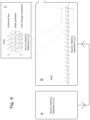
- Fig. 6 presents in schematic form an embodiment of the setup, where the permeable surface is in the form of a membrane.
- the invention in a second aspect, relates to a method for storage/reduction of carbon dioxide, comprising preparation of an alkaline aqueous solution defined in the first aspect of the invention set forth above,
- the present invention provides a system for preparation of ikaite, comprising
- a "water solution” is in the present context an aqueous solution of slightly or moderate basic pH, which contains calcium ions; often the water solution will be a saline water solution, i.e. a water solution comprising NaCl as the major salt species.
- a (saline) water solution is natural seawater.
- the salinity is of lesser importance than the pH and the content of calcium ions.
- the presence of NaCl is not mandatory in a water solution even though it is preferred due to the easy access to e.g. natural seawater.
- the ionic strength of the water solutions used in the present invention may be regulated according to need, but that values that are typical for natural seawater (I ;z; 0.7 M) are preferable.
- alkaline aqueous solution as used herein means an aqueous solution, which has a basic pH and which must comprise a carbonate/bicarbonate buffer system.
- a "permeable or porous surface” is in the present context a surface through which an alkaline aqueous solution or a water solution is capable of being fed into a surrounding or adjacent solution.
- the exact form and composition of the permeable or porous surface is not essential. It can be e.g. comprised of one or more faces of a structure made from a porous material such as porous rock, porous stone, a porous ceramic material, a metal, rubber or plastic surface comprising multiple perforations, a membrane material and any other material or structure through which a solution can be introduced and subsequently leave when forming an interface with a second solution because the structure including the surface has a sufficiently high hydraulic conductivity to allow a liquid to be fed via the structure through the surface to contact with the other solution.
- the first aspect relates to a method for preparation of ikaite (that is: CaCO 3 ⁇ 6H 2 O), comprising contacting an alkaline aqueous solution, which comprises carbonate and bicarbonate ions, with a water solution, which comprises Ca 2+ , at a temperature not exceeding 15°C, wherein contact between the alkaline aqueous solution and the water solution takes place at a permeable or porous surface, through which the alkaline aqueous solution is fed to the water solution or through which the water solution is fed to the alkaline aqueous solution at a flow rate, which is controlled so as to facilitate formation of ikaite crystals, and wherein the alkaline aqueous solution has been prepared by supplying gaseous CO2 to a carbonate solution, which is preferably a sodium or potassium carbonate solution.
- a carbonate solution which is preferably a sodium or potassium carbonate solution.
- an alkaline aqueous solution having a pH in the range 8-12 provides the best results, and particularly the pH can advantageously be in the range 8.5-11.5, such as in the range 9-11, and preferably in the range 9-10.
- the establishment of a strongly buffered carbonate/bicarbonate solution will ensure that these conditions are met, but in the event it is desired to introduce carbon dioxide into the solution (e.g. via aerating the solution with a carbon dioxide-rich gas), care should be taken to ensure that a lowering of pH is counteracted - e.g. by addition of a base or by use of further buffer systems that can stabilise the pH of the alkaline aqueous solution.
- the process of the invention is not particularly dependent on the concentration of the carbonate/bicarbonate in the alkaline aqueous solution - even a saturated solution comprising the two species in a ratio that provides the desired pH will be effective as long as the water solution includes at least a stoichiometric sufficient amount of calcium ions.
- the solubility in water of bicarbonate is 69 g/l at 0°C and 96 g/l at 20°C at a pressure of 1 bar, so if working at ambient pressure, the maximum concentration of bicarbonate will not exceed ⁇ 90 g/l.
- the carbonate and bicarbonate ions of the alkaline aqueous solution will primarily be in the form of sodium carbonate and sodium bicarbonate, but it will be understood that the exact nature of any carbonate or bicarbonate salt is of minor relevance for the process of the first aspect of the invention.
- the basic pH of the alkaline aqueous solution there is a surplus of bicarbonate ions relative to carbonate ions in said solution.
- the water solution typically has a pH >7.0, but in most cases this solution is only slightly basic: in this context, the pH of natural seawater has proven effective in the practice of the method of the invention.
- the water solution preferably has a pH, which is less than 10, such as less than 9, and preferably in the range 7.5-8.5.
- the water solution should comprise the necessary amount, preferably an excess, of Ca 2+ relative to carbonate and bicarbonate in the alkaline aqueous solution.
- the (saline) water solution is natural seawater - from an economical viewpoint this is preferable and attractive in many practical setups, but it is not in any way excluded to prepare "artificial seawater", i.e. water solutions that have the desired pH and the necessary Ca 2+ content - it may even be possible to prepare water solutions that are optimized for this purpose.
- the rate of interaction between the two solutions - i.e. by controlling the feed of one solution into another - the formation of crystals is facilitated.
- the crystals will be seeded on and subsequently grow on the permeable or porous surface. Therefore, the rate of feeding one solution into the other is relevant for ensuring that the crystal formation will continue to take place in the interface between the two solutions.
- the flow rate should be kept relatively low (below a predefined rate) until nucleation of ikaite crystals has been accomplished - after nucleation has been accomplished, the flow rate can be increased since the crystals will readily grow.
- the porous or permeable surface can therefore be supplied/seeded with ikaite crystals that have already been formed (e.g. in a previous process of the present invention) - in this way, the relatively slow introductory step of crystal formation can be circumvented and the process can be run continuously at a higher rate.
- ikaite can crystallise at temperatures up to about 15°C, but it is believed that lower temperatures are preferable: Typically the method of the invention will thus be carried out at a temperature not exceeding 14°C, such as at a temperature not exceeding 13°C, 12°C, 11°C, 10°C, 9°C, or 8°C.
- optimum temperatures for ikaite synthesis vary with various physico-chemical conditions e.g. the composition and concentrations of ASW constituents, concentration of the solutions 1-3 defined in the examples, pH of the solutions, and partial pressure.
- Preparation of the alkaline aqueous solution comprises that gaseous CO 2 is supplied to a carbonate solution, preferably to a sodium or potassium carbonate solution.
- a carbonate solution preferably to a sodium or potassium carbonate solution.
- the method of the invention can be carried out at sea (thus using the surrounding seawater as the water solution) - since the temperature in seawater varies across the globe but is consistently lower at a certain depth, the method in such cases carried out at a depth where the ambient temperature does not exceed 15°C or the lower maximum temperature discussed in detail above.
- the ikaite is subsequently converted to calcite or other carbonate forms - since ikaite is a relatively volatile substance, calcite and other forms for calcium carbonate are preferable, e.g. for later storage.
- the conversion to calcite or other forms of carbonate is a relatively simple matter, and essentially consists in dehydration of the ikaite: this can be accomplished by heating the ikaite to a temperature higher than the temperature at which the ikaite has been formed and/or by drying the ikaite.
- the method of the first aspect of the invention will typically include the additional step of storing of the ikaite and/or carbonate forms produced.
- Synthesis of ikaite or calcite can thus be performed by either controlled mixing of the ikaite solution into stagnant ASW or in a design allowing a flow of ASW.
- the flow rate of the ikaite solution and ASW can then be tuned to specific reactor designs for optimum crystallization and efficiency.
- an important aspect of the invention pertains to a method for storage/reduction of carbon dioxide.
- this method introduces gaseous carbon dioxide from any source into an alkaline aqueous solution discussed above where after ikaite or calcite or other carbonates are prepared according to the method of the first aspect of the invention detailed above; subsequently the ikaite and/or carbonate forms produced are stored, e.g. underground.
- the method of the 2 nd aspect of the invention can be implemented in a variety of settings: it may be used directly in connection with carbon dioxide emitting plants, factories, devices or constructions, and it may be used to extract carbon dioxide directly from atmospheric air.
- Systems for introducing large amount of gaseous material into a liquid medium are well-known and may be employed for preparing the carbonate/bicarbonate buffer system that constitutes the alkaline aqueous solution used in the invention.
- This aspect relates to a system for preparation of ikaite, comprising
- a schematic depiction of one embodiment of such a system (or plant) of the invention is presented in Fig. 6 .
- a first compartment "A” holds a carbonate/bicarbonate solution which is continuously fed to the bottom of a second compartment B, which holds an ASW.
- the carbonate/bicarbonate solution Via a perforated or otherwise permeable surface the carbonate/bicarbonate solution enters the ASW so as to create a steady interface where ikaite crystals can be formed (as shown in the enlarged panel C). Since the carbonate/bicarbonate solution is less dense than the ASW (in particular after the ikaite formation), it exhibits an upward movement and thus allows for a constant addition of new carbonate/bicarbonate.
- the system of the invention further comprises a device for supplying carbon dioxide to the alkaline aqueous solution.
- a device for supplying carbon dioxide to the alkaline aqueous solution can be present in compartment A or in a premixing chamber or compartment - one simple means for supplying carbon dioxide to the solution is to bubble carbon dioxide rich gas/air through the solution.
- the ikaite produced can conveniently be converted to calcite or other stable carbonate forms to allow long term storage; consequently, the system of the invention may further comprise a compartment for conversion of ikaite to calcite or other carbonate forms by drying or heating to a temperature >8°C.
- the ikaite may also simply be deposited at a remote location where this process takes place.
- the system of the invention can be integrated with or coupled to an outlet of carbon dioxide containing gas emissions; these emissions are typically supplied to the alkaline aqueous solution, preferably by using the device detailed above for introducing of carbon dioxide into the alkaline aqueous solution.
- the water solution can conveniently be natural saltwater, e.g. seawater, especially when the system is set up in geographical areas where easy access to abundant amounts of natural salt water is available.
- the system can be located in an off-shore position (thereby taking advantage of the lower temperatures present at certain depths of the sea in order to facilitate the ikaite formation), but the system can also be located on land and take advantage of natural salt water.
- the exact form and composition of the permeable or porous structure is not essential - it can be comprised of porous rock or stone, a membrane material and any other material through which a solution can be introduced and subsequently leave when forming an interface with a second solution because the structure has a sufficiently high hydraulic conductivity. Therefore, it is in advantageous embodiments of the invention possible to utilise natural geologic formations that have a suitable hydraulic conductivity, which allows the creation of a steady interface between two solutions (one being fed into the other from the permeable porous structure).
- CO 2 is the predominant species at a pH smaller than 6.35
- HCO 3 is the predominant species at a pH in the range of 6.35-10.33
- CO 3 2 ⁇ is the predominant species at a pH higher than 10.33.
- ASW can be created by a multitude of saline-solutions, see for example the recipe below.
- comprehensive precipitation yields have been achieved with artificial seawater as well as natural seawater; it has been found that the solutions needs to be of a certain degree of salinity and display slightly alkaline pH values.
- Other inorganic solutes such as phosphate, nitrates etc. does not seem to affect the precipitation process.
- the invention is not limited to the use of a specific solution.
- ASW can also be substituted by a CaCl 2 solution, or other sources of calcium ions in solution for the precipitation process to occur. Sufficient available calcium and carbonate ions in the solution appears to be the most important parameters.
- ASW in the experiments in the following examples was made by dissolving a commercially available salt/mineral mix for reef aquaria in freshwater (regular tap-water).
- the ASW was mixed to 25 ⁇ salinity by dissolving 1000 g of the salt mix with 40 l of freshwater in a glass container, final salinity was confirmed with refractometer.
- a pH meter calibrated at experimental temperature by a two-point calibration (pH 7 and 10), was used to monitor pH. pH of the ASW was ⁇ 8.17.
- a solution of ⁇ 1% of Na 2 CO 3 (s) + NaHCO 3 (s) in a ratio of 4:1 by weight of Na 2 CO 3 :NaHCO 3 was mixed in demineralized H 2 O, adding up to 100% by volume, creating "solution 3" (cf. above) with pH 10.21.
- Solution 3 was then slowly being mixed with ASW through a flat porous sandstone of 78 cm 2 with pore sizes of ⁇ 50-150 ⁇ m placed on the bottom of 40 l glass container filled with ASW.
- the solution was fed to the sandstone through a silicone tube by gravitational force, and flow velocity adjusted by a tube clamp to ⁇ 1ml pr. min.
- flow velocity adjusted by a tube clamp to ⁇ 1ml pr. min.
- Solution 3 is lighter due to the lower salinity it will have a natural buoyancy, creating an upward drift when entering the heavier ASW.
- Solution 3 was then slowly being mixed with ASW through a flat porous sandstone of 78 cm 2 with pore sizes of ⁇ 50-150 ⁇ m placed on the bottom of 40 l glass container filled with ASW.
- the solution was fed to the sandstone through a silicone tube by gravitational force, and flow velocity adjusted by a tube clamp to ⁇ 1ml pr. min.
- Within minutes visible ikaite crystals were evident on the surface of the sand stone, as "Solution 3" is lighter due to the lower salinity it will have a natural upward drift when entering the heavier ASW.
- Solution 2 1 l of Solution 1 was bubbled with CO 2 for 1 min. creating Solution 2, i.e. when sodium carbonate reacts with carbon dioxide and water, sodium bicarbonate is primarily produced (see also formula 2 above).
- Solution 3 was then slowly mixed with ASW through a flat porous sandstone of 78 cm 2 with pore sizes of ⁇ 50-150 ⁇ m placed on the bottom of 40 l glass container filled with ASW.
- the solution was fed to the sandstone through a silicone tube by gravitational force, and flow velocity adjusted by a tube clamp to ⁇ 1ml pr. min.
- Within minutes visible ikaite crystals were evident on the surface of the sand stone, as Solution 3 is lighter due to the lower salinity it will have a natural upward drift when entering the heavier ASW.
- Solution 1 1 l of Solution 1 was bubbled with CO 2 for 1 min. creating Solution 2, i.e. when sodium carbonate reacts with carbon dioxide and water, sodium bicarbonate is produced.
- Solution 3 was then slowly mixed with ASW through a flat porous sandstone of 78 cm 2 with pore sizes of ⁇ 50-150 ⁇ m placed on the bottom of 40 l glass container filled with ASW.
- the solution was fed to the sandstone through a silicone tube by gravitational force, and flow velocity adjusted by a tube clamp to ⁇ 1 ml per min.
- flow velocity adjusted by a tube clamp to ⁇ 1 ml per min.
- visible ikaite crystals were evident on the surface of the sand stone, as Solution 3 is lighter due to the lower salinity it will have a natural upward drift when entering the heavier ASW.
- Solution 1 1 l of Solution 1 was bubbled with CO 2 for 1 min. creating Solution 2, i.e. when sodium carbonate reacts with carbon dioxide and water, sodium bicarbonate is produced.
- Solution 3 was then slowly mixed with seawater through a 3 m long porous soaker hose, the hose positioned in a spiralling fashion within one of the 250 l containers with seawater.
- the pores of the hose allowed for a slow even flow on relatively large surface area in contact with the seawater.
- the solution was fed through the hose by a submergible circulation pump with adjustable flow, and flow velocity was adjusted to ensure that a slow flow leaving the hose could be detected as small "fumes" of water with lower density rising towards the surface; as Solution 3 is less dense due to the lower salinity it will have a natural upward drift when entering the heavier seawater. Large white crystals where visible all over the hose shortly after the flow began, two hours later the hose was completely covered in crystals, cf. Fig. 5 . Identification and size of ikaite crystals was performed using a USB-microscope, showing monoclinic ikaite crystals up to ⁇ 1.5-2.5mm in length. See Fig. 5 .
- the ikaite can readily be converted to calcite by raising the temperature a few degrees, e.g. above 6-8°C when the preparation of the ikaite has been prepared at such a temperature, or the ikaite can be left to dehydrate.
- ikaite is only staying metastable at temperatures below 6°C and will naturally disintegrate into calcite, but in order to facilitate this process, elevated temperatures/drying should be applied.
- Calcite in turn, is useful in a variety of products, such as construction materials, paint, as a soil remediator and/or stabilisator and as a material for repair of concrete.
- the invention is not limited to the use of the specific above-mentioned solutions, as ikaite synthesis can be achieved by other means, e.g. by mixing of other agents, such as CaCl 2 , K 2 CO 3 and KOH at low temperatures.
- other means would often require the presence of certain inhibitors in order to avoid formation of other types of crystals.
- the formulations included here have been chosen as they rapidly produce large clean ikaite crystals when used in the method of the invention, and they require a low amount of energy for successful synthesis of ikaite and later calcite withholding the carbon from the captured CO 2 .
- the solutions highlighted in formulas 1-5 are also inexpensive, non-toxic and constituted by abundant chemicals and would thus be most favourable while also being the most cost-effective approach.
Landscapes
- Chemical & Material Sciences (AREA)
- Organic Chemistry (AREA)
- Engineering & Computer Science (AREA)
- Chemical Kinetics & Catalysis (AREA)
- Life Sciences & Earth Sciences (AREA)
- Inorganic Chemistry (AREA)
- Geology (AREA)
- Crystallography & Structural Chemistry (AREA)
- Environmental & Geological Engineering (AREA)
- Analytical Chemistry (AREA)
- Oil, Petroleum & Natural Gas (AREA)
- General Chemical & Material Sciences (AREA)
- Biomedical Technology (AREA)
- Health & Medical Sciences (AREA)
- General Life Sciences & Earth Sciences (AREA)
- Geochemistry & Mineralogy (AREA)
- Compounds Of Alkaline-Earth Elements, Aluminum Or Rare-Earth Metals (AREA)
- Solid-Sorbent Or Filter-Aiding Compositions (AREA)
- Physical Or Chemical Processes And Apparatus (AREA)
- Carbon And Carbon Compounds (AREA)
- Gas Separation By Absorption (AREA)
Applications Claiming Priority (2)
| Application Number | Priority Date | Filing Date | Title |
|---|---|---|---|
| EP18170406 | 2018-05-02 | ||
| PCT/EP2019/061254 WO2019211381A1 (en) | 2018-05-02 | 2019-05-02 | Permanent storage of carbon dioxide |
Publications (3)
| Publication Number | Publication Date |
|---|---|
| EP3787774A1 EP3787774A1 (en) | 2021-03-10 |
| EP3787774C0 EP3787774C0 (en) | 2023-07-12 |
| EP3787774B1 true EP3787774B1 (en) | 2023-07-12 |
Family
ID=62110907
Family Applications (1)
| Application Number | Title | Priority Date | Filing Date |
|---|---|---|---|
| EP19725034.3A Active EP3787774B1 (en) | 2018-05-02 | 2019-05-02 | Permanent storage of carbon dioxide |
Country Status (15)
| Country | Link |
|---|---|
| US (2) | US11618688B2 (https=) |
| EP (1) | EP3787774B1 (https=) |
| JP (1) | JP7423082B2 (https=) |
| KR (1) | KR102927693B1 (https=) |
| CN (1) | CN112912163B (https=) |
| AU (1) | AU2019263657B2 (https=) |
| CA (1) | CA3097937A1 (https=) |
| DK (1) | DK181247B1 (https=) |
| EA (1) | EA202092615A1 (https=) |
| ES (1) | ES2955679T3 (https=) |
| MX (1) | MX2020011375A (https=) |
| PL (1) | PL3787774T3 (https=) |
| SA (1) | SA520420423B1 (https=) |
| WO (1) | WO2019211381A1 (https=) |
| ZA (1) | ZA202006616B (https=) |
Families Citing this family (4)
| Publication number | Priority date | Publication date | Assignee | Title |
|---|---|---|---|---|
| CA3097937A1 (en) | 2018-05-02 | 2019-11-07 | Climate Solutions Aps | Permanent storage of carbon dioxide |
| SE543928C2 (en) * | 2020-03-17 | 2021-09-28 | Alasdair Skelton | Method for preparation of ikaite crystals and for carbon capture and storage |
| KR20220163160A (ko) | 2021-06-02 | 2022-12-09 | 주식회사 에이씨이 | 이산화탄소 고형화 장치 및 이를 이용한 이산화탄소 처리 시스템 |
| US12286866B2 (en) | 2022-08-12 | 2025-04-29 | Saudi Arabian Oil Company | Method for enhanced storage of carbon dioxide in geological formations |
Family Cites Families (12)
| Publication number | Priority date | Publication date | Assignee | Title |
|---|---|---|---|---|
| DE1940768C3 (de) | 1969-08-11 | 1975-08-14 | Ernst Leitz Gmbh, 6330 Wetzlar | Verfahren zur Herstellung von Calciumcarbonat-Kristallen und Vorrichtung zur Durchführung des Verfahrens |
| NO980024L (no) | 1998-01-02 | 1999-07-05 | Irrus As | CO2-absorpsjon i bergrom |
| NO980575L (no) | 1998-02-10 | 1999-08-11 | Cirrus As | Fjerning av CO2 fra en CO2-holdig gass |
| TW200621640A (en) * | 2004-12-28 | 2006-07-01 | Yi-Der Tai | Calcium carbonate and manufacturing method therefor |
| US7753618B2 (en) * | 2007-06-28 | 2010-07-13 | Calera Corporation | Rocks and aggregate, and methods of making and using the same |
| US20120111236A1 (en) | 2008-09-30 | 2012-05-10 | Constantz Brent R | Reduced-carbon footprint compositions and methods |
| EP2523745A4 (en) * | 2010-01-14 | 2015-01-21 | Ferenc Meszaros | METHOD FOR REDUCING THE CO2 CONTENT OF COMBUSTION GASES AND ATMOSPHERIC MATERIALS FOR THE APPLICATION OF THE PROCESS |
| JP5709130B2 (ja) | 2011-03-31 | 2015-04-30 | 国立大学法人九州大学 | ミキシング効率に優れる、結晶微粒子の製造方法およびその装置 |
| JP6114903B2 (ja) | 2012-10-15 | 2017-04-19 | 福岡県 | ニッケルめっき排水の再生方法及び再生装置 |
| US9707513B2 (en) * | 2014-03-03 | 2017-07-18 | Blue Planet, Ltd. | Alkali enrichment mediated CO2 sequestration methods, and systems for practicing the same |
| WO2016057709A2 (en) | 2014-10-09 | 2016-04-14 | Blue Planet, Ltd. | Continuous carbon sequestration material production methods and systems for practicing the same |
| CA3097937A1 (en) | 2018-05-02 | 2019-11-07 | Climate Solutions Aps | Permanent storage of carbon dioxide |
-
2019
- 2019-05-02 CA CA3097937A patent/CA3097937A1/en active Pending
- 2019-05-02 ES ES19725034T patent/ES2955679T3/es active Active
- 2019-05-02 PL PL19725034.3T patent/PL3787774T3/pl unknown
- 2019-05-02 KR KR1020207034478A patent/KR102927693B1/ko active Active
- 2019-05-02 JP JP2021510539A patent/JP7423082B2/ja active Active
- 2019-05-02 AU AU2019263657A patent/AU2019263657B2/en active Active
- 2019-05-02 CN CN201980029195.3A patent/CN112912163B/zh active Active
- 2019-05-02 EA EA202092615A patent/EA202092615A1/ru unknown
- 2019-05-02 MX MX2020011375A patent/MX2020011375A/es unknown
- 2019-05-02 US US17/050,304 patent/US11618688B2/en active Active
- 2019-05-02 EP EP19725034.3A patent/EP3787774B1/en active Active
- 2019-05-02 WO PCT/EP2019/061254 patent/WO2019211381A1/en not_active Ceased
-
2020
- 2020-10-23 ZA ZA2020/06616A patent/ZA202006616B/en unknown
- 2020-10-27 SA SA520420423A patent/SA520420423B1/ar unknown
- 2020-11-10 DK DKPA202070743A patent/DK181247B1/en active IP Right Grant
-
2023
- 2023-03-15 US US18/184,389 patent/US12209029B2/en active Active
Also Published As
| Publication number | Publication date |
|---|---|
| EP3787774A1 (en) | 2021-03-10 |
| CN112912163A (zh) | 2021-06-04 |
| US20230294999A1 (en) | 2023-09-21 |
| KR102927693B1 (ko) | 2026-02-12 |
| CA3097937A1 (en) | 2019-11-07 |
| EP3787774C0 (en) | 2023-07-12 |
| KR20210005710A (ko) | 2021-01-14 |
| JP7423082B2 (ja) | 2024-01-29 |
| US20210114892A1 (en) | 2021-04-22 |
| AU2019263657B2 (en) | 2024-10-17 |
| EA202092615A1 (ru) | 2021-02-01 |
| PL3787774T3 (pl) | 2023-12-27 |
| WO2019211381A1 (en) | 2019-11-07 |
| JP2021522159A (ja) | 2021-08-30 |
| US12209029B2 (en) | 2025-01-28 |
| AU2019263657A1 (en) | 2020-12-24 |
| MX2020011375A (es) | 2021-02-09 |
| SA520420423B1 (ar) | 2025-01-05 |
| DK202070743A1 (en) | 2020-11-19 |
| ES2955679T3 (es) | 2023-12-05 |
| ZA202006616B (en) | 2025-06-25 |
| US11618688B2 (en) | 2023-04-04 |
| CN112912163B (zh) | 2023-03-28 |
| BR112020022175A2 (pt) | 2021-02-02 |
| DK181247B1 (en) | 2023-05-31 |
Similar Documents
| Publication | Publication Date | Title |
|---|---|---|
| US12209029B2 (en) | Permanent storage of carbon dioxide | |
| US10920249B2 (en) | Method and apparatus for CO2 sequestration | |
| Ridgwell et al. | The role of the global carbonate cycle in the regulation and evolution of the Earth system | |
| US20230235214A1 (en) | Nanobubbles and gas-liquid mixtures for enhanced carbon dioxide sequestration | |
| Buchardt et al. | Ikaite tufa towers in Ikka Fjord, southwest Greenland: their formation by mixing of seawater and alkaline spring water | |
| Mitchell et al. | Microbial CaCO3 mineral formation and stability in an experimentally simulated high pressure saline aquifer with supercritical CO2 | |
| Geilfus et al. | Inorganic carbon dynamics of melt-pond-covered first-year sea ice in the Canadian Arctic | |
| US9193594B2 (en) | Systems and methods for enhancing rates of carbonation of peridotite | |
| Back | Part III: Hydrogeology of the Yucatan | |
| EA043775B1 (ru) | Долговременное хранение диоксида углерода | |
| BR112020022175B1 (pt) | Método para preparação de ikaite , método para armazenagem/redução de dióxido de carbono e sistema para preparação de ikaite | |
| Chen et al. | Effect of anthropogenic CO2 on the pH and the saturation states of calcite and aragonite of seawater | |
| EP4514515A1 (en) | Geocatalysts and their application to control cocapture processes, economically and with environmental benefits | |
| Versteegen | Biotic and abiotic controls on calcium carbonate formation in soils | |
| Mackenzie et al. | Brief overview of carbon on Earth | |
| Rysgaard et al. | Ikaite crystals in melting sea ice–implications for pCO |
Legal Events
| Date | Code | Title | Description |
|---|---|---|---|
| STAA | Information on the status of an ep patent application or granted ep patent |
Free format text: STATUS: UNKNOWN |
|
| STAA | Information on the status of an ep patent application or granted ep patent |
Free format text: STATUS: THE INTERNATIONAL PUBLICATION HAS BEEN MADE |
|
| PUAI | Public reference made under article 153(3) epc to a published international application that has entered the european phase |
Free format text: ORIGINAL CODE: 0009012 |
|
| STAA | Information on the status of an ep patent application or granted ep patent |
Free format text: STATUS: REQUEST FOR EXAMINATION WAS MADE |
|
| 17P | Request for examination filed |
Effective date: 20201202 |
|
| AK | Designated contracting states |
Kind code of ref document: A1 Designated state(s): AL AT BE BG CH CY CZ DE DK EE ES FI FR GB GR HR HU IE IS IT LI LT LU LV MC MK MT NL NO PL PT RO RS SE SI SK SM TR |
|
| AX | Request for extension of the european patent |
Extension state: BA ME |
|
| DAV | Request for validation of the european patent (deleted) | ||
| DAX | Request for extension of the european patent (deleted) | ||
| STAA | Information on the status of an ep patent application or granted ep patent |
Free format text: STATUS: EXAMINATION IS IN PROGRESS |
|
| 17Q | First examination report despatched |
Effective date: 20211209 |
|
| GRAP | Despatch of communication of intention to grant a patent |
Free format text: ORIGINAL CODE: EPIDOSNIGR1 |
|
| STAA | Information on the status of an ep patent application or granted ep patent |
Free format text: STATUS: GRANT OF PATENT IS INTENDED |
|
| INTG | Intention to grant announced |
Effective date: 20221123 |
|
| GRAS | Grant fee paid |
Free format text: ORIGINAL CODE: EPIDOSNIGR3 |
|
| RIN1 | Information on inventor provided before grant (corrected) |
Inventor name: TRAMPE, ERIK |
|
| GRAA | (expected) grant |
Free format text: ORIGINAL CODE: 0009210 |
|
| STAA | Information on the status of an ep patent application or granted ep patent |
Free format text: STATUS: THE PATENT HAS BEEN GRANTED |
|
| AK | Designated contracting states |
Kind code of ref document: B1 Designated state(s): AL AT BE BG CH CY CZ DE DK EE ES FI FR GB GR HR HU IE IS IT LI LT LU LV MC MK MT NL NO PL PT RO RS SE SI SK SM TR |
|
| REG | Reference to a national code |
Ref country code: CH Ref legal event code: EP |
|
| REG | Reference to a national code |
Ref country code: IE Ref legal event code: FG4D |
|
| REG | Reference to a national code |
Ref country code: DE Ref legal event code: R096 Ref document number: 602019032574 Country of ref document: DE |
|
| U01 | Request for unitary effect filed |
Effective date: 20230809 |
|
| U07 | Unitary effect registered |
Designated state(s): AT BE BG DE DK EE FI FR IT LT LU LV MT NL PT SE SI Effective date: 20230816 |
|
| REG | Reference to a national code |
Ref country code: NO Ref legal event code: T2 Effective date: 20230712 |
|
| REG | Reference to a national code |
Ref country code: LT Ref legal event code: MG9D |
|
| REG | Reference to a national code |
Ref country code: GR Ref legal event code: EP Ref document number: 20230401797 Country of ref document: GR Effective date: 20231113 |
|
| REG | Reference to a national code |
Ref country code: ES Ref legal event code: FG2A Ref document number: 2955679 Country of ref document: ES Kind code of ref document: T3 Effective date: 20231205 |
|
| PG25 | Lapsed in a contracting state [announced via postgrant information from national office to epo] |
Ref country code: RS Free format text: LAPSE BECAUSE OF FAILURE TO SUBMIT A TRANSLATION OF THE DESCRIPTION OR TO PAY THE FEE WITHIN THE PRESCRIBED TIME-LIMIT Effective date: 20230712 Ref country code: HR Free format text: LAPSE BECAUSE OF FAILURE TO SUBMIT A TRANSLATION OF THE DESCRIPTION OR TO PAY THE FEE WITHIN THE PRESCRIBED TIME-LIMIT Effective date: 20230712 |
|
| REG | Reference to a national code |
Ref country code: DE Ref legal event code: R097 Ref document number: 602019032574 Country of ref document: DE |
|
| PG25 | Lapsed in a contracting state [announced via postgrant information from national office to epo] |
Ref country code: SM Free format text: LAPSE BECAUSE OF FAILURE TO SUBMIT A TRANSLATION OF THE DESCRIPTION OR TO PAY THE FEE WITHIN THE PRESCRIBED TIME-LIMIT Effective date: 20230712 Ref country code: RO Free format text: LAPSE BECAUSE OF FAILURE TO SUBMIT A TRANSLATION OF THE DESCRIPTION OR TO PAY THE FEE WITHIN THE PRESCRIBED TIME-LIMIT Effective date: 20230712 Ref country code: CZ Free format text: LAPSE BECAUSE OF FAILURE TO SUBMIT A TRANSLATION OF THE DESCRIPTION OR TO PAY THE FEE WITHIN THE PRESCRIBED TIME-LIMIT Effective date: 20230712 Ref country code: SK Free format text: LAPSE BECAUSE OF FAILURE TO SUBMIT A TRANSLATION OF THE DESCRIPTION OR TO PAY THE FEE WITHIN THE PRESCRIBED TIME-LIMIT Effective date: 20230712 |
|
| PLBE | No opposition filed within time limit |
Free format text: ORIGINAL CODE: 0009261 |
|
| STAA | Information on the status of an ep patent application or granted ep patent |
Free format text: STATUS: NO OPPOSITION FILED WITHIN TIME LIMIT |
|
| 26N | No opposition filed |
Effective date: 20240415 |
|
| U20 | Renewal fee for the european patent with unitary effect paid |
Year of fee payment: 6 Effective date: 20240531 |
|
| REG | Reference to a national code |
Ref country code: CH Ref legal event code: PL |
|
| PG25 | Lapsed in a contracting state [announced via postgrant information from national office to epo] |
Ref country code: MC Free format text: LAPSE BECAUSE OF FAILURE TO SUBMIT A TRANSLATION OF THE DESCRIPTION OR TO PAY THE FEE WITHIN THE PRESCRIBED TIME-LIMIT Effective date: 20230712 |
|
| PG25 | Lapsed in a contracting state [announced via postgrant information from national office to epo] |
Ref country code: MC Free format text: LAPSE BECAUSE OF FAILURE TO SUBMIT A TRANSLATION OF THE DESCRIPTION OR TO PAY THE FEE WITHIN THE PRESCRIBED TIME-LIMIT Effective date: 20230712 Ref country code: CH Free format text: LAPSE BECAUSE OF NON-PAYMENT OF DUE FEES Effective date: 20240531 |
|
| PGFP | Annual fee paid to national office [announced via postgrant information from national office to epo] |
Ref country code: PL Payment date: 20250404 Year of fee payment: 7 |
|
| U20 | Renewal fee for the european patent with unitary effect paid |
Year of fee payment: 7 Effective date: 20250602 |
|
| PGFP | Annual fee paid to national office [announced via postgrant information from national office to epo] |
Ref country code: ES Payment date: 20250611 Year of fee payment: 7 |
|
| PGFP | Annual fee paid to national office [announced via postgrant information from national office to epo] |
Ref country code: IS Payment date: 20250523 Year of fee payment: 7 Ref country code: NO Payment date: 20250519 Year of fee payment: 7 |
|
| PGFP | Annual fee paid to national office [announced via postgrant information from national office to epo] |
Ref country code: GR Payment date: 20250521 Year of fee payment: 7 |
|
| PGFP | Annual fee paid to national office [announced via postgrant information from national office to epo] |
Ref country code: IE Payment date: 20250522 Year of fee payment: 7 |
|
| PG25 | Lapsed in a contracting state [announced via postgrant information from national office to epo] |
Ref country code: CY Free format text: LAPSE BECAUSE OF FAILURE TO SUBMIT A TRANSLATION OF THE DESCRIPTION OR TO PAY THE FEE WITHIN THE PRESCRIBED TIME-LIMIT; INVALID AB INITIO Effective date: 20190502 |
|
| PG25 | Lapsed in a contracting state [announced via postgrant information from national office to epo] |
Ref country code: HU Free format text: LAPSE BECAUSE OF FAILURE TO SUBMIT A TRANSLATION OF THE DESCRIPTION OR TO PAY THE FEE WITHIN THE PRESCRIBED TIME-LIMIT; INVALID AB INITIO Effective date: 20190502 |
|
| PGFP | Annual fee paid to national office [announced via postgrant information from national office to epo] |
Ref country code: GB Payment date: 20260317 Year of fee payment: 8 |