EP3787083A1 - Composite, and electrochemical reaction cell stack - Google Patents
Composite, and electrochemical reaction cell stack Download PDFInfo
- Publication number
- EP3787083A1 EP3787083A1 EP19793613.1A EP19793613A EP3787083A1 EP 3787083 A1 EP3787083 A1 EP 3787083A1 EP 19793613 A EP19793613 A EP 19793613A EP 3787083 A1 EP3787083 A1 EP 3787083A1
- Authority
- EP
- European Patent Office
- Prior art keywords
- cathode
- anode
- composite
- electrolyte layer
- cell stack
- Prior art date
- Legal status (The legal status is an assumption and is not a legal conclusion. Google has not performed a legal analysis and makes no representation as to the accuracy of the status listed.)
- Withdrawn
Links
Images



Classifications
-
- H—ELECTRICITY
- H01—ELECTRIC ELEMENTS
- H01M—PROCESSES OR MEANS, e.g. BATTERIES, FOR THE DIRECT CONVERSION OF CHEMICAL ENERGY INTO ELECTRICAL ENERGY
- H01M8/00—Fuel cells; Manufacture thereof
- H01M8/10—Fuel cells with solid electrolytes
- H01M8/12—Fuel cells with solid electrolytes operating at high temperature, e.g. with stabilised ZrO2 electrolyte
- H01M8/1213—Fuel cells with solid electrolytes operating at high temperature, e.g. with stabilised ZrO2 electrolyte characterised by the electrode/electrolyte combination or the supporting material
-
- H—ELECTRICITY
- H01—ELECTRIC ELEMENTS
- H01M—PROCESSES OR MEANS, e.g. BATTERIES, FOR THE DIRECT CONVERSION OF CHEMICAL ENERGY INTO ELECTRICAL ENERGY
- H01M8/00—Fuel cells; Manufacture thereof
- H01M8/10—Fuel cells with solid electrolytes
- H01M8/12—Fuel cells with solid electrolytes operating at high temperature, e.g. with stabilised ZrO2 electrolyte
- H01M8/124—Fuel cells with solid electrolytes operating at high temperature, e.g. with stabilised ZrO2 electrolyte characterised by the process of manufacturing or by the material of the electrolyte
- H01M8/1246—Fuel cells with solid electrolytes operating at high temperature, e.g. with stabilised ZrO2 electrolyte characterised by the process of manufacturing or by the material of the electrolyte the electrolyte consisting of oxides
-
- C—CHEMISTRY; METALLURGY
- C25—ELECTROLYTIC OR ELECTROPHORETIC PROCESSES; APPARATUS THEREFOR
- C25B—ELECTROLYTIC OR ELECTROPHORETIC PROCESSES FOR THE PRODUCTION OF COMPOUNDS OR NON-METALS; APPARATUS THEREFOR
- C25B1/00—Electrolytic production of inorganic compounds or non-metals
- C25B1/01—Products
- C25B1/02—Hydrogen or oxygen
- C25B1/04—Hydrogen or oxygen by electrolysis of water
-
- C—CHEMISTRY; METALLURGY
- C25—ELECTROLYTIC OR ELECTROPHORETIC PROCESSES; APPARATUS THEREFOR
- C25B—ELECTROLYTIC OR ELECTROPHORETIC PROCESSES FOR THE PRODUCTION OF COMPOUNDS OR NON-METALS; APPARATUS THEREFOR
- C25B9/00—Cells or assemblies of cells; Constructional parts of cells; Assemblies of constructional parts, e.g. electrode-diaphragm assemblies; Process-related cell features
- C25B9/17—Cells comprising dimensionally-stable non-movable electrodes; Assemblies of constructional parts thereof
- C25B9/19—Cells comprising dimensionally-stable non-movable electrodes; Assemblies of constructional parts thereof with diaphragms
- C25B9/23—Cells comprising dimensionally-stable non-movable electrodes; Assemblies of constructional parts thereof with diaphragms comprising ion-exchange membranes in or on which electrode material is embedded
-
- C—CHEMISTRY; METALLURGY
- C25—ELECTROLYTIC OR ELECTROPHORETIC PROCESSES; APPARATUS THEREFOR
- C25B—ELECTROLYTIC OR ELECTROPHORETIC PROCESSES FOR THE PRODUCTION OF COMPOUNDS OR NON-METALS; APPARATUS THEREFOR
- C25B9/00—Cells or assemblies of cells; Constructional parts of cells; Assemblies of constructional parts, e.g. electrode-diaphragm assemblies; Process-related cell features
- C25B9/70—Assemblies comprising two or more cells
- C25B9/73—Assemblies comprising two or more cells of the filter-press type
- C25B9/75—Assemblies comprising two or more cells of the filter-press type having bipolar electrodes
-
- C—CHEMISTRY; METALLURGY
- C25—ELECTROLYTIC OR ELECTROPHORETIC PROCESSES; APPARATUS THEREFOR
- C25B—ELECTROLYTIC OR ELECTROPHORETIC PROCESSES FOR THE PRODUCTION OF COMPOUNDS OR NON-METALS; APPARATUS THEREFOR
- C25B9/00—Cells or assemblies of cells; Constructional parts of cells; Assemblies of constructional parts, e.g. electrode-diaphragm assemblies; Process-related cell features
- C25B9/70—Assemblies comprising two or more cells
- C25B9/73—Assemblies comprising two or more cells of the filter-press type
- C25B9/77—Assemblies comprising two or more cells of the filter-press type having diaphragms
-
- H—ELECTRICITY
- H01—ELECTRIC ELEMENTS
- H01M—PROCESSES OR MEANS, e.g. BATTERIES, FOR THE DIRECT CONVERSION OF CHEMICAL ENERGY INTO ELECTRICAL ENERGY
- H01M4/00—Electrodes
- H01M4/86—Inert electrodes with catalytic activity, e.g. for fuel cells
- H01M4/88—Processes of manufacture
- H01M4/8878—Treatment steps after deposition of the catalytic active composition or after shaping of the electrode being free-standing body
- H01M4/8882—Heat treatment, e.g. drying, baking
-
- H—ELECTRICITY
- H01—ELECTRIC ELEMENTS
- H01M—PROCESSES OR MEANS, e.g. BATTERIES, FOR THE DIRECT CONVERSION OF CHEMICAL ENERGY INTO ELECTRICAL ENERGY
- H01M4/00—Electrodes
- H01M4/86—Inert electrodes with catalytic activity, e.g. for fuel cells
- H01M4/90—Selection of catalytic material
- H01M4/9016—Oxides, hydroxides or oxygenated metallic salts
- H01M4/9025—Oxides specially used in fuel cell operating at high temperature, e.g. SOFC
-
- H—ELECTRICITY
- H01—ELECTRIC ELEMENTS
- H01M—PROCESSES OR MEANS, e.g. BATTERIES, FOR THE DIRECT CONVERSION OF CHEMICAL ENERGY INTO ELECTRICAL ENERGY
- H01M8/00—Fuel cells; Manufacture thereof
- H01M8/002—Shape, form of a fuel cell
-
- H—ELECTRICITY
- H01—ELECTRIC ELEMENTS
- H01M—PROCESSES OR MEANS, e.g. BATTERIES, FOR THE DIRECT CONVERSION OF CHEMICAL ENERGY INTO ELECTRICAL ENERGY
- H01M8/00—Fuel cells; Manufacture thereof
- H01M8/10—Fuel cells with solid electrolytes
- H01M8/12—Fuel cells with solid electrolytes operating at high temperature, e.g. with stabilised ZrO2 electrolyte
- H01M8/1213—Fuel cells with solid electrolytes operating at high temperature, e.g. with stabilised ZrO2 electrolyte characterised by the electrode/electrolyte combination or the supporting material
- H01M8/1226—Fuel cells with solid electrolytes operating at high temperature, e.g. with stabilised ZrO2 electrolyte characterised by the electrode/electrolyte combination or the supporting material characterised by the supporting layer
-
- H—ELECTRICITY
- H01—ELECTRIC ELEMENTS
- H01M—PROCESSES OR MEANS, e.g. BATTERIES, FOR THE DIRECT CONVERSION OF CHEMICAL ENERGY INTO ELECTRICAL ENERGY
- H01M8/00—Fuel cells; Manufacture thereof
- H01M8/10—Fuel cells with solid electrolytes
- H01M8/12—Fuel cells with solid electrolytes operating at high temperature, e.g. with stabilised ZrO2 electrolyte
- H01M2008/1293—Fuel cells with solid oxide electrolytes
-
- H—ELECTRICITY
- H01—ELECTRIC ELEMENTS
- H01M—PROCESSES OR MEANS, e.g. BATTERIES, FOR THE DIRECT CONVERSION OF CHEMICAL ENERGY INTO ELECTRICAL ENERGY
- H01M4/00—Electrodes
- H01M4/86—Inert electrodes with catalytic activity, e.g. for fuel cells
- H01M4/8605—Porous electrodes
- H01M4/8621—Porous electrodes containing only metallic or ceramic material, e.g. made by sintering or sputtering
-
- H—ELECTRICITY
- H01—ELECTRIC ELEMENTS
- H01M—PROCESSES OR MEANS, e.g. BATTERIES, FOR THE DIRECT CONVERSION OF CHEMICAL ENERGY INTO ELECTRICAL ENERGY
- H01M4/00—Electrodes
- H01M4/86—Inert electrodes with catalytic activity, e.g. for fuel cells
- H01M4/88—Processes of manufacture
- H01M4/8803—Supports for the deposition of the catalytic active composition
- H01M4/8814—Temporary supports, e.g. decal
-
- H—ELECTRICITY
- H01—ELECTRIC ELEMENTS
- H01M—PROCESSES OR MEANS, e.g. BATTERIES, FOR THE DIRECT CONVERSION OF CHEMICAL ENERGY INTO ELECTRICAL ENERGY
- H01M4/00—Electrodes
- H01M4/86—Inert electrodes with catalytic activity, e.g. for fuel cells
- H01M4/88—Processes of manufacture
- H01M4/8825—Methods for deposition of the catalytic active composition
- H01M4/8828—Coating with slurry or ink
-
- H—ELECTRICITY
- H01—ELECTRIC ELEMENTS
- H01M—PROCESSES OR MEANS, e.g. BATTERIES, FOR THE DIRECT CONVERSION OF CHEMICAL ENERGY INTO ELECTRICAL ENERGY
- H01M8/00—Fuel cells; Manufacture thereof
- H01M8/24—Grouping of fuel cells, e.g. stacking of fuel cells
- H01M8/241—Grouping of fuel cells, e.g. stacking of fuel cells with solid or matrix-supported electrolytes
- H01M8/2425—High-temperature cells with solid electrolytes
-
- Y—GENERAL TAGGING OF NEW TECHNOLOGICAL DEVELOPMENTS; GENERAL TAGGING OF CROSS-SECTIONAL TECHNOLOGIES SPANNING OVER SEVERAL SECTIONS OF THE IPC; TECHNICAL SUBJECTS COVERED BY FORMER USPC CROSS-REFERENCE ART COLLECTIONS [XRACs] AND DIGESTS
- Y02—TECHNOLOGIES OR APPLICATIONS FOR MITIGATION OR ADAPTATION AGAINST CLIMATE CHANGE
- Y02E—REDUCTION OF GREENHOUSE GAS [GHG] EMISSIONS, RELATED TO ENERGY GENERATION, TRANSMISSION OR DISTRIBUTION
- Y02E60/00—Enabling technologies; Technologies with a potential or indirect contribution to GHG emissions mitigation
- Y02E60/30—Hydrogen technology
- Y02E60/36—Hydrogen production from non-carbon containing sources, e.g. by water electrolysis
-
- Y—GENERAL TAGGING OF NEW TECHNOLOGICAL DEVELOPMENTS; GENERAL TAGGING OF CROSS-SECTIONAL TECHNOLOGIES SPANNING OVER SEVERAL SECTIONS OF THE IPC; TECHNICAL SUBJECTS COVERED BY FORMER USPC CROSS-REFERENCE ART COLLECTIONS [XRACs] AND DIGESTS
- Y02—TECHNOLOGIES OR APPLICATIONS FOR MITIGATION OR ADAPTATION AGAINST CLIMATE CHANGE
- Y02E—REDUCTION OF GREENHOUSE GAS [GHG] EMISSIONS, RELATED TO ENERGY GENERATION, TRANSMISSION OR DISTRIBUTION
- Y02E60/00—Enabling technologies; Technologies with a potential or indirect contribution to GHG emissions mitigation
- Y02E60/30—Hydrogen technology
- Y02E60/50—Fuel cells
-
- Y—GENERAL TAGGING OF NEW TECHNOLOGICAL DEVELOPMENTS; GENERAL TAGGING OF CROSS-SECTIONAL TECHNOLOGIES SPANNING OVER SEVERAL SECTIONS OF THE IPC; TECHNICAL SUBJECTS COVERED BY FORMER USPC CROSS-REFERENCE ART COLLECTIONS [XRACs] AND DIGESTS
- Y02—TECHNOLOGIES OR APPLICATIONS FOR MITIGATION OR ADAPTATION AGAINST CLIMATE CHANGE
- Y02P—CLIMATE CHANGE MITIGATION TECHNOLOGIES IN THE PRODUCTION OR PROCESSING OF GOODS
- Y02P70/00—Climate change mitigation technologies in the production process for final industrial or consumer products
- Y02P70/50—Manufacturing or production processes characterised by the final manufactured product
Definitions
- a known type of a fuel cell for generating electricity by utilizing electrochemical reaction between hydrogen and oxygen is a solid oxide fuel cell (hereinafter, also called "SOFC") having an electrolyte layer that contains solid oxide.
- SOFC solid oxide fuel cell
- the SOFC is utilized in the form of a fuel cell stack in which a plurality of single fuel cells (hereinafter, called merely “single cells”) are arranged in a predetermined direction (hereinafter, called a "first direction").
- the single cell includes an electrolyte layer, and a cathode and an anode that face each other in the first direction with the electrolyte layer intervening therebetween.
- a local surface undulation may be present on the surface of the single cell due to, for example, variations in thickness, component density, or the like of a cell precursor from which the single cell is produced through firing.
- the possibility of development of a crack or the like also increases in the case where a local surface undulation is present on the surface of the single cell, because stacking load and/or thermal stress concentrates on an undulating portion.
- the above-mentioned conventional techniques can prevent development of a crack or the like caused by overall warpage of the single cell, but fail to prevent development of a crack or the like caused by presence of a local surface undulation. Particularly, the greater the increase in area and the reduction in thickness of the single cell, the more marked the occurrence of such a problem.
- the present specification discloses a technique for solving the above-mentioned problem at least partially.
- the positive Z-axis direction is called the upward direction and the negative Z-axis direction is called the downward direction; however, in actuality, the fuel cell stack 100 may be disposed in a different orientation.
- the same also applies to FIG. 4 and subsequent drawings.
- the anode-side frame 140 is a frame member which has an approximately square hole 141 formed in a central region thereof and extending therethrough in the vertical direction, and is formed of, for example, a metal.
- the hole 141 of the anode-side frame 140 constitutes the fuel chamber 176 which faces the anode 116.
- the anode-side frame 140 is in contact with a peripheral portion of the surface of the separator 120 on a side toward the electrolyte layer 112 and with a peripheral portion of the surface of the interconnector 150 on a side toward the anode 116.
- electric energy generated in the electricity generation units 102 is output from the end plates 104 and 106 which function as output terminals of the fuel cell stack 100.
- the fuel cell stack 100 may be heated by a heater (not shown) from startup till the high temperature can be maintained by means of heat generated as a result of generation of electricity.
- the fuel offgas FOG discharged from the fuel chambers 176 of the electricity generation units 102 is discharged to the fuel gas discharge manifold 172 through the fuel gas discharge communication holes 143, passes through the holes of the body portion 28 and the branch portion 29 of the gas passage member 27 provided at the position of the fuel gas discharge manifold 172, and is then discharged to the outside of the fuel cell stack 100 through a gas pipe (not shown) connected to the branch portion 29.
- the single cell 110 satisfies at least the following first requirement for the outer surface of the cathode 114 located opposite the electrolyte layer 112 in the vertical direction (Z-axis direction) (hereinafter, called the "upper surface 114U of the cathode 114").
- the upper surface 114U of the cathode 114 extends in planar directions approximately perpendicular to the vertical direction. The planar directions correspond to the second direction appearing in CLAIMS.
- the anode-substrate-layer green sheet, the anode-activation-layer green sheet, and the electrolyte-layer green sheet are bonded together, followed by debindering at about 280°C. Further, firing is performed at about 1,350°C, thereby yielding a laminate of the electrolyte layer 112 and the anode 116.
- the single cell 110 of the present embodiment is an anode-support-type single cell. Therefore, the thickness of the anode activation layer (anode-activation-layer green sheet) and the thickness of the electrolyte layer 112 (electrolyte-layer green sheet) are very thin as compared with that of the anode substrate layer (anode-substrate-layer green sheet).
- the cause of warpage and local surface undulation of the laminate of the electrolyte layer 112 and the anode 116 is primarily inhomogeneity of the anode-substrate-layer green sheet.
- the laminate of the electrolyte layer 112 and the anode 116 since the electrolyte layer 112 and the anode activation layer are thin and deform easily as compared with the anode substrate layer, the laminate assumes a shape reflecting the warpage or local surface undulation of the anode substrate layer.
- either one of the outer surface of the anode opposite the electrolyte layer and the outer surface of the electrolyte layer opposite the anode satisfies at least the first requirement.
- the half cell may have a structure in which an intermediate layer (reaction prevention layer) is disposed on the electrolyte layer on the side opposite the anode.
- either one of the outer surface of the anode opposite the electrolyte layer and the outer surface of the intermediate layer opposite the electrolyte layer i.e., the outer surface of the half cell opposite the anode
- either one of two surfaces of the composite appearing in claims means at least either one of two outer surfaces located most outward with respect to the first direction.
- materials used to form the members are provided merely by way of example. Other materials may be used to form the members.
- the technique disclosed in the present specification can be applied to publicly known structures of fuel cells of the cylindrical type, the cylindrical-flat-type, etc.
- the above-mentioned maximum width Q in the first requirement is the maximum outside diameter of a circular cell.
Landscapes
- Chemical & Material Sciences (AREA)
- Engineering & Computer Science (AREA)
- Chemical Kinetics & Catalysis (AREA)
- Electrochemistry (AREA)
- General Chemical & Material Sciences (AREA)
- Manufacturing & Machinery (AREA)
- Sustainable Energy (AREA)
- Life Sciences & Earth Sciences (AREA)
- Sustainable Development (AREA)
- Materials Engineering (AREA)
- Metallurgy (AREA)
- Organic Chemistry (AREA)
- Physics & Mathematics (AREA)
- Thermal Sciences (AREA)
- Inorganic Chemistry (AREA)
- Fuel Cell (AREA)
Abstract
Description
- The technique disclosed in the present specification relates to a composite.
- A known type of a fuel cell for generating electricity by utilizing electrochemical reaction between hydrogen and oxygen is a solid oxide fuel cell (hereinafter, also called "SOFC") having an electrolyte layer that contains solid oxide. Generally, the SOFC is utilized in the form of a fuel cell stack in which a plurality of single fuel cells (hereinafter, called merely "single cells") are arranged in a predetermined direction (hereinafter, called a "first direction"). The single cell includes an electrolyte layer, and a cathode and an anode that face each other in the first direction with the electrolyte layer intervening therebetween.
- Meanwhile, warpage in the first direction may be present in a single cell due to, for example, shrinkage of the single cell in the course of firing. If warpage is present in a single cell, for example, when a plurality of single cells are stacked for manufacture of a fuel cell stack, a stacking load concentrates on a particular position of the warped single cell; as a result, a fissure or crack (hereinafter, called "a crack or the like") is highly likely to develop in the single cell. Also, as a result of repeated start and stop of electricity generation of the fuel cell stack, thermal stress concentrates on a particular position of the warped single cell, whereby the possibility of development of a crack or the like in the single cell increases.
- Thus, conventionally, various techniques have been proposed for bringing the amount of overall warpage (amount of overall flexure) of a single cell within a predetermined numerical range (
Patent Documents 1 to 4). -
- Patent Document 1: Japanese Patent Application Laid-Open (kokai) No.
2013-89496 - Patent Document 2: Japanese Patent Application Laid-Open (kokai) No.
2015-118925 - Patent Document 3: Japanese Patent Application Laid-Open (kokai) No.
2001-247373 - Patent Document 4: Japanese Patent Application Laid-Open (kokai) No.
2006-104058 - Other than the above-mentioned overall warpage of a single cell, a local surface undulation may be present on the surface of the single cell due to, for example, variations in thickness, component density, or the like of a cell precursor from which the single cell is produced through firing. The possibility of development of a crack or the like also increases in the case where a local surface undulation is present on the surface of the single cell, because stacking load and/or thermal stress concentrates on an undulating portion. The above-mentioned conventional techniques can prevent development of a crack or the like caused by overall warpage of the single cell, but fail to prevent development of a crack or the like caused by presence of a local surface undulation. Particularly, the greater the increase in area and the reduction in thickness of the single cell, the more marked the occurrence of such a problem.
- Such a problem is common with a so-called half cell having an electrolyte layer and one of a cathode and an anode. Also, such a problem is common with a solid oxide electrolysis cell (hereinafter, may be called "SOEC") that generates hydrogen by utilizing electrolysis of water. Notably, in the present specification, a single fuel cell and a single electrolysis cell are collectively called a single electrochemical reaction cell.
- The present specification discloses a technique for solving the above-mentioned problem at least partially.
- A technique disclosed in the present specification can be implemented in the following modes.
-
- (1) A composite disclosed in the present specification comprises an electrolyte layer containing solid oxide, and at least one electrode selected from a cathode disposed on one side of the electrolyte layer in a first direction and an anode disposed on the other side of the electrolyte layer in the first direction. The composite is characterized in that one surface of two surfaces of the composite located on opposite sides in the first direction satisfies a first requirement that, as viewed in the first direction, a curvature determined on the basis of any three points juxtaposed at intervals of 5 mm is less than 0.0013 (1/mm) and that, as viewed in a second direction perpendicular to the first direction, the curvature is the reciprocal of the radius of an imaginary circle passing through the any three points. According to the present composite, at least either one of two surfaces of the composite satisfies the first requirement that the curvature determined on the basis of any three points juxtaposed at intervals of 5 mm on the surface is less than 0.0013 (1/mm). By virtue of this, a reduction in strength due to local warpage of the surface of the composite can be prevented, in contrast to a structure in which a region having a curvature of 0.0013 (1/mm) or more is present on the surface.
- (2) The above composite may be configured such that the surface of the composite satisfying the first requirement further satisfies a second requirement that the surface has a warp rate of 0.18% or less. According to the present composite, at least either one of two surfaces of the composite further satisfies the second requirement that the entire surface has a warp rate of 0.18% or less. By virtue of this, the strength of the composite can be enhanced, as compared with a structure in which a warp rate of the entire surface is higher than 0.18%.
- (3) The above composite may be configured such that the composite includes the cathode and the anode, the cathode is disposed on one side of the composite in the first direction, the anode is disposed on the other side of the composite in the first direction, and the surface of the composite on the one side in the first direction satisfies the first requirement. The present composite can be prevent a reduction in strength, which would otherwise result from local warpage of the surface of the cathode. Also, the composite can prevent a reduction in electrical conductivity between the cathode and a cathode-side current collector, which would otherwise result from poor contact between the cathode and the cathode-side current collector joined to the cathode.
- (4) The above composite may be configured such that the composite includes only the electrolyte layer and the anode selected from the electrolyte layer, the cathode, and the anode and such that the surface of the composite on the one side in the first direction satisfies the first requirement. The present composite can prevent a reduction in strength, which would otherwise result from local warpage of the surface of the electrolyte layer.
- The technique disclosed in the present specification can be implemented in various modes; for example, a half cell having an electrolyte layer and an anode, a single fuel cell, a fuel cell electricity generation unit, a fuel cell stack having a plurality of fuel cell electricity generation units, an electricity generation module having a fuel cell stack, a fuel cell system having an electricity generation module, an electrolysis cell unit, an electrolysis cell stack having a plurality of electrolysis cell units, a hydrogen generation module having an electrolysis cell stack, and a hydrogen generation system having a hydrogen generation module.
-
- [
FIG. 1 ] Perspective view showing the external structure of afuel cell stack 100 according to the present embodiment. - [
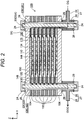
FIG. 2 ] Explanatory view showing the structure of thefuel cell stack 100 in an XZ cross section taken along line II-II ofFIG. 1 . - [
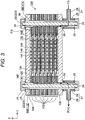
FIG. 3 ] Explanatory view showing the structure of thefuel cell stack 100 in a YZ cross section taken along line III-III ofFIG. 1 . - [
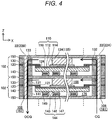
FIG. 4 ] Explanatory view of the same XZ cross section as that ofFIG. 2 , showing two adjacentelectricity generation units 102. - [
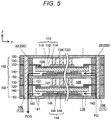
FIG. 5 ] Explanatory view of the same YZ cross section as that ofFIG. 3 , showing two adjacentelectricity generation units 102. - [
FIG. 6 ] Explanatory view schematically showing the structure of asingle cell 110 in an XY plane (upper surface). - [
FIG. 7 ] Explanatory view showing the structure of thesingle cell 110 in a cross section taken along line VII-VII ofFIG. 6 . - [
FIG. 8 ] Explanatory table showing the results of performance evaluation. -
FIG. 1 is a perspective view showing the external structure of afuel cell stack 100 according to the present embodiment;FIG. 2 is an explanatory view showing the structure of thefuel cell stack 100 in an XZ cross section taken along line II-II ofFIG. 1 ; andFIG. 3 is an explanatory view showing the structure of thefuel cell stack 100 in a YZ cross section taken along line III-III ofFIG. 1 .FIGS. 1 to 3 show mutually orthogonal X-axis, Y-axis, and Z-axis for specifying directions. In the present specification, for the sake of convenience, the positive Z-axis direction is called the upward direction and the negative Z-axis direction is called the downward direction; however, in actuality, thefuel cell stack 100 may be disposed in a different orientation. The same also applies toFIG. 4 and subsequent drawings. - The
fuel cell stack 100 includes a plurality of (seven in the present embodiment)electricity generation units 102 and a pair ofend plates electricity generation units 102 are arranged in a predetermined direction of arrangement (in the vertical direction in the present embodiment). The pairedend plates electricity generation units 102. Notably, the direction of arrangement (vertical direction) corresponds to the first direction appearing in CLAIMS. - Each of component layers (the
electricity generation units 102 and theend plates 104 and 106) of thefuel cell stack 100 has a plurality (eight in the present embodiment) of holes formed in a peripheral portion thereof extending about the Z-axis direction such that the holes extend through the peripheral portion in the vertical direction. The corresponding holes formed in the layers communicate with one another in the vertical direction, thereby forming throughholes 108 extending in the vertical direction from oneend plate 104 to theother end plate 106. In the following description, individual holes which constitute each throughhole 108 and are formed in the individual layers of thefuel cell stack 100 may also be called the throughholes 108. -
Bolts 22 extending in the vertical direction are inserted into the corresponding throughholes 108, and thefuel cell stack 100 is clamped by means of thebolts 22 andnuts 24 engaged with opposite ends of thebolts 22. Notably, as shown inFIGS. 2 and3 , aninsulation sheet 26 is disposed between thenuts 24 engaged with one ends (upper ends) of thebolts 22 and the upper surface of theend plate 104 serving as the upper end of thefuel cell stack 100, and anotherinsulation sheet 26 is disposed between thenuts 24 engaged with the other ends (lower ends) of thebolts 22 and the lower surface of theend plate 106 serving as the lower end of thefuel cell stack 100. However, in each region where agas passage member 27, which will be described later, is provided, thegas passage member 27 and theinsulation sheets 26 disposed on the upper side and on the lower side, respectively, of thegas passage member 27 intervene between thenut 24 and the surface of theend plate 106. Theinsulation sheet 26 is formed of, for example, a mica sheet, a ceramic fiber sheet, a ceramic compact sheet, a glass sheet, or a glass ceramic composite material. - The outside diameter of a shaft portion of each
bolt 22 is smaller than the inside diameter of eachcommunication hole 108. Accordingly, a space exists between the outer circumferential surface of the shaft portion of eachbolt 22 and the inner circumferential surface of eachcommunication hole 108. As shown inFIGS. 1 and2 , a space defined by the bolt 22 (bolt 22A) located at around the midpoint of one side of the perimeter (extending about the Z-axis direction) of the fuel cell stack 100 (the one side is one of the two sides in parallel with the Y-axis and is located on the positive side in the X-axis direction) and thecommunication hole 108 into which thebolt 22A is inserted functions as an oxidizergas introduction manifold 161 into which oxidizer gas OG is introduced from outside thefuel cell stack 100 and which serves as a gas flow channel for supplying the oxidizer gas OG to theelectricity generation units 102. A space defined by the bolt 22 (bolt 22B) located at around the midpoint of the other side opposite the above side (the other side is the other of the two sides in parallel with the Y-axis and is located on the negative side in the X-axis direction) and thecommunication hole 108 into which thebolt 22B is inserted functions as an oxidizergas discharge manifold 162 from which oxidizer offgas OOG discharged fromair chambers 166 of theelectricity generation units 102 is discharged to the outside of thefuel cell stack 100. In the present embodiment, for example, air is used as the oxidizer gas OG. - As shown in
FIGS. 1 and3 , a space defined by the bolt 22 (bolt 22D) located at around the midpoint of one side of the perimeter (extending about the Z-axis direction) of the fuel cell stack 100 (the one side is one of the two sides in parallel with the X-axis and is located on the positive side in the Y-axis direction) and thecommunication hole 108 into which thebolt 22D is inserted functions as an fuelgas introduction manifold 171 into which fuel gas FG is introduced from outside thefuel cell stack 100 and which supplies the fuel gas FG to theelectricity generation units 102. A space defined by the bolt 22 (bolt 22E) located at around the midpoint of the other side opposite the above side (the other side is the other of the two sides in parallel with the X-axis and is located on the negative side in the Y-axis direction) and thecommunication hole 108 into which thebolt 22E is inserted functions as a fuelgas discharge manifold 172 from which fuel offgas FOG discharged fromfuel chambers 176 of theelectricity generation units 102 is discharged to the outside of thefuel cell stack 100. In the present embodiment, for example, hydrogen-rich gas reformed from city gas is used as the fuel gas FG. - The
fuel cell stack 100 has fourgas passage members 27. Eachgas passage member 27 has atubular body portion 28 and atubular branch portion 29 branching from the side surface of thebody portion 28. The hole of thebranch portion 29 communicates with the hole of thebody portion 28. A gas pipe (not shown) is connected to thebranch portion 29 of eachgas passage member 27. As shown inFIG. 2 , the hole of thebody portion 28 of thegas passage member 27 disposed at the position of thebolt 22A which defines the oxidizergas introduction manifold 161 communicates with the oxidizergas introduction manifold 161, whereas the hole of thebody portion 28 of thegas passage member 27 disposed at the position of thebolt 22B which defines the oxidizergas discharge manifold 162 communicates with the oxidizergas discharge manifold 162. Also, as shown inFIG. 3 , the hole of thebody portion 28 of thegas passage member 27 disposed at the position of thebolt 22D which defines the fuelgas introduction manifold 171 communicates with the fuelgas introduction manifold 171, whereas the hole of thebody portion 28 of thegas passage member 27 disposed at the position of thebolt 22E which defines the fuelgas discharge manifold 172 communicates with the fuelgas discharge manifold 172. - The paired
end plates end plate 104 is disposed on the upper side of the uppermostelectricity generation unit 102, and theother end plate 106 is disposed on the lower side of the lowermostelectricity generation unit 102. A plurality of theelectricity generation units 102 are held under pressure between the twoend plates upper end plate 104 functions as a positive output terminal of thefuel cell stack 100, and thelower end plate 106 functions as a negative output terminal of thefuel cell stack 100. -
FIG. 4 is an explanatory view of the same XZ cross section as that ofFIG. 2 , showing two adjacentelectricity generation units 102, andFIG. 5 is an explanatory view of the same YZ cross section as that ofFIG. 3 , showing two adjacentelectricity generation units 102. - As shown in
FIGS. 4 and5 , theelectricity generation unit 102 serving as the smallest unit of electricity generation includes asingle cell 110, aseparator 120, a cathode-side frame 130, a cathode-sidecurrent collector 134, an anode-side frame 140, an anode-sidecurrent collector 144, and a pair ofinterconnectors 150 serving as the uppermost layer and the lowermost layer of theelectricity generation unit 102. Holes corresponding to the communication holes 108 into which the above-describedblots 22 are inserted are formed in peripheral portions (extending about the Z-axis direction) of theseparator 120, the cathode-side frame 130, the anode-side frame 140, and theinterconnectors 150. - The
interconnector 150 is an electrically conductive member having an approximately square flat-plate shape and is formed of, for example, ferritic stainless steel. Theinterconnector 150 secures electrical conductivity between theelectricity generation units 102 and prevents mixing of reaction gases between theelectricity generation units 102. In the present embodiment, twoelectricity generation units 102 disposed adjacent to each other share oneinterconnector 150. That is, theupper interconnector 150 of a certainelectricity generation unit 102 serves as alower interconnector 150 of anotherelectricity generation unit 102 adjacently located on the upper side of the certainelectricity generation unit 102. Also, since thefuel cell stack 100 has the twoend plates electricity generation unit 102 of thefuel cell stack 100 does not have theupper interconnector 150, and the lowermostelectricity generation unit 102 does not have the lower interconnector 150 (seeFIGS. 2 and3 ). - The
single cell 110 includes anelectrolyte layer 112, and an air electrode (cathode) 114 and a fuel electrode (anode) 116 which face each other in the vertical direction (the direction of arrangement of the electricity generation units 102) with theelectrolyte layer 112 intervening therebetween. Thesingle cell 110 of the present embodiment is an anode-support-type single cell in which theanode 116 supports theelectrolyte layer 112 and thecathode 114. - The
electrolyte layer 112 is a member having an approximately square flat-plate shape and contains at least Zr; for example, is formed of a solid oxide such as YSZ (yttria-stabilized zirconia), ScSZ (scandia-stabilized zirconia), or CaSZ (calcia-stabilized zirconia). Thecathode 114 is a member having an approximately square flat-plate shape and is formed of, for example, a perovskite-type oxide (e.g., LSCF (lanthanum strontium cobalt ferrite), LSM (lanthanum strontium manganese oxide), or LNF (lanthanum nickel ferrite)). Theanode 116 is a member having an approximately square flat-plate shape and is formed of, for example, Ni (nickel), a cermet of Ni and ceramic particles, or an Ni-based alloy. Thus, the single cell 110 (electricity generation unit 102) of the present embodiment is a solid oxide fuel cell (SOFC) which uses a solid oxide as an electrolyte. - The
separator 120 is a frame member which has an approximatelysquare hole 121 formed in a central region thereof and extending therethrough in the vertical direction, and is formed of, for example, a metal. A portion of theseparator 120 around thehole 121 faces a peripheral portion of the surface of theelectrolyte layer 112 on thecathode 114 side. Theseparator 120 is bonded to the electrolyte layer 112 (single cell 110) by means of abonding portion 124 formed of a brazing material and disposed between the facing portion and theelectrolyte layer 112. Theseparator 120 separates theair chamber 166 which faces thecathode 114, and thefuel chamber 176 which faces theanode 116, from each other, thereby preventing gas leakage from one electrode side to the other electrode side through a peripheral portion of thesingle cell 110. Notably, thesingle cell 110 to which theseparator 120 is bonded is also called a separator-attached single cell. - The cathode-
side frame 130 is a frame member which has an approximatelysquare hole 131 formed in a central region thereof and extending therethrough in the vertical direction, and is formed of, for example, an insulator such as mica. Thehole 131 of the cathode-side frame 130 constitutes theair chamber 166 which faces thecathode 114. The cathode-side frame 130 is in contact with a peripheral portion of the surface of theseparator 120 on a side opposite theelectrolyte layer 112 and with a peripheral portion of the surface of theinterconnector 150 on a side toward thecathode 114. The cathode-side frame 130 electrically insulates the pairedinterconnectors 150 contained in theelectricity generation unit 102 from each other. Also, the cathode-side frame 130 has an oxidizer gassupply communication hole 132 formed therein and adapted to establish communication between the oxidizergas introduction manifold 161 and theair chamber 166, and an oxidizer gasdischarge communication hole 133 formed therein and adapted to establish communication between theair chamber 166 and the oxidizergas discharge manifold 162. - The anode-
side frame 140 is a frame member which has an approximatelysquare hole 141 formed in a central region thereof and extending therethrough in the vertical direction, and is formed of, for example, a metal. Thehole 141 of the anode-side frame 140 constitutes thefuel chamber 176 which faces theanode 116. The anode-side frame 140 is in contact with a peripheral portion of the surface of theseparator 120 on a side toward theelectrolyte layer 112 and with a peripheral portion of the surface of theinterconnector 150 on a side toward theanode 116. Also, the anode-side frame 140 has a fuel gassupply communication hole 142 formed therein and adapted to establish communication between the fuelgas introduction manifold 171 and thefuel chamber 176, and a fuel gasdischarge communication hole 143 formed therein and adapted to establish communication between thefuel chamber 176 and the fuelgas discharge manifold 172. - The anode-side
current collector 144 is disposed within thefuel chamber 176. The anode-sidecurrent collector 144 includes aninterconnector facing portion 146,electrode facing portions 145, andconnection portions 147 which connect theelectrode facing portions 145 to theinterconnector facing portion 146, and is formed of, for example, nickel, a nickel alloy, or stainless steel. Theelectrode facing portions 145 are in contact with the surface of theanode 116 on a side opposite theelectrolyte layer 112, and theinterconnector facing portion 146 is in contact with the surface of theinterconnector 150 on a side toward theanode 116. However, as mentioned above, since theelectricity generation unit 102 disposed at the lowermost position in thefuel cell stack 100 does not have thelower interconnector 150, theinterconnector facing portion 146 in the lowermostelectricity generation unit 102 is in contact with thelower end plate 106. Since the anode-sidecurrent collector 144 is thus configured, the anode-sidecurrent collector 144 electrically connects theanode 116 and the interconnector 150 (or the end plate 106) to each other. Notably,spacers 149 formed of, for example, mica are disposed between theelectrode facing portions 145 and theinterconnector facing portion 146. As a result, the anode-sidecurrent collector 144 follows the deformation of theelectricity generation unit 102 stemming from a temperature cycle and a pressure variation of reaction gas, thereby maintaining good electrical connection between theanode 116 and the interconnector 150 (or the end plate 106) through the anode-sidecurrent collector 144. - The cathode-side
current collector 134 is disposed within theair chamber 166. The cathode-sidecurrent collector 134 is composed of a plurality ofcurrent collector elements 135 each having an approximately rectangular columnar shape and is formed of, for example, ferritic stainless steel. The cathode-sidecurrent collector 134 is in contact with the surface of thecathode 114 on a side opposite theelectrolyte layer 112 and with the surface of theinterconnector 150 on a side toward thecathode 114. Specifically, the cathode-sidecurrent collector 134 is pressed against thecathode 114. However, as mentioned above, theelectricity generation unit 102 disposed at the uppermost position in thefuel cell stack 100 does not have theupper interconnector 150. Therefore, the cathode-sidecurrent collector 134 in the uppermostelectricity generation unit 102 is in contact with theupper end plate 104. Since the cathode-sidecurrent collector 134 is thus configured, the cathode-sidecurrent collector 134 electrically connects thecathode 114 and the interconnector 150 (or the end plate 104) to each other. Notably, the cathode-sidecurrent collector 134 and theinterconnector 150 may be integrally formed as a unitary member. The cathode-sidecurrent collector 134 corresponds to the current collector appearing in CLAIMS. - As shown in
FIGS. 2 and4 , when the oxidizer gas OG is supplied through a gas pipe (not shown) connected to thebranch portion 29 of thegas passage member 27 provided at the position of the oxidizergas introduction manifold 161, the oxidizer gas OG is supplied to the oxidizergas introduction manifold 161 through the holes of thebranch portion 29 and thebody portion 28 of thegas passage member 27 and is then supplied from the oxidizergas introduction manifold 161 to theair chambers 166 through the oxidizer gas supply communication holes 132 of theelectricity generation units 102. Also, as shown inFIGS. 3 and5 , when the fuel gas FG is supplied through a gas pipe (not shown) connected to thebranch portion 29 of thegas passage member 27 provided at the position of the fuelgas introduction manifold 171, the fuel gas FG is supplied to the fuelgas introduction manifold 171 through the holes of thebranch portion 29 and thebody portion 28 of thegas passage member 27 and is then supplied from the fuelgas introduction manifold 171 to thefuel chambers 176 through the fuel gas supply communication holes 142 of theelectricity generation units 102. - When the oxidizer gas OG is supplied to the
air chamber 166 of eachelectricity generation unit 102, whereas the fuel gas FG is supplied to thefuel chamber 176 of eachelectricity generation unit 102, thesingle cell 110 generates electricity through the electrochemical reaction between the oxidizer gas OG and the fuel gas FG. The electricity generating reaction is an exothermic reaction. In eachelectricity generation unit 102, thecathode 114 of thesingle cell 110 is electrically connected to oneinterconnector 150 through the cathode-sidecurrent collector 134, whereas theanode 116 is electrically connected to theother interconnector 150 through the anode-sidecurrent collector 144. Also, a plurality of theelectricity generation units 102 contained in thefuel cell stack 100 are connected electrically in series. Accordingly, electric energy generated in theelectricity generation units 102 is output from theend plates fuel cell stack 100. Notably, in the SOFC, since electricity is generated at a relatively high temperature (e.g., 700°C to 1,000°C), thefuel cell stack 100 may be heated by a heater (not shown) from startup till the high temperature can be maintained by means of heat generated as a result of generation of electricity. - As shown in
FIGS. 2 and4 , the oxidizer offgas OOG discharged from theair chambers 166 of theelectricity generation units 102 is discharged to the oxidizergas discharge manifold 162 through the oxidizer gas discharge communication holes 133, passes through the holes of thebody portion 28 and thebranch portion 29 of thegas passage member 27 provided at the position of the oxidizergas discharge manifold 162, and is then discharged to the outside of thefuel cell stack 100 through a gas pipe (not shown) connected to thebranch portion 29. Also, as shown inFIGS. 3 and5 , the fuel offgas FOG discharged from thefuel chambers 176 of theelectricity generation units 102 is discharged to the fuelgas discharge manifold 172 through the fuel gas discharge communication holes 143, passes through the holes of thebody portion 28 and thebranch portion 29 of thegas passage member 27 provided at the position of the fuelgas discharge manifold 172, and is then discharged to the outside of thefuel cell stack 100 through a gas pipe (not shown) connected to thebranch portion 29. -
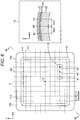
FIG. 6 is an explanatory view schematically showing the structure of thesingle cell 110 in an XY plane (upper surface), andFIG. 7 is an explanatory view showing the structure of of thesingle cell 110 in a cross section in parallel with the vertical direction (Z-axis direction) taken along line VII-VII ofFIG. 6 . Thesingle cell 110 corresponds to the composite appearing in CLAIMS. - The
single cell 110 satisfies at least the following first requirement for the outer surface of thecathode 114 located opposite theelectrolyte layer 112 in the vertical direction (Z-axis direction) (hereinafter, called the "upper surface 114U of thecathode 114"). Theupper surface 114U of thecathode 114 extends in planar directions approximately perpendicular to the vertical direction. The planar directions correspond to the second direction appearing in CLAIMS. - "As viewed in the vertical direction, the
upper surface 114U of thecathode 114 has a curvature less than 0.0013 (1/mm), the curvature being determined on the basis of any three points juxtaposed at intervals of 5 mm." - Herein, the "curvature" is the reciprocal of the radius of an imaginary circle passing through the any three points, as viewed in a planar direction (a direction orthogonal to the vertical direction and to the direction in which the any three points are juxtaposed). The
upper surface 114U of thecathode 114 corresponds to either one of two surfaces of the composite appearing in CLAIMS. - Whether or not the first requirement is satisfied is judged as follows.
- (1) A partial region, not the entire region, of the
upper surface 114U of thecathode 114 is taken as an object region E. The object region E is a square region located a predetermined width ΔH inward of the outline of thecathode 114. The predetermined width ΔH is 2.5% of a maximum width Q of the outline of the object region E as viewed in the vertical direction. In the example ofFIG. 6 , the maximum width Q is a diagonal width of thesquare cathode 114. A region extending from the outline of thecathode 114 and having the predetermined width ΔH is low in contribution to electricity generating reaction; thus, even if a crack or the like develops in the region, an adverse effect of the development of a crack or the like on the electricity generation characteristics of thesingle cell 110 is relatively small. Therefore, preferably, the region is excluded from the object region E as in the case of the present embodiment. - (2) A plurality of first imaginary straight lines L1 and a plurality of second imaginary straight lines L2 are disposed on the object region E. The plurality of first imaginary straight lines L1 are juxtaposed, at intervals of 5 mm, in one direction (X-axis direction in parallel with one pair of parallel sides of the cathode 114). The plurality of second imaginary straight lines L2 are juxtaposed, at intervals of 5 mm, in another direction (Y-axis direction in parallel with the other pair of parallel sides of the cathode 114) perpendicular to the one direction. A plurality of intersections of the first imaginary straight lines L1 and the second imaginary straight lines L2 except those on the outermost imaginary straight lines L1 and L2 along the outline of the object region E are used as measuring points P for measuring curvature. One of the intersections of the first imaginary straight lines L1 and the second imaginary straight lines L2 approximately coincides with the center point O of the
cathode 114 as viewed in the vertical direction. Notably, inFIG. 6 , for convenience sake, the interval (5 mm) between the imaginary straight lines L1 and L2 is illustrated on a larger scale than an actual one in relation to the size of thecathode 114. - (3) Curvature is determined at each measuring point P. Specifically, the curvature is determined on the basis of three intersections (i.e., the measuring point P serving as the center intersection, and two intersections adjacently located on opposite sides of the measuring point P) juxtaposed on a straight line which is parallel to the first imaginary straight line L1 or the second imaginary straight line L2 as viewed in the vertical direction. For example, the curvature at a measuring point P2 (the center intersection) is determined on the basis of the measuring point P2 serving as the center intersection and two adjacent intersections (measuring points P1 and P3) juxtaposed on the first imaginary straight line L1. Specifically, as shown in the X1 region enlarged in
FIG. 6 , as viewed in a direction (Y-axis direction) orthogonal to the vertical direction (Z-axis direction) and to the direction in which the three measuring points P1 to P3 are juxtaposed (X-axis direction), the reciprocal of the radius of an imaginary circle passing through the three measuring points P1 to P3 is used as the curvature at the measuring point P2. Notably, information about the difference of elevation in the vertical direction among the three intersections can be obtained by a known apparatus and method, for example, an optical 3D measuring instrument. - (4) When all the curvatures determined at the measuring points P are less than 0.0013 (1/mm), the first requirement is judged to be satisfied.
- Preferably, the
single cell 110 further satisfies the following second requirement for theupper surface 114U of thecathode 114. - "The
upper surface 114U of thecathode 114 has a warp rate of 0.18% or less." - Herein, the "warp rate (%)" is expressed by the following formula.

- As exemplified in
FIG. 7 , the maximum difference of elevation ΔZ in the object region E is the maximum difference of elevation of the object region E in thecathode 114 when thesingle cell 110 is disposed on a horizontal plane M with theanode 116 facing downward. Notably, information about the difference of elevation in the vertical direction of theupper surface 114U of thecathode 114 can be obtained by a known apparatus and method, for example, an optical 3D measuring instrument. - First, the
single cell 110 is manufactured. Specifically, thesingle cell 110 is manufactured through the following steps. - To a mixed powder (100 parts by weight) of NiO powder (50 parts by weight) and YSZ powder (50 parts by weight), there are added organic beads (15% by weight of the mixed powder) as a pore-forming material, butyral resin, DOP as plasticizer, dispersant, and a mixed solvent of toluene and ethanol. The resultant mixture is mixed in a ball mill, thereby preparing slurry. The organic beads are spherical particles formed of, for example, polymers such as polymethyl methacrylate and polystyrene. The obtained slurry is formed into a thin sheet by the doctor blade method, followed by drying to form an anode-substrate-layer green sheet having a thickness of 200 µm to 300 µm. Specifically, the obtained slurry is defoamed and stirred and is then coated on a carrier (not shown) in the form of a thin sheet formed by the doctor blade method. The coated slurry is carried by the carrier from an entrance of a drying chamber (not shown) to an exit of the drying chamber. Drying air is supplied into the drying chamber and flows from the entrance toward the exit.
- By controlling the flow velocity of air at the entrance of the drying chamber, inhomogeneity of the dried anode-substrate-layer green sheet (for example, unevenness of thickness of the green sheet and unevenness of component density of the green sheet) is suppressed. As a result, an anode substrate layer formed by a firing step, which will be described later, can be prevented from suffering not only overall warpage of the anode substrate layer, but also occurrence of a local surface undulation in the anode substrate layer. Specifically, it is difficult to supply air into the drying chamber from the entrance in such a manner that the flow velocity (flow rate) becomes uniform in the width direction orthogonal to the carrying direction; i.e., within the conveyance chamber, a difference in the flow velocity of air is produced between different positions in the width direction. For example, because of resistance of an inner wall of the drying chamber, the flow velocity of air is slow at an outer position in the width direction as compared with the flow velocity of air at a central position in the width direction. If such a difference in the air flow velocity is present between positions in the width direction, the degree of unevenness of drying increases, particularly, in a region of slurry on the carrier that is located near the entrance and contains a still large amount of solvent; as a result, the dried anode-substrate-layer green sheet becomes inhomogeneous. Meanwhile, by reducing the flow velocity of air at the entrance, the difference in the air flow velocity between positions in the width direction can be reduced. Therefore, by adjusting the flow velocity of air at the entrance as appropriate, inhomogeneity of the anode-substrate-layer green sheet can be suppressed. Notably, the ratio between NiO powder and YSZ powder used to form the anode-substrate-layer green sheet can be changed as appropriate so long as required performance is exhibited. For example, NiO powder : YSZ powder may be 60 : 40 or 40 : 60. That is, the amount of NiO powder can be changed as appropriate within the range of from 40 parts by weight to 60 parts by weight with a balance of YSZ powder such that the amount of mixed powder of NiO powder and YSZ powder becomes 100 parts by weight.
- To a mixed powder (100 parts by weight) of NiO powder (60 parts by weight) and YSZ powder (40 parts by weight), there are added butyral resin, DOP as plasticizer, dispersant, and a mixed solvent of toluene and ethanol. The resultant mixture is mixed in a ball mill, thereby preparing slurry. The obtained slurry is formed into a thin sheet by the doctor blade method, thereby yielding an anode-activation-layer green sheet having a thickness of 10 µm to 30 µm. Notably, the ratio between NiO powder and YSZ powder used to form the anode-activation-layer green sheet can be changed as appropriate so long as required performance is exhibited. For example, NiO powder : YSZ powder may be 50 : 50 or 40 : 60. That is, the amount of NiO powder can be changed as appropriate within the range of from 40 parts by weight to 60 parts by weight with a balance of YSZ powder such that the amount of mixed powder of NiO powder and YSZ powder becomes 100 parts by weight.
- To YSZ powder (100 parts by weight), there are added butyral resin, DOP as plasticizer, dispersant, and a mixed solvent of toluene and ethanol. The resultant mixture is mixed in a ball mill, thereby preparing slurry. The obtained slurry is formed into a thin sheet by the doctor blade method, thereby yielding an electrolyte-layer green sheet having a thickness of 5 µm to 15 µm.
- The anode-substrate-layer green sheet, the anode-activation-layer green sheet, and the electrolyte-layer green sheet are bonded together, followed by debindering at about 280°C. Further, firing is performed at about 1,350°C, thereby yielding a laminate of the
electrolyte layer 112 and theanode 116. As mentioned above, thesingle cell 110 of the present embodiment is an anode-support-type single cell. Therefore, the thickness of the anode activation layer (anode-activation-layer green sheet) and the thickness of the electrolyte layer 112 (electrolyte-layer green sheet) are very thin as compared with that of the anode substrate layer (anode-substrate-layer green sheet). Thus, the cause of warpage and local surface undulation of the laminate of theelectrolyte layer 112 and the anode 116 (so-called half cell) is primarily inhomogeneity of the anode-substrate-layer green sheet. Specifically, in the laminate of theelectrolyte layer 112 and theanode 116, since theelectrolyte layer 112 and the anode activation layer are thin and deform easily as compared with the anode substrate layer, the laminate assumes a shape reflecting the warpage or local surface undulation of the anode substrate layer. As a result, the surface (upper surface) of theelectrolyte layer 112 opposite the anode activation layer assumes a shape reflecting the warpage or local surface undulation of the anode substrate layer. Therefore, in the present embodiment, in the steps of manufacturing the electrolyte-layer green sheet and the anode-activation-layer green sheet, the flow velocity of drying air is not particularly controlled. Needless to say, even in the steps of manufacturing the electrolyte-layer green sheet and the anode-activation-layer green sheet, preferably, inhomogeneity of the electrolyte-layer green sheet and the anode-activation-layer green sheet is suppressed by controlling the flow velocity of drying air. - A liquid mixture of La0.6Sr0.4Co0.2Fe0.8O3 powder and isopropyl alcohol is prepared. The prepared liquid mixture is applied by screen printing onto the surface of the
electrolyte layer 112 of the above-mentioned laminate, followed by firing at 1,100°C for forming thecathode 114, thereby yielding a fired body (single cell 110 before undergoing reduction). Notably, similar to the thickness of the anode activation layer, etc., the thickness of thecathode 114 is also very thin as compared with that of the anode substrate layer (anode-substrate-layer green sheet). Thus, the influence of inhomogeneity of thecathode 114 on warp, etc., of thesingle cell 110 is small. - Subsequently, the remaining assembling steps (e.g., joining the
cathode 114 and the cathode-sidecurrent collector 134 and clamping thefuel cell stack 100 with the bolts 22) are performed, thereby completing assembly of thefuel cell stack 100. - As described above, in the
fuel cell stack 100 of the present embodiment, as viewed in the vertical direction (first requirement), theupper surface 114U of thecathode 114 in thesingle cell 110 has a curvature less than 0.0013 (1/mm), the curvature being determined on the basis of any three points juxtaposed at intervals of 5 mm. By virtue of this, thesingle cell 110 can prevent a reduction in strength, which would otherwise result from local warpage of the surface of thesingle cell 110, in contrast to a structure in which a region having a curvature of 0.0013 (1/mm) or more is present on theupper surface 114U of thecathode 114. Also, according to the present embodiment, it is possible to prevent a reduction in electrical conductivity between thecathode 114 and the current collector elements 135 (cathode-side current collector 134), which would otherwise result from poor contact between thecathode 114 and thecurrent collector elements 135 caused by local surface undulation of theupper surface 114U of thecathode 114. - In the
fuel cell stack 100 of the present embodiment, the entireupper surface 114U of thecathode 114 of thesingle cell 110 has a warp rate of 0.18% or less (second requirement). By virtue of this, the strength of thesingle cell 110 can be enhanced as compared with a structure in which a warp rate of the entire surface is higher than 0.18%. - A plurality of samples of single cell were manufactured, and performance evaluation was conducted on the manufactured single cell samples.
FIG. 8 is an explanatory table showing the results of performance evaluation. The values of the percentage of curvature C inFIG. 8 show the degree of local surface undulation of the outer surface (upper surface 114U) of thecathode 114 of a single cell. Specifically, by the above-mentioned method of judging whether or not the first requirement is satisfied, the curvature C is measured at the measuring points P in the object region E. Next, on the basis of the results of measurement, the measurement points P are classified into a group of the measuring points P at which the curvature C is less than 0.0010 µm, a group of the measuring points P at which the curvature C is equal to or greater than 0.0010 µm and less than 0.0013 µm, a group of the measuring points P at which the curvature C is equal to or greater than 0.0013 µm and less than 0.0016 µm, and a group of the measuring points P at which the curvature C is equal to or greater than 0.0016 µm. The percentage of curvature in each group means the percentage of the number of the measuring points P in the group to the total number of the measuring points P in the object region E. The warp rate inFIG. 8 means the overall warp rate of theupper surface 114U of thecathode 114 in the above-mentioned second requirement. The presence of cell cracking means the presence of a fissure or crack (hereinafter, called "a crack or the like") in the single cell samples incorporated in thefuel cell stack 100. Particularly, pressing of the cathode-sidecurrent collector 134 against thecathode 114 causes the development of a crack or the like in the single cell. Whether or not a crack or the like is present in the single cell can be judged, for example, by visual inspection or from sound produced from the single cell when it is hit. - As shown in
FIG. 8 , performance evaluation was conducted on Comparative Example and Examples 1 to 6. Comparative Example and Examples 1 to 6 are single cells each having theelectrolyte layer 112, thecathode 114, and theanode 116 and differ from one another in at least either one of the degree of local surface undulation and the overall warp rate. Comparative Example has the measuring points P at which the curvature C is equal to or greater than 0.0013 µm, whereas Examples 1 to 6 do not have the measuring points P at which the curvature C is equal to or greater than 0.0013 µm. Comparative Example and Examples 1 and 3 have a warp rate equal to or greater than 0.18%, and Examples 2 and 4 to 6 have a warp rate less than 0.18%. - As shown in
FIG. 8 , Comparative Example has the measuring points P at which the curvature C is equal to or greater than 0.0013 µm and suffered a crack or the like in the single cell. By contrast, Examples 1 to 6 do not have the measuring points P at which the curvature C is equal to or greater than 0.0013 µm and are free of the development of a crack or the like in the single cell. The evaluation results reveal that, through the single cell's satisfaction of the first requirement (as viewed in the vertical direction, the curvature of theupper surface 114U of thecathode 114, which is determined on the basis of any three points juxtaposed at intervals of 5 mm, is less than 0.0013 (1/mm)), the development of a crack or the like in the single cell can be prevented. Also, in spite of Comparative Example having a warp rate approximately similar to those of Examples 1 and 3, only Comparative Example suffers the development of a crack or the like in the single cell. This means that, among the single cells having the same overall warp rate, the single cell having a local surface undulation is apt to suffer the development of a crack or the like. In other words, even though the warp rate is equal to or greater than 0.18%, the single cell can prevent the development of a crack or the like therein through satisfaction of the first requirement. That is, satisfaction of the first requirement is effective for the single cell in preventing the development of a crack or the like therein. - The technique disclosed in the present specification is not limited to the above embodiment, but may be modified into various other forms without departing from the gist thereof. For example, the technique may be modified as described below.
- In the above embodiment, the composite is the anode-support-type
single cell 110; however, the composite may be an electrolyte-support-type single cell or a cathode-support-type single cell. For example, in the electrolyte-support-type single cell, preferably, the outer surface opposite the electrolyte layer of either one of the anode and the cathode satisfies at least the first requirement. The composite is not limited to the single cell, but may be a half cell that has the anode and the electrolyte layer without having the cathode. In the case of the half cell, preferably, either one of the outer surface of the anode opposite the electrolyte layer and the outer surface of the electrolyte layer opposite the anode (i.e., the outer surface of the half cell opposite the anode) satisfies at least the first requirement. The half cell may have a structure in which an intermediate layer (reaction prevention layer) is disposed on the electrolyte layer on the side opposite the anode. In the case of the half cell having the intermediate layer, preferably, either one of the outer surface of the anode opposite the electrolyte layer and the outer surface of the intermediate layer opposite the electrolyte layer (i.e., the outer surface of the half cell opposite the anode) satisfies at least the first requirement. Notably, either one of two surfaces of the composite appearing in claims means at least either one of two outer surfaces located most outward with respect to the first direction. - The
single cell 110 may have a structure in which the intermediate layer (reaction prevention layer) is provided at least between theelectrolyte layer 112 and thecathode 114 or between theelectrolyte layer 112 and theanode 116. - In the above embodiment, materials used to form the members are provided merely by way of example. Other materials may be used to form the members.
- For example, the technique disclosed in the present specification can be applied to publicly known structures of fuel cells of the cylindrical type, the cylindrical-flat-type, etc. In the case of these fuel cells, the above-mentioned maximum width Q in the first requirement is the maximum outside diameter of a circular cell.
- The above embodiment refers to SOFC for generating electricity by utilizing the electrochemical reaction between hydrogen contained in fuel gas and oxygen contained in oxidizer gas; however, the present invention is also applicable to an electrolysis cell unit which is the smallest unit of a solid oxide electrolysis cell (SOEC) for generating hydrogen by utilizing the electrolysis of water, and to an electrolysis cell stack having a plurality of electrolysis cell units. Since the structure of the electrolysis cell stack is publicly known as described in, for example, Japanese Patent Application Laid-Open (kokai) No.
2014-207120 fuel cell stack 100 in the above embodiment. That is, thefuel cell stack 100 in the above embodiment may be read as "electrolysis cell stack," and theelectricity generation unit 102 may be read as "electrolysis cell unit." However, in operation of the electrolysis cell stack, voltage is applied between thecathode 114 and theanode 116 such that thecathode 114 is a positive electrode (anode), whereas theanode 116 is a negative electrode (cathode), and water vapor is supplied as material gas through thecommunication hole 108. As a result, the electrolysis of water occurs in the electrolysis cell units, whereby hydrogen gas is generated in thefuel chambers 176, and hydrogen is discharged to the outside of the electrolysis cell stack through thecommunication hole 108. Even in such an electrolysis cell unit and such an electrolysis cell stack having the above-described structures, similar to the above embodiment, if the electrolysis cell employs a structure that satisfies the first requirement, the electrolysis cell will yield the effect of preventing a reduction in strength, which would otherwise result from local warpage of the surface of the composite. - 22: bolt; 24: nut; 26: insulation sheet; 27: gas passage member; 28: body portion; 29: branch portion; 100: fuel cell stack; 102: electricity generation unit; 104, 106: end plate; 108: communication hole; 110: single cell; 112: electrolyte layer; 114: cathode; 114U: upper surface; 116: anode; 120: separator; 121: hole; 124: bonding portion; 130: cathode-side frame; 131: hole; 132: oxidizer gas supply communication hole; 133: oxidizer gas discharge communication hole; 134: cathode-side current collector; 135: current collector element; 140: anode-side frame; 141: hole; 142: fuel gas supply communication hole; 143: fuel gas discharge communication hole; 144: anode-side current collector; 145: electrode facing portion; 146: interconnector facing portion; 147: connection portion; 149: spacer; 150: interconnector; 161: oxidizer gas introduction manifold; 162: oxidizer gas discharge manifold; 166: air chamber; 171: fuel gas introduction manifold; 172: fuel gas discharge manifold; 176: fuel chamber; E: object region; FG: fuel gas; FOG: fuel offgas; ΔH: predetermined width; L1: first imaginary straight line; L2: second imaginary straight line; M: plane; O: center point; OG: oxidizer gas; OOG: oxidizer offgas; P (P1 to P3): measuring point; P2: measuring point; Q: maximum width; and ΔZ; maximum difference of elevation.
Claims (5)
- A composite comprising:an electrolyte layer containing solid oxide; andat least one electrode selected from a cathode disposed on one side of the electrolyte layer in a first direction and an anode disposed on the other side of the electrolyte layer in the first direction,the composite being characterized in that one surface of two surfaces of the composite located on opposite sides in the first direction satisfies a first requirement that, as viewed in the first direction, a curvature determined on the basis of any three points juxtaposed at intervals of 5 mm is less than 0.0013 (1/mm) and that, as viewed in a second direction perpendicular to the first direction, the curvature is the reciprocal of the radius of an imaginary circle passing through the any three points.
- A composite according to claim 1, wherein the surface of the composite satisfying the first requirement further satisfies a second requirement that the surface has a warp rate of 0.18% or less.
- A composite according to claim 1 or 2, wherein
the composite includes the cathode and the anode;
the cathode is disposed on one side of the composite in the first direction;
the anode is disposed on the other side of the composite in the first direction; and
the surface of the composite on the one side in the first direction satisfies the first requirement. - A composite according to claim 1 or 2, wherein
the composite includes only the electrolyte layer and the anode selected from the electrolyte layer, the cathode, and the anode; and
the surface of the composite on the one side in the first direction satisfies the first requirement. - An electrochemical reaction cell stack comprising a plurality of electrochemical reaction units each comprising a single electrochemical reaction cell including an electrolyte layer containing solid oxide, and a cathode and an anode facing each other in a first direction with the electrolyte layer intervening therebetween, and a current collector disposed on a cathode side of the single electrochemical reaction cell and electrically connected to the cathode,
wherein at least one of the plurality of electrochemical reaction units includes the composite according to any one of claims 1 to 3.
Applications Claiming Priority (2)
| Application Number | Priority Date | Filing Date | Title |
|---|---|---|---|
| JP2018081976A JP6800546B2 (en) | 2018-04-23 | 2018-04-23 | Complex and electrochemical reaction cell stack |
| PCT/JP2019/001449 WO2019207856A1 (en) | 2018-04-23 | 2019-01-18 | Composite, and electrochemical reaction cell stack |
Publications (2)
| Publication Number | Publication Date |
|---|---|
| EP3787083A1 true EP3787083A1 (en) | 2021-03-03 |
| EP3787083A4 EP3787083A4 (en) | 2022-01-05 |
Family
ID=68293522
Family Applications (1)
| Application Number | Title | Priority Date | Filing Date |
|---|---|---|---|
| EP19793613.1A Withdrawn EP3787083A4 (en) | 2018-04-23 | 2019-01-18 | COMPOSITE, AND STACKING OF ELECTROCHEMICAL REACTION CELLS |
Country Status (6)
| Country | Link |
|---|---|
| US (1) | US11462759B2 (en) |
| EP (1) | EP3787083A4 (en) |
| JP (1) | JP6800546B2 (en) |
| KR (1) | KR102470289B1 (en) |
| CN (1) | CN111837280B (en) |
| WO (1) | WO2019207856A1 (en) |
Families Citing this family (2)
| Publication number | Priority date | Publication date | Assignee | Title |
|---|---|---|---|---|
| WO2022174229A1 (en) * | 2021-02-09 | 2022-08-18 | Joby Aero, Inc. | Aircraft propulsion unit |
| US11742495B2 (en) * | 2021-11-11 | 2023-08-29 | Bloom Energy Corporation | Ni—Fe based cathode functional layers for solid oxide electrochemical cells |
Family Cites Families (17)
| Publication number | Priority date | Publication date | Assignee | Title |
|---|---|---|---|---|
| JPH0864216A (en) * | 1994-08-25 | 1996-03-08 | Tonen Corp | Oxygen ion conductor thin film and method for producing the same |
| DE69515584T2 (en) | 1994-09-27 | 2000-09-07 | Kabushiki Kaisha Nippon Shokubai, Osaka | Ceramic layer and method of making the same |
| JP3256112B2 (en) * | 1994-11-09 | 2002-02-12 | 日本碍子株式会社 | Ceramic green sheet and method of manufacturing ceramic substrate using the same |
| EP0857702B1 (en) * | 1994-11-09 | 2000-08-23 | Ngk Insulators, Ltd. | Method for producing ceramic substrate |
| JP4315562B2 (en) | 2000-03-06 | 2009-08-19 | 株式会社日本触媒 | Production method of zirconia ceramic sheet |
| JP4460881B2 (en) * | 2003-11-27 | 2010-05-12 | 京セラ株式会社 | Fuel cell manufacturing method |
| JP2006104058A (en) | 2005-12-19 | 2006-04-20 | Nippon Shokubai Co Ltd | Ceramic sheet |
| JP2010182665A (en) * | 2009-01-08 | 2010-08-19 | Nippon Shokubai Co Ltd | Manufacturing method of ceramic sheet for fuel cell |
| EP2530772B1 (en) * | 2010-01-26 | 2016-09-07 | Kyocera Corporation | Fuel cell, fuel cell device, fuel cell module, and fuel cell apparatus |
| EP2641291A4 (en) | 2010-11-16 | 2016-04-27 | Saint Gobain Ceramics | Substantially flat single cells for sofc stacks |
| JP5838113B2 (en) * | 2011-03-30 | 2015-12-24 | 株式会社日本触媒 | ELECTROLYTIC SHEET FOR SOLID OXIDE FUEL CELL, SINGLE CELL FOR SOLID OXIDE FUEL CELL AND SOLID OXIDE FUEL CELL INCLUDING THE SAME, METHOD FOR INSPECTING ELECTROLYTIC SHEET FOR SOLID OXIDE FUEL CELL, AND SOLID OXIDE For manufacturing electrolyte sheet for fuel cell |
| JP2012227069A (en) * | 2011-04-22 | 2012-11-15 | Aisin Seiki Co Ltd | Method for producing baked electrode for fuel cell |
| JP5727915B2 (en) | 2011-10-19 | 2015-06-03 | 日本特殊陶業株式会社 | Solid oxide fuel cell, solid oxide fuel cell main body, and method for producing solid oxide fuel cell |
| JP6139231B2 (en) | 2013-04-12 | 2017-05-31 | 株式会社東芝 | Solid oxide electrochemical cell stack structure and hydrogen power storage system |
| KR101662211B1 (en) | 2013-11-06 | 2016-10-04 | 연세대학교 산학협력단 | anode, anode-supported electrolyte film, fuel cell and method of preparing anode-supported electrolyte film |
| JP2015118925A (en) | 2013-11-18 | 2015-06-25 | 株式会社日本触媒 | Zirconia sheet for solid oxide fuel batteries, and unit cell for solid oxide fuel batteries including the same |
| KR102072374B1 (en) * | 2015-03-26 | 2020-02-03 | 니뽄 도쿠슈 도교 가부시키가이샤 | Electrochemical reaction unit and fuel cell stack |
-
2018
- 2018-04-23 JP JP2018081976A patent/JP6800546B2/en active Active
-
2019
- 2019-01-18 EP EP19793613.1A patent/EP3787083A4/en not_active Withdrawn
- 2019-01-18 KR KR1020207022234A patent/KR102470289B1/en active Active
- 2019-01-18 WO PCT/JP2019/001449 patent/WO2019207856A1/en not_active Ceased
- 2019-01-18 US US16/966,781 patent/US11462759B2/en active Active
- 2019-01-18 CN CN201980012562.9A patent/CN111837280B/en active Active
Also Published As
| Publication number | Publication date |
|---|---|
| US20200358121A1 (en) | 2020-11-12 |
| EP3787083A4 (en) | 2022-01-05 |
| JP6800546B2 (en) | 2020-12-16 |
| WO2019207856A1 (en) | 2019-10-31 |
| KR20200105501A (en) | 2020-09-07 |
| CN111837280A (en) | 2020-10-27 |
| CN111837280B (en) | 2023-07-04 |
| KR102470289B1 (en) | 2022-11-23 |
| US11462759B2 (en) | 2022-10-04 |
| JP2019192422A (en) | 2019-10-31 |
Similar Documents
| Publication | Publication Date | Title |
|---|---|---|
| US9997797B2 (en) | Electrochemical reaction unit and fuel cell stack | |
| JP6804868B2 (en) | Electrochemical reaction single cell and electrochemical reaction cell stack | |
| US11462759B2 (en) | Composite, and electrochemical reaction cell stack | |
| JP6605969B2 (en) | Electrochemical reaction single cell, interconnector-electrochemical reaction single cell complex, and electrochemical reaction cell stack | |
| JP6560621B2 (en) | Electrochemical reaction single cell, interconnector-electrochemical reaction single cell complex, and electrochemical reaction cell stack | |
| JP6389959B2 (en) | Fuel cell stack and fuel cell stack manufacturing method | |
| JP6706139B2 (en) | Fuel cell single cell and fuel cell stack | |
| JP2017130304A (en) | Electrochemical reaction single cell and electrochemical reaction cell stack | |
| JP6780920B2 (en) | Fuel cell single cell and fuel cell stack | |
| JP7061094B2 (en) | Electrochemical reaction cell stack | |
| JP6951383B2 (en) | Electrochemical reaction cell stack | |
| JP2019053925A (en) | Fuel cell stack | |
| JP2019053926A (en) | Fuel cell stack | |
| US11027982B2 (en) | Mica-made member, electrochemical reaction unit, and electrochemical reaction cell stack | |
| US11316176B2 (en) | Electrochemical reaction unit and electrochemical reaction cell stack | |
| JP2018174039A (en) | Electrochemical reaction unit and electrochemical reaction cell stack | |
| JP6616121B2 (en) | Fuel cell single cell and fuel cell stack | |
| JP2018029023A (en) | Electrochemical reaction single cell and electrochemical cell stack | |
| JP2017073246A (en) | Electrochemical reaction cell and electrochemical reaction cell stack | |
| WO2020208861A1 (en) | Electrochemical reaction cell stack |
Legal Events
| Date | Code | Title | Description |
|---|---|---|---|
| STAA | Information on the status of an ep patent application or granted ep patent |
Free format text: STATUS: THE INTERNATIONAL PUBLICATION HAS BEEN MADE |
|
| PUAI | Public reference made under article 153(3) epc to a published international application that has entered the european phase |
Free format text: ORIGINAL CODE: 0009012 |
|
| STAA | Information on the status of an ep patent application or granted ep patent |
Free format text: STATUS: REQUEST FOR EXAMINATION WAS MADE |
|
| 17P | Request for examination filed |
Effective date: 20200728 |
|
| AK | Designated contracting states |
Kind code of ref document: A1 Designated state(s): AL AT BE BG CH CY CZ DE DK EE ES FI FR GB GR HR HU IE IS IT LI LT LU LV MC MK MT NL NO PL PT RO RS SE SI SK SM TR |
|
| AX | Request for extension of the european patent |
Extension state: BA ME |
|
| DAV | Request for validation of the european patent (deleted) | ||
| DAX | Request for extension of the european patent (deleted) | ||
| A4 | Supplementary search report drawn up and despatched |
Effective date: 20211202 |
|
| RIC1 | Information provided on ipc code assigned before grant |
Ipc: H01M 4/86 20060101ALN20211126BHEP Ipc: H01M 8/124 20160101ALN20211126BHEP Ipc: H01M 8/1246 20160101ALI20211126BHEP Ipc: H01M 4/88 20060101ALI20211126BHEP Ipc: H01M 8/1226 20160101ALI20211126BHEP Ipc: C25B 9/00 20210101ALI20211126BHEP Ipc: H01M 8/12 20160101ALI20211126BHEP Ipc: H01M 8/1213 20160101AFI20211126BHEP |
|
| STAA | Information on the status of an ep patent application or granted ep patent |
Free format text: STATUS: EXAMINATION IS IN PROGRESS |
|
| 17Q | First examination report despatched |
Effective date: 20251105 |
|
| STAA | Information on the status of an ep patent application or granted ep patent |
Free format text: STATUS: THE APPLICATION HAS BEEN WITHDRAWN |
|
| 18W | Application withdrawn |
Effective date: 20251209 |