EP3785874B1 - Verfahren zur herstellung eines betriebsmitteltanks - Google Patents
Verfahren zur herstellung eines betriebsmitteltanks Download PDFInfo
- Publication number
- EP3785874B1 EP3785874B1 EP20193297.7A EP20193297A EP3785874B1 EP 3785874 B1 EP3785874 B1 EP 3785874B1 EP 20193297 A EP20193297 A EP 20193297A EP 3785874 B1 EP3785874 B1 EP 3785874B1
- Authority
- EP
- European Patent Office
- Prior art keywords
- mold core
- operating fluid
- plastic
- fluid tank
- set forth
- Prior art date
- Legal status (The legal status is an assumption and is not a legal conclusion. Google has not performed a legal analysis and makes no representation as to the accuracy of the status listed.)
- Active
Links
Images



Classifications
-
- B—PERFORMING OPERATIONS; TRANSPORTING
- B29—WORKING OF PLASTICS; WORKING OF SUBSTANCES IN A PLASTIC STATE IN GENERAL
- B29C—SHAPING OR JOINING OF PLASTICS; SHAPING OF MATERIAL IN A PLASTIC STATE, NOT OTHERWISE PROVIDED FOR; AFTER-TREATMENT OF THE SHAPED PRODUCTS, e.g. REPAIRING
- B29C37/00—Component parts, details, accessories or auxiliary operations, not covered by group B29C33/00 or B29C35/00
-
- B—PERFORMING OPERATIONS; TRANSPORTING
- B29—WORKING OF PLASTICS; WORKING OF SUBSTANCES IN A PLASTIC STATE IN GENERAL
- B29C—SHAPING OR JOINING OF PLASTICS; SHAPING OF MATERIAL IN A PLASTIC STATE, NOT OTHERWISE PROVIDED FOR; AFTER-TREATMENT OF THE SHAPED PRODUCTS, e.g. REPAIRING
- B29C33/00—Moulds or cores; Details thereof or accessories therefor
- B29C33/76—Cores
-
- B—PERFORMING OPERATIONS; TRANSPORTING
- B29—WORKING OF PLASTICS; WORKING OF SUBSTANCES IN A PLASTIC STATE IN GENERAL
- B29C—SHAPING OR JOINING OF PLASTICS; SHAPING OF MATERIAL IN A PLASTIC STATE, NOT OTHERWISE PROVIDED FOR; AFTER-TREATMENT OF THE SHAPED PRODUCTS, e.g. REPAIRING
- B29C39/00—Shaping by casting, i.e. introducing the moulding material into a mould or between confining surfaces without significant moulding pressure; Apparatus therefor
- B29C39/22—Component parts, details or accessories; Auxiliary operations
- B29C39/26—Moulds or cores
-
- B—PERFORMING OPERATIONS; TRANSPORTING
- B29—WORKING OF PLASTICS; WORKING OF SUBSTANCES IN A PLASTIC STATE IN GENERAL
- B29C—SHAPING OR JOINING OF PLASTICS; SHAPING OF MATERIAL IN A PLASTIC STATE, NOT OTHERWISE PROVIDED FOR; AFTER-TREATMENT OF THE SHAPED PRODUCTS, e.g. REPAIRING
- B29C33/00—Moulds or cores; Details thereof or accessories therefor
- B29C33/44—Moulds or cores; Details thereof or accessories therefor with means for, or specially constructed to facilitate, the removal of articles, e.g. of undercut articles
- B29C33/52—Moulds or cores; Details thereof or accessories therefor with means for, or specially constructed to facilitate, the removal of articles, e.g. of undercut articles soluble or fusible
-
- B—PERFORMING OPERATIONS; TRANSPORTING
- B29—WORKING OF PLASTICS; WORKING OF SUBSTANCES IN A PLASTIC STATE IN GENERAL
- B29C—SHAPING OR JOINING OF PLASTICS; SHAPING OF MATERIAL IN A PLASTIC STATE, NOT OTHERWISE PROVIDED FOR; AFTER-TREATMENT OF THE SHAPED PRODUCTS, e.g. REPAIRING
- B29C33/00—Moulds or cores; Details thereof or accessories therefor
- B29C33/44—Moulds or cores; Details thereof or accessories therefor with means for, or specially constructed to facilitate, the removal of articles, e.g. of undercut articles
- B29C33/54—Moulds or cores; Details thereof or accessories therefor with means for, or specially constructed to facilitate, the removal of articles, e.g. of undercut articles made of powdered or granular material
-
- B—PERFORMING OPERATIONS; TRANSPORTING
- B29—WORKING OF PLASTICS; WORKING OF SUBSTANCES IN A PLASTIC STATE IN GENERAL
- B29C—SHAPING OR JOINING OF PLASTICS; SHAPING OF MATERIAL IN A PLASTIC STATE, NOT OTHERWISE PROVIDED FOR; AFTER-TREATMENT OF THE SHAPED PRODUCTS, e.g. REPAIRING
- B29C45/00—Injection moulding, i.e. forcing the required volume of moulding material through a nozzle into a closed mould; Apparatus therefor
- B29C45/14—Injection moulding, i.e. forcing the required volume of moulding material through a nozzle into a closed mould; Apparatus therefor incorporating preformed parts or layers, e.g. injection moulding around inserts or for coating articles
- B29C45/14819—Injection moulding, i.e. forcing the required volume of moulding material through a nozzle into a closed mould; Apparatus therefor incorporating preformed parts or layers, e.g. injection moulding around inserts or for coating articles the inserts being completely encapsulated
-
- B—PERFORMING OPERATIONS; TRANSPORTING
- B29—WORKING OF PLASTICS; WORKING OF SUBSTANCES IN A PLASTIC STATE IN GENERAL
- B29C—SHAPING OR JOINING OF PLASTICS; SHAPING OF MATERIAL IN A PLASTIC STATE, NOT OTHERWISE PROVIDED FOR; AFTER-TREATMENT OF THE SHAPED PRODUCTS, e.g. REPAIRING
- B29C45/00—Injection moulding, i.e. forcing the required volume of moulding material through a nozzle into a closed mould; Apparatus therefor
- B29C45/17—Component parts, details or accessories; Auxiliary operations
- B29C45/40—Removing or ejecting moulded articles
- B29C45/44—Removing or ejecting moulded articles for undercut articles
- B29C45/4457—Removing or ejecting moulded articles for undercut articles using fusible, soluble or destructible cores
-
- B—PERFORMING OPERATIONS; TRANSPORTING
- B29—WORKING OF PLASTICS; WORKING OF SUBSTANCES IN A PLASTIC STATE IN GENERAL
- B29C—SHAPING OR JOINING OF PLASTICS; SHAPING OF MATERIAL IN A PLASTIC STATE, NOT OTHERWISE PROVIDED FOR; AFTER-TREATMENT OF THE SHAPED PRODUCTS, e.g. REPAIRING
- B29C70/00—Shaping composites, i.e. plastics material comprising reinforcements, fillers or preformed parts, e.g. inserts
- B29C70/04—Shaping composites, i.e. plastics material comprising reinforcements, fillers or preformed parts, e.g. inserts comprising reinforcements only, e.g. self-reinforcing plastics
- B29C70/28—Shaping operations therefor
- B29C70/30—Shaping by lay-up, i.e. applying fibres, tape or broadsheet on a mould, former or core; Shaping by spray-up, i.e. spraying of fibres on a mould, former or core
- B29C70/32—Shaping by lay-up, i.e. applying fibres, tape or broadsheet on a mould, former or core; Shaping by spray-up, i.e. spraying of fibres on a mould, former or core on a rotating mould, former or core
-
- B—PERFORMING OPERATIONS; TRANSPORTING
- B33—ADDITIVE MANUFACTURING TECHNOLOGY
- B33Y—ADDITIVE MANUFACTURING, i.e. MANUFACTURING OF THREE-DIMENSIONAL [3D] OBJECTS BY ADDITIVE DEPOSITION, ADDITIVE AGGLOMERATION OR ADDITIVE LAYERING, e.g. BY 3D PRINTING, STEREOLITHOGRAPHY OR SELECTIVE LASER SINTERING
- B33Y80/00—Products made by additive manufacturing
-
- B—PERFORMING OPERATIONS; TRANSPORTING
- B60—VEHICLES IN GENERAL
- B60K—ARRANGEMENT OR MOUNTING OF PROPULSION UNITS OR OF TRANSMISSIONS IN VEHICLES; ARRANGEMENT OR MOUNTING OF PLURAL DIVERSE PRIME-MOVERS IN VEHICLES; AUXILIARY DRIVES FOR VEHICLES; INSTRUMENTATION OR DASHBOARDS FOR VEHICLES; ARRANGEMENTS IN CONNECTION WITH COOLING, AIR INTAKE, GAS EXHAUST OR FUEL SUPPLY OF PROPULSION UNITS IN VEHICLES
- B60K15/00—Arrangement in connection with fuel supply of combustion engines or other fuel consuming energy converters, e.g. fuel cells; Mounting or construction of fuel tanks
- B60K15/03—Fuel tanks
-
- B—PERFORMING OPERATIONS; TRANSPORTING
- B29—WORKING OF PLASTICS; WORKING OF SUBSTANCES IN A PLASTIC STATE IN GENERAL
- B29C—SHAPING OR JOINING OF PLASTICS; SHAPING OF MATERIAL IN A PLASTIC STATE, NOT OTHERWISE PROVIDED FOR; AFTER-TREATMENT OF THE SHAPED PRODUCTS, e.g. REPAIRING
- B29C45/00—Injection moulding, i.e. forcing the required volume of moulding material through a nozzle into a closed mould; Apparatus therefor
- B29C45/14—Injection moulding, i.e. forcing the required volume of moulding material through a nozzle into a closed mould; Apparatus therefor incorporating preformed parts or layers, e.g. injection moulding around inserts or for coating articles
- B29C45/14008—Inserting articles into the mould
- B29C2045/14057—Inserting articles into the mould feeding inserts wrapped on a core
-
- B—PERFORMING OPERATIONS; TRANSPORTING
- B29—WORKING OF PLASTICS; WORKING OF SUBSTANCES IN A PLASTIC STATE IN GENERAL
- B29K—INDEXING SCHEME ASSOCIATED WITH SUBCLASSES B29B, B29C OR B29D, RELATING TO MOULDING MATERIALS OR TO MATERIALS FOR MOULDS, REINFORCEMENTS, FILLERS OR PREFORMED PARTS, e.g. INSERTS
- B29K2909/00—Use of inorganic materials not provided for in groups B29K2803/00 - B29K2807/00, as mould material
-
- B—PERFORMING OPERATIONS; TRANSPORTING
- B29—WORKING OF PLASTICS; WORKING OF SUBSTANCES IN A PLASTIC STATE IN GENERAL
- B29L—INDEXING SCHEME ASSOCIATED WITH SUBCLASS B29C, RELATING TO PARTICULAR ARTICLES
- B29L2031/00—Other particular articles
- B29L2031/30—Vehicles, e.g. ships or aircraft, or body parts thereof
-
- B—PERFORMING OPERATIONS; TRANSPORTING
- B29—WORKING OF PLASTICS; WORKING OF SUBSTANCES IN A PLASTIC STATE IN GENERAL
- B29L—INDEXING SCHEME ASSOCIATED WITH SUBCLASS B29C, RELATING TO PARTICULAR ARTICLES
- B29L2031/00—Other particular articles
- B29L2031/712—Containers; Packaging elements or accessories, Packages
- B29L2031/7172—Fuel tanks, jerry cans
-
- B—PERFORMING OPERATIONS; TRANSPORTING
- B32—LAYERED PRODUCTS
- B32B—LAYERED PRODUCTS, i.e. PRODUCTS BUILT-UP OF STRATA OF FLAT OR NON-FLAT, e.g. CELLULAR OR HONEYCOMB, FORM
- B32B2307/00—Properties of the layers or laminate
- B32B2307/70—Other properties
- B32B2307/726—Permeability to liquids, absorption
- B32B2307/7265—Non-permeable
-
- B—PERFORMING OPERATIONS; TRANSPORTING
- B60—VEHICLES IN GENERAL
- B60K—ARRANGEMENT OR MOUNTING OF PROPULSION UNITS OR OF TRANSMISSIONS IN VEHICLES; ARRANGEMENT OR MOUNTING OF PLURAL DIVERSE PRIME-MOVERS IN VEHICLES; AUXILIARY DRIVES FOR VEHICLES; INSTRUMENTATION OR DASHBOARDS FOR VEHICLES; ARRANGEMENTS IN CONNECTION WITH COOLING, AIR INTAKE, GAS EXHAUST OR FUEL SUPPLY OF PROPULSION UNITS IN VEHICLES
- B60K15/00—Arrangement in connection with fuel supply of combustion engines or other fuel consuming energy converters, e.g. fuel cells; Mounting or construction of fuel tanks
- B60K15/03—Fuel tanks
- B60K2015/03032—Manufacturing of fuel tanks
Definitions
- the invention relates to a method for producing an operating fluid tank made of plastic for a motor vehicle, comprising the provision of a mold core made from a mold core material that is preferably free-flowing or free-flowing, the mold core having at least one holding area, via which the mold core can be held in a tool mold or in is held in a plastics molding machine, surrounding the mold core with a plastic, at least one opening remaining in the operating fluid tank on the at least one holding area by which the mold core is held in a tool mold or a plastics molding machine, and removing the mandrel material from the operating fluid tank over the remaining opening.
- the invention relates to a mold core for producing a fuel tank made of plastic for a motor vehicle and a fuel tank for a motor vehicle.
- a free-flowing or free-flowing mold core material preferably a granulate, is usually used to produce a mold core, with the mold core material usually being pressed into a certain shape.
- the mold core is then held in the cavity of a tool mold or a plastic molding machine and surrounded by liquid plastic melt.
- the mandrel is removed together with the plastic jacket and, if necessary, rinsed out with the aid of a solvent, so that ultimately a hollow body made of plastic is produced, the shape of which corresponds to the surface of the mandrel.
- Such a mandrel is also known as a lost mandrel.
- Such a mandrel and a method for producing one fiber-reinforced structural hollow component with a mandrel is in the DE 10 2013 106 876 A1 shown.
- the WO 2017/148997 also relates to a mold core for producing a fibre-reinforced hollow component, the mold core having a support core with a coating which is arranged at least in regions and comprises an expansion material.
- a matrix with reinforcing fibers is arranged on the mold core.
- the mandrel is then placed in a mandrel tool.
- the matrix is cured by means of an increase in temperature and/or pressure, with the expansion material expanding as the temperature increases and thereby pressing reinforcing fibers onto the inside of the mold.
- the WO 2017/148998 shows a fiber-reinforced structural hollow component, with a channel being arranged in the mold core, into which reinforcing fibers and/or matrix material are introduced. After the matrix material has hardened and the mold core has been rinsed out, the material introduced into the channel remains as a reinforcement element, in particular as a reinforcement strut in the structural hollow component.
- the reinforcement element is produced at the same time as the surface of the hollow component and is connected to the wall of the structural hollow component in a form-fitting and material-locking manner.
- the WO 2018/108674 relates to a lost mandrel for producing a fiber-reinforced component, the mandrel being segmented.
- An elastic and/or flexible compensating element is arranged between the segments, as a result of which a translatory and/or rotatory offset between the two segments can be compensated for during the manufacture of the component.
- the reinforcing fibers can be arranged with the matrix around the expendable mandrel before the mandrel is cured in a mold.
- a reinforcement element can be pressed onto an outer surface of the component. That Reinforcement element can harden together with the matrix, so that there is an integral connection between the reinforcement element and the matrix.
- Fastening means can also be arranged on the reinforcement element, for example a threaded insert, a sleeve, a hook and/or a bore.
- the fastening means with the reinforcement element can be arranged in a simple manner on the outside of the component to be produced.
- the JP 2003-291208 and the JP-H10119055 show a method for producing a fuel tank using a lost mold core, in which a solid plastic in the form of extruded, plate-shaped semi-finished products are arranged around the mold core, shut-off valves being held in the mold core by gravity from the mold core.
- the extruded semi-finished plastic products are pressed with the mold core and thus connected to the shut-off valves.
- the overlapping areas of the plastic semi-finished products are welded.
- a further layer of plastic can then be applied around the pressed semi-finished plastic product, for example by means of an injection molding process.
- the disadvantage of this method is that the shut-off valves are only insufficiently held by the resource tank.
- the DE 195 30 254 A1 describes a method for producing cavities in metal and plastic castings.
- the cavity is formed by a fusible, hollow mold core, this mold core being completely melted by the liquid material poured into the core cavity and being removed in the liquefied state before the mold is opened from the cast part, which has meanwhile partially or completely solidified.
- the EP 2 733 321 A1 discloses a tank for urea for automobiles. An upper and a lower half of the tank are injection molded from plastic and then welded together in a further step. In yet another step, additional components are attached.
- a disadvantage of the prior art is the lack of possibility of processing the interior of a hollow component produced with a mold core or of arranging inserts at predetermined locations inside the hollow component and fastening them there in a captive manner. This applies in particular to fuel tanks for motor vehicles.
- the object of the invention is therefore to provide a method with which a working fluid tank is produced from plastic using a mold core, with the inner surface of the working fluid tank being specially machined and/or an insert at a predetermined location inside of the operating fluid tank is to be arranged and fixed there.
- a mold core preferably made from a free-flowing or free-flowing mold core material is first provided.
- the mold core material can include a binder and/or granules, in which case the granules can include, in particular, a mineral base material such as glass, a ceramic material and/or sand.
- the mandrel has at least one holding area, via which the mandrel is held in a tool mold or in a plastics molding machine, for example an injection molding machine.
- a tool mold or in a plastics molding machine for example an injection molding machine.
- the holding area can consist of the same material as the rest of the mold core. However, it can also be provided that the holding area is, for example, a metal or ceramic holding element is trained.
- the holding element can be provided with fastening means, for example a thread, with which the mandrel can be held in a plastics molding machine or a tool mold.
- the mold core is surrounded by liquid or pasty plastic melt.
- plastic melt is introduced into a tool mold or a plastic molding machine, as a result of which the mold core is coated and/or back-injected with plastic melt.
- injection molding machines known per se in the prior art can be used, as a result of which a cost-effective production method can be implemented.
- an opening remains in the operating fluid tank to be produced, since it is not possible to surround it with plastic melt in this area.
- thermoplastics such as polypropylene (PP), polyamides (such as polyamide 6), polyethylenes (such as crosslinked polyethylene (XPE) or high-density polyethylene (HDPE) ), co-polymers (such as ethylene vinyl alcohol copolymer (EVOH)).
- PP polypropylene
- polyamides such as polyamide 6
- polyethylenes such as crosslinked polyethylene (XPE) or high-density polyethylene (HDPE)
- co-polymers such as ethylene vinyl alcohol copolymer (EVOH)
- fiber-reinforced plastics with all possible variants being possible here, such as e.g. B. carbon fiber reinforced plastics (CFRP) or glass fiber reinforced plastics (GFRP).
- CFRP carbon fiber reinforced plastics
- GFRP glass fiber reinforced plastics
- the mold core material is removed from the operating fluid tank via the remaining opening.
- a binder in the case of a mold core material with a binder, it can be advantageous if this binder is soluble by means of a solvent and the mold core material can thereby be easily flushed out of the opening.
- a solvent can, for example, comprise an acid, a base, water and/or an alcohol.
- the mandrel material can also simply be removed from the inside of the operating fluid tank with water or compressed air.
- a dimensionally stable functional element is arranged on a limited partial area of the mold core that is separate from the holding area and is held by the mold core while it is surrounded by liquid or pasty plastic melt.
- the functional element can be held by the mold core in particular in a positive or non-positive manner.
- the functional element is connected to the operating fluid tank in a materially bonded and/or form-fitting manner such that the functional element has access to the interior of the operating fluid tank .
- the functional element can be, for example, an electronic functional element that has a sensor and/or a transmitter and/or receiver unit.
- a sensor can For example, record the filling level of the resource tank or the state of the resource arranged in the resource tank and forward it via a transmission unit, for example to show a warning on the display of the motor vehicle.
- a sensor In the case of a sensor, it can also be a piezo sensor that provides information about the pressure conditions inside the operating fluid tank.
- the functional element can also have a control and/or regulation unit, for example, with control or regulation signals being forwarded to the motor vehicle depending on the state of the equipment or such signals being received depending on the operating state of the vehicle.
- the functional element can also contain an integrated temperature sensor, for example, which also provides information about the state of the equipment.
- the functional element can also have other sensors, for example for the filling level of the operating fluid tank, for the pressure in the operating fluid tank, for measuring the flow rate in the operating fluid tank and/or for measuring the distance to other objects arranged in the operating fluid tank.
- It can also be a chip that allows original components to be identified. Due to the arrangement inside the fuel tank, replacing the chip and thus misuse is practically impossible. In addition, it could be possible to locate stolen motor vehicles via a transmitting and receiving unit.
- the functional element can also contain a sealing element and/or a fastening element.
- various inlet and outlet lines for example for liquid fuel to the engine or for evaporated fuel to an activated carbon filter, are arranged inside the tank. Gas-tight or liquid-tight connections with the inlet and outlet lines can be ensured with sealing elements already arranged at predetermined points in the interior of the operating medium tank will.
- a fastening element can be, for example, a threaded insert with which additional components can be fastened inside the operating medium tank.
- the threaded insert can also be arranged in an area on the mold core adjoining the holding area. Such a threaded insert may make it possible, for example, to fasten the operating medium tank as such in the motor vehicle.
- the functional element can also be a cable guide, for example, which is arranged inside the operating fluid tank and is firmly connected to the operating fluid tank. This makes it impossible for the cable guide to slip, especially when the cables are being pulled in.
- inserts for example made of metal, plastic, ceramic or hybrid material, can also serve as a functional element, which fulfill various functions inside the operating medium tank.
- Such inserts can, for example, be fastening means with which other objects that are subsequently arranged in the fuel tank can be fastened, such as the supply line to the carburetor or also any connection elements. Inserts can also serve as guide and holding elements, for example for cable routing.
- the functional element can also be in the form of a switch which can be arranged in the interior of the operating medium tank using the method according to the invention.
- the dimensionally stable functional element fulfills the purpose that it is not deformed while being surrounded by the plastic melt and its function is not restricted as a result.
- the arrangement and holding on the mold core while being surrounded by the plastic melt ensures that the functional element is placed in the predetermined area inside the operating medium tank.
- a structural element is arranged on a limited partial area of the mold core that is separate from the holding area, which structural element is held by the mold core while it is being surrounded by liquid or pasty plastic melt.
- an inner surface of the operating medium tank is formed, to which a structural feature arranged on the structural element is transferred when surrounded by the plastic melt during the hardening of the plastic melt.
- the structural element is located between the core and the resource tank and influences the final shape of the resource tank on the inside.
- This structural feature can, for example, be a geometric structure on the structural element, with a negative form of this geometric structure being produced on the inner wall of the operating medium tank.
- This method can be used, for example, to create channels on areas of the inside of the operating fluid tank, which can result in a special flow behavior of the operating fluid.
- the structural feature is formed by a smooth surface of the structural element. If this structural feature is transferred to the inner surface of the operating medium tank, the area opposite the structural element when it is surrounded by the plastic melt has a very smooth inner wall.
- Such a smooth surface can be necessary in a resource tank, for example, to serve as a contact surface for a flange arranged subsequently in the resource tank or to make it easier for fuel or oils stored in the resource tank to drip off.
- a partial area of the inner wall of the operating medium tank with a very smooth surface can also serve as wear protection or as a storage area for components arranged inside the operating medium tank.
- the structural element can preferably consist of a metallic and/or ceramic material.
- insert elements in question can affect the surface roughness on the inside of the operating medium tank and, for example, produce a particularly smooth inner surface.
- ribs, baffles, filling channels, sealing surfaces or threads can also be formed on the inside of the operating fluid tank. With ribs on the inside, special parts of the operating fluid tank can be reinforced and made more stable. Baffles can be used to prevent major displacements of the equipment while the vehicle is moving. This is particularly relevant for fuel tanks and motorcycles where high lean angles can occur. It is particularly advantageous that the ribs and the baffles are an integral part of the operating medium tank and are created at the same time as its production and are made of the same material. In this way, stresses in the operating fluid tank can be avoided or reduced.
- the structural element has a flat area on which the structural feature(s) is or are arranged.
- flat areas of the inside of the operating medium tank can be provided with a geometric structure, for example, or can be made particularly smooth.
- the structural element After being surrounded by the plastic melt and at least partial or complete hardening of the melt, the structural element is optionally removed from the operating fluid tank after the structural element has been comminuted, preferably at the same time as or after the removal of the mold core material. This is possible as soon as the resource tank has at least a certain degree of hardness.
- the resource tank according to the invention can be a fuel tank, an oil tank or else a tank for other resources such as brake fluid.
- resource tanks can be injection molded according to the invention. It is possible to fasten an insert in the form of a dimensionally stable functional element at a predetermined location inside the injection-molded operating fluid tank or to produce a desired quality of the inner surface at a predetermined location.
- a resource tank that is produced according to one of the methods according to the invention has the advantage that functional elements can be placed in a stationary manner inside the resource tank without the resource tank having to be closed afterwards after the functional element has been placed. No weld seams are therefore necessary.
- such a resource tank can be manufactured with a constant and predefined wall thickness. This is an important security consideration. This makes it possible for the resource tank to have a wall thickness that is as small as possible, but sufficient from a safety point of view. This makes it possible to have light fuel tanks without having to accept any compromises in terms of safety.
- the mold core can have two or more holding areas, via which the mold core is held in a tool mold or a plastics molding machine, for example an injection molding machine. This allows the mandrel to be held more stably in the tool mold or plastic molding machine. In addition, the removal of the mandrel material is easier. At the same time, resources can be supplied or removed via the opening(s) in the resource tank, which remain in one or more of the holding areas.
- the functional element and/or the structural element is held in a form-fitting manner by the mold core while it is being surrounded by plastic melt.
- the mold core for this purpose it can be provided, for example be that certain areas of the structural element and/or the functional element serve as holding areas and the mandrel material is arranged around these holding areas during production of the mandrel.
- the functional element and/or the structural element be held in a non-positive manner by the mold core while it is being surrounded by plastic melt.
- an external thread is arranged on the structural element and/or the functional element and the mold core has a recess with a matching internal thread. The functional element and/or the structural element is then arranged in this recess and held by means of the thread. This enables a particularly strong hold.
- the functional element and/or the structural element is held in a materially bonded manner by the mold core while it is being surrounded by plastic melt.
- the structural element and/or the functional element can be glued to the mold core by means of an adhesive.
- a positive, non-positive and/or material connection enables a particularly stable connection of the mold core to the functional element and/or the structural element, so that the risk of the functional element and/or the structural element slipping while being surrounded by the plastic melt is reduced.
- a preferably metal holding means is arranged on the at least one holding area, with which the mold core is held in a tool mold or a plastics molding machine.
- This holding means can, for example, have an external thread or other fastening means.
- the mandrel can be composed of at least two segments, with each two segments being connected to one another via a connecting means.
- the connecting means can be, for example, an elastic compensating means to compensate for translational or rotational offset. After being surrounded by the plastic melt, the connecting means is removed from the operating fluid tank through the remaining opening. Thanks to a segmented mold core, geometries with undercuts can also be easily implemented.
- the mold core can comprise granules, where the granules can consist of sand and/or foam beads.
- Foam beads offer the advantage of low weight, which makes handling the mandrel easier.
- Sand with a particle size between 170 and 220 ⁇ m is particularly suitable for the mold core.
- a standard polystyrene granulate with a grain size between 1 and 5 mm comes into consideration as a foam bead.
- the mold core can have a jacket made of a dissolvable or crushable material.
- a jacket made of a dissolvable or crushable material.
- Such jackets for mandrels are known per se in the prior art. With a jacket surface, it may be possible to dispense with binders for the mold core arranged inside the jacket.
- the mandrel can be produced using a 3D printing method known per se in the prior art. This brings advantages in particular for the arrangement of the functional element and/or the structural element.
- the invention further relates to a mold core for producing a fuel tank made of plastic for a motor vehicle according to one of the methods described above.
- the mandrel can have a specially designed area in which the structural element or the dimensionally stable Functional element is held during the surrounding with the plastic melt.
- the invention also relates to an operating fluid tank for a motor vehicle, the operating fluid tank being produced using a plastic injection molding process using a process as described above.
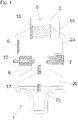
- a mold core 2 according to the invention composed of three segments 2a, 2b, 2c, wherein the segments 2a, 2b, 2c are each connected via a connecting means 17.
- Other dimensionally stable functional elements that are held on limited partial areas of the mold core 2 are a fastening element 13 in the form of a thread, a cable guide 15 and a general functional element 7, for example an RFID chip.
- the structural element 6 and the functional elements 7 , 12 , 13 , 15 are held by the mold core 2 while being surrounded by the plastic melt 8 .
- the figure 1 shows the resource tank 1 after at least partial curing of the plastic melt 8 and after removal from the tool mold 4. Subsequently, the mold core 2a, 2b and 2c, the connecting means 17 and the structural element 10 are removed from the interior of the resource tank 1.
- the mold core 2 according to the invention is already surrounded by a partially cured plastic melt 8 in the form of a thermoplastic.
- the functional elements 7, 12, 13 and 15 are held by the operating fluid tank 1 in a material-to-material and/or form-fitting manner.
- the structural element 6 has a flat area with a structural feature 10 arranged thereon, for example a smooth surface, which is transferred to the inner surface 9 of the operating medium tank 1 when it is surrounded by the plastic melt 8 .
- the limited partial areas mentioned are separated from the holding area 3, on which the mandrel 2 is held in a tool mold 4. After the plastic melt 8 has hardened, the mold core material is removed via the opening 5, which remains in the holding area 3 in the operating fluid tank 1. The connecting means 17 and the structural element 6 are also removed via the remaining opening 5 .
- an area on the outside of the operating fluid tank 1 is accessible, for example in order to connect a data or control line.
- the undercuts are possible due to the segmentation of the mold core 2 in particular.
- figure 2 shows a perspective schematic view of the mandrel 2 according to the invention, wherein the in the figure 1
- the segments 2b and 2c shown are shown in section, so that the connecting means 17, with which the segments 2a, 2b and 2c are connected to one another, can be seen.
- Segment 2c is shown in full form. Strong undercuts for the resource tank 1 are possible with such segments 2a, 2b, 2c.
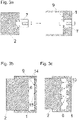
- FIG 3a The figure on the left shows schematically how a functional element 7 , for example a piezo element, is held by the mandrel 2 .
- the functional element 7 has retaining areas that protrude perpendicularly from its longitudinal extent, around which the mold core material is arranged, so that a form-fitting connection is created between the functional element 7 and the mold core 2 .
- the mandrel 2 is surrounded, for example, in a mold 4 with plastic melt 8, such as a thermoplastic. If the plastic melt 8 then hardens, after the mold core material has been removed, the dimensionally stable functional element 7 is held positively and materially by the operating fluid tank according to the invention and has access to the interior, for example to record data regarding the contents of the operating fluid tank 1 .
- the functional element 7 is held in this case by the resource tank 1 in such a way that access to the outside of the resource tank 1 also remains, for example in order to connect a data or control line.
- Figure 3b is shown schematically how a structural feature 10 in the form of a smooth surface of a flat area of a structural element 6, which is held by the mold core 2 while being surrounded with plastic melt 8 is, is transferred to the inner surface 9 of a resource tank 1 according to the invention made of a thermoplastic material.
- a negative of the surface of the structural element 6 is transferred.
- an area 18 remains in which the inner surface 9 of the operating medium tank 1 is smooth, while the inner surface 9 apart from this forms an area 14 with a rough surface.
- 3c is shown schematically how a structural element 6, which has a flat area on which structural features 10 are arranged in the form of different rib shapes, is transferred to the inner surface 9 of a resource tank 1 according to the invention.
- the structural element 6 is held by the mold core 2 while being surrounded by plastic melt 8 .
- the rib shapes make it possible for the inner surface 9 of the operating medium tank 1 to have different undercuts in this area, for example, so that a particularly high level of stability is achieved.
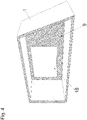
- FIG. 4 shows a schematic perspective view of the interior of an operating fluid tank 1 according to the invention, with an area 18 having a smooth surface that was transferred by transferring a structural feature 10 of a structural element 6 .
- This surface area represents a smooth negative of the surface area of the structural element 6 .
- the area 15 has a rough surface that arose when the mold core 2 was surrounded with plastic melt 8 .
- Figure 3b is shown schematically and by way of example how such a structural feature 10 is transferred in the form of a smooth surface to the inner wall of the resource tank 1 .
- FIG 5 shows in a schematic representation how a mold core 2 according to the invention is held in a tool mold 4 of a plastic injection molding machine.
- a structural element 6 is glued to the mold core 2 and is thereby held by the mold core 2 while it is surrounded with plastic melt 8 .
- a structural element 10 in the form of a smooth surface is thus transferred to the inner surface 9 of the resulting resource tank 1 according to the invention.
- the mold core 2 has two holding areas 3, via which the mold core 2 is held in the tool mold 4.
- holding means 16 for example in the form of metal pins, are arranged on or in the mold core 2.
- the holding means 16 are held in the mold 4 by means of clamps 19 . After surrounding the mold core 2 with plastic melt 8 and curing, removing the mold core material and removing the holding means 16, openings 5 remain in the operating fluid tank 1.
- FIGs 6a to 6e various steps of the method according to the invention are shown schematically, wherein in Figure 6a the mold core 2 is held in a tool mold 4 by the holding means 16. The mold 4 is then closed and liquid plastic melt 8 is injected into the mold 4, for example via a plasticizing screw 20 of a plastic injection molding machine.
- This can be a thermoplastic material, for example.
- Figure 6b 1 shows how liquid plastic melt 8 is injected into the mold 4 by the plasticizing screw 20 and how the mold core 2 is surrounded by plastic melt 8 by being arranged in the cavity 21 .
- the holding areas 3 in which the holding means 16 are arranged, no plastic melt 8 is arranged.
- openings 5 remain in the resource tank 1.
- Figure 6c shows schematically the step of demoulding, in which the blank with the resource tank 1, the holding means and the inside of the Resource tanks 1 arranged mold core 2 is removed from the mold 4.
- Figure 6d is shown schematically how the mandrel 2, for example, with water or a solution from the inside of the resource tank 1 is rinsed.
- the mold core material can flow out through the opening 5 .
- the finished component is shown schematically in the Figure 6e shown.
- functional elements 7 or transferred structural features 10 are not shown here.
Landscapes
- Engineering & Computer Science (AREA)
- Mechanical Engineering (AREA)
- Manufacturing & Machinery (AREA)
- Chemical & Material Sciences (AREA)
- Materials Engineering (AREA)
- Sustainable Development (AREA)
- Combustion & Propulsion (AREA)
- Transportation (AREA)
- Composite Materials (AREA)
- Sustainable Energy (AREA)
- Life Sciences & Earth Sciences (AREA)
- Moulds For Moulding Plastics Or The Like (AREA)
- Injection Moulding Of Plastics Or The Like (AREA)
Description
- Die Erfindung betrifft ein Verfahren zur Herstellung eines Betriebsmitteltanks aus Kunststoff für ein Kraftfahrzeug umfassend das Bereitstellen eines aus einem, vorzugsweise riesel- oder fließfähigen, Formkern-Material hergestellten Formkerns, wobei der Formkern zumindest einen Haltebereich aufweist, über den der Formkern in einer Werkzeugform oder in einer Kunststoffformgebungsmaschine gehalten wird, das Umgeben des Formkerns mit einem Kunststoff, wobei an dem zumindest einen Haltebereich, über den der Formkern in einer Werkzeugform oder einer Kunststoffformgebungsmaschine gehalten wird, zumindest eine Öffnung im Betriebsmitteltank verbleibt, sowie das Entfernen des Formkern-Materials aus dem Betriebsmitteltank über die verbleibende Öffnung.
- Darüber hinaus betrifft die Erfindung einen Formkern zur Herstellung eines Betriebsmitteltanks aus Kunststoff für ein Kraftfahrzeug und einen Betriebsmitteltank für ein Kraftfahrzeug.
- Im Stand der Technik ist es bekannt, Formkerne zur Herstellung von Hohlkörpern aus Kunststoff zu verwenden. Dabei wird zumeist ein riesel- oder fließfähiges Formkern-Material, vorzugsweise ein Granulat, zur Herstellung eines Formkerns verwendet, wobei das Formkern-Material dabei üblicherweise in eine gewisse Form gepresst wird. Anschließend wird der Formkern im Hohlraum einer Werkzeugform oder einer Kunststoffformgebungsmaschine gehalten und mit flüssiger Kunststoff-schmelze umgeben. Nach Druckbeaufschlagung und Aushärten wird der Formkern samt dem Kunststoffmantel entnommen und gegebenenfalls unter Beihilfe eines Lösungsmittels ausgespült, sodass letztlich ein Hohlkörper aus Kunststoff hergestellt ist, dessen Form der Oberfläche des Formkerns entspricht. Ein solcher Formkern ist auch als verlorener Formkern bekannt. Ein derartiger Formkern und ein Verfahren zur Herstellung eines faserverstärkten Strukturhohlbauteils mit einem Formkern ist in der
DE 10 2013 106 876 A1 gezeigt. - Die
WO 2017/148997 betrifft ebenfalls einen Formkern zur Herstellung eines faserverstärkten Hohlbauteils, wobei der Formkern einen Stützkern mit einer zumindest bereichsweise angeordneten Beschichtung aufweist, die ein Expansionsmaterial umfasst. Dabei wird auf den Formkern eine Matrix mit Verstärkungsfasern angeordnet. Anschließend wird der Formkern in ein Formkernwerkzeug verbracht. Die Matrix wird mittels einer Temperatur- und/oder Druckerhöhung ausgehärtet, wobei das Expansionsmaterial bei der Temperaturerhöhung expandiert und dadurch Verstärkungsfasern an die Innenseite des Formwerkzeugs presst. - Auch die
WO 2017/148998 zeigt ein faserverstärktes Strukturhohlbauteil, wobei im Formkern ein Kanal angeordnet wird, in den Verstärkungsfasern und/oder Matrixmaterial eingebracht werden. Nach dem Aushärten des Matrixmaterials und dem Ausspülen des Formkerns verbleibt das in den Kanal eingebrachte Material als Verstärkungselement, insbesondere als Verstärkungsstrebe im Strukturhohlbauteil. Das Verstärkungselement wird gleichzeitig mit der Oberfläche des Hohlbauteils hergestellt und form- sowie stoffschlüssig mit der Wandung des Strukturhohlbauteils verbunden. - Die
WO 2018/108674 betrifft einen verlorenen Formkern zur Herstellung eines faserverstärkten Bauteils, wobei der Formkern segmentiert ausgebildet ist. Zwischen den Segmenten ist ein elastisches und/oder flexibles Ausgleichselement angeordnet, wodurch ein translatorischer und/oder rotatorischer Versatz zwischen den beiden Segmenten bei der Herstellung des Bauteils ausgleichbar ist. Für die Herstellung können die Verstärkungsfasern mit der Matrix um den verlorenen Formkern angeordnet werden, bevor der Formkern in einem Formwerkzeug ausgehärtet wird. Zudem kann auf einer Außenfläche des Bauteils ein Verstärkungselement aufgepresst werden. Das Verstärkungselement kann gemeinsam mit der Matrix aushärten, sodass sich eine stoffschlüssige Verbindung zwischen dem Verstärkungselement und der Matrix ergibt. Am Verstärkungselement können auch Befestigungsmittel angeordnet sein, beispielsweise ein Gewindeeinsatz, eine Hülse, ein Haken und/oder eine Bohrung. Dadurch kann das Befestigungsmittel mit dem Verstärkungselement in einfacher Weise an der Außenseite am herzustellenden Bauteil angeordnet werden. - Die
JP 2003-291208 JP-H10119055 - Die
DE 195 30 254 A1 beschreibt ein Verfahren zur Herstellung von Hohlräumen in Metall- und Kunststoffgussteilen. Der Hohlraum wird durch einen schmelzbaren, hohlen Formkern gebildet, wobei dieser Formkern durch in den Kernhohlraum eingegossenes flüssiges Material vollständig aufgeschmolzen wird und im verflüssigten Zustand noch vor Öffnung der Form aus dem inzwischen teilweise oder vollständig erstarrten Gussteil entfernt wird. - Die
EP 2 733 321 A1 offenbart einen Tank für Harnstoff für Automobile. Eine obere und eine untere Tankhälfte werden aus Kunststoff spritzgegossen und in einem weiteren Schritt zusammengeschweißt. In noch einem weiteren Schritt werden zusätzliche Komponenten befestigt. - Nachteilig am Stand der Technik ist die fehlende Möglichkeit, dass Innere eines mit einem Formkern hergestellten Hohlbauteils zu bearbeiten oder Einlegeteile an vorbestimmten Orten im Inneren des Hohlbauteils anzuordnen und verliersicher dort zu befestigen. Dies betrifft insbesondere Betriebsmitteltanks für Kraftfahrzeuge. Die Aufgabe der Erfindung ist es daher, ein Verfahren zur Verfügung zu stellen, mit dem ein Betriebsmitteltank aus Kunststoff mittels eines Formkerns hergestellt wird, wobei die innere Oberfläche des Betriebsmitteltanks speziell bearbeitet werden soll und/oder ein Einlegeteil an einem vorbestimmten Ort im Inneren im Inneren des Betriebsmitteltanks angeordnet und dort befestigt werden soll.
- Diese Aufgabe wird durch ein Verfahren mit den Merkmalen des Anspruchs 1 gelöst. Weitere vorteilhafte Ausführungen der Erfindung sind in den abhängigen Ansprüchen definiert.
- Um einen erfindungsgemäßen Betriebsmitteltank aus Kunststoff für ein Kraftfahrzeug herzustellen, wird zunächst ein, vorzugsweise aus einem rieseloder fließfähigen Formkern-Material hergestellter, Formkern bereitgestellt. Beispielsweise kann das Formkern-Material ein Bindemittel und/oder ein Granulat umfassen, wobei das Granulat insbesondere einen mineralischen Grundstoff umfassen kann, wie z.B. ein Glas, ein keramisches Material und/oder Sand.
- Der Formkern weist zumindest einen Haltebereich auf, über den der Formkern in einer Werkzeugform oder in einer Kunststoffformgebungsmaschine, beispielsweise einer Spritzgussmaschine, gehalten wird. Derartige Werkzeugformen und Kunststoffformgebungsmaschinen sind prinzipiell im Stand der Technik bekannt. Dabei kann der Haltebereich aus dem gleichen Material wie der restliche Formkern bestehen. Es kann aber auch vorgesehen sein, dass der Haltebereich beispielsweise als metallisches oder keramisches Halteelement ausgebildet ist. Das Halteelement kann mit Befestigungsmitteln, beispielsweise einem Gewinde, versehen sein, mit welchen der Formkern in einer Kunststoffformgebungsmaschine oder einer Werkzeugform gehalten werden kann.
- Je nach Art der Kunststoffformgebungsmaschine oder jener Maschine, von der Kunststoffschmelze in die Werkzeugform eingebracht wird, wird der Formkern mit flüssiger oder pastöser Kunststoffschmelze umgeben. Beispielsweise wird Kunststoffschmelze in eine Werkzeugform oder eine Kunststoffformgebungsmaschine eingebracht, wodurch der Formkern mit Kunststoffschmelze umspritzt und/oder hinterspritzt wird. Dabei können an sich im Stand der Technik bekannte Spritzgussmaschinen verwendet werden, wodurch ein kostengünstiges Herstellungsverfahren realisierbar ist. Am Haltebereich, über den der Formkern in der Werkzeugform oder der Kunststoffformgebungsmaschine gehalten wird, verbleibt eine Öffnung im herzustellenden Betriebsmitteltank, da in diesem Bereich ein Umgeben mit Kunststoffschmelze nicht möglich ist.
- Für die erfindungsgemäßen Verfahren kommen verschiedenste Kunststoffmaterialien in Frage, etwa thermoplastische Kunststoffe wie zum Beispiel Polypropylen (PP), Polyamide (wie etwa Polyamid 6), Polyethylene (wie zum Beispiel quervernetztes (crosslinked) Polyethylen (XPE) oder hoch-dichtes Polyethylen (HDPE)), Co-Polymere (wie zum Beispiel Ethylen-Vinylalkohol-CoPolymer (EVOH)). Möglich sind auch Mischungen aus Polypropylen und Polyethylen.
- Möglich ist auch die Verwendung faserverstärkter Kunststoffe, wobei hier alle möglichen Varianten in Frage kommen, wie z. B. Kohlenstofffaser-verstärkte Kunststoffe (CFK) oder Glasfaser-verstärkte Kunststoffe (GFK). In diesem Fall ist es möglich, die Fasern vor dem Umspritzen mit der Kunststoffschmelze am Formkern anzuordnen.
- Nach zumindest teilweisem Aushärten des Kunststoffs wird das Formkernmaterial über die verbleibende Öffnung aus dem Betriebsmitteltank entfernt. Zu diesem Zweck kann es im Falle eines Formkern-Materials mit einem Bindemittel vorteilhaft sein, wenn dieses Bindemittel mittels eines Lösungsmittels löslich ist und dadurch das Formkern-Material einfach aus der Öffnung ausspülbar ist. Ein solches Lösungsmittel kann beispielsweise eine Säure, eine Base, Wasser und/oder einen Alkohol umfassen. Im Falle eines FormkernMaterials ohne Bindemittel kann das Formkern-Material auch einfach mit Wasser oder mit Druckluft aus dem Inneren des Betriebsmitteltanks entfernt werden.
- Erfindungsgemäß ist weiters vorgesehen, dass an einem beschränkten, vom Haltebereich gesonderten, Teilbereich des Formkerns ein formstabiles Funktionselement angeordnet und während des Umgebens mit flüssiger oder pastöser Kunststoffschmelze vom Formkern gehalten wird. Dabei kann das Funktionselement insbesondere form- oder kraftschlüssig vom Formkern gehalten werden. Beim Umgeben mit der Kunststoffschmelze wird eine innere Oberfläche des Betriebsmitteltanks gebildet, mit welcher das Funktionselement beim Umgeben mit der Kunststoffschmelze verbunden wird. Nach Aushärten der Kunststoffschmelze und dem Entfernen des Formkern-Materials aus dem Betriebsmitteltank, was nach zumindest teilweisem oder gänzlichen Aushärten der Kunststoffschmelze möglich ist, ist das Funktionselement mit dem Betriebsmitteltank derart stoffschlüssig und/oder formschlüssig verbunden, dass das Funktionselement Zugang zum Inneren des Betriebsmitteltanks hat.
- Dadurch ist es möglich, dass zumindest eine Seite des Funktionselements auch nach der Verbindung mit dem Betriebsmitteltank frei bleibt und sich die vom Funktionselement zu erfüllende Funktion auf das Innere des Betriebsmitteltanks beziehen kann. Beim Funktionselement kann es sich beispielsweise um ein elektronisches Funktionselement handeln, das einen Sensor und/oder eine Sende- und/oder Empfangseinheit aufweist. Ein solcher Sensor kann beispielsweise den Füllstand des Betriebsmitteltanks oder den Zustand des im Betriebsmitteltank angeordneten Betriebsmittels erfassen und über eine Sendeeinheit weiterleiten, z.B. um eine Warnung im Display des Kraftfahrzeugs anzuzeigen.
- Im Fall eines Sensors kann es sich auch um einen Piezo-Sensor handeln, der über Druckzustände im Inneren des Betriebsmitteltanks Aufschluss gibt. Das Funktionselement kann beispielsweise auch eine Steuer- und/oder Regeleinheit aufweisen, wobei je nach Zustand des Betriebsmittels Steuer- oder Regelungssignale an das Kraftfahrzeug weitergeleitet werden oder solche Signale in Abhängigkeit des Betriebszustands des Fahrzeugs erhalten werden. Das Funktionselement kann beispielsweise auch einen integrierten Temperaturfühler enthalten, der ebenfalls Aufschluss über den Zustand des Betriebsmittels gibt. Das Funktionselement kann zusätzlich oder alternativ auch weitere Sensoren, zum Beispiel für den Füllstand des Betriebsmitteltanks, für den Druck im Betriebsmitteltank, für die Messung des Durchflusses im Betriebsmitteltank und/oder für die Messung des Abstands zu anderen im Betriebsmitteltank angeordneten Gegenständen aufweisen. Es kann sich auch um einen Chip handeln, der die Identifikation von Originalbauteilen ermöglicht. Durch die Anordnung im Inneren des Betriebsmitteltanks ist ein Austauschen des Chips und somit ein Missbrauch praktisch unmöglich. Zudem könnte über eine Sende- und Empfangseinheit ein Auffinden gestohlener Kraftfahrzeuge möglich sein.
- Das Funktionselement kann auch ein Dichtungselement und/oder ein Befestigungselement enthalten. Insbesondere bei einem Kraftstofftank werden im Inneren des Tanks verschiedene Zu- und Ableitungen, beispielsweise für flüssigen Kraftstoff zum Motor oder für verdunsteten Kraftstoff zu einem Aktivkohlefilter, angeordnet. Mit im Inneren des Betriebsmitteltanks bereits an vorbestimmten Stellen angeordneten Dichtungselementen können gas- oder flüssigkeitsdichte Verbindungen mit den Zu- und Ableitungen sichergestellt werden. Bei einem Befestigungselement kann es sich beispielsweise um einen Gewindeeinsatz handeln, mit dem zusätzliche Bauteile im Inneren des Betriebsmitteltanks befestigt werden können. Der Gewindeeinsatz kann aber auch in einem, an den Haltebereich anschließenden Bereich am Formkern angeordnet werden. Über einen solchen Gewindeeinsatz kann es etwa möglich sein, den Betriebsmitteltank als solchen im Kraftfahrzeug zu befestigen.
- Beim Funktionselement kann es sich auch beispielsweise um eine Kabelführung handeln, die im Inneren des Betriebsmitteltanks angeordnet und fest mit dem Betriebsmitteltank verbunden wird. Dadurch ist ein Verrutschen der Kabelführung, insbesondere wenn die Kabel eingezogen werden, unmöglich.
- Als Funktionselement können aber auch verschiedene Einleger, beispielsweise aus Metall, Kunststoff, Keramik oder Hybridmaterial dienen, die verschiedene Funktionen im Inneren des Betriebsmitteltanks erfüllen. Derartige Einleger können beispielsweise Befestigungsmittel sein, mit denen andere nachträglich im Betriebsmitteltank angeordnete Gegenstände befestigt werden können, wie zum Beispiel die Zuleitung zum Vergaser oder auch etwaige Anschlusselemente. Ebenfalls können Einleger als Führungs- und Halteelemente, zum Beispiel für die Kabelführung, dienen. Das Funktionselement kann aber auch als ein Schalter ausgebildet sein, der mit dem erfindungsgemäßen Verfahren im Inneren des Betriebsmitteltanks angeordnet werden kann.
- Das formstabile Funktionselement erfüllt den Zweck, dass es während dem Umgeben mit der Kunststoffschmelze nicht deformiert wird und dadurch nicht in seiner Funktion eingeschränkt wird. Durch die Anordnung und das Halten am Formkern während des Umgebens mit der Kunststoffschmelze wird sichergestellt, dass das Funktionselement an dem vorbestimmten Bereich im Inneren des Betriebsmitteltanks platziert wird.
- In einem Ausführungsbeispiel ist vorgesehen, dass an einem beschränkten, vom Haltebereich gesonderten Teilbereich des Formkerns ein Strukturelement angeordnet wird, welches während des Umgebens mit flüssiger oder pastöser Kunststoffschmelze vom Formkern gehalten wird. Beim Umgeben mit der Kunststoffschmelze wird eine innere Oberfläche des Betriebsmitteltanks gebildet, auf welche ein auf dem Strukturelement angeordnetes Strukturmerkmal beim Umgeben mit der Kunststoffschmelze während des Aushärtens der Kunststoffschmelze übertragen wird. Das Strukturelement befindet sich dabei zwischen dem Kern und dem Betriebsmitteltank und beeinflusst die Endform des Betriebsmitteltanks auf dessen Innenseite.
- Bei diesem Strukturmerkmal kann es sich beispielsweise um eine geometrische Struktur auf dem Strukturelement handeln, wobei auf der Innenwandung des Betriebsmitteltanks eine Negativform dieser geometrischen Struktur erzeugt wird. Mit dieser Methode können beispielsweise Kanäle auf Bereichen der Innenseite des Betriebsmitteltanks erzeugt werden, wodurch ein besonderes Fließverhalten des Betriebsmittels erwirkt werden kann. In einer Ausführungsform ist das Strukturmerkmal durch eine glatte Oberfläche des Strukturelements gebildet. Bei einer Übertragung dieses Strukturmerkmals auf die innere Oberfläche des Betriebsmitteltanks weist der beim Umgeben mit der Kunststoffschmelze dem Strukturelement gegenüberliegende Bereich eine sehr glatte Innenwandung auf. Eine solche glatte Oberfläche kann in einem Betriebsmitteltank beispielsweise notwendig sein, um als Anlagefläche für einen nachträglich im Betriebsmitteltank angeordneten Flansch zu dienen oder um ein Abperlen von Kraftstoff oder von Ölen, die im Betriebsmitteltank gelagert werden, zu erleichtern. Ein Teilbereich der Innenwandung des Betriebsmitteltanks mit sehr glatter Oberfläche kann auch als Verschleißschutz oder als Lagerfläche für im Inneren des Betriebsmitteltanks angeordnete Bauteile dienen.
- Das Strukturelement kann vorzugsweise aus einem metallischen und/oder keramischen Material bestehen. Für das Strukturelement kommen beispielsweise Einlegeelemente in Frage. Diese Einlegeelemente können die Oberflächenrauigkeit auf der Innenseite des Betriebsmitteltanks beeinflussen und beispielsweise eine besonders glatte innere Oberfläche erzeugen. Je nach Ausbildung des Strukturelements können auf der Innenseite des Betriebsmitteltanks auch Rippen, Schwallwände,Füllkanäle, Dichtflächen oder Gewinde ausgebildet werden. Mit Rippen auf der Innenseite können spezielle Teile des Betriebsmitteltanks verstärkt und stabiler ausgeführt werden. Mit Schwallwänden können größere Verlagerungen des Betriebsmittels während der Bewegung des Fahrzeugs verhindert werden. Dies ist insbesondere für Kraftstofftanks und Motorräder, bei denen hohe Schräglagen auftreten können, relevant. Besonders vorteilhaft ist dabei, dass die Rippen und die Schwallwände integraler Bestandteil des Betriebsmitteltanks sind und gleichzeitig mit dessen Herstellung erstellt werden und aus dem gleichen Material bestehen. Damit können Spannungen im Betriebsmitteltank vermieden oder verringert werden.
- In einer Ausführungsform weist das Strukturelement einen flächigen Bereich auf, auf welchem das oder die Strukturmerkmal(e) angeordnet ist oder sind. Dadurch können flächige Bereich der Innenseite des Betriebsmitteltanks beispielsweise mit einer geometrischen Struktur versehen werden oder besonders glatt ausgebildet werden.
- Nach dem Umgeben mit der Kunststoffschmelze und zumindest teilweisem oder gänzlichem Aushärten der Schmelze wird das Strukturelement gegebenenfalls nach Zerkleinerung des Strukturelements durch die verbleibende Öffnung aus dem Betriebsmitteltank entfernt, vorzugsweise zeitgleich oder nach dem Entfernen des Formkern-Materials. Dies ist möglich, sobald der Betriebsmitteltank zumindest eine gewisse Härte aufweist.
- Der erfindungsgemäße Betriebsmitteltank kann ein Kraftstofftank, ein Öltank oder aber auch ein Tank für andere Betriebsmittel wie z.B. Bremsflüssigkeit sein. Nachdem auch Spritzgussmaschinen für das Anordnen von Kunststoffschmelze gemäß dem erfindungsgemäßen Verfahren vorgesehen sind, können gemäß der Erfindung Betriebsmitteltanks spritzgegossen werden. Dabei ist es möglich, im Inneren des spritzgegossenen Betriebsmitteltanks ein Einlegeteil in Form eines formstabilen Funktionselement an einem vorbestimmten Ort zu befestigen oder eine gewünschte Beschaffenheit der inneren Oberfläche an einem vorbestimmten Ort zu erzeugen.
- Ein Betriebsmitteltank, der nach einem der erfindungsgemäßen Verfahren hergestellt wird, hat den Vorteil, dass Funktionselemente im Inneren des Betriebsmitteltanks ortsfest platziert werden können, ohne dass der Betriebsmitteltank nach der Platzierung des Funktionselements im Nachhinein geschlossen werden muss. Es sind somit keine Schweißnähte notwendig. Zudem kann ein solcher Betriebsmitteltank mit einer konstanten und vordefinierten Wandstärke hergestellt werden. Dies ist ein wichtiger Sicherheitsaspekt. Damit ist es nämlich möglich, dass der Betriebsmitteltank eine möglichst geringe, aber aus sicherheitstechnischer Sicht doch ausreichende Wandstärke aufweist. Dadurch sind leichte Betriebsmitteltanks möglich, ohne dass Einbußen in Bezug auf die Sicherheit hingenommen werden müssen.
- Der Formkern kann in einer Ausführungsform über zwei oder mehr Haltebereiche verfügen, über die der Formkern in einer Werkzeugform oder einer Kunststoffformgebungsmaschine, beispielsweise einer Spritzgussmaschine, gehalten wird. Dadurch kann der Formkern stabiler in der Werkzeugform oder der Kunststoffformgebungsmaschine gehalten werden. Zudem ist das Entfernen des Formkern-Materials leichter möglich. Gleichzeitig kann über die Öffnung(en) im Betriebsmitteltank, die in einem oder in mehreren der Haltebereiche verbleiben, Betriebsmittel zu- oder abgeführt werden.
- In einer Ausführungsform der Erfindung wird das Funktionselement und/oder das Strukturelement während des Umgebens mit Kunststoffschmelze vom Formkern formschlüssig gehalten. Zu diesem Zweck kann es beispielsweise vorgesehen sein, dass bestimmte Bereiche des Strukturelements und/oder des Funktionselements als Haltebereiche dienen und das Formkern-Material während der Herstellung des Formkerns um diese Haltebereiche anzuordnen.
- Zusätzlich oder alternativ kann es vorgesehen sein, das Funktionselement und/oder das Strukturelement während des Umgebens mit Kunststoffschmelze vom Formkern kraftschlüssig zu halten. Zu diesem Zweck kann es beispielsweise vorgesehen sein, dass auf dem Strukturelement und/oder dem Funktionselement ein Außengewinde angeordnet ist und der Formkern über eine Ausnehmung mit einem dazu passenden Innengewinde verfügt. Das Funktionselement und/oder das Strukturelement wird dann in diese Ausnehmung angeordnet und mittels der Gewinde gehalten. Dadurch ist ein besonders starker Halt ermöglicht.
- Zusätzlich oder alternativ kann es vorgesehen sein, das Funktionselement und/oder das Strukturelement während des Umgebens mit Kunststoffschmelze stoffschlüssig vom Formkern zu halten. Zu diesem Zweck kann es vorgesehen sein, das Strukturelement und/oder dem Funktionselement mittels eines Klebstoffs auf den Formkern zu kleben.
- Eine form-, kraft- und/oder stoffschlüssige Verbindung ermöglicht eine besonders stabile Verbindung des Formkerns mit dem Funktionselement und/oder dem Strukturelement, sodass die Gefahr des Verrutschens des Funktionselements und/oder des Strukturelements während des Umgebens mit der Kunststoffschmelze verringert wird.
- Es kann vorgesehen sein, dass an dem wenigstens einen Haltebereich ein vorzugsweise metallisches Haltemittel angeordnet ist, mit dem der Formkern in einer Werkzeugform oder einer Kunststoffformgebungsmaschine gehalten wird. Dieses Haltemittel kann beispielsweise ein Außengewinde oder andere Befestigungsmittel aufweisen.
- Der Formkern kann in einer Ausführungsform aus mindestens zwei Segmenten zusammengesetzt sein, wobei jeweils zwei Segmente über ein Verbindungsmittel miteinander verbunden sind. Beim Verbindungsmittel kann es sich beispielsweise um ein elastisches Ausgleichsmittel handeln, um translatorischen oder rotatorischen Versatz zu kompensieren. Das Verbindungsmittel wird nach dem Umgeben mit der Kunststoffschmelze durch die verbleibende Öffnung aus dem Betriebsmitteltank entfernt. Durch einen segmentierten Formkern können auch Geometrien mit Hinterschneidungen einfach realisiert werden.
- Der Formkern kann ein Granulat umfassen, wobei das Granulat aus Sand und/Schaumstoff-Kügelchen bestehen kann. Schaumstoff-Kügelchen bieten den Vorteil eines geringen Gewichts, wodurch die Handhabung des Formkerns erleichtert wird. Für den Formkern kommt insbesondere Sand mit einer Korngröße zwischen 170 und 220 µm in Frage. Als Schaumstoff-Kügelchen kommt beispielsweise ein Standard-Polystyrol-Granulat in Frage mit einer Korngröße zwischen 1 und 5 mm.
- Der Formkern kann in einer Ausführungsform einen Mantel aus einem auflösbaren oder zerkleinerbaren Material aufweisen. Derartige Mäntel für Formkerne sind an sich im Stand der Technik bekannt. Mit einer Mantelfläche kann es möglich sein, auf Bindemittel für den innerhalb des Mantels angeordneten Formkern zu verzichten.
- Der Formkern kann mit einem an sich im Stand der Technik bekannten 3D-Druckverfahren hergestellt werden. Dies bringt insbesondere für die Anordnung des Funktionselements und/oder des Strukturelements Vorteile.
- Die Erfindung betrifft weiters einen Formkern zur Herstellung eines Betriebsmitteltanks aus Kunststoff für ein Kraftfahrzeug gemäß einem der oben beschriebenen Verfahren. Dabei kann der Formkern einen speziell ausgebildeten Bereich aufweisen, in dem das Strukturelement oder das formstabile Funktionselement während des Umgebens mit der Kunststoffschmelze gehalten wird.
- Die Erfindung betrifft weiters einen Betriebsmitteltank für ein Kraftfahrzeug, wobei der Betriebsmitteltank über ein Kunststoff-Spritzgussverfahren nach einem wie oben beschriebenen Verfahren hergestellt wird.
- Weitere Vorteile und Einzelheiten der Erfindung werden für verschiedene Ausführungsbeispiele anhand der folgenden Figuren diskutiert. Dabei zeigt:
- Fig. 1
- eine schematische Querschnittsdarstellung eines Betriebsmitteltanks mit darin angeordnetem Formkern,
- Fig. 2
- eine teilweise geschnittene, schematische perspektivische Ansicht eines aus Segmenten zusammengesetzten Formkerns,
- Fig. 3a bis 3c
- schematische Darstellungen zur Anordnung eines Funktionselements im Inneren eines Betriebsmitteltanks sowie zur Übertragung von Strukturelementen auf die innere Oberfläche eines Betriebsmitteltanks,
- Fig. 4
- eine schematische Darstellung eines Innenbereichs eines Betriebsmitteltanks mit übertragenem Strukturmerkmal,
- Fig. 5
- eine schematische Darstellung zur Anordnung eines Formkerns in einer Werkzeugform und
- Fig. 6a bis 6e
- schematische Darstellungen zum erfindungsgemäßen Verfahrensablauf.
- In einer schematischen Querschnittsdarstellung zeigt
Fig. 1 einen aus drei Segmenten 2a, 2b, 2c zusammengesetzten erfindungsgemäßen Formkern 2, wobei die Segmente 2a, 2b, 2c jeweils über ein Verbindungsmittel 17 verbunden sind. An beschränkten Teilbereichen des Formkerns 2 sind ein Strukturelement 6 und ein formstabiles Funktionselement in Form eines Sensors 12 vom Formkern 2 gehalten. Weitere formstabile Funktionselemente, die an beschränkten Teilbereichen des Formkerns 2 gehalten werden, sind ein Befestigungselement 13 in Form eines Gewindes, eine Kabelführung 15 sowie ein allgemeines Funktionselement 7, beispielsweise ein RFID-Chip. Das Strukturelement 6 und die Funktionselemente 7, 12, 13, 15 werden während des Umgebens mit der Kunststoffschmelze 8 vom Formkern 2 gehalten. DieFigur 1 zeigt den Betriebsmitteltank 1 nach zumindest teilweisem Aushärten der Kunststoffschmelze 8 und nach dem Entfernen aus der Werkzeugform 4. In weiterer Folge werden der Formkern 2a, 2b und 2c, die Verbindungsmittel 17 und das Strukturelement 10 aus dem Inneren des Betriebsmitteltanks 1 entfernt. - In der in
Fig. 1 dargestellten Situation ist der erfindungsgemäße Formkern 2 bereits mit einer teilweise ausgehärteten Kunststoffschmelze 8 in Form eines Thermoplasts umgeben. Die Funktionselemente 7, 12, 13 und 15 werden nach Aushärten der Schmelze 8 dabei stoffschlüssig und/oder formschlüssig vom Betriebsmitteltank 1 gehalten. Das Strukturelement 6 weist einen flächigen Bereich mit einem darauf angeordneten Strukturmerkmal 10 auf, beispielsweise eine glatte Oberfläche, welches beim Umgeben mit der Kunststoffschmelze 8 auf die innere Oberfläche 9 des Betriebsmitteltanks 1 übertragen wird. - Die erwähnten beschränkten Teilbereiche sind vom Haltebereich 3, an dem der Formkern 2 in einer Werkzeugform 4 gehalten wird, gesondert. Nach dem Aushärten der Kunststoffschmelze 8 wird das Formkernmaterial über die Öffnung 5, die beim Haltebereich 3 im Betriebsmitteltank 1 verbleibt, entfernt. Auch die Verbindungsmittel 17 und das Strukturelement 6 werden über die verbleibende Öffnung 5 entfernt.
- Insbesondere beim Funktionselement 7 und beim Sensor 12 ist erkennbar, dass diese Elemente in einem hinterschnittenen Bereich des Betriebsmitteltanks 1 angeordnet sind und daher abgesehen von Zugängen zum Inneren und zum Äußeren des Betriebsmitteltanks 1 mit Kunststoffschmelze 8 umgeben sind.
- Dabei ist beim Sensor 12 ein Bereich auf der Außenseite des Betriebsmitteltanks 1 zugänglich, beispielsweise um eine Daten- oder Steuerleitung anzuschließen. Die Hinterschneidungen sind insbesondere aufgrund der Segmentierung des Formkerns 2 möglich.
-
Figur 2 zeigt in einer perspektivischen schematischen Ansicht den erfindungsgemäßen Formkern 2, wobei die in derFigur 1 gezeigten Segmente 2b und 2c geschnitten dargestellt sind, damit die Verbindungsmittel 17, mit denen die Segmente 2a, 2b und 2c miteinander verbunden sind, erkennbar sind. Das Segment 2c ist in vollständiger Form dargestellt. Mit derartigen Segmenten 2a, 2b, 2c sind starke Hinterschneidungen für den Betriebsmitteltank 1 möglich. - In
Fig. 3a ist auf der linken Abbildung schematisch dargestellt, wie ein Funktionselement 7, beispielsweise ein Piezo-Elements, vom Formkern 2 gehalten wird. Das Funktionslement 7 weist senkrecht von seiner Längserstreckung abstehende Haltebereiche auf, um die das Formkern-Material angeordnet wird, sodass eine formschlüssige Verbindung zwischen Funktionselement 7 und Formkern 2 entsteht. Der Formkern 2 wird beispielsweise in einer Werkzeugform 4 mit Kunststoffschmelze 8, etwa einem Thermoplast, umgeben. Härtet die Kunststoffschmelze 8 dann aus, wird nach Entfernen des Formkernmaterials das formstabile Funktionselement 7 vom erfindungsgemäßen Betriebsmitteltank form- und stoffschlüssig gehalten und hat Zugang zum Inneren, um beispielsweise Daten hinsichtlich des Inhalts des Betriebsmitteltanks 1 zu erfassen. Gleichzeitig wird das Funktionselement 7 in diesem Fall derart vom Betriebsmitteltank 1 gehalten, sodass auch ein Zugang zum Äußeren des Betriebsmitteltanks 1 verbleibt, beispielsweise um eine Datenoder Steuerleitung anzuschließen. - In
Fig. 3b ist schematisch gezeigt, wie ein Strukturmerkmal 10 in Form einer glatten Oberfläche eines flächigen Bereich eines Strukturelements 6, welches vom Formkern 2 während des Umgebens mit Kunststoffschmelze 8 gehalten wird, auf die innere Oberfläche 9 eines erfindungsgemäßen Betriebsmitteltanks 1 aus einem thermoplastischen Kunststoff übertragen wird. Dabei wird ein Negativ der Oberfläche des Strukturelements 6 übertragen. Nach dem Entfernen des Formkern-Materials verbleibt ein Bereich 18, in dem die innere Oberfläche 9 des Betriebsmitteltanks 1 glatt ist, während die davon abgesehene innere Oberfläche 9 einen Bereich 14 mit rauer Oberfläche ausbildet. - In
Fig. 3c ist schematisch dargestellt, wie ein Strukturelement 6, welches einen flächigen Bereich aufweist, auf dem Strukturmerkmale 10 in Form unterschiedlicher Rippenformen angeordnet sind, auf die innere Oberfläche 9 eines erfindungsgemäßen Betriebsmitteltanks 1 überträgt. Das Strukturelement 6 wird vom Formkern 2 während des Umgebens mit Kunststoffschmelze 8 gehalten. Dadurch entsteht eine Negativ-Form der Rippenformen auf der inneren Oberfläche 9 des Betriebsmitteltanks 1 im Bereich, in dem das Strukturelement 6 vom Formkern 2 während des Umgebens mit der Kunststoffschmelze 8 gehalten wurde. Die Rippenformen ermöglichen es, dass die innere Oberfläche 9 des Betriebsmitteltanks 1 in diesem Bereich beispielsweise unterschiedliche Hinterschneidungen aufweisen kann, wodurch eine besonders hohe Stabilität erreicht wird. -
Fig. 4 zeigt in einer schematischen perspektivischen Ansicht den Innenbereich eines erfindungsgemäßen Betriebsmitteltanks 1, wobei ein Bereich 18 eine glatte Oberfläche aufweist, die durch Übertragung eines Strukturmerkmals 10 eines Strukturelements 6 übertragen wurde. Dieser Oberflächenbereich stellt ein glattes Negativ des Oberflächenbereichs des Strukturelements 6 dar. Der Bereich 15 weist demgegenüber eine raue Oberfläche auf, die beim Umgeben des Formkerns 2 mit Kunststoffschmelze 8 entstanden ist. In derFigur 3b ist beispielhaft und schematisch dargestellt, wie ein solches Strukturmerkmal 10 in Form einer glatten Oberfläche auf die Innenwandung des Betriebsmitteltanks 1 übertragen wird. -
Fig. 5 zeigt in einer schematischen Darstellung, wie ein erfindungsgemäßer Formkern 2 in einer Werkzeugform 4 einer Kunststoffspritzgussmaschine gehalten wird. Ein Strukturelement 6 ist an den Formkern 2 angeklebt und wird dadurch während des Umgebens mit Kunststoffschmelze 8 vom Formkern 2 gehalten. Ein Strukturelement 10 in Form einer glatten Oberfläche wird dadurch auf die innere Oberfläche 9 des entstehenden erfindungsgemäßen Betriebsmitteltanks 1 übertragen. Der Formkern 2 weist zwei Haltebereiche 3 auf, über die der Formkern 2 in der Werkzeugform 4 gehalten wird. Zu diesem Zweck sind Haltemittel 16, beispielsweise in Form von Metallzapfen, am oder im Formkern 2 angeordnet. Die Haltemittel 16 werden über Klammern 19 in der Werkzeugform 4 gehalten. Nach Umgeben des Formkerns 2 mit Kunststoffschmelze 8 und Aushärten,Entfernen des Formkernmaterials sowie Entfernen der Haltemittel 16, verbleiben Öffnungen 5 im Betriebsmitteltank 1. - In den
Fig. 6a bis 6e sind schematisch verschiedene Schritte des erfindungsgemäßen Verfahrens dargestellt, wobei inFig. 6a der Formkern 2 in einer Werkzeugform 4 über die Haltemittel 16 gehalten wird. Anschließend wird die Form 4 geschlossen und flüssige Kunststoffschmelze 8, beispielsweise über eine Plastifizierschnecke 20 einer Kunststoffspritzgussmaschine, in die Form 4 eingespritzt. Dabei kann es sich beispielsweise um ein thermoplastisches Material handeln. - In
Fig. 6b ist gezeigt, wie flüssige Kunststoffschmelze 8 von der Plastifizierschnecke 20 in die Form 4 eingespritzt wird und durch Anordnen im Hohlraum 21 der Formkern 2 mit Kunststoffschmelze 8 umgeben wird. In den Haltebereichen 3, in denen die Haltemittel 16 angeordnet sind, wird keine Kunststoffschmelze 8 angeordnet. Hier verbleiben somit Öffnungen 5 im Betriebsmitteltank 1. -
Fig. 6c zeigt schematisch den Schritt des Entformens, bei dem der Rohling mit dem Betriebsmitteltank 1, den Haltemitteln und dem innerhalb des Betriebsmitteltanks 1 angeordneten Formkern 2 aus der Form 4 entnommen wird. - In
Fig. 6d ist schematisch dargestellt, wie der Formkern 2, beispielsweise mit Wasser oder einer Lösung aus dem Inneren des Betriebsmitteltanks 1 ausgespült wird. Das Formkernmaterial kann dabei über die Öffnung 5 ausfließen. - Das fertige Bauteil ist schematisch in der
Figur 6e gezeigt. Der besseren Übersichtlichkeit halber sind hier Funktionselemente 7 oder übertragene Strukturmerkmale 10 nicht dargestellt. -
- 1
- Betriebsmitteltank
- 2
- Formkern mit Segmenten 2a, 2b, 2c
- 3
- Haltebereich
- 4
- Werkzeugform
- 5
- Öffnung Betriebsmitteltank
- 6
- Strukturelement
- 7
- Funktionselement
- 8
- Kunststoffschmelze
- 9
- innere Oberfläche des Betriebsmitteltanks
- 10
- Strukturmerkmal
- 11
- Betriebsmitteltankinneres
- 12
- Sensor
- 13
- Befestigungselement
- 14
- Bereich mit rauer Oberfläche
- 15
- Kabelführung
- 16
- Haltemittel
- 17
- Verbindungsmittel
- 18
- Bereich mit glatter Oberfläche
- 19
- Klammer
- 20
- Plastifizierschnecke
- 21
- Hohlraum
Claims (15)
- Verfahren zur Herstellung eines Betriebsmitteltanks (1) aus Kunststoff für ein Kraftfahrzeug umfassend folgende Schritte:- Bereitstellen eines aus einem, vorzugsweise riesel- oder fließfähigen, Formkern-Material hergestellten Formkerns (2), wobei der Formkern (2) zumindest einen Haltebereich (3) aufweist, über den der Formkern (2) in einer Werkzeugform (4) oder einer Kunststoffformgebungsmaschine gehalten wird,- Umgeben des Formkerns (2) mit einer Kunststoffschmelze (8), wobei an dem zumindest einen Haltebereich (3), über den der Formkern (2) in einer Werkzeugform (4) oder einer Kunststoffformgebungsmaschine gehalten wird, zumindest eine Öffnung (5) im Betriebsmitteltank (1) verbleibt,- Entfernen des Formkern-Materials aus dem Betriebsmitteltank (1) über die verbleibende Öffnung (5), dadurch gekennzeichnet, dassan einem beschränkten, von dem zumindest einen Haltebereich (3) gesonderten Teilbereich des Formkerns (2) ein formstabiles Funktionselement (7) angeordnet und während des Umgebens mit der Kunststoffschmelze (8) vom Formkern (2) gehalten wird, wobei beim Umgeben mit der Kunststoffschmelze (8) eine innere Oberfläche (9) des Betriebsmitteltanks (1) gebildet wird, mit welcher das Funktionselement (7) beim Umgeben mit der Kunststoffschmelze (8) verbunden wird und wobei das Funktionselement (7) nach Aushärten der Kunststoffschmelze (8) und dem Entfernen des Formkern-Materials vom Betriebsmitteltank (1) derart stoffschlüssig und/oder formschlüssig gehalten wird, dass das Funktionselement (7) Zugang zum Inneren des Betriebsmitteltanks (1) hat, wobei das Funktionselement (7) ein elektronisches Funktionselement enthält.
- Verfahren nach Anspruch 1, wobei das Funktionselement (7) einen Sensor (12) und/oder eine Sende-Empfangseinheit enthält.
- Verfahren nach Anspruch 1 oder 2, wobei das Funktionselement (7) ein Dichtungselement (13) und/oder ein Befestigungselement (14) enthält.
- Verfahren nach einem der Ansprüche 1 bis 3, wobei an einem beschränkten, von dem zumindest einen Haltebereich (3) gesonderten Teilbereich des Formkerns (2) ein, vorzugsweise metallisches und/oder keramisches, Strukturelement (6) angeordnet und während des Umgebens mit der Kunststoffschmelze (8) vom Formkern (2) gehalten wird, wobei beim Umgeben mit der Kunststoffschmelze (8) eine innere Oberfläche (9) des Betriebsmitteltanks (1) gebildet wird, auf weiche ein auf dem Strukturelement (6) angeordnetes Strukturmerkmal (10) beim Umgeben mit der Kunststoffschmelze (8) übertragen wird und wobei das Strukturelement (6) nach zumindest teilweisem Aushärten der Kunststoffschmelze (8) durch die verbleibende Öffnung (5) aus dem Betriebsmitteltank (1) entfernt wird.
- Verfahren nach Anspruch 4, wobei das Strukturmerkmal (10) durch eine glatte Oberfläche des Strukturelements (6) gebildet ist.
- Verfahren nach Anspruch 4 oder 5, wobei das Strukturelement (6) einen flächigen Bereich aufweist, auf welchem das Strukturmerkmal (10) angeordnet ist.
- Verfahren nach einem der Ansprüche 1 bis 6, wobei das Funktionselement (7) und/oder das Strukturelement (10) formschlüssig und/oder kraftschlüssig und/oder stoffschlüssig vom Formkern (2) während des Umgebens mit Kunststoffschmelze (8) gehalten wird.
- Verfahren nach einem der Ansprüche 1 bis 7, wobei der Formkern (2) zwei Haltebereiche (3) aufweist, über die der Formkern (2) in einer Werkzeugform (4) oder einer Kunststoffformgebungsmaschine gehalten wird.
- Verfahren nach einem der Ansprüche 1 bis 8, wobei an dem wenigstens einen Haltebereich (3) ein, vorzugsweise metallisches, Haltemittel (16) angeordnet ist, mit dem der Formkern (2) in einer Werkzeugform (4) oder einer Kunststoffformgebungsmaschine gehalten wird.
- Verfahren nach einem der Ansprüche 1 bis 9, wobei der Formkern (2) aus mindestens zwei Segmenten (2a, 2b, 2c) zusammengesetzt ist, wobei jeweils zwei Segmente (2a, 2b, 2c) über Verbindungsmittel (17) miteinander verbunden sind und wobei das oder die Verbindungsmittel (17) nach dem Umgeben mit der Kunststoffschmelze (8) durch die verbleibende Öffnung (5) aus dem Betriebsmitteltank (1) entfernt wird oder werden.
- Verfahren nach einem der Ansprüche 1 bis 10, wobei der Formkern (2) aus Sand oder Schaumstoff-Kügelchen besteht.
- Verfahren nach Anspruch 11, wobei der Formkern (2) einen Mantel aus einem auflösbaren oder zerkleinerbaren Material aufweist.
- Verfahren nach einem der Ansprüche 1 bis 12, wobei der Formkern mittels eines 3D-Druckverfahrens hergestellt wird.
- Formkern (2) zur Herstellung eines Betriebsmitteltanks (1) aus Kunststoff für ein Kraftfahrzeug gemäß einem Verfahren nach einem der Ansprüche 1 bis 13.
- Betriebsmitteltank (1) für ein Kraftfahrzeug, hergestellt gemäß einem Verfahren nach einem der Ansprüche 1 bis 13, wobei der Betriebsmitteltank (1) aus einem Kunststoff spritzgegossen ist.
Applications Claiming Priority (1)
| Application Number | Priority Date | Filing Date | Title |
|---|---|---|---|
| ATA50758/2019A AT522894B1 (de) | 2019-08-30 | 2019-08-30 | Verfahren zur Herstellung eines Betriebsmitteltanks |
Publications (2)
| Publication Number | Publication Date |
|---|---|
| EP3785874A1 EP3785874A1 (de) | 2021-03-03 |
| EP3785874B1 true EP3785874B1 (de) | 2022-11-02 |
Family
ID=72422048
Family Applications (1)
| Application Number | Title | Priority Date | Filing Date |
|---|---|---|---|
| EP20193297.7A Active EP3785874B1 (de) | 2019-08-30 | 2020-08-28 | Verfahren zur herstellung eines betriebsmitteltanks |
Country Status (5)
| Country | Link |
|---|---|
| US (1) | US20210060827A1 (de) |
| EP (1) | EP3785874B1 (de) |
| JP (1) | JP7026743B2 (de) |
| AT (1) | AT522894B1 (de) |
| ES (1) | ES2937859T3 (de) |
Family Cites Families (20)
| Publication number | Priority date | Publication date | Assignee | Title |
|---|---|---|---|---|
| JPS5995130A (ja) * | 1982-11-22 | 1984-06-01 | Hitachi Plant Eng & Constr Co Ltd | 中空ダイヤフラムの製造方法 |
| JPH085062B2 (ja) * | 1987-03-24 | 1996-01-24 | カルソニック株式会社 | 樹脂成形用中子 |
| JPH02124122U (de) * | 1989-03-24 | 1990-10-12 | ||
| DE19530254A1 (de) * | 1995-08-17 | 1997-02-20 | Gerhard Dr Ing Betz | Verfahren zur Erzeugung von Hohlräumen in Gußteilen und Form (Teil II) |
| JPH10119055A (ja) * | 1996-10-18 | 1998-05-12 | Toyota Motor Corp | 樹脂中空品の製造方法およびそれに用いる消失性中子 |
| JPH11148851A (ja) * | 1997-05-12 | 1999-06-02 | Denso Corp | 給油燃料計測装置、燃料残量計測装置、および蒸発燃料処理装置 |
| JP3862948B2 (ja) * | 2000-11-24 | 2006-12-27 | 株式会社荏原製作所 | 成形品の3次元形状成形方法及び成形装置 |
| JP2003291208A (ja) * | 2002-04-04 | 2003-10-14 | Toyota Motor Corp | 樹脂中空成形品の製造方法 |
| US20060019551A1 (en) * | 2004-07-21 | 2006-01-26 | Jamnia Mohammad A | Method of manufacturing a product having encapsulated electronic components |
| JP4715634B2 (ja) * | 2006-05-24 | 2011-07-06 | 株式会社デンソー | 電気装置およびその製造方法 |
| EP2733321B1 (de) * | 2012-08-28 | 2017-11-08 | Yapp Automotive Parts Co., Ltd. | Verfahren zur herstellung eines harnstofftanks für kraftfahrzeug |
| DE102013106876A1 (de) | 2013-07-01 | 2015-01-08 | C.F. Maier GmbH & Co. KG | Formkern und Verfahren zum Herstellen von faserverstärkten Strukturhohlbauteilen |
| EP2857245A1 (de) * | 2013-10-03 | 2015-04-08 | Inergy Automotive Systems Research (Société Anonyme) | Behälter mit innerem Verbindungsteil und Verfahren zur Montage eines solchen Behälters |
| JP2016000514A (ja) * | 2014-05-20 | 2016-01-07 | 早川ゴム株式会社 | 中空状ゴム成形体及びその製造方法 |
| DE102016103977A1 (de) | 2016-03-04 | 2017-09-07 | KTM Technologies GmbH | Formkern mit Expansionsmaterial |
| DE102016103979A1 (de) | 2016-03-04 | 2017-09-07 | KTM Technologies GmbH | Verfahren zur Herstellung eines faserverstärkten Strukturhohlbauteils sowie Strukturhohlbauteil |
| JP6750962B2 (ja) * | 2016-05-09 | 2020-09-02 | ポリプラスチックス株式会社 | インサート成形体、及び燃料ポンプ用電気接続コネクタ |
| DE102016124061A1 (de) * | 2016-12-12 | 2018-06-14 | KTM Technologies GmbH | Verlorener Formkern sowie ein Verfahren zur Herstellung eines Bauteils und das Bauteil selbst |
| CA3066724C (en) * | 2017-06-07 | 2022-02-22 | Stratosphere, S.A. | Fuel tank with integrated level sensors, in particular for aerial vehicles |
| JP6749291B2 (ja) * | 2017-07-18 | 2020-09-02 | 愛三工業株式会社 | 蒸発燃料処理装置の漏れ検出装置 |
-
2019
- 2019-08-30 AT ATA50758/2019A patent/AT522894B1/de active
-
2020
- 2020-08-27 US US17/004,757 patent/US20210060827A1/en not_active Abandoned
- 2020-08-28 EP EP20193297.7A patent/EP3785874B1/de active Active
- 2020-08-28 JP JP2020144143A patent/JP7026743B2/ja active Active
- 2020-08-28 ES ES20193297T patent/ES2937859T3/es active Active
Also Published As
| Publication number | Publication date |
|---|---|
| AT522894A1 (de) | 2021-03-15 |
| JP7026743B2 (ja) | 2022-02-28 |
| EP3785874A1 (de) | 2021-03-03 |
| AT522894B1 (de) | 2022-02-15 |
| JP2021037755A (ja) | 2021-03-11 |
| US20210060827A1 (en) | 2021-03-04 |
| BR102020017621A2 (pt) | 2021-04-20 |
| ES2937859T3 (es) | 2023-03-31 |
Similar Documents
| Publication | Publication Date | Title |
|---|---|---|
| EP1197309B1 (de) | Verfahren zur Herstellung von Bauteilen aus Faserverbundkunststoffen | |
| WO2011072935A1 (de) | Spritzgiessverfahren zur herstellung eines funktionsteils mit einer aussparung | |
| EP3490776B1 (de) | Verfahren zum herstellen eines flüssigkeitsbehälters, flüssigkeitsbehälter für ein kraftfahrzeug und spritzgusswerkzeug | |
| EP3369544B1 (de) | Hohlprofil-verbundtechnologie | |
| EP3539744A1 (de) | Hohlprofil-verbundtechnologie | |
| WO2021043683A1 (de) | Hohlprofil-verbundtechnologie | |
| DE19853803C1 (de) | Vorrichtung und Verfahren für die Herstellung eines Motorblocks | |
| EP3785874B1 (de) | Verfahren zur herstellung eines betriebsmitteltanks | |
| DE4202287A1 (de) | Harzrad | |
| DE102013009931A1 (de) | Verfahren und Werkzeug zum Herstellen eines Faserverbundbauteils | |
| DE102011106700A1 (de) | Bauteil, insbesondere für einen Kraftwagen | |
| DE102017211419A1 (de) | Verfahren zur Herstellung eines faserverstärkten Bauteils für ein Kraftfahrzeug und faserverstärktes Bauteil | |
| WO2025067610A1 (de) | FORMTEIL AUS KUNSTSTOFFSPRITZGUSS, VERFAHREN ZUR HERSTELLUNG DES FORMTEILS, EINLEGER ZUR DURCHFÜHRUNG DES VERFAHRENS UND SPRITZGIEßWERKZEUG ZUR DURCHFÜHRUNG DES VERFAHRENS | |
| EP3710315B1 (de) | Beplankungsteil für ein fahrzeug, fahrzeug sowie verfahren und vorrichtung zur herstellung eines derartigen beplankungsteils | |
| EP3539743B1 (de) | Hohlprofil-verbundtechnologie | |
| DE102022134718A1 (de) | Laufradkomponente, Verfahren zur Herstellung und Werkzeugeinrichtung | |
| DE4215425A1 (de) | Spritzgiessverfahren und spritzgegeossener hohler gegenstand | |
| EP3402646B1 (de) | Verfahren und vorrichtung zur herstellung eines rohres aus thermoplastischem kunststoff durch spritzgiessen | |
| EP3642100B1 (de) | Verfahren zur verbindung von elementen in kraftfahrzeugen | |
| WO2025202408A1 (de) | Spritzgusswerkzeug und verfahren zur herstellung einer tretkurbel für ein fahrrad | |
| DE102020111015A1 (de) | Fahrzeugtank und Verfahren zur Herstellung eines Fahrzeugtanks | |
| EP1520676A1 (de) | Verfahren und Vorrichtung zur Herstellung eines Hybridbauteils, insbesondere für einen Querträger eines Fahrzeugs | |
| DE102021205347B3 (de) | Elastomerverbundlager, Lageranordnung und Verfahren zur Herstellung einer Außenhülse eines Elastomerverbundlagers | |
| WO2012055516A1 (de) | Verfahren zur herstellung von endlosfaserverstärkten kunststoffhohlformkörpern mit einer thermoplastischen kunststoffmatrix | |
| DE102012213666A1 (de) | Pedal für ein Kraftfahrzeug |
Legal Events
| Date | Code | Title | Description |
|---|---|---|---|
| PUAI | Public reference made under article 153(3) epc to a published international application that has entered the european phase |
Free format text: ORIGINAL CODE: 0009012 |
|
| STAA | Information on the status of an ep patent application or granted ep patent |
Free format text: STATUS: THE APPLICATION HAS BEEN PUBLISHED |
|
| AK | Designated contracting states |
Kind code of ref document: A1 Designated state(s): AL AT BE BG CH CY CZ DE DK EE ES FI FR GB GR HR HU IE IS IT LI LT LU LV MC MK MT NL NO PL PT RO RS SE SI SK SM TR |
|
| AX | Request for extension of the european patent |
Extension state: BA ME |
|
| STAA | Information on the status of an ep patent application or granted ep patent |
Free format text: STATUS: REQUEST FOR EXAMINATION WAS MADE |
|
| 17P | Request for examination filed |
Effective date: 20210803 |
|
| RBV | Designated contracting states (corrected) |
Designated state(s): AL AT BE BG CH CY CZ DE DK EE ES FI FR GB GR HR HU IE IS IT LI LT LU LV MC MK MT NL NO PL PT RO RS SE SI SK SM TR |
|
| GRAP | Despatch of communication of intention to grant a patent |
Free format text: ORIGINAL CODE: EPIDOSNIGR1 |
|
| STAA | Information on the status of an ep patent application or granted ep patent |
Free format text: STATUS: GRANT OF PATENT IS INTENDED |
|
| INTG | Intention to grant announced |
Effective date: 20220602 |
|
| GRAS | Grant fee paid |
Free format text: ORIGINAL CODE: EPIDOSNIGR3 |
|
| GRAA | (expected) grant |
Free format text: ORIGINAL CODE: 0009210 |
|
| STAA | Information on the status of an ep patent application or granted ep patent |
Free format text: STATUS: THE PATENT HAS BEEN GRANTED |
|
| RAP3 | Party data changed (applicant data changed or rights of an application transferred) |
Owner name: KTM AG |
|
| AK | Designated contracting states |
Kind code of ref document: B1 Designated state(s): AL AT BE BG CH CY CZ DE DK EE ES FI FR GB GR HR HU IE IS IT LI LT LU LV MC MK MT NL NO PL PT RO RS SE SI SK SM TR |
|
| REG | Reference to a national code |
Ref country code: GB Ref legal event code: FG4D Free format text: NOT ENGLISH |
|
| REG | Reference to a national code |
Ref country code: CH Ref legal event code: EP Ref country code: AT Ref legal event code: REF Ref document number: 1528440 Country of ref document: AT Kind code of ref document: T Effective date: 20221115 |
|
| REG | Reference to a national code |
Ref country code: DE Ref legal event code: R096 Ref document number: 502020001920 Country of ref document: DE |
|
| REG | Reference to a national code |
Ref country code: IE Ref legal event code: FG4D Free format text: LANGUAGE OF EP DOCUMENT: GERMAN |
|
| REG | Reference to a national code |
Ref country code: LT Ref legal event code: MG9D |
|
| REG | Reference to a national code |
Ref country code: NL Ref legal event code: MP Effective date: 20221102 |
|
| REG | Reference to a national code |
Ref country code: ES Ref legal event code: FG2A Ref document number: 2937859 Country of ref document: ES Kind code of ref document: T3 Effective date: 20230331 |
|
| PG25 | Lapsed in a contracting state [announced via postgrant information from national office to epo] |
Ref country code: SE Free format text: LAPSE BECAUSE OF FAILURE TO SUBMIT A TRANSLATION OF THE DESCRIPTION OR TO PAY THE FEE WITHIN THE PRESCRIBED TIME-LIMIT Effective date: 20221102 Ref country code: PT Free format text: LAPSE BECAUSE OF FAILURE TO SUBMIT A TRANSLATION OF THE DESCRIPTION OR TO PAY THE FEE WITHIN THE PRESCRIBED TIME-LIMIT Effective date: 20230302 Ref country code: NO Free format text: LAPSE BECAUSE OF FAILURE TO SUBMIT A TRANSLATION OF THE DESCRIPTION OR TO PAY THE FEE WITHIN THE PRESCRIBED TIME-LIMIT Effective date: 20230202 Ref country code: LT Free format text: LAPSE BECAUSE OF FAILURE TO SUBMIT A TRANSLATION OF THE DESCRIPTION OR TO PAY THE FEE WITHIN THE PRESCRIBED TIME-LIMIT Effective date: 20221102 Ref country code: FI Free format text: LAPSE BECAUSE OF FAILURE TO SUBMIT A TRANSLATION OF THE DESCRIPTION OR TO PAY THE FEE WITHIN THE PRESCRIBED TIME-LIMIT Effective date: 20221102 |
|
| PG25 | Lapsed in a contracting state [announced via postgrant information from national office to epo] |
Ref country code: RS Free format text: LAPSE BECAUSE OF FAILURE TO SUBMIT A TRANSLATION OF THE DESCRIPTION OR TO PAY THE FEE WITHIN THE PRESCRIBED TIME-LIMIT Effective date: 20221102 Ref country code: PL Free format text: LAPSE BECAUSE OF FAILURE TO SUBMIT A TRANSLATION OF THE DESCRIPTION OR TO PAY THE FEE WITHIN THE PRESCRIBED TIME-LIMIT Effective date: 20221102 Ref country code: LV Free format text: LAPSE BECAUSE OF FAILURE TO SUBMIT A TRANSLATION OF THE DESCRIPTION OR TO PAY THE FEE WITHIN THE PRESCRIBED TIME-LIMIT Effective date: 20221102 Ref country code: IS Free format text: LAPSE BECAUSE OF FAILURE TO SUBMIT A TRANSLATION OF THE DESCRIPTION OR TO PAY THE FEE WITHIN THE PRESCRIBED TIME-LIMIT Effective date: 20230302 Ref country code: HR Free format text: LAPSE BECAUSE OF FAILURE TO SUBMIT A TRANSLATION OF THE DESCRIPTION OR TO PAY THE FEE WITHIN THE PRESCRIBED TIME-LIMIT Effective date: 20221102 Ref country code: GR Free format text: LAPSE BECAUSE OF FAILURE TO SUBMIT A TRANSLATION OF THE DESCRIPTION OR TO PAY THE FEE WITHIN THE PRESCRIBED TIME-LIMIT Effective date: 20230203 |
|
| PG25 | Lapsed in a contracting state [announced via postgrant information from national office to epo] |
Ref country code: NL Free format text: LAPSE BECAUSE OF FAILURE TO SUBMIT A TRANSLATION OF THE DESCRIPTION OR TO PAY THE FEE WITHIN THE PRESCRIBED TIME-LIMIT Effective date: 20221102 |
|
| P01 | Opt-out of the competence of the unified patent court (upc) registered |
Effective date: 20230601 |
|
| PG25 | Lapsed in a contracting state [announced via postgrant information from national office to epo] |
Ref country code: SM Free format text: LAPSE BECAUSE OF FAILURE TO SUBMIT A TRANSLATION OF THE DESCRIPTION OR TO PAY THE FEE WITHIN THE PRESCRIBED TIME-LIMIT Effective date: 20221102 Ref country code: RO Free format text: LAPSE BECAUSE OF FAILURE TO SUBMIT A TRANSLATION OF THE DESCRIPTION OR TO PAY THE FEE WITHIN THE PRESCRIBED TIME-LIMIT Effective date: 20221102 Ref country code: EE Free format text: LAPSE BECAUSE OF FAILURE TO SUBMIT A TRANSLATION OF THE DESCRIPTION OR TO PAY THE FEE WITHIN THE PRESCRIBED TIME-LIMIT Effective date: 20221102 Ref country code: DK Free format text: LAPSE BECAUSE OF FAILURE TO SUBMIT A TRANSLATION OF THE DESCRIPTION OR TO PAY THE FEE WITHIN THE PRESCRIBED TIME-LIMIT Effective date: 20221102 Ref country code: CZ Free format text: LAPSE BECAUSE OF FAILURE TO SUBMIT A TRANSLATION OF THE DESCRIPTION OR TO PAY THE FEE WITHIN THE PRESCRIBED TIME-LIMIT Effective date: 20221102 |
|
| REG | Reference to a national code |
Ref country code: DE Ref legal event code: R097 Ref document number: 502020001920 Country of ref document: DE |
|
| PG25 | Lapsed in a contracting state [announced via postgrant information from national office to epo] |
Ref country code: SK Free format text: LAPSE BECAUSE OF FAILURE TO SUBMIT A TRANSLATION OF THE DESCRIPTION OR TO PAY THE FEE WITHIN THE PRESCRIBED TIME-LIMIT Effective date: 20221102 Ref country code: AL Free format text: LAPSE BECAUSE OF FAILURE TO SUBMIT A TRANSLATION OF THE DESCRIPTION OR TO PAY THE FEE WITHIN THE PRESCRIBED TIME-LIMIT Effective date: 20221102 |
|
| PLBE | No opposition filed within time limit |
Free format text: ORIGINAL CODE: 0009261 |
|
| STAA | Information on the status of an ep patent application or granted ep patent |
Free format text: STATUS: NO OPPOSITION FILED WITHIN TIME LIMIT |
|
| 26N | No opposition filed |
Effective date: 20230803 |
|
| PG25 | Lapsed in a contracting state [announced via postgrant information from national office to epo] |
Ref country code: SI Free format text: LAPSE BECAUSE OF FAILURE TO SUBMIT A TRANSLATION OF THE DESCRIPTION OR TO PAY THE FEE WITHIN THE PRESCRIBED TIME-LIMIT Effective date: 20221102 |
|
| PG25 | Lapsed in a contracting state [announced via postgrant information from national office to epo] |
Ref country code: MC Free format text: LAPSE BECAUSE OF FAILURE TO SUBMIT A TRANSLATION OF THE DESCRIPTION OR TO PAY THE FEE WITHIN THE PRESCRIBED TIME-LIMIT Effective date: 20221102 |
|
| REG | Reference to a national code |
Ref country code: CH Ref legal event code: PL |
|
| PG25 | Lapsed in a contracting state [announced via postgrant information from national office to epo] |
Ref country code: MC Free format text: LAPSE BECAUSE OF FAILURE TO SUBMIT A TRANSLATION OF THE DESCRIPTION OR TO PAY THE FEE WITHIN THE PRESCRIBED TIME-LIMIT Effective date: 20221102 |
|
| PG25 | Lapsed in a contracting state [announced via postgrant information from national office to epo] |
Ref country code: LU Free format text: LAPSE BECAUSE OF NON-PAYMENT OF DUE FEES Effective date: 20230828 |
|
| PG25 | Lapsed in a contracting state [announced via postgrant information from national office to epo] |
Ref country code: LU Free format text: LAPSE BECAUSE OF NON-PAYMENT OF DUE FEES Effective date: 20230828 Ref country code: CH Free format text: LAPSE BECAUSE OF NON-PAYMENT OF DUE FEES Effective date: 20230831 |
|
| REG | Reference to a national code |
Ref country code: BE Ref legal event code: MM Effective date: 20230831 |
|
| REG | Reference to a national code |
Ref country code: IE Ref legal event code: MM4A |
|
| PG25 | Lapsed in a contracting state [announced via postgrant information from national office to epo] |
Ref country code: IE Free format text: LAPSE BECAUSE OF NON-PAYMENT OF DUE FEES Effective date: 20230828 |
|
| PG25 | Lapsed in a contracting state [announced via postgrant information from national office to epo] |
Ref country code: IE Free format text: LAPSE BECAUSE OF NON-PAYMENT OF DUE FEES Effective date: 20230828 |
|
| PG25 | Lapsed in a contracting state [announced via postgrant information from national office to epo] |
Ref country code: BE Free format text: LAPSE BECAUSE OF NON-PAYMENT OF DUE FEES Effective date: 20230831 |
|
| PG25 | Lapsed in a contracting state [announced via postgrant information from national office to epo] |
Ref country code: BG Free format text: LAPSE BECAUSE OF FAILURE TO SUBMIT A TRANSLATION OF THE DESCRIPTION OR TO PAY THE FEE WITHIN THE PRESCRIBED TIME-LIMIT Effective date: 20221102 |
|
| PG25 | Lapsed in a contracting state [announced via postgrant information from national office to epo] |
Ref country code: BG Free format text: LAPSE BECAUSE OF FAILURE TO SUBMIT A TRANSLATION OF THE DESCRIPTION OR TO PAY THE FEE WITHIN THE PRESCRIBED TIME-LIMIT Effective date: 20221102 |
|
| GBPC | Gb: european patent ceased through non-payment of renewal fee |
Effective date: 20240828 |
|
| PG25 | Lapsed in a contracting state [announced via postgrant information from national office to epo] |
Ref country code: GB Free format text: LAPSE BECAUSE OF NON-PAYMENT OF DUE FEES Effective date: 20240828 |
|
| PG25 | Lapsed in a contracting state [announced via postgrant information from national office to epo] |
Ref country code: CY Free format text: LAPSE BECAUSE OF FAILURE TO SUBMIT A TRANSLATION OF THE DESCRIPTION OR TO PAY THE FEE WITHIN THE PRESCRIBED TIME-LIMIT; INVALID AB INITIO Effective date: 20200828 |
|
| PG25 | Lapsed in a contracting state [announced via postgrant information from national office to epo] |
Ref country code: HU Free format text: LAPSE BECAUSE OF FAILURE TO SUBMIT A TRANSLATION OF THE DESCRIPTION OR TO PAY THE FEE WITHIN THE PRESCRIBED TIME-LIMIT; INVALID AB INITIO Effective date: 20200828 |
|
| PGFP | Annual fee paid to national office [announced via postgrant information from national office to epo] |
Ref country code: ES Payment date: 20250901 Year of fee payment: 6 |
|
| PGFP | Annual fee paid to national office [announced via postgrant information from national office to epo] |
Ref country code: DE Payment date: 20250828 Year of fee payment: 6 |
|
| PGFP | Annual fee paid to national office [announced via postgrant information from national office to epo] |
Ref country code: IT Payment date: 20250806 Year of fee payment: 6 |
|
| PGFP | Annual fee paid to national office [announced via postgrant information from national office to epo] |
Ref country code: FR Payment date: 20250724 Year of fee payment: 6 Ref country code: AT Payment date: 20250827 Year of fee payment: 6 |
|
| PG25 | Lapsed in a contracting state [announced via postgrant information from national office to epo] |
Ref country code: TR Free format text: LAPSE BECAUSE OF FAILURE TO SUBMIT A TRANSLATION OF THE DESCRIPTION OR TO PAY THE FEE WITHIN THE PRESCRIBED TIME-LIMIT Effective date: 20221102 |