EP3778303B1 - Ladungsaufnahmeeinrichtung mit einer ladungssicherungseinrichtung - Google Patents
Ladungsaufnahmeeinrichtung mit einer ladungssicherungseinrichtung Download PDFInfo
- Publication number
- EP3778303B1 EP3778303B1 EP20188199.2A EP20188199A EP3778303B1 EP 3778303 B1 EP3778303 B1 EP 3778303B1 EP 20188199 A EP20188199 A EP 20188199A EP 3778303 B1 EP3778303 B1 EP 3778303B1
- Authority
- EP
- European Patent Office
- Prior art keywords
- receiving device
- load
- load receiving
- vehicle
- swivel arm
- Prior art date
- Legal status (The legal status is an assumption and is not a legal conclusion. Google has not performed a legal analysis and makes no representation as to the accuracy of the status listed.)
- Active
Links
Images


Classifications
-
- B—PERFORMING OPERATIONS; TRANSPORTING
- B60—VEHICLES IN GENERAL
- B60P—VEHICLES ADAPTED FOR LOAD TRANSPORTATION OR TO TRANSPORT, TO CARRY, OR TO COMPRISE SPECIAL LOADS OR OBJECTS
- B60P7/00—Securing or covering of load on vehicles
- B60P7/06—Securing of load
- B60P7/135—Securing or supporting by load bracing means
- B60P7/14—Securing or supporting by load bracing means the load bracing means comprising a movable bulkhead
Definitions
- the invention relates to a load-receiving device for a vehicle for receiving a load, the load-receiving device having a load-securing device for securing the load in the area of the load-receiving device, the load-securing device having at least one on at least one circumferential side of the load-receiving device, between one lying along the circumferential side and one upright Position swiveling, swivel arm.
- the US 2017/361757 A1 discloses a load receiving device designed as a tailgate of a pickup vehicle, with a load securing device being provided in the folded down position of the tailgate.
- the load securing device consists of swivel arms designed as column elements, which are arranged in the tailgate so that they can be folded between a lying position and an upright position.
- the column elements may have holes or projections for attaching straps, cords or nets.
- a first step the column elements are folded up and then, in a second step, a net can be stretched along the folded up column elements.
- the US 5,468,038 A discloses an extendable tailgate of a pickup vehicle, in which a load securing device is provided in the folded down position of the tailgate.
- the load securing device includes fold-up columns on which parapet elements are pivotably arranged.
- the pillars When the tailgate is folded down, the pillars must first be folded up and then two parapet elements pivotally arranged on the pillar must be folded out to form side parapets on the tailgate.
- Load-receiving devices are generally understood to mean devices, in particular platforms, storage areas, grid boxes, pallets, etc., which can hold a load. Such load receiving devices are often housed on vehicles with which the load can be transported.
- the load When transporting a load by means of a vehicle, the load must be secured, in particular to prevent the load from slipping.
- the load For this purpose, for example, when transporting loads in trucks or trains, support frames made of wood, plastic or metal are used to hold the load in place. Securing loads using rubber bands and tension straps is also widespread.
- order picking vehicles are used to pick goods, which have a load receiving device, which is designed in particular as a platform.
- a load receiving device which is designed in particular as a platform.
- One or more pallets can be accommodated on the platform of the picking vehicle.
- picking the goods are placed directly on the load receiving device or on a pallet placed on the load receiving device.
- the goods are usually stacked in packages on the load receiving device or the pallet placed on the load receiving device.
- the packages are usually manually wrapped by an employee after loading the vehicle with a stretch film, a so-called stretch film, and thus secured.
- the present invention is based on the object of providing a load receiving device with a load securing device in which load securing is improved with regard to the disadvantages mentioned.
- a clamping device is attached to the swivel arm in such a way that by pivoting the swivel arm into the upright position, the clamping device attached to the swivel arm is clamped along the circumferential side for securing the load.
- the invention is based on the idea of transferring the principle of a foldable wall-mounted clothes dryer known from the household sector to a completely different technical field for a completely different purpose, namely to secure a load on a load-receiving device provided, for example, on a vehicle.
- a wall-mounted tumble dryer the counter-rotating swivel arms mounted on the wall can be swung out in order to tension straps attached to the swivel arms or to pull hard plastic straps out of the swivel arms.
- the laundry can be hung up to dry on the tensioned straps or pulled-out hard plastic straps.
- the idea of the invention is to provide a load securing device which has at least one swivel arm similar to that of a wall-mounted tumble dryer. By swinging out the swivel arm, a clamping device is to be clamped, which secures the load on the load receiving device.
- the pivot arm is pivotally arranged on at least one peripheral side of the load receiving device between a position lying along the peripheral side and an upright position.
- the pivot arm can be rotatably mounted at one end in a rotation axis arranged on the circumferential side of the load receiving device.
- a clamping device is attached to the long side of the swivel arm, preferably on the inside of the swivel arm.
- the tensioning device can in particular comprise tension bands or tension cords.
- the clamping device attached to the swivel arm can be attached to fixed suspensions on the load-receiving device itself or to a fixed arm arranged on the load-receiving device.
- the clamping device can be attached with one end to the peripheral side of the load receiving device and with the other end to the pivot arm.
- the clamping device is clamped obliquely in the form of a triangle and partially delimits a space above the peripheral side of the load receiving device to the outside.
- a clamping device of a further swivel arm clamped in opposite directions, a covering covering of the circumferential side of the load-receiving device can be achieved.
- At least one pair of swivel arms on one circumferential side has swivel arms that can be swiveled in opposite directions and thus in opposite directions and that the clamping device is arranged between the two swivel arms that can be swiveled in opposite directions, which is activated by swiveling the two swivel arms into the upright position between the can be clamped on both swivel arms.
- a large-area covering of the circumferential side of the load receiving device is achieved up to a uniform height, namely up to the height of the unfolded swivel arms.
- a circumferential covering of the load-receiving device can be dispensed with.
- the load receiving device designed in such a way that it is only on one circumferential side is accessible from the side, it may be sufficient to cover only this peripheral side.
- a swivel arm is expediently attached to each of the two ends of this peripheral side. In the lying position, the pivot arms lie opposite each other along the circumferential side of the load receiving device in a common, imaginary longitudinal axis.
- the clamping device attached to the swivel arms is clamped and thus secures the load-receiving device up to the height of the swivel arms on the circumferential side.
- the operating conditions only provide for a linear movement of the load receiving device, for example on a linearly guided vehicle, it may be sufficient to only cover circumferential sides on opposite sides in the direction of movement. Since in this case only longitudinal accelerations occur, but no lateral accelerations (as when cornering), the load only needs to be secured in the linear direction of movement.
- At least one pair of the pivot arms which can be pivoted in opposite directions is arranged on each circumferential side of the load receiving device.
- the clamping device is arranged inside the pivot arms in the horizontal position of the pivot arms.
- the clamping device is thus arranged in a space-saving, tidy and protected manner in the lying position of the swivel arms and does not stand in the way of loading or unloading the load receiving device.
- pivot arms themselves, which, according to a preferred embodiment, are arranged essentially horizontally in the lying position and essentially vertically in the upright position.
- the load receiving device is preferably designed as a platform with a storage area on which the load can be placed.
- the platform advantageously has a substantially rectangular storage area, with a pair of pivoting arms that can be pivoted in opposite directions being arranged on each side of the rectangle.
- the swivel arm can be extended, in particular extendable, with a clamping device also being attached to the extension. This ensures that the load securing device has a greater height overall in order to be able to secure even higher loads.
- the load securing device is preferably integrated into the load receiving device.
- the swivel arm can be attached to the load receiving device, for example on the edge of the platform.
- the load securing device can, for example, secure a pallet placed on the platform and load located on the pallet to the side.
- the load securing device is mounted on a mounting frame which can be mounted on the load receiving device.
- This mounting frame can, for example, be placed on the load-receiving device of the vehicle in the form of a support frame or intermediate frame or a frame provided with the swivel arms or can be attached to the load-receiving device or a vehicle in such a way that the frame or the frame can be placed after a pallet has been picked up or placed down is positioned on the load receiving device below the pallet or at the same height as the pallet and/or encompasses the outer contour of a pallet.
- the load receiving device is preferably arranged on a vehicle for transporting the load.
- the vehicle can be designed as any transport vehicle for transporting a load.
- the vehicle is preferably designed as an industrial truck, in particular as a platform truck, tractor, tugger train vehicle, trailer or order picking vehicle.
- Designing the vehicle as an autonomous vehicle is particularly advantageous.
- driverless transport vehicles FFF, English: Automated Guided Vehicle, AGV. This refers to floor-bound conveyor vehicles with their own drive that are automatically controlled and guided without contact.
- driverless transport vehicles that can pick up loads independently. Since these vehicles are unmanned, no one can secure the load manually. This is where the advantage of securing loads according to the invention by means of the tensioning device arranged on the vehicle comes into its own.
- the vehicle is designed as a mobile picking robot.
- Order picking robots can pick up packages independently using robot arms and place them on a platform. Since these mobile picking robots are also unmanned, no one can secure the load manually. The advantage of securing loads according to the invention is particularly noticeable here too.
- the load securing device is in operative connection with a control device, particularly preferably with a control device of the vehicle, which controls the pivoting of the pivot arm.
- the control device is preferably set up to automatically initiate the pivoting process of the pivot arm into the upright position after the load has been picked up on the load receiving device.
- control device can be in operative connection with at least one sensor arranged in the area of the charge receiving device, which monitors the loading.
- at least one infrared sensor and/or at least one laser scanner and/or at least one camera can be provided.
- fully automatic load securing can also be made possible, particularly in autonomous vehicles.
- a further embodiment of the invention provides that the sensor is also designed to detect the spatial arrangement of the recorded charge and the control device is set up to use the sensor data for a optimal load securing to control the most favorable height of the extension of the swivel arm in the upright position of the swivel arm.
- the control device is particularly preferably designed as a control device of the vehicle.
- the invention offers the advantage that the load securing device does not involve any consumption of material resources, as is the case, for example, when wrapping the load with stretch film.
- the load securing device according to the invention is a reusable system.
- a significant advantage of the invention is also that the load securing device can be automated, so that it can also be used in autonomous vehicles, for example a mobile order picking robot, without the need for additional personnel.
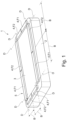
- this is a load-receiving device 2 of a vehicle 1, which is designed as an autonomous industrial truck, for example as a mobile order-picking robot, with a load-receiving device 2 designed, for example, as a platform 3.
- a pallet (not shown) on which the load is placed can be placed on the load receiving device 2.
- the load securing device 5 is arranged on the load receiving device 2.
- the load securing device 5 has pivot arms 4 which are positioned on the peripheral sides of the load receiving device 2.
- the pivot arms 4 can each be pivoted about an axis of rotation D between a position lying along the circumferential side, i.e. folded, and an upright, i.e. unfolded position.
- a pair of swivel arms 4 are arranged on each of the four peripheral sides of the load receiving device 2, which have swivel arms 4 which can be swiveled in opposite directions and thus in opposite directions.
- the two pivot arms 4 of a pair of pivot arms on a circumferential side of the charge receiving device 2 are referred to below as wings F1, F2.
- the axes of rotation D of the two pivot arms 4 (wings F1, F2) of a pair of pivot arms on the corresponding peripheral side of the charge receiving device 2 are arranged at the end regions of the corresponding peripheral side of the charge receiving device 2, so that the two pivot arms 4 (wings F1, F2) of a pair of pivot arms on the Open the corresponding circumferential side of the load receiving device 2 similar to a railway barrier.
- a clamping device 7 is arranged between the two pivoting arms 4 of a pair of pivoting arms which can be pivoted in opposite directions on the corresponding peripheral side of the load-carrying device 2.
- This clamping device 7 is arranged by pivoting the two pivoting arms 4 (wings F1, F2) of the pair of pivoting arms about the corresponding axes of rotation D into the upright position between the both pivot arms 4 can be clamped.
- the wings F1, F2 of a pair of swivel arms on one circumferential side preferably have the same width B.
- the width B of each wing F1, F2 of a pair of swivel arms essentially corresponds to half the length of the corresponding peripheral side of the load-carrying device.
- the pairs of swivel arms 4 arranged on the four peripheral sides of the load receiving device 2 are arranged in such a way that a pallet can be placed on the platform 3 within the folded swivel arms 4.
- the pivot arms 4 are arranged on the outer edge of the platform 3.
- the Figure 2 shows the charge receiving device 2 from the Figure 1 with the load 6 picked up.
- the load 6 is placed on the platform 3 of the load receiving device 2 or on a pallet located on the load receiving device 2.
- the pivot arms 4 of the load securing device 5 are folded so that the platform 3 is freely accessible from all sides.
- the free accessibility is particularly advantageous for autonomous industrial trucks, for example mobile order picking robots, since these can usually only stack on the side and cannot place the load from above, for example in a basket.
- the load 6 or a pallet loaded with the load 6 can also be easily removed from the side of the load receiving device 2 and unloaded.
- the swivel arm 4 is shown in the folded state.
- the tension straps 7a, 7b are housed inside the swivel arm 4.
- the pivot arm 4 can be pivoted about the horizontal axis of rotation D in a first step into the upright position, i.e. opened.
- the middle picture of the Figure 3 shows the swivel arm 4 in the unfolded state.
- the opening can be done manually or with the help of an electric actuator, for example a stepper motor.
- the two swivel arms 4 of a pair of swivel arms, which are opposite each other as wings F1, F2, are opened Figure 3 only the wing F1 is shown, in opposite directions and therefore in opposite directions unfolded into the upright position about the corresponding axes of rotation D.
- the height of the opened swivel arms 4 is limited to the width B of a wing F1 or F2, i.e. the length of the swivel arm 4 or half the length of the corresponding peripheral side of the load receiving device 2.
- the wing F1 or F2 of the swivel arm 4 to be opened consists of two wing parts 4a and 4b, whereby the wing part 4a can be extended upwards on the wing part 4b in the unfolded position in order to increase the height of the load securing device 5 in the unfolded state of the swivel arms 4 to enlarge.
- the wing part 4a can be extended manually or with the aid of an electric actuator, for example an electric motor, in particular by means of a linear actuator.
- the tension straps 7a, 7b are preferably arranged and fastened on the inside of the two wings F1, F2. These are two rows of tension bands 7a, 7b.
- the row of tension bands 7b is arranged on the hinged wing parts 4b and the row of tension bands 7a is arranged on the upwardly extendable wing parts 4a.
- the row of tension straps 7a can thus be raised with the wing part 4a. This allows the above-mentioned restriction, according to which the height of the opened swivel arms 4 is limited to the width B of a wing F1 or F2, to be circumvented.
- the tension straps 7a, 7b are housed inside the two wings F1, F2 or the two pivot arms 4 of a pair of pivot arms. Are the two swivel arms 4 of a pair of swivel arms in a 90 ° position around the When the respective axis of rotation D is opened, the tensioning straps 7a, 7b are fully tensioned. By folding out the two wings F1, F2 of a pair of swivel arms, the tension bands 7a, 7b arranged inside the swivel arms 4 are stretched.
- the Figure 4 shows a perspective view of the load receiving device 2 with the load securing device 5 opened.
- the pivot arms 4 with the wing parts 4a and 4b are opened into a vertical position, so that the tensioning straps 7a, 7b of the tensioning device 7 are tensioned.
- the wing parts 4a have not yet been extended upwards.
- the tension straps 7a, 7b surround the load 6 and secure it on the load receiving device 2.
- FIG. 5 is the charge receiving device 2 Figure 4 with the load securing device 5 extended, ie the wing parts 4a raised.
- the wing parts 4a of the swivel arms 4 with the tension straps 7a arranged thereon are extended upwards.
- a load 6 in the form of several packages is placed on the load receiving device 2 or on a pallet located on the load receiving device 2 for a picking order ( Figure 2 ).
- the swivel arms 4 can be folded out ( Figure 4 ) and if necessary extended upwards ( Figure 5 ), if load securing is required.
- the swivel arms 4 are retracted and folded in ( Figure 2 ), so that the load or the pallet with the load on it can be unloaded from the vehicle.
Landscapes
- Engineering & Computer Science (AREA)
- Transportation (AREA)
- Mechanical Engineering (AREA)
- Manipulator (AREA)
- Forklifts And Lifting Vehicles (AREA)
Description
- Die Erfindung betrifft eine Ladungsaufnahmeeinrichtung für ein Fahrzeug zur Aufnahme einer Ladung, wobei die Ladungsaufnahmeeinrichtung über eine Ladungssicherungseinrichtung zur Sicherung der Ladung im Bereich der Ladungsaufnahmeeinrichtung verfügt, wobei die Ladungssicherungseinrichtung an mindestens einer Umfangsseite der Ladungsaufnahmeeinrichtung mindestens einen, zwischen einer entlang der Umfangsseite liegenden und einer aufrechten Position schwenkbaren, Schwenkarm aufweist.
- Aus der
US 2017/361757 A1 ist eine gattungsgemäße Ladungsaufnahmeeinrichtung mit den Merkmalen des Oberbegriffs des Patentanspruchs 1 bekannt. DieUS 2017/361757 A1 offenbart eine als Heckklappe eines Pickup-Fahrzeugs ausgebildete Ladungsaufnahmeeinrichtung, wobei in der heruntergeklappten Stellung der Heckklappe eine Ladungssicherungseinrichtung vorgesehen ist. Die Ladungssicherungseinrichtung besteht aus als Säulenelementen ausgebildeten Schwenkarmen, die in der Heckklappe zwischen einer liegenden Stellung und einer aufrechten Stellung klappbar angeordnet sind. Die Säulenelemente können Löcher oder Vorsprünge aufweisen, um Bänder, Schnüre oder Netze anzubringen. Hierbei werden in einem ersten Schritt die Säulenelementen hochgeklappt und anschließend kann in einem zweiten Schritt ein Netz entlang der hochgeklappten Säulenelementen aufgespannt werden. - Die
US 5 468 038 A offenbart eine verlängerbare Heckklappe eines Pickup-Fahrzeugs, bei dem in der heruntergeklappten Stellung der Heckklappe eine Ladungssicherungseinrichtung vorgesehen ist. Die Ladungssicherungseinrichtung umfasst hochklappbare Säulen, an denen Brüstungselemente schwenkbar angeordnet sind. Bei heruntergeklappter Heckklappe müssen zuerst die Säulen hochgeklappt werden und anschließend zwei an der Säule schwenkbar angeordnete Brüstungselemente ausgeklappt werden, um Seitenbrüstungen an der Heckklappe zu bilden. - Unter Ladungsaufnahmeeinrichtungen sind allgemein Einrichtungen, insbesondere Plattformen, Ablageflächen, Gitterboxen, Paletten etc., zu verstehen, die eine Ladung aufnehmen können. Häufig sind solche Ladungsaufnahmeeinrichtungen auf Fahrzeugen untergebracht, mit denen die Ladung transportiert werden kann.
- Beim Transport einer Ladung mittels eines Fahrzeugs muss die Ladung gesichert werden, um insbesondere ein Verrutschen der Ladung zu verhindern. Hierfür kommen beispielsweise beim Transport von Ladungen in Lastkraftwagen oder Zügen Aufsetzrahmen aus Holz, Kunststoff oder Metall zum Einsatz, mit denen die Ladung fixiert werden kann. Weit verbreitet ist ebenso eine Ladungssicherung mittels Gummibänder und Spanngurten.
- Auch beim Transport von Ladungen mittels Flurförderzeugen muss auf eine korrekte Ladungssicherung geachtet werden. Beispielsweise werden zum Kommissionieren von Waren Kommissionierfahrzeuge eingesetzt, die über eine Ladungsaufnahmeeinrichtung verfügen, welche insbesondere als Plattform ausgebildet ist. Auf der Plattform des Kommissionierfahrzeugs können eine oder mehrere Paletten aufgenommen werden. Beim Kommissionieren werden die Waren direkt auf die Ladungsaufnahmeeinrichtung oder auf eine auf die Ladungsaufnahmeeinrichtung abgelegte Palette abgelegt. Üblicherweise werden die Waren in Paketen auf der Ladungsaufnahmeeinrichtung oder der auf der Ladungsaufnahmeeinrichtung abgelegten Palette gestapelt. Um ein Verrutschen oder Herabfallen der Pakete von der Plattform des Kommissionierfahrzeugs bzw. von der auf der Plattform befindlichen Palette zu verhindern, werden die Pakete üblicherweise von einem Mitarbeiter nach dem Beladen des Fahrzeugs manuell mit einer Dehnfolie, einer sogenannten Stretchfolie, umwickelt und so gesichert.
- Die bekannten Methoden der Ladungssicherung sind mit einem hohen Arbeits- und Zeitaufwand verbunden. Da hierfür Personaleinsatz erforderlich ist, sind diese Methoden außerdem nicht für autonome Fahrzeuge geeignet, die ohne Personal betrieben werden.
- Der vorliegenden Erfindung liegt die Aufgabe zugrunde, eine Ladungsaufnahmeeinrichtung mit einer Ladungssicherungseinrichtung zur Verfügung zu stellen, bei der eine Ladungssicherung hinsichtlich der genannten Nachteile verbessert ist.
- Diese Aufgabe wird erfindungsgemäß dadurch gelöst, dass an dem Schwenkarm eine Spanneinrichtung derart angebracht ist, dass durch Schwenken des Schwenkarms in die aufrechte Position die an dem Schwenkarm angebrachte Spanneinrichtung zum Sichern der Ladung entlang der Umfangsseite aufgespannt wird.
- Der Erfindung liegt die Überlegung zu Grunde, das aus dem Haushaltsbereich bekannte Prinzip eines klappbaren Wand-Wäschetrockners auf ein völlig anderes technisches Gebiet zu einem völlig anderen Zweck, nämlich zur Sicherung einer Ladung auf einer beispielsweise auf einem Fahrzeug vorgesehenen Ladungsaufnahmeeinrichtung zu übertragen. Bei einem Wandwäschetrockner können die an der Wand montierten gegenläufigen Schwenkarme ausgeschwenkt werden, um an den Schwenkarmen angebrachte Spannbänder aufzuspannen bzw. aus den Schwenkarmen Hartplastikbänder herauszuziehen. Auf den gespannten Spannbändern bzw. herausgezogenen Hartplastikbändern kann die Wäsche zum Trocknen aufgehängt werden. Der Erfindungsgedanke besteht nun darin, eine Ladungssicherungseinrichtung vorzusehen, die mindestens einen Schwenkarm ähnlich dem eines Wand-Wäschetrockners aufweist. Durch Ausschwenken des Schwenkarms soll eine Spanneinrichtung aufgespannt werden, die die Ladung auf der Ladungsaufnahmeeinrichtung sichert.
- Dabei ist der Schwenkarm an mindestens einer Umfangsseite der Ladungsaufnahmeeinrichtung zwischen einer entlang der Umfangsseite liegenden und einer aufrechten Position schwenkbar angeordnet. Hierzu kann der Schwenkarm an einem Ende in einer an der Umfangsseite der Ladungsaufnahmeeinrichtung angeordneten Drehachse drehbar gelagert sein. An der Längsseite des Schwenkarms, bevorzugt an der Innenseite des Schwenkarms, ist eine Spanneinrichtung angebracht.
- Die Spanneinrichtung kann insbesondere Spannbänder oder Spannschnüre umfassen.
- In einer denkbaren, einfachen Ausführungsform der Erfindung kann die einerseits am Schwenkarm angebrachte Spanneinrichtung andererseits an festen Aufhängungen an der Ladungsaufnahmeeinrichtung selbst oder an einem an der Ladungsaufnahmeeinrichtung angeordneten, feststehenden Arm angebracht sein. Beispielsweise kann die Spanneinrichtung mit einem Ende an der Umfangsseite der Ladungsaufnahmeeinrichtung und mit dem anderen Ende an dem Schwenkarm befestigt sein. Beim Schwenken des Schwenkarms in die aufrechte Position wird die Spanneinrichtung schräg in Form eines Dreiecks aufgespannt und grenzt einen Raum oberhalb der Umfangsseite der Ladungsaufnahmeeinrichtung teilweise nach außen ab. Mit einer gegensinnig aufgespannten Spanneinrichtung eines weiteren Schwenkarms kann eine überdeckende Bespannung der Umfangsseite der Ladungsaufnahmeeinrichtung erreicht werden.
- Gemäß einer bevorzugten Ausgestaltung der Erfindung ist vorgesehen, dass jeweils mindestens ein Paar von Schwenkarmen einer Umfangsseite über gegensinnig und somit gegenläufig schwenkbare Schwenkarme verfügt und zwischen den beiden gegensinnig schwenkbaren Schwenkarmen die Spanneinrichtung angeordnet ist, die durch Schwenken der beiden Schwenkarme in die aufrechte Position zwischen den beiden Schwenkarmen aufspannbar ist. Auf diese Weise wird eine großflächige Bespannung der Umfangsseite der Ladungsaufnahmeeinrichtung bis zu einer einheitlichen Höhe, nämlich bis zur Höhe der aufgeklappten Schwenkarme, erreicht.
- Je nach Beschaffenheit der Ladungsaufnahmeeinrichtung und der vorgesehenen Betriebsbedingungen kann auf eine umlaufende Bespannung der Ladungsaufnahmeeinrichtung verzichtet werden. Ist beispielsweise die Ladungsaufnahmeeinrichtung so beschaffen, dass sie nur an einer Umfangsseite seitlich zugänglich ist, kann es genügen, nur diese Umfangseite zu bespannen. In diesem Fall ist zweckmäßigerweise an den beiden Enden dieser Umfangsseite jeweils ein Schwenkarm befestigt. In der liegenden Position liegen sich die Schwenkarme entlang der Umfangsseite der Ladungsaufnahmeeinrichtung in einer gemeinsamen, gedachten Längsachse gegenüber. Durch gegenläufiges Schwenken der beiden Schwenkarme in die aufrechte Position wird die an den Schwenkarmen befestigte Spanneinrichtung aufgespannt und sichert so die Ladungsaufnahmeeinrichtung maximal bis zur Höhe der Schwenkarme zur Umfangsseite hin ab.
- Sehen die Betriebsbedingungen lediglich eine lineare Bewegung der Ladungsaufnahmeeinrichtung, beispielsweise auf einem linear geführten Fahrzeug, vor, kann es genügen, nur in Bewegungsrichtung gegenüberliegende Umfangsseiten zu bespannen. Da in diesem Fall nur Längsbeschleunigungen, aber keine Querbeschleunigungen (wie bei Kurvenfahrten) auftreten, muss die Ladung lediglich in der linearen Bewegungsrichtung gesichert werden.
- Um alle Beschaffenheiten und Betriebsbedingungen der Ladungsaufnahmeeinrichtung zu berücksichtigen, ist gemäß einer besonders bevorzugten Ausgestaltung der Erfindung vorgesehen, dass an jeder Umfangsseite der Ladungsaufnahmeeinrichtung mindestens ein Paar der gegensinnig schwenkbaren Schwenkarme angeordnet ist.
- Vorteilhafterweise ist die Spanneinrichtung in der liegenden Position der Schwenkarme im Inneren der Schwenkarme angeordnet. Somit ist die Spanneinrichtung in der liegenden Position der Schwenkarme platzsparend aufgeräumt und geschützt angeordnet und steht einer Beladung oder Entladung der Ladungsaufnahmeeinrichtung nicht im Wege.
- Dies gilt auch für die Schwenkarme selbst, die gemäß einer bevorzugten Ausgestaltung in der liegenden Position im Wesentlichen horizontal und in der aufrechten Position im Wesentlichen vertikal angeordnet sind.
- Vorzugsweise ist die Ladungsaufnahmeeinrichtung als Plattform mit einer Ablagefläche ausgebildet, auf der die Ladung ablegbar ist. Dabei weist die Plattform mit Vorteil eine im Wesentlichen rechteckige Ablagefläche auf, wobei an jeder Rechteckseite jeweils ein Paar der gegensinnig schwenkbaren Schwenkarme angeordnet ist.
- Gemäß einer Weiterbildung des Erfindungsgedankens ist der Schwenkarm verlängerbar, insbesondere ausziehbar, wobei an der Verlängerung ebenfalls eine Spanneinrichtung angebracht ist. Dadurch wird erreicht, dass die Ladungssicherungseinrichtung insgesamt eine größere Höhenausdehnung aufweist, um auch höhere Ladungen absichern zu können.
- Vorzugsweise ist die Ladungssicherungseinrichtung in die Ladungsaufnahmeeinrichtung integriert. Hierzu kann der Schwenkarm an der Ladungsaufnahmeeinrichtung, beispielsweise am Rand der Plattform, angebracht sein. Auf diese Weise kann die Ladungssicherungseinrichtung zum Beispiel eine auf der Plattform abgelegte Palette und auf der Palette befindliche Ladung zur Seite hin absichern.
- Eine andere vorteilhafte Variante besteht darin, dass die Ladungssicherungseinrichtung auf einem Montagerahmen montiert ist, der an der Ladungsaufnahmeeinrichtung montierbar ist. Dieser Montagerahmen kann beispielsweise in Form eines Auflegerahmens oder Zwischenrahmens oder eines mit den Schwenkarmen versehenen Gestells auf die Ladungsaufnahmeeinrichtung des Fahrzeugs gelegt werden oder an der Ladungsaufnahmeeinrichtung oder einem Fahrzeug derart befestigt werden, so dass der Rahmen bzw. das Gestell nach Aufnahme bzw. Ablagen einer Palette auf der Ladungsaufnahmeeinrichtung unterhalb der Palette oder auf gleicher Höhe wie die Palette positioniert ist und/oder die Außenkontur einer Palette umfasst.
- Bevorzugt ist die Ladungsaufnahmeeinrichtung auf einem Fahrzeug zum Transport der Ladung angeordnet.
- Das Fahrzeug kann als beliebiges Transportfahrzeug zum Transport einer Ladung ausgebildet sein.
- Bevorzugt ist das Fahrzeug als Flurförderzeug, insbesondere als Plattformwagen, Schlepper, Routenzug-Fahrzeug, Anhänger oder Kommissionierfahrzeug ausgebildet.
- Besonders vorteilhaft ist die Ausbildung des Fahrzeugs als autonomes Fahrzeug. Hierzu gehören fahrerlose Transportfahrzeuge (FTF, englisch: Automated Guided Vehicle, AGV). Darunter versteht man flurgebundene Förderfahrzeuge mit eigenem Fahrantrieb, die automatisch gesteuert und berührungslos geführt werden. Es gibt auch fahrerlose Transportfahrzeuge, die Ladungen selbständig aufnehmen können. Da diese Fahrzeuge unbemannt unterwegs sind, kann niemand die Ladung manuell sichern. Hier kommt der Vorteil der erfindungsgemäßen Ladungssicherung mittels der auf dem Fahrzeug angeordneten Spanneinrichtung ganz besonders zum Tragen.
- In einer bevorzugten Ausgestaltung ist das Fahrzeug als mobiler Kommissionierroboter ausgebildet. Kommissionierroboter können Packstücke selbständig mittels Roboterarmen aufnehmen und auf einer mitgeführten Plattform ablegen. Da diese mobilen Kommissionierroboter ebenfalls unbemannt unterwegs sind, kann auch hier niemand die Ladung manuell sichern. Somit kommt der Vorteil der erfindungsgemäßen Ladungssicherung auch hier ganz besonders zum Tragen.
- Gemäß einer Weiterbildung der Erfindung steht die Ladungssicherungseinrichtung mit einer Steuerungseinrichtung, besonders bevorzugt mit einer Steuerungseinrichtung des Fahrzeugs, in Wirkverbindung, die das Schwenken des Schwenkarms steuert.
- Dabei ist die Steuerungseinrichtung bevorzugt dazu eingerichtet, nach erfolgter Aufnahme der Ladung auf der Ladungsaufnahmeeinrichtung den Schwenkvorgang des Schwenkarms in die aufrechte Position automatisch einzuleiten.
- Hierzu kann die Steuerungseinrichtung mit mindestens einem im Bereich der Ladungsaufnahmeeinrichtung angeordneten Sensor in Wirkverbindung stehen, der die Beladung überwacht. Hierzu kann beispielsweise mindestens ein Infrarot-Sensor und/oder mindestens ein Laserscanner und/oder mindestens eine Kamera vorgesehen sein. Auf diese Weise kann insbesondere bei autonomen Fahrzeugen neben einer vollautomatischen Ladungsaufnahme auch eine vollautomatische Ladungssicherung ermöglicht werden.
- Eine weitere Ausgestaltung der Erfindung sieht vor, dass der Sensor auch für eine Erfassung der räumlichen Anordnung der aufgenommenen Ladung ausgebildet ist und die Steuerungseinrichtung dazu eingerichtet ist, aus den Sensordaten die für eine optimale Ladungssicherung günstigste Höhe der Verlängerung des Schwenkarms in der aufrechten Position des Schwenkarms zu steuern.
- Besonders bevorzugt ist die Steuerungseinrichtung als Steuerungseinrichtung des Fahrzeugs ausgebildet.
- Die Erfindung bietet den Vorteil, dass die Ladungssicherungseinrichtung mit keinem Verbrauch an materiellen Betriebsmitteln verbunden ist, wie dies beispielsweise beim Umwickeln der Ladung mit einer Dehnfolie der Fall ist. Die erfindungsgemäße Ladungssicherungseinrichtung ist ein Mehrwegsystem. Ein wesentlicher Vorteil der Erfindung besteht außerdem darin, dass die Ladungssicherungseinrichtung automatisierbar ist, so dass sie auch bei autonomen Fahrzeugen, beispielsweise einem mobilen Kommissionierroboter, ohne zusätzlichen Personalbedarf einsetzbar ist.
- Weitere Vorteile und Einzelheiten der Erfindung werden anhand des in den schematischen Figuren dargestellten Ausführungsbeispiels näher erläutert. Hierbei zeigen
- Figur 1
- eine perspektivische Darstellung der Ladungsaufnahmeeinrichtung mit zugeklappter Ladungssicherungseinrichtung ohne Ladung,
- Figur 2
- eine perspektivische Darstellung der Ladungsaufnahmeeinrichtung mit zugeklappter Ladungssicherungseinrichtung mit Ladung,
- Figur 3
- eine Detailansicht der Ladungssicherungseinrichtung,
- Figur 4
- eine perspektivische Darstellung der Ladungsaufnahmeeinrichtung mit aufgeklappter Ladungssicherungseinrichtung und
- Figur 5
- eine perspektivische Darstellung der Ladungsaufnahmeeinrichtung mit aufgeklappter und ausgefahrener Ladungssicherungseinrichtung.
- In der
Figur 1 ist eine perspektivische Darstellung der Ladungsaufnahmeeinrichtung 2 gezeigt. - Im dargestellten Ausführungsbeispiel handelt es sich dabei um eine Ladungsaufnahmeeinrichtung 2 eines Fahrzeugs 1, das als autonomes Flurförderzeug, beispielsweise als mobiler Kommissionierroboter, mit einer beispielsweise als Plattform 3 ausgebildeten Ladungsaufnahmeeinrichtung 2 ausgeführt ist. Auf der Ladungsaufnahmeeinrichtung 2 kann eine nicht näher dargestellte Palette abgelegt sein, auf der Ladung abgelegt wird.
- An der Ladungsaufnahmeeinrichtung 2 ist die Ladungssicherungseinrichtung 5 angeordnet. Die Ladungssicherungseinrichtung 5 verfügt über Schwenkarme 4, die an den Umfangsseiten der Ladungsaufnahmeeinrichtung 2 positioniert sind. Die Schwenkarme 4 sind jeweils zwischen einer entlang der Umfangsseite liegenden, also zugeklappten, und einer aufrechtstehenden, also aufgeklappten, Position um jeweils eine Drehachse D schwenkbar.
- In der
Figur 1 sind die Schwenkarme 4 in der zugeklappten Position dargestellt. - Im dargestellten Ausführungsbeispiel ist an jeder der vier Umfangsseiten der Ladungsaufnahmeeinrichtung 2 jeweils ein Paar von Schwenkarmen 4 angeordnet, das über gegensinnig und somit gegenläufig schwenkbare Schwenkarme 4 verfügt. Die beiden Schwenkarme 4 eines Schwenkarmpaares an einer Umfangsseite der Ladungsaufnahmeeinrichtung 2 wird im Folgenden als Flügel F1, F2 bezeichnet. Die Drehachsen D der beiden Schwenkarme 4 (Flügel F1, F2) eines Schwenkarmpaares an der entsprechenden Umfangsseite der Ladungsaufnahmeeinrichtung 2 sind an den Endbereichen der entsprechenden Umfangsseite der Ladungsaufnahmeeinrichtung 2 angeordnet, so dass die beiden Schwenkarme 4 (Flügel F1, F2) eines Schwenkarmpaares an der entsprechenden Umfangsseite der Ladungsaufnahmeeinrichtung 2 ähnlich einer Eisenbahnschranke aufklappen. Zwischen den beiden gegensinnig schwenkbaren Schwenkarmen 4 eines Schwenkarmpaares an der entsprechenden Umfangsseite der Lastaufnahmeeinrichtung 2 ist jeweils eine Spanneinrichtung 7 angeordnet ist, die durch Schwenken der beiden Schwenkarme 4 (Flügel F1, F2) des Schwenkarmpaares um die entsprechende Drehachsen D in die aufrechte Position zwischen den beiden Schwenkarmen 4 aufspannbar ist. Die Flügel F1, F2 eines Schwenkarmpaares an einer Umfangsseite weisen bevorzugt dieselbe Breite B auf. Die Breite B jedes Flügels F1, F2 eines Schwenkarmpaares entspricht im Wesentlichen der halben Länge der entsprechenden Umfangsseite der Lastaufnahmeeinrichtung.
- Die an den vier Umfangsseiten der Ladungsaufnahmeeinrichtung 2 angeordneten Schwenkarmpaare 4 sind derart angeordnet, dass innerhalb der eingeklappten Schwenkarme 4 eine Palette auf die Plattform 3 abgelegt werden kann. Die Schwenkarme 4 sind hierzu an dem äußeren Rand der Plattform 3 angeordnet.
- Die
Figur 2 zeigt die Ladungsaufnahmeeinrichtung 2 aus derFigur 1 mit aufgenommener Ladung 6. Die Ladung 6 ist auf der Plattform 3 der Ladungsaufnahmeeinrichtung 2 oder einer auf der Ladungsaufnahmeeinrichtung 2 befindlichen Palette abgelegt. Zum Ablegen der Ladung 6 auf der Plattform 3 sind die Schwenkarme 4 der Ladungssicherungseinrichtung 5 zugeklappt, so dass die Plattform 3 von allen Seiten frei zugänglich ist. Die freie Zugänglichkeit ist insbesondere bei autonomen Flurförderzeugen, beispielsweise mobilen Kommissionierrobotern, vorteilhaft, da diese in der Regel nur seitlich stapeln können und die Ladung nicht von oben beispielsweise in einen Korb ablegen können. In dieser zugeklappten Position der Schwenkarme 4 kann die Ladung 6 bzw. eine mit der Ladung 6 beladene Palette auch wieder auf einfache Weise seitlich von der Ladungsaufnahmeeinrichtung 2 entnommen und abgeladen werden. - In der
Figur 3 ist die Ladungssicherungseinrichtung 5 im Detail dargestellt. - In der linken Abbildung der
Figur 3 ist der Schwenkarm 4 im zugeklappten Zustand dargestellt. Im eingeklappten Zustand sind die Spannbänder 7a, 7b im Inneren des Schwenkarms 4 untergebracht. Zum Sichern der auf der Ladungsaufnahmeeinrichtung 2 oder einer auf der Ladungsaufnahmeeinrichtung 2 befindlichen Palette abgelegten Ladung 6 kann der Schwenkarm 4 um die horizontale Drehachse D in einem ersten Schritt in die aufrechte Position geschwenkt, also aufgeklappt werden. - Die mittlere Abbildung der
Figur 3 zeigt den Schwenkarm 4 im aufgeklappten Zustand. Das Aufklappen kann manuell oder mit Hilfe eines elektrischen Aktuators, beispielsweise eines Schrittmotors, erfolgen. Beim Aufklappen werden die zwei, als Flügel F1, F2 gegenüber liegenden Schwenkarme 4 eines Schwenkarmpaares, von denen in derFigur 3 nur der Flügel F1 gezeigt ist, gegensinnig und somit gegenläufig um die entsprechenden Drehachsen D in die aufrechte Position aufgeklappt. Die Höhe der aufgeklappten Schwenkarme 4 beschränkt sich dabei auf die Breite B eines Flügels F1 bzw. F2, also die Länge des Schwenkarms 4 bzw. der halben Länge der entsprechenden Umfangsseite der Ladungsaufnahmeeinrichtung 2. - Um höhere Ladungen sichern zu können, ist gemäß einer Weiterbildung der Erfindung in einem zweiten Schritt weiterhin vorgesehen, die Ladungssicherungseinrichtung 5 durch Verlängerung der Schwenkarme 4 im aufgeklappten Zustand hochzufahren. Hierzu besteht der aufzuklappende Flügel F1 bzw. F2 des Schwenkarms 4 aus jeweils zwei Flügelteilen 4a und 4b, wobei der Flügelteil 4a in der ausgeklappten Position an dem Flügelteil 4b nach oben ausgefahren werden kann, um die Höhe der Ladungssicherungseinrichtung 5 im ausgeklappten Zustand der Schwenkarme 4 zu vergrößern. Das Ausfahren des Flügelteils 4a kann manuell oder mit Hilfe eines elektrischen Aktuators, beispielsweise eines elektrischen Motors, insbesondere mittels eines Linearaktuators, erfolgen.
- Beim Aufklappen der beiden Flügel F1, F2 eines Schwenkarmpaares werden zwischen den beiden Schwenkarmen 4 des Schwenkarmpaares im dargestellten Ausführungsbeispiel zwei Reihen Spannbänder 7a, 7b einer Spanneinrichtung 7 aufgespannt. Die Spannbänder 7a, 7b sind hierzu bevorzugt an den Innenseiten der beiden Flügel F1, F2 angeordnet und befestigt. Es handelt sich dabei um zwei Reihen Spannbänder 7a, 7b. Die Reihe Spannbänder 7b ist an den aufklappbaren Flügelteilen 4b angeordnet und die Reihe Spannbänder 7a an den nach oben ausfahrbaren Flügelteilen 4a angeordnet. Die Reihe Spannbänder 7a kann somit mit dem Flügelteil 4a hochgefahren werden. Dadurch kann die oben genannte Einschränkung, wonach die Höhe der aufgeklappten Schwenkarme 4 auf die Breite B eines Flügels F1 bzw. F2 beschränkt ist, umgangen werden.
- In der rechten Abbildung der
Figur 3 ist der Schwenkarm 4 im aufgeklappten Zustand des Flügelteils 4b und mit nach oben ausgefahrenem Flügelteil 4a sowie aufgespannten Spannbändern 7a und 7b gezeigt. - Im eingeklappten Zustand sind die Spannbänder 7a, 7b im Inneren der beiden Flügel F1, F2 bzw. der beiden Schwenkarme 4 eines Schwenkarmpaares untergebracht. Sind die beiden Schwenkarme 4 eines Schwenkarmpaares in eine 90°- Position um die jeweilige Drehachse D aufgeklappt, sind die Spannbänder 7a, 7b vollständig gespannt. Durch das Ausklappen der beiden Flügel F1, F2 eines Schwenkarmpaares werden hierbei die im Inneren der Schwenkarme 4 angeordneten Spannbänder 7a, 7b aufgespannt.
- Die
Figur 4 zeigt eine perspektivische Darstellung der Ladungsaufnahmeeinrichtung 2 mit aufgeklappter Ladungssicherungseinrichtung 5. Die Schwenkarme 4 mit den Flügelteilen 4a und 4b sind in eine vertikale Position aufgeklappt, so dass die Spannbänder 7a, 7b der Spanneinrichtung 7 gespannt sind. Die Flügelteile 4a sind noch nicht nach oben ausgefahren. Die Spannbänder 7a, 7b umgeben die Ladung 6 und sichern diese auf der Ladungsaufnahmeeinrichtung 2. - In der
Figur 5 ist die Ladungsaufnahmeeinrichtung 2 derFigur 4 mit ausgefahrener Ladungssicherungseinrichtung 5, d.h. hochgefahrenen Flügelteilen 4a, dargestellt. Um höhere Ladungen 6 zu sichern, sind die Flügelteile 4a der Schwenkarme 4 mit den daran angeordneten Spannbänder 7a nach oben ausgefahren. - Bei einem als mobiler Kommissionierroboter ausgebildeten Fahrzeug 1 wird für einen Kommissionierauftrags eine Ladung 6 in Form von mehreren Packstücken auf der Ladungsaufnahmeeinrichtung 2 oder einer auf der Ladungsaufnahmeeinrichtung 2 befindlichen Palette abgelegt (
Figur 2 ). Die Schwenkarme 4 können hierbei ausgeklappt (Figur 4 ) und gegebenenfalls nach oben ausgefahren werden (Figur 5 ), wenn eine Ladungssicherung erforderlich ist. Am Ende des Kommissioniervorgangs werden die Schwenkarme 4 wieder eingefahren und eingeklappt (Figur 2 ), so dass die Ladung bzw. die Palette mit der darauf befindlichen Ladung von dem Fahrzeug abgeladen werden kann.
Claims (21)
- Ladungsaufnahmeeinrichtung (2) für ein Fahrzeug zur Aufnahme einer Ladung, wobei die Ladungsaufnahmeeinrichtung (2) über eine Ladungssicherungseinrichtung (5) zur Sicherung der Ladung (6) im Bereich der Ladungsaufnahmeeinrichtung (2) verfügt, wobei die Ladungssicherungseinrichtung (5) an mindestens einer Umfangsseite der Ladungsaufnahmeeinrichtung (2) mindestens einen, zwischen einer entlang der Umfangsseite liegenden und einer aufrechten Position schwenkbaren, Schwenkarm (4) aufweist, dadurch gekennzeichnet, dass an dem Schwenkarm (4) eine Spanneinrichtung (7) derart angebracht ist, dass durch Schwenken des Schwenkarms (4) in die aufrechte Position die an dem Schwenkarm (4) angebrachte Spanneinrichtung (7) zum Sichern der Ladung (6) entlang der Umfangsseite aufgespannt wird.
- Ladungsaufnahmeeinrichtung (2) nach Anspruch 1, dadurch gekennzeichnet, dass die Spanneinrichtung (7) Spannbänder (7a, 7b) oder Spannschnüre umfasst.
- Ladungsaufnahmeeinrichtung (2) nach Anspruch 1 oder 2, dadurch gekennzeichnet, dass jeweils mindestens ein Paar von Schwenkarmen (4) einer Umfangsseite der Ladungsaufnahmeeinrichtung (2) über gegensinnig schwenkbare Schwenkarme (4) verfügt und zwischen den beiden gegensinnig schwenkbaren Schwenkarmen (4) die Spanneinrichtung (7) angeordnet ist, die durch Schwenken der Schwenkarme (4) in die aufrechte Position zwischen den beiden Schwenkarmen (4) aufspannbar ist.
- Ladungsaufnahmeeinrichtung (2) nach einem der Ansprüche 1 bis 3, dadurch gekennzeichnet, dass die Spanneinrichtung (7) in der liegenden Position des Schwenkarms (4) im Inneren des Schwenkarms (4) angeordnet ist.
- Ladungsaufnahmeeinrichtung (2) nach einem der Ansprüche 1 bis 4, dadurch gekennzeichnet, dass an jeder Umfangsseite der Ladungsaufnahmeeinrichtung (2) mindestens ein Paar der gegensinnig schwenkbaren Schwenkarme (4) angeordnet ist.
- Ladungsaufnahmeeinrichtung (2) nach einem der Ansprüche 1 bis 5, dadurch gekennzeichnet, dass der Schwenkarm (4) in der liegenden Position im Wesentlichen horizontal und in der aufrechten Position im Wesentlichen vertikal angeordnet ist.
- Ladungsaufnahmeeinrichtung (2) nach einem der Ansprüche 1 bis 6, dadurch gekennzeichnet, dass die Ladungsaufnahmeeinrichtung (2) als Plattform (3) mit einer Ablagefläche ausgebildet ist, auf der die Ladung (6) ablegbar ist.
- Ladungsaufnahmeeinrichtung (2) nach Anspruch 7, dadurch gekennzeichnet, dass die Plattform (3) eine im Wesentlichen rechteckige Ablagefläche aufweist und an jeder Rechteckseite jeweils ein Paar der gegensinnig schwenkbaren Schwenkarme (4) angeordnet ist.
- Ladungsaufnahmeeinrichtung (2) nach einem der Ansprüche 1 bis 8, dadurch gekennzeichnet, dass der Schwenkarm (4) verlängerbar, insbesondere ausziehbar, ist, wobei an der Verlängerung ebenfalls eine Spanneinrichtung (7) angebracht ist.
- Ladungsaufnahmeeinrichtung (2) nach einem der Ansprüche 1 bis 9, dadurch gekennzeichnet, dass die Ladungssicherungseinrichtung (5) in die Ladungsaufnahmeeinrichtung (2) integriert ist.
- Ladungsaufnahmeeinrichtung (2) nach einem der Ansprüche 1 bis 9, dadurch gekennzeichnet, dass die Ladungssicherungseinrichtung (5) auf einem Montagerahmen montiert ist, der an der Ladungsaufnahmeeinrichtung montierbar ist.
- Ladungsaufnahmeeinrichtung (2) nach einem der Ansprüche 1 bis 11, dadurch gekennzeichnet, dass die Ladungsaufnahmeeinrichtung (2) auf einem Fahrzeug (1) zum Transport der Ladung (3) angeordnet ist.
- Ladungsaufnahmeeinrichtung (2) nach Anspruch 12, dadurch gekennzeichnet, dass das Fahrzeug (1) als Flurförderzeug, insbesondere als Plattformwagen, Schlepper, Routenzug-Fahrzeug, Anhänger oder Kommissionierfahrzeug ausgebildet ist.
- Ladungsaufnahmeeinrichtung (2) nach Anspruche 12 oder 13, dadurch gekennzeichnet, dass das Fahrzeug (1) als autonomes Fahrzeug (1) ausgebildet ist.
- Ladungsaufnahmeeinrichtung (2) nach Anspruch 14, dadurch gekennzeichnet, dass das Fahrzeug (1) als mobiler Kommissionierroboter ausgebildet ist.
- Ladungsaufnahmeeinrichtung (2) nach einem der Ansprüche 1 bis 15, dadurch gekennzeichnet, dass die Ladungssicherungseinrichtung (5) mit einer Steuerungseinrichtung in Wirkverbindung steht, die das Schwenken des Schwenkarms (4) steuert.
- Ladungsaufnahmeeinrichtung (2) nach Anspruch 16, dadurch gekennzeichnet, dass die Steuerungseinrichtung dazu eingerichtet ist, nach erfolgter Aufnahme der Ladung (6) auf der Ladungsaufnahmeeinrichtung (2) den Schwenkvorgang des Schwenkarms (4) in die aufrechte Position automatisch einzuleiten.
- Ladungsaufnahmeeinrichtung (2) nach Anspruch 16 oder 17, dadurch gekennzeichnet, dass die Steuerungseinrichtung mit mindestens einem im Bereich der Ladungsaufnahmeeinrichtung (2) angeordneten Sensor in Wirkverbindung steht, der die Beladung überwacht.
- Ladungsaufnahmeeinrichtung (2) nach Anspruch 18, dadurch gekennzeichnet, dass als Sensor ein Infrarot-Sensor und/oder ein Laserscanner und/oder eine Kamera vorgesehen ist.
- Ladungsaufnahmeeinrichtung (2) nach Anspruch 18 oder 19, dadurch gekennzeichnet, dass der Sensor für eine Erfassung der räumlichen Anordnung der aufgenommenen Ladung ausgebildet ist und die Steuerungseinrichtung dazu eingerichtet ist, aus den Sensordaten die für eine optimale Ladungssicherung günstigste Höhe der Verlängerung des Schwenkarms (4) in der aufrechten Position des Schwenkarms zu steuern.
- Ladungsaufnahmeeinrichtung (2) nach einem der Ansprüche 16 bis 20, dadurch gekennzeichnet, dass die Steuerungseinrichtung als Steuerungseinrichtung des Fahrzeugs (1) ausgebildet ist.
Applications Claiming Priority (1)
| Application Number | Priority Date | Filing Date | Title |
|---|---|---|---|
| DE102019122102.1A DE102019122102A1 (de) | 2019-08-16 | 2019-08-16 | Ladungsaufnahmeeinrichtung mit einer Ladungssicherungseinrichtung |
Publications (2)
| Publication Number | Publication Date |
|---|---|
| EP3778303A1 EP3778303A1 (de) | 2021-02-17 |
| EP3778303B1 true EP3778303B1 (de) | 2024-01-17 |
Family
ID=71846181
Family Applications (1)
| Application Number | Title | Priority Date | Filing Date |
|---|---|---|---|
| EP20188199.2A Active EP3778303B1 (de) | 2019-08-16 | 2020-07-28 | Ladungsaufnahmeeinrichtung mit einer ladungssicherungseinrichtung |
Country Status (2)
| Country | Link |
|---|---|
| EP (1) | EP3778303B1 (de) |
| DE (1) | DE102019122102A1 (de) |
Families Citing this family (2)
| Publication number | Priority date | Publication date | Assignee | Title |
|---|---|---|---|---|
| CN115743361B (zh) * | 2022-11-30 | 2023-09-15 | 烟台中孚冷链设备有限公司 | 物料输送agv自动引导小车 |
| IT202300007554A1 (it) * | 2023-04-18 | 2024-10-18 | Gema S R L | Dispositivo per il contenimento di prodotti |
Citations (1)
| Publication number | Priority date | Publication date | Assignee | Title |
|---|---|---|---|---|
| US20100306919A1 (en) * | 2007-11-13 | 2010-12-09 | Atsushi Suzuki | Foldable side rail |
Family Cites Families (4)
| Publication number | Priority date | Publication date | Assignee | Title |
|---|---|---|---|---|
| US5468038A (en) * | 1994-09-06 | 1995-11-21 | Sauri; Gregory M. | Multiple configuration tailgate extender |
| GB201200365D0 (en) * | 2012-01-11 | 2012-02-22 | King Brain Jonathan C | A vehicle for transporting agricultural cargo |
| US8690219B1 (en) * | 2013-07-29 | 2014-04-08 | Telescoping Associates | Telescoping cap-rails for a trailer |
| US9902307B2 (en) * | 2016-06-17 | 2018-02-27 | Toyota Motor Engineering & Manufacturing North America, Inc. | Stowable load support structure for tailgate |
-
2019
- 2019-08-16 DE DE102019122102.1A patent/DE102019122102A1/de active Pending
-
2020
- 2020-07-28 EP EP20188199.2A patent/EP3778303B1/de active Active
Patent Citations (1)
| Publication number | Priority date | Publication date | Assignee | Title |
|---|---|---|---|---|
| US20100306919A1 (en) * | 2007-11-13 | 2010-12-09 | Atsushi Suzuki | Foldable side rail |
Also Published As
| Publication number | Publication date |
|---|---|
| EP3778303A1 (de) | 2021-02-17 |
| DE102019122102A1 (de) | 2021-02-18 |
Similar Documents
| Publication | Publication Date | Title |
|---|---|---|
| DE202010017755U1 (de) | Gitterbox zur Handhabung und Lagerung von Gütern | |
| EP0537699B1 (de) | Gepäckklappe für ein Flugzeug | |
| DE2540395A1 (de) | Ladevorrichtung zum be- und entladen des frachtraumes eines fahrzeuges | |
| EP3778303B1 (de) | Ladungsaufnahmeeinrichtung mit einer ladungssicherungseinrichtung | |
| EP2944490B1 (de) | Transportfahrzeug für stückgut | |
| DE102010022081B4 (de) | Containertransporter | |
| EP3620327B1 (de) | Hakenliftfahrzeug sowie container für ein hakenliftfahrzeug | |
| DE69016336T2 (de) | Faltbares Verdeck für eine Ladefläche. | |
| DE102010030812A1 (de) | Verdeckvorrichtung für einen Lastentransportbehälter eines Lastentransportfahrzeugs und ein damit ausgerüstetes Lastentransportfahrzeug | |
| DE60318088T2 (de) | Koffervorrichtung für ein auto | |
| EP3173286B1 (de) | Transportfahrzeug für stückgut | |
| EP0893366B1 (de) | Vorrichtung zum Transport von Fahrzeugen, insbesondere Personenkraftwagen, Kleintransportern oder dergleichen | |
| EP2676824A2 (de) | Aufbau zum Befördern von Gütern | |
| DE4411579A1 (de) | Führungsvorrichtung für ein Greifwerkzeug eines Container-Krans | |
| AT501357B1 (de) | Behälter | |
| EP3326861B1 (de) | Ladungssicherungsvorrichtung | |
| EP4201192B1 (de) | Ladungssicherungsvorrichtung für landwirtschaftliche transportwagen | |
| EP3981625B1 (de) | Planenaufbau eines nutzfahrzeugs mit verstellbarer seitenplane | |
| DE60217166T2 (de) | Fahrzeugdeck-abdeckvorrichtung zur abdeckung der last | |
| DE3300354A1 (de) | Abdeckung fuer einen offenen transportbehaelter | |
| DE69916048T2 (de) | Offenseitiger frachtcontainer | |
| EP2835337A2 (de) | Flurförderzeug mit einem Antriebsteil und einem Lastteil | |
| EP0468349B1 (de) | Vorrichtung zur Lagerung und zum Transport von Kraftfahrzeugen, insbesondere von Pkw | |
| EP3599119B1 (de) | Feuchtigkeitsdichter planenaufbau | |
| DE202008017410U1 (de) | Container |
Legal Events
| Date | Code | Title | Description |
|---|---|---|---|
| PUAI | Public reference made under article 153(3) epc to a published international application that has entered the european phase |
Free format text: ORIGINAL CODE: 0009012 |
|
| STAA | Information on the status of an ep patent application or granted ep patent |
Free format text: STATUS: THE APPLICATION HAS BEEN PUBLISHED |
|
| AK | Designated contracting states |
Kind code of ref document: A1 Designated state(s): AL AT BE BG CH CY CZ DE DK EE ES FI FR GB GR HR HU IE IS IT LI LT LU LV MC MK MT NL NO PL PT RO RS SE SI SK SM TR |
|
| AX | Request for extension of the european patent |
Extension state: BA ME |
|
| STAA | Information on the status of an ep patent application or granted ep patent |
Free format text: STATUS: REQUEST FOR EXAMINATION WAS MADE |
|
| 17P | Request for examination filed |
Effective date: 20210812 |
|
| RBV | Designated contracting states (corrected) |
Designated state(s): AL AT BE BG CH CY CZ DE DK EE ES FI FR GB GR HR HU IE IS IT LI LT LU LV MC MK MT NL NO PL PT RO RS SE SI SK SM TR |
|
| STAA | Information on the status of an ep patent application or granted ep patent |
Free format text: STATUS: EXAMINATION IS IN PROGRESS |
|
| 17Q | First examination report despatched |
Effective date: 20220516 |
|
| GRAP | Despatch of communication of intention to grant a patent |
Free format text: ORIGINAL CODE: EPIDOSNIGR1 |
|
| STAA | Information on the status of an ep patent application or granted ep patent |
Free format text: STATUS: GRANT OF PATENT IS INTENDED |
|
| INTG | Intention to grant announced |
Effective date: 20231006 |
|
| GRAS | Grant fee paid |
Free format text: ORIGINAL CODE: EPIDOSNIGR3 |
|
| GRAA | (expected) grant |
Free format text: ORIGINAL CODE: 0009210 |
|
| STAA | Information on the status of an ep patent application or granted ep patent |
Free format text: STATUS: THE PATENT HAS BEEN GRANTED |
|
| AK | Designated contracting states |
Kind code of ref document: B1 Designated state(s): AL AT BE BG CH CY CZ DE DK EE ES FI FR GB GR HR HU IE IS IT LI LT LU LV MC MK MT NL NO PL PT RO RS SE SI SK SM TR |
|
| P01 | Opt-out of the competence of the unified patent court (upc) registered |
Effective date: 20231212 |
|
| REG | Reference to a national code |
Ref country code: GB Ref legal event code: FG4D Free format text: NOT ENGLISH |
|
| REG | Reference to a national code |
Ref country code: CH Ref legal event code: EP |
|
| REG | Reference to a national code |
Ref country code: DE Ref legal event code: R096 Ref document number: 502020006734 Country of ref document: DE |
|
| REG | Reference to a national code |
Ref country code: IE Ref legal event code: FG4D Free format text: LANGUAGE OF EP DOCUMENT: GERMAN |
|
| REG | Reference to a national code |
Ref country code: LT Ref legal event code: MG9D |
|
| REG | Reference to a national code |
Ref country code: NL Ref legal event code: MP Effective date: 20240117 |
|
| PG25 | Lapsed in a contracting state [announced via postgrant information from national office to epo] |
Ref country code: NL Free format text: LAPSE BECAUSE OF FAILURE TO SUBMIT A TRANSLATION OF THE DESCRIPTION OR TO PAY THE FEE WITHIN THE PRESCRIBED TIME-LIMIT Effective date: 20240117 |
|
| PG25 | Lapsed in a contracting state [announced via postgrant information from national office to epo] |
Ref country code: NL Free format text: LAPSE BECAUSE OF FAILURE TO SUBMIT A TRANSLATION OF THE DESCRIPTION OR TO PAY THE FEE WITHIN THE PRESCRIBED TIME-LIMIT Effective date: 20240117 |
|
| PG25 | Lapsed in a contracting state [announced via postgrant information from national office to epo] |
Ref country code: IS Free format text: LAPSE BECAUSE OF FAILURE TO SUBMIT A TRANSLATION OF THE DESCRIPTION OR TO PAY THE FEE WITHIN THE PRESCRIBED TIME-LIMIT Effective date: 20240517 |
|
| PG25 | Lapsed in a contracting state [announced via postgrant information from national office to epo] |
Ref country code: LT Free format text: LAPSE BECAUSE OF FAILURE TO SUBMIT A TRANSLATION OF THE DESCRIPTION OR TO PAY THE FEE WITHIN THE PRESCRIBED TIME-LIMIT Effective date: 20240117 |
|
| PG25 | Lapsed in a contracting state [announced via postgrant information from national office to epo] |
Ref country code: GR Free format text: LAPSE BECAUSE OF FAILURE TO SUBMIT A TRANSLATION OF THE DESCRIPTION OR TO PAY THE FEE WITHIN THE PRESCRIBED TIME-LIMIT Effective date: 20240418 |
|
| PG25 | Lapsed in a contracting state [announced via postgrant information from national office to epo] |
Ref country code: HR Free format text: LAPSE BECAUSE OF FAILURE TO SUBMIT A TRANSLATION OF THE DESCRIPTION OR TO PAY THE FEE WITHIN THE PRESCRIBED TIME-LIMIT Effective date: 20240117 Ref country code: RS Free format text: LAPSE BECAUSE OF FAILURE TO SUBMIT A TRANSLATION OF THE DESCRIPTION OR TO PAY THE FEE WITHIN THE PRESCRIBED TIME-LIMIT Effective date: 20240417 |
|
| PG25 | Lapsed in a contracting state [announced via postgrant information from national office to epo] |
Ref country code: ES Free format text: LAPSE BECAUSE OF FAILURE TO SUBMIT A TRANSLATION OF THE DESCRIPTION OR TO PAY THE FEE WITHIN THE PRESCRIBED TIME-LIMIT Effective date: 20240117 |
|
| PG25 | Lapsed in a contracting state [announced via postgrant information from national office to epo] |
Ref country code: RS Free format text: LAPSE BECAUSE OF FAILURE TO SUBMIT A TRANSLATION OF THE DESCRIPTION OR TO PAY THE FEE WITHIN THE PRESCRIBED TIME-LIMIT Effective date: 20240417 Ref country code: NO Free format text: LAPSE BECAUSE OF FAILURE TO SUBMIT A TRANSLATION OF THE DESCRIPTION OR TO PAY THE FEE WITHIN THE PRESCRIBED TIME-LIMIT Effective date: 20240417 Ref country code: LT Free format text: LAPSE BECAUSE OF FAILURE TO SUBMIT A TRANSLATION OF THE DESCRIPTION OR TO PAY THE FEE WITHIN THE PRESCRIBED TIME-LIMIT Effective date: 20240117 Ref country code: IS Free format text: LAPSE BECAUSE OF FAILURE TO SUBMIT A TRANSLATION OF THE DESCRIPTION OR TO PAY THE FEE WITHIN THE PRESCRIBED TIME-LIMIT Effective date: 20240517 Ref country code: HR Free format text: LAPSE BECAUSE OF FAILURE TO SUBMIT A TRANSLATION OF THE DESCRIPTION OR TO PAY THE FEE WITHIN THE PRESCRIBED TIME-LIMIT Effective date: 20240117 Ref country code: GR Free format text: LAPSE BECAUSE OF FAILURE TO SUBMIT A TRANSLATION OF THE DESCRIPTION OR TO PAY THE FEE WITHIN THE PRESCRIBED TIME-LIMIT Effective date: 20240418 Ref country code: FI Free format text: LAPSE BECAUSE OF FAILURE TO SUBMIT A TRANSLATION OF THE DESCRIPTION OR TO PAY THE FEE WITHIN THE PRESCRIBED TIME-LIMIT Effective date: 20240117 Ref country code: ES Free format text: LAPSE BECAUSE OF FAILURE TO SUBMIT A TRANSLATION OF THE DESCRIPTION OR TO PAY THE FEE WITHIN THE PRESCRIBED TIME-LIMIT Effective date: 20240117 Ref country code: BG Free format text: LAPSE BECAUSE OF FAILURE TO SUBMIT A TRANSLATION OF THE DESCRIPTION OR TO PAY THE FEE WITHIN THE PRESCRIBED TIME-LIMIT Effective date: 20240117 |
|
| PG25 | Lapsed in a contracting state [announced via postgrant information from national office to epo] |
Ref country code: PL Free format text: LAPSE BECAUSE OF FAILURE TO SUBMIT A TRANSLATION OF THE DESCRIPTION OR TO PAY THE FEE WITHIN THE PRESCRIBED TIME-LIMIT Effective date: 20240117 Ref country code: PT Free format text: LAPSE BECAUSE OF FAILURE TO SUBMIT A TRANSLATION OF THE DESCRIPTION OR TO PAY THE FEE WITHIN THE PRESCRIBED TIME-LIMIT Effective date: 20240517 |
|
| PG25 | Lapsed in a contracting state [announced via postgrant information from national office to epo] |
Ref country code: SE Free format text: LAPSE BECAUSE OF FAILURE TO SUBMIT A TRANSLATION OF THE DESCRIPTION OR TO PAY THE FEE WITHIN THE PRESCRIBED TIME-LIMIT Effective date: 20240117 Ref country code: PT Free format text: LAPSE BECAUSE OF FAILURE TO SUBMIT A TRANSLATION OF THE DESCRIPTION OR TO PAY THE FEE WITHIN THE PRESCRIBED TIME-LIMIT Effective date: 20240517 Ref country code: PL Free format text: LAPSE BECAUSE OF FAILURE TO SUBMIT A TRANSLATION OF THE DESCRIPTION OR TO PAY THE FEE WITHIN THE PRESCRIBED TIME-LIMIT Effective date: 20240117 Ref country code: LV Free format text: LAPSE BECAUSE OF FAILURE TO SUBMIT A TRANSLATION OF THE DESCRIPTION OR TO PAY THE FEE WITHIN THE PRESCRIBED TIME-LIMIT Effective date: 20240117 |
|
| PG25 | Lapsed in a contracting state [announced via postgrant information from national office to epo] |
Ref country code: DK Free format text: LAPSE BECAUSE OF FAILURE TO SUBMIT A TRANSLATION OF THE DESCRIPTION OR TO PAY THE FEE WITHIN THE PRESCRIBED TIME-LIMIT Effective date: 20240117 |
|
| PG25 | Lapsed in a contracting state [announced via postgrant information from national office to epo] |
Ref country code: SM Free format text: LAPSE BECAUSE OF FAILURE TO SUBMIT A TRANSLATION OF THE DESCRIPTION OR TO PAY THE FEE WITHIN THE PRESCRIBED TIME-LIMIT Effective date: 20240117 |
|
| REG | Reference to a national code |
Ref country code: DE Ref legal event code: R097 Ref document number: 502020006734 Country of ref document: DE |
|
| PG25 | Lapsed in a contracting state [announced via postgrant information from national office to epo] |
Ref country code: EE Free format text: LAPSE BECAUSE OF FAILURE TO SUBMIT A TRANSLATION OF THE DESCRIPTION OR TO PAY THE FEE WITHIN THE PRESCRIBED TIME-LIMIT Effective date: 20240117 Ref country code: CZ Free format text: LAPSE BECAUSE OF FAILURE TO SUBMIT A TRANSLATION OF THE DESCRIPTION OR TO PAY THE FEE WITHIN THE PRESCRIBED TIME-LIMIT Effective date: 20240117 |
|
| PG25 | Lapsed in a contracting state [announced via postgrant information from national office to epo] |
Ref country code: SK Free format text: LAPSE BECAUSE OF FAILURE TO SUBMIT A TRANSLATION OF THE DESCRIPTION OR TO PAY THE FEE WITHIN THE PRESCRIBED TIME-LIMIT Effective date: 20240117 |
|
| PG25 | Lapsed in a contracting state [announced via postgrant information from national office to epo] |
Ref country code: SM Free format text: LAPSE BECAUSE OF FAILURE TO SUBMIT A TRANSLATION OF THE DESCRIPTION OR TO PAY THE FEE WITHIN THE PRESCRIBED TIME-LIMIT Effective date: 20240117 Ref country code: SK Free format text: LAPSE BECAUSE OF FAILURE TO SUBMIT A TRANSLATION OF THE DESCRIPTION OR TO PAY THE FEE WITHIN THE PRESCRIBED TIME-LIMIT Effective date: 20240117 Ref country code: RO Free format text: LAPSE BECAUSE OF FAILURE TO SUBMIT A TRANSLATION OF THE DESCRIPTION OR TO PAY THE FEE WITHIN THE PRESCRIBED TIME-LIMIT Effective date: 20240117 Ref country code: EE Free format text: LAPSE BECAUSE OF FAILURE TO SUBMIT A TRANSLATION OF THE DESCRIPTION OR TO PAY THE FEE WITHIN THE PRESCRIBED TIME-LIMIT Effective date: 20240117 Ref country code: DK Free format text: LAPSE BECAUSE OF FAILURE TO SUBMIT A TRANSLATION OF THE DESCRIPTION OR TO PAY THE FEE WITHIN THE PRESCRIBED TIME-LIMIT Effective date: 20240117 Ref country code: CZ Free format text: LAPSE BECAUSE OF FAILURE TO SUBMIT A TRANSLATION OF THE DESCRIPTION OR TO PAY THE FEE WITHIN THE PRESCRIBED TIME-LIMIT Effective date: 20240117 |
|
| PLBE | No opposition filed within time limit |
Free format text: ORIGINAL CODE: 0009261 |
|
| STAA | Information on the status of an ep patent application or granted ep patent |
Free format text: STATUS: NO OPPOSITION FILED WITHIN TIME LIMIT |
|
| PG25 | Lapsed in a contracting state [announced via postgrant information from national office to epo] |
Ref country code: IT Free format text: LAPSE BECAUSE OF FAILURE TO SUBMIT A TRANSLATION OF THE DESCRIPTION OR TO PAY THE FEE WITHIN THE PRESCRIBED TIME-LIMIT Effective date: 20240117 |
|
| 26N | No opposition filed |
Effective date: 20241018 |
|
| PG25 | Lapsed in a contracting state [announced via postgrant information from national office to epo] |
Ref country code: IT Free format text: LAPSE BECAUSE OF FAILURE TO SUBMIT A TRANSLATION OF THE DESCRIPTION OR TO PAY THE FEE WITHIN THE PRESCRIBED TIME-LIMIT Effective date: 20240117 |
|
| PG25 | Lapsed in a contracting state [announced via postgrant information from national office to epo] |
Ref country code: MC Free format text: LAPSE BECAUSE OF FAILURE TO SUBMIT A TRANSLATION OF THE DESCRIPTION OR TO PAY THE FEE WITHIN THE PRESCRIBED TIME-LIMIT Effective date: 20240117 |
|
| REG | Reference to a national code |
Ref country code: CH Ref legal event code: PL |
|
| PG25 | Lapsed in a contracting state [announced via postgrant information from national office to epo] |
Ref country code: LU Free format text: LAPSE BECAUSE OF NON-PAYMENT OF DUE FEES Effective date: 20240728 |
|
| GBPC | Gb: european patent ceased through non-payment of renewal fee |
Effective date: 20240728 |
|
| PG25 | Lapsed in a contracting state [announced via postgrant information from national office to epo] |
Ref country code: LU Free format text: LAPSE BECAUSE OF NON-PAYMENT OF DUE FEES Effective date: 20240728 |
|
| PG25 | Lapsed in a contracting state [announced via postgrant information from national office to epo] |
Ref country code: SI Free format text: LAPSE BECAUSE OF FAILURE TO SUBMIT A TRANSLATION OF THE DESCRIPTION OR TO PAY THE FEE WITHIN THE PRESCRIBED TIME-LIMIT Effective date: 20240117 Ref country code: CH Free format text: LAPSE BECAUSE OF NON-PAYMENT OF DUE FEES Effective date: 20240731 Ref country code: BE Free format text: LAPSE BECAUSE OF NON-PAYMENT OF DUE FEES Effective date: 20240731 |
|
| PG25 | Lapsed in a contracting state [announced via postgrant information from national office to epo] |
Ref country code: FR Free format text: LAPSE BECAUSE OF NON-PAYMENT OF DUE FEES Effective date: 20240731 |
|
| PG25 | Lapsed in a contracting state [announced via postgrant information from national office to epo] |
Ref country code: GB Free format text: LAPSE BECAUSE OF NON-PAYMENT OF DUE FEES Effective date: 20240728 |
|
| REG | Reference to a national code |
Ref country code: BE Ref legal event code: MM Effective date: 20240731 |
|
| PG25 | Lapsed in a contracting state [announced via postgrant information from national office to epo] |
Ref country code: IE Free format text: LAPSE BECAUSE OF NON-PAYMENT OF DUE FEES Effective date: 20240728 |
|
| PGFP | Annual fee paid to national office [announced via postgrant information from national office to epo] |
Ref country code: DE Payment date: 20250722 Year of fee payment: 6 |
|
| PGFP | Annual fee paid to national office [announced via postgrant information from national office to epo] |
Ref country code: AT Payment date: 20251020 Year of fee payment: 5 |
|
| PG25 | Lapsed in a contracting state [announced via postgrant information from national office to epo] |
Ref country code: CY Free format text: LAPSE BECAUSE OF FAILURE TO SUBMIT A TRANSLATION OF THE DESCRIPTION OR TO PAY THE FEE WITHIN THE PRESCRIBED TIME-LIMIT; INVALID AB INITIO Effective date: 20200728 |
|
| PG25 | Lapsed in a contracting state [announced via postgrant information from national office to epo] |
Ref country code: HU Free format text: LAPSE BECAUSE OF FAILURE TO SUBMIT A TRANSLATION OF THE DESCRIPTION OR TO PAY THE FEE WITHIN THE PRESCRIBED TIME-LIMIT; INVALID AB INITIO Effective date: 20200728 |