EP3764176B1 - Drahtlose netzwerksitzungsverwaltung - Google Patents
Drahtlose netzwerksitzungsverwaltung Download PDFInfo
- Publication number
- EP3764176B1 EP3764176B1 EP19213930.1A EP19213930A EP3764176B1 EP 3764176 B1 EP3764176 B1 EP 3764176B1 EP 19213930 A EP19213930 A EP 19213930A EP 3764176 B1 EP3764176 B1 EP 3764176B1
- Authority
- EP
- European Patent Office
- Prior art keywords
- controller
- portable electronic
- key
- electronic device
- control
- Prior art date
- Legal status (The legal status is an assumption and is not a legal conclusion. Google has not performed a legal analysis and makes no representation as to the accuracy of the status listed.)
- Active
Links
Images


Classifications
-
- G—PHYSICS
- G05—CONTROLLING; REGULATING
- G05B—CONTROL OR REGULATING SYSTEMS IN GENERAL; FUNCTIONAL ELEMENTS OF SUCH SYSTEMS; MONITORING OR TESTING ARRANGEMENTS FOR SUCH SYSTEMS OR ELEMENTS
- G05B19/00—Program-control systems
- G05B19/02—Program-control systems electric
- G05B19/18—Numerical control [NC], i.e. automatically operating machines, in particular machine tools, e.g. in a manufacturing environment, so as to execute positioning, movement or co-ordinated operations by means of program data in numerical form
- G05B19/409—Numerical control [NC], i.e. automatically operating machines, in particular machine tools, e.g. in a manufacturing environment, so as to execute positioning, movement or co-ordinated operations by means of program data in numerical form characterised by using manual data input [MDI] or by using control panel, e.g. controlling functions with the panel; characterised by control panel details or by setting parameters
-
- H—ELECTRICITY
- H04—ELECTRIC COMMUNICATION TECHNIQUE
- H04W—WIRELESS COMMUNICATION NETWORKS
- H04W48/00—Access restriction; Network selection; Access point selection
- H04W48/02—Access restriction performed under specific conditions
-
- B—PERFORMING OPERATIONS; TRANSPORTING
- B65—CONVEYING; PACKING; STORING; HANDLING THIN OR FILAMENTARY MATERIAL
- B65G—TRANSPORT OR STORAGE DEVICES, e.g. CONVEYORS FOR LOADING OR TIPPING, SHOP CONVEYOR SYSTEMS OR PNEUMATIC TUBE CONVEYORS
- B65G1/00—Storing articles, individually or in orderly arrangement, in warehouses or magazines
- B65G1/02—Storage devices
- B65G1/04—Storage devices mechanical
- B65G1/137—Storage devices mechanical with arrangements or automatic control means for selecting which articles are to be removed
- B65G1/1373—Storage devices mechanical with arrangements or automatic control means for selecting which articles are to be removed for fulfilling orders in warehouses
- B65G1/1375—Storage devices mechanical with arrangements or automatic control means for selecting which articles are to be removed for fulfilling orders in warehouses the orders being assembled on a commissioning stacker-crane or truck
-
- G—PHYSICS
- G05—CONTROLLING; REGULATING
- G05B—CONTROL OR REGULATING SYSTEMS IN GENERAL; FUNCTIONAL ELEMENTS OF SUCH SYSTEMS; MONITORING OR TESTING ARRANGEMENTS FOR SUCH SYSTEMS OR ELEMENTS
- G05B19/00—Program-control systems
- G05B19/02—Program-control systems electric
- G05B19/04—Program control other than numerical control, i.e. in sequence controllers or logic controllers
- G05B19/042—Program control other than numerical control, i.e. in sequence controllers or logic controllers using digital processors
- G05B19/0428—Safety, monitoring
-
- G—PHYSICS
- G05—CONTROLLING; REGULATING
- G05B—CONTROL OR REGULATING SYSTEMS IN GENERAL; FUNCTIONAL ELEMENTS OF SUCH SYSTEMS; MONITORING OR TESTING ARRANGEMENTS FOR SUCH SYSTEMS OR ELEMENTS
- G05B19/00—Program-control systems
- G05B19/02—Program-control systems electric
- G05B19/418—Total factory control, i.e. centrally controlling a plurality of machines, e.g. direct or distributed numerical control [DNC], flexible manufacturing systems [FMS], integrated manufacturing systems [IMS] or computer integrated manufacturing [CIM]
- G05B19/4185—Total factory control, i.e. centrally controlling a plurality of machines, e.g. direct or distributed numerical control [DNC], flexible manufacturing systems [FMS], integrated manufacturing systems [IMS] or computer integrated manufacturing [CIM] characterised by the network communication
- G05B19/41855—Total factory control, i.e. centrally controlling a plurality of machines, e.g. direct or distributed numerical control [DNC], flexible manufacturing systems [FMS], integrated manufacturing systems [IMS] or computer integrated manufacturing [CIM] characterised by the network communication by local area network [LAN], network structure
-
- H—ELECTRICITY
- H04—ELECTRIC COMMUNICATION TECHNIQUE
- H04W—WIRELESS COMMUNICATION NETWORKS
- H04W76/00—Connection management
- H04W76/30—Connection release
- H04W76/34—Selective release of ongoing connections
- H04W76/36—Selective release of ongoing connections for reassigning the resources associated with the released connections
-
- H—ELECTRICITY
- H04—ELECTRIC COMMUNICATION TECHNIQUE
- H04W—WIRELESS COMMUNICATION NETWORKS
- H04W76/00—Connection management
- H04W76/30—Connection release
- H04W76/38—Connection release triggered by timers
-
- G—PHYSICS
- G05—CONTROLLING; REGULATING
- G05B—CONTROL OR REGULATING SYSTEMS IN GENERAL; FUNCTIONAL ELEMENTS OF SUCH SYSTEMS; MONITORING OR TESTING ARRANGEMENTS FOR SUCH SYSTEMS OR ELEMENTS
- G05B2219/00—Program-control systems
- G05B2219/20—Pc systems
- G05B2219/24—Pc safety
- G05B2219/24166—Permit from several operators to allow access
-
- G—PHYSICS
- G05—CONTROLLING; REGULATING
- G05B—CONTROL OR REGULATING SYSTEMS IN GENERAL; FUNCTIONAL ELEMENTS OF SUCH SYSTEMS; MONITORING OR TESTING ARRANGEMENTS FOR SUCH SYSTEMS OR ELEMENTS
- G05B2219/00—Program-control systems
- G05B2219/20—Pc systems
- G05B2219/24—Pc safety
- G05B2219/24168—Identify connected programmer to allow control, program entry
-
- H—ELECTRICITY
- H04—ELECTRIC COMMUNICATION TECHNIQUE
- H04W—WIRELESS COMMUNICATION NETWORKS
- H04W88/00—Devices specially adapted for wireless communication networks, e.g. terminals, base stations or access point devices
- H04W88/08—Access point devices
-
- Y—GENERAL TAGGING OF NEW TECHNOLOGICAL DEVELOPMENTS; GENERAL TAGGING OF CROSS-SECTIONAL TECHNOLOGIES SPANNING OVER SEVERAL SECTIONS OF THE IPC; TECHNICAL SUBJECTS COVERED BY FORMER USPC CROSS-REFERENCE ART COLLECTIONS [XRACs] AND DIGESTS
- Y02—TECHNOLOGIES OR APPLICATIONS FOR MITIGATION OR ADAPTATION AGAINST CLIMATE CHANGE
- Y02P—CLIMATE CHANGE MITIGATION TECHNOLOGIES IN THE PRODUCTION OR PROCESSING OF GOODS
- Y02P90/00—Enabling technologies with a potential contribution to greenhouse gas [GHG] emissions mitigation
- Y02P90/02—Total factory control, e.g. smart factories, flexible manufacturing systems [FMS] or integrated manufacturing systems [IMS]
Definitions
- the present disclosure relates to cargo handling systems, and more specifically, to wireless network session management for cargo handling systems.
- Cargo handling systems move loads, for example, pallets or unit load devices (ULDs), through the cargo area of an aircraft using motorized wheels (e.g., power drive units (PDUs) and freighter common turntables (FCTs)) located generally on a cargo deck of the aircraft.
- motorized wheels e.g., power drive units (PDUs) and freighter common turntables (FCTs)
- FCTs freighter common turntables
- the movement of ULDs is generally controlled by an operator using a control device.
- a portable electronic device such as a tablet or cellular phone, may be enabled to control various components (e.g., PDUs and FCTs) of the cargo handling system.
- the PED may interface with and control the cargo handling system via a wireless access point (WAP). Multiple operators with multiple PED may be within the cargo deck.
- WAP wireless access point
- the operations may further comprise adding, by the controller, one device to the number of devices currently controlling the cargo handling system in response to sending the first control key to the portable electronic device.
- the operations may further comprise starting, by the controller, a timer in response to sending the first control key to the portable electronic device; and resetting, by the controller, the timer to zero each time a control command including an identification key matching the first control key is received from the portable electronic device.
- the operations may further comprise generating, by the controller, a second control key if the timer exceeds an inactivity threshold time; and subtracting, by the controller, one device from the number of devices currently controlling the cargo handling system in response to the timer exceeding the inactivity threshold time.
- Generation of the second control key may void the first control key.
- the operations may further comprise receiving, by the controller, a relinquish control signal from the portable electronic device; and subtracting, by the controller, one device from the number of devices currently controlling the cargo handling system in response to receiving the relinquish control signal.
- the operations may further comprise generating, by the controller, a second control key in response to receiving the relinquish control signal. Generation of the second control key may void the first control key.
- the threshold number of allowed devices is one.
- the method may further comprise adding, by the controller, one device to the number of devices currently controlling the cargo handling system in response to sending the first control key to the portable electronic device.
- the method may further comprise starting, by the controller, a timer in response to sending the first control key to the portable electronic device; and resetting, by the controller, the timer to zero each time a control command including an identification key matching the first control key is received from the portable electronic device.
- the method may further comprise generating, by the controller, a second control key if the timer exceeds an inactivity threshold time, wherein generation of the second control key voids the first control key; and subtracting, by the controller, one device from the number of devices currently controlling the cargo handling system in response to the timer exceeding the inactivity threshold time.
- the method may further comprise receiving, by the controller, a relinquish control signal from the portable electronic device; and subtracting, by the controller, one device from the number of devices currently controlling the cargo handling system in response to receiving the relinquish control signal.
- the method may further comprise generating, by the controller, a second control key in response to receiving the relinquish control signal, wherein generation of the second control key voids the first control key.
- a wireless access point system for limiting control of a cargo handling system to a preselected number of devices is also provided as defined by claim 7.
- the operations may further comprise starting, by the controller, a timer in response to sending the first control key to the portable electronic device; and resetting, by the controller, the timer to zero each time a signal including an identification key matching the first control key is received from the portable electronic device.
- the operations may further comprise subtracting, by the controller, one device from the number of devices currently controlling the cargo handling system in response to at least one of receiving, by the controller, a relinquish control signal from the portable electronic device; or determining, by the controller, that the timer has exceeded an inactivity threshold time.
- the operations may further comprise generating, by the controller, a second control key.
- Generation of the second control key may void the first control key.
- aft refers to the direction associated with a tail (e.g., the back end) of an aircraft.
- forward refers to the direction associated with a nose (e.g., the front end) of the aircraft, or generally, to the direction of flight or motion.
- longitudinal refers to a forward to aft direction.
- the wireless access point serves as an interface between a control device (e.g., a PED) and the components of the cargo handling system.
- the system is configured to accept commands from a preselected number of control devices.
- Aircraft 10 may comprise a cargo load door 14.
- Cargo 20 may be loaded through cargo load door 14 and onto cargo deck 12. Items to be shipped by air, freight, and/or the like are typically loaded first onto specially configured pallets or into specially configured containers. In aviation, those various pallets and/or containers are commonly are referred to as unit load devices (ULDs).
- ULDs unit load devices
- cargo 20 may be a ULD.
- the cargo 20 is moved along cargo deck 12 to its final stowage position. Multiple pieces of cargo may be brought on-board aircraft 10, during one or more loading procedures (e.g., at separate destinations), with each piece of cargo being placed in its respective stowage and transportation position on cargo deck 12. After aircraft 10 has reached its destination, cargo 20 may be unloaded from aircraft 10 similarly, but in reverse sequence to the loading procedure.
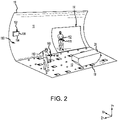
- cargo deck 12 is illustrated in greater detail.
- the cargo deck 12 may be defined by inner walls 11 of aircraft 10.
- Cargo deck 12 may include a plurality of freely rotating conveyance rollers 18, a number of power drive units (PDUs) 18 mounted in cargo deck 12.
- PDUs 18 may be configured to propel cargo over conveyance rollers 16 and across cargo deck 12.
- cargo deck 12 may include one or more FCTs 22.
- aircraft 10 may include a cargo handling system 100.
- Cargo handling system 100 may be configured to control and monitor the cargo loading and unloading processes.
- Cargo handling system 100 may be configured such that components of cargo handling system 100 (e.g., PDUs 18) may be controlled by a PED.
- cargo handling system 100 may comprise a wireless access point (WAP) 102.
- WAP 102 may be in operable communication, via wired or wireless connection, with PDUs 18 and/or other components of cargo handling system 100 that convey cargo 20.
- WAP 102 may be configured to allow PEDs to interface with and control cargo handling system 100.
- an operator 150 may use PED 160 to send command signals to PDUs 18 to control the movement of cargo 20 over cargo deck 12.
- PED 160 is configured to wirelessly communicate with WAP 102.
- PED 160 may be wirelessly connected to WAP 102 such that signals (e.g. control requests, command signals, control keys, etc.) may be sent wirelessly between PED 160 and WAP 102.
- signals e.g. control requests, command signals, control keys, etc.
- PED 160 being wirelessly connected to WAP 102 allows PED 160 to control PDUs 18. Stated differently, if PED 160 is not connected to WAP 102, signals sent from PED 160 may not be conveyed to PDUs 18.
- WAP 102 is computer based, and comprises a controller 104, a tangible, non-transitory computer-readable storage medium 106, and/or a network interface, along with other suitable system software and hardware components.
- Controller 104 may include and communicate with one or more processors and one or more tangible, non-transitory storage medium(s) 106 and is capable of implementing logic.
- the processor can be a general purpose processor, a digital signal processor (DSP), an application specific integrated circuit (ASIC), a field programmable gate array (FPGA) or other programmable logic device, discrete gate or transistor logic, discrete hardware components, or a combination thereof.
- System program instructions and/or processor instructions may be loaded onto tangible, non-transitory computer-readable storage medium 106.
- the system program instructions and/or processor instructions may, in response to execution by controller 104, cause controller 104 to perform various operations.
- the instructions may allow controller 104 to determine a number of devices (e.g., PEDs) currently connected to WAP 102 and/or controlling cargo handling system 100.
- PEDs devices
- non-transitory is to be understood to remove only propagating transitory signals per se from the claim scope and does not relinquish rights to all standard computer-readable media that are not only propagating transitory signals per se.
- PED 160 may be a tablet, a cellular phone, a laptop computer, or any other apparatus capable of interfacing with PDUs 18 via a wireless connection to WAP 102.
- PED 160 may be computer based, and may comprise a PED controller 162, a tangible, non-transitory computer-readable storage medium 164, and/or a network interface, along with other suitable system software and hardware components.
- PED controller 162 may include and communicate with one or more processors and one or more tangible, non-transitory storage medium(s) 164 and is capable of implementing logic.
- the processor can be a general purpose processor, a DSP, an ASIC, a FPGA or other programmable logic device, discrete gate or transistor logic, discrete hardware components, or a combination thereof.
- System program instructions and/or processor instructions may be loaded onto tangible, non-transitory computer-readable storage medium 164.
- the system program instructions and/or processor instructions may, in response to execution by PED controller 162, cause PED controller 162 to perform various operations.
- the instructions may cause PED controller 162 to send and receive various signals to and from WAP 102.
- WAP 102 may be configured to receive a control request from a PED, determine a number of PEDs currently controlling cargo handling system, and in response to the number of PED determination decide if a control key should be sent to the PED.
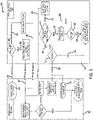
- system 190 for limiting control of cargo handling system to a preselected number of devices is illustrated.
- system 190 includes controller 104 of WAP 102.
- Controller 104 may be configured to allow only one device to control cargo handling system 100. While FIG. 3 illustrates controller 104 being configured to allow only one device to control cargo handling system 100, it is further contemplated and understood that controller 104 and WAP 102 may be configured to allow any number of devices to control cargo handling system 100. For example, controller 104 may be configured to allow two (2) devices or five (5) devices, or twenty (20) device, etc. to control cargo handling system 100.
- controller 104 may receive a control request 200 from PED 160 (e.g., from PED controller 162).
- PED controller 162 may send control request 200 in response to PED controller 162 determining operator 150 has activated a cargo control program of PED 160 (determination 202).
- AP _Key unique control key
- controller 104 determines the number of devices currently controlling cargo handling system 100 is not zero (determination 208)
- Limiting the number of devices that may drive cargo 20, tends to increase safety and decrease opportunities for injury to persons in the cargo area and/or for damage to cargo 20.
- System 190 may be configured such that when PED 160 has the unique control key (AP _Key), PED 160 controls cargo handling system 100 until operator 150 relinquishes control or a timeout is generated due to inactivity from PED 160.
- AP _Key unique control key
- controller 104 may receive control commands 210 including identification key (User Key) from PED 160.
- controller 104 may activate a timer in response to sending unique control key (AP _Key) to PED 160. Controller 104 may reset the timer to zero each time a control command 210 including an identification key (User Key) matching unique control key (AP _Key) is received from PED 160.
- AP _Key unique control key
- Controller 104 may determine if the timer has exceeded an inactivity threshold time (determination 212). If controller 104 determines the timer has exceeded the inactivity threshold time (determination 214), controller 104 generates a new unique control key (AP _Key2). Generation of the new unique control key (AP _Key2) voids, or invalidates, the unique control key (AP _Key) sent to PED 160. Generation of the new unique control key (AP _Key2) causes PED 160 to lose control of cargo handling system 100, as the identification key (User Key) included in the control commands 210 from PED 160 does not match the new unique control key (AP _Key2).
- AP _Key2 new unique control key
- controller 104 determines the timer has not exceeded the inactivity threshold time (determination 216)
- controller 104 compares the identification key (User Key) included with control commands 210 from PED 160 to the unique control key (AP _Key) (comparison 218).
- controller 104 processes control command 210.
- controller 104 processes control command 210.
- controller 104 processes control command 210 by sending the control command 210 to one or more PDUs 18 and/or to components configured to propel cargo 20 across cargo deck 12.
- controller 104 may be configured to allow multiple (i.e., two or more) PEDs to simultaneously control cargo handling system 100 (referred to herein as a multi-control device configuration).
- controller 104 in the multi-control device configuration, controller 104 is configured to allow a predetermined number of devices (i.e., a threshold number of allowed devices) to control cargo handling system 100.
- controller 104 may assign a unique control key to each connected PED. Each connected PED and/or each unique control key may also be associated with its own dedicated timer. Upon receipt of a control request 200 from a new PED, controller 104 would determine if the number of devices currently controlling cargo handling system 100 is less than the threshold number of allowed devices.
- controller 104 sends a new, unique control key to the new PED, adds one to the number of devices currently controlling cargo handling system 100, starts the timer associated with that PED and control key, and adds the newly assigned control key to a stored list of currently designated (i.e., valid) control keys.
- the identification key User Key
- controller 104 removes the control key associated that PED and timer from the list of currently designated control keys and subtracts one from the number of devices currently controlling cargo handling system 100. If controller 104 receives a relinquish control signal from a PED, controller 104 removes the control key associated with that PED from the list of currently designated control keys and subtracts one from the number of devices currently controlling cargo handling system 100. For example, if the operator of a PED deactivates the cargo control program of the PED, controller 104 will receive a relinquish control signal including an identification key (User Key) from the PED. In response to the relinquish control signal, controller 104 removes the control key matching the identification key (User Key) of the relinquish control signal from the list of currently designated control keys, and subtracts one from the number of devices currently controlling cargo handling system 100.
- an identification key User Key
- controller 104 may be configured to provide the same control key to each allowed device, such that there is one valid control key at a time and the control commands 210 from each of the connected devices would include the same identification key (User Key).
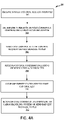
- method 300 includes receiving, by a controller, a system control request from a PED (step 302), determining, by the controller, a number of devices currently controlling the cargo handling system (step 304), and sending by the controller, a first control key or a control request denied message to the PED (step 306).
- Step 306 may comprise the controller sending the first control key to the PED if the number of devices currently controlling the cargo handling system is fewer than a threshold number of allowed devices, and the controller sending the control request denied message to the PED if the number of devices currently controlling the cargo handling system is greater than or equal to the threshold number of allowed devices.
- method 300 may further include receiving, by the controller, a control command including an identification key from the PED (step 308), comparing, by the controller, the identification key to the first control key (step 310), and sending, by the controller, at least one of the control command or a bad key message in response to the comparison of the identification key to the first control key (step 312).
- step 312 may comprise the controller sending the control command to a component of the cargo handling system if the identification key matches the first control key, and the controller sending the bad key message to the portable electronic device if the identification key is different from the first control key.
- method 300 may further include adding, by the controller, one device to the number of devices currently controlling the cargo handling system in response to sending the first control key to the portable electronic device (step 314), starting, by the controller, a timer in response to sending the first control key to the portable electronic device (step 316), and resetting, by the controller, the timer to zero each time a control command including an identification key matching the first control key is received from the PED (step 318).
- method 300 may further include generating, by the controller, a second control key if the timer exceeds an inactivity threshold time (step 320), and subtracting, by the controller, one device from the number of devices currently controlling the cargo handling system in response to the timer exceeding the inactivity threshold time (step 322).
- generation of the second control key voids, or invalidates, the first control key
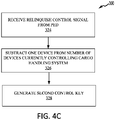
- method 300 may further include receiving, by the controller, a relinquish control signal from the portable electronic device (step 324), and subtracting, by the controller, one device from the number of devices currently controlling the cargo handling system in response to receiving the relinquish control signal (step 326) and generating, by the controller, a second control key in response to receiving the relinquish control signal (step 328).
- references to "various embodiments”, “one embodiment”, “an embodiment”, “an example embodiment”, etc. indicate that the embodiment described may include a particular feature, structure, or characteristic, but every embodiment may not necessarily include the particular feature, structure, or characteristic. Moreover, such phrases are not necessarily referring to the same embodiment. Further, when a particular feature, structure, or characteristic is described in connection with an embodiment, it is submitted that it is within the knowledge of one skilled in the art to affect such feature, structure, or characteristic in connection with other embodiments whether or not explicitly described. After reading the description, it will be apparent to one skilled in the relevant art(s) how to implement the disclosure in alternative embodiments within the scope of the appended claims.
Landscapes
- Engineering & Computer Science (AREA)
- Computer Networks & Wireless Communication (AREA)
- Signal Processing (AREA)
- General Physics & Mathematics (AREA)
- Automation & Control Theory (AREA)
- Physics & Mathematics (AREA)
- Manufacturing & Machinery (AREA)
- Mechanical Engineering (AREA)
- Computer Security & Cryptography (AREA)
- Quality & Reliability (AREA)
- General Engineering & Computer Science (AREA)
- Human Computer Interaction (AREA)
- Selective Calling Equipment (AREA)
- Management, Administration, Business Operations System, And Electronic Commerce (AREA)
Claims (10)
- Verfahren zum Beschränken der Steuerung eines Frachtabfertigungssystems auf eine vorausgewählte Anzahl von tragbaren elektronischen Vorrichtungen, umfassend:Empfangen, durch eine Steuerung (104) eines drahtlosen Zugangspunkts (102), einer Systemsteuerungsanforderung von einer tragbaren elektronischen Vorrichtung (160);Bestimmen, durch die Steuerung, einer Anzahl von tragbaren elektronischen Vorrichtungen, welche das Frachtabfertigungssystem aktuell steuern;Senden, durch die Steuerung, mindestens eines von einem eindeutigen Steuerungsschlüssel oder einer Steuerungsanforderungsverweigerungsnachricht an die tragbare elektronische Vorrichtung, wobei die Steuerung dazu konfiguriert ist, den eindeutigen Steuerungsschlüssel an die tragbare elektronische Vorrichtung zu senden, wenn die Anzahl von tragbaren elektronischen Vorrichtungen, welche das Frachtabfertigungssystem aktuell steuern, kleiner als eine Schwellenanzahl von zulässigen tragbaren elektronischen Vorrichtungen ist, und wobei die Steuerung dazu konfiguriert ist, die Steuerungsanforderungsverweigerungsnachricht an die tragbare elektronische Vorrichtung zu senden, wenn die Anzahl von tragbaren elektronischen Vorrichtungen, welche das Frachtabfertigungssystem aktuell steuern, größer oder gleich der Schwellenanzahl von zulässigen tragbaren elektronischen Vorrichtungen ist;Empfangen, durch die Steuerung, eines Steuerungsbefehls, der einen Identifikationsschlüssel beinhaltet, von der tragbaren elektronischen Vorrichtung;Vergleichen, durch die Steuerung, des Identifikationsschlüssels mit dem ersten Steuerungsschlüssel; undSenden, durch die Steuerung, mindestens eines von dem Steuerungsbefehl oder einer Ungültiger-Schlüssel-Nachricht als Reaktion auf den Vergleich des Identifikationsschlüssels mit dem eindeutigen Steuerungsschlüssel, wobei die Steuerung dazu konfiguriert ist, den Steuerungsbefehl an eine Komponente des Frachtabfertigungssystems zu senden, wenn der Identifikationsschlüssel mit dem eindeutigen Steuerungsschlüssel übereinstimmt, und wobei die Steuerung dazu konfiguriert ist, die Ungültiger-Schlüssel-Nachricht an die tragbare elektronische Vorrichtung zu senden, wenn sich der Identifikationsschlüssel vom eindeutigen Steuerungsschlüssel unterscheidet;wobei der drahtlose Zugangspunkt (102) über eine drahtgebundene oder drahtlose Verbindung mit mindestens einer von einer oder mehreren Leistungsantriebseinheiten (18) oder einer oder mehreren anderen Frachtabfertigungssystemkomponenten, die Fracht transportieren, in Wirkkommunikation steht,wobei der drahtlose Zugangspunkt (102) dazu konfiguriert ist, es tragbaren elektronischen Vorrichtungen zu ermöglichen, sich mit dem Frachtabfertigungssystem (100) zu koppeln und dieses zu steuern, undwobei die tragbare elektronische Vorrichtung (160) dazu konfiguriert ist, drahtlos mit dem drahtlosen Zugangspunkt (102) zu kommunizieren, sodass Signale drahtlos zwischen der tragbaren elektronischen Vorrichtung (160) und dem drahtlosen Zugangspunkt (102) gesendet werden können.
- Verfahren nach Anspruch 1, ferner umfassend Hinzufügen, durch die Steuerung, einer tragbaren elektronischen Vorrichtung zu der Anzahl von tragbaren elektronischen Vorrichtungen, welche das Frachtabfertigungssystem aktuell steuern, als Reaktion auf das Senden des eindeutigen Steuerungsschlüssels an die tragbare elektronische Vorrichtung.
- Verfahren nach einem der vorhergehenden Ansprüche, ferner umfassend:Starten, durch die Steuerung, eines Timers als Reaktion auf das Senden des eindeutigen Steuerungsschlüssels an die tragbare elektronische Vorrichtung; undZurücksetzen, durch die Steuerung, des Timers auf null jedes Mal, wenn ein Steuerungsbefehl, der einen Identifikationsschlüssel beinhaltet, der mit dem eindeutigen Steuerungsschlüssel übereinstimmt, von der tragbaren elektronischen Vorrichtung empfangen wird.
- Verfahren nach Anspruch 3, ferner umfassend:Erzeugen, durch die Steuerung, eines neuen eindeutigen Steuerungsschlüssels, wenn der Timer eine Inaktivitätsschwellenzeit überschreitet, wobei die Erzeugung des neuen eindeutigen Steuerungsschlüssels den an die tragbare elektronische Vorrichtung gesendeten eindeutigen Steuerungsschlüssel ungültig macht; undAbziehen, durch die Steuerung, einer tragbaren elektronischen Vorrichtung von der Anzahl von tragbaren elektronischen Vorrichtungen, welche das Frachtabfertigungssystem aktuell steuern, als Reaktion darauf, dass der Timer die Inaktivitätsschwellenzeit überschreitet.
- Verfahren nach einem der vorhergehenden Ansprüche, ferner umfassend:Empfangen, durch die Steuerung, eines Steuerungsverzichtsignals von der tragbaren elektronischen Vorrichtung; undAbziehen, durch die Steuerung, einer tragbaren elektronischen Vorrichtung von der Anzahl von tragbaren elektronischen Vorrichtungen, welche das Frachtabfertigungssystem aktuell steuern, als Reaktion auf das Empfangen des Steuerungsverzichtsignals.
- Verfahren nach Anspruch 5, ferner umfassend Erzeugen, durch die Steuerung, eines neuen eindeutigen Steuerungsschlüssels als Reaktion auf das Empfangen des Steuerungsverzichtsignals, wobei die Erzeugung des neuen eindeutigen Steuerungsschlüssels den an die tragbare elektronische Vorrichtung gesendeten eindeutigen Steuerungsschlüssel ungültig macht.
- System für einen drahtlosen Zugangspunkt zum Beschränken der Steuerung eines Frachtabfertigungssystems (100) auf eine vorausgewählte Anzahl von tragbaren elektronischen Vorrichtungen, umfassend:eine Steuerung (104), wobei die Steuerung mit einer Leistungsantriebseinheit (18) des Frachtabfertigungssystems in Wirckommunikation steht; undein materielles, nicht transitorisches Speichermedium (106), das dazu konfiguriert ist, mit der Steuerung zu kommunizieren, wobei auf dem materiellen, nicht transitorischen Speichermedium Anweisungen gespeichert sind, die als Reaktion auf die Ausführung durch die Steuerung die Steuerung dazu veranlassen, Vorgänge durchzuführen, die Folgendes umfassen:Empfangen, durch die Steuerung, einer Systemsteuerungsanforderung von einer tragbaren elektronischen Vorrichtung;Bestimmen, durch die Steuerung, einer Anzahl von tragbaren elektronischen Vorrichtungen, welche das Frachtabfertigungssystem aktuell steuern;Senden, durch die Steuerung, mindestens eines von einem eindeutigen Steuerungsschlüssel oder einer Steuerungsanforderungsverweigerungsnachricht an die tragbare elektronische Vorrichtung, wobei die Steuerung dazu konfiguriert ist, den eindeutigen Steuerungsschlüssel an die tragbare elektronische Vorrichtung zu senden, wenn die Anzahl von tragbaren elektronischen Vorrichtungen, welche das Frachtabfertigungssystem aktuell steuern, kleiner als eine Schwellenanzahl von zulässigen tragbaren elektronischen Vorrichtungen ist, und wobei die Steuerung dazu konfiguriert ist, die Steuerungsanforderungsverweigerungsnachricht an die tragbare elektronische Vorrichtung zu senden, wenn die Anzahl von tragbaren elektronischen Vorrichtungen, welche das Frachtabfertigungssystem aktuell steuern, größer oder gleich der Schwellenanzahl von zulässigen tragbaren elektronischen Vorrichtungen ist;Empfangen, durch die Steuerung, eines Steuerungsbefehls, der einen Identifikationsschlüssel beinhaltet, von der tragbaren elektronischen Vorrichtung;Vergleichen, durch die Steuerung, des Identifikationsschlüssels mit dem eindeutigen Steuerungsschlüssel; undSenden, durch die Steuerung, mindestens eines von dem Steuerungsbefehl oder einer Ungültiger-Schlüssel-Nachricht, wobei die Steuerung dazu konfiguriert ist, den Steuerungsbefehl an eine Komponente des Frachtabfertigungssystems zu senden, wenn der Identifikationsschlüssel mit dem eindeutigen Steuerungsschlüssel übereinstimmt, und wobei die Steuerung dazu konfiguriert ist, die Ungültiger-Schlüssel-Nachricht an die tragbare elektronische Vorrichtung zu senden, wenn sich der Identifikationsschlüssel vom eindeutigen Steuerungsschlüssel unterscheidet;wobei der drahtlose Zugangspunkt (102) über eine drahtgebundene oder drahtlose Verbindung mit mindestens einer von der Leistungsantriebseinheit (18) oder einer oder mehreren anderen Frachtabfertigungssystemkomponenten, die Fracht transportieren, in Wirkkommunikation steht,wobei der drahtlose Zugangspunkt (102) dazu konfiguriert ist, es tragbaren elektronischen Vorrichtungen zu ermöglichen, sich mit dem Frachtabfertigungssystem (100) zu koppeln und dieses zu steuern.
- System für einen drahtlosen Zugangspunkt nach Anspruch 7, wobei die Vorgänge ferner Folgendes umfassen:Starten, durch die Steuerung, eines Timers als Reaktion auf das Senden des eindeutigen Steuerungsschlüssels an die tragbare elektronische Vorrichtung; undZurücksetzen, durch die Steuerung, des Timers auf null jedes Mal, wenn ein Signal, das einen Identifikationsschlüssel beinhaltet, der mit dem eindeutigen Steuerungsschlüssel übereinstimmt, von der tragbaren elektronischen Vorrichtung empfangen wird.
- System für einen drahtlosen Zugangspunkt nach Anspruch 8, wobei die Vorgänge ferner Folgendes umfassen:
Abziehen, durch die Steuerung, einer tragbaren elektronischen Vorrichtung von der Anzahl von tragbaren elektronischen Vorrichtungen, welche das Frachtabfertigungssystem aktuell steuern, als Reaktion auf mindestens eines von:Empfangen, durch die Steuerung, eines Steuerungsverzichtsignals von der tragbaren elektronischen Vorrichtung; oderBestimmen, durch die Steuerung, dass der Timer eine Inaktivitätsschwellenzeit überschritten hat. - System für einen drahtlosen Zugangspunkt nach Anspruch 9, wobei die Vorgänge ferner Erzeugen, durch die Steuerung, eines neuen eindeutigen Steuerungsschlüssels umfassen, wobei die Erzeugung des zweiten Steuerungsschlüssels den an die tragbare elektronische Vorrichtung gesendeten eindeutigen Steuerungsschlüssel ungültig macht.
Applications Claiming Priority (1)
| Application Number | Priority Date | Filing Date | Title |
|---|---|---|---|
| US16/505,237 US10779221B1 (en) | 2019-07-08 | 2019-07-08 | Wireless network session management |
Publications (2)
| Publication Number | Publication Date |
|---|---|
| EP3764176A1 EP3764176A1 (de) | 2021-01-13 |
| EP3764176B1 true EP3764176B1 (de) | 2022-09-07 |
Family
ID=68808045
Family Applications (1)
| Application Number | Title | Priority Date | Filing Date |
|---|---|---|---|
| EP19213930.1A Active EP3764176B1 (de) | 2019-07-08 | 2019-12-05 | Drahtlose netzwerksitzungsverwaltung |
Country Status (2)
| Country | Link |
|---|---|
| US (1) | US10779221B1 (de) |
| EP (1) | EP3764176B1 (de) |
Family Cites Families (6)
| Publication number | Priority date | Publication date | Assignee | Title |
|---|---|---|---|---|
| US7198227B2 (en) * | 2004-06-10 | 2007-04-03 | Goodrich Corporation | Aircraft cargo locating system |
| US9244455B2 (en) * | 2007-09-10 | 2016-01-26 | Fisher-Rosemount Systems, Inc. | Location dependent control access in a process control system |
| US10085135B2 (en) * | 2009-02-10 | 2018-09-25 | Yikes Llc | Radio frequency patch antenna and system for permitting secure access to a restricted area |
| EP2688053A1 (de) * | 2012-07-17 | 2014-01-22 | Siemens Aktiengesellschaft | Verfahren zur Anmeldung eines mobilen Bediengerätes an einen Wirkbereich einer zu bedienenden Maschine und Antwortgebersystem |
| US20150051756A1 (en) * | 2013-08-14 | 2015-02-19 | The Boeing Company | Aircraft System Control and Reporting via a Mobile Device |
| CN113811014B (zh) * | 2015-09-30 | 2025-05-06 | 中兴通讯股份有限公司 | 无线网络的接入方法和装置 |
-
2019
- 2019-07-08 US US16/505,237 patent/US10779221B1/en active Active
- 2019-12-05 EP EP19213930.1A patent/EP3764176B1/de active Active
Also Published As
| Publication number | Publication date |
|---|---|
| EP3764176A1 (de) | 2021-01-13 |
| US10779221B1 (en) | 2020-09-15 |
Similar Documents
| Publication | Publication Date | Title |
|---|---|---|
| US11535397B2 (en) | Autonomous system for air cargo end-to-end operations | |
| US4050655A (en) | Cargo loading method and apparatus | |
| US11072424B2 (en) | Cargo intelligent restraint system | |
| US12084201B2 (en) | Distributed control of autonomous cargo handling systems | |
| JP2018111484A (ja) | 貨物処理システム及び方法 | |
| EP3378787B1 (de) | Frachthandhabungssystem und steuerungsverfahren | |
| JP2020135028A (ja) | 情報処理装置 | |
| JP2020516518A (ja) | 機内エンターテイメントシステムによる座席作動制御 | |
| US20040037684A1 (en) | Cargo loading system | |
| EP3764176B1 (de) | Drahtlose netzwerksitzungsverwaltung | |
| CN105046463A (zh) | 基于智能吊舱的无人机货运执飞方法及智能吊舱 | |
| EP3747803B1 (de) | Elektromotorantriebseinheit für ein flugzeugladeraumfussbodensystem | |
| US12085914B2 (en) | Systems and methods for operating multiple-level autonomous cargo handling systems | |
| EP4603385A1 (de) | Palettenversatzkorrektur | |
| US20240421841A1 (en) | Cargo system wireless adapter | |
| US20230382530A1 (en) | Cargo loading system and cargo loading method for loading ulds into an aircraft | |
| CN211810191U (zh) | 一种飞机货舱系统和飞机 | |
| US10919630B1 (en) | Restraint assembly for cargo system | |
| US11673668B2 (en) | Powered rail mounted air cargo cart | |
| US10825143B2 (en) | Auto-rotating controller display and methods of determining controller display orientation for cargo handling systems | |
| US11655041B2 (en) | Electronic release systems and methods for ejection seats | |
| EP4140883B1 (de) | Verriegelungszustandsdetektionssystem, verfahren und vorrichtungen | |
| CN210122197U (zh) | 装卸载具和无人飞行器 | |
| US20230397002A1 (en) | Short range data transfer in wireless cargo applications | |
| EP4134308B1 (de) | Systeme und verfahren zur detektion vom zustand von sperrlinke |
Legal Events
| Date | Code | Title | Description |
|---|---|---|---|
| PUAI | Public reference made under article 153(3) epc to a published international application that has entered the european phase |
Free format text: ORIGINAL CODE: 0009012 |
|
| STAA | Information on the status of an ep patent application or granted ep patent |
Free format text: STATUS: THE APPLICATION HAS BEEN PUBLISHED |
|
| AK | Designated contracting states |
Kind code of ref document: A1 Designated state(s): AL AT BE BG CH CY CZ DE DK EE ES FI FR GB GR HR HU IE IS IT LI LT LU LV MC MK MT NL NO PL PT RO RS SE SI SK SM TR |
|
| AX | Request for extension of the european patent |
Extension state: BA ME |
|
| RIN1 | Information on inventor provided before grant (corrected) |
Inventor name: PETERSON, KEVIN C. Inventor name: KURUVATTI, SHAILASHRI SHIVAPPA Inventor name: HENDERSON, JEREMY |
|
| STAA | Information on the status of an ep patent application or granted ep patent |
Free format text: STATUS: REQUEST FOR EXAMINATION WAS MADE |
|
| 17P | Request for examination filed |
Effective date: 20210713 |
|
| RBV | Designated contracting states (corrected) |
Designated state(s): AL AT BE BG CH CY CZ DE DK EE ES FI FR GB GR HR HU IE IS IT LI LT LU LV MC MK MT NL NO PL PT RO RS SE SI SK SM TR |
|
| GRAP | Despatch of communication of intention to grant a patent |
Free format text: ORIGINAL CODE: EPIDOSNIGR1 |
|
| STAA | Information on the status of an ep patent application or granted ep patent |
Free format text: STATUS: GRANT OF PATENT IS INTENDED |
|
| RIC1 | Information provided on ipc code assigned before grant |
Ipc: G05B 19/042 20060101ALI20220310BHEP Ipc: G05B 19/418 20060101ALI20220310BHEP Ipc: G05B 19/409 20060101AFI20220310BHEP |
|
| INTG | Intention to grant announced |
Effective date: 20220406 |
|
| GRAS | Grant fee paid |
Free format text: ORIGINAL CODE: EPIDOSNIGR3 |
|
| GRAA | (expected) grant |
Free format text: ORIGINAL CODE: 0009210 |
|
| STAA | Information on the status of an ep patent application or granted ep patent |
Free format text: STATUS: THE PATENT HAS BEEN GRANTED |
|
| AK | Designated contracting states |
Kind code of ref document: B1 Designated state(s): AL AT BE BG CH CY CZ DE DK EE ES FI FR GB GR HR HU IE IS IT LI LT LU LV MC MK MT NL NO PL PT RO RS SE SI SK SM TR |
|
| REG | Reference to a national code |
Ref country code: GB Ref legal event code: FG4D |
|
| REG | Reference to a national code |
Ref country code: CH Ref legal event code: EP Ref country code: AT Ref legal event code: REF Ref document number: 1517575 Country of ref document: AT Kind code of ref document: T Effective date: 20220915 |
|
| REG | Reference to a national code |
Ref country code: DE Ref legal event code: R096 Ref document number: 602019019217 Country of ref document: DE |
|
| REG | Reference to a national code |
Ref country code: IE Ref legal event code: FG4D |
|
| REG | Reference to a national code |
Ref country code: LT Ref legal event code: MG9D |
|
| REG | Reference to a national code |
Ref country code: NL Ref legal event code: MP Effective date: 20220907 |
|
| PG25 | Lapsed in a contracting state [announced via postgrant information from national office to epo] |
Ref country code: SE Free format text: LAPSE BECAUSE OF FAILURE TO SUBMIT A TRANSLATION OF THE DESCRIPTION OR TO PAY THE FEE WITHIN THE PRESCRIBED TIME-LIMIT Effective date: 20220907 Ref country code: RS Free format text: LAPSE BECAUSE OF FAILURE TO SUBMIT A TRANSLATION OF THE DESCRIPTION OR TO PAY THE FEE WITHIN THE PRESCRIBED TIME-LIMIT Effective date: 20220907 Ref country code: NO Free format text: LAPSE BECAUSE OF FAILURE TO SUBMIT A TRANSLATION OF THE DESCRIPTION OR TO PAY THE FEE WITHIN THE PRESCRIBED TIME-LIMIT Effective date: 20221207 Ref country code: LV Free format text: LAPSE BECAUSE OF FAILURE TO SUBMIT A TRANSLATION OF THE DESCRIPTION OR TO PAY THE FEE WITHIN THE PRESCRIBED TIME-LIMIT Effective date: 20220907 Ref country code: LT Free format text: LAPSE BECAUSE OF FAILURE TO SUBMIT A TRANSLATION OF THE DESCRIPTION OR TO PAY THE FEE WITHIN THE PRESCRIBED TIME-LIMIT Effective date: 20220907 Ref country code: FI Free format text: LAPSE BECAUSE OF FAILURE TO SUBMIT A TRANSLATION OF THE DESCRIPTION OR TO PAY THE FEE WITHIN THE PRESCRIBED TIME-LIMIT Effective date: 20220907 |
|
| REG | Reference to a national code |
Ref country code: AT Ref legal event code: MK05 Ref document number: 1517575 Country of ref document: AT Kind code of ref document: T Effective date: 20220907 |
|
| PG25 | Lapsed in a contracting state [announced via postgrant information from national office to epo] |
Ref country code: HR Free format text: LAPSE BECAUSE OF FAILURE TO SUBMIT A TRANSLATION OF THE DESCRIPTION OR TO PAY THE FEE WITHIN THE PRESCRIBED TIME-LIMIT Effective date: 20220907 Ref country code: GR Free format text: LAPSE BECAUSE OF FAILURE TO SUBMIT A TRANSLATION OF THE DESCRIPTION OR TO PAY THE FEE WITHIN THE PRESCRIBED TIME-LIMIT Effective date: 20221208 |
|
| PG25 | Lapsed in a contracting state [announced via postgrant information from national office to epo] |
Ref country code: SM Free format text: LAPSE BECAUSE OF FAILURE TO SUBMIT A TRANSLATION OF THE DESCRIPTION OR TO PAY THE FEE WITHIN THE PRESCRIBED TIME-LIMIT Effective date: 20220907 Ref country code: RO Free format text: LAPSE BECAUSE OF FAILURE TO SUBMIT A TRANSLATION OF THE DESCRIPTION OR TO PAY THE FEE WITHIN THE PRESCRIBED TIME-LIMIT Effective date: 20220907 Ref country code: PT Free format text: LAPSE BECAUSE OF FAILURE TO SUBMIT A TRANSLATION OF THE DESCRIPTION OR TO PAY THE FEE WITHIN THE PRESCRIBED TIME-LIMIT Effective date: 20230109 Ref country code: ES Free format text: LAPSE BECAUSE OF FAILURE TO SUBMIT A TRANSLATION OF THE DESCRIPTION OR TO PAY THE FEE WITHIN THE PRESCRIBED TIME-LIMIT Effective date: 20220907 Ref country code: CZ Free format text: LAPSE BECAUSE OF FAILURE TO SUBMIT A TRANSLATION OF THE DESCRIPTION OR TO PAY THE FEE WITHIN THE PRESCRIBED TIME-LIMIT Effective date: 20220907 Ref country code: AT Free format text: LAPSE BECAUSE OF FAILURE TO SUBMIT A TRANSLATION OF THE DESCRIPTION OR TO PAY THE FEE WITHIN THE PRESCRIBED TIME-LIMIT Effective date: 20220907 |
|
| PG25 | Lapsed in a contracting state [announced via postgrant information from national office to epo] |
Ref country code: SK Free format text: LAPSE BECAUSE OF FAILURE TO SUBMIT A TRANSLATION OF THE DESCRIPTION OR TO PAY THE FEE WITHIN THE PRESCRIBED TIME-LIMIT Effective date: 20220907 Ref country code: PL Free format text: LAPSE BECAUSE OF FAILURE TO SUBMIT A TRANSLATION OF THE DESCRIPTION OR TO PAY THE FEE WITHIN THE PRESCRIBED TIME-LIMIT Effective date: 20220907 Ref country code: IS Free format text: LAPSE BECAUSE OF FAILURE TO SUBMIT A TRANSLATION OF THE DESCRIPTION OR TO PAY THE FEE WITHIN THE PRESCRIBED TIME-LIMIT Effective date: 20230107 Ref country code: EE Free format text: LAPSE BECAUSE OF FAILURE TO SUBMIT A TRANSLATION OF THE DESCRIPTION OR TO PAY THE FEE WITHIN THE PRESCRIBED TIME-LIMIT Effective date: 20220907 |
|
| REG | Reference to a national code |
Ref country code: DE Ref legal event code: R097 Ref document number: 602019019217 Country of ref document: DE |
|
| P01 | Opt-out of the competence of the unified patent court (upc) registered |
Effective date: 20230522 |
|
| PG25 | Lapsed in a contracting state [announced via postgrant information from national office to epo] |
Ref country code: NL Free format text: LAPSE BECAUSE OF FAILURE TO SUBMIT A TRANSLATION OF THE DESCRIPTION OR TO PAY THE FEE WITHIN THE PRESCRIBED TIME-LIMIT Effective date: 20220907 Ref country code: AL Free format text: LAPSE BECAUSE OF FAILURE TO SUBMIT A TRANSLATION OF THE DESCRIPTION OR TO PAY THE FEE WITHIN THE PRESCRIBED TIME-LIMIT Effective date: 20220907 |
|
| PLBE | No opposition filed within time limit |
Free format text: ORIGINAL CODE: 0009261 |
|
| STAA | Information on the status of an ep patent application or granted ep patent |
Free format text: STATUS: NO OPPOSITION FILED WITHIN TIME LIMIT |
|
| PG25 | Lapsed in a contracting state [announced via postgrant information from national office to epo] |
Ref country code: DK Free format text: LAPSE BECAUSE OF FAILURE TO SUBMIT A TRANSLATION OF THE DESCRIPTION OR TO PAY THE FEE WITHIN THE PRESCRIBED TIME-LIMIT Effective date: 20220907 |
|
| REG | Reference to a national code |
Ref country code: CH Ref legal event code: PL |
|
| 26N | No opposition filed |
Effective date: 20230608 |
|
| REG | Reference to a national code |
Ref country code: BE Ref legal event code: MM Effective date: 20221231 |
|
| PG25 | Lapsed in a contracting state [announced via postgrant information from national office to epo] |
Ref country code: SI Free format text: LAPSE BECAUSE OF FAILURE TO SUBMIT A TRANSLATION OF THE DESCRIPTION OR TO PAY THE FEE WITHIN THE PRESCRIBED TIME-LIMIT Effective date: 20220907 Ref country code: LU Free format text: LAPSE BECAUSE OF NON-PAYMENT OF DUE FEES Effective date: 20221205 |
|
| PG25 | Lapsed in a contracting state [announced via postgrant information from national office to epo] |
Ref country code: LI Free format text: LAPSE BECAUSE OF NON-PAYMENT OF DUE FEES Effective date: 20221231 Ref country code: IE Free format text: LAPSE BECAUSE OF NON-PAYMENT OF DUE FEES Effective date: 20221205 Ref country code: CH Free format text: LAPSE BECAUSE OF NON-PAYMENT OF DUE FEES Effective date: 20221231 |
|
| PG25 | Lapsed in a contracting state [announced via postgrant information from national office to epo] |
Ref country code: BE Free format text: LAPSE BECAUSE OF NON-PAYMENT OF DUE FEES Effective date: 20221231 |
|
| PG25 | Lapsed in a contracting state [announced via postgrant information from national office to epo] |
Ref country code: CY Free format text: LAPSE BECAUSE OF FAILURE TO SUBMIT A TRANSLATION OF THE DESCRIPTION OR TO PAY THE FEE WITHIN THE PRESCRIBED TIME-LIMIT Effective date: 20220907 |
|
| PG25 | Lapsed in a contracting state [announced via postgrant information from national office to epo] |
Ref country code: MK Free format text: LAPSE BECAUSE OF FAILURE TO SUBMIT A TRANSLATION OF THE DESCRIPTION OR TO PAY THE FEE WITHIN THE PRESCRIBED TIME-LIMIT Effective date: 20220907 Ref country code: IT Free format text: LAPSE BECAUSE OF FAILURE TO SUBMIT A TRANSLATION OF THE DESCRIPTION OR TO PAY THE FEE WITHIN THE PRESCRIBED TIME-LIMIT Effective date: 20220907 Ref country code: HU Free format text: LAPSE BECAUSE OF FAILURE TO SUBMIT A TRANSLATION OF THE DESCRIPTION OR TO PAY THE FEE WITHIN THE PRESCRIBED TIME-LIMIT; INVALID AB INITIO Effective date: 20191205 |
|
| PG25 | Lapsed in a contracting state [announced via postgrant information from national office to epo] |
Ref country code: MC Free format text: LAPSE BECAUSE OF FAILURE TO SUBMIT A TRANSLATION OF THE DESCRIPTION OR TO PAY THE FEE WITHIN THE PRESCRIBED TIME-LIMIT Effective date: 20220907 |
|
| PG25 | Lapsed in a contracting state [announced via postgrant information from national office to epo] |
Ref country code: TR Free format text: LAPSE BECAUSE OF FAILURE TO SUBMIT A TRANSLATION OF THE DESCRIPTION OR TO PAY THE FEE WITHIN THE PRESCRIBED TIME-LIMIT Effective date: 20220907 Ref country code: MC Free format text: LAPSE BECAUSE OF FAILURE TO SUBMIT A TRANSLATION OF THE DESCRIPTION OR TO PAY THE FEE WITHIN THE PRESCRIBED TIME-LIMIT Effective date: 20220907 |
|
| PG25 | Lapsed in a contracting state [announced via postgrant information from national office to epo] |
Ref country code: BG Free format text: LAPSE BECAUSE OF FAILURE TO SUBMIT A TRANSLATION OF THE DESCRIPTION OR TO PAY THE FEE WITHIN THE PRESCRIBED TIME-LIMIT Effective date: 20220907 |
|
| PG25 | Lapsed in a contracting state [announced via postgrant information from national office to epo] |
Ref country code: MT Free format text: LAPSE BECAUSE OF FAILURE TO SUBMIT A TRANSLATION OF THE DESCRIPTION OR TO PAY THE FEE WITHIN THE PRESCRIBED TIME-LIMIT Effective date: 20220907 |
|
| PGFP | Annual fee paid to national office [announced via postgrant information from national office to epo] |
Ref country code: DE Payment date: 20251126 Year of fee payment: 7 |
|
| PGFP | Annual fee paid to national office [announced via postgrant information from national office to epo] |
Ref country code: GB Payment date: 20251120 Year of fee payment: 7 |
|
| PGFP | Annual fee paid to national office [announced via postgrant information from national office to epo] |
Ref country code: FR Payment date: 20251119 Year of fee payment: 7 |