EP3761690B1 - Apparatus, system and method for secure direct communication in proximity based services - Google Patents
Apparatus, system and method for secure direct communication in proximity based services Download PDFInfo
- Publication number
- EP3761690B1 EP3761690B1 EP20191217.7A EP20191217A EP3761690B1 EP 3761690 B1 EP3761690 B1 EP 3761690B1 EP 20191217 A EP20191217 A EP 20191217A EP 3761690 B1 EP3761690 B1 EP 3761690B1
- Authority
- EP
- European Patent Office
- Prior art keywords
- prose function
- prose
- interface
- key
- direct communication
- Prior art date
- Legal status (The legal status is an assumption and is not a legal conclusion. Google has not performed a legal analysis and makes no representation as to the accuracy of the status listed.)
- Active
Links
Images




Classifications
-
- H—ELECTRICITY
- H04—ELECTRIC COMMUNICATION TECHNIQUE
- H04W—WIRELESS COMMUNICATION NETWORKS
- H04W4/00—Services specially adapted for wireless communication networks; Facilities therefor
- H04W4/02—Services making use of location information
- H04W4/023—Services making use of location information using mutual or relative location information between multiple location based services [LBS] targets or of distance thresholds
-
- H—ELECTRICITY
- H04—ELECTRIC COMMUNICATION TECHNIQUE
- H04L—TRANSMISSION OF DIGITAL INFORMATION, e.g. TELEGRAPHIC COMMUNICATION
- H04L9/00—Cryptographic mechanisms or cryptographic arrangements for secret or secure communications; Network security protocols
- H04L9/08—Key distribution or management, e.g. generation, sharing or updating, of cryptographic keys or passwords
- H04L9/0816—Key establishment, i.e. cryptographic processes or cryptographic protocols whereby a shared secret becomes available to two or more parties, for subsequent use
- H04L9/0819—Key transport or distribution, i.e. key establishment techniques where one party creates or otherwise obtains a secret value, and securely transfers it to the other(s)
- H04L9/0825—Key transport or distribution, i.e. key establishment techniques where one party creates or otherwise obtains a secret value, and securely transfers it to the other(s) using asymmetric-key encryption or public key infrastructure [PKI], e.g. key signature or public key certificates
-
- H—ELECTRICITY
- H04—ELECTRIC COMMUNICATION TECHNIQUE
- H04W—WIRELESS COMMUNICATION NETWORKS
- H04W12/00—Security arrangements; Authentication; Protecting privacy or anonymity
- H04W12/04—Key management, e.g. using generic bootstrapping architecture [GBA]
-
- H—ELECTRICITY
- H04—ELECTRIC COMMUNICATION TECHNIQUE
- H04W—WIRELESS COMMUNICATION NETWORKS
- H04W12/00—Security arrangements; Authentication; Protecting privacy or anonymity
- H04W12/04—Key management, e.g. using generic bootstrapping architecture [GBA]
- H04W12/041—Key generation or derivation
-
- H—ELECTRICITY
- H04—ELECTRIC COMMUNICATION TECHNIQUE
- H04W—WIRELESS COMMUNICATION NETWORKS
- H04W12/00—Security arrangements; Authentication; Protecting privacy or anonymity
- H04W12/04—Key management, e.g. using generic bootstrapping architecture [GBA]
- H04W12/043—Key management, e.g. using generic bootstrapping architecture [GBA] using a trusted network node as an anchor
- H04W12/0431—Key distribution or pre-distribution; Key agreement
-
- H—ELECTRICITY
- H04—ELECTRIC COMMUNICATION TECHNIQUE
- H04W—WIRELESS COMMUNICATION NETWORKS
- H04W12/00—Security arrangements; Authentication; Protecting privacy or anonymity
- H04W12/08—Access security
-
- H—ELECTRICITY
- H04—ELECTRIC COMMUNICATION TECHNIQUE
- H04W—WIRELESS COMMUNICATION NETWORKS
- H04W8/00—Network data management
- H04W8/005—Discovery of network devices, e.g. terminals
-
- H—ELECTRICITY
- H04—ELECTRIC COMMUNICATION TECHNIQUE
- H04W—WIRELESS COMMUNICATION NETWORKS
- H04W8/00—Network data management
- H04W8/02—Processing of mobility data, e.g. registration information at HLR [Home Location Register] or VLR [Visitor Location Register]; Transfer of mobility data, e.g. between HLR, VLR or external networks
- H04W8/08—Mobility data transfer
-
- H—ELECTRICITY
- H04—ELECTRIC COMMUNICATION TECHNIQUE
- H04L—TRANSMISSION OF DIGITAL INFORMATION, e.g. TELEGRAPHIC COMMUNICATION
- H04L63/00—Network architectures or network communication protocols for network security
- H04L63/06—Network architectures or network communication protocols for network security for supporting key management in a packet data network
- H04L63/065—Network architectures or network communication protocols for network security for supporting key management in a packet data network for group communications
-
- H—ELECTRICITY
- H04—ELECTRIC COMMUNICATION TECHNIQUE
- H04W—WIRELESS COMMUNICATION NETWORKS
- H04W76/00—Connection management
- H04W76/10—Connection setup
- H04W76/14—Direct-mode setup
Definitions
- the present invention relates to an apparatus, a system and a method for ProSe (Proximity based Services).
- this invention relates to security for direct communication in ProSe, and considers network authorized direct communication.
- this invention relates to proximity direct communication using PKI (Public-Key Infrastructure), and considers not only one-to-one direct communication, but also one-to-many direct communication.
- PKI Public-Key Infrastructure
- the interface PC5 is a reference point between UEs (more than one article of User Equipment) such that the UEs can have direct communication thereover.
- the interface PC5 is used for control and user plane for ProSe discovery, direct communication and UE relay.
- the UE direct communication can be carried either directly or via LTE-Uu.
- EP 2 845 362 A1 discloses a method for providing secure communications in a communications system comprising the following steps. At least one key is sent from at least one network element of an access network to a first computing device and at least a second computing device. The first computing device and the second computing device utilize the access network to access the communication system and are authenticated by the access network prior to the key being sent. The key is useable by the first computing device and the second computing device to securely communicate with one another when in proximity of one another without communications between the first computing device and the second computing device going through the access network.
- an object of the present invention is to provide a solution for effectively ensuring security for direct communication in ProSe.
- a User Equipment in a mobile communication system, the mobile communication system including a first Proximity Services, ProSe, Function that supports a PC3 interface with the UE, another UE, and a second ProSe Function that supports a PC3 interface with the another UE and a PC6 interface with the first ProSe Function, the UE comprising: transmitting means adapted for sending, to the first ProSe Function, a request message for performing a direct communication over a PC5 interface between the UE and the another UE, the first ProSe Function determining whether the UE is authorized to use the direct communication over the PC5 interface between the UE and the another UE, the first ProSe Function communicating with the second ProSe Function for the authorization; deriving means adapted for deriving a session key from a root key shared between the UE and the another UE when the authorization by the first ProSe Function is performed successfully; and communicating
- a method provides a method performed by a User Equipment, UE, in a mobile communication system, the mobile communication system including a first Proximity Services, ProSe, Function that supports a PC3 interface with the UE, another UE, and a second ProSe Function that supports a PC3 interface with the another UE and a PC6 interface with the first ProSe Function.
- ProSe Proximity Services
- ProSe Function that supports a PC3 interface with the UE
- another UE another UE
- a second ProSe Function that supports a PC3 interface with the another UE and a PC6 interface with the first ProSe Function.
- the method comprises sending, to the first ProSe Function, a request message for performing direct communication over a PC5 interface between the UE and the another UE, the first ProSe Function determining whether the UE is authorized to use the direct communication over the PC5 interface between the UE and the another UE, the first ProSe Function communicating with the second ProSe Function for the authorization; deriving a session key from a root key shared between the UE and the another UE when the authorization by the first ProSe Function is performed successfully; and performing the direct communication over the PC5 interface with the another UE securely using the session key.
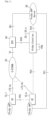
- Fig. 1 shows a configuration example of a communication system for proximity service.
- Proximity service provides operator network controlled discovery and communications between UEs that are in proximity, for both commercial/social use and public safety use. It is required that the ProSe service should be provided to UEs with or without network coverage.
- the communication system includes a plurality of UEs 10_1 to 10_m (hereinafter may be collectively referred to by a code 10), one or more ProSe Functions 20_1 to 20_n (hereinafter may be collectively referred to by a code 20), an E-UTRAN (Evolved Universal Terrestrial Radio Access Network) 30, an EPC (Evolved Packet Core) 40, and a ProSe APP (Application) Server 50.
- a code 10 the communication system
- ProSe Functions 20_1 to 20_n hereinafter may be collectively referred to by a code 20
- E-UTRAN Evolved Universal Terrestrial Radio Access Network
- EPC Evolved Packet Core
- ProSe APP Application
- the UE 10 attaches to the EPC 40 thorough the E-UTRAN 30 (i.e., through interfaces LTE-Uu and S1), thereby functioning as a typical UE. Moreover, the UE 10 uses the above-mentioned interface PC5, thereby conducting ProSe communication. Prior to the ProSe communication, the UE 10 is registered with the ProSe Function 20. Note that the UEs 10_1 to 10_m may be registered with the same ProSe Function or mutually different ProSe Functions. Moreover, some of the UEs 10_1 to 10_m may be registered with the same ProSe Function.
- the ProSe Function 20 is a node which supports the ProSe communication between the UEs 10_1 to 10_m.
- the ProSe Function 20 can either be deployed in a certain network node or be an independent node, and may reside in or out of the EPC 40.
- the ProSe Function 20 communicates with the UE 10 through an interface PC3. Further, the ProSe Function 20 communicates with the EPC 40 through an interface PC4. Furthermore, the ProSe Functions 20_1 to 20_n can communicate with each other through an interface PC6.
- the interface PC3 is a reference point between the UE 10 and the ProSe Function 20.
- the interface PC3 is used to define the interaction between the UE 10 and the ProSe Function 20.
- An example may be to use for configuration for Prose discovery and communication.
- the interface PC4 is a reference point between the EPC 40 and the ProSe Function 20.
- the interface PC4 is used to define the interaction between the EPC 40 and the ProSe Function 20. Possible use cases may be when setting up a one-to-one communication path between the UEs 10_1 to 10_m, or when validating ProSe services (authorization) for session management or mobility management in real time.
- the interface PC6 is a reference point between the ProSe Functions 20_1 to 20_n.
- the interface PC6 may be used for functions such as ProSe discovery between users subscribed to different PLMNs (Public Land Mobile Networks).
- the E-UTRAN 30 is formed by one or more eNBs (evolved Node Bs) (not shown).
- the EPC 40 includes, as its network nodes, an MME (Mobility Management Entity) which manages mobility of the UEs 10_1 to 10_m, and the like.
- the ProSe APP Server 50 can communicate with the EPC 40 through an interface SGi.
- the ProSe APP Server 50 can communicate with the UE 10 through an interface PC1, and can communicate with the ProSe Function 20 through an interface PC2.
- the interface PC1 is a reference point between ProSe APPs in the UEs 10_1 to 10_m and the ProSe APP Server 50.
- the interface PC 1 is used to define application level signaling requirements.
- the interface PC2 is a reference point between the ProSe Function 20 and the ProSe APP Server 50.
- the interface PC2 is used to define the interaction between the ProSe APP Server 50 and ProSe functionality provided by the 3GPP EPS (Evolved Packet System) via the ProSe Function 20.
- 3GPP EPS Evolved Packet System
- One example may be for application data updates for a ProSe database in the ProSe Function 20.
- Another example may be data for use by the ProSe App Server 50 in interworking between 3GPP functionality and application data, e.g. name translation.
- the ProSe APP Server 50 may reside in or out of the EPC 40.
- the communication system also includes a server operated by a trust third party.
- this server will be sometimes simply referred to as “third (3rd) party” and referred to by a code 60.
- the 3rd party 60 manages root keys which will be described later.
- This exemplary embodiment proposes to use the third party 60 to derive, update and allocate root keys.
- the ProSe Function 20 supports direct communication and allocates all the root keys to the UE 10 at its registration.
- Session key are derived at the UE 10 side by using the root key.
- the session key is a pair of confidentiality and integrity keys for protecting messages directly transferred between the UEs 10_1 to 10_m.
- Root key is related to a given UE
- Root key is derived/allocated at registration. Assume that the ProSe Function 20 has a list of UEs with which the UE 10_1 is allowed to communicate, and that the ProSe Function 20 can ask for all the root keys for the UE 10_1 from the trust 3rd party 60. The 3rd party 60 is responsible for key derivation and allocation. The ProSe Functions 20_1 to 20_n can retrieve root keys from the 3rd party 60 for the UEs 10_1 to 10_m registered to them such that no synchronization is needed between the ProSe Functions 20_1 to 20_n. Each root key is identified by a unique KSI (Key Set Identifier). When direct communication happens, the ProSe Function 20 can indicate to the UEs 10_1 to 10_m which KSI to use, or the UEs 10_1 to 10_m can negotiate about it.
- KSI Key Set Identifier
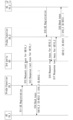
- the UE 10_1 registers at the ProSe Function 20_1 (step S11).
- the ProSe Function 20_1 sends Request root keys for the UE 10_1 to the third party 60 which manages the root key (step S12).
- the third party 60 responds the ProSe Function 20_1 with the root keys for the UE 10_1.
- Each root key is related to a unique KSI and a UE with which the UE 10_1 is allowed to have ProSe service (step S13).
- the ProSe Function 20_1 distributes the root keys to the UE 10_1, including the UE ID and KSI (step S14).
- steps S11 to S14 The same procedure as steps S11 to S14 is performed between the UE 10_2 and the ProSe Function 20_2 (steps S15 to S18).
- UEs can obtain a key pool, in which each key has a unique KSI to identify it.
- network Prose Function
- the difference compared to the Option 1 is that here the root keys are not related to any UE.
- the ProSe Function 20 needs to ensure that the same root key will not be re-used for different UEs.
- the UE 10_1 registers at the ProSe Function 20_1 (step S21).
- the ProSe Function 20_1 sends Request root keys for the UE 10_1 to the third party 60 which manages the root key (step S22).
- the third party 60 responds the ProSe Function 20_1 with a root key pool contain a bunch of root keys. Each key is related to a unique KSI (step S23).
- the ProSe Function 20_1 distributes the root keys to the UE 10_1 with the KSIs (step S24).
- steps S21 to S24 The same procedure as steps S21 to S24 is performed between the UE 10_2 and the ProSe Function 20_2 (steps S25 to S28).
- this Option 2 it is possible to reduce the amount of signaling to the UE compared with the Option 1. This is because the root keys are not related to any UE, and thus the number of root keys transmitted to the UE can be smaller than that in the Option 1. Moreover, it is also possible to reduce resources in the UE for storing the root keys.
- the Option 1 it is possible to reduce load on the ProSe Function compared with the Option 2. This is because the root keys are allocated to the UEs in a one-to-one manner, and thus the ProSe Function does not need to ensure that the same root key will not be re-used for different UEs.
- Option 1 UE autonomously derives session key
- the UE 10_1 one which initiates direct communication, simply derives a session key, sends it to the ProSe Function, and the ProSe Function will send it to the other UEs.
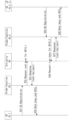
- the UE 10_1 send Direct Communication request to the UE 10_2 (step S31).
- the UEs 10_1 and 10_2 can identify the same root key to be used for deriving a session key, without receiving any instruction from network. Therefore, the UEs 10_1 and 10_2 derive the session key from the identified root key, separately (step S32).
- the UE 10_1 and UE 10_2 start direct communication with security protection by using the session key (step S33).
- Option 2 UE derives session key in accordance with KSI indicated by ProSe Function
- This option is suitable for the case where the root key pool is allocated as shown in Fig. 3 .
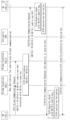
- the UE 10_1 sends Direct Communication request with an ID of the UE 10_2 (UE with which the UE 10_1 wants to have direct communication service) to the ProSe Function 20_1 (step S41).
- the ProSe Function 20_1 performs authorization for whether the UE 10_1 is allowed to have direct communication with the UE 10_2 (step S42).
- the ProSe Function 20_1 Upon a successful authorization, the ProSe Function 20_1 indicates to the UE 10_1 a root key KSI (step S43).
- the ProSe Function 20_1 indicates to the UE 10_2 the root key KSI via the ProSe Function 20_2 (step S44).
- the UE 10_1 and the UE 10_2 derives a session key from the root key indicated by the KSI, separately (step S45).
- the UE 10_1 and the UE 10_2 start direct communication with security protection by using the session key (step S46).
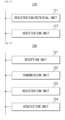
- the UE 10 includes an acquisition unit 11 and a derivation unit 12.
- the acquisition unit 11 acquires the root keys from the ProSe Function 20, upon successfully registering the UE 10 with the ProSe Function 20.
- the derivation unit 12 drives the session keys by using the acquired root key.
- the derivation unit 12 uses a root key corresponding to a UE with which the UE 10 desires to conduct direct communication, upon deriving the session keys.
- the derivation unit 12 uses a root key which is indicated by the KSI received from the ProSe Function 20.
- these units 11 and 12 are mutually connected with each other through a bus or the like.
- These units 11 and 12 can be configured by, for example, a transceiver which conducts direct communication with different UEs through the interface PC5, a transceiver which conducts communication with the ProSe Function 20 through the interface PC3, and a controller such as a CPU (Central Processing Unit) which controls these transceivers.
- a transceiver which conducts direct communication with different UEs through the interface PC5
- a transceiver which conducts communication with the ProSe Function 20 through the interface PC3
- a controller such as a CPU (Central Processing Unit) which controls these transceivers.
- CPU Central Processing Unit
- the ProSe Function 20 includes an acquisition unit 21 and a distribution unit 22.
- the acquisition unit 21 acquires the root keys from the 3rd party 60, upon successfully registering the UE 10 with the ProSe Function 20.
- the distribution unit 22 distributes the acquired root keys to the UE 10.
- the ProSe Function 20 further includes an indication unit 23.
- the indication unit 23 indicates to the UE 10 the KSI of the root key to be used by the UE 10. Note that these units 21 to 23 are mutually connected with each other through a bus or the like.
- These units 21 to 23 can be configured by, for example, a transceiver which conducts communication with the UE 10 through the interface PC3, and a controller such as a CPU which controls this transceiver.
- the 3rd party 60 includes a storage unit 61 and a response unit 62.
- the storage unit 61 stores the root keys.
- the response unit 62 responds to the request from the ProSe Function 20 with sending the root keys to the ProSe Function 20.
- these units 61 and 62 are mutually connected with each other through a bus or the like.
- These units 61 and 62 can be configured by, for example, a transceiver which conducts communication with the ProSe Function 20, and a controller such as a CPU which controls this transceiver.
- Fig. 9 shows a configuration example of a communication system for proximity service.
- Proximity service provides operator network controlled discovery and communications between UEs that are in proximity, for both commercial/social use and public safety use. It is required that the ProSe service should be provided to UEs with or without network coverage.
- the communication system includes a plurality of UEs 110_1 to 110_m (hereinafter may be collectively referred to by a code 110), one or more ProSe Functions 120_1 to 120_n (hereinafter may be collectively referred to by a code 120), an E-UTRAN (Evolved Universal Terrestrial Radio Access Network) 130, an EPC (Evolved Packet Core) 140, and a ProSe APP (Application) Server 150.
- a code 110 includes a plurality of UEs 110_1 to 110_m (hereinafter may be collectively referred to by a code 110), one or more ProSe Functions 120_1 to 120_n (hereinafter may be collectively referred to by a code 120), an E-UTRAN (Evolved Universal Terrestrial Radio Access Network) 130, an EPC (Evolved Packet Core) 140, and a ProSe APP (Application) Server 150.
- E-UTRAN Evolved Universal Terrestria
- the UE 110 attaches to the EPC 140 thorough the E-UTRAN 130 (i.e., through interfaces LTE-Uu and S1), thereby functioning as a typical UE. Moreover, the UE 110 uses the above-mentioned interface PC5, thereby conducting ProSe communication. Prior to the ProSe communication, the UE 110 is registered with the ProSe Function 120. Note that the UEs 110_1 to 110_m may be registered with the same ProSe Function or mutually different ProSe Functions. Moreover, some of the UEs 110_1 to 110_m may be registered with the same ProSe Function.
- the ProSe Function 120 is a node which supports the ProSe communication between the UEs 110_1 to 110_m.
- the ProSe Function 120 can be either deployed in a certain network node or be an independent node, and may reside in or out of the EPC 140.
- the ProSe Function 120 communicates with the UE 110 through an interface PC3. Further, the ProSe Function 120 communicates with the EPC 140 through an interface PC4. Furthermore, the ProSe Functions 120_1 to 120_n can communicate with each other through an interface PC6.
- the interface PC3 is a reference point between the UE 110 and the ProSe Function 120.
- the interface PC3 is used to define the interaction between the UE 110 and the ProSe Function 120.
- An example may be to use for configuration for Prose discovery and communication.
- the interface PC4 is a reference point between the EPC 140 and the ProSe Function 120.
- the interface PC4 is used to define the interaction between the EPC 140 and the ProSe Function 120. Possible use cases may be when setting up a one-to-one communication path between the UEs 110_1 to 110_m, or when validating ProSe services (authorization) for session management or mobility management in real time.
- the interface PC6 is a reference point between the ProSe Functions 120_1 to 120_n.
- the interface PC6 may be used for functions such as ProSe discovery between users subscribed to different PLMNs (Public Land Mobile Networks).
- the E-UTRAN 130 is formed by one or more eNBs (not shown).
- the EPC 140 includes, as its network nodes, an MME (Mobility Management Entity) which manages mobility of the UEs 110_1 to 110_m, and the like.
- the ProSe APP Server 150 can communicate with the EPC 140 through an interface SGi.
- the ProSe APP Server 150 can communicate with the UE 110 through an interface PC1, and can communicate with the ProSe Function 120 through an interface PC2.
- the interface PC1 is a reference point between ProSe APPs in the UEs 110_1 to 110_m and the ProSe APP Server 150.
- the interface PC1 is used to define application level signaling requirements.
- the interface PC2 is a reference point between the ProSe Function 120 and the ProSe APP Server 150.
- the interface PC2 is used to define the interaction between the ProSe APP Server 150 and ProSe functionality provided by the 3GPP EPS (Evolved Packet System) via the ProSe Function 120.
- 3GPP EPS Evolved Packet System
- One example may be for application data updates for a ProSe database in the ProSe Function 120.
- Another example may be data for use by the ProSe App Server 150 in interworking between 3GPP functionality and application data, e.g. name translation.
- the ProSe APP Server 150 may reside in or out of the EPC 140.
- the communication system also includes a server operated by a trust third party.
- this server will be sometimes simply referred to as "third (3rd) party" and referred to by a code 160.
- the 3rd party 160 manages public keys which will be described later.
- This exemplary embodiment proposes to use PKI for direct communication.
- the UEs 110_1 to 110_m can register their public keys at registration procedure and meanwhile obtain other UEs public keys.
- the ProSe Function 120 ensures that the UE 110 is only provided with the public keys of UEs with which the request UE 110 is allowed to have direct communication.
- the UEs 110_1 to 110_m use the public key to verify the other end such that they can derive session key to start direct communication.
- the session key is a pair of confidentiality and integrity keys for protecting messages directly transferred between the UEs 110_1 to 110_m.
- the UEs 110_1 to 110_m provide their public key at registration and receive other UEs public keys at a successful registration.
- the UE 110_1 protects Direct Communication Request with its private key.
- the UE 110_2, which has received the Direct Communication Request, can verify it with UE1's public key.
- the UE 110_2 can send material for session key derivation to the UE 110_1 and they can derive the same key for protection their direct communication.
- the UE 110_1 can verify the message sent from the UE 110_2 with UE2's public key, thus they can be mutually authenticated.
- the session key derivation can:
- the UE 110_1 registers its public key during registration to the ProSe Function 120_1 (step S111).
- the Prose Function 120_1 registers the public key of the UE 110_1 in the third party 160 (step S112).
- the third party 160 sends to the Prose Function 120_1 an allowed list.
- the allowed list contains IDs of UEs with which the UE 110_1 is allowed to have direct communication, and the related public keys of those UEs (step S113).
- the Prose Function 120_1 forwards the allowed list to the UE 110_1 (step S114).
- steps S111 to S114 are performed for the UE 110_2 (steps S115 to S118).
- the UE 110_1 sends Direct Communication Request to the Prose Function 120_1, with the ID of the UE 110_2, a public key KSI of the UE 110_1.
- the message can be protected with a private key of the UE 110_1.
- the message is forwarded to the Prose Function 120_2 by the Prose Function 120_1 (step S121).
- KSI is suitable for a case where a plurality of public keys are allocated to the UE 110_1.
- the UE 110_2 can refer to the KSI to identify one of the public keys corresponding to the private key used by the UE 110_1.
- the Prose Function 120_1 performs authorization on whether the UE 110_1 can have direct communication service with the UE 110_2, with Prose Function 120_2 support (step S122).
- the Prose Function 120_2 Upon successful authorization, the Prose Function 120_2 forwards the Direct Communication Request to the UE 110_2 (step S123).
- the UE 110_2 can perform integrity check on the message with the public key of the UE 110_1 (step S124).
- the UE 110_2 Upon succeeding in the integrity check, the UE 110_2 derives session key, as described above (step S125).
- the UE 110_2 sends Direct Communication Response to the UE 110_1 with materials for session key derivation.
- the UE 110_2 includes the derived session key in the Direct Communication Response.
- the message is protected with a private key of the UE 110_2 (step S126).
- the UE 110_1 performs integrity check of the message with the public key of the UE 110_2 (step S127).
- the UE 110_1 Upon succeeding in the integrity check, the UE 110_1 derives session key from the material (step S128). This step S128 is skipped if the UE 110_1 has received the session key from the UE 110_2 at step S126. Alternatively, the UE 110_1 extracts the session key from the Direct Communication Response by using the public key of the UE 110_2.
- Direct communication starts with security protection by the session key that the UE 110_1 and the UE 110_2 share (step S129).
- the registration procedure is the same with that shown in Fig. 10 .
- the UE 110_1 protects Direct Communication Request with its private key.
- Other UEs e.g. UE 110_2, UE 110_3 can verify it with UE1's public key.
- the UE 110_1 derives the session key for one-to-many direct communication, and sends the session key to the ProSe Function 120 along with the Direct Communication Request over secured interface PC3.
- the ProSe Function 120 sends the session key to the UE 110_2 and the UE 110_3. If the UE 110_2 or the UE 110_3 has registered with different ProSe Function, UE 110_1's ProSe Function will forward the session key to UE 110_2/110_3's serving ProSe Function.
- the session key derivation can use UE 110_1's private key or any LTE (Long Term Evolution) key as input.
- the UE 110_1 derives a session key for direct communication (step S131).
- the UE 110_1 sends Direct Communication Request to the Prose Function 120_1, which can be forward to ProSe Functions which serves target UEs (e.g. ProSe Function 20_2, and UEs 110_2 and 110_3).
- the message contains target UE IDs and UE 110_1's public key KSI, which are protected with UE 110_1's private key.
- the UE 110_1 also includes the session key in the message (step S132).
- the ProSe Functions 120_1 and 120_2 perform authorization on whether the UE 110_1 can have one-to-many direct communication with the target UEs 110_2 and 110_3 (step S133).
- the ProSe Function 120_2 forwards the Direct communication Request to the UEs 110_2 and 110_3 (step S134).
- Each of the UEs 110_2 and 110_3 performs integrity check on the message with UE 110_1's public key (step S135).
- Each of the UEs 110_2 and 110_3 sends the Direct Communication Response to the UE 110_1, protected with the session key it received (step S136). After that, direct communication starts with security protection by the session key that the UEs 110_1 to 110_3 share.
- the UE 110_1 simply protects the Direct Communication with its private key to other UEs.
- the other UEs who are authorized to receive the message from the UE 110_1 can get the UE 110_1'public key and therefore verify that the message is sent from the UE 110_1 and read it.
- the network e.g. ProSe Function
- the UEs 110_1 to 110_m derive session key, and input for key derivation is: 1) UE 110_1'public key; 2) a key derivation material received from the ProSe Function 120. Requires the UE 110_1'public key and key derivation material are only provided to the authorized UEs.
- the UE 110 includes a registration/retrieval unit 111 and a verification unit 112.
- the registration/retrieval unit 111 performs the processes shown in Fig. 10 or processes equivalent thereto.
- the verification unit 112 performs the processes shown in Figs. 11 and 12 , or processes equivalent thereto.
- these units 111 and 112 are mutually connected with each other through a bus or the like.
- These units 111 and 112 can be configured by, for example, a transceiver which conducts direct communication with different UEs through the interface PC5, a transceiver which conducts communication with the ProSe Function 120 through the interface PC3, and a controller such as a CPU (Central Processing Unit) which controls these transceivers.
- a transceiver which conducts direct communication with different UEs through the interface PC5
- a transceiver which conducts communication with the ProSe Function 120 through the interface PC3
- a controller such as a CPU (Central Processing Unit) which controls these transceivers
- the ProSe Function 120 includes at least a reception unit 121 and a transmission unit 122.
- the reception unit 121 performs the processes shown at steps S111 and S115 in Fig. 10 , or processes equivalent thereto.
- the transmission unit 122 performs the processes shown at steps S114 and S118 in Fig. 10 , or processes equivalent thereto.
- the ProSe Function 120 can also include a registration unit 123 and an acquisition unit 124.
- the registration unit 123 performs the processes shown at steps S112 and S116 in Fig. 10 , or processes equivalent thereto.
- the acquisition unit 124 performs the processes shown at steps S113 and S117 in Fig. 10 , or equivalent thereto.
- these units 121 to 124 are mutually connected with each other through a bus or the like.
- These units 121 to 124 can be configured by, for example, a transceiver which conducts communication with the UE 110 through the interface PC3, a transceiver which conducts communication with the 3rd party 160, and a controller such as a CPU which controls these transceivers.
- the 3rd party 160 includes a storage unit 161 and a response unit 162.
- the storage unit 161 stores the root keys registered by the ProSe Function 120.
- the response unit 162 responds to the request from the ProSe Function 120 with sending the stored public keys to the ProSe Function 120.
- these units 161 and 162 are mutually connected with each other through a bus or the like.
- These units 161 and 162 can be configured by, for example, a transceiver which conducts communication with the ProSe Function 120, and a controller such as a CPU which controls this transceiver.
Landscapes
- Engineering & Computer Science (AREA)
- Computer Networks & Wireless Communication (AREA)
- Signal Processing (AREA)
- Computer Security & Cryptography (AREA)
- Databases & Information Systems (AREA)
- Mobile Radio Communication Systems (AREA)
- Telephonic Communication Services (AREA)
Applications Claiming Priority (4)
| Application Number | Priority Date | Filing Date | Title |
|---|---|---|---|
| JP2013225200 | 2013-10-30 | ||
| JP2013226681 | 2013-10-31 | ||
| EP14772449.6A EP3063970B1 (en) | 2013-10-30 | 2014-08-27 | Apparatus, system and method for secure direct communcation in proximity based services |
| PCT/JP2014/004393 WO2015063991A1 (en) | 2013-10-30 | 2014-08-27 | Apparatus, system and method for secure direct communcation in proximity based services |
Related Parent Applications (2)
| Application Number | Title | Priority Date | Filing Date |
|---|---|---|---|
| EP14772449.6A Division EP3063970B1 (en) | 2013-10-30 | 2014-08-27 | Apparatus, system and method for secure direct communcation in proximity based services |
| EP14772449.6A Division-Into EP3063970B1 (en) | 2013-10-30 | 2014-08-27 | Apparatus, system and method for secure direct communcation in proximity based services |
Publications (2)
| Publication Number | Publication Date |
|---|---|
| EP3761690A1 EP3761690A1 (en) | 2021-01-06 |
| EP3761690B1 true EP3761690B1 (en) | 2023-08-23 |
Family
ID=51619231
Family Applications (2)
| Application Number | Title | Priority Date | Filing Date |
|---|---|---|---|
| EP20191217.7A Active EP3761690B1 (en) | 2013-10-30 | 2014-08-27 | Apparatus, system and method for secure direct communication in proximity based services |
| EP14772449.6A Active EP3063970B1 (en) | 2013-10-30 | 2014-08-27 | Apparatus, system and method for secure direct communcation in proximity based services |
Family Applications After (1)
| Application Number | Title | Priority Date | Filing Date |
|---|---|---|---|
| EP14772449.6A Active EP3063970B1 (en) | 2013-10-30 | 2014-08-27 | Apparatus, system and method for secure direct communcation in proximity based services |
Country Status (6)
| Country | Link |
|---|---|
| US (4) | US10212597B2 (enExample) |
| EP (2) | EP3761690B1 (enExample) |
| JP (1) | JP6555258B2 (enExample) |
| CN (2) | CN111030813B (enExample) |
| ES (1) | ES2833292T3 (enExample) |
| WO (1) | WO2015063991A1 (enExample) |
Families Citing this family (17)
| Publication number | Priority date | Publication date | Assignee | Title |
|---|---|---|---|---|
| US10631162B2 (en) * | 2013-10-30 | 2020-04-21 | Samsung Electronics Co., Ltd. | Method and apparatus to perform device to device communication in wireless communication network |
| EP3761690B1 (en) * | 2013-10-30 | 2023-08-23 | NEC Corporation | Apparatus, system and method for secure direct communication in proximity based services |
| US9941954B2 (en) * | 2014-12-19 | 2018-04-10 | Futurewei Technologies, Inc. | System and method for radio link sharing |
| US10728758B2 (en) * | 2015-01-16 | 2020-07-28 | Samsung Electronics Co., Ltd. | Method of secured transmission and reception of discovery message in a D2D communication system |
| CN108432205A (zh) * | 2015-12-16 | 2018-08-21 | 维萨国际服务协会 | 使用代理的安全的多方通信的系统和方法 |
| FR3082382B1 (fr) * | 2018-06-12 | 2020-09-25 | Intesecc | Procede de communication securisee entre deux dispositifs electroniques, procede pour administrer une telle communication, objets electroniques mettant en oeuvre respectivement lesdits procedes et systeme associe |
| CN110493027A (zh) * | 2018-09-27 | 2019-11-22 | 北京白山耘科技有限公司 | 一种分布式数据管理系统及管理方法 |
| CN111615219B (zh) * | 2019-04-30 | 2022-02-22 | 维沃移动通信有限公司 | 一种pc5链路建立方法、设备及系统 |
| CN112491533B (zh) * | 2019-09-12 | 2022-09-02 | 华为技术有限公司 | 一种密钥生成方法及装置 |
| EP4038917B1 (en) * | 2019-10-03 | 2023-08-30 | InterDigital Patent Holdings, Inc. | Device to device service discovery via a relay device |
| WO2021063518A1 (en) * | 2019-10-04 | 2021-04-08 | Nokia Technologies Oy | Security key generation in wireless networks |
| CN115443671B (zh) * | 2020-04-01 | 2025-06-27 | 苹果公司 | 对等用户设备(ue)之间的车联万物(v2x)安全策略协商 |
| CN114079918B (zh) * | 2020-08-11 | 2024-02-02 | 大唐移动通信设备有限公司 | 一种信息处理方法、装置、设备及可读存储介质 |
| CN115836539B (zh) * | 2020-08-14 | 2025-09-12 | 华为技术有限公司 | 通信方法、装置及系统 |
| CN115348585A (zh) * | 2021-05-13 | 2022-11-15 | 华为技术有限公司 | 确定安全保护开启方式的方法、通信方法及通信装置 |
| CN117296294A (zh) * | 2022-04-24 | 2023-12-26 | 北京小米移动软件有限公司 | 邻近通信业务的密钥生成方法、装置、设备及存储介质 |
| CN117795917A (zh) * | 2022-07-27 | 2024-03-29 | 北京小米移动软件有限公司 | 密钥生成方法及装置、通信设备及存储介质 |
Citations (1)
| Publication number | Priority date | Publication date | Assignee | Title |
|---|---|---|---|---|
| EP2845362B1 (en) * | 2012-04-30 | 2019-06-05 | Alcatel Lucent | Secure communications for computing devices utilizing proximity services |
Family Cites Families (53)
| Publication number | Priority date | Publication date | Assignee | Title |
|---|---|---|---|---|
| AU2002333848A1 (en) * | 2002-09-13 | 2004-04-30 | Telefonaktiebolaget Lm Ericsson (Publ) | Secure broadcast/multicast service |
| GB2394388B (en) * | 2002-10-14 | 2005-10-19 | Toshiba Res Europ Ltd | Methods and systems for flexible delegation |
| US20040088539A1 (en) * | 2002-11-01 | 2004-05-06 | Infante Steven D. | System and method for securing digital messages |
| JP4329388B2 (ja) * | 2003-04-22 | 2009-09-09 | ソニー株式会社 | データ通信システム、データ通信装置及びデータ通信方法、並びにコンピュータ・プログラム |
| US8015595B2 (en) * | 2004-09-23 | 2011-09-06 | Igt | Methods and apparatus for negotiating communications within a gaming network |
| KR100769674B1 (ko) * | 2004-12-30 | 2007-10-24 | 삼성전자주식회사 | 홈 네트워크에서 디바이스의 공개키 인증 방법 및 시스템 |
| US20060236116A1 (en) * | 2005-04-18 | 2006-10-19 | Lucent Technologies, Inc. | Provisioning root keys |
| GB0517592D0 (en) * | 2005-08-25 | 2005-10-05 | Vodafone Plc | Data transmission |
| CN100571125C (zh) * | 2005-12-30 | 2009-12-16 | 上海贝尔阿尔卡特股份有限公司 | 一种用于用户设备与内部网络间安全通信的方法及装置 |
| US8069208B2 (en) * | 2006-04-21 | 2011-11-29 | Microsoft Corporation | Peer-to-peer buddy request and response |
| DE102006037250A1 (de) * | 2006-08-09 | 2008-04-10 | Müller, Thomas | Verfahren und Vorrichtungen zur Identitätsverifikation |
| US20080069026A1 (en) * | 2006-09-14 | 2008-03-20 | Hong Kong Applied Science And Technology Research Institute Co., Ltd. | Repeater for WUSB applications |
| DE602007004273D1 (de) * | 2006-10-13 | 2010-03-04 | Quipa Holdings Ltd | Verfahren zum Aufbau eines gesicherten virtuellen privaten Netzes zur Peer-to-Peer-Kommunikation |
| CN101400059B (zh) * | 2007-09-28 | 2010-12-08 | 华为技术有限公司 | 一种active状态下的密钥更新方法和设备 |
| EP2056570A1 (en) * | 2007-10-29 | 2009-05-06 | Nokia Siemens Networks Oy | Session and media binding to common control |
| CN101499959B (zh) * | 2008-01-31 | 2012-08-08 | 华为技术有限公司 | 配置密钥的方法、装置及系统 |
| CN101299666A (zh) * | 2008-06-16 | 2008-11-05 | 中兴通讯股份有限公司 | 密钥身份标识符的生成方法和系统 |
| US8606873B2 (en) * | 2008-06-27 | 2013-12-10 | Qualcomm Incorporated | Methods and apparatus for securely advertising identification and/or discovery information |
| KR20100050846A (ko) * | 2008-11-06 | 2010-05-14 | 삼성전자주식회사 | 키 교환 시스템 및 방법 |
| US9320067B2 (en) * | 2008-11-24 | 2016-04-19 | Qualcomm Incorporated | Configuration of user equipment for peer-to-peer communication |
| JP2010226336A (ja) * | 2009-03-23 | 2010-10-07 | Denso It Laboratory Inc | 認証方法および認証装置 |
| US8260883B2 (en) * | 2009-04-01 | 2012-09-04 | Wimm Labs, Inc. | File sharing between devices |
| US9451452B2 (en) * | 2009-06-29 | 2016-09-20 | Motorola Solutions, Inc. | Method of triggering a key delivery from a mesh key distributor |
| US8666403B2 (en) * | 2009-10-23 | 2014-03-04 | Nokia Solutions And Networks Oy | Systems, methods, and apparatuses for facilitating device-to-device connection establishment |
| CN102143491B (zh) * | 2010-01-29 | 2013-10-09 | 华为技术有限公司 | 对mtc设备的认证方法、mtc网关及相关设备 |
| UA106531C2 (uk) * | 2010-04-16 | 2014-09-10 | Квелкомм Инкорпорейтед | Пристрій і спосіб переходу від обслуговуючого мережевого вузла, який підтримує розширений контекст безпеки, до успадкованого обслуговуючого мережевого вузла |
| DE102010018285A1 (de) * | 2010-04-26 | 2011-10-27 | Siemens Enterprise Communications Gmbh & Co. Kg | Netzwerkzugangsknoten mit Schlüsselverteilerfunktion |
| JP5889525B2 (ja) | 2010-12-21 | 2016-03-22 | パナソニックIpマネジメント株式会社 | 認証システム |
| CN102625300B (zh) * | 2011-01-28 | 2015-07-08 | 华为技术有限公司 | 密钥生成方法和设备 |
| US8762723B2 (en) * | 2011-07-07 | 2014-06-24 | Verayo, Inc. | Cryptographic security using fuzzy credentials for device and server communications |
| US9439067B2 (en) * | 2011-09-12 | 2016-09-06 | George Cherian | Systems and methods of performing link setup and authentication |
| CN103179559B (zh) * | 2011-12-22 | 2016-08-10 | 华为技术有限公司 | 一种低成本终端的安全通信方法、装置及系统 |
| GB2499247B (en) * | 2012-02-10 | 2014-04-16 | Broadcom Corp | Method, apparatus and computer program for facilitating secure D2D discovery information |
| JP2013225200A (ja) | 2012-04-20 | 2013-10-31 | Ntt Comware Corp | 意味的対応付け装置及びその処理方法とプログラム |
| JP2013226681A (ja) | 2012-04-25 | 2013-11-07 | Panasonic Corp | インモールド成形装置 |
| US9942938B2 (en) * | 2012-04-27 | 2018-04-10 | Interdigital Patent Holdings, Inc. | Registration for device-to-device (D2D) communications |
| US11265383B2 (en) * | 2012-04-27 | 2022-03-01 | Interdigital Patent Holdings, Inc. | Systems and methods for personalizing and/or tailoring a service interface |
| CN102711105B (zh) * | 2012-05-18 | 2016-03-02 | 华为技术有限公司 | 通过移动通信网络进行通信的方法、装置及系统 |
| JP2015521455A (ja) * | 2012-05-31 | 2015-07-27 | インターデイジタル パテント ホールディングス インコーポレイテッド | 無線システムにおけるデバイスツーデバイス(d2d)モビリティのための方法および装置 |
| US8849203B2 (en) * | 2012-06-27 | 2014-09-30 | Alcatel Lucent | Discovering proximity devices in broadband networks |
| US9204377B2 (en) * | 2012-07-16 | 2015-12-01 | Industrial Technology Research Institute | Method and device for proximity-based communication |
| US10791451B2 (en) * | 2012-07-27 | 2020-09-29 | Sharp Kabushiki Kaisha | Proximity service discovery using a licensed frequency spectrum |
| US8982880B2 (en) * | 2012-08-03 | 2015-03-17 | Intel Corporation | Communication path switching for mobile devices |
| US8903419B2 (en) * | 2012-08-31 | 2014-12-02 | Nokia Solutions And Networks Oy | Optimization on network assisted proximity services discovery management |
| US8917708B2 (en) * | 2012-09-28 | 2014-12-23 | Intel Corporation | Discovery and operation of hybrid wireless wide area and wireless local area networks |
| US9119182B2 (en) * | 2012-10-19 | 2015-08-25 | Qualcomm Incorporated | Methods and apparatus for expression use during D2D communications in a LTE based WWAN |
| CN104854916B (zh) * | 2013-01-17 | 2019-01-15 | 英特尔Ip公司 | 采用直接无线电信号进行设备到设备发现 |
| US9532400B2 (en) * | 2013-02-28 | 2016-12-27 | Intel Deutschland Gmbh | Radio communication devices and cellular wide area radio base station |
| KR102046111B1 (ko) * | 2013-03-29 | 2019-11-18 | 삼성전자주식회사 | 장치 간 통신 방법 및 장치 |
| US9210536B2 (en) * | 2013-05-21 | 2015-12-08 | Google Technology Holdings LLC | Method for establishing device-to-device communication |
| EP3761690B1 (en) * | 2013-10-30 | 2023-08-23 | NEC Corporation | Apparatus, system and method for secure direct communication in proximity based services |
| WO2020010515A1 (en) * | 2018-07-10 | 2020-01-16 | Apple Inc. | Identity-based message integrity protection and verification for wireless communication |
| JP7627125B2 (ja) * | 2021-02-18 | 2025-02-05 | 東芝テック株式会社 | 画像形成装置 |
-
2014
- 2014-08-27 EP EP20191217.7A patent/EP3761690B1/en active Active
- 2014-08-27 JP JP2016526370A patent/JP6555258B2/ja active Active
- 2014-08-27 ES ES14772449T patent/ES2833292T3/es active Active
- 2014-08-27 US US15/033,278 patent/US10212597B2/en active Active
- 2014-08-27 WO PCT/JP2014/004393 patent/WO2015063991A1/en not_active Ceased
- 2014-08-27 EP EP14772449.6A patent/EP3063970B1/en active Active
- 2014-08-27 CN CN201911356997.3A patent/CN111030813B/zh active Active
- 2014-08-27 CN CN201480060054.5A patent/CN105706474B/zh active Active
-
2018
- 2018-11-29 US US16/204,274 patent/US20190165934A1/en not_active Abandoned
-
2020
- 2020-03-13 US US16/818,905 patent/US20200228327A1/en not_active Abandoned
- 2020-07-15 US US16/929,919 patent/US20200351613A1/en active Pending
Patent Citations (1)
| Publication number | Priority date | Publication date | Assignee | Title |
|---|---|---|---|---|
| EP2845362B1 (en) * | 2012-04-30 | 2019-06-05 | Alcatel Lucent | Secure communications for computing devices utilizing proximity services |
Also Published As
| Publication number | Publication date |
|---|---|
| CN105706474A (zh) | 2016-06-22 |
| US20200228327A1 (en) | 2020-07-16 |
| CN111030813B (zh) | 2024-06-11 |
| EP3761690A1 (en) | 2021-01-06 |
| US20160269903A1 (en) | 2016-09-15 |
| US20190165934A1 (en) | 2019-05-30 |
| WO2015063991A1 (en) | 2015-05-07 |
| EP3063970A1 (en) | 2016-09-07 |
| US10212597B2 (en) | 2019-02-19 |
| CN111030813A (zh) | 2020-04-17 |
| CN105706474B (zh) | 2019-12-13 |
| JP6555258B2 (ja) | 2019-08-07 |
| EP3063970B1 (en) | 2020-10-21 |
| JP2016538771A (ja) | 2016-12-08 |
| US20200351613A1 (en) | 2020-11-05 |
| ES2833292T3 (es) | 2021-06-14 |
Similar Documents
| Publication | Publication Date | Title |
|---|---|---|
| EP3761690B1 (en) | Apparatus, system and method for secure direct communication in proximity based services | |
| US8520636B2 (en) | Method and apparatus for performing handover | |
| US10271208B2 (en) | Security support method and system for discovering service and group communication in mobile communication system | |
| KR102294659B1 (ko) | Ue 액세스 제어를 지원하는 방법 | |
| US9331986B2 (en) | Encryption communication method, apparatus and system | |
| KR101465907B1 (ko) | Mtc 에서의 그룹 변경 이슈에 대한 방법 | |
| EP2421292A1 (en) | Method and device for establishing security mechanism of air interface link | |
| US20150319172A1 (en) | Group authentication and key management for mtc | |
| KR20140041226A (ko) | 이동 통신 시스템에서 그룹 통신을 위한 보안 관리 방법 및 장치 | |
| US20170245181A1 (en) | Apparatus for dual connectivity | |
| EP3284310B1 (en) | Method and apparatus for end device discovering another end device | |
| US20130189955A1 (en) | Method for context establishment in telecommunication networks | |
| EP4042733B1 (en) | SECURITY FOR A GROUP BROADCAST MESSAGE IN A D2D COMMUNICATION | |
| KR102110420B1 (ko) | 이동 통신 시스템 환경 에서 재난 메시지를 보안상 효율적으로 관리하는 방법 및 장치 | |
| CN104104516A (zh) | 一种Portal认证方法和设备 | |
| US20160007193A1 (en) | System and Method for Wireless Network Access Protection and Security Architecture | |
| EP3096544A1 (en) | Security method and system for supporting prose group communication or public safety in mobile communication | |
| US11653395B2 (en) | Method for establishing a connection of a mobile terminal to a mobile radio communication network and radio access network component | |
| CN105592433B (zh) | 设备到设备限制发现业务广播、监听方法、装置及系统 | |
| US11576232B2 (en) | Method for establishing a connection of a mobile terminal to a mobile radio communication network and communication network device | |
| US20190031184A1 (en) | Security management according to location change in proximity based services |
Legal Events
| Date | Code | Title | Description |
|---|---|---|---|
| PUAI | Public reference made under article 153(3) epc to a published international application that has entered the european phase |
Free format text: ORIGINAL CODE: 0009012 |
|
| STAA | Information on the status of an ep patent application or granted ep patent |
Free format text: STATUS: REQUEST FOR EXAMINATION WAS MADE |
|
| 17P | Request for examination filed |
Effective date: 20200814 |
|
| AC | Divisional application: reference to earlier application |
Ref document number: 3063970 Country of ref document: EP Kind code of ref document: P |
|
| AK | Designated contracting states |
Kind code of ref document: A1 Designated state(s): AL AT BE BG CH CY CZ DE DK EE ES FI FR GB GR HR HU IE IS IT LI LT LU LV MC MK MT NL NO PL PT RO RS SE SI SK SM TR |
|
| STAA | Information on the status of an ep patent application or granted ep patent |
Free format text: STATUS: EXAMINATION IS IN PROGRESS |
|
| RBV | Designated contracting states (corrected) |
Designated state(s): AL AT BE BG CH CY CZ DE DK EE ES FI FR GB GR HR HU IE IS IT LI LT LU LV MC MK MT NL NO PL PT RO RS SE SI SK SM TR |
|
| 17Q | First examination report despatched |
Effective date: 20210325 |
|
| GRAP | Despatch of communication of intention to grant a patent |
Free format text: ORIGINAL CODE: EPIDOSNIGR1 |
|
| STAA | Information on the status of an ep patent application or granted ep patent |
Free format text: STATUS: GRANT OF PATENT IS INTENDED |
|
| INTG | Intention to grant announced |
Effective date: 20221014 |
|
| GRAJ | Information related to disapproval of communication of intention to grant by the applicant or resumption of examination proceedings by the epo deleted |
Free format text: ORIGINAL CODE: EPIDOSDIGR1 |
|
| STAA | Information on the status of an ep patent application or granted ep patent |
Free format text: STATUS: EXAMINATION IS IN PROGRESS |
|
| GRAP | Despatch of communication of intention to grant a patent |
Free format text: ORIGINAL CODE: EPIDOSNIGR1 |
|
| STAA | Information on the status of an ep patent application or granted ep patent |
Free format text: STATUS: GRANT OF PATENT IS INTENDED |
|
| INTC | Intention to grant announced (deleted) | ||
| INTG | Intention to grant announced |
Effective date: 20230316 |
|
| GRAS | Grant fee paid |
Free format text: ORIGINAL CODE: EPIDOSNIGR3 |
|
| GRAA | (expected) grant |
Free format text: ORIGINAL CODE: 0009210 |
|
| STAA | Information on the status of an ep patent application or granted ep patent |
Free format text: STATUS: THE PATENT HAS BEEN GRANTED |
|
| AC | Divisional application: reference to earlier application |
Ref document number: 3063970 Country of ref document: EP Kind code of ref document: P |
|
| AK | Designated contracting states |
Kind code of ref document: B1 Designated state(s): AL AT BE BG CH CY CZ DE DK EE ES FI FR GB GR HR HU IE IS IT LI LT LU LV MC MK MT NL NO PL PT RO RS SE SI SK SM TR |
|
| REG | Reference to a national code |
Ref country code: GB Ref legal event code: FG4D |
|
| REG | Reference to a national code |
Ref country code: CH Ref legal event code: EP |
|
| REG | Reference to a national code |
Ref country code: IE Ref legal event code: FG4D |
|
| REG | Reference to a national code |
Ref country code: DE Ref legal event code: R096 Ref document number: 602014088080 Country of ref document: DE |
|
| REG | Reference to a national code |
Ref country code: LT Ref legal event code: MG9D |
|
| REG | Reference to a national code |
Ref country code: NL Ref legal event code: MP Effective date: 20230823 |
|
| REG | Reference to a national code |
Ref country code: AT Ref legal event code: MK05 Ref document number: 1603992 Country of ref document: AT Kind code of ref document: T Effective date: 20230823 |
|
| PG25 | Lapsed in a contracting state [announced via postgrant information from national office to epo] |
Ref country code: GR Free format text: LAPSE BECAUSE OF FAILURE TO SUBMIT A TRANSLATION OF THE DESCRIPTION OR TO PAY THE FEE WITHIN THE PRESCRIBED TIME-LIMIT Effective date: 20231124 |
|
| PG25 | Lapsed in a contracting state [announced via postgrant information from national office to epo] |
Ref country code: IS Free format text: LAPSE BECAUSE OF FAILURE TO SUBMIT A TRANSLATION OF THE DESCRIPTION OR TO PAY THE FEE WITHIN THE PRESCRIBED TIME-LIMIT Effective date: 20231223 |
|
| PG25 | Lapsed in a contracting state [announced via postgrant information from national office to epo] |
Ref country code: SE Free format text: LAPSE BECAUSE OF FAILURE TO SUBMIT A TRANSLATION OF THE DESCRIPTION OR TO PAY THE FEE WITHIN THE PRESCRIBED TIME-LIMIT Effective date: 20230823 Ref country code: RS Free format text: LAPSE BECAUSE OF FAILURE TO SUBMIT A TRANSLATION OF THE DESCRIPTION OR TO PAY THE FEE WITHIN THE PRESCRIBED TIME-LIMIT Effective date: 20230823 Ref country code: PT Free format text: LAPSE BECAUSE OF FAILURE TO SUBMIT A TRANSLATION OF THE DESCRIPTION OR TO PAY THE FEE WITHIN THE PRESCRIBED TIME-LIMIT Effective date: 20231226 Ref country code: NO Free format text: LAPSE BECAUSE OF FAILURE TO SUBMIT A TRANSLATION OF THE DESCRIPTION OR TO PAY THE FEE WITHIN THE PRESCRIBED TIME-LIMIT Effective date: 20231123 Ref country code: NL Free format text: LAPSE BECAUSE OF FAILURE TO SUBMIT A TRANSLATION OF THE DESCRIPTION OR TO PAY THE FEE WITHIN THE PRESCRIBED TIME-LIMIT Effective date: 20230823 Ref country code: LV Free format text: LAPSE BECAUSE OF FAILURE TO SUBMIT A TRANSLATION OF THE DESCRIPTION OR TO PAY THE FEE WITHIN THE PRESCRIBED TIME-LIMIT Effective date: 20230823 Ref country code: LT Free format text: LAPSE BECAUSE OF FAILURE TO SUBMIT A TRANSLATION OF THE DESCRIPTION OR TO PAY THE FEE WITHIN THE PRESCRIBED TIME-LIMIT Effective date: 20230823 Ref country code: IS Free format text: LAPSE BECAUSE OF FAILURE TO SUBMIT A TRANSLATION OF THE DESCRIPTION OR TO PAY THE FEE WITHIN THE PRESCRIBED TIME-LIMIT Effective date: 20231223 Ref country code: HR Free format text: LAPSE BECAUSE OF FAILURE TO SUBMIT A TRANSLATION OF THE DESCRIPTION OR TO PAY THE FEE WITHIN THE PRESCRIBED TIME-LIMIT Effective date: 20230823 Ref country code: GR Free format text: LAPSE BECAUSE OF FAILURE TO SUBMIT A TRANSLATION OF THE DESCRIPTION OR TO PAY THE FEE WITHIN THE PRESCRIBED TIME-LIMIT Effective date: 20231124 Ref country code: FI Free format text: LAPSE BECAUSE OF FAILURE TO SUBMIT A TRANSLATION OF THE DESCRIPTION OR TO PAY THE FEE WITHIN THE PRESCRIBED TIME-LIMIT Effective date: 20230823 Ref country code: AT Free format text: LAPSE BECAUSE OF FAILURE TO SUBMIT A TRANSLATION OF THE DESCRIPTION OR TO PAY THE FEE WITHIN THE PRESCRIBED TIME-LIMIT Effective date: 20230823 |
|
| PG25 | Lapsed in a contracting state [announced via postgrant information from national office to epo] |
Ref country code: PL Free format text: LAPSE BECAUSE OF FAILURE TO SUBMIT A TRANSLATION OF THE DESCRIPTION OR TO PAY THE FEE WITHIN THE PRESCRIBED TIME-LIMIT Effective date: 20230823 |
|
| REG | Reference to a national code |
Ref country code: CH Ref legal event code: PL |
|
| PG25 | Lapsed in a contracting state [announced via postgrant information from national office to epo] |
Ref country code: LU Free format text: LAPSE BECAUSE OF NON-PAYMENT OF DUE FEES Effective date: 20230827 |
|
| PG25 | Lapsed in a contracting state [announced via postgrant information from national office to epo] |
Ref country code: ES Free format text: LAPSE BECAUSE OF FAILURE TO SUBMIT A TRANSLATION OF THE DESCRIPTION OR TO PAY THE FEE WITHIN THE PRESCRIBED TIME-LIMIT Effective date: 20230823 |
|
| PG25 | Lapsed in a contracting state [announced via postgrant information from national office to epo] |
Ref country code: SM Free format text: LAPSE BECAUSE OF FAILURE TO SUBMIT A TRANSLATION OF THE DESCRIPTION OR TO PAY THE FEE WITHIN THE PRESCRIBED TIME-LIMIT Effective date: 20230823 Ref country code: RO Free format text: LAPSE BECAUSE OF FAILURE TO SUBMIT A TRANSLATION OF THE DESCRIPTION OR TO PAY THE FEE WITHIN THE PRESCRIBED TIME-LIMIT Effective date: 20230823 Ref country code: LU Free format text: LAPSE BECAUSE OF NON-PAYMENT OF DUE FEES Effective date: 20230827 Ref country code: ES Free format text: LAPSE BECAUSE OF FAILURE TO SUBMIT A TRANSLATION OF THE DESCRIPTION OR TO PAY THE FEE WITHIN THE PRESCRIBED TIME-LIMIT Effective date: 20230823 Ref country code: EE Free format text: LAPSE BECAUSE OF FAILURE TO SUBMIT A TRANSLATION OF THE DESCRIPTION OR TO PAY THE FEE WITHIN THE PRESCRIBED TIME-LIMIT Effective date: 20230823 Ref country code: DK Free format text: LAPSE BECAUSE OF FAILURE TO SUBMIT A TRANSLATION OF THE DESCRIPTION OR TO PAY THE FEE WITHIN THE PRESCRIBED TIME-LIMIT Effective date: 20230823 Ref country code: CZ Free format text: LAPSE BECAUSE OF FAILURE TO SUBMIT A TRANSLATION OF THE DESCRIPTION OR TO PAY THE FEE WITHIN THE PRESCRIBED TIME-LIMIT Effective date: 20230823 Ref country code: SK Free format text: LAPSE BECAUSE OF FAILURE TO SUBMIT A TRANSLATION OF THE DESCRIPTION OR TO PAY THE FEE WITHIN THE PRESCRIBED TIME-LIMIT Effective date: 20230823 Ref country code: CH Free format text: LAPSE BECAUSE OF NON-PAYMENT OF DUE FEES Effective date: 20230831 |
|
| REG | Reference to a national code |
Ref country code: BE Ref legal event code: MM Effective date: 20230831 |
|
| REG | Reference to a national code |
Ref country code: IE Ref legal event code: MM4A |
|
| REG | Reference to a national code |
Ref country code: DE Ref legal event code: R097 Ref document number: 602014088080 Country of ref document: DE |
|
| PG25 | Lapsed in a contracting state [announced via postgrant information from national office to epo] |
Ref country code: IT Free format text: LAPSE BECAUSE OF FAILURE TO SUBMIT A TRANSLATION OF THE DESCRIPTION OR TO PAY THE FEE WITHIN THE PRESCRIBED TIME-LIMIT Effective date: 20230823 Ref country code: MC Free format text: LAPSE BECAUSE OF FAILURE TO SUBMIT A TRANSLATION OF THE DESCRIPTION OR TO PAY THE FEE WITHIN THE PRESCRIBED TIME-LIMIT Effective date: 20230823 |
|
| PLBE | No opposition filed within time limit |
Free format text: ORIGINAL CODE: 0009261 |
|
| STAA | Information on the status of an ep patent application or granted ep patent |
Free format text: STATUS: NO OPPOSITION FILED WITHIN TIME LIMIT |
|
| PG25 | Lapsed in a contracting state [announced via postgrant information from national office to epo] |
Ref country code: IE Free format text: LAPSE BECAUSE OF NON-PAYMENT OF DUE FEES Effective date: 20230827 |
|
| 26N | No opposition filed |
Effective date: 20240524 |
|
| PG25 | Lapsed in a contracting state [announced via postgrant information from national office to epo] |
Ref country code: IE Free format text: LAPSE BECAUSE OF NON-PAYMENT OF DUE FEES Effective date: 20230827 Ref country code: SI Free format text: LAPSE BECAUSE OF FAILURE TO SUBMIT A TRANSLATION OF THE DESCRIPTION OR TO PAY THE FEE WITHIN THE PRESCRIBED TIME-LIMIT Effective date: 20230823 |
|
| PG25 | Lapsed in a contracting state [announced via postgrant information from national office to epo] |
Ref country code: BE Free format text: LAPSE BECAUSE OF NON-PAYMENT OF DUE FEES Effective date: 20230831 |
|
| PG25 | Lapsed in a contracting state [announced via postgrant information from national office to epo] |
Ref country code: BG Free format text: LAPSE BECAUSE OF FAILURE TO SUBMIT A TRANSLATION OF THE DESCRIPTION OR TO PAY THE FEE WITHIN THE PRESCRIBED TIME-LIMIT Effective date: 20230823 |
|
| PG25 | Lapsed in a contracting state [announced via postgrant information from national office to epo] |
Ref country code: BG Free format text: LAPSE BECAUSE OF FAILURE TO SUBMIT A TRANSLATION OF THE DESCRIPTION OR TO PAY THE FEE WITHIN THE PRESCRIBED TIME-LIMIT Effective date: 20230823 |
|
| PG25 | Lapsed in a contracting state [announced via postgrant information from national office to epo] |
Ref country code: CY Free format text: LAPSE BECAUSE OF FAILURE TO SUBMIT A TRANSLATION OF THE DESCRIPTION OR TO PAY THE FEE WITHIN THE PRESCRIBED TIME-LIMIT; INVALID AB INITIO Effective date: 20140827 |
|
| PG25 | Lapsed in a contracting state [announced via postgrant information from national office to epo] |
Ref country code: HU Free format text: LAPSE BECAUSE OF FAILURE TO SUBMIT A TRANSLATION OF THE DESCRIPTION OR TO PAY THE FEE WITHIN THE PRESCRIBED TIME-LIMIT; INVALID AB INITIO Effective date: 20140827 |
|
| PGFP | Annual fee paid to national office [announced via postgrant information from national office to epo] |
Ref country code: DE Payment date: 20250820 Year of fee payment: 12 |
|
| PGFP | Annual fee paid to national office [announced via postgrant information from national office to epo] |
Ref country code: GB Payment date: 20250820 Year of fee payment: 12 |
|
| PGFP | Annual fee paid to national office [announced via postgrant information from national office to epo] |
Ref country code: FR Payment date: 20250828 Year of fee payment: 12 |
|
| PG25 | Lapsed in a contracting state [announced via postgrant information from national office to epo] |
Ref country code: TR Free format text: LAPSE BECAUSE OF FAILURE TO SUBMIT A TRANSLATION OF THE DESCRIPTION OR TO PAY THE FEE WITHIN THE PRESCRIBED TIME-LIMIT Effective date: 20230823 |