EP3756869A1 - Verfahren zur herstellung eines verbundstoffmaterialprodukts - Google Patents
Verfahren zur herstellung eines verbundstoffmaterialprodukts Download PDFInfo
- Publication number
- EP3756869A1 EP3756869A1 EP18906786.1A EP18906786A EP3756869A1 EP 3756869 A1 EP3756869 A1 EP 3756869A1 EP 18906786 A EP18906786 A EP 18906786A EP 3756869 A1 EP3756869 A1 EP 3756869A1
- Authority
- EP
- European Patent Office
- Prior art keywords
- backing sheet
- specific fiber
- resin
- fiber cloth
- composite material
- Prior art date
- Legal status (The legal status is an assumption and is not a legal conclusion. Google has not performed a legal analysis and makes no representation as to the accuracy of the status listed.)
- Granted
Links
Images



Classifications
-
- B—PERFORMING OPERATIONS; TRANSPORTING
- B29—WORKING OF PLASTICS; WORKING OF SUBSTANCES IN A PLASTIC STATE IN GENERAL
- B29C—SHAPING OR JOINING OF PLASTICS; SHAPING OF MATERIAL IN A PLASTIC STATE, NOT OTHERWISE PROVIDED FOR; AFTER-TREATMENT OF THE SHAPED PRODUCTS, e.g. REPAIRING
- B29C70/00—Shaping composites, i.e. plastics material comprising reinforcements, fillers or preformed parts, e.g. inserts
- B29C70/04—Shaping composites, i.e. plastics material comprising reinforcements, fillers or preformed parts, e.g. inserts comprising reinforcements only, e.g. self-reinforcing plastics
- B29C70/06—Fibrous reinforcements only
- B29C70/08—Fibrous reinforcements only comprising combinations of different forms of fibrous reinforcements incorporated in matrix material, forming one or more layers, and with or without non-reinforced layers
- B29C70/086—Fibrous reinforcements only comprising combinations of different forms of fibrous reinforcements incorporated in matrix material, forming one or more layers, and with or without non-reinforced layers and with one or more layers of pure plastics material, e.g. foam layers
-
- B—PERFORMING OPERATIONS; TRANSPORTING
- B29—WORKING OF PLASTICS; WORKING OF SUBSTANCES IN A PLASTIC STATE IN GENERAL
- B29C—SHAPING OR JOINING OF PLASTICS; SHAPING OF MATERIAL IN A PLASTIC STATE, NOT OTHERWISE PROVIDED FOR; AFTER-TREATMENT OF THE SHAPED PRODUCTS, e.g. REPAIRING
- B29C70/00—Shaping composites, i.e. plastics material comprising reinforcements, fillers or preformed parts, e.g. inserts
- B29C70/68—Shaping composites, i.e. plastics material comprising reinforcements, fillers or preformed parts, e.g. inserts by incorporating or moulding on preformed parts, e.g. inserts or layers, e.g. foam blocks
- B29C70/681—Component parts, details or accessories; Auxiliary operations
- B29C70/682—Preformed parts characterised by their structure, e.g. form
-
- B—PERFORMING OPERATIONS; TRANSPORTING
- B29—WORKING OF PLASTICS; WORKING OF SUBSTANCES IN A PLASTIC STATE IN GENERAL
- B29C—SHAPING OR JOINING OF PLASTICS; SHAPING OF MATERIAL IN A PLASTIC STATE, NOT OTHERWISE PROVIDED FOR; AFTER-TREATMENT OF THE SHAPED PRODUCTS, e.g. REPAIRING
- B29C70/00—Shaping composites, i.e. plastics material comprising reinforcements, fillers or preformed parts, e.g. inserts
- B29C70/04—Shaping composites, i.e. plastics material comprising reinforcements, fillers or preformed parts, e.g. inserts comprising reinforcements only, e.g. self-reinforcing plastics
- B29C70/06—Fibrous reinforcements only
- B29C70/08—Fibrous reinforcements only comprising combinations of different forms of fibrous reinforcements incorporated in matrix material, forming one or more layers, and with or without non-reinforced layers
- B29C70/088—Fibrous reinforcements only comprising combinations of different forms of fibrous reinforcements incorporated in matrix material, forming one or more layers, and with or without non-reinforced layers and with one or more layers of non-plastics material or non-specified material, e.g. supports
-
- B—PERFORMING OPERATIONS; TRANSPORTING
- B29—WORKING OF PLASTICS; WORKING OF SUBSTANCES IN A PLASTIC STATE IN GENERAL
- B29C—SHAPING OR JOINING OF PLASTICS; SHAPING OF MATERIAL IN A PLASTIC STATE, NOT OTHERWISE PROVIDED FOR; AFTER-TREATMENT OF THE SHAPED PRODUCTS, e.g. REPAIRING
- B29C70/00—Shaping composites, i.e. plastics material comprising reinforcements, fillers or preformed parts, e.g. inserts
- B29C70/68—Shaping composites, i.e. plastics material comprising reinforcements, fillers or preformed parts, e.g. inserts by incorporating or moulding on preformed parts, e.g. inserts or layers, e.g. foam blocks
- B29C70/86—Incorporated in coherent impregnated reinforcing layers, e.g. by winding
-
- B—PERFORMING OPERATIONS; TRANSPORTING
- B32—LAYERED PRODUCTS
- B32B—LAYERED PRODUCTS, i.e. PRODUCTS BUILT-UP OF STRATA OF FLAT OR NON-FLAT, e.g. CELLULAR OR HONEYCOMB, FORM
- B32B27/00—Layered products comprising a layer of synthetic resin
- B32B27/12—Layered products comprising a layer of synthetic resin next to a fibrous or filamentary layer
-
- B—PERFORMING OPERATIONS; TRANSPORTING
- B32—LAYERED PRODUCTS
- B32B—LAYERED PRODUCTS, i.e. PRODUCTS BUILT-UP OF STRATA OF FLAT OR NON-FLAT, e.g. CELLULAR OR HONEYCOMB, FORM
- B32B27/00—Layered products comprising a layer of synthetic resin
- B32B27/28—Layered products comprising a layer of synthetic resin comprising synthetic resins not wholly covered by any one of the sub-groups B32B27/30 - B32B27/42
- B32B27/281—Layered products comprising a layer of synthetic resin comprising synthetic resins not wholly covered by any one of the sub-groups B32B27/30 - B32B27/42 comprising polyimides
-
- B—PERFORMING OPERATIONS; TRANSPORTING
- B32—LAYERED PRODUCTS
- B32B—LAYERED PRODUCTS, i.e. PRODUCTS BUILT-UP OF STRATA OF FLAT OR NON-FLAT, e.g. CELLULAR OR HONEYCOMB, FORM
- B32B27/00—Layered products comprising a layer of synthetic resin
- B32B27/32—Layered products comprising a layer of synthetic resin comprising polyolefins
-
- B—PERFORMING OPERATIONS; TRANSPORTING
- B32—LAYERED PRODUCTS
- B32B—LAYERED PRODUCTS, i.e. PRODUCTS BUILT-UP OF STRATA OF FLAT OR NON-FLAT, e.g. CELLULAR OR HONEYCOMB, FORM
- B32B27/00—Layered products comprising a layer of synthetic resin
- B32B27/34—Layered products comprising a layer of synthetic resin comprising polyamides
-
- B—PERFORMING OPERATIONS; TRANSPORTING
- B32—LAYERED PRODUCTS
- B32B—LAYERED PRODUCTS, i.e. PRODUCTS BUILT-UP OF STRATA OF FLAT OR NON-FLAT, e.g. CELLULAR OR HONEYCOMB, FORM
- B32B27/00—Layered products comprising a layer of synthetic resin
- B32B27/36—Layered products comprising a layer of synthetic resin comprising polyesters
-
- B—PERFORMING OPERATIONS; TRANSPORTING
- B32—LAYERED PRODUCTS
- B32B—LAYERED PRODUCTS, i.e. PRODUCTS BUILT-UP OF STRATA OF FLAT OR NON-FLAT, e.g. CELLULAR OR HONEYCOMB, FORM
- B32B27/00—Layered products comprising a layer of synthetic resin
- B32B27/38—Layered products comprising a layer of synthetic resin comprising epoxy resins
-
- B—PERFORMING OPERATIONS; TRANSPORTING
- B32—LAYERED PRODUCTS
- B32B—LAYERED PRODUCTS, i.e. PRODUCTS BUILT-UP OF STRATA OF FLAT OR NON-FLAT, e.g. CELLULAR OR HONEYCOMB, FORM
- B32B27/00—Layered products comprising a layer of synthetic resin
- B32B27/42—Layered products comprising a layer of synthetic resin comprising condensation resins of aldehydes, e.g. with phenols, ureas or melamines
-
- B—PERFORMING OPERATIONS; TRANSPORTING
- B32—LAYERED PRODUCTS
- B32B—LAYERED PRODUCTS, i.e. PRODUCTS BUILT-UP OF STRATA OF FLAT OR NON-FLAT, e.g. CELLULAR OR HONEYCOMB, FORM
- B32B29/00—Layered products comprising a layer of paper or cardboard
- B32B29/02—Layered products comprising a layer of paper or cardboard next to a fibrous or filamentary layer
-
- B—PERFORMING OPERATIONS; TRANSPORTING
- B32—LAYERED PRODUCTS
- B32B—LAYERED PRODUCTS, i.e. PRODUCTS BUILT-UP OF STRATA OF FLAT OR NON-FLAT, e.g. CELLULAR OR HONEYCOMB, FORM
- B32B3/00—Layered products comprising a layer with external or internal discontinuities or unevennesses, or a layer of non-planar shape; Layered products comprising a layer having particular features of form
- B32B3/02—Layered products comprising a layer with external or internal discontinuities or unevennesses, or a layer of non-planar shape; Layered products comprising a layer having particular features of form characterised by features of form at particular places, e.g. in edge regions
- B32B3/08—Layered products comprising a layer with external or internal discontinuities or unevennesses, or a layer of non-planar shape; Layered products comprising a layer having particular features of form characterised by features of form at particular places, e.g. in edge regions characterised by added members at particular parts
-
- B—PERFORMING OPERATIONS; TRANSPORTING
- B32—LAYERED PRODUCTS
- B32B—LAYERED PRODUCTS, i.e. PRODUCTS BUILT-UP OF STRATA OF FLAT OR NON-FLAT, e.g. CELLULAR OR HONEYCOMB, FORM
- B32B5/00—Layered products characterised by the non- homogeneity or physical structure, i.e. comprising a fibrous, filamentary, particulate or foam layer; Layered products characterised by having a layer differing constitutionally or physically in different parts
- B32B5/02—Layered products characterised by the non- homogeneity or physical structure, i.e. comprising a fibrous, filamentary, particulate or foam layer; Layered products characterised by having a layer differing constitutionally or physically in different parts characterised by structural features of a fibrous or filamentary layer
- B32B5/024—Woven fabric
-
- B—PERFORMING OPERATIONS; TRANSPORTING
- B32—LAYERED PRODUCTS
- B32B—LAYERED PRODUCTS, i.e. PRODUCTS BUILT-UP OF STRATA OF FLAT OR NON-FLAT, e.g. CELLULAR OR HONEYCOMB, FORM
- B32B5/00—Layered products characterised by the non- homogeneity or physical structure, i.e. comprising a fibrous, filamentary, particulate or foam layer; Layered products characterised by having a layer differing constitutionally or physically in different parts
- B32B5/02—Layered products characterised by the non- homogeneity or physical structure, i.e. comprising a fibrous, filamentary, particulate or foam layer; Layered products characterised by having a layer differing constitutionally or physically in different parts characterised by structural features of a fibrous or filamentary layer
- B32B5/06—Layered products characterised by the non- homogeneity or physical structure, i.e. comprising a fibrous, filamentary, particulate or foam layer; Layered products characterised by having a layer differing constitutionally or physically in different parts characterised by structural features of a fibrous or filamentary layer characterised by a fibrous or filamentary layer mechanically connected, e.g. by needling to another layer, e.g. of fibres, of paper
-
- B—PERFORMING OPERATIONS; TRANSPORTING
- B32—LAYERED PRODUCTS
- B32B—LAYERED PRODUCTS, i.e. PRODUCTS BUILT-UP OF STRATA OF FLAT OR NON-FLAT, e.g. CELLULAR OR HONEYCOMB, FORM
- B32B5/00—Layered products characterised by the non- homogeneity or physical structure, i.e. comprising a fibrous, filamentary, particulate or foam layer; Layered products characterised by having a layer differing constitutionally or physically in different parts
- B32B5/22—Layered products characterised by the non- homogeneity or physical structure, i.e. comprising a fibrous, filamentary, particulate or foam layer; Layered products characterised by having a layer differing constitutionally or physically in different parts characterised by the presence of two or more layers which are next to each other and are fibrous, filamentary, formed of particles or foamed
- B32B5/24—Layered products characterised by the non- homogeneity or physical structure, i.e. comprising a fibrous, filamentary, particulate or foam layer; Layered products characterised by having a layer differing constitutionally or physically in different parts characterised by the presence of two or more layers which are next to each other and are fibrous, filamentary, formed of particles or foamed one layer being a fibrous or filamentary layer
- B32B5/26—Layered products characterised by the non- homogeneity or physical structure, i.e. comprising a fibrous, filamentary, particulate or foam layer; Layered products characterised by having a layer differing constitutionally or physically in different parts characterised by the presence of two or more layers which are next to each other and are fibrous, filamentary, formed of particles or foamed one layer being a fibrous or filamentary layer another layer next to it also being fibrous or filamentary
-
- B—PERFORMING OPERATIONS; TRANSPORTING
- B29—WORKING OF PLASTICS; WORKING OF SUBSTANCES IN A PLASTIC STATE IN GENERAL
- B29C—SHAPING OR JOINING OF PLASTICS; SHAPING OF MATERIAL IN A PLASTIC STATE, NOT OTHERWISE PROVIDED FOR; AFTER-TREATMENT OF THE SHAPED PRODUCTS, e.g. REPAIRING
- B29C70/00—Shaping composites, i.e. plastics material comprising reinforcements, fillers or preformed parts, e.g. inserts
- B29C70/04—Shaping composites, i.e. plastics material comprising reinforcements, fillers or preformed parts, e.g. inserts comprising reinforcements only, e.g. self-reinforcing plastics
- B29C70/28—Shaping operations therefor
- B29C70/40—Shaping or impregnating by compression not applied
- B29C70/42—Shaping or impregnating by compression not applied for producing articles of definite length, i.e. discrete articles
- B29C70/46—Shaping or impregnating by compression not applied for producing articles of definite length, i.e. discrete articles using matched moulds, e.g. for deforming sheet moulding compounds [SMC] or prepregs
- B29C70/48—Shaping or impregnating by compression not applied for producing articles of definite length, i.e. discrete articles using matched moulds, e.g. for deforming sheet moulding compounds [SMC] or prepregs and impregnating the reinforcements in the closed mould, e.g. resin transfer moulding [RTM], e.g. by vacuum
-
- B—PERFORMING OPERATIONS; TRANSPORTING
- B29—WORKING OF PLASTICS; WORKING OF SUBSTANCES IN A PLASTIC STATE IN GENERAL
- B29K—INDEXING SCHEME ASSOCIATED WITH SUBCLASSES B29B, B29C OR B29D, RELATING TO MOULDING MATERIALS OR TO MATERIALS FOR MOULDS, REINFORCEMENTS, FILLERS OR PREFORMED PARTS, e.g. INSERTS
- B29K2101/00—Use of unspecified macromolecular compounds as moulding material
- B29K2101/12—Thermoplastic materials
-
- B—PERFORMING OPERATIONS; TRANSPORTING
- B29—WORKING OF PLASTICS; WORKING OF SUBSTANCES IN A PLASTIC STATE IN GENERAL
- B29L—INDEXING SCHEME ASSOCIATED WITH SUBCLASS B29C, RELATING TO PARTICULAR ARTICLES
- B29L2031/00—Other particular articles
- B29L2031/722—Decorative or ornamental articles
-
- B—PERFORMING OPERATIONS; TRANSPORTING
- B32—LAYERED PRODUCTS
- B32B—LAYERED PRODUCTS, i.e. PRODUCTS BUILT-UP OF STRATA OF FLAT OR NON-FLAT, e.g. CELLULAR OR HONEYCOMB, FORM
- B32B2250/00—Layers arrangement
- B32B2250/02—2 layers
-
- B—PERFORMING OPERATIONS; TRANSPORTING
- B32—LAYERED PRODUCTS
- B32B—LAYERED PRODUCTS, i.e. PRODUCTS BUILT-UP OF STRATA OF FLAT OR NON-FLAT, e.g. CELLULAR OR HONEYCOMB, FORM
- B32B2250/00—Layers arrangement
- B32B2250/40—Symmetrical or sandwich layers, e.g. ABA, ABCBA, ABCCBA
-
- B—PERFORMING OPERATIONS; TRANSPORTING
- B32—LAYERED PRODUCTS
- B32B—LAYERED PRODUCTS, i.e. PRODUCTS BUILT-UP OF STRATA OF FLAT OR NON-FLAT, e.g. CELLULAR OR HONEYCOMB, FORM
- B32B2260/00—Layered product comprising an impregnated, embedded, or bonded layer wherein the layer comprises an impregnation, embedding, or binder material
- B32B2260/02—Composition of the impregnated, bonded or embedded layer
- B32B2260/021—Fibrous or filamentary layer
- B32B2260/023—Two or more layers
-
- B—PERFORMING OPERATIONS; TRANSPORTING
- B32—LAYERED PRODUCTS
- B32B—LAYERED PRODUCTS, i.e. PRODUCTS BUILT-UP OF STRATA OF FLAT OR NON-FLAT, e.g. CELLULAR OR HONEYCOMB, FORM
- B32B2260/00—Layered product comprising an impregnated, embedded, or bonded layer wherein the layer comprises an impregnation, embedding, or binder material
- B32B2260/04—Impregnation, embedding, or binder material
- B32B2260/046—Synthetic resin
-
- B—PERFORMING OPERATIONS; TRANSPORTING
- B32—LAYERED PRODUCTS
- B32B—LAYERED PRODUCTS, i.e. PRODUCTS BUILT-UP OF STRATA OF FLAT OR NON-FLAT, e.g. CELLULAR OR HONEYCOMB, FORM
- B32B2262/00—Composition or structural features of fibres which form a fibrous or filamentary layer or are present as additives
- B32B2262/02—Synthetic macromolecular fibres
- B32B2262/0261—Polyamide fibres
- B32B2262/0269—Aromatic polyamide fibres
-
- B—PERFORMING OPERATIONS; TRANSPORTING
- B32—LAYERED PRODUCTS
- B32B—LAYERED PRODUCTS, i.e. PRODUCTS BUILT-UP OF STRATA OF FLAT OR NON-FLAT, e.g. CELLULAR OR HONEYCOMB, FORM
- B32B2262/00—Composition or structural features of fibres which form a fibrous or filamentary layer or are present as additives
- B32B2262/10—Inorganic fibres
- B32B2262/101—Glass fibres
-
- B—PERFORMING OPERATIONS; TRANSPORTING
- B32—LAYERED PRODUCTS
- B32B—LAYERED PRODUCTS, i.e. PRODUCTS BUILT-UP OF STRATA OF FLAT OR NON-FLAT, e.g. CELLULAR OR HONEYCOMB, FORM
- B32B2262/00—Composition or structural features of fibres which form a fibrous or filamentary layer or are present as additives
- B32B2262/10—Inorganic fibres
- B32B2262/106—Carbon fibres, e.g. graphite fibres
Definitions
- the present invention relates to a method of manufacturing a composite material product.
- the wording "specific fiber” means a collective term for a carbon fiber, a glass fiber, and an aramid fiber.
- the wording "thread made of a specific fiber” means a thread made of at least one of the carbon fiber, the aramid fiber, or the glass fiber.
- a thread made of two or more of the carbon fiber, the aramid fiber, and the glass fiber also falls within the category of the thread made of a specific fiber.
- the specific fiber, or the thread made of a specific fiber is mostly used for industrial use.
- a well-known example of such use is a composite material product using a cloth, which is produced using the thread made of a specific fiber, and a resin.
- the composite material product is referred to, for example, as follows: a composite material product that is a combination of a cloth, which is produced using a thread made of the carbon fiber, and a resin is referred to as carbon fiber-reinforced plastic; a composite material product that is a combination of a cloth, which is produced using a thread made of the glass fiber, and a resin is referred to as glass fiber-reinforced plastic; and a composite material product that is a combination of a cloth, which is produced using a thread made of the aramid fiber, and a resin is referred to as aramid fiber-reinforced plastic.
- Those composite material products are collectively referred to as fiber-reinforced plastic or the like.
- the composite material product using a cloth, which is produced using the thread made of a specific fiber, and a resin has excellent physical characteristics of being light and having high strength relative to the lightness. Accordingly, as described above, rather than applications of such composite material product being mainly industrial uses, approximately 100% of its uses are industrial uses.
- the composite material product is often used with attention focused on its excellent physical characteristics.
- the excellent physical characteristics of the composite material product are outstanding.
- the cloth included in the composite material product in particular, the woven pattern of a woven fabric appears on the front surface of the composite material product in a manner visible from outside.
- the woven fabric a woven fabric having a woven pattern of black and red threads by using, in its weaving, a black thread made of a carbon fiber and a thread made of an aramid fiber that is colored, for example, red.
- a composite material product having a pattern derived from the woven pattern does exist rather than not.
- the pattern derived from the folded pattern does not have a high degree of freedom, and can hardly be said to be sufficient in terms of aesthetic appearance. If a freer design can be imparted to a composite material product, a new demand for the composite material product may be generated.
- An object of the present invention is to provide a technology for imparting a design having a higher degree of freedom than in the related art to a composite material product including a cloth, which is formed of a thread made of a specific fiber, and a resin.
- the inventor of the present application has made investigations in order to achieve the above-mentioned object. As a result, the following idea has been obtained: when a specific fiber cloth that is a cloth formed of a thread made of a specific fiber to be used for a composite material product is further embroidered with a threadmade of a specific fiber like the embroidery of a general cloth, it may be possible to provide the specific fiber cloth with a design having a high degree of freedom.
- the present invention is directed to a method of manufacturing a composite material product including a specific fiber cloth that is a cloth formed of a thread made of a specific fiber that is at least one of a carbon fiber, an aramid fiber, or a glass fiber (hereinafter sometimes referred to simply as "manufacturing method").
- Such manufacturing method includes: a first step of stacking a backing sheet which is a sheet on a back surface side of the specific fiber cloth; a second step of performing embroidery with an embroidery thread that is the thread made of a specific fiber so that a desired design is formed on a front surface side of the specific fiber cloth, and so that the embroidery thread penetrates through both the specific fiber cloth and the backing sheet; and a third step of solidifying (encompassing solidifying by curing. The same applies hereinafter.) the specific fiber cloth and the backing sheet with a transparent resin after the second step, to obtain the composite material product.
- the manufacturing method includes the second step of performing embroidery with an embroidery thread that is the thread made of a specific fiber so that a desired design is obtained on the specific fiber cloth.
- the third step of curing the embroidered specific fiber cloth and the backing sheet with a transparent resin is performed.
- the design formed on the front surface side of the specific fiber cloth is aesthetically pleasing
- the design formed on the front surface side of the specific fiber cloth by embroidery is visible from the front surface side of the composite material product, and besides, the design is aesthetically pleasing.
- the "front side” and the “back side” of the specific fiber cloth are defined as follows: the side of the specific fiber cloth on which the desired design is to be formed by embroidery is the front side, and the side opposite thereto is the back side.
- the definitions of the front side and the back side of the backing sheet and composite material product follow the definitions of the front side and the back side of the specific fiber cloth.
- the "specific fiber cloth” in the present application encompasses cloth-like products in general each produced using the thread made of a specific fiber, and encompasses at least, for example, a woven fabric produced by weaving the thread, a knitted fabric produced by knitting the thread, a so-called uni-directional (UD) tape in which the thread is aligned in one direction, and a nonwoven fabric obtained by depositing fibers in a random orientation to form a sheet shape or a mat shape.
- UD uni-directional
- the specific fiber cloth and the backing sheet are solidified with a resin.
- Such third step for solidifying the specific fiber cloth and the backing sheet may be based on a step for curing, with a resin, a specific fiber cloth used for obtaining a related-art composite material product.
- the third step may include curing the specific fiber cloth and the backing sheet, which are in a state of having another specific fiber cloth stacked on a back surface side thereof, with a transparent resin, to obtain the composite material product.
- a transparent resin a transparent resin
- the specific fiber cloth and the backing sheet may be cured with a transparent resin by a resin film infusion method (RFI method) or a resin transfer molding method (RTM method) to obtain the composite material product.
- RFI method resin film infusion method
- RTM method resin transfer molding method
- the RFI method is a known technique which, roughly speaking, involves placing a specific fiber cloth, in a state of having a solid resin (sheet made of a resin) stacked on its surface on at least one side, in a mold, and evacuating the inside of the mold, followed by pressurization under heating, to thereby cure the specific fiber cloth with the resin.
- the solid resin is a thermoplastic resin or a thermosetting resin.
- the thermoplastic resin is used, the thermoplastic resin that has temporarily become liquid through the heating impregnates the specific fiber cloth, and is then cooled to become solid again, to thereby solidify the specific fiber cloth.
- the thermosetting resin is used, the liquid thermoplastic resin liquid that has impregnated the specific fiber cloth is solidified through a curing reaction caused by the heating.
- the thermoplastic resin is often selected generally because of a short processing time.
- the RTMmethod is also a known technique which roughly speaking, involves pouring a liquid resin into a mold under a state in which a specific fiber cloth is placed in the mold, followed by pressurization under heating, to thereby cure the specific fiber cloth with the resin.
- a thermosetting resin is often used as the liquid resin and is caused to impregnate the specific fiber cloth while in a liquid state, and the solidification of the specific fiber cloth progresses through a curing reaction caused by the heating.
- the resin needs to impregnate the specific fiber cloth and the backing sheet at least from their back surface side, but does not need to impregnate the specific fiber cloth and the backing sheet from their front surface side. That is, the back side of the composite material product to be finally obtained needs to be covered with the resin, but its front side may not be covered with the resin.
- the third step involves heating.
- the backing sheet to be used may be a backing sheet formed of a resin that is melted by the heating in the third step to be integrated with the resin used in the third step.
- the resin for forming the backing sheet is a thermoplastic resin.
- the backing sheet is integrated with the resin for curing the specific fiber cloth and the backing sheet to blur their boundary. Accordingly, the presence of the backing sheet becomes inconspicuous to a person who looks at the composite material product, and hence the aesthetic appearance of the composite material product may be further improved.
- the resin for forming the backing sheet and the resin for solidifying the specific fiber cloth and the backing sheet are the same material, or when both the resins are at least thermoplastic resins, both are integrated without any problem, but both the resins do not necessarily need to be the same material.
- the presence of the composite material product to be finally obtained is to be made more inconspicuous, it is appropriate to select, as the resin for forming the backing sheet, a resin that becomes transparent when solidified again after melted.
- the third step may involve heating, and the backing sheet to be used may be a backing sheet formed of a material that retains its shape even after the heating in the third step.
- the backing sheet remains in the composite material product to be finally obtained. Nevertheless, even when the backing sheet remains, the backing sheet is hidden on the back side of the specific fiber cloth, and hence is not highly likely to impair the aesthetic appearance of the composite material product.
- the backing sheet formed of the material that retains its shape even after the heating in the third step there may be used, for example, paper or a thin sheet formed of metal mesh or leather.
- the backing sheet formed of paper can suppress an unnecessary rise in manufacturing cost of the composite material product.
- the paper comes in, for example, ready-made products with a variety of variations in thickness, and hence the rise in manufacturing cost of the composite material product can also be suppressed depending on the design of the composite material product.
- a design is formed on the front surface side of the specific fiber cloth by embroidery.
- Such design is not particularly limited.
- a design having multiple colors may be formed through use of a plurality of kinds of embroidery threads having different colors.
- the design to be formed in the second step may be a filled figure filled with the embroidery thread substantially without any gap.
- embroidery density can be increased without a concern for a disadvantage based on the occurrence of a gap in the specific fiber cloth, and hence a more highly aesthetic design can be formed.
- the backing sheet is arranged along the back surface of the specific fiber cloth, and needs to be caused to at least cover the specific fiber cloth at a position corresponding to the design to be formed on the specific fiber cloth, from the back surface side of the specific fiber cloth.
- the specific fiber cloth may be solidified, while retaining its state at the time of the completion of the second step, with the resin together with the specific fiber cloth in the third step.
- the manufacturing method of the present application may further include, after the second step, a step of removing part of the backing sheet positioned outside the design along a contour of the design, wherein the third step includes solidifying the specific fiber cloth and the backing sheet having the part positioned outside the design removed with a transparent resin, to obtain the composite material product.
- the backing sheet a backing sheet formed of a resin that is melted by the heating in the third step to be integrated with the resin used in the third step, adhesiveness between the resins is maximized, and hence the strength of the composite material product is improved.
- the material that retains its shape even after the heating in the third step such as paper
- the following effect may be obtained depending on the thickness of the backing sheet: the design can be raised in relief as part of the composite material product to be finally obtained.
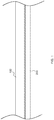
- a specific fiber cloth 100 and a backing sheet 200 are stacked.
- the upper side corresponds to the front surface side of the specific fiber cloth 100.
- the backing sheet 200 is arranged along the back side of the specific fiber cloth 100.
- the specific fiber cloth 100 and the backing sheet 200 have the same shape and size, and are each, for example, a square about 2 m on a side, though not limited thereto.
- the shape and size of the specific fiber cloth 100 are set to a shape and size equal to or larger than the shape and size of the composite material product to be finally obtained.
- the composite material product to be finally obtained is intended to be a hood of an automobile as described later, though not limited thereto. Therefore, the size of the specific fiber cloth 100 is set to a shape and size that are one size larger than those of the composite material product serving as a hood.
- the specific fiber cloth 100 and the backing sheet 200 are stacked so as to fit together exactly, though not limited thereto. Nevertheless, it suffices that the backing sheet 200, when stacked on the specific fiber cloth 100, cover all that area of the specific fiber cloth 100 which corresponds to an area in which a design to be described later is formed, from the back surface side of the specific fiber cloth 100. That is, the backing sheet 200 does not need to have the same shape and size as the specific fiber cloth 100, and does not need to be stacked on the specific fiber cloth 100 so that the specific fiber cloth 100 and the backing sheet 200 fit together exactly.
- the specific fiber cloth 100 is a cloth produced using a thread made of a specific fiber, and in this embodiment, is a woven fabric woven using the thread made of a specific fiber, though not limited thereto. As described above, the specific fiber cloth 100 may be a knitted fabric produced using the thread made of a specific fiber, or may be a UD tape or nonwoven fabric produced using a similar thread.
- the specific fiber is a collective term for a carbon fiber, a glass fiber, and an aramid fiber.
- the thread made of a specific fiber may be formed of only one kind out of those three kinds of specific fibers, but may be obtained by mixing and bundling a plurality of kinds out of those three kinds of specific fibers.
- a typical example of the aramid fiber is a synthetic fiber sold with the trademark Kevlar by E. I. du Pont de Nemours and Company, USA.
- the thread made of a specific fiber is produced by bundling a large number of extremely thin specific fibers until a desired thickness is achieved.
- the thread made of a specific fiber may be set to from 1k to 12k (obtained by bundling 1,000 to 12,000 carbon fibers) .
- the specific fiber cloth 100 may be a commercially available cloth.
- the backing sheet 200 has a sheet shape, and in this embodiment, is formed of a resin.
- the resin may be a thermosetting resin or a thermoplastic resin.
- examples of the resin when the resin is a thermosetting resin include epoxy, unsaturated polyester, and phenol, and besides, vinyl ester, urea, melamine, and polyurethane, or modified resins thereof, such as a modified urethane resin (an epoxy urethane resin) and a modified novolac resin (an epoxy novolac resin), and an epoxy vinyl ester resin.
- thermoplastic resin examples include polyethylene, polypropylene, polystyrene, a polyester resin (PET), nylon, and PEEK, polyphenylene sulfide (PPS), polyether ketone (PEK), and polyetherimide (PEI) serving as super engineering plastics.
- the backing sheet 200 is a thermoplastic resin, more specifically PET, though not limited thereto.
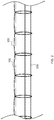
- the stacked specific fiber cloth 100 and backing sheet 200 are embroidered with an embroidery thread 300 ( FIG. 2 and FIG. 3(A) ).
- the embroidery is performed so that a desired design 301 is formed on the front surface of the specific fiber cloth 100 by the embroidery thread 300.
- the embroidery is performed so that the embroidery thread 300 penetrates through both the specific fiber cloth 100 and the backing sheet 200.
- a known or well-known stitch used in general embroidery to be performed for a general cloth using a general thread For example, a long and short stitch, a satin stitch, or a lockstitch may be used.
- the design 301 to be formed by the embroidery may be any design, but in this embodiment, the design to be formed on the front surface of the specific fiber cloth 100 is a filled figure filled with the embroidery thread 300 substantially without any gap, though not limited thereto. In this embodiment, as illustrated in FIGS. 3 , a star-shaped filled figure serves as the design 301, which is not limited thereto.
- the embroidery thread 300 is the thread made of a specific fiber.
- the specific fiber is as described above, and the thread made of a specific fiber is also as described above.
- a design including multiple colors can be obtained as in general embroidery.
- the carbon fiber is usually black, but the glass fiber and the aramid fiber can each be colored a desired color. Therefore, a design including a plurality of colors may be obtained by combining embroidery threads of desired colors.
- the specific fiber cloth 100 and the backing sheet 200 after the completion of the embroidery are shaped into the shape of the composite material product as required.
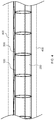
- the composite material product in this embodiment is a hood of an automobile as described above, and hence the specific fiber cloth 100 and the backing sheet 200 are shaped into, for example, such a shape as illustrated in FIG. 3(B) .
- a method for the shaping may be any method, but in this embodiment, the shaping is performed by cutting the specific fiber cloth 100 and the backing sheet 200 together by a known or well-known method.
- the specific fiber cloth 100 and the backing sheet 200 are shaped into the same shape and size.
- the specific fiber cloth 100 and the backing sheet 200 after the completion of the shaping are subj ected to solidification (including curing) with a transparent resin as required, and thus the composite material product is finished.
- the resin being transparent means that the resin used for the curing of the specific fiber cloth 100 and the backing sheet 200 is transparent at the time when the composite material product is finished.
- the transparency in this case may be colorless transparency or colored transparency.
- a method of solidifying the specific fiber cloth 100 and the backing sheet 200 may be the same as a method of solidifying, with a resin, a specific fiber cloth used for obtaining a related-art composite material product.
- the specific fiber cloth 100 and the backing sheet 200 may be solidified or cured using the RFI method or the RTM method.
- the specific fiber cloth 100 and the backing sheet 200 are solidified using the RFI method, though the method is not limited thereto.
- the related-art RFI method involving curing a specific fiber cloth with a resin is a known technique involving placing a specific fiber cloth, in a state of having a solid resin (sheet made of a resin) stacked on its surface on at least one side, in a mold, and evacuating the inside of the mold, followed by pressurization under heating, to thereby solidify the specific fiber cloth with the resin.
- the solid resin is a thermoplastic resin
- the resin temporarily becomes liquid through the heating to impregnate the specific fiber cloth, and is then cooled to become solid again, to thereby solidify the specific fiber cloth.
- the specific fiber cloth in the related-art RFI method is replaced with the specific fiber cloth 100 and the backing sheet 200.
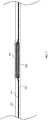
- the specific fiber cloth 100 and the backing sheet 200 are, for example, as illustrated in FIG. 4 , sandwiched between resin sheets 400, which are sheets each made of a resin, which are arranged on both surfaces of the specific fiber cloth 100 and the backing sheet 200.
- the resin that may be used for forming each of the resin sheets 400 include: thermoplastic resins, such as polyethylene, polypropylene, a polyester resin (PET), nylon, and polyphenylene sulfide (PPS); and thermosetting resins, such as epoxy, unsaturated polyester, phenol, vinyl ester, urea, melamine, and polyurethane.
- the resin sheets 400 are set to a shape and size corresponding to the specific fiber cloth 100 and the backing sheet 200.
- the thicknesses of both the resin sheets 400 may be decided depending on thicknesses needed for a front resin layer and a back resin layer, which are described later, and their thicknesses do not necessarily need to be the same.
- the specific fiber cloth 100 and the backing sheet 200 sandwiched by the two resin sheets 400 (herein, description is made by taking as an example a case in which the resin sheets 400 are each made of a thermoplastic resin) are placed in a mold (not shown) . Under this state, the inside of the mold is heated in an evacuated state to melt both the resin sheets 400 and the backing sheet 200. The temperature of the heating is increased to a temperature that enables the melting. The resin sheets 400 and the backing sheet 200 are melted, and at least parts thereof impregnate the specific fiber cloth 100. After that, resins derived from the resin sheets 400 and the backing sheet 200 are cooled to be solidified.
- the specific fiber cloth 100 is brought into the following state: its front surface side is covered with a front resin layer 501 formed mainly of a resin derived from the resin sheet 400 on the upper side of FIG. 4 ; and its back surface side is covered with a back resin layer 502 formed mainly of resins derived from the backing sheet 200 and the resin sheet 400 on the lower side of FIG. 4 ( FIG. 5 ).
- the composite material product is finished.
- the design 301 formed by the embroidery thread 300 is brought into a state of being visible through the front resin layer 501, which is transparent.
- part of the front surface side of the composite material product where the design 301 is present is brought into a state of somewhat bulging from part thereof where the design 301 is absent.
- the specific fiber cloth 100 and the backing sheet 200 are sandwiched between the resin sheets 400 arranged on both their front and back surfaces, but it is also appropriate that the resin sheet 400 be arranged only on at least one side thereof. Particularly when the resin sheet 400 on the front surface side of the specific fiber cloth 100 is omitted, the front surface side of the composite material product may not be covered with the resin, which is acceptable as the composite material product according to the present invention.
- front surface of the front resin layer 501 of the composite material product obtained in this embodiment may be coated with an appropriate paint within an area outside the design.
- the first step and the second step are the same as those in the first embodiment, and only the third step is different from that in the case of the first embodiment.
- the specific fiber cloth 100 and the backing sheet 200 are solidified using the RFI method, but in Modified Example 1, the specific fiber cloth 100 and the backing sheet 200 are solidified using the RTM method.
- the related-art RTM method involving curing a specific fiber cloth with a resin is a known technique involving pouring a liquid resin into a mold under a state in which the specific fiber cloth is placed in the mold, followed by pressurization under heating, to thereby solidify the specific fiber cloth with the resin.
- the liquid resin is a thermosetting resin
- the resin that has impregnated the specific fiber cloth while in a liquid state cures the specific fiber cloth through a curing reaction caused by the heating.
- the specific fiber cloth in the related-art RTM method is replaced with the specific fiber cloth 100 and the backing sheet 200.
- the resin to be injected into a mold having the specific fiber cloth 100 and the backing sheet 200 placed therein is a thermosetting resin as described above, and examples of the material thereof include epoxy, unsaturated polyester, and phenol, and besides, vinyl ester, urea, melamine, and polyurethane, or modified resins thereof, such as a modified urethane resin (an epoxy urethane resin), a modified novolac resin (an epoxy novolac resin), and an epoxy vinyl ester resin.
- the resin for forming the backing sheet 200 may be a thermosetting resin, but is preferably a thermoplastic resin.
- the resin for curing the specific fiber cloth 100 and the backing sheet 200, which is a thermosetting resin, and the resin for forming the backing sheet 200, which is a thermoplastic resin, are preferably as follows : the latter melts at a temperature lower than a temperature at which the former cures.
- the resin for curing the specific fiber cloth 100 and the backing sheet 200 is poured into a mold (not shown) having the specific fiber cloth 100 and the backing sheet 200 placed therein, and under this state, pressurization and heating are performed.
- a mold not shown
- the resin for curing the specific fiber cloth 100 and the backing sheet 200 which is a thermosetting resin
- cures if the temperature at which the resin for curing the specific fiber cloth 100 and the backing sheet 200, which is a thermosetting resin, cures is higher than the temperature at which the resin for forming the backing sheet 200, which is a thermoplastic resin, melts, both the resins temporarily become liquid to mix with each other to impregnate the specific fiber cloth 100.
- the temperature is further increased to cure the thermosetting resin and then the temperature is decreased to solidify the thermoplastic resin
- a composite material product similar to that in the case of the first embodiment can be obtained. More specifically, the composite material product is brought into a state of having its front surface side covered with the front resin layer and having its back surface side covered with the
- the design formed by the embroidery thread 300 is brought into a state of being visible through the front resin layer, which is transparent.
- part of the front surface side of the composite material product where the design is present is brought into a state of somewhat bulging from part thereof where the design is absent.
- the resins are integrated after curing, and hence their boundary is at least blurred.
- the first step and the second step are identical to those in the case of the first embodiment.
- part of the backing sheet 200 not corresponding to the design i.e., part not embroidered with the embroidery thread 300 is removed along the contour of the design.
- the removal of the part of the backing sheet 200 not embroidered with the embroidery thread 300 may be performed by, for example, a known technology or a well-known technology, such as cutting of the backing sheet 200.
- the removal of the part of the backing sheet 200 not embroidered with the embroidery thread 300 may be performed before or after the shaping of the specific fiber cloth 100 and the backing sheet 200.
- the third step may be performed in the same manner as in the case of the first embodiment or Modified Example 1, but in this embodiment, the third step is performed after a different specific fiber cloth 101 from the above-mentioned specific fiber cloth 100 that has been embroidered is further added to the back side of the backing sheet 200.
- the new specific fiber cloth 101 has the same shape and size as the specific fiber cloth 100 that has been embroidered after shaping, and both the specific fiber cloths 100 and 101 are stacked to fit together perfectly so as not to protrude from each other (see FIG. 6 ).
- the specific fiber cloths 100 and 101 and the backing sheet 200 are sandwiched between the resin sheets 400 and then the whole is placed in a mold, and under an evacuated state, pressurization and heating are performed.
- the composite material product to be thus obtained is mostly the same as the one obtained in the first embodiment, but part of the front surface of the specific fiber cloth 100 where the design 301 is present has a somewhat larger degree of protrusion from its periphery as compared to the case of the first embodiment.
- a method of manufacturing a composite material product according to the second embodiment is mostly the same as that in the case of the first embodiment.
- the method of manufacturing a composite material product according to the second embodiment differs from that in the case of the first embodiment in that the backing sheet 200 in the second embodiment is formed of a material that retains its shape even after the heating to be performed in the third step.
- the backing sheet 200 in the second embodiment is formed of, for example, paper, or when made of a resin, is formed of a thermosetting resin.
- the backing sheet 200 is formed of paper.
- the thickness of the paper may be decided depending on the degree of the protrusion at the site of the design to be described later.
- the backing sheet 200 may be formed of a sheet of leather or metal mesh in place of the paper.
- the thickness of the backing sheet 200 may be set to, for example, from 25 ⁇ m to 200 ⁇ m in the composite material product.
- the first step and the second step described in the first embodiment are performed. Then, also in the second embodiment, shaping similar to that in the case of the first embodiment is performed.
- part of the backing sheet 200 outside the design is removed along the contour of the design as described in Modified Example 2, though this is not essential.
- the third step is carried out.
- the shape of the backing sheet 200 is retained even after the third step involving heating has been performed, and hence it does not matter whether the RFI method is selected or the RTM method is performed in the third step.
- the composite material product is obtained.
- the backing sheet 200 remains on the back surface side of the specific fiber cloth 100 at a position in the finally obtained composite material product where the design 301 is present. Therefore, in the composite material product to be obtained by the manufacturing method according to the second embodiment, part of the front surface on the front surface side of the front resin layer 501 where the design 301 is present bulges more significantly as compared to its periphery where the design 301 is absent, because of the effect of the thickness of the backing sheet 200, than in the case of the composite material product obtained by the manufacturing method according to the first embodiment.
Landscapes
- Engineering & Computer Science (AREA)
- Chemical & Material Sciences (AREA)
- Composite Materials (AREA)
- Mechanical Engineering (AREA)
- Textile Engineering (AREA)
- Laminated Bodies (AREA)
- Moulding By Coating Moulds (AREA)
Applications Claiming Priority (1)
| Application Number | Priority Date | Filing Date | Title |
|---|---|---|---|
| PCT/JP2018/006403 WO2019163046A1 (ja) | 2018-02-22 | 2018-02-22 | 複合材料製品の製造方法 |
Publications (3)
| Publication Number | Publication Date |
|---|---|
| EP3756869A1 true EP3756869A1 (de) | 2020-12-30 |
| EP3756869A4 EP3756869A4 (de) | 2021-10-06 |
| EP3756869B1 EP3756869B1 (de) | 2025-11-12 |
Family
ID=67688257
Family Applications (1)
| Application Number | Title | Priority Date | Filing Date |
|---|---|---|---|
| EP18906786.1A Active EP3756869B1 (de) | 2018-02-22 | 2018-02-22 | Verfahren zur herstellung eines verbundstoffmaterialprodukts |
Country Status (6)
| Country | Link |
|---|---|
| US (1) | US11745448B2 (de) |
| EP (1) | EP3756869B1 (de) |
| JP (1) | JP6984920B2 (de) |
| CN (1) | CN111712374B (de) |
| TW (1) | TWI679116B (de) |
| WO (1) | WO2019163046A1 (de) |
Family Cites Families (11)
| Publication number | Priority date | Publication date | Assignee | Title |
|---|---|---|---|---|
| JPS6011339A (ja) | 1983-07-01 | 1985-01-21 | G S S:Kk | 繊維強化プラスチツク複合材の製法 |
| JP3471617B2 (ja) | 1997-09-30 | 2003-12-02 | 三菱電機株式会社 | 平面アンテナ装置 |
| JP2002015490A (ja) | 2000-06-26 | 2002-01-18 | Victor Co Of Japan Ltd | ディジタル信号記録再生装置 |
| JP2002154190A (ja) * | 2000-11-20 | 2002-05-28 | Masafumi Saruta | 造形物、中間シート体、及び、造形物の製造方法 |
| DE102005034395B4 (de) * | 2005-07-22 | 2008-04-10 | Airbus Deutschland Gmbh | Verfahren zur Herstellung von ein- oder mehrschichtigen Faservorformlingen im TFP-Verfahren |
| JP5660563B2 (ja) * | 2010-03-31 | 2015-01-28 | 広島県 | 繊維強化熱可塑性樹脂プリプレグの積層方法 |
| US8544399B2 (en) * | 2010-05-20 | 2013-10-01 | Gennady Miloslavsky | Ornamented composite materials |
| JP2013091252A (ja) * | 2011-10-26 | 2013-05-16 | Bando Chemical Industries Ltd | 炭素繊維強化樹脂成形品及びその製造方法 |
| DE102012003452B4 (de) * | 2012-02-21 | 2014-12-11 | Daimler Ag | Bauteil für die Außenfläche eines Fahrzeugs |
| CN103072285A (zh) | 2012-10-22 | 2013-05-01 | 镇江铁科橡塑制品有限公司 | 纤维增强树脂片材及其叠层模压成型方法 |
| WO2016007090A1 (en) * | 2014-07-09 | 2016-01-14 | Mas Innovation (Private) Limited | Electrically conductive textile assemblies and manufacture thereof |
-
2018
- 2018-02-22 EP EP18906786.1A patent/EP3756869B1/de active Active
- 2018-02-22 US US16/969,553 patent/US11745448B2/en active Active
- 2018-02-22 WO PCT/JP2018/006403 patent/WO2019163046A1/ja not_active Ceased
- 2018-02-22 JP JP2020501918A patent/JP6984920B2/ja active Active
- 2018-02-22 CN CN201880089211.3A patent/CN111712374B/zh active Active
- 2018-05-03 TW TW107114971A patent/TWI679116B/zh active
Also Published As
| Publication number | Publication date |
|---|---|
| CN111712374B (zh) | 2022-03-15 |
| JPWO2019163046A1 (ja) | 2021-02-12 |
| TW201936401A (zh) | 2019-09-16 |
| WO2019163046A1 (ja) | 2019-08-29 |
| US11745448B2 (en) | 2023-09-05 |
| EP3756869A4 (de) | 2021-10-06 |
| US20210001576A1 (en) | 2021-01-07 |
| CN111712374A (zh) | 2020-09-25 |
| TWI679116B (zh) | 2019-12-11 |
| JP6984920B2 (ja) | 2021-12-22 |
| EP3756869B1 (de) | 2025-11-12 |
Similar Documents
| Publication | Publication Date | Title |
|---|---|---|
| US5529826A (en) | Fabric-faced thermoplastic composite panel | |
| JP5660563B2 (ja) | 繊維強化熱可塑性樹脂プリプレグの積層方法 | |
| EP2338666B1 (de) | Halbzeug und Vorform, die zur Fertigung eines Teils verwendet werden, das aus Verbundmaterial hergestellt wird | |
| EP3536840B1 (de) | Verbundstoffverstärkungssubstrat, verbundstoff und verfahren zur herstellung eines verbundstoffverstärkungssubstrats | |
| US10828850B2 (en) | Fiber-reinforced plastic and method of producing the fiber-reinforced plastic | |
| CN102313492A (zh) | 一种复合材料防弹头盔及其制造方法 | |
| WO2017212835A1 (ja) | 複合材部品用の強化基材、複合材部品およびそれらの製造方法 | |
| JP5849284B2 (ja) | 繊維強化複合編物材料の製造方法 | |
| JP2014100911A (ja) | プリフォームおよびその製造方法 | |
| EP3756869B1 (de) | Verfahren zur herstellung eines verbundstoffmaterialprodukts | |
| KR20210110837A (ko) | 샌드위치 형태의 복합 재료의 제조를 위한 방법 | |
| KR20220102639A (ko) | 몰딩 재료 | |
| US12179444B2 (en) | Method and semi-finished item for producing composite products and the products thus obtained | |
| JP2023134509A (ja) | ポリマー材料の調製のための方法 | |
| JP6746973B2 (ja) | プリフォーム用基材、強化繊維プリフォーム、繊維強化樹脂成形体および繊維強化樹脂成形体の製造方法 | |
| US20240100739A1 (en) | Preform produced by knitting, composite product incorporating such a preform and manufacturing methods | |
| JPH0464289B2 (de) | ||
| JPH05154900A (ja) | 曲面成形物及びその製造方法 | |
| US20240262075A1 (en) | Fiber composite product and a method for producing thereof | |
| IT202100005411A1 (it) | Rotolo di materiale composito preimpregnato, nonche’ metodo e sistema per la realizzazione dello stesso | |
| JP2018165045A (ja) | 強化繊維積層シートおよび樹脂成形品の生産方法 | |
| WO2017178357A1 (en) | Reinforcement fabric |
Legal Events
| Date | Code | Title | Description |
|---|---|---|---|
| STAA | Information on the status of an ep patent application or granted ep patent |
Free format text: STATUS: THE INTERNATIONAL PUBLICATION HAS BEEN MADE |
|
| PUAI | Public reference made under article 153(3) epc to a published international application that has entered the european phase |
Free format text: ORIGINAL CODE: 0009012 |
|
| STAA | Information on the status of an ep patent application or granted ep patent |
Free format text: STATUS: REQUEST FOR EXAMINATION WAS MADE |
|
| 17P | Request for examination filed |
Effective date: 20200617 |
|
| AK | Designated contracting states |
Kind code of ref document: A1 Designated state(s): AL AT BE BG CH CY CZ DE DK EE ES FI FR GB GR HR HU IE IS IT LI LT LU LV MC MK MT NL NO PL PT RO RS SE SI SK SM TR |
|
| AX | Request for extension of the european patent |
Extension state: BA ME |
|
| DAV | Request for validation of the european patent (deleted) | ||
| DAX | Request for extension of the european patent (deleted) | ||
| A4 | Supplementary search report drawn up and despatched |
Effective date: 20210906 |
|
| RIC1 | Information provided on ipc code assigned before grant |
Ipc: B32B 5/06 20060101ALI20210831BHEP Ipc: B29C 39/42 20060101ALI20210831BHEP Ipc: B29C 70/48 20060101AFI20210831BHEP |
|
| RIC1 | Information provided on ipc code assigned before grant |
Ipc: B32B 27/28 20060101ALI20250416BHEP Ipc: B32B 27/38 20060101ALI20250416BHEP Ipc: B32B 27/42 20060101ALI20250416BHEP Ipc: B32B 27/36 20060101ALI20250416BHEP Ipc: B32B 27/34 20060101ALI20250416BHEP Ipc: B32B 27/32 20060101ALI20250416BHEP Ipc: B32B 27/12 20060101ALI20250416BHEP Ipc: B32B 5/26 20060101ALI20250416BHEP Ipc: B32B 3/08 20060101ALI20250416BHEP Ipc: B29C 70/08 20060101ALI20250416BHEP Ipc: B32B 5/06 20060101ALI20250416BHEP Ipc: B29C 39/42 20060101ALI20250416BHEP Ipc: B29C 70/48 20060101AFI20250416BHEP |
|
| GRAP | Despatch of communication of intention to grant a patent |
Free format text: ORIGINAL CODE: EPIDOSNIGR1 |
|
| STAA | Information on the status of an ep patent application or granted ep patent |
Free format text: STATUS: GRANT OF PATENT IS INTENDED |
|
| INTG | Intention to grant announced |
Effective date: 20250617 |
|
| GRAS | Grant fee paid |
Free format text: ORIGINAL CODE: EPIDOSNIGR3 |
|
| GRAA | (expected) grant |
Free format text: ORIGINAL CODE: 0009210 |
|
| STAA | Information on the status of an ep patent application or granted ep patent |
Free format text: STATUS: THE PATENT HAS BEEN GRANTED |
|
| AK | Designated contracting states |
Kind code of ref document: B1 Designated state(s): AL AT BE BG CH CY CZ DE DK EE ES FI FR GB GR HR HU IE IS IT LI LT LU LV MC MK MT NL NO PL PT RO RS SE SI SK SM TR |
|
| REG | Reference to a national code |
Ref country code: CH Ref legal event code: F10 Free format text: ST27 STATUS EVENT CODE: U-0-0-F10-F00 (AS PROVIDED BY THE NATIONAL OFFICE) Effective date: 20251112 Ref country code: GB Ref legal event code: FG4D |
|
| REG | Reference to a national code |
Ref country code: IE Ref legal event code: FG4D |
|
| REG | Reference to a national code |
Ref country code: DE Ref legal event code: R096 Ref document number: 602018087205 Country of ref document: DE |
|
| REG | Reference to a national code |
Ref country code: NL Ref legal event code: MP Effective date: 20251112 |
|
| PGFP | Annual fee paid to national office [announced via postgrant information from national office to epo] |
Ref country code: GB Payment date: 20260220 Year of fee payment: 9 |
|
| PG25 | Lapsed in a contracting state [announced via postgrant information from national office to epo] |
Ref country code: ES Free format text: LAPSE BECAUSE OF FAILURE TO SUBMIT A TRANSLATION OF THE DESCRIPTION OR TO PAY THE FEE WITHIN THE PRESCRIBED TIME-LIMIT Effective date: 20251112 |
|
| REG | Reference to a national code |
Ref country code: LT Ref legal event code: MG9D |
|
| PG25 | Lapsed in a contracting state [announced via postgrant information from national office to epo] |
Ref country code: NO Free format text: LAPSE BECAUSE OF FAILURE TO SUBMIT A TRANSLATION OF THE DESCRIPTION OR TO PAY THE FEE WITHIN THE PRESCRIBED TIME-LIMIT Effective date: 20260212 |
|
| PGFP | Annual fee paid to national office [announced via postgrant information from national office to epo] |
Ref country code: DE Payment date: 20260218 Year of fee payment: 9 |
|
| PG25 | Lapsed in a contracting state [announced via postgrant information from national office to epo] |
Ref country code: AT Free format text: LAPSE BECAUSE OF FAILURE TO SUBMIT A TRANSLATION OF THE DESCRIPTION OR TO PAY THE FEE WITHIN THE PRESCRIBED TIME-LIMIT Effective date: 20251112 Ref country code: HR Free format text: LAPSE BECAUSE OF FAILURE TO SUBMIT A TRANSLATION OF THE DESCRIPTION OR TO PAY THE FEE WITHIN THE PRESCRIBED TIME-LIMIT Effective date: 20251112 Ref country code: FI Free format text: LAPSE BECAUSE OF FAILURE TO SUBMIT A TRANSLATION OF THE DESCRIPTION OR TO PAY THE FEE WITHIN THE PRESCRIBED TIME-LIMIT Effective date: 20251112 |
|
| PGFP | Annual fee paid to national office [announced via postgrant information from national office to epo] |
Ref country code: IT Payment date: 20260227 Year of fee payment: 9 |
|
| REG | Reference to a national code |
Ref country code: AT Ref legal event code: MK05 Ref document number: 1856410 Country of ref document: AT Kind code of ref document: T Effective date: 20251112 |
|
| PG25 | Lapsed in a contracting state [announced via postgrant information from national office to epo] |
Ref country code: NL Free format text: LAPSE BECAUSE OF FAILURE TO SUBMIT A TRANSLATION OF THE DESCRIPTION OR TO PAY THE FEE WITHIN THE PRESCRIBED TIME-LIMIT Effective date: 20251112 |
|
| PG25 | Lapsed in a contracting state [announced via postgrant information from national office to epo] |
Ref country code: RS Free format text: LAPSE BECAUSE OF FAILURE TO SUBMIT A TRANSLATION OF THE DESCRIPTION OR TO PAY THE FEE WITHIN THE PRESCRIBED TIME-LIMIT Effective date: 20260212 |
|
| PG25 | Lapsed in a contracting state [announced via postgrant information from national office to epo] |
Ref country code: IS Free format text: LAPSE BECAUSE OF FAILURE TO SUBMIT A TRANSLATION OF THE DESCRIPTION OR TO PAY THE FEE WITHIN THE PRESCRIBED TIME-LIMIT Effective date: 20260312 |
|
| PGFP | Annual fee paid to national office [announced via postgrant information from national office to epo] |
Ref country code: FR Payment date: 20260218 Year of fee payment: 9 |
|
| PG25 | Lapsed in a contracting state [announced via postgrant information from national office to epo] |
Ref country code: PT Free format text: LAPSE BECAUSE OF FAILURE TO SUBMIT A TRANSLATION OF THE DESCRIPTION OR TO PAY THE FEE WITHIN THE PRESCRIBED TIME-LIMIT Effective date: 20260312 |
|
| PG25 | Lapsed in a contracting state [announced via postgrant information from national office to epo] |
Ref country code: PL Free format text: LAPSE BECAUSE OF FAILURE TO SUBMIT A TRANSLATION OF THE DESCRIPTION OR TO PAY THE FEE WITHIN THE PRESCRIBED TIME-LIMIT Effective date: 20251112 |
|
| PG25 | Lapsed in a contracting state [announced via postgrant information from national office to epo] |
Ref country code: LV Free format text: LAPSE BECAUSE OF FAILURE TO SUBMIT A TRANSLATION OF THE DESCRIPTION OR TO PAY THE FEE WITHIN THE PRESCRIBED TIME-LIMIT Effective date: 20251112 |
|
| PG25 | Lapsed in a contracting state [announced via postgrant information from national office to epo] |
Ref country code: BG Free format text: LAPSE BECAUSE OF FAILURE TO SUBMIT A TRANSLATION OF THE DESCRIPTION OR TO PAY THE FEE WITHIN THE PRESCRIBED TIME-LIMIT Effective date: 20251112 |
|
| PG25 | Lapsed in a contracting state [announced via postgrant information from national office to epo] |
Ref country code: LT Free format text: LAPSE BECAUSE OF FAILURE TO SUBMIT A TRANSLATION OF THE DESCRIPTION OR TO PAY THE FEE WITHIN THE PRESCRIBED TIME-LIMIT Effective date: 20251112 |
|
| PG25 | Lapsed in a contracting state [announced via postgrant information from national office to epo] |
Ref country code: SM Free format text: LAPSE BECAUSE OF FAILURE TO SUBMIT A TRANSLATION OF THE DESCRIPTION OR TO PAY THE FEE WITHIN THE PRESCRIBED TIME-LIMIT Effective date: 20251112 |
|
| PG25 | Lapsed in a contracting state [announced via postgrant information from national office to epo] |
Ref country code: DK Free format text: LAPSE BECAUSE OF FAILURE TO SUBMIT A TRANSLATION OF THE DESCRIPTION OR TO PAY THE FEE WITHIN THE PRESCRIBED TIME-LIMIT Effective date: 20251112 |
|
| PG25 | Lapsed in a contracting state [announced via postgrant information from national office to epo] |
Ref country code: EE Free format text: LAPSE BECAUSE OF FAILURE TO SUBMIT A TRANSLATION OF THE DESCRIPTION OR TO PAY THE FEE WITHIN THE PRESCRIBED TIME-LIMIT Effective date: 20251112 |
|
| PG25 | Lapsed in a contracting state [announced via postgrant information from national office to epo] |
Ref country code: CZ Free format text: LAPSE BECAUSE OF FAILURE TO SUBMIT A TRANSLATION OF THE DESCRIPTION OR TO PAY THE FEE WITHIN THE PRESCRIBED TIME-LIMIT Effective date: 20251112 |
|
| PG25 | Lapsed in a contracting state [announced via postgrant information from national office to epo] |
Ref country code: SK Free format text: LAPSE BECAUSE OF FAILURE TO SUBMIT A TRANSLATION OF THE DESCRIPTION OR TO PAY THE FEE WITHIN THE PRESCRIBED TIME-LIMIT Effective date: 20251112 |
|
| PG25 | Lapsed in a contracting state [announced via postgrant information from national office to epo] |
Ref country code: SE Free format text: LAPSE BECAUSE OF FAILURE TO SUBMIT A TRANSLATION OF THE DESCRIPTION OR TO PAY THE FEE WITHIN THE PRESCRIBED TIME-LIMIT Effective date: 20251112 |