EP3744584A1 - Fahrzeugüberwachungsvorrichtung, betrugsdetektionsserver und steuerungsverfahren - Google Patents
Fahrzeugüberwachungsvorrichtung, betrugsdetektionsserver und steuerungsverfahren Download PDFInfo
- Publication number
- EP3744584A1 EP3744584A1 EP18901422.8A EP18901422A EP3744584A1 EP 3744584 A1 EP3744584 A1 EP 3744584A1 EP 18901422 A EP18901422 A EP 18901422A EP 3744584 A1 EP3744584 A1 EP 3744584A1
- Authority
- EP
- European Patent Office
- Prior art keywords
- vehicle
- information
- driving information
- driving
- target vehicle
- Prior art date
- Legal status (The legal status is an assumption and is not a legal conclusion. Google has not performed a legal analysis and makes no representation as to the accuracy of the status listed.)
- Granted
Links
Images








Classifications
-
- G—PHYSICS
- G07—CHECKING-DEVICES
- G07C—TIME OR ATTENDANCE REGISTERS; REGISTERING OR INDICATING THE WORKING OF MACHINES; GENERATING RANDOM NUMBERS; VOTING OR LOTTERY APPARATUS; ARRANGEMENTS, SYSTEMS OR APPARATUS FOR CHECKING NOT PROVIDED FOR ELSEWHERE
- G07C5/00—Registering or indicating the working of vehicles
- G07C5/008—Registering or indicating the working of vehicles communicating information to a remotely located station
-
- G—PHYSICS
- G08—SIGNALLING
- G08G—TRAFFIC CONTROL SYSTEMS
- G08G1/00—Traffic control systems for road vehicles
- G08G1/01—Detecting movement of traffic to be counted or controlled
- G08G1/0104—Measuring and analyzing of parameters relative to traffic conditions
- G08G1/0108—Measuring and analyzing of parameters relative to traffic conditions based on the source of data
- G08G1/0112—Measuring and analyzing of parameters relative to traffic conditions based on the source of data from the vehicle, e.g. floating car data [FCD]
-
- B—PERFORMING OPERATIONS; TRANSPORTING
- B60—VEHICLES IN GENERAL
- B60R—VEHICLES, VEHICLE FITTINGS, OR VEHICLE PARTS, NOT OTHERWISE PROVIDED FOR
- B60R25/00—Fittings or systems for preventing or indicating unauthorised use or theft of vehicles
- B60R25/30—Detection related to theft or to other events relevant to anti-theft systems
- B60R25/32—Detection related to theft or to other events relevant to anti-theft systems of vehicle dynamic parameters, e.g. speed or acceleration
-
- G—PHYSICS
- G06—COMPUTING OR CALCULATING; COUNTING
- G06Q—INFORMATION AND COMMUNICATION TECHNOLOGY [ICT] SPECIALLY ADAPTED FOR ADMINISTRATIVE, COMMERCIAL, FINANCIAL, MANAGERIAL OR SUPERVISORY PURPOSES; SYSTEMS OR METHODS SPECIALLY ADAPTED FOR ADMINISTRATIVE, COMMERCIAL, FINANCIAL, MANAGERIAL OR SUPERVISORY PURPOSES, NOT OTHERWISE PROVIDED FOR
- G06Q40/00—Finance; Insurance; Tax strategies; Processing of corporate or income taxes
- G06Q40/08—Insurance
-
- G—PHYSICS
- G06—COMPUTING OR CALCULATING; COUNTING
- G06Q—INFORMATION AND COMMUNICATION TECHNOLOGY [ICT] SPECIALLY ADAPTED FOR ADMINISTRATIVE, COMMERCIAL, FINANCIAL, MANAGERIAL OR SUPERVISORY PURPOSES; SYSTEMS OR METHODS SPECIALLY ADAPTED FOR ADMINISTRATIVE, COMMERCIAL, FINANCIAL, MANAGERIAL OR SUPERVISORY PURPOSES, NOT OTHERWISE PROVIDED FOR
- G06Q50/00—Information and communication technology [ICT] specially adapted for implementation of business processes of specific business sectors, e.g. utilities or tourism
- G06Q50/10—Services
- G06Q50/26—Government or public services
- G06Q50/265—Personal security, identity or safety
-
- G—PHYSICS
- G06—COMPUTING OR CALCULATING; COUNTING
- G06Q—INFORMATION AND COMMUNICATION TECHNOLOGY [ICT] SPECIALLY ADAPTED FOR ADMINISTRATIVE, COMMERCIAL, FINANCIAL, MANAGERIAL OR SUPERVISORY PURPOSES; SYSTEMS OR METHODS SPECIALLY ADAPTED FOR ADMINISTRATIVE, COMMERCIAL, FINANCIAL, MANAGERIAL OR SUPERVISORY PURPOSES, NOT OTHERWISE PROVIDED FOR
- G06Q50/00—Information and communication technology [ICT] specially adapted for implementation of business processes of specific business sectors, e.g. utilities or tourism
- G06Q50/40—Business processes related to the transportation industry
-
- G—PHYSICS
- G07—CHECKING-DEVICES
- G07C—TIME OR ATTENDANCE REGISTERS; REGISTERING OR INDICATING THE WORKING OF MACHINES; GENERATING RANDOM NUMBERS; VOTING OR LOTTERY APPARATUS; ARRANGEMENTS, SYSTEMS OR APPARATUS FOR CHECKING NOT PROVIDED FOR ELSEWHERE
- G07C5/00—Registering or indicating the working of vehicles
- G07C5/02—Registering or indicating driving, working, idle, or waiting time only
-
- G—PHYSICS
- G07—CHECKING-DEVICES
- G07C—TIME OR ATTENDANCE REGISTERS; REGISTERING OR INDICATING THE WORKING OF MACHINES; GENERATING RANDOM NUMBERS; VOTING OR LOTTERY APPARATUS; ARRANGEMENTS, SYSTEMS OR APPARATUS FOR CHECKING NOT PROVIDED FOR ELSEWHERE
- G07C5/00—Registering or indicating the working of vehicles
- G07C5/08—Registering or indicating performance data other than driving, working, idle, or waiting time, with or without registering driving, working, idle or waiting time
-
- G—PHYSICS
- G07—CHECKING-DEVICES
- G07C—TIME OR ATTENDANCE REGISTERS; REGISTERING OR INDICATING THE WORKING OF MACHINES; GENERATING RANDOM NUMBERS; VOTING OR LOTTERY APPARATUS; ARRANGEMENTS, SYSTEMS OR APPARATUS FOR CHECKING NOT PROVIDED FOR ELSEWHERE
- G07C5/00—Registering or indicating the working of vehicles
- G07C5/08—Registering or indicating performance data other than driving, working, idle, or waiting time, with or without registering driving, working, idle or waiting time
- G07C5/0816—Indicating performance data, e.g. occurrence of a malfunction
- G07C5/0825—Indicating performance data, e.g. occurrence of a malfunction using optical means
-
- G—PHYSICS
- G07—CHECKING-DEVICES
- G07C—TIME OR ATTENDANCE REGISTERS; REGISTERING OR INDICATING THE WORKING OF MACHINES; GENERATING RANDOM NUMBERS; VOTING OR LOTTERY APPARATUS; ARRANGEMENTS, SYSTEMS OR APPARATUS FOR CHECKING NOT PROVIDED FOR ELSEWHERE
- G07C5/00—Registering or indicating the working of vehicles
- G07C5/08—Registering or indicating performance data other than driving, working, idle, or waiting time, with or without registering driving, working, idle or waiting time
- G07C5/0841—Registering performance data
-
- G—PHYSICS
- G08—SIGNALLING
- G08G—TRAFFIC CONTROL SYSTEMS
- G08G1/00—Traffic control systems for road vehicles
- G08G1/01—Detecting movement of traffic to be counted or controlled
- G08G1/0104—Measuring and analyzing of parameters relative to traffic conditions
- G08G1/0125—Traffic data processing
- G08G1/0133—Traffic data processing for classifying traffic situation
-
- G—PHYSICS
- G08—SIGNALLING
- G08G—TRAFFIC CONTROL SYSTEMS
- G08G1/00—Traffic control systems for road vehicles
- G08G1/01—Detecting movement of traffic to be counted or controlled
- G08G1/04—Detecting movement of traffic to be counted or controlled using optical or ultrasonic detectors
-
- H—ELECTRICITY
- H04—ELECTRIC COMMUNICATION TECHNIQUE
- H04W—WIRELESS COMMUNICATION NETWORKS
- H04W4/00—Services specially adapted for wireless communication networks; Facilities therefor
- H04W4/02—Services making use of location information
- H04W4/023—Services making use of location information using mutual or relative location information between multiple location based services [LBS] targets or of distance thresholds
-
- H—ELECTRICITY
- H04—ELECTRIC COMMUNICATION TECHNIQUE
- H04W—WIRELESS COMMUNICATION NETWORKS
- H04W4/00—Services specially adapted for wireless communication networks; Facilities therefor
- H04W4/02—Services making use of location information
- H04W4/029—Location-based management or tracking services
-
- H—ELECTRICITY
- H04—ELECTRIC COMMUNICATION TECHNIQUE
- H04W—WIRELESS COMMUNICATION NETWORKS
- H04W4/00—Services specially adapted for wireless communication networks; Facilities therefor
- H04W4/30—Services specially adapted for particular environments, situations or purposes
- H04W4/40—Services specially adapted for particular environments, situations or purposes for vehicles, e.g. vehicle-to-pedestrians [V2P]
- H04W4/44—Services specially adapted for particular environments, situations or purposes for vehicles, e.g. vehicle-to-pedestrians [V2P] for communication between vehicles and infrastructures, e.g. vehicle-to-cloud [V2C] or vehicle-to-home [V2H]
-
- H—ELECTRICITY
- H04—ELECTRIC COMMUNICATION TECHNIQUE
- H04L—TRANSMISSION OF DIGITAL INFORMATION, e.g. TELEGRAPHIC COMMUNICATION
- H04L67/00—Network arrangements or protocols for supporting network services or applications
- H04L67/01—Protocols
- H04L67/12—Protocols specially adapted for proprietary or special-purpose networking environments, e.g. medical networks, sensor networks, networks in vehicles or remote metering networks
Definitions
- the present invention relates to a vehicle monitoring apparatus, a fraud detection server, and control methods.
- ECUs electronice control units
- vehicle-mounted network A network that connects the ECUs.
- vehicle-mounted network There are many standards for vehicle-mounted networks, and a standard called Controller Area Network (hereinafter also referred to as "CAN”) is one of the most widely used vehicle-mounted networks.
- CAN Controller Area Network
- the CAN does not have a security function to handle cases where a fraudulent frame is transmitted, and thus a situation may occur in which a fraudulent node automatically connects to a CAN bus to fraudulently transmit a frame, and thereby fraudulently control a vehicle.
- Patent Literature 1 discloses a method for calculating the anomaly level of a frame transmitted to a vehicle-mounted network by uploading information regarding the frame transmitted to the vehicle-mounted network to a fraud detection server.
- the present invention provides a vehicle monitoring apparatus and the like with which even if a frame uploaded by a fraudulent vehicle is falsified, it is possible to assist in detecting the fraudulent vehicle.
- a vehicle monitoring apparatus includes: a first communicator that receives specifying information for specifying a target vehicle from a server; and an acquirer that acquires driving information from the target vehicle, the driving information being information regarding driving of the target vehicle specified by the specifying information received by the first communicator.
- the first communicator transmits the driving information acquired by the acquirer to the server.
- Generic or specific aspects thereof may be implemented by a system, a method, an integrated circuit, a computer program or a computer readable recording medium such as a CD-ROM, or may be implemented by any combination of a system, a method, an integrated circuit, a computer program and a recording medium.
- a vehicle monitoring apparatus includes: a first communicator that receives specifying information for specifying a target vehicle from a server; and an acquirer that acquires driving information from the target vehicle, the driving information being information regarding driving of the target vehicle specified by the specifying information received by the first communicator.
- the first communicator transmits the driving information acquired by the acquirer to the server.
- the vehicle monitoring apparatus acquires, from the target vehicle specified by the specifying information obtained from the server, the driving information of the target vehicle, and transmits the acquired driving information to the server. Accordingly, even if a frame uploaded to the server from the target vehicle is falsified, with the driving information of the target vehicle transmitted to the server from the vehicle monitoring apparatus, the server can detect the fraud of the target vehicle. Thus, even if a frame uploaded by a fraudulent vehicle is falsified, the vehicle monitoring apparatus can assist in detecting the fraudulent vehicle.
- the acquirer may acquire the driving information obtained from the target vehicle through communication.
- the vehicle monitoring apparatus acquires the driving information obtained through communication with the specified vehicle. Accordingly, even if a frame uploaded by a fraudulent vehicle is falsified, the vehicle monitoring apparatus can more easily obtain the driving information of the target vehicle and assist in detecting the fraudulent vehicle.
- the acquirer may acquire the driving information obtained by sensing the target vehicle.
- the vehicle monitoring apparatus acquires the driving information obtained by sensing the specified vehicle. Accordingly, even if a frame uploaded by a fraudulent vehicle is falsified, the vehicle monitoring apparatus can more easily obtain the driving information of the target vehicle and assist in detecting the fraudulent vehicle.
- the vehicle monitoring apparatus may further include a determiner that determines whether or not first driving information that is the driving information obtained through the communication and second driving information that is the driving information obtained by the sensing match, and the first communicator may transmit the first driving information and the second driving information to the server only when the determiner determines that the first driving information and the second driving information do not match.
- the vehicle monitoring apparatus transmits the driving information to the server only when the driving information of the target vehicle acquired through communication and the driving information of the target vehicle acquired by sensing do not match, and thus the amount of communication to the server is reduced. Accordingly, even if a frame uploaded by a fraudulent vehicle is falsified, the vehicle monitoring apparatus can assist in detecting the fraudulent vehicle while reducing the amount of communication to the server.
- the vehicle monitoring apparatus may be provided in a vehicle, and the acquirer may present, to a driver of the vehicle, question information for asking a driving state of the target vehicle, and acquire the driving information based on answer information to the question information acquired from the driver by sensing.
- the vehicle monitoring apparatus acquires a result of determination of the driver with respect to the driving state of the target vehicle by sensing. Accordingly, even if a frame uploaded by a fraudulent vehicle is falsified, the vehicle monitoring apparatus can assist in detecting the fraudulent vehicle by using the driving information of the target vehicle obtained from even more information sources.
- the driving information of the target vehicle may include speed information that indicates a speed of the target vehicle.
- the vehicle monitoring apparatus can detect, in particular, a fraud in the speed of the target vehicle. Accordingly, even if a frame in which particularly the vehicle speed has been falsified is uploaded by a fraudulent vehicle, the vehicle monitoring apparatus can assist in detecting the fraudulent vehicle.
- a fraud detection server includes: a first communicator that receives first driving information that is information regarding driving of a target vehicle; a storage that stores position information that indicates current positions of a plurality of vehicles; a second communicator that performs an operation (a) of, when an anomaly is detected in the first driving information received from the target vehicle, specifying one or more vehicles that are present within a predetermined distance from the target vehicle from among the plurality of vehicles by referencing the position information, and transmitting a notification requesting for second driving information regarding driving of the target vehicle to a vehicle monitoring apparatus of each of the one or more vehicles specified, and an operation (b) of receiving the second driving information from the vehicle monitoring apparatus of the one or more vehicles; and a notifier that determines priority based on the first driving information and the second driving information, the priority indicating a degree of precedence in which the anomaly needs to be preferentially analyzed, and more preferentially transmits a notification of the anomaly as the anomaly has higher priority.
- the fraud detection server causes each vehicle monitoring apparatus of the vehicles that are present within a predetermined distance from the target vehicle to acquire the driving state of the target vehicle. Accordingly, even if a frame uploaded to the server from the target vehicle is falsified, the server can detect the fraud of the target vehicle based on the driving information of the target vehicle transmitted to the server from the vehicle monitoring apparatus. Thus, even if a frame uploaded by a fraudulent vehicle is falsified, the fraud detection server can detect the fraudulent vehicle.
- the notifier may give higher priority to the anomaly detected in the first driving information.
- the fraud detection server when the driving information of the target vehicle acquired through communication and the driving information of the target vehicle acquired by sensing do not match, the fraud detection server more preferentially transmits a notification of the anomaly to an analyst or the like. Accordingly, when the driving information of the target vehicle acquired through communication and the driving information of the target vehicle acquired by sensing do not match, it is possible to cause the analyst or the like to more preferentially take necessary measures.
- a control method for controlling a vehicle monitoring apparatus includes: receiving specifying information for specifying a target vehicle from a server; acquiring driving information from the target vehicle, the driving information being information regarding driving of the target vehicle specified by the specifying information received; and transmitting the driving information acquired to the server.
- a control method for controlling a fraud detection server includes: receiving first driving information that is information regarding driving of a target vehicle; storing position information that indicates current positions of a plurality of vehicles; when an anomaly is detected in the first driving information received from the target vehicle, specifying one or more vehicles that are present within a predetermined distance from the target vehicle from among the plurality of vehicles by referencing the position information, and transmitting a notification requesting for second driving information regarding driving of the target vehicle to a vehicle monitoring apparatus of each of the one or more vehicles specified; receiving the second driving information from the vehicle monitoring apparatus of the one or more vehicles; and determining priority based on the first driving information and the second driving information, the priority indicating a degree of precedence in which the anomaly needs to be preferentially analyzed, and more preferentially transmitting a notification of the anomaly as the anomaly has higher priority.
- Generic or specific aspects thereof may be implemented by a system, a method, an integrated circuit, a computer program or a computer readable recording medium such as a CD-ROM, or may be implemented by any combination of a system, a method, an integrated circuit, a computer program and a recording medium.
- a fraudulent vehicle monitoring system that includes: a plurality of vehicles each including a vehicle-mounted network (vehicle-mounted network system) in which a plurality of electronic control units (ECUs) perform communication via a CAN bus; and a server (fraud detection server).
- vehicle-mounted network vehicle-mounted network system
- ECUs electronice control units
- the fraudulent vehicle monitoring system includes a vehicle monitoring apparatus that, even if a frame uploaded by a fraudulent vehicle is falsified, can assist in detecting the fraudulent vehicle.
- FIG. 1 is a diagram showing an overall configuration of a fraudulent vehicle monitoring system according to the present embodiment.
- the fraudulent vehicle monitoring system includes fraud detection server 80, roadside station 90, and vehicles 1010a, 1010b, 1010c, 1010d, 1010e, and 1010f that are connected via network 81 that serves as a communication path.
- Network 81 may include an internet or dedicated communication line.
- Vehicles 1010a, 1010b, 1010c, 1010d, 1010e, and 1010f each include a vehicle-mounted network that is connected to various types of devices such as a control apparatus, a sensor, an actuator, and a user interface apparatus that are provided in the vehicle, and in which a plurality of ECUs that perform communication via an in-vehicle bus (CAN bus) are included.
- CAN bus in-vehicle bus
- the ECUs perform communication in accordance with the CAN protocol.
- Frames according to the CAN protocol include a data frame, a remote frame, an overload frame, and an error frame.
- the data frame is defined to include an ID field for storing an ID, a data length code (DLC) that indicates a data length, and a data field for storing data.
- DLC data length code
- Roadside station 90, and vehicles 1010a, 1010b, 1010c, and 1010d are present in area A.
- the expression "they are present in the same area” means that they are present in a communicable range where they can perform V2X (Vehicle-to-Everything) communication with each other.
- Vehicles 1010e and 1010f are present in area B.
- FIG. 2 is a diagram showing an example of a configuration of a vehicle-mounted network system provided in vehicle 1010a that is a model A vehicle.
- Other model vehicles have a configuration that is the same as or similar to the configuration shown in FIG. 2 , or a configuration that is partially different from the configuration shown in FIG. 2 .
- the vehicle-mounted network system provided in vehicle 1010a or the like includes nodes such as a plurality of ECUs (ECUs 100, 101, 200, 201, 300, 301, 302, 400, and 401) and gateway 900 that are connected via buses (CAN buses) 10, 20, 30, 40, and 50. Gateway 900 is also deemed as an ECU. Although not shown in FIG. 2 , the vehicle-mounted network system may include even more ECUs.
- ECUs 100, 101, 200, 201, 300, 301, 302, 400, and 401 gateway 900 that are connected via buses (CAN buses) 10, 20, 30, 40, and 50.
- Gateway 900 is also deemed as an ECU.
- the vehicle-mounted network system may include even more ECUs.
- An ECU is an apparatus that includes, for example, a processor (microprocessor), a digital circuit such as a memory, an analog circuit, a communication circuit, and the like.
- the memory includes a ROM and a RAM, and a control program (computer program) executable by the processor can be stored.
- the processor performing operations in accordance with the control program, the ECU can implement various functions.
- the computer program is configured by combining a plurality of instruction codes for the processor in order to implement a predetermined function.
- Bus 10 is connected to power-train ECUs including ECU (engine ECU) 100 and ECU (transmission ECU) 101 that are respectively connected to engine 110 and transmission 111, the power-train ECUs being ECUs that perform operations related to "driving" of the vehicle such as motor control, fuel control and battery control.
- ECU engine ECU
- ECU transmission ECU
- the power-train ECUs being ECUs that perform operations related to "driving" of the vehicle such as motor control, fuel control and battery control.
- Bus 20 is connected to chassis ECUs including ECU (brake ECU) 200 and ECU (steering ECU) 201 that are respectively connected to brake 210 and steering 211, the chassis ECUs being ECUs that perform operations related to controlling the behaviors of the vehicle such as "turning" and "stopping".
- ECU brake ECU
- ECU steering ECU
- Bus 30 is connected to information system-related ECUs including ECU 300, ECU 301, and ECU 302 that are respectively connected to camera 310, IVI (In-Vehicle Infotainment System) 311, and V2X communication module 312, the information system-related ECUs being ECUs that have functions of recognizing, determining and controlling a drive assist based on camera information or functions related to an audio head unit, or that are related to an information system such as V2X communication.
- IVI Intelligent Vehicle Infotainment System
- Bus 40 is connected to body-system related ECUs including ECU 400 and ECU 401 that are respectively connected to door 410 and light 411, the body-system related ECUs performing operations related to controlling vehicle equipment such as an air conditioner and direction indicators.
- Bus 50 is connected to diagnosis port 510 that is an interface for performing communication with an external diagnosis tool (fault diagnosis tool) such as, for example, OBD 2 (On-Board Diagnostics 2).
- diagnosis tool fault diagnosis tool
- OBD 2 On-Board Diagnostics 2
- Each ECU acquires the state of the device (engine 110, brake 210, or the like) that is connected thereto, and regularly transmits a frame that indicates the state of the device and the like to the vehicle-mounted network, or in other words, the CAN bus.
- ECUs 100 and 101 that are connected to bus 10 ECUs 200 and 201 that are connected to bus 20, and ECUs 300, 301, and 302 that are connected to bus 30 are MAC compliant ECUs that are ECUs that have a MAC processing function of processing a message authentication code (MAC).
- the MAC processing function includes, specifically, a MAC generation function, a MAC verification function, and the like.
- ECUs 400 and 401 that are connected to bus 40 are MAC non-compliant ECUs that do not have a MAC processing function.
- Gateway 900 is a MAC compliant ECU that has a MAC generation function and a MAC verification function.
- Gateway 900 is an ECU that connects a plurality of different communication paths and transfers data between the communication paths.
- Gateway 900 is connected to bus 10, bus 20, bus 30, bus 40, and bus 50. That is, gateway 900 is a type of ECU that has a function of transferring a frame
- Gateway 900 includes a communication apparatus (a communication circuit, and the like) for performing communication with fraud detection server 80 that is provided outside the vehicle. Gateway 900 has, for example, a function of transmitting (uploading) information regarding a frame received from each bus to fraud detection server 80. The configuration of gateway 900 will be described later in detail.
- FIG. 3 is a configuration diagram of fraud detection server 80.
- Fraud detection server 80 is a server for handling a fraudulent frame transmitted via the vehicle-mounted network provided in vehicle 1010a or the like.
- Fraud detection server 80 is implemented by a computer that includes, for example, a processor, a memory, a communication interface, and the like.
- Fraud detection server 80 includes communicator 810, processing determiner 820, log collector 830, log analyzer 840, result notifier 850, monitoring log communicator 860, priority determiner 870, vehicle information DB 880, vehicle log storage DB 881, analysis result storage DB 882, and monitoring log storage DB 883.
- Vehicle information DB 880, vehicle log storage DB 881, analysis result storage DB 882, and monitoring log storage DB 883 may be implemented by, for example, a storage medium such as a memory or a hard disk.
- processing determiner 820 log collector 830, log analyzer 840, and priority determiner 870 are implemented by, for example, a control program stored in the memory being executed by the processor.
- Communicator 810 is implemented by the communication interface, the processor that executes the control program stored in the memory, or the like.
- Communicator 810 performs communication with vehicles 1010a, 1010b, 1010c, 1010d, 1010e, and 1010f via the network, and thereby receives information regarding the vehicle-mounted network of each vehicle.
- the information regarding each vehicle-mounted network may include, for example, information regarding the content of frames flowing through the CAN buses in the vehicle-mounted network, reception timing (interval, frequency, or the like), bus load factor, and the result of MAC verification of the frames.
- meta information that indicates the current state of the vehicle is also notified.
- the meta information may include information that indicates the current position of the vehicle, a BSM (Basic Safety Message), and weather.
- the position of the vehicle is, for example, a GPS position acquired by a GPS (Global Positioning System).
- Processing determiner 820 determines processing to be performed on the information regarding each vehicle-mounted network transmitted from communicator 810.
- Log collector 830 stores various types of data (information regarding frames received via each vehicle-mounted network, and the like), which are the content of log information collected from each vehicle, into vehicle log storage DB 881 based on the information stored in vehicle information DB 880.
- Log collector 830 may perform predetermined processing such as normalization on the various types of data when storing the various types of data into vehicle log storage DB 881.
- Log analyzer 840 has a function of analyzing the log information collected from each vehicle and stored in vehicle log storage DB 881 and determining whether or not a frame received by the vehicle-mounted network of a vehicle is fraudulent, or in other words, whether or not an attack frame has been transmitted to the vehicle-mounted network of the vehicle by an attacker.
- Log analyzer 840 may perform, for example, statistical processing or the like on information regarding a plurality of frames collected from each vehicle indicated by the stored log information, more specifically, information regarding the content, reception timing, and the like of each of the plurality of frames.
- Log analyzer 840 has a function of determining, based on information regarding a plurality of frames acquired by communicator 810 and information regarding a frame received by the vehicle-mounted network of a vehicle (for example, vehicle 1010a) and acquired by communicator 810 after the plurality of frames have been acquired, the anomaly level of the frame received by the vehicle-mounted network of the vehicle, or whether or not there is an anomaly in the received frame.
- Log analyzer 840 may construct, for example, a predetermined model for a frame that flows through each vehicle-mounted network in a normal state, the predetermined model that can be used to compare with an anomalous state, and adjust (update) the predetermined model to make it more appropriate by using machine learning based on sequentially acquired log information.
- log analyzer 840 may perform processing (for example, multivariate analysis or the like) on the information regarding a plurality of frames indicated by the collected log information as appropriate and supply the processed information to the learning of the predetermined model.
- processing for example, multivariate analysis or the like
- the learning of the predetermined model either supervised learning or unsupervised learning may be used.
- the log information may include information that indicates whether or not the frame is a fraudulent frame, and log analyzer 840 may perform supervised learning on the predetermined model based on the information that indicates whether or not the frame is a fraudulent frame.
- log analyzer 840 may collect log information regarding frames that are not fraudulent frames from each vehicle or collect log information regarding all frames irrespective of whether they are fraudulent frames, and perform unsupervised learning on the predetermined model based on the collected log information.
- the predetermined model is used to calculate the anomaly level (the degree of anomaly) of a frame received by the vehicle-mounted network of a vehicle.
- the content of the predetermined model is not limited as long as it can be used to calculate the anomaly level of the frame.
- the anomaly level is calculated by, for example, comparison between information regarding the frame received by the vehicle-mounted network of a vehicle and a predetermined model (or in other words, computation processing using information regarding the frame and the predetermined model).
- Log analyzer 840 may construct, as the predetermined model for calculating the anomaly level, a predetermined model that indicates, for example, a distribution of feature values of a frame received by a vehicle-mounted network in a normal state, more specifically, feature vectors including components such as frame content, frame receipt interval, and frame receipt frequency, and the like, based on the log information of vehicles of the same vehicle model.
- the predetermined model may be, for example, a model that indicates the relationship between a response variable and an explanatory variable, where the anomaly level is set as the response variable, and the log information is set as the explanatory variable.
- the anomaly level may, for example, take a value of 0 (zero) when it is determined that there is no anomaly (or in other words, it is normal), and take a positive numerical value according to the degree of anomaly when it is determined that there is an anomaly.
- the anomaly level may take two values of 0 (for example, when it is determined that there is no anomaly) and 1 (for example, when it is determined that there is an anomaly), or may take three values or more according to a plurality of degrees of anomaly.
- the anomaly level of a frame received by the vehicle-mounted network of a vehicle can be calculated by determining whether or not a feature value of the frame is within a range defined by threshold values determined by multiplying a standard deviation of a distribution (for example, a normal distribution specified by average value and dispersion) of a feature value indicated by a predetermined model determined based on the already collected log information by a predetermined coefficient (for example, 3).
- a predetermined coefficient for example, 3
- a plurality of anomaly levels can be calculated by using a plurality of predetermined coefficients.
- a method such as outlier detection or change point detection that detects an abrupt change in chronological order may be used.
- log analyzer 840 calculates, based on information regarding a plurality of frames received by the vehicle-mounted network of each vehicle indicated by the collected log information (vehicle log information), the anomaly level of a frame received by the vehicle-mounted network of a vehicle after the plurality of frames have been received.
- Information regarding the frame received by the vehicle-mounted network of a vehicle can also be obtained from the log information of the vehicle.
- log analyzer 840 If it is determined, based on the anomaly level calculated for the frame received by the vehicle-mounted network of a vehicle, that there is an anomaly, in order to check the influence of the anomalous frame, log analyzer 840 notifies monitoring log communicator 860 so as to transmit a monitoring request to vehicles that are present in the same area as the vehicle that transmitted the frame determined as having an anomaly.
- Log analyzer 840 sequentially performs various types of analysis processing operations such as statistical processing based on the collected log information, updating (learning) the predetermined model, and calculating the anomaly level of the frame received by the vehicle-mounted network of a vehicle. Then, log analyzer 840 stores the results of the analysis processing operations (for example, information that indicates the updated predetermined model, information regarding the calculated anomaly level, and the like) in analysis result storage DB 882, and uses the results in the subsequent analysis processing (calculation of the anomaly level of a frame, or the like).
- Log analyzer 840 may detect not only an anomaly as described above, but also an anomalous behavior, such as, for example, whether or not sudden steering, sudden braking, sudden acceleration or emergency braking has been performed, as the driving state of the vehicle.
- Result notifier 850 includes a means that, if priority determiner 870 determines that there is a fraudulent event that needs to be notified to the administrator of the fraudulent vehicle monitoring system, transmits information regarding the fraudulent event stored in analysis result storage DB 882 to the administrator of the fraudulent vehicle monitoring system.
- result notifier 850 is connected to a display, and displays, on the display, information indicating that a fraudulent event has occurred.
- result notifier 850 may function as a web server, or may visually reproduce the state of the surroundings of the vehicle in VR (Virtual Reality), by using a moving image obtained by recording information of the surroundings of the vehicle stored in monitoring log storage DB 883 and the vehicle logs stored in vehicle log storage DB 881, so as to notify the analyst of the state of the site, or may function as an email server so as to send a notification to the administrator via email.
- VR Virtual Reality
- the notification destination is not necessarily the administrator of the vehicle-mounted network monitoring system.
- the notification may be sent to a security analyst of a security operation center to which vehicle-mounted network monitoring business is outsourced.
- monitoring log communicator 860 Upon receiving a notification indicating that an anomaly has been detected from log analyzer 840, monitoring log communicator 860 transmits a message (monitoring request notification) requesting to monitor the vehicle in which the anomaly has been detected to a vehicle or roadside station that is present in the same area as the vehicle in which the anomaly has been detected.
- the vehicle or roadside station that is present in the same area as the vehicle in which the anomaly has been detected is selected from GPS information or the like stored in vehicle log storage DB 881.
- monitoring log communicator 860 waits for a monitoring log to be received from the vehicle to which the above-described message (monitoring request notification) has been transmitted. Upon receiving a monitoring log, monitoring log communicator 860 stores the received monitoring log in monitoring log storage DB 883. Furthermore, monitoring log communicator 860 transmits an instruction to calculate the priority of the detected anomaly to priority determiner 870.
- the monitoring request notification may include license plate information, VIN (Vehicle Identification Number), or the like of the target vehicle that needs to be monitored. With this configuration, the vehicle or roadside station that has received the monitoring request notification can intensively monitor the target vehicle that needs to be monitored, and thus can acquire more detailed monitoring data.
- the fraud detection server 80 that knows the positional relationship between vehicles performing moving image processing, the driving data (for example, driving speed, steering angle, and the like) of the target vehicle to be monitored can be extracted.
- Priority determiner 870 checks the degree of the detected anomaly based on monitoring log storage DB 883, calculates the priority according to the degree of the anomaly, and transmits the calculated priority to result notifier 850.
- priority refers to the degree of precedence in which the anomaly needs to be handled preferentially.
- Priority determiner 870 calculates a relatively high priority when dangerous driving that can cause an accident such as sudden steering, sudden braking, sudden deceleration, or unsteady driving is performed, or when an accident has already taken place.
- priority determiner 870 calculates a medium priority when the presence of the vehicle determined as having an anomaly cannot be confirmed from the monitoring log, or when the vehicle log and the monitoring log do not match. This is because, in this case, it is not possible to confirm the state because the position information or the like included in the log may be falsified.
- priority determiner 870 calculates a relatively low priority when, as a result of monitoring the vehicle determined as having an anomaly, it is determined that there is no anomaly. This is because, in this case, the risk of immediately causing danger is low.
- a method may be used in which the state of the target vehicle to be monitored is obtained based on airbag activation information, emergency braking activation information, acceleration, steering information, speed, and the like included in a V2X communication log.
- a method may be used in which the driving state of the vehicle is recognized by analyzing a moving image or image information, and the influence on the driving of the vehicle is thereby recognized, or a method may be used in which the place where an accident has taken place is recognized.
- a method may be used in which the state of the anomalous vehicle is obtained by text analysis or voice recognition.
- priority determiner 870 does not need to determine priority based only on monitoring logs. For example, whether monitoring logs match may be verified by using the vehicle log of the vehicle in which the anomaly has been detected and the vehicle log of a vehicle that has transmitted a monitoring log. For example, priority determiner 870 may calculate the speed or steering angle of the vehicle from a camera image included in the monitoring log, compare the calculated speed or steering angle with the speed or steering angle included in the vehicle log of the vehicle in which the anomaly has been detected, and determine that they do not match if the difference is greater than a predetermined value. With this configuration, priority determiner 870 can verify whether the vehicle logs and monitoring logs of a plurality of vehicles match, and a log having the lowest matching level can be determined as a falsified log.
- Communicator 810 corresponds to a first communicator that receives first driving information that is information regarding driving of a vehicle.
- Vehicle log storage DB 881 corresponds to a storage that stores position information that indicates current positions of a plurality of vehicles.
- the storage may be implemented by a storage device or the like.
- Monitoring log communicator 860 corresponds to a second communicator that performs: an operation (a) of, when an anomaly is detected in the first driving information received from the target vehicle, specifying one or more vehicles that are present within a predetermined distance from the target vehicle from among the plurality of vehicles by referencing the position information, and transmitting a notification requesting for second driving information regarding driving of the target vehicle to a vehicle monitoring apparatus of each of the one or more vehicles specified, and an operation (b) of receiving the second driving information from the vehicle monitoring apparatus of the one or more vehicles.
- Priority determiner 870 and result notifier 850 correspond to a notifier that determines priority based on the first driving information and the second driving information, the priority indicating the degree of precedence in which the anomaly needs to be preferentially analyzed, and more preferentially transmits a notification of the anomaly as the anomaly has higher priority.
- priority determiner 870 may give higher priority to the anomaly detected in the first driving information.
- FIG. 4A shows a configuration of gateway 900 provided in the vehicle-mounted network of a vehicle (for example, vehicle 1010a).
- Gateway 900 is an example of a vehicle monitoring apparatus.
- gateway 900 includes frame transceiver 910, frame interpreter 920, matching verifier 930, updater 940, frame uploader 950, transfer controller 960, key processor 970, frame generator 980, rule storage 990, transfer rule storage 991, and key storage 992.
- the functions of the structural elements are implemented by, for example, the communication circuit in gateway 900, or a processor a digital circuit or the like that executes a control program stored in a memory.
- frame uploader 950 and updater 940 are implemented by a communication circuit or the like for performing communication with fraud detection server 80.
- Frame transceiver 910 transmits and receives frames that conform to the CAN protocol to and from bus 10, bus 20, bus 30, bus 40, and bus 50.
- Frame transceiver 910 receives frames from the buses on a bit-by-bit basis, and transmits the frames to frame interpreter 920.
- frame transceiver 910 transmits, based on bus information that indicates a transfer destination bus and a transmission frame notified from frame generator 980, the content of the frame on a bit-by-bit basis to one of bus 10, bus 20, bus 30, bus 40, and bus 50 that is the transfer destination.
- Frame interpreter 920 receives a frame value from frame transceiver 910, and performs interpretation so as to perform mapping in each field in the frame format specified by the CAN protocol. Frame interpreter 920 transmits information regarding each field of the received frame to matching verifier 930.
- frame interpreter 920 transmits a request for an error frame to frame generator 980.
- frame interpreter 920 discards the frame, or in other words, stops interpretation of the error frame.
- Matching verifier 930 verifies whether the driving state of its own vehicle, the vehicle state of another vehicle recognized by sensing (which will be referred to as “sensing vehicle state”), and the vehicle state of the other vehicle notified from the other vehicle and received through V 2X communication (which will be referred to as "V2X vehicle state") which are included in the frame match.
- the other vehicle may be specified by a monitoring request notification received from monitoring log communicator 860 of fraud detection server 80 via IVI 311. Alternatively, the other vehicle may be specified arbitrarily from the vehicles that are present in the same area as its own vehicle.
- a situation may occur in which the V2X vehicle state indicates that the driving speed of the other vehicle is 20 km/h whereas the sensing vehicle state indicates that the driving speed of the other vehicle is 60 km/h.
- matching verifier 930 determines that the sensing vehicle state and the V2X vehicle state do not match, and transmits fraudulent vehicle information to fraud detection server 80.
- the sensing vehicle state may be acquired from data obtained directly from a sensor, for example, a camera (drive recorder), a millimeter wave radar, a LIDAR (Light Detection and Ranging) system, or the like provided in the vehicle, or may be acquired from information obtained through CAN or the like. Furthermore, the sensing vehicle state may be acquired by combining the value of the sensor with the vehicle state of its own vehicle. For example, the sensing vehicle state may be acquired by processing the sensor value of the millimeter wave radar, thereby calculating a relative speed with respect to a vehicle ahead, and adding the driving speed of its own vehicle to the calculated relative speed to obtain the vehicle speed of the other vehicle.
- a sensor for example, a camera (drive recorder), a millimeter wave radar, a LIDAR (Light Detection and Ranging) system, or the like provided in the vehicle, or may be acquired from information obtained through CAN or the like.
- the sensing vehicle state may be acquired by combining the value of the sensor with the vehicle state of
- the sensing vehicle state may be acquired by performing image processing on an image obtained by the camera attached to the vehicle, and thereby calculating the behavior of the vehicle such as vehicle speed, whether or not a steering operation is being performed, or whether acceleration or deceleration is being performed.
- matching verifier 930 may verify whether the vehicle states match by calculating the correlation between chronological variation in the V2X vehicle state notified from the vehicle ahead and chronological variation in the vehicle state of its own vehicle. More specifically, matching verifier 930 calculates the self-correlation between chronological data on the vehicle speed of its own vehicle acquired from the vehicle state of its own vehicle and chronological data on the vehicle speed acquired from the V2X vehicle state of the other vehicle, and determines that they do not match if they are significantly different.
- matching verifier 930 can detect that the V2X vehicle state notified from the vehicle ahead to its own vehicle is significantly different from the vehicle state of its own vehicle even if its own vehicle and the vehicle ahead are driving on the same road and thus exhibit substantially the same driving behavior.
- gateway 900 can detect that either the V2X vehicle state or the vehicle state of its own vehicle has been falsified, and thus safety is enhanced.
- Updater 940 updates the priority rule stored in rule storage 990 based on information acquired from fraud detection server 80.
- Frame uploader 950 sequentially acquires a frame received via any one of the CAN buses and transmitted from frame interpreter 920, and transmits (uploads) log information including information (for example, frame content, frame receipt interval, frame receipt frequency, and the like) regarding the received frame to fraud detection server 80.
- meta information is uploaded.
- the meta information may include other various types of information (vehicle state information, basic safety message, vehicle position information, and bus load factor).
- frame uploader 950 adds vehicle identification information (vehicle ID) to the log information.
- Frame uploader 950 may perform processing on the frame content, the frame receipt interval, the frame receipt frequency, or the like so that it can be treated as information regarding the received frame when fraud detection server 80 performs statistical processing, machine learning, or the like.
- the frame receipt interval refers to the difference between, for example, the time at which a frame was received and the time at which a frame having the same ID as the frame was received previously.
- the frame receipt frequency refers to, for example, the number of received frames having the same ID as the frame during a predetermined unit time.
- the processing involves, for example, extracting a feature value from features including the frame content, the frame receipt interval, the frame receipt frequency, and the like, performing normalization or the like, and contracting the amount of information of the feature value.
- the contraction of the amount of information of the feature value may be implemented by, for example, expressing the feature value by using feature vectors as each component, and using a dimensionality reduction algorithm such as principal component analysis of the dimensionality of the feature vectors based on information obtained in cooperation with fraud detection server 80.
- fraud detection server 80 can quickly detect whether or not the frame is anomalous and handle the frame.
- frame uploader 950 may, for example, compress the log information and transmit the compressed log information to fraud detection server 80 unconditionally or according to the communication status in order to reduce the volume of traffic with fraud detection server 80. Also, frame uploader 950 may add, to the log information, instead of the information regarding all of the frames received from the CAN buses by frame transceiver 910, information regarding the frames of a specific ID or a plurality of IDs, and transmit the log information.
- gateway 900 transmits information required by a predetermined ECU via a CAN bus, and thereby performs functions such as updating firmware, invalidating the drive assisting function, and performing remote control.
- Transfer controller 960 selects a transfer destination bus based on the ID of the received frame and the transfer source bus (or in other words, the bus that received the frame) in accordance with the transfer rule stored in transfer rule storage 991, and transmits bus information that indicates the transfer destination bus and the content of the frame that needs to be transferred (for example, ID, DLC, data, and the like transmitted from frame interpreter 920) to frame generator 980 so as to request transmission of the frame.
- Frame generator 980 constructs a transmission frame by using the content of the frame notified from transfer controller 960 according to the transmission request from transfer controller 960, and transmits the transmission frame and the bus information (for example, the identifier of the transfer destination bus, or the like) to frame transceiver 910.
- Transfer rule storage 991 stores transfer rule information that indicates the rule for frame transfer to each bus.
- the transfer rule information indicates the ID of a frame that was received from a transfer source bus and needs to be transferred and a transfer destination bus.
- the transfer rule information includes information that indicates whether or not the bus is a bus specified to encrypt the frame content and information that indicates whether or not the bus is a bus specified to append a MAC to the frame.
- transfer controller 960 causes key processor 970 to decrypt the frame content by using an encryption key stored in key storage 992 and shared between the ECUs that are connected to the transfer source bus.
- transfer controller 960 controls key processor 970 to encrypt and transfer the frame content by using the encryption key stored in key storage 992 and shared between the ECUs that are connected to the transfer destination bus.
- Key processor 970 may use any method to perform each of encryption and decryption of the frame content and generation and verification of a MAC based on the frame content.
- the MAC may be generated based on, for example, a value within a data field of the frame, or based on a combination of the value and a value within another field or other information (for example, a counter value obtained by counting the number of receptions of the frame, or the like).
- an HMAC Hash-based Message Authentication Code
- a CMAC Cipher-based Message Authentication Code
- Frame uploader 950 corresponds to a first communicator that receives specifying information for specifying a target vehicle from fraud detection server 80 and transmits driving information acquired by frame transceiver 910 to fraud detection server 80.
- Frame transceiver 910 corresponds to an acquirer that acquires driving information from the target vehicle, the driving information being information regarding driving of the target vehicle specified by the specifying information received by the first communicator.
- frame transceiver 910 may acquire the driving information acquired from the specified vehicle through communication performed by V2X communication module 312.
- frame transceiver 910 may acquire the driving information obtained by sensing the specified vehicle by using a sensor such as camera 310.
- matching verifier 930 corresponds to a determiner that determines whether or not first driving information that is the driving information obtained through communication performed by V2X communication module 312 and second driving information that is the driving information obtained by sensing the specified vehicle by using the sensor match.
- frame uploader 950 may transmit the first driving information and the second driving information to fraud detection server 80 only when the determiner determines that the first driving information and the second driving information do not match.
- the driving information of the target vehicle may include speed information that indicates the speed of the target vehicle.
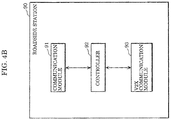
- FIG. 4B shows a configuration of roadside station 90.
- Roadside station 90 is an example of a vehicle monitoring apparatus.
- roadside station 90 includes communication module 91, controller 92, and V2X communication module 93.
- Communication module 91 is a communication module that can communicate with fraud detection server 80. Communication module 91 receives specifying information for specifying a target vehicle from fraud detection server 80. Communication module 91 corresponds to a first communicator.
- Controller 92 is a processor that acquires driving information from the target vehicle, the driving information being information regarding driving of the target vehicle specified by the specifying information received by communication module 91. Controller 92 corresponds to an acquirer.
- V2X communication module 93 is a communication module that performs communication with a vehicle.
- Roadside station 90 may further include a sensor such as a camera.
- the processing operations performed by fraud detection server 80 and vehicle 1010b configured as described above will be described. Specifically, two examples of processing operations performed by fraud detection server 80, and two examples of processing operations performed by vehicle 1010b will be described. The following description will be given assuming that vehicle 1010a is a fraudulent vehicle.
- the processing performed by gateway 900 described below may be performed by roadside station 90.
- FIG. 5 is a first flowchart illustrating processing performed by fraud detection server 80 according to the present embodiment.
- step S101 communicator 810 receives a vehicle log from vehicle 1010a.
- the received vehicle log is provided to log collector 830 via processing determiner 820.
- step S102 log collector 830 stores the vehicle log provided in step S101 in vehicle log storage DB 881.
- step S103 log analyzer 840 determines whether or not the frame received by the vehicle-mounted network is fraudulent by analyzing the vehicle log stored in vehicle log storage DB 881.
- step S104 log analyzer 840 determines whether or not it has been determined in step S103 that the frame is fraudulent, or in other words, determines whether an anomaly has been detected in the frame. If it is determined that an anomaly has been detected in the frame (Yes in step S104), the procedure advances to step S105. Otherwise (No in step S104), the set of processing operations shown in FIG. 5 ends.
- monitoring log communicator 860 transmits a message requesting to monitor the vehicle in which the anomaly has been detected to a vehicle(s) or a roadside station(s) that is present in the same area as the vehicle in which the anomaly has been detected in the frame in step S104.
- monitoring log communicator 860 waits for a monitoring log transmitted from the vehicle(s) or the roadside station(s) in response to the message transmitted in step S105 to be received. Upon receiving a monitoring log, the procedure advances to step S107.
- step S107 monitoring log communicator 860 determines whether or not a predetermined number of monitoring logs have been received from the vehicle(s) or the roadside station(s) in step S106. If it is determined that a number of monitoring logs that is greater than or equal to the predetermined number have been received (Yes in step S107), the procedure advances to step S108. Otherwise (No in step S107), the procedure advances to step S120.
- step S108 priority determiner 870 verifies whether the vehicle log and the monitoring logs match.
- step S109 priority determiner 870 checks whether or not the vehicle log and the monitoring logs do not match as a result of the verification performed in step S108. If it is determined that the vehicle log and the monitoring logs do not match (Yes in step S109), the procedure advances to step S110. Otherwise (No in step S109), the procedure advances to step S111.
- priority determiner 870 determines, based on the fact that the vehicle log and the monitoring logs do not match, that the vehicle log has been falsified.
- priority determiner 870 calculates priority that indicates the degree of precedence in which the anomaly detected in step S104 needs to be analyzed.
- step S120 priority determiner 870 determines that there is an anomaly in the position information of the vehicle in which the anomaly has been detected.
- fraud detection server 80 can detect a falsified vehicle log, or in other words, a fraud in the vehicle log.
- FIG. 6 is a second flowchart illustrating processing performed by fraud detection server 80 according to the present embodiment.
- the processing operations from steps S101 to S110 and the processing operation in step S120 are the same as those shown in FIG. 5 .
- priority determiner 870 specifies an anomaly based on the majority rule using the vehicle log and the monitoring logs.
- fraud detection server 80 can detect a falsified vehicle log, or in other words, a fraud in the vehicle log by using the monitoring logs from a plurality of vehicle monitoring apparatuses.
- FIG. 7 is a first flowchart illustrating processing performed by gateway 900 according to the present embodiment.
- step S201 matching verifier 930 of vehicle 1010b receives a monitoring request notification transmitted from fraud detection server 80.
- the monitoring request notification has been transmitted as a result of fraud detection server 80 determining, for example, that vehicle 1010a is a fraudulent vehicle, and vehicle 1010b has been selected due to its presence in the same area as vehicle 1010a.
- Vehicle 1010a may also be referred to as the target vehicle.
- step S202 matching verifier 930 determines whether or not V2X communication module 312 can perform a communication connection with the target vehicle to be monitored (also referred to as a "target vehicle") specified by the monitoring request notification received in step S201. If it is determined that V2X communication module 312 can perform a communication connection with the target vehicle (Yes in step S202), the procedure advances to step S203. Otherwise, (No in step S202), the procedure advances to step S204.
- matching verifier 930 acquires a V2X communication log through communication performed by V2X communication module 312.
- matching verifier 930 determines whether or not the target vehicle can be image-captured by camera 310.
- a determination as to whether or not the target vehicle can be image-captured can be made by determining, for example, whether or not the target vehicle is present at a position where it can be image-captured by its own vehicle.
- a determination as to whether or not the target vehicle is present at a position where it can be image-captured may be made based on the position information of the target vehicle and that of its own vehicle, or may be made by determining whether or not the target vehicle is seen in an image captured by camera 310. If it is determined that the target vehicle can be image-captured by camera 310 (Yes in step S204), the procedure advances to step S205. Otherwise (No in step S204), the procedure advances to step S206.
- matching verifier 930 captures an image or a moving image of the target vehicle by using camera 310, and generates image data or moving image data.
- matching verifier 930 presents, to the driver, question information as to whether or not there is an anomaly in the target vehicle, and acquires answer information.
- matching verifier 930 transmits, to fraud detection server 80, a monitoring log including one or more selected from the V2X communication log acquired in step S203, the image data or the moving image data generated in step S205, and the answer information acquired from the driver in step S206.
- vehicle 1010b can assist fraud detection server 80 in detecting the fraudulent vehicle.
- FIG. 8 is a second flowchart illustrating processing performed by gateway 900 according to the present embodiment.
- matching verifier 930 starts communication with a target vehicle by using V2X communication module 312.
- the target vehicle may be a target vehicle to be monitored that is specified by a monitoring request notification transmitted from fraud detection server 80, or may be an arbitrarily selected vehicle.
- matching verifier 930 acquires the driving state of the target vehicle through communication performed by V2X communication module 312.
- step S303 matching verifier 930 determines whether or not the target vehicle can be image-captured by camera 310. If it is determined that the target vehicle can be image-captured (Yes in step S303), the procedure advances to step S304. Otherwise (No in step S303), the set of processing operations shown in FIG. 8 ends.
- step S304 matching verifier 930 obtains the driving state of the target vehicle from camera 310.
- step S305 matching verifier 930 determines whether or not the driving state acquired through V2X communication and the driving state acquired from camera 310 match. If it is determined that they match (Yes in step S305), the procedure advances to step S306. Otherwise (No in step S305), the procedure advances to step S311.
- matching verifier 930 transmits a notification indicating that the driving state acquired through V2X communication and the driving state acquired from camera 310 match to fraud detection server 80. Step S306 may be omitted.
- matching verifier 930 transmits a notification indicating that the driving state acquired through V2X communication and the driving state acquired from camera 310 do not match to fraud detection server 80.
- vehicle 1010b can assist fraud detection server 80 in detecting the fraudulent vehicle.
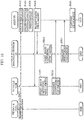
- FIG. 9 is a diagram showing an example of a sequence of processing operations performed between vehicles 1010a and 1010b, roadside station 90, and fraud detection server 80.
- vehicle 1010a transmits a vehicle log such as a CAN log that is communicated within vehicle 1010a to fraud detection server 80 (step S401).
- Fraud detection server 80 receives the vehicle log transmitted from vehicle 1010a (step S402).
- fraud detection server 80 Upon receiving the vehicle log, fraud detection server 80 analyzes whether or not there is an anomaly in the vehicle log (step S403). If it is determined that there is an anomaly in the vehicle log (step S404), fraud detection server 80 transmits a status check request notification to a vehicle or a roadside station that is present in the same area as vehicle 1010a (step S405). In this example, vehicle 1010b and roadside station 90 are present in the same area as vehicle 1010a, and thus fraud detection server 80 transmits a status check notification to vehicle 1010b and roadside station 90. Steps S401 to S405 correspond to, for example, steps S101 to S105 shown in FIG. 5 .
- the status check notification destination is a vehicle or a roadside station that is not in the same area as vehicle 1010a at this time (or in other words, a vehicle or a roadside station that is not present within a distance where it is possible to perform V2X communication with vehicle 1010a)
- a vehicle or a roadside station that is predicted to be in the same area as vehicle 1010a based on a predicted route of vehicle 1010a may be included as the status check notification destination.
- Vehicle 1010b and roadside station 90 that have received the status check request notification perform V2X communication with vehicle 1010a (steps S406 and S407), and receive a vehicle state notification regarding the vehicle state of vehicle 1010a (for example, vehicle speed, driving direction, acceleration, and the like) (steps S408 and S409).
- Vehicle 1010b and roadside station 90 transmit a V2X communication log including the received vehicle state notification of vehicle 1010a to fraud detection server 80 as a monitoring log (steps S410 and S411).
- fraud detection server 80 Upon receiving the monitoring logs, fraud detection server 80 performs a re-analysis operation by using the monitoring logs and the vehicle log so as to make a final determination (step S412). In the re-analysis operation, whether the vehicle log and the monitoring logs match may be verified.
- FIG. 9 shows a sequence in which fraud detection server 80 receives the monitoring logs after receiving the vehicle log, but fraud detection server 80 may keep receiving the vehicle log and the monitoring logs simultaneously, and verify, for example, whether the speeds notified by the vehicle log and the monitoring logs do not match. If it is determined that the speeds notified by the vehicle log and the monitoring logs do not match, because there is a possibility that any one of the logs is fraudulently falsified, fraud detection server 80 may determine that there is an anomaly and notify a security analyst of the fact.
- fraud detection server 80 determines that a group of most matching monitoring logs are correct logs, and also determines that a log (including the vehicle log) that does not match with the group of logs is a falsified log, and then notifies a security analyst of the falsified log and the vehicle that transmitted the falsified log. If it is determined that they match, fraud detection server 80 transmits a notification of the occurrence of an anomaly detected only in the vehicle log to the security analyst. At this time, the monitoring logs are also presented as additional information.
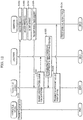
- FIG. 10 is a diagram showing processing sequence example 2 that is a sequence of processing operations performed between vehicles 1010a and 1010b, roadside station 90, and fraud detection server 80.
- Vehicle 1010a transmits a vehicle log to the server
- fraud detection server 80 analyzes the vehicle log so as to detect an anomaly. After that, the same processing operations as those (steps S401 to 405) shown in FIG. 10 are performed until a status check request notification is transmitted to vehicle 1010b and roadside station 90.
- vehicle 1010b and roadside station 90 monitor vehicle 1010a by image capturing vehicle 1010a by using cameras attached to vehicle 1010b and roadside station 90 (steps S501 and S502). At this time, vehicle 1010b and roadside station 90 may recognize vehicle 1010a by using information transmitted from fraud detection server 80, or may simply acquire a moving image or an image at a specified timing. Having recognized vehicle 1010a, vehicle 1010b and roadside station 90 may further perform image processing and extract the speed, acceleration/deceleration status, steering state, or the like of vehicle 1010a. Also, as the camera, a drive recorder provided in vehicle 1010b may be used, and upon receiving a status monitoring request notification from the server, a moving image may be stored. Vehicle 1010b and roadside station 90 transmit a monitoring log that includes the acquired image or moving image to fraud detection server 80 (steps S503 and 504).
- fraud detection server 80 Upon receiving the monitoring logs, fraud detection server 80 performs a re-analysis operation by using the monitoring logs and the vehicle log (step S505). In the re-analyzing operation, fraud detection server 80 presents the received image or moving image to a security analyst as circumstantial evidence for detecting an anomaly. Also, fraud detection server 80 may be internally provided with an image processing engine so as to perform image processing and extract the vehicle speed, acceleration/deceleration status, steering angle, or the like of vehicle 1010a, and verify matching with the vehicle log. Alternatively, if the occurrence of an accident or a vehicle anomaly behavior is detected as a result of image analysis, fraud detection server 80 gives high priority to the detected anomaly, and preferentially transmits a notification of the anomaly to the security analyst.
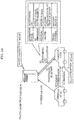
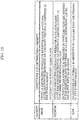
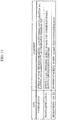
- FIG. 11 is a diagram showing processing sequence example 3 that is a sequence of processing operations performed between vehicles 1010a and 1010b, and fraud detection server 80. The same sequence of operations as those (steps S401 to 405) shown in FIG. 9 or 10 are performed until fraud detection server 80 transmits a status check request to vehicle 1010b.
- vehicle 1010b Upon receiving the status check request notification from fraud detection server 80, vehicle 1010b starts sensing the vehicle driving state of vehicle 1010a (step S601). The sensing is performed by using a camera, a radar, or a sensor such as a LiDAR sensor attached to the vehicle. For example, if vehicle 1010a is recognized as a vehicle ahead, vehicle 1010b acquires a relative speed with respect to the vehicle ahead. Vehicle 1010b transmits a monitoring log that includes information regarding vehicle 1010a, on which sensing was performed, to fraud detection server 80 (step S602). Fraud detection server 80 performs a re-analysis operation by using the received monitoring log and the vehicle log so as to verify whether the monitoring log and the vehicle log match (step S603).
- FIG. 12 is a diagram showing processing sequence example 4 that is a sequence of processing operations performed between vehicles 1010a and 1010b, and fraud detection server 80. The same sequence of operations as those (steps S401 to 405) shown in FIG. 9 , 10 or 11 are performed until fraud detection server 80 transmits a status check request to vehicle 1010b.
- vehicle 1010b Upon receiving the status check notification, vehicle 1010b presents, to the driver of vehicle 1010b, information requesting to check whether there is an anomaly in the surroundings via a display of a head unit or by sound (step S701).
- the driver checks the status of the surroundings, or in other words, the behaviors of the target vehicle, and inputs the result as a report by sound or by operating a touch panel.
- Vehicle 1010b receives the input from the driver (step S702).
- Vehicle 1010b transmits a monitoring log that includes the information received from the driver to fraud detection server 80 (step S703).
- Fraud detection server 80 performs a re-analysis operation by using the monitoring log and the vehicle log (step S704).
- fraud detection server 80 determines priority that indicates the degree of precedence in which the detected anomaly needs to be analyzed based on the report from the driver, and preferentially transmits a notification of the anomaly in descending order of priority to a security analyst.
- the driver may select from among "an accident has occurred around the vehicle", “there is an anomalous vehicle that performs sudden steering, sudden braking, or sudden acceleration”, “there is an annoying vehicle”, and “there is no particular anomaly”.
- the report from the driver in the form of sound information or text information obtained as a result of voice recognition may be included in the monitoring log.
- fraud detection server 80 transmits a status check request to a vehicle that is present in the same area as the vehicle in which the anomaly has been detected, but the notification destination is not limited to vehicle 1010b or roadside station 90.
- the notification destination may be a terminal on which an application for receiving traffic safety information has been installed.
- the application transmits the position information of the terminal to fraud detection server 80, and fraud detection server 80 transmits a status check request notification to the application installed on the terminal if it is determined, based on the position information of the terminal, that the terminal is present near the vehicle in which the anomaly has been detected.
- the application transmits an anomaly check notification requesting to check whether there is an anomaly in the surroundings to the user of the terminal, and transmits a report from the user of the terminal to fraud detection server 80.
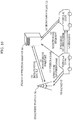
- FIG. 13 is a diagram showing a first operation example of the vehicle-mounted network monitoring system according to the present embodiment.
- FIG. 13 shows an example in which vehicle 1010a transmits a fraudulent notification indicating that the vehicle speed is 20 km/h despite the fact that the vehicle speed is 60 km/h to fraud detection server 80 and the like, and fraud detection server 80 detects the fraud of vehicle 1010a.
- vehicle 1010b detects the anomaly of vehicle 1010a voluntarily, or in other words, without receiving a notification from fraud detection server 80.
- vehicle 1010a transmits a fraudulent notification indicating that its vehicle speed is 20 km/h to fraud detection server 80.
- vehicle 1010a transmits a fraudulent notification indicating that its vehicle speed is 20 km/h to vehicle 1010b through V2X communication.
- vehicle 1010b acquires the driving state of vehicle 1010a by sensing vehicle 1010a by using a camera, a radar or the like. It is assumed here that the acquired driving state indicates that the relative speed of vehicle 1010a with respect to vehicle 1010b is 30 km/h.
- vehicle 1010b calculates the speed of vehicle 1010a to be 60 km/h based on the relative speed with respect to vehicle 1010a acquired by sensing in (3) above and the speed (for example, 30 km/h) of vehicle 1010b. Then, vehicle 1010b determines that the calculated speed of vehicle 1010a and the speed of vehicle 1010a notified in (2) above do not match, or in other words, there is an anomaly.
- Vehicle 1010b notifies fraud detection server 80 of the detected anomaly.
- FIG. 14 is a diagram showing a second operation example of the vehicle-mounted network monitoring system according to the present embodiment.
- FIG. 15 is a diagram showing conditions for determining priority based on monitoring logs according to the present embodiment.
- FIG. 14 shows an example in which in response to sudden acceleration performed by vehicle 1010a, fraud detection server 80 causes vehicle 1010b to check whether or not vehicle 1010a has actually performed sudden acceleration.
- vehicle 1010a transmits a vehicle log indicating that vehicle 1010a has performed sudden acceleration to fraud detection server 80.
- fraud detection server 80 analyzes the vehicle log transmitted in (1) above, and detects the occurrence of an anomaly in vehicle 1010a. Then, fraud detection server 80 transmits a request for monitoring vehicle 1010a (also referred to as "monitoring request") to vehicle 1010b that is present near vehicle 1010a. Vehicle 1010b receives the monitoring request transmitted from fraud detection server 80.
- vehicle 1010b acquires a log (monitoring log) regarding vehicle 1010a through V2X communication.
- vehicle 1010b acquires the driving state of vehicle 1010a by sensing vehicle 1010a by using a camera, a radar, or the like.
- the acquired driving state indicates that the relative speed of vehicle 1010a with respect to vehicle 1010b is 30 km/h.
- question information requesting to check the behaviors of vehicle 1010a may be presented to the driver of vehicle 1010b, and answer information may be obtained from the driver of vehicle 1010b. For example, if vehicle 1010a is present in front of vehicle 1010b, a question such as "Has the vehicle ahead performed sudden acceleration? Answer with Yes or No" may be presented, and a monitoring log indicating that vehicle 1010a has performed sudden acceleration may be generated if an answer indicating "Yes" is obtained.
- vehicle 1010b transmits the vehicle log and the monitoring log acquired from vehicle 1010a in (3) and (4) above to fraud detection server 80.
- fraud detection server 80 sets the priority of the anomaly detected in (2) above to "high". For determining the priority, for example, to the anomaly indicated by the monitoring log that corresponds to any one of the conditions shown in FIG. 15 , priority corresponding to the condition is given.
- FIG. 16 is a diagram showing a third operation example of the vehicle-mounted network monitoring system according to the present embodiment.
- FIG. 17 is a diagram showing an example of a vehicle log and monitoring logs according to the present embodiment.
- FIG. 16 shows an example in which vehicle 1010a transmits fraudulent speed information to fraud detection server 80, and vehicle 1010b and roadside station 90 obtain the driving state of vehicle 1010b.
- vehicle 1010a transmits fraudulent speed information to fraud detection server 80.
- fraud detection server 80 detects the anomaly in the vehicle log of vehicle 1010a. Then, fraud detection server 80 transmits a monitoring request for monitoring vehicle 1010a to vehicle 1010b and roadside station 90 that are present near vehicle 1010a.
- vehicle 1010b acquires a log (monitoring log) regarding vehicle 1010a through V2X communication.
- the same processing is also performed by roadside station 90.
- vehicle 1010b acquires the driving state of vehicle 1010a by sensing vehicle 1010a by using a camera, a radar, or the like. The same processing is also performed by roadside station 90.
- vehicle 1010b transmits the vehicle log and the monitoring log acquired from vehicle 1010a in (3) and (4) above to fraud detection server 80.
- the same processing is also performed by roadside station 90.
- fraud detection server 80 verifies whether the vehicle log and the monitoring log transmitted in (5) above match, and determines the actual driving state of vehicle 1010b based on the majority rule.
- FIG. 17 shows an example of the vehicle log and the monitoring logs transmitted in (5) above.
- the following five information items are included: "speed: 20 km/h” indicated by the vehicle log; "speed: 0 km/h (acquired by sensing)", and “speed: 20 km/h (acquired through V2X communication)" indicated by monitoring log L1; and “stopping (acquired by camera)” and “speed: 20 km/h (acquired through V2X communication)” indicated by monitoring log L2.
- FIG. 18 is a block diagram showing a functional configuration of vehicle monitoring apparatus A1 according to the present embodiment.
- vehicle monitoring apparatus A1 includes first communicator A11 and acquirer A12.
- First communicator A11 receives specifying information for specifying a target vehicle from fraud detection server A2. Also, first communicator A11 transmits driving information acquired by acquirer A12 to fraud detection server A2.
- Acquirer A12 acquires driving information from the target vehicle, the driving information being information regarding driving of the target vehicle specified by the specifying information received by first communicator A11.
- FIG. 19 is a block diagram showing a functional configuration of fraud detection server A2 according to the present variation.
- fraud detection server A2 includes first communicator A21, storage A22, second communicator A23, and notifier A24.
- First communicator A21 receives first driving information that is information regarding driving of the target vehicle.
- Storage A22 stores position information that indicates the current positions of a plurality of vehicles.
- Second communicator A23 performs: an operation (a) of, when an anomaly is detected in the first driving information received from the target vehicle, specifying one or more vehicles that are present within a predetermined distance from the target vehicle from among the plurality of vehicles by referencing the position information, and transmitting a notification requesting for second driving information regarding driving of the target vehicle to each vehicle monitoring apparatus of the one or more vehicles specified, and an operation (b) of receiving the second driving information from vehicle monitoring apparatus A1 of the one or more vehicles.
- Notifier A24 determines priority based on the first driving information and the second driving information, the priority indicating the degree of precedence in which the anomaly needs to be preferentially analyzed, and more preferentially transmits a notification of the anomaly as the anomaly has higher priority.
- FIG. 20 is a flowchart illustrating a control method for controlling vehicle monitoring apparatus A1 according to the present variation.
- step SA11 specifying information for specifying a target vehicle is received from fraud detection server A2.
- step SA12 driving information is acquired from the target vehicle, the driving information being information regarding driving of the target vehicle specified by the specifying information received in step SA11.
- step SA13 the driving information acquired in step SA12 is transmitted to fraud detection server A2.
- FIG. 21 is a flowchart illustrating a control method for controlling fraud detection server A2 according to the present variation.
- step SA21 first driving information, which is information regarding driving of the target vehicle, is received.
- step SA22 position information that indicates the current positions of a plurality of vehicles is stored.
- step SA23 if an anomaly is detected in the first driving information received from the target vehicle, one or more vehicles that are present within a predetermined distance from the target vehicle are specified from among the plurality of vehicles by referencing the position information, and a notification requesting for second driving information regarding driving of the target vehicle is transmitted to each vehicle monitoring apparatus A1 of the one or more vehicles specified.
- step SA24 the second driving information is received from each vehicle monitoring apparatus A1 of the one or more vehicles.
- step SA25 priority that indicates the degree of precedence in which an anomaly needs to be preferentially analyzed is determined based on the first driving information and the second driving information, and an anomaly notification is more preferentially provided as the anomaly has higher priority.
- vehicle monitoring apparatus A1 can assist in detecting the fraudulent vehicle.
- fraud detection server A2 can detect the fraudulent vehicle.
- the vehicle monitoring apparatus acquires driving information of the target vehicle specified by specifying information obtained from the server from the target vehicle, and transmits the acquired driving information to the server. Accordingly, even if a frame uploaded to the server by the target vehicle is falsified, the server can detect the fraud of the target vehicle based on the driving information of the target vehicle transmitted to the server by the vehicle monitoring apparatus. Thus, even if a frame uploaded by a fraudulent vehicle is falsified, the vehicle monitoring apparatus can assist in detecting the fraudulent vehicle.
- the vehicle monitoring apparatus acquires driving information obtained through communication with the specified vehicle. Accordingly, even if a frame uploaded by a fraudulent vehicle is falsified, the vehicle monitoring apparatus can more easily obtain the driving information of the target vehicle and assist in detecting the fraudulent vehicle.
- the vehicle monitoring apparatus acquires the driving information obtained by sensing the specified vehicle. Accordingly, even if a frame uploaded by a fraudulent vehicle is falsified, the vehicle monitoring apparatus can more easily obtain the driving information of the target vehicle and assist in detecting the fraudulent vehicle.
- the vehicle monitoring apparatus acquires the driving information obtained by sensing the specified vehicle. Accordingly, even if a frame uploaded by a fraudulent vehicle is falsified, the vehicle monitoring apparatus can more easily obtain the driving information of the target vehicle and assist in detecting the fraudulent vehicle.
- the vehicle monitoring apparatus acquires a result of determination of the driver with respect to the driving state of the target vehicle by sensing. Accordingly, even if a frame uploaded by a fraudulent vehicle is falsified, the vehicle monitoring apparatus can assist in detecting the fraudulent vehicle by using the driving information of the target vehicle obtained from even more information sources.
- the vehicle monitoring apparatus can detect, in particular, a fraud in the speed of the target vehicle. Accordingly, even if a frame in which particularly the vehicle speed is falsified is uploaded by a fraudulent vehicle, the vehicle monitoring apparatus can assist in detecting the fraudulent vehicle.
- the fraud detection server causes the vehicle monitoring apparatus of a vehicle(s) present within a predetermined distance from the target vehicle to acquire a driving state of the target vehicle from the target vehicle. Accordingly, even if a frame uploaded to the server by the target vehicle is falsified, the server can detect the fraud of the target vehicle based on the driving information of the target vehicle transmitted to the server by the vehicle monitoring apparatus. Thus, even if a frame uploaded by a fraudulent vehicle is falsified, the fraud detection server can detect the fraudulent vehicle.
- the fraud detection server more preferentially transmits a notification of the anomaly to an analyst or the like. Accordingly, if the driving information of the target vehicle acquired through communication and the driving information of the target vehicle acquired by sensing do not match, it is possible to cause the analyst or the like to more preferentially take necessary measures.
- each apparatus may be individual single chips, or some or all of them may be configured in a single chip.
- a system LSI is used here, but the LSI may be called IC, LSI, super LSI, or ultra LSI according to the degree of integration.
- implementation of an integrated circuit is not necessarily limited to an LSI, and may be implemented by a dedicated circuit or a general-purpose processor. It is also possible to use an FPGA (Field Programmable Gate Array) that can be programmed after LSI production or a reconfigurable processor that enables reconfiguration of the connection and setting of circuit cells in the LSI.
- FPGA Field Programmable Gate Array
- the structural elements may be configured using dedicated hardware, or may be implemented by execution of a software program suitable for the structural elements.
- the structural elements may be implemented by a program executor such as a CPU or a processor reading a software program recorded in a recording medium such as a hard disk or a semiconductor memory and executing the software program.
- the software that implements the vehicle monitoring apparatus or the like according to the embodiment or the variations described above includes a program as described below.
- the program causes a computer to execute a control method for controlling a vehicle monitoring apparatus, the method including: receiving specifying information for specifying a target vehicle from a server; acquiring driving information from the target vehicle, the driving information being information regarding driving of the target vehicle specified by the specifying information received; and transmitting the driving information acquired to the server.
- the program causes a computer to execute a control method for controlling a fraud detection server, the method including: receiving first driving information that is information regarding driving of a target vehicle; storing position information that indicates current positions of a plurality of vehicles; when an anomaly is detected in the first driving information received from the target vehicle, specifying one or more vehicles that are present within a predetermined distance from the target vehicle from among the plurality of vehicles by referencing the position information, and transmitting a notification requesting for second driving information regarding driving of the target vehicle to a vehicle monitoring apparatus of each of the one or more vehicles specified; receiving the second driving information from the vehicle monitoring apparatus of the one or more vehicles; and determining priority based on the first driving information and the second driving information, the priority indicating a degree of precedence in which the anomaly needs to be preferentially analyzed, and more preferentially transmitting a notification of the anomaly as the anomaly has higher priority.
- the present invention is applicable to a vehicle monitoring apparatus that monitors vehicles.
- A2 fraud detection server 81 network 90 roadside station 91 communication module 92 controller 93, 312 V2X communication module 100, 101, 200, 201, 300, 301, 302, 400, 401, 1301, 1302
- ECU 110 engine 111 transmission 210 brake 211 steering 310 camera 311 IVI 410 door 411 light 510 diagnosis port 810 communicator 820 processing determiner 830 log collector 840 log analyzer 850 result notifier 860 monitoring log communicator 870 priority determiner 880 vehicle information DB 881 vehicle log storage DB 882 analysis result storage DB 883 monitoring log storage DB 900 gateway 910 frame transceiver 920 frame interpreter 930 matching verifier 940 updater 950 frame uploader 960 transfer controller 970 key processor 980 frame generator 990 rule storage 991 transfer rule storage 992 key storage 1010a, 1010b, 1010
Landscapes
- General Physics & Mathematics (AREA)
- Physics & Mathematics (AREA)
- Engineering & Computer Science (AREA)
- Business, Economics & Management (AREA)
- Marketing (AREA)
- Computer Networks & Wireless Communication (AREA)
- Signal Processing (AREA)
- Theoretical Computer Science (AREA)
- General Business, Economics & Management (AREA)
- Tourism & Hospitality (AREA)
- Strategic Management (AREA)
- Economics (AREA)
- Development Economics (AREA)
- Accounting & Taxation (AREA)
- General Health & Medical Sciences (AREA)
- Primary Health Care (AREA)
- Health & Medical Sciences (AREA)
- Finance (AREA)
- Human Resources & Organizations (AREA)
- Analytical Chemistry (AREA)
- Chemical & Material Sciences (AREA)
- Mechanical Engineering (AREA)
- Computer Security & Cryptography (AREA)
- Educational Administration (AREA)
- Technology Law (AREA)
- Traffic Control Systems (AREA)
- Small-Scale Networks (AREA)
- Telephonic Communication Services (AREA)
Applications Claiming Priority (2)
| Application Number | Priority Date | Filing Date | Title |
|---|---|---|---|
| US201862620121P | 2018-01-22 | 2018-01-22 | |
| PCT/JP2018/041295 WO2019142458A1 (ja) | 2018-01-22 | 2018-11-07 | 車両監視装置、不正検知サーバ、および、制御方法 |
Publications (3)
| Publication Number | Publication Date |
|---|---|
| EP3744584A1 true EP3744584A1 (de) | 2020-12-02 |
| EP3744584A4 EP3744584A4 (de) | 2021-06-02 |
| EP3744584B1 EP3744584B1 (de) | 2026-04-08 |
Family
ID=67301278
Family Applications (1)
| Application Number | Title | Priority Date | Filing Date |
|---|---|---|---|
| EP18901422.8A Active EP3744584B1 (de) | 2018-01-22 | 2018-11-07 | Fahrzeugüberwachungsvorrichtung, betrugsdetektionsserver und steuerungsverfahren |
Country Status (5)
| Country | Link |
|---|---|
| US (2) | US11217042B2 (de) |
| EP (1) | EP3744584B1 (de) |
| JP (2) | JP7178346B2 (de) |
| CN (1) | CN110494330B (de) |
| WO (1) | WO2019142458A1 (de) |
Cited By (1)
| Publication number | Priority date | Publication date | Assignee | Title |
|---|---|---|---|---|
| EP3744583A4 (de) * | 2018-01-22 | 2021-01-27 | Panasonic Intellectual Property Corporation of America | Datenanalysevorrichtung und -programm |
Families Citing this family (36)
| Publication number | Priority date | Publication date | Assignee | Title |
|---|---|---|---|---|
| CN110494330B (zh) * | 2018-01-22 | 2022-08-05 | 松下电器(美国)知识产权公司 | 车辆监视装置、不正当检测服务器、以及控制方法 |
| US11108804B2 (en) * | 2018-02-27 | 2021-08-31 | Blackberry Limited | Providing secure inter-vehicle data communications |
| WO2019198837A1 (ko) * | 2018-04-09 | 2019-10-17 | 엘지전자(주) | V2x 통신 장치 및 그의 오동작 obe 검출 방법 |
| EP3794571A4 (de) * | 2018-05-16 | 2022-01-26 | Notraffic Ltd. | System und verfahren zur verwendung von v2x und sensordaten |
| US11816936B2 (en) * | 2018-12-03 | 2023-11-14 | Bendix Commercial Vehicle Systems, Llc | System and method for detecting driver tampering of vehicle information systems |
| JP7229783B2 (ja) * | 2019-01-10 | 2023-02-28 | エヌ・ティ・ティ・コミュニケーションズ株式会社 | 車載型情報処理装置、車両情報通信システム、情報処理方法およびプログラム |
| JP7139257B2 (ja) | 2019-01-21 | 2022-09-20 | エヌ・ティ・ティ・コミュニケーションズ株式会社 | 車両セキュリティ監視装置、方法及びプログラム |
| WO2021020304A1 (ja) * | 2019-07-29 | 2021-02-04 | 京セラ株式会社 | 基地局、路側機、交通通信システム、交通管理方法、及び教師データ生成方法 |
| JP7401217B2 (ja) * | 2019-07-29 | 2023-12-19 | 京セラ株式会社 | 基地局、交通通信システム、及び交通管理方法 |
| US11222542B2 (en) * | 2019-08-22 | 2022-01-11 | Qualcomm Incorporated | Planning and control framework with communication messaging |
| WO2021038869A1 (ja) | 2019-08-30 | 2021-03-04 | パナソニック インテレクチュアル プロパティ コーポレーション オブ アメリカ | 車両監視装置および車両監視方法 |
| JP7382791B2 (ja) * | 2019-10-30 | 2023-11-17 | 株式会社日立製作所 | 異常判定装置、車両支援システム |
| CN112788519B (zh) * | 2019-11-11 | 2022-07-22 | 大唐移动通信设备有限公司 | 一种进行定位的方法、终端及网络侧设备 |
| CN110907955B (zh) * | 2019-12-02 | 2021-02-09 | 荣讯塑胶电子制品(深圳)有限公司 | 定位仪器故障辨识系统 |
| WO2021144860A1 (ja) * | 2020-01-14 | 2021-07-22 | パナソニック インテレクチュアル プロパティ コーポレーション オブ アメリカ | 車両ログ保存装置、車両ログ送信装置、車両ログ収集システムおよび車両ログ保存方法 |
| US11132897B2 (en) * | 2020-02-14 | 2021-09-28 | Gm Global Technology Operations, Llc | Methods, systems, and apparatuses for edge based notification through crowdsourced live fleet streamed communications |
| CN111460885B (zh) * | 2020-02-21 | 2022-01-11 | 中国电子技术标准化研究院 | 一种基于汽车计算平台的信息监测方法 |
| DE102020204056A1 (de) * | 2020-03-28 | 2021-09-30 | Robert Bosch Gesellschaft mit beschränkter Haftung | Verfahren zur Behandlung einer Anomalie von Daten, insbesondere bei einem Kraftfahrzeug |
| WO2021217637A1 (zh) * | 2020-04-30 | 2021-11-04 | 上海华东汽车信息技术有限公司 | 终端策略配置方法、装置、计算机设备和存储介质 |
| JP7363669B2 (ja) * | 2020-05-15 | 2023-10-18 | トヨタ自動車株式会社 | 情報処理装置、及び情報処理システム |
| JP7516894B2 (ja) * | 2020-06-12 | 2024-07-17 | 株式会社アイシン | 物体検出装置 |
| WO2021260839A1 (ja) | 2020-06-24 | 2021-12-30 | 日本電信電話株式会社 | 情報処理装置、情報処理方法、およびプログラム |
| JP7419998B2 (ja) * | 2020-07-14 | 2024-01-23 | 株式会社デンソー | ログ管理装置及びセンタ装置 |
| US12269424B2 (en) | 2020-07-23 | 2025-04-08 | Allstate Insurance Company | Unauthorized access detection |
| WO2022049637A1 (ja) * | 2020-09-01 | 2022-03-10 | パナソニック インテレクチュアル プロパティ コーポレーション オブ アメリカ | 異常監視装置および異常監視方法 |
| US11425005B2 (en) * | 2020-11-10 | 2022-08-23 | Fleet Defender, Inc. | Controller area network anomaly detection |
| JP7108064B1 (ja) | 2021-02-02 | 2022-07-27 | 本田技研工業株式会社 | 車両制御システム |
| JP7616901B2 (ja) * | 2021-02-19 | 2025-01-17 | 日立Astemo株式会社 | 電子制御システム |
| JP2022168439A (ja) * | 2021-04-26 | 2022-11-08 | パナソニックIpマネジメント株式会社 | 車両監視システム及び故障監視方法 |
| JP7828129B2 (ja) * | 2022-10-17 | 2026-03-11 | パナソニックオートモーティブシステムズ株式会社 | 分析装置、分析方法およびプログラム |
| CN115938159A (zh) * | 2022-10-20 | 2023-04-07 | 嬴彻星创智能科技(上海)有限公司 | 一种车辆数据上传方法及装置 |
| WO2024164289A1 (en) * | 2023-02-10 | 2024-08-15 | Apple Inc. | Integration of communication and sensing to detect device abnormality |
| JP7724252B2 (ja) * | 2023-03-31 | 2025-08-15 | 本田技研工業株式会社 | 制御装置、及び車両 |
| CN116866991A (zh) * | 2023-09-01 | 2023-10-10 | 北京钱安德胜科技有限公司 | 一种车路协同智能驾驶的数据帧处理系统及方法 |
| US12469385B2 (en) * | 2024-02-05 | 2025-11-11 | Toyota Jidosha Kabushiki Kaisha | System, method, and computer program for dynamic vehicle communication |
| WO2026047795A1 (ja) * | 2024-08-26 | 2026-03-05 | Astemo株式会社 | ログ収集装置 |
Family Cites Families (27)
| Publication number | Priority date | Publication date | Assignee | Title |
|---|---|---|---|---|
| TW456136B (en) * | 1998-07-27 | 2001-09-21 | Matsushita Electric Industrial Co Ltd | Emergency information system |
| US6765495B1 (en) * | 2000-06-07 | 2004-07-20 | Hrl Laboratories, Llc | Inter vehicle communication system |
| JP3839708B2 (ja) | 2001-11-28 | 2006-11-01 | 三菱電機株式会社 | 車両盗難検出システム |
| US7275027B2 (en) * | 2003-03-04 | 2007-09-25 | Microsoft Corporation | Facilitating communication with automotive vehicle buses |
| US7825824B2 (en) | 2007-09-18 | 2010-11-02 | At&T Intellectual Property I, L.P. | Collaborative environmental reporting |
| US8050855B2 (en) * | 2008-08-07 | 2011-11-01 | General Motors Llc | Method and system for transmitting data to a traffic information server |
| US8265850B2 (en) * | 2009-02-02 | 2012-09-11 | GM Global Technology Operations LLC | Method and apparatus for target vehicle following control for adaptive cruise control |
| US8954225B2 (en) * | 2010-04-22 | 2015-02-10 | Mission Motor Company | Remote monitoring of a plurality of vehicles |
| JP2013037676A (ja) * | 2011-07-12 | 2013-02-21 | Nissan Motor Co Ltd | 車両情報提供装置及び車両情報管理システム |
| JP5766074B2 (ja) | 2011-09-09 | 2015-08-19 | 三菱電機株式会社 | 通信装置 |
| US8849497B2 (en) * | 2012-03-01 | 2014-09-30 | GM Global Technology Operations LLC | Vehicle health prognosis |
| WO2014008752A1 (en) * | 2012-07-10 | 2014-01-16 | Chinapac Limited | System and method for managing location of assets equipped with transponder |
| JP6351142B2 (ja) * | 2013-08-30 | 2018-07-04 | 三菱重工機械システム株式会社 | 運行管理システム、運行管理方法およびプログラム |
| WO2016046819A1 (en) | 2014-09-25 | 2016-03-31 | Tower-Sec Ltd. | Vehicle correlation system for cyber attacks detection and method thereof |
| JP6595885B2 (ja) * | 2015-01-20 | 2019-10-23 | パナソニック インテレクチュアル プロパティ コーポレーション オブ アメリカ | 不正対処方法及び電子制御ユニット |
| JP2016162329A (ja) * | 2015-03-04 | 2016-09-05 | 株式会社デンソー | 運転支援装置、及びプログラム |
| JP6298021B2 (ja) * | 2015-07-30 | 2018-03-20 | トヨタ自動車株式会社 | 攻撃検知システムおよび攻撃検知方法 |
| EP3371791A1 (de) * | 2015-11-04 | 2018-09-12 | Telefonaktiebolaget LM Ericsson (publ) | Verfahren zur bereitstellung von verkehrsbezogenen informationen sowie vorrichtung, computerprogramm und computerprogrammprodukt |
| JP6649215B2 (ja) * | 2015-12-14 | 2020-02-19 | パナソニック インテレクチュアル プロパティ コーポレーション オブ アメリカPanasonic Intellectual Property Corporation of America | セキュリティ装置、ネットワークシステム及び攻撃検知方法 |
| JP6423402B2 (ja) | 2015-12-16 | 2018-11-14 | パナソニック インテレクチュアル プロパティ コーポレーション オブ アメリカPanasonic Intellectual Property Corporation of America | セキュリティ処理方法及びサーバ |
| US9922553B2 (en) * | 2015-12-22 | 2018-03-20 | Intel Corporation | Vehicle assistance systems and methods utilizing vehicle to vehicle communications |
| DE102016203723A1 (de) * | 2016-03-08 | 2017-09-14 | Robert Bosch Gmbh | Verfahren und System zum Bestimmen der Pose eines Fahrzeugs |
| US10638418B2 (en) * | 2016-11-04 | 2020-04-28 | Ford Global Technologies, Llc | Method and apparatus for data transfer connection management |
| US10168418B1 (en) * | 2017-08-25 | 2019-01-01 | Honda Motor Co., Ltd. | System and method for avoiding sensor interference using vehicular communication |
| CN110494330B (zh) * | 2018-01-22 | 2022-08-05 | 松下电器(美国)知识产权公司 | 车辆监视装置、不正当检测服务器、以及控制方法 |
| US20190303603A1 (en) * | 2018-04-03 | 2019-10-03 | Seagate Technology Llc | Location-based security of storage drives |
| US10997800B1 (en) * | 2020-01-22 | 2021-05-04 | Zendrive, Inc. | Method and system for vehicular collision reconstruction |
-
2018
- 2018-11-07 CN CN201880012134.1A patent/CN110494330B/zh active Active
- 2018-11-07 EP EP18901422.8A patent/EP3744584B1/de active Active
- 2018-11-07 JP JP2019525031A patent/JP7178346B2/ja active Active
- 2018-11-07 WO PCT/JP2018/041295 patent/WO2019142458A1/ja not_active Ceased
-
2019
- 2019-08-14 US US16/540,668 patent/US11217042B2/en active Active
-
2021
- 2021-11-24 US US17/534,876 patent/US11875612B2/en active Active
-
2022
- 2022-11-14 JP JP2022182173A patent/JP7573585B2/ja active Active
Cited By (2)
| Publication number | Priority date | Publication date | Assignee | Title |
|---|---|---|---|---|
| EP3744583A4 (de) * | 2018-01-22 | 2021-01-27 | Panasonic Intellectual Property Corporation of America | Datenanalysevorrichtung und -programm |
| US11380197B2 (en) | 2018-01-22 | 2022-07-05 | Panasonic Intellectual Property Corporation Of America | Data analysis apparatus |
Also Published As
| Publication number | Publication date |
|---|---|
| JP7573585B2 (ja) | 2024-10-25 |
| JPWO2019142458A1 (ja) | 2020-11-19 |
| US11875612B2 (en) | 2024-01-16 |
| CN110494330B (zh) | 2022-08-05 |
| US20220084328A1 (en) | 2022-03-17 |
| JP7178346B2 (ja) | 2022-11-25 |
| WO2019142458A8 (ja) | 2019-09-12 |
| WO2019142458A1 (ja) | 2019-07-25 |
| EP3744584B1 (de) | 2026-04-08 |
| US11217042B2 (en) | 2022-01-04 |
| US20190371085A1 (en) | 2019-12-05 |
| JP2023016844A (ja) | 2023-02-02 |
| CN110494330A (zh) | 2019-11-22 |
| EP3744584A4 (de) | 2021-06-02 |
Similar Documents
| Publication | Publication Date | Title |
|---|---|---|
| EP3744584B1 (de) | Fahrzeugüberwachungsvorrichtung, betrugsdetektionsserver und steuerungsverfahren | |
| US12126645B2 (en) | Electronic control device, fraud detection server, in-vehicle network system, in-vehicle network monitoring system, and in-vehicle network monitoring method | |
| US11277427B2 (en) | System and method for time based anomaly detection in an in-vehicle communication | |
| US11115433B2 (en) | System and method for content based anomaly detection in an in-vehicle communication network | |
| US10525911B2 (en) | Gateway device, vehicle network system, and transfer method | |
| EP3951531B1 (de) | Verfahren zur erkennung von anomalien und system zur erkennung von anomalien | |
| CN112367318A (zh) | 安全处理方法以及计算机 | |
| CN114747182B (zh) | 判定装置、判定程序和判定方法 | |
| US12477373B2 (en) | Management device, management method, and recording medium |
Legal Events
| Date | Code | Title | Description |
|---|---|---|---|
| STAA | Information on the status of an ep patent application or granted ep patent |
Free format text: STATUS: THE INTERNATIONAL PUBLICATION HAS BEEN MADE |
|
| PUAI | Public reference made under article 153(3) epc to a published international application that has entered the european phase |
Free format text: ORIGINAL CODE: 0009012 |
|
| STAA | Information on the status of an ep patent application or granted ep patent |
Free format text: STATUS: REQUEST FOR EXAMINATION WAS MADE |
|
| 17P | Request for examination filed |
Effective date: 20200528 |
|
| AK | Designated contracting states |
Kind code of ref document: A1 Designated state(s): AL AT BE BG CH CY CZ DE DK EE ES FI FR GB GR HR HU IE IS IT LI LT LU LV MC MK MT NL NO PL PT RO RS SE SI SK SM TR |
|
| AX | Request for extension of the european patent |
Extension state: BA ME |
|
| RIC1 | Information provided on ipc code assigned before grant |
Ipc: B60R 25/102 20130101ALI20210125BHEP Ipc: B60R 25/32 20130101AFI20210125BHEP Ipc: B60R 16/02 20060101ALI20210125BHEP Ipc: G08G 1/09 20060101ALI20210125BHEP |
|
| DAV | Request for validation of the european patent (deleted) | ||
| DAX | Request for extension of the european patent (deleted) | ||
| A4 | Supplementary search report drawn up and despatched |
Effective date: 20210506 |
|
| RIC1 | Information provided on ipc code assigned before grant |
Ipc: B60R 25/32 20130101AFI20210429BHEP Ipc: B60R 16/02 20060101ALI20210429BHEP Ipc: B60R 25/102 20130101ALI20210429BHEP Ipc: G08G 1/09 20060101ALI20210429BHEP |
|
| STAA | Information on the status of an ep patent application or granted ep patent |
Free format text: STATUS: EXAMINATION IS IN PROGRESS |
|
| 17Q | First examination report despatched |
Effective date: 20231023 |
|
| GRAP | Despatch of communication of intention to grant a patent |
Free format text: ORIGINAL CODE: EPIDOSNIGR1 |
|
| STAA | Information on the status of an ep patent application or granted ep patent |
Free format text: STATUS: GRANT OF PATENT IS INTENDED |
|
| INTG | Intention to grant announced |
Effective date: 20251208 |
|
| GRAS | Grant fee paid |
Free format text: ORIGINAL CODE: EPIDOSNIGR3 |
|
| GRAA | (expected) grant |
Free format text: ORIGINAL CODE: 0009210 |
|
| STAA | Information on the status of an ep patent application or granted ep patent |
Free format text: STATUS: THE PATENT HAS BEEN GRANTED |
|
| AK | Designated contracting states |
Kind code of ref document: B1 Designated state(s): AL AT BE BG CH CY CZ DE DK EE ES FI FR GB GR HR HU IE IS IT LI LT LU LV MC MK MT NL NO PL PT RO RS SE SI SK SM TR |
|
| REG | Reference to a national code |
Ref country code: CH Ref legal event code: F10 Free format text: ST27 STATUS EVENT CODE: U-0-0-F10-F00 (AS PROVIDED BY THE NATIONAL OFFICE) Effective date: 20260408 Ref country code: GB Ref legal event code: FG4D |
|
| REG | Reference to a national code |
Ref country code: DE Ref legal event code: R096 Ref document number: 602018090488 Country of ref document: DE |