EP3743815B1 - Vorrichtung und verfahren zum registrieren und überwachen autonomer fahrzeuge - Google Patents
Vorrichtung und verfahren zum registrieren und überwachen autonomer fahrzeuge Download PDFInfo
- Publication number
- EP3743815B1 EP3743815B1 EP19701798.1A EP19701798A EP3743815B1 EP 3743815 B1 EP3743815 B1 EP 3743815B1 EP 19701798 A EP19701798 A EP 19701798A EP 3743815 B1 EP3743815 B1 EP 3743815B1
- Authority
- EP
- European Patent Office
- Prior art keywords
- autonomous vehicle
- data set
- autonomous
- vehicle
- component
- Prior art date
- Legal status (The legal status is an assumption and is not a legal conclusion. Google has not performed a legal analysis and makes no representation as to the accuracy of the status listed.)
- Active
Links
Images
Classifications
-
- B—PERFORMING OPERATIONS; TRANSPORTING
- B60—VEHICLES IN GENERAL
- B60W—CONJOINT CONTROL OF VEHICLE SUB-UNITS OF DIFFERENT TYPE OR DIFFERENT FUNCTION; CONTROL SYSTEMS SPECIALLY ADAPTED FOR HYBRID VEHICLES; ROAD VEHICLE DRIVE CONTROL SYSTEMS FOR PURPOSES NOT RELATED TO THE CONTROL OF A PARTICULAR SUB-UNIT
- B60W50/00—Details of control systems for road vehicle drive control not related to the control of a particular sub-unit, e.g. process diagnostic or vehicle driver interfaces
- B60W50/02—Ensuring safety in case of control system failures, e.g. by diagnosing, circumventing or fixing failures
- B60W50/0205—Diagnosing or detecting failures; Failure detection models
-
- B—PERFORMING OPERATIONS; TRANSPORTING
- B60—VEHICLES IN GENERAL
- B60W—CONJOINT CONTROL OF VEHICLE SUB-UNITS OF DIFFERENT TYPE OR DIFFERENT FUNCTION; CONTROL SYSTEMS SPECIALLY ADAPTED FOR HYBRID VEHICLES; ROAD VEHICLE DRIVE CONTROL SYSTEMS FOR PURPOSES NOT RELATED TO THE CONTROL OF A PARTICULAR SUB-UNIT
- B60W50/00—Details of control systems for road vehicle drive control not related to the control of a particular sub-unit, e.g. process diagnostic or vehicle driver interfaces
- B60W50/04—Monitoring the functioning of the control system
-
- B—PERFORMING OPERATIONS; TRANSPORTING
- B60—VEHICLES IN GENERAL
- B60W—CONJOINT CONTROL OF VEHICLE SUB-UNITS OF DIFFERENT TYPE OR DIFFERENT FUNCTION; CONTROL SYSTEMS SPECIALLY ADAPTED FOR HYBRID VEHICLES; ROAD VEHICLE DRIVE CONTROL SYSTEMS FOR PURPOSES NOT RELATED TO THE CONTROL OF A PARTICULAR SUB-UNIT
- B60W60/00—Drive control systems specially adapted for autonomous road vehicles
- B60W60/001—Planning or execution of driving tasks
- B60W60/0015—Planning or execution of driving tasks specially adapted for safety
-
- B—PERFORMING OPERATIONS; TRANSPORTING
- B60—VEHICLES IN GENERAL
- B60W—CONJOINT CONTROL OF VEHICLE SUB-UNITS OF DIFFERENT TYPE OR DIFFERENT FUNCTION; CONTROL SYSTEMS SPECIALLY ADAPTED FOR HYBRID VEHICLES; ROAD VEHICLE DRIVE CONTROL SYSTEMS FOR PURPOSES NOT RELATED TO THE CONTROL OF A PARTICULAR SUB-UNIT
- B60W60/00—Drive control systems specially adapted for autonomous road vehicles
- B60W60/001—Planning or execution of driving tasks
- B60W60/0015—Planning or execution of driving tasks specially adapted for safety
- B60W60/0018—Planning or execution of driving tasks specially adapted for safety by employing degraded modes, e.g. reducing speed, in response to suboptimal conditions
- B60W60/00186—Planning or execution of driving tasks specially adapted for safety by employing degraded modes, e.g. reducing speed, in response to suboptimal conditions related to the vehicle
-
- G—PHYSICS
- G05—CONTROLLING; REGULATING
- G05D—SYSTEMS FOR CONTROLLING OR REGULATING NON-ELECTRIC VARIABLES
- G05D1/00—Control of position, course, altitude or attitude of land, water, air or space vehicles, e.g. using automatic pilots
- G05D1/0011—Control of position, course, altitude or attitude of land, water, air or space vehicles, e.g. using automatic pilots associated with a remote control arrangement
-
- G—PHYSICS
- G05—CONTROLLING; REGULATING
- G05D—SYSTEMS FOR CONTROLLING OR REGULATING NON-ELECTRIC VARIABLES
- G05D1/00—Control of position, course, altitude or attitude of land, water, air or space vehicles, e.g. using automatic pilots
- G05D1/0055—Control of position, course, altitude or attitude of land, water, air or space vehicles, e.g. using automatic pilots with safety arrangements
-
- G—PHYSICS
- G06—COMPUTING OR CALCULATING; COUNTING
- G06F—ELECTRIC DIGITAL DATA PROCESSING
- G06F11/00—Error detection; Error correction; Monitoring
- G06F11/07—Responding to the occurrence of a fault, e.g. fault tolerance
- G06F11/0703—Error or fault processing not based on redundancy, i.e. by taking additional measures to deal with the error or fault not making use of redundancy in operation, in hardware, or in data representation
- G06F11/0706—Error or fault processing not based on redundancy, i.e. by taking additional measures to deal with the error or fault not making use of redundancy in operation, in hardware, or in data representation the processing taking place on a specific hardware platform or in a specific software environment
- G06F11/0736—Error or fault processing not based on redundancy, i.e. by taking additional measures to deal with the error or fault not making use of redundancy in operation, in hardware, or in data representation the processing taking place on a specific hardware platform or in a specific software environment in functional embedded systems, i.e. in a data processing system designed as a combination of hardware and software dedicated to performing a certain function
- G06F11/0739—Error or fault processing not based on redundancy, i.e. by taking additional measures to deal with the error or fault not making use of redundancy in operation, in hardware, or in data representation the processing taking place on a specific hardware platform or in a specific software environment in functional embedded systems, i.e. in a data processing system designed as a combination of hardware and software dedicated to performing a certain function in a data processing system embedded in automotive or aircraft systems
-
- G—PHYSICS
- G06—COMPUTING OR CALCULATING; COUNTING
- G06F—ELECTRIC DIGITAL DATA PROCESSING
- G06F11/00—Error detection; Error correction; Monitoring
- G06F11/07—Responding to the occurrence of a fault, e.g. fault tolerance
- G06F11/0703—Error or fault processing not based on redundancy, i.e. by taking additional measures to deal with the error or fault not making use of redundancy in operation, in hardware, or in data representation
- G06F11/0706—Error or fault processing not based on redundancy, i.e. by taking additional measures to deal with the error or fault not making use of redundancy in operation, in hardware, or in data representation the processing taking place on a specific hardware platform or in a specific software environment
- G06F11/0748—Error or fault processing not based on redundancy, i.e. by taking additional measures to deal with the error or fault not making use of redundancy in operation, in hardware, or in data representation the processing taking place on a specific hardware platform or in a specific software environment in a remote unit communicating with a single-box computer node experiencing an error/fault
-
- G—PHYSICS
- G06—COMPUTING OR CALCULATING; COUNTING
- G06F—ELECTRIC DIGITAL DATA PROCESSING
- G06F11/00—Error detection; Error correction; Monitoring
- G06F11/07—Responding to the occurrence of a fault, e.g. fault tolerance
- G06F11/0796—Safety measures, i.e. ensuring safe condition in the event of error, e.g. for controlling element
-
- G—PHYSICS
- G07—CHECKING-DEVICES
- G07B—TICKET-ISSUING APPARATUS; FARE-REGISTERING APPARATUS; FRANKING APPARATUS
- G07B15/00—Arrangements or apparatus for collecting fares, tolls or entrance fees at one or more control points
-
- G—PHYSICS
- G07—CHECKING-DEVICES
- G07C—TIME OR ATTENDANCE REGISTERS; REGISTERING OR INDICATING THE WORKING OF MACHINES; GENERATING RANDOM NUMBERS; VOTING OR LOTTERY APPARATUS; ARRANGEMENTS, SYSTEMS OR APPARATUS FOR CHECKING NOT PROVIDED FOR ELSEWHERE
- G07C5/00—Registering or indicating the working of vehicles
- G07C5/008—Registering or indicating the working of vehicles communicating information to a remotely located station
-
- G—PHYSICS
- G07—CHECKING-DEVICES
- G07C—TIME OR ATTENDANCE REGISTERS; REGISTERING OR INDICATING THE WORKING OF MACHINES; GENERATING RANDOM NUMBERS; VOTING OR LOTTERY APPARATUS; ARRANGEMENTS, SYSTEMS OR APPARATUS FOR CHECKING NOT PROVIDED FOR ELSEWHERE
- G07C5/00—Registering or indicating the working of vehicles
- G07C5/08—Registering or indicating performance data other than driving, working, idle, or waiting time, with or without registering driving, working, idle or waiting time
- G07C5/0816—Indicating performance data, e.g. occurrence of a malfunction
-
- B—PERFORMING OPERATIONS; TRANSPORTING
- B60—VEHICLES IN GENERAL
- B60W—CONJOINT CONTROL OF VEHICLE SUB-UNITS OF DIFFERENT TYPE OR DIFFERENT FUNCTION; CONTROL SYSTEMS SPECIALLY ADAPTED FOR HYBRID VEHICLES; ROAD VEHICLE DRIVE CONTROL SYSTEMS FOR PURPOSES NOT RELATED TO THE CONTROL OF A PARTICULAR SUB-UNIT
- B60W50/00—Details of control systems for road vehicle drive control not related to the control of a particular sub-unit, e.g. process diagnostic or vehicle driver interfaces
- B60W2050/0062—Adapting control system settings
- B60W2050/0075—Automatic parameter input, automatic initialising or calibrating means
-
- B—PERFORMING OPERATIONS; TRANSPORTING
- B60—VEHICLES IN GENERAL
- B60W—CONJOINT CONTROL OF VEHICLE SUB-UNITS OF DIFFERENT TYPE OR DIFFERENT FUNCTION; CONTROL SYSTEMS SPECIALLY ADAPTED FOR HYBRID VEHICLES; ROAD VEHICLE DRIVE CONTROL SYSTEMS FOR PURPOSES NOT RELATED TO THE CONTROL OF A PARTICULAR SUB-UNIT
- B60W50/00—Details of control systems for road vehicle drive control not related to the control of a particular sub-unit, e.g. process diagnostic or vehicle driver interfaces
- B60W2050/0062—Adapting control system settings
- B60W2050/0075—Automatic parameter input, automatic initialising or calibrating means
- B60W2050/0082—Automatic parameter input, automatic initialising or calibrating means for initialising the control system
-
- B—PERFORMING OPERATIONS; TRANSPORTING
- B60—VEHICLES IN GENERAL
- B60W—CONJOINT CONTROL OF VEHICLE SUB-UNITS OF DIFFERENT TYPE OR DIFFERENT FUNCTION; CONTROL SYSTEMS SPECIALLY ADAPTED FOR HYBRID VEHICLES; ROAD VEHICLE DRIVE CONTROL SYSTEMS FOR PURPOSES NOT RELATED TO THE CONTROL OF A PARTICULAR SUB-UNIT
- B60W2556/00—Input parameters relating to data
- B60W2556/45—External transmission of data to or from the vehicle
-
- G—PHYSICS
- G06—COMPUTING OR CALCULATING; COUNTING
- G06F—ELECTRIC DIGITAL DATA PROCESSING
- G06F11/00—Error detection; Error correction; Monitoring
- G06F11/07—Responding to the occurrence of a fault, e.g. fault tolerance
- G06F11/0703—Error or fault processing not based on redundancy, i.e. by taking additional measures to deal with the error or fault not making use of redundancy in operation, in hardware, or in data representation
- G06F11/0751—Error or fault detection not based on redundancy
Definitions
- the invention relates to a method for registering and monitoring autonomous vehicles, wherein a data set comprising information on hardware components and software components of the autonomous vehicle is transmitted to a central facility. Further aspects of the invention relate to an autonomous vehicle, a central facility and computer program products which are designed to carry out the method.
- Modern vehicles are increasingly equipped with driver assistance systems designed to support a driver in carrying out various driving maneuvers. Furthermore, there are known developments in the state of the art that allow vehicles to be operated completely autonomously, with no driver intervention in controlling the vehicle being necessary. There are also highly automated vehicles in which the vehicle automatically carries out individual driving maneuvers, taking over both longitudinal and lateral control of the vehicle. These systems are supervised by a driver if necessary, or they hand control back to the driver of the vehicle if they detect a situation that is unsuitable for automated driving.
- the vehicles include hardware components such as a computer and software components.
- hardware components such as a computer and software components.
- software components For safety reasons, it is desirable to be able to clearly identify the hardware components and software components used.
- a method and a device for transmitting vehicle-related information to another vehicle or to infrastructure is known.
- Various wireless communication methods are used to transmit the information, which include, for example, WLAN and a radio standard used to transmit access authorizations.
- the information transmitted can include, for example, a vehicle position, a vehicle identification number and any warning messages that may be present.
- the document WO 01/90892 A1 describes the registration and monitoring of a client server.
- the document EN 10 2015 010203 A1 describes the provision of autonomous driving functions for autonomous vehicles.
- a disadvantage of the known methods is that the components required to provide automated driving functions are not monitored.
- a method for registering and monitoring autonomous vehicles has at least one hardware component and/or at least one software component for providing an autonomous driving function.
- a data set is transmitted to a central facility, wherein the data set contains information on the at least one hardware component and/or the at least one software component of the autonomous vehicle.
- the data set is received by the central facility and stored together with an identifier assigned to the vehicle.
- the central facility sends a confirmation of the successful storage to the autonomous vehicle.
- the Confirmation is received and stored by the autonomous vehicle.
- the autonomous vehicle activates an autonomous driving function provided by the at least one hardware component and/or by the at least one software component depending on the stored confirmation.
- step f) of the process involves the autonomous vehicle sending out the identifier assigned to the autonomous vehicle. If necessary, additional data such as a vehicle position can also be sent out.
- the sent identifier assigned to the autonomous vehicle is received in step g) of the process.
- step h) the data set stored for this identifier in the central facility or information decoded from the identifier is compared with information on faulty hardware components and/or software components. If a faulty hardware component or software component is identified during the comparison, a signal to initiate an action is transmitted to the autonomous vehicle in a subsequent step i). The signal is then received by the autonomous vehicle in step j) of the process and the autonomous vehicle carries out the action required by the signal.
- steps a) to e) for registering the autonomous vehicle are carried out once or repeatedly triggered by certain events.
- the transmission of the identifier according to step f) preferably takes place periodically, i.e. regularly repeated, during operation of the autonomous vehicle after steps a) to e) have been completed at least once.
- the autonomous vehicle is preferably continuously ready to receive during operation, so that step j) can be carried out after steps a) to e) have been completed at least once in response to a received signal.
- the central device is preferably set up to be connected to a large number of autonomous vehicles, so that the signals received by the central device
- the steps to be carried out are carried out accordingly in response to a data set received in accordance with step b) or in response to a received identifier in accordance with step g).
- the autonomous driving function involves driving functions that control the autonomous vehicle in certain traffic situations, preferably taking over both longitudinal guidance, i.e. accelerating and braking the vehicle, and lateral guidance, i.e. steering the vehicle.
- traffic situations can include, for example, parking or pulling out of a parking space, driving through a construction site, driving on a motorway and driving in a traffic jam.
- the autonomous driving function can be set up to drive the vehicle completely without supervision by a driver.
- the autonomous driving function can, for example, be implemented in the form of artificial intelligence, which is available in the form of software components and/or hardware components.
- the transmission of the data set to the central facility and the reception of the confirmation or a signal to initiate an action preferably takes place via a wireless data connection.
- Various techniques for transmitting data can be used for this, which are known, for example, under the term Car-to-Infrastructure (C2I).
- C2I Car-to-Infrastructure
- the transmission can also take place via wireless communication means such as mobile phone connections, for example LTE, UMTS or GSM, as well as WLAN or the like.
- the central facility can in particular be a central computer facility such as a server, in particular a cloud server, which can communicate with the autonomous vehicle.
- the central facility can, for example, be connected to corresponding infrastructure elements that allow wireless communication with the autonomous vehicle.
- the autonomous vehicle has a wireless Internet connection and communicates with the central facility via the Internet.
- the information in the data set is selected from the group comprising vehicle type, vehicle variant, software type, software version, hardware type, hardware version, information on autonomous driving functions provided, chassis number and combinations of several of these pieces of information.
- the information in the data set shall include, in particular, information on the type and version of the at least one software component and, if applicable, the type and version of the at least one hardware component that provides the artificial intelligence.
- the data set preferably includes an identifier assigned to the autonomous vehicle as one piece of information. This is a unique identifier for the autonomous vehicle and is assigned, for example, when the vehicle is manufactured and stored permanently in the autonomous vehicle, for example in a non-volatile memory of a hardware component or in a control unit of the autonomous vehicle.
- the central facility generates a unique identifier assigned to the autonomous vehicle from the information in the data set received in step b). This identifier is then sent to the autonomous vehicle as part of the confirmation in step c) and stored by the autonomous vehicle in step d). This generation of the identifier only needs to be carried out once.
- the received identifier is stored in a non-volatile memory assigned to the autonomous vehicle, for example in a memory of a control unit or a hardware component of the autonomous vehicle.
- the unique identifier generated in this way preferably comprises selected information from the data set in coded form.
- This information can in particular be selected from a hardware version and a software version of at least one hardware component and/or at least one software component of the autonomous vehicle. In this way, for example, an identification of the software version used of a software component using only a received identification, without the need for a comparison with the stored data set.
- provision can be made for a comparison of the information in the transmitted data set with information on faulty hardware and/or software components as part of the registration of an autonomous vehicle, i.e. when completing steps a) to e) of the method. Accordingly, provision can be made for the confirmation that the data set has been saved in the central facility to only be sent or the activation of the autonomous driving function according to step e) to only be permitted if no faulty hardware or software component has been detected.
- the identifier can be sent periodically at fixed intervals, for example once a day or once an hour. Furthermore, it can be provided, for example, that the autonomous vehicle sends its unique identifier whenever the autonomous vehicle exchanges information with traffic infrastructure facilities.
- the emitted identifier can be received by the central facility itself or by other facilities such as an infrastructure component such as a communications network or a traffic control system.
- the received identifier can be forwarded to the central facility for subsequent comparison. This is useful, for example, if the infrastructure component is part of a communications network such as a mobile network.
- the comparison with information on faulty hardware and/or software components and the transmission of a signal to initiate an action can also be carried out by another facility without the involvement of the central facility.
- the comparison and transmission of the signal can be carried out by the infrastructure component that received the identifier.
- An infrastructure component could, for example, be a traffic control system that provides autonomous vehicles with traffic-relevant data.
- the action to be triggered after detecting a faulty hardware component or software component is selected from transferring the autonomous vehicle to a safe state, shutting down the autonomous vehicle, deactivating the autonomous driving function, transmitting updated software components, issuing a notification, and combinations of several of these actions.
- Bringing the vehicle into a safe state can, for example, involve the vehicle autonomously heading for a safe stopping position, with the autonomous driving function being deactivated after arriving at the safe position.
- the autonomous vehicle can then continue driving under manual control by a driver.
- the vehicle Before transmitting updated software components, the vehicle is preferably first put into a safe state.
- the data set is transmitted according to step a) after completion of the autonomous vehicle or after purchase of the autonomous vehicle.
- the data set is transmitted according to step a) after replacement of a hardware component and/or after updating a software component.
- the autonomous driving function in question can be deactivated by transmitting a corresponding signal to the autonomous vehicle.
- the next step can then be to update the software component.
- the hardware and software components are re-registered according to the proposed method by executing the method starting from step a).
- a data set containing, among other things, information about the updated software component is sent to the central facility.
- the autonomous driving function can then be activated again.
- the autonomous vehicle can first be brought into a safe state.
- the corresponding hardware component can then be replaced in a workshop.
- the hardware and/or software components are re-registered according to the proposed procedure by executing the procedure starting from step a). Accordingly, a data set containing, among other things, information on the updated hardware and/or software component is sent to the central facility. After receiving a corresponding confirmation from the central facility, the autonomous driving function can then be reactivated.
- the confirmation from the central facility is checked preferentially to ensure that the confirmation actually comes from the central facility. Activation only takes place if the confirmation is correct.
- an interface is provided between the central facility and one or more directory services.
- the directory services provide information on faulty as well as error-free or permitted hardware components and/or software components.
- the directory service can, for example, be a service provided by an authority or a licensing authority, which transmits the relevant information to the central facility.
- the directory service can be a service provided by a supplier or manufacturer of a hardware component and/or software component, which transmits the relevant information to the central facility. It is also possible that the manufacturer of the autonomous vehicle provides such a directory service.
- the information can be stored in a memory of the central facility via the interface and/or the central facility can retrieve current information from the respective directory service. In this way, it is possible, for example, for an autonomous vehicle with a faulty hardware and/or software component to be deactivated by an official body or for an official body to update outdated software.
- computer programs are further proposed according to which the steps of the methods described herein to be carried out by the autonomous vehicle and by the central device are carried out when the computer program is executed on a programmable computer device.
- the computer programs can be stored on a machine-readable storage medium, for example on a permanent or rewritable storage medium or in association with a computer device or on a removable CD-ROM, DVD, Blu-ray disc or a USB stick. Additionally or alternatively, the computer programs can be made available for downloading on a computer device such as on a server, e.g. via a data network such as the Internet or a communication connection such as a telephone line or a wireless connection.
- a further aspect of the invention is to provide an autonomous vehicle.
- the autonomous vehicle is designed and/or configured to carry out the methods described herein. Accordingly, features described in the context of the methods apply to the autonomous vehicle and vice versa, features described in the context of the autonomous vehicle apply to the methods.
- the autonomous vehicle comprises at least one hardware component with at least one software component stored therein, which is designed to execute an autonomous driving function, and communication means for communication with a central facility.
- the autonomous vehicle is designed to send a data set to a central Device, wherein the data set contains information about the at least one hardware component and/or the at least one software component of the autonomous vehicle.
- the autonomous vehicle is configured to receive and store a confirmation from the central device and to enable an autonomous driving function depending on the confirmation.
- the autonomous vehicle is configured to send out a unique identifier assigned to the autonomous vehicle and to carry out a required action depending on a received signal.
- the at least one hardware component is in particular a computer, with software components preferably being stored in a storage device associated with this computer.
- the hardware components can include, for example, sensors that are used to collect data about the vehicle's surroundings.
- the means of communication are set up, for example, for wireless data transmission via mobile communications such as LTE, UMTS or GSM or for wireless data transmission via WLAN.
- a further aspect of the invention is to provide a central device for use in the context of one of the described methods.
- Features described in the context of the methods therefore also apply to the central device and vice versa, features described in the context of the central device apply to the methods.
- the central device comprises a data processing device and a communication device for communication with autonomous vehicles.
- the central device is designed to receive and store a data set transmitted by an autonomous vehicle with information on at least one hardware component and/or at least one software component which is designed to carry out an autonomous driving function, to send a confirmation to the autonomous vehicle for activating an autonomous driving function, to receive an identifier sent by the autonomous vehicle, to transfer the information from a To compare the data set corresponding to the identifier or information decoded from the received identifier with information on faulty hardware components and/or software components and to transmit a signal to the autonomous vehicle to initiate an action if a faulty hardware component and/or software component is identified during the comparison.
- the central device is further configured to generate a unique identifier assigned to the autonomous vehicle from the information in the data set transmitted by the autonomous vehicle. This identifier is then sent to the autonomous vehicle as part of the confirmation.
- the central facility has an interface which is set up to connect to one or more directory services, whereby the directory services provide information on faulty and error-free or permitted hardware components and/or software components.
- the information can be stored in a memory of the central facility via the interface and/or the central facility can retrieve current information from the respective directory service.
- the central device can in particular be a central computer device such as a server, in particular a cloud server, whereby the computer or server serves as a data processing device and is connected to a communication device that can communicate with the autonomous vehicle.
- the computer or server can be connected to corresponding infrastructure elements that allow wireless communication with the autonomous vehicle.
- the computer or server communicates with the autonomous vehicle via the Internet.
- the proposed method allows the hardware and software components required to provide an autonomous driving function to be registered centrally so that autonomous vehicles can be easily monitored.
- the hardware and software components required to provide the autonomous driving function are registered in the central facility, for example after the vehicle has been completed, especially at the end of the production line in a factory.
- the autonomous driving function is only activated after this registration, so that this registration cannot be circumvented.
- the autonomous vehicle After registration, the autonomous vehicle can be monitored by receiving and evaluating the identifier sent out by the vehicle. If it is determined that the vehicle has a hardware or software component known to be faulty, countermeasures can be initiated immediately. For example, the autonomous driving function can be deactivated for safety reasons until the faulty hardware and/or software component has been replaced or updated.
- the registration of the autonomous vehicle is repeated after replacing or updating a hardware or software component, so that the central facility always knows which autonomous vehicles are being operated with which hardware and software components. This advantageously increases road safety.
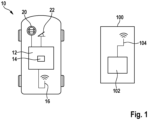
- Figure 1 shows an autonomous vehicle 10, which has a hardware component 12 designed as a computer for providing an autonomous driving function.
- the computer stores a software component 14 required for providing the autonomous driving function.
- the hardware component 12 is connected to other systems in the autonomous vehicle 10, which in the Figure 1 by a connection to a steering unit 20 and a connection to a braking and acceleration device 22.
- the autonomous vehicle 10 also has communication means 16 which are set up for communication with a central device 100.
- the central device 100 comprises a data processing device 102 and a communication device 104, which is configured to communicate with the autonomous vehicle 10.
- the autonomous vehicle 10 After completion of the autonomous vehicle 10, it sends a data set to the central device 100 using the communication means 16, which includes, for example, information on the type and version of the hardware component 12 used and the software component 14.
- the data set also includes an identifier that uniquely identifies the autonomous vehicle 10.
- the data set is received by the central device 100 and stored in the data processing device 102 in association with the identifier.
- the central device 100 then sends a confirmation to the autonomous vehicle 10, which stores this confirmation and then activates the autonomous driving function.
- the autonomous driving function can then be used in the operation of the autonomous vehicle 10, whereby the autonomous vehicle 10 Identifier.
- the transmission can take place periodically, for example once a day or every time the vehicle is restarted.
- the identifier is received by the central device 100 and the data set stored in association with the identifier is retrieved. The details contained in the retrieved data set are then compared with information about faulty hardware components 12 and/or software components 14. If a faulty hardware component 12 or a faulty software component 14 is detected, the central device 100 transmits a signal to the autonomous vehicle 10, which instructs the autonomous vehicle 10 to deactivate the autonomous driving function as an action.
Landscapes
- Engineering & Computer Science (AREA)
- Automation & Control Theory (AREA)
- Physics & Mathematics (AREA)
- General Physics & Mathematics (AREA)
- Theoretical Computer Science (AREA)
- Transportation (AREA)
- General Engineering & Computer Science (AREA)
- Human Computer Interaction (AREA)
- Mechanical Engineering (AREA)
- Quality & Reliability (AREA)
- Aviation & Aerospace Engineering (AREA)
- Radar, Positioning & Navigation (AREA)
- Remote Sensing (AREA)
- Business, Economics & Management (AREA)
- Finance (AREA)
- Computer Hardware Design (AREA)
- Traffic Control Systems (AREA)
Description
- Die Erfindung betrifft ein Verfahren zum Registrieren und Überwachen autonomer Fahrzeuge, wobei ein Datensatz umfassend Angaben zu Hardwarekomponenten und Softwarekomponenten des autonomen Fahrzeugs an eine zentrale Einrichtung übertragen wird. Weitere Aspekte der Erfindung betreffen ein autonomes Fahrzeug, eine zentrale Einrichtung sowie Computerprogrammprodukte, welche zur Ausführung des Verfahrens eingerichtet sind.
- Moderne Fahrzeuge sind zunehmend mit Fahrassistenzsystemen ausgestattet, die einen Fahrer bei der Ausübung verschiedener Fahrmanöver unterstützen sollen. Des Weiteren sind aus dem Stand der Technik Entwicklungen bekannt, mit denen Fahrzeuge vollständig autonom betrieben werden, wobei keine Eingriffe eines Fahrers in die Steuerung des Fahrzeugs erforderlich sind. Zudem sind hochautomatisierte Fahrzeuge bekannt, bei denen das Fahrzeug einzelne Fahrmanöver automatisch durchführt, wobei dabei sowohl eine Längsführung als auch eine Querführung des Fahrzeugs übernommen werden. Diese Systeme werden gegebenenfalls von einem Fahrer beaufsichtigt oder übergeben bei Erkennen einer für das automatisierte Fahren ungeeigneten Situation die Kontrolle zurück an den Fahrer des Fahrzeugs.
- Zur Bereitstellung automatisierter Fahrfunktionen, welche beispielsweise ein Fahrzeug dauerhaft oder zeitweilig in allen oder in bestimmten Verkehrssituationen führt, umfassen die Fahrzeuge Hardwarekomponenten wie einen Computer und Softwarekomponenten. Aus Sicherheitsgründen ist es wünschenswert, die eingesetzten Hardwarekomponenten und Softwarekomponenten eindeutig identifizieren zu können.
- Aus
DE 10 2008 061 304 A1 ist ein Verfahren und eine Vorrichtung zum Übertragen von Fahrzeugrelevanten Informationen an ein anderes Fahrzeug oder an Infrastruktur bekannt. Zur Übertragung der Informationen werden verschiedene Verfahren zur drahtlosen Kommunikation verwendet, welche beispielsweise WLAN und einen zur Übertagung von Zugangsberechtigungen verwendeten Funkstandard umfassen. Die übertragenen Informationen können beispielsweise eine Fahrzeugposition, eine Fahrzeug-Identifizierungsnummer sowie eventuell vorliegende Warnmeldungen umfassen. - Das Dokument
WO 01/90892 A1 - Das Dokument
DE 10 2015 010203 A1 beschreibt das Bereitstellen autonomer Fahrfunktionen für autonome Fahrzeuge. - Nachteilig an den bekannten Verfahren ist, dass eine Überwachung der für das Bereitstellen von automatisierten Fahrfunktionen erforderlichen Komponenten nicht erfolgt.
- Es wird ein Verfahren zum Registrieren und Überwachen autonomer Fahrzeuge vorgeschlagen. Die autonomen Fahrzeuge weisen mindestens eine Hardwarekomponente und/oder mindestens eine Softwarekomponente für das Bereitstellen einer autonomen Fahrfunktion auf. Bei dem Verfahren ist vorgesehen, in einem ersten Schritt a) einen Datensatz an eine zentrale Einrichtung zu übertragen, wobei der Datensatz Angaben zu der mindestens einen Hardwarekomponente und/oder zu der mindestens einen Softwarekomponente des autonomen Fahrzeugs enthält. In einem nachfolgenden Schritt b) wird der Datensatz durch die zentrale Einrichtung empfangen und zusammen mit einem dem Fahrzeug zugeordneten Identifikator gespeichert. Anschließend erfolgt durch die zentrale Einrichtung in einem Schritt c) des Verfahrens ein Senden einer Bestätigung über die erfolgreiche Speicherung an das autonome Fahrzeug. In einem weiteren Schritt d) wird die Bestätigung durch das autonome Fahrzeug empfangen und gespeichert. In einem nachfolgenden Schritt e) wird durch das autonome Fahrzeug eine durch die mindestens eine Hardwarekomponente und/oder durch die mindestens eine Softwarekomponente bereitgestellte autonome Fahrfunktion in Abhängigkeit der gespeicherten Bestätigung freigeschaltet.
- Im Betrieb des autonomen Fahrzeugs erfolgt dann als Schritt f) des Verfahrens ein Aussenden des dem autonomen Fahrzeug zugeordneten Identifikators durch das autonome Fahrzeug. Dabei können gegebenenfalls weitere Daten wie z.B. eine Fahrzeugposition zusätzlich ausgesendet werden. Der ausgesendete dem autonomen Fahrzeug zugeordnete Identifikator wird in einem Schritt g) des Verfahrens empfangen. Im nachfolgenden Schritt h) erfolgt ein Abgleichen des zu diesem Identifikator in der zentralen Einrichtung gespeicherten Datensatzes oder von aus dem Identifikator dekodierten Angaben mit Informationen zu fehlerhaften Hardwarekomponenten und/oder Softwarekomponenten. Wird bei dem Abgleich eine fehlerhafte Hardwarekomponente oder Softwarekomponenten festgestellt, so wird in einem sich anschließenden Schritt i) ein Signal zum Einleiten einer Aktion an das autonome Fahrzeug übermittelt. Das Signal wird anschließend in einem Schritt j) des Verfahrens durch das autonome Fahrzeug empfangen und das autonome Fahrzeug führt die durch das Signal geforderte Aktion aus.
- Das Verfahren oder bestimmte Schritte des Verfahrens können einmalig ausgeführt werden oder periodisch oder ausgelöst von bestimmten Ereignissen wiederholt ausgeführt werden. Beispielsweise werden die Schritte a) bis e) zur Registrierung des autonomen Fahrzeugs einmalig oder ausgelöst von bestimmten Ereignissen wiederholt ausgeführt. Das Aussenden des Identifikators gemäß Schritt f) erfolgt bevorzugt periodisch, also regelmäßig wiederholt, während des Betriebs des autonomen Fahrzeugs, nachdem die Schritte a) bis e) zumindest einmalig durchlaufen wurden. Das autonome Fahrzeug ist im Betrieb bevorzugt fortlaufend empfangsbereit, so dass der Schritt j) nach einem zumindest einmaligen durchlaufen der Schritte a) bis e) in Reaktion auf ein empfangenes Signal ausgeführt werden kann. Die zentrale Einrichtung ist bevorzugt eingerichtet, mit einer Vielzahl von autonomen Fahrzeugen in Verbindung zu stehen, so dass die von der zentralen Einrichtung auszuführenden Schritte entsprechend wiederholt in Reaktion auf einen gemäß Schritt b) empfangenen Datensatz bzw. in Reaktion auf einen empfangen Identifikator gemäß Schritt g) ausgeführt werden.
- Bei der autonomen Fahrfunktion handelt es sich beispielsweise um Fahrfunktionen, welche das autonome Fahrzeug in bestimmten Verkehrssituationen steuern, wobei dazu bevorzugt sowohl die Längsführung, also das Beschleunigen und Abbremsen des Fahrzeugs, als auch die Querführung, also das Lenken des Fahrzeugs, übernommen wird. Derartige Verkehrssituationen können beispielsweise das Einparken oder das Ausparken des Fahrzeugs, das Durchfahren einer Baustelle, das Fahren auf einer Autobahn und das Fahren in einem Stau umfassen. Des Weiteren kann die autonome Fahrfunktion eingerichtet sein, das Fahrzeug vollständig ohne Aufsicht durch einen Fahrer zu führen. Die autonome Fahrfunktion kann beispielsweise in Form einer künstlichen Intelligenz ausgeführt sein, welche in Form von Softwarekomponenten und/oder Hardwarekomponenten vorliegt.
- Die Übertragung des Datensatzes an die zentrale Einrichtung sowie das Empfangen der Bestätigung bzw. eines Signals zum Einleiten einer Aktion erfolgt bevorzugt über eine drahtlose Datenverbindung. Hierzu können verschiedene Techniken zur Übertragung von Daten eingesetzt werden, welche beispielsweise unter der Bezeichnung Car-to-Infrastructure (C2I) bekannt sind. Die Übertragung kann auch über drahtlose Kommunikationsmittel wie Mobilfunkverbindungen, beispielsweise LTE, UMTS oder GSM, sowie WLAN oder dergleichen erfolgen.
- Bei der zentralen Einrichtung kann es sich insbesondere um eine zentrale Computereinrichtung wie einen Server, insbesondere einen Cloudserver, handeln, welche mit dem autonomen Fahrzeug kommunizieren kann. Hierzu kann die zentrale Einrichtung beispielsweise mit entsprechenden Infrastrukturelementen verbunden sein, welche die drahtlose Kommunikation mit dem autonomen Fahrzeug erlauben. Des Weiteren ist es denkbar, dass das autonome Fahrzeug über eine drahtlose Internetverbindung verfügt und über das Internet mit der zentralen Einrichtung kommuniziert.
- Bevorzugt sind die Angaben im Datensatz ausgewählt aus der Gruppe umfassend Fahrzeugtyp, Fahrzeugvariante, Softwaretyp, Softwareversion, Hardwaretyp, Hardwareversion, Angaben zu bereitgestellten autonomen Fahrfunktionen, Fahrgestellnummer und Kombinationen mehrerer dieser Angaben.
- Ist die autonome Fahrfunktion in Form einer künstlichen Intelligenz realisiert, so umfassen die Angaben im Datensatz entsprechend insbesondere Angaben zu dem Typ und der Version der mindestens einen Softwarekomponente sowie gegebenenfalls dem Typ und der Version der mindestens einen Hardwarekomponente, welche die künstliche Intelligenz bereitstellen.
- Bevorzugt umfasst der Datensatz als eine Angabe einen dem autonomen Fahrzeug zugeordneten Identifikator. Dieser ist ein für das autonome Fahrzeug eindeutiges Kennzeichen und wird beispielsweise bei der Herstellung des Fahrzeugs vergeben und dauerhaft im autonomen Fahrzeug gespeichert, beispielsweise in einem nicht-flüchtigen Speicher einer Hardwarekomponente oder in einem Steuergerät des autonomen Fahrzeugs.
- Alternativ hierzu wird durch die zentrale Einrichtung aus den Angaben im gemäß Schritt b) empfangen Datensatz ein eindeutiger dem autonomen Fahrzeug zugeordneter Identifikator generiert. Dieser Identifikator wird anschließend als Teil der Bestätigung gemäß Schritt c) an das autonome Fahrzeug gesendet und gemäß Schritt d) durch das autonome Fahrzeug gespeichert. Diese Erzeugung des Identifikators muss nur einmalig durchlaufen werden. Bevorzugt wird der empfangene Identifikator in einem dem autonomen Fahrzeug zugeordneten nicht-flüchtigen Speicher abgelegt, beispielsweise in einem Speicher eines Steuergeräts oder einer Hardwarekomponente des autonomen Fahrzeugs.
- Der auf diese Weise erzeugte eindeutige Identifikator umfasst bevorzugt ausgewählte Angaben aus dem Datensatz in kodierter Form. Diese Angaben können insbesondere ausgewählt sein aus einer Hardwareversion und einer Softwareversion mindestens einer Hardwarekomponente und/oder mindestens einer Softwarekomponente des autonomen Fahrzeugs. Auf diese Weise kann beispielswiese eine Identifikation der verwendeten Softwareversion einer Softwarekomponente allein unter Verwendung einer empfangenen Identifikation erfolgen, ohne dass ein Abgleich mit dem gespeicherten Datensatz erfolgen muss.
- In einer Ausführungsvariante des Verfahrens kann vorgesehen sein, bereits im Rahmen der Registrierung eines autonomen Fahrzeugs, also dem Durchlaufen der Schritte a) bis e) des Verfahrens einen Abgleich der Angaben im übermittelten Datensatz mit Informationen zu fehlerhaften Hardware- und/oder Softwarekomponenten durchzuführen. Entsprechend kann vorgesehen sein, die Bestätigung über die erfolgte Speicherung des Datensatzes in der zentralen Einrichtung nur dann zu senden bzw. das Freischalten der autonomen Fahrfunktion gemäß Schritt e) nur dann zu erlauben, wenn keine fehlerhafte Hardware- oder Softwarekomponente erkannt wurde.
- Das Aussenden des Identifikators kann beispielsweise periodisch in festen Zeitabständen erfolgen, beispielsweise einmal am Tag, oder einmal pro Stunde. Des Weiteren kann beispielsweise vorgesehen sein, dass das autonome Fahrzeug seinen eindeutigen Identifikator immer dann aussendet, wenn das autonome Fahrzeug Informationen mit Einrichtungen der Verkehrsinfrastruktur austauscht.
- Der ausgesendete Identifikator kann durch die zentrale Einrichtung selbst oder durch andere Einrichtungen wie durch eine Infrastrukturkomponente wie ein Kommunikationsnetzwerk oder einem Verkehrsleitsystem empfangen werden. Der empfange Identifikator kann für den folgenden Abgleich an die zentrale Einrichtung weitergeleitet werden. Dies ist beispielsweise sinnvoll, wenn die Infrastrukturkomponente teil eines Kommunikationsnetzwerks wie eines Mobilfunknetzes ist. Alternativ dazu, insbesondere dann, wenn der Identifikator ausgewählte Angaben in kodierter Form enthält, kann der Abgleich mit Informationen zu fehlerhaften Hardware- und/oder Softwarekomponenten sowie das Übermitteln eines Signals zum Einleiten einer Aktion auch von einer anderen Einrichtung ohne Mitwirkung der zentralen Einrichtung ausgeführt werden. Beispielsweise kann der Abgleich und das Übermitteln des Signals von der Infrastrukturkomponente erfolgen, welche den Identifikator empfangen hat.
- Bei einer Infrastrukturkomponente kann es sich beispielsweise um Verkehrsleitsysteme handeln, welche autonomen Fahrzeugen Verkehrsrelevante Daten zur Verfügung stellen.
- Bevorzugt ist die nach dem Erkennen einer fehlerhaften Hardwarekomponente oder Softwarekomponente auszulösende Aktion ausgewählt aus Überführen des autonomen Fahrzeugs in einen sicheren Zustand, Stilllegen des autonomen Fahrzeugs, Deaktivieren der autonomen Fahrfunktion, Übermitteln aktualisierter Softwarekomponenten, Ausgeben einer Benachrichtigung und Kombinationen mehrerer dieser Aktionen.
- Das Überführen des Fahrzeugs in einen sicheren Zustand kann beispielsweise umfassen, dass das Fahrzeug autonom eine sichere Halteposition ansteuert, wobei nach Ankunft an der sicheren Position die autonome Fahrfunktion deaktiviert wird. Eine Weiterfahrt des autonomen Fahrzeugs kann dann unter manueller Steuerung durch einen Fahrer erfolgen.
- Vor dem Übermitteln aktualisierter Softwarekomponenten wird das Fahrzeug bevorzugt zunächst in einen sicheren Zustand versetzt.
- Gemäß nicht beanspruchten Varianten erfolgt das Übertragen des Datensatzes gemäß Schritt a) nach Fertigstellung des autonomen Fahrzeugs oder nach Kauf des autonomen Fahrzeugs. Erfindungsgemäß erfolgt das Übertragen des Datensatzes gemäß Schritt a) nach Austausch einer Hardwarekomponente und/oder nach Aktualisierung einer Softwarekomponente.
- Wird beispielsweise erkannt, dass die zur Bereitstellung einer autonomen Fahrfunktion verwendete Softwarekomponente fehlerhaft ist, da diese in bestimmten Verkehrssituationen nicht korrekt funktioniert, so kann durch Übermitteln eines entsprechenden Signals an das autonome Fahrzeug die betreffende autonome Fahrfunktion deaktiviert werden. Im Anschluss kann als weitere Aktion eine Aktualisierung der Softwarekomponente vorgenommen werden. Nach Abschluss der Aktualisierung wird gemäß dem vorgeschlagenen Verfahren eine erneute Registrierung der Hardware- und Softwarekomponenten durchgeführt, indem das Verfahren beginnend von Schritt a) an ausgeführt wird.
- Entsprechend wird ein Datensatz, der unter anderem Angaben zu der aktualisierten Softwarekomponente enthält an die zentrale Einrichtung übermittelt. Nach dem Empfang einer entsprechenden Bestätigung durch die zentrale Einrichtung kann dann die autonome Fahrfunktion wieder freigeschaltet werden.
- Wird beispielsweise eine fehlerhafte Hardwarekomponente erkannt, kann das autonome Fahrzeug zunächst in einen sicheren Zustand überführt werden. Anschließend kann ein Austausch der entsprechenden Hardwarekomponente in einer Werkstatt veranlasst werden. Nach Abschluss des Austauschs der fehlerhaften Hardwarekomponente wird gemäß dem vorgeschlagenen Verfahren eine erneute Registrierung der Hardware- und/oder Softwarekomponenten durchgeführt, indem das Verfahren beginnend von Schritt a) an ausgeführt wird. Entsprechend wird ein Datensatz, der unter anderem Angaben zu der aktualisierten Hardware- und/oder Softwarekomponente enthält an die zentrale Einrichtung übermittelt. Nach dem Empfang einer entsprechenden Bestätigung durch die zentrale Einrichtung kann dann die autonome Fahrfunktion wieder freigeschaltet werden.
- Beim Freischalten der autonomen Fahrfunktion wird die Bestätigung der zentralen Einrichtung bevorzugt geprüft um sicherzustellen, dass die Bestätigung tatsächlich von der zentralen Einrichtung stammt. Nur bei einer korrekten Bestätigung erfolgt die Freischaltung.
- Bevorzugt ist eine Schnittstelle zwischen der zentralen Einrichtung und einem oder mehreren Verzeichnisdiensten vorgesehen. Die Verzeichnisdienste stellen Angaben zu fehlerhaften sowie fehlerfreien bzw. erlaubten Hardwarekomponenten und/oder Softwarekomponenten zur Verfügung. Bei dem Verzeichnisdienst kann es sich beispielsweise um einen von einer Behörde oder einer Zulassungsstelle bereitgestellten Dienst handeln, welcher der zentralen Einrichtung die entsprechenden Angaben übermittelt. Des Weiteren kann es sich bei dem Verzeichnisdienst um einen von einem Zulieferer oder Hersteller einer Hardwarekomponente und/oder Softwarekomponente bereitgestellten Dienst handeln, welcher die entsprechenden Angaben an die zentrale Einrichtung übermittelt. Ebenfalls ist es möglich, dass der Hersteller des autonomen Fahrzeugs einen solchen Verzeichnisdienst zur Verfügung stellt. Über die Schnittstelle können die Angaben in einem Speicher der zentralen Einrichtung hinterlegt werden und/oder die zentrale Einrichtung kann aktuelle Angaben aus dem jeweiligen Verzeichnisdienst abrufen. Auf diese Weise ist es beispielweise möglich, dass ein autonomes Fahrzeug mit einer fehlerhaften Hardware- und/oder Softwarekomponente von einer behördlichen Stelle deaktiviert werden kann oder dass eine behördliche Stelle eine veraltete Software aktualisieren kann.
- Erfindungsgemäß werden weiterhin Computerprogramme vorgeschlagen, gemäß denen jeweils die durch das autonome Fahrzeug und die durch die zentrale Einrichtung auszuführenden Schritte der hierin beschriebenen Verfahren durchgeführt werden, wenn das Computerprogramm auf einer programmierbaren Computereinrichtung ausgeführt wird. Die Computerprogramme können auf einem maschinenlesbaren Speichermedium gespeichert werden, etwa auf einem permanenten oder wiederbeschreibbaren Speichermedium oder in Zuordnung zu einer Computereinrichtung oder auf einer entfernbaren CD-Rom, DVD, Blu-Ray Disc oder einem USB-Stick. Zusätzlich oder alternativ können die Computerprogramme auf einer Computereinrichtung wie etwa auf einem Server zum Herunterladen bereitgestellt werden, z.B. über ein Datennetzwerk wie das Internet oder eine Kommunikationsverbindung wie etwa eine Telefonleitung oder eine drahtlose Verbindung.
- Ein weiterer Aspekt der Erfindung ist, ein autonomes Fahrzeug bereitzustellen. Das autonome Fahrzeug ist zur Durchführung der hierin beschriebenen Verfahren ausgebildet und/oder eingerichtet. Dementsprechend gelten im Rahmen der Verfahren beschriebene Merkmale für das autonome Fahrzeug und umgekehrt gelten im Rahmen des autonomen Fahrzeugs beschriebene Merkmale für die Verfahren.
- Das autonome Fahrzeug umfasst mindestens eine Hardwarekomponente mit mindestens einer darin gespeicherter Softwarekomponente, welche zur Ausführung einer autonomen Fahrfunktion eingerichtet sind, und Kommunikationsmittel zur Kommunikation mit einer zentralen Einrichtung. Das autonome Fahrzeug ist eingerichtet, einen Datensatz an eine zentrale Einrichtung zu übertragen, wobei der Datensatz Angaben zu der mindestens einen Hardwarekomponente und/oder der mindestens einen Softwarekomponente des autonomen Fahrzeugs enthält. Ferner ist das autonome Fahrzeug eingerichtet, eine Bestätigung der zentralen Einrichtung zu empfangen und zu speichern sowie eine autonome Fahrfunktion abhängig von der Bestätigung freizuschalten. Des Weiteren ist das autonome Fahrzeug eingerichtet, einen eindeutigen, dem autonomen Fahrzeug zugeordneten Identifikator auszusenden, und in Abhängigkeit eines empfangenen Signals eine geforderte Aktion auszuführen.
- Bei der mindestens einen Hardwarekomponente handelt es sich insbesondere um einen Computer, wobei Softwarekomponenten bevorzugt in einer diesem Computer zugeordneten Speichereinrichtung abgelegt sind. Des Weiteren können die Hardwarekomponenten beispielsweise Sensoren umfassen, welche zur Erfassung von Daten über die Umgebung des Fahrzeugs verwendet werden.
- Die Kommunikationsmittel sind beispielsweise für eine drahtlose Datenübertragung mittels Mobilfunk wie LTE, UMTS oder GSM oder zur drahtlosen Datenübertragung über WLAN eingerichtet.
- Ein weiterer Aspekt der Erfindung ist, eine zentrale Einrichtung zur Verwendung im Rahmen eines der beschriebenen Verfahren bereitzustellen. Im Rahmen der Verfahren beschriebene Merkmale gelten daher auch für die zentrale Einrichtung und umgekehrt gelten im Rahmen der zentralen Einrichtung beschriebene Merkmale für die Verfahren.
- Die zentrale Einrichtung umfasst eine Datenverarbeitungseinrichtung sowie eine Kommunikationseinrichtung zur Kommunikation mit autonomen Fahrzeugen. Die zentrale Einrichtung ist eingerichtet, einen durch ein autonomes Fahrzeug übertragenen Datensatz mit Angaben zu mindestens einer Hardwarekomponente und/oder mindestens einer Softwarekomponente, welche für das Ausführen einer autonomen Fahrfunktion eingerichtet sind, zu empfangen und zu speichern, eine Bestätigung zur Freischaltung einer autonomen Fahrfunktion an das autonome Fahrzeug zu senden, einen durch das autonome Fahrzeug ausgesendeten Identifikator zu empfangen, die Angaben aus einem dem empfangenen Identifikator entsprechenden Datensatz oder aus dem empfangenen Identifikator dekodierte Angaben mit Informationen zu fehlerhaften Hardwarekomponenten und/oder Softwarekomponenten abzugleichen und ein Signal an das autonome Fahrzeug zum Einleiten einer Aktion zu übermitteln, falls bei dem Abgleich eine fehlerhafte Hardwarekomponente und/oder Softwarekomponente ermittelt wurde.
- Bevorzugt ist die zentrale Einrichtung des Weiteren eingerichtet, aus den Angaben im durch das autonome Fahrzeug übertragenen Datensatz einen eindeutigen dem autonomen Fahrzeug zugeordneter Identifikator zu generieren. Dieser Identifikator wird anschließend als Teil der Bestätigung an das autonome Fahrzeug gesendet.
- Bevorzugt ist verfügt die zentrale Einrichtung über eine Schnittstelle, welche zur Verbindung mit einem oder mehreren Verzeichnisdiensten eingerichtet ist, wobei die Verzeichnisdienste Angaben zu fehlerhaften und fehlerfreien bzw. erlaubten Hardwarekomponenten und/oder Softwarekomponenten zur Verfügung stellen. Über die Schnittstelle können die Angaben in einem Speicher der zentralen Einrichtung hinterlegt werden und/oder die zentrale Einrichtung kann aktuelle Angaben aus dem jeweiligen Verzeichnisdienst abrufen.
- Bei der zentralen Einrichtung kann es sich insbesondere um eine zentrale Computereinrichtung wie einen Server, insbesondere einen Cloudserver, handeln, wobei der Computer bzw. der Server als Datenverarbeitungseinrichtung dient und mit einer Kommunikationseinrichtung, welche mit dem autonomen Fahrzeug kommunizieren kann, verbunden ist. Hierzu kann der Computer bzw. der Server mit entsprechenden Infrastrukturelementen verbunden sein, welche die drahtlose Kommunikation mit dem autonomen Fahrzeug erlauben. Des Weiteren ist es denkbar, dass der Computer bzw. der Server über das Internet mit dem autonomen Fahrzeug kommuniziert.
- Das vorgeschlagene Verfahren erlaubt es, die zur Bereitstellung einer autonomen Fahrfunktion erforderlichen Hardware- und Softwarekomponenten zentral zu registrieren, so dass eine einfache Überwachung autonomer Fahrzeuge durchgeführt werden kann. Die zur Bereitstellung der autonomen Fahrfunktion erforderlichen Hardware- und Softwarekomponenten werden beispielsweise nach der Fertigstellung des Fahrzeugs, insbesondere am Bandende in einer Fabrik, in der zentralen Einrichtung registriert. Vorteilhafterweise erfolgt erst nach dieser Registrierung die Freischaltung der autonomen Fahrfunktion, so dass diese Registrierung nicht umgangen werden kann.
- Nach der Registrierung ist eine Überwachung des autonomen Fahrzeugs möglich durch Empfangen und Auswerten des durch das Fahrzeug ausgesendeten Identifikators. Wird dabei festgestellt, dass das Fahrzeug eine als fehlerhaft bekannte Hardware- oder Softwarekomponente aufweist, können sofort Aktionen als Gegenmaßnahmen eingeleitet werden. Beispielsweise kann die autonome Fahrfunktion aus Sicherheitsgründen so lange deaktiviert werden, bis die fehlerhafte Hardware- und/oder Softwarekomponente ausgetauscht bzw. aktualisiert wurde.
- Durch die vorherige Registrierung des autonomen Fahrzeugs ist es bei der nachfolgenden Überwachung ausreichend, lediglich den Identifikator zu übertragen. Die detaillierten Datensätze müssen nicht wiederholt übertragen werden, was Bandbreite für die Datenübertragung einspart.
- Vorteilhafterweise wird die Registrierung des autonomen Fahrzeugs nach Austausch bzw. Aktualisierung einer Hardware- oder Softwarekomponente wiederholt, so dass der zentralen Einrichtung zu jeder Zeit bekannt ist, welche autonomen Fahrzeuge mit welchen Hardware- und Softwarekomponenten betrieben werden. Die Verkehrssicherheit wird dadurch vorteilhafterweise erhöht.
- Ein Ausführungsbeispiel der Erfindung ist in der Zeichnung dargestellt und in der nachfolgenden Beschreibung näher erläutert. Die Figur stellt den Gegenstand der Erfindung nur schematisch dar. Es zeigt
Figur 1 ein autonomes Fahrzeug sowie eine zentrale Einrichtung. -
Figur 1 zeigt ein autonomes Fahrzeug 10, welches für das Bereitstellen einer autonomen Fahrfunktion eine als Computer ausgestaltete Hardwarekomponente 12 aufweist. Der Computer speichert eine für das Bereitstellen der autonomen Fahrfunktion erforderliche Softwarekomponente 14. - Für das Ausführen von autonomen Fahrmanövern ist die Hardwarekomponente 12 mit weiteren System im autonomen Fahrzeug 10 verbunden, was in der
Figur 1 durch eine Verbindung zu einer Lenkeinheit 20 und einer Verbindung zu einer Brems- und Beschleunigungseinrichtung 22 symbolisiert wird. Das autonome Fahrzeug 10 verfügt zudem über Kommunikationsmittel 16, welche für eine Kommunikation mit einer zentralen Einrichtung 100 eingerichtet sind. - Die zentrale Einrichtung 100 umfasst eine Datenverarbeitungseinrichtung 102 sowie eine Kommunikationseinrichtung 104, welche zur Kommunikation mit dem autonomen Fahrzeug 10 eingerichtet ist.
- Nach Fertigstellung des autonomen Fahrzeugs 10 sendet dieses unter Verwendung der Kommunikationsmittel 16 einen Datensatz an die zentrale Einrichtung 100, welcher beispielsweise Angaben zum Typ und Version der verwendeten Hardwarekomponente 12 und der Softwarekomponente 14 umfasst. Der Datensatz umfasst in einer Ausführungsform zudem einen Identifikator, der das autonome Fahrzeug 10 eindeutig kennzeichnet.
- Der Datensatz wird durch die zentrale Einrichtung 100 empfangen und in der Datenverarbeitungseinrichtung 102 in Zuordnung zu dem Identifikator abgespeichert. Daraufhin sendet die zentrale Einrichtung 100 eine Bestätigung an das autonome Fahrzeug 10, welches diese Bestätigung abspeichert und daraufhin die autonome Fahrfunktion freischaltet.
- Im Anschluss kann die autonome Fahrfunktion im Betrieb des autonomen Fahrzeugs 10 verwendet werden, wobei das autonome Fahrzeug 10 seinen Identifikator aussendet. Das Aussenden kann periodisch erfolgen, beispielsweise einmal am Tag oder bei jedem Fahrzeugneustart. Der Identifikator wird durch die zentrale Einrichtung 100 empfangen und der in Zuordnung zu dem Identifikator abgespeicherte Datensatz wird abgerufen. Anschließend werden die im abgerufenen Datensatz enthaltenen Angaben mit Informationen über fehlerhafte Hardwarekomponenten 12 und/oder Softwarekomponenten 14 verglichen. Wird eine fehlerhafte Hardwarekomponente 12 oder eine fehlerhafte Softwarekomponente 14 festgestellt, so wird durch die zentrale Einrichtung 100 ein Signal an das autonome Fahrzeug 10 übermittelt, welches das autonome Fahrzeug 10 anweist, als Aktion die autonome Fahrfunktion zu deaktivieren.
- Die Erfindung ist nicht auf die hier beschriebenen Ausführungsbeispiele und die darin hervorgehobenen Aspekte beschränkt. Vielmehr ist innerhalb des durch die Ansprüche angegebenen Bereichs eine Vielzahl von Abwandlungen möglich, die im Rahmen fachmännischen Handelns liegen.
Claims (10)
- Verfahren zum Registrieren und Überwachen autonomer Fahrzeuge (10), welche mindestens eine Hardwarekomponente (12) und/oder mindestens eine Softwarekomponente (14) für das Bereitstellen einer autonomen Fahrfunktion aufweisen, umfassend die Schritte:a. Übertragen eines Datensatzes an eine zentrale Einrichtung (100), wobei der Datensatz Angaben zu der mindestens einen Hardwarekomponente (12) und/oder der mindestens einen Softwarekomponente (14) des autonomen Fahrzeugs (10) enthält,b. Empfangen des Datensatzes und Speichern des Datensatzes zusammen mit einem dem autonomen Fahrzeug (10) zugeordneten Identifikator durch die zentrale Einrichtung (100),c. Senden einer Bestätigung über die erfolgreiche Speicherung an das autonome Fahrzeug (10) durch die zentrale Einrichtung (100),d. Empfangen und Speichern der Bestätigung durch das autonome Fahrzeug (10),e. Freischaltung der durch die mindestens eine Hardwarekomponente (12) und/oder mindestens eine Softwarekomponente (14) bereitgestellten autonomen Fahrfunktion in Abhängigkeit der gespeicherten Bestätigung durch das autonome Fahrzeug (10),f.Aussenden des gespeicherten eindeutigen, dem autonomen Fahrzeug (10) zugeordneten Identifikators durch das autonome Fahrzeug (10),g. Empfangen des ausgesendeten eindeutigen, dem autonomen Fahrzeug (10) zugeordneten Identifikators,h. Abgleichen des zu diesem Identifikator in der zentralen Einrichtung (100) gespeicherten Datensatzes oder von aus dem Identifikator dekodierten Angaben mit Informationen zu fehlerhaften Hardwarekomponenten (12) und/oder Softwarekomponenten (14),i. Übermitteln eines Signals an das autonome Fahrzeug (10) zum Einleiten einer Aktion, falls bei dem Abgleich gemäß Schritt h) eine fehlerhafte Hardwarekomponente (12) und/oder Softwarekomponente (14) ermittelt wurde,j. Empfangen des Signals und Ausführen der geforderten Aktion durch das autonome Fahrzeug (10),dadurch gekennzeichnet, dass das Übertragen des Datensatzes gemäß Schritt a) nach Austausch einer Hardwarekomponente (12) und/oder nach Aktualisierung einer Softwarekomponente (14) erfolgt.
- Verfahren nach Anspruch 1, dadurch gekennzeichnet, dass die Angaben im Datensatz ausgewählt sind aus der Gruppe umfassend Fahrzeugtyp, Fahrzeugvariante, Softwaretyp, Softwareversion, Hardwaretyp, Hardwareversion, Angaben zu bereitgestellten autonomen Fahrfunktionen, Fahrgestellnummer und Kombinationen mehrerer dieser Angaben.
- Verfahren nach Anspruch 1 oder 2, dadurch gekennzeichnet, dass der Datensatz als eine Angabe einen eindeutigen, dem autonomen Fahrzeug (10) zugeordneten Identifikator umfasst.
- Verfahren nach Anspruch 1 oder 2, dadurch gekennzeichnet, dass durch die zentrale Einrichtung (100) aus dem gemäß Schritt b) empfangen Datensatz ein eindeutiger, dem autonomen Fahrzeug (10) zugeordneter Identifikator generiert wird, als Teil der Bestätigung gemäß Schritt c) an das autonome Fahrzeug (10) gesendet und gemäß Schritt d) durch das autonome Fahrzeug (10) gespeichert wird.
- Verfahren nach Anspruch 4, dadurch gekennzeichnet, dass der eindeutige dem autonomen Fahrzeug (10) zugeordnete Identifikator ausgewählte Angaben aus dem Datensatz in kodierter Form umfasst.
- Verfahren nach einem der Ansprüche 1 bis 5, dadurch gekennzeichnet, dass die Aktion ausgewählt ist aus Überführen des autonomen Fahrzeugs (10) in einen sicheren Zustand, Stilllegen des autonomen Fahrzeugs (10), Deaktivieren der autonomen Fahrfunktion, Übermitteln einer aktualisierter Softwarekomponente (14), Ausgeben einer Benachrichtigung und Kombinationen mehrerer dieser Aktionen.
- Computerprogramm, das die durch das autonome Fahrzeug (10) auszuführenden Schritte eines Verfahrens nach einem der Ansprüche 1 bis 5 ausführt, wenn es auf einem Computer abläuft.
- Computerprogramm, das die durch die zentrale Einrichtung (100) auszuführenden Schritte eines Verfahrens nach einem der Ansprüche 1 bis 5 ausführt, wenn es auf einem Computer abläuft.
- Autonomes Fahrzeug (10) umfassend mindestens eine Hardwarekomponente (12) mit mindestens einer darin gespeicherter Softwarekomponente (14), welche zur Ausführung einer autonomen Fahrfunktion eingerichtet sind, und Kommunikationsmittel (16) zur Kommunikation mit einer zentralen Einrichtung (100), dadurch gekennzeichnet, dass das autonome Fahrzeug (10) eingerichtet ist,a) einen Datensatz an eine zentrale Einrichtung (100) zu übertragen, wobei der Datensatz Angaben zu der mindestens einen Hardwarekomponente (12) und/oder der mindestens einen Softwarekomponente (14) des autonomen Fahrzeugs (10) enthält,b) eine Bestätigung der zentralen Einrichtung (100) zu empfangen und zu speichern,c) eine autonome Fahrfunktion abhängig von der Bestätigung freizuschalten,d) einen gespeicherten eindeutigen, dem autonomen Fahrzeug (10) zugeordneten Identifikator auszusenden, unde) in Abhängigkeit eines empfangenen Signals eine geforderte Aktion auszuführen,dadurch gekennzeichnet, dass das autonome Fahrzeug (10) dazu eingerichtet ist, den Datensatz gemäß Schritt a) nach Austausch einer Hardwarekomponente (12) und/oder nach Aktualisierung einer Softwarekomponente (14) zu übertragen.
- Zentrale Einrichtung (100) umfassend eine Datenverarbeitungseinrichtung (102) sowie eine Kommunikationseinrichtung (104) zur Kommunikation mit autonomen Fahrzeugen (10), dadurch gekennzeichnet, dass die zentrale Einrichtung (100) eingerichtet ist,a. einen durch ein autonomes Fahrzeug (10) nach Austausch einer Hardwarekomponente (12) und/oder nach Aktualisierung einer Softwarekomponente (14) übertragenen Datensatz mit Angaben zu mindestens einer Hardwarekomponente (12) und/oder mindestens einer Softwarekomponente (14), welche für das Ausführen einer autonomen Fahrfunktion eingerichtet sind, zu empfangen und zu speichern,b. eine Bestätigung zur Freischaltung einer autonomen Fahrfunktion an das autonome Fahrzeug (10) zu sendenc. einen durch das autonome Fahrzeug (10) ausgesendeten Identifikator zu empfangen,d. Angaben zu einem dem empfangenen Identifikator entsprechenden Datensatz oder aus dem empfangenen Identifikator dekodierte Angaben mit Informationen zu fehlerhaften Hardwarekomponenten (12) und/oder Softwarekomponenten (14) abzugleichen und,e. ein Signal an das autonome Fahrzeug (10) zum Einleiten einer Aktion zu übermitteln, falls bei dem Abgleich eine fehlerhafte Hardwarekomponente (12) und/oder Softwarekomponente (14) ermittelt wurde.
Applications Claiming Priority (2)
| Application Number | Priority Date | Filing Date | Title |
|---|---|---|---|
| DE102018201130.3A DE102018201130A1 (de) | 2018-01-25 | 2018-01-25 | Vorrichtung und Verfahren zum Registrieren und Überwachen autonomer Fahrzeuge |
| PCT/EP2019/051094 WO2019145209A1 (de) | 2018-01-25 | 2019-01-17 | Vorrichtung und verfahren zum registrieren und überwachen autonomer fahrzeuge |
Publications (2)
| Publication Number | Publication Date |
|---|---|
| EP3743815A1 EP3743815A1 (de) | 2020-12-02 |
| EP3743815B1 true EP3743815B1 (de) | 2024-08-14 |
Family
ID=65234536
Family Applications (1)
| Application Number | Title | Priority Date | Filing Date |
|---|---|---|---|
| EP19701798.1A Active EP3743815B1 (de) | 2018-01-25 | 2019-01-17 | Vorrichtung und verfahren zum registrieren und überwachen autonomer fahrzeuge |
Country Status (3)
| Country | Link |
|---|---|
| EP (1) | EP3743815B1 (de) |
| DE (1) | DE102018201130A1 (de) |
| WO (1) | WO2019145209A1 (de) |
Families Citing this family (2)
| Publication number | Priority date | Publication date | Assignee | Title |
|---|---|---|---|---|
| DE102021127526A1 (de) | 2021-10-22 | 2023-04-27 | Bayerische Motoren Werke Aktiengesellschaft | Verfahren und Vorrichtung zum Betreiben eines Fahrzeugsystems mit einem Softwaresystem in einem Fahrzeug, insbesondere eines Fahrerassistenzsystems |
| DE102022111181A1 (de) | 2022-05-05 | 2023-11-09 | Bayerische Motoren Werke Aktiengesellschaft | Verfahren und vorrichtung zur bewertung einer güte einer automatisierten funktion eines kraftfahrzeugs |
Family Cites Families (6)
| Publication number | Priority date | Publication date | Assignee | Title |
|---|---|---|---|---|
| US6751794B1 (en) * | 2000-05-25 | 2004-06-15 | Everdream Corporation | Intelligent patch checker |
| DE102004049297A1 (de) * | 2004-10-09 | 2006-04-27 | Bayerische Motoren Werke Ag | Verfahren zum Aktivieren und/oder Deaktivieren von Fahrzeug-Steuergerätefunktionen |
| GB0427540D0 (en) * | 2004-12-15 | 2005-01-19 | Ibm | A system for maintaining data |
| EP2229668B1 (de) | 2007-12-11 | 2015-09-23 | Continental Teves AG & Co. oHG | Übertragung von fahrzeug-relevanten daten eines fahrzeugs über mobile kommunikation |
| SE1051246A1 (sv) * | 2010-11-29 | 2012-05-30 | Scania Cv Ab | Fjärrdiagnostisering av fordon |
| DE102015010203A1 (de) * | 2015-08-05 | 2017-02-09 | Audi Ag | Verfahren zum Betreiben eines Kraftfahrzeugs und System zum Betreiben eines Kraftfahrzeugs |
-
2018
- 2018-01-25 DE DE102018201130.3A patent/DE102018201130A1/de not_active Withdrawn
-
2019
- 2019-01-17 EP EP19701798.1A patent/EP3743815B1/de active Active
- 2019-01-17 WO PCT/EP2019/051094 patent/WO2019145209A1/de not_active Ceased
Also Published As
| Publication number | Publication date |
|---|---|
| EP3743815A1 (de) | 2020-12-02 |
| DE102018201130A1 (de) | 2019-07-25 |
| WO2019145209A1 (de) | 2019-08-01 |
Similar Documents
| Publication | Publication Date | Title |
|---|---|---|
| EP2425333B1 (de) | Verfahren zur aktualisierung von softwarekomponenten | |
| EP3393859B1 (de) | Verfahren zur modifikation safety- und/oder security-relevanter steuergeräte in einem kraftfahrzeug, und eine diesbezügliche vorrichtung | |
| EP3094511B1 (de) | Verfahren für die konfigurierung eines reifendrucksensors | |
| EP3207537B1 (de) | Verfahren zum aufbau und betrieb eines drahtlosen fahrzeug-netzwerks | |
| DE102016206143A1 (de) | Steuersystem für ein Fernparken und Steuerverfahren dafür | |
| DE102018212025A1 (de) | Verfahren zum Betreiben eines autonomen Fahrzeugs und autonomes Fahrzeug | |
| EP3206363B1 (de) | Verfahren zur autorisierung in einem drahtlosen fahrzeug-netzwerk | |
| WO2018114577A1 (de) | System und verfahren zum diebstahlschutz für fahrzeugräder eines fahrzeuges | |
| WO2017190868A1 (de) | Verfahren und system zum aktualisieren der software eines kraftfahrzeug-sensors | |
| EP3332348A1 (de) | Verfahren zum betreiben eines kraftfahrzeugs und system zum betreiben eines kraftfahrzeugs | |
| WO2019141541A1 (de) | Steuerungssystem für ein kraftfahrzeug, verfahren zum betreiben des steuerungssystems sowie kraftfahrzeug mit einem derartigen steuerungssystem | |
| DE102016201279A1 (de) | Verfahren und Vorrichtung zum Überwachen einer Aktualisierung eines Fahrzeuges | |
| EP3743815B1 (de) | Vorrichtung und verfahren zum registrieren und überwachen autonomer fahrzeuge | |
| DE102015226631B4 (de) | Verfahren zur Freigabe einer oder mehrerer Funktionen in einem Fahrzeug | |
| DE102017003655A1 (de) | Kraftfahrzeug und Verfahren zum Steuern desselben | |
| EP2782072A2 (de) | Verfahren und System zur Fernauslesung von Daten eines Fahrzeugs zur Unterstützung der Wartung und/oder der Reparatur des Fahrzeugs, Telekommunikationsendgerät, Computerprogramm und Computerprogrammprodukt | |
| DE102016116168B4 (de) | Fahrzeug, System und Verfahren zur Aktualisierung der Firmware einer Fahrzeugkomponente | |
| EP3647794B1 (de) | Verfahren zum steuern einer kommunikation zwischen einer aufzeichnungseinheit und einem geschwindigkeitsgeber eines tachographensystems eines kraftfahrzeugs sowie korrespondierendes tachographensystem und aufzeichnungseinheit für das tachographensystem | |
| DE102019131766B4 (de) | Verfahren zum sicheren Modifizieren einer Konfiguration eines Anlagensteuergerätes mittels einer Modifizierungsvorrichtung sowie einer Einrichtung zum sicheren Modifizieren einer Konfiguration eines Anlagensteuergerätes | |
| DE102014100581B4 (de) | Verfahren zum Betrieb eines mobilen Kommunikationsgerätes und eines Fahrzeuges | |
| WO2020070042A1 (de) | Verfahren zur aktualisierung von daten eines steuergeräts eines fahrzeugs | |
| EP3001386B1 (de) | System und verfahren zur initialisierung eines bordgeräts | |
| WO2017182210A1 (de) | Verfahren zur programmierung von steuergeräten eines kraftfahrzeugs | |
| DE102024100318A1 (de) | Deaktivieren von zumindest einer Fahrerassistenzfunktion für Fahrzeuge einer Fahrzeugflotte | |
| DE102007062160A1 (de) | Verfahren zum Aktualisieren von Programmen und/oder Programmierungsdaten in Steuergeräten von Kraftfahrzeugen |
Legal Events
| Date | Code | Title | Description |
|---|---|---|---|
| STAA | Information on the status of an ep patent application or granted ep patent |
Free format text: STATUS: UNKNOWN |
|
| STAA | Information on the status of an ep patent application or granted ep patent |
Free format text: STATUS: THE INTERNATIONAL PUBLICATION HAS BEEN MADE |
|
| PUAI | Public reference made under article 153(3) epc to a published international application that has entered the european phase |
Free format text: ORIGINAL CODE: 0009012 |
|
| STAA | Information on the status of an ep patent application or granted ep patent |
Free format text: STATUS: REQUEST FOR EXAMINATION WAS MADE |
|
| 17P | Request for examination filed |
Effective date: 20200825 |
|
| AK | Designated contracting states |
Kind code of ref document: A1 Designated state(s): AL AT BE BG CH CY CZ DE DK EE ES FI FR GB GR HR HU IE IS IT LI LT LU LV MC MK MT NL NO PL PT RO RS SE SI SK SM TR |
|
| AX | Request for extension of the european patent |
Extension state: BA ME |
|
| DAV | Request for validation of the european patent (deleted) | ||
| DAX | Request for extension of the european patent (deleted) | ||
| STAA | Information on the status of an ep patent application or granted ep patent |
Free format text: STATUS: EXAMINATION IS IN PROGRESS |
|
| 17Q | First examination report despatched |
Effective date: 20220805 |
|
| GRAP | Despatch of communication of intention to grant a patent |
Free format text: ORIGINAL CODE: EPIDOSNIGR1 |
|
| STAA | Information on the status of an ep patent application or granted ep patent |
Free format text: STATUS: GRANT OF PATENT IS INTENDED |
|
| INTG | Intention to grant announced |
Effective date: 20240523 |
|
| GRAS | Grant fee paid |
Free format text: ORIGINAL CODE: EPIDOSNIGR3 |
|
| GRAA | (expected) grant |
Free format text: ORIGINAL CODE: 0009210 |
|
| STAA | Information on the status of an ep patent application or granted ep patent |
Free format text: STATUS: THE PATENT HAS BEEN GRANTED |
|
| AK | Designated contracting states |
Kind code of ref document: B1 Designated state(s): AL AT BE BG CH CY CZ DE DK EE ES FI FR GB GR HR HU IE IS IT LI LT LU LV MC MK MT NL NO PL PT RO RS SE SI SK SM TR |
|
| REG | Reference to a national code |
Ref country code: GB Ref legal event code: FG4D Free format text: NOT ENGLISH |
|
| REG | Reference to a national code |
Ref country code: CH Ref legal event code: EP |
|
| REG | Reference to a national code |
Ref country code: DE Ref legal event code: R096 Ref document number: 502019011882 Country of ref document: DE |
|
| REG | Reference to a national code |
Ref country code: IE Ref legal event code: FG4D Free format text: LANGUAGE OF EP DOCUMENT: GERMAN |
|
| REG | Reference to a national code |
Ref country code: LT Ref legal event code: MG9D |
|
| REG | Reference to a national code |
Ref country code: NL Ref legal event code: MP Effective date: 20240814 |
|
| PG25 | Lapsed in a contracting state [announced via postgrant information from national office to epo] |
Ref country code: NO Free format text: LAPSE BECAUSE OF FAILURE TO SUBMIT A TRANSLATION OF THE DESCRIPTION OR TO PAY THE FEE WITHIN THE PRESCRIBED TIME-LIMIT Effective date: 20241114 |
|
| PG25 | Lapsed in a contracting state [announced via postgrant information from national office to epo] |
Ref country code: NL Free format text: LAPSE BECAUSE OF FAILURE TO SUBMIT A TRANSLATION OF THE DESCRIPTION OR TO PAY THE FEE WITHIN THE PRESCRIBED TIME-LIMIT Effective date: 20240814 Ref country code: FI Free format text: LAPSE BECAUSE OF FAILURE TO SUBMIT A TRANSLATION OF THE DESCRIPTION OR TO PAY THE FEE WITHIN THE PRESCRIBED TIME-LIMIT Effective date: 20240814 Ref country code: PT Free format text: LAPSE BECAUSE OF FAILURE TO SUBMIT A TRANSLATION OF THE DESCRIPTION OR TO PAY THE FEE WITHIN THE PRESCRIBED TIME-LIMIT Effective date: 20241216 Ref country code: GR Free format text: LAPSE BECAUSE OF FAILURE TO SUBMIT A TRANSLATION OF THE DESCRIPTION OR TO PAY THE FEE WITHIN THE PRESCRIBED TIME-LIMIT Effective date: 20241115 Ref country code: PL Free format text: LAPSE BECAUSE OF FAILURE TO SUBMIT A TRANSLATION OF THE DESCRIPTION OR TO PAY THE FEE WITHIN THE PRESCRIBED TIME-LIMIT Effective date: 20240814 |
|
| PG25 | Lapsed in a contracting state [announced via postgrant information from national office to epo] |
Ref country code: BG Free format text: LAPSE BECAUSE OF FAILURE TO SUBMIT A TRANSLATION OF THE DESCRIPTION OR TO PAY THE FEE WITHIN THE PRESCRIBED TIME-LIMIT Effective date: 20240814 |
|
| PG25 | Lapsed in a contracting state [announced via postgrant information from national office to epo] |
Ref country code: LV Free format text: LAPSE BECAUSE OF FAILURE TO SUBMIT A TRANSLATION OF THE DESCRIPTION OR TO PAY THE FEE WITHIN THE PRESCRIBED TIME-LIMIT Effective date: 20240814 |
|
| PG25 | Lapsed in a contracting state [announced via postgrant information from national office to epo] |
Ref country code: IS Free format text: LAPSE BECAUSE OF FAILURE TO SUBMIT A TRANSLATION OF THE DESCRIPTION OR TO PAY THE FEE WITHIN THE PRESCRIBED TIME-LIMIT Effective date: 20241214 |
|
| PG25 | Lapsed in a contracting state [announced via postgrant information from national office to epo] |
Ref country code: HR Free format text: LAPSE BECAUSE OF FAILURE TO SUBMIT A TRANSLATION OF THE DESCRIPTION OR TO PAY THE FEE WITHIN THE PRESCRIBED TIME-LIMIT Effective date: 20240814 |
|
| PG25 | Lapsed in a contracting state [announced via postgrant information from national office to epo] |
Ref country code: ES Free format text: LAPSE BECAUSE OF FAILURE TO SUBMIT A TRANSLATION OF THE DESCRIPTION OR TO PAY THE FEE WITHIN THE PRESCRIBED TIME-LIMIT Effective date: 20240814 Ref country code: RS Free format text: LAPSE BECAUSE OF FAILURE TO SUBMIT A TRANSLATION OF THE DESCRIPTION OR TO PAY THE FEE WITHIN THE PRESCRIBED TIME-LIMIT Effective date: 20241114 |
|
| PG25 | Lapsed in a contracting state [announced via postgrant information from national office to epo] |
Ref country code: RS Free format text: LAPSE BECAUSE OF FAILURE TO SUBMIT A TRANSLATION OF THE DESCRIPTION OR TO PAY THE FEE WITHIN THE PRESCRIBED TIME-LIMIT Effective date: 20241114 Ref country code: PT Free format text: LAPSE BECAUSE OF FAILURE TO SUBMIT A TRANSLATION OF THE DESCRIPTION OR TO PAY THE FEE WITHIN THE PRESCRIBED TIME-LIMIT Effective date: 20241216 Ref country code: PL Free format text: LAPSE BECAUSE OF FAILURE TO SUBMIT A TRANSLATION OF THE DESCRIPTION OR TO PAY THE FEE WITHIN THE PRESCRIBED TIME-LIMIT Effective date: 20240814 Ref country code: NO Free format text: LAPSE BECAUSE OF FAILURE TO SUBMIT A TRANSLATION OF THE DESCRIPTION OR TO PAY THE FEE WITHIN THE PRESCRIBED TIME-LIMIT Effective date: 20241114 Ref country code: NL Free format text: LAPSE BECAUSE OF FAILURE TO SUBMIT A TRANSLATION OF THE DESCRIPTION OR TO PAY THE FEE WITHIN THE PRESCRIBED TIME-LIMIT Effective date: 20240814 Ref country code: LV Free format text: LAPSE BECAUSE OF FAILURE TO SUBMIT A TRANSLATION OF THE DESCRIPTION OR TO PAY THE FEE WITHIN THE PRESCRIBED TIME-LIMIT Effective date: 20240814 Ref country code: IS Free format text: LAPSE BECAUSE OF FAILURE TO SUBMIT A TRANSLATION OF THE DESCRIPTION OR TO PAY THE FEE WITHIN THE PRESCRIBED TIME-LIMIT Effective date: 20241214 Ref country code: HR Free format text: LAPSE BECAUSE OF FAILURE TO SUBMIT A TRANSLATION OF THE DESCRIPTION OR TO PAY THE FEE WITHIN THE PRESCRIBED TIME-LIMIT Effective date: 20240814 Ref country code: GR Free format text: LAPSE BECAUSE OF FAILURE TO SUBMIT A TRANSLATION OF THE DESCRIPTION OR TO PAY THE FEE WITHIN THE PRESCRIBED TIME-LIMIT Effective date: 20241115 Ref country code: FI Free format text: LAPSE BECAUSE OF FAILURE TO SUBMIT A TRANSLATION OF THE DESCRIPTION OR TO PAY THE FEE WITHIN THE PRESCRIBED TIME-LIMIT Effective date: 20240814 Ref country code: ES Free format text: LAPSE BECAUSE OF FAILURE TO SUBMIT A TRANSLATION OF THE DESCRIPTION OR TO PAY THE FEE WITHIN THE PRESCRIBED TIME-LIMIT Effective date: 20240814 Ref country code: BG Free format text: LAPSE BECAUSE OF FAILURE TO SUBMIT A TRANSLATION OF THE DESCRIPTION OR TO PAY THE FEE WITHIN THE PRESCRIBED TIME-LIMIT Effective date: 20240814 |
|
| PG25 | Lapsed in a contracting state [announced via postgrant information from national office to epo] |
Ref country code: DK Free format text: LAPSE BECAUSE OF FAILURE TO SUBMIT A TRANSLATION OF THE DESCRIPTION OR TO PAY THE FEE WITHIN THE PRESCRIBED TIME-LIMIT Effective date: 20240814 Ref country code: SM Free format text: LAPSE BECAUSE OF FAILURE TO SUBMIT A TRANSLATION OF THE DESCRIPTION OR TO PAY THE FEE WITHIN THE PRESCRIBED TIME-LIMIT Effective date: 20240814 Ref country code: RO Free format text: LAPSE BECAUSE OF FAILURE TO SUBMIT A TRANSLATION OF THE DESCRIPTION OR TO PAY THE FEE WITHIN THE PRESCRIBED TIME-LIMIT Effective date: 20240814 |
|
| PG25 | Lapsed in a contracting state [announced via postgrant information from national office to epo] |
Ref country code: EE Free format text: LAPSE BECAUSE OF FAILURE TO SUBMIT A TRANSLATION OF THE DESCRIPTION OR TO PAY THE FEE WITHIN THE PRESCRIBED TIME-LIMIT Effective date: 20240814 |
|
| PG25 | Lapsed in a contracting state [announced via postgrant information from national office to epo] |
Ref country code: CZ Free format text: LAPSE BECAUSE OF FAILURE TO SUBMIT A TRANSLATION OF THE DESCRIPTION OR TO PAY THE FEE WITHIN THE PRESCRIBED TIME-LIMIT Effective date: 20240814 |
|
| PG25 | Lapsed in a contracting state [announced via postgrant information from national office to epo] |
Ref country code: IT Free format text: LAPSE BECAUSE OF FAILURE TO SUBMIT A TRANSLATION OF THE DESCRIPTION OR TO PAY THE FEE WITHIN THE PRESCRIBED TIME-LIMIT Effective date: 20240814 Ref country code: SK Free format text: LAPSE BECAUSE OF FAILURE TO SUBMIT A TRANSLATION OF THE DESCRIPTION OR TO PAY THE FEE WITHIN THE PRESCRIBED TIME-LIMIT Effective date: 20240814 |
|
| REG | Reference to a national code |
Ref country code: DE Ref legal event code: R097 Ref document number: 502019011882 Country of ref document: DE |
|
| PLBE | No opposition filed within time limit |
Free format text: ORIGINAL CODE: 0009261 |
|
| STAA | Information on the status of an ep patent application or granted ep patent |
Free format text: STATUS: NO OPPOSITION FILED WITHIN TIME LIMIT |
|
| 26N | No opposition filed |
Effective date: 20250515 |
|
| REG | Reference to a national code |
Ref country code: CH Ref legal event code: PL |
|
| PG25 | Lapsed in a contracting state [announced via postgrant information from national office to epo] |
Ref country code: SE Free format text: LAPSE BECAUSE OF FAILURE TO SUBMIT A TRANSLATION OF THE DESCRIPTION OR TO PAY THE FEE WITHIN THE PRESCRIBED TIME-LIMIT Effective date: 20240814 |
|
| PG25 | Lapsed in a contracting state [announced via postgrant information from national office to epo] |
Ref country code: MC Free format text: LAPSE BECAUSE OF FAILURE TO SUBMIT A TRANSLATION OF THE DESCRIPTION OR TO PAY THE FEE WITHIN THE PRESCRIBED TIME-LIMIT Effective date: 20240814 Ref country code: LU Free format text: LAPSE BECAUSE OF NON-PAYMENT OF DUE FEES Effective date: 20250117 |
|
| GBPC | Gb: european patent ceased through non-payment of renewal fee |
Effective date: 20250117 |
|
| PG25 | Lapsed in a contracting state [announced via postgrant information from national office to epo] |
Ref country code: GB Free format text: LAPSE BECAUSE OF NON-PAYMENT OF DUE FEES Effective date: 20250117 Ref country code: BE Free format text: LAPSE BECAUSE OF NON-PAYMENT OF DUE FEES Effective date: 20250131 |
|
| PG25 | Lapsed in a contracting state [announced via postgrant information from national office to epo] |
Ref country code: FR Free format text: LAPSE BECAUSE OF NON-PAYMENT OF DUE FEES Effective date: 20250131 |
|
| PG25 | Lapsed in a contracting state [announced via postgrant information from national office to epo] |
Ref country code: CH Free format text: LAPSE BECAUSE OF NON-PAYMENT OF DUE FEES Effective date: 20250131 |
|
| REG | Reference to a national code |
Ref country code: BE Ref legal event code: MM Effective date: 20250131 |
|
| PG25 | Lapsed in a contracting state [announced via postgrant information from national office to epo] |
Ref country code: IE Free format text: LAPSE BECAUSE OF NON-PAYMENT OF DUE FEES Effective date: 20250117 |
|
| REG | Reference to a national code |
Ref country code: AT Ref legal event code: MM01 Ref document number: 1713944 Country of ref document: AT Kind code of ref document: T Effective date: 20250117 |
|
| PGFP | Annual fee paid to national office [announced via postgrant information from national office to epo] |
Ref country code: DE Payment date: 20260319 Year of fee payment: 8 |
|
| PG25 | Lapsed in a contracting state [announced via postgrant information from national office to epo] |
Ref country code: AT Free format text: LAPSE BECAUSE OF NON-PAYMENT OF DUE FEES Effective date: 20250117 |