EP3743608B1 - Turbomaschine, insbesondere für ein brennstoffzellensystem, brennstoffzellensystem, verfahren zum betrieb einer turbomaschine und verfahren zum betrieb eines brennstoffzellensystems - Google Patents
Turbomaschine, insbesondere für ein brennstoffzellensystem, brennstoffzellensystem, verfahren zum betrieb einer turbomaschine und verfahren zum betrieb eines brennstoffzellensystems Download PDFInfo
- Publication number
- EP3743608B1 EP3743608B1 EP18808280.4A EP18808280A EP3743608B1 EP 3743608 B1 EP3743608 B1 EP 3743608B1 EP 18808280 A EP18808280 A EP 18808280A EP 3743608 B1 EP3743608 B1 EP 3743608B1
- Authority
- EP
- European Patent Office
- Prior art keywords
- path
- cooling
- turbomachine
- fuel cell
- drive
- Prior art date
- Legal status (The legal status is an assumption and is not a legal conclusion. Google has not performed a legal analysis and makes no representation as to the accuracy of the status listed.)
- Active
Links
Images



Classifications
-
- F—MECHANICAL ENGINEERING; LIGHTING; HEATING; WEAPONS; BLASTING
- F02—COMBUSTION ENGINES; HOT-GAS OR COMBUSTION-PRODUCT ENGINE PLANTS
- F02B—INTERNAL-COMBUSTION PISTON ENGINES; COMBUSTION ENGINES IN GENERAL
- F02B39/00—Component parts, details, or accessories relating to, driven charging or scavenging pumps, not provided for in groups F02B33/00 - F02B37/00
- F02B39/005—Cooling of pump drives
-
- F—MECHANICAL ENGINEERING; LIGHTING; HEATING; WEAPONS; BLASTING
- F01—MACHINES OR ENGINES IN GENERAL; ENGINE PLANTS IN GENERAL; STEAM ENGINES
- F01D—NON-POSITIVE DISPLACEMENT MACHINES OR ENGINES, e.g. STEAM TURBINES
- F01D25/00—Component parts, details, or accessories, not provided for in, or of interest apart from, other groups
- F01D25/08—Cooling; Heating; Heat-insulation
- F01D25/12—Cooling
- F01D25/125—Cooling of bearings
-
- F—MECHANICAL ENGINEERING; LIGHTING; HEATING; WEAPONS; BLASTING
- F01—MACHINES OR ENGINES IN GENERAL; ENGINE PLANTS IN GENERAL; STEAM ENGINES
- F01D—NON-POSITIVE DISPLACEMENT MACHINES OR ENGINES, e.g. STEAM TURBINES
- F01D5/00—Blades; Blade-carrying members; Heating, heat-insulating, cooling or antivibration means on the blades or the members
- F01D5/02—Blade-carrying members, e.g. rotors
- F01D5/04—Blade-carrying members, e.g. rotors for radial-flow machines or engines
- F01D5/043—Blade-carrying members, e.g. rotors for radial-flow machines or engines of the axial inlet- radial outlet, or vice versa, type
- F01D5/046—Heating, heat insulation or cooling means
-
- F—MECHANICAL ENGINEERING; LIGHTING; HEATING; WEAPONS; BLASTING
- F02—COMBUSTION ENGINES; HOT-GAS OR COMBUSTION-PRODUCT ENGINE PLANTS
- F02B—INTERNAL-COMBUSTION PISTON ENGINES; COMBUSTION ENGINES IN GENERAL
- F02B37/00—Engines characterised by provision of pumps driven at least for part of the time by exhaust
- F02B37/12—Control of the pumps
- F02B37/16—Control of the pumps by bypassing charging air
-
- F—MECHANICAL ENGINEERING; LIGHTING; HEATING; WEAPONS; BLASTING
- F02—COMBUSTION ENGINES; HOT-GAS OR COMBUSTION-PRODUCT ENGINE PLANTS
- F02B—INTERNAL-COMBUSTION PISTON ENGINES; COMBUSTION ENGINES IN GENERAL
- F02B39/00—Component parts, details, or accessories relating to, driven charging or scavenging pumps, not provided for in groups F02B33/00 - F02B37/00
- F02B39/02—Drives of pumps; Varying pump drive gear ratio
- F02B39/08—Non-mechanical drives, e.g. fluid drives having variable gear ratio
- F02B39/10—Non-mechanical drives, e.g. fluid drives having variable gear ratio electric
-
- F—MECHANICAL ENGINEERING; LIGHTING; HEATING; WEAPONS; BLASTING
- F02—COMBUSTION ENGINES; HOT-GAS OR COMBUSTION-PRODUCT ENGINE PLANTS
- F02C—GAS-TURBINE PLANTS; AIR INTAKES FOR JET-PROPULSION PLANTS; CONTROLLING FUEL SUPPLY IN AIR-BREATHING JET-PROPULSION PLANTS
- F02C3/00—Gas-turbine plants characterised by the use of combustion products as the working fluid
- F02C3/20—Gas-turbine plants characterised by the use of combustion products as the working fluid using a special fuel, oxidant, or dilution fluid to generate the combustion products
- F02C3/22—Gas-turbine plants characterised by the use of combustion products as the working fluid using a special fuel, oxidant, or dilution fluid to generate the combustion products the fuel or oxidant being gaseous at standard temperature and pressure
-
- F—MECHANICAL ENGINEERING; LIGHTING; HEATING; WEAPONS; BLASTING
- F02—COMBUSTION ENGINES; HOT-GAS OR COMBUSTION-PRODUCT ENGINE PLANTS
- F02C—GAS-TURBINE PLANTS; AIR INTAKES FOR JET-PROPULSION PLANTS; CONTROLLING FUEL SUPPLY IN AIR-BREATHING JET-PROPULSION PLANTS
- F02C6/00—Plural gas-turbine plants; Combinations of gas-turbine plants with other apparatus; Adaptations of gas-turbine plants for special use
- F02C6/04—Gas-turbine plants providing heated or pressurised working fluid for other apparatus, e.g. without mechanical power output
- F02C6/06—Gas-turbine plants providing heated or pressurised working fluid for other apparatus, e.g. without mechanical power output providing compressed gas
- F02C6/08—Gas-turbine plants providing heated or pressurised working fluid for other apparatus, e.g. without mechanical power output providing compressed gas the gas being bled from the gas-turbine compressor
-
- F—MECHANICAL ENGINEERING; LIGHTING; HEATING; WEAPONS; BLASTING
- F04—POSITIVE - DISPLACEMENT MACHINES FOR LIQUIDS; PUMPS FOR LIQUIDS OR ELASTIC FLUIDS
- F04D—NON-POSITIVE-DISPLACEMENT PUMPS
- F04D29/00—Details, component parts, or accessories
- F04D29/04—Shafts or bearings, or assemblies thereof
- F04D29/046—Bearings
-
- F—MECHANICAL ENGINEERING; LIGHTING; HEATING; WEAPONS; BLASTING
- F04—POSITIVE - DISPLACEMENT MACHINES FOR LIQUIDS; PUMPS FOR LIQUIDS OR ELASTIC FLUIDS
- F04D—NON-POSITIVE-DISPLACEMENT PUMPS
- F04D29/00—Details, component parts, or accessories
- F04D29/04—Shafts or bearings, or assemblies thereof
- F04D29/046—Bearings
- F04D29/047—Bearings hydrostatic; hydrodynamic
- F04D29/0473—Bearings hydrostatic; hydrodynamic for radial pumps
-
- F—MECHANICAL ENGINEERING; LIGHTING; HEATING; WEAPONS; BLASTING
- F04—POSITIVE - DISPLACEMENT MACHINES FOR LIQUIDS; PUMPS FOR LIQUIDS OR ELASTIC FLUIDS
- F04D—NON-POSITIVE-DISPLACEMENT PUMPS
- F04D29/00—Details, component parts, or accessories
- F04D29/05—Shafts or bearings, or assemblies thereof, specially adapted for elastic fluid pumps
- F04D29/051—Axial thrust balancing
- F04D29/0513—Axial thrust balancing hydrostatic; hydrodynamic thrust bearings
-
- F—MECHANICAL ENGINEERING; LIGHTING; HEATING; WEAPONS; BLASTING
- F04—POSITIVE - DISPLACEMENT MACHINES FOR LIQUIDS; PUMPS FOR LIQUIDS OR ELASTIC FLUIDS
- F04D—NON-POSITIVE-DISPLACEMENT PUMPS
- F04D29/00—Details, component parts, or accessories
- F04D29/05—Shafts or bearings, or assemblies thereof, specially adapted for elastic fluid pumps
- F04D29/056—Bearings
- F04D29/057—Bearings hydrostatic; hydrodynamic
-
- F—MECHANICAL ENGINEERING; LIGHTING; HEATING; WEAPONS; BLASTING
- F04—POSITIVE - DISPLACEMENT MACHINES FOR LIQUIDS; PUMPS FOR LIQUIDS OR ELASTIC FLUIDS
- F04D—NON-POSITIVE-DISPLACEMENT PUMPS
- F04D29/00—Details, component parts, or accessories
- F04D29/58—Cooling; Heating; Diminishing heat transfer
- F04D29/5806—Cooling the drive system
-
- F—MECHANICAL ENGINEERING; LIGHTING; HEATING; WEAPONS; BLASTING
- F04—POSITIVE - DISPLACEMENT MACHINES FOR LIQUIDS; PUMPS FOR LIQUIDS OR ELASTIC FLUIDS
- F04D—NON-POSITIVE-DISPLACEMENT PUMPS
- F04D29/00—Details, component parts, or accessories
- F04D29/58—Cooling; Heating; Diminishing heat transfer
- F04D29/582—Cooling; Heating; Diminishing heat transfer specially adapted for elastic fluid pumps
- F04D29/5826—Cooling at least part of the working fluid in a heat exchanger
-
- H—ELECTRICITY
- H01—ELECTRIC ELEMENTS
- H01M—PROCESSES OR MEANS, e.g. BATTERIES, FOR THE DIRECT CONVERSION OF CHEMICAL ENERGY INTO ELECTRICAL ENERGY
- H01M8/00—Fuel cells; Manufacture thereof
- H01M8/04—Auxiliary arrangements, e.g. for control of pressure or for circulation of fluids
- H01M8/04082—Arrangements for control of reactant parameters, e.g. pressure or concentration
- H01M8/04089—Arrangements for control of reactant parameters, e.g. pressure or concentration of gaseous reactants
- H01M8/04111—Arrangements for control of reactant parameters, e.g. pressure or concentration of gaseous reactants using a compressor turbine assembly
-
- H—ELECTRICITY
- H01—ELECTRIC ELEMENTS
- H01M—PROCESSES OR MEANS, e.g. BATTERIES, FOR THE DIRECT CONVERSION OF CHEMICAL ENERGY INTO ELECTRICAL ENERGY
- H01M8/00—Fuel cells; Manufacture thereof
- H01M8/22—Fuel cells in which the fuel is based on materials comprising carbon or oxygen or hydrogen and other elements; Fuel cells in which the fuel is based on materials comprising only elements other than carbon, oxygen or hydrogen
- H01M8/222—Fuel cells in which the fuel is based on compounds containing nitrogen, e.g. hydrazine, ammonia
-
- H—ELECTRICITY
- H02—GENERATION; CONVERSION OR DISTRIBUTION OF ELECTRIC POWER
- H02K—DYNAMO-ELECTRIC MACHINES
- H02K5/00—Casings; Enclosures; Supports
- H02K5/04—Casings or enclosures characterised by the shape, form or construction thereof
- H02K5/20—Casings or enclosures characterised by the shape, form or construction thereof with channels or ducts for flow of cooling medium
- H02K5/203—Casings or enclosures characterised by the shape, form or construction thereof with channels or ducts for flow of cooling medium specially adapted for liquids, e.g. cooling jackets
-
- H—ELECTRICITY
- H02—GENERATION; CONVERSION OR DISTRIBUTION OF ELECTRIC POWER
- H02K—DYNAMO-ELECTRIC MACHINES
- H02K9/00—Arrangements for cooling or ventilating
- H02K9/10—Arrangements for cooling or ventilating by gaseous cooling medium flowing in closed circuit, a part of which is external to the machine casing
-
- F—MECHANICAL ENGINEERING; LIGHTING; HEATING; WEAPONS; BLASTING
- F02—COMBUSTION ENGINES; HOT-GAS OR COMBUSTION-PRODUCT ENGINE PLANTS
- F02B—INTERNAL-COMBUSTION PISTON ENGINES; COMBUSTION ENGINES IN GENERAL
- F02B39/00—Component parts, details, or accessories relating to, driven charging or scavenging pumps, not provided for in groups F02B33/00 - F02B37/00
- F02B39/16—Other safety measures for, or other control of, pumps
- F02B2039/162—Control of pump parameters to improve safety thereof
- F02B2039/164—Control of pump parameters to improve safety thereof the temperature of the pump, of the pump drive or the pumped fluid being limited
-
- F—MECHANICAL ENGINEERING; LIGHTING; HEATING; WEAPONS; BLASTING
- F04—POSITIVE - DISPLACEMENT MACHINES FOR LIQUIDS; PUMPS FOR LIQUIDS OR ELASTIC FLUIDS
- F04D—NON-POSITIVE-DISPLACEMENT PUMPS
- F04D17/00—Radial-flow pumps, e.g. centrifugal pumps; Helico-centrifugal pumps
- F04D17/08—Centrifugal pumps
- F04D17/10—Centrifugal pumps for compressing or evacuating
-
- F—MECHANICAL ENGINEERING; LIGHTING; HEATING; WEAPONS; BLASTING
- F05—INDEXING SCHEMES RELATING TO ENGINES OR PUMPS IN VARIOUS SUBCLASSES OF CLASSES F01-F04
- F05D—INDEXING SCHEME FOR ASPECTS RELATING TO NON-POSITIVE-DISPLACEMENT MACHINES OR ENGINES, GAS-TURBINES OR JET-PROPULSION PLANTS
- F05D2220/00—Application
- F05D2220/40—Application in turbochargers
-
- H—ELECTRICITY
- H02—GENERATION; CONVERSION OR DISTRIBUTION OF ELECTRIC POWER
- H02K—DYNAMO-ELECTRIC MACHINES
- H02K5/00—Casings; Enclosures; Supports
- H02K5/04—Casings or enclosures characterised by the shape, form or construction thereof
- H02K5/20—Casings or enclosures characterised by the shape, form or construction thereof with channels or ducts for flow of cooling medium
- H02K5/207—Casings or enclosures characterised by the shape, form or construction thereof with channels or ducts for flow of cooling medium with openings in the casing specially adapted for ambient air
-
- Y—GENERAL TAGGING OF NEW TECHNOLOGICAL DEVELOPMENTS; GENERAL TAGGING OF CROSS-SECTIONAL TECHNOLOGIES SPANNING OVER SEVERAL SECTIONS OF THE IPC; TECHNICAL SUBJECTS COVERED BY FORMER USPC CROSS-REFERENCE ART COLLECTIONS [XRACs] AND DIGESTS
- Y02—TECHNOLOGIES OR APPLICATIONS FOR MITIGATION OR ADAPTATION AGAINST CLIMATE CHANGE
- Y02E—REDUCTION OF GREENHOUSE GAS [GHG] EMISSIONS, RELATED TO ENERGY GENERATION, TRANSMISSION OR DISTRIBUTION
- Y02E60/00—Enabling technologies; Technologies with a potential or indirect contribution to GHG emissions mitigation
- Y02E60/30—Hydrogen technology
- Y02E60/50—Fuel cells
-
- Y—GENERAL TAGGING OF NEW TECHNOLOGICAL DEVELOPMENTS; GENERAL TAGGING OF CROSS-SECTIONAL TECHNOLOGIES SPANNING OVER SEVERAL SECTIONS OF THE IPC; TECHNICAL SUBJECTS COVERED BY FORMER USPC CROSS-REFERENCE ART COLLECTIONS [XRACs] AND DIGESTS
- Y02—TECHNOLOGIES OR APPLICATIONS FOR MITIGATION OR ADAPTATION AGAINST CLIMATE CHANGE
- Y02T—CLIMATE CHANGE MITIGATION TECHNOLOGIES RELATED TO TRANSPORTATION
- Y02T10/00—Road transport of goods or passengers
- Y02T10/10—Internal combustion engine [ICE] based vehicles
- Y02T10/12—Improving ICE efficiencies
Definitions
- the invention relates to a turbomachine, in particular for a fuel cell system, a fuel cell system with a turbomachine, a method for operating a turbomachine and a method for operating a fuel cell system.
- a turbomachine for a fuel cell system with a compressor, a drive device and a shaft.
- the compressor has an impeller arranged on the shaft, a compressor inlet and a compressor outlet, with a working fluid being conveyable from the compressor inlet to the compressor outlet.
- a drive cooling path is branched off at the compressor outlet for cooling the drive device.
- a turbomachine is also known in each case, with a compressor, a drive device and a shaft.
- the compressor has an impeller arranged on the shaft, a compressor inlet and a compressor outlet, with a working fluid being conveyable from the compressor inlet to the compressor outlet.
- a drive cooling path is branched off at the compressor outlet for cooling the drive device.
- a turbomachine with a compressor, a drive device and a shaft.
- the compressor has an impeller arranged on the shaft, a compressor inlet and a compressor outlet, with a working fluid being conveyable from the compressor inlet to the compressor outlet.
- a drive cooling path is branched off at the compressor outlet for cooling the drive device.
- a cooling valve is arranged in the drive cooling path and a control unit is provided which controls a degree of opening of the cooling valve in order to obtain an actual value Temperature of the medium in the drive cooling path, preferably in the area of the downstream end of the drive cooling path, track a setpoint of the temperature.
- the turbomachine according to the invention has the advantage that the control unit controls the degree of opening of the cooling valve as a function of the target value for the temperature of the medium in the drive cooling path and as a function of a desired bypass mass flow. In this way, the regulation of the temperature of the cooling mass flow or of the medium in the drive cooling path and the regulation of the bypass mass flow can be standardized and the functionality of the cooling valve can thus be increased efficiently.
- a heat exchanger is arranged in the drive cooling path upstream of the drive device.
- the compressed and therefore also heated working fluid is thus cooled in front of the drive device to be cooled, so that the cooling of the drive device is made more efficient.
- the drive device has a rotor and a stator.
- the rotor is arranged on the shaft.
- the drive cooling path passes through a gap between the rotor and the stator.
- the gap is preferably a throttle point in the drive cooling path, so that the flow rate of the working fluid is particularly high there and with it the heat transfer coefficient between the drive device and the working fluid.
- the shaft is mounted using two radial bearings, with the two radial bearings being arranged in the drive cooling path.
- the two radial bearings are also effectively cooled by the working fluid.
- the two radial bearings are preferably arranged at both axial ends of the drive device.
- the drive cooling path advantageously branches into a first partial path and a second partial path.
- a radial bearing is arranged in the first sub-path and a radial bearing is arranged in the second sub-path.
- the shaft is mounted using an axial bearing, with the axial bearing being arranged in the first partial path.
- the axial bearing preferably comprises an axial bearing disk. This also effectively cools the axial bearing.
- the axial bearing and one radial bearing are arranged in the first partial path and the other radial bearing and most of the drive device in the second partial path. As a result, neither of the two partial paths is overloaded by the amount of heat to be absorbed.
- the shaft is mounted using an axial bearing and at least one radial bearing.
- the drive cooling path branches into a first sub-path and a second sub-path.
- the axial bearing is arranged in the first partial path and the radial bearing in the second partial path.
- a third partial path preferably also branches off from the first partial path, so that the second radial bearing is also cooled by its own partial path.
- a partial path valve is arranged in the first partial path—preferably downstream of the axial bearing.
- the partial path valve is preferably designed as a proportional valve. The partial path valve ultimately distributes the total mass flow of the air or the oxidizing agent through the drive cooling path to the individual partial paths; the components arranged in it can thus be optimally cooled as required.
- a rear wall as part of a housing of the turbomachine is arranged opposite the rear side of the impeller. Ventilation holes are formed in the rear wall.
- the ventilation bores are arranged in a rear wheel cooling path of the turbomachine, which branches off from the compressor outlet.
- the rear wheel cooling path is therefore a second cooling path that branches off from the compressor outlet.
- the wheel back cooling path preferably leads through the axial bearing.
- the axial bearing can be designed as an axial bearing disk which is arranged on the shaft and interacts with a thrust plate. The working fluid then flows into the gap between the thrust plate and the axial bearing washer.
- the stop plate is arranged on the housing of the turbomachine or is part of the housing.
- the shaft is mounted using two radial bearings.
- the drive cooling path branches into a first sub-path and a second sub-path.
- a radial bearing is arranged in the first sub-path and a radial bearing is arranged in the second sub-path.
- the wheel back cooling path opens into the first partial path, preferably upstream of the axial bearing. This increases the mass flow in the first partial path and with it the cooling effect of the first partial path.
- the impeller is designed as a radial runner.
- the working fluid can flow through the impeller on its front side along a flow path.
- the flow path includes an axial flow end and a radial flow end; the axial end of flow corresponds to the compressor inlet and the radial end of flow to the compressor outlet.
- axial forces resulting from the fluid flow occur on the impeller, which are preferably supported by an axial bearing.
- the thrust bearing is also cooled by the drive cooling path.
- the partial path valve is arranged in one of the partial paths in addition to the cooling valve, so that not only the entire mass flow of the air or the oxidizing agent can be controlled, but also the distribution of the mass flow in the partial paths. Accordingly, the partial path valve is preferably designed as a proportional valve.
- the turbomachine is arranged in a fuel cell system.
- the turbomachine is designed as a turbocompressor and the impeller as a compressor.
- the fuel cell system includes a fuel cell, an air supply line for supplying an oxidizing agent into the fuel cell, and an exhaust line for discharging the oxidant from the fuel cell.
- the compressor is arranged in the air supply line.
- the air supply line is used for the inflow of the working fluid or oxidizing agent into the fuel cell, and the exhaust line is used for removing the oxidizing agent or the reacted oxidizing agent or a mixture thereof from the fuel cell.
- the turbo compressor is designed according to one of the embodiments described above.
- the impeller is preferably designed as a radial runner. Ambient air is preferably used as the oxidizing agent. Cooling as many components of the turbomachine as possible through the drive cooling path increases their efficiency and service life.
- the fuel cell system has an exhaust gas turbine with an additional impeller.
- the other impeller is also arranged on the shaft.
- the exhaust gas turbine is arranged in the exhaust pipe.
- the additional impeller of the exhaust gas turbine is preferably arranged in the opposite direction to the impeller of the turbocompressor, so that the resulting axial forces on the two impellers that are effective in each case compensate each other in part.
- the reacted working fluid or oxidant effluent from the fuel cell can be used very efficiently as a power source for the exhaust gas turbine; this reduces the required drive power of the drive device for the turbo compressor.
- the exhaust gas line is separated from the cooling fluid path, so that no heated medium is fed to the cooling fluid path.
- the drive cooling path opens into the exhaust gas line upstream of the exhaust gas turbine. In this way, the cooling mass flow is directed to the exhaust gas turbine. This enables the residual energy of the cooling mass flow to be recuperated, so that energy can be saved during operation of the compressor.
- the drive cooling path opens into the exhaust gas line downstream of the exhaust gas turbine. In this way, a maximum pressure drop across the drive cooling path is achieved, so that high mass flows are made possible via the drive cooling path, which result in the greatest possible cooling effect, since they transport away the heat absorbed by the components to be cooled as quickly as possible.
- a further advantage is achieved by the dependent method claim, according to which the degree of opening of the cooling valve is controlled by the control unit in order to set a desired bypass mass flow in the drive cooling path, depending on a detected compressor surge, which is greater than that for setting the setpoint for the temperature of the medium in the drive cooling path required mass flow is.
- a detected compressor surge which is greater than that for setting the setpoint for the temperature of the medium in the drive cooling path required mass flow is.
- the method according to the invention for operating a fuel cell system with a turbomachine has the advantage that the degree of opening of the cooling valve is controlled by the control unit in order to set a desired bypass mass flow in the drive cooling path, depending on a desired operating state of the fuel cell system, which is greater than that for setting the setpoint for the temperature of the medium in the drive cooling path is the required mass flow.
- both the sufficient cooling of the drive device or the components of the turbomachine and the setting of a desired operating state of the fuel cell system can be ensured by the resulting cooling mass flow set in this way.
- the activation of the cooling valve according to the invention thus ensures that the function of both the drive cooling path and that of the bypass channel is guaranteed by the combination of the drive cooling path and the bypass channel in a common channel.
- the fuel cell system can preferably be set up to drive a drive device of a motor vehicle.
- Fig.1 shows one from the DE 10 2012 224 052 A1 known fuel cell system 1.
- the fuel cell system 1 comprises a fuel cell 2, an air supply line 3, an exhaust line 4, a compressor 11, an exhaust gas turbine 13, a bypass channel 150 with a bypass valve 5 for pressure reduction and a supply line for fuel to the fuel cell 2, not shown in detail.
- the bypass valve 5 can be a control valve, for example.
- a wastegate valve for example, can be used as the bypass valve 5 .
- the fuel cell 2 is a galvanic cell that converts chemical reaction energy of fuel and an oxidizing agent supplied through the fuel supply line (not shown) into electric energy, in the case of the one shown here Embodiment is intake air, which is supplied to the fuel cell 2 via the air supply line 3 .
- the fuel can preferably be hydrogen or methane or methanol.
- water vapor or water vapor and carbon dioxide is produced as exhaust gas.
- the fuel cell 2 is set up, for example, to drive a drive device of a motor vehicle.
- the electrical energy generated by the fuel cell 2 drives an electric motor of the motor vehicle.
- the compressor 11 is arranged in the air supply line 3 .
- the exhaust gas turbine 13 is arranged in the exhaust pipe 4 .
- the compressor 11 and the exhaust gas turbine 13 are mechanically connected via a shaft 14 .
- the shaft 14 can be driven electrically by a drive device 20 .
- the exhaust gas turbine 13 serves to support the drive device 20 for driving the shaft 14 or the compressor 11.
- the compressor 11, the shaft 14 and the exhaust gas turbine 13 together form a turbomachine 10.
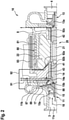
- Fig.2 schematically shows a longitudinal section of a turbomachine 10, in particular for use in a fuel cell system 1.
- the turbomachine 10 has a housing 8 in which the components of the turbomachine 10 are arranged and which is designed in multiple parts.
- the turbomachine 10 is designed as a turbocompressor 10 and has an impeller 15 which is arranged on the shaft 14 and acts as a compressor 11 or compressor.
- the turbomachine 10 optionally has the exhaust gas turbine 13 which comprises a further impeller 13a arranged on the shaft 14 .
- the additional impeller 13a and the impeller 15 are preferably positioned on the opposite ends of the shaft 14 .
- the turbomachine 10 is advantageously arranged in the fuel cell system 1 so that the impeller 15 of the compressor 11 is arranged in the air supply line 3 in order to supply the fuel cell 2 with ambient air or oxidizing agent, and so that the further impeller 13a of the exhaust gas turbine 13 in the Exhaust pipe 4 is arranged.
- the drive device 20 of the turbomachine 10 is designed as an electric motor, is arranged between the compressor 11 and the exhaust gas turbine 13 and includes a rotor 21 and a stator 22 .
- the rotor 21 is also arranged on the shaft 14 .
- the stator 22 is stationarily positioned in the housing 8 of the turbo compressor 10 .
- the shaft 14 is on both sides of the drive device 20 by means of a radial bearing 41, 42 pivoted.
- the drive device 20 is positioned between the two radial bearings 41,42.
- a cooling system 80 is arranged radially surrounding the stator 22 . In the execution of Fig.2 the cooling system 80 has cooling grooves 81 formed in the housing 8, so that a coolant can flow around the stator 22 and cool it effectively.
- the impeller 15 is in the execution of Fig.2 embodied as a radial runner, ie in the case of use as a turbocompressor or compressor 11 the flow is axial and the flow is radial; the oxidizing agent or working fluid thus flows from a compressor inlet 11a to a compressor outlet 11b.
- the impeller 15 has a flow path on its front side 15a which comprises an axial flow end 18 and a radial flow end 17 .
- the direction of a working fluid flowing through the impeller 15 changes by approximately 90° in the sectional view.
- the impeller 15 is axially flowed against by the working fluid at the axial flow end 18 - i.e. at the compressor inlet 11a at the compressor outlet 11b - radially out of the impeller 15.
- a rear wall 89 is arranged as part of the housing 8 opposite to the rear side 15b.
- the rear side 15b is fluidically connected to the radial flow end 17 and, depending on any throttle points, also has the same pressure level.
- the rear wall 89 can also form an axial bearing for the impeller 15 .
- the axial bearing 43 is formed between an axial bearing disk 14a and a stop plate 87.
- the axial bearing disk 14a is arranged on the shaft 14, and the stop plate 87 is arranged on the housing 8 or is designed as a component part of the housing.
- Ventilation bores 88 are formed in the rear wall 89 and lead away from the rear side 15b in the direction of the interior of the turbomachine 10 .
- the back of the wheel or the back 15b of the impeller 15 is ventilated through the ventilation bores 88 in the rear wall 89 .
- this reduces the axial force generated by the compressor 11, as a result of which the power loss occurring in the axial bearing 43 can be reduced.
- the leakage of the oxidizing agent emerging through the ventilation bores 88 is also used to cool the axial bearing 43 formed between the axial bearing disk 14a and the stop plate 87, through which the flow occurs.
- the cooling path from the rear 15b through the vent holes 88 and through the thrust bearing 43 is referred to as wheel back cooling path 91.
- the oxidizing agent expanded at the end of the rear wheel cooling path 91 is led out of the turbomachine 10 or can also be fed back to the axial flow end 18 .
- a further cooling path branches off from the air supply line 3 at the compressor outlet 11b: the drive cooling path 92.
- the drive cooling path 92 part of the oxidizing agent or working fluid is branched off at the compressor outlet 11b in order to cool the drive device 20 and the radial bearings 41, 42 inside the turbomachine 10.
- a heat exchanger 93 is preferably firstly arranged downstream of the compressor outlet 11b in the drive cooling path 92 in order to cool down the compressed and heated working fluid.
- the air compressed by the compressor 11 - or the compressed oxidizing agent - is therefore not completely routed to the fuel cell 2 .
- a small proportion is removed at the compressor outlet 11b and initially cooled via the heat exchanger 93.
- the cooling water of the cooling system 80 which cools the stator 22, is preferably used for this purpose.
- the cooled air—or the cooled oxidizing agent— is then conducted into the housing 8 between the left-hand radial bearing 41 and the stator 22 .
- the first partial path 92b leads into the gap between the shaft 14 and the left-hand radial bearing 41, further past the axial bearing disk 14a and is finally routed out of the housing 8.
- the second partial path 92c leads into the gap between the rotor 21 and the stator, further into the gap between the shaft 14 and the right-hand radial bearing 42 and is routed past the exhaust gas turbine 13 and out of the housing 8.
- the flow routing of the second partial path 92c through the gap between the rotor 21 and the stator 22 and the right-hand radial bearing 42 also results in the advantage that any leakage that occurs—possibly also a moist one—is discharged from the turbomachine 10 .
- the first partial path 92b and the second partial path 92c leave the turbomachine 10 and are fed to the exhaust gas line 4 downstream of the exhaust gas turbine 13, for example.
- the air compressed and thus heated by the compressor 11 is cooled by the heat exchanger 93 and then fed back into the housing 8 to the drive device 20 and the bearing points (radial bearings 41, 42 and axial bearings 43); as a result, the cooling concept of the turbomachine 10 is optimized.
- Multiple partial paths 92b, 92c of the drive cooling path 92 are preferably created in the turbomachine 10 in order to be able to cool each component (radial bearing 41, 42, axial bearing 43, gap between rotor 21 and stator 22) separately.
- These components are located directly in the drive cooling path 92 or in the rear wheel cooling path 91, so the working fluid flows directly against them and they are cooled by means of forced convection, which is very effective.
- the cooling 80 based on heat conduction is thus very well supported, particularly in the gap between the rotor 21 and the stator 22 and in the bearing points, since these positions are relatively far away from the cooling 80 and the heat flow from them to the cooling 80 is therefore rather low .
- the heat exchanger 93 is preferably designed as an air-water heat exchanger, which cools the air in the drive cooling path 92 using the coolant of the cooling system 80 .
- Fig.3 shows a section of a turbomachine 10, the execution of Fig.2 is similar. The differences between the two versions are therefore essentially discussed below.
- the air compressed by the compressor 11 is as in the execution of the Fig.2 not completely led to the fuel cell 2.
- a small proportion is removed and initially cooled via the heat exchanger 93 .
- the cooling water of the cooling system 80 is preferably used to cool the stator 22 .
- the cooled air is then conducted via the drive cooling path 92 into the housing 8 and is divided there at the branching point 92a into the first partial path 92b and the second partial path 92c.
- a further branching point 92d, from which a third partial path 92e branches off, is arranged in the first partial path 92b downstream of the branching point 92a.
- the first partial path 92b leads downstream of the further branching point 92d through the axial bearing 43, the third partial path 92e through the left radial bearing 41.
- the second partial path 92c leads through the right radial bearing 42 and merges with the third partial path 92e in the area of the drive device 20 to be led out of the housing 8 together again.
- the first partial path 92b leaves the housing 8 separately from this a separate partial path 92b, 92c, 92e cooled. After the exit of the partial paths 92b, 92c, 92e from the housing 8, they can preferably be connected to the exhaust gas line 4 downstream of the exhaust gas turbine 13.
- the entire mass flow of the air or the oxidizing agent through the drive cooling path 92 can be controlled by the cooling valve 95, i.e. the sum of the mass flows through the three partial paths 92b, 92c, 92e, with the cooling valve 95 being arranged upstream of these partial paths 92b, 92c, 92e .
- the partial path valve 96 in turn controls the mass flow of the air or the oxidizing agent through the first partial path 92b to the further branching point 92d and is arranged downstream of the axial bearing 43 . This means that when the cooling valve 95 is open and the partial path valve 96 is closed, air or oxidizing agent flows through the two radial bearings 41, 42, but not through the axial bearing 43.
- the two valves 95, 96 can optionally also according to the versions Fig.2 be used to control the mass flows in the drive cooling path 92 or in the partial paths 92b, 92c.
- FIG 4 1 is a schematic representation of the fuel cell system 1 with the turbomachine 10 designed as a turbocompressor according to a first exemplary embodiment.
- the same reference symbols identify the same elements as in the previously described figures.
- the fuel cell system shown has the following differences:
- the drive cooling path 92 branches off at the outlet of the compressor 11 . It can also be provided, as in figure 4 shown and to figure 2 described, on the output side of the compressor 11 , first of all the heat exchanger 93 is provided for cooling the working fluid and the drive cooling path 92 is branched off downstream of the heat exchanger 93 .
- the drive cooling path 92 Before entering the housing 8, the drive cooling path 92 has the cooling valve 95, as is also shown in FIG figure 3 is recognizable. Alternatively, the cooling valve 95 can also be arranged inside the housing 8 . After leaving the housing 8, the drive cooling path 92 opens downstream of the exhaust gas turbine 13 into the exhaust pipe 4, as well as to figure 3 described.
- the cooling valve 95 can, in the simplest case, be designed as a fixed throttle with a predetermined fixed degree of opening, which provides sufficient cooling capacity for the drive device 20 for the most frequently used operating points or operating states of the fuel cell system 1 or the components of the turbomachine 10 guaranteed.
- the cooling mass flow required depends on various factors such as the compressor speed and the compression ratio of the turbomachine 10 and the power of the drive device 20 .
- a higher degree of opening of the cooling valve 95 is set in comparison with the required degree of opening, in order to be on the safe side with regard to the required cooling capacity. Accordingly, the turbomachine 10 is not operated in an optimal manner in terms of efficiency.
- control or regulation of the cooling mass flow by means of a control unit 110 is proposed, in which the throttle characteristic of the drive cooling channel 92 is adapted depending on the operating point or operating state B of the fuel cell system 1 .
- the cooling valve 95 is, for example, an electromagnetic or mechanical proportional valve, embodied, for example, as a bimetallic valve, and thus enables a variable setting of its degree of opening.
- the adaptation of the throttle characteristic of the drive cooling channel 92 to the current operating state or operating point B of the fuel cell system 1 can be carried out, for example, by map-based valve control.
- the current operating state of the fuel cell system 1 is dependent on the compressor speed and compression ratio the turbomachine 10 and the power of the drive device 20 are each assigned a required cooling mass flow and, linked thereto, an assigned degree of opening of the cooling valve 95 . Accordingly, the cooling valve 95 is controlled to set the desired degree of opening. In this way, the minimum cooling mass flow for the required cooling capacity can be set and thus the turbomachine 10 can be operated with optimum efficiency at every operating point or operating state of the fuel cell system.
- the characteristics map is stored in control unit 110 and determined experimentally.
- the current operating state or operating point B of the fuel cell system 1 in the form of the compressor speed and the compression ratio of the turbomachine 10 and the power of the drive device 20 is also available in the control unit 110 or is fed to it by sensors.
- the map-based control of the cooling valve 95 by the control unit 110 is in figure 4 shown dashed.
- the degree of opening of the cooling valve 95 is controlled and, in this regard, controlled by a control unit 100 and thus no longer directly by the control unit 110 .
- the cooling valve 95 can be designed as described for map-based control.
- the control unit 100 in turn receives sensor signals S from a sensor unit 105 .
- the fuel cell 2 in the fuel cell system 1 after figure 4 is shown as a throttle valve in order to illustrate the throttling effect of the fuel cell 2 on the mass flow of the oxidizing agent or working fluid, for example in the form of intake air.
- Control unit 100 now adjusts the degree of opening of cooling valve 95 primarily such that the required cooling effect for cooling drive device 20 or the components of turbomachine 10 is achieved at the respective operating point or operating state B of fuel cell system 1 .
- a temperature sensor 115 is provided in the sensor unit 105, which measures the temperature of the medium in the drive cooling path 92 and thus the temperature of the cooling mass flow. This temperature represents an actual value or an actual temperature, which is fed to control unit 100 via sensor signals S .
- a setpoint value is stored in control unit 100 for the temperature of the medium in drive cooling path 92 .
- the control unit 100 tracks the actual value to the desired value.
- an increase in the degree of opening of the cooling valve 95 leads to an increase in the cooling mass flow and thus to a Temperature reduction of the medium in the drive cooling channel 92.
- a reduction in the degree of opening of the cooling valve 95 leads to a decrease in the cooling mass flow and thus to an increase in temperature of the medium in the drive cooling channel 92.
- the minimum cooling mass flow for the required cooling capacity can be set and thus the turbomachine 10 operate with optimum efficiency at every operating point or operating state of the fuel cell system 1 .
- the temperature of the medium in the drive cooling path 92 is measured by the temperature sensor 115 at the downstream end of the drive cooling path 92, the so-called outlet or exit 125 of the drive cooling path 92, i.e. at a point on the drive cooling path 92 at which the cooling mass flow affects the drive device 20 and the has already passed through cooling components of the turbomachine 10 and has no further cooling function.
- the temperature sensor 115 at the downstream end of the drive cooling path 92
- the so-called outlet or exit 125 of the drive cooling path 92 i.e. at a point on the drive cooling path 92 at which the cooling mass flow affects the drive device 20 and the has already passed through cooling components of the turbomachine 10 and has no further cooling function.
- the exit is 125 in figure 4 shown only schematically.
- the drive cooling path 92 can be divided into several sub-paths 92b, 92c, 92e, which leave the drive device 20 or the components of the turbomachine 10 at different outlets.
- the temperature sensor 115 then measures the temperature of the medium at one of these outlets.
- a temperature sensor can also be arranged at each of the outlets in order to measure the temperature of the medium of the respective partial path 92b, 92c, 92e there.
- the arithmetic mean value of the temperatures measured at the outputs can function as the actual value.
- An experimentally determined value of the temperature at the outlet 125 or, in the case of the partial paths 92b, 92c, 92e described, at the corresponding outputs of these partial paths 92b, 92c, 92e can be used as the desired value for the temperature, also referred to as the desired temperature.
- the experimentally determined value can be selected as a limit value which must not be exceeded at the outlet 125 or at the outlets in order to ensure the operational safety of the drive device 20 or the components of the turbomachine 10 and to protect them from damage.
- the manipulated variable of the control circuit is the throttle position or the degree of opening of the cooling valve 95.
- the control unit 100 therefore prevents the cooling valve 95 from closing completely.
- the turbomachine 10 or the drive device could overheat inside without the temperatures at the outlet of the drive cooling path 92 or, in the case of the sub-paths 92b, 92c, 92e described, at the corresponding outlets of these sub-paths 92b, 92c, 92e change to a relevant degree.
- Signals indicating the set operating state or operating point B of the fuel cell system 1 or of the vehicle driven by the fuel cell system 1 are supplied to the control unit 100 by the control unit 110 of the fuel cell system 1 .
- the control unit 110 can also be the control unit of the vehicle.
- FIG. 1 shows the fuel cell system 1 according to the invention figure 4 no separate bypass channel 150 with a separate bypass valve 5.
- the bypass channel is formed by the drive cooling path 92 .
- drive cooling path 92 also assumes the function of bypass channel 150.
- cooling valve 95 also assumes the function of setting a desired bypass mass flow.
- the cooling valve 95 also assumes the function of the bypass valve 5. The cooling mass flow thus simultaneously assumes the function of the bypass mass flow.
- the control unit 100 controls the cooling valve 95 primarily in such a way that the target temperature required for cooling the drive device 20 and the components of the turbomachine 10 at the outlet 125 of the drive cooling path 92 follows option. In other words, at least the cooling function of the drive cooling path 92 should be guaranteed.
- the control unit 100 On the basis of further supplied sensor signals V, the control unit 100 also determines whether the compressor 11 has reached the pumping state, the so-called compressor pumping. This can lead to the destruction of the compressor 11 and thus to the failure of the fuel cell system 1 and is therefore to be avoided.
- Compressor pumping can be detected in a manner known to those skilled in the art, for example as in DE 10 2012 224 052 A1 described. Operation of the fuel cell 2 at high pressures close to the surge limit above which compressor surge occurs is advantageous and enables the compressor 11 to be operated with high efficiency. It is all the more important to detect and avoid compressor pumping during operation of the fuel cell system 1. The aim is therefore to operate the fuel cell 2 at high pressures and small mass flows of the working fluid. This can be ensured by the bypass function of the drive cooling path 92 .
- cooling valve 95 is controlled by control unit 100 to set a degree of opening in order to set a desired bypass mass flow to avoid compressor surges.
- the actual value of the cooling mass flow at the output 125 is detected at the output 125 of the drive cooling path 92 by means of a mass flow measuring device 120, in the present case, for example, an air mass flow meter.
- the mass flow meter 120 is also part of the sensor unit 105. The actual value of the cooling mass flow is then also communicated to the control unit 100 via the sensor signals S.
- the mass flow measuring device 120 can also be arranged separately from the sensor unit 105 , for example at the upstream end of the drive cooling path 92 in order to measure the actual value of the cooling mass flow before it enters the housing 8 . In this way it is ensured that the entire cooling mass flow is recorded, in particular when the partial paths 92b, 92c, 92e are present, since the entire cooling mass flow branched off downstream of the heat exchanger 93 also contributes to the bypass function of the drive cooling path 92 .
- the desired bypass mass flow or target bypass mass flow can be determined experimentally for different operating states or operating points of the fuel cell system 1 and in a map in the control unit 100 have been filed. It ensures that compressor surges are avoided for the respective operating status.
- the throttle characteristic of the drive cooling path 92 is thus adapted depending on the operating state or operating point B of the fuel cell system 1 .
- control unit 100 determines the target bypass mass flow based on the map and adjusts the actual value for the cooling mass flow to the target bypass mass flow.
- the manipulated variable is the degree of opening of the cooling valve 95.
- the control unit 100 thus carries out both a temperature control and a control of the bypass mass flow.
- control unit 100 is primarily intended to ensure the necessary cooling of drive device 20 and the components of turbomachine 10, the cooling mass flow resulting from the set degree of opening of cooling valve 95 will be at least large enough for the setpoint temperature at outlet 125 of the cooling mass flow to possibility can be met. Due to the superimposed regulation of the bypass mass flow, a resulting cooling mass flow can be set in the drive cooling path 92 that is greater than the mass flow required to set the target value for the temperature of the medium at the output of the drive cooling path 92 . Either the mass flow required for setting the target temperature is set or, if the target bypass mass flow is greater, the target bypass mass flow. In this way, in addition to setting the required cooling effect, avoidance of compressor pumping is also ensured. The mass flow set via the cooling valve 95 ensures both the setting of the target temperature and the bypass mass flow desired to avoid compressor pumping for corresponding pressure limitation.
- control unit 100 can use the received operating state or operating point B of the fuel cell system 1 to recognize whether the fuel cell system 1 is in an operating state in which a flow through the fuel cell 2 with working fluid should be avoided.
- control unit 100 controls the cooling valve 95 to set a degree of opening which leads to a cooling mass flow which may result in the setting of the target temperature for the required cooling of the drive device 20 cooling mass flow exceeded.
- working fluid is prevented from flowing through the fuel cell 2 .
- This can be done, for example, by opening the cooling valve 95 fully.
- Such an operating state is present, for example, when the function of the compressor 11 for supplying air to the fuel cell system 1 is to be tested.
- the point here is to check whether the compressor 11 can provide sufficient pressure and mass flow.
- the flow of working fluid through the fuel cell 2 should also be avoided in order to protect the fuel cell 2 in the event of a possible faulty operation of the compressor 11 .
- This can be achieved by opening the cooling valve 95 fully.
- the mass flow set via the cooling valve 95 ensures both the setting of the setpoint temperature and the bypass mass flow or setpoint bypass mass flow desired for the present operating state or operating point B of the fuel cell system 1 .
- the drive cooling path 92 bypasses the fuel cell 2 , through which the working fluid is normally completely routed, to a certain extent or entirely, since part of the working fluid is diverted downstream of the compressor 11 before entering the fuel cell 2 .
- the compressor 11 can be operated in at least one operating state without conveying working fluid through the fuel cell 2 .
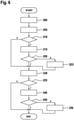
- figure 5 1 shows a flow chart for an exemplary sequence of the described method according to the invention for operating the turbomachine 10 or the fuel cell system 1 with regard to setting the target temperature at the output 125 of the drive cooling path 92 and the target bypass mass flow.
- the method runs in control unit 100 .
- the current operating state or operating point B of the fuel cell system 1 is determined at a program point 200 . Thereafter, a branch is made to a program point 205 .
- the actual temperature at the output 125 of the drive cooling path 92 is received by the control unit 100 on the basis of the sensor signals S and compared with the setpoint temperature. Depending on the difference between the target temperature and the actual temperature, the degree of opening of the cooling valve 95 is adjusted to the actual temperature track the target temperature. A branch is then made to a program point 210 .
- a check is made as to whether the determined operating state B requires a reduction in the mass flow of the working fluid through the fuel cell 2 or even an interruption of this mass flow, for example for the functional test of the compressor 11 described. If this is the case, a branch is made to a program point 215, otherwise a branch is made to a program point 230.
- a first setpoint bypass mass flow is determined in order to implement the required reduction in the mass flow through fuel cell 2.
- a branch is then made to a program point 220 .
- the actual value for the cooling mass flow is received by the control unit 100 based on the sensor signals S and compared with the determined first target bypass mass flow and a check is made as to whether the first target bypass mass flow is less than the actual value for the cooling mass flow. If this is the case, the program branches off to program point 230 and the activation of the cooling valve 95 is retained unchanged. Otherwise, the program branches to a program point 225.
- the degree of opening of the cooling valve 95 is increased in order to track the actual value for the cooling mass flow to the first target bypass mass flow.
- the cooling valve 95 is fully opened. A branch is then made to program point 230.
- a second setpoint bypass mass flow is determined, for example as described, from a map in which the compressor surges at a sufficient distance from the surge limit in what is known as safety mode is avoided. In this case, for safety reasons, operation close to the surge limit is preferably not stopped. A branch is then made to a program point 245 .
- the actual value for the cooling mass flow is received by the control unit 100 based on the sensor signals S and compared with the determined second setpoint bypass mass flow and a check is made as to whether the second setpoint bypass mass flow is smaller than the actual value for the cooling mass flow. If this is the case, the program is exited and the activation of the cooling valve 95 is retained unchanged. Otherwise, a branch is made to a program point 250.
- the degree of opening of the cooling valve 95 is increased in order to track the actual value for the cooling mass flow to the second target bypass mass flow. The program is then exited.
- the drive cooling path 92 does not flow downstream but upstream of the exhaust gas turbine 13 into the exhaust gas line 4.
- the cooling mass flow is thereby returned to the exhaust gas turbine 13, so that the residual energy of the cooling mass flow can be recuperated.
- only lower pressure gradients and mass flows via the drive cooling path 92 are possible.
Landscapes
- Engineering & Computer Science (AREA)
- Mechanical Engineering (AREA)
- General Engineering & Computer Science (AREA)
- Chemical & Material Sciences (AREA)
- Combustion & Propulsion (AREA)
- Physics & Mathematics (AREA)
- Thermal Sciences (AREA)
- Power Engineering (AREA)
- Sustainable Development (AREA)
- Sustainable Energy (AREA)
- Manufacturing & Machinery (AREA)
- Chemical Kinetics & Catalysis (AREA)
- Electrochemistry (AREA)
- General Chemical & Material Sciences (AREA)
- Life Sciences & Earth Sciences (AREA)
- Fluid Mechanics (AREA)
- Fuel Cell (AREA)
- Structures Of Non-Positive Displacement Pumps (AREA)
Description
- Die Erfindung betrifft eine Turbomaschine, insbesondere für ein Brennstoffzellensystem, ein Brennstoffzellensystem mit einer Turbomaschine, ein Verfahren zum Betrieb einer Turbomaschine und ein Verfahren zum Betrieb eines Brennstoffzellensystems.
- Durch die
DE 10 2015 210574 A1 ist eine Turbomaschine für ein Brennstoffzellensystem bekannt, mit einem Verdichter, einer Antriebsvorrichtung und einer Welle bekannt. Der Verdichter weist ein auf der Welle angeordnetes Laufrad, einen Verdichtereingang und einen Verdichterausgang auf, wobei ein Arbeitsfluid vom Verdichtereingang zum Verdichterausgang förderbar ist. Zur Kühlung der Antriebsvorrichtung wird an dem Verdichterausgang ein Antriebskühlpfad abgezweigt. - Durch die
DE 10 2014 224774 A1 und dieEP 3 244 033 A1 ist jeweils ebenfalls eine Turbomaschine bekannt, mit einem Verdichter, einer Antriebsvorrichtung und einer Welle bekannt. Der Verdichter weist ein auf der Welle angeordnetes Laufrad, einen Verdichtereingang und einen Verdichterausgang auf, wobei ein Arbeitsfluid vom Verdichtereingang zum Verdichterausgang förderbar ist. Zur Kühlung der Antriebsvorrichtung wird an dem Verdichterausgang ein Antriebskühlpfad abgezweigt. - Durch die
US 2012/107105 A1 ist eine Turbomaschine bekannt, mit einem Verdichter, einer Antriebsvorrichtung und einer Welle bekannt. Der Verdichter weist ein auf der Welle angeordnetes Laufrad, einen Verdichtereingang und einen Verdichterausgang auf, wobei ein Arbeitsfluid vom Verdichtereingang zum Verdichterausgang förderbar ist. Zur Kühlung der Antriebsvorrichtung wird an dem Verdichterausgang ein Antriebskühlpfad abgezweigt. In dem Antriebskühlpfad ist ein Kühlventil angeordnet und es ist eine Regelungseinheit vorgesehen, die einen Öffnungsgrad des Kühlventils ansteuert, um einen Istwert der Temperatur des Mediums im Antriebskühlpfad, vorzugsweise im Bereich des stromabseitigen Endes des Antriebskühlpfads, einem Sollwert der Temperatur nachzuführen. - Die erfindungsgemäße Turbomaschine hat den Vorteil, dass die Regelungseinheit den Öffnungsgrad des Kühlventils abhängig vom Sollwert für die Temperatur des Mediums im Antriebskühlpfad und abhängig von einem gewünschten Bypassmassenstrom ansteuert. Auf diese Weise lässt sich die Regelung der Temperatur des Kühlmassenstroms bzw. des Mediums im Antriebskühlpfad und die Regelung des Bypassmassenstroms vereinheitlichen und somit die Funktionalität des Kühlventils effizient erhöhen.
- In besonders bevorzugten Ausführungen ist in dem Antriebskühlpfad stromaufwärts der Antriebsvorrichtung ein Wärmetauscher angeordnet. Das verdichtete und damit auch erwärmte Arbeitsfluid wird so vor der zu kühlenden Antriebsvorrichtung abgekühlt, so dass die Kühlung der Antriebsvorrichtung effizienter gestaltet ist.
- In vorteilhaften Ausführungen weist die Antriebsvorrichtung einen Rotor und einen Stator auf. Der Rotor ist dabei auf der Welle angeordnet. Der Antriebskühlpfad führt durch einen Spalt zwischen dem Rotor und dem Stator. Dadurch ist die Kühlung von Rotor und Stator sehr einfach gestaltet. Vorzugsweise ist der Spalt eine Drosselstelle in dem Antriebskühlpfad, so dass die Strömungsgeschwindigkeit des Arbeitsfluids dort besonders hoch ist und mit ihr auch der Wärmeübergangskoeffizient zwischen der Antriebsvorrichtung und dem Arbeitsfluid.
- In vorteilhaften Weiterbildungen ist die Welle mittels zweier Radiallager gelagert, wobei die beiden Radiallager in dem Antriebskühlpfad angeordnet sind. Somit werden zusätzlich zu der Antriebsvorrichtung auch noch die beiden Radiallager wirkungsvoll durch das Arbeitsfluid gekühlt. Bevorzugt sind die beiden Radiallager dabei zu beiden axialen Enden der Antriebsvorrichtung angeordnet.
- Vorteilhafterweise verzweigt sich der Antriebskühlpfad in einen ersten Teilpfad und in einen zweiten Teilpfad. Ein Radiallager ist in dem ersten Teilpfad und ein Radiallager ist in dem zweiten Teilpfad angeordnet. Dadurch ist die Strömungsführung des Arbeitsfluids in dem Antriebskühlpfad innerhalb der Turbomaschine sehr einfach gehalten; auf aufwändige Dichtstellen kann verzichtet werden. Vorzugsweise verzweigt sich der Antriebskühlpfad an der Antriebsvorrichtung in den ersten und zweiten Teilpfad.
- In vorteilhaften Ausführungen ist die Welle mittels eines Axiallagers gelagert, wobei das Axiallager in dem ersten Teilpfad angeordnet ist. Das Axiallager umfasst dabei vorzugsweise eine Axiallagerscheibe. Dadurch wird auch das Axiallager wirkungsvoll gekühlt. Idealerweise sind das Axiallager und ein Radiallager in dem ersten Teilpfad angeordnet und das andere Radiallager sowie der größte Teil der Antriebsvorrichtung in dem zweiten Teilpfad. Dadurch ist keine der beiden Teilpfade durch die aufzunehmende Wärmemenge überlastet.
- In weiteren bevorzugten Ausführungen ist die Welle mittels eines Axiallagers und zumindest eines Radiallagers gelagert. Der Antriebskühlpfad verzweigt sich in einen ersten Teilpfad und in einen zweiten Teilpfad. Das Axiallager ist in dem ersten Teilpfad angeordnet und das Radiallager in dem zweiten Teilpfad. Dadurch werden die beiden Lager wirkungsvoll durch unterschiedliche Teilpfade gekühlt. Weist die Turbomaschine noch ein zweites Radiallager auf, so zweigt vom ersten Teilpfad vorzugsweise noch ein dritter Teilpfad ab, so dass auch das zweite Radiallager von einem eigenen Teilpfad gekühlt wird.
- In vorteilhaften Weiterbildungen ist in dem ersten Teilpfad - bevorzugt stromabwärts des Axiallagers - ein Teilpfadventil angeordnet. Dadurch kann der Massenstrom der Luft bzw. des Oxidationsmittels durch das Axiallager gesteuert werden. Vorzugsweise ist das Teilpfadventil dazu als Proportionalventil ausgeführt. Das Teilpfadventil verteilt letztendlich den Gesamtmassenstrom der Luft bzw. des Oxidationsmittels durch den Antriebskühlpfad auf die einzelnen Teilpfade; die darin angeordneten Komponenten können so bedarfsgerecht optimal gekühlt werden.
- In vorteilhaften Weiterbildungen ist gegenüberliegend zu der Rückseite des Laufrads eine Rückwand als Teil eines Gehäuses der Turbomaschine angeordnet. In der Rückwand sind Entlüftungsbohrungen ausgebildet. Die Entlüftungsbohrungen sind in einem Radrückenkühlpfad der Turbomaschine angeordnet, welcher von dem Verdichterausgang abzweigt. Der Radrückenkühlpfad ist somit neben dem Antriebskühlpfad ein zweiter Kühlpfad, der von dem Verdichterausgang abzweigt. Dadurch kann eine ohnehin vorhandene Leckage des Arbeitsfluids genutzt bzw. ein an der Rückseite entstehender Staudruck des Arbeitsfluids verhindert werden; ganz im Gegenteil: das auf die Rückseite strömende Arbeitsfluid wird zur Kühlung, insbesondere des Axiallagers, herangezogen.
- Dementsprechend führt der Radrückenkühlpfad bevorzugt durch das Axiallager. Beispielsweise kann das Axiallager dazu als eine auf der Welle angeordnete Axiallagerscheibe ausgeführt sein, welche mit einer Anlaufplatte zusammenwirkt. Das Arbeitsfluid strömt dann in den Spalt zwischen Anlaufplatte und Axiallagerscheibe. Die Anlaufplatte ist dabei an dem Gehäuse der Turbomaschine angeordnet bzw. ein Teil des Gehäuses.
- In vorteilhaften Ausführungen ist die Welle mittels zweier Radiallager gelagert. Der Antriebskühlpfad verzweigt sich in einen ersten Teilpfad und in einen zweiten Teilpfad. Ein Radiallager ist in dem ersten Teilpfad und ein Radiallager ist in dem zweiten Teilpfad angeordnet. Der Radrückenkühlpfad mündet in den ersten Teilpfad, vorzugsweise stromaufwärts des Axiallagers. Dadurch wird der Massenstrom in dem ersten Teilpfad erhöht und mit ihm die Kühlwirkung des ersten Teilpfads.
- In vorteilhaften Weiterbildungen ist das Laufrad als Radialläufer ausgeführt. Das Laufrad ist auf seiner Vorderseite von dem Arbeitsfluid entlang eines Strömungspfads durchströmbar. Der Strömungspfad umfasst ein axiales Strömungsende und ein radiales Strömungsende; das axiale Strömungsende entspricht dabei dem Verdichtereingang und das radiale Strömungsende dem Verdichterausgang. Funktionsbedingt treten an dem Laufrad fluidisch resultierende Axialkräfte auf, welche vorzugsweise durch ein Axiallager gelagert werden. Vorzugsweise wird das Axiallager auch durch den Antriebskühlpfad gekühlt.
- In bevorzugten Weiterbildungen ist zusätzlich zu dem Kühlventil das Teilpfadventil in einem der Teilpfade angeordnet, so dass nicht nur der gesamte Massenstrom der Luft bzw. des Oxidationsmittels gesteuert werden kann, sondern auch die Aufteilung des Massenstroms in den Teilpfaden. Dementsprechend ist auch das Teilpfadventil vorzugsweise als Proportionalventil ausgeführt.
- In vorteilhaften Verwendungen ist die Turbomaschine in einem Brennstoffzellensystem angeordnet. Die Turbomaschine ist dazu als Turbokompressor bzw. das Laufrad als Verdichter ausgeführt. Das Brennstoffzellensystem weist eine Brennstoffzelle, eine Luftzuführungsleitung zum Zuführen eines Oxidationsmittels in die Brennstoffzelle und eine Abgasleitung zum Abführen des Oxidationsmittels aus der Brennstoffzelle auf. Der Verdichter ist in der Luftzuführungsleitung angeordnet. Die Luftzuführungsleitung dient dabei der Zuströmung des Arbeitsfluids bzw. Oxidationsmittels in die Brennstoffzelle, und die Abgasleitung dient der Abfuhr des Oxidationsmittels bzw. des reagierten Oxidationsmittels bzw. einem Gemisch daraus aus der Brennstoffzelle. Der Turbokompressor ist gemäß einer der oben beschriebenen Ausführungsformen gestaltet. Vorzugsweise ist das Laufrad dabei als Radialläufer ausgeführt. Als Oxidationsmittel wird bevorzugt die Umgebungsluft verwendet. Die Kühlung möglichst vieler Komponenten der Turbomaschine durch den Antriebskühlpfad erhöht deren Effizienz und Lebensdauer.
- In vorteilhaften Weiterbildungen weist das Brennstoffzellensystem eine Abgasturbine mit einem weiteren Laufrad auf. Das weitere Laufrad ist ebenfalls auf der Welle angeordnet. Die Abgasturbine ist in der Abgasleitung angeordnet. Vorzugsweise ist das weitere Laufrad der Abgasturbine entgegenorientiert zum Laufrad des Turbokompressors angeordnet, so dass sich die jeweils wirksamen resultierenden Axialkräfte auf die beiden Laufräder teilweise kompensieren. Das aus der Brennstoffzelle ausströmende reagierte Arbeitsfluid bzw. Oxidationsmittel kann sehr wirkungsvoll als Leistungsquelle für die Abgasturbine verwendet werden; dadurch wird die benötigte Antriebsleistung der Antriebsvorrichtung für den Turbokompressor reduziert. Vorteilhafterweise ist dabei die Abgasleitung von dem Kühlfluidpfad getrennt, so dass dem Kühlfluidpfad kein aufgeheiztes Medium zugeführt wird.
- Ein Vorteil ergibt sich dadurch, dass der Antriebskühlpfad stromauf der Abgasturbine in die Abgasleitung mündet. Auf diese Weise wird der Kühlmassenstrom auf die Abgasturbine geleitet. Dadurch wird eine Rekuperation der Restenergie des Kühlmassenstroms ermöglicht, so dass Energie beim Betrieb des Verdichters eingespart werden kann.
- Vorteilhaft ist es auch, wenn der Antriebskühlpfad stromab der Abgasturbine in die Abgasleitung mündet. Auf diese Weise wird ein maximales Druckgefälle über den Antriebskühlpfad erzielt, so dass hohe Massenströme über den Antriebskühlpfad ermöglicht werden, die eine größtmögliche Kühlwirkung zur Folge haben, da sie die von den zu kühlenden Komponenten aufgenommene Wärme schnellstmöglich abtransportieren.
- Ein weiterer Vorteil wird durch den davon abhängigen Verfahrensanspruch erzielt, wonach der Öffnungsgrad des Kühlventils von der Regelungseinheit angesteuert wird, um abhängig von einem detektierten Verdichterpumpen einen gewünschten Bypassmassenstrom im Antriebskühlpfad einzustellen, der größer als der zum Einstellen des Sollwertes für die Temperatur des Mediums im Antriebskühlpfad erforderliche Massenstrom ist. Auf diese Weise lassen sich durch den so eingestellten resultierenden Kühlmassenstrom sowohl die ausreichende Kühlung der Antriebsvorrichtung bzw. der Komponenten der Turbomaschine als auch die Vermeidung von Verdichterpumpen sicherstellen. Durch die erfindungsgemäße Ansteuerung des Kühlventils wird somit sichergestellt, dass durch die Zusammenführung des Antriebskühlpfades und des Bypasskanals in einen gemeinsamen Kanal sowohl die Funktion des Antriebskühlpfades als auch jene des Bypasskanals gewährleistet wird.
- Das erfindungsgemäße Verfahren zum Betrieb eines Brennstoffzellensystems mit einer Turbomaschine weist den Vorteil auf, dass der Öffnungsgrad des Kühlventils von der Regelungseinheit angesteuert wird, um abhängig von einem gewünschten Betriebszustand des Brennstoffzellensystems einen gewünschten Bypassmassenstrom im Antriebskühlpfad einzustellen, der größer als der zum Einstellen des Sollwertes für die Temperatur des Mediums im Antriebskühlpfad erforderliche Massenstrom ist. Auf diese Weise lassen sich durch den so eingestellten resultierenden Kühlmassenstrom sowohl die ausreichende Kühlung der Antriebsvorrichtung bzw. der Komponenten der Turbomaschine als auch die Einstellung eines gewünschten Betriebszustandes des Brennstoffzellensystems sicherstellen. Durch die erfindungsgemäße Ansteuerung des Kühlventils wird somit sichergestellt, dass durch die Zusammenführung des Antriebskühlpfades und des Bypasskanals in einen gemeinsamen Kanal sowohl die Funktion des Antriebskühlpfades als auch jene des Bypasskanals gewährleistet wird.
- Das Brennstoffzellensystem kann vorzugsweise dazu eingerichtet sein, eine Antriebsvorrichtung eines Kraftfahrzeugs anzutreiben.
- Weitere optionale Einzelheiten und Merkmale der Erfindung ergeben sich aus der nachfolgenden Beschreibung bevorzugter Ausführungsbeispiele, welche in den Figuren schematisch dargestellt sind.
- Es zeigen:
- Figur 1
- schematisch ein Brennstoffzellensystem mit einer als Turbokompressor ausgeführten Turbomaschine aus dem Stand der Technik,
- Figur 2
- schematisch einen Schnitt durch eine Turbomaschine, wobei nur die wesentlichen Bereiche dargestellt sind,
- Figur 3
- schematisch einen Schnitt durch eine erfindungsgemäße Turbomaschine, wobei nur die wesentlichen Bereiche dargestellt sind
- Figur 4
- schematisch ein Brennstoffzellensystem mit einer als Turbokompressor ausgeführten Turbomaschine gemäß einem ersten Ausführungsbeispiel,
- Figur 5
- schematisch ein Brennstoffzellensystem mit einer als Turbokompressor ausgeführten Turbomaschine gemäß einem zweiten Ausführungsbeispiel und
- Figur 6
- einen Ablaufplan für ein erfindungsgemäßes Verfahren zum Betrieb der Turbomaschine bzw. des Brennstoffzellensystems.
-
Fig.1 zeigt ein aus derDE 10 2012 224 052 A1 bekanntes Brennstoffzellensystem 1. Das Brennstoffzellensystem 1 umfasst eine Brennstoffzelle 2, eine Luftzuführungsleitung 3, eine Abgasleitung 4, einen Verdichter 11, eine Abgasturbine 13, einen Bypasskanal 150 mit einem Bypassventil 5 zur Druckabsenkung und eine nicht näher gezeigte Zuführungsleitung für Brennstoff zu der Brennstoffzelle 2. Das Bypassventil 5 kann beispielsweise eine Regelklappe sein. Als Bypassventil 5 kann beispielsweise ein Wastegate-Ventil eingesetzt werden. - Die Brennstoffzelle 2 ist eine galvanische Zelle, die chemische Reaktionsenergie eines über die nicht gezeigte Brennstoffzuführungsleitung zugeführten Brennstoffes und eines Oxidationsmittels in elektrische Energie wandelt, das bei der hier gezeigten Ausführungsform Ansaugluft ist, die über die Luftzuführungsleitung 3 der Brennstoffzelle 2 zugeführt wird. Der Brennstoff kann vorzugsweise Wasserstoff oder Methan oder Methanol sein. Entsprechend entsteht als Abgas Wasserdampf oder Wasserdampf und Kohlendioxid. Die Brennstoffzelle 2 ist beispielsweise eingerichtet, eine Antriebsvorrichtung eines Kraftfahrzeugs anzutreiben. Beispielsweise treibt die durch die Brennstoffzelle 2 erzeugte elektrische Energie dabei einen Elektromotor des Kraftfahrzeugs an.
- Der Verdichter 11 ist in der Luftzuführungsleitung 3 angeordnet. Die Abgasturbine 13 ist in der Abgasleitung 4 angeordnet. Der Verdichter 11 und die Abgasturbine 13 sind über eine Welle 14 mechanisch verbunden. Die Welle 14 ist von einer Antriebsvorrichtung 20 elektrisch antreibbar. Die Abgasturbine 13 dient der Unterstützung der Antriebsvorrichtung 20 zum Antreiben der Welle 14 bzw. des Verdichters 11. Der Verdichter 11, die Welle 14 und die Abgasturbine 13 bilden zusammen eine Turbomaschine 10.
-
Fig.2 zeigt schematisch einen Längsschnitt einer Turbomaschine 10, insbesondere zur Verwendung in einem Brennstoffzellensystem 1. Die Turbomaschine 10 weist ein Gehäuse 8 auf, in welchem die Komponenten der Turbomaschine 10 angeordnet sind und welches mehrteilig ausgeführt ist. Die Turbomaschine 10 ist in dieser Ausführung als Turbokompressor 10 ausgeführt und weist ein auf der Welle 14 angeordnetes Laufrad 15 auf, welches als Verdichter 11 bzw. Kompressor wirkt. Zusätzlich weist die Turbomaschine 10 optional die Abgasturbine 13 auf, welche ein auf der Welle 14 angeordnetes weiteres Laufrad 13a umfasst. Vorzugsweise sind dabei das weitere Laufrad 13a und das Laufrad 15 auf den entgegengesetzten Enden der Welle 14 positioniert. - Vorteilhafterweise ist die Turbomaschine 10 in dem Brennstoffzellensystem 1 angeordnet, so dass das Laufrad 15 des Verdichters 11 in der Luftzuführungsleitung 3 angeordnet ist, um die Brennstoffzelle 2 mit Umgebungsluft bzw. Oxidationsmittel zu versorgen, und so dass das weitere Laufrad 13a der Abgasturbine 13 in der Abgasleitung 4 angeordnet ist.
- Die Antriebsvorrichtung 20 der Turbomaschine 10 ist als Elektromotor ausgeführt, zwischen dem Verdichter 11 und der Abgasturbine 13 angeordnet und umfasst einen Rotor 21 und einen Stator 22. Der Rotor 21 ist ebenfalls auf der Welle 14 angeordnet. Der Stator 22 ist ortsfest in dem Gehäuse 8 des Turbokompressors 10 positioniert. Die Welle 14 ist zu beiden Seiten der Antriebsvorrichtung 20 mittels je eines Radiallagers 41, 42 drehbar gelagert. Die Antriebsvorrichtung 20 ist zwischen den beiden Radiallagern 41, 42 positioniert. Den Stator 22 radial umgebend ist eine Kühlung 80 angeordnet. In der Ausführung der
Fig.2 weist die Kühlung 80 in dem Gehäuse 8 ausgebildete Kühlnuten 81 auf, so dass ein Kühlmittel den Stator 22 umströmen und wirkungsvoll kühlen kann. - Das Laufrad 15 ist in der Ausführung der
Fig.2 als Radialläufer ausgeführt, wird also im Falle des Einsatzes als Turbokompressor bzw. Verdichter 11 axial angeströmt und strömt radial ab; das Oxidationsmittel bzw. Arbeitsfluid strömt somit von einem Verdichtereingang 11a zu einem Verdichterausgang 11b. Das Laufrad 15 weist dazu auf seiner Vorderseite 15a einen Strömungspfad auf, welcher ein axiales Strömungsende 18 und ein radiales Strömungsende 17 umfasst. Wie bei einem Radialläufer üblich ändert sich die Richtung eines durch das Laufrad 15 strömenden Arbeitsfluids in der Schnittansicht um etwa 90°. Im Falle der Ausführung als Turbokompressor wird das Laufrad 15 am axialen Strömungsende 18 - also am Verdichtereingang 11a - von dem Arbeitsfluid axial angeströmt, das Arbeitsfluid durchläuft dann den Strömungspfad 16 auf der Vorderseite 15a und wird dabei verdichtet und tritt anschließend am radialen Strömungsende 17 - also am Verdichterausgang 11b - radial aus dem Laufrad 15 aus. - Auf der Rückseite 15b des Laufrads 15 ist eine Rückwand 89 als Teil des Gehäuses 8 gegenüberliegend zu der Rückseite 15b angeordnet. Die Rückseite 15b ist fluidisch mit dem radialen Strömungsende 17 verbunden und weist in Abhängigkeit von etwaigen Drosselstellen auch dessen Druckniveau auf. Die Rückwand 89 kann in bevorzugten Ausführungen auch ein Axiallager für das Laufrad 15 ausbilden. In der Ausführung der
Fig.2 ist das Axiallager 43 jedoch zwischen einer Axiallagerscheibe 14a und einer Anlaufplatte 87 ausgebildet. Die Axiallagerscheibe 14a ist auf der Welle 14 angeordnet, und die Anlaufplatte 87 ist an dem Gehäuse 8 angeordnet bzw. als ein Bestandteil des Gehäuses ausgeführt. - In der Rückwand 89 sind Entlüftungsbohrungen 88 ausgebildet, welche von der Rückseite 15b weg in Richtung des Inneren der Turbomaschine 10 führen. Durch die Entlüftungsbohrungen 88 in der Rückwand 89 findet eine Entlüftung des Radrückens bzw. der Rückseite 15b des Laufrads 15 statt. Dadurch sinkt zum einen die vom Verdichter 11 erzeugte Axialkraft, wodurch die im Axiallager 43 auftretende Verlustleistung reduziert werden kann. Die durch die Entlüftungsbohrungen 88 austretende Leckage des Oxidationsmittels wird des Weiteren zur Kühlung des zwischen der Axiallagerscheibe 14a und der Anlaufplatte 87 ausgebildeten Axiallagers 43 verwendet, das durchströmt wird.
- Der Kühlpfad von der Rückseite 15b durch die Entlüftungsbohrungen 88 und durch das Axiallager 43 ist als Radrückenkühlpfad 91 bezeichnet. Das am Ende des Radrückenkühlpfads 91 entspannte Oxidationsmittel wird aus der Turbomaschine 10 herausgeführt, oder kann auch wieder dem axialen Strömungsende 18 zugeführt werden.
- Am Verdichterausgang 11b zweigt ein weiterer Kühlpfad von der Luftzuführungsleitung 3 ab: der Antriebskühlpfad 92. Ein Teil des Oxidationsmittels bzw. Arbeitsfluids wird dazu am Verdichterausgang 11b abgezweigt, um im Inneren der Turbomaschine 10 die Antriebsvorrichtung 20 und die Radiallager 41, 42 zu kühlen. Stromabwärts des Verdichterausgangs 11b ist in dem Antriebskühlpfad 92 bevorzugt jedoch zunächst ein Wärmetauscher 93 angeordnet, um das verdichtete und erhitzte Arbeitsfluid herunter zu kühlen.
- Die vom Verdichter 11 verdichtete Luft - bzw. das verdichtete Oxidationsmittel - wird also nicht vollständig zu der Brennstoffzelle 2 geführt. Ein geringer Anteil wird am Verdichterausgang 11b entnommen und zunächst über den Wärmetauscher 93 gekühlt. Dazu wird bevorzugt das Kühlwasser der Kühlung 80 verwendet, welche den Stator 22 kühlt. Anschließend wird die gekühlte Luft - bzw. das gekühlte Oxidationsmittel - in das Gehäuse 8 zwischen dem linken Radiallager 41 und dem Stator 22 geleitet. Dort verzweigt sich der Massenstrom des Antriebskühlpfads 92 an einem Verzweigungspunkt 92a in einen ersten Teilpfad 92b und einen zweiten Teilpfad 92c.
- Der erste Teilpfad 92b führt nach dem Verzeigungspunkt 92a in den Spalt zwischen der Welle 14 und dem linken Radiallager 41, weiter an der Axiallagerscheibe 14a vorbei und wird schließlich aus dem Gehäuse 8 geleitet. Der zweite Teilpfad 92c führt nach dem Verzeigungspunkt 92a in den Spalt zwischen dem Rotor 21 und dem Stator, weiter in den Spalt zwischen der Welle 14 und dem rechten Radiallager 42 und wird an der Abgasturbine 13 vorbei aus dem Gehäuse 8 geleitet.
- Durch die Strömungsführung des zweiten Teilpfads 92c durch den Spalt zwischen Rotor 21 und Stator 22 sowie das rechte Radiallager 42 ergibt sich des Weiteren der Vorteil, dass eine auftretende - gegebenenfalls auch feuchte - Leckage aus der Turbomaschine 10 abgeführt wird. Der erste Teilpfad 92b und der zweite Teilpfad 92c verlassen nach der Kühlung der Komponenten die Turbomaschine 10 und werden beispielsweise nach der Abgasturbine 13 der Abgasleitung 4 zugeführt.
- Die durch den Verdichter 11 verdichtete und somit erhitzte Luft wird durch den Wärmetauscher 93 abgekühlt und anschließend wieder in das Gehäuse 8 zu der Antriebsvorrichtung 20 und den Lagerstellen (Radiallager 41, 42 und Axiallager 43) zurückgeführt; dadurch ist das Kühlkonzept der Turbomaschine 10 optimiert. Vorzugsweise werden in der Turbomaschine 10 mehrere Teilpfade 92b, 92c des Antriebskühlpfads 92 geschaffen, um möglichst jede Komponente (Radiallager 41, 42, Axiallager 43, Spalt zwischen Rotor 21 und Stator 22) separat kühlen zu können. Diese Komponenten liegen direkt in dem Antriebskühlpfad 92 bzw. in dem Radrückenkühlpfad 91, werden also direkt von dem Arbeitsfluid angeströmt und mittels erzwungener Konvektion gekühlt, was sehr effektiv ist. Die auf Wärmeleitung basierende Kühlung 80 wird so sehr gut unterstützt, insbesondere in dem Spalt zwischen Rotor 21 und Stator 22 sowie in den Lagerstellen, da diese Positionen relativ weit von der Kühlung 80 entfernt liegen und dementsprechend der Wärmefluss von ihnen zur Kühlung 80 eher gering ist.
- Vorzugsweise ist der Wärmetauscher 93 als Luft-Wasser-Wärmetauscher ausgebildet, welcher die Luft in dem Antriebskühlpfad 92 durch das Kühlmittel der Kühlung 80 kühlt.
-
Fig.3 zeigt einen Schnitt einer Turbomaschine 10, die der Ausführung derFig.2 ähnlich ist. Im Folgenden wird daher im Wesentlichen auf die Unterschiede der beiden Ausführungen eingegangen. - Die vom Verdichter 11 verdichtete Luft wird wie in der Ausführung der
Fig.2 nicht vollständig zur Brennstoffzelle 2 geführt. Ein geringer Anteil wird entnommen und zunächst über den Wärmetauscher 93 gekühlt. Dazu wird vorzugsweise das Kühlwasser der Kühlung 80 zur Kühlung des Stators 22 verwendet. Anschließend wird die gekühlte Luft über den Antriebskühlpfad 92 in das Gehäuse 8 geführt und teilt sich dort an dem Verzweigungspunkt 92a in den ersten Teilpfad 92b und den zweiten Teilpfad 92c auf. In dem ersten Teilpfad 92b ist stromabwärts des Verzweigungspunkts 92a ein weiterer Verzweigungspunkt 92d angeordnet, von welchem ein dritter Teilpfad 92e abzweigt. - Der erste Teilpfad 92b führt stromabwärts des weiteren Verzweigungspunkts 92d durch das Axiallager 43, der dritte Teilpfad 92e durch das linke Radiallager 41. Der zweite Teilpfad 92c führt durch das rechte Radiallager 42 und vereinigt sich im Bereich der Antriebsvorrichtung 20 mit dem dritten Teilpfad 92e, um gemeinsam wieder aus dem Gehäuse 8 herausgeführt zu werden. Getrennt davon verlässt der erste Teilpfad 92b das Gehäuse 8. Damit werden alle drei Lager 41, 42, 43 jeweils getrennt voneinander von einem eigenen Teilpfad 92b, 92c, 92e gekühlt. Nach dem Ausgang der Teilpfade 92b, 92c, 92e aus dem Gehäuse 8 können diese bevorzugt an die Abgasleitung 4 stromabwärts der Abgasturbine 13 angebunden werden.
- Zur Abstimmung der Massenströme in den jeweiligen Teilpfaden 92b, 92c, 92e sind in bevorzugten Weiterbildungen Ventile angebracht. Diese können je nach Bedarf einzelne Teilpfade 92b, 92c, 92e drosseln:
- Ein Kühlventil 95 ist stromaufwärts der Teilpfade 92b, 92c, 92e in dem Antriebskühlpfad 92 angeordnet.
- Ein Teilpfadventil 96 ist stromabwärts des Axiallagers 43 in dem ersten Teilpfad 92b angeordnet.
- Durch das Kühlventil 95 kann der gesamte Massenstrom der Luft bzw. des Oxidationsmittels durch den Antriebskühlpfad 92 gesteuert werden, also die Summe der Massenströme durch die drei Teilpfade 92b, 92c, 92e, wobei das Kühlventil 95 stromaufwärts dieser Teilpfade 92b, 92c, 92e angeordnet ist. Das Teilpfadventil 96 wiederum steuert den Massenstrom der Luft bzw. des Oxidationsmittels durch den ersten Teilpfad 92b nach dem weiteren Verzweigungspunkt 92d, und ist stromabwärts des Axiallagers 43 angeordnet. Das heißt bei geöffnetem Kühlventil 95 und geschlossenem Teilpfadventil 96 werden die beiden Radiallager 41, 42 von Luft bzw. Oxidationsmittel durchströmt, nicht aber das Axiallager 43.
- Die beiden Ventile 95, 96 können optional auch entsprechend in den Ausführungen nach
Fig.2 eingesetzt werden, um die Massenströme im Antriebskühlpfad 92 bzw. in den Teilpfaden 92b, 92c zu steuern. - In
Figur 4 ist schematisch das Brennstoffzellensystem 1 mit der als Turbokompressor ausgeführten Turbomaschine 10 gemäß einem ersten Ausführungsbeispiel dargestellt. Dabei kennzeichnen gleiche Bezugszeichen gleiche Elemente wie in den zuvor beschriebenen Figuren. Im Vergleich zum inFigur 1 dargestellten Brennstoffzellensystem ergeben sich die folgenden Unterschiede: Zum einen ist am Ausgang des Verdichters 11 der Antriebskühlpfad 92 abgezweigt. Dabei kann es zusätzlich vorgesehen sein, wie inFigur 4 dargestellt und zuFigur 2 beschrieben, ausgangsseitig des Verdichters 11 zunächst den Wärmetauscher 93 zur Kühlung des Arbeitsfluids vorzusehen und den Antriebskühlpfad 92 stromab des Wärmetauschers 93 abzuzweigen. Vor Eintritt in das Gehäuse 8 weist der Antriebskühlpfad 92 das Kühlventil 95 auf, wie es auch inFigur 3 erkennbar ist. Das Kühlventil 95 kann alternativ auch innerhalb des Gehäuses 8 angeordnet sein. Nach Verlassen des Gehäuses 8 mündet der Antriebskühlpfad 92 stromab der Abgasturbine 13 in die Abgasleitung 4, wie auch zuFigur 3 beschrieben. - Dadurch wird ein maximales Druckgefälle über den Antriebskühlpfad 92 erzielt, so dass hohe Massenströme über den Antriebskühlpfad 92 ermöglicht werden. Da der Antriebskühlpfad 92 als Drosselstelle wirkt, ist ein Druckgefälle über dem Antriebskühlpfad 92 zur Erzeugung des Kühlmassenstroms erforderlich. Der Kühlmassenstrom, der sich im Antriebskühlpfad 92 einstellt ist dabei maßgeblich von dem nach dem Verdichter 11 herrschenden Druck abhängig. Dadurch stellt sich nahe der Pumpgrenze bei entsprechend hohen Drücken am Verdichterausgang 11b der größte Kühlmassenstrom ein und nahe der Stopfgrenze bei entsprechend niedrigen Drücken am Verdichterausgang 11b der geringste Kühlmassenstrom. Zur Anpassung des benötigten Kühlmassenstroms an die Betriebspunkte bzw. Betriebszustände des Brennstoffzellensystems 1 kann das Kühlventil 95 im einfachsten Fall als Festdrossel mit vorgegebenem festen Öffnungsgrad ausgebildet sein, der für die am häufigsten verwendeten Betriebspunkte bzw. Betriebszustände des Brennstoffzellensystems 1 eine ausreichende Kühlleistung für die Antriebsvorrichtung 20 bzw. die Komponenten der Turbomaschine 10 gewährleistet. Der benötigte Kühlmassenstrom hängt dabei von verschiedenen Faktoren wie der Verdichterdrehzahl und dem Verdichtungsverhältnis der Turbomaschine 10 sowie der Leistung der Antriebsvorrichtung 20 ab. Dabei wird im Vergleich zum benötigten Öffnungsgrad ein höherer Öffnungsgrad des Kühlventils 95 fest eingestellt, um im Hinblick auf die erforderliche Kühlleistung auf der sicheren Seite zu sein. Dementsprechend wird die Turbomaschine 10 nicht wirkungsgradoptimal betrieben.
- Deshalb wird erfindungsgemäß eine Steuerung oder Regelung des Kühlmassenstroms mittels einer Steuereinheit 110 vorgeschlagen, bei der die Drosselcharakteristik des Antriebskühlkanals 92 je nach Betriebspunkt bzw. Betriebszustand B des Brennstoffzellensystems 1 angepasst wird. Das Kühlventil 95 ist in diesem Fall beispielsweise ein elektromagnetisches oder mechanisches, beispielsweise als Bimetallventil ausgebildetes, Proportionalventil und ermöglicht somit eine variable Einstellung seines Öffnungsgrades. Die Anpassung der Drosselcharakteristik des Antriebskühlkanals 92 an den aktuellen Betriebszustand oder Betriebspunkt B des Brennstoffzellensystems 1 kann beispielsweise durch eine kennfeldbasierte Ventilsteuerung erfolgen. Dabei ist dem aktuellen Betriebszustand des Brennstoffzellensystems 1 abhängig von Verdichterdrehzahl und Verdichtungsverhältnis der Turbomaschine 10 sowie der Leistung der Antriebsvorrichtung 20 jeweils ein benötigter Kühlmassenstrom und damit verknüpft ein zugeordneter Öffnungsgrad des Kühlventils 95 zugeordnet. Dementsprechend wird das Kühlventil 95 zur Einstellung des gewünschten Öffnungsgrades angesteuert. Auf diese Weise lässt sich der für die erforderliche Kühlleistung minimale Kühlmassenstrom einstellen und somit die Turbomaschine 10 in jedem Betriebspunkt bzw. Betriebszustand des Brennstoffzellensystems wirkungsgradoptimal betreiben.
- Das Kennfeld ist in der Steuereinheit 110 abgelegt und experimentell ermittelt worden. Der aktuelle Betriebszustand oder Betriebspunkt B des Brennstoffzellensystems 1 in Form der Verdichterdrehzahl und des Verdichtungsverhältnisses der Turbomaschine 10 sowie der Leistung der Antriebsvorrichtung 20 liegt in der Steuereinheit 110 ebenfalls vor oder wird ihr mittels Sensorik zugeführt. Die kennfeldbasierte Steuerung des Kühlventils 95 durch die Steuereinheit 110 ist in
Figur 4 gestrichelt dargestellt. - Alternativ wird der Öffnungsgrad des Kühlventils 95 geregelt und diesbezüglich von einer Regelungseinheit 100 und somit nicht mehr direkt von der Steuereinheit 110 angesteuert. Dabei kann das Kühlventil 95 wie auch zur kennfeldbasierten Steuerung beschrieben ausgebildet sein. Der Regelungseinheit 100 wiederum sind von einer Sensoreinheit 105 Sensorsignale S zugeführt. Die Brennstoffzelle 2 im Brennstoffzellensystem 1 nach
Figur 4 ist als Drosselventil dargestellt, um die drosselnde Wirkung der Brennstoffzelle 2 auf den Massenstrom des Oxidationsmittels oder Arbeitsfluids bspw. in Form von Ansaugluft zu verdeutlichen. - Die Regelungseinheit 100 stellt nun den Öffnungsgrad des Kühlventils 95 primär so ein, dass die erforderliche Kühlwirkung zur Kühlung der Antriebsvorrichtung 20 bzw. der Komponenten der Turbomaschine 10 im jeweiligen Betriebspunkt bzw. Betriebszustand B des Brennstoffzellensystems 1 erzielt wird. Dazu ist in der Sensoreinheit 105 ein Temperatursensor 115 vorgesehen, der die Temperatur des Mediums im Antriebskühlpfad 92 und damit die Temperatur des Kühlmassenstroms misst. Diese Temperatur stellt einen Istwert bzw. eine Isttemperatur dar, die der Regelungseinheit 100 über die Sensorsignale S zugeführt wird. Für die Temperatur des Mediums im Antriebskühlpfad 92 ist in der Regelungseinheit 100 ein Sollwert hinterlegt. Durch Ansteuerung des Öffnungsgrades des Kühlventils 95 führt die Regelungseinheit 100 den Istwert dem Sollwert nach. Dabei führt eine Erhöhung des Öffnungsgrades des Kühlventils 95 zu einem Anstieg des Kühlmassenstroms und damit zu einer Temperaturabsenkung des Mediums im Antriebskühlkanal 92. Umgekehrt führt eine Reduzierung des Öffnungsgrades des Kühlventils 95 zu einem Rückgang des Kühlmassenstroms und damit zu einer Temperaturerhöhung des Mediums im Antriebskühlkanal 92. Auf diese Weise lässt sich der für die erforderliche Kühlleistung minimale Kühlmassenstrom einstellen und somit die Turbomaschine 10 in jedem Betriebspunkt bzw. Betriebszustand des Brennstoffzellensystems 1 wirkungsgradoptimal betreiben.
- Vorteilhafterweise und wie in
Figur 4 dargestellt, wird die Temperatur des Mediums im Antriebskühlpfad 92 vom Temperatursensor 115 am stromabseitigen Ende des Antriebskühlpfades 92, dem sogenannten Auslass oder Ausgang 125 des Antriebskühlpfades 92, gemessen, also an einer Stelle des Antriebskühlpfades 92, an der der Kühlmassenstrom die Antriebsvorrichtung 20 und die zu kühlenden Komponenten der Turbomaschine 10 bereits durchlaufen hat und keine weitere Kühlfunktion mehr hat. Auf diese Weise wird bei der beschriebenen Regelung der Temperatur des Antriebskühlpfades 92 die bei der Kühlung aufgenommene Wärme des Kühlmassenstroms vollständig erfasst und mithin die Kühlwirkung vollständig berücksichtigt. Dabei ist der Ausgang 125 inFigur 4 nur schematisch dargestellt. Wie zu denFiguren 2 und3 beschrieben kann der Antriebskühlpfad 92 in mehrere Teilpfade 92b, 92c, 92e aufgeteilt sein, die die Antriebsvorrichtung 20 bzw. die Komponenten der Turbomaschine 10 an verschiedenen Ausgängen verlassen. Der Temperatursensor 115 misst dann die Temperatur des Mediums an einem dieser Ausgänge. Alternativ kann auch an jedem der Ausgänge jeweils ein Temperatursensor angeordnet sein, um die dortige Temperatur des Mediums des jeweiligen Teilpfades 92b, 92c, 92e zu messen. Als Istwert kann in diesem Fall der arithmetische Mittelwert der an den Ausgängen gemessenen Temperaturen fungieren. - Als Sollwert für die Temperatur, auch als Solltemperatur bezeichnet, kann ein experimentell ermittelter Wert der Temperatur am Ausgang 125 oder im Falle der beschriebenen Teilpfade 92b, 92c, 92e an den entsprechenden Ausgängen dieser Teilpfade 92b, 92c, 92e verwendet werden. Dabei kann der experimentell ermittelte Wert als Grenzwert gewählt werden, der am Ausgang 125 bzw. an den Ausgängen nicht überschritten werden darf, um die Betriebssicherheit der Antriebsvorrichtung 20 bzw. der Komponenten der Turbomaschine 10 zu gewährleisten und sie vor Schädigung zu schützen.
- Die Stellgröße des Regelkreises ist dabei die Drosselstellung bzw. der Öffnungsgrad des Kühlventils 95. Um zu gewährleisten, dass die Messstelle des Temperatursensors 115 am Ausgang 125 des Antriebskühlpfades 92 oder im Falle der beschriebenen Teilpfade 92b, 92c, 92e an den entsprechenden Ausgängen dieser Teilpfade 92b, 92c, 92e stets einen für die innere Temperatur der Turbomaschine 10 und der Antriebsvorrichtung 20 repräsentativen Messwert erreicht, muss ein minimaler Kühlmassenstrom im Antriebskühlpfad bzw. im jeweiligen Teilpfad 92b, 92c, 92e immer vorhanden sein. Das vollständige Schließen des Kühlventils 95 wird daher von der Regelungseinheit 100 verhindert. Würde das Kühlventil 95 vollständig schließen, könnte die Turbomaschine 10 oder die Antriebsvorrichtung im Inneren überhitzen, ohne dass sich die Temperaturen am Ausgang des Antriebskühlpfades 92 oder im Falle der beschriebenen Teilpfade 92b, 92c, 92e an den entsprechenden Ausgängen dieser Teilpfade 92b, 92c, 92e in relevantem Maß ändern.
- Der Regelungseinheit 100 werden von der Steuereinheit 110 des Brennstoffzellensystems 1 den eingestellten Betriebszustand oder Betriebspunkt B des Brennstoffzellensystems 1 bzw. des vom Brennstoffzellensystem 1 angetriebenen Fahrzeugs angebende Signale zugeführt. Bei der Steuereinheit 110 kann es sich dabei gleichzeitig auch um die Steuereinheit des Fahrzeugs handeln.
- Im Vergleich zu
Figur 1 weist das erfindungsgemäße Brennstoffzellensystem 1 nachFigur 4 keinen separaten Bypasskanal 150 mit einem separaten Bypassventil 5 auf. Gemäß der erfindungsgemäßen Ausführungsform nachFigur 4 wird der Bypasskanal durch den Antriebskühlpfad 92 gebildet. Mit anderen Worten übernimmt der Antriebskühlpfad 92 zusätzlich zur Kühlung der Antriebsvorrichtung 20 und der Komponenten der Turbomaschine 10 auch die Funktion des Bypasskanals 150. Entsprechend übernimmt das Kühlventil 95 zusätzlich zur Einstellung der Solltemperatur des Kühlmassenstroms am Ausgang 125 des Antriebskühlpfades 92 auch die Funktion der Einstellung eines gewünschten Bypassmassenstroms. Mit anderen Worten übernimmt das Kühlventil 95 zusätzlich die Funktion des Bypassventils 5. Der Kühlmassenstrom nimmt somit gleichzeitig die Funktion des Bypassmassenstroms wahr. - Die Regelungseinheit 100 steuert das Kühlventil 95 primär so an, dass sich die zur Kühlung der Antriebsvorrichtung 20 und der Komponenten der Turbomaschine 10 erforderliche Solltemperatur am Ausgang 125 des Antriebskühlpfades 92 nach Möglichkeit einstellt. Mit anderen Worten soll zumindest die Kühlfunktion des Antriebskühlpfades 92 gewährleistet sein.
- Anhand weiterer zugeführter Sensorsignale V ermittelt die Regelungseinheit 100 zusätzlich, ob der Verdichter 11 in den Pumpzustand gelangt ist, das sogenannte Verdichterpumpen. Dies kann zur Zerstörung des Verdichters 11 und damit zum Ausfall des Brennstoffzellensystems 1 führen und ist daher zu vermeiden. Die Detektion des Verdichterpumpens kann dabei in dem Fachmann bekannter Weise erfolgen, beispielsweise wie in
DE 10 2012 224 052 A1 beschrieben. Ein Betrieb der Brennstoffzelle 2 bei hohen Drücken nahe der Pumpgrenze, ab der sich Verdichterpumpen einstellt, ist vorteilhaft und ermöglicht einen Betrieb des Verdichters 11 bei hohem Wirkungsgrad. Umso wichtiger ist die Detektion und Vermeidung des Verdichterpumpens beim Betrieb des Brennstoffzellensystems 1. Ziel ist somit ein Betrieb der Brennstoffzelle 2 bei hohen Drücken und kleinen Massenströmen des Arbeitsfluids. Dies kann durch die Bypassfunktion des Antriebskühlpfades 92 sichergestellt werden. - Wird also von der Regelungseinheit 100 anhand der empfangenen Sensorsignale V Verdichterpumpen detektiert, so wird das Kühlventil 95 von der Regelungseinheit 100 zur Einstellung eines Öffnungsgrades angesteuert, um einen gewünschten Bypassmassenstrom zur Vermeidung des Verdichterpumpens einzustellen. Dazu wird am Ausgang 125 des Antriebskühlpfades 92 mittels eines Massenstrommessgeräts 120, vorliegend beispielsweise eines Luftmassenmessers, der Istwert des Kühlmassenstroms am Ausgang 125 erfasst. Gemäß dem vorliegenden Beispiel ist das Massenstrommessgerät 120 ebenfalls Teil der Sensoreinheit 105. Der Istwert des Kühlmassenstroms wird dann ebenfalls über die Sensorsignale S der Regelungseinheit 100 mitgeteilt. Das Massenstrommessgerät 120 kann jedoch auch separat von der Sensoreinheit 105 angeordnet sein, beispielsweise am stromaufseitigen Ende des Antriebskühlpfades 92, um den Istwert des Kühlmassenstroms vor dem Eintritt in das Gehäuse 8 zu messen. Auf diese Weise wird sichergestellt, dass der gesamte Kühlmassenstrom erfasst wird, insbesondere bei Vorhandensein der Teilpfade 92b, 92c, 92e, da ja auch der gesamte stromab des Wärmestauschers 93 abgezweigte Kühlmassenstrom zur Bypassfunktion des Antriebskühlpfades 92 beiträgt.
- Der jeweils gewünschte Bypassmassenstrom oder Soll-Bypassmassenstrom kann experimentell für verschiedene Betriebszustände oder Betriebspunkte des Brennstoffzellensystems 1 ermittelt und in einem Kennfeld in der Regelungseinheit 100 abgelegt worden sein. Er gewährleistet für den jeweiligen Betriebszustand die Vermeidung von Verdichterpumpen. Die Drosselcharakteristik des Antriebskühlpfades 92 wird so je nach Betriebszustand bzw. Betriebspunkt B des Brennstoffzellensystems 1 angepasst.
- Die Regelungseinheit 100 bestimmt abhängig vom aktuellen Betriebszustand oder Betriebspunkt B des Brennstoffzellensystems 1 anhand des Kennfeldes den Soll-Bypassmassenstrom und führt den Istwert für den Kühlmassenstrom dem Soll-Bypassmassenstrom nach. Stellgröße ist der Öffnungsgrad des Kühlventils 95.
- Die Regelungseinheit 100 führt somit sowohl eine Temperaturregelung als auch eine Regelung des Bypassmassenstroms durch.
- Da die Regelungseinheit 100 in erster Linie die erforderliche Kühlung der Antriebsvorrichtung 20 und der Komponenten der Turbomaschine 10 gewährleisten soll, wird der aufgrund des eingestellten Öffnungsgrades des Kühlventils 95 sich ergebende Kühlmassenstrom mindestens so groß sein, dass die Soll-Temperatur am Ausgang 125 des Kühlmassenstroms nach Möglichkeit eingehalten werden kann. Durch die überlagerte Regelung des Bypassmassenstroms kann im Antriebskühlpfad 92 ein resultierender Kühlmassenstrom eingestellt werden, der größer als der zum Einstellen des Sollwertes für die Temperatur des Mediums am Ausgang des Antriebskühlpfades 92 erforderliche Massenstrom ist. Entweder wird der für die Einstellung der Solltemperatur erforderliche Massenstrom eingestellt oder, wenn der Soll-Bypassmassenstrom größer ist, der Soll-Bypassmassenstrom. Auf diese Weise wird neben der Einstellung der erforderlichen Kühlwirkung auch das Vermeiden des Verdichterpumpens sichergestellt. Der über das Kühlventil 95 eingestellte Massenstrom stellt sowohl die Einstellung der Solltemperatur als auch des zum Vermeiden des Verdichterpumpens gewünschten Bypassmassenstroms zur entsprechenden Druckbegrenzung sicher.
- Ferner kann die Regelungseinheit 100 anhand des empfangenen Betriebszustandes bzw. Betriebspunktes B des Brennstoffzellensystems 1 erkennen, ob das Brennstoffzellensystem 1 in einem Betriebszustand liegt, in dem ein Durchströmen der Brennstoffzelle 2 mit Arbeitsfluid vermieden werden soll. Auch in diesem Fall steuert die Regelungseinheit 100 das Kühlventil 95 zur Einstellung eines Öffnungsgrades an, der zu einem Kühlmassenstrom führt, der gegebenenfalls den zur Einstellung der Solltemperatur für die erforderliche Kühlung der Antriebsvorrichtung 20 sich ergebenden Kühlmassenstrom überschreitet. Auf diese Weise wird neben der Einstellung der erforderlichen Kühlwirkung auch das Vermeiden eines Durchströmens der Brennstoffzelle 2 mit Arbeitsfluid sichergestellt. Dies kann beispielsweise durch vollständiges Öffnen des Kühlventils 95 erfolgen. Ein solcher Betriebszustand liegt beispielsweise dann vor, wenn die Funktion des Verdichters 11 zur Luftversorgung des Brennstoffzellensystems 1 getestet werden soll. Dabei geht es darum zu prüfen, ob durch den Verdichter 11 ausreichend Druck und Massenstrom bereitgestellt werden kann. Dabei sollte der Durchfluss von Arbeitsfluid durch die Brennstoffzelle 2 auch zum Schutz der Brennstoffzelle 2 im Falle eines eventuellen Fehlbetriebs des Verdichters 11 vermieden werden. Dies kann durch vollständiges Öffnen des Kühlventils 95 erreicht werden. Auch in diesem Fall stellt der über das Kühlventil 95 eingestellte Massenstrom sowohl die Einstellung der Solltemperatur als auch des für den vorliegenden Betriebszustand oder Betriebspunkt B des Brennstoffzellensystems 1 gewünschten Bypassmassenstroms bzw. Soll-Bypassmassenstroms sicher.
- Durch den Antriebskühlpfad 92 wird die Brennstoffzelle 2, durch die das Arbeitsfluid normalerweise vollständig geführt wird, zu einem gewissen Teil oder ganz umgangen, da ein Teil des Arbeitsfluids stromab des Verdichters 11 vor dem Eintritt in die Brennstoffzelle 2 abgezweigt wird. Der Verdichter 11 kann dabei wie beschrieben in mindestens einem Betriebszustand betrieben werden, ohne Arbeitsfluid durch die Brennstoffzelle 2 zu fördern.
- In
Figur 5 ist ein Ablaufplan für einen beispielhaften Ablauf des beschriebenen erfindungsgemäßen Verfahrens zum Betrieb der Turbomaschine 10 bzw. des Brennstoffzellensystems 1 im Hinblick auf die Einstellung der Solltemperatur am Ausgang 125 des Antriebskühlpfades 92 und des Soll-Bypassmassenstroms dargestellt. Das Verfahren läuft in der Regelungseinheit 100 ab. - Nach dem Start des Programms wird bei einem Programmpunkt 200 der aktuelle Betriebszustand oder Betriebspunkt B des Brennstoffzellensystems 1 ermittelt. Danach wird zu einem Programmpunkt 205 verzweigt.
- Bei Programmpunkt 205 wird anhand der Sensorsignale S die Isttemperatur am Ausgang 125 des Antriebskühlpfades 92 von der Regelungseinheit 100 empfangen und mit der Solltemperatur verglichen. Abhängig von der Differenz zwischen Solltemperatur und Isttemperatur wird der Öffnungsgrad des Kühlventils 95 eingestellt, um die Isttemperatur der Solltemperatur nachzuführen. Anschließend wird zu einem Programmpunkt 210 verzweigt.
- Bei Programmpunkt 210 wird geprüft, ob der ermittelte Betriebszustand B eine Absenkung des Massenstroms des Arbeitsfluides durch die Brennstoffzelle 2 oder gar eine Unterbrechung dieses Massenstroms, beispielsweise für den beschriebenen Funktionstest des Verdichters 11 erfordert. Ist dies der Fall, so wird zu einem Programmpunkt 215 verzweigt, andernfalls wird zu einem Programmpunkt 230 verzweigt.
- Bei Programmpunkt 215 wird ein erster Soll-Bypassmassenstrom ermittelt, um die erforderliche Absenkung des Massenstroms durch die Brennstoffzelle 2 zu realisieren. Anschließend wird zu einem Programmpunkt 220 verzweigt.
- Bei Programmpunkt 220 wird anhand der Sensorsignale S der Istwert für den Kühlmassenstrom von der Regelungseinheit 100 empfangen und mit dem ermittelten ersten Soll-Bypassmassenstrom verglichen und geprüft, ob der erste Soll-Bypassmassenstrom kleiner als der Istwert für den Kühlmassenstrom ist. Ist dies der Fall, so wird zu Programmpunkt 230 verzweigt und die Ansteuerung des Kühlventils 95 unverändert beibehalten. Andernfalls wird zu einem Programmpunkt 225 verzweigt.
- Bei Programmpunkt 225 wird der Öffnungsgrad des Kühlventils 95 erhöht, um den Istwert für den Kühlmassenstrom dem ersten Soll-Bypassmassenstrom nachzuführen. Im Beispiel des Funktionstests des Verdichters 11 wird das Kühlventil 95 vollständig geöffnet. Anschließend wird zu Programmpunkt 230 verzweigt.
- Bei Programmpunkt 230 werden die weiteren Sensorsignale V auf das Vorliegen von Verdichterpumpen ausgewertet. Anschließend wird zu einem Programmpunkt 235 verzweigt.
- Bei Programmpunkt 235 wird geprüft, ob Verdichterpumpen vorliegt. Ist dies der Fall, wird zu Programmpunkt 240 verzweigt, andernfalls wird das Programm verlassen und bei fortgesetztem Betrieb des Brennstoffzellensystems 1 erneut durchlaufen.
- Bei Programmpunkt 240 wird ein zweiter Soll-Bypassmassenstrom beispielsweise wie beschrieben aus einem Kennfeld ermittelt, bei dem das Verdichterpumpen bei ausreichendem Abstand zur Pumpgrenze in einem sogenannten Sicherheitsbetrieb vermieden wird. Ein Betrieb nahe der Pumpgrenze wird in diesem Fall aus Sicherheitsgründen vorzugsweise nicht eingestellt. Anschließend wird zu einem Programmpunkt 245 verzweigt.
- Bei Programmpunkt 245 wird anhand der Sensorsignale S der Istwert für den Kühlmassenstrom von der Regelungseinheit 100 empfangen und mit dem ermittelten zweiten Soll-Bypassmassenstrom verglichen und geprüft, ob der zweite Soll-Bypassmassenstrom kleiner als der Istwert für den Kühlmassenstrom ist. Ist dies der Fall, so wird das Programm verlassen und die Ansteuerung des Kühlventils 95 unverändert beibehalten. Andernfalls wird zu einem Programmpunkt 250 verzweigt.
- Bei Programmpunkt 250 wird der Öffnungsgrad des Kühlventils 95 erhöht, um den Istwert für den Kühlmassenstrom dem zweiten Soll-Bypassmassenstrom nachzuführen. Anschließend wird das Programm verlassen.
- Für den Fall, dass auf den separaten Bypasskanal 150 mit dem Bypassventil 5 nicht verzichtet werden soll, kommt für die Ansteuerung des Kühlventils 95 nur die beschriebene kennfeldbasierte Steuerung oder Temperaturregelung in Frage und im Ablaufplan nach
Figur 5 würde das Programm nach Programmschritt 205 verlassen und anschließend bei fortgesetztem Betrieb des Brennstoffzellensystems 1 erneut durchlaufen. - Gemäß einem zweiten Ausführungsbeispiel des Brennstoffzellensystems 1 nach
Figur 5 , wobei gleiche Bezugszeichen gleiche Elemente kennzeichnen wie in den vorherigen Figuren mündet im Unterschied zum ersten Ausführungsbeispiel des Brennstoffzellensystems 1 nachFigur 4 der Antriebskühlpfad 92 nach Verlassen des Gehäuses 8 nicht stromab sondern stromauf der Abgasturbine 13 in die Abgasleitung 4. Dadurch wird der Kühlmassenstrom auf die Abgasturbine 13 zurückgeführt, so dass eine Rekuperation der Restenergie des Kühlmassenstroms ermöglicht wird. Dadurch sind im Vergleich zum ersten Ausführungsbeispiel nachFigur 4 jedoch nur geringere Druckgefälle und Massenströme über den Antriebskühlpfad 92 möglich.
Claims (18)
- Turbomaschine (10), insbesondere für ein Brennstoffzellensystem (1), mit einem Verdichter (11), einer Antriebsvorrichtung (20) und einer Welle (14), wobei der Verdichter (11) ein auf der Welle (14) angeordnetes Laufrad (15), einen Verdichtereingang (11a) und einen Verdichterausgang (11b) aufweist, wobei ein Arbeitsfluid von dem Verdichtereingang (11a) zu dem Verdichterausgang (11b) förderbar ist, wobei an dem Verdichterausgang (11b) ein Antriebskühlpfad (92) zur Kühlung der Antriebsvorrichtung (20) abzweigt, wobei in dem Antriebskühlpfad (92) ein Kühlventil (95) angeordnet ist, wobei eine Regelungseinheit (100) vorgesehen ist, die einen Öffnungsgrad des Kühlventils (95) ansteuert, um einen Istwert der Temperatur des Mediums im Antriebskühlpfad (92), vorzugsweise im Bereich des stromabseitigen Endes des Antriebskühlpfads (92), einem Sollwert der Temperatur nachzuführen, dadurch gekennzeichnet,dass der Antriebskühlpfad (92) einen an dem Verdichterausgang (11b) abzweigenden Bypasskanal (92), insbesondere zur Druckbegrenzung, bildet und dass das Kühlventil (95) ein in dem Bypasskanal (92) angeordnetes Bypassventil (95) bildet,dass die Regelungseinheit (100) den Öffnungsgrad des Kühlventils (95) abhängig vom Sollwert für die Temperatur des Mediums im Antriebskühlpfad (92) und abhängig von einem gewünschten Bypassmassenstrom ansteuert.
- Turbomaschine (10) nach Anspruch 1, dadurch gekennzeichnet, dass in dem Antriebskühlpfad (92) stromaufwärts der Antriebsvorrichtung (20) ein Wärmetauscher (93) angeordnet ist.
- Turbomaschine (10) nach Anspruch 1 oder 2, dadurch gekennzeichnet, dass die Antriebsvorrichtung (20) einen Rotor (21) und einen Stator (22) aufweist, wobei der Rotor (21) auf der Welle (14) angeordnet ist, wobei der Antriebskühlpfad (92) durch einen Spalt zwischen dem Rotor (21) und dem Stator (22) führt.
- Turbomaschine (10) nach einem der Ansprüche 1 bis 3, dadurch gekennzeichnet, dass die Welle (14) mittels zweier Radiallager (41, 42) gelagert ist, wobei die beiden Radiallager (41, 42) in dem Antriebskühlpfad (92) angeordnet sind.
- Turbomaschine (10) nach Anspruch 4, dadurch gekennzeichnet, dass sich der Antriebskühlpfad (92) in einen ersten Teilpfad (92b) und in einen zweiten Teilpfad (92c) verzweigt, wobei ein Radiallager (41) in dem ersten Teilpfad (92b) und ein Radiallager (42) in dem zweiten Teilpfad (92c) angeordnet ist.
- Turbomaschine (10) nach Anspruch 5, dadurch gekennzeichnet, dass die Welle (14) mittels eines Axiallagers (43) gelagert ist, wobei das Axiallager (43) in dem ersten Teilpfad (92b) angeordnet ist.
- Turbomaschine (10) nach einem der Ansprüche 1 bis 4, dadurch gekennzeichnet, dass die Welle (14) mittels eines Axiallagers (43) und zumindest eines Radiallagers (41, 42) gelagert ist, wobei sich der Antriebskühlpfad (92) in einen ersten Teilpfad (92b) und in einen zweiten Teilpfad (92c) verzweigt, wobei das Axiallager (43) in dem ersten Teilpfad (92b) und das Radiallager (41, 42) in dem zweiten Teilpfad (92c) angeordnet ist.
- Turbomaschine (10) nach Anspruch 5 oder 7, dadurch gekennzeichnet, dass in dem ersten Teilpfad (92b) - bevorzugt stromabwärts des Axiallagers (43) - ein Teilpfadventil (96) angeordnet ist.
- Turbomaschine (10) nach einem der Ansprüche 1 bis 8, dadurch gekennzeichnet, dass gegenüberliegend zu einer Rückseite (15b) des Laufrads (15) eine Rückwand (89) als Teil eines Gehäuses (8) der Turbomaschine (10) angeordnet ist, wobei in der Rückwand (89) Entlüftungsbohrungen (88) ausgebildet sind, wobei die Entlüftungsbohrungen (88) in einem Radrückenkühlpfad (91) der Turbomaschine (10) angeordnet sind, welcher von dem Verdichterausgang (11b) abzweigt.
- Turbomaschine (10) nach Anspruch 9, soweit dieser auf einen der Ansprüche 6 bis 8 rückbezogen ist, dadurch gekennzeichnet, dass der Radrückenkühlpfad (91) durch das Axiallager (43) führt.
- Turbomaschine (10) nach Anspruch 9 oder 10, dadurch gekennzeichnet, dass die Welle (14) mittels zweier Radiallager (41, 42) gelagert ist, wobei sich der Antriebskühlpfad (92) in einen ersten Teilpfad (92b) und in einen zweiten Teilpfad (92c) verzweigt, wobei ein Radiallager (41) in dem ersten Teilpfad (92b) und ein Radiallager (42) in dem zweiten Teilpfad (92c) angeordnet ist, wobei der Radrückenkühlpfad (91) in den ersten Teilpfad (92b) mündet.
- Turbomaschine (10) nach einem der Ansprüche 1 bis 11, dadurch gekennzeichnet, dass das Laufrad (15) als Radialläufer ausgeführt ist, wobei das Laufrad (15) auf seiner Vorderseite (15a) von einem Arbeitsfluid entlang eines Strömungspfads (16) durchströmbar ist, wobei der Strömungspfad (16) ein axiales Strömungsende (18) und ein radiales Strömungsende (17) umfasst.
- Brennstoffzellensystem (1) mit einer Brennstoffzelle (2), einer Luftzuführungsleitung (3) zum Zuführen eines Oxidationsmittels in die Brennstoffzelle (2) und einer Abgasleitung (4) zum Abführen des Oxidationsmittels aus der Brennstoffzelle (2), dadurch gekennzeichnet, dass das Brennstoffzellensystem (1) eine Turbomaschine (10) nach einem der Ansprüche 1 bis 12 aufweist, wobei der Verdichter (11) in der Luftzuführungsleitung (3) angeordnet ist.
- Brennstoffzellensystem (1) nach Anspruch 13, wobei das Brennstoffzellensystem (1) eine Abgasturbine (13) mit einem weiteren Laufrad (13a) aufweist, wobei das weitere Laufrad (13a) auf der Welle (14) angeordnet ist, wobei die Abgasturbine (13) in der Abgasleitung (4) angeordnet ist.
- Brennstoffzellensystem (1) nach Anspruch 14, dadurch gekennzeichnet, dass der Antriebskühlpfad (92) stromauf der Abgasturbine (13) in die Abgasleitung (4) mündet.
- Brennstoffzellensystem (1) nach Anspruch 14, dadurch gekennzeichnet, dass der Antriebskühlpfad (92) stromab der Abgasturbine (13) in die Abgasleitung (4) mündet.
- Verfahren zum Betrieb einer Turbomaschine (10) nach einem der Ansprüche 1 bis 12, dadurch gekennzeichnet, dass der Öffnungsgrad des Kühlventils (95) von der Regelungseinheit (100) angesteuert wird, um abhängig von einem detektierten Verdichterpumpen einen gewünschten Bypassmassenstrom im Antriebskühlpfad (92) einzustellen, der größer als der zum Einstellen des Sollwertes für die Temperatur des Mediums im Antriebskühlpfad (92) erforderliche Massenstrom ist.
- Verfahren zum Betrieb eines Brennstoffzellensystems (1) nach einem der Ansprüche 13 bis 16, dadurch gekennzeichnet, dass der Öffnungsgrad des Kühlventils (95) von der Regelungseinheit (100) angesteuert wird, um abhängig von einem gewünschten Betriebszustand des Brennstoffzellensystems (1) einen gewünschten Bypassmassenstrom im Antriebskühlpfad (92) einzustellen, der größer als der zum Einstellen des Sollwertes für die Temperatur des Mediums im Antriebskühlpfad (92) erforderliche Massenstrom ist.
Applications Claiming Priority (2)
| Application Number | Priority Date | Filing Date | Title |
|---|---|---|---|
| DE102018201162.1A DE102018201162A1 (de) | 2018-01-25 | 2018-01-25 | Turbomaschine, insbesondere für ein Brennstoffzellensystem |
| PCT/EP2018/082047 WO2019145065A1 (de) | 2018-01-25 | 2018-11-21 | Turbomaschine, insbesondere für ein brennstoffzellensystem, brennstoffzellensystem, verfahren zum betrieb einer turbomaschine und verfahren zum betrieb eines brennstoffzellensystems |
Publications (2)
| Publication Number | Publication Date |
|---|---|
| EP3743608A1 EP3743608A1 (de) | 2020-12-02 |
| EP3743608B1 true EP3743608B1 (de) | 2022-03-09 |
Family
ID=64477127
Family Applications (1)
| Application Number | Title | Priority Date | Filing Date |
|---|---|---|---|
| EP18808280.4A Active EP3743608B1 (de) | 2018-01-25 | 2018-11-21 | Turbomaschine, insbesondere für ein brennstoffzellensystem, brennstoffzellensystem, verfahren zum betrieb einer turbomaschine und verfahren zum betrieb eines brennstoffzellensystems |
Country Status (7)
| Country | Link |
|---|---|
| US (1) | US11143096B2 (de) |
| EP (1) | EP3743608B1 (de) |
| JP (1) | JP7093422B2 (de) |
| KR (1) | KR102695179B1 (de) |
| CN (1) | CN111670298B (de) |
| DE (1) | DE102018201162A1 (de) |
| WO (1) | WO2019145065A1 (de) |
Cited By (1)
| Publication number | Priority date | Publication date | Assignee | Title |
|---|---|---|---|---|
| WO2026082511A1 (de) * | 2024-10-17 | 2026-04-23 | Robert Bosch Gmbh | Elektrische maschine sowie thermische strömungsmaschine |
Families Citing this family (47)
| Publication number | Priority date | Publication date | Assignee | Title |
|---|---|---|---|---|
| DE102017220855A1 (de) * | 2017-11-22 | 2019-05-23 | Robert Bosch Gmbh | Turbokompressor, insbesondere für ein Brennstoffzellensystem |
| DE102019209958A1 (de) * | 2019-07-05 | 2021-01-07 | Robert Bosch Gmbh | Brennstoffzellensystem und Verfahren |
| DE102019220170A1 (de) * | 2019-12-19 | 2021-06-24 | Robert Bosch Gmbh | Verdichter |
| CN112503025A (zh) | 2020-02-28 | 2021-03-16 | 长城汽车股份有限公司 | 空气压缩机和车辆 |
| US11913473B2 (en) | 2020-03-17 | 2024-02-27 | Garrett Transportation I Inc | Compressor with electric motor coolant jacket having radial and axial portions |
| US11359645B2 (en) * | 2020-03-17 | 2022-06-14 | Garrett Transportation I Inc | Compressor with cooled air passage and liquid coolant passage in axial heat exchanger arrangement |
| DE102020205172A1 (de) * | 2020-04-23 | 2021-10-28 | Robert Bosch Gesellschaft mit beschränkter Haftung | Strömungsmaschine, Verfahren zum Betreiben einer Strömungsmaschine |
| DE102020205280A1 (de) * | 2020-04-27 | 2021-10-28 | Robert Bosch Gesellschaft mit beschränkter Haftung | Brennstoffzellensystem |
| CN111536057A (zh) * | 2020-05-09 | 2020-08-14 | 太原科技大学 | 一种氢燃料涡轮增程器两级压气机 |
| DE102020208917A1 (de) * | 2020-07-16 | 2022-01-20 | Robert Bosch Gesellschaft mit beschränkter Haftung | Verfahren zum Betreiben einer rotierenden Arbeitsmaschine, rotierende Arbeitsmaschine sowie Brennstoffzellensystem mit rotierender Arbeitsmaschine |
| DE102020212605A1 (de) * | 2020-10-06 | 2022-04-07 | Robert Bosch Gesellschaft mit beschränkter Haftung | Radialer Verdichter und Verfahren zum Betreiben eines radialen Verdichters |
| DE102020215751A1 (de) | 2020-12-11 | 2022-06-15 | Robert Bosch Gesellschaft mit beschränkter Haftung | Turbomaschine, insbesondere für ein Brennstoffzellensystem |
| KR102567992B1 (ko) * | 2021-08-09 | 2023-08-18 | 터보윈 주식회사 | 베어링마모요인추력저감보정부가 적용된 공기 압축 수단 |
| US11592027B1 (en) * | 2021-12-02 | 2023-02-28 | Hamilton Sundstrand Corporation | Compressor surge prevention control |
| DE102022202686A1 (de) | 2022-03-18 | 2023-09-21 | Robert Bosch Gesellschaft mit beschränkter Haftung | Elektromotor und Gasfördervorrichtung mit Elektromotor |
| DE102022202888A1 (de) | 2022-03-24 | 2023-09-28 | Robert Bosch Gesellschaft mit beschränkter Haftung | Gaszuführvorrichtung |
| DE102022202892A1 (de) | 2022-03-24 | 2023-09-28 | Robert Bosch Gesellschaft mit beschränkter Haftung | Gaszuführvorrichtung |
| DE102022202899A1 (de) | 2022-03-24 | 2023-09-28 | Robert Bosch Gesellschaft mit beschränkter Haftung | Gaszuführvorrichtung |
| DE102022202886A1 (de) | 2022-03-24 | 2023-09-28 | Robert Bosch Gesellschaft mit beschränkter Haftung | Gaszuführvorrichtung |
| DE102022202889A1 (de) | 2022-03-24 | 2023-09-28 | Robert Bosch Gesellschaft mit beschränkter Haftung | Gaszuführvorrichtung |
| DE102022202887A1 (de) | 2022-03-24 | 2023-09-28 | Robert Bosch Gesellschaft mit beschränkter Haftung | Luftzuführvorrichtung und Motorkühlhülse |
| DE102022202903A1 (de) | 2022-03-24 | 2023-09-28 | Robert Bosch Gesellschaft mit beschränkter Haftung | Gaszuführvorrichtung |
| DE102022204867A1 (de) | 2022-05-17 | 2023-11-23 | Robert Bosch Gesellschaft mit beschränkter Haftung | Gaszuführvorrichtung |
| DE102022204860A1 (de) | 2022-05-17 | 2023-11-23 | Robert Bosch Gesellschaft mit beschränkter Haftung | Gaszuführvorrichtung |
| DE102022113227A1 (de) * | 2022-05-25 | 2023-11-30 | Borgwarner Inc. | Kompressor |
| DE202022104248U1 (de) | 2022-07-27 | 2023-11-02 | Borgwarner Inc. | Aufladevorrichtung mit Axiallager |
| DE102022208881A1 (de) | 2022-08-26 | 2024-02-29 | Robert Bosch Gesellschaft mit beschränkter Haftung | Elektromotor |
| DE102022208880A1 (de) | 2022-08-26 | 2024-02-29 | Robert Bosch Gesellschaft mit beschränkter Haftung | Elektromotor und Verfahren zur Montage eines Isolierelements in dem Elektromotor |
| DE102022210428A1 (de) | 2022-09-30 | 2024-04-04 | Robert Bosch Gesellschaft mit beschränkter Haftung | Gaszuführvorrichtung |
| DE102022210409A1 (de) | 2022-09-30 | 2024-04-04 | Robert Bosch Gesellschaft mit beschränkter Haftung | Gaszuführvorrichtung |
| DE202022106777U1 (de) | 2022-12-02 | 2022-12-21 | Robert Bosch Gesellschaft mit beschränkter Haftung | Gasfördervorrichtung |
| JP2024100453A (ja) * | 2023-01-16 | 2024-07-26 | 株式会社豊田自動織機 | 遠心圧縮機 |
| CN116123064B (zh) * | 2023-02-09 | 2024-05-07 | 广州汽车集团股份有限公司 | 一种燃料电池空压机冷却系统及其控制方法 |
| KR102814874B1 (ko) * | 2023-04-13 | 2025-05-30 | 한국에너지기술연구원 | 냉각 구조를 구비한 콤팬더 |
| DE102023110949A1 (de) * | 2023-04-27 | 2024-10-31 | Zf Cv Systems Global Gmbh | Strömungsmaschine für ein Brennstoffzellensystem mit einem Brennstoffzellenstapel für ein Fahrzeug, insbesondere Nutzfahrzeug, Brennstoffzellensystem und Fahrzeug, insbesondere Nutzfahrzeug |
| DE102023205270A1 (de) | 2023-06-06 | 2024-12-12 | Robert Bosch Gesellschaft mit beschränkter Haftung | Verdichter und Verfahren zum Betreiben eines Verdichters |
| DE102023205268A1 (de) | 2023-06-06 | 2024-12-12 | Robert Bosch Gesellschaft mit beschränkter Haftung | Verdichter und Verfahren zum Betreiben eines Verdichters |
| DE102023205272A1 (de) | 2023-06-06 | 2024-12-12 | Robert Bosch Gesellschaft mit beschränkter Haftung | Verdichter und Verfahren zum Betreiben eines Verdichters |
| DE102023206401A1 (de) | 2023-07-06 | 2025-01-09 | Robert Bosch Gesellschaft mit beschränkter Haftung | Verdichter und Verfahren zum Betreiben eines Verdichters |
| DE102023206404A1 (de) | 2023-07-06 | 2025-01-09 | Robert Bosch Gesellschaft mit beschränkter Haftung | Verdichter und Verfahren zum Betreiben eines Verdichters |
| CN116659109B (zh) * | 2023-07-25 | 2023-10-17 | 浙江科维节能技术股份有限公司 | 合成氨装置用防喘振型氨冷冻系统及其防喘振方法 |
| DE102023122026A1 (de) * | 2023-08-17 | 2025-02-20 | Boge Kompressoren Otto Boge Gmbh & Co. Kg | Turboverdichter |
| DE102023125052A1 (de) * | 2023-09-15 | 2025-03-20 | Pankl Turbosystems GmbH | Gasverdichter mit Druckentlastung für ein Verdichterrad |
| DE102024102694A1 (de) | 2024-01-31 | 2025-07-31 | Ebm-Papst Mulfingen Gmbh & Co. Kg | Gekühltes aerodynamisches Axiallager sowie Turbokompressor mit einem solchen Axiallager |
| DE102024102696A1 (de) * | 2024-01-31 | 2025-07-31 | Ebm-Papst Mulfingen Gmbh & Co. Kg | Aerodynamisches Lager zur axialen und radialen Lagerung einer Welle sowie Turbokompressor mit einem solchen Lager |
| CN118208433A (zh) * | 2024-03-25 | 2024-06-18 | 海德韦尔(太仓)能源科技有限公司 | 一种利用涡端水汽混合废气冷却的空压机系统 |
| DE102024210059A1 (de) | 2024-10-17 | 2026-04-23 | Robert Bosch Gesellschaft mit beschränkter Haftung | Luftführungselement zur lösbaren Befestigung an einem elektrischen Bauteil, Luftführungsanordnung, Verfahren zur Herstellung einer Luftführungsanordnung sowie Verwendung des Luftführungselements |
Citations (1)
| Publication number | Priority date | Publication date | Assignee | Title |
|---|---|---|---|---|
| EP1809875B1 (de) * | 2004-10-19 | 2013-08-14 | Korea Institute of Science and Technology | Mikroleistungserzeugungsvorrichtung |
Family Cites Families (20)
| Publication number | Priority date | Publication date | Assignee | Title |
|---|---|---|---|---|
| US5904471A (en) | 1996-12-20 | 1999-05-18 | Turbodyne Systems, Inc. | Cooling means for a motor-driven centrifugal air compressor |
| US6246138B1 (en) | 1998-12-24 | 2001-06-12 | Honeywell International Inc. | Microturbine cooling system |
| WO2004094833A1 (fr) * | 2003-04-11 | 2004-11-04 | Thermodyn | Groupe moto-compresseur centrifuge |
| JP2007159277A (ja) | 2005-12-06 | 2007-06-21 | Nishishiba Electric Co Ltd | 高速回転機の冷却構造 |
| DE102006052109A1 (de) * | 2006-11-06 | 2008-05-08 | Robert Bosch Gmbh | Fluidspeicher mit Thermomanagement |
| JP5016682B2 (ja) * | 2007-01-19 | 2012-09-05 | ダイムラー・アクチェンゲゼルシャフト | 流体フロー機関 |
| GB0800451D0 (en) * | 2008-01-11 | 2008-02-20 | Cummins Turbo Tech Ltd | A turbomachine system and turbine therefor |
| US20090277400A1 (en) * | 2008-05-06 | 2009-11-12 | Ronald David Conry | Rankine cycle heat recovery methods and devices |
| DE102008044876A1 (de) | 2008-08-29 | 2010-03-04 | Daimler Ag | Luftversorgungseinheit für eine Brennstoffzelle |
| EP2290241A1 (de) * | 2009-07-13 | 2011-03-02 | Siemens Aktiengesellschaft | Turbokompressoreinheit mit einem Kühlsystem |
| DE102010040830B4 (de) * | 2010-09-15 | 2022-07-28 | Robert Bosch Gmbh | Ladereinrichtung sowie Antriebsaggregat |
| DE102011011637A1 (de) * | 2011-02-17 | 2012-09-13 | Voith Patent Gmbh | Antriebsstrang mit aufgeladenem Verbrennungsmotor und Turbocompoundsystem |
| JP5303609B2 (ja) * | 2011-06-22 | 2013-10-02 | 本田技研工業株式会社 | 燃料電池システム |
| DE102012221303A1 (de) | 2012-11-22 | 2014-05-22 | Robert Bosch Gmbh | Antriebseinrichtung mit einer Brennstoffzelle und einem Abgasturbolader |
| DE102012224052B4 (de) | 2012-12-20 | 2024-06-06 | Robert Bosch Gmbh | Verfahren zur Erfassung eines Verdichterpumpens eines elektrisch angetriebenen Verdichters und Brennstoffzellensystem mit einem elektrisch angetriebenen Verdichter und einem Regelgerät zum Durchführen des Verfahrens |
| CN105308289B (zh) * | 2013-06-28 | 2019-03-08 | 博格华纳公司 | 用于燃烧发动机的增压装置 |
| KR101592656B1 (ko) * | 2013-12-30 | 2016-02-18 | 현대자동차주식회사 | 연료전지용 공기공급 장치 및 방법 |
| KR101765583B1 (ko) | 2014-07-29 | 2017-08-07 | 현대자동차 주식회사 | 공기 압축기의 냉각유닛 |
| DE102015210574A1 (de) | 2015-06-09 | 2016-12-15 | Bayerische Motoren Werke Aktiengesellschaft | Oxidationsmittelförderer zur Förderung eines Oxidationsmittels zu mindestens einer Brennstoffzelle sowie Brennstoffzellensystem |
| JP6668161B2 (ja) | 2016-05-11 | 2020-03-18 | 株式会社マーレ フィルターシステムズ | ターボチャージャ |
-
2018
- 2018-01-25 DE DE102018201162.1A patent/DE102018201162A1/de not_active Withdrawn
- 2018-11-21 CN CN201880087636.0A patent/CN111670298B/zh active Active
- 2018-11-21 WO PCT/EP2018/082047 patent/WO2019145065A1/de not_active Ceased
- 2018-11-21 KR KR1020207023973A patent/KR102695179B1/ko active Active
- 2018-11-21 US US16/965,037 patent/US11143096B2/en active Active
- 2018-11-21 EP EP18808280.4A patent/EP3743608B1/de active Active
- 2018-11-21 JP JP2020558683A patent/JP7093422B2/ja active Active
Patent Citations (1)
| Publication number | Priority date | Publication date | Assignee | Title |
|---|---|---|---|---|
| EP1809875B1 (de) * | 2004-10-19 | 2013-08-14 | Korea Institute of Science and Technology | Mikroleistungserzeugungsvorrichtung |
Cited By (1)
| Publication number | Priority date | Publication date | Assignee | Title |
|---|---|---|---|---|
| WO2026082511A1 (de) * | 2024-10-17 | 2026-04-23 | Robert Bosch Gmbh | Elektrische maschine sowie thermische strömungsmaschine |
Also Published As
| Publication number | Publication date |
|---|---|
| EP3743608A1 (de) | 2020-12-02 |
| DE102018201162A1 (de) | 2019-07-25 |
| JP2021511645A (ja) | 2021-05-06 |
| CN111670298A (zh) | 2020-09-15 |
| KR20200109366A (ko) | 2020-09-22 |
| WO2019145065A1 (de) | 2019-08-01 |
| KR102695179B1 (ko) | 2024-08-19 |
| CN111670298B (zh) | 2022-07-29 |
| JP7093422B2 (ja) | 2022-06-29 |
| US20200347780A1 (en) | 2020-11-05 |
| US11143096B2 (en) | 2021-10-12 |
Similar Documents
| Publication | Publication Date | Title |
|---|---|---|
| EP3743608B1 (de) | Turbomaschine, insbesondere für ein brennstoffzellensystem, brennstoffzellensystem, verfahren zum betrieb einer turbomaschine und verfahren zum betrieb eines brennstoffzellensystems | |
| DE102009044003B4 (de) | Verfahren und Vorrichtung zum Temperaturmanagement einer Gasturbinenmaschine | |
| EP2903076B2 (de) | Fahrzeugkühlkreislauf | |
| EP2555978B1 (de) | Kompressor/turbinen-anordnung, klimaaggregat und verfahren zum betreiben einer kompressor/turbinen-anordnung | |
| EP3994753B1 (de) | Brennstoffzellensystem mit luftgekühlter verdichter/turbinen-einheit und verfahren | |
| WO2019101593A1 (de) | Turbokompressor, insbesondere für ein brennstoffzellensystem | |
| WO2021165117A1 (de) | Verfahren zum betreiben eines brennstoffzellensystems, brennstoffzellensystem | |
| DE4104093A1 (de) | Kuehlanlage fuer ein fahrzeug mit verbrennungsmotor | |
| EP0928365B1 (de) | Dampfturbine, dampfturbinenanlage sowie verfahren zur abkühlung einer dampfturbine | |
| DE102013014413A1 (de) | Verfahren zur Druckregelung | |
| WO2017133873A1 (de) | Gasturbine mit axialschubkolben und radiallager | |
| DE102018221531A1 (de) | Verfahren zum Betreiben eines Luftverdichtungssystems für ein Brennstoffzellensystem, Steuergerät zur Durchführung des Verfahrens | |
| WO2020260035A1 (de) | Brennstoffzellensystem mit einer belüftungsleitung und/oder einer verdichterbelüftungsleitung, verfahren zum belüften eines gehäuses eines brennstoffzellensytems sowie kraftfahrzeug | |
| DE102007023685B3 (de) | Stauluftbasiertes Kühl- und Ventilationssystem für ein Luftfahrzeug | |
| DE102012014110A1 (de) | Brennstoffzellensystem | |
| DE102009014590A1 (de) | Brennstoffzellensystem mit wenigstens einer Brennstoffzelle | |
| WO2009127332A1 (de) | Vorrichtung zur luftversorgung | |
| WO2023227370A1 (de) | Verfahren zum starten einer verdichteranordnung eines brennstoffzellensystems | |
| WO2024056731A2 (de) | Verfahren zum starten eines brennstoffzellensystems | |
| WO2014060100A1 (de) | Drehscheibenventil für ein brennstoffzellensystem | |
| DE102022210075A1 (de) | Brennstoffzellensystem, Kraftfahrzeug, Verfahren | |
| DE102012021094A1 (de) | Ventileinrichtung für ein Brennstoffzellensystem | |
| DE102017218081A1 (de) | Vorrichtung und Verfahren zum Betreiben einer Antriebsmaschine | |
| EP2031190B1 (de) | Dampfturbine mit geregelter Kühlmittelzuführung | |
| DE102018205736A1 (de) | Kühlsystem und Verfahren zum Beaufschlagen von wenigstens zwei separaten Fahrzeugbauteilen eines Kraftfahrzeugs mit separaten Kühlluftströmen |
Legal Events
| Date | Code | Title | Description |
|---|---|---|---|
| STAA | Information on the status of an ep patent application or granted ep patent |
Free format text: STATUS: UNKNOWN |
|
| STAA | Information on the status of an ep patent application or granted ep patent |
Free format text: STATUS: THE INTERNATIONAL PUBLICATION HAS BEEN MADE |
|
| PUAI | Public reference made under article 153(3) epc to a published international application that has entered the european phase |
Free format text: ORIGINAL CODE: 0009012 |
|
| STAA | Information on the status of an ep patent application or granted ep patent |
Free format text: STATUS: REQUEST FOR EXAMINATION WAS MADE |
|
| 17P | Request for examination filed |
Effective date: 20200825 |
|
| AK | Designated contracting states |
Kind code of ref document: A1 Designated state(s): AL AT BE BG CH CY CZ DE DK EE ES FI FR GB GR HR HU IE IS IT LI LT LU LV MC MK MT NL NO PL PT RO RS SE SI SK SM TR |
|
| AX | Request for extension of the european patent |
Extension state: BA ME |
|
| DAV | Request for validation of the european patent (deleted) | ||
| DAX | Request for extension of the european patent (deleted) | ||
| GRAP | Despatch of communication of intention to grant a patent |
Free format text: ORIGINAL CODE: EPIDOSNIGR1 |
|
| STAA | Information on the status of an ep patent application or granted ep patent |
Free format text: STATUS: GRANT OF PATENT IS INTENDED |
|
| INTG | Intention to grant announced |
Effective date: 20211005 |
|
| GRAS | Grant fee paid |
Free format text: ORIGINAL CODE: EPIDOSNIGR3 |
|
| GRAA | (expected) grant |
Free format text: ORIGINAL CODE: 0009210 |
|
| STAA | Information on the status of an ep patent application or granted ep patent |
Free format text: STATUS: THE PATENT HAS BEEN GRANTED |
|
| AK | Designated contracting states |
Kind code of ref document: B1 Designated state(s): AL AT BE BG CH CY CZ DE DK EE ES FI FR GB GR HR HU IE IS IT LI LT LU LV MC MK MT NL NO PL PT RO RS SE SI SK SM TR |
|
| REG | Reference to a national code |
Ref country code: CH Ref legal event code: EP Ref country code: AT Ref legal event code: REF Ref document number: 1474327 Country of ref document: AT Kind code of ref document: T Effective date: 20220315 |
|
| REG | Reference to a national code |
Ref country code: DE Ref legal event code: R096 Ref document number: 502018009059 Country of ref document: DE |
|
| REG | Reference to a national code |
Ref country code: IE Ref legal event code: FG4D Free format text: LANGUAGE OF EP DOCUMENT: GERMAN |
|
| REG | Reference to a national code |
Ref country code: LT Ref legal event code: MG9D |
|
| REG | Reference to a national code |
Ref country code: NL Ref legal event code: MP Effective date: 20220309 |
|
| PG25 | Lapsed in a contracting state [announced via postgrant information from national office to epo] |
Ref country code: SE Free format text: LAPSE BECAUSE OF FAILURE TO SUBMIT A TRANSLATION OF THE DESCRIPTION OR TO PAY THE FEE WITHIN THE PRESCRIBED TIME-LIMIT Effective date: 20220309 Ref country code: RS Free format text: LAPSE BECAUSE OF FAILURE TO SUBMIT A TRANSLATION OF THE DESCRIPTION OR TO PAY THE FEE WITHIN THE PRESCRIBED TIME-LIMIT Effective date: 20220309 Ref country code: NO Free format text: LAPSE BECAUSE OF FAILURE TO SUBMIT A TRANSLATION OF THE DESCRIPTION OR TO PAY THE FEE WITHIN THE PRESCRIBED TIME-LIMIT Effective date: 20220609 Ref country code: LT Free format text: LAPSE BECAUSE OF FAILURE TO SUBMIT A TRANSLATION OF THE DESCRIPTION OR TO PAY THE FEE WITHIN THE PRESCRIBED TIME-LIMIT Effective date: 20220309 Ref country code: HR Free format text: LAPSE BECAUSE OF FAILURE TO SUBMIT A TRANSLATION OF THE DESCRIPTION OR TO PAY THE FEE WITHIN THE PRESCRIBED TIME-LIMIT Effective date: 20220309 Ref country code: BG Free format text: LAPSE BECAUSE OF FAILURE TO SUBMIT A TRANSLATION OF THE DESCRIPTION OR TO PAY THE FEE WITHIN THE PRESCRIBED TIME-LIMIT Effective date: 20220609 |
|
| PG25 | Lapsed in a contracting state [announced via postgrant information from national office to epo] |
Ref country code: LV Free format text: LAPSE BECAUSE OF FAILURE TO SUBMIT A TRANSLATION OF THE DESCRIPTION OR TO PAY THE FEE WITHIN THE PRESCRIBED TIME-LIMIT Effective date: 20220309 Ref country code: GR Free format text: LAPSE BECAUSE OF FAILURE TO SUBMIT A TRANSLATION OF THE DESCRIPTION OR TO PAY THE FEE WITHIN THE PRESCRIBED TIME-LIMIT Effective date: 20220610 Ref country code: FI Free format text: LAPSE BECAUSE OF FAILURE TO SUBMIT A TRANSLATION OF THE DESCRIPTION OR TO PAY THE FEE WITHIN THE PRESCRIBED TIME-LIMIT Effective date: 20220309 |
|
| PG25 | Lapsed in a contracting state [announced via postgrant information from national office to epo] |
Ref country code: NL Free format text: LAPSE BECAUSE OF FAILURE TO SUBMIT A TRANSLATION OF THE DESCRIPTION OR TO PAY THE FEE WITHIN THE PRESCRIBED TIME-LIMIT Effective date: 20220309 |
|
| PG25 | Lapsed in a contracting state [announced via postgrant information from national office to epo] |
Ref country code: SM Free format text: LAPSE BECAUSE OF FAILURE TO SUBMIT A TRANSLATION OF THE DESCRIPTION OR TO PAY THE FEE WITHIN THE PRESCRIBED TIME-LIMIT Effective date: 20220309 Ref country code: SK Free format text: LAPSE BECAUSE OF FAILURE TO SUBMIT A TRANSLATION OF THE DESCRIPTION OR TO PAY THE FEE WITHIN THE PRESCRIBED TIME-LIMIT Effective date: 20220309 Ref country code: RO Free format text: LAPSE BECAUSE OF FAILURE TO SUBMIT A TRANSLATION OF THE DESCRIPTION OR TO PAY THE FEE WITHIN THE PRESCRIBED TIME-LIMIT Effective date: 20220309 Ref country code: PT Free format text: LAPSE BECAUSE OF FAILURE TO SUBMIT A TRANSLATION OF THE DESCRIPTION OR TO PAY THE FEE WITHIN THE PRESCRIBED TIME-LIMIT Effective date: 20220711 Ref country code: ES Free format text: LAPSE BECAUSE OF FAILURE TO SUBMIT A TRANSLATION OF THE DESCRIPTION OR TO PAY THE FEE WITHIN THE PRESCRIBED TIME-LIMIT Effective date: 20220309 Ref country code: EE Free format text: LAPSE BECAUSE OF FAILURE TO SUBMIT A TRANSLATION OF THE DESCRIPTION OR TO PAY THE FEE WITHIN THE PRESCRIBED TIME-LIMIT Effective date: 20220309 Ref country code: CZ Free format text: LAPSE BECAUSE OF FAILURE TO SUBMIT A TRANSLATION OF THE DESCRIPTION OR TO PAY THE FEE WITHIN THE PRESCRIBED TIME-LIMIT Effective date: 20220309 |
|
| PG25 | Lapsed in a contracting state [announced via postgrant information from national office to epo] |
Ref country code: PL Free format text: LAPSE BECAUSE OF FAILURE TO SUBMIT A TRANSLATION OF THE DESCRIPTION OR TO PAY THE FEE WITHIN THE PRESCRIBED TIME-LIMIT Effective date: 20220309 Ref country code: IS Free format text: LAPSE BECAUSE OF FAILURE TO SUBMIT A TRANSLATION OF THE DESCRIPTION OR TO PAY THE FEE WITHIN THE PRESCRIBED TIME-LIMIT Effective date: 20220709 Ref country code: AL Free format text: LAPSE BECAUSE OF FAILURE TO SUBMIT A TRANSLATION OF THE DESCRIPTION OR TO PAY THE FEE WITHIN THE PRESCRIBED TIME-LIMIT Effective date: 20220309 |
|
| REG | Reference to a national code |
Ref country code: DE Ref legal event code: R097 Ref document number: 502018009059 Country of ref document: DE |
|
| PLBE | No opposition filed within time limit |
Free format text: ORIGINAL CODE: 0009261 |
|
| STAA | Information on the status of an ep patent application or granted ep patent |
Free format text: STATUS: NO OPPOSITION FILED WITHIN TIME LIMIT |
|
| PG25 | Lapsed in a contracting state [announced via postgrant information from national office to epo] |
Ref country code: DK Free format text: LAPSE BECAUSE OF FAILURE TO SUBMIT A TRANSLATION OF THE DESCRIPTION OR TO PAY THE FEE WITHIN THE PRESCRIBED TIME-LIMIT Effective date: 20220309 |
|
| 26N | No opposition filed |
Effective date: 20221212 |
|
| PG25 | Lapsed in a contracting state [announced via postgrant information from national office to epo] |
Ref country code: SI Free format text: LAPSE BECAUSE OF FAILURE TO SUBMIT A TRANSLATION OF THE DESCRIPTION OR TO PAY THE FEE WITHIN THE PRESCRIBED TIME-LIMIT Effective date: 20220309 |
|
| PG25 | Lapsed in a contracting state [announced via postgrant information from national office to epo] |
Ref country code: MC Free format text: LAPSE BECAUSE OF FAILURE TO SUBMIT A TRANSLATION OF THE DESCRIPTION OR TO PAY THE FEE WITHIN THE PRESCRIBED TIME-LIMIT Effective date: 20220309 |
|
| REG | Reference to a national code |
Ref country code: CH Ref legal event code: PL |
|
| REG | Reference to a national code |
Ref country code: BE Ref legal event code: MM Effective date: 20221130 |
|
| PG25 | Lapsed in a contracting state [announced via postgrant information from national office to epo] |
Ref country code: LI Free format text: LAPSE BECAUSE OF NON-PAYMENT OF DUE FEES Effective date: 20221130 Ref country code: IT Free format text: LAPSE BECAUSE OF FAILURE TO SUBMIT A TRANSLATION OF THE DESCRIPTION OR TO PAY THE FEE WITHIN THE PRESCRIBED TIME-LIMIT Effective date: 20220309 Ref country code: CH Free format text: LAPSE BECAUSE OF NON-PAYMENT OF DUE FEES Effective date: 20221130 |
|
| PG25 | Lapsed in a contracting state [announced via postgrant information from national office to epo] |
Ref country code: LU Free format text: LAPSE BECAUSE OF NON-PAYMENT OF DUE FEES Effective date: 20221121 |
|
| PG25 | Lapsed in a contracting state [announced via postgrant information from national office to epo] |
Ref country code: IE Free format text: LAPSE BECAUSE OF NON-PAYMENT OF DUE FEES Effective date: 20221121 |
|
| PG25 | Lapsed in a contracting state [announced via postgrant information from national office to epo] |
Ref country code: BE Free format text: LAPSE BECAUSE OF NON-PAYMENT OF DUE FEES Effective date: 20221130 |
|
| PG25 | Lapsed in a contracting state [announced via postgrant information from national office to epo] |
Ref country code: CY Free format text: LAPSE BECAUSE OF FAILURE TO SUBMIT A TRANSLATION OF THE DESCRIPTION OR TO PAY THE FEE WITHIN THE PRESCRIBED TIME-LIMIT Effective date: 20220309 |
|
| PG25 | Lapsed in a contracting state [announced via postgrant information from national office to epo] |
Ref country code: MK Free format text: LAPSE BECAUSE OF FAILURE TO SUBMIT A TRANSLATION OF THE DESCRIPTION OR TO PAY THE FEE WITHIN THE PRESCRIBED TIME-LIMIT Effective date: 20220309 Ref country code: HU Free format text: LAPSE BECAUSE OF FAILURE TO SUBMIT A TRANSLATION OF THE DESCRIPTION OR TO PAY THE FEE WITHIN THE PRESCRIBED TIME-LIMIT; INVALID AB INITIO Effective date: 20181121 |
|
| PG25 | Lapsed in a contracting state [announced via postgrant information from national office to epo] |
Ref country code: MT Free format text: LAPSE BECAUSE OF FAILURE TO SUBMIT A TRANSLATION OF THE DESCRIPTION OR TO PAY THE FEE WITHIN THE PRESCRIBED TIME-LIMIT Effective date: 20220309 |
|
| REG | Reference to a national code |
Ref country code: AT Ref legal event code: MM01 Ref document number: 1474327 Country of ref document: AT Kind code of ref document: T Effective date: 20231121 |
|
| PG25 | Lapsed in a contracting state [announced via postgrant information from national office to epo] |
Ref country code: AT Free format text: LAPSE BECAUSE OF NON-PAYMENT OF DUE FEES Effective date: 20231121 |
|
| PG25 | Lapsed in a contracting state [announced via postgrant information from national office to epo] |
Ref country code: AT Free format text: LAPSE BECAUSE OF NON-PAYMENT OF DUE FEES Effective date: 20231121 |
|
| PG25 | Lapsed in a contracting state [announced via postgrant information from national office to epo] |
Ref country code: TR Free format text: LAPSE BECAUSE OF FAILURE TO SUBMIT A TRANSLATION OF THE DESCRIPTION OR TO PAY THE FEE WITHIN THE PRESCRIBED TIME-LIMIT Effective date: 20220309 |
|
| PGFP | Annual fee paid to national office [announced via postgrant information from national office to epo] |
Ref country code: GB Payment date: 20251120 Year of fee payment: 8 |
|
| PGFP | Annual fee paid to national office [announced via postgrant information from national office to epo] |
Ref country code: FR Payment date: 20251125 Year of fee payment: 8 |
|
| PGFP | Annual fee paid to national office [announced via postgrant information from national office to epo] |
Ref country code: DE Payment date: 20260126 Year of fee payment: 8 |
|
| PGFP | Annual fee paid to national office [announced via postgrant information from national office to epo] |
Ref country code: AT Payment date: 20260410 Year of fee payment: 5 |