EP3736587B1 - Verfahren und system zur abschätzung der restnutzungsdauer von lithiumbatterien - Google Patents
Verfahren und system zur abschätzung der restnutzungsdauer von lithiumbatterien Download PDFInfo
- Publication number
- EP3736587B1 EP3736587B1 EP20173525.5A EP20173525A EP3736587B1 EP 3736587 B1 EP3736587 B1 EP 3736587B1 EP 20173525 A EP20173525 A EP 20173525A EP 3736587 B1 EP3736587 B1 EP 3736587B1
- Authority
- EP
- European Patent Office
- Prior art keywords
- battery
- soc
- soh
- revised
- estimation
- Prior art date
- Legal status (The legal status is an assumption and is not a legal conclusion. Google has not performed a legal analysis and makes no representation as to the accuracy of the status listed.)
- Active
Links
Images




Classifications
-
- G—PHYSICS
- G01—MEASURING; TESTING
- G01R—MEASURING ELECTRIC VARIABLES; MEASURING MAGNETIC VARIABLES
- G01R31/00—Arrangements for testing electric properties; Arrangements for locating electric faults; Arrangements for electrical testing characterised by what is being tested not provided for elsewhere
- G01R31/36—Arrangements for testing, measuring or monitoring the electrical condition of accumulators or electric batteries, e.g. capacity or state of charge [SoC]
- G01R31/392—Determining battery ageing or deterioration, e.g. state of health
-
- G—PHYSICS
- G01—MEASURING; TESTING
- G01R—MEASURING ELECTRIC VARIABLES; MEASURING MAGNETIC VARIABLES
- G01R31/00—Arrangements for testing electric properties; Arrangements for locating electric faults; Arrangements for electrical testing characterised by what is being tested not provided for elsewhere
- G01R31/36—Arrangements for testing, measuring or monitoring the electrical condition of accumulators or electric batteries, e.g. capacity or state of charge [SoC]
- G01R31/382—Arrangements for monitoring battery or accumulator variables, e.g. SoC
-
- G—PHYSICS
- G01—MEASURING; TESTING
- G01R—MEASURING ELECTRIC VARIABLES; MEASURING MAGNETIC VARIABLES
- G01R31/00—Arrangements for testing electric properties; Arrangements for locating electric faults; Arrangements for electrical testing characterised by what is being tested not provided for elsewhere
- G01R31/36—Arrangements for testing, measuring or monitoring the electrical condition of accumulators or electric batteries, e.g. capacity or state of charge [SoC]
- G01R31/367—Software therefor, e.g. for battery testing using modelling or look-up tables
-
- G—PHYSICS
- G01—MEASURING; TESTING
- G01R—MEASURING ELECTRIC VARIABLES; MEASURING MAGNETIC VARIABLES
- G01R31/00—Arrangements for testing electric properties; Arrangements for locating electric faults; Arrangements for electrical testing characterised by what is being tested not provided for elsewhere
- G01R31/36—Arrangements for testing, measuring or monitoring the electrical condition of accumulators or electric batteries, e.g. capacity or state of charge [SoC]
- G01R31/382—Arrangements for monitoring battery or accumulator variables, e.g. SoC
- G01R31/3842—Arrangements for monitoring battery or accumulator variables, e.g. SoC combining voltage and current measurements
-
- G—PHYSICS
- G01—MEASURING; TESTING
- G01R—MEASURING ELECTRIC VARIABLES; MEASURING MAGNETIC VARIABLES
- G01R31/00—Arrangements for testing electric properties; Arrangements for locating electric faults; Arrangements for electrical testing characterised by what is being tested not provided for elsewhere
- G01R31/36—Arrangements for testing, measuring or monitoring the electrical condition of accumulators or electric batteries, e.g. capacity or state of charge [SoC]
- G01R31/385—Arrangements for measuring battery or accumulator variables
-
- Y—GENERAL TAGGING OF NEW TECHNOLOGICAL DEVELOPMENTS; GENERAL TAGGING OF CROSS-SECTIONAL TECHNOLOGIES SPANNING OVER SEVERAL SECTIONS OF THE IPC; TECHNICAL SUBJECTS COVERED BY FORMER USPC CROSS-REFERENCE ART COLLECTIONS [XRACs] AND DIGESTS
- Y02—TECHNOLOGIES OR APPLICATIONS FOR MITIGATION OR ADAPTATION AGAINST CLIMATE CHANGE
- Y02E—REDUCTION OF GREENHOUSE GAS [GHG] EMISSIONS, RELATED TO ENERGY GENERATION, TRANSMISSION OR DISTRIBUTION
- Y02E60/00—Enabling technologies; Technologies with a potential or indirect contribution to GHG emissions mitigation
- Y02E60/10—Energy storage using batteries
Definitions
- the disclosure herein generally relates to the field of estimation of remaining useful life (RUL) in lithium based batteries, and, more particularly, to estimation of remaining useful life in lithium based batteries based on a coupled estimation of a state of charge (SOC) and a state of health (SOH).
- SOC state of charge
- SOH state of health
- Lithium based battery is one of the most sought out key storage systems for technologies in several applications including new electric vehicles.
- Lithium based batteries are highly in demand due to its high energy density, long cycle life and along with advantages of low self-discharge rate.
- Considering the high demand for lithium based batteries technology it is necessary to improve reliability and safety of the lithium based batteries.
- monitoring the performance of a lithium battery has become an important area of research, wherein one of the key monitoring techniques is by estimation of a Remaining Useful Life (RUL).
- RUL Remaining Useful Life
- Remaining Useful Life (RUL) of lithium based batteries can be estimated/characterized in several ways, of which estimation of state of charge (SOC) and state of health (SOH) are very popular.
- the existing RUL estimation techniques based on individual estimation of SOC and SOH utilize data analysis techniques or machine learning techniques or equivalent circuit models wherein historical data of lithium battery charging and discharging is utilized, which are not very accurate as do not consider the influence of inter-dependency of SOC and SOH on each other or other internal factors such as Solid-Electrolyte Interphase (SEI) formation nor external factors like operating conditions are considered while estimation of SOC or estimation of SOH.
- SEI Solid-Electrolyte Interphase
- the existing physics based electrochemical models are computationally expensive to perform calculations in real time.
- OCV open-circuit-voltage
- ECM equivalent circuit model
- a current-integration estimation unit estimates the SOC of a battery by integrating the value of the current flowing through the battery.
- An open-circuit voltage estimation unit estimates the open-circuit voltage value of the battery from a value that includes at least the measured voltage value of the battery and indicates the state of the battery, and identifies the SOC corresponding to the open-circuit voltage value.
- the SOC determination unit employs the SOC estimated by the open-circuit voltage estimation unit.
- the SOC determination unit employs the SOC estimated by current-integration estimation unit without change or after correction using the SOC estimated by open-circuit voltage estimation unit.
- SOH estimation unit estimates the SOH of the battery based on the variation value of the SOC employed by SOC determination unit and the integrated current value in the time period required for the variation.
- US 2011/0054816 A1 discloses a method of estimating the internal state of an electrochemical system by a zero-dimensional (0D) electrochemical mathematical model for estimating the characteristics of a battery that are not directly measurable during operation thereof.
- the most significant internal characteristics are the state of charge (SoC), the state of health (SoH) and the thermal state (T). Reconstruction of the internal characteristics is achieved using a mathematical model of the battery.
- the method can be used with the operation of the battery itself (real time) with a concentrated-parameter (0D) or off-line mathematical model, for calibration, an optimization or a validation of management and estimation strategies.
- the method allows simulation of the thermal and electrical behavior of a battery.
- the method according to the invention can also be useful for battery dimensioning and for optimization of the energy and thermal management strategies as a function of the desired application.
- Embodiments of the present disclosure present technological improvements as solutions to one or more of the above-mentioned technical problems recognized by the inventors in conventional systems.
- a method for estimation of remaining useful life in lithium based batteries is defined in the independent claim 1.
- Another embodiment provides a non-transitory computer-readable medium, as defined in claim 11, to cause the system of the invention to execute the steps of the method of the invention. Additionally, the description and drawings present further examples, aspects, non-claimed embodiments, and exemplary embodiments for the better understanding of the embodiments defined by the appended claims.
- FIG. 1 through FIG.11 where similar reference characters denote corresponding features consistently throughout the figures, there are shown preferred embodiments and these embodiments are described in the context of the following exemplary system and/or method.
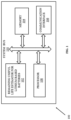
- FIG.1 is a block diagram of a system (100) for estimation of remaining useful life (RUL) of lithium based batteries, in accordance with an example embodiment.
- the system (100) includes a remaining useful life estimator for lithium based batteries (102) for estimation of remaining useful life in lithium based batteries.
- the remaining useful life estimator for lithium based batteries (102) includes or is otherwise in communication with a memory (104), a communication interface (106), and a processor (108).
- the memory (104), the communication interface (106) and the processor (108) may be coupled by a system bus (110) or a similar mechanism.
- FIG. 1 shows example components of remaining useful life estimator for lithium based batteries (102), in other implementations, the system (100) may contain fewer components, additional components, different components, or differently arranged components than depicted in FIG. 1 .
- the processor (108) may be implemented as one or more microprocessors, microcomputers, microcontrollers, digital signal processors, central processing units, state machines, logic circuitries, and/or any devices that facilitates in designing polymeric carrier for controlled release of molecules. Further, the processor (108) may comprise a multi-core architecture. Among other capabilities, the processor (108) is configured to fetch and execute computer-readable instructions or modules stored in the memory (104). The processor (108) may include circuitry implementing, among others, audio and logic functions associated with the communication.
- the processor (108) may include, but are not limited to, one or more digital signal processors (DSPs), one or more microprocessor, one or more special-purpose computer chips, one or more field-programmable gate arrays (FPGAs), one or more application-specific integrated circuits (ASICs), one or more computer(s), various analog to digital converters, digital to analog converters, and/or other support circuits.
- DSPs digital signal processors
- FPGAs field-programmable gate arrays
- ASICs application-specific integrated circuits
- the processor (108) thus may also include the functionality to encode messages and/or data or information.
- the processor (108) may include, among other things, a clock, an arithmetic logic unit (ALU) and logic gates configured to support operation of the processor (108). Further, the processor (108) may include functionality to execute one or more software programs, which may be stored in the memory (104) or otherwise accessible to the processor (108).
- ALU arithmetic logic unit
- the memory (104), may store any number of pieces of information, and data, used by the system (100) to implement the functions of the system (100).
- the memory (104) may include any computer-readable medium known in the art including, for example, volatile memory, such as static random access memory (SRAM) and dynamic random access memory (DRAM), and/or non-volatile memory, such as read only memory (ROM), erasable programmable ROM, flash memories, hard disks, optical disks, and magnetic tapes. Examples of volatile memory may include but are not limited to volatile random access memory (RAM).
- the non-volatile memory may additionally or alternatively comprise an electrically erasable programmable read only memory (EEPROM), flash memory, hard drive, or the like.
- EEPROM electrically erasable programmable read only memory
- the memory 104 may be configured to store information, data, applications, instructions or the like for enabling the system (100) to carry out various functions in accordance with various example embodiments. Additionally or alternatively, the memory (104) may be configured to store instructions which when executed by the processor (108) causes the system (100) to behave in a manner as described in various embodiments.
- the communication interface(s) (106) can facilitate multiple communications within a wide variety of networks and protocol types, including wired networks, for example, local area network (LAN), cable, etc., and wireless networks, such as Wireless LAN (WLAN), cellular, or satellite.
- the communication interface (s) (106) may include one or more ports.
- One or more functionalities of the system (100) and components thereof, is further explained in detail with respect to block diagram described in FIG.2 .
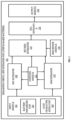
- FIG.2 is a block diagram of various modules of remaining useful life estimator for lithium based batteries (102) for estimation of remaining useful life in lithium based batteries of the system 100 of FIG. 1 in accordance with an embodiment of the present disclosure.
- the FIG.2 illustrates the functions of the components of remaining useful life estimator for lithium based batteries (102) of the system (100).
- the system (100) including the useful life estimator for lithium based batteries (102), comprises an input module (202), that further comprises a battery parameter unit (204) and a load characteristics unit (206), and is configured for receiving, by one or more hardware processors , a plurality of battery information of a lithium based battery from a plurality of sources.
- the system (100) further comprises a SOC estimator (208) configured for estimating a basic state of charge (SOC) for the lithium based battery during charging/discharging in constant current (CC) and constant voltage (CV) mode based on a reduced order physics based modelling technique, using the battery parameters and the load characteristics.
- the system (100) further comprises a SOH estimator (210) configured for estimating a basic state of health (SOH) for the lithium based battery during charging/discharging in constant current (CC) and constant voltage (CV) modes, depending on a solid electrolyte interphase (SEI) formation using the battery parameters and the load characteristics based on a solvent diffusion theory technique.
- SOC estimator configured for estimating a basic state of charge (SOC) for the lithium based battery during charging/discharging in constant current (CC) and constant voltage (CV) mode based on a reduced order physics based modelling technique, using the battery parameters and the load characteristics.
- the system (100) further comprises a SOH estimator (210) configured
- the system (100) further comprises a coupling module (210) configured for iteratively revising the battery parameters based on a SOC-SOH coupled estimation technique, wherein the battery parameters are iteratively revised for each cycle based on iteratively coupling the estimated basic SOC and the estimated basic SOH and for iteratively revising the battery parameters based on the SOC-SOH coupled estimation technique, wherein the battery parameters are iteratively revised for each cycle based on iteratively coupling the estimated revised SOC and the estimated revised SOH.
- a coupling module (210) configured for iteratively revising the battery parameters based on a SOC-SOH coupled estimation technique, wherein the battery parameters are iteratively revised for each cycle based on iteratively coupling the estimated basic SOC and the estimated basic SOH and for iteratively revising the battery parameters based on the SOC-SOH coupled estimation technique.
- the system (100) further comprises a revised estimator (214) configured for estimating a revised SOC and a revised SOH from the basic SOC and the basic SOH respectively using a correlation technique and a filtering technique based on a dynamic data received from a plurality of battery management system (BMS) sensors (216), wherein the BMS sensors are configured for sharing the dynamic data that comprises of real time environment data that include a voltage sensor measurement and a current sensor measurement.
- the system (100) further comprises a RUL estimator (218) estimating a remaining useful life (RUL) for the lithium based batteries using the revised SOC and the revised SOH.
- the system (100) further comprises a display module (220) is configured for displaying the estimated remaining useful life (RUL) for the lithium based batteries.
- the various modules of the system (100) for estimation of remaining useful life in lithium based batteries are implemented as at least one of a logically self-contained part of a software program, a self-contained hardware component, and/or, a self-contained hardware component with a logically self-contained part of a software program embedded into each of the hardware component that when executed perform the above method described herein.
- the system (100) for estimation of remaining useful life in lithium based batteries comprises the input module (202) that is configured for receiving, by one or more hardware processors, a plurality of battery information of a lithium based battery from a plurality of sources.
- the input module (202) further comprises a battery parameter unit (204) and a load characteristics unit (206), wherein the battery parameter unit (204) is configured for the receiving a plurality of battery parameters and the load characteristics unit (206) is configured for receiving a plurality of load characteristics.
- the plurality of sources includes a user, an existing literature on battery material properties or a battery manufacturer.
- the battery parameters that are received from a user using the battery parameter unit (204) of the input module (202) includes a plurality of geometrical properties, a plurality of physical properties of various chemicals inside the battery, a plurality of properties of the products formed in the side reactions that leads to formation of a solid electrolyte interphase (SEI) and a plurality of electrochemical reaction related properties.
- the battery parameters further includes a molecular mass of SEI m s , density of the SEI ( ⁇ S ), a solvent diffusivity in the SEI layer ( D S ) and a rate constant of the SEI layer formation ( k S ).
- the geometrical properties are defined for a set of parameters that include of an anode, a cathode, a separator, and comprise of a set of dimensions and a porosity parameter.
- the physical properties of various chemicals within the battery includes a set of diffusivities (of Lithium in anode D sn , cathode D sp and electrolyte D e ), a set of ionic conductivities in electrolyte ( ⁇ eff , ⁇ D eff ) and a solid ( ⁇ eff ), transference numbers t 0 ,
- the battery parameter also include the set of electrochemical reaction related properties that comprise reaction constants( j 0 ), Butler-Volmer coefficients ( ⁇ a , ⁇ c ).
- the input parameters also include few other battery parameter related properties that include a Stoichiometric Li concentrations in positive ( ⁇ p 0 , ⁇ ⁇ 100 ) and negative electrodes ( ⁇ n 0 , ⁇ n 100 ) and maximum Li concentrations in positive ( c pmax ) and negative electrodes ( c nmax ) .
- the load characteristics received from the user using the load characteristics unit (206) of the input module (202) comprises of the charge/discharge characteristics of the lithium battery within a given time interval in constant current (CC) mode and constant voltage (CV) mode.
- two modes are considered that include constant current (CC) mode and constant voltage (CV) mode wherein the constant current (CC) mode is a constant value of current is drawn from the lithium battery, which is positive/negative depending on whether the lithium battery is discharging/charging respectively.
- the constant voltage (CV) mode in which the battery is charged such that the voltage across it is kept constant.
- the current is specified as a summation of multiple constant current modes over smaller intervals.
- the system (100) described here works when the lithium based battery is discharged over several CC modes and charged in any combination of the hybrid CC-CV mode.
- the system (100) for estimation of remaining useful life in lithium based batteries comprises the SOC estimator (208) configured for estimating a basic state of charge (SOC) for the lithium based battery during charging/discharging in constant current (CC) and constant voltage (CV) mode based on a reduced order physics based modelling technique, using the battery parameters and the load characteristics
- the reduced order physics based modelling technique is based on at least one of the electrochemical models that include a pseudo two dimensional (P2D) model using single particle assumption.
- P2D pseudo two dimensional
- the disclosed reduced order physics based model is based on governing equations of the pseudo two dimensional (P2D) electrochemical model using model order reduction techniques that include spatial averaging, treating each electrode as a single particle.
- the equations of the P2D model consist of governing equations includes a electrolyte concentration ( c e ), a solid concentration ( c sp , c sn ), a current conservation, a Butler-Volmer reaction kinetics, the disclosed methodology to obtain the reduced order physics based model equations from the P2D model is described in further sentences.
- the electrolyte concentration is a constant along the battery width coordinate x wherein a solid and a electrolyte potentials, ⁇ s and ⁇ e respectively is solved analytically.
- the solid concentration equation is discretized in the radial domain to convert a Partial Differential Equation (PDE) into an Ordinary Differential Equation (ODE). Further the P2D equations is converted to reduced to order physics based model equations to enable faster computation of solutions.
- PDE Partial Differential Equation
- ODE Ordinary Differential Equation
- the system (100) for estimation of remaining useful life in lithium based batteries comprises the SOH estimator (210) configured for estimating a basic state of health (SOH) for the lithium based battery during charging/discharging in constant current (CC) and constant voltage (CV) modes, depending on a solid electrolyte interphase (SEI) formation using the battery parameters and the load characteristics based on a solvent diffusion theory technique.
- the solvent diffusion theory for the formation of the solid electrolyte interphase (SEI) is based on a plurality of parameters of SEI that includes a SEI layer growth parameter and a capacity loss due to SEI growth parameter.
- the SOH estimator (210) estimates the capacity loss after each cycle using battery parameters, load characteristics and the SOC value from the SOC estimator (208).
- the SOH estimator (210) is configured to solve the equations based on solvent diffusion theory for the SEI layer growth and the capacity loss due to SEI growth, wherein a set of properties of the SEI layer including, molar mass ( m_s ) density ( ⁇ _ s ), solvent diffusivity in the SEI layer (D_s) and the reaction constant for SEI formation ( k_s ) are used to obtain remaining battery capacity ( Q ) and SEI layer thickness (s) .
- the SOC estimator (208) and SOH estimator (210) are in constant communication with each other, hence the estimated SOH (capacity loss) is shared to the SOC estimator (208) to get a coupled estimate of the SOC in the next cycle, which is explained in the next section.
- the system (100) for estimation of remaining useful life in lithium based batteries comprises the coupling module (210) configured for iteratively revising the battery parameters based on a SOC-SOH coupled estimation technique.
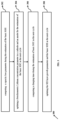
- the battery parameters are iteratively revised based on a SOC-SOH coupled estimation technique, wherein the battery parameters are iteratively revised for each cycle based on iteratively coupling the estimated basic SOC and the estimated basic SOH, which is illustrated in a flowchart of FIG.3 and comprises of the following steps:
- the method (300) includes updating a Stoichiometric Lithium concentration parameter in a cathode ( ⁇ p 0 ) and a anode ( ⁇ n 100 ) for the estimation of the basic SOC in the next cycle.
- the values ⁇ n 100 and ⁇ p 0 are updated after every cycle in such a manner that Stoichiometric differences ⁇ n 100 - ⁇ n 0 and ⁇ p 0 - ⁇ p 100 , which are proportional to the battery capacity Q, are scaled based on the basic SOH at the end of that cycle, wherein a positive and a negative electrode capacities are nearly equal and that degradation side reactions happen only at the negative electrode.
- the method (300) includes computing a charging time ( t ch ) during the estimation of basic SOC in the next cycle.
- the charging time is the time taken for the battery's basic SOC to change between the predefined limits SOC initial and SOC final .
- the charging time ( t ch ) is obtained from the solution of the solid concentration equation in the reduced order SOC module.
- the method (300) includes updating the SEI layer growth parameter and the basic SOH in the next cycle.
- the battery parameters are iteratively revised based on the SOC-SOH coupled estimation technique, wherein the battery parameters are iteratively revised for each cycle based on iteratively coupling the estimated revised SOC and the estimated revised SOH, which is illustrated in a flowchart of FIG.4 and comprises of the following steps:
- the method (400) includes updating a Stoichiometric Lithium concentration parameter in a cathode ( ⁇ p 0 ) and a anode ( ⁇ n 100 ) for the estimation of the revised SOC in the next cycle.
- the values ⁇ n 100 and ⁇ p 0 are updated after every cycle in such a manner that Stoichiometric differences ⁇ n 100 - ⁇ n 0 and ⁇ p 0 - ⁇ p 100 , which are proportional to the battery capacity Q, are scaled based on the revised SOH at the end of that cycle, wherein a positive and a negative electrode capacities are nearly equal and that degradation side reactions happen only at the negative electrode.
- the method (400) includes computing a charging time ( t ch ) during the estimation of revised SOC in the next cycle.
- the charging time ( t ch ) is the time taken for the battery's revised SOC to change between the predefined limits SOC initial and SOC final .
- the method (400) includes updating the SEI layer growth parameter and the revised SOH in the next cycle.
- the system (100) for estimation of remaining useful life in lithium based batteries comprises the battery management system (BMS) sensor module (216) is configured for sharing a dynamic data that comprises of real time environment data.
- the real time environment data includes a voltage sensor measurement and a current sensor measurement.
- the battery management system (BMS) sensor module (216) comprises a plurality of BMS sensors that include sensors to measure a voltage, a current and a temperature for real time monitoring of a lithium battery.
- the system (100) for estimation of the remaining useful life (RUL) in lithium based batteries comprises the revised estimator (214) configured for estimating a revised SOC and a revised SOH from the basic SOC and the basic SOH respectively using a correlation technique and a filtering technique based on the dynamic data received from the plurality of battery management system (BMS) sensors (216).
- the revised estimator (214) configured for estimating a revised SOC and a revised SOH from the basic SOC and the basic SOH respectively using a correlation technique and a filtering technique based on the dynamic data received from the plurality of battery management system (BMS) sensors (216).
- the revised SOC and the revised SOH is estimated in the CC/CV mode as calculated from the basic SOC and the basic SOH respectively using a correlation technique and a filtering technique based on the dynamic data received from the plurality of battery management system (BMS) sensors of the BMS sensor module (216).
- the correlation technique is based on a standard correlation techniques that includes linear regression, support vector regression and the filtering techniques is based on a standard filtering techniques that includes a kalman filtering technique, an extended kalman filtering (EKF) technique, a unscented kalman filtering (UKF) technique.
- the system (100) for estimation of remaining useful life in lithium based batteries comprises the RUL estimator (218) that is configured for estimating a remaining useful life (RUL) for the lithium based batteries using the revised SOC and the revised SOH.
- RUL is computed using the revised SOC and the revised SOH, which can be expressed as shown below:
- RUL Revised SOC
- Revised SOH Revised SOH
- revised SOC represents the available battery energy during a particular cycle of operation
- revised SOH represents the long term reduction in battery energy. Together they represent the remaining useful life (RUL) of the battery.
- the system (100) for estimation of remaining useful life in lithium based batteries comprises the display module (220) is configured for displaying the estimated remaining useful life (RUL) for the lithium based batteries.
- FIG.5A and FIG.5B is an exemplary flow diagram for of classification of time series signal on edge devices implemented by the system of FIG. 1 and includes the following steps:
- the method (500) includes receiving, by one or more hardware processors, a plurality of battery information of a lithium based battery in the input module (202) from a plurality of sources, wherein the received plurality of battery information includes a plurality of battery parameters and a plurality of load characteristics.
- the plurality of battery parameters are received in the includes a plurality of geometrical properties, a plurality of physical properties of chemicals inside the battery, a plurality of properties of the products formed in the side reactions that leads to formation of solid electrolyte interphase (SEI), a plurality of electrochemical reaction related properties and the plurality of load characteristics is received in the load characteristics unit (206) of the input module (202) comprises of the charge/discharge characteristics of the lithium battery within a given time interval in constant current (CC) mode and constant voltage (CV) mode.
- SEI solid electrolyte interphase
- the method (500) includes estimating a basic state of charge (SOC) for the lithium based battery in the SOC estimator (208) during charging/discharging in constant current (CC) and constant voltage (CV) modes based on a reduced order physics based modelling technique, using the battery parameters and the load characteristics.
- SOC basic state of charge
- the reduced order physics based modelling technique is based on at least one of the electrochemical models that include a pseudo two dimensional (P2D) technique model using single particle assumption.
- P2D pseudo two dimensional
- the method (500) includes estimating a basic state of health (SOH) for the lithium based battery in the SOH estimator (210) during charging/discharging in constant current (CC) and constant voltage (CV) modes, depending on a solid electrolyte interphase (SEI) formation using the battery parameters and the load characteristics based on a solvent diffusion theory technique.
- SOH basic state of health
- the solvent diffusion theory for the formation of the solid electrolyte interphase is based on a plurality of parameters of SEI that includes a SEI layer growth parameter and a capacity loss due to SEI growth parameter.
- the method (500) includes iteratively revising the battery parameters based on a SOC-SOH coupled estimation technique in the coupling module (212), wherein the battery parameters are iteratively revised for each cycle based on iteratively coupling the estimated basic SOC and the estimated basic SOH.
- the battery parameters are iteratively revised based on a SOC-SOH coupled estimation technique, wherein the battery parameters are iteratively revised for each cycle based on iteratively coupling the estimated basic SOC and the estimated basic SOH, which is illustrated in FIG.3 and comprises of the several steps that include computing a capacity loss parameter during the estimation of the basic SOH, updating a Stoichiometric Lithium concentration parameter in a cathode ( ⁇ p 0 ) and a anode ( ⁇ n 100 ) for the estimation of the basic SOC in the next cycle, computing a charging time during the estimation of basic SOC in the next cycle and updating the SEI layer growth parameter and the basic SOH in the next cycle.
- the method (500) includes estimating a revised SOC and a revised SOH from the basic SOC and the basic SOH respectively using a correlation technique and a filtering technique in the revised estimator (214) based on a dynamic data received from a plurality of battery management system (BMS) sensors.
- BMS battery management system
- the revised estimator (214) is configured for estimating the revised SOC and the revised SOH by revising the basic SOC and the basic SOH based on the correlation technique and the filtering technique, wherein the correlation technique is based on standard correlation techniques that includes linear regression, support vector regression and the filtering techniques is based on standard filtering techniques that includes a kalman filtering technique, an extended kalman filtering (EKF) technique, a unscented kalman filtering (UKF) technique.
- the battery management system (BMS) sensor module (216) is configured for sharing the dynamic data that comprises of real time environment data that include a voltage sensor measurement and a current sensor measurement.
- the method (500) includes iteratively revising the battery parameters based on the SOC-SOH coupled estimation technique in the coupling module (212), wherein the battery parameters are iteratively revised for each cycle based on iteratively coupling the estimated revised SOC and the estimated revised SOH.
- the battery parameters are iteratively revised based on the SOC-SOH coupled estimation technique, wherein the battery parameters are iteratively revised for each cycle based on iteratively coupling the estimated revised SOC and the estimated revised SOH, which is illustrated in FIG.4 and comprises of the several steps that include computing a capacity loss parameter during the estimation of the revised SOH, updating a Stoichiometric Lithium concentration parameter in a cathode ( ⁇ p 0 ) and a anode ( ⁇ n 100 ) for the estimation of the revised SOC in the next cycle, computing a charging time during the estimation of revised SOC in the next cycle and updating the SEI layer growth parameter and the revised SOH in the next cycle.
- the method (500) includes estimating a remaining useful life (RUL) for the lithium based batteries in the RUL estimator (218) using the revised SOC and the revised SOH.
- RUL is computed using the revised SOC and the revised SOH, which can be expressed as shown below:
- RUL Revised SOC
- Revised SOH Revised SOH
- revised SOC represents the available battery energy during a particular cycle of operation
- revised SOH represents the long term reduction in battery energy. Together they represent the remaining useful life (RUL) of the battery.
- the estimated remaining useful life (RUL) for the lithium based batteries is displayed in the display module (220).
- the embodiments of present disclosure herein addresses the problem of estimation of remaining useful life in lithium based batteries based on coupled estimation of a state of charge (SOC) and a state of health (SOH) during charging/discharging in constant current (CC) and constant voltage (CV) modes.
- the embodiment thus provides RUL estimation technique that considers the inter-dependency of SOC-SOH and influence of internal-external parameters/factors during the coupled estimation of SOC-SOH.
- the embodiments herein further provides the coupled estimation of SOC and SOH based on a reduced order physics based modelling technique and considers the influence real time environment obtained using real-time dynamic data obtained by several sensors during the coupled estimation of SOC-SOH.
- the hardware device can be any kind of device which can be programmed including e.g. any kind of computer like a server or a personal computer, or the like, or any combination thereof.
- the device may also include means which could be e.g. hardware means like e.g. an application-specific integrated circuit (ASIC), a field-programmable gate array (FPGA), or a combination of hardware and software means, e.g.
- ASIC application-specific integrated circuit
- FPGA field-programmable gate array
- the means can include both hardware means and software means.
- the method embodiments described herein could be implemented in hardware and software.
- the device may also include software means.
- the embodiments may be implemented on different hardware devices, e.g. using a plurality of CPUs.
- the embodiments herein can comprise hardware and software elements.
- the embodiments that are implemented in software include but are not limited to, firmware, resident software, microcode, etc.
- the functions performed by various components described herein may be implemented in other components or combinations of other components.
- a computer-usable or computer readable medium can be any apparatus that can comprise, store, communicate, propagate, or transport the program for use by or in connection with the instruction execution system, apparatus, or device.
- a computer-readable storage medium refers to any type of physical memory on which information or data readable by a processor may be stored.
- a computer-readable storage medium may store instructions for execution by one or more processors, including instructions for causing the processor(s) to perform steps or stages consistent with the embodiments described herein.
- the term "computer-readable medium” should be understood to include tangible items and exclude carrier waves and transient signals, i.e., be non-transitory. Examples include random access memory (RAM), read-only memory (ROM), volatile memory, nonvolatile memory, hard drives, CD ROMs, DVDs, flash drives, disks, and any other known physical storage media.
Landscapes
- Physics & Mathematics (AREA)
- General Physics & Mathematics (AREA)
- Secondary Cells (AREA)
Claims (11)
- Prozessorimplementiertes Verfahren (500) zur Schätzung der verbleibenden Nutzungsdauer in lithiumbasierten Batterien, wobei das Verfahren umfasst:Empfangen, durch einen oder mehrere Hardwareprozessoren (108), einer Mehrzahl von Batterieinformationen einer lithiumbasierten Batterie von einer Mehrzahl von Quellen, einschließlich eines Benutzers, einer bestehenden Literatur über Batteriematerialeigenschaften, eines Batterieherstellers, wobei die empfangene Mehrzahl von Batterieinformationen eine Mehrzahl von Batterieparametern und eine Mehrzahl von Lastcharakteristiken (502) beinhaltet, wobei die Mehrzahl von Batterieparametern eine Mehrzahl von geometrischen Eigenschaften, eine Mehrzahl von physikalischen Eigenschaften von Chemikalien innerhalb der Batterie, eine Mehrzahl von Eigenschaften der Produkte, die in den Nebenreaktionen gebildet werden, die zur Bildung von Festelektrolytzwischenphase, SEI, führen, eine Mehrzahl von elektrochemischen reaktionsbezogenen Eigenschaften beinhaltet und die Mehrzahl von Lastcharakteristiken Ladecharakteristiken und Entladecharakteristiken der Lithiumbatterie innerhalb eines gegebenen Zeitintervalls in einem Konstantstrom-, CC-, Modus und einem Konstantspannungs-, CV-, Modus beinhaltet;Schätzen eines Grundladezustands, SOC, für die lithiumbasierte Batterie während des Ladens und Entladens im CC-Modus und dem CV-Modus basierend auf einer physikbasierten Modellierungstechnik reduzierter Ordnung unter Verwendung der Batterieparameter und der Lastcharakteristiken (504), wobei die lithiumbasierte Batterie in einer Kombination von CC-CV-Modus geladen und über den CC-Modus entladen wird;Schätzen eines Grundgesundheitszustands, SOH, für die lithiumbasierte Batterie während des Ladens und Entladens im CC-Modus und dem CV-Modus in Abhängigkeit von einer Festelektrolytzwischenphasenbildung, SEI, unter Verwendung der Batterieparameter und der Lastcharakteristiken basierend auf einer Lösungsmitteldiffusionstheorietechnik (506);iteratives Aktualisieren der Batterieparameter basierend auf einer SOC-SOHgekoppelten Schätztechnik, wobei die Batterieparameter iterativ aktualisiert werden, für einen Zyklus des Ladens und Entladens im CC-Modus und CV-Modus, basierend auf iterativem Koppeln des geschätzten Grund-SOC und des geschätzten Grund-SOH (508), wobei die SOC-SOH-gekoppelte Schätztechnik eine erweiterte Kalman-Filterungs-, EKF-, Technik und eine pseudozweidimensionale, P2D-, Modelltechnik umfasst, wobei der Schritt des iterativen Koppelns des geschätzten Grund-SOC und des geschätzten Grund-SOH umfasst:Berechnen eines Kapazitätsverlustparameters während der Schätzung des Grund-SOH (302);Aktualisieren eines stöchiometrischen Lithiumkonzentrationsparameters in einer Kathode (θ p0) und einer Anode (θ n100) für die Schätzung des Grund-SOC in einem nächsten Zyklus (304);Berechnen einer Ladezeit während der Schätzung des Grund-SOC in dem nächsten Zyklus (306); undAktualisieren des SEI-Schichtwachstumsparameters und des Grund-SOH in dem nächsten Zyklus (308);Schätzen eines revidierten SOC und eines revidierten SOH aus den aktualisierten Batterieparametern des Grund-SOC bzw. des Grund-SOH unter Verwendung einer Korrelationstechnik und einer Filterungstechnik basierend auf dynamischen Daten, die Echtzeit-Umgebungsdaten umfassen, die von einer Mehrzahl von Batteriemanagementsystem-, BMS-, Sensoren (510) empfangen werden, wobei die Echtzeit-Umgebungsdaten eine Spannungssensormessung und eine Stromsensormessung beinhalten;iteratives Aktualisieren der Batterieparameter basierend auf der SOC-SOHgekoppelten Schätztechnik, wobei die Batterieparameter iterativ aktualisiert werden für jeden Zyklus basierend auf iterativem Koppeln des geschätzten revidierten SOC und des geschätzten revidierten SOH (512); undSchätzen einer verbleibenden Nutzungsdauer, RUL, für die lithiumbasierten Batterien unter Verwendung des revidierten SOC und des revidierten SOH (514), wobei der überarbeitete SOC verfügbare Batterieenergie während eines bestimmten Betriebszyklus darstellt und der überarbeitete SOH langfristige Reduzierung der Batterieenergie darstellt, wobei der überarbeitete SOC und der überarbeitete SOH RUL der lithiumbasierten Batterie darstellen.
- Verfahren nach Anspruch 1, wobei die geschätzte verbleibende Nutzungsdauer, RUL, für die lithiumbasierten Batterien auf einem Anzeigemodul angezeigt wird.
- Verfahren nach Anspruch 1, wobei die Mehrzahl von geometrischen Eigenschaften, die für einen Satz von Parametern definiert sind, die eine Anode, eine Kathode, einen Separator beinhalten und einen Satz von Dimensionen und einen Porositätsparameter umfassen, die Mehrzahl von physikalischen Eigenschaften von Chemikalien innerhalb der Batterie einen Satz von Diffusivitäten von Lithium in der Anode, der Kathode, Elektrolyt, einen Satz von ionischen Leitfähigkeiten in Elektrolyt und Feststoff, Transferzahl, eine Mehrzahl von Eigenschaften der Produkte, die in den Nebenreaktionen gebildet werden, die zur Bildung der SEI führen, einschließlich Molmasse, Dichte, Lösungsmitteldiffusivität in der SEI-Schicht und Reaktionskonstante für SEI-Bildung, eine Mehrzahl von elektrochemischen reaktionsbezogenen Eigenschaften, einschließlich Reaktionskonstanten, Butler-Volmer-Koeffizienten, beinhaltet.
- Verfahren nach Anspruch 1, wobei die physikbasierte Modellierungstechnik reduzierter Ordnung auf mindestens einem der elektrochemischen Modelle basiert, die ein pseudozweidimensionales, P2D, Modell unter Verwendung von Einzelpartikelannahme beinhalten.
- Verfahren nach Anspruch 1, wobei die Lösungsmitteldiffusionstheorie für die Bildung der SEI auf einer Mehrzahl von Parametern von SEI basiert, die Molmasse, Dichte, Lösungsmitteldiffusivität in der SEI-Schicht und Reaktionskonstante für SEI-Bildung und einen Kapazitätsverlust aufgrund des SEI-Wachstumsparameters beinhalten.
- Verfahren nach Anspruch 1, wobei die Korrelationstechnik auf Standardkorrelationstechniken basiert, die lineare Regression, Support Vektor Regression beinhalten, und die Filterungstechniken auf Standard-Filterungstechniken basieren, die eine von einer Kalman-Filterungstechnik, der erweiterten Kalman-Filterungs-, EKF-, Technik und einer Unscented Kalman-Filterungs-, UKF-, Technik beinhalten.
- Verfahren nach Anspruch 1, wobei der Schritt des iterativen Koppelns des geschätzten revidierten SOC und des geschätzten revidierten SOH beinhaltet;Berechnen eines Kapazitätsverlustparameters während der Schätzung des revidierten SOH (402);Aktualisieren eines stöchiometrischen Lithiumkonzentrationsparameters in einer Kathode (θ p0) und einer Anode (θ n100) für die Schätzung des revidierten SOC in dem nächsten Zyklus (404);Berechnen einer Ladezeit während der Schätzung des revidierten SOC in dem nächsten Zyklus (406); undAktualisieren des SEI-Schichtwachstumsparameters und des revidierten SOH in dem nächsten Zyklus (408).
- System (100) zur Schätzung der verbleibenden Nutzungsdauer in lithiumbasierten Batterien, wobei das System umfasst:einen Schätzer der verbleibenden Nutzungsdauer für lithiumbasierte Batterien (102) zur Schätzung der verbleibenden Nutzungsdauer in lithiumbasierten Batterien und umfassend eine Mehrzahl von Batteriemanagementsystem-, BMS-, Sensoren (216); einen Speicher (104) zum Speichern von Anweisungen;eine oder mehrere Kommunikationsschnittstellen (106); undeinen oder mehrere Hardwareprozessoren (108), die kommunikativ mit dem Speicher (104) unter Verwendung der einen oder mehreren Kommunikationsschnittstellen (106) gekoppelt sind, wobei der eine oder die mehreren Hardwareprozessoren (108) konfiguriert sind, um programmierte Anweisungen auszuführen, die in dem einen oder den mehreren Speichern (104) gespeichert sind, um:eine Mehrzahl von Batterieinformationen einer lithiumbasierten Batterie von einer Mehrzahl von Quellen zu empfangen, einschließlich eines Benutzers, einer bestehenden Literatur über Batteriematerialeigenschaften, eines Batterieherstellers, wobei die empfangene Mehrzahl von Batterieinformationen eine Mehrzahl von Batterieparametern und eine Mehrzahl von Lastcharakteristiken beinhaltet, wobei die Mehrzahl von Batterieparametern eine Mehrzahl von geometrischen Eigenschaften, eine Mehrzahl von physikalischen Eigenschaften von Chemikalien innerhalb der Batterie, eine Mehrzahl von Eigenschaften der Produkte, die in den Nebenreaktionen gebildet werden, die zur Bildung von Festelektrolytzwischenphase, SEI, führen, eine Mehrzahl von elektrochemischen reaktionsbezogenen Eigenschaften beinhaltet und die Mehrzahl von Lastcharakteristiken Ladecharakteristiken und Entladecharakteristiken der Lithiumbatterie innerhalb eines gegebenen Zeitintervalls in einem Konstantstrom-, CC-, Modus und einem Konstantspannungs-, CV-, Modus beinhaltet;einen Grundladezustand, SOC, für die lithiumbasierte Batterie während des Ladens und Entladens im CC-Modus und dem CV-Modus basierend auf einer physikbasierten Modellierungstechnik reduzierter Ordnung unter Verwendung der Batterieparameter und der Lastcharakteristiken zu schätzen, wobei die lithiumbasierte Batterie in einer Kombination von CC-CV-Modus geladen und über den CC-Modus entladen wird;einen Grundgesundheitszustand, SOH, für die lithiumbasierte Batterie während des Ladens und Entladens im CC-Modus und dem CV-Modus in Abhängigkeit von einer Festelektrolytzwischenphasenbildung, SEI, unter Verwendung der Batterieparameter und der Lastcharakteristiken basierend auf einer Lösungsmitteldiffusionstheorietechnik zu schätzen;iteratives Aktualisieren der Batterieparameter basierend auf einer SOC-SOHgekoppelten Schätztechnik, wobei die Batterieparameter iterativ aktualisiert werden, für einen Zyklus des Ladens und Entladens im CC-Modus und CV-Modus, basierend auf iterativem Koppeln des geschätzten Grund-SOC und des geschätzten Grund-SOH, wobei die SOC-SOH-gekoppelte Schätztechnik eine erweiterte Kalman-Filterungs-, EKF-, Technik und eine pseudozweidimensionale, P2D-, Modelltechnik umfasst, wobei der Schritt des iterativen Koppelns des geschätzten Grund-SOC und des geschätzten Grund-SOH umfasst:Berechnen eines Kapazitätsverlustparameters während der Schätzung des Grund-SOH (302);Aktualisieren eines stöchiometrischen Lithiumkonzentrationsparameters in einer Kathode (θ p0) und einer Anode (θ n100) für die Schätzung des Grund-SOC in einem nächsten Zyklus (304);Berechnen einer Ladezeit während der Schätzung des Grund-SOC in dem nächsten Zyklus (306); undAktualisieren des SEI-Schichtwachstumsparameters und des Grund-SOH in dem nächsten Zyklus (308);Schätzen eines revidierten SOC und eines revidierten SOH aus den aktualisierten Batterieparametern des Grund-SOC bzw. des Grund-SOH unter Verwendung einer Korrelationstechnik und einer Filterungstechnik basierend auf dynamischen Daten, die Echtzeit-Umgebungsdaten umfassen, die von einer Mehrzahl von Batteriemanagementsystem-, BMS-, Sensoren empfangen werden, wobei die Echtzeit-Umgebungsdaten eine Spannungssensormessung und eine Stromsensormessung beinhalten;iteratives Aktualisieren der Batterieparameter basierend auf der SOC-SOH-gekoppelten Schätztechnik, wobei die Batterieparameter iterativ aktualisiert werden für jeden Zyklus basierend auf iterativem Koppeln des geschätzten revidierten SOC und des geschätzten revidierten SOH; undSchätzen und Anzeigen einer verbleibenden Nutzungsdauer, RUL, für die lithiumbasierten Batterien unter Verwendung des revidierten SOC und des revidierten SOH, wobei der überarbeitete SOC verfügbare Batterieenergie während eines bestimmten Betriebszyklus darstellt und der überarbeitete SOH langfristige Reduzierung der Batterieenergie darstellt, wobei der überarbeitete SOC und der überarbeitete SOH RUL der lithiumbasierten Batterie darstellen.
- System nach Anspruch 8, wobei der Schritt des iterativen Koppelns des geschätzten revidierten SOC und des geschätzten revidierten SOH beinhaltet;Berechnen eines Kapazitätsverlustparameters während der Schätzung des revidierten SOH;Aktualisieren eines stöchiometrischen Lithiumkonzentrationsparameters in einer Kathode (θ p0) und einer Anode (θ n100) für die Schätzung des revidierten SOC in dem nächsten Zyklus.Berechnen einer Ladezeit während der Schätzung des revidierten SOC in dem nächsten Zyklus; undAktualisieren des SEI-Schichtwachstumsparameters und des revidierten SOH in dem nächsten Zyklus.
- System nach Anspruch 8, wobei die Korrelationstechnik auf Standardkorrelationstechniken basiert, die lineare Regression, Stützvektorregression beinhalten, und die Filterungstechniken auf Standard-Filterungstechniken basieren, die eine von einer Kalman-Filterungstechnik, der erweiterten Kalman-Filterungs-, EKF-, Technik und einer unscented Kalman-Filterungs-, UKF-, Technik beinhalten.
- Nichtflüchtiges computerlesbares Medium, auf dem ein computerlesbares Programm verkörpert ist, um das System nach Anspruch 8 zu veranlassen, alle Schritte des Verfahrens nach Anspruch 1 auszuführen.
Applications Claiming Priority (1)
| Application Number | Priority Date | Filing Date | Title |
|---|---|---|---|
| IN201921018433 | 2019-05-08 |
Publications (3)
| Publication Number | Publication Date |
|---|---|
| EP3736587A1 EP3736587A1 (de) | 2020-11-11 |
| EP3736587B1 true EP3736587B1 (de) | 2023-11-01 |
| EP3736587C0 EP3736587C0 (de) | 2023-11-01 |
Family
ID=70617012
Family Applications (1)
| Application Number | Title | Priority Date | Filing Date |
|---|---|---|---|
| EP20173525.5A Active EP3736587B1 (de) | 2019-05-08 | 2020-05-07 | Verfahren und system zur abschätzung der restnutzungsdauer von lithiumbatterien |
Country Status (2)
| Country | Link |
|---|---|
| US (1) | US11300623B2 (de) |
| EP (1) | EP3736587B1 (de) |
Cited By (1)
| Publication number | Priority date | Publication date | Assignee | Title |
|---|---|---|---|---|
| US20230410949A1 (en) * | 2022-06-17 | 2023-12-21 | Shanghai Makesens Energy Storage Technology Co., Ltd. | Method and system for predicting working conditions of lithium batteries |
Families Citing this family (29)
| Publication number | Priority date | Publication date | Assignee | Title |
|---|---|---|---|---|
| KR102871577B1 (ko) * | 2019-09-04 | 2025-10-17 | 삼성전자주식회사 | 배터리 충전 장치 및 방법 |
| DE102020100668B4 (de) * | 2020-01-14 | 2021-07-22 | TWAICE Technologies GmbH | Charakterisierung von wiederaufladbaren Batterien mit Maschinen-gelernten Algorithmen |
| EP4047711A4 (de) | 2020-12-24 | 2022-11-30 | Contemporary Amperex Technology Co., Limited | Batteriemodul, batteriepack, elektronisches gerät sowie verfahren zur herstellung eines batteriemoduls und herstellungsverfahren |
| CN112818507B (zh) * | 2020-12-30 | 2024-05-28 | 杭州凯歌新能源科技有限公司 | Agv智能仓储机器人bms锂电池放电过程中动态容量修正方法 |
| KR102703658B1 (ko) * | 2020-12-31 | 2024-09-04 | 성균관대학교산학협력단 | 배터리 노화 상태 추정 방법 및 이를 수행하는 장치 |
| CN112798961B (zh) * | 2021-02-27 | 2023-01-10 | 天津大学 | 一种电动汽车动力电池剩余使用寿命预测方法 |
| CN112949060B (zh) * | 2021-03-01 | 2023-07-07 | 中国人民解放军火箭军工程大学 | 一种时变温度下的锂电池健康状态估计与剩余寿命预测方法 |
| US12374725B2 (en) * | 2021-03-12 | 2025-07-29 | Zebra Technologies Corporation | Battery management system for monitoring a battery status |
| CN113093014B (zh) * | 2021-03-31 | 2022-05-27 | 山东建筑大学 | 一种基于阻抗参数的soh与soc的在线协同估计方法及系统 |
| CN113805060B (zh) * | 2021-05-21 | 2022-11-04 | 电子科技大学 | 基于相关向量回归的锂电池剩余寿命检测方法 |
| US20240217391A1 (en) * | 2021-06-04 | 2024-07-04 | Carnegie Mellon University | System and Method Implementing a Battery Avionics System for Electric-Powered Aircraft |
| CN113805064B (zh) * | 2021-09-18 | 2022-09-20 | 北京航空航天大学 | 基于深度学习的锂离子电池组健康状态预测方法 |
| WO2023052910A1 (en) * | 2021-10-01 | 2023-04-06 | Kpit Technologies Limited | System and method for estimating state of health and remaining useful life of a battery |
| CN114035087B (zh) * | 2021-12-23 | 2023-11-07 | 中国电力科学研究院有限公司 | 储能电池剩余寿命评估方法、装置、设备及介质 |
| US11821958B2 (en) | 2022-01-26 | 2023-11-21 | Nuvation Research Corporation | Systems, methods, and devices for state-of-health estimation in energy storage systems |
| CN114330149B (zh) * | 2022-03-11 | 2022-06-03 | 北京新能源汽车股份有限公司 | 电池寿命预测方法、装置、云端服务器及存储介质 |
| CN114755584B (zh) * | 2022-03-25 | 2025-11-04 | 江南大学 | 一种基于双集员滤波的动力电池性能检测方法 |
| KR20240061261A (ko) * | 2022-10-31 | 2024-05-08 | 주식회사 엘지에너지솔루션 | 배터리 soh 추정 장치 및 방법 |
| WO2024102372A1 (en) * | 2022-11-07 | 2024-05-16 | Electra Vehicles, Inc. | Method and system for mission-defined fitness of an energy storage system |
| CN115453377B (zh) * | 2022-11-11 | 2023-01-24 | 天目湖先进储能技术研究院有限公司 | 基于电化学-热-老化与三维降阶的电池组寿命预测方法 |
| WO2024144166A1 (ko) * | 2022-12-26 | 2024-07-04 | 주식회사 엘지에너지솔루션 | 배터리 관리 장치 및 방법 |
| EP4468004A4 (de) * | 2022-12-28 | 2025-06-25 | LG Energy Solution, Ltd. | Vorrichtung und verfahren zur verwaltung einer batterie |
| CN117637044B (zh) * | 2023-10-07 | 2024-06-18 | 武汉理工大学 | 一种电池电压预测方法、装置、电子设备及存储介质 |
| CN121586850A (zh) | 2023-11-21 | 2026-02-27 | 株式会社Lg新能源 | 用于确定电池的劣化的系统和方法 |
| US12223437B1 (en) | 2024-04-18 | 2025-02-11 | SB Technology, Inc. | Systems and methods for battery performance prediction |
| US12203993B1 (en) | 2024-04-18 | 2025-01-21 | SB Technology, Inc. | Diagnostic systems and methods for battery defect identification |
| CN118690703B (zh) * | 2024-08-20 | 2025-03-28 | 深圳市德兰明海新能源股份有限公司 | 一种锂电池的等效电路模型获取方法及相关装置 |
| CN119125930B (zh) * | 2024-09-19 | 2026-01-06 | 江苏大学 | 一种融合恒压充电阶段多维特征参数的锂离子电池健康状态估算方法 |
| CN120233250B (zh) * | 2025-05-26 | 2025-09-16 | 杭州西力智能科技股份有限公司 | 一种锂电池状态预测方法以及存储介质 |
Family Cites Families (7)
| Publication number | Priority date | Publication date | Assignee | Title |
|---|---|---|---|---|
| FR2949565B1 (fr) * | 2009-09-02 | 2012-12-21 | Inst Francais Du Petrole | Methode amelioree pour estimer les caracteristiques non mesurables d'un systeme electrochimique |
| WO2014083856A1 (ja) * | 2012-11-30 | 2014-06-05 | 三洋電機株式会社 | 電池管理装置、電源装置およびsoc推定方法 |
| CN105301509B (zh) | 2015-11-12 | 2019-03-29 | 清华大学 | 锂离子电池荷电状态、健康状态与功率状态的联合估计方法 |
| CN106918789B (zh) | 2017-05-10 | 2019-05-14 | 成都理工大学 | 一种soc-soh联合在线实时估计和在线修正方法 |
| US11226374B2 (en) * | 2017-10-17 | 2022-01-18 | The Board Of Trustees Of The Leland Stanford Junior University | Data-driven model for lithium-ion battery capacity fade and lifetime prediction |
| CN109738810B (zh) | 2019-01-21 | 2021-06-15 | 温州大学 | 一种电池剩余使用寿命的综合估算方法 |
| WO2021040146A1 (en) * | 2019-08-27 | 2021-03-04 | Samsung Electronics Co., Ltd. | Method and system for determining health parameter of a battery |
-
2020
- 2020-05-07 EP EP20173525.5A patent/EP3736587B1/de active Active
- 2020-05-07 US US15/929,522 patent/US11300623B2/en active Active
Cited By (1)
| Publication number | Priority date | Publication date | Assignee | Title |
|---|---|---|---|---|
| US20230410949A1 (en) * | 2022-06-17 | 2023-12-21 | Shanghai Makesens Energy Storage Technology Co., Ltd. | Method and system for predicting working conditions of lithium batteries |
Also Published As
| Publication number | Publication date |
|---|---|
| US20200355750A1 (en) | 2020-11-12 |
| US11300623B2 (en) | 2022-04-12 |
| EP3736587C0 (de) | 2023-11-01 |
| EP3736587A1 (de) | 2020-11-11 |
Similar Documents
| Publication | Publication Date | Title |
|---|---|---|
| EP3736587B1 (de) | Verfahren und system zur abschätzung der restnutzungsdauer von lithiumbatterien | |
| US11415630B2 (en) | Methods and apparatus for updating a fuel gauge and estimating state of health of an energy storage cell | |
| EP3327456B1 (de) | Verfahren und vorrichtung zur schätzung des zustands einer batterie basierend auf fehlerkorrektur | |
| Berecibar et al. | State of health estimation algorithm of LiFePO4 battery packs based on differential voltage curves for battery management system application | |
| KR102219397B1 (ko) | 원격 파라미터 추정을 구비한 2차 전지 관리 시스템 | |
| JP4511600B2 (ja) | 電気化学セルの現在状態及び現在パラメーターを推定する装置、方法及びシステム、並びに記録媒体 | |
| KR102652848B1 (ko) | 리튬 유황 배터리의 충전 상태 및 건강 상태를 결정하는 방법 및 장치 | |
| Sun et al. | Estimation of state-of-charge and state-of-power capability of lithium-ion battery considering varying health conditions | |
| EP3550317A1 (de) | Verfahren und vorrichtung zur erkennung eines mikrokurzschlusses einer batterie | |
| Leng et al. | A practical framework of electrical based online state-of-charge estimation of lithium ion batteries | |
| EP3961232B1 (de) | Verfahren und vorrichtung zur batteriezustandsschätzung | |
| US20180316204A1 (en) | Method and apparatus to predict capacity fade rate of battery | |
| US10310021B2 (en) | Method for real time correction of ion concentration and Coulomb counting state-of-charge (SOC) in battery | |
| US11644508B2 (en) | Method and apparatus for measuring state of battery | |
| US12228615B2 (en) | Electronic device for estimating battery state and operating method thereof | |
| JP2008522152A (ja) | バッテリーの状態及びパラメーターの推定システム及び方法 | |
| JP2015524048A (ja) | バッテリの充電状態の推定 | |
| KR100878123B1 (ko) | 배터리 상태 및 파라미터 추정 시스템 및 방법 | |
| Rahimi-Eichi et al. | Adaptive online battery parameters/SOC/capacity co-estimation | |
| US12078682B2 (en) | Method and apparatus for estimating state of battery | |
| Ahmed et al. | A scaling approach for improved open circuit voltage modeling in Li-ion batteries | |
| Wett et al. | Method of Lines for flexible coupling of the Single Particle Model for Lithium-Ion Batteries demonstrated by thermal modelling | |
| Bi et al. | Automatic estimation of parameters of a reduced order electrochemical model for lithium-ion batteries at the beginning-of-life | |
| US20240069109A1 (en) | Estimation of calendar aging of battery cells | |
| EP4425200A1 (de) | Schätzung der batteriekapazität mittels inkrementeller kapazitätsdifferenzierung |
Legal Events
| Date | Code | Title | Description |
|---|---|---|---|
| PUAI | Public reference made under article 153(3) epc to a published international application that has entered the european phase |
Free format text: ORIGINAL CODE: 0009012 |
|
| STAA | Information on the status of an ep patent application or granted ep patent |
Free format text: STATUS: THE APPLICATION HAS BEEN PUBLISHED |
|
| AK | Designated contracting states |
Kind code of ref document: A1 Designated state(s): AL AT BE BG CH CY CZ DE DK EE ES FI FR GB GR HR HU IE IS IT LI LT LU LV MC MK MT NL NO PL PT RO RS SE SI SK SM TR |
|
| AX | Request for extension of the european patent |
Extension state: BA ME |
|
| STAA | Information on the status of an ep patent application or granted ep patent |
Free format text: STATUS: REQUEST FOR EXAMINATION WAS MADE |
|
| 17P | Request for examination filed |
Effective date: 20210507 |
|
| RBV | Designated contracting states (corrected) |
Designated state(s): AL AT BE BG CH CY CZ DE DK EE ES FI FR GB GR HR HU IE IS IT LI LT LU LV MC MK MT NL NO PL PT RO RS SE SI SK SM TR |
|
| GRAP | Despatch of communication of intention to grant a patent |
Free format text: ORIGINAL CODE: EPIDOSNIGR1 |
|
| STAA | Information on the status of an ep patent application or granted ep patent |
Free format text: STATUS: GRANT OF PATENT IS INTENDED |
|
| INTG | Intention to grant announced |
Effective date: 20230511 |
|
| GRAS | Grant fee paid |
Free format text: ORIGINAL CODE: EPIDOSNIGR3 |
|
| GRAA | (expected) grant |
Free format text: ORIGINAL CODE: 0009210 |
|
| STAA | Information on the status of an ep patent application or granted ep patent |
Free format text: STATUS: THE PATENT HAS BEEN GRANTED |
|
| AK | Designated contracting states |
Kind code of ref document: B1 Designated state(s): AL AT BE BG CH CY CZ DE DK EE ES FI FR GB GR HR HU IE IS IT LI LT LU LV MC MK MT NL NO PL PT RO RS SE SI SK SM TR |
|
| REG | Reference to a national code |
Ref country code: GB Ref legal event code: FG4D |
|
| REG | Reference to a national code |
Ref country code: CH Ref legal event code: EP |
|
| REG | Reference to a national code |
Ref country code: DE Ref legal event code: R096 Ref document number: 602020020100 Country of ref document: DE |
|
| REG | Reference to a national code |
Ref country code: IE Ref legal event code: FG4D |
|
| U01 | Request for unitary effect filed |
Effective date: 20231101 |
|
| U07 | Unitary effect registered |
Designated state(s): AT BE BG DE DK EE FI FR IT LT LU LV MT NL PT SE SI Effective date: 20231107 |
|
| PG25 | Lapsed in a contracting state [announced via postgrant information from national office to epo] |
Ref country code: GR Free format text: LAPSE BECAUSE OF FAILURE TO SUBMIT A TRANSLATION OF THE DESCRIPTION OR TO PAY THE FEE WITHIN THE PRESCRIBED TIME-LIMIT Effective date: 20240202 |
|
| PG25 | Lapsed in a contracting state [announced via postgrant information from national office to epo] |
Ref country code: IS Free format text: LAPSE BECAUSE OF FAILURE TO SUBMIT A TRANSLATION OF THE DESCRIPTION OR TO PAY THE FEE WITHIN THE PRESCRIBED TIME-LIMIT Effective date: 20240301 |
|
| PG25 | Lapsed in a contracting state [announced via postgrant information from national office to epo] |
Ref country code: ES Free format text: LAPSE BECAUSE OF FAILURE TO SUBMIT A TRANSLATION OF THE DESCRIPTION OR TO PAY THE FEE WITHIN THE PRESCRIBED TIME-LIMIT Effective date: 20231101 |
|
| PG25 | Lapsed in a contracting state [announced via postgrant information from national office to epo] |
Ref country code: IS Free format text: LAPSE BECAUSE OF FAILURE TO SUBMIT A TRANSLATION OF THE DESCRIPTION OR TO PAY THE FEE WITHIN THE PRESCRIBED TIME-LIMIT Effective date: 20240301 Ref country code: GR Free format text: LAPSE BECAUSE OF FAILURE TO SUBMIT A TRANSLATION OF THE DESCRIPTION OR TO PAY THE FEE WITHIN THE PRESCRIBED TIME-LIMIT Effective date: 20240202 Ref country code: ES Free format text: LAPSE BECAUSE OF FAILURE TO SUBMIT A TRANSLATION OF THE DESCRIPTION OR TO PAY THE FEE WITHIN THE PRESCRIBED TIME-LIMIT Effective date: 20231101 |
|
| PG25 | Lapsed in a contracting state [announced via postgrant information from national office to epo] |
Ref country code: RS Free format text: LAPSE BECAUSE OF FAILURE TO SUBMIT A TRANSLATION OF THE DESCRIPTION OR TO PAY THE FEE WITHIN THE PRESCRIBED TIME-LIMIT Effective date: 20231101 Ref country code: PL Free format text: LAPSE BECAUSE OF FAILURE TO SUBMIT A TRANSLATION OF THE DESCRIPTION OR TO PAY THE FEE WITHIN THE PRESCRIBED TIME-LIMIT Effective date: 20231101 Ref country code: NO Free format text: LAPSE BECAUSE OF FAILURE TO SUBMIT A TRANSLATION OF THE DESCRIPTION OR TO PAY THE FEE WITHIN THE PRESCRIBED TIME-LIMIT Effective date: 20240201 Ref country code: HR Free format text: LAPSE BECAUSE OF FAILURE TO SUBMIT A TRANSLATION OF THE DESCRIPTION OR TO PAY THE FEE WITHIN THE PRESCRIBED TIME-LIMIT Effective date: 20231101 |
|
| U20 | Renewal fee for the european patent with unitary effect paid |
Year of fee payment: 5 Effective date: 20240527 |
|
| PG25 | Lapsed in a contracting state [announced via postgrant information from national office to epo] |
Ref country code: CZ Free format text: LAPSE BECAUSE OF FAILURE TO SUBMIT A TRANSLATION OF THE DESCRIPTION OR TO PAY THE FEE WITHIN THE PRESCRIBED TIME-LIMIT Effective date: 20231101 |
|
| PG25 | Lapsed in a contracting state [announced via postgrant information from national office to epo] |
Ref country code: SK Free format text: LAPSE BECAUSE OF FAILURE TO SUBMIT A TRANSLATION OF THE DESCRIPTION OR TO PAY THE FEE WITHIN THE PRESCRIBED TIME-LIMIT Effective date: 20231101 |
|
| PG25 | Lapsed in a contracting state [announced via postgrant information from national office to epo] |
Ref country code: SM Free format text: LAPSE BECAUSE OF FAILURE TO SUBMIT A TRANSLATION OF THE DESCRIPTION OR TO PAY THE FEE WITHIN THE PRESCRIBED TIME-LIMIT Effective date: 20231101 Ref country code: SK Free format text: LAPSE BECAUSE OF FAILURE TO SUBMIT A TRANSLATION OF THE DESCRIPTION OR TO PAY THE FEE WITHIN THE PRESCRIBED TIME-LIMIT Effective date: 20231101 Ref country code: CZ Free format text: LAPSE BECAUSE OF FAILURE TO SUBMIT A TRANSLATION OF THE DESCRIPTION OR TO PAY THE FEE WITHIN THE PRESCRIBED TIME-LIMIT Effective date: 20231101 |
|
| REG | Reference to a national code |
Ref country code: DE Ref legal event code: R097 Ref document number: 602020020100 Country of ref document: DE |
|
| PLBE | No opposition filed within time limit |
Free format text: ORIGINAL CODE: 0009261 |
|
| STAA | Information on the status of an ep patent application or granted ep patent |
Free format text: STATUS: NO OPPOSITION FILED WITHIN TIME LIMIT |
|
| 26N | No opposition filed |
Effective date: 20240802 |
|
| PG25 | Lapsed in a contracting state [announced via postgrant information from national office to epo] |
Ref country code: MC Free format text: LAPSE BECAUSE OF FAILURE TO SUBMIT A TRANSLATION OF THE DESCRIPTION OR TO PAY THE FEE WITHIN THE PRESCRIBED TIME-LIMIT Effective date: 20231101 |
|
| PG25 | Lapsed in a contracting state [announced via postgrant information from national office to epo] |
Ref country code: MC Free format text: LAPSE BECAUSE OF FAILURE TO SUBMIT A TRANSLATION OF THE DESCRIPTION OR TO PAY THE FEE WITHIN THE PRESCRIBED TIME-LIMIT Effective date: 20231101 |
|
| PG25 | Lapsed in a contracting state [announced via postgrant information from national office to epo] |
Ref country code: IE Free format text: LAPSE BECAUSE OF NON-PAYMENT OF DUE FEES Effective date: 20240507 |
|
| U20 | Renewal fee for the european patent with unitary effect paid |
Year of fee payment: 6 Effective date: 20250526 |
|
| PGFP | Annual fee paid to national office [announced via postgrant information from national office to epo] |
Ref country code: GB Payment date: 20250520 Year of fee payment: 6 |
|
| PGFP | Annual fee paid to national office [announced via postgrant information from national office to epo] |
Ref country code: CH Payment date: 20250601 Year of fee payment: 6 |
|
| PG25 | Lapsed in a contracting state [announced via postgrant information from national office to epo] |
Ref country code: RO Free format text: LAPSE BECAUSE OF FAILURE TO SUBMIT A TRANSLATION OF THE DESCRIPTION OR TO PAY THE FEE WITHIN THE PRESCRIBED TIME-LIMIT Effective date: 20231101 |
|
| PG25 | Lapsed in a contracting state [announced via postgrant information from national office to epo] |
Ref country code: CY Free format text: LAPSE BECAUSE OF FAILURE TO SUBMIT A TRANSLATION OF THE DESCRIPTION OR TO PAY THE FEE WITHIN THE PRESCRIBED TIME-LIMIT; INVALID AB INITIO Effective date: 20200507 |
|
| PG25 | Lapsed in a contracting state [announced via postgrant information from national office to epo] |
Ref country code: HU Free format text: LAPSE BECAUSE OF FAILURE TO SUBMIT A TRANSLATION OF THE DESCRIPTION OR TO PAY THE FEE WITHIN THE PRESCRIBED TIME-LIMIT; INVALID AB INITIO Effective date: 20200507 |