EP3733847B1 - Composition for cleaving a target dna comprising a guide rna specific for the target dna and cas protein-encoding nucleic acid or cas protein, and use thereof - Google Patents
Composition for cleaving a target dna comprising a guide rna specific for the target dna and cas protein-encoding nucleic acid or cas protein, and use thereof Download PDFInfo
- Publication number
- EP3733847B1 EP3733847B1 EP20164644.5A EP20164644A EP3733847B1 EP 3733847 B1 EP3733847 B1 EP 3733847B1 EP 20164644 A EP20164644 A EP 20164644A EP 3733847 B1 EP3733847 B1 EP 3733847B1
- Authority
- EP
- European Patent Office
- Prior art keywords
- artificial sequence
- dna
- synthetic oligonucleotide
- description
- cas9
- Prior art date
- Legal status (The legal status is an assumption and is not a legal conclusion. Google has not performed a legal analysis and makes no representation as to the accuracy of the status listed.)
- Active
Links
Images



















Classifications
-
- C—CHEMISTRY; METALLURGY
- C12—BIOCHEMISTRY; BEER; SPIRITS; WINE; VINEGAR; MICROBIOLOGY; ENZYMOLOGY; MUTATION OR GENETIC ENGINEERING
- C12Q—MEASURING OR TESTING PROCESSES INVOLVING ENZYMES, NUCLEIC ACIDS OR MICROORGANISMS; COMPOSITIONS OR TEST PAPERS THEREFOR; PROCESSES OF PREPARING SUCH COMPOSITIONS; CONDITION-RESPONSIVE CONTROL IN MICROBIOLOGICAL OR ENZYMOLOGICAL PROCESSES
- C12Q1/00—Measuring or testing processes involving enzymes, nucleic acids or microorganisms; Compositions therefor; Processes of preparing such compositions
- C12Q1/68—Measuring or testing processes involving enzymes, nucleic acids or microorganisms; Compositions therefor; Processes of preparing such compositions involving nucleic acids
- C12Q1/6813—Hybridisation assays
- C12Q1/6827—Hybridisation assays for detection of mutation or polymorphism
- C12Q1/683—Hybridisation assays for detection of mutation or polymorphism involving restriction enzymes, e.g. restriction fragment length polymorphism [RFLP]
-
- C—CHEMISTRY; METALLURGY
- C12—BIOCHEMISTRY; BEER; SPIRITS; WINE; VINEGAR; MICROBIOLOGY; ENZYMOLOGY; MUTATION OR GENETIC ENGINEERING
- C12N—MICROORGANISMS OR ENZYMES; COMPOSITIONS THEREOF; PROPAGATING, PRESERVING, OR MAINTAINING MICROORGANISMS; MUTATION OR GENETIC ENGINEERING; CULTURE MEDIA
- C12N15/00—Mutation or genetic engineering; DNA or RNA concerning genetic engineering, vectors, e.g. plasmids, or their isolation, preparation or purification; Use of hosts therefor
- C12N15/09—Recombinant DNA-technology
- C12N15/11—DNA or RNA fragments; Modified forms thereof; Non-coding nucleic acids having a biological activity
- C12N15/52—Genes encoding for enzymes or proenzymes
-
- A—HUMAN NECESSITIES
- A61—MEDICAL OR VETERINARY SCIENCE; HYGIENE
- A61K—PREPARATIONS FOR MEDICAL, DENTAL OR TOILETRY PURPOSES
- A61K48/00—Medicinal preparations containing genetic material which is inserted into cells of the living body to treat genetic diseases; Gene therapy
- A61K48/005—Medicinal preparations containing genetic material which is inserted into cells of the living body to treat genetic diseases; Gene therapy characterised by an aspect of the 'active' part of the composition delivered, i.e. the nucleic acid delivered
-
- C—CHEMISTRY; METALLURGY
- C12—BIOCHEMISTRY; BEER; SPIRITS; WINE; VINEGAR; MICROBIOLOGY; ENZYMOLOGY; MUTATION OR GENETIC ENGINEERING
- C12N—MICROORGANISMS OR ENZYMES; COMPOSITIONS THEREOF; PROPAGATING, PRESERVING, OR MAINTAINING MICROORGANISMS; MUTATION OR GENETIC ENGINEERING; CULTURE MEDIA
- C12N15/00—Mutation or genetic engineering; DNA or RNA concerning genetic engineering, vectors, e.g. plasmids, or their isolation, preparation or purification; Use of hosts therefor
- C12N15/09—Recombinant DNA-technology
- C12N15/10—Processes for the isolation, preparation or purification of DNA or RNA
- C12N15/102—Mutagenizing nucleic acids
-
- C—CHEMISTRY; METALLURGY
- C12—BIOCHEMISTRY; BEER; SPIRITS; WINE; VINEGAR; MICROBIOLOGY; ENZYMOLOGY; MUTATION OR GENETIC ENGINEERING
- C12N—MICROORGANISMS OR ENZYMES; COMPOSITIONS THEREOF; PROPAGATING, PRESERVING, OR MAINTAINING MICROORGANISMS; MUTATION OR GENETIC ENGINEERING; CULTURE MEDIA
- C12N15/00—Mutation or genetic engineering; DNA or RNA concerning genetic engineering, vectors, e.g. plasmids, or their isolation, preparation or purification; Use of hosts therefor
- C12N15/09—Recombinant DNA-technology
- C12N15/11—DNA or RNA fragments; Modified forms thereof; Non-coding nucleic acids having a biological activity
- C12N15/111—General methods applicable to biologically active non-coding nucleic acids
-
- C—CHEMISTRY; METALLURGY
- C12—BIOCHEMISTRY; BEER; SPIRITS; WINE; VINEGAR; MICROBIOLOGY; ENZYMOLOGY; MUTATION OR GENETIC ENGINEERING
- C12N—MICROORGANISMS OR ENZYMES; COMPOSITIONS THEREOF; PROPAGATING, PRESERVING, OR MAINTAINING MICROORGANISMS; MUTATION OR GENETIC ENGINEERING; CULTURE MEDIA
- C12N15/00—Mutation or genetic engineering; DNA or RNA concerning genetic engineering, vectors, e.g. plasmids, or their isolation, preparation or purification; Use of hosts therefor
- C12N15/09—Recombinant DNA-technology
- C12N15/11—DNA or RNA fragments; Modified forms thereof; Non-coding nucleic acids having a biological activity
- C12N15/113—Non-coding nucleic acids modulating the expression of genes, e.g. antisense oligonucleotides; Antisense DNA or RNA; Triplex- forming oligonucleotides; Catalytic nucleic acids, e.g. ribozymes; Nucleic acids used in co-suppression or gene silencing
-
- C—CHEMISTRY; METALLURGY
- C12—BIOCHEMISTRY; BEER; SPIRITS; WINE; VINEGAR; MICROBIOLOGY; ENZYMOLOGY; MUTATION OR GENETIC ENGINEERING
- C12N—MICROORGANISMS OR ENZYMES; COMPOSITIONS THEREOF; PROPAGATING, PRESERVING, OR MAINTAINING MICROORGANISMS; MUTATION OR GENETIC ENGINEERING; CULTURE MEDIA
- C12N15/00—Mutation or genetic engineering; DNA or RNA concerning genetic engineering, vectors, e.g. plasmids, or their isolation, preparation or purification; Use of hosts therefor
- C12N15/09—Recombinant DNA-technology
- C12N15/63—Introduction of foreign genetic material using vectors; Vectors; Use of hosts therefor; Regulation of expression
-
- C—CHEMISTRY; METALLURGY
- C12—BIOCHEMISTRY; BEER; SPIRITS; WINE; VINEGAR; MICROBIOLOGY; ENZYMOLOGY; MUTATION OR GENETIC ENGINEERING
- C12N—MICROORGANISMS OR ENZYMES; COMPOSITIONS THEREOF; PROPAGATING, PRESERVING, OR MAINTAINING MICROORGANISMS; MUTATION OR GENETIC ENGINEERING; CULTURE MEDIA
- C12N15/00—Mutation or genetic engineering; DNA or RNA concerning genetic engineering, vectors, e.g. plasmids, or their isolation, preparation or purification; Use of hosts therefor
- C12N15/09—Recombinant DNA-technology
- C12N15/63—Introduction of foreign genetic material using vectors; Vectors; Use of hosts therefor; Regulation of expression
- C12N15/79—Vectors or expression systems specially adapted for eukaryotic hosts
- C12N15/82—Vectors or expression systems specially adapted for eukaryotic hosts for plant cells, e.g. plant artificial chromosomes (PACs)
- C12N15/8216—Methods for controlling, regulating or enhancing expression of transgenes in plant cells
-
- C—CHEMISTRY; METALLURGY
- C12—BIOCHEMISTRY; BEER; SPIRITS; WINE; VINEGAR; MICROBIOLOGY; ENZYMOLOGY; MUTATION OR GENETIC ENGINEERING
- C12N—MICROORGANISMS OR ENZYMES; COMPOSITIONS THEREOF; PROPAGATING, PRESERVING, OR MAINTAINING MICROORGANISMS; MUTATION OR GENETIC ENGINEERING; CULTURE MEDIA
- C12N15/00—Mutation or genetic engineering; DNA or RNA concerning genetic engineering, vectors, e.g. plasmids, or their isolation, preparation or purification; Use of hosts therefor
- C12N15/09—Recombinant DNA-technology
- C12N15/63—Introduction of foreign genetic material using vectors; Vectors; Use of hosts therefor; Regulation of expression
- C12N15/79—Vectors or expression systems specially adapted for eukaryotic hosts
- C12N15/85—Vectors or expression systems specially adapted for eukaryotic hosts for animal cells
-
- C—CHEMISTRY; METALLURGY
- C12—BIOCHEMISTRY; BEER; SPIRITS; WINE; VINEGAR; MICROBIOLOGY; ENZYMOLOGY; MUTATION OR GENETIC ENGINEERING
- C12N—MICROORGANISMS OR ENZYMES; COMPOSITIONS THEREOF; PROPAGATING, PRESERVING, OR MAINTAINING MICROORGANISMS; MUTATION OR GENETIC ENGINEERING; CULTURE MEDIA
- C12N15/00—Mutation or genetic engineering; DNA or RNA concerning genetic engineering, vectors, e.g. plasmids, or their isolation, preparation or purification; Use of hosts therefor
- C12N15/09—Recombinant DNA-technology
- C12N15/63—Introduction of foreign genetic material using vectors; Vectors; Use of hosts therefor; Regulation of expression
- C12N15/79—Vectors or expression systems specially adapted for eukaryotic hosts
- C12N15/85—Vectors or expression systems specially adapted for eukaryotic hosts for animal cells
- C12N15/8509—Vectors or expression systems specially adapted for eukaryotic hosts for animal cells for producing genetically modified animals, e.g. transgenic
-
- C—CHEMISTRY; METALLURGY
- C12—BIOCHEMISTRY; BEER; SPIRITS; WINE; VINEGAR; MICROBIOLOGY; ENZYMOLOGY; MUTATION OR GENETIC ENGINEERING
- C12N—MICROORGANISMS OR ENZYMES; COMPOSITIONS THEREOF; PROPAGATING, PRESERVING, OR MAINTAINING MICROORGANISMS; MUTATION OR GENETIC ENGINEERING; CULTURE MEDIA
- C12N15/00—Mutation or genetic engineering; DNA or RNA concerning genetic engineering, vectors, e.g. plasmids, or their isolation, preparation or purification; Use of hosts therefor
- C12N15/09—Recombinant DNA-technology
- C12N15/87—Introduction of foreign genetic material using processes not otherwise provided for, e.g. co-transformation
- C12N15/90—Stable introduction of foreign DNA into chromosome
- C12N15/902—Stable introduction of foreign DNA into chromosome using homologous recombination
- C12N15/907—Stable introduction of foreign DNA into chromosome using homologous recombination in mammalian cells
-
- C—CHEMISTRY; METALLURGY
- C12—BIOCHEMISTRY; BEER; SPIRITS; WINE; VINEGAR; MICROBIOLOGY; ENZYMOLOGY; MUTATION OR GENETIC ENGINEERING
- C12N—MICROORGANISMS OR ENZYMES; COMPOSITIONS THEREOF; PROPAGATING, PRESERVING, OR MAINTAINING MICROORGANISMS; MUTATION OR GENETIC ENGINEERING; CULTURE MEDIA
- C12N9/00—Enzymes; Proenzymes; Compositions thereof; Processes for preparing, activating, inhibiting, separating or purifying enzymes
- C12N9/14—Hydrolases (3)
- C12N9/16—Hydrolases (3) acting on ester bonds (3.1)
-
- C—CHEMISTRY; METALLURGY
- C12—BIOCHEMISTRY; BEER; SPIRITS; WINE; VINEGAR; MICROBIOLOGY; ENZYMOLOGY; MUTATION OR GENETIC ENGINEERING
- C12N—MICROORGANISMS OR ENZYMES; COMPOSITIONS THEREOF; PROPAGATING, PRESERVING, OR MAINTAINING MICROORGANISMS; MUTATION OR GENETIC ENGINEERING; CULTURE MEDIA
- C12N9/00—Enzymes; Proenzymes; Compositions thereof; Processes for preparing, activating, inhibiting, separating or purifying enzymes
- C12N9/14—Hydrolases (3)
- C12N9/16—Hydrolases (3) acting on ester bonds (3.1)
- C12N9/22—Ribonucleases [RNase]; Deoxyribonucleases [DNase]
-
- C—CHEMISTRY; METALLURGY
- C12—BIOCHEMISTRY; BEER; SPIRITS; WINE; VINEGAR; MICROBIOLOGY; ENZYMOLOGY; MUTATION OR GENETIC ENGINEERING
- C12Y—ENZYMES
- C12Y301/00—Hydrolases acting on ester bonds (3.1)
- C12Y301/21—Endodeoxyribonucleases producing 5'-phosphomonoesters (3.1.21)
-
- C—CHEMISTRY; METALLURGY
- C12—BIOCHEMISTRY; BEER; SPIRITS; WINE; VINEGAR; MICROBIOLOGY; ENZYMOLOGY; MUTATION OR GENETIC ENGINEERING
- C12N—MICROORGANISMS OR ENZYMES; COMPOSITIONS THEREOF; PROPAGATING, PRESERVING, OR MAINTAINING MICROORGANISMS; MUTATION OR GENETIC ENGINEERING; CULTURE MEDIA
- C12N2310/00—Structure or type of the nucleic acid
- C12N2310/10—Type of nucleic acid
-
- C—CHEMISTRY; METALLURGY
- C12—BIOCHEMISTRY; BEER; SPIRITS; WINE; VINEGAR; MICROBIOLOGY; ENZYMOLOGY; MUTATION OR GENETIC ENGINEERING
- C12N—MICROORGANISMS OR ENZYMES; COMPOSITIONS THEREOF; PROPAGATING, PRESERVING, OR MAINTAINING MICROORGANISMS; MUTATION OR GENETIC ENGINEERING; CULTURE MEDIA
- C12N2310/00—Structure or type of the nucleic acid
- C12N2310/10—Type of nucleic acid
- C12N2310/20—Type of nucleic acid involving clustered regularly interspaced short palindromic repeats [CRISPR]
-
- C—CHEMISTRY; METALLURGY
- C12—BIOCHEMISTRY; BEER; SPIRITS; WINE; VINEGAR; MICROBIOLOGY; ENZYMOLOGY; MUTATION OR GENETIC ENGINEERING
- C12N—MICROORGANISMS OR ENZYMES; COMPOSITIONS THEREOF; PROPAGATING, PRESERVING, OR MAINTAINING MICROORGANISMS; MUTATION OR GENETIC ENGINEERING; CULTURE MEDIA
- C12N2310/00—Structure or type of the nucleic acid
- C12N2310/50—Physical structure
- C12N2310/53—Physical structure partially self-complementary or closed
- C12N2310/531—Stem-loop; Hairpin
Definitions
- the present invention generally relates to targeted genome editing in eukaryotic cells or organisms. More particularly, the present invention relates to methods for cleaving a target DNA in eukaryotic cells or organisms comprising a guide RNA specific for the target DNA and Cas9 protein-encoding nucleic acid or Cas9 protein, and uses thereof.
- CRISPRs are loci containing multiple short direct repeats that are found in the genomes of approximately 40% of sequenced bacteria and 90% of sequenced archaea.
- CRISPR functions as a prokaryotic immune system, in that it confers resistance to exogenous genetic elements such as plasmids and phages.
- the CRISPR system provides a form of acquired immunity. Short segments of foreign DNA, called spacers, are incorporated into the genome between CRISPR repeats, and serve as a memory of past exposures. CRISPR spacers are then used to recognize and silence exogenous genetic elements in a manner analogous to RNAi in eukaryotic organisms.
- Cas9 an essential protein component in the Type II CRISPR/Cas system, forms an active endonuclease when complexed with two RNAs termed CRISPR RNA (crRNA) and trans-activating crRNA (tracrRNA), thereby slicing foreign genetic elements in invading phages or plasmids to protect the host cells.
- crRNA is transcribed from the CRISPR element in the host genome, which was previously captured from such foreign invaders.
- Jinek et al. (1) demonstrated that a single-chain chimeric RNA produced by fusing an essential portion of crRNA and tracrRNA could replace the two RNAs in the Cas9/RNA complex to form a functional endonuclease.
- CRISPR/Cas systems offer an advantage to zinc finger and transcription activator-like effector DNA-binding proteins, as the site specificity in nucleotide binding CRISPR-Cas proteins is governed by a RNA molecule instead of the DNA-binding protein, which can be more challenging to design and synthesize.
- RFLP Restriction fragment length polymorphism
- Engineered nuclease-induced mutations are detected by various methods, which include mismatch-sensitive T7 endonuclease 1 (T7E1) or Surveyor nuclease assays, RFLP, capillary electrophoresis of fluorescent PCR products, Dideoxy sequencing, and deep sequencing.
- T7E1 and Surveyor assays are widely used but are cumbersome.
- theses enzymes tend to underestimate mutation frequencies because mutant sequences can form homoduplexes with each other and cannot distinguish homozygous bi-allelic mutant clones from wildtype cells.
- RFLP is free of these limitations and therefore is a method of choice. Indeed, RFLP was one of the first methods to detect engineered nuclease-mediated mutations in cells and animals. Unfortunately, however, RFLP is limited by the availability of appropriate restriction sites. It is possible that no restriction sites are available at the target site of interest.
- the present inventors have made many efforts to develop a genome editing method based on CRISPR/Cas system and finally established a programmable RNA-guided endonuclease that cleave DNA in a targeted manner in eukaryotic cells and organisms.
- RGENs RNA-guided endonucleases
- It is an object of the present invention to provide methods for cleaving a target DNA in mammalian cells comprising contacting the target DNA with a Type II Clustered Regularly interspaced Short Palindromic Repeats (CRISPR)/CRISPR-associated protein 9 (Cas9) system comprising a guide RNA specific for the target DNA, and a Cas9 protein, as defined in the claims.
- CRISPR Clustered Regularly interspaced Short Palindromic Repeats
- Cas9 Cas9 protein 9
- the present invention provides an in vitro or ex vivo method of introducing double-stranded breaks into a target DNA in a mammalian cell, the method comprising contacting the target DNA with a CRISPR/Cas9 system comprising (a) a Cas9 protein with one nuclear localization signal (NLS) added to the C-terminus of the Cas9 protein; and (b) a single-chain guide RNA comprising a CRISPR RNA (crRNA) portion fused to a trans-activating crRNA (tracrRNA) portion, wherein the method comprises transfecting the mammalian cell with a nucleic acid encoding the Cas9 protein followed by transfecting the mammalian cell with the single-chain guide RNA.
- a CRISPR/Cas9 system comprising (a) a Cas9 protein with one nuclear localization signal (NLS) added to the C-terminus of the Cas9 protein; and (b) a single-chain guide RNA comprising a CRISPR
- the Cas9 protein is a Streptococcus pyogenes Cas9 protein.
- the single-chain guide RNA is an in vitro transcribed RNA.
- the target DNA is a genomic DNA.
- the target DNA sequence consists of 20 nucleotides complementary to the crRNA portion of the single-chain guide RNA and a trinucleotide protospacer adjacent motif (PAM), and wherein the PAM consists of the trinucleotide 5'-NGG-3'.
- PAM trinucleotide protospacer adjacent motif
- the crRNA portion of the single-chain guide RNA comprises 20 nucleotides complementary to the target DNA sequence.
- the mammalian cell is a human cell.
- the invention provides in vitro or ex vivo methods of preparing the mammalian cell of the invention, the method comprising serial-transfecting a mammalian cell with (a) a nucleic acid encoding a Cas9 protein with one nuclear localization signal (NLS) added to the C-terminus of the Cas9 protein; and (b) a single-chain guide RNA comprising a CRISPR RNA (crRNA) portion fused to a trans-activating crRNA (tracrRNA) portion, wherein the method comprises transfecting the mammalian cell with the nucleic acid followed by transfecting the mammalian cell with the single-chain guide RNA.
- a nucleic acid encoding a Cas9 protein with one nuclear localization signal (NLS) added to the C-terminus of the Cas9 protein
- NLS nuclear localization signal
- tracrRNA trans-activating crRNA
- the Cas9 protein is a Streptococcus pyogenes Cas9 protein.
- the single-chain guide RNA is an in vitro transcribed RNA.
- the mammalian cell is a human cell.
- the present invention provides in vitro and ex vivo methods for cleaving target DNA in mammalian cells as defined in the claims.
- the present invention provides methods for preparing a mammalian cell comprising a CRISPR/Cas9 composition as defined in the claims.
- the composition is also referred to as a RNA-guided endonuclease (RGEN) composition.
- RGEN RNA-guided endonuclease
- ZFNs and TALENs enable targeted mutagenesis in mammalian cells, model organisms, plants, and livestock, but the mutation frequencies obtained with individual nucleases are widely different from each other. Furthermore, some ZFNs and TALENs fail to show any genome editing activities. DNA methylation may limit the binding of these engineered nucleases to target sites. In addition, it is technically challenging and time-consuming to make customized nucleases.
- the present inventors have developed a new RNA-guided endonuclease composition based on Cas9 protein to overcome the disadvantages of ZFNs and TALENs.
- an endonuclease activity of Cas proteins has been known. However, it has not been known whether the endonuclease activity of Cas protein would function in an eukaryotic cell because of the complexity of the eukaryotic genome. Further, until now, a composition comprising Cas protein or Cas protein-encoding nucleic acid and a guide RNA specific for the target DNA to cleave a target DNA in eukaryotic cells or organisms has not been developed.
- the present RGEN composition based on Cas9 protein can be more readily customized because only the synthetic guide RNA component is replaced to make a new genome-editing nuclease. No sub-cloning steps are involved to make customized RNA guided endonucleases.
- the relatively small size of the Cas gene for example, 4.2 kbp for Cas9 as compared to a pair of TALEN genes ( ⁇ 6 kbp) provides an advantage for this RNA-guided endonuclease composition in some applications such as virus-mediated gene delivery. Further, this RNA-guided endonuclease does not have off-target effects and thus does not induce unwanted mutations, deletion, inversions, and duplications.
- RNA-guided endonuclease composition a scalable, versatile, and convenient tools for genome engineering in eukaryotic cells and organisms.
- RGEN can be designed to target any DNA sequence, almost any single nucleotide polymorphism or small insertion/deletion (indel) can be analyzed via RGEN-mediated RFLP.
- the specificity of RGENs is determined by the RNA component that hybridizes with a target DNA sequence of up to 20 base pairs (bp) in length and by the Cas9 protein that recognize the protospacer-adjacent motif (PAM).
- PAM protospacer-adjacent motif
- RGENs are readily reprogrammed by replacing the RNA component. Therefore, RGENs provide a platform to use simple and robust RFLP analysis for various sequence variations.
- the target DNA may be an endogenous DNA, or artificial DNA, preferably, endogenous DNA.
- Cas9 protein refers to an essential protein component in the CRISPR/Cas9 system, forms an active endonuclease or nickase when complexed with two RNAs termed CRISPR RNA (crRNA) and trans-activating crRNA (tracrRNA).
- crRNA CRISPR RNA
- tracrRNA trans-activating crRNA
- the information on the gene and protein of Cas are available from GenBank of National Center for Biotechnology Information (NCBI), without limitation.
- CRISPR-associated (cas) genes encoding Cas proteins are often associated with CRISPR repeat-spacer arrays. More than forty different Cas protein families have been described. Of these protein families, Cas1 appears to be ubiquitous among different CRISPR/Cas systems. There are three types of CRISPR-Cas system. Among them, Type II CRISPR/Cas system involving Cas9 protein and crRNA and tracrRNA is representative and is well known. Particular combinations of cas genes and repeat structures have been used to define 8 CRISPR subtypes (Ecoli, Ypest, Nmeni, Dvulg, Tneap, Hmari, Apern, and Mtube).
- the Cas protein may be linked to a protein transduction domain.
- the protein transduction domain may be poly-arginine or a TAT protein derived from HIV, but it is not limited thereto.
- the present composition comprises Cas9 component in the form of a protein or in the form of a nucleic acid encoding Cas9 protein.
- Cas9 protein may be any Cas9 protein provided that it has an endonuclease or nickase activity when complexed with a guide RNA.
- Cas9 protein includes Cas9 protein or variants thereof.
- the variant of the Cas9 protein may be a mutant form of Cas9 in which the catalytic aspartate residue is changed to any other amino acid.
- the other amino acid may be an alanine, but it is not limited thereto.
- Cas9 protein may be the one isolated from an organism such as Streptococcus sp., preferably Streptococcus pyogens or a recombinant protein, but it is not limited thereto.
- the Cas9 protein derived from Streptococcus pyogens may recognizes NGG trinucleotide.
- the Cas protein may comprise an amino acid sequence of SEQ ID NO: 109, but it is not limited thereto.
- recombinant when used with reference, e.g., to a cell, nucleic acid, protein, or vector, indicates that the cell, nucleic acid, protein or vector, has been modified by the introduction of a heterologous nucleic acid or protein or the alteration of a native nucleic acid or protein, or that the cell is derived from a cell so modified.
- a recombinant Cas9 protein may be generated by reconstituting Cas9 protein-encoding sequence using the human codon table.
- Cas9 protein-encoding nucleic acid may be in the form of a vector, such as plasmid comprising Cas9-encoding sequence under a promoter such as CMV or CAG.
- Cas9-encoding sequence may be derived from Streptococcus sp., and preferably derived from Streptococcus pyogenes.
- Cas9-encoding nucleic acid may comprise the nucleotide sequence of SEQ ID NO: 1.
- Cas9-encoding nucleic acid may comprise the nucleotide sequence having homology of at least 50% to the sequence of SEQ ID NO: 1, preferably at least 60, 70, 80, 90, 95, 97, 98, or 99% to the SEQ ID NO:1, but it is not limited thereto.
- Cas9-encoding nucleic acid may comprise the nucleotide sequence of SEQ ID NOs.108, 110, 106, or 107.
- guide RNA refers to a RNA which is specific for the target DNA and can form a complex with Cas9 protein and bring Cas9 protein to the target DNA.
- the guide RNA is a single-chain RNA (sgRNA) produced by fusion of an essential portion of crRNA and tracrRNA.
- sgRNA single-chain RNA
- the guide RNA comprises the essential portion of crRNA and tracrRNA and a portion complementary to a target, any guide RNA may be used in the present invention.
- the crRNA may hybridize with a target DNA.
- the RGEN may consist of Cas9 protein and sgRNA (fusion of an essential portion of invariable tracrRNA and target-specific crRNA), and may be readily reprogrammed by replacing crRNA.
- the guide RNA may further comprise one or more additional nucleotides at the 5' end of the single-chain guide RNA or the crRNA part of it.
- the guide RNA further comprises 2-additional guanine nucleotides at the 5' end of the single-chain guide RNA or the crRNA part of it.
- the guide RNA may be transferred into a cell in the form of RNA
- the guide RNA When the guide RNA is transfected in the form of an isolated RNA into a cell the guide RNA may be prepared by in vitro transcription using any in vitro transcription system known in the art.
- the guide RNA is preferably transferred to a cell in the form of isolated RNA.
- isolated RNA may be interchangeable to "naked RNA”. This is cost- and time-saving because it does not require a step of cloning.
- the use of plasmid DNA or virus-mediated gene delivery for transfection of the guide RNA is not excluded.
- the present RGEN composition comprising Cas9 protein or Cas9 protein-encoding nucleic acid and a guide RNA can specifically cleave a target DNA due to a specificity of the guide RNA for a target and an endonuclease or nickase activity of Cas9 protein.
- cleavage refers to the breakage of the covalent backbone of a nucleotide molecule.
- a guide RNA may be prepared to be specific for any target which is to be cleaved. Therefore, the present RGEN composition can cleave any target DNA by manipulating or genotyping the target-specific portion of the guide RNA.
- the guide RNA and the Cas9 protein may function as a pair.
- the term "paired Cas9 nickase” may refer to the guide RNA and the Cas9 protein functioning as a pair.
- the pair comprises two guide RNAs.
- the guide RNA and Cas9 protein may function as a pair, and induce two nicks on different DNA strand.
- the two nicks may be separated by at least 100 bps, but are not limited thereto.
- paired Cas9 nickase allow targeted mutagenesis and large deletions of up to 1-kbp chromosomal segments in human cells.
- paired nickases did not induce indels at off-target sites at which their corresponding nucleases induce mutations.
- paired nickases did not promote unwanted translocations associated with off-target DNA cleavages.
- paired nickases double the specificity of Cas9-mediated mutagenesis and will broaden the utility of RNA-guided enzymes in applications that require precise genome editing such as gene and cell therapy.
- composition may be used in the genotyping of a genome in the eukaryotic cells or organisms in vitro.
- the guide RNA may comprise the nucleotide sequence of SEQ ID NO: 1, wherein the portion of nucleotide position 3 ⁇ 22 is a target-specific portion and thus, the sequence of this portion may be changed depending on a target.
- a eukaryotic cell may be yeast, fungus, protozoa, plant, higher plant, and insect, or amphibian cells, or mammalian cells such as CHO, HeLa, HEK293, and COS-1, for example, cultured cells (in vitro), graft cells and primary cell culture ( in vitro and ex vivo ) , and also mammalian cells including human, which are commonly used in the art, without limitation.
- Cas9 protein/single-chain guide RNA could generate site-specific DNA double-strand breaks in vitro and in mammalian cells, whose spontaneous repair induced targeted genome mutations at high frequencies.
- composition comprising Cas9 protein and a guide RNA may be used to develop therapeutics or value-added crops, livestock, poultry, fish, pets, etc.
- the present methods can be used for inducing targeted mutagenesis in mammalian cells.
- a guide RNA, Cas9 protein-encoding nucleic acid or Cas9 protein are as described in the above.
- the components of the CRISPR/Cas9 system used in the methods of the invention may be provided as a kit for cleaving a target DNA or inducing targeted mutagenesis in mammalian cells.
- a guide RNA, Cas9 protein-encoding nucleic acid or Cas9 protein are as described above.
- the kit may comprise a guide RNA and Cas9 protein-encoding nucleic acid as separate components or as one composition.
- the kit may comprise some additional components necessary for transferring the guide RNA and Cas9 component to a cell.
- the kit may comprise an injection buffer such as DEPC-treated injection buffer, and materials necessary for analysis of mutation of a target DNA, but are not limited thereto.
- the methods may be used for preparing a mammalian cell comprising Cas9 protein and a guide RNA comprising a step of serial-transfecting the mammalian cell with the CRISPR/Cas9 composition.
- a guide RNA, Cas9 protein-encoding nucleic acid or Cas9 protein are as described above.
- a Cas9 protein-encoding nucleic acid or Cas9 protein and a guide RNA or DNA that encodes the guide RNA may be transferred into a cell by various methods known in the art, such as microinjection, electroporation, DEAE-dextran treatment, lipofection, nanoparticle-mediated transfection, protein transduction domain mediated transduction, virus-mediated gene delivery, and PEG-mediated transfection in protoplast, and so on, but are not limited thereto.
- a Cas9 protein-encoding nucleic acid or Cas9 protein may be transferred into a cell in the form of complex with a guide RNA, or separately. Cas9 protein fused to a protein transduction domain such as Tat can also be delivered efficiently into cells.
- the serial-transfection may be performed by transfection with Cas9 protein-encoding nucleic acid first, followed by second transfection with naked guide RNA.
- the second transfection is after 3, 6, 12, 18, 24 hours, but it is not limited thereto.
- Eukaryotic cells may be prepared by transferring the CRISPR/Cas9 composition into the cell.
- the eukaryotic cell may be yeast, fungus, protozoa, higher plant, and insect, or amphibian cells, or mammalian cells such as CHO, HeLa, HEK293, and COS-1, for example, cultured cells ( in vitro ) , graft cells and primary cell culture ( in vitro and ex vivo ) , and also mammalian cells including human, which are commonly used in the art, without limitation.
- the present disclosure provides in vitro and ex vivo methods for cleaving a target DNA or inducing targeted mutagenesis in mammalian cells, comprising a step of treating a cell comprising a target DNA with a CRISPR/Cas9 composition.
- the step of treating a cell with the composition may be performed by transferring the present composition comprising a guide RNA specific for target DNA, and Cas9 protein-encoding nucleic acid into the cell.
- such transfer may be performed by microinjection, transfection, electroporation, and so on.
- the methods can be used to provide a non-human embryo comprising a genome edited by the present RGEN composition.
- the embryo may be an embryo of a mouse.
- the embryo may be produced by injecting PMSG (Pregnant Mare Serum Gonadotropin) and hCG (human Coldinic Gonadotropin) into a female mouse of 4 to 7 weeks and the super-ovulated female mouse may be mated to males, and the fertilized embryos may be collected from oviducts.
- PMSG Pregnant Mare Serum Gonadotropin
- hCG human Cold-ovulated female mouse may be mated to males, and the fertilized embryos may be collected from oviducts.
- the present RGEN composition introduced into an embryo can cleave a target DNA complementary to the guide RNA by the action of Cas9 protein and cause a mutation in the target DNA.
- the embryo into which the present RGEN composition has been introduced has an edited genome.
- a method for introducing the RGEN composition into the embryo may be any method known in the art, such as microinjection, stem cell insertion, retrovirus insertion, and so on.
- a microinjection technique can be used.
- the methods may be used to provide a genome-modified non-human animal obtained by transferring a non-human embryo comprising a genome edited by the present RGEN composition into the oviducts of an animal.
- the term "genome-modified animal” refers to a non-human animal of which genome has been modified in the stage of embryo by the present RGEN composition and the type of the non-human animal is not limited.
- the genome-modified non-human animal has mutations caused by a targeted mutagenesis based on the present RGEN composition.
- the mutations may be any one of deletion, insertion, translocation, inversion.
- the site of mutation depends on the sequence of guide RNA of the RGEN composition.
- the genome-modified non-human animal having a mutation of a gene may be used to determine the function of the gene.
- the methods may be used for preparing a non-human genome-modified animal comprising a step of introducing the present RGEN composition into an embryo of a non-human animal; and a step of transferring the embryo into a oviduct of pseudopregnant foster mother to produce a genome-modified non-human animal.
- the step of introducing the present RGEN composition may be accomplished by any method known in the art such as microinjection, stem cell insertion, retroviral insertion, and so on.
- the methods described above may be used to provide a plant regenerated from a genome-modified protoplast.
- the methods may be used for genotyping mutations or variations in an isolated biological sample.
- the methods may also be used for genotyping nucleic acid sequences in pathogenic microorganisms in an isolated biological sample.
- a guide RNA, Cas9 protein-encoding nucleic acid or Cas9 protein are as described above.
- genotyping refers to the "Restriction fragment length polymorphism (RFLP) assay”.
- RFLP may be used in 1) the detection of indel in cells or organisms induced by the engineered nucleases, 2) the genotyping naturally-occurring mutations or variations in cells or organisms, or 3) the genotyping the DNA of infected pathogenic microorganisms including virus or bacteria, etc.
- the mutations or variation may be induced by engineered nucleases in cells.
- the engineered nuclease may be a Zinc Finger Nuclease (ZFNs), Transcription Activator-Like Effector Nucleases (TALENs), or RGENs, but it is not limited thereto.
- ZFNs Zinc Finger Nuclease
- TALENs Transcription Activator-Like Effector Nucleases
- RGENs RGENs
- biological sample includes samples for analysis, such as tissues, cells, whole blood, semen, plasma, saliva, sputum, cerebrospinal fluid or urine, but is not limited thereto
- the mutations or variation may be a naturally-occurring mutations or variations.
- the mutations or variations are induced by the pathogenic microorganisms. Namely, the mutations or variation occur due to the infection of pathogenic microorganisms, when the pathogenic microorganisms are detected, the biological sample is identified as infected.
- the pathogenic microorganisms may be virus or bacteria, but are not limited thereto.
- Engineered nuclease-induced mutations are detected by various methods, which include mismatch-sensitive Surveyor or T7 endonuclease I (T7E1) assays, RFLP analysis, fluorescent PCR, DNA melting analysis, and Sanger and deep sequencing.
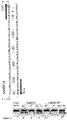
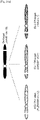
- T7E1 and Surveyor assays are widely used but often underestimate mutation frequencies because the assays detect heteroduplexes (formed by the hybridization of mutant and wild-type sequences or two different mutant sequences); they fail to detect homoduplexes formed by the hybridization of two identical mutant sequences. Thus, these assays cannot distinguish homozygous bialleic mutant clones from wild-type cells nor heterozygous biallelic mutants from heterozygous monoalleic mutants ( Fig. 22 ).
- sequence polymorphisms near the nuclease target site can produce confounding results because the enzymes can cleave heteroduplexes formed by hybridization of these different wild-type alleles.
- RFLP analysis is free of these limitations and therefore is a method of choice. Indeed, RFLP analysis was one of the first methods used to detect engineered nuclease-mediated mutations. Unfortunately, however, it is limited by the availability of appropriate restriction sites.
- the components of the CRISPR/Cas9 system used in the methods of the invention may be provided in a kit for genotyping mutations or variations in an isolated biological sample.
- the components may be provided in a kit for genotyping nucleic acid sequences in pathogenic microorganisms in an isolated biological sample.
- a guide RNA, Cas9 protein-encoding nucleic acid or Cas9 protein are as described in the above.
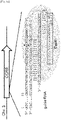
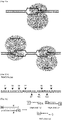
- a Cas9 target sequence consists of a 20-bp DNA sequence complementary to crRNA or a chimeric guide RNA and the trinucleotide (5'-NGG-3') protospacer adjacent motif (PAM) recognized by Cas9 itself ( Fig. 1A ).
- the Cas9-coding sequence (4,104 bp), derived from Streptococcus pyogenes strain M1 GAS (NC_002737.1), was reconstituted using the human codon usage table and synthesized using oligonucleotides.
- 1-kb DNA segments were assembled using overlapping ⁇ 35-mer oligonucleotides and Phusion polymerase (New England Biolabs) and cloned into T-vector (SolGent).
- SolGent SolGent
- a full-length Cas9 sequence was assembled using four 1-kbp DNA segments by overlap PCR.
- the Cas9-encoding DNA segment was subcloned into p3s, which was derived from pcDNA3.1 (Invitrogen).
- a peptide tag (NH2-GGSGPPKKKRKVYPYDVPDYA-COOH, SEQ ID NO: 2) containing the HA epitope and a nuclear localization signal (NLS) was added to the C-terminus of Cas9. Expression and nuclear localization of the Cas9 protein in HEK 293T cells were confirmed by western blotting using anti-HA antibody (Santa Cruz).
- the Cas9 cassette was subcloned into pET28-b(+) and transformed into BL21(DE3).
- the expression of Cas9 was induced using 0.5 mM IPTG for 4 h at 25 °C.
- the Cas9 protein containing the His6-tag at the C terminus was purified using Ni-NTA agarose resin (Qiagen) and dialyzed against 20 mM HEPES (pH 7.5), 150 mM KCl, 1 mM DTT, and 10% glycerol (1).
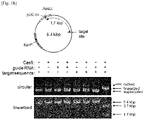
- Cas9 cleaved the plasmid DNA efficiently at the expected position only in the presence of the synthetic RNA and did not cleave a control plasmid that lacked the target sequence ( Fig. 1B ).
- a RFP-GFP reporter was used to investigate whether the Cas9/guide RNA complex can cleave the target sequence incorporated between the RFP and GFP sequences in mammalian cells.
- the GFP sequence is fused to the RFP sequence out-of-frame (2).
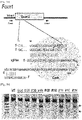
- the active GFP is expressed only when the target sequence is cleaved by site-specific nucleases, which causes frameshifting small insertions or deletions (indels) around the target sequence via error-prone non-homologous end-joining (NHEJ) repair of the double-strand break (DSB) ( Fig 2 ).
- NHEJ error-prone non-homologous end-joining
- the RFP-GFP reporter plasmids used in this study were constructed as described previously (2). Oligonucleotides corresponding to target sites (Table 1) were synthesized (Macrogen) and annealed. The annealed oligonucleotides were ligated into a reporter vector digested with EcoRI and BamHI.
- HEK 293T cells were co-transfected with Cas9-encoding plasmid (0.8 ⁇ g) and the RFP-GFP reporter plasmid (0.2 ⁇ g) in a 24-well plate using Lipofectamine 2000 (Invitrogen).
- chimeric RNA (1 ⁇ g) prepared by in vitro transcription was transfected using Lipofectamine 2000.
- transfected cells were subjected to flow cytometry and cells expressing both RFP and GFP were counted.
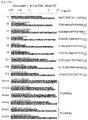
- GFP-expressing cells were obtained only when the cells were transfected first with the Cas9 plasmid and then with the guide RNA 12 h later ( Fig. 2 ), demonstrating that RGENs could recognize and cleave the target DNA sequence in cultured human cells.
- GFP-expressing cells were obtained by serial-transfection of the Cas9 plasmid and the guide RNA rather than co-transfection.
- Table 1 Gene sequence (5' to 3') SEQ ID NO.
- Oligonucleotides used for the construction of the reporter plasmid CCR5 F AATTCATGACATCAATTATTATACATCGGAGGAG 3 R GATCCTCCTCCGATGTATAATAATTGATGTCATG 4 Primers used in the T7E1 assay CCR5 F1 CTCCATGGTGCTATAGAGCA 5 F2 GAGCCAAGCTCTCCATCTAGT 6 R GCCCTGTCAAGAGTTGACAC 7 C4BPB F1 TATTTGGCTGGTTGAAAGGG 8 R1 AAAGTCATGAAATAAACACACCCA 9 F2 CTGCATTGATATGGTAGTACCATG 10 R2 GCTGTTCATTGCAATGGAATG 11 Primers used for the amplification of off-target sites ADCY5 F1 GCTCCCACCTTAGTGCTCTG 12 R1 GGTGGCAGGAACCTGTATGT 13 F2 GTCATTGGCCAGAGATGTGGA 14 R2 GTCCCATGACAGGCGTGTAT 15 KCNJ6 F GCCTGGCCAAGTTTCAGT
- T7E1 T7 endonuclease I
- K562 cells were transfected with 20 ⁇ g of Cas9-encoding plasmid using the 4D-Nucleofector, SF Cell Line 4D-Nucleofector X Kit, Program FF-120 (Lonza) according to the manufacturer's protocol.
- K562 ATCC, CCL-243 cells were grown in RPMI-1640 with 10% FBS and the penicillin/streptomycin mix (100 U/ml and 100 ⁇ g/ml, respectively).
- in vitro transcribed chimeric RNA was nucleofected into 1 ⁇ 10 6 K562 cells.
- the in vitro transcribed chimeric RNA had been prepared as described in the Example 1-2.
- the most striking off-target sites associated with these CCR5-specific engineered nucleases reside in the CCR2 locus, a close homolog of CCR5, located 15-kbp upstream of CCR5.
- the present inventors intentionally chose the target site of our CCR5-specific RGEN to recognize a region within the CCR5 sequence that has no apparent homology with the CCR2 sequence.
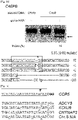
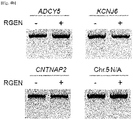
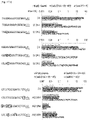
- the present inventors investigated whether the CCR5-specific RGEN had off-target effects. To this end, we searched for potential off-target sites in the human genome by identifying sites that are most homologous to the intended 23-bp target sequence. As expected, no such sites were found in the CCR2 gene. Instead, four sites, each of which carries 3-base mismatches with the on-target site, were found ( Fig. 4A ). The T7E1 assays showed that mutations were not detected at these sites (assay sensitivity, ⁇ 0.5%), demonstrating extraordinar specificities of RGENs ( Fig. 4B ).
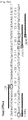
- PCR was used to detect the induction of chromosomal deletions in cells separately transfected with plasmids encoding the ZFN and RGEN specific to CCR5. Whereas the ZFN induced deletions, the RGEN did not ( Fig. 4C ).
- RGENs was reprogrammed by replacing the CCR5-specific guide RNA with a newly-synthesized RNA designed to target the human C4BPB gene, which encodes the beta chain of C4b-binding protein, a transcription factor.
- RGENs can be delivered into cells in many different forms.
- RGENs consist of Cas9 protein, crRNA, and tracrRNA.
- the two RNAs can be fused to form a single-chain guide RNA (sgRNA).
- sgRNA single-chain guide RNA
- a plasmid that encodes Cas9 under a promoter such as CMV or CAG can be transfected into cells.
- crRNA, tracrRNA, or sgRNA can also be expressed in cells using plasmids that encode these RNAs.
- Use of plasmids however, often results in integration of the whole or part of the plasmids in the host genome.
- the bacterial sequences incorporated in plasmid DNA can cause unwanted immune response in vivo.
- Plasmid DNA can persist in cells for several days post-transfection, aggravating off-target effects of RGENs.
- Recombinant Cas9 protein complexed with in vitro transcribed guide RNA to induce targeted disruption of endogenous genes in human cells.
- Recombinant Cas9 protein fused with the hexa-histidine tag was expressed in and purified from E. coli using standard Ni ion affinity chromatography and gel filtration. Purified recombinant Cas9 protein was concentrated in storage buffer (20 mM HEPES pH 7.5, 150 mM KCl, 1 mM DTT, and 10% glycerol).
- Cas9 protein/sgRNA complex was introduced directly into K562 cells by nucleofection: 1 ⁇ 10 6 K562 cells were transfected with 22.5-225 (1.4-14 ⁇ M) of Cas9 protein mixed with 100 ug (29 ⁇ M) of in vitro transcribed sgRNA (or crRNA 40 ug and tracrRNA 80 ug) in 100 ⁇ l solution using the 4D-Nucleofector, SF Cell Line 4D-Nucleofector X Kit, Program FF-120 (Lonza) according to the manufacturer's protocol. After nucleofection, cells were placed in growth media in 6-well plates and incubated for 48 hr.
- Cas9 protein/sgRNA complex induced targeted mutation at the CCR5 locus at frequencies that ranged from 4.8 to 38% in a sgRNA or Cas9 protein dose-dependent manner, on par with the frequency obtained with Cas9 plasmid transfection (45%).
- Cas9 protein/crRNA/tracrRNA complex was able to induce mutations at a frequency of 9.4%.
- Cas9 protein alone failed to induce mutations.
- Example 3 RNA-guided genome editing in mice ( reference example )
- the forkhead box N1 (Foxnl) gene which is important for thymus development and keratinocyte differentiation (Nehls et al., 1996), and the protein kinase, DNA activated, catalytic polypeptide (Prkdc) gene, which encodes an enzyme critical for DNA DSB repair and recombination (Taccioli et al., 1998) were used.
- Cas9 mRNA and sgRNAs were synthesized in vitro from linear DNA templates using the mMESSAGE mMACHINE T7 Ultra kit (Ambion) and MEGAshortscript T7 kit (Ambion), respectively, according to the manufacturers' instructions, and were diluted with appropriate amounts of diethyl pyrocarbonate (DEPC, Sigma)-treated injection buffer (0.25 mM EDTA, 10 mM Tris, pH 7.4). Templates for sgRNA synthesis were generated using oligonucleotides listed in Table 3. Recombinant Cas9 protein was obtained from ToolGen, Inc.
- RNA Name Direction Sequence (5' to 3') SEQ ID NO Foxnl #1 sgRNA F 31 Foxnl #2 sgRNA F 32 Foxnl #3 sgRNA F 33 Foxnl #4 sgRNA F 34 Foxnl #5 sgRNA F 35 Prkdc #1 sgRNA F 36 Prkdc #2 sgRNA F 37 Prkdc #3 sgRNA F 38 Prkdc #4 sgRNA F 39
- Cas9 mRNA and sgRNAs in M2 medium were injected into the cytoplasm of fertilized eggs with well-recognized pronuclei using a Piezo-driven micromanipulator (Prime Tech).
- the recombinant Cas9 protein Foxnl-sgRNA complex was diluted with DEPC-treated injection buffer (0.25 mM EDTA, 10 mM Tris, pH 7.4) and injected into male pronuclei using a TransferMan NK2 micromanipulator and a FemtoJet microinjector (Eppendorf).
- the manipulated embryos were transferred into the oviducts of pseudopregnant foster mothers to produce live animals, or were cultivated in vitro for further analyses.
- T7E1 assays were performed as previously described using genomic DNA samples from tail biopsies and lysates of whole embryos (Cho et al., 2013).
- the genomic region encompassing the RGEN target site was PCR-amplified, melted, and re-annealed to form heteroduplex DNA, which was treated with T7 endonuclease 1 (New England Biolabs), and then analyzed by agarose gel electrophoresis. Potential off-target sites were identified by searching with bowtie 0.12.9 and were also similarly monitored by T7E1 assays.
- the primer pairs used in these assays were listed in Tables 4 and 5.
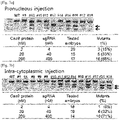
- mutant fractions (the number of mutant embryos/the number of total embryos) were dose-dependent, ranging from 33% (1 ng/ ⁇ l sgRNA) to 91% (100 ng/ ⁇ l) ( Fig. 6b ).
- Sequence analysis confirmed mutations in the Foxnl gene; most mutations were small deletions ( Fig. 6c ), reminiscent of those induced by ZFNs and TALENs (Kim et al., 2013).
- Prkdc-targeted mice To generate Prkdc-targeted mice, we applied a 5-fold higher concentration of Cas9 mRNA (50 ng/ ⁇ l) with increasing doses of Prkdc-sgRNA (50, 100, and 250 ng/ ⁇ l). Again, the birth rates were very high, ranging from 51% to 60%, enough to produce a sufficient number of newborns for the analysis (Table 6). The mutant fraction was 57% (21 mutant founders among 37 newborns) at the maximum dose of Prkdc-sgRNA. These birth rates obtained with RGENs were approximately 2- to 10-fold higher than those with TALENs reported in our previous study (Sung et al., 2013). These results demonstrate that RGENs are potent gene-targeting reagents with minimal toxicity.
- Example 4 RNA-guided genome editing in plants (reference example) 4-1. Production of Cas9 protein
- the Cas9 coding sequence (4104 bps), derived from Streptococcus pyogenes strain M1 GAS (NC_002737.1), was cloned to pET28-b(+) plasmid.
- a nuclear targeting sequence (NLS) was included at the protein N-terminus to ensure the localization of the protein to the nucleus.
- pET28-b(+) plasmid containing Cas9 ORF was transformed into BL21(DE3).
- Cas9 was then induced using 0.2 mM IPTG for 16 hrs at 18°C and purified using Ni-NTA agarose beads (Qiagen) following the manufacturer's instructions. Purified Cas9 protein was concentrated using Ultracel - 100K (Millipore).
- the genomic sequence of the Arabidopsis gene encoding the BRI1 was screened for the presence of a NGG motif, the so called protospacer adjacent motif (PAM), in an exon which is required for Cas9 targeting
- PAM protospacer adjacent motif
- sgRNAs were produced in vitro using template DNA. Each template DNA was generated by extension with two partially overlapped oligonucleotides (Macrogen, Table X1) and Phusion polymerase (Thermo Scientific) using the following conditions - 98°C 30 sec ⁇ 98°C 10 sec, 54°C 20 sec, 72°C 2 min ⁇ x20, 72°C 5 min.
- the extended DNA was purified and used as a template for the in vitro production of the guide RNA's using the MEGAshortscript T7 kit (Life Technologies). Guide RNA were then purified by Phenol/Chloroform extraction and ethanol precipitation.
- 10 ul of purified Cas9 protein (12 ⁇ g/ ⁇ l) and 4 ul each of two sgRNAs (11 ⁇ g/ ⁇ l) were mixed in 20 ⁇ l NEB3 buffer (New England Biolabs) and incubated for 10 min at 37°C.
- the leaves of 4-week-old Arabidopsis seedlings grown aseptically in petri dishes were digested in enzyme solution (1% cellulose R10, 0.5% macerozyme R10, 450 mM mannitol, 20 mM MES pH 5.7 and CPW salt) for 8 ⁇ 16 hrs at 25°C with 40 rpm shaking in the dark.
- Enzyme/protoplast solutions were filtered and centrifuged at 100 X g for 3 ⁇ 5 min.
- Protoplasts were re-suspended in CPW solution after counting cells under the microscope (X100) using a hemacytometer.
- protoplasts were re-suspended at 1 ⁇ 10 6 /ml in MMG solution (4mM HEPES pH 5.7, 400 mM mannitol and 15 mM MgCl 2 ).
- MMG solution 4mM HEPES pH 5.7, 400 mM mannitol and 15 mM MgCl 2 .
- 200 ⁇ E (200,000 protoplasts) of the protoplast suspension were gently mixed with 3.3 or 10 uL of Cas9/sgRNA complex [Cas9 protein (6 ⁇ g/ ⁇ L) and two sgRNAs (2.2 ⁇ g/ ⁇ L each)] and 200 ul of 40% polyethylene glycol transfection buffer (40% PEG4000, 200 mM mannitol and 100 mM CaCl 2 ) in 2 ml tubes.
- Example 5 Cas9 protein transduction using a cell-penetrating peptide or protein transduction domain (reference example) 5-1. Construction of His-Cas9-encoding plasmid
- Cas9 with a cysteine at the C-terminal was prepared by PCR amplification using the previously described Cas9 plasmid ⁇ Cho, 2013 #166 ⁇ as the template and cloned into pET28-(a) vector (Novagen, Merk Millipore, Germany) containing His-tag at the N-terminus.
- 293T Human embryonic kidney cell line
- HeLa human ovarian cancer cell line
- DMEM Gibco-BRL Rockville
- E. coli BL21 cells were transformed with thepET28-(a) vector encoding Cas9 and plated onto Luria-Bertani (LB) agar medium containing 50 ⁇ g/mL kanamycin (Amresco, Solon, OH). Next day, a single colony was picked and cultured in LB broth containing 50 ⁇ g/mL kanamycin at 37°C overnight. Following day, this starter culture at 0.1 OD600 was inoculated into Luria broth containing 50 ⁇ g/mL kanamycin and incubated for 2 hrs at 37°C until OD600 reached to 0.6-0.8. To induce Cas9 protein expression, the cells were cultured at 30°C overnight after addition of isopropyl- ⁇ -D-thiogalactopyranoside (IPTG) (Promega, Madison, WI) to the final concentration of 0.5 mM.
- IPTG isopropyl- ⁇ -D-thiogalactopyranoside
- the cells were collected by centrifugation at 4000 rpm for 15-20 mins, resuspended in a lysis buffer (20 mM Tris-Cl pH8.0, 300mM NaCl, 20 mM imidazole, IX protease inhibitor cocktail, 1 mg/ml lysozyme), and lysed by sonication (40% duty, 10 sec pulse, 30 sec rest, for 10 mins on ice).
- the soluble fraction was separated as the supernatant after centrifugation at 15,000 rpm for 20 mins at 4°C.
- Cas9 protein was purified at 4°C using a column containing Ni-NTA agarose resin (QIAGEN) and AKTA prime instrument (AKTA prime, GE Healthcare, UK).
- soluble protein fractions were loaded onto Ni-NTA agarose resin column (GE Healthcare, UK) at the flow rate of 1 mL/min.
- the column was washed with a washing buffer (20 mM Tris-Cl pH8.0, 300 mM NaCl, 20 mM imidazole, IX protease inhibitor cocktail) and the bound protein was eluted at the flow rate of 0.5 ml/min with an elution buffer (20 mM Tris-Cl pH8.0, 300mM NaCl, 250mM imidazole, IX protease inhibitor cocktail).
- the pooled eluted fraction was concentrated and dialyzed against storage buffer (50 mM Tris-HCl, pH8.0, 200 mM KCl, 0.1 mM EDTA, 1 mM DTT, 0.5 mM PMSF, 20% Glycerol). Protein concentration was quantitated by Bradford assay (Biorad, Hercules, CA) and purity was analyzed by SDS-PAGE using bovine serum albumin as the control.
- sgRNA (1 ⁇ g) was gently added to various amounts of C9R4LC peptide (ranging from 1 to 40 weight ratio) in 100 ⁇ l of DPBS (pH 7.4). This mixture was incubated at room temperature for 30 mins and diluted to 10 folds using RNAse-free deionized water. The hydrodynamic diameter and z-potential of the formed nanoparticles were measured using dynamic light scattering (Zetasizer-nano analyzer ZS; Malvern instruments, Worcestershire, UK).
- Cas9-9R4L and sgRNA-C9R4LC were treated to the cells as follows: 1 ⁇ g of sgRNA and 15 ⁇ g of C9R4LC peptide were added to 250 mL of OPTIMEM medium and incubated at room temperature for 30 mins. At 24 hrs after seeding, cells were washed with OPTIMEM medium and treated with sgRNA-C9R4LC complex for 4 hrs at 37°C. Cells were washed again with OPTIMEM medium and treated with Cas9-9R4L for 2 hrs at 37°C. After treatment, culture media was replaced with serum-containing complete medium and incubated at 37°C for 24 hrs before the next treatment. Same procedure was followed for multiple treatments of Cas9 and sgRNA for three consecutive days.
- Cas9-9R4L and sgRNA-9R4L can edit endogenous genes in cultured mammalian cells without the use of additional delivery tools
- Cas9-9R4L and sgRNA-9R4L can edit endogenous genes in cultured mammalian cells without the use of additional delivery tools.
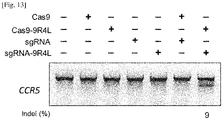
- T7E1 assay showed that 9% of CCR5 gene was disrupted in cells treated with both Cas9-9R4L and sgRNA-9R4L and that the CCR5 gene disruption was not observed in control cells including those untreated, treated with either Cas9-9R or sgRNA-9R4L, or treated with both unmodified Cas-9 and sgRNA ( Fig 13 ), suggesting that the treatment with Cas9-9R4L protein and sgRNA conjugated with 9R4L, but not unmodified Cas9 and sgRNA, can lead to efficient genome editing in mammalian cells.
- Example 6 Control of off-target mutation according to guide RNA structure (reference example)
- our guide RNA had two additional guanine nucleotides at the 5' end, which are required for efficient transcription by T7 polymerase in vitro. No such additional nucleotides were included in the sgRNA used by others.
- the RNA sequence of our guide RNA can be shown as 5'-GGX 20 , whereas 5'-GX 19 , in which X 20 or GX 19 corresponds to the 20-bp target sequence, represents the sequence used by others.
- the first guanine nucleotide is required for transcription by RNA polymerase in cells. To test whether off-target RGEN effects can be attributed to these differences, we chose four RGENs that induced off-target mutations in human cells at high frequencies(13).
- Example 7 Paired Cas9 nickases (reference example)
- SSBs single-strand breaks
- HDR homology-directed repair
- nickase-induced targeted mutagenesis via HDR is much less efficient than is nuclease-induced mutagenesis.
- paired Cas9 nickases would produce composite DSBs, which trigger DNA repair via NHEJ or HDR, leading to efficient mutagenesis ( Fig. 16A ).
- paired nickases would double the specificity of Cas9-based genome editing.
- Cas9 nucleases and nickases designed to target sites in the AAVS1 locus ( Fig. 16B ) in vitro via fluorescent capillary electrophoresis.
- Cas9 nickases composed of guide RNA and a mutant form of Cas9 in which a catalytic aspartate residue is changed to an alanine (D10A Cas9) cleaved only one strand, producing site-specific nicks ( Fig. 16C , D ).
- some nickases AS1, AS2, AS3, and S6 in Fig.
- the Cas9 nuclease complexed with the S2 sgRNA was equally efficient at this site and the on-target site.
- D10A Cas9 complexed with the S2 and AS2 sgRNAs discriminated this site from the on-target site by a factor of 270 fold.
- This paired nickase also discriminated the AS2 off-target sites (Off-1 and Off-9 in Fig. 17B ) from the on-target site by factors of 160 fold and 990 fold, respectively.
- Example 8 Chromosomal DNA splicing induced by paired Cas9 nickases (reference example)
- Two concurrent DSBs produced by engineered nucleases such as ZFNs and TALENs can promote large deletions of the intervening chromosomal segments.
- DNA sequences of the PCR products confirmed the deletion events ( Fig. 20C ).
- the sgRNA-matching sequence remained intact in two out of seven deletion-specific PCR amplicons (underlined in Fig. 20C ).
- paired Cas9 nickases allow targeted mutagenesis and large deletions of up to 1-kbp chromosomal segments in human cells.
- paired nickases did not induce indels at off-target sites at which their corresponding nucleases induce mutations.
- paired nickases did not promote unwanted translocations associated with off-target DNA cleavages.
- paired nickases double the specificity of Cas9-mediated mutagenesis and will broaden the utility of RNA-guided enzymes in applications that require precise genome editing such as gene and cell therapy.
- paired nickases double the specificity of Cas9-mediated mutagenesis and will broaden the utility of RNA-guided enzymes in applications that require precise genome editing such as gene and cell therapy.
- One caveat to this approach is that two highly active sgRNAs are needed to make an efficient nickase pair, limiting targetable sites.
- Example 9 Genotyping with CRISPR/Cas-derived RNA-guided endonucleases ( reference example )
- RGENs can be used in Restriction fragment length polymorphism (RFLP) analysis, replacing conventional restriction enzymes.
- Engineered nucleases including RGENs induce indels at target sites, when the DSBs caused by the nucleases are repaired by the error-prone non-homologous end-joining (NHEJ) system.
- NHEJ error-prone non-homologous end-joining
- crRNA and tracrRNA were prepared by in vitro transcription using MEGAshortcript T7 kit (Ambion) according to the manufacturer's instruction. Transcribed RNAs were resolved on a 8% denaturing urea-PAGE gel. The gel slice containing RNA was cut out and transferred to elution buffer. RNA was recovered in nuclease-free water followed by phenol:chloroform extraction, chloroform extraction, and ethanol precipitation. Purified RNA was quantified by spectrometry.
- Templates for crRNA were prepared by annealing an oligonucleotide whose sequence is shown as 5'-GAAATTAATACGACTCACTATAGGX 20 GTTTTAGAGCTATGCTGTTTTG-3'(SEQ ID NO: 76), in which X 20 is the target sequence, and its complementary oligonucleotide.
- the template for tracrRNA was synthesized by extension of forward and reverse oligonucleotides
- the Cas9 DNA construct used in our previous Example which encodes Cas9 fused to the His6-tag at the C terminus, was inserted in the pET-28a expression vector.
- the recombinant Cas9 protein was expressed in E . coli strain BL21(DE3) cultured in LB medium at 25°C for 4 hour after induction with 1 mM IPTG. Cells were harvested and resuspended in buffer containing 20 mM Tris PH 8.0, 500 mM NaCl, 5 mM imidazole, and 1 mM PMSF. Cells were frozen in liquid nitrogen, thawed at 4°C, and sonicated.
- the Cas9 protein in the lysate was bound to Ni-NTA agarose resin (Qiagen), washed with buffer containing 20 mM Tris pH 8.0, 500 mM NaCl, and 20 mM imidazole, and eluted with buffer containing 20 mM Tris pH 8.0, 500 mM NaCl, and 250 mM imidazole.
- Purified Cas9 protein was dialyzed against 20 mM HEPES (pH 7.5), 150 mM KCl, 1 mM DTT, and 10% glycerol and analyzed by SDS-PAGE.
- the T7E1 assay was performed as following. In brief, PCR products amplified using genomic DNA were denatured at 95°C, reannealed at 16°C, and incubated with 5 units of T7 Endonuclease I (New England BioLabs) for 20 min at 37°C. The reaction products were resolved using 2 to 2.5% agarose gel electrophoresis.
- PCR products (100-150 ng) were incubated for 60 min at 37°C with optimized concentrations (Table 10) of Cas9 protein, tracrRNA, crRNA in 10 ⁇ l NEB buffer 3 (IX). After the cleavage reaction, RNase A (4 ⁇ g) was added, and the reaction mixture was incubated for 30 min at 37°C to remove RNA. Reactions were stopped with 6X stop solution buffer containing 30% glycerol, 1.2% SDS, and 100 mM EDTA. Products were resolved with 1-2.5% agarose gel electrophoresis and visualized with EtBr staining.
- New RGENs with desired DNA specificities can be readily created by replacing crRNA; no de novo purification of custom proteins is required once recombinant Cas9 protein is available.
- Engineered nucleases, including RGENs induce small insertions or deletions (indels) at target sites when the DSBs caused by the nucleases are repaired by error-prone non-homologous end-joining (NHEJ).
- NHEJ error-prone non-homologous end-joining
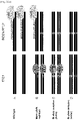
- RGENs that are designed to recognize the target sequences cleave wild-type sequences efficiently but cannot cleave mutant sequences with indels ( Fig. 22 ).
- RGENs can differentially cleave plasmids that contain wild-type or modified C4BPB target sequences that harbor 1- to 3-base indels at the cleavage site. None of the six plasmids with these indels were cleaved by a C4BPB-specific RGEN5 composed of target-specific crRNA, tracrRNA, and recombinant Cas9 protein ( Fig. 23 ). In contrast, the plasmid with the intact target sequence was cleaved efficiently by this RGEN.
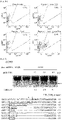
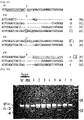
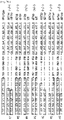
- C4BPB mutant clones used in this study have various mutations ranging from 94 bp deletion to 67 bp insertion ( Fig. 24A ). Importantly, all mutations occurred in mutant clones resulted in the loss of RGEN target site. Among 6 C4BPB clones analyzed, 4 clones have both wild-type and mutant alleles (+/-) and 2 clones have only mutant alleles (-/-).
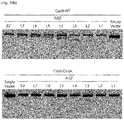
- PCR products spanning the RGEN target site amplified from wild-type K562 genomic DNA were digested completely by the RGEN composed of target-specific crRNA, tracrRNA, and recombinant Cas9 protein expressed in and purified from E. coli ( Fig. 24B /Lane 1).
- PCR amplicons of +/- clones that contained both wild type and mutant alleles were partially digested, and those of -/- cloned that did not contain the wild-type allele were not digested at all, yielding no cleavage products corresponding to the wild-type sequence ( Fig. 24B ).
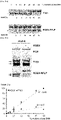
- RGEN-RFLP analysis is a quantitative method. Genomic DNA samples isolated from the C4BPB null clone and the wild-type cells were mixed at various ratios and used for PCR amplifications. The PCR products were subjected to RGEN genotyping and the T7E1 assay in parallel ( Fig. 25b ). As expected, DNA cleavage by the RGEN was proportional to the wild type to mutant ratio. In contrast, results of the T7E1 assay correlated poorly with mutation frequencies inferred from the ratios and were inaccurate, especially at high mutant %, a situation in which complementary mutant sequences can hybridize with each other to form homoduplexes.
- RGEN genotyping in short
- RGEN genotyping was applied to the analysis of mutant mouse founders that had been established by injection of TALENs into mouse one-cell embryos ( FIG. 26A ).
- RGEN genotyping was designed and used an RGEN that recognized the TALEN target site in the Pibfl gene (Table 10).
- Genomic DNA was isolated from a wild-type mouse and mutant mice and subjected to RGEN genotyping after PCR amplification.
- RGEN genotyping successfully detected various mutations, which ranged from one to 27-bp deletions ( Fig. 26B ).
- Fig. 26B Unlike the T7E1 assay, RGEN genotyping enabled differential detection of +/- and -/- founder.
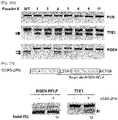
- RGENs to detect mutations induced in human cells by a CCR5-specific ZFN, representing yet another class of engineered nucleases ( Fig. 27 ). These results show that RGENs can detect mutations induced by nucleases other than RGENs themselves. In fact, we expect that RGENs can be designed to detect mutations induced by most, if not all, engineered nucleases.
- the only limitation in the design of an RGEN genotyping assay is the requirement for the GG or AG (CC or CT on the complementary strand) dinucleotide in the PAM sequence recognized by the Cas9 protein, which occurs once per 4 bp on average.
- Indels induced anywhere within the seed region of several bases in crRNA and the PAM nucleotides are expected to disrupt RGEN-catalyzed DNA cleavage. Indeed, we identified at least one RGEN site in most (98%) of the ZFN and TALEN sites.
- RGEN-RFLP analysis has applications beyond genotyping of engineered nuclease-induced mutations.
- HCT116 human colorectal cancer cell line
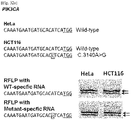
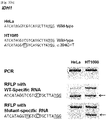
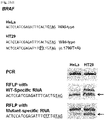
- PCR products amplified from HCT116 genomic DNA were cleaved partially by both wild-type-specific and mutant-specific RGENs, in line with the heterozygous genotype in HCT116 cells ( Fig. 29a ).
- PCR products amplified from DNA from HeLa cells harboring only wild-type alleles were digested completely by the wild-type-specific RGEN and were not cleaved at all by the mutation-specific RGEN.
- HEK293 cells harbor the 32-bp deletion (de132) in the CCR5 gene, which encodes an essential co-receptor of HIV infection: Homozygous del32 CCR5 carriers are immune to HIV infection.
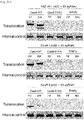
- the wild-type-specific RGEN cleaved the PCR products obtained from K562, SKBR3, or HeLa cells (used as wild-type controls) completely but those from HEK293 cells partially ( Fig. 30a ), confirming the presence of the uncleavable del32 allele in HEK293 cells.
- the del32-specific RGEN cleaved the PCR products from wild-type cells as efficiently as those from HEK293 cells.
- this RGEN had an off-target site with a single-base mismatch immediately downstream of the on-target site ( Fig. 30 ).
- RGENs that contained the perfectly-matched guide RNA specific to the wild-type sequence or mutant sequence cleaved both sequences ( Figs. 31a and 32a ).
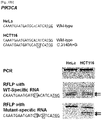
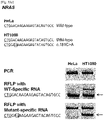
- RGENs that contained a single-base mismatched guide RNA distinguished the two sequences, enabling genotyping of three recurrent oncogenic point mutations in the KRAS, PIK3CA, and IDH1 genes in human cancer cell lines ( Fig. 29b and Figs. 33a , b ).
- RGENs as providing a platform to use simple and robust RFLP analysis for various sequence variations.
- RGENs can be used to detect various genetic variations (single nucleotide variations, small insertion/deletions, structural variations) such as disease-related recurring mutations, genotypes related to drug-response by a patient and also mutations induced by engineered nucleases in cells.
- RGEN genotyping to detect mutations induced by engineered nucleases in cells and animals. In principle, one could also use RGENs that will specifically detect and cleave naturally-occurring variations and mutations.
Landscapes
- Health & Medical Sciences (AREA)
- Life Sciences & Earth Sciences (AREA)
- Genetics & Genomics (AREA)
- Engineering & Computer Science (AREA)
- Chemical & Material Sciences (AREA)
- Organic Chemistry (AREA)
- Wood Science & Technology (AREA)
- Zoology (AREA)
- Bioinformatics & Cheminformatics (AREA)
- Biomedical Technology (AREA)
- General Engineering & Computer Science (AREA)
- Biotechnology (AREA)
- Molecular Biology (AREA)
- General Health & Medical Sciences (AREA)
- Biochemistry (AREA)
- Microbiology (AREA)
- Biophysics (AREA)
- Physics & Mathematics (AREA)
- Plant Pathology (AREA)
- Medicinal Chemistry (AREA)
- Cell Biology (AREA)
- Proteomics, Peptides & Aminoacids (AREA)
- Mycology (AREA)
- Crystallography & Structural Chemistry (AREA)
- Veterinary Medicine (AREA)
- Immunology (AREA)
- Analytical Chemistry (AREA)
- Public Health (AREA)
- Animal Behavior & Ethology (AREA)
- Epidemiology (AREA)
- Pharmacology & Pharmacy (AREA)
- Micro-Organisms Or Cultivation Processes Thereof (AREA)
- Measuring Or Testing Involving Enzymes Or Micro-Organisms (AREA)
- Enzymes And Modification Thereof (AREA)
- Breeding Of Plants And Reproduction By Means Of Culturing (AREA)
- Preparation Of Compounds By Using Micro-Organisms (AREA)
- Peptides Or Proteins (AREA)
- Medicines That Contain Protein Lipid Enzymes And Other Medicines (AREA)
- Pharmaceuticals Containing Other Organic And Inorganic Compounds (AREA)
Description
- The present invention generally relates to targeted genome editing in eukaryotic cells or organisms. More particularly, the present invention relates to methods for cleaving a target DNA in eukaryotic cells or organisms comprising a guide RNA specific for the target DNA and Cas9 protein-encoding nucleic acid or Cas9 protein, and uses thereof.
- CRISPRs (Clustered Regularly Interspaced Short Palindromic Repeats) are loci containing multiple short direct repeats that are found in the genomes of approximately 40% of sequenced bacteria and 90% of sequenced archaea. CRISPR functions as a prokaryotic immune system, in that it confers resistance to exogenous genetic elements such as plasmids and phages. The CRISPR system provides a form of acquired immunity. Short segments of foreign DNA, called spacers, are incorporated into the genome between CRISPR repeats, and serve as a memory of past exposures. CRISPR spacers are then used to recognize and silence exogenous genetic elements in a manner analogous to RNAi in eukaryotic organisms.
- Cas9, an essential protein component in the Type II CRISPR/Cas system, forms an active endonuclease when complexed with two RNAs termed CRISPR RNA (crRNA) and trans-activating crRNA (tracrRNA), thereby slicing foreign genetic elements in invading phages or plasmids to protect the host cells. crRNA is transcribed from the CRISPR element in the host genome, which was previously captured from such foreign invaders. Recently, Jinek et al. (1) demonstrated that a single-chain chimeric RNA produced by fusing an essential portion of crRNA and tracrRNA could replace the two RNAs in the Cas9/RNA complex to form a functional endonuclease.
- CRISPR/Cas systems offer an advantage to zinc finger and transcription activator-like effector DNA-binding proteins, as the site specificity in nucleotide binding CRISPR-Cas proteins is governed by a RNA molecule instead of the DNA-binding protein, which can be more challenging to design and synthesize.
- However, until now, a genome editing method using the RNA-guided endonuclease (RGEN) based on CRISPR/Cas system has not been developed.
- Meanwhile, Restriction fragment length polymorphism (RFLP) is one of the oldest, most convenient, and least expensive methods of genotyping that is still used widely in molecular biology and genetics but is often limited by the lack of appropriate sites recognized by restriction endonucleases.
- Engineered nuclease-induced mutations are detected by various methods, which include mismatch-sensitive T7 endonuclease 1 (T7E1) or Surveyor nuclease assays, RFLP, capillary electrophoresis of fluorescent PCR products, Dideoxy sequencing, and deep sequencing. The T7E1 and Surveyor assays are widely used but are cumbersome. Furthermore, theses enzymes tend to underestimate mutation frequencies because mutant sequences can form homoduplexes with each other and cannot distinguish homozygous bi-allelic mutant clones from wildtype cells. RFLP is free of these limitations and therefore is a method of choice. Indeed, RFLP was one of the first methods to detect engineered nuclease-mediated mutations in cells and animals. Unfortunately, however, RFLP is limited by the availability of appropriate restriction sites. It is possible that no restriction sites are available at the target site of interest.
- Until now, a genome editing and genotyping method using the RNA-guided endonuclease (RGEN) based on CRISPR/Cas system has not been developed.
- Under these circumstances, the present inventors have made many efforts to develop a genome editing method based on CRISPR/Cas system and finally established a programmable RNA-guided endonuclease that cleave DNA in a targeted manner in eukaryotic cells and organisms.
- In addition, the present inventors have made many efforts to develop a novel method of using RNA-guided endonucleases (RGENs) in RFLP analysis. They have used RGENs to genotype recurrent mutations found in cancer and those induced in cells and organisms by engineered nucleases including RGENs themselves, thereby completing the present invention.
- It is an object of the present invention to provide methods for cleaving a target DNA in mammalian cells comprising contacting the target DNA with a Type II Clustered Regularly interspaced Short Palindromic Repeats (CRISPR)/CRISPR-associated protein 9 (Cas9) system comprising a guide RNA specific for the target DNA, and a Cas9 protein, as defined in the claims. A further object of the invention is to provide a method of manufacturing a mammalian cell comprising the above CRISPR/Cas9 system.
- In one aspect, the present invention provides an in vitro or ex vivo method of introducing double-stranded breaks into a target DNA in a mammalian cell, the method comprising contacting the target DNA with a CRISPR/Cas9 system comprising (a) a Cas9 protein with one nuclear localization signal (NLS) added to the C-terminus of the Cas9 protein; and (b) a single-chain guide RNA comprising a CRISPR RNA (crRNA) portion fused to a trans-activating crRNA (tracrRNA) portion, wherein the method comprises transfecting the mammalian cell with a nucleic acid encoding the Cas9 protein followed by transfecting the mammalian cell with the single-chain guide RNA.
- In one embodiment, the Cas9 protein is a Streptococcus pyogenes Cas9 protein.
- In another embodiment, the single-chain guide RNA is an in vitro transcribed RNA.
- In another embodiment, the target DNA is a genomic DNA.
- In another embodiment, the target DNA sequence consists of 20 nucleotides complementary to the crRNA portion of the single-chain guide RNA and a trinucleotide protospacer adjacent motif (PAM), and wherein the PAM consists of the trinucleotide 5'-NGG-3'.
- In another embodiment, the crRNA portion of the single-chain guide RNA comprises 20 nucleotides complementary to the target DNA sequence.
- In another embodiment, the mammalian cell is a human cell.
- In a further aspect, the invention provides in vitro or ex vivo methods of preparing the mammalian cell of the invention, the method comprising serial-transfecting a mammalian cell with (a) a nucleic acid encoding a Cas9 protein with one nuclear localization signal (NLS) added to the C-terminus of the Cas9 protein; and (b) a single-chain guide RNA comprising a CRISPR RNA (crRNA) portion fused to a trans-activating crRNA (tracrRNA) portion, wherein the method comprises transfecting the mammalian cell with the nucleic acid followed by transfecting the mammalian cell with the single-chain guide RNA.
- In one embodiment of the methods, the Cas9 protein is a Streptococcus pyogenes Cas9 protein.
- In another embodiment of the methods, the single-chain guide RNA is an in vitro transcribed RNA.
- In another embodiment of the methods, the mammalian cell is a human cell.
-
-
Fig. 1 shows Cas9-catalyzed cleavage of plasmid DNA in vitro. (a) Schematic representation of target DNA and chimeric RNA sequences. Red triangles indicate cleavage sites. The PAM sequence recognized by Cas9 is shown in bold. The sequences in the guide RNA derived from crRNA and tracrRNA are shown in box and underlined, respectively. (b) In vitro cleavage of plasmid DNA by Cas9. An intact circular plasmid or ApaLI-digested plasmid was incubated with Cas9 and guide RNA. -
Fig. 2 shows Cas9-induced mutagenesis at an episomal target site. (a) Schematic overview of cell-based assays using a RFP-GFP reporter. GFP is not expressed from this reporter because the GFP sequence is fused to the RFP sequence out-of-frame. The RFP-GFP fusion protein is expressed only when the target site between the two sequences is cleaved by a site-specific nuclease. (b) Flow cytometry of cells transfected with Cas9. The percentage of cells that express the RFP-GFP fusion protein is indicated. -
Fig. 3 shows RGEN-driven mutations at endogenous chromosomal sites. (a) CCR5 locus. (b) C4BPB locus. (Top) The T7E1 assay was used to detect RGEN-driven mutations. Arrows indicate the expected position of DNA bands cleaved by T7E1. Mutation frequencies (Indels (%)) were calculated by measuring the band intensities. (Bottom) DNA sequences of the CCR5 and C4BPB wild-type (WT) and mutant clones. The region of the target sequence complementary to the guide RNA is shown in box. The PAM sequence is shown in bold. Triangles indicate the cleavage site. Bases corresponding to microhomologies are underlined. The column on the right indicates the number of inserted or deleted bases. -
Fig. 4 shows that RGEN-driven off-target mutations are undetectable. (a) On-target and potential off-target sequences. The human genome was searched in silico for potential off-target sites. Four sites were identified, each of which carries 3-base mismatches with the CCR5 on-target site. Mismatched bases are underlined. (b) The T7E1 assay was used to investigate whether these sites were mutated in cells transfected with the Cas9/RNA complex. No mutations were detected at these sites. N/A (not applicable), an intergenic site. (c) Cas9 did not induce off-target-associated chromosomal deletions. The CCR5-specific RGEN and ZFN were expressed in human cells. PCR was used to detect the induction of the 15-kb chromosomal deletions in these cells. -
Fig. 5 shows RGEN-induced Foxnl gene targeting in mice. (a) A schematic diagram depicting a sgRNA specific toexon 2 of the mouse Foxnl gene PAM inexon 2 is shown in red and the sequence in the sgRNA that is complementary toexon 2 is underlined. Triangles indicate cleavage sites. (b) Representative T7E1 assays demonstrating gene-targeting efficiencies of Cas9 mRNA plus Foxn1-specific sgRNA that were delivered via intra-cytoplasmic injection into one-cell stage mouse embryos. Numbers indicate independent founder mice generated from the highest dose. Arrows indicate bands cleaved by T7E1. (c) DNA sequences of mutant alleles observed in three Foxnl mutant founders identified in (b). The number of occurrences is shown in parentheses. (d) PCR genotyping of F1 progenies derived from crossingFoxnl founder # 108 and wild-type FVB/NTac. Note the segregation of the mutant alleles found inFoxnl founder # 108 in the progenies. -
Fig. 6 shows Foxnl gene targeting in mouse embryos by intra-cytoplasmic injection of Cas9 mRNA and Foxnl-sgRNA. (a) A representative result of a T7E1 assay monitoring the mutation rate after injecting the highest dose. Arrows indicate bands cleaved by T7E1. (b) A summary of T7E1 assay results. Mutant fractions among in vitro cultivated embryos obtained after intra-cytoplasmic injection of the indicated RGEN doses are indicated. (c) DNA sequences of Foxnl mutant alleles identified from a subset of T7E1-positive mutant embryos. The target sequence of the wild-type allele is denoted in box. -
Fig. 7 shows Foxn1 gene targeting in mouse embryos using the recombinant Cas9 protein: Foxnl-sgRNA complex. (a) and (b) are representative T7E1 assays results and their summaries. Embryos were cultivated in vitro after they underwent pronuclear (a) or intra-cytoplasmic injection (b). Numbers in red indicate T7E1-positive mutant founder mice. (c) DNA sequences of Foxnl mutant alleles identified from the in vitro cultivated embryos that were obtained by the pronucleus injection of recombinant Cas9 protein: Foxnl-sgRNA complex at the highest dose. The target sequence of the wild-type allele is denoted in box. -
Fig. 8 shows Germ-line transmission of the mutant alleles found in Foxnlmutant founder # 12. (a) fPCR analysis. (b) PCR genotyping of wild-type FVB/NTac, the founder mouse, and their F1 progenies. -
Fig. 9 shows Genotypes of embryos generated by crossing Prkdc mutant founders. Prkdc mutant founders ♂25 and ♀15 were crossed and E13.5 embryos were isolated. (a) fPCR analysis of wild-type, founder ♂25, and founder ♀15. Note that, due to the technical limitations of fPCR analysis, these results showed small differences from the precise sequences of the mutant alleles; e.g., from the sequence analysis, Δ269/Δ61/WT and Δ5+1/+7/+12/WT were identified in founders ♂25 and ♀15, respectively. (b) Genotypes of the generated embryos. -
Fig. 10 shows Cas9 protein/sgRNA complex induced targeted mutation. -
Fig. 11 shows recombinant Cas9 protein-induced mutations in Arabidopsis protoplasts. -
Fig. 12 shows recombinant Cas9 protein-induced mutant sequences in the Arabidopsis BRI1 gene. -
Fig. 13 shows T7E1 assay showing endogenous CCR5 gene disruption in 293 cells by treatment of Cas9-mal-9R4L and sgRNA/C9R4LC complex. -
Fig. 14 (a, b) shows mutation frequencies at on-target and off-target sites of RGENs reported in Fu et al. (2013). T7E1 assays analyzing genomic DNA from K562 cells (R) transfected serially with 20 µg of Cas9-encoding plasmid and with 60 µg and 120 µg of in vitro transcribed GX19 crRNA and tracrRNA, respectively (1 × 10⁶ cells), or (D) co-transfected with 1 µg of Cas9-encoding plasmid and 1 µg of GX19 sgRNA expression plasmid (2 × 10⁵ cells). -
Fig. 15 (a, b) shows comparison of guide RNA structure. Mutation frequencies of the RGENs reported in Fu et al. (2013) were measured at on-target and off-target sites using the T7E1 assay. K562 cells were co-transfected with the Cas9-encoding plasmid and the plasmid encoding GX19 sgRNA or GGX20 sgRNA. Off-target sites (OT1-3 etc.) are labeled as in Fu et al. (2013). -
Fig. 16 shows that in vitro DNA cleavage by Cas9 nickases. (a) Schematic overview of the Cas9 nuclease and the paired Cas9 nickase. The PAM sequences and cleavage sites are shown in box. (b) Target sites in the human AAVS1 locus. The position of each target site is shown in triangle, (c) Schematic overview of DNA cleavage reactions. FAM dyes (shown in box) were linked to both 5' ends of the DNA substrate. (d) DSBs and SSBs analyzed using fluorescent capillary electrophoresis. Fluorescently-labeled DNA substrates were incubated with Cas9 nucleases or nickases before electrophoresis. -
Fig. 17 shows comparison of Cas9 nuclease and nickase behavior. (a) On-target mutation frequencies associated with Cas9 nucleases (WT), nickases (D10A), and paired nickases. Paired nickases that would produce 5' overhangs or 3' overhangs are indicated. (b) Analysis of off-target effects of Cas9 nucleases and paired nickases. A total of seven potential off-target sites for three sgRNAs were analyzed. -
Fig. 18 shows paired Cas9 nickases tested at other endogenous human loci. (a,c) The sgRNA target sites at human CCR5 and BRCA2 loci. PAM sequences are indicated in red. (b,d) Genome editing activities at each target site were detected by the T7E1 assay. The repair of two nicks that would produce 5' overhangs led to the formation of indels much more frequently than did those producing 3' overhangs. -
Fig. 19 shows that paired Cas9 nickases mediate homologous recombination. (a) Strategy to detect homologous recombination. Donor DNA included an XbaI restriction enzyme site between two homology arms, whereas the endogenous target site lacked this site. A PCR assay was used to detect sequences that had undergone homologous recombination. To prevent amplification of contaminating donor DNA, primers specific to genomic DNA were used. (b) Efficiency of homologous recombination. Only amplicons of a region in which homologous recombination had occurred could be digested with XbaI; the intensities of the cleavage bands were used to measure the efficiency of this method. -
Fig. 20 shows DNA splicing induced by paired Cas9 nickases. (a) The target sites of paired nickases in the human AAVS1 locus. The distances between the AS2 site and each of the other sites are shown. Arrows indicate PCR primers, (b) Genomic deletions detected using PCR. Asterisks indicate deletion-specific PCR products. (c) DNA sequences of deletion-specific PCR products obtained using AS2 and L1 sgRNAs. Target site PAM sequences are shown in box and sgRNA-matching sequences are shown in capital letters. Intact sgRNA-matching sequences are underlined. (d) A schematic model of paired Cas9 nickase-mediated chromosomal deletions. Newly-synthesized DNA strands are shown in box. -
Fig. 21 shows that paired Cas9 nickases do not induce translocations. (a) Schematic overview of chromosomal translocations between the on-target and off-target sites. (b) PCR amplification to detect chromosomal translocations. (c) Translocations induced by Cas9 nucleases but not by the nickase pair. -
Fig. 22 shows a conceptual diagram of the T7E1 and RFLP assays. (a) Comparison of assay cleavage reactions in four possible scenarios after engineered nuclease treatment in a diploid cell: (A) wild type, (B) a monoallelic mutation, (C) different biallelic mutations (hetero), and (D) identical biallelic mutations (homo). Black lines represent PCR products derived from each allele; dashed and dotted boxes indicate insertion/deletion mutations generated by NHEJ. (b) Expected results of T7E1 and RGEN digestion resolved by electrophoresis. -
Fig. 23 shows in vitro cleavage assay of a linearized plasmid containing the C4BPB target site bearing indels. DNA sequences of individual plasmid substrates (upper panel). The PAM sequence is underlined. Inserted bases are shown in box. Arrows (bottom panel) indicate expected positions of DNA bands cleaved by the wild-type-specific RGEN after electrophoresis. -
Fig. 24 shows genotyping of mutations induced by engineered nucleases in cells via RGEN-mediated RFLP. (a) Genotype of C4BPB mutant K562 cell clones. (b) Comparison of the mismatch-sensitive T7E1 assay with RGEN-mediated RFLP analysis. Black arrows indicate the cleavage product by treatment of T7E1 enzyme or RGENs. -
Fig. 25 shows genotyping of RGEN-induced mutations via the RGEN-RFLP technique. (a) Analysis of C4BPB-disrupted clones using RGEN-RFLP and T7E1 assays. Arrows indicate expected positions of DNA bands cleaved by RGEN or T7E1. (b) Quantitative comparison of RGEN-RFLP analysis with T7E1 assays. Genomic DNA samples from wild-type and C4BPB-disrupted K562 cells were mixed in various ratios and subjected to PCR amplification. (c) Genotyping of RGEN-induced mutations in the HLA-B gene in HeLa cells with RFLP and T7E1 analyses. -
Fig. 26 shows genotyping of mutations induced by engineered nucleases in organisms via RGEN-mediated RFLP. (a) Genotype of Pibfl mutant founder mice. (b) Comparison of the mismatch-sensitive T7E1 assay with RGEN-mediated RFLP analysis. Black arrows indicate the cleavage product by treatment of T7E1 enzyme or RGENs. -
Fig. 27 shows RGEN-mediated genotyping of ZFN-induced mutations. The ZFN target site is shown in box. Black arrows indicate DNA bands cleaved by T7E1. -
Fig. 28 shows polymorphic sites in a region of the human HLA-B gene. The sequence, which surrounds the RGEN target site, is that of a PCR amplicon from HeLa cells. Polymorphic positions are shown in box. The RGEN target site and the PAM sequence are shown in dashed and bolded box, respectively. Primer sequences are underlined. -
Fig. 29 shows genotyping of oncogenic mutations via RGEN-RFLP analysis. (a) A recurrent mutation (c. 133-135 deletion of TCT) in the human CTNNB1 gene in HCT116 cells was detected by RGENs. HeLa cells were used as a negative control. (b) Genotyping of the KRAS substitution mutation (c.34 G>A) in the A549 cancer cell line with RGENs that contain mismatched guide RNA. Mismatched nucleotides are shown in box. HeLa cells were used as a negative control. Arrows indicate DNA bands cleaved by RGENs. DNA sequences confirmed by Sanger sequencing are shown. -
Fig. 30 shows genotyping of the CCR5 delta32 allele in HEK293T cells via RGEN-RFLP analysis. (a) RGEN-RFLP assays of cell lines. K562, SKBR3, and HeLa cells were used as wild-type controls. Arrows indicate DNA bands cleaved by RGENs. (b) DNA sequence of wild-type and delta32 CCR5 alleles Both on-target and off-target sites of RGENs used in RFLP analysis are underlined. A single-nucleotide mismatch between the two sites is shown in box. The PAM sequence is underlined. (c) In vitro cleavage of plasmids harboring WT or del32 CCR5 alleles using the wild-type-specific RGEN. (d) Confirming the presence of an off-target site of the CCR5-delta32-specific RGEN at the CCR5 locus. In vitro cleavage assays of plasmids harboring either on-target or off-target sequences using various amounts of the del32-specific RGEN. -
Fig. 31 shows genotyping of a KRAS point mutation (c.34 G>A). (a) RGEN-RFLP analysis of the KRAS mutation (c.34 G>A) in cancer cell lines. PCR products from HeLa cells (used as a wild-type control) or A549 cells, which are homozygous for the point mutation, were digested with RGENs with perfectly matched crRNA specific to the wild-type sequence or the mutant sequence KRAS genotypes in these cells were confirmed by Sanger sequencing. (b) Plasmids harboring either the wild-type or mutant KRAS sequences were digested using RGENs with perfectly matched crRNAs or attenuated, one-base mismatched crRNAs. Attenuated crRNAs that were chosen for genotyping are labeled in box above the gels. -
Fig. 32 shows genotyping of a PIK3CA point mutation (c.3140 A>G). (a) RGEN-RFLP analysis of the PIK3CA mutation (c.3140 A>G) in cancer cell lines. PCR products from HeLa cells (used as a wild-type control) or HCT116 cells that are heterozygous for the point mutation were digested with RGENs with perfectly matched crRNA specific to the wild-type sequence or the mutant sequence. PIK3CA genotypes in these cells were confirmed by Sanger sequencing. (b) Plasmids harboring either the wild-type or mutant PIK3CA sequences were digested using RGENs with perfectly matched crRNAs or attenuated, one-base mismatched crRNAs. Attenuated crRNAs that were chosen for genotyping are labeled in box above the gels. -
Fig. 33 shows genotyping of recurrent point mutations in cancer cell lines. (a) RGEN-RFLP assays of recurrent oncogenic point mutations in IDH (c.394 C>T), (b) PIK3CA (c.3140 A>G), (c) NRAS (c.181 C>A), (d) and BRAF genes (c.1799 T>A). Genotypes of each cell line confirmed by Sanger sequencing are shown. Mismatched nucleotides are shown in box. Black arrows indicate DNA bands cleaved by RGENs. - In one aspect, the present invention provides in vitro and ex vivo methods for cleaving target DNA in mammalian cells as defined in the claims. In addition, the present invention provides methods for preparing a mammalian cell comprising a CRISPR/Cas9 composition as defined in the claims.
- In the present invention, the composition is also referred to as a RNA-guided endonuclease (RGEN) composition.
- ZFNs and TALENs enable targeted mutagenesis in mammalian cells, model organisms, plants, and livestock, but the mutation frequencies obtained with individual nucleases are widely different from each other. Furthermore, some ZFNs and TALENs fail to show any genome editing activities. DNA methylation may limit the binding of these engineered nucleases to target sites. In addition, it is technically challenging and time-consuming to make customized nucleases.
- The present inventors have developed a new RNA-guided endonuclease composition based on Cas9 protein to overcome the disadvantages of ZFNs and TALENs.
- Prior to the present invention, an endonuclease activity of Cas proteins has been known. However, it has not been known whether the endonuclease activity of Cas protein would function in an eukaryotic cell because of the complexity of the eukaryotic genome. Further, until now, a composition comprising Cas protein or Cas protein-encoding nucleic acid and a guide RNA specific for the target DNA to cleave a target DNA in eukaryotic cells or organisms has not been developed.
- Compared to ZFNs and TALENs, the present RGEN composition based on Cas9 protein can be more readily customized because only the synthetic guide RNA component is replaced to make a new genome-editing nuclease. No sub-cloning steps are involved to make customized RNA guided endonucleases. Furthermore, the relatively small size of the Cas gene (for example, 4.2 kbp for Cas9) as compared to a pair of TALEN genes (~6 kbp) provides an advantage for this RNA-guided endonuclease composition in some applications such as virus-mediated gene delivery. Further, this RNA-guided endonuclease does not have off-target effects and thus does not induce unwanted mutations, deletion, inversions, and duplications. These features make the present RNA-guided endonuclease composition a scalable, versatile, and convenient tools for genome engineering in eukaryotic cells and organisms. In addition, RGEN can be designed to target any DNA sequence, almost any single nucleotide polymorphism or small insertion/deletion (indel) can be analyzed via RGEN-mediated RFLP. The specificity of RGENs is determined by the RNA component that hybridizes with a target DNA sequence of up to 20 base pairs (bp) in length and by the Cas9 protein that recognize the protospacer-adjacent motif (PAM). RGENs are readily reprogrammed by replacing the RNA component. Therefore, RGENs provide a platform to use simple and robust RFLP analysis for various sequence variations.
- The target DNA may be an endogenous DNA, or artificial DNA, preferably, endogenous DNA.
- As used herein, the term "Cas9 protein" refers to an essential protein component in the CRISPR/Cas9 system, forms an active endonuclease or nickase when complexed with two RNAs termed CRISPR RNA (crRNA) and trans-activating crRNA (tracrRNA).
- The information on the gene and protein of Cas are available from GenBank of National Center for Biotechnology Information (NCBI), without limitation.
- The CRISPR-associated (cas) genes encoding Cas proteins are often associated with CRISPR repeat-spacer arrays. More than forty different Cas protein families have been described. Of these protein families, Cas1 appears to be ubiquitous among different CRISPR/Cas systems. There are three types of CRISPR-Cas system. Among them, Type II CRISPR/Cas system involving Cas9 protein and crRNA and tracrRNA is representative and is well known. Particular combinations of cas genes and repeat structures have been used to define 8 CRISPR subtypes (Ecoli, Ypest, Nmeni, Dvulg, Tneap, Hmari, Apern, and Mtube).
- The Cas protein may be linked to a protein transduction domain. The protein transduction domain may be poly-arginine or a TAT protein derived from HIV, but it is not limited thereto.
- The present composition comprises Cas9 component in the form of a protein or in the form of a nucleic acid encoding Cas9 protein.
- In the present invention, Cas9 protein may be any Cas9 protein provided that it has an endonuclease or nickase activity when complexed with a guide RNA.
- The term Cas9 protein includes Cas9 protein or variants thereof. The variant of the Cas9 protein may be a mutant form of Cas9 in which the catalytic aspartate residue is changed to any other amino acid. Preferably, the other amino acid may be an alanine, but it is not limited thereto.
- Further, Cas9 protein may be the one isolated from an organism such as Streptococcus sp., preferably Streptococcus pyogens or a recombinant protein, but it is not limited thereto.
- The Cas9 protein derived from Streptococcus pyogens may recognizes NGG trinucleotide. The Cas protein may comprise an amino acid sequence of SEQ ID NO: 109, but it is not limited thereto.
- The term "recombinant" when used with reference, e.g., to a cell, nucleic acid, protein, or vector, indicates that the cell, nucleic acid, protein or vector, has been modified by the introduction of a heterologous nucleic acid or protein or the alteration of a native nucleic acid or protein, or that the cell is derived from a cell so modified. Thus, for example, a recombinant Cas9 protein may be generated by reconstituting Cas9 protein-encoding sequence using the human codon table.
- As for the present invention, Cas9 protein-encoding nucleic acid may be in the form of a vector, such as plasmid comprising Cas9-encoding sequence under a promoter such as CMV or CAG. Cas9-encoding sequence may be derived from Streptococcus sp., and preferably derived from Streptococcus pyogenes. For example, Cas9-encoding nucleic acid may comprise the nucleotide sequence of SEQ ID NO: 1. Moreover, Cas9-encoding nucleic acid may comprise the nucleotide sequence having homology of at least 50% to the sequence of SEQ ID NO: 1, preferably at least 60, 70, 80, 90, 95, 97, 98, or 99% to the SEQ ID NO:1, but it is not limited thereto. Cas9-encoding nucleic acid may comprise the nucleotide sequence of SEQ ID NOs.108, 110, 106, or 107.
- As used herein, the term "guide RNA" refers to a RNA which is specific for the target DNA and can form a complex with Cas9 protein and bring Cas9 protein to the target DNA.
- In the present invention, the guide RNA is a single-chain RNA (sgRNA) produced by fusion of an essential portion of crRNA and tracrRNA.
- If the guide RNA comprises the essential portion of crRNA and tracrRNA and a portion complementary to a target, any guide RNA may be used in the present invention.
- The crRNA may hybridize with a target DNA.
- The RGEN may consist of Cas9 protein and sgRNA (fusion of an essential portion of invariable tracrRNA and target-specific crRNA), and may be readily reprogrammed by replacing crRNA.
- The guide RNA may further comprise one or more additional nucleotides at the 5' end of the single-chain guide RNA or the crRNA part of it.
- Preferably, the guide RNA further comprises 2-additional guanine nucleotides at the 5' end of the single-chain guide RNA or the crRNA part of it.
- The guide RNA may be transferred into a cell in the form of RNA
- When the guide RNA is transfected in the form of an isolated RNA into a cell the guide RNA may be prepared by in vitro transcription using any in vitro transcription system known in the art. The guide RNA is preferably transferred to a cell in the form of isolated RNA. As used herein, the term "isolated RNA" may be interchangeable to "naked RNA". This is cost- and time-saving because it does not require a step of cloning. However, the use of plasmid DNA or virus-mediated gene delivery for transfection of the guide RNA is not excluded.
- The present RGEN composition comprising Cas9 protein or Cas9 protein-encoding nucleic acid and a guide RNA can specifically cleave a target DNA due to a specificity of the guide RNA for a target and an endonuclease or nickase activity of Cas9 protein.
- As used herein, the term "cleavage" refers to the breakage of the covalent backbone of a nucleotide molecule.
- In the present invention, a guide RNA may be prepared to be specific for any target which is to be cleaved. Therefore, the present RGEN composition can cleave any target DNA by manipulating or genotyping the target-specific portion of the guide RNA.
- The guide RNA and the Cas9 protein may function as a pair. As used herein, the term "paired Cas9 nickase" may refer to the guide RNA and the Cas9 protein functioning as a pair. The pair comprises two guide RNAs. The guide RNA and Cas9 protein may function as a pair, and induce two nicks on different DNA strand. The two nicks may be separated by at least 100 bps, but are not limited thereto.
- In the Examples, the present inventors confirmed that paired Cas9 nickase allow targeted mutagenesis and large deletions of up to 1-kbp chromosomal segments in human cells. Importantly, paired nickases did not induce indels at off-target sites at which their corresponding nucleases induce mutations. Furthermore, unlike nucleases, paired nickases did not promote unwanted translocations associated with off-target DNA cleavages. In principle, paired nickases double the specificity of Cas9-mediated mutagenesis and will broaden the utility of RNA-guided enzymes in applications that require precise genome editing such as gene and cell therapy.
- As disclosed, the composition may be used in the genotyping of a genome in the eukaryotic cells or organisms in vitro.
- In one specific embodiment, the guide RNA may comprise the nucleotide sequence of SEQ ID NO: 1, wherein the portion of
nucleotide position 3 ~ 22 is a target-specific portion and thus, the sequence of this portion may be changed depending on a target. - As used herein, a eukaryotic cell may be yeast, fungus, protozoa, plant, higher plant, and insect, or amphibian cells, or mammalian cells such as CHO, HeLa, HEK293, and COS-1, for example, cultured cells (in vitro), graft cells and primary cell culture (in vitro and ex vivo), and also mammalian cells including human, which are commonly used in the art, without limitation.
- It was found that Cas9 protein/single-chain guide RNA could generate site-specific DNA double-strand breaks in vitro and in mammalian cells, whose spontaneous repair induced targeted genome mutations at high frequencies.
- Moreover, it was found that gene-knockout mice could be induced by the injection of Cas9 protein/guide RNA complexes or Cas9 mRNA/guide RNA into one-cell stage embryo and germ-line transmittable mutations could be generated by Cas9/guide RNA system.
- Using Cas9 protein rather than a nucleic acid encoding Cas9 protein to induce a targeted mutagenesis is advantageous because exogenous DNA is not introduced into an organism. Thus, the composition comprising Cas9 protein and a guide RNA may be used to develop therapeutics or value-added crops, livestock, poultry, fish, pets, etc.
- In accordance with another aspect, the present methods can be used for inducing targeted mutagenesis in mammalian cells.
- A guide RNA, Cas9 protein-encoding nucleic acid or Cas9 protein are as described in the above.
- The components of the CRISPR/Cas9 system used in the methods of the invention may be provided as a kit for cleaving a target DNA or inducing targeted mutagenesis in mammalian cells.
- A guide RNA, Cas9 protein-encoding nucleic acid or Cas9 protein are as described above.
- The kit may comprise a guide RNA and Cas9 protein-encoding nucleic acid as separate components or as one composition.
- The kit may comprise some additional components necessary for transferring the guide RNA and Cas9 component to a cell.
- For example, the kit may comprise an injection buffer such as DEPC-treated injection buffer, and materials necessary for analysis of mutation of a target DNA, but are not limited thereto.
- The methods may be used for preparing a mammalian cell comprising Cas9 protein and a guide RNA comprising a step of serial-transfecting the mammalian cell with the CRISPR/Cas9 composition.
- A guide RNA, Cas9 protein-encoding nucleic acid or Cas9 protein are as described above.
- A Cas9 protein-encoding nucleic acid or Cas9 protein and a guide RNA or DNA that encodes the guide RNA may be transferred into a cell by various methods known in the art, such as microinjection, electroporation, DEAE-dextran treatment, lipofection, nanoparticle-mediated transfection, protein transduction domain mediated transduction, virus-mediated gene delivery, and PEG-mediated transfection in protoplast, and so on, but are not limited thereto. A Cas9 protein-encoding nucleic acid or Cas9 protein may be transferred into a cell in the form of complex with a guide RNA, or separately. Cas9 protein fused to a protein transduction domain such as Tat can also be delivered efficiently into cells.
- The serial-transfection may be performed by transfection with Cas9 protein-encoding nucleic acid first, followed by second transfection with naked guide RNA. Preferably, the second transfection is after 3, 6, 12, 18, 24 hours, but it is not limited thereto.
- Eukaryotic cells may be prepared by transferring the CRISPR/Cas9 composition into the cell.
- The eukaryotic cell may be yeast, fungus, protozoa, higher plant, and insect, or amphibian cells, or mammalian cells such as CHO, HeLa, HEK293, and COS-1, for example, cultured cells (in vitro), graft cells and primary cell culture (in vitro and ex vivo), and also mammalian cells including human, which are commonly used in the art, without limitation.
- In another aspect, the present disclosure provides in vitro and ex vivo methods for cleaving a target DNA or inducing targeted mutagenesis in mammalian cells, comprising a step of treating a cell comprising a target DNA with a CRISPR/Cas9 composition.
- The step of treating a cell with the composition may be performed by transferring the present composition comprising a guide RNA specific for target DNA, and Cas9 protein-encoding nucleic acid into the cell.
- As described above, such transfer may be performed by microinjection, transfection, electroporation, and so on.
- The methods can be used to provide a non-human embryo comprising a genome edited by the present RGEN composition.
- Any non-human embryo can be used. For example, the embryo may be an embryo of a mouse. The embryo may be produced by injecting PMSG (Pregnant Mare Serum Gonadotropin) and hCG (human Choirinic Gonadotropin) into a female mouse of 4 to 7 weeks and the super-ovulated female mouse may be mated to males, and the fertilized embryos may be collected from oviducts.
- The present RGEN composition introduced into an embryo can cleave a target DNA complementary to the guide RNA by the action of Cas9 protein and cause a mutation in the target DNA. Thus, the embryo into which the present RGEN composition has been introduced has an edited genome.
- It was found that the present RGEN composition could cause a mutation in a mouse embryo and the mutation could be transmitted to offspring.
- A method for introducing the RGEN composition into the embryo may be any method known in the art, such as microinjection, stem cell insertion, retrovirus insertion, and so on. Preferably, a microinjection technique can be used.
- The methods may be used to provide a genome-modified non-human animal obtained by transferring a non-human embryo comprising a genome edited by the present RGEN composition into the oviducts of an animal.
- In the present disclosure, the term "genome-modified animal" refers to a non-human animal of which genome has been modified in the stage of embryo by the present RGEN composition and the type of the non-human animal is not limited.
- The genome-modified non-human animal has mutations caused by a targeted mutagenesis based on the present RGEN composition. The mutations may be any one of deletion, insertion, translocation, inversion. The site of mutation depends on the sequence of guide RNA of the RGEN composition.
- The genome-modified non-human animal having a mutation of a gene may be used to determine the function of the gene.
- The methods may be used for preparing a non-human genome-modified animal comprising a step of introducing the present RGEN composition into an embryo of a non-human animal; and a step of transferring the embryo into a oviduct of pseudopregnant foster mother to produce a genome-modified non-human animal.
- The step of introducing the present RGEN composition may be accomplished by any method known in the art such as microinjection, stem cell insertion, retroviral insertion, and so on.
- The methods described above may be used to provide a plant regenerated from a genome-modified protoplast.
- The methods may be used for genotyping mutations or variations in an isolated biological sample. The methods may also be used for genotyping nucleic acid sequences in pathogenic microorganisms in an isolated biological sample.
- A guide RNA, Cas9 protein-encoding nucleic acid or Cas9 protein are as described above.
- As used herein the term "genotyping" refers to the "Restriction fragment length polymorphism (RFLP) assay".
- RFLP may be used in 1) the detection of indel in cells or organisms induced by the engineered nucleases, 2) the genotyping naturally-occurring mutations or variations in cells or organisms, or 3) the genotyping the DNA of infected pathogenic microorganisms including virus or bacteria, etc.
- The mutations or variation may be induced by engineered nucleases in cells.
- The engineered nuclease may be a Zinc Finger Nuclease (ZFNs), Transcription Activator-Like Effector Nucleases (TALENs), or RGENs, but it is not limited thereto.
- As used herein the term "biological sample" includes samples for analysis, such as tissues, cells, whole blood, semen, plasma, saliva, sputum, cerebrospinal fluid or urine, but is not limited thereto
- The mutations or variation may be a naturally-occurring mutations or variations.
- The mutations or variations are induced by the pathogenic microorganisms. Namely, the mutations or variation occur due to the infection of pathogenic microorganisms, when the pathogenic microorganisms are detected, the biological sample is identified as infected.
- The pathogenic microorganisms may be virus or bacteria, but are not limited thereto.
- Engineered nuclease-induced mutations are detected by various methods, which include mismatch-sensitive Surveyor or T7 endonuclease I (T7E1) assays, RFLP analysis, fluorescent PCR, DNA melting analysis, and Sanger and deep sequencing. The T7E1 and Surveyor assays are widely used but often underestimate mutation frequencies because the assays detect heteroduplexes (formed by the hybridization of mutant and wild-type sequences or two different mutant sequences); they fail to detect homoduplexes formed by the hybridization of two identical mutant sequences. Thus, these assays cannot distinguish homozygous bialleic mutant clones from wild-type cells nor heterozygous biallelic mutants from heterozygous monoalleic mutants (
Fig. 22 ). In addition, sequence polymorphisms near the nuclease target site can produce confounding results because the enzymes can cleave heteroduplexes formed by hybridization of these different wild-type alleles. RFLP analysis is free of these limitations and therefore is a method of choice. Indeed, RFLP analysis was one of the first methods used to detect engineered nuclease-mediated mutations. Unfortunately, however, it is limited by the availability of appropriate restriction sites. - The components of the CRISPR/Cas9 system used in the methods of the invention may be provided in a kit for genotyping mutations or variations in an isolated biological sample. In addition, the components may be provided in a kit for genotyping nucleic acid sequences in pathogenic microorganisms in an isolated biological sample.
- A guide RNA, Cas9 protein-encoding nucleic acid or Cas9 protein are as described in the above.
- Hereinafter, the present invention will be described in more detail with reference to Examples. However, these Examples are for illustrative purposes only, and the invention is not intended to be limited by these Examples.
- Firstly, the DNA cleavage activity of Cas9 derived from Streptococcus pyogenes in the presence or absence of a chimeric guide RNA in vitro was tested.
- To this end, recombinant Cas9 protein that was expressed in and purified from E. coli was used to cleave a predigested or circular plasmid DNA that contained the 23-base pair (bp) human CCR5 target sequence. A Cas9 target sequence consists of a 20-bp DNA sequence complementary to crRNA or a chimeric guide RNA and the trinucleotide (5'-NGG-3') protospacer adjacent motif (PAM) recognized by Cas9 itself (
Fig. 1A ). - Specifically, the Cas9-coding sequence (4,104 bp), derived from Streptococcus pyogenes strain M1 GAS (NC_002737.1), was reconstituted using the human codon usage table and synthesized using oligonucleotides. First, 1-kb DNA segments were assembled using overlapping ~35-mer oligonucleotides and Phusion polymerase (New England Biolabs) and cloned into T-vector (SolGent). A full-length Cas9 sequence was assembled using four 1-kbp DNA segments by overlap PCR. The Cas9-encoding DNA segment was subcloned into p3s, which was derived from pcDNA3.1 (Invitrogen). In this vector, a peptide tag (NH2-GGSGPPKKKRKVYPYDVPDYA-COOH, SEQ ID NO: 2) containing the HA epitope and a nuclear localization signal (NLS) was added to the C-terminus of Cas9. Expression and nuclear localization of the Cas9 protein in HEK 293T cells were confirmed by western blotting using anti-HA antibody (Santa Cruz).
- Then, the Cas9 cassette was subcloned into pET28-b(+) and transformed into BL21(DE3). The expression of Cas9 was induced using 0.5 mM IPTG for 4 h at 25 °C. The Cas9 protein containing the His6-tag at the C terminus was purified using Ni-NTA agarose resin (Qiagen) and dialyzed against 20 mM HEPES (pH 7.5), 150 mM KCl, 1 mM DTT, and 10% glycerol (1). Purified Cas9 (50 nM) was incubated with super-coiled or pre-digested plasmid DNA (300 ng) and chimeric RNA (50 nM) in a reaction volume of 20 µl in
NEB buffer 3 for 1 h at 37 °C. Digested DNA was analyzed by electrophoresis using 0.8% agarose gels. - Cas9 cleaved the plasmid DNA efficiently at the expected position only in the presence of the synthetic RNA and did not cleave a control plasmid that lacked the target sequence (
Fig. 1B ). - A RFP-GFP reporter was used to investigate whether the Cas9/guide RNA complex can cleave the target sequence incorporated between the RFP and GFP sequences in mammalian cells.
- In this reporter, the GFP sequence is fused to the RFP sequence out-of-frame (2). The active GFP is expressed only when the target sequence is cleaved by site-specific nucleases, which causes frameshifting small insertions or deletions (indels) around the target sequence via error-prone non-homologous end-joining (NHEJ) repair of the double-strand break (DSB) (
Fig 2 ). - The RFP-GFP reporter plasmids used in this study were constructed as described previously (2). Oligonucleotides corresponding to target sites (Table 1) were synthesized (Macrogen) and annealed. The annealed oligonucleotides were ligated into a reporter vector digested with EcoRI and BamHI.
- HEK 293T cells were co-transfected with Cas9-encoding plasmid (0.8 µg) and the RFP-GFP reporter plasmid (0.2 µg) in a 24-well plate using Lipofectamine 2000 (Invitrogen).
- Meanwhile, the in vitro transcribed chimeric RNA had been prepared as follows. RNA was in vitro transcribed through run-off reactions using the MEGAshortscript T7 kit (Ambion) according to the manufacturer's manual. Templates for RNA in vitro transcription were generated by annealing two complementary single strand DNAs or by PCR amplification (Table 1). Transcribed RNA was resolved on a 8% denaturing urea-PAGE gel. The gel slice containing RNA was cut out and transferred to probe elution buffer. RNA was recovered in nuclease-free water followed by phenol :chloroform extraction, chloroform extraction, and ethanol precipitation. Purified RNAs were quantified by spectrometry.
- At 12 h post transfection, chimeric RNA (1 µg) prepared by in vitro transcription was transfected using Lipofectamine 2000.
- At 3 d post-transfection, transfected cells were subjected to flow cytometry and cells expressing both RFP and GFP were counted.
- It was found that GFP-expressing cells were obtained only when the cells were transfected first with the Cas9 plasmid and then with the guide RNA 12 h later (
Fig. 2 ), demonstrating that RGENs could recognize and cleave the target DNA sequence in cultured human cells. Thus GFP-expressing cells were obtained by serial-transfection of the Cas9 plasmid and the guide RNA rather than co-transfection.Table 1 Gene sequence (5' to 3') SEQ ID NO. Oligonucleotides used for the construction of the reporter plasmid CCR5 F AATTCATGACATCAATTATTATACATCGGAGGAG 3 R GATCCTCCTCCGATGTATAATAATTGATGTCATG 4 Primers used in the T7E1 assay CCR5 F1 CTCCATGGTGCTATAGAGCA 5 F2 GAGCCAAGCTCTCCATCTAGT 6 R GCCCTGTCAAGAGTTGACAC 7 C4BPB F1 TATTTGGCTGGTTGAAAGGG 8 R1 AAAGTCATGAAATAAACACACCCA 9 F2 CTGCATTGATATGGTAGTACCATG 10 R2 GCTGTTCATTGCAATGGAATG 11 Primers used for the amplification of off-target sites ADCY5 F1 GCTCCCACCTTAGTGCTCTG 12 R1 GGTGGCAGGAACCTGTATGT 13 F2 GTCATTGGCCAGAGATGTGGA 14 R2 GTCCCATGACAGGCGTGTAT 15 KCNJ6 F GCCTGGCCAAGTTTCAGTTA 16 R1 TGGAGCCATTGGTTTGCATC 17 R2 CCAGAACTAAGCCGTTTCTGAC 18 CNTNAP2 F1 ATCACCGACAACCAGTTTCC 19 F2 TGCAGTGCAGACTCTTTCCA 20 R AAGGACACAGGGCAACTGAA 21 N/A Chr. 5 F1 TGTGGAACGAGTGGTGACAG 22 R1 GCTGGATTAGGAGGCAGGATTC 23 F2 GTGCTGAGAACGCTTCATAGAG 24 R2 GGACCAAACCACATTCTTCTCAC 25 Primers used for the detection of chromosomal deletions Deletion F CCACATCTCGTTCTCGGTTT 26 R TCACAAGCCCACAGATATTT 27 - To test whether RGENs could be used for targeted disruption of endogenous genes in mammalian cells, genomic DNA isolated from transfected cells using T7 endonuclease I (T7E1), a mismatch-sensitive endonuclease that specifically recognizes and cleaves heteroduplexes formed by the hybridization of wild-type and mutant DNA sequences was analyzed (3).
- To introduce DSBs in mammalian cells using RGENs, 2×10⁶ K562 cells were transfected with 20 µg of Cas9-encoding plasmid using the 4D-Nucleofector, SF Cell Line 4D-Nucleofector X Kit, Program FF-120 (Lonza) according to the manufacturer's protocol. For this experiment, K562 (ATCC, CCL-243) cells were grown in RPMI-1640 with 10% FBS and the penicillin/streptomycin mix (100 U/ml and 100 µg/ml, respectively).
- After 24 h, 10-40 µg of in vitro transcribed chimeric RNA was nucleofected into 1×10⁶ K562 cells. The in vitro transcribed chimeric RNA had been prepared as described in the Example 1-2.
- Cells were collected two days after RNA transfection and genomic DNA was isolated. The region including the target site was PCR-amplified using the primers described in Table 1. The amplicons were subjected to the T7E1 assay as described previously (3). For sequencing analysis, PCR products corresponding to genomic modifications were purified and cloned into the T-Blunt vector using the T-Blunt PCR Cloning Kit (SolGent). Cloned products were sequenced using the M13 primer.
- It was found that mutations were induced only when the cells were transfected serially with Cas9-encoding plasmid and then with guide RNA (
Fig. 3 ). Mutation frequencies (Indels (%) inFig. 3A ) estimated from the relative DNA band intensities were RNA-dosage dependent, ranging from 1.3% to 5.1%. DNA sequencing analysis of the PCR amplicons corroborated the induction of RGEN-mediated mutations at the endogenous sites. Indels and microhomologies, characteristic of error-prone NHEJ, were observed at the target site. The mutation frequency measured by direct sequencing was 7.3% (= 7 mutant clones/96 clones), on par with those obtained with zinc finger nucleases (ZFNs) or transcription-activator-like effector nucleases (TALENs). - Serial-transfection of Cas9 plasmid and guide RNA was required to induce mutations in cells. But when plasmids that encode guide RNA, serial transfection was unnecessary and cells were co-transfected with Cas9 plasmid and guide RNA-encoding plasmid.
- In the meantime, both ZFNs and TALENs have been successfully developed to disrupt the human CCR5 gene (3-6), which encodes a G-protein-coupled chemokine receptor, an essential co-receptor of HIV infection. A CCR5-specific ZFN is now under clinical investigation in the US for the treatment of AIDS (7). These ZFNs and TALENs, however, have off-target effects, inducing both local mutations at sites whose sequences are homologous to the on-target sequence (6, 8-10) and genome rearrangements that arise from the repair of two concurrent DSBs induced at on-target and off-target sites (11-12). The most striking off-target sites associated with these CCR5-specific engineered nucleases reside in the CCR2 locus, a close homolog of CCR5, located 15-kbp upstream of CCR5. To avoid off-target mutations in the CCR2 gene and unwanted deletions, inversions, and duplications of the 15-kbp chromosomal segment between the CCR5 on-target and CCR2 off-target sites, the present inventors intentionally chose the target site of our CCR5-specific RGEN to recognize a region within the CCR5 sequence that has no apparent homology with the CCR2 sequence.
- The present inventors investigated whether the CCR5-specific RGEN had off-target effects. To this end, we searched for potential off-target sites in the human genome by identifying sites that are most homologous to the intended 23-bp target sequence. As expected, no such sites were found in the CCR2 gene. Instead, four sites, each of which carries 3-base mismatches with the on-target site, were found (
Fig. 4A ). The T7E1 assays showed that mutations were not detected at these sites (assay sensitivity, ~0.5%), demonstrating exquisite specificities of RGENs (Fig. 4B ). Furthermore, PCR was used to detect the induction of chromosomal deletions in cells separately transfected with plasmids encoding the ZFN and RGEN specific to CCR5. Whereas the ZFN induced deletions, the RGEN did not (Fig. 4C ). - Next, RGENs was reprogrammed by replacing the CCR5-specific guide RNA with a newly-synthesized RNA designed to target the human C4BPB gene, which encodes the beta chain of C4b-binding protein, a transcription factor. This RGEN induced mutations at the chromosomal target site in K562 cells at high frequencies (
Fig. 3B ). Mutation frequencies measured by the T7E1 assay and by direct sequencing were 14% and 8.3% (= 4 mutant clones/48 clones), respectively. Out of four mutant sequences, two clones contained a single-base or two-base insertion precisely at the cleavage site, a pattern that was also observed at the CCR5 target site. These results indicate that RGENs cleave chromosomal target DNA at expected positions in cells. - RGENs can be delivered into cells in many different forms. RGENs consist of Cas9 protein, crRNA, and tracrRNA. The two RNAs can be fused to form a single-chain guide RNA (sgRNA). A plasmid that encodes Cas9 under a promoter such as CMV or CAG can be transfected into cells. crRNA, tracrRNA, or sgRNA can also be expressed in cells using plasmids that encode these RNAs. Use of plasmids, however, often results in integration of the whole or part of the plasmids in the host genome. The bacterial sequences incorporated in plasmid DNA can cause unwanted immune response in vivo. Cells transfected with plasmid for cell therapy or animals and plants derived from DNA-transfected cells must go through a costly and lengthy regulation procedure before market approval in most developed countries. Furthermore, plasmid DNA can persist in cells for several days post-transfection, aggravating off-target effects of RGENs.
- Here, we used recombinant Cas9 protein complexed with in vitro transcribed guide RNA to induce targeted disruption of endogenous genes in human cells. Recombinant Cas9 protein fused with the hexa-histidine tag was expressed in and purified from E. coli using standard Ni ion affinity chromatography and gel filtration. Purified recombinant Cas9 protein was concentrated in storage buffer (20 mM HEPES pH 7.5, 150 mM KCl, 1 mM DTT, and 10% glycerol). Cas9 protein/sgRNA complex was introduced directly into K562 cells by nucleofection: 1×10⁶ K562 cells were transfected with 22.5-225 (1.4-14 µM) of Cas9 protein mixed with 100 ug (29 µM) of in vitro transcribed sgRNA (or
crRNA 40 ug andtracrRNA 80 ug) in 100 µl solution using the 4D-Nucleofector, SF Cell Line 4D-Nucleofector X Kit, Program FF-120 (Lonza) according to the manufacturer's protocol. After nucleofection, cells were placed in growth media in 6-well plates and incubated for 48 hr. When 2×10⁵ K562 cells were transfected with 1/5 scale-downed protocol, 4.5-45 µg of Cas9 protein mixed with 6-60 ug of in vitro transcribed sgRNA (orcrRNA 8 µg and tracrRNA 16 µg) were used and nucleofected in 20 µl solution. Nucleofected cells were then placed in growth media in 48-well plates. After 48 hr, cells were collected and genomic DNA was isolated. The genomic DNA region spanning the target site was PCR-amplified and subjected to the T7E1 assay. - As shown in
Fig. 10 , Cas9 protein/sgRNA complex induced targeted mutation at the CCR5 locus at frequencies that ranged from 4.8 to 38% in a sgRNA or Cas9 protein dose-dependent manner, on par with the frequency obtained with Cas9 plasmid transfection (45%). Cas9 protein/crRNA/tracrRNA complex was able to induce mutations at a frequency of 9.4%. Cas9 protein alone failed to induce mutations. When 2×10⁵ cells were transfected with 1/5 scale-downed doses of Cas9 protein and sgRNA, mutation frequencies at the CCR5 locus ranged from 2.7 to 57 % in a dose-dependent manner, greater than that obtained with co-transfection of Cas9 plasmid and sgRNA plasmid (32%). - We also tested Cas9 protein/sgRNA complex that targets the ABCC11 gene and found that this complex induced indels at a frequency of 35%, demonstrating general utility of this method.
Table 2 Sequences of guide RNA Target RNA type RNA sequence (5' to 3') Length SEQ ID NO CCR5 sgRNA 
104bp 28 crRNA 
44bp 29 tracrRNA 
86bp 30 - To examine the gene-targeting potential of RGENs in pronuclear (PN)-stage mouse embryos, the forkhead box N1 (Foxnl) gene, which is important for thymus development and keratinocyte differentiation (Nehls et al., 1996), and the protein kinase, DNA activated, catalytic polypeptide (Prkdc) gene, which encodes an enzyme critical for DNA DSB repair and recombination (Taccioli et al., 1998) were used.
- To evaluate the genome-editing activity of the Foxnl-RGEN, we injected Cas9 mRNA (10-ng/µl solution) with various doses of the sgRNA (
Fig. 5a ) into the cytoplasm of PN-stage mouse embryos, and conducted T7 endonuclease I (T7E1) assays (Kim et al. 2009) using genomic DNAs obtained from in vitro cultivated embryos (Fig. 6a ). - Alternatively, we directly injected the RGEN in the form of recombinant Cas9 protein (0.3 to 30 ng/µl) complexed with the two-fold molar excess of Foxnl-specific sgRNA (0.14 to 14 ng/µl) into the cytoplasm or pronucleus of one-cell mouse embryos, and analyzed mutations in the Foxnl gene using in vitro cultivated embryos (
Fig. 7 ). - Specifically, Cas9 mRNA and sgRNAs were synthesized in vitro from linear DNA templates using the mMESSAGE mMACHINE T7 Ultra kit (Ambion) and MEGAshortscript T7 kit (Ambion), respectively, according to the manufacturers' instructions, and were diluted with appropriate amounts of diethyl pyrocarbonate (DEPC, Sigma)-treated injection buffer (0.25 mM EDTA, 10 mM Tris, pH 7.4). Templates for sgRNA synthesis were generated using oligonucleotides listed in Table 3. Recombinant Cas9 protein was obtained from ToolGen, Inc.
Table 3 RNA Name Direction Sequence (5' to 3') SEQ ID NO Foxnl # 1 sgRNAF 
31 Foxnl # 2sgRNA F 
32 Foxnl # 3sgRNA F 
33 Foxnl # 4sgRNA F 
34 Foxnl # 5sgRNA F 
35 Prkdc # 1sgRNA F 
36 Prkdc # 2sgRNA F 
37 
Prkdc # 3sgRNA F 
38 Prkdc # 4sgRNA F 
39 - All animal experiments were performed in accordance with the Korean Food and Drug Administration (KFDA) guidelines. Protocols were reviewed and approved by the Institutional Animal Care and Use Committees (IACUC) of the Laboratory Animal Research Center at Yonsei University (Permit Number: 2013-0099). All mice were maintained in the specific pathogen-free facility of the Yonsei Laboratory Animal Research Center. FVB/NTac (Taconic) and ICR mouse strains were used as embryo donors and foster mothers, respectively. Female FVB/NTac mice (7-8 weeks old) were super-ovulated by intra-peritoneal injections of 5 IU pregnant mare serum gonadotropin (PMSG, Sigma) and 5 IU human chorionic gonadotropin (hCG, Sigma) at 48-hour intervals. The super-ovulated female mice were mated to FVB/NTac stud males, and fertilized embryos were collected from oviducts.
- Cas9 mRNA and sgRNAs in M2 medium (Sigma) were injected into the cytoplasm of fertilized eggs with well-recognized pronuclei using a Piezo-driven micromanipulator (Prime Tech).
- In the case of injection of recombinant Cas9 protein, the recombinant Cas9 protein: Foxnl-sgRNA complex was diluted with DEPC-treated injection buffer (0.25 mM EDTA, 10 mM Tris, pH 7.4) and injected into male pronuclei using a TransferMan NK2 micromanipulator and a FemtoJet microinjector (Eppendorf).
- The manipulated embryos were transferred into the oviducts of pseudopregnant foster mothers to produce live animals, or were cultivated in vitro for further analyses.
- To screen F0 mice and in vitro cultivated mouse embryos with RGEN-induced mutations, T7E1 assays were performed as previously described using genomic DNA samples from tail biopsies and lysates of whole embryos (Cho et al., 2013).
- Briefly, the genomic region encompassing the RGEN target site was PCR-amplified, melted, and re-annealed to form heteroduplex DNA, which was treated with T7 endonuclease 1 (New England Biolabs), and then analyzed by agarose gel electrophoresis. Potential off-target sites were identified by searching with bowtie 0.12.9 and were also similarly monitored by T7E1 assays. The primer pairs used in these assays were listed in Tables 4 and 5.
Table 4 Primers used in the T7E1 assay Gene Direction Sequence(5' to 3') SEQ ID NO Foxn1 F1 GTCTGTCTATCATCTCTTCCCTTCTCTCC 40 F2 TCCCTAATCCGATGGCTAGCTCCAG 41 R1 ACGAGCAGCTGAAGTTAGCATGC 42 R2 CTACTCAATGCTCTTAGAGCTACCAGGCTTGC 43 Prkdc F GACTGTTGTGGGGAGGGCCG 44 F2 GGGAGGGCCGAAAGTCTTATTTTG 45 R1 CCTGAAGACTGAAGTTGGCAGAAGTGAG 46 R2 CTTTAGGGCTTCTTCTCTACAATCACG 47 Table 5 Primers used for amplification of off-target sites Gene Notation Direction Sequence(5' to 3') SEQ ID NO Foxn1 off 1 F CTCGGTGTGTAGCCCTGAC 48 R AGACTGGCCTGGAACTCACAG 49 off 2 F CACTAAAGCCTGTCAGGAAGCCG 50 R CTGTGGAGAGCACACAGCAGC 51 off 3 F GCTGCGACCTGAGACCATG 52 R CTTCAATGGCTTCCTGCTTAGGCTAC 53 off 4 F GGTTCAGATGAGGCCATCCTTTC 54 R CCTGATCTGCAGGCTTAACCCTTG 55 Prkdc off 1 F CTCACCTGCACATCACATGTGG 56 R GGCATCCACCCTATGGGGTC 57 off 2 F GCCTTGACCTAGAGCTTAAAGAGCC 58 R GGTCTTGTTAGCAGGAAGGACACTG 59 off 3 F 
60 R CTCTCACTGGTTATCTGTGCTCCTTC 61 off 4 F GGATCAATAGGTGGTGGGGGATG 62 R 
63 off 5 F 
64 R 
65 off 6 F1 GGGAGGCAGAGGCAGGT 66 F2 GGATCTCTGTGAGTTTGAGGCCA 67 R1 GCTCCAGAACTCACTCTTAGGCTC 68 - Mutant founders identified by the T7E1 assay were further analyzed by fPCR. Appropriate regions of genomic DNA were sequenced as described previously (Sung et al., 2013). For routine PCR genotyping of F1 progenies, the following primer pairs were used for both wild-type and mutant alleles: 5'-CTACTCCCTCCGCAGTCTGA-3' (SEQ ID NO: 69) and 5'-CCAGGCCTAGGTTCCAGGTA-3' (SEQ ID NO: 70) for the Foxnl gene, 5'-CCCCAGCATTGCAGATTTCC-3' (SEQ ID NO: 71) and 5'-AGGGCTTCTTCTCTACAATCACG-3' (SEQ ID NO: 72) for Prkdc gene.
- In the case of injection of Cas9 mRNA, mutant fractions (the number of mutant embryos/the number of total embryos) were dose-dependent, ranging from 33% (1 ng/µl sgRNA) to 91% (100 ng/µl) (
Fig. 6b ). Sequence analysis confirmed mutations in the Foxnl gene; most mutations were small deletions (Fig. 6c ), reminiscent of those induced by ZFNs and TALENs (Kim et al., 2013). - In the case of injection of Cas9 protein, these injection doses and methods minimally affected the survival and development of mouse embryos in vitro: over 70% of RGEN-injected embryos hatched out normally in both experiments. Again, mutant fractions obtained with Cas9 protein injection were dose-dependent, and reached up to 88% at the highest dose via pronucleus injection and to 71% via intra-cytoplasmic injection (
Figs. 7a and 7b ). Similar to the mutation patterns induced by Cas9 mRNA plus sgRNA (Fig. 6c ), those induced by the Cas9 protein-sgRNA complex were mostly small deletions (Fig. 7c ). These results clearly demonstrate that RGENs have high gene-targeting activity in mouse embryos. - Encouraged by the high mutant frequencies and low cytotoxicity induced by RGENs, we produced live animals by transferring the mouse embryos into the oviducts of pseudopregnant foster mothers.
- Notably, the birth rates were very high, ranging from 58% to 73%, and were not affected by the increasing doses of Foxnl-sgRNA (Table 6).
Table 6 RGEN-mediated gene-targeting in FVB/NTac mice Target Gene Cas9 mRNA + sgRNA (ng/µl) Injected embryos Transferred embryos (%) Total newborns(% ) Live newborns∗( %) Founders†( %) Foxn1 10+ 1 76 62 (82) 45 (73) 31 (50) 12 (39) 10 + 10 104 90 (87) 52 (58) 58 (64) 33 (57) 10 + 100 100 90 (90) 62 (69) 58 (64) 54 (93) Total 280 242 (86) 159 (66) 147 (61) 99 (67) Prkdc 50 + 50 73 58 (79) 35 (60) 33 (57) 11 (33) 50 + 100 79 59 (75) 22 (37) 21 (36) 7 (33) 50 + 250 94 73 (78) 37 (51) 37 (51) 21 (57) Total 246 190 (77) 94 (49) 91 (48) 39 (43) - Out of 147 newborns, we obtained 99 mutant founder mice. Consistent with the results observed in cultivated embryos (
Fig. 6b ), mutant fractions were proportional to the doses of Foxnl-sgRNA, and reached up to 93% (100 ng/µl Foxnl-sgRNA) (Tables 6 and 7,Fig. 5b ).Table 7 DNA sequences of Foxnl mutant alleles identified from a subset of T7E1-positive mutant founders 
del+ins # Founder mice 
Δ19 1 20 
Δ18 1 115 ACTTCCAGGCTCC---------------------------------------- Δ60 1 19 ACTTCCAGGCTCC---------------------------------------- Δ44 1 108 
Δ21 1 64 
Δ12+6 1 126 
Δ28 1 5 
Δ21+4 1 61 
Δ18 2 95, 29 
Δ17 7 12, 14, 27, 66, 108, 114, 126 
Δ15+1 1 32 
Δ15+2 1 124 
Δ13 1 32 

Δ8 1 110 
Δ20+1 1 29 
Δ11 1 111 
Δ22 1 79 
Δ18 2 13, 127 
Δ17 1 24 
Δ11 5 14, 53, 58, 69, 124 
Δ10 1 14 
Δ5 3 53, 79, 115 
Δ23 1 108 
Δ11 1 3 
Δ11+6 1 66 
Δ8 2 3, 66 
Δ5 1 27 
Δ2+6 2 5 
Δ6+25 2 21, 114 
Δ4+1 1 53 
Δ2+3 1 126 
+1 15 3, 5, 12, 19, 29, 55, 56, 61, 66, 68, 81, 108, 111, 124, 127 
+2 2 79, 120 
+3 1 55 
+455 1 13 - To generate Prkdc-targeted mice, we applied a 5-fold higher concentration of Cas9 mRNA (50 ng/µl) with increasing doses of Prkdc-sgRNA (50, 100, and 250 ng/µl). Again, the birth rates were very high, ranging from 51% to 60%, enough to produce a sufficient number of newborns for the analysis (Table 6). The mutant fraction was 57% (21 mutant founders among 37 newborns) at the maximum dose of Prkdc-sgRNA. These birth rates obtained with RGENs were approximately 2- to 10-fold higher than those with TALENs reported in our previous study (Sung et al., 2013). These results demonstrate that RGENs are potent gene-targeting reagents with minimal toxicity.
- To test the germ-line transmission of the mutant alleles, we crossed the Foxnl
mutant founder # 108, a mosaic with four different alleles (Fig. 5c , and Table 8) with wild-type mice, and monitored the genotypes of F1 offspring.Table 8 Genotypes of Foxnl mutant mice Founder NO. sgRNA (ng/ml) Genotyping Summary Detected alleles 58∗ 1 not determined Δ11 19 100 bi-allelic Δ60/+1 20 100 bi-allelic Δ67/Δ19 13 100 bi-allelic Δ18/+455 32 10 bi-allelic (heterozygote) Δ13/Δ15+1 115 10 bi-allelic (heterozygote) Δ18/Δ5 111 10 bi-allelic (heterozygote) Δ11/+1 110 10 bi-allelic (homozygote) Δ8/Δ8 120 10 bi-allelic (homozygote) +2/+2 81 100 heterozygote +1/WT 69 100 homozygote Δ11/Δ11 55 1 mosaic Δ18/Δ1/+1/+3 56 1 mosaic Δ127/Δ41/Δ2/±1 127 1 mosaic Δ18/+1/WT 53 1 mosaic Δ11/Δ5/Δ4+1/WT 27 10 mosaic Δ17/Δ5/WT 29 10 mosaic Δ18/Δ20+1/+1 95 10 mosaic Δ18/Δ14/Δ8/Δ4 108 10 mosaic +1/Δ17/Δ23/Δ44 114 10 mosaic Δ17/Δ8/Δ6+25 124 10 mosaic Δ11/Δ15+2/+1 126 10 mosaic Δ17/Δ2+3/Δ12+6 12 100 mosaic Δ30/Δ28/Δ17/+1 5 100 mosaic Δ28/Δ11/Δ2+6/+1 14 100 mosaic Δ17/Δ11/Δ10 21 100 mosaic Δ127/Δ41/Δ2/Δ6+25 24 100 mosaic Δ17/+1/WT 64 100 mosaic Δ31/Δ21/+1/WT 68 100 mosaic Δ17/Δ11/+1/WT 79 100 mosaic Δ22/Δ5/+2/WT 61 100 mosaic Δ21+4/Δ6/+1/+9 66∗∗ 100 mosaic Δ17/Δ8/Δ11+6/+1/WT 3 100 mosaic Δ11/Δ8/+1 - Underlined alleles were sequenced.
- Alleles in red, detected by sequencing, but not by fPCR.
- ∗only one clone sequenced.
- ∗∗Not determined by fPCR.
- As expected, all the progenies were heterozygous mutants possessing the wild-type allele and one of the mutant alleles (
Fig. 5d ). We also confirmed the germ-line transmission in independent founder mice of Foxnl (Fig. 8 ) and Prkdc (Fig. 9 ). To the best of our knowledge, these results provide the first evidence that RGEN-induced mutant alleles are stably transmitted to F1 progenies in animals. - The Cas9 coding sequence (4104 bps), derived from Streptococcus pyogenes strain M1 GAS (NC_002737.1), was cloned to pET28-b(+) plasmid. A nuclear targeting sequence (NLS) was included at the protein N-terminus to ensure the localization of the protein to the nucleus. pET28-b(+) plasmid containing Cas9 ORF was transformed into BL21(DE3). Cas9 was then induced using 0.2 mM IPTG for 16 hrs at 18°C and purified using Ni-NTA agarose beads (Qiagen) following the manufacturer's instructions. Purified Cas9 protein was concentrated using Ultracel - 100K (Millipore).
- The genomic sequence of the Arabidopsis gene encoding the BRI1 was screened for the presence of a NGG motif, the so called protospacer adjacent motif (PAM), in an exon which is required for Cas9 targeting To disrupt the BRI1 gene in Arabidopsis, we identified two RGEN target sites in an exon that contain the NGG motif. sgRNAs were produced in vitro using template DNA. Each template DNA was generated by extension with two partially overlapped oligonucleotides (Macrogen, Table X1) and Phusion polymerase (Thermo Scientific) using the following conditions - 98°
C 30 sec {98°C 10 sec, 54°C 20 sec, 72°C 2 min}x20, 72°C 5 min.Table 9 Oligonucleotides for the production of the template DNA for in vitro transcription Oligonucleotides Sequence (5'-3') SEQ ID NO BRI1 target 1 (Forward) 
73 BRI1 target 2 (Forward) 
74 Universal (Reverse) 
75 - The extended DNA was purified and used as a template for the in vitro production of the guide RNA's using the MEGAshortscript T7 kit (Life Technologies). Guide RNA were then purified by Phenol/Chloroform extraction and ethanol precipitation. To prepare Cas9/sgRNA complexes, 10 ul of purified Cas9 protein (12 µg/µl) and 4 ul each of two sgRNAs (11 µg/µl) were mixed in 20 µl NEB3 buffer (New England Biolabs) and incubated for 10 min at 37°C.
- The leaves of 4-week-old Arabidopsis seedlings grown aseptically in petri dishes were digested in enzyme solution (1% cellulose R10, 0.5% macerozyme R10, 450 mM mannitol, 20 mM MES pH 5.7 and CPW salt) for 8~16 hrs at 25°C with 40 rpm shaking in the dark. Enzyme/protoplast solutions were filtered and centrifuged at 100 X g for 3~5 min. Protoplasts were re-suspended in CPW solution after counting cells under the microscope (X100) using a hemacytometer. Finally, protoplasts were re-suspended at 1×10⁶ /ml in MMG solution (4mM HEPES pH 5.7, 400 mM mannitol and 15 mM MgCl2). To transfect the protoplasts with Cas9/sgRNA complex, 200 µE (200,000 protoplasts) of the protoplast suspension were gently mixed with 3.3 or 10 uL of Cas9/sgRNA complex [Cas9 protein (6 µg/µL) and two sgRNAs (2.2 µg/µL each)] and 200 ul of 40% polyethylene glycol transfection buffer (40% PEG4000, 200 mM mannitol and 100 mM CaCl2) in 2 ml tubes. After 5~20 min incubation at room temperature, transfection was stopped by adding wash buffer with W5 solution (2 mM MES pH 5.7, 154 mM NaCl, 125 mM CaCl2 and 5 mM KCl). Protoplasts were then collected by centrifugation for 5 min at 100 X g, washed with 1 ml of W5 solution, centrifuged for another 5 min at 100 X g. The density of protoplasts was adjusted to 1 × 10⁵ /ml and they were cultured in modified KM 8p liquid medium with 400 mM glucose.
- After 24 hr or 72 hr post-transfection, protoplasts were collected and genomic DNA was isolated. The genomic DNA region spanning the two target sites was PCR-amplified and subjected to the T7E1 assay. As shown in
Figure 11 , indels were induced by RGENs at high frequencies that ranged from 50% to 70%. Surprisingly, mutations were induced at 24 hr post-transfection. Apparently, Cas9 protein functions immediately after transfection. PCR products were purified and cloned into T-Blunt PCR Cloning Kit (Solgent). Plasmids were purified and subjected to Sanger sequencing with M13F primer. One mutant sequence had a 7-bp deletion at one site(Figure 12 ). The other three mutant sequences had deletions of ~220-bp DNA segments between the two RGEN site. - Cas9 with a cysteine at the C-terminal was prepared by PCR amplification using the previously described Cas9 plasmid {Cho, 2013 #166} as the template and cloned into pET28-(a) vector (Novagen, Merk Millipore, Germany) containing His-tag at the N-terminus.
- 293T (Human embryonic kidney cell line), and HeLa (human ovarian cancer cell line) were grown in DMEM (GIBCO-BRL Rockville) supplemented with 10% FBS and 1% penicillin and streptomycin.
- To express the Cas9 protein, E. coli BL21 cells were transformed with thepET28-(a) vector encoding Cas9 and plated onto Luria-Bertani (LB) agar medium containing 50 µg/mL kanamycin (Amresco, Solon, OH). Next day, a single colony was picked and cultured in LB broth containing 50 µg/mL kanamycin at 37°C overnight. Following day, this starter culture at 0.1 OD600 was inoculated into Luria broth containing 50 µg/mL kanamycin and incubated for 2 hrs at 37°C until OD600 reached to 0.6-0.8. To induce Cas9 protein expression, the cells were cultured at 30°C overnight after addition of isopropyl-β-D-thiogalactopyranoside (IPTG) (Promega, Madison, WI) to the final concentration of 0.5 mM.
- The cells were collected by centrifugation at 4000 rpm for 15-20 mins, resuspended in a lysis buffer (20 mM Tris-Cl pH8.0, 300mM NaCl, 20 mM imidazole, IX protease inhibitor cocktail, 1 mg/ml lysozyme), and lysed by sonication (40% duty, 10 sec pulse, 30 sec rest, for 10 mins on ice). The soluble fraction was separated as the supernatant after centrifugation at 15,000 rpm for 20 mins at 4°C. Cas9 protein was purified at 4°C using a column containing Ni-NTA agarose resin (QIAGEN) and AKTA prime instrument (AKTA prime, GE Healthcare, UK). During this chromatography step, soluble protein fractions were loaded onto Ni-NTA agarose resin column (GE Healthcare, UK) at the flow rate of 1 mL/min. The column was washed with a washing buffer (20 mM Tris-Cl pH8.0, 300 mM NaCl, 20 mM imidazole, IX protease inhibitor cocktail) and the bound protein was eluted at the flow rate of 0.5 ml/min with an elution buffer (20 mM Tris-Cl pH8.0, 300mM NaCl, 250mM imidazole, IX protease inhibitor cocktail). The pooled eluted fraction was concentrated and dialyzed against storage buffer (50 mM Tris-HCl, pH8.0, 200 mM KCl, 0.1 mM EDTA, 1 mM DTT, 0.5 mM PMSF, 20% Glycerol). Protein concentration was quantitated by Bradford assay (Biorad, Hercules, CA) and purity was analyzed by SDS-PAGE using bovine serum albumin as the control.
- 1 mg Cas9 protein diluted in PBS at the concentration of 1 mg/mL and 50 µg of maleimide-9R4L peptide in 25 µL DW (Peptron, Korea) were gently mixed using a rotor at room temperature for 2 hr and at 4°C overnight. To remove unconjugated maleimide-9R4L, the samples were dialyzed using 50 kDa molecular weight cutoff membrane against of DPBS (pH 7.4) at 4°C for 24 hrs. Cas9-9R4L protein was collected from the dialysis membrane and the protein amount was determined using Bradford assay.
- sgRNA (1 µg)was gently added to various amounts of C9R4LC peptide (ranging from 1 to 40 weight ratio) in 100 µl of DPBS (pH 7.4). This mixture was incubated at room temperature for 30 mins and diluted to 10 folds using RNAse-free deionized water. The hydrodynamic diameter and z-potential of the formed nanoparticles were measured using dynamic light scattering (Zetasizer-nano analyzer ZS; Malvern instruments, Worcestershire, UK).
- Cas9-9R4L and sgRNA-C9R4LC were treated to the cells as follows: 1 µg of sgRNA and 15 µg of C9R4LC peptide were added to 250 mL of OPTIMEM medium and incubated at room temperature for 30 mins. At 24 hrs after seeding, cells were washed with OPTIMEM medium and treated with sgRNA-C9R4LC complex for 4 hrs at 37°C. Cells were washed again with OPTIMEM medium and treated with Cas9-9R4L for 2 hrs at 37°C. After treatment, culture media was replaced with serum-containing complete medium and incubated at 37°C for 24 hrs before the next treatment. Same procedure was followed for multiple treatments of Cas9 and sgRNA for three consecutive days.
- To determine whether Cas9-9R4L and sgRNA-9R4L can edit endogenous genes in cultured mammalian cells without the use of additional delivery tools, we treated 293 cells with Cas9-9R4L and sgRNA-9R4L targeting the CCR5 gene and analyzed the genomic DNA. T7E1 assay showed that 9% of CCR5 gene was disrupted in cells treated with both Cas9-9R4L and sgRNA-9R4L and that the CCR5 gene disruption was not observed in control cells including those untreated, treated with either Cas9-9R or sgRNA-9R4L, or treated with both unmodified Cas-9 and sgRNA (
Fig 13 ), suggesting that the treatment with Cas9-9R4L protein and sgRNA conjugated with 9R4L, but not unmodified Cas9 and sgRNA, can lead to efficient genome editing in mammalian cells. - Recently, three groups reported that RGENs had off-target effects in human cells. To our surprise, RGENs induced mutations efficiently at off-target sites that differ by 3 to 5 nucleotides from on-target sites. We noticed, however, that there were several differences between our RGENs and those used by others. First, we used dualRNA, which is crRNA plus tracrRNA, rather than single-guide RNA (sgRNA) that is composed of essential portions of crRNA and tracrRNA. Second, we transfected K562 cells (but not HeLa cells) with synthetic crRNA rather than plasmids encoding crRNA. HeLa cells were transfected with crRNA-encoding plasmids. Other groups used sgRNA-encoding plasmids. Third, our guide RNA had two additional guanine nucleotides at the 5' end, which are required for efficient transcription by T7 polymerase in vitro. No such additional nucleotides were included in the sgRNA used by others. Thus, the RNA sequence of our guide RNA can be shown as 5'-GGX20, whereas 5'-GX19, in which X20 or GX19 corresponds to the 20-bp target sequence, represents the sequence used by others. The first guanine nucleotide is required for transcription by RNA polymerase in cells. To test whether off-target RGEN effects can be attributed to these differences, we chose four RGENs that induced off-target mutations in human cells at high frequencies(13). First, we compared our method of using in vitro transcribed dualRNA with the method of transfecting sgRNA-encoding plasmids in K562 cells and measured mutation frequencies at the on-target and off-target sites via the T7E1 assay. Three RGENs showed comparable mutation frequencies at on-target and off-target sites regardless of the composition of guide RNA. Interestingly, one RGEN (VEFGA site 1) did not induce indels at one validated off-target site, which differs by three nucleotides from the on-target site (termed OT1-11,
Fig. 14 ), when synthetic dualRNA was used. But the synthetic dualRNA did not discriminate the other validated off-target site (OT1-3), which differs by two nucleotides from the on-target site. - Next, we tested whether the addition of two guanine nucleotides at the 5' end of sgRNA could make RGENs more specific by comparing 5'-GGX20 (or 5'-GGGX19) sgRNA with 5'-GX19 sgRNA. Four GX19 sgRNAs complexed with Cas9 induced indels equally efficiently at on-target and off-target sites, tolerating up to four nucleotide mismatches. In sharp contrast, GGX20 sgRNAs discriminated off-target sites effectively. In fact, the T7E1 assay barely detected RGEN-induced indels at six out of the seven validated off-target sites when we used the four GGX20 sgRNAs (
Fig. 15 ). We noticed, however, that two GGX20 sgRNAs (VEGFA sites 1 and 3) were less active at on-target sites than were the corresponding GX19 sgRNAs. These results show that the extra nucleotides at the 5' end can affect mutation frequencies at on-target and off-target sites, perhaps by altering guide RNA stability, concentration, or secondary structure. - These results suggest that three factors-the use of synthetic guide RNA rather than guide RNA-encoding plasmids, dualRNA rather than sgRNA, and GGX20 sgRNA rather than GX19 sgRNA-have cumulative effects on the discrimination of off-target sites.
- In principle, single-strand breaks (SSBs) cannot be repaired by error-prone NHEJ but still trigger high fidelity homology-directed repair (HDR) or base excision repair. But nickase-induced targeted mutagenesis via HDR is much less efficient than is nuclease-induced mutagenesis. We reasoned that paired Cas9 nickases would produce composite DSBs, which trigger DNA repair via NHEJ or HDR, leading to efficient mutagenesis (
Fig. 16A ). Furthermore, paired nickases would double the specificity of Cas9-based genome editing. - We first tested several Cas9 nucleases and nickases designed to target sites in the AAVS1 locus (
Fig. 16B ) in vitro via fluorescent capillary electrophoresis. Unlike Cas9 nucleases that cleaved both strands of DNA substrates, Cas9 nickases composed of guide RNA and a mutant form of Cas9 in which a catalytic aspartate residue is changed to an alanine (D10A Cas9) cleaved only one strand, producing site-specific nicks (Fig. 16C ,D ). Interestingly, however, some nickases (AS1, AS2, AS3, and S6 inFig. 17A ) induced indels at target sites in human cells, suggesting that nicks can be converted to DSBs, albeit inefficiently, in vivo. Paired Cas9 nickases producing two adjacent nicks on opposite DNA strands yielded indels at frequencies that ranged from 14% to 91%, comparable to the effects of paired nucleases (Fig. 17A ). The repair of two nicks that would produce 5' overhangs led to the formation of indels much more frequently than those producing 3' overhangs at three genomic loci (Fig. 17A andFig. 18 ). In addition, paired nickases enabled targeted genome editing via homology-directed repair more efficiently than did single nickases (Fig. 19 ). - We next measured mutation frequencies of paired nickases and nucleases at off-target sites using deep sequencing. Cas9 nucleases complexed with three sgRNAs induced off-target mutations at six sites that differ by one or two nucleotides from their corresponding on-target sites with frequencies that ranged from 0.5% to 10% (
Fig. 17B ). In contrast, paired Cas9 nickases did not produce indels above the detection limit of 0.1% at any of the six off-target sites. The S2 Off-1 site that differs by a single nucleotide at the first position in the PAM (i.e., N in NGG) from its on-target site can be considered as another on-target site. As expected, the Cas9 nuclease complexed with the S2 sgRNA was equally efficient at this site and the on-target site. In sharp contrast, D10A Cas9 complexed with the S2 and AS2 sgRNAs discriminated this site from the on-target site by a factor of 270 fold. This paired nickase also discriminated the AS2 off-target sites (Off-1 and Off-9 inFig. 17B ) from the on-target site by factors of 160 fold and 990 fold, respectively. - Two concurrent DSBs produced by engineered nucleases such as ZFNs and TALENs can promote large deletions of the intervening chromosomal segments. We tested whether two SSBs induced by paired Cas9 nickases can also produce deletions in human cells. We used PCR to detect deletion events and found that seven paired nickases induced deletions of up to 1.1-kbp chromosomal segments as efficiently as paired Cas9 nucleases did (
Fig. 20A,B ). DNA sequences of the PCR products confirmed the deletion events (Fig. 20C ). Interestingly, the sgRNA-matching sequence remained intact in two out of seven deletion-specific PCR amplicons (underlined inFig. 20C ). In contrast, Cas9 nuclease pairs did not produce sequences that contained intact target sites. This finding suggests that two distant nicks were not converted to two separate DSBs to promote deletions of the intervening chromosomal segment. In addition, it is unlikely that two nicks separated by more than a 100 bp can produce a composite DSB with large overhangs under physiological conditions because the melting temperature is very high. - We propose that two distant nicks are repaired by strand displacement in a head-to-head direction, resulting in the formation of a DSB in the middle, whose repair via NHEJ causes small deletions (
Fig. 20D ). Because the two target sites remain intact during this process, nickases can induce SSBs again, triggering the cycle repeatedly until the target sites are deleted. This mechanism explains why two offset nicks producing 5' overhangs but not those producing 3' overhangs induced indels efficiently at three loci. - We then investigated whether Cas9 nucleases and nickases can induce unwanted chromosomal translocations that result from NHEJ repair of on-target and off-target DNA cleavages (
Fig. 21A ). We were able to detect translocations induced by Cas9 nucleases using PCR (Fig. 21B ,C ). No such PCR products were amplified using genomic DNA isolated from cells transfected with the plasmids encoding the AS2+S3 Cas9 nickase pair. This result is in line with the fact that both AS2 and S3 nickases, unlike their corresponding nucleases, did not produce indels at off-target sites (Fig. 17B ). - These results suggest that paired Cas9 nickases allow targeted mutagenesis and large deletions of up to 1-kbp chromosomal segments in human cells. Importantly, paired nickases did not induce indels at off-target sites at which their corresponding nucleases induce mutations. Furthermore, unlike nucleases, paired nickases did not promote unwanted translocations associated with off-target DNA cleavages. In principle, paired nickases double the specificity of Cas9-mediated mutagenesis and will broaden the utility of RNA-guided enzymes in applications that require precise genome editing such as gene and cell therapy. One caveat to this approach is that two highly active sgRNAs are needed to make an efficient nickase pair, limiting targetable sites. As shown in this and other studies, not all sgRNAs are equally active. When single clones rather than populations of cells are used for further studies or applications, the choice of guide RNAs that represent unique sequences in the genome and the use of optimized guide RNAs would suffice to avoid off-target mutations associated with Cas9 nucleases. We propose that both Cas9 nucleases and paired nickases are powerful options that will facilitate precision genome editing in cells and organisms.
- Next, we reasoned that RGENs can be used in Restriction fragment length polymorphism (RFLP) analysis, replacing conventional restriction enzymes. Engineered nucleases including RGENs induce indels at target sites, when the DSBs caused by the nucleases are repaired by the error-prone non-homologous end-joining (NHEJ) system. RGENs that are designed to recognize the target sequences cannot cleave mutant sequences with indels but will cleave wild-type target sequences efficiently.
- crRNA and tracrRNA were prepared by in vitro transcription using MEGAshortcript T7 kit (Ambion) according to the manufacturer's instruction. Transcribed RNAs were resolved on a 8% denaturing urea-PAGE gel. The gel slice containing RNA was cut out and transferred to elution buffer. RNA was recovered in nuclease-free water followed by phenol:chloroform extraction, chloroform extraction, and ethanol precipitation. Purified RNA was quantified by spectrometry. Templates for crRNA were prepared by annealing an oligonucleotide whose sequence is shown as 5'-GAAATTAATACGACTCACTATAGGX20GTTTTAGAGCTATGCTGTTTTG-3'(SEQ ID NO: 76), in which X20 is the target sequence, and its complementary oligonucleotide. The template for tracrRNA was synthesized by extension of forward and reverse oligonucleotides


- The Cas9 DNA construct used in our previous Example, which encodes Cas9 fused to the His6-tag at the C terminus, was inserted in the pET-28a expression vector. The recombinant Cas9 protein was expressed in E. coli strain BL21(DE3) cultured in LB medium at 25°C for 4 hour after induction with 1 mM IPTG. Cells were harvested and resuspended in buffer containing 20 mM Tris PH 8.0, 500 mM NaCl, 5 mM imidazole, and 1 mM PMSF. Cells were frozen in liquid nitrogen, thawed at 4°C, and sonicated. After centrifugation, the Cas9 protein in the lysate was bound to Ni-NTA agarose resin (Qiagen), washed with buffer containing 20 mM Tris pH 8.0, 500 mM NaCl, and 20 mM imidazole, and eluted with buffer containing 20 mM Tris pH 8.0, 500 mM NaCl, and 250 mM imidazole. Purified Cas9 protein was dialyzed against 20 mM HEPES (pH 7.5), 150 mM KCl, 1 mM DTT, and 10% glycerol and analyzed by SDS-PAGE.
- The T7E1 assay was performed as following. In brief, PCR products amplified using genomic DNA were denatured at 95°C, reannealed at 16°C, and incubated with 5 units of T7 Endonuclease I (New England BioLabs) for 20 min at 37°C. The reaction products were resolved using 2 to 2.5% agarose gel electrophoresis.
- PCR products (100-150 ng) were incubated for 60 min at 37°C with optimized concentrations (Table 10) of Cas9 protein, tracrRNA, crRNA in 10 µl NEB buffer 3 (IX). After the cleavage reaction, RNase A (4 µg) was added, and the reaction mixture was incubated for 30 min at 37°C to remove RNA. Reactions were stopped with 6X stop solution buffer containing 30% glycerol, 1.2% SDS, and 100 mM EDTA. Products were resolved with 1-2.5% agarose gel electrophoresis and visualized with EtBr staining.
Table 10 Concentration of RGEN components in RFLP assays Target Name Cas9 (ng/µl) crRNA (ng/µl) tracrRNA (ng/µl) C4BPB 100 25 60 PIBF-NGG-RGEN 100 25 60 HLA-B 1.2 0.3 0.7 CCR5-ZFN 100 25 60 CTNNB1 Wild type specific 30 10 20 CTNNB1 mutant specific 30 10 20 CCR5 WT-specific 100 25 60 CCR5 Δ32-specific 10 2.5 6 KRAS WT specific(wt) 30 10 20 KRAS mutant specific(m8) 30 10 20 KRAS WT specific (m6) 30 10 20 KRAS mutant specific (m6,8) 30 10 20 PIK3CA WT specific (wt) 100 25 60 PIK3CA mutant specific(m4) 30 10 20 PIK3CA WT specific (m7) 100 25 60 PIK3CA mutant specific(m4,7) 30 10 20 BRAF WT-specific 30 10 20 BRAF mutant-specific 100 25 60 NRAS WT-specific 100 25 60 NRAS mutant-specific 30 10 20 IDH WT-specific 30 10 20 IDH mutant-specific 30 10 20 PIBF-NAG-RGEN 30 10 60 Table 11 Primers Gene(site) Direction Sequence(5' to 3') SEQ ID NO CCR5(RGEN) F1 CTCCATGGTGCTATAGAGCA 79 F2 GAGCCAAGCTCTCCATCTAGT 80 R GCCCTGTCAAGAGTTGACAC 81 CCR5(ZFN) F GCACAGGGTGGAACAAGATGGA 82 R GCCAGGTACCTATCGATTGTCAGG 83 CCRS(de132) F GAGCCAAGCTCTCCATCTAGT 84 R ACTCTGACTG GGTCACCAGC 85 C4BPB F1 TATTTGGCTGGTTGAAAGGG 86 R1 AAAGTCATGAAATAAACACACCCA 87 F2 CTGCATTGATATGGTAGTACCATG 88 R2 GCTGTTCATTGCAATGGAATG 89 CTNNB1 F ATGGAGTTGGACATGGCCATGG 90 R ACTCACTATCCACAGTTCAGCATTTACC 91 KRAS F TGGAGATAGCTGTCAGCAACTTT 92 R CAACAAAGCAAAGGTAAAGTTGGTAATAG 93 PIK3CA F GGTTTCAGGAGATGTGTTACAAGGC 94 R GATTGTGCAATTCCTATGCAATCGGTC 95 NRAS F CACTGGGTACTTAATCTGTAGCCTC 96 R GGTTCCAAGTCATTCCCAGTAGC 97 IDH1 F CATCACTGCAGTTGTAGGTTATAACTATCC 98 R TTGAAAACCACAGATCTGGTTGAACC 99 BRAF F GGAGTGCCAAGAGAATATCTGG 100 R CTGAAACTGGTTTCAAAATATTCGTTTTAAGG 101 PIBF F GCTCTGTATGCCCTGTAGTAGG 102 R TTTGCATCTGACCTTACCTTTG 103 - Restriction enzyme-treated linearized plasmid (100 ng) was incubated for 60 min at 37 °C with Cas9 protein (0.1 µg), tracrRNA (60 ng), and crRNA (25 ng) in 10
µl NEB 3 buffer (IX). Reactions were stopped with 6X stop solution containing 30% glycerol, 1.2% SDS, and 100 mM EDTA. Products were resolved with 1% agarose gel electrophoresis and visualized with EtBr staining. - New RGENs with desired DNA specificities can be readily created by replacing crRNA; no de novo purification of custom proteins is required once recombinant Cas9 protein is available. Engineered nucleases, including RGENs, induce small insertions or deletions (indels) at target sites when the DSBs caused by the nucleases are repaired by error-prone non-homologous end-joining (NHEJ). RGENs that are designed to recognize the target sequences cleave wild-type sequences efficiently but cannot cleave mutant sequences with indels (
Fig. 22 ). - We first tested whether RGENs can differentially cleave plasmids that contain wild-type or modified C4BPB target sequences that harbor 1- to 3-base indels at the cleavage site. None of the six plasmids with these indels were cleaved by a C4BPB-specific RGEN5 composed of target-specific crRNA, tracrRNA, and recombinant Cas9 protein (
Fig. 23 ). In contrast, the plasmid with the intact target sequence was cleaved efficiently by this RGEN. - Next, to test the feasibility of RGEN-mediated RFLP for detection of mutations induced by the same RGENs, we utilized gene-modified K562 human cancer cell clones established using an RGEN targeting C4BPB gene (Table 12).
Table 12 Target sequence of RGENs used in this study Gene Target sequence SEQ ID NO human C4BPB AATGACCACTACATCCTCAAGGG 104 mouse Pibf1 AGATGATGTCTCATCATCAGAGG 105 - C4BPB mutant clones used in this study have various mutations ranging from 94 bp deletion to 67 bp insertion (
Fig. 24A ). Importantly, all mutations occurred in mutant clones resulted in the loss of RGEN target site. Among 6 C4BPB clones analyzed, 4 clones have both wild-type and mutant alleles (+/-) and 2 clones have only mutant alleles (-/-). - The PCR products spanning the RGEN target site amplified from wild-type K562 genomic DNA were digested completely by the RGEN composed of target-specific crRNA, tracrRNA, and recombinant Cas9 protein expressed in and purified from E. coli (
Fig. 24B /Lane 1). When the C4BPB mutant clones were subjected to RFLP analysis using the RGEN, PCR amplicons of +/- clones that contained both wild type and mutant alleles were partially digested, and those of -/- cloned that did not contain the wild-type allele were not digested at all, yielding no cleavage products corresponding to the wild-type sequence (Fig. 24B ). Even a single-base insertion at the target site blocked the digestion (#12 and #28 clones) of amplified mutant alleles by the C4BPB RGEN, showing the high specificity of RGEN-mediated RFLP. We subjected the PCR amplicons to the mismatch-sensitive T7E1 assay in parallel (Fig. 24B ). Notably, the T7E1 assay was not able to distinguish -/- clones from +/- clones. To make it matters worse, the T7E1 assay cannot distinguish homozygous mutant clones that contain the same mutant sequence from wild-type clones, because annealing of the same mutant sequence will form a homoduplex. Thus, RGEN-mediated RFLP has a critical advantage over the conventional mismatch-sensitive nuclease assay in the analysis of mutant clones induced by engineered nucleases including ZFNs, TALENs and RGENs. - We also investigated whether RGEN-RFLP analysis is a quantitative method. Genomic DNA samples isolated from the C4BPB null clone and the wild-type cells were mixed at various ratios and used for PCR amplifications. The PCR products were subjected to RGEN genotyping and the T7E1 assay in parallel (
Fig. 25b ). As expected, DNA cleavage by the RGEN was proportional to the wild type to mutant ratio. In contrast, results of the T7E1 assay correlated poorly with mutation frequencies inferred from the ratios and were inaccurate, especially at high mutant %, a situation in which complementary mutant sequences can hybridize with each other to form homoduplexes. - We also applied RGEN-mediated RFLP genotyping (RGEN genotyping in short) to the analysis of mutant mouse founders that had been established by injection of TALENs into mouse one-cell embryos (
Fig. 26A ). We designed and used an RGEN that recognized the TALEN target site in the Pibfl gene (Table 10). Genomic DNA was isolated from a wild-type mouse and mutant mice and subjected to RGEN genotyping after PCR amplification. RGEN genotyping successfully detected various mutations, which ranged from one to 27-bp deletions (Fig. 26B ). Unlike the T7E1 assay, RGEN genotyping enabled differential detection of +/- and -/- founder. - In addition, we used RGENs to detect mutations induced in human cells by a CCR5-specific ZFN, representing yet another class of engineered nucleases (
Fig. 27 ). These results show that RGENs can detect mutations induced by nucleases other than RGENs themselves. In fact, we expect that RGENs can be designed to detect mutations induced by most, if not all, engineered nucleases. The only limitation in the design of an RGEN genotyping assay is the requirement for the GG or AG (CC or CT on the complementary strand) dinucleotide in the PAM sequence recognized by the Cas9 protein, which occurs once per 4 bp on average. Indels induced anywhere within the seed region of several bases in crRNA and the PAM nucleotides are expected to disrupt RGEN-catalyzed DNA cleavage. Indeed, we identified at least one RGEN site in most (98%) of the ZFN and TALEN sites. - Next, we designed and tested a new RGEN that targets a highly polymorphic locus, HLA-B, that encodes Human Leukocyte Antigen B (a.k.a. MHC class I protein) (
Fig. 28 ). HeLa cells were transfected with RGEN plasmids, and the genomic DNA was subjected to T7E1 and RGEN-RFLP analyses in parallel. T7E1 produced false positive bands that resulted from sequence polymorphisms near the target site (Fig. 25c ). As expected, however, the same RGEN used for gene disruption cleaved PCR products from wild-type cells completely but those from RGEN-transfected cells partially, indicating the presence of RGEN-induced indels at the target site. This result shows that RGEN-RFLP analysis has a clear advantage over the T7E1 assay, especially when it is not known whether target genes have polymorphisms or variations in cells of interest. - RGEN-RFLP analysis has applications beyond genotyping of engineered nuclease-induced mutations. We sought to use RGEN genotyping to detect recurrent mutations found in cancer and naturally-occurring polymorphisms. We chose the human colorectal cancer cell line, HCT116, which carries a gain-of-function 3-bp deletion in the oncogenic CTNNB1 gene encoding beta-catenin. PCR products amplified from HCT116 genomic DNA were cleaved partially by both wild-type-specific and mutant-specific RGENs, in line with the heterozygous genotype in HCT116 cells (
Fig. 29a ). In sharp contrast, PCR products amplified from DNA from HeLa cells harboring only wild-type alleles were digested completely by the wild-type-specific RGEN and were not cleaved at all by the mutation-specific RGEN. - We also noted that HEK293 cells harbor the 32-bp deletion (de132) in the CCR5 gene, which encodes an essential co-receptor of HIV infection: Homozygous del32 CCR5 carriers are immune to HIV infection. We designed one RGEN specific to the del32 allele and the other to the wild-type allele. As expected, the wild-type-specific RGEN cleaved the PCR products obtained from K562, SKBR3, or HeLa cells (used as wild-type controls) completely but those from HEK293 cells partially (
Fig. 30a ), confirming the presence of the uncleavable del32 allele in HEK293 cells. Unexpectedly, however, the del32-specific RGEN cleaved the PCR products from wild-type cells as efficiently as those from HEK293 cells. Interestingly, this RGEN had an off-target site with a single-base mismatch immediately downstream of the on-target site (Fig. 30 ). These results suggest that RGENs can be used to detect naturally-occurring indels but cannot distinguish sequences with single nucleotide polymorphisms or point mutations due to their off-target effects. - To genotype oncogenic single-nucleotide variations using RGENs, we attenuated RGEN activity by employing a single-base mismatched guide RNA instead of a perfectly-matched RNA. RGENs that contained the perfectly-matched guide RNA specific to the wild-type sequence or mutant sequence cleaved both sequences (
Figs. 31a and32a ). In contrast, RGENs that contained a single-base mismatched guide RNA distinguished the two sequences, enabling genotyping of three recurrent oncogenic point mutations in the KRAS, PIK3CA, and IDH1 genes in human cancer cell lines (Fig. 29b andFigs. 33a ,b ). In addition, we were able to detect point mutations in the BRAF and NRAS genes using RGENs that recognize the NAG PAM sequence (Figs. 33c ,d ). We believe that we can use RGEN-RFLP to genotype almost any, if not all, mutations or polymorphisms in the human and other genomes. - The above data proposes RGENs as providing a platform to use simple and robust RFLP analysis for various sequence variations. With high flexibility in reprogramming target sequence, RGENs can be used to detect various genetic variations (single nucleotide variations, small insertion/deletions, structural variations) such as disease-related recurring mutations, genotypes related to drug-response by a patient and also mutations induced by engineered nucleases in cells. Here, we used RGEN genotyping to detect mutations induced by engineered nucleases in cells and animals. In principle, one could also use RGENs that will specifically detect and cleave naturally-occurring variations and mutations.
-
- 1. M. Jinek et al., Science 337, 816 ().
- 2. H. Kim, E. Um, S. R. Cho, C. Jung, J. S. Kim, ).
- 3. H. J. Kim, H. J. Lee, H. Kim, S. W. Cho, J. S. Kim, ).
- 4. E. E. Perez et al., ).
- 5. J. C. Miller et al., ).
- 6. C. Mussolino et al., ).
- 7. J. Cohen, Science 332, 784 (May 13, 2011).
- 8. V. Pattanayak, C. L. Ramirez, J. K. Joung, D. R. Liu, ).
- 9. R. Gabriel et al., ).
- 10. E. Kim et al., Genome Res, ().
- 11. H. J. Lee, J. Kweon, E. Kim, S. Kim, J. S. Kim, ).
- 12. H. J. Lee, E. Kim, J. S. Kim, ).
- 13. Fu Y, Foden JA, Khayter C, Maeder ML, Reyon D, Joung JK, Sander JD. Highfrequency off-target mutagenesis induced by CRISPR-Cas nucleases in human cells. Nat Biotech advance online publication (2013)
-
- <110> ToolGen Inc.
- <120> COMPOSITION FOR CLEAVING A TARGET DNA COMPRISING A GUIDE RNA SPECIFIC FOR THE TARGET DNA AND CAS PROTEIN-ENCODING NUCLEIC ACID OR CAS PROTEIN, AND USE THEREOF
- <130> 104653PCEPT2T1
- <140> Divisional Application based on
EP 18158147.1
<141> 2013-10-23 - <150>
61/837,481
<151> 2013-06-20 - <150>
61/803,599
<151> 2013-03-20 - <150>
61/717,324
<151> 2012-10-23 - <160> 296
- <170> PatentIn version 3.5
- <210> 1
<211> 4107
<212> DNA
<213> Artificial Sequence - <220>
<223> Description of Artificial Sequence: Synthetic polynucleotide - <220>
<223> Cas9-coding sequence - <400> 1


- <210> 2
<211> 21
<212> PRT
<213> Artificial Sequence - <220>
<223> Description of Artificial Sequence: Synthetic peptide - <220>
<223> Peptide tag - <400> 2

- <210> 3
<211> 34
<212> DNA
<213> Artificial Sequence - <220>
<223> Description of Artificial Sequence: Synthetic oligonucleotide - <220>
<223> F primer for CCR5 - <400> 3
aattcatgac atcaattatt atacatcgga ggag 34 - <210> 4
<211> 34
<212> DNA
<213> Artificial Sequence - <220>
<223> Description of Artificial Sequence: Synthetic oligonucleotide - <220>
<223> R primer for CCR5 - <400> 4
gatcctcctc cgatgtataa taattgatgt catg 34 - <210> 5
<211> 20
<212> DNA
<213> Artificial Sequence - <220>
<223> Description of Artificial Sequence: Synthetic oligonucleotide - <220>
<223> F1 primer for CCR5 - <400> 5
ctccatggtg ctatagagca 20 - <210> 6
<211> 21
<212> DNA
<213> Artificial Sequence - <220>
<223> Description of Artificial Sequence: Synthetic oligonucleotide - <220>
<223> F2 primer for CCR5 - <400> 6
gagccaagct ctccatctag t 21 - <210> 7
<211> 20
<212> DNA
<213> Artificial Sequence - <220>
<223> Description of Artificial Sequence: Synthetic oligonucleotide - <220>
<223> R primer for CCR5 - <400> 7
gccctgtcaa gagttgacac 20 - <210> 8
<211> 20
<212> DNA
<213> Artificial Sequence - <220>
<223> Description of Artificial Sequence: Synthetic oligonucleotide - <220>
<223> F1 primer for C4BPB - <400> 8
tatttggctg gttgaaaggg 20 - <210> 9
<211> 24
<212> DNA
<213> Artificial Sequence - <220>
<223> Description of Artificial Sequence: Synthetic oligonucleotide - <220>
<223> R1 primer for C4BPB - <400> 9
aaagtcatga aataaacaca ccca 24 - <210> 10
<211> 24
<212> DNA
<213> Artificial Sequence - <220>
<223> Description of Artificial Sequence: Synthetic oligonucleotide - <220>
<223> F2 primer for C4BPB - <400> 10
ctgcattgat atggtagtac catg 24 - <210> 11
<211> 21
<212> DNA
<213> Artificial Sequence - <220>
<223> Description of Artificial Sequence: Synthetic oligonucleotide - <220>
<223> R2 primer for C4BPB - <400> 11
gctgttcatt gcaatggaat g 21 - <210> 12
<211> 20
<212> DNA
<213> Artificial Sequence - <220>
<223> Description of Artificial Sequence: Synthetic oligonucleotide - <220>
<223> F1 primer for ADCY5 - <400> 12
gctcccacct tagtgctctg 20 - <210> 13
<211> 20
<212> DNA
<213> Artificial Sequence - <220>
<223> Description of Artificial Sequence: Synthetic oligonucleotide - <220>
<223> R1 primer for ADCY5 - <400> 13
ggtggcagga acctgtatgt 20 - <210> 14
<211> 21
<212> DNA
<213> Artificial Sequence - <220>
<223> Description of Artificial Sequence: Synthetic oligonucleotide - <220>
<223> F2 primer for ADCY5 - <400> 14
gtcattggcc agagatgtgg a 21 - <210> 15
<211> 20
<212> DNA
<213> Artificial Sequence - <220>
<223> Description of Artificial Sequence: Synthetic oligonucleotide - <220>
<223> R2 primer for ADCY5 - <400> 15
gtcccatgac aggcgtgtat 20 - <210> 16
<211> 20
<212> DNA
<213> Artificial Sequence - <220>
<223> Description of Artificial Sequence: Synthetic oligonucleotide - <220>
<223> F primer for KCNJ6 - <400> 16
gcctggccaa gtttcagtta 20 - <210> 17
<211> 20
<212> DNA
<213> Artificial Sequence - <220>
<223> Description of Artificial Sequence: Synthetic oligonucleotide - <220>
<223> R1 primer for KCNJ6 - <400> 17
tggagccatt ggtttgcatc 20 - <210> 18
<211> 22
<212> DNA
<213> Artificial Sequence - <220>
<223> Description of Artificial Sequence: Synthetic oligonucleotide - <220>
<223> R2 primer for KCNJ6 - <400> 18
ccagaactaa gccgtttctgac 22 - <210> 19
<211> 20
<212> DNA
<213> Artificial Sequence - <220>
<223> Description of Artificial Sequence: Synthetic oligonucleotide - <220>
<223> F1 primer for CNTNAP2 - <400> 19
atcaccgaca accagtttcc 20 - <210> 20
<211> 20
<212> DNA
<213> Artificial Sequence - <220>
<223> Description of Artificial Sequence: Synthetic oligonucleotide - <220>
<223> F2 primer for CNTNAP2 - <400> 20
tgcagtgcag actctttcca 20 - <210> 21
<211> 20
<212> DNA
<213> Artificial Sequence - <220>
<223> Description of Artificial Sequence: Synthetic oligonucleotide - <220>
<223> R primer for CNTNAP2 - <400> 21
aaggacacag ggcaactgaa 20 - <210> 22
<211> 20
<212> DNA
<213> Artificial Sequence - <220>
<223> Description of Artificial Sequence: Synthetic oligonucleotide - <220>
<223> F1 primer for N/A Chr. 5 - <400> 22
tgtggaacga gtggtgacag 20 - <210> 23
<211> 22
<212> DNA
<213> Artificial Sequence - <220>
<223> Description of Artificial Sequence: Synthetic oligonucleotide - <220>
<223> R1 primer for N/A Chr. 5 - <400> 23
gctggattag gaggcaggattc 22 - <210> 24
<211> 22
<212> DNA
<213> Artificial Sequence - <220>
<223> Description of Artificial Sequence: Synthetic oligonucleotide - <220>
<223> F2 primer for N/A Chr. 5 - <400> 24
gtgctgagaa cgcttcatagag 22 - <210> 25
<211> 23
<212> DNA
<213> Artificial Sequence - <220>
<223> Description of Artificial Sequence: Synthetic oligonucleotide - <220>
<223> R2 primer for N/A Chr. 5 - <400> 25
ggaccaaacc acattcttctcac 23 - <210> 26
<211> 20
<212> DNA
<213> Artificial Sequence - <220>
<223> Description of Artificial Sequence: Synthetic oligonucleotide - <220>
<223> F primer for deletion - <400> 26
ccacatctcg ttctcggttt 20 - <210> 27
<211> 20
<212> DNA
<213> Artificial Sequence - <220>
<223> Description of Artificial Sequence: Synthetic oligonucleotide - <220>
<223> R primer for deletion - <400> 27
tcacaagccc acagatattt 20 - <210> 28
<211> 105
<212> RNA
<213> Artificial Sequence - <220>
<223> Description of Artificial Sequence: Synthetic polynucleotide - <220>
<223> sgRNA for CCR5 - <400> 28

- <210> 29
<211> 44
<212> RNA
<213> Artificial Sequence - <220>
<223> Description of Artificial Sequence: Synthetic oligonucleotide - <220>
<223> crRNA for CCR5 - <400> 29
ggugacauca auuauuauac auguuuuaga gcuaugcugu uuug 44 - <210> 30
<211> 86
<212> RNA
<213> Artificial Sequence - <220>
<223> Description of Artificial Sequence: Synthetic oligonucleotide - <220>
<223> tracrRNA for CCR5 - <400> 30

- <210> 31
<211> 86
<212> DNA
<213> Artificial Sequence - <220>
<223> Description of Artificial Sequence: Synthetic oligonucleotide - <220>
<223>Foxn1 # 1 sgRNA - <400> 31

- <210> 32
<211> 86
<212> DNA
<213> Artificial Sequence - <220>
<223> Description of Artificial Sequence: Synthetic oligonucleotide - <220>
<223>Foxn1 # 2 sgRNA - <400> 32

- <210> 33
<211> 86
<212> DNA
<213> Artificial Sequence - <220>
<223> Description of Artificial Sequence: Synthetic oligonucleotide - <220>
<223>Foxn1 # 3 sgRNA - <400> 33

- <210> 34
<211> 86
<212> DNA
<213> Artificial Sequence - <220>
<223> Description of Artificial Sequence: Synthetic oligonucleotide - <220>
<223>Foxn1 # 4 sgRNA - <400> 34

- <210> 35
<211> 86
<212> DNA
<213> Artificial Sequence - <220>
<223> Description of Artificial Sequence: Synthetic oligonucleotide - <220>
<223>Foxn1 # 5 sgRNA - <400> 35

- <210> 36
<211> 86
<212> DNA
<213> Artificial Sequence - <220>
<223> Description of Artificial Sequence: Synthetic oligonucleotide - <220>
<223>Prkdc # 1 sgRNA - <400> 36


- <210> 37
<211> 86
<212> DNA
<213> Artificial Sequence - <220>
<223> Description of Artificial Sequence: Synthetic oligonucleotide - <220>
<223>Prkdc # 2 sgRNA - <400> 37

- <210> 38
<211> 86
<212> DNA
<213> Artificial Sequence - <220>
<223> Description of Artificial Sequence: Synthetic oligonucleotide - <220>
<223>Prkdc # 3 sgRNA - <400> 38

- <210> 39
<211> 86
<212> DNA
<213> Artificial Sequence - <220>
<223> Description of Artificial Sequence: Synthetic oligonucleotide - <220>
<223>Prkdc # 4 sgRNA - <400> 39

- <210> 40
<211> 29
<212> DNA
<213> Artificial Sequence - <220>
<223> Description of Artificial Sequence: Synthetic oligonucleotide - <220>
<223> F1 primer for Foxn1 - <400> 40
gtctgtctat catctcttcc cttctctcc 29 - <210> 41
<211> 25
<212> DNA
<213> Artificial Sequence - <220>
<223> Description of Artificial Sequence: Synthetic oligonucleotide - <220>
<223> F2 primer for Foxn1 - <400> 41
tccctaatcc gatggctagc tccag 25 - <210> 42
<211> 23
<212> DNA
<213> Artificial Sequence - <220>
<223> Description of Artificial Sequence: Synthetic oligonucleotide - <220>
<223> R1 primer for Foxn1 - <400> 42
acgagcagct gaagttagca tgc 23 - <210> 43
<211> 32
<212> DNA
<213> Artificial Sequence - <220>
<223> Description of Artificial Sequence: Synthetic oligonucleotide - <220>
<223> R2 primer for Foxn1 - <400> 43
ctactcaatg ctcttagagc taccaggctt gc 32 - <210> 44
<211> 20
<212> DNA
<213> Artificial Sequence - <220>
<223> Description of Artificial Sequence: Synthetic oligonucleotide - <220>
<223> F primer for Prkdc - <400> 44
gactgttgtg gggagggccg 20 - <210> 45
<211> 24
<212> DNA
<213> Artificial Sequence - <220>
<223> Description of Artificial Sequence: Synthetic oligonucleotide - <220>
<223> F2 primer for Prkdc - <400> 45
gggagggccg aaagtcttat tttg 24 - <210> 46
<211> 28
<212> DNA
<213> Artificial Sequence - <220>
<223> Description of Artificial Sequence: Synthetic oligonucleotide - <220>
<223> R1 primer for Prkdc - <400> 46
cctgaagact gaagttggca gaagtgag 28 - <210> 47
<211> 27
<212> DNA
<213> Artificial Sequence - <220>
<223> Description of Artificial Sequence: Synthetic oligonucleotide - <220>
<223> R2 primer for Prkdc - <400> 47
ctttagggct tcttctctac aatcacg 27 - <210> 48
<211> 38
<212> DNA
<213> Artificial Sequence - <220>
<223> Description of Artificial Sequence: Synthetic oligonucleotide - <220>
<223> F primer for Foxn1 - <400> 48
ctcggtgtgt agccctgacc tcggtgtgta gccctgac 38 - <210> 49
<211> 21
<212> DNA
<213> Artificial Sequence - <220>
<223> Description of Artificial Sequence: Synthetic oligonucleotide - <220>
<223> R primer for Foxn1 - <400> 49
agactggcct ggaactcaca g 21 - <210> 50
<211> 23
<212> DNA
<213> Artificial Sequence - <220>
<223> Description of Artificial Sequence: Synthetic oligonucleotide - <220>
<223> F primer for Foxn1 - <400> 50
cactaaagcc tgtcaggaag ccg 23 - <210> 51
<211> 21
<212> DNA
<213> Artificial Sequence - <220>
<223> Description of Artificial Sequence: Synthetic oligonucleotide - <220>
<223> R primer for Foxn1 - <400> 51
ctgtggagag cacacagcag c 21 - <210> 52
<211> 19
<212> DNA
<213> Artificial Sequence - <220>
<223> Description of Artificial Sequence: Synthetic oligonucleotide - <220>
<223> F primer for Foxn1 - <400> 52
gctgcgacct gagaccatg 19 - <210> 53
<211> 26
<212> DNA
<213> Artificial Sequence - <220>
<223> Description of Artificial Sequence: Synthetic oligonucleotide - <220>
<223> R primer for Foxn1 - <400> 53
cttcaatggc ttcctgctta ggctac 26 - <210> 54
<211> 23
<212> DNA
<213> Artificial Sequence - <220>
<223> Description of Artificial Sequence: Synthetic oligonucleotide - <220>
<223> F primer for Foxn1 - <400> 54
ggttcagatg aggccatcctttc 23 - <210> 55
<211> 24
<212> DNA
<213> Artificial Sequence - <220>
<223> Description of Artificial Sequence: Synthetic oligonucleotide - <220>
<223> R primer for Foxn1 - <400> 55
cctgatctgc aggcttaacc cttg 24 - <210> 56
<211> 22
<212> DNA
<213> Artificial Sequence - <220>
<223> Description of Artificial Sequence: Synthetic oligonucleotide - <220>
<223> F primer for Prkdc - <400> 56
ctcacctgca catcacatgt gg 22 - <210> 57
<211> 20
<212> DNA
<213> Artificial Sequence - <220>
<223> Description of Artificial Sequence: Synthetic oligonucleotide - <220>
<223> R primer for Prkdc - <400> 57
ggcatccacc ctatggggtc 20 - <210> 58
<211> 25
<212> DNA
<213> Artificial Sequence - <220>
<223> Description of Artificial Sequence: Synthetic oligonucleotide - <220>
<223> F primer for Prkdc - <400> 58
gccttgacct agagcttaaa gagcc 25 - <210> 59
<211> 25
<212> DNA
<213> Artificial Sequence - <220>
<223> Description of Artificial Sequence: Synthetic oligonucleotide - <220>
<223> R primer for Prkdc - <400> 59
ggtcttgtta gcaggaagga cactg 25 - <210> 60
<211> 27
<212> DNA
<213> Artificial Sequence - <220>
<223> Description of Artificial Sequence: Synthetic oligonucleotide - <220>
<223> F primer for Prkdc - <400> 60
aaaactctgc ttgatgggat atgtggg 27 - <210> 61
<211> 26
<212> DNA
<213> Artificial Sequence - <220>
<223> Description of Artificial Sequence: Synthetic oligonucleotide - <220>
<223> R primer for Prkdc - <400> 61
ctctcactgg ttatctgtgc tccttc 26 - <210> 62
<211> 23
<212> DNA
<213> Artificial Sequence - <220>
<223> Description of Artificial Sequence: Synthetic oligonucleotide - <220>
<223> F primer for Prkdc - <400> 62
ggatcaatag gtggtggggg atg 23 - <210> 63
<211> 27
<212> DNA
<213> Artificial Sequence - <220>
<223> Description of Artificial Sequence: Synthetic oligonucleotide - <220>
<223> R primer for Prkdc - <400> 63
gtgaatgaca caatgtgaca gcttcag 27 - <210> 64
<211> 28
<212> DNA
<213> Artificial Sequence - <220>
<223> Description of Artificial Sequence: Synthetic oligonucleotide - <220>
<223> F primer for Prkdc - <400> 64
cacaagacag acctctcaac attcagtc 28 - <210> 65
<211> 32
<212> DNA
<213> Artificial Sequence - <220>
<223> Description of Artificial Sequence: Synthetic oligonucleotide - <220>
<223> R primer for Prkdc - <400> 65
gtgcatgcat ataatccatt ctgattgctctc 32 - <210> 66
<211> 17
<212> DNA
<213> Artificial Sequence - <220>
<223> Description of Artificial Sequence: Synthetic oligonucleotide - <220>
<223> F1 primer for Prkdc - <400> 66
gggaggcaga ggcaggt 17 - <210> 67
<211> 23
<212> DNA
<213> Artificial Sequence - <220>
<223> Description of Artificial Sequence: Synthetic oligonucleotide - <220>
<223> F2 primer for Prkdc - <400> 67
ggatctctgt gagtttgaggcca 23 - <210> 68
<211> 24
<212> DNA
<213> Artificial Sequence - <220>
<223> Description of Artificial Sequence: Synthetic oligonucleotide - <220>
<223> R1 primer for Prkdc - <400> 68
gctccagaac tcactcttag gctc 24 - <210> 69
<211> 20
<212> DNA
<213> Artificial Sequence - <220>
<223> Description of Artificial Sequence: Synthetic oligonucleotide - <220>
<223> Primer for Foxn1 - <400> 69
ctactccctc cgcagtctga 20 - <210> 70
<211> 20
<212> DNA
<213> Artificial Sequence - <220>
<223> Description of Artificial Sequence: Synthetic oligonucleotide - <220>
<223> Primer for Foxn1 - <400> 70
ccaggcctag gttccaggta 20 - <210> 71
<211> 20
<212> DNA
<213> Artificial Sequence - <220>
<223> Description of Artificial Sequence: Synthetic oligonucleotide - <220>
<223> Primer for Prkdc - <400> 71
ccccagcatt gcagatttcc 20 - <210> 72
<211> 23
<212> DNA
<213> Artificial Sequence - <220>
<223> Description of Artificial Sequence: Synthetic oligonucleotide - <220>
<223> Primer for Prkdc - <400> 72
agggcttctt ctctacaatc acg 23 - <210> 73
<211> 86
<212> DNA
<213> Artificial Sequence - <220>
<223> Description of Artificial Sequence: Synthetic oligonucleotide - <220>
<223>BRI1 target 1 - <400> 73

- <210> 74
<211> 86
<212> DNA
<213> Artificial Sequence - <220>
<223> Description of Artificial Sequence: Synthetic oligonucleotide - <220>
<223>BRI1 target 2 - <400> 74

- <210> 75
<211> 64
<212> DNA
<213> Artificial Sequence - <220>
<223> Description of Artificial Sequence: Synthetic oligonucleotide - <220>
<223> Universal - <400> 75

- <210> 76
<211> 65
<212> DNA
<213> Artificial Sequence - <220>
<223> Description of Artificial Sequence: Synthetic oligonucleotide - <220>
<223> Templates for crRNA - <220>
<221> modified_base
<222> (25)..(44)
<223> a, c, t, g, unknown or other - <400> 76

- <210> 77
<211> 67
<212> DNA
<213> Artificial Sequence - <220>
<223> Description of Artificial Sequence: Synthetic oligonucleotide - <220>
<223> tracrRNA - <400> 77

- <210> 78
<211> 69
<212> DNA
<213> Artificial Sequence - <220>
<223> Description of Artificial Sequence: Synthetic oligonucleotide - <220>
<223> tracrRNA - <400> 78

- <210> 79
<211> 20
<212> DNA
<213> Artificial Sequence - <220>
<223> Description of Artificial Sequence: Synthetic oligonucleotide - <220>
<223> Primer - <400> 79
ctccatggtg ctatagagca 20 - <210> 80
<211> 21
<212> DNA
<213> Artificial Sequence - <220>
<223> Description of Artificial Sequence: Synthetic oligonucleotide - <220>
<223> Primer - <400> 80
gagccaagct ctccatctag t 21 - <210> 81
<211> 20
<212> DNA
<213> Artificial Sequence - <220>
<223> Description of Artificial Sequence: Synthetic oligonucleotide - <220>
<223> Primer - <400> 81
gccctgtcaa gagttgacac 20 - <210> 82
<211> 22
<212> DNA
<213> Artificial Sequence - <220>
<223> Description of Artificial Sequence: Synthetic oligonucleotide - <220>
<223> Primer - <400> 82
gcacagggtg gaacaagatgga 22 - <210> 83
<211> 24
<212> DNA
<213> Artificial Sequence - <220>
<223> Description of Artificial Sequence: Synthetic oligonucleotide - <220>
<223> Primer - <400> 83
gccaggtacc tatcgattgt cagg 24 - <210> 84
<211> 21
<212> DNA
<213> Artificial Sequence - <220>
<223> Description of Artificial Sequence: Synthetic oligonucleotide - <220>
<223> Primer - <400> 84
gagccaagct ctccatctag t 21 - <210> 85
<211> 20
<212> DNA
<213> Artificial Sequence - <220>
<223> Description of Artificial Sequence: Synthetic oligonucleotide - <220>
<223> Primer - <400> 85
actctgactg ggtcaccagc 20 - <210> 86
<211> 20
<212> DNA
<213> Artificial Sequence - <220>
<223> Description of Artificial Sequence: Synthetic oligonucleotide - <220>
<223> Primer - <400> 86
tatttggctg gttgaaaggg 20 - <210> 87
<211> 24
<212> DNA
<213> Artificial Sequence - <220>
<223> Description of Artificial Sequence: Synthetic oligonucleotide - <220>
<223> Primer - <400> 87
aaagtcatga aataaacaca ccca 24 - <210> 88
<211> 24
<212> DNA
<213> Artificial Sequence - <220>
<223> Description of Artificial Sequence: Synthetic oligonucleotide - <220>
<223> Primer - <400> 88
ctgcattgat atggtagtac catg 24 - <210> 89
<211> 21
<212> DNA
<213> Artificial Sequence - <220>
<223> Description of Artificial Sequence: Synthetic oligonucleotide - <220>
<223> Primer - <400> 89
gctgttcatt gcaatggaat g 21 - <210> 90
<211> 22
<212> DNA
<213> Artificial Sequence - <220>
<223> Description of Artificial Sequence: Synthetic oligonucleotide - <220>
<223> Primer - <400> 90
atggagttgg acatggccat gg 22 - <210> 91
<211> 28
<212> DNA
<213> Artificial Sequence - <220>
<223> Description of Artificial Sequence: Synthetic oligonucleotide - <220>
<223> Primer - <400> 91
actcactatc cacagttcag catttacc 28 - <210> 92
<211> 23
<212> DNA
<213> Artificial Sequence - <220>
<223> Description of Artificial Sequence: Synthetic oligonucleotide - <220>
<223> Primer - <400> 92
tggagatagc tgtcagcaac ttt 23 - <210> 93
<211> 29
<212> DNA
<213> Artificial Sequence - <220>
<223> Description of Artificial Sequence: Synthetic oligonucleotide - <220>
<223> Primer - <400> 93
caacaaagca aaggtaaagt tggtaatag 29 - <210> 94
<211> 25
<212> DNA
<213> Artificial Sequence - <220>
<223> Description of Artificial Sequence: Synthetic oligonucleotide - <220>
<223> Primer - <400> 94
ggtttcagga gatgtgttac aaggc 25 - <210> 95
<211> 27
<212> DNA
<213> Artificial Sequence - <220>
<223> Description of Artificial Sequence: Synthetic oligonucleotide - <220>
<223> Primer - <400> 95
gattgtgcaa ttcctatgca atcggtc 27 - <210> 96
<211> 25
<212> DNA
<213> Artificial Sequence - <220>
<223> Description of Artificial Sequence: Synthetic oligonucleotide - <220>
<223> Primer - <400> 96
cactgggtac ttaatctgta gcctc 25 - <210> 97
<211> 23
<212> DNA
<213> Artificial Sequence - <220>
<223> Description of Artificial Sequence: Synthetic oligonucleotide - <220>
<223> Primer - <400> 97
ggttccaagt cattcccagt agc 23 - <210> 98
<211> 30
<212> DNA
<213> Artificial Sequence - <220>
<223> Description of Artificial Sequence: Synthetic oligonucleotide - <220>
<223> Primer - <400> 98
catcactgca gttgtaggtt ataactatcc 30 - <210> 99
<211> 26
<212> DNA
<213> Artificial Sequence - <220>
<223> Description of Artificial Sequence: Synthetic oligonucleotide - <220>
<223> Primer - <400> 99
ttgaaaacca cagatctggt tgaacc 26 - <210> 100
<211> 22
<212> DNA
<213> Artificial Sequence - <220>
<223> Description of Artificial Sequence: Synthetic oligonucleotide - <220>
<223> Primer - <400> 100
ggagtgccaa gagaatatct gg 22 - <210> 101
<211> 32
<212> DNA
<213> Artificial Sequence - <220>
<223> Description of Artificial Sequence: Synthetic oligonucleotide - <220>
<223> Primer - <400> 101
ctgaaactgg tttcaaaata ttcgttttaa gg 32 - <210> 102
<211> 22
<212> DNA
<213> Artificial Sequence - <220>
<223> Description of Artificial Sequence: Synthetic oligonucleotide - <220>
<223> Primer - <400> 102
gctctgtatg ccctgtagta gg 22 - <210> 103
<211> 22
<212> DNA
<213> Artificial Sequence - <220>
<223> Description of Artificial Sequence: Synthetic oligonucleotide - <220>
<223> Primer - <400> 103
tttgcatctg accttacctt tg 22 - <210> 104
<211> 23
<212> DNA
<213> Artificial Sequence - <220>
<223> Description of Artificial Sequence: Synthetic oligonucleotide - <220>
<223> Target sequence of RGEN - <400> 104
aatgaccact acatcctcaa ggg 23 - <210> 105
<211> 23
<212> DNA
<213> Artificial Sequence - <220>
<223> Description of Artificial Sequence: Synthetic oligonucleotide - <220>
<223> Target sequence of RGEN - <400> 105
agatgatgtc tcatcatcag agg 23 - <210> 106
<211> 4170
<212> DNA
<213> Artificial Sequence - <220>
<223> Description of Artificial Sequence: Synthetic polynucleotide - <220>
<223> Cas9-coding sequence in p3s-Cas9HC (humanized, C-term tagging, human cell experiments) - <400> 106


- <210> 107
<211> 4194
<212> DNA
<213> Artificial Sequence - <220>
<223> Description of Artificial Sequence: Synthetic polynucleotide - <220>
<223> Cas9 coding sequence in p3s-Cas9HN (humanized codon, N-term tagging (underlined), human cell experiments) - <400> 107


- <210> 108
<211> 4107
<212> DNA
<213> Artificial Sequence - <220>
<223> Description of Artificial Sequence: Synthetic polynucleotide - <220>
<223> Cas9-coding sequence in Streptococcus pyogenes - <400> 108


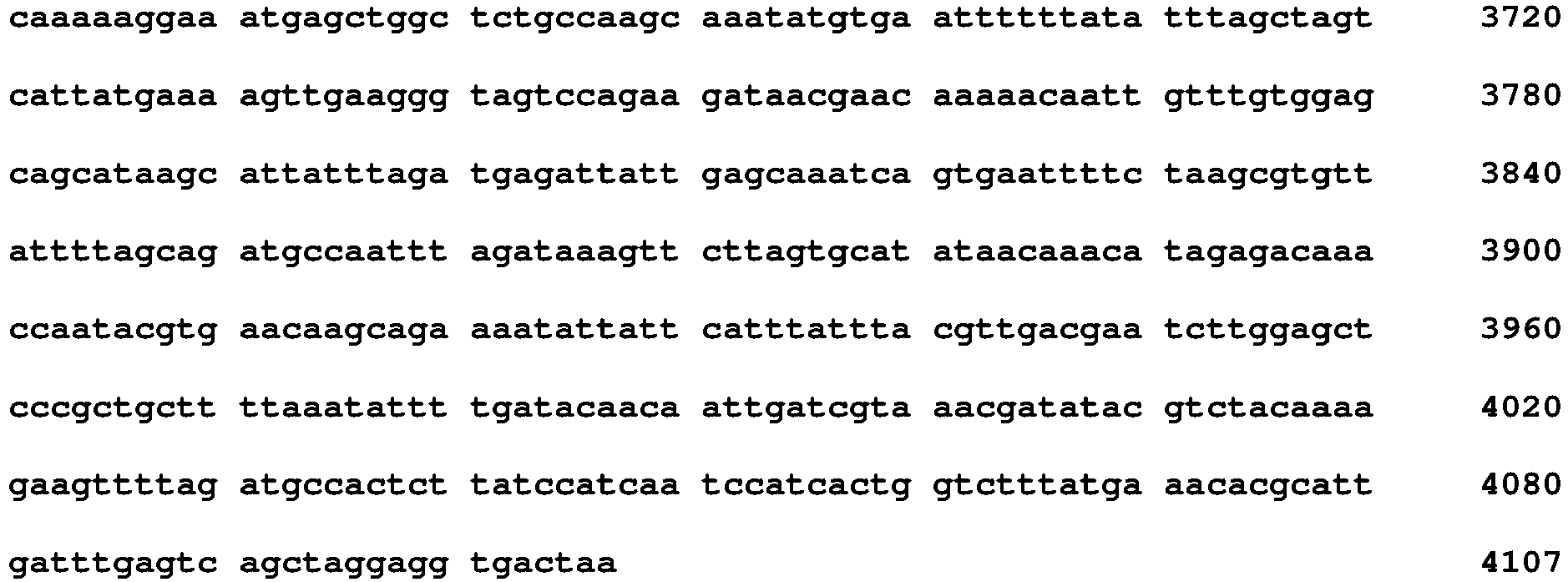
- <210> 109
<211> 1368
<212> PRT
<213> Artificial Sequence - <220>
<223> Description of Artificial Sequence: Synthetic polypeptide - <220>
<223> Amino acid sequence of Cas9 from S.pyogenes - <400> 109


- <210> 110
<211> 4221
<212> DNA
<213> Artificial Sequence - <220>
<223> Description of Artificial Sequence: Synthetic polynucleotide - <220>
<223> Cas9-coding sequence in pET-Cas9N3T for the production of recombinant Cas9 protein in E. coli (humanized codon; hexa-His-tag and a nuclear localization signal at the N terminus) - <400> 110


- <210> 111
<211> 1406
<212> PRT
<213> Artificial Sequence - <220>
<223> Description of Artificial Sequence: Synthetic polypeptide - <220>
<223> Amino acid sequence of Cas9 (pET-Cas9N3T) - <400> 111


- <210> 112
<211> 34
<212> DNA
<213> Homo sapiens - <400> 112
caatctatga catcaattat tatacatcgg agcc 34 - <210> 113
<211> 64
<212> RNA
<213> Artificial Sequence - <220>
<223> Description of Artificial Sequence: Synthetic oligonucleotide - <400> 113

- <210> 114
<211> 49
<212> DNA
<213> Artificial Sequence - <220>
<223> Description of Artificial Sequence: Synthetic oligonucleotide - <400> 114
caatctatga catcaattat tatacatcgg agccctgcca aaaaatcaa 49 - <210> 115
<211> 50
<212> DNA
<213> Artificial Sequence - <220>
<223> Description of Artificial Sequence: Synthetic oligonucleotide - <400> 115
caatctatga catcaattat tataacatcg gagccctgcc aaaaaatcaa 50 - <210> 116
<211> 36
<212> DNA
<213> Artificial Sequence - <220>
<223> Description of Artificial Sequence: Synthetic oligonucleotide - <400> 116
caatctatga catcaattat tatgccaaaa aatcaa 36 - <210> 117
<211> 35
<212> DNA
<213> Artificial Sequence - <220>
<223> Description of Artificial Sequence: Synthetic oligonucleotide - <400> 117
caatctatga catcggagcc ctgccaaaaa atcaa 35 - <210> 118
<211> 31
<212> DNA
<213> Artificial Sequence - <220>
<223> Description of Artificial Sequence: Synthetic oligonucleotide - <400> 118
caatctatga catgccctgc caaaaaatca a 31 - <210> 119
<211> 30
<212> DNA
<213> Artificial Sequence - <220>
<223> Description of Artificial Sequence: Synthetic oligonucleotide - <400> 119
caatctatga catcaattat tataaatcaa 30 - <210> 120
<211> 25
<212> DNA
<213> Artificial Sequence - <220>
<223> Description of Artificial Sequence: Synthetic oligonucleotide - <400> 120
caatctatga catccaaaaa atcaa 25 - <210> 121
<211> 19
<212> DNA
<213> Artificial Sequence - <220>
<223> Description of Artificial Sequence: Synthetic oligonucleotide - <400> 121
caatctatga caaaatcaa 19 - <210> 122
<211> 46
<212> DNA
<213> Homo sapiens - <400> 122
tatgtgcaat gaccactaca tcctcaaggg cagcaatcgg agccag 46 - <210> 123
<211> 47
<212> DNA
<213> Artificial Sequence - <220>
<223> Description of Artificial Sequence: Synthetic oligonucleotide - <400> 123
tatgtgcaat gaccactaca tccttcaagg gcagcaatcg gagccag 47 - <210> 124
<211> 48
<212> DNA
<213> Artificial Sequence - <220>
<223> Description of Artificial Sequence: Synthetic oligonucleotide - <400> 124
tatgtgcaat gaccactaca tcctctcaag ggcagcaatc ggagccag 48 - <210> 125
<211> 18
<212> DNA
<213> Artificial Sequence - <220>
<223> Description of Artificial Sequence: Synthetic oligonucleotide - <400> 125
tatgtgcaat ggagccag 18 - <210> 126
<211> 13
<212> DNA
<213> Artificial Sequence - <220>
<223> Description of Artificial Sequence: Synthetic oligonucleotide - <400> 126
tatgtgcaat gac 13 - <210> 127
<211> 23
<212> DNA
<213> Homo sapiens - <400> 127
tgacatcaat tattatacat cgg 23 - <210> 128
<211> 23
<212> DNA
<213> Homo sapiens - <400> 128
tgacatcaat tattatagat gga 23 - <210> 129
<211> 23
<212> DNA
<213> Homo sapiens - <400> 129
tgacatcact tattatgcat ggg 23 - <210> 130
<211> 23
<212> DNA
<213> Homo sapiens - <400> 130
tgacataaat tattctacat ggg 23 - <210> 131
<211> 23
<212> DNA
<213> Homo sapiens - <400> 131
tgaaatcaat tatcatagat cgg 23 - <210> 132
<211> 23
<212> DNA
<213> Homo sapiens - <400> 132
ccaggctcca cccgactgga ggg 23 - <210> 133
<211> 106
<212> RNA
<213> Artificial Sequence - <220>
<223> Description of Artificial Sequence: Synthetic polynucleotide - <400> 133

- <210> 134
<211> 53
<212> DNA
<213> Homo sapiens - <400> 134
acttccaggc tccacccgac tggagggcga accccaaggg gacctcatgc agg 53 - <210> 135
<211> 13
<212> DNA
<213> Artificial Sequence - <220>
<223> Description of Artificial Sequence: Synthetic oligonucleotide - <400> 135
acttccaggc tcc 13 - <210> 136
<211> 30
<212> DNA
<213> Artificial Sequence - <220>
<223> Description of Artificial Sequence: Synthetic oligonucleotide - <400> 136
acttccaggc tccacccgac ctcatgcagg 30 - <210> 137
<211> 36
<212> DNA
<213> Artificial Sequence - <220>
<223> Description of Artificial Sequence: Synthetic oligonucleotide - <400> 137
acttccaggc tccaccccaa ggggacctca tgcagg 36 - <210> 138
<211> 54
<212> DNA
<213> Artificial Sequence - <220>
<223> Description of Artificial Sequence: Synthetic oligonucleotide - <400> 138
acttccaggc tccacccgac ttggagggcg aaccccaagg ggacctcatg cagg 54 - <210> 139
<211> 43
<212> DNA
<213> Artificial Sequence - <220>
<223> Description of Artificial Sequence: Synthetic oligonucleotide - <400> 139
acttccaggc tccacccgaa ccccaagggg acctcatgca ggg 43 - <210> 140
<211> 47
<212> DNA
<213> Artificial Sequence - <220>
<223> Description of Artificial Sequence: Synthetic oligonucleotide - <400> 140
acttccaggc tccacccgac tcactatctt ctgggctcct ccatgtc 47 - <210> 141
<211> 45
<212> DNA
<213> Artificial Sequence - <220>
<223> Description of Artificial Sequence: Synthetic oligonucleotide - <400> 141
acttccaggc tccacccgac gaaccccaag gggacctcat gcagg 45 - <210> 142
<211> 18
<212> PRT
<213> Homo sapiens - <400> 142

- <210> 143
<211> 57
<212> DNA
<213> Homo sapiens - <220>
<221> CDS
<222> (2)..(55) - <400> 143

- <210> 144
<211> 46
<212> DNA
<213> Artificial Sequence - <220>
<223> Description of Artificial Sequence: Synthetic oligonucleotide - <400> 144
acttccaggc tccacccgaa ccccaagggg acctcatgca ggctcc 46 - <210> 145
<211> 43
<212> DNA
<213> Artificial Sequence - <220>
<223> Description of Artificial Sequence: Synthetic oligonucleotide - <400> 145
acttccaggc tccacccgaa ccccaagggg acctcatgca ggc 43 - <210> 146
<211> 20
<212> DNA
<213> Artificial Sequence - <220>
<223> Description of Artificial Sequence: Synthetic oligonucleotide - <400> 146
acttccaggc tccacccgac 20 - <210> 147
<211> 40
<212> DNA
<213> Artificial Sequence - <220>
<223> Description of Artificial Sequence: Synthetic oligonucleotide - <400> 147
acttccaggc tccaccccaa ggggacctca tgcaggctcc 40 - <210> 148
<211> 58
<212> DNA
<213> Artificial Sequence - <220>
<223> Description of Artificial Sequence: Synthetic oligonucleotide - <400> 148
acttccaggc tccacccgac ttggagggcg aaccccaagg ggacctcatg caggctcc 58 - <210> 149
<211> 46
<212> DNA
<213> Artificial Sequence - <220>
<223> Description of Artificial Sequence: Synthetic oligonucleotide - <400> 149
acttccaggc tccaggcgaa ccccaagggg acctcatgca ggctcc 46 - <210> 150
<211> 32
<212> DNA
<213> Artificial Sequence - <220>
<223> Description of Artificial Sequence: Synthetic oligonucleotide - <400> 150
ggcgaacccc aaggggacct catgcaggctcc 32 - <210> 151
<211> 32
<212> DNA
<213> Artificial Sequence - <220>
<223> Description of Artificial Sequence: Synthetic oligonucleotide - <400> 151
acttccaggc aaggggacct catgcaggctcc 32 - <210> 152
<211> 33
<212> DNA
<213> Artificial Sequence - <220>
<223> Description of Artificial Sequence: Synthetic oligonucleotide - <400> 152
acttccaggc taaggggacc tcatgcaggc tcc 33 - <210> 153
<211> 52
<212> DNA
<213> Homo sapiens - <400> 153
acttccaggc tccacccgac tggagggcga accccaaggg gacctcatgcag 52 - <210> 154
<211> 34
<212> DNA
<213> Artificial Sequence - <220>
<223> Description of Artificial Sequence: Synthetic oligonucleotide - <400> 154
acttccaggc gaaccccaag gggacctcat gcag 34 - <210> 155
<211> 32
<212> DNA
<213> Artificial Sequence - <220>
<223> Description of Artificial Sequence: Synthetic oligonucleotide - <400> 155
acttccaggc tccacaaggg gacctcatgcag 32 - <210> 156
<211> 34
<212> DNA
<213> Artificial Sequence - <220>
<223> Description of Artificial Sequence: Synthetic oligonucleotide - <400> 156
acttccaggc tccacccaag gggacctcat gccc 34 - <210> 157
<211> 35
<212> DNA
<213> Artificial Sequence - <220>
<223> Description of Artificial Sequence: Synthetic oligonucleotide - <400> 157
acttccaggc tccaccccaa ggggacctca tgcag 35 - <210> 158
<211> 41
<212> DNA
<213> Artificial Sequence - <220>
<223> Description of Artificial Sequence: Synthetic oligonucleotide - <400> 158
acttccaggc tccacccgaa ccccaagggg acctcatgcag 41 - <210> 159
<211> 50
<212> DNA
<213> Artificial Sequence - <220>
<223> Description of Artificial Sequence: Synthetic oligonucleotide - <400> 159
acttccaggc tccacccgaa ggagggcgaa ccccaagggg acctcatgca 50 - <210> 160
<211> 50
<212> DNA
<213> Artificial Sequence - <220>
<223> Description of Artificial Sequence: Synthetic oligonucleotide - <400> 160
acttccaggc tccacccgac tagggcgaac cccaagggga cctcatgcag 50 - <210> 161
<211> 52
<212> DNA
<213> Artificial Sequence - <220>
<223> Description of Artificial Sequence: Synthetic oligonucleotide - <400> 161
acttccaggc tccacccgac tgggagggcg aaccccaagg ggacctcatgca 52 - <210> 162
<211> 52
<212> DNA
<213> Artificial Sequence - <220>
<223> Description of Artificial Sequence: Synthetic oligonucleotide - <400> 162
acttccaggc tccacccgac ttggagggcg aaccccaagg ggacctcatgca 52 - <210> 163
<211> 46
<212> DNA
<213> Artificial Sequence - <220>
<223> Description of Artificial Sequence: Synthetic oligonucleotide - <400> 163
acttccaggc tccacccgag gcgaacccca aggggacctc atgcag 46 - <210> 164
<211> 47
<212> DNA
<213> Artificial Sequence - <220>
<223> Description of Artificial Sequence: Synthetic oligonucleotide - <400> 164
acttccaggc tccacccgag ggcgaacccc aaggggacct catgcag 47 - <210> 165
<211> 24
<212> DNA
<213> Artificial Sequence - <220>
<223> Description of Artificial Sequence: Synthetic oligonucleotide - <400> 165
acttccaggc tccacctcat gcag 24 - <210> 166
<211> 29
<212> DNA
<213> Artificial Sequence - <220>
<223> Description of Artificial Sequence: Synthetic oligonucleotide - <400> 166
agggcgaacc ccaaggggac ctcatgcag 29 - <210> 167
<211> 45
<212> DNA
<213> Artificial Sequence - <220>
<223> Description of Artificial Sequence: Synthetic oligonucleotide - <400> 167
caatctatga catcaattat tatcggagcc ctgccaaaaa atcaa 45 - <210> 168
<211> 45
<212> DNA
<213> Artificial Sequence - <220>
<223> Description of Artificial Sequence: Synthetic oligonucleotide - <400> 168
caatctatga catcaattat catcggagcc ctgccaaaaa atcaa 45 - <210> 169
<211> 42
<212> DNA
<213> Artificial Sequence - <220>
<223> Description of Artificial Sequence: Synthetic oligonucleotide - <400> 169
caatctatga catcaattat cggagccctg ccaaaaaatcaa 42 - <210> 170
<211> 48
<212> DNA
<213> Artificial Sequence - <220>
<223> Description of Artificial Sequence: Synthetic oligonucleotide - <400> 170
caatctatga catcaattat tatcatcgga gccctgccaa aaaatcaa 48 - <210> 171
<211> 33
<212> DNA
<213> Artificial Sequence - <220>
<223> Description of Artificial Sequence: Synthetic oligonucleotide - <400> 171
caatctatga caagagccct gccaaaaaatcaa 33 - <210> 172
<211> 52
<212> DNA
<213> Homo sapiens - <400> 172
ttctcaaggc agcatcatac ttcccccacg gtgggacagc tgccctccct gg 52 - <210> 173
<211> 46
<212> DNA
<213> Artificial Sequence - <220>
<223> Description of Artificial Sequence: Synthetic oligonucleotide - <400> 173
ttctcaaggc agcatcatac ttccctggga cagctgccct ccctgg 46 - <210> 174
<211> 49
<212> DNA
<213> Artificial Sequence - <220>
<223> Description of Artificial Sequence: Synthetic oligonucleotide - <400> 174
ttctcaaggc agcatcatac ttccacggtg ggacagctgc cctccctgg 49 - <210> 175
<211> 25
<212> DNA
<213> Artificial Sequence - <220>
<223> Description of Artificial Sequence: Synthetic oligonucleotide - <400> 175
ttctcaaggc agctgccctc cctgg 25 - <210> 176
<211> 32
<212> DNA
<213> Artificial Sequence - <220>
<223> Description of Artificial Sequence: Synthetic oligonucleotide - <400> 176
ttctcaaggc agcatcatac ttccctccct gg 32 - <210> 177
<211> 264
<212> DNA
<213> Homo sapiens - <220>
<221> modified_base
<222> (38)..(227)
<223> a, c, t, g, unknown or other - <400> 177

- <210> 178
<211> 257
<212> DNA
<213> Artificial Sequence - <220>
<223> Description of Artificial Sequence: Synthetic polynucleotide - <220>
<221> modified_base
<222> (38)..(227)
<223> a, c, t, g, unknown or other - <400> 178


- <210> 179
<211> 43
<212> DNA
<213> Artificial Sequence - <220>
<223> Description of Artificial Sequence: Synthetic oligonucleotide - <400> 179
acaaagcgat tttgaaagat ggaagcgaca cggcggaaga ttg 43 - <210> 180
<211> 44
<212> DNA
<213> Artificial Sequence - <220>
<223> Description of Artificial Sequence: Synthetic oligonucleotide - <400> 180
acaaagcgat tttgaaagat ggaagcgcac acggcggaag attg 44 - <210> 181
<211> 106
<212> DNA
<213> Artificial Sequence - <220>
<223> Description of Artificial Sequence: Synthetic polynucleotide - <400> 181

- <210> 182
<211> 23
<212> DNA
<213> Artificial Sequence - <220>
<223> Description of Artificial Sequence: Synthetic oligonucleotide - <400> 182
gggtgggggg agtttgctcc tgg 23 - <210> 183
<211> 23
<212> DNA
<213> Artificial Sequence - <220>
<223> Description of Artificial Sequence: Synthetic oligonucleotide - <400> 183
ggatggaggg agtttgctcc tgg 23 - <210> 184
<211> 23
<212> DNA
<213> Artificial Sequence - <220>
<223> Description of Artificial Sequence: Synthetic oligonucleotide - <400> 184
ggggagggga agtttgctcc tgg 23 - <210> 185
<211> 23
<212> DNA
<213> Artificial Sequence - <220>
<223> Description of Artificial Sequence: Synthetic oligonucleotide - <400> 185
gaccccctcc accccgcctc cgg 23 - <210> 186
<211> 23
<212> DNA
<213> Artificial Sequence - <220>
<223> Description of Artificial Sequence: Synthetic oligonucleotide - <400> 186
gacccccccc accccgcccc cgg 23 - <210> 187
<211> 23
<212> DNA
<213> Artificial Sequence - <220>
<223> Description of Artificial Sequence: Synthetic oligonucleotide - <400> 187
gcccccaccc accccgcctc tgg 23 - <210> 188
<211> 23
<212> DNA
<213> Artificial Sequence - <220>
<223> Description of Artificial Sequence: Synthetic oligonucleotide - <400> 188
ctccccaccc accccgcctc agg 23 - <210> 189
<211> 23
<212> DNA
<213> Artificial Sequence - <220>
<223> Description of Artificial Sequence: Synthetic oligonucleotide - <400> 189
ggtgagtgag tgtgtgcgtg tgg 23 - <210> 190
<211> 23
<212> DNA
<213> Artificial Sequence - <220>
<223> Description of Artificial Sequence: Synthetic oligonucleotide - <400> 190
tgtgggtgag tgtgtgcgtg agg 23 - <210> 191
<211> 23
<212> DNA
<213> Artificial Sequence - <220>
<223> Description of Artificial Sequence: Synthetic oligonucleotide - <400> 191
gagtccgagc agaagaagaa ggg 23 - <210> 192
<211> 23
<212> DNA
<213> Artificial Sequence - <220>
<223> Description of Artificial Sequence: Synthetic oligonucleotide - <400> 192
gagttagagc agaagaagaa agg 23 - <210> 193
<211> 23
<212> DNA
<213> Artificial Sequence - <220>
<223> Description of Artificial Sequence: Synthetic oligonucleotide - <400> 193
gaacctgagc tgctctgacg cgg 23 - <210> 194
<211> 23
<212> DNA
<213> Artificial Sequence - <220>
<223> Description of Artificial Sequence: Synthetic oligonucleotide - <400> 194
ttggcagggg gtgggaggga agg 23 - <210> 195
<211> 23
<212> DNA
<213> Artificial Sequence - <220>
<223> Description of Artificial Sequence: Synthetic oligonucleotide - <400> 195
gggagggaga gcttggcagg ggg 23 - <210> 196
<211> 23
<212> DNA
<213> Artificial Sequence - <220>
<223> Description of Artificial Sequence: Synthetic oligonucleotide - <400> 196
gatggagcca gagaggatcc tgg 23 - <210> 197
<211> 23
<212> DNA
<213> Artificial Sequence - <220>
<223> Description of Artificial Sequence: Synthetic oligonucleotide - <400> 197
cctgccaagc tctccctccc agg 23 - <210> 198
<211> 23
<212> DNA
<213> Artificial Sequence - <220>
<223> Description of Artificial Sequence: Synthetic oligonucleotide - <400> 198
ctccctccca ggatcctctc tgg 23 - <210> 199
<211> 23
<212> DNA
<213> Artificial Sequence - <220>
<223> Description of Artificial Sequence: Synthetic oligonucleotide - <400> 199
cctctaaggt ttgcttacga tgg 23 - <210> 200
<211> 23
<212> DNA
<213> Artificial Sequence - <220>
<223> Description of Artificial Sequence: Synthetic oligonucleotide - <400> 200
ggttctggca aggagagaga tgg 23 - <210> 201
<211> 23
<212> DNA
<213> Artificial Sequence - <220>
<223> Description of Artificial Sequence: Synthetic oligonucleotide - <400> 201
tctaaccccc acctcctgtt agg 23 - <210> 202
<211> 23
<212> DNA
<213> Artificial Sequence - <220>
<223> Description of Artificial Sequence: Synthetic oligonucleotide - <400> 202
ttggcagggg gtgggaggga tgg 23 - <210> 203
<211> 23
<212> DNA
<213> Artificial Sequence - <220>
<223> Description of Artificial Sequence: Synthetic oligonucleotide - <400> 203
ttggtagggg gtgggaggga tgg 23 - <210> 204
<211> 23
<212> DNA
<213> Artificial Sequence - <220>
<223> Description of Artificial Sequence: Synthetic oligonucleotide - <400> 204
gggaagggga gcttggcagg tgg 23 - <210> 205
<211> 23
<212> DNA
<213> Artificial Sequence - <220>
<223> Description of Artificial Sequence: Synthetic oligonucleotide - <400> 205
ggtagtgaga gcttggcagg tgg 23 - <210> 206
<211> 23
<212> DNA
<213> Artificial Sequence - <220>
<223> Description of Artificial Sequence: Synthetic oligonucleotide - <400> 206
ctccctccca ggatcctccc agg 23 - <210> 207
<211> 23
<212> DNA
<213> Artificial Sequence - <220>
<223> Description of Artificial Sequence: Synthetic oligonucleotide - <400> 207
gtccatggca ggatcctctc agg 23 - <210> 208
<211> 23
<212> DNA
<213> Artificial Sequence - <220>
<223> Description of Artificial Sequence: Synthetic oligonucleotide - <400> 208
ctccccccca gtatcctctc agg 23 - <210> 209
<211> 108
<212> DNA
<213> Homo sapiens - <400> 209

- <210> 210
<211> 138
<212> DNA
<213> Homo sapiens - <400> 210

- <210> 211
<211> 121
<212> DNA
<213> Homo sapiens - <220>
<221> misc_feature
<222> (49)..(50)
<223> Nucleotides at these positions are non-consecutive and are separated by a non-disclosed sequence - <400> 211


- <210> 212
<211> 77
<212> DNA
<213> Artificial Sequence - <220>
<223> Description of Artificial Sequence: Synthetic oligonucleotide - <400> 212

- <210> 213
<211> 27
<212> DNA
<213> Artificial Sequence - <220>
<223> Description of Artificial Sequence: Synthetic oligonucleotide - <400> 213
ggccgggaat caagagtcac ccaggaa 27 - <210> 214
<211> 79
<212> DNA
<213> Artificial Sequence - <220>
<223> Description of Artificial Sequence: Synthetic oligonucleotide - <400> 214

- <210> 215
<211> 28
<212> DNA
<213> Artificial Sequence - <220>
<223> Description of Artificial Sequence: Synthetic oligonucleotide - <400> 215
ggccgggaat caagagtcac cctaacag 28 - <210> 216
<211> 66
<212> DNA
<213> Artificial Sequence - <220>
<223> Description of Artificial Sequence: Synthetic oligonucleotide - <400> 216

- <210> 217
<211> 47
<212> DNA
<213> Artificial Sequence - <220>
<223> Description of Artificial Sequence: Synthetic oligonucleotide - <400> 217
ggctccatcg taagcaaacc ttagaggttc tggcaaggag agagatg 47 - <210> 218
<211> 78
<212> DNA
<213> Artificial Sequence - <220>
<223> Description of Artificial Sequence: Synthetic oligonucleotide - <400> 218

- <210> 219
<211> 80
<212> DNA
<213> Artificial Sequence - <220>
<223> Description of Artificial Sequence: Synthetic oligonucleotide - <400> 219

- <210> 220
<211> 46
<212> DNA
<213> Artificial Sequence - <220>
<223> Description of Artificial Sequence: Synthetic oligonucleotide - <400> 220
ggtccatcgt aagcaaacct tagaggttct ggcaaggaga gagatg 46 - <210> 221
<211> 69
<212> DNA
<213> Artificial Sequence - <220>
<223> Description of Artificial Sequence: Synthetic oligonucleotide - <400> 221

- <210> 222
<211> 76
<212> DNA
<213> Artificial Sequence - <220>
<223> Description of Artificial Sequence: Synthetic oligonucleotide - <400> 222

- <210> 223
<211> 50
<212> DNA
<213> Artificial Sequence - <220>
<223> Description of Artificial Sequence: Synthetic oligonucleotide - <400> 223
ggccgggaat caagagtcac ccagagacag tgaccaacca tcccatatca 50 - <210> 224
<211> 59
<212> DNA
<213> Artificial Sequence - <220>
<223> Description of Artificial Sequence: Synthetic oligonucleotide - <400> 224
ggccgggaat caagagtcat cgtaagcaaa ccttagaggt tctggcaagg agagagatg 59 - <210> 225
<211> 24
<212> DNA
<213> Artificial Sequence - <220>
<223> Description of Artificial Sequence: Synthetic oligonucleotide - <400> 225
aatgaccact acatccttca aggg 24 - <210> 226
<211> 25
<212> DNA
<213> Artificial Sequence - <220>
<223> Description of Artificial Sequence: Synthetic oligonucleotide - <400> 226
aatgaccact acatcctttc aaggg 25 - <210> 227
<211> 26
<212> DNA
<213> Artificial Sequence - <220>
<223> Description of Artificial Sequence: Synthetic oligonucleotide - <400> 227
aatgaccact acatcctttt caaggg 26 - <210> 228
<211> 22
<212> DNA
<213> Artificial Sequence - <220>
<223> Description of Artificial Sequence: Synthetic oligonucleotide - <400> 228
aatgaccact acatcctaag gg 22 - <210> 229
<211> 21
<212> DNA
<213> Artificial Sequence - <220>
<223> Description of Artificial Sequence: Synthetic oligonucleotide - <400> 229
aatgaccact acatcctagg g 21 - <210> 230
<211> 20
<212> DNA
<213> Artificial Sequence - <220>
<223> Description of Artificial Sequence: Synthetic oligonucleotide - <400> 230
aatgaccact acatcctggg 20 - <210> 231
<211> 42
<212> DNA
<213> Homo sapiens - <400> 231
tatgtgcaat gaccactaca tcctcaaggg cagcaatcggag 42 - <210> 232
<211> 45
<212> DNA
<213> Artificial Sequence - <220>
<223> Description of Artificial Sequence: Synthetic oligonucleotide - <400> 232
tatgtgcaat gaccactaca tcctcctcaa gggcagcaat cggag 45 - <210> 233
<211> 30
<212> DNA
<213> Artificial Sequence - <220>
<223> Description of Artificial Sequence: Synthetic oligonucleotide - <400> 233
tatgtgcaat gaccactaca tcaatcggag 30 - <210> 234
<211> 33
<212> DNA
<213> Artificial Sequence - <220>
<223> Description of Artificial Sequence: Synthetic oligonucleotide - <400> 234
tatgtgcaat gaccactaca tcagcaatcggag 33 - <210> 235
<211> 34
<212> DNA
<213> Artificial Sequence - <220>
<223> Description of Artificial Sequence: Synthetic oligonucleotide - <400> 235
tatgtgcaat gaccactaca tccagcaatc ggag 34 - <210> 236
<211> 10
<212> DNA
<213> Artificial Sequence - <220>
<223> Description of Artificial Sequence: Synthetic oligonucleotide - <400> 236
cagcaatcgg 10 - <210> 237
<211> 41
<212> DNA
<213> Artificial Sequence - <220>
<223> Description of Artificial Sequence: Synthetic oligonucleotide - <400> 237
tatgtgcaat gaccactaca tccttcaagg gcagcaatcgg 41 - <210> 238
<211> 41
<212> DNA
<213> Artificial Sequence - <220>
<223> Description of Artificial Sequence: Synthetic oligonucleotide - <400> 238
tatgtgcaat gaccactaca tcctccaagg gcagcaatcgg 41 - <210> 239
<211> 41
<212> DNA
<213> Artificial Sequence - <220>
<223> Description of Artificial Sequence: Synthetic oligonucleotide - <400> 239
tatgtgcaat gaccactaca tcctbcaagg gcagcaatcgg 41 - <210> 240
<211> 34
<212> DNA
<213> Artificial Sequence - <220>
<223> Description of Artificial Sequence: Synthetic oligonucleotide - <400> 240
tatgtgcaat gaccactaca ttggcagcaa tcgg 34 - <210> 241
<211> 21
<212> DNA
<213> Artificial Sequence - <220>
<223> Description of Artificial Sequence: Synthetic oligonucleotide - <400> 241
tatgtgcaat gaccactaca t 21 - <210> 242
<211> 53
<212> DNA
<213> Homo sapiens - <400> 242
tcatacagat gatgtctcat catcagagga gcgagaaggt aaagtcaaaa tca 53 - <210> 243
<211> 32
<212> DNA
<213> Artificial Sequence - <220>
<223> Description of Artificial Sequence: Synthetic oligonucleotide - <400> 243
tcatacagat gatacaggta aagtcaaaatca 32 - <210> 244
<211> 32
<212> DNA
<213> Artificial Sequence - <220>
<223> Description of Artificial Sequence: Synthetic oligonucleotide - <400> 244
tcatacaggt gatgaaggta aagtcaaaatca 32 - <210> 245
<211> 50
<212> DNA
<213> Artificial Sequence - <220>
<223> Description of Artificial Sequence: Synthetic oligonucleotide - <400> 245
tcatacagat gatgtctcat catcagagcg agaaggtaaa gtcaaaatca 50 - <210> 246
<211> 48
<212> DNA
<213> Artificial Sequence - <220>
<223> Description of Artificial Sequence: Synthetic oligonucleotide - <400> 246
tcatacagat gatgtctcat catcagcgag aaggtaaagt caaaatca 48 - <210> 247
<211> 52
<212> DNA
<213> Artificial Sequence - <220>
<223> Description of Artificial Sequence: Synthetic oligonucleotide - <400> 247
tcatacagat gatgtctcat catcagggag cgagaaggta aagtcaaaatca 52 - <210> 248
<211> 41
<212> DNA
<213> Artificial Sequence - <220>
<223> Description of Artificial Sequence: Synthetic oligonucleotide - <400> 248
tcatacagat gatgtctcgc gagaaggtaa agtcaaaatc a 41 - <210> 249
<211> 32
<212> DNA
<213> Artificial Sequence - <220>
<223> Description of Artificial Sequence: Synthetic oligonucleotide - <400> 249
tcatacagat gatgaaggta aagtcaaaatca 32 - <210> 250
<211> 29
<212> DNA
<213> Artificial Sequence - <220>
<223> Description of Artificial Sequence: Synthetic oligonucleotide - <400> 250
tcatacagat gaaggtaaag tcaaaatca 29 - <210> 251
<211> 42
<212> DNA
<213> Artificial Sequence - <220>
<223> Description of Artificial Sequence: Synthetic oligonucleotide - <400> 251
tcatacagat gatgtctaca gatgaaggta aagtcaaaatca 42 - <210> 252
<211> 51
<212> DNA
<213> Artificial Sequence - <220>
<223> Description of Artificial Sequence: Synthetic oligonucleotide - <400> 252
tcatacagat gatgtctcat catcaggagc gagaaggtaa agtcaaaatc a 51 - <210> 253
<211> 34
<212> DNA
<213> Artificial Sequence - <220>
<223> Description of Artificial Sequence: Synthetic oligonucleotide - <400> 253
gtcatcctca tcctgataaa ctgcaaaagg ctga 34 - <210> 254
<211> 606
<212> DNA
<213> Homo sapiens - <400> 254


- <210> 255
<211> 26
<212> DNA
<213> Homo sapiens - <400> 255
actaccacag ctccttctct gagtgg 26 - <210> 256
<211> 23
<212> DNA
<213> Artificial Sequence - <220>
<223> Description of Artificial Sequence: Synthetic oligonucleotide - <400> 256
actaccacag ctcctctgag tgg 23 - <210> 257
<211> 23
<212> DNA
<213> Homo sapiens - <400> 257
gtagttggag ctggcggcgt agg 23 - <210> 258
<211> 23
<212> DNA
<213> Artificial Sequence - <220>
<223> Description of Artificial Sequence: Synthetic oligonucleotide - <400> 258
gtagttggag ctagcggcgt agg 23 - <210> 259
<211> 23
<212> DNA
<213> Homo sapiens - <400> 259
gtagttggag ctggtggcgt agg 23 - <210> 260
<211> 23
<212> DNA
<213> Artificial Sequence - <220>
<223> Description of Artificial Sequence: Synthetic oligonucleotide - <400> 260
gtagttggag ctagtggcgt agg 23 - <210> 261
<211> 28
<212> DNA
<213> Artificial Sequence - <220>
<223> Description of Artificial Sequence: Synthetic oligonucleotide - <400> 261
ccatacatta aagatagtca tcttgggg 28 - <210> 262
<211> 60
<212> DNA
<213> Homo sapiens - <400> 262
ccatacagtc agtatcaatt ctggaagaat ttccagacat taaagatagt catcttgggg 60 - <210> 263
<211> 55
<212> DNA
<213> Homo sapiens - <400> 263
ccatacagtc agtatcaatt ctggaagaat ttccagacat taaagatagt catct 55 - <210> 264
<211> 23
<212> DNA
<213> Artificial Sequence - <220>
<223> Description of Artificial Sequence: Synthetic oligonucleotide - <400> 264
ccatacatta aagatagtca tct 23 - <210> 265
<211> 23
<212> DNA
<213> Homo sapiens - <400> 265
agatgactat ctttaatgtc tgg 23 - <210> 266
<211> 23
<212> DNA
<213> Homo sapiens - <400> 266
agatgactat ctttaatgta tgg 23 - <210> 267
<211> 23
<212> DNA
<213> Artificial Sequence - <220>
<223> Description of Artificial Sequence: Synthetic oligonucleotide - <400> 267
gtagttggag ctgatggcgt agg 23 - <210> 268
<211> 23
<212> DNA
<213> Artificial Sequence - <220>
<223> Description of Artificial Sequence: Synthetic oligonucleotide - <400> 268
gtagttggag ctggtagcgt agg 23 - <210> 269
<211> 23
<212> DNA
<213> Artificial Sequence - <220>
<223> Description of Artificial Sequence: Synthetic oligonucleotide - <400> 269
gtagttggag ctggtgacgt agg 23 - <210> 270
<211> 23
<212> DNA
<213> Artificial Sequence - <220>
<223> Description of Artificial Sequence: Synthetic oligonucleotide - <400> 270
gtagttggag ctaatggcgt agg 23 - <210> 271
<211> 23
<212> DNA
<213> Artificial Sequence - <220>
<223> Description of Artificial Sequence: Synthetic oligonucleotide - <400> 271
gtagttggag ctagtagcgt agg 23 - <210> 272
<211> 23
<212> DNA
<213> Artificial Sequence - <220>
<223> Description of Artificial Sequence: Synthetic oligonucleotide - <400> 272
gtagttggag ctagtgacgt agg 23 - <210> 273
<211> 23
<212> DNA
<213> Homo sapiens - <400> 273
caaatgaatg atgcacatca tgg 23 - <210> 274
<211> 23
<212> DNA
<213> Artificial Sequence - <220>
<223> Description of Artificial Sequence: Synthetic oligonucleotide - <400> 274
caaatgaatg atgcacgtca tgg 23 - <210> 275
<211> 23
<212> DNA
<213> Artificial Sequence - <220>
<223> Description of Artificial Sequence: Synthetic oligonucleotide - <400> 275
caaatgaatg atgcatatca tgg 23 - <210> 276
<211> 23
<212> DNA
<213> Artificial Sequence - <220>
<223> Description of Artificial Sequence: Synthetic oligonucleotide - <400> 276
caaatgaatg atgcgcatca tgg 23 - <210> 277
<211> 23
<212> DNA
<213> Artificial Sequence - <220>
<223> Description of Artificial Sequence: Synthetic oligonucleotide - <400> 277
caaatgaatg atgtacatca tgg 23 - <210> 278
<211> 23
<212> DNA
<213> Artificial Sequence - <220>
<223> Description of Artificial Sequence: Synthetic oligonucleotide - <400> 278
caaatgaatg gtgcacatca tgg 23 - <210> 279
<211> 23
<212> DNA
<213> Artificial Sequence - <220>
<223> Description of Artificial Sequence: Synthetic oligonucleotide - <400> 279
caaatgagtg atgcacatca tgg 23 - <210> 280
<211> 23
<212> DNA
<213> Artificial Sequence - <220>
<223> Description of Artificial Sequence: Synthetic oligonucleotide - <400> 280
caaaagaatg atgcacatca tgg 23 - <210> 281
<211> 23
<212> DNA
<213> Artificial Sequence - <220>
<223> Description of Artificial Sequence: Synthetic oligonucleotide - <400> 281
cgaatgaatg atgcacatca tgg 23 - <210> 282
<211> 23
<212> DNA
<213> Artificial Sequence - <220>
<223> Description of Artificial Sequence: Synthetic oligonucleotide - <400> 282
caaatgaatg atgcatgtca tgg 23 - <210> 283
<211> 23
<212> DNA
<213> Artificial Sequence - <220>
<223> Description of Artificial Sequence: Synthetic oligonucleotide - <400> 283
caaatgaatg atgcgcgtca tgg 23 - <210> 284
<211> 23
<212> DNA
<213> Artificial Sequence - <220>
<223> Description of Artificial Sequence: Synthetic oligonucleotide - <400> 284
caaatgaatg atgtacgtca tgg 23 - <210> 285
<211> 23
<212> DNA
<213> Artificial Sequence - <220>
<223> Description of Artificial Sequence: Synthetic oligonucleotide - <400> 285
caaatgaatg gtgcacgtca tgg 23 - <210> 286
<211> 23
<212> DNA
<213> Artificial Sequence - <220>
<223> Description of Artificial Sequence: Synthetic oligonucleotide - <400> 286
caaatgagtg atgcacgtca tgg 23 - <210> 287
<211> 23
<212> DNA
<213> Artificial Sequence - <220>
<223> Description of Artificial Sequence: Synthetic oligonucleotide - <400> 287
caaaagaatg atgcacgtca tgg 23 - <210> 288
<211> 23
<212> DNA
<213> Artificial Sequence - <220>
<223> Description of Artificial Sequence: Synthetic oligonucleotide - <400> 288
cgaatgaatg atgcacgtca tgg 23 - <210> 289
<211> 23
<212> DNA
<213> Homo sapiens - <400> 289
atcataggtc gtcatgctta tgg 23 - <210> 290
<211> 23
<212> DNA
<213> Artificial Sequence - <220>
<223> Description of Artificial Sequence: Synthetic oligonucleotide - <400> 290
atcataggtt gtcatgctta tgg 23 - <210> 291
<211> 23
<212> DNA
<213> Homo sapiens - <400> 291
atcataggtc gtcctgctta tgg 23 - <210> 292
<211> 23
<212> DNA
<213> Artificial Sequence - <220>
<223> Description of Artificial Sequence: Synthetic oligonucleotide - <400> 292
atcataggtt gtcctgctta tgg 23 - <210> 293
<211> 23
<212> DNA
<213> Homo sapiens - <400> 293
ctggacaaga agagtacagt gcc 23 - <210> 294
<211> 23
<212> DNA
<213> Artificial Sequence - <220>
<223> Description of Artificial Sequence: Synthetic oligonucleotide - <400> 294
ctggaaaaga agagtacagt gcc 23 - <210> 295
<211> 23
<212> DNA
<213> Homo sapiens - <400> 295
actccatcga gatttcactg tag 23 - <210> 296
<211> 23
<212> DNA
<213> Artificial Sequence - <220>
<223> Description of Artificial Sequence: Synthetic oligonucleotide - <400> 296
actccatcga gatttctctg tag 23
Claims (12)
- An in vitro or ex vivo method of introducing double-stranded breaks into a target DNA in a mammalian cell, the method comprising contacting the target DNA with a Type II Clustered Regularly interspaced Short Palindromic Repeats (CRISPR)/CRISPR-associated protein 9 (Cas9) system comprising:a. a Cas9 protein with one nuclear localization signal (NLS) added to the C-terminus of the Cas9 protein; andb. a single-chain guide RNA comprising a CRISPR RNA (crRNA) portion fused to a trans-activating crRNA (tracrRNA) portion,wherein the method comprises transfecting the mammalian cell with a nucleic acid encoding the Cas9 protein followed by transfecting the mammalian cell with the single-chain guide RNA.
- The method of claim 1, wherein the Cas9 protein is a Streptococcus pyogenes Cas9 protein.
- The method of claim 1 or 2, wherein the single-chain guide RNA is an in vitro transcribed RNA.
- The method of any one of claims 1 to 3, wherein the target DNA is a genomic DNA.
- The method of any one of claims 1 to 4, wherein the target DNA sequence consists of 20 nucleotides complementary to the crRNA portion of the single-chain guide RNA and a trinucleotide protospacer adjacent motif (PAM), and wherein the PAM consists of the trinucleotide 5'-NGG-3'.
- The method of any one of claims 1 to 5, wherein the crRNA portion of the single-chain guide RNA comprises 20 nucleotides complementary to the target DNA sequence.
- The method of any one of claims 1 to 6, wherein the mammalian cell is a human cell.
- The method of any one of claims 1 to 7, wherein the method is an in vitro method.
- The method of any one of claims 1 to 7, wherein the method is an ex vivo method.
- An in vitro or ex vivo method of preparing a mammalian cell comprising the Type II CRISPR/Cas9 system as defined in claims 1 to 3 and 6, the method comprising serial-transfecting a mammalian cell with:a. a nucleic acid encoding a Cas9 protein with one nuclear localization signal (NLS) added to the C-terminus of the Cas9 protein; andb. a single-chain guide RNA comprising a CRISPR RNA (crRNA) portion fused to a trans-activating crRNA (tracrRNA) portionwherein the method comprises transfecting the mammalian cell with the nucleic acid followed by transfecting the mammalian cell with the single-chain guide RNA.
- The method of claim 10, wherein the Cas9 protein is a Streptococcus pyogenes Cas9 protein.
- The method of claim 10 or 11, wherein the mammalian cell is a human cell.
Priority Applications (1)
| Application Number | Priority Date | Filing Date | Title |
|---|---|---|---|
| EP22176546.4A EP4180526A3 (en) | 2012-10-23 | 2013-10-23 | Composition for cleaving a target dna comprising a guide rna specific for the target dna and cas protein-encoding nucleic acid or cas protein, and use thereof |
Applications Claiming Priority (6)
| Application Number | Priority Date | Filing Date | Title |
|---|---|---|---|
| US201261717324P | 2012-10-23 | 2012-10-23 | |
| US201361803599P | 2013-03-20 | 2013-03-20 | |
| US201361837481P | 2013-06-20 | 2013-06-20 | |
| EP13849670.8A EP2912175B1 (en) | 2012-10-23 | 2013-10-23 | Composition for cleaving a target dna comprising a guide rna specific for the target dna and cas protein-encoding nucleic acid or cas protein, and use thereof |
| PCT/KR2013/009488 WO2014065596A1 (en) | 2012-10-23 | 2013-10-23 | Composition for cleaving a target dna comprising a guide rna specific for the target dna and cas protein-encoding nucleic acid or cas protein, and use thereof |
| EP18158147.1A EP3372679A1 (en) | 2012-10-23 | 2013-10-23 | Composition for cleaving a target dna comprising a guide rna specific for the target dna and cas protein-encoding nucleic acid or cas protein, and use thereof |
Related Parent Applications (2)
| Application Number | Title | Priority Date | Filing Date |
|---|---|---|---|
| EP18158147.1A Division EP3372679A1 (en) | 2012-10-23 | 2013-10-23 | Composition for cleaving a target dna comprising a guide rna specific for the target dna and cas protein-encoding nucleic acid or cas protein, and use thereof |
| EP13849670.8A Division EP2912175B1 (en) | 2012-10-23 | 2013-10-23 | Composition for cleaving a target dna comprising a guide rna specific for the target dna and cas protein-encoding nucleic acid or cas protein, and use thereof |
Related Child Applications (1)
| Application Number | Title | Priority Date | Filing Date |
|---|---|---|---|
| EP22176546.4A Division EP4180526A3 (en) | 2012-10-23 | 2013-10-23 | Composition for cleaving a target dna comprising a guide rna specific for the target dna and cas protein-encoding nucleic acid or cas protein, and use thereof |
Publications (2)
| Publication Number | Publication Date |
|---|---|
| EP3733847A1 EP3733847A1 (en) | 2020-11-04 |
| EP3733847B1 true EP3733847B1 (en) | 2022-06-01 |
Family
ID=50544909
Family Applications (12)
| Application Number | Title | Priority Date | Filing Date |
|---|---|---|---|
| EP25158861.2A Pending EP4556564A3 (en) | 2012-10-23 | 2013-10-23 | Composition for cleaving a target dna comprising a guide rna specific for the target dna and cas protein-encoding nucleic acid or cas protein, and use thereof |
| EP23183112.4A Active EP4342987B1 (en) | 2012-10-23 | 2013-10-23 | Composition for cleaving a target dna comprising a guide rna specific for the target dna and cas protein-encoding nucleic acid or cas protein, and use thereof |
| EP25166101.3A Pending EP4567111A3 (en) | 2012-10-23 | 2013-10-23 | Composition for cleaving a target dna comprising a guide rna specific for the target dna and cas protein-encoding nucleic acid or cas protein, and use thereof |
| EP22176546.4A Pending EP4180526A3 (en) | 2012-10-23 | 2013-10-23 | Composition for cleaving a target dna comprising a guide rna specific for the target dna and cas protein-encoding nucleic acid or cas protein, and use thereof |
| EP17206792.8A Active EP3346003B1 (en) | 2012-10-23 | 2013-10-23 | Composition for cleaving a target dna comprising a guide rna specific for the target dna and cas protein-encoding nucleic acid or cas protein, and use thereof |
| EP24165188.4A Pending EP4397759A3 (en) | 2012-10-23 | 2013-10-23 | Composition for cleaving a target dna comprising a guide rna specific for the target dna and cas protein-encoding nucleic acid or cas protein, and use thereof |
| EP20164644.5A Active EP3733847B1 (en) | 2012-10-23 | 2013-10-23 | Composition for cleaving a target dna comprising a guide rna specific for the target dna and cas protein-encoding nucleic acid or cas protein, and use thereof |
| EP18158147.1A Pending EP3372679A1 (en) | 2012-10-23 | 2013-10-23 | Composition for cleaving a target dna comprising a guide rna specific for the target dna and cas protein-encoding nucleic acid or cas protein, and use thereof |
| EP24158339.2A Active EP4357457B1 (en) | 2012-10-23 | 2013-10-23 | Composition for cleaving a target dna comprising a guide rna specific for the target dna and cas protein-encoding nucleic acid or cas protein, and use thereof |
| EP25158862.0A Pending EP4549567A3 (en) | 2012-10-23 | 2013-10-23 | Composition for cleaving a target dna comprising a guide rna specific for the target dna and cas protein-encoding nucleic acid or cas protein, and use thereof |
| EP13849670.8A Revoked EP2912175B1 (en) | 2012-10-23 | 2013-10-23 | Composition for cleaving a target dna comprising a guide rna specific for the target dna and cas protein-encoding nucleic acid or cas protein, and use thereof |
| EP24165204.9A Active EP4397760B1 (en) | 2012-10-23 | 2013-10-23 | Composition for cleaving a target dna comprising a guide rna specific for the target dna and cas protein-encoding nucleic acid or cas protein, and use thereof |
Family Applications Before (6)
| Application Number | Title | Priority Date | Filing Date |
|---|---|---|---|
| EP25158861.2A Pending EP4556564A3 (en) | 2012-10-23 | 2013-10-23 | Composition for cleaving a target dna comprising a guide rna specific for the target dna and cas protein-encoding nucleic acid or cas protein, and use thereof |
| EP23183112.4A Active EP4342987B1 (en) | 2012-10-23 | 2013-10-23 | Composition for cleaving a target dna comprising a guide rna specific for the target dna and cas protein-encoding nucleic acid or cas protein, and use thereof |
| EP25166101.3A Pending EP4567111A3 (en) | 2012-10-23 | 2013-10-23 | Composition for cleaving a target dna comprising a guide rna specific for the target dna and cas protein-encoding nucleic acid or cas protein, and use thereof |
| EP22176546.4A Pending EP4180526A3 (en) | 2012-10-23 | 2013-10-23 | Composition for cleaving a target dna comprising a guide rna specific for the target dna and cas protein-encoding nucleic acid or cas protein, and use thereof |
| EP17206792.8A Active EP3346003B1 (en) | 2012-10-23 | 2013-10-23 | Composition for cleaving a target dna comprising a guide rna specific for the target dna and cas protein-encoding nucleic acid or cas protein, and use thereof |
| EP24165188.4A Pending EP4397759A3 (en) | 2012-10-23 | 2013-10-23 | Composition for cleaving a target dna comprising a guide rna specific for the target dna and cas protein-encoding nucleic acid or cas protein, and use thereof |
Family Applications After (5)
| Application Number | Title | Priority Date | Filing Date |
|---|---|---|---|
| EP18158147.1A Pending EP3372679A1 (en) | 2012-10-23 | 2013-10-23 | Composition for cleaving a target dna comprising a guide rna specific for the target dna and cas protein-encoding nucleic acid or cas protein, and use thereof |
| EP24158339.2A Active EP4357457B1 (en) | 2012-10-23 | 2013-10-23 | Composition for cleaving a target dna comprising a guide rna specific for the target dna and cas protein-encoding nucleic acid or cas protein, and use thereof |
| EP25158862.0A Pending EP4549567A3 (en) | 2012-10-23 | 2013-10-23 | Composition for cleaving a target dna comprising a guide rna specific for the target dna and cas protein-encoding nucleic acid or cas protein, and use thereof |
| EP13849670.8A Revoked EP2912175B1 (en) | 2012-10-23 | 2013-10-23 | Composition for cleaving a target dna comprising a guide rna specific for the target dna and cas protein-encoding nucleic acid or cas protein, and use thereof |
| EP24165204.9A Active EP4397760B1 (en) | 2012-10-23 | 2013-10-23 | Composition for cleaving a target dna comprising a guide rna specific for the target dna and cas protein-encoding nucleic acid or cas protein, and use thereof |
Country Status (16)
| Country | Link |
|---|---|
| US (14) | US20150284727A1 (en) |
| EP (12) | EP4556564A3 (en) |
| JP (10) | JP6517143B2 (en) |
| KR (5) | KR101706085B1 (en) |
| CN (9) | CN110066775B (en) |
| AU (6) | AU2013335451C1 (en) |
| BR (1) | BR112015008708A2 (en) |
| CA (2) | CA2888190C (en) |
| DE (2) | DE202013012597U1 (en) |
| DK (2) | DK2912175T3 (en) |
| ES (4) | ES2926021T3 (en) |
| HK (1) | HK1257302A1 (en) |
| PL (2) | PL4357457T3 (en) |
| PT (1) | PT2912175T (en) |
| SG (3) | SG11201503059XA (en) |
| WO (1) | WO2014065596A1 (en) |
Families Citing this family (452)
| Publication number | Priority date | Publication date | Assignee | Title |
|---|---|---|---|---|
| MX2013010911A (en) | 2011-03-23 | 2015-03-03 | Pioneer Hi Bred Int | Methods for producing a complex transgenic trait locus. |
| CA2853829C (en) | 2011-07-22 | 2023-09-26 | President And Fellows Of Harvard College | Evaluation and improvement of nuclease cleavage specificity |
| US10501791B2 (en) | 2011-10-14 | 2019-12-10 | President And Fellows Of Harvard College | Sequencing by structure assembly |
| ES2991004T3 (en) | 2011-12-22 | 2024-12-02 | Harvard College | Methods for the detection of analytes |
| GB201122458D0 (en) | 2011-12-30 | 2012-02-08 | Univ Wageningen | Modified cascade ribonucleoproteins and uses thereof |
| US9637739B2 (en) | 2012-03-20 | 2017-05-02 | Vilnius University | RNA-directed DNA cleavage by the Cas9-crRNA complex |
| AU2013251558B2 (en) | 2012-04-25 | 2019-01-03 | Regeneron Pharmaceuticals, Inc. | Nuclease-mediated targeting with large targeting vectors |
| WO2013163628A2 (en) | 2012-04-27 | 2013-10-31 | Duke University | Genetic correction of mutated genes |
| RS59199B1 (en) | 2012-05-25 | 2019-10-31 | Univ California | Methods and compositions for rna-directed target dna modification and for rna-directed modulation of transcription |
| CA2877290A1 (en) | 2012-06-19 | 2013-12-27 | Daniel F. Voytas | Gene targeting in plants using dna viruses |
| EP3494997B1 (en) * | 2012-07-25 | 2019-09-18 | The Broad Institute, Inc. | Inducible dna binding proteins and genome perturbation tools and applications thereof |
| CN110066775B (en) | 2012-10-23 | 2024-03-19 | 基因工具股份有限公司 | Compositions for cleaving target DNA and uses thereof |
| ES2757325T3 (en) * | 2012-12-06 | 2020-04-28 | Sigma Aldrich Co Llc | Modification and regulation of the genome based on CRISPR |
| EP3825401A1 (en) * | 2012-12-12 | 2021-05-26 | The Broad Institute, Inc. | Crispr-cas component systems, methods and compositions for sequence manipulation |
| RU2721275C2 (en) * | 2012-12-12 | 2020-05-18 | Те Брод Инститьют, Инк. | Delivery, construction and optimization of systems, methods and compositions for sequence manipulation and use in therapy |
| US8697359B1 (en) | 2012-12-12 | 2014-04-15 | The Broad Institute, Inc. | CRISPR-Cas systems and methods for altering expression of gene products |
| WO2014093709A1 (en) | 2012-12-12 | 2014-06-19 | The Broad Institute, Inc. | Methods, models, systems, and apparatus for identifying target sequences for cas enzymes or crispr-cas systems for target sequences and conveying results thereof |
| US20140310830A1 (en) | 2012-12-12 | 2014-10-16 | Feng Zhang | CRISPR-Cas Nickase Systems, Methods And Compositions For Sequence Manipulation in Eukaryotes |
| IL300461A (en) | 2012-12-12 | 2023-04-01 | Harvard College | Engineering and optimization of improved systems, methods and enzyme compositions for sequence manipulation |
| EP2931899A1 (en) | 2012-12-12 | 2015-10-21 | The Broad Institute, Inc. | Functional genomics using crispr-cas systems, compositions, methods, knock out libraries and applications thereof |
| EP2932421A1 (en) | 2012-12-12 | 2015-10-21 | The Broad Institute, Inc. | Methods, systems, and apparatus for identifying target sequences for cas enzymes or crispr-cas systems for target sequences and conveying results thereof |
| CN113528577B (en) * | 2012-12-12 | 2024-12-03 | 布罗德研究所有限公司 | Systems, methods and engineering of optimized guidance compositions for sequence manipulation |
| US8993233B2 (en) | 2012-12-12 | 2015-03-31 | The Broad Institute Inc. | Engineering and optimization of systems, methods and compositions for sequence manipulation with functional domains |
| CA2895155C (en) | 2012-12-17 | 2021-07-06 | President And Fellows Of Harvard College | Rna-guided human genome engineering |
| US10138509B2 (en) | 2013-03-12 | 2018-11-27 | President And Fellows Of Harvard College | Method for generating a three-dimensional nucleic acid containing matrix |
| US9260752B1 (en) | 2013-03-14 | 2016-02-16 | Caribou Biosciences, Inc. | Compositions and methods of nucleic acid-targeting nucleic acids |
| CN105209624A (en) * | 2013-03-15 | 2015-12-30 | 明尼苏达大学董事会 | Engineering plant genomes using CRISPR/Cas systems |
| US9828582B2 (en) | 2013-03-19 | 2017-11-28 | Duke University | Compositions and methods for the induction and tuning of gene expression |
| EP4286517A3 (en) * | 2013-04-04 | 2024-03-13 | President and Fellows of Harvard College | Therapeutic uses of genome editing with crispr/cas systems |
| SI2986729T1 (en) | 2013-04-16 | 2019-02-28 | Regeneron Pharmaceuticals, Inc. | Targeted modification of rat genome |
| WO2014172470A2 (en) * | 2013-04-16 | 2014-10-23 | Whitehead Institute For Biomedical Research | Methods of mutating, modifying or modulating nucleic acid in a cell or nonhuman mammal |
| WO2014186686A2 (en) * | 2013-05-17 | 2014-11-20 | Two Blades Foundation | Targeted mutagenesis and genome engineering in plants using rna-guided cas nucleases |
| CA2913865C (en) * | 2013-05-29 | 2022-07-19 | Cellectis | A method for producing precise dna cleavage using cas9 nickase activity |
| CA3176690A1 (en) * | 2013-06-04 | 2014-12-11 | President And Fellows Of Harvard College | Rna-guided transcriptional regulation |
| US20140356956A1 (en) | 2013-06-04 | 2014-12-04 | President And Fellows Of Harvard College | RNA-Guided Transcriptional Regulation |
| WO2014199358A1 (en) | 2013-06-14 | 2014-12-18 | Cellectis | Methods for non-transgenic genome editing in plants |
| KR20160034901A (en) | 2013-06-17 | 2016-03-30 | 더 브로드 인스티튜트, 인코퍼레이티드 | Optimized crispr-cas double nickase systems, methods and compositions for sequence manipulation |
| EP3825406A1 (en) | 2013-06-17 | 2021-05-26 | The Broad Institute Inc. | Delivery and use of the crispr-cas systems, vectors and compositions for hepatic targeting and therapy |
| EP3011033B1 (en) | 2013-06-17 | 2020-02-19 | The Broad Institute, Inc. | Functional genomics using crispr-cas systems, compositions methods, screens and applications thereof |
| AU2014281031B2 (en) | 2013-06-17 | 2020-05-21 | Massachusetts Institute Of Technology | Delivery, use and therapeutic applications of the CRISPR-Cas systems and compositions for targeting disorders and diseases using viral components |
| KR20160044457A (en) | 2013-06-17 | 2016-04-25 | 더 브로드 인스티튜트, 인코퍼레이티드 | Delivery, engineering and optimization of tandem guide systems, methods and compositions for sequence manipulation |
| SG10201913026TA (en) * | 2013-07-09 | 2020-02-27 | Harvard College | Multiplex rna-guided genome engineering |
| EP3019595A4 (en) | 2013-07-09 | 2016-11-30 | THERAPEUTIC USES OF GENOME EDITING WITH CRISPR / CAS SYSTEMS | |
| US11306328B2 (en) | 2013-07-26 | 2022-04-19 | President And Fellows Of Harvard College | Genome engineering |
| US9163284B2 (en) | 2013-08-09 | 2015-10-20 | President And Fellows Of Harvard College | Methods for identifying a target site of a Cas9 nuclease |
| JP6502940B2 (en) | 2013-08-16 | 2019-04-17 | マサチューセッツ インスティテュート オブ テクノロジー | Selective delivery of substances to cells |
| AU2014308900A1 (en) | 2013-08-22 | 2016-03-10 | E. I. Du Pont De Nemours And Company | A soybean U6 polymerase III promoter and methods of use |
| US9359599B2 (en) | 2013-08-22 | 2016-06-07 | President And Fellows Of Harvard College | Engineered transcription activator-like effector (TALE) domains and uses thereof |
| US9322037B2 (en) | 2013-09-06 | 2016-04-26 | President And Fellows Of Harvard College | Cas9-FokI fusion proteins and uses thereof |
| US9340799B2 (en) | 2013-09-06 | 2016-05-17 | President And Fellows Of Harvard College | MRNA-sensing switchable gRNAs |
| US9737604B2 (en) | 2013-09-06 | 2017-08-22 | President And Fellows Of Harvard College | Use of cationic lipids to deliver CAS9 |
| EP3988649B1 (en) | 2013-09-18 | 2024-11-27 | Kymab Limited | Methods, cells and organisms |
| WO2015065964A1 (en) | 2013-10-28 | 2015-05-07 | The Broad Institute Inc. | Functional genomics using crispr-cas systems, compositions, methods, screens and applications thereof |
| US10584358B2 (en) | 2013-10-30 | 2020-03-10 | North Carolina State University | Compositions and methods related to a type-II CRISPR-Cas system in Lactobacillus buchneri |
| WO2015070083A1 (en) | 2013-11-07 | 2015-05-14 | Editas Medicine,Inc. | CRISPR-RELATED METHODS AND COMPOSITIONS WITH GOVERNING gRNAS |
| US10787684B2 (en) * | 2013-11-19 | 2020-09-29 | President And Fellows Of Harvard College | Large gene excision and insertion |
| EP3460063B1 (en) | 2013-12-11 | 2024-03-13 | Regeneron Pharmaceuticals, Inc. | Methods and compositions for the targeted modification of a genome |
| CN110951779B (en) | 2013-12-11 | 2024-04-16 | 瑞泽恩制药公司 | Methods and compositions for targeted modification of genomes |
| AU2014362245A1 (en) | 2013-12-12 | 2016-06-16 | Massachusetts Institute Of Technology | Compositions and methods of use of CRISPR-Cas systems in nucleotide repeat disorders |
| US20150166985A1 (en) | 2013-12-12 | 2015-06-18 | President And Fellows Of Harvard College | Methods for correcting von willebrand factor point mutations |
| JP6793547B2 (en) | 2013-12-12 | 2020-12-02 | ザ・ブロード・インスティテュート・インコーポレイテッド | Optimization Function Systems, methods and compositions for sequence manipulation with the CRISPR-Cas system |
| CN105899657A (en) | 2013-12-12 | 2016-08-24 | 布罗德研究所有限公司 | Crispr-cas systems and methods for altering expression of gene products, structural information and inducible modular cas enzymes |
| WO2015089473A1 (en) | 2013-12-12 | 2015-06-18 | The Broad Institute Inc. | Engineering of systems, methods and optimized guide compositions with new architectures for sequence manipulation |
| WO2015089364A1 (en) | 2013-12-12 | 2015-06-18 | The Broad Institute Inc. | Crystal structure of a crispr-cas system, and uses thereof |
| IL289736B2 (en) | 2013-12-12 | 2025-09-01 | Massachusetts Inst Technology | Delivery, use and therapeutic applications of the crispr-cas systems and compositions for genome editing |
| CN111269902A (en) | 2013-12-12 | 2020-06-12 | 布罗德研究所有限公司 | Delivery and use of CRISPR-CAS systems and compositions |
| US10787654B2 (en) | 2014-01-24 | 2020-09-29 | North Carolina State University | Methods and compositions for sequence guiding Cas9 targeting |
| KR102496984B1 (en) | 2014-02-11 | 2023-02-06 | 더 리전츠 오브 더 유니버시티 오브 콜로라도, 어 바디 코퍼레이트 | Crispr enabled multiplexed genome engineering |
| WO2015126927A2 (en) | 2014-02-18 | 2015-08-27 | Duke University | Compositions for the inactivation of virus replication and methods of making and using the same |
| EP3110945B1 (en) | 2014-02-27 | 2021-09-08 | Monsanto Technology LLC | Compositions and methods for site directed genomic modification |
| EP3957735A1 (en) | 2014-03-05 | 2022-02-23 | Editas Medicine, Inc. | Crispr/cas-related methods and compositions for treating usher syndrome and retinitis pigmentosa |
| EP3115457B1 (en) * | 2014-03-05 | 2019-10-02 | National University Corporation Kobe University | Genomic sequence modification method for specifically converting nucleic acid bases of targeted dna sequence, and molecular complex for use in same |
| US11141493B2 (en) | 2014-03-10 | 2021-10-12 | Editas Medicine, Inc. | Compositions and methods for treating CEP290-associated disease |
| WO2015138510A1 (en) | 2014-03-10 | 2015-09-17 | Editas Medicine., Inc. | Crispr/cas-related methods and compositions for treating leber's congenital amaurosis 10 (lca10) |
| US11339437B2 (en) | 2014-03-10 | 2022-05-24 | Editas Medicine, Inc. | Compositions and methods for treating CEP290-associated disease |
| EP3981876A1 (en) | 2014-03-26 | 2022-04-13 | Editas Medicine, Inc. | Crispr/cas-related methods and compositions for treating sickle cell disease |
| EP3540061A1 (en) | 2014-04-02 | 2019-09-18 | Editas Medicine, Inc. | Crispr/cas-related methods and compositions for treating primary open angle glaucoma |
| JP2017512481A (en) | 2014-04-08 | 2017-05-25 | ノースカロライナ ステート ユニバーシティーNorth Carolina State University | Methods and compositions for RNA-dependent transcriptional repression using CRISPR-related genes |
| US20170175143A1 (en) * | 2014-05-20 | 2017-06-22 | Regents Of The University Of Minnesota | Method for editing a genetic sequence |
| JP2017516500A (en) * | 2014-05-28 | 2017-06-22 | ツールゲン インコーポレイテッドToolgen Incorporated | Sensitive detection method of target DNA using target-specific nuclease |
| EP3152319A4 (en) * | 2014-06-05 | 2017-12-27 | Sangamo BioSciences, Inc. | Methods and compositions for nuclease design |
| DK3152312T3 (en) | 2014-06-06 | 2020-04-06 | Regeneron Pharma | METHODS AND COMPOSITIONS FOR MODIFICATION OF A TARGET LOCUS |
| WO2015191693A2 (en) | 2014-06-10 | 2015-12-17 | Massachusetts Institute Of Technology | Method for gene editing |
| US11491480B2 (en) | 2014-06-13 | 2022-11-08 | Children's Medical Center Corporation | Products and methods to isolate mitochondria |
| ES2666179T3 (en) | 2014-06-23 | 2018-05-03 | Regeneron Pharmaceuticals, Inc. | Nuclease-mediated DNA assembly |
| WO2015200555A2 (en) * | 2014-06-25 | 2015-12-30 | Caribou Biosciences, Inc. | Rna modification to engineer cas9 activity |
| US20150376586A1 (en) * | 2014-06-25 | 2015-12-31 | Caribou Biosciences, Inc. | RNA Modification to Engineer Cas9 Activity |
| JP6752158B2 (en) | 2014-06-26 | 2020-09-09 | リジェネロン・ファーマシューティカルズ・インコーポレイテッドRegeneron Pharmaceuticals, Inc. | Methods and compositions for targeted gene modification, and methods of use |
| WO2016007839A1 (en) | 2014-07-11 | 2016-01-14 | President And Fellows Of Harvard College | Methods for high-throughput labelling and detection of biological features in situ using microscopy |
| EP3166391A1 (en) | 2014-07-11 | 2017-05-17 | E. I. du Pont de Nemours and Company | Compositions and methods for producing plants resistant to glyphosate herbicide |
| ES3047792T3 (en) * | 2014-07-14 | 2025-12-04 | Univ California | Crispr/cas transcriptional modulation |
| WO2016014409A1 (en) * | 2014-07-21 | 2016-01-28 | Illumina, Inc. | Polynucleotide enrichment using crispr-cas systems |
| EP3177718B1 (en) | 2014-07-30 | 2022-03-16 | President and Fellows of Harvard College | Cas9 proteins including ligand-dependent inteins |
| KR101817482B1 (en) * | 2014-08-06 | 2018-02-22 | 주식회사 툴젠 | Genome editing using campylobacter jejuni crispr/cas system-derived rgen |
| CN106536721B (en) * | 2014-08-06 | 2020-12-04 | 车医科学大学校产学协力团 | Immunocompatible cells generated by nuclease-mediated editing of genes encoding HLA |
| WO2016025759A1 (en) | 2014-08-14 | 2016-02-18 | Shen Yuelei | Dna knock-in system |
| GB2544001A (en) * | 2014-08-27 | 2017-05-03 | Caribou Biosciences Inc | Methods for increasing Cas9-mediated engineering efficiency |
| EP3186375A4 (en) | 2014-08-28 | 2019-03-13 | North Carolina State University | NEW CAS9 PROTEINS AND GUIDING ELEMENTS FOR DNA TARGETING AND THE GENOME EDITION |
| WO2016036754A1 (en) | 2014-09-02 | 2016-03-10 | The Regents Of The University Of California | Methods and compositions for rna-directed target dna modification |
| WO2016040030A1 (en) | 2014-09-12 | 2016-03-17 | E. I. Du Pont De Nemours And Company | Generation of site-specific-integration sites for complex trait loci in corn and soybean, and methods of use |
| CN104212836A (en) * | 2014-09-18 | 2014-12-17 | 东华大学 | Method for knocking out mir-505 from mammal cell line |
| AU2015330699B2 (en) | 2014-10-10 | 2021-12-02 | Editas Medicine, Inc. | Compositions and methods for promoting homology directed repair |
| ES2741387T3 (en) | 2014-10-15 | 2020-02-10 | Regeneron Pharma | Methods and compositions for generating or maintaining pluripotent cells |
| EP3207163B1 (en) | 2014-10-15 | 2020-05-27 | Sage Science, Inc. | Apparatuses, methods and systems for automated processing of nucleic acids and electrophoretic sample preparation |
| GB201418965D0 (en) | 2014-10-24 | 2014-12-10 | Ospedale San Raffaele And Fond Telethon | |
| RU2739794C2 (en) | 2014-10-31 | 2020-12-28 | Массачусетс Инститьют Оф Текнолоджи | Delivery of biomolecules into cells of immune system |
| JP6823593B2 (en) * | 2014-11-06 | 2021-02-03 | イー・アイ・デュポン・ドウ・ヌムール・アンド・カンパニーE.I.Du Pont De Nemours And Company | Peptide-mediated transport of RNA-induced endonucleases to cells |
| WO2016073955A2 (en) | 2014-11-06 | 2016-05-12 | President And Fellows Of Harvard College | Cells lacking b2m surface expression and methods for allogeneic administration of such cells |
| CA2963820A1 (en) * | 2014-11-07 | 2016-05-12 | Editas Medicine, Inc. | Methods for improving crispr/cas-mediated genome-editing |
| EP3219810B1 (en) * | 2014-11-14 | 2022-01-05 | Institute for Basic Science | Method for detecting off-target site of genetic scissors in genome |
| US11352666B2 (en) | 2014-11-14 | 2022-06-07 | Institute For Basic Science | Method for detecting off-target sites of programmable nucleases in a genome |
| ES3013183T3 (en) | 2014-11-21 | 2025-04-11 | Regeneron Pharma | Methods for targeted genetic modification using paired guide rnas |
| JP7068821B2 (en) | 2014-12-03 | 2022-05-17 | アジレント・テクノロジーズ・インク | Guide RNA with chemical modification |
| HK1245010A1 (en) | 2014-12-10 | 2018-08-24 | 明尼苏达大学董事会 | Genetically modified cells, tissues, and organs for treating disease |
| WO2016094867A1 (en) | 2014-12-12 | 2016-06-16 | The Broad Institute Inc. | Protected guide rnas (pgrnas) |
| FI3234150T3 (en) * | 2014-12-16 | 2025-11-05 | Danisco Us Inc | FUNGAL GENOME EDITING SYSTEMS AND METHODS OF USING THEM |
| EP3234133B1 (en) | 2014-12-18 | 2020-11-11 | Integrated DNA Technologies, Inc. | Crispr-based compositions and methods of use |
| EP3234111A1 (en) | 2014-12-19 | 2017-10-25 | Regeneron Pharmaceuticals, Inc. | Stem cells for modeling type 2 diabetes |
| CN107208113A (en) | 2014-12-19 | 2017-09-26 | 瑞泽恩制药公司 | Method and composition for carrying out targeting genetic modification by the multiple targeting of single step |
| EP3702456A1 (en) | 2014-12-24 | 2020-09-02 | The Broad Institute, Inc. | Crispr having or associated with destabilization domains |
| AU2016206870B2 (en) | 2015-01-12 | 2022-02-17 | Massachusetts Institute Of Technology | Gene editing through microfluidic delivery |
| US10676726B2 (en) | 2015-02-09 | 2020-06-09 | Duke University | Compositions and methods for epigenome editing |
| UA125246C2 (en) * | 2015-03-16 | 2022-02-09 | Інстітьют Оф Генетікс Енд Дівелопментл Байолоджі, Чайніз Екадемі Оф Сайнсис | METHOD OF CARRYING OUT SITE-DIRECTED MODIFICATION OF PLANT GENOME WITH THE USE OF NON-HERITABLE MATERIALS |
| EP3271461A1 (en) * | 2015-03-20 | 2018-01-24 | Danmarks Tekniske Universitet | Crispr/cas9 based engineering of actinomycetal genomes |
| WO2016154579A2 (en) * | 2015-03-26 | 2016-09-29 | Editas Medicine, Inc. | Crispr/cas-mediated gene conversion |
| WO2016160389A1 (en) | 2015-03-27 | 2016-10-06 | E I Du Pont De Nemours And Company | Soybean u6 small nuclear rna gene promoters and their use in constitutive expression of small rna genes in plants |
| KR102888521B1 (en) | 2015-04-06 | 2025-11-19 | 더 보드 어브 트러스티스 어브 더 리랜드 스탠포드 주니어 유니버시티 | Chemically modified guide rnas for crispr/cas-mediated gene regulation |
| GB201506509D0 (en) | 2015-04-16 | 2015-06-03 | Univ Wageningen | Nuclease-mediated genome editing |
| SG11201708653RA (en) | 2015-04-24 | 2017-11-29 | Editas Medicine Inc | Evaluation of cas9 molecule/guide rna molecule complexes |
| CA2988854A1 (en) | 2015-05-08 | 2016-11-17 | President And Fellows Of Harvard College | Universal donor stem cells and related methods |
| US11390884B2 (en) | 2015-05-11 | 2022-07-19 | Editas Medicine, Inc. | Optimized CRISPR/cas9 systems and methods for gene editing in stem cells |
| KR101785847B1 (en) | 2015-05-12 | 2017-10-17 | 연세대학교 산학협력단 | Targeted genome editing based on CRISPR/Cas9 system using short linearized double-stranded DNA |
| EP3095870A1 (en) | 2015-05-19 | 2016-11-23 | Kws Saat Se | Methods for the in planta transformation of plants and manufacturing processes and products based and obtainable therefrom |
| CA2983023A1 (en) | 2015-05-29 | 2016-12-08 | North Carolina State University | Methods for screening bacteria, archaea, algae, and yeast using crispr nucleic acids |
| CN108368502B (en) | 2015-06-03 | 2022-03-18 | 内布拉斯加大学董事委员会 | DNA editing using single-stranded DNA |
| EP3307887A1 (en) | 2015-06-09 | 2018-04-18 | Editas Medicine, Inc. | Crispr/cas-related methods and compositions for improving transplantation |
| WO2016205276A1 (en) | 2015-06-15 | 2016-12-22 | North Carolina State University | Methods and compositions for efficient delivery of nucleic acids and rna-based antimicrobials |
| US10648020B2 (en) | 2015-06-18 | 2020-05-12 | The Broad Institute, Inc. | CRISPR enzymes and systems |
| CN108290933A (en) | 2015-06-18 | 2018-07-17 | 布罗德研究所有限公司 | CRISPR enzyme mutations that reduce off-target effects |
| WO2016205759A1 (en) | 2015-06-18 | 2016-12-22 | The Broad Institute Inc. | Engineering and optimization of systems, methods, enzymes and guide scaffolds of cas9 orthologs and variants for sequence manipulation |
| JP2018519811A (en) | 2015-06-29 | 2018-07-26 | アイオーニス ファーマシューティカルズ, インコーポレーテッドIonis Pharmaceuticals,Inc. | Modified CRISPR RNA and modified single CRISPR RNA and uses thereof |
| CN107922911A (en) | 2015-07-09 | 2018-04-17 | 麻省理工学院 | Material is delivered to cytode |
| WO2017019867A1 (en) * | 2015-07-28 | 2017-02-02 | Danisco Us Inc | Genome editing systems and methods of use |
| IL295616A (en) | 2015-07-31 | 2022-10-01 | Us Health | Modified cells and methods of therapy |
| US9580727B1 (en) | 2015-08-07 | 2017-02-28 | Caribou Biosciences, Inc. | Compositions and methods of engineered CRISPR-Cas9 systems using split-nexus Cas9-associated polynucleotides |
| WO2017027910A1 (en) | 2015-08-14 | 2017-02-23 | The University Of Sydney | Connexin 45 inhibition for therapy |
| EP4177346A3 (en) | 2015-08-25 | 2023-07-26 | Duke University | Compositions and methods of improving specificity in genomic engineering using rna-guided endonucleases |
| US11613759B2 (en) | 2015-09-04 | 2023-03-28 | Sqz Biotechnologies Company | Intracellular delivery of biomolecules to cells comprising a cell wall |
| EP3352795B1 (en) * | 2015-09-21 | 2020-08-12 | The Regents of The University of California | Compositions and methods for target nucleic acid modification |
| WO2017053879A1 (en) | 2015-09-24 | 2017-03-30 | Editas Medicine, Inc. | Use of exonucleases to improve crispr/cas-mediated genome editing |
| EP3356533A1 (en) | 2015-09-28 | 2018-08-08 | North Carolina State University | Methods and compositions for sequence specific antimicrobials |
| MX390738B (en) * | 2015-10-06 | 2025-03-21 | Inst Basic Science | METHOD FOR PRODUCING GENOME-MODIFIED PLANTS FROM PLANT PROTOPLASTS AT HIGH EFFICIENCY. |
| WO2017066497A2 (en) | 2015-10-13 | 2017-04-20 | Duke University | Genome engineering with type i crispr systems in eukaryotic cells |
| CN108138155A (en) * | 2015-10-20 | 2018-06-08 | 先锋国际良种公司 | Restoring the function of a non-functional gene product via a guided CAS system and methods of use |
| ES2699848T3 (en) | 2015-10-23 | 2019-02-13 | Caribou Biosciences Inc | Cross-type modified CRISPR class 2 nucleic acid that targets nucleic acids |
| SG10202104041PA (en) | 2015-10-23 | 2021-06-29 | Harvard College | Nucleobase editors and uses thereof |
| MX2018005611A (en) | 2015-11-03 | 2018-11-09 | Harvard College | Method and apparatus for volumetric imaging of a three-dimensional nucleic acid containing matrix. |
| KR101885901B1 (en) | 2015-11-13 | 2018-08-07 | 기초과학연구원 | RGEN RNP delivery method using 5'-phosphate removed RNA |
| EP3414255B1 (en) * | 2015-11-20 | 2021-09-22 | Washington University | Preparative electrophoretic method for targeted purification of genomic dna fragments |
| KR20250044471A (en) | 2015-11-30 | 2025-03-31 | 듀크 유니버시티 | Therapeutic targets for the correction of the human dystrophin gene by gene editing and methods of use |
| EP3397261B1 (en) | 2015-11-30 | 2025-07-09 | Sana Biotechnology, Inc. | Sub-mitochondrial particles for use in treating cardiovascular diseases |
| CN106811479B (en) * | 2015-11-30 | 2019-10-25 | 中国农业科学院作物科学研究所 | The system and application of CRISPR/Cas9 system to modify ALS gene to obtain herbicide-resistant rice |
| ES2735773T3 (en) | 2015-12-04 | 2019-12-20 | Caribou Biosciences Inc | Manipulated nucleic acids targeting nucleic acids |
| CN106845151B (en) * | 2015-12-07 | 2019-03-26 | 中国农业大学 | The screening technique and device of CRISPR-Cas9 system sgRNA action target spot |
| WO2017099494A1 (en) * | 2015-12-08 | 2017-06-15 | 기초과학연구원 | Genome editing composition comprising cpf1, and use thereof |
| WO2017112620A1 (en) | 2015-12-22 | 2017-06-29 | North Carolina State University | Methods and compositions for delivery of crispr based antimicrobials |
| EP3402885A4 (en) | 2016-01-11 | 2019-07-03 | The Board of Trustees of the Leland Stanford Junior University | CHIMERIC PROTEINS AND METHODS OF REGULATING GENE EXPRESSION |
| MX2018008345A (en) | 2016-01-11 | 2018-12-06 | Univ Leland Stanford Junior | Chimeric proteins and methods of immunotherapy. |
| KR20180097756A (en) * | 2016-01-15 | 2018-08-31 | 더 잭슨 래보라토리 | Genetically engineered non-human mammals by multi-cycle electroporation of CAS9 protein |
| FI4272834T3 (en) | 2016-01-15 | 2025-12-05 | Childrens Medical Ct Corp | Therapeutic use of mitochondria and combined mitochondrial agents |
| EP3433364A1 (en) | 2016-03-25 | 2019-01-30 | Editas Medicine, Inc. | Systems and methods for treating alpha 1-antitrypsin (a1at) deficiency |
| EP3433363A1 (en) | 2016-03-25 | 2019-01-30 | Editas Medicine, Inc. | Genome editing systems comprising repair-modulating enzyme molecules and methods of their use |
| DK3436077T3 (en) * | 2016-03-30 | 2025-06-30 | Intellia Therapeutics Inc | LIPID NANOPARTICLE FORMULATIONS FOR CRISPR/CAS COMPONENTS |
| WO2017180694A1 (en) | 2016-04-13 | 2017-10-19 | Editas Medicine, Inc. | Cas9 fusion molecules gene editing systems, and methods of use thereof |
| WO2017180915A2 (en) | 2016-04-13 | 2017-10-19 | Duke University | Crispr/cas9-based repressors for silencing gene targets in vivo and methods of use |
| CA3026055A1 (en) | 2016-04-19 | 2017-10-26 | The Broad Institute, Inc. | Novel crispr enzymes and systems |
| AU2017253107B2 (en) | 2016-04-19 | 2023-07-20 | Massachusetts Institute Of Technology | CPF1 complexes with reduced indel activity |
| CN116200465A (en) | 2016-04-25 | 2023-06-02 | 哈佛学院董事及会员团体 | Hybrid chain reaction method for in situ molecular detection |
| CN107326046A (en) * | 2016-04-28 | 2017-11-07 | 上海邦耀生物科技有限公司 | A kind of method for improving foreign gene homologous recombination efficiency |
| RU2745563C2 (en) | 2016-05-20 | 2021-03-29 | Регенерон Фармасьютикалс, Инк. | Ways to overcome immunological tolerance using multiple guide rnas |
| EP3464323B1 (en) * | 2016-05-27 | 2021-09-22 | Aadigen, LLC | Peptides and nanoparticles for intracellular delivery of genome-editing molecules |
| EP3907286A1 (en) | 2016-06-02 | 2021-11-10 | Sigma-Aldrich Co., LLC | Using programmable dna binding proteins to enhance targeted genome modification |
| US10767175B2 (en) | 2016-06-08 | 2020-09-08 | Agilent Technologies, Inc. | High specificity genome editing using chemically modified guide RNAs |
| EP3473728B1 (en) * | 2016-06-15 | 2021-10-20 | Toolgen Incorporated | Method for screening targeted genetic scissors by using multiple target system of on-target and off-target activity and use thereof |
| WO2017216771A2 (en) * | 2016-06-17 | 2017-12-21 | Genesis Technologies Limited | Crispr-cas system, materials and methods |
| US11788083B2 (en) * | 2016-06-17 | 2023-10-17 | The Broad Institute, Inc. | Type VI CRISPR orthologs and systems |
| JP7160465B2 (en) * | 2016-06-20 | 2022-10-25 | キージーン ナムローゼ フェンノートシャップ | Methods for targeted DNA alteration in plant cells |
| CN109688820B (en) | 2016-06-24 | 2023-01-10 | 科罗拉多州立大学董事会(法人团体) | Method for generating barcoded combinatorial libraries |
| WO2018009525A1 (en) * | 2016-07-05 | 2018-01-11 | The Johnson Hopkins University | Crispr/cas9-based compositions and methods for treating cancer |
| WO2018013821A1 (en) | 2016-07-13 | 2018-01-18 | Dsm Ip Assets B.V. | A crispr-cas system for an algal host cell |
| JP7490211B2 (en) | 2016-07-19 | 2024-05-27 | デューク ユニバーシティ | Therapeutic Applications of CPF1-Based Genome Editing |
| WO2018015995A1 (en) * | 2016-07-19 | 2018-01-25 | 株式会社バイオダイナミクス研究所 | Method for preparing long-chain single-stranded dna |
| CN109789185A (en) | 2016-07-28 | 2019-05-21 | 基础科学研究院 | For treating the albumen containing CAS9 of eye disease and the pharmaceutical composition of guide RNA |
| EP3490373B1 (en) | 2016-07-29 | 2023-10-25 | Regeneron Pharmaceuticals, Inc. | Mice comprising mutations resulting in expression of c-truncated fibrillin-1 |
| BR112019001887A2 (en) | 2016-08-02 | 2019-07-09 | Editas Medicine Inc | compositions and methods for treating cep290-associated disease |
| EP3494215A1 (en) | 2016-08-03 | 2019-06-12 | President and Fellows of Harvard College | Adenosine nucleobase editors and uses thereof |
| US11078481B1 (en) | 2016-08-03 | 2021-08-03 | KSQ Therapeutics, Inc. | Methods for screening for cancer targets |
| CN109804066A (en) | 2016-08-09 | 2019-05-24 | 哈佛大学的校长及成员们 | Programmable CAS9- recombination enzyme fusion proteins and application thereof |
| KR101710026B1 (en) | 2016-08-10 | 2017-02-27 | 주식회사 무진메디 | Composition comprising delivery carrier of nano-liposome having Cas9 protein and guide RNA |
| WO2018039438A1 (en) | 2016-08-24 | 2018-03-01 | President And Fellows Of Harvard College | Incorporation of unnatural amino acids into proteins using base editing |
| KR101856345B1 (en) * | 2016-08-24 | 2018-06-20 | 경상대학교산학협력단 | Method for generation of APOBEC3H and APOBEC3CH double-knocked out cat using CRISPR/Cas9 system |
| US11078483B1 (en) | 2016-09-02 | 2021-08-03 | KSQ Therapeutics, Inc. | Methods for measuring and improving CRISPR reagent function |
| US20190225974A1 (en) * | 2016-09-23 | 2019-07-25 | BASF Agricultural Solutions Seed US LLC | Targeted genome optimization in plants |
| BR112019006388A2 (en) | 2016-09-30 | 2019-06-25 | Univ California | rna-guided nucleic acid modifying enzymes and methods of using them |
| CN110462034A (en) | 2016-10-07 | 2019-11-15 | 综合Dna技术公司 | Streptococcus pyogenes CAS9 mutant genes and polypeptides encoded thereby |
| US11242542B2 (en) | 2016-10-07 | 2022-02-08 | Integrated Dna Technologies, Inc. | S. pyogenes Cas9 mutant genes and polypeptides encoded by same |
| KR101997116B1 (en) | 2016-10-14 | 2019-07-05 | 연세대학교 산학협력단 | Guide RNA complementary to KRAS gene and use thereof |
| AU2017342543B2 (en) | 2016-10-14 | 2024-06-27 | President And Fellows Of Harvard College | AAV delivery of nucleobase editors |
| EP3529359B1 (en) | 2016-10-18 | 2023-12-13 | Regents of the University of Minnesota | Tumor infiltrating lymphocytes for use in therapy |
| WO2018144097A1 (en) | 2016-11-04 | 2018-08-09 | Akeagen Llc | Genetically modified non-human animals and methods for producing heavy chain-only antibodies |
| WO2018085693A1 (en) | 2016-11-04 | 2018-05-11 | Inari Agriculture, Inc. | Novel plant cells, plants, and seeds |
| EP3539980A4 (en) * | 2016-11-14 | 2020-10-07 | Toolgen Incorporated | CONTROL SYSTEM WITH ARTIFICALLY MANIPULATED SC FUNCTION |
| KR20190082318A (en) | 2016-11-22 | 2019-07-09 | 인티그레이티드 디엔에이 테크놀로지스 아이엔씨. | CRISPR / CPF1 system and method |
| WO2018111947A1 (en) | 2016-12-12 | 2018-06-21 | Integrated Dna Technologies, Inc. | Genome editing enhancement |
| KR101748575B1 (en) * | 2016-12-16 | 2017-06-20 | 주식회사 엠젠플러스 | INSulin gene knockout diabetes mellitus or diabetic complications animal model and a method for producing the same |
| EP3555297A1 (en) | 2016-12-19 | 2019-10-23 | Editas Medicine, Inc. | Assessing nuclease cleavage |
| AU2017379402B2 (en) * | 2016-12-22 | 2022-03-10 | Toolgen Incorporated | Oleic acid-enriched plant body having genetically modified FAD2 and production method therefor |
| KR102151065B1 (en) * | 2016-12-23 | 2020-09-02 | 기초과학연구원 | Composition and method for base editing in animal embryos |
| WO2018119359A1 (en) | 2016-12-23 | 2018-06-28 | President And Fellows Of Harvard College | Editing of ccr5 receptor gene to protect against hiv infection |
| JP6994730B2 (en) * | 2016-12-26 | 2022-02-04 | 独立行政法人酒類総合研究所 | Genome editing method for filamentous fungus genome editing by direct introduction of protein |
| US11859219B1 (en) | 2016-12-30 | 2024-01-02 | Flagship Pioneering Innovations V, Inc. | Methods of altering a target nucleotide sequence with an RNA-guided nuclease and a single guide RNA |
| EP4095263A1 (en) | 2017-01-06 | 2022-11-30 | Editas Medicine, Inc. | Methods of assessing nuclease cleavage |
| KR102515727B1 (en) * | 2017-01-11 | 2023-03-30 | 주식회사 툴젠 | Composition and method for inserting specific nucleic acid sequence into target nucleic acid using overlapping guide nucleic acid |
| SG11201906735RA (en) | 2017-01-23 | 2019-08-27 | Regeneron Pharma | Hydroxysteroid 17-beta dehydrogenase 13 (hsd17b13) variants and uses thereof |
| AU2018212986B2 (en) | 2017-01-28 | 2024-07-25 | Inari Agriculture Technology, Inc. | Novel plant cells, plants, and seeds |
| TW201839136A (en) | 2017-02-06 | 2018-11-01 | 瑞士商諾華公司 | Composition and method for treating hemochromatosis |
| CN111051509A (en) * | 2017-03-06 | 2020-04-21 | 基础科学研究院 | Compositions containing C2CL endonuclease for dielectric calibration and methods of using the same for dielectric calibration |
| CN110662556A (en) | 2017-03-09 | 2020-01-07 | 哈佛大学的校长及成员们 | Cancer vaccine |
| US11898179B2 (en) | 2017-03-09 | 2024-02-13 | President And Fellows Of Harvard College | Suppression of pain by gene editing |
| KR20190127797A (en) | 2017-03-10 | 2019-11-13 | 프레지던트 앤드 펠로우즈 오브 하바드 칼리지 | Cytosine to Guanine Base Editing Agent |
| WO2018170184A1 (en) | 2017-03-14 | 2018-09-20 | Editas Medicine, Inc. | Systems and methods for the treatment of hemoglobinopathies |
| IL269458B2 (en) | 2017-03-23 | 2024-02-01 | Harvard College | Nucleobase editors comprising nucleic acid programmable dna binding proteins |
| JP2020515250A (en) | 2017-04-07 | 2020-05-28 | セージ サイエンス, インコーポレイテッド | System and method for detecting genetic structural variation using integrated electrophoretic DNA purification |
| US11767512B2 (en) | 2017-04-13 | 2023-09-26 | Cellectis | Sequence specific reagents targeting CCR5 in primary hematopoietic cells |
| US11913015B2 (en) | 2017-04-17 | 2024-02-27 | University Of Maryland, College Park | Embryonic cell cultures and methods of using the same |
| US12058986B2 (en) | 2017-04-20 | 2024-08-13 | Egenesis, Inc. | Method for generating a genetically modified pig with inactivated porcine endogenous retrovirus (PERV) elements |
| EP3615672A1 (en) | 2017-04-28 | 2020-03-04 | Editas Medicine, Inc. | Methods and systems for analyzing guide rna molecules |
| CN117051035A (en) * | 2017-05-05 | 2023-11-14 | 苏州齐禾生科生物科技有限公司 | Method for isolating cells without using transgene marker sequences |
| EP3622070A2 (en) | 2017-05-10 | 2020-03-18 | Editas Medicine, Inc. | Crispr/rna-guided nuclease systems and methods |
| WO2018209320A1 (en) | 2017-05-12 | 2018-11-15 | President And Fellows Of Harvard College | Aptazyme-embedded guide rnas for use with crispr-cas9 in genome editing and transcriptional activation |
| FI3635102T3 (en) | 2017-06-05 | 2025-10-28 | Regeneron Pharma | B4GALT1 variants and their uses |
| CN108977442B (en) * | 2017-06-05 | 2023-01-06 | 广州市锐博生物科技有限公司 | Systems for DNA editing and applications thereof |
| CA3065813A1 (en) | 2017-06-09 | 2018-12-13 | Editas Medicine, Inc. | Engineered cas9 nucleases |
| KR20200038236A (en) | 2017-06-13 | 2020-04-10 | 플래그쉽 파이어니어링 이노베이션스 브이, 인크. | Composition comprising curon and use thereof |
| WO2018232356A1 (en) | 2017-06-15 | 2018-12-20 | The Regents Of The University Of California | Targeted non-viral dna insertions |
| US9982279B1 (en) | 2017-06-23 | 2018-05-29 | Inscripta, Inc. | Nucleic acid-guided nucleases |
| US10011849B1 (en) | 2017-06-23 | 2018-07-03 | Inscripta, Inc. | Nucleic acid-guided nucleases |
| WO2019006418A2 (en) | 2017-06-30 | 2019-01-03 | Intima Bioscience, Inc. | Adeno-associated viral vectors for gene therapy |
| CN107488710B (en) * | 2017-07-14 | 2020-09-22 | 上海吐露港生物科技有限公司 | Application of Cas protein, and detection method and kit of target nucleic acid molecule |
| WO2019014564A1 (en) | 2017-07-14 | 2019-01-17 | Editas Medicine, Inc. | Systems and methods for targeted integration and genome editing and detection thereof using integrated priming sites |
| US20200158716A1 (en) * | 2017-07-17 | 2020-05-21 | Massachusetts Institute Of Technology | Cell atlas of healthy and diseased barrier tissues |
| WO2019023680A1 (en) | 2017-07-28 | 2019-01-31 | President And Fellows Of Harvard College | Methods and compositions for evolving base editors using phage-assisted continuous evolution (pace) |
| CN110891419A (en) | 2017-07-31 | 2020-03-17 | 瑞泽恩制药公司 | Evaluation of CRISPR/CAS-induced in vivo recombination with exogenous donor nucleic acids |
| EP3585160A2 (en) | 2017-07-31 | 2020-01-01 | Regeneron Pharmaceuticals, Inc. | Crispr reporter non-human animals and uses thereof |
| EP3585159B1 (en) | 2017-07-31 | 2025-05-14 | Regeneron Pharmaceuticals, Inc. | Method of testing the ability of a crispr/cas9 nuclease to modify a target genomic locus in vivo, by making use of a cas-transgenic mouse or rat which comprises a cas9 expression cassette in its genome |
| WO2019024081A1 (en) | 2017-08-04 | 2019-02-07 | 北京大学 | Tale rvd specifically recognizing dna base modified by methylation and application thereof |
| CN111278983A (en) | 2017-08-08 | 2020-06-12 | 北京大学 | gene knockout method |
| US11319532B2 (en) | 2017-08-30 | 2022-05-03 | President And Fellows Of Harvard College | High efficiency base editors comprising Gam |
| US11713452B2 (en) | 2017-09-08 | 2023-08-01 | University Of North Texas Health Science Center | Engineered CAS9 variants |
| JP7190096B2 (en) | 2017-09-18 | 2022-12-15 | 博雅▲緝▼因(北京)生物科技有限公司 | Gene-edited T cells and uses thereof |
| US11572574B2 (en) | 2017-09-28 | 2023-02-07 | Toolgen Incorporated | Artificial genome manipulation for gene expression regulation |
| SG11202002130WA (en) * | 2017-09-28 | 2020-04-29 | Toolgen Inc | Artificial genome manipulation for gene expression regulation |
| KR102207352B1 (en) * | 2017-09-29 | 2021-01-26 | 서울대학교산학협력단 | klotho knock-out porcine Models for klotho deficiency disease and the Use thereof |
| ES2962277T3 (en) | 2017-09-29 | 2024-03-18 | Regeneron Pharma | Rodents comprising a humanized Ttr locus and methods of use |
| MX2020003602A (en) * | 2017-09-29 | 2020-09-22 | Intellia Therapeutics Inc | Polynucleotides, compositions, and methods for genome editing. |
| WO2019079347A1 (en) | 2017-10-16 | 2019-04-25 | The Broad Institute, Inc. | Uses of adenosine base editors |
| CN109722415B (en) | 2017-10-27 | 2021-01-26 | 博雅辑因(北京)生物科技有限公司 | Hematopoietic stem cell culture composition, culture medium and hematopoietic stem cell culture method |
| CN111655719A (en) | 2017-10-27 | 2020-09-11 | 加利福尼亚大学董事会 | Targeted replacement of endogenous T cell receptors |
| WO2019089804A1 (en) | 2017-11-01 | 2019-05-09 | The Regents Of The University Of California | Casy compositions and methods of use |
| CN108192956B (en) * | 2017-11-17 | 2021-06-01 | 东南大学 | A DNA detection and analysis method based on Cas9 nuclease and its application |
| US11667917B2 (en) | 2017-11-21 | 2023-06-06 | Genkore Co. Ltd. | Composition for genome editing using CRISPR/CPF1 system and use thereof |
| US12406749B2 (en) | 2017-12-15 | 2025-09-02 | The Broad Institute, Inc. | Systems and methods for predicting repair outcomes in genetic engineering |
| CA3086620A1 (en) | 2018-01-12 | 2019-07-18 | Basf Se | Gene underlying the number of spikelets per spike qtl in wheat on chromosome 7a |
| WO2019144061A1 (en) | 2018-01-19 | 2019-07-25 | Duke University | Genome engineering with crispr-cas systems in eukaryotes |
| EP3744844A4 (en) | 2018-01-23 | 2021-10-20 | Institute for Basic Science | EXTENDED SINGLE GUIDE RNA AND ITS USES |
| US11926835B1 (en) | 2018-01-29 | 2024-03-12 | Inari Agriculture Technology, Inc. | Methods for efficient tomato genome editing |
| KR102086689B1 (en) * | 2018-02-06 | 2020-03-09 | 주식회사 진씨커 | Kit for isolation of mutant cell free DNA and method for isolation of mutant cell free DNA using the same |
| WO2019156475A1 (en) * | 2018-02-06 | 2019-08-15 | 주식회사 진씨커 | Mutant cell-free dna isolation kit and mutant cell-free dna isolation method using same |
| KR20200124702A (en) | 2018-02-23 | 2020-11-03 | 파이어니어 하이 부렛드 인터내쇼날 인코포레이팃드 | The novel CAS9 ortholog |
| KR20260006713A (en) | 2018-03-14 | 2026-01-13 | 에디타스 메디신, 인코포레이티드 | Systems and methods for the treatment of hemoglobinopathies |
| KR102647714B1 (en) | 2018-03-19 | 2024-03-18 | 리제너론 파마슈티칼스 인코포레이티드 | Transcriptional regulation in animals using the CRISPR/Cas system |
| CN112334577B (en) | 2018-04-19 | 2023-10-17 | 加利福尼亚大学董事会 | Compositions and methods for gene editing |
| CN112020560B (en) * | 2018-04-25 | 2024-02-23 | 中国农业大学 | A CRISPR/Cas effector protein and system for RNA editing |
| WO2019222545A1 (en) | 2018-05-16 | 2019-11-21 | Synthego Corporation | Methods and systems for guide rna design and use |
| US12157760B2 (en) | 2018-05-23 | 2024-12-03 | The Broad Institute, Inc. | Base editors and uses thereof |
| US11866719B1 (en) | 2018-06-04 | 2024-01-09 | Inari Agriculture Technology, Inc. | Heterologous integration of regulatory elements to alter gene expression in wheat cells and wheat plants |
| US12338436B2 (en) | 2018-06-29 | 2025-06-24 | Editas Medicine, Inc. | Synthetic guide molecules, compositions and methods relating thereto |
| EP3820495A4 (en) | 2018-07-09 | 2022-07-20 | The Broad Institute Inc. | RNA PROGRAMMABLE EPIGENETIC RNA MODIFIERS AND THEIR USES |
| KR102035654B1 (en) * | 2018-07-23 | 2019-10-24 | 대한민국 | Novel mutant insect cell line producing antimicrobial peptide or a preparation method thereof |
| US12534743B2 (en) | 2018-08-31 | 2026-01-27 | Inari Agriculture Technology, Inc. | Compositions, systems, and methods for genome editing |
| US12545910B2 (en) | 2018-08-31 | 2026-02-10 | Inari Agriculture Technology, Inc. | Compositions, systems, and methods for genome editing |
| US11459551B1 (en) | 2018-08-31 | 2022-10-04 | Inari Agriculture Technology, Inc. | Compositions, systems, and methods for genome editing |
| US20220049274A1 (en) * | 2018-09-12 | 2022-02-17 | Institute For Basic Science | Composition for inducing death of cells having mutated gene, and method for inducing death of cells having mutated gene by using composition |
| WO2020072250A1 (en) | 2018-10-01 | 2020-04-09 | North Carolina State University | Recombinant type i crispr-cas system and uses thereof for genome modification and alteration of expression |
| WO2020072253A1 (en) | 2018-10-01 | 2020-04-09 | North Carolina State University | Recombinant type i crispr-cas system and uses thereof for screening for variant cells |
| WO2020072254A1 (en) | 2018-10-01 | 2020-04-09 | North Carolina State University | Recombinant type i crispr-cas system and uses thereof for killing target cells |
| WO2020072248A1 (en) | 2018-10-01 | 2020-04-09 | North Carolina State University | Recombinant type i crispr-cas system |
| WO2020076976A1 (en) | 2018-10-10 | 2020-04-16 | Readcoor, Inc. | Three-dimensional spatial molecular indexing |
| KR102081962B1 (en) * | 2018-10-11 | 2020-02-26 | 충남대학교 산학협력단 | Composition for cleaving amyloid precursor protein gene |
| JP7578590B2 (en) | 2018-10-18 | 2024-11-06 | インテリア セラピューティクス,インコーポレーテッド | Compositions and methods for expressing factor IX |
| MA53919A (en) | 2018-10-18 | 2021-08-25 | Intellia Therapeutics Inc | NUCLEIC ACID CONSTRUCTIONS AND METHODS OF USE |
| SG11202103735TA (en) | 2018-10-18 | 2021-05-28 | Intellia Therapeutics Inc | Compositions and methods for treating alpha-1 antitrypsin deficiencey |
| MX2021004278A (en) | 2018-10-18 | 2021-09-08 | Intellia Therapeutics Inc | Compositions and methods for transgene expression from an albumin locus. |
| WO2020092453A1 (en) | 2018-10-29 | 2020-05-07 | The Broad Institute, Inc. | Nucleobase editors comprising geocas9 and uses thereof |
| MX2021004898A (en) * | 2018-10-29 | 2021-06-18 | Univ China Agricultural | Novel crispr/cas12f enzyme and system. |
| EP3874048A1 (en) * | 2018-11-01 | 2021-09-08 | Keygene N.V. | Dual guide rna for crispr/cas genome editing in plants cells |
| EP3650557B1 (en) * | 2018-11-07 | 2021-10-20 | Justus-Liebig-Universität Gießen | Method for determination of restriction efficiency of endonucleases mediating double-strand breaks in dna target sequences |
| JP7426101B2 (en) | 2018-11-16 | 2024-02-01 | 国立大学法人大阪大学 | How to produce genome-edited cells |
| KR20200071198A (en) | 2018-12-10 | 2020-06-19 | 네오이뮨텍, 인코퍼레이티드 | Development of new adoptive T cell immunotherapy by modification of Nrf2 expression |
| US11166996B2 (en) | 2018-12-12 | 2021-11-09 | Flagship Pioneering Innovations V, Inc. | Anellovirus compositions and methods of use |
| US20220025405A1 (en) * | 2018-12-12 | 2022-01-27 | Kyushu University, National University Corporation | Production method for genome-edited cells |
| KR20210104068A (en) | 2018-12-14 | 2021-08-24 | 파이어니어 하이 부렛드 인터내쇼날 인코포레이팃드 | Novel CRISPR-CAS system for genome editing |
| JP7449291B2 (en) | 2018-12-20 | 2024-03-13 | リジェネロン・ファーマシューティカルズ・インコーポレイテッド | Nuclease-mediated repeat expansion |
| EP3908659A4 (en) * | 2019-01-07 | 2024-04-03 | Crisp-HR Therapeutics, Inc. | A non-toxic cas9 enzyme and application thereof |
| US12351837B2 (en) | 2019-01-23 | 2025-07-08 | The Broad Institute, Inc. | Supernegatively charged proteins and uses thereof |
| CN109868275A (en) * | 2019-03-12 | 2019-06-11 | 中国农业大学 | The method of sheep FGF5 gene knockout and site-directed integration MTNR1A gene that CRISPR/Cas9 is mediated |
| CA3127814C (en) | 2019-03-18 | 2024-05-14 | Regeneron Pharmaceuticals, Inc. | Crispr/cas dropout screening platform to reveal genetic vulnerabilities associated with tau aggregation |
| CN113631700B (en) | 2019-03-18 | 2025-07-18 | 瑞泽恩制药公司 | CRISPR/Cas screening platform for identifying genetic modification factors for tau vaccination or aggregation |
| AU2020242032A1 (en) | 2019-03-19 | 2021-10-07 | Massachusetts Institute Of Technology | Methods and compositions for editing nucleotide sequences |
| CN118064502A (en) | 2019-04-03 | 2024-05-24 | 瑞泽恩制药公司 | Methods and compositions for inserting antibody coding sequences into safe harbor loci |
| CN113795588B (en) | 2019-04-04 | 2025-02-25 | 瑞泽恩制药公司 | Methods for scarless introduction of targeted modifications in targeted vectors |
| CN117178959A (en) | 2019-04-04 | 2023-12-08 | 瑞泽恩制药公司 | Non-human animals including the humanized coagulation factor 12 locus |
| US12473543B2 (en) | 2019-04-17 | 2025-11-18 | The Broad Institute, Inc. | Adenine base editors with reduced off-target effects |
| EA202192931A1 (en) | 2019-04-30 | 2022-02-22 | Эдиджен Инк. | METHOD FOR PREDICTION OF THE EFFICIENCY OF HEMOGLOBINOPATHY TREATMENT |
| US11692197B2 (en) | 2019-05-06 | 2023-07-04 | Inari Agriculture Technology, Inc. | Delivery of biological molecules to plant cells |
| CN111304180B (en) * | 2019-06-04 | 2023-05-26 | 山东舜丰生物科技有限公司 | Novel DNA nucleic acid cutting enzyme and application thereof |
| EP3801011A1 (en) | 2019-06-04 | 2021-04-14 | Regeneron Pharmaceuticals, Inc. | Non-human animals comprising a humanized ttr locus with a beta-slip mutation and methods of use |
| US11622547B2 (en) | 2019-06-07 | 2023-04-11 | Regeneran Pharmaceuticals, Inc. | Genetically modified mouse that expresses human albumin |
| WO2020252340A1 (en) | 2019-06-14 | 2020-12-17 | Regeneron Pharmaceuticals, Inc. | Models of tauopathy |
| SG11202112092TA (en) | 2019-06-25 | 2021-11-29 | Inari Agriculture Technology Inc | Improved homology dependent repair genome editing |
| WO2021016043A1 (en) | 2019-07-19 | 2021-01-28 | Inari Agriculture, Inc. | Improved homology dependent repair genome editing |
| US20250381301A1 (en) * | 2019-08-19 | 2025-12-18 | Minghong Zhong | Conjugates of Guide RNA-Cas Protein Complex |
| CA3150230A1 (en) | 2019-09-04 | 2021-03-11 | Pengfei YUAN | Method for evaluating gene editing therapy based on off-target assessment |
| CN114616002A (en) | 2019-09-13 | 2022-06-10 | 瑞泽恩制药公司 | Transcriptional regulation in animals using CRISPR/CAS systems delivered by lipid nanoparticles |
| AU2020355000A1 (en) | 2019-09-23 | 2022-03-17 | Omega Therapeutics, Inc. | Compositions and methods for modulating apolipoprotein B (APOB) gene expression |
| CN114729376A (en) | 2019-09-23 | 2022-07-08 | 欧米茄治疗公司 | Compositions and methods for modulating hepatocyte nuclear factor 4 alpha (HNF4 alpha) gene expression |
| CA3153197A1 (en) | 2019-10-03 | 2021-04-08 | Ryan T. Gill | Crispr systems with engineered dual guide nucleic acids |
| US12435330B2 (en) | 2019-10-10 | 2025-10-07 | The Broad Institute, Inc. | Methods and compositions for prime editing RNA |
| WO2021081367A1 (en) | 2019-10-23 | 2021-04-29 | Pairwise Plants Services, Inc. | Compositions and methods for rna-templated editing in plants |
| KR20220110748A (en) * | 2019-11-05 | 2022-08-09 | 페어와이즈 플랜츠 서비시즈, 인크. | Compositions and methods for RNA-encoded DNA-replacement of alleles |
| MX2022005572A (en) | 2019-11-08 | 2022-06-09 | Regeneron Pharma | Crispr and aav strategies for x-linked juvenile retinoschisis therapy. |
| JP7448120B2 (en) * | 2019-11-14 | 2024-03-12 | 国立研究開発法人農業・食品産業技術総合研究機構 | Method for introducing genome editing enzymes into plant cells using plasma |
| WO2021108363A1 (en) | 2019-11-25 | 2021-06-03 | Regeneron Pharmaceuticals, Inc. | Crispr/cas-mediated upregulation of humanized ttr allele |
| WO2021108442A2 (en) * | 2019-11-27 | 2021-06-03 | The Regents Of The University Of California | Modulators of cas9 polypeptide activity and methods of use thereof |
| EP4086340A1 (en) | 2019-12-30 | 2022-11-09 | Edigene Biotechnology Inc. | Universal car-t targeting t-cell lymphoma cell and preparation method therefor and use thereof |
| US20230054266A1 (en) | 2019-12-30 | 2023-02-23 | Edigene Biotechnology Inc. | Method for purifying ucart cell and use thereof |
| WO2021145700A1 (en) * | 2020-01-14 | 2021-07-22 | 주식회사 툴젠 | Cells having high adaptability under hypoxic conditions, and use thereof |
| WO2021143714A1 (en) * | 2020-01-14 | 2021-07-22 | Mgi Tech Co., Ltd. | Rapid multiplexing crispr-based diagnostics using microfluidic compartmentalization |
| EP4091635A4 (en) | 2020-01-14 | 2024-02-21 | Toolgen Incorporated | PHARMACEUTICAL COMPOSITION FOR THE PREVENTION OR TREATMENT OF ALZHEIMER'S DISEASE AND ITS USE |
| WO2021163515A1 (en) * | 2020-02-12 | 2021-08-19 | Temple University - Of The Commonwealth System Of Higher Education | Crispr-cas9 mediated disruption of alcam gene inhibits adhesion and trans-endothelial migration of myeloid cells |
| KR20210109384A (en) | 2020-02-27 | 2021-09-06 | 주식회사 엘지화학 | Method for increasing gene editing efficiency in plant using protoplasts |
| EP4114946A1 (en) | 2020-03-04 | 2023-01-11 | Regeneron Pharmaceuticals, Inc. | Methods and compositions for sensitization of tumor cells to immune therapy |
| CN116096886A (en) | 2020-03-11 | 2023-05-09 | 欧米茄治疗公司 | Compositions and methods for modulating fork-box P3 (FOXP 3) gene expression |
| WO2021195079A1 (en) | 2020-03-23 | 2021-09-30 | Regeneron Pharmaceuticals, Inc. | Non-human animals comprising a humanized ttr locus comprising a v30m mutation and methods of use |
| US12057197B2 (en) | 2020-04-03 | 2024-08-06 | Creyon Bio, Inc. | Oligonucleotide-based machine learning |
| JP2023525304A (en) | 2020-05-08 | 2023-06-15 | ザ ブロード インスティテュート,インコーポレーテッド | Methods and compositions for simultaneous editing of both strands of a target double-stranded nucleotide sequence |
| CN111690720B (en) * | 2020-06-16 | 2021-06-15 | 山东舜丰生物科技有限公司 | Method for detecting target nucleic acid using modified single-stranded nucleic acid |
| US20220049303A1 (en) | 2020-08-17 | 2022-02-17 | Readcoor, Llc | Methods and systems for spatial mapping of genetic variants |
| KR102638799B1 (en) * | 2020-10-08 | 2024-02-22 | 주식회사 진코어 | An engineered guide RNA for the optimized CRISPR/Cas12f1(Cas14a1) system and use thereof |
| EP4256052A1 (en) | 2020-12-02 | 2023-10-11 | Decibel Therapeutics, Inc. | Crispr sam biosensor cell lines and methods of use thereof |
| KR102878872B1 (en) * | 2020-12-09 | 2025-10-31 | 재단법인 아산사회복지재단 | Guide RNA of which on-target activity is maintained and off-target activity decrease and use thereof |
| IL303892A (en) | 2020-12-23 | 2023-08-01 | Flagship Pioneering Innovations V Inc | In vitro assembly of anellovirus capsids enclosing rna |
| KR20230153356A (en) | 2020-12-30 | 2023-11-06 | 인텔리아 테라퓨틱스, 인크. | Engineered T cells |
| KR102285906B1 (en) * | 2021-02-18 | 2021-08-04 | 주식회사 엔에이피 | Composition for inducing large mouth bass sterility for management of disturbing fish species in aquatic ecosystem |
| EP4298212A1 (en) | 2021-02-25 | 2024-01-03 | Artisan Development Labs, Inc. | Compositions and methods for targeting, editing, or modifying genes |
| EP4337769A1 (en) | 2021-05-10 | 2024-03-20 | SQZ Biotechnologies Company | Methods for delivering genome editing molecules to the nucleus or cytosol of a cell and uses thereof |
| KR102616916B1 (en) * | 2021-05-11 | 2023-12-21 | 주식회사 애이마 | Guide RNA for detecting oncogenic mutations and uses thereof |
| WO2022251644A1 (en) | 2021-05-28 | 2022-12-01 | Lyell Immunopharma, Inc. | Nr4a3-deficient immune cells and uses thereof |
| EP4419672A2 (en) | 2021-06-01 | 2024-08-28 | Artisan Development Labs, Inc. | Compositions and methods for targeting, editing, or modifying genes |
| KR20240027676A (en) | 2021-06-02 | 2024-03-04 | 라이엘 이뮤노파마, 인크. | NR4A3-deficient immune cells and uses thereof |
| KR102618072B1 (en) | 2021-06-15 | 2023-12-28 | 대한민국 | Guide RNA for editing vernalization gene and use thereof |
| US20250034558A1 (en) | 2021-06-18 | 2025-01-30 | Artisan Development Labs, Inc. | Compositions and methods for targeting, editing or modifying human genes |
| EP4367242A2 (en) | 2021-07-07 | 2024-05-15 | Omega Therapeutics, Inc. | Compositions and methods for modulating secreted frizzled receptor protein 1 (sfrp1) gene expression |
| KR20230010617A (en) | 2021-07-09 | 2023-01-19 | 주식회사 툴젠 | Mesenchymal stem cells with oxidative stress resistance, manufacturing method and use thereof |
| EP4379043A4 (en) | 2021-07-29 | 2025-10-22 | Toolgen Inc | Hemocompatible mesenchymal stem cells, manufacturing methods therefor and uses thereof |
| CN113584134B (en) * | 2021-09-06 | 2024-01-30 | 青岛金斯达生物技术有限公司 | Isothermal nucleic acid detection system based on CRISPR-Cas9, and method and application thereof |
| US11884915B2 (en) | 2021-09-10 | 2024-01-30 | Agilent Technologies, Inc. | Guide RNAs with chemical modification for prime editing |
| PE20241173A1 (en) | 2021-10-14 | 2024-05-28 | Arsenal Biosciences Inc | IMMUNE CELLS THAT HAVE CO-EXPRESSED HCRNA AND LOGIC GATE SYSTEMS |
| CN118119702A (en) | 2021-10-14 | 2024-05-31 | 隆萨销售股份有限公司 | Modified producer cells for extracellular vesicle production |
| US20240415980A1 (en) | 2021-10-28 | 2024-12-19 | Regeneron Pharmaceuticals, Inc. | Crispr/cas-related methods and compositions for knocking out c5 |
| AU2022375820A1 (en) | 2021-11-01 | 2024-06-13 | Tome Biosciences, Inc. | Single construct platform for simultaneous delivery of gene editing machinery and nucleic acid cargo |
| CN118632622A (en) | 2021-12-08 | 2024-09-10 | 瑞泽恩制药公司 | Mutant myocilin disease model and its use |
| WO2023122764A1 (en) | 2021-12-22 | 2023-06-29 | Tome Biosciences, Inc. | Co-delivery of a gene editor construct and a donor template |
| AU2022417615A1 (en) | 2021-12-23 | 2024-06-27 | University Of Massachusetts | Therapeutic treatment for fragile x-associated disorder |
| AU2022424002A1 (en) | 2021-12-29 | 2024-06-13 | Bristol-Myers Squibb Company | Generation of landing pad cell lines |
| WO2023150181A1 (en) | 2022-02-01 | 2023-08-10 | President And Fellows Of Harvard College | Methods and compositions for treating cancer |
| AU2023216255A1 (en) | 2022-02-02 | 2024-07-11 | Regeneron Pharmaceuticals, Inc. | Anti-tfr:gaa and anti-cd63:gaa insertions for treatment of pompe disease |
| US20250388896A1 (en) | 2022-03-01 | 2025-12-25 | Celyntra Therapeutics Sa | Composition and methods for transgene insertion |
| CN118843688A (en) | 2022-03-04 | 2024-10-25 | 株式会社图尔金 | Low-immunogenicity stem cells, low-immunogenicity cells differentiated or derived from stem cells, and methods of preparing the same |
| CN114410609B (en) * | 2022-03-29 | 2022-07-12 | 舜丰生物科技(海南)有限公司 | A Cas protein with improved activity and application |
| WO2023205744A1 (en) | 2022-04-20 | 2023-10-26 | Tome Biosciences, Inc. | Programmable gene insertion compositions |
| WO2023205844A1 (en) * | 2022-04-26 | 2023-11-02 | Peter Maccallum Cancer Institute | Nucleic acids and uses thereof |
| CN117004604A (en) * | 2022-04-28 | 2023-11-07 | 南京北恒生物科技有限公司 | An engineered immune cell with CIITA gene knocked out and its use |
| JP2025514304A (en) | 2022-04-29 | 2025-05-02 | リジェネロン・ファーマシューティカルズ・インコーポレイテッド | Identifying tissue-specific extragenic safe harbors for gene therapy |
| WO2023215831A1 (en) | 2022-05-04 | 2023-11-09 | Tome Biosciences, Inc. | Guide rna compositions for programmable gene insertion |
| US20250302998A1 (en) | 2022-05-09 | 2025-10-02 | Regeneron Pharmaceuticals, Inc. | Vectors and methods for in vivo antibody production |
| KR20230159813A (en) | 2022-05-13 | 2023-11-22 | 주식회사 툴젠 | Cells for intravascular transplantation with hemocompatibility, manufacturing method and use thereof |
| CN119947735A (en) | 2022-05-19 | 2025-05-06 | 莱尔免疫制药公司 | Polynucleotides targeting NR4A3 and uses thereof |
| WO2023225410A2 (en) | 2022-05-20 | 2023-11-23 | Artisan Development Labs, Inc. | Systems and methods for assessing risk of genome editing events |
| WO2023225670A2 (en) | 2022-05-20 | 2023-11-23 | Tome Biosciences, Inc. | Ex vivo programmable gene insertion |
| US20260028677A1 (en) | 2022-05-25 | 2026-01-29 | Flagship Pioneering Innovations Vii, Llc | Compositions and Methods for Modulating Genetic Drivers |
| CN119907687A (en) | 2022-05-25 | 2025-04-29 | 旗舰创业创新第七有限责任公司 | Compositions and methods for regulating cytokines |
| EP4532771A2 (en) | 2022-05-25 | 2025-04-09 | Flagship Pioneering Innovations VII, LLC | Compositions and methods for modulation of tumor suppressors and oncogenes |
| EP4532768A2 (en) | 2022-05-25 | 2025-04-09 | Flagship Pioneering Innovations VII, LLC | Compositions and methods for modulating circulating factors |
| KR20250017231A (en) | 2022-05-25 | 2025-02-04 | 플래그쉽 파이어니어링 이노베이션스 Vii, 엘엘씨 | Compositions and methods for modulating immune responses |
| JP2025521154A (en) | 2022-05-31 | 2025-07-08 | リジェネロン・ファーマシューティカルズ・インコーポレイテッド | CRISPR interference therapy for C9ORF72 repeat expansion disease |
| WO2023235725A2 (en) | 2022-05-31 | 2023-12-07 | Regeneron Pharmaceuticals, Inc. | Crispr-based therapeutics for c9orf72 repeat expansion disease |
| AU2023289696A1 (en) | 2022-06-24 | 2025-01-16 | Tune Therapeutics, Inc. | Compositions, systems, and methods for reducing low-density lipoprotein through targeted gene repression |
| CN119585419A (en) | 2022-06-29 | 2025-03-07 | 因特利亚治疗公司 | Engineered T cells |
| WO2024005863A1 (en) | 2022-06-30 | 2024-01-04 | Inari Agriculture Technology, Inc. | Compositions, systems, and methods for genome editing |
| WO2024005864A1 (en) | 2022-06-30 | 2024-01-04 | Inari Agriculture Technology, Inc. | Compositions, systems, and methods for genome editing |
| EP4299739A1 (en) | 2022-06-30 | 2024-01-03 | Inari Agriculture Technology, Inc. | Compositions, systems, and methods for genome editing |
| EP4299733A1 (en) | 2022-06-30 | 2024-01-03 | Inari Agriculture Technology, Inc. | Compositions, systems, and methods for genome editing |
| WO2024020587A2 (en) | 2022-07-22 | 2024-01-25 | Tome Biosciences, Inc. | Pleiopluripotent stem cell programmable gene insertion |
| US20260034230A1 (en) | 2022-07-29 | 2026-02-05 | Regeneron Pharmaceuticals, Inc. | Compositions and methods for transferrin receptor (tfr)-mediated delivery to the brain and muscle |
| AU2023320529A1 (en) | 2022-08-05 | 2025-02-06 | Regeneron Pharmaceuticals, Inc. | Aggregation-resistant variants of tdp-43 |
| CN115386597B (en) * | 2022-09-19 | 2025-04-25 | 国家纳米科学中心 | A transfection auxiliary reagent for improving gene vector transfection efficiency and/or transfection accuracy and its application |
| WO2024064952A1 (en) | 2022-09-23 | 2024-03-28 | Lyell Immunopharma, Inc. | Methods for culturing nr4a-deficient cells overexpressing c-jun |
| WO2024064958A1 (en) | 2022-09-23 | 2024-03-28 | Lyell Immunopharma, Inc. | Methods for culturing nr4a-deficient cells |
| WO2024073606A1 (en) | 2022-09-28 | 2024-04-04 | Regeneron Pharmaceuticals, Inc. | Antibody resistant modified receptors to enhance cell-based therapies |
| WO2024077174A1 (en) | 2022-10-05 | 2024-04-11 | Lyell Immunopharma, Inc. | Methods for culturing nr4a-deficient cells |
| WO2024098002A1 (en) | 2022-11-04 | 2024-05-10 | Regeneron Pharmaceuticals, Inc. | Calcium voltage-gated channel auxiliary subunit gamma 1 (cacng1) binding proteins and cacng1-mediated delivery to skeletal muscle |
| EP4615424A1 (en) | 2022-11-10 | 2025-09-17 | Sail Biomedicines, Inc. | Rna compositions comprising lipid nanoparticles or lipid reconstructed natural messenger packs |
| KR20250116795A (en) | 2022-11-14 | 2025-08-01 | 리제너론 파마슈티칼스 인코포레이티드 | Compositions and methods for fibroblast growth factor receptor 3-mediated delivery to astrocytes |
| WO2024138194A1 (en) | 2022-12-22 | 2024-06-27 | Tome Biosciences, Inc. | Platforms, compositions, and methods for in vivo programmable gene insertion |
| WO2024159071A1 (en) | 2023-01-27 | 2024-08-02 | Regeneron Pharmaceuticals, Inc. | Modified rhabdovirus glycoproteins and uses thereof |
| WO2024211287A1 (en) | 2023-04-03 | 2024-10-10 | Seagen Inc. | Production cell lines with targeted integration sites |
| CN121443140A (en) | 2023-04-21 | 2026-01-30 | 非营利性组织佛兰芒综合大学生物技术研究所 | Allele combinations for crop yield enhancement |
| WO2024234006A1 (en) | 2023-05-11 | 2024-11-14 | Tome Biosciences, Inc. | Systems, compositions, and methods for targeting liver sinusodial endothelial cells (lsecs) |
| WO2024243438A2 (en) | 2023-05-23 | 2024-11-28 | Omega Therapeutics, Inc. | Compositions and methods for reducing cxcl9, cxcl10, and cxcl11 gene expression |
| WO2024259309A1 (en) | 2023-06-15 | 2024-12-19 | Regeneron Pharmaceuticals, Inc. | Gene therapy for hearing disorders |
| WO2025006963A1 (en) | 2023-06-30 | 2025-01-02 | Regeneron Pharmaceuticals, Inc. | Methods and compositions for increasing homology-directed repair |
| AU2024317508A1 (en) | 2023-07-28 | 2026-01-29 | Regeneron Pharmaceuticals, Inc. | Anti-tfr: acid sphingomyelinase for treatment of acid sphingomyelinase deficiency |
| WO2025029654A2 (en) | 2023-07-28 | 2025-02-06 | Regeneron Pharmaceuticals, Inc. | Use of bgh-sv40l tandem polya to enhance transgene expression during unidirectional gene insertion |
| AR133385A1 (en) | 2023-07-28 | 2025-09-24 | Regeneron Pharma | Anti-TFR:GAA and Anti-CD63:GAA insertion for the treatment of Pompe disease |
| WO2025038750A2 (en) | 2023-08-14 | 2025-02-20 | President And Fellows Of Harvard College | Methods and compositions for treating cancer |
| WO2025038164A1 (en) * | 2023-08-15 | 2025-02-20 | University Of Massachusetts | Nick resection in cancer |
| WO2025049524A1 (en) | 2023-08-28 | 2025-03-06 | Regeneron Pharmaceuticals, Inc. | Cxcr4 antibody-resistant modified receptors |
| WO2025050069A1 (en) | 2023-09-01 | 2025-03-06 | Tome Biosciences, Inc. | Programmable gene insertion using engineered integration enzymes |
| WO2025056732A1 (en) | 2023-09-13 | 2025-03-20 | Medizinische Universität Graz | Method for providing antigen-reactive lymphocytes |
| WO2025076141A1 (en) | 2023-10-03 | 2025-04-10 | Inari Agriculture Technology, Inc. | Viral delivery of grna to the scion |
| TW202542303A (en) | 2023-12-20 | 2025-11-01 | 美商英特利亞醫療公司 | Engineered t cells |
| WO2025168705A1 (en) | 2024-02-08 | 2025-08-14 | Vib Vzw | Means and methods for the production of saponins with endosomal escape-enhancing properties |
| WO2025184567A1 (en) | 2024-03-01 | 2025-09-04 | Regeneron Pharmaceuticals, Inc. | Methods and compositions for re-dosing aav using anti-cd40 antagonistic antibody to suppress host anti-aav antibody response |
| WO2025188676A1 (en) * | 2024-03-04 | 2025-09-12 | The Board Of Trustees Of The Leland Stanford Junior University | Genetic engineering of cells for secretion of therapeutic antibodies |
| WO2025217398A1 (en) | 2024-04-10 | 2025-10-16 | Lyell Immunopharma, Inc. | Methods for culturing cells with improved culture medium |
| WO2025224107A1 (en) | 2024-04-22 | 2025-10-30 | Basecamp Research Ltd | Method and compositions for detecting off-target editing |
| WO2025224182A2 (en) | 2024-04-23 | 2025-10-30 | Basecamp Research Ltd | Single construct platform for simultaneous delivery of gene editing machinery and nucleic acid cargo |
| WO2025235388A1 (en) | 2024-05-06 | 2025-11-13 | Regeneron Pharmaceuticals, Inc. | Transgene genomic identification by nuclease-mediated long read sequencing |
| WO2025240947A1 (en) | 2024-05-17 | 2025-11-20 | University Of Massachusetts | Therapeutic treatment for fragile x-associated disorder |
| WO2025259669A1 (en) | 2024-06-10 | 2025-12-18 | Regeneron Pharmaceuticals, Inc. | Methods and systems for characterizing modified oligonucleotides |
| US20250388890A1 (en) | 2024-06-20 | 2025-12-25 | Regeneron Pharmaceuticals, Inc. | ASS1 Gene Insertion For The Treatment Of Citrullinemia Type I |
Citations (21)
| Publication number | Priority date | Publication date | Assignee | Title |
|---|---|---|---|---|
| NZ228948A (en) | 1988-05-13 | 1991-06-25 | Phillips Petroleum Co | Hbv particles containing s and pre-s 2 proteins and recombinant processes for their production in yeast cells |
| US5925517A (en) | 1993-11-12 | 1999-07-20 | The Public Health Research Institute Of The City Of New York, Inc. | Detectably labeled dual conformation oligonucleotide probes, assays and kits |
| WO2002067996A2 (en) | 2001-02-24 | 2002-09-06 | Mologen Forschungs-, Entwicklungs- Und Vertriebs Gmbh | Beta-endorphin/crf gene therapy for locally combating pain |
| WO2002067966A1 (en) | 2001-02-22 | 2002-09-06 | Purdue Research Foundation | Compositions based on vanilloid-catechin synergies for prevention and treatment of cancer |
| WO2005054494A2 (en) | 2003-11-26 | 2005-06-16 | University Of Massachusetts | Sequence-specific inhibition of small rna function |
| US20050220796A1 (en) | 2004-03-31 | 2005-10-06 | Dynan William S | Compositions and methods for modulating DNA repair |
| WO2007024029A1 (en) | 2005-08-26 | 2007-03-01 | Kyoto University | Antiviral agent and viral replication inhibitor |
| WO2009042164A1 (en) | 2007-09-27 | 2009-04-02 | Dow Agrosciences Llc | Engineered zinc finger proteins targeting 5-enolpyruvyl shikimate-3-phosphate synthase genes |
| US20100001189A1 (en) | 2008-04-18 | 2010-01-07 | New Jersey Institute Of Technology | Methods of rapid phase modulation of thz radiation for high speed thz imaging, spectroscopy, and communications devices and systems |
| WO2010001189A1 (en) | 2008-07-03 | 2010-01-07 | Cellectis | The crystal structure of i-dmoi in complex with its dna target, improved chimeric meganucleases and uses thereof |
| US20100076057A1 (en) | 2008-09-23 | 2010-03-25 | Northwestern University | TARGET DNA INTERFERENCE WITH crRNA |
| WO2010076939A1 (en) | 2008-12-31 | 2010-07-08 | Toolgen Incorporation | A novel zinc finger nuclease and uses thereof |
| WO2011007193A1 (en) | 2009-07-17 | 2011-01-20 | Cellectis | Viral vectors encoding a dna repair matrix and containing a virion-associated site specific meganuclease for gene targeting |
| AU2011203213A1 (en) | 2002-08-28 | 2011-08-04 | Chromocell Corporation | Selection and Isolation of Living Cells Using mRNA-Binding Probes |
| WO2011146121A1 (en) | 2010-05-17 | 2011-11-24 | Sangamo Biosciences, Inc. | Novel dna-binding proteins and uses thereof |
| US20120058102A1 (en) | 2010-03-29 | 2012-03-08 | The Trustees Of The University Of Pennsylvania | Pharmacologically induced transgene ablation system |
| WO2012138939A1 (en) | 2011-04-05 | 2012-10-11 | Philippe Duchateau | New tale-protein scaffolds and uses thereof |
| WO2013176772A1 (en) | 2012-05-25 | 2013-11-28 | The Regents Of The University Of California | Methods and compositions for rna-directed target dna modification and for rna-directed modulation of transcription |
| WO2014065596A1 (en) | 2012-10-23 | 2014-05-01 | Toolgen Incorporated | Composition for cleaving a target dna comprising a guide rna specific for the target dna and cas protein-encoding nucleic acid or cas protein, and use thereof |
| WO2014089290A1 (en) | 2012-12-06 | 2014-06-12 | Sigma-Aldrich Co. Llc | Crispr-based genome modification and regulation |
| EP2825654A1 (en) | 2012-12-12 | 2015-01-21 | The Broad Institute, Inc. | Crispr-cas component systems, methods and compositions for sequence manipulation |
Family Cites Families (69)
| Publication number | Priority date | Publication date | Assignee | Title |
|---|---|---|---|---|
| EP0262516A2 (en) * | 1986-09-29 | 1988-04-06 | Miles Inc. | Genetic transformation of lactic acid bacteria |
| US5350689A (en) * | 1987-05-20 | 1994-09-27 | Ciba-Geigy Corporation | Zea mays plants and transgenic Zea mays plants regenerated from protoplasts or protoplast-derived cells |
| US5767367A (en) * | 1990-06-23 | 1998-06-16 | Hoechst Aktiengesellschaft | Zea mays (L.) with capability of long term, highly efficient plant regeneration including fertile transgenic maize plants having a heterologous gene, and their preparation |
| US6040295A (en) * | 1995-01-13 | 2000-03-21 | Genemedicine, Inc. | Formulated nucleic acid compositions and methods of administering the same for gene therapy |
| JPH1080274A (en) | 1996-09-06 | 1998-03-31 | Hirofumi Hamada | Tetracycline transactivator bearing nuclear transport signal bonded thereto |
| FR2753204B1 (en) | 1996-09-11 | 1998-12-04 | Transgene Sa | PROCESS FOR THE PREPARATION OF PLASMID DNA |
| GB9816138D0 (en) * | 1998-07-24 | 1998-09-23 | Ciba Geigy Ag | Organic compounds |
| AU4012100A (en) | 1999-03-16 | 2000-10-04 | Dana-Farber Cancer Institute, Inc. | Pseudotyped lentiviral vectors and uses thereof |
| DE10131786A1 (en) | 2001-07-04 | 2003-01-16 | Sungene Gmbh & Co Kgaa | Recombination systems and methods for removing nucleic acid sequences from the genome of eukaryotic organisms |
| EP1423527A4 (en) * | 2001-08-10 | 2005-04-27 | Ahram Biosystems Inc | System for detecting protease |
| JP2005006578A (en) * | 2003-06-20 | 2005-01-13 | Nippon Genetech Co Ltd | Method for producing functional rna molecule by utilizing in-vitro transcription reaction |
| DE602004021010D1 (en) | 2003-10-03 | 2009-06-18 | Veijlen N V | ANIMAL FEED COMPOSITION |
| EP1774036A4 (en) * | 2004-06-14 | 2008-10-15 | Univ Texas At Austin | TARGETING GENES IN EUKARYOTIC CELLS BY GROUP II INTRON RIBONUCLEOPROTEIN PARTICLES |
| US20070048741A1 (en) * | 2005-08-24 | 2007-03-01 | Getts Robert C | Methods and kits for sense RNA synthesis |
| WO2007142258A1 (en) * | 2006-06-06 | 2007-12-13 | Plant Genome Center Co., Ltd. | Anthocyanin synthesis regulatory gene, and use thereof |
| TR201905633T4 (en) | 2007-03-02 | 2019-05-21 | Dupont Nutrition Biosci Aps | Cultures with improved phage resistance. |
| CA2700231C (en) | 2007-09-27 | 2018-09-18 | Sangamo Biosciences, Inc. | Rapid in vivo identification of biologically active nucleases |
| EP2184292A1 (en) | 2008-11-10 | 2010-05-12 | Ulrich Kunzendorf | Anti-Apoptotic Fusion Proteins |
| US8388824B2 (en) | 2008-11-26 | 2013-03-05 | Enthone Inc. | Method and composition for electrodeposition of copper in microelectronics with dipyridyl-based levelers |
| JP5303713B2 (en) * | 2009-02-13 | 2013-10-02 | 国立大学法人名古屋大学 | Submerged response-related genes and their use |
| US8846350B2 (en) * | 2009-10-26 | 2014-09-30 | Albert Einstein College Of Medicine Of Yeshiva University | MicroRNA affinity assay and uses thereof |
| US10087431B2 (en) * | 2010-03-10 | 2018-10-02 | The Regents Of The University Of California | Methods of generating nucleic acid fragments |
| WO2011130343A1 (en) | 2010-04-13 | 2011-10-20 | Sigma-Aldrich Co. | Biosensors comprising protein-binding domains and fluorescent proteins |
| ES2590343T3 (en) * | 2010-05-10 | 2016-11-21 | The Regents Of The University Of California | Endoribonuclease compositions and methods of use thereof |
| KR101971741B1 (en) | 2010-07-23 | 2019-08-14 | 시그마-알드리치 컴퍼니., 엘엘씨 | Genome editing using targeting endonucleases and single-stranded nucleic acids |
| JP5721209B2 (en) * | 2010-09-22 | 2015-05-20 | 国立研究開発法人農業・食品産業技術総合研究機構 | Production method of clubroot resistant plant |
| CN102358902B (en) * | 2011-04-02 | 2013-01-02 | 西南大学 | Silkworm fibroin heavy-chain gene mutation sequence and mutation method and application |
| GB201122458D0 (en) | 2011-12-30 | 2012-02-08 | Univ Wageningen | Modified cascade ribonucleoproteins and uses thereof |
| NZ630900A (en) | 2012-02-24 | 2016-10-28 | Hutchinson Fred Cancer Res | Compositions and methods for the treatment of hemoglobinopathies |
| WO2013141680A1 (en) | 2012-03-20 | 2013-09-26 | Vilnius University | RNA-DIRECTED DNA CLEAVAGE BY THE Cas9-crRNA COMPLEX |
| US9637739B2 (en) | 2012-03-20 | 2017-05-02 | Vilnius University | RNA-directed DNA cleavage by the Cas9-crRNA complex |
| CN104302561B (en) | 2012-05-23 | 2017-04-05 | 开利公司 | Siding for climate controlled cargo containers |
| WO2013188522A2 (en) | 2012-06-12 | 2013-12-19 | Genentech, Inc. | Methods and compositions for generating conditional knock-out alleles |
| CA2877290A1 (en) | 2012-06-19 | 2013-12-27 | Daniel F. Voytas | Gene targeting in plants using dna viruses |
| EP3494997B1 (en) * | 2012-07-25 | 2019-09-18 | The Broad Institute, Inc. | Inducible dna binding proteins and genome perturbation tools and applications thereof |
| WO2014022702A2 (en) | 2012-08-03 | 2014-02-06 | The Regents Of The University Of California | Methods and compositions for controlling gene expression by rna processing |
| ES2812599T3 (en) * | 2012-08-29 | 2021-03-17 | Sangamo Therapeutics Inc | Procedures and compositions for the treatment of a genetic condition |
| UA118090C2 (en) * | 2012-09-07 | 2018-11-26 | ДАУ АГРОСАЙЄНСІЗ ЕлЕлСі | Fad2 performance loci and corresponding target site specific binding proteins capable of inducing targeted breaks |
| UA119135C2 (en) | 2012-09-07 | 2019-05-10 | ДАУ АГРОСАЙЄНСІЗ ЕлЕлСі | Engineered transgene integration platform (etip) for gene targeting and trait stacking |
| JP6775953B2 (en) | 2012-09-07 | 2020-10-28 | ダウ アグロサイエンシィズ エルエルシー | FAD3 performance locus and corresponding target site-specific binding proteins capable of inducing targeted cleavage |
| US20140310830A1 (en) | 2012-12-12 | 2014-10-16 | Feng Zhang | CRISPR-Cas Nickase Systems, Methods And Compositions For Sequence Manipulation in Eukaryotes |
| US8697359B1 (en) | 2012-12-12 | 2014-04-15 | The Broad Institute, Inc. | CRISPR-Cas systems and methods for altering expression of gene products |
| RU2721275C2 (en) | 2012-12-12 | 2020-05-18 | Те Брод Инститьют, Инк. | Delivery, construction and optimization of systems, methods and compositions for sequence manipulation and use in therapy |
| US8993233B2 (en) | 2012-12-12 | 2015-03-31 | The Broad Institute Inc. | Engineering and optimization of systems, methods and compositions for sequence manipulation with functional domains |
| WO2014093709A1 (en) | 2012-12-12 | 2014-06-19 | The Broad Institute, Inc. | Methods, models, systems, and apparatus for identifying target sequences for cas enzymes or crispr-cas systems for target sequences and conveying results thereof |
| CN113528577B (en) | 2012-12-12 | 2024-12-03 | 布罗德研究所有限公司 | Systems, methods and engineering of optimized guidance compositions for sequence manipulation |
| EP2931899A1 (en) | 2012-12-12 | 2015-10-21 | The Broad Institute, Inc. | Functional genomics using crispr-cas systems, compositions, methods, knock out libraries and applications thereof |
| IL300461A (en) | 2012-12-12 | 2023-04-01 | Harvard College | Engineering and optimization of improved systems, methods and enzyme compositions for sequence manipulation |
| EP2932421A1 (en) | 2012-12-12 | 2015-10-21 | The Broad Institute, Inc. | Methods, systems, and apparatus for identifying target sequences for cas enzymes or crispr-cas systems for target sequences and conveying results thereof |
| US8889559B2 (en) | 2012-12-12 | 2014-11-18 | Micron Technology, Inc. | Methods of forming a pattern on a substrate |
| CA2895155C (en) | 2012-12-17 | 2021-07-06 | President And Fellows Of Harvard College | Rna-guided human genome engineering |
| EP3491915B1 (en) * | 2012-12-27 | 2023-05-31 | Keygene N.V. | Method for inducing a targeted translocation in a plant. |
| CN103233028B (en) * | 2013-01-25 | 2015-05-13 | 南京徇齐生物技术有限公司 | Specie limitation-free eucaryote gene targeting method having no bio-safety influence and helical-structure DNA sequence |
| JP2016507244A (en) * | 2013-02-27 | 2016-03-10 | ヘルムホルツ・ツェントルム・ミュンヒェン・ドイチェス・フォルシュンクスツェントルム・フューア・ゲズントハイト・ウント・ウムベルト(ゲーエムベーハー)Helmholtz Zentrum MuenchenDeutsches Forschungszentrum fuer Gesundheit und Umwelt (GmbH) | Gene editing in oocytes by Cas9 nuclease |
| US9260752B1 (en) * | 2013-03-14 | 2016-02-16 | Caribou Biosciences, Inc. | Compositions and methods of nucleic acid-targeting nucleic acids |
| CN105209624A (en) | 2013-03-15 | 2015-12-30 | 明尼苏达大学董事会 | Engineering plant genomes using CRISPR/Cas systems |
| US20140273230A1 (en) | 2013-03-15 | 2014-09-18 | Sigma-Aldrich Co., Llc | Crispr-based genome modification and regulation |
| EP3778899A1 (en) * | 2013-05-22 | 2021-02-17 | Northwestern University | Rna-directed dna cleavage and gene editing by cas9 enzyme from neisseria meningitidis |
| WO2014194190A1 (en) * | 2013-05-30 | 2014-12-04 | The Penn State Research Foundation | Gene targeting and genetic modification of plants via rna-guided genome editing |
| CA3176690A1 (en) * | 2013-06-04 | 2014-12-11 | President And Fellows Of Harvard College | Rna-guided transcriptional regulation |
| KR20160034901A (en) * | 2013-06-17 | 2016-03-30 | 더 브로드 인스티튜트, 인코퍼레이티드 | Optimized crispr-cas double nickase systems, methods and compositions for sequence manipulation |
| AU2014281031B2 (en) | 2013-06-17 | 2020-05-21 | Massachusetts Institute Of Technology | Delivery, use and therapeutic applications of the CRISPR-Cas systems and compositions for targeting disorders and diseases using viral components |
| EP3825406A1 (en) | 2013-06-17 | 2021-05-26 | The Broad Institute Inc. | Delivery and use of the crispr-cas systems, vectors and compositions for hepatic targeting and therapy |
| CN105683379A (en) | 2013-06-17 | 2016-06-15 | 布罗德研究所有限公司 | Delivery, engineering and optimization of systems, methods and compositions for targeting and modeling diseases and disorders of post mitotic cells |
| EP3011035B1 (en) | 2013-06-17 | 2020-05-13 | The Broad Institute, Inc. | Assay for quantitative evaluation of target site cleavage by one or more crispr-cas guide sequences |
| KR20160044457A (en) | 2013-06-17 | 2016-04-25 | 더 브로드 인스티튜트, 인코퍼레이티드 | Delivery, engineering and optimization of tandem guide systems, methods and compositions for sequence manipulation |
| CN103343120B (en) * | 2013-07-04 | 2015-03-04 | 中国科学院遗传与发育生物学研究所 | Wheat genome site-specific modification method |
| AU2014308900A1 (en) | 2013-08-22 | 2016-03-10 | E. I. Du Pont De Nemours And Company | A soybean U6 polymerase III promoter and methods of use |
| WO2016036754A1 (en) * | 2014-09-02 | 2016-03-10 | The Regents Of The University Of California | Methods and compositions for rna-directed target dna modification |
-
2013
- 2013-10-23 CN CN201910137869.3A patent/CN110066775B/en active Active
- 2013-10-23 CA CA2888190A patent/CA2888190C/en active Active
- 2013-10-23 EP EP25158861.2A patent/EP4556564A3/en active Pending
- 2013-10-23 PL PL24158339.2T patent/PL4357457T3/en unknown
- 2013-10-23 ES ES20164644T patent/ES2926021T3/en active Active
- 2013-10-23 PL PL13849670T patent/PL2912175T3/en unknown
- 2013-10-23 DE DE202013012597.7U patent/DE202013012597U1/en not_active Expired - Lifetime
- 2013-10-23 CN CN201380066348.4A patent/CN104968784B/en active Active
- 2013-10-23 CN CN201910950683.XA patent/CN110643600A/en active Pending
- 2013-10-23 KR KR1020157022594A patent/KR101706085B1/en active Active
- 2013-10-23 CN CN201510884156.5A patent/CN105441440B/en active Active
- 2013-10-23 SG SG11201503059XA patent/SG11201503059XA/en unknown
- 2013-10-23 CA CA3233048A patent/CA3233048A1/en active Pending
- 2013-10-23 BR BR112015008708A patent/BR112015008708A2/en active IP Right Grant
- 2013-10-23 EP EP23183112.4A patent/EP4342987B1/en active Active
- 2013-10-23 KR KR1020157022593A patent/KR101656237B1/en active Active
- 2013-10-23 EP EP25166101.3A patent/EP4567111A3/en active Pending
- 2013-10-23 US US14/438,098 patent/US20150284727A1/en not_active Abandoned
- 2013-10-23 KR KR1020187006398A patent/KR102052286B1/en active Active
- 2013-10-23 KR KR1020157022592A patent/KR101656236B1/en active Active
- 2013-10-23 CN CN201910950792.1A patent/CN110592089B/en active Active
- 2013-10-23 PT PT13849670T patent/PT2912175T/en unknown
- 2013-10-23 SG SG10201809566SA patent/SG10201809566SA/en unknown
- 2013-10-23 EP EP22176546.4A patent/EP4180526A3/en active Pending
- 2013-10-23 CN CN201910950935.9A patent/CN110669758A/en active Pending
- 2013-10-23 DK DK13849670.8T patent/DK2912175T3/en active
- 2013-10-23 ES ES13849670T patent/ES2690386T3/en active Active
- 2013-10-23 EP EP17206792.8A patent/EP3346003B1/en active Active
- 2013-10-23 ES ES24158339T patent/ES3005455T3/en active Active
- 2013-10-23 AU AU2013335451A patent/AU2013335451C1/en active Active
- 2013-10-23 CN CN202211116560.4A patent/CN116064532A/en active Pending
- 2013-10-23 SG SG10201809564YA patent/SG10201809564YA/en unknown
- 2013-10-23 WO PCT/KR2013/009488 patent/WO2014065596A1/en not_active Ceased
- 2013-10-23 KR KR1020157013868A patent/KR102182847B1/en active Active
- 2013-10-23 EP EP24165188.4A patent/EP4397759A3/en active Pending
- 2013-10-23 JP JP2015538033A patent/JP6517143B2/en active Active
- 2013-10-23 EP EP20164644.5A patent/EP3733847B1/en active Active
- 2013-10-23 EP EP18158147.1A patent/EP3372679A1/en active Pending
- 2013-10-23 CN CN202211117242.XA patent/CN116064533A/en active Pending
- 2013-10-23 EP EP24158339.2A patent/EP4357457B1/en active Active
- 2013-10-23 EP EP25158862.0A patent/EP4549567A3/en active Pending
- 2013-10-23 EP EP13849670.8A patent/EP2912175B1/en not_active Revoked
- 2013-10-23 EP EP24165204.9A patent/EP4397760B1/en active Active
- 2013-10-23 DE DE202013012610.8U patent/DE202013012610U1/en not_active Expired - Lifetime
- 2013-10-23 CN CN201910950859.1A patent/CN110669746B/en active Active
- 2013-10-23 DK DK24158339.2T patent/DK4357457T3/en active
- 2013-10-23 ES ES17206792T patent/ES2886448T3/en active Active
-
2015
- 2015-04-13 US US14/685,510 patent/US20150344912A1/en active Pending
- 2015-04-13 US US14/685,568 patent/US10851380B2/en active Active
- 2015-08-27 AU AU2015218519A patent/AU2015218519A1/en not_active Abandoned
- 2015-09-08 JP JP2015176407A patent/JP2016027807A/en active Pending
-
2017
- 2017-08-10 JP JP2017155410A patent/JP2018019698A/en active Pending
- 2017-10-31 AU AU2017254854A patent/AU2017254854B2/en active Active
-
2018
- 2018-12-21 HK HK18116451.8A patent/HK1257302A1/en unknown
-
2020
- 2020-01-06 JP JP2020000091A patent/JP2020078303A/en active Pending
- 2020-02-28 AU AU2020201485A patent/AU2020201485A1/en not_active Abandoned
- 2020-08-27 US US17/004,338 patent/US20210047647A1/en active Pending
- 2020-08-27 US US17/004,355 patent/US20210047648A1/en active Pending
-
2022
- 2022-03-16 JP JP2022041576A patent/JP2022095663A/en active Pending
- 2022-07-07 AU AU2022204902A patent/AU2022204902B2/en active Active
-
2023
- 2023-05-08 US US18/313,946 patent/US20230374524A1/en active Pending
- 2023-05-08 US US18/314,050 patent/US20230374525A1/en active Pending
- 2023-08-10 JP JP2023131349A patent/JP7571226B2/en active Active
- 2023-08-10 JP JP2023131350A patent/JP2023166401A/en active Pending
- 2023-09-15 US US18/467,967 patent/US20240026367A1/en active Pending
- 2023-09-15 US US18/467,952 patent/US12473559B2/en active Active
-
2024
- 2024-04-22 JP JP2024068959A patent/JP2024099674A/en active Pending
- 2024-08-21 JP JP2024139950A patent/JP7618091B2/en active Active
- 2024-10-31 US US18/932,745 patent/US20250066798A1/en active Pending
- 2024-12-27 US US19/002,832 patent/US20250122509A1/en active Pending
-
2025
- 2025-01-07 JP JP2025002329A patent/JP2025072369A/en active Pending
- 2025-01-08 US US19/013,018 patent/US20250146002A1/en active Pending
- 2025-01-16 US US19/023,934 patent/US20250327084A1/en active Pending
- 2025-01-17 US US19/027,181 patent/US20250171788A1/en active Pending
- 2025-05-15 AU AU2025203547A patent/AU2025203547A1/en active Pending
Patent Citations (27)
| Publication number | Priority date | Publication date | Assignee | Title |
|---|---|---|---|---|
| NZ228948A (en) | 1988-05-13 | 1991-06-25 | Phillips Petroleum Co | Hbv particles containing s and pre-s 2 proteins and recombinant processes for their production in yeast cells |
| US5925517A (en) | 1993-11-12 | 1999-07-20 | The Public Health Research Institute Of The City Of New York, Inc. | Detectably labeled dual conformation oligonucleotide probes, assays and kits |
| WO2002067966A1 (en) | 2001-02-22 | 2002-09-06 | Purdue Research Foundation | Compositions based on vanilloid-catechin synergies for prevention and treatment of cancer |
| WO2002067996A2 (en) | 2001-02-24 | 2002-09-06 | Mologen Forschungs-, Entwicklungs- Und Vertriebs Gmbh | Beta-endorphin/crf gene therapy for locally combating pain |
| AU2011203213A1 (en) | 2002-08-28 | 2011-08-04 | Chromocell Corporation | Selection and Isolation of Living Cells Using mRNA-Binding Probes |
| WO2005054494A2 (en) | 2003-11-26 | 2005-06-16 | University Of Massachusetts | Sequence-specific inhibition of small rna function |
| US20050220796A1 (en) | 2004-03-31 | 2005-10-06 | Dynan William S | Compositions and methods for modulating DNA repair |
| WO2007024029A1 (en) | 2005-08-26 | 2007-03-01 | Kyoto University | Antiviral agent and viral replication inhibitor |
| WO2009042164A1 (en) | 2007-09-27 | 2009-04-02 | Dow Agrosciences Llc | Engineered zinc finger proteins targeting 5-enolpyruvyl shikimate-3-phosphate synthase genes |
| US20100001189A1 (en) | 2008-04-18 | 2010-01-07 | New Jersey Institute Of Technology | Methods of rapid phase modulation of thz radiation for high speed thz imaging, spectroscopy, and communications devices and systems |
| WO2010001189A1 (en) | 2008-07-03 | 2010-01-07 | Cellectis | The crystal structure of i-dmoi in complex with its dna target, improved chimeric meganucleases and uses thereof |
| US20100076057A1 (en) | 2008-09-23 | 2010-03-25 | Northwestern University | TARGET DNA INTERFERENCE WITH crRNA |
| WO2010076939A1 (en) | 2008-12-31 | 2010-07-08 | Toolgen Incorporation | A novel zinc finger nuclease and uses thereof |
| WO2011007193A1 (en) | 2009-07-17 | 2011-01-20 | Cellectis | Viral vectors encoding a dna repair matrix and containing a virion-associated site specific meganuclease for gene targeting |
| US20120058102A1 (en) | 2010-03-29 | 2012-03-08 | The Trustees Of The University Of Pennsylvania | Pharmacologically induced transgene ablation system |
| WO2011146121A1 (en) | 2010-05-17 | 2011-11-24 | Sangamo Biosciences, Inc. | Novel dna-binding proteins and uses thereof |
| WO2012138939A1 (en) | 2011-04-05 | 2012-10-11 | Philippe Duchateau | New tale-protein scaffolds and uses thereof |
| WO2013176772A1 (en) | 2012-05-25 | 2013-11-28 | The Regents Of The University Of California | Methods and compositions for rna-directed target dna modification and for rna-directed modulation of transcription |
| EP2912175A1 (en) | 2012-10-23 | 2015-09-02 | Toolgen Incorporated | Composition for cleaving a target dna comprising a guide rna specific for the target dna and cas protein-encoding nucleic acid or cas protein, and use thereof |
| WO2014065596A1 (en) | 2012-10-23 | 2014-05-01 | Toolgen Incorporated | Composition for cleaving a target dna comprising a guide rna specific for the target dna and cas protein-encoding nucleic acid or cas protein, and use thereof |
| EP3733847A1 (en) | 2012-10-23 | 2020-11-04 | Toolgen Incorporated | Composition for cleaving a target dna comprising a guide rna specific for the target dna and cas protein-encoding nucleic acid or cas protein, and use thereof |
| EP3138911A1 (en) | 2012-12-06 | 2017-03-08 | Sigma-Aldrich Co. LLC | Crispr-based genome modification and regulation |
| EP3138910A1 (en) | 2012-12-06 | 2017-03-08 | Sigma-Aldrich Co. LLC | Crispr-based genome modification and regulation |
| EP3360964A1 (en) | 2012-12-06 | 2018-08-15 | Sigma Aldrich Co. LLC | Crispr-based genome modification and regulation |
| EP3363902A1 (en) | 2012-12-06 | 2018-08-22 | Sigma Aldrich Co. LLC | Crispr-based genome modification and regulation |
| WO2014089290A1 (en) | 2012-12-06 | 2014-06-12 | Sigma-Aldrich Co. Llc | Crispr-based genome modification and regulation |
| EP2825654A1 (en) | 2012-12-12 | 2015-01-21 | The Broad Institute, Inc. | Crispr-cas component systems, methods and compositions for sequence manipulation |
Non-Patent Citations (213)
| Title |
|---|
| "cNLS Mapper results of S. pyogenes Cas9", NLS MAPPER, Retrieved from the Internet <URL:http://nls-mapper.iab.keio.ac.jp/ cgi-bin/NLS_Mapper_form.cgi> |
| "molecular biology of The Cell second edition", 1 January 1989, article ALBERTS BRUCE, ET AL: "The transport of proteins and rna molecules into and out the nucleus", pages: 423 - 423, XP093045675 |
| "Polyfect Transfection Reagent Handbook", 1 September 2000, article ANONYMOUS: "For optimized transfection of COS-7, NIH/3T3, Hela, 293, and CHO cells", pages: 1 - 28, XP093042333 |
| ANONYMOUS: "FuGENE® 6, Transfection Reagent", ROCHE, 1 January 2006 (2006-01-01), pages 1 - 6, XP093042349 |
| ANONYMOUS: "instructions TurboFectTM Transfection Reagent R0532 R0533 R0534", THERMO SCIENTIFIC, 1 January 2011 (2011-01-01), pages 1 - 4, XP093042339 |
| ANONYMOUS: "pHcRed1-Nuc Vector Information (Protocol no. PT3728-5)", CLONTECH, 11 March 2003 (2003-03-11), pages 1 - 3, XP055285585, Retrieved from the Internet <URL:http://www.clontech.com/JP/Support/xxclt_ibeCCtpSctDspRte.jsp?section=16300&beginIndex=0> [retrieved on 20160704] |
| ANONYMOUS: "pShooter™ Vector (pCMV/myc vectors) For the intracellular targeting of recombinant proteins and antibodies, Vossius Ref.: AB2559 EP/3/OPP S3", INVITROGEN, USER GUIDE LIFE, 29 March 2012 (2012-03-29), pages 1 - 35, XP093033698 |
| ANONYMOUS: "Scientifc Background on the Nobel Prize in Chemistry 2020 A TOOL FOR GENOME EDITING", THE NOBEL PRIZE IN PHYSICS 2020, 7 October 2020 (2020-10-07), pages 1 - 14, XP093044431 |
| AOKI, H. SATOH, M. MITSUZUKA, K. ITO, A. SAITO, S. FUNATO, T. ENDOH, M. TAKAHASHI, T. ARAI, Y.: "Inhibition of motility and invasiveness of renal cell carcinoma induced by short interfering RNA transfection of @b1,4GalNAc transferase", FEBS LETTERS, ELSEVIER, AMSTERDAM., NL, vol. 567, no. 2-3, 4 June 2004 (2004-06-04), NL , pages 203 - 208, XP004514853, ISSN: 0014-5793, DOI: 10.1016/j.febslet.2004.04.060 |
| BAIKER ET AL.: "The Immediate-Early g3 Protein of Varicella-Zoster Virus: Analysis of Functional Domains Required for Replication In Vitro and for T- Cell and Skin Tropism in the SCIDhu Model In Vivo", JOURNAL OF VIROLOGY, vol. 78, no. 3, 2004, pages 1181 - 1194, XP055268139, DOI: 10.1128/JVI.78.3.1181-1194.2004 |
| BARRANGOU: "RNA -mediated programmable DNA cleavage", NATURE BIOTECHNOLOGY, vol. 30, no. 9, 2012, pages 836 - 838, XP055118675, DOI: 10.1038/nbt.2357 |
| BARRANGOU: "RNA-mediated programmable DNA cleavage", NATURE BIOTECHNOLOGY, vol. 30, no. 9, 2011, pages 836 - 838, XP055118675, DOI: 10.1038/nbt.2357 |
| BARRANGOU: "RNA-mediated programmable DNA cleavage", NATURE BIOTECHNOLOGY, vol. 30, no. 9, September 2012 (2012-09-01), pages 836 - 838, XP055118675, DOI: 10.1038/nbt.2357 |
| BHAIRAVI JANI, FUCHS RYAN: "Transcription and Capping of Gaussia Luciferase mRNA Followed by HeLa Cell Transfection", JOURNAL OF VISUALIZED EXPERIMENTS, JOVE, US, no. 61, 26 March 2012 (2012-03-26), US , XP055307725, ISSN: 1940-087X, DOI: 10.3791/3702 |
| BIN SHEN, JUN ZHANG, HONGYA WU, JIANYING WANG, KE MA, ZHENG LI, XUEGUANG ZHANG, PUMIN ZHANG, XINGXU HUANG: "Generation of gene-modified mice via Cas9/RNA-mediated gene targeting", CELL RESEARCH, SPRINGER SINGAPORE, SINGAPORE, vol. 23, no. 5, 1 May 2013 (2013-05-01), Singapore , pages 720 - 723, XP055141533, ISSN: 1001-0602, DOI: 10.1038/cr.2013.46 |
| BOCH JENS, ET AL: "Breaking the Code of DNA Binding Specificity of TAL-Type III Effectors", SCIENCE, AMERICAN ASSOCIATION FOR THE ADVANCEMENT OF SCIENCE, US, vol. 326, no. 5959, 1 December 2009 (2009-12-01), US , pages 1509 - 1512, XP002570745, ISSN: 0036-8075, DOI: 10.1126/science.1178811 |
| BROUNS, S.J.J.: "A Swiss Army Knife of Immunity", SCIENCE, vol. 337, 2012, pages 808 - 809, XP055113718, DOI: 10.1126/science.1227253 |
| BROUNS: "A Swiss Army Knife of Immunity", SCIENCE, vol. 337, 17 August 2012 (2012-08-17), pages 808 - 809, XP055113718, DOI: 10.1126/science.1227253 |
| BROUNS: "A Swiss Army Knife of Immunity", SCIENCE, vol. 337, no. 6096, 28 June 2012 (2012-06-28), pages 808 - 809, XP055113718, DOI: 10.1126/science.1227253 |
| BRUMMELKAMP T R, BERNARDS R, AGAMI R: "A system for stable expression of short interfering RNAs in mammalian cells.", SCIENCE, AMERICAN ASSOCIATION FOR THE ADVANCEMENT OF SCIENCE, US, vol. 296, no. 5567, 1 January 2002 (2002-01-01), US , pages 550 - 553, XP002225638, ISSN: 0036-8075, DOI: 10.1126/science.1068999 |
| C. DINGWALL, JACQUELINE ROBBINS, STEPHEN M DILWORTH, BRUCE ROBERTS, WILLIAM D RICHARDSON¢: "The nucleoplasmin nuclear location sequence is larger and more complex than that of SV-40 large T antigen", THE JOURNAL OF CELL BIOLOGY, THE ROCKEFELLER UNIVERSITY PRESS, US, vol. 107, no. 3, 1 September 1988 (1988-09-01), US , pages 841 - 849, XP055514316, ISSN: 0021-9525, DOI: 10.1083/jcb.107.3.841 |
| C. L. RAMIREZ, M. T. CERTO, C. MUSSOLINO, M. J. GOODWIN, T. J. CRADICK, A. P. MCCAFFREY, T. CATHOMEN, A. M. SCHARENBERG, J. K. JOU: "Engineered zinc finger nickases induce homology-directed repair with reduced mutagenic effects", NUCLEIC ACIDS RESEARCH, INFORMATION RETRIEVAL LTD., vol. 40, no. 12, 1 July 2012 (2012-07-01), pages 5560 - 5568, XP055065311, ISSN: 03051048, DOI: 10.1093/nar/gks179 |
| CAROLIN ANDERS, OLE NIEWOEHNER, ALESSIA DUERST, MARTIN JINEK: "Structural basis of PAM-dependent target DNA recognition by the Cas9 endonuclease", NATURE, NATURE PUBLISHING GROUP UK, LONDON, vol. 513, no. 7519, 1 January 2014 (2014-01-01), London, pages 569 - 573, XP055240929, ISSN: 0028-0836, DOI: 10.1038/nature13579 |
| CARROLL DANA; MORTON J JASON; BEUMER KELLY J; SEGAL DAVID J: "Design, construction and in vitro testing of zinc finger nucleases.", NATURE PROTOCOLS, NATURE PUBLISHING GROUP, GB, vol. 1, no. 3, 1 January 2006 (2006-01-01), GB , pages 1329 - 1341, XP001539641, ISSN: 1750-2799, DOI: 10.1038/nprot.2006.231 |
| CARROLL, D.: "A CRISPR Approach to Gene Targeting", MOLECULAR THERAPY, vol. 20, no. 9, 2012, pages 1658 - 1660, XP055106489, DOI: 10.1038/mt.2012.171 |
| CARROLL, D.: "Progress and prospects: zinc-finger nucleases as gene therapy agents", GENE THERAPY, vol. 15, 2008, pages 1463 - 1468, XP037774186, DOI: 10.1038/gt.2008.145 |
| CARROLL: "A CRISPR Approach to Gene Targeting", MOLECULAR THERAPY, vol. 20, 1 September 2012 (2012-09-01), pages 1658 - 1660, XP055106489, DOI: 10.1038/mt.2012.171 |
| CARROLL: "A CRISPR Approach to Gene Targeting", MOLECULAR THERAPY, vol. 20, no. 9, 2012, pages 1658 - 1660, XP055106489, DOI: 10.1038/mt.2012.171 |
| CARROLL: "Zinc-finger Nucleases as Gene Therapy Agents", GENE THER., vol. 15, no. 22, November 2008 (2008-11-01), pages 1463 - 1468, XP055041104, DOI: 10.1038/gt.2008.145 |
| CERMAK ET AL.: "Efficient design and assembly of custom TALEN and other TAL effector-based constructs for DNA targeting", NUCLEIC ACIDS RESEARCH, vol. 39, no. 12, 14 April 2011 (2011-04-14), pages 1 - 11, XP055130093, DOI: 10.1093/nar/gkr218 |
| CERMAK ET AL.: "Efficient design and assembly of custom TALEN and other TAL effector-based constructs for DNA targeting", NUCLEIC ACIDS RESEARCH, vol. 39, no. 12, 4 April 2011 (2011-04-04), pages 1 - 11, XP055130093, DOI: 10.1093/nar/gkr218 |
| CERMAK, T. ET AL.: "Efficient design and assembly of custom TALEN and other TAL effector-based constructs for DNA targeting", NUCLEIC ACIDS RESEARCH, vol. 39, no. 12, 2011, pages e82, XP055130093, DOI: 10.1093/nar/gkr218 |
| CHAPDELAINE P, ET AL: "Meganucleases can restore the reading frame of a mutated dystrophin", GENE THERAPY, NATURE PUBLISHING GROUP, LONDON, GB, vol. 17, no. 7, 1 July 2010 (2010-07-01), GB , pages 846 - 858, XP002610887, ISSN: 0969-7128 |
| CHO ET AL.: "Targeted genome engineering in human cells with the Cas9 RNA- guided endonuclease", NATURE BIOTECHNOLOGY, vol. 31, 29 January 2013 (2013-01-29), pages 230, XP002699850 |
| CHRISTIAN ET AL.: "Targeting DNA Double-Strand Breaks with TAL Effector Nucleases", GENETICS, vol. 186, 2010, pages 757 - 761, XP002632806 |
| CHRISTOPHER S. RAYMOND, PHILIPPE SORIANO: "High-Efficiency FLP and ΦC31 Site-Specific Recombination in Mammalian Cells", PLOS ONE, PUBLIC LIBRARY OF SCIENCE, US, vol. 2, no. 1, 1 January 2007 (2007-01-01), US , pages e162/1 - 4, XP055069825, ISSN: 1932-6203, DOI: 10.1371/journal.pone.0000162 |
| CLAUDIO MUSSOLINO, TONI CATHOMEN: "TALE nucleases: tailored genome engineering made easy", CURRENT OPINION IN BIOTECHNOLOGY, ELSEVIER CURRENT TRENDS, vol. 23, no. 5, 1 October 2012 (2012-10-01), pages 644 - 650, XP055071668, ISSN: 09581669, DOI: 10.1016/j.copbio.2012.01.013 |
| CONG ET AL.: "Multiplex Genome Engineering Using CRISPR/Cas Systems", SCIENCE, vol. 339, 3 January 2013 (2013-01-03), pages 819 - 823, XP055300065, DOI: 10.1126/science.1231143 |
| CONG ET AL.: "Multiplex genome engineering using CRISPR-Cas systems", SCIENCE, vol. 339, 3 January 2013 (2013-01-03), pages 819 - 823, XP055300065, DOI: 10.1126/science.1231143 |
| CONG, L. ET AL.: "Multiplex Genome Engineering Using CRISPR/Cas Systems", SCIENCE, vol. 339, 2013, pages 819 - 823, XP055400719, DOI: 10.1126/science.1231143 |
| COSTANTINI D. L., CHAN C., CAI Z., VALLIS K. A., REILLY R. M.: "111In-Labeled Trastuzumab (Herceptin) Modified with Nuclear Localization Sequences (NLS): An Auger Electron-Emitting Radiotherapeutic Agent for HER2/neu-Amplified Breast Cancer", THE JOURNAL OF NUCLEAR MEDICINE, SOCIETY OF NUCLEAR MEDICINE, US, vol. 48, no. 8, 1 August 2007 (2007-08-01), US , pages 1357 - 1368, XP093045678, ISSN: 0161-5505, DOI: 10.2967/jnumed.106.037937 |
| D CARROLL: "Progress and prospects: Zinc-finger nucleases as gene therapy agents", GENE THERAPY, MACMILLAN PRESS LTD., vol. 15, no. 22, 1 November 2008 (2008-11-01), pages 1463 - 1468, XP055041104, ISSN: 09697128, DOI: 10.1038/gt.2008.145 |
| D CARROLL: "Progress and prospects: Zinc-finger nucleases as gene therapy agents", GENE THERAPY, vol. 15, no. 22, 1 November 2008 (2008-11-01), pages 1463 - 1468, XP055041104, ISSN: 0969-7128, DOI: 10.1038/gt.2008.145 * |
| D. CARROLL: "Genome Engineering With Zinc-Finger Nucleases", GENETICS, GENETICS SOCIETY OF AMERICA [ETC.], vol. 188, no. 4, 1 August 2011 (2011-08-01), pages 773 - 782, XP055171682, ISSN: 00166731, DOI: 10.1534/genetics.111.131433 |
| DALBY ET AL.: "Advanced transfection with Lipofectamine 2000 reagent: primary neurons, siRNA, and high-throughput applications", METHODS, vol. 33, 2004, pages 95 - 103, XP004505450, DOI: 10.1016/j.ymeth.2003.11.023 |
| DAN CLOSE, TINGTING XU, ABBY SMARTT, ALEXANDRA ROGERS, ROBERT CROSSLEY, SARAH PRICE, STEVEN RIPP, GARY SAYLER: "The Evolution of the Bacterial Luciferase Gene Cassette (lux) as a Real-Time Bioreporter", SENSORS, vol. 12, no. 1, pages 732 - 752, XP055647253, DOI: 10.3390/s120100732 |
| DANA CARROLL: "A CRISPR Approach to Gene Targeting", MOLECULAR THERAPY, NO LONGER PUBLISHED BY ELSEVIER, vol. 20, no. 9, 1 September 2012 (2012-09-01), pages 1658 - 1660, XP055106489, ISSN: 15250016, DOI: 10.1038/mt.2012.171 |
| DANIEL F CARLSON, SCOTT C FAHRENKRUG, PERRY B HACKETT: "Targeting DNA With Fingers and TALENs", MOLECULAR THERAPY — NUCLEIC ACIDS, vol. 1, no. 1, 1 January 2012 (2012-01-01), pages 1 - 4, XP055182775, DOI: 10.1038/mtna.2011.5 |
| DANIEL KIM, ROSSI JOHN: "RNAi mechanisms and applications", BIOTECHNIQUES, vol. 44 Supplement, no. 4, 1 April 2008 (2008-04-01), pages 613 - 616, XP055063985, ISSN: 07366205, DOI: 10.2144/000112792 |
| DEROSSI, D. ET AL.: "Cell internalization of the third helix of the Antennapedia homeodomain is receptor-independent", J. BIOL. CHEM., vol. 271, 1996, pages 18188 - 18193, XP002024485, DOI: 10.1074/jbc.271.30.18188 |
| DICARLO ET AL.: "Genome engineering in Saccharomyces cerevisiae using CRISPR-Cas systems", NUCLEIC ACIDS RESEARCH, vol. 41, 2013, pages 4336 - 4343, XP055903957, DOI: 10.1093/nar/gkt135 |
| DINGWALL ET AL.: "A polypeptide domain that specifies migration of nucleoplasmin into the nucleus", CELL, vol. 30, 1982, pages 449 - 58, XP023911143, DOI: 10.1016/0092-8674(82)90242-2 |
| DO ET AL.: "Identification of multiple nuclear localization signals in murine Elf3, an ETS transcription factor", FEBS LETTERS, vol. 580, no. 7, 28 February 2006 (2006-02-28), pages 1865 - 71, XP071248731, DOI: 10.1016/j.febslet.2006.02.049 |
| DUCRY, LAURENT (ED.): "Antibody-drug conjugates; IN: Methods in Molecular Biology; ISSN 1064-3745; Vol. 263", vol. 113, 21 June 1999, HUMANA PRESS , US , ISBN: 978-1-62703-541-5, article JAMES P CARNEY AND WILLIAM F MORGAN: "Induction of DNA Double-Strand Breaks by Electroporation of Restriction Enzymes into Mammalian Cells", pages: 465 - 471, XP055340155, DOI: 10.1385/1-59259-675-4:465 |
| DURAND-DUBIEF MICKA ET AL: "TbAGO1, an Argonaute protein required for RNA interference, is involved in mitosis and chromosome segregation in Trypanosoma brucei", BMC BIOLOGY, BIOMED CENTRAL, LONDON, GB, GB, vol. 1, no. 1, 12 December 2003 (2003-12-12), GB , pages 2, XP021009942, ISSN: 1741-7007, DOI: 10.1186/1741-7007-1-2 |
| DURAND-DUBIEF MICKAËL, BASTIN PHILIPPE: "TbAGO1, an Argonaute protein required for RNA interference, is involved in mitosis and chromosome segregation in Trypanosoma brucei", BMC BIOLOGY, BIOMED CENTRAL, LONDON, GB, GB, vol. 1, no. 1, 12 December 2003 (2003-12-12), GB , pages 2, XP021009942, ISSN: 1741-7007, DOI: 10.1186/1741-7007-1-2 |
| E. KIM, S. KIM, D. H. KIM, B.-S. CHOI, I.-Y. CHOI, J.-S. KIM: "Precision genome engineering with programmable DNA-nicking enzymes", GENOME RESEARCH, COLD SPRING HARBOR LABORATORY PRESS, vol. 22, no. 7, 1 July 2012 (2012-07-01), pages 1327 - 1333, XP055106309, ISSN: 10889051, DOI: 10.1101/gr.138792.112 |
| EFTHYMIADIS ET AL.: "The HIV-1 Tat Nuclear Localization Sequence Confers Novel Nuclear Import Properties", JBC, vol. 273, no. 3, January 1988 (1988-01-01), pages 1623 - 1628, XP003000854, DOI: 10.1074/jbc.273.3.1623 |
| ELITZA DELTCHEVA, KRZYSZTOF CHYLINSKI, CYNTHIA M. SHARMA, KARINE GONZALES, YANJIE CHAO, ZAID A. PIRZADA, MARIA R. ECKERT, JöR: "CRISPR RNA maturation by trans-encoded small RNA and host factor RNase III", NATURE, NATURE PUBLISHING GROUP UK, LONDON, vol. 471, no. 7340, 31 March 2011 (2011-03-31), London, pages 602 - 607,2pp, XP055068535, ISSN: 0028-0836, DOI: 10.1038/nature09886 |
| ERIKA BRUNET, DENIZ SIMSEK, MARK TOMISHIMA, RUSSELL DEKELVER, VIVIAN M. CHOI, PHILIP GREGORY, FYODOR URNOV, DAVID M. WEINSTOCK, AN: "Chromosomal translocations induced at specified loci in human stem cells", PROCEEDINGS OF THE NATIONAL ACADEMY OF SCIENCES, NATIONAL ACADEMY OF SCIENCES, vol. 106, no. 26, 30 June 2009 (2009-06-30), pages 10620 - 10625, XP002722146, ISSN: 0027-8424, DOI: 10.1073/pnas.0902076106 |
| EXAMINING DIVISION COMMUNICATION, 22 July 2021 (2021-07-22) |
| F. ANN RAN, CONG LE, YAN WINSTON X., SCOTT DAVID A., GOOTENBERG JONATHAN S., KRIZ ANDREA J., ZETSCHE BERND, SHALEM OPHIR, WU XUEBI: "In vivo genome editing using Staphylococcus aureus Cas9", NATURE, ¬MACMILLAN JOURNALS LTD., ETC.|, vol. 520, no. 7546, 9 April 2015 (2015-04-09), pages 186 - 191, XP055206733, ISSN: 00280836, DOI: 10.1038/nature14299 |
| FIECK ET AL.: "Modifications of the E. coli Lac repressor for expression in eukaryotic cells: effects of nuclear signal sequences on protein activity and nuclear accumulation", NUCLEIC ACIDS RES ., vol. 20, no. 7, 1992, pages 1785 - 1791, XP002095852 |
| FIECK ET AL.: "Modifications of the E. coli Lac repressor for expression in eukaryotic cells: effects of nuclear signal sequences on protein activity and nuclear accumulation", NUCLEIC ACIDS RESEARCH, vol. 20, no. 7, 1992, pages 1785 - 1791, XP002095852 |
| FIECK ET AL: "Modifications of the E. coli Lac repressor for expression in eukaryotic cells: effects of nuclear signal sequences on protein activity and nuclear acumulation", NUCLEIC ACIDS RESEARCH, OXFORD UNIVERSITY PRESS, GB, vol. 20., no. 07., 1 January 1992 (1992-01-01), GB , pages 1785 - 1791., XP002095852, ISSN: 0305-1048 |
| FISCHER-FANTUZZI ET AL.: "Cell -dependent efficiency of reiterated nuclear signals in a mutant simian virus 40 oncoprotein targeted to the nucleus", MOLECULAR AND CELLULAR BIOLOGY, vol. 8, no. 12, 1988, pages 5495 - 5503, XP009140368, DOI: 10.1128/MCB.8.12.549 |
| FISCHER-FANTUZZI ET AL.: "Cell -Dependent Efficiency of Reiterated Nuclear Signals in a Mutant Simian Virus 40 Oncoprotein Targeted to the Nucleus", MOLECULAR AND CELLULAR BIOLOGY, vol. 8, no. 12, December 1988 (1988-12-01), pages 5495 - 5503, XP009140368, DOI: 10.1128/MCB.8.12.549 |
| FISCHER-FANTUZZI L; VESCO C: "Cell-dependent efficiency of reiterated nuclear signals in a mutant simian virus 40 oncoprotein targeted to the nucleus", MOLECULAR AND CELLULAR BIOLOGY, AMERICAN SOCIETY FOR PHARMACOLOGY AND EXPERIMENTAL THERAPEUTICS, US, vol. 8, no. 12, 1 December 1998 (1998-12-01), US , pages 5495 - 5503, XP009140368, ISSN: 0270-7306, DOI: 10.1128/MCB.8.12.549 |
| FOECKING M K, HOFSTETTER H: "Powerful and versatile enhancer-promoter unit for mammalian expression vectors", GENE, ELSEVIER AMSTERDAM, NL, vol. 45, no. 01, 1 January 1986 (1986-01-01), NL , pages 101 - 105, XP009061501, ISSN: 0378-1119, DOI: 10.1016/0378-1119(86)90137-X |
| FREITAS N ET AL: "Mechanisms and Signals for the Nuclear Import of Proteins", CURRENT GENOMICS, vol. 10, no. 29, 1 January 2009 (2009-01-01), pages 550 - 557, XP055502464 |
| FYODOR D. URNOV ET AL: "Genome editing with engineered zinc finger nucleases", NATURE REVIEWS GENETICS, vol. 11, no. 9, 1 September 2010 (2010-09-01), pages 636 - 646, XP055198280, ISSN: 1471-0056, DOI: 10.1038/nrg2842 * |
| FYODOR D. URNOV, EDWARD J. REBAR, MICHAEL C. HOLMES, H. STEVE ZHANG, PHILIP D. GREGORY: "Genome editing with engineered zinc finger nucleases", NATURE REVIEWS GENETICS, NATURE PUB. GROUP, vol. 11, no. 9, 1 September 2010 (2010-09-01), pages 636 - 646, XP055198280, ISSN: 14710056, DOI: 10.1038/nrg2842 |
| GROTH A C ET AL: "A phage integrase directs efficient site-specific integration in human cells.", PROCEEDINGS OF THE NATIONAL ACADEMY OF SCIENCES, NATIONAL ACADEMY OF SCIENCES, vol. 97, no. 11, 23 May 2000 (2000-05-23), pages 5995 - 6000, XP002221880, ISSN: 0027-8424, DOI: 10.1073/pnas.090527097 |
| GUSTAFSSON, C. GOVINDARAJAN, S. MINSHULL, J.: "Codon bias and heterologous protein expression", TRENDS IN BIOTECHNOLOGY., ELSEVIER PUBLICATIONS, CAMBRIDGE., GB, vol. 22, no. 7, 1 July 2004 (2004-07-01), GB , pages 346 - 353, XP004520507, ISSN: 0167-7799, DOI: 10.1016/j.tibtech.2004.04.006 |
| H. J. KIM, H. J. LEE, S. W. CHO, J.-S. KIM: "Targeted genome editing in human cells with zinc finger nucleases constructed via modular assembly", GENOME RESEARCH, COLD SPRING HARBOR LABORATORY PRESS, vol. 19, no. 7, 1 July 2009 (2009-07-01), pages 1279 - 1288, XP055143646, ISSN: 10889051, DOI: 10.1101/gr.089417.108 |
| H. J. LEE, J. KWEON, E. KIM, S. KIM, J.-S. KIM: "Targeted chromosomal duplications and inversions in the human genome using zinc finger nucleases", GENOME RESEARCH, COLD SPRING HARBOR LABORATORY PRESS, US, vol. 22, no. 3, 1 March 2012 (2012-03-01), US , pages 539 - 548, XP055243750, ISSN: 1088-9051, DOI: 10.1101/gr.129635.111 |
| H. J. LEE, KIM E., KIM J.-S.: "Targeted chromosomal deletions in human cells using zinc finger nucleases", GENOME RESEARCH, COLD SPRING HARBOR LABORATORY PRESS, vol. 20, no. 1, 1 January 2010 (2010-01-01), pages 81 - 89, XP055077115, ISSN: 10889051, DOI: 10.1101/gr.099747.109 |
| H. MATSUYOSHI, S. SENJU, S. HIRATA, Y. YOSHITAKE, Y. UEMURA, Y. NISHIMURA: "Enhanced Priming of Antigen-Specific CTLs In Vivo by Embryonic Stem Cell-Derived Dendritic Cells Expressing Chemokine Along with Antigenic Protein: Application to Antitumor Vaccination", THE JOURNAL OF IMMUNOLOGY, WILLIAMS & WILKINS CO., US, vol. 172, no. 2, 15 January 2004 (2004-01-15), US , pages 776 - 786, XP055318560, ISSN: 0022-1767, DOI: 10.4049/jimmunol.172.2.776 |
| HAN CHANG KANG; YOU HAN BAE;: "Co-delivery of small interfering RNA and plasmid DNA using a polymeric vector incorporating endosomolytic oligomeric sulfonamide", BIOMATERIALS, ELSEVIER, AMSTERDAM, NL, vol. 32, no. 21, 11 March 2011 (2011-03-11), AMSTERDAM, NL , pages 4914 - 4924, XP028209386, ISSN: 0142-9612, DOI: 10.1016/j.biomaterials.2011.03.042 |
| HANDEL E M, GELLHAUS K, KHAN K, BEDNARSKI C, CORNU T I, MüLLER-LERCH F, KOTIN R M, HEILBRONN R, CATHOMEN T.: "Versatile and efficient genome editing in human cells by combining zinc-finger nucleases with adeno-associated viral vectors.", HUMAN GENE THERAPY, MARY ANN LIEBERT, INC. PUBLISHERS, GB, vol. 23, no. 3, 1 March 2012 (2012-03-01), GB , pages 321 - 329, XP002730956, ISSN: 1043-0342, DOI: 10.1089/hum.2011.140 |
| HANNE OSTERGARD LARSEN ET AL: "Nonviral transfection of leukemic primary cells and cells lines by siRNAa direct comparison between Nucleofection and Accell delivery", EXPERIMENTAL HEMATOLOGY, ELSEVIER INC., US, vol. 39, no. 11, 4 August 2011 (2011-08-04), US , pages 1081 - 1089, XP028318425, ISSN: 0301-472X, DOI: 10.1016/j.exphem.2011.08.003 |
| HAROLD P. ERICKSON: "Size and Shape of Protein Molecules at the Nanometer Level Determined by Sedimentation, Gel Filtration, and Electron Microscopy", BIOLOGICAL PROCEDURES ONLINE, vol. 11, no. 1, 1 December 2009 (2009-12-01), pages 32 - 51, XP055499868, DOI: 10.1007/s12575-009-9008-x |
| HE KAI-LI, TING ADRIAN T.: "A20 Inhibits Tumor Necrosis Factor (TNF) Alpha-Induced Apoptosis by Disrupting Recruitment of TRADD and RIP to the TNF Receptor 1 Complex in Jurkat T Cells", MOLECULAR AND CELLULAR BIOLOGY, vol. 22, no. 17, 1 September 2002 (2002-09-01), pages 6034 - 6045, XP093044311, DOI: 10.1128/MCB.22.17.6034-6045.2002 |
| HIROSHI NISHIMASU, RAN F. ANN, HSU PATRICK D., KONERMANN SILVANA, SHEHATA SORAYA I., DOHMAE NAOSHI, ISHITANI RYUICH: "Crystal Structure of Cas9 in Complex with Guide RNA and Target DNA (includes Supplemental Information)", CELL, ELSEVIER, AMSTERDAM NL, vol. 156, no. 5, 1 February 2014 (2014-02-01), Amsterdam NL , pages 935 - 949,S1-S8, XP055423859, ISSN: 0092-8674, DOI: 10.1016/j.cell.2014.02.001 |
| HU ET AL.: "Comparison of Various Nuclear Localization Signal-Fused Cas9 Proteins and Cas9 mRNA for Genome Editing in Zebrafish", G3, vol. 8, no. 3, 2018, pages 823 - 831, XP055513510, DOI: 10.1534/g3.117.300359 |
| HUTVÁGNER ET AL.: "Sequence-Specific Inhibition of Small RNA Function", PLOS BIOLOGY, vol. 2, no. 4, 2004, XP002376646, DOI: 10.1371/journal.pbio.0020098 |
| HUTVÁGNER GYÖRGY ET AL: "Sequence-specific inhibition of small RNA function.", PLOS BIOLOGY, PUBLIC LIBRARY OF SCIENCE, UNITED STATES, vol. 2, no. 4, 1 April 2004 (2004-04-01), United States , pages E98, XP002376646, ISSN: 1544-9173, DOI: 10.1371/journal.pbio.0020098 |
| HWANG ET AL.: "Efficient genome editing in zebrafish using a CRISPR-Cas system", NATURE BIOTECHNOLOGY, vol. 31, no. 3, 29 January 2013 (2013-01-29), pages 227 - 229, XP055086625, DOI: 10.1038/nbt.2501 |
| J. E. DICARLO ET AL: "Genome engineering in Saccharomyces cerevisiae using CRISPR-Cas systems", NUCLEIC ACIDS RESEARCH, INFORMATION RETRIEVAL LTD., vol. 41, no. 7, 1 April 2013 (2013-04-01), pages 4336 - 4343, XP055086617, ISSN: 03051048, DOI: 10.1093/nar/gkt135 |
| J. E. DICARLO, J. E. NORVILLE, P. MALI, X. RIOS, J. AACH, G. M. CHURCH: "Genome engineering in Saccharomyces cerevisiae using CRISPR-Cas systems", NUCLEIC ACIDS RESEARCH, INFORMATION RETRIEVAL LTD., vol. 41, no. 7, 1 April 2013 (2013-04-01), pages 4336 - 4343, XP055086617, ISSN: 03051048, DOI: 10.1093/nar/gkt135 |
| J. KEITH JOUNG, SANDER JEFFRY D.: "TALENs: a widely applicable technology for targeted genome editing", NATURE REVIEWS MOLECULAR CELL BIOLOGY, NATURE PUBLISHING GROUP UK, LONDON, vol. 14, no. 1, London, pages 49 - 55, XP055282847, ISSN: 1471-0072, DOI: 10.1038/nrm3486 |
| JEFFREY C MILLER ET AL: "A TALE nuclease architecture for efficient genome editing", NATURE BIOTECHNOLOGY, vol. 29, no. 2, 22 December 2010 (2010-12-22), New York, pages 143 - 148, XP055568321, ISSN: 1087-0156, DOI: 10.1038/nbt.1755 * |
| JEFFREY C MILLER, SIYUAN TAN, GUIJUAN QIAO, KYLE A BARLOW, JIANBIN WANG, DANNY F XIA, XIANGDONG MENG, DAVID E PASCHON, ELO LEUNG, : "A TALE nuclease architecture for efficient genome editing", NATURE BIOTECHNOLOGY, NATURE PUBLISHING GROUP US, NEW YORK, vol. 29, no. 2, 1 February 2011 (2011-02-01), New York, pages 143 - 148, XP055568321, ISSN: 1087-0156, DOI: 10.1038/nbt.1755 |
| JEONG-SOO LEE, KWAK SU-JIN, KIM JUNGEUN, KIM AE-KYEONG, NOH HAE MIN, KIM JIN-SOO, YU KWEON: "RNA-Guided Genome Editing in Drosophila with the Purified Cas9 Protein", GENES|GENOMES|GENETICS, vol. 4, no. 7, 1 July 2014 (2014-07-01), pages 1291 - 1295, XP055647268, DOI: 10.1534/g3.114.012179 |
| JINEK ET AL.: "A Programmable Dual-RNA-Guided DNA Endonuclease in Adaptive Bacterial Immunity", SCIENCE, vol. 337, 17 August 2012 (2012-08-17), pages 816 - 821, XP055229606, DOI: 10.1126/science.1225829 |
| JINEK ET AL.: "A Programmable Dual-RNA-Guided DNA Endonuclease in Adaptive Bacterial Immunity", SCIENCE, vol. 337, no. 6096, 28 June 2012 (2012-06-28), pages 816 - 821, XP055229606, DOI: 10.1126/science.1225829 |
| JINEK ET AL.: "RNA-programmed genome editing in human cells", ELIFE, vol. 2, 29 January 2013 (2013-01-29), pages e00471, XP002699851, Retrieved from the Internet <URL:http://elifesciences.org/content/2/e00471> DOI: 10.7554/eLife.00471 |
| JINEK, M. ET AL.: "A programmable dual-RNA-guided DNA endonuclease in adaptive bacterial immunity", SCIENCE, vol. 337, 2012, pages 816 - 821, XP055229606, DOI: 10.1126/science.1225829 |
| K H LINK AND R R BREAKER: "Engineering ligand-responsive gene-control elements: lessons learned from natural riboswitches", GENE THERAPY, NATURE PUBLISHING GROUP, LONDON, GB, vol. 16, no. 10, 1 October 2009 (2009-10-01), GB , pages 1189 - 1201, XP008148752, ISSN: 0969-7128, DOI: 10.1038/gt.2009.81 |
| K. G. GOLIC: "RNA-Guided Nucleases: A New Era for Engineering the Genomes of Model and Nonmodel Organisms", GENETICS, GENETICS SOCIETY OF AMERICA, AUSTIN, TX, US, vol. 195, no. 2, 1 October 2013 (2013-10-01), US , pages 303 - 308, XP055340188, ISSN: 0016-6731, DOI: 10.1534/genetics.113.155093 |
| K. O'HARE, C. BENOIST, AND R. BREATHNACH: "Transformation of mouse fibroblasts to methotrexate resistance by a recombinant plasmid expressing a prokaryotic dihydrofolte reductase", PNAS, vol. 78, no. 3, 1 March 1981 (1981-03-01), pages 1527 - 1531, XP055347309 |
| KANG ET AL.: "Co -delivery of small interfering RNA and plasmid DNA using a polymeric vector incorporating endosomolytic oligomeric sulfonamide", BIOMATERIALS, vol. 32, no. 21, July 2011 (2011-07-01), pages 4914 - 4924, XP028209386, DOI: 10.1016/j.biomaterials.2011.03.042 |
| KATO YOSHIO, KUWABARA TOMOKO, WARASHINA MASAKI, TODA HIROFUMI, TAIRA KAZUNARI: "Relationships between the Activities in Vitro and in Vivo of Various Kinds of Ribozyme and Their Intracellular Localization in Mammalian Cells", JOURNAL OF BIOLOGICAL CHEMISTRY, AMERICAN SOCIETY FOR BIOCHEMISTRY AND MOLECULAR BIOLOGY, US, vol. 276, no. 18, 1 January 2001 (2001-01-01), US , pages 15378 - 15385, XP093043923, ISSN: 0021-9258, DOI: 10.1074/jbc.M010570200 |
| KENONG XU: "The Next Generation Biotechnology for Apple Improvement and Beyond: The CRISPR/Cas9 Story", NEW YORK FRUIT QUARTERLY, vol. 21, no. 4, 1 January 2013 (2013-01-01), pages 19 - 22, XP055340191 |
| KOSUGI ET AL.: "Six Classes of Nuclear Localization Signals Specific to Different Binding Grooves of Importin alpha", J. BIOL. CHEM., vol. 284, no. 1, 2 January 2009 (2009-01-02), pages 478 - 485, XP055267734, DOI: 10.1074/jbc.M807017200 |
| KOURANOVA ET AL.: "CRISPRs for Optimal Targeting: Delivery of CRISPR Components as DNA, RNA, and Protein into Cultured Cells and Single- Cell Embryos", HUM. GENE . THER., vol. 27, no. 6, 2016, pages 464 - 75, XP055465083, DOI: 10.1089/hum.2016.009 |
| KUSPA ET AL: "Tagging developmental genes in Dictyostelium by restriction enzyme mediated integration of plasmid DNA", PROCEEDINGS OF THE NATIONAL ACADEMY OF SCIENCES, NATIONAL ACADEMY OF SCIENCES, vol. 89., 1 September 1992 (1992-09-01), pages 8803 - 8807., XP002115387, ISSN: 0027-8424, DOI: 10.1073/pnas.89.18.8803 |
| L. CONG, F. A. RAN, D. COX, S. LIN, R. BARRETTO, N. HABIB, P. D. HSU, X. WU, W. JIANG, L. A. MARRAFFINI, F. ZHANG: "Multiplex Genome Engineering Using CRISPR/Cas Systems", SCIENCE, AMERICAN ASSOCIATION FOR THE ADVANCEMENT OF SCIENCE, vol. 339, no. 6121, 15 February 2013 (2013-02-15), pages 819 - 823, XP055067741, ISSN: 00368075, DOI: 10.1126/science.1231143 |
| L. FISCHER-FANTUZZI ET AL.: "Cell -dependent efficiency of reiterated nuclear signals in a mutant simian virus 40 oncoprotein targeted to the nucleus", MOL CELL BIOL., vol. 8, no. 12, 1988, pages 5495 - 5503, XP009140368, DOI: 10.1128/MCB.8.12.549 |
| LALITH S GUNAWARDANE, SAITO KUNIAKI, NISHIDA KAZUMICHI M, MIYOSHI KEITA, KAWAMURA YOSHINORI, NAGAMI TOMOKO, SIOMI HARUHIKO, SIOMI : "A Slicer-Mediated Mechanism for Repeat-Associated siRNA 5Énd Formation in Drosophila", SCIENCE, vol. 315, 16 March 2007 (2007-03-16), pages 1587 - 1590, XP055646978, DOI: 10.1126/science.1140494 |
| LAURA SCHRAMM, HERNANDEZ NOURIA: "REVIEW Recruitment of RNA polymerase III to its target promoters", GENES & DEVELOPMENT, COLD SPRING HARBOR LABORATORY PRESS, vol. 16, 1 January 2002 (2002-01-01), pages 2593 - 2620, XP055183585, Retrieved from the Internet <URL:http://genesdev.cshlp.org/content/16/20/2593.full.pdf> [retrieved on 20150416] |
| LEENAY RYAN T.; MAKSIMCHUK KENNETH R.; SLOTKOWSKI REBECCA A.; AGRAWAL ROMA N.; GOMAA AHMED A.; BRINER ALE: "Identifying and Visualizing Functional PAM Diversity across CRISPR-Cas Systems", MOLECULAR CELL, ELSEVIER, AMSTERDAM, NL, vol. 62, no. 1, 31 March 2016 (2016-03-31), AMSTERDAM, NL, pages 137 - 147, XP029496719, ISSN: 1097-2765, DOI: 10.1016/j.molcel.2016.02.031 |
| LI ET AL.: "Modularly assembled designer TAL effector nucleases for targeted gene knockout and gene replacement in eukaryotes", NUCLEIC ACIDS RESEARCH, vol. 39, no. 14, 31 March 2011 (2011-03-31), pages 6315 - 6325, XP002681969, DOI: 10.1093/NAR/GKR188 |
| LI WAN-XIANG, ET AL: "Interferon antagonist proteins of influenza and vaccinia viruses are suppressors of RNA silencing", PNAS, vol. 101, no. 5, 3 February 2004 (2004-02-03), pages 1350 - 1355, XP093034548 |
| LI, T. ET AL.: "Modularly assembled designer TAL effector nucleases for targeted gene knockout and gene replacement in eukaryotes", NUCLEIC ACIDS RESEARCH, vol. 39, no. 14, 2011, pages 6315 - 6325, XP002681969, DOI: 10.1093/NAR/GKR188 |
| LIEBER A., KIESSLING U., STRAUSS M.: "High level gene expression in mammalian cells by a nuclear T7-phase RNA polymerase.", NUCLEIC ACIDS RESEARCH, OXFORD UNIVERSITY PRESS, GB, vol. 17., no. 21., 1 January 1989 (1989-01-01) - 1 January 1989 (1989-01-01), GB , pages 8485 - 8493, XP002052543, ISSN: 0305-1048, DOI: 10.1093/nar/17.21.8485 |
| LIU PEI-QI, ET AL: "Generation of a Triple-Gene Knockout Mammalian Cell Line Using Engineered Zinc-Finger Nucleases", BIOTECHNOLOGY AND BIOENGINEERING, JOHN WILEY, HOBOKEN, USA, vol. 106, no. 1, 1 May 2010 (2010-05-01), Hoboken, USA, pages 97 - 105, XP002689346, ISSN: 0006-3592, DOI: 10.1002/bit.22654 |
| LO TE-WEN; PICKLE CATHERINE S; LIN STEVEN; RALSTON EDWARD J; GURLING MARK; SCHARTNER CAITLIN M; BIAN QIAN; DOUDNA JENNIFER A; MEY: "Precise and Heritable Genome Editing in Evolutionarily Diverse Nematodes Using TALENs and CRISPR/Cas9 to Engineer Insertions and Deletions", GENETICS, GENETICS SOCIETY OF AMERICA, AUSTIN, TX, US, vol. 195, no. 2, 1 October 2013 (2013-10-01), US , pages 331 - 348, XP009175094, ISSN: 0016-6731, DOI: 10.1534/genetics.113.155382 |
| LUO ET AL.: "Multiple nuclear localization sequences allow modulation of 5- lipoxygenase nuclear import", TRAFFIC, vol. 5, no. 11, 2004, pages 847 - 54, XP055267791, DOI: 10.1111/j.1600-0854.2004.00227.x |
| LYSSENKO ET AL.: "Cognate putative nuclear localization signal effects strong nuclear localization of a GFP reporter and facilitates gene expression studies in Caenorhabditis elegans", BIOTECHNIQUES, vol. 43, November 2007 (2007-11-01), pages 596 - 600, XP055268137, DOI: 10.2144/000112615 |
| LYSSENKO, N. ET AL.: "Cognate putative nuclear localization signal effects strong nuclear localization of a GFP reporter and facilitates gene expression studies in Caenorhabditis elegans", BIOTECHNIQUES, vol. 42, 2007, pages 596 - 600, XP055268137, DOI: 10.2144/000112615 |
| M. JINEK, K. CHYLINSKI, I. FONFARA, M. HAUER, J. A. DOUDNA, E. CHARPENTIER: "A Programmable Dual-RNA-Guided DNA Endonuclease in Adaptive Bacterial Immunity", SCIENCE, AMERICAN ASSOCIATION FOR THE ADVANCEMENT OF SCIENCE, US, vol. 337, no. 6096, 17 August 2012 (2012-08-17), US , pages 816 - 821, XP055229606, ISSN: 0036-8075, DOI: 10.1126/science.1225829 |
| M. JINEK, K. CHYLINSKI, I. FONFARA, M. HAUER, J. A. DOUDNA, E. CHARPENTIER: "A Programmable Dual-RNA-Guided DNA Endonuclease in Adaptive Bacterial Immunity", SCIENCE, AMERICAN ASSOCIATION FOR THE ADVANCEMENT OF SCIENCE, vol. 337, no. 6096, 17 August 2012 (2012-08-17), pages 816 - 821, XP055067740, ISSN: 00368075, DOI: 10.1126/science.1225829 |
| MALI ET AL.: "RNA -guided human genome engineering via Cas9", SCIENCE, vol. 339, 3 January 2013 (2013-01-03), pages 823 - 826, XP055362871, DOI: 10.1126/science.1232033 |
| MALI ET AL.: "RNA-guided human genome engineering via Cas9", SCIENCE, AMERICAN ASSOCIATION FOR THE ADVANCEMENT OF SCIENCE, US, vol. 339, 1 January 2013 (2013-01-01), US , pages 823 - 826, XP055362871, ISSN: 0036-8075, DOI: 10.1126/science.1232033 |
| MALI ET AL.: "RNA-Guided Human Genome Engineering via Cas9", SCIENCE, vol. 339, 3 January 2013 (2013-01-03), pages 823 - 826, XP055362871, DOI: 10.1126/science.1232033 |
| MALI, P. ET AL.: "RNA-guided human genome engineering via Cas9", SCIENCE, vol. 339, 2013, pages 823 - 826, XP055469277, DOI: 10.1126/science.1232033 |
| MANUELA VILLION, SYLVAIN MOINEAU: "The double-edged sword of CRISPR-Cas systems", CELL RESEARCH, vol. 23, no. 1, 1 January 2013 (2013-01-01), pages 15 - 17, XP055086684, ISSN: 10010602, DOI: 10.1038/cr.2012.124 |
| MARFORI ET AL.: "Molecular basis for specificity of nuclear import and prediction of nuclear localization", BIOCHIM. BIOPHYS. ACTA, vol. 1813, 2011, pages 1562 - 1577, XP055378211, DOI: 10.1016/j.bbamcr.2010.10.013 |
| MARKUS WIELAND; DAVID AUSLNDER; MARTIN FUSSENEGGER;: "Engineering of ribozyme-based riboswitches for mammalian cells", METHODS, ACADEMIC PRESS, NL, vol. 56, no. 3, NL , pages 351 - 357, XP028482025, ISSN: 1046-2023, DOI: 10.1016/j.ymeth.2012.01.005 |
| MARTA MASTROIANNI, KAZUO WATANABE, TRAVIS B. WHITE, FANGLEI ZHUANG, JAMIE VERNON, MANABU MATSUURA, JOHN WALLINGFORD, ALAN M. LAMBO: "Group II Intron-Based Gene Targeting Reactions in Eukaryotes", PLOS ONE, vol. 3, no. 9, pages 1 - 15, XP055149290, DOI: 10.1371/journal.pone.0003121 |
| MARTIN JINEK, ALEXANDRA EAST, AARON CHENG, STEVEN LIN, ENBO MA, JENNIFER DOUDNA: "RNA-programmed genome editing in human cells.", ELIFE, ELIFE SCIENCES PUBLICATIONS LTD., GB, vol. 2, 29 January 2013 (2013-01-29), GB , pages e00471 - e00471-9, XP002699851, ISSN: 2050-084X, DOI: 10.7554/eLife.00471 |
| MEDINA M F C, JOSHI S: "RNA POLYMERASE III-DRIVEN EXPRESSION CASSETTES IN HUMAN GENE THERAPY", CURRENT OPINION IN MOLECULAR THERAPEUTICS, CURRENT DRUGS, LONDON, GB, vol. 01, no. 05, 1 October 1999 (1999-10-01), London, GB , pages 580 - 594, XP001055319, ISSN: 1464-8431 |
| MI Z ET AL: "CHARACTERIZATION OF A CLASS OF CATIONIC PEPTIDES ABLE TO FACILITATE EFFICIENT PROTEIN TRANSDUCTION IN VITRO AND IN VIVO", MOLECULAR THERAPY, ELSEVIER INC, US, vol. 2, no. 4, 1 October 2000 (2000-10-01), pages 339 - 347, XP001004549, ISSN: 1525-0016, DOI: 10.1006/MTHE.2000.0137 * |
| MI Z, ET AL.: "CHARACTERIZATION OF A CLASS OF CATIONIC PEPTIDES ABLE TO FACILITATEEFFICIENT PROTEIN TRANSDUCTION IN VITRO AND IN VIVO", MOLECULAR THERAPY, ELSEVIER INC., US, vol. 02, no. 04, 1 October 2000 (2000-10-01), US , pages 339 - 347, XP000998662, ISSN: 1525-0016, DOI: 10.1006/mthe.2000.0137 |
| MICHELLE CHRISTIAN ET AL: "Targeting DNA Double-Strand Breaks with TAL Effector Nucleases (plus supporting information)", GENETICS, GENETICS SOCIETY OF AMERICA, AUSTIN, TX, US, vol. 186, no. 2, 1 October 2010 (2010-10-01), pages 757 - 761, 1SI, XP002632806, ISSN: 0016-6731, [retrieved on 20100726], DOI: 10.1534/GENETICS.110.120717 * |
| MICHELLE CHRISTIAN ET AL: "Targeting DNA Double-Strand Breaks with TAL Effector Nucleases (plus supporting information)", GENETICS, GENETICS SOCIETY OF AMERICA, AUSTIN, TX, US, vol. 186, no. 2, 1 October 2010 (2010-10-01), US , pages 757 - 761, 1SI-8SI, XP002632806, ISSN: 0016-6731, DOI: 10.1534/GENETICS.110.120717 |
| MILLER ET AL.: "A TALE nuclease architecture for efficient genome editing", NATURE BIOTECHNOLOGY, vol. 29, no. 2, 22 December 2011 (2011-12-22), pages 143 - 148, XP055568321, DOI: 10.1038/nbt.1755 |
| MILLER, J.C. ET AL.: "A TALE nuclease architecture for efficient genome editing", NATURE BIOTECHNOLOGY, vol. 29, no. 2, 2011, pages 143 - 148, XP055568321, DOI: 10.1038/nbt.1755 |
| MIYAGISHI M, TAIRA K: "U6 PROMOTER-DRIVEN SIRNAS WITH FOUR URIDINE 3' OVERHANGS EFFICIENTLY SUPPRESS TARGETED GENE EXPRESSION IN MAMMALIAN CELLS", NATURE BIOTECHNOLOGY, NATURE PUBLISHING GROUP US, NEW YORK, vol. 19, no. 05, 1 May 2002 (2002-05-01), New York, pages 497 - 500, XP001153719, ISSN: 1087-0156, DOI: 10.1038/nbt0502-497 |
| MIYAWAKI A., ET AL.: "FLUORESCENT INDICATORS FOR CA2+ BASED ON GREEN FLUORESCENT PROTEINSAND CALMODULIN.", NATURE, NATURE PUBLISHING GROUP UK, LONDON, vol. 388., no. 6645., 28 August 1997 (1997-08-28), London, pages 882 - 887., XP002058386, ISSN: 0028-0836, DOI: 10.1038/42264 |
| MIYAWAKI, A. ET AL.: "Fluorescent indicators for Ca2+ based on green fluorescent proteins and calmodulin", NATURE, vol. 388, 1997, pages 882 - 887, XP002187517, DOI: 10.1038/42264 |
| MOJICA FRANCISCO J.M.; MONTOLIU LLUIS: "On the Origin of CRISPR-Cas Technology: From Prokaryotes to Mammals", TRENDS IN MICROBIOLOGY, ELSEVIER SCIENCE LTD., KIDLINGTON., GB, vol. 24, no. 10, 9 July 2016 (2016-07-09), GB , pages 811 - 820, XP029736786, ISSN: 0966-842X, DOI: 10.1016/j.tim.2016.06.005 |
| MORGAN W F, FERO M L, LAND M C, WINEGAR R A.: "Inducible expression and cytogenetic effects of the EcoRI restriction endonuclease in Chinese hamster ovary cells.", MOLECULAR AND CELLULAR BIOLOGY, AMERICAN SOCIETY FOR PHARMACOLOGY AND EXPERIMENTAL THERAPEUTICS, US, vol. 08, no. 10, 1 October 1988 (1988-10-01), US , pages 4204 - 4211, XP008014767, ISSN: 0270-7306 |
| MORGENSTERN J. P., LAND H.: "ADVANCED MAMMALIAN GENE TRANSFER: HIGH TITRE RETROVIRAL VECTORS WITH MULTIPLE DRUG SELECTION MARKERS AND A COMPLEMENTARY HELPER-FREE PACKAGING CELL LINE.", NUCLEIC ACIDS RESEARCH, OXFORD UNIVERSITY PRESS, GB, vol. 18., no. 12., 1 January 1990 (1990-01-01), GB , pages 3587 - 3596., XP000652091, ISSN: 0305-1048 |
| MOSCOU MATTHEW J, BOGDANOVE A J: "A simple cipher governs DNA recognition by TAL effectors.", SCIENCE, AMERICAN ASSOCIATION FOR THE ADVANCEMENT OF SCIENCE, US, vol. 326, no. 5959, 11 December 2009 (2009-12-11), US , pages 1501, XP002599998, ISSN: 0036-8075 |
| NANNAN CHANG, CHANGHONG SUN, LU GAO, DAN ZHU, XIUFEI XU, XIAOJUN ZHU, JIG-WEI XIONG, JIANZHONG JEFF XI: "Genome editing with RNA-guided Cas9 nuclease in Zebrafish embryos", CELL RESEARCH, SPRINGER SINGAPORE, SINGAPORE, vol. 23, no. 4, 1 April 2013 (2013-04-01), Singapore , pages 465 - 472, XP055251146, ISSN: 1001-0602, DOI: 10.1038/cr.2013.45 |
| NG YEE SENG, ROCA HERNAN, FULLER DAVID, SUD SUDHA, PIENTA KENNETH J.: "Chemical transfection of dye-conjugated microRNA precursors for microRNA functional analysis of M2 macrophages", JOURNAL OF CELLULAR BIOCHEMISTRY, JOHN WILEY & SONS, INC. JOHN WILEY & SONS, INC., HOBOKEN, USA, 1 January 2011 (2011-01-01), Hoboken, USA, pages n/a - n/a, XP093044241, ISSN: 0730-2312, DOI: 10.1002/jcb.24041 |
| NICHOLAS LYSSENKO, HANNA-ROSE WENDY, SCHLEGEL ROBERT: "Cognate putative nuclear localization signal effects strong nuclear localization of a GFP reporter and facilitates gene expression studies in Caenorhabditis elegans", BIOTECHNIQUES, INFORMA HEALTHCARE, US, vol. 43, no. 5, 1 November 2007 (2007-11-01), US , pages 596 - 600, XP055268137, ISSN: 0736-6205, DOI: 10.2144/000112615 |
| NOGUCHI HIROFUMI ET AL: "PDX-1 protein containing its own antennapedia-like protein transduction domain can transduce pancreatic duct and islet cells.", DIABETES, AMERICAN DIABETES ASSOCIATION, US, vol. 52, no. 7, 1 July 2003 (2003-07-01), US , pages 1732 - 1737, XP002354481, ISSN: 0012-1797, DOI: 10.2337/diabetes.52.7.1732 |
| OAKES ET AL.: "Profiling of engineering hotspots identifies an allosteric CRISPR-Cas9 switch", NATURE BIOTECH, 2016, XP055458974 |
| O'GARMAN S., FOX D. T., WAHL G. M.: "Recombinase-mediated gene activation and site-specific integration in mammalian cells", SCIENCE, AMERICAN ASSOCIATION FOR THE ADVANCEMENT OF SCIENCE, US, vol. 251., 15 March 1991 (1991-03-15), US , pages 1351 - 1355, XP002032986, ISSN: 0036-8075, DOI: 10.1126/science.1900642 |
| OLIVER BELL, VIJAY K. TIWARI, NICOLAS H. THOMÄ, DIRK SCHÜBELER: "Determinants and dynamics of genome accessibility", NATURE REVIEWS GENETICS, NATURE PUBLISHING GROUP, GB, vol. 12, no. 8, GB , pages 554 - 564, XP055351879, ISSN: 1471-0056, DOI: 10.1038/nrg3017 |
| P. MALI, L. YANG, K. M. ESVELT, J. AACH, M. GUELL, J. E. DICARLO, J. E. NORVILLE, G. M. CHURCH: "RNA-Guided Human Genome Engineering via Cas9", SCIENCE, AMERICAN ASSOCIATION FOR THE ADVANCEMENT OF SCIENCE, vol. 339, no. 6121, 15 February 2013 (2013-02-15), pages 823 - 826, XP055111247, ISSN: 00368075, DOI: 10.1126/science.1232033 |
| PANTÉ NELLY, ET AL: "Nuclear Pore Complex Is Able to Transport Macromolecules with Diameters of 39 nm", MOLECULAR BIOLOGY OF THE CELL, 1 February 2002 (2002-02-01), pages 425 - 34, XP093044450 |
| PARDO ET AL.: "pARIS-htt: an optimised expression platform to study huntingtin reveals functional domains required for vesicular trafficking", MOLECULAR BRAIN, vol. 3, 2010, pages 17, XP021083308, DOI: 10.1186/1756-6606-3-17 |
| PARDO RAUL ET AL: "pARIS-htt: an optimised expression platform to study huntingtin reveals functional domains required for vesicular trafficking", MOLECULAR BRAIN, BIOMED CENTRAL LTD, LONDON UK, vol. 3, no. 1, 1 June 2010 (2010-06-01), London UK , pages 17, XP021083308, ISSN: 1756-6606, DOI: 10.1186/1756-6606-3-17 |
| PATTERSON STACEY S ET AL: "Codon optimization of bacterial luciferase (lux) for expression in mammalian cells", JOURNAL OF INDUSTRIAL MICROBIOLOGY & BIOTECHNOLOGY, BASINGSTOKE, GB, vol. 32, no. 3, 1 March 2005 (2005-03-01), GB , pages 115 - 123, XP002503994, ISSN: 1367-5435, DOI: 10.1007/s10295-005-0211-8 |
| PAUL C P, ET AL.: "Localized expression of small RNA inhibitors in human cells", MOLECULAR THERAPY, ELSEVIER INC., US, vol. 7, no. 2, 1 February 2003 (2003-02-01), US , pages 237 - 247, XP002975767, ISSN: 1525-0016, DOI: 10.1016/S1525-0016(02)00038-2 |
| PEDRO MADRIGAL, KRAJEWSKI PAWEł: "Current bioinformatic approaches to identify DNase I hypersensitive sites and genomic footprints from DNase-seq data", FRONTIERS IN GENETICS, vol. 3, no. 230, 1 October 2012 (2012-10-01), pages 1 - 3, XP055647230, DOI: 10.3389/fgene.2012.00230 |
| PEREZ-PINERA, P.: "Advances in Targeted Genome Editing", CURRENT OPINION IN CHEMICAL BIOLOGY, vol. 16, no. 3-4, 2012, pages 268 - 277, XP055065262, DOI: 10.1016/j.cbpa.2012.06.007 |
| POIRIER MICHAEL G., BUSSIEK MALTE, LANGOWSKI JÖRG, WIDOM JONATHAN: "Spontaneous Access to DNA Target Sites in Folded Chromatin Fibers", JOURNAL OF MOLECULAR BIOLOGY, ACADEMIC PRESS, UNITED KINGDOM, vol. 379, no. 4, 1 June 2008 (2008-06-01), United Kingdom , pages 772 - 786, XP093045331, ISSN: 0022-2836, DOI: 10.1016/j.jmb.2008.04.025 |
| PREBLE JANINE M., PACAK CHRISTINA A., KONDO HIROSHI, MACKAY ALLISON A., COWAN DOUGLAS B., MCCULLY JAMES D.: "Rapid Isolation And Purification Of Mitochondria For Transplantation By Tissue Dissociation And Differential Filtration", JOURNAL OF VISUALIZED EXPERIMENTS, no. 91, XP055867473, DOI: 10.3791/51682 |
| R. SAPRANAUSKAS, GASIUNAS G., FREMAUX C., BARRANGOU R., HORVATH P., SIKSNYS V.: "The Streptococcus thermophilus CRISPR/Cas system provides immunity in Escherichia coli", NUCLEIC ACIDS RESEARCH, OXFORD UNIVERSITY PRESS, GB, vol. 39, no. 21, 1 November 2011 (2011-11-01), GB , pages 9275 - 9282, XP055011535, ISSN: 0305-1048, DOI: 10.1093/nar/gkr606 |
| RAYMOND ET AL.: "High-Efficiency FLP and PHIC31 Site-Specific Recombination in Mammalian Cells", PLOS ONE, vol. 2, no. 1, 17 January 2007 (2007-01-17), XP055069825, DOI: 10.1371/journal.pone.0000162 |
| REBAR ET AL: "Induction of angiogenesis in a mouse model using engineered transcription factors", NATURE MEDICINE, NATURE PUBLISHING GROUP US, NEW YORK, vol. 8, no. 12, 4 November 2002 (2002-11-04), New York, pages 1427 - 1432, XP002993087, ISSN: 1078-8956, DOI: 10.1038/nm795 |
| REISS B. ET AL.: "RecA protein stimulates homologous recombination in plants", PROCEEDINGS OF THE NATIONAL ACADEMY OF SCIENCES, NATIONAL ACADEMY OF SCIENCES, vol. 93, no. 7, 2 April 1996 (1996-04-02), pages 3094 - 3098, XP002023622, ISSN: 0027-8424, DOI: 10.1073/pnas.93.7.3094 |
| REISS ET AL.: "RecA protein stimulates homologous recombination in plants", PNAS, vol. 93, April 1996 (1996-04-01), pages 3094 - 98, XP002023622, DOI: 10.1073/pnas.93.7.3094 |
| RIOS ET AL.: "Stable Gene Targeting in Human Cells Using Single-Strand Oligonucleotides with Modified Bases", PLOS ONE, vol. 7, no. 5, 2012, XP055471302 |
| ROBERT E. THURMAN, ERIC RYNES, RICHARD HUMBERT, JEFF VIERSTRA, MATTHEW T. MAURANO, ERIC HAUGEN, NATHAN C. SHEFFIELD, ANDREW B. STE: "The accessible chromatin landscape of the human genome", NATURE, NATURE PUBLISHING GROUP UK, LONDON, vol. 489, no. 7414, London, pages 75 - 82, XP055269699, ISSN: 0028-0836, DOI: 10.1038/nature11232 |
| ROBERTS B L ET AL: "THE EFFECT OF PROTEIN CONTEXT ON NUCLEAR LOCATION SIGNAL FUNCTION", CELL, ELSEVIER, AMSTERDAM NL, vol. 50, no. 03, 31 July 1987 (1987-07-31), Amsterdam NL , pages 465 - 475, XP001194545, ISSN: 0092-8674, DOI: 10.1016/0092-8674(87)90500-9 |
| ROBERTS B L, RICHARDSON W D, SMITH A E: "THE EFFECT OF PROTEIN CONTEXT ON NUCLEAR LOCATION SIGNAL FUNCTION", CELL, ELSEVIER, AMSTERDAM NL, vol. 50, no. 03, 31 July 1987 (1987-07-31), Amsterdam NL , pages 465 - 475, XP001194545, ISSN: 0092-8674, DOI: 10.1016/0092-8674(87)90500-9 |
| RODOLPHE BARRANGOU: "RNA-mediated programmable DNA cleavage", NATURE BIOTECHNOLOGY, NATURE PUBLISHING GROUP US, NEW YORK, vol. 30, no. 9, 10 September 2012 (2012-09-10), New York, pages 836 - 838, XP055118675, ISSN: 1087-0156, DOI: 10.1038/nbt.2357 |
| S. CONG ET AL: "Multiplex genome engineering using CRISPR/Cas systems", SCIENCE, AMERICAN ASSOCIATION FOR THE ADVANCEMENT OF SCIENCE, US, vol. 339, no. 6121, 3 January 2013 (2013-01-03), US , pages 819 - 823, XP055300065, ISSN: 0036-8075, DOI: 10.1126/science.1231143 |
| S. J. GRATZ, A. M. CUMMINGS, J. N. NGUYEN, D. C. HAMM, L. K. DONOHUE, M. M. HARRISON, J. WILDONGER, K. M. O'CONNOR-GILES: "Genome Engineering of Drosophila with the CRISPR RNA-Guided Cas9 Nuclease", GENETICS, GENETICS SOCIETY OF AMERICA [ETC.], vol. 194, no. 4, 1 August 2013 (2013-08-01), pages 1029 - 1035, XP055102690, ISSN: 00166731, DOI: 10.1534/genetics.113.152710 |
| S. J. J. BROUNS: "A Swiss Army Knife of Immunity", SCIENCE, AMERICAN ASSOCIATION FOR THE ADVANCEMENT OF SCIENCE, vol. 337, no. 6096, 17 August 2012 (2012-08-17), pages 808 - 809, XP055113718, ISSN: 00368075, DOI: 10.1126/science.1227253 |
| S. KIM, KIM D., CHO S. W., KIM J., KIM J.-S.: "Highly efficient RNA-guided genome editing in human cells via delivery of purified Cas9 ribonucleoproteins", GENOME RESEARCH, COLD SPRING HARBOR LABORATORY PRESS, US, vol. 24, no. 6, 2 April 2014 (2014-04-02), US , pages 1012 - 1019, XP055277723, ISSN: 1088-9051, DOI: 10.1101/gr.171322.113 |
| S. L. PLANEY, ET AL: "Inhibition of Glucocorticoid-induced Apoptosis in 697 Pre-B Lymphocytes by the Mineralocorticoid Receptor N-terminal Domain", JOURNAL OF BIOLOGICAL CHEMISTRY, AMERICAN SOCIETY FOR BIOCHEMISTRY AND MOLECULAR BIOLOGY, US, vol. 277, no. 44, 1 November 2002 (2002-11-01), US , pages 42188 - 42196, XP055251719, ISSN: 0021-9258, DOI: 10.1074/jbc.M205085200 |
| S. W. CHO, J. LEE, D. CARROLL, J.-S. KIM: "Heritable Gene Knockout in Caenorhabditis elegans by Direct Injection of Cas9-sgRNA Ribonucleoproteins", GENETICS, GENETICS SOCIETY OF AMERICA [ETC.], vol. 195, no. 3, 1 November 2013 (2013-11-01), pages 1177 - 1180, XP055102693, ISSN: 00166731, DOI: 10.1534/genetics.113.155853 |
| SANYUAN MA, SHERIGLING ZHANG, FENG WANG, VONG LIU, YUANYUAN LIU, HANFU XU, CHUN LIU, YING LIN, PING ZHAO, QINGYOU XIA: "Highly Efficient and Specific Genome Editing in Silkworm Using Custom TALENs", PLOS ONE, vol. 7, no. 9, 1 September 2012 (2012-09-01), pages 1 - 8, XP055514510, DOI: 10.1371/joumal.pone.0045035 |
| SAUER B., HENDERSON N.: "SITE-SPECIFIC DNA RECOMBINATION IN MAMMALIAN CELLS BY THE CRE RECOMBINASE OF BACTERIOPHAGE P1.", PROCEEDINGS OF THE NATIONAL ACADEMY OF SCIENCES, NATIONAL ACADEMY OF SCIENCES, vol. 85., no. 14., 1 July 1988 (1988-07-01), pages 5166 - 5170., XP000615552, ISSN: 0027-8424, DOI: 10.1073/pnas.85.14.5166 |
| SAUER B.: "FUNCTIONAL EXPRESSION OF THE CRE-LOX SITE-SPECIFIC RECOMBINATION SYSTEM IN THE YEAST SACCHAROMYCES CEREVISIAE.", MOLECULAR AND CELLULAR BIOLOGY, AMERICAN SOCIETY FOR PHARMACOLOGY AND EXPERIMENTAL THERAPEUTICS, US, vol. 07., no. 06., 1 June 1987 (1987-06-01), US , pages 2087 - 2096., XP000923364, ISSN: 0270-7306 |
| SCHIESTL R. H., ET AL.: "INTEGRATION OF DNA FRAGMENTS BY ILLEGITIMATE RECOMBINATION IN SACCHAROMYCES CEREVISIAE.", PROCEEDINGS OF THE NATIONAL ACADEMY OF SCIENCES, NATIONAL ACADEMY OF SCIENCES, vol. 88., 1 September 1991 (1991-09-01), pages 7585 - 7589., XP002920453, ISSN: 0027-8424, DOI: 10.1073/pnas.88.17.7585 |
| SEUNG WOO CHO ET AL: "Targeted genome engineering in human cells with the Cas9 RNA-guided endonuclease (includes Supplementary information)", NATURE BIOTECHNOLOGY, NATURE PUBLISHING GROUP US, NEW YORK, vol. 31, no. 3, 1 March 2013 (2013-03-01), New York, pages 230 - 232+1-11, XP002699850, ISSN: 1087-0156, DOI: 10.1038/nbt.2507 |
| SEUNG WOO CHO, SOJUNG KIM, JONG MIN KIM, JIN-SOO KIM: "Targeted genome engineering in human cells with the Cas9 RNA-guided endonuclease (includes Supplementary information)", NATURE BIOTECHNOLOGY, NATURE PUBLISHING GROUP US, NEW YORK, vol. 31, no. 3, 1 March 2013 (2013-03-01), New York, pages 230 - 232+1-11, XP002699850, ISSN: 1087-0156, DOI: 10.1038/nbt.2507 |
| SHEN ET AL.: "Generation of gene -modified mice via Cas9/RNA-mediated gene targeting", CELL RESEARCH, vol. 23, no. 5, 2013, pages 720 - 722, XP055141533, DOI: 10.1038/cr.2013.46 |
| SHIEH ET AL.: "Nuclear Targeting of the maize R protein requires two nuclear localization sequences", PLANT PHYSIOL., vol. 101, no. 2, 1993, pages 353 - 361, XP055241771, DOI: 10.1104/pp.101.2.353 |
| SILVER, P.A.: "How proteins enter the nucleus", CELL, ELSEVIER, AMSTERDAM NL, vol. 64, no. 3, 8 February 1991 (1991-02-08), Amsterdam NL , pages 489 - 497, XP023880865, ISSN: 0092-8674, DOI: 10.1016/0092-8674(91)90233-O |
| TAE KYUNG KIM ; JAMES H. EBERWINE: "Mammalian cell transfection: the present and the future", ANALYTICAL AND BIOANALYTICAL CHEMISTRY, SPRINGER, BERLIN, DE, vol. 397, no. 8, 13 June 2010 (2010-06-13), Berlin, DE , pages 3173 - 3178, XP019839356, ISSN: 1618-2650 |
| THOMAS, K.R. ; FOLGER, K.R. ; CAPECCHI, M.R.: "High frequency targeting of genes to specific sites in the mammalian genome", CELL, ELSEVIER, AMSTERDAM NL, vol. 44, no. 3, 14 February 1986 (1986-02-14), Amsterdam NL , pages 419 - 428, XP023871836, ISSN: 0092-8674, DOI: 10.1016/0092-8674(86)90463-0 |
| TING LI, SHENG HUANG, WEN ZHI JIANG, DAVID WRIGHT, MARTIN H. SPALDING, DONALD P. WEEKS AND BING YANG: "TAL nucleases (TALNs): hybrid proteins composed of TAL effectors and FokI DNA-cleavage domain", NUCLEIC ACIDS RESEARCH, OXFORD UNIVERSITY PRESS, GB, vol. 39, no. 1, 1 January 2011 (2011-01-01), GB , pages 359 - 372, XP002632807, ISSN: 0305-1048, DOI: 10.1093/NAR/GKQ704 |
| TING LI, SHENG HUANG, XUEFENG ZHAO, DAVID A. WRIGHT, SUSAN CARPENTER, MARTIN H. SPALDING, DONALD P. WEEKS AND BING YANG: "Modularly assembled designer TAL effector nucleases for targeted gene knockout and gene replacement in eukaryotes.", NUCLEIC ACIDS RESEARCH, OXFORD UNIVERSITY PRESS, GB, vol. 39, no. 14, 14 August 2011 (2011-08-14), GB , pages 6315 - 6325, XP002680499, ISSN: 1362-4962, DOI: 10.1093/NAR/GKR188 |
| TOMAS CERMAK, ERIN L DOYLE, MICHELLE CHRISTIAN, LI WANG, YONG ZHANG, CLARICE SCHMIDT, JOSHUA A BALLER, NIKUNJ V SOMIA, ADAM J BOGD: "Efficient design and assembly of custom TALEN and other TAL effector-based constructs for DNA targeting.", NUCLEIC ACIDS RESEARCH, OXFORD UNIVERSITY PRESS, GB, vol. 39, no. 12, 1 July 2011 (2011-07-01), GB , pages 1 - 11, XP002659530, ISSN: 1362-4962, DOI: 10.1093/nar/gkr218 |
| TRUANT, R. ET AL.: "The arginine-rich domains present in human immunodeficiency virus type 1 tat and rev function as direct importin B-dependent nuclear localization signals", MOLECULAR AND CELLULAR BIOLOGY, vol. 19, no. 2, 1999, pages 1210 - 1217, XP002964815 |
| URNOV ET AL.: "Genome editing with engineered zinc finger nucleases", NAT REV. GENET, vol. 11, 11 September 2010 (2010-09-11), pages 636 - 646, XP055198280, DOI: 10.1038/nrg2842 |
| URNOV, F.D. ET AL.: "Genome editing with engineered zinc finger nucleases", NATURE REVIEWS GENETICS, vol. 11, 2010, pages 636 - 646, XP055198280, DOI: 10.1038/nrg2842 |
| VAN EDEN MARC E., BYRD MARSHALL P., SHERRILL KYLE W., LLOYD RICHARD E.: "Demonstrating internal ribosome entry sites in eukaryotic mRNAs using stringent RNA test procedures", RNA, COLD SPRING HARBOR LABORATORY PRESS, US, vol. 10, no. 4, 1 April 2004 (2004-04-01), US , pages 720 - 730, XP093043930, ISSN: 1355-8382, DOI: 10.1261/rna.5225204 |
| VENKAT GOPALAN, AGUSTIN VIOQUE, SIDNEY ALTMAN: "RNase P: Variations and Uses", JOURNAL OF BIOLOGICAL CHEMISTRY, AMERICAN SOCIETY FOR BIOCHEMISTRY AND MOLECULAR BIOLOGY, US, vol. 277, no. 9, 1 March 2002 (2002-03-01), US , pages 6759 - 6762, XP055647231, ISSN: 0021-9258, DOI: 10.1074/jbc.R100067200 |
| WANG ET AL.: "One-Step Generation of Mice Carrying Mutations in Multiple Genes by CRISPR-Cas-Mediated Genome Engineering", CELL, vol. 153, no. 4, 2013, pages 910 - 918, XP028538358, DOI: 10.1016/j.cell.2013.04.025 |
| WANG HAOYI; YANG HUI; SHIVALILA CHIKDU S.; DAWLATY MEELAD M.; CHENG ALBERT W.; ZHANG FENG; JAENISCH RUDOLF: "One-Step Generation of Mice Carrying Mutations in Multiple Genes by CRISPR/Cas-Mediated Genome Engineering", CELL, ELSEVIER, AMSTERDAM NL, vol. 153, no. 4, 9 May 2013 (2013-05-09), Amsterdam NL , pages 910 - 918, XP028538358, ISSN: 0092-8674, DOI: 10.1016/j.cell.2013.04.025 |
| WATERHOUSE P M, HELIWELL C A: "Exploring plant genomes by RNA-induced gene silencing.", NATURE REVIEWS GENETICS, MACMILLAN MAGAZINES, GB, vol. 4, no. 1, 1 January 2003 (2003-01-01), GB , pages 29 - 38, XP002372880, DOI: 10.1038/nrg982 |
| WEIL D, ET AL.: "TARGETING THE KINESIN EG5 TO MONITOR SIRNA TRANSFECTION IN MAMMALIAN CELLS", BIOTECHNIQUES, INFORMA HEALTHCARE, US, vol. 33, no. 06, 1 December 2002 (2002-12-01), US , pages 1244 - 1248, XP001207431, ISSN: 0736-6205 |
| WENTE S. R., ROUT M. P.: "The Nuclear Pore Complex and Nuclear Transport", COLD SPRING HARBOR PERSPECTIVES IN BIOLOGY, vol. 2, no. 10, 1 October 2010 (2010-10-01), pages a000562 - a000562, XP093044452, DOI: 10.1101/cshperspect.a000562 |
| WOONG Y HWANG, YANFANG FU, DEEPAK REYON, MORGAN L MAEDER, SHENGDAR Q TSAI, JEFFRY D SANDER, RANDALL T PETERSON, J-R JOANNA YEH, J : "Efficient genome editing in zebrafish using a CRISPR-Cas system", NATURE BIOTECHNOLOGY, NATURE PUBLISHING GROUP US, NEW YORK, vol. 31, no. 3, 29 January 2013 (2013-01-29), New York, pages 227 - 229, XP055086625, ISSN: 1087-0156, DOI: 10.1038/nbt.2501 |
| XAVIER RIOS, ADRIAN W. BRIGGS, DANOS CHRISTODOULOU, JOSH M. GORHAM, JONATHAN G. SEIDMAN, GEORGE M. CHURCH: "Stable Gene Targeting in Human Cells Using Single-Strand Oligonucleotides with Modified Bases", PLOS ONE, vol. 7, no. 5, pages e36697, XP055471302, DOI: 10.1371/journal.pone.0036697 |
| Y. H. SUNG, J. M. KIM, H.-T. KIM, J. LEE, J. JEON, Y. JIN, J.-H. CHOI, Y. H. BAN, S.-J. HA, C.-H. KIM, H.-W. LEE, J.-S. KIM: "Highly efficient gene knockout in mice and zebrafish with RNA-guided endonucleases", GENOME RESEARCH, COLD SPRING HARBOR LABORATORY PRESS, US, vol. 24, no. 1, 1 January 2014 (2014-01-01), US , pages 125 - 131, XP055647267, ISSN: 1088-9051, DOI: 10.1101/gr.163394.113 |
| Y.-G. KIM ET AL.: "Hybrid restriction enzymes: Zinc finger fusions to Fok I cleavage domain", PROCEEDINGS OF THE NATIONAL ACADEMY OF SCIENCES, NATIONAL ACADEMY OF SCIENCES, vol. 93., no. 03., 6 February 1996 (1996-02-06), pages 1156 - 1160., XP002116423, ISSN: 0027-8424, DOI: 10.1073/pnas.93.3.1156 |
| Y.-S. DAI, ET AL: "The Transcription Factors GATA4 and dHAND Physically Interact to Synergistically Activate Cardiac Gene Expression through a p300-dependent Mechanism", JOURNAL OF BIOLOGICAL CHEMISTRY, AMERICAN SOCIETY FOR BIOCHEMISTRY AND MOLECULAR BIOLOGY, US, vol. 277, no. 27, 5 July 2002 (2002-07-05), US , pages 24390 - 24398, XP055251716, ISSN: 0021-9258, DOI: 10.1074/jbc.M202490200 |
| YANFANG FU, JEFFRY D SANDER, DEEPAK REYON, VINCENT M CASCIO, J KEITH JOUNG: "Improving CRISPR-Cas nuclease specificity using truncated guide RNAs", NATURE BIOTECHNOLOGY, NATURE PUBLISHING GROUP US, NEW YORK, vol. 32, no. 3, New York, pages 279 - 284, XP055259718, ISSN: 1087-0156, DOI: 10.1038/nbt.2808 |
| YANG, Y ET AL.: "HIV-1 TAT-mediated protein transduction and subcellular localization using novel expression vectors", FEBS LETTERS, vol. 532, no. 1-2, 2002, pages 36 - 44, XP004395339, DOI: 10.1016/S0014-5793(02)03624-4 |
| YARRIS: "Programmable DNA Scissors Found for Bacterial Immune System - Berkeley Lab – Berkeley Lab News Center", NEWS FROM BERKELEY LAB, 28 June 2012 (2012-06-28), pages 1 - 6, XP093044458, Retrieved from the Internet <URL:https://newscenter.lbl.gov/2012/06/28/programmable-dna.scissors/> [retrieved on 20230504] |
| YOO ET AL.: "Transfection of differentiated Huh7 with in vitro transcribed HCV RNA and establishment of a culture infected with HCV", JOURNAL OF VIROLOGY, THE AMERICAN SOCIETY FOR MICROBIOLOGY, US, vol. 69., no. 01., 1 January 1995 (1995-01-01), US , pages 32 - 38., XP002022696, ISSN: 0022-538X |
| ZOLKIEWSKA: "ADAM Proteases: Ligand Processing and Modulation of the Notch Pathway", CELL MOLECULAR LIFE SCIENCE, vol. 65, no. 13, 2008, pages 2056 - 2068, XP019619944 |
Also Published As
Similar Documents
| Publication | Publication Date | Title |
|---|---|---|
| US12473559B2 (en) | Cas9/RNA complexes for inducing modifications of target endogenous nucleic acid sequences in nucleuses of eukaryotic cells | |
| US20250146003A1 (en) | Compositions for Inducing Modifications of Target Endogenous Nucleic Acid Sequences in Nucleuses of Eukaryotic Cells | |
| HK40040357A (en) | Composition for cleaving a target dna comprising a guide rna specific for the target dna and cas protein-encoding nucleic acid or cas protein, and use thereof | |
| HK40040357B (en) | Composition for cleaving a target dna comprising a guide rna specific for the target dna and cas protein-encoding nucleic acid or cas protein, and use thereof | |
| HK40109785A (en) | Composition for cleaving a target dna comprising a guide rna specific for the target dna and cas protein-encoding nucleic acid or cas protein, and use thereof | |
| HK40108470B (en) | Composition for cleaving a target dna comprising a guide rna specific for the target dna and cas protein-encoding nucleic acid or cas protein, and use thereof | |
| HK40108470A (en) | Composition for cleaving a target dna comprising a guide rna specific for the target dna and cas protein-encoding nucleic acid or cas protein, and use thereof | |
| HK40126407A (en) | Composition for cleaving a target dna comprising a guide rna specific for the target dna and cas protein-encoding nucleic acid or cas protein, and use thereof | |
| HK40125810A (en) | Composition for cleaving a target dna comprising a guide rna specific for the target dna and cas protein-encoding nucleic acid or cas protein, and use thereof | |
| HK40109793A (en) | Composition for cleaving a target dna comprising a guide rna specific for the target dna and cas protein-encoding nucleic acid or cas protein, and use thereof | |
| HK1257301B (en) | Composition for cleaving a target dna comprising a guide rna specific for the target dna and cas protein-encoding nucleic acid or cas protein, and use thereof |
Legal Events
| Date | Code | Title | Description |
|---|---|---|---|
| PUAI | Public reference made under article 153(3) epc to a published international application that has entered the european phase |
Free format text: ORIGINAL CODE: 0009012 |
|
| STAA | Information on the status of an ep patent application or granted ep patent |
Free format text: STATUS: THE APPLICATION HAS BEEN PUBLISHED |
|
| AC | Divisional application: reference to earlier application |
Ref document number: 2912175 Country of ref document: EP Kind code of ref document: P Ref document number: 3372679 Country of ref document: EP Kind code of ref document: P |
|
| AK | Designated contracting states |
Kind code of ref document: A1 Designated state(s): AL AT BE BG CH CY CZ DE DK EE ES FI FR GB GR HR HU IE IS IT LI LT LU LV MC MK MT NL NO PL PT RO RS SE SI SK SM TR |
|
| AX | Request for extension of the european patent |
Extension state: BA ME |
|
| STAA | Information on the status of an ep patent application or granted ep patent |
Free format text: STATUS: REQUEST FOR EXAMINATION WAS MADE |
|
| 17P | Request for examination filed |
Effective date: 20210429 |
|
| RAX | Requested extension states of the european patent have changed |
Extension state: BA Payment date: 20210429 Extension state: ME Payment date: 20210429 |
|
| RBV | Designated contracting states (corrected) |
Designated state(s): AL AT BE BG CH CY CZ DE DK EE ES FI FR GB GR HR HU IE IS IT LI LT LU LV MC MK MT NL NO PL PT RO RS SE SI SK SM TR |
|
| TPAC | Observations filed by third parties |
Free format text: ORIGINAL CODE: EPIDOSNTIPA |
|
| STAA | Information on the status of an ep patent application or granted ep patent |
Free format text: STATUS: EXAMINATION IS IN PROGRESS |
|
| REG | Reference to a national code |
Ref country code: HK Ref legal event code: DE Ref document number: 40040357 Country of ref document: HK |
|
| 17Q | First examination report despatched |
Effective date: 20210722 |
|
| TPAC | Observations filed by third parties |
Free format text: ORIGINAL CODE: EPIDOSNTIPA |
|
| GRAP | Despatch of communication of intention to grant a patent |
Free format text: ORIGINAL CODE: EPIDOSNIGR1 |
|
| STAA | Information on the status of an ep patent application or granted ep patent |
Free format text: STATUS: GRANT OF PATENT IS INTENDED |
|
| RIC1 | Information provided on ipc code assigned before grant |
Ipc: C12N 15/82 20060101ALI20220307BHEP Ipc: C12N 9/22 20060101ALI20220307BHEP Ipc: C12N 9/16 20060101ALI20220307BHEP Ipc: C12N 15/10 20060101ALI20220307BHEP Ipc: C12N 15/52 20060101ALI20220307BHEP Ipc: C12N 15/63 20060101ALI20220307BHEP Ipc: C12N 15/11 20060101AFI20220307BHEP |
|
| TPAC | Observations filed by third parties |
Free format text: ORIGINAL CODE: EPIDOSNTIPA |
|
| GRAS | Grant fee paid |
Free format text: ORIGINAL CODE: EPIDOSNIGR3 |
|
| GRAA | (expected) grant |
Free format text: ORIGINAL CODE: 0009210 |
|
| STAA | Information on the status of an ep patent application or granted ep patent |
Free format text: STATUS: THE PATENT HAS BEEN GRANTED |
|
| INTG | Intention to grant announced |
Effective date: 20220408 |
|
| AC | Divisional application: reference to earlier application |
Ref document number: 2912175 Country of ref document: EP Kind code of ref document: P Ref document number: 3372679 Country of ref document: EP Kind code of ref document: P |
|
| AK | Designated contracting states |
Kind code of ref document: B1 Designated state(s): AL AT BE BG CH CY CZ DE DK EE ES FI FR GB GR HR HU IE IS IT LI LT LU LV MC MK MT NL NO PL PT RO RS SE SI SK SM TR |
|
| REG | Reference to a national code |
Ref country code: GB Ref legal event code: FG4D |
|
| RIN1 | Information on inventor provided before grant (corrected) |
Inventor name: KIM, SOJUNG Inventor name: CHO, SEUNG WOO Inventor name: KIM, JIN-SOO |
|
| REG | Reference to a national code |
Ref country code: DE Ref legal event code: R026 Ref document number: 602013081793 Country of ref document: DE |
|
| PLBI | Opposition filed |
Free format text: ORIGINAL CODE: 0009260 |
|
| REG | Reference to a national code |
Ref country code: AT Ref legal event code: REF Ref document number: 1495402 Country of ref document: AT Kind code of ref document: T Effective date: 20220615 Ref country code: CH Ref legal event code: EP Ref country code: DE Ref legal event code: R096 Ref document number: 602013081793 Country of ref document: DE |
|
| REG | Reference to a national code |
Ref country code: IE Ref legal event code: FG4D |
|
| PLBI | Opposition filed |
Free format text: ORIGINAL CODE: 0009260 |
|
| PLAZ | Examination of admissibility of opposition: despatch of communication + time limit |
Free format text: ORIGINAL CODE: EPIDOSNOPE2 |
|
| REG | Reference to a national code |
Ref country code: FI Ref legal event code: MDE Opponent name: GRUND, DR., MARTIN Ref country code: FI Ref legal event code: MDE Opponent name: CRISPR THERAPEUTICS AG |
|
| 26 | Opposition filed |
Opponent name: CRISPR THERAPEUTICS AG Effective date: 20220602 |
|
| REG | Reference to a national code |
Ref country code: FI Ref legal event code: MDE Opponent name: GRUND, DR., MARTIN Ref country code: FI Ref legal event code: MDE Opponent name: CRISPR THERAPEUTICS AG |
|
| 26 | Opposition filed |
Opponent name: GRUND, DR., MARTIN Effective date: 20220627 |
|
| REG | Reference to a national code |
Ref country code: NL Ref legal event code: FP |
|
| PLBI | Opposition filed |
Free format text: ORIGINAL CODE: 0009260 |
|
| REG | Reference to a national code |
Ref country code: LT Ref legal event code: MG9D |
|
| 26 | Opposition filed |
Opponent name: PATENT BOUTIQUE LLP Effective date: 20220907 |
|
| REG | Reference to a national code |
Ref country code: ES Ref legal event code: FG2A Ref document number: 2926021 Country of ref document: ES Kind code of ref document: T3 Effective date: 20221021 |
|
| PG25 | Lapsed in a contracting state [announced via postgrant information from national office to epo] |
Ref country code: SE Free format text: LAPSE BECAUSE OF FAILURE TO SUBMIT A TRANSLATION OF THE DESCRIPTION OR TO PAY THE FEE WITHIN THE PRESCRIBED TIME-LIMIT Effective date: 20220601 Ref country code: NO Free format text: LAPSE BECAUSE OF FAILURE TO SUBMIT A TRANSLATION OF THE DESCRIPTION OR TO PAY THE FEE WITHIN THE PRESCRIBED TIME-LIMIT Effective date: 20220901 Ref country code: LT Free format text: LAPSE BECAUSE OF FAILURE TO SUBMIT A TRANSLATION OF THE DESCRIPTION OR TO PAY THE FEE WITHIN THE PRESCRIBED TIME-LIMIT Effective date: 20220601 Ref country code: HR Free format text: LAPSE BECAUSE OF FAILURE TO SUBMIT A TRANSLATION OF THE DESCRIPTION OR TO PAY THE FEE WITHIN THE PRESCRIBED TIME-LIMIT Effective date: 20220601 Ref country code: GR Free format text: LAPSE BECAUSE OF FAILURE TO SUBMIT A TRANSLATION OF THE DESCRIPTION OR TO PAY THE FEE WITHIN THE PRESCRIBED TIME-LIMIT Effective date: 20220902 Ref country code: FI Free format text: LAPSE BECAUSE OF FAILURE TO SUBMIT A TRANSLATION OF THE DESCRIPTION OR TO PAY THE FEE WITHIN THE PRESCRIBED TIME-LIMIT Effective date: 20220601 Ref country code: BG Free format text: LAPSE BECAUSE OF FAILURE TO SUBMIT A TRANSLATION OF THE DESCRIPTION OR TO PAY THE FEE WITHIN THE PRESCRIBED TIME-LIMIT Effective date: 20220901 |
|
| REG | Reference to a national code |
Ref country code: AT Ref legal event code: MK05 Ref document number: 1495402 Country of ref document: AT Kind code of ref document: T Effective date: 20220601 |
|
| PG25 | Lapsed in a contracting state [announced via postgrant information from national office to epo] |
Ref country code: RS Free format text: LAPSE BECAUSE OF FAILURE TO SUBMIT A TRANSLATION OF THE DESCRIPTION OR TO PAY THE FEE WITHIN THE PRESCRIBED TIME-LIMIT Effective date: 20220601 Ref country code: PL Free format text: LAPSE BECAUSE OF FAILURE TO SUBMIT A TRANSLATION OF THE DESCRIPTION OR TO PAY THE FEE WITHIN THE PRESCRIBED TIME-LIMIT Effective date: 20220601 Ref country code: LV Free format text: LAPSE BECAUSE OF FAILURE TO SUBMIT A TRANSLATION OF THE DESCRIPTION OR TO PAY THE FEE WITHIN THE PRESCRIBED TIME-LIMIT Effective date: 20220601 |
|
| PG25 | Lapsed in a contracting state [announced via postgrant information from national office to epo] |
Ref country code: SM Free format text: LAPSE BECAUSE OF FAILURE TO SUBMIT A TRANSLATION OF THE DESCRIPTION OR TO PAY THE FEE WITHIN THE PRESCRIBED TIME-LIMIT Effective date: 20220601 Ref country code: SK Free format text: LAPSE BECAUSE OF FAILURE TO SUBMIT A TRANSLATION OF THE DESCRIPTION OR TO PAY THE FEE WITHIN THE PRESCRIBED TIME-LIMIT Effective date: 20220601 Ref country code: RO Free format text: LAPSE BECAUSE OF FAILURE TO SUBMIT A TRANSLATION OF THE DESCRIPTION OR TO PAY THE FEE WITHIN THE PRESCRIBED TIME-LIMIT Effective date: 20220601 Ref country code: PT Free format text: LAPSE BECAUSE OF FAILURE TO SUBMIT A TRANSLATION OF THE DESCRIPTION OR TO PAY THE FEE WITHIN THE PRESCRIBED TIME-LIMIT Effective date: 20221003 Ref country code: EE Free format text: LAPSE BECAUSE OF FAILURE TO SUBMIT A TRANSLATION OF THE DESCRIPTION OR TO PAY THE FEE WITHIN THE PRESCRIBED TIME-LIMIT Effective date: 20220601 Ref country code: CZ Free format text: LAPSE BECAUSE OF FAILURE TO SUBMIT A TRANSLATION OF THE DESCRIPTION OR TO PAY THE FEE WITHIN THE PRESCRIBED TIME-LIMIT Effective date: 20220601 Ref country code: AT Free format text: LAPSE BECAUSE OF FAILURE TO SUBMIT A TRANSLATION OF THE DESCRIPTION OR TO PAY THE FEE WITHIN THE PRESCRIBED TIME-LIMIT Effective date: 20220601 |
|
| PG25 | Lapsed in a contracting state [announced via postgrant information from national office to epo] |
Ref country code: IS Free format text: LAPSE BECAUSE OF FAILURE TO SUBMIT A TRANSLATION OF THE DESCRIPTION OR TO PAY THE FEE WITHIN THE PRESCRIBED TIME-LIMIT Effective date: 20221001 |
|
| PLAB | Opposition data, opponent's data or that of the opponent's representative modified |
Free format text: ORIGINAL CODE: 0009299OPPO |
|
| PLBI | Opposition filed |
Free format text: ORIGINAL CODE: 0009260 |
|
| PLAX | Notice of opposition and request to file observation + time limit sent |
Free format text: ORIGINAL CODE: EPIDOSNOBS2 |
|
| PG25 | Lapsed in a contracting state [announced via postgrant information from national office to epo] |
Ref country code: AL Free format text: LAPSE BECAUSE OF FAILURE TO SUBMIT A TRANSLATION OF THE DESCRIPTION OR TO PAY THE FEE WITHIN THE PRESCRIBED TIME-LIMIT Effective date: 20220601 |
|
| R26 | Opposition filed (corrected) |
Opponent name: PATENT BOUTIQUE LLP Effective date: 20220907 Opponent name: GRUND, DR., MARTIN Effective date: 20220627 Opponent name: CRISPR THERAPEUTICS AG Effective date: 20220602 |
|
| 26 | Opposition filed |
Opponent name: SCHLICH, GEORGE Effective date: 20230301 Opponent name: POHLMAN, SANDRA M. Effective date: 20230301 |
|
| PG25 | Lapsed in a contracting state [announced via postgrant information from national office to epo] |
Ref country code: DK Free format text: LAPSE BECAUSE OF FAILURE TO SUBMIT A TRANSLATION OF THE DESCRIPTION OR TO PAY THE FEE WITHIN THE PRESCRIBED TIME-LIMIT Effective date: 20220601 |
|
| PLAF | Information modified related to communication of a notice of opposition and request to file observations + time limit |
Free format text: ORIGINAL CODE: EPIDOSCOBS2 |
|
| PG25 | Lapsed in a contracting state [announced via postgrant information from national office to epo] |
Ref country code: SI Free format text: LAPSE BECAUSE OF FAILURE TO SUBMIT A TRANSLATION OF THE DESCRIPTION OR TO PAY THE FEE WITHIN THE PRESCRIBED TIME-LIMIT Effective date: 20220601 Ref country code: MC Free format text: LAPSE BECAUSE OF FAILURE TO SUBMIT A TRANSLATION OF THE DESCRIPTION OR TO PAY THE FEE WITHIN THE PRESCRIBED TIME-LIMIT Effective date: 20220601 |
|
| REG | Reference to a national code |
Ref country code: BE Ref legal event code: MM Effective date: 20221031 |
|
| PG25 | Lapsed in a contracting state [announced via postgrant information from national office to epo] |
Ref country code: LU Free format text: LAPSE BECAUSE OF NON-PAYMENT OF DUE FEES Effective date: 20221023 |
|
| P01 | Opt-out of the competence of the unified patent court (upc) registered |
Effective date: 20230531 |
|
| PLAF | Information modified related to communication of a notice of opposition and request to file observations + time limit |
Free format text: ORIGINAL CODE: EPIDOSCOBS2 |
|
| PG25 | Lapsed in a contracting state [announced via postgrant information from national office to epo] |
Ref country code: BE Free format text: LAPSE BECAUSE OF NON-PAYMENT OF DUE FEES Effective date: 20221031 |
|
| PG25 | Lapsed in a contracting state [announced via postgrant information from national office to epo] |
Ref country code: IE Free format text: LAPSE BECAUSE OF NON-PAYMENT OF DUE FEES Effective date: 20221023 |
|
| PLBB | Reply of patent proprietor to notice(s) of opposition received |
Free format text: ORIGINAL CODE: EPIDOSNOBS3 |
|
| PG25 | Lapsed in a contracting state [announced via postgrant information from national office to epo] |
Ref country code: CY Free format text: LAPSE BECAUSE OF FAILURE TO SUBMIT A TRANSLATION OF THE DESCRIPTION OR TO PAY THE FEE WITHIN THE PRESCRIBED TIME-LIMIT Effective date: 20220601 |
|
| PG25 | Lapsed in a contracting state [announced via postgrant information from national office to epo] |
Ref country code: MK Free format text: LAPSE BECAUSE OF FAILURE TO SUBMIT A TRANSLATION OF THE DESCRIPTION OR TO PAY THE FEE WITHIN THE PRESCRIBED TIME-LIMIT Effective date: 20220601 Ref country code: HU Free format text: LAPSE BECAUSE OF FAILURE TO SUBMIT A TRANSLATION OF THE DESCRIPTION OR TO PAY THE FEE WITHIN THE PRESCRIBED TIME-LIMIT; INVALID AB INITIO Effective date: 20131023 |
|
| PG25 | Lapsed in a contracting state [announced via postgrant information from national office to epo] |
Ref country code: MT Free format text: LAPSE BECAUSE OF FAILURE TO SUBMIT A TRANSLATION OF THE DESCRIPTION OR TO PAY THE FEE WITHIN THE PRESCRIBED TIME-LIMIT Effective date: 20220601 |
|
| PLAB | Opposition data, opponent's data or that of the opponent's representative modified |
Free format text: ORIGINAL CODE: 0009299OPPO |
|
| R26 | Opposition filed (corrected) |
Opponent name: SCHLICH, GEORGE WILLIAM Effective date: 20230301 |
|
| PG25 | Lapsed in a contracting state [announced via postgrant information from national office to epo] |
Ref country code: BG Free format text: LAPSE BECAUSE OF FAILURE TO SUBMIT A TRANSLATION OF THE DESCRIPTION OR TO PAY THE FEE WITHIN THE PRESCRIBED TIME-LIMIT Effective date: 20220601 |
|
| PG25 | Lapsed in a contracting state [announced via postgrant information from national office to epo] |
Ref country code: BG Free format text: LAPSE BECAUSE OF FAILURE TO SUBMIT A TRANSLATION OF THE DESCRIPTION OR TO PAY THE FEE WITHIN THE PRESCRIBED TIME-LIMIT Effective date: 20220601 |
|
| RAP4 | Party data changed (patent owner data changed or rights of a patent transferred) |
Owner name: TOOLGEN INCORPORATED |
|
| REG | Reference to a national code |
Ref country code: CH Ref legal event code: U11 Free format text: ST27 STATUS EVENT CODE: U-0-0-U10-U11 (AS PROVIDED BY THE NATIONAL OFFICE) Effective date: 20251111 |
|
| PGFP | Annual fee paid to national office [announced via postgrant information from national office to epo] |
Ref country code: NL Payment date: 20251013 Year of fee payment: 13 |
|
| PG25 | Lapsed in a contracting state [announced via postgrant information from national office to epo] |
Ref country code: TR Free format text: LAPSE BECAUSE OF FAILURE TO SUBMIT A TRANSLATION OF THE DESCRIPTION OR TO PAY THE FEE WITHIN THE PRESCRIBED TIME-LIMIT Effective date: 20220601 |
|
| PGFP | Annual fee paid to national office [announced via postgrant information from national office to epo] |
Ref country code: DE Payment date: 20251014 Year of fee payment: 13 |
|
| PGFP | Annual fee paid to national office [announced via postgrant information from national office to epo] |
Ref country code: GB Payment date: 20251022 Year of fee payment: 13 |
|
| PGFP | Annual fee paid to national office [announced via postgrant information from national office to epo] |
Ref country code: IT Payment date: 20251014 Year of fee payment: 13 |
|
| PGFP | Annual fee paid to national office [announced via postgrant information from national office to epo] |
Ref country code: FR Payment date: 20251013 Year of fee payment: 13 |
|
| PGFP | Annual fee paid to national office [announced via postgrant information from national office to epo] |
Ref country code: CH Payment date: 20251111 Year of fee payment: 13 |
|
| PGFP | Annual fee paid to national office [announced via postgrant information from national office to epo] |
Ref country code: ES Payment date: 20251112 Year of fee payment: 13 |