EP3730300B1 - Liquid ejection head, liquid ejection apparatus, and printing apparatus - Google Patents
Liquid ejection head, liquid ejection apparatus, and printing apparatus Download PDFInfo
- Publication number
- EP3730300B1 EP3730300B1 EP20169793.5A EP20169793A EP3730300B1 EP 3730300 B1 EP3730300 B1 EP 3730300B1 EP 20169793 A EP20169793 A EP 20169793A EP 3730300 B1 EP3730300 B1 EP 3730300B1
- Authority
- EP
- European Patent Office
- Prior art keywords
- liquid
- path
- flow
- ejection
- ejection head
- Prior art date
- Legal status (The legal status is an assumption and is not a legal conclusion. Google has not performed a legal analysis and makes no representation as to the accuracy of the status listed.)
- Active
Links
Images





Classifications
-
- B—PERFORMING OPERATIONS; TRANSPORTING
- B41—PRINTING; LINING MACHINES; TYPEWRITERS; STAMPS
- B41J—TYPEWRITERS; SELECTIVE PRINTING MECHANISMS, i.e. MECHANISMS PRINTING OTHERWISE THAN FROM A FORME; CORRECTION OF TYPOGRAPHICAL ERRORS
- B41J2/00—Typewriters or selective printing mechanisms characterised by the printing or marking process for which they are designed
- B41J2/005—Typewriters or selective printing mechanisms characterised by the printing or marking process for which they are designed characterised by bringing liquid or particles selectively into contact with a printing material
- B41J2/01—Ink jet
- B41J2/135—Nozzles
- B41J2/14—Structure thereof only for on-demand ink jet heads
- B41J2/14016—Structure of bubble jet print heads
-
- B—PERFORMING OPERATIONS; TRANSPORTING
- B41—PRINTING; LINING MACHINES; TYPEWRITERS; STAMPS
- B41J—TYPEWRITERS; SELECTIVE PRINTING MECHANISMS, i.e. MECHANISMS PRINTING OTHERWISE THAN FROM A FORME; CORRECTION OF TYPOGRAPHICAL ERRORS
- B41J2/00—Typewriters or selective printing mechanisms characterised by the printing or marking process for which they are designed
- B41J2/005—Typewriters or selective printing mechanisms characterised by the printing or marking process for which they are designed characterised by bringing liquid or particles selectively into contact with a printing material
- B41J2/01—Ink jet
- B41J2/135—Nozzles
- B41J2/14—Structure thereof only for on-demand ink jet heads
- B41J2/14016—Structure of bubble jet print heads
- B41J2/14024—Assembling head parts
-
- B—PERFORMING OPERATIONS; TRANSPORTING
- B41—PRINTING; LINING MACHINES; TYPEWRITERS; STAMPS
- B41J—TYPEWRITERS; SELECTIVE PRINTING MECHANISMS, i.e. MECHANISMS PRINTING OTHERWISE THAN FROM A FORME; CORRECTION OF TYPOGRAPHICAL ERRORS
- B41J2/00—Typewriters or selective printing mechanisms characterised by the printing or marking process for which they are designed
- B41J2/005—Typewriters or selective printing mechanisms characterised by the printing or marking process for which they are designed characterised by bringing liquid or particles selectively into contact with a printing material
- B41J2/01—Ink jet
- B41J2/135—Nozzles
- B41J2/14—Structure thereof only for on-demand ink jet heads
- B41J2/14016—Structure of bubble jet print heads
- B41J2/14145—Structure of the manifold
-
- B—PERFORMING OPERATIONS; TRANSPORTING
- B41—PRINTING; LINING MACHINES; TYPEWRITERS; STAMPS
- B41J—TYPEWRITERS; SELECTIVE PRINTING MECHANISMS, i.e. MECHANISMS PRINTING OTHERWISE THAN FROM A FORME; CORRECTION OF TYPOGRAPHICAL ERRORS
- B41J2/00—Typewriters or selective printing mechanisms characterised by the printing or marking process for which they are designed
- B41J2/005—Typewriters or selective printing mechanisms characterised by the printing or marking process for which they are designed characterised by bringing liquid or particles selectively into contact with a printing material
- B41J2/01—Ink jet
-
- B—PERFORMING OPERATIONS; TRANSPORTING
- B41—PRINTING; LINING MACHINES; TYPEWRITERS; STAMPS
- B41J—TYPEWRITERS; SELECTIVE PRINTING MECHANISMS, i.e. MECHANISMS PRINTING OTHERWISE THAN FROM A FORME; CORRECTION OF TYPOGRAPHICAL ERRORS
- B41J2202/00—Embodiments of or processes related to ink-jet or thermal heads
- B41J2202/01—Embodiments of or processes related to ink-jet heads
- B41J2202/11—Embodiments of or processes related to ink-jet heads characterised by specific geometrical characteristics
-
- B—PERFORMING OPERATIONS; TRANSPORTING
- B41—PRINTING; LINING MACHINES; TYPEWRITERS; STAMPS
- B41J—TYPEWRITERS; SELECTIVE PRINTING MECHANISMS, i.e. MECHANISMS PRINTING OTHERWISE THAN FROM A FORME; CORRECTION OF TYPOGRAPHICAL ERRORS
- B41J2202/00—Embodiments of or processes related to ink-jet or thermal heads
- B41J2202/01—Embodiments of or processes related to ink-jet heads
- B41J2202/12—Embodiments of or processes related to ink-jet heads with ink circulating through the whole print head
-
- B—PERFORMING OPERATIONS; TRANSPORTING
- B41—PRINTING; LINING MACHINES; TYPEWRITERS; STAMPS
- B41J—TYPEWRITERS; SELECTIVE PRINTING MECHANISMS, i.e. MECHANISMS PRINTING OTHERWISE THAN FROM A FORME; CORRECTION OF TYPOGRAPHICAL ERRORS
- B41J2202/00—Embodiments of or processes related to ink-jet or thermal heads
- B41J2202/01—Embodiments of or processes related to ink-jet heads
- B41J2202/20—Modules
-
- B—PERFORMING OPERATIONS; TRANSPORTING
- B41—PRINTING; LINING MACHINES; TYPEWRITERS; STAMPS
- B41J—TYPEWRITERS; SELECTIVE PRINTING MECHANISMS, i.e. MECHANISMS PRINTING OTHERWISE THAN FROM A FORME; CORRECTION OF TYPOGRAPHICAL ERRORS
- B41J2202/00—Embodiments of or processes related to ink-jet or thermal heads
- B41J2202/01—Embodiments of or processes related to ink-jet heads
- B41J2202/21—Line printing
Definitions
- the present disclosure relates to a liquid ejection head that ejects liquid, a liquid ejection apparatus, and a printing apparatus.
- liquid ejection head mounted on an inkjet printing apparatus
- solvent components of liquid evaporate from multiple ejection openings through which liquid is ejected, and this thickens the liquid inside the liquid ejection head in some cases.
- the thickening of the liquid changes the liquid ejection speed, and this can cause a decrease in droplet landing accuracy and dot formation errors.
- One of known measures against the thickening of liquid as above is making liquid flow within the liquid ejection head so that the liquid inside the pressure chambers, provided to be associated with the respective ejection openings, is forced to flow. In this method, unfortunately, variation occurs in the temperature of the liquid flowing within the liquid ejection head, causing variation in the ejection speed and amount of liquid ejected through the ejection openings, and this can affect the image quality.
- JP 2017 124619 A , JP 2017 144689 A , US 2016/059555 A1 , US 2017/197435 A1 and US 2017/197439 A1 each disclose a liquid ejection head that includes supply flow paths for supplying liquid and collection flow paths for collecting part of the liquid in the pressure chambers.
- the liquid ejection head of JP 2017 124619 A also includes one or more communicating ports (supply ports) for supplying liquid to the supply flow paths and one or more communicating ports (collection ports) for collecting liquid from the collection flow paths in which at least one of the number of supply ports and the number of collection ports is plural.
- JP 2017 124619 A discloses a configuration in which the supply ports are arranged at both end portions of ejection opening arrays in order to reduce temperature increase at the end portions of the ejection opening arrays that is caused when high-temperature liquid from the collection flow path side flows into the ejection opening arrays in the case where a large amount of liquid is ejected through a large number of the ejection openings.
- This configuration depending on the condition of the temperature of the liquid flowing in from the collection side, can reduce the temperature increase at the end portions of the ejection opening arrays, and thus can alleviate the variation in ejection characteristics resulting from the variation in the temperature distribution of the ejection opening arrays.
- the present disclosure provides a liquid ejection head as specified in claims 1 to 9, liquid ejection apparatuses as specified in claims 11 and 12, and a printing apparatus as specified in claim 13.
- FIGs. 1A to 1E are perspective views of five kinds of liquid ejection heads 3A to 3E to which a liquid ejection head of the present disclosure is applicable.
- a liquid ejection head 3A illustrated in Fig. 1A is a liquid ejection head applied to a serial-scan printing apparatus which will described later with reference to Fig. 2A .
- a serial-scan printing apparatus is a printing apparatus that prints an image on a not-illustrated print medium by repeating a printing scan for ejecting liquid through ejection openings 13 while moving a liquid ejection head 3 in the main scanning direction (X direction) and an operation for conveying the print medium in the sub scanning direction (Y direction).
- the liquid ejection head 3A includes a liquid ejection unit 300, a flow-path unit 600 that has flow paths for supplying liquid to the liquid ejection unit 300, and a holding member 700 for holding the flow-path unit 600.
- the liquid ejection head 3A has multiple ejection opening arrays 14 in each of which multiple ejection openings 13 are arranged in one direction.
- the arrangement direction of the ejection openings 13 is determined to intersect (be orthogonal to, in Fig. 1A ) the main scanning direction (X direction) of the liquid ejection head 3A in the printing apparatus.
- the sub scanning direction (Y direction) intersects the main scanning direction (X direction)
- the sub scanning direction is orthogonal to the main scanning direction.
- a liquid ejection head 3B illustrated in Fig. 1B has liquid ejection units 300 arranged in a staggered manner along the X direction, each liquid ejection unit 300 having multiple ejection openings 13 arranged along the X direction, and thus, the liquid ejection head 3B is a long length of a line head.
- the liquid ejection head 3B includes the multiple liquid ejection units 300, a flow-path unit 600 for supplying liquid to the multiple liquid ejection units 300, and a holding member 800 holding the flow-path unit 600.
- the liquid ejection head 3B is used for a full-line printing apparatus (liquid ejection apparatus) described later.
- a full-line printing apparatus is a printing apparatus that performs printing by ejecting liquid through the liquid ejection head 3 fixed at a specified position in the printing apparatus while continuously conveying a print medium in a direction intersecting (in Fig. 1B , a direction (Y direction) orthogonal to) the direction in which the ejection opening arrays 14 extend.
- a liquid ejection head 3C illustrated in Fig. 1C is a long length of a line head having multiple liquid ejection units 300 arranged in a staggered manner as with the liquid ejection head 3B illustrated in Fig. 1B , and the liquid ejection head 3C is for being mounted on a full-line printing apparatus.
- the liquid ejection head 3C is different from the liquid ejection head 3B illustrated in Fig. 1B in that a flow-path unit 600 is provided for each individual liquid ejection unit 300.
- a liquid ejection head 3D illustrated in Fig. 1D is a long length of a line head having multiple liquid ejection units 300 sequentially arranged.
- the liquid ejection units 300 are arranged such that an end portion of a liquid ejection unit 300 is close to and faces an end portion of an adjoining liquid ejection unit 300.
- Such arrangement in which the liquid ejection units 300 are arranged approximately in a line such that adjoining liquid ejection units 300 are at least partially overlapped with each other in a direction (Y direction) orthogonal to the arrangement direction of the ejection openings (X direction) is called in-line arrangement.
- This liquid ejection head 3D also includes a common flow-path unit 600 for supplying liquid to the multiple liquid ejection units 300 and a holding member 800 holding the flow-path unit 600.
- This liquid ejection head 3D is also for being mounted on a full-line printing apparatus.
- a liquid ejection head 3E illustrated in Fig. 1E is a long length of a line head having multiple liquid ejection units 300 in in-line arrangement as with the liquid ejection head 3D illustrated in Fig. 1D .
- This liquid ejection head 3 has flow-path units 600 provided to be associated with the respective liquid ejection units 300, and this is the different point from the liquid ejection head 3D illustrated in Fig. 1D . Note that the liquid ejection units 300 are held by the holding member 800.
- a line head having liquid ejection units 300 in in-line arrangement has an advantage that the length in the Y direction can be shorter than that of a line head having liquid ejection units 300 arranged in a staggered manner as illustrated in Figs. 1B and 1C .
- the technique in the present disclosure is effective especially in the case where it is applied to a long length of a liquid ejection head, in in-line arrangement as illustrated in Figs. 1D and 1E .
- the technique in the present disclosure is not limited to liquid ejection heads in in-line arrangement but effectively applicable to the liquid ejection heads illustrated in Figs. 1A to 1C .
- the positions and number of liquid ejection units 300 are not limited to those in the example illustrated in Figs. 1A to 1E .
- the liquid ejection heads 3A to 3E illustrated in Figs. 1A to 1E have a common point that all of them have liquid ejection units 300 and flow-path units 600 even though the overall shapes and configurations are different.
- all of the liquid ejection heads have a characteristic configuration of the technique in the present disclosure in the same or a similar manner.
- the liquid ejection heads 3A to 3E are capable of reducing the variation in the speed and amount of liquid ejected through the ejection openings.
- the liquid ejection heads 3A to 3E in the present embodiment are collectively referred to as the liquid ejection head 3 in some cases.
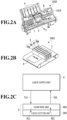
- FIG. 2A and 2B are diagrams illustrating liquid ejection apparatuses to which the liquid ejection head of the present disclosure is applicable.
- a printing apparatus 1000 illustrated in Fig. 2A is, for example, a serial-scan printing apparatus (liquid ejection apparatus) that performs printing with the liquid ejection head 3A illustrated in Fig. 1A .
- This printing apparatus 1000 includes a chassis 1010, a conveyance unit 1, the foregoing liquid ejection head 3A, a feeding unit 4, and a carriage 5.
- the chassis 1010 is constituted of multiple plate-shaped metal members having specified rigidities and forms a skeletal frame of this printing apparatus.
- the feeding unit 4 feeds not-illustrated sheet-shaped print media into the printing apparatus.
- the conveyance unit 1 conveys print media fed from the feeding unit 4, in the sub scanning direction (Y direction).
- the carriage 5 on which the liquid ejection head 3A is mounted is movable back and forth in the main scanning direction (X direction).
- This printing apparatus 1000 repeats a printing scan for ejecting liquid through the ejection openings 13 of the liquid ejection head 3 while moving the liquid ejection head 3A together with the carriage 5 in the main scanning direction (X direction) and a conveyance operation for conveying a print medium in the sub scanning direction (Y direction). Through these operations, an image is printed on the print medium.
- the liquid ejection head 3 is supplied with liquid from a not-illustrated liquid supply unit.
- a printing apparatus 2000 in Fig. 2B is a full-line printing apparatus (liquid ejection apparatus) that performs printing with long lengths of liquid ejection heads such as 3B to 3E as illustrated in Figs. 1B to 1E .
- This printing apparatus 2000 includes a conveyance unit 1 that continuously conveys a sheet-shaped print medium S.
- the conveyance unit 1 may have a configuration including a conveyance belt as illustrated in Fig. 2B or a configuration including conveying rollers.
- the printing apparatus 2000 illustrated in Fig. 2B has four liquid ejection heads 3Ye, 3M, 3C, and 3Bk for ejecting yellow (Ye) ink, magenta (M) ink, cyan (C) ink, and black (Bk) ink, respectively.
- the four liquid ejection heads 3Ye, 3M, 3C, and 3Bk are supplied with liquids in respective colors. While the print medium 2 is being conveyed continuously, liquids are ejected from the liquid ejection heads 3 fixed at specified positions in the printing apparatus. Ejected liquids are landed on the print medium 2, and thus, a color image can be continuously printed on the print medium S.
- Fig. 2C is a diagram for explaining a supply system for supplying liquid to a liquid ejection head 3.
- a liquid supply unit 6 is connected to the liquid ejection head 3 via a circulation flow path 710 on the supply side and a circulation flow path 720 on the collection side.
- the liquid supply unit 6 supplies liquid to the liquid ejection head 3 via the circulation flow path 710 on the supply side. Part of the liquid supplied to the liquid ejection head 3 is collected via the circulation flow path 720 on the collection side.
- the liquid ejection head 3 has a flow-path unit 600 and a liquid ejection unit 300.
- the flow-path unit 600 supplies liquid to the liquid ejection unit 300 via a supply flow path 611 which is part of the flow-path unit 600.
- the liquid ejection head 3 includes a liquid-flow generation apparatus (not illustrated) that generates liquid flow in a direction from the supply flow path 611 through pressure chambers 23 toward the collection flow path 612.
- the foregoing configurations of the printing apparatuses are examples and are not intended to limit the scope of the present disclosure.
- a configuration may be employed in which liquid is not collected from the liquid ejection head 3 to the liquid supply unit 6.
- the liquid ejection head 3 may have a sub-tank for temporarily storing liquid supplied from the liquid supply unit 6.
- liquid when liquid is ejected toward a print medium 2, and the liquid in the liquid ejection head 3 is reduced, liquid is added from the liquid supply unit 6 to the sub-tank, and the liquid is supplied from the sub-tank to the liquid ejection head.
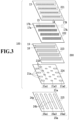
- Fig. 3 is an exploded plan view diagram illustrating the configuration of a liquid ejection unit 300 provided in a liquid ejection head 3 in the present embodiment.
- the liquid ejection unit 300 includes a print element substrate 100 and a support member 225 which is joined to the print element substrate 100.
- the print element substrate 100 has an ejection-opening forming member 221, an element forming member 222, a liquid supply-path member 223, and a lid member 224 which are sequentially joined to one another.
- the ejection-opening forming member 221 has multiple ejection openings 13 for ejecting liquid, lined along the X direction. These lined multiple ejection openings constitute an ejection opening array 14.
- one ejection-opening forming member 221 has multiple ejection opening arrays 14 (four ejection opening arrays in Fig. 3 ) arranged in parallel with one another.
- the element forming member 222 has multiple heat generating elements 15 arranged at positions facing the respective ejection openings 13, multiple individual supply paths 17a for supplying liquid to the respective heat generating elements 15, and multiple individual collection paths 17b for collecting part of the supplied liquid.
- the individual supply paths 17a and the individual collection paths 17b pass through the element forming member 222.
- the heat generating element 15 is an electrothermal conversion element capable of generating thermal energy for ejecting liquid through the ejection opening 13 that the heat generating element 15 faces.
- each heat generating element 15 is associated with one individual supply path 17a and one individual collection path 17b.
- the multiple individual supply paths 17a and the multiple individual collection paths 17b are arranged along the X direction, corresponding to the respective ejection opening arrays 14.
- multiple individual supply paths 17a associated with the same ejection opening array 14 are called a group of individual supply paths 17A; multiple individual collection paths 17b associated with the same ejection opening array 14 are called a group of individual collection paths 17B.
- four groups of individual supply paths 17A and four groups of individual collection paths 17B are formed to be respectively associated with four ejection opening arrays.
- the liquid supply-path member 223 has multiple liquid supply paths 18 communicating with multiple groups of individual supply paths 17A and multiple liquid collection paths 19, each having a rectangular opening shape, communicating with multiple groups of individual collection paths 17B.
- the liquid supply-path member 223 has four liquid supply paths 18 corresponding to the groups of individual supply paths 17A and four liquid collection paths 19 corresponding to the groups of individual collection paths 17B. Note that both sets of the liquid supply paths 18 and the liquid collection paths 19 are through paths that pass through the liquid supply-path member 223.
- the lid member 224 has liquid supply ports 21a communicating with the liquid supply paths 18 and liquid collection ports 21b communicating with the liquid collection paths 19. Both sets of the liquid supply ports 21a and the liquid collection ports 21b are through holes that pass through the lid member 224.
- multiple liquid supply ports 21a (three liquid supply ports 21a1, 21a2, and 21a3 in Fig. 3 ) are formed to communicate with each liquid supply path 18 at different positions along the X direction (first direction).
- multiple (two in the figure) liquid collection ports 21b are formed to communicate with each liquid collection path 19 at different positions along the X direction.
- the liquid supply ports 21a1 to 21a3 the liquid supply ports located at both end portions in the X direction, in other words, the liquid supply ports 21a1 and 21a2 located closest to the end portions in the X direction of the lid member have opening areas larger than those of the liquid supply port 21a3 and the liquid collection ports 21b. Note that the other liquid supply port 21a3 has approximately the same opening area as those of the two liquid collection ports 21b.
- the support member 225 has multiple (three in Fig. 3 ) communicating supply ports 26a (26a1, 26a2, 26a3) and multiple (two in Fig. 3 ) communicating collection ports 26b.
- Each of the communicating supply ports 26a (21a1, 21a2, 26a3) and the communicating collection ports 26b is a through hole extending in a direction intersecting the X direction in which the ejection openings 13 are arranged.
- the communicating supply port 26a1 located close to one end portion in the X direction of the support member 225 communicates with the multiple (four in Fig. 3 ) liquid supply ports 21a1.
- the communicating supply port 26a2 located close to the other end portion of the support member 225 communicates with the multiple (four in Fig. 3 ) liquid supply ports 21a2.
- the communicating supply port 26a3 located in the center of the support member 225 communicates with the multiple (four in Fig. 3 ) liquid supply ports 21a3.
- Each of the two communicating collection ports 26b communicates with four liquid collection ports 21b.
- the support member 225 should preferably be made of a material that has a coefficient of thermal expansion close to that of the print element substrate 100 and that allows the communicating supply ports 26a and the communicating collection ports 26b to be formed with high accuracy.
- the support member 225 should preferably be made of a material such as silicon, alumina, or glass.
- the liquid ejection unit 300 has the print element substrate 100 and the support member 225, the configuration of the liquid ejection unit 300 is not limited to this example.
- the liquid ejection unit 300 may be configured to have only a print element substrate 100 without having a support member 225.
- Fig. 4 is a cross-sectional perspective view of a print element substrate 100 constituted of the constituent members illustrated in the exploded plan view of Fig. 3 .
- one surface of the ejection-opening forming member 221 serves as one surface of the print element substrate 100 (the ejection opening surface).
- This ej ection-opening forming member 221 has multiple ejection openings 13 arranged to pass through the member 221 in its thickness direction, and these ejection openings 13 constitutes the ejection opening arrays 14.
- the ejection-opening forming member 221 has recesses 12 on the other surface, and these recesses 12 form spaces referred to as pressure chambers 23 between the ejection-opening forming member 221 and the element forming member 222.
- the pressure chambers 23 are associated with the respective multiple ejection openings 13.
- Each pressure chamber 23 has a heat generating element 15 at a position corresponding to each ejection opening 13.
- each pressure chamber 23 communicates with an individual supply path 17a and an individual collection path 17b provided in the element forming member 222.
- the individual supply path 17a communicate with a liquid supply path 18 provided in the liquid supply-path member 223.
- the individual collection path 17b communicates with a liquid collection path 19 provided in the liquid supply-path member 223.
- the liquid supply path 18 communicates with liquid supply ports 21a (see Fig. 3 ); the liquid collection path 19 communicates with liquid collection ports 21b (see Fig. 3 ).
- the print element substrate 100 has liquid-supply flow paths constituted of the liquid supply ports 21a, the liquid supply paths 18, and the individual supply paths 17a for guiding the liquid supplied from the communicating supply ports 26a of the support member 225 to the pressure chambers 23.
- the print element substrate 100 also has liquid-collection flow paths constituted of the individual collection paths 17b, the liquid collection paths 19, and the liquid collection ports 21b for guiding the liquid in the pressure chamber 23 to the communicating collection ports 26b of the support member 225.
- the pressure of the pressure chamber 23 is kept to be a pressure (negative pressure) that forms a meniscus of the liquid near the opening of the ejection opening 13.
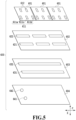
- Fig. 5 is an exploded plan view of constituent members of a flow-path unit 600 according to the present embodiment, viewed from the side to which the foregoing liquid ejection units 300 are to be joined.
- the flow-path unit 600 illustrated here is configured to have three liquid ejection units 300 on it.
- the one flow-path unit 600 is configured to supply the liquid supplied from the liquid supply unit 6 ( Fig. 2C ) to three liquid ejection units 300.
- the flow-path unit 600 are constituted of three first flow-path members 601, a second flow-path member 602, a third flow-path member 603, and a fourth flow-path member 604, which are joined together. Note that to each of the three first flow-path members 601 is to be joined one foregoing liquid ejection unit 300.
- Each of the three first flow-path members 601 has multiple (three in Fig. 5 ) supply flow paths 611 (611a, 611b, 611c) and multiple (two in Fig. 5 ) collection flow paths 612. Both sets of the supply flow paths 611 and the collection flow paths 612 pass through the first flow-path member 601 in its thickness direction.
- To one surface (the upper surface in Fig. 5 ) of each first flow-path member 601 is joined the support member 225 of the foregoing liquid ejection unit 300.
- This enables the supply flow paths 611a, 611b, and 611c of the first flow-path member 601 to communicate respectively with the communicating supply ports 26a1, 26a2, and 26a3 provided in the support member 225.
- the second flow-path member 602 has multiple (three in Fig. 5 ) first common supply flow paths 621 extending in the X direction and multiple (three in Fig. 5 ) first common collection flow paths 622 extending in the X direction. Each flow path 621 or 622 passes through the second flow-path member 602 in its thickness direction. Each first common supply flow path 621 communicates with the multiple supply flow paths 611 (611a, 611b, 611c) of the corresponding first flow-path member 601; each first common collection flow path 622 communicates with the multiple (two in Fig. 5 ) collection flow paths 612 of the corresponding first flow-path member 601.
- the third flow-path member 603 has one second common supply flow path 631 extending in the X direction and one second common collection flow path 632 extending in the X direction.
- the flow paths 631 and 632 pass through the third flow-path member 603 in its thickness direction.
- the second common supply flow path 631 communicates with the three first common supply flow paths 621 provided in the second flow-path member 602.
- the second collection flow path 632 communicates with the three first common collection flow paths 622 provided in the second flow-path member 602.
- the fourth flow-path member 604 has one common supply hole 641 and one common collection hole 642.
- the common supply hole 641 communicates with the second common supply flow path 631; the common collection hole 642 communicates with the second common collection flow path 632.
- the common supply hole 641 is connected to the circulation flow path 710 on the supply side for connecting the foregoing liquid supply unit 6 ( Fig. 2C ) and the liquid ejection head 3; the common collection hole 642 is connected to the circulation flow path 720 on the collection side.
- the first to fourth flow-path members 601 to 604 should preferably be made of a member composed of a material having corrosion resistance to the liquid and a low coefficient of linear expansion.
- materials usable for the first to fourth flow-path members 601 to 604 include composite materials (resin materials) in which inorganic fillers such as silica particles or fibers are added to the base material.
- examples of usable materials for the base material include alumina, liquid crystal polymer (LCP), polyphenyl sulfide (PPS), and polysulfone (PSF).
- the flow-path unit 600 may be formed by stacking the flow-path members 601 to 604 and bonding them together. In the case where resin composite materials are used, the flow-path unit 600 may be formed by stacking the flow-path members and welding them together.
- the second to fourth flow-path members 602 to 604 also have a function as a support member for securing the strength of the liquid ejection head 3.
- the second to fourth flow-path members 602 to 604 as a support member should preferably be made of a material having high mechanical strength.
- the material should preferably be stainless steel (SUS), titanium (Ti), alumina, or the like.
- the first flow-path members 601 are formed of heat resistant members. These first flow-path members 601 reduce the heat transfer from the liquid ejection units 300 to the second to fourth flow-path members 602 to 604 as a support member and also reduces the heat conduction between the liquid ejection units 300.
- the material of the first flow-path member 601 should preferably be one having a low thermal conductivity and a coefficient of linear expansion that is not much different from those of the second to fourth flow-path members 602 to 604 of the flow-path unit 600 and the liquid ejection unit 300.
- the first flow-path member 601 should preferably be formed of a composite material that has a resin material as a base material, in particular, polyphenyl sulfide (PPS) or polysulfone (PSF) and in which inorganic fillers such as silica fine particles are added to the base material.
- the present embodiment only one liquid ejection unit 300 is mounted on one first flow-path member 601 so that the size of each flow-path member 601 is small.
- the multiple flow-path members may be connected, and multiple liquid ejection units may be mounted on it.
- a heat resistance R (K/W) of the first flow-path member 601 is determined to satisfy the relationship in formula 1 so that the temperature of the entire liquid ejection head will not increase due to the heat generated when the heat generating elements 15 are driven.
- P is the thermal energy ( ⁇ J/pL) that is inputted from the heat generating element 15 to liquid per unit volume to eject the liquid through the ejection opening.
- Fig. 6 is a diagram illustrating the configuration of an end portion of multiple liquid ejection units 300 arranged on first flow-path members 601 of a flow-path unit 600.
- the liquid ejection unit 300 in the present embodiment has a parallelogram planar shape.
- These multiple parallelogram liquid ejection units 300 are disposed in in-line arrangement along the X direction, substantially forming long lengths of ejection opening arrays extending in the X direction. Since three liquid ejection units 300 are arranged on the first flow-path members 601 of the flow-path unit 600 illustrated in Fig.
- one flow-path unit 600 has ejection opening arrays three times as long as short lengths of ejection opening arrays formed in each liquid ejection unit 300. Arranging these multiple flow-path units 600 along the X direction makes it possible to form a full-line liquid ejection head having long lengths of ejection opening arrays.
- liquid flows from the liquid supply unit 6 via the circulation flow path 710 into the common supply hole 641 of the flow-path unit 600.
- the liquid that has flowed into the common supply hole 641 flows inside the second common supply flow path 631 and then flows into the multiple (three in Fig. 5 ) first common supply flow paths 621 with which the second common supply flow path 631 communicates.
- the liquid that has flowed into each of the multiple first common supply flow paths 621 flows via the supply flow paths 611 (611a, 611b, 611c) provided in each of the multiple first flow-path members 601 into the liquid ejection unit 300.
- the liquid supplied from the flow-path unit 600 first flows into multiple (three in Fig. 3 ) communicating supply ports 26a (26a1, 26a2, 26a3) provided in the support member 225.
- the liquid that has flowed into the multiple communicating supply ports 26a1, 26a2, and 26a3 flows into the liquid supply ports 21a1, 21a2, and 21 a3 of the lid member 224, respectively, and then flows into the multiple (four in Fig. 3 ) liquid supply paths 18 formed in the liquid supply-path member 223.
- the liquid that has flowed into the four liquid supply paths 18 flows via the individual supply paths 17a of the element forming member 222 into the pressure chambers 23 and are supplied to the pressure chambers 23 and the ejection openings 13.
- the liquid that has flowed into the pressure chambers 23 then flows via the individual collection paths 17b communicating with the pressure chambers 23 into the liquid collection paths 19 provided in the liquid supply-path member 223 and then flows via the liquid collection ports 21b into the communicating collection ports 26b.
- the liquid that has flowed into the communicating collection ports 26b then flows via the collection flow paths 612 provided in the first flow-path members 601 of the flow-path unit 600 into the first common collection flow paths 622 of the second flow-path member 602.
- the liquid that has flowed into the first common collection flow paths 622 flows via the second common collection flow path 632 provided in the third flow-path member 603 to the common collection hole 642, through which the liquid flows via the circulation flow path 720 on the collection side into the liquid supply unit 6.
- liquid circulates from the liquid supply unit 6 via the liquid ejection head 3 and back into the supply unit 6 again.
- Fig. 7 is a plan view diagram schematically illustrating liquid flow inside the print element substrate 100 in the state where the liquid is not being ejected through the ejection openings 13.
- the liquid that has flowed inside the liquid supply path 18 flows via the individual supply paths 17a into the pressure chambers 23.
- the liquid that has flowed into the pressure chambers 23 flows into the individual collection paths 17b as indicated by the arrows F2.
- the liquid that has flowed into the individual collection paths 17b flows inside the liquid collection path 19 as indicated by the arrows F3. After that, the liquid flows into the liquid collection ports 21b, and flows out through the communicating collection ports 26b to the flow-path unit 600.
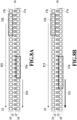
- Fig. 8A is a diagram illustrating the flow of liquid in a comparative example to the present embodiment
- Fig. 8B is a diagram illustrating the flow of liquid in a liquid ejection head 3 of the present embodiment.
- liquid is supplied to the ejection opening array 14 from both the liquid supply port 21a or 22a and the liquid collection port 21b or 22b.
- liquid is supplied from the liquid supply port 21a as indicated by the arrow F11 while liquid is also supplied from the liquid collection port 21b as indicated by the arrow F13.
- liquid is supplied from the liquid supply port 22a as indicated by the arrow F10, and the liquid is supplied from the liquid collection port 22b as indicated by the arrow F20.
- Such liquid flows are caused because in the case where liquid is ejected through a large number of ejection openings 13, negative pressure increases in both the liquid-collection flow path from the pressure chamber 23 to the liquid collection port 21b or 22b and the liquid-supply flow path from the pressure chamber 23 to the liquid supply port 21a or 22a.
- the liquid in the flow path on the collection side communicating with the liquid collection port 21b or 22b has been heated by the heat generating element, and the temperature of the liquid has relatively increased.
- the heat of the liquid increases also the temperature of the print element substrate 100.
- the temperature tends to increase at end portions of the print element substrate 100. The reason is as follows.
- the distance between adjoining print element substrates 100 needs to be small. Specifically, the distance from an end portion in the X direction (first direction) of the print element substrate 100 to the end portions of the ejection opening arrays needs to be formed smaller than the distance from an end portion of the element substrate in a direction orthogonal to the X direction (second direction (Y direction)) to the ejection opening arrays. As a result, the area of the region a (see Fig. 6 ) formed between end portions of the ejection opening arrays 14 and the end portion of the print element substrate 100 is smaller than the areas of other end portion regions, and this makes it difficult for the heat generated in liquid ejection to dissipate from the region a.
- the liquid supply port 21a1 located at an end portion in the X direction needs to be arranged to be closer to the center of the print element substrate 100 than the end portion of the ejection opening array 14 as illustrated in Figs. 8A and 8B .
- This configuration makes longer the distance in the flow path from the liquid supply port 21a to the end portion of the ejection opening array 14 and the distance in the flow path and from the liquid collection port 21b to the end portion of the ejection opening array 14.
- the liquid flowing from the end portion of the liquid collection path 19 to the liquid collection port 21b or 22b tends to receive heat from the print element substrate 100.
- the temperature around the end portion of the ejection opening array 14 in other words, the temperature at the end portion of the print element substrate 100 tends to be higher than the temperature of other portions.
- the liquid supply ports 21a1 and 21a2 located at the end portions in the X direction have larger opening areas than the other liquid supply ports 21a3 and the liquid collection ports 21b.
- the lengths in the X direction of the liquid supply ports 21a1 and 21a2 are set larger than those of the other liquid supply port 21a3 and the liquid collection ports 21b to make the opening areas of the liquid supply ports 21a1 and 21a2 larger than those of the other ports.
- the temperature of the liquid on the liquid collection side has increased along with the circulation of the liquid, while the temperature of the liquid on the liquid supply side is relatively low.
- the liquid supply ports 21a since the liquid supply ports 21a (21a1, 21a2) closer to the end portions of the print element substrate 100 are configured to have larger opening areas, it is possible to reduce the increase in the temperature at the end portions of the print element substrate 100.
- the printing apparatus including the liquid ejection head according to the present embodiment improves the quality of printed images.
- the opening area of the liquid supply port 22a is equal to the opening area of the collection port. Accordingly, a relatively large amount of liquid is supplied from the liquid collection port 22a, and thus, the temperature of the print element substrate 100 tends to increase. In particular, the temperature of the liquid at the end portions of the print element substrate 100 tends to increase, and thus there is a possibility of causing the variation in the liquid ejection speed and the amount of ejected liquid at each ejection opening.
- Figs. 9A and 9B show the measurement results of temperature distribution of a print element substrate 100 in the present embodiment and a print element substrate 100 in a comparative example.
- Fig. 9A shows the measurement result of the comparative example;
- Fig. 9B shows the measurement result of the present embodiment.
- the parts indicated by high densities in Figs. 9A and 9B show low-temperature portions.
- temperature T2 at an end portion is 58°C
- temperature T1 at the end portion is decreased to approximately 54°C.
- the present embodiment decreases the temperature at the end portions of the print element substrate 100, compared to the comparative example.
- the present disclosure is not limited to this configuration.
- the multiple liquid supply ports not only the opening areas of the liquid supply ports located at both end portions but also the opening area of the liquid supply port located at the intermediate position (the liquid supply port 21a3 in Fig. 3 ) may be larger than those of the liquid collection ports 21b.
- This configuration enables a larger amount of liquid to be supplied also to the intermediate portion of the print element substrate from the liquid supply side, enabling reduction of the increase in the temperature of the entire print element substrate.
- the number and positions of liquid supply ports and liquid collection ports may be set according to the size of the print element substrate, and the number of ejection openings, and other factors, as appropriate, and hence, they are not limited to those disclosed in the above embodiment.
- the liquid supply path 18 and the liquid collection path 19 formed in the liquid supply-path member 223 are in rectangular shapes
- the liquid supply path 18 and the liquid collection path 19 are not limited to those having rectangular planar shapes.
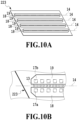
- the liquid supply path 18 and the liquid collection path 19 may be formed in hexagonal planar shapes as illustrated in Figs. 10A and 10B .
- the position of an end portion of the liquid supply path 18 can be closer to the end portion of the print element substrate 100, and thereby, a greater number of ejection openings can be arranged accordingly.
- each ejection opening 13 is associated with one individual supply path 17a and one individual collection path 17b.
- multiple ejection openings may be associated with one individual supply path 17a and one individual collection path 17b as illustrated in Fig. 10B .
- the planar shape of the liquid ejection unit 300 is not limited to a parallelogram but may be in another shape.
- the planar shape of the liquid ejection unit 300 may be rectangular as illustrated in Figs. 1A to 1C .
- the distance between the end portions of adjoining liquid ejection units needs to be set according to the arrangement pitch of the ejection openings, and hence, the distance of the end portions of the liquid ejection units need to be shorter. This makes the heat dissipation characteristics worse at the end portions of the liquid ejection units.
- the technique in the present disclosure is applicable to apparatuses other than printing apparatuses.
- the liquid ejection head and the liquid ejection apparatus according to the present disclosure can be mounted as a print unit on copiers, fax machines having communication systems, word processors, and others.
- the liquid ejection head and the liquid ejection apparatus according to the present disclosure can also be applied to industrial apparatuses combined with various processing apparatuses.
- the technique in the present disclosure is also applicable to biochip forming apparatuses and production apparatuses for three-dimensional structures such as electronic-circuit printing apparatuses.
Landscapes
- Ink Jet (AREA)
- Particle Formation And Scattering Control In Inkjet Printers (AREA)
Applications Claiming Priority (1)
| Application Number | Priority Date | Filing Date | Title |
|---|---|---|---|
| JP2019085490A JP7286403B2 (ja) | 2019-04-26 | 2019-04-26 | 液体吐出ヘッド、液体吐出装置、及び記録装置 |
Publications (2)
| Publication Number | Publication Date |
|---|---|
| EP3730300A1 EP3730300A1 (en) | 2020-10-28 |
| EP3730300B1 true EP3730300B1 (en) | 2023-02-15 |
Family
ID=70292833
Family Applications (1)
| Application Number | Title | Priority Date | Filing Date |
|---|---|---|---|
| EP20169793.5A Active EP3730300B1 (en) | 2019-04-26 | 2020-04-16 | Liquid ejection head, liquid ejection apparatus, and printing apparatus |
Country Status (4)
| Country | Link |
|---|---|
| US (1) | US11192363B2 (enExample) |
| EP (1) | EP3730300B1 (enExample) |
| JP (1) | JP7286403B2 (enExample) |
| CN (1) | CN111845079B (enExample) |
Families Citing this family (1)
| Publication number | Priority date | Publication date | Assignee | Title |
|---|---|---|---|---|
| JP2023178607A (ja) * | 2022-06-06 | 2023-12-18 | キヤノン株式会社 | 液体吐出ヘッド及び液体吐出装置 |
Family Cites Families (18)
| Publication number | Priority date | Publication date | Assignee | Title |
|---|---|---|---|---|
| JP4323947B2 (ja) * | 2003-01-10 | 2009-09-02 | キヤノン株式会社 | インクジェット記録ヘッド |
| JP5225132B2 (ja) * | 2009-02-06 | 2013-07-03 | キヤノン株式会社 | 液体吐出ヘッドおよびインクジェット記録装置 |
| US8657429B2 (en) | 2010-10-26 | 2014-02-25 | Eastman Kodak Company | Dispensing liquid using overlapping outlet/return dispenser |
| JP6410528B2 (ja) * | 2014-08-29 | 2018-10-24 | キヤノン株式会社 | 液体吐出ヘッドとそれを用いたヘッドユニット |
| US10179453B2 (en) | 2016-01-08 | 2019-01-15 | Canon Kabushiki Kaisha | Liquid ejection head and liquid ejection apparatus |
| US10022979B2 (en) * | 2016-01-08 | 2018-07-17 | Canon Kabushiki Kaisha | Liquid ejection head, liquid ejection apparatus, and manufacturing method |
| JP6987498B2 (ja) * | 2016-01-08 | 2022-01-05 | キヤノン株式会社 | 液体吐出用基板、液体吐出ヘッド、および液体吐出装置 |
| US10029473B2 (en) * | 2016-01-08 | 2018-07-24 | Canon Kabushiki Kaisha | Liquid discharge head and recording apparatus |
| US9931845B2 (en) | 2016-01-08 | 2018-04-03 | Canon Kabushiki Kaisha | Liquid ejection module and liquid ejection head |
| JP6964975B2 (ja) | 2016-01-08 | 2021-11-10 | キヤノン株式会社 | 液体吐出ヘッドおよび液体吐出装置 |
| JP7013124B2 (ja) * | 2016-01-08 | 2022-01-31 | キヤノン株式会社 | 液体吐出ヘッドの製造方法 |
| US10214014B2 (en) | 2016-02-12 | 2019-02-26 | Canon Kabushiki Kaisha | Liquid ejection head and liquid ejection apparatus |
| JP2017144689A (ja) | 2016-02-19 | 2017-08-24 | キヤノン株式会社 | 記録素子基板、液体吐出ヘッドおよび液体吐出装置 |
| JP6669393B2 (ja) | 2016-03-25 | 2020-03-18 | キヤノン株式会社 | 液体吐出ヘッド、液体吐出装置、および液体吐出ヘッドの温度制御方法 |
| JP6961404B2 (ja) | 2017-06-29 | 2021-11-05 | キヤノン株式会社 | 液体吐出ヘッドおよび液体吐出装置 |
| JP7019328B2 (ja) * | 2017-07-07 | 2022-02-15 | キヤノン株式会社 | 液体吐出ヘッド |
| JP6976753B2 (ja) * | 2017-07-07 | 2021-12-08 | キヤノン株式会社 | 液体吐出ヘッド、液体吐出装置、及び液体の供給方法 |
| JP7039231B2 (ja) | 2017-09-28 | 2022-03-22 | キヤノン株式会社 | 液体吐出ヘッドおよび液体吐出装置 |
-
2019
- 2019-04-26 JP JP2019085490A patent/JP7286403B2/ja active Active
-
2020
- 2020-04-16 EP EP20169793.5A patent/EP3730300B1/en active Active
- 2020-04-21 CN CN202010315020.3A patent/CN111845079B/zh active Active
- 2020-04-22 US US16/855,355 patent/US11192363B2/en active Active
Also Published As
| Publication number | Publication date |
|---|---|
| US11192363B2 (en) | 2021-12-07 |
| EP3730300A1 (en) | 2020-10-28 |
| JP7286403B2 (ja) | 2023-06-05 |
| JP2020179627A (ja) | 2020-11-05 |
| CN111845079B (zh) | 2022-07-29 |
| CN111845079A (zh) | 2020-10-30 |
| US20200338889A1 (en) | 2020-10-29 |
Similar Documents
| Publication | Publication Date | Title |
|---|---|---|
| RU2664201C2 (ru) | Подложка для выталкивания жидкости, головка для выталкивания жидкости и устройство выталкивания жидкости | |
| US12070956B2 (en) | Liquid ejecting head and liquid ejecting apparatus | |
| JP6536130B2 (ja) | 液体吐出ヘッド、及び、液体吐出装置 | |
| EP3192657B1 (en) | Liquid ejection substrate, liquid ejection head, and liquid ejection apparatus | |
| US8123339B2 (en) | Liquid ejection head and image forming apparatus using the same | |
| US20190047287A1 (en) | Liquid ejection head and liquid ejection apparatus | |
| EP2990205B1 (en) | Liquid discharge head and head unit using the same | |
| US8096640B2 (en) | Print bar | |
| US9358788B2 (en) | Print head die | |
| JP2020082600A (ja) | 液体吐出ヘッド及び液体を吐出する装置 | |
| EP3189970B1 (en) | Liquid discharge head, liquid discharge apparatus, and liquid discharge method | |
| EP3730300B1 (en) | Liquid ejection head, liquid ejection apparatus, and printing apparatus | |
| JP2013078930A (ja) | 液体吐出ヘッドおよび液体吐出装置 | |
| US6705700B2 (en) | Liquid discharge head, and head cartridge and image forming apparatus using such liquid discharge head | |
| EP2864122B1 (en) | Print head die | |
| JP6750848B2 (ja) | 液体吐出ヘッドおよび液体吐出装置 | |
| JP5430167B2 (ja) | 液体吐出ヘッド | |
| US20080259120A1 (en) | Printing head and ink jet printing apparatus | |
| JP2020128043A (ja) | 液体吐出ヘッドおよび液体吐出装置 | |
| US11951736B2 (en) | Thermal regulation in long inkjet printhead | |
| US20240042756A1 (en) | Liquid ejection head and liquid ejection apparatus | |
| US20240190129A1 (en) | Liquid ejection apparatus and liquid ejection control method | |
| US12485674B2 (en) | Liquid ejection head | |
| US10723127B2 (en) | Liquid ejection head and recording apparatus | |
| US20210402767A1 (en) | Liquid Discharge Head |
Legal Events
| Date | Code | Title | Description |
|---|---|---|---|
| PUAI | Public reference made under article 153(3) epc to a published international application that has entered the european phase |
Free format text: ORIGINAL CODE: 0009012 |
|
| STAA | Information on the status of an ep patent application or granted ep patent |
Free format text: STATUS: THE APPLICATION HAS BEEN PUBLISHED |
|
| AK | Designated contracting states |
Kind code of ref document: A1 Designated state(s): AL AT BE BG CH CY CZ DE DK EE ES FI FR GB GR HR HU IE IS IT LI LT LU LV MC MK MT NL NO PL PT RO RS SE SI SK SM TR |
|
| AX | Request for extension of the european patent |
Extension state: BA ME |
|
| STAA | Information on the status of an ep patent application or granted ep patent |
Free format text: STATUS: REQUEST FOR EXAMINATION WAS MADE |
|
| 17P | Request for examination filed |
Effective date: 20210428 |
|
| RBV | Designated contracting states (corrected) |
Designated state(s): AL AT BE BG CH CY CZ DE DK EE ES FI FR GB GR HR HU IE IS IT LI LT LU LV MC MK MT NL NO PL PT RO RS SE SI SK SM TR |
|
| GRAP | Despatch of communication of intention to grant a patent |
Free format text: ORIGINAL CODE: EPIDOSNIGR1 |
|
| STAA | Information on the status of an ep patent application or granted ep patent |
Free format text: STATUS: GRANT OF PATENT IS INTENDED |
|
| RIC1 | Information provided on ipc code assigned before grant |
Ipc: B41J 2/14 20060101AFI20220722BHEP |
|
| INTG | Intention to grant announced |
Effective date: 20220826 |
|
| GRAS | Grant fee paid |
Free format text: ORIGINAL CODE: EPIDOSNIGR3 |
|
| GRAA | (expected) grant |
Free format text: ORIGINAL CODE: 0009210 |
|
| STAA | Information on the status of an ep patent application or granted ep patent |
Free format text: STATUS: THE PATENT HAS BEEN GRANTED |
|
| AK | Designated contracting states |
Kind code of ref document: B1 Designated state(s): AL AT BE BG CH CY CZ DE DK EE ES FI FR GB GR HR HU IE IS IT LI LT LU LV MC MK MT NL NO PL PT RO RS SE SI SK SM TR |
|
| REG | Reference to a national code |
Ref country code: CH Ref legal event code: EP Ref country code: GB Ref legal event code: FG4D |
|
| REG | Reference to a national code |
Ref country code: DE Ref legal event code: R096 Ref document number: 602020008032 Country of ref document: DE |
|
| REG | Reference to a national code |
Ref country code: AT Ref legal event code: REF Ref document number: 1548042 Country of ref document: AT Kind code of ref document: T Effective date: 20230315 Ref country code: IE Ref legal event code: FG4D |
|
| REG | Reference to a national code |
Ref country code: LT Ref legal event code: MG9D |
|
| REG | Reference to a national code |
Ref country code: NL Ref legal event code: MP Effective date: 20230215 |
|
| REG | Reference to a national code |
Ref country code: AT Ref legal event code: MK05 Ref document number: 1548042 Country of ref document: AT Kind code of ref document: T Effective date: 20230215 |
|
| PG25 | Lapsed in a contracting state [announced via postgrant information from national office to epo] |
Ref country code: RS Free format text: LAPSE BECAUSE OF FAILURE TO SUBMIT A TRANSLATION OF THE DESCRIPTION OR TO PAY THE FEE WITHIN THE PRESCRIBED TIME-LIMIT Effective date: 20230215 Ref country code: PT Free format text: LAPSE BECAUSE OF FAILURE TO SUBMIT A TRANSLATION OF THE DESCRIPTION OR TO PAY THE FEE WITHIN THE PRESCRIBED TIME-LIMIT Effective date: 20230615 Ref country code: NO Free format text: LAPSE BECAUSE OF FAILURE TO SUBMIT A TRANSLATION OF THE DESCRIPTION OR TO PAY THE FEE WITHIN THE PRESCRIBED TIME-LIMIT Effective date: 20230515 Ref country code: NL Free format text: LAPSE BECAUSE OF FAILURE TO SUBMIT A TRANSLATION OF THE DESCRIPTION OR TO PAY THE FEE WITHIN THE PRESCRIBED TIME-LIMIT Effective date: 20230215 Ref country code: LV Free format text: LAPSE BECAUSE OF FAILURE TO SUBMIT A TRANSLATION OF THE DESCRIPTION OR TO PAY THE FEE WITHIN THE PRESCRIBED TIME-LIMIT Effective date: 20230215 Ref country code: LT Free format text: LAPSE BECAUSE OF FAILURE TO SUBMIT A TRANSLATION OF THE DESCRIPTION OR TO PAY THE FEE WITHIN THE PRESCRIBED TIME-LIMIT Effective date: 20230215 Ref country code: HR Free format text: LAPSE BECAUSE OF FAILURE TO SUBMIT A TRANSLATION OF THE DESCRIPTION OR TO PAY THE FEE WITHIN THE PRESCRIBED TIME-LIMIT Effective date: 20230215 Ref country code: ES Free format text: LAPSE BECAUSE OF FAILURE TO SUBMIT A TRANSLATION OF THE DESCRIPTION OR TO PAY THE FEE WITHIN THE PRESCRIBED TIME-LIMIT Effective date: 20230215 Ref country code: AT Free format text: LAPSE BECAUSE OF FAILURE TO SUBMIT A TRANSLATION OF THE DESCRIPTION OR TO PAY THE FEE WITHIN THE PRESCRIBED TIME-LIMIT Effective date: 20230215 |
|
| PG25 | Lapsed in a contracting state [announced via postgrant information from national office to epo] |
Ref country code: SE Free format text: LAPSE BECAUSE OF FAILURE TO SUBMIT A TRANSLATION OF THE DESCRIPTION OR TO PAY THE FEE WITHIN THE PRESCRIBED TIME-LIMIT Effective date: 20230215 Ref country code: PL Free format text: LAPSE BECAUSE OF FAILURE TO SUBMIT A TRANSLATION OF THE DESCRIPTION OR TO PAY THE FEE WITHIN THE PRESCRIBED TIME-LIMIT Effective date: 20230215 Ref country code: IS Free format text: LAPSE BECAUSE OF FAILURE TO SUBMIT A TRANSLATION OF THE DESCRIPTION OR TO PAY THE FEE WITHIN THE PRESCRIBED TIME-LIMIT Effective date: 20230615 Ref country code: GR Free format text: LAPSE BECAUSE OF FAILURE TO SUBMIT A TRANSLATION OF THE DESCRIPTION OR TO PAY THE FEE WITHIN THE PRESCRIBED TIME-LIMIT Effective date: 20230516 Ref country code: FI Free format text: LAPSE BECAUSE OF FAILURE TO SUBMIT A TRANSLATION OF THE DESCRIPTION OR TO PAY THE FEE WITHIN THE PRESCRIBED TIME-LIMIT Effective date: 20230215 |
|
| PG25 | Lapsed in a contracting state [announced via postgrant information from national office to epo] |
Ref country code: SM Free format text: LAPSE BECAUSE OF FAILURE TO SUBMIT A TRANSLATION OF THE DESCRIPTION OR TO PAY THE FEE WITHIN THE PRESCRIBED TIME-LIMIT Effective date: 20230215 Ref country code: RO Free format text: LAPSE BECAUSE OF FAILURE TO SUBMIT A TRANSLATION OF THE DESCRIPTION OR TO PAY THE FEE WITHIN THE PRESCRIBED TIME-LIMIT Effective date: 20230215 Ref country code: EE Free format text: LAPSE BECAUSE OF FAILURE TO SUBMIT A TRANSLATION OF THE DESCRIPTION OR TO PAY THE FEE WITHIN THE PRESCRIBED TIME-LIMIT Effective date: 20230215 Ref country code: DK Free format text: LAPSE BECAUSE OF FAILURE TO SUBMIT A TRANSLATION OF THE DESCRIPTION OR TO PAY THE FEE WITHIN THE PRESCRIBED TIME-LIMIT Effective date: 20230215 Ref country code: CZ Free format text: LAPSE BECAUSE OF FAILURE TO SUBMIT A TRANSLATION OF THE DESCRIPTION OR TO PAY THE FEE WITHIN THE PRESCRIBED TIME-LIMIT Effective date: 20230215 |
|
| REG | Reference to a national code |
Ref country code: DE Ref legal event code: R097 Ref document number: 602020008032 Country of ref document: DE |
|
| PG25 | Lapsed in a contracting state [announced via postgrant information from national office to epo] |
Ref country code: SK Free format text: LAPSE BECAUSE OF FAILURE TO SUBMIT A TRANSLATION OF THE DESCRIPTION OR TO PAY THE FEE WITHIN THE PRESCRIBED TIME-LIMIT Effective date: 20230215 |
|
| REG | Reference to a national code |
Ref country code: CH Ref legal event code: PL |
|
| PLBE | No opposition filed within time limit |
Free format text: ORIGINAL CODE: 0009261 |
|
| STAA | Information on the status of an ep patent application or granted ep patent |
Free format text: STATUS: NO OPPOSITION FILED WITHIN TIME LIMIT |
|
| PG25 | Lapsed in a contracting state [announced via postgrant information from national office to epo] |
Ref country code: LU Free format text: LAPSE BECAUSE OF NON-PAYMENT OF DUE FEES Effective date: 20230416 |
|
| REG | Reference to a national code |
Ref country code: BE Ref legal event code: MM Effective date: 20230430 |
|
| PG25 | Lapsed in a contracting state [announced via postgrant information from national office to epo] |
Ref country code: MC Free format text: LAPSE BECAUSE OF FAILURE TO SUBMIT A TRANSLATION OF THE DESCRIPTION OR TO PAY THE FEE WITHIN THE PRESCRIBED TIME-LIMIT Effective date: 20230215 |
|
| 26N | No opposition filed |
Effective date: 20231116 |
|
| PG25 | Lapsed in a contracting state [announced via postgrant information from national office to epo] |
Ref country code: SI Free format text: LAPSE BECAUSE OF FAILURE TO SUBMIT A TRANSLATION OF THE DESCRIPTION OR TO PAY THE FEE WITHIN THE PRESCRIBED TIME-LIMIT Effective date: 20230215 Ref country code: MC Free format text: LAPSE BECAUSE OF FAILURE TO SUBMIT A TRANSLATION OF THE DESCRIPTION OR TO PAY THE FEE WITHIN THE PRESCRIBED TIME-LIMIT Effective date: 20230215 Ref country code: LI Free format text: LAPSE BECAUSE OF NON-PAYMENT OF DUE FEES Effective date: 20230430 Ref country code: FR Free format text: LAPSE BECAUSE OF NON-PAYMENT OF DUE FEES Effective date: 20230430 Ref country code: CH Free format text: LAPSE BECAUSE OF NON-PAYMENT OF DUE FEES Effective date: 20230430 |
|
| REG | Reference to a national code |
Ref country code: IE Ref legal event code: MM4A |
|
| PG25 | Lapsed in a contracting state [announced via postgrant information from national office to epo] |
Ref country code: BE Free format text: LAPSE BECAUSE OF NON-PAYMENT OF DUE FEES Effective date: 20230430 |
|
| PG25 | Lapsed in a contracting state [announced via postgrant information from national office to epo] |
Ref country code: IE Free format text: LAPSE BECAUSE OF NON-PAYMENT OF DUE FEES Effective date: 20230416 |
|
| PG25 | Lapsed in a contracting state [announced via postgrant information from national office to epo] |
Ref country code: IE Free format text: LAPSE BECAUSE OF NON-PAYMENT OF DUE FEES Effective date: 20230416 |
|
| PG25 | Lapsed in a contracting state [announced via postgrant information from national office to epo] |
Ref country code: IT Free format text: LAPSE BECAUSE OF FAILURE TO SUBMIT A TRANSLATION OF THE DESCRIPTION OR TO PAY THE FEE WITHIN THE PRESCRIBED TIME-LIMIT Effective date: 20230215 |
|
| PG25 | Lapsed in a contracting state [announced via postgrant information from national office to epo] |
Ref country code: BG Free format text: LAPSE BECAUSE OF FAILURE TO SUBMIT A TRANSLATION OF THE DESCRIPTION OR TO PAY THE FEE WITHIN THE PRESCRIBED TIME-LIMIT Effective date: 20230215 |
|
| PG25 | Lapsed in a contracting state [announced via postgrant information from national office to epo] |
Ref country code: BG Free format text: LAPSE BECAUSE OF FAILURE TO SUBMIT A TRANSLATION OF THE DESCRIPTION OR TO PAY THE FEE WITHIN THE PRESCRIBED TIME-LIMIT Effective date: 20230215 |
|
| GBPC | Gb: european patent ceased through non-payment of renewal fee |
Effective date: 20240416 |
|
| PG25 | Lapsed in a contracting state [announced via postgrant information from national office to epo] |
Ref country code: GB Free format text: LAPSE BECAUSE OF NON-PAYMENT OF DUE FEES Effective date: 20240416 |
|
| PG25 | Lapsed in a contracting state [announced via postgrant information from national office to epo] |
Ref country code: GB Free format text: LAPSE BECAUSE OF NON-PAYMENT OF DUE FEES Effective date: 20240416 |
|
| PGFP | Annual fee paid to national office [announced via postgrant information from national office to epo] |
Ref country code: DE Payment date: 20250319 Year of fee payment: 6 |
|
| PG25 | Lapsed in a contracting state [announced via postgrant information from national office to epo] |
Ref country code: CY Free format text: LAPSE BECAUSE OF FAILURE TO SUBMIT A TRANSLATION OF THE DESCRIPTION OR TO PAY THE FEE WITHIN THE PRESCRIBED TIME-LIMIT; INVALID AB INITIO Effective date: 20200416 |
|
| PG25 | Lapsed in a contracting state [announced via postgrant information from national office to epo] |
Ref country code: HU Free format text: LAPSE BECAUSE OF FAILURE TO SUBMIT A TRANSLATION OF THE DESCRIPTION OR TO PAY THE FEE WITHIN THE PRESCRIBED TIME-LIMIT; INVALID AB INITIO Effective date: 20200416 |