EP3720008A1 - Rundstrahlantenne und strahlformungsverfahren dafür - Google Patents
Rundstrahlantenne und strahlformungsverfahren dafür Download PDFInfo
- Publication number
- EP3720008A1 EP3720008A1 EP17932945.3A EP17932945A EP3720008A1 EP 3720008 A1 EP3720008 A1 EP 3720008A1 EP 17932945 A EP17932945 A EP 17932945A EP 3720008 A1 EP3720008 A1 EP 3720008A1
- Authority
- EP
- European Patent Office
- Prior art keywords
- omnidirectional
- array antenna
- directional
- subarray
- equiamplitude
- Prior art date
- Legal status (The legal status is an assumption and is not a legal conclusion. Google has not performed a legal analysis and makes no representation as to the accuracy of the status listed.)
- Pending
Links
- 238000000034 method Methods 0.000 title claims abstract description 30
- 230000000638 stimulation Effects 0.000 claims abstract description 53
- 230000004936 stimulating effect Effects 0.000 claims description 24
- 239000002184 metal Substances 0.000 claims description 3
- 238000013461 design Methods 0.000 abstract description 6
- 230000008878 coupling Effects 0.000 abstract description 4
- 238000010168 coupling process Methods 0.000 abstract description 4
- 238000005859 coupling reaction Methods 0.000 abstract description 4
- 238000010586 diagram Methods 0.000 description 20
- 238000004891 communication Methods 0.000 description 5
- 238000009434 installation Methods 0.000 description 3
- 230000005855 radiation Effects 0.000 description 3
- 238000010276 construction Methods 0.000 description 2
- 230000000694 effects Effects 0.000 description 2
- 238000005516 engineering process Methods 0.000 description 2
- 230000004048 modification Effects 0.000 description 2
- 238000012986 modification Methods 0.000 description 2
- 230000009286 beneficial effect Effects 0.000 description 1
- 230000005540 biological transmission Effects 0.000 description 1
- 230000010267 cellular communication Effects 0.000 description 1
- 230000001413 cellular effect Effects 0.000 description 1
- 239000004020 conductor Substances 0.000 description 1
- 230000007123 defense Effects 0.000 description 1
- 230000006872 improvement Effects 0.000 description 1
- 230000003447 ipsilateral effect Effects 0.000 description 1
- 238000007430 reference method Methods 0.000 description 1
- 238000011160 research Methods 0.000 description 1
- 230000000007 visual effect Effects 0.000 description 1
Images



Classifications
-
- H—ELECTRICITY
- H01—ELECTRIC ELEMENTS
- H01Q—ANTENNAS, i.e. RADIO AERIALS
- H01Q21/00—Antenna arrays or systems
- H01Q21/0006—Particular feeding systems
- H01Q21/0025—Modular arrays
-
- H—ELECTRICITY
- H01—ELECTRIC ELEMENTS
- H01Q—ANTENNAS, i.e. RADIO AERIALS
- H01Q21/00—Antenna arrays or systems
- H01Q21/06—Arrays of individually energised antenna units similarly polarised and spaced apart
- H01Q21/20—Arrays of individually energised antenna units similarly polarised and spaced apart the units being spaced along or adjacent to a curvilinear path
-
- H—ELECTRICITY
- H01—ELECTRIC ELEMENTS
- H01Q—ANTENNAS, i.e. RADIO AERIALS
- H01Q1/00—Details of, or arrangements associated with, antennas
- H01Q1/36—Structural form of radiating elements, e.g. cone, spiral, umbrella; Particular materials used therewith
- H01Q1/38—Structural form of radiating elements, e.g. cone, spiral, umbrella; Particular materials used therewith formed by a conductive layer on an insulating support
-
- H—ELECTRICITY
- H01—ELECTRIC ELEMENTS
- H01Q—ANTENNAS, i.e. RADIO AERIALS
- H01Q25/00—Antennas or antenna systems providing at least two radiating patterns
- H01Q25/04—Multimode antennas
-
- H—ELECTRICITY
- H01—ELECTRIC ELEMENTS
- H01Q—ANTENNAS, i.e. RADIO AERIALS
- H01Q3/00—Arrangements for changing or varying the orientation or the shape of the directional pattern of the waves radiated from an antenna or antenna system
- H01Q3/26—Arrangements for changing or varying the orientation or the shape of the directional pattern of the waves radiated from an antenna or antenna system varying the relative phase or relative amplitude of energisation between two or more active radiating elements; varying the distribution of energy across a radiating aperture
-
- H—ELECTRICITY
- H04—ELECTRIC COMMUNICATION TECHNIQUE
- H04B—TRANSMISSION
- H04B7/00—Radio transmission systems, i.e. using radiation field
- H04B7/02—Diversity systems; Multi-antenna system, i.e. transmission or reception using multiple antennas
- H04B7/04—Diversity systems; Multi-antenna system, i.e. transmission or reception using multiple antennas using two or more spaced independent antennas
- H04B7/0413—MIMO systems
- H04B7/0452—Multi-user MIMO systems
-
- H—ELECTRICITY
- H04—ELECTRIC COMMUNICATION TECHNIQUE
- H04B—TRANSMISSION
- H04B7/00—Radio transmission systems, i.e. using radiation field
- H04B7/02—Diversity systems; Multi-antenna system, i.e. transmission or reception using multiple antennas
- H04B7/04—Diversity systems; Multi-antenna system, i.e. transmission or reception using multiple antennas using two or more spaced independent antennas
- H04B7/06—Diversity systems; Multi-antenna system, i.e. transmission or reception using multiple antennas using two or more spaced independent antennas at the transmitting station
- H04B7/0613—Diversity systems; Multi-antenna system, i.e. transmission or reception using multiple antennas using two or more spaced independent antennas at the transmitting station using simultaneous transmission
- H04B7/0615—Diversity systems; Multi-antenna system, i.e. transmission or reception using multiple antennas using two or more spaced independent antennas at the transmitting station using simultaneous transmission of weighted versions of same signal
- H04B7/0617—Diversity systems; Multi-antenna system, i.e. transmission or reception using multiple antennas using two or more spaced independent antennas at the transmitting station using simultaneous transmission of weighted versions of same signal for beam forming
-
- H—ELECTRICITY
- H04—ELECTRIC COMMUNICATION TECHNIQUE
- H04W—WIRELESS COMMUNICATION NETWORKS
- H04W16/00—Network planning, e.g. coverage or traffic planning tools; Network deployment, e.g. resource partitioning or cells structures
- H04W16/24—Cell structures
- H04W16/28—Cell structures using beam steering
Definitions
- the present invention relates to the field of communications, and in particular, to a MIMO omnidirectional array antenna beamforming method and technology suitable for 5G applications.
- An omnidirectional antenna is the most primitive, simplest, and the most useful type in an antenna family.
- horizontally omnidirectional radiation is the most significant characteristic that is of the omnidirectional antenna and is exactly most required by wireless communication.
- both the transmitting station and the receiving apparatus are required to install the omnidirectional antenna to ensure that a link is unblocked when they are in any position relationship.
- the omnidirectional antenna has natural advantages such as miniaturization and low costs, and is easy to install, easy to deploy, and visually concealed.
- a cellular system can achieve a high capacity, a high data rate, high reliability, low latency, and low power consumption, etc.
- massive MIMO (mMIMO) technologies will be widely used, so that data transmission rate is increased by tens or hundreds of times.
- mMIMO antenna is developed mainly on a large-scale macro base station scenario. Due to high capacity requirements, large coverage, and multiple coverage modes, an antenna array scale of such base stations is usually large, such as 128 units or 256 units, and operating frequency bands are low frequencies such as 2.6 G, 3.5 G, and 4.5 G.
- the antenna of the mMIMO array has problems such as a large size, a heavy weight, a site selection difficulty, installation difficulty, and higher costs. The higher costs can be offset by increased profits brought by increasing the capacity.
- problems such as a large size, a heavy weight, a site selection difficulty, installation difficulty, and higher costs.
- the higher costs can be offset by increased profits brought by increasing the capacity.
- in addition to high-capacity and multi-mode scenarios there are still many low-capacity and less-mode application scenarios in 5G.
- the advantages of miniaturization and low costs enables the omnidirectional antenna to become the most attractive mMIMO solution.
- the omnidirectional antenna will encounter challenges such as a low gain, few formed beams, a complex algorithm, strong array element coupling, and little experience for reference.
- an antenna in this field has technical problems such as a large size, a heavy weight, a site selection difficulty, an installation difficulty, higher costs, a low gain, fewer formed beams, and a complex algorithm, etc.
- the present invention is intended to provide an omnidirectional array antenna beamforming method with a high gain, multiple formed beams, and a simple algorithm and an omnidirectional array antenna.
- the coaxially-arrayed symmetric oscillators of the omnidirectional subarray units are half-wave oscillators, and may also include half-wave oscillators or oscillators of other wavelengths.
- the symmetric oscillators of the omnidirectional subarray units are coaxially arrayed into a vertically polarized subarray or coplanarly arrayed into a horizontally polarized subarray.
- the symmetric oscillators of the omnidirectional subarray units are printed on a PCB dielectric plate, the dielectric plate being perpendicular to a diameter of the circular array.
- the symmetrical oscillators of the omnidirectional subarray units may also be constructed in a form of a metal tube.
- the different types of beams include at least any of a single omnidirectional beam, a single directional beam, a directional narrow double-beam, a directional wide double-beam, a non-collinear directional double-beam, a directional unequal-width double-beam, a directional triple-beam, and a directional quadruple-beam.
- the present invention has the following advantages.
- the omnidirectional array antenna beamforming method proposed in the present invention N array elements are used, the array elements being composed of meta-symmetric oscillator subarrays.
- the following beamforming algorithms are uniquely used to achieve different types of transaction beams and achieve various MIMO beamforming capabilities with a high gain, multiple formed beams, a simple algorithm, and low array element coupling.
- the omnidirectional array antenna exhibits huge potential in 5G applications.
- the method also has the characteristics of novel thinking, a clear principle, method universality, simplicity and practicability, etc., and is also effective and applicable to the provision of a beamforming design for an H/V single-polarized omnidirectional array antenna or an H/V dual-polarized omnidirectional antenna.
- the different types of beams are formed as below.
- an omnidirectional beam is formed through stimulation by means of equiamplitude and in-phase stimulation to cover a horizontal periphery;
- a horizontally directional beam is formed through stimulation by means of equiamplitude and out-phase stimulation to point to an azimuth angle;
- a horizontally directional narrow double-beam is formed through stimulation by means of equiamplitude and out-phase stimulation, the two beams being collinear and having equal widths;
- a horizontally directional wide double-beam is formed through stimulation by means of equiamplitude and out-phase stimulation, the two beams being collinear and having equal widths;
- a horizontally directional unequal-width double-beam is formed through stimulation by means of equiamplitude and out-phase stimulation, the two beams being collinear and having unequal widths;
- a horizontally directional narrow double-beam is formed through stimulation by means of equiamplitude and out-phase stimulation
- the omnidirectional array antenna beamforming method proposed in the present invention N array elements are used, the array elements being composed of p meta-symmetric oscillator subarrays.
- the following beamforming algorithms are uniquely used to achieve different types of transaction beams and achieve various MIMO beamforming capabilities with a high gain, multiple formed beams, a simple algorithm, and low array element coupling.
- the omnidirectional array antenna exhibits huge potential in 5G applications.
- the method also has the characteristics of novel thinking, a clear principle, method universality, simplicity and practicability, etc., and is also effective and applicable to the provision of a beamforming design for an H/V single-polarized omnidirectional array antenna or an H/V dual-polarized omnidirectional antenna.
- the different types of beams are formed as below.
- an omnidirectional beam is formed through stimulation by means of equiamplitude and in-phase stimulation to cover a horizontal periphery;
- a horizontally directional beam is formed through stimulation by means of equiamplitude and out-phase stimulation to point to an azimuth angle;
- a horizontally directional narrow double-beam is formed through stimulation by means of equiamplitude and out-phase stimulation, the two beams being collinear and having equal widths;
- a horizontally directional wide double-beam is formed through stimulation by means of equiamplitude and out-phase stimulation, the two beams being collinear and having equal widths;
- a horizontally directional unequal-width double-beam is formed through stimulation by means of equiamplitude and out-phase stimulation, the two beams being collinear and having unequal widths;
- a horizontally directional narrow double-beam is formed through stimulation by means of equiamplitude and out-phase stimulation
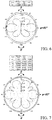
- an eight-unit beamforming omnidirectional antenna is designed for the future 5G applications, and 8 subarray units are evenly arranged on a circumference with a diameter of a central wavelength (1 ⁇ c ).
- the array is covered by a single omnidirectional beam, a single directional beam, an equal-width or unequal-width double-beam, a collinear or non-collinear double-beam, a triple-beam and a quadruple-beam in an azimuth plane, which basically meets requirements for beams in multiple business modes.
- This enables the omnidirectional forming array to become an extremely potential antenna solution for the future 5G applications.
- the method also has the characteristics of novel thinking, a clear principle, method universality, simplicity and practicability, etc., and is also effective and applicable to a beamforming design for an H/V single-polarized omnidirectional antenna or an H/V dual-polarized omnidirectional antenna.
- the present invention is intended to provide a design solution of beamforming omnidirectional array antenna for future 5G applications, and to provide an effective reference method for a beamforming design of an H/V single-polarized omnidirectional array antenna or an H/V dual-polarized omnidirectional antenna.
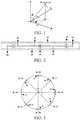
- FIGS. 1-4 a method for constructing the omnidirectional array antenna according to the present invention is shown as follows:
- N is 8
- p is 3.
- the coaxially-arrayed symmetric oscillators of the omnidirectional subarray units are half-wave oscillators, or may include half-wave oscillators or oscillators of other wavelengths.
- the symmetric oscillators of the omnidirectional subarray units are coaxially arrayed into a vertically polarized subarray or coplanarly arrayed into a horizontally polarized subarray.
- the symmetric oscillators of the omnidirectional subarray units are printed on a PCB dielectric plate, the dielectric plate being perpendicular to a diameter of the circular array.
- the symmetrical oscillators of the omnidirectional subarray units may also be constructed in a form of a metal tube.
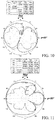
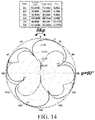
- the different types of beams include eight types of beams in total, such as a single omnidirectional beam #1, a single directional beam #2, a directional narrow double-beam #3, a directional wide double-beam #4, a non-collinear directional double-beam #5, a directional unequal-width double-beam #6, a directional triple-beam #7, and a directional quadruple-beam #8.
- FIG. 5 shows a VSWR curve of a standing wave of an omnidirectional subarray unit according to the present invention. It can be seen from the figure that within a frequency band of 3.4-3.6 GHz, the VSWR of the standing wave of the subarray unit ⁇ 1.60, with good impedance matching.
- a sidelobe level (SLL) is lower than that of the main lobe by about 13.78 dB, and a front-to-back ratio (FTBR) is 7.5 dB.
- SLL sidelobe level
- FTBR front-to-back ratio
- a sidelobe level (SLL) is lower than that of the main lobe by about 9 dB, and a deep zero point is formed in a direction orthogonal to a main beam.
- SLL sidelobe level
- Ipsilateral and lateral sidelobe levels (SLL) are respectively lower than that of the main lobe level by about 7 dB and 5.5 dB, and deep zero points are formed in a direction orthogonal to a main beam and at a location at which the lateral sidelobe intersects the main lobe.
Landscapes
- Engineering & Computer Science (AREA)
- Computer Networks & Wireless Communication (AREA)
- Signal Processing (AREA)
- Variable-Direction Aerials And Aerial Arrays (AREA)
Applications Claiming Priority (1)
| Application Number | Priority Date | Filing Date | Title |
|---|---|---|---|
| PCT/CN2017/113091 WO2019100376A1 (zh) | 2017-11-27 | 2017-11-27 | 全向阵列天线及其波束赋形方法 |
Publications (2)
| Publication Number | Publication Date |
|---|---|
| EP3720008A1 true EP3720008A1 (de) | 2020-10-07 |
| EP3720008A4 EP3720008A4 (de) | 2021-07-07 |
Family
ID=66630879
Family Applications (1)
| Application Number | Title | Priority Date | Filing Date |
|---|---|---|---|
| EP17932945.3A Pending EP3720008A4 (de) | 2017-11-27 | 2017-11-27 | Rundstrahlantenne und strahlformungsverfahren dafür |
Country Status (3)
| Country | Link |
|---|---|
| US (1) | US11233335B2 (de) |
| EP (1) | EP3720008A4 (de) |
| WO (1) | WO2019100376A1 (de) |
Cited By (1)
| Publication number | Priority date | Publication date | Assignee | Title |
|---|---|---|---|---|
| CN118394108A (zh) * | 2024-06-25 | 2024-07-26 | 青岛蟒龙防务科技有限公司 | 一种基于实时数据分析的分布式无人机行进环境预警系统 |
Families Citing this family (5)
| Publication number | Priority date | Publication date | Assignee | Title |
|---|---|---|---|---|
| GB201803433D0 (en) * | 2018-03-02 | 2018-04-18 | Secr Defence | Dual polarised antenna |
| CN111988075B (zh) * | 2020-07-10 | 2021-05-28 | 中国人民解放军战略支援部队航天工程大学 | 一种基于最大相关信噪比准则的天线组阵信号合成方法 |
| CN112054829B (zh) * | 2020-07-10 | 2021-04-23 | 中国人民解放军战略支援部队航天工程大学 | 一种具有固定相位中心特性的天线组阵信号合成方法 |
| CA3224709A1 (en) * | 2021-07-06 | 2023-01-12 | John Mezzalingua Associates, LLC | 8t8r quasi-omnidirectional antenna |
| CN118763434B (zh) * | 2024-09-02 | 2025-01-24 | 中国科学院空天信息创新研究院 | 一种短波混合极化接收天线阵列 |
Family Cites Families (14)
| Publication number | Priority date | Publication date | Assignee | Title |
|---|---|---|---|---|
| US4973971A (en) * | 1989-12-18 | 1990-11-27 | Allied-Signal Inc. | Broadband circular phased array antenna |
| CN2293901Y (zh) * | 1997-03-13 | 1998-10-07 | 北京信威通信技术有限公司 | 用于无线通信系统的环形智能天线阵 |
| GB2376568B (en) * | 2001-06-12 | 2005-06-01 | Mobisphere Ltd | Improvements in or relating to smart antenna arrays |
| GB2376567B (en) * | 2001-06-12 | 2005-07-20 | Mobisphere Ltd | Improvements in or relating to smart antenna arrays |
| US8344943B2 (en) * | 2008-07-28 | 2013-01-01 | Physical Domains, LLC | Low-profile omnidirectional retrodirective antennas |
| US20130321207A1 (en) * | 2012-05-31 | 2013-12-05 | Alcatel-Lucent Usa Inc. | Transforming precoded signals for wireless communication |
| JP2014143591A (ja) * | 2013-01-24 | 2014-08-07 | Nippon Dengyo Kosaku Co Ltd | アレイアンテナ |
| US9729213B2 (en) * | 2014-01-30 | 2017-08-08 | Xirrus, Inc. | MIMO antenna system |
| US10809366B2 (en) * | 2015-02-04 | 2020-10-20 | Artsys360 Ltd. | Multimodal radar system |
| CN106450703A (zh) * | 2016-11-24 | 2017-02-22 | 中国科学院国家空间科学中心 | 一种基于循环子阵的干涉式微波辐射计圆环天线阵列 |
| CN107275800A (zh) * | 2017-05-16 | 2017-10-20 | 南京航空航天大学 | 一种大规模mimo阵列的天线结构 |
| US10505609B2 (en) * | 2017-06-14 | 2019-12-10 | Commscope Technologies Llc | Small cell beam-forming antennas |
| CN107863996B (zh) * | 2017-11-27 | 2020-10-16 | 广东通宇通讯股份有限公司 | 全向阵列天线及其波束赋形方法 |
| CN207475549U (zh) * | 2017-11-27 | 2018-06-08 | 广东通宇通讯股份有限公司 | 全向阵列天线 |
-
2017
- 2017-11-27 EP EP17932945.3A patent/EP3720008A4/de active Pending
- 2017-11-27 WO PCT/CN2017/113091 patent/WO2019100376A1/zh not_active Ceased
- 2017-11-27 US US16/651,505 patent/US11233335B2/en active Active
Cited By (2)
| Publication number | Priority date | Publication date | Assignee | Title |
|---|---|---|---|---|
| CN118394108A (zh) * | 2024-06-25 | 2024-07-26 | 青岛蟒龙防务科技有限公司 | 一种基于实时数据分析的分布式无人机行进环境预警系统 |
| CN118394108B (zh) * | 2024-06-25 | 2024-09-10 | 青岛蟒龙防务科技有限公司 | 一种基于实时数据分析的分布式无人机行进环境预警系统 |
Also Published As
| Publication number | Publication date |
|---|---|
| WO2019100376A1 (zh) | 2019-05-31 |
| US20200303831A1 (en) | 2020-09-24 |
| US11233335B2 (en) | 2022-01-25 |
| EP3720008A4 (de) | 2021-07-07 |
Similar Documents
| Publication | Publication Date | Title |
|---|---|---|
| US11233335B2 (en) | Omnidirectional array antenna and beamforming method therefor | |
| Tang et al. | Pattern-reconfigurable, flexible, wideband, directive, electrically small near-field resonant parasitic antenna | |
| CN107863996B (zh) | 全向阵列天线及其波束赋形方法 | |
| US20130106667A1 (en) | Simultaneous transmit and receive antenna system | |
| CN102570058A (zh) | 复合式多天线系统及其无线通信装置 | |
| US20160006132A1 (en) | Dual-feed dual-polarization high directivity array antenna system | |
| Sun et al. | A compact planar omnidirectional MIMO array antenna with pattern phase diversity using folded dipole element | |
| CN107078383A (zh) | 用于基站天线系统的天线设备 | |
| US11769952B2 (en) | Antenna element and electronic device | |
| US20130201066A1 (en) | Wireless communications device having loop antenna with four spaced apart coupling points and reflector and associated methods | |
| CN105048079B (zh) | 一种全向性圆极化平面天线 | |
| CN109301505A (zh) | 一种超宽带oam涡旋电磁波天线 | |
| KR20170096196A (ko) | 조정 가능한 스포트라이트 빔을 가진 셀룰러 어레이 | |
| CN207475549U (zh) | 全向阵列天线 | |
| JPWO2018216438A1 (ja) | 無線通信装置及びアンテナ装置 | |
| CN113782988B (zh) | 用于产生多模态oam波束的紧凑型顺序旋转同心均匀圆阵列 | |
| CN105742827B (zh) | 基于角反射器的宽带高增益全向天线 | |
| CN105703084B (zh) | 一种室分天线 | |
| WO2013062547A1 (en) | Simultaneous transmit and receive antenna system | |
| CN209001147U (zh) | 一种超宽带oam涡旋电磁波天线 | |
| US20200136272A1 (en) | Dual-polarized Wide-Bandwidth Antenna | |
| Ma et al. | Dual-polarized turning torso antenna array for massive MIMO systems | |
| Feng et al. | A printed dual-wideband magneto-electric dipole antenna for WWAN/LTE applications | |
| US10992044B2 (en) | Antenna system, communication terminal and base station | |
| CN108832290B (zh) | 三臂圆极化天线 |
Legal Events
| Date | Code | Title | Description |
|---|---|---|---|
| STAA | Information on the status of an ep patent application or granted ep patent |
Free format text: STATUS: THE INTERNATIONAL PUBLICATION HAS BEEN MADE |
|
| PUAI | Public reference made under article 153(3) epc to a published international application that has entered the european phase |
Free format text: ORIGINAL CODE: 0009012 |
|
| STAA | Information on the status of an ep patent application or granted ep patent |
Free format text: STATUS: REQUEST FOR EXAMINATION WAS MADE |
|
| 17P | Request for examination filed |
Effective date: 20200326 |
|
| AK | Designated contracting states |
Kind code of ref document: A1 Designated state(s): AL AT BE BG CH CY CZ DE DK EE ES FI FR GB GR HR HU IE IS IT LI LT LU LV MC MK MT NL NO PL PT RO RS SE SI SK SM TR |
|
| AX | Request for extension of the european patent |
Extension state: BA ME |
|
| DAV | Request for validation of the european patent (deleted) | ||
| DAX | Request for extension of the european patent (deleted) | ||
| A4 | Supplementary search report drawn up and despatched |
Effective date: 20210604 |
|
| RIC1 | Information provided on ipc code assigned before grant |
Ipc: H04B 7/0413 20170101AFI20210528BHEP Ipc: H01Q 3/26 20060101ALI20210528BHEP Ipc: H01Q 21/20 20060101ALI20210528BHEP |
|
| STAA | Information on the status of an ep patent application or granted ep patent |
Free format text: STATUS: EXAMINATION IS IN PROGRESS |
|
| 17Q | First examination report despatched |
Effective date: 20241022 |