EP3709874B1 - Apparatus for treating female urinary incontinence and fecal incontinence - Google Patents
Apparatus for treating female urinary incontinence and fecal incontinence Download PDFInfo
- Publication number
- EP3709874B1 EP3709874B1 EP18878926.7A EP18878926A EP3709874B1 EP 3709874 B1 EP3709874 B1 EP 3709874B1 EP 18878926 A EP18878926 A EP 18878926A EP 3709874 B1 EP3709874 B1 EP 3709874B1
- Authority
- EP
- European Patent Office
- Prior art keywords
- array
- tissue
- target tissue
- fractional
- energy
- Prior art date
- Legal status (The legal status is an assumption and is not a legal conclusion. Google has not performed a legal analysis and makes no representation as to the accuracy of the status listed.)
- Active
Links
Images




Classifications
-
- A—HUMAN NECESSITIES
- A61—MEDICAL OR VETERINARY SCIENCE; HYGIENE
- A61B—DIAGNOSIS; SURGERY; IDENTIFICATION
- A61B18/00—Surgical instruments, devices or methods for transferring non-mechanical forms of energy to or from the body
- A61B18/04—Surgical instruments, devices or methods for transferring non-mechanical forms of energy to or from the body by heating
- A61B18/12—Surgical instruments, devices or methods for transferring non-mechanical forms of energy to or from the body by heating by passing a current through the tissue to be heated, e.g. high-frequency current
- A61B18/1206—Generators therefor
-
- A—HUMAN NECESSITIES
- A61—MEDICAL OR VETERINARY SCIENCE; HYGIENE
- A61B—DIAGNOSIS; SURGERY; IDENTIFICATION
- A61B18/00—Surgical instruments, devices or methods for transferring non-mechanical forms of energy to or from the body
- A61B18/04—Surgical instruments, devices or methods for transferring non-mechanical forms of energy to or from the body by heating
- A61B18/12—Surgical instruments, devices or methods for transferring non-mechanical forms of energy to or from the body by heating by passing a current through the tissue to be heated, e.g. high-frequency current
- A61B18/14—Probes or electrodes therefor
- A61B18/1477—Needle-like probes
-
- A—HUMAN NECESSITIES
- A61—MEDICAL OR VETERINARY SCIENCE; HYGIENE
- A61N—ELECTROTHERAPY; MAGNETOTHERAPY; RADIATION THERAPY; ULTRASOUND THERAPY
- A61N1/00—Electrotherapy; Circuits therefor
- A61N1/40—Applying electric fields by inductive or capacitive coupling ; Applying radio-frequency signals
- A61N1/403—Applying electric fields by inductive or capacitive coupling ; Applying radio-frequency signals for thermotherapy, e.g. hyperthermia
-
- A—HUMAN NECESSITIES
- A61—MEDICAL OR VETERINARY SCIENCE; HYGIENE
- A61B—DIAGNOSIS; SURGERY; IDENTIFICATION
- A61B18/00—Surgical instruments, devices or methods for transferring non-mechanical forms of energy to or from the body
- A61B18/04—Surgical instruments, devices or methods for transferring non-mechanical forms of energy to or from the body by heating
- A61B18/12—Surgical instruments, devices or methods for transferring non-mechanical forms of energy to or from the body by heating by passing a current through the tissue to be heated, e.g. high-frequency current
- A61B18/14—Probes or electrodes therefor
- A61B18/1402—Probes for open surgery
-
- A—HUMAN NECESSITIES
- A61—MEDICAL OR VETERINARY SCIENCE; HYGIENE
- A61B—DIAGNOSIS; SURGERY; IDENTIFICATION
- A61B18/00—Surgical instruments, devices or methods for transferring non-mechanical forms of energy to or from the body
- A61B18/04—Surgical instruments, devices or methods for transferring non-mechanical forms of energy to or from the body by heating
- A61B18/12—Surgical instruments, devices or methods for transferring non-mechanical forms of energy to or from the body by heating by passing a current through the tissue to be heated, e.g. high-frequency current
- A61B18/14—Probes or electrodes therefor
- A61B18/1485—Probes or electrodes therefor having a short rigid shaft for accessing the inner body through natural openings
-
- A—HUMAN NECESSITIES
- A61—MEDICAL OR VETERINARY SCIENCE; HYGIENE
- A61B—DIAGNOSIS; SURGERY; IDENTIFICATION
- A61B18/00—Surgical instruments, devices or methods for transferring non-mechanical forms of energy to or from the body
- A61B2018/00005—Cooling or heating of the probe or tissue immediately surrounding the probe
-
- A—HUMAN NECESSITIES
- A61—MEDICAL OR VETERINARY SCIENCE; HYGIENE
- A61B—DIAGNOSIS; SURGERY; IDENTIFICATION
- A61B18/00—Surgical instruments, devices or methods for transferring non-mechanical forms of energy to or from the body
- A61B2018/00053—Mechanical features of the instrument of device
- A61B2018/0016—Energy applicators arranged in a two- or three dimensional array
-
- A—HUMAN NECESSITIES
- A61—MEDICAL OR VETERINARY SCIENCE; HYGIENE
- A61B—DIAGNOSIS; SURGERY; IDENTIFICATION
- A61B18/00—Surgical instruments, devices or methods for transferring non-mechanical forms of energy to or from the body
- A61B2018/00315—Surgical instruments, devices or methods for transferring non-mechanical forms of energy to or from the body for treatment of particular body parts
- A61B2018/00482—Digestive system
- A61B2018/005—Rectum
-
- A—HUMAN NECESSITIES
- A61—MEDICAL OR VETERINARY SCIENCE; HYGIENE
- A61B—DIAGNOSIS; SURGERY; IDENTIFICATION
- A61B18/00—Surgical instruments, devices or methods for transferring non-mechanical forms of energy to or from the body
- A61B2018/00315—Surgical instruments, devices or methods for transferring non-mechanical forms of energy to or from the body for treatment of particular body parts
- A61B2018/00505—Urinary tract
- A61B2018/00517—Urinary bladder or urethra
-
- A—HUMAN NECESSITIES
- A61—MEDICAL OR VETERINARY SCIENCE; HYGIENE
- A61B—DIAGNOSIS; SURGERY; IDENTIFICATION
- A61B18/00—Surgical instruments, devices or methods for transferring non-mechanical forms of energy to or from the body
- A61B2018/00315—Surgical instruments, devices or methods for transferring non-mechanical forms of energy to or from the body for treatment of particular body parts
- A61B2018/00505—Urinary tract
- A61B2018/00523—Treatment of incontinence
-
- A—HUMAN NECESSITIES
- A61—MEDICAL OR VETERINARY SCIENCE; HYGIENE
- A61B—DIAGNOSIS; SURGERY; IDENTIFICATION
- A61B18/00—Surgical instruments, devices or methods for transferring non-mechanical forms of energy to or from the body
- A61B2018/00315—Surgical instruments, devices or methods for transferring non-mechanical forms of energy to or from the body for treatment of particular body parts
- A61B2018/00553—Sphincter
-
- A—HUMAN NECESSITIES
- A61—MEDICAL OR VETERINARY SCIENCE; HYGIENE
- A61B—DIAGNOSIS; SURGERY; IDENTIFICATION
- A61B18/00—Surgical instruments, devices or methods for transferring non-mechanical forms of energy to or from the body
- A61B2018/00315—Surgical instruments, devices or methods for transferring non-mechanical forms of energy to or from the body for treatment of particular body parts
- A61B2018/00559—Female reproductive organs
-
- A—HUMAN NECESSITIES
- A61—MEDICAL OR VETERINARY SCIENCE; HYGIENE
- A61B—DIAGNOSIS; SURGERY; IDENTIFICATION
- A61B18/00—Surgical instruments, devices or methods for transferring non-mechanical forms of energy to or from the body
- A61B2018/00636—Sensing and controlling the application of energy
- A61B2018/00642—Sensing and controlling the application of energy with feedback, i.e. closed loop control
-
- A—HUMAN NECESSITIES
- A61—MEDICAL OR VETERINARY SCIENCE; HYGIENE
- A61B—DIAGNOSIS; SURGERY; IDENTIFICATION
- A61B18/00—Surgical instruments, devices or methods for transferring non-mechanical forms of energy to or from the body
- A61B2018/00636—Sensing and controlling the application of energy
- A61B2018/00666—Sensing and controlling the application of energy using a threshold value
- A61B2018/00672—Sensing and controlling the application of energy using a threshold value lower
-
- A—HUMAN NECESSITIES
- A61—MEDICAL OR VETERINARY SCIENCE; HYGIENE
- A61B—DIAGNOSIS; SURGERY; IDENTIFICATION
- A61B18/00—Surgical instruments, devices or methods for transferring non-mechanical forms of energy to or from the body
- A61B2018/00636—Sensing and controlling the application of energy
- A61B2018/00666—Sensing and controlling the application of energy using a threshold value
- A61B2018/00678—Sensing and controlling the application of energy using a threshold value upper
-
- A—HUMAN NECESSITIES
- A61—MEDICAL OR VETERINARY SCIENCE; HYGIENE
- A61B—DIAGNOSIS; SURGERY; IDENTIFICATION
- A61B18/00—Surgical instruments, devices or methods for transferring non-mechanical forms of energy to or from the body
- A61B2018/00636—Sensing and controlling the application of energy
- A61B2018/00696—Controlled or regulated parameters
- A61B2018/00702—Power or energy
-
- A—HUMAN NECESSITIES
- A61—MEDICAL OR VETERINARY SCIENCE; HYGIENE
- A61B—DIAGNOSIS; SURGERY; IDENTIFICATION
- A61B18/00—Surgical instruments, devices or methods for transferring non-mechanical forms of energy to or from the body
- A61B2018/00636—Sensing and controlling the application of energy
- A61B2018/00696—Controlled or regulated parameters
- A61B2018/00714—Temperature
-
- A—HUMAN NECESSITIES
- A61—MEDICAL OR VETERINARY SCIENCE; HYGIENE
- A61B—DIAGNOSIS; SURGERY; IDENTIFICATION
- A61B18/00—Surgical instruments, devices or methods for transferring non-mechanical forms of energy to or from the body
- A61B2018/00636—Sensing and controlling the application of energy
- A61B2018/00773—Sensed parameters
- A61B2018/00791—Temperature
-
- A—HUMAN NECESSITIES
- A61—MEDICAL OR VETERINARY SCIENCE; HYGIENE
- A61B—DIAGNOSIS; SURGERY; IDENTIFICATION
- A61B18/00—Surgical instruments, devices or methods for transferring non-mechanical forms of energy to or from the body
- A61B2018/00636—Sensing and controlling the application of energy
- A61B2018/00773—Sensed parameters
- A61B2018/00875—Resistance or impedance
-
- A—HUMAN NECESSITIES
- A61—MEDICAL OR VETERINARY SCIENCE; HYGIENE
- A61B—DIAGNOSIS; SURGERY; IDENTIFICATION
- A61B18/00—Surgical instruments, devices or methods for transferring non-mechanical forms of energy to or from the body
- A61B18/04—Surgical instruments, devices or methods for transferring non-mechanical forms of energy to or from the body by heating
- A61B18/12—Surgical instruments, devices or methods for transferring non-mechanical forms of energy to or from the body by heating by passing a current through the tissue to be heated, e.g. high-frequency current
- A61B18/1206—Generators therefor
- A61B2018/1246—Generators therefor characterised by the output polarity
- A61B2018/1253—Generators therefor characterised by the output polarity monopolar
-
- A—HUMAN NECESSITIES
- A61—MEDICAL OR VETERINARY SCIENCE; HYGIENE
- A61B—DIAGNOSIS; SURGERY; IDENTIFICATION
- A61B18/00—Surgical instruments, devices or methods for transferring non-mechanical forms of energy to or from the body
- A61B18/04—Surgical instruments, devices or methods for transferring non-mechanical forms of energy to or from the body by heating
- A61B18/12—Surgical instruments, devices or methods for transferring non-mechanical forms of energy to or from the body by heating by passing a current through the tissue to be heated, e.g. high-frequency current
- A61B18/1206—Generators therefor
- A61B2018/1246—Generators therefor characterised by the output polarity
- A61B2018/126—Generators therefor characterised by the output polarity bipolar
-
- A—HUMAN NECESSITIES
- A61—MEDICAL OR VETERINARY SCIENCE; HYGIENE
- A61B—DIAGNOSIS; SURGERY; IDENTIFICATION
- A61B18/00—Surgical instruments, devices or methods for transferring non-mechanical forms of energy to or from the body
- A61B18/04—Surgical instruments, devices or methods for transferring non-mechanical forms of energy to or from the body by heating
- A61B18/12—Surgical instruments, devices or methods for transferring non-mechanical forms of energy to or from the body by heating by passing a current through the tissue to be heated, e.g. high-frequency current
- A61B18/14—Probes or electrodes therefor
- A61B2018/1467—Probes or electrodes therefor using more than two electrodes on a single probe
-
- A—HUMAN NECESSITIES
- A61—MEDICAL OR VETERINARY SCIENCE; HYGIENE
- A61N—ELECTROTHERAPY; MAGNETOTHERAPY; RADIATION THERAPY; ULTRASOUND THERAPY
- A61N1/00—Electrotherapy; Circuits therefor
- A61N1/02—Details
- A61N1/04—Electrodes
- A61N1/05—Electrodes for implantation or insertion into the body, e.g. heart electrode
- A61N1/0507—Electrodes for the digestive system
- A61N1/0512—Anal electrodes
-
- A—HUMAN NECESSITIES
- A61—MEDICAL OR VETERINARY SCIENCE; HYGIENE
- A61N—ELECTROTHERAPY; MAGNETOTHERAPY; RADIATION THERAPY; ULTRASOUND THERAPY
- A61N1/00—Electrotherapy; Circuits therefor
- A61N1/02—Details
- A61N1/04—Electrodes
- A61N1/05—Electrodes for implantation or insertion into the body, e.g. heart electrode
- A61N1/0521—Genital electrodes
- A61N1/0524—Vaginal electrodes
-
- A—HUMAN NECESSITIES
- A61—MEDICAL OR VETERINARY SCIENCE; HYGIENE
- A61N—ELECTROTHERAPY; MAGNETOTHERAPY; RADIATION THERAPY; ULTRASOUND THERAPY
- A61N1/00—Electrotherapy; Circuits therefor
- A61N1/18—Applying electric currents by contact electrodes
- A61N1/32—Applying electric currents by contact electrodes alternating or intermittent currents
- A61N1/36—Applying electric currents by contact electrodes alternating or intermittent currents for stimulation
- A61N1/36007—Applying electric currents by contact electrodes alternating or intermittent currents for stimulation of urogenital or gastrointestinal organs, e.g. for incontinence control
Definitions
- This invention relates to the field of medical treatments. More particularly, this invention relates to the field of treating urinary and fecal incontinence, pelvic prolapse and pelvic pain and other medical conditions, and a device for treating those conditions.
- Non-surgical methods include electrical stimulation, behavioral modification, pelvic floor strengthening via exercises and vaginal weight cones, and medication (estrogen and a-adrenergic agonists).
- Surgical methods include surgical implants with slings materials using polypropylene mesh, periurethral injection with various materials including Polytef paste and GAX collagen.
- Other injectables include autologous fat tissue and silicone microimplants. Injectable agents have been used to manage stress urinary incontinence for more than 50 years, but have limited application due to infection, placement limitations, long term durability, antigenicity, and other compatibility issues.
- the present invention is of a medical device of treating urinary incontinence, fecal incontinence, and other medical conditions.
- An exemplary method of treating urinary incontinence involves using radiofrequency (RF) energy to heat target tissue to a temperature that is sufficient to simulate fibroblasts within the body to produce mostly type 1 collagen without burning the tissue or stimulating the production of mostly type 3 collagen.
- the target tissue includes: tissue surrounding the urethra, tissue within the urethra, and the perineum.
- An exemplary method of treating fecal incontinence involves using RF energy to heat target tissue to a temperature that is sufficient to simulate fibroblasts within the body to produce mostly type 1 collagen without burning the tissue or stimulating the production of mostly type 3 collage.
- the target tissue includes: the perineum, tissue surrounding the rectum, the internal rectal sphincter, the external rectal sphincter, and in women the inside vaginal area.
- An exemplary device for applying the RF energy includes a grid of monopolar microelectrodes that is sometimes called a grid fractional applicator, or a fractional RF array.
- the grid fractional applicator spreads out the RF energy to protect the epidermis and creates a uniform thermal zone in the dermis for safe, reproducible and consistent results. Because the RF energy is divided among many micro electrodes, there is no risk of burns due to RF arcing between the electrode and skin.
- An exemplary method of treating fecal incontinence in a patent, the patient having an anus, the anus including anal tissue comprises: raising the temperature of said anal tissue to greater than 40° C.
- Said anal tissue may be raised to a temperature of between 40° C and a maximum of 45° C.
- Said anal tissue may comprise internal anal sphincter tissue.
- Said anal tissue may comprise external anal sphincter tissue.
- Said anal tissue may comprise tissue within a perineum of the patent, with the method further comprising heating tissue within the perineum to a temperature of greater than 40° C.
- Said raising of the temperature may comprise heating using a fraction RF array to delivery radiofrequency energy to the anal tissue.
- Said fractional RF array may have at least 9 electrodes distributed over an area of at least 1 cm 2 .
- An exemplary medical device for at least one of treating female urinary incontinence, treating fecal incontinence, and vaginoplasty comprises: an elongated wand portion having a generally cylindrical shape, the wand having a proximal end and a distal end; a fractional radiofrequency (RF) array proximate the distal end of the wand, the fractional RF array having a plurality of electrodes distributed over an area of greater than 1 cm 2 for delivering RF energy to a target tissue of a patient; and dielectric material covering one or more electrodes within the RF array such that said one or more electrodes are electrically insulated from the target tissue of the patient, and energy is transmitted from the one or more electrodes to said target tissue of the patient via capacitive coupling.
- RF radiofrequency
- Said fractional RF array may have at least 9 electrodes distributed over an area of at least 1 cm 2 .
- Said medical device may further comprise: an impedance sensor for sensing an impedance from the fractional RF array through the patient, the impedance as sensed constituting a sensed impedance; and a control circuit operatively connected to the fractional RF array for adjusting an amount of RF energy provided to the fractional RF array based on the sensed impedance such that the target tissue is kept to a temperature below 48° C.
- Said medical device may further comprise: a plurality of visible circumferential gradations on said elongated wand portion, the circumferential gradations being spaced a distance apart that approximately equals a width of said fractional RF array, such that when the fractional RF array is inserted inside a patient a doctor can rotate the wand by one circumferential gradation at a time for achieving substantial uniform RF energy exposure of the target tissue as the wand is rotated without the doctor being able to see either the fractional RF array or the target tissue that is being exposed to the RF energy.
- Said visible circumferential gradations may comprise grooves.
- Said medical device may further comprise: a plurality of visible longitudinal gradations on said elongated wand portion, the longitudinal gradations being spaced a distance apart that approximately equals a longitudinal length of said fractional RF array, such that when the fractional RF array is inserted inside a patient a doctor can insert or retract the wand one longitudinal gradation at a time for achieving substantial uniform RF energy exposure of the target tissue without being able to see either the fractional RF array or the target tissue that is being exposed to the RF energy.
- Said fractional RF array may be flat.
- Said fractional RF array may be curved.
- Said electrodes may comprise monopolar electrodes.
- Said electrodes may comprise bipolar electrodes.
- Said medical device may further comprise: an impedance sensor for measuring an impedance from said electrodes through said target tissue; and a feedback control loop for controlling how much RF energy is delivered through said electrodes in order to maintain a temperature of said target tissue at a desired temperature.
- Said feedback control loop may maintain a temperature of said target tissue of 40° to 45° C.
- FIG. 1 is a perspective view of an illustrative embodiment of the medical device 10 of the present invention.
- the device 10 includes a wand portion 12 having a smoothly rounded proximal end 30 and an electrode (e.g., a fractional RF array) 20, which may be a grid or plate, and a distal end 30.
- a proximal end 32 of the wand portion 12 is a generally conical section 34 having a thread 36 so that the electrical cable which supplies the input electrical signal to the electrode 20 can be securely fastened to wand portion 12.
- the proximal end 32 is the end at which the doctor or other treating professional holds the device
- the distal end 30 is the end that is opposite the distal end 32.
- the wand portion 12 is approximately 14.5 cm long and approximately 2.5 cm wide in one embodiment. More generally, the wand portion can be approximately 8 - 20 cm long and approximately 1.5 - 4 cm wide.
- the wand portion 12 has a number of visible longitudinal gradations 16 marked on it, as well as a number of visible circumferential gradations 18 marked on it, whose use will be explained later.
- the circumferential gradations 18 are spaced at regular intervals that approximately equal the transverse width of the electrode 20. In the illustrative embodiment there are 5 circumferential gradations 18 spaced equally around the circumference of the device (which can be marked 0 thru 4 or in some other suitable manner).
- the longitudinal gradations 16 also can be marked at regular intervals.
- the longitudinal gradations are spaced at regular intervals that approximately equal the longitudinal length of the electrode 20.
- the gradations 16, 18 are grooves in the surface of wand portion 12, but could be printed or otherwise marked.
- the conical portion 34 has a thread 36 near the far end.
- the thread 36 allows an electrical connection cable (not shown in FIG. 1 ) to be securely attached via a freely rotating threaded ring on the cable that mates with the thread 36 thereby securing the cable to the device 10.
- Such mating threads to secure electrical connections are well known.
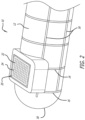
- FIG. 2 is a closeup of the electrode 20 of the medical device 10 of FIG. 1 .
- the electrode 20 may take the form of a screen with commonly connected electrode elements 22 with spaces 24 between the electrode elements 22.
- the electrode elements 22 within the electrode 20 do not directly touch the patient's skin or other target tissue. That is, the electrode elements 22 are not placed in direct electrical contact with the skin. Rather, the electrode elements 22 are covered by an electrical insulator 26 (see FIG. 4 ), preferably a dielectric and non-toxic, high temperature resistant, medical grade material such as polyimide (e.g., KAPTON ® ), such that direct electrical current does not pass from the electrodes to the target tissue.
- polyimide e.g., KAPTON ®
- the electrode 20 emits electromagnetic radiation, preferably in the RF spectrum such as approximately 1 MHZ, 2 MHz , or 6 MHz, which electromagnetic radiation causes heating within the target tissue. Additionally, alternating current (AC) is capacitively coupled between the electrode elements 22 within the electrode 20 and the target tissue, also heating the target tissue. Because the electrodes are monopolar, the device is used with a metal ground plate 50 (see FIG. 5 ) that is applied to the patient such as on the patient's thigh or buttock during treatment and in direct electrical contact therewith. Ground potential is provided to the ground plate 50 via a ground lead wire 52 (see FIG. 5 ).
- the electrode elements 22 together act as a capacitor charge plate, with the electrical charge spreading out uniformly over the entire plate, and the energy being transmitted to the target tissue via electromagnetic emission in the RF spectrum. This creates a much more uniform application of RF energy to the target tissue over the entire area of electrode 20. In contrast, if electrical current were to flow from the electrode 20 to the target tissue, the current would have a tendency to flow through the path of least resistance, with the result being that the current flow would occur more or less at a single point.
- the doctor can hold the electrode 20 over a single spot on the tissue, apply one or more metered pulses of energy, and know exactly how much energy has been applied to the target tissue and know that the energy was applied uniformly over the area of the electrode 20.
- a system based on the present invention can monitor impedance and adjust the power level several times during a pulse. For example, such a system can monitor the impedance, adjust the energy, deliver the energy, then monitor the impedance again, and adjust the energy.
- the system can therefore fine-tune the amount of energy delivered into tissue so that all tissue in the treated area receives the same amount of energy and receives the same amount of heat.
- the system effectively acts like a dermal thermostat. As energy is delivered to tissue, the tissue's characteristics change. The resistance of human tissue decreases with increasing temperature.
- a system which uses the electrode 20 can adjust the energy for the optimum amount to be delivered to the target tissue, resulting in a more comfortable and uniform treatment.
- the device 10 uses monopolar electrodes together with a ground plate 50 as discussed herein.
- the device could use bipolar, tripolar, qudrapolar, tetrapolar, or any combination of electrodes including fractional bipolar electrodes.
- the device includes a screen electrode or grid electrodes (e.g., 9 spaced commonly connected electrodes 22) distributed over an area of at least 1 cm 2 , and more preferably a screen electrode of grid electrodes (e.g., 25 spaced commonly connected electrodes 22) distributed over an area of at least 2 cm 2 .
- a screen electrode or grid electrodes e.g., 9 spaced commonly connected electrodes 22
- a screen electrode of grid electrodes e.g., 25 spaced commonly connected electrodes 22
- the electrode 20 is a grid of monopolar microelectrodes that is sometimes called a grid fractional applicator.
- a grid fractional applicator Such an electrode is currently manufactured by Jesisys Medical, Inc. of Korea ("Jesisy Medical") and designated by model number KT-15 for a 15 mm x 15 mm grid array.
- the KT-15 grid array uses an array of 9 x 9 commonly connected electrodes potted in a polymer for a total of 81 fractional electrodes over an area of approximately 2.25 cm.
- the grid acts as a plate except at the immediate surface where the field concentrated at the grid wires leaves a fractional grid thermal pattern in the epidermis to cause fractional resurfacing of the epidermis.
- FIG. 3 is a closeup of the proximal end 32 of the medical device of FIG. 1 showing electrical contacts 38 and 39 thereof.
- An electrical cable leading to a control unit (not shown in FIG. 1 ) including a pulse generator physically and electrically mates with this end of the device.
- the electrode 20 and device 10 of the present invention differ markedly from prior RF treatment devices such as the one described in U.S. Patent No. 8,540,705 to Mehta and sold by Syneron Medical Ltd. aka Syneron Candela, in that those prior devices feature an array of microneedles that penetrate the skin and thus deliver RF energy subcutaneously, delivering the energy through the sharp end point of the needle, and to a ground pad applied to the patient.
- the electrical current of those devices flow through the well-defined tip of the needle into tissue, flowing primarily through the path of least electrical resistance from the tip of the needle to a sharp edge or protrusion of corner of the ground pad, providing imprecise electrocautery.
- the electrode 20 and device 10 also provide a more uniform treatment field than prior devices such as disclosed in U.S. Patent No. 8,961,511 to Palmer and corresponding devices sold by Viveve, Inc.
- electrical current flows from the electrodes through the target tissue and to a ground plate. Again, the electrical current will choose the path of least resistance, such that the electrocautery is more localized than desired.
- the doctor must move those devices around rapidly over the target tissue to prevent burning.
- the doctor is unable to determine fluence at any point in the tissue, and it can be difficult for the doctor to obtain consistent results.
- the exemplary device 10 also has an electrical impedance sensor or monitor for indirectly sensing the temperature of the tissue to which the device is applied, by measuring tissue impedance and using known relationships between tissue impedance and tissue temperature.
- the device 10 includes a control circuit operatively connected to the impedance monitor and the electrode 20 to prevent the tissue from being heated beyond a predetermined maximum temperature.
- the impedance monitor indirectly senses the tissue temperature and provides feedback to a power control circuit.
- the relationship between skin temperature and electrical impedance is well known. See for example, R. Gudivaka et al, "Effect of Skin Temperature on Multifrequency Bioelectrical Impedance Analysis," Journal of Applied Physiology, August 1996, 81(2): 838-45 .
- the electrode 20 indirectly measures temperature of the target tissue by measuring electrical impedance through the body including through the target heated tissue to which it is applied.
- the impedance monitor provides feedback to the control circuit which can actively adjust the RF power applied to maintain a controlled energy dose for a constant temperature rise.
- a control circuit for monitoring the impedance and for adjusting the power applied to the electrode 20 to achieve the desired temperature of the target tissue may be located in an external unit that generates the electrical input to the device 10 and hence the electrode 20.
- the control circuit may apply one or multiple pulses of energy at spaced intervals such as regular intervals to first bring the target tissue to the target temperature and then to hold it at the target temperature for the desired time.
- the control circuit may therefore apply energy at a higher average power for a short time duration initially to quickly bring the target tissue to the desired temperature and then reduce the average power to maintain the target tissue at that temperature for the desired time.
- the control circuit may adjust any or more of the following parameters to achieve the desired treatment profile: instantaneous power, "On" time, and duty cycle.
- the device could use means other than RF energy for raising the temperature of the target tissue including but not limited to direct heating, and electromagnetic waves within the microwave spectrum or other frequency spectrum.
- the temperature of the target tissue during treatment be within the range of 40° C - 48° C, and more preferably within the range of between 40° C and a maximum of 45° C, and more preferably still to within the range of 43° C - 44° C. Above 45° C the cells begin to burn, resulting in production of too much type 3 collagen which is scar tissue. Keeping the temperature of the target temperature to within the range of about 40° C to 45° C stimulates the fibroblasts and thus stimulates the production of mostly type 1 collagen which is has better elasticity than type 3 collagen, and results in only partial denaturation of the existing collagen.
- RF energy produces heat which promotes neocollagenesis, denaturation of collagen cross-links, activation of wound healing pathways, contraction of collagen, and increase in collagen fibril size.
- the phenomenon of thermal contraction of collagen begins with a denaturation of the triple helix of the collagen molecule. Partial denaturation of collagen tissue results in a contraction of the collagen-rich spaces and provides a "tightening" effect on the overlaying tissue.
- Heat is the result of RF waves experiencing impedance as the RF waves traverse the tissue bed.
- RF waves permeate a tissue layer
- electric fields are induced across the tissue, and ions found within that layer deliver or carry an electrical current.
- This increases the kinetic activity of the ions.
- Increased ion kinetics and oscillations engenders resistive heating in tissue called thermogenesis heating.
- the degree of heating is calculable via the Specific Absorption Rate (SAR) equation, which assesses local electrical conductivity and magnitude of local electric current density generated around the electrode:
- the therapeutic benefit is localized thermogenesis heating.
- the electric field strength generated is capable of heating tissue in close proximity to the electrode. Dispersion of the electric field causes decreasing energy deposition away from the surface of the electrode. With proper controls, generating the ideal thermal endpoint will occur close to the electrode, affecting only a specific tissue.
- Grid fractional radio frequency energy creates thermal grid shapes on the surface and a uniform thermal zone in tissue during RF emission.
- Regulated RF current is adjusted via power control to match the desired impedance, which corresponds via known relationships to tissue temperature.
- Power absorbed equals the square of the electrical current delivered to by the radiofrequency electrode times the tissue impedance.
- the tissue impedance will be monitored, and the power will be adjusted to ensure that the proper current is delivered to achieve the desired tissue impedance.
- feedback from the impedance sensor is monitored by the control system, and power is adjusted to maintain the therapeutic energy deposition and resultant temperature rise in tissue. Altogether, with these proper controls in place, selective thermogenesis heating serves as a viable treatment for numerous medical conditions.
- the variables involved in changing collagen relate to temperature delivered to a specific area of tissue over a certain time.
- the maximal shrinkage of collagen tightening before the tissue becomes too weak is 15-20% (see Wall, MS, et al. , J Shoulder Elbow Surg.; 1999 Jul-Aug; 8(4):339-44 ).
- the shrinkage of collagen is related to time and the amount of energy applied.
- the target tissue is heated to the preferred temperature of 43° C - 44° C for a specified exposure time. This can be accomplished by applying various waveform profiles to the electrode 20.
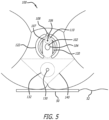
- FIG. 5 is a simplified diagram of the pelvic region of a female patient 100, illustrating exterior areas that are suitable for treatment according to the present invention.
- the target tissue includes: vaginal epithelium in the tissue 107 surrounding the urethral opening 106 but not including tissue within the hymenal ring 104; labial epithelium including of the labia minora 120 and labia majora 122 surrounding the urethral opening 106, and anywhere outside the pelvic floor; and epithelium in the perineum 140.
- the volume of blood flow within this area is sufficiently high that the electrode 20 can be applied to one area to effectively heat local surrounding tissue that receives the flow of heated blood. Collagen production can thus be stimulated in a surrounding adjacent area other than the area that is immediately underneath or adjacent to the electrode 20.
- vagina 102 Also visible in the figure are the vagina 102, clitoris 108, Hart line 110, anus 130, and anal tissue 132.
- the marked gradations 16, 18 on the device as seen in FIG. 1 assist the treating professional in achieving full coverage of the target area without overlap, when the area being treated is within the vagina or within the anus.
- the longitudinal gradations 16 marked on the device can be used to ensure that the electrode 20 is placed at the desired depths, and the circumferentially marked gradations 18 allow the treating professional to achieve the treatment desired circumferentially (e.g., within the range of 0° - 360° of arc, or only a narrower arc, such as 30° - 330° of arc) to avoid the clitoral area, at a specified depth, obtaining full coverage of the target tissue and without overlap.
- a treating professional might insert the device up to the first marked longitudinal mark 16, apply energy to the device for a first time period to treat the area of tissue that is touching the electrode 20, rotate the device by one circumferential gradation 18, then apply energy to the device for the same time period, and so on until energy has been applied at that depth around the entire 0° - 360° of arc. Then the treating professional inserts the device to the next longitudinal mark 16, and repeats the treatment within the circumferential range of 0° - 360°. In this way the treating professional applies the electrode 20 to each portion of the treatment area sequentially and achieves full coverage of the target tissue but without overlap, which could cause overexposure and therefore less than ideal response within the target tissue or even burning.
- the doctor can assure uniform treatment of the entire target area within the patient's vagina, and to a predetermined depth, without having to see the electrode 20 or the tissue to which it is applied.
- the markings therefore eliminate the guesswork that was necessary with some prior art devices for treating inside body cavities, in which the devices were intended to be swirled rapidly within the body cavity to ensure uniform treatment, and in which it was difficult for the doctor to achieve uniform treatment of the target tissue.
- the device 10 may be applied to treat female urinary incontinence by tightening vaginal epithelium around the urethral opening 106, particularly urinary stress incontinence for which common contributing causes include a weakened urethral sphincter and weakened pelvic floor muscles.
- the etiology of urinary incontinence is multifactorial. Stretching, tearing and separating of the pelvic floor support tissue during childbirth along with other traumatic conditions of chronic coughing, weight bearing and collagen vascular disorders increase the risk of incontinence and pelvic floor prolapse.
- GSM Genitourinary Syndrome of Menopause
- Portman, 2014, Maturutas The Genitourinary Syndrome of Menopause
- the clinical findings of pale pink vaginal epithelium with flattened dry rugae and associated urinary symptoms of urgency, frequency, incontinence, dysuria, dryness, burning, pain, sexual dysfunction affect up to 50% of menopausal women.
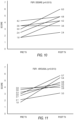
- FIGs. 6 and 7 illustrates preliminary data for 14 patients from a clinical trial (NTC03280446 Clinicaltrials.gov).
- the scores prior to treatment (PRE TX) and after treatment (POST TX) reveal a statically significant improvement on the Urological Distress Inventory (UDI) ( FIG. 6 ), the Incontinence Impact Questionaire (IIQ), and the Urinary Quality of Life Questionaire (QOL) ( FIG. 7 ).
- the parameter "p” relates to the statistical significance (e.g., with p ⁇ 0.05 indicating statistical significance).
- the Incontinence QOL Questionaire states: "If you were to spend the rest of your like with your urinary condition just the way it is now, how would you feel about that?
- Scores range from 0 to 10, indicating pleased (low scores e.g., 0), indifferent (medium score, e.g., 5), or serious (high score, e.g., 10).
- the treatment device 10 of FIGS. 1-3 can be used to treat the areas discussed above. Additionally, a different and much smaller treatment wand could be used to treat tissue inside the urethra itself. Applying the treatment inside the urethra stimulates the production of collagen there and hence strengthens and tightens the urethral opening.
- the application of radiofrequency to tissue surrounding the urethra and rectal sphincter tightens the supporting tissue by creating new extracellular collagen and elastin matrix.
- the resulting tighter and better-recoiling tissue will increase the tone and pressure, and coaptic ability within the urethra and rectal sphincter. As a result the patient will experience less incontinence both at rest and with contraction of the pelvic floor.
- Some techniques for tissue tightening that have been proposed by others use high temperatures such as up to 85° C and rely heavily on denaturation of existing collagen within the tissue. (see Wall mentioned above). Although denaturation of the collagen triple helix does result in shrinkage of the tissue, it also produces the undesirable effect of reducing the strength of the tissue. Additionally, temperatures above 85° C burn the cells and result in the production of too much type 3 collagen which is scar tissue, and which has little elasticity. The method of the present invention can therefore produce superior results in the tissue targeted as compared to prior results that induced higher target tissue temperatures.
- prior devices that have been used for various applications employ relatively low power levels of approximately 20 watts. Such low power levels were necessary because electrical current tended to flow out from one localized portion of a much larger metal electrode that was in direct contact with the skin, thus producing heating over a very small area that approached a point heat source. A power of greater than 20 watts presented a threat of burning tissue.
- the device of the present invention assures that energy will be applied generally uniformly over a relatively large area, namely, over the entire area of the electrode 20.
- the device is capable of delivering a total power of about 200 watts without risking tissue burning. Even though the target tissue will be brought to a relatively modest temperature of about 40 - 45° C, the high wattage of the present device provides the advantage of providing more uniform energy distribution over a known area of application and using a shorter pulse of RF energy. Because the present invention allows a higher power level, distributing that power over a broader area, the present invention allows full treatment over a given area in less total treatment time that some of the previous devices required.
- the method and device of the present invention could also be used to treat vaginal epithelium within the vagina 102, including vaginal epithelium within the region from about 3.5 cm past the introitus which the area at the vaginal opening to the end of the vagina which is generally about 8-12 cm past the introitus, to achieve vaginoplasty.
- the method and device can also be used to treat pelvic pain, including dyspareunia which his painful intercourse.
- Chronic pelvic pain is multifactorial and may be caused by several inflammatory processes including chronic infectious cystitis, interstitial cystitis endometriosis and pelvic inflammatory disease.
- Neurological trauma or diseases in the pelvic floor affecting the innervation of the pudendal, ilioinguinal, iliohypogastric and genitofemoral nerves may also cause pelvic pain conditions from neuropathy and muscle spasms.
- Pelvic neuralgias are described as causing pelvic pain conditions and associated bladder, bowel, and sexual dysfunctions through direct damage and production of inflammatory processes.
- a treatment method using the device 10 may improve blood flow, reduce muscle spasm and reduce chronic inflammatory diseases by reducing or modulating inflammatory signaling pathways.
- the method and device disclosed here may also increase vaginal lubrication. Heating an area temporarily creates improved blood flow temporarily, which promotes angiogenesis which is the growth of new blood vessels. The new blood vessels lead to improved vaginal lubrication.
- the histology changes on biopsy immediately induce fibroblast stimulation without disruption of the tissue architecture or cell death.
- the histology 90 days after treatment produces remodeling of tissue with increased type 1 collagen (i.e., cross-linking, increased fiber size) and reducing the quality of older collagen.
- the method and device of the present invention could also be used to treat pelvis prolapse.
- the histology changes in collagen from 3 ovines after radiofrequency treatment to the vaginal introitus is described by Vos et al.
- the histology changes on biopsy immediately induce fibroblast stimulation without disruption of the tissue architecture or cell death.
- the histology 90 days after treatment produces remodeling of tissue with increased type 1 collagen (i.e., cross-linking, increased fiber size) and reducing the quality of older collagen.
- FIG. 8 illustrates preliminary data for 14 patients from a clinical trial (NTC03280446 Clinicaltrials.gov) using techniques as described herein.
- the scores prior to treatment (PRE TX) and after treatment (POST TX) reveal a statically significant improvement on the Vaginal Laxity Questionaire (VLQ).
- VLQ Vaginal Laxity Questionaire
- FIG. 9 illustrates preliminary data for 14 patients from a clinical trial (NTC03280446 Clinicaltrials.gov) using techniques as described herein.
- the scores prior to treatment (PRE TX) and after treatment (POST TX) reveal a statically significant improvement on the Female Sexual Function Inventory (FSFI) in 7 of the 14 patients who were diagnosed with sexual dysfunction (FSFI ⁇ 26.5).
- FSFI Female Sexual Function Inventory
- FIG. 10 illustrates preliminary data for 14 patients from a clinical trial (NTC03280446 Clinicaltrials.gov) using techniques as described herein.
- the scores prior to treatment (PRE TX) and after treatment (POST TX) reveal a statically significant improvement on the Desire Domain of the Female Sexual Function Inventory (FSFI: Desire).
- FSFI Desire
- FIG. 11 illustrates preliminary data for 14 patients from a clinical trial (NTC03280446 Clinicaltrials.gov) using techniques as described herein.
- the scores prior to treatment (PRE TX) and after treatment (POST TX) reveal a statically significant improvement on the Arousal Domain of the Female Sexual Function Inventory (FSFI: Arousal).
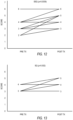
- FIGs. 12 and 13 illustrates preliminary data for 14 patients from a clinical trial (NTC03280446 Clinicaltrials.gov) using techniques as described herein.
- the scores prior to treatment (PRE TX) and after treatment (POST TX) reveal a statically significant improvement on the Sexual Satisfaction Domain of the FSFI as well as the Sexual Satisfaction Questionnaire (SSQ).
- SSQ Sexual Satisfaction Questionnaire
- the method and device of the present invention could also be used to treat painful intercourse (dyspareunia).
- Preliminary data for 22 patients from a clinical trial (NTC03280446 Clinicaltrials.gov) using techniques as described herein.
- the scores prior to treatment (PRE TX) and after treatment (POST TX) reveal a statically significant improvement on the Pain Domain of the FSFI.
Landscapes
- Health & Medical Sciences (AREA)
- Engineering & Computer Science (AREA)
- Life Sciences & Earth Sciences (AREA)
- Surgery (AREA)
- Animal Behavior & Ethology (AREA)
- Veterinary Medicine (AREA)
- Nuclear Medicine, Radiotherapy & Molecular Imaging (AREA)
- Public Health (AREA)
- Biomedical Technology (AREA)
- General Health & Medical Sciences (AREA)
- Otolaryngology (AREA)
- Molecular Biology (AREA)
- Medical Informatics (AREA)
- Heart & Thoracic Surgery (AREA)
- Physics & Mathematics (AREA)
- Plasma & Fusion (AREA)
- Radiology & Medical Imaging (AREA)
- Gastroenterology & Hepatology (AREA)
- Electrotherapy Devices (AREA)
- Thermotherapy And Cooling Therapy Devices (AREA)
- Surgical Instruments (AREA)
Applications Claiming Priority (3)
| Application Number | Priority Date | Filing Date | Title |
|---|---|---|---|
| US201762587766P | 2017-11-17 | 2017-11-17 | |
| US201862661526P | 2018-04-23 | 2018-04-23 | |
| PCT/US2018/061706 WO2019099962A1 (en) | 2017-11-17 | 2018-11-17 | Method and apparatus for treating female urinary incontinence and fecal incontinence |
Publications (3)
| Publication Number | Publication Date |
|---|---|
| EP3709874A1 EP3709874A1 (en) | 2020-09-23 |
| EP3709874A4 EP3709874A4 (en) | 2021-08-25 |
| EP3709874B1 true EP3709874B1 (en) | 2025-06-11 |
Family
ID=66534790
Family Applications (1)
| Application Number | Title | Priority Date | Filing Date |
|---|---|---|---|
| EP18878926.7A Active EP3709874B1 (en) | 2017-11-17 | 2018-11-17 | Apparatus for treating female urinary incontinence and fecal incontinence |
Country Status (6)
| Country | Link |
|---|---|
| US (3) | US20190151012A1 (https=) |
| EP (1) | EP3709874B1 (https=) |
| JP (3) | JP2021503359A (https=) |
| KR (1) | KR102849316B1 (https=) |
| CN (1) | CN111970959A (https=) |
| WO (1) | WO2019099962A1 (https=) |
Families Citing this family (4)
| Publication number | Priority date | Publication date | Assignee | Title |
|---|---|---|---|---|
| KR101924489B1 (ko) * | 2018-02-14 | 2018-12-03 | (주)비올 | 전기 신호를 전도하여 점막하 조직을 치료하는 장치 |
| CN112245244A (zh) * | 2020-09-17 | 2021-01-22 | 北京知医堂医学科技研究院 | 一种冲脉调理器及组合式气血调理仪 |
| CN113520581B (zh) * | 2021-07-19 | 2023-02-28 | 深圳半岛医疗有限公司 | 腔道射频探头和射频治疗仪 |
| KR102876059B1 (ko) * | 2023-08-31 | 2025-10-24 | 주식회사 원메디코 | 피부 조직 재건 장치 |
Citations (1)
| Publication number | Priority date | Publication date | Assignee | Title |
|---|---|---|---|---|
| US20160263388A1 (en) * | 2015-03-09 | 2016-09-15 | ThermiGen, LLC | Radiofrequency treatment probe for treating fecal incontinence and associated systems and methods |
Family Cites Families (24)
| Publication number | Priority date | Publication date | Assignee | Title |
|---|---|---|---|---|
| US3650275A (en) * | 1968-08-13 | 1972-03-21 | Bio Controls Corp | Method and apparatus for controlling anal incontinence |
| WO2000071043A1 (en) * | 1999-05-21 | 2000-11-30 | Arthrocare Corporation | Systems and methods for electrosurgical treatment of intervertebral discs |
| US5891134A (en) * | 1996-09-24 | 1999-04-06 | Goble; Colin | System and method for applying thermal energy to tissue |
| US6645201B1 (en) * | 1998-02-19 | 2003-11-11 | Curon Medical, Inc. | Systems and methods for treating dysfunctions in the intestines and rectum |
| US6185465B1 (en) * | 1998-02-25 | 2001-02-06 | Seung Kee Mo | Vaginal electrode for urinary incontinence treatment |
| US6740082B2 (en) * | 1998-12-29 | 2004-05-25 | John H. Shadduck | Surgical instruments for treating gastro-esophageal reflux |
| US6156032A (en) * | 1998-09-30 | 2000-12-05 | Scimed Life Systems, Inc. | Method for causing a stricture of a body passageway |
| US6470219B1 (en) * | 2000-10-02 | 2002-10-22 | Novasys Medical, Inc. | Apparatus and method for treating female urinary incontinence |
| US6852110B2 (en) * | 2002-08-01 | 2005-02-08 | Solarant Medical, Inc. | Needle deployment for temperature sensing from an electrode |
| US7251531B2 (en) * | 2004-01-30 | 2007-07-31 | Ams Research Corporation | Heating method for tissue contraction |
| US7942873B2 (en) * | 2005-03-25 | 2011-05-17 | Angiodynamics, Inc. | Cavity ablation apparatus and method |
| US7695489B2 (en) * | 2005-06-28 | 2010-04-13 | Ic Relief, Llc | Devices and related methods for targeted pressure and temperature therapies for pelvic region disorders and syndromes |
| US8961511B2 (en) * | 2006-02-07 | 2015-02-24 | Viveve, Inc. | Vaginal remodeling device and methods |
| KR101986712B1 (ko) * | 2009-09-18 | 2019-06-07 | 비베베, 아이엔씨. | 질 재건 기구 및 방법 |
| US11590346B2 (en) * | 2009-11-16 | 2023-02-28 | Pollogen Ltd. | Apparatus and method for cosmetic treatment of human mucosal tissue |
| IT1405000B1 (it) * | 2010-02-04 | 2013-12-16 | El En Spa | Dispositivo per il trattamento del canale vaginale e relativo apparecchio |
| SG10201607576PA (en) * | 2011-06-14 | 2016-11-29 | Aerin Medical Inc | Devices for treating nasal airways |
| CN105919666A (zh) * | 2012-03-16 | 2016-09-07 | 女康乐公司 | 一种修复女性阴道组织的治疗器 |
| WO2014164438A1 (en) * | 2013-03-11 | 2014-10-09 | Ohio State Innovation Foundation | Devices and systems for treating obstetric and gynecological disorders |
| US10136943B1 (en) * | 2014-10-21 | 2018-11-27 | Cosman Instruments, Llc | Electrosurgical system |
| US9713565B2 (en) * | 2014-06-20 | 2017-07-25 | Chongqing Peninsula Medical Technology Co., Ltd. | Virginal rejuvenation apparatus and method |
| AU2016338671B2 (en) * | 2015-10-16 | 2021-07-01 | Madorra Inc. | Ultrasound device for vulvovaginal rejuvenation |
| ITUB20160508A1 (it) * | 2016-01-22 | 2017-07-22 | Bios S R L Unipersonale | Dispositivo a radiofrequenza per la lassità e il rimodellamento vaginale |
| BR112020008231A2 (pt) * | 2017-10-27 | 2020-10-27 | Renovia, Inc. | dispositivos, sistemas e métodos para treinamento dos músculos do assoalho pélvico |
-
2018
- 2018-11-17 KR KR1020207017523A patent/KR102849316B1/ko active Active
- 2018-11-17 WO PCT/US2018/061706 patent/WO2019099962A1/en not_active Ceased
- 2018-11-17 JP JP2020545052A patent/JP2021503359A/ja active Pending
- 2018-11-17 EP EP18878926.7A patent/EP3709874B1/en active Active
- 2018-11-17 CN CN201880086973.8A patent/CN111970959A/zh active Pending
- 2018-11-17 US US16/194,304 patent/US20190151012A1/en not_active Abandoned
-
2022
- 2022-11-25 US US17/994,224 patent/US20240156517A1/en active Pending
-
2023
- 2023-03-16 JP JP2023041821A patent/JP7509943B2/ja active Active
-
2024
- 2024-05-09 JP JP2024076416A patent/JP2024099845A/ja active Pending
- 2024-12-11 US US18/976,721 patent/US20250099164A1/en active Pending
Patent Citations (1)
| Publication number | Priority date | Publication date | Assignee | Title |
|---|---|---|---|---|
| US20160263388A1 (en) * | 2015-03-09 | 2016-09-15 | ThermiGen, LLC | Radiofrequency treatment probe for treating fecal incontinence and associated systems and methods |
Also Published As
| Publication number | Publication date |
|---|---|
| EP3709874A1 (en) | 2020-09-23 |
| JP2021503359A (ja) | 2021-02-12 |
| JP2024099845A (ja) | 2024-07-25 |
| EP3709874A4 (en) | 2021-08-25 |
| WO2019099962A1 (en) | 2019-05-23 |
| US20190151012A1 (en) | 2019-05-23 |
| KR20200133205A (ko) | 2020-11-26 |
| JP7509943B2 (ja) | 2024-07-02 |
| US20240156517A1 (en) | 2024-05-16 |
| CN111970959A (zh) | 2020-11-20 |
| JP2023075298A (ja) | 2023-05-30 |
| US20250099164A1 (en) | 2025-03-27 |
| KR102849316B1 (ko) | 2025-08-22 |
Similar Documents
| Publication | Publication Date | Title |
|---|---|---|
| US20250099164A1 (en) | Device for treating female urinary incontinence and fecal incontinence | |
| US11865336B2 (en) | Apparatus and method for cosmetic treatment of human mucosal tissue | |
| US20260102613A1 (en) | Method and device for pelvic floor tissue treatment | |
| KR102827187B1 (ko) | 비침습성, 균일 및 불균일 rf 방법 및 시스템 | |
| US20220054191A1 (en) | Device for collagenous tissue treatment | |
| KR102565404B1 (ko) | 비침습성, 균일 및 불균일 rf 방법 및 시스템 관련 응용들 | |
| US20210093878A1 (en) | Radiofrequency and plasma device for vaginal laxity and remodeling | |
| CN108366828B (zh) | 用于人体粘膜组织的美容治疗的装置和方法 | |
| US20160263388A1 (en) | Radiofrequency treatment probe for treating fecal incontinence and associated systems and methods | |
| US20060089688A1 (en) | Method and apparatus to reduce wrinkles through application of radio frequency energy to nerves | |
| US20170050021A1 (en) | Random pulsed high frequency therapy | |
| AU2023203882A1 (en) | Methods and systems for treating urinary stress incontinence | |
| JP2021503359A5 (https=) | ||
| US20260054082A1 (en) | Methods, devices, and systems for non-invasive prevention and treatment of premature ejaculation | |
| Goel | 8 Radio Frequency in Cosmetic Gynecology | |
| RU139776U1 (ru) | Установка для радиочастотной абляции |
Legal Events
| Date | Code | Title | Description |
|---|---|---|---|
| STAA | Information on the status of an ep patent application or granted ep patent |
Free format text: STATUS: THE INTERNATIONAL PUBLICATION HAS BEEN MADE |
|
| PUAI | Public reference made under article 153(3) epc to a published international application that has entered the european phase |
Free format text: ORIGINAL CODE: 0009012 |
|
| STAA | Information on the status of an ep patent application or granted ep patent |
Free format text: STATUS: REQUEST FOR EXAMINATION WAS MADE |
|
| 17P | Request for examination filed |
Effective date: 20200612 |
|
| AK | Designated contracting states |
Kind code of ref document: A1 Designated state(s): AL AT BE BG CH CY CZ DE DK EE ES FI FR GB GR HR HU IE IS IT LI LT LU LV MC MK MT NL NO PL PT RO RS SE SI SK SM TR |
|
| AX | Request for extension of the european patent |
Extension state: BA ME |
|
| DAV | Request for validation of the european patent (deleted) | ||
| DAX | Request for extension of the european patent (deleted) | ||
| REG | Reference to a national code |
Ref country code: DE Ref legal event code: R079 Free format text: PREVIOUS MAIN CLASS: A61B0005000000 Ipc: A61B0018120000 Ref country code: DE Ref legal event code: R079 Ref document number: 602018082584 Country of ref document: DE Free format text: PREVIOUS MAIN CLASS: A61B0005000000 Ipc: A61B0018120000 |
|
| A4 | Supplementary search report drawn up and despatched |
Effective date: 20210722 |
|
| RIC1 | Information provided on ipc code assigned before grant |
Ipc: A61B 18/12 20060101AFI20210716BHEP Ipc: A61B 18/14 20060101ALI20210716BHEP Ipc: A61N 1/05 20060101ALI20210716BHEP Ipc: A61N 1/36 20060101ALI20210716BHEP |
|
| STAA | Information on the status of an ep patent application or granted ep patent |
Free format text: STATUS: EXAMINATION IS IN PROGRESS |
|
| 17Q | First examination report despatched |
Effective date: 20230825 |
|
| GRAP | Despatch of communication of intention to grant a patent |
Free format text: ORIGINAL CODE: EPIDOSNIGR1 |
|
| STAA | Information on the status of an ep patent application or granted ep patent |
Free format text: STATUS: GRANT OF PATENT IS INTENDED |
|
| INTG | Intention to grant announced |
Effective date: 20240820 |
|
| GRAS | Grant fee paid |
Free format text: ORIGINAL CODE: EPIDOSNIGR3 |
|
| GRAJ | Information related to disapproval of communication of intention to grant by the applicant or resumption of examination proceedings by the epo deleted |
Free format text: ORIGINAL CODE: EPIDOSDIGR1 |
|
| GRAL | Information related to payment of fee for publishing/printing deleted |
Free format text: ORIGINAL CODE: EPIDOSDIGR3 |
|
| STAA | Information on the status of an ep patent application or granted ep patent |
Free format text: STATUS: EXAMINATION IS IN PROGRESS |
|
| GRAP | Despatch of communication of intention to grant a patent |
Free format text: ORIGINAL CODE: EPIDOSNIGR1 |
|
| STAA | Information on the status of an ep patent application or granted ep patent |
Free format text: STATUS: GRANT OF PATENT IS INTENDED |
|
| INTC | Intention to grant announced (deleted) | ||
| INTG | Intention to grant announced |
Effective date: 20250103 |
|
| GRAA | (expected) grant |
Free format text: ORIGINAL CODE: 0009210 |
|
| STAA | Information on the status of an ep patent application or granted ep patent |
Free format text: STATUS: THE PATENT HAS BEEN GRANTED |
|
| AK | Designated contracting states |
Kind code of ref document: B1 Designated state(s): AL AT BE BG CH CY CZ DE DK EE ES FI FR GB GR HR HU IE IS IT LI LT LU LV MC MK MT NL NO PL PT RO RS SE SI SK SM TR |
|
| REG | Reference to a national code |
Ref country code: GB Ref legal event code: FG4D |
|
| REG | Reference to a national code |
Ref country code: CH Ref legal event code: EP |
|
| REG | Reference to a national code |
Ref country code: IE Ref legal event code: FG4D |
|
| REG | Reference to a national code |
Ref country code: DE Ref legal event code: R096 Ref document number: 602018082584 Country of ref document: DE |
|
| REG | Reference to a national code |
Ref country code: NL Ref legal event code: FP |
|
| PG25 | Lapsed in a contracting state [announced via postgrant information from national office to epo] |
Ref country code: FI Free format text: LAPSE BECAUSE OF FAILURE TO SUBMIT A TRANSLATION OF THE DESCRIPTION OR TO PAY THE FEE WITHIN THE PRESCRIBED TIME-LIMIT Effective date: 20250611 Ref country code: ES Free format text: LAPSE BECAUSE OF FAILURE TO SUBMIT A TRANSLATION OF THE DESCRIPTION OR TO PAY THE FEE WITHIN THE PRESCRIBED TIME-LIMIT Effective date: 20250611 |
|
| REG | Reference to a national code |
Ref country code: LT Ref legal event code: MG9D |
|
| PG25 | Lapsed in a contracting state [announced via postgrant information from national office to epo] |
Ref country code: NO Free format text: LAPSE BECAUSE OF FAILURE TO SUBMIT A TRANSLATION OF THE DESCRIPTION OR TO PAY THE FEE WITHIN THE PRESCRIBED TIME-LIMIT Effective date: 20250911 Ref country code: GR Free format text: LAPSE BECAUSE OF FAILURE TO SUBMIT A TRANSLATION OF THE DESCRIPTION OR TO PAY THE FEE WITHIN THE PRESCRIBED TIME-LIMIT Effective date: 20250912 |
|
| PG25 | Lapsed in a contracting state [announced via postgrant information from national office to epo] |
Ref country code: BG Free format text: LAPSE BECAUSE OF FAILURE TO SUBMIT A TRANSLATION OF THE DESCRIPTION OR TO PAY THE FEE WITHIN THE PRESCRIBED TIME-LIMIT Effective date: 20250611 |
|
| PG25 | Lapsed in a contracting state [announced via postgrant information from national office to epo] |
Ref country code: HR Free format text: LAPSE BECAUSE OF FAILURE TO SUBMIT A TRANSLATION OF THE DESCRIPTION OR TO PAY THE FEE WITHIN THE PRESCRIBED TIME-LIMIT Effective date: 20250611 |
|
| PG25 | Lapsed in a contracting state [announced via postgrant information from national office to epo] |
Ref country code: RS Free format text: LAPSE BECAUSE OF FAILURE TO SUBMIT A TRANSLATION OF THE DESCRIPTION OR TO PAY THE FEE WITHIN THE PRESCRIBED TIME-LIMIT Effective date: 20250911 |
|
| PG25 | Lapsed in a contracting state [announced via postgrant information from national office to epo] |
Ref country code: LV Free format text: LAPSE BECAUSE OF FAILURE TO SUBMIT A TRANSLATION OF THE DESCRIPTION OR TO PAY THE FEE WITHIN THE PRESCRIBED TIME-LIMIT Effective date: 20250611 |
|
| PG25 | Lapsed in a contracting state [announced via postgrant information from national office to epo] |
Ref country code: PT Free format text: LAPSE BECAUSE OF FAILURE TO SUBMIT A TRANSLATION OF THE DESCRIPTION OR TO PAY THE FEE WITHIN THE PRESCRIBED TIME-LIMIT Effective date: 20251013 |
|
| REG | Reference to a national code |
Ref country code: AT Ref legal event code: MK05 Ref document number: 1801769 Country of ref document: AT Kind code of ref document: T Effective date: 20250611 |
|
| PG25 | Lapsed in a contracting state [announced via postgrant information from national office to epo] |
Ref country code: IS Free format text: LAPSE BECAUSE OF FAILURE TO SUBMIT A TRANSLATION OF THE DESCRIPTION OR TO PAY THE FEE WITHIN THE PRESCRIBED TIME-LIMIT Effective date: 20251011 |
|
| PG25 | Lapsed in a contracting state [announced via postgrant information from national office to epo] |
Ref country code: AT Free format text: LAPSE BECAUSE OF FAILURE TO SUBMIT A TRANSLATION OF THE DESCRIPTION OR TO PAY THE FEE WITHIN THE PRESCRIBED TIME-LIMIT Effective date: 20250611 Ref country code: SM Free format text: LAPSE BECAUSE OF FAILURE TO SUBMIT A TRANSLATION OF THE DESCRIPTION OR TO PAY THE FEE WITHIN THE PRESCRIBED TIME-LIMIT Effective date: 20250611 |
|
| PG25 | Lapsed in a contracting state [announced via postgrant information from national office to epo] |
Ref country code: CZ Free format text: LAPSE BECAUSE OF FAILURE TO SUBMIT A TRANSLATION OF THE DESCRIPTION OR TO PAY THE FEE WITHIN THE PRESCRIBED TIME-LIMIT Effective date: 20250611 |
|
| PG25 | Lapsed in a contracting state [announced via postgrant information from national office to epo] |
Ref country code: PL Free format text: LAPSE BECAUSE OF FAILURE TO SUBMIT A TRANSLATION OF THE DESCRIPTION OR TO PAY THE FEE WITHIN THE PRESCRIBED TIME-LIMIT Effective date: 20250611 |
|
| PG25 | Lapsed in a contracting state [announced via postgrant information from national office to epo] |
Ref country code: EE Free format text: LAPSE BECAUSE OF FAILURE TO SUBMIT A TRANSLATION OF THE DESCRIPTION OR TO PAY THE FEE WITHIN THE PRESCRIBED TIME-LIMIT Effective date: 20250611 |
|
| PG25 | Lapsed in a contracting state [announced via postgrant information from national office to epo] |
Ref country code: SK Free format text: LAPSE BECAUSE OF FAILURE TO SUBMIT A TRANSLATION OF THE DESCRIPTION OR TO PAY THE FEE WITHIN THE PRESCRIBED TIME-LIMIT Effective date: 20250611 Ref country code: RO Free format text: LAPSE BECAUSE OF FAILURE TO SUBMIT A TRANSLATION OF THE DESCRIPTION OR TO PAY THE FEE WITHIN THE PRESCRIBED TIME-LIMIT Effective date: 20250611 |
|
| PG25 | Lapsed in a contracting state [announced via postgrant information from national office to epo] |
Ref country code: DK Free format text: LAPSE BECAUSE OF FAILURE TO SUBMIT A TRANSLATION OF THE DESCRIPTION OR TO PAY THE FEE WITHIN THE PRESCRIBED TIME-LIMIT Effective date: 20250611 |
|
| PGFP | Annual fee paid to national office [announced via postgrant information from national office to epo] |
Ref country code: IE Payment date: 20260305 Year of fee payment: 8 |
|
| PLBE | No opposition filed within time limit |
Free format text: ORIGINAL CODE: 0009261 |
|
| STAA | Information on the status of an ep patent application or granted ep patent |
Free format text: STATUS: NO OPPOSITION FILED WITHIN TIME LIMIT |
|
| PGFP | Annual fee paid to national office [announced via postgrant information from national office to epo] |
Ref country code: FR Payment date: 20260213 Year of fee payment: 8 |
|
| REG | Reference to a national code |
Ref country code: CH Ref legal event code: L10 Free format text: ST27 STATUS EVENT CODE: U-0-0-L10-L00 (AS PROVIDED BY THE NATIONAL OFFICE) Effective date: 20260423 |