EP3704136B1 - Système de vecteur rétroviral à base d'adaptateur pour la transduction sélective de cellules cibles - Google Patents
Système de vecteur rétroviral à base d'adaptateur pour la transduction sélective de cellules cibles Download PDFInfo
- Publication number
- EP3704136B1 EP3704136B1 EP18803330.2A EP18803330A EP3704136B1 EP 3704136 B1 EP3704136 B1 EP 3704136B1 EP 18803330 A EP18803330 A EP 18803330A EP 3704136 B1 EP3704136 B1 EP 3704136B1
- Authority
- EP
- European Patent Office
- Prior art keywords
- virus
- protein
- particle
- retroviral vector
- polypeptide
- Prior art date
- Legal status (The legal status is an assumption and is not a legal conclusion. Google has not performed a legal analysis and makes no representation as to the accuracy of the status listed.)
- Active
Links
Images








Classifications
-
- C—CHEMISTRY; METALLURGY
- C07—ORGANIC CHEMISTRY
- C07K—PEPTIDES
- C07K14/00—Peptides having more than 20 amino acids; Gastrins; Somatostatins; Melanotropins; Derivatives thereof
- C07K14/005—Peptides having more than 20 amino acids; Gastrins; Somatostatins; Melanotropins; Derivatives thereof from viruses
-
- C—CHEMISTRY; METALLURGY
- C07—ORGANIC CHEMISTRY
- C07K—PEPTIDES
- C07K14/00—Peptides having more than 20 amino acids; Gastrins; Somatostatins; Melanotropins; Derivatives thereof
- C07K14/435—Peptides having more than 20 amino acids; Gastrins; Somatostatins; Melanotropins; Derivatives thereof from animals; from humans
- C07K14/705—Receptors; Cell surface antigens; Cell surface determinants
- C07K14/70503—Immunoglobulin superfamily
-
- C—CHEMISTRY; METALLURGY
- C12—BIOCHEMISTRY; BEER; SPIRITS; WINE; VINEGAR; MICROBIOLOGY; ENZYMOLOGY; MUTATION OR GENETIC ENGINEERING
- C12N—MICROORGANISMS OR ENZYMES; COMPOSITIONS THEREOF; PROPAGATING, PRESERVING, OR MAINTAINING MICROORGANISMS; MUTATION OR GENETIC ENGINEERING; CULTURE MEDIA
- C12N15/00—Mutation or genetic engineering; DNA or RNA concerning genetic engineering, vectors, e.g. plasmids, or their isolation, preparation or purification; Use of hosts therefor
- C12N15/09—Recombinant DNA-technology
- C12N15/63—Introduction of foreign genetic material using vectors; Vectors; Use of hosts therefor; Regulation of expression
- C12N15/79—Vectors or expression systems specially adapted for eukaryotic hosts
- C12N15/85—Vectors or expression systems specially adapted for eukaryotic hosts for animal cells
- C12N15/86—Viral vectors
-
- C—CHEMISTRY; METALLURGY
- C07—ORGANIC CHEMISTRY
- C07K—PEPTIDES
- C07K2319/00—Fusion polypeptide
-
- C—CHEMISTRY; METALLURGY
- C07—ORGANIC CHEMISTRY
- C07K—PEPTIDES
- C07K2319/00—Fusion polypeptide
- C07K2319/01—Fusion polypeptide containing a localisation/targetting motif
-
- C—CHEMISTRY; METALLURGY
- C07—ORGANIC CHEMISTRY
- C07K—PEPTIDES
- C07K2319/00—Fusion polypeptide
- C07K2319/01—Fusion polypeptide containing a localisation/targetting motif
- C07K2319/02—Fusion polypeptide containing a localisation/targetting motif containing a signal sequence
-
- C—CHEMISTRY; METALLURGY
- C07—ORGANIC CHEMISTRY
- C07K—PEPTIDES
- C07K2319/00—Fusion polypeptide
- C07K2319/01—Fusion polypeptide containing a localisation/targetting motif
- C07K2319/03—Fusion polypeptide containing a localisation/targetting motif containing a transmembrane segment
-
- C—CHEMISTRY; METALLURGY
- C07—ORGANIC CHEMISTRY
- C07K—PEPTIDES
- C07K2319/00—Fusion polypeptide
- C07K2319/33—Fusion polypeptide fusions for targeting to specific cell types, e.g. tissue specific targeting, targeting of a bacterial subspecies
-
- C—CHEMISTRY; METALLURGY
- C12—BIOCHEMISTRY; BEER; SPIRITS; WINE; VINEGAR; MICROBIOLOGY; ENZYMOLOGY; MUTATION OR GENETIC ENGINEERING
- C12N—MICROORGANISMS OR ENZYMES; COMPOSITIONS THEREOF; PROPAGATING, PRESERVING, OR MAINTAINING MICROORGANISMS; MUTATION OR GENETIC ENGINEERING; CULTURE MEDIA
- C12N2740/00—Reverse transcribing RNA viruses
- C12N2740/00011—Details
- C12N2740/10011—Retroviridae
- C12N2740/10041—Use of virus, viral particle or viral elements as a vector
- C12N2740/10045—Special targeting system for viral vectors
-
- C—CHEMISTRY; METALLURGY
- C12—BIOCHEMISTRY; BEER; SPIRITS; WINE; VINEGAR; MICROBIOLOGY; ENZYMOLOGY; MUTATION OR GENETIC ENGINEERING
- C12N—MICROORGANISMS OR ENZYMES; COMPOSITIONS THEREOF; PROPAGATING, PRESERVING, OR MAINTAINING MICROORGANISMS; MUTATION OR GENETIC ENGINEERING; CULTURE MEDIA
- C12N2740/00—Reverse transcribing RNA viruses
- C12N2740/00011—Details
- C12N2740/10011—Retroviridae
- C12N2740/16011—Human Immunodeficiency Virus, HIV
- C12N2740/16041—Use of virus, viral particle or viral elements as a vector
- C12N2740/16045—Special targeting system for viral vectors
-
- C—CHEMISTRY; METALLURGY
- C12—BIOCHEMISTRY; BEER; SPIRITS; WINE; VINEGAR; MICROBIOLOGY; ENZYMOLOGY; MUTATION OR GENETIC ENGINEERING
- C12N—MICROORGANISMS OR ENZYMES; COMPOSITIONS THEREOF; PROPAGATING, PRESERVING, OR MAINTAINING MICROORGANISMS; MUTATION OR GENETIC ENGINEERING; CULTURE MEDIA
- C12N2760/00—MICROORGANISMS OR ENZYMES; COMPOSITIONS THEREOF; PROPAGATING, PRESERVING, OR MAINTAINING MICROORGANISMS; MUTATION OR GENETIC ENGINEERING; CULTURE MEDIA ssRNA viruses negative-sense
- C12N2760/00011—Details
- C12N2760/18011—Paramyxoviridae
- C12N2760/18022—New viral proteins or individual genes, new structural or functional aspects of known viral proteins or genes
-
- C—CHEMISTRY; METALLURGY
- C12—BIOCHEMISTRY; BEER; SPIRITS; WINE; VINEGAR; MICROBIOLOGY; ENZYMOLOGY; MUTATION OR GENETIC ENGINEERING
- C12N—MICROORGANISMS OR ENZYMES; COMPOSITIONS THEREOF; PROPAGATING, PRESERVING, OR MAINTAINING MICROORGANISMS; MUTATION OR GENETIC ENGINEERING; CULTURE MEDIA
- C12N2760/00—MICROORGANISMS OR ENZYMES; COMPOSITIONS THEREOF; PROPAGATING, PRESERVING, OR MAINTAINING MICROORGANISMS; MUTATION OR GENETIC ENGINEERING; CULTURE MEDIA ssRNA viruses negative-sense
- C12N2760/00011—Details
- C12N2760/18011—Paramyxoviridae
- C12N2760/18411—Morbillivirus, e.g. Measles virus, canine distemper
- C12N2760/18422—New viral proteins or individual genes, new structural or functional aspects of known viral proteins or genes
-
- C—CHEMISTRY; METALLURGY
- C12—BIOCHEMISTRY; BEER; SPIRITS; WINE; VINEGAR; MICROBIOLOGY; ENZYMOLOGY; MUTATION OR GENETIC ENGINEERING
- C12N—MICROORGANISMS OR ENZYMES; COMPOSITIONS THEREOF; PROPAGATING, PRESERVING, OR MAINTAINING MICROORGANISMS; MUTATION OR GENETIC ENGINEERING; CULTURE MEDIA
- C12N2810/00—Vectors comprising a targeting moiety
- C12N2810/50—Vectors comprising as targeting moiety peptide derived from defined protein
- C12N2810/80—Vectors comprising as targeting moiety peptide derived from defined protein from vertebrates
- C12N2810/85—Vectors comprising as targeting moiety peptide derived from defined protein from vertebrates mammalian
- C12N2810/859—Vectors comprising as targeting moiety peptide derived from defined protein from vertebrates mammalian from immunoglobulins
Definitions
- the present invention relates to the field of pseudotyped retroviral vector particles or vector-like particles (VLP) thereof, having specificity for a tag wherein said tag is coupled to a polypeptide that binds to an antigen expressed on a target cell, thereby allowing targeted transduction of multiple target cell moieties with said retroviral vector particles or vector-like particles thereof.
- VLP vector-like particles
- retroviral vectors Gene delivery using retroviral vectors is a widely-used approach to correct defective genes and provide new functions to cells.
- retroviral vectors due to the nature of the commonly used type of retroviral vectors, they are not selective by design, which hampers the safety profile and applicability of retroviral vectors in many therapeutic fields.
- retroviral vectors are pseudotyped with the envelope protein of the Vesicular Stomatitis Virus (VSV-G). This pseudotype transduces a broad range of target cells including therapeutic relevant cell types but it may require pre-activation with stimulatory agents to reach sufficient transduction efficiency levels.
- VSV-G Vesicular Stomatitis Virus
- US20160333374 describes a system that is based on antibody fragments like scFVs that were fused to the ectodomain of VSV-G (VSVG-scFV). The goal was to combine the favorable productivity of VSV-G and the specificity of scFVs. This approach enabled binding to the target antigen but VSVG-scFV was unable to mediate fusion of the retroviral with target cell membrane -and in consequence- also transduction. To overcome this hurdle, unmodified VSV-G had to be co-displayed with VSVG-scFV.
- MV-LV measles virus envelope proteins
- F protein protein with fusion activity
- H protein protein with antigen-binding activity
- WO2008/037458A2 a protein with antigen-binding activity
- retroviral vector titers are highly dependent on the surface expression levels of the chimeric H-scFV protein during production (i.e. upon transfection of HEK-293T cells).
- sequence of the framework region of the scFV has been shown to influence the biophysical properties of the displayed scFVs and in consequence the functional retroviral vector titer (Friedel et al. (2015)).
- envelope proteins derived from another Paramyxoviridae virus may be used to pseudotype lentiviral vectors as well and optionally retarget it for selective transduction.
- Rasbach et al. (2013) added a non-viral transmembrane protein with antigen binding function to MV-LV so that 3 different membrane proteins were used for pseudotyping.
- the attachment function of measles H protein was replaced by the non-viral transmembrane protein, but the fusion helper function of measles H protein was still needed to yield functional pseudotyped lentiviral vectors.
- the addition of another membrane protein increased the functional lentiviral vector titer about one order of magnitude compared to lentiviral vectors pseudotyped with only 2 envelope proteins.
- Snitkovsky et al. (2002) provides an alternative system that is based on retroviral vectors that bind to recombinant adapter molecules consisting of extracellular receptor domains fused to antigen binding ligands like scFVs.
- retroviral vectors that bind to recombinant adapter molecules consisting of extracellular receptor domains fused to antigen binding ligands like scFVs.
- scFVs antigen binding ligands
- Hoop (2014) used lentiviral vectors pseudotyped with measles virus envelope proteins (MV-LV) to develop an adapter based retroviral vector system. This time the truncated H protein variant recognizing the native receptor was used (i.e. no scFV).
- the adapter was designed in such way that the lentiviral vector binding domain is an extracellular portion of a measles virus receptor (CD46).
- CD46 measles virus receptor
- the soluble receptor fragment was fused to a target cell antigen binding region via a flexible (G4S)3 linker. Surprisingly, it was found that the adapter rendered the pseudotyped LV particle to be non-selective: i.e.
- the transduction efficiency not only on the target cell population was elevated but also on the non-target population not expressing the target antigen of the adapter.
- the effect of this adapter is comparable to commonly known transduction enhancement reagents like Polybrene ® , Protaminesulfate or Vectofusin-1 ® . But the mode of action of these reagents is to overcome charge repulsion of viral and target cell membrane, bringing both membranes in close proximity and elevate transduction efficiency levels and gene transfer rates.
- WO2013104728A1 discloses novel pseudotyped lentiviral vector particles comprising a morbillivirus fusion (F) protein and a mutated hemagglutinin (H) protein of the measles virus (MeV), wherein the cytoplasmic portions of the F and the H protein are truncated, and wherein the amino acids necessary for receptor recognition in the H protein are mutated that it does not interact with CD46, SLAM and/or nectin-4 and further has a single chain antibody to a cell surface marker of hESCs and iPSCs at its ectodomain.
- F morbillivirus fusion
- H hemagglutinin
- MeV measles virus
- the single chain variable fragment (scFv) anti-cell surface marker coding sequence of the single chain antibody is fused to the coding sequence at the ectodomain of the H protein, wherein the single chain antibody is selected from the group consisting of CD30, EpCAM (CD326), CD9, Thy-1 (CD90), SSEA-3, SSEA-4, TRA-1-60 or TRA-1-81.
- the transduction according to this discsloure does not interfere with the pluripotency, i.e. present transduced hESCs and iPSCs remain undifferentiated, i.e. are able differentiate into all germ layer lineages.
- WO2013104728A1 does not disclose a universal approach for targeted transduction of cells.
- the technologies described in the art show results in terms of either selectivity, control or applicability but none of these systems provide solutions addressing all of these parameters in combination.
- retroviral vector particles or virus-like particles thereof pseudotyped with Paramyxoviridae virus envelope proteins that have antigen-binding and fusion activity and wherein said protein having antigen binding activity is a chimeric protein that does not interact with at least one of its native receptors can be used to generate adaptable retroviral vector particles or virus-like particles thereof systems with high target cell selectivity.
- This finding is surprising because an alternative approach that was also based on Paramyxoviridae derived envelope proteins for pseudotyping, clearly demonstrated that such pseudotyped, retroviral vectors are transducing non-selectively in the presence of an adapter (Hoop, 2014).
- an adaptable retroviral vector or virus-like particles thereof system that also uses biotin interaction to bind to the adapter molecule, wherein the adapter molecule comprises a polypeptide, e.g. an antibody that binds to an antigen of a target cell, that is coupled to biotin via a specific linker.
- the envelope protein of the retrovirus as disclosed herein that is a lentiviral or gammaretroviral vector particle, binds with higher preference the biotin of the adapter molecule than free biotin or biotin coupled in another manner to a moiety such as a polypeptide. Therefore, in contrast to alternative systems of the prior art there is no or less competition with naturally occurring biotin, thereby avoiding e.g. limited or unspecific transduction.
- the finding of the present invention makes use of "universal" retroviral vectors that are more efficiently produced at large scale. By adjusting the amount and the specificity of the adapter the user gains full control over the transduction process in a tunable manner on the target cells only.
- the adaptable system of retroviral vector particle or virus-like particles thereof as disclosed herein comprises the retroviral vector particle or virus-like particle thereof and the corresponding tagged polypeptide as disclosed herein.
- the truncated F protein is mediating the fusion of the viral membrane and the cellular membrane of the target cell.
- the truncated H protein supports the fusion function but does not interact with its native receptors CD46, Nectin-4 or SLAM anymore as it is blinded by the introduction of the mutations.
- the part of the chimeric protein that comprises the polypeptide comprising an antigen binding domain specifically binds a tag of a tagged polypeptide.
- the tag may be a dextran, a hapten such as FITC and biotin or a linker/label epitope (LLE) of a target cell binding molecule (TCBM) as disclosed herein.
- the tagged polypeptide may be e.g. a haptenylated antibody or antigen binding fragment thereof that binds specifically an antigen that is expressed on the surface of a target cell, e.g. a biotinylated antibody specific for the antigen of choice.
- the retroviral vector particle or virus-like particles thereof as disclosed herein that is a lentiviral or gammaretroviral vector particle, thus enter those cells expressing the corresponding marker (antigen) bound by the antigen-binding domain of the tagged polypeptide, wherein the retroviral vector particle or virus-like particles thereof binds to the tag of the tagged polypeptide via the polypeptide comprising the antigen-binding domain specific for the tag of the truncated receptor binding protein, e.g. the H protein of the retroviral vector particle; however, the transduction is impaired on cells not expressing these markers (antigen).
- retroviral vector particles or virus-like particles thereof as disclosed herein that is a lentiviral or gammaretroviral vector particle, can transduce target cells expressing the corresponding marker only in the presence of said polypeptide. In the absence of said polypeptide the transduction of said retroviral vectors particles or virus-like particles thereof is impaired on any cell type.
- retroviral vector particle or virus-like particles thereof of the present invention wherein said retroviral vector particle is a lentiviral or gammaretroviral vector particle, demonstrated to be an efficient and effective means for highly selective gene transfer into specific cells in an adaptable manner.
- target cells are selected from the group consisting of immune cells, hematopoietic cells, stem cells, cancerous cells, cells of the nervous system, muscle cells, endothelial progenitor cells (EPCs), endothelial cells and diseased cells.
- EPCs endothelial progenitor cells
- compositions based on the retroviral vector particle or virus-like particles thereof and the corresponding tagged polypeptide(s) of the present invention may be formulated in any conventional manner using one or more physiologically acceptable carriers or excipients.
- the retroviral vector particle or virus-like particles thereof of the present invention may be formulated for administration (together with the tagged polypeptide or subsequently) by, for example, injection, inhalation or insulation (either through the mouth or the nose) or by oral, buccal, parenteral or rectal administration.
- the retroviral vector particle or virus-like particles thereof and the tagged polypeptide of the present invention may be administered separately or already conjugated.
- the separate administration of the retroviral vector particle or virus-like particles thereof and the tagged polypeptide of the present invention may occur either simultaneously or subsequently.
- the retroviral vector particle or virus-like particles thereof and the tagged polypeptide of the present invention may be administered only once or multiple times.
- the retroviral vector particle or virus-like particles thereof of the present invention may be administered first followed by the administration of the tagged polypeptide or vice versa.
- compositions may be useful for transducing specifically target cells, which can include, inter alia, an immune cell, a cancerous cell or a stem cell, with the gene product of a desired protein that, if expressed in the targeted cell, leads to the prevention or the treatment of a particular medical condition.
- the present invention provides an adaptable transduction system, i.e. a composition, for retroviral vector particles or virus-like particles thereof for targeting different and varying antigens on target cells in the presence of both the retroviral vector or virus-like particle thereof that can bind to a tag and the corresponding tagged polypeptide that can bind to an antigen expressed on a target cell, wherein said retroviral vector particle is a lentiviral or gammaretroviral vector particle.
- the present invention provides a composition comprising
- the present invention provides a composition comprising
- Said pseudotyped retroviral vectors or virus-like particles thereof may be fused via a linker to the ectodomain of said recombinant protein that does not interact with at least one of its native receptors.
- the interaction to all native receptors of said recombinant protein is inhibited, then the present invention provides a combination of
- the interaction to all native receptors of said recombinant protein is inhibited, then the present invention provides a combination of
- the interaction to the receptor(s) mainly used for cell entry is inhibited. In another embodiment of the present invention the interaction to at least one receptor is inhibited.
- antibody fragments like scFVs may require linker sequences to fuse both chains of said scFV.
- linker polypeptides The generation of recombinant proteins containing domains or fragments that have been fused to other domains using linker polypeptides is well described in the art (e.g. Chen et al. (2013)).
- the prototype linker is the (G4S)3 linker that is also used exemplary in the present invention, but no restriction to this prototype linker is intended as other linker sequences may be functional in the context of the present invention as well.
- Said tag of said tagged polypeptide is not expressed on any cell of any species (target cells and non-target cells) of a subject or of a cell culture in which said retroviral vector or virus-like particle thereof is applied for transduction, e.g. in a human.
- said retroviral vector or virus-like particle thereof only may transduce any target cell in the presence of said tagged polypeptide.
- the non-target cells furthermore are not transduced in the presence of said tagged polypeptide.
- Said pseudotyped retroviral vector particle or virus-like particle thereof wherein said transduction or said induced uptake may be at least 2-fold higher, 5-fold-higher, 10-fold higher, 25-fold higher, 50-fold higher, 100-fold higher, 1000-fold higher, 2000-fold-higher or 5000-fold higher on said target cells in the presence of said tagged polypeptide compared to said transduction or said induced uptake on said target cells in the absence of said tagged polypeptide.
- Said pseudotyped retroviral vector particle or virus-like particle thereof wherein generation, use and administration of said pseudotyped retroviral vector particle or virus-like particle thereof may be performed in lower risk environment as no human cell is transduced without said tagged polypeptide.
- Said pseudotyped retroviral vector particle or virus-like particle thereof wherein no cell of any species (target cells and non-target cells) may be transduced without said tagged polypeptide.
- Said pseudotyped retroviral vector particle or virus-like particle thereof, wherein the antigen that is bound by said tagged polypeptide may be expressed transiently, depending on the cell cycle phase or the state of activation and/or differentiation.
- Said pseudotyped retroviral vector particle or virus-like particle thereof, wherein the expression of the antigen that is bound by said tagged polypeptide may be controllable, e.g. by inducible expression.
- Said pseudotyped retroviral vector particle or virus-like particle thereof, wherein said transduction or said induced uptake may be at least 2-fold higher, 5-fold-higher, 10-fold higher, 25-fold higher, 50-fold higher, 100-fold higher, 1000-fold higher, 2000-fold-higher or 5000-fold higher on said target cells than on non-target cells.
- truncated cytoplasmic portion of the F protein should comprise at least 1 positively charged amino acid residue and no more than 9 consecutive amino acid residues as counted from the N-terminal end of the cytoplasmic portion of the F protein and the truncated cytoplasmic portion of the H protein should comprise at least 9 and no more than 19 consecutive amino acid residues as counted from the C-terminal end of the cytoplasmic portion of the H protein plus an additional methionine at the N-terminus (Frecha et al. (2008), EP2066795B9 , Edes (2016)).
- lentiviral vectors and gammaretroviral vectors are efficiently pseudotyped using truncated F and H protein variants as described above.
- retroviral vectors can also be pseudotyped with envelope proteins from Nipah virus. It is a virus derived from the family Paramyxoviridae, subfamily Paramyxovirinae, genus Henipavirus. Another member of this genus is Hendravirus. In contrast to the H protein of morbillivirus, the Nipah envelope protein with antigen-binding function is the G protein. It has no hemagglutinating function but it is also TypeII membrane protein.
- lentiviral vectors were successfully pseudotyped with envelope proteins derived from another virus within the Paramyxoviridae family: Tupaia virus (Enkrich et al. (2013)). It is related to morbillivirus and Henipavirus but not assigned to one of these genera because it is genetically too different. Albeit the genetic difference is too high, a comparable truncation of the cytoplasmic domain as for the morbillivirus envelope proteins is necessary to enable pseudotyping at high efficiency: 6 remaining amino acids of the cytoplasmic domain of the F protein and 13 remaining amino acids plus methionine at the cytoplasmic domain of the H protein resulted in the highest retroviral vector titer.
- Said pseudotyped retroviral vector particle or virus-like particle thereof wherein said protein derived from protein H or F of the measles virus lacks at least one part of the cytoplasmic region of said protein H or F, i.e. said protein H or F may be a truncated protein.
- Said pseudotyped retroviral vector particle or virus-like particle thereof wherein said protein derived from protein G or F of the Nipah virus lacks at least one part of the cytoplasmic region of said protein G or F, i.e. said protein G or F may be a truncated protein.
- Said retroviral vector particle or virus-like particle thereof wherein the pseudotyped retroviral vector particle or virus-like particle thereof is derived from a lentivirus selected from the group consisting of HIV-1, HIV-2, SIVmac, SIVpbj, SIVagm, FIV and EIAV.
- Said retroviral vector particle or virus-like particle thereof wherein the pseudotyped retroviral vector particle or virus-like particle thereof is derived from a gammaretrovirus selected from the group consisting of feline leukemia virus, Gibbon ape leukemia virus (GALV) and murine leukemia virus (MLV).
- a gammaretrovirus selected from the group consisting of feline leukemia virus, Gibbon ape leukemia virus (GALV) and murine leukemia virus (MLV).
- cytoplasmic portions of said F and H proteins are truncated by deletion of amino acid residues from said cytoplasmic portions, and wherein the truncated cytoplasmic portion of the F protein comprises at least 1 positively charged amino acid residue and no more than 9 consecutive amino acid residues as counted from the N-terminal end of the cytoplasmic portion of the F protein, wherein the truncated cytoplasmic portion of the H protein comprises at least 9 and no more than 19 consecutive amino acid residues as counted from the C-terminal end of the cytoplasmic portion of the H protein plus an additional methionine at the N-terminus.
- Said truncated cytoplasmic portion of the H protein is truncated to allow efficient pseudotyping and has fusion support function.
- Said retroviral vector particle or virus-like particle thereof wherein said particle comprises a fusion (F) and a hemagglutinin (H) protein of a morbillivirus, wherein the cytoplasmic portions of said F and H proteins are truncated by deletion of amino acid residues from said cytoplasmic portions and wherein the truncated cytoplasmic portion of the F protein comprises at least 1 positively charged amino acid residue and no more than 9 consecutive amino acid residues as counted from the N-terminal end of the cytoplasmic portion of the F protein, the truncated cytoplasmic portion of the H protein is truncated to allow efficient pseudotyping and has fusion support function, wherein the truncated cytoplasmic portion of the H protein comprises at least 9 and no more than 19 consecutive amino acid residues as counted from the C-terminal end of the cytoplasmic portion of the H protein plus an additional methionine at the N-terminus, and wherein the truncated H protein
- Said retroviral vector particle or virus-like particle thereof wherein said particle comprises a fusion (F) and a hemagglutinin (H) protein of the measles virus or the Edmonston strain of measles virus, and/or wherein the truncated cytoplasmic portion of the F protein comprises at least 3 consecutive amino acid residues as counted from the N-terminal end of the cytoplasmic portion of the F protein and the truncated cytoplasmic portion of the H protein comprises at least 13 consecutive amino acid residues as counted from the C-terminal end of the cytoplasmic portion of the H protein plus an additional methionine at the N-terminus, wherein one to four of the N-terminal amino acid residues of said at least 13 consecutive amino acid residues as counted from the C-terminal end of the cytoplasmic portion of the H protein can be replaced by alanine residues, and/or wherein the pseudotyped retroviral vector particle or virus-like particle thereof is derived from
- composition of retroviral vector particle or virus-like particle and tagged polypeptide wherein the polypeptide of said tagged polypeptide may be a protein with antigen binding moieties to the antigen expressed on the target cell such as an antibody or antigen binding fragment thereof, cytokines or growth factors.
- Said polypeptide of said tagged polypeptide may be an antibody or antigen binding fragment thereof, wherein said antibody or antigen binding fragment thereof binds to said antigen expressed on the surface of said target cell, and wherein the tag of said tagged polypeptide may be a hapten.
- Said hapten may be selected from the group consisting of biotin, fluorescein isocyanate (FITC), fluorescein, NHS-fluorescein, 2,4-dinitrophenol (DNP), digoxigenin and dextran.
- FITC fluorescein isocyanate
- DNP 2,4-dinitrophenol
- Said hapten may be biotin.
- Said polypeptide of said tagged polypeptide may bind to an antigen expressed on the surface of said target cell, and wherein binding of said polypeptide to said antigen may activate said target cell.
- Said tag may be catalytically degradable.
- Said polypeptide comprising an antigen binding domain specific for a tag of a tagged polypeptide, and wherein said antigen binding domain is derived of a scFV derived from an antibody and wherein the amino acid sequence has been mutated in the framework region of said scFV to improve surface expression and/or stability of said polypeptide.
- Said polypeptide of said tagged polypeptide may be an antigen binding moiety (ABM), wherein the tag of said tagged polypeptide is a linker/label epitope (LLE) of a target cell binding molecule (TCBM) comprising
- Said LLE binding domain may bind with an at least twofold, preferentially at least 5-fold, more preferentially at last 10-fold, most preferentially at least 50-fold higher affinity to said LLE than to said naturally occurring molecule.
- the k(off) value for the binding between said LLE binding domain may be higher to a monomeric LLE and said naturally occurring molecule than to a multimeric LLE.
- Said naturally occurring molecule may be in the circulatory system of said subject.
- Said LLE may be generated site-specifically, thereby forming an epitope comprising a part of said LaM and a part of said LiM.
- Said LaM may be selected from the group consisting of amino acids, peptides, proteins, creatinine, biotin, biocytin, lipids, hormones, vitamins, carbohydrates or a derivative thereof.
- Said LiM may be a molecule capable of generating said LLE.
- Said LiM may be selected from the group consisting of peptides, proteins, nucleic acids, carbohydrates, polyhydroxyalkanoates, alkyl chains, alkanoic acids, carboxylic acids, farnesyls, polyethylene glycols, lipids or a derivative thereof.
- Said LaM may be biotin or a derivative thereof and said LiM may be a 6-(6-aminohexanamido) hexanoyl moiety or a 6-aminohexanoyl moiety.
- Said LLE binding domain may comprise the sequence of SEQ ID NO: 1 and SEQ ID NO: 2, preferentially the order of the sequence from N-terminus to C-terminus is VH-VL.
- Said antigen of said tagged polypeptide may be selected from the group consisting of TCR, CD3, CD4, CD8, CD25, CD62L, CD69, CD137, CD44, CD45RA, CD45RO, CD137, CD152, CD154, CCR5, CCR7, PD-1, CTLA-4, CD105, NKR-P1A, CD56, NCAM-1, CD57, CD14, CD16, CD19, CD20, CD30, CD34, CD133, CD38, BDCA-1, BDCA-2, BDCA-3, GM-CSF, CD11b, A2B5, ACSA-2, GLAST, AN2, CX3CR1, O4, CD15, CD11, CD144, SSEA-4, TRA-1 CD33 (Siglec-3), CD123 (IL3RA), CD135 (FLT-3), CD44 (HCAM), CD44V6, CD47, CD184 (CXCR4), CLEC12A (CLL1), LeY, FR ⁇ , MICA/B, CD305 (L
- Said ABM may be an antibody or an antigen-binding fragment thereof.
- Said target cell may be selected from the group consisting of immune cells, hematopoietic cells, stem cells, muscle cells, cancerous cells, cells of the nervous system, endothelial progenitor cells (EPCs), endothelial cells and diseased cells.
- EPCs endothelial progenitor cells
- any of the above disclosed variants and embodiments of the combination of retroviral vector particles or virus-like particles thereof and tagged polypetides may be combined with each other.
- a pseudotyped retroviral vector particle or virus-like particle thereof comprising:
- the present invention provides a pharmaceutical composition
- a pharmaceutical composition comprising the compositions as disclosed herein, i.e. the pseudotyped retroviral vector particle or virus-like particle thereof as disclosed herein and the tagged polypeptide as disclosed herein, optionally further comprising a pharmaceutically acceptable carrier.
- the present disclosure but not part of the invention, provides a composition of the pseudotyped retroviral vector particle or virus-like particle thereof and the tagged polypeptide as disclosed herein for use as a medicament.
- the present disclosure provides the use of the composition of the pseudotyped retroviral vector particle or virus-like particle thereof and the tagged polypeptide as disclosed herein for the preparation of a medicament.
- the present disclosure provides a method for producing a pseudotyped retroviral vector particle or virus-like particle thereof, the method comprising: co-transfecting of a packaging cell line with at least one psi-negative expression vector encoding retroviral gag / pol / rev genes, a psi-positive retroviral expression vector and one or two psi-negative expression vector(s) encoding for Paramyxoviridae virus envelope proteins as disclosed herein.
- the present invention provides an in vitro method for transducing target cells with a pseudotyped retroviral vector particle or delivery of the proteins of the virus-like particle thereof comprising the steps
- step b) additionally a transduction enhancer may be used.
- said enhancer may be the LAH4 peptide having the sequence represented in SEQ ID NO: 15 ("Vectofusin-1 ® ) or a functional derivative thereof having the ability to improve the transduction efficiency or the uptake of a retroviral vector or virus-like particle into the target cell.
- the present disclosure provides an in-vivo method for transducing a hematopoietic cell, preferably an immune subset cell or a stem cell, comprising
- said pseudotyped retrovirus vector particles or virus-like particles carry at least one transgene thereby transducing said transgene into the target cell, and thereby enabling immunotherapy of the subject by the transduced cells after expression of said transgene in the target cells.
- transgene is a gene encoding for instance for a chimeric antigen receptor.
- the present disclosure provides an in-vivo method for transducing a defective stem cell, comprising
- pseudotyped retrovirus vector particles or virus-like particles carry at least one transgene thereby transducing said transgene into the target cell.
- transgene encodes for a non-mutated allele of a monogenic disease such as Beta-thalassemia, SCID-X1, Wiskott-Aldrich syndrome, thereby correcting the defective stem cell to be a non-defective stem cell.
- a monogenic disease such as Beta-thalassemia, SCID-X1, Wiskott-Aldrich syndrome
- composition comprising the pseudotyped retroviral vector particle or virus-like particle thereof as disclosed herein and the tagged polypeptide as disclosed herein, also apply mutatis mutandis in the context of the other aspects of the invention as disclosed herein.
- target cells present in a mixed cell population with non-target cells are selectively transduced or VLP uptake is selectively induced.
- the specificity of the tagged polypeptide is adjusted according to the expression level of an antigen on the target cells.
- cells or cell types that do not express sufficient levels of VSV-G receptors and therefore are resistant to VSV-G pseudotyped retroviral vector transduction may be more efficiently transduced using the adaptable retroviral vector system and tagged polypeptides specific for antigens of receptors that are expressed at higher levels as compared to the expression levels of the VSV-G receptor.
- activation of the target cells is induced upon binding of the retroviral vector particle or virus-like particle complex to the target antigen.
- target cell populations expressing different antigens may be simultaneously or subsequently transduced by combining tagged polypeptides with different specificities.
- target cells that are characterized by multiple antigens are selectively transduced or have taken up VLPs selectively if tagged polypeptides specific for all antigens are required to induce selective transduction or VLP uptake.
- the transduction efficiency or VLP uptake is reduced by releasing the retroviral vector from the tagged polypeptide by adding an alternative polypeptide or ligand, wherein said alternative polypeptide or ligand binds with preferably higher affinity to a tag on a tagged adapter as compared to the polypeptide specific for the tag that is fused to the ectodomain of said envelope protein of said retroviral vector or virus-like particle thereof.
- the addition of avidin, a ligand of biotin, to tag-specific retroviral vector bound to tagged polypeptide may reduce or inhibit this binding and the transduction or VLP uptake is reduced.
- the transduction efficiency or VLP uptake is reduced by removing or degrading said tag of said tagged polypeptide.
- the transduction efficiency or VLP uptake is reduced by removing or degrading said tagged polypeptide.
- the transduction efficiency or VLP uptake is reduced by adding an alternative tag, wherein said retroviral vector or virus-particle thereof binds preferably with higher affinity to the alternative tag and the retroviral vector or virus-like particle thereof does not bind to the tagged polypeptide anymore.
- the transduction efficiency or VLP uptake is reduced by adding tag molecules in excess, wherein said retroviral vector or virus-particle thereof preferentially binds added tag.
- the transduction efficiency or VLP uptake is reduced by adding an alternative tagged polypeptide, wherein said alternative adapter is specific for the same antigen but binds with higher affinity to said antigen expressed on said target cell.
- the transduction efficiency or VLP uptake is reduced by removing or degrading said polypeptide that is fused to the ectodomain of said envelope protein with antigen-binding activity.
- the transduction efficiency or VLP uptake is controlled by modifying the affinity and/or avidity of said tagged polypeptide to said antigen expressed on said target cell.
- the transduction efficiency or VLP uptake is controlled by varying the amount of said tagged polypeptide.
- the selective transduction or VLP uptake takes place in vivo.
- the selective transduction or VLP uptake takes place in vitro or in vivo and is used to screen and identify antigens that are bound by said tagged polypeptide.
- the selective transduction or VLP uptake takes place in vitro or in vivo and is used to screen and identify antigens and/or target cells that are bound by said tagged polypeptide.
- the selective transduction or VLP uptake takes place in vitro or in vivo and is used to screen and identify polypeptides that bind to target antigens expressed on target cells.
- the retroviral vector or VLP thereof delivers a gene of interest to generate a recombinant cell or animal.
- the retroviral vector or VLP thereof delivers a gene of interest encoding a therapeutic protein to treat or prevent disease.
- the retroviral vector or VLP thereof delivers a protein of interest that may be used for vaccination purposes or gene editing with, for example, Crispr/Cas.
- the retroviral vector is integration-deficient.
- Retroviridae is virus family with a single-stranded, diploid, positive-sense RNA genome that is reverse-transcribed into a DNA intermediate that is then incorporated into the host cell genome. Retroviridae-derived viruses are enveloped particles with a diameter of 80-120 nm.
- (Retro- /lenti- /gammaretro-) viral vectors are replication-deficient viral particles that are derived from the corresponding virus family. They contain Gag and Pol proteins, a single-stranded RNA genome and are usually pseudotyped with heterologous envelope proteins derived from other viruses.
- the RNA genome of said viral vectors do not contain any viral gene to produce viral progeny, but psi elements and LTRs that are required for efficient packing and reverse transcription in DNA.
- the DNA intermediate may contain a gene of interest under the control of a suitable promoter, for example, the CMV promoter and the gene of interest is expressed upon integration of said DNA into the genome of the host cell. The process of entering the host cell, delivering the RNA genome, integration and expression of the gene of interest is called transduction.
- the minimal requirements of a gammaretrovirus or lentivirus based viral vector has been well-described in the art.
- ID-RVs integrase-deficient retroviral vectors
- ID-RVs are derived from conventional retroviral vectors but contain no or a mutated form of the retroviral integrase.
- ID-RVs are useful tools to express the gene of interest transiently.
- the definition of retroviral vectors and transduction also extents the integration-deficient retroviral vectors and its application.
- Lentivirus is a genus of Retroviridae that cause chronic and deadly diseases characterized by long incubation periods, in the human and other mammalian species.
- the best-known lentivirus is the Human Immunodeficiency Virus HIV which can efficiently infect nondividing cells, so lentiviral derived retroviral vectors are one of the most efficient methods of gene delivery.
- Gammaretroviridae is a genus of the Retroviridae family. Representative species are the murine leukemia virus and the feline leukemia virus.
- Paramyxoviridae is a family of viruses in the order of Mononegavirales. There are currently 49 species in this family, divided among 7 genera. Diseases associated with this virus family include measles, mumps, and respiratory tract infections. Members of this virus family are enveloped viruses with a non-segmented, negative-strand RNA genome of about 16 kb. Two membrane proteins with two distinct functions appear as spikes on the virion surface. The H/HN/G proteins mediate binding to the receptor at the cell surface.
- virus envelope protein(s) that have antigen binding activity refers to protein(s) on the viral envelope that are responsible for binding to complementary receptors or antigens on the cell membrane of a target cell.
- virus envelope protein(s) that have antigen binding activity are virus envelope protein(s) that have antigen binding activity.
- virus envelope proteins(s) that have fusion activity refers to protein(s) that initiate fusion of viral and cellular membrane.
- Paramyxoviridae F proteins refer to virus envelope protein(s) that have fusion activity.
- VLPs Virus-like particles resemble viral particles, but are not infecting or transducing because they contain no viral genetic material encoding for the proteins of the virus-like particle.
- VLPs in the context of retroviral vectors do not contain psi positive nucleic acid molecules. Some virus-like particles may contain nucleic acid distinct from their genome.
- the expression of viral structural proteins, such as envelope or capsid can result in the assembly of virus like particles (VLPs).
- VLPs can also be pseudotyped using the same envelope constructs as for retroviral vectors.
- VLPs may be used to deliver proteins but also nucleic acids to the cytoplasm of target cells. In particular, VLPs are useful as vaccines.
- VLP uptake refers to the binding of a VLP to the target cell membrane, thereby releasing nucleic acid molecules, proteins or peptides into the target cell.
- Chimeric proteins are proteins created through the j oining of two or more genes that originally coded for separate proteins. Translation of this gene results in a single or multiple polypeptides with functional properties derived from each of the original proteins. Recombinant proteins are created artificially by recombinant DNA technology for use in biological research or therapeutics.
- ectodomain refers to a domain of a membrane protein that extends into the extracellular space (the space outside a cell).
- activation refers to inducing physiological changes with a cell that increase target cell function, proliferation and/or differentiation.
- pseudotyping or "pseudotyped” as used herein refers to a vector particle bearing envelope glycoproteins derived from other viruses having envelopes.
- the host range of the lentiviral vectors or vector particles of the present invention can thus be expanded or altered depending on the type of cell surface receptor used by the glycoprotein.
- the gag, pol and env proteins needed to assemble the vector particle are provided in trans by means of a packaging cell line, for example, HEK-293T. This is usually accomplished by transfection of the packaging cell line with one or more plasmids containing the gag, pol and env genes.
- the env gene originally derived from the same retrovirus as the gag and pol genes and as the RNA molecule or expression vector, is exchanged for the envelope protein(s) of a different enveloped virus.
- the F and H or HN or G protein of Paramyxoviridae is used.
- an exemplary pseudotyped vector particle based on the HIV-1 retrovirus comprises the (1) HIV-1 Gag and Pol proteins, (2) an RNA molecule derived from the HIV-1 genome that may be used to generate a retroviral vector particle based on the HIV-1 genome lacking the gag, env, pol, tat, vif, vpr, vpu and nef genes, but still comprising the LTRs, the psi element and a CMV promoter followed by the gene to be transduced, for example, a gene for the GFP protein, and (3) the F and H proteins of measles virus, for example, in a truncated form.
- native receptor refers to the receptor or antigen expressed on the cell surface of a cell that is bound by the naturally occurring virus envelope protein with antigen (receptor) binding activity.
- the native measles virus receptors are SLAM, nectin-4 and CD46.
- Nipah envelope proteins use ephrin-B2 and ephrin-B3 as receptors for entry.
- one envelope protein with antigen-binding activity that does not interact with at least one of its native receptor(s) means that said protein has reduced or ablated interaction with at least one receptor of a cell that is normally targeted by the virus having said protein as described elsewhere herein.
- Reduced interaction means that said truncated and/or mutated protein interacts with said at least one native receptor at least 50 % less efficient, at least 60 % less efficient, at least 70 % less efficient, at least 80 % less efficient, at least 90 % less efficient, at least 95 % less efficient, at least 99 % less efficient compared to the non-mutated protein.
- said protein does not interact anymore with said at least one of its native receptors.
- the interaction may be the binding of these two molecules to each other.
- the less efficient interaction may be a reduced affinity of said protein to its native receptor.
- Said envelope protein with antigen-binding activity may have more than one native receptors, then the reduction or ablation of interaction of one of these native receptors of said protein results in a reduced tropism of the vector particle or virus-like particle thereof.
- the more interactions of said protein with its native receptors are inhibited by mutation the more effective is the reduction of tropism of the vector particle or virus-like particle thereof.
- the retroviral vector particle or virus-like particle thereof as disclosed herein, e.g. when a native receptor is not expressed on any cell (target cells and non-target cells) in the environment of target cells that are intended to be transduced.
- an envelope protein with antigen-binding activity has more than 2 native receptors, e.g. 3 native receptors, then preferentially said protein does not interact with the majority of its native receptors, e.g. 2 from 3.
- the envelope protein with antigen-binding activity does not interact with all of its native receptors.
- tropism refers to the host range or specificity of a virus, retroviral vector or virus-like particle thereof.
- the tagged polypeptide specific for antigen expressed on target cells defines the host range of the retroviral vector or virus-like particle thereof.
- not human tropic refers to the inability of a virus, retroviral vector or virus-like particle thereof to infect, transduce or induce VLP uptake because the virus envelope protein(s) that have antigen binding activity has been mutated to reduce, preferentially ablate binding to any antigen expressed on human cells.
- target cell refers to a cell which expresses an antigen (a marker) on its cell surface that should be recognized (bound) by the tagged polypeptide of the adaptable system as disclosed herein.
- the target cell may be a eukaryotic primary cell or a cell line.
- the target cell may be a mammalian cell such as a murine cell, preferentially the target cell is a human cell.
- non-target cells refers to a cell which does not express the antigen (a marker) on its cell surface that should be recognized (bound) by the tagged polypeptide of the adaptable system as disclosed herein.
- selective and “targeted” as used herein refer to retroviral vector particles or virus-like particles thereof that induce preferential transduction or virus-like-particle uptake in target cells.
- the transduction of pseudotyped retrovirus vector particles or induced uptake of pseudotyped virus-like particles thereof is 10-fold higher, preferentially 100-fold higher, most preferentially 1000-fold higher on said target cells than on non-target cells.
- this is achieved by incubating cells with a tagged polypeptide in the presence of a pseudotyped retroviral vectors or virus-like particles thereof that comprises an envelope protein with antigen binding activity with reduced or ablated interaction with its native receptor(s) and a fusion polypeptide comprising an antigen binding domain specific for a tag of a tagged polypeptide at the ectodoman of said envelope protein.
- a pseudotyped retroviral vectors or virus-like particles thereof that comprises an envelope protein with antigen binding activity with reduced or ablated interaction with its native receptor(s) and a fusion polypeptide comprising an antigen binding domain specific for a tag of a tagged polypeptide at the ectodoman of said envelope protein.
- a pseudotyped retroviral vectors or virus-like particles thereof thereof that comprises an envelope protein with antigen binding activity with reduced or ablated interaction with its native receptor(s) and a fusion polypeptide comprising an antigen binding domain specific for a tag of a tagged polypeptid
- the tropism of a selective or targeted retroviral vector particle or virus-like particle thereof of the present invention is not defined by the tropism of the virus the H protein is derived from, but, depending on the specificity of the tagged polypeptide for a cell surface antigen of a target cell.
- the polypeptide with an antigen binding domain specific for tag of tagged polypeptide fused the envelope protein with antigen binding activity has reduced or ablated interaction with any antigen expressed on the cell surface.
- the truncated protein H fused to the polypeptide comprising an antigen binding domain specific for a tag of a tagged polypeptide as disclosed herein must have mutations that generally reduce or ablate productive interactions with its native receptors.
- mutations are well-known in the art.
- a mutation that ablates interaction of measles H protein with CD46 is e.g. the point mutation at position Y481, F431, V451, Y452, A527, P486, I487, A428, L464, G546, S548, F549 wherein these amino acids are replaced with another amino acid and this mutation prevents or assists in preventing interaction of the H protein with CD46.
- replacement of all five consecutive residues 473 to 477 in H protein with alanine may prevent interaction of H protein with CD46. Any of the above cited mutations maybe combined with each other
- the following introduction of mutations ablates productive interaction of the measles H protein with CD46 and SLAM, respectively: Y481A R533A.
- the Hmut protein also includes the mutations S548L and F549S, which lead to a more complete ablation of residual infectivity via CD46.
- the mutation of the residues V451 and Y529 ablates productive interaction with CD46 and SLAM.
- Lentiviral or gammaretroviral vector particles or virus-like particles thereof pseudotyped with truncated F proteins and mutated H proteins additionally displaying at their ectodomain a polypeptide comprising an antigen binding domain specific for a tag of a tagged polypeptide, wherein said tagged polypeptide is specific for a cell surface marker of a target cell, no longer enter cells via CD46, SLAM and/ or nectin-4, but are rather targeted to and enter only those cells displaying the respective corresponding markers at their surface via the anti-tag domain of the polypeptide comprising an antigen binding domain specific for a tag fused to the truncated protein H and the tagged polypeptide.
- E501, W504, Q530, E533 were either single mutated or in combination.
- the combined mutation of E501A, W504A, Q530A, E533A showed completely ablated receptor binding ability for both receptors ephrin-B2 and ephrin-B3.
- a pseudotyped retroviral vector particle or virus-like particle thereof "derived from", for example, HIV-1, as used in the present invention refers to a particle in which the genetic information for the RNA and/or the Gag and Pol proteins comprised by the vector particle originally stems from said retrovirus, in the above case, HIV-1.
- the original retroviral genome can comprise mutations, such as deletions, frame shift mutations and insertions.
- cytoplasmic portion refers to the portion of the respective protein that is adjacent to the transmembrane domain of the protein and, if the protein is inserted into the membrane under physiological conditions, extends into the cytoplasm.
- cytoplasmic tail refers to the portion of the respective protein that is adjacent to the transmembrane domain of the protein and, if the protein is inserted into the membrane under physiological conditions, extends into the cytoplasm.
- cytoplasmic domain Within Paramyxoviridae all envelope proteins with antigen-binding function are characterized to date as type II membrane proteins, meaning that the cytoplasmic domain is located at the N-terminus of the envelope protein.
- the transmembrane domain is identified by five amino acid sequence (SEQ ID NO: 3), for the measles H protein, the domain is identified by four amino acid sequence (SEQ ID NO: 4).
- the cytoplasmic portion of the measles F protein usually consists of the 33 C-terminal amino acids, the sequence for measles Edmonston strain can be found in SEQ ID NO: 5.
- the cytoplasmic portion of the measles H protein typically consists of 34 N-terminal amino acids, the sequence for measles Edmonston straincan be found in SEQ ID NO: 6.
- the transmembrane domain is usually identified by the amino acid sequence as shown in SEQ ID NO: 7 and cytoplasmic portion as shown in SEQ ID NO: 8.
- the transmembrane domain is usually defined by the amino acid sequence as shown in SEQ ID NO: 9 and the cytoplasmic portion usually consists of the amino acid sequence as shown in SEQ ID NO: 10.
- truncated refers to a deletion of amino acid residues of the designated protein. It is clear to the skilled person that a protein is encoded by a nucleic acid. Thus, “truncated” also refers to the corresponding coding nucleic acids in a nucleic acid molecule that codes for a given "truncated” protein.
- nucleic acid molecules encoding for a specific truncated or modified protein are likewise encompassed, and vice versa
- truncated H designates the Paramyxoviridae, preferably measles H protein, Nipah G protein and Nipah or measles F proteins, respectively, whose cytoplasmic portion has been partly or completely truncated, i.e. amino acid residues (or coding nucleic acids of the corresponding nucleic acid molecule encoding the protein) have been deleted.
- the cytoplasmic portion of the F protein is located at the C-terminus of the protein.
- the cytoplasmic portion of the H, HN or G protein is located at the N-terminus.
- the cytoplasmic domain of the measles F protein can be truncated to comprise at least 1 positively charged amino acid residue and the cytoplasmic portion of the H protein can be truncated to comprise at least 9 consecutive amino acid residues of the C-terminal cytoplasmic portion of the H protein plus an additional methionine at the N-terminus.
- a further truncation of the cytoplasmic portion of the H protein is expected to be feasible, if the H protein is truncated to allow efficient pseudotyping and still has fusion support function.
- Modifications that allow truncation for efficient pseudotyping may be combined with modifications that ablate native receptor binding function.
- the proteins of the present invention further includes functional homologs.
- a protein is considered a functional homolog of another protein for a particular function, if the homolog has a similar function as the original protein.
- the homolog can be, for example, a fragment of the protein, or a substitution, addition, or deletion mutant of the protein.
- Determining whether two amino acid sequences are substantially homologous is typically based on FASTA searches.
- the amino acid sequence of a first protein is considered to be homologous to that of a second protein if the amino acid sequence of the first protein shares at least about 70 % amino acid sequence identity, preferably at least about 80% identity, and more preferably at least about 85 %, 90 %, 95 % or 99 % identity, with the sequence of the second protein.
- Psi positive and psi negative refer to a nucleic acid molecule where the retroviral psi element is present and absent, respectively.
- the psi element is a cis-acting signal located near the 5' end of the retroviral genome and designates a packaging signal, which is of importance during assembly of the viruses and leads to the incorporation of the viral RNA into the viral core.
- a psi negative RNA does not comprise the retroviral psi element and consequently will not be assembled into a vector particle of the present invention; in contrast, a psi positive RNA that does comprise said psi element will be effectively assembled into the vector particle.
- Tier or "transduction efficiency” is used as a means to characterize and compare vector particles with regard to their ability to transduce their target cells.
- vector particles having an "increased titer” or an “increased transduction efficiency” are able to transduce a higher number of cells at a given vector particle volume than other vector particles with the same volume.
- a cell marker refers to a molecule present on the surface of a cell, preferentially on a target cell.
- molecules can be, inter alia, peptides or proteins that may comprise sugar chains or lipids, clusters of differentiation (CDs), antibodies or receptors. Since not all populations of cells express the same cell markers, a cell marker can thus be used to identify, select or isolate a given population of cells expressing a specific cell marker.
- CD4 is a cell marker expressed by T helper cells, regulatory T cells, and dendritic cells.
- T helper cells, regulatory T cells, and dendritic cells can be identified, selected or otherwise isolated, inter alia by a FACS cell sorter, by means of the CD4 cell marker.
- tagged polypeptide refers to a polypeptide that has bound thereto directly or indirectly at least one additional component, i.e. the tag.
- the tagged polypeptide as used herein is able to bind an antigen expressed on a target cell.
- the polypeptide may be an antibody or antigen binding fragment thereof that binds to an antigen expressed on the surface of a target cell such as a tumor associated antigen on a cancer cell.
- the polypeptide of the tagged polypeptide alternatively may a cytokine or a growth factor or another soluble polypeptide that is capable of binding to an antigen of a target cell.
- adapter or "adapter molecule” as used herein refers to a tagged polypeptide that can bind to an antigen of a target cell, e.g. antibody or antigen binding fragment thereof, and has bound thereto directly or indirectly at least one additional component, i.e. the tag.
- the adapter or adapter molecule may by a tagged antibody or antigen binding fragment thereof, a cytokine or a growth factor or another soluble polypeptide that is capable of binding to an antigen of a target cell.
- the tag may be e.g. a hapten or dextran and the hapten or dextran may be bound by the antigen binding domain of the polypeptide comprising an antigen binding domain specific for the tag.
- Haptens such as e.g. FITC, biotin, PE, streptavidin or dextran are small molecules that elicit an immune response only when attached to a large carrier such as a protein; the carrier may be one that also does not elicit an immune response by itself.
- the small-molecule hapten may also be able to bind to the antibody, but it will usually not initiate an immune response; usually only the hapten-carrier adduct can do this.
- polypeptide comprising an antigen binding domain specific for a tag refers to a polypeptide that can bind a tag of a tagged polypeptide.
- the tagged polypeptide is different from the polypeptide that comprises the antigen binding domain specific for the tag.
- the polypeptide comprising the antigen binding domain specific for a tag may be an antibody or antigen binding fragment thereof that binds to said tag of the tagged polypeptide.
- the "tagged polypeptide” may be a "target cell binding molecule” (TCBM) that is bound by the antigen binding domain of the fused polypeptide comprising the antigen binding domain specific for a tag, wherein said antigen binding domain now is an anti-linker/label epitope (LLE) binding domain, i.e. a specific variant of a tag binding domain.
- TCBM target cell binding molecule
- LLE anti-linker/label epitope
- the lentiviral or gammaretroviral vector particle or virus-like particle thereof as disclosed herein may comprise a polypeptide comprising an antigen binding domain specific for a LLE of a TCBM fused to the truncated protein having receptor binding activity, e.g. protein H, wherein said antigen binding domain specific for a LLE is capable of discriminating between a naturally occurring molecule in a subject and a target cell binding molecule (TCBM) comprising an antigen binding molecule (ABM), a label moiety (LaM) and a linker moiety (LiM), wherein said LiM conjugates said ABM and said LaM.
- TCBM target cell binding molecule
- ABM antigen binding molecule
- laM label moiety
- LiM linker moiety
- the ABM may be the polypeptide part of said tagged polypeptide.
- the label moiety (LaM) may be a naturally occurring molecule in a subject or a derivative thereof.
- the linker moiety (LiM) may be coupled to the label moiety (LaM).
- the LiM and LaM represent together the tag part of said tagged polypeptide.
- the retroviral vector particle or virus-like particle thereof with the LLE binding domain binds TCBMs with LaM and a certain LiM with higher affinity than the endogenous label moiety without linker moiety. Thereby having an improved recognition/binding of TCBMs under physiological conditions where the endogenous LaM might be present.
- the LaM that allows for an adaptable system of retroviral vector particle or virus-like particle thereof is non-immunogenic as it is a naturally occurring molecule endogenous to the subject.
- the LaM is a self-antigen
- the LaM coupled to the LiM is a modified self-antigen, which build a novel epitope, the linker/label epitope (LLE), and the LLE is better bound by the LLE binding domain of the polypeptide comprising the antigen binding domain specific for the LLE than the natural occurring molecule in the subject.
- the naturally occurring molecule may be a molecule present in the circulatory system of a subject, but is bound at a lower affinity than the TCBM by the retroviral vector system as as disclosed herein.
- the naturally occurring molecule in a subject may be an extracellular molecule or a molecule with partial extracellular structure, more preferentially, the naturally occurring molecule in a subject may be a human non-nuclear protein.
- the linker moiety and label moiety are part of the target cell binding molecule (TCBM) that also comprises an antigen binding moiety (ABM), wherein the linker moiety conjugates the LaM and the ABM.
- TCBM target cell binding molecule
- ABM antigen binding moiety
- said ABM is directed against an antigen expressed on the surface of a target cell.
- TCBM By administration of TCBM along with the adaptable retroviral vector particle or virus-like particle thereof as disclosed herein target to only those cells expressing the antigen (marker) on the surface of the target cells, thereby selectively transducing the target cells.
- the adaptable system of retroviral vector particle or virus-like particle thereof as disclosed herein can be used as "universal" retroviral vector particle or virus-like particle thereof system to target a wide variety of target cells, e.g. a wide variety of tumors without the need to prepare separate constructs of retroviral vector particle or virus-like particle thereof.
- the label/linker epitope (LLE) of the TCBM recognized by the LLE binding domain of the polypeptide comprising said LLE binding domain may also remain constant. It is only the ABM of the TCBM that needs to be altered to allow the system to target target cells of different identity.
- the anti-LLE binding domain of said polypeptide utilizes TCBMs as the bridge between the retroviral vector particle or virus-like particle thereof and the target cells expressing the antigen.
- the TCBM comprises a label moiety (LaM) on one end of the molecule and an antigen binding moiety (ABM) on the other end, connected by a linker moiety.
- the sole requirement for the identity of the label moiety is only in that it must be a naturally occurring molecule in a subject (a self-antigen) and that the linker moiety conjugated variant thereof can be recognized and bound by a LLE binding domain of said polypeptide with higher affinity to the linker moiety conjugated variant thereof (the modified self-antigen) than to the non-linker moiety conjugated, naturally occurring variant.
- Every molecule that might be capable of generating a LLE may be used as a linker moiety.
- the sole requirement for the identity of a linker moiety is that the linker moiety may be chemically conjugated (or coupled) to a label moiety or genetically (recombinantly) encoded and should be able to generate a new epitope at the context, the interface and/or environment of linker moiety and label moiety.
- the LiM may be preferentially a molecule that does not evoke or does not tend to evoke an immune reaction in the subject, e.g. the LiM is a self-antigen. In this case the interface of the LaM and LiM generates a novel epitope, the LLE.
- the LiM may be e.g selected from the group consisting of peptides, proteins, nucleic acids, carbohydrates, polyhydroxyalkanoates, alkyl chains, alkanoic acids, carboxylic acids (e.g. ⁇ -aminocaproic acid (6-aminohexanoic acid) or 6-(6-aminohexanamido)hexanoic acid) farnesyls, polyethylene glycols, lipids and derivatives thereof.
- carboxylic acids e.g. ⁇ -aminocaproic acid (6-aminohexanoic acid) or 6-(6-aminohexanamido)hexanoic acid
- An especially preferred LiM may be a 6-(6-aminohexanamido) hexanoyl moiety, e.g. derived from 6-(6-aminohexanamido)hexanoic acid or 6-(6-aminohexanamido)hexanoic active ester, or a 6-aminohexanoyl moiety, e.g. derived from 6-aminohexanoic acid or 6-aminohexanoic active ester.
- the adaptable retroviral vector particle or virus-like particle thereof system may be a system having a polypeptide comprising an LLE binding domain, wherein said LaM is biotin and said LiM is a 6-(6-aminohexanamido) hexanoyl linker moiety or a 6-aminohexanoyl linker moiety.
- antibody as used herein is used in the broadest sense to cover the various forms of antibody structures including but not being limited to monoclonal and polyclonal antibodies (including full length antibodies), multispecific antibodies (e.g. bispecific antibodies), antibody fragments, i.e. antigen binding fragments of an antibody, immunoadhesins and antibody-immunoadhesin chimeras, that specifically recognize (i.e. bind) an antigen.
- Antigen binding fragments comprise a portion of a full-length antibody, preferably the variable domain thereof, or at least the antigen binding site thereof ("an antigen binding fragment of an antibody").
- antigen binding fragments include Fab (fragment antigen binding), scFv (single chain fragment variable), single domain antibodies, diabodies, dsFv, Fab', diabodies, single-chain antibody molecules, and multispecific antibodies formed from antibody fragments.
- the term "antigen" is intended to include substances that bind to or evoke the production of one or more antibodies and may comprise, but is not limited to, proteins, peptides, polypeptides, oligopeptides, lipids, carbohydrates such as dextran, haptens and combinations thereof, for example a glycosylated protein or a glycolipid.
- antigen refers to a molecular entity that may be expressed on the surface of a target cell and that can be recognized by means of the adaptive immune system including but not restricted to antibodies or TCRs, or engineered molecules including but not restricted to endogenous or transgenic TCRs, CARs, scFvs or multimers thereof, Fab-fragments or multimers thereof, antibodies or multimers thereof, single chain antibodies or multimers thereof, or any other molecule that can execute binding to a structure with high affinity.
- expression is defined as the transcription and/or translation of a particular nucleotide sequence driven by its promoter in a cell.
- epitope means the part of an antigen that may be recognized by the immune system, specifically by antibodies, B cells, or T cells.
- the epitope is the specific piece of the antigen to which an antibody or antigen binding fragment thereof binds.
- linker/label epitope (LLE) or label/linker epitope” as used herein can be used interchangeably and refer to an epitope formed by the context, the interface and/or environment of conjugated linker moiety and label moiety of the TCBM as disclosed herein.
- the epitope generated by the coupling of the label moiety with a linker moiety does not occur naturally in a subject.
- the generated epitope comprises a part of said LaM and a part of said LiM.
- the LLE does not evoke or does not tend to evoke an immune reaction in a subject intended to be treated with the adaptable system as disclosed herein.
- the only requirement for the LLE is that it is an epitope for the polypeptide comprising the LLE binding domain.
- An LLE binding domain of said polypeptide as disclosed herein that is derived from an epitope recognizing molecule such as an antibody that recognizes the label/linker epitope binds with a higher preference to the newly created epitope, i.e. the label/linker epitope (the modified self-antigen), than to the endogenous label moiety without linker moiety, i.e. the naturally occurring molecule in the subject (the self-antigen).
- Said LLE binding domain binds with an at least twofold, preferentially at least 5-fold, more preferentially at least 10-fold higher affinity to said LLE than to the said naturally occurring molecule.
- the "circulatory system” is an organ system of a subject that permits blood to circulate and transport nutrients (such as amino acids and electrolytes), oxygen, carbon dioxide, hormones, and blood cells to and from the cells in the body to provide nourishment and help in fighting diseases, stabilize temperature and pH, and maintain homeostasis.
- nutrients such as amino acids and electrolytes
- oxygen such as amino acids and electrolytes
- carbon dioxide such as carbon dioxide
- hormones such as oxidation factor
- blood cells such as oxygen, carbon dioxide, hormones, and blood cells to and from the cells in the body to provide nourishment and help in fighting diseases, stabilize temperature and pH, and maintain homeostasis.
- the circulatory system comprises two separate systems: the cardiovascular system, which distributes blood, and the lymphatic system, which circulates lymph.
- naturally occurring molecule in a subject or a derivate thereof' as used herein refers to molecules or substances in a subject, preferentially said molecules are located extracellularly or have at least an extracellular part, e.g. a transmembrane spanning protein.
- the naturally occurring molecule may exist in free form or covalently or non-covalently bound to another molecule, e.g. bound to a protein.
- biotin exists in free form circulating in the blood system, but also bound to e.g. plasmaprotein.
- biotin is a naturally occurring molecule in a subject as it is a circulatory molecule in the blood system (circulatory system) of a subject.
- the term "derivative thereof' means in this context that said naturally occurring molecule in a subject may undergo some minor modifications without changing the nature of said molecule. Said modifications are not identical with the conjugation of the linker moiety to said molecule.
- tumor is known medically as a neoplasm. Not all tumors are cancerous; benign tumors do not invade neighboring tissues and do not spread throughout the body.
- cancer is known medically as a malignant neoplasm. Cancer is a broad group of diseases involving unregulated cell growth and includes all kinds of leukemia. In cancer, cells (cancerous cells) divide and grow uncontrollably, forming malignant tumors, and invading nearby parts of the body. The cancer may also spread to more distant parts of the body through the lymphatic system or bloodstream. There are over 200 different known cancers that affect humans.
- Envelope proteins with antigen binding activity with reduced or ablated interaction with their native receptors were equipped with scFvs specific for biotin (SEQ ID NO: 1 and 2), clone Bio3-18E) and dextran (SEQ ID NO: 13 and 14), respectively.
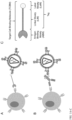
- biotin specific scFv the LLE principle ( FIG 1C ) as disclosed herein may be applied, i.e.
- the antigen binding domain of the scFV Bio3-18E binds with higher preference to biotin (LaM) that is coupled to the 6-(6-aminohexanamido) hexanoyl moiety or a 6-aminohexanoyl moiety (LiM) than to free biotin or biotin coupled with other linkers.
- LiM connects biotin and the antigen binding moiety (ABM) of the target binding molecule (TCBM).
- Two chains of the scFVs are linked via a 3(G4S) linker (SEQ ID NO: 11) and may be present in either orientations (VH-VL or VL-VH).
- the orientation can influence expression levels, stability, affinity to the tag of the tagged polypeptide ant the titer of the pseudotyped retroviral vector or virus-like particle thereof, respectively.
- a His tag (SEQ ID NO: 12) has been added to the C-terminal end of the protein with antigen binding activity protein, to enable measuring surface expression by flow cytometry ( FIG 2 ).
- DNA encoding the scFV of the dextran specific (SEQ ID NO 13 and 14) and biotin specific antibody (SEQ ID NO: 1 and 2) in VH-VL orientation were obtained by gene synthesis (ATUM, Newark, California). Flanking restrictions sites SfiI and NotI were inserted to enable insertion into the SfiI and NotI digested Hmut encoding plasmid pCG-Hmut (Anliker et al. (2010)). DNA encoding the biotin-specific scFV in VL-VH orientation was obtained by PCR using a plasmid encoding for the scFV in VL-VH orientation with primers adding the restriction sites.
- the amplified scFV was inserted via SfiI and NotI into the digested Hmut encoding plasmid as described before.
- Cell surface expression of the recombinant proteins with antigen binding activity is crucial in terms of productivity of the pseudotyped retroviral vector or virus-like particle thereof.
- Surface expression was determined by transient transfection of HEK-293T cells that were seeded in 6 wells with a density of 8 ⁇ 10 5 cells/well the day before transfection. Of each construct 1.5 ⁇ g DNA was transfected. Two days post transfection one part of the cells was stained with His tag specific antibodies according the instructions of the manufacturer (Miltenyi Biotec, Cat.No.
- FIG 3A Another part of the cells was stained with an antibody specific for CD25 conjugated to biotin and a fluorescent protein (Miltenyi Biotec, Cat.No. 130-019-010).
- HEK-293T cells are CD25 negative, meaning only protein with antigen binding activity containing the Bio3-18E scFV is detected. Thereby, quantification of labeled cells can be indirectly correlated to the antigen binding capacity of the envelope protein ( FIG 3B ).
- Example 2 Generation of a Tag specific, pseudotyped retroviral vector
- Pseudotyped retrovrial vector particles specific for a tag of tagged polypeptide were generated by transient transfection of HEK-293T cells.
- HEK-293T cells that were seeded in T175 flasks in DMEM/10 % FCS (Biowest, Cat.No. 12362; Biochrom, Cat.No.S0415) the day before were transfected with a plasmid encoding for the H protein, a plasmid encoding for the F protein, a packaging plasmid encoding gag/pol/rev and a psi-positive transfer vector plasmid encoding GFP.
- the pseudotyped retroviral vector particles were harvested 48h post transfection.
- the supernatant was collected, centrifuged for 10 min at 1000 rpm, followed by filtration through a 0.45 ⁇ m filter. To concentrate, the filtered supernatant was centrifuged through a 20 % sucrose (Sigma Aldrich, Cat.No. 84097-250 g, 20% w/v in PBS) cushion for 24 h at 4 °C with 5350xg. The pelleted retroviral vectors were resuspended in 250 ⁇ l precooled PBS, aliquoted and stored at -80 °C for later use.
- Example 4 Titration of a tag specific, pseudotyped retroviral vector
- Pseudotyped retroviral vector particles were titrated on HT1080 cells in the absence of the tagged polypeptide. Therefore, proteins on the cell surface were randomly labeled with LC-LC-biotin using by Biotin-LC-LC-NHS.
- HT1080 resuspended in 1 ml PBS were supplemented with Biotin-LC-LC-NHS followed by an incubation at 4 °C at constant mixing. After removing cell-free supernatant, cells were washed and seeded with 1 ⁇ 10 5 cells/well in 24-wells in cultivation media (DMEM, 10 % FCS) until the cells were completely adherent.
- FIG 4A Successful biotinylation was confirmed by staining with a fluorochrome conjugated anti-biotin antibody (Miltenyi Biotec, Cat.No. 130-090-856) and flow cytometry ( FIG 4A ).
- the GFP encoding vector particles were serially diluted in a DMEM containing Polybrene ® (Sigma Aldrich, Cat.No. H9268-5G).
- 72 h post transduction the transduction efficiency was determined by flow cytometry determining the ratio of GFP positive ( FIG 4A ).
- the ratio of GFP positive cells, the dilution factor and the volume of retroviral applied is used to calculate the retroviral vector titer (i.e. transducing units per volume (TU/ml) ( FIG 4B ).
- the transduction of unbiotinylated HT1080 cells is performed as described (Example 4). Raji cells were transduced at 3.3 ⁇ 10 5 cells/ml in 48 well plates in RPMI, 2 mM stable glutamine (Biowest, Cat.No. L0501-500; Lonza, Cat.No. 882027-12) ( FIG 5-11 ). Retroviral vector was added to the cells, which were cultivated for at least 72 h until flow cytometry was performed to determine the ratio of transduced cells and the calculated titer. SupT1 were transduced at 1 ⁇ 10 6 cells/ml in RPMI, 2 mM stable glutamine seeded in 96 well U-bottom plates ( FIG 7 , 8 , 11 ).
- Retroviral vector was added to the cells, which were cultivated for at least 72 h until flow cytometry was performed to determine the ratio of transduced cells and the calculated titer.
- Jurkat cells were transduced in 48 well plates at a cell density of 2 ⁇ 10 6 cells/ml in RPMI, 2 mM stable glutamine ( FIG 5 , 7 , 9 , 10 ).
- Retroviral vector was added to the cells, which were cultivated for at least 72 h until flow cytometry was performed to determine the ratio of transduced cells and the calculated titer.
- To verify the expression of the antigen expressed by target cell staining with the tagged polypeptide followed by a fluorescently labelled ⁇ -biotin antibody (Miltenyi Biotec, Cat.No. 130-090-856) and flow cytometric analysis was performed.
- target cells were seeded in serum-free medium as described before (Example 5).
- Tagged antibodies or tagged Fab fragments were added to the cells in a concentration of 100 ng/ml to 1000 ng/ml ( FIG 7 , 11 , 12 ).
- the cells were incubated with tagged polypeptide for at least 30 min at 4 °C. Afterwards GFP encoding retroviral vector was added.
- Selectivity in mixed cell populations was shown with equal amounts of Raji and SupT1 cells at a total density of 1 ⁇ 10 6 cells/ml in 48 well plates. The Raji specific transduction protocol was applied ( FIG 8 ).
- the performance and applicability of the adaptable retroviral vector system was easily improved by determining the best order of combining cells, tag specific retroviral vector and tagged polypeptide altogether. Therefore, two components were preincubated followed by the addition of the third component.
- This assay was performed with ⁇ -CD20-Ab-tag as polypeptide, tag specific retroviral vector encoding GFP and Raji (CD20+) as target cells or Jurkat cells (CD20-) as non-target cells.
- ⁇ -CD20-Ab-tag and retroviral vector was combined in 300 ⁇ l RPMI for Raji cells or 150 ⁇ l for Jurkat cells using 1 ⁇ g/ml ⁇ -CD20-Ab-tag and a retroviral vector dose of MOI 0.05.
- target cells either Raji or Jurkat
- Flow cytometry was performed at least 72h post transduction ( FIG 5A ).
- target or non-target cells were preincubated with retroviral vector, the cells were seeded in RPMI medium (150 ⁇ l for Jurkat, 300 ⁇ l for Raji). Viral vector was added to the cells with a MOI of 0.05, followed by incubation at 37 °C for 30 min. Afterwards the adapter molecule was added in a final concentration of 1 ⁇ g/ml. Flow cytometry was performed at least 72h post transduction ( FIG 5B ). For initial binding of the adapter to the cells, the target cells were seeded in 150 ⁇ l for Jurkat or 300 ⁇ l for Raji cells in RPMI and the adapter molecule was added at a final concentration of 1 ⁇ g/ml.
- Vectofusin-1 ® (Miltenyi Biotec, Cat.No. 130-111-163) was used ( FIG 6C ).
- Vectofusin-1 ® was prepared in RPMI directly prior to the transduction.
- the volume of retroviral vector was mixed 1:2 with the corresponding volume of Vectofusin-1 ® for 5 min prior to the transduction.
- the mix was then added to the cells: 50 ⁇ l for Jurkat or 100 ⁇ l for Raji cells.
- Polybrene ® (Sigma Aldrich, Cat.No. H9268-5G) was applied ( FIG 6B ).
- the optimal concentration of the adapter molecule was exemplary determined for CD4 and CD20 specific tagged polypeptides on Jurkat cells ( FIG 10A ) or Raji cells ( FIG 10B ). Therefore, the protocol with initial binding of the adapter molecules with the cells was used.
- the pseudotyped retroviral vector particle or virus-like particle thereof is used to determine the specificity of unknown tagged polypeptide by incubating the unknown tagged polypeptide with either defined cells or mix of cells.
- the pseudotyped retroviral vector particle or virus-like particle thereof encodes a marker that allows to determine the cell type to which the unknown tagged polypeptide is bound. This approach can be carried out in vitro or in vivo using for instance, but not restricted to, mouse models.
- Example 9 Adapter-LV using Nipah envelope proteins for pseudotyping
- Adapter-LV pseudotyped with Nipah envelope proteins was generated by modifying the protocol as described before (Example 2) by using plasmids encoding for the G and F proteins of Nipah instead of the measles virus protein H, F encoding plasmids.
- Pseudotyped retroviral vector particles were titrated on Raji cells in the presence of ⁇ -CD20-Ab-tag as polypeptide. The Raji specific transduction protocol was applied as described before.
- GFP encoding retroviral vector particles were serially diluted in RPMI. 72 h post transduction the transduction efficiency was determined by flow cytometry determining the ratio of EGFP positive cells.
- the measured ratio of GFP positive cells, the dilution factor and the volume of retroviral applied was used to calculate the retroviral vector titer (i.e. transducing units per volume (TU/ml).
- CD19 positive, CD20 positive Raji cells seeded in serum-free medium were selectively transduced with tag-specific, Nipah envelope protein pseudotyped retroviral vectors as described before (Example 5).
- Tagged adapter was added to the cells at a concentration of 100 ng/mlfor at least 30 min at 4 °C.
- GFP encoding Nipah envelope protein pseudotyped retroviral vectors were subsequently added.
- the transduction efficiency was determined 3 days post transduction by flow cytometric analysis. ( FIG 13 ).
- Example 10 Targeted protein delivery using Adapter-VLP
- Pseudotyped retroviral VLPs were produced by modifying the production protocol for retroviral vectors (Example 2).
- HEK cells were transfected with the plasmids encoding the tag-specific measles H, plasmids encoding the measles F protein, plasmids encoding gag/pol/rev and gag/pol/rev/transgene encoding plasmids that contain a transgene of choice inserted between matrix and the capsid protein.
- transgene eGFP or monomeric red fluorescent protein was used as transgene eGFP or monomeric red fluorescent protein was used.
- the fluorescent proteins are released into the matured particles by adding flanking HIV-1 protease cleavage sites (Uhlig et al. (2015)).
- VLPs were titrated as described before (Example 4). Contrary to this, analysis was performed already 4h post addition of the VLPs.
- tag-specific VLPs were added to CD4 positive, CD8 positive SupT1 cells in serum-free medium in the absence (w/o) or presence of tagged or untagged adapter molecules specific for the antigen expressed by SupT1 cells (Example 5).
- the adapter concentration was set to 100 ng/ml (10ng/ml for ⁇ -CD8-AB). After incubation of the cells with adapter for at least 30 min at 4 °C VLPs were added at an MOI of 0.05. 4 hours later, the protein transfer rate was measured by flow cytometry FIG 14A & 14B .
Landscapes
- Health & Medical Sciences (AREA)
- Life Sciences & Earth Sciences (AREA)
- Chemical & Material Sciences (AREA)
- Genetics & Genomics (AREA)
- Organic Chemistry (AREA)
- Engineering & Computer Science (AREA)
- Zoology (AREA)
- Biochemistry (AREA)
- Biophysics (AREA)
- General Health & Medical Sciences (AREA)
- Molecular Biology (AREA)
- Biotechnology (AREA)
- Virology (AREA)
- Wood Science & Technology (AREA)
- Bioinformatics & Cheminformatics (AREA)
- Biomedical Technology (AREA)
- General Engineering & Computer Science (AREA)
- Gastroenterology & Hepatology (AREA)
- Medicinal Chemistry (AREA)
- Proteomics, Peptides & Aminoacids (AREA)
- Plant Pathology (AREA)
- Microbiology (AREA)
- Physics & Mathematics (AREA)
- Immunology (AREA)
- Cell Biology (AREA)
- Toxicology (AREA)
- Micro-Organisms Or Cultivation Processes Thereof (AREA)
- Peptides Or Proteins (AREA)
- Medicines Containing Material From Animals Or Micro-Organisms (AREA)
- Medicinal Preparation (AREA)
- Medicines That Contain Protein Lipid Enzymes And Other Medicines (AREA)
- Medicines Containing Antibodies Or Antigens For Use As Internal Diagnostic Agents (AREA)
Claims (14)
- Composition comprenanti) une particule de vecteur rétroviral pseudotypé ou une de ses particules de type virus comprenant :a) une protéine d'enveloppe avec une activité de liaison à un antigène, ladite protéine d'enveloppe étant une protéine recombinante qui n'interagit pas avec au moins un de ses récepteurs natifs et étant fusionnée à son ectodomaine à un polypeptide comprenant un domaine de liaison à un antigène spécifique pour une étiquette d'un polypeptide étiqueté et ladite protéine d'enveloppe étant la protéine H d'un virus de la famille des Paramyxoviridae, ladite protéine H d'un virus de la famille des Paramyxoviridae manquant au moins une partie de la région cytoplasmique de la protéine H,b) une protéine d'enveloppe avec une activité de fusion d'un virus de la famille des Paramyxoviridae, ladite protéine d'enveloppe avec une activité de fusion manquant au moins une partie de la région cytoplasmique de ladite protéine d'enveloppe etii) ledit polypeptide étiqueté, ledit polypeptide étiqueté se liant spécifiquement à un antigène exprimé sur la surface d'une cellule cible, transduisant ainsi la cellule cible avec ladite particule de vecteur rétroviral ou induisant ainsi l'absorption de la particule de type virus dans la cellule cible, ledit virus des Paramyxoviridae étant un virus du genre morbillivirus et ladite particule de vecteur rétroviral étant une particule de vecteur lentiviral ou gammarétroviral.
- Composition comprenanti) une particule de vecteur rétroviral pseudotypé ou une de ses particules de type virus comprenant :a) une protéine d'enveloppe avec une activité de liaison à un antigène, ladite protéine d'enveloppe étant une protéine recombinante qui n'interagit pas avec au moins un de ses récepteurs natifs et étant fusionnée à son ectodomaine à un polypeptide comprenant un domaine de liaison à un antigène spécifique pour une étiquette d'un polypeptide étiqueté et ladite protéine d'enveloppe étant la protéine G d'un virus de la famille des Paramyxoviridae, ladite protéine G d'un virus de la famille des Paramyxoviridae manquant au moins une partie de la région cytoplasmique de ladite protéine G,b) une protéine d'enveloppe avec une activité de fusion d'un virus de la famille des Paramyxoviridae, ladite protéine d'enveloppe avec une activité de fusion manquant au moins une partie de la région cytoplasmique de ladite protéine d'enveloppe etii) ledit polypeptide étiqueté, ledit polypeptide étiqueté se liant spécifiquement à un antigène exprimé sur la surface d'une cellule cible, transduisant ainsi la cellule cible avec ladite particule de vecteur rétroviral ou induisant ainsi l'absorption de la particule de type virus dans la cellule cible, ledit virus des Paramyxoviridae étant un virus du genre Henipavirus et ladite particule de vecteur rétroviral étant une particule de vecteur lentiviral ou gammarétroviral.
- Composition selon la revendication 1 ou 2, dans laquelle ladite protéine d'enveloppe avec une activité de liaison à un antigène n'est pas tropique pour l'être humain.
- Composition selon l'une quelconque des revendications 1 à 3, dans laquelle ladite transduction ou ladite absorption induite est au moins 10 fois supérieure sur lesdites cellules cibles que sur les cellules non cibles en présence dudit polypeptide étiqueté.
- Composition selon la revendication 1, dans laquelle ledit virus du genre morbillivirus est un virus de la rougeole ou la souche Edmonston du virus de la rougeole.
- Composition selon l'une quelconque des revendications 1 à 5, dans laquelle le polypeptide dudit polypeptide étiqueté est un anticorps ou un de ses fragments de liaison à un antigène, ledit anticorps ou un de ses fragments de liaison à un antigène se liant audit antigène exprimé sur la surface de ladite cellule cible, et l'étiquette dudit polypeptide étiqueté étant un haptène.
- Composition selon l'une quelconque des revendications 1 à 6, dans laquelle le polypeptide dudit polypeptide étiqueté est une fraction de liaison à un antigène (ABM), l'étiquette dudit polypeptide étiqueté étant un lieur/épitope de marqueur (LLE) d'une molécule de liaison à une cellule cible (TCBM) comprenanti) une fraction de liaison à un antigène (ABM) ladite ABM se liant spécifiquement audit antigène exprimé sur la surface de ladite cellule cible,ii) une fraction de marqueur (LaM), ladite LaM étant une protéine naturelle chez un sujet ou un de ses dérivés,iii) une fraction de lieur (LiM) conjuguant ladite ABM et ladite LaM, formant ainsi un lieur/marqueur d'épitope (LLE), ledit domaine de liaison à un antigène dudit polypeptide spécifique pour une étiquette étant le domaine de liaison du lieur/épitope de marqueur (LLE), ledit domaine de liaison de LLE se liant audit LLE avec une préférence plus élevée que ladite molécule naturelle.
- Composition selon la revendication 7, dans laquelle ledit domaine de liaison de LLE se lie avec une affinité au moins deux fois supérieure audit LLE qu'à ladite molécule naturelle.
- Composition selon la revendication 7 ou 8, dans laquelle ladite LaM est une biotine ou un de ses dérivés et ladite LiM est une fraction 6-(6-aminohexanamido) hexanoyle ou une fraction 6-aminohexanoyle.
- Composition selon la revendication 9, dans laquelle ledit domaine de liaison de LLE comprend la séquence de SEQ ID n° 1 (VH) et de SEQ ID n° 2 (VL).
- Composition selon l'une quelconque des revendications 1 à 10, dans laquelle ledit polypeptide comprenant un domaine de liaison à un antigène spécifique pour une étiquette d'un polypeptide étiqueté est un anticorps ou un de ses fragments de liaison à un antigène.
- Composition selon la revendication 11, dans laquelle ledit anticorps ou un de ses fragments de liaison à un antigène dudit domaine de liaison à un antigène spécifique pour une étiquette d'un polypeptide étiqueté est un Fab (fragment de liaison à un antigène), un scFv (fragment variable simple chaîne), un anticorps à un seul domaine, un diabody, dsFv, Fab' ou un anticorps monocaténaire.
- Composition pharmaceutique comprenant la composition selon l'une quelconque des revendications 1 à 12, comprenant en outre éventuellement un véhicule pharmaceutiquement acceptable.
- Procédé in vitro de transduction de cellules cibles avec une particule de vecteur rétroviral pseudotypé ou la délivrance des protéines d'une de ses particules de type virus comprenant les étapesa) préincubation des cellules cibles avec un polypeptide étiqueté etb) addition de ladite particule de vecteur rétroviral ou de ses particules de type virus aux cellules cibles préincubées de l'étape a), ledit polypeptide étiqueté se liant spécifiquement à un antigène exprimé sur la surface d'une cellule cible, transduisant ainsi la cellule cible avec ladite particule de vecteur rétroviral ou induisant ainsi l'absorption de la particule de type virus dans la cellule cible et ladite particule de vecteur rétroviral pseudotypé ou une de ses particules de type virus comprenant :I) une protéine d'enveloppe avec une activité de liaison à un antigène, ladite protéine d'enveloppe étant une protéine recombinante qui n'interagit pas avec au moins un de ses récepteurs natifs et étant fusionnée à son ectodomaine à un polypeptide comprenant un domaine de liaison à un antigène spécifique pour une étiquette dudit polypeptide étiqueté et ladite protéine d'enveloppe étant la protéine H d'un virus de la famille des Paramyxoviridae, ladite protéine H d'un virus de la famille des Paramyxoviridae manquant au moins une partie de la région cytoplasmique de ladite protéine H,II) une protéine d'enveloppe avec une activité de fusion d'un virus de la famille des Paramyxoviridae, ladite protéine d'enveloppe avec une activité de fusion manquant au moins une partie de la région cytoplasmique de ladite protéine d'enveloppe, et ledit virus des Paramyxoviridae étant un virus du genre morbillivirus et ladite particule de vecteur rétroviral étant une particule de vecteur lentiviral ou gammarétroviral ou ladite particule de vecteur rétroviral pseudotypé ou une de ses particules de type virus comprenant :i) une protéine d'enveloppe avec une activité de liaison à un antigène, ladite protéine d'enveloppe étant une protéine recombinante qui n'interagit pas avec au moins un de ses récepteurs natifs et est fusionnée à son ectodomaine à un polypeptide comprenant un domaine de liaison à un antigène spécifique pour une étiquette dudit polypeptide étiqueté et ladite protéine d'enveloppe étant la protéine G d'un virus de la famille des Paramyxoviridae, ladite protéine G d'un virus de la famille des Paramyxoviridae manquant au moins une partie de la région cytoplasmique de ladite protéine G,ii) une protéine d'enveloppe avec une activité de fusion d'un virus de la famille des Paramyxoviridae, ladite protéine d'enveloppe avec une activité de fusion manquant au moins une partie de la région cytoplasmique de ladite protéine d'enveloppe, et ledit virus des Paramyxoviridae étant un virus du genre Henipavirus et ladite particule de vecteur rétroviral étant une particule de vecteur lentiviral ou gammarétroviral.
Applications Claiming Priority (2)
| Application Number | Priority Date | Filing Date | Title |
|---|---|---|---|
| EP17199170 | 2017-10-30 | ||
| PCT/EP2018/079486 WO2019086351A1 (fr) | 2017-10-30 | 2018-10-26 | Système de vecteurs rétroviraux basé sur un adaptateur pour la transduction sélective de cellules cibles |
Publications (3)
| Publication Number | Publication Date |
|---|---|
| EP3704136A1 EP3704136A1 (fr) | 2020-09-09 |
| EP3704136C0 EP3704136C0 (fr) | 2024-12-04 |
| EP3704136B1 true EP3704136B1 (fr) | 2024-12-04 |
Family
ID=60413029
Family Applications (1)
| Application Number | Title | Priority Date | Filing Date |
|---|---|---|---|
| EP18803330.2A Active EP3704136B1 (fr) | 2017-10-30 | 2018-10-26 | Système de vecteur rétroviral à base d'adaptateur pour la transduction sélective de cellules cibles |
Country Status (8)
| Country | Link |
|---|---|
| US (1) | US12365916B2 (fr) |
| EP (1) | EP3704136B1 (fr) |
| JP (1) | JP7237960B2 (fr) |
| KR (1) | KR102758204B1 (fr) |
| CN (1) | CN111315761A (fr) |
| CA (1) | CA3080424A1 (fr) |
| ES (1) | ES2997865T3 (fr) |
| WO (1) | WO2019086351A1 (fr) |
Families Citing this family (16)
| Publication number | Priority date | Publication date | Assignee | Title |
|---|---|---|---|---|
| CN113226367B (zh) | 2018-04-06 | 2025-05-06 | Atyr医药公司 | 包括抗nrp2抗体的组合物和方法 |
| AU2020348872A1 (en) * | 2019-09-20 | 2022-04-14 | Massachusetts Institute Of Technology | Compositions and methods for delivering cargo to a target cell |
| JP7701913B2 (ja) | 2019-10-03 | 2025-07-02 | エータイアー ファーマ, インコーポレイテッド | 抗nrp2抗体を含む組成物および方法 |
| EP4127144A1 (fr) * | 2020-03-31 | 2023-02-08 | Sana Biotechnology, Inc. | Particules lipidiques ciblées et leurs compositions et leurs utilisations |
| WO2021263061A2 (fr) * | 2020-06-24 | 2021-12-30 | Lycia Therapeutics, Inc. | Compositions virales modifiées pour la transduction virale |
| WO2022013872A1 (fr) * | 2020-07-14 | 2022-01-20 | Ichilov Tech Ltd. | Virus pseudotypés conçus pour exprimer un car dans des lymphocytes t |
| EP3964585A1 (fr) | 2020-09-03 | 2022-03-09 | Miltenyi Biotec B.V. & Co. KG | Particule de vecteur lentiviral spécifique de cd62l pour la transduction ciblée de sous-ensembles de lymphocytes t |
| JP2023543472A (ja) * | 2020-09-30 | 2023-10-16 | サンシャイン・レイク・ファーマ・カンパニー・リミテッド | ウイルスベクター及びその使用 |
| CN116348768A (zh) * | 2020-10-09 | 2023-06-27 | 亥姆霍兹慕尼黑中心-德国健康与环境研究中心(有限公司) | 确定是否存在中和病毒的抗体的方法和筛选化合物中和病毒能力的体外方法 |
| CN117425814A (zh) * | 2021-04-01 | 2024-01-19 | 定量癌症诊断有限责任公司 | 用于检测生物样品的系统和组合物及其方法 |
| CN113584189B (zh) * | 2021-10-08 | 2022-02-08 | 上海思路迪医学检验所有限公司 | 一种类外泌体及其作为参考品、标准品的应用 |
| WO2023076998A1 (fr) * | 2021-10-27 | 2023-05-04 | Atyr Pharma, Inc. | Compositions et procédés comprenant des anticorps anti-nrp2a |
| WO2023143209A1 (fr) * | 2022-01-25 | 2023-08-03 | 广东东阳光药业股份有限公司 | Vecteur viral et son application |
| AU2024261890A1 (en) | 2023-04-27 | 2025-10-09 | Miltenyi Biotec B.V. & Co. KG | Retroviral vector particle pseudotyped with envelope proteins of canine distemper virus |
| KR20260005358A (ko) | 2023-04-27 | 2026-01-09 | 밀테니 비오텍 비.브이. & 씨오. 케이지 | 항-cd3 디스플레이를 갖는 슈도타이핑된 레트로바이러스 벡터 입자 |
| CN119591705A (zh) * | 2023-09-08 | 2025-03-11 | 东莞市朋志生物科技有限公司 | 一种抗血红蛋白的抗体及其应用 |
Family Cites Families (5)
| Publication number | Priority date | Publication date | Assignee | Title |
|---|---|---|---|---|
| EP1291419B1 (fr) * | 2000-06-01 | 2013-09-18 | Dnavec Research Inc. | Vecteur de retrovirus de pseudo-type contenant une proteine de membrane possedant une activite d'hemagglutinine |
| EP1975239A1 (fr) | 2006-09-27 | 2008-10-01 | Bundesrepublik Deutschland, letztvertreten durch den Präsidenten des Paul-Ehrlich-Instituts Prof. Dr. Johannes Löwer | Pseudotypage de vecteurs rétroviraux, méthodes pour leur production et leur utilisation pour le transfert ciblé de gènes et le criblage |
| EP2615176A1 (fr) * | 2012-01-11 | 2013-07-17 | Paul-Ehrlich-Institut Bundesamt für Sera und Impfstoffe | Nouvelles particules de lentivirus pseudotypées et leur utilisation dans la transduction ciblée in vitro de cellules souches embryonnaires humaines pluripotentes indifférenciées et cellules souches pluripotentes induites |
| EP3971286A3 (fr) | 2012-03-26 | 2022-04-20 | The Regents of the University of California | Lentivirus pseudotypés avec l'enveloppe du virus nipah et procédés d'utilisation |
| CA2935929C (fr) | 2014-01-10 | 2022-02-22 | Sirion Biotech Gmbh | Vecteurs lentiviraux pseudotypes |
-
2018
- 2018-10-26 JP JP2020524194A patent/JP7237960B2/ja active Active
- 2018-10-26 CA CA3080424A patent/CA3080424A1/fr active Pending
- 2018-10-26 KR KR1020207015301A patent/KR102758204B1/ko active Active
- 2018-10-26 CN CN201880070522.5A patent/CN111315761A/zh active Pending
- 2018-10-26 US US16/760,869 patent/US12365916B2/en active Active
- 2018-10-26 WO PCT/EP2018/079486 patent/WO2019086351A1/fr not_active Ceased
- 2018-10-26 EP EP18803330.2A patent/EP3704136B1/fr active Active
- 2018-10-26 ES ES18803330T patent/ES2997865T3/es active Active
Also Published As
| Publication number | Publication date |
|---|---|
| ES2997865T3 (en) | 2025-02-18 |
| EP3704136C0 (fr) | 2024-12-04 |
| KR20200074204A (ko) | 2020-06-24 |
| JP7237960B2 (ja) | 2023-03-13 |
| WO2019086351A1 (fr) | 2019-05-09 |
| CA3080424A1 (fr) | 2019-05-09 |
| US20210180083A1 (en) | 2021-06-17 |
| US12365916B2 (en) | 2025-07-22 |
| EP3704136A1 (fr) | 2020-09-09 |
| CN111315761A (zh) | 2020-06-19 |
| KR102758204B1 (ko) | 2025-01-23 |
| JP2021500909A (ja) | 2021-01-14 |
Similar Documents
| Publication | Publication Date | Title |
|---|---|---|
| EP3704136B1 (fr) | Système de vecteur rétroviral à base d'adaptateur pour la transduction sélective de cellules cibles | |
| US10954530B2 (en) | Retroviral and lentiviral vectors | |
| JP5553989B2 (ja) | ウィルスベクターを使用した標的化遺伝子送達方法 | |
| EP2583974B1 (fr) | Pseudotypage de virus mousseux | |
| CA3099497A1 (fr) | Compositions de fusosome et leurs utilisations | |
| US20230407330A1 (en) | Vector system for delivery of multiple polynucleotides and uses thereof | |
| US20250059239A1 (en) | Modified paramyxoviridae fusion glycoproteins | |
| US20240408192A1 (en) | Modified paramyxoviridae attachment glycoproteins | |
| AU2021305060A1 (en) | Methods and compositions for producing viral fusosomes | |
| JP4956427B2 (ja) | レンチウイルスベクターおよびその使用 | |
| US20220228169A1 (en) | Small ruminant lentivirus vector | |
| US20250152709A1 (en) | Cd3-targeted lentiviral vectors and uses thereof | |
| Kasaraneni | Vector Engineering for Cell and Gene Therapy | |
| WO2024243340A1 (fr) | Fusogènes en tandem et particules lipidiques associées | |
| WO2024220574A1 (fr) | Fusogènes de protéine g universelle et systèmes adaptateurs de ceux-ci et particules lipidiques et utilisations associées | |
| WO2025184529A1 (fr) | Particules virales à présentation fusogène et compositions et procédés associés | |
| CN121006385A (zh) | 一种修饰的病毒载体及其制备方法与应用 | |
| Fonseca | Lentiviral target-specific strategy for molecular therapy | |
| dos Santos Fonseca | Lentiviral target-specific strategy for molecular therapy | |
| Miskin et al. | 446. Lentiviral Transduction of Monocyte-Derived Dendritic Cells for Cancer Immunotherapy |
Legal Events
| Date | Code | Title | Description |
|---|---|---|---|
| STAA | Information on the status of an ep patent application or granted ep patent |
Free format text: STATUS: UNKNOWN |
|
| STAA | Information on the status of an ep patent application or granted ep patent |
Free format text: STATUS: THE INTERNATIONAL PUBLICATION HAS BEEN MADE |
|
| PUAI | Public reference made under article 153(3) epc to a published international application that has entered the european phase |
Free format text: ORIGINAL CODE: 0009012 |
|
| STAA | Information on the status of an ep patent application or granted ep patent |
Free format text: STATUS: REQUEST FOR EXAMINATION WAS MADE |
|
| 17P | Request for examination filed |
Effective date: 20200526 |
|
| AK | Designated contracting states |
Kind code of ref document: A1 Designated state(s): AL AT BE BG CH CY CZ DE DK EE ES FI FR GB GR HR HU IE IS IT LI LT LU LV MC MK MT NL NO PL PT RO RS SE SI SK SM TR |
|
| AX | Request for extension of the european patent |
Extension state: BA ME |
|
| RIN1 | Information on inventor provided before grant (corrected) |
Inventor name: MITTELSTAET, JOERG Inventor name: KAISER, ANDREW Inventor name: SCHASER, THOMAS Inventor name: CORDES, NICOLE |
|
| DAV | Request for validation of the european patent (deleted) | ||
| DAX | Request for extension of the european patent (deleted) | ||
| STAA | Information on the status of an ep patent application or granted ep patent |
Free format text: STATUS: EXAMINATION IS IN PROGRESS |
|
| 17Q | First examination report despatched |
Effective date: 20220510 |
|
| GRAP | Despatch of communication of intention to grant a patent |
Free format text: ORIGINAL CODE: EPIDOSNIGR1 |
|
| STAA | Information on the status of an ep patent application or granted ep patent |
Free format text: STATUS: GRANT OF PATENT IS INTENDED |
|
| GRAJ | Information related to disapproval of communication of intention to grant by the applicant or resumption of examination proceedings by the epo deleted |
Free format text: ORIGINAL CODE: EPIDOSDIGR1 |
|
| STAA | Information on the status of an ep patent application or granted ep patent |
Free format text: STATUS: EXAMINATION IS IN PROGRESS |
|
| GRAP | Despatch of communication of intention to grant a patent |
Free format text: ORIGINAL CODE: EPIDOSNIGR1 |
|
| STAA | Information on the status of an ep patent application or granted ep patent |
Free format text: STATUS: GRANT OF PATENT IS INTENDED |
|
| INTG | Intention to grant announced |
Effective date: 20240604 |
|
| INTG | Intention to grant announced |
Effective date: 20240618 |
|
| GRAS | Grant fee paid |
Free format text: ORIGINAL CODE: EPIDOSNIGR3 |
|
| GRAA | (expected) grant |
Free format text: ORIGINAL CODE: 0009210 |
|
| STAA | Information on the status of an ep patent application or granted ep patent |
Free format text: STATUS: THE PATENT HAS BEEN GRANTED |
|
| AK | Designated contracting states |
Kind code of ref document: B1 Designated state(s): AL AT BE BG CH CY CZ DE DK EE ES FI FR GB GR HR HU IE IS IT LI LT LU LV MC MK MT NL NO PL PT RO RS SE SI SK SM TR |
|
| REG | Reference to a national code |
Ref country code: GB Ref legal event code: FG4D |
|
| REG | Reference to a national code |
Ref country code: CH Ref legal event code: EP |
|
| REG | Reference to a national code |
Ref country code: DE Ref legal event code: R096 Ref document number: 602018077292 Country of ref document: DE |
|
| REG | Reference to a national code |
Ref country code: IE Ref legal event code: FG4D |
|
| U01 | Request for unitary effect filed |
Effective date: 20241205 |
|
| U07 | Unitary effect registered |
Designated state(s): AT BE BG DE DK EE FI FR IT LT LU LV MT NL PT RO SE SI Effective date: 20241213 |
|
| REG | Reference to a national code |
Ref country code: ES Ref legal event code: FG2A Ref document number: 2997865 Country of ref document: ES Kind code of ref document: T3 Effective date: 20250218 |
|
| PG25 | Lapsed in a contracting state [announced via postgrant information from national office to epo] |
Ref country code: HR Free format text: LAPSE BECAUSE OF FAILURE TO SUBMIT A TRANSLATION OF THE DESCRIPTION OR TO PAY THE FEE WITHIN THE PRESCRIBED TIME-LIMIT Effective date: 20241204 |
|
| PG25 | Lapsed in a contracting state [announced via postgrant information from national office to epo] |
Ref country code: NO Free format text: LAPSE BECAUSE OF FAILURE TO SUBMIT A TRANSLATION OF THE DESCRIPTION OR TO PAY THE FEE WITHIN THE PRESCRIBED TIME-LIMIT Effective date: 20250304 |
|
| PG25 | Lapsed in a contracting state [announced via postgrant information from national office to epo] |
Ref country code: GR Free format text: LAPSE BECAUSE OF FAILURE TO SUBMIT A TRANSLATION OF THE DESCRIPTION OR TO PAY THE FEE WITHIN THE PRESCRIBED TIME-LIMIT Effective date: 20250305 |
|
| PG25 | Lapsed in a contracting state [announced via postgrant information from national office to epo] |
Ref country code: RS Free format text: LAPSE BECAUSE OF FAILURE TO SUBMIT A TRANSLATION OF THE DESCRIPTION OR TO PAY THE FEE WITHIN THE PRESCRIBED TIME-LIMIT Effective date: 20250304 |
|
| PG25 | Lapsed in a contracting state [announced via postgrant information from national office to epo] |
Ref country code: SM Free format text: LAPSE BECAUSE OF FAILURE TO SUBMIT A TRANSLATION OF THE DESCRIPTION OR TO PAY THE FEE WITHIN THE PRESCRIBED TIME-LIMIT Effective date: 20241204 |
|
| PG25 | Lapsed in a contracting state [announced via postgrant information from national office to epo] |
Ref country code: PL Free format text: LAPSE BECAUSE OF FAILURE TO SUBMIT A TRANSLATION OF THE DESCRIPTION OR TO PAY THE FEE WITHIN THE PRESCRIBED TIME-LIMIT Effective date: 20241204 |
|
| PG25 | Lapsed in a contracting state [announced via postgrant information from national office to epo] |
Ref country code: IS Free format text: LAPSE BECAUSE OF FAILURE TO SUBMIT A TRANSLATION OF THE DESCRIPTION OR TO PAY THE FEE WITHIN THE PRESCRIBED TIME-LIMIT Effective date: 20250404 |
|
| PG25 | Lapsed in a contracting state [announced via postgrant information from national office to epo] |
Ref country code: SK Free format text: LAPSE BECAUSE OF FAILURE TO SUBMIT A TRANSLATION OF THE DESCRIPTION OR TO PAY THE FEE WITHIN THE PRESCRIBED TIME-LIMIT Effective date: 20241204 |
|
| PG25 | Lapsed in a contracting state [announced via postgrant information from national office to epo] |
Ref country code: CZ Free format text: LAPSE BECAUSE OF FAILURE TO SUBMIT A TRANSLATION OF THE DESCRIPTION OR TO PAY THE FEE WITHIN THE PRESCRIBED TIME-LIMIT Effective date: 20241204 |
|
| PLBE | No opposition filed within time limit |
Free format text: ORIGINAL CODE: 0009261 |
|
| STAA | Information on the status of an ep patent application or granted ep patent |
Free format text: STATUS: NO OPPOSITION FILED WITHIN TIME LIMIT |
|
| REG | Reference to a national code |
Ref country code: CH Ref legal event code: L10 Free format text: ST27 STATUS EVENT CODE: U-0-0-L10-L00 (AS PROVIDED BY THE NATIONAL OFFICE) Effective date: 20251015 |
|
| REG | Reference to a national code |
Ref country code: CH Ref legal event code: U11 Free format text: ST27 STATUS EVENT CODE: U-0-0-U10-U11 (AS PROVIDED BY THE NATIONAL OFFICE) Effective date: 20251101 |
|
| 26N | No opposition filed |
Effective date: 20250905 |
|
| U20 | Renewal fee for the european patent with unitary effect paid |
Year of fee payment: 8 Effective date: 20251028 |
|
| PGFP | Annual fee paid to national office [announced via postgrant information from national office to epo] |
Ref country code: GB Payment date: 20251022 Year of fee payment: 8 |
|
| PGFP | Annual fee paid to national office [announced via postgrant information from national office to epo] |
Ref country code: CH Payment date: 20251101 Year of fee payment: 8 |
|
| PGFP | Annual fee paid to national office [announced via postgrant information from national office to epo] |
Ref country code: ES Payment date: 20251216 Year of fee payment: 8 |