EP3687776B1 - Verfahren zur herstellung eines formartikels und dadurch hergestellter formartikel - Google Patents
Verfahren zur herstellung eines formartikels und dadurch hergestellter formartikel Download PDFInfo
- Publication number
- EP3687776B1 EP3687776B1 EP18779000.1A EP18779000A EP3687776B1 EP 3687776 B1 EP3687776 B1 EP 3687776B1 EP 18779000 A EP18779000 A EP 18779000A EP 3687776 B1 EP3687776 B1 EP 3687776B1
- Authority
- EP
- European Patent Office
- Prior art keywords
- moulding
- mould
- moulded article
- component
- manufacturing
- Prior art date
- Legal status (The legal status is an assumption and is not a legal conclusion. Google has not performed a legal analysis and makes no representation as to the accuracy of the status listed.)
- Active
Links
Images



Classifications
-
- B—PERFORMING OPERATIONS; TRANSPORTING
- B29—WORKING OF PLASTICS; WORKING OF SUBSTANCES IN A PLASTIC STATE IN GENERAL
- B29C—SHAPING OR JOINING OF PLASTICS; SHAPING OF MATERIAL IN A PLASTIC STATE, NOT OTHERWISE PROVIDED FOR; AFTER-TREATMENT OF THE SHAPED PRODUCTS, e.g. REPAIRING
- B29C70/00—Shaping composites, i.e. plastics material comprising reinforcements, fillers or preformed parts, e.g. inserts
- B29C70/04—Shaping composites, i.e. plastics material comprising reinforcements, fillers or preformed parts, e.g. inserts comprising reinforcements only, e.g. self-reinforcing plastics
- B29C70/06—Fibrous reinforcements only
- B29C70/08—Fibrous reinforcements only comprising combinations of different forms of fibrous reinforcements incorporated in matrix material, forming one or more layers, and with or without non-reinforced layers
- B29C70/081—Combinations of fibres of continuous or substantial length and short fibres
-
- B—PERFORMING OPERATIONS; TRANSPORTING
- B29—WORKING OF PLASTICS; WORKING OF SUBSTANCES IN A PLASTIC STATE IN GENERAL
- B29C—SHAPING OR JOINING OF PLASTICS; SHAPING OF MATERIAL IN A PLASTIC STATE, NOT OTHERWISE PROVIDED FOR; AFTER-TREATMENT OF THE SHAPED PRODUCTS, e.g. REPAIRING
- B29C31/00—Handling, e.g. feeding of the material to be shaped, storage of plastics material before moulding; Automation, i.e. automated handling lines in plastics processing plants, e.g. using manipulators or robots
- B29C31/008—Handling preformed parts, e.g. inserts
-
- B—PERFORMING OPERATIONS; TRANSPORTING
- B29—WORKING OF PLASTICS; WORKING OF SUBSTANCES IN A PLASTIC STATE IN GENERAL
- B29C—SHAPING OR JOINING OF PLASTICS; SHAPING OF MATERIAL IN A PLASTIC STATE, NOT OTHERWISE PROVIDED FOR; AFTER-TREATMENT OF THE SHAPED PRODUCTS, e.g. REPAIRING
- B29C43/00—Compression moulding, i.e. applying external pressure to flow the moulding material; Apparatus therefor
- B29C43/02—Compression moulding, i.e. applying external pressure to flow the moulding material; Apparatus therefor of articles of definite length, i.e. discrete articles
- B29C43/18—Compression moulding, i.e. applying external pressure to flow the moulding material; Apparatus therefor of articles of definite length, i.e. discrete articles incorporating preformed parts or layers, e.g. compression moulding around inserts or for coating articles
-
- B—PERFORMING OPERATIONS; TRANSPORTING
- B29—WORKING OF PLASTICS; WORKING OF SUBSTANCES IN A PLASTIC STATE IN GENERAL
- B29C—SHAPING OR JOINING OF PLASTICS; SHAPING OF MATERIAL IN A PLASTIC STATE, NOT OTHERWISE PROVIDED FOR; AFTER-TREATMENT OF THE SHAPED PRODUCTS, e.g. REPAIRING
- B29C43/00—Compression moulding, i.e. applying external pressure to flow the moulding material; Apparatus therefor
- B29C43/02—Compression moulding, i.e. applying external pressure to flow the moulding material; Apparatus therefor of articles of definite length, i.e. discrete articles
- B29C43/20—Making multilayered or multicoloured articles
- B29C43/203—Making multilayered articles
- B29C43/206—Making multilayered articles by pressing the material between two preformed layers, e.g. deformable layers
-
- B—PERFORMING OPERATIONS; TRANSPORTING
- B29—WORKING OF PLASTICS; WORKING OF SUBSTANCES IN A PLASTIC STATE IN GENERAL
- B29C—SHAPING OR JOINING OF PLASTICS; SHAPING OF MATERIAL IN A PLASTIC STATE, NOT OTHERWISE PROVIDED FOR; AFTER-TREATMENT OF THE SHAPED PRODUCTS, e.g. REPAIRING
- B29C43/00—Compression moulding, i.e. applying external pressure to flow the moulding material; Apparatus therefor
- B29C43/32—Component parts, details or accessories; Auxiliary operations
- B29C43/34—Feeding the material to the mould or the compression means
-
- B—PERFORMING OPERATIONS; TRANSPORTING
- B29—WORKING OF PLASTICS; WORKING OF SUBSTANCES IN A PLASTIC STATE IN GENERAL
- B29C—SHAPING OR JOINING OF PLASTICS; SHAPING OF MATERIAL IN A PLASTIC STATE, NOT OTHERWISE PROVIDED FOR; AFTER-TREATMENT OF THE SHAPED PRODUCTS, e.g. REPAIRING
- B29C45/00—Injection moulding, i.e. forcing the required volume of moulding material through a nozzle into a closed mould; Apparatus therefor
- B29C45/14—Injection moulding, i.e. forcing the required volume of moulding material through a nozzle into a closed mould; Apparatus therefor incorporating preformed parts or layers, e.g. injection moulding around inserts or for coating articles
- B29C45/1418—Injection moulding, i.e. forcing the required volume of moulding material through a nozzle into a closed mould; Apparatus therefor incorporating preformed parts or layers, e.g. injection moulding around inserts or for coating articles the inserts being deformed or preformed, e.g. by the injection pressure
- B29C45/14221—Injection moulding, i.e. forcing the required volume of moulding material through a nozzle into a closed mould; Apparatus therefor incorporating preformed parts or layers, e.g. injection moulding around inserts or for coating articles the inserts being deformed or preformed, e.g. by the injection pressure by tools, e.g. cutting means
-
- B—PERFORMING OPERATIONS; TRANSPORTING
- B29—WORKING OF PLASTICS; WORKING OF SUBSTANCES IN A PLASTIC STATE IN GENERAL
- B29C—SHAPING OR JOINING OF PLASTICS; SHAPING OF MATERIAL IN A PLASTIC STATE, NOT OTHERWISE PROVIDED FOR; AFTER-TREATMENT OF THE SHAPED PRODUCTS, e.g. REPAIRING
- B29C45/00—Injection moulding, i.e. forcing the required volume of moulding material through a nozzle into a closed mould; Apparatus therefor
- B29C45/14—Injection moulding, i.e. forcing the required volume of moulding material through a nozzle into a closed mould; Apparatus therefor incorporating preformed parts or layers, e.g. injection moulding around inserts or for coating articles
- B29C45/14778—Injection moulding, i.e. forcing the required volume of moulding material through a nozzle into a closed mould; Apparatus therefor incorporating preformed parts or layers, e.g. injection moulding around inserts or for coating articles the article consisting of a material with particular properties, e.g. porous, brittle
- B29C45/14786—Fibrous material or fibre containing material, e.g. fibre mats or fibre reinforced material
-
- B—PERFORMING OPERATIONS; TRANSPORTING
- B29—WORKING OF PLASTICS; WORKING OF SUBSTANCES IN A PLASTIC STATE IN GENERAL
- B29C—SHAPING OR JOINING OF PLASTICS; SHAPING OF MATERIAL IN A PLASTIC STATE, NOT OTHERWISE PROVIDED FOR; AFTER-TREATMENT OF THE SHAPED PRODUCTS, e.g. REPAIRING
- B29C70/00—Shaping composites, i.e. plastics material comprising reinforcements, fillers or preformed parts, e.g. inserts
- B29C70/04—Shaping composites, i.e. plastics material comprising reinforcements, fillers or preformed parts, e.g. inserts comprising reinforcements only, e.g. self-reinforcing plastics
- B29C70/06—Fibrous reinforcements only
- B29C70/08—Fibrous reinforcements only comprising combinations of different forms of fibrous reinforcements incorporated in matrix material, forming one or more layers, and with or without non-reinforced layers
-
- B—PERFORMING OPERATIONS; TRANSPORTING
- B29—WORKING OF PLASTICS; WORKING OF SUBSTANCES IN A PLASTIC STATE IN GENERAL
- B29C—SHAPING OR JOINING OF PLASTICS; SHAPING OF MATERIAL IN A PLASTIC STATE, NOT OTHERWISE PROVIDED FOR; AFTER-TREATMENT OF THE SHAPED PRODUCTS, e.g. REPAIRING
- B29C70/00—Shaping composites, i.e. plastics material comprising reinforcements, fillers or preformed parts, e.g. inserts
- B29C70/04—Shaping composites, i.e. plastics material comprising reinforcements, fillers or preformed parts, e.g. inserts comprising reinforcements only, e.g. self-reinforcing plastics
- B29C70/28—Shaping operations therefor
- B29C70/30—Shaping by lay-up, i.e. applying fibres, tape or broadsheet on a mould, former or core; Shaping by spray-up, i.e. spraying of fibres on a mould, former or core
- B29C70/34—Shaping by lay-up, i.e. applying fibres, tape or broadsheet on a mould, former or core; Shaping by spray-up, i.e. spraying of fibres on a mould, former or core and shaping or impregnating by compression, i.e. combined with compressing after the lay-up operation
- B29C70/345—Shaping by lay-up, i.e. applying fibres, tape or broadsheet on a mould, former or core; Shaping by spray-up, i.e. spraying of fibres on a mould, former or core and shaping or impregnating by compression, i.e. combined with compressing after the lay-up operation using matched moulds
-
- B—PERFORMING OPERATIONS; TRANSPORTING
- B29—WORKING OF PLASTICS; WORKING OF SUBSTANCES IN A PLASTIC STATE IN GENERAL
- B29C—SHAPING OR JOINING OF PLASTICS; SHAPING OF MATERIAL IN A PLASTIC STATE, NOT OTHERWISE PROVIDED FOR; AFTER-TREATMENT OF THE SHAPED PRODUCTS, e.g. REPAIRING
- B29C37/00—Component parts, details, accessories or auxiliary operations, not covered by group B29C33/00 or B29C35/00
- B29C37/0025—Applying surface layers, e.g. coatings, decorative layers, printed layers, to articles during shaping, e.g. in-mould printing
- B29C37/0028—In-mould coating, e.g. by introducing the coating material into the mould after forming the article
- B29C2037/0042—In-mould coating, e.g. by introducing the coating material into the mould after forming the article the coating being applied in solid sheet form, e.g. as meltable sheet
-
- B—PERFORMING OPERATIONS; TRANSPORTING
- B29—WORKING OF PLASTICS; WORKING OF SUBSTANCES IN A PLASTIC STATE IN GENERAL
- B29C—SHAPING OR JOINING OF PLASTICS; SHAPING OF MATERIAL IN A PLASTIC STATE, NOT OTHERWISE PROVIDED FOR; AFTER-TREATMENT OF THE SHAPED PRODUCTS, e.g. REPAIRING
- B29C37/00—Component parts, details, accessories or auxiliary operations, not covered by group B29C33/00 or B29C35/00
- B29C37/0025—Applying surface layers, e.g. coatings, decorative layers, printed layers, to articles during shaping, e.g. in-mould printing
- B29C37/0028—In-mould coating, e.g. by introducing the coating material into the mould after forming the article
- B29C2037/0046—In-mould printing, in-mould transfer printing
-
- B—PERFORMING OPERATIONS; TRANSPORTING
- B29—WORKING OF PLASTICS; WORKING OF SUBSTANCES IN A PLASTIC STATE IN GENERAL
- B29C—SHAPING OR JOINING OF PLASTICS; SHAPING OF MATERIAL IN A PLASTIC STATE, NOT OTHERWISE PROVIDED FOR; AFTER-TREATMENT OF THE SHAPED PRODUCTS, e.g. REPAIRING
- B29C43/00—Compression moulding, i.e. applying external pressure to flow the moulding material; Apparatus therefor
- B29C43/32—Component parts, details or accessories; Auxiliary operations
- B29C43/34—Feeding the material to the mould or the compression means
- B29C2043/3405—Feeding the material to the mould or the compression means using carrying means
-
- B—PERFORMING OPERATIONS; TRANSPORTING
- B29—WORKING OF PLASTICS; WORKING OF SUBSTANCES IN A PLASTIC STATE IN GENERAL
- B29C—SHAPING OR JOINING OF PLASTICS; SHAPING OF MATERIAL IN A PLASTIC STATE, NOT OTHERWISE PROVIDED FOR; AFTER-TREATMENT OF THE SHAPED PRODUCTS, e.g. REPAIRING
- B29C43/00—Compression moulding, i.e. applying external pressure to flow the moulding material; Apparatus therefor
- B29C43/32—Component parts, details or accessories; Auxiliary operations
- B29C43/34—Feeding the material to the mould or the compression means
- B29C2043/3483—Feeding the material to the mould or the compression means using band or film carriers
-
- B—PERFORMING OPERATIONS; TRANSPORTING
- B29—WORKING OF PLASTICS; WORKING OF SUBSTANCES IN A PLASTIC STATE IN GENERAL
- B29C—SHAPING OR JOINING OF PLASTICS; SHAPING OF MATERIAL IN A PLASTIC STATE, NOT OTHERWISE PROVIDED FOR; AFTER-TREATMENT OF THE SHAPED PRODUCTS, e.g. REPAIRING
- B29C43/00—Compression moulding, i.e. applying external pressure to flow the moulding material; Apparatus therefor
- B29C43/32—Component parts, details or accessories; Auxiliary operations
- B29C43/36—Moulds for making articles of definite length, i.e. discrete articles
- B29C2043/3602—Moulds for making articles of definite length, i.e. discrete articles with means for positioning, fastening or clamping the material to be formed or preforms inside the mould
-
- B—PERFORMING OPERATIONS; TRANSPORTING
- B29—WORKING OF PLASTICS; WORKING OF SUBSTANCES IN A PLASTIC STATE IN GENERAL
- B29C—SHAPING OR JOINING OF PLASTICS; SHAPING OF MATERIAL IN A PLASTIC STATE, NOT OTHERWISE PROVIDED FOR; AFTER-TREATMENT OF THE SHAPED PRODUCTS, e.g. REPAIRING
- B29C45/00—Injection moulding, i.e. forcing the required volume of moulding material through a nozzle into a closed mould; Apparatus therefor
- B29C45/14—Injection moulding, i.e. forcing the required volume of moulding material through a nozzle into a closed mould; Apparatus therefor incorporating preformed parts or layers, e.g. injection moulding around inserts or for coating articles
- B29C45/14008—Inserting articles into the mould
- B29C2045/1404—Inserting articles into the mould feeding inserts cut out from an endless sheet outside the mould
-
- B—PERFORMING OPERATIONS; TRANSPORTING
- B29—WORKING OF PLASTICS; WORKING OF SUBSTANCES IN A PLASTIC STATE IN GENERAL
- B29C—SHAPING OR JOINING OF PLASTICS; SHAPING OF MATERIAL IN A PLASTIC STATE, NOT OTHERWISE PROVIDED FOR; AFTER-TREATMENT OF THE SHAPED PRODUCTS, e.g. REPAIRING
- B29C45/00—Injection moulding, i.e. forcing the required volume of moulding material through a nozzle into a closed mould; Apparatus therefor
- B29C45/14—Injection moulding, i.e. forcing the required volume of moulding material through a nozzle into a closed mould; Apparatus therefor incorporating preformed parts or layers, e.g. injection moulding around inserts or for coating articles
- B29C45/14008—Inserting articles into the mould
- B29C2045/14049—Inserting articles into the mould feeding inserts by a swing arm
-
- B—PERFORMING OPERATIONS; TRANSPORTING
- B29—WORKING OF PLASTICS; WORKING OF SUBSTANCES IN A PLASTIC STATE IN GENERAL
- B29C—SHAPING OR JOINING OF PLASTICS; SHAPING OF MATERIAL IN A PLASTIC STATE, NOT OTHERWISE PROVIDED FOR; AFTER-TREATMENT OF THE SHAPED PRODUCTS, e.g. REPAIRING
- B29C49/00—Blow-moulding, i.e. blowing a preform or parison to a desired shape within a mould; Apparatus therefor
- B29C49/20—Blow-moulding, i.e. blowing a preform or parison to a desired shape within a mould; Apparatus therefor of articles having inserts or reinforcements ; Handling of inserts or reinforcements
- B29C2049/2073—Means for feeding the inserts into the mould, preform or parison, e.g. grippers
- B29C2049/2078—Means for feeding the inserts into the mould, preform or parison, e.g. grippers being retractable during or after blow moulding
-
- B—PERFORMING OPERATIONS; TRANSPORTING
- B29—WORKING OF PLASTICS; WORKING OF SUBSTANCES IN A PLASTIC STATE IN GENERAL
- B29C—SHAPING OR JOINING OF PLASTICS; SHAPING OF MATERIAL IN A PLASTIC STATE, NOT OTHERWISE PROVIDED FOR; AFTER-TREATMENT OF THE SHAPED PRODUCTS, e.g. REPAIRING
- B29C37/00—Component parts, details, accessories or auxiliary operations, not covered by group B29C33/00 or B29C35/00
- B29C37/0025—Applying surface layers, e.g. coatings, decorative layers, printed layers, to articles during shaping, e.g. in-mould printing
- B29C37/0028—In-mould coating, e.g. by introducing the coating material into the mould after forming the article
- B29C37/0032—In-mould coating, e.g. by introducing the coating material into the mould after forming the article the coating being applied upon the mould surface before introducing the moulding compound, e.g. applying a gelcoat
-
- B—PERFORMING OPERATIONS; TRANSPORTING
- B29—WORKING OF PLASTICS; WORKING OF SUBSTANCES IN A PLASTIC STATE IN GENERAL
- B29C—SHAPING OR JOINING OF PLASTICS; SHAPING OF MATERIAL IN A PLASTIC STATE, NOT OTHERWISE PROVIDED FOR; AFTER-TREATMENT OF THE SHAPED PRODUCTS, e.g. REPAIRING
- B29C43/00—Compression moulding, i.e. applying external pressure to flow the moulding material; Apparatus therefor
- B29C43/02—Compression moulding, i.e. applying external pressure to flow the moulding material; Apparatus therefor of articles of definite length, i.e. discrete articles
- B29C43/18—Compression moulding, i.e. applying external pressure to flow the moulding material; Apparatus therefor of articles of definite length, i.e. discrete articles incorporating preformed parts or layers, e.g. compression moulding around inserts or for coating articles
- B29C43/183—Compression moulding, i.e. applying external pressure to flow the moulding material; Apparatus therefor of articles of definite length, i.e. discrete articles incorporating preformed parts or layers, e.g. compression moulding around inserts or for coating articles the preformed layer being a lining, e.g. shaped in the mould before compression moulding, or a preformed shell adapted to the shape of the mould
-
- B—PERFORMING OPERATIONS; TRANSPORTING
- B29—WORKING OF PLASTICS; WORKING OF SUBSTANCES IN A PLASTIC STATE IN GENERAL
- B29C—SHAPING OR JOINING OF PLASTICS; SHAPING OF MATERIAL IN A PLASTIC STATE, NOT OTHERWISE PROVIDED FOR; AFTER-TREATMENT OF THE SHAPED PRODUCTS, e.g. REPAIRING
- B29C43/00—Compression moulding, i.e. applying external pressure to flow the moulding material; Apparatus therefor
- B29C43/32—Component parts, details or accessories; Auxiliary operations
- B29C43/52—Heating or cooling
-
- B—PERFORMING OPERATIONS; TRANSPORTING
- B29—WORKING OF PLASTICS; WORKING OF SUBSTANCES IN A PLASTIC STATE IN GENERAL
- B29C—SHAPING OR JOINING OF PLASTICS; SHAPING OF MATERIAL IN A PLASTIC STATE, NOT OTHERWISE PROVIDED FOR; AFTER-TREATMENT OF THE SHAPED PRODUCTS, e.g. REPAIRING
- B29C45/00—Injection moulding, i.e. forcing the required volume of moulding material through a nozzle into a closed mould; Apparatus therefor
- B29C45/14—Injection moulding, i.e. forcing the required volume of moulding material through a nozzle into a closed mould; Apparatus therefor incorporating preformed parts or layers, e.g. injection moulding around inserts or for coating articles
- B29C45/14065—Positioning or centering articles in the mould
- B29C45/14073—Positioning or centering articles in the mould using means being retractable during injection
-
- B—PERFORMING OPERATIONS; TRANSPORTING
- B29—WORKING OF PLASTICS; WORKING OF SUBSTANCES IN A PLASTIC STATE IN GENERAL
- B29C—SHAPING OR JOINING OF PLASTICS; SHAPING OF MATERIAL IN A PLASTIC STATE, NOT OTHERWISE PROVIDED FOR; AFTER-TREATMENT OF THE SHAPED PRODUCTS, e.g. REPAIRING
- B29C70/00—Shaping composites, i.e. plastics material comprising reinforcements, fillers or preformed parts, e.g. inserts
- B29C70/04—Shaping composites, i.e. plastics material comprising reinforcements, fillers or preformed parts, e.g. inserts comprising reinforcements only, e.g. self-reinforcing plastics
- B29C70/06—Fibrous reinforcements only
- B29C70/10—Fibrous reinforcements only characterised by the structure of fibrous reinforcements, e.g. hollow fibres
- B29C70/16—Fibrous reinforcements only characterised by the structure of fibrous reinforcements, e.g. hollow fibres using fibres of substantial or continuous length
- B29C70/18—Fibrous reinforcements only characterised by the structure of fibrous reinforcements, e.g. hollow fibres using fibres of substantial or continuous length in the form of a mat, e.g. sheet moulding compound [SMC]
-
- B—PERFORMING OPERATIONS; TRANSPORTING
- B29—WORKING OF PLASTICS; WORKING OF SUBSTANCES IN A PLASTIC STATE IN GENERAL
- B29C—SHAPING OR JOINING OF PLASTICS; SHAPING OF MATERIAL IN A PLASTIC STATE, NOT OTHERWISE PROVIDED FOR; AFTER-TREATMENT OF THE SHAPED PRODUCTS, e.g. REPAIRING
- B29C70/00—Shaping composites, i.e. plastics material comprising reinforcements, fillers or preformed parts, e.g. inserts
- B29C70/04—Shaping composites, i.e. plastics material comprising reinforcements, fillers or preformed parts, e.g. inserts comprising reinforcements only, e.g. self-reinforcing plastics
- B29C70/28—Shaping operations therefor
- B29C70/40—Shaping or impregnating by compression not applied
- B29C70/42—Shaping or impregnating by compression not applied for producing articles of definite length, i.e. discrete articles
- B29C70/46—Shaping or impregnating by compression not applied for producing articles of definite length, i.e. discrete articles using matched moulds, e.g. for deforming sheet moulding compounds [SMC] or prepregs
-
- B—PERFORMING OPERATIONS; TRANSPORTING
- B29—WORKING OF PLASTICS; WORKING OF SUBSTANCES IN A PLASTIC STATE IN GENERAL
- B29C—SHAPING OR JOINING OF PLASTICS; SHAPING OF MATERIAL IN A PLASTIC STATE, NOT OTHERWISE PROVIDED FOR; AFTER-TREATMENT OF THE SHAPED PRODUCTS, e.g. REPAIRING
- B29C70/00—Shaping composites, i.e. plastics material comprising reinforcements, fillers or preformed parts, e.g. inserts
- B29C70/04—Shaping composites, i.e. plastics material comprising reinforcements, fillers or preformed parts, e.g. inserts comprising reinforcements only, e.g. self-reinforcing plastics
- B29C70/28—Shaping operations therefor
- B29C70/40—Shaping or impregnating by compression not applied
- B29C70/50—Shaping or impregnating by compression not applied for producing articles of indefinite length, e.g. prepregs, sheet moulding compounds [SMC] or cross moulding compounds [XMC]
- B29C70/502—Shaping or impregnating by compression not applied for producing articles of indefinite length, e.g. prepregs, sheet moulding compounds [SMC] or cross moulding compounds [XMC] by first forming a mat composed of short fibres
-
- B—PERFORMING OPERATIONS; TRANSPORTING
- B29—WORKING OF PLASTICS; WORKING OF SUBSTANCES IN A PLASTIC STATE IN GENERAL
- B29C—SHAPING OR JOINING OF PLASTICS; SHAPING OF MATERIAL IN A PLASTIC STATE, NOT OTHERWISE PROVIDED FOR; AFTER-TREATMENT OF THE SHAPED PRODUCTS, e.g. REPAIRING
- B29C70/00—Shaping composites, i.e. plastics material comprising reinforcements, fillers or preformed parts, e.g. inserts
- B29C70/04—Shaping composites, i.e. plastics material comprising reinforcements, fillers or preformed parts, e.g. inserts comprising reinforcements only, e.g. self-reinforcing plastics
- B29C70/28—Shaping operations therefor
- B29C70/54—Component parts, details or accessories; Auxiliary operations, e.g. feeding or storage of prepregs or SMC after impregnation or during ageing
- B29C70/541—Positioning reinforcements in a mould, e.g. using clamping means for the reinforcement
-
- B—PERFORMING OPERATIONS; TRANSPORTING
- B29—WORKING OF PLASTICS; WORKING OF SUBSTANCES IN A PLASTIC STATE IN GENERAL
- B29C—SHAPING OR JOINING OF PLASTICS; SHAPING OF MATERIAL IN A PLASTIC STATE, NOT OTHERWISE PROVIDED FOR; AFTER-TREATMENT OF THE SHAPED PRODUCTS, e.g. REPAIRING
- B29C70/00—Shaping composites, i.e. plastics material comprising reinforcements, fillers or preformed parts, e.g. inserts
- B29C70/04—Shaping composites, i.e. plastics material comprising reinforcements, fillers or preformed parts, e.g. inserts comprising reinforcements only, e.g. self-reinforcing plastics
- B29C70/28—Shaping operations therefor
- B29C70/54—Component parts, details or accessories; Auxiliary operations, e.g. feeding or storage of prepregs or SMC after impregnation or during ageing
- B29C70/543—Fixing the position or configuration of fibrous reinforcements before or during moulding
-
- B—PERFORMING OPERATIONS; TRANSPORTING
- B29—WORKING OF PLASTICS; WORKING OF SUBSTANCES IN A PLASTIC STATE IN GENERAL
- B29K—INDEXING SCHEME ASSOCIATED WITH SUBCLASSES B29B, B29C OR B29D, RELATING TO MOULDING MATERIALS OR TO MATERIALS FOR MOULDS, REINFORCEMENTS, FILLERS OR PREFORMED PARTS, e.g. INSERTS
- B29K2105/00—Condition, form or state of moulded material or of the material to be shaped
- B29K2105/06—Condition, form or state of moulded material or of the material to be shaped containing reinforcements, fillers or inserts
- B29K2105/08—Condition, form or state of moulded material or of the material to be shaped containing reinforcements, fillers or inserts of continuous length, e.g. cords, rovings, mats, fabrics, strands or yarns
-
- B—PERFORMING OPERATIONS; TRANSPORTING
- B29—WORKING OF PLASTICS; WORKING OF SUBSTANCES IN A PLASTIC STATE IN GENERAL
- B29K—INDEXING SCHEME ASSOCIATED WITH SUBCLASSES B29B, B29C OR B29D, RELATING TO MOULDING MATERIALS OR TO MATERIALS FOR MOULDS, REINFORCEMENTS, FILLERS OR PREFORMED PARTS, e.g. INSERTS
- B29K2105/00—Condition, form or state of moulded material or of the material to be shaped
- B29K2105/06—Condition, form or state of moulded material or of the material to be shaped containing reinforcements, fillers or inserts
- B29K2105/08—Condition, form or state of moulded material or of the material to be shaped containing reinforcements, fillers or inserts of continuous length, e.g. cords, rovings, mats, fabrics, strands or yarns
- B29K2105/0872—Prepregs
-
- B—PERFORMING OPERATIONS; TRANSPORTING
- B29—WORKING OF PLASTICS; WORKING OF SUBSTANCES IN A PLASTIC STATE IN GENERAL
- B29K—INDEXING SCHEME ASSOCIATED WITH SUBCLASSES B29B, B29C OR B29D, RELATING TO MOULDING MATERIALS OR TO MATERIALS FOR MOULDS, REINFORCEMENTS, FILLERS OR PREFORMED PARTS, e.g. INSERTS
- B29K2105/00—Condition, form or state of moulded material or of the material to be shaped
- B29K2105/06—Condition, form or state of moulded material or of the material to be shaped containing reinforcements, fillers or inserts
- B29K2105/08—Condition, form or state of moulded material or of the material to be shaped containing reinforcements, fillers or inserts of continuous length, e.g. cords, rovings, mats, fabrics, strands or yarns
- B29K2105/0872—Prepregs
- B29K2105/0881—Prepregs unidirectional
-
- B—PERFORMING OPERATIONS; TRANSPORTING
- B29—WORKING OF PLASTICS; WORKING OF SUBSTANCES IN A PLASTIC STATE IN GENERAL
- B29K—INDEXING SCHEME ASSOCIATED WITH SUBCLASSES B29B, B29C OR B29D, RELATING TO MOULDING MATERIALS OR TO MATERIALS FOR MOULDS, REINFORCEMENTS, FILLERS OR PREFORMED PARTS, e.g. INSERTS
- B29K2105/00—Condition, form or state of moulded material or of the material to be shaped
- B29K2105/06—Condition, form or state of moulded material or of the material to be shaped containing reinforcements, fillers or inserts
- B29K2105/12—Condition, form or state of moulded material or of the material to be shaped containing reinforcements, fillers or inserts of short lengths, e.g. chopped filaments, staple fibres or bristles
-
- B—PERFORMING OPERATIONS; TRANSPORTING
- B29—WORKING OF PLASTICS; WORKING OF SUBSTANCES IN A PLASTIC STATE IN GENERAL
- B29K—INDEXING SCHEME ASSOCIATED WITH SUBCLASSES B29B, B29C OR B29D, RELATING TO MOULDING MATERIALS OR TO MATERIALS FOR MOULDS, REINFORCEMENTS, FILLERS OR PREFORMED PARTS, e.g. INSERTS
- B29K2105/00—Condition, form or state of moulded material or of the material to be shaped
- B29K2105/06—Condition, form or state of moulded material or of the material to be shaped containing reinforcements, fillers or inserts
- B29K2105/12—Condition, form or state of moulded material or of the material to be shaped containing reinforcements, fillers or inserts of short lengths, e.g. chopped filaments, staple fibres or bristles
- B29K2105/128—Condition, form or state of moulded material or of the material to be shaped containing reinforcements, fillers or inserts of short lengths, e.g. chopped filaments, staple fibres or bristles in the form of a mat
-
- B—PERFORMING OPERATIONS; TRANSPORTING
- B29—WORKING OF PLASTICS; WORKING OF SUBSTANCES IN A PLASTIC STATE IN GENERAL
- B29K—INDEXING SCHEME ASSOCIATED WITH SUBCLASSES B29B, B29C OR B29D, RELATING TO MOULDING MATERIALS OR TO MATERIALS FOR MOULDS, REINFORCEMENTS, FILLERS OR PREFORMED PARTS, e.g. INSERTS
- B29K2105/00—Condition, form or state of moulded material or of the material to be shaped
- B29K2105/24—Condition, form or state of moulded material or of the material to be shaped crosslinked or vulcanised
- B29K2105/243—Partially cured
Definitions
- the present invention relates to a method of manufacturing a moulded article from first and second moulding compounds, wherein each of said moulding compounds comprises a polymer and a fibre reinforcing material embedded within the polymer.
- the invention relates to a method of manufacturing a moulded article by compression moulding, wherein the first moulding compound includes a directional fibre reinforcing material and the second moulding compound includes a non-directional fibre reinforcing material.
- composite materials comprising a polymeric matrix material, such as a thermosetting resin, and a fibre reinforcing material that is embedded within the matrix.
- a polymeric matrix material such as a thermosetting resin
- a fibre reinforcing material that is embedded within the matrix.
- composite materials include for example glass fibre composite materials, wherein a glass fibre mat is embedded within an epoxy resin.
- Products made using these composite materials are characterised generally by having high strength and low weight, as well as being easily moulded. It is also well known to use other materials within the composite, including for example various thermosetting resins for the matrix, and reinforcing fibres made of carbon, glass, metal or natural fibres.
- the moulding compound is supplied in a laminar form, known as sheet moulding compound (SMC), which includes a fibre reinforcing material, for example carbon fibre, embedded within a thermosetting resin.
- SMC sheet moulding compound
- This product may be moulded by placing the SMC sheet in a mould and subjecting it to heat and pressure. This forms the sheet into the desired shape and simultaneously cures the thermosetting resin, thereby fixing the shape of the moulded article.
- This process can be automated making it suitable for the mass production of moulded articles.
- the SMC material generally includes a chopped fibre reinforcing material, wherein the reinforcing fibres are oriented randomly within the moulded article.
- the moulded article therefore has approximately equal strength in all directions. This is ideal for many moulded products, but for certain products, particularly where strength and low weight are critical, it may be preferable to have an increased strength and/or rigidity in one direction. Such directional properties are particularly desirable for example in components used in the automobile and aerospace industries.
- Directional strength can be achieved by the use of directional moulding compounds, in which the reinforcing fibres are continuous and extend preferentially in one or more primary reinforcing directions.
- These directional moulding compounds include pre-impregnated composite materials (so-called "pre-preg” materials) that include a fibrous reinforcing material, for example in the form of a weave or parallel strands, and a thermoset polymeric matrix material that is impregnated into the reinforcing material. The polymeric matrix material may be partially cured to allow easier handling.
- These directional moulding compounds include uni-directional (UD) moulding compounds, in which the reinforcing fibres all run in a single direction substantially parallel to a primary reinforcing axis. In the case of a weave, the material may have two perpendicular primary reinforcing directions, parallel to the warp and weft fibres.
- Directional moulding compounds are available in various laminar forms, including for example sheets and tapes.
- directional continuous fibre reinforcing materials tend to be very much more expensive than non-directional materials such as SMC. This precludes their use in certain applications.
- DE1704194 describes a process for the production of shaped bodies of reinforced plastic material in which the moulded body consisting of core, top and bottom layers is produced in successive steps, the individual layers being sandwiched on top of one another.
- GB 1052773 describes a method of forming a reinforced three-dimensional plastic article, which comprises cutting and bending sheet stock to form a shell, placing the shell in a mould, charging the mould with a plastic chips and applying heat and pressure to polymerize the plastic material of the shell and the chips in said mould.
- the invention provides a method of co-moulding a directional moulding compound and a non-directional moulding compound without disturbing the placement of the reinforcing fibres in the directional moulding compound.
- a moulded article made by the method may thus have a body component made of the non-directional moulding compound and one or more reinforcing elements on the surface of the body component that are made of the directional moulding compound.
- the moulded article can therefore have directional strength/rigidity properties.
- the method utilises the advantages of directional materials, but uses those materials only where they are required, to minimise material costs.
- the method is also capable of being automated or semi-automated, thus allowing the use of mass production techniques.
- moulded articles with a body component made of the non-directional moulding compound and reinforcing elements on opposite sides of the body component that are made of the directional moulding compound.
- the moulded article can therefore have even greater directional strength/rigidity properties.
- the first moulding component is substantially laminar and may be supplied for example in the form of a tape or sheet.
- the first moulding compound includes a uni-directional fibre reinforcing material comprising a plurality of reinforcing fibres that extend substantially parallel to a primary reinforcement direction.
- the first fibre reinforcing material includes continuous reinforcing fibres having a length of at least 20mm.
- the moulded article is formed using a compression moulding process.
- the second moulding component is substantially laminar and may be supplied for example in the form of a sheet.
- the second moulding component may be supplied for example in the form of bulk moulding compound (BMC).
- BMC bulk moulding compound
- the second moulding component comprises a sheet moulding compound.
- the moulded article may be formed using an injection moulding process.
- the second moulding compound may be an injectable moulding compound, consisting for example of granules or pellets.
- the second moulding compound includes reinforcing fibres having a fibre length in the range of 1-100mm.
- the first and second polymers comprise thermoset polymers.
- the first moulding process partially cures the first moulding compound and the second moulding process fully cures the first and second moulding compounds.
- Partially curing the first moulding compound helps it adhere to the mould. It also increases the stiffness and cohesiveness of the first moulding component, which helps it to retain its shape, thus ensuring that the fibres remain correctly aligned during the second stage of the moulding process, in which the second moulding compound is shaped and cured within the mould cavity.
- the first moulding process fully cures the first moulding compound and the second moulding process fully cures the second moulding compound.
- the second moulding process fully cures only the second moulding compound, as the first moulding compound has already been fully cured. Chemical cross-linking between the two polymers cannot then take place, which may result in a slightly less strong bond between the first and second moulding compounds. However, this bond may still be entirely adequate in some applications.
- the first moulding process comprises a first combination of temperature T 1 , pressure P 1 and time t 1 and the second moulding process comprises a second combination of temperature T 2 , pressure P 2 and time t 2 .
- T 1 T 2 . This avoids the need to adjust the temperature of the mould between the first and second moulding processes.
- P 1 P 2 . This avoids the need to adjust the compression pressure of the mould between the first and second moulding processes.
- t 2 m.t 1 where m is in the range 1.5-10, preferably 2-5.
- the first and second polymers may comprise thermoplastic polymers.
- the method includes heating the first and second polymers before placing the first and second polymers in the mould.
- the carrier tool comprises an elastomeric material, for example a silicone rubber.
- the carrier tool is shaped to fit at least a part of the mould cavity, to ensure that it is correctly located within the mould.
- the carrier tool has a thickness that is equal to or greater than the height of the mould cavity at the location of the carrier tool, so that the carrier tool is compressed within the mould cavity when the mould is in a closed configuration.
- the method includes placing auxiliary components of the moulded article in the mould after removing the carrier tool and before placing the second moulding component in the mould.
- auxiliary component such a fixings or fittings, that may be made for example of metal or other materials, to be incorporated into the moulded article.
- a method of manufacturing a moulded article from first and second moulding compounds comprising attaching a first moulding component to a carrier tool, placing the carrier tool and the first moulding component in a mould, applying a first moulding process, removing the carrier tool, placing a second moulding component in the mould, and applying a second moulding process to shape the first and second moulding components and bond the first moulding component to the second moulding component.
- a moulded article comprising a main body and at least one reinforcing element applied to a surface of the main body and co-moulded therewith, wherein:
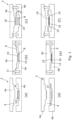
- Figures 1a to 1f illustrate the steps of a manufacturing process for manufacturing a moulded article according to an illustrative embodiment of the invention.
- the moulded article is manufactured using a compression moulding technique and thermosetting polymer.
- the invention is not limited to compression moulding and may also be applicable to other moulding methods including, for example, injection moulding.
- the manufacturing process is also applicable to the use of thermoplastic polymers.
- the mould 2 illustrated in figures 1a to 1f comprises first and second mould parts 4a, 4b which in this embodiment constitute an upper mould platen 4a and a lower mould platen 4b.
- the first and second mould parts are configured for movement between an opened configuration shown in figures 1a, 1c, 1d and 1f and a closed configuration shown in figure 1e .
- the mould 2 is shown in a partially closed configuration in figure 1b .
- a mould void 6 is provided between the first and second mould parts 4a, 4b, as illustrated in figures 1b and 1e .
- An actuator for example a hydraulic ram, is provided for moving the mould parts 4a, 4b between the open and closed configurations.
- the mould parts may for example be made of metal (for example aluminium or stainless steel), and they may include electrical heating elements for heating the mould 2 to the desired moulding temperature.
- the mould 2 may also include one or more ejector pins (not shown) for ejecting a moulded article from the mould void, as is well known in the art.
- first mould part 4a comprises a male mould platen and the second mould part 4b comprises a female mould platen that receives the male mould platen when the mould 2 is in the closed configuration.
- first mould part 4a comprises a male mould platen
- second mould part 4b comprises a female mould platen that receives the male mould platen when the mould 2 is in the closed configuration.
- the relative positions of the male and female mould platens may be reversed or the mould 2 may take some other form as is known in the art.
- the manufacturing process includes a first step, illustrated in figure 1a , in which a carrier tool 8 with one or more attached first moulding components 10 is placed in the mould cavity 6 in a predetermined position, while the mould 2 is in an open configuration.
- the carrier tool 8 is usually shaped to fit at least a part of the mould cavity and may for example consist of an elastomeric sheet, made of silicone rubber or another suitable material that is preferably chemically inert and resistant to temperatures in the range encountered in the moulding process (typically up to about 200C for thermoset polymers).
- the carrier tool 8 may also optionally have surface markings or formations to aid the correct positioning of the first moulding components 10 on the upper and/or lower surfaces of the carrier tool 8.
- An exemplary carrier tool 8 is shown in Fig. 7 and is described below.
- the first moulding components 10, which are attached to the upper and/or lower surfaces of the carrier tool 8, are made from a first moulding compound comprising a first fibre reinforced thermoset polymer.
- the first fibre reinforced polymer comprises a first thermoset polymer as a matrix material and a directional fibre reinforcing material that is embedded in the first thermoset polymer.
- directional fibre reinforcing material means a reinforcing material that includes a plurality of reinforcing fibres that extend preferentially in at least one primary reinforcement direction.
- the directional moulding compound may for example consist of a pre-impregnated composite material (a "pre-preg") that include a fibrous reinforcing material, for example in the form of a weave or parallel strands, and a thermoset polymeric matrix material that is impregnated into the reinforcing material.
- pre-preg pre-impregnated composite material
- fibrous reinforcing material for example in the form of a weave or parallel strands
- thermoset polymeric matrix material that is impregnated into the reinforcing material.
- the material may have two perpendicular primary reinforcing directions, parallel to the warp and weft.
- the directional fibre reinforcing material may be a uni-directional fibre reinforcing material, in which the reinforcing fibres extend substantially parallel to a primary reinforcement
- the first fibre reinforcing material may for example contain carbon fibres, which are preferably continuous fibres.
- the fibres may for example have a length of at least 20mm and may be much longer, for example up to 1000mm or possibly more.
- Other types of reinforcing fibre may also be used, including for example aramid, glass, metal, ultrahigh molecular weight polyethylene, or natural fibres.
- the polymer that forms the matrix of the fibre reinforced polymer may for example be a thermoset resin such as epoxy resin, or any other suitable thermoset polymer, such as polyester or vinyl ester.
- the polymer may alternatively comprise a thermoplastic polymer, for example nylon.
- the matrix material may also include one or more additives or fillers, for example silica, rubber, or carbon nanotubes.
- the first moulding components are preferably provided in a laminar form, consisting for example of sheets or tapes.
- the resin is naturally sticky, allowing the first moulding components 10 to be attached to the surface of the carrier tool 8, simply by applying pressure.
- a low tack adhesive may be used if required, which has sufficient strength to retain the first moulding components in position on the surface of the carrier tool 8, but which also allows the carrier tool 8 to be removed easily from the first moulding components 10 during subsequent steps of the moulding process.
- first moulding components 10 are positioned on the carrier tool 8 such that when the mould 2 is closed the first moulding components 10 contact the inner faces of the first and second mould parts 4a, 4b in the positions where they are required to be located in the final moulded article.
- the carrier tool 8 therefore generally has a thickness that is either approximately equal to the separation of the mould parts 4a, 4b at the location of the carrier tool, or slightly greater than the separation of the mould parts if the carrier tool is made of an elastomeric material that can be compressed.
- FIG. 1b The next step of the manufacturing process is illustrated in figure 1b .
- a first moulding process is applied in which the mould 2 is closed and pressure is applied to the upper mould part 4a as indicated by arrows 11, forcing the first and second mould parts 4a, 4b towards one another. This compresses the carrier tool 8 within the mould cavity 6, and presses the first moulding components 10 against the inner surfaces of the first and second mould parts 4a, 4b.
- the mould 2 has already been pre-heated to the desired moulding temperature, for example 150C. Therefore, when the mould 2 is closed and the first moulding components come into contact with the heated mould, the thermoset polymer starts to cure.
- the mould 2 may be held closed only for long enough for the polymer to partially cure, for example for a time of about one minute, and the mould is then opened as illustrated in figure 1c .
- the first moulding process comprises a combination of temperature T 1 , pressure P 1 and time ti, which together are sufficient to cause partial curing of the first polymer.
- first moulding components 10 Because the first moulding components 10 have been partially cured they stick to the first and second mould parts 4a, 4b, allowing the carrier tool 8 to be removed from the mould, as illustrated in figure 1c . This leaves the first moulding components 10 attached to the first and second mould parts 4a, 4b in the required positions.
- the next step of the manufacturing process is illustrated in figure 1d .
- a second moulding component 12 is placed within the mould cavity 6 between the first and second mould parts 4a, 4b.
- the second moulding component 12 may be made for example from a second moulding compound, which comprises a second polymer and a second fibre reinforcing material embedded within the second polymer.
- the second fibre reinforcing material is a non-directional fibre reinforcing material, which includes a plurality of reinforcing fibres that extend in multiple directions (for example, substantially homogeneously) within the moulding compound.
- the second fibre reinforcing may for example contain carbon fibres, which preferably have a length in the range of 1-100mm.
- the second polymer may be a thermoset resin such as epoxy, or any other suitable thermoset polymer, such as polyester or vinyl ester.
- the second thermoset polymer may be identical to the first thermoset polymer.
- the matrix material may also include one or more additives or fillers, for example silica, rubber or carbon nanotubes.
- the second moulding component is preferably provided in a laminar form, for example as a sheet moulding compound (SMC), which is shaped to fit within the mould cavity 6.
- SMC sheet moulding compound
- HexMC M77 sheet moulding compound from Hexcel.
- auxiliary components for example fittings made of metal or other materials
- the auxiliary components may be positioned within retaining formations in the upper and/or lower mould parts 4a, 4b before the second moulding component 12 is introduced into the mould cavity 6, so that they are integrated into the moulded article.
- the mould 2 is closed and pressure is applied to the first mould part 4a, so that it is pressed towards the second mould part 4b.
- the second moulding component 12 is heated and shaped by the pressing operation, so that it fills and takes the shape of the mould cavity 6.
- first moulding components 10 are attached to the first and second mould parts 4a, 4b, they remain fixed in the required positions and are not disturbed by any movement of the second moulding compound during the pressing process.
- the mould 2 is maintained in the closed configuration for sufficient time to allow the first and second polymers to cure completely, and to allow cross linking between the first and second polymers, so that the directional moulding components 10 are bonded to the surfaces of the non-directional moulding component 12, thereby forming the moulded article 14.
- the mould 2 is opened and the moulded article 14 is removed from the mould. If necessary, the moulded article may be finished for example by removing any flashing that has formed.
- the moulded article 14 includes a main body component 16 that is made of sheet moulding compound, and directional reinforcing elements 18 on one or both sides of the moulded article 14, to provide increased strength and stiffness to the moulded article 14 in selected locations.
- reinforcing elements 18 are provided on both sides of the main body 16 of the moulded article 14. It should be noted that alternatively a reinforcing element or elements may be provided on only one side of the main body 16, according to the strength and stiffness requirements of the moulded article 14.
- a first moulding component 10 may be attached to only one side of the carrier tool 8 before the carrier tool 8 is placed in the mould cavity 6. This may be either the upper side or the lower side of the carrier tool 8. After attaching the first moulding component to the carrier tool 8, the manufacturing process proceeds as described above.
- the first moulding component is only partially cured in the first moulding process.
- the first moulding process may comprise a combination of temperature T 1 , pressure P 1 and time ti, which together are sufficient to fully cure the first polymer.
- the time t 1 and/or the temperature T 1 may be increased to allow full curing. This will ensure that there is no movement of the reinforcing fibres in the first moulding component during subsequent steps of the manufacturing process, for example during the second moulding process, when the second moulding component is formed and cured.
- the bond between the first and second moulding components may be less strong than when the first moulding component is only partially cured in the first moulding process.
- the bond between the first and second moulding components may still be entirely adequate. Therefore, for some applications, this modified process will be suitable and may provide advantages over the manufacturing process in which the first moulding component is only partially cured in the first moulding process.
- thermoset polymers are used in the first and second moulding compounds.
- thermoplastic polymers may be used in the first and second moulding compounds.
- the manufacturing process using thermoplastic polymers is substantially as described above, except that heating of the first and second moulding compounds must be done differently.
- the first moulding compound with the directional fibre reinforcing material will be applied to the carrier tool.
- the carrier tool and the applied first moulding compound are heated to above the meting temperature of the first polymer, and are then placed in a cold mould.
- the mould is then closed and the first moulding compound is allowed to freeze, thus forming the first moulding, which adheres to an inner surface of the mould.
- the mould is then opened and the carrier tool is removed, leaving the formed first moulding component adhered to the mould.
- the second moulding compound for example in the form of sheet moulding compound, is then heated to above the meting temperature of the second polymer, and the heated introduced into the mould second moulding compound is placed in the cold mould. Again the mould is closed, which forms the second moulding compound into the required shape to form the second moulding component and adheres the second moulding component to the first moulding component.
- the second moulding compound is allowed to freeze, thus completing the moulded article. Finally, the mould is opened and the moulded article is removed from the mould.
- the moulded article has a main body component that is made of sheet moulding compound, and directional reinforcing elements on one or both sides of the moulded article 14, that provide increased strength and stiffness to the moulded article 14 in selected locations.
- the invention is also applicable to the manufacture of moulded articles using an injection moulding process.
- the initial steps may be substantially as described above in relation to figures 1a to 1c .
- the mould is closed and an injectable second moulding compound is then injected into the mould to fill the mould cavity.
- the thermoset polymers of the first and second moulding compounds then cure and cross-link, forming the finished moulded article that has a main body made of the second moulding compound and one or more reinforcing elements applied to a surface of the main body.
- the polymers are allowed to cool and set before the moulded article is removed from the mould.
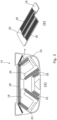
- Figures 2 and 3 illustrate one example of a moulded article 14 made by the method described above.
- the moulded article 14 comprises a tonneau cover for covering the stowed roof of a convertible car.
- Figure 2a illustrates a prior art tonneau cover A made of magnesium alloy, which has numerous ribs B on its lower surface for strength and stiffness (the cover is shown upside down).
- Figures 2b, 2c , 3a and 3b illustrate an equivalent moulded tonneau cover 14 made by the method described above.
- the moulded tonneau cover 14 includes a main body 16 and a plurality of reinforcing elements 18, which are attached to the lower surface of the main body 16 (the tonneau cover 14 is shown upside down).
- the main body 16 is made from sheet moulding compound and includes a non-directional carbon fibre reinforcing material, and the reinforcing elements 18 comprise uni-directional carbon fibre reinforcing fibres in a polymeric matrix.
- the reinforcing elements 18 are bonded to the main body 16 in positions where maximum strength and stiffness are required, and are not provided in locations that do not require such a high level of strength and stiffness. This ensures that the cover 14 has the required performance characteristics, and remains of low weight and relatively low cost.
- the main body 16 is not flat, but instead includes a number of formations 20 in the form of strengthening beads that extend perpendicular to the plane of the cover 14.
- the formations 20 are designed to further increase the strength and stiffness of the cover 14.
- the cover 14 also includes a number of auxiliary components, e.g. metal fasteners 22, which may be used for fastening the cover to the body of a car.
- auxiliary components e.g. metal fasteners 22, which may be used for fastening the cover to the body of a car.
- One of the fasteners 22 is shown in a cut away portion of the cover in figure 2c .
- the fasteners 22 are moulded into the cover 14 during the manufacturing process, as described above in relation to figure 1d .
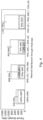
- FIG 4 The results of tests to measure the flexure strength of moulded articles made by the process described above are illustrated in figure 4 .
- Flat samples of the material were tested using a three point bending test.
- the first column illustrates for comparative purposes the test results for a sample comprising 100% sheet moulding compound (SMC), whereas the second, third and fourth columns show the flexure strength for three samples of material made by the described process, comprising a main body of SMC and one or two layers of uni-directional carbon fibre reinforcing material (UD) applied to one or both sides of the SMC main body.
- SMC sheet moulding compound
- the comparative sample made of 100% SMC had a strength of 536MPa
- a sample comprising 70% SMC and 30% UD in a double ply layer on the upper surface of the SMC had a strength of 868MPa
- a sample comprising 70% SMC and 30% UD in a two ply layer on the lower surface of the SMC had a strength of 945MPa
- a sample comprising 70% SMC and 2 single ply layers of UD on the upper and lower faces of the SMC had a strength of 1307MPa. It appears from these tests that the symmetrical arrangement shown in column 4 is by far the best solution, both in performance and consistency.
- Figure 5 illustrates the steps of a process for manufacturing moulded articles according to an embodiment of the invention, which may optionally be fully or partially automated.
- the first moulding component comprising a directional fibre reinforcement (indicated as "UD") is deposited on the carrier tool (indicated as "cork”).
- the carrier tool is then loaded at step 32 into the mould, which is closed at step 34.
- a first moulding process comprising a first combination of time, temperature and pressure (t 1 , T 1 , P 1 ) is applied at step 36. This partially cures the first moulding component (indicated as "UD B-staging”); step 38.
- the mould is opened at step 40 and the carrier tool ("cork") is unloaded from the mould: step 42.
- the carrier tool is cleaned and allowed to cool, ready for re-use: steps 44,46.
- auxiliary components such as metal inserts (if required) may be placed in the mould in the appropriate locations: step 48.
- the second moulding component that comprises a non-directional fibre reinforcing material, for example SMC is prepared by cutting the second moulded component to the desired shape to match the shape of the mould: step 50. The second moulding component is then weighed for accuracy and stacked ready for use: steps 52, 54.
- step 56 the second moulding component is loaded into the mould, and the mould is then closed: step 58.
- a second moulding process comprising a second combination of time, temperature and pressure (t 2 , T 2 , P 2 ) is applied at step 60. This cures the second moulding component and completes curing of the first moulding component, and causes cross-linking between the first and second moulding components to form the finished moulded article: step 62.
- the mould is opened at step 64 and the moulded article is released at step 66.
- the moulded article may then undergo finishing operations including for example trimming away excess flash, at step 68.
- the mould is then prepared for another moulding operation by applying a release agent at step 70 and allowing the release agent to cure at step 72. This process may then be repeated as necessary.
- Figure 6 is an isometric view of a moulded article 80 with a unidirectional fibre reinforcing element 82
- Figure 7 is an isometric view of a carrier tool 84 carrying the unidirectional fibre reinforcing element 82.
- the unidirectional fibre reinforcing element 82 is made of a first moulding compound that comprises a first polymer and a first fibre reinforcing material embedded within the first polymer.
- the first fibre reinforcing material is a directional fibre reinforcing material that includes, in this case, a plurality of continuous reinforcing fibres that extend preferentially in at least one primary reinforcement direction D within the first moulding compound.
- the moulded article 80 comprises a main body 84 that is made of a second moulding compound comprising a second polymer and a second fibre reinforcing material embedded within the second polymer.
- the second fibre reinforcing material is a non-directional fibre reinforcing material that includes a plurality of reinforcing fibres that extend in multiple directions within the second moulding compound.
- the moulded article 80 is a load-bearing frame structure that includes an upper element 86, a lower element 88 and two transverse elements 90, 92 that interconnect the upper element 86 and the lower element 88.
- the upper element 86 has the greatest load bearing requirement and is subjected in use to tensile forces acting in the direction of the longitudinal axis of the upper element.
- the reinforcing fibres of the unidirectional fibre reinforcing element 82 are orientated such that the primary reinforcement direction D extends parallel to the longitudinal axis of the upper element 86, in order to increase the strength and stiffness of the upper element 86 in the load bearing direction.
- the carrier tool 84 mimics the shape of the upper element 86 of the moulded article 80.
- the unidirectional fibre reinforcing element 82 is attached to the surface of the carrier tool 84 in the position where it is to be placed on the surface of the moulded article. This ensures that when the carrier tool 84 and the attached unidirectional fibre reinforcing element 82 are placed in the mould for the first moulding process, the unidirectional fibre reinforcing element 82 is located in precisely the right position within the mould, so that it is correctly located on the surface of the moulded article 80.
- the carrier tool 84 is made, for example, from silicone rubber.
Landscapes
- Engineering & Computer Science (AREA)
- Mechanical Engineering (AREA)
- Chemical & Material Sciences (AREA)
- Composite Materials (AREA)
- Manufacturing & Machinery (AREA)
- Robotics (AREA)
- Textile Engineering (AREA)
- Casting Or Compression Moulding Of Plastics Or The Like (AREA)
Claims (13)
- Ein Verfahren zum Herstellen eines Formartikels (14) aus einer ersten und einer zweiten Formmasse, wobei:die erste Formmasse ein erstes Polymer und ein innerhalb des ersten Polymers eingebettetes erstes Faserverstärkungsmaterial beinhaltet, wobei das erste Faserverstärkungsmaterial ein gerichtetes Faserverstärkungsmaterial ist, das eine Vielzahl von Verstärkungsfasern umfasst, die sich vorzugsweise in mindestens einer primären Verstärkungsrichtung innerhalb der ersten Formmasse erstrecken, unddie zweite Formmasse ein zweites Polymer und ein innerhalb des zweiten Polymers eingebettetes zweites Faserverstärkungsmaterial beinhaltet, wobei das zweite Faserverstärkungsmaterial ein ungerichtetes Faserverstärkungsmaterial ist, das eine Vielzahl von Verstärkungsfasern umfasst, die sich in mehreren Richtungen innerhalb der zweiten Formmasse erstrecken, wobei das Verfahren Folgendes beinhaltet:Anbringen einer ersten Formkomponente (10) an einem Trägerwerkzeug (8), wobei die erste Formkomponente (10) die erste Formmasse beinhaltet,Platzieren des Trägerwerkzeugs (8) und der angebrachten ersten Formkomponente (10) in einer Form (2), die einen ersten und einen zweiten Formteil (4a, 4b) beinhaltet, die in eine geöffnete und eine geschlossene Konfiguration konfigurierbar sind, wobei in der geschlossenen Konfiguration zwischen dem ersten und dem zweiten Formteil eine Formkavität (6) definiert ist,Schließen der Form und Anwenden eines ersten Formprozesses, sodass die erste Formkomponente (10) an dem ersten Formteil (4a) haftet,Öffnen der Form und Entfernen des Trägerwerkzeugs (8), während die erste Formkomponente (10) an dem ersten Formteil (4a) haften bleibt,entweder (i) Platzieren einer zweiten Formkomponente (12) in der Form, wobei die zweite Formkomponente die zweite Formmasse beinhaltet, dann Schließen der Form, oder (ii) Schließen der Form, dann Einspritzen einer zweiten Formkomponente (12) in die Form, wobei die zweite Formkomponente die zweite Formmasse beinhaltet, Anwenden eines zweiten Formprozesses, um die erste und die zweite Formkomponente (10, 12) an die Formkavität (6) anzupassen und die erste Formkomponente an die zweite Formkomponente zu binden, um einen Formartikel (14) zu bilden, undÖffnen der Form und Entfernen des Formartikels (14).
- Verfahren zum Herstellen eines Formartikels (14) gemäß Anspruch 1, beinhaltend:Anbringen von ersten Formkomponenten (10) an gegenüberliegenden Seiten des Trägerwerkzeugs (8), wobei jede der ersten Formkomponenten die erste Formmasse beinhaltet,Platzieren des Trägerwerkzeugs (8) und der angebrachten ersten Formkomponenten (10) in der Form (2), Schließen der Form und Anwenden des ersten Formprozesses, sodass mindestens eine erste Formkomponente (10) an dem ersten Formteil (4a) haftet und mindestens eine erste Formkomponente (10) an dem zweiten Formteil (4b) haftet, Öffnen der Form (2) und Entfernen des Trägerwerkzeugs (8), während die ersten Formkomponenten (10) an dem ersten und dem zweiten Formteil (4a, 4b) haften bleiben, undentweder (i) Platzieren der zweiten Formkomponente (12) in der Form, dann Schließen der Form, oder (ii) Schließen der Form, dann Einspritzen einer zweiten Formkomponente (12) in die Form, wobei die zweite Formkomponente die zweite Formmasse beinhaltet,Anwenden des zweiten Formprozesses, um die ersten Formkomponenten und die zweite Formkomponente (10, 12) an die Formkavität anzupassen und die ersten Formkomponenten (10) an gegenüberliegende Seiten der zweiten Formkomponente (12) zu binden, um einen Formartikel (14) zu bilden, undÖffnen der Form (2) und Entfernen des Formartikels (14).
- Verfahren zum Herstellen eines Formartikels gemäß einem der vorhergehenden Ansprüche, wobei die erste Formkomponente (10) im Wesentlichen laminar ist.
- Verfahren zum Herstellen eines Formartikels gemäß einem der vorhergehenden Ansprüche, wobei die erste Formmasse (10) ein einseitig gerichtetes Faserverstärkungsmaterial umfasst, das eine Vielzahl von Verstärkungsfasern beinhaltet, die sich im Wesentlichen parallel zu einer primären Verstärkungsrichtung erstrecken.
- Verfahren zum Herstellen eines Formartikels gemäß einem der vorhergehenden Ansprüche, wobei das erste Faserverstärkungsmaterial kontinuierliche Verstärkungsfasern mit einer Länge von mindestens 50 mm umfasst.
- Verfahren zum Herstellen eines Formartikels gemäß einem der vorhergehenden Ansprüche, wobei der Formartikel (14) unter Verwendung eines Formpressprozesses gebildet wird.
- Verfahren zum Herstellen eines Formartikels gemäß Anspruch 6, wobei die zweite Formkomponente (12) im Wesentlichen laminar ist und/oder eine Sheet Moulding Compound beinhaltet.
- Verfahren zum Herstellen eines Formartikels gemäß einem der Ansprüche 1 bis 5, wobei der Formartikel unter Verwendung eines Spritzgießprozesses gebildet wird und wobei optional die zweite Formkomponente (12) eine einspritzbare Formmasse beinhaltet.
- Verfahren zum Herstellen eines Formartikels gemäß einem der vorhergehenden Ansprüche, wobei die zweite Formmasse Verstärkungsfasern mit einer Faserlänge im Bereich von 1-100 mm umfasst.
- Verfahren zum Herstellen eines Formartikels gemäß einem der vorhergehenden Ansprüche, wobei das erste und das zweite Polymer duroplastische Polymere beinhalten und wobei optional:der erste Formprozess die erste Formmasse teilweise aushärtet und der zweite Formprozess die erste und die zweite Formmasse vollständig aushärtet oderder erste Formprozess die erste Formmasse vollständig aushärtet und der zweite Formprozess die zweite Formmasse vollständig aushärtet.
- Verfahren zum Herstellen eines Formartikels gemäß einem der Ansprüche 1 bis 9, wobei das erste und das zweite Polymer thermoplastische Polymere beinhalten, wobei das Verfahren optional das Erwärmen des ersten und des zweiten Polymers vor dem Platzieren des ersten und des zweiten Polymers in der Form umfasst.
- Verfahren zum Herstellen eines Formartikels gemäß einem der vorhergehenden Ansprüche, wobei der erste Formprozess eine erste Kombination aus Temperatur T1, Druck P1 und Zeit t1 beinhaltet und der zweite Formprozess eine zweite Kombination aus Temperatur T2, Druck P2 und Zeit tz beinhaltet und wobei optional:T1 = T2 und/oderP1 = P2 und/odert2 = m.t1, wobei m im Bereich von 1,5-10, vorzugsweise 2-5, ist.
- Verfahren zum Herstellen eines Formartikels gemäß einem der vorhergehenden Ansprüche, wobei das Trägerwerkzeug (8) ein elastomeres Material beinhaltet und wobei optional:
das Trägerwerkzeug (8) eine Dicke aufweist, die gleich oder größer als die Höhe der Formkavität (6) an der Stelle des Trägerwerkzeugs ist, sodass das Trägerwerkzeug innerhalb der Formkavität komprimiert wird, wenn sich die Form in einer geschlossenen Konfiguration befindet.
Applications Claiming Priority (2)
| Application Number | Priority Date | Filing Date | Title |
|---|---|---|---|
| GB1715577.1A GB2566752B (en) | 2017-09-26 | 2017-09-26 | Method of manufacturing a moulded article |
| PCT/GB2018/052705 WO2019063980A1 (en) | 2017-09-26 | 2018-09-24 | METHOD FOR MANUFACTURING MOLDED ARTICLE AND MOLDED ARTICLE THUS OBTAINED |
Publications (2)
| Publication Number | Publication Date |
|---|---|
| EP3687776A1 EP3687776A1 (de) | 2020-08-05 |
| EP3687776B1 true EP3687776B1 (de) | 2023-06-07 |
Family
ID=60244355
Family Applications (1)
| Application Number | Title | Priority Date | Filing Date |
|---|---|---|---|
| EP18779000.1A Active EP3687776B1 (de) | 2017-09-26 | 2018-09-24 | Verfahren zur herstellung eines formartikels und dadurch hergestellter formartikel |
Country Status (4)
| Country | Link |
|---|---|
| US (1) | US11396140B2 (de) |
| EP (1) | EP3687776B1 (de) |
| GB (1) | GB2566752B (de) |
| WO (1) | WO2019063980A1 (de) |
Families Citing this family (3)
| Publication number | Priority date | Publication date | Assignee | Title |
|---|---|---|---|---|
| CA3101061A1 (en) | 2018-06-20 | 2019-12-26 | Digital Alloys Incorporated | Multi-diameter wire feeder |
| CN114986937B (zh) * | 2022-07-18 | 2022-10-25 | 中南大学 | 热固性复合材料-热塑性材料复合构件的快速成形方法 |
| WO2024058007A1 (ja) * | 2022-09-14 | 2024-03-21 | 東洋紡エムシー株式会社 | 衝撃吸収部材の製造方法 |
Citations (3)
| Publication number | Priority date | Publication date | Assignee | Title |
|---|---|---|---|---|
| DE3843535A1 (de) * | 1988-12-23 | 1990-06-28 | Elastogran Kunststoff Technik | Verwendung von halbzeugen aus faserverstaerktem kunststoff fuer die herstellung von formkoerpern, insbesondere stossfaengertraeger |
| WO2000043191A1 (en) * | 1999-01-22 | 2000-07-27 | Ppg Industries Ohio, Inc. | Glass fiber mats, laminates reinforced with the same and methods for making the same |
| WO2012072405A1 (de) * | 2010-12-02 | 2012-06-07 | Toho Tenax Europe Gmbh | Unidirektionale faserbänder aufweisender faservorformling aus verstärkungsfaserbündeln und verbundwerkstoff-bauteil |
Family Cites Families (29)
| Publication number | Priority date | Publication date | Assignee | Title |
|---|---|---|---|---|
| GB1052773A (en) * | 1964-09-23 | 1966-12-30 | Air Logistics Corp | Method of forming reinforced three-dimensioned plastic article from plastic sheet stock and articles produced thereby |
| DE1704194A1 (de) * | 1967-02-07 | 1971-03-04 | Meyer Fa Rudolf | Verfahren zum Herstellen von Formkoerpern |
| AU534526B2 (en) * | 1978-01-19 | 1984-02-02 | Vinyl Clad Pty. Ltd. | Label applicator |
| DE3329230C2 (de) * | 1983-08-12 | 1986-07-24 | Fritzmeier AG, Oberentfelden | Verfahren zur Herstellung eines Segel- bzw. Wellenreitbretts |
| GB8629267D0 (en) * | 1986-12-08 | 1987-02-11 | Westland Plc | Laying pre-impregnated fibre reinforced material on surface |
| US4891176A (en) * | 1988-05-31 | 1990-01-02 | Auto-Fab, Inc. | Resin transfer molding process |
| US5139405A (en) * | 1988-05-31 | 1992-08-18 | Phillips Petroleum Company | Composite with integrally molded rib and manufacture thereof |
| DE3912242A1 (de) * | 1989-04-14 | 1990-10-18 | Gurit Essex Ag | Vorrichtungen zum maschinellen aufbringen von flexiblen, einseitig klebbaren schichtkoerpern auf werkstuecke und verwendung derselben |
| US5209880A (en) * | 1990-07-27 | 1993-05-11 | Neo-Ex Lab. Inc. | Process for making a sun visor by molding a pair of shells and bonding them together |
| FR2693146B1 (fr) * | 1992-07-02 | 1994-08-19 | Snecma | Installation pour la fabrication par drapage de structures multicouches en matériaux composites. |
| CA2101300C (en) * | 1992-08-04 | 1998-07-28 | Emery I. Valyi | Process and apparatus for forming a color coated article |
| US5527173A (en) * | 1994-04-18 | 1996-06-18 | Husky Injection Molding Systems Ltd. | Apparatus for producing plastic articles with inserts |
| FR2791919B1 (fr) * | 1999-04-12 | 2001-06-01 | Plastic Omnium Cie | Procede de realisation d'une piece en matiere plastique renforcee par surmoulage d'une feuille de renforcement, dispositif pour la mise en oeuvre de ce procede et chaine de fabrication comprenant ce dispositif |
| DE60019767T2 (de) * | 1999-08-20 | 2006-03-09 | Fountain Technologies B.V. I.O. | Verfahren und vorrichtung zum herstellen von gegenständen und zum einbringen von etiketten in eine form |
| US6464922B1 (en) * | 1999-12-10 | 2002-10-15 | Autotec, Inc. | Insertion device for plastic molding |
| IT1315033B1 (it) * | 2000-09-05 | 2003-01-27 | G M P Poliuretani Spa | Dispositivo per la produzione di manufatti poliuretanici, relativoprocedimento e manufatti poliuretanici cosi'ottenuti. |
| US20050287241A1 (en) * | 2004-06-23 | 2005-12-29 | Rudolph Kirk W | In-mold labeling apparatus and method |
| JP5712857B2 (ja) * | 2011-08-09 | 2015-05-07 | トヨタ自動車株式会社 | 繊維強化樹脂材の製造方法 |
| FR2987777B1 (fr) * | 2012-03-09 | 2014-05-02 | Faurecia Automotive Ind | Procede de fabrication d'une piece d'equipement de vehicule automobile et piece d'equipement associee |
| MY180734A (en) * | 2013-07-12 | 2020-12-08 | Honda Motor Co Ltd | Method for affixing decorative object and decorative object |
| JP6489399B2 (ja) * | 2014-06-19 | 2019-03-27 | キョーラク株式会社 | 樹脂製サンドイッチパネル |
| DE102014215964A1 (de) * | 2014-08-12 | 2016-02-18 | Bayerische Motoren Werke Aktiengesellschaft | Verfahren zum Herstellen eines mit einem unidirektionalen Fasergelege versehenen SMC-Bauteiles |
| JP2016203419A (ja) * | 2015-04-17 | 2016-12-08 | 日立化成株式会社 | 成形体の製造方法ならびに射出圧縮成形体 |
| DE102015113688A1 (de) * | 2015-08-18 | 2017-02-23 | Airbus Operations Gmbh | Verfahren zur Herstellung eines Bauteils |
| CN109843535B (zh) * | 2016-06-17 | 2021-10-08 | 本田技研工业株式会社 | 热塑性树脂复合材料的制造方法及制造装置 |
| WO2018125626A1 (en) * | 2016-12-26 | 2018-07-05 | Continental Structural Plastics, Inc. | Combined primary fiber and carbon fiber component for production of reinforced polymeric articles |
| AT521642B1 (de) * | 2018-09-13 | 2021-08-15 | Blue Danube Robotics Gmbh | Verfahren zur Herstellung eines Polsters |
| JP7135703B2 (ja) * | 2018-10-16 | 2022-09-13 | セイコーエプソン株式会社 | 繊維成形物および繊維成形物の製造方法 |
| US11584044B2 (en) * | 2019-08-29 | 2023-02-21 | GM Global Technology Operations LLC | Methods of forming near-net fiber reinforced thermoplastic composite components |
-
2017
- 2017-09-26 GB GB1715577.1A patent/GB2566752B/en not_active Expired - Fee Related
-
2018
- 2018-09-24 US US16/650,749 patent/US11396140B2/en active Active
- 2018-09-24 WO PCT/GB2018/052705 patent/WO2019063980A1/en not_active Ceased
- 2018-09-24 EP EP18779000.1A patent/EP3687776B1/de active Active
Patent Citations (3)
| Publication number | Priority date | Publication date | Assignee | Title |
|---|---|---|---|---|
| DE3843535A1 (de) * | 1988-12-23 | 1990-06-28 | Elastogran Kunststoff Technik | Verwendung von halbzeugen aus faserverstaerktem kunststoff fuer die herstellung von formkoerpern, insbesondere stossfaengertraeger |
| WO2000043191A1 (en) * | 1999-01-22 | 2000-07-27 | Ppg Industries Ohio, Inc. | Glass fiber mats, laminates reinforced with the same and methods for making the same |
| WO2012072405A1 (de) * | 2010-12-02 | 2012-06-07 | Toho Tenax Europe Gmbh | Unidirektionale faserbänder aufweisender faservorformling aus verstärkungsfaserbündeln und verbundwerkstoff-bauteil |
Also Published As
| Publication number | Publication date |
|---|---|
| US20210197425A1 (en) | 2021-07-01 |
| GB2566752B (en) | 2020-09-16 |
| GB201715577D0 (en) | 2017-11-08 |
| GB2566752A (en) | 2019-03-27 |
| US11396140B2 (en) | 2022-07-26 |
| EP3687776A1 (de) | 2020-08-05 |
| WO2019063980A1 (en) | 2019-04-04 |
Similar Documents
| Publication | Publication Date | Title |
|---|---|---|
| US10112352B2 (en) | Press moulding method | |
| US12350896B2 (en) | Structural reinforcements | |
| EP2512780B1 (de) | Verfahren zur herstellung einer harzmatte mit kernen | |
| RU2438866C2 (ru) | Способ изготовления конструктивного компонента из армированного волокнами композиционного материала, предназначенного для авиакосмической отрасли, формовочный стержень для изготовления такого компонента и конструктивный компонент, полученный этим способом и/или посредством этого стержня | |
| KR100902962B1 (ko) | 구조용 부재를 형성하는 방법 및 장치 | |
| US7897004B2 (en) | Method for fabricating stringers | |
| EP2637849B1 (de) | Verfahren zur herstellung eines bauteils eines flugzeuges | |
| US11396140B2 (en) | Method of manufacturing a moulded article | |
| EP3677397B1 (de) | Verbundteil | |
| CN107428095A (zh) | 拉挤件及其制造方法 | |
| US20160176085A1 (en) | Method and system for producing composite structures | |
| CN106864769B (zh) | 使用铰接式芯轴的复合飞机制造工具和方法 | |
| EP3769948B1 (de) | Verbundstruktur mit thermoplastischem füllmaterial | |
| CN105563817B (zh) | 生产纤维增强树脂模塑构件的方法和连接构件的方法 | |
| CN109514772B (zh) | 具有各向异性的热性能的模具工具 | |
| Rajpurohit | Fiber Reinforced Composites: Advances in Manufacturing Techniques | |
| US10786942B2 (en) | Process for the production of a tubular hybrid molding and tubular hybrid molding | |
| EP2781345B1 (de) | Verfahren und System zur Herstellung von Verbundstrukturen | |
| JPH01176548A (ja) | ハニカムコア複合材の成形法 | |
| JP2006218782A (ja) | 発泡体コアを有するfrp製成形品の成形方法 | |
| JPH047111A (ja) | 繊維強化プラスチック製中空体の製造方法 | |
| ITMI20131462A1 (it) | Metodo di realizzazione di un attrezzo per scivolare sulla neve, ed un attrezzo realizzato secondo tale metodo | |
| EP3558615A1 (de) | Verbesserungen an oder im zusammenhang mit dreidimensionalen formteilen |
Legal Events
| Date | Code | Title | Description |
|---|---|---|---|
| STAA | Information on the status of an ep patent application or granted ep patent |
Free format text: STATUS: UNKNOWN |
|
| STAA | Information on the status of an ep patent application or granted ep patent |
Free format text: STATUS: THE INTERNATIONAL PUBLICATION HAS BEEN MADE |
|
| PUAI | Public reference made under article 153(3) epc to a published international application that has entered the european phase |
Free format text: ORIGINAL CODE: 0009012 |
|
| STAA | Information on the status of an ep patent application or granted ep patent |
Free format text: STATUS: REQUEST FOR EXAMINATION WAS MADE |
|
| 17P | Request for examination filed |
Effective date: 20200327 |
|
| AK | Designated contracting states |
Kind code of ref document: A1 Designated state(s): AL AT BE BG CH CY CZ DE DK EE ES FI FR GB GR HR HU IE IS IT LI LT LU LV MC MK MT NL NO PL PT RO RS SE SI SK SM TR |
|
| AX | Request for extension of the european patent |
Extension state: BA ME |
|
| DAV | Request for validation of the european patent (deleted) | ||
| DAX | Request for extension of the european patent (deleted) | ||
| STAA | Information on the status of an ep patent application or granted ep patent |
Free format text: STATUS: EXAMINATION IS IN PROGRESS |
|
| 17Q | First examination report despatched |
Effective date: 20220315 |
|
| RIC1 | Information provided on ipc code assigned before grant |
Ipc: B29C 43/34 20060101ALI20220714BHEP Ipc: B29C 43/20 20060101ALI20220714BHEP Ipc: B29C 70/34 20060101ALI20220714BHEP Ipc: B29C 45/14 20060101ALI20220714BHEP Ipc: B29C 45/00 20060101ALI20220714BHEP Ipc: B29C 70/08 20060101AFI20220714BHEP |
|
| GRAP | Despatch of communication of intention to grant a patent |
Free format text: ORIGINAL CODE: EPIDOSNIGR1 |
|
| STAA | Information on the status of an ep patent application or granted ep patent |
Free format text: STATUS: GRANT OF PATENT IS INTENDED |
|
| INTG | Intention to grant announced |
Effective date: 20230127 |
|
| GRAS | Grant fee paid |
Free format text: ORIGINAL CODE: EPIDOSNIGR3 |
|
| GRAA | (expected) grant |
Free format text: ORIGINAL CODE: 0009210 |
|
| STAA | Information on the status of an ep patent application or granted ep patent |
Free format text: STATUS: THE PATENT HAS BEEN GRANTED |
|
| AK | Designated contracting states |
Kind code of ref document: B1 Designated state(s): AL AT BE BG CH CY CZ DE DK EE ES FI FR GB GR HR HU IE IS IT LI LT LU LV MC MK MT NL NO PL PT RO RS SE SI SK SM TR |
|
| REG | Reference to a national code |
Ref country code: GB Ref legal event code: FG4D |
|
| REG | Reference to a national code |
Ref country code: CH Ref legal event code: EP Ref country code: AT Ref legal event code: REF Ref document number: 1573776 Country of ref document: AT Kind code of ref document: T Effective date: 20230615 Ref country code: DE Ref legal event code: R096 Ref document number: 602018051214 Country of ref document: DE |
|
| REG | Reference to a national code |
Ref country code: LT Ref legal event code: MG9D |
|
| REG | Reference to a national code |
Ref country code: NL Ref legal event code: MP Effective date: 20230607 |
|
| PG25 | Lapsed in a contracting state [announced via postgrant information from national office to epo] |
Ref country code: SE Free format text: LAPSE BECAUSE OF FAILURE TO SUBMIT A TRANSLATION OF THE DESCRIPTION OR TO PAY THE FEE WITHIN THE PRESCRIBED TIME-LIMIT Effective date: 20230607 Ref country code: NO Free format text: LAPSE BECAUSE OF FAILURE TO SUBMIT A TRANSLATION OF THE DESCRIPTION OR TO PAY THE FEE WITHIN THE PRESCRIBED TIME-LIMIT Effective date: 20230907 Ref country code: ES Free format text: LAPSE BECAUSE OF FAILURE TO SUBMIT A TRANSLATION OF THE DESCRIPTION OR TO PAY THE FEE WITHIN THE PRESCRIBED TIME-LIMIT Effective date: 20230607 |
|
| REG | Reference to a national code |
Ref country code: AT Ref legal event code: MK05 Ref document number: 1573776 Country of ref document: AT Kind code of ref document: T Effective date: 20230607 |
|
| PG25 | Lapsed in a contracting state [announced via postgrant information from national office to epo] |
Ref country code: RS Free format text: LAPSE BECAUSE OF FAILURE TO SUBMIT A TRANSLATION OF THE DESCRIPTION OR TO PAY THE FEE WITHIN THE PRESCRIBED TIME-LIMIT Effective date: 20230607 Ref country code: NL Free format text: LAPSE BECAUSE OF FAILURE TO SUBMIT A TRANSLATION OF THE DESCRIPTION OR TO PAY THE FEE WITHIN THE PRESCRIBED TIME-LIMIT Effective date: 20230607 Ref country code: LV Free format text: LAPSE BECAUSE OF FAILURE TO SUBMIT A TRANSLATION OF THE DESCRIPTION OR TO PAY THE FEE WITHIN THE PRESCRIBED TIME-LIMIT Effective date: 20230607 Ref country code: LT Free format text: LAPSE BECAUSE OF FAILURE TO SUBMIT A TRANSLATION OF THE DESCRIPTION OR TO PAY THE FEE WITHIN THE PRESCRIBED TIME-LIMIT Effective date: 20230607 Ref country code: HR Free format text: LAPSE BECAUSE OF FAILURE TO SUBMIT A TRANSLATION OF THE DESCRIPTION OR TO PAY THE FEE WITHIN THE PRESCRIBED TIME-LIMIT Effective date: 20230607 Ref country code: GR Free format text: LAPSE BECAUSE OF FAILURE TO SUBMIT A TRANSLATION OF THE DESCRIPTION OR TO PAY THE FEE WITHIN THE PRESCRIBED TIME-LIMIT Effective date: 20230908 |
|
| PGFP | Annual fee paid to national office [announced via postgrant information from national office to epo] |
Ref country code: FR Payment date: 20230921 Year of fee payment: 6 Ref country code: DE Payment date: 20230928 Year of fee payment: 6 |
|
| PG25 | Lapsed in a contracting state [announced via postgrant information from national office to epo] |
Ref country code: FI Free format text: LAPSE BECAUSE OF FAILURE TO SUBMIT A TRANSLATION OF THE DESCRIPTION OR TO PAY THE FEE WITHIN THE PRESCRIBED TIME-LIMIT Effective date: 20230607 |
|
| PG25 | Lapsed in a contracting state [announced via postgrant information from national office to epo] |
Ref country code: SK Free format text: LAPSE BECAUSE OF FAILURE TO SUBMIT A TRANSLATION OF THE DESCRIPTION OR TO PAY THE FEE WITHIN THE PRESCRIBED TIME-LIMIT Effective date: 20230607 |
|
| PG25 | Lapsed in a contracting state [announced via postgrant information from national office to epo] |
Ref country code: IS Free format text: LAPSE BECAUSE OF FAILURE TO SUBMIT A TRANSLATION OF THE DESCRIPTION OR TO PAY THE FEE WITHIN THE PRESCRIBED TIME-LIMIT Effective date: 20231007 |
|
| PG25 | Lapsed in a contracting state [announced via postgrant information from national office to epo] |
Ref country code: SM Free format text: LAPSE BECAUSE OF FAILURE TO SUBMIT A TRANSLATION OF THE DESCRIPTION OR TO PAY THE FEE WITHIN THE PRESCRIBED TIME-LIMIT Effective date: 20230607 Ref country code: SK Free format text: LAPSE BECAUSE OF FAILURE TO SUBMIT A TRANSLATION OF THE DESCRIPTION OR TO PAY THE FEE WITHIN THE PRESCRIBED TIME-LIMIT Effective date: 20230607 Ref country code: RO Free format text: LAPSE BECAUSE OF FAILURE TO SUBMIT A TRANSLATION OF THE DESCRIPTION OR TO PAY THE FEE WITHIN THE PRESCRIBED TIME-LIMIT Effective date: 20230607 Ref country code: PT Free format text: LAPSE BECAUSE OF FAILURE TO SUBMIT A TRANSLATION OF THE DESCRIPTION OR TO PAY THE FEE WITHIN THE PRESCRIBED TIME-LIMIT Effective date: 20231009 Ref country code: IS Free format text: LAPSE BECAUSE OF FAILURE TO SUBMIT A TRANSLATION OF THE DESCRIPTION OR TO PAY THE FEE WITHIN THE PRESCRIBED TIME-LIMIT Effective date: 20231007 Ref country code: EE Free format text: LAPSE BECAUSE OF FAILURE TO SUBMIT A TRANSLATION OF THE DESCRIPTION OR TO PAY THE FEE WITHIN THE PRESCRIBED TIME-LIMIT Effective date: 20230607 Ref country code: CZ Free format text: LAPSE BECAUSE OF FAILURE TO SUBMIT A TRANSLATION OF THE DESCRIPTION OR TO PAY THE FEE WITHIN THE PRESCRIBED TIME-LIMIT Effective date: 20230607 Ref country code: AT Free format text: LAPSE BECAUSE OF FAILURE TO SUBMIT A TRANSLATION OF THE DESCRIPTION OR TO PAY THE FEE WITHIN THE PRESCRIBED TIME-LIMIT Effective date: 20230607 |
|
| PG25 | Lapsed in a contracting state [announced via postgrant information from national office to epo] |
Ref country code: PL Free format text: LAPSE BECAUSE OF FAILURE TO SUBMIT A TRANSLATION OF THE DESCRIPTION OR TO PAY THE FEE WITHIN THE PRESCRIBED TIME-LIMIT Effective date: 20230607 |
|
| REG | Reference to a national code |
Ref country code: DE Ref legal event code: R097 Ref document number: 602018051214 Country of ref document: DE |
|
| PLBE | No opposition filed within time limit |
Free format text: ORIGINAL CODE: 0009261 |
|
| STAA | Information on the status of an ep patent application or granted ep patent |
Free format text: STATUS: NO OPPOSITION FILED WITHIN TIME LIMIT |
|
| PG25 | Lapsed in a contracting state [announced via postgrant information from national office to epo] |
Ref country code: DK Free format text: LAPSE BECAUSE OF FAILURE TO SUBMIT A TRANSLATION OF THE DESCRIPTION OR TO PAY THE FEE WITHIN THE PRESCRIBED TIME-LIMIT Effective date: 20230607 |
|
| REG | Reference to a national code |
Ref country code: CH Ref legal event code: PL |
|
| PG25 | Lapsed in a contracting state [announced via postgrant information from national office to epo] |
Ref country code: SI Free format text: LAPSE BECAUSE OF FAILURE TO SUBMIT A TRANSLATION OF THE DESCRIPTION OR TO PAY THE FEE WITHIN THE PRESCRIBED TIME-LIMIT Effective date: 20230607 |
|
| 26N | No opposition filed |
Effective date: 20240308 |
|
| PG25 | Lapsed in a contracting state [announced via postgrant information from national office to epo] |
Ref country code: LU Free format text: LAPSE BECAUSE OF NON-PAYMENT OF DUE FEES Effective date: 20230924 |
|
| REG | Reference to a national code |
Ref country code: BE Ref legal event code: MM Effective date: 20230930 |
|
| GBPC | Gb: european patent ceased through non-payment of renewal fee |
Effective date: 20230924 |
|
| PG25 | Lapsed in a contracting state [announced via postgrant information from national office to epo] |
Ref country code: MC Free format text: LAPSE BECAUSE OF FAILURE TO SUBMIT A TRANSLATION OF THE DESCRIPTION OR TO PAY THE FEE WITHIN THE PRESCRIBED TIME-LIMIT Effective date: 20230607 Ref country code: SI Free format text: LAPSE BECAUSE OF FAILURE TO SUBMIT A TRANSLATION OF THE DESCRIPTION OR TO PAY THE FEE WITHIN THE PRESCRIBED TIME-LIMIT Effective date: 20230607 Ref country code: LU Free format text: LAPSE BECAUSE OF NON-PAYMENT OF DUE FEES Effective date: 20230924 Ref country code: IT Free format text: LAPSE BECAUSE OF FAILURE TO SUBMIT A TRANSLATION OF THE DESCRIPTION OR TO PAY THE FEE WITHIN THE PRESCRIBED TIME-LIMIT Effective date: 20230607 |
|
| REG | Reference to a national code |
Ref country code: IE Ref legal event code: MM4A |
|
| PG25 | Lapsed in a contracting state [announced via postgrant information from national office to epo] |
Ref country code: IE Free format text: LAPSE BECAUSE OF NON-PAYMENT OF DUE FEES Effective date: 20230924 |
|
| PG25 | Lapsed in a contracting state [announced via postgrant information from national office to epo] |
Ref country code: GB Free format text: LAPSE BECAUSE OF NON-PAYMENT OF DUE FEES Effective date: 20230924 |
|
| PG25 | Lapsed in a contracting state [announced via postgrant information from national office to epo] |
Ref country code: CH Free format text: LAPSE BECAUSE OF NON-PAYMENT OF DUE FEES Effective date: 20230930 |
|
| PG25 | Lapsed in a contracting state [announced via postgrant information from national office to epo] |
Ref country code: IE Free format text: LAPSE BECAUSE OF NON-PAYMENT OF DUE FEES Effective date: 20230924 Ref country code: GB Free format text: LAPSE BECAUSE OF NON-PAYMENT OF DUE FEES Effective date: 20230924 Ref country code: CH Free format text: LAPSE BECAUSE OF NON-PAYMENT OF DUE FEES Effective date: 20230930 |
|
| PG25 | Lapsed in a contracting state [announced via postgrant information from national office to epo] |
Ref country code: BE Free format text: LAPSE BECAUSE OF NON-PAYMENT OF DUE FEES Effective date: 20230930 |
|
| PG25 | Lapsed in a contracting state [announced via postgrant information from national office to epo] |
Ref country code: BG Free format text: LAPSE BECAUSE OF FAILURE TO SUBMIT A TRANSLATION OF THE DESCRIPTION OR TO PAY THE FEE WITHIN THE PRESCRIBED TIME-LIMIT Effective date: 20230607 |
|
| PG25 | Lapsed in a contracting state [announced via postgrant information from national office to epo] |
Ref country code: BG Free format text: LAPSE BECAUSE OF FAILURE TO SUBMIT A TRANSLATION OF THE DESCRIPTION OR TO PAY THE FEE WITHIN THE PRESCRIBED TIME-LIMIT Effective date: 20230607 |
|
| REG | Reference to a national code |
Ref country code: DE Ref legal event code: R119 Ref document number: 602018051214 Country of ref document: DE |
|
| PG25 | Lapsed in a contracting state [announced via postgrant information from national office to epo] |
Ref country code: DE Free format text: LAPSE BECAUSE OF NON-PAYMENT OF DUE FEES Effective date: 20250401 |
|
| PG25 | Lapsed in a contracting state [announced via postgrant information from national office to epo] |
Ref country code: FR Free format text: LAPSE BECAUSE OF NON-PAYMENT OF DUE FEES Effective date: 20240930 |
|
| PG25 | Lapsed in a contracting state [announced via postgrant information from national office to epo] |
Ref country code: CY Free format text: LAPSE BECAUSE OF FAILURE TO SUBMIT A TRANSLATION OF THE DESCRIPTION OR TO PAY THE FEE WITHIN THE PRESCRIBED TIME-LIMIT; INVALID AB INITIO Effective date: 20180924 |
|
| PG25 | Lapsed in a contracting state [announced via postgrant information from national office to epo] |
Ref country code: HU Free format text: LAPSE BECAUSE OF FAILURE TO SUBMIT A TRANSLATION OF THE DESCRIPTION OR TO PAY THE FEE WITHIN THE PRESCRIBED TIME-LIMIT; INVALID AB INITIO Effective date: 20180924 |
|
| PG25 | Lapsed in a contracting state [announced via postgrant information from national office to epo] |
Ref country code: TR Free format text: LAPSE BECAUSE OF FAILURE TO SUBMIT A TRANSLATION OF THE DESCRIPTION OR TO PAY THE FEE WITHIN THE PRESCRIBED TIME-LIMIT Effective date: 20230607 |