EP3685735A1 - System und computerprogramm zur vorhersage von schilddrüsenüberfunktion unter verwendung einer wearable-vorrichtung - Google Patents
System und computerprogramm zur vorhersage von schilddrüsenüberfunktion unter verwendung einer wearable-vorrichtung Download PDFInfo
- Publication number
- EP3685735A1 EP3685735A1 EP17924788.7A EP17924788A EP3685735A1 EP 3685735 A1 EP3685735 A1 EP 3685735A1 EP 17924788 A EP17924788 A EP 17924788A EP 3685735 A1 EP3685735 A1 EP 3685735A1
- Authority
- EP
- European Patent Office
- Prior art keywords
- heart rate
- bio
- computing device
- signal computing
- measured
- Prior art date
- Legal status (The legal status is an assumption and is not a legal conclusion. Google has not performed a legal analysis and makes no representation as to the accuracy of the status listed.)
- Granted
Links
Images




Classifications
-
- A—HUMAN NECESSITIES
- A61—MEDICAL OR VETERINARY SCIENCE; HYGIENE
- A61B—DIAGNOSIS; SURGERY; IDENTIFICATION
- A61B5/00—Measuring for diagnostic purposes; Identification of persons
- A61B5/72—Signal processing specially adapted for physiological signals or for diagnostic purposes
- A61B5/7271—Specific aspects of physiological measurement analysis
- A61B5/7275—Determining trends in physiological measurement data; Predicting development of a medical condition based on physiological measurements, e.g. determining a risk factor
-
- A—HUMAN NECESSITIES
- A61—MEDICAL OR VETERINARY SCIENCE; HYGIENE
- A61B—DIAGNOSIS; SURGERY; IDENTIFICATION
- A61B5/00—Measuring for diagnostic purposes; Identification of persons
- A61B5/02—Detecting, measuring or recording for evaluating the cardiovascular system, e.g. pulse, heart rate, blood pressure or blood flow
- A61B5/024—Measuring pulse rate or heart rate
- A61B5/02438—Measuring pulse rate or heart rate with portable devices, e.g. worn by the patient
-
- A—HUMAN NECESSITIES
- A61—MEDICAL OR VETERINARY SCIENCE; HYGIENE
- A61B—DIAGNOSIS; SURGERY; IDENTIFICATION
- A61B5/00—Measuring for diagnostic purposes; Identification of persons
- A61B5/0002—Remote monitoring of patients using telemetry, e.g. transmission of vital signals via a communication network
- A61B5/0015—Remote monitoring of patients using telemetry, e.g. transmission of vital signals via a communication network characterised by features of the telemetry system
- A61B5/002—Monitoring the patient using a local or closed circuit, e.g. in a room or building
-
- A—HUMAN NECESSITIES
- A61—MEDICAL OR VETERINARY SCIENCE; HYGIENE
- A61B—DIAGNOSIS; SURGERY; IDENTIFICATION
- A61B5/00—Measuring for diagnostic purposes; Identification of persons
- A61B5/0002—Remote monitoring of patients using telemetry, e.g. transmission of vital signals via a communication network
- A61B5/0015—Remote monitoring of patients using telemetry, e.g. transmission of vital signals via a communication network characterised by features of the telemetry system
- A61B5/0024—Remote monitoring of patients using telemetry, e.g. transmission of vital signals via a communication network characterised by features of the telemetry system for multiple sensor units attached to the patient, e.g. using a body or personal area network
-
- A—HUMAN NECESSITIES
- A61—MEDICAL OR VETERINARY SCIENCE; HYGIENE
- A61B—DIAGNOSIS; SURGERY; IDENTIFICATION
- A61B5/00—Measuring for diagnostic purposes; Identification of persons
- A61B5/02—Detecting, measuring or recording for evaluating the cardiovascular system, e.g. pulse, heart rate, blood pressure or blood flow
- A61B5/0205—Simultaneously evaluating both cardiovascular conditions and different types of body conditions, e.g. heart and respiratory condition
-
- A—HUMAN NECESSITIES
- A61—MEDICAL OR VETERINARY SCIENCE; HYGIENE
- A61B—DIAGNOSIS; SURGERY; IDENTIFICATION
- A61B5/00—Measuring for diagnostic purposes; Identification of persons
- A61B5/02—Detecting, measuring or recording for evaluating the cardiovascular system, e.g. pulse, heart rate, blood pressure or blood flow
- A61B5/024—Measuring pulse rate or heart rate
-
- A—HUMAN NECESSITIES
- A61—MEDICAL OR VETERINARY SCIENCE; HYGIENE
- A61B—DIAGNOSIS; SURGERY; IDENTIFICATION
- A61B5/00—Measuring for diagnostic purposes; Identification of persons
- A61B5/103—Measuring devices for testing the shape, pattern, colour, size or movement of the body or parts thereof, for diagnostic purposes
- A61B5/11—Measuring movement of the entire body or parts thereof, e.g. head or hand tremor or mobility of a limb
-
- A—HUMAN NECESSITIES
- A61—MEDICAL OR VETERINARY SCIENCE; HYGIENE
- A61B—DIAGNOSIS; SURGERY; IDENTIFICATION
- A61B5/00—Measuring for diagnostic purposes; Identification of persons
- A61B5/103—Measuring devices for testing the shape, pattern, colour, size or movement of the body or parts thereof, for diagnostic purposes
- A61B5/11—Measuring movement of the entire body or parts thereof, e.g. head or hand tremor or mobility of a limb
- A61B5/1118—Determining activity level
-
- A—HUMAN NECESSITIES
- A61—MEDICAL OR VETERINARY SCIENCE; HYGIENE
- A61B—DIAGNOSIS; SURGERY; IDENTIFICATION
- A61B5/00—Measuring for diagnostic purposes; Identification of persons
- A61B5/42—Detecting, measuring or recording for evaluating the gastrointestinal, the endocrine or the exocrine systems
- A61B5/4222—Evaluating particular parts, e.g. particular organs
- A61B5/4227—Evaluating particular parts, e.g. particular organs endocrine glands, i.e. thyroid, adrenals, hypothalamic, pituitary
-
- A—HUMAN NECESSITIES
- A61—MEDICAL OR VETERINARY SCIENCE; HYGIENE
- A61B—DIAGNOSIS; SURGERY; IDENTIFICATION
- A61B5/00—Measuring for diagnostic purposes; Identification of persons
- A61B5/68—Arrangements of detecting, measuring or recording means, e.g. sensors, in relation to patient
- A61B5/6801—Arrangements of detecting, measuring or recording means, e.g. sensors, in relation to patient specially adapted to be attached to or worn on the body surface
- A61B5/6802—Sensor mounted on worn items
-
- A—HUMAN NECESSITIES
- A61—MEDICAL OR VETERINARY SCIENCE; HYGIENE
- A61B—DIAGNOSIS; SURGERY; IDENTIFICATION
- A61B5/00—Measuring for diagnostic purposes; Identification of persons
- A61B5/72—Signal processing specially adapted for physiological signals or for diagnostic purposes
- A61B5/7203—Signal processing specially adapted for physiological signals or for diagnostic purposes for noise prevention, reduction or removal
- A61B5/7207—Signal processing specially adapted for physiological signals or for diagnostic purposes for noise prevention, reduction or removal of noise induced by motion artifacts
- A61B5/721—Signal processing specially adapted for physiological signals or for diagnostic purposes for noise prevention, reduction or removal of noise induced by motion artifacts using a separate sensor to detect motion or using motion information derived from signals other than the physiological signal to be measured
-
- A—HUMAN NECESSITIES
- A61—MEDICAL OR VETERINARY SCIENCE; HYGIENE
- A61B—DIAGNOSIS; SURGERY; IDENTIFICATION
- A61B5/00—Measuring for diagnostic purposes; Identification of persons
- A61B5/72—Signal processing specially adapted for physiological signals or for diagnostic purposes
- A61B5/7235—Details of waveform analysis
-
- A—HUMAN NECESSITIES
- A61—MEDICAL OR VETERINARY SCIENCE; HYGIENE
- A61B—DIAGNOSIS; SURGERY; IDENTIFICATION
- A61B5/00—Measuring for diagnostic purposes; Identification of persons
- A61B5/74—Details of notification to user or communication with user or patient; User input means
- A61B5/746—Alarms related to a physiological condition, e.g. details of setting alarm thresholds or avoiding false alarms
-
- A—HUMAN NECESSITIES
- A61—MEDICAL OR VETERINARY SCIENCE; HYGIENE
- A61B—DIAGNOSIS; SURGERY; IDENTIFICATION
- A61B5/00—Measuring for diagnostic purposes; Identification of persons
- A61B5/48—Other medical applications
- A61B5/4806—Sleep evaluation
- A61B5/4809—Sleep detection, i.e. determining whether a subject is asleep or not
-
- A—HUMAN NECESSITIES
- A61—MEDICAL OR VETERINARY SCIENCE; HYGIENE
- A61B—DIAGNOSIS; SURGERY; IDENTIFICATION
- A61B5/00—Measuring for diagnostic purposes; Identification of persons
- A61B5/68—Arrangements of detecting, measuring or recording means, e.g. sensors, in relation to patient
- A61B5/6801—Arrangements of detecting, measuring or recording means, e.g. sensors, in relation to patient specially adapted to be attached to or worn on the body surface
- A61B5/6802—Sensor mounted on worn items
- A61B5/681—Wristwatch-type devices
Definitions
- the present invention relates to a system and a computer program for predicting thyrotoxicosis, and more specifically, to a system and a computer program for managing and predicting thyrotoxicosis using a wearable device.
- Thyrotoxicosis refers to a state in which hormones secreted from a thyroid gland are excessively secreted by some cause, causing thyroid poisoning. Thereby, weight loss or fatigue may be experienced, and if severe, shortness of breath or fainting may occur. Thyrotoxicosis is considered to be a common disease having a prevalence rate of about 2%, and most patients thereof in Korea are diagnosed with Graves' disease and are treated by being administered anti-thyroid drugs. In the case of the anti-thyroid drugs, medication compliance, that is, taking drugs as prescribed, is very important in a treatment.
- thyrotoxicosis only relies on outpatient care when it comes to treating the disease and predicting the relapse thereof.
- a patient When diagnosed with thyrotoxicosis, a patient should visit a clinic on a regular basis over a lifetime in principle. However, in reality, the principle is not followed, and even more so, after the patient stops taking medication. Accordingly, there is an urgent need to develop a system which enables active management of thyrotoxicosis and prediction of relapse thereof without going through outpatient care.
- An object of the present invention is to provide a system capable of managing thyrotoxicosis and predict the relapse thereof using a vital signal of a patient, particularly a resting heart rate, measured by a wearable device.
- Another object of the present invention is to provide a prediction computer program using the system.
- a system for predicting thyrotoxicosis using a wearable device is a system for predicting thyrotoxicosis using a resting heart rate, the system including a wearable device for measuring heart rates of a patient at regular intervals, and a bio-signal computing device for receiving heart rate information from the wearable device, the bio-signal computing device outputting a warning alarm when a resting heart rate is greater than a reference heart rate when the patient is in a normal state.
- the wearable device may measure the number of steps of the patient and transmit the measured number of steps of the patient to the bio-signal computing device, and the bio-signal computing device may extract sections in which the number of steps is 0 for a predetermined period of time in a day and calculate the resting heart rate using heart rates measured in each section.
- the bio-signal computing device may calculate a median value of the heart rates measured in each section and define a median value of the calculated median values as the resting heart rate.
- the bio-signal computing device may calculate a median value of the heart rates measured in each section, and calculate the resting heart rate by assigning a greater weight value to a median value measured in a sleep section than to a median value measured in a wake-up section among the calculated median values.
- the reference heart rate may be defined as an average value of resting heart rates measured for a predetermined number of days during which a thyroid function of the user is normal.
- the bio-signal computing device may output a warning alarm when an average value of the resting heart rates for a predetermined number of consecutive days is greater than the reference heart rate.
- the bio-signal computing device may calculate a median value of the heart rates measured in each section for sections in which the number of steps is 0 for at least 15 minutes in a day and define a median value of the calculated median values as the resting heart rate of the day, and may output a warning alarm when an average value of the resting heart rates for five consecutive days is greater than the reference heart rate by 10 beats per minuite and more.
- a computer program is embedded to a bio-signal computing device for predicting thyrotoxicosis using a resting heart rate and is stored in the medium to execute the steps of: receiving heart rates and number of steps information from a wearable device which measures the heart rates and the number of steps of a patient at regular intervals, extracting sections in which the number of steps for a predetermined period of time in a day is smaller than a predetermined value and defining the resting heart rate using heart rates measured in each section; defining an average value of resting heart rates measured for a predetermined number of days during which a thyroid function of the user is normal as a reference heart rate; and outputting a warning alarm when the resting heart rate is greater than the reference heart rate.
- the therapeutic response, clinical progress prediction, prediction of relapse and the like with respect to thyrotoxicosis may be continuously monitored to be used for early diagnosis/treatment and the like of the relapse thereof after the discontinuation of administering medication.
- a wearable device by continuously monitoring a patient's heart rate change together with the exercise amount by using a wearable device, it is possible to increase medication compliance of the patient and to effectively predict a relapse in the case of a patient who has stopped taking medication.
- thyrotoxicosis only relies on outpatient care, and there are no electronic devices or computer software capable of actively managing the disease and predict the relapse thereof.
- the inventors of the present invention have analyzed the results of clinical studies of one year and developed a prediction system and a prediction computer program of the present invention. This development is expected to be a first case to utilize digital health care in the management of thyrotoxicosis.
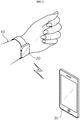
- FIG. 1 is a view schematically showing a system for predicting thyrotoxicosis according to an embodiment of the present invention.
- FIG. 2 is a schematic view of the configuration of a bio-signal computing device of FIG. 1 .
- the system for predicting thyrotoxicosis of the present invention is a system for predicting thyrotoxicosis using a resting heart rate, the system including a wearable device 20 for measuring vital signals of a patient and a bio-signal computing device 30 for communicating with the wearable device 20 to receive and compute the bio-signals.
- the wearable device 20 communicates with the bio-signal computing device 30 through a network and measures vital signals of a patient 10, for example, a heart rate and the number of steps, to transmit the bio-signals to the bio-signal computing device 30.
- the wearable device 20 may be linked to the bio-signal computing device 30 through wired/wireless communication, and may preferably be an electronic device capable of performing a wireless communication function such as WiFi, Bluetooth, and the like.
- the wearable device 20 may be various devices such as a smart watch, a smart band, and the like.
- the wearable device 20 may include a communication module for wired/wireless communication and a sensor for measuring a heart rate and the number of steps.
- the sensor embedded in the wearable device 20 includes one or more sensing means for identifying the body state and the body motion of the patient 10, and may include, for example, a heart rate sensor, a gravity sensor, an acceleration sensor, a gyroscope, a GPS sensor, or a combination thereof.
- the wearable device 20 may measure the heart rate of the patient 10 at regular intervals, for example, 5 to 10 times per minute. Also, the wearable device 20 measures the number of steps when the patient 10 moves.
- the bio-signal computing device 30 is an electronic device which receives bio-signals from the wearable device 20 and computes the bio-signals to manage and predict thyrotoxicosis.
- the bio-signal computing device 30 may be an electronic device capable of performing a communication function through wireless communication while a user is moving, and may be, for example, a portable phone including a smart phone, a tablet computer, a PDA, a wearable device, a smart watch, a smart band, and the like.
- the bio-signal computing device 30 includes a communication unit 31, a processor 32, a computing unit 22, an input unit 34, an output unit 35, and a memory 36.
- the communication unit 31 of the bio-signal computing device 30 performs a wired/wireless communication function with an external electronic device.
- the communication unit 31 is responsible for data transmission/reception with the wearable device 20, and may further be responsible for data communication, voice communication, and the like with a communication company.
- the computing unit 33 of the bio-signal computing device 30 uses the bio-signals received from the wearable device 20 to manage and predict thyrotoxicosis of the patient 10. Specifically, the computing unit 33 defines a reference heart rate and a resting heart rate from the measured heart rate.
- the ⁇ heart rate> is a value measured in the wearable device 20
- the ⁇ reference heart rate> and the ⁇ resting heart rate> are values calculated from the heart rate.
- a process of calculating the reference heart rate and the resting heart rate is as follows.
- the computing unit 33 extracts a section in which the number of steps is 0 for a predetermined period of time (for example, 15 minutes or more) in a day from data obtained by measuring the number of steps of a patient.
- the extracted section is considered to be free of the movement or the motion of the patient, and using the heart rate measured in each section, the resting heart rate is calculated.
- the computing unit 33 calculates a median value (referred to as a 'median value by section') of a plurality of heart rates measured in each section and defines a median value of the median values by section calculated for one day (for example, from 0 o'clock to 24 o'clock) as the 'resting heart rate.' Since the change in heart rate may be large at the boundary of a section, an error may be greatly reduced by selecting a median value rather than an average value.
- a median value referred to as a 'median value by section'
- the computing unit 33 may calculate the resting heart rate by assigning different weight values to the median values by section calculated for one day.
- sections in which the number of steps is 0 may be divided into a ⁇ wake-up section> and a ⁇ sleep section>.
- the ⁇ wake-up section> may be defined as a section in which the number of steps is 0 for a predetermined period of time during which a patient is awake
- the ⁇ sleep section> may be defined as a section in which the number of steps is 0 for a predetermined period of time during which the patient is in sleep.
- Equation 1 a method for calculating a resting heart rate by assigning a weight value
- Equation 1 by assigning a weight to the heart rate of the sleep section, not to the heart rate of the wake-up section, the association thereof with a thyroid function may be further increased.
- Resting heart rate [ A ⁇ median value of the median values by section for wake-up sections + B ⁇ median value of median values by section for sleep sections / A + B (wherein, 0 ⁇ A ⁇ B)
- the reference heart rate may be defined as an average value of resting heart rates measured for a predetermined number of days during which a patient is in a normal state (that is, when a thyroid function is normal).
- the computing unit 33 defines the reference heart rate and the resting heart rate from the measured heat rates, and then, when the resting heart rate is greater than the reference heart rate, outputs a warning alarm through the output unit 35 or the wearable device 20.
- the computing unit 33 may output a warning alarm when an average value of resting heart rates of a predetermined number of consecutive days (for example, 5 consecutive days or more) is greater than the reference heart rate by a predetermined value (for example, 10 beats per minute) or more.
- the difference between the resting heart rate and the reference heart rate is used to manage and predict thyrotoxicosis. The correlation among the resting heart rate, the reference heart rate and thyrotoxicosis will be described in detail later.
- the input unit 34 of the bio-signal computing device 30 includes a software or hardware input device, and the output unit 35 includes a speaker and a display.
- the display may include a user interface as a means for sensing the user's touch input in a UI/UX of an operating system software and a UI/UX of an application software.
- the display may be composed of a touch screen which is a means for outputting a screen and which executes a function of an input means for sensing the user's touch event.
- the memory 36 of the bio-signal computing device 30 generally provides a space to store computer codes and data used in a device.
- the memory 36 may store not only various applications and resources required for the driving/management thereof, but also firmware for any device including a basic input/output system, an operating system, various programs, applications, or user interface functions executed on a device, processor functions, and the like.
- the processor 32 of the bio-signal computing device 30 executes the computer codes with the operating system and executes an operation of generating and using data.
- the processor 32 may receive and process input and output data between components of the bio-signal computing device 30 using a series of commands.
- the processor 32 serves as a control unit for executing functions of the operating system software and various application software installed in the bio-signal computing device 30.
- the bio-signal computing device 30 of the present invention may include a variety of internal and external components which contribute to the function of the device.
- the bio-signal computing device 30 may also include hardware elements (including circuits), software elements (including computer code stored in a computer-readable medium), or a combination of the hardware elements and the software elements.
- the wearable device 20 and the bio-signal computing device 30 are exemplarily described to be physically separated, but the present invention is not limited thereto. That is, the bio-signal computing device 30 may be physically integrated in the wearable device 20, in which case the wearable device 20 and the bio-signal computing device 30 should be considered to be an integrated single physical electronic device.
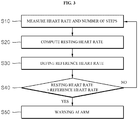
- FIG. 3 is a flow chart sequentially showing a method for predicting thyrotoxicosis according to an embodiment of the present invention.
- the wearable device 20 measures the number of steps of the patient 10 and the heart rate at regular intervals and send the same to the bio-signal computing device 30 S10.
- the bio-signal computing device 30 receives heart rates and the numbers of steps from the wearable device 20 and computes a resting heart rate S20. Specifically, the bio-signal computing device 30 extracts sections in which the number of steps is 0 for a predetermined period of time (for example, 15 minutes or more) in a day from data of the number of steps of the patient. The bio-signal computing device 30 calculates a median value by section for heart rates of each section and defines a median value of the median values by section as the resting heart rate based on a day. As a modified example, the bio-signal computing device 30 may calculate a resting heart rate by assigning a greater weight value to the heart rate of a sleep section than to the heart rate of a wake-up section as shown in Equation 1.
- the bio-signal computing device 30 defines an average value of resting heart rates measured for a predetermined number of days during which a patient's thyroid function is in a normal state as a 'reference heart rate.
- the bio-signal computing device 30 compares values of the resting heart rate and the reference heart rate S40 and outputs a warning alarm S50 through its own output unit or the wearable device 20 when the resting heart rate is greater than the reference heart rate.
- the bio-signal computing device 30 may output a warning alarm when an average value of resting heart rates of a predetermined number of consecutive days (for example, 5 consecutive days or more) is greater than the reference heart rate by a predetermined value (for example, 10 beats per minutes) or more.
- FIG. 4 is a view schematically showing a clinical method using the prediction system of the present invention.
- 30 thyrotoxicosis patients including new patients and relapse patients
- the wearable devices used in the present clinical studies was Fitbit Charge HRTM and Fitbit Charge 2TM.
- the patients wearing the wearable device visited a clinic three times and subjected to anti-thyroid drug treatment, and the change in thyroid hormone concentration during the treatment was compared with the change in heart rate measured using the wearable device.
- heart rates measured by an automatic blood pressure monitor at the time of the visit to the clinic and hyperthyroidism symptom scales (HSS) were both measured and analyzed each time of the visit to the clinic.
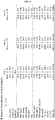
- FIG. 5 is a view showing thyroid hormone concentration measured at the time of a patient's visit to a clinic during a clinical study process of FIG. 4 .
- BMI Body Mass Index
- SBP Systolic Blood Pressure
- DBP Diastolic Blood Pressure
- HR Heart Rate
- HSS Hyperthyroid Symptom Scale
- free T4 stands for thyroid hormone
- TSH Thyroid Stimulating Hormone
- TB stands for Total Bilirubin
- ALP stands for Alkaline Phosphorous
- AST stands for Aspartate Transaminase
- ALT Alamine Transaminase
- WBC White Blood Cells.
- the numerical values of thyroid hormone (free T4) which is measured at the time of the second and third visits to the clinic was gradually decreased to be within a normal range (0.8-1.8 ng/dL) when compared with the numerical value thereof measured at the first visit to the clinic.
- FIG. 6 is a view showing a resting heart rate measured during the clinical study of FIG. 4 . Specifically, FIG. 6 shows a change in resting heart rate over time measured by a wearable device. It was confirmed that as the anti-thyroid treatment continued to be performed on the patients with thyrotoxicosis, the resting heart rate measured with the wearable device gradually decreased.
- FIG. 7 is a graph showing the association between thyroid hormone concentration and the resting heart rate measured during the clinical study of FIG. 4 .
- WD-rHR is a resting heart rate obtained through a wearable device
- HSS represents a value obtained by adding scores of items represented by 0-5 points on 10 representative symptoms of thyrotoxicosis on a survey
- on-site HR is a heart rate measured with a blood pressure monitor at a clinic at the time of the visit to the clinic on a day when a blood test was conducted.
- FIG. 8 is a graph showing the association between the change in the resting heart rate measured with a wearable device during the clinical study of FIG. 4 and thyrotoxicosis. Specifically, FIG. 8 shows the probability of being classified as thyrotoxicosis when each index increases by 1 standard deviation (SD) by dividing the data of FIG. 7 into cases in which the thyroid hormone (free T4) is greater than 1.8 ng/dL (that is, greater than an upper limit of a normal state, thereby being within a range of thyrotoxicosis) and not.
- SD standard deviation
- a resting heart rate (WD-HR) measured with a wearable device it has been found that when the resting heart rate increases by 1SD (about 10 beat-per-minutes), the possibility of being classified as thyrotoxicosis increases three times.
- the above results show that a single index which is the resting heart rate (WD-HR) measured with a wearable device is more excellent in predictability than the index (HSS) in which various symptoms of thyrotoxicosis are scored.
- the heart rate (HR) typically measured at the time of the visit to a clinic did not show a statistically meaningful predictability of thyrotoxicosis.
- the change in resting heart rate measured by the wearable device has a close relationship with the prevalence or recurrence of thyrotoxicosis.
- the prediction system of the present invention just by having a patient wear a wearable device without having to visit a doctor's clinic, the degree of control of thyrotoxicosis may be evaluated and the relapse thereof may be easily predicted from the change in resting heart rate.
- the prediction system may alert the patient to receive a blood test by warning the patient of thyroid function abnormalities.
Landscapes
- Health & Medical Sciences (AREA)
- Life Sciences & Earth Sciences (AREA)
- Engineering & Computer Science (AREA)
- Animal Behavior & Ethology (AREA)
- Public Health (AREA)
- General Health & Medical Sciences (AREA)
- Physics & Mathematics (AREA)
- Veterinary Medicine (AREA)
- Biophysics (AREA)
- Pathology (AREA)
- Biomedical Technology (AREA)
- Heart & Thoracic Surgery (AREA)
- Medical Informatics (AREA)
- Molecular Biology (AREA)
- Surgery (AREA)
- Physiology (AREA)
- Signal Processing (AREA)
- Cardiology (AREA)
- Computer Vision & Pattern Recognition (AREA)
- Artificial Intelligence (AREA)
- Psychiatry (AREA)
- Computer Networks & Wireless Communication (AREA)
- Endocrinology (AREA)
- Gastroenterology & Hepatology (AREA)
- Urology & Nephrology (AREA)
- Dentistry (AREA)
- Oral & Maxillofacial Surgery (AREA)
- Pulmonology (AREA)
- Measuring Pulse, Heart Rate, Blood Pressure Or Blood Flow (AREA)
- Measurement Of The Respiration, Hearing Ability, Form, And Blood Characteristics Of Living Organisms (AREA)
- Measuring And Recording Apparatus For Diagnosis (AREA)
- Medical Treatment And Welfare Office Work (AREA)
Applications Claiming Priority (2)
| Application Number | Priority Date | Filing Date | Title |
|---|---|---|---|
| KR1020170119326A KR102033696B1 (ko) | 2017-09-18 | 2017-09-18 | 웨어러블 장치를 이용한 갑상선기능항진증의 예측 시스템 및 예측 컴퓨터프로그램 |
| PCT/KR2017/011892 WO2019054553A1 (ko) | 2017-09-18 | 2017-10-26 | 웨어러블 장치를 이용한 갑상선기능항진증의 예측 시스템 및 예측 컴퓨터프로그램 |
Publications (4)
| Publication Number | Publication Date |
|---|---|
| EP3685735A1 true EP3685735A1 (de) | 2020-07-29 |
| EP3685735A4 EP3685735A4 (de) | 2021-10-13 |
| EP3685735B1 EP3685735B1 (de) | 2023-12-06 |
| EP3685735C0 EP3685735C0 (de) | 2023-12-06 |
Family
ID=65723716
Family Applications (1)
| Application Number | Title | Priority Date | Filing Date |
|---|---|---|---|
| EP17924788.7A Active EP3685735B1 (de) | 2017-09-18 | 2017-10-26 | Vorrichtung zur vorhersage von thyreotoxikose |
Country Status (7)
| Country | Link |
|---|---|
| US (5) | US20200214644A1 (de) |
| EP (1) | EP3685735B1 (de) |
| JP (4) | JP7399092B2 (de) |
| KR (1) | KR102033696B1 (de) |
| CN (1) | CN111372506B (de) |
| ES (1) | ES2972578T3 (de) |
| WO (1) | WO2019054553A1 (de) |
Families Citing this family (12)
| Publication number | Priority date | Publication date | Assignee | Title |
|---|---|---|---|---|
| WO2016077489A1 (en) * | 2014-11-11 | 2016-05-19 | Innovaura Corporation | Heart rate monitor |
| KR102033696B1 (ko) * | 2017-09-18 | 2019-10-21 | 서울대학교병원 | 웨어러블 장치를 이용한 갑상선기능항진증의 예측 시스템 및 예측 컴퓨터프로그램 |
| KR102469743B1 (ko) * | 2020-06-10 | 2022-11-22 | 주식회사 타이로스코프 | 약물 복용에 따른 갑상선 기능 모니터링 방법, 이를 수행하는 모니터링 서버 및 사용자 단말 |
| US12369883B2 (en) | 2020-06-19 | 2025-07-29 | Ultrasound AI, Inc. | Artificial intelligence system for determining clinical values through medical imaging |
| US11266376B2 (en) | 2020-06-19 | 2022-03-08 | Ultrasound Ai Inc. | Premature birth prediction |
| CN114680857B (zh) * | 2020-12-30 | 2025-07-22 | 王励 | 参数确定方法、参数确定装置、存储介质及电子设备 |
| CN114680856A (zh) * | 2020-12-30 | 2022-07-01 | 王励 | 状态信息确定方法及装置、控制方法及装置 |
| KR102511453B1 (ko) * | 2021-07-29 | 2023-03-17 | 주식회사 타이로스코프 | 대상에 대한 갑상선기능이상증의 예측방법 및 시스템 |
| KR20260010466A (ko) * | 2021-07-29 | 2026-01-20 | 주식회사 타이로스코프 | 대상에 대한 갑상선기능이상증의 예측방법 및 시스템 |
| KR102797739B1 (ko) * | 2021-11-08 | 2025-04-17 | 연세대학교 산학협력단 | 신장 이식 수여자의 삼차성 부갑상선 기능 항진증의 위험을 예측하는 방법 및 장치 |
| WO2024158259A1 (ko) * | 2023-01-27 | 2024-08-02 | 주식회사 타이로스코프 | 대상에 대한 갑상선기능이상증의 예측방법 및 시스템 |
| EP4680120A1 (de) * | 2023-03-13 | 2026-01-21 | Ultrasound AI, Inc. | System der künstlichen intelligenz zur umfassenden medizinischen diagnose, prognose und behandlungsoptimierung durch medizinische bildgebung |
Family Cites Families (27)
| Publication number | Priority date | Publication date | Assignee | Title |
|---|---|---|---|---|
| DE4329898A1 (de) * | 1993-09-04 | 1995-04-06 | Marcus Dr Besson | Kabelloses medizinisches Diagnose- und Überwachungsgerät |
| US5419338A (en) * | 1994-02-22 | 1995-05-30 | City Of Hope | Autonomic nervous system testing by bi-variate spectral analysis of heart period and QT interval variability |
| JPH11290282A (ja) * | 1998-04-08 | 1999-10-26 | Nec Corp | 患者監視システム及び監視方法 |
| WO2009112977A1 (en) * | 2008-03-10 | 2009-09-17 | Koninklijke Philips Electronics N.V. | Ecg monitoring system with configurable alarm limits |
| JP2011147509A (ja) | 2010-01-19 | 2011-08-04 | Parama Tec:Kk | 心電計ないしは心拍計と歩数計とを備えた複合装置 |
| US20150057512A1 (en) * | 2011-11-16 | 2015-02-26 | Rijuven Corporation | Wearable heart failure monitor patch |
| US8948832B2 (en) | 2012-06-22 | 2015-02-03 | Fitbit, Inc. | Wearable heart rate monitor |
| US9005129B2 (en) | 2012-06-22 | 2015-04-14 | Fitbit, Inc. | Wearable heart rate monitor |
| US10318708B2 (en) | 2013-03-14 | 2019-06-11 | Nike, Inc. | System and method for monitoring athletic activity from multiple body locations |
| CA2913786C (en) * | 2013-06-06 | 2023-03-14 | Tricord Holdings, L.L.C. | Modular physiologic monitoring systems, kits, and methods |
| US20150094545A1 (en) * | 2013-10-01 | 2015-04-02 | Covidien Lp | Automated at-rest status sensing |
| JP2015131049A (ja) * | 2014-01-15 | 2015-07-23 | セイコーエプソン株式会社 | 生体情報処理システム、電子機器及びサーバーシステム |
| KR102309289B1 (ko) * | 2014-06-11 | 2021-10-06 | 엘지전자 주식회사 | 와치형 이동 단말기 |
| US10327651B2 (en) * | 2014-06-12 | 2019-06-25 | Koninklijke Philips N.V. | Resting heart rate monitor system |
| EP3220824A4 (de) * | 2014-11-18 | 2018-07-04 | Nanyang Technological University | Servervorrichtung und am körper tragbare vorrichtung zur blutglucoseüberwachung und zugehörige verfahren |
| US20160188817A1 (en) * | 2014-12-30 | 2016-06-30 | Core Mobile Networks, Inc. | Real-Time Activity Coordination |
| KR20170002035A (ko) | 2015-06-29 | 2017-01-06 | 엘지전자 주식회사 | 휴대용 기기 및 그의 체력 평가 방법 |
| KR101821858B1 (ko) | 2015-08-07 | 2018-01-24 | 엘지전자 주식회사 | 휴식 심박동 측정 방법 |
| CN105326493A (zh) | 2015-11-05 | 2016-02-17 | 深圳市冠旭电子有限公司 | 一种基于可穿戴电子设备的心率监测方法及系统 |
| JP2017113191A (ja) | 2015-12-22 | 2017-06-29 | 富士通株式会社 | 電子機器及び脈拍数算出プログラム |
| CN105708440A (zh) | 2016-03-31 | 2016-06-29 | 深圳还是威健康科技有限公司 | 一种静息心率测量方法和终端 |
| CN106037749A (zh) * | 2016-05-18 | 2016-10-26 | 武汉大学 | 一种基于智能手机和可穿戴式设备的老年人跌倒监测方法 |
| US10335047B2 (en) * | 2016-08-02 | 2019-07-02 | Medtronic, Inc. | Automatic heart rate diagnostics |
| CN106419848A (zh) | 2016-10-21 | 2017-02-22 | 北京通和堂生物科技有限公司 | 一种监测甲状腺机能的装置及方法 |
| US10111615B2 (en) * | 2017-03-11 | 2018-10-30 | Fitbit, Inc. | Sleep scoring based on physiological information |
| KR102033696B1 (ko) * | 2017-09-18 | 2019-10-21 | 서울대학교병원 | 웨어러블 장치를 이용한 갑상선기능항진증의 예측 시스템 및 예측 컴퓨터프로그램 |
| KR102469743B1 (ko) * | 2020-06-10 | 2022-11-22 | 주식회사 타이로스코프 | 약물 복용에 따른 갑상선 기능 모니터링 방법, 이를 수행하는 모니터링 서버 및 사용자 단말 |
-
2017
- 2017-09-18 KR KR1020170119326A patent/KR102033696B1/ko active Active
- 2017-10-26 EP EP17924788.7A patent/EP3685735B1/de active Active
- 2017-10-26 ES ES17924788T patent/ES2972578T3/es active Active
- 2017-10-26 CN CN201780096974.6A patent/CN111372506B/zh active Active
- 2017-10-26 JP JP2020537119A patent/JP7399092B2/ja active Active
- 2017-10-26 WO PCT/KR2017/011892 patent/WO2019054553A1/ko not_active Ceased
- 2017-10-26 US US16/647,963 patent/US20200214644A1/en not_active Abandoned
-
2021
- 2021-05-10 US US17/316,040 patent/US11571170B2/en active Active
-
2022
- 2022-10-07 JP JP2022162722A patent/JP7600197B2/ja active Active
- 2022-12-30 US US18/091,751 patent/US11903743B2/en active Active
-
2024
- 2024-01-16 US US18/414,154 patent/US12285276B2/en active Active
- 2024-10-07 JP JP2024176144A patent/JP7733193B2/ja active Active
-
2025
- 2025-03-31 US US19/095,850 patent/US20250221672A1/en active Pending
- 2025-08-21 JP JP2025138443A patent/JP2025169408A/ja active Pending
Also Published As
| Publication number | Publication date |
|---|---|
| JP2025004151A (ja) | 2025-01-14 |
| ES2972578T3 (es) | 2024-06-13 |
| US20240148339A1 (en) | 2024-05-09 |
| CN111372506B (zh) | 2024-01-12 |
| KR102033696B1 (ko) | 2019-10-21 |
| US20210307702A1 (en) | 2021-10-07 |
| EP3685735A4 (de) | 2021-10-13 |
| US20250221672A1 (en) | 2025-07-10 |
| US12285276B2 (en) | 2025-04-29 |
| EP3685735B1 (de) | 2023-12-06 |
| KR20190032668A (ko) | 2019-03-28 |
| WO2019054553A1 (ko) | 2019-03-21 |
| JP2020534125A (ja) | 2020-11-26 |
| JP2025169408A (ja) | 2025-11-12 |
| JP7733193B2 (ja) | 2025-09-02 |
| JP7399092B2 (ja) | 2023-12-15 |
| US11903743B2 (en) | 2024-02-20 |
| EP3685735C0 (de) | 2023-12-06 |
| JP2022180664A (ja) | 2022-12-06 |
| CN111372506A (zh) | 2020-07-03 |
| US11571170B2 (en) | 2023-02-07 |
| US20200214644A1 (en) | 2020-07-09 |
| JP7600197B2 (ja) | 2024-12-16 |
| US20230144161A1 (en) | 2023-05-11 |
Similar Documents
| Publication | Publication Date | Title |
|---|---|---|
| US12285276B2 (en) | Method for providing alert of potential thyroid abnormality | |
| US20210082558A1 (en) | Medication management device, medication management method, and non-transitory computer-readable storage medium storing medication management program | |
| US20250185980A1 (en) | Thyroid function monitoring method according to medication, and monitoring server and user terminal performing the same | |
| EP4312733B1 (de) | Geburtsbeginn-vorhersage basierend auf am körper tragbaren temperatursensor | |
| HK1201357A1 (en) | System and method for database synchronization for medical records | |
| Moser et al. | Personal health monitoring using a smartphone | |
| Panicker et al. | Tablet PC enabled body sensor system for rural telehealth applications | |
| JP7176230B2 (ja) | 投薬管理装置、投薬管理方法及び投薬管理プログラム | |
| CN116209385A (zh) | 用于心力衰竭患者的治疗性管理的组合物和方法 | |
| Anand et al. | Remote patient monitoring: an overview of technologies, applications, and challenges | |
| WO2022212758A1 (en) | Pregnancy-related complication identification and prediction from wearable-based physiological data | |
| US11116455B2 (en) | Diagnostic assistance device, vital signs information measuring device, and diagnostic assistance method | |
| WO2023180443A1 (en) | Hydration managing system | |
| CN118742255A (zh) | 用于心力衰竭患者的治疗性管理的组合物和方法 | |
| HK1186547A (en) | Metadata tagging system for a diabetes management system of devices | |
| HK1186547B (en) | Metadata tagging system for a diabetes management system of devices |
Legal Events
| Date | Code | Title | Description |
|---|---|---|---|
| STAA | Information on the status of an ep patent application or granted ep patent |
Free format text: STATUS: THE INTERNATIONAL PUBLICATION HAS BEEN MADE |
|
| PUAI | Public reference made under article 153(3) epc to a published international application that has entered the european phase |
Free format text: ORIGINAL CODE: 0009012 |
|
| STAA | Information on the status of an ep patent application or granted ep patent |
Free format text: STATUS: REQUEST FOR EXAMINATION WAS MADE |
|
| 17P | Request for examination filed |
Effective date: 20200415 |
|
| AK | Designated contracting states |
Kind code of ref document: A1 Designated state(s): AL AT BE BG CH CY CZ DE DK EE ES FI FR GB GR HR HU IE IS IT LI LT LU LV MC MK MT NL NO PL PT RO RS SE SI SK SM TR |
|
| AX | Request for extension of the european patent |
Extension state: BA ME |
|
| RAP1 | Party data changed (applicant data changed or rights of an application transferred) |
Owner name: THYROSCOPE INC. |
|
| DAV | Request for validation of the european patent (deleted) | ||
| DAX | Request for extension of the european patent (deleted) | ||
| A4 | Supplementary search report drawn up and despatched |
Effective date: 20210910 |
|
| RIC1 | Information provided on ipc code assigned before grant |
Ipc: A61B 5/11 20060101ALI20210906BHEP Ipc: A61B 5/024 20060101ALI20210906BHEP Ipc: A61B 5/00 20060101AFI20210906BHEP |
|
| STAA | Information on the status of an ep patent application or granted ep patent |
Free format text: STATUS: EXAMINATION IS IN PROGRESS |
|
| 17Q | First examination report despatched |
Effective date: 20220519 |
|
| GRAP | Despatch of communication of intention to grant a patent |
Free format text: ORIGINAL CODE: EPIDOSNIGR1 |
|
| STAA | Information on the status of an ep patent application or granted ep patent |
Free format text: STATUS: GRANT OF PATENT IS INTENDED |
|
| INTG | Intention to grant announced |
Effective date: 20230619 |
|
| GRAS | Grant fee paid |
Free format text: ORIGINAL CODE: EPIDOSNIGR3 |
|
| GRAA | (expected) grant |
Free format text: ORIGINAL CODE: 0009210 |
|
| STAA | Information on the status of an ep patent application or granted ep patent |
Free format text: STATUS: THE PATENT HAS BEEN GRANTED |
|
| AK | Designated contracting states |
Kind code of ref document: B1 Designated state(s): AL AT BE BG CH CY CZ DE DK EE ES FI FR GB GR HR HU IE IS IT LI LT LU LV MC MK MT NL NO PL PT RO RS SE SI SK SM TR |
|
| REG | Reference to a national code |
Ref country code: GB Ref legal event code: FG4D |
|
| REG | Reference to a national code |
Ref country code: CH Ref legal event code: EP |
|
| REG | Reference to a national code |
Ref country code: DE Ref legal event code: R096 Ref document number: 602017077374 Country of ref document: DE |
|
| REG | Reference to a national code |
Ref country code: IE Ref legal event code: FG4D |
|
| U01 | Request for unitary effect filed |
Effective date: 20231221 |
|
| U07 | Unitary effect registered |
Designated state(s): AT BE BG DE DK EE FI FR IT LT LU LV MT NL PT SE SI Effective date: 20240109 |
|
| PG25 | Lapsed in a contracting state [announced via postgrant information from national office to epo] |
Ref country code: GR Free format text: LAPSE BECAUSE OF FAILURE TO SUBMIT A TRANSLATION OF THE DESCRIPTION OR TO PAY THE FEE WITHIN THE PRESCRIBED TIME-LIMIT Effective date: 20240307 |
|
| PG25 | Lapsed in a contracting state [announced via postgrant information from national office to epo] |
Ref country code: GR Free format text: LAPSE BECAUSE OF FAILURE TO SUBMIT A TRANSLATION OF THE DESCRIPTION OR TO PAY THE FEE WITHIN THE PRESCRIBED TIME-LIMIT Effective date: 20240307 |
|
| PG25 | Lapsed in a contracting state [announced via postgrant information from national office to epo] |
Ref country code: RS Free format text: LAPSE BECAUSE OF FAILURE TO SUBMIT A TRANSLATION OF THE DESCRIPTION OR TO PAY THE FEE WITHIN THE PRESCRIBED TIME-LIMIT Effective date: 20231206 Ref country code: NO Free format text: LAPSE BECAUSE OF FAILURE TO SUBMIT A TRANSLATION OF THE DESCRIPTION OR TO PAY THE FEE WITHIN THE PRESCRIBED TIME-LIMIT Effective date: 20240306 Ref country code: HR Free format text: LAPSE BECAUSE OF FAILURE TO SUBMIT A TRANSLATION OF THE DESCRIPTION OR TO PAY THE FEE WITHIN THE PRESCRIBED TIME-LIMIT Effective date: 20231206 |
|
| REG | Reference to a national code |
Ref country code: ES Ref legal event code: FG2A Ref document number: 2972578 Country of ref document: ES Kind code of ref document: T3 Effective date: 20240613 |
|
| PG25 | Lapsed in a contracting state [announced via postgrant information from national office to epo] |
Ref country code: IS Free format text: LAPSE BECAUSE OF FAILURE TO SUBMIT A TRANSLATION OF THE DESCRIPTION OR TO PAY THE FEE WITHIN THE PRESCRIBED TIME-LIMIT Effective date: 20240406 |
|
| PG25 | Lapsed in a contracting state [announced via postgrant information from national office to epo] |
Ref country code: CZ Free format text: LAPSE BECAUSE OF FAILURE TO SUBMIT A TRANSLATION OF THE DESCRIPTION OR TO PAY THE FEE WITHIN THE PRESCRIBED TIME-LIMIT Effective date: 20231206 |
|
| PG25 | Lapsed in a contracting state [announced via postgrant information from national office to epo] |
Ref country code: SK Free format text: LAPSE BECAUSE OF FAILURE TO SUBMIT A TRANSLATION OF THE DESCRIPTION OR TO PAY THE FEE WITHIN THE PRESCRIBED TIME-LIMIT Effective date: 20231206 |
|
| PG25 | Lapsed in a contracting state [announced via postgrant information from national office to epo] |
Ref country code: SM Free format text: LAPSE BECAUSE OF FAILURE TO SUBMIT A TRANSLATION OF THE DESCRIPTION OR TO PAY THE FEE WITHIN THE PRESCRIBED TIME-LIMIT Effective date: 20231206 Ref country code: SK Free format text: LAPSE BECAUSE OF FAILURE TO SUBMIT A TRANSLATION OF THE DESCRIPTION OR TO PAY THE FEE WITHIN THE PRESCRIBED TIME-LIMIT Effective date: 20231206 Ref country code: RO Free format text: LAPSE BECAUSE OF FAILURE TO SUBMIT A TRANSLATION OF THE DESCRIPTION OR TO PAY THE FEE WITHIN THE PRESCRIBED TIME-LIMIT Effective date: 20231206 Ref country code: IS Free format text: LAPSE BECAUSE OF FAILURE TO SUBMIT A TRANSLATION OF THE DESCRIPTION OR TO PAY THE FEE WITHIN THE PRESCRIBED TIME-LIMIT Effective date: 20240406 Ref country code: CZ Free format text: LAPSE BECAUSE OF FAILURE TO SUBMIT A TRANSLATION OF THE DESCRIPTION OR TO PAY THE FEE WITHIN THE PRESCRIBED TIME-LIMIT Effective date: 20231206 |
|
| PG25 | Lapsed in a contracting state [announced via postgrant information from national office to epo] |
Ref country code: PL Free format text: LAPSE BECAUSE OF FAILURE TO SUBMIT A TRANSLATION OF THE DESCRIPTION OR TO PAY THE FEE WITHIN THE PRESCRIBED TIME-LIMIT Effective date: 20231206 |
|
| PG25 | Lapsed in a contracting state [announced via postgrant information from national office to epo] |
Ref country code: PL Free format text: LAPSE BECAUSE OF FAILURE TO SUBMIT A TRANSLATION OF THE DESCRIPTION OR TO PAY THE FEE WITHIN THE PRESCRIBED TIME-LIMIT Effective date: 20231206 |
|
| REG | Reference to a national code |
Ref country code: DE Ref legal event code: R097 Ref document number: 602017077374 Country of ref document: DE |
|
| PLBE | No opposition filed within time limit |
Free format text: ORIGINAL CODE: 0009261 |
|
| STAA | Information on the status of an ep patent application or granted ep patent |
Free format text: STATUS: NO OPPOSITION FILED WITHIN TIME LIMIT |
|
| U20 | Renewal fee for the european patent with unitary effect paid |
Year of fee payment: 8 Effective date: 20240910 |
|
| 26N | No opposition filed |
Effective date: 20240909 |
|
| REG | Reference to a national code |
Ref country code: CH Ref legal event code: PL |
|
| PG25 | Lapsed in a contracting state [announced via postgrant information from national office to epo] |
Ref country code: MC Free format text: LAPSE BECAUSE OF FAILURE TO SUBMIT A TRANSLATION OF THE DESCRIPTION OR TO PAY THE FEE WITHIN THE PRESCRIBED TIME-LIMIT Effective date: 20231206 |
|
| PG25 | Lapsed in a contracting state [announced via postgrant information from national office to epo] |
Ref country code: CH Free format text: LAPSE BECAUSE OF NON-PAYMENT OF DUE FEES Effective date: 20241031 |
|
| PG25 | Lapsed in a contracting state [announced via postgrant information from national office to epo] |
Ref country code: IE Free format text: LAPSE BECAUSE OF NON-PAYMENT OF DUE FEES Effective date: 20241026 |
|
| U20 | Renewal fee for the european patent with unitary effect paid |
Year of fee payment: 9 Effective date: 20251021 |
|
| PGFP | Annual fee paid to national office [announced via postgrant information from national office to epo] |
Ref country code: GB Payment date: 20251023 Year of fee payment: 9 |
|
| PG25 | Lapsed in a contracting state [announced via postgrant information from national office to epo] |
Ref country code: CY Free format text: LAPSE BECAUSE OF FAILURE TO SUBMIT A TRANSLATION OF THE DESCRIPTION OR TO PAY THE FEE WITHIN THE PRESCRIBED TIME-LIMIT; INVALID AB INITIO Effective date: 20171026 |
|
| PGFP | Annual fee paid to national office [announced via postgrant information from national office to epo] |
Ref country code: ES Payment date: 20251114 Year of fee payment: 9 |
|
| PG25 | Lapsed in a contracting state [announced via postgrant information from national office to epo] |
Ref country code: HU Free format text: LAPSE BECAUSE OF FAILURE TO SUBMIT A TRANSLATION OF THE DESCRIPTION OR TO PAY THE FEE WITHIN THE PRESCRIBED TIME-LIMIT; INVALID AB INITIO Effective date: 20171026 |