EP3678654B1 - Pneumococcal polysaccharides and their use in immunogenic polysaccharide-carrier protein conjugates - Google Patents
Pneumococcal polysaccharides and their use in immunogenic polysaccharide-carrier protein conjugates Download PDFInfo
- Publication number
- EP3678654B1 EP3678654B1 EP18853342.6A EP18853342A EP3678654B1 EP 3678654 B1 EP3678654 B1 EP 3678654B1 EP 18853342 A EP18853342 A EP 18853342A EP 3678654 B1 EP3678654 B1 EP 3678654B1
- Authority
- EP
- European Patent Office
- Prior art keywords
- polysaccharide
- kda
- carrier protein
- protein
- pneumococcal
- Prior art date
- Legal status (The legal status is an assumption and is not a legal conclusion. Google has not performed a legal analysis and makes no representation as to the accuracy of the status listed.)
- Revoked
Links
Images






Classifications
-
- A—HUMAN NECESSITIES
- A61—MEDICAL OR VETERINARY SCIENCE; HYGIENE
- A61K—PREPARATIONS FOR MEDICAL, DENTAL OR TOILETRY PURPOSES
- A61K39/00—Medicinal preparations containing antigens or antibodies
- A61K39/385—Haptens or antigens, bound to carriers
-
- C—CHEMISTRY; METALLURGY
- C08—ORGANIC MACROMOLECULAR COMPOUNDS; THEIR PREPARATION OR CHEMICAL WORKING-UP; COMPOSITIONS BASED THEREON
- C08B—POLYSACCHARIDES; DERIVATIVES THEREOF
- C08B37/00—Preparation of polysaccharides not provided for in groups C08B1/00 - C08B35/00; Derivatives thereof
- C08B37/006—Heteroglycans, i.e. polysaccharides having more than one sugar residue in the main chain in either alternating or less regular sequence; Gellans; Succinoglycans; Arabinogalactans; Tragacanth or gum tragacanth or traganth from Astragalus; Gum Karaya from Sterculia urens; Gum Ghatti from Anogeissus latifolia; Derivatives thereof
-
- A—HUMAN NECESSITIES
- A61—MEDICAL OR VETERINARY SCIENCE; HYGIENE
- A61K—PREPARATIONS FOR MEDICAL, DENTAL OR TOILETRY PURPOSES
- A61K39/00—Medicinal preparations containing antigens or antibodies
- A61K39/02—Bacterial antigens
- A61K39/09—Lactobacillales, e.g. aerococcus, enterococcus, lactobacillus, lactococcus, streptococcus
- A61K39/092—Streptococcus
-
- A—HUMAN NECESSITIES
- A61—MEDICAL OR VETERINARY SCIENCE; HYGIENE
- A61K—PREPARATIONS FOR MEDICAL, DENTAL OR TOILETRY PURPOSES
- A61K39/00—Medicinal preparations containing antigens or antibodies
- A61K39/39—Medicinal preparations containing antigens or antibodies characterised by the immunostimulating additives, e.g. chemical adjuvants
-
- A—HUMAN NECESSITIES
- A61—MEDICAL OR VETERINARY SCIENCE; HYGIENE
- A61K—PREPARATIONS FOR MEDICAL, DENTAL OR TOILETRY PURPOSES
- A61K47/00—Medicinal preparations characterised by the non-active ingredients used, e.g. carriers or inert additives; Targeting or modifying agents chemically bound to the active ingredient
- A61K47/50—Medicinal preparations characterised by the non-active ingredients used, e.g. carriers or inert additives; Targeting or modifying agents chemically bound to the active ingredient the non-active ingredient being chemically bound to the active ingredient, e.g. polymer-drug conjugates
- A61K47/51—Medicinal preparations characterised by the non-active ingredients used, e.g. carriers or inert additives; Targeting or modifying agents chemically bound to the active ingredient the non-active ingredient being chemically bound to the active ingredient, e.g. polymer-drug conjugates the non-active ingredient being a modifying agent
- A61K47/62—Medicinal preparations characterised by the non-active ingredients used, e.g. carriers or inert additives; Targeting or modifying agents chemically bound to the active ingredient the non-active ingredient being chemically bound to the active ingredient, e.g. polymer-drug conjugates the non-active ingredient being a modifying agent the modifying agent being a protein, peptide or polyamino acid
- A61K47/64—Drug-peptide, drug-protein or drug-polyamino acid conjugates, i.e. the modifying agent being a peptide, protein or polyamino acid which is covalently bonded or complexed to a therapeutically active agent
- A61K47/6415—Toxins or lectins, e.g. clostridial toxins or Pseudomonas exotoxins
-
- A—HUMAN NECESSITIES
- A61—MEDICAL OR VETERINARY SCIENCE; HYGIENE
- A61K—PREPARATIONS FOR MEDICAL, DENTAL OR TOILETRY PURPOSES
- A61K47/00—Medicinal preparations characterised by the non-active ingredients used, e.g. carriers or inert additives; Targeting or modifying agents chemically bound to the active ingredient
- A61K47/50—Medicinal preparations characterised by the non-active ingredients used, e.g. carriers or inert additives; Targeting or modifying agents chemically bound to the active ingredient the non-active ingredient being chemically bound to the active ingredient, e.g. polymer-drug conjugates
- A61K47/51—Medicinal preparations characterised by the non-active ingredients used, e.g. carriers or inert additives; Targeting or modifying agents chemically bound to the active ingredient the non-active ingredient being chemically bound to the active ingredient, e.g. polymer-drug conjugates the non-active ingredient being a modifying agent
- A61K47/62—Medicinal preparations characterised by the non-active ingredients used, e.g. carriers or inert additives; Targeting or modifying agents chemically bound to the active ingredient the non-active ingredient being chemically bound to the active ingredient, e.g. polymer-drug conjugates the non-active ingredient being a modifying agent the modifying agent being a protein, peptide or polyamino acid
- A61K47/64—Drug-peptide, drug-protein or drug-polyamino acid conjugates, i.e. the modifying agent being a peptide, protein or polyamino acid which is covalently bonded or complexed to a therapeutically active agent
- A61K47/646—Drug-peptide, drug-protein or drug-polyamino acid conjugates, i.e. the modifying agent being a peptide, protein or polyamino acid which is covalently bonded or complexed to a therapeutically active agent the entire peptide or protein drug conjugate elicits an immune response, e.g. conjugate vaccines
-
- A—HUMAN NECESSITIES
- A61—MEDICAL OR VETERINARY SCIENCE; HYGIENE
- A61P—SPECIFIC THERAPEUTIC ACTIVITY OF CHEMICAL COMPOUNDS OR MEDICINAL PREPARATIONS
- A61P31/00—Antiinfectives, i.e. antibiotics, antiseptics, chemotherapeutics
- A61P31/04—Antibacterial agents
-
- C—CHEMISTRY; METALLURGY
- C08—ORGANIC MACROMOLECULAR COMPOUNDS; THEIR PREPARATION OR CHEMICAL WORKING-UP; COMPOSITIONS BASED THEREON
- C08B—POLYSACCHARIDES; DERIVATIVES THEREOF
- C08B37/00—Preparation of polysaccharides not provided for in groups C08B1/00 - C08B35/00; Derivatives thereof
-
- C—CHEMISTRY; METALLURGY
- C08—ORGANIC MACROMOLECULAR COMPOUNDS; THEIR PREPARATION OR CHEMICAL WORKING-UP; COMPOSITIONS BASED THEREON
- C08B—POLYSACCHARIDES; DERIVATIVES THEREOF
- C08B37/00—Preparation of polysaccharides not provided for in groups C08B1/00 - C08B35/00; Derivatives thereof
- C08B37/0003—General processes for their isolation or fractionation, e.g. purification or extraction from biomass
-
- C—CHEMISTRY; METALLURGY
- C12—BIOCHEMISTRY; BEER; SPIRITS; WINE; VINEGAR; MICROBIOLOGY; ENZYMOLOGY; MUTATION OR GENETIC ENGINEERING
- C12P—FERMENTATION OR ENZYME-USING PROCESSES TO SYNTHESISE A DESIRED CHEMICAL COMPOUND OR COMPOSITION OR TO SEPARATE OPTICAL ISOMERS FROM A RACEMIC MIXTURE
- C12P19/00—Preparation of compounds containing saccharide radicals
- C12P19/04—Polysaccharides, i.e. compounds containing more than five saccharide radicals attached to each other by glycosidic bonds
-
- A—HUMAN NECESSITIES
- A61—MEDICAL OR VETERINARY SCIENCE; HYGIENE
- A61K—PREPARATIONS FOR MEDICAL, DENTAL OR TOILETRY PURPOSES
- A61K39/00—Medicinal preparations containing antigens or antibodies
- A61K2039/555—Medicinal preparations containing antigens or antibodies characterised by a specific combination antigen/adjuvant
- A61K2039/55505—Inorganic adjuvants
-
- A—HUMAN NECESSITIES
- A61—MEDICAL OR VETERINARY SCIENCE; HYGIENE
- A61K—PREPARATIONS FOR MEDICAL, DENTAL OR TOILETRY PURPOSES
- A61K39/00—Medicinal preparations containing antigens or antibodies
- A61K2039/60—Medicinal preparations containing antigens or antibodies characteristics by the carrier linked to the antigen
- A61K2039/6031—Proteins
- A61K2039/6037—Bacterial toxins, e.g. diphteria toxoid [DT], tetanus toxoid [TT]
-
- A—HUMAN NECESSITIES
- A61—MEDICAL OR VETERINARY SCIENCE; HYGIENE
- A61K—PREPARATIONS FOR MEDICAL, DENTAL OR TOILETRY PURPOSES
- A61K39/00—Medicinal preparations containing antigens or antibodies
- A61K2039/70—Multivalent vaccine
-
- A—HUMAN NECESSITIES
- A61—MEDICAL OR VETERINARY SCIENCE; HYGIENE
- A61K—PREPARATIONS FOR MEDICAL, DENTAL OR TOILETRY PURPOSES
- A61K47/00—Medicinal preparations characterised by the non-active ingredients used, e.g. carriers or inert additives; Targeting or modifying agents chemically bound to the active ingredient
- A61K47/02—Inorganic compounds
-
- A—HUMAN NECESSITIES
- A61—MEDICAL OR VETERINARY SCIENCE; HYGIENE
- A61K—PREPARATIONS FOR MEDICAL, DENTAL OR TOILETRY PURPOSES
- A61K47/00—Medicinal preparations characterised by the non-active ingredients used, e.g. carriers or inert additives; Targeting or modifying agents chemically bound to the active ingredient
- A61K47/06—Organic compounds, e.g. natural or synthetic hydrocarbons, polyolefins, mineral oil, petrolatum or ozokerite
- A61K47/16—Organic compounds, e.g. natural or synthetic hydrocarbons, polyolefins, mineral oil, petrolatum or ozokerite containing nitrogen, e.g. nitro-, nitroso-, azo-compounds, nitriles, cyanates
- A61K47/18—Amines; Amides; Ureas; Quaternary ammonium compounds; Amino acids; Oligopeptides having up to five amino acids
- A61K47/183—Amino acids, e.g. glycine, EDTA or aspartame
-
- A—HUMAN NECESSITIES
- A61—MEDICAL OR VETERINARY SCIENCE; HYGIENE
- A61K—PREPARATIONS FOR MEDICAL, DENTAL OR TOILETRY PURPOSES
- A61K47/00—Medicinal preparations characterised by the non-active ingredients used, e.g. carriers or inert additives; Targeting or modifying agents chemically bound to the active ingredient
- A61K47/06—Organic compounds, e.g. natural or synthetic hydrocarbons, polyolefins, mineral oil, petrolatum or ozokerite
- A61K47/26—Carbohydrates, e.g. sugar alcohols, amino sugars, nucleic acids, mono-, di- or oligo-saccharides; Derivatives thereof, e.g. polysorbates, sorbitan fatty acid esters or glycyrrhizin
Definitions
- the present invention provides a polysaccharide-carrier protein conjugate having polysaccharides from Streptococcus pneumoniae serotype 24F. Polysaccharide-protein conjugates from this serotype may be included in multivalent pneumococcal conjugate vaccines.
- Streptococcus pneumoniae is a significant cause of serious disease world-wide.
- the Centers for Disease Control and Prevention estimated there were 3,000 cases of pneumococcal meningitis, 50,000 cases of pneumococcal bacteremia, 7,000,000 cases of pneumococcal otitis media and 500,000 cases of pneumococcal pneumonia annually in the United States.
- CDC Centers for Disease Control and Prevention
- MMWR Morb Mortal Wkly Rep 1997, 46(RR-8):1-13 the complications of these diseases can be significant with some studies reporting up to 8% mortality and 25% neurologic sequelae with pneumococcal meningitis. See Arditi et al., 1998, Pediatrics 102:1087-97 .
- the multivalent pneumococcal polysaccharide vaccines that have been licensed for many years have proved invaluable in preventing pneumococcal disease in adults, particularly, the elderly and those at high-risk.
- infants and young children respond poorly to unconjugated pneumococcal polysaccharides.
- Bacterial polysaccharides are T-cell-independent immunogens, eliciting weak or no response in infants.
- Chemical conjugation of a bacterial polysaccharide immunogen to a carrier protein converts the immune response to a T-cell-dependent one in infants.
- Diphtheria toxoid (DTx, a chemically detoxified version of DT) and CRM197 have been described as carrier proteins for bacterial polysaccharide immunogens due to the presence of T-cell-stimulating epitopes in their amino acid sequences.
- the pneumococcal conjugate vaccine, Prevnar ® containing the 7 most frequently isolated serotypes (4, 6B, 9V, 14, 18C, 19F and 23F) causing invasive pneumococcal disease in young children and infants at the time, was first licensed in the United States in February 2000. Following universal use of Prevnar ® in the United States, there has been a significant reduction in invasive pneumococcal disease in children due to the serotypes present in Prevnar ® . See Centers for Disease Control and Prevention, MMWR Morb Mortal Wkly Rep 2005, 54(36):893-7 .
- Prevnar 13 ® is a 13-valent pneumococcal polysaccharide-protein conjugate vaccine including serotypes 1, 3, 4, 5, 6A, 6B, 7F, 9V, 14, 18C, 19A, 19F and 23F. See, e.g., U.S. Patent Application Publication No.
- S. pneumoniae has been categorized into more than ninety serotypes based on the structure of the capsular polysaccharide.
- a list of known pneumococcal capsular polysaccharide structures is provided in Geno, 2015, Clinical Microbiology Reviews 28:871-899 .
- Geno discloses a S. pneumoniae serotype capsular polysaccharide 24F.
- the current multivalent pneumococcal conjugate vaccines have been effective in reducing the incidence of pneumococcal disease associated with those serotypes present in the vaccines.
- the prevalence of the pneumococci expressing serotypes not present in the vaccine has been increasing. Accordingly, there is a need to identify and characterize emerging pneumococcal serotypes for inclusion in future vaccines.
- the present invention provides a polysaccharide-carrier protein conjugate having polysaccharides from Streptosoccus pneumoniae serotype 24F.
- the present invention is based, in part, on the structural identification of capsular polysaccharides from this serotype.
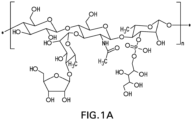
- the present invention provides a polysaccharide with the following repeating unit: conjugated to a carrier protein.
- the polysaccharide has between 5 and 5000 repeating units. In certain aspects, the polysaccharide has between 10 and 3,000, 20 and 2,000, 50 to 1,500, or 100 to 1,000 repeating units.
- the polysaccharide has a molecular weight from 5 kDa to 5,000 kDa. In certain aspects, the polysaccharide has a molecular weight from 10 kDa to 2,000 kDa, 50 kDa to 1,500 kDa, or 100 kDa to 1,000 kDa.
- the present invention further provides activated polysaccharides produced from any of the above embodiments wherein the polysaccharide is activated with a chemical reagent to produce reactive groups for conjugation to a linker or carrier protein.
- the activation occurs at the arabinitol-1-PO 4 .
- the polysaccharide is activated with periodate. In certain aspects of this embodiment, the activation occurs on the carbon 2 position of arabinitol-1-PO 4 .
- the present invention further provides polysaccharide-protein conjugates in which polysaccharides or activated polysaccharides as provided for above are conjugated to a carrier protein.
- the carrier protein is selected from CRM197, diphtheria toxin fragment B (DTFB), DTFB C8, Diphtheria toxoid (DT), tetanus toxoid (TT), fragment C of TT, pertussis toxoid, cholera toxoid, E. coli LT, E. coli ST, and exotoxin A from Pseudomonas aeruginosa.
- the carrier protein is CRM197.
- the polysaccharide-protein conjugates are prepared using reductive amination chemistry under aqueous conditions or in an aprotic solvent such as dimethyl sulfoxide (DMSO).
- DMSO dimethyl sulfoxide
- the polysaccharide-protein conjugates are prepared using reductive amination chemistry in DMSO.
- a multivalent immunogenic composition comprising unconjugated polysaccharides or polysaccharide-protein conjugates from Streptococcus pneumoniae serotype 24F, and unconjugated polysaccharides or polysaccharide-protein conjugates from one or more of Streptococcus pneumoniae serotypes 1, 2, 3, 4, 5, 6A, 6B, 6C, 6D, 7B, 7C, 7F, 8, 9N, 9V, 10A, 11A, 12F, 14, 15A, 15B, 15C, 16F, 17F, 18B, 18C, 19A, 19F, 20, 21, 22A, 22F, 23A, 23B, 23F, 24B, 27, 28A, 31, 33F, 34, 35A, 35B, 35F, and 38.
- Themultivalent immunogenic composition may comprise unconjugated polysaccharides or polysaccharide-carrier protein conjugates but not both.
- the multivalent immunogenic composition may comprise a mixture of unconjugated polysaccharides or polysaccharide-carrier protein conjugates.
- the multivalent immunogenic composition may have up to 4, 5, 6, 7, 8, 9, 10, 11, 12, 13, 15, 16, 17, 18, 19, 20, 21, 22, 23, 24, 25, 26, 27, 28, 29, 30, 31, 32, 33, 34, 35, 40, 45, 50, 55, 60, 65, 70, 75, 80, 85, or 90 serotypes.
- the present invention is based, in part, on the identification of novel pneumococcal polysaccharide structure(s) by NMR technology. It is believed that the structure provided herein is the first identification or the first correct identification of S. pneumoniae serotype 24F.
- the S. pneumoniae serotype 24F polysaccharide was produced from its respective strain and purified. The produced (and purified) polysaccharides were used to generate individual Ps-CRM197 conjugates. S. pneumoniae serotype 24F has a unique polysaccharide, which results in a unique conjugate production process. The resulting conjugate(s) were demonstrated to be immunogenic in animal studies.
- polysaccharide is meant to include any antigenic saccharide element (or antigenic unit) commonly used in the immunologic and bacterial vaccine arts, including, but not limited to, a “saccharide”, an “oligosaccharide”, a “polysaccharide”, a “liposaccharide”, a “lipo-oligosaccharide (LOS)", a “lipopolysaccharide (LPS)", a "glycosylate”, a “glycoconjugate”, a "derivatized or activated polysaccharide or oligosaccharide", and the like.
- a saccharide element or antigenic unit
- immunogenic composition refers to a composition containing an antigen, such as a bacterial capsular polysaccharide or a polysaccharide-protein conjugate, that has the ability to elicit an immune response in a host such as a mammal, either humorally or cellularly mediated, or both.
- the immunogenic composition may serve to sensitize the host by the presentation of the antigen in association with MHC molecules at a cell surface.
- antigen-specific T-cells or antibodies can be generated to allow for the future protection of an immunized host. Immunogenic compositions thus can protect the host from infection by the bacteria, reduced severity, or may protect the host from death due to the bacterial infection..
- Immunogenic compositions may also be used to generate polyclonal or monoclonal antibodies, which may be used to confer passive immunity to a subject. Immunogenic compositions may also be used to generate antibodies that are functional as measured by the killing of bacteria in either an animal efficacy model or via an opsonophagocytic killing assay.
- isolated in connection with a polysaccharide refers to isolation of S. pneumoniae serotype specific capsular polysaccharide from purified polysaccharide using purification techniques known in the art, including the use of centrifugation, depth filtration, precipitation, ultrafiltration, treatment with activate carbon, diafiltration and/or column chromatography.
- an isolated polysaccharide refers to partial removal of proteins, nucleic acids and non-specific endogenous polysaccharide (C-polysaccharide).
- the isolated polysaccharide contains less than 10%, 8%, 6%, 4%, or 2% protein impurities and/or nucleic acids.
- the isolated polysaccharide contains less than 20% of C-polysaccharide with respect to type specific polysaccharides.
- purified in connection with a bacterial capsular polysaccharide refers to the purification of the polysaccharide from cell lysate through means such as centrifugation, precipitation, and ultra-filtration.
- a purified polysaccharide refers to removal of cell debris and DNA.
- Mw refers to the weight averaged molecular weight and is typically expressed in Da or kDa. Mw takes into account that a bigger molecule contains more of the total mass of a polymer sample than the smaller molecules do. Mw can be determined by techniques such as static light scattering, small angle neutron scattering, X-ray scattering, and sedimentation velocity.
- Mn refers to a number average molecular weight and is typically expressed in Da or kDa. Mn is calculated by taking the total weight of a sample divided by the number of molecules in the sample and can be determined by techniques such as gel permeation chromatography, viscometry via the (Mark-Houwink equation), colligative methods such as vapor pressure osmometry, end-group determination or proton NMR. Mw/Mn reflects polydispersity.
- molar ratio is a fraction typically expressed as a decimal to the tenths or hundredths place.
- a molar ratio of from 0 or 0.1 to 1.0 expressed in tenths will include any of 0.1, 0.2, 0.3, 0.4, 0.5, 0.6, 0.7, 0.8, 0.9 or 1.0.
- PnPs pneumococcal polysaccharide
- the term “comprises” when used with the immunogenic composition of the invention refers to the inclusion of any other components (subject to limitations of "consisting of" language for the antigen mixture), such as adjuvants and excipients.
- the term “consisting of” when used with the multivalent polysaccharide-protein conjugate mixture of the invention refers to a mixture having those particular S. pneumoniae polysaccharide protein conjugates and no other S. pneumoniae polysaccharide protein conjugates from a different serotype.
- activation site on a sugar means that the site can be chemically modified to form a reactive group. Activation site takes into account the preferred tendency of an activation agent to react at a specific site.
- activated polysaccharide refers to a polysaccharide that has been chemically modified to form reactive groups in a polysaccharide chain.
- An activated polysccharide does not necessarily mean that all the available activation sites have been chemically modified.
- the phrase "extent of activation" on a polysaccharide chain refers to the overall ratio between the number of activated chemical group to the number of repeat units on the polysaccharide chain.
- polysaccharide serotype(s) may allow their incorporation into pneumococcal vaccines, either unconjugated or as a polysaccharide-protein conjugate.
- Conjugate vaccines comprising streptococcal and pneumococcal Ps are well-known in the art. See e.g., U.S. Pat. Nos. 6,248,570 ; 5,866,135 ; and 5,773,007 .
- Capsular polysaccharides from Steptococcus pneumoniae from the serotype(s) of the invention can be prepared by standard techniques known to those skilled in the art.
- polysaccharides can be isolated from bacteria and may be sized to some degree by known methods (see, e.g., European Patent Nos. EP497524 and EP497525 ); and preferably by microfluidisation accomplished using a homogenizer or by chemical hydrolysis.
- S. pneumoniae strains corresponding to each polysaccharide serotype are grown in a soy-based medium. The individual polysaccharides are then purified through standard steps including centrifugation, precipitation, and ultra-filtration. See, e.g., U.S. Patent Application Publication No.
- Polysaccharides can be sized in order to reduce viscosity and/or to improve filterability of subsequent conjugated products.
- Chemical hydrolysis may be conducted using acetic acid.
- Mechanical sizing may be conducted using High Pressure Homogenization Shearing.
- the purified polysaccharides before conjugation have a molecular weight of between 5 kDa and 4,000 kDa.
- Molecular weight can be calculated by size exclusion chromatography (SEC) combined with multiangle light scattering detector (MALS) and refractive index detector (RI).
- the polysaccharide has an average molecular weight of between 10 kDa and 4,000 kDa; between 50 kDa and 4,000 kDa; between 50 kDa and 3,000 kDa; between 50 kDa and 2,000 kDa; between 50 kDa and 1,500 kDa; between 50 kDa and 1,000 kDa; between 50 kDa and 750 kDa; between 50 kDa and 500 kDa; between 100 kDa and 4,000 kDa; between 100 kDa and 3,000 kDa; between 5 kDa and 2,000 kDa; between 10 kDa and 2,000 kDa; between 50 kDa and 2,000 kDa; between 100 kDa and 2,000 kDa; between 100 kDa and 1,500 kDa; between 100 kDa and 1,000 kDa; between 100 kDa and 750 kDa;
- the polysaccharide has a molecular weight from 50 kDa to 5,000 kDa. In certain aspects, the polysaccharide has a molecular weight from 10 kDa to 2,000 kDa, 50 kDa to 1,500 kDa, or 75 kDa to 200 kDa.
- the S. pneumoniae serotype 24F polysaccharide has between 5 and 2,000 repeating units. In certain aspects, the polysaccharide has between 15 and 1,500, 20 and 400, 30 to 300, 40 to 250, or 50 to 200 repeating units.
- Polysaccharides from one or more of the serotypes can be conjugated to a carrier protein ("Pr") to improve immunogenicity in children, the elderly and/or immunocompromised subjects.
- the serotypes may be prepared with the same carrier protein or different carrier proteins. Each capsular polysaccharide of the same serotype is typically conjugated to the same carrier protein.
- CRM197 is used as a carrier protein.
- CRM197 is a non-toxic variant of diphtheria toxin (DT).
- the CRM197 carrier protein is a mutant form of DT that is rendered non-toxic by a single amino acid substitution in Fragment A at residue 52.
- the CRM197 carrier protein is isolated from cultures of Corynebacterium diphtheria strain C7 ( ⁇ 197) grown in casamino acids and yeast extract-based medium.
- CRM197 is prepared recombinantly in accordance with the methods described in U.S. Pat. No. 5,614,382 .
- CRM197 is purified through a combination of ultra-filtration, ammonium sulfate precipitation, and ionexchange chromatography.
- CRM197 is prepared in Pseudomonas fluorescens using Pfenex Expression Technology TM (Pfenex Inc., San Diego, CA).
- Suitable carrier proteins include additional inactivated bacterial toxins such as DT, Diphtheria toxoid fragment B (DTFB), TT (tetanus toxid) or fragment C of TT, pertussis toxoid, cholera toxoid (e.g., as described in International Patent Application Publication No. WO 2004/083251 ), E. coli LT (heat-labile enterotoxin), E. coli ST (heat-stable enterotoxin), and exotoxin A from Pseudomonas aeruginosa.
- DTFB Diphtheria toxoid fragment B
- TT tetanus toxid
- fragment C of TT fragment C of TT
- pertussis toxoid e.g., as described in International Patent Application Publication No. WO 2004/083251
- E. coli LT heat-labile enterotoxin
- E. coli ST he
- Bacterial outer membrane proteins such as outer membrane complex c (OMPC), porins, transferrin binding proteins, pneumococcal surface protein A (PspA; See International Application Patent Publication No. WO 02/091998 ), pneumococcal adhesin protein (PsaA), C5a peptidase from Group A or Group B streptococcus, or Haemophilus influenzae protein D, pneumococcal pneumolysin ( Kuo et al., 1995, Infect Immun 63; 2706-13 ) including ply detoxified in some fashion for example dPLY-GMBS (See International Patent Application Publication No.
- WO 04/081515 or dPLY-formol, PhtX, including PhtA, PhtB, PhtD, PhtE and fusions of Pht proteins for example PhtDE fusions, PhtBE fusions (See International Patent Application Publication Nos. WO 01/98334 and WO 03/54007 ), may also be used.
- Other proteins such as ovalbumin, keyhole limpet hemocyanin (KLH), bovine serum albumin (BSA) or purified protein derivative of tuberculin (PPD), PorB (from N. meningitidis ) , PD ( Haemophilus influenzae protein D; see, e.g., European Patent No.
- EP 0 594 610 B or immunologically functional equivalents thereof, synthetic peptides (See European Patent Nos. EP0378881 and EP0427347 ), heat shock proteins (See International Patent Application Publication Nos. WO 93/17712 and WO 94/03208 ), pertussis proteins (See International Patent Application Publication No. WO 98/58668 and European Patent No. EP0471177 ), cytokines, lymphokines, growth factors or hormones (See International Patent Application Publication No.
- artificial proteins comprising multiple human CD4+ T cell epitopes from various pathogen derived antigens (See Falugi et al., 2001, Eur J Immunol 31:3816-3824 ) such as N19 protein (See Baraldoi et al., 2004, Infect Immun 72:4884-7 ), iron uptake proteins (See International Patent Application Publication No. WO 01/72337 ), toxin A or B of C . difficile (See International Patent Publication No. WO 00/61761 ), and flagellin (See Ben-Yedidia et al., 1998, Immunol Lett 64:9 ) may also be used as carrier proteins.
- DT mutants may also be used as the carrier protein, such as CRM176, CRM228, CRM45 ( Uchida et al., 1973, J Biol Chem 218:3838-3844 ); CRM9, CRM45, CRM102, CRM103 and CRM107 and other mutations described by Nicholls and Youle in Genetically Engineered Toxins, Ed: Frankel, Maecel Dekker Inc, 1992 ; deletion or mutation of Glu-148 to Asp, Gln or Ser and/or Ala 158 to Gly and other mutations disclosed in U.S. Pat. No. 4,709,017 or U.S. Pat. No.
- a second carrier protein can be used for one or more of the antigens.
- the second carrier protein is preferably a protein that is non-toxic and non-reactogenic and obtainable in sufficient amount and purity.
- the second carrier protein is also conjugated or joined with an antigen, e.g., a S. pneumoniae polysaccharide to enhance immunogenicity of the antigen.
- Carrier proteins should be amenable to standard conjugation procedures.
- each capsular polysaccharide not conjugated to the first carrier protein is conjugated to the same second carrier protein (e.g., each capsular polysaccharide molecule being conjugated to a single carrier protein).
- capsular polysaccharides not conjugated to the first carrier protein are conjugated to two or more carrier proteins (each capsular polysaccharide molecule being conjugated to a single carrier protein).
- each capsular polysaccharide of the same serotype is typically conjugated to the same carrier protein.
- the purified polysaccharides Prior to conjugation, can be chemically activated to make the saccharides capable of reacting with the carrier protein to form an activated polysaccharide.
- activated polysaccharide refers to a polysaccharide that has been chemically modified as described below to enable conjugation to a linker or a carrier protein.
- the purified polysaccharides can optionally be connected to a linker. Once activated or connected to a linker, each capsular polysaccharide is separately conjugated to a carrier protein to form a glycoconjugate.
- the polysaccharide conjugates may be prepared by known coupling techniques.
- the present invention further provides activated polysaccharides produced from any of the above embodiments wherein the polysaccharide is activated with a chemical reagent to produce reactive groups for conjugation to a linker or carrier protein.
- the activation occurs at the arabinitol-1-PO 4 .
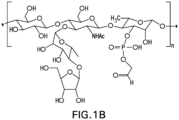
- the polysaccharide is activated with periodate. In certain aspects of this embodiment, the activation occurs on the carbon 2 position of arabinitol-1-PO 4 . See Figure 1B for the structure of the periodate activated serotype 24F polysaccharide.
- the present invention provides activated polysaccharides and mixtures of activated polysaccharides wherein greater than 50%, 60%, 70% or 80% of the aldehyde groups (through periodate activation) are at the arabinitol.
- the activated polysaccharide has a structure as shown in Figure 1B .
- the polysaccharide can be coupled to a linker to form a polysaccharide-linker intermediate in which the free terminus of the linker is an ester group.
- the linker is therefore one in which at least one terminus is an ester group. The other terminus is selected so that it can react with the polysaccharide to form the polysaccharide-linker intermediate.
- the polysaccharide can be coupled to a linker using a primary amine group in the polysaccharide.
- the linker typically has an ester group at both termini. This allows the coupling to take place by reacting one of the ester groups with the primary amine group in the polysaccharide by nucleophilic acyl substitution. The reaction results in a polysaccharide-linker intermediate in which the polysaccharide is coupled to the linker via an amide linkage.
- the linker is therefore a bifunctional linker that provides a first ester group for reacting with the primary amine group in the polysaccharide and a second ester group for reacting with the primary amine group in the carrier molecule.
- a typical linker is adipic acid N-hydroxysuccinimide diester (SIDEA).
- the coupling can also take place indirectly, i.e. with an additional linker that is used to derivatise the polysaccharide prior to coupling to the linker.
- the polysaccharide is coupled to the additional linker using a carbonyl group at the reducing terminus of the polysaccharide.
- This coupling comprises two steps: (a1) reacting the carbonyl group with the additional linker; and (a2) reacting the free terminus of the additional linker with the linker.
- the additional linker typically has a primary amine group at both termini, thereby allowing step (a1) to take place by reacting one of the primary amine groups with the carbonyl group in the polysaccharide by reductive amination.
- a primary amine group is used that is reactive with the carbonyl group in the polysaccharide. Hydrazide or hydroxylamino groups are suitable. The same primary amine group is typically present at both termini of the additional linker. The reaction results in a polysaccharide-additional linker intermediate in which the polysaccharide is coupled to the additional linker via a C-N linkage.
- the polysaccharide can be coupled to the additional linker using a different group in the polysaccharide, particularly a carboxyl group.
- This coupling comprises two steps: (a1) reacting the group with the additional linker; and (a2) reacting the free terminus of the additional linker with the linker.
- the additional linker typically has a primary amine group at both termini, thereby allowing step (a1) to take place by reacting one of the primary amine groups with the carboxyl group in the polysaccharide by EDAC activation.
- a primary amine group is used that is reactive with the EDAC-activated carboxyl group in the polysaccharide.
- a hydrazide group is suitable.
- the same primary amine group is typically present at both termini of the additional linker.
- the reaction results in a polysaccharide-additional linker intermediate in which the polysaccharide is coupled to the additional linker via an amide linkage.
- the chemical activation of the polysaccharides and subsequent conjugation to the carrier protein by reductive amination can be achieved by means described in U.S. Pat. Nos. 4,365,170 , 4,673,574 and 4,902,506 , U.S. Patent Application Publication Nos. 2006/0228380 , 2007/184072 , 2007/0231340 and 2007/0184071 , and International Patent Application Publication Nos. WO2006/110381 , WO2008/079653 , and WO2008/143709 .
- the chemistry may entail the activation of pneumococcal polysaccharide by reaction with any oxidizing agent which a primary hydroxyl group to an aldehyde, such as TEMPO in the presence of oxidant ( WO2104/097099 ), or reacting two vicinal hydroxyl groups to aldehydes, such as periodate (including sodium periodate, potassium periodate, or periodic acid).
- oxidizing agent which a primary hydroxyl group to an aldehyde
- TEMPO oxidant
- two vicinal hydroxyl groups such as periodate (including sodium periodate, potassium periodate, or periodic acid).
- the reactions lead to a random oxidation of primary hydroxyl groups or random oxidative cleavage of vicinal hydroxyl groups of the carbohydrates with the formation of reactive aldehyde groups.
- coupling to the carrier protein is by reductive amination via direct amination to the lysyl groups of the protein.
- conjugation is carried out by reacting a mixture of the activated polysaccharide and carrier protein with a reducing agent such as sodium cyanoborohydride in the presence of nickel.
- the conjugation reaction may take place under aqueous solution or in the presence of dimethyl sulfoxide (DMSO).
- DMSO dimethyl sulfoxide
- Unreacted aldehydes are then capped with the addition of a strong reducing agent, such as sodium borohydride.
- Reductive amination involves two steps, (1) oxidation of the polysaccharide to form reactive aldehydes, (2) reduction of the imine (Schiff base) formed between activated polysaccharide and a carrier protein to form a stable amine conjugate bond.
- the polysaccharide is optionally size reduced. Mechanical methods (e.g. homogenization) or chemical hydrolysis may be employed. Chemical hydrolysis maybe conducted using acetic acid.
- the oxidation step may involve reaction with periodate.
- periodate includes both periodate and periodic acid; the term also includes both metaperiodate (IO 4 - ) and orthoperiodate (IO 6 5- ) and includes the various salts of periodate (e.g.
- capsular polysaccharide is oxidized in the presence of metaperiodate, preferably in the presence of sodium periodate (NaIO 4 ). In another embodiment the capsular polysaccharide is oxydized in the presence of orthoperiodate, preferably in the presence of periodic acid.
- the oxidizing agent is a stable nitroxyl or nitroxide radical compound, such as piperidine-N-oxy or pyrrolidine-N-oxy compounds, in the presence of an oxidant to selectively oxidize primary hydroxyls (as described in, for example, International Patent Application Publication No. WO 2014/097099 ).
- the actual oxidant is the N-oxoammonium salt, in a catalytic cycle.
- said stable nitroxyl or nitroxide radical compound are piperidine-N-oxy or pyrrolidine-N-oxy compounds.
- said stable nitroxyl or nitroxide radical compound bears a TEMPO (2,2,6,6-tetramethyl-1-piperidinyloxy) or a PROXYL (2,2,5,5-tetramethyl-1-pyrrolidinyloxy) moiety.
- said stable nitroxyl radical compound is TEMPO or a derivative thereof.
- said oxidant is a molecule bearing a N-halo moiety.
- said oxidant is selected from the group consisting of N-ChloroSuccinimide, N-Bromosuccinimide, N-Iodosuccinimide, Dichloroisocyanuric acid, 1 ,3,5-trichloro-1 ,3,5-triazinane-2,4,6-trione, Dibromoisocyanuric acid, 1,3,5-tribromo-1 ,3,5-triazinane-2,4,6-trione, Diiodoisocyanuric acid and 1 ,3,5-triiodo-1,3,5-triazinane-2,4,6-trione.
- said oxidant is N- Chlorosuccinimide.
- the oxidizing agent is 2,2,6,6-Tetramethyl-1 -piperidinyloxy (TEMPO) free radical and N- Chlorosuccinimide (NCS) as the cooxidant (as described in International Patent Application Publication No. WO2014/097099 ). Therefore in one aspect, the glycoconjugates from S.
- TEMPO 2,2,6,6-Tetramethyl-1 -piperidinyloxy
- NCS N- Chlorosuccinimide
- pneumoniae are obtainable by a method comprising the steps of: a) reacting a saccharide with 2,2,6,6-tetramethyl-1 -piperidinyloxy (TEMPO) and N-chlorosuccinimide (NCS) in an aqueous solvent to produce an activated saccharide; and b) reacting the activated saccharide with a carrier protein comprising one or more amine groups (said method is designated "TEMPO/NCS-reductive amination" thereafter).
- TEMPO 2,2,6,6-tetramethyl-1 -piperidinyloxy
- NCS N-chlorosuccinimide
- the oxidation reaction is quenched by addition of a quenching agent.
- the quenching agent maybe selected from vicinal diols, 1,2-aminoalcohols, amino acids, glutathione, sulfite, bisulfate, dithionite, metabisulfite, thiosulfate, phosphites, hypophosphites or phosphorous acid (such as glycerol, ethylene glycol, propan-1,2-diol, butan-1,2-diol or butan-2,3-diol, ascorbic acid).
- the second step of the conjugation process for reductive amination is the reduction of the imine (Schiff base) bond between activated polysaccharide and a carrier protein to form a stable conjugate bond (so-called reductive amination), using a reducing agent.
- Reducing agents which are suitable include the cyanoborohydrides (such as sodium cyanoborohydride) or sodium borohydride. In one embodiment the reducing agent is sodium cyanoborohydride.
- the reductive amination reaction is carried out in aprotic solvent (or a mixture of aprotic solvents).
- the reduction reaction is carried out in DMSO (dimethyl sulfoxide) or in DMF (dimethylformamide) solvent.
- DMSO dimethyl sulfoxide
- DMF dimethylformamide
- the DMSO or DMF solvent may be used to reconstitute the activated polysaccharide and carrier protein, if lyophilized.
- the aprotic solvent is DMSO.
- this capping or quenching agent is sodium borohydride (NaBH 4 ).
- Suitable alternatives include sodium triacetoxyborohydride or sodium or zinc borohydride in the presence of Bronsted or Lewis acids), amine boranes such as pyridine borane, 2-Picoline Borane, 2,6-diborane-methanol, dimethylamine-borane, t-BuMe'PrN-BH 3 , benzylamine-BH 3 or 5-ethyl-2-methylpyridine borane (PEMB) or borohydride exchange resin.
- amine boranes such as pyridine borane, 2-Picoline Borane, 2,6-diborane-methanol, dimethylamine-borane, t-BuMe'PrN-BH 3 , benzylamine-BH 3 or 5-ethyl-2-methylpyridine borane (PEMB) or borohydride exchange resin.
- Glycoconjugates prepared using reductive amination in an aprotic solvent are generally used in multivalent pneumococcal conjugate vaccines.
- the reduction reaction for the remaining seroytpes is carried out in aqueous solvent (e.g., selected from PBS (phosphate buffered saline), MES (2-( N -morpholino)ethanesulfonic acid), HEPES, (4-(2-hydroxyethyl)-1-piperazineethanesulfonic acid), Bis-tris, ADA (N-(2-Acetamido)iminodiacetic acid), PIPES (piperazine-N,N'-bis(2-ethanesulfonic acid)), MOPSO (3-Morpholino-2-hydroxypropanesulfonic acid), BES (N,N-bis(2-hydroxyethyl)-2-aminoethane
- aqueous solvent e.g., selected from PBS (phosphate buffered sa
- the glycoconjugates of the present invention comprise a polysaccharide having a molecular weight of between 10 kDa and 10,000 kDa. In other such embodiments, the polysaccharide has a molecular weight of between 25 kDa and 5,000 kDa. In other such embodiments, the polysaccharide has a molecular weight of between 50 kDa and 1,000 kDa. In other such embodiments, the polysaccharide has a molecular weight of between 70 kDa and 900 kDa. In other such embodiments, the polysaccharide has a molecular weight of between 100 kDa and 800 kDa.
- the polysaccharide has a molecular weight of between 200 kDa and 600 kDa. In further such embodiments, the polysaccharide has a molecular weight of 100 kDa to 1,000 kDa; 100 kDa to 900 kDa; 100 kDa to 800 kDa; 100 kDa to 700 kDa; 100 kDa to 600 kDa; 100 kDa to 500 kDa; 100 kDa to 400 kDa; 100 kDa to 300 kDa; 150 kDa to 1,000 kDa; 150 kDa to 900 kDa; 150 kDa to 800 kDa; 150 kDa to 700 kDa; 150 kDa to 600 kDa; 150 kDa to 500 kDa; 150 kDa to 400 kDa; 150 kDa to 300 kDa; 200 kDa to 1,000 kDa; 100
- the conjugation reaction is performed by reductive amination wherein nickel is used for greater conjugation reaction efficiency and to aid in free cyanide removal.
- Transition metals are known to form stable complexes with cyanide and are known to improve reductive methylation of protein amino groups and formaldehyde with sodium cyanoborohydride ( S Gidley et al., Biochem J. 1982, 203: 331-334 ; Jentoft et al. Anal Biochem. 1980, 106: 186-190 ).
- the addition of nickel increases the consumption of protein during the conjugation of and leads to formation of larger, potentially more immieuxic conjugates.
- Suitable alternative chemistries include the activation of the saccharide with 1-cyano-4-dimethylamino pyridinium tetrafluoroborate (CDAP) to form a cyanate ester.
- the activated saccharide may thus be coupled directly or via a spacer (linker) group to an amino group on the carrier protein.
- the spacer could be cystamine or cysteamine to give a thiolated polysaccharide which could be coupled to the carrier via a thioether linkage obtained after reaction with a maleimide-activated carrier protein (for example using GMBS) or a haloacetylated carrier protein (for example using iodoacetimide [e.g.
- the cyanate ester (optionally made by CDAP chemistry) is coupled with hexane diamine or adipic acid dihydrazide (ADH) and the amino-derivatised saccharide is conjugated to the carrier protein using carbodiimide (e.g., EDAC or EDC) chemistry via a carboxyl group on the protein carrier.
- carbodiimide e.g., EDAC or EDC
- Such conjugates are described in International Patent Application Publication Nos. WO 93/15760 , WO 95/08348 and WO 96/29094 ; and Chu et al., 1983, Infect. Immunity 40:245-256 .
- Conjugation may involve a carbonyl linker which may be formed by reaction of a free hydroxyl group of the saccharide with CDI (See Bethell et al., 1979, J. Biol. Chem. 254:2572-4 ; Hearn et al., 1981, J. Chromatogr. 218:509-18 ) followed by reaction with a protein to form a carbamate linkage.
- CDI See Bethell et al., 1979, J. Biol. Chem. 254:2572-4 ; Hearn et al., 1981, J. Chromatogr. 218:509-18
- This may involve reduction of the anomeric terminus to a primary hydroxyl group, optional protection/deprotection of the primary hydroxyl group, reaction of the primary hydroxyl group with CDI to form a CDI carbamate intermediate and coupling the CDI carbamate intermediate with an amino group on a protein.
- the glycoconjugates may be purified (enriched with respect to the amount of polysaccharide-protein conjugate) by a variety of techniques known to the skilled person. These techniques include dialysis, concentration/diafiltration operations, tangential flow filtration, ultrafiltration, precipitation/elution, column chromatography (ion exchange chromatography, multimodal ion exchange chromatography, DEAE, or hydrophobic interaction chromatography), and depth filtration. See, e.g., U.S. Pat. No. 6,146,902 .
- the glycoconjugates are purified by diafilitration or ion exchange chromatography or size exclusion chromatography.
- One way to characterize the glycoconjugates of the invention is by the number of lysine residues in the carrier protein (e.g., CRM197) that become conjugated to the saccharide, which can be characterized as a range of conjugated lysines (degree of conjugation).
- the evidence for lysine modification of the carrier protein, due to covalent linkages to the polysaccharides, can be obtained by amino acid analysis using routine methods known to those of skill in the art. Conjugation results in a reduction in the number of lysine residues recovered, compared to the carrier protein starting material used to generate the conjugate materials.
- the degree of conjugation of the glycoconjugate of the invention is between 2 and 15, between 2 and 13, between 2 and 10, between 2 and 8, between 2 and 6, between 2 and 5, between 2 and 4, between 3 and 15, between 3 and 13, between 3 and 10, between 3 and 8, between 3 and 6, between 3 and 5, between 3 and 4, between 5 and 15, between 5 and 10, between 8 and 15, between 8 and 12, between 10 and 15 or between 10 and 12.
- the degree of conjugation of the glycoconjugate of the invention is about 2, about 3, about 4, about 5, about 6, about 7, about 8, about 9, about 10, about 11, about 12, about 13, about 14 or about 15.
- the degree of conjugation of the glycoconjugate of the invention is between 4 and 7.
- the carrier protein is CRM197.
- the glycoconjugates of the invention may also be characterized by the ratio (weight/weight) of saccharide to carrier protein.
- the ratio of polysaccharide to carrier protein in the glycoconjugate (w/w) is between 0.4 and 2.0
- the carrier protein is CRM197.
- the glycoconjugates and immunogenic compositions of the invention may contain free saccharide that is not covalently conjugated to the carrier protein, but is nevertheless present in the glycoconjugate composition.
- the free saccharide may be non-covalently associated with (i.e., non-covalently bound to, adsorbed to, or entrapped in or with) the glycoconjugate.
- the glycoconjugate comprises less than about 50%, 45%, 40%, 35%, 30%, 25%, 20% or 15% of free polysaccharide compared to the total amount of polysaccharide. In a preferred embodiment the glycoconjugate comprises less than about 25% of free polysaccharide compared to the total amount of polysaccharide. In a preferred embodiment the glycoconjugate comprises less than about 20% of free polysaccharide compared to the total amount of polysaccharide. In a preferred embodiment the glycoconjugate comprises less than about 15% of free polysaccharide compared to the total amount of polysaccharide.
- multivalent polysaccharide vaccines comprising unconjugated polysaccharides or polysaccharide-protein conjugates from Streptococcus pneumoniae serotype 24F and capsular polysaccharides from one or more of S.
- the immunogenic composition may comprise, consist essentially of, or consist of capsular polysaccharides from 2, 3, 4, 5, 6, 7, 8, 9, 10, 11, 12, 13, 14, 15, 16, 17, 18, 19, 20, 21, 22, 23, 24, 25, 26, 27, 28, 29, 30, 31, 32, 33, 34, 35, 36, 37, 38, 39, 40, 41, 42, 43, or 44 S. pneumoniae serotypes individually conjugated to one or more carrier proteins.
- saccharides from a particular serotype are not conjugated to more than one carrier protein.
- compositions including pharmaceutical, immunogenic and vaccine compositions, comprising, consisting essentially of, or alternatively, consisting of any of the polysaccharide S. pneumoniae serotype combinations described above together with a pharmaceutically acceptable carrier and an adjuvant.
- Formulation of the polysaccharide-protein conjugates of the present invention can be accomplished using art-recognized methods.
- individual pneumococcal conjugates can be formulated with a physiologically acceptable vehicle to prepare the composition.
- physiologically acceptable vehicles include, but are not limited to, water, buffered saline, polyols (e.g., glycerol, propylene glycol, liquid polyethylene glycol) and dextrose solutions.
- the vaccine composition may be formulated in L-histidine buffer with sodium chloride.
- an "adjuvant” is a substance that serves to enhance the immunogenicity of an immunogenic composition.
- An immune adjuvant may enhance an immune response to an antigen that is weakly immunogenic when administered alone, e.g., inducing no or weak antibody titers or cell-mediated immune response, increase antibody titers to the antigen, and/or lowers the dose of the antigen effective to achieve an immune response in the individual.
- adjuvants are often given to boost the immune response and are well known to the skilled artisan.
- Suitable adjuvants to enhance effectiveness of the composition include, but are not limited to:
- the adjuvant may be a mixture of 2, 3, or more of the above adjuvants, e.g., SBAS2 (an oil-in-water emulsion also containing 3-deacylated monophosphoryl lipid A and QS21).
- SBAS2 an oil-in-water emulsion also containing 3-deacylated monophosphoryl lipid A and QS21.
- Muramyl peptides include, but are not limited to, N-acetyl-muramyl-L-threonyl-D-isoglutamine (thr-MDP), N-acetyl-normuramyl-L-alanine-2-(1',2'-dipalmitoyl-sn-glycero-3-hydroxyphosphoryloxy)-ethylamine (MTP-PE), etc.
- thr-MDP N-acetyl-muramyl-L-threonyl-D-isoglutamine
- MTP-PE N-acetyl-normuramyl-L-alanine-2-(1',2'-dipalmitoyl-sn-glycero-3-hydroxyphosphoryloxy)-ethylamine
- the adjuvant may be an aluminum salt.
- the aluminum salt adjuvant may be an alum-precipitated vaccine or an alum-adsorbed vaccine.
- Aluminum-salt adjuvants are well known in the art and are described, for example, in Harlow, E. and D. Lane (1988; Antibodies: A Laboratory Manual Cold Spring Harbor Laboratory ) and Nicklas, W. (1992; Aluminum salts. Research in Immunology 143:489-493 ).
- the aluminum salt includes, but is not limited to, hydrated alumina, alumina hydrate, alumina trihydrate (ATH), aluminum hydrate, aluminum trihydrate, Alhydrogel ® , Superfos, Amphogel ® , aluminum (III) hydroxide, aluminum hydroxyphosphate (Aluminum Phosphate Adjuvant (APA)), amorphous alumina, trihydrated alumina, or trihydroxyaluminum.
- APA is an aqueous suspension of aluminum hydroxyphosphate.
- APA is manufactured by blending aluminum chloride and sodium phosphate in a 1:1 volumetric ratio to precipitate aluminum hydroxyphosphate. After the blending process, the material is size-reduced with a high-shear mixer to achieve a monodisperse particle size distribution. The product is then diafiltered against physiological saline and steam sterilized.
- a commercially available Al(OH) 3 may be used to adsorb proteins. Adsorption of protein may be dependent, on the pI (Isoelectric pH) of the protein and the pH of the medium. A protein with a lower pI adsorbs to the positively charged aluminum ion more strongly than a protein with a higher pI.
- Aluminum salts may establish a depot of Ag that is released slowly over a period of 2-3 weeks, be involved in nonspecific activation of macrophages and complement activation, and/or stimulate innate immune mechanism (possibly through stimulation of uric acid). See, e.g., Lambrecht et al., 2009, Curr Opin Immunol 21:23 .
- Monovalent bulk aqueous conjugates are typically blended together and diluted. Once diluted, the batch is sterile filtered.
- Aluminum phosphate adjuvant is added aseptically to target a final concentration of 4 ⁇ g/mL for all S. pneumoniae serotypes except serotype 6B, which is diluted to a target of 8 ⁇ g/mL, and a final aluminum concentration of 250 ⁇ g/mL.
- the adjuvanted, formulated batch will be filled into vials or syringes.
- the adjuvant may be a CpG-containing nucleotide sequence, for example, a CpG-containing oligonucleotide, in particular, a CpG-containing oligodeoxynucleotide (CpG ODN).
- the adjuvant may be ODN 1826, which may be acquired from Coley Pharmaceutical Group.
- CpG-containing nucleotide refers to a nucleotide molecule of 6-50 nucleotides in length that contains an unmethylated CpG moiety. See, e.g., Wang et al., 2003, Vaccine 21:4297 . Any other art-accepted definition of the terms is intended.
- CpG-containing oligonucleotides include modified oligonucleotides using any synthetic internucleoside linkages, modified base and/or modified sugar.
- compositions and formulations of the present invention can be used to protect or treat a human susceptible to infection, e.g., a pneumococcal infection, by means of administering the vaccine via a systemic or mucosal route.
- the present disclosure provides a method of inducing an immune response to a S. pneumoniae capsular polysaccharide conjugate, comprising administering to a human an immunologically effective amount of an immunogenic composition of the present invention.
- the present disclosure provides a method of vaccinating a human against a pneumococcal infection, comprising the step of administering to the human an immunogically effective amount of an immunogenic composition of the present invention.
- Optimal amounts of components for a particular vaccine can be ascertained by standard studies involving observation of appropriate immune responses in subjects.
- the dosage for human vaccination is determined by extrapolation from animal studies to human data.
- the dosage is determined empirically.
- Effective amount of a composition of the invention refers to a dose required to elicit antibodies that significantly reduce the likelihood or severity of infectivitiy of a microbe, e.g., S. pneumoniae, during a subsequent challenge.
- the methods of the disclosure can be used for the prevention and/or reduction of primary clinical syndromes caused by microbes, e.g., S. pneumoniae, including both invasive infections (meningitis, pneumonia, and bacteremia), and noninvasive infections (acute otitis media, and sinusitis).
- microbes e.g., S. pneumoniae
- invasive infections meningitis, pneumonia, and bacteremia
- noninvasive infections acute otitis media, and sinusitis
- compositions of the invention can include one or more of: injection via the intramuscular, intraperitoneal, intradermal or subcutaneous routes; or via mucosal administration to the oral/alimentary, respiratory or genitourinary tracts.
- intranasal administration is used for the treatment of pneumonia or otitis media (as nasopharyngeal carriage of pneumococci can be more effectively prevented, thus attenuating infection at its earliest stage).
- each dose will comprise 0.1 to 100 ⁇ g of each polysaccharide, particularly 0.1 to 10 ⁇ g, and more particularly 1 to 5 ⁇ g.
- each dose can comprise 100, 150, 200, 250, 300, 400, 500, or 750 ng or 1, 1.5, 2, 3, 4, 5, 6, 7, 7.5, 8, 9, 10, 11, 12, 13, 14, 15, 16, 18, 20, 22, 25, 30, 40, 50, 60, 70, 80, 90, or 100 ⁇ g of each polysaccharide.
- Optimal amounts of components for a particular vaccine can be ascertained by standard studies involving observation of appropriate immune responses in subjects.
- the dosage for human vaccination is determined by extrapolation from animal studies to human data.
- the dosage is determined empirically.
- the dose of the aluminum salt is 10, 15, 20, 25, 30, 50, 70, 100, 125, 150, 200, 300, 500, or 700 ⁇ g, or 1, 1.2, 1.5, 2, 3, 5 mg or more.
- the dose of aluminum salt described above is per ⁇ g of recombinant protein.
- each 0.5 mL dose is formulated to contain: 2 ⁇ g of each S. pneumoniae polysaccharide, except for serotype 6B polysaccharide at 4 ⁇ g; about 32 ⁇ g CRM197 carrier protein (e.g., 32 ⁇ g ⁇ 5 ⁇ g, ⁇ 3 ⁇ g, ⁇ 2 ⁇ g, or ⁇ 1 ⁇ g); 0.125 mg of elemental aluminum (0.5 mg aluminum phosphate) adjuvant; and sodium chloride and L-histidine buffer.
- the sodium chloride concentration is about 150 mM (e.g., 150 mM ⁇ 25 mM, ⁇ 20 mM, ⁇ 15 mM, ⁇ 10 mM, or ⁇ 5 mM) and about 20 mM (e..g, 20 mM ⁇ 5 mM, ⁇ 2.5 mM, ⁇ 2 mM, ⁇ 1 mM, or ⁇ 0.5 mM) L-histidine buffer.
- the subject is human.
- the human patient is an infant (less than 1 year of age), toddler (approximately 12 to 24 months), or young child (approximately 2 to 5 years).
- the human patient is an elderly patient (> 65 years).
- the compositions of this invention are also suitable for use with older children, adolescents and adults (e.g., aged 18 to 45 years or 18 to 65 years).
- a composition of the present invention is administered as a single inoculation.
- the composition is administered twice, three times or four times or more, adequately spaced apart.
- the composition may be administered at 1, 2, 3, 4, 5, or 6 month intervals or any combination thereof.
- the immunization schedule can follow that designated for pneumococcal vaccines.
- the routine schedule for infants and toddlers against invasive disease caused by S. pneumoniae is 2, 4, 6 and 12-15 months of age.
- the composition is administered as a 4-dose series at 2, 4, 6, and 12-15 months of age.
- compositions of this invention may also include one or more proteins from S . pneumoniae.
- S. pneumoniae proteins suitable for inclusion include those identified in International Patent Application Publication Nos. WO 02/083855 and WO 02/053761 .
- compositions of the invention can be administered to a subject by one or more method known to a person skilled in the art, such as parenterally, transmucosally, transdermally, intramuscularly, intravenously, intra-dermally, intra-nasally, subcutaneously, intra-peritonealy, and formulated accordingly.
- compositions of the present invention are administered via epidermal injection, intramuscular injection, intravenous, intra-arterial, subcutaneous injection, or intra-respiratory mucosal injection of a liquid preparation.
- Liquid formulations for injection include solutions and the like.
- composition of the invention can be formulated as single dose vials, multidose vials or as pre-filled syringes.
- compositions of the present invention are administered orally, and are thus formulated in a form suitable for oral administration, i.e., as a solid or a liquid preparation.
- Solid oral formulations include tablets, capsules, pills, granules, pellets and the like.
- Liquid oral formulations include solutions, suspensions, dispersions, emulsions, oils and the like.
- Pharmaceutically acceptable carriers for liquid formulations are aqueous or nonaqueous solutions, suspensions, emulsions or oils.
- nonaqueous solvents are propylene glycol, polyethylene glycol, and injectable organic esters such as ethyl oleate.
- Aqueous carriers include water, alcoholic/aqueous solutions, emulsions or suspensions, including saline and buffered media.
- oils are those of animal, vegetable, or synthetic origin, for example, peanut oil, soybean oil, olive oil, sunflower oil, fish-liver oil, another marine oil, or a lipid from milk or eggs.
- the pharmaceutical composition may be isotonic, hypotonic or hypertonic. However, it is often preferred that a pharmaceutical composition for infusion or injection is essentially isotonic when it is administrated. Hence, for storage the pharmaceutical composition may preferably be isotonic or hypertonic. If the pharmaceutical composition is hypertonic for storage, it may be diluted to become an isotonic solution prior to administration.
- the isotonic agent may be an ionic isotonic agent such as a salt or a non-ionic isotonic agent such as a carbohydrate.
- ionic isotonic agents include but are not limited to NaCl, CaCl 2 , KCl and MgCl 2 .
- non-ionic isotonic agents include but are not limited to sucrose, trehalose, mannitol, sorbitol and glycerol.
- At least one pharmaceutically acceptable additive is a buffer.
- the composition comprises a buffer, which is capable of buffering a solution to a pH in the range of 4 to 10, such as 5 to 9, for example 6 to 8.
- the buffer may for example be selected from the group consisting of Tris, acetate, glutamate, lactate, maleate, tartrate, phosphate, citrate, carbonate, glycinate, L-histidine, glycine, succinate and triethanolamine buffer.
- the buffer may furthermore for example be selected from USP compatible buffers for parenteral use, in particular, when the pharmaceutical formulation is for parenteral use.
- the buffer may be selected from the group consisting of monobasic acids such as acetic, benzoic, gluconic, glyceric and lactic; dibasic acids such as aconitic, adipic, ascorbic, carbonic, glutamic, malic, succinic and tartaric, polybasic acids such as citric and phosphoric; and bases such as ammonia, diethanolamine, glycine, triethanolamine, and Tris.
- Parenteral vehicles for subcutaneous, intravenous, intraarterial, or intramuscular injection
- Intravenous vehicles include fluid and nutrient replenishers, electrolyte replenishers such as those based on Ringer's dextrose, and the like.
- Examples are sterile liquids such as water and oils, with or without the addition of a surfactant and other pharmaceutically acceptable adjuvants.
- water, saline, aqueous dextrose and related sugar solutions, glycols such as propylene glycols or polyethylene glycol, Polysorbate 80 (PS-80), Polysorbate 20 (PS-20), and Poloxamer 188 (P188) are preferred liquid carriers, particularly for injectable solutions.
- oils are those of animal, vegetable, or synthetic origin, for example, peanut oil, soybean oil, olive oil, sunflower oil, fish-liver oil, another marine oil, or a lipid from milk or eggs.
- the formulations may also contain a surfactant.
- Preferred surfactants include, but are not limited to: the polyoxyethylene sorbitan esters surfactants (commonly referred to as the Tweens), especially PS-20 and PS-80; copolymers of ethylene oxide (EO), propylene oxide (PO), and/or butylene oxide (BO), sold under the DOWFAX TM tradename, such as linear EO/PO block copolymers; octoxynols, which can vary in the number of repeating ethoxy (oxy-1,2-ethanediyl) groups, with octoxynol-9 (Triton X-100, or t-octylphenoxypolyethoxyethanol) being of particular interest; (octylphenoxy)polyethoxyethanol (IGEPAL CA-630/NP-40); phospholipids such as phosphatidylcholine (lecithin); nonylphenol ethoxylates, such as
- surfactants can be used, e.g. PS-80/Span 85 mixtures.
- a combination of a polyoxyethylene sorbitan ester such as polyoxyethylene sorbitan monooleate (PS-80) and an octoxynol such as t-octylphenoxypolyethoxyethanol (Triton X-100) is also suitable.
- Another useful combination comprises laureth 9 plus a polyoxyethylene sorbitan ester and/or an octoxynol.
- Preferred amounts of surfactants are: polyoxyethylene sorbitan esters (such as PS-80) 0.01 to 1% w/v, in particular about 0.1% w/v; octyl- or nonylphenoxy polyoxyethanols (such as Triton X-100, or other detergents in the Triton series) 0.001 to 0.1% w/v, in particular 0.005 to 0.02% w/v; polyoxyethylene ethers (such as laureth 9) 0.1 to 20% w/v, preferably 0.1 to 10% w/v and in particular 0.1 to 1% w/v or about 0.5% w/v.
- polyoxyethylene sorbitan esters such as PS-80
- octyl- or nonylphenoxy polyoxyethanols such as Triton X-100, or other detergents in the Triton series
- polyoxyethylene ethers such as laureth 9) 0.1 to 20% w/v, preferably 0.1 to 10% w/v and in
- the choice of surfactant may need to be optimized for different drug products and drug substances.
- PS-20 and P188 are preferred.
- the choice of chemistry used to prepare the conjugate can also influence the stabilization of the formulation.
- pneumococcal polysaccharide-protein conjugates prepared in aqueous or DMSO solvent and combined in a multivalent composition show significant differences in stability depending on the particular surfactant systems used for formulation.
- a poloxamer generally has a molecular weight in the range from 1,100 Da to 17,400 Da, from 7,500 Da to 15,000 Da, or from 7,500 Da to 10,000 Da.
- the poloxamer can be selected from poloxamer 188 or poloxamer 407.
- the final concentration of the poloxamer in the formulations of the invention is from 0.001 to 5% w/v, or 0.025 to 1% w/v.
- a surfactant system comprising a poloxamer must further comprise a polyol.
- the polyol is propylene glycol and is at final concentration from 1 to 20% w/v.
- the polyol is polyethylene glycol 400 and is at final concentration from 1 to 20% w/v.
- Suitable polyols for the formulations are polymeric polyols, particularly polyether diols including, but are not limited to, propylene glycol and polyethylene glycol, Polyethylene glycol monomethyl ethers.
- Propylene glycol is available in a range of molecular weights of the monomer from -425 Da to -2,700 Da.
- Polyethylene glycol and Polyethylene glycol monomethyl ether is also available in a range of molecular weights ranging from ⁇ 200 Da to -35,000 Da including but not limited to PEG200, PEG300, PEG400, PEG1000, PEG MME 550, PEG MME 600, PEG MME 2000, PEG MME 3350 and PEG MME 4000.
- a preferred polyethylene glycol is polyethylene glycol 400.
- the final concentration of the polyol in the formulations may be 1 to 20% w/v or 6 to 20% w/v.
- the formulation also contains a pH-buffered saline solution.
- the buffer may, for example, be selected from the group consisting of Tris, acetate, glutamate, lactate, maleate, tartrate, phosphate, citrate, carbonate, glycinate, L-histidine, glycine, succinate, HEPES (4-(2-hydroxyethyl)-1-piperazineethanesulfonic acid), MOPS (3-(N-morpholino)propanesulfonic acid), MES (2-( N -morpholino)ethanesulfonic acid) and triethanolamine buffer.
- the buffer is capable of buffering a solution to a pH in the range of 4 to 10, 5.2 to 7.5, or 5.8 to 7.0.
- the buffer selected from the group consisting of phosphate, succinate, L-histidine, MES, MOPS, HEPES, acetate or citrate.
- the buffer may furthermore, for example, be selected from USP compatible buffers for parenteral use, in particular, when the pharmaceutical formulation is for parenteral use.
- the concentrations of buffer will range from 1 mM to 50 mM or 5 mM to 50 mM.
- the buffer is L-histidine at a final concentration of 5 mM to 50 mM, or succinate at a final concentration of 1 mM to 10 mM.
- the L-histidine is at a final concentration of 20 mM ⁇ 2 mM.
- saline solution i.e., a solution containing NaCl
- other salts suitable for formulation include but are not limited to, CaCl 2 , KCl and MgCl 2 and combinations thereof.
- Non-ionic isotonic agents including but not limited to sucrose, trehalose, mannitol, sorbitol and glycerol may be used in lieu of a salt.
- Suitable salt ranges include, but not are limited to 25 mM to 500 mM or 40 mM to 170 mM.
- the saline is NaCl, optionally present at a concentration from 20 mM to 170 mM.
- the formulations comprise a L-histidine buffer with sodium chloride.
- the pharmaceutical composition is delivered in a controlled release system.
- the agent can be administered using intravenous infusion, a transdermal patch, liposomes, or other modes of administration.
- polymeric materials are used; e.g. in microspheres in or an implant.
- compositions of this invention may also include one or more proteins from S . pneumoniae.
- S. pneumoniae proteins suitable for inclusion include those identified in International Patent Application Publication Nos. WO 02/083855 and WO 02/053761 .
- Conjugate samples are injected and separated by high performance size-exclusion chromatography (HPSEC). Detection is accomplished with ultraviolet (UV), multi-angle light scattering (MALS) and refractive index (RI) detectors in series. Protein concentration is calculated from UV280 using an extinction coefficient. Polysaccharide concentration is deconvoluted from the RI signal (contributed by both protein and polysaccharide) using the dn/dc factors which are the change in a solution's refractive index with a change in the solute concentration reported in mL/g. Average molecular weight of the samples are calculated by Astra software (Wyatt Technology Corporation, Santa Barbara, CA) using the measured concentration and light scattering information across the entire sample peak.
- UV ultraviolet
- MALS multi-angle light scattering
- RI refractive index
- molecular weight there are multiple forms of average values of molecular weight for polydispersed molecules. For example, number-average molecular weight Mn, weight-average molecular weight Mw, and z-average molecular weight Mz ( Molecules, 2015, 20:10313-10341 ). Unless specified, the term "molecular weight”, as used throughout the specification, is the weight-average molecular weight.
- the Waters AccQ-Tag amino acid analysis is used to measure the extent of conjugation in conjugate samples.
- Samples are hydrolyzed using vapor phase acid hydrolysis in the Eldex workstation, to break the carrier proteins down into their component amino acids.
- the free amino acids are derivatized using 6-aminoquinolyl-N-hydroxysuccinimidyl carbamate (AQC).
- AQC 6-aminoquinolyl-N-hydroxysuccinimidyl carbamate
- the derivatized samples are then analyzed using UPLC with UV detection on a C18 column.
- the average protein concentration is obtained using representative amino acids other than lysine.
- Lysine consumption during conjugation i.e., lysine loss
- Free polysaccharide i.e., polysaccharide that is not conjugated with CRM197
- Free polysaccharide i.e., polysaccharide that is not conjugated with CRM197
- DOC deoxycholate
- hydrochloric acid Precipitates are then filtered out and the filtrates are analyzed for free polysaccharide concentration by HPSEC/UV/MALS/RI. Free polysaccharide is calculated as a percentage of total polysaccharide measured by HPSEC/UV/MALS/RI.
- Free polysaccharide, polysaccharide-CRM197 conjugate, and free CRM197 in the conjugate samples are separated by capillary electrophoresis in micellar electrokinetic chromatography (MEKC) mode. Briefly, samples are mixed with MEKC running buffer containing 25 mM borate, 100 mM SDS, pH 9.3, and are separated in a preconditioned bare-fused silica capillary. Separation is monitored at 200 nm and free CRM197 is quantified with a CRM197 standard curve. Free protein results are reported as a percentage of total protein content determined by the HPSEC/UV/MALS/RI procedure.
- Isolates of pneumococcal subtype 24F were obtained from the Merck Culture Collection. Where needed, subtypes can be differentiated on the basis of Banling reaction using specific antisera. See, e.g., U.S. Pat. No. 5,847,112 .
- the obtained isolates were further clonally isolated by plating serially in two stages on agar plates consisting of an animal-component free medium containing soy peptone, yeast extract, and glucose without hemin.
- Clonal isolates for each serotype were further expanded in liquid culture using animal-component free media containing soy peptone, yeast extract, HEPES, sodium chloride, sodium bicarbonate, potassium phosphate, glucose, and glycerol to prepare the pre-master cell banks.
- each serotype of pneumococcal polysaccharide consisted of a cell expansion and batch production fermentation followed by chemical inactivation prior to downstream purification.
- a thawed cell bank vial from each serotype was expanded using a shake flask or culture bottle containing a pre-sterilized animal-component free growth media containing soy peptone or soy peptone ultrafiltrate, yeast extract or yeast extract ultrafiltrate, HEPES, sodium chloride, sodium bicarbonate, potassium phosphate, and glucose.
- the cell expansion culture was grown in a sealed shake flask or bottle to minimize gas exchange with temperature and agitation control.
- a portion of the cell expansion culture was transferred to a production fermentor containing pre-sterilized animal-component free growth media containing soy peptone or soy peptone ultrafiltrate, yeast extract or yeast extract ultrafiltrate, sodium chloride, potassium phosphate, and glucose. Temperature, pH, pressure, and agitation were controlled. Airflow overlay was also controlled as sparging was not used.
- the batch fermentation was terminated via the addition of a chemical inactivating agent, phenol, when glucose was nearly exhausted. Pure phenol was added to a final concentration of 0.8 - 1.2% to inactivate the cells and liberate the capsular polysaccharide from the cell wall. Primary inactivation occurs for a specified time within the fermentor where temperature and agitation continue are to be controlled. After primary inactivation, the batch was transferred to another vessel where it was held for an additional specified time at controlled temperature and agitation for complete inactivation. This was confirmed by either microbial plating techniques or by verification of the phenol concentration and specified time. The inactivated broth was then purified.
- phenol a chemical inactivating agent
- the purification of the pneumococcal polysaccharide consisted of several centrifugation, depth filtration, concentration/diafiltration operations, and precipitation steps. All procedures were performed at room temperature unless otherwise specified.
- Inactivated broth from the fermentor cultures of S. pneumoniae were flocculated with a cationic polymer (such as BPA-1000, Petrolite “Tretolite” and “Spectrum 8160” and poly(ethyleneimine), "Millipore pDADMAC”).
- a cationic polymer such as BPA-1000, Petrolite “Tretolite” and “Spectrum 8160” and poly(ethyleneimine), "Millipore pDADMAC”
- the cationic polymers binded to the impurity protein, nucleic acids and cell debris.
- flocculated solids were removed via centrifugation and multiple depth filtration steps. Clarified broth was concentrated and diafiltered using a 100 kDa to 500 kDa MWCO (molecular weight cutoff) filter. Diafiltration was accomplished using Tris, MgCl 2 buffer and sodium phosphate buffer. Diafiltration removed residual nucleic acid and protein.
- the polysaccharide was then recovered from the solution by adding additional isopropanol or denatured alcohol to the batch.
- the precipitated polysaccharide pellet was recovered by centrifugation, triturated and dried as a powder and stored frozen at -70°C.
- the strategy for determining polysaccharide structure involved a multiple step process performed substantially as described in Abeygunawardana et al., Determination of the Chemical Structure of Complex Polysaccharides by Heteronuclear NMR Spectroscopy in Advances in Biophysical Chemistry 1993, Vol 3, pages 199-249, JAI Press Inc.
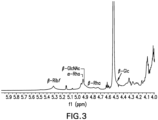
- the purified polysaccharides were examined using standard 1D and 2D NMR techniques. Finally, the polysaccharides were examined for the presence of phosphate using 31 P NMR.
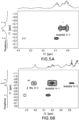
- 1D Phosphorus NMR spectroscopy indicated serotype 24F polysaccharides contained phosphorus in the structure. Assignment of the phosphorus linkage site was done through 1 H- 31 P HMBC spectroscopy on purified ( Fig. 5A ) and periodate oxidized ( Fig. 5B ) polysaccharide.
- n represents the number of repeating units constituting the polysaccharide. See also Fig. 1A .
- the sugar residues include rhamnose (Rha), ribose (Rib), glucose (Glc) and arabinitol.
- Rha rhamnose
- Rib ribose
- Glc glucose
- arabinitol One of the glucose residues is N-acetylated.
- Ribose is in the form of furanose.
- the italicized letters ( p and f ) refer to pyranose (a closed ring consisting of six atoms) and furanose (a closed ring consisting of five atoms).
- the ⁇ and ⁇ refer to the configuration of the proton attached to anomeric carbon of the sugar unit.
- the anomeric carbon is always number 1 when labeling the carbon atom in a sugar unit (usually 1 through 6).
- ⁇ means the anomeric proton is in the equatorial position in the 3D structure.
- ⁇ means the anomeric proton is in the axial position.
- the numbers associated with arrows refer to how the individual sugar units are connected to each other.
- the nomenclature ⁇ -Rha p -(1 ⁇ 3)- ⁇ -Glc p - means the number 1 carbon of Rhamnose is linked to the number 3 carbon of Glucose (p means they are both pyranose rings).
- the main activation site on S. pneumoniae serotype 24F was found to be at the second carbon of the arabinitol sidechain.
- Oxidized serotype 24F polysaccharide was lyophilized then redissolved with deuterium oxide for NMR analysis.
- NMR experiments were carried out at 600 MHz at probe temperature of 37°C using a cryogenically cooled probe.
- a one dimensional (1D) proton spectrum was acquired using a 90 degree pulse with 16 transients and a 10 second delay between pulses (including 3 seconds of acquisition time).
- Gradient COSY and TOCSY data were acquired with 4 and 16 transients (respectively) in the first dimension and 512 increments in the second dimension.
- 1D TOCSY centered on the triplet at 5.19 ppm, was acquired with 1024 transients with a recycle time of 10 seconds (including 3 seconds of acquisition time) and a mixing time of 90 ms.
- a multiplicity edited gHSQCAD was acquired with 64 transients and 512 increments.
- the 1D proton spectrum showed an additional signal (triplet) in the anomeric region at 5.19 ppm.
- gCOSY and TOCSY data showed a cross peak from the signal 5.19 ppm to a signal at 3.86 ppm.
- 1D TOCSY with selective band centered at 5.19 ppm only showed a single correlation to a triplet at 3.86 ppm ( Figure 6 ).
- the gHSQCAD data gave carbon chemical shifts of 91.13 ppm (signal at 5.19 ppm) and 70.79 ppm (signal at 3.86 ppm).
- the carbon chemical shift at 91.13 ppm is slightly upfield from where anomeric signals are typically observed indicating this to be a hydrated aldehyde.
- the other signal at 70.69 ppm was identified as a methylene (methylene carbons have opposite phase of methine and methyl carbons in the multiplicity edited gHSQCAD experiment; Figure 7 ).
- This data indicates the proton at 5.19 ppm (from the hydrated aldehyde) is adjacent to methylene group (3.86 ppm proton and 70.69 ppm carbon). The only place this could occur, based on the structure of 24F polysaccharide, is on the arabinitol sidechain at carbon 2.
- aldehyde predominantly at the second carbon was surprising in that it requires selective cleavage of 2,3-carbons with vicinal diols or preferred continued series of oxidation at higher numbered carbons with vicinal diols (or aldehyde) until the final oxidation at 2 nd carbon of the arabinitol sugar.
- Polysaccharide was dissolved, sized to a target molecular mass, chemically activated and buffer-exchanged by ultrafiltration. Activated polysaccharide and purified CRM197 were individually lyophilized and redissolved in dimethyl suloxide (DMSO). Redissolved polysaccharide and CRM197 solutions were then combined and conjugated as described below. The resulting conjugate was purified by ultrafiltration prior to a final 0.2-micron filtration. Several process parameters within each step, such as pH, temperature, concentration, and time were controlled to yield conjugates with desired attributes.
- DMSO dimethyl suloxide
- Purified pneumococcal capsular Ps powder was dissolved in water and 0.45-micron filtered. Dissolved polysaccharide was size-reduced by acid hydrolysis by adding acetic acid to 200 mM, incubating at 92°C for 50 minutes, then neutralizing by adding cold potassium phosphate pH 7 buffer to 400 mM.
- Size-reduced polysaccharide was concentrated and diafiltered against water using a 5 NMWCO tangential flow ultrafiltration membrane.
- the polysaccharide solution was then adjusted to 22°C and pH 5 with a sodium acetate buffer to minimize polysaccharide size reduction due to activation.
- Polysaccharide activation was initiated with the addition of a 100 mM sodium metaperiodate solution.
- the sodium metaperiodate added was 0.18-0.21 moles of sodium metaperiodate per mole of polysaccharide repeating unit to achieve a target level of polysaccharide activation (moles aldehyde per mole of polysaccharide repeating unit).
- the oxidation reaction proceeded for 2 hours at 22°C.
- the activated product was diafiltered against 10 mM potassium phosphate, pH 6.4 followed by diafiltration against water using a 5 kDa NMWCO tangential flow ultrafiltration membrane. Ultrafiltration was conducted at 2-8°C.
- Purified CRM197 obtained through expression in Pseudomonas fluorescens as previously described ( WO 2012/173876 A1 ), was diafiltered against 2 mM phosphate, pH 7.0 buffer using a 5 kDa NMWCO tangential flow ultrafiltration membrane and 0.2-micron filtered.
- Activated polysaccharides were formulated for lyophilization at 2 mg Ps/mL with sucrose concentration of 10% w/v.
- CRM197 was formulated for lyophilization at 6 mg Pr/mL with sucrose concentration of 1% w/v.
- Formulated Ps and CRM197 solutions were individually lyophilized. Lyophilized Ps and CRM197 materials were redissolved individually in equal volumes of DMSO. The polysaccharide solution was spiked with sodium chloride to a final concentration of 20-50 mM. The polysaccharide and CRM197 solutions were blended to achieve a polysaccharide concentration of 1.4-1.5 g Ps/L (grams polysaccharide/liter) and a polysaccharide to CRM197 mass ratio of 1.5. The mass ratio was selected to control the polysaccharide to CRM197 ratio in the resulting conjugate. Sodium cyanoborohydride (1 mole per mole of polysaccharide repeating unit) was added, and conjugation proceeded for 2 hours at 22°C.
- the batch was then concentrated and diaftiltered against 10 mM histidine in 150 mM sodium chloride, pH 7.0, with 0.015% (w/v) polysorbate 20, at 4°C using a 300 kDa NMWCO tangential flow ultrafiltration membrane.
- the retentate batch was 0.2 micron filtered then diluted with additional 10 mM histidine in 150 mM sodium chloride, pH 7.0 with 0.015% (w/v) polysorbate 20, dispensed into aliquots and frozen at ⁇ -60°C.
- Table 1 shows attributes for S. pneumoniae serotype 24F polysaccharide conjugate prepared in DMSO.
- Table 1 Attributes of S. pneumoniae serotype 24F polysaccharide conjugate from DMSO conjugation Oxidized Ps Mw Conjugate Mw Ps:Pr Lysine Consumption (mol/ mol CRM197) Free Ps / Total Ps Free Protein / Total Protein 100 kD 4875 kD 0.94 7.3 4.4% 1.4% 101 kD 3970 kD 0.81 7.9 5.8% 4.6%
- Pneumococcal polysaccharide-CRM197 conjugates were prepared as described in Example 3. The required volume of bulk conjugates needed to obtain the target concentration of invidual serotypes were calculated based on batch volume and concentration of individual bulk polysaccharide concentrations.
- Bulk conjugate of S. pneumoniae serotype 24F was combined with excipients, sterile filtered and added to APA under mixing conditions. The final concentration of S. pneumoniae serotype 24F monovalent conjugate vaccine was 4 ⁇ g/mL (w/v PnPs) with 20 mM Histidine, 150 mM NaCl, 0.2% (w/v) PS-20 and 0.250 mg/mL (w/v Al) in the form of APA.
- the immacheicity of the monovalent conjugates was evaluated in a New Zealand White Rabbit (NZWR) model.
- NZWR New Zealand White Rabbit
- IM intramuscularly
- Monovalent pneumococcal vaccine was dosed at 1 ⁇ g PnPs ( S . pneumoniae serotype 24F polysaccharide conjugated to CRM197) with 62.5 ⁇ g aluminum phosphate adjuvant (APA) per immunization.
- Sera were collected prior to study start (pre-immune) and on days 14 (post-dose 1, PD1) and 28 (post-dose 2, PD2).
- NZWRs were observed at least daily by trained animal care staff for any signs of illness or distress.
- the vaccine formulations in NZWRs were deemed to be safe and well tolerated. All animal experiments were performed in strict accordance with the recommendations in the Guide for Care and Use of Laboratory Animals of the National Institutes of Health.
- the NZWR experimental protocol was approved by the Institutional Animal Care and Use Committees at both Merck & Co., Inc (Kenilworth, NJ) and Covance (Denver, PA).
- NZWR sera were tested in ELISA assays to evaluate IgG immunogenicity using a 1-2 mg/ml respective PnPs coating concentration.
- Functional antibody was determined through opsonophagocytosis assays (OPA) based on previously described protocols. See, e.g., Caro-Aguilar et al., 2017, Vaccine 35:865-72 and Burton et al., 2006, Clin Vaccine Immunol 13(9): 1004-9 .
- Monovalent pneumococcal conjugate vaccines from S. pneumoniae serotype 24F were found to be immunogenic in rabbits ( Figure 8 ) and generate functional antibody which killed the respective bacterial strain ( Figure 9 ).
- IP intraperitoneally
- IM intramuscularly
- the monovalent pneumococcal vaccine was dosed at 0.4 ⁇ g PnPs (24F polysaccharide conjugated to CRM197) with 25 ⁇ g aluminum phosphate adjuvant (APA) per immunization. Mice were observed at least daily by trained animal care staff for any signs of illness or distress. The vaccine formulations in mice were deemed to be safe and well tolerated.
- mice were intratracheally challenged with S. pneumoniae serotype 24F. Exponential phase cultures of S. pneumoniae were centrifuged, washed, and suspended in sterile PBS. Mice were anesthetized with isoflurane prior to challenge. 10 6 cfu of S. pneumoniae in 0.1ml of PBS was placed in the throat of mice hung upright by their incisors. Aspiration of the bacteria was induced by gently pulling the tongue outward and covering the nostrils. Mice were weighed daily and euthanized if weight loss exceeded 20% of starting weight. Blood was collected at 24 hours, 48 hours, and 72 hours to assess for bacteremia. Mice were observed at least twice daily by trained animal care staff for any signs of illness or distress. All animal experiments were performed in strict accordance with the recommendations in the Guide for Care and Use of Laboratory Animals of the National Institutes of Health. The mouse experimental protocol was approved by the Institutional Animal Care and Use Committee at Merck & Co., Inc.
- the 24F-CRM197 monovalent pneumococcal conjugate vaccine was found to be protective in all three strains of mice following challenge with S. pneumoniae 24F. See Figures 10-12 .
- EXAMPLE 7 Formulation of Pneumococcal Conjugate Vaccines for Rabbit Polyvalent Study
- a multivalent pneumococcal conjugate vaccine consisting of different conjugate bulk blend preparations (including from S. pneumoniae serotypes 16F, 23A, 23B, 24F and 31) was prepared using pneumococcal polysaccharide-CRM197 conjugates and was formulated in 20 mM histidine pH 5.8 and 150 mM sodium chloride and 0.1% w/v Polysorbate-20 (PS-20) at 4 ⁇ g/mL each serotype for a total polysaccharide concentration of 84 ⁇ g/mL.
- the conjugates were prepared by individually conjugating the CRM197 protein to pneumococcal polysaccharide (PnPs) types (including from S.
- the required volume of bulk conjugates needed to obtain the target concentration of individual serotypes was calculated based on batch volume and concentration of individual bulk polysaccharide concentrations.
- the individual conjugates were added to a solution of histidine, sodium chloride and Polysorbate-20 (PS-20) to create the conjugate blend.
- the formulation vessel containing the conjugate blend was mixed using a magnetic stir bar, and sterile filtered into another vessel. The formulations were then filled into plastic syringes, glass syringes, or vials and stored at 2-8°C.
- EXAMPLE 8 Immunogenicity of a Multivalent Pneumococcal Conjugate Vaccine in New Zealand White Rabbits
- NZWR Newcastle disease virus
- IM intramuscularly
- PCV21 pneumococcal vaccine was dosed at 2 ⁇ g of each conjugated PnPs per immunization.
- Sera were collected prior to study start (pre-immune) and on days 14 (post-dose 1, PD1) and 28 (post-dose 2, PD2).
- NZWRs were observed at least daily by trained animal care staff for any signs of illness or distress. The vaccine formulations in NZWRs were deemed to be safe and well tolerated.
- NZWR sera were evaluated for IgG immunogenicity using a multiplexed electrochemiluminescence (ECL) assay.
- ECL electrochemiluminescence
- This assay was developed for use with rabbit serum based on the human assay described by Marchese et al. (Optimization and validation of a multiplex, electrochemiluminescence-based detection assay for the quantitation of immunoglobulin G serotype-specific antipneumococcal antibodies in human serum. Clin Vaccine Immunol. 16(3): 387-96 (2009 )) using technology developed by MesoScale Discovery (a division of MesoScale Diagnostics, LLC, Gaithersburg, MD) which utilizes a SULFO-TAG TM label that emits light upon electrochemical stimulation.
- MesoScale Discovery a division of MesoScale Diagnostics, LLC, Gaithersburg, MD
- SULFO-TAG TM -labeled anti-rabbit IgG was used as the secondary antibody for testing NZWR serum samples.
- Functional antibody was determined through multiplexed opsonophagocytic assays (MOPA) based on previously described protocols available online at the Bacterial Respiratory Pathogen Reference Laboratory at the University of Alabama at Birmingham using Opsotiter ® 3 software (UAB Research Foundation, Caro-Aguilar et al, 2017, supra, Burton et al., 2006, supra).
- MOPA multiplexed opsonophagocytic assays
- Polysaccharide-protein conjugates prepared from S. pneumoniae serotypes 16F, 23A, 23B, 24F, and 31 in a multivalent pneumococcal conjugate vaccines were found to be immunogenic for both post dose 1 (PD1) and post dose 2 (PD2) in rabbits ( Figure 13 ). They also generated functional antibody which killed vaccine-type bacterial strains ( Figure 14 ). Rabbits immunized with the multivalent pneumococcal conjugate vaccine at the 2 ⁇ g dose had significantly higher PD1 MOPA titers for four serotypes compared to pre-immune rabbit sera ( Figure 14 ).
Landscapes
- Health & Medical Sciences (AREA)
- Life Sciences & Earth Sciences (AREA)
- Chemical & Material Sciences (AREA)
- Engineering & Computer Science (AREA)
- General Health & Medical Sciences (AREA)
- Medicinal Chemistry (AREA)
- Bioinformatics & Cheminformatics (AREA)
- Public Health (AREA)
- Animal Behavior & Ethology (AREA)
- Pharmacology & Pharmacy (AREA)
- Veterinary Medicine (AREA)
- Molecular Biology (AREA)
- Epidemiology (AREA)
- Proteomics, Peptides & Aminoacids (AREA)
- Organic Chemistry (AREA)
- Immunology (AREA)
- Chemical Kinetics & Catalysis (AREA)
- Microbiology (AREA)
- Mycology (AREA)
- Biochemistry (AREA)
- Polymers & Plastics (AREA)
- Materials Engineering (AREA)
- General Chemical & Material Sciences (AREA)
- Virology (AREA)
- Toxicology (AREA)
- Wood Science & Technology (AREA)
- Zoology (AREA)
- Sustainable Development (AREA)
- Biotechnology (AREA)
- General Engineering & Computer Science (AREA)
- Genetics & Genomics (AREA)
- Communicable Diseases (AREA)
- Oncology (AREA)
- Nuclear Medicine, Radiotherapy & Molecular Imaging (AREA)
- Medicines Containing Antibodies Or Antigens For Use As Internal Diagnostic Agents (AREA)
- Medicinal Preparation (AREA)
- Peptides Or Proteins (AREA)
- Polysaccharides And Polysaccharide Derivatives (AREA)
Priority Applications (4)
| Application Number | Priority Date | Filing Date | Title |
|---|---|---|---|
| HRP20241185TT HRP20241185T1 (hr) | 2017-09-07 | 2018-09-04 | Pneumokokni polisaharidi i njihova primjena u imunogenim konjugatima polisaharid-proteinski nosač |
| SI201831133T SI3678654T1 (sl) | 2017-09-07 | 2018-09-04 | Pnevmokokni polisaharidi in njihova uporaba v imunogenih polisaharidnih nosilnih proteinskih konjugatih |
| EP24183435.7A EP4520325A1 (en) | 2017-09-07 | 2018-09-04 | Pneumococcal polysaccharides and their use in immunogenic polysaccharide-carrier protein conjugates |
| RS20240956A RS65893B1 (sr) | 2017-09-07 | 2018-09-04 | Pneumokokni polisaharidi i njihova primena u imunogenim konjugatima polisaharid-proteinski nosač |
Applications Claiming Priority (3)
| Application Number | Priority Date | Filing Date | Title |
|---|---|---|---|
| US201762555461P | 2017-09-07 | 2017-09-07 | |
| US201862645252P | 2018-03-20 | 2018-03-20 | |
| PCT/US2018/049308 WO2019050815A1 (en) | 2017-09-07 | 2018-09-04 | ANTI-PNEUMOCOCCAL POLYSACCHARIDES AND THEIR USE IN IMMUNOGENIC CONJUGATES POLYSACCHARIDE-PROTEIN CARRIER |
Related Child Applications (1)
| Application Number | Title | Priority Date | Filing Date |
|---|---|---|---|
| EP24183435.7A Division EP4520325A1 (en) | 2017-09-07 | 2018-09-04 | Pneumococcal polysaccharides and their use in immunogenic polysaccharide-carrier protein conjugates |
Publications (3)
| Publication Number | Publication Date |
|---|---|
| EP3678654A1 EP3678654A1 (en) | 2020-07-15 |
| EP3678654A4 EP3678654A4 (en) | 2021-04-21 |
| EP3678654B1 true EP3678654B1 (en) | 2024-06-26 |
Family
ID=65634964
Family Applications (2)
| Application Number | Title | Priority Date | Filing Date |
|---|---|---|---|
| EP18853342.6A Revoked EP3678654B1 (en) | 2017-09-07 | 2018-09-04 | Pneumococcal polysaccharides and their use in immunogenic polysaccharide-carrier protein conjugates |
| EP24183435.7A Withdrawn EP4520325A1 (en) | 2017-09-07 | 2018-09-04 | Pneumococcal polysaccharides and their use in immunogenic polysaccharide-carrier protein conjugates |
Family Applications After (1)
| Application Number | Title | Priority Date | Filing Date |
|---|---|---|---|
| EP24183435.7A Withdrawn EP4520325A1 (en) | 2017-09-07 | 2018-09-04 | Pneumococcal polysaccharides and their use in immunogenic polysaccharide-carrier protein conjugates |
Country Status (19)
| Country | Link |
|---|---|
| EP (2) | EP3678654B1 (enExample) |
| JP (2) | JP7438102B2 (enExample) |
| KR (1) | KR102736850B1 (enExample) |
| CN (2) | CN111093650B (enExample) |
| AU (2) | AU2018328037B2 (enExample) |
| BR (1) | BR112020004509A8 (enExample) |
| CA (1) | CA3074708A1 (enExample) |
| DK (1) | DK3678654T3 (enExample) |
| ES (1) | ES2994040T3 (enExample) |
| FI (1) | FI3678654T3 (enExample) |
| HR (1) | HRP20241185T1 (enExample) |
| HU (1) | HUE068482T2 (enExample) |
| LT (1) | LT3678654T (enExample) |
| MX (1) | MX2020002555A (enExample) |
| PL (1) | PL3678654T3 (enExample) |
| PT (1) | PT3678654T (enExample) |
| RS (1) | RS65893B1 (enExample) |
| SI (1) | SI3678654T1 (enExample) |
| WO (1) | WO2019050815A1 (enExample) |
Families Citing this family (23)
| Publication number | Priority date | Publication date | Assignee | Title |
|---|---|---|---|---|
| IL267709B2 (en) | 2016-12-30 | 2025-04-01 | Vaxcyte Inc | Polypeptide-antigen conjugates with unnatural amino acids |
| US11951165B2 (en) | 2016-12-30 | 2024-04-09 | Vaxcyte, Inc. | Conjugated vaccine carrier proteins |
| WO2018144439A1 (en) | 2017-01-31 | 2018-08-09 | Merck Sharp & Dohme Corp. | Methods for making polysaccharide-protein conjugates |
| US11400162B2 (en) | 2017-02-24 | 2022-08-02 | Merck Sharp & Dohme Llc | Processes for the formulation of pneumococcal polysaccharides for conjugation to a carrier protein |
| WO2019050818A1 (en) | 2017-09-07 | 2019-03-14 | Merck Sharp & Dohme Corp. | METHODS OF FORMULATING PNEUMOCOCCAL POLYSACCHARIDES FOR CONJUGATION TO A CARRIER PROTEIN |
| JP7680185B2 (ja) * | 2017-02-24 | 2025-05-20 | メルク・シャープ・アンド・ドーム・エルエルシー | 肺炎連鎖球菌多糖-タンパク質コンジュゲートの免疫原性の増強 |
| CN111065387B (zh) | 2017-09-07 | 2023-08-25 | 默沙东有限责任公司 | 肺炎球菌多糖及其在免疫原性多糖-载体蛋白缀合物中的用途 |
| US11395849B2 (en) | 2017-09-07 | 2022-07-26 | Merck Sharp & Dohme Llc | Pneumococcal polysaccharides and their use in immunogenic polysaccharide-carrier protein conjugates |
| CA3074706A1 (en) | 2017-09-07 | 2019-03-14 | Merck Sharp & Dohme Corp. | Pneumococcal polysaccharides and their use in immunogenic polysaccharide-carrier protein conjugates |
| US11524076B2 (en) | 2017-09-07 | 2022-12-13 | Merck Sharp & Dohme Llc | Pneumococcal polysaccharides and their use in immunogenic polysaccharide-carrier protein conjugates |
| EP3720483B1 (en) | 2017-12-06 | 2025-11-19 | Merck Sharp & Dohme LLC | Compositions comprising streptococcus pneumoniae polysaccharide-protein conjugates and methods of use thereof |
| BR112020015696A2 (pt) | 2018-02-05 | 2020-12-08 | Sanofi Pasteur, Inc. | Composição de conjugado polissacarídeo-proteína pneumocócico multivalente |
| TW202011985A (zh) | 2018-04-18 | 2020-04-01 | 韓商Sk生物科學股份有限公司 | 肺炎鏈球菌的莢膜多醣類以及其免疫原性接合體 |
| WO2019212846A1 (en) | 2018-04-30 | 2019-11-07 | Merck Sharp & Dohme Corp. | Methods for producing streptococcus pneumoniae capsular polysaccharide carrier protein conjugates |
| JP7397000B2 (ja) | 2018-04-30 | 2023-12-12 | メルク・シャープ・アンド・ドーム・エルエルシー | 凍結乾燥変異ジフテリア毒素のジメチルスルホキシド中均一溶液を提供する方法 |
| WO2019212842A1 (en) | 2018-04-30 | 2019-11-07 | Merck Sharp & Dohme Corp. | Methods for producing streptococcus pneumoniae capsular polysaccharide carrier protein conjugates from lyospheres |
| MX2021003358A (es) | 2018-09-23 | 2021-05-27 | Biological E Ltd | Polisacaridos capsulares purificados de streptococcus pneumoniae. |
| EP3897705A2 (en) | 2018-12-19 | 2021-10-27 | Merck Sharp & Dohme Corp. | Compositions comprising streptococcus pneumoniae polysaccharide-protein conjugates and methods of use thereof |
| US12053515B2 (en) | 2020-08-10 | 2024-08-06 | Inventprise, Inc. | Multivalent pneumococcal glycoconjugate vaccines containing emerging serotype 24F |
| EP4622665A2 (en) | 2022-11-22 | 2025-10-01 | Pfizer Inc. | Immunogenic compositions comprising conjugated capsular saccharide antigens and uses thereof |
| CN120513083A (zh) | 2022-12-01 | 2025-08-19 | 辉瑞大药厂 | 肺炎链球菌缀合物疫苗制剂 |
| TW202527906A (zh) | 2023-09-14 | 2025-07-16 | 美商輝瑞股份有限公司 | 包含經結合之肺炎鏈球菌莢膜醣抗原之佐劑化致免疫性組成物及其用途 |
| WO2025219908A2 (en) | 2024-04-19 | 2025-10-23 | Pfizer Inc. | Media and fermentation methods for polysaccharide production in bacterial cell culture |
Citations (17)
| Publication number | Priority date | Publication date | Assignee | Title |
|---|---|---|---|---|
| EP0497524A2 (en) | 1991-01-28 | 1992-08-05 | Merck & Co. Inc. | Polysaccharide antigens from streptococcus pneumoniae |
| WO1998033521A1 (en) | 1997-01-31 | 1998-08-06 | Korea Institute Of Science And Technology | Pneumococcal polysaccharide conjugate and pneumococcal polysaccharide cholera toxin b subunit conjugate vaccines |
| US7217791B2 (en) | 2002-11-07 | 2007-05-15 | Synergy America, Inc. | Compositions and methods for treating or preventing pneumococcal infection |
| WO2007071710A2 (en) | 2005-12-22 | 2007-06-28 | Glaxosmithkline Biologicals Sa | Vaccine comprising streptococcus pneumoniae capsular polysaccharide conjugates |
| WO2009023300A2 (en) | 2007-04-13 | 2009-02-19 | The Board Of Regents Of The University Of Oklahoma | Mutants of cholesterol-dependent cytolysins and uses thereof |
| WO2011100151A1 (en) | 2010-02-09 | 2011-08-18 | Merck Sharp & Dohme Corp. | 15-valent pneumococcal polysaccharide-protein conjugate vaccine composition |
| US20140186390A1 (en) | 2010-03-09 | 2014-07-03 | Glaxosmithkline Biologicals S.A. | Conjugation process of bacterial polysaccharides to carrier proteins |
| WO2015110941A2 (en) | 2014-01-21 | 2015-07-30 | Pfizer Inc. | Immunogenic compositions comprising conjugated capsular saccharide antigens and uses thereof |
| WO2015121783A1 (en) | 2014-02-14 | 2015-08-20 | Pfizer Inc. | Immunogenic glycoprotein conjugates |
| US20150374811A1 (en) | 2013-02-07 | 2015-12-31 | Children's Medical Center Corporation | Protein antigens that provide protection against pneumococcal colonization and/or disease |
| WO2016020499A2 (en) | 2014-08-08 | 2016-02-11 | Glycovaxyn Ag | Modified host cells for use in bioconjugate production |
| WO2017144394A1 (en) | 2016-02-22 | 2017-08-31 | Glaxosmithkline Biologicals S.A. | Vaccine |
| WO2017173415A2 (en) | 2016-03-31 | 2017-10-05 | Liffey Biotech Limited | Saccharide-polypeptide conjugate compositions and methods of use thereof |
| WO2018064444A1 (en) | 2016-09-30 | 2018-04-05 | Biological E Limited | Multivalent pneumococcal vaccine compositions comprising polysaccharide-protein conjugates |
| CN108159408A (zh) | 2017-12-29 | 2018-06-15 | 云南沃森生物技术股份有限公司 | 一种多价肺炎球菌多糖-蛋白结合物组合物及其制备方法和应用 |
| WO2019050818A1 (en) | 2017-09-07 | 2019-03-14 | Merck Sharp & Dohme Corp. | METHODS OF FORMULATING PNEUMOCOCCAL POLYSACCHARIDES FOR CONJUGATION TO A CARRIER PROTEIN |
| WO2019139692A2 (en) | 2017-12-06 | 2019-07-18 | Merck Sharp & Dohme Corp. | Compositions comprising streptococcus pneumoniae polysaccharide-protein conjugates and methods of use thereof |
Family Cites Families (58)
| Publication number | Priority date | Publication date | Assignee | Title |
|---|---|---|---|---|
| EP0027888B1 (en) | 1979-09-21 | 1986-04-16 | Hitachi, Ltd. | Semiconductor switch |
| US4902506A (en) | 1983-07-05 | 1990-02-20 | The University Of Rochester | Immunogenic conjugates |
| US4673574A (en) | 1981-08-31 | 1987-06-16 | Anderson Porter W | Immunogenic conjugates |
| US4709017A (en) | 1985-06-07 | 1987-11-24 | President And Fellows Of Harvard College | Modified toxic vaccines |
| US4950740A (en) | 1987-03-17 | 1990-08-21 | Cetus Corporation | Recombinant diphtheria vaccines |
| US5057540A (en) | 1987-05-29 | 1991-10-15 | Cambridge Biotech Corporation | Saponin adjuvant |
| US4912094B1 (en) | 1988-06-29 | 1994-02-15 | Ribi Immunochem Research Inc. | Modified lipopolysaccharides and process of preparation |
| CA2006700A1 (en) | 1989-01-17 | 1990-07-17 | Antonello Pessi | Synthetic peptides and their use as universal carriers for the preparation of immunogenic conjugates suitable for the development of synthetic vaccines |
| WO1990014837A1 (en) | 1989-05-25 | 1990-12-13 | Chiron Corporation | Adjuvant formulation comprising a submicron oil droplet emulsion |
| AU651949B2 (en) | 1989-07-14 | 1994-08-11 | American Cyanamid Company | Cytokine and hormone carriers for conjugate vaccines |
| IT1237764B (it) | 1989-11-10 | 1993-06-17 | Eniricerche Spa | Peptidi sintetici utili come carriers universali per la preparazione di coniugati immunogenici e loro impiego per lo sviluppo di vaccini sintetici. |
| SE466259B (sv) | 1990-05-31 | 1992-01-20 | Arne Forsgren | Protein d - ett igd-bindande protein fraan haemophilus influenzae, samt anvaendning av detta foer analys, vacciner och uppreningsaendamaal |
| ATE128628T1 (de) | 1990-08-13 | 1995-10-15 | American Cyanamid Co | Faser-hemagglutinin von bordetella pertussis als träger für konjugierten impfstoff. |
| NZ239643A (en) | 1990-09-17 | 1996-05-28 | North American Vaccine Inc | Vaccine containing bacterial polysaccharide protein conjugate and adjuvant (c-nd-che-a-co-b-r) with a long chain alkyl group. |
| CA2059692C (en) | 1991-01-28 | 2004-11-16 | Peter J. Kniskern | Pneumoccoccal polysaccharide conjugate vaccine |
| EP0625910B1 (en) | 1992-02-11 | 2003-07-23 | Henry M. Jackson Foundation For The Advancement Of Military Medicine | Dual carrier immunogenic construct |
| IT1262896B (it) | 1992-03-06 | 1996-07-22 | Composti coniugati formati da proteine heat shock (hsp) e oligo-poli- saccaridi, loro uso per la produzione di vaccini. | |
| JP3506431B2 (ja) | 1992-05-06 | 2004-03-15 | プレジデント アンド フェローズ オブ ハーバード カレッジ | ジフテリア毒素受容体結合領域 |
| IL102687A (en) | 1992-07-30 | 1997-06-10 | Yeda Res & Dev | Conjugates of poorly immunogenic antigens and synthetic pepide carriers and vaccines comprising them |
| DK0616034T3 (da) | 1993-03-05 | 2005-02-21 | Wyeth Corp | Plasmid til fremstilling af CRM-protein og diphtheria toxin |
| EP0720485B1 (en) | 1993-09-22 | 2003-11-19 | Henry M. Jackson Foundation For The Advancement Of Military Medicine | Method of activating soluble carbohydrate using novel cyanylating reagents for the production of immunogenic constructs |
| US5866135A (en) | 1994-04-21 | 1999-02-02 | North American Vaccine, Inc. | Group A streptococcal polysaccharide immunogenic compositions and methods |
| US5917017A (en) | 1994-06-08 | 1999-06-29 | President And Fellows Of Harvard College | Diphtheria toxin vaccines bearing a mutated R domain |
| US6455673B1 (en) | 1994-06-08 | 2002-09-24 | President And Fellows Of Harvard College | Multi-mutant diphtheria toxin vaccines |
| US6207646B1 (en) | 1994-07-15 | 2001-03-27 | University Of Iowa Research Foundation | Immunostimulatory nucleic acid molecules |
| WO1996034609A1 (en) | 1994-12-05 | 1996-11-07 | The Biomembrane Institute | Myeloglycan |
| DE69628418T2 (de) | 1995-03-22 | 2004-04-01 | Henry M. Jackson Foundation For The Advancement Of Military Medicine | Herstellung von immunogenen konstrukten unter verwendung von löslichen kohlehydraten, die durch organische cyanylierungs-reagenzien aktiviert wurden |
| US6299881B1 (en) | 1997-03-24 | 2001-10-09 | Henry M. Jackson Foundation For The Advancement Of Military Medicine | Uronium salts for activating hydroxyls, carboxyls, and polysaccharides, and conjugate vaccines, immunogens, and other useful immunological reagents produced using uronium salts |
| US6113918A (en) | 1997-05-08 | 2000-09-05 | Ribi Immunochem Research, Inc. | Aminoalkyl glucosamine phosphate compounds and their use as adjuvants and immunoeffectors |
| GB9713156D0 (en) | 1997-06-20 | 1997-08-27 | Microbiological Res Authority | Vaccines |
| JP4435413B2 (ja) | 1997-12-23 | 2010-03-17 | バクスター・ヘルスケヤー・ソシエテ・アノニム | ワクチンとしてまたは結合体ワクチンとしてタンパク質に連結して使用するための細菌莢膜多糖の抽出および単離法 |
| US6146902A (en) | 1998-12-29 | 2000-11-14 | Aventis Pasteur, Inc. | Purification of polysaccharide-protein conjugate vaccines by ultrafiltration with ammonium sulfate solutions |
| WO2000061761A2 (en) | 1999-04-09 | 2000-10-19 | Techlab, Inc. | Recombinant clostridium toxin a protein carrier for polysaccharide conjugate vaccines |
| GB0007432D0 (en) | 2000-03-27 | 2000-05-17 | Microbiological Res Authority | Proteins for use as carriers in conjugate vaccines |
| WO2001098334A2 (en) | 2000-06-20 | 2001-12-27 | Shire Biochem Inc. | Streptococcus antigens |
| BR0116756A (pt) | 2000-12-28 | 2005-01-04 | Wyeth Corp | Proteìna protetora recombinante de streptococcus pneumoniae e uso da mesma |
| KR100886095B1 (ko) | 2001-04-16 | 2009-02-27 | 와이어쓰 홀딩스 코포레이션 | 폴리펩티드 항원을 암호화하는 신규한 스트렙토코쿠스 뉴모니애 개방형 판독 프레임 및 이를 포함하는 조성물 |
| AU2002309706A1 (en) | 2001-05-11 | 2002-11-25 | Aventis Pasteur, Inc. | Novel meningitis conjugate vaccine |
| US7262024B2 (en) | 2001-12-20 | 2007-08-28 | Id Biomedical Corporation | Streptococcus antigens |
| MXPA05009579A (es) | 2003-03-13 | 2005-11-17 | Glaxosmithkline Biolog Sa | Proceso de purificacion para citolisina bacteriana. |
| EP1603950A2 (en) | 2003-03-17 | 2005-12-14 | Wyeth Holdings Corporation | Mutant cholera holotoxin as an adjuvant and an antigen carrier protein |
| US7905122B2 (en) | 2003-04-28 | 2011-03-15 | Nidec Motor Corporation | Method and system for determining a washing machine load unbalance |
| IL308456A (en) | 2005-04-08 | 2024-01-01 | Wyeth Llc | A multivalent pneumomuroral protein-polysaccharide conjugate preparation |
| US20070184072A1 (en) | 2005-04-08 | 2007-08-09 | Wyeth | Multivalent pneumococcal polysaccharide-protein conjugate composition |
| US7709001B2 (en) | 2005-04-08 | 2010-05-04 | Wyeth Llc | Multivalent pneumococcal polysaccharide-protein conjugate composition |
| US7955605B2 (en) | 2005-04-08 | 2011-06-07 | Wyeth Llc | Multivalent pneumococcal polysaccharide-protein conjugate composition |
| HUE039169T2 (hu) | 2007-03-23 | 2018-12-28 | Wyeth Llc | Rövidített tisztítási eljárás Streptococcus pneumoniae tok-poliszacharidok elõállítására |
| KR20140038517A (ko) | 2011-06-13 | 2014-03-28 | 머크 샤프 앤드 돔 코포레이션 | 천연 또는 돌연변이 형태의 디프테리아 독소의 정제 방법 |
| RU2672053C2 (ru) | 2012-12-20 | 2018-11-09 | Пфайзер Инк. | Способ гликоконъюгации |
| EP2829612A1 (en) * | 2013-07-25 | 2015-01-28 | Technische Universität München | Method for producing exopolysaccharides, products and uses thereof |
| BR112016015835B1 (pt) * | 2014-01-21 | 2023-12-26 | Pfizer Inc | Processo de preparação de conjugados compreendendo polissacarídeos capsulares de streptococcus pneumoniae |
| JP7158096B2 (ja) * | 2014-07-09 | 2022-10-21 | カデナ バイオ,インコーポレーテッド | オリゴ糖組成物及びその生成方法 |
| KR20250058066A (ko) * | 2015-07-21 | 2025-04-29 | 화이자 인코포레이티드 | 접합된 캡슐형 사카라이드 항원을 포함하는 면역원성 조성물, 그를 포함하는 키트 및 그의 용도 |
| JP2018532696A (ja) * | 2015-08-25 | 2018-11-08 | カレイド・バイオサイエンシズ・インコーポレイテッド | グリカン組成物およびその使用 |
| WO2017083520A1 (en) * | 2015-11-13 | 2017-05-18 | Cadena Bio, Inc. | Animal therapeutic and feed compositions and methods of use |
| CN111065387B (zh) * | 2017-09-07 | 2023-08-25 | 默沙东有限责任公司 | 肺炎球菌多糖及其在免疫原性多糖-载体蛋白缀合物中的用途 |
| CA3074706A1 (en) * | 2017-09-07 | 2019-03-14 | Merck Sharp & Dohme Corp. | Pneumococcal polysaccharides and their use in immunogenic polysaccharide-carrier protein conjugates |
| US11395849B2 (en) * | 2017-09-07 | 2022-07-26 | Merck Sharp & Dohme Llc | Pneumococcal polysaccharides and their use in immunogenic polysaccharide-carrier protein conjugates |
-
2018
- 2018-09-04 HU HUE18853342A patent/HUE068482T2/hu unknown
- 2018-09-04 MX MX2020002555A patent/MX2020002555A/es unknown
- 2018-09-04 BR BR112020004509A patent/BR112020004509A8/pt unknown
- 2018-09-04 CN CN201880058217.4A patent/CN111093650B/zh active Active
- 2018-09-04 PL PL18853342.6T patent/PL3678654T3/pl unknown
- 2018-09-04 DK DK18853342.6T patent/DK3678654T3/da active
- 2018-09-04 ES ES18853342T patent/ES2994040T3/es active Active
- 2018-09-04 FI FIEP18853342.6T patent/FI3678654T3/fi active
- 2018-09-04 PT PT188533426T patent/PT3678654T/pt unknown
- 2018-09-04 RS RS20240956A patent/RS65893B1/sr unknown
- 2018-09-04 KR KR1020207009614A patent/KR102736850B1/ko active Active
- 2018-09-04 JP JP2020513549A patent/JP7438102B2/ja active Active
- 2018-09-04 AU AU2018328037A patent/AU2018328037B2/en active Active
- 2018-09-04 EP EP18853342.6A patent/EP3678654B1/en not_active Revoked
- 2018-09-04 CA CA3074708A patent/CA3074708A1/en active Pending
- 2018-09-04 LT LTEPPCT/US2018/049308T patent/LT3678654T/lt unknown
- 2018-09-04 HR HRP20241185TT patent/HRP20241185T1/hr unknown
- 2018-09-04 CN CN202410181167.6A patent/CN118063638A/zh active Pending
- 2018-09-04 SI SI201831133T patent/SI3678654T1/sl unknown
- 2018-09-04 WO PCT/US2018/049308 patent/WO2019050815A1/en not_active Ceased
- 2018-09-04 EP EP24183435.7A patent/EP4520325A1/en not_active Withdrawn
-
2024
- 2024-02-13 JP JP2024019152A patent/JP7659672B2/ja active Active
- 2024-03-07 AU AU2024201518A patent/AU2024201518B2/en active Active
Patent Citations (18)
| Publication number | Priority date | Publication date | Assignee | Title |
|---|---|---|---|---|
| US5847112A (en) | 1991-01-28 | 1998-12-08 | Merck & Co., Inc. | Process for making capsular polysaccharides from Streptococcus pneumoniae |
| EP0497524A2 (en) | 1991-01-28 | 1992-08-05 | Merck & Co. Inc. | Polysaccharide antigens from streptococcus pneumoniae |
| WO1998033521A1 (en) | 1997-01-31 | 1998-08-06 | Korea Institute Of Science And Technology | Pneumococcal polysaccharide conjugate and pneumococcal polysaccharide cholera toxin b subunit conjugate vaccines |
| US7217791B2 (en) | 2002-11-07 | 2007-05-15 | Synergy America, Inc. | Compositions and methods for treating or preventing pneumococcal infection |
| WO2007071710A2 (en) | 2005-12-22 | 2007-06-28 | Glaxosmithkline Biologicals Sa | Vaccine comprising streptococcus pneumoniae capsular polysaccharide conjugates |
| WO2009023300A2 (en) | 2007-04-13 | 2009-02-19 | The Board Of Regents Of The University Of Oklahoma | Mutants of cholesterol-dependent cytolysins and uses thereof |
| WO2011100151A1 (en) | 2010-02-09 | 2011-08-18 | Merck Sharp & Dohme Corp. | 15-valent pneumococcal polysaccharide-protein conjugate vaccine composition |
| US20140186390A1 (en) | 2010-03-09 | 2014-07-03 | Glaxosmithkline Biologicals S.A. | Conjugation process of bacterial polysaccharides to carrier proteins |
| US20150374811A1 (en) | 2013-02-07 | 2015-12-31 | Children's Medical Center Corporation | Protein antigens that provide protection against pneumococcal colonization and/or disease |
| WO2015110941A2 (en) | 2014-01-21 | 2015-07-30 | Pfizer Inc. | Immunogenic compositions comprising conjugated capsular saccharide antigens and uses thereof |
| WO2015121783A1 (en) | 2014-02-14 | 2015-08-20 | Pfizer Inc. | Immunogenic glycoprotein conjugates |
| WO2016020499A2 (en) | 2014-08-08 | 2016-02-11 | Glycovaxyn Ag | Modified host cells for use in bioconjugate production |
| WO2017144394A1 (en) | 2016-02-22 | 2017-08-31 | Glaxosmithkline Biologicals S.A. | Vaccine |
| WO2017173415A2 (en) | 2016-03-31 | 2017-10-05 | Liffey Biotech Limited | Saccharide-polypeptide conjugate compositions and methods of use thereof |
| WO2018064444A1 (en) | 2016-09-30 | 2018-04-05 | Biological E Limited | Multivalent pneumococcal vaccine compositions comprising polysaccharide-protein conjugates |
| WO2019050818A1 (en) | 2017-09-07 | 2019-03-14 | Merck Sharp & Dohme Corp. | METHODS OF FORMULATING PNEUMOCOCCAL POLYSACCHARIDES FOR CONJUGATION TO A CARRIER PROTEIN |
| WO2019139692A2 (en) | 2017-12-06 | 2019-07-18 | Merck Sharp & Dohme Corp. | Compositions comprising streptococcus pneumoniae polysaccharide-protein conjugates and methods of use thereof |
| CN108159408A (zh) | 2017-12-29 | 2018-06-15 | 云南沃森生物技术股份有限公司 | 一种多价肺炎球菌多糖-蛋白结合物组合物及其制备方法和应用 |
Non-Patent Citations (18)
| Title |
|---|
| "Pneumococcal Vaccines, Chapter 11", 1 January 2008, article LEES ANDREW R, VELUPILLAI PUVANESARAJAH, CARL E. FRASCH: "Conjugation Chemistry", pages: 163 - 174, XP093267122 |
| "VACCINES, 6th Edition", 1 January 2013, article PLOTKIN STANLEY A, ORENSTEIN WALTER A, OFFIT PAU A.: "Pneumococcal conjugate vaccine and pneumococcal common protein vaccines", pages: 504 - 541, XP093267128 |
| ANONYMOUS: "PURIFIED PNEUMOCOCCAL CAPSULAR POLYSACCHARIDES for in vitro diagnostic use Information and ordering", STATENS SERUM INSTITUT; COPENHAGEN, DENMARK, 1ST EDITION, 1 March 2009 (2009-03-01), pages 1, XP093267110 |
| ANONYMOUS: "WHO EXPERT COMMITTEE ON BIOLOGICAL STANDARDIZATION", WHO TECHNICAL REPORT SERIES, 927, WORLD HEALTH ORGANIZATION, 1 January 2005 (2005-01-01), pages 1 - 160, XP093267106 |
| ARDANUY CARMEN ET AL: "Epidemiology of Invasive Pneumococcal Disease in Older People in Spain (2007–2009): Implications for Future Vaccination Strategies", PLOS ONE, PUBLIC LIBRARY OF SCIENCE, US, vol. 7, no. e43619, US , pages 1 - 7, XP093267114, ISSN: 1932-6203, DOI: 10.1371/journal.pone.0043619 |
| BROWN PAUL W. ET AL: "Characterization of Complex Prophylactic Vaccines with Protein and Glycoconjugate Components", 9TH CASSS SYMPOSIUM, 12 September 2012 (2012-09-12), pages 1 - 34, XP093267100 |
| D19: Letter of the proprietor dated October 15, 2021, in response to the European Search Opinion in the granting process of the European Patent |
| D20: Written submission filed on June 6, 2024, by the proprietor of the European Patent after the post hearing in the Indian opposition procedure to IN 202017013736 |
| GANAIE FEROZE ET AL: "Structural, Genetic, and Serological Elucidation of Streptococcus pneumoniae Serogroup 24 Serotypes: Discovery of a New Serotype, 24C, with a Variable Capsule Structure", JOURNAL OF CLINICAL MICROBIOLOGY, AMERICAN SOCIETY FOR MICROBIOLOGY, US, vol. 59, no. 7, 18 June 2021 (2021-06-18), US , XP093186243, ISSN: 0095-1137, DOI: 10.1128/JCM.00540-21 |
| GENO K. AARON ET AL: "Pneumococcal Capsules and Their Types: Past, Present, and Future", CLINICAL MICROBIOLOGY REVIEW, WASHINGTON, DC., US, vol. 28, no. 3, 1 July 2015 (2015-07-01), US , pages 871 - 899, XP055781906, ISSN: 0893-8512, DOI: 10.1128/CMR.00024-15 |
| HSIEH C L: "Characterization of saccharide-CRM197 conjugate vaccines", DEVELOPMENTS IN BIOLOGICALS, KARGER, BASEL, CH, vol. 103, 1 January 2000 (2000-01-01), CH , pages 93 - 104, XP093267145, ISSN: 1424-6074 |
| KAMERLING, JOHANNIS P.: "Pneumococcal Polysaccharides: A Chemical View", STREPTOCOCCUS PNEUMONIAE : MOLECULAR BIOLOGY & MECHANISMS OF DISEASE ; [INTERNATIONAL WORKSHOP ON STREPTOCOCCUS PNEUMONIAE: MOLECULAR BIOLOGY AND MECHANISMS OF DISEASE-UPDATE, HELD FROM SEPTEMBER 23 - 29, 1996, IN OEIRAS, PORTUGAL], MARY ANN LIEBERT,, 1 January 2000 (2000-01-01) - 29 September 1996 (1996-09-29), Larchmont, NY, USA , pages 81 - 114, XP009526062, ISBN: 0-913113-85-9 |
| KAPATAI GEORGIA ET AL: "Whole genome sequencing of Streptococcus pneumoniae : development, evaluation and verification of targets for serogroup and serotype prediction using an automated pipeline", PEERJ, PEERJ INC., vol. 4, no. e2477, pages 1 - 35, XP093267150, ISSN: 2167-8359, DOI: 10.7717/peerj.2477 |
| LEE C.-J: "Bacterial capsular polysaccharides—biochemistry, immunity and vaccine", MOLECULAR IMMUNOLOGY, PERGAMON, GB, vol. 24, no. 10, 1 October 1987 (1987-10-01), GB , pages 1005 - 1019, XP093267153, ISSN: 0161-5890, DOI: 10.1016/0161-5890(87)90067-8 |
| MYINT TIN TIN HTAR;DINA CHRISTOPOULOU;HEINZ-JOSEF SCHMITT: "Pneumococcal serotype evolution in Western Europe", BMC INFECTIONS DISEASES, BIOMED CENTRAL, LONDON, GB, vol. 15, no. 1, 14 October 2015 (2015-10-14), GB , pages 419, XP021230462, ISSN: 1471-2334, DOI: 10.1186/s12879-015-1147-x |
| SKOVS IAN C. ET AL: "Textbook in Diagnosis, Serotyping, Virulence Factors and Enzyme-linked Immunosorbent Assay (ELISA) for Measuring Pneumococcal Antibodies", STREPTOCOCCUS PNEUMONIAE, 4TH EDITION, 1 January 2017 (2017-01-01), pages 1 - 48, XP093267162 |
| VARON EMMANUELLE ET AL: "Invasive disease potential of pneumococci before and after the 13-valent pneumococcal conjugate vaccine implementation in children", VACCINE, ELSEVIER, AMSTERDAM, NL, vol. 33, no. 46, 1 November 2015 (2015-11-01), AMSTERDAM, NL , pages 6178 - 6185, XP093267135, ISSN: 0264-410X, DOI: 10.1016/j.vaccine.2015.10.015 |
| WANG Q. ET AL: "Biochemical Characterization of the CDP-D-Arabinitol Biosynthetic Pathway in Streptococcus pneumoniae 17F", JOURNAL OF BACTERIOLOGY, AMERICAN SOCIETY FOR MICROBIOLOGY, US, vol. 194, no. 8, 15 April 2012 (2012-04-15), US , pages 1868 - 1874, XP055782889, ISSN: 0021-9193, DOI: 10.1128/JB.06487-11 |
Also Published As
Similar Documents
| Publication | Publication Date | Title |
|---|---|---|
| AU2024201518B2 (en) | Pneumococcal polysaccharides and their use in immunogenic polysaccharide-carrier protein conjugates | |
| US11759510B2 (en) | Pneumococcal polysaccharides and their use in immunogenic polysaccharide-carrier protein conjugates | |
| US11759523B2 (en) | Pneumococcal polysaccharides and their use in immunogenic polysaccharide-carrier protein conjugates | |
| US20230029424A1 (en) | Pneumococcal polysaccharides and their use in immunogenic polysaccharide-carrier protein conjugates | |
| US11524076B2 (en) | Pneumococcal polysaccharides and their use in immunogenic polysaccharide-carrier protein conjugates |
Legal Events
| Date | Code | Title | Description |
|---|---|---|---|
| REG | Reference to a national code |
Ref country code: HR Ref legal event code: TUEP Ref document number: P20241185T Country of ref document: HR |
|
| STAA | Information on the status of an ep patent application or granted ep patent |
Free format text: STATUS: THE INTERNATIONAL PUBLICATION HAS BEEN MADE |
|
| PUAI | Public reference made under article 153(3) epc to a published international application that has entered the european phase |
Free format text: ORIGINAL CODE: 0009012 |
|
| STAA | Information on the status of an ep patent application or granted ep patent |
Free format text: STATUS: REQUEST FOR EXAMINATION WAS MADE |
|
| 17P | Request for examination filed |
Effective date: 20200407 |
|
| AK | Designated contracting states |
Kind code of ref document: A1 Designated state(s): AL AT BE BG CH CY CZ DE DK EE ES FI FR GB GR HR HU IE IS IT LI LT LU LV MC MK MT NL NO PL PT RO RS SE SI SK SM TR |
|
| AX | Request for extension of the european patent |
Extension state: BA ME |
|
| DAV | Request for validation of the european patent (deleted) | ||
| DAX | Request for extension of the european patent (deleted) | ||
| A4 | Supplementary search report drawn up and despatched |
Effective date: 20210319 |
|
| RIC1 | Information provided on ipc code assigned before grant |
Ipc: A61K 31/35 20060101AFI20210315BHEP Ipc: A61K 31/715 20060101ALI20210315BHEP Ipc: A61K 39/085 20060101ALI20210315BHEP Ipc: C12P 19/04 20060101ALI20210315BHEP Ipc: A61K 39/09 20060101ALI20210315BHEP Ipc: A61K 47/02 20060101ALI20210315BHEP Ipc: A61K 47/18 20170101ALI20210315BHEP Ipc: A61K 47/26 20060101ALI20210315BHEP Ipc: A61K 47/64 20170101ALI20210315BHEP Ipc: A61K 39/00 20060101ALI20210315BHEP |
|
| STAA | Information on the status of an ep patent application or granted ep patent |
Free format text: STATUS: EXAMINATION IS IN PROGRESS |
|
| 17Q | First examination report despatched |
Effective date: 20220414 |
|
| RAP1 | Party data changed (applicant data changed or rights of an application transferred) |
Owner name: MERCK SHARP & DOHME LLC |
|
| GRAP | Despatch of communication of intention to grant a patent |
Free format text: ORIGINAL CODE: EPIDOSNIGR1 |
|
| STAA | Information on the status of an ep patent application or granted ep patent |
Free format text: STATUS: GRANT OF PATENT IS INTENDED |
|
| INTG | Intention to grant announced |
Effective date: 20240129 |
|
| GRAS | Grant fee paid |
Free format text: ORIGINAL CODE: EPIDOSNIGR3 |
|
| GRAA | (expected) grant |
Free format text: ORIGINAL CODE: 0009210 |
|
| STAA | Information on the status of an ep patent application or granted ep patent |
Free format text: STATUS: THE PATENT HAS BEEN GRANTED |
|
| P01 | Opt-out of the competence of the unified patent court (upc) registered |
Effective date: 20240514 |
|
| AK | Designated contracting states |
Kind code of ref document: B1 Designated state(s): AL AT BE BG CH CY CZ DE DK EE ES FI FR GB GR HR HU IE IS IT LI LT LU LV MC MK MT NL NO PL PT RO RS SE SI SK SM TR |
|
| REG | Reference to a national code |
Ref country code: GB Ref legal event code: FG4D |
|
| REG | Reference to a national code |
Ref country code: CH Ref legal event code: EP |
|
| REG | Reference to a national code |
Ref country code: DE Ref legal event code: R096 Ref document number: 602018071098 Country of ref document: DE |
|
| REG | Reference to a national code |
Ref country code: PT Ref legal event code: SC4A Ref document number: 3678654 Country of ref document: PT Date of ref document: 20240805 Kind code of ref document: T Free format text: AVAILABILITY OF NATIONAL TRANSLATION Effective date: 20240729 |
|
| REG | Reference to a national code |
Ref country code: FI Ref legal event code: FGE Ref country code: DK Ref legal event code: T3 Effective date: 20240829 |
|
| REG | Reference to a national code |
Ref country code: NL Ref legal event code: FP |
|
| REG | Reference to a national code |
Ref country code: SE Ref legal event code: TRGR |
|
| REG | Reference to a national code |
Ref country code: SK Ref legal event code: T3 Ref document number: E 44639 Country of ref document: SK |
|
| REG | Reference to a national code |
Ref country code: EE Ref legal event code: FG4A Ref document number: E024415 Country of ref document: EE Effective date: 20240813 |
|
| REG | Reference to a national code |
Ref country code: GR Ref legal event code: EP Ref document number: 20240401972 Country of ref document: GR Effective date: 20241007 |
|
| REG | Reference to a national code |
Ref country code: HR Ref legal event code: ODRP Ref document number: P20241185T Country of ref document: HR Payment date: 20240829 Year of fee payment: 7 |
|
| REG | Reference to a national code |
Ref country code: HR Ref legal event code: T1PR Ref document number: P20241185 Country of ref document: HR |
|
| REG | Reference to a national code |
Ref country code: ES Ref legal event code: FG2A Ref document number: 2994040 Country of ref document: ES Kind code of ref document: T3 Effective date: 20250116 |
|
| PG25 | Lapsed in a contracting state [announced via postgrant information from national office to epo] |
Ref country code: SM Free format text: LAPSE BECAUSE OF FAILURE TO SUBMIT A TRANSLATION OF THE DESCRIPTION OR TO PAY THE FEE WITHIN THE PRESCRIBED TIME-LIMIT Effective date: 20240626 |
|
| REG | Reference to a national code |
Ref country code: HU Ref legal event code: AG4A Ref document number: E068482 Country of ref document: HU |
|
| PG25 | Lapsed in a contracting state [announced via postgrant information from national office to epo] |
Ref country code: SM Free format text: LAPSE BECAUSE OF FAILURE TO SUBMIT A TRANSLATION OF THE DESCRIPTION OR TO PAY THE FEE WITHIN THE PRESCRIBED TIME-LIMIT Effective date: 20240626 |
|
| REG | Reference to a national code |
Ref country code: DE Ref legal event code: R026 Ref document number: 602018071098 Country of ref document: DE |
|
| PLBI | Opposition filed |
Free format text: ORIGINAL CODE: 0009260 |
|
| PLAX | Notice of opposition and request to file observation + time limit sent |
Free format text: ORIGINAL CODE: EPIDOSNOBS2 |
|
| 26 | Opposition filed |
Opponent name: SK BIOSCIENCE CO., LTD. Effective date: 20250318 Opponent name: SANOFI PASTEUR INC. Effective date: 20250318 Opponent name: BIOLOGICAL E LIMITED Effective date: 20250317 |
|
| PG25 | Lapsed in a contracting state [announced via postgrant information from national office to epo] |
Ref country code: MC Free format text: LAPSE BECAUSE OF FAILURE TO SUBMIT A TRANSLATION OF THE DESCRIPTION OR TO PAY THE FEE WITHIN THE PRESCRIBED TIME-LIMIT Effective date: 20240626 |
|
| PGFP | Annual fee paid to national office [announced via postgrant information from national office to epo] |
Ref country code: PL Payment date: 20250617 Year of fee payment: 8 |
|
| PGFP | Annual fee paid to national office [announced via postgrant information from national office to epo] |
Ref country code: RS Payment date: 20250623 Year of fee payment: 8 |
|
| PG25 | Lapsed in a contracting state [announced via postgrant information from national office to epo] |
Ref country code: IT Free format text: LAPSE BECAUSE OF NON-PAYMENT OF DUE FEES Effective date: 20240904 |
|
| PGFP | Annual fee paid to national office [announced via postgrant information from national office to epo] |
Ref country code: PT Payment date: 20250625 Year of fee payment: 8 |
|
| PGFP | Annual fee paid to national office [announced via postgrant information from national office to epo] |
Ref country code: MT Payment date: 20250624 Year of fee payment: 8 Ref country code: BG Payment date: 20250623 Year of fee payment: 8 |
|
| PGFP | Annual fee paid to national office [announced via postgrant information from national office to epo] |
Ref country code: SK Payment date: 20250630 Year of fee payment: 8 |
|
| PLBB | Reply of patent proprietor to notice(s) of opposition received |
Free format text: ORIGINAL CODE: EPIDOSNOBS3 |
|
| PGFP | Annual fee paid to national office [announced via postgrant information from national office to epo] |
Ref country code: NL Payment date: 20250812 Year of fee payment: 8 Ref country code: LU Payment date: 20250811 Year of fee payment: 8 |
|
| REG | Reference to a national code |
Ref country code: HR Ref legal event code: ODRP Ref document number: P20241185 Country of ref document: HR Payment date: 20250812 Year of fee payment: 8 |
|
| REG | Reference to a national code |
Ref country code: CH Ref legal event code: U11 Free format text: ST27 STATUS EVENT CODE: U-0-0-U10-U11 (AS PROVIDED BY THE NATIONAL OFFICE) Effective date: 20251001 |
|
| PGFP | Annual fee paid to national office [announced via postgrant information from national office to epo] |
Ref country code: FI Payment date: 20250828 Year of fee payment: 8 |
|
| PGFP | Annual fee paid to national office [announced via postgrant information from national office to epo] |
Ref country code: LT Payment date: 20250825 Year of fee payment: 8 Ref country code: DE Payment date: 20250808 Year of fee payment: 8 Ref country code: DK Payment date: 20250828 Year of fee payment: 8 |
|
| PGFP | Annual fee paid to national office [announced via postgrant information from national office to epo] |
Ref country code: GR Payment date: 20250827 Year of fee payment: 8 Ref country code: NO Payment date: 20250827 Year of fee payment: 8 |
|
| PGFP | Annual fee paid to national office [announced via postgrant information from national office to epo] |
Ref country code: TR Payment date: 20250820 Year of fee payment: 8 |
|
| REG | Reference to a national code |
Ref country code: AT Ref legal event code: UEP Ref document number: 1697136 Country of ref document: AT Kind code of ref document: T Effective date: 20240626 |
|
| PGFP | Annual fee paid to national office [announced via postgrant information from national office to epo] |
Ref country code: HU Payment date: 20250904 Year of fee payment: 8 Ref country code: BE Payment date: 20250812 Year of fee payment: 8 Ref country code: GB Payment date: 20250814 Year of fee payment: 8 |
|
| PGFP | Annual fee paid to national office [announced via postgrant information from national office to epo] |
Ref country code: HR Payment date: 20250812 Year of fee payment: 8 |
|
| PGFP | Annual fee paid to national office [announced via postgrant information from national office to epo] |
Ref country code: AL Payment date: 20250903 Year of fee payment: 8 Ref country code: AT Payment date: 20250827 Year of fee payment: 8 Ref country code: FR Payment date: 20250808 Year of fee payment: 8 |
|
| PGFP | Annual fee paid to national office [announced via postgrant information from national office to epo] |
Ref country code: SE Payment date: 20250908 Year of fee payment: 8 |
|
| PGFP | Annual fee paid to national office [announced via postgrant information from national office to epo] |
Ref country code: CZ Payment date: 20250813 Year of fee payment: 8 Ref country code: EE Payment date: 20250815 Year of fee payment: 8 Ref country code: IE Payment date: 20250808 Year of fee payment: 8 |
|
| PGFP | Annual fee paid to national office [announced via postgrant information from national office to epo] |
Ref country code: RO Payment date: 20250829 Year of fee payment: 8 |
|
| PGFP | Annual fee paid to national office [announced via postgrant information from national office to epo] |
Ref country code: IS Payment date: 20250910 Year of fee payment: 8 |
|
| PGFP | Annual fee paid to national office [announced via postgrant information from national office to epo] |
Ref country code: LV Payment date: 20250811 Year of fee payment: 8 |
|
| PGFP | Annual fee paid to national office [announced via postgrant information from national office to epo] |
Ref country code: SI Payment date: 20250811 Year of fee payment: 8 |
|
| PGFP | Annual fee paid to national office [announced via postgrant information from national office to epo] |
Ref country code: MK Payment date: 20250815 Year of fee payment: 10 |
|
| PGFP | Annual fee paid to national office [announced via postgrant information from national office to epo] |
Ref country code: CH Payment date: 20251001 Year of fee payment: 8 |
|
| PGFP | Annual fee paid to national office [announced via postgrant information from national office to epo] |
Ref country code: CY Payment date: 20250814 Year of fee payment: 8 |
|
| PGFP | Annual fee paid to national office [announced via postgrant information from national office to epo] |
Ref country code: ES Payment date: 20251003 Year of fee payment: 8 |
|
| RDAF | Communication despatched that patent is revoked |
Free format text: ORIGINAL CODE: EPIDOSNREV1 |
|
| REG | Reference to a national code |
Ref country code: DE Ref legal event code: R064 Ref document number: 602018071098 Country of ref document: DE Ref country code: DE Ref legal event code: R103 Ref document number: 602018071098 Country of ref document: DE |
|
| RDAG | Patent revoked |
Free format text: ORIGINAL CODE: 0009271 |
|
| STAA | Information on the status of an ep patent application or granted ep patent |
Free format text: STATUS: PATENT REVOKED |
|
| REG | Reference to a national code |
Ref country code: CH Ref legal event code: N12 Free format text: ST27 STATUS EVENT CODE: U-0-0-N10-N12 (AS PROVIDED BY THE NATIONAL OFFICE) Effective date: 20260701 |
|
| REG | Reference to a national code |
Ref country code: LT Ref legal event code: MM9A Effective date: 20380904 |
|
| 27W | Patent revoked |
Effective date: 20260326 |
|
| REG | Reference to a national code |
Ref country code: SK Ref legal event code: MC4A Ref document number: E 44639 Country of ref document: SK Effective date: 20260326 |