EP3669001B1 - Amplicon region as epigenetic marker for the identification of non-classical monocytes - Google Patents
Amplicon region as epigenetic marker for the identification of non-classical monocytes Download PDFInfo
- Publication number
- EP3669001B1 EP3669001B1 EP18793655.4A EP18793655A EP3669001B1 EP 3669001 B1 EP3669001 B1 EP 3669001B1 EP 18793655 A EP18793655 A EP 18793655A EP 3669001 B1 EP3669001 B1 EP 3669001B1
- Authority
- EP
- European Patent Office
- Prior art keywords
- cells
- methylation
- seq
- classical
- monocytes
- Prior art date
- Legal status (The legal status is an assumption and is not a legal conclusion. Google has not performed a legal analysis and makes no representation as to the accuracy of the status listed.)
- Active
Links
Images

Classifications
-
- C—CHEMISTRY; METALLURGY
- C12—BIOCHEMISTRY; BEER; SPIRITS; WINE; VINEGAR; MICROBIOLOGY; ENZYMOLOGY; MUTATION OR GENETIC ENGINEERING
- C12Q—MEASURING OR TESTING PROCESSES INVOLVING ENZYMES, NUCLEIC ACIDS OR MICROORGANISMS; COMPOSITIONS OR TEST PAPERS THEREFOR; PROCESSES OF PREPARING SUCH COMPOSITIONS; CONDITION-RESPONSIVE CONTROL IN MICROBIOLOGICAL OR ENZYMOLOGICAL PROCESSES
- C12Q1/00—Measuring or testing processes involving enzymes, nucleic acids or microorganisms; Compositions therefor; Processes of preparing such compositions
- C12Q1/68—Measuring or testing processes involving enzymes, nucleic acids or microorganisms; Compositions therefor; Processes of preparing such compositions involving nucleic acids
- C12Q1/6876—Nucleic acid products used in the analysis of nucleic acids, e.g. primers or probes
- C12Q1/6881—Nucleic acid products used in the analysis of nucleic acids, e.g. primers or probes for tissue or cell typing, e.g. human leukocyte antigen [HLA] probes
-
- C—CHEMISTRY; METALLURGY
- C12—BIOCHEMISTRY; BEER; SPIRITS; WINE; VINEGAR; MICROBIOLOGY; ENZYMOLOGY; MUTATION OR GENETIC ENGINEERING
- C12Q—MEASURING OR TESTING PROCESSES INVOLVING ENZYMES, NUCLEIC ACIDS OR MICROORGANISMS; COMPOSITIONS OR TEST PAPERS THEREFOR; PROCESSES OF PREPARING SUCH COMPOSITIONS; CONDITION-RESPONSIVE CONTROL IN MICROBIOLOGICAL OR ENZYMOLOGICAL PROCESSES
- C12Q2600/00—Oligonucleotides characterized by their use
- C12Q2600/154—Methylation markers
Definitions
- the present invention relates to a method, in particular an in vitro method, for identifying non-classical monocytes, comprising analyzing the methylation status of at least one CpG position in the mammalian genomic region comprising an amplicon, wherein a demethylation or lack of methylation of said region is indicative for a non-classical monocyte, when compared to a classical monocyte or a non-monocyte cell.
- the analyses according to the invention can identify non-classical monocytes on an epigenetic level and distinguish them from all other cells in complex samples, such as, for example, other blood or immune cells.
- the present invention furthermore provides an improved method for quantifying non-classical monocytes, in particular in complex samples.
- the method can be performed without a step of purifying and/or enriching cells, preferably in whole blood and/or non-trypsinized tissue.
- the present invention relates to a kit for performing the above methods as well as respective uses thereof. It is one aim of this invention to provide a novel, more robust means to quantitatively detect and measure non-classical monocytes of the blood within any solid organs or tissue or any other body fluid of a mammal.
- Monocytes are the largest type of white blood cells (leukocytes). They compose 2% to 10% of all leukocytes in the human body, and around half of them are stored in the spleen. Monocytes are part of the innate immune system of vertebrates including all mammals (humans included), birds, reptiles, and fish, and as such can influence the process of adaptive immunity. Monocytes can differentiate into macrophages and myeloid lineage dendritic cells to elicit an immune response. Monocytes play multiple roles in immune function. Such roles include: (1) replenishing resident macrophages under normal states, and (2) in response to inflammation signals, monocytes can migrate quickly to sites of infection in the tissues.
- monocytes in human blood which differ in their expression of cell surface receptors.
- the "classical” monocyte is characterized by high level expression of the CD14 cell surface receptor (CD14++ CD16- monocyte).
- “non-classical” monocytes express CD14 and additionally co-express the CD16 receptor.
- the “non-classical” monocytes can further be subdivided into monocytes that show low level expression of CD14 and high co-expression of CD16 (CD14+CD16++ monocyte).
- the "intermediate" monocytes express high levels of CD14 and low levels of CD16 (CD14 ++ CD16 + monocytes).
- the primary target of mentioned DNA modifications is the two-nucleotide sequence Cytosine-Guanine (a 'CpG site'); within this context cytosine (C) can undergo a simple chemical modification to become formylated, methylated, hydroxymethylated, or carboxylated.
- C Cytosine-Guanine
- the CG sequence is much rarer than expected, except in certain relatively dense clusters called 'CpG islands'.
- CpG islands are frequently associated with gene promoters, and it has been estimated that more than half of the human genes have CpG islands ( Antequera and Bird, Proc Natl Acad Sci USA 90: 11995-9, 1993 ).
- Methylation profiles have been recognized to be tumor specific (i.e., changes in the methylation pattern of particular genes or even individual CpGs are diagnostic of particular tumor types), and there is now an extensive collection of diagnostic markers for bladder, breast, colon, esophagus, stomach, liver, lung, and prostate cancers (summarized, for example, by Laird, Nature Reviews/Cancer 3:253-266, 2003 ).
- WO 2012/162660 describes methods using DNA methylation arrays provided for identifying a cell or mixture of cells and for quantification of alterations in distribution of cells in blood or in tissues, and for diagnosing, prognosing and treating disease conditions, particularly cancer.
- the methods use fresh and archival samples.
- Zawada et al. in: Zawada et al. DNA methylation profiling reveals differences in the 3 human monocyte subsets and identifies uremia to induce DNA methylation changes during differentiation.
- Illingworth et al. (in Illingworth et al. A novel CpG island set identifies tissue-specific methylation at developmental gene loci. PLoS Biol. 2008 Jan;6(1):e22. doi: 10.1371/journal.pbio.0060022 ) disclose variations within the methylation pattern of three different CpG islands in monocytes compared to granulocytes derived from blood samples. No indication of the 2213 amplicon is given.
- Accomando et al. disclose that cell lineage-specific DNA methylation patterns distinguish normal human leukocyte subsets and can be used to detect and quantify these subsets in peripheral blood. They used DNA methylation to simultaneously quantify multiple leukocyte subsets and to identify cell lineage-specific DNA methylation signatures that distinguish human T cells, B cells, NK cells, monocytes, eosinophils, basophils and neutrophils.
- the amplicon 2213 is not mentioned.
- WO 2014/170497 discloses marker nc.MOC_nm10 (p. 67) showing 100%identity over 50 nucleotides of the sequence SEQ ID NO: 1 and overlapping the region 200-249 in the sequence SEQ ID NO: 1. Said overlapping region encompasses thus the CpG positions 206, 242 and 248. Nevertheless, the value for the marker in the table for identifying non-classical monocytes (CD 14) is only 0.30, i.e. is insufficient.
- the present invention solves the above object by providing a method for identifying non-classical monocytes in a sample, comprising analyzing the methylation status (bisulfite convertibility) of at least one CpG position in the mammalian genomic region according to SEQ ID No. 1, wherein a demethylation or lack of methylation of said region is indicative for a non-classical monocyte, when compared to a classical monocyte or a non-monocyte cell, and wherein said at least one CpG position is selected from the CpG positions 39 and 169 in the amplicon region according to SEQ ID No. 1.
- the present invention is further based on the surprising identification of the 2213 amplicon as specific epigenetic marker by the inventors, allowing the identification of non-classical monocytes as well as the clinical routine application of said analysis.
- the genomic region within the 2213 amplicon in particular according to SEQ ID No. 1 allows the identification of non-classical monocytes.
- the discriminatory pattern of bisulfite convertible and non-convertible cytosine is particularly and even exclusively limited to the genomic region according to SEQ ID No. 1 for non-classical monocytes as shown using the amplicon according to SEQ ID No. 1.
- the inventors could demonstrate that in the non-classical monocytes the CpG motifs as disclosed are almost completely demethylated (i.e. to more than 70%, preferably 80%, preferably, more than 90% and most preferred more than 95%), whereas the same motifs are completely methylated in all other immune cells.
- the differential methylation of the CpG motifs within the aforementioned regions is a valuable tool to identify non-classical monocytes, such as will be required/or at least of some value for identifying and quantifying said cells in autoimmune diseases, transplant rejections, cancer, allergy, primary and secondary immunodeficiencies, such as, for example, HIV infections and AIDS, Graft versus Host (GvH), hematologic malignancies, rheumatoid arthritis, multiple sclerosis, or a cytotoxic T cell related immune status in any envisionable diagnostic context.
- the assay allows measurement of non-classical monocytes without purification or any staining procedures.
- Another preferred aspect of the method according to the present invention then further comprises a quantification of the relative amount of non-classical monocytes based on comparing relative amounts of said methylation frequency in the 2213 amplicon as analyzed with relative amounts of the methylation frequency in a control gene, such as, for example, GAPDH. Said quantification is thus achieved based on the ratio of the bisulfite convertible DNA to non-convertible DNA in the region within the 2213 amplicon (e.g. of SEQ ID No. 1) as described and analyzed herein.
- a quantification of the relative amount of non-classical monocytes is based on an (preferably parallel or simultaneous) analysis of the relative amount of bisulfite convertible DNA of cell-specific region within the 2213 amplicon, and of the relative amount of bisulfite convertible DNA of cell-unspecific genes (preferably designated "control genes” or “control regions”, such as, for example, the gene for GAPDH).
- said analysis of bisulfite convertibility comprises amplification with at least one primer of suitable primer pairs that can be suitably designed based on SEQ ID No. 1, preferably oligomers according to any of SEQ ID No. 4 to 11.
- the measurement(s) and analyses can be done independent of purification, storage - and to quite some extent - also to tissue quality.
- the amplification involves a polymerase enzyme, a PCR or chemical amplification reaction, or other amplification methods as known to the person of skill as described below, e.g. in the context of MSP, HeavyMethyl, Scorpion, MS-SNUPE, MethylLight, bisulfite sequencing, methyl specific restriction assays and/or digital PCR (see, for example Kristensen and Hansen PCR-Based Methods for Detecting Single-Locus DNA Methylation Biomarkers in Cancer Diagnostics, Prognostics, and Response to Treatment Clinical Chemistry 55:8 1471-1483 (2009 )).
- sequences of SEQ ID No. 1 to 3 can be used to design primers for amplifications, i.e. serve as "beacons” in the sequence as relevant.
- additional primers and probes can be designed based on the amplicon according to SEQ ID No. 1.
- Amplification can take place either in the genomic and/or bisulfite (i.e. "converted") DNA sequence.
- positions 89, 123 and 248 may be excluded, preferably 123.
- the analysis of the methylation status comprises a method selected from methylation specific enzymatic digests, bisulphite sequencing, analysis selected from promoter methylation, CpG island methylation, MSP, HeavyMethyl, MethyLight, Ms-SNuPE or other methods relying on a detection of amplified DNA.
- said method is suitable for routine application, for example on a DNA-chip.
- said method is performed without a step of purifying and/or enriching said cells to be identified, preferably using whole blood and/or non-trypsinized tissue.
- the identification comprises a distinction of said non-classical monocytes from all major peripheral blood cell types and/or non-blood cells, preferably, but not limited to, from follicular helper T cells, cytotoxic T-cells, granulocytes, classical monocytes, B cells, NK-cells, and T-helper cells, and other cell types derived from other organs than blood.
- the sample is selected from a mammalian body fluid, including human blood samples, or a tissue, organ or a sample of leukocytes or a purified or separated fraction of such tissue, organ or leukocytes or a cell type sample.
- a mammal is a mouse, goat, dog, pig, cat, cow rat, monkey or human.
- the samples can be suitably pooled, if required.
- Another preferred aspect of the method according to the present invention then further comprises the step of concluding on the immune status of said mammal based on said B cells.
- the B cells can be quantified and be used as a benchmark to relatively quantify further detailed subpopulations, or it can be used as a predictive and/or screening and/or diagnostic and/or prognostic and/or adverse events detecting factor, or it can be used to finally detect this population to determine the overall immune activity status.
- the mammal suffers from or is likely to suffer from autoimmune diseases, transplant rejections, infection diseases, cancer, and/or allergy as but not limited to Trypanosoma cruzi-infection, Malaria and HIV infection; Hematologic Malignancies as but not limited to chronic Myelogenous Leukemia, Multiple Myeloma, Non Hodgkin's Lymphoma, Hodgkin's Disease, chronic Lymphocytic Leukemia, Graft versus Host and Host versus Graft Disease, Mycosis fungoides, Extranodal T cell lymphoma, Cutaneous T cell lymphomas, Anaplastic large cell lymphoma, Angioimmunoblastic T cell lymphoma and other T-cell, B-cell and NK cell neoplasms, T cell deficiencies such as but not limited to lymphocytopenia, severe combined immunodeficiency (SCID), Omenn syndrome, Cartilage-hair hypoplasia
- SCID severe combined immunodeficiency
- Another preferred aspect of the method according to the present invention relates to a method as above, further comprising measuring and/or monitoring the amount of non-classical monocytes in response to chemical and/or biological substances that are provided to said mammal, i.e. in response to a treatment of said patient.
- Said method comprises the steps as above, and comparing said relative amount of said cells as identified to a sample taken earlier or in parallel from the same mammal, and/or to a control sample. Based on the results as provided by the method(s) of the invention, the attending physician will be able to conclude on the immune status of the patient, and adjust a treatment of the underlying disease accordingly.
- said method is performed without a step of purifying and/or enriching cells, preferably in whole blood and/or non-trypsinized tissue, or any other biological sample potentially containing said non-classical monocytes as e.g. a sample for cell transfer into a patient.
- kits comprising components for performing a method according to any of claims 1 to 11, comprising a) a bisulfite reagent, and b) an oligomer selected from the sequences according to SEQ ID NOs: 4 to 11 for identifying, quantifying, and/or monitoring non-classical monocytes in a mammal based on the analysis of the bisulfite accessibility of CpG positions in the genomic region within SEQ ID NO: 1.
- non-bisulfite convertible cytosine encompasses 5-methylcytosine (mC) and 5-hydroxymethylcytosine (hmC)
- bisulfite convertible i.e. the "bisulfite convertibility"
- cytosine encompasses 5-formylcytosine (fC), 5-carboxycytosine (cC), as well as non-modified cytosine.
- past inventions are based on (i) the ratio of bisulfite convertible cytosine to whole amount of chromatin (cell-type independent, 100% bisulfite convertible DNA locus) or (ii) on the ratio of bisulfite convertible cytosine (fC, cC, non-modified cytosine) to non-bisulfite convertible cytosine (hmC and mC).
- methylated DNA encompasses mC as well as hmC.
- non-methylated DNA encompasses fC, cC, and non-modified DNA. It is expected that novel variants of DNA modifications will be discovered in future. Each type of modification will be either bisulfite convertible or not. However, since the present method reliably distinguishes between the two groups, these novel modifications will also be usable as markers.
- histones undergo posttranslational modifications that alter their interaction with DNA and nuclear proteins. Modifications include methylation, acetylation, phosphorylation, ubiquitination, sumoylation, citrullination, and ADP-ribosylation.
- the core of the histones H2A, H2B, and H3 can also be modified. Histone modifications act in diverse biological processes such as gene regulation, DNA repair, chromosome condensation (mitosis) and spermatogenesis (meiosis).
- a specific pattern of modification is specific for different cell types, cell stages, differentiation status and such a pattern can be analyzed for bisulfite convertibility or similar methods in order to identify certain cells and cell stages.
- the present invention also encompasses a use of these modifications.
- the inventors very specifically identified, quantified and particularly differentiated non-classical monocytes, and in their relation to other cell types in a sample, for example to other blood cells.
- Figure 1 shows the analysis of CpG sites on amplicon No. 2213 (SEQ ID No. 1) according to the invention.
- the columns in the Figure correspond to the CpG positions in the amplicon as analyzed (e.g. CpG 1, 2, etc.) with the positions indicated, and the horizontal boxes correspond to the cell types as analyzed.
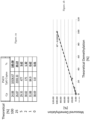
- Figure 2 shows the linearity of the inventive assay as a table (A) and a diagram (B).
- SEQ ID No. 1 shows the genomic sequence of amplicon AMP2213.
- SEQ ID Nos. 2 and 3 show the sequences of bisulfite-converted target-regions of preferred qPCR-assay-systems of the invention, whereby only one of the four possible strands after bisulfite conversion is shown. All four strands are preferred targets for the design of specific assays.
- the given bisulfite strands named bisulfite strand 2 forward strand (b2f) is merely one preferred target used as the example for primer and probe design.
- the reverse strand b2r is used for the complementary primers.
- the strand b1f and b1r are not shown but preferred applications.
- SEQ ID No. 4 to 11 show the sequences of specific oligomers (primers and probes).
- the immune cell populations as analyzed were as shown in Figure 1 .
- TpG-specific PCR-system The specificity of the TpG-specific PCR-system was demonstrated using test-templates (plasmid-DNA) as shown in Figure 2 .
- the cell type specificity (as measured by qPCR) was found as follows: Cell type Description GAPDH-copies TpG-copies Demethylation (%) Granulocytes CD15+ 15433.3 60.9 0.4 Monocytes CD14+ 3370.0 4.4 0.1 Monocytes (II) CD14+ 4406.7 10.9 0.3 Nc Monocytes CD14-CD16+ 3510.0 2880.0 83.0 Nc Monocytes (II) CD14-CD16+ 3110.0 2360.0 76.7 cMonocytes CD14+ 4216.7 7.1 0.2 cMonocytes (II) CD14+ 4000.0 5.3 0.1 T helper cells CD3+CD4+ 3893.3 10.3 0.3 Cytotoxic T cells CD3+CD8+ 1920.0 3.2 0.2 NK cells CD56+ 3306.7 5.7
Landscapes
- Life Sciences & Earth Sciences (AREA)
- Chemical & Material Sciences (AREA)
- Proteomics, Peptides & Aminoacids (AREA)
- Health & Medical Sciences (AREA)
- Organic Chemistry (AREA)
- Zoology (AREA)
- Analytical Chemistry (AREA)
- Wood Science & Technology (AREA)
- Immunology (AREA)
- Engineering & Computer Science (AREA)
- Biotechnology (AREA)
- Microbiology (AREA)
- Molecular Biology (AREA)
- Biophysics (AREA)
- Physics & Mathematics (AREA)
- Cell Biology (AREA)
- Biochemistry (AREA)
- Bioinformatics & Cheminformatics (AREA)
- General Engineering & Computer Science (AREA)
- General Health & Medical Sciences (AREA)
- Genetics & Genomics (AREA)
- Measuring Or Testing Involving Enzymes Or Micro-Organisms (AREA)
Applications Claiming Priority (2)
| Application Number | Priority Date | Filing Date | Title |
|---|---|---|---|
| DE102017125335.1A DE102017125335B4 (de) | 2017-10-27 | 2017-10-27 | Amplikon-Region als epigenetischer Marker zur Identifizierung von Immunzellen, insbesondere nicht-klassischer Monozyten |
| PCT/EP2018/079406 WO2019081707A1 (en) | 2017-10-27 | 2018-10-26 | AMPLICON REGION AS AN EPIGENETIC MARKER FOR THE IDENTIFICATION OF NON-CLASSIC MONOCYTES |
Publications (2)
| Publication Number | Publication Date |
|---|---|
| EP3669001A1 EP3669001A1 (en) | 2020-06-24 |
| EP3669001B1 true EP3669001B1 (en) | 2024-07-17 |
Family
ID=64024040
Family Applications (1)
| Application Number | Title | Priority Date | Filing Date |
|---|---|---|---|
| EP18793655.4A Active EP3669001B1 (en) | 2017-10-27 | 2018-10-26 | Amplicon region as epigenetic marker for the identification of non-classical monocytes |
Country Status (8)
| Country | Link |
|---|---|
| US (1) | US11680294B2 (enExample) |
| EP (1) | EP3669001B1 (enExample) |
| JP (1) | JP2021502806A (enExample) |
| CN (1) | CN111247253A (enExample) |
| AU (1) | AU2018356572A1 (enExample) |
| CA (1) | CA3079477A1 (enExample) |
| DE (1) | DE102017125335B4 (enExample) |
| WO (1) | WO2019081707A1 (enExample) |
Families Citing this family (1)
| Publication number | Priority date | Publication date | Assignee | Title |
|---|---|---|---|---|
| WO2022191293A1 (ja) * | 2021-03-12 | 2022-09-15 | エーザイ・アール・アンド・ディー・マネジメント株式会社 | 全単球及びcd16陽性単球の割合の測定方法 |
Citations (1)
| Publication number | Priority date | Publication date | Assignee | Title |
|---|---|---|---|---|
| WO2014170497A2 (en) * | 2013-04-19 | 2014-10-23 | Epiontis Gmbh | Method for identifying the quantitative cellular composition in a biological sample |
Family Cites Families (3)
| Publication number | Priority date | Publication date | Assignee | Title |
|---|---|---|---|---|
| EP2714933A4 (en) | 2011-05-25 | 2014-12-31 | Univ Brown | METHODIZED METHOD FOR IDENTIFYING A CELL OR MIXING CELLS FOR THE PROGNOSIS AND DIAGNOSIS OF ILLNESSES AND FOR CELL HEALING THERAPIES |
| BR112015029299A2 (pt) * | 2013-05-22 | 2017-07-25 | Yeda Res & Dev | subpopulação de monócitos humanos para tratamento de doenças e distúrbios oculares |
| GB201516975D0 (en) * | 2015-09-25 | 2015-11-11 | Epiontis Gmbh | PARK2 as epigenetic marker for the identification of immune cells, in particular monocytes |
-
2017
- 2017-10-27 DE DE102017125335.1A patent/DE102017125335B4/de active Active
-
2018
- 2018-10-26 WO PCT/EP2018/079406 patent/WO2019081707A1/en not_active Ceased
- 2018-10-26 CN CN201880068476.5A patent/CN111247253A/zh not_active Withdrawn
- 2018-10-26 CA CA3079477A patent/CA3079477A1/en active Pending
- 2018-10-26 JP JP2020523795A patent/JP2021502806A/ja active Pending
- 2018-10-26 EP EP18793655.4A patent/EP3669001B1/en active Active
- 2018-10-26 US US16/758,992 patent/US11680294B2/en active Active
- 2018-10-26 AU AU2018356572A patent/AU2018356572A1/en not_active Abandoned
Patent Citations (1)
| Publication number | Priority date | Publication date | Assignee | Title |
|---|---|---|---|---|
| WO2014170497A2 (en) * | 2013-04-19 | 2014-10-23 | Epiontis Gmbh | Method for identifying the quantitative cellular composition in a biological sample |
Also Published As
| Publication number | Publication date |
|---|---|
| CA3079477A1 (en) | 2019-05-02 |
| US20200340053A1 (en) | 2020-10-29 |
| AU2018356572A1 (en) | 2020-04-23 |
| CN111247253A (zh) | 2020-06-05 |
| JP2021502806A (ja) | 2021-02-04 |
| US11680294B2 (en) | 2023-06-20 |
| DE102017125335B4 (de) | 2019-10-17 |
| DE102017125335A1 (de) | 2019-05-02 |
| WO2019081707A1 (en) | 2019-05-02 |
| EP3669001A1 (en) | 2020-06-24 |
Similar Documents
| Publication | Publication Date | Title |
|---|---|---|
| US11643687B2 (en) | LRP5 as epigenetic marker for the identification of immune cells, in particular B-cells | |
| EP3353319B1 (en) | Park2 as epigenetic marker for the identification of immune cells, in particular monocytes | |
| EP3353321B1 (en) | Mvd as epigenetic marker for the identification of cd56+ nk cells | |
| EP3669001B1 (en) | Amplicon region as epigenetic marker for the identification of non-classical monocytes | |
| US11725243B2 (en) | Epigenetic method for the identification of follicular T-helper-(TFH-) cells | |
| AU2018356433A1 (en) | MCC as epigenetic marker for the identification of immune cells, in particular basophil granulocytes | |
| US11976327B2 (en) | ERGIC1 as epigenetic marker for the identification of immune cells, in particular monocytic myeloid-derived suppressor cells (mMDSCs) | |
| CA3082261C (en) | Ergic1 as epigenetic marker for the identification of immune cells, in particular monocytic myeloid-derived suppressor cells (mmdscs) | |
| EP3669003B1 (en) | Pdcd1 as epigenetic marker for the identification of immune cells, in particular pd1+ cells | |
| CA3080060C (en) | Pdcd1 as epigenetic marker for the identification of immune cells, in particular pd1+ cells | |
| WO2024245833A1 (en) | Lag3 as epigenetic marker for the identification of immune cells | |
| EP3802879A1 (en) | Cxcr3 as epigenetic marker for the identification of inflammatory immune cells, in particular cd8+ memory t cells | |
| HK1257582B (en) | Park2 as epigenetic marker for the identification of immune cells, in particular monocytes |
Legal Events
| Date | Code | Title | Description |
|---|---|---|---|
| STAA | Information on the status of an ep patent application or granted ep patent |
Free format text: STATUS: UNKNOWN |
|
| STAA | Information on the status of an ep patent application or granted ep patent |
Free format text: STATUS: THE INTERNATIONAL PUBLICATION HAS BEEN MADE |
|
| PUAI | Public reference made under article 153(3) epc to a published international application that has entered the european phase |
Free format text: ORIGINAL CODE: 0009012 |
|
| STAA | Information on the status of an ep patent application or granted ep patent |
Free format text: STATUS: REQUEST FOR EXAMINATION WAS MADE |
|
| 17P | Request for examination filed |
Effective date: 20200317 |
|
| AK | Designated contracting states |
Kind code of ref document: A1 Designated state(s): AL AT BE BG CH CY CZ DE DK EE ES FI FR GB GR HR HU IE IS IT LI LT LU LV MC MK MT NL NO PL PT RO RS SE SI SK SM TR |
|
| AX | Request for extension of the european patent |
Extension state: BA ME |
|
| DAV | Request for validation of the european patent (deleted) | ||
| DAX | Request for extension of the european patent (deleted) | ||
| STAA | Information on the status of an ep patent application or granted ep patent |
Free format text: STATUS: EXAMINATION IS IN PROGRESS |
|
| 17Q | First examination report despatched |
Effective date: 20210408 |
|
| P01 | Opt-out of the competence of the unified patent court (upc) registered |
Effective date: 20230525 |
|
| GRAP | Despatch of communication of intention to grant a patent |
Free format text: ORIGINAL CODE: EPIDOSNIGR1 |
|
| STAA | Information on the status of an ep patent application or granted ep patent |
Free format text: STATUS: GRANT OF PATENT IS INTENDED |
|
| INTG | Intention to grant announced |
Effective date: 20240305 |
|
| GRAS | Grant fee paid |
Free format text: ORIGINAL CODE: EPIDOSNIGR3 |
|
| GRAA | (expected) grant |
Free format text: ORIGINAL CODE: 0009210 |
|
| STAA | Information on the status of an ep patent application or granted ep patent |
Free format text: STATUS: THE PATENT HAS BEEN GRANTED |
|
| AK | Designated contracting states |
Kind code of ref document: B1 Designated state(s): AL AT BE BG CH CY CZ DE DK EE ES FI FR GB GR HR HU IE IS IT LI LT LU LV MC MK MT NL NO PL PT RO RS SE SI SK SM TR |
|
| RAP3 | Party data changed (applicant data changed or rights of an application transferred) |
Owner name: PRECISION FOR MEDICINE GMBH |
|
| REG | Reference to a national code |
Ref country code: CH Ref legal event code: EP |
|
| REG | Reference to a national code |
Ref country code: DE Ref legal event code: R096 Ref document number: 602018071916 Country of ref document: DE |
|
| REG | Reference to a national code |
Ref country code: IE Ref legal event code: FG4D |
|
| REG | Reference to a national code |
Ref country code: LT Ref legal event code: MG9D |
|
| REG | Reference to a national code |
Ref country code: NL Ref legal event code: MP Effective date: 20240717 |
|
| PG25 | Lapsed in a contracting state [announced via postgrant information from national office to epo] |
Ref country code: PT Free format text: LAPSE BECAUSE OF FAILURE TO SUBMIT A TRANSLATION OF THE DESCRIPTION OR TO PAY THE FEE WITHIN THE PRESCRIBED TIME-LIMIT Effective date: 20241118 |
|
| REG | Reference to a national code |
Ref country code: AT Ref legal event code: MK05 Ref document number: 1704192 Country of ref document: AT Kind code of ref document: T Effective date: 20240717 |
|
| PG25 | Lapsed in a contracting state [announced via postgrant information from national office to epo] |
Ref country code: NL Free format text: LAPSE BECAUSE OF FAILURE TO SUBMIT A TRANSLATION OF THE DESCRIPTION OR TO PAY THE FEE WITHIN THE PRESCRIBED TIME-LIMIT Effective date: 20240717 |
|
| PG25 | Lapsed in a contracting state [announced via postgrant information from national office to epo] |
Ref country code: PT Free format text: LAPSE BECAUSE OF FAILURE TO SUBMIT A TRANSLATION OF THE DESCRIPTION OR TO PAY THE FEE WITHIN THE PRESCRIBED TIME-LIMIT Effective date: 20241118 Ref country code: NL Free format text: LAPSE BECAUSE OF FAILURE TO SUBMIT A TRANSLATION OF THE DESCRIPTION OR TO PAY THE FEE WITHIN THE PRESCRIBED TIME-LIMIT Effective date: 20240717 |
|
| PGFP | Annual fee paid to national office [announced via postgrant information from national office to epo] |
Ref country code: DE Payment date: 20241022 Year of fee payment: 7 |
|
| PG25 | Lapsed in a contracting state [announced via postgrant information from national office to epo] |
Ref country code: NO Free format text: LAPSE BECAUSE OF FAILURE TO SUBMIT A TRANSLATION OF THE DESCRIPTION OR TO PAY THE FEE WITHIN THE PRESCRIBED TIME-LIMIT Effective date: 20241017 |
|
| PG25 | Lapsed in a contracting state [announced via postgrant information from national office to epo] |
Ref country code: GR Free format text: LAPSE BECAUSE OF FAILURE TO SUBMIT A TRANSLATION OF THE DESCRIPTION OR TO PAY THE FEE WITHIN THE PRESCRIBED TIME-LIMIT Effective date: 20241018 Ref country code: FI Free format text: LAPSE BECAUSE OF FAILURE TO SUBMIT A TRANSLATION OF THE DESCRIPTION OR TO PAY THE FEE WITHIN THE PRESCRIBED TIME-LIMIT Effective date: 20240717 Ref country code: PL Free format text: LAPSE BECAUSE OF FAILURE TO SUBMIT A TRANSLATION OF THE DESCRIPTION OR TO PAY THE FEE WITHIN THE PRESCRIBED TIME-LIMIT Effective date: 20240717 |
|
| PGFP | Annual fee paid to national office [announced via postgrant information from national office to epo] |
Ref country code: GB Payment date: 20241024 Year of fee payment: 7 |
|
| PG25 | Lapsed in a contracting state [announced via postgrant information from national office to epo] |
Ref country code: BG Free format text: LAPSE BECAUSE OF FAILURE TO SUBMIT A TRANSLATION OF THE DESCRIPTION OR TO PAY THE FEE WITHIN THE PRESCRIBED TIME-LIMIT Effective date: 20240717 |
|
| PG25 | Lapsed in a contracting state [announced via postgrant information from national office to epo] |
Ref country code: LV Free format text: LAPSE BECAUSE OF FAILURE TO SUBMIT A TRANSLATION OF THE DESCRIPTION OR TO PAY THE FEE WITHIN THE PRESCRIBED TIME-LIMIT Effective date: 20240717 |
|
| PG25 | Lapsed in a contracting state [announced via postgrant information from national office to epo] |
Ref country code: IS Free format text: LAPSE BECAUSE OF FAILURE TO SUBMIT A TRANSLATION OF THE DESCRIPTION OR TO PAY THE FEE WITHIN THE PRESCRIBED TIME-LIMIT Effective date: 20241117 Ref country code: AT Free format text: LAPSE BECAUSE OF FAILURE TO SUBMIT A TRANSLATION OF THE DESCRIPTION OR TO PAY THE FEE WITHIN THE PRESCRIBED TIME-LIMIT Effective date: 20240717 |
|
| PGFP | Annual fee paid to national office [announced via postgrant information from national office to epo] |
Ref country code: FR Payment date: 20241025 Year of fee payment: 7 |
|
| PG25 | Lapsed in a contracting state [announced via postgrant information from national office to epo] |
Ref country code: HR Free format text: LAPSE BECAUSE OF FAILURE TO SUBMIT A TRANSLATION OF THE DESCRIPTION OR TO PAY THE FEE WITHIN THE PRESCRIBED TIME-LIMIT Effective date: 20240717 |
|
| PG25 | Lapsed in a contracting state [announced via postgrant information from national office to epo] |
Ref country code: ES Free format text: LAPSE BECAUSE OF FAILURE TO SUBMIT A TRANSLATION OF THE DESCRIPTION OR TO PAY THE FEE WITHIN THE PRESCRIBED TIME-LIMIT Effective date: 20240717 Ref country code: RS Free format text: LAPSE BECAUSE OF FAILURE TO SUBMIT A TRANSLATION OF THE DESCRIPTION OR TO PAY THE FEE WITHIN THE PRESCRIBED TIME-LIMIT Effective date: 20241017 |
|
| PG25 | Lapsed in a contracting state [announced via postgrant information from national office to epo] |
Ref country code: RS Free format text: LAPSE BECAUSE OF FAILURE TO SUBMIT A TRANSLATION OF THE DESCRIPTION OR TO PAY THE FEE WITHIN THE PRESCRIBED TIME-LIMIT Effective date: 20241017 Ref country code: PL Free format text: LAPSE BECAUSE OF FAILURE TO SUBMIT A TRANSLATION OF THE DESCRIPTION OR TO PAY THE FEE WITHIN THE PRESCRIBED TIME-LIMIT Effective date: 20240717 Ref country code: NO Free format text: LAPSE BECAUSE OF FAILURE TO SUBMIT A TRANSLATION OF THE DESCRIPTION OR TO PAY THE FEE WITHIN THE PRESCRIBED TIME-LIMIT Effective date: 20241017 Ref country code: LV Free format text: LAPSE BECAUSE OF FAILURE TO SUBMIT A TRANSLATION OF THE DESCRIPTION OR TO PAY THE FEE WITHIN THE PRESCRIBED TIME-LIMIT Effective date: 20240717 Ref country code: IS Free format text: LAPSE BECAUSE OF FAILURE TO SUBMIT A TRANSLATION OF THE DESCRIPTION OR TO PAY THE FEE WITHIN THE PRESCRIBED TIME-LIMIT Effective date: 20241117 Ref country code: HR Free format text: LAPSE BECAUSE OF FAILURE TO SUBMIT A TRANSLATION OF THE DESCRIPTION OR TO PAY THE FEE WITHIN THE PRESCRIBED TIME-LIMIT Effective date: 20240717 Ref country code: GR Free format text: LAPSE BECAUSE OF FAILURE TO SUBMIT A TRANSLATION OF THE DESCRIPTION OR TO PAY THE FEE WITHIN THE PRESCRIBED TIME-LIMIT Effective date: 20241018 Ref country code: FI Free format text: LAPSE BECAUSE OF FAILURE TO SUBMIT A TRANSLATION OF THE DESCRIPTION OR TO PAY THE FEE WITHIN THE PRESCRIBED TIME-LIMIT Effective date: 20240717 Ref country code: ES Free format text: LAPSE BECAUSE OF FAILURE TO SUBMIT A TRANSLATION OF THE DESCRIPTION OR TO PAY THE FEE WITHIN THE PRESCRIBED TIME-LIMIT Effective date: 20240717 Ref country code: BG Free format text: LAPSE BECAUSE OF FAILURE TO SUBMIT A TRANSLATION OF THE DESCRIPTION OR TO PAY THE FEE WITHIN THE PRESCRIBED TIME-LIMIT Effective date: 20240717 Ref country code: AT Free format text: LAPSE BECAUSE OF FAILURE TO SUBMIT A TRANSLATION OF THE DESCRIPTION OR TO PAY THE FEE WITHIN THE PRESCRIBED TIME-LIMIT Effective date: 20240717 |
|
| PGFP | Annual fee paid to national office [announced via postgrant information from national office to epo] |
Ref country code: CH Payment date: 20241101 Year of fee payment: 7 |
|
| PG25 | Lapsed in a contracting state [announced via postgrant information from national office to epo] |
Ref country code: SM Free format text: LAPSE BECAUSE OF FAILURE TO SUBMIT A TRANSLATION OF THE DESCRIPTION OR TO PAY THE FEE WITHIN THE PRESCRIBED TIME-LIMIT Effective date: 20240717 Ref country code: RO Free format text: LAPSE BECAUSE OF FAILURE TO SUBMIT A TRANSLATION OF THE DESCRIPTION OR TO PAY THE FEE WITHIN THE PRESCRIBED TIME-LIMIT Effective date: 20240717 Ref country code: DK Free format text: LAPSE BECAUSE OF FAILURE TO SUBMIT A TRANSLATION OF THE DESCRIPTION OR TO PAY THE FEE WITHIN THE PRESCRIBED TIME-LIMIT Effective date: 20240717 |
|
| REG | Reference to a national code |
Ref country code: DE Ref legal event code: R097 Ref document number: 602018071916 Country of ref document: DE |
|
| PG25 | Lapsed in a contracting state [announced via postgrant information from national office to epo] |
Ref country code: EE Free format text: LAPSE BECAUSE OF FAILURE TO SUBMIT A TRANSLATION OF THE DESCRIPTION OR TO PAY THE FEE WITHIN THE PRESCRIBED TIME-LIMIT Effective date: 20240717 |
|
| PG25 | Lapsed in a contracting state [announced via postgrant information from national office to epo] |
Ref country code: CZ Free format text: LAPSE BECAUSE OF FAILURE TO SUBMIT A TRANSLATION OF THE DESCRIPTION OR TO PAY THE FEE WITHIN THE PRESCRIBED TIME-LIMIT Effective date: 20240717 |
|
| PG25 | Lapsed in a contracting state [announced via postgrant information from national office to epo] |
Ref country code: SK Free format text: LAPSE BECAUSE OF FAILURE TO SUBMIT A TRANSLATION OF THE DESCRIPTION OR TO PAY THE FEE WITHIN THE PRESCRIBED TIME-LIMIT Effective date: 20240717 |
|
| PLBE | No opposition filed within time limit |
Free format text: ORIGINAL CODE: 0009261 |
|
| STAA | Information on the status of an ep patent application or granted ep patent |
Free format text: STATUS: NO OPPOSITION FILED WITHIN TIME LIMIT |
|
| 26N | No opposition filed |
Effective date: 20250422 |
|
| PG25 | Lapsed in a contracting state [announced via postgrant information from national office to epo] |
Ref country code: MC Free format text: LAPSE BECAUSE OF FAILURE TO SUBMIT A TRANSLATION OF THE DESCRIPTION OR TO PAY THE FEE WITHIN THE PRESCRIBED TIME-LIMIT Effective date: 20240717 |
|
| PG25 | Lapsed in a contracting state [announced via postgrant information from national office to epo] |
Ref country code: LU Free format text: LAPSE BECAUSE OF NON-PAYMENT OF DUE FEES Effective date: 20241026 Ref country code: BE Free format text: LAPSE BECAUSE OF NON-PAYMENT OF DUE FEES Effective date: 20241031 |
|
| REG | Reference to a national code |
Ref country code: BE Ref legal event code: MM Effective date: 20241031 |
|
| PG25 | Lapsed in a contracting state [announced via postgrant information from national office to epo] |
Ref country code: SE Free format text: LAPSE BECAUSE OF FAILURE TO SUBMIT A TRANSLATION OF THE DESCRIPTION OR TO PAY THE FEE WITHIN THE PRESCRIBED TIME-LIMIT Effective date: 20240717 |
|
| PG25 | Lapsed in a contracting state [announced via postgrant information from national office to epo] |
Ref country code: IE Free format text: LAPSE BECAUSE OF NON-PAYMENT OF DUE FEES Effective date: 20241026 |
|
| REG | Reference to a national code |
Ref country code: CH Ref legal event code: U11 Free format text: ST27 STATUS EVENT CODE: U-0-0-U10-U11 (AS PROVIDED BY THE NATIONAL OFFICE) Effective date: 20251101 |