EP3663406B1 - Biologische verfahren zur herstellung von arylsulfaten - Google Patents
Biologische verfahren zur herstellung von arylsulfaten Download PDFInfo
- Publication number
- EP3663406B1 EP3663406B1 EP19206920.1A EP19206920A EP3663406B1 EP 3663406 B1 EP3663406 B1 EP 3663406B1 EP 19206920 A EP19206920 A EP 19206920A EP 3663406 B1 EP3663406 B1 EP 3663406B1
- Authority
- EP
- European Patent Office
- Prior art keywords
- polypeptide
- amino acid
- seq
- acid sequence
- host cell
- Prior art date
- Legal status (The legal status is an assumption and is not a legal conclusion. Google has not performed a legal analysis and makes no representation as to the accuracy of the status listed.)
- Active
Links
Images




Classifications
-
- C—CHEMISTRY; METALLURGY
- C12—BIOCHEMISTRY; BEER; SPIRITS; WINE; VINEGAR; MICROBIOLOGY; ENZYMOLOGY; MUTATION OR GENETIC ENGINEERING
- C12P—FERMENTATION OR ENZYME-USING PROCESSES TO SYNTHESISE A DESIRED CHEMICAL COMPOUND OR COMPOSITION OR TO SEPARATE OPTICAL ISOMERS FROM A RACEMIC MIXTURE
- C12P11/00—Preparation of sulfur-containing organic compounds
-
- C—CHEMISTRY; METALLURGY
- C12—BIOCHEMISTRY; BEER; SPIRITS; WINE; VINEGAR; MICROBIOLOGY; ENZYMOLOGY; MUTATION OR GENETIC ENGINEERING
- C12N—MICROORGANISMS OR ENZYMES; COMPOSITIONS THEREOF; PROPAGATING, PRESERVING, OR MAINTAINING MICROORGANISMS; MUTATION OR GENETIC ENGINEERING; CULTURE MEDIA
- C12N1/00—Microorganisms, e.g. protozoa; Compositions thereof; Processes of propagating, maintaining or preserving microorganisms or compositions thereof; Processes of preparing or isolating a composition containing a microorganism; Culture media therefor
- C12N1/20—Bacteria; Culture media therefor
-
- C—CHEMISTRY; METALLURGY
- C12—BIOCHEMISTRY; BEER; SPIRITS; WINE; VINEGAR; MICROBIOLOGY; ENZYMOLOGY; MUTATION OR GENETIC ENGINEERING
- C12N—MICROORGANISMS OR ENZYMES; COMPOSITIONS THEREOF; PROPAGATING, PRESERVING, OR MAINTAINING MICROORGANISMS; MUTATION OR GENETIC ENGINEERING; CULTURE MEDIA
- C12N15/00—Mutation or genetic engineering; DNA or RNA concerning genetic engineering, vectors, e.g. plasmids, or their isolation, preparation or purification; Use of hosts therefor
- C12N15/09—Recombinant DNA-technology
-
- C—CHEMISTRY; METALLURGY
- C12—BIOCHEMISTRY; BEER; SPIRITS; WINE; VINEGAR; MICROBIOLOGY; ENZYMOLOGY; MUTATION OR GENETIC ENGINEERING
- C12N—MICROORGANISMS OR ENZYMES; COMPOSITIONS THEREOF; PROPAGATING, PRESERVING, OR MAINTAINING MICROORGANISMS; MUTATION OR GENETIC ENGINEERING; CULTURE MEDIA
- C12N15/00—Mutation or genetic engineering; DNA or RNA concerning genetic engineering, vectors, e.g. plasmids, or their isolation, preparation or purification; Use of hosts therefor
- C12N15/09—Recombinant DNA-technology
- C12N15/63—Introduction of foreign genetic material using vectors; Vectors; Use of hosts therefor; Regulation of expression
- C12N15/67—General methods for enhancing the expression
-
- C—CHEMISTRY; METALLURGY
- C12—BIOCHEMISTRY; BEER; SPIRITS; WINE; VINEGAR; MICROBIOLOGY; ENZYMOLOGY; MUTATION OR GENETIC ENGINEERING
- C12N—MICROORGANISMS OR ENZYMES; COMPOSITIONS THEREOF; PROPAGATING, PRESERVING, OR MAINTAINING MICROORGANISMS; MUTATION OR GENETIC ENGINEERING; CULTURE MEDIA
- C12N9/00—Enzymes; Proenzymes; Compositions thereof; Processes for preparing, activating, inhibiting, separating or purifying enzymes
- C12N9/10—Transferases (2.)
-
- C—CHEMISTRY; METALLURGY
- C12—BIOCHEMISTRY; BEER; SPIRITS; WINE; VINEGAR; MICROBIOLOGY; ENZYMOLOGY; MUTATION OR GENETIC ENGINEERING
- C12N—MICROORGANISMS OR ENZYMES; COMPOSITIONS THEREOF; PROPAGATING, PRESERVING, OR MAINTAINING MICROORGANISMS; MUTATION OR GENETIC ENGINEERING; CULTURE MEDIA
- C12N9/00—Enzymes; Proenzymes; Compositions thereof; Processes for preparing, activating, inhibiting, separating or purifying enzymes
- C12N9/10—Transferases (2.)
- C12N9/12—Transferases (2.) transferring phosphorus containing groups, e.g. kinases (2.7)
- C12N9/1205—Phosphotransferases with an alcohol group as acceptor (2.7.1), e.g. protein kinases
-
- C—CHEMISTRY; METALLURGY
- C12—BIOCHEMISTRY; BEER; SPIRITS; WINE; VINEGAR; MICROBIOLOGY; ENZYMOLOGY; MUTATION OR GENETIC ENGINEERING
- C12N—MICROORGANISMS OR ENZYMES; COMPOSITIONS THEREOF; PROPAGATING, PRESERVING, OR MAINTAINING MICROORGANISMS; MUTATION OR GENETIC ENGINEERING; CULTURE MEDIA
- C12N9/00—Enzymes; Proenzymes; Compositions thereof; Processes for preparing, activating, inhibiting, separating or purifying enzymes
- C12N9/10—Transferases (2.)
- C12N9/12—Transferases (2.) transferring phosphorus containing groups, e.g. kinases (2.7)
- C12N9/1229—Phosphotransferases with a phosphate group as acceptor (2.7.4)
-
- C—CHEMISTRY; METALLURGY
- C12—BIOCHEMISTRY; BEER; SPIRITS; WINE; VINEGAR; MICROBIOLOGY; ENZYMOLOGY; MUTATION OR GENETIC ENGINEERING
- C12N—MICROORGANISMS OR ENZYMES; COMPOSITIONS THEREOF; PROPAGATING, PRESERVING, OR MAINTAINING MICROORGANISMS; MUTATION OR GENETIC ENGINEERING; CULTURE MEDIA
- C12N9/00—Enzymes; Proenzymes; Compositions thereof; Processes for preparing, activating, inhibiting, separating or purifying enzymes
- C12N9/10—Transferases (2.)
- C12N9/13—Transferases (2.) transferring sulfur containing groups (2.8)
-
- C—CHEMISTRY; METALLURGY
- C12—BIOCHEMISTRY; BEER; SPIRITS; WINE; VINEGAR; MICROBIOLOGY; ENZYMOLOGY; MUTATION OR GENETIC ENGINEERING
- C12N—MICROORGANISMS OR ENZYMES; COMPOSITIONS THEREOF; PROPAGATING, PRESERVING, OR MAINTAINING MICROORGANISMS; MUTATION OR GENETIC ENGINEERING; CULTURE MEDIA
- C12N9/00—Enzymes; Proenzymes; Compositions thereof; Processes for preparing, activating, inhibiting, separating or purifying enzymes
- C12N9/14—Hydrolases (3)
- C12N9/16—Hydrolases (3) acting on ester bonds (3.1)
-
- C—CHEMISTRY; METALLURGY
- C12—BIOCHEMISTRY; BEER; SPIRITS; WINE; VINEGAR; MICROBIOLOGY; ENZYMOLOGY; MUTATION OR GENETIC ENGINEERING
- C12N—MICROORGANISMS OR ENZYMES; COMPOSITIONS THEREOF; PROPAGATING, PRESERVING, OR MAINTAINING MICROORGANISMS; MUTATION OR GENETIC ENGINEERING; CULTURE MEDIA
- C12N9/00—Enzymes; Proenzymes; Compositions thereof; Processes for preparing, activating, inhibiting, separating or purifying enzymes
- C12N9/88—Lyases (4.)
Definitions
- the present invention generally relates to the field of biotechnology as it applies to the production of aryl sulfates using recombinant cells comprising a heterologous polypeptide having an aryl sulfotransferase activity. More particularly, the present invention pertains to processes for the production of aryl sulfates employing recombinant host cells expressing heterologous aryl sulfotransferase.
- phenolic compounds are of great interest to the biotech industry since they are building blocks for polymeric compounds.
- examples of such phenolic compounds include p-coumaric acid (pHCA) or other hydroxycinnamic acids which form the basis for many secondary metabolites including flavonoids and stilbenes.
- pHCA p-coumaric acid
- many of these phenolic compounds are toxic to producing organisms, and thus limit the productivity during fermentation.
- phenolic compounds and especially those used as drugs or food additives such as resveratrol or vanillin, show poor solubility in water which makes it difficult for these compounds to be uptaken by the body.
- phenolic compounds in a form which improves the solubility, and hence bioavailablility, preferably by using biological large scale production processes.
- JP 2012165676 A discloses methods for preparing a sulphate conjugate by yeast cells transformed with a human SULT gene and cultivated in the presence of ammonium sulphate, glucose and a substance to be linked which mainly comprises fused ring systems.
- the object of the present invention is to provide a method for large scale production of aryl sulfates. Furthermore, it is an object to provide a biological process for the large scale production of phenols. The inventors have developed a biological process that solves both objects.
- the present invention thus provides in a first aspect a process for the production of a sulfated phenolic compound comprising:
- each of R 1 , R 3 and R 5 is hydrogen, each of R 2 and R 4 is hydroxyl, and R 6 is p-hydroxyphenyl.
- R 4 is hydroxyl
- each of R 1 , R 2 and R 5 is hydrogen.
- R 1 is hydrogen
- R 2 , R 3 and R 4 are independently selected from the group consisting of hydrogen (H), hydroxyl (-OH), C 1-6 -alkyl and C 1-6 -alkoxy, provided that at least one of R 2 , R 3 and R 4 is hydroxyl (-OH);
- R 5 is hydrogen, and R 6 is COOH.
- each of R 1 , R 2 , R 4 and R 5 is hydrogen, R 3 is hydroxyl (-OH), and R 6 is COOH.
- the present invention provides in a further aspect a process for the production of a sulfated phenolic compound, such as zosteric acid, the method comprises sulfating a phenolic compound, such as p-coumaric acid, using a first recombinant host cell which is a bacterium or a yeast.
- a first recombinant host cell which is a bacterium or a yeast.
- the process involves the use of a first recombinant host cell expressing a heterologous polypeptide having an aryl sulfotransferase activity, such as a polypeptide selected from the group consisting of:
- heterologous polypeptide having an aryl sulfotransferase activity is a sulfotransferase 1A1 enzyme.
- the first recombinant host cell is a bacterium. In another embodiment the first recombinant host cell is a bacterium of the species Escherichia coli.
- the first recombinant host cell is a yeast.
- the first recombinant host cell further comprises a heterologous polypeptide having tyrosine ammonia lyase activity.
- the medium is further contacted with a second recombinant host cell comprising a heterologous polypeptide having tyrosine ammonia lyase activity.
- the present invention utilizes recombinant host cells comprising heterologous polypeptides having aryl sulfotransferase activity (EC:2.8.2.1). This makes them particularly suitable for the sulfation of phenolic compounds such as p-coumaric acid and derivatives thereof (e.g., caffeic acid, ferulic acid or sinapic acid), or resveratrol.
- phenolic compounds such as p-coumaric acid and derivatives thereof (e.g., caffeic acid, ferulic acid or sinapic acid), or resveratrol.
- the polypeptide having aryl sulfotransferase activity may be a sulfotransferase 1A1 enzyme, a sulfotransferase 1A2 enzyme, a sulfotransferase 1A3 enzyme, a sulfotransferase 1B1 enzyme, a sulfotransferase 1C1 enzyme, a sulfotransferase 1C2 enzyme, a sulfotransferase 1C4 enzyme, or a sulfotransferase 1E1 enzyme.
- the polypeptide having aryl sulfotransferase activity is a sulfotransferase 1A1 enzyme. According to certain other embodiments, the the polypeptide having aryl sulfotransferase activity is a sulfotransferase 1A2 enzyme. According to certain embodiments, the the polypeptide having aryl sulfotransferase activity is a sulfotransferase 1B1 enzyme. According to certain embodiments, the polypeptide having aryl sulfotransferase activity is a sulfotransferase 1C1 enzyme.
- the polypeptide having aryl sulfotransferase activity is a sulfotransferase 1C2 enzyme. According to certain embodiments, the the polypeptide having aryl sulfotransferase activity is a sulfotransferase 1C4 enzyme. According to other certain embodiments, the polypeptide having aryl sulfotransferase activity is a sulfotransferase 1E1 enzyme (estrogen sulfotransferase), such as the sulfotransferase 1E1 from Gallus gallus domesticus.
- estrogen sulfotransferase such as the sulfotransferase 1E1 from Gallus gallus domesticus.
- the polypeptide having aryl sulfotransferase activity is a mammalian aryl sulfotransferase, such as a mammalian sulfotransferase 1A1 enzyme.
- the polypeptide having an aryl sulfotransferase activity is a polypeptide which comprises an amino acid sequence having at least 70% sequence identity to the amino acid sequence set forth in SEQ ID NO: 1, 2, 3, 4, 5, 6, 7, 8, 9, 10, 11, 12 or 13, and has aryl sulfotransferase activity.
- the polypeptide having an aryl sulfotransferase activity is a polypeptide which comprises an amino acid sequence having at least 70% sequence identity to the amino acid sequence set forth in SEQ ID NO: 1, and has aryl sulfotransferase activity.
- the polypeptide having aryl sulfotransferase activity is an aryl sulfotransferase from Rattus norvegicus or a variant thereof.
- Such variant may have at least about 70%, such as at least about 75%, at least about 80%, at least about 85%, at least about 90%, at least about 93%, at least 95%, at least 96%, at least 97%, at least 98%, or at least 99%, sequence identity to the amino acid sequence of the aryl sulfotransferase from Rattus norvegicus.
- Such variant may also have an amino acid sequence of the sulfotransferase from Rattus norvegicus, wherein 1 to 50, such as 1 to 40, 1 to 35, 1 to 30, 1 to 25, 1 to 20, 1 to 15, 1 to 10, 1 to 5, 1 to 3, amino acid residues are substituted, deleted and/or inserted.
- 1 to 50 such as 1 to 40, 1 to 35, 1 to 30, 1 to 25, 1 to 20, 1 to 15, 1 to 10, 1 to 5, 1 to 3, amino acid residues are substituted, deleted and/or inserted.
- the alterations may solely be amino acid substitutions, be it conserved or non-conserved substitutions, or both. They may solely be amino acid deletions. They may solely be amino acid insertions. The alterations may be a mix of these specific alterations, such as amino acid substitutions and amino acid insertions.
- the polypeptide having aryl sulfotransferase activity may be a polypeptide selected from the group consisting of:
- a polypeptide for use in the invention is a polypeptide according to a). Accordingly, a polypeptide for use in the invention may be a polypeptide comprising an amino acid sequence set forth in SEQ ID NO: 1, 2, 3, 4, 5, 6, 7, 8, 9, 10, 11, 12 or 13 (e.g., SEQ ID NO: 1). According to particular embodiments, a polypeptide according to a) comprises an amino acid sequence set forth in SEQ ID NO: 1. According other particular embodiments, a polypeptide according to a) comprises an amino acid sequence set forth in SEQ ID NO: 2. According to yet other particular embodiments, a polypeptide according to a) comprises an amino acid sequence set forth in SEQ ID NO: 3.
- a polypeptide according to a) comprises an amino acid sequence set forth in SEQ ID NO: 4.
- a polypeptide according to a) comprises an amino acid sequence set forth in SEQ ID NO: 5.
- a polypeptide according to a) comprises an amino acid sequence set forth in SEQ ID NO: 6.
- a polypeptide according to a) comprises an amino acid sequence set forth in SEQ ID NO: 7.
- a polypeptide according to a) comprises an amino acid sequence set forth in SEQ ID NO: 8.
- a polypeptide according to a) comprises an amino acid sequence set forth in SEQ ID NO: 9.
- a polypeptide according to a) comprises an amino acid sequence set forth in SEQ ID NO: 10. According other particular embodiments, a polypeptide according to a) comprises an amino acid sequence set forth in SEQ ID NO: 11. According other particular embodiments, a polypeptide according to a) comprises an amino acid sequence set forth in SEQ ID NO: 12. According other particular embodiments, a polypeptide according to a) comprises an amino acid sequence set forth in SEQ ID NO: 13.
- a polypeptide for use in the invention is a polypeptide according to b).
- a polypeptide for use in the invention may be a polypeptide comprising an amino acid sequence which has at least about 70%, such as at least about 75%, at least about 80%, at least about 85%, at least about 90%, at least about 93%, at least 95%, at least 96%, at least 97%, at least 98%, or at least 99%, sequence identity to the amino acid sequence set forth in SEQ ID NO: 1, 2, 3, 4, 5, 6, 7, 8, 9, 10, 11, 12 or 13 (e.g., SEQ ID NO: 1).
- a polypeptide according to b) comprises an amino acid sequence which has at least about 80%, such as at least about 85%, at least about 90%, at least about 93%, at least about 95%, at least about 96%, at least about 97%, at least about 98%, or at least about 99%, sequence identity to the amino acid sequence set forth in SEQ ID NO: 1, 2, 3, 4, 5, 6, 7, 8, 9, 10, 11, 12 or 13 (e.g., SEQ ID NO: 1).
- a polypeptide according to b) comprises an amino acid sequence which has at least about 85%, such as at least about 90%, at least about 93%, at least about 95%, at least about 96%, at least about 97%, at least about 98%, or at least about 99%, sequence identity to the amino acid sequence set forth in SEQ ID NO: 1, 2, 3, 4, 5, 6, 7, 8, 9, 10, 11, 12 or 13 (e.g., SEQ ID NO: 1).
- a polypeptide according to b) comprises an amino acid sequence which has at least about 90%, such as at least about 93%, at least about 95%, at least about 96%, at least about 97%, at least about 98%, or at least about 99%, sequence identity to the amino acid sequence set forth in SEQ ID NO: 1, 2, 3, 4, 5, 6, 7, 8, 9, 10, 11, 12 or 13 (e.g., SEQ ID NO: 1).
- a polypeptide according to b) comprises an amino acid sequence which has at least about 95%, such as at least about 96%, at least about 97%, at least about 98%, or at least about 99%, sequence identity to the amino acid sequence set forth in SEQ ID NO: 1, 2, 3, 4, 5, 6, 7, 8, 9, 10, 11, 12 or 13 (e.g., SEQ ID NO: 1).
- a polypeptide according to b) comprises an amino acid sequence which has at least about 70%, such as at least about 75%, at least about 80%, at least about 85%, at least about 90%, at least about 93%, at least 95%, at least 96%, at least 97%, at least 98%, or at least 99%, sequence identity to the amino acid sequence set forth in SEQ ID NO: 1.
- a polypeptide according to b) comprises an amino acid sequence which has at least about 80%, such as at least about 85%, at least about 90%, at least about 93%, at least about 95%, at least about 96%, at least about 97%, at least about 98%, or at least about 99%, sequence identity to the amino acid sequence set forth in SEQ ID NO: 1.
- a polypeptide according to b) comprises an amino acid sequence which has at least about 85%, such as at least about 90%, at least about 93%, at least about 95%, at least about 96%, at least about 97%, at least about 98%, or at least about 99%, sequence identity to the amino acid sequence set forth in SEQ ID NO: 1.
- a polypeptide according to b) comprises an amino acid sequence which has at least about 90%, such as at least about 93%, at least about 95%, at least about 96%, at least about 97%, at least about 98%, or at least about 99%, sequence identity to the amino acid sequence set forth in SEQ ID NO: 1.
- a polypeptide according to b) comprises an amino acid sequence which has at least about 95%, such as at least about 96%, at least about 97%, at least about 98%, or at least about 99%, sequence identity to the amino acid sequence set forth in SEQ ID NO: 1.
- a polypeptide according to b) has aryl sulfotransferase activity similar to that of the polypeptide comprising the amino acid sequence set forth in SEQ ID NO: 1. According to certain other embodiments, a polypeptide according to b) has aryl sulfotransferase activity similar to that of the polypeptide comprising the amino acid sequence set forth in SEQ ID NO: 2. According to certain other embodiments, a polypeptide according to b) has aryl sulfotransferase activity similar to that of the polypeptide comprising the amino acid sequence set forth in SEQ ID NO: 3.
- a polypeptide according to b) has aryl sulfotransferase activity similar to that of the polypeptide comprising the amino acid sequence set forth in SEQ ID NO: 4. According to certain other embodiments, a polypeptide according to b) has aryl sulfotransferase activity similar to that of the polypeptide comprising the amino acid sequence set forth in SEQ ID NO: 5. According to certain other embodiments, a polypeptide according to b) has aryl sulfotransferase activity similar to that of the polypeptide comprising the amino acid sequence set forth in SEQ ID NO: 6.
- a polypeptide according to b) has aryl sulfotransferase activity similar to that of the polypeptide comprising the amino acid sequence set forth in SEQ ID NO: 7. According to certain other embodiments, a polypeptide according to b) has aryl sulfotransferase activity similar to that of the polypeptide comprising the amino acid sequence set forth in SEQ ID NO: 8. According to certain other embodiments, a polypeptide according to b) has aryl sulfotransferase activity similar to that of the polypeptide comprising the amino acid sequence set forth in SEQ ID NO: 9.
- a polypeptide according to b) has aryl sulfotransferase activity similar to that of the polypeptide comprising the amino acid sequence set forth in SEQ ID NO: 10. According to certain other embodiments, a polypeptide according to b) has aryl sulfotransferase activity similar to that of the polypeptide comprising the amino acid sequence set forth in SEQ ID NO: 11. According to certain other embodiments, a polypeptide according to b) has aryl sulfotransferase activity similar to that of the polypeptide comprising the amino acid sequence set forth in SEQ ID NO: 12. According to certain other embodiments, a polypeptide according to b) has aryl sulfotransferase activity similar to that of the polypeptide comprising the amino acid sequence set forth in SEQ ID NO: 13.
- aryl sulfotransferase activity it is meant that the polypeptide according to b) has at least about 10%, such as at least about 20%, at least about 30%, at least about 40%, at least about 50%, at least about 60, at least about 75%, at least about 80%, at least about 90%, at least about 95%, at least about 100%, at least about 200%, at least about 300%, at least about 400%, at least about 500%, at least about 800%, at least about 1000% or at least about 2000%, of the aryl sulfotransferase activity of the reference polypeptide (e.g., SEQ ID NO: 1).
- the reference polypeptide e.g., SEQ ID NO: 1
- the aryl sulfotransferase activity may for instance be determined in accordance to the following method:
- Aryl sulfotransferase activity may be determined by the reaction of radioactively sulfur labelled PAPS, [ 35 S]PAPS, with the substrate in presence of the polypeptide of interest. This is described previously, for example by Hattori et al (Biosci Biotechnol Biochem. 2008; 72(2):540-7 ). The reaction takes place in a buffer such as 250 ⁇ L 50 mM sodium phosphate pH 6.8 with 1 ⁇ M [ 35 S]PAPS (3.7kBq) with 100 ⁇ M accepting compound for a period of 30 min at 30°C.
- the reaction is stopped by addition of 100 ⁇ L of a 1:1 mixture of 0.1 M barium acetate and barium hydroxide. 50 ⁇ L of 0.1 M zinc sulfate is added, followed by centrifugation at 1,200 ⁇ g for 5 min. 300 ⁇ L of the supernatant is then transferred to a new container and 50 ⁇ L of an equal volume of 0.1 M barium hydroxide and 0.1 M zinc sulfate is added. The mixture is then centrifuged at 13,000 ⁇ g for 5 min, and 300- ⁇ L aliquots of the supernatant are mixed with 2.5 mL of Cleasol I (Nacalai Tesque, Kyoto, Japan). The radioactivity is then measured by scintillation.
- the activity of a sulfotransferase may be detected by direct measurement of the product by analytical methods such as high performance liquid chromatography (HPLC) or liquid chromatography in combination with mass spectrometry (LC-MS).
- HPLC high performance liquid chromatography
- LC-MS liquid chromatography in combination with mass spectrometry
- a recombinant heterologous polypeptide is a polypeptide according to c).
- a recombinant heterologous polypeptide may be a polypeptide comprising an amino acid sequence set forth in SEQ ID NO: 1, 2, 3, 4, 5, 6, 7, 8, 9, 10, 11, 12 or 13 (e.g., SEQ ID NO: 1), wherein 1 or more, such as 2 or more, 3 or more, 4 or more, 5 or more, 6 or more, 7 or more, 8 or more, 9 or more, 10 or more, 11 or more, 12 or more, 13 or more, 14 or more, 15 or more, 16 or more, 17 or more, 18 or more, 19 or more, 20 or more, 25 or more, 30 or more, 35 or more, 40 or more, 45 or more, 50 or more, 60 or more, 70 or more, 80 or more, 90 or more, 100 or more, 110 or more, 120 or more, 130 or more, 140 or more, or 150 or more, amino acid residues are substituted, deleted, and/
- a polypeptide according to c) comprises an amino acid sequence set forth in SEQ ID NO: 1, 2, 3, 4, 5, 6, 7, 8, 9, 10, 11, 12 or 13 (e.g., SEQ ID NO: 1), wherein about 1 to about 150, such as about 1 to about 140, about 1 to about 130, about 1 to about 120, about 1 to about 110, about 1 to about 100, about 1 to about 90, about 1 to about 80, about 1 to about 70, about 1 to about 60, about 1 to about 50, about 1 to about 40, about 1 to about 35, about 1 to about 30, about 1 to about 25, about 1 to about 20, about 1 to about 15, about 1 to about 10, about 1 to about 5, or about 1 to about 3, amino acid residues are substituted, deleted and/or inserted.
- SEQ ID NO: 1 amino acid sequence set forth in SEQ ID NO: 1, 2, 3, 4, 5, 6, 7, 8, 9, 10, 11, 12 or 13
- amino acid residues are substituted, deleted and/or inserted.
- a polypeptide according to c) comprises an amino acid sequence set forth in SEQ ID NO: 1, 2, 3, 4, 5, 6, 7, 8, 9, 10, 11, 12 or 13 (e.g., SEQ ID NO: 1), wherein about 1 to about 50, about 1 to about 40, about 1 to about 35, about 1 to about 30, about 1 to about 25, about 1 to about 20, about 1 to about 15, about 1 to about 10, about 1 to about 5, or about 1 to about 3, amino acid residues are substituted, deleted and/or inserted.
- a polypeptide according to c) comprises an amino acid sequence set forth in SEQ ID NO: 1, 2, 3, 4, 5, 6, 7, 8, 9, 10, 11, 12 or 13 (e.g., SEQ ID NO: 1), wherein about 1 to about 30, such as about 1 to about 25, about 1 to about 20, about 1 to about 15, about 1 to about 10, about 1 to about 5, or about 1 to about 3, amino acid residues are substituted, deleted and/or inserted.
- a polypeptide according to c) comprises an amino acid sequence set forth in SEQ ID NO: 1, 2, 3, 4, 5, 6, 7, 8, 9, 10, 11, 12 or 13 (e.g., SEQ ID NO: 1), wherein about 1 to about 25, such as about 1 to about 20, about 1 to about 15, about 1 to about 10, about 1 to about 5, or about 1 to about 3, amino acid residues are substituted, deleted and/or inserted.
- a polypeptide according to c) comprises an amino acid sequence set forth in SEQ ID NO: 1, wherein about 1 to about 150, such as about 1 to about 140, about 1 to about 130, about 1 to about 120, about 1 to about 110, about 1 to about 100, about 1 to about 90, about 1 to about 80, about 1 to about 70, about 1 to about 60, about 1 to about 50, about 1 to about 40, about 1 to about 35, about 1 to about 30, about 1 to about 25, about 1 to about 20, about 1 to about 15, about 1 to about 10, about 1 to about 5, or about 1 to about 3, amino acid residues are substituted, deleted and/or inserted.
- amino acid residues are substituted, deleted and/or inserted.
- a polypeptide according to c) comprises an amino acid sequence set forth in SEQ ID NO: 1, wherein about 1 to about 50, about 1 to about 40, about 1 to about 35, about 1 to about 30, about 1 to about 25, about 1 to about 20, about 1 to about 15, about 1 to about 10, about 1 to about 5, or about 1 to about 3, amino acid residues are substituted, deleted and/or inserted.
- a polypeptide according to c) comprises an amino acid sequence set forth in SEQ ID NO: 1, wherein about 1 to about 30, such as about 1 to about 25, about 1 to about 20, about 1 to about 15, about 1 to about 10, about 1 to about 5, or about 1 to about 3, amino acid residues are substituted, deleted and/or inserted.
- a polypeptide according to c) comprises an amino acid sequence set forth in SEQ ID NO: 1, wherein about 1 to about 25, such as about 1 to about 20, about 1 to about 15, about 1 to about 10, about 1 to about 5, or about 1 to about 3, amino acid residues are substituted, deleted and/or inserted.
- the foregoing values generally define the total number of alterations to the reference polypeptide (e.g., SEQ ID NO: 1).
- the alterations may solely be amino acid substitutions, be it conserved or non-conserved substitutions, or both. They may solely be amino acid deletions. They may solely be amino acid insertions.
- the alterations may be a mix of these specific alterations, such as amino acid substitutions and amino acid insertions.
- a polypeptide according to c) has aryl sulfotransferase activity. More preferably, a polypeptide according to c) has a aryl sulfotransferase activity similar to that of the polypeptide comprising an amino acid sequence set forth in SEQ ID NO: 1, 2, 3, 4, 5, 6, 7, 8, 9, 10, 11, 12 or 13 (e.g., SEQ ID NO: 1).
- a polypeptide according to c) has aryl sulfotransferase activity similar to that of the polypeptide comprising the amino acid sequence set forth in SEQ ID NO: 1. According to certain other embodiments, a polypeptide according to c) has aryl sulfotransferase activity similar to that of the polypeptide comprising the amino acid sequence set forth in SEQ ID NO: 2. According to certain other embodiments, a polypeptide according to c) has aryl sulfotransferase activity similar to that of the polypeptide comprising the amino acid sequence set forth in SEQ ID NO: 3.
- a polypeptide according to c) has aryl sulfotransferase activity similar to that of the polypeptide comprising the amino acid sequence set forth in SEQ ID NO: 4. According to certain other embodiments, a polypeptide according to c) has aryl sulfotransferase activity similar to that of the polypeptide comprising the amino acid sequence set forth in SEQ ID NO: 5. According to certain other embodiments, a polypeptide according to c) has aryl sulfotransferase activity similar to that of the polypeptide comprising the amino acid sequence set forth in SEQ ID NO: 6.
- a polypeptide according to c) has aryl sulfotransferase activity similar to that of the polypeptide comprising the amino acid sequence set forth in SEQ ID NO: 7. According to certain other embodiments, a polypeptide according to c) has aryl sulfotransferase activity similar to that of the polypeptide comprising the amino acid sequence set forth in SEQ ID NO: 8. According to certain other embodiments, a polypeptide according to c) has aryl sulfotransferase activity similar to that of the polypeptide comprising the amino acid sequence set forth in SEQ ID NO: 9.
- a polypeptide according to c) has aryl sulfotransferase activity similar to that of the polypeptide comprising the amino acid sequence set forth in SEQ ID NO: 10. According to certain other embodiments, a polypeptide according to c) has aryl sulfotransferase activity similar to that of the polypeptide comprising the amino acid sequence set forth in SEQ ID NO: 11. According to certain other embodiments, a polypeptide according to c) has aryl sulfotransferase activity similar to that of the polypeptide comprising the amino acid sequence set forth in SEQ ID NO: 12. According to certain other embodiments, a polypeptide according to c) has aryl sulfotransferase activity similar to that of the polypeptide comprising the amino acid sequence set forth in SEQ ID NO: 13.
- the reaction is stopped by addition of 100 ⁇ L of a 1:1 mixture of 0.1 M barium acetate and barium hydroxide. 50 ⁇ L of 0.1 M zinc sulfate is added, followed by centrifugation at 1,200 ⁇ g for 5 min. 300 ⁇ L of the supernatant is then transferred to a new container and 50 ⁇ L of an equal volume of 0.1 M barium hydroxide and 0.1 M zinc sulfate is added. The mixture is then centrifuged at 13,000 ⁇ g for 5 min, and 300- ⁇ L aliquots of the supernatant are mixed with 2.5 mL of Cleasol I (Nacalai Tesque, Kyoto, Japan). The radioactivity is then measured by scintillation.
- the activity of a sulfotransferase may be detected by direct measurement of the product by analytical methods such as high performance liquid chromatography (HPLC) or liquid chromatography in combination with mass spectrometry (LC-MS).
- HPLC high performance liquid chromatography
- LC-MS liquid chromatography in combination with mass spectrometry
- Contemplated by the present invention is the production of a sulfated phenolic compound from a precursor thereof having the general formula (p-I) as described in more detail below.
- a further polypeptide which has tyrosine ammonia lyase activity.
- said first recombinant host cell further comprises a heterologous polypeptide having tyrosine ammonia lyase activity.
- the process comprises further contacting the medium with a second recombinant host cell comprising a heterologous polypeptide having tyrosine ammonia lyase activity.
- heterologous polypeptide having tyrosine ammonia lyase activity may be a polypeptide selected from the group consisting of:
- a polypeptide according to d) comprises an amino acid sequence set forth in SEQ ID NO: 17. According other particular embodiments, a polypeptide according to d) comprises an amino acid sequence set forth in SEQ ID NO: 18. According other particular embodiments, a polypeptide according to d) comprises an amino acid sequence set forth in SEQ ID NO: 19. According other particular embodiments, a polypeptide according to d) comprises an amino acid sequence set forth in SEQ ID NO: 20. According other particular embodiments, a polypeptide according to d) comprises an amino acid sequence set forth in SEQ ID NO: 21. According other particular embodiments, a polypeptide according to d) comprises an amino acid sequence set forth in SEQ ID NO: 22. According other particular embodiments, a polypeptide according to d) comprises an amino acid sequence set forth in SEQ ID NO: 23.
- a further polypeptide useful in the invention is a polypeptide according to e).
- a polypeptide useful in the invention may be a polypeptide comprising an amino acid sequence which has at least about 70%, such as at least about 75%, at least about 80%, at least about 85%, at least about 90%, at least about 93%, at least 95%, at least 96%, at least 97%, at least 98%, or at least 99%, sequence identity to the amino acid sequence set forth in SEQ ID NO: 14, 15, 16, 17, 18, 19, 20, 21, 22 or 23 (e.g., SEQ ID NO: 14).
- a polypeptide according to e) comprises an amino acid sequence which has at least about 85%, such as at least about 90%, at least about 93%, at least about 95%, at least about 96%, at least about 97%, at least about 98%, or at least about 99%, sequence identity to the amino acid sequence set forth in SEQ ID NO: 14, 15, 16, 17, 18, 19, 20, 21, 22 or 23 (e.g., SEQ ID NO: 14).
- a polypeptide according to e) comprises an amino acid sequence which has at least about 90%, such as at least about 93%, at least about 95%, at least about 96%, at least about 97%, at least about 98%, or at least about 99%, sequence identity to the amino acid sequence set forth in SEQ ID NO: 14, 15, 16, 17, 18, 19, 20, 21, 22 or 23 (e.g., SEQ ID NO: 14).
- a polypeptide according to e) comprises an amino acid sequence which has at least about 95%, such as at least about 96%, at least about 97%, at least about 98%, or at least about 99%, sequence identity to the amino acid sequence set forth in SEQ ID NO: 14, 15, 16, 17, 18, 19, 20, 21, 22 or 23 (e.g., SEQ ID NO: 14).
- a polypeptide according to e) comprises an amino acid sequence which has at least about 70%, such as at least about 75%, at least about 80%, at least about 85%, at least about 90%, at least about 93%, at least 95%, at least 96%, at least 97%, at least 98%, or at least 99%, sequence identity to the amino acid sequence set forth in SEQ ID NO: 14.
- a polypeptide according to e) comprises an amino acid sequence which has at least about 80%, such as at least about 85%, at least about 90%, at least about 93%, at least about 95%, at least about 96%, at least about 97%, at least about 98%, or at least about 99%, sequence identity to the amino acid sequence set forth in SEQ ID NO: 14.
- a polypeptide according to e) comprises an amino acid sequence which has at least about 85%, such as at least about 90%, at least about 93%, at least about 95%, at least about 96%, at least about 97%, at least about 98%, or at least about 99%, sequence identity to the amino acid sequence set forth in SEQ ID NO: 14.
- a polypeptide according to e) comprises an amino acid sequence which has at least about 90%, such as at least about 93%, at least about 95%, at least about 96%, at least about 97%, at least about 98%, or at least about 99%, sequence identity to the amino acid sequence set forth in SEQ ID NO: 14.
- a polypeptide according to e) comprises an amino acid sequence which has at least about 95%, such as at least about 96%, at least about 97%, at least about 98%, or at least about 99%, sequence identity to the amino acid sequence set forth in SEQ ID NO: 14.
- a polypeptide according to e) has tyrosine ammonia lyase activity similar to that of the polypeptide comprising the amino acid sequence set forth in SEQ ID NO: 17. According to certain other embodiments, a polypeptide according to e) has tyrosine ammonia lyase activity similar to that of the polypeptide comprising the amino acid sequence set forth in SEQ ID NO: 18. According to certain other embodiments, a polypeptide according to e) has tyrosine ammonia lyase activity similar to that of the polypeptide comprising the amino acid sequence set forth in SEQ ID NO: 19.
- a polypeptide according to e) has tyrosine ammonia lyase activity similar to that of the polypeptide comprising the amino acid sequence set forth in SEQ ID NO: 20. According to certain other embodiments, a polypeptide according to e) has tyrosine ammonia lyase activity similar to that of the polypeptide comprising the amino acid sequence set forth in SEQ ID NO: 21. According to certain other embodiments, a polypeptide according to e) has tyrosine ammonia lyase activity similar to that of the polypeptide comprising the amino acid sequence set forth in SEQ ID NO: 22.
- a polypeptide according to e) has tyrosine ammonia lyase activity similar to that of the polypeptide comprising the amino acid sequence set forth in SEQ ID NO: 23.
- similar tyrosine ammonia lyase activity it is meant that the polypeptide according to e) has at least about 10%, such as at least about 20%, at least about 30%, at least about 40%, at least about 50%, at least about 60, at least about 75%, at least about 80%, at least about 90%, at least about 95%, at least about 100%, at least about 200%, at least about 300%, at least about 400%, at least about 500%, at least about 800%, at least about 1000% or at least about 2000%, of the ammonia lyase activity of the reference polypeptide (e.g., SEQ ID NO: 14).
- the tyrosine ammonia lyase activity may for instance be determined in accordance to the following method: Enzymatic assays are performed in 200 ⁇ L volumes in wells in a UV transparent 96-well plate, by following the increase in absorbance at 315 nm (pHCA) using spectrophotometry or HPLC with UV detection. The reaction mixtures contain 2 ⁇ g of purified protein and are initiated by adding 1 mM tyrosine or 6 mM after equilibration to 30°C. The enzymatic activity is calculated as U/g, where U is defined as ⁇ mol substrate converted per minute. Negative controls contain no purified protein. Kinetic constants Km and vmax are determined from assays containing 1.56 ⁇ M to 200 ⁇ M tyrosine.
- a further polypeptide useful in the invention is a polypeptide according to f).
- a polypeptide useful in the invention may be a polypeptide comprising an amino acid sequence set forth in SEQ ID NO: 14, 15, 16, 17, 18, 19, 20, 21, 22 or 23 (e.g., SEQ ID NO: 14), wherein 1 or more, such as 2 or more, 3 or more, 4 or more, 5 or more, 6 or more, 7 or more, 8 or more, 9 or more, 10 or more, 11 or more, 12 or more, 13 or more, 14 or more, 15 or more, 16 or more, 17 or more, 18 or more, 19 or more, 20 or more, 25 or more, 30 or more, 35 or more, 40 or more, 45 or more, 50 or more, 60 or more, 70 or more, 80 or more, 90 or more, 100 or more, 110 or more, 120 or more, 130 or more, 140 or more, or 150 or more, amino acid residues are substituted, deleted, and/or inserted.
- a polypeptide according to f) comprises an amino acid sequence set forth in SEQ ID NO: 14, 15, 16, 17, 18, 19, 20, 21, 22 or 23 (e.g., SEQ ID NO: 14), wherein about 1 to about 150, such as about 1 to about 140, about 1 to about 130, about 1 to about 120, about 1 to about 110, about 1 to about 100, about 1 to about 90, about 1 to about 80, about 1 to about 70, about 1 to about 60, about 1 to about 50, about 1 to about 40, about 1 to about 35, about 1 to about 30, about 1 to about 25, about 1 to about 20, about 1 to about 15, about 1 to about 10, about 1 to about 5, or about 1 to about 3, amino acid residues are substituted, deleted and/or inserted.
- amino acid residues are substituted, deleted and/or inserted.
- a polypeptide according to f) comprises an amino acid sequence set forth in SEQ ID NO: 14, 15, 16, 17, 18, 19, 20, 21, 22 or 23 (e.g., SEQ ID NO: 14), wherein about 1 to about 50, about 1 to about 40, about 1 to about 35, about 1 to about 30, about 1 to about 25, about 1 to about 20, about 1 to about 15, about 1 to about 10, about 1 to about 5, or about 1 to about 3, amino acid residues are substituted, deleted and/or inserted.
- a polypeptide according to f) comprises an amino acid sequence set forth in SEQ ID NO: 14, 15, 16, 17, 18, 19, 20, 21, 22 or 23 (e.g., SEQ ID NO: 14), wherein about 1 to about 30, such as about 1 to about 25, about 1 to about 20, about 1 to about 15, about 1 to about 10, about 1 to about 5, or about 1 to about 3, amino acid residues are substituted, deleted and/or inserted.
- a polypeptide according to f) comprises an amino acid sequence set forth in SEQ ID NO: 14, 15, 16, 17, 18, 19, 20, 21, 22 or 23 (e.g., SEQ ID NO: 14), wherein about 1 to about 25, such as about 1 to about 20, about 1 to about 15, about 1 to about 10, about 1 to about 5, or about 1 to about 3, amino acid residues are substituted, deleted and/or inserted.
- a polypeptide according to f) comprises an amino acid sequence set forth in SEQ ID NO: 14, wherein about 1 to about 150, such as about 1 to about 140, about 1 to about 130, about 1 to about 120, about 1 to about 110, about 1 to about 100, about 1 to about 90, about 1 to about 80, about 1 to about 70, about 1 to about 60, about 1 to about 50, about 1 to about 40, about 1 to about 35, about 1 to about 30, about 1 to about 25, about 1 to about 20, about 1 to about 15, about 1 to about 10, about 1 to about 5, or about 1 to about 3, amino acid residues are substituted, deleted and/or inserted.
- amino acid residues are substituted, deleted and/or inserted.
- a polypeptide according to f) comprises an amino acid sequence set forth in SEQ ID NO: 14, wherein about 1 to about 50, about 1 to about 40, about 1 to about 35, about 1 to about 30, about 1 to about 25, about 1 to about 20, about 1 to about 15, about 1 to about 10, about 1 to about 5, or about 1 to about 3, amino acid residues are substituted, deleted and/or inserted.
- a polypeptide according to f) comprises an amino acid sequence set forth in SEQ ID NO: 14, wherein about 1 to about 30, such as about 1 to about 25, about 1 to about 20, about 1 to about 15, about 1 to about 10, about 1 to about 5, or about 1 to about 3, amino acid residues are substituted, deleted and/or inserted.
- a polypeptide according to f) comprises an amino acid sequence set forth in SEQ ID NO: 14, wherein about 1 to about 25, such as about 1 to about 20, about 1 to about 15, about 1 to about 10, about 1 to about 5, or about 1 to about 3, amino acid residues are substituted, deleted and/or inserted.
- the foregoing values generally define the total number of alterations to the reference polypeptide (e.g., SEQ ID NO: 14).
- the alterations may solely be amino acid substitutions, be it conserved or non-conserved substitutions, or both. They may solely be amino acid deletions. They may solely be amino acid insertions.
- the alterations may be a mix of these specific alterations, such as amino acid substitutions and amino acid insertions.
- a polypeptide according to f) has tyrosine ammonia lyase activity. More preferably, a polypeptide according to f) has a tyrosine ammonia lyase activity similar to that of the polypeptide comprising an amino acid sequence set forth in SEQ ID NO: 14, 15, 16, 17, 18, 19, 20, 21, 22 or 23 (e.g., SEQ ID NO: 14). According to certain embodiment, a polypeptide according to f) has tyrosine ammonia lyase activity similar to that of the polypeptide comprising the amino acid sequence set forth in SEQ ID NO: 14.
- a polypeptide according to f) has tyrosine ammonia lyase activity similar to that of the polypeptide comprising the amino acid sequence set forth in SEQ ID NO: 15. According to certain other embodiments, a polypeptide according to f) has tyrosine ammonia lyase activity similar to that of the polypeptide comprising the amino acid sequence set forth in SEQ ID NO: 16. According to certain other embodiments, a polypeptide according to f) has tyrosine ammonia lyase activity similar to that of the polypeptide comprising the amino acid sequence set forth in SEQ ID NO: 17.
- a polypeptide according to f) has tyrosine ammonia lyase activity similar to that of the polypeptide comprising the amino acid sequence set forth in SEQ ID NO: 18. According to certain other embodiments, a polypeptide according to f) has tyrosine ammonia lyase activity similar to that of the polypeptide comprising the amino acid sequence set forth in SEQ ID NO: 19. According to certain other embodiments, a polypeptide according to f) has tyrosine ammonia lyase activity similar to that of the polypeptide comprising the amino acid sequence set forth in SEQ ID NO: 20.
- a polypeptide according to f) has tyrosine ammonia lyase activity similar to that of the polypeptide comprising the amino acid sequence set forth in SEQ ID NO: 21. According to certain other embodiments, a polypeptide according to f) has tyrosine ammonia lyase activity similar to that of the polypeptide comprising the amino acid sequence set forth in SEQ ID NO: 22. According to certain other embodiments, a polypeptide according to f) has tyrosine ammonia lyase activity similar to that of the polypeptide comprising the amino acid sequence set forth in SEQ ID NO: 23.
- the polypeptide according to f) has at least about 10%, such as at least about 20%, at least about 30%, at least about 40%, at least about 50%, at least about 60, at least about 75%, at least about 80%, at least about 90%, at least about 95%, at least about 100%, at least about 200%, at least about 300%, at least about 400%, at least about 500%, at least about 800%, at least about 1000% or at least about 2000%, of the ammonia lyase activity of the reference polypeptide (e.g., SEQ ID NO: 14).
- the reference polypeptide e.g., SEQ ID NO: 14
- the tyrosine ammonia lyase activity may for instance be determined in accordance to the following method: Enzymatic assays are performed in 200 ⁇ L volumes in wells in a UV transparent 96-well plate, by following the increase in absorbance at 315 nm (pHCA) using spectrophotometry or HPLC with UV detection. The reaction mixtures contain 2 ⁇ g of purified protein and are initiated by adding 1 mM tyrosine or 6 mM after equilibration to 30°C. The enzymatic activity is calculated as U/g, where U is defined as ⁇ mol substrate converted per minute. Negative controls contain no purified protein. Kinetic constants Km and vmax are determined from assays containing 1.56 ⁇ M to 200 ⁇ M tyrosine.
- a further polypeptide which has phenylalanine ammonia lyase activity, such as a phenylalanine ammonia lyase (EC 4.3.1.24).
- polypeptides may be employed in accordance with the invention in isolated form, such as in purified form.
- the polypeptides may for instance be expressed by a recombinant host cell, and then purified. Techniques and means for the purification of polypeptides produced by a recombinant host cell are well know in the art.
- an amino acid motif comprising several histidine residues, such as at least 6, may be inserted at the C- or N-terminal end of the polypeptide.
- a non-limiting example of such amino acid motif is provided in SEQ ID NO: 24.
- Various purification kits for histidine-tagged polypeptides are available from commercial sources such as Qiagen, Hilden, Germany; Clontech, Mountain View, CA, USA; Bio-Rad, Hercules, CA, USA and others.
- polypeptides may be chemically synthezised.
- Techniques for chemical peptide synthesis are well know and include Liquid-phase synthesis and Solid-phase synthesis.
- polypeptides can also be employed in accordance with the invention as part of a recombinant host cell. Such recombinant host cells are described in more details below.
- the present disclosure also provides recombinant host cells comprising (e.g. expressing) one or more polypeptides as detailed herein, which are useful in the process of the present invention.
- the polypeptides useful in the invention will be heterologous to the host cells, which means that the polypeptides are normally not found in or made (i.e. expressed) by the host cells, but derived from a different species.
- a recombinant host cell comprising a heterologous polypeptide having an aryl sulfotransferase activity.
- a recombinant host cell comprises a heterologous polypeptide selected from the group consisting of:
- a recombinant host cell utilized in accordance with the present invention may comprise a hetereologus polypeptide having tyrosine ammonia lyase activity.
- a recombinant host cell according to the disclosure comprises a heterologous polypeptide selected from the group consisting of:
- a recombinant host cell comprises a first heterologous polypeptide having aryl sulfotransferase activity and a second heterologous polypeptide having tyrosine ammonia lyase activity.
- a recombinant host cell comprises a first heterologous polypeptide selected from the polypeptides according to items a) to c) as detailed herein, and a second heterologous polypeptide selected from the polypeptides according to items e) to f) as detailed herein.
- a recombinant host cell comprises a first heterologous polypeptide selected from the group consisting of:
- Promoters useful in accordance with the invention are any known promoters that are functional in a given host cell to cause the production of an mRNA molecule. Many such promoters are known to the skilled person. Such promoters include promoters normally associated with other genes, and/or promoters isolated from any bacteria, yeast, fungi, alga or plant cell. The use of promoters for protein expression is generally known to those of skilled in the art of moleculer biology, for example, see Sambrook et al., Molecular cloning: A Laboratory Manual, Cold Spring Harbor Laboratory, Cold Spring Harbor, N.Y. , 1989 . The promoter employed may be inducible.
- a recombinant host cell useful in the invention comprises an exogenous nucleic acid molecule (such as a vector) comprising a nucleotide sequence encoding i) a polypeptide comprising an amino acid sequence set forth in SEQ ID NO: 27 or ii) a polypeptide comprising an amino acid sequence which has at least about 70%, such as at least about 75%, at least about 80%, at least about 85%, at least about 90%, at least about 93%, at least 95%, at least 96%, at least 97%, at least 98%, or at least 99%, sequence identity to the amino acid sequence set forth in SEQ ID NO: 27, provide that the sequence identity is not 100%.
- said polypeptide according to ii) has APS kinase activity.
- a recombinant host cell useful in the invention comprises an exogenous nucleic acid molecule (such as vector) comprising a nucleotide sequence encoding a polypeptide comprising an amino acid sequence which has at least about 70%, such as at least about 75%, at least about 80%, at least about 85%, at least about 90%, at least about 93%, at least 95%, at least 96%, at least 97%, at least 98%, or at least 99%, sequence identity to the amino acid sequence set forth in SEQ ID NO: 28, provide that the sequence identity is not 100%.
- said polypeptide has PAP phosphatase activity.
- the medium comprises glucose
- Suitable conditions for the sulfation reaction are well known to the skilled person.
- the sulfation reaction takes place at a temperature ranging from about 23 to about 60°C, such as from about 25 to about 40°C, such as at about 37°C.
- the deamination reaction may take place at a pH ranging from pH 1.0 to pH 14.0, such as from about pH 2 to about pH 11, such as from about pH 5 to about pH 10, from about pH 6 to about pH 10, or from about pH 7 to about pH 9.5, e.g. at pH 6.0, pH pH 7.0, pH. 7.5, pH 8.0, pH 8.5, pH 9.0, pH 9.5, pH 10.0, pH 10.5 or pH 11.0.
- Such polypeptide will eliminate ammonia from the precursor of Formula (p-I) under the formation of the corresponding molecule of Formula I.
- the p-I precursor is the L-isomer.
- R 7 is hydrogen
- the phenolic compound is a hydroxycinnamic acid.
- the phenolic compound is a compound represented by the general formula (I), wherein R 1 is hydrogen; R 2 , R 3 and R 4 independently are selected from the group consisting of hydrogen (H), hydroxyl (-OH), C 1-6 -alkyl and C 1-6 -Alkoxy, provided that at least one of R 2 , R 3 and R 4 is hydroxyl (-OH); R 5 is hydrogen, and R 6 is COOH.
- R 1 is hydrogen
- R 2 , R 3 and R 4 independently are selected from the group consisting of hydrogen (H), hydroxyl (-OH), C 1-6 -alkyl and C 1-6 -Alkoxy, provided that at least one of R 2 , R 3 and R 4 is hydroxyl (-OH);
- R 5 is hydrogen, and R 6 is COOH.
- the precursor of a phenolic compound as employed in step (i"') is a compound of the general Formula (p-I), wherein R 1 is hydrogen; R 2 , R 3 and R 4 independently are selected from the group consisting of hydrogen (H), hydroxyl (-OH), C 1-6 -alkyl and C 1-6 -Alkoxy, provided that at least one of R 2 , R 3 and R 4 is hydroxyl (-OH); R 5 is hydrogen, and R 6 is COOH.
- R 1 is hydrogen
- R 2 , R 3 and R 4 independently are selected from the group consisting of hydrogen (H), hydroxyl (-OH), C 1-6 -alkyl and C 1-6 -Alkoxy, provided that at least one of R 2 , R 3 and R 4 is hydroxyl (-OH);
- R 5 is hydrogen, and R 6 is COOH.
- the sulfated phenolic compound obtained according to the present invention is zosteric acid.
- Suitable sulfate donor molecules metabolized by a polypeptide having aryl sulfotransferase activity are well-known to one skilled in the art. Non-limiting examples include 3'-phosphoadenosine 5'-phosphosulfate (PAPS), para-nitrophenyl sulfate (pNPS) and 4-methylumbelliferyl sulfate (MUS). Such sulfate donor molecules may be employed to facilitate the sulfation of phenolic compounds in accordance with the invention.
- the medium employed for culturing the recombinant host cell may be any conventional medium suitable for culturing the host cell in question, and may be composed according to the principles of the prior art.
- the medium will usually contain all nutrients necessary for the growth and survival of the respective host cell, such as carbon and nitrogen sources and other inorganic salts, such as sulfate salts.
- Suitable media e.g. minimal or complex media, are available from commercial suppliers, or may be prepared according to published receipts, e.g. the American Type Culture Collection (ATCC) Catalogue of strains.
- Non-limiting standard medium well known to the skilled person include Luria Bertani (LB) broth, Sabouraud Dextrose (SD) broth, MS broth, Yeast Peptone Dextrose, BMMY, GMMY, or Yeast Malt Extract (YM) broth, which are all commercially available.
- suitable media for culturing bacterial cells such as B. subtilis, L. lactis or E. coli cells, including minimal media and rich media such as Luria Broth (LB), M9 media, M17 media, SA media, MOPS media, Terrific Broth, YT and others.
- Suitable media for culturing eukaryotic cells are RPMI 1640, MEM, DMEM, all of which may be supplemented with serum and/or growth factors as required by the particular host cell being cultured.
- the medium for culturing eukaryotic cells may also be any kind of minimal media such as Yeast minimal media.
- Aryl sulfotransferase activity refers to the ability of a polypeptide to catalyze the catalyze the transfer of a sulfate group from a donor molecule to an aryl acceptor molecule.
- Tyrosine ammonia lyase activity refers to the ability of a polypeptide to catalysed the conversion of L-tyrosine into p-coumaric acid.
- Phenylalanine ammonia lyase activity refers to the ability of a polypeptide to catalysed the conversion of L-phenylalanine into trans-cinnamic acid.
- Polypeptide or “protein” are used interchangeably herein to denote a polymer of at least two amino acids covalently linked by an amide bond, regardless of length or posttransiational modification (e.g., glycosylation, phosphorylation, lipidation, myristilation, ubiquitination, etc.). Included within this definition are D- and L-amino acids, and mixtures of D- and L-amino acids.
- Nucleic acid or “polynucleotide” are used interchangeably herein to denote a polymer of at least two nucleic acid monomer units or bases (e.g., adenine, cytosine, guanine, thymine) covalently linked by a phosphodiester bond, regardless of length or base modification.
- bases e.g., adenine, cytosine, guanine, thymine
- Recombinant or “non-naturally occurring” when used with reference to, e.g., a host cell, nucleic acid, or polypeptide, refers to a material, or a material corresponding to the natural or native form of the material, that has been modified in a manner that would not otherwise exist in nature, or is identical thereto but produced or derived from synthetic materials and/or by manipulation using recombinant techniques.
- Non-limiting examples include, among others, recombinant host cells expressing genes that are not found within the native (non-recombinant) form of the cell or express native genes that are otherwise expressed at a different level.
- substitution refers to modification of the polypeptide by replacing one amino acid residue with another, for instance the replacement of an Arginine residue with a Glutamine residue in a polypeptide sequence is an amino acid substitution.
- Constant substitution refers to a substitution of an amino acid residue with a different residue having a similar side chain, and thus typically involves substitution of the amino acid in the polypeptide with amino acids within the same or similar class of amino acids.
- an amino acid with an aliphatic side chain may be substituted with another aliphatic amino acid, e.g., alanine, valine, leucine, and isoleucine; an amino acid with hydroxyl side chain is substituted with another amino acid with a hydroxyl side chain, e.g., serine and threonine; an amino acid having an aromatic side chain is substituted with another amino acid having an aromatic side chain, e.g., phenylalanine, tyrosine, tryptophan, and histidine; an amino acid with a basic side chain is substituted with another amino acid with a basic side chain, e.g., lysine and arginine; an amino acid with an acidic side chain is substituted with
- Non-conservative substitution refers to substitution of an amino acid in a polypeptide with an amino acid with significantly differing side chain properties. Non-conservative substitutions may use amino acids between, rather than within, the defined groups and affects (a) the structure of the peptide backbone in the area of the substitution (e.g., proline for glycine) (b) the charge or hydrophobicity, or (c) the bulk of the side chain.
- an exemplary non-conservative substitution can be an acidic amino acid substituted with a basic or aliphatic amino acid; an aromatic amino acid substituted with a small amino acid; and a hydrophilic amino acid substituted with a hydrophobic amino acid.
- “Deletion” or “deleted” refers to modification of the polypeptide by removal of one or more amino acids in the reference polypeptide.
- Deletions can comprise removal of 1 or more amino acids, 2 or more amino acids, 5 or more amino acids, 10 or more amino acids, 15 or more amino acids, or 20 or more amino acids, up to 10% of the total number of amino acids, or up to 20% of the total number of amino acids making up the polypeptide while retaining enzymatic activity and/or retaining the improved properties of an engineered enzyme.
- Deletions can be directed to the internal portions and/or terminal portions of the polypeptide, in various embodiments, the deletion can comprise a continuous segment or can be discontinuous.
- Insertions refers to modification of the polypeptide by addition of one or more amino acids to the reference polypeptide. Insertions can comprise addition of 1 or more amino acids, 2 or more amino acids, 5 or more amino acids, 10 or more amino acids, 15 or more amino acids, or 20 or more amino acids. Insertions can be in the internal portions of the polypeptide, or to the carboxy or amino terminus. The insertion can be a contiguous segment of amino acids or separated by one or more of the amino acids in the reference polypeptide.
- “Host cell” as used herein refers to a living cell or microorganism that is capable of reproducing its genetic material and along with it recombinant genetic material that has been introduced into it - e.g., via heterologous transformation.
- “Expression” includes any step involved in the production of a polypeptide (e.g., encoded enzyme) including, but not limited to, transcription, post-transcriptional modification, translation, post-translational modification, and secretion.
- a polypeptide e.g., encoded enzyme
- vector refers to a nucleic acid molecule capable of transporting another nucleic acid molecule to which it has been linked.
- plasmid refers to a circular double stranded nucleic acid loop into which additional nucleic acid segments can be ligated.
- Certain vectors are capable of directing the expression of genes to which they are operatively linked. Such vectors are referred to herein as "expression vectors”.
- Certain other vectors are capable of facilitating the insertion of a exogenous nucleic acid molecule into a genome of a host cell. Such vectors are referred to herein as "transformation vectors”.
- vectors of utility in recombinant nucleic acid techniques are often in the form of plasmids.
- plasmid and “vector” can be used interchangeably as the plasmid is the most commonly used form of a vector. Large numbers of suitable vectors are known to those of skill in the art and commercially available.
- promoter refers to a sequence of DNA, usually upstream (5') of the coding region of a structural gene, which controls the expression of the coding region by providing recognition and binding sites for RNA polymerase and other factors which may be required for initiation of transcription. The selection of the promoter will depend upon the nucleic acid sequence of interest.
- a “promoter functional in a host cell” refers to a “promoter” which is capable of supporting the initiation of transcription in said cell, causing the production of an mRNA molecule.
- operably linked refers to a juxtaposition wherein the components described are in a relationship permitting them to function in their intended manner.
- a control sequence "operably linked" to a coding sequence is ligated in such a way that expression of the coding sequence is achieved under conditions compatible with the control sequence.
- a promoter sequence is "operably-linked” to a gene when it is in sufficient proximity to the transcription start site of a gene to regulate transcription of the gene.
- Percentage of sequence identity is used herein to refer to comparisons between an amino acid sequence and a reference amino acid sequence.
- the “% sequence identify”, as used herein, is calculated from the two amino acid sequences as follows: The sequences are aligned using Version 9 of the Genetic Computing Group's GAP (global alignment program), using the default BLOSUM62 matrix (see below) with a gap open penalty of -12 (for the first null of a gap) and a gap extension penalty of -4 (for each additional null in the gap). After alignment, percentage identity is calculated by expressing the number of matches as a percentage of the number of amino acids in the reference amino acid sequence.
- Reference sequence or “reference amino acid sequence” refers to a defined sequence to which another sequence is compared.
- a reference amino acid sequence may be an amino acid sequence set forth in SEQ ID NO: 1, 2, 3, 4, 5, 6,7, 8, 9, 10, 11, 12, 13, 14, 15, 16, 17, 18, 19, 20, 21, 22 or 23.
- Aliphatic radicals/groups are optionally mono-or polysubstituted and may be branched or unbranched, saturated or unsaturated.
- Unsaturated aliphatic groups include alkyl, alkenyl and alkinyl radicals.
- Preferred aliphatic radicals according to the present invention include but are not restricted to methyl, ethyl, vinyl (ethenyl), ethinyl, propyl, n-propyl, isopropyl, allyl (2-propenyl), 1-propinyl, methylethyl, butyl, n-butyl, iso-butyl, sec-butyl, tert-butyl butenyl, butinyl, 1-methylpropyl, 2-methylpropyl, 1,1-dimethylethyl, pentyl, n-pentyl, 1,1-dimethylpropyl, 1,2-dimethylpropyl, 2,2-dimethylpropyl, hexyl, 1-methylpentyl, n-heptyl, n-octyl, n-nonyl and n-decyl.
- Alkyl saturated, linear or branched hydrocarbons, which can be unsubstituted or mono- or polysubstituted.
- saturated alkyl encompasses e.g. -CH 3 and -CH 2 -CH 3 .
- C 1-12 -alkyl includes C 1-2 -alkyl, C 1-3 -alkyl, C 1-4 -alkyl, and C 1-5 -alkyl, C 1-6 -alkyl, C 1-7 -alkyl, C 1-8 -alkyl, C 1-9 -alkyl, C 1-10 -alkyl, and C 1-11 -alkyl.
- C 1-2 -alkyl represents C 1 - or C 2 -alkyl
- C 1-3 -alkyl represents C 1 -, C 2 - or C 3 -alkyl
- C 1-4 -alkyl represents C 1 -, C 2 -, C 3 - or C 4 -alkyl
- C 1-5 -alkyl represents C 1 -, C 2 -, C 3 -, C 4 -, or C 5 -alkyl
- C 1-6 -alkyl represents C 1 -, C 2 -, C 3 -, C 4 -, C 5 - or C 6 -alkyl etc.
- the alkyl radicals may be methyl, ethyl, vinyl (ethenyl), propyl, allyl (2-propenyl), 1-propinyl, methylethyl, butyl, 1-methylpropyl, 2-methylpropyl, 1,1-dimethylethyl, pentyl, 1,1-dimethylpropyl, 1,2-dimethylpropyl, 2,2-dimethylpropyl, hexyl, 1-methylpentyl, if substituted also CHF 2 , CF 3 or CH 2 OH etc.
- aryl radicals include but are not restricted to phenyl, naphthyl, fluoranthenyl, fluorenyl, tetralinyl or indanyl or anthracenyl radicals, which may optionally be mono- or polysubstituted, if not defined otherwise.
- Alkyl-aryl or “alkyl-aryl radical” as used herein comprises a linear or branched, optionally at least mono-substituted alkyl chain which is bonded to an aryl group, as defined above.
- a preferred alkyl-aryl radical is a benzyl group, wherein the alkyl chain is optionally branched or substituted.
- Preferred substituents for alky-aryl radicals are F, Cl, Br, I, NH 2 , SH, OH, SO 2 , CF 3 , carboxy, amido, cyano, carbamyl, nitro, phenyl, benzyl, -SO 2 NH 2 , C 1-6 alkyl and/or C 1-6 -alkoxy.
- heteroaryls include but are not restricted to furan, benzofuran, thiophene, benzothiophene, pyrrole, pyridine, pyrimidine, pyridazine, pyrazine, quinoline, isoquinoline, phthalazine, benzo-1,2,5-thiadiazole, benzothiazole, indole, benzotriazole, benzodioxolane, benzodioxane, benzimidzole, carbazole and quinazoline.
- Alkoxy means an "alkyl” singular bonded to oxygen.
- C 1-6 -alkoxy includes C 1-2 - alkoxy, C 1-3 -alkoxy, C 1-4 -alkoxy, and C 1-5 -alkoxy, as well as C 2-3 -alkoxy, C 2-4 -alkoxy, C 2-5 -alkoxy, C 3-4 -alkoxy, C 3-5 -alkoxy, and C 4-5 -alkoxy.
- C 1-2 - alkoxy represents C1- or C2- alkoxy
- C 1-3 - alkoxy represents C 1 -, C 2 - or C 3 -alkoxy
- C 1-4 -alkyl represents C 1 -, C 2 -, C 3 - or C 4 -alkoxy
- C 1-5 -alkoxy represents C 1 -, C 2 -, C 3 -, C 4 -, or C 5 - alkoxy
- C 1-6 -alkoxy represents C 1 -, C 2 -, C 3 -, C 4 -, C 5 - or C 6 -alkoxy.
- the alkoxy radicals may be methoxy, ethoxy, propoxy, butoxy, pentyloxy or hexyloxy.
- precursor of a phenolic compound refers to any compound that may be converted to a phenolic compound by a host cells as described herein.
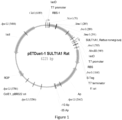
- Figure 1 shows the plasmid map of the plasmid encoding SULT1A1 Rattus norvegicus (SEQ ID NO: 1).
- Table 1 Overview of enzymes and primers for cloning aryl sulfotransferases SEQ ID NO Name Fwd Primer Rev Primer 1 SULT1A1 Rattus norvegicus CBJP472 CBJP473 2 SULT1A1 Homo sapiens CBJP470 CBJP471 3 SULT1A1 Equus caballus CBJP499 CBJP500 4 SULT1A1 Sus scrofa domesticus CBJP505 CBJP506 5 SULT1A1 Canis lupus familiaris CBJP503 CBJP504 6 SULT1E1 Gallus gallus domesticus CBJP501 CBJP502
- strains were grown in M9 minimal media containing glucose as a carbon source, and 0.1 mM IPTG for induction of gene expression as well as 0.1 mM p-coumaric acid (pHCA). After four days of growth, samples were withdrawn by filtration and analyzed by HPLC.
- HPLC high performance
- Table 2 shows the remaining pHCA and the produced zosteric acid in the culture media.
- Zosteric acid was formed with an aryl sulfotransferase heterologously expressed in a microorganism exemplified by E. coli supplied with the substrate.
- Table 2 Production of zosteric acid in E. coli from pHCA through the heterologous expression of sulfotransferases.
- Example 2 Increased production of zosteric acid in E. coli
- genes cysD and cysN encode the two subunits of ATP sulfurylase (EC:2.7.7.4), cysC encodes APS kinase (EC:2.7.1.25), and cysQ encode a PAP phosphatase.
- the cysDNC cluster was amplified by PCR from E. coli MG1655 chromosomal DNA using the primers shown in table3.
- the plasmid pRSFDuet-1 (Life Technologies) was digested by the restriction endonucleases Ndel and Bglll.
- the gene cluster was inserted into the digested plasmid using the Gibson reaction (New England Biolabs).
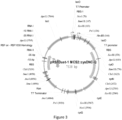
- Figure 2 shows the resulting plasmid.
- the two parts were amplified by PCR from E. coli MG1655 chromosomal DNA using the primers shown in Table 3.
- FIG. 3 shows the resulting plasmids.
- the plasmid expressing SULT1A1 Homo sapiens (SEQ ID NO: 2) from example 1 was co-transformed into E. coli BL21(DE3)pLysS cells (Life Technologies) with either the plasmid expressing cysDNC or cysDNCQ.
- Example 4 shows the concentrations of pHCA and zosteric acid. Table 4: Concentrations of pHCA and zosteric acid in culture media with E. coli expressing an aryl sulfotransferase in combination with cysDNC and cysQ.
- Example 3 A sulfated product can be formed in vivo by co-expression of an heterologous pathway and an aryl sulfotransferase
- the production of a sulfated product can be accomplished biologically by the expression of aryl sulfotransferase as shown in example 1.
- the substrate for sulfation may also be formed by a biological organism, and here it will be shown for an organism expressing both a heterologous pathway leading to a phenolic compound and expressing a sulfotransferase acting upon the phenolic compound.
- Rhodotorula mucilaginosa / Rhodotorula rubra has tyrosine ammonia lyase activity, thus catalyzing the non-oxidative deamination of the amino acid tyrosine, releasing p-coumaric acid (pHCA) and ammonia.
- the gene encoding RmXAL was codon optimized using standard algorithms for expression in E.
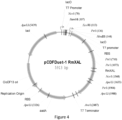
- Figure 4 provides an image of the plasmid expressing RmXAL.
- Table 5 Primers used for cloning of tyrosine ammonialyase Genes Fwd Primer Rev Primer RmXAL CBJP487 CBJP488
- the resulting plasmid was co-transformed into E. coli BL21(DE3)pLysS cells (Life Technologies) alone or together with the plasmid expressing SULT1A1 from Homo sapiens (example 1).
- the resulting strains was grown in M9 media with glucose as a carbon source, with 0.1 mM IPTG for induction of gene expression. Samples were taken as described previously (example 1) for analysis of product formation.
- Table 6 shows the resulting concentrations of pHCA and zosteric acid.
- RmXAL allowed the production of pHCA without addition of any substrate, thus providing a heterologous pathway from the cells normal metabolism to a heterologous product.
- E. coli MG1655 was grown in chemically defined M9 minimal media with 0.2% glucose as a carbon source without further addition or with the additions of either 10 mM, 20 mM, 25 mM, 30 mM, 35 mM or 40 mM p-coumaric acid (pHCA), or with 20 mM or 40 mM of the sulfate ester of pHCA (zosteric acid). All media preparations had been adjusted to pH 7. Cells were grown at 37°C with 250 rpm shaking in an orbital shaker. The growth rates were examined by following the optical density at 600 nm. The resulting growth rates in exponential growth phase are shown in Figure 5 . Filled squares represent growth rates in media with pHCA.
- Open squares represent growth rates in media with zosteric acid. And the circle represents the growth rate in media without any of these additions. It is evident that the presence of pHCA is toxic to the cells, while the sulfate ester, zosteric acid is much less so.
- the substrate that is the subject for sulfation may be supplied to the medium void of such precursors or may be provided by microorganisms in the medium.
- p-coumaric acid that is sulfated to generate zosteric acid can be produced in vivo by the expression of a tyrosine ammonia-lyase.
- the genes encoding the tyrosine ammonia-lyases RcTAL from Rhodobacter capsulatus ; SEQ ID NO: 48
- RsTAL from Rhodobacter sphaeroides ; SEQ ID NO: 17
- FjTAL from Flavobacterium johnsoniae ; SEQ ID NO: 14
- coli and synthesized by GeneArt amplified by PCR using the oligonucleotides shown in the table below, and cloned into pCDFDuet-1 (Novagen):
- the plasmid was digested with Ndel and Bgl ll and gel purified.
- the genes were inserted by isothermal assembly using Gibson Assembly Master Mix (New England Biolabs), and transformed into chemically competent DH5 ⁇ (laboratory strain) or NEB5 ⁇ (New England Biolabs), selecting for resistance to 50 ⁇ g mL -1 spectinomycin in LB medium.
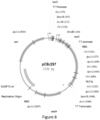
- Resulting plasmids pCBJ215 (RsTAL), pCBJ228 (FjTAL) and pCBJ297 (RcTAL) ( Figures 6 to 8 , respectively) were co-transformed by electroporation into the E. coli expression strain BL21(DE3) (Invitrogen/Life Technologies) together with a pETDuet-1-based plasmid expressing SULT1A1 from rat (Example 1). Transformation cultures were plated on LB containing 50 ⁇ g mL -1 spectinomycin and 100 ⁇ g mL -1 ampicillin. A control strain carrying pCDFDuet-1 was also made.
- Strains harboring recombinant plasmids were pre-cultured in 2xYT liquid medium with 100 ⁇ g mL -1 ampicillin and 50 ⁇ g mL -1 spectinomycin and incubated at 37°C and 250 rpm overnight. The following day, each pre-culture was transferred into 5 ml of M9 minimal medium with 0.2% glucose, 2 mM tyrosine and 1 mM IPTG for induction of expression. Cultures were placed in an incubator at 37°C with shaking at 250 rpm overnight.
- the zosteric acid is formed when there is a supply of exogenous p-coumaric acid or if the cells are capable of producing p -coumaric acid.
- a sulfated product may be formed from an unsulfated precursor molecule, when this is produced in vivo.
- zosteric acid can be produced in vivo in Escherichia coli by expression of an aryl sulfotransferase.
- yeast Saccharomyces cerevisiae can also be used as a host for the production.
- the gene encoding aryl sulfotransferase SULT1A was cloned after a TEF1 promoter into an episomal plasmid with a 2-micron origin of replication as follows.
- the gene was amplified by PCR using primers CBJP633 and CBJP634.
- the gene was codon-optimized for E. coli and synthesized by GeneArt and amplified by primers CBJP635 and CBJP636.
- the TEF1 promoter Jensen et al., 2014, FEMS Yeast Res 14: 238-248 ) was amplified by PCR using the primers PTEF1_fw and PTEF1_rv.
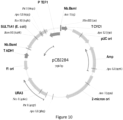
- Plasmid pCfB132 (Jensen et al., supra) was digested by restriction enzymes AsiSI and Nt.Bsml. The three fragments - plasmid, TEF1 promotor and SULT1A1-encoding gene - were assembled using a uracil-excission cloning procedure, resulting in plasmids pCBJ283 and pCBJ284 ( Figures 9 and 10 , respectively, which was subsequently transformed into the Saccharomyces cerevisiae strain CEN.PK102-5B selecting for growth on synthetic dropout media plates lacking uracil. A control strain was also made by transformation of pCfB132 into CEN.PK102-5B.
- the strains were grown in modified Delft medium (Jensen et al., supra) with 20 mg/mL histidine and 60 mg/mL leucine and 10 mM p -coumaric acid overnight at 30°C with aeration. The supernatant was then isolated and examined by HPLC as described in Example 1. The table below shows that zosteric acid (ZA) was produced by the strain expressing SULT1A1 and not the control strain lacking a sulfotransferase.
- ZA zosteric acid
- zosteric acid is formed only when a sulfotransferase is expressed in yeast, and that the gene encoding this may be natural or encoded by a synthetic gene with a specific codon-optimization.
- the sulfation reactions shown to be catalyzed by sulfotransferases in E. coli are also catalyzed when the sulfotransferases are expressed in other organisms, as demonstrated here for the yeast S . cerevisiae.
- the efficacy of production may be affected by means such as the codon-usage of the genes encoding the sulfotransferase.
- yeast expressing sulfotransferases may be able to detoxify aromatic compounds such as p-coumaric acid, and form sulfated products such as zosteric acid.
- Example 7 - A range of compounds are substrates for sulfation in vivo
- an aryl sulfotransferase may be able to convert several substrates. Some of these are inhibitors that can be found in biomass hydrolyzate used as a substrate for cell growth and production in biotechnology.
- the compounds also include some that are of biotechnological interest as products of a cell culture or be some whose sulfate ester is of economic interest.
- the resulting strains were grown in M9 medium containing either 100 ⁇ M pHCA, 95 ⁇ M resveratrol or 87 ⁇ M kaempferol. The cultures were grown overnight at 37°C, 300 rpm. The following day the supernatants were isolated and examined by HPLC as described in example 1. BL21(DE3)pLysS were used as a control strain and did not convert the substrates.
- the table shows the percent conversion of the various substrates by cells expressing the different sulfotransferases.
- the results show that several sulfotransferases, and especially the aryl sulfotransferase from rat ( Rattus norvegicus ), may be employed in the sulfation of phenolic compounds.
- strains carrying plasmids expressing SULT1A1 from rat ( Rattus norvegicus ) and SULT1E1 from chicken ( Gallus gallus domesticus ) (Example 1) cloned into the expression vector pETDuet-1, and cysDNCQ from E. coli cloned into expression vector pRSFDuet-1 (Example 2).
- the plasmids were introduced into the E.
- the strains were precultured in 2xYT medium with appropriate antibiotics. 10 ⁇ L of these precultures were used to inoculate M9 media with 1 mM IPTG and none or a single substrate for sulfation. After overnight growth at 37°C, 300 rpm the supernatants were withdrawn and examined by HPLC as described in Example 1. The compounds were detected by UV absorbance. The table below shows the percent reduction in concentration in the strains expressing sulfotransferases alone or in combination with cysDNCQ genes when compared to the control strain.
- phenolic compounds are substrates for sulfotransferases.
- the conversion is enhanced by the overexpression of cysDNCQ genes.
- Some of these compounds and their sulfate esters are of interest in biotechnology.
- some of these compounds are inhibitors of cell growth and function, and thus conversion by sulfation is of interest for use in biological systems.
Landscapes
- Life Sciences & Earth Sciences (AREA)
- Health & Medical Sciences (AREA)
- Chemical & Material Sciences (AREA)
- Engineering & Computer Science (AREA)
- Organic Chemistry (AREA)
- Genetics & Genomics (AREA)
- Zoology (AREA)
- Wood Science & Technology (AREA)
- Bioinformatics & Cheminformatics (AREA)
- Biotechnology (AREA)
- General Engineering & Computer Science (AREA)
- Biomedical Technology (AREA)
- Microbiology (AREA)
- Biochemistry (AREA)
- General Health & Medical Sciences (AREA)
- Molecular Biology (AREA)
- Medicinal Chemistry (AREA)
- Biophysics (AREA)
- Physics & Mathematics (AREA)
- Plant Pathology (AREA)
- Chemical Kinetics & Catalysis (AREA)
- General Chemical & Material Sciences (AREA)
- Tropical Medicine & Parasitology (AREA)
- Virology (AREA)
- Enzymes And Modification Thereof (AREA)
- Micro-Organisms Or Cultivation Processes Thereof (AREA)
- Preparation Of Compounds By Using Micro-Organisms (AREA)
Claims (16)
- Verfahren zur Herstellung einer sulfatierten phenolischen Verbindung, Folgendes umfassend:Kontaktieren eines Mediums, das eine phenolische Verbindung oder einen Vorläufer einer phenolischen Verbindung umfasst, mit einer ersten rekombinanten Wirtszelle; wobei die erste rekombinante Wirtszelle ein heterologes Polypeptid mit einer Arylsulfotransferase-Aktivität umfasst;wobei die phenolische Verbindung durch die allgemeine Formel (I) dargestellt wird:
 und der Vorläufer einer phenolischen Verbindung eine Verbindung der allgemeinen Formel (p-I) ist:
 wobei mindestens eines von R1, R2, R3, R4 und R5 eine Hydroxylgruppe (-OH) ist;wobei R1, R2, R3, R4 und R5 unabhängig voneinander ausgewählt sind aus der Gruppe bestehend aus Halogenid, Wasserstoff, Hydroxyl (-OH), -OR7, - OCOR7, -NR7R8, -COR7, -COOR7, -SR7, -OSO3R7, -OCSR7, -POR7R8, Alkyl, Alkenyl, Alkinyl, Aryl und Heteroaryl; wobei R7 und R8 unabhängig voneinander ausgewählt sind aus der Gruppe bestehend aus Wasserstoff, Alkyl, Alkenyl, Alkinyl, Aryl und Heteroaryl;wobei R6 -COOR7 oder p-Hydroxyphenyl ist, wobei R7 ausgewählt ist aus der Gruppe bestehend aus Wasserstoff, Alkyl, Alkenyl, Alkinyl, Aryl und Heteroaryl; oderwobei R6 p-Hydroxyphenyl ist und jedes von R1, R3 und R5 Wasserstoff ist, jedes von R2 und R4 Hydroxyl ist; undwobei die erste rekombinante Wirtszelle ein Bakterium oder eine Hefe ist.
 - Verfahren nach Anspruch 1, wobei die erste rekombinante Wirtszelle ein Bakterium ist.
- Verfahren nach Anspruch 1, wobei die erste rekombinante Wirtszelle eine Hefe ist.
- Verfahren nach Anspruch 1, wobei die erste rekombinante Wirtszelle ein Bakterium der Gattung Bacillus, Lactococcus, Lactobacillus, Clostridium, Corynebacterium, Geobacillus, Thermoanaerobacterium, Streptococcus, Pseudomonas, Streptomyces, Escherichia, Shigella, Acinetobacter, Citrobacter, Salmonella, Klebsiella, Enterobacter, Erwinia, Kluyvera, Serratia, Cedecea, Morganella, Hafnia, Edwardsiella, Providencia, Proteus oder Yersinia ist; oder wobei die erste rekombinante Wirtszelle eine Hefe der Gattung Saccharomyces, Pichia, Schizosacharomyces, Zygosaccharomyces, Hansenula, Pachyosolen, Kluyveromyces, Debaryomyces, Yarrowia, Candida, Cryptococcus, Komagataella, Lipomyces, Rhodospiridium, Rhodotorula oder Trichosporon ist.
- Verfahren nach Anspruch 1, wobei die erste rekombinante Wirtszelle ein Bakterium der Gattung Escherichia ist.
- Verfahren nach Anspruch 1, wobei die erste rekombinante Wirtszelle ein Bakterium der Spezies Escherichia coli ist.
- Verfahren nach einem der Ansprüche 1 bis 6, wobei das Polypeptid mit einer Arylsulfotransferase-Aktivität ein Sulfotransferase-1A1-Enzym ist.
- Verfahren nach einem der Ansprüche 1 bis 6, wobei das Polypeptid, das eine Arylsulfotransferase-Aktivität aufweist, ein Polypeptid ist, das eine Aminosäuresequenz mit mindestens 70 % Sequenzidentität zu der in SEQ ID NO: 1, 2, 3, 4, 5, 6, 7, 8, 9, 10,11, 12 oder 13 angegebenen Aminosäuresequenz umfasst und eine Arylsulfotransferase-Aktivität aufweist.
- Verfahren nach einem der Ansprüche 1 bis 6, wobei das Polypeptid, das eine Arylsulfotransferase-Aktivität aufweist, ein Polypeptid ist, das eine Aminosäuresequenz mit mindestens 70 % Sequenzidentität zu der in SEQ ID NO: 1 angegebenen Aminosäuresequenz umfasst und eine Arylsulfotransferase-Aktivität aufweist.
- Verfahren nach einem der Ansprüche 1 bis 6, wobei jedes von R1, R3 und R5 Wasserstoff ist, jedes von R2 und R4 Hydroxyl ist und R6 p-Hydroxyphenyl ist.
- Verfahren nach einem der Ansprüche 1 bis 6, wobei R4 Hydroxyl ist.
- Verfahren nach Anspruch 11, wobei jedes von R1, R2 und R5 Wasserstoff ist.
- Verfahren nach einem der Ansprüche 1 bis 6, wobei R1 Wasserstoff ist; R2, R3 und R4 unabhängig voneinander ausgewählt sind aus der Gruppe bestehend aus Wasserstoff (H), Hydroxyl (-OH), C1-6-Alkyl und C1-6-Alkoxy, vorausgesetzt, dass mindestens eines von R2, R3 und R4 Hydroxyl (-OH) ist; R5 Wasserstoff ist und R6 COOH ist.
- Verfahren nach einem der Ansprüche 1 bis 6, wobei jedes von R1, R2, R4 und R5 Wasserstoff ist, R3 Hydroxyl (-OH) ist und R6 COOH ist.
- Verfahren nach einem der Ansprüche 1 bis 14, wobei die erste rekombinante Wirtszelle ferner ein heterologes Polypeptid mit Tyrosinammoniaklyase-Aktivität umfasst.
- Verfahren nach einem der Ansprüche 1 bis 14, wobei das Medium ferner mit einer zweiten rekombinanten Wirtszelle kontaktiert wird, die ein heterologes Polypeptid mit Tyrosinammoniaklyase-Aktivität umfasst.
Applications Claiming Priority (3)
| Application Number | Priority Date | Filing Date | Title |
|---|---|---|---|
| EP14182032 | 2014-08-22 | ||
| EP15754200.2A EP3183355B1 (de) | 2014-08-22 | 2015-08-21 | Biologisches verfahren zur herstellung von einer sulfatierten phenolverbindung |
| PCT/EP2015/069298 WO2016026976A1 (en) | 2014-08-22 | 2015-08-21 | Biological processes for the production of aryl sulfates |
Related Parent Applications (1)
| Application Number | Title | Priority Date | Filing Date |
|---|---|---|---|
| EP15754200.2A Division EP3183355B1 (de) | 2014-08-22 | 2015-08-21 | Biologisches verfahren zur herstellung von einer sulfatierten phenolverbindung |
Publications (3)
| Publication Number | Publication Date |
|---|---|
| EP3663406A1 EP3663406A1 (de) | 2020-06-10 |
| EP3663406B1 true EP3663406B1 (de) | 2025-02-26 |
| EP3663406C0 EP3663406C0 (de) | 2025-02-26 |
Family
ID=51383672
Family Applications (2)
| Application Number | Title | Priority Date | Filing Date |
|---|---|---|---|
| EP19206920.1A Active EP3663406B1 (de) | 2014-08-22 | 2015-08-21 | Biologische verfahren zur herstellung von arylsulfaten |
| EP15754200.2A Active EP3183355B1 (de) | 2014-08-22 | 2015-08-21 | Biologisches verfahren zur herstellung von einer sulfatierten phenolverbindung |
Family Applications After (1)
| Application Number | Title | Priority Date | Filing Date |
|---|---|---|---|
| EP15754200.2A Active EP3183355B1 (de) | 2014-08-22 | 2015-08-21 | Biologisches verfahren zur herstellung von einer sulfatierten phenolverbindung |
Country Status (8)
| Country | Link |
|---|---|
| US (3) | US20170226543A1 (de) |
| EP (2) | EP3663406B1 (de) |
| DK (1) | DK3183355T3 (de) |
| ES (2) | ES3028091T3 (de) |
| HU (1) | HUE047658T2 (de) |
| PL (1) | PL3183355T3 (de) |
| PT (1) | PT3183355T (de) |
| WO (1) | WO2016026976A1 (de) |
Families Citing this family (6)
| Publication number | Priority date | Publication date | Assignee | Title |
|---|---|---|---|---|
| US10590440B2 (en) * | 2014-08-22 | 2020-03-17 | Cysbio Aps | Process for producing a fermentation product from a lignocellulose-containing material |
| CN109072262A (zh) | 2016-02-24 | 2018-12-21 | 丹麦技术大学 | 用于生产芳基硫酸酯的改进的生物方法 |
| HUE064469T2 (hu) * | 2018-07-11 | 2024-03-28 | Ajinomoto Kk | Az Enterobacteriaceae családba tartozó baktériumot alkalmazó eljárás alkoholok és aminok enzimatikus szulfurilálására |
| AU2020209822A1 (en) | 2019-01-15 | 2021-09-09 | Optimvia, Llc | Engineered aryl sulfate-dependent enzymes |
| CN114616340A (zh) | 2019-07-09 | 2022-06-10 | 奥普蒂姆维亚有限公司 | 合成抗凝血多糖的方法 |
| AU2023355733A1 (en) | 2022-10-04 | 2025-03-27 | Cysbio Aps | Method to inhibit proliferation of a phytopathogen on plants and compositions used for this purpose |
Citations (1)
| Publication number | Priority date | Publication date | Assignee | Title |
|---|---|---|---|---|
| JP2012165676A (ja) * | 2011-02-14 | 2012-09-06 | Toyama Prefecture | 遺伝子改変酵母を用いた硫酸抱合体の製造方法 |
Family Cites Families (4)
| Publication number | Priority date | Publication date | Assignee | Title |
|---|---|---|---|---|
| US4683195A (en) | 1986-01-30 | 1987-07-28 | Cetus Corporation | Process for amplifying, detecting, and/or-cloning nucleic acid sequences |
| WO2001085971A2 (en) * | 2000-05-10 | 2001-11-15 | Phycogen, Inc. | Transgenic plants incorporating_genes of zostera marina |
| US20100040552A1 (en) * | 2005-09-27 | 2010-02-18 | Rosetta Inpharmatics Llc | Methods to evaluate glucocorticoid receptor agonists and antagonists for effects on neuron-like cells |
| US20090035787A1 (en) * | 2007-07-23 | 2009-02-05 | The University Of North Carolina At Chapel Hill | Enzymatic synthesis of sulfated polysaccharides without iduronic acid residues |
-
2015
- 2015-08-21 EP EP19206920.1A patent/EP3663406B1/de active Active
- 2015-08-21 EP EP15754200.2A patent/EP3183355B1/de active Active
- 2015-08-21 ES ES19206920T patent/ES3028091T3/es active Active
- 2015-08-21 PT PT157542002T patent/PT3183355T/pt unknown
- 2015-08-21 US US15/502,322 patent/US20170226543A1/en not_active Abandoned
- 2015-08-21 ES ES15754200T patent/ES2770616T3/es active Active
- 2015-08-21 DK DK15754200.2T patent/DK3183355T3/da active
- 2015-08-21 PL PL15754200T patent/PL3183355T3/pl unknown
- 2015-08-21 WO PCT/EP2015/069298 patent/WO2016026976A1/en not_active Ceased
- 2015-08-21 HU HUE15754200A patent/HUE047658T2/hu unknown
-
2020
- 2020-07-30 US US16/943,904 patent/US11390894B2/en active Active
-
2022
- 2022-06-08 US US17/806,046 patent/US12359232B2/en active Active
Patent Citations (1)
| Publication number | Priority date | Publication date | Assignee | Title |
|---|---|---|---|---|
| JP2012165676A (ja) * | 2011-02-14 | 2012-09-06 | Toyama Prefecture | 遺伝子改変酵母を用いた硫酸抱合体の製造方法 |
Non-Patent Citations (4)
| Title |
|---|
| BIDWELL L.M ET AL: "Bacterial expression of two human aryl sulfotransferases", CHEMICO-BIOLOGICAL INTERACTIONS., vol. 109, no. 1-3, 1 February 1998 (1998-02-01), IR, pages 137 - 141, XP055791786, ISSN: 0009-2797, DOI: 10.1016/S0009-2797(97)00128-2 * |
| MEINL ET AL: "SULT1C3, an orphan sequence of the human genome, encodes an enzyme activating various promutagens", FOOD AND CHEMICAL TOXICOLOGY, PERGAMON, GB, vol. 46, no. 4, 20 February 2008 (2008-02-20), pages 1249 - 1256, XP022492641, ISSN: 0278-6915, DOI: 10.1016/J.FCT.2007.08.040 * |
| VAN DER HORST MICHAEL A. ET AL: "Sulfation of Various Alcoholic Groups by an Arylsulfate Sulfotransferase from Desulfitobacterium hafniense and Synthesis of Estradiol Sulfate", ADVANCED SYNTHESIS AND CATALYSIS, vol. 354, no. 18, 4 December 2012 (2012-12-04), pages 3501 - 3508, XP055914498, ISSN: 1615-4150, DOI: 10.1002/adsc.201200564 * |
| WILSON L A ET AL: "cDNA cloning, functional expression, and characterization of chicken sulfotransferases belonging to the SULT1B and SULT1C families", ARCHIVES OF BIOCHEMISTRY AND BIOPHYSICS, ACADEMIC PRESS, US, vol. 428, no. 1, 17 June 2004 (2004-06-17), pages 64 - 72, XP004517988, ISSN: 0003-9861, DOI: 10.1016/J.ABB.2004.05.008 * |
Also Published As
| Publication number | Publication date |
|---|---|
| US20220325306A1 (en) | 2022-10-13 |
| PT3183355T (pt) | 2020-02-14 |
| US20170226543A1 (en) | 2017-08-10 |
| HUE047658T2 (hu) | 2020-05-28 |
| EP3183355A1 (de) | 2017-06-28 |
| EP3663406A1 (de) | 2020-06-10 |
| PL3183355T3 (pl) | 2020-06-15 |
| EP3183355B1 (de) | 2019-11-06 |
| ES2770616T3 (es) | 2020-07-02 |
| US20200354758A1 (en) | 2020-11-12 |
| ES3028091T3 (en) | 2025-06-18 |
| US11390894B2 (en) | 2022-07-19 |
| WO2016026976A1 (en) | 2016-02-25 |
| US12359232B2 (en) | 2025-07-15 |
| DK3183355T3 (da) | 2020-02-17 |
| EP3663406C0 (de) | 2025-02-26 |
Similar Documents
| Publication | Publication Date | Title |
|---|---|---|
| US11555212B2 (en) | Process for the production of sulfated phenolic compounds using modified Escerichia coli | |
| US12359232B2 (en) | Biological processes for the production of aryl sulfates | |
| US11306331B2 (en) | Processes for the production of hydroxycinnamic acids using polypeptides having tyrosine ammonia lyase activity | |
| EP2820121A1 (de) | Mikroorganismen zur herstellung von melatonin | |
| US20140065697A1 (en) | Cells and methods for producing isobutyric acid | |
| EP2820122A1 (de) | Mikroorganismen zur herstellung von 5-hydroxytryptophan | |
| KR20230160222A (ko) | 개변형 니코틴아미드 포스포리보실트랜스퍼라아제 | |
| US20140134690A1 (en) | Microbes and methods for producing 1-propanol | |
| US20220348974A1 (en) | Biotin synthases for efficient production of biotin | |
| US10036047B2 (en) | Methods for hydroxylating phenylpropanoids | |
| CN107109446B (zh) | 顺式-5-羟基-l-哌可酸的制造方法 | |
| HK40031450B (en) | Biological processes for the production of aryl sulfates | |
| EP3555271B1 (de) | Arylalkylamin-n-acetyltransferase und verwendungen davon | |
| HK40031450A (en) | Biological processes for the production of aryl sulfates | |
| BR112018069951B1 (pt) | Processo para a produção de um composto fenólico sulfatado e célula de escherichia coli | |
| Schwentner et al. | Exploring the Potential of | |
| WO2025204968A1 (ja) | 改変型ニコチンアミドホスホリボシルトランスフェラーゼ、及びそれを用いたニコチンアミドモノヌクレオチドを製造する方法 | |
| JP2023553990A (ja) | S-メチルチオリボースキナーゼポリペプチドならびにs-メチルチオリボースキナーゼポリペプチドの製造方法および使用方法 |
Legal Events
| Date | Code | Title | Description |
|---|---|---|---|
| PUAI | Public reference made under article 153(3) epc to a published international application that has entered the european phase |
Free format text: ORIGINAL CODE: 0009012 |
|
| STAA | Information on the status of an ep patent application or granted ep patent |
Free format text: STATUS: THE APPLICATION HAS BEEN PUBLISHED |
|
| AC | Divisional application: reference to earlier application |
Ref document number: 3183355 Country of ref document: EP Kind code of ref document: P |
|
| AK | Designated contracting states |
Kind code of ref document: A1 Designated state(s): AL AT BE BG CH CY CZ DE DK EE ES FI FR GB GR HR HU IE IS IT LI LT LU LV MC MK MT NL NO PL PT RO RS SE SI SK SM TR |
|
| STAA | Information on the status of an ep patent application or granted ep patent |
Free format text: STATUS: REQUEST FOR EXAMINATION WAS MADE |
|
| RAP1 | Party data changed (applicant data changed or rights of an application transferred) |
Owner name: CYSBIO APS |
|
| 17P | Request for examination filed |
Effective date: 20201202 |
|
| RBV | Designated contracting states (corrected) |
Designated state(s): AL AT BE BG CH CY CZ DE DK EE ES FI FR GB GR HR HU IE IS IT LI LT LU LV MC MK MT NL NO PL PT RO RS SE SI SK SM TR |
|
| REG | Reference to a national code |
Ref country code: HK Ref legal event code: DE Ref document number: 40031450 Country of ref document: HK |
|
| STAA | Information on the status of an ep patent application or granted ep patent |
Free format text: STATUS: EXAMINATION IS IN PROGRESS |
|
| 17Q | First examination report despatched |
Effective date: 20210407 |
|
| GRAP | Despatch of communication of intention to grant a patent |
Free format text: ORIGINAL CODE: EPIDOSNIGR1 |
|
| STAA | Information on the status of an ep patent application or granted ep patent |
Free format text: STATUS: GRANT OF PATENT IS INTENDED |
|
| INTG | Intention to grant announced |
Effective date: 20241017 |
|
| GRAS | Grant fee paid |
Free format text: ORIGINAL CODE: EPIDOSNIGR3 |
|
| GRAA | (expected) grant |
Free format text: ORIGINAL CODE: 0009210 |
|
| STAA | Information on the status of an ep patent application or granted ep patent |
Free format text: STATUS: THE PATENT HAS BEEN GRANTED |
|
| AC | Divisional application: reference to earlier application |
Ref document number: 3183355 Country of ref document: EP Kind code of ref document: P |
|
| AK | Designated contracting states |
Kind code of ref document: B1 Designated state(s): AL AT BE BG CH CY CZ DE DK EE ES FI FR GB GR HR HU IE IS IT LI LT LU LV MC MK MT NL NO PL PT RO RS SE SI SK SM TR |
|
| REG | Reference to a national code |
Ref country code: GB Ref legal event code: FG4D |
|
| REG | Reference to a national code |
Ref country code: CH Ref legal event code: EP |
|
| REG | Reference to a national code |
Ref country code: DE Ref legal event code: R096 Ref document number: 602015091123 Country of ref document: DE |
|
| REG | Reference to a national code |
Ref country code: IE Ref legal event code: FG4D |
|
| U01 | Request for unitary effect filed |
Effective date: 20250325 |
|
| U07 | Unitary effect registered |
Designated state(s): AT BE BG DE DK EE FI FR IT LT LU LV MT NL PT RO SE SI Effective date: 20250331 |
|
| REG | Reference to a national code |
Ref country code: ES Ref legal event code: FG2A Ref document number: 3028091 Country of ref document: ES Kind code of ref document: T3 Effective date: 20250618 |
|
| PG25 | Lapsed in a contracting state [announced via postgrant information from national office to epo] |
Ref country code: RS Free format text: LAPSE BECAUSE OF FAILURE TO SUBMIT A TRANSLATION OF THE DESCRIPTION OR TO PAY THE FEE WITHIN THE PRESCRIBED TIME-LIMIT Effective date: 20250526 |
|
| PG25 | Lapsed in a contracting state [announced via postgrant information from national office to epo] |
Ref country code: PL Free format text: LAPSE BECAUSE OF FAILURE TO SUBMIT A TRANSLATION OF THE DESCRIPTION OR TO PAY THE FEE WITHIN THE PRESCRIBED TIME-LIMIT Effective date: 20250226 |
|
| PGFP | Annual fee paid to national office [announced via postgrant information from national office to epo] |
Ref country code: GB Payment date: 20250616 Year of fee payment: 11 |
|
| PG25 | Lapsed in a contracting state [announced via postgrant information from national office to epo] |
Ref country code: IS Free format text: LAPSE BECAUSE OF FAILURE TO SUBMIT A TRANSLATION OF THE DESCRIPTION OR TO PAY THE FEE WITHIN THE PRESCRIBED TIME-LIMIT Effective date: 20250626 Ref country code: NO Free format text: LAPSE BECAUSE OF FAILURE TO SUBMIT A TRANSLATION OF THE DESCRIPTION OR TO PAY THE FEE WITHIN THE PRESCRIBED TIME-LIMIT Effective date: 20250526 |
|
| PG25 | Lapsed in a contracting state [announced via postgrant information from national office to epo] |
Ref country code: HR Free format text: LAPSE BECAUSE OF FAILURE TO SUBMIT A TRANSLATION OF THE DESCRIPTION OR TO PAY THE FEE WITHIN THE PRESCRIBED TIME-LIMIT Effective date: 20250226 |
|
| PG25 | Lapsed in a contracting state [announced via postgrant information from national office to epo] |
Ref country code: GR Free format text: LAPSE BECAUSE OF FAILURE TO SUBMIT A TRANSLATION OF THE DESCRIPTION OR TO PAY THE FEE WITHIN THE PRESCRIBED TIME-LIMIT Effective date: 20250527 |
|
| U20 | Renewal fee for the european patent with unitary effect paid |
Year of fee payment: 11 Effective date: 20250625 |
|
| PG25 | Lapsed in a contracting state [announced via postgrant information from national office to epo] |
Ref country code: SM Free format text: LAPSE BECAUSE OF FAILURE TO SUBMIT A TRANSLATION OF THE DESCRIPTION OR TO PAY THE FEE WITHIN THE PRESCRIBED TIME-LIMIT Effective date: 20250226 |
|
| PG25 | Lapsed in a contracting state [announced via postgrant information from national office to epo] |
Ref country code: CZ Free format text: LAPSE BECAUSE OF FAILURE TO SUBMIT A TRANSLATION OF THE DESCRIPTION OR TO PAY THE FEE WITHIN THE PRESCRIBED TIME-LIMIT Effective date: 20250226 |
|
| PGFP | Annual fee paid to national office [announced via postgrant information from national office to epo] |
Ref country code: IE Payment date: 20250717 Year of fee payment: 11 |
|
| PG25 | Lapsed in a contracting state [announced via postgrant information from national office to epo] |
Ref country code: SK Free format text: LAPSE BECAUSE OF FAILURE TO SUBMIT A TRANSLATION OF THE DESCRIPTION OR TO PAY THE FEE WITHIN THE PRESCRIBED TIME-LIMIT Effective date: 20250226 |