EP3663398A1 - Thermolysinlösung - Google Patents
Thermolysinlösung Download PDFInfo
- Publication number
- EP3663398A1 EP3663398A1 EP18841723.2A EP18841723A EP3663398A1 EP 3663398 A1 EP3663398 A1 EP 3663398A1 EP 18841723 A EP18841723 A EP 18841723A EP 3663398 A1 EP3663398 A1 EP 3663398A1
- Authority
- EP
- European Patent Office
- Prior art keywords
- thermolysin
- liquid preparation
- liquid
- concentration
- preparation
- Prior art date
- Legal status (The legal status is an assumption and is not a legal conclusion. Google has not performed a legal analysis and makes no representation as to the accuracy of the status listed.)
- Pending
Links
- 108090001109 Thermolysin Proteins 0.000 title claims abstract description 286
- 238000002360 preparation method Methods 0.000 claims description 147
- 239000007788 liquid Substances 0.000 claims description 132
- 238000000034 method Methods 0.000 claims description 41
- 150000003839 salts Chemical class 0.000 claims description 20
- 239000000337 buffer salt Substances 0.000 claims description 16
- XLYOFNOQVPJJNP-UHFFFAOYSA-N water Substances O XLYOFNOQVPJJNP-UHFFFAOYSA-N 0.000 claims description 15
- FAPWRFPIFSIZLT-UHFFFAOYSA-M Sodium chloride Chemical compound [Na+].[Cl-] FAPWRFPIFSIZLT-UHFFFAOYSA-M 0.000 claims description 14
- 238000004519 manufacturing process Methods 0.000 claims description 12
- 238000001035 drying Methods 0.000 claims description 8
- UXVMQQNJUSDDNG-UHFFFAOYSA-L Calcium chloride Chemical compound [Cl-].[Cl-].[Ca+2] UXVMQQNJUSDDNG-UHFFFAOYSA-L 0.000 claims description 7
- 239000001110 calcium chloride Substances 0.000 claims description 7
- 229910001628 calcium chloride Inorganic materials 0.000 claims description 7
- 239000011780 sodium chloride Substances 0.000 claims description 7
- 230000000694 effects Effects 0.000 description 51
- 239000007864 aqueous solution Substances 0.000 description 25
- HEMHJVSKTPXQMS-UHFFFAOYSA-M Sodium hydroxide Chemical compound [OH-].[Na+] HEMHJVSKTPXQMS-UHFFFAOYSA-M 0.000 description 24
- 238000000354 decomposition reaction Methods 0.000 description 21
- QTBSBXVTEAMEQO-UHFFFAOYSA-N Acetic acid Chemical compound CC(O)=O QTBSBXVTEAMEQO-UHFFFAOYSA-N 0.000 description 18
- 235000018102 proteins Nutrition 0.000 description 18
- 108090000623 proteins and genes Proteins 0.000 description 18
- 102000004169 proteins and genes Human genes 0.000 description 18
- 239000000725 suspension Substances 0.000 description 14
- 238000012360 testing method Methods 0.000 description 14
- 239000000047 product Substances 0.000 description 13
- 108091005804 Peptidases Proteins 0.000 description 11
- 239000004365 Protease Substances 0.000 description 11
- 102100037486 Reverse transcriptase/ribonuclease H Human genes 0.000 description 11
- 238000002835 absorbance Methods 0.000 description 11
- 239000005018 casein Substances 0.000 description 11
- BECPQYXYKAMYBN-UHFFFAOYSA-N casein, tech. Chemical compound NCCCCC(C(O)=O)N=C(O)C(CC(O)=O)N=C(O)C(CCC(O)=N)N=C(O)C(CC(C)C)N=C(O)C(CCC(O)=O)N=C(O)C(CC(O)=O)N=C(O)C(CCC(O)=O)N=C(O)C(C(C)O)N=C(O)C(CCC(O)=N)N=C(O)C(CCC(O)=N)N=C(O)C(CCC(O)=N)N=C(O)C(CCC(O)=O)N=C(O)C(CCC(O)=O)N=C(O)C(COP(O)(O)=O)N=C(O)C(CCC(O)=N)N=C(O)C(N)CC1=CC=CC=C1 BECPQYXYKAMYBN-UHFFFAOYSA-N 0.000 description 11
- 235000021240 caseins Nutrition 0.000 description 11
- 239000000243 solution Substances 0.000 description 11
- 125000003275 alpha amino acid group Chemical group 0.000 description 9
- 102000004190 Enzymes Human genes 0.000 description 8
- 108090000790 Enzymes Proteins 0.000 description 8
- 241000894006 Bacteria Species 0.000 description 6
- KWYUFKZDYYNOTN-UHFFFAOYSA-M Potassium hydroxide Chemical compound [OH-].[K+] KWYUFKZDYYNOTN-UHFFFAOYSA-M 0.000 description 6
- 238000001514 detection method Methods 0.000 description 6
- JKMHFZQWWAIEOD-UHFFFAOYSA-N 2-[4-(2-hydroxyethyl)piperazin-1-yl]ethanesulfonic acid Chemical compound OCC[NH+]1CCN(CCS([O-])(=O)=O)CC1 JKMHFZQWWAIEOD-UHFFFAOYSA-N 0.000 description 5
- 239000007995 HEPES buffer Substances 0.000 description 5
- 238000004128 high performance liquid chromatography Methods 0.000 description 5
- QGZKDVFQNNGYKY-UHFFFAOYSA-N Ammonia Chemical compound N QGZKDVFQNNGYKY-UHFFFAOYSA-N 0.000 description 4
- 241000193385 Geobacillus stearothermophilus Species 0.000 description 4
- VEXZGXHMUGYJMC-UHFFFAOYSA-N Hydrochloric acid Chemical compound Cl VEXZGXHMUGYJMC-UHFFFAOYSA-N 0.000 description 4
- SEQKRHFRPICQDD-UHFFFAOYSA-N N-tris(hydroxymethyl)methylglycine Chemical compound OCC(CO)(CO)[NH2+]CC([O-])=O SEQKRHFRPICQDD-UHFFFAOYSA-N 0.000 description 4
- QAOWNCQODCNURD-UHFFFAOYSA-N Sulfuric acid Chemical compound OS(O)(=O)=O QAOWNCQODCNURD-UHFFFAOYSA-N 0.000 description 4
- DTQVDTLACAAQTR-UHFFFAOYSA-N Trifluoroacetic acid Chemical compound OC(=O)C(F)(F)F DTQVDTLACAAQTR-UHFFFAOYSA-N 0.000 description 4
- 239000002253 acid Substances 0.000 description 4
- 150000007513 acids Chemical class 0.000 description 4
- 239000000872 buffer Substances 0.000 description 4
- 230000002349 favourable effect Effects 0.000 description 4
- BDAGIHXWWSANSR-UHFFFAOYSA-N methanoic acid Natural products OC=O BDAGIHXWWSANSR-UHFFFAOYSA-N 0.000 description 4
- 239000000126 substance Substances 0.000 description 4
- 230000001629 suppression Effects 0.000 description 4
- WEVYAHXRMPXWCK-UHFFFAOYSA-N Acetonitrile Chemical compound CC#N WEVYAHXRMPXWCK-UHFFFAOYSA-N 0.000 description 3
- 150000001413 amino acids Chemical class 0.000 description 3
- 239000007853 buffer solution Substances 0.000 description 3
- 239000002158 endotoxin Substances 0.000 description 3
- 239000001963 growth medium Substances 0.000 description 3
- 238000006460 hydrolysis reaction Methods 0.000 description 3
- 238000001953 recrystallisation Methods 0.000 description 3
- 239000000758 substrate Substances 0.000 description 3
- IHPYMWDTONKSCO-UHFFFAOYSA-N 2,2'-piperazine-1,4-diylbisethanesulfonic acid Chemical compound OS(=O)(=O)CCN1CCN(CCS(O)(=O)=O)CC1 IHPYMWDTONKSCO-UHFFFAOYSA-N 0.000 description 2
- AJTVSSFTXWNIRG-UHFFFAOYSA-N 2-[bis(2-hydroxyethyl)amino]ethanesulfonic acid Chemical compound OCC[NH+](CCO)CCS([O-])(=O)=O AJTVSSFTXWNIRG-UHFFFAOYSA-N 0.000 description 2
- DVLFYONBTKHTER-UHFFFAOYSA-N 3-(N-morpholino)propanesulfonic acid Chemical compound OS(=O)(=O)CCCN1CCOCC1 DVLFYONBTKHTER-UHFFFAOYSA-N 0.000 description 2
- NUFBIAUZAMHTSP-UHFFFAOYSA-N 3-(n-morpholino)-2-hydroxypropanesulfonic acid Chemical compound OS(=O)(=O)CC(O)CN1CCOCC1 NUFBIAUZAMHTSP-UHFFFAOYSA-N 0.000 description 2
- OSWFIVFLDKOXQC-UHFFFAOYSA-N 4-(3-methoxyphenyl)aniline Chemical compound COC1=CC=CC(C=2C=CC(N)=CC=2)=C1 OSWFIVFLDKOXQC-UHFFFAOYSA-N 0.000 description 2
- 241000193830 Bacillus <bacterium> Species 0.000 description 2
- PEDCQBHIVMGVHV-UHFFFAOYSA-N Glycerine Chemical compound OCC(O)CO PEDCQBHIVMGVHV-UHFFFAOYSA-N 0.000 description 2
- OUYCCCASQSFEME-QMMMGPOBSA-N L-tyrosine Chemical compound OC(=O)[C@@H](N)CC1=CC=C(O)C=C1 OUYCCCASQSFEME-QMMMGPOBSA-N 0.000 description 2
- JOCBASBOOFNAJA-UHFFFAOYSA-N N-tris(hydroxymethyl)methyl-2-aminoethanesulfonic acid Chemical compound OCC(CO)(CO)NCCS(O)(=O)=O JOCBASBOOFNAJA-UHFFFAOYSA-N 0.000 description 2
- GSEJCLTVZPLZKY-UHFFFAOYSA-N Triethanolamine Chemical compound OCCN(CCO)CCO GSEJCLTVZPLZKY-UHFFFAOYSA-N 0.000 description 2
- 239000007983 Tris buffer Substances 0.000 description 2
- 125000000539 amino acid group Chemical group 0.000 description 2
- 229910021529 ammonia Inorganic materials 0.000 description 2
- OWMVSZAMULFTJU-UHFFFAOYSA-N bis-tris Chemical compound OCCN(CCO)C(CO)(CO)CO OWMVSZAMULFTJU-UHFFFAOYSA-N 0.000 description 2
- AXCZMVOFGPJBDE-UHFFFAOYSA-L calcium dihydroxide Chemical compound [OH-].[OH-].[Ca+2] AXCZMVOFGPJBDE-UHFFFAOYSA-L 0.000 description 2
- 239000000920 calcium hydroxide Substances 0.000 description 2
- 229910001861 calcium hydroxide Inorganic materials 0.000 description 2
- 238000004737 colorimetric analysis Methods 0.000 description 2
- 239000003814 drug Substances 0.000 description 2
- 238000001914 filtration Methods 0.000 description 2
- 239000010200 folin Substances 0.000 description 2
- 235000019253 formic acid Nutrition 0.000 description 2
- 239000008187 granular material Substances 0.000 description 2
- 238000005259 measurement Methods 0.000 description 2
- 238000001471 micro-filtration Methods 0.000 description 2
- 150000007522 mineralic acids Chemical class 0.000 description 2
- 150000007524 organic acids Chemical class 0.000 description 2
- 235000005985 organic acids Nutrition 0.000 description 2
- 239000000843 powder Substances 0.000 description 2
- 238000012545 processing Methods 0.000 description 2
- 230000001172 regenerating effect Effects 0.000 description 2
- 239000003381 stabilizer Substances 0.000 description 2
- 239000007858 starting material Substances 0.000 description 2
- 238000003860 storage Methods 0.000 description 2
- OUYCCCASQSFEME-UHFFFAOYSA-N tyrosine Natural products OC(=O)C(N)CC1=CC=C(O)C=C1 OUYCCCASQSFEME-UHFFFAOYSA-N 0.000 description 2
- HDTRYLNUVZCQOY-UHFFFAOYSA-N α-D-glucopyranosyl-α-D-glucopyranoside Natural products OC1C(O)C(O)C(CO)OC1OC1C(O)C(O)C(O)C(CO)O1 HDTRYLNUVZCQOY-UHFFFAOYSA-N 0.000 description 1
- OWEGMIWEEQEYGQ-UHFFFAOYSA-N 100676-05-9 Natural products OC1C(O)C(O)C(CO)OC1OCC1C(O)C(O)C(O)C(OC2C(OC(O)C(O)C2O)CO)O1 OWEGMIWEEQEYGQ-UHFFFAOYSA-N 0.000 description 1
- SXGZJKUKBWWHRA-UHFFFAOYSA-N 2-(N-morpholiniumyl)ethanesulfonate Chemical compound [O-]S(=O)(=O)CC[NH+]1CCOCC1 SXGZJKUKBWWHRA-UHFFFAOYSA-N 0.000 description 1
- 102000009027 Albumins Human genes 0.000 description 1
- 108010088751 Albumins Proteins 0.000 description 1
- 239000007989 BIS-Tris Propane buffer Substances 0.000 description 1
- 241000193744 Bacillus amyloliquefaciens Species 0.000 description 1
- 241000193755 Bacillus cereus Species 0.000 description 1
- 241000194108 Bacillus licheniformis Species 0.000 description 1
- 241000193389 Bacillus thermoproteolyticus Species 0.000 description 1
- BHPQYMZQTOCNFJ-UHFFFAOYSA-N Calcium cation Chemical compound [Ca+2] BHPQYMZQTOCNFJ-UHFFFAOYSA-N 0.000 description 1
- 239000004278 EU approved seasoning Substances 0.000 description 1
- 241000588724 Escherichia coli Species 0.000 description 1
- 241000239218 Limulus Species 0.000 description 1
- 239000007993 MOPS buffer Substances 0.000 description 1
- GUBGYTABKSRVRQ-PICCSMPSSA-N Maltose Natural products O[C@@H]1[C@@H](O)[C@H](O)[C@@H](CO)O[C@@H]1O[C@@H]1[C@@H](CO)OC(O)[C@H](O)[C@H]1O GUBGYTABKSRVRQ-PICCSMPSSA-N 0.000 description 1
- 108010006035 Metalloproteases Proteins 0.000 description 1
- 102000005741 Metalloproteases Human genes 0.000 description 1
- YNLCVAQJIKOXER-UHFFFAOYSA-N N-[tris(hydroxymethyl)methyl]-3-aminopropanesulfonic acid Chemical compound OCC(CO)(CO)NCCCS(O)(=O)=O YNLCVAQJIKOXER-UHFFFAOYSA-N 0.000 description 1
- 239000007990 PIPES buffer Substances 0.000 description 1
- 101710118538 Protease Proteins 0.000 description 1
- 101000925883 Pseudomonas aeruginosa (strain ATCC 15692 / DSM 22644 / CIP 104116 / JCM 14847 / LMG 12228 / 1C / PRS 101 / PAO1) Elastase Proteins 0.000 description 1
- VMHLLURERBWHNL-UHFFFAOYSA-M Sodium acetate Chemical compound [Na+].CC([O-])=O VMHLLURERBWHNL-UHFFFAOYSA-M 0.000 description 1
- 235000019764 Soybean Meal Nutrition 0.000 description 1
- 229920002472 Starch Polymers 0.000 description 1
- 101000584292 Streptomyces cacaoi Mycolysin Proteins 0.000 description 1
- 229930006000 Sucrose Natural products 0.000 description 1
- CZMRCDWAGMRECN-UGDNZRGBSA-N Sucrose Chemical compound O[C@H]1[C@H](O)[C@@H](CO)O[C@@]1(CO)O[C@@H]1[C@H](O)[C@@H](O)[C@H](O)[C@@H](CO)O1 CZMRCDWAGMRECN-UGDNZRGBSA-N 0.000 description 1
- UZMAPBJVXOGOFT-UHFFFAOYSA-N Syringetin Natural products COC1=C(O)C(OC)=CC(C2=C(C(=O)C3=C(O)C=C(O)C=C3O2)O)=C1 UZMAPBJVXOGOFT-UHFFFAOYSA-N 0.000 description 1
- HDTRYLNUVZCQOY-WSWWMNSNSA-N Trehalose Natural products O[C@@H]1[C@@H](O)[C@@H](O)[C@@H](CO)O[C@@H]1O[C@@H]1[C@H](O)[C@@H](O)[C@@H](O)[C@@H](CO)O1 HDTRYLNUVZCQOY-WSWWMNSNSA-N 0.000 description 1
- 239000007997 Tricine buffer Substances 0.000 description 1
- 208000034953 Twin anemia-polycythemia sequence Diseases 0.000 description 1
- PTFCDOFLOPIGGS-UHFFFAOYSA-N Zinc dication Chemical compound [Zn+2] PTFCDOFLOPIGGS-UHFFFAOYSA-N 0.000 description 1
- 238000007792 addition Methods 0.000 description 1
- 230000002411 adverse Effects 0.000 description 1
- 239000013566 allergen Substances 0.000 description 1
- HDTRYLNUVZCQOY-LIZSDCNHSA-N alpha,alpha-trehalose Chemical compound O[C@@H]1[C@@H](O)[C@H](O)[C@@H](CO)O[C@@H]1O[C@@H]1[C@H](O)[C@@H](O)[C@H](O)[C@@H](CO)O1 HDTRYLNUVZCQOY-LIZSDCNHSA-N 0.000 description 1
- 238000004458 analytical method Methods 0.000 description 1
- GUBGYTABKSRVRQ-QUYVBRFLSA-N beta-maltose Chemical compound OC[C@H]1O[C@H](O[C@H]2[C@H](O)[C@@H](O)[C@H](O)O[C@@H]2CO)[C@H](O)[C@@H](O)[C@@H]1O GUBGYTABKSRVRQ-QUYVBRFLSA-N 0.000 description 1
- HHKZCCWKTZRCCL-UHFFFAOYSA-N bis-tris propane Chemical compound OCC(CO)(CO)NCCCNC(CO)(CO)CO HHKZCCWKTZRCCL-UHFFFAOYSA-N 0.000 description 1
- OHJMTUPIZMNBFR-UHFFFAOYSA-N biuret Chemical compound NC(=O)NC(N)=O OHJMTUPIZMNBFR-UHFFFAOYSA-N 0.000 description 1
- 229910021538 borax Inorganic materials 0.000 description 1
- 230000003139 buffering effect Effects 0.000 description 1
- 239000006227 byproduct Substances 0.000 description 1
- 229910001424 calcium ion Inorganic materials 0.000 description 1
- 159000000007 calcium salts Chemical class 0.000 description 1
- 238000004587 chromatography analysis Methods 0.000 description 1
- 230000003247 decreasing effect Effects 0.000 description 1
- 238000012217 deletion Methods 0.000 description 1
- 230000037430 deletion Effects 0.000 description 1
- 238000009795 derivation Methods 0.000 description 1
- KCFYHBSOLOXZIF-UHFFFAOYSA-N dihydrochrysin Natural products COC1=C(O)C(OC)=CC(C2OC3=CC(O)=CC(O)=C3C(=O)C2)=C1 KCFYHBSOLOXZIF-UHFFFAOYSA-N 0.000 description 1
- ATUOYWHBWRKTHZ-UHFFFAOYSA-N dimethylmethane Natural products CCC ATUOYWHBWRKTHZ-UHFFFAOYSA-N 0.000 description 1
- 238000005516 engineering process Methods 0.000 description 1
- 239000000284 extract Substances 0.000 description 1
- 238000000855 fermentation Methods 0.000 description 1
- 230000004151 fermentation Effects 0.000 description 1
- 239000012467 final product Substances 0.000 description 1
- 239000000796 flavoring agent Substances 0.000 description 1
- 235000019634 flavors Nutrition 0.000 description 1
- 235000013305 food Nutrition 0.000 description 1
- 235000011194 food seasoning agent Nutrition 0.000 description 1
- 238000004108 freeze drying Methods 0.000 description 1
- 235000011187 glycerol Nutrition 0.000 description 1
- 230000002209 hydrophobic effect Effects 0.000 description 1
- 238000009776 industrial production Methods 0.000 description 1
- 239000002054 inoculum Substances 0.000 description 1
- 238000003780 insertion Methods 0.000 description 1
- 230000037431 insertion Effects 0.000 description 1
- 239000004973 liquid crystal related substance Substances 0.000 description 1
- 239000012263 liquid product Substances 0.000 description 1
- 238000000691 measurement method Methods 0.000 description 1
- 239000000203 mixture Substances 0.000 description 1
- 230000007935 neutral effect Effects 0.000 description 1
- 230000000704 physical effect Effects 0.000 description 1
- 102000004196 processed proteins & peptides Human genes 0.000 description 1
- 108090000765 processed proteins & peptides Proteins 0.000 description 1
- 239000001294 propane Substances 0.000 description 1
- 238000005215 recombination Methods 0.000 description 1
- 230000006798 recombination Effects 0.000 description 1
- 238000007670 refining Methods 0.000 description 1
- 229920006395 saturated elastomer Polymers 0.000 description 1
- 238000000926 separation method Methods 0.000 description 1
- 239000001632 sodium acetate Substances 0.000 description 1
- 235000017281 sodium acetate Nutrition 0.000 description 1
- 239000001509 sodium citrate Substances 0.000 description 1
- NLJMYIDDQXHKNR-UHFFFAOYSA-K sodium citrate Chemical compound O.O.[Na+].[Na+].[Na+].[O-]C(=O)CC(O)(CC([O-])=O)C([O-])=O NLJMYIDDQXHKNR-UHFFFAOYSA-K 0.000 description 1
- 235000011083 sodium citrates Nutrition 0.000 description 1
- 239000001488 sodium phosphate Substances 0.000 description 1
- 229910000162 sodium phosphate Inorganic materials 0.000 description 1
- 235000011008 sodium phosphates Nutrition 0.000 description 1
- 235000010339 sodium tetraborate Nutrition 0.000 description 1
- 239000004455 soybean meal Substances 0.000 description 1
- 238000001694 spray drying Methods 0.000 description 1
- 239000008107 starch Substances 0.000 description 1
- 235000019698 starch Nutrition 0.000 description 1
- 238000006467 substitution reaction Methods 0.000 description 1
- 239000005720 sucrose Substances 0.000 description 1
- LENZDBCJOHFCAS-UHFFFAOYSA-N tris Chemical compound OCC(N)(CO)CO LENZDBCJOHFCAS-UHFFFAOYSA-N 0.000 description 1
- BSVBQGMMJUBVOD-UHFFFAOYSA-N trisodium borate Chemical compound [Na+].[Na+].[Na+].[O-]B([O-])[O-] BSVBQGMMJUBVOD-UHFFFAOYSA-N 0.000 description 1
- RYFMWSXOAZQYPI-UHFFFAOYSA-K trisodium phosphate Chemical compound [Na+].[Na+].[Na+].[O-]P([O-])([O-])=O RYFMWSXOAZQYPI-UHFFFAOYSA-K 0.000 description 1
- 229910021642 ultra pure water Inorganic materials 0.000 description 1
- 238000000108 ultra-filtration Methods 0.000 description 1
- 239000012498 ultrapure water Substances 0.000 description 1
Images

Classifications
-
- C—CHEMISTRY; METALLURGY
- C12—BIOCHEMISTRY; BEER; SPIRITS; WINE; VINEGAR; MICROBIOLOGY; ENZYMOLOGY; MUTATION OR GENETIC ENGINEERING
- C12N—MICROORGANISMS OR ENZYMES; COMPOSITIONS THEREOF; PROPAGATING, PRESERVING, OR MAINTAINING MICROORGANISMS; MUTATION OR GENETIC ENGINEERING; CULTURE MEDIA
- C12N9/00—Enzymes; Proenzymes; Compositions thereof; Processes for preparing, activating, inhibiting, separating or purifying enzymes
- C12N9/14—Hydrolases (3)
- C12N9/48—Hydrolases (3) acting on peptide bonds (3.4)
- C12N9/50—Proteinases, e.g. Endopeptidases (3.4.21-3.4.25)
- C12N9/52—Proteinases, e.g. Endopeptidases (3.4.21-3.4.25) derived from bacteria or Archaea
- C12N9/54—Proteinases, e.g. Endopeptidases (3.4.21-3.4.25) derived from bacteria or Archaea bacteria being Bacillus
-
- C—CHEMISTRY; METALLURGY
- C12—BIOCHEMISTRY; BEER; SPIRITS; WINE; VINEGAR; MICROBIOLOGY; ENZYMOLOGY; MUTATION OR GENETIC ENGINEERING
- C12N—MICROORGANISMS OR ENZYMES; COMPOSITIONS THEREOF; PROPAGATING, PRESERVING, OR MAINTAINING MICROORGANISMS; MUTATION OR GENETIC ENGINEERING; CULTURE MEDIA
- C12N9/00—Enzymes; Proenzymes; Compositions thereof; Processes for preparing, activating, inhibiting, separating or purifying enzymes
- C12N9/96—Stabilising an enzyme by forming an adduct or a composition; Forming enzyme conjugates
-
- C—CHEMISTRY; METALLURGY
- C12—BIOCHEMISTRY; BEER; SPIRITS; WINE; VINEGAR; MICROBIOLOGY; ENZYMOLOGY; MUTATION OR GENETIC ENGINEERING
- C12Y—ENZYMES
- C12Y304/00—Hydrolases acting on peptide bonds, i.e. peptidases (3.4)
- C12Y304/24—Metalloendopeptidases (3.4.24)
- C12Y304/24027—Thermolysin (3.4.24.27)
Definitions
- the present invention relates to a thermolysin liquid preparation. More specifically, the present invention relates to a thermolysin liquid preparation having improved stability.
- Thermolysin is known, for example, as endoprotease (EC 3.4.24.27) derived from one of thermophilic bacteria that is Geobacillus stearothermophilus (Former: Bacillus stearothermophilus).
- the thermolysin is classified as metalloprotease and catalyzes a hydrolysis reaction using a protein as a substrate.
- the thermolysin has excellent heat resistance and exhibits an activity even at a high temperature near 80°C particularly in the presence of a calcium salt.
- thermolysin is stable at a pH of 5.0 to 8.0 or a pH of 6.0 to 9.0 (for example, see Patent Document 1 and Non-Patent Document 1), and it is also widely known that stability thereof is significantly degraded at a pH side higher than a pH of 6.0 to 9.0 (for example, see Non-Patent Document 1). For this reason, in preparation of a liquid containing thermolysin, preparation is performed usually at a pH of 5.0 to 9.0 in order to obtain stability.
- Patent Document 1 discloses that a pH of a liquid containing thermolysin is adjusted to 10.5 or higher to dissolve liquid crystal, salts are then allowed to coexist in a final concentration of 15 to 30% to decrease a pH to 5 to 8, preferably 6 to 7, and specifically up to 6.0, and thus a liquid product of thermolysin is produced.
- Patent Document 2 discloses that thermolysin is allowed to coexist with a specific salt in the presence of a buffer salt capable of maintaining a pH in a range of 4.5 to 9 to stabilize thermolysin.
- Non-Patent Document 1 Journal of fermentation technology, vol. 40, no. 7, p. 346-353, 1962 , Fig. 8
- thermolysin is stable at a pH of 5.0 to 9.0. For this reason, in order to obtain a liquid containing thermolysin in a stable state, it is a main assumption that thermolysin is prepared at a pH of 5.0 to 9.0 as described above. As disclosed in Patent Documents 1 and 2, in order to obtain a liquid containing thermolysin in a stable state, examination on production processing and examination on conditions of a salt have been conducted, but the pH of the liquid containing thermolysin that is a final product is still adjusted to a category of 5.0 to 9.0. However, in these techniques, there are many restrictions in production and in composition, and these techniques are not suitable for industrial production.
- thermolysin also has a problem in that autodigestion occurs in a solution with a pH of 5.0 to 9.0. If the problem of autodigestion is tried to be avoided, restraint in the technical common knowledge that thermolysin is stabilized at a pH of 5.0 to 9.0 is extremely strong, and it is nothing else that stability of a liquid containing thermolysin is still examined at a pH of 5.0 to 9.0. That is, for those skilled in the art, there is not a room for examination on stability of the liquid containing thermolysin at a higher pH.
- an object of the present invention is to provide a thermolysin liquid preparation having further improved stability.
- the present inventors have focused on a pH on which there has not been a room for examination hitherto for those skilled in the art upon examination of stability of a liquid containing thermolysin in a high concentration.
- the present inventors have found that by using a liquid containing thermolysin in a predetermined high concentration, the pH is adjusted to be higher than the pH which has been hitherto considered to be stable, so that stability can be improved.
- the present invention has been made based on these findings.
- the present invention includes the following inventions.
- thermolysin liquid preparation having further improved stability is provided.
- thermolysin liquid preparation contains thermolysin in water in a specific concentration and has a pH adjusted to a specific pH to be stabilized.
- Thermolysin is thermostable neutral metalloproteinase and exhibits a protease active effect at an optimum temperature of 65 to 85°C and an optimum pH of 5.0 to 8.5. At the time of the protease active effect of the thermolysin, the N-terminal of a hydrophobic amino-acid residue is specifically cut.
- the thermolysin has one zinc ion for expressing enzyme activity at an active site and four calcium ions for maintaining a structure in the structure.
- the thermolysin is classified as EC number 3.4.24.27 and thermolysin registered as CAS registry number 9073-78-3 is known well.
- thermolysin contained in the thermolysin liquid preparation of the present invention is not particularly limited as long as thermolysin having the protease activity mentioned above can be produced.
- thermolysin-related bacteria include Bacillus thermoproteolyticus, Geobacillus stearothermophilus, Bacillus amyloliquefaciens, Bacillus subtills, Bacillus cereus, Bacillus licheniformis, and analogous bacteria thereof.
- thermolysin contained in the thermolysin liquid preparation of the present invention is not particularly limited as long as thermolysin has the protease activity mentioned above.
- a protein having an amino acid sequence shown in SEQ ID NO: 1 and a protein which consists of an amino acid sequence having the deletion, substitution, insertion or addition of one or more of amino acids in the amino acid sequence shown in SEQ ID NO: 1 and which has the protease activity mentioned above are exemplified, and more preferably, a protein having an amino acid sequence shown in SEQ ID NO: 1 is exemplified.
- the amino acid sequence of thermolysin may be an amino acid sequence having, for example, 70% or more, preferably 80% or more, more preferably 90% or more, and further preferably 95% or more identity with the amino acid sequence shown in SEQ ID NO: 1.
- the identity means a ratio (%) of the same overlapping amino acids relative to the total amino acid residue at the optimal alignment when two amino acid sequences are aligned using a mathematical algorithm known in the pertinent technical field (preferably, the algorithm is obtained by taking into consideration of introduction of a gap into one or both of the sequences for the optimal alignment).
- thermolysin The molecular weight of the thermolysin is, for example, 34000 to 38000 and preferably 34300 to 37500.
- thermolysin liquid preparation also contains a thermolysin decomposition product in addition to thermolysin which is not substantially decomposed.
- thermolysin decomposition product since the autodigestion of the thermolysin liquid preparation of the present invention is effectively suppressed, the amount of the thermolysin decomposition product is suppressed.
- thermolysin decomposition product includes, in addition to the decomposition product having the protease activity mentioned above, a decomposition product not having the activity.
- the protease activity of the thermolysin decomposition product is not particularly limited as long as the activity is detected.
- thermolysin liquid preparation of the present invention contains thermolysin (referring to the whole thermolysin; that is, referring to a sum of thermolysin which is not substantially decomposed, and a thermolysin decomposition product) in a high concentration of 0.1 mg/mL or higher.
- thermolysin referring to the whole thermolysin; that is, referring to a sum of thermolysin which is not substantially decomposed, and a thermolysin decomposition product
- the whole thermolysin is contained in a concentration of preferably 0.2 mg/mL or higher, more preferably 0.4 mg/mL or higher, further preferably 0.8 mg/mL or higher, still more preferably 1.6 mg/mL or higher, further still more preferably 2.4 mg/mL or higher, and further still more preferably 3.2 mg/mL or higher.
- the upper limit is not particularly limited, the concentration thereof may be a saturated concentration at a storage temperature of the thermolysin liquid preparation, but from the viewpoint of suppression of recrystallization of thermolysin, the upper limit is, for example, 6.6 mg/mL or lower, preferably 5.8 mg/mL or lower, more preferably 5.0 mg/mL or lower, and further preferably 4.2 mg/mL or lower.
- thermolysin include 0.1 to 6.6 mg/mL, 0.2 to 6.6 mg/mL, 0.4 to 6.6 mg/mL, 0.8 to 6.6 mg/mL, 1.6 to 6.6 mg/mL, 2.4 to 6.6 mg/mL, 3.2 to 6.6 mg/mL, 0.1 to 5.8 mg/mL, 0.2 to 5.8 mg/mL, 0.4 to 5.8 mg/mL, 0.8 to 5.8 mg/mL, 1.6 to 5.8 mg/mL, 2.4 to 5.8 mg/mL, 3.2 to 5.8 mg/mL, 0.1 to 5.0 mg/mL, 0.2 to 5.0 mg/mL, 0.4 to 5.0 mg/mL, 0.8 to 5.0 mg/mL, 1.6 to 5.0 mg/mL, 2.4 to 5.0 mg/mL, 3.2 to 5.0 mg/mL, 0.1 to 4.2 mg/mL, 0.2 to 4.2 mg/mL, 0.2 to 4.2 mg/mL, 0.4 to 4.2 mg/mL
- the concentration of the whole thermolysin in the thermolysin liquid preparation of the present invention can also be derived from a protein amount and a thermolysin purity of the thermolysin liquid preparation.
- the protein amount can be measured by a known method.
- the protein amount can be calculated using an absorptiometric method, a BCA method, a Biuret method, or the like.
- a BCA method is exemplified.
- the purity of the whole thermolysin can be derived from a known measurement method.
- thermolysin in chromatography methods, a method is exemplified in which the purity of the whole thermolysin is calculated from a sum of ratios of peak areas of thermolysin, which is not substantially decomposed, and a thermolysin decomposition product to the whole peak area in the chromatogram.
- the method described in Test Example 4 is exemplified, but columns and separation conditions to be appropriately used can be set by those skilled in the art according to proteins to contaminate the thermolysin.
- thermolysin liquid preparation does not substantially contain a protein other than the whole thermolysin
- the concentration of the whole thermolysin upon deriving the concentration of the whole thermolysin, the light absorbance at a wavelength of 280 nm of 1 mg/mL of the whole thermolysin in water (pH 7.0) can be set to 1.765.
- the purity of the whole thermolysin of the thermolysin liquid preparation is not particularly limited, but from the viewpoint of keeping stability and/or quality constant, as for the purity of detection with UV 280 nm by high-performance liquid chromatography, the purity is preferably 50% or more, more preferably 70% or more, further preferably 80% or more, further still more preferably 90% or more, and further still more preferably 95% or more.
- the thermolysin liquid preparation of the present invention has a pH adjusted to higher than 9.0.
- the pH is a value measured under a temperature condition of 25°C.
- the thermolysin liquid preparation of the present invention is prepared in the high concentration mentioned above, and thus, is stabilized in a high pH region higher than a pH of 9.0.
- Specific examples of the pH of the thermolysin liquid preparation include higher than 9.0 and 11.8 or lower, higher than 9.0 and 11.5 or lower, higher than 9.0 and 11.0 or lower, 9.5 to 11.8 (9.5 or higher and 11.8 or lower), 9.5 to 11.5, 9.5 to 11.0, 10.0 to 11.8, 10.0 to 11.5, 10.0 to 11.0, 10.5 to 11.8, 10.5 to 11.5, and 10.5 to 11.0.
- the pH is preferably 9.5 to 11.8, more preferably 9.5 to 11.5, further preferably 10.0 to 11.5, and still more preferably 10.5 to 11.0.
- thermolysin liquid preparation of the present invention When the pH of the thermolysin liquid preparation of the present invention is adjusted to higher than 9.0, autodigestion is further suppressed as compared with the case of a pH lower than the above-described pH. Furthermore, in the case of a pH of 9.5 or higher at which more favorable stability is obtainable, the effect of suppression of autodigestion is higher, and in the case of a pH of 10.0 or higher at which further favorable stability is obtainable, autodigestion is rarely recognized.
- thermolysin liquid preparation of the present invention may contain a salt.
- the salt include a buffer salt and a salt other than the buffer salt.
- the buffer salt a buffer salt which may be added in the production process of the thermolysin liquid preparation is used, and for example, in order to adjust the thermolysin concentration based on the light absorbance, buffer salts used for adjusting a thermolysin liquid to be adjusted in concentration to a predetermined pH are exemplified. Therefore, the buffer salt does not necessarily exhibit a buffering effect at the pH (higher than 9.0) of the thermolysin liquid of the present invention.
- buffer salt examples include BES (N,N-bis(2-hydroxyethyl)-2-aminoethanesulfonic acid), tris(tris(hydroxymethyl)aminomethane), bis-tris(bis(2-hydroxyethyl)amino-tris(hydroxymethyl)methane), bis-tris propane (1,3-bis(tris(hydroxymethyl)methylamino)propane), HEPES (N-(2-hydroxyethyl)-piperazine-N'-2-ethanesulfonic acid), MES (2-(N-morpholino)ethanesulfonic acid), MOPS (3-(N-morpholino)propanesulfonic acid), MOPSO (3-morpholino-2-hydroxypropanesulfonic acid), PIPES (piperazine-1,4-bis(2-ethanesulfonic acid)), TAPS (N-tris(hydroxymethyl)methyl-3-aminopropanesulfonic acid), TES (N-tris(hydroxymethyl)methyl
- a salt other than the buffer salt is not particularly limited.
- sodium chloride is preferably exemplified as a salt other than the buffer salt.
- the content of sodium chloride in the thermolysin liquid preparation of the present invention is not particularly limited, but from the viewpoint of more favorably obtaining an effect of suppression of recrystallization, the content thereof is, for example, 0.01 mM to 1 M, preferably 1 mM to 1 M, more preferably 5 mM to 500 mM, and further preferably 10 mM to 400 mM.
- calcium chloride is preferably exemplified as a salt other than the buffer salt.
- the content of calcium chloride in the thermolysin liquid preparation of the present invention is not particularly limited, but from the viewpoint of more favorably obtaining an effect of improvement of stability of the thermolysin, the content thereof is, for example, 0.01 mM to 1 M, preferably 0.01 mM to 200 mM, more preferably 0.05 mM to 100 mM, further preferably 0.1 mM to 50 mM, still more preferably 0.1 mM to 30 mM, further still more preferably 0.1 mM to 20 mM, and particularly preferably 0.1 to 10 mM.
- thermolysin liquid preparation of the present invention since the thermolysin liquid preparation of the present invention has a high pH, the thermolysin liquid preparation is stable even if not substantially containing a salt. Therefore, the thermolysin liquid preparation of the present invention may not substantially contain a salt.
- the salt which is not substantially contained include salts other than the buffer salt.
- examples are as mentioned above and include sodium chloride and calcium chloride.
- the expression "not substantially containing a salt” means that the concentration of the salt is, for example, 0.001 mM or less, preferably 0.0001 mM or less, more preferably 0.00001 mM or less, and particularly preferably 0 mM in terms of total amount.
- thermolysin liquid preparation of the present invention may contain other components in addition to the aforementioned components.
- examples of other components include, as a stabilizing agent, albumin, maltose, sucrose, trehalose, and glycerin. These stabilizing agents may be used singly or in combination of a plurality of kinds thereof.
- thermolysin liquid preparation of the present invention particularly in regenerative medicine areas, it is preferable that the thermolysin liquid preparation has fewer by-product derived from bacteria such as endotoxin.
- the amount of endotoxin as measured by a known endotoxin test is suppressed to be, for example, 1 EU/mg or less, preferably 0.1 EU/mg or less, more preferably 0.01 EU/mg or less, and further preferably 0.001 EU/mg or less that is a detection limit.
- thermolysin liquid preparation of the present invention is not particularly limited as long as the protease activity is used.
- the thermolysin liquid preparation may be used for analysis of a primary structure of a protein, for dispersing of tissue cells in the regenerative medicine area, or for food processing (for example, production of amino acid-based seasonings, production of peptides, an improvement in physical properties of proteins, an improvement in flavor of extracts, a decrease in allergen, or the like).
- thermolysin liquid preparation As mentioned above, by preparing a thermolysin liquid preparation to contain thermolysin in a concentration of 0.1 mg/mL or higher and to have a pH adjusted to higher than 9.0, stability of the thermolysin liquid preparation can be improved. Therefore, the present invention further provides a method for improving stability of a thermolysin liquid preparation, the method including: preparing the thermolysin liquid preparation to contain thermolysin in a concentration of 0.1 mg/mL or higher and to have a pH adjusted to higher than 9.0.
- components to be used in the thermolysin liquid preparation, the use amount, the activity, the use application of the thermolysin liquid preparation, and the like are as described in the section of "1. Thermolysin liquid preparation" mentioned above.
- thermolysin liquid preparation [3. Method for producing thermolysin liquid preparation]
- thermolysin liquid preparation of the present invention is not particularly limited.
- Thermolysin serving as a starting material to be used in the method for preparing a thermolysin liquid preparation of the present invention can be appropriately produced from origin organism described in "1-1. Thermolysin" mentioned above by those skilled in the art according to a known method.
- a method is exemplified in which a proper culture medium (for example, a culture medium or the like containing liquefied starch, soybean meal, or casein) is used, the culture medium is heat-sterilized (for example, for about 30 minutes) and then cooled (for example, up to about 55°C), an inoculum is then ingested and subjected to aerated and agitated culture at 53 to 55°C to thereby produce thermolysin (specifically, the method described in Non-Patent Document 1 can be referred to).
- a proper culture medium for example, a culture medium or the like containing liquefied starch, soybean meal, or casein
- the culture medium is heat-sterilized (for example, for about 30 minutes) and then cooled (for example, up to about 55°C), an inoculum is then ingested and subjected to aerated and agitated culture at 53 to 55°C to thereby produce thermolysin (specifically, the method described in Non
- thermolysin gene which is cloned from the aforementioned thermolysin-related bacteria, being incorporated is transfected to the genus Bacillus or the genus Escherichia coli by using a genetic recombination technology, and then the thermolysin gene is expressed (for example, the method described in Japanese Patent Laid-open Publication No. 3-232494 can be referred to).
- the thermolysin in the case of obtaining thermolysin derived from Geobacillus stearothermophilus, the thermolysin can be produced using a deposited strain of accession number No. NBRC12550, No. NBRC12983, No. NBRC13737, No. NBRC 100862, or the like.
- commercially available thermolysin for example, thermolysin provided from Amano Enzyme Inc. may be used as a starting material.
- Thermolysin is first suspended, for example, in an aqueous solution for suspension and can be prepared as a thermolysin suspension.
- aqueous solution for suspension water and a buffer solution are exemplified, and a buffer solution is preferably exemplified.
- the buffer solution can be appropriately selected by those skilled in the art according to a pH, which has to be adjusted, of the thermolysin suspension, and for example, an aqueous solution of the aforementioned buffer salt is exemplified.
- the pH of the suspension is not particularly limited, but for example, may be adjusted in a neutral region, specifically, 7.0 to 8.0.
- the amount of thermolysin in the suspension can be adjusted by measuring a light absorbance and adjusting a liquid volume and/or the amount of thermolysin so as to obtain a predetermined light absorbance. More specifically, for example, by setting the light absorbance in a wavelength of 280 nm of 1 mg/mL of the whole thermolysin in water (pH 7.0) to 1.765 and adjusting the pH of the suspension to 7.0, the amount of thermolysin can be adjusted so as to obtain a predetermined light absorbance with which the thermolysin concentration of the present invention described in "1-2. Thermolysin concentration" mentioned above is provided.
- the pH of the thermolysin suspension is increased using a base and is adjusted to be a pH of higher than 9.0. Specifically, the pH is adjusted to pH described in "1-3. pH" mentioned above (preferably 10.0 to 11.5 and more preferably 10.5 to 11.0).
- a strong base such as potassium hydroxide, sodium hydroxide, and/or calcium hydroxide and/or ammonia and the like can be used in an aqueous solution state.
- acids may be appropriately used in combination. Examples of acids include inorganic acids such as hydrochloric acid and/or sulfuric acid and/or organic acids such as acetic acid and/or formic acid. According to this, a crudely purified thermolysin solution having an adjusted pH is obtained.
- thermolysin may be first dissolved directly in a basic aqueous solution having a pH adjusted to higher than 9.0, specifically, to pH described in "1-3. pH" mentioned above (preferably 10.0 to 11.5 and more preferably 10.5 to 11.0).
- a basic aqueous solution an aqueous solution of a strong base such as potassium hydroxide, sodium hydroxide, or calcium hydroxide and/or ammonia and the like is exemplified.
- acids may be appropriately used in combination. Examples of acids include inorganic acids such as hydrochloric acid and/or sulfuric acid and/or organic acids such as acetic acid and/or formic acid. According to this, a crudely purified thermolysin solution having an adjusted pH is obtained.
- thermolysin solution having the adjusted pH mentioned above can be obtained without any changes as a thermolysin liquid preparation, but as necessary, the crudely purified thermolysin solution may be subjected to a refining treatment of removing an insoluble matter or miscellaneous bacteria by filtration or the like.
- a specific method for filtration is not particularly limited, and examples thereof include microfiltration and ultrafiltration.
- thermolysin dry preparation [4. Method for producing thermolysin dry preparation, and thermolysin dry preparation]
- the present invention also provides a method for producing a thermolysin dry preparation.
- the aforementioned thermolysin liquid preparation is provided to a drying step to thereby produce a thermolysin dry preparation.
- the thermolysin liquid preparation of the present invention is stable in a liquid state; however, it was found that even in an aspect in which the liquid having a high pH (higher than 9.0) is directly dried to obtain a dry preparation once, excellent activity can be exhibited when the dry preparation is dissolved in water again at the time of use. That is, it was found that the thermolysin liquid preparation of the present invention is not adversely affected by the activity of thermolysin in the drying step.
- the drying method is not particularly limited, and examples thereof include a freeze-dry method, a spray-dry method, and a decompressed concentration-drying method. Since the volume or weight of the obtained thermolysin dry preparation is decreased, the thermolysin dry preparation is more preferable than a liquid preparation in terms of conveyance and storage.
- the form of the thermolysin dry preparation is not particularly limited, and examples thereof include a powder, a subtle granule, a granule, and a tablet.
- thermolysin dry preparation of the present invention is obtained by drying the aforementioned thermolysin liquid preparation.
- the pH of the aqueous solution is higher than 9.0; specifically, higher than 9.0 and 11.8 or lower, higher than 9.0 and 11.5 or lower, higher than 9.0 and 11.0 or lower, 9.5 to 11.8 (9.5 or higher and 11.8 or lower), 9.5 to 11.5, 9.5 to 11.0, 10.0 to 11.8, 10.0 to 11.5, 10.0 to 11.0, 10.5 to 11.8, 10.5 to 11.5, and 10.5 to 11.0; preferably 9.5 to 11.5, more preferably 10.0 to 11.5, and further preferably 10.5 to 11.0.
- the activity value of the thermolysin dry preparation of the present invention is not particularly limited since the activity value varies depending on salts or the like to be contained, but the activity value per unit mass is, for example, 100 PU/mg or more, preferably 500 PU/mg or more, more preferably 1000 PU/mg or more, further preferably 2000 PU/mg or more, and still more preferably 3000 PU/mg or more.
- the upper limit is not particularly limited, and is, for example, 15000 PU/mg or less, preferably 12000 PU/mg or less, more preferably 10000 PU/mg or less, and further preferably 8000 PU/mg or less.
- the activity value per unit mass of the thermolysin dry preparation include 100 to 15000 PU/mg, 500 to 15000 PU/mg, 1000 to 15000 PU/mg, 2000 to 15000 PU/mg, 3000 to 15000 PU/mg, 100 to 12000 PU/mg, 500 to 12000 PU/mg, 1000 to 12000 PU/mg, 2000 to 12000 PU/mg, 3000 to 12000 PU/mg, 100 to 10000 PU/mg, 500 to 10000 PU/mg, 1000 to 10000 PU/mg, 2000 to 10000 PU/mg, 3000 to 10000 PU/mg, 100 to 8000 PU/mg, 500 to 8000 PU/mg, 1000 to 8000 PU/mg, 2000 to 8000 PU/mg, and 3000 to.
- the activity value can be measured by a casein decomposition method.
- a casein decomposition method a hydrolysis reaction is performed at a pH of 7.5 and 35°C using casein as a substrate, a non-protein substance to be produced is measured by a Folin colorimetric method, and the amount of enzyme liberating the non-protein substance corresponding to 1 ⁇ g of tyrosine for 1 minute is calculated as 1 PU (Protease Unit).
- the thermolysin dry preparation of the present invention exhibits excellent activity after being dissolved in water since the thermolysin dry preparation is obtained from a thermolysin liquid preparation which is not affected by the thermolysin activity in the drying step.
- a spectrophotometer manufactured by SHIMADZU CORPORATION, Model No. UV-2500PC was used in measurement of the light absorbance (A 280 ) in a wavelength of 280 nm. Further, the light absorbance in a wavelength of 280 nm in 1 mg/mL of water (pH 7.0) of thermolysin was set to 1.765.
- thermolysin liquid preparation was prepared by the following method.
- a hydrolysis reaction was performed at a pH of 7.5 and 35°C using casein as a substrate, a non-protein substance to be produced was measured by a Folin colorimetric method, and the amount of enzyme liberating the non-protein substance corresponding to 1 ⁇ g of tyrosine for 1 minute was calculated as 1 PU (Protease Unit).
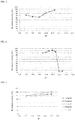
- thermolysin liquid preparations with pHs of 7.0, 8.0, and 9.0 the activity was degraded as the pH was increased.
- thermolysin liquid preparations with pHs of 10.0 and 11.0 a significant improvement in stability was recognized.
- the thermolysin liquid preparation with a higher pH that is, pH of 11.0 had higher stability.
- thermolysin liquid preparation was prepared by the following method.
- thermolysin liquid preparations with pHs of 9.5, 10.0, 10.5, and 11.0 similarly to Fig. 1 of Test Example 1, a tendency that stability is improved as the pH becomes higher was recognized. Further, the thermolysin liquid preparation with a pH of 11.5 also had high stability. On the other hand, the thermolysin liquid preparation with pHs of 12.0 and 12.5 did not have stability.
- thermolysin liquid preparation was prepared by the following method.
- thermolysin concentration is any of 0.1 mg/mL, 0.4 mg/mL, 1.6 mg/mL, 3.7 mg/mL, and 5.0 mg/mL
- the pH was 9.5 and 11.5, and similarly to Fig. 2 of Test Example 2, the thermolysin liquid preparation had high stability.
- thermolysin liquid preparation obtained in Test Example 1 was provided to HPLC under the following conditions and the degree of autodigestion was measured.
- thermolysin decomposition product results obtained by deriving the ratio of each of thermolysin, which is not substantially decomposed, and the thermolysin decomposition product to the whole thermolysin (that is, a sum of thermolysin, which is not substantially decomposed, and a thermolysin decomposition product) based on a detection amount (detection peak area in the chromatogram) with UV 280 nm are presented in Table 1.
- thermolysin which is not substantially decomposed
- pH of the thermolysin liquid preparation to higher than 9.0. That is, it was possible to effectively suppress autodigestion of thermolysin.
- thermolysin dry preparation was prepared by the following method.
- the obtained activity value was calculated with a relative value in which the activity value of the thermolysin liquid preparation was regarded as 100%, and the relative value was calculated as a residual activity (%).
- thermolysin dry preparation As described above, even in any of the thermolysin dry preparations, favorable activity was obtained in the case of dissolving the thermolysin dry preparation in water again. Therefore, even when the thermolysin liquid preparation of the present invention was dried once to obtain a thermolysin dry preparation, it was confirmed that favorable activity was obtained in the case of dissolving the thermolysin dry preparation in water again.
Landscapes
- Chemical & Material Sciences (AREA)
- Life Sciences & Earth Sciences (AREA)
- Health & Medical Sciences (AREA)
- Organic Chemistry (AREA)
- Zoology (AREA)
- Engineering & Computer Science (AREA)
- Bioinformatics & Cheminformatics (AREA)
- Genetics & Genomics (AREA)
- Wood Science & Technology (AREA)
- General Health & Medical Sciences (AREA)
- General Engineering & Computer Science (AREA)
- Biochemistry (AREA)
- Molecular Biology (AREA)
- Microbiology (AREA)
- Biotechnology (AREA)
- Biomedical Technology (AREA)
- Medicinal Chemistry (AREA)
- Medicinal Preparation (AREA)
- Enzymes And Modification Thereof (AREA)
Applications Claiming Priority (2)
| Application Number | Priority Date | Filing Date | Title |
|---|---|---|---|
| JP2017148221 | 2017-07-31 | ||
| PCT/JP2018/028409 WO2019026827A1 (ja) | 2017-07-31 | 2018-07-30 | サーモリシン液剤 |
Publications (2)
| Publication Number | Publication Date |
|---|---|
| EP3663398A1 true EP3663398A1 (de) | 2020-06-10 |
| EP3663398A4 EP3663398A4 (de) | 2021-05-05 |
Family
ID=65233843
Family Applications (1)
| Application Number | Title | Priority Date | Filing Date |
|---|---|---|---|
| EP18841723.2A Pending EP3663398A4 (de) | 2017-07-31 | 2018-07-30 | Thermolysinlösung |
Country Status (4)
| Country | Link |
|---|---|
| US (1) | US11359190B2 (de) |
| EP (1) | EP3663398A4 (de) |
| JP (1) | JP7171575B2 (de) |
| WO (1) | WO2019026827A1 (de) |
Family Cites Families (10)
| Publication number | Priority date | Publication date | Assignee | Title |
|---|---|---|---|---|
| DE3929531A1 (de) | 1989-09-06 | 1991-03-07 | Hoechst Ag | Proteasegen aus bacillus thermoproteolyticus rokko, verfahren zu seiner gewinnung und seine verwendung |
| US5801022A (en) * | 1990-08-03 | 1998-09-01 | Vertex Pharmaceuticals, Incorporated | Method of producing a product with crosslinked crystals of thermolysin |
| JPH0646844A (ja) | 1992-08-03 | 1994-02-22 | Daiwa Kasei Kk | 液状酵素剤の製造法 |
| US6140475A (en) | 1997-04-11 | 2000-10-31 | Altus Biologics Inc. | Controlled dissolution crosslinked protein crystals |
| JP2008101196A (ja) * | 2006-09-21 | 2008-05-01 | Kao Corp | 洗剤粒子群 |
| KR20100075993A (ko) * | 2007-11-01 | 2010-07-05 | 다니스코 유에스 인크. | 써몰리신 및 이의 변이체의 생성, 및 액체 세제에서의 용도 |
| JP2009161623A (ja) * | 2007-12-28 | 2009-07-23 | Lion Corp | 噴霧乾燥粒子の製造方法 |
| US8211684B2 (en) | 2008-08-27 | 2012-07-03 | Roche Diagnostics Operations, Inc. | Stabilization of thermolysin in aqueous solution |
| EP2408909B1 (de) * | 2009-03-19 | 2017-11-29 | Roche Diagnostics GmbH | Mischungen von proteasen |
| EP2336289B1 (de) * | 2009-12-18 | 2012-06-27 | The Procter & Gamble Company | Sprühtrockenverfahren |
-
2018
- 2018-07-30 US US16/635,982 patent/US11359190B2/en active Active
- 2018-07-30 EP EP18841723.2A patent/EP3663398A4/de active Pending
- 2018-07-30 JP JP2019534489A patent/JP7171575B2/ja active Active
- 2018-07-30 WO PCT/JP2018/028409 patent/WO2019026827A1/ja not_active Ceased
Also Published As
| Publication number | Publication date |
|---|---|
| EP3663398A4 (de) | 2021-05-05 |
| WO2019026827A1 (ja) | 2019-02-07 |
| JPWO2019026827A1 (ja) | 2020-07-27 |
| JP7171575B2 (ja) | 2022-11-15 |
| US20210147821A1 (en) | 2021-05-20 |
| US11359190B2 (en) | 2022-06-14 |
Similar Documents
| Publication | Publication Date | Title |
|---|---|---|
| Aro et al. | Production of bovine beta-lactoglobulin and hen egg ovalbumin by Trichoderma reesei using precision fermentation technology and testing of their techno-functional properties | |
| ES2565843T3 (es) | Beta-amilasa, gen que la codifica y procedimiento de preparación de la misma | |
| Zhang et al. | A polyketide synthase encoded by the gene An15g07920 is involved in the biosynthesis of ochratoxin A in Aspergillus niger | |
| Böth et al. | Peptidoglycan remodeling in Mycobacterium tuberculosis: comparison of structures and catalytic activities of RipA and RipB | |
| EP3568023B1 (de) | Sterilfiltrierte laktasezubereitung enthaltend salz mit einem monovalenten kation und deren herstellung | |
| CN112004936A (zh) | 麦角硫因生产方法 | |
| US20250137023A1 (en) | Maltotriose-generating amylase | |
| EP2408909B1 (de) | Mischungen von proteasen | |
| CN116916759A (zh) | 含有加工大麻蛋白质的液态组合物的制造方法 | |
| Arioli et al. | The relevance of carbon dioxide metabolism in Streptococcus thermophilus | |
| KR20150141964A (ko) | 단백질 정제의 신규한 방법 | |
| CN101717763B (zh) | 一种提高液体氨肽酶稳定性的方法及该酶的应用 | |
| US11926853B2 (en) | Botulinum toxin producing method | |
| US11359190B2 (en) | Thermolysin solution | |
| EP4357451A1 (de) | Enzymmittel enthaltend transglutaminase und dessen verwendung | |
| EP2503333B1 (de) | Elektrophoretisches analyseverfahren | |
| Rathbun et al. | Bovine lens γ-glutamyl transpeptidase | |
| DE112023001402T5 (de) | Modifizierte proteinglutaminase | |
| EP4289943A1 (de) | Enzym zur deamidierung von proteinen | |
| US10604780B2 (en) | Low gluten yeast hydrolysates | |
| Yamashita et al. | Purification and characterization of isoamyl alcohol oxidase (“Mureka”-forming enzyme) | |
| CN109627300A (zh) | Nisin溶液稳定剂开发及应用 | |
| JPH0253490A (ja) | アルギニン・デイミナーゼ遺伝子 | |
| EP3604508A1 (de) | Verfahren zur herstellung von protease in hefe | |
| JP7840316B2 (ja) | 環状リポペプチド産生微生物株、及び環状リポペプチドの製造方法 |
Legal Events
| Date | Code | Title | Description |
|---|---|---|---|
| STAA | Information on the status of an ep patent application or granted ep patent |
Free format text: STATUS: THE INTERNATIONAL PUBLICATION HAS BEEN MADE |
|
| PUAI | Public reference made under article 153(3) epc to a published international application that has entered the european phase |
Free format text: ORIGINAL CODE: 0009012 |
|
| STAA | Information on the status of an ep patent application or granted ep patent |
Free format text: STATUS: REQUEST FOR EXAMINATION WAS MADE |
|
| 17P | Request for examination filed |
Effective date: 20200130 |
|
| AK | Designated contracting states |
Kind code of ref document: A1 Designated state(s): AL AT BE BG CH CY CZ DE DK EE ES FI FR GB GR HR HU IE IS IT LI LT LU LV MC MK MT NL NO PL PT RO RS SE SI SK SM TR |
|
| AX | Request for extension of the european patent |
Extension state: BA ME |
|
| DAV | Request for validation of the european patent (deleted) | ||
| DAX | Request for extension of the european patent (deleted) | ||
| A4 | Supplementary search report drawn up and despatched |
Effective date: 20210407 |
|
| RIC1 | Information provided on ipc code assigned before grant |
Ipc: C12N 9/54 20060101AFI20210330BHEP Ipc: C12N 9/96 20060101ALI20210330BHEP |
|
| STAA | Information on the status of an ep patent application or granted ep patent |
Free format text: STATUS: EXAMINATION IS IN PROGRESS |
|
| 17Q | First examination report despatched |
Effective date: 20240408 |