EP3663359B1 - Verfahren zur herstellung eines thermoplastischen polyurethan-mikroairbag-elastomerstoffes - Google Patents
Verfahren zur herstellung eines thermoplastischen polyurethan-mikroairbag-elastomerstoffes Download PDFInfo
- Publication number
- EP3663359B1 EP3663359B1 EP18841810.7A EP18841810A EP3663359B1 EP 3663359 B1 EP3663359 B1 EP 3663359B1 EP 18841810 A EP18841810 A EP 18841810A EP 3663359 B1 EP3663359 B1 EP 3663359B1
- Authority
- EP
- European Patent Office
- Prior art keywords
- diisocyanate
- thermoplastic polyurethane
- process water
- pressure
- range
- Prior art date
- Legal status (The legal status is an assumption and is not a legal conclusion. Google has not performed a legal analysis and makes no representation as to the accuracy of the status listed.)
- Not-in-force
Links
- 239000004433 Thermoplastic polyurethane Substances 0.000 title claims description 67
- 229920002803 thermoplastic polyurethane Polymers 0.000 title claims description 67
- 239000000463 material Substances 0.000 title claims description 56
- 229920001971 elastomer Polymers 0.000 title claims description 36
- 239000000806 elastomer Substances 0.000 title claims description 36
- 238000002360 preparation method Methods 0.000 title description 9
- 238000000034 method Methods 0.000 claims description 184
- XLYOFNOQVPJJNP-UHFFFAOYSA-N water Substances O XLYOFNOQVPJJNP-UHFFFAOYSA-N 0.000 claims description 142
- 229920000642 polymer Polymers 0.000 claims description 80
- 239000000155 melt Substances 0.000 claims description 73
- 239000012943 hotmelt Substances 0.000 claims description 57
- LYCAIKOWRPUZTN-UHFFFAOYSA-N Ethylene glycol Chemical compound OCCO LYCAIKOWRPUZTN-UHFFFAOYSA-N 0.000 claims description 47
- 239000002245 particle Substances 0.000 claims description 43
- 239000002994 raw material Substances 0.000 claims description 43
- 238000005187 foaming Methods 0.000 claims description 41
- 239000004088 foaming agent Substances 0.000 claims description 35
- 238000002156 mixing Methods 0.000 claims description 31
- 238000010438 heat treatment Methods 0.000 claims description 30
- WGCNASOHLSPBMP-UHFFFAOYSA-N hydroxyacetaldehyde Natural products OCC=O WGCNASOHLSPBMP-UHFFFAOYSA-N 0.000 claims description 27
- 238000005469 granulation Methods 0.000 claims description 26
- 230000003179 granulation Effects 0.000 claims description 26
- 239000004721 Polyphenylene oxide Substances 0.000 claims description 24
- 229920000570 polyether Polymers 0.000 claims description 24
- 238000006116 polymerization reaction Methods 0.000 claims description 21
- 229920005862 polyol Polymers 0.000 claims description 21
- 150000003077 polyols Chemical class 0.000 claims description 21
- 125000000524 functional group Chemical group 0.000 claims description 20
- 238000006243 chemical reaction Methods 0.000 claims description 19
- 239000007787 solid Substances 0.000 claims description 19
- CDQSJQSWAWPGKG-UHFFFAOYSA-N butane-1,1-diol Chemical compound CCCC(O)O CDQSJQSWAWPGKG-UHFFFAOYSA-N 0.000 claims description 18
- UPMLOUAZCHDJJD-UHFFFAOYSA-N 4,4'-Diphenylmethane Diisocyanate Chemical compound C1=CC(N=C=O)=CC=C1CC1=CC=C(N=C=O)C=C1 UPMLOUAZCHDJJD-UHFFFAOYSA-N 0.000 claims description 16
- 229920000728 polyester Polymers 0.000 claims description 16
- 239000000654 additive Substances 0.000 claims description 12
- WNLRTRBMVRJNCN-UHFFFAOYSA-N adipic acid Chemical compound OC(=O)CCCCC(O)=O WNLRTRBMVRJNCN-UHFFFAOYSA-N 0.000 claims description 12
- 239000000203 mixture Substances 0.000 claims description 12
- 239000004611 light stabiliser Substances 0.000 claims description 11
- VYPSYNLAJGMNEJ-UHFFFAOYSA-N Silicium dioxide Chemical compound O=[Si]=O VYPSYNLAJGMNEJ-UHFFFAOYSA-N 0.000 claims description 10
- 150000001412 amines Chemical class 0.000 claims description 9
- 125000005442 diisocyanate group Chemical group 0.000 claims description 9
- 239000007788 liquid Substances 0.000 claims description 9
- 239000006082 mold release agent Substances 0.000 claims description 9
- 239000005056 polyisocyanate Chemical group 0.000 claims description 9
- 229920001228 polyisocyanate Chemical group 0.000 claims description 9
- 229920000909 polytetrahydrofuran Polymers 0.000 claims description 9
- OFBQJSOFQDEBGM-UHFFFAOYSA-N Pentane Chemical compound CCCCC OFBQJSOFQDEBGM-UHFFFAOYSA-N 0.000 claims description 8
- 239000004952 Polyamide Substances 0.000 claims description 8
- QWTDNUCVQCZILF-UHFFFAOYSA-N isopentane Chemical compound CCC(C)C QWTDNUCVQCZILF-UHFFFAOYSA-N 0.000 claims description 8
- 229920002647 polyamide Polymers 0.000 claims description 8
- VTYYLEPIZMXCLO-UHFFFAOYSA-L Calcium carbonate Chemical class [Ca+2].[O-]C([O-])=O VTYYLEPIZMXCLO-UHFFFAOYSA-L 0.000 claims description 7
- 235000011037 adipic acid Nutrition 0.000 claims description 6
- 239000001361 adipic acid Substances 0.000 claims description 6
- 239000003963 antioxidant agent Substances 0.000 claims description 6
- 239000004615 ingredient Substances 0.000 claims description 6
- FPAFDBFIGPHWGO-UHFFFAOYSA-N dioxosilane;oxomagnesium;hydrate Chemical compound O.[Mg]=O.[Mg]=O.[Mg]=O.O=[Si]=O.O=[Si]=O.O=[Si]=O.O=[Si]=O FPAFDBFIGPHWGO-UHFFFAOYSA-N 0.000 claims description 5
- 238000009826 distribution Methods 0.000 claims description 5
- NVFYKZBOLSIHEI-UHFFFAOYSA-N furan-2,5-dione;2-methylprop-2-enoic acid Chemical compound CC(=C)C(O)=O.O=C1OC(=O)C=C1 NVFYKZBOLSIHEI-UHFFFAOYSA-N 0.000 claims description 5
- 229920001112 grafted polyolefin Polymers 0.000 claims description 5
- 239000000314 lubricant Substances 0.000 claims description 5
- 235000012239 silicon dioxide Nutrition 0.000 claims description 5
- 239000000377 silicon dioxide Substances 0.000 claims description 5
- OVBFMUAFNIIQAL-UHFFFAOYSA-N 1,4-diisocyanatobutane Chemical compound O=C=NCCCCN=C=O OVBFMUAFNIIQAL-UHFFFAOYSA-N 0.000 claims description 4
- OKTJSMMVPCPJKN-UHFFFAOYSA-N Carbon Chemical compound [C] OKTJSMMVPCPJKN-UHFFFAOYSA-N 0.000 claims description 4
- 239000005057 Hexamethylene diisocyanate Substances 0.000 claims description 4
- 239000006229 carbon black Substances 0.000 claims description 4
- 239000002041 carbon nanotube Substances 0.000 claims description 4
- 229910021393 carbon nanotube Inorganic materials 0.000 claims description 4
- AFABGHUZZDYHJO-UHFFFAOYSA-N dimethyl butane Natural products CCCC(C)C AFABGHUZZDYHJO-UHFFFAOYSA-N 0.000 claims description 4
- 239000000843 powder Substances 0.000 claims description 4
- IJDNQMDRQITEOD-UHFFFAOYSA-N sec-butylidene Natural products CCCC IJDNQMDRQITEOD-UHFFFAOYSA-N 0.000 claims description 4
- BFKJFAAPBSQJPD-UHFFFAOYSA-N tetrafluoroethene Chemical group FC(F)=C(F)F BFKJFAAPBSQJPD-UHFFFAOYSA-N 0.000 claims description 4
- ISWSIDIOOBJBQZ-UHFFFAOYSA-N Phenol Chemical compound OC1=CC=CC=C1 ISWSIDIOOBJBQZ-UHFFFAOYSA-N 0.000 claims description 3
- 238000001035 drying Methods 0.000 claims description 3
- 239000011361 granulated particle Substances 0.000 claims description 3
- 229920003225 polyurethane elastomer Polymers 0.000 claims description 3
- ULWHHBHJGPPBCO-UHFFFAOYSA-N propane-1,1-diol Chemical compound CCC(O)O ULWHHBHJGPPBCO-UHFFFAOYSA-N 0.000 claims description 3
- 238000012216 screening Methods 0.000 claims description 3
- MTZUIIAIAKMWLI-UHFFFAOYSA-N 1,2-diisocyanatobenzene Chemical compound O=C=NC1=CC=CC=C1N=C=O MTZUIIAIAKMWLI-UHFFFAOYSA-N 0.000 claims description 2
- XSCLFFBWRKTMTE-UHFFFAOYSA-N 1,3-bis(isocyanatomethyl)cyclohexane Chemical compound O=C=NCC1CCCC(CN=C=O)C1 XSCLFFBWRKTMTE-UHFFFAOYSA-N 0.000 claims description 2
- IKYNWXNXXHWHLL-UHFFFAOYSA-N 1,3-diisocyanatopropane Chemical compound O=C=NCCCN=C=O IKYNWXNXXHWHLL-UHFFFAOYSA-N 0.000 claims description 2
- ROHUXHMNZLHBSF-UHFFFAOYSA-N 1,4-bis(isocyanatomethyl)cyclohexane Chemical compound O=C=NCC1CCC(CN=C=O)CC1 ROHUXHMNZLHBSF-UHFFFAOYSA-N 0.000 claims description 2
- CDMDQYCEEKCBGR-UHFFFAOYSA-N 1,4-diisocyanatocyclohexane Chemical compound O=C=NC1CCC(N=C=O)CC1 CDMDQYCEEKCBGR-UHFFFAOYSA-N 0.000 claims description 2
- SBJCUZQNHOLYMD-UHFFFAOYSA-N 1,5-Naphthalene diisocyanate Chemical compound C1=CC=C2C(N=C=O)=CC=CC2=C1N=C=O SBJCUZQNHOLYMD-UHFFFAOYSA-N 0.000 claims description 2
- DFPJRUKWEPYFJT-UHFFFAOYSA-N 1,5-diisocyanatopentane Chemical compound O=C=NCCCCCN=C=O DFPJRUKWEPYFJT-UHFFFAOYSA-N 0.000 claims description 2
- UTFSEWQOIIZLRH-UHFFFAOYSA-N 1,7-diisocyanatoheptane Chemical compound O=C=NCCCCCCCN=C=O UTFSEWQOIIZLRH-UHFFFAOYSA-N 0.000 claims description 2
- QUPKOUOXSNGVLB-UHFFFAOYSA-N 1,8-diisocyanatooctane Chemical compound O=C=NCCCCCCCCN=C=O QUPKOUOXSNGVLB-UHFFFAOYSA-N 0.000 claims description 2
- LFSYUSUFCBOHGU-UHFFFAOYSA-N 1-isocyanato-2-[(4-isocyanatophenyl)methyl]benzene Chemical compound C1=CC(N=C=O)=CC=C1CC1=CC=CC=C1N=C=O LFSYUSUFCBOHGU-UHFFFAOYSA-N 0.000 claims description 2
- YOQVGIBXRRGAOX-UHFFFAOYSA-N 1-isocyanato-3-(isocyanatomethyl)pentane Chemical compound O=C=NCC(CC)CCN=C=O YOQVGIBXRRGAOX-UHFFFAOYSA-N 0.000 claims description 2
- RRHGJUQNOFWUDK-UHFFFAOYSA-N Isoprene Chemical compound CC(=C)C=C RRHGJUQNOFWUDK-UHFFFAOYSA-N 0.000 claims description 2
- KAEIHZNNPOMFSS-UHFFFAOYSA-N N=C=O.N=C=O.C=1C=CC=CC=1CCC1=CC=CC=C1 Chemical compound N=C=O.N=C=O.C=1C=CC=CC=1CCC1=CC=CC=C1 KAEIHZNNPOMFSS-UHFFFAOYSA-N 0.000 claims description 2
- BKAKFCXOCHNIIP-UHFFFAOYSA-N N=C=O.N=C=O.CC1=CC=CC(C=2C=C(C)C=CC=2)=C1 Chemical compound N=C=O.N=C=O.CC1=CC=CC(C=2C=C(C)C=CC=2)=C1 BKAKFCXOCHNIIP-UHFFFAOYSA-N 0.000 claims description 2
- RRAMGCGOFNQTLD-UHFFFAOYSA-N hexamethylene diisocyanate Chemical compound O=C=NCCCCCCN=C=O RRAMGCGOFNQTLD-UHFFFAOYSA-N 0.000 claims description 2
- 229920002635 polyurethane Polymers 0.000 description 19
- 239000004814 polyurethane Substances 0.000 description 19
- 238000004132 cross linking Methods 0.000 description 10
- BGYHLZZASRKEJE-UHFFFAOYSA-N [3-[3-(3,5-ditert-butyl-4-hydroxyphenyl)propanoyloxy]-2,2-bis[3-(3,5-ditert-butyl-4-hydroxyphenyl)propanoyloxymethyl]propyl] 3-(3,5-ditert-butyl-4-hydroxyphenyl)propanoate Chemical compound CC(C)(C)C1=C(O)C(C(C)(C)C)=CC(CCC(=O)OCC(COC(=O)CCC=2C=C(C(O)=C(C=2)C(C)(C)C)C(C)(C)C)(COC(=O)CCC=2C=C(C(O)=C(C=2)C(C)(C)C)C(C)(C)C)COC(=O)CCC=2C=C(C(O)=C(C=2)C(C)(C)C)C(C)(C)C)=C1 BGYHLZZASRKEJE-UHFFFAOYSA-N 0.000 description 8
- 238000002425 crystallisation Methods 0.000 description 7
- 230000008025 crystallization Effects 0.000 description 7
- 230000001105 regulatory effect Effects 0.000 description 7
- -1 aromatic-aliphatic Chemical group 0.000 description 6
- 230000001965 increasing effect Effects 0.000 description 6
- 239000002530 phenolic antioxidant Substances 0.000 description 6
- 230000000704 physical effect Effects 0.000 description 6
- 238000012360 testing method Methods 0.000 description 6
- 150000001875 compounds Chemical class 0.000 description 5
- 230000000694 effects Effects 0.000 description 5
- 238000002844 melting Methods 0.000 description 5
- 230000008018 melting Effects 0.000 description 5
- 229920001935 styrene-ethylene-butadiene-styrene Polymers 0.000 description 5
- 238000001816 cooling Methods 0.000 description 4
- 238000004904 shortening Methods 0.000 description 4
- 239000004970 Chain extender Substances 0.000 description 3
- 229920005983 Infinergy® Polymers 0.000 description 3
- 230000000655 anti-hydrolysis Effects 0.000 description 3
- 238000005516 engineering process Methods 0.000 description 3
- 230000014759 maintenance of location Effects 0.000 description 3
- 238000005297 material degradation process Methods 0.000 description 3
- 239000003381 stabilizer Substances 0.000 description 3
- ZJCCRDAZUWHFQH-UHFFFAOYSA-N Trimethylolpropane Chemical group CCC(CO)(CO)CO ZJCCRDAZUWHFQH-UHFFFAOYSA-N 0.000 description 2
- 239000006096 absorbing agent Substances 0.000 description 2
- 238000010521 absorption reaction Methods 0.000 description 2
- 239000000853 adhesive Substances 0.000 description 2
- 230000000181 anti-adherent effect Effects 0.000 description 2
- 230000003712 anti-aging effect Effects 0.000 description 2
- WERYXYBDKMZEQL-UHFFFAOYSA-N butane-1,4-diol Chemical compound OCCCCO WERYXYBDKMZEQL-UHFFFAOYSA-N 0.000 description 2
- 229910000019 calcium carbonate Inorganic materials 0.000 description 2
- 235000010216 calcium carbonate Nutrition 0.000 description 2
- 125000004432 carbon atom Chemical group C* 0.000 description 2
- 230000007547 defect Effects 0.000 description 2
- 238000011161 development Methods 0.000 description 2
- 238000009792 diffusion process Methods 0.000 description 2
- 238000005265 energy consumption Methods 0.000 description 2
- 238000001125 extrusion Methods 0.000 description 2
- 239000008187 granular material Substances 0.000 description 2
- 229920005906 polyester polyol Polymers 0.000 description 2
- 229920001451 polypropylene glycol Polymers 0.000 description 2
- 239000011343 solid material Substances 0.000 description 2
- 239000000126 substance Substances 0.000 description 2
- LFQSCWFLJHTTHZ-UHFFFAOYSA-N Ethanol Chemical compound CCO LFQSCWFLJHTTHZ-UHFFFAOYSA-N 0.000 description 1
- 241000285023 Formosa Species 0.000 description 1
- 239000002253 acid Substances 0.000 description 1
- 150000007513 acids Chemical class 0.000 description 1
- 125000001931 aliphatic group Chemical group 0.000 description 1
- 239000003513 alkali Substances 0.000 description 1
- 125000001118 alkylidene group Chemical group 0.000 description 1
- 238000013459 approach Methods 0.000 description 1
- 125000003118 aryl group Chemical group 0.000 description 1
- 230000009286 beneficial effect Effects 0.000 description 1
- DSSYKIVIOFKYAU-UHFFFAOYSA-N camphor Chemical compound C1CC2(C)C(=O)CC1C2(C)C DSSYKIVIOFKYAU-UHFFFAOYSA-N 0.000 description 1
- 239000003795 chemical substances by application Substances 0.000 description 1
- 230000001276 controlling effect Effects 0.000 description 1
- 229920001577 copolymer Polymers 0.000 description 1
- 230000003247 decreasing effect Effects 0.000 description 1
- 150000004985 diamines Chemical class 0.000 description 1
- 230000002708 enhancing effect Effects 0.000 description 1
- 230000007613 environmental effect Effects 0.000 description 1
- XXMIOPMDWAUFGU-UHFFFAOYSA-N hexane-1,6-diol Chemical compound OCCCCCCO XXMIOPMDWAUFGU-UHFFFAOYSA-N 0.000 description 1
- 229920001519 homopolymer Polymers 0.000 description 1
- 239000011810 insulating material Substances 0.000 description 1
- 238000004519 manufacturing process Methods 0.000 description 1
- 238000005259 measurement Methods 0.000 description 1
- 239000012528 membrane Substances 0.000 description 1
- 238000012986 modification Methods 0.000 description 1
- 230000004048 modification Effects 0.000 description 1
- 239000000178 monomer Substances 0.000 description 1
- 239000003921 oil Substances 0.000 description 1
- 238000005457 optimization Methods 0.000 description 1
- 238000012856 packing Methods 0.000 description 1
- 230000035699 permeability Effects 0.000 description 1
- 229920003023 plastic Polymers 0.000 description 1
- 239000004033 plastic Substances 0.000 description 1
- 229920006123 polyhexamethylene isophthalamide Polymers 0.000 description 1
- 239000002861 polymer material Substances 0.000 description 1
- 230000000379 polymerizing effect Effects 0.000 description 1
- 238000005086 pumping Methods 0.000 description 1
- 230000035939 shock Effects 0.000 description 1
- 238000003860 storage Methods 0.000 description 1
- 229920001897 terpolymer Polymers 0.000 description 1
Images
Classifications
-
- B—PERFORMING OPERATIONS; TRANSPORTING
- B29—WORKING OF PLASTICS; WORKING OF SUBSTANCES IN A PLASTIC STATE IN GENERAL
- B29C—SHAPING OR JOINING OF PLASTICS; SHAPING OF MATERIAL IN A PLASTIC STATE, NOT OTHERWISE PROVIDED FOR; AFTER-TREATMENT OF THE SHAPED PRODUCTS, e.g. REPAIRING
- B29C48/00—Extrusion moulding, i.e. expressing the moulding material through a die or nozzle which imparts the desired form; Apparatus therefor
- B29C48/001—Combinations of extrusion moulding with other shaping operations
- B29C48/0012—Combinations of extrusion moulding with other shaping operations combined with shaping by internal pressure generated in the material, e.g. foaming
-
- B—PERFORMING OPERATIONS; TRANSPORTING
- B29—WORKING OF PLASTICS; WORKING OF SUBSTANCES IN A PLASTIC STATE IN GENERAL
- B29B—PREPARATION OR PRETREATMENT OF THE MATERIAL TO BE SHAPED; MAKING GRANULES OR PREFORMS; RECOVERY OF PLASTICS OR OTHER CONSTITUENTS OF WASTE MATERIAL CONTAINING PLASTICS
- B29B9/00—Making granules
- B29B9/12—Making granules characterised by structure or composition
-
- B—PERFORMING OPERATIONS; TRANSPORTING
- B01—PHYSICAL OR CHEMICAL PROCESSES OR APPARATUS IN GENERAL
- B01J—CHEMICAL OR PHYSICAL PROCESSES, e.g. CATALYSIS OR COLLOID CHEMISTRY; THEIR RELEVANT APPARATUS
- B01J19/00—Chemical, physical or physico-chemical processes in general; Their relevant apparatus
- B01J19/0006—Controlling or regulating processes
- B01J19/0013—Controlling the temperature of the process
-
- B—PERFORMING OPERATIONS; TRANSPORTING
- B01—PHYSICAL OR CHEMICAL PROCESSES OR APPARATUS IN GENERAL
- B01J—CHEMICAL OR PHYSICAL PROCESSES, e.g. CATALYSIS OR COLLOID CHEMISTRY; THEIR RELEVANT APPARATUS
- B01J19/00—Chemical, physical or physico-chemical processes in general; Their relevant apparatus
- B01J19/18—Stationary reactors having moving elements inside
- B01J19/20—Stationary reactors having moving elements inside in the form of helices, e.g. screw reactors
-
- B—PERFORMING OPERATIONS; TRANSPORTING
- B29—WORKING OF PLASTICS; WORKING OF SUBSTANCES IN A PLASTIC STATE IN GENERAL
- B29B—PREPARATION OR PRETREATMENT OF THE MATERIAL TO BE SHAPED; MAKING GRANULES OR PREFORMS; RECOVERY OF PLASTICS OR OTHER CONSTITUENTS OF WASTE MATERIAL CONTAINING PLASTICS
- B29B9/00—Making granules
- B29B9/02—Making granules by dividing preformed material
- B29B9/06—Making granules by dividing preformed material in the form of filamentary material, e.g. combined with extrusion
- B29B9/065—Making granules by dividing preformed material in the form of filamentary material, e.g. combined with extrusion under-water, e.g. underwater pelletizers
-
- B—PERFORMING OPERATIONS; TRANSPORTING
- B29—WORKING OF PLASTICS; WORKING OF SUBSTANCES IN A PLASTIC STATE IN GENERAL
- B29C—SHAPING OR JOINING OF PLASTICS; SHAPING OF MATERIAL IN A PLASTIC STATE, NOT OTHERWISE PROVIDED FOR; AFTER-TREATMENT OF THE SHAPED PRODUCTS, e.g. REPAIRING
- B29C48/00—Extrusion moulding, i.e. expressing the moulding material through a die or nozzle which imparts the desired form; Apparatus therefor
- B29C48/022—Extrusion moulding, i.e. expressing the moulding material through a die or nozzle which imparts the desired form; Apparatus therefor characterised by the choice of material
-
- B—PERFORMING OPERATIONS; TRANSPORTING
- B29—WORKING OF PLASTICS; WORKING OF SUBSTANCES IN A PLASTIC STATE IN GENERAL
- B29C—SHAPING OR JOINING OF PLASTICS; SHAPING OF MATERIAL IN A PLASTIC STATE, NOT OTHERWISE PROVIDED FOR; AFTER-TREATMENT OF THE SHAPED PRODUCTS, e.g. REPAIRING
- B29C48/00—Extrusion moulding, i.e. expressing the moulding material through a die or nozzle which imparts the desired form; Apparatus therefor
- B29C48/25—Component parts, details or accessories; Auxiliary operations
- B29C48/30—Extrusion nozzles or dies
- B29C48/345—Extrusion nozzles comprising two or more adjacently arranged ports, for simultaneously extruding multiple strands, e.g. for pelletising
-
- B—PERFORMING OPERATIONS; TRANSPORTING
- B29—WORKING OF PLASTICS; WORKING OF SUBSTANCES IN A PLASTIC STATE IN GENERAL
- B29C—SHAPING OR JOINING OF PLASTICS; SHAPING OF MATERIAL IN A PLASTIC STATE, NOT OTHERWISE PROVIDED FOR; AFTER-TREATMENT OF THE SHAPED PRODUCTS, e.g. REPAIRING
- B29C48/00—Extrusion moulding, i.e. expressing the moulding material through a die or nozzle which imparts the desired form; Apparatus therefor
- B29C48/25—Component parts, details or accessories; Auxiliary operations
- B29C48/36—Means for plasticising or homogenising the moulding material or forcing it through the nozzle or die
- B29C48/395—Means for plasticising or homogenising the moulding material or forcing it through the nozzle or die using screws surrounded by a cooperating barrel, e.g. single screw extruders
- B29C48/40—Means for plasticising or homogenising the moulding material or forcing it through the nozzle or die using screws surrounded by a cooperating barrel, e.g. single screw extruders using two or more parallel screws or at least two parallel non-intermeshing screws, e.g. twin screw extruders
-
- B—PERFORMING OPERATIONS; TRANSPORTING
- B29—WORKING OF PLASTICS; WORKING OF SUBSTANCES IN A PLASTIC STATE IN GENERAL
- B29C—SHAPING OR JOINING OF PLASTICS; SHAPING OF MATERIAL IN A PLASTIC STATE, NOT OTHERWISE PROVIDED FOR; AFTER-TREATMENT OF THE SHAPED PRODUCTS, e.g. REPAIRING
- B29C48/00—Extrusion moulding, i.e. expressing the moulding material through a die or nozzle which imparts the desired form; Apparatus therefor
- B29C48/25—Component parts, details or accessories; Auxiliary operations
- B29C48/36—Means for plasticising or homogenising the moulding material or forcing it through the nozzle or die
- B29C48/50—Details of extruders
- B29C48/505—Screws
- B29C48/51—Screws with internal flow passages, e.g. for molten material
- B29C48/515—Screws with internal flow passages, e.g. for molten material for auxiliary fluids, e.g. foaming agents
-
- B—PERFORMING OPERATIONS; TRANSPORTING
- B29—WORKING OF PLASTICS; WORKING OF SUBSTANCES IN A PLASTIC STATE IN GENERAL
- B29C—SHAPING OR JOINING OF PLASTICS; SHAPING OF MATERIAL IN A PLASTIC STATE, NOT OTHERWISE PROVIDED FOR; AFTER-TREATMENT OF THE SHAPED PRODUCTS, e.g. REPAIRING
- B29C48/00—Extrusion moulding, i.e. expressing the moulding material through a die or nozzle which imparts the desired form; Apparatus therefor
- B29C48/25—Component parts, details or accessories; Auxiliary operations
- B29C48/36—Means for plasticising or homogenising the moulding material or forcing it through the nozzle or die
- B29C48/50—Details of extruders
- B29C48/505—Screws
- B29C48/67—Screws having incorporated mixing devices not provided for in groups B29C48/52 - B29C48/66
-
- B—PERFORMING OPERATIONS; TRANSPORTING
- B29—WORKING OF PLASTICS; WORKING OF SUBSTANCES IN A PLASTIC STATE IN GENERAL
- B29C—SHAPING OR JOINING OF PLASTICS; SHAPING OF MATERIAL IN A PLASTIC STATE, NOT OTHERWISE PROVIDED FOR; AFTER-TREATMENT OF THE SHAPED PRODUCTS, e.g. REPAIRING
- B29C48/00—Extrusion moulding, i.e. expressing the moulding material through a die or nozzle which imparts the desired form; Apparatus therefor
- B29C48/25—Component parts, details or accessories; Auxiliary operations
- B29C48/92—Measuring, controlling or regulating
-
- C—CHEMISTRY; METALLURGY
- C08—ORGANIC MACROMOLECULAR COMPOUNDS; THEIR PREPARATION OR CHEMICAL WORKING-UP; COMPOSITIONS BASED THEREON
- C08G—MACROMOLECULAR COMPOUNDS OBTAINED OTHERWISE THAN BY REACTIONS ONLY INVOLVING UNSATURATED CARBON-TO-CARBON BONDS
- C08G18/00—Polymeric products of isocyanates or isothiocyanates
- C08G18/06—Polymeric products of isocyanates or isothiocyanates with compounds having active hydrogen
- C08G18/28—Polymeric products of isocyanates or isothiocyanates with compounds having active hydrogen characterised by the compounds used containing active hydrogen
- C08G18/30—Low-molecular-weight compounds
- C08G18/32—Polyhydroxy compounds; Polyamines; Hydroxyamines
- C08G18/3203—Polyhydroxy compounds
- C08G18/3206—Polyhydroxy compounds aliphatic
-
- C—CHEMISTRY; METALLURGY
- C08—ORGANIC MACROMOLECULAR COMPOUNDS; THEIR PREPARATION OR CHEMICAL WORKING-UP; COMPOSITIONS BASED THEREON
- C08G—MACROMOLECULAR COMPOUNDS OBTAINED OTHERWISE THAN BY REACTIONS ONLY INVOLVING UNSATURATED CARBON-TO-CARBON BONDS
- C08G18/00—Polymeric products of isocyanates or isothiocyanates
- C08G18/06—Polymeric products of isocyanates or isothiocyanates with compounds having active hydrogen
- C08G18/28—Polymeric products of isocyanates or isothiocyanates with compounds having active hydrogen characterised by the compounds used containing active hydrogen
- C08G18/40—High-molecular-weight compounds
- C08G18/42—Polycondensates having carboxylic or carbonic ester groups in the main chain
-
- C—CHEMISTRY; METALLURGY
- C08—ORGANIC MACROMOLECULAR COMPOUNDS; THEIR PREPARATION OR CHEMICAL WORKING-UP; COMPOSITIONS BASED THEREON
- C08G—MACROMOLECULAR COMPOUNDS OBTAINED OTHERWISE THAN BY REACTIONS ONLY INVOLVING UNSATURATED CARBON-TO-CARBON BONDS
- C08G18/00—Polymeric products of isocyanates or isothiocyanates
- C08G18/06—Polymeric products of isocyanates or isothiocyanates with compounds having active hydrogen
- C08G18/28—Polymeric products of isocyanates or isothiocyanates with compounds having active hydrogen characterised by the compounds used containing active hydrogen
- C08G18/40—High-molecular-weight compounds
- C08G18/42—Polycondensates having carboxylic or carbonic ester groups in the main chain
- C08G18/4236—Polycondensates having carboxylic or carbonic ester groups in the main chain containing only aliphatic groups
- C08G18/4238—Polycondensates having carboxylic or carbonic ester groups in the main chain containing only aliphatic groups derived from dicarboxylic acids and dialcohols
-
- C—CHEMISTRY; METALLURGY
- C08—ORGANIC MACROMOLECULAR COMPOUNDS; THEIR PREPARATION OR CHEMICAL WORKING-UP; COMPOSITIONS BASED THEREON
- C08G—MACROMOLECULAR COMPOUNDS OBTAINED OTHERWISE THAN BY REACTIONS ONLY INVOLVING UNSATURATED CARBON-TO-CARBON BONDS
- C08G18/00—Polymeric products of isocyanates or isothiocyanates
- C08G18/06—Polymeric products of isocyanates or isothiocyanates with compounds having active hydrogen
- C08G18/28—Polymeric products of isocyanates or isothiocyanates with compounds having active hydrogen characterised by the compounds used containing active hydrogen
- C08G18/40—High-molecular-weight compounds
- C08G18/48—Polyethers
- C08G18/4854—Polyethers containing oxyalkylene groups having four carbon atoms in the alkylene group
-
- C—CHEMISTRY; METALLURGY
- C08—ORGANIC MACROMOLECULAR COMPOUNDS; THEIR PREPARATION OR CHEMICAL WORKING-UP; COMPOSITIONS BASED THEREON
- C08G—MACROMOLECULAR COMPOUNDS OBTAINED OTHERWISE THAN BY REACTIONS ONLY INVOLVING UNSATURATED CARBON-TO-CARBON BONDS
- C08G18/00—Polymeric products of isocyanates or isothiocyanates
- C08G18/06—Polymeric products of isocyanates or isothiocyanates with compounds having active hydrogen
- C08G18/28—Polymeric products of isocyanates or isothiocyanates with compounds having active hydrogen characterised by the compounds used containing active hydrogen
- C08G18/65—Low-molecular-weight compounds having active hydrogen with high-molecular-weight compounds having active hydrogen
- C08G18/66—Compounds of groups C08G18/42, C08G18/48, or C08G18/52
- C08G18/6666—Compounds of group C08G18/48 or C08G18/52
- C08G18/667—Compounds of group C08G18/48 or C08G18/52 with compounds of group C08G18/32 or polyamines of C08G18/38
-
- C—CHEMISTRY; METALLURGY
- C08—ORGANIC MACROMOLECULAR COMPOUNDS; THEIR PREPARATION OR CHEMICAL WORKING-UP; COMPOSITIONS BASED THEREON
- C08G—MACROMOLECULAR COMPOUNDS OBTAINED OTHERWISE THAN BY REACTIONS ONLY INVOLVING UNSATURATED CARBON-TO-CARBON BONDS
- C08G18/00—Polymeric products of isocyanates or isothiocyanates
- C08G18/06—Polymeric products of isocyanates or isothiocyanates with compounds having active hydrogen
- C08G18/70—Polymeric products of isocyanates or isothiocyanates with compounds having active hydrogen characterised by the isocyanates or isothiocyanates used
- C08G18/72—Polyisocyanates or polyisothiocyanates
- C08G18/74—Polyisocyanates or polyisothiocyanates cyclic
- C08G18/76—Polyisocyanates or polyisothiocyanates cyclic aromatic
- C08G18/7657—Polyisocyanates or polyisothiocyanates cyclic aromatic containing two or more aromatic rings
- C08G18/7664—Polyisocyanates or polyisothiocyanates cyclic aromatic containing two or more aromatic rings containing alkylene polyphenyl groups
- C08G18/7671—Polyisocyanates or polyisothiocyanates cyclic aromatic containing two or more aromatic rings containing alkylene polyphenyl groups containing only one alkylene bisphenyl group
-
- C—CHEMISTRY; METALLURGY
- C08—ORGANIC MACROMOLECULAR COMPOUNDS; THEIR PREPARATION OR CHEMICAL WORKING-UP; COMPOSITIONS BASED THEREON
- C08J—WORKING-UP; GENERAL PROCESSES OF COMPOUNDING; AFTER-TREATMENT NOT COVERED BY SUBCLASSES C08B, C08C, C08F, C08G or C08H
- C08J9/00—Working-up of macromolecular substances to porous or cellular articles or materials; After-treatment thereof
- C08J9/0061—Working-up of macromolecular substances to porous or cellular articles or materials; After-treatment thereof characterized by the use of several polymeric components
-
- C—CHEMISTRY; METALLURGY
- C08—ORGANIC MACROMOLECULAR COMPOUNDS; THEIR PREPARATION OR CHEMICAL WORKING-UP; COMPOSITIONS BASED THEREON
- C08J—WORKING-UP; GENERAL PROCESSES OF COMPOUNDING; AFTER-TREATMENT NOT COVERED BY SUBCLASSES C08B, C08C, C08F, C08G or C08H
- C08J9/00—Working-up of macromolecular substances to porous or cellular articles or materials; After-treatment thereof
- C08J9/0066—Use of inorganic compounding ingredients
-
- C—CHEMISTRY; METALLURGY
- C08—ORGANIC MACROMOLECULAR COMPOUNDS; THEIR PREPARATION OR CHEMICAL WORKING-UP; COMPOSITIONS BASED THEREON
- C08J—WORKING-UP; GENERAL PROCESSES OF COMPOUNDING; AFTER-TREATMENT NOT COVERED BY SUBCLASSES C08B, C08C, C08F, C08G or C08H
- C08J9/00—Working-up of macromolecular substances to porous or cellular articles or materials; After-treatment thereof
- C08J9/0095—Mixtures of at least two compounding ingredients belonging to different one-dot groups
-
- C—CHEMISTRY; METALLURGY
- C08—ORGANIC MACROMOLECULAR COMPOUNDS; THEIR PREPARATION OR CHEMICAL WORKING-UP; COMPOSITIONS BASED THEREON
- C08J—WORKING-UP; GENERAL PROCESSES OF COMPOUNDING; AFTER-TREATMENT NOT COVERED BY SUBCLASSES C08B, C08C, C08F, C08G or C08H
- C08J9/00—Working-up of macromolecular substances to porous or cellular articles or materials; After-treatment thereof
- C08J9/04—Working-up of macromolecular substances to porous or cellular articles or materials; After-treatment thereof using blowing gases generated by a previously added blowing agent
- C08J9/12—Working-up of macromolecular substances to porous or cellular articles or materials; After-treatment thereof using blowing gases generated by a previously added blowing agent by a physical blowing agent
- C08J9/122—Hydrogen, oxygen, CO2, nitrogen or noble gases
-
- C—CHEMISTRY; METALLURGY
- C08—ORGANIC MACROMOLECULAR COMPOUNDS; THEIR PREPARATION OR CHEMICAL WORKING-UP; COMPOSITIONS BASED THEREON
- C08J—WORKING-UP; GENERAL PROCESSES OF COMPOUNDING; AFTER-TREATMENT NOT COVERED BY SUBCLASSES C08B, C08C, C08F, C08G or C08H
- C08J9/00—Working-up of macromolecular substances to porous or cellular articles or materials; After-treatment thereof
- C08J9/04—Working-up of macromolecular substances to porous or cellular articles or materials; After-treatment thereof using blowing gases generated by a previously added blowing agent
- C08J9/12—Working-up of macromolecular substances to porous or cellular articles or materials; After-treatment thereof using blowing gases generated by a previously added blowing agent by a physical blowing agent
- C08J9/14—Working-up of macromolecular substances to porous or cellular articles or materials; After-treatment thereof using blowing gases generated by a previously added blowing agent by a physical blowing agent organic
- C08J9/141—Hydrocarbons
-
- C—CHEMISTRY; METALLURGY
- C08—ORGANIC MACROMOLECULAR COMPOUNDS; THEIR PREPARATION OR CHEMICAL WORKING-UP; COMPOSITIONS BASED THEREON
- C08J—WORKING-UP; GENERAL PROCESSES OF COMPOUNDING; AFTER-TREATMENT NOT COVERED BY SUBCLASSES C08B, C08C, C08F, C08G or C08H
- C08J9/00—Working-up of macromolecular substances to porous or cellular articles or materials; After-treatment thereof
- C08J9/16—Making expandable particles
-
- C—CHEMISTRY; METALLURGY
- C08—ORGANIC MACROMOLECULAR COMPOUNDS; THEIR PREPARATION OR CHEMICAL WORKING-UP; COMPOSITIONS BASED THEREON
- C08L—COMPOSITIONS OF MACROMOLECULAR COMPOUNDS
- C08L75/00—Compositions of polyureas or polyurethanes; Compositions of derivatives of such polymers
- C08L75/04—Polyurethanes
- C08L75/06—Polyurethanes from polyesters
-
- C—CHEMISTRY; METALLURGY
- C08—ORGANIC MACROMOLECULAR COMPOUNDS; THEIR PREPARATION OR CHEMICAL WORKING-UP; COMPOSITIONS BASED THEREON
- C08L—COMPOSITIONS OF MACROMOLECULAR COMPOUNDS
- C08L75/00—Compositions of polyureas or polyurethanes; Compositions of derivatives of such polymers
- C08L75/04—Polyurethanes
- C08L75/08—Polyurethanes from polyethers
-
- B—PERFORMING OPERATIONS; TRANSPORTING
- B01—PHYSICAL OR CHEMICAL PROCESSES OR APPARATUS IN GENERAL
- B01J—CHEMICAL OR PHYSICAL PROCESSES, e.g. CATALYSIS OR COLLOID CHEMISTRY; THEIR RELEVANT APPARATUS
- B01J2219/00—Chemical, physical or physico-chemical processes in general; Their relevant apparatus
- B01J2219/00049—Controlling or regulating processes
- B01J2219/00162—Controlling or regulating processes controlling the pressure
-
- B—PERFORMING OPERATIONS; TRANSPORTING
- B29—WORKING OF PLASTICS; WORKING OF SUBSTANCES IN A PLASTIC STATE IN GENERAL
- B29K—INDEXING SCHEME ASSOCIATED WITH SUBCLASSES B29B, B29C OR B29D, RELATING TO MOULDING MATERIALS OR TO MATERIALS FOR MOULDS, REINFORCEMENTS, FILLERS OR PREFORMED PARTS, e.g. INSERTS
- B29K2075/00—Use of PU, i.e. polyureas or polyurethanes or derivatives thereof, as moulding material
-
- B—PERFORMING OPERATIONS; TRANSPORTING
- B29—WORKING OF PLASTICS; WORKING OF SUBSTANCES IN A PLASTIC STATE IN GENERAL
- B29K—INDEXING SCHEME ASSOCIATED WITH SUBCLASSES B29B, B29C OR B29D, RELATING TO MOULDING MATERIALS OR TO MATERIALS FOR MOULDS, REINFORCEMENTS, FILLERS OR PREFORMED PARTS, e.g. INSERTS
- B29K2105/00—Condition, form or state of moulded material or of the material to be shaped
- B29K2105/04—Condition, form or state of moulded material or of the material to be shaped cellular or porous
- B29K2105/041—Microporous
-
- C—CHEMISTRY; METALLURGY
- C08—ORGANIC MACROMOLECULAR COMPOUNDS; THEIR PREPARATION OR CHEMICAL WORKING-UP; COMPOSITIONS BASED THEREON
- C08J—WORKING-UP; GENERAL PROCESSES OF COMPOUNDING; AFTER-TREATMENT NOT COVERED BY SUBCLASSES C08B, C08C, C08F, C08G or C08H
- C08J2203/00—Foams characterized by the expanding agent
- C08J2203/06—CO2, N2 or noble gases
-
- C—CHEMISTRY; METALLURGY
- C08—ORGANIC MACROMOLECULAR COMPOUNDS; THEIR PREPARATION OR CHEMICAL WORKING-UP; COMPOSITIONS BASED THEREON
- C08J—WORKING-UP; GENERAL PROCESSES OF COMPOUNDING; AFTER-TREATMENT NOT COVERED BY SUBCLASSES C08B, C08C, C08F, C08G or C08H
- C08J2203/00—Foams characterized by the expanding agent
- C08J2203/14—Saturated hydrocarbons, e.g. butane; Unspecified hydrocarbons
-
- C—CHEMISTRY; METALLURGY
- C08—ORGANIC MACROMOLECULAR COMPOUNDS; THEIR PREPARATION OR CHEMICAL WORKING-UP; COMPOSITIONS BASED THEREON
- C08J—WORKING-UP; GENERAL PROCESSES OF COMPOUNDING; AFTER-TREATMENT NOT COVERED BY SUBCLASSES C08B, C08C, C08F, C08G or C08H
- C08J2203/00—Foams characterized by the expanding agent
- C08J2203/18—Binary blends of expanding agents
- C08J2203/182—Binary blends of expanding agents of physical blowing agents, e.g. acetone and butane
-
- C—CHEMISTRY; METALLURGY
- C08—ORGANIC MACROMOLECULAR COMPOUNDS; THEIR PREPARATION OR CHEMICAL WORKING-UP; COMPOSITIONS BASED THEREON
- C08J—WORKING-UP; GENERAL PROCESSES OF COMPOUNDING; AFTER-TREATMENT NOT COVERED BY SUBCLASSES C08B, C08C, C08F, C08G or C08H
- C08J2205/00—Foams characterised by their properties
- C08J2205/04—Foams characterised by their properties characterised by the foam pores
- C08J2205/044—Micropores, i.e. average diameter being between 0,1 micrometer and 0,1 millimeter
-
- C—CHEMISTRY; METALLURGY
- C08—ORGANIC MACROMOLECULAR COMPOUNDS; THEIR PREPARATION OR CHEMICAL WORKING-UP; COMPOSITIONS BASED THEREON
- C08J—WORKING-UP; GENERAL PROCESSES OF COMPOUNDING; AFTER-TREATMENT NOT COVERED BY SUBCLASSES C08B, C08C, C08F, C08G or C08H
- C08J2300/00—Characterised by the use of unspecified polymers
- C08J2300/22—Thermoplastic resins
-
- C—CHEMISTRY; METALLURGY
- C08—ORGANIC MACROMOLECULAR COMPOUNDS; THEIR PREPARATION OR CHEMICAL WORKING-UP; COMPOSITIONS BASED THEREON
- C08J—WORKING-UP; GENERAL PROCESSES OF COMPOUNDING; AFTER-TREATMENT NOT COVERED BY SUBCLASSES C08B, C08C, C08F, C08G or C08H
- C08J2300/00—Characterised by the use of unspecified polymers
- C08J2300/26—Elastomers
-
- C—CHEMISTRY; METALLURGY
- C08—ORGANIC MACROMOLECULAR COMPOUNDS; THEIR PREPARATION OR CHEMICAL WORKING-UP; COMPOSITIONS BASED THEREON
- C08J—WORKING-UP; GENERAL PROCESSES OF COMPOUNDING; AFTER-TREATMENT NOT COVERED BY SUBCLASSES C08B, C08C, C08F, C08G or C08H
- C08J2375/00—Characterised by the use of polyureas or polyurethanes; Derivatives of such polymers
- C08J2375/04—Polyurethanes
-
- C—CHEMISTRY; METALLURGY
- C08—ORGANIC MACROMOLECULAR COMPOUNDS; THEIR PREPARATION OR CHEMICAL WORKING-UP; COMPOSITIONS BASED THEREON
- C08J—WORKING-UP; GENERAL PROCESSES OF COMPOUNDING; AFTER-TREATMENT NOT COVERED BY SUBCLASSES C08B, C08C, C08F, C08G or C08H
- C08J2375/00—Characterised by the use of polyureas or polyurethanes; Derivatives of such polymers
- C08J2375/04—Polyurethanes
- C08J2375/06—Polyurethanes from polyesters
-
- C—CHEMISTRY; METALLURGY
- C08—ORGANIC MACROMOLECULAR COMPOUNDS; THEIR PREPARATION OR CHEMICAL WORKING-UP; COMPOSITIONS BASED THEREON
- C08J—WORKING-UP; GENERAL PROCESSES OF COMPOUNDING; AFTER-TREATMENT NOT COVERED BY SUBCLASSES C08B, C08C, C08F, C08G or C08H
- C08J2375/00—Characterised by the use of polyureas or polyurethanes; Derivatives of such polymers
- C08J2375/04—Polyurethanes
- C08J2375/08—Polyurethanes from polyethers
-
- C—CHEMISTRY; METALLURGY
- C08—ORGANIC MACROMOLECULAR COMPOUNDS; THEIR PREPARATION OR CHEMICAL WORKING-UP; COMPOSITIONS BASED THEREON
- C08J—WORKING-UP; GENERAL PROCESSES OF COMPOUNDING; AFTER-TREATMENT NOT COVERED BY SUBCLASSES C08B, C08C, C08F, C08G or C08H
- C08J2475/00—Characterised by the use of polyureas or polyurethanes; Derivatives of such polymers
- C08J2475/04—Polyurethanes
- C08J2475/08—Polyurethanes from polyethers
-
- C—CHEMISTRY; METALLURGY
- C08—ORGANIC MACROMOLECULAR COMPOUNDS; THEIR PREPARATION OR CHEMICAL WORKING-UP; COMPOSITIONS BASED THEREON
- C08K—Use of inorganic or non-macromolecular organic substances as compounding ingredients
- C08K3/00—Use of inorganic substances as compounding ingredients
- C08K3/18—Oxygen-containing compounds, e.g. metal carbonyls
- C08K3/24—Acids; Salts thereof
- C08K3/26—Carbonates; Bicarbonates
- C08K2003/265—Calcium, strontium or barium carbonate
-
- C—CHEMISTRY; METALLURGY
- C08—ORGANIC MACROMOLECULAR COMPOUNDS; THEIR PREPARATION OR CHEMICAL WORKING-UP; COMPOSITIONS BASED THEREON
- C08K—Use of inorganic or non-macromolecular organic substances as compounding ingredients
- C08K2201/00—Specific properties of additives
- C08K2201/011—Nanostructured additives
-
- C—CHEMISTRY; METALLURGY
- C08—ORGANIC MACROMOLECULAR COMPOUNDS; THEIR PREPARATION OR CHEMICAL WORKING-UP; COMPOSITIONS BASED THEREON
- C08L—COMPOSITIONS OF MACROMOLECULAR COMPOUNDS
- C08L2205/00—Polymer mixtures characterised by other features
- C08L2205/02—Polymer mixtures characterised by other features containing two or more polymers of the same C08L -group
- C08L2205/025—Polymer mixtures characterised by other features containing two or more polymers of the same C08L -group containing two or more polymers of the same hierarchy C08L, and differing only in parameters such as density, comonomer content, molecular weight, structure
-
- C—CHEMISTRY; METALLURGY
- C08—ORGANIC MACROMOLECULAR COMPOUNDS; THEIR PREPARATION OR CHEMICAL WORKING-UP; COMPOSITIONS BASED THEREON
- C08L—COMPOSITIONS OF MACROMOLECULAR COMPOUNDS
- C08L2205/00—Polymer mixtures characterised by other features
- C08L2205/24—Crystallisation aids
Definitions
- the disclosure relates to the field of preparation of a thermoplastic polyurethane elastomer material, and in particular to a method for preparing a thermoplastic polyurethane elastomer material with micro air holes.
- Thermoplastic polyurethane elastomer materials are widely applied in fields with high requirements for application environment or use, for example, automobiles, shoe materials, oil pipes, water pipes, cables and membranes.
- Thermoplastic polyurethane elastomer itself has excellent physical properties, resistance to acids and alkali, low-temperature elasticity and wear resistance, is transparent and easily colored, etc.
- Light consumables are becoming the key trend as social demands on environmental protection, increased energy use and decreased consumption increase. Actually, foaming and expansion techniques are under development and started to be applied to reduce the weight of the thermoplastic polyurethane elastomer.
- thermoplastic polyurethane elastomer with micro air holes and a one-step polymerization reaction together to provide a process and a formula for directly preparing the expanded thermoplastic polyurethane elastomer with micro air holes using liquid raw materials.
- the objective of the disclosure is to provide a method for preparing a thermoplastic polyurethane elastomer material with micro air holes to overcome defects in prior art.
- a method for preparing a thermoplastic polyurethane elastomer material with micro air holes includes the following steps:
- the synthesized hot melt having a high molecular weight includes the following raw materials in percentage by weight: 20-45% of diisocyanate molecules, 45-70% of polyol, 5-15% of n-butanediol and the allowance of solid additives.
- the diisocyanate molecules are diphenylmethane diisocyanate, trimethylene diisocyanate, tetramethylene diisocyanate, pentamethylene diisocyanate, hexamethylene diisocyanate, heptamethylene diisocyanate, octamethylene diisocyanate, 2-methyl-1, 5-pentamethylene diisocyanate, 2-ethyl-1, 4-butanediyl diisocyanate, 1, 5-pentamethylene diisocyanate, 1, 4-butanediyl diisocyanate, 1-isocyanate-3, 3, 5-trimethly-5-methyl isocyanate cyclohexane, 1, 4-bis(methyl isocyanate)cyclohexane, 1, 3-bis(methyl isocyanate)cyclohexane, 1, 4-cyclohexanediisocyanate, 1-methyl-2, 4-cyclohexan
- the polyol is polyether glycol or polyester glycol, wherein the polyether glycol is polytetramethylene ether glycol with a molecular weight of 1000-2000, and the polyester glycol is macromolecular glycol with a molecular weight of 1000-3000 that is generated by polymerization of adipic acid and n-butanediol or by polymerization of adipic acid, n-butanediol and propanediol.
- the solid additives include the following ingredients: 0.5-2% of hindered phenol antioxidants (Ciba Irganox1010, Irganoxn1098, Irganox 168), 0.5-2% of hindered amine light stabilizer, and 0.05-0.5% of mold release agent or lubricating agent. More preferably, 0.5-2% of anti-hydrolysis stabilizer can be added.
- n-butanediol can be replaced by a chain extender.
- the chain extender is preferably selected from aliphatic, aromatic-aliphatic, aromatic and/or cycloaliphatic compounds, and in a further preferable implementation solution, has a molecular weight in a range of 0.05 kg/mol to 0.5 kg/mol.
- the chain extender is, for example, a compound with two functional groups, for example, diamine with 2-10 carbon atoms at the alkylidene portion and/or paraffinic glycol, in particular, 1, 4-butanediol, 1, 6-hexylene glycol, and/or dialkyl glycol, trialkyl glycol, tetra-alkyl glycol, penta-alkyl glycol, hexa-alkyl glycol, hepta-alkyl glycol, oct-alkyl glycol, nona-alkyl glycol and/or deca-alkyl glycol, each of which has 3-8 carbon atoms, as well as corresponding low-poly(propylene glycol) or poly(propylene glycol).
- 1, 4-butanediol 1, 6-hexylene glycol
- dialkyl glycol dialkyl glycol
- trialkyl glycol tetra-alkyl glycol
- penta-alkyl glycol he
- the process conditions of the polymerization type chain extension reaction in step (1) include a heating temperature in a range of 180 to 240°C, and a screw rotation speed in a range of 100 to 1500 rpm; and the process conditions of the mixing extruder in step (2) include a screw rotation speed in a range of 100 to 300 rpm and a heating temperature in a range of 140 to 220°C.
- the mixing extruder is also provided with a regulator entrance for feeding a melt strength regulator at the tail end;
- the melt strength regulator is a polyhydroxy functional group or polyisocyanate functional group polymer, added in an amount which accounts for 0.1-3% mass percentage of the macromolecular thermoplastic polyurethane melt obtained by the mixing extruder.
- the polyhydroxy functional group polymer can be trimethylolpropane; and the polyisocyanate functional group polymer can be HDI tripolymer.
- step (3) the weight ratio of the added macromolecular thermoplastic polyurethane melt to the nucleator, the foaming agent is (70-97): (0.01-0.5): (0.1-10).
- the foaming extruder is also added with the polymer auxiliaries via the front end, and the mass ratio of the added polymer auxiliaries to the macromolecular thermoplastic polyurethane melt is (0.1-30): (70-97);
- the process conditions of the foaming extruder in step (3) include a temperature in a range of 160 to 300°C, and a screw rotation speed in a range of 50-900 rpm; and the high-pressure hot melt behind the melt booster pump and in front of the mold head is under a pressure in a range of 50-220 bar.
- the process water in the underwater granulation chamber in step (4) is at a temperature in a range of 10 to 60°C and under a pressure in a range of 4-15 bar.
- the multi-stage pressure-release expansion process water pipeline is a four-stage process water pipeline, wherein the water pressure is 4-15 bar in the first-stage process water pipe, 3-12 bar in the second-stage process water pipe, 2-6 bar in the third-stage process water pipe, and 1-4 bar in the fourth-stage process water pipe.
- the preparation process as shown in FIG.1 includes the following procedures: Firstly, liquid raw materials such as polyether or polyester polyol, diphenylmethane diisocyanate and n-butanediol are fed into the double-screw reactor via a liquid raw materials inlet; at the same time, solid additives (including antioxidants, light stabilizer, UV absorber, anti-adhesive agent, lubricating agent or other modified solid raw materials) are fed into the double-screw reactor via a solid raw materials inlet.
- liquid raw materials such as polyether or polyester polyol, diphenylmethane diisocyanate and n-butanediol are fed into the double-screw reactor via a liquid raw materials inlet
- solid additives including antioxidants, light stabilizer, UV absorber, anti-adhesive agent, lubricating agent or other modified solid raw materials
- the rotation speed is in a range of 100-1500 rpm
- the heating temperature is in a range of 180-240°C, so that all raw materials together perform a polymerization type chain extension reaction in the double-screw reactor, and the linear balancing chain extension process of molecular chains is controlled by regulating the sequence and amount of adding each of the raw materials, the reaction temperature, the screw rotation speed, etc., thereby accurately regulating the molecular weight of the polymer to generate a linear polyurethane macromolecular polymer with a molecular weight in a range of 100000 to 500000.
- the macromolecular polymer is pushed into the mixing extruder via the tail end of the double-screw reactor to undergo chain breakage, chain extension, diffusion, distribution, etc. of super-high molecular weight, low molecular weight, cross-linking point, etc.; in the mixing extruder, the screw rotation speed is controlled to be in a range of 100 to 300 rpm, while the screw cavity heating temperature is controlled to be in a range of 140 to 220°C; at the same time, the mixing extruder is fed with the melt strength regulator at a fixed amount via the tail end according to the specific melt viscosity and strength, thus adjusting the melt strength to meet the material requirements of downstream foaming and expanding procedures.
- the polyurethane hot melt enters the melt pump, and the pressure of the melt pump is controlled to be in a range of 5 to 20 bar to stabilize the back pressure of the previous stage of process, and the flow rate and retention time of the melt.
- the polyurethane hot melt is fed into the foaming extruder via a hot melt inlet; at the same time, the foaming extruder is fed with auxiliary polymer particles, the nucleator, the foaming agent, etc., so that all raw materials are well mixed and homogeneously distributed through the mixing and granulation effect of the foaming extruder, and then the mixed substance is controlled under a certain pressure and delivered in a fixed amount by a melt booster pump.
- the inlet pressure of the melt booster pump is set to be in a range of 50 to 200 bar; the melt pressure in a screw cavity of the extruder is controlled to be stable, and the melt pressure in front of an orifice plate is indirectly controlled to be in a range of 50 to 220 bar.
- the high-pressure hot melt is steadily pushed into the mold head of the foaming extruder, wherein the mold heat is of a porous plate structure, with a uniform heating facility to ensure that the hot melt can steadily pass the mold head.
- the hot melt provided by the melt booster pump at high pressure passes through the orifices of the mold head and is then granulated into soybean-shaped particles by a granulation cutter that rotates at high speed in the underwater granulation chamber, whereby the underwater granulation chamber granulates hot melting under water.
- the process water at a temperature in a range of 10 to 60 °C generates a 4-15 bar pressure by the effect of a process water pump, and enters the underwater granulation chamber via a process water inlet pipe of the underwater granulation chamber.
- the high-pressure hot melt is quickly cooled by the high-pressure process water and is granulated by the granulation cutter.
- the high-pressure hot melt and the high-pressure process water produce a differential pressure that can be regulated by the inlet pressure of the melt booster pump and the pressure of a variable frequency process water pump, so that the initial expansion rate and factor of the polymer particles are managed and stable throughout the process. Since the cooling time of the newly granulated polymer particles is short and material crystallization speed varies a lot in different formulas, a multi-stage pressure-release expansion process water pipeline is specifically designed in this process, which allows gradual pressure drop stage by stage.
- the disclosure preferably adopts a four-stage pressure-release expansion process water pipeline, wherein the water pressure is still maintained in a range of 4 to 15 bar in the first-stage process water pipe, and in such circumstance, the melt particles are partly cooled and initially expand under a differential pressure.
- the water pressure is lowered to 3-12 bar through increasing the pipe diameter and shortening the pipe.
- the melt particles are further cooled, and the strength of the outer surfaces increases, but expansion occurs again after the differential pressure increases.
- the pipe resistance is reduced through increasing the pipeline diameter and shortening the pipe to lower the water pressure to 2-6 bar.
- the melt particles are further cooled, and the strength of the outer surfaces increases, but expansion occurs again after the differential pressure increases.
- the expansion rate drops to a very low level because the particle crystallization is about to be completed.
- the pipe resistance is lowered through adjusting the pipe diameter and length to reduce the water pressure to 1-4 bar. In such circumstance, the melt particles are continuously cooled, and the strength of the outer surfaces is further enhanced, but expansion occurs again after the differential pressure increases.
- the expanded polymer particles and water jointly enter a centrifugal separator.
- the water and the expanded polymer particles are separated in the separator.
- the expanded particles enter a vibrating screen and then a post-treatment system, and the process water flows out of the centrifugal separator and then flows into a process water tank and the process water pump. The above procedures are repeated so that the process proceeds continuously.
- thermoplastic polyurethane may be directly selected from commercially available products or prepared by the known process technologies. More preferably, the thermoplastic polyurethane can be polyether or polyester type thermoplastic polyurethane according to the product demands.
- the sizes, dimensions and density of inner micro air holes and the forms, dimensions and density of the inner and surface bubble holes of expanded particles are designed and controlled through selection of raw materials and optimization of formulas; at the same time, the expansion of bubble cores is controlled through the pressure on the polymer hot melt in the screw cavity of the double-screw extruder and the pressure at the moment when the polymer hot melt is extruded out of the extruder; and finally, the expanded material is controlled be cured and finalized through the difference between the melt pressure and the process water pressure and by the method of slow pressure release of the process water.
- a TPU hot melt having a high molecular weight with a molecular weight in a range of 100000 to 500000 is prepared at first; then, the hot melt is directly sent into the foaming extruder to be mixed and melted with polymer auxiliaries (including TPU with a low molecular weight of 30000-100000), the nucleator and the foaming agent; next, since the foaming agent presents different foaming capacities in the TPU hot melt having a high molecular weight and in the polymer auxiliaries, a controllable expansion treatment is carried out to respectively obtain a support component of an extremely closed micro air hole structure and an open foaming component, and the two components jointly form a compound expanded material with a coiled, network-shaped and cross-linking air channel structure.
- polymer auxiliaries including TPU with a low molecular weight of 30000-100000
- the TPU having a high molecular weight and the foaming agent form numerous 0.01-20 ⁇ m closed micro air holes by the effect of the nucleator, and the closed micro air holes serve as the support component in the expanded material.
- the polymer auxiliaries such as the low-molecular weight TPU and the foaming agent form extremely micro open bubble holes (non-closed holes), which together with some expanded particles form a pressure-resistant slow rebound component; the open bubble holes form air channels that coil the closed micro air holes in the expanded material, and the air channels partly communicate with one another and extend to the surfaces of the expanded particles.
- the closed micro air holes which serve as the support component are extruded to play the supporting role, while the air in the open bubble holes in the pressure-resistant slow rebound component is quickly extruded out, which endows the expanded material with a good extrusion flexible feeling; when the extrusion force disappears, the closed micro air holes support the expanded material to reset, and outside air is then absorbed into the open bubble holes.
- the dimensions and number of micro air holes and the dimensions, shapes and number of the open bubble holes in the expanded material can be controlled to adjust the physical properties of the material to meet various downstream purposes and customer requirements according to the permeability difference of different foaming agents in different polymer materials, the melt strength difference of different materials caused by different differential pressures and melt crystallization speed, and the difference of different polymers in changes and retention of physical properties.
- the inlet pressure of the melt booster pump can be increased at a constant process water temperature to improve the inlet pressure of the mold head, and the pressure release can be accelerated using the pressure of the process water.
- the inlet pressure of the melt booster pump can be reduced at a constant process water temperature to indirectly reduce the inlet pressure of the mold head, and pressure release can be slowed down by the pressure of the process water.
- Approximate words used in the Description and the Claims are adjuncts of the quantifier, indicating that the disclosure is not limited to the specific quantity, but also includes acceptable revision portions which approach the quantity, but do not cause changes in the relevant basic functions.
- "approximate” and “about” are adjuncts of a numerical value, meaning that the disclosure is not limited to the accurate numerical value.
- approximation words may be corresponding to the accuracy of instruments for measuring the numerical values.
- scope definitions can be combined and/or exchanged. Unless otherwise specified, each of those scopes includes all sub-scopes there-between.
- Polymer refers to a polymer compound prepared by polymerizing identical or different types of monomers.
- the general term “polymer” contains terms “homopolymer”, “co-polymer”, “terpolymer” and “interpolymer”.
- thermoplastic polyurethane elastomer material with micro air holes includes the following steps:
- the synthesized hot melt having a high molecular weight includes the following raw materials in percentage by weight: 20-45% of diisocyanate molecules, 45-70% of polyol, 5-15% of n-butanediol and the allowance of solid additives.
- the diisocyanate molecules are diphenylmethane diisocyanate;
- the polyol is polyether glycol or polyester glycol, wherein the polyether glycol is polytetramethylene ether glycol with a molecular weight of 1000-2000, and the polyester glycol is macromolecular glycol with a molecular weight of 1000-3000 that is generated by polymerization of adipic acid and n-butanediol or by polymerization of adipic acid, n-butanediol and propanediol.
- the solid additives include the following ingredients: 0.5-2% of hindered phenol antioxidants (Ciba Irganox1010, Irganoxn1098, Irganox 168), 0.5-2% of hindered amine light stabilizer, and 0.05-0.5% of mold release agent or lubricating agent. More preferably, 0.5-2% of anti-hydrolysis stabilizer can be added.
- the process conditions of the polymerization type chain extension reaction in step (1) include a heating temperature in a range of 180 to 240°C, and a screw rotation speed in a range of 100 to 1500 rpm; and the process conditions of the mixing extruder in step (2) include a screw rotation speed in a range of 100 to 300rpm and a heating temperature in a range of 140 to 220°C.
- the mixing extruder is also provided with a regulator entrance for feeding a melt strength regulator at the tail end;
- the melt strength regulator is a polyhydroxy functional group or polyisocyanate functional group polymer, added in an amount which accounts for 0.1-3% mass percentage of the macromolecular thermoplastic polyurethane melt obtained by the mixing extruder.
- the polyhydroxy functional group polymer can be trimethylolpropane; and the polyisocyanate functional group polymer can be HDI tripolymer.
- step (3) the weight ratio of the added macromolecular thermoplastic polyurethane melt to the nucleator, the foaming agent and the melt strength regulator is (70-97): (0.01-0.5): (0.1-10).
- the foaming extruder is also added with the polymer auxiliaries via the front end, and the mass ratio of the added polymer auxiliaries to the macromolecular thermoplastic polyurethane melt is (0.1-30): (70-97);
- the process conditions of the foaming extruder in step (3) include a temperature in a range of 160 to 300°C, and a screw rotation speed in a range of 50 to 900rpm; and the high-pressure hot melt behind the melt booster pump and in front of the mold head is under a pressure in a range of 50-220 bar.
- the process water in the underwater granulation chamber in step (4) is at a temperature in a range of 10 to 60°C and under a pressure in a range of 4 to15 bar.
- the multi-stage pressure-release expansion process water pipeline is a four-stage process water pipeline, wherein the water pressure is 4-15 bar in the first-stage process water pipe, 3-12 bar in the second-stage process water pipe, 2-6 bar in the third-stage process water pipe, and 1-4 bar in the fourth-stage process water pipe.
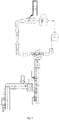
- the preparation process as shown in FIG.1 includes the following procedures: First, liquid raw materials such as polyether or polyester polyol, diphenylmethane diisocyanate and n-butanediol are fed into the double-screw reactor via a liquid raw materials inlet 1; at the same time, solid additives (including antioxidants, light stabilizer, UV absorber, anti-adhesive agent, lubricating agent or other modified solid raw materials) are fed into the double-screw reactor 3 via a solid raw materials inlet 2.
- liquid raw materials such as polyether or polyester polyol, diphenylmethane diisocyanate and n-butanediol are fed into the double-screw reactor via a liquid raw materials inlet 1
- solid additives including antioxidants, light stabilizer, UV absorber, anti-adhesive agent, lubricating agent or other modified solid raw materials
- the rotation speed is in a range of 100 to 1500rpm
- the heating temperature is in a range of 180 to 240°C, so that all raw materials perform a polymerization type chain extension reaction in the double-screw reactor 3, and the linear balancing chain extension process of molecular chains is controlled through regulating the sequence and amount of adding each of the raw materials, reaction temperature, screw rotation speed, etc., thereby accurately regulating the molecular weight of the polymer to generate a linear polyurethane macromolecular polymer with a molecular weight in a range of 100000 to 500000.
- the macromolecular polymer is pushed into the mixing extruder 4 via the tail end of the double-screw reactor 3 to undergo chain breakage, chain extension, diffusion, distribution, etc. of super-high molecular weight, low molecular weight, cross-linking point, etc.; in the mixing extruder 4, the screw rotation speed is controlled to be in a range of 100 to 300 rpm, while the screw cavity heating temperature is controlled to be in a range of 140 to 220°C; at the same time, the mixing extruder 4 is fed with the melt strength regulator at a fixed amount via a melt strength regulator feeding port 22 at the tail end according to the specific melt viscosity and strength so as to regulate the melt strength to meet the material requirements of downstream foaming and expanding procedures.
- the polyurethane hot melt enters the melt pump 5, and the pressure of the melt pump is controlled to be in a range of 5 to 20 bar to stabilize the back pressure of the previous stage of process, and the flow rate and retention time of the melt.
- the polyurethane hot melt is fed into the foaming extruder 9 via a hot melt inlet 7; at the same time, the foaming extruder 9 is fed with solid raw materials including the polymer auxiliaries, the nucleator and the foaming agent via a solid material inlet 6 and the foaming agent via a foaming agent inlet 8, so that all raw materials are well mixed and homogeneously distributed through the mixing and granulation effects of the foaming extruder 9, and then the mixed substance is controlled under a certain pressure and delivered in a fixed amount by a melt booster pump 10.
- the inlet pressure of the melt booster pump 10 is set to be in a range of 50 to 200 bar; the melt pressure in a screw cavity of the extruder 9 is controlled to be stable, and the melt pressure in front of the mold head 11 is indirectly controlled to be in a range of 50 to 220 bar.
- the high-pressure hot melt is steadily pushed into the mold head 11 of the foaming extruder 9, wherein the mold heat 11 is of a porous plate structure with a uniform heating facility to ensure that the hot melt can steadily pass the mold head 11.
- the hot melt delivered by the melt booster pump 10 at a high pressure passes orifices of the mold head 11, and then is granulated into soybean-shaped particles by a granulation cutter which is rotating at a high speed in the underwater granulation chamber 12, wherein the granulation cutter of the underwater granulation chamber 12 actually granulates hot melt under water.
- the process water at a temperature in a range of 10 to 60 °C generates a 4-15 bar pressure by the effect of a process water pump 21, and enters the underwater granulation chamber 12 via a process water inlet pipe 13 of the underwater granulation chamber 12. In this way, the high-pressure hot melt is quickly cooled by the high-pressure process water and is granulated by the granulation cutter.
- the high-pressure hot melt and the high-pressure process water generate a differential pressure which can be regulated according to the inlet pressure of the melt booster pump 10 and the pressure of a variable frequency process water pump 21, so that the initial expansion rate and factor of the polymer particles are under control and keep stable in the whole process. Since the cooling time of the just granulated polymer particles is short and the material crystallization speed varies a lot in different formulas, the disclosure specially adopts a multi-stage pressure-release expansion process water pipeline.
- the pressure is still maintained in a range of 4 to 15 bar in the first-stage process water pipe 14, and in such circumstance, the melt particles are partly cooled and initially expand under a differential pressure.
- the water pressure is lowered to 3-12 bar through increasing the pipeline diameter and shortening the pipeline. In such circumstance, the melt particles are further cooled, and the strength of the outer surfaces increases, but expansion occurs again after the differential pressure increases.
- the water pressure is lowered to 2-6 bar through increasing the pipe diameter, shortening the pipe and lowering the pipe resistance.
- the melt particles are further cooled, and the strength of the outer surfaces increases, but expansion occurs again after the differential pressure increases.
- the expansion rate drops to a very low level because particle crystallization is about be completed.
- the pipe resistance is lowered by regulating the pipe diameter and length to reduce the water pressure to 1-4 bar.
- the melt particles are continuously cooled, and the strength of the outer surfaces is enhanced, but expansion occurs again after the differential pressure increases.
- very high strength of the outer surfaces of the particles and basically completed particle crystallization the outer diameters of the particles are firmly finalized.
- the expanded polymer particles and water jointly enter a centrifugal separator 18.
- the water and the expanded polymer particles are separated in the separator.
- the expanded particles enter a vibrating screen 19 and then a post-treatment system, and the process water flows out of the centrifugal separator and then into a process water tank 20 and the process water pump. The above procedures are repeated so that the process proceeds continuously.
- the formula disclosed above is merely a basic formula of the disclosure.
- those skilled in this field can add other conventional auxiliaries into the formula, for example, antioxidants and anti-aging agents which can improve the anti-aging performance of the product.
- raw materials used include: the polyether type and polyester type thermoplastic polyurethane from Bayer and Huntsman, the modified low-melting-point polyester PET and the PBT from Sinopec Shanghai Petrochemical Company Limited, the modified low-melting-point polyamide from DuPont and Evonik, the modified PVC from Formosa Plastics Corporation, the maleic anhydride - methacrylate from Rohm & Haas, the grafted polyolefin from DOW and DuPont, and the grated SEBS from DOW and DuPont.
- thermoplastic polyurethane elastomer material with micro air holes of the disclosure was prepared according to the following raw material formula and process conditions:
- the used raw materials in percentage by weight included: 55-70% of polyol, wherein the polyol preferably was polytetramethylene ether glycol with a molecular weight of 1000-2000, 20-35% of diphenylmethane diisocyanate, 5-15% of n-butanediol, 0.5-2% of hindered phenolic antioxidant (Ciba Irganox1010), 0.5 - 2% of hindered amine light stabilizer, and 0.05 - 0.5% of mold release agent.
- the polyol preferably was polytetramethylene ether glycol with a molecular weight of 1000-2000, 20-35% of diphenylmethane diisocyanate, 5-15% of n-butanediol, 0.5-2% of hindered phenolic antioxidant (Ciba Irganox10
- a polymerization type chain extension reaction occurred to generate a linear macromolecular polyurethane polymer with a molecular weight in a range of 100000 to 500000.
- the double-screw reactor worked at a heating temperature in a range of 180 to 240°C and a rotation speed in a range of 100 to 1500rpm; and the mixing extruder worked at a rotation speed in a range of 100 to 300rpm, and a heating temperature in a range of 140 to 220°C.
- the polymer auxiliary was polyether type thermoplastic polyurethane with a molecular weight Mw of 50000-100000; the nucleator was calcium carbonate, silicon dioxide or talcum powder; the foaming agent was CO 2 , N 2 or CO 2 + N 2 ; and the melt strength regulator was a polyhydroxy functional group or polyisocyanate functional group polymer, added in an amount which accounted for 0.1-3% mass percentage of the polyurethane hot melt having a high molecular weight generated by the mixing extruder.
- the delivery capacity of the melt pump was controlled to ensure that the weight ratio of the polyurethane hot melt having a high molecular weight that was delivered by the melt pump into the foaming extruder to the polymer auxiliary, the nucleator and the foaming agent was (70-97): (0.1-30): (0.01-0.5): (0.1-10).
- the length-diameter ratio L/D of the foaming extruder was in a range of 40 to 56; the heating temperature was in a range of 160 to 220°C; the process water pressure was in a range of 4 to 15 bar; the process water temperature was in a range of 10 to 60°C, and the pressure of the high-pressure hot melt in front of the mold head was controlled to be in a range of 50 to 220 bar.
- the water pressure was controlled to be about 4-15 bar in the first-stage process water pipe, about 3-12 bar in the second-stage process water pipe, about 2-6 bar in the third-stage process water pipe, and about1-4 bar in the fourth-stage process water pipe.
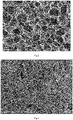
- the prepared product had a coiled, network-like and cross-linking air channel structure inside formed by micro air holes and open bubble holes, and some air channels even extended to the particle surfaces of the product.
- thermoplastic polyurethane elastomer material with micro air holes of the disclosure was prepared according to the following raw material formula and process conditions:
- the following raw materials in percentage by weight were used: 55% of polyol, wherein the polyol preferably was polytetramethylene ether glycol with a molecular weight of about 1000, 35% of diphenylmethane diisocyanate, 5.5% of n-butanediol, 2% of hindered phenolic antioxidant (Ciba Irganox1010), 2% of hindered amine light stabilizer, and 0.5% of mold release agent.
- the polyol preferably was polytetramethylene ether glycol with a molecular weight of about 1000, 35% of diphenylmethane diisocyanate, 5.5% of n-butanediol, 2% of hindered phenolic antioxidant (Ciba Irganox1010), 2% of hindered amine light stabilizer, and 0.5% of
- a polymerization type chain extension reaction occurred to generate a linear macromolecular polyurethane polymer with a molecular weight of about 300000.
- the double-screw reactor worked at a heating temperature of 180°C and a rotation speed of 800rpm; and the mixing extruder worked at a rotation speed of 100rpm, and a heating temperature of 140°C.
- the polymer auxiliary was polyether type thermoplastic polyurethane with a molecular weight Mw of about 80000; the nucleator was calcium carbonate; the foaming agent was CO 2 ; and the melt strength regulator was a polyhydroxy functional group polymer.
- the delivery capacity of the melt pump was controlled to ensure that the weight ratio of the polyurethane hot melt having a high molecular weight that was delivered by the melt pump into the foaming extruder to the polymer auxiliary, the nucleator, the foaming agent and the melt strength regulator was 70: 0.1: 0.01: 0.1: 0.1.
- the length-diameter ratio L/D of the foaming extruder was 40; the heating temperature was 160°C; the process water pressure was 4 bar; the process water temperature was 10°C, and the pressure of the high-pressure hot melt in front of the mold head was controlled to be 50 bar.
- the water pressure was controlled to be about 4 bar in the first-stage process water pipe, about 3 bar in the second-stage process water pipe, about 2 bar in the third-stage process water pipe, and about 1 bar in the fourth-stage process water pipe.
- thermoplastic polyurethane elastomer material with micro air holes of the disclosure was prepared according to the following raw material formula and process conditions:
- the following raw materials in percentage by weight were used: 70% of polyol, wherein the polyol preferably was polytetramethylene ether glycol with a molecular weight of 2000, 20% of diphenylmethane diisocyanate, 6% of n-butanediol, 1.96% of hindered phenolic antioxidant (Ciba Irganox1010), 1.99% of hindered amine light stabilizer, and 0.05% of mold release agent.
- a polymerization type chain extension reaction occurred to generate a linear macromolecular polyurethane polymer with a molecular weight of about 100000.
- the double-screw reactor worked at a heating temperature of 240°C and a rotation speed of 1500rpm; and the mixing extruder worked at a rotation speed of 300rpm, and a heating temperature of 220°C.
- the polymer auxiliary was polyether type thermoplastic polyurethane with a molecular weight Mw of about 50000; the nucleator was talcum powder; the foaming agent was N 2 ; and the melt strength regulator was a polyisocyanate functional group polymer.
- the delivery capacity of the melt pump was controlled to ensure that the weight ratio of the polyurethane hot melt having a high molecular weight that was delivered by the melt pump into the foaming extruder to the polymer auxiliary, the nucleator, the foaming agent and the melt strength regulator was 97: 30: 0.5: 10: 5.
- the length-diameter ratio L/D of the foaming extruder was 56; the heating temperature was 220°C; the process water pressure was 15 bar; the process water temperature was 60°C, and the pressure of the high-pressure hot melt in front of the mold head was controlled to be 220 bar.
- the water pressure was controlled to be about 15 bar in the first-stage process water pipe, about 12 bar in the second-stage process water pipe, about 6 bar in the third-stage process water pipe, and about 4 bar in the fourth-stage process water pipe.
- thermoplastic polyurethane elastomer material with micro air holes of the disclosure was prepared according to the following raw material formula and process conditions:
- the following raw materials in percentage by weight were used: 45% of polyol, wherein the polyol preferably was polytetramethylene ether glycol with a molecular weight in a range of 1000-2000, 38% of diphenylmethane diisocyanate, 15% of n-butanediol, 1% of hindered phenolic antioxidant (Ciba Irganox1010), 0.8% of hindered amine light stabilizer, and 0.2% of mold release agent.
- the polyol preferably was polytetramethylene ether glycol with a molecular weight in a range of 1000-2000, 38% of diphenylmethane diisocyanate, 15% of n-butanediol, 1% of hindered phenolic antioxidant (Ciba Irganox1010), 0.8% of hindered amine
- a polymerization type chain extension reaction occurred to generate a linear macromolecular polyurethane polymer with a molecular weight in a range of 200000 to 500000.
- the double-screw reactor worked at a heating temperature of 200°C and a rotation speed of 500rpm; and the mixing extruder worked at a rotation speed of 200rpm, and a heating temperature of 180°C.
- the polymer auxiliary was polyether type thermoplastic polyurethane with a molecular weight Mw in a range of 50000 to100000; the nucleator was carbon black; the foaming agent was CO 2 +N 2 ; and the melt strength regulator was a polyhydroxy functional group or polyisocyanate functional group polymer.
- the delivery capacity of the melt pump was controlled to ensure that the weight ratio of the polyurethane hot melt having a high molecular weight that was delivered by the melt pump into the foaming extruder to the polymer auxiliary, the nucleator, the foaming agent and the melt strength regulator was 85: 10: 0.2: 5: 2.
- the length-diameter ratio L/D of the foaming extruder was 50; the heating temperature was 180°C; the process water pressure was 10 bar; the process water temperature was 30°C, and the pressure of the high-pressure hot melt in front of the mold head was controlled to be 120 bar.
- the water pressure was controlled to be about 10 bar in the first-stage process water pipe, about 7 bar in the second-stage process water pipe, about 4 bar in the third-stage process water pipe, and about 2 bar in the fourth-stage process water pipe.
- thermoplastic polyurethane elastomer material with micro air holes of the disclosure was prepared according to the following raw material formula and process conditions:
- the following raw materials in percentage by weight were used: 65% of polyol, wherein the polyol preferably was polytetramethylene ether glycol with a molecular weight in a range of 1000-2000, 20% of diphenylmethane diisocyanate, 12% of n-butanediol, 1.5% of hindered phenolic antioxidant (Ciba Irganox1010), 1.2% of hindered amine light stabilizer, and 0.3% of mold release agent.
- the polyol preferably was polytetramethylene ether glycol with a molecular weight in a range of 1000-2000, 20% of diphenylmethane diisocyanate, 12% of n-butanediol, 1.5% of hindered phenolic antioxidant (Ciba Irganox1010), 1.2% of hindered amine
- a polymerization type chain extension reaction occurred to generate a linear macromolecular polyurethane polymer with a molecular weight in a range of 100000 to 500000.
- the double-screw reactor worked at a heating temperature of 220°C and a rotation speed of 800rpm; and the mixing extruder worked at a rotation speed of 150rpm, and a heating temperature of 160°C.
- the polymer auxiliary was polyether type thermoplastic polyurethane with a molecular weight Mw in a range of 50000 to100000; the nucleator was tetrafluoroethylene powder; the foaming agent was CO 2 +N 2 ; and the melt strength regulator was a polyhydroxy functional group or polyisocyanate functional group polymer.
- the delivery capacity of the melt pump was controlled to ensure that the weight ratio of the polyurethane hot melt having a high molecular weight that was delivered by the melt pump into the foaming extruder to the polymer auxiliary, the nucleator, the foaming agent and the melt strength regulator was 75: 15: 0.1: 5: 3.
- the length-diameter ratio L/D of the foaming extruder was 44; the heating temperature was 180°C; the process water pressure was 8 bar; the process water temperature was 25°C, and the pressure of the high-pressure hot melt in front of the mold head was controlled to be 100 bar.
- the water pressure was controlled to be about 8 bar in the first-stage process water pipe, about 6 bar in the second-stage process water pipe, about 4 bar in the third-stage process water pipe, and about 1 bar in the fourth-stage process water pipe.
- thermoplastic polyurethane elastomer material with micro air holes of the disclosure was prepared according to the following raw material formula and process conditions:
- the following raw materials in percentage by weight were used: 55% of polyol, wherein the polyol preferably was polytetramethylene ether glycol with a molecular weight in a range of 1000-2000, 35% of diphenylmethane diisocyanate, 8% of n-butanediol, 1% of hindered phenolic antioxidant (Ciba Irganox1010), 0.6% of hindered amine light stabilizer, and 0.4% of mold release agent.
- the polyol preferably was polytetramethylene ether glycol with a molecular weight in a range of 1000-2000, 35% of diphenylmethane diisocyanate, 8% of n-butanediol, 1% of hindered phenolic antioxidant (Ciba Irganox1010), 0.6% of hindered
- a polymerization type chain extension reaction occurred to generate a linear macromolecular polyurethane polymer with a molecular weight in a range of 100000 to 500000.
- the double-screw reactor worked at a heating temperature of 210°C and a rotation speed of 600rpm; and the mixing extruder worked at a rotation speed of 150rpm, and a heating temperature of 180°C.
- the polymer auxiliary was polyether type thermoplastic polyurethane with a molecular weight Mw in a range of 50000 to100000; the nucleator was a mixture of silicon dioxide and carbon nano-tube in a ratio of 1:1; the foaming agent was CO 2 +N 2 ; and the melt strength regulator was a polyhydroxy functional group polymer.
- the delivery capacity of the melt pump was controlled to ensure that the weight ratio of the polyurethane hot melt having a high molecular weight that was delivered by the melt pump into the foaming extruder to the polymer auxiliary, the nucleator, the foaming agent and the melt strength regulator was 80: 20: 0.3: 4: 1.
- the length-diameter ratio L/D of the foaming extruder was 44; the heating temperature was 200°C; the process water pressure was 12 bar; the process water temperature was 45°C, and the pressure of the high-pressure hot melt in front of the mold head was controlled to be 150 bar.
- the water pressure was controlled to be about 12 bar in the first-stage process water pipe, about 10 bar in the second-stage process water pipe, about 6 bar in the third-stage process water pipe, and about 2 bar in the fourth-stage process water pipe.
- Embodiment 7-12 Respectively compared with Embodiment 7-12, all were identical, except a small amount of anti-hydrolysis stabilizer added in the solid additives.
- Embodiment 1-6 Respectively compared with Embodiment 1-6, all were identical, except the low-melting-point polyamide (which may be any one or a combination of several ones of PA6I, PA11 and PA12), which replaced the polyether type thermoplastic polyurethane with a molecular weight Mw in a range of 50000 to 100000 among the used polymer auxiliaries.
- the low-melting-point polyamide which may be any one or a combination of several ones of PA6I, PA11 and PA12
- Mw molecular weight
- Embodiment 1-6 Respectively compared with Embodiment 1-6, all were identical, except the modified polyamide, which replaced the polyether type thermoplastic polyurethane with a molecular weight Mw in a range of 50000 to 100000 among the used polymer auxiliaries.
- Embodiment 1-6 Respectively compared with Embodiment 1-6, all were identical, except the modified PVC, which replaced the polyether type thermoplastic polyurethane with a molecular weight Mw in a range of 50000 to 100000 among the used polymer auxiliaries.
- Embodiment 1-6 Respectively compared with Embodiment 1-6, all were identical, except the maleic anhydride - methacrylate, which replaced the polyether type thermoplastic polyurethane with a molecular weight Mw in a range of 50000 to 100000 among the used polymer auxiliaries.
- Embodiment 1-6 Respectively compared with Embodiment 1-6, all were identical, except the mixture of the grafted polyolefin and grafted SEBS in a mass ratio of 1:1, which replaced the polyether type thermoplastic polyurethane with a molecular weight Mw in a range of 50000 to100000 among the used polymer auxiliaries.
- Embodiment 1-6 Respectively compared with Embodiment 1-6, all were identical, except the grafted SEBS, which replaced the polyether type thermoplastic polyurethane with a molecular weight Mw in a range of 50000 to100000 among the used polymer auxiliaries.
- Embodiment 1-6 Respectively compared with Embodiment 1-6, all were identical, except the n-butane, which replaced the foaming agent.
- Embodiment 1-6 Respectively compared with Embodiment 1-6, all were identical, except the n-pentane, which replaced the foaming agent.
- Embodiment 1-6 Respectively compared with Embodiment 1-6, all were identical, except the isopentane, which the foaming agent.
Landscapes
- Chemical & Material Sciences (AREA)
- Organic Chemistry (AREA)
- Chemical Kinetics & Catalysis (AREA)
- Engineering & Computer Science (AREA)
- Health & Medical Sciences (AREA)
- Medicinal Chemistry (AREA)
- Polymers & Plastics (AREA)
- Mechanical Engineering (AREA)
- Materials Engineering (AREA)
- Manufacturing & Machinery (AREA)
- Inorganic Chemistry (AREA)
- Manufacture Of Porous Articles, And Recovery And Treatment Of Waste Products (AREA)
- Compositions Of Macromolecular Compounds (AREA)
- Processing And Handling Of Plastics And Other Materials For Molding In General (AREA)
Claims (10)
- Verfahren zur Herstellung eines thermoplastischen Polyurethanelastomermaterials mit Mikroluftlöchern, dadurch gekennzeichnet, dass es die folgenden Schritte umfasst:(1) Einspeisen von flüssigen Rohmaterialien, einschließlich Diisocyanatmolekülen und Polyol, und festen Additiven in einen Doppelschneckenreaktor (3), um eine Kettenverlängerungsreaktion vom Polymerisationstyp auszulösen, um eine Heißschmelze mit einem hohen Molekulargewicht zu erhalten;(2) Schieben der in Schritt (1) erhaltenen Heißschmelze mit hohem Molekulargewicht in einen Mischextruder (4) über den Ausgang des Doppelschneckenreaktors und Fortsetzenlassen der Reaktion, um ein makromolekulares thermoplastisches Polyurethanelastomer mit einer Molekulargewichtsverteilung in einem engen Bereich zu erzeugen;(3) kontinuierliches Einspeisen des erhaltenen makromolekularen thermoplastischen Polyurethanelastomers in einen Schäumextruder (9) und gleichzeitiges Zugeben von Keimbildner und eines Schäumungsmittels in den Schäumextruder, gutes Mischen und Homogenisieren aller Materialien, um eine Mischung zu erhalten, Abgeben der Mischung in einen Formkopf (11) durch eine Schmelzverstärkerpumpe unter einem geregelten Druck und bei einer festen Menge, und Extrudieren einer Hochdruck-Heißschmelze aus dem Formkopf in eine Unterwasser-Granulationskammer (12);(4) Granulieren der in Schritt (3) erhaltenen Hochdruck-Heißschmelze in der Unterwasser-Granulationskammer, Abgeben von granulierten Teilchen in einen Separator durch Prozesswasser über eine mehrstufige Druckentlastungsexpansions-Prozesswasserleitung, Trennen der erzeugten expandierten Teilchen von dem Prozesswasser am Separator, Sieben und Trocknen der expandierten Teilchen, um das Zielprodukt zu erhalten.
- Verfahren zur Herstellung eines thermoplastischen Polyurethanelastomermaterials mit Mikroluftlöchern nach Anspruch 1, wobei in Schritt (1) die synthetisierte Heißschmelze mit hohem Molekulargewicht die folgenden Rohmaterialien in Gewichtsprozent umfasst: 20-45 % Diisocyanatmoleküle, 45-70 % Polyol, 5-15 % n-Butandiol und die zugeteilte Menge von festen Additiven.
- Verfahren zur Herstellung eines thermoplastischen Polyurethanelastomermaterials mit Mikroluftlöchern nach Anspruch 2, wobei die Diisocyanatmoleküle Diphenylmethandiisocyanat, Trimethylendiisocyanat, Tetramethylendiisocyanat, Pentamethylendiisocyanat, Hexamethylendiisocyanat, Heptamethylendiisocyanat, Octamethylendiisocyanat, 2-Methyl-1,5-Pentamethylendiisocyanat, 2-Ethyl-1,4-butandiyldiisocyanat, 1,5-Pentamethylendiisocyanat, 1,4-Butandiyldiisocyanat, 1-Isocyanat-3,3,5-trimethyl-5-methylisocyanatcyclohexan, 1,4-Bis(methylisocyanat)cyclohexan, 1,3-Bis(methylisocyanat)cyclohexan, 1,4-Cyclohexandiisocyanat, 1-Methyl-2,4-cyclohexandiisocyanat, 1-Methyl-2,6-Cyclohexandiisocyanat, 2,2'-Dicyclohexylmethandiisocyanat, 2,4'-Dicyclohexylmethandiisocyanat, 4,4'-Dicyclohexylmethandiisocyanat, 2,2'-Diphenylmethandiisocyanat, 2,4'-Diphenylmethandiisocyanat, 4,4 '-Diphenylmethandiisocyanat, 1,5-Naphthylendiisocyanat, 2,4-Methylenphenyldiisocyanat, 2,6-Methylenphenyldiisocyanat, Diphenylmethandiisocyanat, 3,3'-Dimethylbiphenyldiisocyanat, 1,2-Diphenylethandiisocyanat oder Phenylendiisocyanat sind;das Polyol Polyetherglykol oder Polyesterglykol ist, wobei das Polyetherglykol Polytetramethylenetherglykol mit einem Molekulargewicht im Bereich von 1000 bis 2000 ist und Polyesterglykol makromolekulares Glykol mit einem Molekulargewicht im Bereich von 1000 bis 3000 ist, das durch Polymerisation von Adipinsäure und n-Butandiol oder durch Polymerisation von Adipinsäure, n-Butandiol und Propandiol erzeugt wird;die festen Zusatzstoffe die folgenden Bestandteile in Gewichtsprozent umfassen: 0,5-2 % gehinderte Phenol-Antioxidantien, 0,5-2 % gehinderter Amin-Lichtstabilisator und 0,05-0,5 % Formtrennmittel oder Gleitmittel.
- Verfahren zur Herstellung eines thermoplastischen Polyurethanelastomermaterials mit Mikroluftlöchern nach Anspruch 1, wobei die Prozessbedingungen der Kettenverlängerungsreaktion vom Polymerisationstyp in Schritt (1) eine Erwärmungstemperatur in einem Bereich von 180 bis 240 °C und eine Schneckendrehzahl in einem Bereich von 100 bis 1500 U/min einschließen;
und die Prozessbedingungen des Mischextruders in Schritt (2) eine Schneckendrehzahl im Bereich von 100 bis 300 U/min und eine Erwärmungstemperatur im Bereich von 140 bis 220 °C einschließen. - Verfahren zur Herstellung eines thermoplastischen Polyurethanelastomermaterials mit Mikroluftlöchern nach Anspruch 1, wobei der Mischextruder auch mit einem Reglereingang zum Einspeisen eines Schmelzfestigkeitsreglers am hinteren Ende versehen ist; und der Schmelzfestigkeitsregler ein Polymer mit polyhydroxy-funktioneller Gruppe oder polyisocyanat-funktioneller Gruppe ist, das in einer Menge zugegeben wird, die 0,1-3 Massen-% der makromolekularen thermoplastischen Polyurethanschmelze ausmacht, die durch den Mischextruder erhalten wird.
- Verfahren zur Herstellung eines thermoplastischen Polyurethanelastomermaterials mit Mikroluftlöchern nach Anspruch 5, wobei das Gewichtsverhältnis der zugegebenen makromolekularen thermoplastischen Polyurethanschmelze zu dem Keimbildner und dem Schäumungsmittel (70-97): (0,01-0,5): (0,1-10) beträgt.
- Verfahren zur Herstellung eines thermoplastischen Polyurethanelastomermaterials mit Mikroluftlöchern nach Anspruch 1, wobei der Schäumextruder auch mit den Polymerhilfsstoffen über ein vorderes Ende zugegeben wird, und das Massenverhältnis der zugegebenen Polymerhilfsstoffe zu der makromolekularen thermoplastischen Polyurethanschmelze (0,1-30): (70-97) beträgt;die Polymerhilfsstoffe ausgewählt sind aus einem von oder einer Mischung von mehreren von Polyurethanelastomer mit einem Molekulargewicht von 30.000-100.000, Polyamid mit niedrigem Schmelzpunkt, modifiziertem Polyester, modifiziertem PVC, Maleinsäureanhydrid - Methacrylat und gepfropftem Polyolefin;der Keimbildner ausgewählt ist aus mindestens einem von Kohlenstoffnanoröhrchen, Siliciumdioxid, Talkumpulver, modifiziertem Calciumcarbonat, Ruß und Tetrafluorethylenpulver;und das Schäumungsmittel ausgewählt ist aus mindestens einem von CO2, N2, Normalbutan, n-Pentan und Isopentan.
- Verfahren zur Herstellung eines thermoplastischen Polyurethanelastomermaterials mit Mikroluftlöchern nach Anspruch 1, wobei die Prozessbedingungen des Schäumextruders in Schritt (3) eine Temperatur in einem Bereich von 160 bis 300 °C und eine Schneckendrehzahl in einem Bereich von 50 bis 900 U/min einschließen;
und die Hochdruck-Heißschmelze hinter der Schmelzverstärkerpumpe und vor dem Formkopf unter einem Druck in einem Bereich von 50-220 bar steht. - Verfahren zur Herstellung eines thermoplastischen Polyurethanelastomermaterials mit Mikroluftlöchern nach Anspruch 1, wobei das Prozesswasser in der Unterwasser-Granulationskammer in Schritt (4) eine Temperatur im Bereich von 10 bis 60 °C und einen Druck im Bereich von 4 bis 15 bar aufweist.
- Verfahren zum Herstellen eines thermoplastischen Polyurethanelastomermaterials mit Mikroluftlöchern nach Anspruch 1, wobei in Schritt (4) die mehrstufige Druckentlastungsexpansions-Prozesswasserleitung eine vierstufige Prozesswasserleitung ist, wobei der Wasserdruck 4-15 bar in einer Prozesswasserleitung der ersten Stufe, 3-12 bar in einer Prozesswasserleitung der zweiten Stufe, 2-6 bar in einer Prozesswasserleitung der dritten Stufe und 1-4 bar in einer Prozesswasserleitung der vierten Stufe ist.
Applications Claiming Priority (2)
| Application Number | Priority Date | Filing Date | Title |
|---|---|---|---|
| CN201710660163.6A CN107383854B (zh) | 2017-08-04 | 2017-08-04 | 一种热塑性聚氨酯微气囊弹性体材料的制备方法 |
| PCT/CN2018/088921 WO2019024589A1 (zh) | 2017-08-04 | 2018-05-30 | 一种热塑性聚氨酯微气囊弹性体材料的制备方法 |
Publications (3)
| Publication Number | Publication Date |
|---|---|
| EP3663359A1 EP3663359A1 (de) | 2020-06-10 |
| EP3663359A4 EP3663359A4 (de) | 2020-08-26 |
| EP3663359B1 true EP3663359B1 (de) | 2022-05-04 |
Family
ID=60344672
Family Applications (1)
| Application Number | Title | Priority Date | Filing Date |
|---|---|---|---|
| EP18841810.7A Not-in-force EP3663359B1 (de) | 2017-08-04 | 2018-05-30 | Verfahren zur herstellung eines thermoplastischen polyurethan-mikroairbag-elastomerstoffes |
Country Status (4)
| Country | Link |
|---|---|
| US (1) | US11472084B2 (de) |
| EP (1) | EP3663359B1 (de) |
| CN (1) | CN107383854B (de) |
| WO (1) | WO2019024589A1 (de) |
Families Citing this family (19)
| Publication number | Priority date | Publication date | Assignee | Title |
|---|---|---|---|---|
| CN107383854B (zh) | 2017-08-04 | 2018-04-13 | 南通德亿新材料有限公司 | 一种热塑性聚氨酯微气囊弹性体材料的制备方法 |
| CN111051415B (zh) | 2017-09-11 | 2022-05-06 | 积水化成品工业株式会社 | 热塑性弹性体组合物、发泡颗粒、和发泡成形体 |
| CN110591244A (zh) * | 2018-06-13 | 2019-12-20 | 淮安市冰青建设工程管理有限公司 | 一种环保型pvc泡沫塑料材料的制备方法 |
| CN110591245A (zh) * | 2018-06-13 | 2019-12-20 | 淮安市冰青建设工程管理有限公司 | 一种环保型pvc泡沫塑料材料 |
| CN108864662B (zh) * | 2018-07-25 | 2020-10-13 | 南通德亿新材料有限公司 | 一种热塑性聚醚酯弹性体发泡材料及其制备方法 |
| CN109517364A (zh) * | 2018-11-26 | 2019-03-26 | 福建省晋江泉发骑士鞋业有限公司 | 一种彩色etpu鞋底及其制备方法 |
| CN109504068A (zh) * | 2018-12-18 | 2019-03-22 | 北京化工大学 | 一种热塑性聚氨酯共混发泡材料及其制备方法 |
| CN109852321B (zh) * | 2018-12-24 | 2021-10-15 | 山东一诺威聚氨酯股份有限公司 | 溶剂型聚氨酯热熔胶材料及其制备方法和使用方法 |
| CN111892168B (zh) * | 2020-07-06 | 2022-04-22 | 南京中科水治理股份有限公司 | 一种高吸附力微生物附着材料的制备方法及其应用 |
| CN112029062A (zh) * | 2020-09-03 | 2020-12-04 | 周开 | 一种热塑性聚氨酯弹性体的制备方法 |
| CN115505161B (zh) * | 2021-06-23 | 2024-01-19 | 华润化学材料科技股份有限公司 | 尼龙模压发泡材料及其制备方法 |
| CN113861611A (zh) * | 2021-09-03 | 2021-12-31 | 广东立恩实业有限公司 | 一种tpe发泡材料、制备方法及枕芯 |
| CN113956433A (zh) * | 2021-11-18 | 2022-01-21 | 广东舜天新材料有限公司 | 可降解的复合发泡塑料及其制备方法 |
| CN114395161B (zh) * | 2022-01-24 | 2023-04-14 | 美瑞新材料股份有限公司 | 一种可发泡热塑性聚氨酯弹性体及其制备方法和应用 |
| CN114605808A (zh) * | 2022-03-10 | 2022-06-10 | 上海升广科技有限公司 | 以热塑性聚氨酯弹性体为基础的塑料及其制备方法 |
| CN116875033B (zh) * | 2023-06-25 | 2025-08-08 | 美瑞新材料创新中心(山东)有限公司 | 可用于制备化妆棉的热塑性聚氨酯发泡材料及其制备和应用 |
| CN118852575A (zh) * | 2024-06-27 | 2024-10-29 | 山东精工密封技术有限公司 | 一种抗高压聚氨酯密封圈的制备方法 |
| CN119019834B (zh) * | 2024-07-08 | 2025-07-04 | 湖北楚天药业有限责任公司 | 一种抗菌改性热塑性聚氨酯弹性体的制备方法 |
| CN119060530B (zh) * | 2024-11-05 | 2025-01-28 | 淮北师范大学 | 一种复合型陶瓷化材料的制备工艺 |
Family Cites Families (10)
| Publication number | Priority date | Publication date | Assignee | Title |
|---|---|---|---|---|
| DE19860205A1 (de) * | 1998-12-24 | 2000-06-29 | Basf Ag | Verbundelemente enthaltend (i) thermoplastische Polyurethane und (ii) mikrozellige Polyurethanelastomere |
| US20100222442A1 (en) * | 2006-01-18 | 2010-09-02 | Basf Se | Foams based on thermoplastic polyurethanes |
| BRPI0821893A2 (pt) | 2008-01-24 | 2015-06-16 | Evonik Goldschmidt Gmbh | Método para a fabricação de materiais espumosos isolantes a base de poliuretano |
| EP2452968A1 (de) | 2010-11-11 | 2012-05-16 | Basf Se | Verfahren zur Herstellung von expandierbaren thermoplastischen Partikeln mit Verbesserter Expandierbarkeit |
| PL3578597T3 (pl) | 2012-04-13 | 2021-09-13 | Basf Se | Sposób wytwarzania ekspandowanego granulatu |
| TWI667285B (zh) * | 2013-10-18 | 2019-08-01 | 德商巴斯夫歐洲公司 | 膨脹熱塑性彈性體之製造 |
| CN106084744A (zh) * | 2016-06-08 | 2016-11-09 | 东莞市吉鑫高分子科技有限公司 | 一种高透防水透湿热塑性聚氨酯弹性体及其制备方法 |
| CN106366286A (zh) * | 2016-09-30 | 2017-02-01 | 无锡市长安曙光手套厂 | 一种高透防水透湿热塑性聚氨酯弹性体及其制备方法 |
| CN106832887A (zh) * | 2017-02-21 | 2017-06-13 | 东莞市雄林新材料科技股份有限公司 | 一种多次发泡tpu复合材料及其制备方法 |
| CN107383854B (zh) | 2017-08-04 | 2018-04-13 | 南通德亿新材料有限公司 | 一种热塑性聚氨酯微气囊弹性体材料的制备方法 |
-
2017
- 2017-08-04 CN CN201710660163.6A patent/CN107383854B/zh active Active
-
2018
- 2018-05-30 US US16/636,341 patent/US11472084B2/en active Active
- 2018-05-30 WO PCT/CN2018/088921 patent/WO2019024589A1/zh not_active Ceased
- 2018-05-30 EP EP18841810.7A patent/EP3663359B1/de not_active Not-in-force
Also Published As
| Publication number | Publication date |
|---|---|
| US20200164560A1 (en) | 2020-05-28 |
| CN107383854B (zh) | 2018-04-13 |
| EP3663359A4 (de) | 2020-08-26 |
| US11472084B2 (en) | 2022-10-18 |
| WO2019024589A1 (zh) | 2019-02-07 |
| EP3663359A1 (de) | 2020-06-10 |
| CN107383854A (zh) | 2017-11-24 |
Similar Documents
| Publication | Publication Date | Title |
|---|---|---|
| US11472084B2 (en) | Preparation method for thermoplastic polyurethane micro air bag elastomer material | |
| EP3663358B1 (de) | Thermoplastisches polymerelastomermaterial mit mikroluftlöcher und vorbereitung davon | |
| CN108003584B (zh) | 一种可降解pla发泡材料及其制备方法 | |
| CN104364304B (zh) | 膨化颗粒的制备 | |
| TWI667285B (zh) | 膨脹熱塑性彈性體之製造 | |
| US12595348B2 (en) | High-strength eTPU | |
| CN108264736B (zh) | 一种可降解pbat类发泡材料及其制备方法 | |
| US8287788B2 (en) | Method for the continuous production of thermoplastically-processable polyurethane elastomers | |
| CN103319742A (zh) | 泡沫聚偏二氟乙烯结构 | |
| CN107922662A (zh) | 聚乳酸发泡成形材料、其发泡成形品和制造方法 | |
| CN104877335A (zh) | 一种热塑性聚氨酯弹性体发泡珠粒及其制备方法 | |
| CN104487514A (zh) | 热塑性聚氨酯组合物 | |
| CN107949592A (zh) | 分散相中的共聚物多元醇与功能性添加剂 | |
| CN103881222B (zh) | 塑料发泡材料及其制备方法 | |
| CN109705302B (zh) | 一种生产高回弹高亮泡珠用热塑性聚氨酯及其制备方法 | |
| CN108047683B (zh) | 可降解脂肪族聚碳酸酯/聚氨酯共聚发泡材料及其制备 | |
| CA3096990A1 (en) | Foams based on thermoplastic elastomers | |
| WO2005054322A2 (de) | Verfahren zur umsetzung von (i) thermoplastischen polyurethanen mit (ii) isocyanatgruppen aufweisenden verbindungen | |
| CN108192311A (zh) | 一种可降解脂肪族聚碳酸酯发泡材料及其制备方法 | |
| CA3124205A1 (en) | Particle foams consisting of an aromatic polyester-polyurethane multi-block copolymer | |
| WO2022043428A1 (de) | Geschäumtes granulat aus thermoplastischem polyurethan | |
| Grigor'eva et al. | Plasticization of polyvinyl chloride with reclaimed polyvinyl chloride-polyurethane mixture | |
| JP2007230124A (ja) | 発泡成形体の製造方法及び発泡成形体 | |
| HK1225053B (zh) | 膨胀热塑性弹性体的制备方法 | |
| HK1225053A1 (en) | Process for production of expanded thermoplastic elastomer |
Legal Events
| Date | Code | Title | Description |
|---|---|---|---|
| STAA | Information on the status of an ep patent application or granted ep patent |
Free format text: STATUS: THE INTERNATIONAL PUBLICATION HAS BEEN MADE |
|
| PUAI | Public reference made under article 153(3) epc to a published international application that has entered the european phase |
Free format text: ORIGINAL CODE: 0009012 |
|
| STAA | Information on the status of an ep patent application or granted ep patent |
Free format text: STATUS: REQUEST FOR EXAMINATION WAS MADE |
|
| 17P | Request for examination filed |
Effective date: 20200304 |
|
| AK | Designated contracting states |
Kind code of ref document: A1 Designated state(s): AL AT BE BG CH CY CZ DE DK EE ES FI FR GB GR HR HU IE IS IT LI LT LU LV MC MK MT NL NO PL PT RO RS SE SI SK SM TR |
|
| AX | Request for extension of the european patent |
Extension state: BA ME |
|
| A4 | Supplementary search report drawn up and despatched |
Effective date: 20200723 |
|
| RIC1 | Information provided on ipc code assigned before grant |
Ipc: C08L 75/08 20060101AFI20200731BHEP Ipc: C08L 77/00 20060101ALI20200731BHEP Ipc: C08L 75/06 20060101ALI20200731BHEP |
|
| DAV | Request for validation of the european patent (deleted) | ||
| DAX | Request for extension of the european patent (deleted) | ||
| STAA | Information on the status of an ep patent application or granted ep patent |
Free format text: STATUS: EXAMINATION IS IN PROGRESS |
|
| 17Q | First examination report despatched |
Effective date: 20210422 |
|
| GRAP | Despatch of communication of intention to grant a patent |
Free format text: ORIGINAL CODE: EPIDOSNIGR1 |
|
| STAA | Information on the status of an ep patent application or granted ep patent |
Free format text: STATUS: GRANT OF PATENT IS INTENDED |
|
| RIC1 | Information provided on ipc code assigned before grant |
Ipc: B29C 48/92 20190101ALN20211105BHEP Ipc: B29C 48/365 20190101ALN20211105BHEP Ipc: B29C 48/345 20190101ALN20211105BHEP Ipc: B29C 48/00 20190101ALN20211105BHEP Ipc: B01J 19/00 20060101ALN20211105BHEP Ipc: C08G 101/00 20060101ALN20211105BHEP Ipc: C08G 18/48 20060101ALI20211105BHEP Ipc: C08G 18/76 20060101ALI20211105BHEP Ipc: C08J 9/00 20060101ALI20211105BHEP Ipc: B29C 44/50 20060101ALI20211105BHEP Ipc: C08K 5/00 20060101ALI20211105BHEP Ipc: C08G 18/66 20060101ALI20211105BHEP Ipc: C08G 18/42 20060101ALI20211105BHEP Ipc: C08G 18/32 20060101ALI20211105BHEP Ipc: C08K 5/02 20060101ALI20211105BHEP Ipc: C08K 3/04 20060101ALI20211105BHEP Ipc: C08K 3/34 20060101ALI20211105BHEP Ipc: C08K 3/36 20060101ALI20211105BHEP Ipc: C08K 3/26 20060101ALI20211105BHEP Ipc: C08K 7/24 20060101ALI20211105BHEP Ipc: C08L 51/00 20060101ALI20211105BHEP Ipc: C08L 27/06 20060101ALI20211105BHEP Ipc: C08L 67/00 20060101ALI20211105BHEP Ipc: C08L 77/00 20060101ALI20211105BHEP Ipc: C08L 75/06 20060101ALI20211105BHEP Ipc: C08L 75/08 20060101AFI20211105BHEP |
|
| INTG | Intention to grant announced |
Effective date: 20211215 |
|
| GRAS | Grant fee paid |
Free format text: ORIGINAL CODE: EPIDOSNIGR3 |
|
| GRAA | (expected) grant |
Free format text: ORIGINAL CODE: 0009210 |
|
| STAA | Information on the status of an ep patent application or granted ep patent |
Free format text: STATUS: THE PATENT HAS BEEN GRANTED |
|
| AK | Designated contracting states |
Kind code of ref document: B1 Designated state(s): AL AT BE BG CH CY CZ DE DK EE ES FI FR GB GR HR HU IE IS IT LI LT LU LV MC MK MT NL NO PL PT RO RS SE SI SK SM TR |
|
| REG | Reference to a national code |
Ref country code: GB Ref legal event code: FG4D |
|
| REG | Reference to a national code |
Ref country code: CH Ref legal event code: EP |
|
| REG | Reference to a national code |
Ref country code: AT Ref legal event code: REF Ref document number: 1489025 Country of ref document: AT Kind code of ref document: T Effective date: 20220515 |
|
| REG | Reference to a national code |
Ref country code: IE Ref legal event code: FG4D Ref country code: DE Ref legal event code: R096 Ref document number: 602018035148 Country of ref document: DE |
|
| REG | Reference to a national code |
Ref country code: LT Ref legal event code: MG9D |
|
| REG | Reference to a national code |
Ref country code: NL Ref legal event code: MP Effective date: 20220504 |
|
| REG | Reference to a national code |
Ref country code: AT Ref legal event code: MK05 Ref document number: 1489025 Country of ref document: AT Kind code of ref document: T Effective date: 20220504 |
|
| PG25 | Lapsed in a contracting state [announced via postgrant information from national office to epo] |
Ref country code: SE Free format text: LAPSE BECAUSE OF FAILURE TO SUBMIT A TRANSLATION OF THE DESCRIPTION OR TO PAY THE FEE WITHIN THE PRESCRIBED TIME-LIMIT Effective date: 20220504 Ref country code: PT Free format text: LAPSE BECAUSE OF FAILURE TO SUBMIT A TRANSLATION OF THE DESCRIPTION OR TO PAY THE FEE WITHIN THE PRESCRIBED TIME-LIMIT Effective date: 20220905 Ref country code: NO Free format text: LAPSE BECAUSE OF FAILURE TO SUBMIT A TRANSLATION OF THE DESCRIPTION OR TO PAY THE FEE WITHIN THE PRESCRIBED TIME-LIMIT Effective date: 20220804 Ref country code: NL Free format text: LAPSE BECAUSE OF FAILURE TO SUBMIT A TRANSLATION OF THE DESCRIPTION OR TO PAY THE FEE WITHIN THE PRESCRIBED TIME-LIMIT Effective date: 20220504 Ref country code: LT Free format text: LAPSE BECAUSE OF FAILURE TO SUBMIT A TRANSLATION OF THE DESCRIPTION OR TO PAY THE FEE WITHIN THE PRESCRIBED TIME-LIMIT Effective date: 20220504 Ref country code: HR Free format text: LAPSE BECAUSE OF FAILURE TO SUBMIT A TRANSLATION OF THE DESCRIPTION OR TO PAY THE FEE WITHIN THE PRESCRIBED TIME-LIMIT Effective date: 20220504 Ref country code: GR Free format text: LAPSE BECAUSE OF FAILURE TO SUBMIT A TRANSLATION OF THE DESCRIPTION OR TO PAY THE FEE WITHIN THE PRESCRIBED TIME-LIMIT Effective date: 20220805 Ref country code: FI Free format text: LAPSE BECAUSE OF FAILURE TO SUBMIT A TRANSLATION OF THE DESCRIPTION OR TO PAY THE FEE WITHIN THE PRESCRIBED TIME-LIMIT Effective date: 20220504 Ref country code: ES Free format text: LAPSE BECAUSE OF FAILURE TO SUBMIT A TRANSLATION OF THE DESCRIPTION OR TO PAY THE FEE WITHIN THE PRESCRIBED TIME-LIMIT Effective date: 20220504 Ref country code: BG Free format text: LAPSE BECAUSE OF FAILURE TO SUBMIT A TRANSLATION OF THE DESCRIPTION OR TO PAY THE FEE WITHIN THE PRESCRIBED TIME-LIMIT Effective date: 20220804 Ref country code: AT Free format text: LAPSE BECAUSE OF FAILURE TO SUBMIT A TRANSLATION OF THE DESCRIPTION OR TO PAY THE FEE WITHIN THE PRESCRIBED TIME-LIMIT Effective date: 20220504 |
|
| PG25 | Lapsed in a contracting state [announced via postgrant information from national office to epo] |
Ref country code: RS Free format text: LAPSE BECAUSE OF FAILURE TO SUBMIT A TRANSLATION OF THE DESCRIPTION OR TO PAY THE FEE WITHIN THE PRESCRIBED TIME-LIMIT Effective date: 20220504 Ref country code: PL Free format text: LAPSE BECAUSE OF FAILURE TO SUBMIT A TRANSLATION OF THE DESCRIPTION OR TO PAY THE FEE WITHIN THE PRESCRIBED TIME-LIMIT Effective date: 20220504 Ref country code: LV Free format text: LAPSE BECAUSE OF FAILURE TO SUBMIT A TRANSLATION OF THE DESCRIPTION OR TO PAY THE FEE WITHIN THE PRESCRIBED TIME-LIMIT Effective date: 20220504 Ref country code: IS Free format text: LAPSE BECAUSE OF FAILURE TO SUBMIT A TRANSLATION OF THE DESCRIPTION OR TO PAY THE FEE WITHIN THE PRESCRIBED TIME-LIMIT Effective date: 20220904 |
|
| REG | Reference to a national code |
Ref country code: CH Ref legal event code: PL |
|
| REG | Reference to a national code |
Ref country code: BE Ref legal event code: MM Effective date: 20220531 |
|
| PG25 | Lapsed in a contracting state [announced via postgrant information from national office to epo] |
Ref country code: SM Free format text: LAPSE BECAUSE OF FAILURE TO SUBMIT A TRANSLATION OF THE DESCRIPTION OR TO PAY THE FEE WITHIN THE PRESCRIBED TIME-LIMIT Effective date: 20220504 Ref country code: SK Free format text: LAPSE BECAUSE OF FAILURE TO SUBMIT A TRANSLATION OF THE DESCRIPTION OR TO PAY THE FEE WITHIN THE PRESCRIBED TIME-LIMIT Effective date: 20220504 Ref country code: RO Free format text: LAPSE BECAUSE OF FAILURE TO SUBMIT A TRANSLATION OF THE DESCRIPTION OR TO PAY THE FEE WITHIN THE PRESCRIBED TIME-LIMIT Effective date: 20220504 Ref country code: LU Free format text: LAPSE BECAUSE OF NON-PAYMENT OF DUE FEES Effective date: 20220530 Ref country code: LI Free format text: LAPSE BECAUSE OF NON-PAYMENT OF DUE FEES Effective date: 20220531 Ref country code: EE Free format text: LAPSE BECAUSE OF FAILURE TO SUBMIT A TRANSLATION OF THE DESCRIPTION OR TO PAY THE FEE WITHIN THE PRESCRIBED TIME-LIMIT Effective date: 20220504 Ref country code: DK Free format text: LAPSE BECAUSE OF FAILURE TO SUBMIT A TRANSLATION OF THE DESCRIPTION OR TO PAY THE FEE WITHIN THE PRESCRIBED TIME-LIMIT Effective date: 20220504 Ref country code: CZ Free format text: LAPSE BECAUSE OF FAILURE TO SUBMIT A TRANSLATION OF THE DESCRIPTION OR TO PAY THE FEE WITHIN THE PRESCRIBED TIME-LIMIT Effective date: 20220504 Ref country code: CH Free format text: LAPSE BECAUSE OF NON-PAYMENT OF DUE FEES Effective date: 20220531 |
|
| REG | Reference to a national code |
Ref country code: DE Ref legal event code: R097 Ref document number: 602018035148 Country of ref document: DE |
|
| PG25 | Lapsed in a contracting state [announced via postgrant information from national office to epo] |
Ref country code: MC Free format text: LAPSE BECAUSE OF FAILURE TO SUBMIT A TRANSLATION OF THE DESCRIPTION OR TO PAY THE FEE WITHIN THE PRESCRIBED TIME-LIMIT Effective date: 20220504 |
|
| PLBE | No opposition filed within time limit |
Free format text: ORIGINAL CODE: 0009261 |
|
| STAA | Information on the status of an ep patent application or granted ep patent |
Free format text: STATUS: NO OPPOSITION FILED WITHIN TIME LIMIT |
|
| PG25 | Lapsed in a contracting state [announced via postgrant information from national office to epo] |
Ref country code: AL Free format text: LAPSE BECAUSE OF FAILURE TO SUBMIT A TRANSLATION OF THE DESCRIPTION OR TO PAY THE FEE WITHIN THE PRESCRIBED TIME-LIMIT Effective date: 20220504 |
|
| 26N | No opposition filed |
Effective date: 20230207 |
|
| PG25 | Lapsed in a contracting state [announced via postgrant information from national office to epo] |
Ref country code: IE Free format text: LAPSE BECAUSE OF NON-PAYMENT OF DUE FEES Effective date: 20220530 |
|
| PG25 | Lapsed in a contracting state [announced via postgrant information from national office to epo] |
Ref country code: SI Free format text: LAPSE BECAUSE OF FAILURE TO SUBMIT A TRANSLATION OF THE DESCRIPTION OR TO PAY THE FEE WITHIN THE PRESCRIBED TIME-LIMIT Effective date: 20220504 Ref country code: BE Free format text: LAPSE BECAUSE OF NON-PAYMENT OF DUE FEES Effective date: 20220531 |
|
| PGFP | Annual fee paid to national office [announced via postgrant information from national office to epo] |
Ref country code: FR Payment date: 20230619 Year of fee payment: 6 Ref country code: DE Payment date: 20230531 Year of fee payment: 6 |
|
| PGFP | Annual fee paid to national office [announced via postgrant information from national office to epo] |
Ref country code: GB Payment date: 20230622 Year of fee payment: 6 |
|
| PG25 | Lapsed in a contracting state [announced via postgrant information from national office to epo] |
Ref country code: IT Free format text: LAPSE BECAUSE OF FAILURE TO SUBMIT A TRANSLATION OF THE DESCRIPTION OR TO PAY THE FEE WITHIN THE PRESCRIBED TIME-LIMIT Effective date: 20220504 |
|
| PG25 | Lapsed in a contracting state [announced via postgrant information from national office to epo] |
Ref country code: MK Free format text: LAPSE BECAUSE OF FAILURE TO SUBMIT A TRANSLATION OF THE DESCRIPTION OR TO PAY THE FEE WITHIN THE PRESCRIBED TIME-LIMIT Effective date: 20220504 Ref country code: CY Free format text: LAPSE BECAUSE OF FAILURE TO SUBMIT A TRANSLATION OF THE DESCRIPTION OR TO PAY THE FEE WITHIN THE PRESCRIBED TIME-LIMIT Effective date: 20220504 |
|
| PG25 | Lapsed in a contracting state [announced via postgrant information from national office to epo] |
Ref country code: HU Free format text: LAPSE BECAUSE OF FAILURE TO SUBMIT A TRANSLATION OF THE DESCRIPTION OR TO PAY THE FEE WITHIN THE PRESCRIBED TIME-LIMIT; INVALID AB INITIO Effective date: 20180530 |
|
| PG25 | Lapsed in a contracting state [announced via postgrant information from national office to epo] |
Ref country code: TR Free format text: LAPSE BECAUSE OF FAILURE TO SUBMIT A TRANSLATION OF THE DESCRIPTION OR TO PAY THE FEE WITHIN THE PRESCRIBED TIME-LIMIT Effective date: 20220504 |
|
| PG25 | Lapsed in a contracting state [announced via postgrant information from national office to epo] |
Ref country code: MT Free format text: LAPSE BECAUSE OF FAILURE TO SUBMIT A TRANSLATION OF THE DESCRIPTION OR TO PAY THE FEE WITHIN THE PRESCRIBED TIME-LIMIT Effective date: 20220504 |
|
| PG25 | Lapsed in a contracting state [announced via postgrant information from national office to epo] |
Ref country code: BG Free format text: LAPSE BECAUSE OF FAILURE TO SUBMIT A TRANSLATION OF THE DESCRIPTION OR TO PAY THE FEE WITHIN THE PRESCRIBED TIME-LIMIT Effective date: 20220504 |
|
| PG25 | Lapsed in a contracting state [announced via postgrant information from national office to epo] |
Ref country code: BG Free format text: LAPSE BECAUSE OF FAILURE TO SUBMIT A TRANSLATION OF THE DESCRIPTION OR TO PAY THE FEE WITHIN THE PRESCRIBED TIME-LIMIT Effective date: 20220504 |
|
| REG | Reference to a national code |
Ref country code: DE Ref legal event code: R119 Ref document number: 602018035148 Country of ref document: DE |
|
| GBPC | Gb: european patent ceased through non-payment of renewal fee |
Effective date: 20240530 |
|
| PG25 | Lapsed in a contracting state [announced via postgrant information from national office to epo] |
Ref country code: DE Free format text: LAPSE BECAUSE OF NON-PAYMENT OF DUE FEES Effective date: 20241203 |
|
| PG25 | Lapsed in a contracting state [announced via postgrant information from national office to epo] |
Ref country code: FR Free format text: LAPSE BECAUSE OF NON-PAYMENT OF DUE FEES Effective date: 20240531 |
|
| PG25 | Lapsed in a contracting state [announced via postgrant information from national office to epo] |
Ref country code: GB Free format text: LAPSE BECAUSE OF NON-PAYMENT OF DUE FEES Effective date: 20240530 |