EP3662922B1 - A combination of endostatin and a dna double strand break inducing chemotherapeutic agent for treating p53(-) melanoma and p53(-) non-small cell lung cancer - Google Patents
A combination of endostatin and a dna double strand break inducing chemotherapeutic agent for treating p53(-) melanoma and p53(-) non-small cell lung cancer Download PDFInfo
- Publication number
- EP3662922B1 EP3662922B1 EP18840639.1A EP18840639A EP3662922B1 EP 3662922 B1 EP3662922 B1 EP 3662922B1 EP 18840639 A EP18840639 A EP 18840639A EP 3662922 B1 EP3662922 B1 EP 3662922B1
- Authority
- EP
- European Patent Office
- Prior art keywords
- endostatin
- tumor
- chemotherapeutic agent
- dna
- etoposide
- Prior art date
- Legal status (The legal status is an assumption and is not a legal conclusion. Google has not performed a legal analysis and makes no representation as to the accuracy of the status listed.)
- Active
Links
Images





Classifications
-
- A—HUMAN NECESSITIES
- A61—MEDICAL OR VETERINARY SCIENCE; HYGIENE
- A61K—PREPARATIONS FOR MEDICAL, DENTAL OR TOILETRY PURPOSES
- A61K31/00—Medicinal preparations containing organic active ingredients
- A61K31/70—Carbohydrates; Sugars; Derivatives thereof
- A61K31/7028—Compounds having saccharide radicals attached to non-saccharide compounds by glycosidic linkages
- A61K31/7034—Compounds having saccharide radicals attached to non-saccharide compounds by glycosidic linkages attached to a carbocyclic compound, e.g. phloridzin
- A61K31/704—Compounds having saccharide radicals attached to non-saccharide compounds by glycosidic linkages attached to a carbocyclic compound, e.g. phloridzin attached to a condensed carbocyclic ring system, e.g. sennosides, thiocolchicosides, escin, daunorubicin
-
- A—HUMAN NECESSITIES
- A61—MEDICAL OR VETERINARY SCIENCE; HYGIENE
- A61K—PREPARATIONS FOR MEDICAL, DENTAL OR TOILETRY PURPOSES
- A61K31/00—Medicinal preparations containing organic active ingredients
- A61K31/70—Carbohydrates; Sugars; Derivatives thereof
- A61K31/7042—Compounds having saccharide radicals and heterocyclic rings
- A61K31/7048—Compounds having saccharide radicals and heterocyclic rings having oxygen as a ring hetero atom, e.g. leucoglucosan, hesperidin, erythromycin, nystatin, digitoxin or digoxin
-
- A—HUMAN NECESSITIES
- A61—MEDICAL OR VETERINARY SCIENCE; HYGIENE
- A61K—PREPARATIONS FOR MEDICAL, DENTAL OR TOILETRY PURPOSES
- A61K38/00—Medicinal preparations containing peptides
- A61K38/16—Peptides having more than 20 amino acids; Gastrins; Somatostatins; Melanotropins; Derivatives thereof
- A61K38/17—Peptides having more than 20 amino acids; Gastrins; Somatostatins; Melanotropins; Derivatives thereof from animals; from humans
-
- A—HUMAN NECESSITIES
- A61—MEDICAL OR VETERINARY SCIENCE; HYGIENE
- A61P—SPECIFIC THERAPEUTIC ACTIVITY OF CHEMICAL COMPOUNDS OR MEDICINAL PREPARATIONS
- A61P35/00—Antineoplastic agents
-
- Y—GENERAL TAGGING OF NEW TECHNOLOGICAL DEVELOPMENTS; GENERAL TAGGING OF CROSS-SECTIONAL TECHNOLOGIES SPANNING OVER SEVERAL SECTIONS OF THE IPC; TECHNICAL SUBJECTS COVERED BY FORMER USPC CROSS-REFERENCE ART COLLECTIONS [XRACs] AND DIGESTS
- Y02—TECHNOLOGIES OR APPLICATIONS FOR MITIGATION OR ADAPTATION AGAINST CLIMATE CHANGE
- Y02A—TECHNOLOGIES FOR ADAPTATION TO CLIMATE CHANGE
- Y02A50/00—TECHNOLOGIES FOR ADAPTATION TO CLIMATE CHANGE in human health protection, e.g. against extreme weather
- Y02A50/30—Against vector-borne diseases, e.g. mosquito-borne, fly-borne, tick-borne or waterborne diseases whose impact is exacerbated by climate change
Definitions
- the present disclosure relates to medicaments for treating tumor or cancer deficient in P53 function, in particular, a combination of endostatin and a chemotherapeutic agent for treating melanoma.
- Tumor is a disease in which multiple factors play a role and are involved, and which develops in multiple stages.
- Chemotherapy plays an important role in the treatment of tumor.
- tumor cells are prone to develop resistance to chemotherapeutic agents, which seriously affects the treatment of cancer patients.
- chemotherapeutic agents such as alkylating agents, platinum complexes and topoisomerase inhibitors, use DNA as target and kill tumor cells by causing DNA damage to induce apoptosis. Therefore, DNA damage repair is considered to be an important reason for the resistance of tumor cells to chemotherapeutic agents.
- DSB damage repair Homologous Recombination (HR) and Nonhomologous End Joining (NHEJ).
- HR Homologous Recombination
- NHEJ Nonhomologous End Joining
- This repair does not require a homologous template, and uses protein interactions to directly connect damaged ends, which is the main mechanism for DSB repair in mammalian cells.
- the basic process of NHEJ is that after double-strand break occurs, Ku70/Ku80 binds to the end of the DSB injury site, and then Ku recruits DNA-PKcs to form a DNA-PK complex, which initiates the NHEJ repair mechanism.
- DNA-PKcs transmits repair signals through autophosphorylation and phosphorylation of downstream proteins.
- DNA terminal processing proteins (nucleases, polymerases, etc.) process the broken ends into structures suitable for ligation, and finally the ligase IV-XRCC4-XLF complex performs the ligation function.
- DNA-PKcs is the catalytic subunit of the DNA-PK complex, is a member of the phosphatidylinositol-3-kinase-like kinase family (PIKK) and plays a central role in NHEJ repair.
- PIKK phosphatidylinositol-3-kinase-like kinase family
- DNA-PK inhibitors are also under continuous development, and some DNA-PK inhibitors have entered clinical trials. It is a promising area to use a DNA repair inhibitor in combination with a chemotherapeutic agent to treat tumors.
- P53 protein is considered to be one of the most famous tumor suppressors so far. It plays an important regulatory role in tumorigenesis and development, and is involved in multiple life activity processes such as cell cycle arrest, cell aging, DNA damage repair and apoptosis. Studies have shown that, under the stimulation of chemotherapeutic agents, wild-type P53 can activate caspase family proteins and cause tumor cell apoptosis by regulating a series of downstream target genes ( Liz J Valente, et al. BioDiscovery 2013; 8: 3 ); however, the incidence of p53 gene abnormalities is high in tumors, including gene deletion or mutation. Abnormal p53 gene often causes loss of normal function, which in turn reduces the sensitivity of tumor cells to chemotherapeutic agents. Studies have shown that tumors with normal P53 function have a better response to chemotherapeutics agents than tumors with loss of P53 function ( Toshiyuki Harada, et al. Cancer Sci 2003; 94: 394-399 ).
- Endostatin is an endogenous neovascularization inhibitor discovered by a research group led by Professor Folkman from Harvard University in 1997. It was identified as the C-terminal fragment of collagen XVIII. It has shown activities in vitro and in vivo tests, such as inhibiting the proliferation of activated vascular endothelial cells, inhibiting the formation of new blood vessels, and inhibiting the development and metastasis of tumors, without cytotoxicity and developing drug resistance ( O'Reilly MS et al. Cell 1997; 88:277-285 ; Boehm T. et al. Nature 1997; 390: 404-407 ).
- Endostatin also has a variety of biological activities, including inhibition of lymphatic endothelial cell proliferation, migration and lymphangiogenesis, inhibition of adipocyte differentiation and insulin resistance, etc. ( Zhuo W et al. J Pathol 2010; 222, 249-260 , Wang H et al. Diabetes 2015; 64, 2442-2456 ). But so far, there have been no reports showing that Endostatin regulates DNA damage repair pathways.
- EP2702997A1 discloses an endostatin derivative having (M)GGSHHHHH at its N-terminus and an endostatin derivative modified with mPEG-ALD at the N-terminal ⁇ -amine.
- the present disclosure provides a medicament for treating tumor or cancer deficient in P53 function by using an endostatin in combination with a chemotherapeutic agent for inducing DNA double-strand break.
- the composition of the present disclosure can be used to treat tumor or cancer with loss of P53 function.
- a combination of drugs including an endostatin and a chemotherapeutic agent, wherein the chemotherapeutic agent is a chemotherapeutic agent that induces DNA double-strand break, wherein the combination of drugs is used for treating tumor or cancer deficient in P53 function, wherein the tumor or cancer is melanoma.
- the chemotherapeutic agent is Etoposide or Doxorubicin.
- the tumor or cancer is melanoma.
- the endostatin and the chemotherapeutic agent are administered simultaneously or sequentially.
- the endostatin is:
- endostatin for use in increasing sensitivity of a tumor or cancer cell to a chemotherapeutic agent for inducing DNA double-strand break is provided, wherein the cell is deficient in P53 function, wherein the tumor or cancer is melanoma.
- the step of contacting the cell with an endostatin is performed simultaneously or sequentially with the treatment regimen for inducing DNA double-strand break.
- the cell is contacted with an endostatin prior to the treatment regimen for inducing DNA double-strand break.
- the cell is contacted with an endostatin after the treatment regimen for inducing DNA double-strand break.
- the chemotherapeutic agent is Etoposide or Doxorubicin.
- the endostatin is:
- a combination comprising a chemotherapeutic agent and an endostatin for use in inducing apoptosis in a tumor or cancer cell deficient in P53 function is provided, wherein the tumor or cancer is melanoma.
- the step of inducing DNA double-strand break in a cell is performed simultaneously or sequentially with the step of contacting the cell with an endostatin.
- the cell is contacted with an endostatin prior to inducing DNA double-strand break in the cell.
- the cell is contacted with an endostatin after inducing DNA double-strand break in the cell.
- the chemotherapeutic agent is Etoposide or Doxorubicin.
- the endostatin inhibits the repair of DNA double strand break induced by the chemotherapeutic agent in the tumor or cancer cell.
- the endostatin is:
- an endostatin can directly act on tumor cells and regulate the sensitivity of tumor cells to chemotherapeutic agents. It is found in in vitro cytological experiments that an endostatin can significantly enhance the inhibitory effect of chemotherapeutic agents on P53-deficient tumor cell activity and cell colony-forming ability, and promote tumor cell apoptosis induced by the chemotherapeutic agents. Meanwhile, in a mouse xenograft tumor model, an endostatin can significantly enhance the growth inhibiting effect of chemotherapeutic agents on P53-deficient non-small cell lung cancer xenografts and prolong the survival of tumor-bearing mice.
- DNA-PKcs is a key protein in the non-homologous end joining pathway in mammalian cells and is involved in the repair of DNA double-strand breaks in cells.
- the interaction between an endostatin and DNA-PKcs can inhibit its activity and further inhibit DNA damage repair.
- P53-deficient tumor cells show resistance to chemotherapeutic agents, and cell survival depends on the DNA-PKcs-mediated DNA repair process.
- endostatin causes the accumulation of DNA damage in cells by inhibiting the activity of DNA-PKcs, and then induces apoptosis and enhances the therapeutic effect of chemotherapeutic agents.
- Cells with normal P53 function are more sensitive to chemotherapeutic agents.
- P53 activates Caspase-3-mediated apoptosis under the treatment of a chemotherapeutic agent alone, and DNA-PKcs as a substrate of Caspase-3 will also be cleaved and reduced during this process. Therefore, the effect of using the endostatin to inhibit DNA-PKcs is very limited.
- the action mechanism of an endostatin in P53-deficient tumor cells can be understood as follows. Since P53 can activate caspase family proteins, and cause tumor cell apoptosis by regulating a series of downstream target genes, P53-deficient tumor cells have a higher apoptosis threshold, and with the stimulation by DNA damage inducers such as Etoposide, the DNA-PKcs signaling pathway is activated and mediates DNA damage repair through non-homologous end-joining pathway. In this situation, endostatin can directly bind to DNA-PKcs and inhibit its activity, causing accumulation of DNA damage in cells, and the cells develop from DNA repair to apoptosis.
- the present disclosure is essentially based on the discovery that an endostatin can directly bind to DNA-PKcs and inhibit its activity, that is, the endostatin is an inhibitor of DNA-PKcs.
- the endostatin is an inhibitor of DNA-PKcs.
- any treatment method such as a chemotherapeutic agent or radiotherapy
- endostatin can promote cell apoptosis through the above-mentioned mechanism, thereby increasing the sensitivity of cells to the treatment method.
- the use of endostatin can reduce the dose of a chemotherapeutic agent or the dose of radiotherapy.
- the endostatin can inhibit the activity of DNA-PKcs, thereby promoting the accumulation of DNA damage in cells and promoting apoptosis. Therefore, the effect of an original dose can still be achieved when the dose of a chemotherapeutic agent or the dose of radiotherapy is reduced, thereby reducing the side effects of the chemotherapeutic agent or radiotherapy and improving its compliance.
- Endostatin (ES) as described herein has its broadest meanings and includes a variety of proteins with natural endostatin activities, such as the activities of inhibiting the vascular endothelial cell proliferation, migration and angiogenesis in vivo.
- the "endostatin” as described herein may be a natural endostatin, preferably a natural human endostatin, but is not limited thereto.
- it may be a natural endostatin from other mammals, such as mouse, rat, pig, dog, rabbit, sheep, goat, cat, and the like.
- the endostatin may be purified from a natural source, or be a recombinant protein.
- sequence of the natural human endostatin used in the present disclosure may be, for example: MHSHRDFQPVLHLVALNSPLSGGMRGIRGADFQCFQQARAVGLAGTFRAFLSSR LQDLYSIVRRADRAAVPIVNLKDELLFPSWEALFSGSEGPLKPGARIFSFDGKDVLRH PTWPQKSVWHGSDPNGRRLTESYCETWRTEAPSATGQASSLLGGRLLGQSAASCHH AYIVLCIENSFMTASK (SEQ ID NO: 2); wherein the Met at the N-terminus is sometimes partially deleted when it is expressed by E. coli.
- endostatin as described herein may also be a functional variant of natural endostatin, such as an engineered functional variant, which has substitution, deletion or addition of one or several amino acids compared with natural endostatin, and has basically the same biological functions, such as the activities of inhibiting the proliferation, migration and in vivo angiogenesis of vascular endothelial cells.
- the term "functional variant” as used herein includes mutants of endostatin that contain substitutions, deletions or additions of one or more (for example, 1-5, 1-10, or 1-15, in particular, , such as 1, 2, 3, 4, 5, 6, 7, 8, 9, 10, 11, 12, or more) amino acids in the amino acid sequence, and the mutants have biological activities similar to those of endostatin to inhibit the proliferation, migration and in vivo angiogenesis of vascular endothelial cells.
- the biological activities of a "functional variant" of endostatin can be, for example, such as 30% or higher, 50% or higher, 60% or higher, 70% or higher, 80% or higher or 90% or higher of those of a natural endostatin, for example, a natural human endostatin.
- the "functional variant” may be a naturally occurring mutant or an artificial mutant, such as a mutant obtained by site-directed mutagenesis, or a mutant produced by a genetic recombination method.
- HMEC cells can be selected, and the inhibition rate of HMEC cell migration by a functional variant is analyzed using the Migration (Tranwell Assay) method, and the number of cells is counted to reflect the protein activity (see Luo yongzhang et al., Endostatin inhibits tumourlymphangiogenesis and lymphatic metastasis via cell surface nucleolin on lymphangiogenic endothelial cells (J Pathol 2010; 222: 249-260 )).
- Migration Tranwell Assay
- the "endostatin” may be a functional variant of natural human endostatin, such as ZBP-Endostatin (under Trade Name of Endostar), which is an ES variant obtained by adding 9 additional amino acids (MGGSHHHHH) to the N-terminus of natural human ES, in order to increase soluble expression and facilitate purification.
- ZBP-Endostatin under Trade Name of Endostar
- MGSHHHHH 9 additional amino acids
- ZBP-Endostatin is: MGGSHHHHHHSHRDFQPVLHLVALNSPLSGGMRGIRGADFQCFQQARAVGLA GTFRAFLSSRLQDLYSIVRRADRAAVPIVNLKDELLFPSWEALFSGSEGPLKPGARIFS FDGKDVLRHPTWPQKSVWHGSDPNGRRLTESYCETWRTEAPSATGQASSLLGGRLL GQSAASCHHAYIVLCIENSFMTASK (SEQ ID NO: 3); wherein the Met at its N-terminus is sometimes partially deleted when it is expressed by E. coli.
- endostatin functional variants include those endostatin mutants disclosed in the PCT International Application PCT/CN2012/081210 , such as ES006, ES008, ES011, S02, S09, Z006, Z008, ZN1, etc.
- endostatin as described herein may also be a derivative or a modified product (such as a polyethylene glycol modified product) of natural endostatin or a functional variant thereof, which has substantially the same biological functions as natural endostatin, such as the activities of inhibiting the proliferation, migration and in vivo angiogenesis of vascular endothelial cells.
- a modified product such as a polyethylene glycol modified product
- the "endostatin” may be a derivative of natural human endostatin, for example, a product resulted from the modification of a natural human ES with a monomethoxypolyethylene glycol propionaldehyde (mPEG-ALD) with a molecular weight of 20 kDa, wherein the coupling site is the activated mPEG-ALD aldehyde group and the N-terminal ⁇ -amino.
- mPEG-ALD monomethoxypolyethylene glycol propionaldehyde
- DNA-dependent protein kinase catalytic subunit as described herein is a catalytic subunit of the DNA-PK complex, is a member of the phosphatidylinositol-3-kinase-like kinase family (PIKK) and plays a central role in nonhomologous end joining (NHEJ) repair.
- PIKK phosphatidylinositol-3-kinase-like kinase family
- the "treatment regimen for inducing DNA double-strand break" as described herein can be any form of treatment regimen as long as the treatment regimen can finally result in DNA double-strand break.
- the treatment regimen may be, for example, a treatment regime that directly causes a double-strand break in DNA.
- the treatment regimen may also be, for example, a treatment regimen in which a single-strand break in DNA occurs, thereby finally leading to a double-strand break in DNA.
- the treatment regimen may also be, for example, a treatment regimen that causes chromosomal damage, thereby finally leading to DNA double-strand break.
- the treatment regimen may also be a treatment regimen that causes DNA double-strand break, for example by DNA-PKcs inhibition.
- the treatment regimen may be radiotherapy, or a chemotherapeutic agent, may be one chemotherapeutic agent or a combination of more different chemotherapeutic agents, or may be a combination treatment regimen of one or more chemotherapeutic agents and radiotherapy.
- Radiotherapy regimens for inducing DNA double-strand break are well known in the art.
- Radiotherapy can be performed by any suitable technique, including but not limited to electromagnetic radiation or ionizing radiation.
- the electromagnetic radiation may be, for example, X-rays, gamma rays; and the ionizing radiation may be, for example, an electron beam or the like.
- Dosimetry for radiotherapy is also well known in the art.
- chemotherapeutic agent refers to a compound that has a therapeutic effect on tumor or cancer.
- the chemotherapeutic agent that can be used in the present disclosure is a chemotherapeutic agent that can induce DNA double-strand break.
- it may be a topoisomerase II inhibitor, an alkylating agent, a platinum complex, bleomycin, or doxorubicin, such as, but not limited to, Etoposide or Doxorubicin.
- an endostatin can be used in combination with a treatment regimen for inducing DNA double-strand break, for treating tumor or cancer.
- the tumor or cancer is a tumor or cancer suitable for treatment with a treatment regime for inducing DNA double-strand break.
- the "p53” as described herein is a tumor suppressor gene that encodes a protein with a molecular weight of 53 kDa, called P53.
- the biological function of normal P53 is similar to that of the "guardian of the genome", which checks for DNA damage site at G1 phase and monitors genome integrity. If there is damage, the P53 protein prevents DNA replication to provide enough time for the damaged DNA to be repaired. If the repair fails, the P53 protein will trigger apoptosis. If two copies of the p53 gene are mutated, which causes the P53 protein to lose its normal function, the proliferation of cells will be out of control and the cells will become cancerous.
- the tumor or cancer that can be treated using the agent or treatment regimen described herein may be deficient in P53 function.
- the tumor or cancer with loss of P53 function include tumor or cancer with loss of P53 function in some or all of the cells.
- the cells with loss of P53 function may be cells with complete loss of P53 function or cells with partial loss of P53 function.
- the complete loss of P53 function may be, for example, complete loss of the biological function of P53 compared to a cell in which P53 is wild-type.
- the partial loss of P53 function may be, for example, partial loss or attenuation of the biological function of P53 compared to a cell in which P53 is wild-type.
- a cell with a loss of P53 function may have, for example, a decreased or disrupted expression and/or activity of P53 protein compared to a normal cell, which can be caused, for example, by a mutation in its coding nucleic acid, or by a mutation in the nucleic acid encoding its regulator.
- the decreased or disrupted expression and/or activity of P53 protein can be manifested as absence of P53 protein, complete inactivation of P53 protein, decrease in the amount of P53 protein, or decrease in the function of P53 protein.
- the "mutation" may include insertion, deletion or substitution of one or more nucleotides.
- endostatin can increase the sensitivity of these cells to the treatment regimen for inducing DNA double-strand break, and promote the therapeutic effects of the treatment regimen for inducing DNA double-strand break.
- the cells are more sensitive to radiotherapy or a chemotherapy agent.
- DNA-PKcs will be degraded by Caspase-3 activated by the P53 pathway, and endostatin does not significantly increase its sensitivity.
- endostatin can inhibit DNA-PKcs activity, the use of endostatin can reduce the dose of a treatment regimen for inducing DNA double-strand break such as radiotherapy or a chemotherapeutic agent.
- the "reduce the dose of a treatment regimen for inducing DNA double-strand break” refers to that when compared with the dose of a treatment regimen for inducing DNA double-strand break used alone, the dose of the treatment regimen for inducing DNA double-strand break can be smaller when used in combination with endostatin, but can also achieve the same therapeutic effect. In other words, when the treatment regimen for inducing DNA double-strand break is used in combination with endostatin, its dose applied does not exceed the dose usually applied when the treatment regimen for inducing DNA double-strand break is used alone.
- the dose refers to a radiation dose.
- the dose usually applied when the radiotherapy is performed alone may be, for example, 1-100 Gy.
- the radiation dose can be reduced by 1%, 5%, 10%, 20%, 30%, 40%, 50%, 60%, 70%, 80%, or even 90% compared with the one when the radiotherapy is applied alone.
- the dose refers to an administration dose of the chemotherapeutic agent.
- a chemotherapeutic agent is used in combination with endostatin, the dose of the chemotherapeutic agent can be reduced by 1%, 5%, 10%, 20%, 30%, 40%, 50%, 60%, 70%, 80%, or even 90% compared with the one when the chemotherapy agent is administrated alone.
- vascular endothelial inhibition can have both of the above effects, which can not only increase the sensitivity of these cells to the treatment regimen for inducing DNA double-strand break and promote the therapeutic effect of the treatment regimen for inducing DNA double-strand break, but also reduce the dose of the treatment regimen for inducing DNA double-strand break.
- the amount of endostatin in the pharmaceutical composition, combination drugs or kit of the present disclosure, or the amount of endostatin in the use or method of the present disclosure is an amount capable of effectively inhibiting DNA-PKcs in tumor cells.
- the tumors described herein include benign and malignant tumors, and doubling of tumor cells refers to uncontrolled and progressive histological cell growth. Some of these growths are benign, but others are "malignant" and can cause the death of organism. In addition to exhibition of aggressive cell proliferation, malignant tumors can infiltrate surrounding tissues and metastasize.
- the cancers described herein generally include malignant solid tumors, as well as leukemia, lymphoma, and other cancers that do not usually exist as tumor masses but are distributed in the blood vessels or lymphoreticular system.
- tumors or cancers suitable for treatment by the method of the present disclosure may be P53-deficient.
- Tumors or cancers that can be treated with the regimen of the present disclosure include, but are not limited to, solid tumors/malignant tumors, myxoid and round cell carcinomas, locally advanced tumors, metastatic cancers, human soft tissue sarcomas (including Ewing's sarcoma), cancer metastases (including lymphatic metastases), squamous cell carcinoma (especially head and neck squamous cell carcinoma, esophageal squamous cell carcinoma), oral cancer, hematological malignancies (including multiple myeloma), leukemia (including acute lymphocytic leukemia, acute nonlymphocytic leukemia, chronic lymphocytic leukemia, chronic myeloid leukemia, and hairy cell leukemia), exudative lymphoma (body cavity-based lymphoma), thymic lymphoma, lung cancer (including small cell cancer), skin T-cell lymphoma, Hodgkin's lymphoma, non-Hodg
- treatment includes, for example, inhibiting or reducing the growth, infiltration or metastasis of tumor or cancer cells, etc., or reducing symptoms, prolonging the survival period, etc.
- the subjects described herein may include, but are not limited to, vertebrates, mammals, rodents (e.g. hamsters, rats, mice), canines (e.g. dogs), felines (e.g. cats), horses, pigs, cattle, sheep, goats, primates (e.g. chimpanzees, apes or monkeys), or humans.
- the cells described herein may include, but are not limited to, cells of vertebrates, mammals, rodents (e.g. hamsters, rats, mice), canines (e.g. dogs), felines (e.g. cats), horses, pigs, cattle, sheep, goats, primates (e.g. chimpanzees, apes or monkeys), or humans.
- endostatin and a treatment regimen for inducing DNA double-strand break can be performed simultaneously or sequentially.
- endostatin can be administered first, followed by a treatment regimen for inducing DNA double-strand break, or a treatment regimen for inducing DNA double-strand break can be performed first, followed by administration of endostatin.
- the present disclosure also describes but not claim a method of inhibiting DNA-PKcs activity in a biological sample, comprising contacting the biological sample with endostatin.
- the "biological sample” described herein refers to a sample in vitro of a living organism, including but not limited to a cell culture or an extract thereof; a biopsy material obtained from a mammal or an extract thereof; and blood, saliva, urine, feces, semen, tears, or other body fluids or their extracts.
- Inhibition of DNA-PKcs activity in a biological sample can be used for a variety of purposes known to those skilled in the art. Examples include, but are not limited to, inhibition of DNA-PKcs in a bioassay.
- the method of inhibiting DNA-PKcs activity in a biological sample is limited to a non-therapeutic method.
- pharmaceutically acceptable carrier refers to substances that can be safely administered, such as solid or liquid diluents, fillers, antioxidants, and stabilizers.
- a variety of different carriers well known in the art can be administered, including, but not limited to, sugars, starches, celluloses and derivatives thereof, maltose, gelatin, talc, calcium sulfate, vegetable oils, synthetic oils, polyols, alginic acid, phosphate buffers, emulsifiers, isotonic saline, and/or pyrogen-free water.
- the term "combination of drugs” or “combination” includes various specific combinations of various drugs or treatment regimens that are used in combination.
- the various drugs used in combination may exist in the form of a mixture or a complex, or may exist in separate entities, respectively, and be administered to a subject simultaneously or sequentially.
- the drug and the treatment regimen can be administered to the subject simultaneously or sequentially.
- the pharmaceutical composition, endostatin, and/or chemotherapeutic agent for inducing DNA double-strand break described herein can be administered in a therapeutically effective amount.
- therapeutically effective amount refers to an amount of an active compound sufficient to cause a biological or medical response desired by a clinician in a subject.
- the therapeutically effective amount of endostatin may be, for example, an amount capable of effectively inhibiting DNA-PKcs in tumor cells.
- the "therapeutically effective amount" of the pharmaceutical composition, endostatin, and/or chemotherapeutic agent for inducing DNA double-strand break can be determined by those skilled in the art according to factors such as the route of administration, the body weight, age, and condition of a subject.
- a typical daily dose may range from 0.01 mg to 100 mg of an active ingredient per kg of body weight, and for radiotherapy, a typical daily dose can range from 1 to 5 Gy.
- the drug provided by the present disclosure can be formulated into a clinically acceptable dosage form such as powder and injection.
- the subject may be administered with the pharmaceutical composition, endostatin, and/or chemotherapeutic agent of the present disclosure by any suitable route, for example, oral administration, intravenous infusion, intramuscular injection, subcutaneous injection, subperitoneal administration, rectal administration, sublingual administration, or inhalation, transdermal administration.
- the various methods mentioned in the present disclosure may be non-therapeutic.
- the endostatin used is a recombinant natural human endostatin expressed by E. coli, which is from Beijing Protgen Biotechnology Development Co., Ltd. (Protgen) and has the following amino acid sequence: MHSHRDFQPVLHLVALNSPLSGGMRGIRGADFQCFQQARAVGLAGTFRAFLSSR LQDLYSIVRRADRAAVPIVNLKDELLFPSWEALFSGSEGPLKPGARIFSFDGKDVLRH PTWPQKSVWHGSDPNGRRLTESYCETWRTEAPSATGQASSLLGGRLLGQSAASCHH AYIVLCIENSFMTASK (SEQ ID NO: 2); wherein the Met at the N-terminus is sometimes partially deleted when expressed by E. coli.
- the ZBP-Endostatin used is an endostatin variant obtained by adding 9 additional amino acids (MGGSHHHHH) to the N-terminus of the natural human endostatin ( Fu Y et al. Biochemistry 2010, 49, 6420-6429 ), provided by Beijing Protgen Biotechnology Development Co., Ltd.
- the PEG-Endostatin used is a polyethylene glycol (PEG) modified natural human endostatin, which is a product obtained by modifyingthe natural human endostatin molecule with a monomethoxypolyethylene glycol propionaldehyde (mPEG-ALD) with a molecular weight of 20 kDa, wherein the coupling site is the activated mPEG-ALD aldehyde group and N-terminal ⁇ -amino group of Endostatin. It was provided by Beijing Protgen Biotechnology Development Co., Ltd. (Protgen).
- PEG polyethylene glycol
- mPEG-ALD monomethoxypolyethylene glycol propionaldehyde
- Non-small cell lung cancer H1299 (P53 deficient), A549 (P53 wild type) cell line, and melanoma MDA-MB-435S (P53 mutant) and A375 (P53 wild type) cell line were purchased from the National Experimental Cell Resource Sharing Platform (China Infrastructure of Cell Line Resource).
- the P53 stably overexpressing H1299 cell line (H1299-P53) and the P53 stably knockdown A549 cell line (A549-NC) were constructed using a lentivirus kit (purchased from Shanghai Genepharma), wherein the P53 sequence targeted by the shRNA used to knock down P53 in A549 cells was 5'-GACTCCAGTGGTAATCTAC-3' (SEQ ID NO: 4). Virus transfection and the construction of stable cell lines were performed according to the kit instructions.
- H1299-NC and A549-NC were stable cell lines obtained by transfecting H1299 cells and A549 cells with blank lentivirus, respectively.
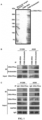
- CNBr-activated Sepharose 4B used in this example was purchased from Sigma. First, according to the instructions, endostatin and bovine serum albumin (BSA) were coupled to CNBr-activated Sepharose 4B, respectively, and incubated with A549 cell lysate. The pull down proteins were subjected to SDS-PAGE electrophoresis and stained with Coomassie blue. By Mass spectrometric analysis, DNA-PKcs was identified as a protein interacted with Endostatin ( Figure 1A ). Then, immunoblotting experiments demonstrated that the DNA-PKcs protein in both H1299 and A549 cell lysates can be precipitated by CNBr-activated Sepharose 4B coupled with Endostatin ( Figure 1B ).
- BSA bovine serum albumin
- H1299 and A549 cells were incubated with Endostatin for 2 hours for endocytosis.
- the cell lysate was mixed with the antibody of DNA-PKcs, and then co-incubated with protein A/G beads.
- the immunoblotting assay verified that Endostatin could be co-precipitated by DNA-PKcs, which proved the interaction between the two ( Figure 1C ) .
- Example 2 Endostatin inhibited the activation of DNA-PKcs signaling pathway in tumor cells induced by a chemotherapeutic agent.
- Tumor cells including non-small cell lung cancer H1299 and A549 cells were divided into six treatment groups.
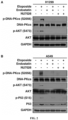
- the first group negative control; the second group: Etoposide (10 ⁇ M, 1 h) treatment; the third group: Endostatin (10 ⁇ g/ml, 1 h) treatment; the fourth group: combined treatment with Endostatin (10 ⁇ g/ml, added 1 h before Etoposide) and Etoposide (10 ⁇ M, 1 h); the fifth group: NU7026 (10 ⁇ M, 1 h) treatment; the sixth group: combined treatment with NU7026 (10 ⁇ M, added 1 h before Etoposide) and Etoposide ( 10 ⁇ M, 1 h), wherein, NU7026 was a DNA-PKcs inhibitor.
- Tumor cells including H1299 and A549 cells
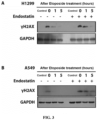
- Tumor cells were divided into eight treatment groups. The first group: negative control, cells were collected at 0 hour; the second group: cells were collected after Etoposide (10 ⁇ M) treatment for 1 hour; the third group: after Etoposide (10 ⁇ M) treatment for 1 hour, it was replaced with fresh medium, and cells were collected after 2 hours; the fourth group, aftet Etoposide (10 ⁇ M) treatment for 1 hour, it was replaced with fresh medium, and cells were collected after 5 h; the fifth to eighth groups were first pretreated with Endostatin (10 ⁇ g / ml) for 1 h, and the subsequent treatments corresponded to those of the first to fourth groups, respectively.
- tumor cells including H1299 and A549 cells
- tumor cells were divided into eight treatment groups.
- cells were transfected with control siRNA
- siRNA that specifically knocked down DNA-PKcs.
- the siRNA sequence of DNA-PKcs is: forward 5'-CAGGGUUUAAUCAGAAUAUTT-3' (SEQ ID NO: 5), reverse 5'-AUAUUCUGAUUAAACCCUGTT-3' (SEQ ID NO: 6).
- the siRNA transfection method was performed according to the instructions of the transfection reagent Lipofectamine 2000. Then, in the eight groups, the cells were treated with drugs.
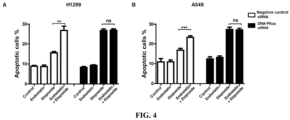
- Groups 1 and 4 control group; Groups 2 and 5: Endostatin (10 ⁇ g/ml, 16 h) treatment; Groups 3 and 6: Etoposide (10 ⁇ M for H1299, 1 ⁇ M for A549, 16 h) treatment; Groups 4 and 8: combined treatment with Endostatin (10 ⁇ g/ml, added 1 h before Etoposide) and Etoposide (10 ⁇ M for H1299, 1 ⁇ M for A549, 16 h). Cells were collected and operations were performed according to the instructions of Annexin V-FITC/PI Apoptosis Detection Kit. Apoptosis was detected by flow cytometry.
- A549 cells were P53 wild-type cells, and H1299 cells were P53-deficient cells.
- the results showed that A549 cells were more sensitive to the chemotherapeutic agent, and when the same degree of apoptosis was caused, the Etoposide concentration in H1299 cells was much higher than that in A549 cells.
- the addition Endostatin would further promote Etoposide-induced apoptosis ( Figure 4 ). After knocking down DNA-PKcs, the role of Endostatin in promoting apoptosis induced by Etoposide was weakened.
- Example 5 Endostatin synergized with Etoposide inhibited the activity of P53-deficient tumor cells.
- a lentivirus kit purchased from Shanghai Genepharma was used to construct a P53 stably overexpressing H1299 cell line (H1299-P53) and a P53 stably knockdown A549 cell line (A549-NC).
- the P53 sequence targeted by the shRNA used to knock down P53 in A549 cells was 5'-GACTCCAGTGGTAATCTAC-3' (SEQ ID NO: 4).
- Virus transfection and the construction of stable cell lines were performed according to the kit instructions.
- the constructed tumor cells (H1299-NC, H1299-P53, A549-NC, A549-shP53) were seeded into 96-well plates (1000 cells per well) and divided into eight treatment groups.
- a medium containing different concentrations of Etoposide (0 ⁇ M, 0.1 ⁇ M, 1 ⁇ M, 10 ⁇ M) was added to each well.
- the fifth to eighth groups were first pretreated with a medium containing 10 ⁇ g/ml Endostatin for 1 h, and then a medium containing different Etoposide concentrations was added so that the final concentrations of Etoposide in the fifth to eighth groups were 0 ⁇ M, 0.1 ⁇ M, 1 ⁇ M, and 10 ⁇ M, respectively.
- the drug-containing medium was replaced with a normal medium and the cells were further cultured for 72 hours. Cell activity was measured according to the instructions of the CCK8 kit (Dojindo, Tokyo, Japan).
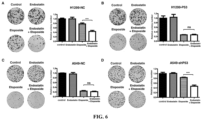
- Tumor cells (H1299-NC, H1299-P53, A549-NC, A549-shP53) were divided into four treatment groups.
- the first group negative control; the second group: Endostatin (10 ⁇ g/ml, 16 h) treatment; the third group: Etoposide (1 ⁇ M, 16 h) treatment; the fourth group: combined treatment with Endostatin (10 ⁇ g/ml, added 1 h before Etoposide) and Etoposide (1 ⁇ M, 16 h).
- the cells were digested with trypsin, counted, and re-plated in a six-well plate with 1000 cells per well. The cells were cultured in a normal medium for 14 days to form cell colonies.
- Example 7 Endostatin synergized with Etoposide promoted the apoptosis of P53-deficient tumor cells.
- Tumor cells (H1299-NC, H1299-P53, A549-NC, A549-shP53) were divided into four treatment groups.
- the first group negative control; the second group: Endostatin (10 ⁇ g/ml, 16 h) treatment; the third group: Etoposide (1 ⁇ M, 16 h) treatment; the fourth group: combined treatment with Endostatin (10 ⁇ g/ml, added 1 h before Etoposide) and Etoposide (1 ⁇ M, 16 h).
- PI-positive cells represent apoptotic cells.
- Figure 7A and D Endostatin could enhance the ability of Etoposide to promote the apoptosis of tumor cells.
- Figure 7B and C Etoposide could significantly promote the apoptosis of tumor cells, and Endostatin did not significantly enhance the pro-apoptotic effect of Etoposide.
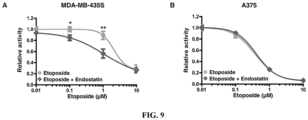
- This example used two cell lines of another tumor type (melanoma), the MDA-MB-435S (P53 mutant) and A375 (P53 wild type) cell lines, to verify the regulatory function of Endostatin on the chemotherapeutic sensitivity of other types of tumor cells with different P53 status. Operation process was the same as in Example 5. The results showed that for MDA-MB-435S cells ( Figures 9A and D), Endostatin could enhance the toxicity of Etoposide to tumor cells. For A375 cells ( Figure 9B and C), Etoposide could significantly inhibit the activity of tumor cells, and Endostatin did not significantly enhance the inhibitory effect of Etoposide.
- Example 10 Endostatin inhibited DNA-PKcs to repair cell damage, induced activation of apoptotic pathway and degradation of DNA-PKcs in P53-deficient tumor cells.
- DNA-PKcs is a substrate of Caspase-3, and activated Caspase-3 will cleave DNA-PKcs to degrade it ( T. Itoh et al. Journal of dermatological science, 2001; 25, 72-77 , K. M. Henkels et al. Cancer research, 1997; 57, 4488-4492 ).
- tumor cells H1299-NC, H1299-P53, A549-NC, A549-shP53
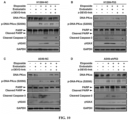
- the first group negative control; the second group: Endostatin (10 ⁇ g/ml, 16 h) treatment; the third group: Etoposide (10 ⁇ M, 16 h) treatment; the fourth group: combined treatment with Endostatin (10 ⁇ g/ml, added 1 h before Etoposide) and Etoposide (10 ⁇ M, 16 h); the fifth group: combined treamtment with z-DEVD-fmk (10 ⁇ M, added 1 h before Etoposide) and Etoposide (10 ⁇ M, 16 h); the sixth group: combined treatment with z-DEVD-fmk (10 ⁇ M) and Endostatin (10 ⁇ g/ml) added 1 h before Etoposide, and then Etoposide (10 ⁇ M, 16 h), wherein, z-DEVD-fmk was a caspase-3 inhibitor.
- both the treatment with Etoposide alone and the combined treatment with Endostatin and Etoposide showed significant activation of Caspase-3, degradation of DNA-PKcs and PARP, and an increase in ⁇ H2AX; the combination of z-DEVD-fmk and Etoposide reversed the effect of Etoposide to some extent; the combination of z-DEVD-fmk, Endostatin and Etoposide showed that z-DEVD-fmk reversed the effect of Etoposide, the protein level of DNA-PKcs was restored, and the synergistic effect of Endostatin and Etoposide was reflected to a certain extent.
- Example 11 Endostatin synergized with Etoposide up-regulated the expression of pro-apoptotic molecules in P53-deficient tumor cells.
- Tumor cells (H1299-NC, H1299-P53, A549-NC, A549-shP53) were divided into four treatment groups.
- the first group negative control; the second group: Endostatin (10 ⁇ g/ml, 16 h) treatment; the third group: Etoposide (1 ⁇ M, 16 h) treatment; the fourth group: combined treatment with Endostatin (10 ⁇ g/ml, added 1 h before Etoposide) and Etoposide (1 ⁇ M, 16 h).
- the total RNA of the cells was extracted, and the relative changes in mRNA levels of BAX, NOXA, PUMA, and P21 in the cells were detected by real-time PCR.
- Tumor cells (H1299-NC, H1299-P53, A549-NC, A549-shP53) were inoculated subcutaneously into 6 to 8 week-old nude mice (Beijing Weitong Lihua Experimental Animal Technology Co., Ltd.). Tumor-bearing nude mice were randomly divided into four groups with 6 to 8 animals for each group, and different drug treatments were performed.
- the first group negative control; the second group: Endostatin (20 mg/kg, intraperitoneal injection, once a day) treatment; the third group: Etoposide (2 mg/kg, intraperitoneal injection, once every two days) treatment; the fourth group: combined treatment with Endostatin (20 mg/kg, intraperitoneal injection, once a day) and Etoposide (2 mg/kg, intraperitoneal injection, once every two days). Tumor volume was measured every other day. 2 to 4 weeks after administration, the mice were sacrificed and the tumor tissue was removed for further use.
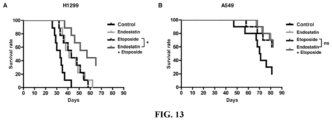
- H1299 and A549 cells were cultured in a vigorous and proliferative state, and tumor collection, grouping, and administration methods were the same as in Example 12. The administration was stopped after 25 days, and the survival of the mice was recorded daily, and the survival curve of the mice was plotted.
- the results showed that in the H1299 mouse tumor model ( Figure 13A ), as compared with the control group, the median survival time of the Endostatin-treated group was 24.2% longer than that of the control group; the median survival time of the Etoposide treatment group was 30.3% longer than that of the control group; the combination of Endostatin and Etoposide had a synergistic effect on prolonging the survival time of mice, and the median survival time was 72.7% longer than that of the control group.
- Example 14 Endostatin synergized with Etoposide inhibited the proliferation of P53-deficient tumors and the expression level of DNA-PKcs.
- Example 12 The tumor tissue removed in Example 12 was fixed and embedded, and then sectioned.
- PCNA a marker molecule indicating the vigorous proliferation status of tumor cells
- DNA-PKcs protein in tumor tissues were stained by immunofluorescence technique, and were observed and imaged with a laser confocal microscope (Nikon A1).
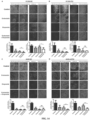
- the experimental results are shown in Figure 14 , in which blue represents the nucleus of DAPI-stained cells, green represents the DNA-PKcs protein, and red represents the PCNA protein.
- the first column on the left represents DNA-PKcs single staining
- the green area represents the DNA-PKcs protein expression level.
- the second column on the left represents the results of DNA-PKcs (green) merged with nucleus (blue), and the overlapping part is shown in cyan.
- the third column on the left represents PCNA single staining, and the red area represents the PCNA protein expression level, indicating the strength of tumor cell proliferation.
- the fourth column on the left represents the result of the PCNA (red) merged with nucleus (blue), and the overlapping part is shown in purple.
- Figures 14B , C, and D show the expression of PCNA and DNA-PKcs in H1299-P53, A549-NC, and A549-shP53 tumor tissues, respectively. The order of protein staining and image arrangement in the figure is consistent with Figure 12A .
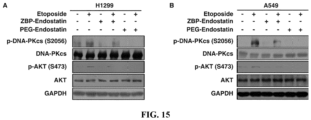
- Example 15 ZBP-Endostatin and PEG-Endostatin inhibited the activation of DNA-PKcs signaling pathway in tumor cells induced by a chemotherapeutical agent
- the first group negative control; the second group: Etoposide (10 ⁇ M, 1 h) treatment; the third group: ZBP-Endostatin (10 ⁇ g/ml, 1 h) treatment; the fourth group: combined treatment with ZBP-Endostatin (10 ⁇ g/ml, added 1 h before Etoposide) and Etoposide (10 ⁇ M, 1 h); the fifth group: PEG-Endostatin (10 ⁇ g/ml, 1 h) treatment; the sixth group: combined treatment with PEG-Endostatin (10 ⁇ g/ml, added 1 h before Etoposide) and Etoposide (10 ⁇ M, 1 h).
- Immunoblotting assay results showed ( Figure 15 ) that as compared with the control group, Etoposide treatment activated the level of the DNA-PKcs signaling pathway in H1299 and A549 cells (as shown in the immunoblotting assay results of p-DNA-PKcs (S2056) and p-AKT (S473), wherein p-DNA-PKcs (S2056) represents the phosphorylation level of DNA-PKcs, and S2056 represents its phosphorylation site, wherein p-AKT represents the phosphorylation level of AKT, and S473 represents its phosphorylation site); the combination of ZBP-Endostatin or PEG-Endostatin and Etoposide inhibited the activation of the DNA-PKcs signaling pathway by Etoposide.
Landscapes
- Health & Medical Sciences (AREA)
- Life Sciences & Earth Sciences (AREA)
- Veterinary Medicine (AREA)
- Chemical & Material Sciences (AREA)
- Medicinal Chemistry (AREA)
- Pharmacology & Pharmacy (AREA)
- Animal Behavior & Ethology (AREA)
- General Health & Medical Sciences (AREA)
- Public Health (AREA)
- Epidemiology (AREA)
- Molecular Biology (AREA)
- Engineering & Computer Science (AREA)
- Gastroenterology & Hepatology (AREA)
- Zoology (AREA)
- Bioinformatics & Cheminformatics (AREA)
- Immunology (AREA)
- Proteomics, Peptides & Aminoacids (AREA)
- Chemical Kinetics & Catalysis (AREA)
- General Chemical & Material Sciences (AREA)
- Nuclear Medicine, Radiotherapy & Molecular Imaging (AREA)
- Organic Chemistry (AREA)
- Pharmaceuticals Containing Other Organic And Inorganic Compounds (AREA)
- Medicines That Contain Protein Lipid Enzymes And Other Medicines (AREA)
Applications Claiming Priority (3)
| Application Number | Priority Date | Filing Date | Title |
|---|---|---|---|
| CN201710638033 | 2017-07-30 | ||
| CN201710733900 | 2017-08-24 | ||
| PCT/CN2018/097609 WO2019024814A1 (zh) | 2017-07-30 | 2018-07-27 | 抑制dna依赖蛋白激酶催化亚基的药物 |
Publications (3)
| Publication Number | Publication Date |
|---|---|
| EP3662922A1 EP3662922A1 (en) | 2020-06-10 |
| EP3662922A4 EP3662922A4 (en) | 2021-04-07 |
| EP3662922B1 true EP3662922B1 (en) | 2025-03-05 |
Family
ID=65233426
Family Applications (1)
| Application Number | Title | Priority Date | Filing Date |
|---|---|---|---|
| EP18840639.1A Active EP3662922B1 (en) | 2017-07-30 | 2018-07-27 | A combination of endostatin and a dna double strand break inducing chemotherapeutic agent for treating p53(-) melanoma and p53(-) non-small cell lung cancer |
Country Status (7)
| Country | Link |
|---|---|
| US (2) | US20200237796A1 (enExample) |
| EP (1) | EP3662922B1 (enExample) |
| JP (1) | JP7492687B2 (enExample) |
| CN (1) | CN110913884B (enExample) |
| AU (1) | AU2018310410B2 (enExample) |
| CA (1) | CA3103035A1 (enExample) |
| WO (1) | WO2019024814A1 (enExample) |
Family Cites Families (8)
| Publication number | Priority date | Publication date | Assignee | Title |
|---|---|---|---|---|
| EP1087785A2 (en) | 1998-06-15 | 2001-04-04 | Arch Development Corporation | Combination of radiotherapy and anti-angiogenic factors |
| ES2288318T3 (es) | 1998-06-30 | 2008-01-01 | Sloan-Kettering Institute For Cancer Research | Uso de dna-pk. |
| US7470667B2 (en) * | 2002-12-05 | 2008-12-30 | Medgenn (Hong Kong) Ltd | Methods of treating cancer using a modified endostatin protein |
| US7078485B2 (en) | 2002-12-05 | 2006-07-18 | Yantai Medgenn Ltd. | N-terminal modified recombinant human endostatin and its production |
| CN1891717A (zh) * | 2005-07-08 | 2007-01-10 | 南京大学 | 内皮抑素的化学修饰方法及其应用 |
| CN100475270C (zh) | 2006-01-20 | 2009-04-08 | 清华大学 | 一种治疗肿瘤的药物及其应用 |
| CN102698270B (zh) * | 2011-03-28 | 2016-02-03 | 清华大学 | 一种增强靶细胞摄取治疗剂的方法和药物组合物 |
| WO2013034116A1 (zh) | 2011-09-09 | 2013-03-14 | 清华大学 | 对atp结合位点进行突变的血管内皮抑制素突变体 |
-
2018
- 2018-07-27 US US16/635,006 patent/US20200237796A1/en not_active Abandoned
- 2018-07-27 CN CN201880046593.1A patent/CN110913884B/zh active Active
- 2018-07-27 JP JP2020526666A patent/JP7492687B2/ja active Active
- 2018-07-27 WO PCT/CN2018/097609 patent/WO2019024814A1/zh not_active Ceased
- 2018-07-27 EP EP18840639.1A patent/EP3662922B1/en active Active
- 2018-07-27 AU AU2018310410A patent/AU2018310410B2/en active Active
- 2018-07-27 CA CA3103035A patent/CA3103035A1/en active Pending
-
2023
- 2023-11-17 US US18/512,519 patent/US20240165140A1/en active Pending
Non-Patent Citations (5)
| Title |
|---|
| "Applications of viruses for cancer therapy", vol. 115, 28 May 2013, ELSEVIER, ISBN: 978-0-12-398342-8, ISSN: 0065-230X, article KALIBEROV SERGEY A. ET AL: "Cancer Treatment with Gene Therapy and Radiation Therapy", pages: 221 - 263, XP093082328, DOI: 10.1016/B978-0-12-398342-8.00007-0 * |
| FANG PENG ET AL: "Recombinant Human Endostatin Normalizes Tumor Vasculature and Enhances Radiation Response in Xenografted Human Nasopharyngeal Carcinoma Models", PLOS ONE, vol. 7, no. 4, 9 April 2012 (2012-04-09), pages e34646, XP055039142, DOI: 10.1371/journal.pone.0034646 * |
| ITASAKA ET AL: "Endostatin improves radioresponse and blocks tumor revascularization after radiation therapy for A431 xenografts in mice", INTERNATIONAL JOURNAL OF RADIATION: ONCOLOGY BIOLOGY PHYSICS, PERGAMON PRESS, USA, vol. 67, no. 3, 9 February 2007 (2007-02-09), pages 870 - 878, XP005897008, ISSN: 0360-3016, DOI: 10.1016/J.IJROBP.2006.10.030 * |
| TOULANY MAHMOUD ET AL: "Akt Promotes Post-Irradiation Survival of Human Tumor Cells through Initiation, Progression, and Termination of DNA-PKcs-Dependent DNA Double-Strand Break Repair", MOLECULAR CANCER RESEARCH, vol. 10, no. 7, 17 May 2012 (2012-05-17), US, pages 945 - 957, XP093039093, ISSN: 1541-7786, Retrieved from the Internet <URL:https://watermark.silverchair.com/945.pdf?token=AQECAHi208BE49Ooan9kkhW_Ercy7Dm3ZL_9Cf3qfKAc485ysgAAArkwggK1BgkqhkiG9w0BBwagggKmMIICogIBADCCApsGCSqGSIb3DQEHATAeBglghkgBZQMEAS4wEQQMS8NBDLns3ENa8mkXAgEQgIICbLthy8oG9flCgZpY00RtrQGudsE7Y5jMvZCbSA-j5LVb28kbGmbHfR6LDcL0xuoEKKyV88vXvmrKzIL9XHP-4ib3pe1nSGw1> DOI: 10.1158/1541-7786.MCR-11-0592 * |
| VAN OORSCHOT BREGJE ET AL: "Targeting DNA double strand break repair with hyperthermia and DNA-PKcs inhibition to enhance the effect of radiation treatment", ONCOTARGET, vol. 7, no. 40, 1 September 2016 (2016-09-01), pages 65504 - 65513, XP093082321, DOI: 10.18632/oncotarget.11798 * |
Also Published As
| Publication number | Publication date |
|---|---|
| EP3662922A4 (en) | 2021-04-07 |
| CN110913884B (zh) | 2023-06-06 |
| US20200237796A1 (en) | 2020-07-30 |
| AU2018310410B2 (en) | 2024-11-14 |
| AU2018310410A1 (en) | 2020-03-12 |
| CA3103035A1 (en) | 2019-02-07 |
| JP7492687B2 (ja) | 2024-05-30 |
| JP2020528457A (ja) | 2020-09-24 |
| US20240165140A1 (en) | 2024-05-23 |
| CN110913884A (zh) | 2020-03-24 |
| WO2019024814A1 (zh) | 2019-02-07 |
| EP3662922A1 (en) | 2020-06-10 |
Similar Documents
| Publication | Publication Date | Title |
|---|---|---|
| Gordon‐Weeks et al. | Neutrophils promote hepatic metastasis growth through fibroblast growth factor 2–dependent angiogenesis in mice | |
| EP2525824B1 (en) | Inhibition of axl signaling in anti-metastatic therapy | |
| Pujada et al. | Matrix metalloproteinase MMP9 maintains epithelial barrier function and preserves mucosal lining in colitis associated cancer | |
| Azmi et al. | MDM2 inhibitor MI-319 in combination with cisplatin is an effective treatment for pancreatic cancer independent of p53 function | |
| US9074011B2 (en) | Use of PTEN-long leader sequence for transmembrane delivery of molecules | |
| JP2014169293A (ja) | Sparc及びその使用方法 | |
| Li et al. | Biliverdin protects against cerebral ischemia/reperfusion injury by regulating the miR-27a-3p/Rgs1 axis | |
| Babaei-Jadidi et al. | Mast-cell tryptase release contributes to disease progression in lymphangioleiomyomatosis | |
| Song et al. | RNA interference-mediated suppression of TNF-α converting enzyme as an alternative anti-TNF-α therapy for rheumatoid arthritis | |
| Michaelsen et al. | Single agent‐and combination treatment with two targeted suicide gene therapy systems is effective in chemoresistant small cell lung cancer cells | |
| US20190388521A1 (en) | Reduction of egfr therapeutic toxicity | |
| EP3662922B1 (en) | A combination of endostatin and a dna double strand break inducing chemotherapeutic agent for treating p53(-) melanoma and p53(-) non-small cell lung cancer | |
| Moxley et al. | Induction of death receptor ligand-mediated apoptosis in epithelial ovarian carcinoma: the search for sensitizing agents | |
| US20160045506A1 (en) | Use of inhibitors of binding between a par-1 receptor and its ligands for the treatment of glioma | |
| US20220125770A1 (en) | Combination therapy of alk-positive neoplasia | |
| Peng et al. | The progression of hepatocyte pyroptosis exacerbates radiation-induced liver disease via the gasdermin D/signal transducer and activator of transcription 5a/CXCL1 axis | |
| US20170079966A1 (en) | Inhibition of tumor cell interactions with the microenvironment resulting in a reduction in tumor growth and disease progression | |
| US20140370027A1 (en) | Inhibition of macrophage-synthesized wnt7b to inhibit tumor angiogenesis and metastasis | |
| WO2024245445A1 (zh) | Malt1肿瘤抑制剂、含有其的药物及应用 | |
| JP2024058472A (ja) | 抗線維化剤、線維症治療用医薬組成物、抗線維化剤の製造方法および抗線維化方法 | |
| US9145554B2 (en) | Cancer therapy method | |
| WO2014035828A2 (en) | Inhibition of axl signaling in anti-metastatic therapy | |
| WO2021150770A1 (en) | Oncogenic trim37 is a targetable epigenetic driver of metastasis and links chemoresistance and metastatic fate in triple-negative breast cancer | |
| Winkles | GrB-TWEAK: A Potential Novel Biologic for NSCLC Therapy | |
| Koutsioumpa et al. | Targeting Cell Surface Nucleolin in Cancer |
Legal Events
| Date | Code | Title | Description |
|---|---|---|---|
| STAA | Information on the status of an ep patent application or granted ep patent |
Free format text: STATUS: THE INTERNATIONAL PUBLICATION HAS BEEN MADE |
|
| PUAI | Public reference made under article 153(3) epc to a published international application that has entered the european phase |
Free format text: ORIGINAL CODE: 0009012 |
|
| STAA | Information on the status of an ep patent application or granted ep patent |
Free format text: STATUS: REQUEST FOR EXAMINATION WAS MADE |
|
| 17P | Request for examination filed |
Effective date: 20200227 |
|
| AK | Designated contracting states |
Kind code of ref document: A1 Designated state(s): AL AT BE BG CH CY CZ DE DK EE ES FI FR GB GR HR HU IE IS IT LI LT LU LV MC MK MT NL NO PL PT RO RS SE SI SK SM TR |
|
| AX | Request for extension of the european patent |
Extension state: BA ME |
|
| DAV | Request for validation of the european patent (deleted) | ||
| DAX | Request for extension of the european patent (deleted) | ||
| A4 | Supplementary search report drawn up and despatched |
Effective date: 20210311 |
|
| RIC1 | Information provided on ipc code assigned before grant |
Ipc: A61P 35/00 20060101ALI20210304BHEP Ipc: A61K 31/7048 20060101ALI20210304BHEP Ipc: A61K 31/704 20060101ALI20210304BHEP Ipc: A61K 38/17 20060101AFI20210304BHEP |
|
| STAA | Information on the status of an ep patent application or granted ep patent |
Free format text: STATUS: EXAMINATION IS IN PROGRESS |
|
| 17Q | First examination report despatched |
Effective date: 20220309 |
|
| GRAP | Despatch of communication of intention to grant a patent |
Free format text: ORIGINAL CODE: EPIDOSNIGR1 |
|
| STAA | Information on the status of an ep patent application or granted ep patent |
Free format text: STATUS: GRANT OF PATENT IS INTENDED |
|
| INTG | Intention to grant announced |
Effective date: 20241009 |
|
| GRAS | Grant fee paid |
Free format text: ORIGINAL CODE: EPIDOSNIGR3 |
|
| GRAA | (expected) grant |
Free format text: ORIGINAL CODE: 0009210 |
|
| STAA | Information on the status of an ep patent application or granted ep patent |
Free format text: STATUS: THE PATENT HAS BEEN GRANTED |
|
| AK | Designated contracting states |
Kind code of ref document: B1 Designated state(s): AL AT BE BG CH CY CZ DE DK EE ES FI FR GB GR HR HU IE IS IT LI LT LU LV MC MK MT NL NO PL PT RO RS SE SI SK SM TR |
|
| REG | Reference to a national code |
Ref country code: GB Ref legal event code: FG4D |
|
| REG | Reference to a national code |
Ref country code: CH Ref legal event code: EP |
|
| REG | Reference to a national code |
Ref country code: IE Ref legal event code: FG4D |
|
| REG | Reference to a national code |
Ref country code: DE Ref legal event code: R096 Ref document number: 602018079890 Country of ref document: DE |
|
| PG25 | Lapsed in a contracting state [announced via postgrant information from national office to epo] |
Ref country code: RS Free format text: LAPSE BECAUSE OF FAILURE TO SUBMIT A TRANSLATION OF THE DESCRIPTION OR TO PAY THE FEE WITHIN THE PRESCRIBED TIME-LIMIT Effective date: 20250605 |
|
| PG25 | Lapsed in a contracting state [announced via postgrant information from national office to epo] |
Ref country code: FI Free format text: LAPSE BECAUSE OF FAILURE TO SUBMIT A TRANSLATION OF THE DESCRIPTION OR TO PAY THE FEE WITHIN THE PRESCRIBED TIME-LIMIT Effective date: 20250305 |
|
| REG | Reference to a national code |
Ref country code: NL Ref legal event code: MP Effective date: 20250305 |
|
| PG25 | Lapsed in a contracting state [announced via postgrant information from national office to epo] |
Ref country code: ES Free format text: LAPSE BECAUSE OF FAILURE TO SUBMIT A TRANSLATION OF THE DESCRIPTION OR TO PAY THE FEE WITHIN THE PRESCRIBED TIME-LIMIT Effective date: 20250305 |
|
| REG | Reference to a national code |
Ref country code: LT Ref legal event code: MG9D |
|
| PG25 | Lapsed in a contracting state [announced via postgrant information from national office to epo] |
Ref country code: NO Free format text: LAPSE BECAUSE OF FAILURE TO SUBMIT A TRANSLATION OF THE DESCRIPTION OR TO PAY THE FEE WITHIN THE PRESCRIBED TIME-LIMIT Effective date: 20250605 |
|
| PG25 | Lapsed in a contracting state [announced via postgrant information from national office to epo] |
Ref country code: HR Free format text: LAPSE BECAUSE OF FAILURE TO SUBMIT A TRANSLATION OF THE DESCRIPTION OR TO PAY THE FEE WITHIN THE PRESCRIBED TIME-LIMIT Effective date: 20250305 |
|
| PG25 | Lapsed in a contracting state [announced via postgrant information from national office to epo] |
Ref country code: LV Free format text: LAPSE BECAUSE OF FAILURE TO SUBMIT A TRANSLATION OF THE DESCRIPTION OR TO PAY THE FEE WITHIN THE PRESCRIBED TIME-LIMIT Effective date: 20250305 |
|
| PG25 | Lapsed in a contracting state [announced via postgrant information from national office to epo] |
Ref country code: GR Free format text: LAPSE BECAUSE OF FAILURE TO SUBMIT A TRANSLATION OF THE DESCRIPTION OR TO PAY THE FEE WITHIN THE PRESCRIBED TIME-LIMIT Effective date: 20250606 Ref country code: BG Free format text: LAPSE BECAUSE OF FAILURE TO SUBMIT A TRANSLATION OF THE DESCRIPTION OR TO PAY THE FEE WITHIN THE PRESCRIBED TIME-LIMIT Effective date: 20250305 |
|
| REG | Reference to a national code |
Ref country code: AT Ref legal event code: MK05 Ref document number: 1772304 Country of ref document: AT Kind code of ref document: T Effective date: 20250305 |
|
| PG25 | Lapsed in a contracting state [announced via postgrant information from national office to epo] |
Ref country code: NL Free format text: LAPSE BECAUSE OF FAILURE TO SUBMIT A TRANSLATION OF THE DESCRIPTION OR TO PAY THE FEE WITHIN THE PRESCRIBED TIME-LIMIT Effective date: 20250305 |
|
| PG25 | Lapsed in a contracting state [announced via postgrant information from national office to epo] |
Ref country code: SE Free format text: LAPSE BECAUSE OF FAILURE TO SUBMIT A TRANSLATION OF THE DESCRIPTION OR TO PAY THE FEE WITHIN THE PRESCRIBED TIME-LIMIT Effective date: 20250305 |
|
| PG25 | Lapsed in a contracting state [announced via postgrant information from national office to epo] |
Ref country code: SM Free format text: LAPSE BECAUSE OF FAILURE TO SUBMIT A TRANSLATION OF THE DESCRIPTION OR TO PAY THE FEE WITHIN THE PRESCRIBED TIME-LIMIT Effective date: 20250305 |
|
| PG25 | Lapsed in a contracting state [announced via postgrant information from national office to epo] |
Ref country code: PT Free format text: LAPSE BECAUSE OF FAILURE TO SUBMIT A TRANSLATION OF THE DESCRIPTION OR TO PAY THE FEE WITHIN THE PRESCRIBED TIME-LIMIT Effective date: 20250707 |
|
| PGFP | Annual fee paid to national office [announced via postgrant information from national office to epo] |
Ref country code: DE Payment date: 20250728 Year of fee payment: 8 |
|
| PG25 | Lapsed in a contracting state [announced via postgrant information from national office to epo] |
Ref country code: IT Free format text: LAPSE BECAUSE OF FAILURE TO SUBMIT A TRANSLATION OF THE DESCRIPTION OR TO PAY THE FEE WITHIN THE PRESCRIBED TIME-LIMIT Effective date: 20250305 Ref country code: PL Free format text: LAPSE BECAUSE OF FAILURE TO SUBMIT A TRANSLATION OF THE DESCRIPTION OR TO PAY THE FEE WITHIN THE PRESCRIBED TIME-LIMIT Effective date: 20250305 |
|
| PGFP | Annual fee paid to national office [announced via postgrant information from national office to epo] |
Ref country code: GB Payment date: 20250822 Year of fee payment: 8 Ref country code: BE Payment date: 20250730 Year of fee payment: 8 |
|
| PG25 | Lapsed in a contracting state [announced via postgrant information from national office to epo] |
Ref country code: AT Free format text: LAPSE BECAUSE OF FAILURE TO SUBMIT A TRANSLATION OF THE DESCRIPTION OR TO PAY THE FEE WITHIN THE PRESCRIBED TIME-LIMIT Effective date: 20250305 |
|
| PGFP | Annual fee paid to national office [announced via postgrant information from national office to epo] |
Ref country code: FR Payment date: 20250729 Year of fee payment: 8 |
|
| PG25 | Lapsed in a contracting state [announced via postgrant information from national office to epo] |
Ref country code: EE Free format text: LAPSE BECAUSE OF FAILURE TO SUBMIT A TRANSLATION OF THE DESCRIPTION OR TO PAY THE FEE WITHIN THE PRESCRIBED TIME-LIMIT Effective date: 20250305 Ref country code: CZ Free format text: LAPSE BECAUSE OF FAILURE TO SUBMIT A TRANSLATION OF THE DESCRIPTION OR TO PAY THE FEE WITHIN THE PRESCRIBED TIME-LIMIT Effective date: 20250305 |
|
| PG25 | Lapsed in a contracting state [announced via postgrant information from national office to epo] |
Ref country code: RO Free format text: LAPSE BECAUSE OF FAILURE TO SUBMIT A TRANSLATION OF THE DESCRIPTION OR TO PAY THE FEE WITHIN THE PRESCRIBED TIME-LIMIT Effective date: 20250305 |
|
| PG25 | Lapsed in a contracting state [announced via postgrant information from national office to epo] |
Ref country code: SK Free format text: LAPSE BECAUSE OF FAILURE TO SUBMIT A TRANSLATION OF THE DESCRIPTION OR TO PAY THE FEE WITHIN THE PRESCRIBED TIME-LIMIT Effective date: 20250305 |
|
| PG25 | Lapsed in a contracting state [announced via postgrant information from national office to epo] |
Ref country code: IS Free format text: LAPSE BECAUSE OF FAILURE TO SUBMIT A TRANSLATION OF THE DESCRIPTION OR TO PAY THE FEE WITHIN THE PRESCRIBED TIME-LIMIT Effective date: 20250705 |