EP3660102A1 - Chloriertes poly(propylencarbonat)/biomasse-verbundmaterial und verfahren zur herstellung desselben - Google Patents
Chloriertes poly(propylencarbonat)/biomasse-verbundmaterial und verfahren zur herstellung desselben Download PDFInfo
- Publication number
- EP3660102A1 EP3660102A1 EP17919501.1A EP17919501A EP3660102A1 EP 3660102 A1 EP3660102 A1 EP 3660102A1 EP 17919501 A EP17919501 A EP 17919501A EP 3660102 A1 EP3660102 A1 EP 3660102A1
- Authority
- EP
- European Patent Office
- Prior art keywords
- propylene carbonate
- chlorinated poly
- composite material
- biomass composite
- rosin
- Prior art date
- Legal status (The legal status is an assumption and is not a legal conclusion. Google has not performed a legal analysis and makes no representation as to the accuracy of the status listed.)
- Granted
Links
Images
Classifications
-
- C—CHEMISTRY; METALLURGY
- C08—ORGANIC MACROMOLECULAR COMPOUNDS; THEIR PREPARATION OR CHEMICAL WORKING-UP; COMPOSITIONS BASED THEREON
- C08L—COMPOSITIONS OF MACROMOLECULAR COMPOUNDS
- C08L69/00—Compositions of polycarbonates; Compositions of derivatives of polycarbonates
-
- B—PERFORMING OPERATIONS; TRANSPORTING
- B27—WORKING OR PRESERVING WOOD OR SIMILAR MATERIAL; NAILING OR STAPLING MACHINES IN GENERAL
- B27N—MANUFACTURE BY DRY PROCESSES OF ARTICLES, WITH OR WITHOUT ORGANIC BINDING AGENTS, MADE FROM PARTICLES OR FIBRES CONSISTING OF WOOD OR OTHER LIGNOCELLULOSIC OR LIKE ORGANIC MATERIAL
- B27N3/00—Manufacture of substantially flat articles, e.g. boards, from particles or fibres
- B27N3/02—Manufacture of substantially flat articles, e.g. boards, from particles or fibres from particles
-
- C—CHEMISTRY; METALLURGY
- C08—ORGANIC MACROMOLECULAR COMPOUNDS; THEIR PREPARATION OR CHEMICAL WORKING-UP; COMPOSITIONS BASED THEREON
- C08L—COMPOSITIONS OF MACROMOLECULAR COMPOUNDS
- C08L97/00—Compositions of lignin-containing materials
- C08L97/02—Lignocellulosic material, e.g. wood, straw or bagasse
-
- B—PERFORMING OPERATIONS; TRANSPORTING
- B27—WORKING OR PRESERVING WOOD OR SIMILAR MATERIAL; NAILING OR STAPLING MACHINES IN GENERAL
- B27N—MANUFACTURE BY DRY PROCESSES OF ARTICLES, WITH OR WITHOUT ORGANIC BINDING AGENTS, MADE FROM PARTICLES OR FIBRES CONSISTING OF WOOD OR OTHER LIGNOCELLULOSIC OR LIKE ORGANIC MATERIAL
- B27N3/00—Manufacture of substantially flat articles, e.g. boards, from particles or fibres
- B27N3/002—Manufacture of substantially flat articles, e.g. boards, from particles or fibres characterised by the type of binder
-
- B—PERFORMING OPERATIONS; TRANSPORTING
- B27—WORKING OR PRESERVING WOOD OR SIMILAR MATERIAL; NAILING OR STAPLING MACHINES IN GENERAL
- B27N—MANUFACTURE BY DRY PROCESSES OF ARTICLES, WITH OR WITHOUT ORGANIC BINDING AGENTS, MADE FROM PARTICLES OR FIBRES CONSISTING OF WOOD OR OTHER LIGNOCELLULOSIC OR LIKE ORGANIC MATERIAL
- B27N3/00—Manufacture of substantially flat articles, e.g. boards, from particles or fibres
- B27N3/007—Manufacture of substantially flat articles, e.g. boards, from particles or fibres and at least partly composed of recycled material
-
- C—CHEMISTRY; METALLURGY
- C08—ORGANIC MACROMOLECULAR COMPOUNDS; THEIR PREPARATION OR CHEMICAL WORKING-UP; COMPOSITIONS BASED THEREON
- C08K—Use of inorganic or non-macromolecular organic substances as compounding ingredients
- C08K3/00—Use of inorganic substances as compounding ingredients
- C08K3/18—Oxygen-containing compounds, e.g. metal carbonyls
- C08K3/24—Acids; Salts thereof
- C08K3/26—Carbonates; Bicarbonates
-
- C—CHEMISTRY; METALLURGY
- C08—ORGANIC MACROMOLECULAR COMPOUNDS; THEIR PREPARATION OR CHEMICAL WORKING-UP; COMPOSITIONS BASED THEREON
- C08L—COMPOSITIONS OF MACROMOLECULAR COMPOUNDS
- C08L93/00—Compositions of natural resins; Compositions of derivatives thereof
- C08L93/04—Rosin
-
- C—CHEMISTRY; METALLURGY
- C08—ORGANIC MACROMOLECULAR COMPOUNDS; THEIR PREPARATION OR CHEMICAL WORKING-UP; COMPOSITIONS BASED THEREON
- C08L—COMPOSITIONS OF MACROMOLECULAR COMPOUNDS
- C08L99/00—Compositions of natural macromolecular compounds or of derivatives thereof not provided for in groups C08L89/00 - C08L97/00
-
- C—CHEMISTRY; METALLURGY
- C08—ORGANIC MACROMOLECULAR COMPOUNDS; THEIR PREPARATION OR CHEMICAL WORKING-UP; COMPOSITIONS BASED THEREON
- C08K—Use of inorganic or non-macromolecular organic substances as compounding ingredients
- C08K3/00—Use of inorganic substances as compounding ingredients
- C08K3/18—Oxygen-containing compounds, e.g. metal carbonyls
- C08K3/24—Acids; Salts thereof
- C08K3/26—Carbonates; Bicarbonates
- C08K2003/265—Calcium, strontium or barium carbonate
-
- C—CHEMISTRY; METALLURGY
- C08—ORGANIC MACROMOLECULAR COMPOUNDS; THEIR PREPARATION OR CHEMICAL WORKING-UP; COMPOSITIONS BASED THEREON
- C08L—COMPOSITIONS OF MACROMOLECULAR COMPOUNDS
- C08L2205/00—Polymer mixtures characterised by other features
- C08L2205/03—Polymer mixtures characterised by other features containing three or more polymers in a blend
Definitions
- the present invention relates to the field of biomass composite material and in particular to a chlorinated poly(propylene carbonate)/biomass composite material and a method for preparing the same.
- Biomasses such as straws, wood chips (including bamboo chips), rice hulls, and wheat straws are byproducts in agricultural production and forestry processing. They have a large production, but low use efficiency, and some of them even become a burden of society. For example, straws produced in China per year exceed 1 billion tons. Only Jilin province can produce up to 35 million tons of corn straw per year. At present, there are mainly three ways of processing corn straw: 1. being used as silage; 2. being pulverized and returned to field; and 3. being collected for utilization. However, the amount of corn straw processed in these ways is less than 1/3 of the total amount. Most is still not effectively processed, and can only be directly burned, resulting in severe environmental pollution.
- CN patent applications CN1475455A and CN1833839A disclose methods of preparing polymer/biomass composite material by compounding a biomass and polymer resins, which turn waste into things of value, for use in the fields of automobiles, buildings and so on.
- the above methods require modifying the surface of the biomass with a complex process.
- the loading level of respective biomass is very limited, typically less than 40 wt%, and thus the utilization efficiency of the biomass is not high.
- CN patent applications CN1360994A and CN201136203Y disclose a straw densified board and a fiber composite board prepared from straws and polymer resins, which solve the above problems.
- formaldehyde in starting materials, the health of human body is threatened and the material is not environment friendly.
- the technical problem to be solved by the present invention is to provide a chlorinated poly(propylene carbonate)/biomass composite material and a method for preparing the same.
- the composite material as disclosed in the present invention comprises a larger amount of biomass materials, is environment friendly, and further has an excellent mechanical property.
- the present invention provides a chlorinated poly(propylene carbonate)/biomass composite material, comprising:
- an amount of the chlorinated poly(propylene carbonate) is from 5 wt% to 50 wt%.
- the chlorinated poly(propylene carbonate) has a weight average molecular weight in a range of 30,000 to 650,000.
- the chlorinated poly(propylene carbonate) has a chlorination degree in a range of 2 wt% to 15 wt%.
- the chlorinated poly(propylene carbonate) has a structure represented by Formula (I) below: wherein x is an integer of 0 to 3, y is an integer of 0 to 2, and z is an integer of 0 to 1, with the proviso that not all of x, y and z are 0; and n is a polymerization degree of 50 to 5000.
- the biomaterial is one or more selected from a group consisting of straws, wood chips, halms, rice hulls, bamboo powders and wheat straws.
- an amount of the biomaterial is from 50 wt% to 94 wt%.
- the rosin derivative is a rosin soap, a rosin ester or a rosin-modified phenolic resin.
- an amount of the rosin or the rosin derivative is from 3 wt% to 15 wt%.
- the antioxidant is Antioxidant 1010.
- the filler is calcium carbonate or paraffin.
- an amount of the antioxidant is from 0 wt% to 0.2 wt%, and an amount of the filler is from 0 wt% to 1 wt%.
- the present invention further provides a method for preparing a chlorinated poly(propylene carbonate)/biomass composite material, comprising:
- an amount of the chlorinated poly(propylene carbonate) is from 5 wt% to 50 wt%.
- the chlorinated poly(propylene carbonate) has a weight average molecular weight in a range of 30,000 to 650,000.
- the chlorinated poly(propylene carbonate) has a chlorination degree in a range of 2 wt% to 15 wt%.
- the chlorinated poly(propylene carbonate) has a structure represented by Formula (I) below: wherein x is an integer of 0 to 3, y is an integer of 0 to 2, and z is an integer of 0 to 1, with the proviso that not all of x, y and z are 0; and n is a polymerization degree of 50 to 5000.
- the biomaterial is one or more selected from a group consisting of straws, wood chips, halms, rice hulls, bamboo powders and wheat straws.
- an amount of the biomaterial is from 50 wt% to 94 wt%.
- the rosin derivative is a group consisting of a rosin soap, a rosin ester or a rosin-modified phenolic resin.
- an amount of the rosin or the rosin derivative is from 3 wt% to 15 wt%.
- the antioxidant is Antioxidant 1010.
- the filler is calcium carbonate or paraffin.
- an amount of the antioxidant is from 0 wt% to 0.2 wt%, and an amount of the filler is from 0 wt% to 1 wt%.
- the present invention provides a chlorinated poly(propylene carbonate)/biomass composite material, comprising:
- the chlorinated poly(propylene carbonate)/biomass composite material in addition to functioning as a binder, the chlorinated poly(propylene carbonate) can provide the composite material with heat shrinkage property and flowability, and also play an important role in the moisture resistance of the composite material as formed.
- the rosin or rosin derivative added can improve the moisture resistance of the composite material.
- the rosin or rosin derivative can also enhance the impregnation of the chlorinated poly(propylene carbonate), thereby improving the mechanical property of the chlorinated poly(propylene carbonate)/biomass composite material.
- the chlorinated poly(propylene carbonate)/biomass composite material obtained in the present invention is excellent in both moisture resistance and mechanical property. Further, because the composite material of the invention comprises a larger amount of biomass materials and the starting materials contain no formaldehyde, benzene and the like, the composite material is low in cost thereof and environment friendly.
- the present invention provides a chlorinated poly(propylene carbonate)/biomass composite material, comprising:
- the chlorinated poly(propylene carbonate)/biomass composite material provided in the present invention comprises a new material, that is, a chlorinated poly(propylene carbonate).
- the chlorinated poly(propylene carbonate) has a weight average molecular weight in a range of 30,000 to 650,000, and preferably 150,000 to 400,000.
- the chlorinated poly(propylene carbonate) has a structure represented by Formula (I): wherein x is an integer of 0 to 3, y is an integer of 0 to 2, and z is an integer of 0 to 1, with the proviso that not all of x, y and z are 0; and n is a polymerization degree of preferably 50 to 5000.
- the chlorinated poly(propylene carbonate) can provide the composite material as formed with heat shrinkage property and flowability, and also play an important role in the moisture resistance of the composite material as formed.
- An amount of the chlorinated poly(propylene carbonate) is from 3 wt% to 57 wt%, preferably from 5 wt% to 50 wt%, and more preferably from 5 wt% to 30 wt%.
- the chlorinated poly(propylene carbonate) in an amount of from 30 wt% to 57 wt% influences the moisture resistance of the composite more significantly.
- the chlorinated poly(propylene carbonate)/biomass composite material provided in the present invention comprises a biomaterial.
- Biomass materials are used as renewable resources in starting materials of the composite material. This not only solves the pollution caused by the burning of unconsumed biomass materials, but also reduces the production cost of the composite material, resulting in extremely considerable social and economic benefits.
- the biomaterial is preferably one or more selected from a group consisting of straws, wood chips, halms, rice hulls, bamboo powders and wheat straws, and more preferably one or more selected from a group consisting of straw powders, wood chip powders, halm powders, rice hull powders, bamboo powders and wheat straws.
- the amount of the biomaterial is high, and can be from 40 wt% to 94 wt%, preferably from 50 wt% to 94 wt%, and more preferably from 70 wt% to 90 wt%.
- the chlorinated poly(propylene carbonate)/biomass composite material provided in the present invention comprises a rosin or a rosin derivative.
- the rosin or rosin derivative can improve the moisture resistance of the composite material.
- the rosin or rosin derivative can also enhance the impregnation of the chlorinated poly(propylene carbonate), thereby improving the mechanical property of the chlorinated poly(propylene carbonate)/biomass composite material.
- the rosin derivative is preferably a rosin soap, a rosin ester or a rosin-modified phenolic resin.
- An amount of the rosin or the rosin derivative is from 2 wt% to 20 wt%, preferably from 3 wt% to 15 wt%, and more preferably from 5 wt% to 15 wt%.
- the chlorinated poly(propylene carbonate)/biomass composite further comprises an antioxidant.
- the antioxidant can retard or inhibit the progress of the oxidation of the polymer, thereby preventing the aging of the polymer and extending its service life.
- the antioxidant is preferably Antioxidant 1010.
- An amount of the antioxidant is from 0 wt% to 1 wt%, and preferably from 0.1 wt% to 0.5 wt%.
- the chlorinated poly(propylene carbonate)/biomass composite material further comprises a filler.
- the filler is preferably calcium carbonate or paraffin.
- An amount of the filler is from 0 wt% to 5 wt%, and preferably from 0 wt% to 1 wt%.
- the chlorinated poly(propylene carbonate)/biomass composite material provided in the present invention comprises:
- the chlorinated poly(propylene carbonate)/biomass composite material obtained in the present invention is excellent in both moisture resistance and mechanical property.
- the present invention further provides a method for preparing a chlorinated poly(propylene carbonate)/biomass composite material, comprising:
- the chlorinated poly(propylene carbonate)/biomass composite material provided in the present invention comprises a new material, that is, a chlorinated poly(propylene carbonate).
- a weight average molecular weight of the chlorinated poly(propylene carbonate) is in a range of 30,000 to 650,000, and preferably 150,000 to 400,000.
- the chlorinated poly(propylene carbonate) has a structure represented by Formula (I): wherein x is an integer of 0 to 3, y is an integer of 0 to 2, and z is an integer of 0 to 1, with the proviso that not all of x, y and z are 0; and n is a polymerization degree of preferably 50 to 5000.
- the source of the chlorinated poly(propylene carbonate) is not particularly limited in the present invention, which may be prepared in laboratory, or bought from the market. It should be specifically noted that x, y, z and n typically have different values for different molecular chains of the chlorinated poly(propylene carbonate). That is, the chlorinated poly(propylene carbonate) is a mixture of molecules with various structures for which the above x, y, z and n are in their value range. Generally, weight average molecular weight and chlorination degree are used as basic parameters for the chlorinated poly(propylene carbonate).
- the chlorination degree refers to a percentage of the total weight of all chlorines (regardless of the positions thereof in the molecular chain) in the chlorinated poly(propylene carbonate) with respect to the total weight of the chlorinated poly(propylene carbonate).
- the chlorination degree of the chlorinated poly(propylene carbonate) is in a range of 2 wt% to 15 wt%.
- the chlorinated poly(propylene carbonate)s produced by Shandong Weifang Tianrui Chemical Co., Ltd (for example, CPPC-SY01, which has a structure represented by the above Formula (I), a weight average molecular weight of 250,000, and a chlorination degree of 4 wt%; CPPC-SY02, which has a structure represented by the above Formula (I), a weight average molecular weight of 300,000, and a chlorination degree of 3 wt%; and CPPC-SY03, which has a structure represented by the above Formula (I), a weight average molecular weight of 200,000, and a chlorination degree of 5 wt%) are preferably used.
- CPPC-SY01 which has a structure represented by the above Formula (I), a weight average molecular weight of 250,000, and a chlorination degree of 4 wt%
- CPPC-SY02 which has a structure represented by the above Formula (I), a weight
- the components and amounts of the biomaterial, the rosin or rosin derivative, the antioxidant and the filler are as described above, and will not be reiterated here.
- the sources of these starting materials are not particularly limited in the present invention, and typically, they may be commercially available.
- a chlorinated poly(propylene carbonate), a biomaterial, a rosin or a rosin derivative, an antioxidant, and a filler are mixed to obtain a mixture.
- the chlorinated poly(propylene carbonate), the biomaterial, the rosin or rosin derivative, the antioxidant, and the filler are mixed, and then the mixed materials are stirred homogeneously to obtain a mixture.
- the stirring process is not particularly limited in the present invention, and may be any stirring process well known for those skilled in the art.
- the mixture is extrusion molded to obtain a chlorinated poly(propylene carbonate)/biomass composite material.
- the resulting chlorinated poly(propylene carbonate)/biomass composite material is a profile.
- the process and parameters for the extrusion molding are not particularly limited in the present invention, and may be any process and parameters well known for those skilled in the art.
- the mixture is added into an XSS-300 torque rheometer, and blended for 5 min at a rotation rate of 60 rpm at a temperature of 150°C to obtain a blended composite material of the chlorinated poly(propylene carbonate) and straws, which is then press molded with a template.
- the mixture is spread, preheated, hot pressed, and then cold press molded to obtain a chlorinated poly(propylene carbonate)/biomass composite material.
- the resulting chlorinated poly(propylene carbonate)/biomass composite is a board.
- the processes and parameters for the spreading, preheating, hot pressing, and subsequent cold press molding are not particularly limited in the present invention, and may be any processes and parameters well known for those skilled in the art.
- the temperature for the spreading and preheating is preferably 170°C, and the time for the spreading and preheating is preferably 5 min.
- the temperature for the hot pressing is preferably 170°C, the pressure for the hot pressing is preferably 10 MPa, and the time for the hot pressing is preferably 5 min.
- the pressure for the cold press molding is preferably 10 MPa, and the time for the cold press molding is preferably 8 min.
- the mixture is melt blended, granulated, and then injection molded to obtain a chlorinated poly(propylene carbonate)/biomass composite material.
- the resulting chlorinated poly(propylene carbonate)/biomass composite may be various devices or components.
- the processes and parameters for the melt blending, granulating and subsequent injection molding are not particularly limited in the present invention, and may be any processes and parameters well known for those skilled in the art.
- the melt blending is preferably performed in the following amounts of components: 50% to 60% of the biomass material, 25% to 35% of the chlorinated poly(propylene carbonate), 10% to 20% of the rosin or rosin resin, and 0.1% to 0.2% of the Antioxidant 1010.
- the mixture is added into an XSS-300 torque rheometer, and blended for 5 min at a rotation rate of 60 rpm at a temperature of 150°C.
- the chlorinated poly(propylene carbonate)/biomass composite prepared in the present invention in addition to functioning as a binder, the chlorinated poly(propylene carbonate) can provide the composite material with heat shrinkage property and flowability, and also play an important role in the moisture resistance of the composite material as formed.
- the rosin or rosin derivative added can improve the moisture resistance of the composite material.
- the rosin or rosin derivative can also enhance the impregnation of the chlorinated poly(propylene carbonate), thereby improving the mechanical property of the chlorinated poly(propylene carbonate)/biomass composite material.
- the chlorinated poly(propylene carbonate)/biomass composite material obtained in the present invention is excellent in both moisture resistance and mechanical property. Furthermore, because the composite material as disclosed in the present invention has a large proportion of biomass material and requires no formaldehyde, benzene and so on in starting materials, it follows that the cost is low and the material is environment friendly.
- chlorinated poly(propylene carbonate)/biomass composite material and the method for preparing the same provided in the present invention will be described in detail below with reference to examples. However, the examples cannot be construed as limiting the protection scope of the present invention.
- Corn straw powders, a chlorinated poly(propylene carbonate) (CPPC-SY01, Shandong Weifang Tianrui Chemical Co., Ltd), a rosin ester, Antioxidant 1010 and calcium carbonate were mixed and stirred homogeneously to obtain a mixture.
- Four mixtures were formulated with mass fractions of components in the mixtures as shown in Table 1.
- Table 1 Mass fractions of the components in the four mixtures obtained in Example 1
- Corn straw powders Chlorinated poly(propylene carbonate) Rosin ester
- Antioxidant 1010 Calcium carbonate 1 60% 30% 8.9% 0.1% 1% 2 70% 22% 6.9% 0.1% 1% 3 80% 15% 4.9% 0.1% 0 4 90% 7% 2.9% 0.1% 0
- the above mixture was stirred homogeneously, then spread, and preheated for 5 min at 170°C.
- the pressure was increased to 10 MPa while maintaining the temperature, and then the temperature and pressure were maintained for 5 min.
- the mixture was cold pressed for 8 min with the pressure maintained at 10 MPa to obtain a composite board of the chlorinated poly(propylene carbonate) and the corn straw powders.
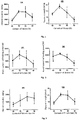
- Fig. 1 shows graphs of the flexural modulus and the flexural strength of the composite board prepared in Example 1.
- Fig. 1A is the flexural modulus graph of the composite board prepared in Example 1
- Fig. 1B is the flexural strength graph of the composite board prepared in Example 1.
- the results indicate that the flexural modulus of the composite board is not less than 1800 MPa, and the flexural strength of the composite board is not less than 15 MPa.
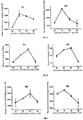
- Fig. 2 shows graphs of the board-surface nail holding power and the board-lateral nail holding power of the composite board prepared in Example 1.
- Fig. 2A is the board-surface nail holding power graph of the composite board prepared in Example 1
- Fig. 2B is the board-lateral nail holding power graph of the composite board prepared in Example 1. The results indicate that the board-surface nail holding power of the composite board is not less than 1400 N, and the board-lateral nail holding power of the composite board is not less than 1600 N.
- Wood chip powders a chlorinated poly(propylene carbonate) (CPPC-SY01, Shandong Weifang Tianrui Chemical Co., Ltd), a rosin ester, Antioxidant 1010 and calcium carbonate were mixed and stirred homogeneously to obtain a mixture.
- Four mixtures were formulated with mass fractions of components in the mixtures as shown in Table 2. Table 2. Mass fractions of the components in the four mixtures obtained in Example 2 Wood chip powders Chlorinated poly(propylene carbonate) Rosin ester Antioxidant 1010 Calcium carbonate 1 60% 30% 8.9% 0.1% 1% 2 70% 22% 6.9% 0.1 1% 3 80% 15% 4.9% 0.1% 0 4 90% 7% 2.9% 0.1% 0
- the above mixture was stirred homogeneously, then spread, and preheated for 5 min at 170°C.
- the pressure was increased to 10 MPa while maintaining the temperature, and then the temperature and pressure were maintained for 5 min.
- the mixture was cold pressed for 8 min with the pressure maintained at 10 MPa to obtain a composite board of the chlorinated poly(propylene carbonate) and the wood chip powders.
- Fig. 3 shows graphs of the flexural modulus and the flexural strength of the composite board prepared in Example 2.
- Fig. 3A is the flexural modulus graph of the composite board prepared in Example 2
- Fig. 3B is the flexural strength graph of the composite board prepared in Example 2.
- the results indicate that the flexural modulus of the composite board is not less than 1300 MPa, and the flexural strength of the composite board is not less than 13 MPa.
- Fig. 4 shows graphs of the board-surface nail holding power and the board-lateral nail holding power of the composite board prepared in Example 2.
- Fig. 4A is the board-surface nail holding power graph of the composite board prepared in Example 2
- Fig. 4B is the board-lateral nail holding power graph of the composite board prepared in Example 2. The results indicate that the board-surface nail holding power of the composite board is not less than 1300N, and the board-lateral nail holding power of the composite board is not less than 1000N.
- the above mixture was stirred homogeneously, then spread, and preheated for 5 min at 170°C.
- the pressure was increased to 10 MPa while maintaining the temperature, and then the temperature and pressure were maintained for 5 min.
- the mixture was cold pressed for 8 min with the pressure maintained at 10 MPa to obtain a composite board of the chlorinated poly(propylene carbonate) and the bamboo powders.
- Fig. 5 shows graphs of the flexural modulus and the flexural strength of the composite board prepared in Example 3.
- Fig. 5A is the flexural modulus graph of the composite board prepared in Example 3
- Fig. 5B is the flexural strength graph of the composite board prepared in Example 3.
- the results indicate that the flexural modulus of the composite board is not less than 3100 MPa, and the flexural strength of the composite board is not less than 23 MPa.
- Fig. 6 shows graphs of the board-surface nail holding power and the board-lateral nail holding power of the composite board prepared in Example 3.
- Fig. 6A is the board-surface nail holding power graph of the composite board prepared in Example 3
- Fig. 6B is the board-lateral nail holding power graph of the composite board prepared in Example 3. The results indicate that the board-surface nail holding power of the composite board is not less than 3900N, and the board-lateral nail holding power of the composite board is not less than 2180N.
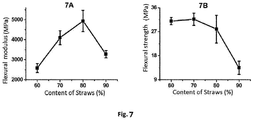
- Fig. 7 shows graphs of the flexural modulus and the flexural strength of the composite board prepared in Example 4.
- Fig. 7A is the flexural modulus graph of the composite board prepared in Example 4
- Fig. 7B is the flexural strength graph of the composite board prepared in Example 4. The results indicate that the flexural modulus of the composite board is not less than 2500 MPa, and the flexural strength of the composite board is not less than 13 MPa.
- the above composite board obtained from the above first mixture was measured according to Section 4.4, Method I of testing thickness expansion rate of water absorbing, in GB/T17657-2013, "Testing Methods of Evaluating the Properties of Artificial boards and Surface Decorated Artificial boards". That is, the above composite board was placed in water at a depth of 10 cm, and measured for its thickness once per hour. The change in thickness is as shown in Table 8. Table 8. Water absorbing expansion test for the composite obtained in Example 4 Time in water (h) Change in thickness (mm) 0 4.5 3 4.5 6 4.7
Landscapes
- Chemical & Material Sciences (AREA)
- Life Sciences & Earth Sciences (AREA)
- Engineering & Computer Science (AREA)
- Chemical Kinetics & Catalysis (AREA)
- Health & Medical Sciences (AREA)
- Medicinal Chemistry (AREA)
- Polymers & Plastics (AREA)
- Organic Chemistry (AREA)
- Wood Science & Technology (AREA)
- Manufacturing & Machinery (AREA)
- Forests & Forestry (AREA)
- Materials Engineering (AREA)
- Compositions Of Macromolecular Compounds (AREA)
- Dry Formation Of Fiberboard And The Like (AREA)
Applications Claiming Priority (2)
| Application Number | Priority Date | Filing Date | Title |
|---|---|---|---|
| CN201710613749.7A CN107236323A (zh) | 2017-07-25 | 2017-07-25 | 氯化聚丙撑碳酸酯/生物质复合材料及其制备方法 |
| PCT/CN2017/107813 WO2019019443A1 (zh) | 2017-07-25 | 2017-10-26 | 氯化聚丙撑碳酸酯/生物质复合材料及其制备方法 |
Publications (3)
| Publication Number | Publication Date |
|---|---|
| EP3660102A1 true EP3660102A1 (de) | 2020-06-03 |
| EP3660102A4 EP3660102A4 (de) | 2021-05-05 |
| EP3660102B1 EP3660102B1 (de) | 2024-10-09 |
Family
ID=59989632
Family Applications (1)
| Application Number | Title | Priority Date | Filing Date |
|---|---|---|---|
| EP17919501.1A Active EP3660102B1 (de) | 2017-07-25 | 2017-10-26 | Chloriertes poly(propylencarbonat)/biomasse-verbundmaterial und verfahren zur herstellung desselben |
Country Status (4)
| Country | Link |
|---|---|
| US (1) | US11236230B2 (de) |
| EP (1) | EP3660102B1 (de) |
| CN (1) | CN107236323A (de) |
| WO (1) | WO2019019443A1 (de) |
Families Citing this family (4)
| Publication number | Priority date | Publication date | Assignee | Title |
|---|---|---|---|---|
| CN107236323A (zh) | 2017-07-25 | 2017-10-10 | 中国科学院长春应用化学研究所 | 氯化聚丙撑碳酸酯/生物质复合材料及其制备方法 |
| CN111454485A (zh) * | 2020-03-30 | 2020-07-28 | 嘉兴学院 | 一种抗静电木塑复合材料及其制备方法 |
| CN112646347B (zh) * | 2020-12-25 | 2021-09-21 | 中国科学院长春应用化学研究所 | 一种抗粘结ppc材料及其制备方法 |
| CN117165051A (zh) * | 2023-10-07 | 2023-12-05 | 康辉新材料科技有限公司 | 生物降解缠绕膜及其制备方法和应用 |
Family Cites Families (12)
| Publication number | Priority date | Publication date | Assignee | Title |
|---|---|---|---|---|
| US6605245B1 (en) * | 1997-12-11 | 2003-08-12 | Boise Cascade Corporation | Apparatus and method for continuous formation of composites having filler and thermoactive materials |
| CN1116152C (zh) | 2000-12-26 | 2003-07-30 | 马富生 | 秸秆密度板及其制造方法 |
| CN100336759C (zh) | 2003-07-04 | 2007-09-12 | 张光辉 | 秸杆制纤维板及其制造方法 |
| CN100354089C (zh) | 2006-04-24 | 2007-12-12 | 沈阳建筑大学 | 一种玉米秸秆制造非承重保温砌块的方法 |
| CN101186754B (zh) * | 2006-11-16 | 2010-06-16 | 滨州华晨新型建材有限公司 | 一种利用农业植物秸秆生产高分子复合木塑材料的方法 |
| CN201136203Y (zh) | 2007-12-05 | 2008-10-22 | 广东威华股份有限公司 | 农作物秸秆木材纤维复合板 |
| CN101698749B (zh) | 2009-11-03 | 2011-10-26 | 北京林业大学 | 一种木塑复合材料及其制备方法 |
| CN103881078B (zh) * | 2014-04-17 | 2016-02-03 | 中国科学院长春应用化学研究所 | 氯化聚丙撑碳酸酯及其制备方法 |
| CN104449521B (zh) | 2014-12-23 | 2017-08-25 | 中国科学院长春应用化学研究所 | 一种热熔胶组合物及其制备方法 |
| CN106433047A (zh) * | 2016-09-28 | 2017-02-22 | 深圳市虹彩新材料科技有限公司 | 高强高韧生物降解薄膜及其制备方法 |
| CN115678301A (zh) * | 2016-12-25 | 2023-02-03 | 深圳市金凌软件有限公司 | Ppc/农林生物质复合材料、制备方法及用途 |
| CN107236323A (zh) | 2017-07-25 | 2017-10-10 | 中国科学院长春应用化学研究所 | 氯化聚丙撑碳酸酯/生物质复合材料及其制备方法 |
-
2017
- 2017-07-25 CN CN201710613749.7A patent/CN107236323A/zh active Pending
- 2017-10-26 EP EP17919501.1A patent/EP3660102B1/de active Active
- 2017-10-26 US US16/630,336 patent/US11236230B2/en active Active
- 2017-10-26 WO PCT/CN2017/107813 patent/WO2019019443A1/zh not_active Ceased
Also Published As
| Publication number | Publication date |
|---|---|
| EP3660102B1 (de) | 2024-10-09 |
| CN107236323A (zh) | 2017-10-10 |
| US11236230B2 (en) | 2022-02-01 |
| WO2019019443A1 (zh) | 2019-01-31 |
| US20200172727A1 (en) | 2020-06-04 |
| EP3660102A4 (de) | 2021-05-05 |
Similar Documents
| Publication | Publication Date | Title |
|---|---|---|
| EP3660102B1 (de) | Chloriertes poly(propylencarbonat)/biomasse-verbundmaterial und verfahren zur herstellung desselben | |
| CN101596732B (zh) | 木塑复合地板的生产方法 | |
| CN104497964B (zh) | 纤维板用无醛脱脂豆粉基胶粘剂及其制备方法 | |
| KR101153834B1 (ko) | 난연성을 구비하는 친환경 합성목재 조성물로 이루어진 합성목재 | |
| CN107542249B (zh) | 一种软木橡胶复合地板 | |
| CN1942295A (zh) | 一种实用玉米秆板材及其制备方法 | |
| CN104804331A (zh) | Frp废弃物的再利用方法、pvc基木塑复合材料及其制备方法 | |
| CN103351557A (zh) | 一种pvc木塑复合材料及其加工成型方法 | |
| CN105733129A (zh) | 一种碳化植物纤维改性木塑复合材料及其制备方法 | |
| Tatara et al. | Design properties for molded, corn-based DDGS-filled phenolic resin | |
| CN101955624A (zh) | 一种植物纤维高密度聚乙烯复合材料及其制备方法 | |
| CN104558969B (zh) | 一种防虫木塑室内套装门及其制备方法 | |
| CN106188833A (zh) | 一种抗静电麦秆木塑复合材料及其制备方法 | |
| KR101920386B1 (ko) | 장기 내구성이 향상된 합성목재 성형체. | |
| CN101319077A (zh) | 废旧pvc电缆外皮/木粉复合板材的配方及生产方法 | |
| CN101029164A (zh) | 脲醛树脂泡沫保温复合粉料及应用该粉料压铸合成的合成板及方法 | |
| CN103709774A (zh) | 一种木塑复合材料及其制备方法 | |
| CN111040663B (zh) | 一种人造板用的豆基蛋白胶黏剂及其制备方法 | |
| CN105037816A (zh) | 一种适用于手机壳的抗菌塑料及其制备方法 | |
| CN104004293B (zh) | 一种室外pvc木塑格栅的配方及其制备方法 | |
| CN102399425A (zh) | 防电磁辐射的稀土氧化物聚合物复合材料及其制备方法 | |
| CN104910582A (zh) | 添加改性秸秆粉的酚醛树脂复合板材制备方法 | |
| CN105153574A (zh) | 一种硅藻土改性的pvc塑料的制备方法 | |
| CN103360736A (zh) | 一种腐植酸复合材料及其制备方法 | |
| CN113004686A (zh) | 一种尼龙生物质复合材料及其制备方法 |
Legal Events
| Date | Code | Title | Description |
|---|---|---|---|
| STAA | Information on the status of an ep patent application or granted ep patent |
Free format text: STATUS: THE INTERNATIONAL PUBLICATION HAS BEEN MADE |
|
| PUAI | Public reference made under article 153(3) epc to a published international application that has entered the european phase |
Free format text: ORIGINAL CODE: 0009012 |
|
| STAA | Information on the status of an ep patent application or granted ep patent |
Free format text: STATUS: REQUEST FOR EXAMINATION WAS MADE |
|
| 17P | Request for examination filed |
Effective date: 20200113 |
|
| AK | Designated contracting states |
Kind code of ref document: A1 Designated state(s): AL AT BE BG CH CY CZ DE DK EE ES FI FR GB GR HR HU IE IS IT LI LT LU LV MC MK MT NL NO PL PT RO RS SE SI SK SM TR |
|
| AX | Request for extension of the european patent |
Extension state: BA ME |
|
| DAV | Request for validation of the european patent (deleted) | ||
| DAX | Request for extension of the european patent (deleted) | ||
| A4 | Supplementary search report drawn up and despatched |
Effective date: 20210407 |
|
| RIC1 | Information provided on ipc code assigned before grant |
Ipc: C08L 97/02 20060101AFI20210330BHEP Ipc: C08L 69/00 20060101ALI20210330BHEP Ipc: C08L 93/04 20060101ALI20210330BHEP Ipc: C08K 5/134 20060101ALI20210330BHEP Ipc: C08K 3/26 20060101ALI20210330BHEP Ipc: C08L 99/00 20060101ALI20210330BHEP Ipc: B27N 3/00 20060101ALI20210330BHEP |
|
| STAA | Information on the status of an ep patent application or granted ep patent |
Free format text: STATUS: EXAMINATION IS IN PROGRESS |
|
| 17Q | First examination report despatched |
Effective date: 20231026 |
|
| GRAP | Despatch of communication of intention to grant a patent |
Free format text: ORIGINAL CODE: EPIDOSNIGR1 |
|
| STAA | Information on the status of an ep patent application or granted ep patent |
Free format text: STATUS: GRANT OF PATENT IS INTENDED |
|
| INTG | Intention to grant announced |
Effective date: 20240604 |
|
| P01 | Opt-out of the competence of the unified patent court (upc) registered |
Free format text: CASE NUMBER: APP_40395/2024 Effective date: 20240708 |
|
| GRAS | Grant fee paid |
Free format text: ORIGINAL CODE: EPIDOSNIGR3 |
|
| GRAA | (expected) grant |
Free format text: ORIGINAL CODE: 0009210 |
|
| STAA | Information on the status of an ep patent application or granted ep patent |
Free format text: STATUS: THE PATENT HAS BEEN GRANTED |
|
| AK | Designated contracting states |
Kind code of ref document: B1 Designated state(s): AL AT BE BG CH CY CZ DE DK EE ES FI FR GB GR HR HU IE IS IT LI LT LU LV MC MK MT NL NO PL PT RO RS SE SI SK SM TR |
|
| REG | Reference to a national code |
Ref country code: CH Ref legal event code: EP |
|
| REG | Reference to a national code |
Ref country code: NL Ref legal event code: FP |
|
| REG | Reference to a national code |
Ref country code: DE Ref legal event code: R096 Ref document number: 602017085452 Country of ref document: DE |
|
| REG | Reference to a national code |
Ref country code: IE Ref legal event code: FG4D |
|
| REG | Reference to a national code |
Ref country code: LT Ref legal event code: MG9D |
|
| REG | Reference to a national code |
Ref country code: AT Ref legal event code: MK05 Ref document number: 1730580 Country of ref document: AT Kind code of ref document: T Effective date: 20241009 |
|
| PG25 | Lapsed in a contracting state [announced via postgrant information from national office to epo] |
Ref country code: HR Free format text: LAPSE BECAUSE OF FAILURE TO SUBMIT A TRANSLATION OF THE DESCRIPTION OR TO PAY THE FEE WITHIN THE PRESCRIBED TIME-LIMIT Effective date: 20241009 Ref country code: IS Free format text: LAPSE BECAUSE OF FAILURE TO SUBMIT A TRANSLATION OF THE DESCRIPTION OR TO PAY THE FEE WITHIN THE PRESCRIBED TIME-LIMIT Effective date: 20250209 Ref country code: PT Free format text: LAPSE BECAUSE OF FAILURE TO SUBMIT A TRANSLATION OF THE DESCRIPTION OR TO PAY THE FEE WITHIN THE PRESCRIBED TIME-LIMIT Effective date: 20250210 |
|
| PG25 | Lapsed in a contracting state [announced via postgrant information from national office to epo] |
Ref country code: FI Free format text: LAPSE BECAUSE OF FAILURE TO SUBMIT A TRANSLATION OF THE DESCRIPTION OR TO PAY THE FEE WITHIN THE PRESCRIBED TIME-LIMIT Effective date: 20241009 |
|
| PG25 | Lapsed in a contracting state [announced via postgrant information from national office to epo] |
Ref country code: BG Free format text: LAPSE BECAUSE OF FAILURE TO SUBMIT A TRANSLATION OF THE DESCRIPTION OR TO PAY THE FEE WITHIN THE PRESCRIBED TIME-LIMIT Effective date: 20241009 |
|
| PG25 | Lapsed in a contracting state [announced via postgrant information from national office to epo] |
Ref country code: ES Free format text: LAPSE BECAUSE OF FAILURE TO SUBMIT A TRANSLATION OF THE DESCRIPTION OR TO PAY THE FEE WITHIN THE PRESCRIBED TIME-LIMIT Effective date: 20241009 |
|
| PG25 | Lapsed in a contracting state [announced via postgrant information from national office to epo] |
Ref country code: NO Free format text: LAPSE BECAUSE OF FAILURE TO SUBMIT A TRANSLATION OF THE DESCRIPTION OR TO PAY THE FEE WITHIN THE PRESCRIBED TIME-LIMIT Effective date: 20250109 |
|
| PG25 | Lapsed in a contracting state [announced via postgrant information from national office to epo] |
Ref country code: GR Free format text: LAPSE BECAUSE OF FAILURE TO SUBMIT A TRANSLATION OF THE DESCRIPTION OR TO PAY THE FEE WITHIN THE PRESCRIBED TIME-LIMIT Effective date: 20250110 Ref country code: LV Free format text: LAPSE BECAUSE OF FAILURE TO SUBMIT A TRANSLATION OF THE DESCRIPTION OR TO PAY THE FEE WITHIN THE PRESCRIBED TIME-LIMIT Effective date: 20241009 Ref country code: AT Free format text: LAPSE BECAUSE OF FAILURE TO SUBMIT A TRANSLATION OF THE DESCRIPTION OR TO PAY THE FEE WITHIN THE PRESCRIBED TIME-LIMIT Effective date: 20241009 |
|
| PG25 | Lapsed in a contracting state [announced via postgrant information from national office to epo] |
Ref country code: PL Free format text: LAPSE BECAUSE OF FAILURE TO SUBMIT A TRANSLATION OF THE DESCRIPTION OR TO PAY THE FEE WITHIN THE PRESCRIBED TIME-LIMIT Effective date: 20241009 |
|
| PG25 | Lapsed in a contracting state [announced via postgrant information from national office to epo] |
Ref country code: RS Free format text: LAPSE BECAUSE OF FAILURE TO SUBMIT A TRANSLATION OF THE DESCRIPTION OR TO PAY THE FEE WITHIN THE PRESCRIBED TIME-LIMIT Effective date: 20250109 |
|
| REG | Reference to a national code |
Ref country code: CH Ref legal event code: PL |
|
| PG25 | Lapsed in a contracting state [announced via postgrant information from national office to epo] |
Ref country code: SM Free format text: LAPSE BECAUSE OF FAILURE TO SUBMIT A TRANSLATION OF THE DESCRIPTION OR TO PAY THE FEE WITHIN THE PRESCRIBED TIME-LIMIT Effective date: 20241009 |
|
| PG25 | Lapsed in a contracting state [announced via postgrant information from national office to epo] |
Ref country code: MC Free format text: LAPSE BECAUSE OF FAILURE TO SUBMIT A TRANSLATION OF THE DESCRIPTION OR TO PAY THE FEE WITHIN THE PRESCRIBED TIME-LIMIT Effective date: 20241009 |
|
| PG25 | Lapsed in a contracting state [announced via postgrant information from national office to epo] |
Ref country code: DK Free format text: LAPSE BECAUSE OF FAILURE TO SUBMIT A TRANSLATION OF THE DESCRIPTION OR TO PAY THE FEE WITHIN THE PRESCRIBED TIME-LIMIT Effective date: 20241009 |
|
| REG | Reference to a national code |
Ref country code: DE Ref legal event code: R097 Ref document number: 602017085452 Country of ref document: DE |
|
| PG25 | Lapsed in a contracting state [announced via postgrant information from national office to epo] |
Ref country code: LU Free format text: LAPSE BECAUSE OF NON-PAYMENT OF DUE FEES Effective date: 20241026 Ref country code: BE Free format text: LAPSE BECAUSE OF NON-PAYMENT OF DUE FEES Effective date: 20241031 |
|
| PG25 | Lapsed in a contracting state [announced via postgrant information from national office to epo] |
Ref country code: EE Free format text: LAPSE BECAUSE OF FAILURE TO SUBMIT A TRANSLATION OF THE DESCRIPTION OR TO PAY THE FEE WITHIN THE PRESCRIBED TIME-LIMIT Effective date: 20241009 |
|
| PG25 | Lapsed in a contracting state [announced via postgrant information from national office to epo] |
Ref country code: CH Free format text: LAPSE BECAUSE OF NON-PAYMENT OF DUE FEES Effective date: 20241031 |
|
| PG25 | Lapsed in a contracting state [announced via postgrant information from national office to epo] |
Ref country code: RO Free format text: LAPSE BECAUSE OF FAILURE TO SUBMIT A TRANSLATION OF THE DESCRIPTION OR TO PAY THE FEE WITHIN THE PRESCRIBED TIME-LIMIT Effective date: 20241009 |
|
| PG25 | Lapsed in a contracting state [announced via postgrant information from national office to epo] |
Ref country code: SK Free format text: LAPSE BECAUSE OF FAILURE TO SUBMIT A TRANSLATION OF THE DESCRIPTION OR TO PAY THE FEE WITHIN THE PRESCRIBED TIME-LIMIT Effective date: 20241009 |
|
| PG25 | Lapsed in a contracting state [announced via postgrant information from national office to epo] |
Ref country code: CZ Free format text: LAPSE BECAUSE OF FAILURE TO SUBMIT A TRANSLATION OF THE DESCRIPTION OR TO PAY THE FEE WITHIN THE PRESCRIBED TIME-LIMIT Effective date: 20241009 |
|
| PG25 | Lapsed in a contracting state [announced via postgrant information from national office to epo] |
Ref country code: IT Free format text: LAPSE BECAUSE OF FAILURE TO SUBMIT A TRANSLATION OF THE DESCRIPTION OR TO PAY THE FEE WITHIN THE PRESCRIBED TIME-LIMIT Effective date: 20241009 |
|
| REG | Reference to a national code |
Ref country code: BE Ref legal event code: MM Effective date: 20241031 |
|
| PLBE | No opposition filed within time limit |
Free format text: ORIGINAL CODE: 0009261 |
|
| STAA | Information on the status of an ep patent application or granted ep patent |
Free format text: STATUS: NO OPPOSITION FILED WITHIN TIME LIMIT |
|
| PG25 | Lapsed in a contracting state [announced via postgrant information from national office to epo] |
Ref country code: SE Free format text: LAPSE BECAUSE OF FAILURE TO SUBMIT A TRANSLATION OF THE DESCRIPTION OR TO PAY THE FEE WITHIN THE PRESCRIBED TIME-LIMIT Effective date: 20241009 |
|
| 26N | No opposition filed |
Effective date: 20250710 |
|
| GBPC | Gb: european patent ceased through non-payment of renewal fee |
Effective date: 20250109 |
|
| PG25 | Lapsed in a contracting state [announced via postgrant information from national office to epo] |
Ref country code: GB Free format text: LAPSE BECAUSE OF NON-PAYMENT OF DUE FEES Effective date: 20250109 |
|
| PG25 | Lapsed in a contracting state [announced via postgrant information from national office to epo] |
Ref country code: IE Free format text: LAPSE BECAUSE OF NON-PAYMENT OF DUE FEES Effective date: 20241026 |
|
| PGFP | Annual fee paid to national office [announced via postgrant information from national office to epo] |
Ref country code: NL Payment date: 20251021 Year of fee payment: 9 |
|
| PGFP | Annual fee paid to national office [announced via postgrant information from national office to epo] |
Ref country code: DE Payment date: 20251028 Year of fee payment: 9 |
|
| PGFP | Annual fee paid to national office [announced via postgrant information from national office to epo] |
Ref country code: FR Payment date: 20251030 Year of fee payment: 9 |
|
| PG25 | Lapsed in a contracting state [announced via postgrant information from national office to epo] |
Ref country code: CY Free format text: LAPSE BECAUSE OF FAILURE TO SUBMIT A TRANSLATION OF THE DESCRIPTION OR TO PAY THE FEE WITHIN THE PRESCRIBED TIME-LIMIT; INVALID AB INITIO Effective date: 20171026 |
|
| PG25 | Lapsed in a contracting state [announced via postgrant information from national office to epo] |
Ref country code: HU Free format text: LAPSE BECAUSE OF FAILURE TO SUBMIT A TRANSLATION OF THE DESCRIPTION OR TO PAY THE FEE WITHIN THE PRESCRIBED TIME-LIMIT; INVALID AB INITIO Effective date: 20171026 |