EP3649865B1 - Hydrogels en tant que modificateurs de rhéologie - Google Patents
Hydrogels en tant que modificateurs de rhéologie Download PDFInfo
- Publication number
- EP3649865B1 EP3649865B1 EP19208203.0A EP19208203A EP3649865B1 EP 3649865 B1 EP3649865 B1 EP 3649865B1 EP 19208203 A EP19208203 A EP 19208203A EP 3649865 B1 EP3649865 B1 EP 3649865B1
- Authority
- EP
- European Patent Office
- Prior art keywords
- hydrogel
- lactose
- liquid
- agricultural composition
- milk
- Prior art date
- Legal status (The legal status is an assumption and is not a legal conclusion. Google has not performed a legal analysis and makes no representation as to the accuracy of the status listed.)
- Active
Links
Images


Classifications
-
- A—HUMAN NECESSITIES
- A01—AGRICULTURE; FORESTRY; ANIMAL HUSBANDRY; HUNTING; TRAPPING; FISHING
- A01N—PRESERVATION OF BODIES OF HUMANS OR ANIMALS OR PLANTS OR PARTS THEREOF; BIOCIDES, e.g. AS DISINFECTANTS, AS PESTICIDES OR AS HERBICIDES; PEST REPELLANTS OR ATTRACTANTS; PLANT GROWTH REGULATORS
- A01N31/00—Biocides, pest repellants or attractants, or plant growth regulators containing organic oxygen or sulfur compounds
- A01N31/04—Oxygen or sulfur attached to an aliphatic side-chain of a carbocyclic ring system
-
- A—HUMAN NECESSITIES
- A23—FOODS OR FOODSTUFFS; TREATMENT THEREOF, NOT COVERED BY OTHER CLASSES
- A23C—DAIRY PRODUCTS, e.g. MILK, BUTTER OR CHEESE; MILK OR CHEESE SUBSTITUTES; PREPARATION THEREOF
- A23C1/00—Concentration, evaporation or drying
-
- C—CHEMISTRY; METALLURGY
- C09—DYES; PAINTS; POLISHES; NATURAL RESINS; ADHESIVES; COMPOSITIONS NOT OTHERWISE PROVIDED FOR; APPLICATIONS OF MATERIALS NOT OTHERWISE PROVIDED FOR
- C09K—MATERIALS FOR MISCELLANEOUS APPLICATIONS, NOT PROVIDED FOR ELSEWHERE
- C09K23/00—Use of substances as emulsifying, wetting, dispersing, or foam-producing agents
-
- A—HUMAN NECESSITIES
- A01—AGRICULTURE; FORESTRY; ANIMAL HUSBANDRY; HUNTING; TRAPPING; FISHING
- A01N—PRESERVATION OF BODIES OF HUMANS OR ANIMALS OR PLANTS OR PARTS THEREOF; BIOCIDES, e.g. AS DISINFECTANTS, AS PESTICIDES OR AS HERBICIDES; PEST REPELLANTS OR ATTRACTANTS; PLANT GROWTH REGULATORS
- A01N25/00—Biocides, pest repellants or attractants, or plant growth regulators, characterised by their forms, or by their non-active ingredients or by their methods of application, e.g. seed treatment or sequential application; Substances for reducing the noxious effect of the active ingredients to organisms other than pests
- A01N25/02—Biocides, pest repellants or attractants, or plant growth regulators, characterised by their forms, or by their non-active ingredients or by their methods of application, e.g. seed treatment or sequential application; Substances for reducing the noxious effect of the active ingredients to organisms other than pests containing liquids as carriers, diluents or solvents
- A01N25/04—Dispersions, emulsions, suspoemulsions, suspension concentrates or gels
-
- A—HUMAN NECESSITIES
- A23—FOODS OR FOODSTUFFS; TREATMENT THEREOF, NOT COVERED BY OTHER CLASSES
- A23L—FOODS, FOODSTUFFS OR NON-ALCOHOLIC BEVERAGES, NOT OTHERWISE PROVIDED FOR; PREPARATION OR TREATMENT THEREOF
- A23L29/00—Foods or foodstuffs containing additives; Preparation or treatment thereof
- A23L29/20—Foods or foodstuffs containing additives; Preparation or treatment thereof containing gelling or thickening agents
-
- C—CHEMISTRY; METALLURGY
- C05—FERTILISERS; MANUFACTURE THEREOF
- C05G—MIXTURES OF FERTILISERS COVERED INDIVIDUALLY BY DIFFERENT SUBCLASSES OF CLASS C05; MIXTURES OF ONE OR MORE FERTILISERS WITH MATERIALS NOT HAVING A SPECIFIC FERTILISING ACTIVITY, e.g. PESTICIDES, SOIL-CONDITIONERS, WETTING AGENTS; FERTILISERS CHARACTERISED BY THEIR FORM
- C05G3/00—Mixtures of one or more fertilisers with additives not having a specially fertilising activity
- C05G3/80—Soil conditioners
Definitions
- the present disclosure relates generally to hydrogels for use as rheology modifiers.
- Rheology modifiers are used to modify the viscosity of numerous agents including those in the agriculture, biomedical, cosmetic, food manufacturing, personal hygiene, and pharmaceuticals, and personal hygiene industries. Depending on the application, rheology modifiers may be difficult to produce or obtain, challenging to handle, expensive, and/or environmentally unfriendly.
- JP2006/274227 discloses blending a cross-linked hydrogel comprising sugar beet pectin with a food product.
- the present invention relates to a method of modifying the rheology of an agricultural composition by providing an agricultural composition and a crosslinked hydrogel, blending the hydrogel in a liquid to produce a hydrogel solution, and adding the hydrogel solution to the agricultural composition, wherein the crosslinked hydrogel comprises a sugar.
- the hydrogel solution modifies the rheology of the agricultural composition.
- a ratio of the liquid to the hydrogel is from about 0.25:1 to about 60:1.
- the ratio of the liquid to the hydrogel may be from about 0.5:1 to about 10:1.
- the ratio of the liquid to the hydrogel may from about 10:1 to about 50:1.
- the liquid is water.
- the hydrogel includes a sugar.
- the sugar may be a dairy sugar.
- the sugar may be lactose.
- the lactose may be from one or more of purified lactose, milk permeate, whey, whey permeate, de-lactosed permeate, de-proteinized whey, dairy-derived polysaccharides, buttermilk, skim milk, mammalian milk, whole milk powder, non-fat dry milk, and butter milk powder.
- the lactose may be from a waste product of a dairy or food processing operation.
- the waste product may be milk permeate.
- the hydrogel includes a crosslinking agent.
- the crosslinking agent may include methacrylic anhydride.
- the viscosity of the agricultural composition is increased or decreased.
- the agricultural composition is formulated as a liquid.
- the agricultural composition includes at least one of an adjuvant, fertilizer, humectant, micronutrient, macronutrient, plant growth regulator, seed treatment, or pesticide.
- Hydrogel solutions are disclosed herein.
- the solutions include hydrogels blended with water.
- Methods of preparing the hydrogels and the hydrogel solutions are also disclosed. The methods are atom economical (i.e., do not produce waste), environmentally friendly, and do not produce volatile organic compounds.
- hydrogel refers to hydrophilic polymer networks that may be swollen with water and are generally capable of absorbing water at loadings many times greater than their dry mass.
- the network structures may be formed with covalent bonds between polymer chains, but can also be constructed with physical crosslinks arising from, for example, chain entanglement, electrostatic interactions, and associations via strong hydrogen bonding or van der Waals interactions.
- the incorporation of carbohydrates into the polymer structure may introduce hydrophilicity that is helpful for the preparation of hydrogels.
- Sugar-containing polymers may function as hydrogels via polymer chemistries such as polyureas, phenolics, and free radical polymerization of styrenic and acrylamide derivatives.
- hydrogels Any hydrogel known in the art may be suitable for use in hydrogel solutions, which are described in detail below.
- the presently disclosed hydrogels may be generally understood as a composition including at least one sugar and a crosslinking agent.
- the sugar may be a dairy sugar.
- the sugar is lactose. While lactose is used as an example of a suitable sugar, and lactose-derived hydrogels are described in detail throughout the present disclosure, the compositions of suitable hydrogels for use in the disclosed hydrogel solutions are not limited to those that include lactose.
- the lactose may include either or both of the ⁇ - and ⁇ -anomers of lactose.
- the lactose may be derivatized lactose, such as esterified lactose.
- the esterified lactose is lactose methacrylate.
- Lactose may be derivatized at any one or more of the eight free hydroxyl groups.
- Lactose methacrylate may include lactose mono-methacrylate, lactose di-methacrylate, lactose tri-methacrylate, higher lactose methacrylates, or any combination thereof.
- the methacrylate monomers may be present in any proportion.
- the lactose may be an isolated and/or relatively pure lactose.
- the lactose may be a commercially available lactose monohydrate having ⁇ 94% ⁇ -lactose.
- the lactose, or other dairy sugar may be provided in milk permeate, whey, whey permeate, de-lactosed permeate, de-proteinized whey, dairy-derived polysaccharides, buttermilk, skim milk, mammalian milk, whole milk powder, non-fat dry milk, butter milk powder, or any combination thereof.
- the lactose may be provided in a waste stream from, for example, a dairy or food processing operation. In one example, the lactose is provided in waste milk permeate from a dairy operation.
- sourcing lactose and/or other dairy sugars from an existing waste stream may help utilize an untapped feedstock, reduce the cost of producing the lactose-derived hydrogel, and/or reduce the cost of producing the material that generated the lactose-containing waste stream.
- the lactose is dissolved in water prior to combining the lactose with the acrylic acid derivative.
- the crosslinking agent may be an acrylic acid derivative.
- the acrylic acid derivative may be methacrylic anhydride, methacrylic monomers, methacryloyl chloride, activated acrylates, acrylic anhydride, acrylic acid, or any combination thereof.
- the acrylic acid derivative is methacrylic anhydride.
- the lactose and methacrylic anhydride may be combined to form a hydrogel precursor mixture.
- lactose and methacrylic anhydride are combined in the presence of sodium hydroxide to produce a hydrogel precursor mixture including lactose methacrylate, sodium methacrylate, and/or methacrylic acid.
- the ratio of lactose to methacrylic anhydride in the precursor mixture may be from about 1.0:0.1 to about 1.0:3.0, such as about 1.0:0.1, about 1.0:0.5, about 1.0:1.0, about 1.0:2.0, or about 1.0:3.0.
- the disclosed lactose-derived hydrogels utilize a lactose source that has been known as a waste byproduct or waste stream from a separate manufacturing process.
- the lactose-derived hydrogels may be biodegradable.
- the lactose-derived hydrogels, and the methods of making them, may be more environmentally friendly than known hydrogels and production methods. The methods are described in more detail immediately below.
- Methods of producing the disclosed lactose-derived hydrogels include copolymerizing lactose methacrylate, methacrylic acid, and sodium methacrylate in a one-pot reaction using light-induced photopolymerization in the absence of a photoinitiator. No volatile organic compounds or waste products are generated by the methods.
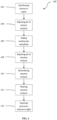
- Figure 1 illustrates a method 100 of preparing a lactose-derived hydrogel.
- the method 100 includes a step 102 of distributing lactose in water to produce a lactose solution, a step 104 of adjusting the pH of the lactose solution, a step 106 of adding methacrylic anhydride to the lactose solution to produce a reaction mixture, a step 108 of adjusting the pH of the reaction mixture, an optional step 110 of neutralizing the reaction mixture, an optional step 112 of filtering the reaction mixture to produce a hydrogel precursor mixture, and a step 114 of exposing the hydrogel precursor mixture to light to produce a lactose-derived hydrogel.
- the lactose and water may be stirred, which may help distribute the lactose. Additionally or alternatively, the lactose and water may be heated, such as from about 25 °C to about 90 °C, or about 65 °C to about 90 °C, which may help distribute the lactose. The lactose and water may be stirred and/or heated until the lactose is partially or completely dissolved in the water to produce a lactose solution.
- the lactose may be an isolated and/or relatively pure lactose.
- the lactose may be a commercially available lactose monohydrate having ⁇ 94% ⁇ -lactose.
- the lactose may be provided in milk permeate, whey, whey permeate, de-lactosed permeate, de-proteinized whey, dairy-derived polysaccharides, buttermilk, skim milk, mammalian milk, whole milk powder, non-fat dry milk, butter milk powder, or any combination thereof.
- the lactose may be provided in a waste stream from, for example, a dairy or food processing operation. In one example, the lactose is provided in waste milk permeate from a dairy operation.
- the lactose solution produced in step 102 may be cooled, such as passively to room temperature, prior to step 104.
- step 104 the pH of the lactose solution is adjusted to a pH of at most about 10.
- aqueous sodium hydroxide is added to the solution to increase the pH.
- the lactose in step 102 is provided by milk permeate and the lactose solution has an unadjusted pH of about 6.2 to about 6.4.
- step 106 the lactose solution and methacrylic anhydride may be stirred together.
- Methacrylic anhydride may be added in an amount that yields a desired ratio of lactose to methacrylic anhydride.
- the molar ratio of lactose to methacrylic anhydride is about 1.0:0.5.
- the lactose and methacrylic anhydride may react to produce lactose methacrylate.
- step 108 the pH of the reaction mixture is adjusted to a pH of at most about 10. In one example, a pH of about 9.5 ⁇ 0.5 is maintained with the slow addition of aqueous sodium hydroxide.
- the lactose is functionalized with methacrylate groups by esterification with methacrylic anhydride to produce lactose methacrylate.
- the lactose methacrylate may include lactose mono-methacrylate, lactose di-methacrylate, lactose tri-methacrylate, and/or higher lactose methacrylate monomers.
- sodium methacrylate is generated as a by-product of the esterification and as a result of hydrolysis.
- Methacrylic acid is also generated in the esterification reaction.
- the lactose methacrylate, sodium methacrylate, and/or methacrylic acid may copolymerize.
- reaction mixture is allowed to stir, such as for about 30 minutes at room temperature, after the addition of sodium hydroxide and before step 110.
- the reaction mixture may be neutralized to a pH of about 7. In one implementation, the reaction mixture is neutralized by the addition of hydrochloric acid. In some implementations, step 110 is not performed.
- the reaction mixture may be filtered by, for example, gravity filtration, vacuum filtration, or centrifugation, which may help to remove insoluble particles.
- the reaction mixture is gravity filtered through qualitative filter paper.
- the filtrate is used in step 114 as a hydrogel precursor mixture.
- the hydrogel precursor mixture is exposed to light, which may help to induce self-initiated copolymerization of lactose methacrylate, methacrylic acid, and sodium methacrylate. Lactose di- and higher methacrylates may serves as crosslinkers during polymerization.
- the light is in the ultraviolet spectrum.
- the UV light has a wavelength of about 365 nm and/or an intensity of about 3.4 mW/cm 2 to about 3.8 mW/cm 2 .
- the hydrogel precursor mixture is exposed to UV light for about 60 minutes at room temperature.
- Lactose-derived hydrogels produced by the method 100 may have various consistencies, which may be related to the (mol:mol) ratio of lactose to methacrylic anhydride.
- a hydrogel precursor mixture having a 1.0:0.5 lactose:methacrylic anhydride ratio produced a hydrogel having a gelatin-like consistency.
- a hydrogel precursor mixture having a 1.0:0.1 lactose:methacrylic anhydride ratio produced a hydrogel having a mucilaginous consistency.
- the proportion of methacrylic anhydride compared to lactose decreased, the resulting hydrogel became softer and more liquid-like.
- Methods disclosed herein of producing lactose-derived hydrogels may have numerous benefits, including benefits over known methods of producing hydrogels.
- the disclosed methods may employ green chemistry techniques and/or be more environmentally friendly than known production methods.
- the disclosed methods may utilize a lactose source that has been known as a waste byproduct or waste stream from a separate manufacturing process, such as from the dairy or food processing industry.
- the disclosed methods may be more cost-effective than known methods.
- Photopolymerization of lactose methacrylate, methacrylic acid, and sodium methacrylate monomers may proceed in the absence of a photoinitiator, which permits exclusion of a photoinitiator from the methods.
- the disclosed methods may achieve high polymerization rates, even in the absence of a photoinitiator.
- Other benefits may include, but are not limited to, performing the method in water, performing the method at ambient temperature, producing no waste (i.e., the method is atom economic), and/or producing no volatile organic compound by the method.
- hydrogels described above may be combined with a liquid and blended to form a hydrogel solution.
- the viscosity of the hydrogel solution may be controlled by adjusting the ratio of lactose to methacrylic anhydride in the hydrogel, the ratio of hydrogel and liquid in the solution, and/or the blending conditions. Blending conditions are described in Methods of Producing Hydrogel Solutions immediately below.
- the hydrogel solutions may demonstrate an increased viscosity compared to water alone.
- the hydrogel solutions may demonstrate shear thinning behavior. Addition of hydrogels to a bulk liquid may modify the viscosity of the bulk liquid.
- a lactose-derived hydrogel may include any desired ratio of lactose to methacrylic anhydride.
- the molar ratio of lactose to methacrylic anhydride is about 1.0:0.5.
- the hydrogel may be blended with a liquid to produce a hydrogel solution.
- the hydrogel solution may have a weight liquid:weight hydrogel ratio of about 0.25:1 to about 500:1, about 0.25:1 to about 400:1, about 0.25:1 to about 300:1, about 0.25:1 to about 200:1, about 0.25:1 to about 100:1, about 0.25:1 to about 50:1, about 0.25:1 to about 40:1, about 0.25:1 to about 30:1, about 0.25:1 to about 20:1, about 0.25:1 to about 10:1, about 0.25:1 to about 5:1, about 0.25:1 to about 1:1, about 0.5:1 to about 500:1, about 1:1 to about 500:1, about 5:1 to about 500:1, about 10:1 to about 500:1, about 20:1 to about 500:1, about 30:1 to about 500:1, about 40:1 to about 500:1, about 50:1 to about 500:1, about 100:1 to about 500:1, about 200:1 to about 500:1, about 300:1 to about 500:1, about
- the hydrogel solutions may be added to an agent to modify the rheology of the agent.
- the agent may be, for example an agricultural composition.
- An agricultural composition may be a composition having a beneficial effect when used on agricultural target.
- the agricultural composition may be or may comprise, for example, an adjuvant, fertilizer, humectant, micronutrient, macronutrient, plant growth regulator, seed treatment, or pesticide.
- a pesticide may be, for example, an herbicide, insecticide, fungicide, nematicide, or rodenticide.
- the agricultural composition may be formulated as a liquid, such as a liquid that may be sprayed on or otherwise delivered to a desired location. For example, the agricultural composition may be delivered to a desired location via fertigation.
- the hydrogel solutions are added to a drift reduction adjuvant to modify the rheology of the adjuvant.
- the liquid atomization behavior of the adjuvant may be altered, which may reduce the formation of fine droplets.
- the hydrogel solutions are added to suspension concentrates to act as a structuring agent, to add viscosity, and/or to help maintain solid materials in suspension.
- Figure 2 illustrates a method 200 of preparing a hydrogel solution.
- the method 200 includes a step 202 of combining a hydrogel and liquid, and a step 204 of blending the hydrogel and liquid to form a hydrogel solution.
- the hydrogel may be a lactose-derived hydrogel, such as the ones described above or in U.S. Patent Application No. 2020/0148836 A1, filed November 9, 2018 , entitled “Lactose-Derived Hydrogels and Methods of Making the Same.”
- the liquid may be aqueous or non-aqueous. In one example, the liquid is water.
- the hydrogel and liquid may be combined in a weight liquid:weight hydrogel ratio of about 0.25:1 to about 500:1, about 0.25:1 to about 400:1, about 0.25:1 to about 300:1, about 0.25:1 to about 200:1, about 0.25:1 to about 100:1, about 0.25:1 to about 50:1, about 0.25:1 to about 40:1, about 0.25:1 to about 30:1, about 0.25:1 to about 20:1, about 0.25:1 to about 10:1, about 0.25:1 to about 5:1, about 0.25:1 to about 1:1, about 0.5:1 to about 500:1, about 1:1 to about 500:1, about 5:1 to about 500:1, about 10:1 to about 500:1, about 20:1 to about 500:1, about 30:1 to about 500:1, about 40:1 to about 500:1, about 50:1 to about 500:1, about 100:1 to about 500:1, about 200:1 to about 500:1, about 300:1 to about 500:1, about 400:1 to about 500:1, about 0.5:1 to about 50:
- the blending may be homogenization.
- the blending may be performed by, for example, a high shear mixer, a rotor stator, or a wet media mill.
- the hydrogel and liquid are high sheared at about 4000 rpm.
- the hydrogel and liquid may be blended for an amount of time that produces a desired degree of mixing. In some implementations, the hydrogel and liquid are blended for relatively shorter times when the blending speed is relatively faster. In some implementations, the hydrogel and liquid are blended for relatively longer times when the blending speed is relatively slower.
- Examples of blending times are about 2 minutes to about 40 minutes, about 2 minutes to about 35 minutes, about 2 minutes to about 30 minutes, about 2 minutes to about 25 minutes, about 2 minutes to about 20 minutes, about 2 minutes to about 15 minutes, about 2 minutes to about 10 minutes, about 2 minutes to about 5 minutes, about 5 minutes to about 40 minutes, about 10 minutes to about 40 minutes, about 15 minutes to about 40 minutes, about 20 minutes to about 40 minutes, about 25 minutes to about 40 minutes, about 30 minutes to about 40 minutes, about 35 minutes to about 40 minutes, or about 4 minutes to about 30 minutes.
- the hydrogel solution may appear hazy.
- homogenized hydrogel particles settle out of the hydrogel solution over time.
- step 204 is not performed and the hydrogel at least partially dissociates in the liquid over time.
- a hydrogel is dried and later rehydrated.
- a dried hydrogel is added to a vessel and a liquid is also added to the vessel.
- the liquid may be water or an agricultural composition.
- the dried hydrogel may be in powder form.
- the vessel may be a spray tank.
- the liquid may rehydrate the dried hydrogel before or as the hydrogel is applied to a desired location.
- the hydrogel may affect the rheology of the liquid.
- a hydrogel is not dried.
- an undried hydrogel is added to a vessel and a liquid is also added to the vessel.
- the liquid may be water or an agricultural composition.
- the undried hydrogel may be in liquid, gel, semi-solid, or solid form.
- the vessel may be a spray tank.
- the hydrogel may absorb none, some, or all of the liquid before or as the hydrogel is applied to a desired location.
- the hydrogel precursor mixture is not crosslinked before being delivered to a target. In some implementations, the hydrogel precursor mixture is crosslinked after being delivered to a target.
- the hydrogel precursor mixture may crosslink to form a hydrogel via exposure to ambient light.
- the hydrogel precursor mixture is sprayed as droplets on an agricultural target, such as a plant; crosslinking upon application increases the viscosity of the droplets, which may in turn affect how quickly the droplets evaporate, the flow pattern within the droplets, and/or the uptake of the droplets by the plants.
- Lactose-derived hydrogels were prepared according to the methods described in U.S. Non-Provisional Patent Application 16/185,406, filed November 9, 2018 , entitled “Lactose-Derived Hydrogels and Methods of Making the Same," the contents of which are hereby incorporated by reference in their entirety. Briefly, a hydrogel having a 1.0:0.5 lactose:methacrylic anhydride (mol:mol) ratio was prepared as follows.
- Hydrochloric acid (0.75 mL; 1 M; ACS Plus, Thermo Fisher Scientific, Hampton, NH) was added to neutralize the reaction mixture to pH 7. The mixture was then centrifuged and decanted to yield a hydrogel precursor mixture, which was transferred to a polystyrene petri dish.
- the hydrogel precursor mixture was then UV irradiated (365 nm, 3.4-3.8 mW/cm 2 ) for 60 minutes at room temperature. Photo-induced copolymerization of lactose methacrylate, methacrylic acid, and sodium methacrylate in the precursor mixture yielded a hydrogel.
- Hydrogel precursor mixtures having a 1.0:0.5 lactose:methacrylic anhydride (mol:mol) ratio were prepared according to the method of Example 1. The hydrogel precursor mixtures were not irradiated and a hydrogel was not formed.
- hydrogel was added to a 100 mL beaker with water.
- the hydrogel and water were high sheared at 4000 rpm for 15 minutes to homogenize the gel into small particles.
- Hydrogel solutions were prepared with the following weight:weight ratios of water to hydrogel: (A) 10:1 - 10 g water: 1 g hydrogel; (B) 1:1 - 1 g water: 1 g hydrogel; (C) 2:1- 2 g water: 1 g hydrogel; and (D) 1:2 - 1 g water: 2 g hydrogel.
- each solution was decanted via pipet to separate the liquid from any remaining particulate and was tested on an MCR Rheometer (Anton Paar, Graz, Austria). The density of each solution was determined before the solution was tested on the MCR Rheometer. The density of each solution supernatant was about 1 g/mL.
- Hydrogels having a 1.0:0.5 lactose:methacrylic anhydride (mol:mol) ratio were prepared according to the method of Example 1. Compared to Example 2, the hydrogel precursor mixtures were irradiated and a hydrogel was formed.
- hydrogels were used to prepare hydrogel solutions according to the general procedure of Example 2 except that the hydrogel solutions were blended for 5 (instead of 15) minutes.
- Hydrogel solutions were prepared with the following weight:weight ratios of water to hydrogel: (E) 20:1 - 40 g water: 2 g hydrogel; (F) 40:1 - 80 g water: 2 g hydrogel; and (G) 50:1 - 100 g water: 2 g hydrogel.
- the density of each solution was determined before the solution was tested on the MCR Rheometer as in Example 2.
- the density of each solution supernatant was about 1 g/mL.
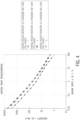
- Shear rate vs. viscosity data are shown in Figure 4 .
- the hydrogel solutions demonstrated shear thinning behavior. Water has a viscosity of 0.001 Pa ⁇ s, independent of shear rate. At low shear rates, the viscosities of the hydrogel solutions were more than 100,000 times greater than the viscosity of water. At high shear rates (100/s), the viscosities of the hydrogel solutions were about 1,000 times greater than the viscosity of water. Surprisingly, adding the hydrogels to bulk water modified the viscosity of the bulk water.
- Example 4 Effects of Shear Time on Rheology Analysis of Hydrogels Diluted with Water
- Hydrogels having a 1.0:0.5 lactose:methacrylic anhydride (mol:mol) ratio were prepared according to the method of Example 1. Compared to Example 2, the hydrogel precursor mixtures were irradiated and a hydrogel was formed.
- hydrogels were used to prepare hydrogel solutions according to the general procedure of Example 2 except that the hydrogel and were added to a 250 mL (instead of a 150 mL) beaker and the hydrogel solutions were blended for varying amounts of time as indicated below.
- Hydrogel solutions were prepared with the following weight:weight ratios of water to hydrogel: (H) 40:1, 5-min mix - 40 g water: 1 g hydrogel; (I) 40:1, 10-min mix - 40 g water: 1 g hydrogel; (J) 40:1, 15-min mix - 40 g water: 1 g hydrogel; (K) 40:1, 20-min mix - 40 g water: 1 g hydrogel; (L) 40:1, 30-min mix - 40 g water: 1 g hydrogel; and (M) 50:1, 15-min mix - 50 g water: 1 g hydrogel.
- the density of each solution was determined before the solution was tested on the MCR Rheometer as in Example 2.
- the density of each solution supernatant was about 1 g/mL.
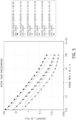
- Shear rate vs. viscosity data are shown in Figure 5 .
- All hydrogel solutions ((H) to (M)) at all dilution ratios and mixing times demonstrated shear thinning behavior.
- Water has a viscosity of 0.001 Pa ⁇ s, independent of shear rate.
- the diluted and homogenized hydrogels demonstrated an increased viscosity compared to water.
- the viscosity decreased. Without being limited to any mechanism or mode of action, the additional high shear time may have disrupted the hydrogel polymer network in the bulk solution and thereby decreased the viscosity of the bulk solution.
- the 50:1, 15-min mix solution (M) had a lower viscosity than the 40:1, 15-min mix solution (J), which demonstrates that the more dilute the hydrogel solution, the lower its viscosity.
- Even at low concentrations (e.g., 50:1 solution) the hydrogel significantly impacted solution viscosity compared to water.
- adding the hydrogels to bulk water modified the viscosity of the bulk water.
Landscapes
- Life Sciences & Earth Sciences (AREA)
- Chemical & Material Sciences (AREA)
- Health & Medical Sciences (AREA)
- Engineering & Computer Science (AREA)
- General Health & Medical Sciences (AREA)
- Pest Control & Pesticides (AREA)
- Environmental Sciences (AREA)
- Dentistry (AREA)
- Wood Science & Technology (AREA)
- Zoology (AREA)
- Plant Pathology (AREA)
- Agronomy & Crop Science (AREA)
- Dispersion Chemistry (AREA)
- Food Science & Technology (AREA)
- Polymers & Plastics (AREA)
- Toxicology (AREA)
- Nutrition Science (AREA)
- Organic Chemistry (AREA)
- Materials Engineering (AREA)
- Soil Sciences (AREA)
- Colloid Chemistry (AREA)
- Processes Of Treating Macromolecular Substances (AREA)
- Jellies, Jams, And Syrups (AREA)
Claims (14)
- Un procédé de modification de la rhéologie d'une composition agricole, le procédé comprenant :la mise à disposition d'une composition agricole et d'un hydrogel réticulé ;le mélangeage d'un hydrogel dans un liquide afin de produire une solution d'hydrogel ; etl'ajout de la solution d'hydrogel à la composition agricole,dans lequel la solution d'hydrogel modifie la rhéologie de la composition agricole ;dans lequel l'hydrogel réticulé comprend un sucre.
- Le procédé de la revendication 1, dans lequel un rapport du liquide à l'hydrogel réticulé va d'environ 0,25/1 à environ 60/1.
- Le procédé de la revendication 2, dans lequel le rapport du liquide à l'hydrogel réticulé va d'environ 0,5/1 à environ 10/1.
- Le procédé de la revendication 2, dans lequel le rapport du liquide à l'hydrogel réticulé va d'environ 10/1 à environ 50/1.
- Le procédé de n'importe quelle revendication précédente, dans lequel le liquide est de l'eau.
- Le procédé de n'importe lesquelles des revendications précédentes, dans lequel le sucre comprend un sucre laitier.
- Le procédé de l'une quelconque des revendications précédentes, dans lequel le sucre comprend du lactose.
- Le procédé de la revendication 7, dans lequel le lactose est issu d'un ou de plusieurs produits parmi le lactose purifié, le perméat de lait, le petit-lait, le perméat de petit-lait, le perméat délactosé, le petit-lait déprotéiné, des polysaccharides dérivés de produits laitiers, le babeurre, le lait écrémé, le lait de mammifère, la poudre de lait entier, le lait sec sans matière grasse, et la poudre de babeurre.
- Le procédé de la revendication 7 ou de la revendication 8, dans lequel le lactose est issu d'un résidu d'une opération de transformation d'aliments ou de produits laitiers.
- Le procédé de la revendication 9, dans lequel le résidu est du perméat de lait.
- Le procédé de n'importe quelle revendication précédente, dans lequel l'hydrogel réticulé comprend en sus un agent de réticulation, de préférence dans lequel l'agent de réticulation comprend de l'anhydride méthacrylique.
- Le procédé de n'importe quelle revendication précédente, dans lequel la viscosité de la composition agricole est augmentée ou diminuée.
- Le procédé de n'importe quelle revendication précédente, dans lequel la composition agricole est formulée sous la forme d'un liquide.
- Le procédé de n'importe quelle revendication précédente, dans lequel la composition agricole comprend au moins un produit parmi un adjuvant, un engrais, un agent humectant, un micronutriment, un macronutriment, un régulateur de croissance des plantes, un traitement de semences, et un pesticide.
Applications Claiming Priority (1)
| Application Number | Priority Date | Filing Date | Title |
|---|---|---|---|
| US201862758031P | 2018-11-09 | 2018-11-09 |
Publications (2)
| Publication Number | Publication Date |
|---|---|
| EP3649865A1 EP3649865A1 (fr) | 2020-05-13 |
| EP3649865B1 true EP3649865B1 (fr) | 2023-10-25 |
Family
ID=68531378
Family Applications (1)
| Application Number | Title | Priority Date | Filing Date |
|---|---|---|---|
| EP19208203.0A Active EP3649865B1 (fr) | 2018-11-09 | 2019-11-08 | Hydrogels en tant que modificateurs de rhéologie |
Country Status (8)
| Country | Link |
|---|---|
| US (3) | US11363813B2 (fr) |
| EP (1) | EP3649865B1 (fr) |
| CN (1) | CN111167374B (fr) |
| AR (1) | AR116984A1 (fr) |
| AU (1) | AU2019257406B2 (fr) |
| CA (1) | CA3060477A1 (fr) |
| ES (1) | ES2967694T3 (fr) |
| ZA (1) | ZA201907390B (fr) |
Families Citing this family (4)
| Publication number | Priority date | Publication date | Assignee | Title |
|---|---|---|---|---|
| CA3060477A1 (fr) * | 2018-11-09 | 2020-05-09 | Windfield Solutions, Llc | Hydrogels comme modificateurs de rheologie et methodes de fabrication |
| CA3060806A1 (fr) | 2018-11-09 | 2020-05-09 | Winfield Solutions, Llc | Hydrogels comme supports d`ingredients actifs et methodes de production |
| CN117247305A (zh) * | 2023-09-16 | 2023-12-19 | 鲁东大学 | 一种促进植物根系生长的水凝胶及制备方法 |
| WO2025091138A1 (fr) | 2023-10-31 | 2025-05-08 | Universidad de Concepción | Composition biopolymère pour la génération d'un hydrogel superabsorbant pour une utilisation en agriculture |
Citations (8)
| Publication number | Priority date | Publication date | Assignee | Title |
|---|---|---|---|---|
| US20020164364A1 (en) | 2001-05-02 | 2002-11-07 | 3M Innovative Properties Company | Active material immobilized in stable hydrogel microbeads |
| WO2005048707A1 (fr) | 2003-11-18 | 2005-06-02 | Lg Life Sciences Ltd. | Concentre de suspension fongicide aqueuse |
| CN103202290A (zh) | 2013-05-07 | 2013-07-17 | 中化化工科学技术研究总院 | 氰氟草酯悬浮剂及其制备方法 |
| US20140221289A1 (en) | 2011-04-08 | 2014-08-07 | Commissariat A L'energie Atomique Et Aux Energies Alternatives | Thixotropic A-Lactalbumin Hydrogels, Method for Preparing Same and Uses Thereof |
| CN105028457A (zh) | 2015-07-04 | 2015-11-11 | 中化化工科学技术研究总院 | 一种吡虫啉悬浮剂及其制备方法 |
| WO2017143130A1 (fr) | 2016-02-19 | 2017-08-24 | Advanced Bionutrition Corp. | Procédés de stabilisation pour enrober des graines avec des matériaux biologiques |
| WO2020021082A1 (fr) | 2018-07-27 | 2020-01-30 | Bayer Aktiengesellschaft | Formulations à libération contrôlée pour produits agrochimiques |
| WO2020053603A1 (fr) | 2018-09-14 | 2020-03-19 | Bionema Ltd | Composition de spores et champignons entomopathogènes, et son utilisation |
Family Cites Families (29)
| Publication number | Priority date | Publication date | Assignee | Title |
|---|---|---|---|---|
| AU621218B2 (en) | 1989-04-26 | 1992-03-05 | Sumitomo Chemical Company, Limited | Emulsifiable pesticidal solid compositions |
| US5474915A (en) * | 1990-05-08 | 1995-12-12 | University Of Iowa Research Foundation | Method of making poly(sugar acrylates) using hydrolytic enzymes |
| US5572827A (en) | 1995-05-05 | 1996-11-12 | Ball Horticultural Company | Method for applying hydrogel coatings to embryonic plants |
| FR2734124B1 (fr) | 1995-05-15 | 1997-08-08 | Rhone Poulenc Chimie | Granule dispersable dans l'eau, obtenu par extrusion, de matiere active phytosanitaire liquide ou a bas point de fusion |
| FR2780901B1 (fr) | 1998-07-09 | 2000-09-29 | Coletica | Particules, en particulier micro- ou nanoparticules de monosaccharides et oligosaccharides reticules, leurs procedes de preparation et compositions cosmetiques, pharmaceutiques ou alimentaires en contenant |
| CA2390107C (fr) * | 1999-11-18 | 2008-02-19 | Sorex Limited | Composition de gel aere, de longue conservation, et procede de production associe |
| BRPI0411670A (pt) * | 2003-06-20 | 2006-08-08 | Noveon Ip Holdings Corp | método para preparar hidrocolóides de galactomanana, hidrocolóide de galactomanana, composição, uso do hidrocolóide de galactomanana, produto para cuidado pessoal, produto para cuidado da saúde ou produto tópico para cuidado da saúde, produto para cuidados domésticos, produto institucional e industrial, e, método para purificar hicrocolóides de galactomanana |
| ITTO20040918A1 (it) * | 2004-12-29 | 2005-03-29 | Luigi Ambrosio | Idrogel polimerici superassorbenti biodegradabili e procedimento per la loro preparazione |
| JP4775809B2 (ja) | 2005-03-30 | 2011-09-21 | 独立行政法人農業・食品産業技術総合研究機構 | ハイドロゲル成分含有組成物の調製方法およびその用途 |
| US20070128121A1 (en) | 2005-12-05 | 2007-06-07 | The Regents Of The University Of California | Polymer hydrogels for controlled release and absorption of biocides |
| CN101721349B (zh) * | 2008-10-16 | 2011-07-20 | 常州百瑞吉生物医药有限公司 | 可注射原位交联水凝胶及其制备方法和用途 |
| US20140113821A1 (en) | 2011-06-03 | 2014-04-24 | Frank GU | Polysaccharide-based hydrogel polymer and uses thereof |
| TWI424007B (zh) * | 2011-12-22 | 2014-01-21 | Ind Tech Res Inst | 使膠體交聯的方法與藉由此方法形成之經交聯的膠體 |
| US20140100111A1 (en) * | 2012-10-04 | 2014-04-10 | Thomas M. Schultz, SR. | Seed Coating Hydrogels |
| US9827186B2 (en) * | 2013-03-07 | 2017-11-28 | Innovacos Corp. | Waxes having oil-in-water self-emulsifying and water gel-forming properties, compositions, uses and methods relating to same |
| JP6328154B2 (ja) * | 2013-03-13 | 2018-05-23 | アクゾ ノーベル ケミカルズ インターナショナル ベスローテン フエンノートシャップAkzo Nobel Chemicals International B.V. | レオロジー改質剤 |
| CN105338803A (zh) | 2013-03-15 | 2016-02-17 | 阿达玛马克西姆股份有限公司 | 用于有效吸收土壤中的肥料和其他农用化学品的人工环境 |
| RU2017101244A (ru) | 2014-09-15 | 2018-07-16 | Адама Мактешим Лтд. | Композиции для доставки агрохимикатов к корням растений |
| CN107249574A (zh) * | 2014-09-30 | 2017-10-13 | 重庆民济医疗器械有限公司 | 水凝胶组合物、其制备方法及其应用 |
| US20180297902A1 (en) * | 2017-04-14 | 2018-10-18 | Liquid Fertiliser Pty Ltd | Stable aqueous dispersions of zinc orthophosphates |
| WO2017223261A2 (fr) | 2016-06-23 | 2017-12-28 | 3M Innovative Properties Company | Hydrogels, articles comprenant des hydrogels, et procédés associés |
| TWI805554B (zh) | 2016-07-28 | 2023-06-21 | 日商住友化學股份有限公司 | 樹脂、硬化型樹脂組成物及硬化膜 |
| KR101829136B1 (ko) | 2016-08-11 | 2018-02-13 | 가톨릭대학교 산학협력단 | 가시광선 광경화 수용성 키토산 유도체, 키토산 하이드로겔 및 이의 제조방법 |
| KR20190067167A (ko) | 2016-10-14 | 2019-06-14 | 고쿠리츠 다이가꾸 호우진 시즈오까 다이가꾸 | 신규 하이드로겔화제 |
| CN106561682A (zh) | 2016-10-28 | 2017-04-19 | 华南农业大学 | 一种鱼藤酮微水凝胶控释剂及其制备方法 |
| CN107663263B (zh) | 2017-08-31 | 2019-12-10 | 海南大学 | 一种交联海藻酸钠水凝胶及其制备方法和应用 |
| CA3060806A1 (fr) | 2018-11-09 | 2020-05-09 | Winfield Solutions, Llc | Hydrogels comme supports d`ingredients actifs et methodes de production |
| US10800893B2 (en) | 2018-11-09 | 2020-10-13 | Regents Of The University Of Minnesota | Lactose-derived hydrogels and methods of producing the same |
| CA3060477A1 (fr) | 2018-11-09 | 2020-05-09 | Windfield Solutions, Llc | Hydrogels comme modificateurs de rheologie et methodes de fabrication |
-
2019
- 2019-10-28 CA CA3060477A patent/CA3060477A1/fr active Pending
- 2019-10-29 AU AU2019257406A patent/AU2019257406B2/en active Active
- 2019-11-04 US US16/673,931 patent/US11363813B2/en active Active
- 2019-11-05 AR ARP190103225A patent/AR116984A1/es active IP Right Grant
- 2019-11-07 ZA ZA2019/07390A patent/ZA201907390B/en unknown
- 2019-11-08 EP EP19208203.0A patent/EP3649865B1/fr active Active
- 2019-11-08 ES ES19208203T patent/ES2967694T3/es active Active
- 2019-11-11 CN CN201911097205.5A patent/CN111167374B/zh active Active
-
2022
- 2022-05-26 US US17/825,197 patent/US11903384B2/en active Active
-
2024
- 2024-01-05 US US18/405,634 patent/US12256732B2/en active Active
Patent Citations (8)
| Publication number | Priority date | Publication date | Assignee | Title |
|---|---|---|---|---|
| US20020164364A1 (en) | 2001-05-02 | 2002-11-07 | 3M Innovative Properties Company | Active material immobilized in stable hydrogel microbeads |
| WO2005048707A1 (fr) | 2003-11-18 | 2005-06-02 | Lg Life Sciences Ltd. | Concentre de suspension fongicide aqueuse |
| US20140221289A1 (en) | 2011-04-08 | 2014-08-07 | Commissariat A L'energie Atomique Et Aux Energies Alternatives | Thixotropic A-Lactalbumin Hydrogels, Method for Preparing Same and Uses Thereof |
| CN103202290A (zh) | 2013-05-07 | 2013-07-17 | 中化化工科学技术研究总院 | 氰氟草酯悬浮剂及其制备方法 |
| CN105028457A (zh) | 2015-07-04 | 2015-11-11 | 中化化工科学技术研究总院 | 一种吡虫啉悬浮剂及其制备方法 |
| WO2017143130A1 (fr) | 2016-02-19 | 2017-08-24 | Advanced Bionutrition Corp. | Procédés de stabilisation pour enrober des graines avec des matériaux biologiques |
| WO2020021082A1 (fr) | 2018-07-27 | 2020-01-30 | Bayer Aktiengesellschaft | Formulations à libération contrôlée pour produits agrochimiques |
| WO2020053603A1 (fr) | 2018-09-14 | 2020-03-19 | Bionema Ltd | Composition de spores et champignons entomopathogènes, et son utilisation |
Non-Patent Citations (6)
| Title |
|---|
| "Surfactants & Specialities for Plant Protection. 3rd Ed.", 1 January 1994, article RHONE-POULENC: "4 THICKENING AGENT: RHODOPOL", XP093192405 |
| BAROUDI ALIA, GARCÍA-PAYO CARMEN, KHAYET MOHAMED: "Structural, Mechanical, and Transport Properties of Electron Beam-Irradiated Chitosan Membranes at Different Doses", POLYMERS, MOLECULAR DIVERSITY PRESERVATION INTERNATIONAL (M DP I) AG., CH, vol. 10, no. 2, 26 February 2018 (2018-02-26), CH , pages 117, XP093192408, ISSN: 2073-4360, DOI: 10.3390/polym10020117 |
| GARCA-OCHOA, F. SANTOS, V.E. CASAS, J.A. GOMEZ, E.: "Xanthan gum: production, recovery, and properties", BIOTECHNOLOGY ADVANCES., ELSEVIER PUBLISHING, BARKING., GB, vol. 18, no. 7, 1 November 2000 (2000-11-01), GB , pages 549 - 579, XP004317586, ISSN: 0734-9750, DOI: 10.1016/S0734-9750(00)00050-1 |
| KATZBAUER, B.: "Properties and applications of xanthan gum", POLYMER DEGRADATION AND STABILITY, BARKING, GB, vol. 59, no. 1-3, 3 January 1998 (1998-01-03), GB , pages 81 - 84, XP027153139, ISSN: 0141-3910 |
| KNOWLES ALAN: "New Developments in Crop Protection Product Formulation", AGROW REPORTS, 1 May 2005 (2005-05-01), XP093192407, Retrieved from the Internet <URL:https://www.yumpu.com/en/document/view/5990529/new-developments-in-crop-protection-product-formulation-agrow> |
| SMEDS KIMBERLY A., PFISTER-SERRES ANNE, HATCHELL DIANE L., GRINSTAFF MARK W.: "SYNTHESIS OF A NOVEL POLYSACCHARIDE HYDROGEL", PART A: PURE AND APPLIED CHEMISTRY, MARCEL DEKKER INC, US, vol. 36, no. 7-8, 1 January 1999 (1999-01-01), US , pages 981 - 989, XP093192409, ISSN: 1060-1325, DOI: 10.1080/10601329908951194 |
Also Published As
| Publication number | Publication date |
|---|---|
| US20240147992A1 (en) | 2024-05-09 |
| ZA201907390B (en) | 2023-04-26 |
| US20220279785A1 (en) | 2022-09-08 |
| US12256732B2 (en) | 2025-03-25 |
| ES2967694T3 (es) | 2024-05-03 |
| US11363813B2 (en) | 2022-06-21 |
| CA3060477A1 (fr) | 2020-05-09 |
| AU2019257406B2 (en) | 2024-12-12 |
| US11903384B2 (en) | 2024-02-20 |
| CN111167374A (zh) | 2020-05-19 |
| US20200146283A1 (en) | 2020-05-14 |
| BR102019023715A2 (pt) | 2020-08-11 |
| AR116984A1 (es) | 2021-06-30 |
| CN111167374B (zh) | 2023-03-24 |
| EP3649865A1 (fr) | 2020-05-13 |
| AU2019257406A1 (en) | 2020-05-28 |
Similar Documents
| Publication | Publication Date | Title |
|---|---|---|
| US12256732B2 (en) | Hydrogels as rheology modifiers and methods of making the same | |
| DE60003938T2 (de) | Wirkstoff in hydrogel-mikrokügelchen | |
| FR2693454A1 (fr) | Compositions à usage agricole contenant de la laminarine; procédé de culture de plantes utilisant ces compositions. | |
| US20240306635A1 (en) | Hydrogels as carriers of active ingredients and methods of producing the same | |
| CN108837779A (zh) | 一种离子交联的木质素微胶囊及其制备方法 | |
| Liu et al. | Nano-based smart pesticide formulations utilizing starch nanocrystals: achieving high stability and extended effective duration | |
| Basta et al. | Opportunity for valorization of pulping by-product in production high performance sustaining release lignin-based gel | |
| CN106674838A (zh) | 一种易降解、含大蒜油的膨润土/pva杀菌保鲜膜及其制备方法 | |
| Kugarajah et al. | Investigation and characterization of chitosan nanoparticles isolated from prawn shell for their application as a biofertilizer | |
| DE102010047379A1 (de) | Wasser aufnehmende und Wasser speichernde Pfropfpolymere, Verfahren zu deren Herstellung sowie deren Verwendung | |
| BR122025002638A2 (pt) | Método para modificar a reologia de uma composição agrícola que compreende o uso de hidrogel | |
| BR102019023715B1 (pt) | Método para modificar a reologia de uma composição agrícola que compreende o uso de hidrogel | |
| CN114190374B (zh) | 微胶囊悬浮制剂和微胶囊悬浮种衣剂及其制备方法 | |
| US20220064077A1 (en) | Particles of fertilizers encapsulated in modified chitosan and obtaining method | |
| EP1622985B1 (fr) | Polymeres hydrosolubles a meilleure solubilite, leur production et leur utilisation | |
| Cheng et al. | Multifunctional positively charged avermectin nanoemulsion fabricated using a cationic polymer emulsifier bearing dual-enzyme cleavable phenyl ester motifs | |
| Anuar et al. | Synthesize, swelling and morphological properties of tea wased-based hydrogel as a slow-release NPK fertilizer applied to mini eggplant seeds growth | |
| CN112806362B (zh) | 一种三十烷醇新型乳液及其制备与其在作物化学调控中的应用 | |
| DE102008049743A1 (de) | Förderung des oberirdischen Wachstums von Pflanzen durch Superabsorber | |
| CN121495586A (zh) | 一种腐殖酸基土壤调碱剂及其制备方法 | |
| CN121926192A (zh) | 促进药物吸收传导的氨基酸修饰木质素基缓控释微球的制备方法及其应用 | |
| BR122025004672A2 (pt) | Hidrogéis como carreadores de ingredientes ativos e métodos de produção dos mesmos | |
| CN104886052B (zh) | 一种环丙磺酰胺的应用 | |
| CN118904133A (zh) | 一种防治蚧壳虫药剂及制备方法 | |
| RU2022131582A (ru) | Способ получения суперабсорбирующих полимеров, установка для производства и их применение |
Legal Events
| Date | Code | Title | Description |
|---|---|---|---|
| PUAI | Public reference made under article 153(3) epc to a published international application that has entered the european phase |
Free format text: ORIGINAL CODE: 0009012 |
|
| STAA | Information on the status of an ep patent application or granted ep patent |
Free format text: STATUS: THE APPLICATION HAS BEEN PUBLISHED |
|
| AK | Designated contracting states |
Kind code of ref document: A1 Designated state(s): AL AT BE BG CH CY CZ DE DK EE ES FI FR GB GR HR HU IE IS IT LI LT LU LV MC MK MT NL NO PL PT RO RS SE SI SK SM TR |
|
| AX | Request for extension of the european patent |
Extension state: BA ME |
|
| STAA | Information on the status of an ep patent application or granted ep patent |
Free format text: STATUS: REQUEST FOR EXAMINATION WAS MADE |
|
| 17P | Request for examination filed |
Effective date: 20201112 |
|
| RBV | Designated contracting states (corrected) |
Designated state(s): AL AT BE BG CH CY CZ DE DK EE ES FI FR GB GR HR HU IE IS IT LI LT LU LV MC MK MT NL NO PL PT RO RS SE SI SK SM TR |
|
| RAP1 | Party data changed (applicant data changed or rights of an application transferred) |
Owner name: WINFIELD SOLUTIONS, LLC |
|
| STAA | Information on the status of an ep patent application or granted ep patent |
Free format text: STATUS: EXAMINATION IS IN PROGRESS |
|
| 17Q | First examination report despatched |
Effective date: 20220502 |
|
| GRAP | Despatch of communication of intention to grant a patent |
Free format text: ORIGINAL CODE: EPIDOSNIGR1 |
|
| STAA | Information on the status of an ep patent application or granted ep patent |
Free format text: STATUS: GRANT OF PATENT IS INTENDED |
|
| INTG | Intention to grant announced |
Effective date: 20230517 |
|
| P01 | Opt-out of the competence of the unified patent court (upc) registered |
Effective date: 20230531 |
|
| GRAS | Grant fee paid |
Free format text: ORIGINAL CODE: EPIDOSNIGR3 |
|
| GRAA | (expected) grant |
Free format text: ORIGINAL CODE: 0009210 |
|
| STAA | Information on the status of an ep patent application or granted ep patent |
Free format text: STATUS: THE PATENT HAS BEEN GRANTED |
|
| AK | Designated contracting states |
Kind code of ref document: B1 Designated state(s): AL AT BE BG CH CY CZ DE DK EE ES FI FR GB GR HR HU IE IS IT LI LT LU LV MC MK MT NL NO PL PT RO RS SE SI SK SM TR |
|
| REG | Reference to a national code |
Ref country code: GB Ref legal event code: FG4D |
|
| REG | Reference to a national code |
Ref country code: CH Ref legal event code: EP |
|
| REG | Reference to a national code |
Ref country code: DE Ref legal event code: R096 Ref document number: 602019039951 Country of ref document: DE |
|
| REG | Reference to a national code |
Ref country code: IE Ref legal event code: FG4D |
|
| REG | Reference to a national code |
Ref country code: LT Ref legal event code: MG9D |
|
| REG | Reference to a national code |
Ref country code: NL Ref legal event code: MP Effective date: 20231025 |
|
| REG | Reference to a national code |
Ref country code: AT Ref legal event code: MK05 Ref document number: 1623693 Country of ref document: AT Kind code of ref document: T Effective date: 20231025 |
|
| PG25 | Lapsed in a contracting state [announced via postgrant information from national office to epo] |
Ref country code: NL Free format text: LAPSE BECAUSE OF FAILURE TO SUBMIT A TRANSLATION OF THE DESCRIPTION OR TO PAY THE FEE WITHIN THE PRESCRIBED TIME-LIMIT Effective date: 20231025 |
|
| PG25 | Lapsed in a contracting state [announced via postgrant information from national office to epo] |
Ref country code: GR Free format text: LAPSE BECAUSE OF FAILURE TO SUBMIT A TRANSLATION OF THE DESCRIPTION OR TO PAY THE FEE WITHIN THE PRESCRIBED TIME-LIMIT Effective date: 20240126 |
|
| PG25 | Lapsed in a contracting state [announced via postgrant information from national office to epo] |
Ref country code: IS Free format text: LAPSE BECAUSE OF FAILURE TO SUBMIT A TRANSLATION OF THE DESCRIPTION OR TO PAY THE FEE WITHIN THE PRESCRIBED TIME-LIMIT Effective date: 20240225 |
|
| PG25 | Lapsed in a contracting state [announced via postgrant information from national office to epo] |
Ref country code: LT Free format text: LAPSE BECAUSE OF FAILURE TO SUBMIT A TRANSLATION OF THE DESCRIPTION OR TO PAY THE FEE WITHIN THE PRESCRIBED TIME-LIMIT Effective date: 20231025 |
|
| PG25 | Lapsed in a contracting state [announced via postgrant information from national office to epo] |
Ref country code: AT Free format text: LAPSE BECAUSE OF FAILURE TO SUBMIT A TRANSLATION OF THE DESCRIPTION OR TO PAY THE FEE WITHIN THE PRESCRIBED TIME-LIMIT Effective date: 20231025 |
|
| PG25 | Lapsed in a contracting state [announced via postgrant information from national office to epo] |
Ref country code: LT Free format text: LAPSE BECAUSE OF FAILURE TO SUBMIT A TRANSLATION OF THE DESCRIPTION OR TO PAY THE FEE WITHIN THE PRESCRIBED TIME-LIMIT Effective date: 20231025 Ref country code: IS Free format text: LAPSE BECAUSE OF FAILURE TO SUBMIT A TRANSLATION OF THE DESCRIPTION OR TO PAY THE FEE WITHIN THE PRESCRIBED TIME-LIMIT Effective date: 20240225 Ref country code: GR Free format text: LAPSE BECAUSE OF FAILURE TO SUBMIT A TRANSLATION OF THE DESCRIPTION OR TO PAY THE FEE WITHIN THE PRESCRIBED TIME-LIMIT Effective date: 20240126 Ref country code: BG Free format text: LAPSE BECAUSE OF FAILURE TO SUBMIT A TRANSLATION OF THE DESCRIPTION OR TO PAY THE FEE WITHIN THE PRESCRIBED TIME-LIMIT Effective date: 20240125 Ref country code: AT Free format text: LAPSE BECAUSE OF FAILURE TO SUBMIT A TRANSLATION OF THE DESCRIPTION OR TO PAY THE FEE WITHIN THE PRESCRIBED TIME-LIMIT Effective date: 20231025 Ref country code: PT Free format text: LAPSE BECAUSE OF FAILURE TO SUBMIT A TRANSLATION OF THE DESCRIPTION OR TO PAY THE FEE WITHIN THE PRESCRIBED TIME-LIMIT Effective date: 20240226 |
|
| REG | Reference to a national code |
Ref country code: ES Ref legal event code: FG2A Ref document number: 2967694 Country of ref document: ES Kind code of ref document: T3 Effective date: 20240503 |
|
| PG25 | Lapsed in a contracting state [announced via postgrant information from national office to epo] |
Ref country code: SE Free format text: LAPSE BECAUSE OF FAILURE TO SUBMIT A TRANSLATION OF THE DESCRIPTION OR TO PAY THE FEE WITHIN THE PRESCRIBED TIME-LIMIT Effective date: 20231025 Ref country code: RS Free format text: LAPSE BECAUSE OF FAILURE TO SUBMIT A TRANSLATION OF THE DESCRIPTION OR TO PAY THE FEE WITHIN THE PRESCRIBED TIME-LIMIT Effective date: 20231025 Ref country code: PL Free format text: LAPSE BECAUSE OF FAILURE TO SUBMIT A TRANSLATION OF THE DESCRIPTION OR TO PAY THE FEE WITHIN THE PRESCRIBED TIME-LIMIT Effective date: 20231025 Ref country code: NO Free format text: LAPSE BECAUSE OF FAILURE TO SUBMIT A TRANSLATION OF THE DESCRIPTION OR TO PAY THE FEE WITHIN THE PRESCRIBED TIME-LIMIT Effective date: 20240125 Ref country code: LV Free format text: LAPSE BECAUSE OF FAILURE TO SUBMIT A TRANSLATION OF THE DESCRIPTION OR TO PAY THE FEE WITHIN THE PRESCRIBED TIME-LIMIT Effective date: 20231025 Ref country code: HR Free format text: LAPSE BECAUSE OF FAILURE TO SUBMIT A TRANSLATION OF THE DESCRIPTION OR TO PAY THE FEE WITHIN THE PRESCRIBED TIME-LIMIT Effective date: 20231025 |
|
| REG | Reference to a national code |
Ref country code: DE Ref legal event code: R026 Ref document number: 602019039951 Country of ref document: DE |
|
| PLBI | Opposition filed |
Free format text: ORIGINAL CODE: 0009260 |
|
| PLAB | Opposition data, opponent's data or that of the opponent's representative modified |
Free format text: ORIGINAL CODE: 0009299OPPO |
|
| REG | Reference to a national code |
Ref country code: CH Ref legal event code: PL |
|
| 26 | Opposition filed |
Opponent name: SYNGENTA CROP PROTECTION AG Effective date: 20240606 |
|
| PG25 | Lapsed in a contracting state [announced via postgrant information from national office to epo] |
Ref country code: DK Free format text: LAPSE BECAUSE OF FAILURE TO SUBMIT A TRANSLATION OF THE DESCRIPTION OR TO PAY THE FEE WITHIN THE PRESCRIBED TIME-LIMIT Effective date: 20231025 |
|
| PG25 | Lapsed in a contracting state [announced via postgrant information from national office to epo] |
Ref country code: LU Free format text: LAPSE BECAUSE OF NON-PAYMENT OF DUE FEES Effective date: 20231108 |
|
| R26 | Opposition filed (corrected) |
Opponent name: SYNGENTA CROP PROTECTION AG Effective date: 20240606 |
|
| PG25 | Lapsed in a contracting state [announced via postgrant information from national office to epo] |
Ref country code: CH Free format text: LAPSE BECAUSE OF NON-PAYMENT OF DUE FEES Effective date: 20231130 |
|
| PG25 | Lapsed in a contracting state [announced via postgrant information from national office to epo] |
Ref country code: CZ Free format text: LAPSE BECAUSE OF FAILURE TO SUBMIT A TRANSLATION OF THE DESCRIPTION OR TO PAY THE FEE WITHIN THE PRESCRIBED TIME-LIMIT Effective date: 20231025 |
|
| PG25 | Lapsed in a contracting state [announced via postgrant information from national office to epo] |
Ref country code: SK Free format text: LAPSE BECAUSE OF FAILURE TO SUBMIT A TRANSLATION OF THE DESCRIPTION OR TO PAY THE FEE WITHIN THE PRESCRIBED TIME-LIMIT Effective date: 20231025 |
|
| PG25 | Lapsed in a contracting state [announced via postgrant information from national office to epo] |
Ref country code: SM Free format text: LAPSE BECAUSE OF FAILURE TO SUBMIT A TRANSLATION OF THE DESCRIPTION OR TO PAY THE FEE WITHIN THE PRESCRIBED TIME-LIMIT Effective date: 20231025 Ref country code: SK Free format text: LAPSE BECAUSE OF FAILURE TO SUBMIT A TRANSLATION OF THE DESCRIPTION OR TO PAY THE FEE WITHIN THE PRESCRIBED TIME-LIMIT Effective date: 20231025 Ref country code: RO Free format text: LAPSE BECAUSE OF FAILURE TO SUBMIT A TRANSLATION OF THE DESCRIPTION OR TO PAY THE FEE WITHIN THE PRESCRIBED TIME-LIMIT Effective date: 20231025 Ref country code: LU Free format text: LAPSE BECAUSE OF NON-PAYMENT OF DUE FEES Effective date: 20231108 Ref country code: IT Free format text: LAPSE BECAUSE OF FAILURE TO SUBMIT A TRANSLATION OF THE DESCRIPTION OR TO PAY THE FEE WITHIN THE PRESCRIBED TIME-LIMIT Effective date: 20231025 Ref country code: EE Free format text: LAPSE BECAUSE OF FAILURE TO SUBMIT A TRANSLATION OF THE DESCRIPTION OR TO PAY THE FEE WITHIN THE PRESCRIBED TIME-LIMIT Effective date: 20231025 Ref country code: DK Free format text: LAPSE BECAUSE OF FAILURE TO SUBMIT A TRANSLATION OF THE DESCRIPTION OR TO PAY THE FEE WITHIN THE PRESCRIBED TIME-LIMIT Effective date: 20231025 Ref country code: CZ Free format text: LAPSE BECAUSE OF FAILURE TO SUBMIT A TRANSLATION OF THE DESCRIPTION OR TO PAY THE FEE WITHIN THE PRESCRIBED TIME-LIMIT Effective date: 20231025 Ref country code: CH Free format text: LAPSE BECAUSE OF NON-PAYMENT OF DUE FEES Effective date: 20231130 |
|
| PLAX | Notice of opposition and request to file observation + time limit sent |
Free format text: ORIGINAL CODE: EPIDOSNOBS2 |
|
| PLAN | Information deleted related to communication of a notice of opposition and request to file observations + time limit |
Free format text: ORIGINAL CODE: EPIDOSDOBS2 |
|
| PG25 | Lapsed in a contracting state [announced via postgrant information from national office to epo] |
Ref country code: MC Free format text: LAPSE BECAUSE OF FAILURE TO SUBMIT A TRANSLATION OF THE DESCRIPTION OR TO PAY THE FEE WITHIN THE PRESCRIBED TIME-LIMIT Effective date: 20231025 |
|
| PG25 | Lapsed in a contracting state [announced via postgrant information from national office to epo] |
Ref country code: MC Free format text: LAPSE BECAUSE OF FAILURE TO SUBMIT A TRANSLATION OF THE DESCRIPTION OR TO PAY THE FEE WITHIN THE PRESCRIBED TIME-LIMIT Effective date: 20231025 |
|
| PLAX | Notice of opposition and request to file observation + time limit sent |
Free format text: ORIGINAL CODE: EPIDOSNOBS2 |
|
| REG | Reference to a national code |
Ref country code: IE Ref legal event code: MM4A |
|
| GBPC | Gb: european patent ceased through non-payment of renewal fee |
Effective date: 20240125 |
|
| PG25 | Lapsed in a contracting state [announced via postgrant information from national office to epo] |
Ref country code: IE Free format text: LAPSE BECAUSE OF NON-PAYMENT OF DUE FEES Effective date: 20231108 |
|
| PG25 | Lapsed in a contracting state [announced via postgrant information from national office to epo] |
Ref country code: GB Free format text: LAPSE BECAUSE OF NON-PAYMENT OF DUE FEES Effective date: 20240125 |
|
| PG25 | Lapsed in a contracting state [announced via postgrant information from national office to epo] |
Ref country code: SI Free format text: LAPSE BECAUSE OF FAILURE TO SUBMIT A TRANSLATION OF THE DESCRIPTION OR TO PAY THE FEE WITHIN THE PRESCRIBED TIME-LIMIT Effective date: 20231025 |
|
| PG25 | Lapsed in a contracting state [announced via postgrant information from national office to epo] |
Ref country code: SI Free format text: LAPSE BECAUSE OF FAILURE TO SUBMIT A TRANSLATION OF THE DESCRIPTION OR TO PAY THE FEE WITHIN THE PRESCRIBED TIME-LIMIT Effective date: 20231025 Ref country code: IE Free format text: LAPSE BECAUSE OF NON-PAYMENT OF DUE FEES Effective date: 20231108 Ref country code: GB Free format text: LAPSE BECAUSE OF NON-PAYMENT OF DUE FEES Effective date: 20240125 |
|
| PLBB | Reply of patent proprietor to notice(s) of opposition received |
Free format text: ORIGINAL CODE: EPIDOSNOBS3 |
|
| PG25 | Lapsed in a contracting state [announced via postgrant information from national office to epo] |
Ref country code: FI Free format text: LAPSE BECAUSE OF FAILURE TO SUBMIT A TRANSLATION OF THE DESCRIPTION OR TO PAY THE FEE WITHIN THE PRESCRIBED TIME-LIMIT Effective date: 20231025 |
|
| PG25 | Lapsed in a contracting state [announced via postgrant information from national office to epo] |
Ref country code: CY Free format text: LAPSE BECAUSE OF FAILURE TO SUBMIT A TRANSLATION OF THE DESCRIPTION OR TO PAY THE FEE WITHIN THE PRESCRIBED TIME-LIMIT; INVALID AB INITIO Effective date: 20191108 |
|
| PG25 | Lapsed in a contracting state [announced via postgrant information from national office to epo] |
Ref country code: HU Free format text: LAPSE BECAUSE OF FAILURE TO SUBMIT A TRANSLATION OF THE DESCRIPTION OR TO PAY THE FEE WITHIN THE PRESCRIBED TIME-LIMIT; INVALID AB INITIO Effective date: 20191108 |
|
| PG25 | Lapsed in a contracting state [announced via postgrant information from national office to epo] |
Ref country code: TR Free format text: LAPSE BECAUSE OF FAILURE TO SUBMIT A TRANSLATION OF THE DESCRIPTION OR TO PAY THE FEE WITHIN THE PRESCRIBED TIME-LIMIT Effective date: 20231025 |
|
| PGFP | Annual fee paid to national office [announced via postgrant information from national office to epo] |
Ref country code: DE Payment date: 20251021 Year of fee payment: 7 |
|
| PGFP | Annual fee paid to national office [announced via postgrant information from national office to epo] |
Ref country code: FR Payment date: 20251112 Year of fee payment: 7 |
|
| PGFP | Annual fee paid to national office [announced via postgrant information from national office to epo] |
Ref country code: BE Payment date: 20251112 Year of fee payment: 7 |
|
| PGFP | Annual fee paid to national office [announced via postgrant information from national office to epo] |
Ref country code: ES Payment date: 20251212 Year of fee payment: 7 |
|
| APAH | Appeal reference modified |
Free format text: ORIGINAL CODE: EPIDOSCREFNO |
|
| APAW | Appeal reference deleted |
Free format text: ORIGINAL CODE: EPIDOSDREFNO |
|
| APBP | Date of receipt of notice of appeal recorded |
Free format text: ORIGINAL CODE: EPIDOSNNOA2O |
|
| APBU | Appeal procedure closed |
Free format text: ORIGINAL CODE: EPIDOSNNOA9O |