EP3633900B1 - Verfahren und vorrichtung zur übertragung einer sprachsignalisierung - Google Patents
Verfahren und vorrichtung zur übertragung einer sprachsignalisierung Download PDFInfo
- Publication number
- EP3633900B1 EP3633900B1 EP18806670.8A EP18806670A EP3633900B1 EP 3633900 B1 EP3633900 B1 EP 3633900B1 EP 18806670 A EP18806670 A EP 18806670A EP 3633900 B1 EP3633900 B1 EP 3633900B1
- Authority
- EP
- European Patent Office
- Prior art keywords
- signaling
- response
- confirming
- request
- sent
- Prior art date
- Legal status (The legal status is an assumption and is not a legal conclusion. Google has not performed a legal analysis and makes no representation as to the accuracy of the status listed.)
- Active
Links
Images


Classifications
-
- H—ELECTRICITY
- H04—ELECTRIC COMMUNICATION TECHNIQUE
- H04M—TELEPHONIC COMMUNICATION
- H04M19/00—Current supply arrangements for telephone systems
- H04M19/02—Current supply arrangements for telephone systems providing ringing current or supervisory tones, e.g. dialling tone or busy tone
- H04M19/04—Current supply arrangements for telephone systems providing ringing current or supervisory tones, e.g. dialling tone or busy tone the ringing-current being generated at the substations
- H04M19/041—Encoding the ringing signal, i.e. providing distinctive or selective ringing capability
-
- H—ELECTRICITY
- H04—ELECTRIC COMMUNICATION TECHNIQUE
- H04L—TRANSMISSION OF DIGITAL INFORMATION, e.g. TELEGRAPHIC COMMUNICATION
- H04L65/00—Network arrangements, protocols or services for supporting real-time applications in data packet communication
- H04L65/1066—Session management
- H04L65/1069—Session establishment or de-establishment
-
- H—ELECTRICITY
- H04—ELECTRIC COMMUNICATION TECHNIQUE
- H04L—TRANSMISSION OF DIGITAL INFORMATION, e.g. TELEGRAPHIC COMMUNICATION
- H04L5/00—Arrangements affording multiple use of the transmission path
- H04L5/003—Arrangements for allocating sub-channels of the transmission path
- H04L5/0053—Allocation of signalling, i.e. of overhead other than pilot signals
-
- H—ELECTRICITY
- H04—ELECTRIC COMMUNICATION TECHNIQUE
- H04L—TRANSMISSION OF DIGITAL INFORMATION, e.g. TELEGRAPHIC COMMUNICATION
- H04L1/00—Arrangements for detecting or preventing errors in the information received
- H04L1/12—Arrangements for detecting or preventing errors in the information received by using return channel
- H04L1/16—Arrangements for detecting or preventing errors in the information received by using return channel in which the return channel carries supervisory signals, e.g. repetition request signals
-
- H—ELECTRICITY
- H04—ELECTRIC COMMUNICATION TECHNIQUE
- H04L—TRANSMISSION OF DIGITAL INFORMATION, e.g. TELEGRAPHIC COMMUNICATION
- H04L1/00—Arrangements for detecting or preventing errors in the information received
- H04L1/12—Arrangements for detecting or preventing errors in the information received by using return channel
- H04L1/16—Arrangements for detecting or preventing errors in the information received by using return channel in which the return channel carries supervisory signals, e.g. repetition request signals
- H04L1/1607—Details of the supervisory signal
-
- H—ELECTRICITY
- H04—ELECTRIC COMMUNICATION TECHNIQUE
- H04L—TRANSMISSION OF DIGITAL INFORMATION, e.g. TELEGRAPHIC COMMUNICATION
- H04L1/00—Arrangements for detecting or preventing errors in the information received
- H04L1/12—Arrangements for detecting or preventing errors in the information received by using return channel
- H04L1/16—Arrangements for detecting or preventing errors in the information received by using return channel in which the return channel carries supervisory signals, e.g. repetition request signals
- H04L1/18—Automatic repetition systems, e.g. Van Duuren systems
-
- H—ELECTRICITY
- H04—ELECTRIC COMMUNICATION TECHNIQUE
- H04L—TRANSMISSION OF DIGITAL INFORMATION, e.g. TELEGRAPHIC COMMUNICATION
- H04L5/00—Arrangements affording multiple use of the transmission path
-
- H—ELECTRICITY
- H04—ELECTRIC COMMUNICATION TECHNIQUE
- H04L—TRANSMISSION OF DIGITAL INFORMATION, e.g. TELEGRAPHIC COMMUNICATION
- H04L65/00—Network arrangements, protocols or services for supporting real-time applications in data packet communication
- H04L65/1066—Session management
- H04L65/1101—Session protocols
- H04L65/1104—Session initiation protocol [SIP]
-
- H—ELECTRICITY
- H04—ELECTRIC COMMUNICATION TECHNIQUE
- H04W—WIRELESS COMMUNICATION NETWORKS
- H04W24/00—Supervisory, monitoring or testing arrangements
- H04W24/10—Scheduling measurement reports ; Arrangements for measurement reports
-
- Y—GENERAL TAGGING OF NEW TECHNOLOGICAL DEVELOPMENTS; GENERAL TAGGING OF CROSS-SECTIONAL TECHNOLOGIES SPANNING OVER SEVERAL SECTIONS OF THE IPC; TECHNICAL SUBJECTS COVERED BY FORMER USPC CROSS-REFERENCE ART COLLECTIONS [XRACs] AND DIGESTS
- Y02—TECHNOLOGIES OR APPLICATIONS FOR MITIGATION OR ADAPTATION AGAINST CLIMATE CHANGE
- Y02D—CLIMATE CHANGE MITIGATION TECHNOLOGIES IN INFORMATION AND COMMUNICATION TECHNOLOGIES [ICT], I.E. INFORMATION AND COMMUNICATION TECHNOLOGIES AIMING AT THE REDUCTION OF THEIR OWN ENERGY USE
- Y02D30/00—Reducing energy consumption in communication networks
Definitions
- the present disclosure relates to the field of mobile communications technologies, and in particular, to a voice signaling transmission method and device.
- a voice call flow is complex, and a voice signaling volume is too large. It is easy to generate a problem that voice signaling cannot be effectively transmitted when environment of a channel for transmitting signaling is complex.
- environment of an air interface is complex, and if a standard Session Initiation Protocol (SIP) is adopted, it is easy to generate problems that voice signaling cannot be reliably transmitted and a success rate of voice telephone service is low.
- SIP Session Initiation Protocol
- US 2010/054177 A1 discloses a simplified Session Description Protocol (SDP) implemented for use between an UE and a SSGW to reduce the payload of Session Initiation Protocol (SIP) messaging.
- SDP Session Description Protocol
- IP Session Initiation Protocol
- RLC-AM Radio Link Control acknowledged mode
- an object of the present disclosure is to provide a voice signaling transmission method and device, so as to overcome the problem and defect that voice signaling cannot be reliably transmitted when environment of a channel is complex.
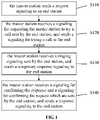
- Fig. 1 is a flow chart of a voice signaling transmission method according to an embodiment of the present disclosure.
- the voice signaling transmission method according to the present embodiment may be applied to a master station in a satellite communication system, and the method according to the present embodiment includes steps S110 to S140.
- step S110 the master station (i.e., a second device) sends a request signaling to an end station (i.e., a first device).
- the master station when the master station communicates with the end station, the master station sends a request (INVITE), and after the end station receives the request sent by the master station, the end station sends a signaling for requesting the master station to try a call (Trying).
- step S120 the master station receives a signaling sent by the end station for requesting the master station to try a call, and sends the signaling for trying a call to the end station.
- the end station after the master station sends the signaling for trying a call, the end station sends a ringing signaling (Ringing).
- Ringing ringing signaling
- step S130 the master station receives the ringing signaling sent by the end station, and sends a temporary response signaling to the end station.
- the master station after receiving the ringing, the master station sends the temporary response signaling (Provisional Response ACKnowledgement, PRACK), and after receiving the temporary response signaling, the end station replies 200 OK (PRACK) to the master station.
- the master station After the master station receives 200 OK (PRACK), the end station then sends a request response 200 OK (INVITE) confirming that the end station has received the call of the master station.
- step S140 the master station receives a signaling for confirming the response and a signaling for confirming the request which are sent by the end station, and sends a response signaling to the end station.
- the master station sends a response (ACKnowledgement, ACK) signaling, that is, the whole voice call flow is completed.
- ACK acknowledgement
- the signaling transmission method simplifies the transmission flow of the voice signaling, reduces the quantity of the voice signaling, and is beneficial for improving the success rate of voice signaling transmission.
- Fig. 2 is a flow chart of a voice signaling transmission method according to an embodiment of the present disclosure.
- the voice signaling transmission method according to the present embodiment may be applied to a base station of a microwave communication system, for example, a base station A, and the other device is another base station in the microwave communication system, for example, a base station B, and the signaling transmission method according to the present embodiment includes steps S210 to S240.
- step S210 the base station A (i.e., a second device) sends a request signaling to the base station B (i.e., a first device).
- step S220 the base station A receives a signaling for requesting the base station A to try a call sent by the base station B, and sends a signaling for trying a call to the base station B.
- step S230 the base station A receives a ringing signaling sent by the base station B, and continuously sends m (m is a positive integer) pieces of temporary response signaling to the base station B, wherein after sending one piece of the temporary response signaling, the base station A waits for receiving a signaling for confirming the response sent by the base station B, and then sends a next temporary response signaling.
- the base station A may send, for example, two pieces of the temporary responses signaling (PRACK). Each time the base station B receives one piece of the temporary response signaling, 200 OK (PRACK) is replied to the base station A. The base station A sends the next temporary response signaling after receiving the 200 OK (PRACK) replied by the base station B, until the two pieces of the temporary response signaling are sent.
- PRACK temporary responses signaling
- step S240 the base station A receives a signaling for confirming the response and a signaling for confirming the request which are sent by the base station B, and sends a response signaling to the base station B.
- the base station B after sending the second 200 OK (PRACK), the base station B sends 200 OK (INVITE) to confirm that the call from the base station A is received by the base station B. Finally, the base station A sends a response (ACK) signaling, that is, the whole voice call flow is completed.
- the base station A After sending each signaling, the base station A receives a status report corresponding to the signaling, and sends a next signaling after the status report indicates that the signaling is successfully sent.
- the signaling sent by the base station A is any one of the request signaling, the signaling for trying a call, the temporary response signaling and the response signaling. Further, after receiving each signaling, the base station A sends a status report indicating the signaling being successfully received to the base station B.
- the signaling received by the base station A is any one of the signaling for requesting the base station A to try a call, the ringing signaling, the signaling for confirming the response and the signaling for confirming the request.
- an Automatic Repeat-reQuest (ARQ) mechanism is introduced.
- Devices at the two ends of an air interface are respectively the base station A and the base station B, and the ARQ mechanism is introduced into both the base station A and the base station B to resend a wrongly sent voice signaling.
- ARQ Automatic Repeat-reQuest
- Both the base station A and the base station B at the two ends of the air interface may be used as a sending end and a receiving end.
- the base station A sends and the base station B receives. After sending the voice signaling message, the base station A waits for a status report from the base station B, if the status report indicates that the voice signaling message is successfully sent, a subsequent voice signaling message is sent by the base station A, and otherwise, the voice signaling message which is not successfully sent is resent by the base station A.
- the present embodiment is not limited to the base station A sending and the base station B receiving, and may be the base station B sending and the base station A receiving.
- the base station B waits for a status report from the base station A, if the status report indicates that the voice signaling message is successfully sent, a subsequent voice signaling message is sent by the base station B, and otherwise, the voice signaling message which is not successfully sent is resent by the base station B.
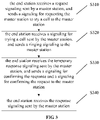
- Fig. 3 is a flow chart of a voice signaling transmission method according to an embodiment of the present disclosure.
- the voice signaling transmission method according to the present embodiment may be applied to an end station in a satellite communication system, and the method according to the present embodiment includes steps S310 to S340.
- step S310 the end station (i.e., a first device) receives a request signaling sent by a master station (i.e., a second device), and sends a signaling, to the master station, for requesting the master station to try a call.
- a master station i.e., a second device
- the master station sends a request (INVITE) when communicating with the end station.
- the end station after receiving the request sent by the master station, the end station sends the signaling for requesting the master station to try a call (Trying).
- step S320 the end station receives a signaling for trying a call sent by the master station, and sends a ringing signaling to the master station.
- the end station after the master station sends the signaling for trying a call, the end station sends the ringing signaling (Ringing), and after receiving the ringing signaling, the master station sends a temporary response signaling (PRACK).
- Ringing ringing signaling
- PRACK temporary response signaling
- step S330 the end station receives the temporary response signaling sent by the master station, and sends a signaling for confirming the response and a signaling for confirming the request to the master station.
- the end station receives the temporary response signaling (PRACK) sent by the master station, and replies 200 OK (PRACK) to the master station.
- PRACK temporary response signaling
- PRACK replies 200 OK
- the master station After the master station receives 200 OK (PRACK), the end station sends a request response 200 OK (INVITE) confirming that the end station has received the call of the master station, and the master station then sends a response (ACK) signaling, that is, the whole voice call flow is completed.
- step S340 the end station receives the response signaling sent by the master station.
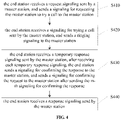
- Fig. 4 is a flow chart of a voice signaling transmission method according to an embodiment of the present disclosure.
- the voice signaling transmission method according to the present embodiment may be applied to an end station in a satellite communication system, and the method according to the present embodiment includes steps S410 to S440.
- step S410 the end station receives a request signaling sent by a master station, and sends a signaling for requesting the master station to try a call to the master station.
- step S420 the end station receives a signaling for trying a call sent by the master station, and sends a ringing signaling to the master station.
- step S430 the end station receives a temporary response signaling sent by the master station, after receiving each temporary response signaling, the end station sends a signaling for confirming the response to the master station, and sends a signaling for confirming the request to the master station after sending the m-th (m is a positive integer) signaling for confirming the response.
- step S440 the end station receives a response signaling send by the master station.
- the master station may send, for example, two pieces of the temporary response signaling (PRACK) after receiving the ringing signaling.
- the end station replies 200 OK (PRACK) to the master station for each time the end station receiving the temporary response signaling.
- the master station receives 200 OK (PRACK) and then sends a next temporary response signaling, until the two pieces of the temporary response signaling have been sent.
- the end station After sending the second 200 OK (PRACK), the end station then sends 200 OK (INVITE) confirming that the end station has received the call of the master station.
- the master station sends a response (ACK) signaling, that is, the whole voice call flow is completed.
- the end station After sending each signaling, the end station receives a status report corresponding to the signaling, and sends a next signaling after the status report indicates that the signaling is sent successfully.
- the signaling sent by the end station is any one of the signaling for requesting the master station to try a call, the ringing signaling, the signaling for confirming the response and the signaling for confirming the request.
- the end station After receiving each signaling, the end station sends a status report indicating that the signaling has successfully received to the master station.
- the signaling received by the end station is any one of the request signaling, the signaling for trying a call, the temporary response signaling and the response signaling.
- An ARQ mechanism is introduced in the present embodiment.
- Devices at the two ends of an air interface are respectively the master station and the end station, and the ARQ mechanism is introduced into both the master station and the end station to resend a wrongly sent voice signaling.
- the master station may be a sending end, and the end station may be a receiving end.
- the master station sends and the end station receives. After sending the voice signaling message, the master station waits for a status report from the end station, if the status report indicates that the voice signaling message is successfully sent, a subsequent voice signaling message is sent by the master station, and otherwise, the voice signaling message which is not successfully sent is resent by the master station.
- the present embodiment is not limited to the master station sending and the end station receiving, and may be the end station sending and the master station receiving.
- the end station After sending the voice signaling message, the end station waits for a status report from the master station, if the status report indicates that the voice signaling message is successfully sent, a subsequent voice signaling message is sent by the end station, and otherwise, the voice signaling message which is not successfully sent is resent by the end station.
- Fig. 5 is a block diagram of a voice signaling transmission device according to an embodiment of the present disclosure.
- the voice signaling transmission device may be applied to a master station in a satellite communication system.
- the signaling transmission device of the present embodiment includes a request module 510, a call trying module 520, a temporary response module 530, and a response module 540.
- the request module 510 is configured to send a request signaling to an end station (i.e., a first device).
- the request module 510 of the master station sends a request (INVITE) when the master station communicates with an end station. After the end station receives the request sent by the master station, the end station sends a signaling for requesting the master station to try a call (Trying).
- the call trying module 520 is configured to receive the signaling for requesting the master station to try a call from the end station, and send a signaling for trying a call, to the end station.
- the end station after the master station sends the signaling for trying a call, the end station sends a ringing signaling (Ringing).
- Ringing ringing signaling
- the temporary response module 530 is configured to receive the ringing signaling sent by the end station, and send a temporary response signaling to the end station.
- the temporary response module 530 sends the temporary response signaling (PRACK).
- the end station replies 200 OK (PRACK) to the master station after receiving the temporary response signaling, and after the master station receives 200 OK (PRACK), the end station sends a request response 200 OK (INVITE) confirming that the end station has received the call of the master station.
- the response module 540 is configured to receive a signaling for confirming the response and a signaling for confirming the request which are sent by the end station, and send a response signaling to the end station.
- the master station sends a response (ACK) signaling, that is, the whole voice call flow is completed.
- ACK response
- the voice signaling transmission device may also be applied to a base station of a microwave communication system, for example, a base station A, and the other device is another base station in the microwave communication system, for example, a base station B.
- the request module 510 is configured to send a request signaling to the base station B.
- the call trying module 520 is configured to receive a signaling for requesting the base station A to try a call from the base station B, and send a signaling for trying a call, to the base station B.
- the temporary response module 530 is configured to receive a ringing signaling sent by the base station B, and continuously sends m (m is a positive integer) pieces of temporary response signaling to the base station B, wherein after sending one piece of the temporary response signaling, the temporary response module 530 sends a next temporary response signaling after receiving a signaling for confirming the response sent by the base station B.
- the temporary response module 530 may send, for example, two pieces of the temporary response signaling (PRACK) after receiving the ringing signaling sent by the base station B. Each time receiving one piece of the temporary response signaling, the base station B replies 200 OK (PRACK) to the base station A. The temporary response module 530 receives 200 OK (PRACK) replied by the base station B, and then sends the next temporary response signaling, until the two pieces of the temporary response signaling are sent.
- PRACK temporary response signaling
- the response module 540 is configured to receive the signaling for confirming the response and the signaling for confirming the request which are sent by the base station B, and send a response signaling to the base station B.
- the base station B after sending the second 200 OK (PRACK), the base station B sends 200 OK (INVITE) to confirm that the call from the base station A is received by the base station B.
- the response module 540 sends a response (ACK) signaling, that is, the whole voice call flow is completed.
- the base station A After sending each signaling, the base station A receives a status report corresponding to the signaling, and sends a next signaling after the status report indicates that the signaling is successfully sent.
- the signaling sent by the base station A is any one of the request signaling, the signaling for trying a call, the temporary response signaling and the response signaling. Further, after receiving each signaling, the base station A sends a status report indicating the signaling being successfully received to the base station B.
- the signaling received by the base station A is any one of the signaling for requesting the base station A to try a call, the ringing signaling, the signaling for confirming the response and the signaling for confirming the request.
- an ARQ mechanism is introduced.
- Devices at the two ends of an air interface are respectively the base station A and the base station B, and the ARQ mechanism is introduced into both the base station A and the base station B to resend a wrongly sent voice signaling.
- Both the base station A and the base station B at the two ends of the air interface may be used as a sending end and a receiving end.
- the base station A sends and the base station B receives. After sending the voice signaling message, the base station A waits for a status report from the base station B, if the status report indicates that the voice signaling message is successfully sent, a subsequent voice signaling message is sent by the base station A, and otherwise, the voice signaling message which is not successfully sent is resent by the base station A.
- the present embodiment is not limited to the base station A sending and the base station B receiving, and may be the base station B sending and the base station A receiving.
- the base station B waits for a status report from the base station A, if the status report indicates that the voice signaling message is successfully sent, a subsequent voice signaling message is sent by the base station B, and otherwise, the voice signaling message which is not successfully sent is resent by the base station B.
- Fig. 6 is a block diagram of a voice signaling transmission device according to an embodiment of the present disclosure.
- the voice signaling transmission device may be applied to an end station in a satellite communication system.
- the signaling transmission device of the present embodiment includes a call trying module 610, a ringing module 620, a response and request confirmation module 630 and a receiving module 640.
- the call trying module 610 is configured to receive a request signaling sent by a master station and send a signaling for requesting the master station to try a call to the master station.
- the master station sends a request (INVITE) when communicating with the end station.
- the call trying module 610 of the end station receives the request sent by the master station and then sends the signaling for requesting the master station to try a call (Trying).
- the ringing module 620 is configured to receive a signaling for trying a call sent by the master station and send a ringing signaling to the master station.
- the ringing module 620 sends the ringing signaling (Ringing), and after receiving the ringing signaling, the master station sends a temporary response signaling (PRACK).
- Ringing ringing signaling
- PRACK temporary response signaling
- the response and request confirmation module 630 is configured to receive the temporary response signaling sent by the master station, and send a signaling for confirming the response and a signaling for confirming the request to the master station.
- the response and request confirmation module 630 receives the temporary response signaling, 200 OK (PRACK) is replied to the master station, and after the master station receives 200 OK (PRACK), the response and request confirmation module 630 sends a request response 200 OK (INVITE) confirming that the end station has received the call of the master station, and the master station sends a response (ACK) signaling, that is, the whole voice call flow is completed.
- PRACK request response 200 OK
- ACK response signaling
- the receiving module 640 is configured to receive a response signaling sent by the master station.
- the response and request confirmation module 630 may be further configured to receive the temporary response signaling sent by the master station, and after receiving each temporary response signaling, the response and request confirmation module 630 sends the signaling for confirming the response to the master station, and sends the signaling for confirming the request to the master station after sending the m-th (m is a positive integer) signaling for confirming the response.
- the master station may send, for example, two pieces of the temporary response signaling (PRACK) after receiving the ringing signaling.
- the response and request confirmation module 630 replies 200 OK (PRACK) to the master station for each time the end station receiving the temporary response signaling.
- the master station receives 200 OK (PRACK) and then sends a next temporary response signaling until the two pieces of the temporary response signaling have been sent.
- the response and request confirmation module 630 then sends 200 OK (INVITE) confirming that the end station has received the call of the master station.
- the master station sends a response (ACK) signaling, that is, the whole voice call flow is completed.
- the end station After sending each signaling, the end station receives a status report corresponding to the signaling, and sends a next signaling after the status report indicates that the signaling is successfully sent.
- the signaling sent by the end station is any one of the signaling for requesting the master station to try a call, the ringing signaling, the signaling for confirming the response and the signaling for confirming the request.
- the end station After receiving each signaling, the end station sends a status report indicating that the signaling has successfully received to the master station.
- the signaling received by the end station is any one of the request signaling, the signaling for trying a call, the temporary response signaling and the response signaling.
- An ARQ mechanism is introduced in the present embodiment.
- Devices at the two ends of an air interface are respectively the master station and the end station, and the ARQ mechanism is introduced into both the master station and the end station to resend a wrongly sent voice signaling.
- the master station may be a sending end, and the end station may be a receiving end.
- the master station sends and the end station receives. After sending the voice signaling message, the master station waits for a status report from the end station, if the status report indicates that the voice signaling message is successfully sent, a subsequent voice signaling message is sent by the master station, and otherwise, the voice signaling message which is not successfully sent is resent by the master station.
- the present embodiment is not limited to the master station sending and the end station receiving, and may be the end station sending and the master station receiving.
- the end station After sending the voice signaling message, the end station waits for a status report from the master station, if the status report indicates that the voice signaling message is successfully sent, a subsequent voice signaling message is sent by the end station, and otherwise, the voice signaling message which is not successfully sent is resent by the end station.
- a simple voice call procedure is achieved, that is, a device A communicates with a device B, the device A sends a request (INVITE), the device B receives the request sent by the device A and then sends a signaling for requesting the device A to try a call (Trying), and then the device B sends a ringing signaling (Ringing).
- the device A After receiving the ringing signaling, the device A sends m (m is a positive integer) pieces of temporary response signaling (PRACK).
- PRACK temporary response signaling
- the device A sends a next temporary response signaling after receiving 200 OK (PRACK), until all the m pieces of the temporary response signaling are sent.
- the device B After sending the m-th 200 OK (PRACK), the device B sends 200 OK (INVITE) confirming that the device B has received the call of the device A.
- the device A sends a response (ACK) signaling, that is, the whole voice call flow is completed.
- an ARQ mechanism is introduced, and a wrong message is recovered by requesting, by a receiving party, a sending party to resend the wrong data message.
- the reliability of voice signaling transmission can be raised.
- the device A After sending the voice signaling message, the device A waits for a status report from the device B, if the status report indicates that the voice signaling message is successfully sent, a subsequent voice signaling message is sent by the device A, and otherwise, the voice signaling message which is not successfully sent is resent by the device A.
- the device B may send and the device A may receive.
- the device B waits for a status report from the device A, if the status report indicates that the voice signaling message is successfully sent, a subsequent voice signaling message is sent by the device B, and otherwise, the voice signaling message which is not successfully sent is resent by the device B.
- the voice signaling transmission device may be applied to a master station and an end station in a satellite communication system, and the voice signaling transmission device may include a processor, a memory and a communication bus.
- the communication bus is used for realizing connection communication between the processor and the memory.
- the processor is configured to execute programs stored in the memory to implement the voice signaling transmission method according to embodiments of the present disclosure.
- An embodiment of the present disclosure provides a computer readable storage medium for use by a master station and an end station in a satellite communication system.
- the computer readable storage medium stores one or more programs which, when executed by one or more processors, cause the one or more processors to perform the voice signaling transmission method according to embodiments of the present disclosure.
Landscapes
- Engineering & Computer Science (AREA)
- Signal Processing (AREA)
- Computer Networks & Wireless Communication (AREA)
- Business, Economics & Management (AREA)
- General Business, Economics & Management (AREA)
- Multimedia (AREA)
- Mobile Radio Communication Systems (AREA)
- Radio Relay Systems (AREA)
Claims (15)
- Signalisierungsübertragungsverfahren, umfassend:Senden (S110) einer Anforderungssignalisierung an ein erstes Gerät durch ein zweites Gerät;Empfangen (S120) einer Signalisierung zur Aufforderung an das zweite Gerät, einen Anruf zu versuchen, die von dem ersten Gerät in Reaktion auf die Aufforderungssignalisierung gesendet wird, durch das zweite Gerät; und Senden einer Signalisierung zum Versuchen eines Anrufs an das erste Gerät in Reaktion auf die Signalisierung zum Auffordern des zweiten Geräts, einen Anruf zu versuchen;Empfangen (S130) einer Rufsignalisierung durch das zweite Gerät, die von dem ersten Gerät als Reaktion auf die Signalisierung zum Versuchen eines Anrufs gesendet wird; und Senden einer temporären Antwortsignalisierung an das erste Gerät als Reaktion auf die Rufsignalisierung; undEmpfangen (S140), durch das zweite Gerät, einer Signalisierung zum Bestätigen der Antwort und einer Signalisierung zum Bestätigen der Anfrage, die beide durch das erste Gerät in Reaktion auf die temporäre Antwortsignalisierung gesendet werden; und Senden einer Antwortsignalisierung an das erste Gerät in Reaktion auf die Signalisierung zum Bestätigen der Antwort und die Signalisierung zum Bestätigen der Anfrage.
- Verfahren nach Anspruch 1, wobei der Schritt des Sendens der temporären Antwortsignalisierung an das erste Gerät umfasst:
kontinuierliches Senden von m Teilen der temporären Antwortsignalisierung an das erste Gerät durch das zweite Gerät, wobei nach dem Senden eines Teils der temporären Antwortsignalisierung das zweite Gerät eine nächste temporäre Antwortsignalisierung nach dem Empfang der Signalisierung zur Bestätigung der von dem ersten Gerät gesendeten Antwort sendet, wobei m eine positive ganze Zahl ist. - Verfahren nach Anspruch 1, ferner umfassend:
nach jedem Senden einer Signalisierung, Empfangen eines Statusberichts, der der Signalisierung entspricht, durch das zweite Gerät, und Senden einer nächsten Signalisierung, nachdem der Statusbericht anzeigt, dass die Signalisierung erfolgreich gesendet wurde, wobei die Signalisierung eine der folgenden ist: die Anforderungssignalisierung, die Signalisierung zum Versuchen eines Anrufs, die temporäre Antwortsignalisierung und die Antwortsignalisierung. - Verfahren nach Anspruch 1, ferner umfassend:
nach jedem Empfang einer von dem ersten Gerät gesendeten Signalisierung, Senden eines Statusberichts durch das zweite Gerät, der anzeigt, dass die Signalisierung erfolgreich empfangen wurde, an das erste Gerät, wobei die Signalisierung eine der folgenden ist: die Signalisierung zur Aufforderung an das zweite Gerät, einen Anruf zu versuchen, die Rufsignalisierung, die Signalisierung zur Bestätigung der Antwort und die Signalisierung zur Bestätigung der Anforderung. - Verfahren nach einem der Ansprüche 1 bis 4, wobeidas erste Gerät eine Endstation in einem Satellitenkommunikationssystem ist und das zweite Gerät eine Hauptstation in dem Satellitenkommunikationssystem ist, oderdas erste Gerät und das zweite Gerät beide Basisstationen in einem Mikrowellenkommunikationssystem sind.
- Signalisierungsübertragungsverfahren, umfassend:Empfangen (S310) einer von einem zweiten Gerät gesendeten Anforderungssignalisierung durch ein erstes Gerät und Senden einer Signalisierung zur Aufforderung des zweiten Geräts, einen Anruf zu versuchen, an das zweite Gerät in Reaktion auf die Anforderungssignalisierung;Empfangen (S320), durch das erste Gerät, einer Signalisierung zum Versuchen eines Anrufs, die durch das zweite Gerät in Reaktion auf die Signalisierung zum Auffordern des zweiten Geräts, einen Anruf zu versuchen, gesendet wird;
und Senden einer Rufsignalisierung an das zweite Gerät in Reaktion auf die Signalisierung zum Versuchen eines Anrufs;Empfangen (S330) einer temporären Antwortsignalisierung durch das erste Gerät, die von dem zweiten Gerät als Reaktion auf die Rufsignalisierung gesendet wird; und Senden einer Signalisierung zum Bestätigen der Antwort und einer Signalisierung zum Bestätigen der Anforderung an das zweite Gerät als Reaktion auf die temporäre Antwortsignalisierung; undEmpfangen (S340) einer Antwortsignalisierung durch das erste Gerät, die von dem zweiten Gerät als Reaktion auf die Signalisierung zum Bestätigen der Antwort und die Signalisierung zum Bestätigen der Anforderung gesendet wird. - Verfahren nach Anspruch 6, wobei der Schritt des Sendens der Signalisierung zum Bestätigen der Antwort und der Signalisierung zum Bestätigen der Anforderung an das zweite Gerät umfasst:
nach jedem Empfangen der von dem zweiten Gerät gesendeten temporären Antwortsignalisierung, Senden eines Teils der Signalisierung zur Bestätigung der Antwort durch das erste Gerät an das zweite Gerät, und Senden der Signalisierung zur Bestätigung der Anforderung an das zweite Gerät nach dem Senden von m Teilen der Signalisierung zur Bestätigung der Antwort, wobei m eine positive ganze Zahl ist. - Verfahren nach Anspruch 6, ferner umfassend:
nach jedem Senden einer Signalisierung, Empfangen eines Statusberichts durch das erste Gerät, der der Signalisierung entspricht, und Senden einer nächsten Signalisierung, nachdem der Statusbericht anzeigt, dass die Signalisierung erfolgreich gesendet wurde, wobei die Signalisierung eine der folgenden ist: die Signalisierung zum Auffordern des zweiten Geräts, einen Anruf zu versuchen, die Rufsignalisierung, die Signalisierung zum Bestätigen der Antwort und die Signalisierung zum Bestätigen der Anforderung. - Verfahren nach Anspruch 6, ferner umfassend:
nach jedem Empfang einer von dem zweiten Gerät gesendeten Signalisierung, Senden eines Statusberichts durch das erste Gerät, der anzeigt, dass die Signalisierung erfolgreich empfangen wurde, an das zweite Gerät, wobei die Signalisierung eine der folgenden ist: die Anforderungssignalisierung, die Signalisierung oder das Versuchen eines Anrufs, die temporäre Antwortsignalisierung und die Antwortsignalisierung ist. - Verfahren nach einem der Ansprüche 6 bis 9, wobeidas erste Gerät eine Endstation in einem Satellitenkommunikationssystem ist und das zweite Gerät eine Hauptstation in dem Satellitenkommunikationssystem ist, oderdas erste Gerät und das zweite Gerät beide Basisstationen in einem Mikrowellenkommunikationssystem sind.
- Signalisierungsübertragungsgerät, das Folgendes umfasst:ein Anforderungsmodul (510), das so konfiguriert ist, dass es eine Anforderungssignalisierung an ein erstes Gerät sendet;ein Anrufversuchsmodul (520), das so konfiguriert ist, dass es eine Signalisierung zur Aufforderung des Signalisierungsübertragungsgeräts, einen Anruf zu versuchen, empfängt, die von dem ersten Gerät als Reaktion auf die Anforderungssignalisierung gesendet wird; und eine Signalisierung zum Versuchen eines Anrufs an das erste Gerät als Reaktion auf die Signalisierung zur Aufforderung des Signalisierungsübertragungsgeräts, einen Anruf zu versuchen, sendet;ein temporäres Antwortmodul (530), das so konfiguriert ist, dass es eine Rufsignalisierung empfängt, die von dem ersten Gerät als Reaktion auf die Signalisierung zum Versuchen eines Anrufs gesendet wird, und eine temporäre Antwortsignalisierung an das erste Gerät als Reaktion auf die Rufsignalisierung sendet; undein Antwortmodul (540), das so konfiguriert ist, dass es eine Signalisierung zum Bestätigen der Antwort und eine Signalisierung zum Bestätigen der Anforderung empfängt, die beide von dem ersten Gerät als Reaktion auf die temporäre Antwortsignalisierung gesendet werden, und eine Antwortsignalisierung an das erste Gerät als Reaktion auf die Signalisierung zum Bestätigen der Antwort und die Signalisierung zum Bestätigen der Anforderung sendet.
- Gerät nach Anspruch 11, wobei
das temporäre Antwortmodul (530) so konfiguriert ist, dass es kontinuierlich m Teile der temporären Antwortsignalisierung an das erste Gerät sendet, wobei das temporäre Antwortmodul (530) nach dem Senden eines Teils der temporären Antwortsignalisierung eine nächste temporäre Antwortsignalisierung sendet, nachdem es die Signalisierung zum Bestätigen der von dem ersten Gerät gesendeten Antwort empfangen hat, wobei m eine positive ganze Zahl ist. - Signalisierungsübertragungsgerät, das Folgendes umfasst:ein Anrufversuchsmodul (610), das so konfiguriert ist, dass es eine von einem zweiten Gerät gesendete Anforderungssignalisierung empfängt und als Reaktion auf die Anforderungssignalisierung eine Signalisierung zur Aufforderung des zweiten Geräts, einen Anruf zu versuchen, an das zweite Gerät sendet;ein Rufsignalisierungsmodul (620), das so konfiguriert ist, dass es eine Signalisierung zum Versuchen eines Anrufs empfängt, die von dem zweiten Gerät als Reaktion auf die Signalisierung zum Auffordern des zweiten Geräts, einen Anruf zu versuchen, gesendet wird; und eine Rufsignalisierung an das zweite Gerät als Reaktion auf die Signalisierung zum Versuchen eines Anrufs sendet;ein Antwort- und Anforderungsbestätigungsmodul (630), das so konfiguriert ist, dass es eine temporäre Antwortsignalisierung empfängt, die von dem zweiten Gerät als Reaktion auf die Rufsignalisierung gesendet wird, und eine Signalisierung zum Bestätigen der Antwort und eine Signalisierung zum Bestätigen der Anforderung an das zweite Gerät als Reaktion auf die temporäre Antwortsignalisierung sendet; undein Empfangsmodul (640), das so konfiguriert ist, dass es eine Antwortsignalisierung empfängt, die von dem zweiten Gerät als Reaktion auf die Signalisierung zum Bestätigen der Antwort und die Signalisierung zum Bestätigen der Anforderung gesendet wird.
- Gerät nach Anspruch 13, wobei
das Antwort- und Anforderungsbestätigungsmodul (630) so konfiguriert ist, dass es nach jedem Empfang der von dem zweiten Gerät gesendeten temporären Antwortsignalisierung ein Stück der Signalisierung zur Bestätigung der Antwort an das zweite Gerät sendet und die Signalisierung zur Bestätigung der Anforderung an das zweite Gerät sendet, nachdem m Stücke der Signalisierung zur Bestätigung der Antwort gesendet wurden, wobei m eine positive ganze Zahl ist. - Computerspeichermedium, das ein Computerprogramm speichert, das, wenn es von einem Prozessor ausgeführt wird, den Prozessor veranlasst, das Signalisierungsübertragungsverfahren nach einem der Ansprüche 1 bis 10 durchzuführen.
Applications Claiming Priority (2)
| Application Number | Priority Date | Filing Date | Title |
|---|---|---|---|
| CN201710362125.2A CN108964855B (zh) | 2017-05-22 | 2017-05-22 | 一种语音信令传输方法和装置 |
| PCT/CN2018/087828 WO2018214873A1 (zh) | 2017-05-22 | 2018-05-22 | 语音信令传输方法和装置 |
Publications (3)
| Publication Number | Publication Date |
|---|---|
| EP3633900A1 EP3633900A1 (de) | 2020-04-08 |
| EP3633900A4 EP3633900A4 (de) | 2021-02-24 |
| EP3633900B1 true EP3633900B1 (de) | 2022-08-24 |
Family
ID=64396216
Family Applications (1)
| Application Number | Title | Priority Date | Filing Date |
|---|---|---|---|
| EP18806670.8A Active EP3633900B1 (de) | 2017-05-22 | 2018-05-22 | Verfahren und vorrichtung zur übertragung einer sprachsignalisierung |
Country Status (5)
| Country | Link |
|---|---|
| US (1) | US11582353B2 (de) |
| EP (1) | EP3633900B1 (de) |
| CN (1) | CN108964855B (de) |
| DK (1) | DK3633900T3 (de) |
| WO (1) | WO2018214873A1 (de) |
Families Citing this family (1)
| Publication number | Priority date | Publication date | Assignee | Title |
|---|---|---|---|---|
| JP7248929B2 (ja) | 2019-01-09 | 2023-03-30 | 日本電気株式会社 | コアネットワークノード及び方法 |
Family Cites Families (18)
| Publication number | Priority date | Publication date | Assignee | Title |
|---|---|---|---|---|
| GB9815422D0 (en) * | 1998-07-16 | 1998-09-16 | Northern Telecom Ltd | Integrated signalling for ATM-like networks |
| US7280531B2 (en) * | 2002-04-29 | 2007-10-09 | Iwatsu Electric Co., Ltd. | Telephone communication system |
| KR100729991B1 (ko) * | 2005-07-28 | 2007-06-20 | (주)티아이스퀘어 | W-cdma망에서 동영상 메시지를 전달하는 방법 및장치 |
| WO2007043806A1 (en) * | 2005-10-11 | 2007-04-19 | Ti Square Technology Ltd. | Method and apparatus for transmitting video message in w-cdma network |
| CN1972340A (zh) | 2005-11-25 | 2007-05-30 | 北京三星通信技术研究有限公司 | 在ims域中实现视频彩铃业务的方法 |
| US20070165811A1 (en) * | 2006-01-19 | 2007-07-19 | John Reumann | System and method for spam detection |
| CN101491057A (zh) * | 2006-07-14 | 2009-07-22 | 高通股份有限公司 | 服务质量感知的通信会话建立 |
| EP2063617A4 (de) * | 2006-10-05 | 2012-11-21 | Fujitsu Ltd | Anrufverbindungsverarbeitungsverfahren und nachrichtensende- und empfangsproxy-einrichtung |
| CN101277473B (zh) * | 2007-03-31 | 2012-08-08 | 华为技术有限公司 | 改变分组交换域的状态的方法、终端、网络设备 |
| CN100596108C (zh) * | 2007-04-20 | 2010-03-24 | 杭州华三通信技术有限公司 | 数据传输方法及装置 |
| JP5167726B2 (ja) * | 2007-08-23 | 2013-03-21 | ソニー株式会社 | コンテンツ課金システム、コンテンツ取得装置、コンテンツ取得方法およびそのプログラム、並びにコンテンツ提供装置、コンテンツ提供方法およびそのプログラム |
| JP2009206648A (ja) * | 2008-02-26 | 2009-09-10 | Nec Corp | シグナリングサーバ、データ通信システム、シグナリング処理代行方法およびプログラム |
| US20100054177A1 (en) * | 2008-09-02 | 2010-03-04 | Serdar Sahin | Method and system of using ip multimedia system for call setup in mobile satellite systems |
| US20100255831A1 (en) * | 2009-04-07 | 2010-10-07 | Qualcomm Incorporated | Determining delay in a communications system |
| CN101621517B (zh) * | 2009-07-27 | 2013-08-07 | 中兴通讯股份有限公司 | 一种多媒体子系统回铃音的实现方法及装置 |
| EP2302868A1 (de) * | 2009-09-29 | 2011-03-30 | Alcatel Lucent | Dynamische Rufumleitung |
| US8719926B2 (en) * | 2011-02-11 | 2014-05-06 | Verizon Patent And Licensing Inc. | Denial of service detection and prevention using dialog level filtering |
| US10015067B2 (en) * | 2016-08-19 | 2018-07-03 | Verizon Patent And Licensing Inc. | Automatically verifying logic of protocol messages exchanged between devices during a communication session |
-
2017
- 2017-05-22 CN CN201710362125.2A patent/CN108964855B/zh active Active
-
2018
- 2018-05-22 DK DK18806670.8T patent/DK3633900T3/da active
- 2018-05-22 US US16/616,003 patent/US11582353B2/en active Active
- 2018-05-22 EP EP18806670.8A patent/EP3633900B1/de active Active
- 2018-05-22 WO PCT/CN2018/087828 patent/WO2018214873A1/zh not_active Ceased
Also Published As
| Publication number | Publication date |
|---|---|
| CN108964855A (zh) | 2018-12-07 |
| EP3633900A4 (de) | 2021-02-24 |
| WO2018214873A1 (zh) | 2018-11-29 |
| US11582353B2 (en) | 2023-02-14 |
| EP3633900A1 (de) | 2020-04-08 |
| DK3633900T3 (da) | 2022-09-26 |
| US20200092426A1 (en) | 2020-03-19 |
| CN108964855B (zh) | 2022-05-20 |
Similar Documents
| Publication | Publication Date | Title |
|---|---|---|
| CN108282897B (zh) | 一种随机接入反馈、处理方法、基站及终端 | |
| EP1768296A2 (de) | Verfahren und Gerät zum Übertragen von Signalisierungsdaten in einem drahtlosen Kommunikationssystem | |
| US20170196038A1 (en) | Method, terminal, and system for realizing device to device communication | |
| KR100676278B1 (ko) | 선택적인 확인 기법을 위한 방법 및 장치 | |
| CN101651531A (zh) | 处理一传输时间间隔集束的重传的方法及通讯装置 | |
| US10284340B2 (en) | Multicast sending apparatus, multicast receiving apparatus, and multicast transmission determining method | |
| RU2701523C1 (ru) | Система и способ обеспечения синхронизации в передачах в режиме без соединения | |
| CN109863766A (zh) | 用于更新非主动sim的状态信息的系统和方法 | |
| CN111629368A (zh) | 耳机与充电盒的通信方法、充电盒、耳机及可读存储介质 | |
| US7821989B2 (en) | Call management method, call management system and message processing server system | |
| US20110070862A1 (en) | Method of Handling Paging and Related Communication Device | |
| EP3633900B1 (de) | Verfahren und vorrichtung zur übertragung einer sprachsignalisierung | |
| CN105792147B (zh) | 短信投递失败处理方法、装置及系统 | |
| CN109391593B (zh) | 用于媒体会话的重试时间确定方法及装置、存储介质、终端 | |
| US8700070B2 (en) | System and method for adaptive message retransmission | |
| US7995517B2 (en) | System and method for transmitting units of messages in a mobile communication system | |
| CN110139228B (zh) | 短信并行发送方法及装置 | |
| CN114244813B (zh) | 通话异常处理方法、装置及电子设备 | |
| CN112770412B (zh) | 一种分组数据网pdn激活方法及其装置 | |
| US10652389B2 (en) | Call hold method and mobile terminal | |
| CN101094046B (zh) | 混合自动请求重传的传输方法及装置 | |
| CN116489721B (zh) | 通话方法及装置、存储介质 | |
| JP4805072B2 (ja) | 通信システム | |
| US8804679B2 (en) | Method and apparatus for data transfer with signaling | |
| CN119521150A (zh) | 一种盲转方法、装置、通信设备及芯片 |
Legal Events
| Date | Code | Title | Description |
|---|---|---|---|
| STAA | Information on the status of an ep patent application or granted ep patent |
Free format text: STATUS: THE INTERNATIONAL PUBLICATION HAS BEEN MADE |
|
| PUAI | Public reference made under article 153(3) epc to a published international application that has entered the european phase |
Free format text: ORIGINAL CODE: 0009012 |
|
| STAA | Information on the status of an ep patent application or granted ep patent |
Free format text: STATUS: REQUEST FOR EXAMINATION WAS MADE |
|
| 17P | Request for examination filed |
Effective date: 20191127 |
|
| AK | Designated contracting states |
Kind code of ref document: A1 Designated state(s): AL AT BE BG CH CY CZ DE DK EE ES FI FR GB GR HR HU IE IS IT LI LT LU LV MC MK MT NL NO PL PT RO RS SE SI SK SM TR |
|
| AX | Request for extension of the european patent |
Extension state: BA ME |
|
| DAV | Request for validation of the european patent (deleted) | ||
| DAX | Request for extension of the european patent (deleted) | ||
| A4 | Supplementary search report drawn up and despatched |
Effective date: 20210122 |
|
| RIC1 | Information provided on ipc code assigned before grant |
Ipc: H04L 29/06 20060101ALI20210118BHEP Ipc: H04L 5/00 20060101AFI20210118BHEP |
|
| REG | Reference to a national code |
Ref country code: DE Ref legal event code: R079 Ref document number: 602018039791 Country of ref document: DE Free format text: PREVIOUS MAIN CLASS: H04L0005000000 Ipc: H04L0001160000 |
|
| GRAP | Despatch of communication of intention to grant a patent |
Free format text: ORIGINAL CODE: EPIDOSNIGR1 |
|
| STAA | Information on the status of an ep patent application or granted ep patent |
Free format text: STATUS: GRANT OF PATENT IS INTENDED |
|
| RIC1 | Information provided on ipc code assigned before grant |
Ipc: H04L 5/00 20060101ALI20220519BHEP Ipc: H04W 24/10 20090101ALI20220519BHEP Ipc: H04L 1/18 20060101ALI20220519BHEP Ipc: H04L 1/16 20060101AFI20220519BHEP |
|
| INTG | Intention to grant announced |
Effective date: 20220617 |
|
| GRAS | Grant fee paid |
Free format text: ORIGINAL CODE: EPIDOSNIGR3 |
|
| GRAA | (expected) grant |
Free format text: ORIGINAL CODE: 0009210 |
|
| STAA | Information on the status of an ep patent application or granted ep patent |
Free format text: STATUS: THE PATENT HAS BEEN GRANTED |
|
| AK | Designated contracting states |
Kind code of ref document: B1 Designated state(s): AL AT BE BG CH CY CZ DE DK EE ES FI FR GB GR HR HU IE IS IT LI LT LU LV MC MK MT NL NO PL PT RO RS SE SI SK SM TR |
|
| REG | Reference to a national code |
Ref country code: CH Ref legal event code: EP |
|
| REG | Reference to a national code |
Ref country code: DE Ref legal event code: R096 Ref document number: 602018039791 Country of ref document: DE |
|
| REG | Reference to a national code |
Ref country code: IE Ref legal event code: FG4D |
|
| REG | Reference to a national code |
Ref country code: AT Ref legal event code: REF Ref document number: 1514414 Country of ref document: AT Kind code of ref document: T Effective date: 20220915 |
|
| REG | Reference to a national code |
Ref country code: DK Ref legal event code: T3 Effective date: 20220922 |
|
| REG | Reference to a national code |
Ref country code: NO Ref legal event code: T2 Effective date: 20220824 |
|
| REG | Reference to a national code |
Ref country code: LT Ref legal event code: MG9D |
|
| REG | Reference to a national code |
Ref country code: NL Ref legal event code: MP Effective date: 20220824 |
|
| PG25 | Lapsed in a contracting state [announced via postgrant information from national office to epo] |
Ref country code: SE Free format text: LAPSE BECAUSE OF FAILURE TO SUBMIT A TRANSLATION OF THE DESCRIPTION OR TO PAY THE FEE WITHIN THE PRESCRIBED TIME-LIMIT Effective date: 20220824 Ref country code: RS Free format text: LAPSE BECAUSE OF FAILURE TO SUBMIT A TRANSLATION OF THE DESCRIPTION OR TO PAY THE FEE WITHIN THE PRESCRIBED TIME-LIMIT Effective date: 20220824 Ref country code: PT Free format text: LAPSE BECAUSE OF FAILURE TO SUBMIT A TRANSLATION OF THE DESCRIPTION OR TO PAY THE FEE WITHIN THE PRESCRIBED TIME-LIMIT Effective date: 20221226 Ref country code: NL Free format text: LAPSE BECAUSE OF FAILURE TO SUBMIT A TRANSLATION OF THE DESCRIPTION OR TO PAY THE FEE WITHIN THE PRESCRIBED TIME-LIMIT Effective date: 20220824 Ref country code: LV Free format text: LAPSE BECAUSE OF FAILURE TO SUBMIT A TRANSLATION OF THE DESCRIPTION OR TO PAY THE FEE WITHIN THE PRESCRIBED TIME-LIMIT Effective date: 20220824 Ref country code: LT Free format text: LAPSE BECAUSE OF FAILURE TO SUBMIT A TRANSLATION OF THE DESCRIPTION OR TO PAY THE FEE WITHIN THE PRESCRIBED TIME-LIMIT Effective date: 20220824 Ref country code: FI Free format text: LAPSE BECAUSE OF FAILURE TO SUBMIT A TRANSLATION OF THE DESCRIPTION OR TO PAY THE FEE WITHIN THE PRESCRIBED TIME-LIMIT Effective date: 20220824 |
|
| REG | Reference to a national code |
Ref country code: AT Ref legal event code: MK05 Ref document number: 1514414 Country of ref document: AT Kind code of ref document: T Effective date: 20220824 |
|
| PG25 | Lapsed in a contracting state [announced via postgrant information from national office to epo] |
Ref country code: PL Free format text: LAPSE BECAUSE OF FAILURE TO SUBMIT A TRANSLATION OF THE DESCRIPTION OR TO PAY THE FEE WITHIN THE PRESCRIBED TIME-LIMIT Effective date: 20220824 Ref country code: IS Free format text: LAPSE BECAUSE OF FAILURE TO SUBMIT A TRANSLATION OF THE DESCRIPTION OR TO PAY THE FEE WITHIN THE PRESCRIBED TIME-LIMIT Effective date: 20221224 Ref country code: HR Free format text: LAPSE BECAUSE OF FAILURE TO SUBMIT A TRANSLATION OF THE DESCRIPTION OR TO PAY THE FEE WITHIN THE PRESCRIBED TIME-LIMIT Effective date: 20220824 Ref country code: GR Free format text: LAPSE BECAUSE OF FAILURE TO SUBMIT A TRANSLATION OF THE DESCRIPTION OR TO PAY THE FEE WITHIN THE PRESCRIBED TIME-LIMIT Effective date: 20221125 |
|
| PG25 | Lapsed in a contracting state [announced via postgrant information from national office to epo] |
Ref country code: SM Free format text: LAPSE BECAUSE OF FAILURE TO SUBMIT A TRANSLATION OF THE DESCRIPTION OR TO PAY THE FEE WITHIN THE PRESCRIBED TIME-LIMIT Effective date: 20220824 Ref country code: RO Free format text: LAPSE BECAUSE OF FAILURE TO SUBMIT A TRANSLATION OF THE DESCRIPTION OR TO PAY THE FEE WITHIN THE PRESCRIBED TIME-LIMIT Effective date: 20220824 Ref country code: ES Free format text: LAPSE BECAUSE OF FAILURE TO SUBMIT A TRANSLATION OF THE DESCRIPTION OR TO PAY THE FEE WITHIN THE PRESCRIBED TIME-LIMIT Effective date: 20220824 Ref country code: CZ Free format text: LAPSE BECAUSE OF FAILURE TO SUBMIT A TRANSLATION OF THE DESCRIPTION OR TO PAY THE FEE WITHIN THE PRESCRIBED TIME-LIMIT Effective date: 20220824 Ref country code: AT Free format text: LAPSE BECAUSE OF FAILURE TO SUBMIT A TRANSLATION OF THE DESCRIPTION OR TO PAY THE FEE WITHIN THE PRESCRIBED TIME-LIMIT Effective date: 20220824 |
|
| REG | Reference to a national code |
Ref country code: DE Ref legal event code: R097 Ref document number: 602018039791 Country of ref document: DE |
|
| PG25 | Lapsed in a contracting state [announced via postgrant information from national office to epo] |
Ref country code: SK Free format text: LAPSE BECAUSE OF FAILURE TO SUBMIT A TRANSLATION OF THE DESCRIPTION OR TO PAY THE FEE WITHIN THE PRESCRIBED TIME-LIMIT Effective date: 20220824 Ref country code: EE Free format text: LAPSE BECAUSE OF FAILURE TO SUBMIT A TRANSLATION OF THE DESCRIPTION OR TO PAY THE FEE WITHIN THE PRESCRIBED TIME-LIMIT Effective date: 20220824 |
|
| PG25 | Lapsed in a contracting state [announced via postgrant information from national office to epo] |
Ref country code: AL Free format text: LAPSE BECAUSE OF FAILURE TO SUBMIT A TRANSLATION OF THE DESCRIPTION OR TO PAY THE FEE WITHIN THE PRESCRIBED TIME-LIMIT Effective date: 20220824 |
|
| PLBE | No opposition filed within time limit |
Free format text: ORIGINAL CODE: 0009261 |
|
| STAA | Information on the status of an ep patent application or granted ep patent |
Free format text: STATUS: NO OPPOSITION FILED WITHIN TIME LIMIT |
|
| P01 | Opt-out of the competence of the unified patent court (upc) registered |
Effective date: 20230530 |
|
| 26N | No opposition filed |
Effective date: 20230525 |
|
| PG25 | Lapsed in a contracting state [announced via postgrant information from national office to epo] |
Ref country code: SI Free format text: LAPSE BECAUSE OF FAILURE TO SUBMIT A TRANSLATION OF THE DESCRIPTION OR TO PAY THE FEE WITHIN THE PRESCRIBED TIME-LIMIT Effective date: 20220824 |
|
| REG | Reference to a national code |
Ref country code: DE Ref legal event code: R119 Ref document number: 602018039791 Country of ref document: DE |
|
| REG | Reference to a national code |
Ref country code: CH Ref legal event code: PL |
|
| PG25 | Lapsed in a contracting state [announced via postgrant information from national office to epo] |
Ref country code: MC Free format text: LAPSE BECAUSE OF FAILURE TO SUBMIT A TRANSLATION OF THE DESCRIPTION OR TO PAY THE FEE WITHIN THE PRESCRIBED TIME-LIMIT Effective date: 20220824 |
|
| GBPC | Gb: european patent ceased through non-payment of renewal fee |
Effective date: 20230522 |
|
| REG | Reference to a national code |
Ref country code: BE Ref legal event code: MM Effective date: 20230531 |
|
| PG25 | Lapsed in a contracting state [announced via postgrant information from national office to epo] |
Ref country code: MC Free format text: LAPSE BECAUSE OF FAILURE TO SUBMIT A TRANSLATION OF THE DESCRIPTION OR TO PAY THE FEE WITHIN THE PRESCRIBED TIME-LIMIT Effective date: 20220824 Ref country code: LU Free format text: LAPSE BECAUSE OF NON-PAYMENT OF DUE FEES Effective date: 20230522 Ref country code: LI Free format text: LAPSE BECAUSE OF NON-PAYMENT OF DUE FEES Effective date: 20230531 Ref country code: CH Free format text: LAPSE BECAUSE OF NON-PAYMENT OF DUE FEES Effective date: 20230531 |
|
| REG | Reference to a national code |
Ref country code: IE Ref legal event code: MM4A |
|
| PG25 | Lapsed in a contracting state [announced via postgrant information from national office to epo] |
Ref country code: IE Free format text: LAPSE BECAUSE OF NON-PAYMENT OF DUE FEES Effective date: 20230522 |
|
| PG25 | Lapsed in a contracting state [announced via postgrant information from national office to epo] |
Ref country code: IE Free format text: LAPSE BECAUSE OF NON-PAYMENT OF DUE FEES Effective date: 20230522 Ref country code: DE Free format text: LAPSE BECAUSE OF NON-PAYMENT OF DUE FEES Effective date: 20231201 Ref country code: GB Free format text: LAPSE BECAUSE OF NON-PAYMENT OF DUE FEES Effective date: 20230522 |
|
| PG25 | Lapsed in a contracting state [announced via postgrant information from national office to epo] |
Ref country code: IT Free format text: LAPSE BECAUSE OF FAILURE TO SUBMIT A TRANSLATION OF THE DESCRIPTION OR TO PAY THE FEE WITHIN THE PRESCRIBED TIME-LIMIT Effective date: 20220824 Ref country code: FR Free format text: LAPSE BECAUSE OF NON-PAYMENT OF DUE FEES Effective date: 20230531 Ref country code: BE Free format text: LAPSE BECAUSE OF NON-PAYMENT OF DUE FEES Effective date: 20230531 |
|
| PG25 | Lapsed in a contracting state [announced via postgrant information from national office to epo] |
Ref country code: BG Free format text: LAPSE BECAUSE OF FAILURE TO SUBMIT A TRANSLATION OF THE DESCRIPTION OR TO PAY THE FEE WITHIN THE PRESCRIBED TIME-LIMIT Effective date: 20220824 |
|
| PG25 | Lapsed in a contracting state [announced via postgrant information from national office to epo] |
Ref country code: BG Free format text: LAPSE BECAUSE OF FAILURE TO SUBMIT A TRANSLATION OF THE DESCRIPTION OR TO PAY THE FEE WITHIN THE PRESCRIBED TIME-LIMIT Effective date: 20220824 |
|
| PGFP | Annual fee paid to national office [announced via postgrant information from national office to epo] |
Ref country code: DK Payment date: 20250516 Year of fee payment: 8 |
|
| PGFP | Annual fee paid to national office [announced via postgrant information from national office to epo] |
Ref country code: NO Payment date: 20250509 Year of fee payment: 8 |
|
| PG25 | Lapsed in a contracting state [announced via postgrant information from national office to epo] |
Ref country code: CY Free format text: LAPSE BECAUSE OF FAILURE TO SUBMIT A TRANSLATION OF THE DESCRIPTION OR TO PAY THE FEE WITHIN THE PRESCRIBED TIME-LIMIT; INVALID AB INITIO Effective date: 20180522 |
|
| PG25 | Lapsed in a contracting state [announced via postgrant information from national office to epo] |
Ref country code: HU Free format text: LAPSE BECAUSE OF FAILURE TO SUBMIT A TRANSLATION OF THE DESCRIPTION OR TO PAY THE FEE WITHIN THE PRESCRIBED TIME-LIMIT; INVALID AB INITIO Effective date: 20180522 |
|
| PG25 | Lapsed in a contracting state [announced via postgrant information from national office to epo] |
Ref country code: TR Free format text: LAPSE BECAUSE OF FAILURE TO SUBMIT A TRANSLATION OF THE DESCRIPTION OR TO PAY THE FEE WITHIN THE PRESCRIBED TIME-LIMIT Effective date: 20220824 |