EP3621653B1 - Hautbarrierenzubereitung - Google Patents
Hautbarrierenzubereitung Download PDFInfo
- Publication number
- EP3621653B1 EP3621653B1 EP18725608.6A EP18725608A EP3621653B1 EP 3621653 B1 EP3621653 B1 EP 3621653B1 EP 18725608 A EP18725608 A EP 18725608A EP 3621653 B1 EP3621653 B1 EP 3621653B1
- Authority
- EP
- European Patent Office
- Prior art keywords
- skin
- composition
- cream
- acid
- eczema
- Prior art date
- Legal status (The legal status is an assumption and is not a legal conclusion. Google has not performed a legal analysis and makes no representation as to the accuracy of the status listed.)
- Active
Links
Images





Classifications
-
- A—HUMAN NECESSITIES
- A61—MEDICAL OR VETERINARY SCIENCE; HYGIENE
- A61K—PREPARATIONS FOR MEDICAL, DENTAL OR TOILETRY PURPOSES
- A61K31/00—Medicinal preparations containing organic active ingredients
- A61K31/045—Hydroxy compounds, e.g. alcohols; Salts thereof, e.g. alcoholates
-
- A—HUMAN NECESSITIES
- A61—MEDICAL OR VETERINARY SCIENCE; HYGIENE
- A61K—PREPARATIONS FOR MEDICAL, DENTAL OR TOILETRY PURPOSES
- A61K31/00—Medicinal preparations containing organic active ingredients
- A61K31/045—Hydroxy compounds, e.g. alcohols; Salts thereof, e.g. alcoholates
- A61K31/047—Hydroxy compounds, e.g. alcohols; Salts thereof, e.g. alcoholates having two or more hydroxy groups, e.g. sorbitol
-
- A—HUMAN NECESSITIES
- A61—MEDICAL OR VETERINARY SCIENCE; HYGIENE
- A61K—PREPARATIONS FOR MEDICAL, DENTAL OR TOILETRY PURPOSES
- A61K31/00—Medicinal preparations containing organic active ingredients
- A61K31/16—Amides, e.g. hydroxamic acids
- A61K31/164—Amides, e.g. hydroxamic acids of a carboxylic acid with an aminoalcohol, e.g. ceramides
-
- A—HUMAN NECESSITIES
- A61—MEDICAL OR VETERINARY SCIENCE; HYGIENE
- A61K—PREPARATIONS FOR MEDICAL, DENTAL OR TOILETRY PURPOSES
- A61K31/00—Medicinal preparations containing organic active ingredients
- A61K31/185—Acids; Anhydrides, halides or salts thereof, e.g. sulfur acids, imidic, hydrazonic or hydroximic acids
- A61K31/19—Carboxylic acids, e.g. valproic acid
-
- A—HUMAN NECESSITIES
- A61—MEDICAL OR VETERINARY SCIENCE; HYGIENE
- A61K—PREPARATIONS FOR MEDICAL, DENTAL OR TOILETRY PURPOSES
- A61K31/00—Medicinal preparations containing organic active ingredients
- A61K31/185—Acids; Anhydrides, halides or salts thereof, e.g. sulfur acids, imidic, hydrazonic or hydroximic acids
- A61K31/19—Carboxylic acids, e.g. valproic acid
- A61K31/191—Carboxylic acids, e.g. valproic acid having two or more hydroxy groups, e.g. gluconic acid
-
- A—HUMAN NECESSITIES
- A61—MEDICAL OR VETERINARY SCIENCE; HYGIENE
- A61K—PREPARATIONS FOR MEDICAL, DENTAL OR TOILETRY PURPOSES
- A61K31/00—Medicinal preparations containing organic active ingredients
- A61K31/185—Acids; Anhydrides, halides or salts thereof, e.g. sulfur acids, imidic, hydrazonic or hydroximic acids
- A61K31/19—Carboxylic acids, e.g. valproic acid
- A61K31/20—Carboxylic acids, e.g. valproic acid having a carboxyl group bound to a chain of seven or more carbon atoms, e.g. stearic, palmitic, arachidic acids
- A61K31/201—Carboxylic acids, e.g. valproic acid having a carboxyl group bound to a chain of seven or more carbon atoms, e.g. stearic, palmitic, arachidic acids having one or two double bonds, e.g. oleic, linoleic acids
-
- A—HUMAN NECESSITIES
- A61—MEDICAL OR VETERINARY SCIENCE; HYGIENE
- A61K—PREPARATIONS FOR MEDICAL, DENTAL OR TOILETRY PURPOSES
- A61K31/00—Medicinal preparations containing organic active ingredients
- A61K31/33—Heterocyclic compounds
- A61K31/335—Heterocyclic compounds having oxygen as the only ring hetero atom, e.g. fungichromin
- A61K31/365—Lactones
-
- A—HUMAN NECESSITIES
- A61—MEDICAL OR VETERINARY SCIENCE; HYGIENE
- A61K—PREPARATIONS FOR MEDICAL, DENTAL OR TOILETRY PURPOSES
- A61K31/00—Medicinal preparations containing organic active ingredients
- A61K31/56—Compounds containing cyclopenta[a]hydrophenanthrene ring systems; Derivatives thereof, e.g. steroids
- A61K31/575—Compounds containing cyclopenta[a]hydrophenanthrene ring systems; Derivatives thereof, e.g. steroids substituted in position 17 beta by a chain of three or more carbon atoms, e.g. cholane, cholestane, ergosterol, sitosterol
-
- A—HUMAN NECESSITIES
- A61—MEDICAL OR VETERINARY SCIENCE; HYGIENE
- A61K—PREPARATIONS FOR MEDICAL, DENTAL OR TOILETRY PURPOSES
- A61K31/00—Medicinal preparations containing organic active ingredients
- A61K31/70—Carbohydrates; Sugars; Derivatives thereof
- A61K31/7028—Compounds having saccharide radicals attached to non-saccharide compounds by glycosidic linkages
- A61K31/7032—Compounds having saccharide radicals attached to non-saccharide compounds by glycosidic linkages attached to a polyol, i.e. compounds having two or more free or esterified hydroxy groups, including the hydroxy group involved in the glycosidic linkage, e.g. monoglucosyldiacylglycerides, lactobionic acid, gangliosides
-
- A—HUMAN NECESSITIES
- A61—MEDICAL OR VETERINARY SCIENCE; HYGIENE
- A61K—PREPARATIONS FOR MEDICAL, DENTAL OR TOILETRY PURPOSES
- A61K33/00—Medicinal preparations containing inorganic active ingredients
- A61K33/24—Heavy metals; Compounds thereof
- A61K33/30—Zinc; Compounds thereof
-
- A—HUMAN NECESSITIES
- A61—MEDICAL OR VETERINARY SCIENCE; HYGIENE
- A61K—PREPARATIONS FOR MEDICAL, DENTAL OR TOILETRY PURPOSES
- A61K47/00—Medicinal preparations characterised by the non-active ingredients used, e.g. carriers or inert additives; Targeting or modifying agents chemically bound to the active ingredient
- A61K47/06—Organic compounds, e.g. natural or synthetic hydrocarbons, polyolefins, mineral oil, petrolatum or ozokerite
- A61K47/08—Organic compounds, e.g. natural or synthetic hydrocarbons, polyolefins, mineral oil, petrolatum or ozokerite containing oxygen, e.g. ethers, acetals, ketones, quinones, aldehydes, peroxides
- A61K47/10—Alcohols; Phenols; Salts thereof, e.g. glycerol; Polyethylene glycols [PEG]; Poloxamers; PEG/POE alkyl ethers
-
- A—HUMAN NECESSITIES
- A61—MEDICAL OR VETERINARY SCIENCE; HYGIENE
- A61K—PREPARATIONS FOR MEDICAL, DENTAL OR TOILETRY PURPOSES
- A61K47/00—Medicinal preparations characterised by the non-active ingredients used, e.g. carriers or inert additives; Targeting or modifying agents chemically bound to the active ingredient
- A61K47/06—Organic compounds, e.g. natural or synthetic hydrocarbons, polyolefins, mineral oil, petrolatum or ozokerite
- A61K47/08—Organic compounds, e.g. natural or synthetic hydrocarbons, polyolefins, mineral oil, petrolatum or ozokerite containing oxygen, e.g. ethers, acetals, ketones, quinones, aldehydes, peroxides
- A61K47/12—Carboxylic acids; Salts or anhydrides thereof
-
- A—HUMAN NECESSITIES
- A61—MEDICAL OR VETERINARY SCIENCE; HYGIENE
- A61K—PREPARATIONS FOR MEDICAL, DENTAL OR TOILETRY PURPOSES
- A61K47/00—Medicinal preparations characterised by the non-active ingredients used, e.g. carriers or inert additives; Targeting or modifying agents chemically bound to the active ingredient
- A61K47/06—Organic compounds, e.g. natural or synthetic hydrocarbons, polyolefins, mineral oil, petrolatum or ozokerite
- A61K47/08—Organic compounds, e.g. natural or synthetic hydrocarbons, polyolefins, mineral oil, petrolatum or ozokerite containing oxygen, e.g. ethers, acetals, ketones, quinones, aldehydes, peroxides
- A61K47/14—Esters of carboxylic acids, e.g. fatty acid monoglycerides, medium-chain triglycerides, parabens or PEG fatty acid esters
-
- A—HUMAN NECESSITIES
- A61—MEDICAL OR VETERINARY SCIENCE; HYGIENE
- A61K—PREPARATIONS FOR MEDICAL, DENTAL OR TOILETRY PURPOSES
- A61K47/00—Medicinal preparations characterised by the non-active ingredients used, e.g. carriers or inert additives; Targeting or modifying agents chemically bound to the active ingredient
- A61K47/06—Organic compounds, e.g. natural or synthetic hydrocarbons, polyolefins, mineral oil, petrolatum or ozokerite
- A61K47/16—Organic compounds, e.g. natural or synthetic hydrocarbons, polyolefins, mineral oil, petrolatum or ozokerite containing nitrogen, e.g. nitro-, nitroso-, azo-compounds, nitriles, cyanates
- A61K47/18—Amines; Amides; Ureas; Quaternary ammonium compounds; Amino acids; Oligopeptides having up to five amino acids
-
- A—HUMAN NECESSITIES
- A61—MEDICAL OR VETERINARY SCIENCE; HYGIENE
- A61K—PREPARATIONS FOR MEDICAL, DENTAL OR TOILETRY PURPOSES
- A61K47/00—Medicinal preparations characterised by the non-active ingredients used, e.g. carriers or inert additives; Targeting or modifying agents chemically bound to the active ingredient
- A61K47/06—Organic compounds, e.g. natural or synthetic hydrocarbons, polyolefins, mineral oil, petrolatum or ozokerite
- A61K47/28—Steroids, e.g. cholesterol, bile acids or glycyrrhetinic acid
-
- A—HUMAN NECESSITIES
- A61—MEDICAL OR VETERINARY SCIENCE; HYGIENE
- A61K—PREPARATIONS FOR MEDICAL, DENTAL OR TOILETRY PURPOSES
- A61K9/00—Medicinal preparations characterised by special physical form
- A61K9/0012—Galenical forms characterised by the site of application
- A61K9/0014—Skin, i.e. galenical aspects of topical compositions
-
- A—HUMAN NECESSITIES
- A61—MEDICAL OR VETERINARY SCIENCE; HYGIENE
- A61P—SPECIFIC THERAPEUTIC ACTIVITY OF CHEMICAL COMPOUNDS OR MEDICINAL PREPARATIONS
- A61P17/00—Drugs for dermatological disorders
-
- A—HUMAN NECESSITIES
- A61—MEDICAL OR VETERINARY SCIENCE; HYGIENE
- A61Q—SPECIFIC USE OF COSMETICS OR SIMILAR TOILETRY PREPARATIONS
- A61Q19/00—Preparations for care of the skin
-
- A—HUMAN NECESSITIES
- A61—MEDICAL OR VETERINARY SCIENCE; HYGIENE
- A61K—PREPARATIONS FOR MEDICAL, DENTAL OR TOILETRY PURPOSES
- A61K9/00—Medicinal preparations characterised by special physical form
- A61K9/06—Ointments; Bases therefor; Other semi-solid forms, e.g. creams, sticks, gels
Definitions
- a defective skin barrier allows greater loss of water across the skin and the penetration of environmental triggers such as allergens, irritants and toxins that can trigger a flare up of these skin conditions.
- Creams or lotions based on these acids appeared to be milder and generally did not have the same issues of irritation and stinging. However, they failed to provide the hoped for efficacy in treating and preventing conditions caused by a defective skin barrier or in promoting repairing of a defective skin barrier.
- composition of the present invention is formulated to be suitable for topical administration to an external body surface.
- An external body surface includes skin, mucosa, hair and nails. It is envisaged that the composition will be applied to skin.
- the polyhydroxy acid and the zinc salt of its conjugate base for example the zinc lactobionate-lactobionic acid buffer
- the polyhydroxy acid and the zinc salt of its conjugate base is in solution within the aqueous-glycol solution continuous phase of the cream.
- the volatile solvent water is lost and the polyhydroxy acid and a zinc salt of its conjugate base, for example the zinc lactobionate-lactobionic acid buffer, becomes supersaturated, thus to increase its thermodynamic activity and diffusion.
- the partition coefficient enhancer for example the glycol, for example the propylene glycol partitions into the stratum corneum to increase the solubility of the polyhydroxy acid and the zinc salt of its conjugate base, for example the zinc lactobionate-lactobionic acid buffer in the stratum corneum.
- the partition coefficient enhancer for example the propylene glycol, also increases the solubility of the diffusion coefficient enhancer, for example the tetradecanol, in the stratum corneum.
- V1 250ml beaker Zn(LBA)2 in situ
- V2 50ml beaker Aqueous solvent and gels
- V3 250ml beaker Oils and surfactants
- V1 is 250ml beaker
- V2 is 25ml beaker
- V3 is 50ml beaker.
- V1 250ml beaker Zn(LBA)2 in situ
- V2 25ml beaker Aqueous solvent and gels
- Active ZnO V1 0.10 0.334 0.334 0.668 0.6677 V1 is 400ml beaker LBA (1) or LA (1) V1 0.92 0.822 0.822 1.644 Hipure 90 LBA (2) or LA (2) V1 4.00 4.444 4.444 8.888 10.54 10.532 total NaCl 1% in DI water V1 38.32 37.74 37.34 74.68 74.70
- Surfactants/ Gelants Glucate SS V3 1.26 1.26 1.26 2.52 2.54 V3 is 100ml beaker Glucamate SSE-20 V3 2.52 2.52 2.52 5.04 5.05 Glyceryl stearate SD
- FIG 3 illustrates the effects of the test cream on skin surface pH compared to Diprobase cream and Balneum cream.
- Diprobase cream a simple occlusive emollient, is one of the most widely prescribed topical treatments for eczema.
- Balneum cream contains 5% urea, lactic acid and lactate and has previously been shown to significantly reduce skin surface pH when compared to a panel of currently marketed products for eczema (Danby SG, Brown K, Higgs-Bayliss T et al. as above).
- Diprobase maintains skin surface pH at a relatively high level, above pH 5.0.
- Balneum cream on the other hand reduced skin surface pH down to approximately pH 4.5, and kept skin surface pH below 5.0 for the duration of the test.
- the zinc lactobionate test cream achieved the greatest reduction in skin surface pH (down to pH 3.5) for the longest period of time.
- the new 5% zinc lactobionate skin barrier repair cream of the present invention displays a very promising ability to modify stratum corneum pH (both on and below the surface) to a greater extent and for a longer period of time compared to currently marketed emollient creams for the treatment of eczema.
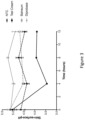
- Figure 5 illustrates the effects of a single application of the creams studied on skin surface pH over 12 hours.
- Diprobase cream had no significant effect on skin surface pH.
- the 10% lactobionate topical cream had a more pronounced effect, reducing surface pH by about 1.5 units 2 hours after application, and maintaining reduced surface pH for the duration of the test.
- the test creams brought above the greatest reduction in skin surface pH, by approximately 2 pH units, regardless of whether they were formulated with lactate or lactobionate. Moreover the lower level of pH was maintained for the 12-hour duration of the test.
- lactobionate cream was put forward for further testing compared to the marketed 10% lactobionate cream.
- volar forearm close to the flex region was selected on both arms of the subject.
- a plastic template incorporating a 20mm diameter hole was pressed against the skin and the area of exposed skin then subject to twenty successive tape-strips (Sellotape Original Golden). The aim in this procedure was to compromise the skin by reducing the stratum corneum barrier and create a situation closer to that expected in such conditions as atopic eczema.
- Scoring was made at the following intervals of time: On application, 1min, 2min, 5min, 15min, 30min, 1 hr, 3hr, and 6hr.
- test During the period of the test the subject remained seated with the test areas remaining exposed at a room temperature of approx 20 degrees centigrade. The subject was allowed to read paperwork but not allowed any mechanical contacts with the test areas.
- Example #1 the formulation proposed for further development (sample #1) and four variants of this (samples #2-#5), in which critical excipient levels were varied, were subject to three-cycle freeze-thaw physical stability testing.
- the outline stability protocol is a shown below.
- Three-cycle freeze-thaw testing is a standard test to ensure physical stability of topical dermatological products.
- lactobionic acid products for example Face Essentials 10% lactobionic acid cream contain Glucate SS (INCI Methyl Glucose Sesquistearate) only.
- This example provides a consumer perception comparison study between a skin barrier cream of the present invention and a commonly used aqueous cream BP.
- Zinc Lactobionate cream designed to deliver not only improved efficacy, but also far better user experience when compared against most current marketed creams and emollients in the sector.
- the present study was intended primarily to identify strong perceived characteristics and identify any 'gross negatives'.
- the study confirmed much informal feedback that the Zinc Lactobionate Cream is perceived as having many positive attributes and is pleasant to use. Commonly used Aqueous Cream BP was by comparison far less preferred. From a patient perspective, Zinc Lactobionate cream would be expected to improve compliance.
- Aim To determine whether a new emollient cream designed to support the skins natural acidic pH (the intervention) can lower skin surface pH in people with atopic dermatitis and compare its effect on pH to a panel of reference emollient creams currently marketed in Europe and Asia for dry, eczema-prone skin.
- test cream significantly reduced skin surface pH by between 0.7-1.2 units for at least 12 hours following a single application compared to a no treatment control site.
- test cream was the only product capable of sustaining pH reduction in excess of 0.5 units for more than 3 hours.
- test cream significantly reduces skin surface pH following a single application.
- corticosteroids corticosteroids, calcineurin inhibitors, methotrexate 6 months prior to the start of the study treatment and throughout the study; current participation in an interventional clinical. Informed consent was obtained from each participant. All participants received remuneration appropriate for their involvement.
- the University of Sheffield Research Ethics Committee (UREC) approved the study, under the project reference 017681.
- Atopiclair cream B Menarini Aqua, Ethylhexyl Palmitate, Butyrospermum Parkii Butter, Pentylene Glycol, Arachidyl Alcohol, Behenyl Alcohol, Arachidyl Glucoside, Butylene Glycol, Glyceryl Stearate, Glycyrrhetinic Acid, Capryloyl Glycine, Bisabol, Tocopheryl Acetate, PEG-100 Stearate, Carbomer, Ethylhexylglycerin, Piroctone Olamine, Sodium Hydroxide, Allantoin, DMDM Hydantoin, Sodium Hyaluronate, Vitis Vinifera Seed Extract, Disodium EDTA, Ascorbyl Tetraisopalmitate, Propyl Gallate, Telmesteine Basic Aqua cream D ICM Pharma Purified Water, White Soft Paraffin, Cetostearyl Alcohol, Ceteareth-20, Liquid Paraffin, Phenoxyethanol Cetaphil Restoraderm
- Test cream C comprised:
- Skin surface pH was measured using a Skin-Surface-pH Meter PH905 (CK electronic GmbH, Cologne, Germany). All assessments were performed in a room maintained at 21 ⁇ 2°C and 38-50% relative humidity according to published guidelines. 25 All test sites were acclimatised to room conditions for 20 minutes before each assessment.
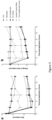
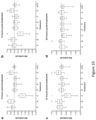
- product C induces the greatest changes in skin surface pH, achieving a mean reduction of -1.22 ⁇ 0.22 units after 3 hours, -0.94 ⁇ 19 after 6 hours and -0.68 ⁇ 0.17 after 12 hours and -0.32 ⁇ 0.12 after 24 hours relative to baseline measurements.
- the reduction in skin surface pH brought about by product C is significantly different from the no treatment control 3, 6 and 12 hours after application (Dunnet's post-test).
- test cream significantly reduced skin surface pH by between 0.7-1.2 units for at least 12 hours following a single application compared to a no treatment control site. As a result, skin surface pH was maintained below pH 4.5 for more than 12 hours. Compared to a panel of 6 reference emollient creams marketed for the relief of dry skin in AD patients, the test cream was the only product capable of sustaining pH reduction in excess of 0.5 units for more than 3 hours. In the absence of skin dryness the potential of the test products to moisturise the skin could not be assessed. All products tested were tolerated, with no signs of burning, stringing or redness.
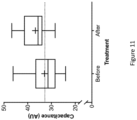
- test cream brought about a change in capacitance of 3.9 ⁇ 1.8 (arbitrary capacitance units), demonstrating its capacity to increase skin water/hydration levels (see Figure 11 ).
Landscapes
- Health & Medical Sciences (AREA)
- Chemical & Material Sciences (AREA)
- Life Sciences & Earth Sciences (AREA)
- Veterinary Medicine (AREA)
- Public Health (AREA)
- General Health & Medical Sciences (AREA)
- Animal Behavior & Ethology (AREA)
- Pharmacology & Pharmacy (AREA)
- Medicinal Chemistry (AREA)
- Epidemiology (AREA)
- General Chemical & Material Sciences (AREA)
- Engineering & Computer Science (AREA)
- Chemical Kinetics & Catalysis (AREA)
- Oil, Petroleum & Natural Gas (AREA)
- Dermatology (AREA)
- Inorganic Chemistry (AREA)
- Molecular Biology (AREA)
- Bioinformatics & Cheminformatics (AREA)
- Organic Chemistry (AREA)
- Nuclear Medicine, Radiotherapy & Molecular Imaging (AREA)
- Proteomics, Peptides & Aminoacids (AREA)
- Pharmaceuticals Containing Other Organic And Inorganic Compounds (AREA)
- Medicinal Preparation (AREA)
- Cosmetics (AREA)
- Acyclic And Carbocyclic Compounds In Medicinal Compositions (AREA)
- Medicines That Contain Protein Lipid Enzymes And Other Medicines (AREA)
Claims (17)
- Zubereitung zur topischen Verabreichung auf eine äußere Körperfläche, umfassend:eine Polyhydroxysäure und ein Zinksalz ihrer konjugierten Base, wobei die Polyhydroxysäure aus Lactobionsäure, Gluconolacton oder einer Kombination aus Lactobionsäure und Gluconolacton ausgewählt ist,einen Verteilungskoeffizientenverstärker, der aus Propylenglykol, Butylenglykol, Pentylenglykol, Hexylenglykol, 1,5-Pentandiol und einer Kombination davon ausgewählt ist, wobei der Verteilungskoeffizientenverstärker bei 15-30 Gew.-% der Zubereitung liegt,einen Diffusionskoeffizientenverstärker, der aus einer geradkettigen C12- bis C14-Fettsäure oder einem geradkettigen C14-Primäralkohol ausgewählt ist, wobei der Diffusionskoeffizientenverstärker bei 1,0-2,0 Gew.% der Zubereitung liegt,und wobei die Zubereitung einen pH-Wert im Bereich von 2,7 bis 5,0 aufweist.
- Zubereitung nach Anspruch 1, wobei:(a) der Verteilungskoeffizientenverstärker 15-25, 17-23, 18-22 oder etwa 20 Gew.-% der Zubereitung beträgt und/oder(b) der Verteilungskoeffizientenverstärker Propylenglykol ist.
- Zubereitung nach Anspruch 1 oder 2, wobei:(a) der Diffusionskoeffizientenverstärker 1,2-1,8 oder etwa 1,5 % w/w der Zubereitung beträgt und/oder(b) der Diffusionskoeffizientenverstärker 1-Tetradecanol ist.
- Zubereitung nach einem der Ansprüche 1 bis 3, wobei:(a) die Polyhydroxysäure und das Zinksalz ihrer konjugierten Base 2,0-10,0 Gew.-% der Zubereitung beträgt oder(b) die Polyhydroxysäure und das Zinksalz ihrer konjugierten Base mehr als oder gleich 2,5, 3,0, 3,5, 4,0, 4,5 oder 5,0 Gew.-% der Zubereitung beträgt oder(c) wobei die Polyhydroxysäure und das Zinksalz ihrer konjugierten Base weniger als oder gleich 9,5, 9,0, 8,5, 8,0 oder 7,5 Gew.-% der Zubereitung beträgt oder(d) die Polyhydroxysäure 3,0 bis 6,5 oder 3,5 bis 6,0 oder 4,0 bis 5,5 beträgt oder etwa 5 Gew.-% der Zubereitung beträgt.
- Zubereitung nach einem der Ansprüche 1 bis 4, wobei:(a) die Polyhydroxysäure Lactobionsäure ist und/oder(b) das in der Zubereitung verwendete Zinksalz aus Zinkoxid (ZnO) gebildet wird.
- Zubereitung nach einem der Ansprüche 1 bis 5, wobei:(a) die Zubereitung 10,0-30,0, 10,0-25,0, 10,0-20,0, 12,0-16,0 oder etwa 14 Gew.-% eines Weichmachers umfasst und/oder(b) der Weichmacher:(i) ein Kohlenwasserstoff mit hohem Molekulargewicht ist, optional ausgewählt aus Mineralöl, Petrolatum, Paraffin und Mischungen davon; oder(ii) aus hydriertem Polydecen, hydriertem Didecen, hydriertem Polyisobuten und Mischungen davon ausgewählt ist, optional der Weichmacher hydriertes Polydecen ist.
- Zubereitung nach einem der Ansprüche 1 bis 6, wobei:(a) der pH-Wert der Zubereitung im Bereich von 3,0 bis 4,5 oder im Bereich von 3,0 bis 4,0 oder im Bereich von 3,0 bis 3,5 oder bei etwa 3,2 liegt und/oder(b) die Zubereitung eine weitere Säure umfasst, um den pH-Wert der Zubereitung zu modulieren, wobei die weitere Säure optional Zitronensäure ist.
- Zubereitung nach einem der Ansprüche 1 bis 7, wobei die Zubereitung 3,0-12,0, 4,0-12,0, 6,0-10,0, 8,0 - 9,0 oder etwa 8,5 Gew.-% Tensid umfasst, optional wobei das Tensid ein Tensid-System ist, umfassend Glucate-SS-Emulgator (Methylglucosesesquistearat) und Glucamate-SSE-20-Emulgator (PEG-20 Methylglucosesesquistearat), ferner optional ferner umfassend Glycerylstearat.
- Zubereitung nach einem der Ansprüche 1 bis 8, ferner umfassend ein Ceramid;optional ferner umfassend ein Cholesterin und mindestens eine Fettsäure;ferner optional wobei sich das Ceramid, das Cholesterin und die mindestens eine Fettsäure einem Verhältnis von etwa 3:1:1 nähert;noch ferner optional wobei die Zubereitung Ceramid, Cholesterin und Linolsäure in einem Verhältnis von etwa 3:1:1 umfasst.
- Zubereitung nach Anspruch 1 zur topischen Verabreichung auf eine äußere Körperfläche, wobei die Zubereitung
eine wässrig-glykolische Phase umfasst, umfassend:4,0-6,0 Gew.-% der Polyhydroxysäure und ein Zinksalz ihrer konjugierten Base,18,0-22,0 Gew.-% des Verteilungskoeffizientenverstärkers und Wasser,und eine Ölphase, umfassend:1,0-2,0 Gew.-% des Diffusionskoeffizientenverstärkers Weichmacher undTensid,wobei sich Gew.-% auf das Gewicht der Zubereitung bezieht und wobei die Zubereitung einen pH-Wert im Bereich von 3,0 bis 3,5 aufweist. - Zubereitung nach Anspruch 10, wobei:(a) die Polyhydroxysäure und ein Zinksalz ihrer konjugierten Base Lactobionsäure und Zinklactobionat ist; oder(b) der Verteilungskoeffizientenverstärker Propylenglykol ist; oder(c) der Diffusionskoeffizientenverstärker 1-Tetradecanol ist.
- Zubereitung nach einem der vorhergehenden Ansprüche, wobei die Zubereitung eine wässrig-glykolische Phase und eine Ölphase umfasst.
- Zubereitung nach einem der vorhergehenden Ansprüche, wobei eine einzige Anwendung der Zubereitung auf die Haut, optional in einer Menge von etwa 100 µl pro 20 cm2 der Haut, eine Verringerung des pH-Werts der Hautfläche um mindestens 0,5 Einheiten für mindestens 3 Stunden veranlasst.
- Zubereitung nach einem der Ansprüche 1 bis 13 zur therapeutischen Verwendung.
- Zubereitung nach einem der Ansprüche 1 bis 13 zur Verwendung in einem Verfahren zum Behandeln oder Verhindern von:(a) einem Zustand, der durch eine defekte Hautbarriere veranlasst wird oder zum Fördern der Hautbarrierenreparatur; oder(b) einem Zustand, ausgewählt aus Ekzem, atopischem Ekzem, Dermatitis, atopischer Dermatitis, nicht atopischer Dermatitis, nicht atopischem Ekzem, seborrhoischem Ekzem, irritativem Kontaktekzem, allergischem Kontaktekzem, asteatotischem Ekzem, Pruritus, Akne, Aknenarben, Trockenheit von Haut, Nägeln und Haaren, Xerosis, Ichthyosis, Hyperkeratose der Handflächen und Fußsohlen, Schuppen, Darier-Krankheit, Lichen simplex chronicus, Keratose, Pseudofolliculitis barbae, Psoriasis, Warzen, Herpes, Lentigines, Melasmen, unreine Haut, fleckige Haut, Hyperkeratose, hyperpigmentierte Haut, Dehnungsstreifen, Wundheilung und Behandlung von Hautwunden;optional wobei das Verfahren eine topische Anwendung dreimal am Tag oder weniger umfasst, ferner optional wobei das Verfahren eine topische Anwendung zweimal am Tag umfasst.
- Zubereitung nach einem der Ansprüche 1 bis 13 zur Verwendung in einem Verfahren zum Behandeln oder Verhindern eines Zustandes, ausgewählt aus Ekzem, atopischem Ekzem, Dermatitis, atopischer Dermatitis, nicht-atopischem Ekzem, nicht-atopischer Dermatitis, seborrhoischem Ekzem, irritativem Kontaktekzem, allergischem Kontaktekzem, asteatotischem Ekzem, Pruritus oder Akne, wobei das Verfahren Verringern des pH-Werts der Hautfläche um mindestens 0,5 pH-Einheiten für mindestens 3 Stunden umfasst.
- Nichttherapeutische Verwendung einer Zubereitung nach einem der Ansprüche 1 bis 13 zum Verbessern des Erscheinungsbildes der Haut und/oder zum Verhindern von Hautalterung.
Applications Claiming Priority (2)
| Application Number | Priority Date | Filing Date | Title |
|---|---|---|---|
| GB1707489.9A GB2562270B (en) | 2017-05-10 | 2017-05-10 | Skin barrier composition |
| PCT/GB2018/051262 WO2018206962A1 (en) | 2017-05-10 | 2018-05-10 | Skin barrier composition |
Publications (3)
| Publication Number | Publication Date |
|---|---|
| EP3621653A1 EP3621653A1 (de) | 2020-03-18 |
| EP3621653C0 EP3621653C0 (de) | 2025-07-02 |
| EP3621653B1 true EP3621653B1 (de) | 2025-07-02 |
Family
ID=59065602
Family Applications (1)
| Application Number | Title | Priority Date | Filing Date |
|---|---|---|---|
| EP18725608.6A Active EP3621653B1 (de) | 2017-05-10 | 2018-05-10 | Hautbarrierenzubereitung |
Country Status (13)
| Country | Link |
|---|---|
| US (2) | US11173172B2 (de) |
| EP (1) | EP3621653B1 (de) |
| JP (1) | JP7228531B2 (de) |
| KR (1) | KR102646319B1 (de) |
| CN (1) | CN110621346B (de) |
| AU (1) | AU2018267267B2 (de) |
| ES (1) | ES3043282T3 (de) |
| GB (1) | GB2562270B (de) |
| MY (1) | MY189248A (de) |
| PH (1) | PH12019502062A1 (de) |
| PL (1) | PL3621653T3 (de) |
| SG (1) | SG11201908183YA (de) |
| WO (1) | WO2018206962A1 (de) |
Families Citing this family (10)
| Publication number | Priority date | Publication date | Assignee | Title |
|---|---|---|---|---|
| CN114788791A (zh) | 2017-06-23 | 2022-07-26 | 宝洁公司 | 用于改善皮肤外观的组合物和方法 |
| EP3817717A1 (de) | 2018-07-03 | 2021-05-12 | The Procter & Gamble Company | Verfahren zur behandlung einer hautkrankheit |
| US10959933B1 (en) | 2020-06-01 | 2021-03-30 | The Procter & Gamble Company | Low pH skin care composition and methods of using the same |
| CN115843238B (zh) | 2020-06-01 | 2025-06-10 | 宝洁公司 | 改善维生素b3化合物渗透到皮肤中的方法 |
| GB2596286B (en) * | 2020-06-20 | 2023-01-25 | Francis Davis Adrian | Adherence to topical therapy |
| CN116348099B (zh) * | 2020-07-27 | 2025-10-31 | 英加世瑞(研发)有限公司 | 局部用制剂 |
| US12390412B2 (en) * | 2020-12-17 | 2025-08-19 | L'oreal | Hydroglycolic cosmetic composition with a high active content |
| WO2023097326A1 (en) * | 2021-11-29 | 2023-06-01 | The Procter & Gamble Company | Method for treating post-acne marks |
| GB2616294A (en) * | 2022-03-03 | 2023-09-06 | Hyphens Pharma Pte Ltd | Composition for use |
| WO2025122472A1 (en) * | 2023-12-04 | 2025-06-12 | Primus Pharmaceuticals, Inc. | Emollient compositions comprising linoleic acid and conjugated linoleic acid and methods of use |
Family Cites Families (24)
| Publication number | Priority date | Publication date | Assignee | Title |
|---|---|---|---|---|
| US4954487A (en) * | 1979-01-08 | 1990-09-04 | The Procter & Gamble Company | Penetrating topical pharmaceutical compositions |
| US5385938B1 (en) * | 1986-12-23 | 1997-07-15 | Tristrata Inc | Method of using glycolic acid for treating wrinkles |
| CA2137001C (en) * | 1992-06-19 | 1999-05-04 | Peter M. Elias | Lipids for epidermal moisturization and repair of barrier function |
| JPH09510971A (ja) * | 1994-03-29 | 1997-11-04 | ザ、プロクター、エンド、ギャンブル、カンパニー | 改善された発色性を有する人工日焼け組成物 |
| US5618850A (en) * | 1995-03-09 | 1997-04-08 | Focal, Inc. | Hydroxy-acid cosmetics |
| DE19719856A1 (de) * | 1997-05-12 | 1998-11-19 | Henkel Kgaa | Hautpflegemittel |
| US6335023B1 (en) * | 1999-06-30 | 2002-01-01 | Ruey J. Yu | Oligosaccharide aldonic acids and their topical use |
| JP3713406B2 (ja) | 1999-07-16 | 2005-11-09 | 株式会社資生堂 | 皮膚外用ゲル製剤 |
| US20020035070A1 (en) * | 2000-07-26 | 2002-03-21 | The Procter & Gamble Company | Method of regulating hair growth using metal complexes of oxidized carbohydrates |
| US20020119174A1 (en) | 2000-07-26 | 2002-08-29 | Gardlik John Michael | Compositions useful for regulating hair growth containing metal complexes of oxidized carbohydrates |
| AU2002230397A1 (en) * | 2000-10-10 | 2002-04-29 | The Procter And Gamble Company | Packaged scalp cosmetic compositions |
| PL1670433T3 (pl) | 2003-10-10 | 2013-03-29 | Ferring Bv | Przezskórna formulacja farmaceutyczna do zmniejszania pozostałości na skórze |
| CA2595023A1 (en) | 2005-01-19 | 2006-07-27 | Children's Hospital Medical Center | Simulated vernix compositions for skin cleansing and other applications |
| ATE481961T1 (de) | 2005-01-26 | 2010-10-15 | Procter & Gamble | Dehydracetsäure enthaltende hautpflegezusammensetzungen mit niedrigem ph |
| GB0617191D0 (en) | 2006-08-31 | 2006-10-11 | York Pharma Plc | Improvements in pharmaceutical compositions |
| JP5578869B2 (ja) | 2010-01-27 | 2014-08-27 | ユニチカ株式会社 | 角質層ターンオーバー促進剤 |
| KR101773095B1 (ko) | 2010-11-30 | 2017-08-31 | (주)아모레퍼시픽 | 저점도의 비분리형 자외선차단제 조성물 |
| JP2013060393A (ja) | 2011-09-13 | 2013-04-04 | Nitto Denko Corp | 経皮吸収促進用組成物および貼付製剤 |
| US9636376B2 (en) * | 2012-09-11 | 2017-05-02 | Innopharma, Inc. | Stable compositions of peptide epoxy ketones |
| JP6151935B2 (ja) | 2013-03-11 | 2017-06-21 | 日東電工株式会社 | 経皮吸収促進用組成物および貼付製剤 |
| US20150024074A1 (en) * | 2013-07-22 | 2015-01-22 | Johnson & Johnson Consumer Companies Inc. | Methods for treating skin barrier and reducing acne |
| JP2014114291A (ja) * | 2013-12-13 | 2014-06-26 | Showa Denko Kk | 化粧料または皮膚外用剤 |
| KR20160026042A (ko) | 2014-08-29 | 2016-03-09 | (주)아모레퍼시픽 | 락토비온산을 함유하는 항스트레스용 또는 항상성 유지용 조성물 |
| CN105434213A (zh) * | 2015-08-04 | 2016-03-30 | 马南行 | 一种舒缓皮肤的美容组合物及其制备方法 |
-
2017
- 2017-05-10 GB GB1707489.9A patent/GB2562270B/en active Active
-
2018
- 2018-05-10 AU AU2018267267A patent/AU2018267267B2/en active Active
- 2018-05-10 US US16/611,529 patent/US11173172B2/en active Active
- 2018-05-10 CN CN201880031234.9A patent/CN110621346B/zh active Active
- 2018-05-10 WO PCT/GB2018/051262 patent/WO2018206962A1/en not_active Ceased
- 2018-05-10 MY MYPI2019005711A patent/MY189248A/en unknown
- 2018-05-10 EP EP18725608.6A patent/EP3621653B1/de active Active
- 2018-05-10 JP JP2019562640A patent/JP7228531B2/ja active Active
- 2018-05-10 SG SG11201908183Y patent/SG11201908183YA/en unknown
- 2018-05-10 ES ES18725608T patent/ES3043282T3/es active Active
- 2018-05-10 PL PL18725608.6T patent/PL3621653T3/pl unknown
- 2018-05-10 KR KR1020197028922A patent/KR102646319B1/ko active Active
-
2019
- 2019-09-11 PH PH12019502062A patent/PH12019502062A1/en unknown
-
2021
- 2021-10-13 US US17/500,604 patent/US11890294B2/en active Active
Also Published As
| Publication number | Publication date |
|---|---|
| JP2020519649A (ja) | 2020-07-02 |
| CN110621346A (zh) | 2019-12-27 |
| EP3621653C0 (de) | 2025-07-02 |
| KR20190142324A (ko) | 2019-12-26 |
| ES3043282T3 (en) | 2025-11-25 |
| CN110621346B (zh) | 2024-04-12 |
| PH12019502062A1 (en) | 2020-07-06 |
| AU2018267267A1 (en) | 2019-10-10 |
| GB2562270B (en) | 2020-07-01 |
| US11173172B2 (en) | 2021-11-16 |
| US20200222438A1 (en) | 2020-07-16 |
| WO2018206962A1 (en) | 2018-11-15 |
| KR102646319B1 (ko) | 2024-03-11 |
| US20220031721A1 (en) | 2022-02-03 |
| PL3621653T3 (pl) | 2025-11-03 |
| SG11201908183YA (en) | 2019-10-30 |
| GB2562270A (en) | 2018-11-14 |
| JP7228531B2 (ja) | 2023-02-24 |
| GB201707489D0 (en) | 2017-06-21 |
| EP3621653A1 (de) | 2020-03-18 |
| AU2018267267B2 (en) | 2023-09-07 |
| MY189248A (en) | 2022-01-31 |
| US11890294B2 (en) | 2024-02-06 |
Similar Documents
| Publication | Publication Date | Title |
|---|---|---|
| US11890294B2 (en) | Skin barrier composition | |
| Levin et al. | A guide to the ingredients and potential benefits of over-the-counter cleansers and moisturizers for rosacea patients | |
| Proksch et al. | Topical use of dexpanthenol: a 70th anniversary article | |
| Pan et al. | Urea: a comprehensive review of the clinical literature | |
| US10980851B2 (en) | Topical skincare compositions comprising Centella asiatica selected triterpenes | |
| CN103957866B (zh) | 用于痤疮患者的局部用洗液组合物 | |
| AU2012254214B2 (en) | A topical formulation for treatment of hyperkeratotic skin | |
| Schölermann et al. | Efficacy and safety of Eucerin 10% urea lotion in the treatment of symptoms of aged skin | |
| Draelos et al. | The effect of vehicle formulation on acne medication tolerability | |
| CA2803523A1 (en) | Moisturizing composition with spf 30 | |
| US20250032531A1 (en) | Topically applicable preparation for enhancing the condition of skin | |
| EP3528818B1 (de) | Pharmazeutische zusammensetzungen | |
| WO2025030138A1 (en) | Compositions for evening skin tone and uses thereof | |
| Goel et al. | A COMPARATIVE STUDY TO KNOW THE EFFICACY OF 35% GLYCOLIC AND 30% SALICYLIC ACID PEELS IN GRADE 2 ACNE VULGARIS | |
| CN120713806A (zh) | 一种全方位抗痘修护组合物及其制备方法和应用 | |
| KR20040024213A (ko) | 홍삼 조사포닌을 함유하는 여드름 개선용 부직포 팩 | |
| MARIE LODEN | The Skin Barrier and Use of Moisturizers in Atopic Dermatitis |
Legal Events
| Date | Code | Title | Description |
|---|---|---|---|
| STAA | Information on the status of an ep patent application or granted ep patent |
Free format text: STATUS: UNKNOWN |
|
| STAA | Information on the status of an ep patent application or granted ep patent |
Free format text: STATUS: THE INTERNATIONAL PUBLICATION HAS BEEN MADE |
|
| PUAI | Public reference made under article 153(3) epc to a published international application that has entered the european phase |
Free format text: ORIGINAL CODE: 0009012 |
|
| STAA | Information on the status of an ep patent application or granted ep patent |
Free format text: STATUS: REQUEST FOR EXAMINATION WAS MADE |
|
| 17P | Request for examination filed |
Effective date: 20191108 |
|
| AK | Designated contracting states |
Kind code of ref document: A1 Designated state(s): AL AT BE BG CH CY CZ DE DK EE ES FI FR GB GR HR HU IE IS IT LI LT LU LV MC MK MT NL NO PL PT RO RS SE SI SK SM TR |
|
| AX | Request for extension of the european patent |
Extension state: BA ME |
|
| DAV | Request for validation of the european patent (deleted) | ||
| DAX | Request for extension of the european patent (deleted) | ||
| RBV | Designated contracting states (corrected) |
Designated state(s): AL AT BE BG CH CY CZ DE DK EE ES FI FR GR HR HU IE IS IT LI LT LU LV MC MK MT NL NO PL PT RO RS SE SI SK SM TR |
|
| REG | Reference to a national code |
Ref country code: HK Ref legal event code: DE Ref document number: 40016521 Country of ref document: HK |
|
| STAA | Information on the status of an ep patent application or granted ep patent |
Free format text: STATUS: EXAMINATION IS IN PROGRESS |
|
| 17Q | First examination report despatched |
Effective date: 20201118 |
|
| GRAP | Despatch of communication of intention to grant a patent |
Free format text: ORIGINAL CODE: EPIDOSNIGR1 |
|
| STAA | Information on the status of an ep patent application or granted ep patent |
Free format text: STATUS: GRANT OF PATENT IS INTENDED |
|
| INTG | Intention to grant announced |
Effective date: 20250203 |
|
| GRAS | Grant fee paid |
Free format text: ORIGINAL CODE: EPIDOSNIGR3 |
|
| GRAA | (expected) grant |
Free format text: ORIGINAL CODE: 0009210 |
|
| STAA | Information on the status of an ep patent application or granted ep patent |
Free format text: STATUS: THE PATENT HAS BEEN GRANTED |
|
| AK | Designated contracting states |
Kind code of ref document: B1 Designated state(s): AL AT BE BG CH CY CZ DE DK EE ES FI FR GR HR HU IE IS IT LI LT LU LV MC MK MT NL NO PL PT RO RS SE SI SK SM TR |
|
| REG | Reference to a national code |
Ref country code: CH Ref legal event code: EP |
|
| REG | Reference to a national code |
Ref country code: DE Ref legal event code: R096 Ref document number: 602018083171 Country of ref document: DE |
|
| REG | Reference to a national code |
Ref country code: IE Ref legal event code: FG4D |
|
| REG | Reference to a national code |
Ref country code: HK Ref legal event code: WD Ref document number: 40016521 Country of ref document: HK |
|
| U01 | Request for unitary effect filed |
Effective date: 20250718 |
|
| U07 | Unitary effect registered |
Designated state(s): AT BE BG DE DK EE FI FR IT LT LU LV MT NL PT RO SE SI Effective date: 20250724 |
|
| REG | Reference to a national code |
Ref country code: ES Ref legal event code: FG2A Ref document number: 3043282 Country of ref document: ES Kind code of ref document: T3 Effective date: 20251125 |
|
| REG | Reference to a national code |
Ref country code: GR Ref legal event code: EP Ref document number: 20250401972 Country of ref document: GR Effective date: 20251112 |
|
| PG25 | Lapsed in a contracting state [announced via postgrant information from national office to epo] |
Ref country code: IS Free format text: LAPSE BECAUSE OF FAILURE TO SUBMIT A TRANSLATION OF THE DESCRIPTION OR TO PAY THE FEE WITHIN THE PRESCRIBED TIME-LIMIT Effective date: 20251102 |
|
| PG25 | Lapsed in a contracting state [announced via postgrant information from national office to epo] |
Ref country code: NO Free format text: LAPSE BECAUSE OF FAILURE TO SUBMIT A TRANSLATION OF THE DESCRIPTION OR TO PAY THE FEE WITHIN THE PRESCRIBED TIME-LIMIT Effective date: 20251002 |
|
| PG25 | Lapsed in a contracting state [announced via postgrant information from national office to epo] |
Ref country code: HR Free format text: LAPSE BECAUSE OF FAILURE TO SUBMIT A TRANSLATION OF THE DESCRIPTION OR TO PAY THE FEE WITHIN THE PRESCRIBED TIME-LIMIT Effective date: 20250702 |
|
| PG25 | Lapsed in a contracting state [announced via postgrant information from national office to epo] |
Ref country code: CZ Free format text: LAPSE BECAUSE OF FAILURE TO SUBMIT A TRANSLATION OF THE DESCRIPTION OR TO PAY THE FEE WITHIN THE PRESCRIBED TIME-LIMIT Effective date: 20250702 |
|
| PG25 | Lapsed in a contracting state [announced via postgrant information from national office to epo] |
Ref country code: RS Free format text: LAPSE BECAUSE OF FAILURE TO SUBMIT A TRANSLATION OF THE DESCRIPTION OR TO PAY THE FEE WITHIN THE PRESCRIBED TIME-LIMIT Effective date: 20251002 |