EP3617219B1 - Methods for array synthesis - Google Patents
Methods for array synthesis Download PDFInfo
- Publication number
- EP3617219B1 EP3617219B1 EP19185540.2A EP19185540A EP3617219B1 EP 3617219 B1 EP3617219 B1 EP 3617219B1 EP 19185540 A EP19185540 A EP 19185540A EP 3617219 B1 EP3617219 B1 EP 3617219B1
- Authority
- EP
- European Patent Office
- Prior art keywords
- coupling
- carboxylic acid
- weight
- substrate
- wafer
- Prior art date
- Legal status (The legal status is an assumption and is not a legal conclusion. Google has not performed a legal analysis and makes no representation as to the accuracy of the status listed.)
- Active
Links
Images




Classifications
-
- B—PERFORMING OPERATIONS; TRANSPORTING
- B01—PHYSICAL OR CHEMICAL PROCESSES OR APPARATUS IN GENERAL
- B01J—CHEMICAL OR PHYSICAL PROCESSES, e.g. CATALYSIS OR COLLOID CHEMISTRY; THEIR RELEVANT APPARATUS
- B01J19/00—Chemical, physical or physico-chemical processes in general; Their relevant apparatus
- B01J19/0046—Sequential or parallel reactions, e.g. for the synthesis of polypeptides or polynucleotides; Apparatus and devices for combinatorial chemistry or for making molecular arrays
-
- C—CHEMISTRY; METALLURGY
- C07—ORGANIC CHEMISTRY
- C07D—HETEROCYCLIC COMPOUNDS
- C07D257/00—Heterocyclic compounds containing rings having four nitrogen atoms as the only ring hetero atoms
- C07D257/02—Heterocyclic compounds containing rings having four nitrogen atoms as the only ring hetero atoms not condensed with other rings
- C07D257/04—Five-membered rings
-
- C—CHEMISTRY; METALLURGY
- C07—ORGANIC CHEMISTRY
- C07D—HETEROCYCLIC COMPOUNDS
- C07D401/00—Heterocyclic compounds containing two or more hetero rings, having nitrogen atoms as the only ring hetero atoms, at least one ring being a six-membered ring with only one nitrogen atom
- C07D401/02—Heterocyclic compounds containing two or more hetero rings, having nitrogen atoms as the only ring hetero atoms, at least one ring being a six-membered ring with only one nitrogen atom containing two hetero rings
- C07D401/06—Heterocyclic compounds containing two or more hetero rings, having nitrogen atoms as the only ring hetero atoms, at least one ring being a six-membered ring with only one nitrogen atom containing two hetero rings linked by a carbon chain containing only aliphatic carbon atoms
-
- C—CHEMISTRY; METALLURGY
- C07—ORGANIC CHEMISTRY
- C07D—HETEROCYCLIC COMPOUNDS
- C07D471/00—Heterocyclic compounds containing nitrogen atoms as the only ring hetero atoms in the condensed system, at least one ring being a six-membered ring with one nitrogen atom, not provided for by groups C07D451/00 - C07D463/00
- C07D471/02—Heterocyclic compounds containing nitrogen atoms as the only ring hetero atoms in the condensed system, at least one ring being a six-membered ring with one nitrogen atom, not provided for by groups C07D451/00 - C07D463/00 in which the condensed system contains two hetero rings
- C07D471/04—Ortho-condensed systems
-
- C—CHEMISTRY; METALLURGY
- C07—ORGANIC CHEMISTRY
- C07D—HETEROCYCLIC COMPOUNDS
- C07D487/00—Heterocyclic compounds containing nitrogen atoms as the only ring hetero atoms in the condensed system, not provided for by groups C07D451/00 - C07D477/00
- C07D487/02—Heterocyclic compounds containing nitrogen atoms as the only ring hetero atoms in the condensed system, not provided for by groups C07D451/00 - C07D477/00 in which the condensed system contains two hetero rings
- C07D487/04—Ortho-condensed systems
-
- C—CHEMISTRY; METALLURGY
- C07—ORGANIC CHEMISTRY
- C07D—HETEROCYCLIC COMPOUNDS
- C07D487/00—Heterocyclic compounds containing nitrogen atoms as the only ring hetero atoms in the condensed system, not provided for by groups C07D451/00 - C07D477/00
- C07D487/02—Heterocyclic compounds containing nitrogen atoms as the only ring hetero atoms in the condensed system, not provided for by groups C07D451/00 - C07D477/00 in which the condensed system contains two hetero rings
- C07D487/08—Bridged systems
-
- C—CHEMISTRY; METALLURGY
- C07—ORGANIC CHEMISTRY
- C07K—PEPTIDES
- C07K1/00—General methods for the preparation of peptides, i.e. processes for the organic chemical preparation of peptides or proteins of any length
- C07K1/04—General methods for the preparation of peptides, i.e. processes for the organic chemical preparation of peptides or proteins of any length on carriers
-
- C—CHEMISTRY; METALLURGY
- C40—COMBINATORIAL TECHNOLOGY
- C40B—COMBINATORIAL CHEMISTRY; LIBRARIES, e.g. CHEMICAL LIBRARIES
- C40B50/00—Methods of creating libraries, e.g. combinatorial synthesis
- C40B50/14—Solid phase synthesis, i.e. wherein one or more library building blocks are bound to a solid support during library creation; Particular methods of cleavage from the solid support
- C40B50/18—Solid phase synthesis, i.e. wherein one or more library building blocks are bound to a solid support during library creation; Particular methods of cleavage from the solid support using a particular method of attachment to the solid support
-
- G—PHYSICS
- G01—MEASURING; TESTING
- G01N—INVESTIGATING OR ANALYSING MATERIALS BY DETERMINING THEIR CHEMICAL OR PHYSICAL PROPERTIES
- G01N33/00—Investigating or analysing materials by specific methods not covered by groups G01N1/00 - G01N31/00
- G01N33/48—Biological material, e.g. blood, urine; Haemocytometers
- G01N33/50—Chemical analysis of biological material, e.g. blood, urine; Testing involving biospecific ligand binding methods; Immunological testing
- G01N33/68—Chemical analysis of biological material, e.g. blood, urine; Testing involving biospecific ligand binding methods; Immunological testing involving proteins, peptides or amino acids
- G01N33/6803—General methods of protein analysis not limited to specific proteins or families of proteins
- G01N33/6842—Proteomic analysis of subsets of protein mixtures with reduced complexity, e.g. membrane proteins, phosphoproteins, organelle proteins
-
- B—PERFORMING OPERATIONS; TRANSPORTING
- B01—PHYSICAL OR CHEMICAL PROCESSES OR APPARATUS IN GENERAL
- B01J—CHEMICAL OR PHYSICAL PROCESSES, e.g. CATALYSIS OR COLLOID CHEMISTRY; THEIR RELEVANT APPARATUS
- B01J2219/00—Chemical, physical or physico-chemical processes in general; Their relevant apparatus
- B01J2219/00274—Sequential or parallel reactions; Apparatus and devices for combinatorial chemistry or for making arrays; Chemical library technology
- B01J2219/00583—Features relative to the processes being carried out
- B01J2219/00596—Solid-phase processes
-
- B—PERFORMING OPERATIONS; TRANSPORTING
- B01—PHYSICAL OR CHEMICAL PROCESSES OR APPARATUS IN GENERAL
- B01J—CHEMICAL OR PHYSICAL PROCESSES, e.g. CATALYSIS OR COLLOID CHEMISTRY; THEIR RELEVANT APPARATUS
- B01J2219/00—Chemical, physical or physico-chemical processes in general; Their relevant apparatus
- B01J2219/00274—Sequential or parallel reactions; Apparatus and devices for combinatorial chemistry or for making arrays; Chemical library technology
- B01J2219/00583—Features relative to the processes being carried out
- B01J2219/00603—Making arrays on substantially continuous surfaces
- B01J2219/00605—Making arrays on substantially continuous surfaces the compounds being directly bound or immobilised to solid supports
- B01J2219/00632—Introduction of reactive groups to the surface
- B01J2219/00637—Introduction of reactive groups to the surface by coating it with another layer
-
- B—PERFORMING OPERATIONS; TRANSPORTING
- B01—PHYSICAL OR CHEMICAL PROCESSES OR APPARATUS IN GENERAL
- B01J—CHEMICAL OR PHYSICAL PROCESSES, e.g. CATALYSIS OR COLLOID CHEMISTRY; THEIR RELEVANT APPARATUS
- B01J2219/00—Chemical, physical or physico-chemical processes in general; Their relevant apparatus
- B01J2219/00274—Sequential or parallel reactions; Apparatus and devices for combinatorial chemistry or for making arrays; Chemical library technology
- B01J2219/00709—Type of synthesis
- B01J2219/00711—Light-directed synthesis
-
- B—PERFORMING OPERATIONS; TRANSPORTING
- B01—PHYSICAL OR CHEMICAL PROCESSES OR APPARATUS IN GENERAL
- B01J—CHEMICAL OR PHYSICAL PROCESSES, e.g. CATALYSIS OR COLLOID CHEMISTRY; THEIR RELEVANT APPARATUS
- B01J2219/00—Chemical, physical or physico-chemical processes in general; Their relevant apparatus
- B01J2219/00274—Sequential or parallel reactions; Apparatus and devices for combinatorial chemistry or for making arrays; Chemical library technology
- B01J2219/00718—Type of compounds synthesised
- B01J2219/0072—Organic compounds
- B01J2219/00725—Peptides
Definitions
- Examples of coupling molecules include amino acids, peptides, proteins, DNA binding sequences, antibodies, oligonucleotides, nucleic acids, peptide nucleic acids ("PNA"), deoxyribonucleic acids (DNA), ribonucleic acids (RNA), peptide mimetics, nucleotide mimetics, chelates, biomarkers and the like.
- the coupling molecule may comprise a naturally occurring or artificial amino acid or polypeptide.
- the artificial amino acid may be a D-amino acid.
- the coupling molecule may be 1-2% by weight of the total formulation.
- the coupling molecule may comprise protected group. The group may be protected by Fmoc.
- the photoactive carboxylic acid activating compound may comprise a carbodiimide precursor compound of formula (I): wherein
- the photoactive compound may comprise a photobase generator.
- the photoactive compound may comprise a photobase generator compound of formula (II): wherein
- the planar layer may be 1,000-2,000 angstroms thick.
- the center of each pillar may be at least 2,000 angstroms from the center of any other pillar.
- the surface of each pillar may be parallel to the upper surface of the planar layer.
- the surface of each pillar may be substantially parallel to the upper surface of the planar layer.
- the metal may be chromium.
- the metal may be chromium, titanium, aluminum, tungsten, gold, silver, tin, lead, thallium, or indium.
- the planar layer may be at least 98.5-99% metal by weight.
- the planar layer may be a homogenous layer of metal.
- Each pillar may comprise silicon dioxide or silicon nitride.
- Each pillar may be at least 98-99% silicon dioxide by weight.
- Described herein is a three-dimensional array of features attached to a surface at positionally-defined locations, the features each comprising: a collection of peptide chains of determinable sequence and intended length, wherein within an individual feature, the fraction of peptide chains within the collection having the intended length is characterized by an average coupling efficiency for each coupling step of at least 98%.
- the array may comprise a porous layer.
- the porous layer may comprise a plurality of free carboxylic acid groups.
- the porous layer may comprise a plurality of coupling molecules each attached to the array via a carboxylic acid group.
- the porous layer may comprise a plurality of peptide chains each attached to the array via a carboxylic acid group.
- the average coupling efficiency of each coupling step may be at least 98.5%.
- the average coupling efficiency of each coupling step may be at least 92%, 93%, 94%, 95%, 96%, 97%, 98%, or 99%.
- Each peptide chain may be from 6 to 60 amino acids in length.
- Each peptide chain may be at least 6 amino acids in length.
- Each peptide chain may be at least 6, 10, 15, 20, 25, 30, 35, 40, 45, 50, 55, or 60 amino acids in length.
- Each peptide chain may comprise one or more L amino acids.
- Each peptide chain may comprise one or more D amino acids.
- Each peptide chain may comprise one or more naturally occurring amino acids.
- Each peptide chain may comprise one or more synthetic amino acids.
- the array may comprise at least 1,000 different peptide chains attached to the surface.
- the array may comprise at least 10,000 different peptide chains attached to the surface.
- Each of the positionally-defined locations may be at a different, known location that is physically separated from each of the other positionally-defined locations.
- Each of the positionally-defined locations may comprise a plurality of identical sequences.
- Each positionally-defined location may comprise a plurality of identical sequences unique from the other positionally-defined locations.
- Each of the positionally-defined locations may be a positionally-distinguishable location.
- Each determinable sequence may be a known sequence.
- Each determinable sequence may be a distinct sequence. Ehe features may be covalently attached to the surface.
- Peptide chains may be attached to the surface through a linker molecule or a coupling molecule.
- the features may comprise a plurality of distinct, nested, overlapping peptide chains comprising subsequences derived from a source protein having a known sequence.
- Each peptide chain in the plurality may be at least 5 amino acids in length.
- Each peptide chain in the plurality may be at least 5, 10, 15, 20, 25, 30, 35, 40, 45, 50, 55, or 60 amino acids in length.
- the features may comprise a plurality of peptide chains each having a random, determinable sequence of amino acids.
- Described herein is a method of attaching a coupling molecule to a substrate, comprising: obtaining a substrate comprising a plurality of carboxylic acid groups for linking to a coupling molecule; contacting the substrate a carboxylic acid activating compound; contacting the substrate with a photoactive coupling formulation comprising a photoactive compound, a protected coupling molecule, a polymer, and a solvent; selectively exposing the photoactive coupling formulation to light, thereby deprotecting the protected coupling molecule at a selectively exposed area; coupling the unprotected coupling molecule to at least one of the plurality of carboxylic acid groups at the selectively exposed area; and optionally repeating the method to produce a desired polymer at the at least one carboxylic acid group.
- the coupling step may have an efficiency of at least 98%.
- the coupling molecule may be an amino acid.
- the polymer may be a polypeptide.
- the substrate may comprise a porous layer comprising a plurality of attachment sites extending in multiple dimensions from the surface of the porous layer within and around the porous layer.
- the attachment site may comprise an unprotected carboxylic acid group for binding to the coupling molecule.
- the substrate may comprise a planar layer comprising a metal and having an upper surface and a lower surface; and a plurality of pillars operatively coupled to the layer in positionally-defined locations, wherein each pillar has a planar surface extended from the layer, wherein the distance between the surface of each pillar and the upper surface of the layer is between 1,000-5,000 angstroms, wherein the surface of each pillar is parallel to the upper surface of the layer, and wherein the plurality of pillars are present at a density of greater than 10,000/cm 2 , and wherein the attachment site is coupled to the upper surface of the pillar.
- Described herein is a method of producing a three-dimensional array of features, comprising: obtaining a porous layer comprising a plurality of unprotected carboxylic acid groups; and attaching the features to the unprotected carboxylic acid groups, the features each comprising a collection of peptide chains of determinable sequence and intended length.
- the carboxylic acid groups may be oriented in multiple directions.
- the fraction of peptide chains within the collection having the intended length may be characterized by an average coupling efficiency for each coupling step of at least 98
- the features may be attached to the surface using a coupling formulation comprising a solvent, a polymer, a coupling molecule, a neutralization reagent, and a coupling reagent.
- Described is a method of detecting biomolecules in a sample comprising: providing a substrate comprising at least one porous layer, wherein the layer comprises a plurality of peptide chains attached to carboxylic acid groups, wherein the peptide chains have a known sequence according to positionally-defined locations; contacting the substrate with the sample; and detecting binding events of biomolecules within the sample to the peptide chains.
- T carboxylic acid groups may be oriented in multiple directions.
- the sample may be a biological sample.
- the biological sample may be a bodily fluid.
- the bodily fluid may be amniotic fluid, aqueous humour, vitreous humour, bile, blood serum, breast milk, cerebrospinal fluid, cerumen, chyle, endolymph, perilymph, feces, female ejaculate, gastric acid, gastric juice, lymph, mucus, peritoneal fluid, pleural fluid, pus, saliva, sebum, semen, sweat, synovial fluid, tears, vaginal secretion, vomit, or urine.
- the biomolecule may be a protein.
- the biomolecule may be an antibody.
- the method may have a greater than 40 fold increase in sensitivity of biomolecule detection as compared to a substrate comprising peptide chains attached to a planar layer.
- wafer refers to a slice of semiconductor material, such as a silicon or a germanium crystal generally used in the fabrication of integrated circuits. Wafers can be in a variety of sizes from, e.g., 25.4 mm (1 inch) to 300 mm (11.8 inches) along one dimension with thickness from, e.g., 275 ⁇ m to 775 ⁇ m.
- photoresist or “resist” or “photoactive material” refers to a light-sensitive material that changes its solubility in a solution when exposed to ultra violet or deep ultra violet radiation.
- Photoresists are organic or inorganic compounds that are typically divided into two types: positive resists and negative resists.
- a positive resist is a type of photoresist in which the portion of the photoresist that is exposed to light becomes soluble to the photoresist developer. The portion of the photoresist that is unexposed remains insoluble to the photoresist developer.
- a negative resist is a type of photoresist in which the portion of the photoresist that is exposed to light becomes insoluble to the photoresist developer. The unexposed portion of the photoresist is dissolved by the photoresist developer.
- photomask or "reticle” or “mask” refers to an opaque plate with transparent patterns or holes that allow light to pass through. In a typical exposing process, the pattern on a photomask is transferred onto a photoresist.
- photoactive compound refers to compounds that are modified when exposed to electromagnetic radiation. These compounds include, for example, cationic photoinitiators such as photoacid or photobase generators, which generate an acid or a base, respectively, when exposed to electromagnetic radiation.
- a photoinitiator is a compound especially added to a formulation to convert electromagnetic radiation into chemical energy in the form of initiating species, e.g., free radicals or cations.
- the acid, base, or other product of a photoactive compound exposed to electromagnetic radiation may then react with another compound in a chain reaction to produce a desired chemical reaction.
- the spatial orientation of the occurrence of these chemical reactions is thus defined according to the pattern of electromagnetic radiation the solution or surface comprising photoactive compounds is exposed to. This pattern may be defined, e.g., by a photomask or reticle.
- coupling molecule or “monomer molecule” includes any natural or artificially synthesized amino acid with its amino group protected with a fluorenylmethyloxycarbonyl (Fmoc or F-Moc) group or a t-butoxycarbonyl (tboc or Boc) group. These amino acids may have their side chains protected as an option.
- Examples of coupling molecules include Boc-Gly-OH, Fmoc- Trp-OH. Other examples are described below.
- Coupled or “coupling process” or “coupling step” refers to a process of forming a bond between two or more molecules such as a linking molecule or a coupling molecule.
- a bond can be a covalent bond such as a peptide bond.
- a peptide bond is a chemical bond formed between two molecules when the carboxyl group of one coupling molecule reacts with the amino group of the other coupling molecule, releasing a molecule of water (H 2 O). This is a dehydration synthesis reaction (also known as a condensation reaction), and usually occurs between amino acids.
- the term "coupling efficiency" refers to the probability of successful addition of a monomer to a reaction site (e.g., at the end of a polymer) available for binding to the monomer. For example, during the growth of a peptide chain in the N to C orientation, a polypeptide having a free carboxyl group would bind to an amino acid having a free amine group under appropriate conditions. The coupling efficiency gives the probability of the addition of a free amino acid to the free carboxyl group under certain conditions. It may be determined in bulk, e.g., by monitoring single monomer additions to several unique reaction sites simultaneously.
- polypeptide As used herein the terms “polypeptide,” “peptide,” or “protein” are used interchangeably to describe a chain or polymer of amino acids that are linked together by bonds. Accordingly, the term “peptide” as used herein includes a dipeptide, tripeptide, oligopeptide, and polypeptide. The term “peptide” is not limited to any particular number of amino acids. A peptide may contain about 2 to about 50 amino acids, about 5 to about 40 amino acids, or about 5 to about 20 amino acids.
- a molecule such as a protein or polypeptide, including an enzyme, can be a "native” or “wild-type” molecule, meaning that it occurs naturally in nature; or it may be a “mutant,” “variant,” “derivative,” or “modification,” meaning that it has been made, altered, derived, or is in some way different or changed from a native molecule or from another molecule such as a mutant.
- biomarkers includes, but is not limited to DNA, RNA, proteins (e.g. , enzymes such as kinases), peptides, sugars, salts, fats, lipids, ions and the like.
- linker molecule or "spacer molecule” includes any molecule that does not add any functionality to the resulting peptide but spaces and extends the peptide out from the substrate, thus increasing the distance between the substrate surface and the growing peptide. This generally reduces steric hindrance with the substrate for reactions involving the peptide (including uni-molecular folding reactions and multimolecular binding reactions) and so improves performance of assays measuring peptide functionality described herein.
- developer refers to a solution that can selectively dissolve the materials that are either exposed or not exposed to light.
- developers are water-based solutions with minute quantities of a base added. Examples include tetramethyl ammonium hydroxide in water-based developers. Developers are used for the initial pattern definition where a commercial photoresist is used.
- protecting group includes a group that is introduced into a molecule by chemical modification of a functional group to obtain chemoselectivity in a subsequent chemical reaction.
- Chemoselectivity refers to directing a chemical reaction along a desired path to obtain a pre-selected product as compared to another.
- tboc as a protecting group enables chemoselectivity for peptide synthesis using a light mask and a photoacid generator to selectively remove the protecting group and direct predetermined peptide coupling reactions to occur at locations defined by the light mask.
- microarray refers to a substrate on which a plurality of probe molecules of protein or specific DNA binding sequences have been affixed at separate locations in an ordered manner thus forming a microscopic array. Protein or specific DNA binding sequences may be bound to the substrate of the chip through one or more different types of linker molecules.
- a "chip array” refers to a plate having a plurality of chips, for example, 24, 96, or 384 chips.
- probe molecules refers to, but is not limited to, proteins, DNA binding sequences, antibodies, peptides, oligonucleotides, nucleic acids, peptide nucleic acids (“PNA”), deoxyribonucleic acids (DNA), ribonucleic acids (RNA), peptide mimetics, nucleotide mimetics, chelates, biomarkers and the like.
- feature refers to a particular probe molecule that has been attached to a microarray.
- ligand refers to a molecule, agent, analyte or compound of interest that can bind to one or more features.
- microarray system or a “chip array system” refers to a system usually comprised of bio molecular probes formatted on a solid planar surface like glass, plastic or silicon chip plus the instruments needed to handle samples (automated robotics), to read the reporter molecules (scanners) and analyze the data (bioinformatic tools).
- patterned region or “pattern” or “location” refers to a region on the substrate on which are grown different features. These patterns can be defined using photomasks.
- derivatization refers to the process of chemically modifying a surface to make it suitable for biomolecular synthesis. Typically derivatization includes the following steps: making the substrate hydrophilic, adding an amino silane group, and attaching a linker molecule.
- capping or “capping process” or “capping step” refers to the addition of a molecule that prevents the further reaction of the molecule to which it is attached.
- the amino groups are typically capped with an acetic anhydride molecule. Ethanolamine may be used.
- diffusion refers to the spread of, e.g., photoacid or photobase through random motion from regions of higher concentration to regions of lower concentration.
- the protein of interest can be obtained from a bodily fluid, such as amniotic fluid, aqueous humour, vitreous humour, bile, blood serum, breast milk, cerebrospinal fluid, cerumen, chyle, endolymph, perilymph, feces, female ejaculate, gastric acid, gastric juice, lymph, mucus, peritoneal fluid, pleural fluid, pus, saliva, sebum, semen, sweat, synovial fluid, tears, vaginal secretion, vomit, or urine.
- a bodily fluid such as amniotic fluid, aqueous humour, vitreous humour, bile, blood serum, breast milk, cerebrospinal fluid, cerumen, chyle, endolymph, perilymph, feces, female ejaculate, gastric acid, gastric juice, lymph, mucus, peritoneal fluid, pleural fluid, pus, saliva, sebum, semen, sweat
- 1,3-Bis[1-(9-fluorenylmethoxycarbonyl)-4-piperidyl]propane is commercially available from Sigma Aldrich.
- 1,8-Diazabicyclo[5.4.0]undec-7-ene (9.85 mmol) was dissolved in 10 mL of 10% HCl (aq), followed by addition of a suspension of NaBPh 4 (10.85 mmol, 1.1 equivalent) in 13 ml water. A white precipitate was formed that was filtered and washed several times with water, methanol and diethyl ether. The solid obtained was dried under vacuum to give the title compound in 64 % yield.
- Example 13 Production of a COOH coated substrate using bis-polyethylene glycol carboxy methyl ether
- This example describes how to construct a substrate comprising COOH groups.
- Silicon wafers deposited with Nickel 1000 ⁇ on a silicon substrate were obtained from University Wafers.
- Dextran Bio Xtra (MW40000) was obtained from Sigma Aldrich.
- Bis-Polyethylene glycol carboxy methyl ether was obtained from Sigma Aldrich.
- Poly vinyl pyrollidone 1000000 was obtained from Poly Sciences Inc.
- the above three polymers were dissolved in a solvent composition of 50% Ethyl lactate/50% water by weight in a ratio of 2:2:1 by weight along with 2% by weight photoacid generator dimethyl-2,4-dihydroxyphenylsulfonium triflate obtained from Oakwood Chemicals Inc. This solution was spin-coated onto the silicon wafer.
- the coated silicon wafer was spun at 3000 rpm to obtain a uniform coat of thickness 100 nm.
- the wafer was then exposed in a deep UV scanner Nikon S 203 at 250mJ/cm 2 and then baked at 65° Celsius for 90 seconds in a hot plate.
- the coating was then stripped off the wafer with acetone and isopropyl alcohol followed by a deionized water rinse.
- the substrate had a matrix of free COOH groups ready to be activated and coupled with a protein or an amino acid for peptide synthesis.
- the 2-dimensional concentration of COOH groups along the layer is increased on a porous dextran substrate as compared to a planar substrate.
- Example 14 Production of a COOH coated substrate using silane-PEG-COOH
- Silane-PEG-COOH was obtained from Nanocs. Pure ethyl alcohol was obtained from EMD Millipore. A mixture of 99.5% by weight ethyl alcohol and 0.5% by weight of Silane-PEG-COOH was dissolved and layered on a silica wafer for 48 hours at room temperature. The silica wafer was then washed with ethyl alcohol for 5 minutes followed by washing with deionized water for 5 minutes.
- Example 15 Production of a COOH coated substrate using succinic anhydride
- Wafer with an NH 2 surface was prepared as follows: Aminopropyl triethoxy silane (APTES) was obtained from Sigma Aldrich. 100% Ethanol was obtained from VWR. The wafers were first washed with ethanol for 5 minutes and then in 1% by weight APTES/Ethanol for 20-30 minutes to grow the silane layer. Then the wafers were cured in a 110° Celsius nitrogen bake oven to grow a mono silane layer with a -NH 2 group to attach a linker molecule.
- APTES Aminopropyl triethoxy silane
- Example 16 Production of a COOH coated substrate using PEG diacid
- Wafer with an NH 2 surface was prepared as follows: Aminopropyl triethoxy silane (APTES) was obtained from Sigma Aldrich. 100% Ethanol was obtained from VWR. The wafers were first washed with ethanol for 5 minutes and then in 1% by weight APTES/Ethanol for 20-30 minutes to grow the silane layer. Then the wafers were cured in a 110° Celsius nitrogen bake oven to grow a mono silane layer with a -NH 2 group to attach a linker molecule.
- APTES Aminopropyl triethoxy silane
- a COOH coated substrate was performed as follows: Poly(ethylene glycol) diacid (i.e., PEG-dipropionic acid) was obtained from Sigma-Aldrich. PEG diacid comprises 2 carboxylic acid groups. 1,3-diisopropylcarbodiimide [DIC] was obtained from Advanced ChemTech. Hydroxybenzotriazole [HOBt] was obtained from Anaspec. N-Methyl-2-Pyrrolidone [NMP] was obtained from VWR International.
- Poly(ethylene glycol) diacid i.e., PEG-dipropionic acid
- PEG diacid comprises 2 carboxylic acid groups.
- 1,3-diisopropylcarbodiimide [DIC] was obtained from Advanced ChemTech. Hydroxybenzotriazole [HOBt] was obtained from Anaspec.
- N-Methyl-2-Pyrrolidone [NMP] was obtained from VWR International.
- a mixture comprising of 2% by weight of DIC, 1% by weight of HOBt, 1% by weight of Poly(ethylene glycol) diacid dissolved in NMP was reacted with the silica wafer containing an NH 2 surface for 60 minutes. The wafer was then washed with NMP for 5 minutes. This was followed by reaction with a capping solution containing 50% Acetic Anhydride and 50% NMP to react with the unreacted NH 2 remaining on the surface for 15 minutes. This was followed by washing the wafer in NMP for 5 minutes.
- Example 17 Production of a COOH coated substrate using trimesic acid
- Wafer with an NH 2 surface was prepared as follows: Aminopropyl triethoxy silane (APTES) was obtained from Sigma Aldrich. 100% Ethanol was obtained from VWR. The wafers were first washed with ethanol for 5 minutes and then in 1% by weight APTES/Ethanol for 20-30 minutes to grow the silane layer. Then the wafers were cured in a 110° Celsius nitrogen bake oven to grow a mono silane layer with a -NH 2 group to attach a linker molecule.
- APTES Aminopropyl triethoxy silane
- Trimesic acid (Benzene-1,3,5-tricarboxylic acid, H3BTC) [TMA] was obtained from Sigma-Aldrich. Trimesic acid comprises 3 carboxylic acid groups. A mixture comprising of 2% by weight of DIC, 1% by weight of HOBt, 1% by weight of TMA dissolved in NMP was reacted with the silica wafer containing NH 2 surface for 12 hours. The wafer was then washed with NMP for 5 minutes. This was followed by reaction with a capping solution containing 50% by weight Acetic Anhydride and 50% by weight NMP to react with the unreacted NH 2 remaining on the surface for 15 minutes. This was followed by washing the wafer in NMP for 5 minutes.
- TMA Trimesic acid
- Example 18 Production of a COOH coated substrate using mellitic acid
- Wafer with an NH 2 surface was prepared as follows: Aminopropyl triethoxy silane (APTES) was obtained from Sigma Aldrich. 100% Ethanol was obtained from VWR. The wafers were first washed with ethanol for 5 minutes and then in 1% by weight APTES/Ethanol for 20-30 minutes to grow the silane layer. Then the wafers were cured in a 110°C nitrogen bake oven to grow a mono silane layer with a -NH 2 group to attach a linker molecule.
- APTES Aminopropyl triethoxy silane
- Mellitic acid (Benzenehexacarboxylic acid) [MA] was obtained from Sigma Aldrich. Mellitic acid comprises 6 carboxylic acid groups. A mixture comprising of 2% by weight of DIC, 1% by weight of HOBt, 1% by weight of MA dissolved in NMP was reacted with the silica wafer containing NH 2 surface for 8 hours. The wafer was then washed with NMP for 5 minutes. This was followed by reaction with a capping solution containing 50% by weight Acetic Anhydride and 50% by weight NMP to react with the unreacted NH 2 remaining on the surface for 15 minutes. This was followed by washing the wafer in NMP for 5 minutes.
- Mellitic acid Benzenehexacarboxylic acid
- Example 19 Production of a COOH coated substrate using dextran and benzophenone (Dextran 1)
- Wafer with an NH 2 surface was prepared as follows: Aminopropyl triethoxy silane (APTES) was obtained from Sigma Aldrich. 100% Ethanol was obtained from VWR. The wafers were first washed with ethanol for 5 minutes and then in 1% by weight APTES/Ethanol for 20-30 minutes to grow the silane layer. Then the wafers were cured in a 110° Celsius nitrogen bake oven to grow a mono silane layer with a -NH 2 group to attach a linker molecule.
- APTES Aminopropyl triethoxy silane
- CM-Dextran i.e., carboxy methyl dextran
- Benzophenone-4-carboxylic acid and 4-Aminobenzophenone were obtained from Sigma Aldrich.
- a mixture of 4% by weight EDC, 2% by weight of NHS and 2.5% by weight of benzophenone-4-carboxylic acid dissolved in ethanol was reacted with a silica wafer containing NH 2 surface for 60 minutes.
- a solution containing 3% by weight 4-Aminobenzophenone and 2% by weight of CM Dextran was generated by mixing with each other in solution phase for 120 minutes in the presence of EDC and NHS.
- EDC and NHS activated the COOH on the CM dextran, allowing coupling of the activated carboxylic acid group to the 4-aminobenzophenone.
- the resulting solution was then filtered to select for the portion containing coupled aminobenzophenone and CM Dextran.
- a solution comprising the portion containing coupled aminobenzophenone and CM Dextran along with a suitable polymer was then spin-coated onto the wafer reacted with benzophenone previously and exposed at 248 nm. Benzophenone on the wafer surface coupled with the benzophenone in solution which was coupled to CM Dextran. This linked the CM Dextran to the array surface via a benzophenone-benzophenone interaction, thus creating a substrate with a 3-dimensional arrangement of carboxylic acids on the surface.
- Example 20 Production of a COOH coated substrate using dextran and an amine surface (Dextran 2)
- Wafer with an NH 2 surface was prepared as follows: Aminopropyl triethoxy silane (APTES) was obtained from Sigma Aldrich. 100% Ethanol was obtained from VWR. The wafers were first washed with ethanol for 5 minutes and then in 1% by weight APTES/Ethanol for 20-30 minutes to grow the silane layer. Then the wafers were cured in a 110° Celsius nitrogen bake oven to grow a mono silane layer with a -NH 2 group to attach a linker molecule.
- APTES Aminopropyl triethoxy silane
- Production of a 3-dimensional COOH coated substrate was performed as follows: A mixture comprising of 2% by weight of DIC, 1% by weight of HOBt, 2.5% by weight of CM Dextran (i.e., carboxy methyl dextran) dissolved in NMP was reacted with the silica wafer containing NH 2 surface for 60 minutes. The wafer was then washed with NMP for 5 minutes. This was followed by reaction with a capping solution containing 50% by weight acetic anhydride and 50% by weight NMP to cap the unreacted NH 2 remaining on the surface for 15 minutes. This was followed by washing the wafer in NMP for 5 minutes. This created a substrate with a 3-dimensional arrangement of carboxylic acids on the surface.
- CM Dextran i.e., carboxy methyl dextran
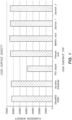
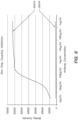
- Wafers with carboxyl surface were derivatized using different methods described in Examples 14-20 (Example 14: Silane PEG COOH, Example 15: Succinic Anhydride, Example 16: PEG diacid, Example 17: Trimesic acid, Example 18: Mellitic acid, Example 19: Dextran 1, and Example 20: Dextran 2). Surface density of the array generated by each method was tested. 4'-(Aminomethyl) Fluorescein, Hydrochloride was obtained from Life Technologies. 1-Ethyl-3-(3-dimethylaminopropyl) carbodiimide [EDC] and N-hydroxysuccinimide [NHS] were obtained from Sigma Aldrich.
- EDC 1-Ethyl-3-(3-dimethylaminopropyl) carbodiimide
- NHS N-hydroxysuccinimide
- the carboxyl surface of each array was activated with an activation mixture of 4% by weight EDC and 2% by weight NHS dissolved in deionized water for 10 minutes. This was followed by washing the carboxyl surface of each array with deionized water for 3 minutes. A mixture containing 1% by weight of 4'-(Aminomethyl) fluorescein dissolved in deionized water was then added to the array and allowed to react for 30 minutes. This was followed by washing the array with deionized water for 5 minutes. Intensity of fluorescein was then checked using a 488 nm laser for all COOH substrates. The resulting fluorescein intensity correlating to carboxyl surface density is shown in Figure 1 .
- This example describes how to construct a substrate comprising pillars.
- Silicon wafers with 2.4 ⁇ m thermally grown oxide were obtained from University Wafers. The surface of the silicon wafer was cleaned with deionized water to remove contaminants from the wafer surface. The surface of the silicon wafer was primed for chemical adhesion of an organic compound to the wafer by applying vapors of hexamethyldisilizane (HMDS) onto a heated wafer substrate using a spray module at 200-220° Celsius for 30-50 seconds.
- HMDS was obtained from Sigma Aldrich Inc. HMDS acts as a "bridge" with properties to bind to both the wafer surface and the photoresist.
- the wafers were spun coat in a photoresist coat module with a commercially available deep Ultra violet photoresist, P5107 obtained from Rohm and Haas or AZ DX7260p 700 from AZ Electronic Materials, to obtain a thickness of 6000 ⁇ .
- the wafers were then baked in a hot plate at 120° Celsius for 60 seconds.
- Photomasks that have the patterned regions to create the features were used to image the array on to the substrate surface.
- the wafers were then exposed in a 248nm deep ultra violet radiation scanner tool, Nikon S203, with expose energy of 18mJ/cm 2 .
- the wafers were then post-exposure baked at 110° Celsius for 120 seconds in a hot plate and developed with commercially available NMD-3 developer, obtained from Tokyo Ohka Kogyo Co., Ltd., for 60 seconds.
- oxide was etched by using either a wet etch process or dry plasma etch process. Standard semiconductor etch techniques were used. Oxide etch depths were from 1000 ⁇ to 2000 ⁇ .
- chromium was deposited to a thickness of 500 ⁇ to 1500 ⁇ by a physical deposition method. Standard etching and metal deposition techniques were employed.
- Piranha solution is a 50:50 mixture of sulfuric acid and hydrogen peroxide. Sulfuric acid and hydrogen peroxide were obtained from Sigma Aldrich Corp. Plasma ashing was performed to oxidize the remaining impurities. This process produced a substrate having pillars of silicon dioxide separated by metal.
- the deposited chromium was also polished to a depth of 500 ⁇ to 1500 ⁇ , depending on the deposition. The polishing was performed to obtain pillars of silicon dioxide separated by metal.
- the wafers were then surface derivatized using the methods provided in Examples 13-21 to coat the pillar surface with free carboxylic acid attachment groups (i.e., COOH groups).
- This example illustrates the method of C ⁇ N synthesis of peptides on a chip array using carbodiimide activation of free carboxylic acid groups.
- Wafers with COOH groups were prepared as explained in Example 13.
- COOH groups were activated, and peptides deprotected and added to the activated COOH groups in a site and sequence-specific manner according to the method described below.
- the solutions used for the coupling reaction were prepared as follows:
- a solution containing the Fmoc-protected amino acid coupling molecule Alanine was prepared as follows: The polymer poly(methyl methacrylate) (i.e., PMMA) was dissolved in a 1:1 solvent solution of N-methylpyrrollidone and ethyl lactate. The final concentration of PMMA in solution was 1% by weight. Fmoc-Ala-OH was the coupling molecule and added to the solution to a final concentration of 2% by weight. Any other Fmoc protected amino acid can be used in place of Fmoc-Ala-OH for coupling of another amino acid.
- Photobase generators 1,3-Bis[(2-nitrobenzyl)oxycarbonyl-4-piperidyl]propane and 1,3-Bis[(1-(9-fluorenylmethoxycarbonyl)-4-piperidyl]propane were each added to the solution for a final concentration of 1% by weight.
- Another solution containing the Fmoc-protected amino acid coupling molecule Alanine was prepared as follows: The polymer PMMA was dissolved in the solvent N-methylpyrrollidone. The final concentration of PMMA in solution was 1% by weight. Fmoc-Ala-OH was the coupling molecule and added to the solution to a final concentration of 2% by weight. Any other Fmoc protected amino acid can be used in place of Fmoc-Ala-OH for coupling of another amino acid. Photobase generator 1,3-Bis[(2-nitrobenzyl)oxycarbonyl-4-piperidyl]propane was added to the solution for a final concentration of 1% by weight.
- a solution containing the Fmoc-protected amino acid coupling molecule Alanine was prepared as follows: The polymers PMMA and polyvinylpyrrolidone were each dissolved in the solvent N-methylpyrrollidone. The final concentration of PMMA and polyvinylpyrrolidone in solution were each 1% by weight. Fmoc-Ala-OH was the coupling molecule and added to the solution to a final concentration of 2% by weight. Any other Fmoc protected amino acid can be used in place of Fmoc-Ala-OH for coupling of another amino acid. Photobase generator 1,3-Bis[(2-nitrobenzyl)oxycarbonyl-4-piperidyl]propane was added to the solution for a final concentration of 1% by weight.
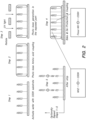
- Attachment of a free amino acid to the free carboxylic acid group attached to the surface of the substrate is shown in Figure 2 .
- the COOH-coated wafer substrate was activated by adding carboxylic acid activation solution to the surface of the wafer and spinning the wafer to form a layer of carboxylic activation solution on the surface of the wafer.
- Carbodiimide in the carboxylic acid activation solution reacted with the free carboxylic acid groups to generate a free carbonyl group (e.g. , an "activated carboxylic acid group").
- the carboxylic acid group activation solution was then washed from the surface of the wafer.
- one of the three coupling photobase amino acid solutions described above was then spin-coated onto a wafer at 3000 rpm and baked at 65° Celsius for 1 minute on a hot plate.
- the wafer was then selectively exposed to electromagnetic radiation at 248 nm and at 80mJ/cm 2 using a reticle (Step 3) and then hard baked at 85° Celsius for 90 seconds in a hot plate (Step 4).
- Fmoc-Ala-OH was deprotected by photoactivated release of a base from the photobase generator of the coupling photobase amino acid solution only in the region where it is exposed to radiation.
- the amino acid was coupled to the activated carboxylic acid group simultaneously with deprotection of the Fmoc-protected amine group.
- the solution was then stripped from the wafer, leaving the newly coupled amino acid bound to the activated carboxylic acid at site-specific locations (Step 5).
- Steps 2-5 were repeated to couple different amino acids to remaining activated carboxylic acid groups.
- carboxylic acid group activation as performed in step 1 was optionally repeated to activate carboxylic acid groups on the entire surface of the array to add another layer of amino acids (cycle of steps 2-5).
- the process generated sequence-specific peptide chains at specific locations on the substrate. Results obtained for selected sequences are described in further detail below.
- the photoactive coupling step described above was performed for synthesizing 20-mer peptides with the following sequences: Ala-Ala-Ala-Ala-Ala-Ala-Ala-Ala-Ala-Ala-Ala-Ala-Ala-Ala-Ala-Ala-Ala-Ala-Ala-Ala-Ala-Ala-Ala-Ala-Ala-Ala-Ala-Ala-Ala-Ala-Ala-Ala-Ala-Ala-Ala-Ala-Ala-Ala-Ala-Ala-Ala-Ala-Ala-Ala-Ala-Ala-Ala-Ala-Ala-Ala-Ala-Ala-Ala-Ala-Ala-Ala-Ala-Ala-Ala-Ala-Ala-Ala-Ala-Ala-Ala-Ala-Ala-Ala-Ala-Ala-Ala-Ala-Ala-Ala-Ala-A
- step yield data for each of the above 20-mer amino acid sequences was measured.
- uncoupled activated carboxylic acids were exposed to a capping solution comprising ethanolamine to prevent addition of another amino acid or fluorescein dye molecule.
- the fluorescent dye molecule was coupled to the sequence of amino acids in order to determine the coupling efficiency according to the following protocol: 5-(Aminomethyl) Fluorescein, Hydrochloride was obtained from Life tech.
- Carbodiimide in the carboxylic acid activation solution reacted with the free carboxylic acid groups to generate a free carbonyl group (e.g. , an "activated carboxylic acid group").
- the carboxylic acid group activation solution was then washed away.
- the fluorescein coupling solution was then spin coated on the wafer at 2000rpm to form a coupling dye coat.
- the wafers were baked at 65° Celsius for 2 minutes and then the fluorescein coupling solution was washed away with water. This completed the coupling of fluorescein dye to measure the proportion of uncapped:capped peptide chains to measure synthesis efficiency.
- the signal was then read off a fluorescence microscope. For all the experiments, the measured signal intensity was directly correlated to the coupling yield.
- the deprotection yield can be calculated by the amount of fluorescein coupled to the COOH on the substrate after each synthesis step.
- the amount of fluorescein dye coupled gives a direct measure of the amount of sequence grown.
- the coupling yield at each step was given by the same formula, as fluorescence directly correlates to synthesis efficiency at each step.
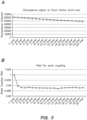
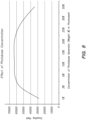
- Figure 3A shows a graph of fluorescence signal intensity versus each amino acid layer.
- Figure 3B shows a graph of overall step yield versus each amino acid layer.
- Table 6 shows the yield efficiency for each coupling step. The coupling efficiency of each amino acid was calculated to be greater that 98.5% in each instance across the entire length of the 20-mer peptide.
- the photoactive coupling step described above was performed for synthesizing up to 12-mer polypeptides.
- Amino acids used in this example were Fmoc-Lys-OH, Fmoc-Leu-OH, Fmoc-Met-OH, Fmoc-Thr-OH, Fmoc-Ser-OH, Fmoc-Asp-OH, Fmoc-Gly-OH, Fmoc-Ile-OH, Fmoc-Ala-OH, Fmoc-Arg-OH, Fmoc-Val-OH. All amino acids were obtained from Anaspec. These amino acids were added to the coupling photobase amino acid solution in place of Fmoc-Ala-OH in the coupling photobase amino acid solutions described previously.
- the sequence was synthesized using the carbodiimide activated COOH and Fmoc-protected peptide coupling method described above. Fluorescein coupling was performed to the final product to measure synthesis efficiency as described above.
- the 12 mer polypeptide was synthesized according to the following steps:
- the coupling yield at each step was given by the same formula, as fluorescence directly correlates to synthesis efficiency at each step.
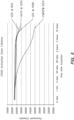
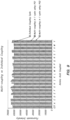
- Figure 4A shows a graph of fluorescence signal intensity versus each amino acid layer.
- Figure 4B shows a graph of overall step yield for each amino acid addition.
- the columns contain the sequence synthesized such that one amino acid is added in each column.
- Wafers with carboxylic acid surfaces were prepared as explained in Example 17 (Trimesic acid coating). Different coupling reagents were then tested for determining the lifetime of an activated ester.
- 1-Ethyl-3-(3-dimethylaminopropyl) carbodiimide [EDC] and N-hydroxysuccinimide [NHS] were obtained from Sigma Aldrich.
- 1,3-Diisopropylcarbodiimide [DIC] was obtained from Advanced ChemTech. Hydroxybenzotriazole (HOBt) was obtained from Anaspec.
- the wafer was activated with the different combinations of reagents yielding the following activation solutions: (1) EDC and NHS with 4% by weight of EDC and 2% by weight of NHS were dissolved in deionized water and reacted with the wafer at room temperature for 10 minutes. The wafer was then washed with deionized water; (2) DIC and HOBt with 4% by weight of DIC and 2% by weight of HOBt were dissolved in NMP and reacted with the wafer at room temperature for 10 minutes.
- the wafer was then washed with NMP; (3) HATU and N,N-Diisopropylethyl-amine (DIEA) with 4% by weight of HATU and 2% by weight of DIEA were dissolved in NMP and reacted with the wafer at room temperature for 8 minutes.
- the wafer was then washed with NMP; and (4) PyBOP and DIEA with 4% by weight of PyBOP and 2% by weight of DIEA were dissolved in NMP and reacted with the wafer at room temperature for 25 minutes.
- the wafer was then washed with NMP.
- Example 25 Peptide synthesis on a COOH substrate using Fmoc protected amino acids
- Wafers with carboxylic acid surfaces were prepared as explained above using trimesic acid (Example 17).
- Fluorenylmethyloxycarbonyl [Fmoc] protected amino acids were obtained from Anaspec, including Histidine (H), Arginine (R), Serine (S), Valine (V) and Glycine (G).
- Ethanolamine was obtained from Sigma Aldrich.
- the carboxylic acid surface was activated as follows: 4% by weight of EDC and 2% by weight of NHS were dissolved in deionized water and reacted with the wafer at room temperature for 10 minutes. The wafer was then washed with deionized water.
- the deprotection and coupling to the carboxylic acids on the wafer was checked by binding a sequence-specific antibody to known amino acid sequence (RHSVV).
- Amino acid coupling was performed as follows: a photobase coupling solution containing a copolymer (2.5% by weight of PMMA added to 1.5% by weight of Poly ethylene glycol), 1% by weight of amino acid and 2.5% by weight of photobase generator was spin-coated onto a wafer and baked. Next, the wafer was exposed to 248 nm light using a reticle and then hard baked. Fmoc was removed from the amino acid only in the region, where photobase was exposed to light and the deprotected amino acid was coupled simultaneously. The wafer was stripped with acetone and isopropyl alcohol [IPA].
- IPA isopropyl alcohol
- ethanolamine was used for capping the activated COOH that have not been coupled. This was done by spin coating a mixture of polymer and ethanolamine in deionized water and then baking. The wafer was then stripped with deionized water. The process of carboxylic acid activation, deprotection and coupling for each amino acid at selected sites on the wafer, and capping was repeated for coupling each of the next layers of amino acid to the wafer. Two sequences were synthesized on the wafer: RHSVV (natural sequence) and GHSVV (mutant sequence).
- Trifluoroacetic Acid [TFA] was obtained from Sigma Aldrich.
- Pentamethylbenzene [PMB] and Thioanisole were obtained from VWR.
- a hydrogen bromide solution of 33% by weight hydrogen bromide in acetic acid [HBr] was obtained from Sigma Aldrich.
- the wafer was washed with TFA for 10 minutes.
- a solution comprising of 0.4% by weight PMB and 0.4% by weight thioanisole was dissolved in TFA.
- 4% by weight of HBr was added and the wafer was washed with this solution for 60 minutes.
- the same process was repeated again for a further 60 minutes.
- the wafer was then washed with TFA for 5 minutes, IPA for 5 minutes, then DMF for 5 minutes.
- the wafer was then neutralized with 5% DIEA in DMF for 5 minutes, then washed with DMF for 5 minutes, and finally washed with IPA for 5 minutes.
- Anti-p53 antibody specific to the RHSVV polypeptide and Goat anti-mouse IgG for detection of binding of the anti-p53 antibody to the RHSVV polypeptide were obtained from ABCAM.
- TBS Buffer, PBST Buffer and BSA were obtained from VWR International.
- the assay to detect polypeptide synthesis on the peptide array was performed as follows: The chip containing the natural and mutated sequence grown was washed with methanol for 5 mins followed by washing with TBS Buffer for 5 mins. Primary antibody solution containing PBST, 1% BSA, and Anti-p53 antibody was incubated on the chip at 37° Celsius for 1 hour.
- the chip was then washed with PBST for 5 minutes thrice. (Throughout this specification, the absence of a recited temperature indicates that a step was carried out at room temperature, i.e., approximately 23° Celsius.) This was followed by secondary antibody incubation at 37° Celsius for 1 hour.
- the secondary antibody solution contained PBST, 1% BSA, and Goat Anti-mouse IgG.
- the chip was then washed with PBST for 5 minutes thrice. This was followed by washing with deionized water for 5 minutes twice. The concentration of anti-p53 antibody was varied and the results of antibody binding were measured to validate the efficiency of synthesis using the single step deprotection and coupling process described above.
- a scavenger can be added to ensure complete scavenging of the deprotection product.
- scavengers include, but are not limited to, alkyl thiols, such as dithiothreitol, 1-propanethiol or 1-decanethiol.
- C-terminal amidation can be performed on selective peptides if necessary. This process can take place in a solution containing ammonium chloride, ethylammonium chloride and semicarbazide hydrochloride in the presence of HATU and DIEA at room temperature.
- Photobase generator compositions were prepared and tested to determine their performance for polypeptide synthesis on an array as described above.
- Each photobase generator composition comprised a photobase generator having a structure and general formula as shown in Tables 2 and 3.
- the photobase generators were commercially available or synthesized as described above.
- photobase generator compositions were prepared as follows: a mixture of 1-3% by weight of polymethyl methacrylate [PMMA] was added to cyclohexanone and stirred thoroughly for 24 hours. After 24 hours stirring, 1.5-5% by weight of photobase generator, depending on the molecular weight of the photobase generator, was mixed in the solution and stirred thoroughly for 24 hours. Then, 0.1 M of the suitable amino acid was added to the solution and stirred for 10 hours at room temperature.
- PMMA polymethyl methacrylate
- Wafer with carboxylic acid surfaces were prepared as explained above in Example 17 (Trimesic acid). Different coupling reagents were then tested for determining the lifetime of an activated ester.
- 1-Ethyl-3-(3-dimethylaminopropyl) carbodiimide [EDC] and N-hydroxysuccinimide [NHS] were obtained from Sigma Aldrich.
- 1,3-Diisopropylcarbo-diimide [DIC] was obtained from Advanced ChemTech. Hydroxybenzotriazole (HOBt) was obtained from Anaspec.
- Ethanolamine was used for capping any activated COOH groups which had not been coupled. This was done by spin coating a mixture of polymer, ethanolamine and deionized water onto the wafer and then baking the coated wafer. The wafer was then stripped with deionized water and the same process was repeated for coupling the next amino acid.
- a sequence of amino acids was synthesized at predetermined locations on a chip by repeating the method above with selected Fmoc-protected amino acids and polypeptide synthesis performance was determined by using measurements of yield at each step of synthesis. This was done by coupling one amino acid at a time and finally activating the carboxylic acid groups on the wafer and coupling aminomethyl fluorescein for each step yield.
- Amino acids used during synthesis were Citrulline (CIT), Alanine (A), Cysteine (C), Aspartic acid (D), Glutamic acid (E), Phenylalanine (F), Glycine (G), Histidine (H), Isoleucine (I), Lysine (K), Leucine (L), Methionine (M), Asparagine (N), Proline (P), Glutamine (Q), Arginine (R), Serine (S), Threonine (T), Valine (V), Tryptophan (W) and Tryosine (Y). Unprotected amino acids and Fmoc-protected amino acids were obtained from Anaspec.
- the carboxylic acid surface on a wafer was activated with an activation mixture of 4% by weight EDC and 2% by weight NHS dissolved in deionized water for 10 minutes. This was followed by washing the wafer with deionized water for 3 minutes.
- Concentration of photobase generator in a photoresist solution can be in the range of 1-30%, preferably in the range 5-15% by weight.
- the weight percentage of photobase generator used in the photoresist solution for peptide coupling was varied to measure the coupling yield.
- the amino acid Fmoc-Ala-OH was coupled to the wafer. Amino acid coupling was performed as explained above in Example 25 under different concentrations of photobase generator in photoresist solution. Unreacted carboxylic acids were capped using ethanolamine. Carboxylic acid groups from newly coupled alanine were activated as follows: 4% by weight EDC and 2% by weight NHS were dissolved in deionized water for 10 minutes and coated on the wafer. The wafer was then washed with deionized water for 3 minutes. Coupling yield was checked by coupling aminomethyl fluorescein to newly coupled alanine.
- Example 29 Coupling of multiple amino acids after a single activation step
- Amino acid coupling was performed as follows: A photoresist coupling solution containing a polymer, amino acid with amino group protected with a light sensitive protecting group was spin-coated onto a wafer and baked. Next, the wafer was exposed to 248 nm radiation and then hard baked. Protecting group was removed from the amino acid only in the region, where the wafer was exposed to the 248 nm radiation. At this radiation-exposed region, activated carboxylic acid on the surface was coupled to the deprotected amine group of the amino acid. The wafer was then stripped with acetone and IPA. A photoresist coupling solution containing the next amino acid was then used and the same steps as described above were followed to couple this next amino acid to the previous amino acid.
- the capping step described earlier was not performed after each addition, but only after all additions were performed to complete amino acid layer. Amino acid coupling to the activated carboxylic acid was controlled by exposure to light. Coupling did not occur at non-exposed regions of the wafer.
- Amino acid coupling yield was calculated for individual activation and capping and compared to multiple coupling of different amino acid to different sites in one activation cycle that was followed by capping. Coupling efficiency was determined by activating and coupling aminomethyl fluorescein to the wafer, where the unbound activated carboxylic acids were capped after all coupling steps were completed.
- Example 30 Peptide synthesis on a COOH substrate using photolabile group protected amino acids
- Wafers with carboxylic acid surfaces were prepared as explained above using trimesic acid ( Example 17) and activated with an activation mixture of 4% by weight EDC and 2% by weight NHS dissolved in deionized water for 10 minutes. This was followed by washing the carboxyl surface of each array with deionized water for 3 minutes. 2,2-Dimethyl-3,5-dimethyoxy-benzyloxy-benzocarbonate [DDZ] protected amino acids were obtained from Anaspec.
- Amino Acid coupling was performed as follows: a photoresist coupling solution containing a copolymer (2.5% by weight of PMMA added to 1.5% by weight of Poly Ethylene Glycol) and 1% by weight of amino acid was spin-coated onto a wafer and baked. Next, the wafer was selectively exposed using a reticle to 248 nm radiation and then hard baked. DDZ-protected amino acids are deprotected only in the region where the wafer was exposed to 248 nm radiation. Deprotected amino acids were coupled to activated carboxylic acids attached to the wafer simultaneously during bake. Next, the wafer was stripped with acetone and IPA.
- Ethanolamine was used for capping any activated COOH which were not coupled. This was done by spin coating a mixture of polymer, ethanolamine and deionized water onto the wafer and then baking the coated wafer. The wafer was then stripped by washing with deionized water. The same coupling and capping process was repeated for coupling each of the next amino acids. All individual amino acids were coupled to selected spots on a chip using a reticle. A range of radiation exposure energies were used to check coupling yield of each amino acid. This was done by coupling one acid at a time and finally activating and coupling aminomethyl fluorescein.
- Example 31 Peptide synthesis using Fmoc protected amino acids and a photoacid generator
- the sequence specificity and final yield of polypeptides on a wafer with a carboxylic acid surface was tested as follows: Wafers with carboxylic acid surfaces were prepared as explained above using trimesic acid (Example 17). The carboxylic acid surface on a wafer was activated with an activation mixture of 4% by weight EDC and 2% by weight NHS dissolved in deionized water for 10 minutes. This was followed by washing the wafer with deionized water for 3 minutes.
- Amino acid coupling was performed as follows: a photoresist coupling solution containing a copolymer (2.5% by weight of PMMA added to 1.5% by weight of Poly Ethylene Glycol), 1% by weight of Fmoc-protected amino acid, 5% of N-Boc-piperidine and 2.5% of a photoacid generator was spin-coated onto a wafer and baked. Next, the wafer was exposed to 248 nm radiation and then hard baked. The protecting group Boc was removed from piperidine only in the region where it is exposed. Piperidine removed Fmoc protection from the amino acid and the activated carboxylic acid on the surface was coupled to the amine group of the deprotected amino acid in the exposed regions. The wafer was then stripped with acetone and IPA. For multiple couplings, the cycle of activation and coupling described above is repeated with a new photoresist coupling solution containing the next amino acid.
- Trifluoroacetic Acid [TFA] was obtained from Sigma Aldrich.
- Pentamethylbenzene [PMB] and thioanisole was obtained from VWR.
- a solution of 33% by weight hydrogen bromide dissolved in acetic acid [HBr] was obtained from Sigma Aldrich.
- the wafer was washed with TFA for 10 minutes.
- a solution comprising 0.4% by weight of PMB and 0.4 % thioanisole was dissolved in TFA. After stirring thoroughly, 4% of HBr was added to the solution and the wafer was washed twice with this solution for 60 minutes each.
- the wafer was then washed with TFA for 5 minutes, IPA for 5 minutes, then DMF for 5 minutes.
- the wafer was then neutralized with 5% DIEA in DMF for 5 minutes, then washed with DMF for 5 minutes, and finally washed with IPA for 5 minutes.
- the sequence specific binding of antibodies to the chip was performed as follows: The chips containing the synthesized natural and mutated sequences were washed with methanol for 5 minutes, then were washed with TBS Buffer for 5 minutes. The primary antibody solution containing PBST, 1% BSA and anti-p53 antibody was incubated on the surface of the wafer at 37° Celsius for 1 hour. The chip was washed with PBST for 5 minutes thrice. This was followed by incubating the chip with secondary antibody solution at 37° Celsius for 1 hour. The secondary antibody contained PBST, 1% BSA, and Goat anti-mouse IgG. The chip was washed with PBST for 5 minutes thrice. This was followed by washing with deionized water twice for 5 minutes each. The concentration of anti-p53 antibody was varied to validate the efficiency of coupling using the above process.
- Example 32 Photoinduced carbodiimides for peptide and protein microarray preparation
- Wafers were prepared with COOH substrate as described in Example 13.
- One of three activation solutions was prepared as described below.
- 4,5-dihydro-4-(hydroxymethyl)-1-phenyl-1H-tetrazole-5-thione, 1-(3-(dimethylamino)propyl)-4-ethyl-1,4-dihydro-5H-tetrazole-5-thione, and 1,4-Bis(2,2-dimethyl-1,3-dioxolan-4-ylmethyl)-1,4-dihydro-5H-tetrazole-5-thione were obtained from Sigma Aldrich Inc.
- Polyvinyl pyrrollidone was obtained from Polysciences Inc.
- Photoactivated Carboxylic Acid Activation Solution 1 2.5% by weight of 4,5-dihydro-4-(hydroxymethyl)-1-phenyl-1H-tetrazole-5-thione was dissolved in 95% DI water along with 2.5% by weight of polyvinyl pyrrollidone and spun in a magnetic stirrer overnight to dissolve completely.
- Photoactivated Carboxylic Acid Activation Solution 2 2.5% by weight of 1-(3-(dimethylamino)propyl)-4-ethyl-1,4-dihydro-5H-tetrazole-5-thione was dissolved in 95% DI water along with 2.5% by weight of Polyvinyl pyrrollidone and spun in a magnetic stirrer overnight to dissolve completely.
- Photoactivated Carboxylic Acid Activation Solution 3 2.5% by weight of 1,4-Bis(2,2-dimethyl-1,3-dioxolan-4-ylmethyl)-1,4-dihydro-5H-tetrazole-5-thione was dissolved in 95%DI water along with 2.5% by weight of Polyvinyl pyrrollidone and spun in a magnetic stirrer overnight to dissolve completely.
- One of the above activation solutions comprising a thione was coated onto the wafer and baked at 85° Celsius for 90 seconds.
- the coat was exposed at 248 nm at 10-100mJ/cm 2 using a photomask to choose regions to couple protein.
- the thione was converted into a carbodiimide (see, e.g., Scheme 2).
- Photoactivated conversion of 1,4-Bis(2,2-dimethyl-1,3-dioxolan-4-ylmethyl)-1,4-dihydro-5H-tetrazole-5-thione to 1,3-Bis(2,2-dimethyl-1,3-dioxolan-4-ylmethyl)-carbodiimide of activation solution 3 occurred at 248 nm and at 10-100mJ/cm 2 (see, e.g., Scheme 3).
- the carbodiimide activated the carboxylic acid groups attached to the array by forming carbonyl groups ready to bind to an amino group.
- the activation solution was then washed from the chip, and the carboxylic acid groups remain activated for a certain amount of time.
- Protein coupling solution comprising 50 ⁇ g/mL of TNF-alpha dissolved in 5% polyvinyl pyrrollidone in deionized water was prepared and was coated on the wafer at 2000 rpm. Then, the wafers were baked at 37° Celsius for 5 minutes to complete the TNF alpha coupling to the activated carboxylic acid comprising regions of the chip. The process above was repeated using IL-6 in place of TNF alpha and activating different regions on the chip. The complete process for site-specific activation of carboxylic acid groups via site-specific photoactivation of carbodiimide, and the attachment of protein to the activated sites, is depicted in Figure 11 .
- anti-TNF alpha and Anti IL-6 antibodies were added to the chip. All antibodies and buffer solutions were obtained from Life Technologies. The assay was performed as follows: anti-TNF alpha and Anti IL-6 antibodies were diluted 1: 1000 in PBST buffer. Chips were washed in PBST buffer thrice for 5 minutes. The antibody solution was added to the chip and incubated for 1 hour at 37° Celsius in the dark. The chips were then washed with PBST buffer thrice for 5 min followed by deionized water thrice for 5 minutes. The chips were then scanned in a fluorescent scanner.
- Activation Solution 1 2.5% by weight of 4,5-dihydro-4-(hydroxymethyl)-1-phenyl-1H-tetrazole-5-thione was dissolved in 95% DI water along with 2.5% by weight of polyvinyl pyrrollidone and spun in a magnetic stirrer overnight to dissolve completely.
- Activation Solution 2 2.5% by weight of 1-(3-(dimethylamino)propyl)-4-ethyl-1,4-dihydro-5H-tetrazole-5-thione was dissolved in 95% DI water along with 2.5% by weight of polyvinyl pyrrollidone and spun in a magnetic stirrer overnight to dissolve completely.
- Activation Solution 3 2.5% by weight of 1,4-Bis(2,2-dimethyl-1,3-dioxolan-4-ylmethyl)-1,4-dihydro-5H-tetrazole-5-thione was dissolved in 95% DI water along with 2.5% by weight of polyvinyl pyrrollidone and spun in a magnetic stirrer overnight to dissolve completely.
- Coupling amino acid solution 1 A solution containing the amino acid coupling molecule alanine was prepared as follows: The polymer poly(methyl methacrylate) (i.e., PMMA) was dissolved in a 1:1 solvent solution of N-methylpyrrollidone and ethyl lactate. The final concentration of PMMA in solution was 1% by weight. Alanine was the coupling molecule and added to the solution for a final concentration of 2% by weight. Any other amino acid may be used in place of alanine for coupling of this other amino acid.
- PMMA polymer poly(methyl methacrylate)
- Coupling amino acid solution 2 Another solution containing the amino acid coupling molecule alanine was prepared as follows: The polymer PMMA was dissolved in the solvent N-methylpyrrollidone. The final concentration of PMMA in solution was 1% by weight. Alanine was the coupling molecule and added to the solution for a final concentration of 2% by weight. Any other amino acid may be used in place of alanine for coupling of this other amino acid.
- Coupling amino acid solution 3 A solution containing the amino acid coupling molecule alanine was prepared as follows: The polymers PMMA and polyvinylpyrrolidone were each dissolved in the solvent N-methylpyrrollidone. The final concentration of PMMA and polyvinylpyrrolidone in solution were each 1% by weight. Alanine was the coupling molecule and added to the solution for a final concentration of 2% by weight. Any other amino acid may be used in place of alanine for coupling of this other amino acid.
- PMMA Polymethyl methacrylate
- poly vinyl pyrrollidone Polymethyl methacrylate (PMMA) and poly vinyl pyrrollidone were obtained from Polysciences Inc.
- One of the above activation solutions comprising a thione was coated onto the wafer and baked at 85° Celsius for 90 seconds.
- the coat was exposed at 248 nm at 10-100mJ/cm 2 using a photomask to choose regions to couple the protein to.
- the thione was converted into a carbodiimide (see, e.g., Scheme 2).
- Photoactivated conversion of 1,4-Bis(2,2-dimethyl-1,3-dioxolan-4-ylmethyl)-1,4-dihydro-5H-tetrazole-5-thione to 1,3-Bis(2,2-dimethyl-1,3-dioxolan-4-ylmethyl)-carbodiimide of activation solution 3 occurred at 248 nm and at 10-100mJ/cm 2 (see, e.g., Scheme 3).
- the carbodiimide activated the carboxylic acid groups attached to the array by forming carbonyl groups ready to bind to an amino group.
- the activation solution was then washed from the chip, and the carboxylic acid groups remained activated for at least 15 minutes.
- One of the three amino acid coupling solutions described above was then layered on top of the wafer to allow reaction between the activated carboxylic acid groups and the amino acids.
- the amino acid was coupled to the activated carboxylic acid group.
- the solution was then washed, leaving the newly coupled amino acid bound to the activated carboxylic acid at site-specific location.
- the process was repeated to add desired amino acids at reticle-specified activated carboxylic acid locations to generate sequence-specific peptide chains at specific locations on the substrate.
Landscapes
- Chemical & Material Sciences (AREA)
- Organic Chemistry (AREA)
- Life Sciences & Earth Sciences (AREA)
- Health & Medical Sciences (AREA)
- Molecular Biology (AREA)
- Engineering & Computer Science (AREA)
- Chemical Kinetics & Catalysis (AREA)
- Biochemistry (AREA)
- Medicinal Chemistry (AREA)
- Physics & Mathematics (AREA)
- Biophysics (AREA)
- General Chemical & Material Sciences (AREA)
- Urology & Nephrology (AREA)
- General Health & Medical Sciences (AREA)
- Bioinformatics & Cheminformatics (AREA)
- Bioinformatics & Computational Biology (AREA)
- Biomedical Technology (AREA)
- Analytical Chemistry (AREA)
- Structural Engineering (AREA)
- Hematology (AREA)
- Immunology (AREA)
- Proteomics, Peptides & Aminoacids (AREA)
- General Physics & Mathematics (AREA)
- Food Science & Technology (AREA)
- Microbiology (AREA)
- Pathology (AREA)
- Cell Biology (AREA)
- Biotechnology (AREA)
- Genetics & Genomics (AREA)
- Peptides Or Proteins (AREA)
- Nitrogen Condensed Heterocyclic Rings (AREA)
- Materials For Photolithography (AREA)
- Hydrogenated Pyridines (AREA)
- Organic Low-Molecular-Weight Compounds And Preparation Thereof (AREA)
- Measuring Or Testing Involving Enzymes Or Micro-Organisms (AREA)
- Apparatus Associated With Microorganisms And Enzymes (AREA)
Priority Applications (1)
| Application Number | Priority Date | Filing Date | Title |
|---|---|---|---|
| EP25153518.3A EP4556467A3 (en) | 2012-11-14 | 2013-11-14 | Methods for array synthesis |
Applications Claiming Priority (9)
| Application Number | Priority Date | Filing Date | Title |
|---|---|---|---|
| US201261726515P | 2012-11-14 | 2012-11-14 | |
| US201261732221P | 2012-11-30 | 2012-11-30 | |
| PCT/US2013/025190 WO2013119845A1 (en) | 2012-02-07 | 2013-02-07 | Substrates, peptide arrays, and methods |
| US201361765584P | 2013-02-15 | 2013-02-15 | |
| US201361805884P | 2013-03-27 | 2013-03-27 | |
| US201361866512P | 2013-08-15 | 2013-08-15 | |
| PCT/US2013/062773 WO2014052989A2 (en) | 2012-09-28 | 2013-09-30 | Methods, systems, and arrays for biomolecular analysis |
| PCT/US2013/070207 WO2014078606A2 (en) | 2012-11-14 | 2013-11-14 | Substrates, systems, and methods for array synthesis and biomolecular analysis |
| EP13798499.3A EP2920272B1 (en) | 2012-11-14 | 2013-11-14 | Methods for array synthesis |
Related Parent Applications (2)
| Application Number | Title | Priority Date | Filing Date |
|---|---|---|---|
| EP13798499.3A Division EP2920272B1 (en) | 2012-11-14 | 2013-11-14 | Methods for array synthesis |
| EP13798499.3A Division-Into EP2920272B1 (en) | 2012-11-14 | 2013-11-14 | Methods for array synthesis |
Related Child Applications (1)
| Application Number | Title | Priority Date | Filing Date |
|---|---|---|---|
| EP25153518.3A Division EP4556467A3 (en) | 2012-11-14 | 2013-11-14 | Methods for array synthesis |
Publications (2)
| Publication Number | Publication Date |
|---|---|
| EP3617219A1 EP3617219A1 (en) | 2020-03-04 |
| EP3617219B1 true EP3617219B1 (en) | 2025-02-26 |
Family
ID=50731824
Family Applications (3)
| Application Number | Title | Priority Date | Filing Date |
|---|---|---|---|
| EP19185540.2A Active EP3617219B1 (en) | 2012-11-14 | 2013-11-14 | Methods for array synthesis |
| EP13798499.3A Active EP2920272B1 (en) | 2012-11-14 | 2013-11-14 | Methods for array synthesis |
| EP25153518.3A Pending EP4556467A3 (en) | 2012-11-14 | 2013-11-14 | Methods for array synthesis |
Family Applications After (2)
| Application Number | Title | Priority Date | Filing Date |
|---|---|---|---|
| EP13798499.3A Active EP2920272B1 (en) | 2012-11-14 | 2013-11-14 | Methods for array synthesis |
| EP25153518.3A Pending EP4556467A3 (en) | 2012-11-14 | 2013-11-14 | Methods for array synthesis |
Country Status (4)
| Country | Link |
|---|---|
| EP (3) | EP3617219B1 (https=) |
| JP (5) | JP6275152B2 (https=) |
| CA (3) | CA2891651C (https=) |
| WO (1) | WO2014078606A2 (https=) |
Families Citing this family (13)
| Publication number | Priority date | Publication date | Assignee | Title |
|---|---|---|---|---|
| JP6012767B2 (ja) | 2012-02-07 | 2016-10-25 | ヴィブラント ホールディングス リミテッド ライアビリティ カンパニー | 基板、ペプチドアレイ、および方法 |
| US10006909B2 (en) | 2012-09-28 | 2018-06-26 | Vibrant Holdings, Llc | Methods, systems, and arrays for biomolecular analysis |
| US10286376B2 (en) | 2012-11-14 | 2019-05-14 | Vibrant Holdings, Llc | Substrates, systems, and methods for array synthesis and biomolecular analysis |
| CA2891651C (en) * | 2012-11-14 | 2019-01-22 | Vibrant Holdings, Llc | Substrates, systems, and methods for array synthesis and biomolecular analysis |
| EP2956771B1 (en) | 2013-02-15 | 2020-04-08 | Vibrant Holdings, LLC | Methods and compositions for amplified electrochemiluminescence detection |
| AU2015218635B2 (en) * | 2014-02-21 | 2017-08-31 | Vibrant Holdings, Llc | Selective photo activation of amino acids for single step peptide coupling |
| WO2016145434A1 (en) | 2015-03-12 | 2016-09-15 | Vibrant Holdings, Llc | Polypeptide arrays and methods of attaching polypeptides to an array |
| EP3402897A4 (en) * | 2015-12-28 | 2019-06-19 | Vibrant Holdings, LLC | SUBSTRATES, SYSTEMS AND METHODS FOR NUCLEINE ACIDIFICATION SYNTHESIS |
| US10538808B2 (en) | 2017-05-26 | 2020-01-21 | Vibrant Holdings, Llc | Photoactive compounds and methods for biomolecule detection and sequencing |
| EP3790985B1 (en) * | 2018-05-09 | 2026-04-15 | Vibrant Holdings, LLC | Methods of synthesizing a polynucleotide array using photactivated agents |
| EP3802847A4 (en) * | 2018-05-29 | 2022-03-09 | Centrillion Technologies, Inc. | INCREASING THE EFFICIENCY OF PHOTOCHEMICAL REACTIONS ON SUBSTRATES |
| JP7120547B2 (ja) * | 2019-02-22 | 2022-08-17 | 国立研究開発法人理化学研究所 | 物質固定化剤、及び当該物質固定化剤を用いた物質固定化方法 |
| US11752195B2 (en) * | 2021-04-15 | 2023-09-12 | Arizona Board Of Regents On Behalf Of Arizona State Univeristy | Compositions and methods of use of synthetic peptides with Mycobacterium abscessus inhibitory activity |
Citations (1)
| Publication number | Priority date | Publication date | Assignee | Title |
|---|---|---|---|---|
| GB1066823A (en) * | 1962-10-05 | 1967-04-26 | Fuji Photo Film Co Ltd | Improvement in or relating to silver salt diffusion transfer photographic materials |
Family Cites Families (25)
| Publication number | Priority date | Publication date | Assignee | Title |
|---|---|---|---|---|
| US5143854A (en) | 1989-06-07 | 1992-09-01 | Affymax Technologies N.V. | Large scale photolithographic solid phase synthesis of polypeptides and receptor binding screening thereof |
| US5240811A (en) * | 1991-04-15 | 1993-08-31 | Ocg Microelectronic Materials, Inc. | Photogenerated polycarbodiimides from poly(tetrazole-5-thiones) and use in the preparation of coatings and deep-UV photoresists |
| EP0702707A1 (en) * | 1993-05-26 | 1996-03-27 | Akzo Nobel N.V. | Coating composition including a uv-deblockable basic catalyst |
| ATE165168T1 (de) * | 1994-03-29 | 1998-05-15 | Lepetit Spa | Festphasenimmunoassay zum nachweis von inhibitoren von einem proteolytischen enzym |
| JP4503828B2 (ja) * | 1998-02-11 | 2010-07-14 | ユニバーシティー オブ ヒューストン | 光生成試薬を用いる化学反応および生化学反応のための方法および装置 |
| JP2001172259A (ja) * | 1999-03-25 | 2001-06-26 | Nisshinbo Ind Inc | 蛍光性基含有カルボジイミド化合物前駆体及び蛍光性基含有カルボジイミド化合物並びにこれらの製造方法 |
| JP4570363B2 (ja) * | 2001-10-02 | 2010-10-27 | ノースウエスタン ユニヴァーシティ | タンパク質およびペプチドのナノアレイ |
| JP2003342354A (ja) * | 2002-05-24 | 2003-12-03 | Hokko Chem Ind Co Ltd | 新規なボレート化合物およびエポキシ樹脂硬化促進剤 |
| DE602004021604D1 (de) * | 2003-08-06 | 2009-07-30 | Mitsubishi Gas Chemical Co | Ammensetzung |
| DE602005002571T2 (de) * | 2004-02-16 | 2008-01-31 | Mitsubishi Gas Chemical Co., Inc. | Photobasengenerator und härtbare Zusammensetzung |
| JP4843955B2 (ja) * | 2004-02-16 | 2011-12-21 | 三菱瓦斯化学株式会社 | 光塩基発生剤 |
| US20070122842A1 (en) | 2005-11-30 | 2007-05-31 | Rajasekaran John J | Massively parallel synthesis of proteinaceous biomolecules |
| US20070122841A1 (en) | 2005-11-30 | 2007-05-31 | Rajasekaran John J | Massively parallel synthesis of proteinaceous biomolecules |
| US20070154946A1 (en) | 2005-12-29 | 2007-07-05 | Rajasekaran John J | Massively parallel synthesis of biopolymeric arrays |
| WO2008118167A1 (en) * | 2006-03-24 | 2008-10-02 | The Regents Of The University Of Michigan | Method for forming molecular sequences on surfaces |
| US9096953B2 (en) * | 2006-09-29 | 2015-08-04 | Intel Corporation | Method for high throughput, high volume manufacturing of biomolecule micro arrays |
| US20080108149A1 (en) | 2006-10-23 | 2008-05-08 | Narayan Sundararajan | Solid-phase mediated synthesis of molecular microarrays |
| US20100093554A1 (en) | 2007-06-01 | 2010-04-15 | Keting Chu | Methods for identifying biomarkers, autoantibody signatures, and stratifying subject groups using peptide arrays |
| JP5120378B2 (ja) * | 2007-06-06 | 2013-01-16 | 日立化成工業株式会社 | 感光性接着剤組成物、フィルム状接着剤、接着シート、接着剤パターンの形成方法、接着剤層付半導体ウェハ、半導体装置、及び、半導体装置の製造方法 |
| KR101588912B1 (ko) * | 2008-03-31 | 2016-01-26 | 산아프로 가부시키가이샤 | 광염기 발생제 |
| JP2011017798A (ja) * | 2009-07-07 | 2011-01-27 | Jsr Corp | 酸転写性樹脂組成物、バイオチップの製造方法及びバイオチップ |
| JP5521645B2 (ja) * | 2010-02-26 | 2014-06-18 | ぺんてる株式会社 | ノック式ボールペン |
| JP6012767B2 (ja) * | 2012-02-07 | 2016-10-25 | ヴィブラント ホールディングス リミテッド ライアビリティ カンパニー | 基板、ペプチドアレイ、および方法 |
| CA3088591C (en) * | 2012-09-28 | 2023-01-03 | Vibrant Holdings, Llc | Inverted pillar plates for assaying microarrays and methods of using same. |
| CA2891651C (en) * | 2012-11-14 | 2019-01-22 | Vibrant Holdings, Llc | Substrates, systems, and methods for array synthesis and biomolecular analysis |
-
2013
- 2013-11-14 CA CA2891651A patent/CA2891651C/en active Active
- 2013-11-14 EP EP19185540.2A patent/EP3617219B1/en active Active
- 2013-11-14 CA CA3027054A patent/CA3027054C/en active Active
- 2013-11-14 JP JP2015542794A patent/JP6275152B2/ja active Active
- 2013-11-14 CA CA3183995A patent/CA3183995A1/en active Pending
- 2013-11-14 WO PCT/US2013/070207 patent/WO2014078606A2/en not_active Ceased
- 2013-11-14 EP EP13798499.3A patent/EP2920272B1/en active Active
- 2013-11-14 EP EP25153518.3A patent/EP4556467A3/en active Pending
-
2018
- 2018-01-09 JP JP2018000969A patent/JP6613325B2/ja active Active
-
2019
- 2019-11-01 JP JP2019200012A patent/JP7159145B2/ja active Active
-
2022
- 2022-10-12 JP JP2022163696A patent/JP7514280B2/ja active Active
-
2024
- 2024-06-28 JP JP2024104585A patent/JP2024124458A/ja active Pending
Patent Citations (1)
| Publication number | Priority date | Publication date | Assignee | Title |
|---|---|---|---|---|
| GB1066823A (en) * | 1962-10-05 | 1967-04-26 | Fuji Photo Film Co Ltd | Improvement in or relating to silver salt diffusion transfer photographic materials |
Non-Patent Citations (5)
| Title |
|---|
| ALPER HOWARD ET AL: "Azole chemistry. VI. (I). Tetrazolo[5,4-b] [1,3] thiazinium salts", JOURNAL OF HETEROCYCLIC CHEMISTRY, vol. 10, no. 4, 1 August 1973 (1973-08-01), pages 569 - 574, XP055790306 * |
| AWADALLAH ADEL ET AL: "Gas Phase Thermolysis of Pyrazolines. 5. Electronic Structure and Gas Phase Thermolysis of Tetrazole Derivatives Studied by Photoelectron Spectroscopy", J HETEROCYCLIC CHEM, vol. 34, 1 January 1997 (1997-01-01), pages 113 - 122, XP055790293 * |
| BARTELS-KEITH J. R. ET AL: "Carbon-13 nuclear magnetic resonance studies of heterocycles bearing carbon-sulfur and carbon-selenium bonds: 1,3,4-thiadiazole, 1,3,4-selenadiazole, and tetrazole derivatives", JOURNAL OF ORGANIC CHEMISTRY, vol. 42, no. 23, 1 November 1977 (1977-11-01), Washington, pages 3725 - 3731, XP055789940, ISSN: 0022-3263, Retrieved from the Internet <URL:https://pubs.acs.org/doi/pdf/10.1021/jo00443a020> DOI: 10.1021/jo00443a020 * |
| FATHALLA WALID ET AL: "Efficient synthesis of 1-substituted-4-phenyl-1, 4-dihydro-5H-tetrazole-5-thione and (1-phenyl-1H-tetrazol-5-yl)thioacetyl derivatives", HETEROATOM CHEMISTRY, vol. 18, no. 6, 1 August 2007 (2007-08-01), US, pages 637 - 643, XP055789928, ISSN: 1042-7163, DOI: 10.1002/hc.20353 * |
| TOCHTERMANN WERNER ET AL: "Zur Reaktion von Bis(5-tetrazolyl)-disulfiden mit Diazoalkanen", CHEM. BER, vol. 111, no. 2, 1 January 1978 (1978-01-01), pages 566 - 573, XP055789943 * |
Also Published As
| Publication number | Publication date |
|---|---|
| JP2024124458A (ja) | 2024-09-12 |
| CA3027054A1 (en) | 2014-05-22 |
| EP4556467A3 (en) | 2025-08-13 |
| EP3617219A1 (en) | 2020-03-04 |
| CA3027054C (en) | 2023-02-07 |
| JP7159145B2 (ja) | 2022-10-24 |
| JP2023001123A (ja) | 2023-01-04 |
| JP2018119136A (ja) | 2018-08-02 |
| EP2920272A2 (en) | 2015-09-23 |
| WO2014078606A3 (en) | 2014-08-07 |
| JP2016503447A (ja) | 2016-02-04 |
| WO2014078606A2 (en) | 2014-05-22 |
| JP6613325B2 (ja) | 2019-11-27 |
| CA2891651A1 (en) | 2014-05-22 |
| CA2891651C (en) | 2019-01-22 |
| JP2020037698A (ja) | 2020-03-12 |
| EP4556467A2 (en) | 2025-05-21 |
| CA3183995A1 (en) | 2014-05-22 |
| EP2920272B1 (en) | 2019-08-21 |
| JP7514280B2 (ja) | 2024-07-10 |
| JP6275152B2 (ja) | 2018-02-07 |
Similar Documents
| Publication | Publication Date | Title |
|---|---|---|
| EP3617219B1 (en) | Methods for array synthesis | |
| US12251674B2 (en) | Substrates, systems, and methods for array synthesis and biomolecular analysis | |
| US10577391B2 (en) | Selective photoactivation of amino acids for single step peptide coupling | |
| US20230294064A1 (en) | Substrates, systems, and methods for nucleic acid array synthesis | |
| HK40126734A (en) | Methods for array synthesis | |
| HK40024938B (en) | Methods for array synthesis | |
| HK40024938A (en) | Methods for array synthesis |
Legal Events
| Date | Code | Title | Description |
|---|---|---|---|
| PUAI | Public reference made under article 153(3) epc to a published international application that has entered the european phase |
Free format text: ORIGINAL CODE: 0009012 |
|
| STAA | Information on the status of an ep patent application or granted ep patent |
Free format text: STATUS: THE APPLICATION HAS BEEN PUBLISHED |
|
| AC | Divisional application: reference to earlier application |
Ref document number: 2920272 Country of ref document: EP Kind code of ref document: P |
|
| AK | Designated contracting states |
Kind code of ref document: A1 Designated state(s): AL AT BE BG CH CY CZ DE DK EE ES FI FR GB GR HR HU IE IS IT LI LT LU LV MC MK MT NL NO PL PT RO RS SE SI SK SM TR |
|
| RAP1 | Party data changed (applicant data changed or rights of an application transferred) |
Owner name: VIBRANT HOLDINGS, LLC |
|
| RIN1 | Information on inventor provided before grant (corrected) |
Inventor name: KRISHNAMURTHY, HARI KRISHNAN Inventor name: BEI, KANG Inventor name: WANG, TIANHAO Inventor name: RAJASEKARAN, JOHN J Inventor name: JAYARAMAN, VASANTH |
|
| STAA | Information on the status of an ep patent application or granted ep patent |
Free format text: STATUS: REQUEST FOR EXAMINATION WAS MADE |
|
| 17P | Request for examination filed |
Effective date: 20200903 |
|
| RBV | Designated contracting states (corrected) |
Designated state(s): AL AT BE BG CH CY CZ DE DK EE ES FI FR GB GR HR HU IE IS IT LI LT LU LV MC MK MT NL NO PL PT RO RS SE SI SK SM TR |
|
| REG | Reference to a national code |
Ref country code: HK Ref legal event code: DE Ref document number: 40024938 Country of ref document: HK |
|
| STAA | Information on the status of an ep patent application or granted ep patent |
Free format text: STATUS: EXAMINATION IS IN PROGRESS |
|
| 17Q | First examination report despatched |
Effective date: 20210406 |
|
| RAP3 | Party data changed (applicant data changed or rights of an application transferred) |
Owner name: VIBRANT HOLDINGS, LLC |
|
| P01 | Opt-out of the competence of the unified patent court (upc) registered |
Effective date: 20230516 |
|
| GRAP | Despatch of communication of intention to grant a patent |
Free format text: ORIGINAL CODE: EPIDOSNIGR1 |
|
| STAA | Information on the status of an ep patent application or granted ep patent |
Free format text: STATUS: GRANT OF PATENT IS INTENDED |
|
| INTG | Intention to grant announced |
Effective date: 20240920 |
|
| GRAJ | Information related to disapproval of communication of intention to grant by the applicant or resumption of examination proceedings by the epo deleted |
Free format text: ORIGINAL CODE: EPIDOSDIGR1 |
|
| GRAS | Grant fee paid |
Free format text: ORIGINAL CODE: EPIDOSNIGR3 |
|
| GRAA | (expected) grant |
Free format text: ORIGINAL CODE: 0009210 |
|
| STAA | Information on the status of an ep patent application or granted ep patent |
Free format text: STATUS: THE PATENT HAS BEEN GRANTED |
|
| AC | Divisional application: reference to earlier application |
Ref document number: 2920272 Country of ref document: EP Kind code of ref document: P |
|
| AK | Designated contracting states |
Kind code of ref document: B1 Designated state(s): AL AT BE BG CH CY CZ DE DK EE ES FI FR GB GR HR HU IE IS IT LI LT LU LV MC MK MT NL NO PL PT RO RS SE SI SK SM TR |
|
| INTG | Intention to grant announced |
Effective date: 20240920 |
|
| REG | Reference to a national code |
Ref country code: GB Ref legal event code: FG4D |
|
| REG | Reference to a national code |
Ref country code: CH Ref legal event code: EP |
|
| REG | Reference to a national code |
Ref country code: DE Ref legal event code: R096 Ref document number: 602013086547 Country of ref document: DE |
|
| REG | Reference to a national code |
Ref country code: IE Ref legal event code: FG4D |
|
| REG | Reference to a national code |
Ref country code: NL Ref legal event code: MP Effective date: 20250226 |
|
| PG25 | Lapsed in a contracting state [announced via postgrant information from national office to epo] |
Ref country code: RS Free format text: LAPSE BECAUSE OF FAILURE TO SUBMIT A TRANSLATION OF THE DESCRIPTION OR TO PAY THE FEE WITHIN THE PRESCRIBED TIME-LIMIT Effective date: 20250526 |
|
| PG25 | Lapsed in a contracting state [announced via postgrant information from national office to epo] |
Ref country code: FI Free format text: LAPSE BECAUSE OF FAILURE TO SUBMIT A TRANSLATION OF THE DESCRIPTION OR TO PAY THE FEE WITHIN THE PRESCRIBED TIME-LIMIT Effective date: 20250226 |
|
| PG25 | Lapsed in a contracting state [announced via postgrant information from national office to epo] |
Ref country code: PL Free format text: LAPSE BECAUSE OF FAILURE TO SUBMIT A TRANSLATION OF THE DESCRIPTION OR TO PAY THE FEE WITHIN THE PRESCRIBED TIME-LIMIT Effective date: 20250226 |
|
| PG25 | Lapsed in a contracting state [announced via postgrant information from national office to epo] |
Ref country code: ES Free format text: LAPSE BECAUSE OF FAILURE TO SUBMIT A TRANSLATION OF THE DESCRIPTION OR TO PAY THE FEE WITHIN THE PRESCRIBED TIME-LIMIT Effective date: 20250226 |
|
| REG | Reference to a national code |
Ref country code: LT Ref legal event code: MG9D |
|
| PG25 | Lapsed in a contracting state [announced via postgrant information from national office to epo] |
Ref country code: IS Free format text: LAPSE BECAUSE OF FAILURE TO SUBMIT A TRANSLATION OF THE DESCRIPTION OR TO PAY THE FEE WITHIN THE PRESCRIBED TIME-LIMIT Effective date: 20250626 Ref country code: NO Free format text: LAPSE BECAUSE OF FAILURE TO SUBMIT A TRANSLATION OF THE DESCRIPTION OR TO PAY THE FEE WITHIN THE PRESCRIBED TIME-LIMIT Effective date: 20250526 |
|
| PG25 | Lapsed in a contracting state [announced via postgrant information from national office to epo] |
Ref country code: NL Free format text: LAPSE BECAUSE OF FAILURE TO SUBMIT A TRANSLATION OF THE DESCRIPTION OR TO PAY THE FEE WITHIN THE PRESCRIBED TIME-LIMIT Effective date: 20250226 |
|
| PG25 | Lapsed in a contracting state [announced via postgrant information from national office to epo] |
Ref country code: HR Free format text: LAPSE BECAUSE OF FAILURE TO SUBMIT A TRANSLATION OF THE DESCRIPTION OR TO PAY THE FEE WITHIN THE PRESCRIBED TIME-LIMIT Effective date: 20250226 |
|
| PG25 | Lapsed in a contracting state [announced via postgrant information from national office to epo] |
Ref country code: LV Free format text: LAPSE BECAUSE OF FAILURE TO SUBMIT A TRANSLATION OF THE DESCRIPTION OR TO PAY THE FEE WITHIN THE PRESCRIBED TIME-LIMIT Effective date: 20250226 Ref country code: PT Free format text: LAPSE BECAUSE OF FAILURE TO SUBMIT A TRANSLATION OF THE DESCRIPTION OR TO PAY THE FEE WITHIN THE PRESCRIBED TIME-LIMIT Effective date: 20250626 |
|
| PG25 | Lapsed in a contracting state [announced via postgrant information from national office to epo] |
Ref country code: GR Free format text: LAPSE BECAUSE OF FAILURE TO SUBMIT A TRANSLATION OF THE DESCRIPTION OR TO PAY THE FEE WITHIN THE PRESCRIBED TIME-LIMIT Effective date: 20250527 Ref country code: BG Free format text: LAPSE BECAUSE OF FAILURE TO SUBMIT A TRANSLATION OF THE DESCRIPTION OR TO PAY THE FEE WITHIN THE PRESCRIBED TIME-LIMIT Effective date: 20250226 |
|
| REG | Reference to a national code |
Ref country code: AT Ref legal event code: MK05 Ref document number: 1770558 Country of ref document: AT Kind code of ref document: T Effective date: 20250226 |
|
| PG25 | Lapsed in a contracting state [announced via postgrant information from national office to epo] |
Ref country code: SE Free format text: LAPSE BECAUSE OF FAILURE TO SUBMIT A TRANSLATION OF THE DESCRIPTION OR TO PAY THE FEE WITHIN THE PRESCRIBED TIME-LIMIT Effective date: 20250226 |
|
| PG25 | Lapsed in a contracting state [announced via postgrant information from national office to epo] |
Ref country code: SM Free format text: LAPSE BECAUSE OF FAILURE TO SUBMIT A TRANSLATION OF THE DESCRIPTION OR TO PAY THE FEE WITHIN THE PRESCRIBED TIME-LIMIT Effective date: 20250226 |
|
| PG25 | Lapsed in a contracting state [announced via postgrant information from national office to epo] |
Ref country code: DK Free format text: LAPSE BECAUSE OF FAILURE TO SUBMIT A TRANSLATION OF THE DESCRIPTION OR TO PAY THE FEE WITHIN THE PRESCRIBED TIME-LIMIT Effective date: 20250226 |
|
| PG25 | Lapsed in a contracting state [announced via postgrant information from national office to epo] |
Ref country code: IT Free format text: LAPSE BECAUSE OF FAILURE TO SUBMIT A TRANSLATION OF THE DESCRIPTION OR TO PAY THE FEE WITHIN THE PRESCRIBED TIME-LIMIT Effective date: 20250226 |
|
| PG25 | Lapsed in a contracting state [announced via postgrant information from national office to epo] |
Ref country code: AT Free format text: LAPSE BECAUSE OF FAILURE TO SUBMIT A TRANSLATION OF THE DESCRIPTION OR TO PAY THE FEE WITHIN THE PRESCRIBED TIME-LIMIT Effective date: 20250226 |
|
| PG25 | Lapsed in a contracting state [announced via postgrant information from national office to epo] |
Ref country code: CZ Free format text: LAPSE BECAUSE OF FAILURE TO SUBMIT A TRANSLATION OF THE DESCRIPTION OR TO PAY THE FEE WITHIN THE PRESCRIBED TIME-LIMIT Effective date: 20250226 Ref country code: EE Free format text: LAPSE BECAUSE OF FAILURE TO SUBMIT A TRANSLATION OF THE DESCRIPTION OR TO PAY THE FEE WITHIN THE PRESCRIBED TIME-LIMIT Effective date: 20250226 |
|
| PG25 | Lapsed in a contracting state [announced via postgrant information from national office to epo] |
Ref country code: RO Free format text: LAPSE BECAUSE OF FAILURE TO SUBMIT A TRANSLATION OF THE DESCRIPTION OR TO PAY THE FEE WITHIN THE PRESCRIBED TIME-LIMIT Effective date: 20250226 |
|
| PG25 | Lapsed in a contracting state [announced via postgrant information from national office to epo] |
Ref country code: SK Free format text: LAPSE BECAUSE OF FAILURE TO SUBMIT A TRANSLATION OF THE DESCRIPTION OR TO PAY THE FEE WITHIN THE PRESCRIBED TIME-LIMIT Effective date: 20250226 |
|
| REG | Reference to a national code |
Ref country code: DE Ref legal event code: R097 Ref document number: 602013086547 Country of ref document: DE |
|
| REG | Reference to a national code |
Ref country code: CH Ref legal event code: U11 Free format text: ST27 STATUS EVENT CODE: U-0-0-U10-U11 (AS PROVIDED BY THE NATIONAL OFFICE) Effective date: 20251201 |
|
| PLBE | No opposition filed within time limit |
Free format text: ORIGINAL CODE: 0009261 |
|
| STAA | Information on the status of an ep patent application or granted ep patent |
Free format text: STATUS: NO OPPOSITION FILED WITHIN TIME LIMIT |
|
| PGFP | Annual fee paid to national office [announced via postgrant information from national office to epo] |
Ref country code: DE Payment date: 20251128 Year of fee payment: 13 |
|
| PGFP | Annual fee paid to national office [announced via postgrant information from national office to epo] |
Ref country code: GB Payment date: 20251127 Year of fee payment: 13 |
|
| PGFP | Annual fee paid to national office [announced via postgrant information from national office to epo] |
Ref country code: FR Payment date: 20251125 Year of fee payment: 13 |
|
| PGFP | Annual fee paid to national office [announced via postgrant information from national office to epo] |
Ref country code: CH Payment date: 20251201 Year of fee payment: 13 |
|
| 26N | No opposition filed |
Effective date: 20251127 |