EP3616575A1 - Verfahren zum betreiben eines getränkeautomaten - Google Patents
Verfahren zum betreiben eines getränkeautomaten Download PDFInfo
- Publication number
- EP3616575A1 EP3616575A1 EP19188853.6A EP19188853A EP3616575A1 EP 3616575 A1 EP3616575 A1 EP 3616575A1 EP 19188853 A EP19188853 A EP 19188853A EP 3616575 A1 EP3616575 A1 EP 3616575A1
- Authority
- EP
- European Patent Office
- Prior art keywords
- machine
- operating
- program
- vending machine
- software
- Prior art date
- Legal status (The legal status is an assumption and is not a legal conclusion. Google has not performed a legal analysis and makes no representation as to the accuracy of the status listed.)
- Granted
Links
Images

Classifications
-
- A—HUMAN NECESSITIES
- A47—FURNITURE; DOMESTIC ARTICLES OR APPLIANCES; COFFEE MILLS; SPICE MILLS; SUCTION CLEANERS IN GENERAL
- A47J—KITCHEN EQUIPMENT; COFFEE MILLS; SPICE MILLS; APPARATUS FOR MAKING BEVERAGES
- A47J31/00—Apparatus for making beverages
- A47J31/44—Parts or details or accessories of beverage-making apparatus
- A47J31/60—Cleaning devices
-
- A—HUMAN NECESSITIES
- A47—FURNITURE; DOMESTIC ARTICLES OR APPLIANCES; COFFEE MILLS; SPICE MILLS; SUCTION CLEANERS IN GENERAL
- A47J—KITCHEN EQUIPMENT; COFFEE MILLS; SPICE MILLS; APPARATUS FOR MAKING BEVERAGES
- A47J31/00—Apparatus for making beverages
- A47J31/44—Parts or details or accessories of beverage-making apparatus
-
- A—HUMAN NECESSITIES
- A47—FURNITURE; DOMESTIC ARTICLES OR APPLIANCES; COFFEE MILLS; SPICE MILLS; SUCTION CLEANERS IN GENERAL
- A47J—KITCHEN EQUIPMENT; COFFEE MILLS; SPICE MILLS; APPARATUS FOR MAKING BEVERAGES
- A47J31/00—Apparatus for making beverages
- A47J31/44—Parts or details or accessories of beverage-making apparatus
- A47J31/4403—Constructional details
- A47J31/441—Warming devices or supports for beverage containers
- A47J31/4425—Supports for beverage containers when filled or while being filled
Definitions
- the present invention relates to a method for operating a vending machine, in particular a fully automatic coffee machine, and a system comprising a vending machine, in particular a fully automatic coffee machine, and software.
- Vending machines such as fully automatic coffee machines, usually become operational before the start of an operating program, such as a brewing program, usually via a pre-running washing program. If it is now intended to brew coffee unattended using the vending machine, for example via an app or programming, it is undesirable to include this rinsing water in the cup. Placing the cup below the coffee outlet after the rinsing program is imperative, but this prevents the unattended brewing of coffee.
- the object of the present invention is to provide a method for operating a vending machine, which is characterized in particular by an automatic and / or user-independent placement of a container below a beverage outlet.
- the invention therefore relates to the possibility of automatically placing the vessel to be filled, for example a cup, under the beverage outlet of the vending machine.
- the vessel can in particular be placed outside the area of the beverage outlet. If the vending machine is used unattended, for example via an app, the container is then automatically placed or moved below the beverage outlet, preferably after the washing program.
- the advantage of the invention is therefore that containers to be filled do not necessarily have to be placed directly in front of the beverage dispenser below the beverage outlet, for example to avoid rinsing water in the beverage obtained.
- a beverage dispenser is to be understood in particular as a beverage dispenser which is suitable for making hot drinks available at the push of a button.
- the drinks machine is a coffee machine, a fully automatic coffee machine or a built-in fully automatic coffee machine.
- An operating program is to be understood in particular to mean any program of the vending machine that can be selected by the user and can in particular be carried out by the vending machine.
- this includes various programs for brewing coffee, espresso and making cappuccino in all variations.
- the operating parameters to be selected and selected include the strength of the zu beverage (caffeine starch), the amount of beverage (cup size), the brewing pressure and / or the brewing temperature.
- a mobile terminal is to be understood in particular as a portable terminal, such as a cell phone and / or cell phone, which is designed for wireless communication according to a predetermined communication standard and on which new applications or applications (computer programs) can be installed and executed.
- the mobile terminal can be, for example, a cell phone (smartphone), a tablet PC or a comparable mobile terminal, such as an MP3 player with a corresponding communication device and a display device.
- This embodiment takes advantage of the fact that today almost everyone has an intelligent mobile phone with a display, so that the use of additional communication devices is unnecessary.
- the mobile terminal preferably has a touch-sensitive display device with a touch-sensitive surface as an input device (touchscreen).
- the operator input is made by touching the touch-sensitive display device. Operation is particularly intuitive and safe, so that incorrect operation by the user can also be prevented.
- the input device can also comprise a speech recognition system, by means of which the user's voice inputs can be received and evaluated. Corresponding voice commands are received by the mobile terminal and the corresponding operating program is activated depending on these voice commands from the user.
- the vending machine is preferably equipped with a communication device, via which preferably wireless communication with the mobile terminal can be carried out.
- the data communication between the vending machine on the one hand and the mobile device on the other hand can be carried out directly using a wireless home network, such as a WLAN network.
- data communication can also be carried out via an Internet server be carried out, in which case the vending machine can communicate with the Internet server, for example via a WLAN router.
- Data communication is usually carried out via the home network as long as the portable terminal is within the range of this network. If the portable terminal is out of range, data communication then takes place via the Internet server. If, for example, a mobile phone is used as the portable terminal, the communication connection to the Internet server is established via a mobile radio network.
- the washing program is carried out before the selected operating program of the drinks machine is executed.
- the container to be filled is not arranged below the beverage outlet, but adjacent to it, so that the washing water is not caught in the container during the washing program, but instead flows past the container, for example into a collecting and / or container provided for this purpose Drip tray.
- the still empty container is automatically moved under the beverage outlet, for example moved before the desired or selected operating program is carried out.
- Automatic is to be understood here to mean that the container is moved below the beverage outlet independently of the user. A user is therefore not forced to stand next to the vending machine in order to manually place or position the container below the beverage outlet at the right time. This positioning is carried out independently or automatically, in particular automatically or mechanically and not manually.
- the method has the following further method step: Install software, in particular an app, on the mobile terminal device to enable the setting or selection of the operating parameters.
- software in particular an app, is installed on the mobile terminal in order to enable the user to select the operating parameters on the mobile terminal.
- the method according to the invention can thus be carried out by means of the mobile terminal.
- the software in particular the app, can be available on a data carrier, for example.
- This data carrier can e.g. be added to the vending machine.
- the software can be loaded from the data carrier onto the mobile terminal.
- the software in particular the app, can be stored, for example, in the vending machine, for example in its memory.
- the software can be downloaded from the vending machine to the mobile device.
- the software in particular the app, can also be available on a website or in an app store.
- the software can be downloaded to the mobile device via the World Wide Web or the Internet.
- the set or selected operating parameters are transmitted wirelessly from the mobile terminal to the vending machine and / or to a central component.
- the operating parameters can therefore be transmitted from the mobile terminal to the vending machine directly (mobile terminal - vending machine) or indirectly via the central component (mobile terminal - central component - vending machine).
- a central component that is useful for the exchange of information with household appliances such as vending machines is implemented by Home Connect, which was defined by the companies BSH and Siemens (BSH Home Connect Server).
- Home Connect offers an open platform for networking home appliances and allows a user to transfer data between his mobile device, such as Example a smartphone, and transmits its home appliances. Communication from the home network to the outside is also possible. For example, data relating to the home appliances or originating from the home appliances can be transmitted from the home network to a central server operated by a home appliance manufacturer.
- the vessel to be filled is moved automatically by means of a displaceable storage plate.
- the storage plate is preferably moved automatically and in particular independently of the user.
- the storage plate is preferably (movably) arranged on a drip tray of the vending machine.
- the storage plate is preferably removable from the drip tray. In a particularly preferred manner, only the storage plate is displaceable. This means that the drip tray is locally fixed or immovable during use or operation of the vending machine.
- the storage plate is in particular automatically movable, movable or displaceable relative to the drip tray and in particular on the drip tray in accordance with the desired positioning of the vessel.
- the displaceable storage plate is moved by means of an automatic drive.
- the drive (fixed) is preferably part of the vending machine. This means that the drive is fixed and not detachably connected to the drinks machine or is permanently integrated in it.
- the storage plate and / or the drip tray can be designed to be removable or removable from the vending machine, in particular for cleaning purposes.
- the automatic drive takes place by means of a drive spindle, a drive with a toothed wheel and / or a toothed belt.
- the drive with the drive spindle and / or toothed belt preferably also includes a driving component (driver) which can be displaced by means of the drive spindle or the toothed belt, in particular along the drive spindle or the toothed belt.
- a driving component driver
- the invention further relates to a system comprising a vending machine, in particular a fully automatic coffee machine, and a software, in particular an app, which is set up so that the above-described method can be carried out when the software, in particular app, is installed on a mobile terminal.
- a vending machine in particular a fully automatic coffee machine
- a software in particular an app, which is set up so that the above-described method can be carried out when the software, in particular app, is installed on a mobile terminal.
- the storage plate can be removed from the drinks machine and / or the automatic drive is arranged fixed or fixed on the drinks machine. This allows the user to detach or remove the shelf, for example for cleaning purposes, from the vending machine, while the drive remains anchored in the vending machine.
- the vending machine has a storage area for vessels to be filled, which can be picked up automatically, in particular one after the other, from the storage plate. It is advantageously possible for the user to position or place a plurality of containers to be filled in the storage area in a targeted manner, so that these empty containers are transported from the storage plate from the storage area to the beverage outlet when required and in particular when an operating program is selected by means of the mobile terminal can be. A plurality of desired drinks can thus be requested automatically by means of the mobile terminal device, without necessitating manual actions by the user, such as in particular the filling or positioning of the vessels to be filled.
- identical or identically acting components can each be provided with the same reference symbols.
- the components shown and their size relationships to one another are fundamentally not to be regarded as true to scale. Rather, individual elements such as, for example, layers, parts, elements, components and areas can be represented in an exaggeratedly thick or large dimension for better representation and / or for better understanding.
- a vending machine in particular a fully automatic coffee machine 10
- the fully automatic coffee machine 10 has all the components necessary for the coffee preparation in a housing, such as a grinder, a brewing chamber etc. (not shown).
- the fully automatic coffee machine 10 has a beverage outlet 1, in particular a coffee outlet.
- the coffee freshly prepared in the fully automatic coffee machine 10 is dispensed from this beverage outlet 1 to a container 2, in particular a cup, to be filled underneath.
- the vessel 2 to be filled is placed on a drip tray 7.
- the vessel 2 to be filled is placed outside of the beverage outlet 1 on the sliding shelf 3.
- the vessel 2 to be filled is automatically moved under the beverage outlet 1 by means of the displaceable storage plate 3, so that the beverage to be dispensed can be dispensed directly into the vessel 2.
- FIG. 2A, 2B is a fully automatic coffee machine 10 corresponding to the fully automatic coffee machine of the embodiment of FIG Figures 1A, 1B shown, in which in each case one or more storage areas 8 are formed for some vessels 2 to be filled, in particular cups. Thus, if necessary, several vessels 2 can be automatically filled in succession with the respective desired drink, without having to manually place cups under the beverage outlet 1.
- the embodiment of the Figure 2A shows a variant in which two vessels 2 can be filled.
- the two cups are each parked at a different end of the displaceable storage plate 3.
- the shelf 3 is placed in the center, so that no cup comes to rest below the beverage outlet 1.
- the storage plate 3 is moved horizontally as far as it will go, so that one of the cups placed on the edge of the storage plate 3 comes to rest below the beverage outlet 1 and can be filled.
- the storage plate 3 moves in the other direction up to an oppositely arranged stop, so that the other cup placed on the opposite edge of the storage plate 3 comes to rest below the beverage outlet 1 and can be filled.
- Figure 2B shows storage areas 8 arranged laterally to the displaceable storage plate 3, in which the vessels 2 to be filled are stacked and can be automatically picked up from the storage plate 3 one after the other.
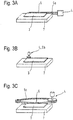
- Figure 3A shows a storage plate 3, which is horizontally displaceable by means of an automatic drive 4 and a drive spindle 5a arranged thereon.
- a driver 6 is arranged, which enables the movement of the storage plate 3.
- Figure 3B shows a shelf 3, which is horizontally displaceable by means of a drive with gear 5b.
- the gear is arranged on the storage plate.
- a rack preferably with a counter thread, is preferably arranged on the storage plate 3, via which the storage plate 3 can be moved in the horizontal direction by means of the gear wheel 5b.
- Figure 3C shows a storage plate 3, which is horizontally displaceable by means of an automatic drive 4 and a toothed belt 5c arranged thereon.
- a driver 6 is suspended or arranged on the toothed belt 5c and on the storage plate 3, which enables the movement of the storage plate 3.
Landscapes
- Engineering & Computer Science (AREA)
- Food Science & Technology (AREA)
- Physics & Mathematics (AREA)
- Thermal Sciences (AREA)
- Apparatus For Making Beverages (AREA)
- Beverage Vending Machines With Cups, And Gas Or Electricity Vending Machines (AREA)
Abstract
Description
- Die vorliegende Erfindung betrifft ein Verfahren zum Betreiben eines Getränkeautomaten, insbesondere eines Kaffeevollautomaten, sowie ein System, aufweisend einen Getränkeautomaten, insbesondere einen Kaffeevollautomaten, und eine Software.
- Es ist Stand der Technik, Haushaltsgeräte mit einer Kommunikationseinrichtung auszustatten, über welche eine (vorzugsweise drahtlose) Kommunikation mit einem mobilen Endgerät durchgeführt werden kann. Getränkeautomaten, wie beispielsweise Kaffeevollautomaten, erlangen ihre Betriebsbereitschaft vor Beginn eines Betriebsprogramms, wie beispielsweise eines Brühprogramms, meist über ein vorab ablaufendes Spülprogramm. Ist nun vorgesehen, mittels des Getränkeautomaten beispielsweise über eine App oder Programmierung unbeaufsichtigt Kaffe zu brühen, ist es unerwünscht, dieses Spülwasser mit in die Tasse aufzunehmen. Eine Platzierung der Tasse unterhalb des Kaffeeauslasses nach dem Spülprogramm ist dabei zwingend notwendig, was jedoch dem unbeaufsichtigten Kaffeebrühen entgegensteht.
- Aufgabe der vorliegenden Erfindung ist es, ein Verfahren zum Betreiben eines Getränkeautomaten anzugeben, das sich insbesondere durch eine automatische und/oder benutzerunabhängige Platzierung eines Gefäßes unterhalb eines Getränkeauslasses auszeichnet.
- Diese Aufgabe wird durch ein Verfahren zum Betreiben eines Getränkeautomaten mit den Merkmalen des Anspruchs 1 sowie durch ein System aufweisend einen Getränkeautomaten und eine Software mit den Merkmalen des Anspruchs 8 gelöst. Vorteilhafte Weiterbildungen der Erfindung sind Gegenstand der Unteransprüche.
- Erfindungsgemäß weist ein Verfahren zum Betreiben eines Getränkeautomaten, insbesondere eines Kaffeevollautomaten, folgende Verfahrensschritte auf:
- Auswählen bzw. Einstellen von Betriebsparametern für ein zum Herstellen eines Heißgetränks vorgesehenes Betriebsprogramm mittels eines mobilen Endgeräts,
- Übermitteln der eingestellten bzw. ausgewählten Betriebsparameter an den Getränkeautomaten,
- Ausführen des Betriebsprogramms mittels des Getränkeautomaten basierend auf den eingestellten bzw. ausgewählten Betriebsparametern derart, dass
- vor dem Betriebsprogramm ein Spülprogramm des Getränkeautomaten durchgeführt wird,
- nach dem Spülprogramm und vor dem Betriebsprogramm ein zu befüllendes Gefäß automatisch unter einen Getränkeauslass, insbesondere Kaffeeauslass, des Getränkeautomaten bewegt wird, und
- anschließend das Betriebsprogramm ausgeführt wird.
- Die Erfindung bezieht sich also auf die Möglichkeit, das zu befüllende Gefäß wie beispielsweise einer Tasse, automatisch unter den Getränkeauslass des Getränkeautomaten zu platzieren. Das Gefäß kann insbesondere außerhalb des Bereichs des Getränkeauslasses abgestellt werden. Bei einem unbeaufsichtigten Benutzen des Getränkeautomaten, beispielsweise über eine App, wird dann vorzugsweise nach dem Spülprogramm das Gefäß automatisch unterhalb des Getränkeauslasses platziert beziehungsweise gefahren. Vorteil bei der Erfindung ist es daher, zu befüllende Gefäße nicht zwingend unmittelbar vor dem Getränkebezug unterhalb des Getränkeauslasses platzieren zu müssen, um beispielsweise Spülwasser im bezogenen Getränk zu vermeiden.
- Unter einem Getränkeautomaten ist insbesondere ein Getränke ausgebender Automat zu verstehen, der geeignet ist, auf Knopfdruck Heißgetränke bereitzustellen. Beispielsweise ist der Getränkeautomat eine Kaffeemaschine, ein Kaffeevollautomat oder ein Einbau-Kaffeevollautomat.
- Unter einem Betriebsprogramm ist insbesondere jegliches Programm des Getränkeautomaten zu verstehen, das von dem Benutzer ausgewählt und insbesondere von dem Getränkeautomaten durchgeführt werden kann. Hierzu zählen insbesondere verschiedene Programme zum Brühen von Kaffee, Espresso und Herstellen von Cappuccino in jeglichen Variationen. Als mögliche und auszuwählende Betriebsparameter sind hierbei neben der Art des zu beziehenden Getränks unter anderem die Stärke des zu beziehenden Getränks (Koffeinstärke), die Menge des zu beziehenden Getränks (Tassengröße), der Brühdruck und/oder die Brühtemperatur zu nennen.
- Unter einem mobilen Endgerät ist insbesondere ein tragbares Endgerät zu verstehen, wie beispielsweise ein Mobiltelefon und/oder Handy, welches zur drahtlosen Kommunikation gemäß einem vorbestimmten Kommunikationsstandard ausgebildet ist und auf welchem neue Anwendungen bzw. Applikationen (Computerprogramme) installiert und ausgeführt werden können. Das mobile Endgerät kann beispielsweise ein Mobiltelefon (Smartphone), ein Tablet-PC oder ein vergleichbares mobiles Endgerät sein, wie zum Beispiel ein MP3-Player mit einer entsprechenden Kommunikationseinrichtung und einer Anzeigeeinrichtung. Diese Ausführungsform macht sich dabei die Tatsache zunutze, dass heutzutage nahezu jeder über ein intelligentes Mobiltelefon mit einem Display verfügt, sodass sich der Einsatz von zusätzlichen Kommunikationsgeräten erübrigt.
- Bevorzugt weist das mobile Endgerät eine berührungssensitive Anzeigeeinrichtung mit einer berührungsempfindlichen Oberfläche als Eingabeeinrichtung auf (Touchscreen). Die Bedieneingabe erfolgt dabei durch Berühren der berührungssensitiven Anzeigeeinrichtung. Somit ist die Bedienung besonders intuitiv und sicher, sodass auch Fehlbedienungen seitens des Benutzers verhindert werden können.
- Ergänzend oder alternativ kann die Eingabeeinrichtung auch ein Spracherkennungssystem umfassen, mittels welchem Spracheingaben des Benutzers empfangen und ausgewertet werden können. Hierbei werden entsprechende Sprachbefehle durch das mobile Endgerät empfangen und abhängig von diesen Sprachbefehlen des Benutzers das entsprechende Betriebsprogramm aktiviert.
- Zum Übermitteln der eingestellten bzw. ausgewählten Betriebsparameter an den Getränkeautomaten ist der Getränkeautomat vorzugsweise mit einer Kommunikationseinrichtung ausgestattet, über welche eine vorzugsweise drahtlose Kommunikation mit dem mobilen Endgerät durchgeführt werden kann. Die Datenkommunikation zwischen dem Getränkeautomaten einerseits und dem mobilen Endgerät andererseits kann dabei direkt unter Verwendung eines drahtlosen Heimnetzwerks durchgeführt werden, wie beispielsweise eines WLAN-Netzwerks. Andererseits kann die Datenkommunikation auch unter Vermittlung eines Internet-Servers vorgenommen werden, wobei hier der Getränkeautomat beispielsweise über einen WLAN-Router mit dem Internet-Server kommunizieren kann. Üblicherweise wird die Datenkommunikation über das Heimnetzwerk durchgeführt, solange sich das tragbare Endgerät in der Reichweite dieses Netzwerks befindet. Befindet sich das tragbare Endgerät außerhalb der Reichweite, erfolgt die Datenkommunikation dann über den Internet-Server. Wird als tragbares Endgerät beispielsweise ein Mobiltelefon verwendet, wird die Kommunikationsverbindung zum Internet-Server über ein Mobilfunknetzwerk aufgebaut.
- Eine Datenkommunikation zwischen dem Getränkeautomaten einerseits und einem Internet-Server bzw. dem mobilen (tragbaren) Endgerät andererseits wird beispielsweise durch das System "Home Connect" ermöglicht, welches von dem Hause der Anmelderin angeboten wird.
- Erfindungsgemäß wird vor dem Ausführen des gewählten Betriebsprogramms des Getränkeautomaten das Spülprogramm durchgeführt. Dabei ist bei dem Durchführen des Spülprogramms das zu befüllende Gefäß nicht unterhalb des Getränkeauslasses, sondern benachbart hierzu angeordnet, sodass während des Spülprogramms das Spülwasser nicht in dem Gefäß aufgefangen wird, sondern an dem Gefäß vorbeifließt, beispielweise in eine hierfür vorgesehene Auffang- und/oder Tropfschale. Nach Beenden des Spülprogramms wird das noch leere Gefäß automatisch unter den Getränkeauslass bewegt, beispielsweise gefahren, bevor das gewünschte beziehungsweise ausgewählte Betriebsprogramm ausgeführt wird.
- Unter automatisch ist hierbei zu verstehen, dass das Gefäß benutzerunabhängig unterhalb des Getränkeauslasses bewegt wird. Ein Benutzer ist damit nicht gezwungen, neben dem Getränkeautomaten zu stehen, um das Gefäß manuell zum richtigen Zeitpunkt unterhalb des Getränkeauslasses zu platzieren beziehungsweise positionieren. Diese Positionierung erfolgt selbstständig beziehungsweise automatisiert, insbesondere selbsttätig beziehungsweise maschinell und nicht händisch.
- Bei einer bevorzugten Weiterbildung der Erfindung weist das Verfahren den weiteren folgenden Verfahrensschritt auf:
Installieren einer Software, insbesondere einer App, auf dem mobilen Endgerät, um das Einstellen bzw. Auswählen der Betriebsparameter zu ermöglichen. - Insbesondere ist ein Installieren einer Software, insbesondere einer App, auf dem mobilen Endgerät vorgesehen, um dem Benutzer das Auswählen der Betriebsparameter auf dem mobilen Endgerät zu ermöglichen. Damit ist mittels des mobilen Endgerätes das erfindungsgemäße Verfahren durchführbar.
- Die Software, insbesondere die App, kann beispielsweise auf einem Datenträger zur Verfügung stehen. Dieser Datenträger kann z.B. dem Getränkeautomaten beigefügt sein. In diesem Fall kann die Software von dem Datenträger auf das mobile Endgerät geladen werden.
- Alternativ oder zusätzlich kann die Software, insbesondere die App, zum Beispiel im Getränkeautomaten, beispielsweise in dessen Speicher, gespeichert sein. In diesem Fall kann die Software vom Getränkeautomaten auf das mobile Endgerät geladen werden.
- Weiter alternativ oder zusätzlich kann die Software, insbesondere die App, auch auf einer Webseite oder in einem App-Store zur Verfügung stehen. In diesem Fall kann die Software über das World Wide Web beziehungsweise dem Internet auf das mobile Endgerät herunter geladen werden.
- Bei einer bevorzugten Weiterbildung der Erfindung erfolgt das Übermitteln der eingestellten bzw. ausgewählten Betriebsparameter vom mobilen Endgerät zum Getränkeautomaten und/oder zu einer zentralen Komponente drahtlos. Die Übermittlung der Betriebsparameter von dem mobilen Endgerät an den Getränkeautomaten kann also direkt (mobiles Endgerät - Getränkeautomat) oder indirekt über die zentrale Komponente (mobiles Endgerät - zentrale Komponente - Getränkeautomat) erfolgen.
- Eine für einen Informationsaustausch mit Hausgeräten wie beispielsweise Getränkeautomaten nützliche zentrale Komponente ist durch Home Connect realisiert, welches von den Firmen BSH und Siemens definiert wurde (BSH Home Connect Server). Home Connect bietet eine offene Plattform für die Vernetzung von Hausgeräten und erlaubt es, dass ein Anwender Daten zwischen seinem mobilen Endgerät, wie zum Beispiel ein Smartphone, und seinen Hausgeräten überträgt. Darüber hinaus ist auch die Kommunikation aus dem Heimnetzwerk nach draußen möglich. Beispielsweise können aus dem Heimnetzwerk Daten, welche die Hausgeräte betreffen oder von den Hausgeräten stammen, über das Internet an einen zentralen Server übermittelt werden, der von einem Hausgeräteproduzenten betrieben wird.
- Bei einer bevorzugten Weiterbildung der Erfindung erfolgt das automatische Bewegen des zu befüllenden Gefäßes mittels einer verschiebbaren Abstellplatte. Das Verschieben der Abstellplatte erfolgt dabei vorzugsweise automatisch und insbesondere benutzerunabhängig. Die Abstellplatte ist vorzugsweise auf einer Tropfschale des Getränkeautomaten (beweglich) angeordnet. Bevorzugt ist die Abstellplatte von der Tropfschale abnehmbar. Besonders bevorzugt ist lediglich die Abstellplatte verschiebbar. Das bedeutet, dass die Tropfschale im Gebrauch beziehungsweise Betrieb des Getränkeautomaten lokal fixiert beziehungsweise unbewegbar ist. Die Abstellplatte ist insbesondere automatisch relativ zur Tropfschale und insbesondere auf der Tropfschale entsprechend der gewünschten Positionierung des Gefäßes bewegbar, verfahrbar beziehungsweise verschiebbar.
- Bei einer bevorzugten Weiterbildung der Erfindung wird die verschiebbare Abstellplatte mittels eines automatischen Antriebs bewegt. Dabei ist vorzugsweise der Antrieb (fester) Bestandteil des Getränkeautomaten. Das bedeutet, dass der Antrieb fixiert und nicht lösbar mit dem Getränkeautomaten verbunden ist beziehungsweise in diesem fest integriert ist. Die Abstellplatte und/oder die Tropfschale dagegen können vom Getränkeautomaten, insbesondere zu Reinigungszwecken, abnehmbar beziehungsweise entnehmbar ausgebildet sein.
- Bei einer bevorzugten Weiterbildung der Erfindung erfolgt der automatische Antrieb mittels einer Antriebsspindel, einem Antrieb mit Zahnrad und/oder einem Zahnriemen.
- Der Antrieb mit Antriebsspindel und/oder Zahnriemen beinhaltet vorzugsweise zudem eine mitnehmende Komponente (Mitnehmer), die mittels der Antriebsspindel beziehungsweise des Zahnriemens insbesondere entlang der Antriebsspindel beziehungsweise des Zahnriemens verschiebbar ist. Bevorzugt ist an der mitnehmenden Komponente die Abstellplatte fixiert, sodass diese bei einer Bewegung der mitnehmenden Komponente mit verschiebbar ist.
- Die Erfindung betrifft weiter ein System, aufweisend einen Getränkeautomaten, insbesondere einen Kaffeevollautomaten, und eine Software, insbesondere eine App, die dazu eingerichtet ist, dass das oben ausgeführte Verfahren durchführbar ist, wenn die Software, insbesondere App, auf einem mobilen Endgerät installiert ist. Jegliche oben beschriebene Merkmale und Vorteile, die das Verfahren oder Komponenten hiervon betreffen, finden ebenfalls Anwendung bei dem erfindungsgemäßen System und werden an dieser Stelle nicht explizit wiederholt.
- Bei einer bevorzugten Weiterbildung der Erfindung sind die Abstellplatte von dem Getränkeautomaten abnehmbar, und/oder der automatische Antrieb fest beziehungsweise fixiert am Getränkeautomaten angeordnet. Dies erlaubt dem Benutzer, die Abstellplatte, beispielsweise für Reinigungszwecke, von dem Getränkeautomaten zu lösen beziehungsweise abzunehmen, während der Antrieb weiter in dem Getränkeautomaten verankert bleibt.
- Bei einer bevorzugten Weiterbildung der Erfindung weist der Getränkeautomat einen Vorratsbereich für zu befüllende Gefäße auf, die, insbesondere nacheinander, automatisch von der Abstellplatte abholbar sind. Hierbei ist es dem Benutzer vorteilhafterweise möglich, in dem Vorratsbereich gezielt eine Mehrzahl an zu befüllenden Gefäßen zu positionieren beziehungsweise platzieren, sodass diese leeren Gefäße bei Bedarf und insbesondere bei einer Auswahl eines Betriebsprogramms mittels des mobilen Endgeräts von der Abstellplatte aus dem Vorratsbereich zu dem Getränkeauslass transportiert werden können. Eine Mehrzahl von gewünschten Getränken können so automatisch mittels des mobilen Endgeräts angefordert werden, ohne dabei händische Aktionen des Benutzers, wie insbesondere das Auffüllen oder Positionieren der zu befüllenden Gefäße, notwendig zu machen.
- Weitere Vorteile, vorteilhafte Ausführungsformen und Weiterbildungen des Verfahrens und des Systems ergeben sich aus den im Folgenden in Verbindung mit den Figuren beschriebenen Ausführungsformen. Es zeigen:
- Figur 1A:
- eine schematische Ansicht eines Ausführungsbeispiels eines Getränkeautomaten während des erfindungsgemäßen Verfahrens,
- Figur 1B:
- eine weitere schematische Ansicht eines Ausführungsbeispiels eines Getränkeautomaten während des erfindungsgemäßen Verfahrens,
- Figur 2A:
- eine weitere schematische Ansicht eines Ausführungsbeispiels eines Getränkeautomaten während des erfindungsgemäßen Verfahrens,
- Figur 2B:
- eine weitere schematische Ansicht eines Ausführungsbeispiels eines Getränkeautomaten während des erfindungsgemäßen Verfahrens, und
- Figuren 3A-3C:
- jeweils eine schematische Ansicht eines Ausführungsbeispiels einer Abstellplatte, die zum Durchführen des erfindungsgemäßen Verfahrens Anwendung finden kann.
- In den Ausführungsbeispielen und den Figuren können gleiche oder gleich wirkende Bestandteile jeweils mit den gleichen Bezugszeichen versehen sein. Die dargestellten Bestandteile und deren Größenverhältnisse zueinander sind grundsätzlich nicht als maßstabsgerecht anzusehen. Vielmehr können einzelne Elemente wie beispielsweise Schichten, Teile, Elemente, Komponenten und Bereiche zur besseren Darstellbarkeit und/oder zum besseren Verständnis übertrieben dick oder groß dimensioniert dargestellt sein.
- In den
Figuren 1A, 1B ist ein Getränkeautomat, insbesondere ein Kaffeevollautomat 10, in verschiedenen Verfahrensstadien bei der Zubereitung eines Heißgetränks, insbesondere Kaffees, gezeigt. Der Kaffeevollautomat 10 weist jegliche, für die Kaffeezubereitung notwendigen Komponenten in einem Gehäuse auf, wie beispielsweise ein Mahlwerk, eine Brühkammer etc. (nicht dargestellt). Zudem weist der Kaffeevollautomat 10 einen Getränkeauslass 1, insbesondere einen Kaffeeauslass, auf. Der in dem Kaffeevollautomat 10 frisch zubereitete Kaffee wird aus diesem Getränkeauslass 1 an ein darunter stehendes, zu befüllendes Gefäß 2, insbesondere eine Tasse, abgegeben. Um tropfende oder überlaufende Flüssigkeit aufzufangen, ist das zu befüllende Gefäß 2 auf einer Tropfschale 7 abgestellt. - Um mit einem derartigen Kaffeevollautomaten 10 die Zubereitung eines gewünschtes Heißgetränk beispielsweise mittels einer App oder einer Programmierung automatisch starten und durchführen zu können, ist es wünschenswert, ein vorab durchzuführendes Spülprogramm, durch das derartige Kaffeevollautomaten meist ihre Bereitschaft erlangen, vor dem Platzieren des zu befüllenden Gefäßes 2 unterhalb des Getränkeauslasses 1 durchzuführen. Nur so kann gewährleistet werden, dass Spülwasser nicht in das zu befüllende Gefäß 2 gelangt. Hierzu ist eine automatische Platzierung des zu befüllenden Gefäßes 2 unterhalb des Getränkeauslasses 1 nach dem Spülprogramm erforderlich.
- Erfindungsgemäß erfolgt dies über eine verschiebbare Abstellplatte 3, welche über einen automatischen Antrieb in horizontaler Richtung B bewegt wird. Das zu befüllende Gefäß 2 wird dazu außerhalb des Getränkeauslasses 1 auf der verschiebbaren Abstellplatte 3 abgestellt. Nach dem Spülprogramm wird das zu befüllenden Gefäß 2 automatisch mittels der verschiebbaren Abstellplatte 3 unter den Getränkeauslass 1 gefahren, sodass das auszugebende Getränk direkt in das Gefäß 2 abgegeben werden kann.
- Das erfindungsgemäße Verfahren zum Betreiben des Kaffeevollautomaten 10 weist also folgende, nacheinander ausführende Verfahrensschritte auf:
- Auswählen bzw. Einstellen von Betriebsparametern für das zum Herstellen des Heißgetränks vorgesehenes Betriebsprogramm mittels eines mobilen Endgeräts, beispielsweise eines Handys,
- Übermitteln der eingestellten bzw. ausgewählten Betriebsparameter an den Kaffeevollautomaten 10,
- Ausführen des Betriebsprogramms mittels des Kaffeevollautomaten 10 basierend auf den eingestellten bzw. ausgewählten Betriebsparametern derart, dass
- vor dem Betriebsprogramm das Spülprogramm des Kaffeevollautomaten 10 durchgeführt wird,
- nach dem Spülprogramm und vor dem Betriebsprogramm das zu befüllendes Gefäß 2 automatisch unter den Getränkeauslass 1 des Kaffeevollautomaten 10 bewegt wird, und
- anschließend das Betriebsprogramm ausgeführt wird.
- Nähere Erläuterungen zur verschiebbaren Abstellplatte 2 mit automatischem Antrieb sind in Zusammenhang mit den
Figuren 3A bis 3C angegeben. - In den
Figuren 2A, 2B ist jeweils ein Kaffeevollautomat 10 entsprechend dem Kaffeevollautomaten des Ausführungsbeispiels derFiguren 1A, 1B gezeigt, wobei im Unterschied jeweils ein oder mehrere Vorratsbereiche 8 für einige zu befüllende Gefäße 2, insbesondere Tassen, ausgebildet sind. Damit können bei Bedarf nacheinander automatisch mehrere Gefäße 2 mit dem jeweiligen Wunschgetränk befüllt werden, ohne dass hierbei Tassen händisch unter den Getränkeauslass 1 gestellt werden müssen. - Das Ausführungsbeispiel der
Figur 2A zeigt eine Variante, bei der zwei Gefäße 2 befüllt werden können. Hierzu sind die beiden Tassen jeweils an einem anderen Ende der verschiebbaren Abstellplatte 3 abgestellt. Bei dem Spülprogramm wird die Abstellplatte 3 mittig platziert, sodass unterhalb des Getränkeauslasses 1 keine Tasse zu stehen kommt. Bei Auswahl des ersten Getränks wird die Abstellplatte 3 horizontal bis zum Anschlag verschoben, sodass eine der am Rand der Abstellplatte 3 platzierte Tasse unterhalb des Getränkeauslasses 1 zu stehen kommt und befüllt werden kann. Nach diesem ersten Befüllen fährt die Abstellplatte 3 in die andere Richtung bis zu einem gegenüberliegenden angeordneten Anschlag, sodass die andere am gegenüberliegenden Rand der Abstellplatte 3 platzierte Tasse unterhalb des Getränkeauslasses 1 zu stehen kommt und befüllt werden kann. -
Figur 2B zeigt seitlich zur verschiebbaren Abstellplatte 3 angeordnete Vorratsbereiche 8, in denen die zu befüllenden Gefäße 2 gestapelt angeordnet sind und nacheinander automatisch von der Abstellplatte 3 abholbar sind. - In den
Figuren 3A, 3B, 3C sind alternative Ausführungsbeispiele des automatischen Antriebs 4 der verschiebbaren Abstellplatte 3 gezeigt. Hierbei ist jeweils der Antrieb 4 (fester) Bestandteil des Kaffeevollautomaten 10, insbesondere des Grundgeräts, während die Tropschale 7 und die verschiebbare Abstellplatte 3 von dem Grundgerät abnehmbar sind. -
Figur 3A zeigt eine Abstellplatte 3, die mittels eines automatischen Antriebs 4 und einer daran angeordneten Antriebsspindel 5a horizontal verschiebbar ist. An der Antriebsspindel 5a und an der Abstellplatte 3 ist dabei ein Mitnehmer 6 angeordnet, der die Bewegung der Abstellplatte 3 ermöglicht. -
Figur 3B zeigt eine Abstellplatte 3, die mittels eines Antriebs mit Zahnrad 5b horizontal verschiebbbar ist. Das Zahnrad ist dabei an der Abstellplatte angeordnet. Vorzugsweise ist an der Abstellplatte 3 eine Zahnstange, bevorzugt mit Gegengewinde, angeordnet, über die die Abstellplatte 3 mittels des Zahnrads 5b in horizontaler Richtung bewegbar ist. -
Figur 3C zeigt eine Abstellplatte 3, die mittels eines automatischen Antriebs 4 und einem daran angeordneten Zahnriemen 5c horizontal verschiebbar ist. An dem Zahnriemen 5c und an der Abstellplatte 3 ist dabei ein Mitnehmer 6 eingehängt beziehungsweise angeordnet, der die Bewegung der Abstellplatte 3 ermöglicht. - Die Erläuterung des erfindungsgemäßen Verfahrens zum Betreiben eines Getränkeautomaten sowie des Systems aufweisend einen Getränkeautomaten und eine Software anhand der oben beschriebenen Ausführungsbeispiele ist nicht als Beschränkung der Erfindung auf diese zu betrachten. Vielmehr umfasst die Erfindung jedes neue Merkmale sowie jede Kombination von Merkmalen, was insbesondere jede Kombination von Merkmalen in den Patentansprüchen beinhaltet, auch wenn dieses Merkmal oder diese Kombination selbst nicht explizit in den Patentansprüchen oder den Ausführungsbeispielen angegeben ist.
-
- 10
- Kaffeevollautomat
- 1
- Getränkeauslass
- 2
- befüllendes Gefäß
- 3
- verschiebbare Abstellplatte
- 4
- Antrieb
- 5a
- Antriebsspindel
- 5b
- Antrieb mit Zahnrad
- 5c
- Zahnriemen
- 6
- Mitnehmer
- 7
- Tropfschale
- 8
- Vorratsbereich
Claims (10)
- Verfahren zum Betreiben eines Getränkeautomaten, insbesondere eines Kaffeevollautomaten (10), aufweisend folgende Verfahrensschritte:- Auswählen bzw. Einstellen von Betriebsparametern für ein zum Herstellen eines Heißgetränks vorgesehenes Betriebsprogramm mittels eines mobilen Endgeräts,- Übermitteln der eingestellten bzw. ausgewählten Betriebsparameter an den Getränkeautomaten,- Ausführen des Betriebsprogramms mittels des Getränkeautomaten basierend auf den eingestellten bzw. ausgewählten Betriebsparametern derart, dass- vor dem Betriebsprogramm ein Spülprogramm des Getränkeautomaten durchgeführt wird,- nach dem Spülprogramm und vor dem Betriebsprogramm ein zu befüllendes Gefäß (2) automatisch unter einen Getränkeauslass (1), insbesondere Kaffeeauslass, des Getränkeautomaten bewegt wird, und- anschließend das Betriebsprogramm ausgeführt wird.
- Verfahren nach Anspruch 1, weiter aufweisend:
Installieren einer Software, insbesondere einer App, auf dem mobilen Endgerät, um das Einstellen bzw. Auswählen der Betriebsparameter zu ermöglichen. - Verfahren nach Anspruch 2, weiter aufweisend:
Laden der Software von einem Datenträger oder von dem Getränkeautomat oder Herunterladen der Software vom World Wide Web. - Verfahren nach einem der vorhergehenden Ansprüche, wobei
das Übermitteln der eingestellten bzw. ausgewählten Betriebsparameter an den Getränkeautomaten drahtloses vom mobilen Endgerät zum Getränkeautomaten und/oder zu einer zentralen Komponente erfolgt. - Verfahren nach einem der vorhergehenden Ansprüche, wobei
das automatische Bewegen des zu befüllenden Gefäßes (2) mittels einer verschiebbaren Abstellplatte (3) erfolgt. - Verfahren nach Anspruch 5, wobei
die verschiebbare Abstellplatte (3) mittels eines automatischen Antriebs (4) bewegt wird. - Verfahren nach Anspruch 6, wobei
der automatische Antrieb (4) mittels einer Antriebsspindel (5a), einem Antrieb mit Zahnrad (5b) und/oder einem Zahnriemen (5c) erfolgt. - System, aufweisend einen Getränkeautomaten, insbesondere einen Kaffeevollautomaten (10), und eine Software, insbesondere eine App, die dazu eingerichtet ist, dass das Verfahren nach einem der vorhergehenden Ansprüche durchführbar ist, wenn die Software, insbesondere App, auf einem mobilen Endgerät installiert ist.
- System nach Anspruch 8 unter Rückbezug auf Anspruch 5, 6 oder 7, wobei
die Abstellplatte (3) von dem Getränkeautomaten abnehmbar ist, und/oder der automatische Antrieb (4) fest beziehungsweise fixiert am Getränkeautomaten angeordnet ist. - System nach Anspruch 8 oder 9 unter Rückbezug auf Anspruch 5, 6 oder 7, wobei der Getränkeautomat einen Vorratsbereich (8) für zu befüllende Gefäße (2) aufweist, die, insbesondere nacheinander, automatisch von der Abstellplatte (3) abholbar sind.
Applications Claiming Priority (1)
| Application Number | Priority Date | Filing Date | Title |
|---|---|---|---|
| DE102018214563.6A DE102018214563A1 (de) | 2018-08-28 | 2018-08-28 | Verfahren zum Betreiben eines Getränkeautomaten |
Publications (2)
| Publication Number | Publication Date |
|---|---|
| EP3616575A1 true EP3616575A1 (de) | 2020-03-04 |
| EP3616575B1 EP3616575B1 (de) | 2021-06-30 |
Family
ID=67514349
Family Applications (1)
| Application Number | Title | Priority Date | Filing Date |
|---|---|---|---|
| EP19188853.6A Active EP3616575B1 (de) | 2018-08-28 | 2019-07-29 | Verfahren zum betreiben eines getränkeautomaten |
Country Status (2)
| Country | Link |
|---|---|
| EP (1) | EP3616575B1 (de) |
| DE (1) | DE102018214563A1 (de) |
Cited By (2)
| Publication number | Priority date | Publication date | Assignee | Title |
|---|---|---|---|---|
| US11943299B2 (en) | 2020-03-26 | 2024-03-26 | Bunn-O-Matic Corporation | Brewer communication system and method |
| US12030768B2 (en) | 2020-05-20 | 2024-07-09 | Bunn-O-Matic Corporation | Touchless dispensing system and method |
Families Citing this family (1)
| Publication number | Priority date | Publication date | Assignee | Title |
|---|---|---|---|---|
| DE102020202043A1 (de) | 2020-02-18 | 2021-08-19 | BSH Hausgeräte GmbH | Kaffeevollautomat |
Citations (3)
| Publication number | Priority date | Publication date | Assignee | Title |
|---|---|---|---|---|
| EP1264567A2 (de) * | 2001-06-08 | 2002-12-11 | Sanden Corporation | Getränkeverkaufsautomat mit Becherausgabe |
| WO2012029047A1 (en) * | 2010-09-02 | 2012-03-08 | Luigi Lavazza S.P.A. | Apparatus for the preparation of a hot beverage, in particular a milk-based beverage |
| DE102012109982A1 (de) * | 2012-10-19 | 2014-04-24 | Miele & Cie. Kg | Verfahren zum Bedienen eines Haushaltsgerätes |
Family Cites Families (2)
| Publication number | Priority date | Publication date | Assignee | Title |
|---|---|---|---|---|
| DE202012103944U1 (de) * | 2012-10-16 | 2014-01-20 | Wik Far East Ltd. | Getränkezubereitungsmaschine |
| DE102016213173B4 (de) * | 2016-07-19 | 2024-06-13 | BSH Hausgeräte GmbH | Getränkeautomat und Steuerverfahren |
-
2018
- 2018-08-28 DE DE102018214563.6A patent/DE102018214563A1/de not_active Ceased
-
2019
- 2019-07-29 EP EP19188853.6A patent/EP3616575B1/de active Active
Patent Citations (3)
| Publication number | Priority date | Publication date | Assignee | Title |
|---|---|---|---|---|
| EP1264567A2 (de) * | 2001-06-08 | 2002-12-11 | Sanden Corporation | Getränkeverkaufsautomat mit Becherausgabe |
| WO2012029047A1 (en) * | 2010-09-02 | 2012-03-08 | Luigi Lavazza S.P.A. | Apparatus for the preparation of a hot beverage, in particular a milk-based beverage |
| DE102012109982A1 (de) * | 2012-10-19 | 2014-04-24 | Miele & Cie. Kg | Verfahren zum Bedienen eines Haushaltsgerätes |
Cited By (4)
| Publication number | Priority date | Publication date | Assignee | Title |
|---|---|---|---|---|
| US11943299B2 (en) | 2020-03-26 | 2024-03-26 | Bunn-O-Matic Corporation | Brewer communication system and method |
| US12368780B2 (en) | 2020-03-26 | 2025-07-22 | Bunn-O-Matic Corporation | Brewer communication system and method |
| US12030768B2 (en) | 2020-05-20 | 2024-07-09 | Bunn-O-Matic Corporation | Touchless dispensing system and method |
| US12428285B2 (en) | 2020-05-20 | 2025-09-30 | Bunn-O-Matic Corporation | Touchless dispensing system and method |
Also Published As
| Publication number | Publication date |
|---|---|
| EP3616575B1 (de) | 2021-06-30 |
| DE102018214563A1 (de) | 2020-03-05 |
Similar Documents
| Publication | Publication Date | Title |
|---|---|---|
| EP3616575B1 (de) | Verfahren zum betreiben eines getränkeautomaten | |
| DE60004013T2 (de) | Maschine zur bereitung von espressokaffee | |
| WO2017085020A1 (de) | Getränkezubereitungsmaschine, system mit getränkezubereitungsmaschine, verfahren zu dessen ansteuerung | |
| DE102004050365A1 (de) | Getränkebereiter | |
| EP0164660B1 (de) | Vorrichtung zum Zubereiten einer vorbestimmten Menge eines Brühgetränks, insbes. Kaffee | |
| DE202005021734U1 (de) | Kaffeemaschine | |
| EP2978346B1 (de) | Getränkeautomat sowie verfahren zum betrieb eines solchen getränkeautomaten | |
| DE102011009429A1 (de) | Heißgetränkezubereiter | |
| WO2017125474A1 (de) | Teeautomat, system und verfahren zur steuerung eines teeautomaten | |
| EP0931491A1 (de) | Kaffeemaschine | |
| EP3261500B1 (de) | Getränkezubereitungsmaschine | |
| EP3453293B1 (de) | Kaffeeautomat mit geschmacksoptimierter getränkeausgabe | |
| WO2018167160A1 (de) | Kaffeefiltermaschine und system, welches die kaffeefiltermaschine umfasst | |
| DE102017126676A1 (de) | Kaffeeautomat mit Gefäßerfassung | |
| EP4188165B1 (de) | Verfahren zum reinigen einer vorrichtung zum zufügen von getränkezusätzen für einen getränkeautomaten, insbesondere einer kaffeemaschine | |
| WO2020051601A1 (de) | Vorrichtung und verfahren zur automatischen oder automatisierten zubereitung von türkischem tee | |
| DE102018125484A1 (de) | Getränkeautomat und Verfahren zur Getränkeausgabe unter Verwendung eines Getränkeautomaten | |
| DE102017003909B4 (de) | Getränkezubereiter für Heißgetränke | |
| EP4327705B1 (de) | Vorrichtung und verfahren zur automatisierten herstellung eines brühgetränks | |
| DE8127268U1 (de) | Vorrichtung zur Zubereitung von Tee | |
| DE102019106584A1 (de) | Maschine zur Zubereitung von Brühgetränken und Betriebsverfahren für eine Maschine zur Zubereitung von Brühgetränken | |
| EP1582126B1 (de) | Vorrichtung zum Herstellen eines Brühgetränkes | |
| WO2025120094A1 (de) | Verfahren zum konfigurieren eines getränkeabgabegerätes | |
| DE102016101474A1 (de) | Programmgesteuerter Heißgetränkebereiter mit einer Bedienvorrichtung | |
| DE102024120905A1 (de) | System umfassend eine Getränkezubereitungsvorrichtung und ein elektronisches Gerät sowie Verfahren zum Betrieb eines solchen Systems |
Legal Events
| Date | Code | Title | Description |
|---|---|---|---|
| PUAI | Public reference made under article 153(3) epc to a published international application that has entered the european phase |
Free format text: ORIGINAL CODE: 0009012 |
|
| STAA | Information on the status of an ep patent application or granted ep patent |
Free format text: STATUS: THE APPLICATION HAS BEEN PUBLISHED |
|
| AK | Designated contracting states |
Kind code of ref document: A1 Designated state(s): AL AT BE BG CH CY CZ DE DK EE ES FI FR GB GR HR HU IE IS IT LI LT LU LV MC MK MT NL NO PL PT RO RS SE SI SK SM TR |
|
| AX | Request for extension of the european patent |
Extension state: BA ME |
|
| STAA | Information on the status of an ep patent application or granted ep patent |
Free format text: STATUS: REQUEST FOR EXAMINATION WAS MADE |
|
| 17P | Request for examination filed |
Effective date: 20200904 |
|
| RBV | Designated contracting states (corrected) |
Designated state(s): AL AT BE BG CH CY CZ DE DK EE ES FI FR GB GR HR HU IE IS IT LI LT LU LV MC MK MT NL NO PL PT RO RS SE SI SK SM TR |
|
| GRAP | Despatch of communication of intention to grant a patent |
Free format text: ORIGINAL CODE: EPIDOSNIGR1 |
|
| STAA | Information on the status of an ep patent application or granted ep patent |
Free format text: STATUS: GRANT OF PATENT IS INTENDED |
|
| INTG | Intention to grant announced |
Effective date: 20210218 |
|
| GRAS | Grant fee paid |
Free format text: ORIGINAL CODE: EPIDOSNIGR3 |
|
| GRAA | (expected) grant |
Free format text: ORIGINAL CODE: 0009210 |
|
| STAA | Information on the status of an ep patent application or granted ep patent |
Free format text: STATUS: THE PATENT HAS BEEN GRANTED |
|
| AK | Designated contracting states |
Kind code of ref document: B1 Designated state(s): AL AT BE BG CH CY CZ DE DK EE ES FI FR GB GR HR HU IE IS IT LI LT LU LV MC MK MT NL NO PL PT RO RS SE SI SK SM TR |
|
| REG | Reference to a national code |
Ref country code: CH Ref legal event code: EP |
|
| REG | Reference to a national code |
Ref country code: AT Ref legal event code: REF Ref document number: 1405543 Country of ref document: AT Kind code of ref document: T Effective date: 20210715 |
|
| REG | Reference to a national code |
Ref country code: DE Ref legal event code: R096 Ref document number: 502019001707 Country of ref document: DE |
|
| REG | Reference to a national code |
Ref country code: IE Ref legal event code: FG4D Free format text: LANGUAGE OF EP DOCUMENT: GERMAN |
|
| REG | Reference to a national code |
Ref country code: LT Ref legal event code: MG9D |
|
| PG25 | Lapsed in a contracting state [announced via postgrant information from national office to epo] |
Ref country code: BG Free format text: LAPSE BECAUSE OF FAILURE TO SUBMIT A TRANSLATION OF THE DESCRIPTION OR TO PAY THE FEE WITHIN THE PRESCRIBED TIME-LIMIT Effective date: 20210930 Ref country code: FI Free format text: LAPSE BECAUSE OF FAILURE TO SUBMIT A TRANSLATION OF THE DESCRIPTION OR TO PAY THE FEE WITHIN THE PRESCRIBED TIME-LIMIT Effective date: 20210630 Ref country code: HR Free format text: LAPSE BECAUSE OF FAILURE TO SUBMIT A TRANSLATION OF THE DESCRIPTION OR TO PAY THE FEE WITHIN THE PRESCRIBED TIME-LIMIT Effective date: 20210630 |
|
| REG | Reference to a national code |
Ref country code: NL Ref legal event code: MP Effective date: 20210630 |
|
| PG25 | Lapsed in a contracting state [announced via postgrant information from national office to epo] |
Ref country code: GR Free format text: LAPSE BECAUSE OF FAILURE TO SUBMIT A TRANSLATION OF THE DESCRIPTION OR TO PAY THE FEE WITHIN THE PRESCRIBED TIME-LIMIT Effective date: 20211001 Ref country code: RS Free format text: LAPSE BECAUSE OF FAILURE TO SUBMIT A TRANSLATION OF THE DESCRIPTION OR TO PAY THE FEE WITHIN THE PRESCRIBED TIME-LIMIT Effective date: 20210630 Ref country code: SE Free format text: LAPSE BECAUSE OF FAILURE TO SUBMIT A TRANSLATION OF THE DESCRIPTION OR TO PAY THE FEE WITHIN THE PRESCRIBED TIME-LIMIT Effective date: 20210630 Ref country code: NO Free format text: LAPSE BECAUSE OF FAILURE TO SUBMIT A TRANSLATION OF THE DESCRIPTION OR TO PAY THE FEE WITHIN THE PRESCRIBED TIME-LIMIT Effective date: 20210930 Ref country code: LV Free format text: LAPSE BECAUSE OF FAILURE TO SUBMIT A TRANSLATION OF THE DESCRIPTION OR TO PAY THE FEE WITHIN THE PRESCRIBED TIME-LIMIT Effective date: 20210630 |
|
| PG25 | Lapsed in a contracting state [announced via postgrant information from national office to epo] |
Ref country code: SK Free format text: LAPSE BECAUSE OF FAILURE TO SUBMIT A TRANSLATION OF THE DESCRIPTION OR TO PAY THE FEE WITHIN THE PRESCRIBED TIME-LIMIT Effective date: 20210630 Ref country code: EE Free format text: LAPSE BECAUSE OF FAILURE TO SUBMIT A TRANSLATION OF THE DESCRIPTION OR TO PAY THE FEE WITHIN THE PRESCRIBED TIME-LIMIT Effective date: 20210630 Ref country code: ES Free format text: LAPSE BECAUSE OF FAILURE TO SUBMIT A TRANSLATION OF THE DESCRIPTION OR TO PAY THE FEE WITHIN THE PRESCRIBED TIME-LIMIT Effective date: 20210630 Ref country code: SM Free format text: LAPSE BECAUSE OF FAILURE TO SUBMIT A TRANSLATION OF THE DESCRIPTION OR TO PAY THE FEE WITHIN THE PRESCRIBED TIME-LIMIT Effective date: 20210630 Ref country code: NL Free format text: LAPSE BECAUSE OF FAILURE TO SUBMIT A TRANSLATION OF THE DESCRIPTION OR TO PAY THE FEE WITHIN THE PRESCRIBED TIME-LIMIT Effective date: 20210630 Ref country code: PT Free format text: LAPSE BECAUSE OF FAILURE TO SUBMIT A TRANSLATION OF THE DESCRIPTION OR TO PAY THE FEE WITHIN THE PRESCRIBED TIME-LIMIT Effective date: 20211102 Ref country code: RO Free format text: LAPSE BECAUSE OF FAILURE TO SUBMIT A TRANSLATION OF THE DESCRIPTION OR TO PAY THE FEE WITHIN THE PRESCRIBED TIME-LIMIT Effective date: 20210630 Ref country code: CZ Free format text: LAPSE BECAUSE OF FAILURE TO SUBMIT A TRANSLATION OF THE DESCRIPTION OR TO PAY THE FEE WITHIN THE PRESCRIBED TIME-LIMIT Effective date: 20210630 |
|
| PG25 | Lapsed in a contracting state [announced via postgrant information from national office to epo] |
Ref country code: PL Free format text: LAPSE BECAUSE OF FAILURE TO SUBMIT A TRANSLATION OF THE DESCRIPTION OR TO PAY THE FEE WITHIN THE PRESCRIBED TIME-LIMIT Effective date: 20210630 |
|
| REG | Reference to a national code |
Ref country code: DE Ref legal event code: R097 Ref document number: 502019001707 Country of ref document: DE |
|
| PG25 | Lapsed in a contracting state [announced via postgrant information from national office to epo] |
Ref country code: MC Free format text: LAPSE BECAUSE OF FAILURE TO SUBMIT A TRANSLATION OF THE DESCRIPTION OR TO PAY THE FEE WITHIN THE PRESCRIBED TIME-LIMIT Effective date: 20210630 |
|
| REG | Reference to a national code |
Ref country code: BE Ref legal event code: MM Effective date: 20210731 |
|
| PG25 | Lapsed in a contracting state [announced via postgrant information from national office to epo] |
Ref country code: DK Free format text: LAPSE BECAUSE OF FAILURE TO SUBMIT A TRANSLATION OF THE DESCRIPTION OR TO PAY THE FEE WITHIN THE PRESCRIBED TIME-LIMIT Effective date: 20210630 |
|
| PLBE | No opposition filed within time limit |
Free format text: ORIGINAL CODE: 0009261 |
|
| STAA | Information on the status of an ep patent application or granted ep patent |
Free format text: STATUS: NO OPPOSITION FILED WITHIN TIME LIMIT |
|
| PG25 | Lapsed in a contracting state [announced via postgrant information from national office to epo] |
Ref country code: LU Free format text: LAPSE BECAUSE OF NON-PAYMENT OF DUE FEES Effective date: 20210729 Ref country code: AL Free format text: LAPSE BECAUSE OF FAILURE TO SUBMIT A TRANSLATION OF THE DESCRIPTION OR TO PAY THE FEE WITHIN THE PRESCRIBED TIME-LIMIT Effective date: 20210630 |
|
| 26N | No opposition filed |
Effective date: 20220331 |
|
| PG25 | Lapsed in a contracting state [announced via postgrant information from national office to epo] |
Ref country code: IE Free format text: LAPSE BECAUSE OF NON-PAYMENT OF DUE FEES Effective date: 20210729 Ref country code: BE Free format text: LAPSE BECAUSE OF NON-PAYMENT OF DUE FEES Effective date: 20210731 |
|
| PG25 | Lapsed in a contracting state [announced via postgrant information from national office to epo] |
Ref country code: LT Free format text: LAPSE BECAUSE OF FAILURE TO SUBMIT A TRANSLATION OF THE DESCRIPTION OR TO PAY THE FEE WITHIN THE PRESCRIBED TIME-LIMIT Effective date: 20210630 |
|
| PG25 | Lapsed in a contracting state [announced via postgrant information from national office to epo] |
Ref country code: CY Free format text: LAPSE BECAUSE OF FAILURE TO SUBMIT A TRANSLATION OF THE DESCRIPTION OR TO PAY THE FEE WITHIN THE PRESCRIBED TIME-LIMIT Effective date: 20210630 |
|
| PG25 | Lapsed in a contracting state [announced via postgrant information from national office to epo] |
Ref country code: HU Free format text: LAPSE BECAUSE OF FAILURE TO SUBMIT A TRANSLATION OF THE DESCRIPTION OR TO PAY THE FEE WITHIN THE PRESCRIBED TIME-LIMIT; INVALID AB INITIO Effective date: 20190729 |
|
| PG25 | Lapsed in a contracting state [announced via postgrant information from national office to epo] |
Ref country code: MK Free format text: LAPSE BECAUSE OF FAILURE TO SUBMIT A TRANSLATION OF THE DESCRIPTION OR TO PAY THE FEE WITHIN THE PRESCRIBED TIME-LIMIT Effective date: 20210630 |
|
| PG25 | Lapsed in a contracting state [announced via postgrant information from national office to epo] |
Ref country code: TR Free format text: LAPSE BECAUSE OF FAILURE TO SUBMIT A TRANSLATION OF THE DESCRIPTION OR TO PAY THE FEE WITHIN THE PRESCRIBED TIME-LIMIT Effective date: 20210630 |
|
| PG25 | Lapsed in a contracting state [announced via postgrant information from national office to epo] |
Ref country code: MT Free format text: LAPSE BECAUSE OF FAILURE TO SUBMIT A TRANSLATION OF THE DESCRIPTION OR TO PAY THE FEE WITHIN THE PRESCRIBED TIME-LIMIT Effective date: 20210630 |
|
| REG | Reference to a national code |
Ref country code: AT Ref legal event code: MM01 Ref document number: 1405543 Country of ref document: AT Kind code of ref document: T Effective date: 20240729 |
|
| PGFP | Annual fee paid to national office [announced via postgrant information from national office to epo] |
Ref country code: DE Payment date: 20250731 Year of fee payment: 7 |
|
| PGFP | Annual fee paid to national office [announced via postgrant information from national office to epo] |
Ref country code: IT Payment date: 20250731 Year of fee payment: 7 |
|
| PGFP | Annual fee paid to national office [announced via postgrant information from national office to epo] |
Ref country code: GB Payment date: 20250724 Year of fee payment: 7 |
|
| PG25 | Lapsed in a contracting state [announced via postgrant information from national office to epo] |
Ref country code: AT Free format text: LAPSE BECAUSE OF NON-PAYMENT OF DUE FEES Effective date: 20240729 |
|
| PGFP | Annual fee paid to national office [announced via postgrant information from national office to epo] |
Ref country code: FR Payment date: 20250723 Year of fee payment: 7 |
|
| PGFP | Annual fee paid to national office [announced via postgrant information from national office to epo] |
Ref country code: CH Payment date: 20250801 Year of fee payment: 7 |
|
| PGFP | Annual fee paid to national office [announced via postgrant information from national office to epo] |
Ref country code: AT Payment date: 20260410 Year of fee payment: 5 |