EP3608912A1 - Ermitteln einer substanzklasse eines nosokomialen keims - Google Patents
Ermitteln einer substanzklasse eines nosokomialen keims Download PDFInfo
- Publication number
- EP3608912A1 EP3608912A1 EP18187434.8A EP18187434A EP3608912A1 EP 3608912 A1 EP3608912 A1 EP 3608912A1 EP 18187434 A EP18187434 A EP 18187434A EP 3608912 A1 EP3608912 A1 EP 3608912A1
- Authority
- EP
- European Patent Office
- Prior art keywords
- substance
- germ
- nosocomial
- data
- biological test
- Prior art date
- Legal status (The legal status is an assumption and is not a legal conclusion. Google has not performed a legal analysis and makes no representation as to the accuracy of the status listed.)
- Withdrawn
Links
- 239000000126 substance Substances 0.000 title claims abstract description 245
- 238000012360 testing method Methods 0.000 claims abstract description 94
- 238000000034 method Methods 0.000 claims abstract description 72
- 238000004458 analytical method Methods 0.000 claims abstract description 49
- 238000004590 computer program Methods 0.000 claims abstract description 18
- 230000006870 function Effects 0.000 claims description 59
- 238000013528 artificial neural network Methods 0.000 claims description 45
- 238000012545 processing Methods 0.000 claims description 35
- 238000011156 evaluation Methods 0.000 claims description 20
- 238000001228 spectrum Methods 0.000 description 17
- 244000052616 bacterial pathogen Species 0.000 description 9
- 238000012549 training Methods 0.000 description 9
- 238000003860 storage Methods 0.000 description 7
- 208000015181 infectious disease Diseases 0.000 description 6
- 239000000523 sample Substances 0.000 description 6
- 230000002123 temporal effect Effects 0.000 description 4
- 230000007175 bidirectional communication Effects 0.000 description 3
- 108090000623 proteins and genes Proteins 0.000 description 3
- 230000000306 recurrent effect Effects 0.000 description 3
- 230000035945 sensitivity Effects 0.000 description 3
- 238000012163 sequencing technique Methods 0.000 description 3
- 206010011409 Cross infection Diseases 0.000 description 2
- 206010029803 Nosocomial infection Diseases 0.000 description 2
- 239000008280 blood Substances 0.000 description 2
- 210000004369 blood Anatomy 0.000 description 2
- 230000006854 communication Effects 0.000 description 2
- 238000004891 communication Methods 0.000 description 2
- 230000001419 dependent effect Effects 0.000 description 2
- 238000010586 diagram Methods 0.000 description 2
- 238000003752 polymerase chain reaction Methods 0.000 description 2
- 102000004169 proteins and genes Human genes 0.000 description 2
- 210000003296 saliva Anatomy 0.000 description 2
- 239000013589 supplement Substances 0.000 description 2
- 108020004414 DNA Proteins 0.000 description 1
- 102000053602 DNA Human genes 0.000 description 1
- 238000001712 DNA sequencing Methods 0.000 description 1
- 241000194032 Enterococcus faecalis Species 0.000 description 1
- 241000194031 Enterococcus faecium Species 0.000 description 1
- 241000588724 Escherichia coli Species 0.000 description 1
- 238000005481 NMR spectroscopy Methods 0.000 description 1
- 108091034117 Oligonucleotide Proteins 0.000 description 1
- 241000589517 Pseudomonas aeruginosa Species 0.000 description 1
- 238000003559 RNA-seq method Methods 0.000 description 1
- 241000191967 Staphylococcus aureus Species 0.000 description 1
- JLCPHMBAVCMARE-UHFFFAOYSA-N [3-[[3-[[3-[[3-[[3-[[3-[[3-[[3-[[3-[[3-[[3-[[5-(2-amino-6-oxo-1H-purin-9-yl)-3-[[3-[[3-[[3-[[3-[[3-[[5-(2-amino-6-oxo-1H-purin-9-yl)-3-[[5-(2-amino-6-oxo-1H-purin-9-yl)-3-hydroxyoxolan-2-yl]methoxy-hydroxyphosphoryl]oxyoxolan-2-yl]methoxy-hydroxyphosphoryl]oxy-5-(5-methyl-2,4-dioxopyrimidin-1-yl)oxolan-2-yl]methoxy-hydroxyphosphoryl]oxy-5-(6-aminopurin-9-yl)oxolan-2-yl]methoxy-hydroxyphosphoryl]oxy-5-(6-aminopurin-9-yl)oxolan-2-yl]methoxy-hydroxyphosphoryl]oxy-5-(6-aminopurin-9-yl)oxolan-2-yl]methoxy-hydroxyphosphoryl]oxy-5-(6-aminopurin-9-yl)oxolan-2-yl]methoxy-hydroxyphosphoryl]oxyoxolan-2-yl]methoxy-hydroxyphosphoryl]oxy-5-(5-methyl-2,4-dioxopyrimidin-1-yl)oxolan-2-yl]methoxy-hydroxyphosphoryl]oxy-5-(4-amino-2-oxopyrimidin-1-yl)oxolan-2-yl]methoxy-hydroxyphosphoryl]oxy-5-(5-methyl-2,4-dioxopyrimidin-1-yl)oxolan-2-yl]methoxy-hydroxyphosphoryl]oxy-5-(5-methyl-2,4-dioxopyrimidin-1-yl)oxolan-2-yl]methoxy-hydroxyphosphoryl]oxy-5-(6-aminopurin-9-yl)oxolan-2-yl]methoxy-hydroxyphosphoryl]oxy-5-(6-aminopurin-9-yl)oxolan-2-yl]methoxy-hydroxyphosphoryl]oxy-5-(4-amino-2-oxopyrimidin-1-yl)oxolan-2-yl]methoxy-hydroxyphosphoryl]oxy-5-(4-amino-2-oxopyrimidin-1-yl)oxolan-2-yl]methoxy-hydroxyphosphoryl]oxy-5-(4-amino-2-oxopyrimidin-1-yl)oxolan-2-yl]methoxy-hydroxyphosphoryl]oxy-5-(6-aminopurin-9-yl)oxolan-2-yl]methoxy-hydroxyphosphoryl]oxy-5-(4-amino-2-oxopyrimidin-1-yl)oxolan-2-yl]methyl [5-(6-aminopurin-9-yl)-2-(hydroxymethyl)oxolan-3-yl] hydrogen phosphate Polymers Cc1cn(C2CC(OP(O)(=O)OCC3OC(CC3OP(O)(=O)OCC3OC(CC3O)n3cnc4c3nc(N)[nH]c4=O)n3cnc4c3nc(N)[nH]c4=O)C(COP(O)(=O)OC3CC(OC3COP(O)(=O)OC3CC(OC3COP(O)(=O)OC3CC(OC3COP(O)(=O)OC3CC(OC3COP(O)(=O)OC3CC(OC3COP(O)(=O)OC3CC(OC3COP(O)(=O)OC3CC(OC3COP(O)(=O)OC3CC(OC3COP(O)(=O)OC3CC(OC3COP(O)(=O)OC3CC(OC3COP(O)(=O)OC3CC(OC3COP(O)(=O)OC3CC(OC3COP(O)(=O)OC3CC(OC3COP(O)(=O)OC3CC(OC3COP(O)(=O)OC3CC(OC3COP(O)(=O)OC3CC(OC3COP(O)(=O)OC3CC(OC3CO)n3cnc4c(N)ncnc34)n3ccc(N)nc3=O)n3cnc4c(N)ncnc34)n3ccc(N)nc3=O)n3ccc(N)nc3=O)n3ccc(N)nc3=O)n3cnc4c(N)ncnc34)n3cnc4c(N)ncnc34)n3cc(C)c(=O)[nH]c3=O)n3cc(C)c(=O)[nH]c3=O)n3ccc(N)nc3=O)n3cc(C)c(=O)[nH]c3=O)n3cnc4c3nc(N)[nH]c4=O)n3cnc4c(N)ncnc34)n3cnc4c(N)ncnc34)n3cnc4c(N)ncnc34)n3cnc4c(N)ncnc34)O2)c(=O)[nH]c1=O JLCPHMBAVCMARE-UHFFFAOYSA-N 0.000 description 1
- 125000003275 alpha amino acid group Chemical group 0.000 description 1
- 230000031018 biological processes and functions Effects 0.000 description 1
- 230000005540 biological transmission Effects 0.000 description 1
- 210000001124 body fluid Anatomy 0.000 description 1
- 239000010839 body fluid Substances 0.000 description 1
- 150000001875 compounds Chemical class 0.000 description 1
- 238000003066 decision tree Methods 0.000 description 1
- 238000011161 development Methods 0.000 description 1
- 239000003814 drug Substances 0.000 description 1
- 229940079593 drug Drugs 0.000 description 1
- 230000000694 effects Effects 0.000 description 1
- 229940032049 enterococcus faecalis Drugs 0.000 description 1
- 230000007717 exclusion Effects 0.000 description 1
- 230000002068 genetic effect Effects 0.000 description 1
- 238000012432 intermediate storage Methods 0.000 description 1
- 238000004949 mass spectrometry Methods 0.000 description 1
- 238000005259 measurement Methods 0.000 description 1
- 230000011987 methylation Effects 0.000 description 1
- 238000007069 methylation reaction Methods 0.000 description 1
- 230000002906 microbiologic effect Effects 0.000 description 1
- 239000000203 mixture Substances 0.000 description 1
- 230000035772 mutation Effects 0.000 description 1
- 244000052769 pathogen Species 0.000 description 1
- 230000001717 pathogenic effect Effects 0.000 description 1
- 229920002477 rna polymer Polymers 0.000 description 1
- 238000002560 therapeutic procedure Methods 0.000 description 1
- 238000012546 transfer Methods 0.000 description 1
- 108700026220 vif Genes Proteins 0.000 description 1
Images


Classifications
-
- G—PHYSICS
- G16—INFORMATION AND COMMUNICATION TECHNOLOGY [ICT] SPECIALLY ADAPTED FOR SPECIFIC APPLICATION FIELDS
- G16B—BIOINFORMATICS, i.e. INFORMATION AND COMMUNICATION TECHNOLOGY [ICT] SPECIALLY ADAPTED FOR GENETIC OR PROTEIN-RELATED DATA PROCESSING IN COMPUTATIONAL MOLECULAR BIOLOGY
- G16B20/00—ICT specially adapted for functional genomics or proteomics, e.g. genotype-phenotype associations
- G16B20/20—Allele or variant detection, e.g. single nucleotide polymorphism [SNP] detection
-
- G—PHYSICS
- G16—INFORMATION AND COMMUNICATION TECHNOLOGY [ICT] SPECIALLY ADAPTED FOR SPECIFIC APPLICATION FIELDS
- G16B—BIOINFORMATICS, i.e. INFORMATION AND COMMUNICATION TECHNOLOGY [ICT] SPECIALLY ADAPTED FOR GENETIC OR PROTEIN-RELATED DATA PROCESSING IN COMPUTATIONAL MOLECULAR BIOLOGY
- G16B40/00—ICT specially adapted for biostatistics; ICT specially adapted for bioinformatics-related machine learning or data mining, e.g. knowledge discovery or pattern finding
-
- G—PHYSICS
- G16—INFORMATION AND COMMUNICATION TECHNOLOGY [ICT] SPECIALLY ADAPTED FOR SPECIFIC APPLICATION FIELDS
- G16H—HEALTHCARE INFORMATICS, i.e. INFORMATION AND COMMUNICATION TECHNOLOGY [ICT] SPECIALLY ADAPTED FOR THE HANDLING OR PROCESSING OF MEDICAL OR HEALTHCARE DATA
- G16H50/00—ICT specially adapted for medical diagnosis, medical simulation or medical data mining; ICT specially adapted for detecting, monitoring or modelling epidemics or pandemics
- G16H50/80—ICT specially adapted for medical diagnosis, medical simulation or medical data mining; ICT specially adapted for detecting, monitoring or modelling epidemics or pandemics for detecting, monitoring or modelling epidemics or pandemics, e.g. flu
Definitions
- the invention relates to a method for determining a substance class of a nosocomial germ in a biological test substance of a patient, an associated medical system and an associated computer program product.
- a germ which is responsible for an infection of a patient is usually determined in a conventional analysis unit, in particular in a conventional biological test substance evaluation unit, using a cultivation-dependent method.
- the germ can be determined independently of cultivation in the conventional analysis unit, in particular in the biological test substance evaluation unit, for example by means of a polymerase chain reaction with pathogen-specific oligonucleotides.
- the germ is determined by sequencing a deoxyribonucleic acid molecule and / or a ribonucleic acid molecule.
- An analysis of the sequencing data determined during the sequencing usually depends on proprietary and / or public reference data, which are typically not specific for place and time and at the same time are designed statically.
- the reference data are, for example, part of a GEAR or CARD database.
- Germs with multiple resistances are responsible in particular for approx. 6% of the infections acquired, i.e. nosocomial, in a hospital.
- the germs with multiple resistances can basically be transmitted to a patient in the hospital. Because of the restrictions associated with the resistance spectrum when treating the patient, the determination of the substance class of the nosocomial germ is usually time-critical.
- the invention is based on the object of specifying a method for determining a substance class of a nosocomial germ in a biological test substance of a patient, an associated medical system and an associated computer program product, in which a time for the determination of the substance class of the nosocomial germ is shortened.
- the determination of the estimation function has in particular a probabilistic method and therefore enables a stochastic nature of biological processes, which can describe the nosocomial germ, to be taken into account.
- the estimation function also enables, in particular as a function of sensitivity and specificity, to specify a point in time for determining the substance class.
- the point in time for ascertaining the substance class can advantageously be specified, for example by adapting a requirement for sensitivity and / or a requirement for specificity relative to the state of health.
- the earlier the time for the determination of the substance class is specified the earlier a doctor can treat the patient according to the substance class determined.
- the method according to the invention enables a patient-specific determination of the substance class of the nosocomial germ in the biological test substance, taking into account the origin of the biological test substance.
- the substance class is preferably determined in accordance with a cultivation-independent method, as a result of which it is compared to the cultivation-dependent method a determination time for determining the substance class can be reduced from several days to a few hours.
- the biological test substance is provided and / or the substance class of the nosocomial germ is determined in the biological test substance, further patients can advantageously be prevented from the nosocomial germ, for example by providing a preferred treatment method and / or an unfavorable treatment method depending on the substance class determined becomes.
- the patient can be treated better and / or faster, which typically reduces a length of stay, for example in a hospital, according to the origin of the biological test substance, and reduces the probability that the patient will get another infection.
- the nosocomial germ is typically a hospital germ, which is usually transmitted to the patient during a stay and / or during treatment of the patient in a hospital.
- the nosocomial germ can in particular be an Escherichia coli, Enterococcus faecalis, Enterococcus faecium, Kebsiella pneumoniae, Pseudomonas aeruginosa and / or Staphylococcus aureus. Other types and / or types of nosocomial germs are conceivable.
- an infection of the patient takes place, which can significantly impair a patient's state of health.
- the patient's infection can be called nosocomial infection.
- the nosocomial infection usually only describes infections within the hospital.
- the database system can also have germs that have been transmitted to the patient outside the hospital.
- the log data of the determined nosocomial germ have the origin outside the hospital if the germ transferred to the patient outside the hospital also generally occurs within the hospital and / or on the patient can be transmitted, whereby this germ can be a nosocomial germ.
- the biological test substance has in particular a sample material.
- the biological test substance is in particular a clinical test substance.
- the biological test substance can have, for example, a body fluid and / or a tissue sample from the patient.
- the biological test substance typically has a patient's blood, saliva and / or stool. The biological test substance is usually discarded after the substance class has been determined.
- the substance class in particular has a data set of information which, in contrast to the biological test substance, can usually be stored digitally in the database system.
- the database system only contains digital and / or digitized information and / or typically does not contain the biological test substance.
- the database system can in particular store the quantity of substance classes and / or the protocol data, for example in a storage unit of the database system and / or call them up from the storage unit.
- the database system can usually only have information about the biological test substance.
- the substance class can be designed in accordance with object-oriented programming.
- the substance class can have several categories into which the data set of information can be divided.
- a first category of the substance class can have an identifier, the identifier preferably uniquely identifying the at least one associated nosocomial germ.
- the identifier can have a base and / or an amino acid sequence and / or a gene and / or protein composition and / or a microbiological list of features.
- the identifier can have a description of the at least one associated nosocomial germ. Basically, it is conceivable that depending on a specificity only one nosocomial germ or several nosocomial germs of each substance class are assigned to the identifier of the substance class. In principle, it is conceivable that, depending on the specificity of the identification mark, the substance class describes a genus and / or a type of nosocomial germ.
- a second category of the substance class can have a resistance spectrum which describes preferred and / or disadvantageous, in particular medicinal, treatment methods.
- the resistance spectrum assigned to the determined substance class can be provided on a display unit.
- a proportion of unfavorable treatment methods becomes larger at the expense of a proportion of the preferred treatment methods.
- the resistance spectrum can include a protein, a gene, a mutation and / or a methylation pattern. If a germ has a resistance spectrum with at least one resistance, the germ with the resistance spectrum can be the nosocomial germ.
- a third category of the substance class can have a family tree which, for example, describes the amount of the substance classes as a function of a degree of relationship between the substance classes.
- the degree of relationship is particularly advantageous with regard to the resistance spectrum, because usually selection pressure and / or genetic plasticity can bring about a further development of the resistance spectrum of the assigned nosocomial germ.
- a fourth category of the substance class can have the log data.
- the protocol data in particular patient-specific data of the protocol data, can for example be anonymized and / or pseudonymized.
- the log data can in particular have a biocenosis of the at least one nosocomial germ.
- the occurrence of the assigned at least one nosocomial germ describes in particular a history of the associated at least one nosocomial germ. In principle, it is conceivable that the amount of substance classes, in particular each assigned nosocomial germ, occurs several times.
- the log data describe, in particular, framework conditions regarding the occurrence of the assigned at least one nosocomial germ.
- the amount of substance classes and in particular the protocol data typically form reference data, which can have a previously known total knowledge of the nosocomial germs.
- the reference data can correspond to the data set of information.
- the database system can have several data records of information for several nosocomial germs.
- the database system can have a local database and / or a multicenter database and / or a cloud-based database.
- the database system has in particular a network of the local database and / or the multicenter database.
- the multicentre database is usually a database spread over several hospitals.
- the several hospitals can be geographically, in particular locally or regionally or nationally, distributed.
- each hospital can have a local database, the local databases of the several hospitals being connected to one another, for example via an Internet, and / or together forming the multicentre database.
- the multicenter database is designed in particular for synchronizing the amount of substance classes, in particular together with the protocol data, from local database to local database.
- each local database and / or each multicenter database usually has a storage unit, into which the data record of information, in particular the amount of the substance classes, is transmitted, preferably together with the protocol data and / or saved.
- the database system can only have the local database, for example for data protection reasons to be applied at one location of the local database.
- the provision of the database system can include anonymizing the log data.
- the provision of the database system can include connecting, for example via the Internet and / or a network, the local database and / or the multicenter database, in particular the storage unit, to the analysis unit.
- the provision of the database system can include provision of access to the set of substance classes, in particular together with the protocol data, for a user and / or the analysis unit.
- the database system can be provided, for example, by a manufacturer of the database system and / or the storage unit and / or by the hospital.
- the database system is provided in particular depending on the origin of the biological test substance and / or on the hospital taking care of the patient.
- the biological test substance and / or the original data can be provided by the user and / or automatically, for example.
- the user can record the biological test substance, in particular the sample material, from the patient, for example by taking a blood sample, a saliva sample and / or taking a tissue sample.
- the provision of the biological test substance and / or the original data can include the acquisition, intermediate storage and / or preparation of the biological test substance and / or the original data.
- the original data can preferably be automatically acquired when the biological test substance is acquired and / or stored in digital form in the database system.
- the original data describe in particular framework conditions about the origin of the biological test substance.
- the start data usually have prior data and / or prior knowledge.
- the start data can in particular be an a priori probability and / or an a priori probability distribution exhibit.
- the start data can have training data for the analysis unit.
- the start data in particular depict statistics as a function of the protocol data and the original data.
- the start data have, in particular, the information which is available up to a temporal origin of the biological test substance.
- the start data can be defined, for example, in the database system and / or in the analysis unit and / or in a computing unit.
- the start data can preferably be exchanged between the database system, the analysis unit and / or the computing unit.
- the computing unit can be part of the database system and / or the analysis unit.
- the weighting of the log data can include a classification of the log data, the classification distinguishing, for example, between log data with content-related proximity to the original data and log data without content-related proximity to the original data.
- the classification can be mapped by determining the weights for the weighting.
- the content-related proximity can be determined, for example, by the user and / or automatically by means of a threshold value and / or automatically by means of a further probability distribution.
- the weighting of the log data can scale depending on an amount of log data and / or an amount of original data. Weighting can include adding, subtracting, multiplying and / or exponentiating.
- the definition of the start data can include storing the weights and / or retrieving the weights in the database system.
- the weights are preferably determined as a function of the original data. For example, a distance measure between the log data and the original data is determined, which influences the determination of the weights.
- the distance measure can include a threshold value.
- the estimation function can in particular have an a posteriori probability and / or an a posteriori probability distribution exhibit. Usually, the estimator changes when the estimator is determined.
- the estimator can have a relative frequency, for example of the identifier.
- the analysis unit can in particular evaluate the start data and the biological test substance.
- the analysis unit is preferably a cultivation-independent analysis unit.
- the estimation function can be determined in particular in the computing unit of the analysis unit, the computing unit being able to access preliminary results of the biological test substance.
- the a posteriori probability distribution can in principle be determined using the a priori probability distribution and the biological test substance.
- the determination of the substance class in particular the determination of the estimation function by means of the analysis unit, can include a comparison of the substance class, in particular the identification mark, with the biological test substance.
- the comparison can include a counting of the substance class, in particular the identifier, whereby the relative frequency and / or the a posteriori probability distribution are determined.
- the receipt of the start data and the biological test substance as input parameters in the analysis unit describes in particular that the analysis unit uses the start data and the biological test substance to determine the estimation function.
- the substance class can be determined according to the estimation function, in particular by the user and / or automatically, using the analysis unit.
- a criterion for determining the substance class is defined, the substance class being determined depending on the criterion, in particular the determining function being completed.
- Determining the substance class can include defining the criterion. According to the criterion, it can preferably be determined whether the preliminary results of the estimator are sufficient to determine the substance class.
- the criterion can determine a point in time for determining the substance class, a sensitivity, a specificity, a correlation between the protocol data and the original data and / or a threshold value for the a posteriori probability distribution, which is, for example, greater than 90%, in particular 99% will include.
- the determination of the substance class includes, in particular, providing the determined substance class on a display unit and / or storing it in the database system and / or storing it in a further database outside the database system and / or forwarding it to a further processing unit.
- the substance class in particular the resistance spectrum of the nosocomial germ is determined and / or provided from the database system.
- the resistance spectrum assigned to the determined substance class is made available after the determination of the substance class, for example to the user on the display unit.
- the determined substance class and the assigned resistance spectrum can preferably be provided together on the display unit.
- a treatment method for the patient can preferably and / or automatically be proposed by the user as a function of the resistance spectrum and / or can be proposed to the user, for example.
- the spectrum of resistance is an exclusion criterion when determining the treatment method.
- the determination of the resistance spectrum enables optimized clinical decision support through the dependency on the original data and the protocol data.
- the analysis unit has a biological test substance evaluation unit and a data processing unit, and the biological test substance is used as an input parameter in the biological test substance evaluation unit for determining the estimation function and the start data are received as input parameters in the data processing unit.
- the analysis unit can quickly provide the estimation function using the data processing unit at the output of the analysis unit.
- the data processing unit can correspond to the computing unit of the analysis unit. If the analysis unit, in particular the data processing unit, and the database system are integrated in a medical system, the data processing unit can correspond to the computing unit of the medical system and / or the computing unit of the database system.
- the analysis unit can have a housing in which the data processing unit and the biological test substance evaluation unit are integrated.
- the test substance evaluation unit can be designed for DNA sequencing and / or RNA sequencing and / or a polymerase chain reaction and / or mass spectrometry and / or nuclear magnetic resonance spectroscopy.
- the data processing unit is designed in particular with the database system and / or the computing unit and / or the display unit for exchanging the start data, the original data, the log data, in particular the resistance spectrum, and / or the determined substance class.
- the biological test substance evaluation unit can have a receiving device for receiving the biological test substance and / or is, in particular, a test substance evaluation unit independent of cultivation.
- One embodiment provides that provisional results of the estimation function are exchanged between the biological test substance evaluation unit and the data processing unit for determining the estimation function.
- the embodiment offers in particular an advantage that there is a bidirectional communication device between the biological test substance evaluation unit and the data processing unit.
- the biological test substance evaluation unit and the data processing unit a communication device, which is designed for bidirectional communication.
- the bidirectional communication device is particularly advantageously designed for real-time communication.
- the analysis unit is preferably real-time capable.
- the preliminary results of the estimation function are preferably based on the preliminary results of the biological test substance.
- the preliminary results of the estimation function preferably correspond to a digitized version of the preliminary results of the biological test substance.
- the preliminary results of the estimation function can have, for example, the identifier and / or the substance class of the determined nosocomial germ.
- the preliminary results of the estimation function and / or the biological test substance can advantageously be exchanged in real time between the biological test substance evaluation unit and the data processing unit.
- the biological test substance evaluation unit can use the preliminary results of the estimation function and / or the start data for the determination of preliminary results of the biological test substance.
- the data processing unit has an artificial neural network for determining the estimation function.
- the artificial neural network is advantageous in that the artificial neural network can preferably be adapted to the database system, in particular the protocol data, and / or the original data.
- the artificial neural network is particularly advantageously a recurrent artificial neural network.
- the artificial neural network usually has the advantage that the longer the artificial neural network is in use, the better the results, in particular the determination of the substance class.
- the artificial neural network usually has an input layer and an output layer which are connected to one another are connected via weighted connections. In principle, several intermediate layers with further weighted connections can be arranged between the input layer and the output layer.
- the start data can in principle be present at the input layer and / or at the output layer of the artificial neural network. The start data can be divided between the input layer and the output layer, for example for training the artificial neural network.
- the estimator is typically present at the starting layer.
- the output of the analysis unit can correspond to the output layer of the artificial neural network.
- the artificial neural network is preferably designed to determine the weighted connections as a function of the start data and / or the determined substance class and / or the determined estimation function, in particular if the artificial neural network is the recurrent artificial neural network.
- the artificial neural network can typically be mapped in program code means and / or executed in the computing unit.
- the artificial neural network is trained in accordance with the start data.
- the training can take place, for example, in such a way that, for example, a training database with a number of training substance classes and associated training protocol data is used.
- the training can advantageously be carried out continuously, in particular if the artificial neural network is designed to be learning or recurrent.
- the artificial neural network, in particular the weighted connections, is preferably adapted in accordance with the start data.
- the artificial neural network can be designed according to a decision tree, which is adapted in each case as a function of the biological test substance provided.
- the training can be carried out, for example, in such a way that the start data, in particular the underlying protocol data, is present at the input layer and the associated amount of substance classes is present at the output layer, as a result of which the weighted connections are usually adapted.
- the weighted compounds can preferably be adapted when determining the substance class, in particular when determining the estimation function.
- This embodiment offers in particular an advantage that the artificial neural network is adapted as a function of the start data. This preferably enables the substance class of the nosocomial germ to be determined more quickly.
- the start data is typically a memory of the artificial neural network.
- the data processing unit has a Bayes estimator, which is initialized according to the start data, and the estimation function in the data processing unit is determined according to the Bayes estimator.
- the Bayes estimator advantageously enables a particularly advantageous combination of the log data and the original data.
- the Bayesian estimator offers an advantage of a requirement that is less demanding in terms of computing power, especially in comparison to the artificial neural network.
- the Bayes estimator can advantageously be combined with the artificial neural network in such a way that the data processing unit becomes more powerful and / or more precise.
- a data processing unit with the Bayes estimator is advantageously less expensive than the data processing unit with the artificial neural network or as the data processing unit with the artificial neural network and with the Bayes estimator.
- the start data are usually present as an a-priori probability distribution and / or the estimation function as an a-posteriori probability distribution.
- the determination of the estimation function includes, in particular, an evaluation of the a posteriori probability distribution.
- the Bayes estimator in particular enables the Bayesian theorem to be used to determine the substance class of the nosocomial germ.
- the Bayes estimator can typically be mapped in program code means and / or in the computing unit be carried out.
- the database system has a further artificial neural network and the start data are determined as a function of the original data and transmitted to the analysis unit by means of the further artificial neural network.
- This embodiment offers in particular an advantage of a high degree of automation of the method for determining the substance class of the nosocomial germ.
- the additional artificial neural network in particular on account of its adaptability, can set the start data better than if the start data are set, for example, by a user and / or according to rigid weights.
- the further artificial neural network can be designed like the artificial neural network. Therefore, for reasons of clarity, reference is hereby made to the above description of the artificial neural network.
- the further artificial neural network can in particular define the distance measure, in particular for the classification, and / or a certain probability.
- the further artificial neural network is trained, for example, using the amount of substance classes and the associated protocol data. For example, the further artificial neural network can learn which substance class can occur and / or be determined with the determined probability, in particular with the a priori probability distribution, in particular as a function of the time information and / or location information, the determined probability in particular the Start dates can form.
- the further artificial neural network and the artificial neural network can in principle be trained and / or designed as a single artificial neural network.
- the protocol data and / or the original data contain time information and / or Have location information about the occurrence of the associated at least one nosocomial germ.
- time information and / or the location information it can preferably be taken into account to what extent it is probable that the substance class of the nosocomial germ is determined at a certain point in time and / or at a specific location.
- location information can typically be divided into a local or regional or national area.
- the protocol data alternatively or additionally contain information about a preparation unit used when the biological test substance is provided.
- the preparation unit can be a medical device, for example an autoclave.
- the protocol data to contain information about a user providing the biological test substance.
- the location information describes an examination room, a department in a hospital, the hospital and / or a location outside the hospital.
- the examination room and / or the department in the hospital are typically assigned to the local area.
- the location outside the hospital is typically assigned to the regional or national area, with the regional or national area typically being able to be distinguished in a distance from the hospital.
- An order of magnitude of the distance in the regional and / or in the national area can be kilometers.
- the distance in the regional area is, for example, less than 50 km.
- the distance in the national territory is greater than or equal to 50 km.
- This embodiment is advantageous in that an occurrence of germs, in particular the nosocomial germ, is strong may depend on the origin of the biological test substance.
- This embodiment advantageously enables different start data to be defined, which can vary based on the activities carried out, such as operations, care, therapy and / or diagnostics, at locations described by the location information.
- the time information describes the length of stay of the patient and / or a time of the origin of the biological test substance.
- the substance class can be determined quickly because only substance classes that are relevant in terms of time are taken into account in accordance with the respectively assigned protocol data when determining the start data.
- the protocol data have in particular the time information and the location information.
- the time information and the location information usually depend on one another.
- the start data and / or the estimation function in particular the a priori probability distribution and / or the a posteriori probability distribution, have a temporal dimension and / or a spatial dimension.
- One embodiment provides that, after the substance class has been determined, the determined substance class of the nosocomial germ is transferred to the database system and, in addition to the determined substance class of the nosocomial germ, the original data is transferred to the database system and stored as log data.
- the embodiment offers in particular an advantage that the database system can be updated with germ-specific original data.
- the database system can advantageously be designed in accordance with the original data. It can also be advantageous, in particular if the protocol data has the time information and / or the location information, that the database system contains hospital and / or location-specific and / or historical data, thereby determining the Substance class is improved.
- the determined substance class and / or the original data are typically transmitted from the analysis unit, in particular from the computing unit of the analysis unit, to the database system.
- the database system can usually supplement a point in time when the determined substance class is transmitted, regardless of whether original data is transmitted.
- further protocol data usually arise from the protocol data, the further protocol data having the original data.
- the original data of the biological test substance are typically added to the determined substance class in the database system.
- the database system can in particular determine the determined substance class from the quantity of substance classes, for example to use the log data of the substance classes determined from the quantity of substance classes for a new determination of the start data and / or to supplement the original data. If, for example, the quantity of substance classes does not contain the determined substance class, the database system can, for example, extend the quantity of substance classes by the determined substance class, the original data being stored in the database system as protocol data of the determined substance class.
- One embodiment provides that the original data of the determined nosocomial germ are compared with the protocol data of the at least one substance class from the set of substance classes, with which an estimate of the distribution of the determined substance class of the nosocomial germ is created, and depending on the estimate and output information on the distribution of the determined substance class is provided to a threshold value.
- the embodiment is advantageous because the protocol data and / or the original data preferably include location information which differs in the local or regional or national area. Describes advantageously that is, the output information to what extent the determined germ appears in large numbers and / or epidemically, in particular in the local or regional or national area.
- the comparison is typically carried out in the database system, in the computing unit and / or in the analysis unit.
- the estimate can be made depending on the determined substance class, in particular on the third category of the substance class with the pedigree. For example, a specific nosocomial germ and / or a genus with several nosocomial germs can be taken into account.
- the estimate has a relative frequency of the determined germ typically with a temporal dimension and / or a spatial dimension.
- the threshold value can describe an ascertainment limit rate, the ascertainment limit rate having a frequency of the determined germ per unit of time.
- the determination limit rate can have a local dimension, the local dimension being measured in units of measurement and / or in rooms of the hospital.
- the output information can preferably be transmitted automatically within the database system, in particular if the database system has the multicentre database, and / or trigger an alarm, in particular in at least one of the several hospitals of the multicentre database.
- One embodiment provides that after the treatment of the patient in accordance with the determined substance class of the nosocomial germ, a state of health of the patient and / or a treatment method of the patient is transferred to the database system and assigned to the determined substance class of the nosocomial germ.
- the database system can thereby be supplemented by a resistance spectrum of the substance class, in particular the determined nosocomial germ, in particular if, alternatively or in addition to the state of health, the, in particular preferred and / or disadvantageous, treatment method of the determined nosocomial germ is transferred to the database system.
- the patient's state of health and / or the treatment method of the nosocomial germ can be stored, for example, as protocol data belonging to the determined substance class.
- the resistance spectrum can be determined in such a way that a drug treatment method of the determined nosocomial germ is evaluated as a function of the patient's state of health after the treatment.
- Preferred treatment methods and / or disadvantageous treatment methods are advantageously stored in the database system.
- the preferred method of treatment of the determined nosocomial germ preferably leads to a more positive state of health of the patient than the disadvantageous method of treatment.
- a medical system has the database system and the analysis unit.
- a computer program product which can be loaded directly into a memory of the computing unit, in particular of the medical system, has program code means in order to carry out the method for determining the substance class of the nosocomial germ in the biological test substance when the computer program product is executed in the computing unit.
- the computer program product can be a computer program or can comprise a computer program.
- the computer program product has in particular the program code means which represent the method steps according to the invention.
- the computer program product is preferably configured such that the computing unit can carry out the method steps according to the invention by means of the computer program product.
- the program code means can in particular be loaded into a memory of the computing unit and typically by means of a processor the processing unit with access to the memory. If the computer program product, in particular the program code means, is executed in the computing unit, typically all of the inventive embodiments of the described method can be carried out.
- the computer program product is stored, for example, on a physical, computer-readable medium and / or stored digitally as a data packet in a computer network.
- the computer program product can represent the physical, computer-readable medium and / or the data packet in the computer network.
- the invention can thus also be based on the physical, computer-readable medium and / or the data packet in the computer network.
- the physical, computer-readable medium can usually be connected directly to the computing unit, for example by inserting the physical, computer-readable medium into a DVD drive or plugging it into a USB port, as a result of which the computing unit can, in particular, have read access to the physical, computer-readable medium.
- the data packet can preferably be retrieved from the computer network.
- the computer network can have the computing unit or can be indirectly connected to the computing unit by means of a wide-area network (WAN) or a (wireless) local-area network connection (WLAN or LAN).
- WAN wide-area network
- WLAN wireless local-area network connection
- the computer program product can be stored digitally on a cloud server in a storage location of the computer network, by means of the WAN via the Internet and / or by means of the WLAN or LAN to the computing unit, in particular by calling up a download link which points to the storage location of the computer program product , be transmitted.
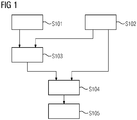
- Fig. 1 shows a flow diagram of a first embodiment of the method for determining a substance class of a nosocomial germ in a biological test substance of a patient.
- Method step S101 identifies the provision of a database system which has a quantity of substance classes, at least one nosocomial germ being assigned to each substance class and at least one substance class from the quantity of substance classes having protocol data about an occurrence of the assigned at least one nosocomial germ.
- Method step S102 identifies a provision of the biological test substance of the patient together with original data which describe an origin of the biological test substance.
- Method step S103 characterizes the establishment of start data by weighting the protocol data from the amount of substance classes as a function of the original data.
- Method step S104 identifies a determination of an estimation function by means of an analysis unit, the start data and the biological test substance entering the analysis unit as input parameters and the estimation function being provided at an output of the analysis unit.
- Method step S105 identifies a determination of the substance class of the nosocomial germ in the biological test substance of the patient according to the estimation function.
- Fig. 2 shows a flow diagram of a second embodiment of the method for determining a substance class of a nosocomial germ in a biological test substance of a patient.
- Method step S106 indicates that after the substance class has been determined, the determined substance class of the nosocomial germ is transferred to the database system and, in addition to the determined substance class of the nosocomial germ, the original data is transferred to the database system and stored as log data.
- Method step S107 indicates that the original data of the determined nosocomial germ are compared with the protocol data of the at least one substance class from the set of substance classes, with which an estimate of the distribution of the determined substance class of the nosocomial germ is created, and depending on the estimate and one Threshold an output information about the distribution of the determined substance class is provided.
- Method step S108 indicates that after the treatment of the patient in accordance with the determined substance class of the nosocomial germ, a state of health of the patient and / or a treatment method of the patient is transferred to the database system and assigned to the determined substance class of the nosocomial germ.
- Fig. 2 shows in method step S104.1 that the analysis unit has a biological test substance evaluation unit and a data processing unit and the biological test substance is used as input parameters in the biological test substance evaluation unit and the start data is received as input parameters in the data processing unit for determining the estimation function. Furthermore, it is shown in S104.1 that preliminary results of the estimation function are exchanged between the biological test substance evaluation unit and the data processing unit for determining the estimation function.
- Method step S109 indicates that the data processing unit has an artificial neural network for determining the estimation function and the artificial neural network is trained in accordance with the start data.
- Method step S109 can indicate that, alternatively or additionally, the data processing unit has a Bayes estimator, which is initialized according to the start data, and the estimation function in the data processing unit is determined according to the Bayes estimator.
- Method step S109 can thus in particular identify the training and / or the initialization of the data processing unit, it being possible for the data processing unit to be used in particular in accordance with method steps S104, S104.1.
- Method step S103.1 indicates that the database system has a further artificial neural network and the start data are determined as a function of the original data and transmitted to the analysis unit by means of the further artificial neural network.
- Fig. 3 shows a medical system 10 which has a database system 11 and the analysis unit 12.
- the medical system 10 additionally has a computing unit 13.
- the computing unit 13 is connected to the database system 11 and the analysis unit for exchanging the protocol data, the original data and / or the determined substance class.
- the protocol data and / or the original data have time information and / or location information about the occurrence of the associated at least one nosocomial germ, the location information being an examination room U1, a department A1 in a hospital KH1, the hospital KH1 and / or Location KH2, KH3 describes outside the hospital and the time information describes a patient's length of stay and / or a time of the origin of the biological test substance.
- the medical system 10 can be arranged, for example, within the hospital KH1, in particular between the examination room U1 and department A1, and / or distributed across hospitals.
- Fig. 3 shows that a local area G1 has the hospital KH1, that a regional area G2 has the regional hospital KH2 and that a national area G3 has the other hospital KH3.
- the regional area G2 is less than 50 km from the KH1 hospital.
- the national area G3 is, for example, at least 50 km away from the KH1 hospital.
- the database system 11 is a multi-center database, which is distributed over the hospital KH1, the regional hospital KH2 and the national hospital KH3 and / or is usually connected by means of an internet and / or a network.
- the output information can be provided in the regional hospital KH2 and / or in the further hospital KH3 if the biological test substance is provided in the hospital KH1 and / or the substance class of the nosocomial germ is determined in the biological test substance.
- the determined substance class of the nosocomial germ in the biological test substance of the patient is preferably transferred to the multicentre database distributed over the several hospitals KH1, KH2, KH3, in order in particular to be able to protect further patients from the nosocomial germ.
- the weights when weighting the log data from the amount of substance classes as a function of the original data can be determined according to a distance between the location information of the log data.
- the distance between the location information of the protocol data can depend, for example, on the local area G1, the regional area G2 and / or the national area G3.
Landscapes
- Health & Medical Sciences (AREA)
- Engineering & Computer Science (AREA)
- Medical Informatics (AREA)
- Public Health (AREA)
- Life Sciences & Earth Sciences (AREA)
- Physics & Mathematics (AREA)
- General Health & Medical Sciences (AREA)
- Bioinformatics & Cheminformatics (AREA)
- Data Mining & Analysis (AREA)
- Epidemiology (AREA)
- Spectroscopy & Molecular Physics (AREA)
- Databases & Information Systems (AREA)
- Theoretical Computer Science (AREA)
- Evolutionary Biology (AREA)
- Biotechnology (AREA)
- Biophysics (AREA)
- Bioinformatics & Computational Biology (AREA)
- Pathology (AREA)
- Software Systems (AREA)
- Evolutionary Computation (AREA)
- Computer Vision & Pattern Recognition (AREA)
- Bioethics (AREA)
- Artificial Intelligence (AREA)
- Primary Health Care (AREA)
- Biomedical Technology (AREA)
- Chemical & Material Sciences (AREA)
- Analytical Chemistry (AREA)
- Genetics & Genomics (AREA)
- Molecular Biology (AREA)
- Proteomics, Peptides & Aminoacids (AREA)
- Investigating Or Analysing Biological Materials (AREA)
Abstract
Die Erfindung betrifft ein Verfahren für ein Ermitteln einer Substanzklasse eines nosokomialen Keims in einer biologischen Testsubstanz eines Patienten, ein zugehöriges medizinisches System und ein zugehöriges Computerprogrammprodukt.Das erfindungsgemäße Verfahren für ein Ermitteln einer Substanzklasse eines nosokomialen Keims in einer biologischen Testsubstanz eines Patienten weist folgende Schritte auf:- Bereitstellen eines Datenbanksystems, welches eine Menge an Substanzklassen aufweist, wobei jeder Substanzklasse zumindest ein nosokomialer Keim zugeordnet ist und zumindest eine Substanzklasse aus der Menge an Substanzklassen Protokolldaten über ein Vorkommen des zugeordneten zumindest einen nosokomialen Keims aufweist,- Bereitstellen der biologischen Testsubstanz des Patienten zusammen mit Ursprungsdaten, welche einen Ursprung der biologischen Testsubstanz beschreiben,- Festlegen von Startdaten durch ein Gewichten der Protokolldaten aus der Menge an Substanzklassen in Abhängigkeit von den Ursprungsdaten,- Ermitteln einer Schätzfunktion mittels einer Analyseeinheit, wobei die Startdaten und die biologische Testsubstanz als Eingangsparameter in die Analyseeinheit eingehen und die Schätzfunktion an einem Ausgang der Analyseeinheit bereitgestellt wird, und- Ermitteln der Substanzklasse des nosokomialen Keims in der biologischen Testsubstanz des Patienten gemäß der Schätzfunktion.
Description
- Die Erfindung betrifft ein Verfahren für ein Ermitteln einer Substanzklasse eines nosokomialen Keims in einer biologischen Testsubstanz eines Patienten, ein zugehöriges medizinisches System und ein zugehöriges Computerprogrammprodukt.
- Ein für eine Infektion eines Patienten ursächlicher Keim wird üblicherweise in einer herkömmlichen Analyseeinheit, insbesondere in einer herkömmlichen biologischen Testsubstanzauswerteeinheit, mittels eines kultivierungsabhängigen Verfahrens ermittelt. Alternativ oder zusätzlich kann der Keim kultivierungsunabhängig in der herkömmlichen Analyseeinheit, insbesondere in der biologischen Testsubstanzauswerteeinheit, beispielsweise mittels einer Polymerase-Kettenreaktion mit pathogen-spezifischen Oligonukleotiden, ermittelt werden. Grundsätzlich ist es denkbar, dass der Keim mittels einer Sequenzierung von einem Desoxyribonukleinsäure-Molekül und/oder von einem Ribonukleinsäure-Molekül ermittelt wird. Eine Analyse der bei der Sequenzierung ermittelten Sequenzierungsdaten hängt üblicherweise von proprietären und/oder öffentlichen Referenzdaten ab, welche typischerweise nicht spezifisch für Ort und Zeit und gleichzeitig statisch ausgebildet sind. Die Referenzdaten sind beispielsweise Teil einer GEAR- oder CARD-Datenbank.
- Keime mit multiplen Resistenzen sind insbesondere für ca. 6% der in einem Krankenhaus erworbenen, sprich nosokomialen, Infektionen verantwortlich. In anderen Worten können die Keime mit multiplen Resistenzen grundsätzlich in dem Krankenhaus auf einen Patienten übertragen werden. Aufgrund von mit dem Resistenzspektrum verbundenen Einschränkungen bei einer Behandlung des Patienten, ist üblicherweise das Ermitteln der Substanzklasse des nosokomialen Keims zeitkritisch.
- Der Erfindung liegt die Aufgabe zu Grunde, ein Verfahren für ein Ermitteln einer Substanzklasse eines nosokomialen Keims in einer biologischen Testsubstanz eines Patienten, ein zugehöriges medizinisches System und ein zugehöriges Computerprogrammprodukt anzugeben, bei welchen eine Zeit für das Ermitteln der Substanzklasse des nosokomialen Keims verkürzt ist.
- Die Aufgabe wird durch die Merkmale der unabhängigen Ansprüche gelöst. Vorteilhafte Ausgestaltungen sind in den Unteransprüchen beschrieben.
- Das erfindungsgemäße Verfahren für ein Ermitteln einer Substanzklasse eines nosokomialen Keims in einer biologischen Testsubstanz eines Patienten weist folgende Schritte auf:
- Bereitstellen eines Datenbanksystems, welches eine Menge an Substanzklassen aufweist, wobei jeder Substanzklasse zumindest ein nosokomialer Keim zugeordnet ist und zumindest eine Substanzklasse aus der Menge an Substanzklassen Protokolldaten über ein Vorkommen des zugeordneten zumindest einen nosokomialen Keims aufweist,
- Bereitstellen der biologischen Testsubstanz des Patienten zusammen mit Ursprungsdaten, welche einen Ursprung der biologischen Testsubstanz beschreiben,
- Festlegen von Startdaten durch ein Gewichten der Protokolldaten aus der Menge an Substanzklassen in Abhängigkeit von den Ursprungsdaten,
- Ermitteln einer Schätzfunktion mittels einer Analyseeinheit, wobei die Startdaten und die biologische Testsubstanz als Eingangsparameter in die Analyseeinheit eingehen und die Schätzfunktion an einem Ausgang der Analyseeinheit bereitgestellt wird, und
- Ermitteln der Substanzklasse des nosokomialen Keims in der biologischen Testsubstanz des Patienten gemäß der Schätzfunktion.
- Das erfindungsgemäße Verfahren bietet insbesondere folgende Vorteile:
- Die Protokolldaten über das Vorkommen des zumindest einen nosokomialen Keims und die Ursprungsdaten der biologischen Testsubstanz sind vorteilhaft, weil dadurch das Ermitteln der Substanzklasse schneller erfolgen kann und/oder eine Historie des zumindest einen nosokomialen Keims berücksichtigt wird.
- Das Festlegen der Startdaten in Abhängigkeit von den Ursprungsdaten ermöglicht vorteilhafterweise ein Berücksichtigen von solchen Rahmenbedingungen, in welchen die biologische Testsubstanz bereitgestellt wird, wodurch vorteilhafterweise ein kontextbezogenes Ermitteln der Substanzklasse des nosokomialen Keims erfolgt. Dies ermöglicht vorteilhafterweise ein besseres Ergebnis, weil üblicherweise ein Zusammenhang zwischen den Protokolldaten und den Ursprungsdaten besteht.
- Das Ermitteln der Schätzfunktion weist insbesondere ein probabilistisches Verfahren auf und ermöglicht daher eine Berücksichtigung einer stochastischen Natur von biologischen Prozessen, welche den nosokomialen Keim beschreiben können. Die Schätzfunktion ermöglicht weiterhin, insbesondere in Abhängigkeit von einer Sensitivität und Spezifizität, einen Zeitpunkt für das Ermitteln der Substanzklasse vorzugeben. Vorteilhafterweise kann in Abhängigkeit von einem Gesundheitszustand des Patienten der Zeitpunkt für das Ermitteln der Substanzklasse vorgegeben werden, beispielsweise indem eine Anforderung an die Sensitivität und/oder eine Anforderung an die Spezifität relativ zum Gesundheitszustand angepasst wird. Typischerweise kann ein Arzt desto früher den Patienten gemäß der ermittelten Substanzklasse behandeln, je früher der Zeitpunkt für das Ermitteln der Substanzklasse vorgegeben wird.
- Besonders vorteilhafterweise ermöglicht das erfindungsgemäße Verfahren ein patientenindividuelles Ermitteln der Substanzklasse des nosokomialen Keims in der biologischen Testsubstanz unter Berücksichtigung des Ursprungs der biologischen Testsubstanz. Vorzugsweise erfolgt das Ermitteln der Substanzklasse gemäß einem kultivierungsunabhängigen Verfahren, wodurch im Vergleich zu dem kultivierungsabhängigen Verfahren eine Ermittlungszeit für das Ermitteln der Substanzklasse von mehreren Tagen auf wenige Stunden reduziert sein kann.
- Wenn die biologische Testsubstanz bereitgestellt wird und/oder die Substanzklasse des nosokomialen Keims in der biologischen Testsubstanz ermittelt wird, können vorteilhafterweise weitere Patienten vor dem nosokomialen Keim bewahrt werden, beispielsweise indem eine bevorzugte Behandlungsmethode und/oder eine unvorteilhafte Behandlungsmethode in Abhängigkeit von der ermittelten Substanzklasse bereitgestellt wird. Vorteilhafterweise kann der Patient besser und/oder schneller behandelt werden, wodurch typischerweise eine Aufenthaltsdauer, beispielsweise in einem Krankenhaus gemäß dem Ursprung der biologischen Testsubstanz, verringert wird und wobei eine Wahrscheinlichkeit verringert wird, dass der Patient eine weitere Infektion erhält.
- Der nosokomiale Keim ist typischerweise ein Krankenhauskeim, welcher üblicherweise bei einem Aufenthalt und/oder bei einer Behandlung des Patienten in einem Krankenhaus auf den Patienten übertragen wird. Der nosokomiale Keim kann insbesondere ein Escherichia coli, Enterococcus faecalis, Enterococcus faecium, Kebsiella pneumoniae, Pseudomonas aeruginosa und/oder Staphylococcus aureus sein. Weitere Arten und/oder Gattungen an nosokomialen Keimen sind denkbar. Typischerweise erfolgt aufgrund des Übertragens des nosokomialen Keims eine Infektion des Patienten, welche einen Gesundheitszustand des Patienten wesentlich beinträchtigen kann. Die Infektion des Patienten kann in diesem Fall nosokomiale Infektion genannt werden. Die nosokomiale Infektion beschreibt üblicherweise ausschließlich Infektionen innerhalb des Krankenhauses. Das Datenbanksystem kann grundsätzlich auch derartige Keime aufweisen, welche außerhalb des Krankenhauses auf den Patienten übertragen worden sind. Beispielsweise weisen die Protokolldaten des ermittelten nosokomialen Keims den Ursprung außerhalb des Krankenhauses auf, wenn der außerhalb des Krankenhauses auf den Patienten übertragene Keim grundsätzlich auch innerhalb des Krankenhauses vorkommen und/oder auf den Patienten übertragen werden kann, wodurch dieser Keim ein nosokomialer Keim sein kann.
- Die biologische Testsubstanz weist insbesondere ein Probenmaterial auf. Die biologische Testsubstanz ist insbesondere eine klinische Testsubstanz. Die biologische Testsubstanz kann beispielsweise eine Körperflüssigkeit und/oder eine Gewebeprobe des Patienten aufweisen. Die biologische Testsubstanz weist typischerweise ein Blut, einen Speichel und/oder einen Stuhl des Patienten auf. Die biologische Testsubstanz wird üblicherweise nach dem Ermitteln der Substanzklasse verworfen.
- Die Substanzklasse weist insbesondere einen Datensatz an Informationen auf, welche üblicherweise im Gegensatz zu der biologischen Testsubstanz digital im Datenbanksystem abgespeichert werden können. In anderen Worten enthält das Datenbanksystem lediglich digitale und/oder digitalisierte Informationen und/oder typischerweise nicht die biologische Testsubstanz. Das Datenbanksystem kann insbesondere die Menge an Substanzklassen und/oder die Protokolldaten beispielsweise in einer Speichereinheit des Datenbanksystems abspeichern und/oder von der Speichereinheit abrufen. Üblicherweise kann das Datenbanksystem lediglich Informationen über die biologische Testsubstanz aufweisen. Die Substanzklasse kann gemäß einer objektorientierten Programmierung ausgebildet sein.
- Die Substanzklasse kann mehrere Kategorien aufweisen, in welche der Datensatz an Informationen unterteilt sein kann. Eine erste Kategorie der Substanzklasse kann ein Erkennungszeichen aufweisen, wobei das Erkennungszeichen vorzugsweise eindeutig den zumindest einen zugeordneten nosokomialen Keim identifiziert. Das Erkennungszeichen kann eine Basen- und/oder eine Aminosäurefolge und/oder eine Gen- und/oder Proteinzusammensetzung und/oder eine mikrobiologische Merkmalsliste aufweisen. Das Erkennungszeichen kann eine Beschreibung des zumindest einen zugeordneten nosokomialen Keims aufweisen. Grundsätzlich ist es denkbar, dass in Abhängigkeit einer Spezifität des Erkennungszeichens der Substanzklasse lediglich ein nosokomialer Keim oder mehrere nosokomiale Keime jeder Substanzklasse zugeordnet sind. Grundsätzlich ist es denkbar, dass in Abhängigkeit von der Spezifität des Erkennungszeichens die Substanzklasse eine Gattung und/oder eine Art des nosokomialen Keims beschreibt.
- Eine zweite Kategorie der Substanzklasse kann ein Resistenzspektrum aufweisen, welches bevorzugte und/oder unvorteilhafte, insbesondere medikamentöse, Behandlungsmethoden beschreibt. Beispielsweise kann nach dem Ermitteln der Substanzklasse aus dem Datenbanksystem das der ermittelten Substanzklasse zugeordnete Resistenzspektrum auf einer Anzeigeeinheit bereitgestellt werden. Üblicherweise wird ein Anteil an unvorteilhaften Behandlungsmethoden auf Kosten eines Anteils der bevorzugten Behandlungsmethoden immer größer. Das Resistenzspektrum kann ein Protein, ein Gen, eine Mutation und/oder ein Methylierungsmuster umfassen. Wenn ein Keim ein Resistenzspektrum mit zumindest einer Resistenz aufweist, kann der Keim mit dem Resistenzspektrum der nosokomiale Keim sein.
- Eine dritte Kategorie der Substanzklasse kann einen Stammbaum aufweisen, welcher beispielsweise die Menge der Substanzklassen in Abhängigkeit von einem Verwandtschaftsgrad zwischen den Substanzklassen beschreibt. Der Verwandtschaftsgrad ist insbesondere im Hinblick auf das Resistenzspektrum vorteilhaft, weil üblicherweise Selektionsdruck und/oder genetische Plastizität eine Weiterentwicklung des Resistenzspektrums des zugeordneten nosokomialen Keims bewirken kann.
- Eine vierte Kategorie der Substanzklasse kann die Protokolldaten aufweisen. Die Protokolldaten, insbesondere patientenspezifische Daten der Protokolldaten, können beispielsweise anonymisiert und/oder pseudonymisiert werden. Die Protokolldaten können insbesondere eine Biozönose des zumindest einen nosokomialen Keims aufweisen. Das Vorkommen des zugeordneten zumindest einen nosokomialen Keims beschreibt insbesondere eine Historie des zugeordneten zumindest einen nosokomialen Keims. Grundsätzlich ist es denkbar, dass die Menge an Substanzklassen, insbesondere jeder zugeordnete nosokomiale Keim, mehrere Male vorkommt. Die Protokolldaten beschreiben insbesondere Rahmenbedingungen über das Vorkommen des zugeordneten zumindest einen nosokomialen Keims.
- Die Menge an Substanzklassen und insbesondere die Protokolldaten bilden typischerweise Referenzdaten, welche ein bisher bekanntes gesamtes Wissen über die nosokomialen Keime aufweisen können. Die Referenzdaten können dem Datensatz an Informationen entsprechen. Grundsätzlich kann das Datenbanksystem mehrere Datensätze an Informationen für mehrere nosokomiale Keime aufweisen.
- Das Datenbanksystem kann eine lokale Datenbank und/oder eine multizentrische Datenbank und/oder eine Cloud-basierte Datenbank aufweisen. Das Datenbanksystem weist insbesondere einen Verbund der lokalen Datenbank und/oder der multizentrischen Datenbank auf. Die multizentrische Datenbank ist üblicherweise eine über mehrere Krankenhäuser verteilte Datenbank. Die mehreren Krankenhäuser können geographisch, insbesondere lokal oder regional oder national, verteilt sein. Jedes Krankenhaus kann beispielsweise eine lokale Datenbank aufweisen, wobei die lokalen Datenbanken der mehreren Krankenhäuser untereinander beispielsweise über ein Internet verbunden sind und/oder zusammen die multizentrische Datenbank bilden. Die multizentrische Datenbank ist insbesondere für ein Synchronisieren der Menge an Substanzklassen, insbesondere zusammen mit den Protokolldaten, von lokaler Datenbank zu lokaler Datenbank ausgebildet. In anderen Worten kann vorzugsweise die Menge an Substanzklassen über die mehrere Krankenhäuser, insbesondere die lokalen Datenbanken der mehreren Krankenhäuser, hinweg ausgetauscht und/oder aktualisiert werden. Jede lokale Datenbank und/oder jede multizentrische Datenbank weist üblicherweise eine Speichereinheit auf, in welche der Datensatz an Informationen, insbesondere die Menge der Substanzklassen, vorzugsweise zusammen mit den Protokolldaten, übertragen und/oder abgespeichert werden. Das Datenbanksystem kann lediglich die lokale Datenbank, beispielsweise aus an einem Ort der lokalen Datenbank anzuwendenden Datenschutzgründen, aufweisen. Das Bereitstellen des Datenbanksystems kann ein Anonymisieren der Protokolldaten umfassen. Das Bereitstellen des Datenbanksystems kann ein Verbinden, beispielsweise über das Internet und/oder ein Netzwerk, der lokalen Datenbank und/oder der multizentrischen Datenbank, insbesondere der Speichereinheit, mit der Analyseeinheit umfassen. Das Bereitstellen des Datenbanksystems kann ein Bereitstellen eines Zugriffs auf die Menge der Substanzklassen, insbesondere zusammen mit den Protokolldaten, für einen Nutzer und/oder die Analyseeinheit umfassen. Das Datenbanksystem kann beispielsweise von einem Hersteller des Datenbanksystems und/oder der Speichereinheit und/oder von dem Krankenhaus bereitgestellt werden. Das Datenbanksystem wird insbesondere in Abhängigkeit von dem Ursprung der biologischen Testsubstanz und/oder von dem den Patienten betreuenden Krankenhaus bereitgestellt.
- Das Bereitstellen der biologischen Testsubstanz und/oder der Ursprungsdaten kann beispielsweise durch den Nutzer und/oder automatisch erfolgen. Beispielsweise kann der Nutzer die biologische Testsubstanz, insbesondere das Probenmaterial, von dem Patienten erfassen, beispielsweise durch eine Blutentnahme, eine Speichelprobe und/oder eine Gewebeentnahme. Das Bereitstellen der biologischen Testsubstanz und/oder der Ursprungsdaten kann das Erfassen, ein Zwischenlagern und/oder ein Aufbereiten der biologischen Testsubstanz und/oder der Ursprungsdaten umfassen. Die Ursprungsdaten können vorzugsweise automatisch bei dem Erfassen der biologischen Testsubstanz erfasst und/oder digitalisiert in dem Datenbanksystem gespeichert werden. Die Ursprungsdaten beschreiben insbesondere Rahmenbedingungen über den Ursprung der biologischen Testsubstanz.
- Die Startdaten weisen üblicherweise Prior-Daten und/oder A-priori-Wissen auf. Die Startdaten können insbesondere eine A-priori-Wahrscheinlichkeit und/oder eine A-priori-Wahrscheinlichkeitsverteilung aufweisen. Die Startdaten können Trainingsdaten für die Analyseeinheit aufweisen. Die Startdaten bilden insbesondere eine Statistik in Abhängigkeit von den Protokolldaten und den Ursprungsdaten ab. Die Startdaten weisen insbesondere diejenigen Informationen auf, welche bis zu einem zeitlichen Ursprung der biologischen Testsubstanz vorliegen. Die Startdaten können beispielsweise in dem Datenbanksystem und/oder in der Analyseeinheit und/oder in einer Recheneinheit festgelegt werden. Die Startdaten können vorzugsweise zwischen dem Datenbanksystem, der Analyseeinheit und/oder der Recheneinheit ausgetauscht werden. Die Recheneinheit kann Bestandteil des Datenbanksystems und/oder der Analyseeinheit sein.
- Das Gewichten der Protokolldaten kann ein Klassifizieren der Protokolldaten umfassen, wobei das Klassifizieren beispielsweise zwischen Protokolldaten mit inhaltlicher Nähe zu den Ursprungsdaten und Protokolldaten ohne inhaltliche Nähe zu den Ursprungsdaten unterscheidet. Das Klassifizieren kann durch ein Bestimmen der Gewichte für das Gewichten abgebildet werden. Die inhaltliche Nähe kann beispielsweise durch den Nutzer und/oder automatisch mittels eines Schwellwerts und/oder automatisch mittels einer weiteren Wahrscheinlichkeitsverteilung festgelegt werden. Das Gewichten der Protokolldaten kann in Abhängigkeit von einer Menge an Protokolldaten und/oder von einer Menge an Ursprungsdaten skalieren. Das Gewichten kann ein Addieren, Subtrahieren, Multiplizieren und/oder ein Potenzieren umfassen. Das Festlegen der Startdaten kann ein Abspeichern der Gewichte und/oder ein Abrufen der Gewichte in dem Datenbanksystem umfassen. Vorzugsweise werden die Gewichte in Abhängigkeit von den Ursprungsdaten bestimmt. Beispielsweise wird ein Abstandsmaß zwischen den Protokolldaten und den Ursprungsdaten festgelegt, welches das Bestimmen der Gewichte beeinflusst. Das Abstandsmaß kann einen Schwellwert umfassen.
- Die Schätzfunktion kann insbesondere eine A-posteriori-Wahrscheinlichkeit und/oder eine A-posteriori-Wahrscheinlichkeitsverteilung aufweisen. Üblicherweise verändert sich die Schätzfunktion beim Ermitteln der Schätzfunktion. Die Schätzfunktion kann eine relative Häufigkeit, beispielsweise des Erkennungszeichens, aufweisen.
- Die Analyseeinheit kann insbesondere die Startdaten und die biologische Testsubstanz auswerten. Die Analyseeinheit ist vorzugsweise eine kultivierungsunabhängige Analyseeinheit. Das Ermitteln der Schätzfunktion kann insbesondere in der Recheneinheit der Analyseeinheit erfolgen, wobei die Recheneinheit auf vorläufige Ergebnisse der biologischen Testsubstanz zugreifen kann. Beim Ermitteln der Schätzfunktion kann grundsätzlich unter Verwendung der A-priori-Wahrscheinlichkeitsverteilung und der biologischen Testsubstanz die A-posteriori-Wahrscheinlichkeitsverteilung ermittelt werden. Das Ermitteln der Substanzklasse, insbesondere das Ermitteln der Schätzfunktion mittels der Analyseeinheit, kann ein Vergleichen der Substanzklasse, insbesondere des Erkennungszeichens, mit der biologischen Testsubstanz umfassen. Das Vergleichen kann ein Zählen der Substanzklasse, insbesondere des Erkennungszeichens, umfassen, wodurch die relative Häufigkeit und/oder die A-posteriori-Wahrscheinlichkeitsverteilung bestimmt werden. Das Eingehen der Startdaten und der biologischen Testsubstanz als Eingangsparameter in die Analyseeinheit beschreibt insbesondere, dass die Analyseeinheit die Startdaten und die biologische Testsubstanz für das Ermitteln der Schätzfunktion verwendet.
- Das Ermitteln der Substanzklasse gemäß der Schätzfunktion kann, insbesondere durch den Nutzer und/oder automatisch, mittels der Analyseeinheit erfolgen. Grundsätzlich ist es denkbar, dass ein Kriterium für das Ermitteln der Substanzklasse festgelegt wird, wobei in Abhängigkeit von dem Kriterium das Ermitteln der Substanzklasse durchgeführt, insbesondere das Ermitteln der Schätzfunktion abgeschlossen, wird. Das Ermitteln der Substanzklasse kann das Festlegen des Kriteriums umfassen. Gemäß dem Kriterium kann vorzugsweise festgelegt werden, ob die vorläufigen Ergebnisse der Schätzfunktion dafür genügen, die Substanzklasse zu ermitteln. Das Kriterium kann einen Zeitpunkt für das Ermitteln der Substanzklasse, eine Sensitivität, eine Spezifizität, eine Korrelation zwischen den Protokolldaten und den Ursprungsdaten und/oder einen Schwellwert für die A-posteriori-Wahrscheinlichkeitsverteilung, welcher beispielsweise größer 90%, insbesondere bei 99%, festgelegt wird, umfassen. Das Ermitteln der Substanzklasse umfasst insbesondere ein Bereitstellen der ermittelten Substanzklasse auf einer Anzeigeeinheit und/oder ein Abspeichern in dem Datenbanksystem und/oder ein Abspeichern in einer weiteren Datenbank außerhalb des Datenbanksystems und/oder eine Weitergabe an eine Weiterverarbeitungseinheit.
- Grundsätzlich ist es denkbar, dass beim Ermitteln der Substanzklasse insbesondere das Resistenzspektrum des nosokomialen Keims ermittelt und/oder aus dem Datenbanksystem bereitgestellt wird. Alternativ oder zusätzlich ist es denkbar, dass das der ermittelten Substanzklasse zugeordnete Resistenzspektrum nach dem Ermitteln der Substanzklasse, beispielsweise dem Nutzer auf der Anzeigeeinheit, bereitgestellt wird. Die ermittelte Substanzklasse und das zugeordnete Resistenzspektrum können vorzugsweise gemeinsam auf der Anzeigeeinheit bereitgestellt werden. Vorzugsweise kann durch den Nutzer und/oder automatisch eine Behandlungsmethode für den Patienten in Abhängigkeit von dem Resistenzspektrum festgelegt und/oder beispielsweise dem Nutzer vorgeschlagen werden. Typischerweise ist das Resistenzspektrum ein Ausschlusskriterium bei dem Festlegen der Behandlungsmethode. Vorzugsweise ermöglicht das Ermitteln des Resistenzspektrums eine optimierte klinische Entscheidungsunterstützung durch die Abhängigkeit von den Ursprungsdaten und den Protokolldaten.
- Eine Ausführungsform sieht vor, dass die Analyseeinheit eine biologische Testsubstanzauswerteeinheit und eine Datenverarbeitungseinheit aufweist und wobei für das Ermitteln der Schätzfunktion die biologische Testsubstanz als Eingangsparameter in die biologische Testsubstanzauswerteeinheit eingehen und die Startdaten als Eingangsparameter in die Datenverarbeitungseinheit eingehen. Vorteilhafterweise kann die Analyseeinheit die Schätzfunktion unter Verwendung der Datenverarbeitungseinheit schnell an dem Ausgang der Analyseeinheit bereitstellen.
- Die Datenverarbeitungseinheit kann der Recheneinheit der Analyseeinheit entsprechen. Wenn die Analyseeinheit, insbesondere die Datenverarbeitungseinheit, und das Datenbanksystem in ein medizinisches System integriert sind, kann die Datenverarbeitungseinheit der Recheneinheit des medizinischen System und/oder der Recheneinheit des Datenbanksystems entsprechen. Die Analyseeinheit kann ein Gehäuse aufweisen, in welches die Datenverarbeitungseinheit und die biologische Testsubstanzauswerteeinheit integriert sind. Die Testsubstanzauswerteeinheit kann zu einer DNA-Sequenzierung und/oder einer RNA-Sequenzierung und/oder einer Polymerase-Kettenreaktion und/oder einer Massenspektrometrie und/oder einer Kernspinresonanzspektroskopie ausgebildet sein. Die Datenverarbeitungseinheit ist insbesondere mit dem Datenbanksystem und/oder der Recheneinheit und/oder der Anzeigeeinheit für ein Austauschen der Startdaten, der Ursprungsdaten, der Protokolldaten, insbesondere des Resistenzspektrums, und/oder der ermittelten Substanzklasse ausgebildet. Die biologische Testsubstanzauswerteeinheit kann eine Aufnahmevorrichtung für ein Aufnehmen der biologischen Testsubstanz aufweisen und/oder ist insbesondere eine kultivierungsunabhängige Testsubstanzauswerteeinheit.
- Eine Ausführungsform sieht vor, dass für das Ermitteln der Schätzfunktion vorläufige Ergebnisse der Schätzfunktion zwischen der biologischen Testsubstanzauswerteeinheit und der Datenverarbeitungseinheit ausgetauscht werden. Die Ausführungsform bietet insbesondere einen Vorteil, dass zwischen der biologischen Testsubstanzauswerteeinheit und der Datenverarbeitungseinheit eine bidirektionale Kommunikationseinrichtung besteht. Beispielsweise weisen die biologische Testsubstanzauswerteeinheit und die Datenverarbeitungseinheit eine Kommunikationseinrichtung auf, welche für die bidirektionale Kommunikation ausgebildet ist. Besonders vorteilhafterweise ist die bidirektionale Kommunikationseinrichtung für eine Echtzeitkommunikation ausgebildet. Die Analyseeinheit ist vorzugsweise echtzeitfähig.
- Die vorläufigen Ergebnisse der Schätzfunktion basieren vorzugsweise auf den vorläufigen Ergebnissen der biologischen Testsubstanz. Vorzugsweise entsprechen die vorläufigen Ergebnisse der Schätzfunktion einer digitalisierten Version der vorläufigen Ergebnisse der biologischen Testsubstanz. Die vorläufigen Ergebnisse der Schätzfunktion können beispielsweise das Erkennungszeichen und/oder die Substanzklasse des ermittelten nosokomialen Keims aufweisen. Die vorläufigen Ergebnisse der Schätzfunktion und/oder der biologischen Testsubstanz können vorteilhafterweise in Echtzeit zwischen der biologischen Testsubstanzauswerteeinheit und der Datenverarbeitungseinheit ausgetauscht werden. Beispielsweise kann die biologische Testsubstanzauswerteeinheit die vorläufigen Ergebnisse der Schätzfunktion und/oder die Startdaten für das Ermitteln von vorläufigen Ergebnissen der biologischen Testsubstanz verwenden.
- Eine Ausführungsform sieht vor, dass für das Ermitteln der Schätzfunktion die Datenverarbeitungseinheit ein künstliches neuronales Netz aufweist. Das künstliche neuronale Netz ist insofern vorteilhaft, weil vorzugsweise das künstliche neuronale Netz an das Datenbanksystem, insbesondere an die Protokolldaten, und/oder die Ursprungsdaten angepasst werden kann. Besonders vorteilhafterweise ist das künstliche neuronale Netz ein rekurrentes künstliches neuronales Netz. Üblicherweise bietet das künstliche neuronale Netz einen Vorteil, dass Ergebnisse, insbesondere das Ermitteln der Substanzklasse, desto besser werden, je länger das künstliche neuronale Netz im Einsatz ist.
- Das künstliche neuronale Netz weist üblicherweise eine Eingangsschicht und eine Ausgangsschicht auf, welche miteinander über gewichtete Verbindungen verbunden sind. Grundsätzlich können zwischen der Eingangsschicht und der Ausgangsschicht mehrere Zwischenschichten mit weiteren gewichteten Verbindungen angeordnet sein. Die Startdaten können grundsätzlich an der Eingangsschicht und/oder an der Ausgangsschicht des künstlichen neuronalen Netzes vorliegen. Die Startdaten können zwischen der Eingangsschicht und der Ausgangsschicht, beispielsweise für ein Training des künstlichen neuronalen Netzes aufgeteilt werden. Typischerweise liegt die Schätzfunktion an der Ausgangsschicht vor. Der Ausgang der Analyseeinheit kann der Ausgangsschicht des künstlichen neuronalen Netzes entsprechen. Vorzugsweise ist das künstliche neuronale Netz dafür ausgebildet, in Abhängigkeit von den Startdaten und/oder von der ermittelten Substanzklasse und/oder von der ermittelten Schätzfunktion die gewichteten Verbindungen festzulegen, insbesondere wenn das künstliche neuronale Netz das rekurrente künstliche neuronale Netz ist. Das künstliche neuronale Netz kann typischerweise in Programmcodemitteln abgebildet und/oder in der Recheneinheit ausgeführt werden.
- Eine Ausführungsform sieht vor, dass das künstliche neuronale Netz gemäß den Startdaten trainiert wird. Das Training kann beispielsweise derart erfolgen, dass beispielsweise eine Trainingsdatenbank mit einer Menge an Trainings-Substanzklassen und zugehörigen Trainings-Protokolldaten verwendet wird. Vorteilhafterweise kann das Training laufend erfolgen, insbesondere wenn das künstliche neuronale Netz lernend bzw. rekurrent ausgebildet ist. Vorzugsweise wird das künstliche neuronale Netz, insbesondere die gewichteten Verbindungen, gemäß den Startdaten angepasst. Das künstliche neuronale Netz kann in diesem Fall gemäß einem Entscheidungsbaum ausgebildet sein, welcher jeweils in Abhängigkeit von der bereitgestellten biologischen Testsubstanz angepasst wird. Das Training kann beispielsweise derart erfolgen, dass an der Eingangsschicht die Startdaten, insbesondere die zugrundeliegenden Protokolldaten, und an der Ausgangsschicht die zugehörige Menge an Substanzklassen anliegt, wodurch üblicherweise die gewichteten Verbindungen angepasst werden. Die gewichteten Verbindungen können vorzugsweise beim Ermitteln der Substanzklasse, insbesondere beim Ermitteln der Schätzfunktion, angepasst werden. Diese Ausführungsform bietet insbesondere einen Vorteil, dass das künstliche neuronale Netz in Abhängigkeit von den Startdaten angepasst wird. Dies ermöglicht vorzugsweise ein schnelleres Ermitteln der Substanzklasse des nosokomialen Keims. In diesem Fall sind die Startdaten typischerweise ein Gedächtnis des künstlichen neuronalen Netzes.
- Eine Ausführungsform sieht vor, dass die Datenverarbeitungseinheit einen Bayes-Schätzer aufweist, welcher gemäß den Startdaten initialisiert wird, und wobei die Schätzfunktion in der Datenverarbeitungseinheit gemäß dem Bayes-Schätzer ermittelt wird. Vorteilhafterweise ermöglicht der Bayes-Schätzer eine besonders vorteilhafte Kombination von den Protokolldaten und den Ursprungsdaten. Grundsätzlich bietet der Bayes-Schätzer einen Vorteil einer im Hinblick auf eine Rechenleistung anspruchsloseren Anforderung, insbesondere im Vergleich zum künstlichen neuronalen Netz. Vorteilhafterweise kann der Bayes-Schätzer mit dem künstlichen neuronalen Netz derart kombiniert werden, dass die Datenverarbeitungseinheit leistungsfähiger und/oder präziser wird. Vorteilhafterweise ist eine Datenverarbeitungseinheit lediglich mit dem Bayes-Schätzer günstiger als die Datenverarbeitungseinheit mit dem künstlichen neuronalen Netz oder als die Datenverarbeitungseinheit mit dem künstlichen neuronalen Netz sowie mit dem Bayes-Schätzer.
- In diesem Ausführungsbeispiel liegen die Startdaten üblicherweise als A-priori-Wahrscheinlichkeitsverteilung und/oder die Schätzfunktion als A-posteriori-Wahrscheinlichkeitsverteilung vor. Das Ermitteln der Schätzfunktion umfasst insbesondere ein Auswerten der A-posteriori-Wahrscheinlichkeitsverteilung. Der Bayes-Schätzer ermöglicht insbesondere ein Verwenden des Bayes'schen Theorems für das Ermitteln der Substanzklasse des nosokomialen Keims. Der Bayes-Schätzer kann typischerweise in Programmcodemitteln abgebildet und/oder in der Recheneinheit ausgeführt werden.
- Eine Ausführungsform sieht vor, dass das Datenbanksystem ein weiteres künstliches neuronales Netz aufweist und wobei mittels des weiteren künstlichen neuronalen Netzes die Startdaten in Abhängigkeit von den Ursprungsdaten festgelegt und an die Analyseeinheit übertragen werden. Diese Ausführungsform bietet insbesondere einen Vorteil einer hochgradigen Automatisierung des Verfahrens für das Ermitteln der Substanzklasse des nosokomialen Keims. Vorteilhafterweise kann das weitere künstliche neuronale Netz, insbesondere aufgrund einer Anpassungsfähigkeit, die Startdaten besser festlegen, als wenn die Startdaten beispielsweise durch einen Nutzer und/oder gemäß starren Gewichten festgelegt werden.
- Grundsätzlich kann in Hinblick auf eine Topologie das weitere künstliche neuronale Netz wie das künstliche neuronale Netz ausgebildet sein. Daher wird aus Gründen der Übersichtlichkeit hiermit auf die obige Beschreibung des künstlichen neuronalen Netzes verwiesen. Das weitere künstliche neuronale Netz kann insbesondere das Abstandsmaß, insbesondere für das Klassifizieren, und/oder eine bestimmte Wahrscheinlichkeit festlegen. Das weitere künstliche neuronale Netz wird beispielsweise unter Verwendung der Menge an Substanzklassen und den zugehörigen Protokolldaten trainiert. Beispielsweise kann das weitere künstliche neuronale Netz dadurch lernen, welche Substanzklasse insbesondere in Abhängigkeit von der Zeitinformation und/oder Ortinformation mit der bestimmten Wahrscheinlichkeit, insbesondere mit der A-priori-Wahrscheinlichkeitsverteilung, auftreten und/oder ermittelt werden kann, wobei die bestimmte Wahrscheinlichkeit insbesondere die Startdaten bilden kann. Das weitere künstliche neuronale Netz und das künstliche neuronale Netz können grundsätzlich als ein einzelnes künstliches neuronales Netz trainiert und/oder ausgebildet sein.
- Eine Ausführungsform sieht vor, dass die Protokolldaten und/oder die Ursprungsdaten eine Zeitinformation und/oder Ortsinformation über das Vorkommen des zugeordneten zumindest einen nosokomialen Keims aufweisen. Mittels der Zeitinformation und/oder der Ortsinformation kann vorzugsweise berücksichtigt werden, inwiefern es wahrscheinlich ist, dass zu einem gewissen Zeitpunkt und/oder an einem bestimmten Ort die Substanzklasse des nosokomialen Keims ermittelt wird. In anderen Worten kann vorzugsweise in Abhängigkeit von der Zeitinformation und/oder Ortsinformation ausgeschlossen werden, dass anstatt der Substanzklasse des nosokomialen Keims eine weitere Substanzklasse ermittelt wird. Die Ortsinformation kann typischerweise in ein lokales oder regionales oder nationales Gebiet unterteilt werden.
- Grundsätzlich ist es denkbar, dass die Protokolldaten alternativ oder zusätzlich eine Information über eine beim Bereitstellen der biologischen Testsubstanz verwendete Bereitstellungseinheit aufweisen. Die Bereitstellungseinheit kann ein medizinisches Gerät, beispielsweise ein Autoklav sein. Weiterhin ist es denkbar, dass die Protokolldaten eine Information über einen die biologische Testsubstanz bereitstellenden Nutzer aufweisen.
- Eine Ausführungsform sieht vor, dass die Ortsinformation einen Untersuchungsraum, eine Abteilung in einem Krankenhaus, das Krankenhaus und/oder einen Ort außerhalb des Krankenhauses beschreibt. Der Untersuchungsraum und/oder die Abteilung in dem Krankenhaus sind typischerweise dem lokalen Gebiet zuzuordnen. Der Ort außerhalb des Krankenhaus ist typischerweise dem regionalen oder nationalen Gebiet zuzuordnen, wobei sich typischerweise das regionale oder nationale Gebiet in einer Distanz zum Krankenhaus unterscheiden lässt. Eine Größenordnung der Distanz im regionalen und/oder im nationalen Gebiet kann Kilometer sein. Die Distanz im regionalen Gebiet ist beispielsweise kleiner 50 km. Die Distanz im nationalen Gebiet ist beispielsweise größer oder gleich 50 km.
- Diese Ausführungsform ist insofern vorteilhaft, weil ein Vorkommen von Keimen, insbesondere des nosokomialen Keims, stark von dem Ursprung der biologischen Testsubstanz abhängen kann. Diese Ausführungsform ermöglicht vorteilhafterweise ein Festlegen von unterschiedlichen Startdaten, welche basierend auf durchgeführten Tätigkeiten wie Operationen, Pflege, Therapie und/oder Diagnostik an von den Ortsinformationen beschriebenen Orten variieren können.
- Eine Ausführungsform sieht vor, dass die Zeitinformation die Aufenthaltsdauer des Patienten und/oder einen Zeitpunkt des Ursprungs der biologischen Testsubstanz beschreibt. Vorteilhafterweise kann das Ermitteln der Substanzklasse schnell erfolgen, weil lediglich zeitlich relevante Substanzklassen gemäß den jeweils zugeordneten Protokolldaten beim Festlegen der Startdaten berücksichtigt werden.
- Grundsätzlich ist es denkbar, dass die Protokolldaten insbesondere die Zeitinformation und die Ortsinformation aufweisen. Üblicherweise hängen die Zeitinformation und die Ortsinformation voneinander ab. In diesem Fall weisen die Startdaten und/oder die Schätzfunktion, insbesondere die A-priori-Wahrscheinlichkeitsverteilung und/oder die A-posteriori-Wahrscheinlichkeitsverteilung eine zeitliche Dimension und/oder eine räumliche Dimension auf.
- Eine Ausführungsform sieht vor, dass nach dem Ermitteln der Substanzklasse die ermittelte Substanzklasse des nosokomialen Keims in das Datenbanksystem übertragen wird und wobei zusätzlich zur ermittelten Substanzklasse des nosokomialen Keims die Ursprungsdaten in das Datenbanksystem übertragen und als Protokolldaten gespeichert werden. Die Ausführungsform bietet insbesondere einen Vorteil, dass das Datenbanksystem mit keimspezifischen Ursprungsdaten aktualisiert werden kann. Vorteilhafterweise kann das Datenbanksystem gemäß den Ursprungsdaten ausgebildet werden. Weiterhin kann vorteilhaft sein, insbesondere wenn die Protokolldaten die Zeitinformation und/oder die Ortsinformation aufweisen, dass das Datenbanksystem Krankenhaus- und/oder ortsspezifische und/oder historische Daten enthält, wodurch das Ermitteln der Substanzklasse verbessert wird.
- Die ermittelte Substanzklasse und/oder die Ursprungsdaten werden typischerweise von der Analyseeinheit, insbesondere von der Recheneinheit der Analyseeinheit, an das Datenbanksystem übertragen. Das Datenbanksystem kann in den der Substanzklasse zugehörigen Protokolldaten üblicherweise einen Zeitpunkt des Übertragens der ermittelten Substanzklasse unabhängig davon, ob Ursprungsdaten übertragen werden, ergänzen. Wenn die Ursprungsdaten übertragen werden, entstehen üblicherweise aus den Protokolldaten weitere Protokolldaten, wobei die weiteren Protokolldaten die Ursprungsdaten aufweisen. Die Ursprungsdaten der biologischen Testsubstanz werden typischerweise der ermittelten Substanzklasse in dem Datenbanksystem hinzugefügt. Das Datenbanksystem kann insbesondere die ermittelte Substanzklasse aus der Menge an Substanzklassen bestimmen, um beispielsweise die Protokolldaten der aus der Menge an Substanzklassen bestimmten Substanzklassen für ein erneutes Festlegen der Startdaten zu verwenden und/oder um die Ursprungsdaten zu ergänzen. Wenn beispielsweise die Menge an Substanzklassen die ermittelte Substanzklasse nicht enthält, kann das Datenbanksystem beispielsweise die Menge an Substanzklassen um die ermittelte Substanzklasse erweitern, wobei die Ursprungsdaten als Protokolldaten der ermittelten Substanzklasse im Datenbanksystem gespeichert werden.
- Eine Ausführungsform sieht vor, dass die Ursprungsdaten des ermittelten nosokomialen Keims mit den Protokolldaten der zumindest einen Substanzklasse aus der Menge an Substanzklassen verglichen werden, womit eine Abschätzung über eine Verbreitung der ermittelten Substanzklasse des nosokomialen Keims erstellt wird und wobei in Abhängigkeit von der Abschätzung und von einem Schwellwert eine Ausgabeinformation über die Verbreitung der ermittelten Substanzklasse bereitgestellt wird. Die Ausführungsform ist vorteilhaft, weil vorzugsweise die Protokolldaten und/oder die Ursprungsdaten Ortsinformationen umfassen, welche sich in dem lokalen oder regionalen oder nationalen Gebiet unterscheiden. Vorteilhafterweise beschreibt also die Ausgabeinformation, inwiefern der ermittelte Keim massenhaft und/oder epidemisch, insbesondere in dem lokalen oder regionalen oder nationalen Gebiet, auftritt.
- Das Vergleichen erfolgt typischerweise im Datenbanksystem, in der Recheneinheit und/oder in der Analyseeinheit. Die Abschätzung kann in Abhängigkeit von der ermittelten Substanzklasse, insbesondere von der dritten Kategorie der Substanzklasse mit dem Stammbaum, erfolgen. Beispielsweise kann dadurch eine spezifischer nosokomialer Keim und/oder eine Gattung mit mehreren nosokomialen Keimen berücksichtigt werden. Die Abschätzung weist insbesondere eine relative Häufigkeit des ermittelten Keims typischerweise mit einer zeitlichen Dimension und/oder einer räumlichen Dimension auf. Der Schwellwert kann eine Ermittlungsgrenzrate beschreiben, wobei die Ermittlungsgrenzrate eine Häufigkeit des ermittelten Keims pro Zeiteinheit aufweist. Die Ermittlungsgrenzrate kann alternativ oder zusätzlich zu der zeitlichen Dimension eine örtliche Dimension aufweisen, wobei die örtliche Dimension in Maßeinheiten und/oder in Räumen des Krankenhauses gemessen wird. Die Ausgabeinformation kann vorzugsweise automatisch innerhalb des Datenbanksystems, insbesondere wenn das Datenbanksystem die multizentrische Datenbank aufweist, übertragen werden und/oder einen Alarm, insbesondere in zumindest einem der mehreren Krankenhäusern der multizentrischen Datenbank, auslösen.
- Eine Ausführungsform sieht vor, dass nach der Behandlung des Patienten gemäß der ermittelten Substanzklasse des nosokomialen Keims ein Gesundheitszustand des Patienten und/oder eine Behandlungsmethode des Patienten in das Datenbanksystem übertragen und der ermittelten Substanzklasse des nosokomialen Keims zugeordnet wird. Vorteilhafterweise kann dadurch das Datenbanksystem um ein Resistenzspektrum der Substanzklasse, insbesondere des ermittelten nosokomialen Keims, ergänzt werden, insbesondere wenn alternativ oder zusätzlich zum Gesundheitszustand die, insbesondere bevorzugte und/oder unvorteilhafte, Behandlungsmethode des ermittelten nosokomialen Keims in das Datenbanksystem übertragen wird.
- Der Gesundheitszustand des Patienten und/oder die Behandlungsmethode des nosokomialen Keims können beispielsweise als der ermittelten Substanzklasse zugehörige Protokolldaten abgespeichert werden. Beispielsweise kann das Resistenzspektrum derart ermittelt werden, dass eine medikamentöse Behandlungsmethode des ermittelten nosokomialen Keims in Abhängigkeit von dem Gesundheitszustand des Patienten nach der Behandlung bewertet wird. Vorteilhafterweise werden bevorzugte Behandlungsmethoden und/oder unvorteilhafte Behandlungsmethoden in dem Datenbanksystem abgespeichert. Die bevorzugte Behandlungsmethode des ermittelten nosokomialen Keims führt vorzugsweise zu einem positiveren Gesundheitszustand des Patienten als die unvorteilhafte Behandlungsmethode.
- Ein medizinisches System weist das Datenbanksystem und die Analyseeinheit auf.
- Ein Computerprogrammprodukt, welches direkt in einen Speicher der Recheneinheit, insbesondere des medizinischen Systems, ladbar ist, weist Programmcodemittel auf, um das Verfahren für das Ermitteln der Substanzklasse des nosokomialen Keims in der biologischen Testsubstanz auszuführen, wenn das Computerprogrammprodukt in der Recheneinheit ausgeführt wird.
- Das Computerprogrammprodukt kann ein Computerprogramm sein oder ein Computerprogramm umfassen. Das Computerprogrammprodukt weist insbesondere die Programmcodemittel auf, welche die erfindungsgemäßen Verfahrensschritte abbilden. Dadurch kann das erfindungsgemäße Verfahren definiert und wiederholbar ausgeführt sowie eine Kontrolle über eine Weitergabe des erfindungsgemäßen Verfahrens ausgeübt werden. Das Computerprogrammprodukt ist vorzugsweise derart konfiguriert, dass die Recheneinheit mittels des Computerprogrammprodukts die erfindungsgemäßen Verfahrensschritte ausführen kann. Die Programmcodemittel können insbesondere in einen Speicher der Recheneinheit geladen und typischerweise mittels eines Prozessors der Recheneinheit mit Zugriff auf den Speicher ausgeführt werden. Wenn das Computerprogrammprodukt, insbesondere die Programmcodemittel, in der Recheneinheit ausgeführt wird, können typischerweise alle erfindungsgemäßen Ausführungsformen des beschriebenen Verfahrens durchgeführt werden. Das Computerprogrammprodukt ist beispielsweise auf einem physischen, computerlesbaren Medium gespeichert und/oder digital als Datenpaket in einem Computernetzwerk hinterlegt. Das Computerprogrammprodukt kann das physische, computerlesbare Medium und/oder das Datenpaket in dem Computernetzwerk darstellen. So kann die Erfindung auch von dem physischen, computerlesbaren Medium und/oder dem Datenpaket in dem Computernetzwerk ausgehen. Das physische, computerlesbare Medium ist üblicherweise unmittelbar mit der Recheneinheit verbindbar, beispielsweise indem das physische, computerlesbare Medium in ein DVD-Laufwerk eingelegt oder in einen USB-Port gesteckt wird, wodurch die Recheneinheit auf das physische, computerlesbare Medium insbesondere lesend zugreifen kann. Das Datenpaket kann vorzugsweise aus dem Computernetzwerk abgerufen werden. Das Computernetzwerk kann die Recheneinheit aufweisen oder mittels einer Wide-Area-Network- (WAN) bzw. einer (Wireless-)Local-Area-Network-Verbindung (WLAN oder LAN) mit der Recheneinheit mittelbar verbunden sein. Beispielsweise kann das Computerprogrammprodukt digital auf einem Cloud-Server an einem Speicherort des Computernetzwerks hinterlegt sein, mittels des WAN über das Internet und/oder mittels des WLAN bzw. LAN auf die Recheneinheit insbesondere durch das Aufrufen eines Downloadlinks, welcher zu dem Speicherort des Computerprogrammprodukts verweist, übertragen werden.
- Bei der Beschreibung der Vorrichtung erwähnte Merkmale, Vorteile oder alternative Ausführungsformen sind ebenso auf das Verfahren zu übertragen und umgekehrt. Mit anderen Worten können Ansprüche auf das Verfahren mit Merkmalen der Vorrichtung weitergebildet sein und umgekehrt. Insbesondere kann die erfindungsgemäße Vorrichtung in dem Verfahren verwendet werden.
- Im Folgenden wird die Erfindung anhand der in den Figuren dargestellten Ausführungsbeispiele näher beschrieben und erläutert. Grundsätzlich werden in der folgenden Figurenbeschreibung im Wesentlichen gleich bleibende Strukturen und Einheiten mit demselben Bezugszeichen wie beim erstmaligen Auftreten der jeweiligen Struktur oder Einheit benannt.
- Es zeigen:
-
Fig. 1 ein Verfahren für ein Ermitteln einer Substanzklasse eines nosokomialen Keims in einer biologischen Testsubstanz eines Patienten in einem ersten Ausführungsbeispiel, -
Fig. 2 das Verfahren in einem zweitem Ausführungsbeispiel und -
Fig. 3 ein medizinisches System. -
Fig. 1 zeigt ein Flussdiagramm eines ersten Ausführungsbeispiels des Verfahrens für ein Ermitteln einer Substanzklasse eines nosokomialen Keims in einer biologischen Testsubstanz eines Patienten. - Verfahrensschritt S101 kennzeichnet ein Bereitstellen eines Datenbanksystems, welches eine Menge an Substanzklassen aufweist, wobei jeder Substanzklasse zumindest ein nosokomialer Keim zugeordnet ist und zumindest eine Substanzklasse aus der Menge an Substanzklassen Protokolldaten über ein Vorkommen des zugeordneten zumindest einen nosokomialen Keims aufweist.
- Verfahrensschritt S102 kennzeichnet ein Bereitstellen der biologischen Testsubstanz des Patienten zusammen mit Ursprungsdaten, welche einen Ursprung der biologischen Testsubstanz beschreiben.
- Verfahrensschritt S103 kennzeichnet ein Festlegen von Startdaten durch ein Gewichten der Protokolldaten aus der Menge an Substanzklassen in Abhängigkeit von den Ursprungsdaten. Verfahrensschritt S104 kennzeichnet ein Ermitteln einer Schätzfunktion mittels einer Analyseeinheit, wobei die Startdaten und die biologische Testsubstanz als Eingangsparameter in die Analyseeinheit eingehen und die Schätzfunktion an einem Ausgang der Analyseeinheit bereitgestellt wird.
- Verfahrensschritt S105 kennzeichnet ein Ermitteln der Substanzklasse des nosokomialen Keims in der biologischen Testsubstanz des Patienten gemäß der Schätzfunktion.
-
Fig. 2 zeigt ein Flussdiagramm eines zweiten Ausführungsbeispiels des Verfahrens für ein Ermitteln einer Substanzklasse eines nosokomialen Keims in einer biologischen Testsubstanz eines Patienten. - Verfahrensschritt S106 kennzeichnet, dass nach dem Ermitteln der Substanzklasse die ermittelte Substanzklasse des nosokomialen Keims in das Datenbanksystem übertragen wird und wobei zusätzlich zur ermittelten Substanzklasse des nosokomialen Keims die Ursprungsdaten in das Datenbanksystem übertragen und als Protokolldaten gespeichert werden.
- Verfahrensschritt S107 kennzeichnet, dass die Ursprungsdaten des ermittelten nosokomialen Keims mit den Protokolldaten der zumindest einen Substanzklasse aus der Menge an Substanzklassen verglichen werden, womit eine Abschätzung über eine Verbreitung der ermittelten Substanzklasse des nosokomialen Keims erstellt wird und wobei in Abhängigkeit von der Abschätzung und von einem Schwellwert eine Ausgabeinformation über die Verbreitung der ermittelten Substanzklasse bereitgestellt wird.
- Verfahrensschritt S108 kennzeichnet, dass nach der Behandlung des Patienten gemäß der ermittelten Substanzklasse des nosokomialen Keims ein Gesundheitszustand des Patienten und/oder eine Behandlungsmethode des Patienten in das Datenbanksystem übertragen und der ermittelten Substanzklasse des nosokomialen Keims zugeordnet wird.
-
Fig. 2 zeigt in Verfahrensschritt S104.1, dass die Analyseeinheit eine biologische Testsubstanzauswerteeinheit und eine Datenverarbeitungseinheit aufweist und wobei für das Ermitteln der Schätzfunktion die biologische Testsubstanz als Eingangsparameter in die biologische Testsubstanzauswerteeinheit eingehen und die Startdaten als Eingangsparameter in die Datenverarbeitungseinheit eingehen. Weiterhin ist in S104.1 gezeigt, dass für das Ermitteln der Schätzfunktion vorläufige Ergebnisse der Schätzfunktion zwischen der biologischen Testsubstanzauswerteeinheit und der Datenverarbeitungseinheit ausgetauscht werden. - Verfahrensschritt S109 kennzeichnet, dass für das Ermitteln der Schätzfunktion die Datenverarbeitungseinheit ein künstliches neuronales Netz aufweist und das künstliche neuronale Netz gemäß den Startdaten trainiert wird.
- Verfahrensschritt S109 kann kennzeichnen, dass alternativ oder zusätzlich die Datenverarbeitungseinheit einen Bayes-Schätzer aufweist, welcher gemäß den Startdaten initialisiert wird, und wobei die Schätzfunktion in der Datenverarbeitungseinheit gemäß dem Bayes-Schätzer ermittelt wird.
- Verfahrensschritt S109 kann also insbesondere das Trainieren und/oder das Initialisieren der Datenverarbeitungseinheit kennzeichnen, wobei die Datenverarbeitungseinheit insbesondere gemäß Verfahrensschritten S104, S104.1 verwendet werden kann.
- Verfahrensschritt S103.1 kennzeichnet, dass das Datenbanksystem ein weiteres künstliches neuronales Netz aufweist und wobei mittels des weiteren künstlichen neuronalen Netzes die Startdaten in Abhängigkeit von den Ursprungsdaten festgelegt und an die Analyseeinheit übertragen werden.
-
Fig. 3 zeigt ein medizinisches System 10, welches ein Datenbanksystem 11 und die Analyseeinheit 12 aufweist. Das medizinische System 10 weist in diesem Ausführungsbeispiel zusätzlich eine Recheneinheit 13 auf. Die Recheneinheit 13 ist mit dem Datenbanksystem 11 und der Analyseeinheit zum Austausch der Protokolldaten, der Ursprungsdaten und/oder der ermittelten Substanzklasse verbunden. - In diesem Ausführungsbeispiel weisen die Protokolldaten und/oder die Ursprungsdaten eine Zeitinformation und/oder Ortsinformation über das Vorkommen des zugeordneten zumindest einen nosokomialen Keims auf, wobei die Ortsinformation einen Untersuchungsraum U1, eine Abteilung A1 in einem Krankenhaus KH1, das Krankenhaus KH1 und/oder einen Ort KH2, KH3 außerhalb des Krankenhauses beschreibt und wobei die Zeitinformation eine Aufenthaltsdauer des Patienten und/oder einen Zeitpunkt des Ursprungs der biologischen Testsubstanz beschreibt. Das medizinische System 10 kann beispielsweise innerhalb des Krankenhaus KH1, insbesondere zwischen Untersuchungsraum U1 und Abteilung A1, und/oder Krankenhausübergreifend verteilt angeordnet sein.
-
Fig. 3 zeigt, dass ein lokales Gebiet G1 das Krankenhaus KH1 aufweist, dass ein regionales Gebiet G2 das regionale Krankenhaus KH2 aufweist und dass ein nationales Gebiet G3 das weitere Krankenhaus KH3 aufweist. Das regionale Gebiet G2 ist vom Krankenhaus KH1 beispielsweise weniger als 50 km entfernt. Das nationale Gebiet G3 ist vom Krankenhaus KH1 beispielweise mindestens 50 km entfernt. Das Datenbanksystem 11 ist eine multizentrische Datenbank, welche über das Krankenhaus KH1, das regionale Krankenhaus KH2 und das nationale Krankenhaus KH3 verteilt angeordnet und/oder üblicherweise mittels eines Internets und/oder eines Netzwerks verbunden ist. - Beispielsweise kann gemäß den Verfahrensschritten S106 und S107 die Ausgabeinformation im regionalen Krankenhaus KH2 und/oder im weiteren Krankenhaus KH3 bereitgestellt werden, wenn im Krankenhaus KH1 die biologische Testsubstanz bereitgestellt wird und/oder die Substanzklasse des nosokomialen Keims in der biologischen Testsubstanz ermittelt wird. In anderen Worten wird die ermittelte Substanzklasse des nosokomialen Keim in der biologischen Testsubstanz des Patienten vorzugsweise in die über die mehreren Krankenhäuser KH1, KH2, KH3 verteilte multizentrische Datenbank übertragen, um insbesondere weitere Patienten vor dem nosokomialen Keim bewahren zu können.
- Beispielsweise können die Gewichte beim Gewichten der Protokolldaten aus der Menge an Substanzklassen in Abhängigkeit von den Ursprungsdaten gemäß einer Distanz zwischen den Ortsinformationen der Protokolldaten festgelegt werden. Die Distanz zwischen den Ortsinformationen der Protokolldaten kann beispielsweise von dem lokalen Gebiet G1, dem regionalen Gebiet G2 und/oder dem nationalen Gebiet G3 abhängen.
- Obwohl die Erfindung im Detail durch die bevorzugten Ausführungsbeispiele näher illustriert und beschrieben wurde, so ist die Erfindung dennoch nicht durch die offenbarten Beispiele eingeschränkt und andere Variationen können vom Fachmann hieraus abgeleitet werden, ohne den Schutzumfang der Erfindung zu verlassen.
Claims (15)
- Verfahren für ein Ermitteln einer Substanzklasse eines nosokomialen Keims in einer biologischen Testsubstanz eines Patienten mit den folgenden Schritten:- Bereitstellen eines Datenbanksystems, welches eine Menge an Substanzklassen aufweist, wobei jeder Substanzklasse zumindest ein nosokomialer Keim zugeordnet ist und zumindest eine Substanzklasse aus der Menge an Substanzklassen Protokolldaten über ein Vorkommen des zugeordneten zumindest einen nosokomialen Keims aufweist,- Bereitstellen der biologischen Testsubstanz des Patienten zusammen mit Ursprungsdaten, welche einen Ursprung der biologischen Testsubstanz beschreiben,- Festlegen von Startdaten durch ein Gewichten der Protokolldaten aus der Menge an Substanzklassen in Abhängigkeit von den Ursprungsdaten,- Ermitteln einer Schätzfunktion mittels einer Analyseeinheit, wobei die Startdaten und die biologische Testsubstanz als Eingangsparameter in die Analyseeinheit eingehen und die Schätzfunktion an einem Ausgang der Analyseeinheit bereitgestellt wird, und- Ermitteln der Substanzklasse des nosokomialen Keims in der biologischen Testsubstanz des Patienten gemäß der Schätzfunktion.
- Verfahren nach Anspruch 1, wobei die Analyseeinheit eine biologische Testsubstanzauswerteeinheit und eine Datenverarbeitungseinheit aufweist und wobei für das Ermitteln der Schätzfunktion die biologische Testsubstanz als Eingangsparameter in die biologische Testsubstanzauswerteeinheit eingehen und die Startdaten als Eingangsparameter in die Datenverarbeitungseinheit eingehen.
- Verfahren nach Anspruch 2, wobei für das Ermitteln der Schätzfunktion vorläufige Ergebnisse der Schätzfunktion zwischen der biologischen Testsubstanzauswerteeinheit und der Datenverarbeitungseinheit ausgetauscht werden.
- Verfahren nach einem der Ansprüche 2 bis 3, wobei für das Ermitteln der Schätzfunktion die Datenverarbeitungseinheit ein künstliches neuronales Netz aufweist.
- Verfahren nach Anspruch 4, wobei das künstliche neuronale Netz gemäß den Startdaten trainiert wird.
- Verfahren nach einem der Ansprüche 2 bis 5, wobei die Datenverarbeitungseinheit einen Bayes-Schätzer aufweist, welcher gemäß den Startdaten initialisiert wird, und wobei die Schätzfunktion in der Datenverarbeitungseinheit gemäß dem Bayes-Schätzer ermittelt wird.
- Verfahren nach einem der vorhergehenden Ansprüche, wobei das Datenbanksystem ein weiteres künstliches neuronales Netz aufweist und wobei mittels des weiteren künstlichen neuronalen Netzes die Startdaten in Abhängigkeit von den Ursprungsdaten festgelegt und an die Analyseeinheit übertragen werden.
- Verfahren nach einem der vorhergehenden Ansprüche, wobei die Protokolldaten und/oder die Ursprungsdaten eine Zeitinformation und/oder Ortsinformation über das Vorkommen des zugeordneten zumindest einen nosokomialen Keims aufweisen.
- Verfahren nach Anspruch 8, wobei die Ortsinformation einen Untersuchungsraum, eine Abteilung in einem Krankenhaus, das Krankenhaus und/oder einen Ort außerhalb des Krankenhauses beschreibt.
- Verfahren nach einem der Ansprüche 8 bis 9, wobei die Zeitinformation eine Aufenthaltsdauer des Patienten und/oder einen Zeitpunkt des Ursprungs der biologischen Testsubstanz beschreibt.
- Verfahren nach einem der vorhergehenden Ansprüche, wobei nach dem Ermitteln der Substanzklasse die ermittelte Substanzklasse des nosokomialen Keims in das Datenbanksystem übertragen wird und wobei zusätzlich zur ermittelten Substanzklasse des nosokomialen Keims die Ursprungsdaten in das Datenbanksystem übertragen und als Protokolldaten gespeichert werden.
- Verfahren nach Anspruch 11, wobei die Ursprungsdaten des ermittelten nosokomialen Keims mit den Protokolldaten der zumindest einen Substanzklasse aus der Menge an Substanzklassen verglichen werden, womit eine Abschätzung über eine Verbreitung der ermittelten Substanzklasse des nosokomialen Keims erstellt wird und wobei in Abhängigkeit von der Abschätzung und von einem Schwellwert eine Ausgabeinformation über die Verbreitung der ermittelten Substanzklasse bereitgestellt wird.
- Verfahren nach einem der vorhergehenden Ansprüche, wobei nach der Behandlung des Patienten gemäß der ermittelten Substanzklasse des nosokomialen Keims ein Gesundheitszustand des Patienten und/oder eine Behandlungsmethode des Patienten in das Datenbanksystem übertragen und der ermittelten Substanzklasse des nosokomialen Keims zugeordnet wird.
- Medizinisches System, aufweisend das Datenbanksystem und die Analyseeinheit, wobei das medizinische System zu einem Verfahren nach einem der vorhergehenden Ansprüchen ausgebildet ist.
- Computerprogrammprodukt, welches direkt in einen Speicher einer Recheneinheit ladbar ist, mit Programmcodemitteln, um ein Verfahren nach einem der Ansprüche 1 bis 13 auszuführen, wenn das Computerprogrammprodukt in der Recheneinheit ausgeführt wird.
Priority Applications (1)
| Application Number | Priority Date | Filing Date | Title |
|---|---|---|---|
| EP18187434.8A EP3608912A1 (de) | 2018-08-06 | 2018-08-06 | Ermitteln einer substanzklasse eines nosokomialen keims |
Applications Claiming Priority (1)
| Application Number | Priority Date | Filing Date | Title |
|---|---|---|---|
| EP18187434.8A EP3608912A1 (de) | 2018-08-06 | 2018-08-06 | Ermitteln einer substanzklasse eines nosokomialen keims |
Publications (1)
| Publication Number | Publication Date |
|---|---|
| EP3608912A1 true EP3608912A1 (de) | 2020-02-12 |
Family
ID=63165239
Family Applications (1)
| Application Number | Title | Priority Date | Filing Date |
|---|---|---|---|
| EP18187434.8A Withdrawn EP3608912A1 (de) | 2018-08-06 | 2018-08-06 | Ermitteln einer substanzklasse eines nosokomialen keims |
Country Status (1)
| Country | Link |
|---|---|
| EP (1) | EP3608912A1 (de) |
Citations (4)
| Publication number | Priority date | Publication date | Assignee | Title |
|---|---|---|---|---|
| US20060229822A1 (en) * | 2004-11-23 | 2006-10-12 | Daniel Theobald | System, method, and software for automated detection of predictive events |
| US20150234981A1 (en) * | 2013-03-15 | 2015-08-20 | Egenomics, Inc. | System and Method for Determining Relatedness |
| WO2017004390A1 (en) * | 2015-07-01 | 2017-01-05 | Duke University | Methods to diagnose and treat acute respiratory infections |
| WO2017072707A1 (en) * | 2015-10-30 | 2017-05-04 | Koninklijke Philips N.V. | Methods, systems and processes of determining transmission paths of infectious agents |
-
2018
- 2018-08-06 EP EP18187434.8A patent/EP3608912A1/de not_active Withdrawn
Patent Citations (4)
| Publication number | Priority date | Publication date | Assignee | Title |
|---|---|---|---|---|
| US20060229822A1 (en) * | 2004-11-23 | 2006-10-12 | Daniel Theobald | System, method, and software for automated detection of predictive events |
| US20150234981A1 (en) * | 2013-03-15 | 2015-08-20 | Egenomics, Inc. | System and Method for Determining Relatedness |
| WO2017004390A1 (en) * | 2015-07-01 | 2017-01-05 | Duke University | Methods to diagnose and treat acute respiratory infections |
| WO2017072707A1 (en) * | 2015-10-30 | 2017-05-04 | Koninklijke Philips N.V. | Methods, systems and processes of determining transmission paths of infectious agents |
Non-Patent Citations (5)
| Title |
|---|
| CAMOEZ M ET AL: "Automated categorization of methicillin-resistant Staphylococcus aureus clinical isolates into different clonal complexes by MALDI-TOF mass spectrometry", CLINICAL MICROBIOLOGY AND INFECTION., vol. 22, no. 2, 1 February 2016 (2016-02-01), United Kingdom, Switzerland, pages 161.e1 - 161.e7, XP055551815, ISSN: 1198-743X, DOI: 10.1016/j.cmi.2015.10.009 * |
| DUTTA R ET AL: "Intelligent Bayes Classifier (IBC) for ENT infection classification in hospital environment", BIOMEDICAL ENGINEERING ONLINE, BIOMED CENTRAL LTD, LONDON, GB, vol. 5, no. 1, 18 December 2006 (2006-12-18), pages 65, XP021024251, ISSN: 1475-925X, DOI: 10.1186/1475-925X-5-65 * |
| PESESKY M W ET AL: "Evaluation of Machine Learning and Rules-Based Approaches for Predicting Antimicrobial Resistance Profiles in Gram-negative Bacilli from Whole Genome Sequence Data", FRONTIERS IN MICROBIOLOGY, vol. 7, 28 November 2016 (2016-11-28), XP055464066, DOI: 10.3389/fmicb.2016.01887 * |
| STERN J ET AL: "Modeling nosocomial transmission of carbapenem-resistant bacteria", 2015 SYSTEMS AND INFORMATION ENGINEERING DESIGN SYMPOSIUM, IEEE, 24 April 2015 (2015-04-24), pages 176 - 181, XP032783116, DOI: 10.1109/SIEDS.2015.7116969 * |
| WORBY C J ET AL: "Reconstructing transmission trees for communicable diseases using densely sampled genetic data", THE ANNALS OF APPLIED STATISTICS, vol. 10, no. 1, 1 March 2016 (2016-03-01), pages 395 - 417, XP055337420, ISSN: 1932-6157, DOI: 10.1214/15-AOAS898 * |
Similar Documents
| Publication | Publication Date | Title |
|---|---|---|
| DE60015074T2 (de) | Verfahren und vorrichtung zur beobachtung der therapieeffektivität | |
| Arbuckle et al. | An exploratory analysis of the effect of pesticide exposure on the risk of spontaneous abortion in an Ontario farm population | |
| DE102012103089B4 (de) | System und maschinenlesbarer Datenträger zur Erstellung von Patientenprognosen | |
| EP1233363A3 (de) | Vernetztes Expertensystem zur automatisierten Befundung und Qualitätskontrolle von medizinischen point-of-care Labormessdaten | |
| DE69719734T2 (de) | System zur Prüfung und Auswertung von Testergebnissen in der Antibiotikaempfindlichkeitstestung von Mikroorganismen | |
| Sholl | A comparative study of the neuronal packing density in the cerebral cortex | |
| DE102010016118A1 (de) | Patientenüberwachungssystem und -verfahren | |
| DE112014003437T5 (de) | Zusammenarbeitende Verwaltung von elektronischen Nasen in persönlichen Einheiten | |
| Audley et al. | The statistical analysis of the learning process: II. Stochastic processes and learning behaviour | |
| EP4150108B1 (de) | Früherkennung von krankheitserregern bei pflanzen | |
| Ermenlieva et al. | Epidemiological study of Lyme disease in Bulgaria | |
| DE60013303T2 (de) | Verfahren zum entfernen systematischer fehler und abweichungen und zum abschätzen zufälliger fehler in chemischen und biologischen testverfahren | |
| CN117727468B (zh) | 一种基于云边协同的健康筛查智能分诊系统 | |
| Jauhiainen et al. | Optimal behaviour sampling and autocorrelation curve: modelling data of farmed foxes | |
| WO2006131375A1 (de) | Verfahren zur rechnergestützten mastitiserkennung | |
| Firk et al. | Oestrus detection in dairy cows based on serial measurements using univariate and multivariate analysis | |
| Mackenzie | A proportional hazard model for accident data | |
| DE102014114560B3 (de) | Automatisiertes Verfahren zur Überwachung des medizinischen Zustandes eines Patienten | |
| DE112021008221T5 (de) | Kommunikationssystem und listenverwaltungsvorrichtung | |
| DE102005056250A1 (de) | Verfahren bzw. Computerprogrammprodukt zur Bestimmung der Leistung eines Computersystems | |
| Amin et al. | Additive genetic variance and covariance in some reproduetive disorders in Hungarian Holstein Friesian using multi-trait animal model | |
| Chauvin et al. | Time-patterns of antibiotic exposure in poultry production—A Markov chains exploratory study of nature and consequences | |
| DE102020210995A1 (de) | Verfahren zum Bereitstellen einer Fehler-Information bezüglich einer Mehrzahl an Einzel-Messungen | |
| AT502654B1 (de) | Verfahren zur abschätzung des registrierungsfehlers | |
| DE102021213943A1 (de) | Bestimmen eines anzunehmenden Härtegrads von Wasser |
Legal Events
| Date | Code | Title | Description |
|---|---|---|---|
| PUAI | Public reference made under article 153(3) epc to a published international application that has entered the european phase |
Free format text: ORIGINAL CODE: 0009012 |
|
| AK | Designated contracting states |
Kind code of ref document: A1 Designated state(s): AL AT BE BG CH CY CZ DE DK EE ES FI FR GB GR HR HU IE IS IT LI LT LU LV MC MK MT NL NO PL PT RO RS SE SI SK SM TR |
|
| AX | Request for extension of the european patent |
Extension state: BA ME |
|
| STAA | Information on the status of an ep patent application or granted ep patent |
Free format text: STATUS: THE APPLICATION IS DEEMED TO BE WITHDRAWN |
|
| 18D | Application deemed to be withdrawn |
Effective date: 20200813 |